


Abstract
In the last decade, great strides have been made to increase access to education and enrollment rates at all levels (primary, secondary, and higher education). Actions such as promoting equal access to education, preventing school dropout, and establishing free education, among other actions proposed by organizations such as UNESCO, seek to guarantee the universality of education. This is undoubtedly a great challenge, and to address it, it is necessary to characterize how students face the learning process, considering factors such as autonomy, competencies, and their own basic psychological needs, looking for effective learning models based on students’ needs in a changing world, where ICTs play a relevant role. This research analyzes learning models, motivation, self-determination, and technologies used for learning achievement in higher engineering education. The study will highlight relevant initiatives and the most commonly used technological tools. It will also identify learning models that seek to link emotional intelligence, self-determination, cognitive skills, and ICT. The PRISMA protocol guided the study, finding 132 relevant articles to be analyzed and proposing best practices in using learning models, strategies, and ICT to foster students’ intrinsic motivation.
1. Introduction
Motivation, self-determination, and technologies are important in higher education. For this reason, various studies specifically aim to understand human behavior in this learning-centered field.
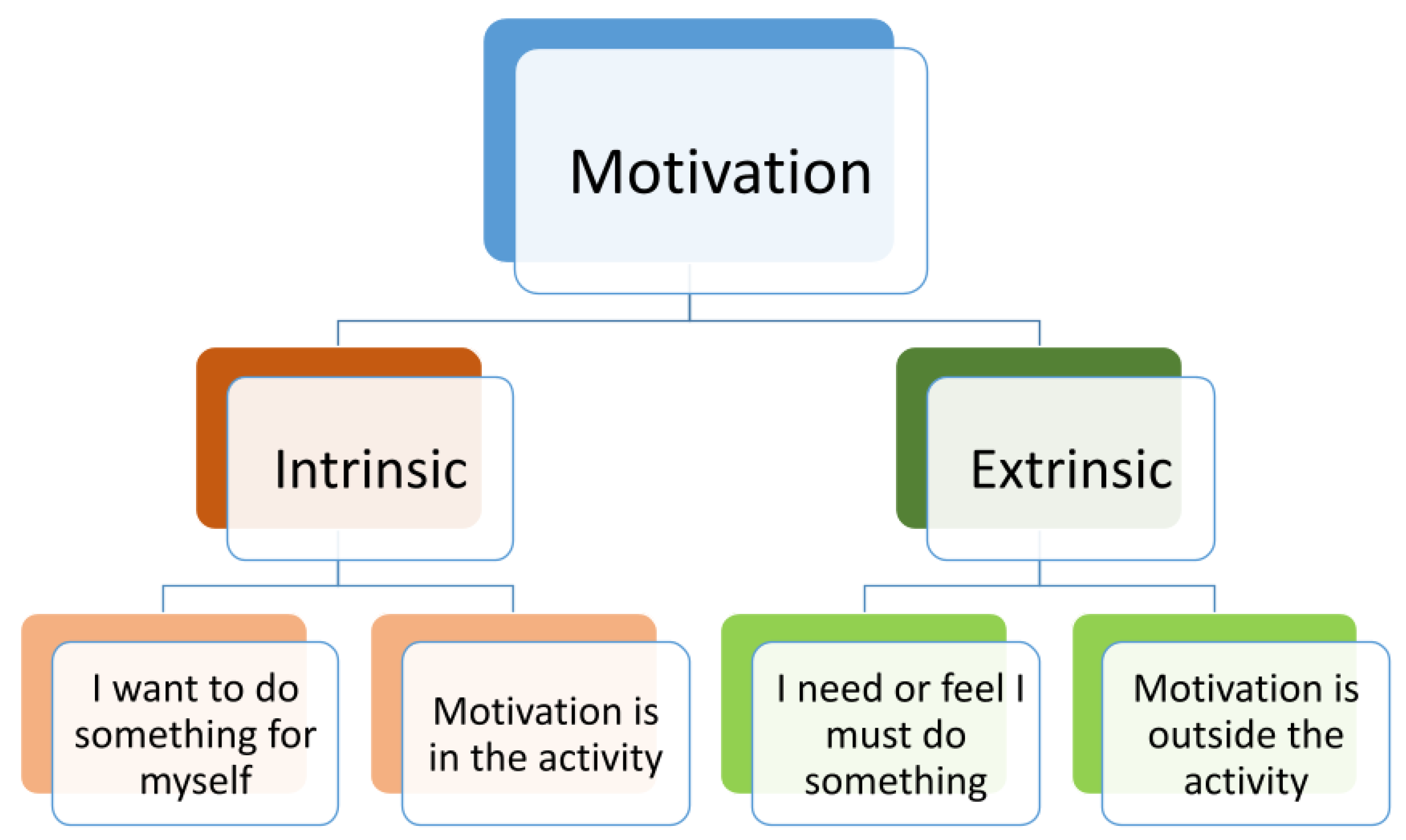
In higher education, it is not easy for students to achieve motivated learning at all stages of their vocational training, and, unfortunately, many drop out. Motivation refers to behaviors’ energy, direction, persistence, and purpose, including intentions and resulting actions [1]. As shown in Figure 1, motivation can be classified as intrinsic and extrinsic motivation; the difference between intrinsic and extrinsic motivation lies in the location of the force that motivates the individual to perform certain behaviors. In intrinsic motivation, the force is due to internal factors (needs, interests, curiosity, satisfaction, and enjoyment). In other words, the performance of the activity produces satisfaction. In contrast, extrinsic motivation is due to external factors (social pressure, reward, and punishment). In this case, the motivated behavior is performed to achieve something (“rewards”) and not for the enjoyment of performing the behavior itself [2].
Figure 1.
Summary of motivation, source: own elaboration.
Motivation and self-determination are strongly linked. The self-determination theory explains human personality and motivation based on the assumption that intrinsic behaviors make psychological well-being possible when the basic psychological needs of autonomy, competence, and social interaction are fulfilled [3].
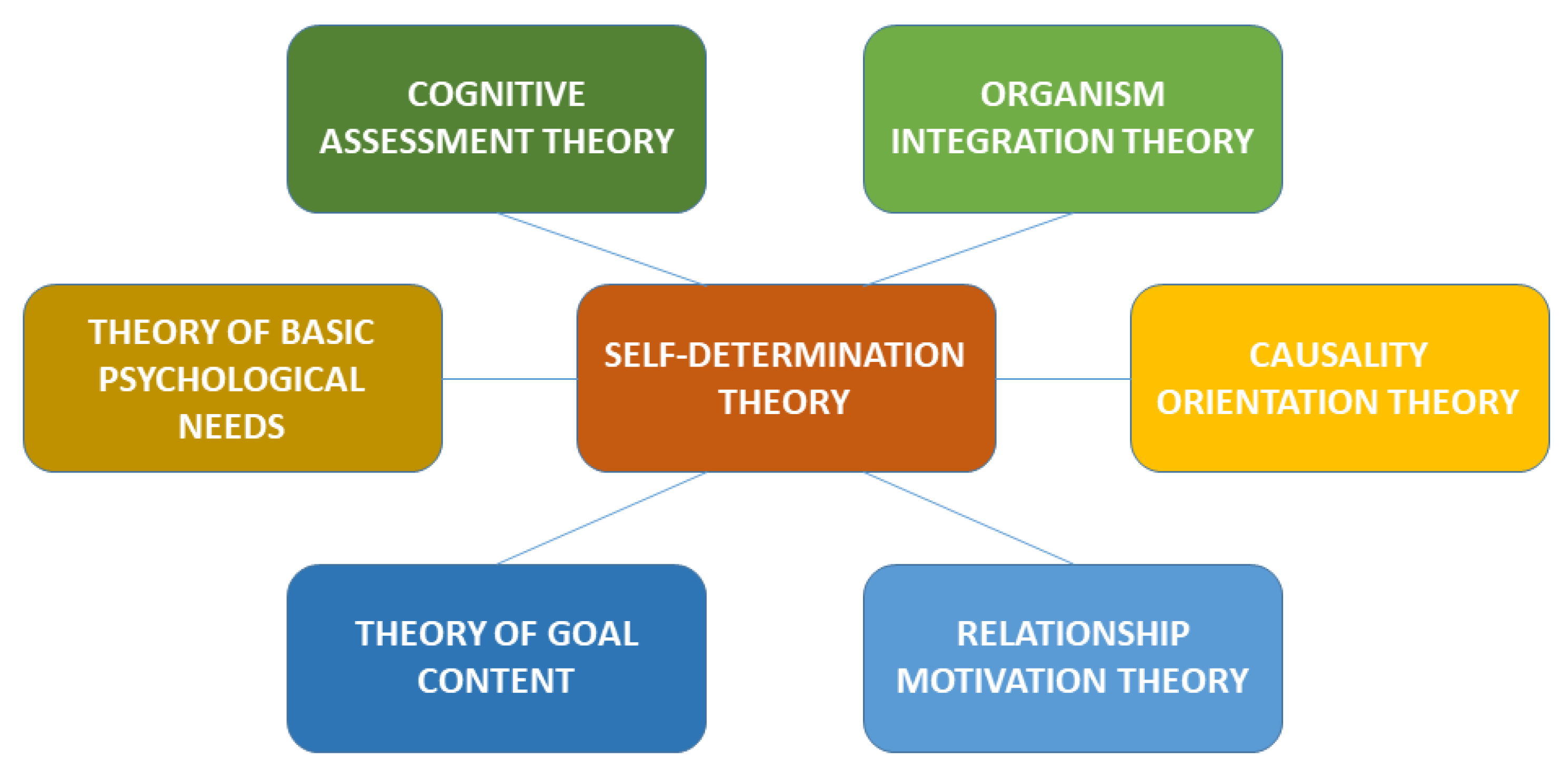
Self-Determination Theory (SDT) represents a macro theory that addresses human motivation and personality, focusing on the fundamental concerns of growth and the innate psychological needs of individuals. This theory focuses on the level of self-motivation and self-determination in individual behavior [4,5,6]. SDT comprises six mini-theories, which complement each other and are based on basic psychological needs to form the macro-theory of self-determination: cognitive valuation theory, organismic integration theory, causality orientation theory, basic psychological needs theory, goal content theory, and relational motivation theory [7]. SDT identifies three innate needs that, if met, allow for optimal functioning and growth: Competence, Relatedness, and Autonomy [8].
However, the self-determination theory is intertwined with other theories (see Figure 2), such as metacognition and emotional intelligence. Suppose we add that each person in a training process has or could have certain technologies that favor their learning. In that case, it is challenging to recognize which could be effectively and sustainably applied to education.
Figure 2.
Self-determination theory and the six theories that compose it.
In higher education and focusing on engineering education, the interplay between these theories is very relevant. Identifying the patterns and factors that motivate learners is crucial for tutors and learning analysts to understand motivation better to adapt their practices to promote effective, autonomous, and motivated learning among learners [9].
As a complement, in today’s digital world, information technologies play a crucial role in education, with innovative environments and digital experiences to increase motivation, improve learning, and enable more students to achieve learning through emotional intelligence and psychological well-being. From a technology perspective, there are recurrent tools mentioned by experts that support the learning [10], gamification alongside serious games [11], visual programming languages [12], cybersecurity [13], virtual laboratories [14], and digital environments [15], among others.
Everything explained above seeks that students learn effectively, autonomously, and with high motivation. However, it is known that many of these factors fail, and what is achieved in some cases are high levels of failure and dropout from higher education. To address these problems, learning models have been developed; these models correspond to a system based on methodologies composed of characteristics, strategies, and guidelines designed to guide the learning process; with them, we seek to respond to a historical need for teaching: how to promote learning, motivational factors and personal characteristics of each student. The learning model is related to other factors that contribute to learning between students and teachers and, in turn, understands the relationship between emotion and learning [16].
On the other hand, it is known that activating prior knowledge and accessing it is fundamental to the emotional component. For example, the constructivist approach considers several elements linked to the limbic brain because this approach points out that prior knowledge must be activated to build new knowledge: starting prior knowledge involves emotion, language, and memory [17]. The concept of academic emotion was first proposed by Pekrun, which is defined in terms of achievement activities or achievement outcomes. Over recent decades, varied research has been generated to examine the relationship between emotions and learning achievement in various learning environments, to discover how emotions arise and are regulated, what precedes them, and how they relate to behavioral, motivational, and achievement outcome achievement [16].
Finally, the role of ICTs is fundamental since the implementation of technologies in education should always be aimed at helping students to experience an improvement in their learning process. As the 2017 Horizon Report explains, this document guides educational institutions by identifying emerging trends and challenges in higher education in the coming years. The document subdivides the directions to be met in the short, medium, and long terms to carry out its realization [18].
This research aims to identify relevant literature and discuss learning models, motivation, self-determination, and technologies used for learning achievement in the context of higher education in engineering. The study highlights technological initiatives and tools used to enhance, improve, innovate, and motivate students in higher education, especially in engineering. It also seeks to relate emotions, emotional intelligence, self-regulation, and cognitive and social skills. We provide an outline summarizing this data over the last five years, organized according to each theme.
For this purpose, a Systematic Mapping Study (SMS) was carried out, following the PRISMA guide [19] and adapting the protocol of Petersen et al. [20]. Systematic mapping is a particular type of literature review; it is a secondary type of study used to identify, evaluate and synthesize research, mainly of a primary nature; although it does not exclude other types of publications, its purpose is to answer questions previously posed to guide the review [21]. As a result, a set of 132 articles studying student motivation from the perspective of self-determination theory, metacognition, emotional intelligence, and ICT was selected.
This report includes several sections. Section 2 covers the essential concepts related to the research in general. Section 3 details the methodology and results of the article selection process. Section 4 then discusses the study’s main findings. Section 5 discusses the main challenges of the theories presented and their application in engineering higher education. The study’s limitations are explained in Section 6. Finally, Section 7 presents the conclusions, implications, and possible future research.
2. Theoretical Background
2.1. Metacognition
Metacognition is the ability to self-regulate learning processes. It involves a set of intellectual operations associated with the knowledge, control, and regulation of the cognitive mechanisms involved in a person’s gathering, evaluating, and producing information [22].
In learning, metacognition refers to a person’s ability to reflect on and become aware of one’s thinking and learning processes. It is the ability to think about how one is learning, monitor progress, evaluate one’s level of understanding, and regulate the strategies used to achieve learning objectives [23].
By developing metacognitive skills, students can plan their studies, set clear learning goals, select the most appropriate strategies to approach a task, monitor their progress, and evaluate their performance. It also enables them to identify obstacles or difficulties in their learning and apply self-regulation strategies, such as adjusting their approach or seeking help when necessary [24]. Just as metacognition plays a crucial role in learning, so does emotional intelligence, described below.
2.2. Emotional Intelligence
Emotional intelligence is the set of psychological abilities of human beings to understand, express and manage their own emotions and to recognize and understand those of others. In this sense, emotional intelligence also allows people to make conscious use of all this information in terms of emotions to guide their way of acting, thinking, and relating to others. As such, the concept of emotional intelligence includes from personal to interpersonal feelings, that is, both those associated with the private sphere and self-knowledge, as well as those related to the social dimension and the ability to understand and develop empathy with the emotions of others [25]. Linked to emotional intelligence are also the executive functions focusing on emotion regulation.
2.3. Executive Functions
Executive functions are high-level cognitive skills that allow us to plan, organize, regulate our behavior, maintain focus, and switch tasks, among other things. They include skills such as working memory, cognitive flexibility, inhibition of automatic responses, and emotional self-regulation. Executive functions are fundamental to critical thinking, decision-making, and academic and occupational success [26].
2.4. Information and Communication Technologies (ICT)
ICTs are technologies developed today for more efficient information and communication, which have changed how we access knowledge and human relations. ICT is the abbreviation for Information and Communication Technologies. Information refers in this context to the transfer of data in an innovative way, including text, images, and audio.
Communication refers to the tools that enable the message sent by the sender to be correctly decoded by the receiver—for example, user information platforms.
ICTs permeate all fields of human knowledge and social life: home, education, entertainment, and work. They transform the mental processes of knowledge acquisition [27].
3. Materials and Methods
Petersen’s proposal for the systematic mapping study (SMS) [20] provides an approach to systematically verify, analyze and classify results related to a specific topic or area of interest. This technique facilitates the scoping of research and the categorization of knowledge gained.
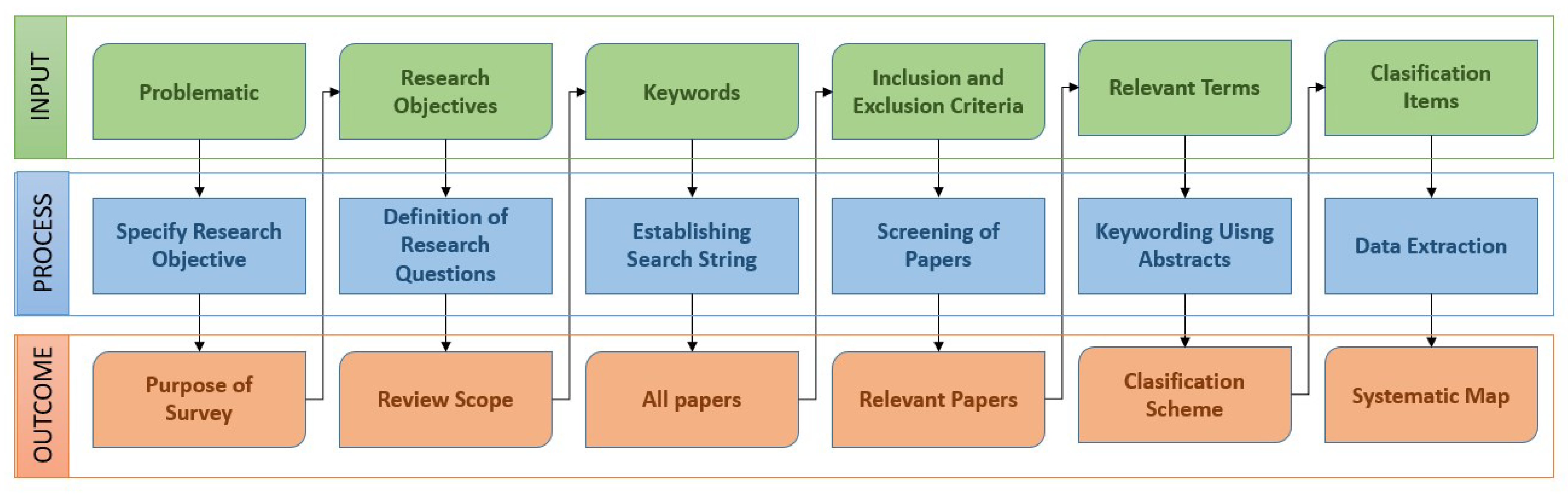
Conducting a SMS implies following or modifying the steps described in Figure 3 sequentially, adapted from [28]. Thus, as the different stages of the process are completed, concrete results have been obtained that form the direct input for the next stage to achieve as a final result a systematic mapping.
Figure 3.
Stages of the systematic mapping process, adapted from [28].
The activities that make up the systematic mapping process are described in the following sections.
3.1. Goal and Research Questions
This SMS aims to analyze and categorize the strategies employed in the last five years to reduce school dropout and increase student motivation. These initiatives will be approached from the perspective of self-determination theory, metacognition, emotional intelligence, and the incorporation of information and communication technologies (ICT).
In this SMS, the procedure started with elaborating research questions, which form the central foundation of the mapping by providing an overview of the specific area [20]. Table 1 presents all questions and their rationale. These questions facilitated the selection, analysis, and classification of information in the study area.
Table 1.
Research Questions.
3.2. Data Sources and Key Words
The following databases were systematically searched to obtain the best literature coverage of the research topic: WoS, Scopus, IEEE, ScienceDirect, and ACM. The analysis included studies published over approximately five years (from 2018 to the present). A combination of keywords related to “engineering”, “higher education”, “technologies”, “ICT”, “ICTS”, “motivational models”, “self-determination”, “emotional intelligence”, and “metacognition” were used.
3.3. Search String
To generate a search string, we identified the keywords from the research questions and the objectives and then linked them with logical connectors. This search string was applied in the search engines and validated by the researchers. The resulting string with AND/OR logical operators was:
(“engineering” AND “higher education” AND (technologies OR “ict” OR “icts”) AND (“motivation models” OR “self-determination” OR “emotional intelligence” OR “metacognition”)).
3.4. Data Extraction
The search and data extraction process involved the inclusion of databases and websites with access to digital libraries. These platforms would encompass search engines capable of conducting searches using specific search strings to retrieve numerous relevant papers. The chosen data sources comprised WoS, Scopus, IEEE, ScienceDirect, and ACM.
3.5. Inclusion and Exclusion Criteria
The studies found through the academic search engines mentioned earlier were selected based on the following inclusion/exclusion criteria:
Inclusion Criteria:
- Published papers in English from journals and conferences.
- Full papers related to the research.
- Papers from the last five years were included.
Exclusion Criteria:
- Technical reports, abstracts, editors’ comments, state of the art.
- Studies before 2018.
- Studies without an author.
- Documents that do not reflect higher education environments
- Duplicate studies in different databases
- Documents that do not come from traceable journals or procedures.
3.6. Search Execution
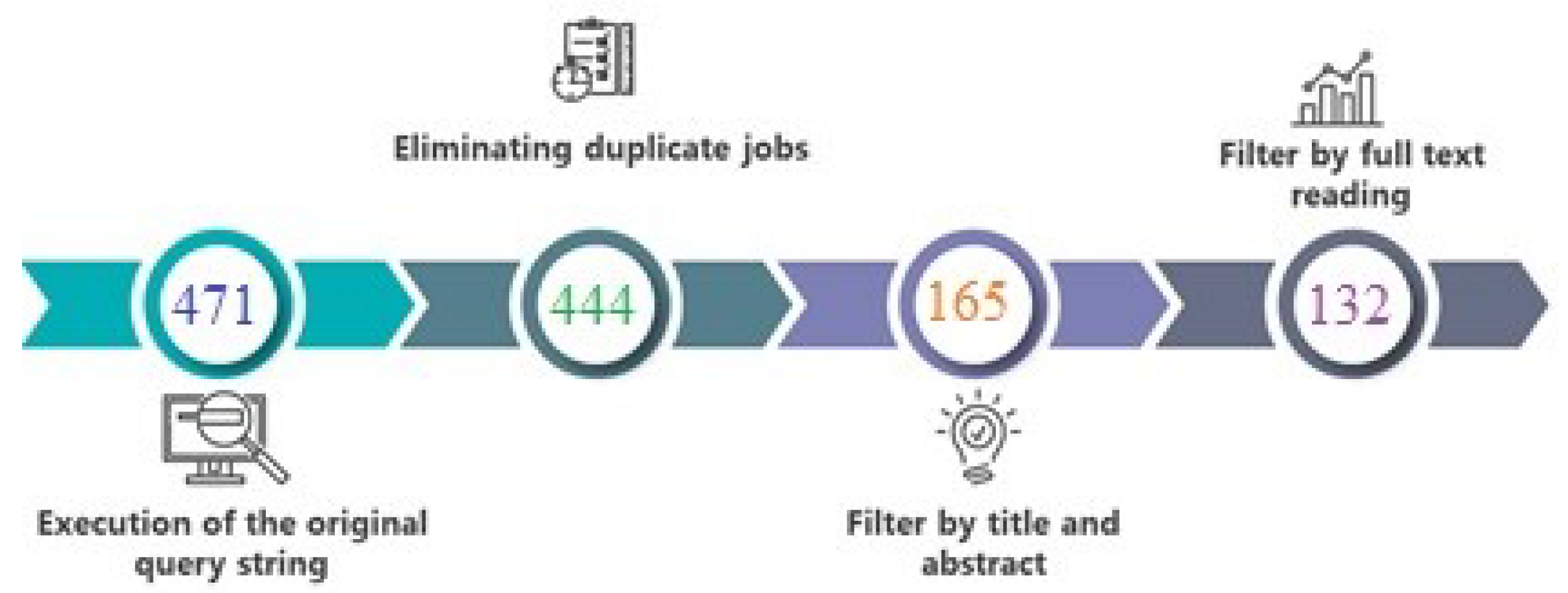
The search string was applied to the selected sources, and an initial quantity of 471 jobs was obtained (see Table 2). The information was extracted using the export tools of each of the digital libraries. After eliminating those doubly indexed jobs, it was reduced to 444 jobs.
Table 2.
Sources for the automated search.
Next, the inclusion/exclusion criterion was applied by reading the titles, resulting in 165 papers. Finally, these papers were read according to the abstract, resulting in 132 pieces (see summary in Figure 4). The list of articles found can be found in Appendix A, Table A1.
Figure 4.
Consolidation of selected publications.
3.7. Classification Scheme
Publications are classified into three dimensions: temporal, type of database, and content (keywords). The temporal dimension ranks the papers according to the year of publication, considering the last five years, the period 2018–2023.
The database type dimension refers to the origin/source of the publication. The size in terms of the content of the magazine itself is classified into engineering, higher education, technologies/ict/acts, motivation, models, self-determination, emotional intelligence, and metacognition.
The proposal type both proposes analysis-oriented solutions but with a technological component. The dimension classifies jobs into the following:
- Analytical: Works that carry out analyses, comparisons, or literature reviews concerning the research topic.
- Practical: They use studies or work related to technological tools to improve learning.
- Both: Propose analysis-oriented solutions but with a technological component.
3.8. Map Construction
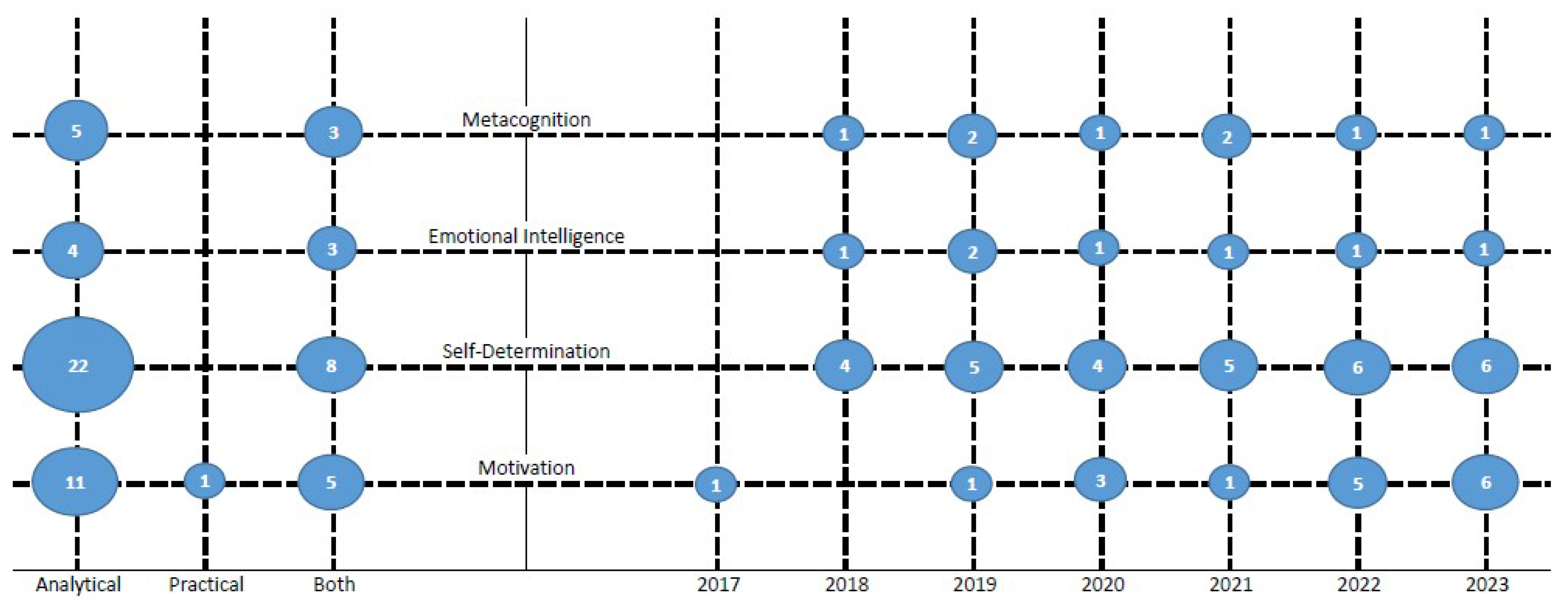
The final product of the systematic mapping phase was a map to facilitate representation and analysis. Figure 5 shows the papers classified according to the type of database and keywords and, on the right side of the figure, shows the classification of publications by year range. It should be noted that this map only includes those articles that consider, within their analysis or proposals, any of the dimensions individually. Those articles that consider integrating two or more dimensions studied are reflected in Table 3.
Figure 5.
Representation of the systematic mapping.
Table 3.
Number of papers considering more than one category.
As seen in Figure 5, most papers are analytical within motivation and self-determination studies. Fewer studies provide a practical component to their studies. It is interesting to note that there is only one study that only considers practical work. Furthermore, the distribution of papers per year has been consistent from 2021 onwards, which coincides with the COVID-19 pandemic period. To date, in 2023, almost the same amount of work has already been registered as in 2022.
Beyond these figures, it is necessary to go deeper into the analysis of those papers that consider more than one category, such as Motivation and Self-determination or Metacognition and Motivation. In Table 3, we show some cases of studies where more than one category is covered.
As can be seen, a few papers consider more than one category in their studies. This situation implies that only a few proposals develop comprehensive studies of the effects of combining categories and the relationships between them.
4. Results
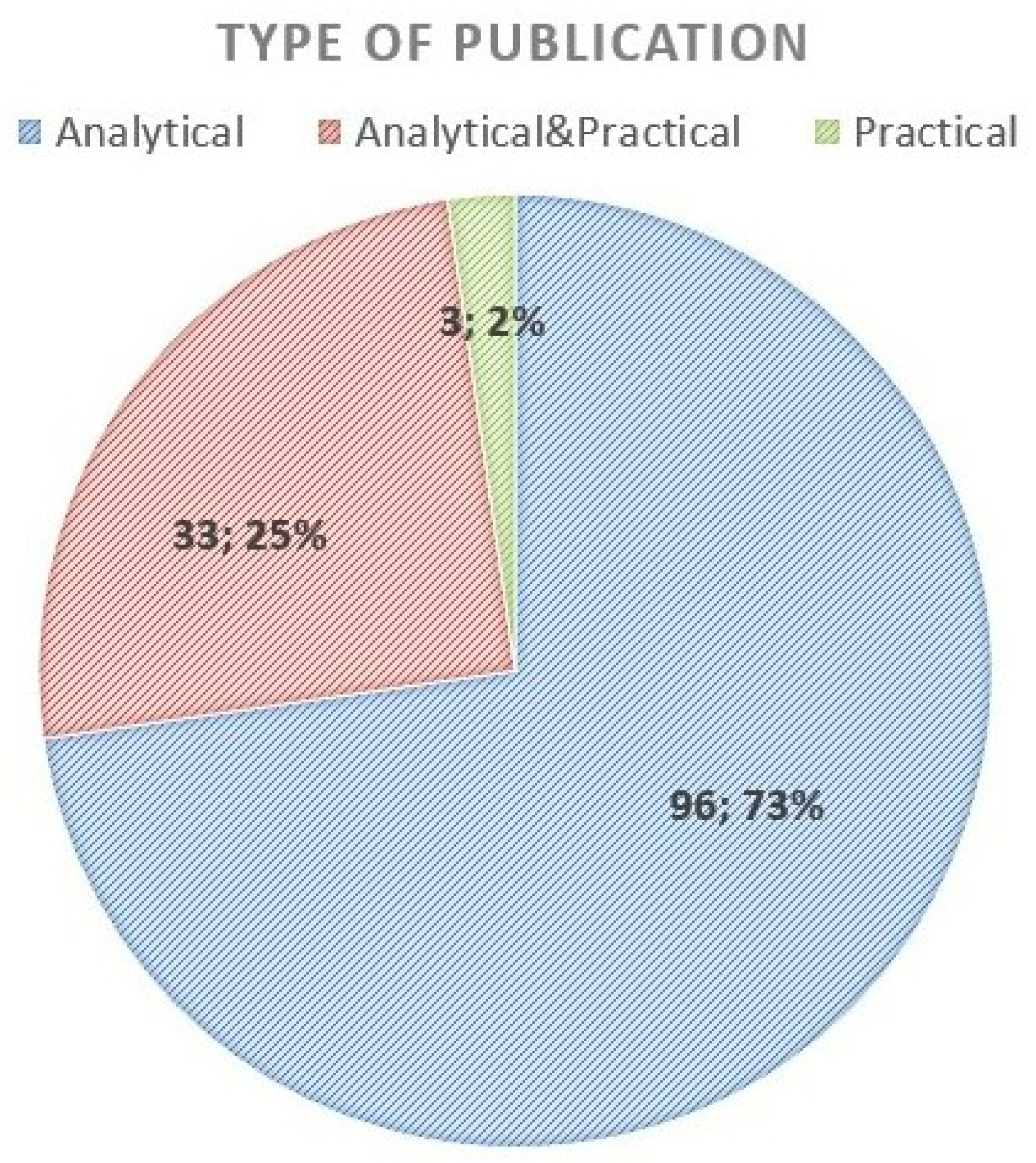
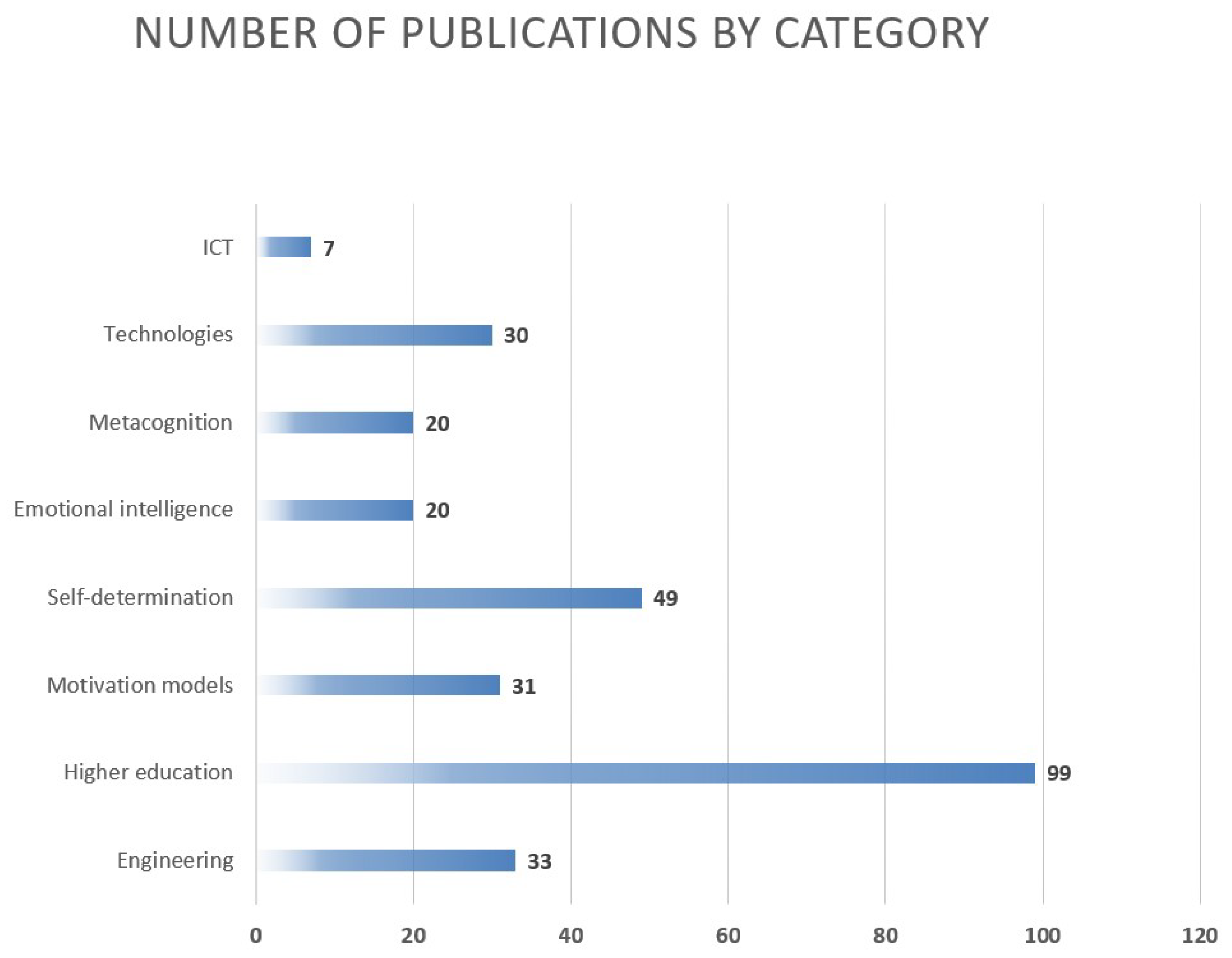
This section presents the findings from our analysis of 132 papers on learning models, motivation, self-determination, and technologies in higher engineering education. We analyzed critical aspects, including engineering, higher education, motivation models, self-determination, emotional intelligence, metacognition, technologies, and ICT. The results have been ordered according to the sequence in which the answers to the research questions are sought. Figure 4 shows the number of papers contributing to the research resulting from the filtering process. Of the total number of articles selected and according to the type of study of the publications, they could be classified into Analytical, Analytical and Practical, and Practical, the percentage of the total being the following value, respectively: 96 publications 73%, 33 publications 25%, and 3 publications 2%. Of the total, analyzed according to the topics addressed in this study, the following were found: 33 publications for Engineering, 99 for Higher education, 31 for Motivation models, 49 for Self-determination, 20 for Emotional intelligence, 20 for Metacognition, 30 for Technologies and 7 for ICT (these last two can be united around the concept of technological tools being 37 in total). The classification is not one by one since some works contain more than one of the concepts analyzed; for this reason, the sum of all of them exceeds the total number of 132 publications.
The following subsections summarize the proposals that sequentially address the research questions: RQ1, RQ2, RQ3, and RQ4.
4.1. General Graphs
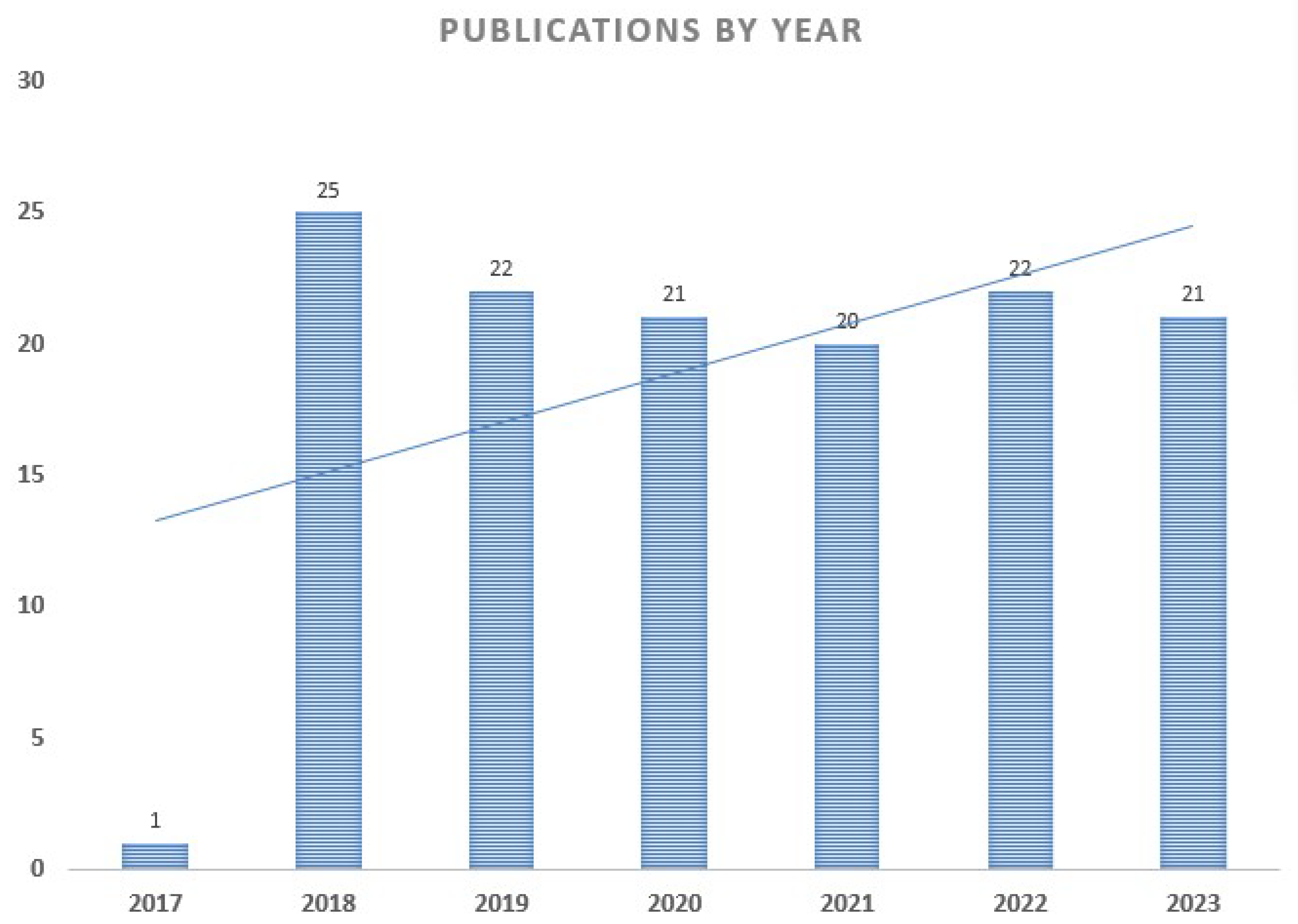
Regarding the classification of 132 publications, the number of publications per year can be identified according to Figure 6.
Figure 6.
Quantity per year of publication.
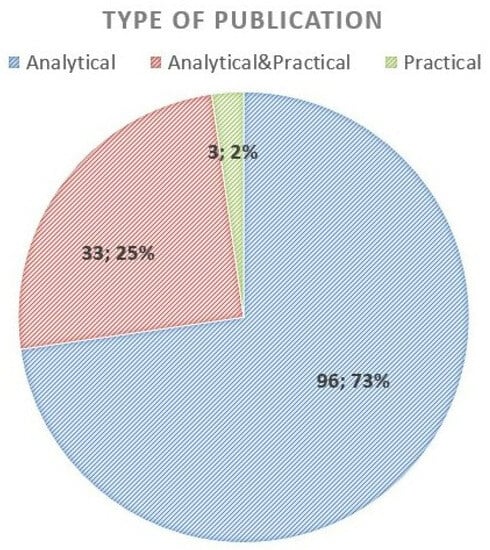
Concerning the classifications, for the total of 132 publications, the percentage by type of publication can be identified as shown in Figure 7.
Figure 7.
Percentage by type of publication.
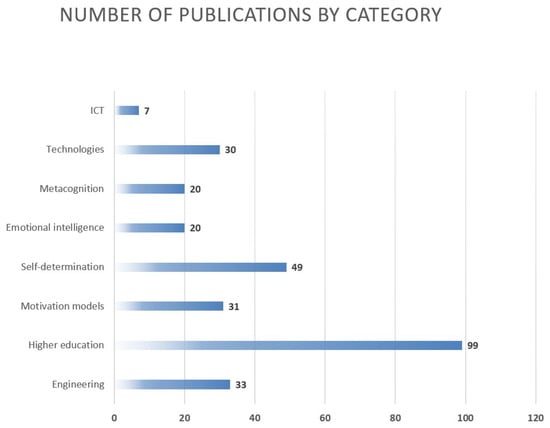
Concerning the classifications for 132 publications, the percentage by publication category can be identified as shown in Figure 8.
Figure 8.
Number of publications per category.
From the graphs, we can observe that the subject of the study is very relevant and has gained greater importance since the COVID-19 pandemic, which had a strong impact on teaching and learning, betting on new models and strategies for the management of learning and motivation. Finally, the study will highlight relevant initiatives and the most widely used technological tools. It will also identify learning models that seek to link emotional intelligence, self-determination, cognitive skills, and ICT.
4.2. Results in Line with the Research Questions
Results for RQ1: How many of the selected papers address initiatives related to improving the learning motivation of higher education students in engineering?
To answer this research question, 31 papers on the subject were analyzed. In Table 4, we describe a list of the most representative cases and a description of the publications that characterize initiatives contributing to this research:
Table 4.
Description of the most representative studies related to RQ1.
A list of the most representative cases and a description of the publications that characterize initiatives contributing to this research.
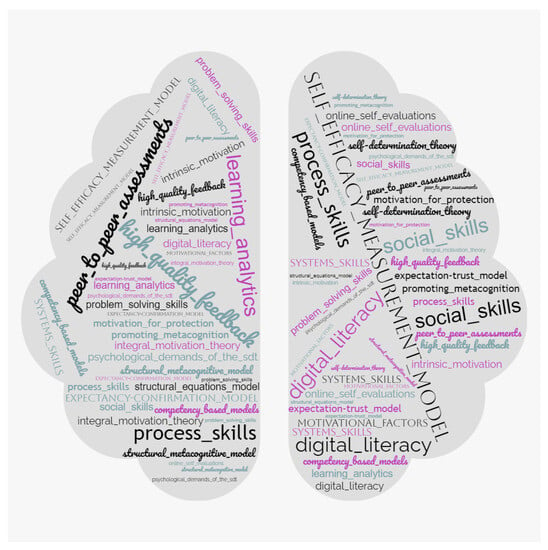
Figure 9, from the Word Cloud for RQ1, shows the graphical representation of the initiatives associated with the results of the research question: Learning models.
Figure 9.
Word cloud associated with the results associated with research question RQ1: Learning models.
Results for RQ2: For related papers, how many address innovative techniques on self-determination and/or emotional intelligence?
To answer this research question, 49 papers were analyzed that dealt with the subject of self-determination and 20 that dealt with the subject of emotional intelligence. Of these, in Table 5 we present a list of the most representative cases and describe the publications that present and contribute to the theme of self-determination, including the theme of emotional intelligence:
Table 5.
Description of the most representative studies related to RQ2.
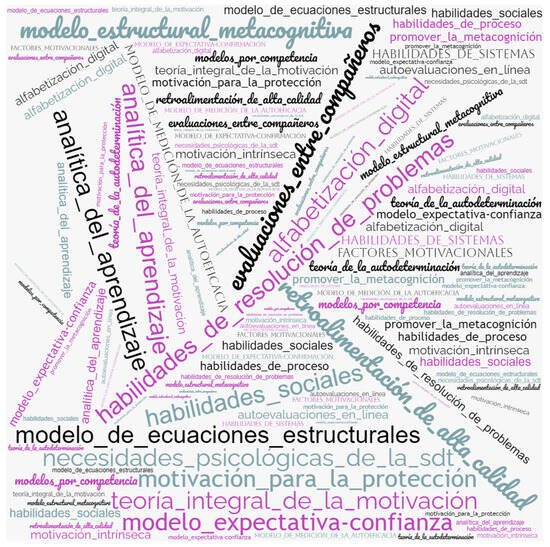
Figure 10, from the Word Cloud for RQ2, shows the graphical representation of the most recurrent and most straightforward applications for the results of the research question: Self-determination and/or emotional intelligence.
Figure 10.
Word cloud associated with the results associated with research question RQ2: Self-determination and/or emotional intelligence.
Results for RQ3: How many of the selected papers demonstrate an impact on learning and attrition?
To answer this research question, we analyzed and filtered 132 papers, one by one, to identify which ones addressed the impact on learning and dropout. Of the total number of articles, only 19 were selected for analysis. Of these, in Table 6 we present the most representative studies.
Table 6.
Description of the most representative studies related to RQ3.
Results for RQ4: What technologies are being used, and what would be their most recurrent applications? Are they effective?
To answer this research question, 37 papers were analyzed that touched on the subject of. Of these, in Table 7 we present a list of the most representative cases, followed by a description of the publications that present and contribute to the subject of technologies, including the subject of applications, software, and current technological tools for effective learning.
Table 7.
Description of the most representative studies related to RQ4.
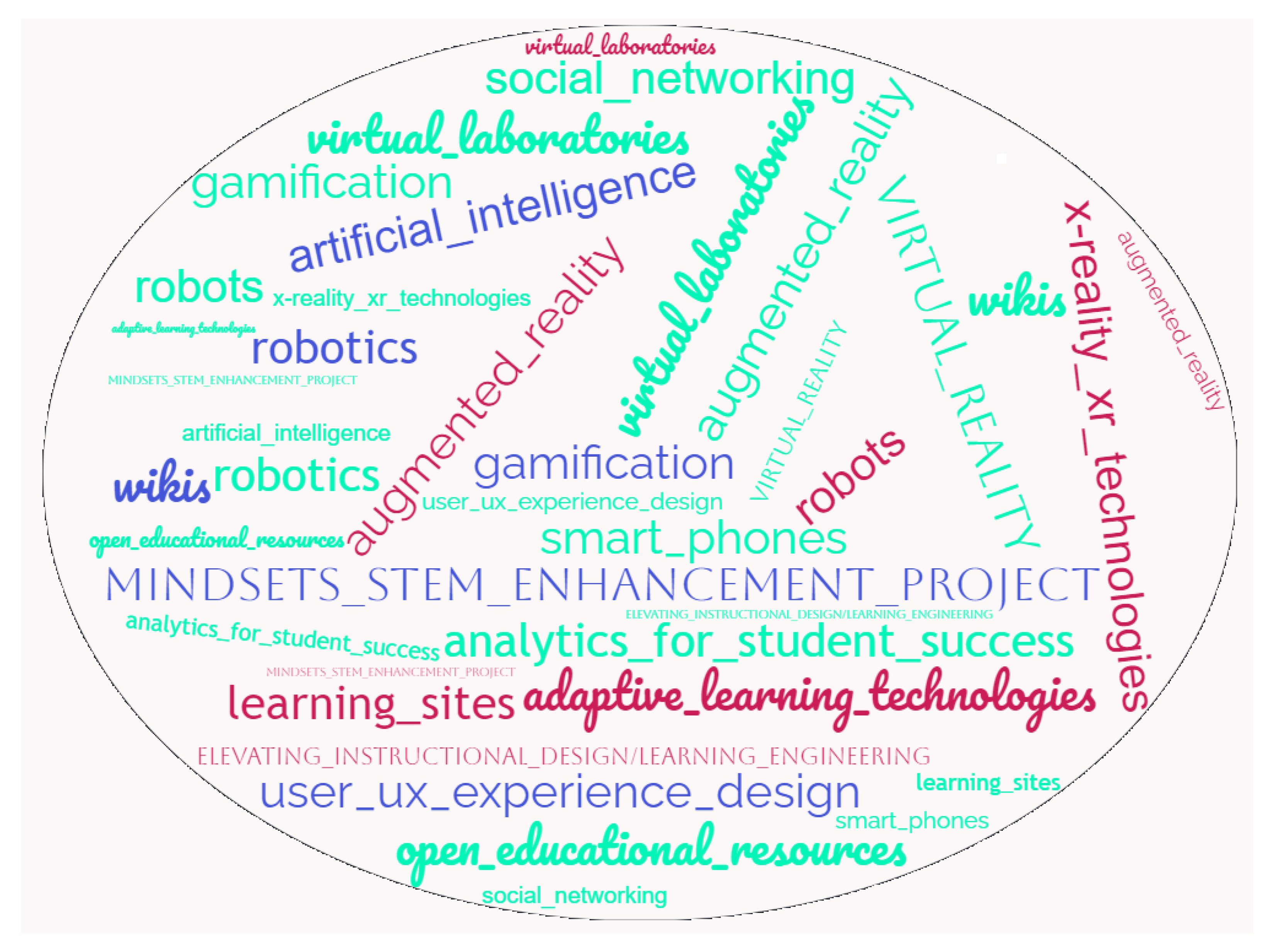
Figure 11, from the Word Cloud for RQ4, shows the visual representation of the technologies associated with the results of the research question: Most used technologies and their most recurrent applications.
Figure 11.
Word cloud associated with the results associated with research question RQ4: Most used technologies and their most recurrent applications.
5. Discussion
This study shows how self-determination theory is applied in engineering and how it contributes to the STEM domain. The study characterizes some motivational factors associated with students’ learning outcomes. It also shows how students face the challenge of learning, considering personal skills, emotions, self-motivation, autonomy, competencies, and their own basic psychological needs, and looks at effective learning models based on the actual needs of students in a changing world using ICT.
Studies to date have pointed to the importance of metacognition in learning performance. However, more effort must be made to develop group metacognitive scaffolding (GMS) in computer-supported collaborative learning environments (CSCL). It is very relevant to continue investigating this type of study since the results indicated that GMS significantly impacted group metacognitive behavioral transition and group performance; it could be a fascinating future study [47]. The main contribution of this study was to propose a GMS approach and validate its effectiveness for metacognitive behavioral transition and group performance in an online collaborative learning environment.
Regarding technologies, beyond representing them in this section, the COVID-19 pandemic undoubtedly caused a turning point in technological issues associated with education. Universities, in general, were forced to adopt new technologies without knowing whether they were the most appropriate ones. This situation should be analyzed in each university in its particular version and planned alternatives for educational technologies. Their use should be proposed, not waiting for a new crisis that makes us manage solutions on the fly [30,31].
A relevant aspect for discussion is that it is clear that there is a fundamental need to define well-founded educational models, including implementation strategies focusing on skills, competencies, and their integration into university curricula so that students are better supported in their professional development.
Relevant aspects such as empathy, emotional intelligence, and inter-professional competencies transcend discipline-specific competencies, so all educators need to consider how best to foster them [40].
Another interesting point to mention is feedback; although it is not a model per se, many of the articles refer to the great relevance of feedback, which has long been recognized as a powerful tool for learning [55,56,57]. Feedback should be considered, as it plays an important role in acquiring knowledge and is a relevant factor that directly influences learners’ motivation [58]. Studies have shown that high-quality feedback contributes to meaningful learning by promoting students’ metacognitive skills and providing clear performance indicators and areas to track [10].
Although not explicitly detailed in the research questions, lab-based learning environments or coworking spaces offer a valuable opportunity for transformative and integrative value creation because of collaboration and interaction. The role of the teacher in this learning environment is to provide the basis for the process by facilitating and guiding. Given the right conditions, these learners can question underlying assumptions about how systems work and build trust by facilitating dialogue between societal actors [59].
In addition, it is essential to highlight the importance of prioritizing educational policies and teaching-learning methodology with a student focus, such as the flipped learning model, project-based learning, and problem-based learning [60]. The above is relevant because, while students may do their best to learn and stay on track, it is vitally important that all academics are attuned and aligned to institutional policies and highly motivated to be a fundamental part of the educational models. In one paper [61], data from a national online survey of 1671 lecturers from 19 universities were analyzed using structural equation modeling. The overall model showed that autonomy, competence, and teacher relatedness positively predicted autonomous (intrinsic, identified) motivation but not controlled (introjected, external) student motivation. Autonomous motivation, in turn, predicted greater incorporation of effective teaching strategies, namely clarity of instruction, higher-order learning, reflective and integrative learning, and collaborative learning.
Finally, the results show that performance expectancy, intrinsic motivation, and satisfaction significantly influence beginners’ intention to remain in blended learning [62]. The permanence of students today is a very relevant issue that needs to be addressed responsibly and in depth.
6. Limitations of the Study
Although our goal was to provide a comprehensive literature review to contribute to future proposals involving the target topics of es: modeling, characterization of how students achieve more and better learning, self-determination theory and metacognition, emotional intelligence, and ICT/digital technologies in the context of engineering higher education, some limitations of the study should not be overlooked. Manipulating the databases manually through search engines to retrieve scientific articles and filtering the available literature by specific keywords could have some risks in extraction. They should be carefully analyzed to draw valid conclusions. In addition, our approach resulted in reviewing scholarly articles in English from 2018 without covering other languages that could contribute to the analysis. By employing this approach, we gathered articles from diverse journals and conferences, primarily of academic origin, focusing on the last five years to ensure the information’s currency.
Nevertheless, filtering studies based on their publication timeframe and English language may result in chronological and geographical biases [63].
7. Conclusions
The authors offer an analysis of recent publications (last five years) that evaluate the use of learning models, aspects of motivation, self-determination, and technologies used to achieve learning in higher education focused on engineering. This topic is of great interest due to the emergence of new technologies that support the considering maintaining alertness for the analysis; factors such as personal skills, emotions, self-motivation, autonomy, competencies, and own basic psychological needs were supposed to propose effective learning models based on the needs of students in a changing world where ICT play a relevant role.
In conclusion, research has shown that students who have worked with effective learning strategies are more likely to achieve better academic results. Due to rapid technological and cultural changes, the traditional way of learning is no longer satisfactory. Technology, therefore, plays an important role in engineering education through the development of competencies. As argued by Sweller in Sweller [64], features of technologies designed to promote more effective learning often aim to foster psychological processes that are fundamental to learning and have been shown to produce specific academic outcomes [64]. This is why we reinforce that designing a good educational model must be carried out by multidisciplinary teams, investigating how these theories come together in various forms and applications using ICT to foster student motivation.
From the study, we observed conclusions that part of the main results is that most of the works are classified as theoretical or analytical, and very few incorporate a practical component. This suggests that empirical validation of the proposals is still needed, and further research is warranted to address how to knit or apply practical initiatives and evaluate their effectiveness. As the main conclusions regarding the results associated with initiatives related to improving the motivation of engineering students, it can be said that there are practical and sophisticated strategies, such as that predictive method to assess self-efficacy and digital literacy in metacognition in online learning; however, students highly value simple techniques such as feedback. The main conclusions regarding the results of the innovative self-determination and emotional intelligence techniques indicate that the weakest associated variables are related to the ability to establish high personal standards and the self-discipline to achieve them. Also, deep learning is obtained when several techniques are applied; students who use several strategies get the best grades, and consequently, students who invest the least effort obtain the lowest rates. As the main conclusions regarding the results of the studies that addressed the impact on learning and dropout, we find that students’ experiences in their first year of studies are decisive, just as permanence increases with the implementation of inclusion initiatives. As the main conclusions regarding the results of the studies that addressed which technologies are used and which would be their most recurrent applications, we can identify AI, gamification, serious games, virtual reality, simulators, and robots.
Another important element is to consider that most of the studies reviewed concentrate only on analyzing one of the categories considered in this research. Only some of them consider a combination of two or more themes. It can be deduced from this that comprehensive solutions have yet to be proposed for combining the categories studied. Therefore, there is also yet to be specific knowledge about the interrelationships between these variables. Further research is therefore needed in this respect.
Despite the progress shown and related to the objective of the study, it is necessary to indicate that there are still many challenges which imply paying attention to some of the following aspects:
- collaboration between researchers in a multidisciplinary way when linking: engineering, higher education, psychology, and sociology,
- determining in more detail the measurable impact of various practices organized in student study cycles,
- the lack of particular or local characterization of student motivation and drop-out (presentation of results in terms of a lower drop-out rate),
- the analysis of the selection of technologies suitable for a particular environment, and
- the further engagement of the responsible actors (universities/faculties) in a technological environment promotes a better way of learning by detecting those who drop out in the process (drop-out).
In orientation for future research, we plan to conduct a broader literature review to identify additional factors or issues that will allow us to propose a local reference model to apply the strategies observed in this analysis, especially in applying technologies and their use in learning.
Author Contributions
A.B.-M. contributed to structuring and guiding the SRL and writing the paper. M.D.-R. was involved in the SRL’s planning, writing, and formatting of the paper. Y.V., Y.H. and R.C. added value through their methodological assistance, expert opinions, and creation of figures and tables. All authors have read and agreed to the published version of the manuscript.
Funding
Universidad de La Frontera, Project PEG23-0007, and Universidad de La Frontera, Project IF21-0006, funded this research.
Data Availability Statement
Data are contained within the article.
Acknowledgments
The authors wish to thank all the participants in this study, especially the DIUFRO scientific research initiative, funded by the Universidad de La Frontera, PEG23-0007 project, and Universidad de La Frontera, IF21-0006 project. They also thank the Universidad Americana de Europa and its Doctoral Program in Computer Science.
Conflicts of Interest
The authors declare no conflict of interest.
Appendix A
Table A1.
Articles used to Analysis and Results of systematic mapping.
References
- Deci, E.L.; Ryan, R.M. Conceptualizations of Intrinsic Motivation and Self-Determination. In Intrinsic Motivation and Self-Determination in Human Behavior; Springer: Boston, MA, USA, 1985; pp. 11–40. [Google Scholar] [CrossRef] [Scilit]
- Deckers, L. Extrinsic and Intrinsic Motivation. In Motivation; Routledge: New York, NY, USA, 2022; pp. 279–311. [Google Scholar] [CrossRef] [Scilit]
- Reeve, J. 1. A Brief but Comprehensive Overview of Self-Determination Theory. In Autonomy Support Beyond the Language Learning Classroom; Multilingual Matters: Bristol, UK, 2022; pp. 11–30. [Google Scholar] [CrossRef] [Scilit]
- Ryan, R.M.; Deci, E.L. Self-determination theory and the facilitation of intrinsic motivation, social development, and well-being. Am. Psychol. 2000, 55, 68–78. [Google Scholar] [CrossRef] [PubMed]
- Deci, E.L.; Ryan, R.M. Motivation, Personality, and Development Within Embedded Social Contexts: An Overview of Self-Determination Theory. In The Oxford Handbook of Human Motivation; Oxford University Press: Oxford, UK, 2012; pp. 85–108. [Google Scholar] [CrossRef] [Scilit]
- Ryan, R.M.; Deci, E.L. (Eds.) Self-Determination Theory: Basic Psychological Needs in Motivation, Development, and Wellness; Guilford Press: New York, NY, USA, 2017. [Google Scholar] [CrossRef] [Scilit]
- Villegas, J.G.E. La teoría de la Autodeterminación y su aplicación en la educación primaria. In Encuentro de Investigación del Alumnado; Universidad de Almería: Almería, Spain, 2017; p. 54. [Google Scholar]
- Wang, C.; Liu, W.C.; Kee, Y.H.; Chian, L.K. Competence, autonomy, and relatedness in the classroom: Understanding students’ motivational processes using the self-determination theory. Heliyon 2019, 5, e01983. [Google Scholar] [CrossRef] [Scilit] [PubMed]
- Anicic, K.P.; Redep, N.B.; Kadoic, N. Towards LA Adoption Maturity Framework. In Proceedings of the 2022 45th Jubilee International Convention on Information, Communication and Electronic Technology (MIPRO), Opatija, Croatia, 23–27 May 2022. [Google Scholar] [CrossRef] [Scilit]
- Banihashem, S.K.; Noroozi, O.; van Ginkel, S.; Macfadyen, L.P.; Biemans, H.J. A systematic review of the role of learning analytics in enhancing feedback practices in higher education. Educ. Res. Rev. 2022, 37, 100489. [Google Scholar] [CrossRef] [Scilit]
- Hart, S.; Halak, B.; Sassone, V. CIST: A Serious Game for Hardware Supply Chain. Comput. Secur. 2022, 122, 102912. [Google Scholar] [CrossRef] [Scilit]
- Cheng, Y.P.; Lai, C.F.; Chen, Y.T.; Wang, W.S.; Huang, Y.M.; Wu, T.T. Enhancing student’s computational thinking skills with student-generated questions strategy in a game-based learning platform. Comput. Educ. 2023, 200, 104794. [Google Scholar] [CrossRef] [Scilit]
- Khan, N.F.; Ikram, N.; Murtaza, H.; Javed, M. Evaluating protection motivation based cybersecurity awareness training on Kirkpatrick’s Model. Comput. Secur. 2023, 125, 103049. [Google Scholar] [CrossRef] [Scilit]
- Diwakar, S.; Kolil, V.K.; Francis, S.P.; Achuthan, K. Intrinsic and extrinsic motivation among students for laboratory courses - Assessing the impact of virtual laboratories. Comput. Educ. 2023, 198, 104758. [Google Scholar] [CrossRef] [Scilit]
- Bobkina, J.; Romero, E.D.; Ortiz, M.J.G. Kinesic communication in traditional and digital contexts: An exploratory study of ESP undergraduate students. System 2023, 115, 103034. [Google Scholar] [CrossRef] [Scilit]
- Pekrun, R.; Goetz, T.; Titz, W.; Perry, R.P. Academic emotions in students’ self-regulated learning and achievement: A program of qualitative and quantitative research. Educ. Psychol. 2002, 37, 91–105. [Google Scholar] [CrossRef] [Scilit]
- Carretero, M. Constructivismo y Educación; Tilde Editora: Buenos Aires, Argentina, 2021. [Google Scholar]
- Adams Becker, S.; Cummins, M.; Davis, A.; Freeman, A.; Hall Giesinger, C.; Ananthanarayanan, V. The NMC Horizon Report: 2017 Higher Education Edition; Technical report; New Media Consortium: Austin, TX, USA, 2017. [Google Scholar]
- Page, M.J.; McKenzie, J.; Bossuyt, P.; Boutron, I.; Hoffmann, T.; Mulrow, C.D.; Shamseer, L.; Tetzlaff, J.; Moher, D. Updating Guidance for Reporting Systematic Reviews: Development of the PRISMA 2020 Statement. J. Clin. Epidemiol. 2021. [Google Scholar] [CrossRef] [Scilit]
- Petersen, K.; Vakkalanka, S.; Kuzniarz, L. Guidelines for conducting systematic mapping studies in software engineering: An update. Inf. Softw. Technol. 2015, 64, 1–18. [Google Scholar] [CrossRef] [Scilit]
- Corona, C.N.; Montoya, M.S.R. Mapeo sistemático de la literatura sobre evaluación docente (2013–2017). Educ. Pesqui. 2018, 44, e185677. [Google Scholar] [CrossRef] [Scilit]
- Veenman, M.V.; Van Hout-Wolters, B.H.; Afflerbach, P. Metacognition and learning: Conceptual and methodological considerations. Metacogn. Learn. 2006, 1, 3–14. [Google Scholar] [CrossRef] [Scilit]
- Fleur, D.S.; Bredeweg, B.; van den Bos, W. Metacognition: Ideas and Insights from Neuro- and Educational Sciences. PsyArXiv 2021. [Google Scholar] [CrossRef] [Scilit] [PubMed]
- Mitsea, E.; Drigas, A. A Journey into the Metacognitive Learning Strategies. Int. J. Online Biomed. Eng. 2019, 15, 4. [Google Scholar] [CrossRef] [Scilit]
- Rivers, S.; Handley-Miner, I.; Mayer, J.; Caruso, D. Emotional Intelligence. In The Cambridge Handbook of Intelligence; Cambridge University Press: Cambridge, UK, 2020; pp. 709–735. [Google Scholar] [CrossRef] [Scilit]
- Diamond, A. Executive functions. In Handbook of Clinical Neurology; Elsevier: Amsterdam, The Netherlands, 2020; pp. 225–240. [Google Scholar] [CrossRef] [Scilit]
- Peter, L. Information and Communication Technologies and Education. In International Conference Globalization, Innovation and Development. Trends and Prospects (GIDTP); Editura Lumen, Asociatia Lumen: Iasi, Romania, 2020; pp. 344–353. [Google Scholar]
- Vásquez, F.; Cravero, A.; Castro, M.; Acevedo, P. Decision Support System Development of Wildland Fire: A Systematic Mapping. Forests 2021, 12, 943. [Google Scholar] [CrossRef] [Scilit]
- Swartz, B. ‘Assessment as Learning’ as a tool to prepare engineering students to manage ill-defined problems in industry. In Proceedings of the 2020 IFEES World Engineering Education Forum—Global Engineering Deans Council (WEEF-GEDC), Cape Town, South Africa, 16–19 November 2020. [Google Scholar] [CrossRef] [Scilit]
- Wrahatnolo, T.; Suprianto, B.; Fransisca, Y. Structural Model of Metacognition in Online Learning during the COVID-19 Pandemic. In Proceedings of the 2021 Fourth International Conference on Vocational Education and Electrical Engineering (ICVEE), Surabaya, Indonesia, 2–3 October 2021. [Google Scholar] [CrossRef] [Scilit]
- Yang, H.; Cai, J.; Yang, H.H.; Wang, X. Examining key factors of beginner’s continuance intention in blended learning in higher education. J. Comput. High. Educ. 2022, 35, 126–143. [Google Scholar] [CrossRef] [Scilit]
- Leidig, P.M.; Salmela, H. The ACM/AIS IS2020 Competency Model for Undergraduate Programs in Information Systems: A Joint ACM/AIS Task Force Report. Commun. Assoc. Inf. Syst. 2022, 50, 470–480. [Google Scholar] [CrossRef] [Scilit]
- Jaeger, M.; Adair, D. Impact of PBL on engineering students’ motivation in the GCC region: Case study. In Proceedings of the 2018 Advances in Science and Engineering Technology International Conferences (ASET), Abu Dhabi, United Arab Emirates, 6 February–5 April 2018; pp. 1–7. [Google Scholar]
- Ansari, H.A.; Ward, R.; Hill, R. Developing a Learning Analytics Model to Explore Computer Science Student Motivation in the UK. In Proceedings of the 2021 International Conference on Advanced Learning Technologies (ICALT), Tartu, Estonia, 12–15 July 2021. [Google Scholar] [CrossRef] [Scilit]
- Wang, C.; Cho, H.J.; Wiles, B.; Moss, J.D.; Bonem, E.M.; Li, Q.; Lu, Y.; Levesque-Bristol, C. Competence and autonomous motivation as motivational predictors of college students’ mathematics achievement: From the perspective of self-determination theory. Int. J. STEM Educ. 2022, 9, 41. [Google Scholar] [CrossRef] [Scilit]
- Callender, A.A.; Franco-Watkins, A.M.; Roberts, A.S. Improving metacognition in the classroom through instruction, training, and feedback. Metacogn. Learn. 2015, 11, 215–235. [Google Scholar] [CrossRef] [Scilit]
- Silva, D.N.; Silva, W.D.O.; Fontana, M.E. A gendered perspective of challenges women in engineering careers face to reach leadership positions: A innovative theoretical model from Brazilian students’ perceptions. Women Stud. Int. Forum 2023, 98, 102712. [Google Scholar] [CrossRef] [Scilit]
- Xia, Q.; Chiu, T.K.; Lee, M.; Sanusi, I.T.; Dai, Y.; Chai, C.S. A self-determination theory (SDT) design approach for inclusive and diverse artificial intelligence (AI) education. Comput. Educ. 2022, 189, 104582. [Google Scholar] [CrossRef] [Scilit]
- Valdez-Juárez, L.E.; de Lema, D.G.P. Creativity and the family environment, facilitators of self-efficacy for entrepreneurial intentions in university students: Case ITSON Mexico. Int. J. Manag. Educ. 2023, 21, 100764. [Google Scholar] [CrossRef] [Scilit]
- McNulty, J.P.; Politis, Y. Empathy, emotional intelligence and interprofessional skills in healthcare education. J. Med. Imaging Radiat. Sci. 2023, 54, 238–246. [Google Scholar] [CrossRef] [Scilit] [PubMed]
- Pimdee, P.; Ridhikerd, A.; Moto, S.; Siripongdee, S.; Bengthong, S. How social media and peer learning influence student-teacher self-directed learning in an online world under the ‘New Normal’. Heliyon 2023, 9, e13769. [Google Scholar] [CrossRef] [Scilit] [PubMed]
- Saqr, M.; López-Pernas, S.; Jovanović, J.; Gašević, D. Intense, turbulent, or wallowing in the mire: A longitudinal study of cross-course online tactics, strategies, and trajectories. Internet High. Educ. 2023, 57, 100902. [Google Scholar] [CrossRef] [Scilit]
- Gherghel, C.; Yasuda, S.; Kita, Y. Interaction during online classes fosters engagement with learning and self-directed study both in the first and second years of the COVID-19 pandemic. Comput. Educ. 2023, 200, 104795. [Google Scholar] [CrossRef] [Scilit]
- Wang, C.Y.; Lin, J.J. Utilizing artificial intelligence to support analyzing self-regulated learning: A preliminary mixed-methods evaluation from a human-centered perspective. Comput. Hum. Behav. 2023, 144, 107721. [Google Scholar] [CrossRef] [Scilit]
- Dyrberg, N.R.; Holmegaard, H.T. Motivational patterns in STEM education: A self-determination perspective on first year courses. Res. Sci. Technol. Educ. 2018, 37, 90–109. [Google Scholar] [CrossRef] [Scilit]
- Moore, M.E.; Vega, D.M.; Wiens, K.M.; Caporale, N. Connecting Theory to Practice: Using Self-Determination Theory To Better Understand Inclusion in STEM. J. Microbiol. Biol. Educ. 2020, 21. [Google Scholar] [CrossRef] [Scilit]
- Guillaume, R.O.; Kalkbrenner, M.T. The utility of self-determination theory in faculty of color’s successful pursuit of tenure and promotion to the rank of associate professor. Int. J. Educ. Res. 2019, 98, 272–279. [Google Scholar] [CrossRef] [Scilit]
- Yu, J.; Brown, G.T.; Stephens, J.M. Retrospective case studies of successful Chinese learners of English: Continuity and change in self-identities over time and across contexts. System 2018, 72, 124–138. [Google Scholar] [CrossRef] [Scilit]
- Tan, W.K.; Sunar, M.S.; Goh, E.S. Analysis of the college underachievers’ transformation via gamified learning experience. Entertain. Comput. 2023, 44, 100524. [Google Scholar] [CrossRef] [Scilit]
- Cui, Y.; Song, X.; Hu, Q.; Li, Y.; Sharma, P.; Khapre, S. Human–robot interaction in higher education for predicting student engagement. Comput. Electr. Eng. 2022, 99, 107827. [Google Scholar] [CrossRef] [Scilit]
- Al-Qaysi, N.; Granić, A.; Al-Emran, M.; Ramayah, T.; Garces, E.; Daim, T.U. Social media adoption in education: A systematic review of disciplines, applications, and influential factors. Technol. Soc. 2023, 73, 102249. [Google Scholar] [CrossRef] [Scilit]
- Jones, L.C.R.; McDermott, H.J.; Tyrer, J.R.; Zanker, N.P. Future engineers: The intrinsic technology motivation of secondary school pupils. Eur. J. Eng. Educ. 2017, 43, 606–619. [Google Scholar] [CrossRef] [Scilit]
- Caserta, S.; Tomaiuolo, G.; Guido, S. Use of a smartphone-based Student Response System in large active-learning Chemical Engineering Thermodynamics classrooms. Educ. Chem. Eng. 2021, 36, 46–52. [Google Scholar] [CrossRef] [Scilit]
- Crompton, H.; Bernacki, M.; Greene, J.A. Psychological foundations of emerging technologies for teaching and learning in higher education. Curr. Opin. Psychol. 2020, 36, 101–105. [Google Scholar] [CrossRef] [Scilit]
- Chickering, A.; Gamson, S. Seven Principles for Good Practice in Undergraduate Education. AAHE Bull. 1987, 3, 7. [Google Scholar] [CrossRef] [Scilit]
- Hattie, J.; Timperley, H. The power of feedback. Rev. Educ. Res. 2007, 77, 81–112. [Google Scholar] [CrossRef] [Scilit]
- Wisniewski, B.; Zierer, K.; Hattie, J. The Power of Feedback Revisited: A Meta-Analysis of Educational Feedback Research. Front. Psychol. 2020, 10, 3087. [Google Scholar] [CrossRef] [Scilit]
- Amiryousefi, M.; Geld, R. The role of redressing teachers’ instructional feedback interventions in EFL learners’ motivation and achievement in distance education. Innov. Lang. Learn. Teach. 2019, 15, 13–25. [Google Scholar] [CrossRef] [Scilit]
- Larsson, J.; Holmberg, J. Learning while creating value for sustainability transitions: The case of Challenge Lab at Chalmers University of Technology. J. Clean. Prod. 2018, 172, 4411–4420. [Google Scholar] [CrossRef] [Scilit]
- Latha, S.; Prabu, C.B. Vuca in Engineering Education: Enhancement of Faculty Competency For Capacity Building. Procedia Comput. Sci. 2020, 172, 741–747. [Google Scholar] [CrossRef] [Scilit]
- Stupnisky, R.H.; BrckaLorenz, A.; Yuhas, B.; Guay, F. Faculty members’ motivation for teaching and best practices: Testing a model based on self-determination theory across institution types. Contemp. Educ. Psychol. 2018, 53, 15–26. [Google Scholar] [CrossRef] [Scilit]
- Liang, X.; Dai, Y.; Chen, H.; Lu, S. Construction of emotional intelligent service system for the aged based on Internet of things. Adv. Mech. Eng. 2019, 11, 168781401983379. [Google Scholar] [CrossRef] [Scilit]
- Mongeon, P.; Paul-Hus, A. The journal coverage of Web of Science and Scopus: A comparative analysis. Scientometrics 2015, 106, 213–228. [Google Scholar] [CrossRef] [Scilit]
- Sweller, J. Cognitive load theory and educational technology. Educ. Technol. Res. Dev. 2019, 68, 1–16. [Google Scholar] [CrossRef] [Scilit]
- Byun, C.G.; Sung, C.S.; Park, J.Y.; Choi, D.S. A Study on the Effectiveness of Entrepreneurship Education Programs in Higher Education Institutions: A Case Study of Korean Graduate Programs. J. Open Innov. Technol. Mark. Complex. 2018, 4, 26. [Google Scholar] [CrossRef] [Scilit]
- Joo, Y.J.; So, H.J.; Kim, N.H. Examination of relationships among students’ self-determination, technology acceptance, satisfaction, and continuance intention to use K-MOOCs. Comput. Educ. 2018, 122, 260–272. [Google Scholar] [CrossRef] [Scilit]
- Subhash, S.; Cudney, E.A. Gamified learning in higher education: A systematic review of the literature. Comput. Hum. Behav. 2018, 87, 192–206. [Google Scholar] [CrossRef] [Scilit]
- Kilis, S.; Yıldırım, Z. Investigation of community of inquiry framework in regard to self-regulation, metacognition and motivation. Comput. Educ. 2018, 126, 53–64. [Google Scholar] [CrossRef] [Scilit]
- Watted, A.; Barak, M. Motivating factors of MOOC completers: Comparing between university-affiliated students and general participants. Internet High. Educ. 2018, 37, 11–20. [Google Scholar] [CrossRef] [Scilit]
- Hagger, M.S.; Hamilton, K. Motivational predictors of students’ participation in out-of-school learning activities and academic attainment in science: An application of the trans-contextual model using Bayesian path analysis. Learn. Individ. Differ. 2018, 67, 232–244. [Google Scholar] [CrossRef] [Scilit]
- Cinquin, P.A.; Guitton, P.; Sauzéon, H. Online e-learning and cognitive disabilities: A systematic review. Comput. Educ. 2019, 130, 152–167. [Google Scholar] [CrossRef] [Scilit]
- Wilcox, R.E.; Lawson, K.A. Predicting performance in health professions education programs from admissions information—Comparisons of other health professions with pharmacy. Curr. Pharm. Teach. Learn. 2018, 10, 529–541. [Google Scholar] [CrossRef] [Scilit]
- Jayawardena, P.R.; van Kraayenoord, C.E.; Carroll, A. Science teachers’ practices: Teaching for self-regulated learning in relation to Pintrich and Zusho’s (2007) model. Int. J. Educ. Res. 2019, 94, 100–112. [Google Scholar] [CrossRef] [Scilit]
- Pop, C.; Khampirat, B. Self-assessment instrument to measure the competencies of Namibian graduates: Testing of validity and reliability. Stud. Educ. Eval. 2019, 60, 130–139. [Google Scholar] [CrossRef] [Scilit]
- Chavoshi, A.; Hamidi, H. Social, individual, technological and pedagogical factors influencing mobile learning acceptance in higher education: A case from Iran. Telemat. Inform. 2019, 38, 133–165. [Google Scholar] [CrossRef] [Scilit]
- Roick, J.; Ringeisen, T. Students’ math performance in higher education: Examining the role of self-regulated learning and self-efficacy. Learn. Individ. Differ. 2018, 65, 148–158. [Google Scholar] [CrossRef] [Scilit]
- Promentilla, M.A.B.; Aviso, K.B.; Lucas, R.I.G.; Razon, L.F.; Tan, R.R. Teaching Analytic Hierarchy Process (AHP) in undergraduate chemical engineering courses. Educ. Chem. Eng. 2018, 23, 34–41. [Google Scholar] [CrossRef] [Scilit]
- Viberg, O.; Hatakka, M.; Bälter, O.; Mavroudi, A. The current landscape of learning analytics in higher education. Comput. Hum. Behav. 2018, 89, 98–110. [Google Scholar] [CrossRef] [Scilit]
- Piróg, D. To study or not to study geography? The changing motivations behind choosing geography degree programmes by Polish students in the years 1995–2015. Geoforum 2018, 94, 63–71. [Google Scholar] [CrossRef] [Scilit]
- Tejedor, G.; Segalàs, J.; Rosas-Casals, M. Transdisciplinarity in higher education for sustainability: How discourses are approached in engineering education. J. Clean. Prod. 2018, 175, 29–37. [Google Scholar] [CrossRef] [Scilit]
- Molderez, I.; Fonseca, E. The efficacy of real-world experiences and service learning for fostering competences for sustainable development in higher education. J. Clean. Prod. 2018, 172, 4397–4410. [Google Scholar] [CrossRef] [Scilit]
- Hilts, A.; Part, R.; Bernacki, M.L. The roles of social influences on student competence, relatedness, achievement, and retention in STEM. Sci. Educ. 2018, 102, 744–770. [Google Scholar] [CrossRef] [Scilit]
- Smith, J.L.; Handley, I.M.; Rushing, S.; Belou, R.; Shanahan, E.A.; Skewes, M.C.; Kambich, L.; Honea, J.; Intemann, K. Added benefits: How supporting women faculty in STEM improves everyone’s job satisfaction. J. Divers. High. Educ. 2018, 11, 502–517. [Google Scholar] [CrossRef] [Scilit]
- Kumar, R.; Kumar, N. Massive Open Online Courses (MOOCs) in Indian Higher Education System. Contemp. Soc. Sci. 2018, 27, 155–158. [Google Scholar] [CrossRef] [Scilit]
- Minina, A.; Mabrouk, K. Transformation of University Communication Strategy in Terms of Digitalization. In Proceedings of the 2019 Communication Strategies in Digital Society Workshop (ComSDS), St. Petersburg, Russia, 10 April 2019. [Google Scholar] [CrossRef] [Scilit]
- Bakker, T.; Krabbendam, L.; Bhulai, S.; Begeer, S. Background and enrollment characteristics of students with autism in higher education. Res. Autism Spectr. Disord. 2019, 67, 101424. [Google Scholar] [CrossRef] [Scilit]
- Arnó-Macià, E.; Aguilar-Pérez, M.; Tatzl, D. Engineering students’ perceptions of the role of ESP courses in internationalized universities. Engl. Specif. Purp. 2020, 58, 58–74. [Google Scholar] [CrossRef] [Scilit]
- Bezanilla, M.J.; Fernández-Nogueira, D.; Poblete, M.; Galindo-Domínguez, H. Methodologies for teaching-learning critical thinking in higher education: The teacher’s view. Think. Ski. Creat. 2019, 33, 100584. [Google Scholar] [CrossRef] [Scilit]
- Villanueva, I.; Stefano, M.D.; Gelles, L.; Osoria, P.V.; Benson, S. A race re-imaged, intersectional approach to academic mentoring: Exploring the perspectives and responses of womxn in science and engineering research. Contemp. Educ. Psychol. 2019, 59, 101786. [Google Scholar] [CrossRef] [Scilit]
- Cheng, V.M. Developing individual creativity for environmental sustainability: Using an everyday theme in higher education. Think. Ski. Creat. 2019, 33, 100567. [Google Scholar] [CrossRef] [Scilit]
- Stupnisky, R.H.; BrckaLorenz, A.; Laird, T.F.N. How does faculty research motivation type relate to success? A test of self-determination theory. Int. J. Educ. Res. 2019, 98, 25–35. [Google Scholar] [CrossRef] [Scilit]
- Loeffler, S.N.; Bohner, A.; Stumpp, J.; Limberger, M.F.; Gidion, G. Investigating and fostering self-regulated learning in higher education using interactive ambulatory assessment. Learn. Individ. Differ. 2019, 71, 43–57. [Google Scholar] [CrossRef] [Scilit]
- Greene, J.A.; Plumley, R.D.; Urban, C.J.; Bernacki, M.L.; Gates, K.M.; Hogan, K.A.; Demetriou, C.; Panter, A.T. Modeling temporal self-regulatory processing in a higher education biology course. Learn. Instr. 2021, 72, 101201. [Google Scholar] [CrossRef] [Scilit]
- Ruiz-Ortega, A.M.; Gallardo-Rodríguez, J.J.; Navarro-López, E.; del Carmen Cerón-García, M. Project-led-education experience as a partial strategy in first years of engineering courses. Educ. Chem. Eng. 2019, 29, 1–8. [Google Scholar] [CrossRef] [Scilit]
- Shaw, M.A. Strategic instrument or social institution: Rationalized myths of the university in stakeholder perceptions of higher education reform in Poland. Int. J. Educ. Dev. 2019, 69, 9–21. [Google Scholar] [CrossRef] [Scilit]
- Zheng, L.; Li, X.; Zhang, X.; Sun, W. The effects of group metacognitive scaffolding on group metacognitive behaviors, group performance, and cognitive load in computer-supported collaborative learning. Internet High. Educ. 2019, 42, 13–24. [Google Scholar] [CrossRef] [Scilit]
- Wild, S.; Neef, C. The role of academic major and academic year for self-determined motivation in cooperative education. Ind. High. Educ. 2019, 33, 327–339. [Google Scholar] [CrossRef] [Scilit]
- González-Becerra, I. Language learning among STEM students: Motivational profile and attitudes of undergraduates in a UK institution. Lang. Learn. J. 2017, 47, 385–401. [Google Scholar] [CrossRef] [Scilit]
- Hosein, A. Girls’ video gaming behaviour and undergraduate degree selection: A secondary data analysis approach. Comput. Hum. Behav. 2019, 91, 226–235. [Google Scholar] [CrossRef] [Scilit]
- Butz, A.R.; Spencer, K.; Thayer-Hart, N.; Cabrera, I.E.; Byars-Winston, A. Mentors’ motivation to address race/ethnicity in research mentoring relationships. J. Divers. High. Educ. 2019, 12, 242–254. [Google Scholar] [CrossRef] [Scilit] [PubMed]
- Owusu-Manu, D.; Edwards, D.; Kukah, A.; Pärn, E.; El-Gohary, H.; Aigbavboa, C. An assessment of the level of emotional intelligence attributes of undergraduate built environment students in developing countries. Ind. High. Educ. 2018, 33, 108–115. [Google Scholar] [CrossRef] [Scilit]
- Hsu, H.C.K.; Wang, C.V.; Levesque-Bristol, C. Reexamining the impact of self-determination theory on learning outcomes in the online learning environment. Educ. Inf. Technol. 2019, 24, 2159–2174. [Google Scholar] [CrossRef] [Scilit]
- Skewes, M.C.; Shanahan, E.A.; Smith, J.L.; Honea, J.C.; Belou, R.; Rushing, S.; Intemann, K.; Handley, I.M. Absent autonomy: Relational competence and gendered paths to faculty self-determination in the promotion and tenure process. J. Divers. High. Educ. 2018, 11, 366–383. [Google Scholar] [CrossRef] [Scilit]
- Leidig, P.; Salmela, H. IS2020 A Competency Model for Undergraduate Programs in Information Systems: The Joint ACM/AIS IS2020 Task Force; Association for Computing Machinery: New York, NY, USA, 2020. [Google Scholar]
- Shah, S.S.; Shah, A.A.; Memon, F.; Kemal, A.A.; Soomro, A. Aprendizaje en línea durante la pandemia de COVID-19: Aplicación de la teoría de la autodeterminación en la ‘nueva normalidad’. Rev. Psicodidact. 2021, 26, 169–178. [Google Scholar] [CrossRef] [Scilit]
- Wood, R.; Shirazi, S. A systematic review of audience response systems for teaching and learning in higher education: The student experience. Comput. Educ. 2020, 153, 103896. [Google Scholar] [CrossRef] [Scilit]
- Encinas, J.J.; Chauca, M. Emotional intelligence can make a difference in Engineering Students under the Competency-based Education Model. Procedia Comput. Sci. 2020, 172, 960–964. [Google Scholar] [CrossRef] [Scilit]
- Negretti, R.; McGrath, L. English for specific playfulness? How doctoral students in Science, Technology, Engineering and Mathematics manipulate genre. Engl. Specif. Purp. 2020, 60, 26–39. [Google Scholar] [CrossRef] [Scilit]
- T.P, S.; Shankar, S.; Gowda, B.S. Enhancing the Quality of Engineering Learning through Skill Development for Feasible Progress. Procedia Comput. Sci. 2020, 172, 128–133. [Google Scholar] [CrossRef] [Scilit]
- Murillo-Zamorano, L.R.; Sánchez, J.Á.L.; Muñoz, C.B. Gamified crowdsourcing in higher education: A theoretical framework and a case study. Think. Ski. Creat. 2020, 36, 100645. [Google Scholar] [CrossRef] [Scilit]
- Tuzun, U. Introduction to systems engineering and sustainability PART I: Student-centred learning for chemical and biological engineers. Educ. Chem. Eng. 2020, 31, 85–93. [Google Scholar] [CrossRef] [Scilit]
- Tuzun, U. Introduction to systems engineering and sustainability part II: Interactive teaching of sustainability modeling by systems integration design for chemical and biological engineers. Educ. Chem. Eng. 2020, 31, 94–104. [Google Scholar] [CrossRef] [Scilit]
- Kurilovas, E.; Kubilinskiene, S. Lithuanian case study on evaluating suitability, acceptance and use of IT tools by students—An example of applying Technology Enhanced Learning Research methods in Higher Education. Comput. Hum. Behav. 2020, 107, 106274. [Google Scholar] [CrossRef] [Scilit]
- Watt, H.M.; Richardson, P.W. Motivation of higher education faculty: (How) it matters! Int. J. Educ. Res. 2020, 100, 101533. [Google Scholar] [CrossRef] [Scilit]
- Hooshyar, D.; Pedaste, M.; Saks, K.; Äli, L.; Bardone, E.; Wang, M. Open learner models in supporting self-regulated learning in higher education: A systematic literature review. Comput. Educ. 2020, 154, 103878. [Google Scholar] [CrossRef] [Scilit]
- Hamdzah, N.L.A.; Subramaniam, I.D.; Abidin, N.Z.; Hassan, R. The Relationship between Emotional Intelligence (EI) and the Malaysian University English Test (MUET) Performance among Technical Students. Int. J. Learn. Teach. Educ. Res. 2020, 19, 280–297. [Google Scholar] [CrossRef] [Scilit]
- Bennett, D.; Knight, E.; Dockery, A.M.; Bawa, S. Pedagogies for employability: Understanding the needs of STEM students through a new approach to employability development. High. Educ. Pedagog. 2020, 5, 340–359. [Google Scholar] [CrossRef] [Scilit]
- Mikhailova, A.G. Self-determination impact on motivation in the conditions of professional education. Hist. Soc. Educ. Ideas 2021, 13, 123–133. [Google Scholar] [CrossRef] [Scilit]
- Shah, S.S.; Shah, A.A.; Memon, F.; Kemal, A.A.; Soomro, A. Online learning during the COVID-19 pandemic: Applying the self-determination theory in the ‘new normal’. Rev. Psicodidact. 2021, 26, 168–177. [Google Scholar] [CrossRef] [Scilit]
- ACM Data Science Task Force. Computing Competencies for Undergraduate Data Science Curricula; Association for Computing Machinery: New York, NY, USA, 2021. [Google Scholar] [CrossRef] [Scilit]
- Mondragon-Estrada, E.; Camacho-Zuñiga, C. Undergraduate’s Perspective on Being an Effective Online Student During Lockdown due to COVID-19 Pandemic: An Educational Data Mining Study. In Proceedings of the 2021 Machine Learning-Driven Digital Technologies for Educational Innovation Workshop, Monterrey, Mexico, 15–17 December 2021; pp. 1–5. [Google Scholar] [CrossRef] [Scilit]
- Laguna-Sánchez, P.; Segovia-Pérez, M.; de la Fuente-Cabrero, C.; Vargas-Pérez, A.M. A Collaborative Model for Leadership Education in High-Potential University Women Students. J. Open Innov. Technol. Mark. Complex. 2021, 7, 138. [Google Scholar] [CrossRef] [Scilit]
- Birgili, B.; Ömer, D. An explanatory sequential mixed-method research on the full-scale implementation of flipped learning in the first years of the world’s first fully flipped university: Departmental differences. Comput. Educ. 2022, 176, 104352. [Google Scholar] [CrossRef] [Scilit]
- Foong, C.C.; Liew, P.Y.; Lye, A.J. Changes in motivation and its relationship with academic performance among first-year chemical engineering students. Educ. Chem. Eng. 2022, 38, 70–77. [Google Scholar] [CrossRef] [Scilit]
- Zhu, Y.; Ma, J. Comparative Analysis of Student’s Live Online Learning Readiness During the Coronavirus (COVID-19) Pandemic in the Higher Education Sector. In Proceedings of the Advances in Social Science, Education and Humanities Research, Hangzhou, China, 16–18 July 2021; Atlantis Press: Amsterdam, The Netherlands, 2021. [Google Scholar] [CrossRef] [Scilit]
- Kim, J.H.; Nguyen, N.T.; Campbell, R.C.; Yoo, S.; Taraban, R.; Reible, D.D. Developing reflective engineers through an arts-incorporated graduate course: A curriculum inquiry. Think. Ski. Creat. 2021, 42, 100909. [Google Scholar] [CrossRef] [Scilit]
- Fong, C.J.; Kremer, K.P.; Cox, C.H.T.; Lawson, C.A. Expectancy-value profiles in math and science: A person-centered approach to cross-domain motivation with academic and STEM-related outcomes. Contemp. Educ. Psychol. 2021, 65, 101962. [Google Scholar] [CrossRef] [Scilit]
- Vong, S. From dispositions to positionality: Addressing dispositions of the student researcher in the ACRL framework. J. Acad. Librariansh. 2021, 47, 102457. [Google Scholar] [CrossRef] [Scilit]
- Wang, H.; Wang, L.; Zhu, J. Moderated Mediation Model of the Impact of Autonomous Motivation on Postgraduate Students’ Creativity. Think. Ski. Creat. 2022, 43, 100997. [Google Scholar] [CrossRef] [Scilit]
- Lavi, R.; Tal, M.; Dori, Y.J. Perceptions of STEM alumni and students on developing 21st century skills through methods of teaching and learning. Stud. Educ. Eval. 2021, 70, 101002. [Google Scholar] [CrossRef] [Scilit]
- Miranda, J.; Navarrete, C.; Noguez, J.; Molina-Espinosa, J.M.; Ramírez-Montoya, M.S.; Navarro-Tuch, S.A.; Bustamante-Bello, M.R.; Rosas-Fernández, J.B.; Molina, A. The core components of education 4.0 in higher education: Three case studies in engineering education. Comput. Electr. Eng. 2021, 93, 107278. [Google Scholar] [CrossRef] [Scilit]
- Gunasekera, G.; Liyanagamage, N.; Fernando, M. The role of emotional intelligence in student-supervisor relationships: Implications on the psychological safety of doctoral students. Int. J. Manag. Educ. 2021, 19, 100491. [Google Scholar] [CrossRef] [Scilit]
- Neffati, O.S.; Setiawan, R.; Jayanthi, P.; Vanithamani, S.; Sharma, D.K.; Regin, R.; Mani, D.; Sengan, S. An educational tool for enhanced mobile e-Learning for technical higher education using mobile devices for augmented reality. Microprocess. Microsyst. 2021, 83, 104030. [Google Scholar] [CrossRef] [Scilit]
- Pagliaro, M.; Coccia, M. How self-determination of scholars outclasses shrinking public research lab budgets, supporting scientific production: A case study and R&D management implications. Heliyon 2021, 7, e05998. [Google Scholar] [CrossRef] [Scilit] [PubMed]
- Bombaerts, G.; Doulougeri, K.; Tsui, S.; Laes, E.; Spahn, A.; Martin, D.A. Engineering Students as Co-creators in an Ethics of Technology Course. Sci. Eng. Ethics 2021, 27, 48. [Google Scholar] [CrossRef] [Scilit]
- Osadchyi, V.V.; Varina, H.B.; Osadcha, K.P.; Kovalova, O.V.; Voloshyna, V.V.; Sysoiev, O.V.; Shyshkina, M.P. The Use of Augmented Reality Technologies in the Development of Emotional Intelligence of Future Specialists of Socionomic Professions under the Conditions of Adaptive Learning. In Proceedings of the AREdu 2021: 4th International Workshop on Augmented Reality in Education, Kryvyi Rih, Ukraine, 11 May 2021. [Google Scholar] [CrossRef] [Scilit]
- Kong, S.C.; Yuen, C.N. An Analysis of the Attitudes and Behaviours of University Students and Perceived Contextual Factors in Alternative Assessment During the Pandemic Using the Attitude–Behaviour–Context Model. SSRN Electron. J. 2022. [Google Scholar] [CrossRef] [Scilit]
- Li, N.; Lim, E.G.; Leach, M.; Zhang, X.; Song, P. Role of perceived self-efficacy in automated project allocation: Measuring university students’ perceptions of justice in interdisciplinary project-based learning. Comput. Hum. Behav. 2022, 136, 107381. [Google Scholar] [CrossRef] [Scilit]
- Johnson, C.; Gitay, R.; Abdel-Salam, A.S.G.; BenSaid, A.; Ismail, R.; Al-Tameemi, R.A.N.; Romanowski, M.H.; Fakih, B.M.K.A.; Hazaa, K.A. Student support in higher education: Campus service utilization, impact, and challenges. Heliyon 2022, 8, e12559. [Google Scholar] [CrossRef] [Scilit]
- Khandelwal, P.; Shankar, P.; Siddiraju, U.R. Skillsets and attributes for enhanced teaching–learning outcomes at higher educational institutions in disruptive times. In Academic Voices; Elsevier: Amsterdam, The Netherlands, 2022; pp. 227–238. [Google Scholar] [CrossRef] [Scilit]
- Orji, I.J.; Ojadi, F.; Okwara, U.K. Assessing the pre-conditions for the pedagogical use of digital tools in the Nigerian higher education sector. Int. J. Manag. Educ. 2022, 20, 100626. [Google Scholar] [CrossRef] [Scilit]
- Fidler, D.J.; Deusen, K.V.; Pinks, M.E.; Walsh, M.M.; Hepburn, S.; Riggs, N.R.; Daunhauer, L.A.; Graham, J.E. Post-secondary career and technical education opportunities for adults with intellectual and developmental disabilities. In International Review of Research in Developmental Disabilities; Elsevier: Amsterdam, The Netherlands, 2022; pp. 103–129. [Google Scholar] [CrossRef] [Scilit]
- Grijalvo, M.; Segura, A.; Núñez, Y. Computer-based business games in higher education: A proposal of a gamified learning framework. Technol. Forecast. Soc. Chang. 2022, 178, 121597. [Google Scholar] [CrossRef] [Scilit]
- Elaby, M.F.; Elwishy, H.M.; Moatamed, S.F.; Abdelwahed, M.A.; Rashiedy, A.E. Does design-build concept improve problem-solving skills? An analysis of first-year engineering students. Ain Shams Eng. J. 2022, 13, 101780. [Google Scholar] [CrossRef] [Scilit]
- Hainsworth, N.; Dowse, E.; Cummins, A.; Ebert, L.; Foureur, M. Heutagogy: A self-determined learning approach for Midwifery Continuity of Care experiences. Nurse Educ. Pract. 2022, 60, 103329. [Google Scholar] [CrossRef] [Scilit] [PubMed]
- Toh, L.; Watt, H.M. How do adolescent mathematical self-concept and values explain attainment of different kinds of STEM degrees in adulthood? Contemp. Educ. Psychol. 2022, 69, 102057. [Google Scholar] [CrossRef] [Scilit]
- Heo, H.; Bonk, C.J.; Doo, M.Y. Influences of depression, self-efficacy, and resource management on learning engagement in blended learning during COVID-19. Internet High. Educ. 2022, 54, 100856. [Google Scholar] [CrossRef] [Scilit] [PubMed]
- Zarestky, J.; Bigler, M.; Brazile, M.; Lopes, T.; Bangerth, W. Reflective Writing Supports Metacognition and Self-regulation in Graduate Computational Science and Engineering. Comput. Educ. Open 2022, 3, 100085. [Google Scholar] [CrossRef] [Scilit]
- Zhang, X.; Tavitiyaman, P. Sustainability courses in hospitality and tourism higher education: Perspectives from industry practitioners and students. J. Hosp. Leis. Sport Tour. Educ. 2022, 31, 100393. [Google Scholar] [CrossRef] [Scilit]
- Al-Balushi, S.M.; Al-Harthy, I.S.; Almehrizi, R.S.; Al-Saadi, K.K.; Al-Aghbari, M.S.; Al-Balushi, M. Metacognitive Awareness Perceptions of Students with High and Low Scores on TIMSS-Like Science Tests. Int. J. Cogn. Res. Sci. Eng. Educ. 2022, 10, 73–82. [Google Scholar] [CrossRef] [Scilit]
- Diogo, R.A.; dos Santos, N.; Loures, E.F. Digital Transformation of Engineering Education for Smart Education: A systematic literature review. In Reliability Modeling in Industry 4.0; Elsevier: Amsterdam, The Netherlands, 2023; pp. 407–438. [Google Scholar] [CrossRef] [Scilit]
- Erstad, O.; Siddiq, F. Educational assessment of 21st century skills—Novel initiatives, yet a lack of systemic transformation. In International Encyclopedia of Education, 4th ed.; Elsevier: Amsterdam, The Netherlands, 2023; pp. 245–255. [Google Scholar] [CrossRef] [Scilit]
- Jaipal-Jamani, K. Makerspace and robotics as/for STEM education. In International Encyclopedia of Education, 4th ed.; Elsevier: Amsterdam, The Netherlands, 2023; pp. 103–111. [Google Scholar] [CrossRef] [Scilit]
- Borazon, E.Q.; Chuang, H.H. Resilience in educational system: A systematic review and directions for future research. Int. J. Educ. Dev. 2023, 99, 102761. [Google Scholar] [CrossRef] [Scilit]
- Luo, T.; Rüschenpöhler, L.; Wang, J. Student motivation in STEM: Factors related to and measurement of STEM motivation. In International Encyclopedia of Education, 4th ed.; Elsevier: Amsterdam, The Netherlands, 2023; pp. 401–408. [Google Scholar] [CrossRef] [Scilit]
- Toding, M.; Mädamürk, K.; Venesaar, U.; Malleus, E. Teachers’ mindset and attitudes towards learners and learning environment to support students’ entrepreneurial attitudes in universities. Int. J. Manag. Educ. 2023, 21, 100769. [Google Scholar] [CrossRef] [Scilit]
- Christensen, B.T.; Arendt, K.M.; McElheron, P.; Ball, L.J. The design entrepreneur: How adaptive cognition and formal design training create entrepreneurial self-efficacy and entrepreneurial intention. Des. Stud. 2023, 86, 101181. [Google Scholar] [CrossRef] [Scilit]
- Adeel, S.; Daniel, A.D.; Botelho, A. The effect of entrepreneurship education on the determinants of entrepreneurial behaviour among higher education students: A multi-group analysis. J. Innov. Knowl. 2023, 8, 100324. [Google Scholar] [CrossRef] [Scilit]
- Chou, C.M.; Shen, T.C.; Shen, T.C.; Shen, C.H. The impact of CIE education integrated with the BIG 6 teaching strategy on students’ innovative motivation, creativity, metacognition, and self-perceived employability. Think. Ski. Creat. 2023, 48, 101287. [Google Scholar] [CrossRef] [Scilit]
- Lavrysh, Y.; Leshchenko, M.; Tymchuk, L. Development of Metacognitive Skills through Digital Narratives in Higher Education. Rev. Electron. Investig. Educ. 2023, 25, 1–15. [Google Scholar] [CrossRef] [Scilit]

Disclaimer/Publisher’s Note: The statements, opinions and data contained in all publications are solely those of the individual author(s) and contributor(s) and not of MDPI and/or the editor(s). MDPI and/or the editor(s) disclaim responsibility for any injury to people or property resulting from any ideas, methods, instructions or products referred to in the content. |
© 2023 by the authors. Licensee MDPI, Basel, Switzerland. This article is an open access article distributed under the terms and conditions of the Creative Commons Attribution (CC BY) license (https://creativecommons.org/licenses/by/4.0/).