Article

Antimony Mining from PET Bottles and E-Waste Plastic Fractions


1
Institute of Environmental Technology and Energy Economics, Waste Resources Management, TUHH—Hamburg University of Technology, Harburger Schloßstr, 36, 21079 Hamburg, Germany
2
Department of Mechanical Engineering, University of Jordan, Queen Rania St., Amman 11942, Jordan
3
DIATI (Department of Environment, Land and Infrastructure Engineering), Politecnico di Torino, corso Duca degli Abruzzi 24, 10129 Turin, Italy
*
Author to whom correspondence should be addressed.
Sustainability 2019, 11(15), 4021; https://doi.org/10.3390/su11154021
Submission received: 26 June 2019 / Revised: 21 July 2019 / Accepted: 22 July 2019 / Published: 25 July 2019

Abstract

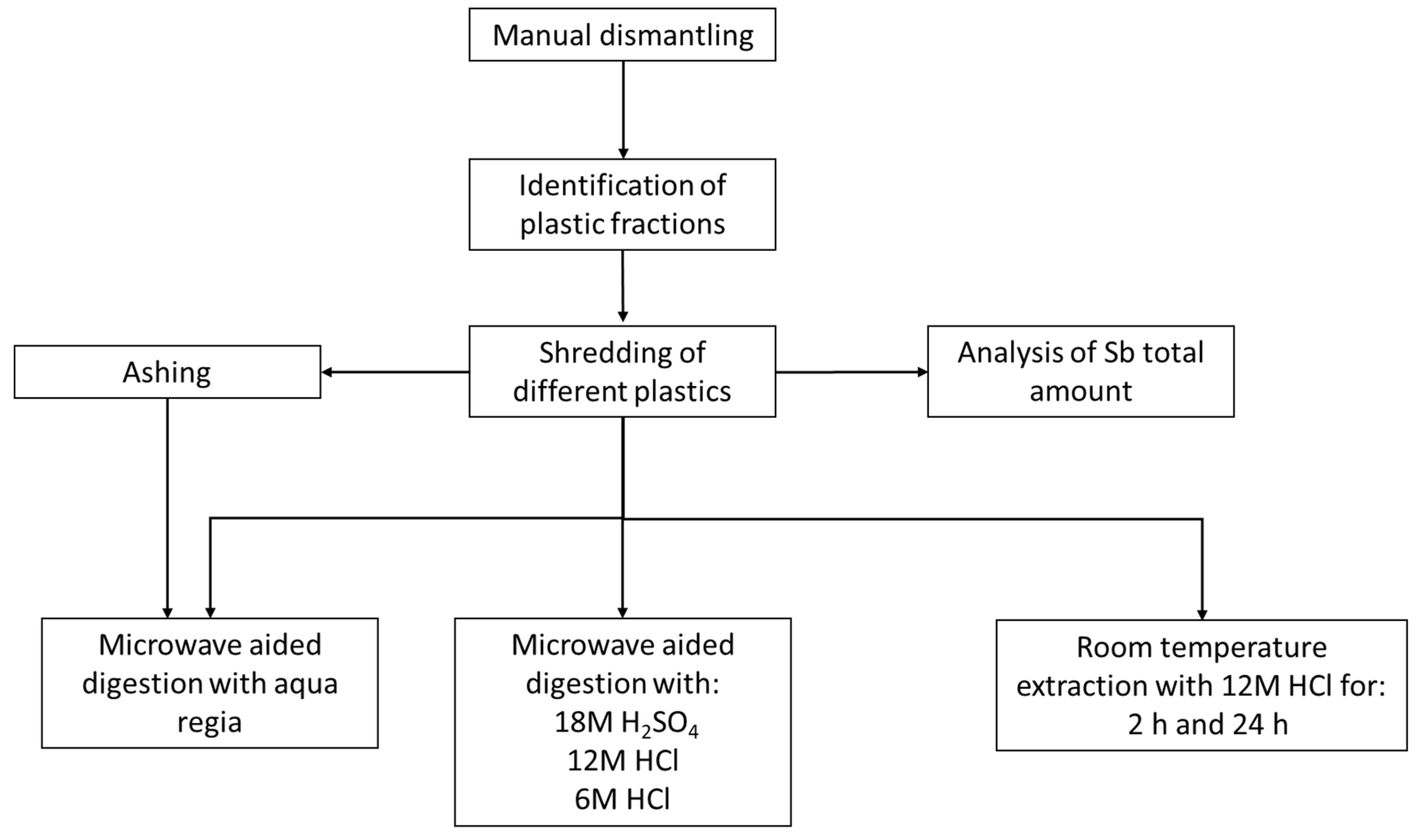
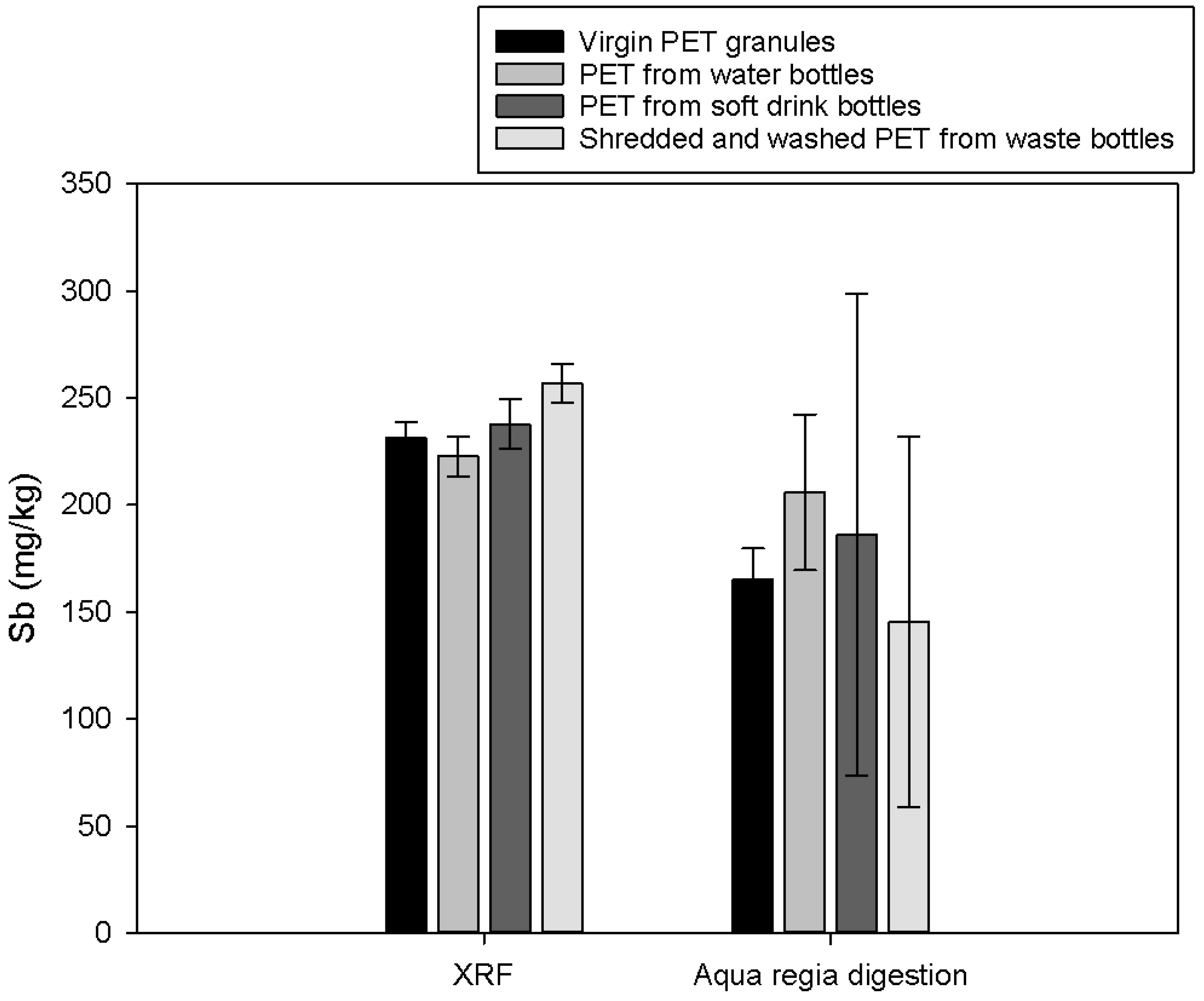
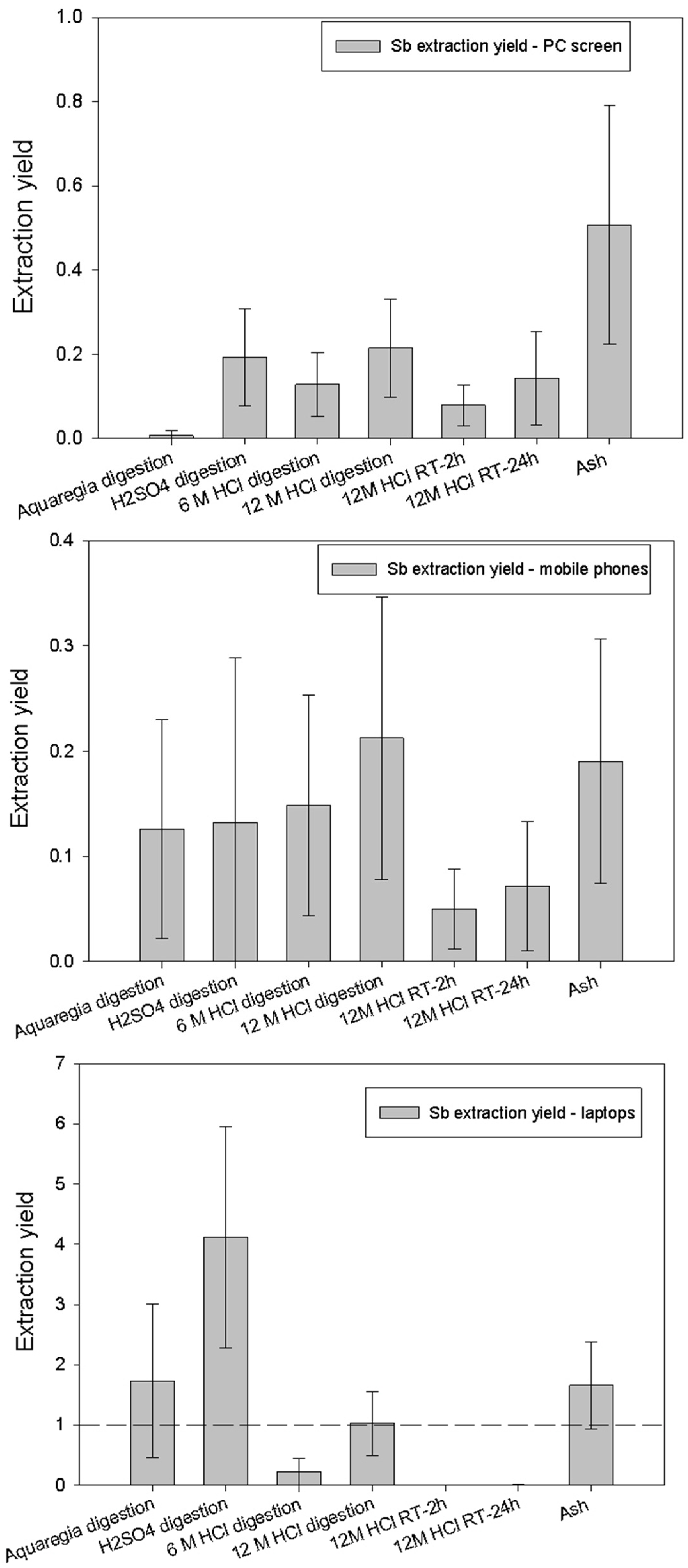
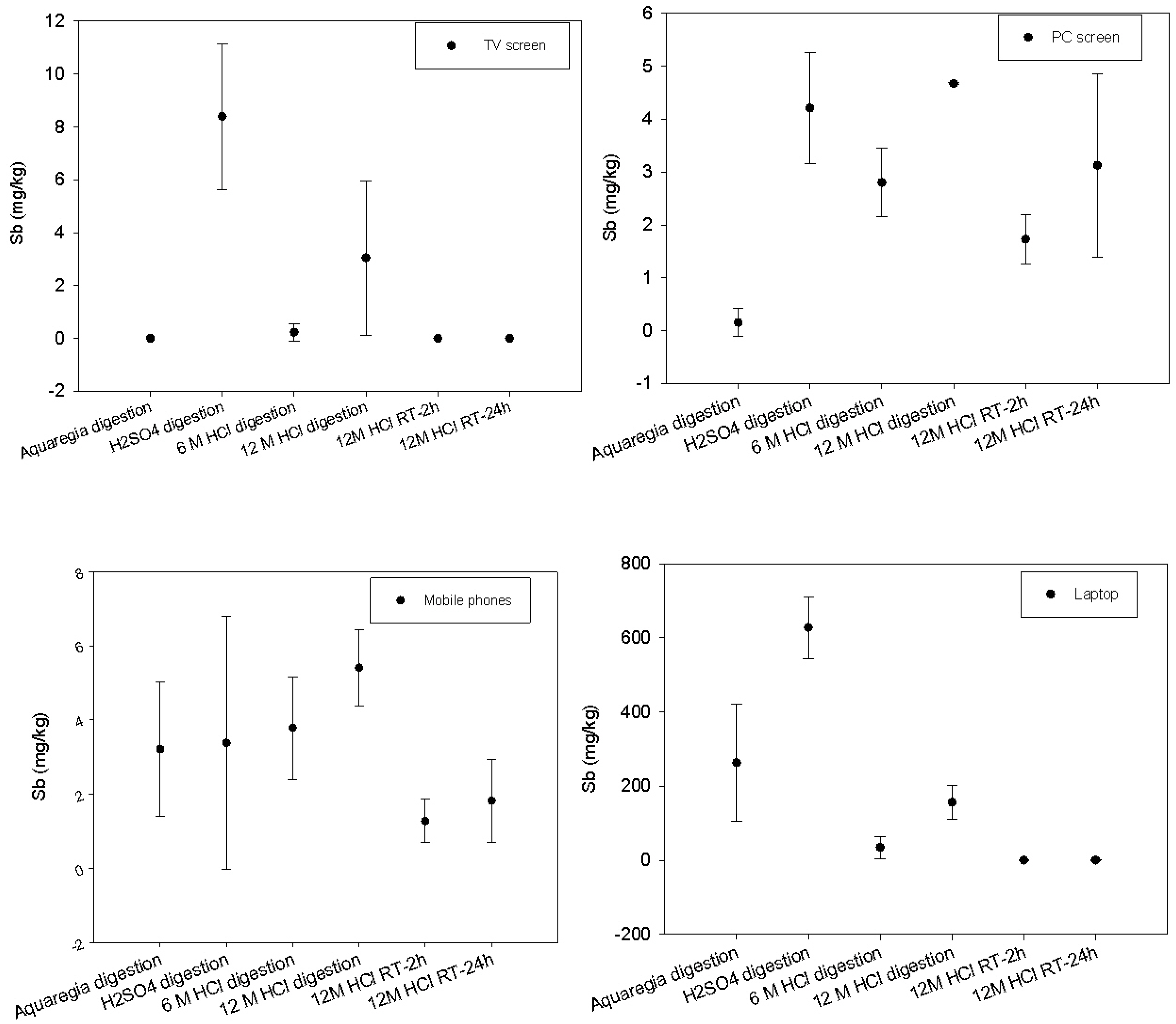
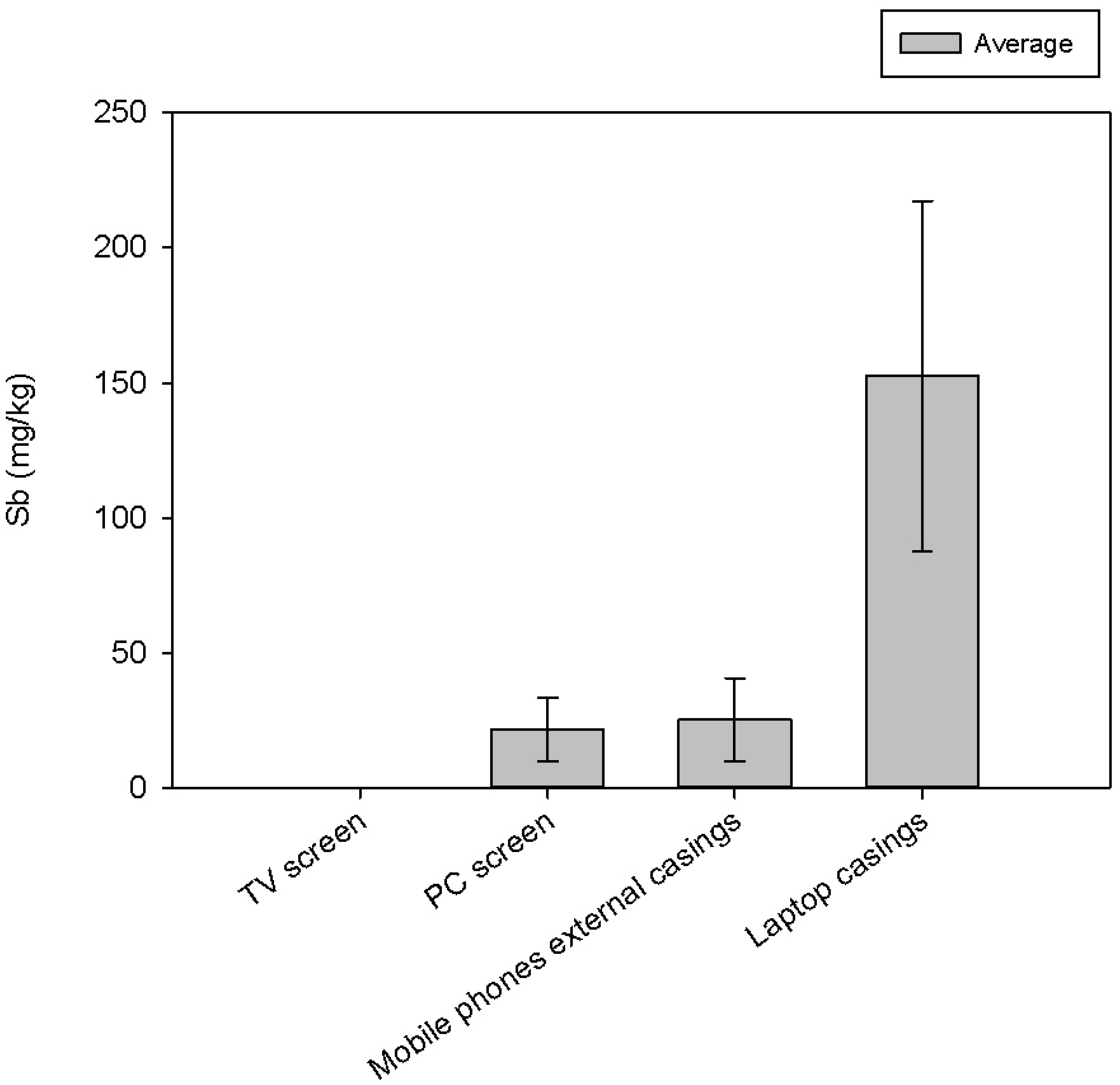
In this study antimony concentration was analyzed in 30 plastic items (from polyethylene terephthalate (PET) bottles and e-waste) directly by X-ray fluorescence spectroscopy (XRF) spectroscopy. PET samples were digested in a microwave oven with aqua regia. The plastic components deriving from e-waste followed three parallel routes: 1. microwave digestion using different acids (aqua regia, 18 M H2SO4, 12 M HCl and 6 M HCl); 2. conversion into ash (at 600 °C) and then microwave digestion with aqua regia, and 3. extraction with 12 M HCl at room temperature for different durations (2 h and 24 h). Results showed that antimony extraction yields from PET were between 57% and 92%. Antimony extraction from e-waste plastics was more challenging: aqua regia was inefficient for poly (acrylonitrile butadiene styrene) (ABS) samples (extraction yield was about 20% only), while on a mixture of ABS and polycarbonate (PC), aqua regia, H2SO4 and HCl exhibited equivalent performances (~21%). Ashed samples returned yields ranging from 20% to over 50%. Room temperature extraction on e-waste plastics obtained lower extraction efficiencies, yet longer incubation durations lead to higher yields. In conclusion, the main challenge associated with antimony mining from plastic waste could be its heterogeneous composition; therefore, the development of reference analytical procedures is highly needed.
Keywords: antimony; e-waste; extraction; PET; plastic; recovery antimony; e-waste; extraction; PET; plastic; recovery