


Abstract
Pathogenic strains of Fusarium oxysporum are major soilborne fungal pathogens responsible for Fusarium wilt in tomato, leading to significant yield losses worldwide. This study evaluated the biocontrol potential of rhizospheric bacterial isolates from argan (Argania spinosa) and raspberry (Rubus idaeus) soils through an integrated approach combining in vitro screening, greenhouse validation, and phylogenetic analysis. A total of 27 bacterial isolates were screened for antifungal activity using dual culture assays, of which ten exhibited more than 50% inhibition of fungal growth. Selected isolates were further evaluated for volatile organic compound (VOC)-mediated inhibition. Despite strong in vitro performance for several isolates, greenhouse experiments revealed that antifungal activity in vitro was not a reliable predictor of in planta efficacy. Among the tested isolates, BSA25, BSA23, and BSF8 significantly reduced disease severity and incidence under greenhouse conditions, with BSA25 achieving the greatest suppression. In addition to disease control, certain isolates promoted plant growth under pathogen stress, indicating dual functionality as plant growth-promoting rhizobacteria (PGPR). Molecular identification based on 16S rRNA gene sequencing and phylogenetic analysis (Neighbor-Joining, Kimura 2-parameter) revealed that the isolates belong to PGPR-associated genera, including Bacillus and Pseudomonas, while also highlighting functional variability among closely related taxa. Overall, this study demonstrates that multi-trait evaluation, integrating mechanistic screening and in planta validation, provides a more reliable framework for selecting effective biocontrol agents. The identified isolates, particularly BSA25, represent promising candidates for further evaluation for sustainable management of Fusarium wilt in tomato production systems.
1. Introduction
Tomato (Solanum lycopersicum L.), a member of the Solanaceae family, is one of the most widely cultivated and economically important horticultural crops worldwide, particularly in Mediterranean and subtropical regions. Its global importance stems not only from its high productivity and market value but also from its significant nutritional contribution to human diets. Tomato fruits are rich in essential minerals such as potassium and phosphorus, vitamins B and C, and bioactive compounds including lycopene, a carotenoid widely recognized for its antioxidant and anticancer properties [1,2]. Consequently, tomato production plays a pivotal role in global food security, public health, and agricultural economies.
Despite its agronomic importance, tomato cultivation is severely constrained by a wide range of biotic stresses, among which soilborne pathogens represent a major challenge. These pathogens infect plant roots and vascular tissues, leading to systemic infections that significantly reduce yield and crop quality [3,4]. Among them, Fusarium oxysporum f. sp. lycopersici (Fol), the causal agent of Fusarium wilt, is one of the most destructive diseases affecting tomato production worldwide. The pathogen penetrates the root system and colonizes the vascular tissues, impairing water and nutrient transport within the plant. Disease symptoms include chlorosis of lower leaves, vascular browning, progressive wilting, stunted growth, and ultimately plant death [5]. The persistence of Fol in soil, due to its ability to produce durable chlamydospores, makes it particularly difficult to eradicate, allowing it to survive for extended periods even in the absence of host plants [5,6].
Conventional management strategies for Fusarium wilt have largely relied on chemical fungicides and the deployment of resistant cultivars. However, these approaches are increasingly limited in effectiveness and sustainability. The intensive use of chemical pesticides has raised significant environmental and health concerns, including soil degradation, contamination of water resources, and adverse effects on non-target organisms [7]. In addition, the emergence of fungicide-resistant pathogen populations has compromised the long-term efficacy of chemical control [8]. Similarly, resistance breeding, while valuable, is often challenged by the genetic variability of the pathogen and the breakdown of resistance over time. These limitations have prompted a shift toward more sustainable and environmentally friendly disease management approaches, where biological control represents a key strategy [9].
In this context, biological control, which involves the use of beneficial microorganisms to suppress plant pathogens, has emerged as a promising alternative to chemical pesticides. Early studies demonstrated that rhizobacteria can colonize plant roots and enhance plant growth and yield, laying the foundation for the development of PGPR-based strategies in agriculture [10]. Various microbial groups, including bacterial PGPR and fungal endophytes, have demonstrated effectiveness against F. oxysporum in different crop systems [11,12]. PGPR colonize the rhizosphere and establish beneficial interactions with plant roots, contributing to plant health through a wide array of direct and indirect mechanisms [13,14]. Direct mechanisms include nutrient solubilization (such as phosphorus and potassium), biological nitrogen fixation, and the production of phytohormones including auxins and gibberellins, which stimulate plant growth and development [4,15]. Indirectly, PGPR suppress pathogens through the production of antimicrobial compounds, competition for nutrients and ecological niches, and the secretion of lytic enzymes such as chitinases and glucanases that degrade fungal cell walls [15,16,17].
One of the key mechanisms by which PGPR enhances plant defense is through the induction of systemic resistance (ISR), which primes the plant immune system to respond more rapidly and effectively to subsequent pathogen attack [18]. Additionally, many PGPR produce volatile organic compounds (VOCs) that can inhibit pathogen growth at a distance, representing an important, yet often underexplored, component of biological control [19,20]. Among the diverse PGPR taxa, species belonging to the genera Bacillus and Pseudomonas are among the most extensively studied due to their strong biocontrol potential and adaptability to a wide range of environmental conditions [20,21,22,23,24]. Bacillus species are notable for their ability to form endospores, enabling survival under adverse conditions, whereas Pseudomonas species are characterized by their metabolic versatility and efficient root colonization [20,24,25,26]. These genera are well known for producing antibiotics, siderophores, and VOCs that contribute to pathogen suppression and plant growth promotion [20,22,23,27,28].
Despite the extensive body of research supporting the efficacy of PGPR, a critical gap remains in the translation of in vitro screening results into consistent in planta performance. Many studies rely heavily on laboratory-based antagonism assays to identify promising isolates; however, these assays do not always accurately predict the effectiveness of microbial candidates under greenhouse or field conditions. The complex interactions occurring in the rhizosphere, including plant–microbe–pathogen dynamics and environmental variability, can significantly influence the outcome of biological control. As a result, isolates that exhibit strong antifungal activity in vitro may fail to confer effective disease suppression in planta, highlighting the need for integrated evaluation approaches that combine mechanistic screening with greenhouse validation.
Furthermore, the identification of locally adapted PGPR strains remains a key challenge in the development of effective biocontrol strategies. Rhizospheric environments associated with native or underexplored plant species represent valuable reservoirs of microbial diversity with potentially unique functional traits. In particular, argan (Argania spinosa), a native tree species adapted to arid and semi-arid environments, and raspberry (Rubus idaeus) constitute distinct ecological niches that may harbor beneficial microorganisms with enhanced stress tolerance and biocontrol capabilities. Recent studies have demonstrated that PGPR associated with argan can significantly enhance plant growth and development, highlighting the potential of this ecosystem as a source of effective microbial inoculants [29]. Exploring such environments may therefore facilitate the discovery of novel PGPR strains with improved performance under specific agroecological conditions. PGPR can suppress fungal pathogens through the production of lytic enzymes, including chitinases that degrade fungal cell walls [17]. We hypothesized that rhizosphere bacteria isolated from argan and raspberry soils exhibit antifungal activity against Fusarium oxysporum and suppress Fusarium wilt in tomato. Their antagonistic potential was evaluated using in vitro dual-culture and VOC assays. Greenhouse trials then assessed disease suppression and plant growth promotion in tomato plants.
In this context, the present study aims to isolate and characterize rhizospheric bacteria from argan and raspberry soils and evaluate their potential as biocontrol agents against F. oxysporum. Specifically, we (i) assessed the antifungal activity of isolated strains through in vitro dual culture and VOC-mediated assays, (ii) evaluated their efficacy in reducing disease incidence and severity under greenhouse conditions, and (iii) investigated their capacity to promote plant growth under pathogen-induced stress. By integrating mechanistic screening with ‘in planta’ validation, this study seeks to address the gap between laboratory-based assays and real-world performance, providing insights into the selection of effective PGPR candidates for sustainable tomato production systems.
2. Materials and Methods
2.1. Isolation of Rhizospheric Bacteria
Rhizospheric soil samples were collected from argan (Argania spinosa) and raspberry (Rubus idaeus) plants grown under natural conditions. Approximately 500 g of soil tightly adhering to the plant roots was carefully collected in sterile plastic bags, transported to the laboratory at 4 °C, and stored under sterile conditions at 4 °C until processing. All samples were processed within 24 h of collection.
Serial dilutions of soil suspensions were prepared in sterile physiological saline solution (0.85% NaCl), and aliquots (100 µL) were spread onto nutrient agar (NA) plates. Plates were incubated at 25 ± 2 °C for 24–48 h. Distinct bacterial colonies were selected based on morphological characteristics, purified by repeated streaking, and stored at 4 °C for short-term use and in glycerol stocks (20%) at −20 °C for medium-term preservation.
2.2. In Vitro Antifungal Activity (Dual Culture Assay)
The antagonistic activity of bacterial isolates against F. oxysporum (PX517311.1) was evaluated using a dual culture assay. A 5 mm diameter mycelial plug of actively growing F. oxysporum culture was placed at the center of potato dextrose agar (PDA) plates. Bacterial isolates were streaked at a fixed distance from the fungal plug.
Plates were incubated in a temperature-controlled incubator (Memmert GmbH, Schwabach, Germany; no humidity control) at 25 ± 2 °C for 7 days. Fungal growth inhibition was evaluated by measuring the radial growth of the pathogen in the presence of bacterial isolates and in the untreated control. The percentage inhibition of radial growth (PIRG) was calculated as follows:
where R1 is the radial growth of the control and R2 is the radial growth in the presence of the bacterial isolate. Each treatment was performed in triplicate.
Bacterial isolates demonstrating a percentage inhibition of radial growth exceeding 50% in the dual culture assay were selected to evaluate their volatile organic compound (VOC)-mediated antifungal activity and in vivo efficacy in greenhouse trials.
2.3. Volatile Organic Compound (VOC) Assay
The antifungal activity mediated by bacterial volatile organic compounds (VOCs) was evaluated using a sealed plate method. Bacterial isolates were inoculated on one half of a split Petri dish containing nutrient agar, while a mycelial plug of F. oxysporum was placed on PDA medium in the opposite compartment. The two halves were sealed together with parafilm to prevent gas exchange with the external environment and incubated at 25 ± 2 °C. Fungal growth was measured after 5–7 days, and inhibition percentages were calculated relative to control plates without bacterial inoculation. The percentage inhibition of radial growth (PIRG) was calculated as:
where Dc is the diameter growth of the control and Dt is the diameter growth in the presence of the bacterial isolate. Each treatment was conducted with three independent replicates.
2.4. Greenhouse Experiment and Plant Inoculation
Tomato seeds (Solanum lycopersicum L., cv. Campbell 33) were sown in germination trays containing a sand–peat substrate (1:1, v/v) and maintained under greenhouse conditions at 25 °C and 75% relative humidity under a 16 h light/8 h dark photoperiod.
For bacterial inoculum preparation, each bacterial isolate was subcultured on fresh nutrient agar and incubated at 28 °C for 48 h. Bacterial suspensions were prepared and adjusted to 109 CFUmL−1 by measuring the optical density of the suspension at 600 nm (OD600) using a spectrophotometer.
For fungal inoculum preparation, a 7-day-old culture of F. oxysporum was flooded with 10 mL of sterile distilled water supplemented with 0.05% Tween 80. Conidia were dislodged by gently scraping the fungal colony surface with a sterile platinum loop, and filtered through sterile gauze, and the spore concentration was ad-justed to 108 spores mL−1.
For the greenhouse experiment, a sand–peat substrate (2:1, v/v) was first inoculated with the bacterial suspension to obtain a final concentration of 108 CFU g−1 soil. After 24 h, the same substrate was inoculated with the F. oxysporum suspension (106 spores g−1 soil). Tomato seedlings were then transplanted into 2 L pots containing the treated substrate. Control plants received the pathogen inoculum without bacterial treatment. Each treatment consisted of 15 plants arranged in a completely randomized design, with three biological replicates of five plants each. Plants were irrigated every two days and fertilized weekly with a balanced N–P–K fertilizer (20–20–20).
2.5. Disease Assessment
Disease incidence and severity were assessed 27 days after pathogen inoculation. Disease incidence (%) was calculated as the percentage of infected plants per treatment.
Disease severity (%) was assessed based on visual symptom scoring (0–5 rating scale) (0 = no visible symptoms; 1 = 1–20% of leaves showing yellowing and/or wilting; 2 = 21–40%; 3 = 41–60%; 4 = 61–80%; and 5 = 81–100% of leaves affected by yellowing and/or necrosis, generally accompanied by plant death) [30]. Mean values and standard deviations were calculated from replicate measurements. Disease severity reduction (DSR) relative to the control was determined using the following equation:
where Sc the severity in control plants and St the severity in treated plants.
2.6. Plant Growth Promotion (PGPR) Assessment
Plant growth promotion and Fusarium wilt incidence were evaluated in the same greenhouse experiment using the same plants and treatments described above. The experiment followed a completely randomized design with 15 plants per treatment. Growth parameters were monitored over a four-week period. Plant height was measured weekly from the base of the stem to the apical meristem, and cumulative growth was calculated relative to the initial measurement. At the end of the experiment, root length and fresh biomass of roots and shoots were recorded. Dry biomass was determined after oven-drying plant material at 65 °C until constant weight.
2.7. Molecular Identification and Phylogenetic Analysis
Selected bacterial isolates exhibiting representative phenotypic and biocontrol traits were subjected to molecular identification based on 16S rRNA gene sequencing. Bacterial cultures were grown in 5 mL of LB medium and incubated at 30 °C for 18 h with shaking at 150 rpm in an orbital shaker-incubator (DZG Science, Hangzhou, China). Genomic DNA was extracted using the DNeasy Blood and Tissue Kit (Canvax Biotech S.L., Córdoba, Spain), following the manufacturer’s instructions. The 16S rRNA gene was amplified by polymerase chain reaction (PCR) using the universal primers FD1 (5′ AGAGTTT-GATCATGGCTCAG-3′) and RD1 (5′-AAGGAGGTGATCCAGCCGCA-3′) [31]. The PCR amplification program consisted of an initial denaturation at 94 °C for 5 min (1 cycle), followed by 35 cycles of denaturation at 94 °C for 30 s, annealing at 56 °C for 30 s, and extension at 72 °C for 30 s, with a final extension at 72 °C for 5 min. PCR products were verified by agarose gel electrophoresis and purified using Ex-oSAP-IT™ PCR Product Cleanup Reagent (Thermo Fisher Scientific, Waltham, MA, USA) according to the manufacturer’s protocol. Purified amplicons were sequenced using the Sanger method with the BigDye™ Ter-minator v3.1 Cycle Sequencing Kit and sequencing reactions were analyzed on an Applied Biosystems SeqStudio Genetic Analyzer. The obtained sequences were edited and assembled, then compared against the NCBI GenBank database using the BLASTn algorithm (version 2.16.0; https://blast.ncbi.nlm.nih.gov/Blast.cgi) to identify closely related taxa.
For phylogenetic analysis, reference sequences corresponding to the closest BLAST hits were retrieved from the GenBank database. Multiple sequence alignment (MSA) was performed using MAFFT (v7.526) with default parameters. The aligned sequences were imported into MEGA 12 software (v12.1) [32] for phylogenetic reconstruction. A Neighbor-Joining (NJ) tree was constructed based on genetic distances calculated using the Kimura 2-parameter (K2P) model. The reliability of the inferred tree topology was evaluated using bootstrap analysis with 1000 replicates. The resulting phylogenetic tree was visualized and annotated to determine the taxonomic placement of the bacterial isolates and to infer their evolutionary relationships with closely related reference strains.
Only the three highest-performing isolates identified through the integrated greenhouse evaluation (BSA25, BSA23, and BSF8) were selected for molecular identification because sequencing all 27 preliminary screening isolates was beyond the scope of the present study.
2.8. Data Processing and Statistical Analysis
All experimental data were processed and analyzed using Python (v3.10) [33] in a Jupyter Notebook environment (v7.5) [34], employing the libraries NumPy (v2.2) [35], pandas (v2.3) [36], SciPy (v1.15) [37], statsmodels (v0.14) [38], matplotlib (v3.10) [39], and seaborn (v0.13) [40]. Data preprocessing included cleaning, standardization, verification of missing values, and assessment of dataset consistency prior to statistical analysis.
In vitro antagonistic activity and VOC-mediated inhibition data were summarized as mean inhibition percentages for each bacterial isolate. Greenhouse disease incidence and severity data were analyzed using one-way analysis of variance (ANOVA). When significant differences were detected, Tukey’s honestly significant difference (HSD) post hoc test was applied to perform pairwise comparisons while controlling the family-wise error rate associated with multiple testing. When the assumptions of normality and homogeneity of variance were not satisfied, the non-parametric Kruskal–Wallis test was used as an alternative.
Plant growth data were analyzed using linear models and mixed-effects models to account for repeated measurements collected over time. To investigate the relationship between in vitro screening results and greenhouse performance, correlation analyses were performed between antifungal activity (dual-culture and VOC assays) and disease severity. Because greenhouse validation involved only a limited number of selected isolates, the correlation analyses should be interpreted cautiously and are intended to provide exploratory rather than definitive evidence.
To identify the most promising PGPR candidates, an integrated performance score was calculated using normalized values of in vitro antagonistic activity, VOC-mediated inhibition, disease severity, disease incidence, plant height, and biomass-related parameters. Disease severity and incidence were inversely scaled because lower values indicate better biocontrol performance. All variables were assigned equal weight because no prior biological evidence justified differential weighting.
2.9. Integration of Multi-Trait Data
A master dataset integrating in vitro activity, VOC inhibition, greenhouse disease outcomes, and plant growth parameters was constructed. This integrated approach allowed the identification of bacterial isolates combining strong biocontrol potential with plant growth-promoting effects.
Comparative and correlation analyses were conducted to assess the predictive value of in vitro assays for in planta performance.
3. Results
3.1. In Vitro Antagonistic Activity of Rhizospheric Bacteria
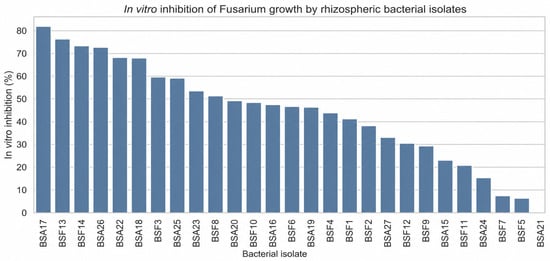
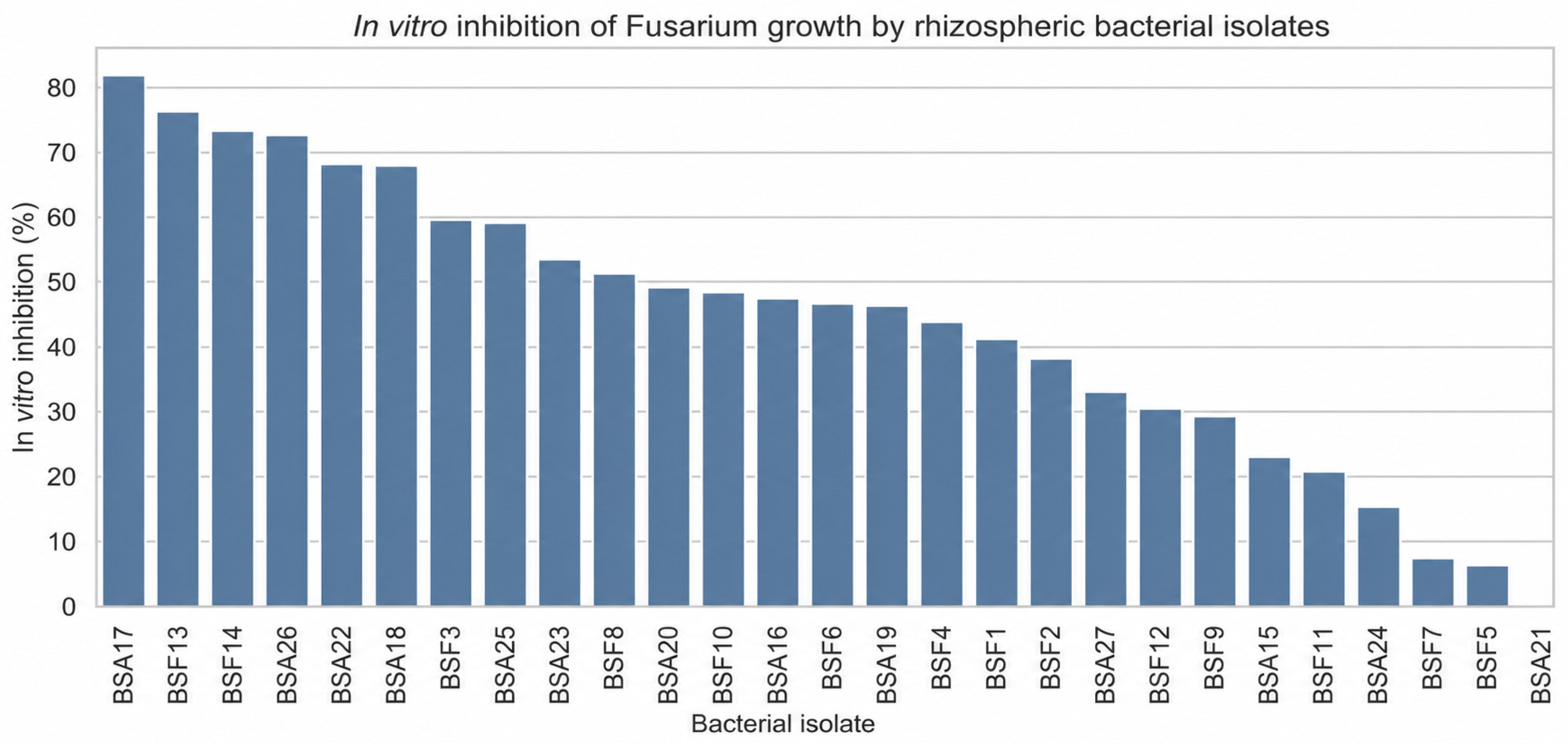
A total of 27 rhizospheric bacterial isolates were screened for their antagonistic activity against F. oxysporum using dual culture assays. Substantial variability in antifungal activity was observed among isolates (Figure 1).
Figure 1.
In vitro antagonistic activity of rhizospheric bacterial isolates against F. oxysporum. Bar plot showing the percentage inhibition of fungal radial growth by 27 bacterial isolates evaluated using dual culture assays. Isolates exhibited substantial variability in antifungal activity, ranging from weak (<10%) to strong (>80%) inhibition. Data represent mean values of three replicates.
The percentage inhibition of fungal growth ranged from less than 10% to over 80%, indicating a broad spectrum of antagonistic potential. Isolate BSA17 exhibited the highest inhibition (~81%), followed by BSF13, BSF14, and BSA26, all exceeding 70% inhibition. In contrast, several isolates, including BSF7 and BSF5, displayed minimal inhibitory effects (<10%).
A representative example of strong antifungal activity is shown in Figure S1 (Supplementary Materials), where isolate BSF13 exhibits clear inhibition of fungal growth.
Overall, these results demonstrate that while a subset of isolates exhibited strong antifungal activity under in vitro conditions, others showed limited or negligible effects, highlighting the diversity of antagonistic potential within the rhizospheric bacterial community.
Based on this result, bacterial isolates exhibiting more than 50% inhibition of Fusarium growth (BSA17, BSF13, BSF14, BSA26, BSA22, BSA18, BSF3, BSA25, BSA23, and BSF8) were selected for further evaluation.
3.2. Volatile-Mediated Antifungal Activity
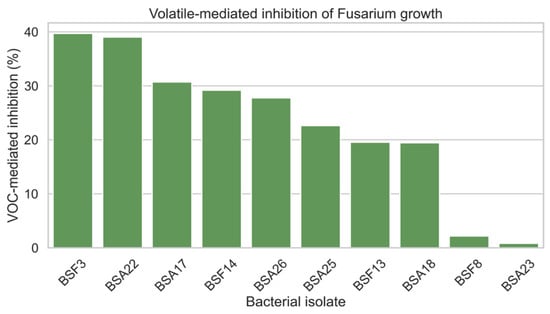
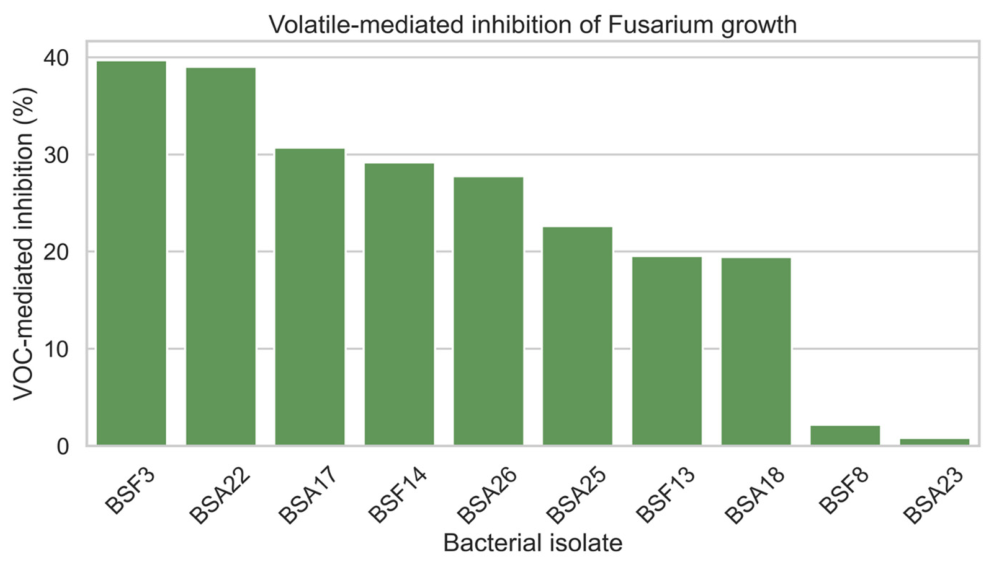
The ability of selected isolates to inhibit fungal growth via volatile organic compounds (VOCs) was evaluated using a sealed plate system (Figure 2). Additional representative dual culture assays are presented in Figure S2 (Supplementary Materials), illustrating variability in antagonistic activity among isolates.
Figure 2.
Volatile organic compound (VOC)-mediated inhibition of F. oxysporum by rhizospheric bacterial isolates. Bar plot showing the percentage inhibition of fungal radial growth caused by bacterial VOCs using the sealed plate assay.
VOC-mediated inhibition was generally lower than direct antagonism observed in dual culture assays. The highest VOC-mediated inhibition was recorded for BSF3 (~40%) and BSA22 (~38%), followed by BSA17 and BSF14. Several isolates exhibited weak or negligible VOC activity, including BSF8 and BSA23.
These results indicate that while VOC production contributes to antifungal activity in certain isolates, it represents a secondary or complementary mechanism rather than the primary mode of pathogen suppression.
3.3. Greenhouse Evaluation of Disease Suppression
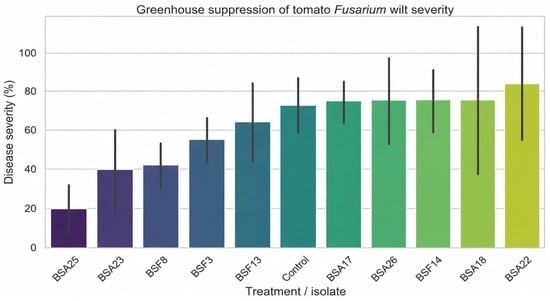
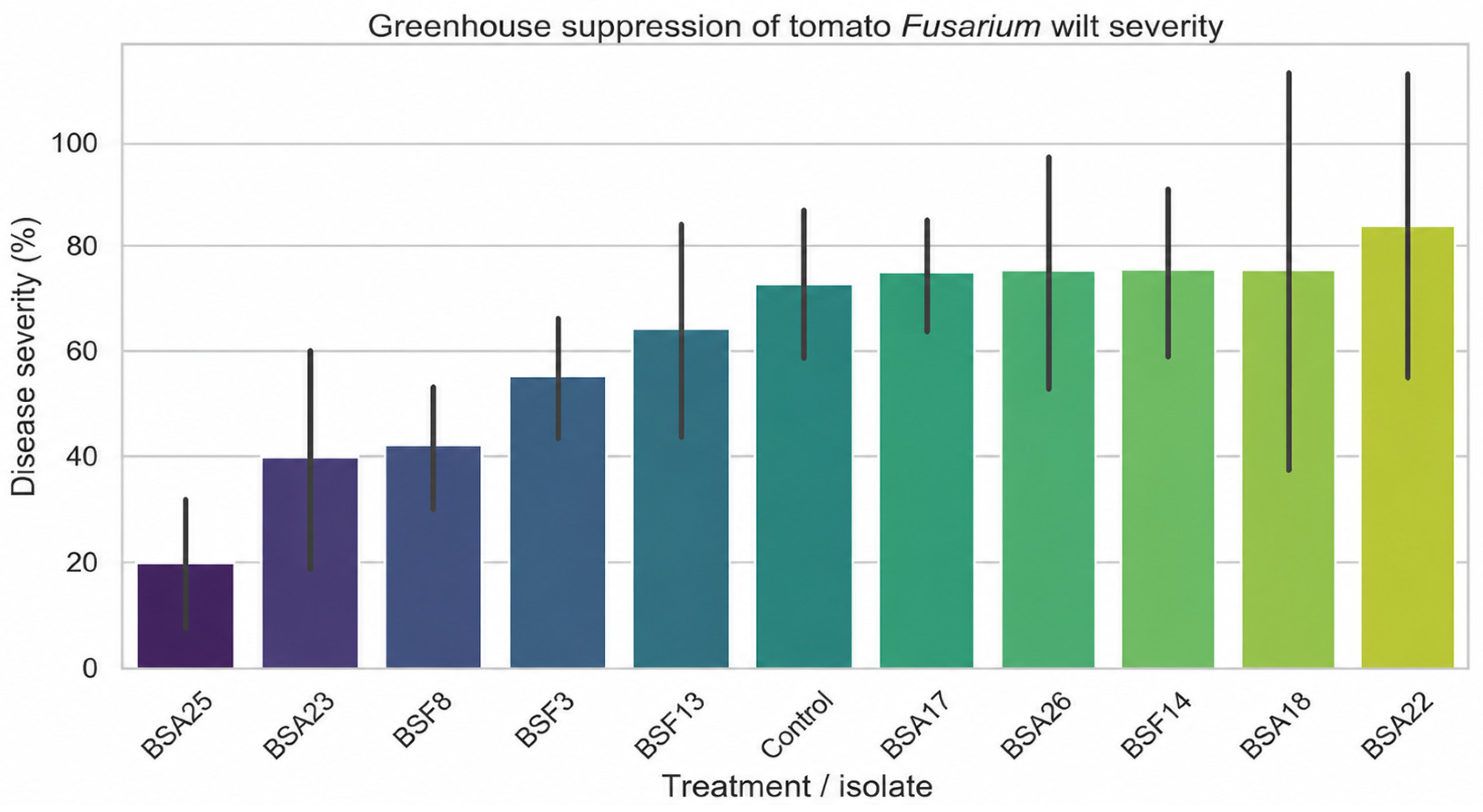
The efficacy of selected bacterial isolates in suppressing Fusarium wilt was evaluated under greenhouse conditions. Significant differences in disease severity were observed among treatments (Figure 3).
Figure 3.
Effect of rhizospheric bacterial isolates on Fusarium wilt severity under greenhouse conditions. Disease severity (%) of tomato plants inoculated with F. oxysporum and treated with selected bacterial isolates. Significant variation was observed among treatments, with certain isolates (e.g., BSA25, BSA23, BSF8) markedly reducing disease severity compared to the control. Error bars represent standard deviation (n = 3).
Plants treated with isolate BSA25 exhibited the lowest disease severity (~20%), representing a substantial reduction compared to the infected control (~73%). Similarly, BSA23 and BSF8 demonstrated strong disease suppression, with severity values of approximately 40% and 42%, respectively. In contrast, several isolates that showed strong antagonistic activity in vitro, such as BSA17 and BSF14, displayed limited effectiveness under greenhouse conditions, with disease severity levels comparable to or only slightly lower than the control.
Analysis of variance (ANOVA) confirmed significant differences among treatments (F11,24 = 3.02, p = 0.011). Post hoc Tukey’s HSD test identified BSA25 as significantly different from several treatments, supporting its superior disease suppression performance. A complementary non-parametric Kruskal–Wallis test did not detect statistically significant differences among treatments (H = 19.61, p = 0.051), although the observed trend was consistent with the ANOVA results.
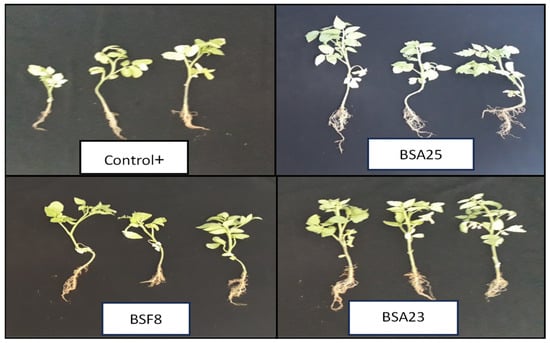
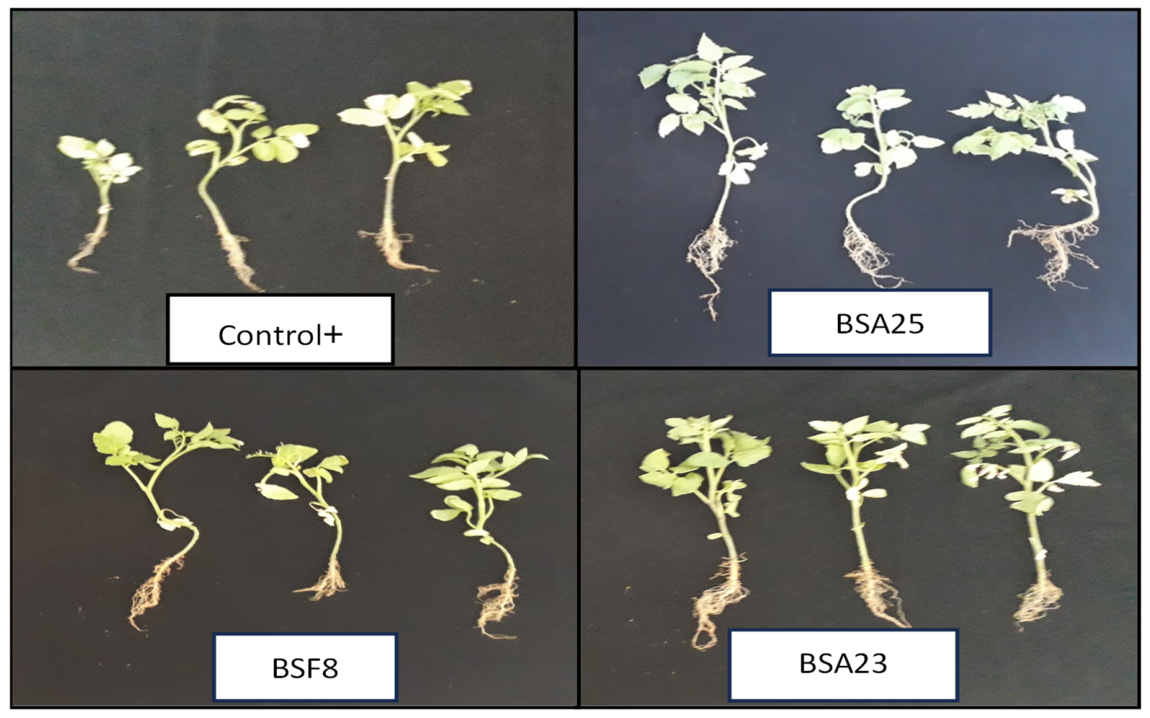
Visual assessment of plant responses further supported these findings (Figure 4). Tomato plants treated with BSA25, BSA23, and BSF8 exhibited improved vigor and reduced disease symptoms compared to the infected control. In contrast, control plants showed typical symptoms of Fusarium wilt, including stunted growth, chlorosis, and wilting.
Figure 4.
Visual assessment of tomato plant response to bacterial treatments under Fusarium wilt pressure. Representative images of tomato plants grown under greenhouse conditions following inoculation with F. oxysporum. Plants treated with BSA25, BSA23, and BSF8 exhibit improved vigor and reduced disease symptoms compared to the infected control (Control+), which shows severe wilting and chlorosis. These observations are consistent with quantitative disease severity and growth data presented in the main text.
Collectively, these results highlight a clear discrepancy between in vitro antifungal activity and in planta disease suppression, emphasizing the importance of greenhouse validation for reliable selection of effective biocontrol agents.
3.4. Disease Incidence Under Greenhouse Conditions
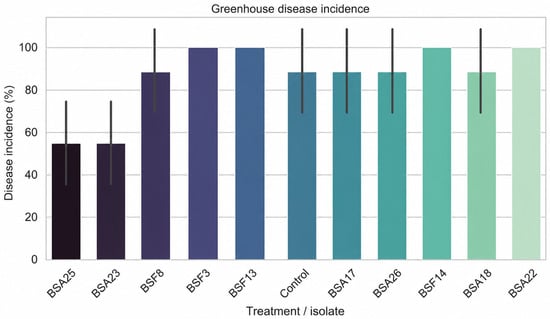
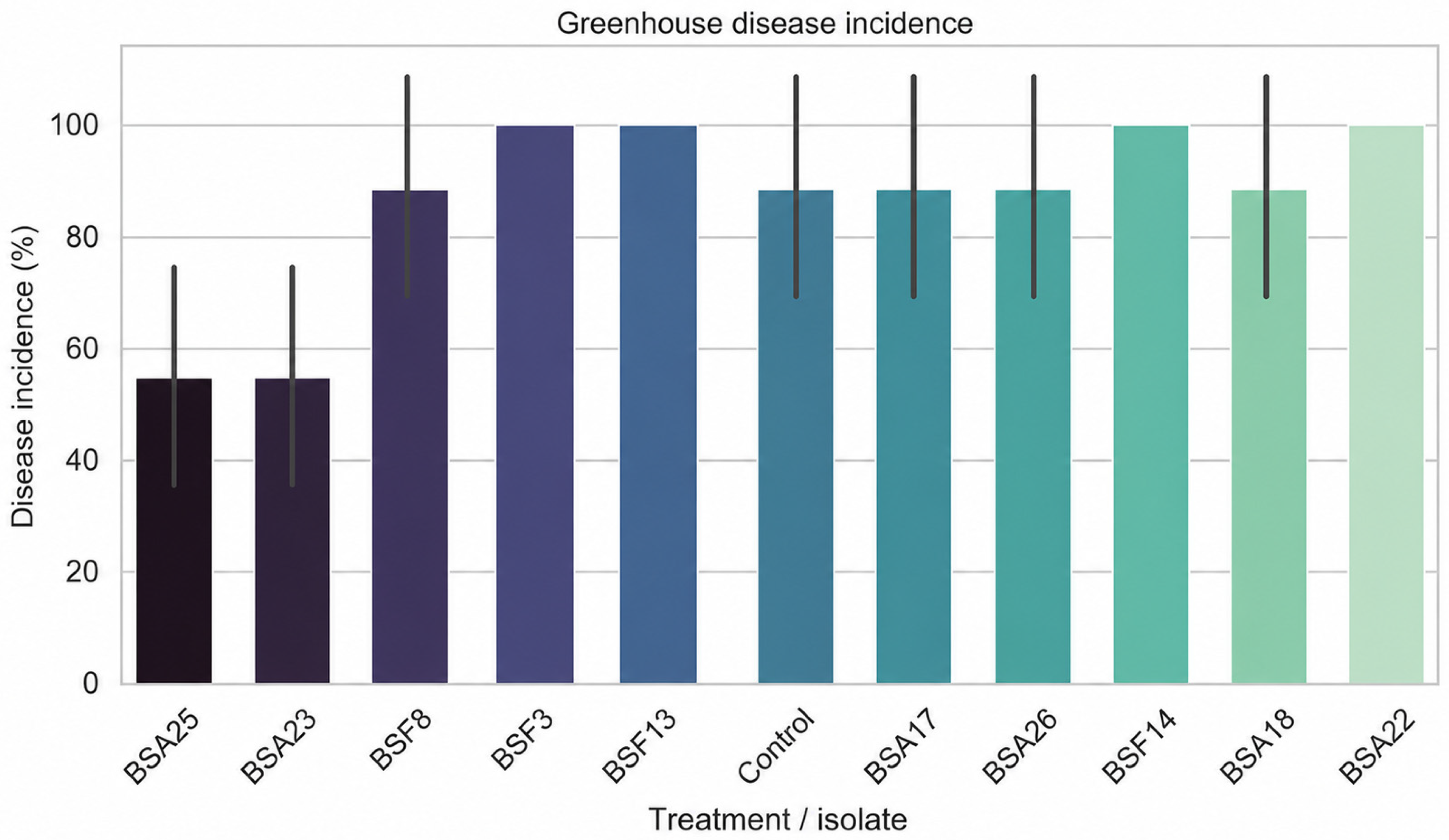
Disease incidence followed trends similar to severity but showed less differentiation among treatments (Figure 5). The lowest incidence values were observed in treatments BSA25 and BSA23 (~55%), whereas most other treatments exhibited high incidence levels approaching 90–100%, including the control. This suggests that while certain isolates may not completely prevent infection, they can significantly reduce disease progression and symptom severity.
Figure 5.
Disease incidence of tomato plants under different bacterial treatments in greenhouse conditions. Percentage of infected plants following inoculation with F. oxysporum under different bacterial treatments. While incidence remained high for most treatments, selected isolates (e.g., BSA25 and BSA23) reduced disease occurrence relative to the control. Error bars indicate standard deviation (n = 3).
3.5. Plant Growth Promotion Under Pathogen Stress
Plant growth parameters were monitored over a four-week period to assess the effect of bacterial treatments under pathogen pressure. Visual differences in early plant development among treatments are presented in Figure S3 (Supplementary Materials), supporting the observed variations in growth parameters.
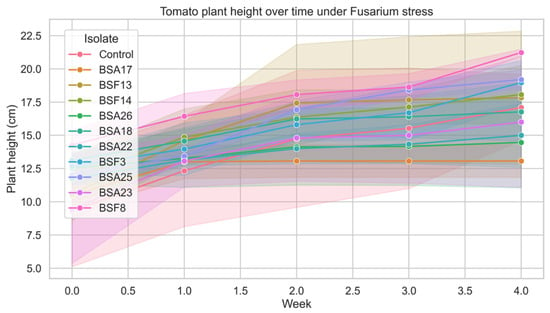
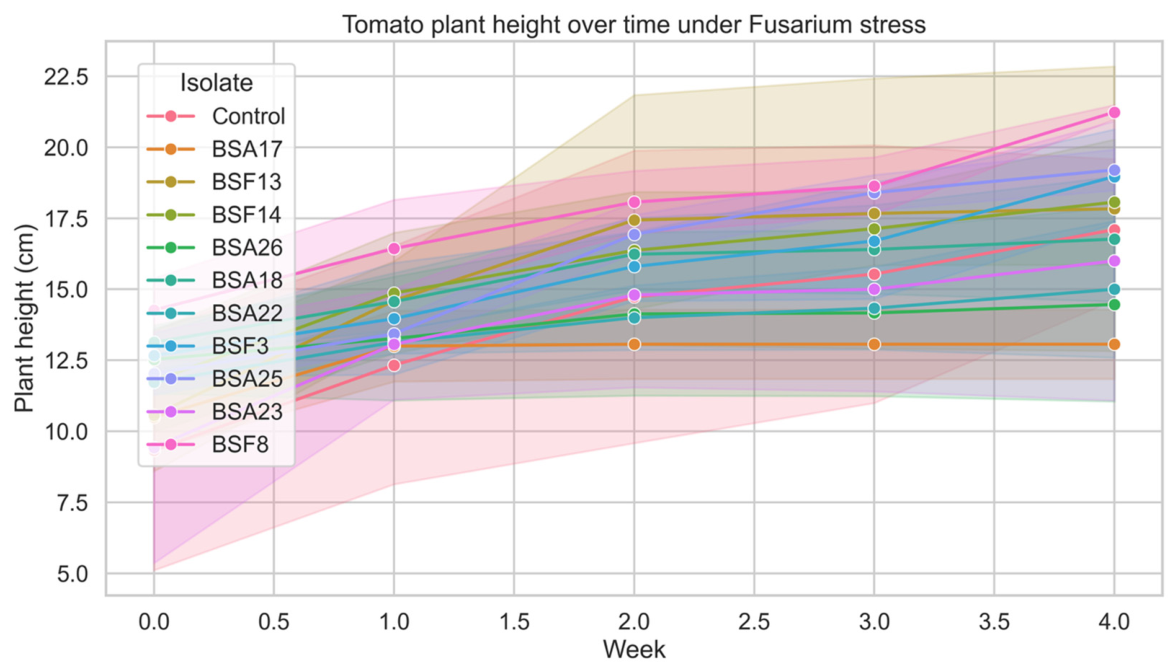
All treatments exhibited progressive increases in plant height over time; however, growth responses varied among bacterial isolates (Figure 6). Control plants showed steady growth throughout the experimental period, whereas several bacterial treatments, including BSA25, BSA23, and BSF8, maintained or slightly enhanced plant growth under pathogen stress. Cumulative growth analysis further revealed differences among treatments (Figure 6). Certain isolates, such as BSA23 and BSF13, exhibited relatively higher growth increments, while others showed limited growth promotion, indicating variability in PGPR performance.
Figure 6.
Temporal dynamics of tomato plant height under Fusarium stress. Line plot showing changes in plant height (cm) over a four-week period following pathogen inoculation and bacterial treatment. Growth responses varied among isolates, with some treatments maintaining or enhancing plant growth under stress conditions. Shaded areas represent variability across replicates.
At the final evaluation point (week 4), plant height differed among treatments (Figure S4). Isolates such as BSF8 and BSA25 achieved among the highest plant heights, suggesting their ability to mitigate the negative effects of pathogen infection on plant development. Overall, these results indicate that plant growth promotion under pathogen stress is isolate-dependent and not necessarily correlated with in vitro antifungal activity, highlighting the multifactorial nature of PGPR-mediated effects.
3.5.1. Plant Height Dynamics
All treatments exhibited progressive increases in plant height over time; however, growth rates varied among isolates (Figure 6). Control plants showed steady growth, reaching approximately 21 cm at week 4. Several bacterial treatments, including BSF8, BSA25, and BSF3, resulted in comparable or slightly enhanced growth. In contrast, some isolates, such as BSA26, exhibited reduced growth performance.
3.5.2. Cumulative Growth Gain
Cumulative growth analysis further highlighted differences among treatments (Figure S4). BSF13 and BSA23 showed relatively higher cumulative growth gains, while BSA26 and BSA17 displayed limited growth promotion. These results indicate that plant growth promotion under pathogen stress is isolate-dependent and does not necessarily correlate with antifungal activity.
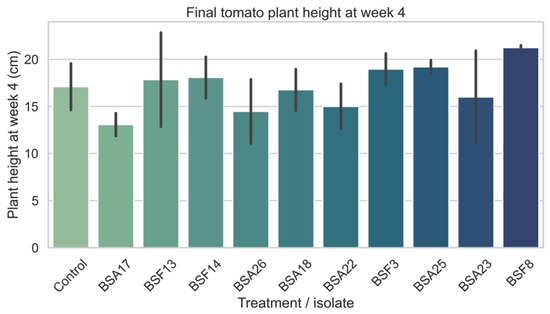
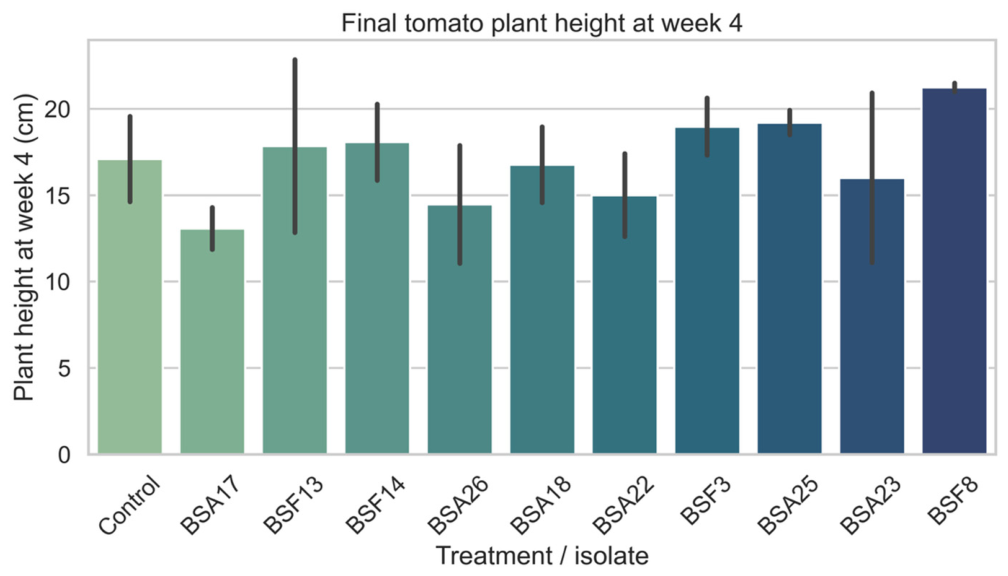
3.6. Final Plant Height at Week 4
At the final evaluation point, plant height varied significantly among treatments (Figure 7). The highest plant height was recorded for BSF8 (~21 cm), followed by BSA25 and BSF3. Notably, BSA25 combined strong disease suppression with relatively high plant growth, indicating its potential as a multifunctional PGPR candidate.
Figure 7.
Final tomato plant height at week 4 under different bacterial treatments. Bar plot comparing plant height at the final time point (week 4). Certain isolates (e.g., BSF8, BSA25, BSF3) exhibited enhanced growth compared to control plants, indicating potential plant growth-promoting effects under stress conditions. Error bars represent standard deviation (n = 3).
3.7. Relationship Between In Vitro Activity and Greenhouse Performance
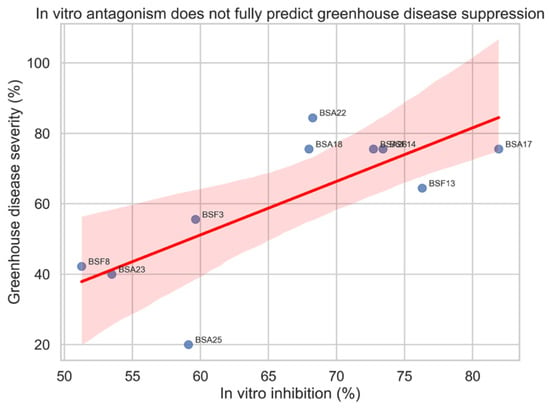
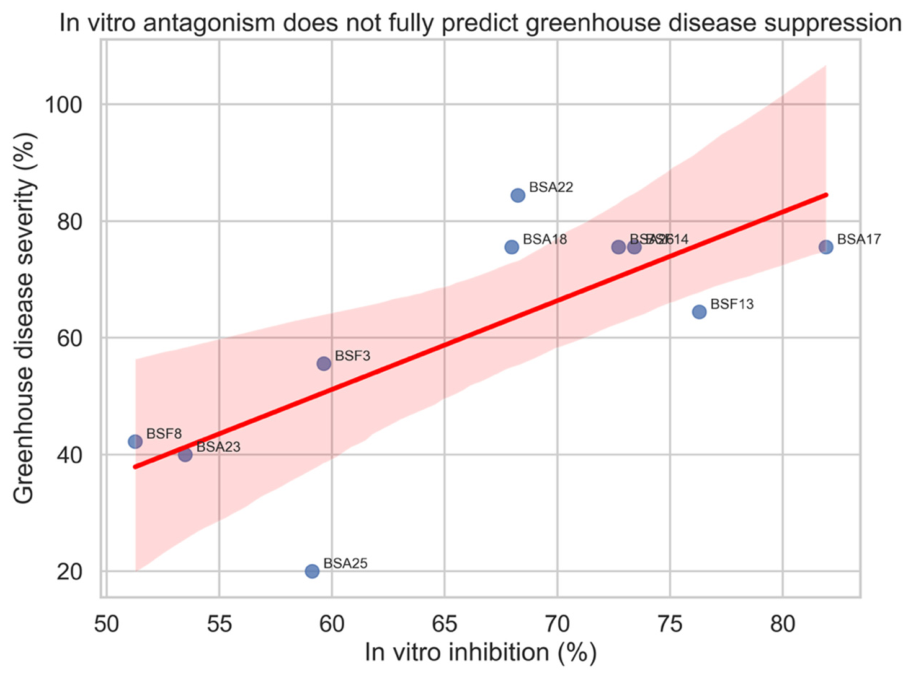
Correlation analysis revealed that in vitro antifungal activity was not a reliable predictor of disease suppression under greenhouse conditions (Figure 8). Although a positive trend was observed, the relationship was weak and highly variable, with several isolates deviating significantly from the regression line. For example, BSA25 exhibited moderate in vitro inhibition (~59%) but achieved the strongest disease suppression (~20% severity), whereas BSA17 showed high in vitro inhibition (~81%) but poor in planta performance.
Figure 8.
Relationship between in vitro antifungal activity and greenhouse disease severity. Scatter plot showing the correlation between in vitro inhibition (%) and disease severity (%) under greenhouse conditions. The weak and inconsistent relationship indicates that in vitro antagonism does not reliably predict in planta disease suppression. The red line represents linear regression with confidence interval.
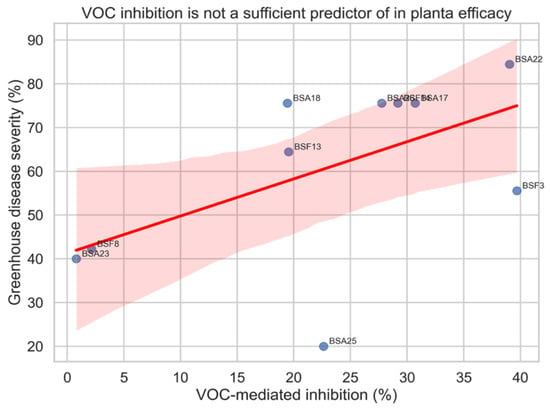
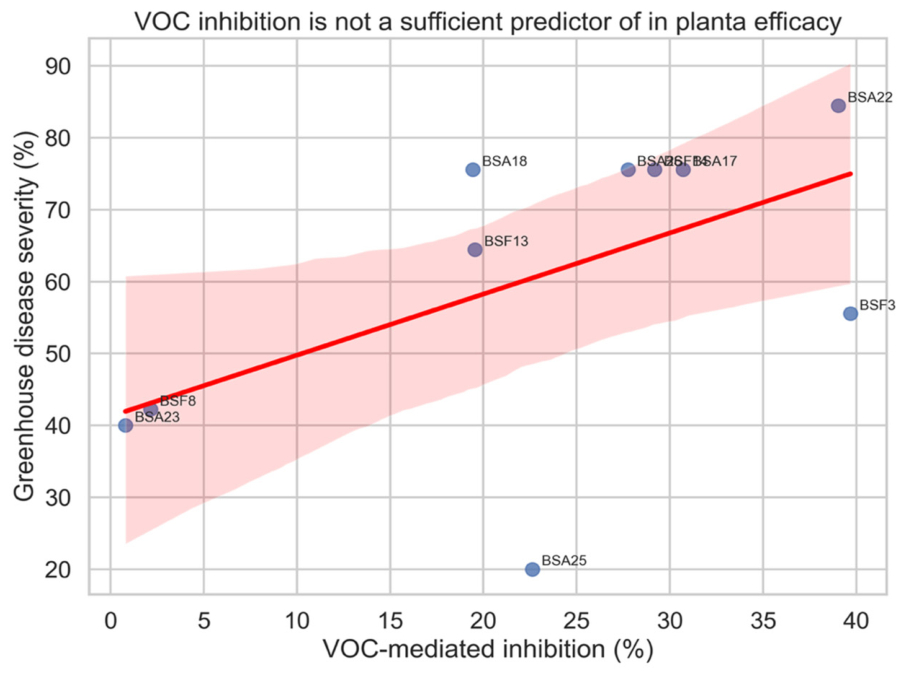
Similarly, VOC-mediated inhibition showed limited predictive value for greenhouse efficacy (Figure 9). Isolates with high VOC activity did not consistently correspond to lower disease severity, further emphasizing the complexity of plant–microbe–pathogen interactions.
Figure 9.
Relationship between VOC-mediated inhibition and greenhouse disease severity. Scatter plot illustrating the association between VOC-mediated antifungal activity and disease severity. The lack of a strong correlation suggests that VOC production alone is insufficient to predict in planta efficacy. The red line indicates linear regression with confidence interval.
3.8. Multi-Trait Integration and Candidate Selection
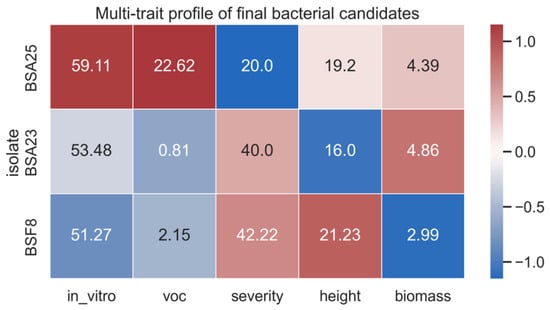
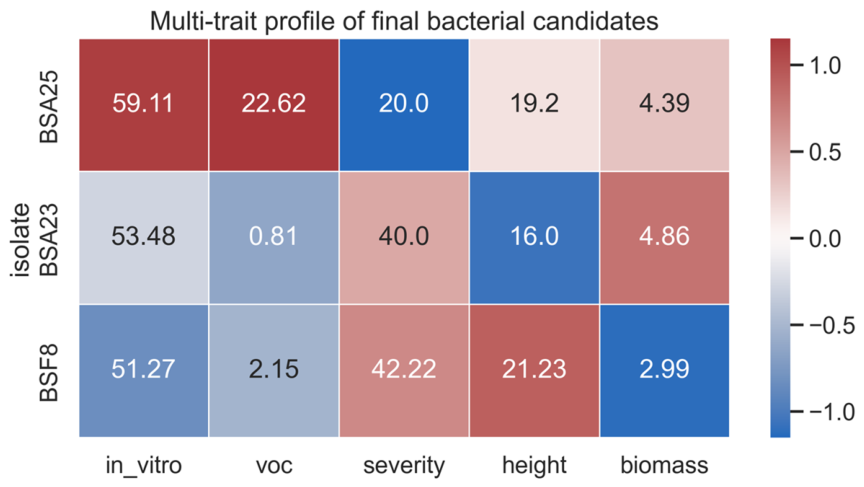
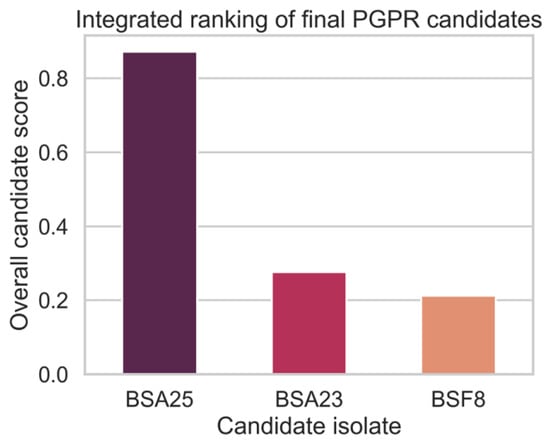
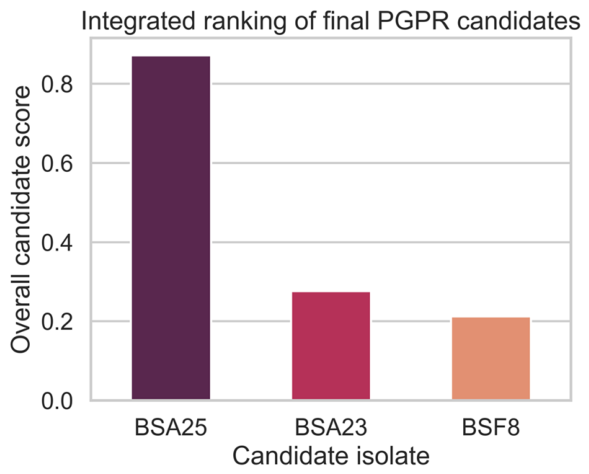
To identify the most promising bacterial candidates, a multi-trait analysis integrating antifungal activity, disease suppression, and plant growth parameters was performed (Figure 10). The heatmap analysis revealed distinct functional profiles among isolates. BSA25 was characterized by strong disease suppression and favorable growth traits despite moderate in vitro and VOC activity. In contrast, BSA23 and BSF8 exhibited balanced performance across multiple traits, including growth promotion and moderate disease control. Integrated ranking further confirmed BSA25 as the top-performing candidate, followed by BSA23 and BSF8 (Figure 11).
Figure 10.
Multi-trait profile of selected bacterial candidates. Heatmap summarizing normalized performance of selected isolates across multiple traits, including in vitro inhibition, VOC activity, disease severity, plant height, and biomass. The analysis highlights functional trade-offs and complementary traits among isolates, supporting multi-criteria selection.
Figure 11.
Integrated ranking of selected PGPR candidates based on multi-trait analysis. Bar plot representing the overall performance score of top candidate isolates derived from integrated analysis of antifungal activity, disease suppression, and plant growth promotion. BSA25 ranked highest, followed by BSA23 and BSF8, indicating their potential as effective biocontrol agents.
3.9. Molecular Identification and Phylogenetic Analysis
Only the three top-performing isolates identified during greenhouse evaluation were selected for molecular identification and phylogenetic analysis. Molecular identification of selected bacterial isolates was performed based on 16S rRNA gene sequencing. The obtained sequences were compared with reference sequences in the NCBI GenBank database using BLASTn, revealing high similarity with members of well-known plant growth-promoting genera, including Bacillus and Pseudomonas.
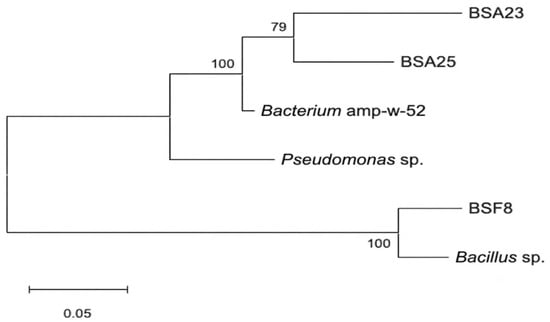
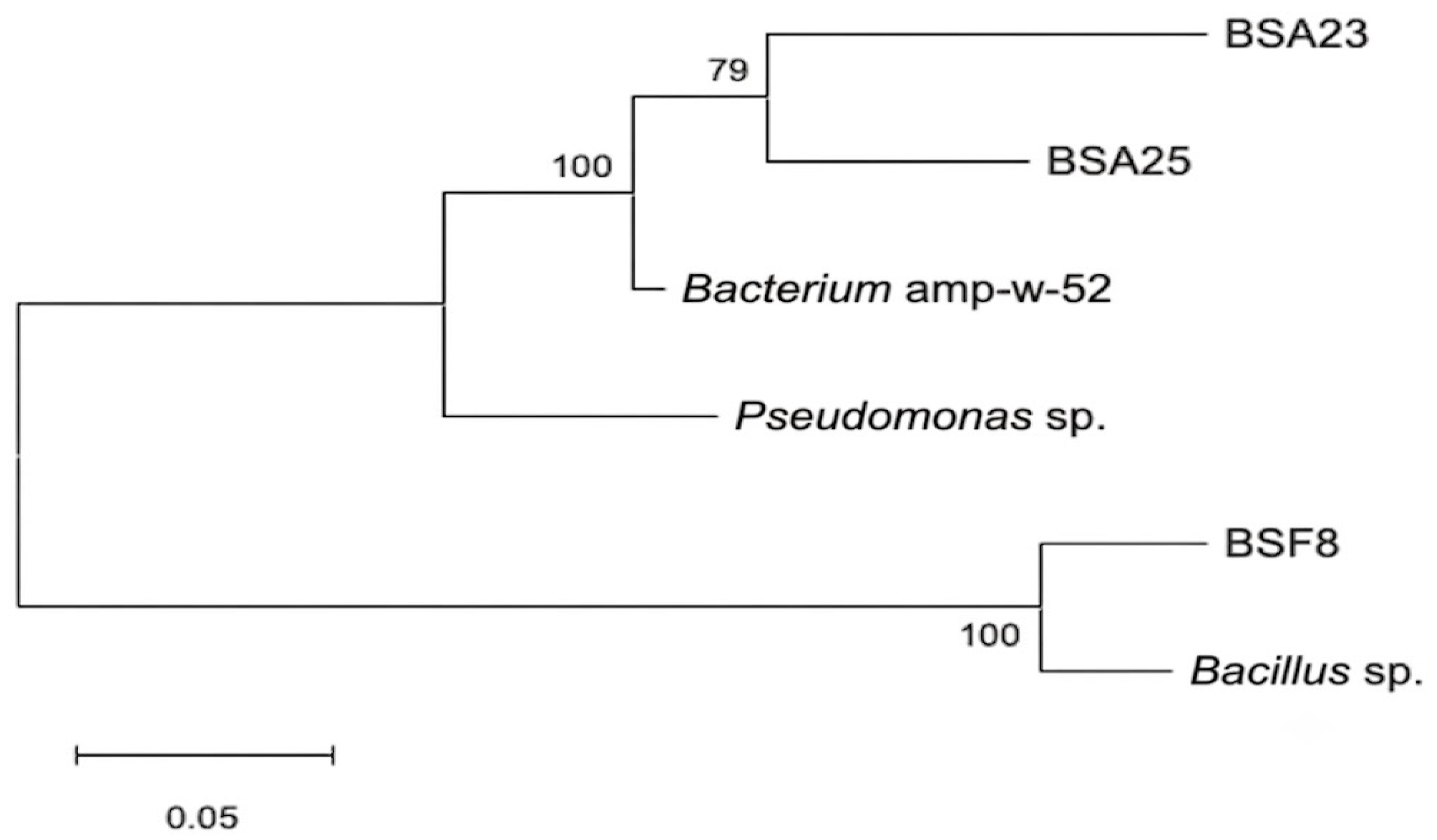
Phylogenetic relationships among the isolates and their closest relatives were inferred using the Neighbor-Joining (NJ) method based on Kimura 2-parameter (K2P) genetic distances with bootstrap analysis (1000 replicates) (Figure 12). The resulting tree revealed clear clustering patterns with moderate to strong bootstrap support.
Figure 12.
Neighbor-Joining phylogenetic tree based on 16S rRNA gene sequences of selected bacterial isolates and reference sequences retrieved from GenBank. Multiple sequence alignment was performed using MAFFT, and the tree was reconstructed in MEGA 12 using the Kimura 2-parameter model with 1000 bootstrap replicates. Bootstrap values are shown at branch nodes. The tree shows the taxonomic placement of BSA23 with Pseudomonas sp., BSF8 with Bacillus sp., and BSA25 near an unclassified bacterial lineage.
Isolate BSF8 clustered tightly with Bacillus sp., supported by a high bootstrap value (100), confirming its taxonomic affiliation within this genus. Similarly, isolate BSA23 was grouped within the Pseudomonas clade, consistent with BLAST-based identification.
In contrast, isolate BSA25 did not cluster within the Bacillus or Pseudomonas clades but was positioned closer to an unclassified bacterium (Bacterium amp-w-52), forming a distinct lineage with moderate bootstrap support (79). This phylogenetic placement suggests that BSA25 may represent a more divergent or less-characterized taxon.
Notably, the phylogenetic distribution of isolates did not fully correspond to their functional performance. Despite its distinct phylogenetic position, BSA25 exhibited the strongest disease suppression under greenhouse conditions. Conversely, isolates belonging to well-characterized PGPR genera displayed variable levels of biocontrol efficacy. These findings indicate that taxonomic affiliation alone is not sufficient to predict functional traits, highlighting the importance of integrating phylogenetic analysis with experimental validation in the selection of effective biocontrol agents.
4. Discussion
The present study demonstrates that rhizospheric bacterial isolates derived from argan and raspberry soils exhibit substantial variability in their ability to suppress F. oxysporum and promote tomato growth. Importantly, the results highlight that in vitro antagonistic activity alone is not a reliable predictor of in planta biocontrol efficacy, emphasizing the need for integrative screening approaches.
4.1. Variability in Antagonistic Potential Among Isolates
The dual culture assays revealed a wide range of antifungal activity among the tested isolates, with inhibition values spanning from negligible to over 80%. This variability reflects the functional diversity of rhizospheric microbial communities and is consistent with previous studies reporting heterogeneous biocontrol potential among PGPR populations [13,15,41].
Highly inhibitory isolates such as BSA17 and BSF13 likely exert their effects through the production of diffusible antimicrobial compounds, including antibiotics, lytic enzymes, and siderophores. However, the observed variability suggests that antagonistic activity is strain-specific and dependent on metabolic capabilities as well as environmental conditions.
4.2. Limited Predictive Power of In Vitro Assays
A central finding of this study is the weak relationship between in vitro antifungal activity and disease suppression under greenhouse conditions. While several isolates, such as BSA17 and BSF14, exhibited strong inhibition of F. oxysporum in dual culture assays, they did not translate into effective disease control in planta. In contrast, isolate BSA25 showed only moderate in vitro antagonism yet achieved the highest level of disease suppression under greenhouse conditions.
This discrepancy underscores the limitations of in vitro screening assays, which, although widely used to evaluate antagonistic potential fail to capture the complexity of plant–microbe–pathogen interactions in the rhizosphere. Similar inconsistencies between laboratory and in planta performance have been reported in previous studies [15,16,41], highlighting that antifungal activity alone is not a reliable predictor of biocontrol efficacy.
In vitro assays primarily assess direct antagonistic effects under controlled conditions, whereas in planta performance depends on multiple additional factors, including effective root colonization, ecological fitness in the rhizosphere, competition with native microbiota, and the ability to induce plant defense responses. Consequently, reliance solely on in vitro screening may lead to the selection of suboptimal candidates, emphasizing the need for integrative evaluation strategies that combine mechanistic assays with greenhouse or field validation. Because greenhouse validation was performed on a limited number of selected isolates, the correlation analyses should be interpreted cautiously, as the relatively small sample size reduces statistical power.
4.3. Role of VOCs in Biocontrol Activity
The contribution of volatile organic compounds (VOCs) to antifungal activity was also evaluated, revealing moderate inhibition levels for certain isolates. However, similar to direct antagonism, VOC-mediated inhibition showed limited correlation with greenhouse disease suppression.
This suggests that while VOCs may contribute to pathogen inhibition, they are unlikely to act as standalone mechanisms of biocontrol. Instead, VOC production may function synergistically with other traits, such as enzyme secretion or induced systemic resistance (ISR). Previous studies have shown that VOCs can modulate plant defense pathways, inhibit pathogen growth, and influence microbial community dynamics, but their effects are highly context-dependent [18,42,43,44,45,46,47].
4.4. Linking Phylogeny to Biocontrol Function
Phylogenetic analysis revealed that the selected isolates are affiliated with taxonomic groups widely recognized for their plant growth-promoting and biocontrol capabilities, particularly within the genera Bacillus and Pseudomonas. For example, isolate BSF8 clustered robustly within the Bacillus clade, while BSA23 grouped with Pseudomonas, both genera being well-documented for their roles in biological control and rhizosphere competence [25,26].
Members of the Bacillus genus are known for producing a wide range of bioactive compounds, including lipopeptides, antibiotics, and hydrolytic enzymes, as well as their capacity to form endospores, which enhances survival under adverse environmental conditions [48]. The effectiveness of Bacillus spp. in suppressing Fusarium wilt has been widely reported across different cropping systems [20,24,49,50], supporting their role as robust biocontrol agents. Similarly, Pseudomonas species are recognized for their metabolic versatility and ability to effectively colonize plant roots, contributing to pathogen suppression through multiple mechanisms, including competition, antibiosis, and induction of systemic resistance [4,18]. These findings are consistent with previous reports demonstrating the effectiveness of bacterial PGPR and other microbial groups, including fungal endophytes, in suppressing F. oxysporum across different host systems [11,12].
In contrast, isolate BSA25 did not cluster within these well-characterized PGPR groups but was positioned closer to an unclassified bacterial lineage. Interestingly, despite its distinct phylogenetic placement, BSA25 exhibited the strongest biocontrol performance under greenhouse conditions. This finding highlights that phylogenetic affiliation alone is not sufficient to predict functional traits and suggests that less-characterized or novel taxa may represent valuable sources of biocontrol agents.
Overall, the observed functional variability among isolates, including those within the same genus, underscores the importance of strain-level characterization. These results are consistent with previous studies demonstrating that closely related microbial strains can differ substantially in their biocontrol efficacy [15,16], emphasizing the need to integrate phylogenetic analysis with functional screening for the reliable selection of effective PGPR candidates.
4.5. Plant Growth Promotion Under Pathogen Stress
In addition to disease suppression, several isolates demonstrated the ability to maintain or enhance plant growth under Fusarium stress. Growth promotion varied among treatments, indicating that PGPR effects are isolate-dependent and influenced by multiple mechanisms, including phytohormone production, nutrient solubilization, and improved root development [4,14].
Notably, isolates such as BSA25 and BSF8 exhibited both effective disease suppression and growth promotion, suggesting a dual functional role. This dual activity is particularly advantageous in agricultural systems, as it contributes simultaneously to plant health and productivity. Such multifunctional behavior has been widely reported for PGPR, particularly within genera such as Bacillus and Pseudomonas, which are known to enhance plant growth while mitigating biotic stress [25,26,49,51].
However, the absence of a consistent relationship between growth promotion and antifungal activity further highlights the complexity of PGPR-mediated interactions. These effects are likely governed by a combination of direct and indirect mechanisms, including the modulation of plant hormonal balance and induction of systemic resistance [18].
The present findings are consistent with previous studies demonstrating the ability of PGPR to enhance plant growth and productivity in agricultural systems [29,52], reinforcing the importance of considering both growth-promoting and protective traits in the selection of effective biocontrol agents.
4.6. Importance of Multi-Trait Evaluation
The integration of multiple datasets—including in vitro antagonism, VOC-mediated inhibition, greenhouse disease suppression, and plant growth parameters—enabled a comprehensive assessment of bacterial isolate performance.
This multi-trait analysis identified BSA25 as the top-performing candidate, despite its only moderate performance in individual assays. This finding highlights a key limitation of single-metric screening approaches, which may overlook highly effective isolates when evaluated under more complex biological conditions. Such multifunctional behavior has been increasingly reported in PGPR, particularly in Bacillus species exhibiting multiple biocontrol traits, including pathogen inhibition, growth promotion, and stress tolerance [53,54].
These results underscore the importance of adopting holistic evaluation frameworks in PGPR research, as increasingly recommended for the identification of robust and field-relevant biocontrol agents [15,16,18]. By integrating multiple functional traits, this approach provides a more realistic assessment of isolate performance under plant–pathogen interaction scenarios.
Incorporating phylogenetic information further strengthens this framework. While taxonomic identification offers valuable insight into the ecological and functional potential of isolates, it is insufficient as a standalone predictor of efficacy [4,26]. The combination of phylogenetic placement with phenotypic and functional data enables a more reliable identification of promising PGPR candidates, particularly those capable of consistent performance under greenhouse or field conditions.
4.7. Implications for Sustainable Agriculture
The identification of effective PGPR isolates from underexplored rhizospheric environments, such as argan-associated soils, provides promising opportunities for the development of sustainable disease management strategies.
The use of locally adapted bacterial strains offers advantages in terms of ecological compatibility and resilience under specific agroecological conditions. Incorporating such biological agents into integrated pest management (IPM) systems could reduce reliance on chemical fungicides and contribute to environmentally friendly crop production. Similar disease suppression effects have been reported for other beneficial microorganisms, such as arbuscular mycorrhizal fungi (AMF), which can alleviate Fusarium wilt by modulating plant physiology and root exudate composition [55].
4.8. Limitations and Future Perspectives
While the present study provides valuable insights, several limitations should be acknowledged. First, experiments were conducted under controlled greenhouse conditions, and further validation under field conditions is necessary to confirm the effectiveness of selected isolates.
Second, the molecular identification and phylogenetic characterization of isolates will provide deeper insights into their taxonomic affiliations and functional potential. The inclusion of phylogenetic analysis will also allow comparison with previously characterized PGPR strains.
Future studies should also investigate the underlying mechanisms of action, including ISR induction, metabolite profiling, and root colonization dynamics, to better understand the functional basis of biocontrol efficacy.
5. Conclusions
This study demonstrates the significant potential of rhizospheric bacteria isolated from argan and raspberry ecosystems as effective biocontrol agents against F. oxysporum, a major constraint in tomato production. Among the 27 isolates screened, BSA25, BSA23, and BSF8 emerged as the most promising candidates, combining strong disease suppression with the ability to maintain or enhance plant growth under pathogen pressure.
A key finding is that in vitro antifungal activity and VOC-mediated inhibition were not reliable predictors of in planta performance. Notably, isolate BSA25 exhibited only moderate in vitro antagonism yet achieved the greatest reduction in disease severity under greenhouse conditions, highlighting the limitations of conventional screening approaches and the importance of evaluation under biologically relevant conditions.
Phylogenetic analysis indicated that effective isolates are affiliated with well-known PGPR-associated genera, including Bacillus and Pseudomonas, while also revealing functionally important isolates outside these groups. The observed variability among closely related strains confirms that taxonomic affiliation alone is insufficient to predict biocontrol efficacy, emphasizing the need for strain-level evaluation.
The integration of multiple datasets—including in vitro assays, VOC activity, greenhouse disease suppression, and plant growth responses—proved essential for identifying robust candidates. This multi-trait framework provides a more reliable strategy for selecting effective PGPR under realistic conditions.
Overall, this study highlights the importance of combining functional screening with phylogenetic characterization to improve the identification of effective biocontrol agents. The selected isolates, particularly BSA25, represent promising candidates for the future development of sustainable alternatives to chemical fungicides. Future research should focus on validating performance under field conditions, as demonstrated in previous studies using rhizospheric bacteria for the management of Fusarium wilt in tomato [56].
Supplementary Materials
The following supporting information can be downloaded at https://www.mdpi.com/article/10.3390/ijpb17080061/s1, Figure S1: In vitro antagonistic activity of bacterial isolate BSF13 against F. oxysporum. Dual culture assay showing fungal growth in control conditions (left) and inhibition in the presence of bacterial isolate BSF13 (right). Clear suppression of mycelial expansion indicates antifungal activity; Figure S2: Representative dual culture assay demonstrating the antifungal activity of volatile organic compounds (VOCs) produced by isolate BSF3. Comparison between control fungal growth (left) and reduced mycelial expansion in the presence of bacterial isolate BSF3 (right); Figure S3: Early growth response of tomato seedlings under different bacterial treatments. Representative images of tomato seedlings showing morphological differences among treatments, including Control+, BSA25, BSA23, and BSF8. Variations in root development and shoot vigor are visually observable, supporting quantitative growth measurements presented in the main text; Figure S4: Cumulative plant growth gain under Fusarium stress across treatments. Cumulative increase in plant height (cm) over time relative to initial measurements. Differences among treatments highlight variability in growth promotion capacity of bacterial isolates under pathogen pressure. Shaded regions represent variability among replicates.
Author Contributions
Conceptualization, R.Q.; methodology, S.B., S.E.A., S.C. and A.M.; formal analysis, M.A.K.; investigation, S.B., S.C., R.Q. and R.B.; writing—original draft preparation, M.A.K., R.Q. and S.C.; writing—review and editing, M.A.K., R.Q. and R.B.; supervision, R.Q. and R.B.; project administration, R.Q., R.B. and A.W. All authors have read and agreed to the published version of the manuscript.
Funding
This research received no external funding.
Data Availability Statement
The data presented in this study are available within the article and Supplementary Materials. Additional datasets generated and analyzed during the current study are available from the corresponding author on reasonable request.
Acknowledgments
The authors gratefully acknowledge the support and assistance of all staff and members of the Regional Center of Agricultural Research of Agadir (INRA) during this study.
Conflicts of Interest
The authors declare no conflicts of interest.
Abbreviations
The following abbreviations are used in this manuscript:
| Abbreviation | Definition |
| AMF | Arbuscular Mycorrhizal Fungi |
| ANOVA | Analysis of variance |
| BLAST | Basic Local Alignment Search Tool |
| CFU | Colony Forming Units |
| DSR | Disease severity reduction |
| DNA | Deoxyribonucleic Acid |
| FD1/RD1 | Universal 16S rRNA Primers |
| Fol | Fusarium oxysporum f. sp. Lycopersici |
| ISR | Induced Systemic Resistance |
| K2P | Kimura 2-Parameter |
| LB | Lysogeny Broth |
| MSA | Multiple Sequence Alignment |
| NJ | Neighbor-Joining |
| PCR | Polymerase Chain Reaction |
| PGPR | Plant Growth-Promoting Rhizobacteria |
| rRNA | Ribosomal Ribonucleic Acid |
| VOCs | Volatile Organic Compounds |
References
- ElShamey, E.; Zeng, Y.; Ding, Y.; Yang, J. Functional phytochemicals in tomatoes: Biosynthesis, gene regulation, and human health implications. Front. Plant Sci. 2025, 16, 1662388. [Google Scholar] [CrossRef] [Scilit] [PubMed]
- Abdel-Razek, M.A.; Abdelwahab, M.F.; Abdelmohsen, U.R.; Hamed, A.N. Phytochemical and Biological Biodiversity of Tomato (Solanum lycopersicum L.) (2010–2022). Mini-Rev. Med. Chem. 2025, 25, 1149–1185. [Google Scholar] [CrossRef] [Scilit] [PubMed]
- Meshram, S.; Adhikari, T.B. Microbiome-mediated strategies to manage major soil-borne diseases of tomato. Plants 2024, 13, 364. [Google Scholar] [CrossRef] [Scilit] [PubMed]
- Glick, B.R. Plant growth-promoting bacteria: Mechanisms and applications. Scientifica 2012, 2012, 963401. [Google Scholar] [CrossRef] [Scilit] [PubMed]
- Goncharov, A.A.; Glebova, A.A.; Tiunov, A.V. Trophic interactions between Fusarium species and soil fauna: A meta-analysis of experimental studies. Appl. Soil Ecol. 2020, 145, 103302. [Google Scholar] [CrossRef] [Scilit]
- Dean, R.; Van Kan, J.A.L.; Pretorius, Z.A.; Hammond-Kosack, K.E.; Di Pietro, A.; Spanu, P.D.; Rudd, J.J.; Dickman, M.; Kahmann, R.; Ellis, J.; et al. The Top 10 fungal pathogens in molecular plant pathology. Mol. Plant Pathol. 2012, 13, 414–430. [Google Scholar] [CrossRef] [Scilit] [PubMed]
- Aktar, M.W.; Sengupta, D.; Chowdhury, A. Impact of pesticides use in agriculture: Their benefits and hazards. Interdiscip. Toxicol. 2009, 2, 1–12. [Google Scholar] [CrossRef] [Scilit] [PubMed]
- Myresiotis, C.K.; Karaoglanidis, G.S.; Tzavella-Klonari, K. Resistance of Botrytis cinerea isolates from vegetable crops to anilinopyrimidine, phenylpyrrole, hydroxyanilide, benzimidazole, and dicarboximide fungicides. Plant Dis. 2007, 91, 407–413. [Google Scholar] [CrossRef] [Scilit] [PubMed]
- O’Connell, P.F. Sustainable agriculture—A valid alternative. Outlook Agric. 1992, 21, 5–12. [Google Scholar] [CrossRef] [Scilit]
- Suslow, T.V. Rhizobacteria of sugar beets: Effects of seed application and root colonization on yield. Phytopathology 1982, 72, 199–206. [Google Scholar] [CrossRef]
- Likhita, J.; Arya, M.; Singh, Y.; Tomar, M.; Jambhulkar, P.P.; Singh, A.; Joshi, V.; Choudhary, M.; Usha; Chaturvedi, S.K. Biocontrol potential of endophytic bacteria against Fusarium wilt pathogen (Fusarium oxysporum f. sp. ciceris) in chickpea. Front. Microbiol. 2026, 17, 1787705. [Google Scholar] [CrossRef] [Scilit] [PubMed]
- Abro, M.A.; Sun, X.; Li, X.; Jatoi, G.H.; Guo, L.D. Biocontrol potential of fungal endophytes against Fusarium oxysporum f. sp. Cucumerinum causing wilt in cucumber. Plant Pathol. J. 2019, 35, 598–608. [Google Scholar] [CrossRef] [Scilit] [PubMed]
- Bloemberg, G.V.; Lugtenberg, B.J.J. Molecular basis of plant growth promotion and biocontrol by rhizobacteria. Curr. Opin. Plant Biol. 2001, 4, 343–350. [Google Scholar] [CrossRef] [Scilit] [PubMed]
- Vessey, J.K. Plant growth promoting rhizobacteria as biofertilizers. Plant Soil 2003, 255, 571–586. [Google Scholar] [CrossRef] [Scilit]
- Saeed, Q.; Wang, X.; Haider, F.U.; Kucerik, J.; Mumtaz, M.Z.; Holatko, J.; Naseem, M.; Kintl, A.; Ejaz, M.; Naveed, M.; et al. Rhizosphere bacteria in plant growth promotion, biocontrol, and bioremediation of contaminated sites: A comprehensive review of effects and mechanisms. Int. J. Mol. Sci. 2021, 22, 10529. [Google Scholar] [CrossRef] [Scilit] [PubMed]
- Compant, S.; Duffy, B.; Nowak, J.; Clément, C.; Barka, E.A. Use of plant growth-promoting bacteria for biocontrol of plant diseases: Principles, mechanisms of action, and future prospects. Appl. Environ. Microbiol. 2005, 71, 4951–4959. [Google Scholar] [CrossRef] [Scilit] [PubMed]
- Krithika, S.; Chellaram, C. Isolation, screening, and characterization of chitinase-producing bacteria from marine wastes. Int. J. Pharm. Pharm. Sci. 2016, 8, 34–36. [Google Scholar]
- Pieterse, C.M.J.; Zamioudis, C.; Berendsen, R.L.; Weller, D.M.; Van Wees, S.C.M.; Bakker, P.A.H.M. Induced systemic resistance by beneficial microbes. Annu. Rev. Phytopathol. 2014, 52, 347–375. [Google Scholar] [CrossRef] [Scilit] [PubMed]
- Raza, W.; Yuan, J.; Ling, N.; Huang, Q.; Shen, Q. Production of volatile organic compounds by an antagonistic strain Paenibacillus polymyxa WR-2 in the presence of root exudates and organic fertilizer and their antifungal activity against Fusarium oxysporum f. sp. niveum. Biol. Control 2015, 80, 89–95. [Google Scholar] [CrossRef] [Scilit]
- Kamali, M.; Ahmadi, J.; Naeimi, S.; Guo, D. Characterization of Bacillus isolates from the rhizosphere of tomato suppressing Fusarium wilt disease. Acta Phytopathol. Entomol. Hung. 2019, 54, 53–68. [Google Scholar] [CrossRef] [Scilit]
- Qessaoui, R.; Lahmyed, H.; Ajerrar, A.; Furze, J.N.; Timothy, P.; Alouani, M.; Chebli, B.; Mayad, E.; Bouharroud, R. Rhizospheric solutions: Pseudomonas isolates counter Botrytis cinerea on tomato. Afr. Mediterr. Agric. J. AL Awamia 2021, 131, 50–72. [Google Scholar] [CrossRef]
- Qessaoui, R.; EL Aalaoui, M.; Chafiki, S.; Alouani, M.; Chabbi, N.; Ait Aabd, N.; Tahiri, A.; Bouharroud, R. Pseudomonas siderophores: Production, spectrophotometry detection and Botrytis suppression. Not. Bot. Sci. 2024, 16, 11555. [Google Scholar] [CrossRef] [Scilit]
- Qessaoui, R.; Chafiki, S.; Mahroug, A.; Chabbi, N.; El Assri, S.; Ajerrar, A.; Hallam, J.; Tahiri, A.; Ait Aabd, N.; Alouani, M.; et al. Harnessing the power of pseudomonas for sustainable agriculture: Biofertilization and biocontrol. Afr. Mediterr. Agric. J. AL Awamia 2025, 146, 67–89. [Google Scholar] [CrossRef]
- Devi, N.O.; Tombisana Devi, R.K.; Debbarma, M.; Hajong, M.; Thokchom, S. Effect of endophytic Bacillus and arbuscular mycorrhizal fungi (AMF) against Fusarium wilt of tomato caused by Fusarium oxysporum f. sp. lycopersici. Egypt. J. Biol. Pest Control 2022, 32, 1. [Google Scholar] [CrossRef] [Scilit]
- Kloepper, J.W.; Ryu, C.-M.; Zhang, S. Induced systemic resistance and promotion of plant growth by Bacillus spp. Phytopathology 2004, 94, 1259–1266. [Google Scholar] [CrossRef] [Scilit] [PubMed]
- Lugtenberg, B.; Kamilova, F. Plant-growth-promoting rhizobacteria. Annu. Rev. Microbiol. 2009, 63, 541–556. [Google Scholar] [CrossRef] [Scilit] [PubMed]
- Rahmoune, B.; Morsli, A.; Khelifi-Slaoui, M.; Khelifi, L.; Strueh, A.; Erban, A.; Kopka, J.; Prell, J.; Van Dongen, J.T. Isolation and characterization of three new PGPR and their effects on the growth of Arabidopsis and Datura plants. J. Plant Interact. 2017, 12, 1–6. [Google Scholar] [CrossRef] [Scilit]
- Qessaoui, R.; Bouharroud, R.; Furze, J.N.; El Aalaoui, M.; Akroud, H.; Amarraque, A.; Vaerenbergh, J.V.; Tahzima, R.; Mayad, E.H.; Chebli, B. Applications of new rhizobacteria Pseudomonas isolates in agroecology via fundamental processes complementing plant growth. Sci. Rep. 2019, 9, 12832. [Google Scholar] [CrossRef] [Scilit] [PubMed]
- Chabbi, N.; Chafiki, S.; Telmoudi, M.; Labbassi, S.; Bouharroud, R.; Tahiri, A.; Mentag, R.; El Amri, M.; Bendiab, K.; Hsissou, D.; et al. Plant-growth-promoting rhizobacteria improve seeds germination and growth of Argania spinosa. Plants 2024, 13, 2025. [Google Scholar] [CrossRef] [Scilit] [PubMed]
- Mahmoud, A.F. Evaluation of certain antagonistic fungal species for biological control of faba bean wilt disease incited by Fusarium oxysporum. J. Phytopathol. Pest Manag. 2016, 3, 1–14. [Google Scholar] [CrossRef] [Scilit]
- Edwards, U.; Rogall, T.; Blöcker, H.; Emde, M.; Böttger, E.C. Isolation and direct complete nucleotide determination of entire genes: Characterization of a gene coding for 16S ribosomal RNA. Nucleic Acids Res. 1989, 17, 7843–7853. [Google Scholar] [CrossRef] [Scilit] [PubMed]
- Stecher, G.; Suleski, M.; Tao, Q.; Tamura, K.; Kumar, S. MEGA 12.1: Cross-platform release for macOS and Linux operating systems. J. Mol. Evol. 2026, 94, 14–18. [Google Scholar] [CrossRef] [Scilit] [PubMed]
- Van Rossum, G.; Drake, F.L. Python 3 Reference Manual; CreateSpace: Scotts Valley, CA, USA, 2009. [Google Scholar]
- Kluyver, T.; Ragan-Kelley, B.; Perez, F.; Granger, B.; Bussonnier, M.; Frederic, J.; Kelley, K.; Hamrick, J.; Grout, J.; Corlay, S.; et al. Jupyter Notebooks—A publishing format for reproducible computational workflows. In Positioning and Power in Academic Publishing: Players, Agents and Agendas; Loizides, F., Schmidt, B., Eds.; IOS Press: Amsterdam, The Netherlands, 2016; pp. 87–90. [Google Scholar] [CrossRef] [Scilit]
- Harris, C.R.; Millman, K.J.; van der Walt, S.J.; Gommers, R.; Virtanen, P.; Cournapeau, D.; Wieser, E.; Taylor, J.; Berg, S.; Smith, N.J.; et al. Array programming with NumPy. Nature 2020, 585, 357–362. [Google Scholar] [CrossRef] [Scilit] [PubMed]
- McKinney, W. Data structures for statistical computing in Python. In Proceedings of the 9th Python in Science Conference, Austin, TX, USA, 28 June–3 July 2010; SciPy: Austin, TX, USA, 2010; pp. 56–61. [Google Scholar]
- Virtanen, P.; Gommers, R.; Oliphant, T.E.; Haberland, M.; Reddy, T.; Cournapeau, D.; Burovski, E.; Peterson, P.; Weckesser, W.; Bright, J.; et al. SciPy 1.0: Fundamental algorithms for scientific computing in Python. Nat. Methods 2020, 17, 261–272. [Google Scholar] [CrossRef] [Scilit] [PubMed]
- Seabold, S.; Perktold, J. Statsmodels: Econometric and statistical modeling with python. In Proceedings of the 9th Python in Science Conference, Austin, TX, USA, 28 June–3 July 2010; SciPy: Austin, TX, USA, 2010; pp. 92–96. [Google Scholar]
- Hunter, J.D. Matplotlib: A 2D graphics environment. Comput. Sci. Eng. 2007, 9, 90–95. [Google Scholar] [CrossRef] [Scilit]
- Waskom, M.L. Seaborn: Statistical data visualization. J. Open Source Softw. 2021, 6, 3021. [Google Scholar] [CrossRef] [Scilit]
- Boulahouat, S.; Cherif-Silini, H.; Silini, A.; Bouket, A.C.; Luptakova, L.; Alenezi, F.N.; Belbahri, L. Biocontrol efficiency of rhizospheric Bacillus against the plant pathogen Fusarium oxysporum: A promising approach for sustainable agriculture. Microbiol. Res. 2023, 14, 892–908. [Google Scholar] [CrossRef] [Scilit]
- Fiddaman, P.; Rossall, S. The production of antifungal volatiles by Bacillus subtilis. J. Appl. Bacteriol. 1993, 74, 119–126. [Google Scholar] [CrossRef] [Scilit] [PubMed]
- Ryu, C.-M.; Farag, M.A.; Hu, C.-H.; Reddy, M.S.; Wei, H.-X.; Paré, P.W.; Kloepper, J.W. Bacterial volatiles promote growth in Arabidopsis. Proc. Natl. Acad. Sci. USA 2003, 100, 4927–4932. [Google Scholar] [CrossRef] [Scilit] [PubMed]
- Bitas, V.; Kim, H.-S.; Bennett, J.W.; Kang, S. Sniffing on microbes: Diverse roles of microbial volatile organic compounds in plant health. Mol. Plant Microbe Interact. 2013, 26, 835–843. [Google Scholar] [CrossRef] [Scilit] [PubMed]
- Kai, M.; Effmert, U.; Piechulla, B. Bacterial–plant interactions: Approaches to unravel the biological function of bacterial volatiles in the rhizosphere. Front. Microbiol. 2016, 7, 108. [Google Scholar] [CrossRef] [Scilit] [PubMed]
- Wu, Y.; Zhou, J.; Li, C.; Ma, Y. Antifungal and plant growth promotion activity of volatile organic compounds produced by Bacillus amyloliquefaciens. MicrobiologyOpen 2019, 8, e00813. [Google Scholar] [CrossRef] [Scilit] [PubMed]
- Li, X.; Wang, X.; Shi, X.; Wang, B.; Li, M.; Wang, Q.; Zhang, S. Antifungal effect of volatile organic compounds from Bacillus velezensis CT32 against Verticillium dahliae and Fusarium oxysporum. Processes 2020, 8, 1674. [Google Scholar] [CrossRef] [Scilit]
- Saxena, A.K.; Kumar, M.; Chakdar, H.; Anuroopa, N.; Bagyaraj, D.J. Bacillus species in soil as a natural resource for plant health and nutrition. J. Appl. Microbiol. 2020, 128, 1583–1594. [Google Scholar] [CrossRef] [Scilit] [PubMed]
- Zhu, J.; Tan, T.; Shen, A.; Yang, X.; Yu, Y.; Gao, C.; Li, Z.; Cheng, Y.; Chen, J.; Guo, L.; et al. Biocontrol potential of Bacillus subtilis IBFCBF-4 against Fusarium wilt of watermelon. J. Plant Pathol. 2020, 102, 433–441. [Google Scholar] [CrossRef] [Scilit]
- Asrul, A. Potential of local Bacillus spp. isolates as wilt disease biocontrol agents for Fusarium oxysporum f. sp. cepae on Allium × wakegi. Biodiversitas 2023, 24, 4942. [Google Scholar] [CrossRef] [Scilit]
- Ramirez, V.; Martinez, J.; Bustillos-Cristales, M.D.; Cataneda-Antonio, D.; Munive, J.A.; Baez, A. Bacillus cereus MH778713 elicits tomato plant protection against Fusarium oxysporum. J. Appl. Microbiol. 2022, 132, 470–482. [Google Scholar] [CrossRef] [Scilit] [PubMed]
- Esitken, A.; Ercisli, S.; Karlidag, H.; Sahin, F. Potential use of plant growth-promoting rhizobacteria (PGPR) in organic apricot production. In Proceedings of the International Scientific Conference on Environmentally Friendly Fruit Growing; Tartu University Press: Polli, Estonia, 2005; pp. 90–97. [Google Scholar]
- Shah, R.; Amaresan, N.; Patel, P.; Jinal, H.N.; Krishnamurthy, R. Isolation and Characterization of Bacillus spp. endowed with multifarious plant growth-promoting traits and their potential effect on tomato (Lycopersicon esculentum) seedlings. Arab. J. Sci. Eng. 2020, 45, 4579–4587. [Google Scholar] [CrossRef] [Scilit]
- Dong, H.; Gao, R.; Dong, Y.; Yao, Q.; Zhu, H. Bacillus velezensis RC116 inhibits the pathogens of bacterial wilt and Fusarium wilt in tomato with multiple biocontrol traits. Int. J. Mol. Sci. 2023, 24, 8527. [Google Scholar] [CrossRef] [Scilit] [PubMed]
- Ren, L.; Zhang, N.; Wu, P.; Huo, H.; Xu, G.; Wu, G. Arbuscular mycorrhizal colonization alleviates Fusarium wilt in watermelon and modulates the composition of root exudates. Plant Growth Regul. 2015, 77, 77–85. [Google Scholar] [CrossRef] [Scilit]
- Khalil, M.M.; Félix-Gastélum, R.; Peñuelas-Rubio, O.; Argentel-Martínez, L.; Maldonado-Mendoza, I.E. Rhizospheric bacteria for use in preventing Fusarium wilt and crown root rot of tomato under natural field conditions. Can. J. Plant Pathol. 2022, 44, 836–848. [Google Scholar] [CrossRef] [Scilit]
Disclaimer/Publisher’s Note: The statements, opinions and data contained in all publications are solely those of the individual author(s) and contributor(s) and not of MDPI and/or the editor(s). MDPI and/or the editor(s) disclaim responsibility for any injury to people or property resulting from any ideas, methods, instructions or products referred to in the content. |
© 2026 by the authors. Licensee MDPI, Basel, Switzerland. This article is an open access article distributed under the terms and conditions of the Creative Commons Attribution (CC BY) license.