


Abstract
The genus Populus L. includes ecologically important woody species that occupy diverse floodplain habitats and exhibit considerable morphological and anatomical variation. The aim of this study was to comparatively assess the morphological, anatomical, and dendrometric characteristics of four Populus taxa-P. alba, P. nigra, P. tremula, and P. × canescens-growing in different floodplain habitats of the West Kazakhstan region. Leaf and stem samples were collected during 2025–2026 and examined using conventional anatomical techniques. Quantitative measurements were performed for epidermal, cortical, vascular, and mesophyll tissues, as well as for leaf and tree morphological characteristics. Statistical analyses were conducted in R using descriptive statistics, correlation analysis, and principal component analysis (PCA). The results revealed pronounced interspecific differences in both anatomical and morphological traits. P. alba was characterized by the largest leaf dimensions and the highest dendrometric values, with mean leaf length, width, and petiole length of 9.37 ± 1.63, 7.83 ± 1.29, and 7.41 ± 1.56 cm, respectively, while mean tree height, crown radius, and trunk diameter reached 134.41 ± 57.81, 21.38 ± 9.20, and 42.77 ± 18.41, respectively. P. nigra was distinguished by the largest central cylinder diameter (1085.7 ± 123.2 μm), the thickest xylem (50.7 ± 6.9 μm), and the presence of calcium oxalate crystals in the primary cortex and pith. P. tremula showed the thickest primary cortex (307.8 ± 9.7 μm), whereas P. × canescens had the smallest central cylinder (228.0 ± 45.0 μm) and generally lower dimensions of vascular tissues. Correlation analysis demonstrated strong positive relationships among leaf traits and among dendrometric traits, while leaf and dendrometric characteristics showed predominantly negative relationships at the interspecific level. PCA based on leaf traits explained 93.6% of the total variation in the first two components, whereas the integrated PCA of six leaf and dendrometric traits explained 97.0%. P. alba formed the most distinct morphological group, while P. tremula and P. × canescens showed substantial overlap, reflecting their close morphological similarity and the hybrid origin of P. × canescens. The combined application of anatomical, morphometric, dendrometric, and multivariate approaches provides effective diagnostic criteria for differentiating closely related Populus taxa and contributes to a better understanding of their structural diversity and ecological adaptation in the floodplain ecosystems of Western Kazakhstan.
1. Introduction
The family Salicaceae comprises approximately 56 genera and 1500 species distributed worldwide. The genus Populus, as noted by V.L. Komarov (1934) [1], is a very ancient genus that appeared on Earth during the early diversification of angiosperms. However, intensive speciation continues within the genus Populus [2]. The genus comprises approximately 110 species and includes some of the fastest-growing tree species of the temperate zone. According to the regional floristic treatment, 18 Populus species are reported in Kazakhstan, of which three occur exclusively in cultivation. Poplar species are characterized by prolonged growth throughout the growing season, relatively high photosynthetic activity, and active meristematic tissues, which contribute to their rapid growth and ecological plasticity [3,4]. These characteristics make Populus an important group for investigating the relationships between plant traits and environmental conditions.
The species and hybrid investigated in the present study occur in the floodplain forests of Western Kazakhstan and occupy habitats that differ in climatic and moisture conditions. The study includes Populus × canescens (Aiton) Sm. and Populus tremula L., occurring mainly in the steppe zone, Populus alba L. associated with the semi-desert zone, and Populus nigra L., distributed in the desert zone. Thus, these taxa provide an opportunity to compare morphological and anatomical variation across a natural environmental gradient extending from relatively more humid steppe habitats to semi-desert and desert conditions.
Western Kazakhstan is characterized by considerable landscape and vegetation diversity, including steppe, semi-desert, and desert complexes, as well as intrazonal vegetation associated with the Zhaiyk River valley [5]. The region covers approximately 151.2 thousand km2, corresponding to 5.6% of the total area of Kazakhstan [6]. Its geographical position within the temperate climatic belt and the predominance of continental climatic conditions result in pronounced seasonal variation in temperature and precipitation [7,8,9]. Consequently, water availability represents an important ecological factor influencing vegetation distribution and plant performance across the region.
The Zhaiyk River valley provides additional moisture within an otherwise predominantly steppe, semi-desert, and desert landscape. Historically, forest vegetation in the region has been described in relation to differences in habitat moisture, groundwater availability, and geomorphological conditions. Earlier studies distinguished floodplain forests, groves associated with sandy massifs and liman-type depressions, and ravine forests [10,11,12,13,14]. Floodplain forests are particularly important for Populus, because their development is closely associated with river valleys, seasonal flooding, groundwater availability, and differences in the duration and intensity of waterlogging [15,16,17,18]. The distribution of black poplar, white poplar, and aspen formations along the ZhaiykRiver and its tributaries reflects this environmental heterogeneity [13,14,15,16,17,18].
Ravine and other intrazonal forest habitats further contribute to the environmental heterogeneity of Western Kazakhstan. These habitats differ in soil moisture, exposure, groundwater availability, and vegetation structure and may therefore create distinct microenvironmental conditions for tree growth [11,12,19,20,21,22,23,24]. Rather than representing only a background characteristic of the regional vegetation, this environmental heterogeneity is particularly relevant to the comparative study of Populus taxa because differences in water availability, temperature, soil conditions, and light regime may affect leaf, stem, and other vegetative characteristics.
Plant morphological and anatomical traits can respond strongly to environmental variation. Differences in water availability, soil properties, light conditions, and temperature may influence leaf structure, tissue development, conducting elements, epidermal characteristics, and other functional traits. Consequently, populations growing under contrasting ecological conditions may exhibit substantial phenotypic variation, including differences in morphological and anatomical characteristics [25]. Such variation may represent phenotypic plasticity or local acclimation and should not automatically be interpreted as evidence of genetically determined adaptation. Distinguishing environmentally induced phenotypic variation from genetically based local adaptation generally requires complementary genetic or common-garden approaches.
Recent genomic studies of Populus demonstrate the importance of considering this distinction. For example, chromosome-level genome assembly and population resequencing of Populus cathayana revealed substantial genomic variation among populations and identified environmental-association loci associated with temperature, solar radiation, precipitation, and altitude, including genes involved in DNA repair and responses to ultraviolet radiation [26]. Similarly, chromosome-scale genomic and population-genomic analyses of Populus pruinosa identified genetic differentiation among populations and genomic signals associated with adaptation to precipitation, drought, and saline–alkaline desert environments [27]. These studies demonstrate that environmental gradients can be associated with both observable phenotypic differences and underlying genetic differentiation. However, genomic evidence obtained for other Populus species cannot by itself explain morphological and anatomical variation observed among taxa occurring in the floodplain ecosystems of Western Kazakhstan. Conversely, morphological and anatomical differences alone cannot be used to establish a genetic basis for adaptation.
Despite extensive regional descriptions of the vegetation of Western Kazakhstan [10,11,12,13,14,15,16,17,18,19,20,21,22,23,24,25,26,27], comparative information on the morphological and anatomical characteristics of P. × canescens, P. tremula, P. alba, and P. nigra occurring under contrasting ecological conditions remains limited. In particular, it is unclear to what extent differences in their morphological and anatomical traits correspond to the environmental gradient from steppe through semi-desert to desert habitats. This represents an important knowledge gap because the four investigated taxa occupy different ecological settings while occurring within the broader floodplain and intrazonal vegetation system of the Zhaiyk River region.
Therefore, the unresolved question addressed by this study is: how do morphological and anatomical characteristics of the four investigated Populus taxa vary across contrasting ecological conditions in Western Kazakhstan, and which observed differences are associated with the environmental conditions of their habitats? Addressing this question provides a phenotypic and anatomical baseline for understanding ecological differentiation among Populus taxa in the region. Importantly, the present study evaluates environmentally associated morphological and anatomical variation and does not assume that such variation necessarily represents genetically determined adaptation.
The aim of this study was to investigate and compare the morphological and anatomical characteristics of Populus × canescens, P.tremula, P.alba, and P.nigra occurring under different ecological conditions in Western Kazakhstan and to assess the relationship between their phenotypic variation and environmental factors. By comparing these four taxa across the steppe, semi-desert, and desert zones, the study seeks to clarify patterns of ecological differentiation in Populus and provide a basis for further investigations combining phenotypic, anatomical, and genetic approaches.
2. Materials and Methods
2.1. Description of the Study Area
The study was conducted in the Zhaiyk River floodplain and adjacent habitats of the West Kazakhstan Region. The elevation of the sampling sites ranged from 6 to 70 m a.s.l. The investigated Populus taxa occurred in different floodplain habitat types: P. × canescens in the central floodplain, P. tremula in ravine forests, P. alba in the near-terrace floodplain, and P. nigra in the near-channel floodplain. To characterize the climatic conditions of the study area, precipitation data from the Uralsk meteorological station for 2016–2025 were used. The mean annual precipitation during this period was 326 mm, with a median of 321 mm. Interannual variability in precipitation was pronounced, with annual totals ranging from 247 mm in 2017 to 461 mm in 2023 and a standard deviation of approximately 70 mm. The wettest years were 2016, 2023, and 2025, with annual precipitation totals of 409, 461, and 362 mm, respectively. The driest period was 2017–2020, when annual precipitation ranged from 247 to 274 mm. The intra-annual distribution of precipitation was highly uneven. During the warm period (April–October), approximately 187 mm of precipitation was recorded on average, accounting for about 57% of the annual total. The highest mean monthly precipitation occurred in June–July (36–38 mm), whereas August was the driest month, with a mean precipitation of approximately 10.8 mm over the study period. The exceptionally high precipitation recorded in July 2023 (152 mm) substantially contributed to the high annual total for that year [28]. No consistent trend in annual precipitation totals was detected during the study period. These climatic characteristics were used to describe the background environmental conditions under which the investigated Populus taxa occurred.
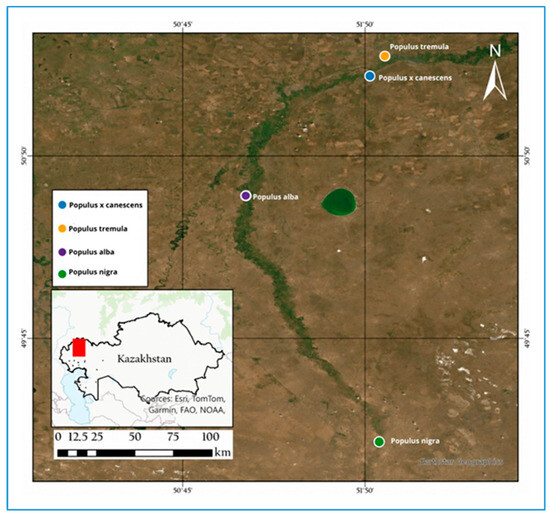
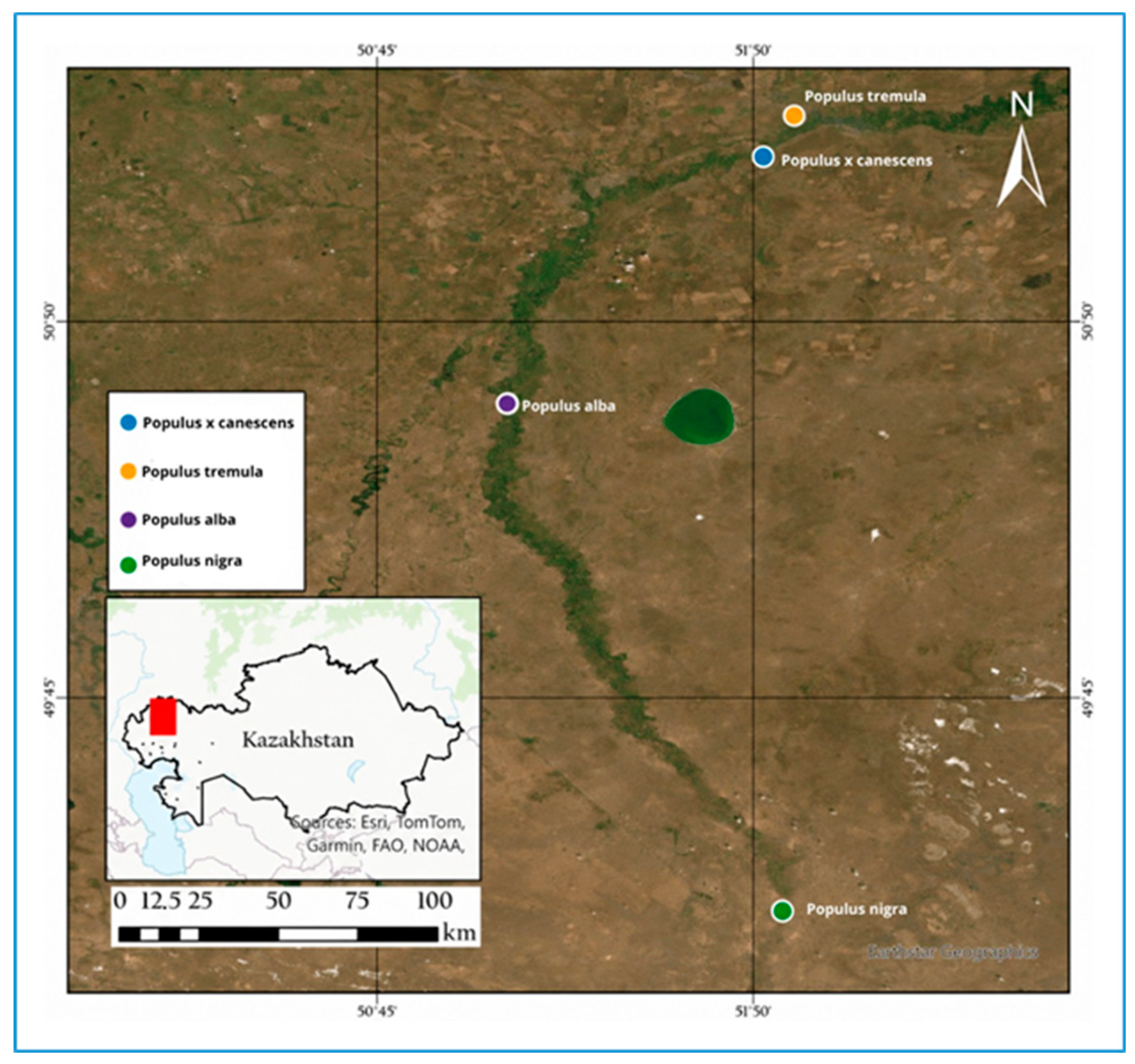
The study objects were the stems and leaves of P. alba, P. nigra, P. × canescens, and P. tremula collected in the West Kazakhstan Region (Figure 1). To visualize the distribution sites of the studied species, a map of the study area was prepared showing the distribution ranges of the four Populus L. species (Figure 1).
Figure 1.
Map of the study area showing the distribution ranges of P. × canescens, P. tremula, P. alba, and P. nigra in the West Kazakhstan Region, Kazakhstan.
Data on each species obtained during the field surveys, including GPS coordinates, elevation above sea level, and geographic location, are presented in Table 1.
Table 1.
P. alba, P. nigra, P. × canescens, and P. tremula species recorded during the field surveys.
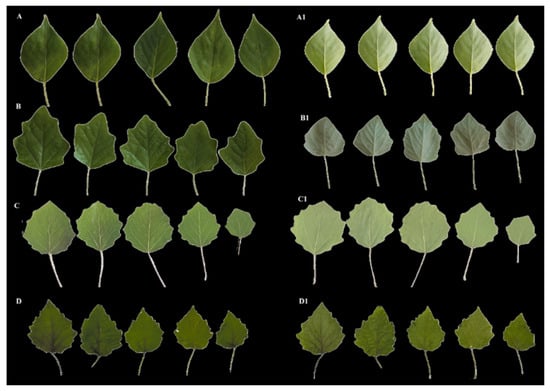
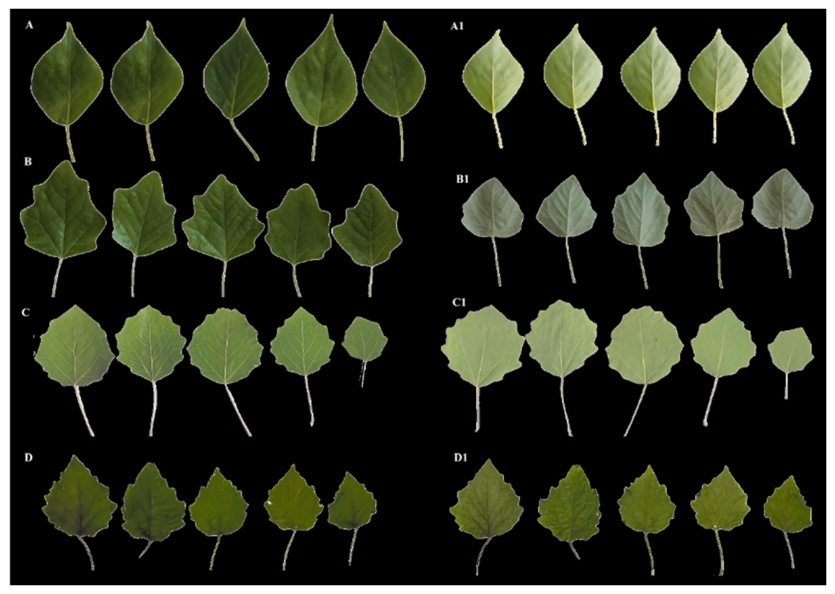
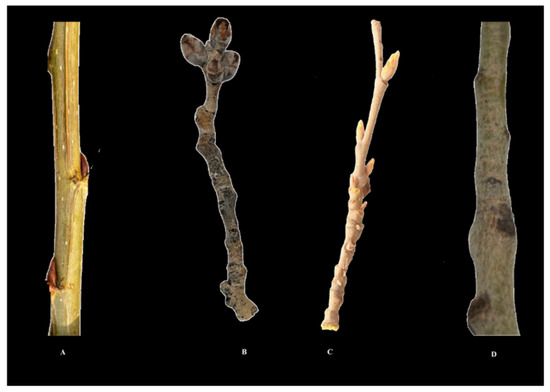
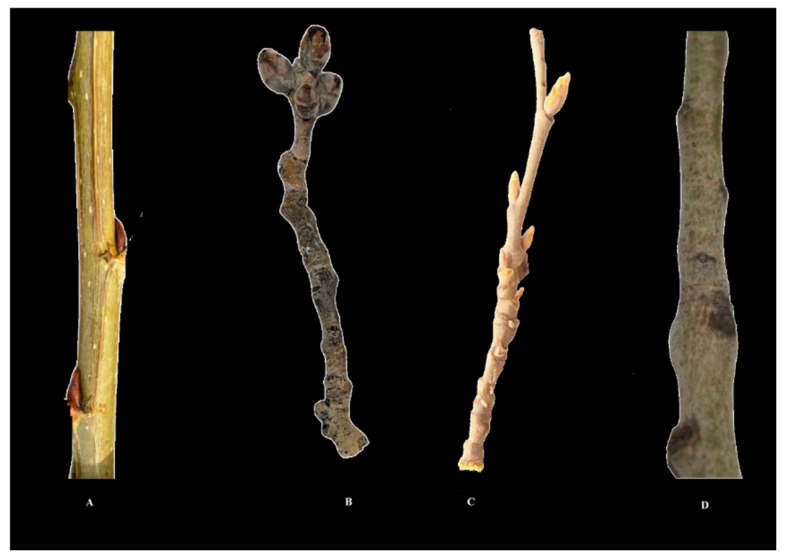
Following the field surveys and documentation of the sampling locations presented in Table 1, photographs of the leaves and one-year-old shoots of four Populus L. species collected in the West Kazakhstan Region are presented in Figure 2 and Figure 3 to confirm their species identity and illustrate their morphological characteristics. The collected specimens were subsequently used for anatomical analyses.
Figure 2.
Morphological characteristics of the leaves of the studied Populus L. species: (A,A1), P. nigra; (B,B1), P. alba; (C,C1), P. tremula; and (D,D1), Populus × canescens.
Figure 3.
Morphological characteristics of the stems of the studied Populus species: (A), P. alba; (B), P. nigra; (C), P. tremula; and (D), Populus × canescens.
2.2. Anatomical Analysis
The study focused on the vegetative organs (stems and leaves) of four Populus taxa occurring in the floodplain and associated habitats of the Zhaiyk River. Plant material was collected in 2025–2026 from different habitat types in the Zhaiyk River floodplain of the West Kazakhstan Region to comparatively characterize the morphological and anatomical variation in these taxa. Populus × canescens was sampled in the central floodplain, P. tremula in ravine forests, P. alba in the near-terrace floodplain, and P. nigra in the near-channel floodplain. Because each taxon was sampled from a characteristic habitat type, the present sampling design does not allow the independent effects of taxon identity and habitat conditions to be separated. Therefore, the observed differences are interpreted as patterns of variation among taxa occurring in contrasting habitats rather than as direct evidence of habitat-specific genetic adaptation.
Fresh plant material was used for anatomical analyses. From each population, 10–20 samples of healthy, undamaged leaves and young annual shoots were collected from mature plants. Plant material showing visible signs of disease, mechanical damage, or other abnormalities was excluded from sampling. The collected leaves and shoots were used for comparative anatomical analysis of the investigated Populus taxa. Following collection, the samples were immediately fixed in Strasburger–Flemming solution consisting of 96% ethanol, glycerol, and distilled water in equal volume ratios (1:1:1) [29,30,31].
Anatomical analyses were performed using the paraffin method of Johansen. For dehydration, the plant material was sequentially treated with increasing concentrations of ethanol (50–100%) and subsequently transferred to xylene. The material was then infiltrated with histological paraffin and embedded in molds measuring 15 × 15 mm. After the paraffin blocks had solidified, transverse sections 10–15 μm thick were prepared using a fully automatic microtome [30]. The sections were stained with Heidenhain’s hematoxylin, Alcian blue, and the safranin–fast green combination according to standard procedures. Microscopic examination and photographic documentation of the sections were performed using an MX700T microscope. Micromorphometric measurements were carried out using an MOB-1-15 ocular micrometer with a ×10 objective and ×20 eyepiece. The obtained biometric data were statistically processed using Microsoft Office Excel 2007 [32].
2.3. Statistical Analysis
Following the collection of dendrometric and leaf morphometric data, statistical analyses were performed in the R-Studio environment using R version 4.4.0 [33]. The tidyverse, ggplot2, dplyr, FactoMineR, factoextra, corrplot, reshape2, and stats packages were used for data processing, statistical analysis, and graphical visualization [34,35,36,37,38]. Statistical analyses were conducted using dendrometric and morphometric characteristics of Populus alba, P. nigra, P. tremula, and P. × canescens. The dendrometric variables included tree height (Height, H), stem diameter (Diameter, D), and stem radius (Radius, R), while the leaf morphometric variables included leaf length (Leaf Length, L), leaf width (Leaf Width, W), and petiole length (Petiole Length, P). Initially, descriptive statistics were calculated for all variables. For each trait, the number of observations (n), arithmetic mean (Mean), median (Median), standard deviation (SD), minimum and maximum values, first and third quartiles (Q1–Q3), interquartile range (IQR), and coefficient of variation (CV) were determined. Box-and-whisker plots were constructed to assess the distribution of the traits and variation among species, allowing comparison of intraspecific variability by displaying the median, quartiles, range of variation, and potential outliers. To assess the multivariate structure of the data, principal component analysis (PCA) was performed [39]. Because the variables were measured in different units, all data were standardized using Z-score transformation prior to PCA. PCA was performed separately for the dendrometric variables (H, D, and R) and leaf morphometric variables (L, W, and P). The results were visualized in the first two principal component spaces, and similarities and differences among the studied species were assessed. For each group, 95% confidence ellipses were plotted. Pearson’s linear correlation coefficient was calculated to assess the relationships among the studied traits [40]. Correlation analyses were performed separately for the dendrometric variables (height, diameter, and radius) and leaf morphometric variables (leaf length, leaf width, and petiole length). Correlation coefficients ranged from −1 to +1, with their strength and direction presented as correlation matrices. All graphical visualizations were generated using the ggplot2 package. PCA was performed using the FactoMineR and factoextra packages, while correlation matrices were visualized using the corrplot package. Statistical significance was accepted at p < 0.05.
3. Results and Discussion
3.1. Morphological Structure of Populus × canescens, P. alba, P. nigra, and P. tremula
Laboratory studies examined the morphological and anatomical characteristics of the leaves and one-year-old shoots of four Populus species growing in different types of floodplain forests in the West Kazakhstan Region. The analysis revealed both common features characteristic of the genus and species-specific structural traits reflecting their adaptation to different ecological conditions.
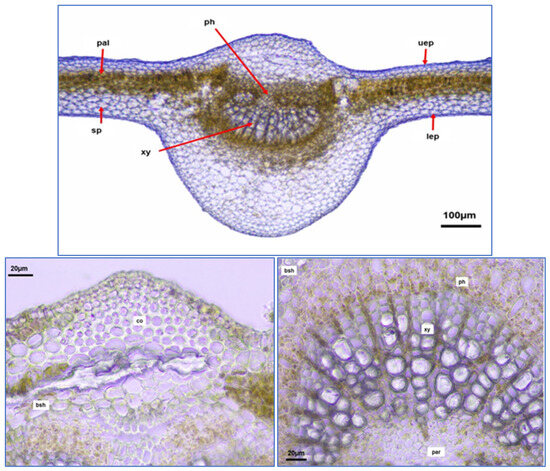
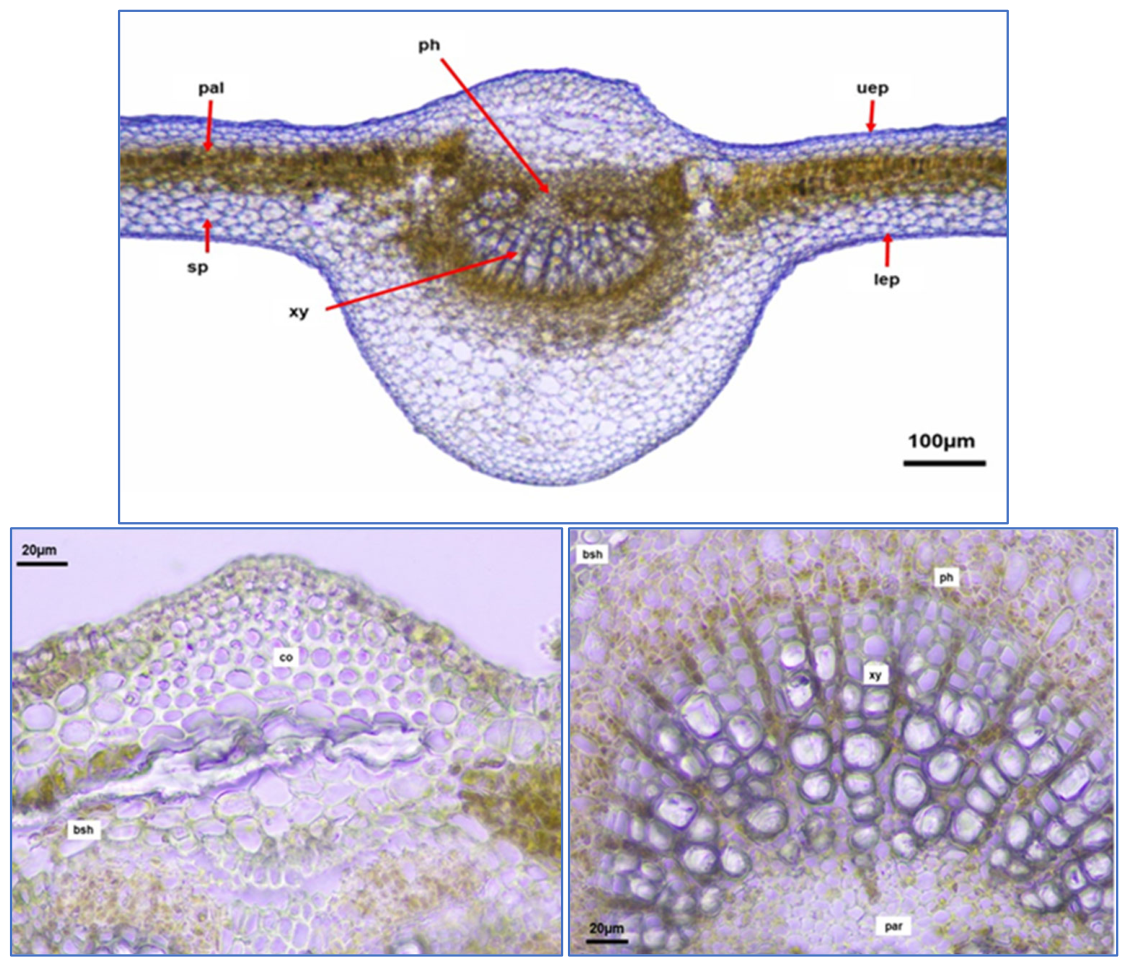
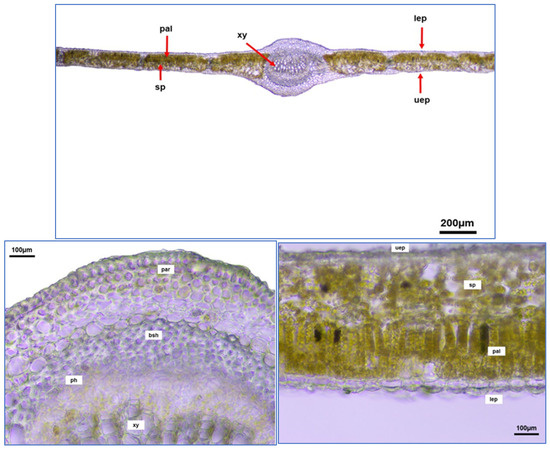
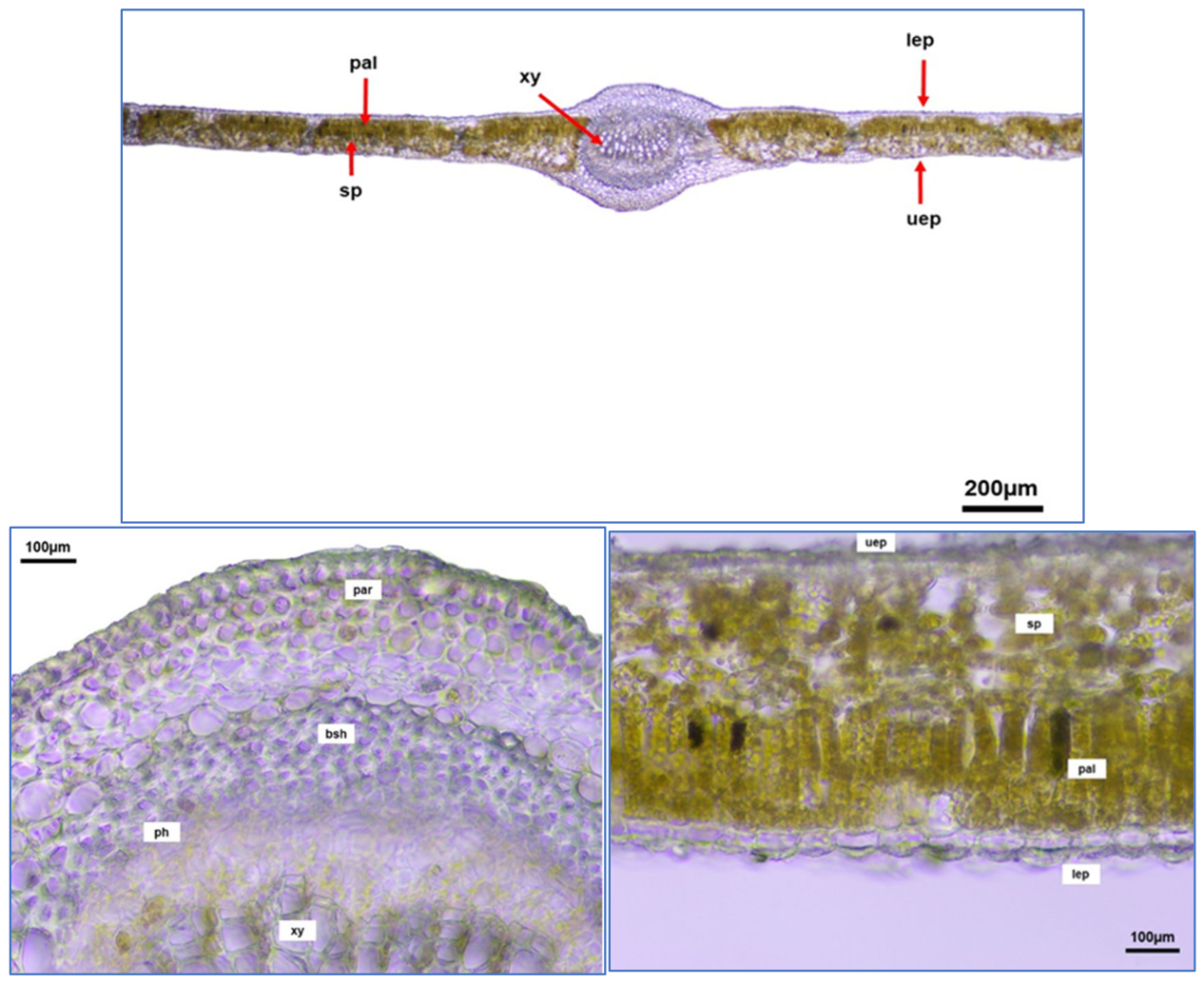
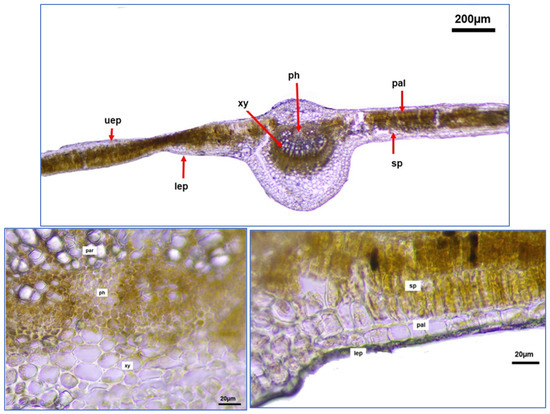
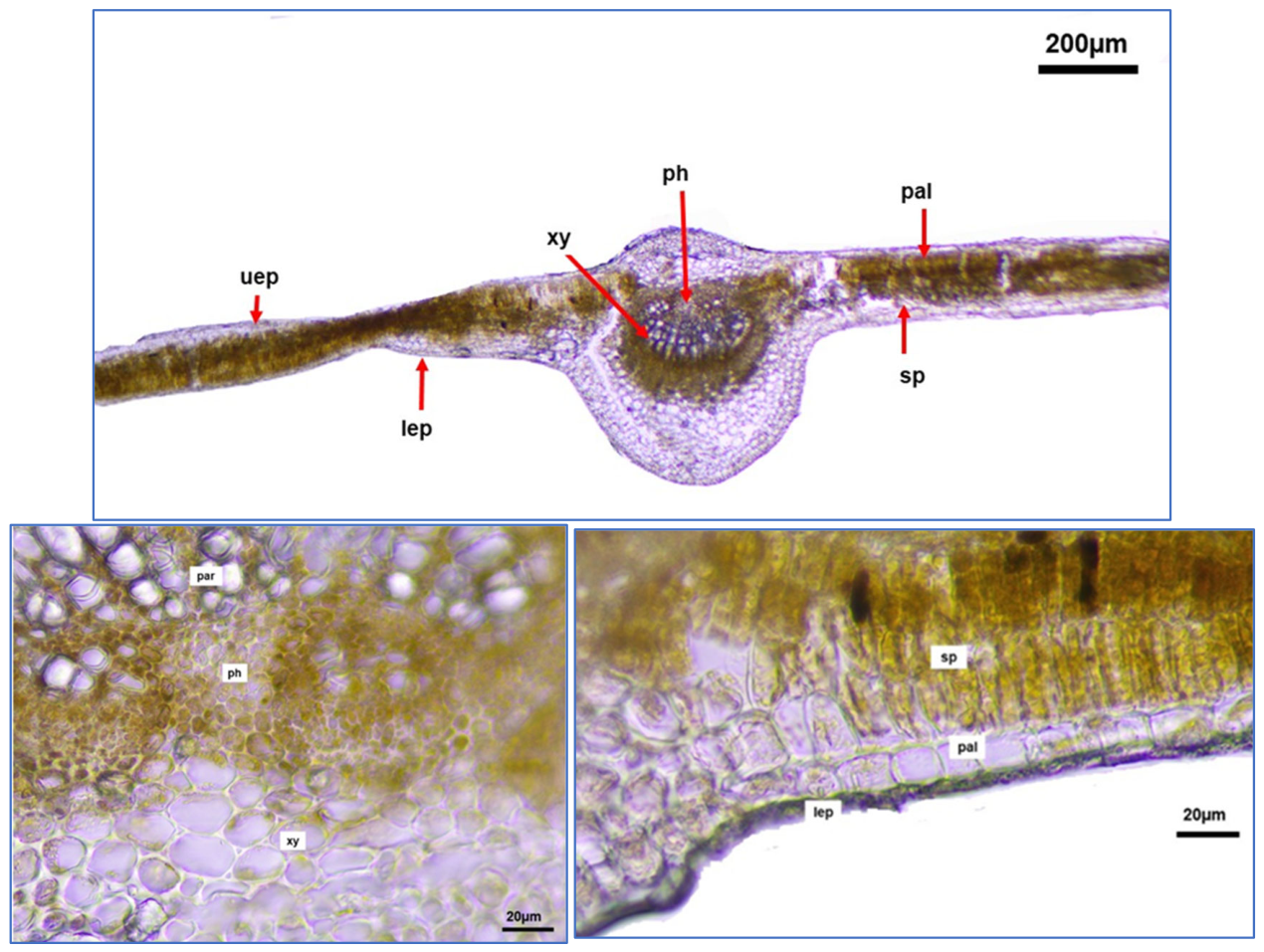
Among the studied species, P. alba belongs to the section Albidae, group Alba, and is one of the parental species of the hybrid taxon P. × canescens [41]. The leaf blade of P. alba has a dorsiventral structure, with distinct differentiation of the upper and lower tissues. The anatomical structure includes the upper epidermis, palisade and spongy parenchyma, vascular bundles surrounded by a bundle sheath, and the lower epidermis (Figure 4).
Figure 4.
Transverse section of the leaf of P. alba: ph-phloem; xy-xylem; pal-palisade parenchyma; sp-spongy parenchyma; uep-upper epidermis; lep-lower epidermis; bch-bundle sheath; par-parenchyma; co-collenchyma.
The adaxial epidermis had a mean thickness of 3.7 ± 0.6 μm, whereas the abaxial epidermis was considerably thicker, reaching 22.6 ± 5.2 μm. This pronounced asymmetry of the epidermal tissues is associated with the dense white tomentose indumentum on the abaxial leaf surface, which is formed by numerous multicellular trichomes and substantially increases the thickness of the protective tissue on the lower surface of the leaf.
In P. tremula and P. × canescens, which also belong to the section Albidae, this asymmetry was considerably less pronounced, indicating differences in the degree of trichome development and reduction within the Alba group [42]. Thus, the pronounced abaxial pubescence observed in P. alba represents one of the most distinctive anatomical features differentiating this species from the other taxa examined.
The leaf mesophyll was clearly differentiated into palisade and spongy parenchyma. The mean thickness of the palisade parenchyma was 48.3 ± 4.8 μm, whereas that of the spongy parenchyma was 30.6 ± 4.4 μm. For both parameters, P. alba showed higher values than the other species examined, including P. nigra, which belongs to the section Aigeiros. The total thickness of the leaf blade reached 112.73 ± 5.03 μm, representing the highest value among the studied taxa. The main anatomical tissues of the P. tremula leaf are shown in Figure 5.
Figure 5.
Transverse section of the leaf of P. tremula: ph-phloem; xy-xylem; pal-palisade parenchyma; sp-spongy parenchyma; uep-upper epidermis; lep-lower epidermis; bch-bundle sheath; par-parenchyma; co-collenchyma.
The well-developed palisade parenchyma indicates a high photosynthetic potential of P. alba [43]. The presence of well-developed spongy parenchyma with large intercellular spaces facilitates efficient gas exchange and may contribute to the adaptation of this species to floodplain habitats characterized by periodic fluctuations in water availability and soil moisture.
The leaf vascular bundles of P. alba are collateral and closed. The xylem is located on the adaxial side, whereas the phloem is positioned on the abaxial side. The diameter of the central vascular bundle is 381.2 ± 35.8 μm, representing the second-highest value among the studied species after P. nigra (435.9 ± 74.9 μm). The vascular bundle is surrounded by a single-layered parenchymatous bundle sheath, which provides mechanical protection and may contribute to metabolic exchange between the vascular tissues and mesophyll [44].
In comparison with P. alba, P. tremula exhibits less pronounced differentiation of the leaf tissues and considerably weaker epidermal asymmetry. P. tremula belongs to the section Albidae and is one of the parental species of the hybrid taxon P. × canescens [45]. The leaf blade has a dorsiventral structure. The mean thickness of the adaxial epidermis is 13.0 ± 1.8 μm, whereas that of the abaxial epidermis is 18.8 ± 2.0 μm. The moderate epidermal asymmetry is associated with the absence of the dense tomentose indumentum characteristic of P. alba. The absence of collenchyma in the pericyclic region of the petiole, also reported in previous studies, may indicate a lower requirement for additional mechanical reinforcement of the tissues and may be associated with the relatively stable moisture conditions of its floodplain habitats.
The mesophyll is well differentiated into palisade and spongy parenchyma. The thickness of the palisade parenchyma is 22.1 ± 1.5 μm, whereas that of the spongy parenchyma is 18.4 ± 1.8 μm. Based on these parameters, P. tremula occupies an intermediate position between P. alba and P. × canescens within the section Albidae [46]. The total thickness of the leaf blade reaches 104.9 ± 5.9 μm.
The vascular bundles are collateral and closed. The diameter of the central vascular bundle is 271.3 ± 29.8 μm, which is almost identical to that of P. × canescens (270.4 ± 30.3 μm). This similarity is consistent with the close phylogenetic relationship between these taxa and agrees with the proposed hybrid origin of P. × canescens from P. alba and P. tremula [47].
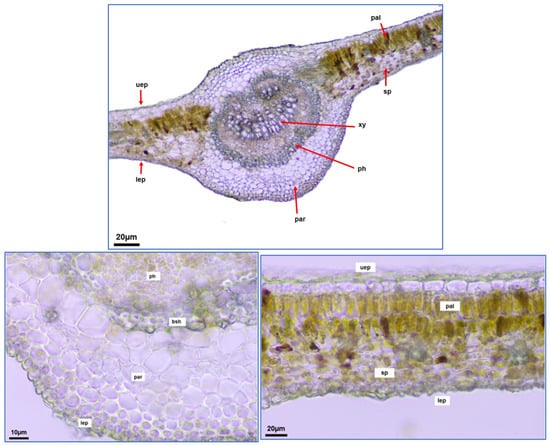
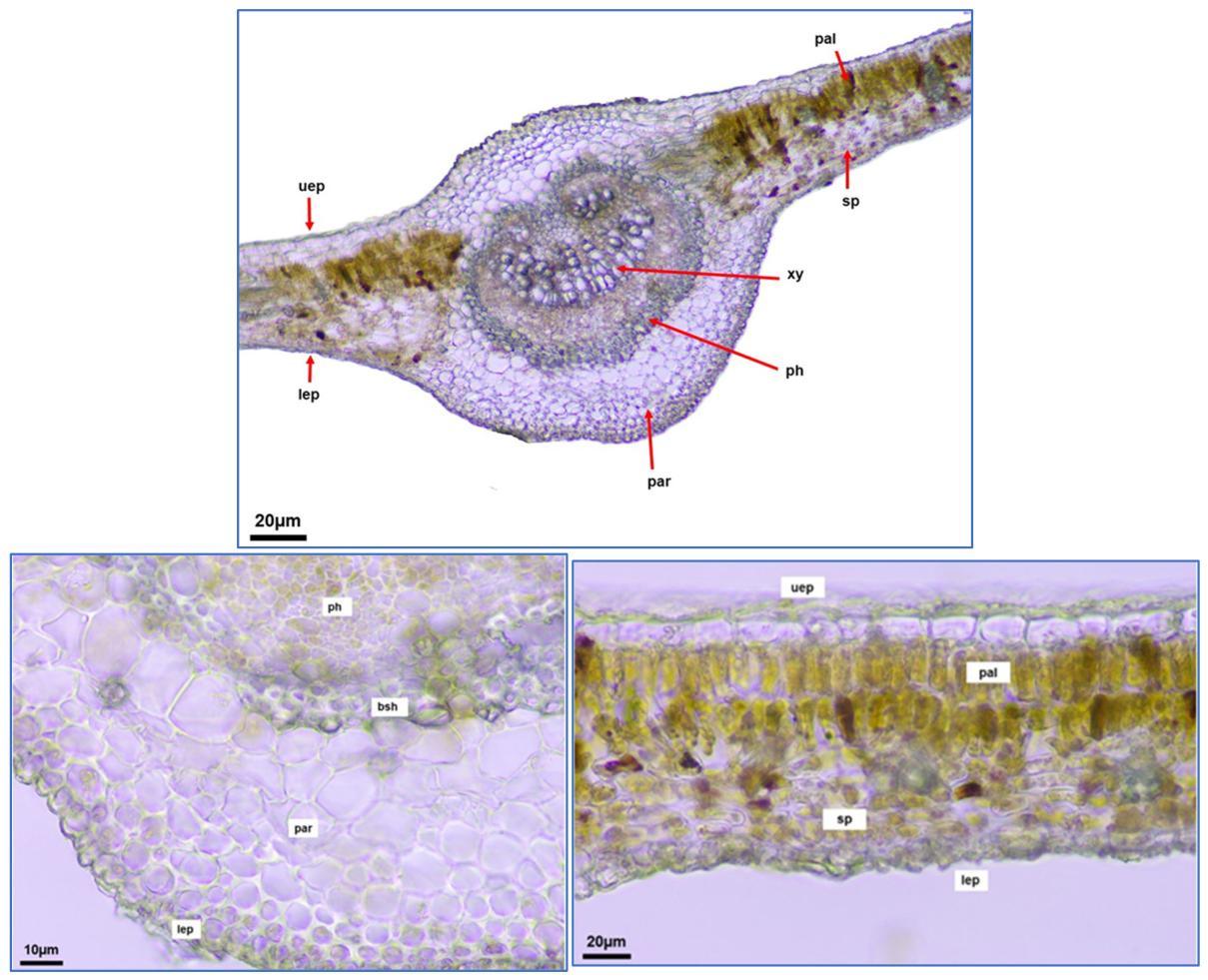
The anatomical characteristics of P. × canescens provide an opportunity to further evaluate the structural relationship between the two parental species. P. × canescens Sm. is a natural hybrid of P. alba L. and P. tremula L., occupying an intermediate taxonomic position within the section Albidae, group Alba [48]. The leaf blade has a dorsiventral structure. The adaxial epidermis is 9.8 ± 0.6 μm thick, whereas the abaxial epidermis is 8.3 ± 0.7 μm thick. The small difference between the epidermal thicknesses of the upper and lower leaf surfaces distinguishes P. × canescens from both parental species. The anatomical characteristics of the leaf of P. × canescens are shown in Figure 6, illustrating the arrangement of the epidermis, mesophyll, vascular tissues, and bundle sheath.
Figure 6.
Transverse section of the leaf of P. × canescens: ph-phloem; xy-xylem; pal-palisade parenchyma; sp-spongy parenchyma; uep-upper epidermis; lep-lower epidermis; bch-bundle sheath; par-parenchyma.
In contrast to P. alba, which has dense tomentose indumentum on the abaxial leaf surface, P. × canescens exhibits considerably weaker pubescence, reflecting the intermediate nature of this trait and supporting its hybrid origin [49].
The leaf mesophyll is differentiated into palisade and spongy parenchyma. The thickness of the palisade parenchyma is 19.2 ± 1.2 μm, whereas that of the spongy parenchyma is 6.7 ± 0.9 μm. Both values are the lowest among the representatives of the section Albidae. The total thickness of the leaf blade reaches 56.5 ± 0.8 μm and is comparable to that of P. nigra, despite these species belonging to different sections of the genus Populus. The diameter of the central vascular bundle is 270.4 ± 30.3 μm, which is almost identical to that observed in P. tremula. This similarity indicates the retention of several anatomical characteristics of one of the parental species in the hybrid taxon and is consistent with current views on the origin of P. × canescens [50].
In contrast to the three taxa belonging to the section Albidae, P. nigra represents the section Aigeiros and is the most phylogenetically divergent species among the taxa examined [51]. The leaf blade has a dorsiventral structure. The mean thickness of the adaxial epidermis is 1.6 ± 0.1 μm, whereas that of the abaxial epidermis is 31.6 ± 4.4 μm. Thus, P. nigra exhibits the most pronounced asymmetry of the epidermal tissues and the lowest adaxial epidermal thickness among all species examined. A characteristic anatomical feature is the formation of a ridge-like thickening by the adaxial epidermis above the central vascular bundle, which is clearly visible in transverse sections (Figure 7).
Figure 7.
Transverse section of the leaf of P. nigra: ph-phloem; xy-xylem; pal-palisade parenchyma; sp-spongy parenchyma; uep-upper epidermis; lep-lower epidermis; par-parenchyma.
The mesophyll is clearly differentiated into palisade and spongy parenchyma. The thickness of the palisade parenchyma is 43.2 ± 7.6 μm, whereas that of the spongy parenchyma is 65.5 ± 14.2 μm. In contrast to the representatives of the section Albidae, P. nigra has substantially more developed spongy parenchyma than palisade parenchyma, indicating a predominance of air-containing tissue within the mesophyll (Table 2). The presence of large intercellular spaces facilitates gas exchange and may represent an adaptive feature supporting leaf functioning under the high-moisture conditions of floodplain habitats [43].
Table 2.
Morphometric characteristics of the anatomical structure of leaves of four Populus species growing in different types of floodplain forests in the West Kazakhstan Region.
Despite the well-developed mesophyll, the total thickness of the leaf blade is 141.9 ± 2.3 μm, representing the lowest value among all species examined. At the same time, the diameter of the central vascular bundle reaches 435.9 ± 74.9 μm, which is the highest value among the P. taxa studied. The well-developed vascular system may facilitate efficient transport of water and assimilates, corresponding to the ecological characteristics of P. nigra, which predominantly occurs in the near-channel part of the floodplain, where periodic fluctuations in groundwater and floodwater levels occur [43].
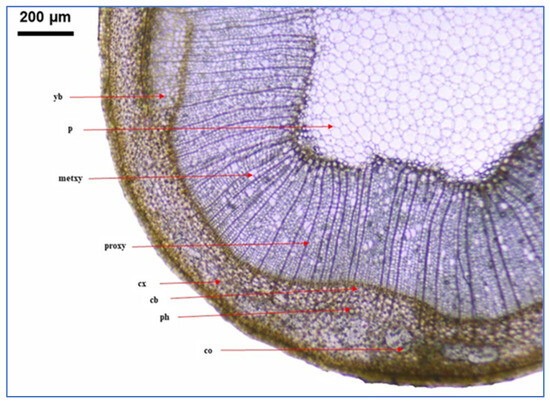
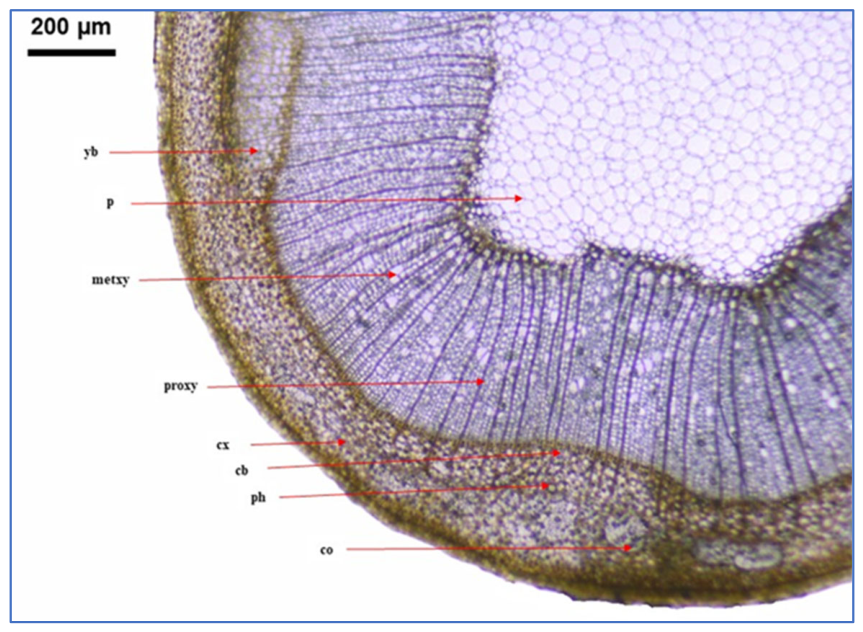
The stem of P. alba exhibits secondary growth, which is typical of woody dicotyledonous plants [48]. Externally, the stem is covered by a periderm that replaces the primary epidermis. In transverse section, the periderm appears as a distinct golden-yellow line formed by the suberized cell walls of the cork tissue. The epidermal thickness prior to its replacement by the periderm is 57.0 ± 8.4 μm, representing the highest value among the species examined. The main anatomical tissues of the one-year-old stem, including the pith, metaxylem, protoxylem, cambium, phloem, cortex, and collenchyma, are shown in Figure 8.
Figure 8.
Transverse section of the one-year-old stem of P. alba: yb-young bud; p-pith; metxy-metaxylem; proxy-protoxylem; cx-cortex; cb-cambium; ph-phloem; co-collenchyma.
The primary cortex, 179.6 ± 30.8 μm in thickness, consists mainly of chlorenchymatous parenchyma and collenchyma. The collenchyma of the primary cortex is moderately developed, with a thickness of 23.4 ± 2.1 μm. Together with P. × canescens (23.0 ± 4.4 μm), this represents the lowest value among the four species examined. The weak development of collenchyma, together with the presence of cellulose-rich, non-lignified cell walls, as revealed by eosin and methylene blue staining (blue coloration), distinguishes the taxa of the Alba group from P. tremula and P. nigra (Figure 9), in which the collenchyma of the primary cortex is considerably more developed (54.2 and 55.9 μm, respectively) [52]. The primary cortex is separated from the central cylinder by a single-layered endodermis.
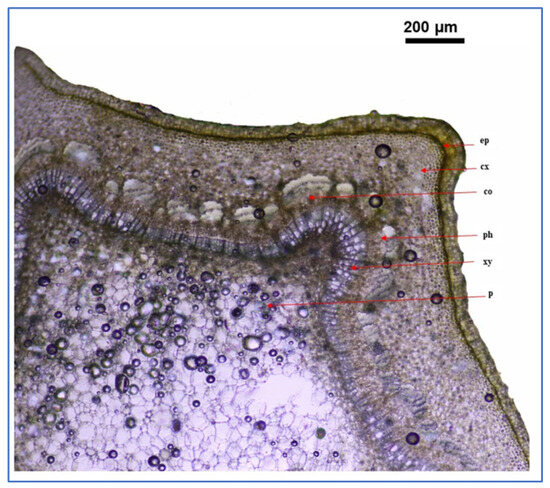
Figure 9.
Transverse section of the one-year-old stem of P. nigra: ep-epidermis; cx-cortex; co-collenchyma; ph-phloem; xy-xylem; p-pith.
The central cylinder has a diameter of 954.7 ± 118.7 μm, representing the second-highest value after P. nigra (1085.7 ± 123.2 μm). The phloem, with a thickness of 71.1 ± 12.9 μm, is the most developed among the species examined. The xylem (30.8 ± 2.8 μm) exhibits a diffuse-porous distribution of vessels, which is characteristic of the genus Populus [50]. A cambial ring is located between the phloem and xylem. The pith parenchyma consists of large, thin-walled cells.
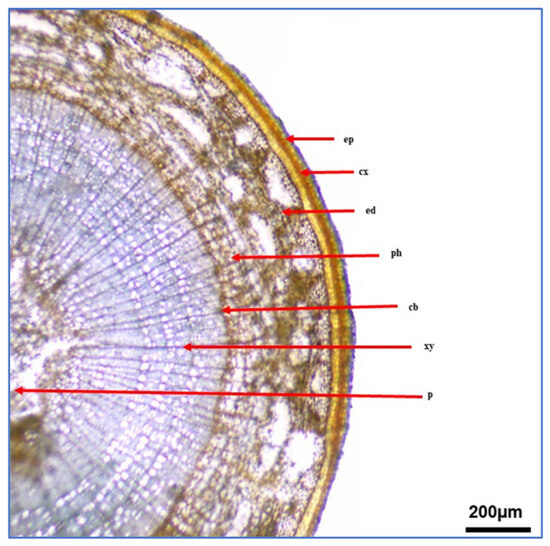
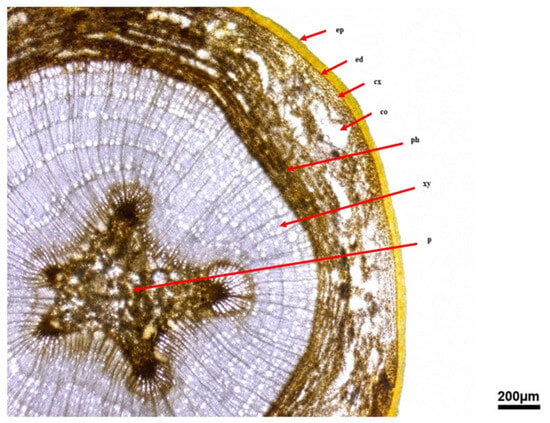
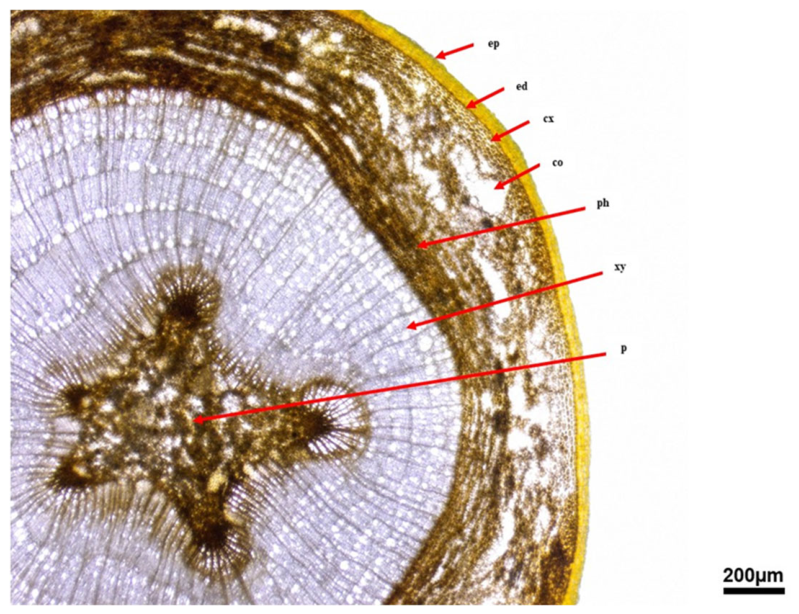
The stem of P. tremula exhibits secondary growth. The periderm replaces the primary epidermis during the early stages of ontogeny. The thickness of the epidermis before its replacement is 38.7 ± 4.8 μm. The transverse anatomical structure of the one-year-old stem of P. tremula, including the epidermis, cortex, endodermis, phloem, cambium, xylem, and pith, is shown in Figure 10.
Figure 10.
Transverse section of the one-year-old stem of P. tremula: ep-epidermis; cx-cortex; ed-endodermis; ph-phloem; cb-cambium; xy-xylem; p-pith.
A characteristic feature of aspen is the presence of chlorenchymatous parenchyma in the primary cortex, which may contribute to carbon assimilation during the leafless period through the protective tissues of young shoots. The primary cortex is the most developed among the species of the section Albidae, with a thickness of 307.8 ± 9.7 μm, substantially exceeding the values recorded for P. alba (179.6 μm) and P. × canescens (166.3 μm). The mechanical tissue of the primary cortex is represented by collenchyma (54.2 ± 7.8 μm), identified by the characteristic blue staining with methylene blue, indicating non-lignified cellulose-rich cell walls. In this respect, P. tremula differs from the taxa of the Alba group, in which the collenchyma of the primary cortex is considerably less developed (23.4 and 23.0 μm in P. alba and P. × canescens, respectively). The primary cortex is separated from the central cylinder by a single-layered endodermis.
The central cylinder, 539.1 ± 52.8 μm in diameter, occupies an intermediate position between P. × canescens (228 μm) and P. alba (954.7 μm). The phloem (62.5 ± 6.6 μm) and xylem (24.4 ± 2.6 μm) are moderately developed. The xylem has a diffuse-porous vessel distribution [45], while the medullary rays form distinct radial bands. The pith parenchyma consists of large, lightly stained cells. The anatomical structure of the one-year-old stem of P. × canescens, including the epidermis, cortex, endodermis, collenchyma, phloem, xylem, and pith, is shown in Figure 11.
Figure 11.
Transverse section of the one-year-old stem of P. × canescens: ep-epidermis; ed-endodermis; cx-cortex; co-collenchyma; ph-phloem; xy-xylem; p-pith.
The anatomical characteristics of P. × canescens further illustrate the intermediate nature of several stem traits observed within the Albidae group. The stem of P. × canescens exhibits secondary growth. The periderm replaces the primary epidermis, and the epidermis is 16.5 ± 1.0 μm thick, representing the lowest value among all species examined. The main anatomical tissues of the stem are shown in Figure 11. This may reflect the earlier replacement of the primary epidermis by the periderm in this taxon.
The primary cortex is 166.3 ± 9.5 μm thick and occupies an intermediate position between P.alba (179.6 μm) and P.tremula (307.8 μm). The mechanical tissue of the primary cortex is represented by collenchyma (23.0 ± 4.4 μm), identified by the blue staining produced by methylene blue, indicating non-lignified cellulose-rich cell walls. In terms of collenchyma development, P. × canescens is similar to P.alba (23.4 μm), representing a common characteristic of the Alba group that distinguishes these taxa from P. tremula and P. nigra, which have more strongly developed collenchyma (54.2 and 55.9 μm, respectively). Calcium oxalate druses are observed in the pith parenchyma. In contrast to P. nigra, in which the crystals are concentrated in the primary cortex, P. × canescens predominantly accumulates these crystals in the pith parenchyma [46].
The central cylinder, with a diameter of 228 ± 45 μm (Table 3), represents the lowest value among the four species examined. The phloem (23.8 ± 3.9 μm) and xylem (12.6 ± 1.4 μm) also show the lowest values among the studied species. The diffuse-porous xylem and well-developed medullary rays are characteristic of the genus Populus [44]. The relatively small dimensions of all structural zones may reflect the hybrid nature of the taxon and the ontogenetic stage of the examined specimens.
Table 3.
Comparative anatomical characteristics of the stems of four Populus species from the floodplain forests of the West Kazakhstan Region.
The stem of P. nigra exhibits secondary growth. The periderm replaces the primary epidermis, and the epidermis is 49.6 ± 4.9 μm thick, which is close to the value recorded for P. alba (57.0 μm) and considerably higher than that of P. × canescens (16.5 μm).
The primary cortex is 284.4 ± 17.3 μm thick and represents one of the most strongly developed cortical zones among the species examined, together with P. tremula (307.8 μm). A diagnostic feature of P. nigra is the presence of calcium oxalate crystals and druses in the parenchyma of the primary cortex, forming a discontinuous ring in transverse sections. In the species of the section Albidae, crystals in the primary cortex are absent or occur only sporadically [43]. The mechanical tissue of the primary cortex is represented by collenchyma (55.9 ± 7.4 μm), identified by the blue staining produced by methylene blue, indicating non-lignified cellulose-rich cell walls. The strands of collenchyma form a discontinuous ring along the peripheral region of the cortex. The primary cortex is separated from the central cylinder by a single-layered endodermis [46].
The central cylinder, with a diameter of 1085.7 ± 123.2 μm, is the largest among the species examined. The xylem (50.7 ± 6.9 μm) also has the greatest thickness among the four species, whereas the phloem measures 37.9 ± 4.8 μm. The xylem vessels exhibit a diffuse-porous arrangement, and the medullary rays are well developed, representing anatomical characteristics typical of the genus Populus [45]. Calcium oxalate crystals are also present in the pith parenchyma.
3.2. Statistical Analysis of Interspecific Variation
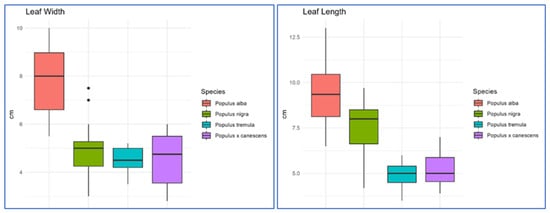
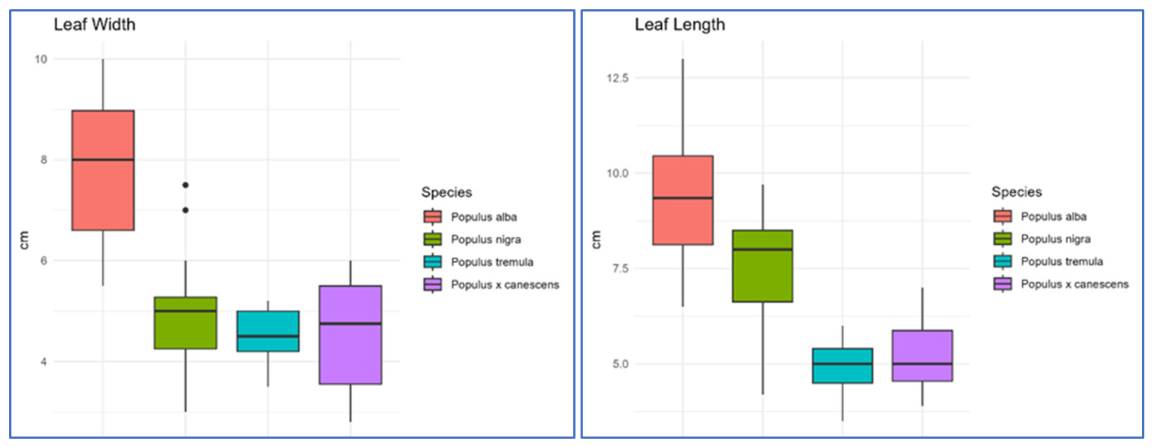
Following the anatomical characterization of the stems, statistical analysis was additionally performed to assess interspecific differences in leaf morphometric traits. The results revealed differences in leaf width among the studied Populus species (Figure 12). The greatest variability in this trait was observed in P. alba, whereas the other species were characterized by narrower ranges of variation.
Figure 12.
Distribution of leaf blade width and length values in four Populus species.
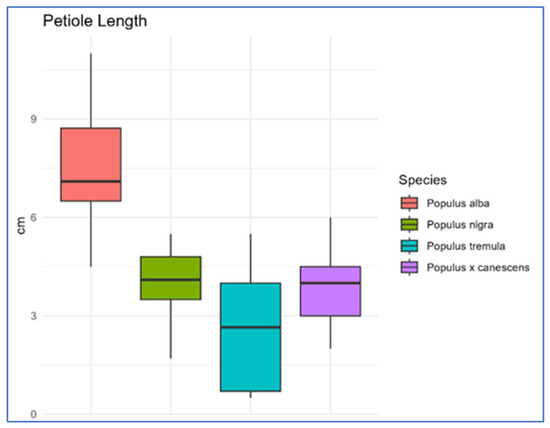
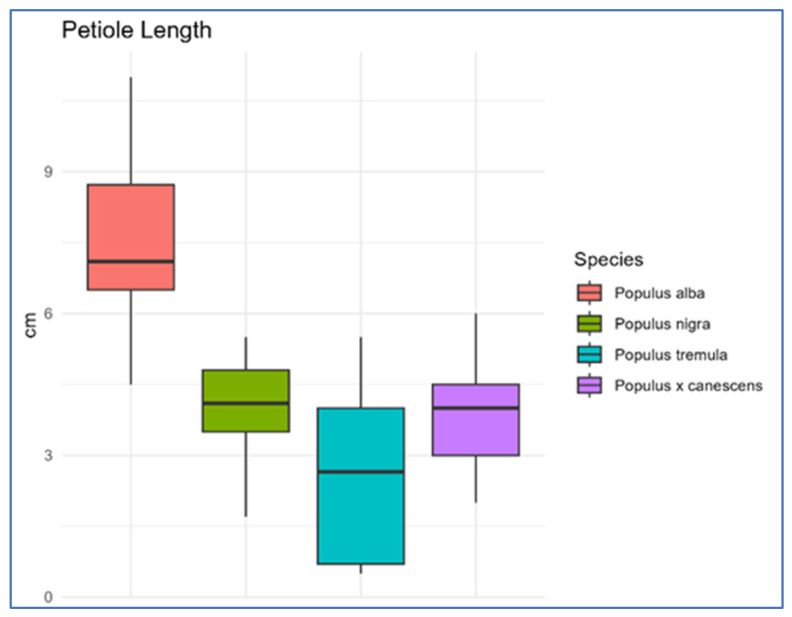
In addition to leaf blade dimensions, petiole length was analyzed to further characterize interspecific differences in leaf morphology. The analysis of petiole length in the studied Populus species revealed pronounced interspecific differences (Figure 12). The highest values of this morphometric trait were recorded in P. alba. The median petiole length in this species was approximately 7 cm, with a wide range of variation from 4.5 to 10.5 cm. This indicates substantial variability in petiole length within the studied sample.
In P. nigra, petiole length was considerably lower than in P. alba and varied predominantly between 3 and 5 cm, with an average value of approximately 4 cm. P. tremula exhibited the lowest values of this trait, with a median of approximately 2.5–3 cm and a relatively wide range of variation, from about 0.5 to 5.5 cm. The hybrid P. × canescens was characterized by intermediate petiole lengths. Its median value was approximately 4 cm, with a variation range of approximately 2–6 cm.
Thus, the studied species formed the following descending order in terms of petiole length: P. alba > P. × canescens ≈ P. nigra > P. tremula. These results indicate that petiole length may serve as one of the diagnostic morphological traits for distinguishing species of the genus Populus, as the most pronounced differences were observed between P. alba and the other taxa examined (Figure 13).
Figure 13.
Variation in petiole length among the studied Populus species (cm). Box plots show the median, interquartile range, and limits of variation in the trait.
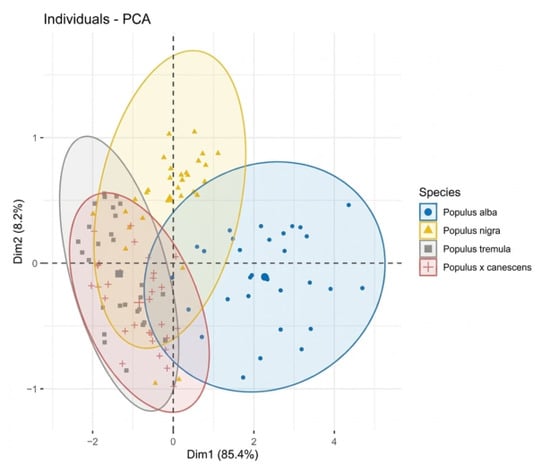
To further assess relationships among the studied traits and identify the major sources of morphological and anatomical variation, principal component analysis (PCA) was performed. PCA enabled the distribution of the examined samples to be evaluated in the space of the first principal components, which accounted for the largest proportion of the total variation in the dataset (Figure 14). The first two components captured the main structure of variation and allowed similarities and differences among the studied samples to be identified.
Figure 14.
Principal component analysis (PCA) of the studied samples based on a combination of morphological and anatomical traits.
The first two principal components explained 93.6% of the total variation in the dataset, with the first principal component (Dim1) accounting for 85.4% of the total variance and the second component (Dim2) accounting for 8.2%. The PCA diagram revealed clear differentiation among the studied groups.
The first principal component made the greatest contribution to sample differentiation and clearly separated P. alba from the other taxa. The P. alba samples were predominantly located in the positive region of the Dim1 axis, forming a distinct cluster with minimal overlap of the confidence ellipse, indicating substantial differences in the traits analyzed.
The P. nigra samples were predominantly positioned in the upper part of the diagram, corresponding to positive Dim2 values, indicating the influence of traits associated with the second principal component. This group also showed a relatively distinct position compared with the other taxa.
In contrast, the populations of P. tremula and P. × canescens exhibited considerable overlap in their distribution areas. The P. tremula samples were predominantly located in the negative region of Dim1, whereas P. × canescens occupied an intermediate position relative to the parental species. This pattern may reflect shared morphological and anatomical characteristics and is consistent with the hybrid nature of P. × canescens.
Overall, the PCA confirmed pronounced interspecific differentiation among the studied P. taxa. The clearest separation was observed for P. alba, whereas P. tremula, P. nigra, and P. × canescens showed a greater degree of similarity and partial overlap in trait space. These results indicate that the major differences among the taxa are primarily associated with the traits contributing to the first principal component.
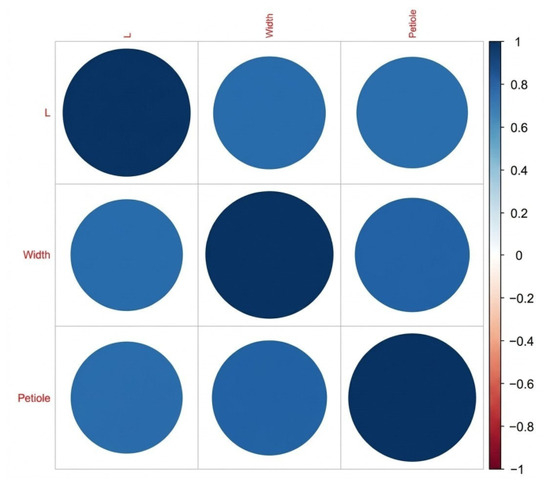
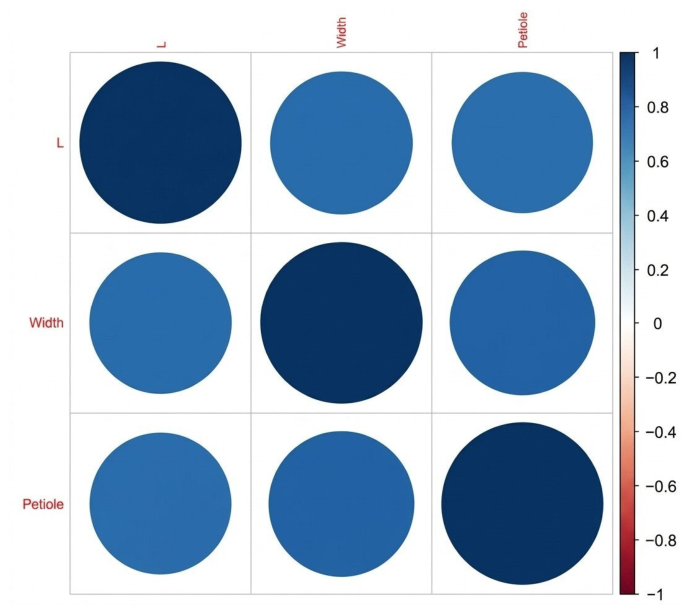
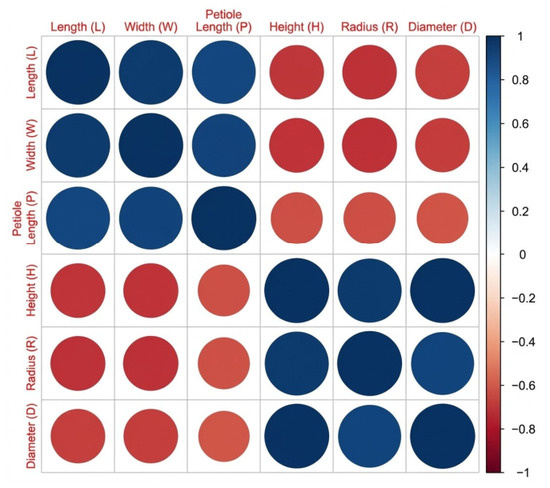
As shown in Figure 15, all three leaf morphological traits (L-leaf length, W-leaf width, and P-petiole length) are closely correlated with each other and reflect the overall scale of leaf development. An increase in leaf length is accompanied by increases in both leaf width and petiole length.
Figure 15.
Correlation matrix of leaf morphological traits in the studied Populus species.
To complement the correlation analysis, a comparative assessment of leaf morphometric traits was performed among the studied species. The analysis of leaf blade length (L), leaf blade width (W), and petiole length (P) revealed significant differences among the species examined (Table 4).
Table 4.
Descriptive statistics of leaf morphological traits (M ± SD, cm).
The highest values for all three traits were recorded in P. alba: the mean leaf length was 9.37 ± 1.63 cm, leaf width was 7.83 ± 1.29 cm, and petiole length was 7.41 ± 1.56 cm. The relatively high standard deviations indicate substantial intraspecific variability in this species, which is also clearly reflected in the box plots (Figure 1, Figure 2 and Figure 3). P. alba exhibited a wide interquartile range and extended whiskers, particularly for leaf length, which ranged from approximately 5.5 to 13.5 cm.
Populus nigra occupied an intermediate position for all measured parameters, with a mean leaf length of 7.58 ± 1.45 cm, leaf width of 4.89 ± 0.93 cm, and petiole length of 3.99 ± 0.92 cm. Two outliers were observed for leaf width, exceeding the upper whisker (7.5 and 6.9 cm), which may indicate the presence of individual plants with relatively large leaves or may reflect differences in local environmental conditions.
The smallest leaf blade dimensions were recorded in P. tremula and P. × canescens, with relatively similar values for leaf length and width. Leaf length was 4.85 ± 0.68 cm and 5.18 ± 0.75 cm, while leaf width was 4.46 ± 0.49 cm and 4.51 ± 1.04 cm, respectively. At the same time, P. tremula exhibited the greatest variability in petiole length (SD = 1.72 cm), despite having the lowest mean value (2.43 ± 1.72 cm). This variation may be associated with the characteristic flattened petiole of the species, whose dimensions can vary considerably depending on the position of the leaf within the crown.
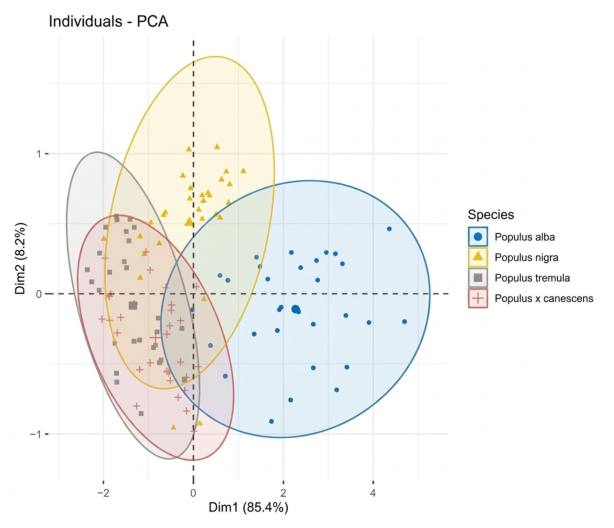
Principal component analysis (PCA; Figure 16) showed a spatial separation of P. alba samples from those of the other investigated taxa in the space of the principal components. This separation reflects differences among the taxa based on the combined set of analyzed morphological traits.
Figure 16.
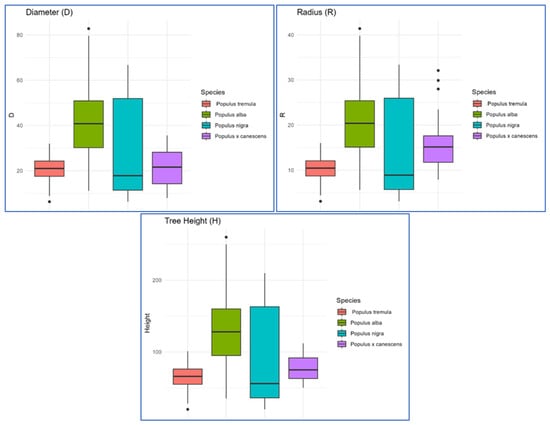
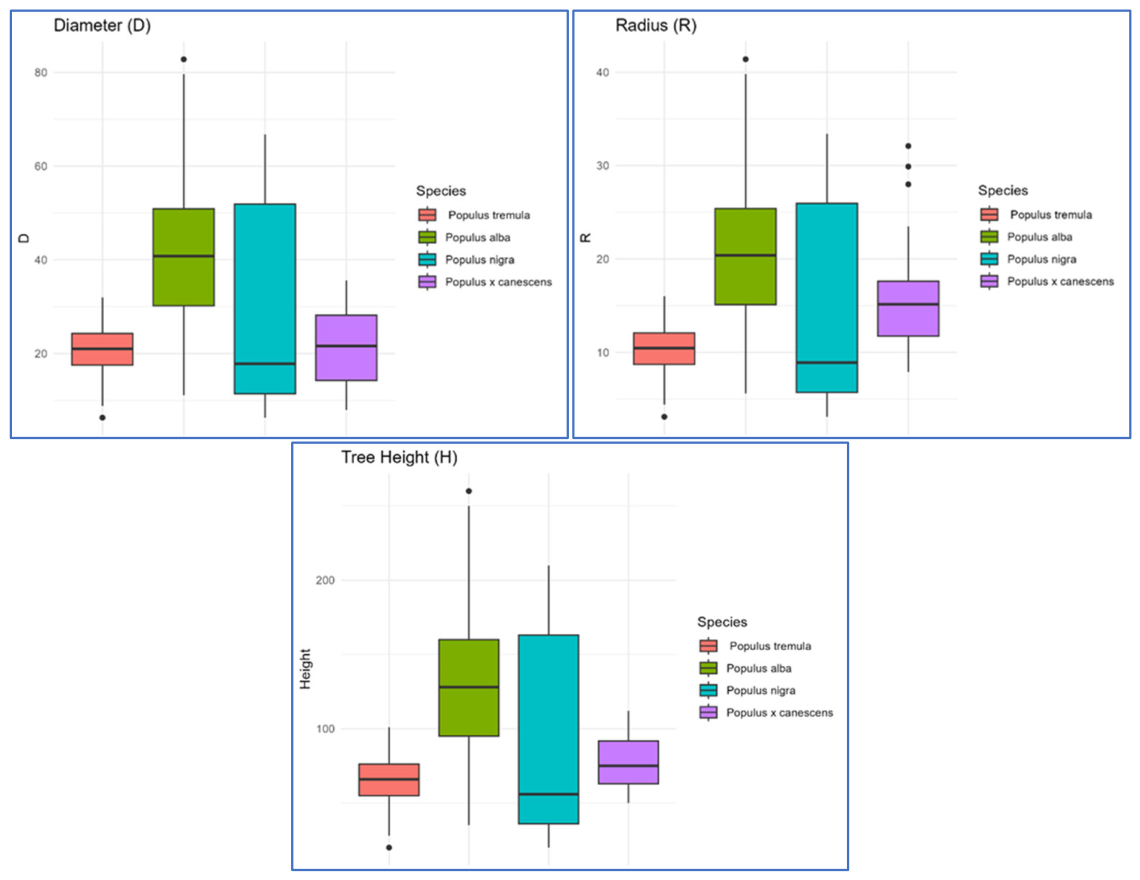
Comparison of key dendrometric parameters-trunk diameter (D), crown radius (R), and tree height (H)-across four poplar species (P.tremula, P.alba, P.nigra, and Populus × canescens).
The results of the principal component analysis (PCA; Figure 16) confirmed the clear morphological distinctness of P. alba from the other species. Individuals of this species formed a separate cluster in the positive region of the first principal component (Dim1), which explained 85.4% of the total variation. P. nigra occupied an intermediate position in the PCA space, whereas P. tremula and P. × canescens formed overlapping clusters of points in the negative region of Dim1, consistent with the similarity of their mean morphometric values. The second principal component (Dim2), accounting for 8.2% of the total variation, partially separated P. nigra from P. tremula and P. × canescens along the vertical axis.
Overall, based on the combination of leaf morphological traits, P. alba exhibited the greatest morphological distinctiveness, whereas the hybrid taxon P. × canescens was morphologically most similar to P. tremula. This pattern may reflect its hybrid origin and the contribution of its parental species to the observed leaf morphology. In addition to leaf morphological traits, the dendrometric characteristics of the studied trees were analyzed to assess interspecific differences in overall plant size and growth patterns.
3.3. Dendrometric Characteristics of Four Populus Species
A comparative analysis of the main biometric parameters of the trees—tree height (H), crown radius (R), and trunk diameter (D)—revealed substantial differences among the studied species (Table 5).
Table 5.
Descriptive statistics of dendrometric characteristics (M ± SD).
The highest mean values for all three dendrometric parameters were recorded in P. alba: mean tree height was 134.41 ± 57.81, crown radius was 21.38 ± 9.20, and trunk diameter was 42.77 ± 18.41. The relatively high standard deviations for all three parameters indicate substantial intraspecific variability, which may be associated with the different age structure of the surveyed trees. The box plots showed an outlier for trunk diameter (approximately 83) and crown radius (approximately 42) in this species, indicating the presence of large, mature trees among the sampled individuals.
P. nigra exhibited the greatest variability among the four species in terms of tree height and trunk diameter (SD = 67.24 and 21.41, respectively). This was reflected by the wide interquartile ranges in the box plots and the presence of an outlier for trunk diameter (approximately 83). The median tree height in this species (approximately 50) was substantially lower than the arithmetic mean (90.56), indicating a right-skewed distribution. Thus, most of the sampled trees were relatively small, whereas several individuals reached considerably larger dimensions.
P. × canescens and P. tremula exhibited the lowest mean values of tree height (77.20 ± 18.62 and 63.43 ± 18.69, respectively) and trunk diameter (20.77 ± 8.52 and 20.16 ± 5.95, respectively). The variation in these parameters was relatively limited in both species, with comparable standard deviations. For P. × canescens, three outliers were recorded for crown radius (approximately 28, 30, and 33), exceeding the upper whisker. This pattern may be associated with a shrub-like growth form or the presence of individuals with particularly broad crowns.
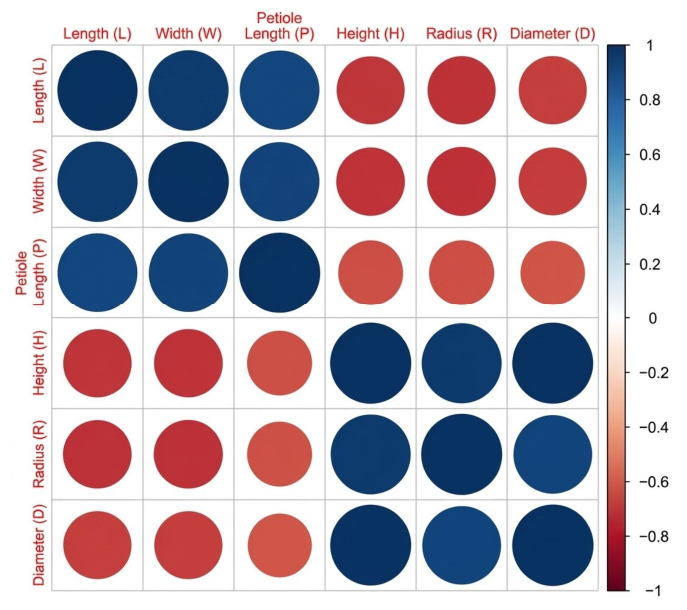
The correlation analysis (Figure 17) showed positive relationships among all three dendrometric parameters. The strongest correlation was observed between tree height (H) and trunk diameter (D), which is consistent with allometric growth relationships in woody plants. The relationship between crown radius (R) and trunk diameter was somewhat weaker but remained clearly positive.
Figure 17.
Correlation matrix illustrating the relationships between leaf morphological traits (leaf length: L, leaf width: Width, petiole length: Petiole) and tree dendrometric parameters (height H, crown radius R, trunk diameter D).
Principal component analysis (PCA) further revealed that the first principal component (Dim1) accounted for 94.7% of the total variation in the dataset, indicating the predominance of a common size-related gradient in the dendrometric data. P.alba and P. nigra were distributed mainly along the positive region of Dim1, reflecting the high variability of their biometric parameters, whereas P. tremula was concentrated near the origin of the coordinate system. P. × canescens formed an elongated cluster along the Dim2 axis (5.3%), indicating a specific pattern of variation in this taxon that was less associated with the overall size gradient. Thus, PCA primarily differentiated the studied species according to the intensity of linear growth and trunk development.
Overall, based on the combination of dendrometric parameters, P. alba exhibited the greatest growth potential and overall tree dimensions, whereas P. tremula showed the lowest biometric values with comparatively stable intraspecific variation.
Integrated Analysis of Leaf and Dendrometric Traits in Four Populus Species. To obtain an integrated assessment of the morphological diversity of the studied species, a combined analysis of leaf traits (leaf length—L, leaf width—W, and petiole length—P) and dendrometric traits (tree height—H, crown radius—R, and trunk diameter—D) was performed using principal component analysis (PCA) and correlation analysis (Table 6).
Table 6.
Mean values of leaf and dendrometric traits across the studied Populus species.
PCA based on the combined set of six traits showed that the first principal component (Dim1) explained 82.3% of the total variation, while the second component (Dim2) accounted for an additional 14.7%, together explaining 97.0% of the total variance. The high explanatory power of the first two components indicates a well-structured pattern of interspecific differences in the multidimensional trait space.
P. alba formed the most extensive and dispersed cluster, covering a broad range of values along both Dim1 and Dim2. This pattern corresponds to the high intraspecific variability observed for all six traits. Several individuals of this species extended beyond the confidence ellipse, forming outliers in the positive region of Dim2 and on both sides of the Dim1 axis. P. nigra occupied an intermediate position, partially overlapping with the P. alba cluster in the central region of the biplot but tending toward negative Dim1 values. The clusters of P. tremula and P. × canescens were considerably more compact and were located predominantly near the origin, with substantial overlap between them (Figure 1). This pattern further confirms the morphological similarity of these two taxa based on the combined set of leaf and dendrometric traits.
A characteristic feature of the PCA diagram was the linear distribution of points along Dim2. Individuals of each species formed vertically oriented clusters, indicating a substantial contribution of the second component to within-species differentiation, apparently due to relatively independent variation in leaf traits compared with dendrometric traits.
The integrated analysis showed that P. alba exhibited the greatest morphological distinctiveness and the highest values of both leaf and dendrometric traits, whereas P. tremula and P. × canescens formed a morphologically similar group characterized by the smallest leaf and trunk dimensions. The negative relationship between leaf and dendrometric traits observed at the interspecific level is biologically relevant and may reflect differences in resource-allocation strategies among the studied Populus species.
4. Conclusions
The present study provides a comparative characterization of morphological, anatomical, and dendrometric variation among four Populus taxa occurring under contrasting habitat conditions in the Zhaiyk River floodplain of Western Kazakhstan. The investigated taxa differed in leaf morphology, stem and leaf anatomical structure, and tree dimensions, with additional variation observed within taxa.
The combination of quantitative morphological, anatomical, and dendrometric characteristics allowed the taxa to be differentiated and revealed several potentially diagnostic features, including leaf dimensions, epidermal and mesophyll structure, development of vascular tissues, and stem anatomical characteristics. P. alba was generally characterized by larger leaf and tree dimensions, whereas P. tremula and P. × canescens showed greater similarity in several morphological characteristics. P. nigra exhibited distinctive anatomical features and considerable variation in tree dimensions. The observed differences should be interpreted as patterns of morphological and anatomical variation among taxa occurring in contrasting habitats rather than as direct evidence of ecological adaptation, because species identity and habitat conditions were not independently replicated in the present study. The results therefore provide a comparative baseline for further investigations of Populus diversity in Western Kazakhstan.
Overall, the study demonstrates the value of integrating morphological, anatomical, and dendrometric characteristics for the comparative assessment and identification of Populus taxa. Further studies involving replicated populations of the same taxa across different habitats, as well as common-garden and genomic approaches, are needed to distinguish species-specific genetic differentiation from environmentally associated variation and phenotypic plasticity.
Author Contributions
A.R.—Conceptualization, M.K.—formal analysis, investigation, T.D.—supervision, B.O.—visualization, A.K. (Andrey Klimov)—methodology, D.K.—software, S.B.—funding acquisition, D.U.—original draft preparation, A.K. (Adil Kusmangazinov)—validation, B.A.—writing—review and editing. All authors have read and agreed to the published version of the manuscript.
Funding
This research received no external funding.
Data Availability Statement
The raw data supporting the conclusions of this article will be made available by the authors on request.
Conflicts of Interest
The authors declare no conflicts of interest.
References
- Komarov, V.L. Poplars of the USSR. Bot. J. USSR 1934, 19, 495–511. [Google Scholar]
- Bogdanov, P.L. Poplars and Their Cultivation; Lesnaya Promyshlennost: Moscow, Russia, 1965. [Google Scholar]
- Redko, G.I. Biology and Cultivation of Poplars; Leningrad University Press: Leningrad, Russia, 1975; 175p. [Google Scholar]
- Cherepanov, S.K. Vascular Plants of Russia and Adjacent States (Within the Former USSR); Mir i Semya: St. Petersburg, Russia, 1995; 992p. [Google Scholar]
- Anatoliy, R.K.; Kurmanbayeva, M.S.; Darbayeva, T.E.; Kusmangazinov, A.B.; Karabalayeva, D.E.; Aldibekova, A.R.; Sramkó, G. The ratio of boreal and steppe floristic elements in phytocoenoses involving Populus alba, P. nigra, P. tremula and P. × canescens in the Zhaiyk River floodplain. Int. J. Biol. Chem. 2026, 19, 78–98. [Google Scholar] [CrossRef] [Scilit]
- Government of the Republic of Kazakhstan. On Approval of the Comprehensive Plan for the Socio-Economic Development of the West Kazakhstan Region for 2014–2018; Government of the Republic of Kazakhstan: Astana, Kazakhstan, 2014.
- Tokbergenova, A.; Skorintseva, I.; Ryskeldiyeva, A.; Kaliyeva, D.; Salmurzauly, R.; Mussagaliyeva, A. Assessment of anthropogenic disturbances of landscapes: West Kazakhstan Region. Sustainability 2025, 17, 573. [Google Scholar] [CrossRef] [Scilit]
- Adenova, D.; Sapargaliyev, D.; Sagin, J.; Absametov, M.; Murtazin, Y.; Smolyar, V. Assessing groundwater and soil quality in West Kazakhstan amid climate impacts and oil industry contamination risks. Sci. Rep. 2025, 15, 6663. [Google Scholar] [CrossRef] [Scilit] [PubMed]
- Tokbergenova, A.; Kaliyeva, D.; Askarova, M.; Taukebayev, O.; Salmurzauli, R.; Zulpykharov, K. Analysis of agricultural land condition in Western Kazakhstan from 1991 to 2023: The impact of climate change. Environ. Monit. Assess. 2025, 197, 186. [Google Scholar] [CrossRef] [Scilit] [PubMed]
- Nikitin, S.A. Vegetation of the interfluve areas of the Kushum, Ural and Emba rivers and its forage resources. In Problems of Improving the Forage Base in the Steppe, Semi-Desert and Desert Zones of the USSR; Academy of Sciences of the USSR: Moscow, Russia, 1954; pp. 58–86. [Google Scholar]
- Nikitin, S.A. Forest vegetation of the steppe Trans-Urals. In Proceedings of the Institute of Forest of the Academy of Sciences of the USSR; Academy of Sciences of the USSR: Moscow, Russia, 1956; pp. 44–61. [Google Scholar]
- Ivanov, V.V. Steppes of Western Kazakhstan in Connection with the Dynamics of Their Cover; Academy of Sciences of the USSR: Moscow, Russia, 1958; 288p. [Google Scholar]
- Petrenko, A.Z.; Dzhubanov, A.A.; Fartushina, M.M.; Chernyshev, D.M.; Tubetov, Z.M. Natural and Resource Potential and Proposed Protected Areas of the West Kazakhstan Region; West Kazakhstan State University: Uralsk, Kazakhstan, 2001; 175p. [Google Scholar]
- Kolomyts, E.G. Evolutionary ecology of boreal forests on the Pacific mega-ecotone of Northern Eurasia. Samar. Luka Probl. Reg. Glob. Ecol. 2015, 24, 5–139. [Google Scholar]
- Abiev, S.A.; Darbayeva, T.E.; Sarsenova, A.N. Possible pathways for the formation of flora and macromycetes of floodplain forests of the Ural River within Western Kazakhstan. Bull. L.N. Gumilyov Eurasian Natl. Univ. Biosci. Ser. 2021, 135, 18–27. [Google Scholar] [CrossRef] [Scilit]
- Kurmanbayeva, M.; Anatoliy, R.; Darbayeva, T.; Alzhanova, B.; Karabalayeva, D.; Bohorova, S. Influence of environmental factors on the morphological variability of aspen (Populus tremula L.) in floodplain and ravine forests of the West Kazakhstan region. Eurasian J. Ecol. 2026, 87. [Google Scholar] [CrossRef]
- Kirillov, V.Y.; Aleka, V.P.; Ivashchenko, A.A.; Rakhimzhanov, A.N.; Kelgenbayev, N.S.; Auezov, D.U.; Stikhareva, T.N. Current state and future development potential of the oak forests in the floodplain of the Ural River (West Kazakhstan). Fundam. Exp. Biol. 2021, 104, 31–45. [Google Scholar] [CrossRef] [Scilit] [PubMed]
- Khamit, A.; Utarbayeva, N.; Shumakova, G.; Makhambetov, M.; Abdullina, A.; Sergeyeva, A. Assessment of the state of the landscaping system in the city of Aktobe, the Republic of Kazakhstan, under conditions of man-made load using remote sensing. Urban Sci. 2024, 8, 34. [Google Scholar] [CrossRef] [Scilit]
- Kulebayev, K.M.; Alimkulov, S.K.; Tursunova, A.A.; Makhmudova, L.K.; Talipova, E.K.; Saparova, A.A.; Rodrigo-Clavero, M.-E.; Rodrigo-Ilarri, J. Assessing the vulnerability of lakes in Western Kazakhstan to climate change and anthropogenic stressors. Water 2024, 16, 3709. [Google Scholar] [CrossRef] [Scilit]
- Shaimoldina, A.K.; Osmonali, B.B.; Zhou, Y.; Wariss, H.M.; Ma, S.; Li, W. Vascular plant diversity and distribution patterns in Kazakhstan. Diversity 2026, 18, 213. [Google Scholar] [CrossRef] [Scilit]
- Lebedeva, M.V.; Yamalov, S.M.; Petrova, M.V. Rare cenoflora formation patterns in the Cis-Urals steppe communities. IOP Conf. Ser. Earth Environ. Sci. 2021, 817, 012056. [Google Scholar] [CrossRef] [Scilit]
- Akhmedenov, K.M. Analysis of the afforestation status in the arid conditions of Western Kazakhstan. Biol. Bull. 2018, 45, 1153–1158. [Google Scholar] [CrossRef] [Scilit]
- Imanbayeva, A.; Ishmuratova, M.; Duisenova, N.; Sagyndykova, M.; Orazov, A.; Tuyakova, A. Floristic and anatomical diversity of Crataegus ambigua C.A. Mey. ex A.K. Becker populations in different areas of the arid Mangystau region (Kazakhstan). Forests 2025, 16, 585. [Google Scholar] [CrossRef] [Scilit]
- Darbayeva, T.; Ramazanova, N.; Chashina, B.; Berdenov, Z.; Mendybayev, E.; Wendt, J.A.; Atasoy, E. Modeling soil erosion in the Chagan River basin of Western Kazakhstan using RUSLE and GIS tools. J. Environ. Biol. 2020, 41, 396–404. [Google Scholar] [CrossRef] [Scilit]
- Baba, K.I.; Kurita, Y.; Mimura, T. Experimental study of intra-ring anatomical variation in Populus alba L. with respect to changes in temperature and day-length conditions. Forests 2022, 13, 1151. [Google Scholar] [CrossRef] [Scilit]
- Xiang, X.; Zhou, X.; Zi, H.; Wei, H.; Cao, D.; Zhang, Y.; Zhang, L.; Hu, J. Populus cathayana genome and population resequencing provide insights into its evolution and adaptation. Hortic. Res. 2024, 11, uhad255. [Google Scholar] [CrossRef] [Scilit] [PubMed]
- Sun, J.; Xu, J.; Qiu, C.; Zhai, J.; Zhang, S.; Zhang, X.; Wu, Z.; Li, Z. The chromosome-scale genome and population genomics reveal the adaptive evolution of Populus pruinosa to desertification environment. Hortic. Res. 2024, 11, uhae034. [Google Scholar] [CrossRef] [Scilit] [PubMed]
- Makhmudova, L.; Alimkulov, S.; Tursunova, A.; Birimbayeva, L.; Talipova, E.; Alzhanov, O.; Rodrigo-Clavero, M.E.; Rodrigo-Ilarri, J. Seasonally Contrasting Sensitivity of Minimal River Runoff to Future Climate Change in Western Kazakhstan: A CMIP6 Scenario Analysis. Water 2025, 17, 2417. [Google Scholar] [CrossRef] [Scilit]
- Permyakov, A.Y. Microtechnique; Izd. MSU: Moscow, Russia, 1988; 58p. [Google Scholar]
- Aldibekova, A.; Kurmanbayeva, M.; Aksoy, A.; Permitina, V.; Dimeyeva, L.; Zverev, N. Anatomical structure and phytochemical composition of a rare species Fraxinus sogdiana Bunge (Oleaceae) growing in different soils in Kazakhstan. Diversity 2023, 15, 769. [Google Scholar] [CrossRef] [Scilit]
- Karabalayeva, D.; Kurmanbayeva, M.; Kusmangazinov, A. Kazakhstan Trollius Species: Comparative Morphology and Anatomy Study. In International Conference on Smart Environment and Green Technologies; Springer Nature: Cham, Switzerland, 2025; pp. 375–383. [Google Scholar]
- Kusmangazinov, A.; Kurmanbayeva, M.S.; Zharkova, I.; Karabalayeva, D.; Kaparbay, R.; Kaiyrbekov, T. Comparison of anatomical characteristics and phytochemical components between two species of hedysarum (Fabaceae). OnLine J. Biol. Sci. 2023, 23, 323–335. [Google Scholar] [CrossRef] [Scilit]
- R Core Team. R: A Language and Environment for Statistical Computing; R Foundation for Statistical Computing: Vienna, Austria, 2024. [Google Scholar]
- Wickham, H.; Averick, M.; Bryan, J.; Chang, W.; McGowan, L.D.; François, R.; Grolemund, G.; Hayes, A.; Henry, L.; Hester, J.; et al. Welcome to the tidyverse. J. Open Source Softw. 2019, 4, 1686. [Google Scholar] [CrossRef] [Scilit]
- Wickham, H. ggplot2: Elegant Graphics for Data Analysis; Springer: New York, NY, USA, 2016; 260p. [Google Scholar] [CrossRef] [Scilit]
- Lê, S.; Josse, J.; Husson, F. FactoMineR: An R package for multivariate analysis. J. Stat. Softw. 2008, 25, 1–18. [Google Scholar] [CrossRef] [Scilit]
- Kassambara, A.; Mundt, F. Factoextra: Extract and Visualize the Results of Multivariate Data Analyses, R package version 1.0.7; The R Foundation: Vienna, Austria, 2020. [Google Scholar]
- Wei, T.; Simko, V. R Package “Corrplot”: Visualization of a Correlation Matrix, Version 0.95; The R Foundation: Vienna, Austria, 2024. [Google Scholar]
- Jolliffe, I.T.; Cadima, J. Principal component analysis: A review and recent developments. Philos. Trans. R. Soc. A Math. Phys. Eng. Sci. 2016, 374, 20150202. [Google Scholar] [CrossRef] [Scilit] [PubMed]
- Pearson, K. Note on regression and inheritance in the case of two parents. Proc. R. Soc. Lond. 1895, 58, 240–242. [Google Scholar] [CrossRef] [Scilit]
- Du, S.; Hu, X.; Yang, Y.; Wang, Z. Molecular phylogeny of Populus (Salicaceae, Salicales) with focus on inter- and intrasectional relationships. Dendrobiology 2022, 88, 1–15. [Google Scholar] [CrossRef] [Scilit]
- Molganova, N.A.; Ovesnov, S.A. Features of micromorphology and anatomy of the leaf of Populus tremula L. (sect. Populus) and P. nigra L. (sect. Aigeiros Duby, Salicaceae). Bull. Perm Univ. Biol. 2022, 2, 93–100. [Google Scholar] [CrossRef] [Scilit]
- Lin, X.Y.; Wang, X.X.; Zeng, Q.Y.; Yang, Q. Leaf structure and photosynthesis in Populus alba under naturally fluctuating environments. Photosynthetica 2022, 60, 240–251. [Google Scholar] [CrossRef] [Scilit] [PubMed]
- Kalouti, S.; Keshavarzi, M.; Bokaee, Z.N.; Saifali, M. Leaf anatomical study of Populus L. (P. nigra, P. alba, P. euphratica & P. caspica) (Salicaceae) in Iran. Sci. Agric. 2015, 11, 124–131. [Google Scholar] [CrossRef] [Scilit]
- Lawrence, E.H.; Leichty, A.R.; Doody, E.E.; Ma, C.; Strauss, S.H.; Poethig, R.S. Vegetative phase change in Populus tremula × alba. New Phytol. 2021, 231, 351–364. [Google Scholar] [CrossRef] [Scilit] [PubMed]
- Van Loo, M.; Joseph, J.A.; Heinze, B.; Fay, M.F.; Lexer, C. Clonality and spatial genetic structure in Populus × canescens and its sympatric backcross parent P. alba in a Central European hybrid zone. New Phytol. 2008, 177, 506–516. [Google Scholar] [CrossRef] [Scilit] [PubMed]
- Zeng, Y.F.; Zhang, J.G.; Duan, A.G.; Abuduhamiti, B. Genetic structure of Populus hybrid zone along the Irtysh River provides insight into plastid-nuclear incompatibility. Sci. Rep. 2016, 6, 28043. [Google Scholar] [CrossRef] [Scilit] [PubMed]
- Fussi, B.; Lexer, C.; Heinze, B. Phylogeography of Populus alba (L.) and Populus tremula (L.) in Central Europe: Secondary contact and hybridisation during recolonisation from disconnected refugia. Tree Genet. Genomes 2010, 6, 439–450. [Google Scholar] [CrossRef] [Scilit]
- Mirzaie-Nodoushan, H.; Ghamari-Zare, A.; Rad, F.T.; Yousefifard, M. Inducing genetic variation in growth-related characteristics of poplar germplasm by producing interspecific hybrids between P. alba and P. euphratica. Silvae Genet. 2015, 64, 239–248. [Google Scholar] [CrossRef] [Scilit]
- Rajora, O.P.; Dancik, B.P. Genetic characterization and relationships of Populus alba, P. tremula, and P. × canescens, and their clones. Theor. Appl. Genet. 1992, 84, 291–298. [Google Scholar] [CrossRef] [Scilit] [PubMed]
- Anatoliy, R.Q.; Kurmanbayeva, M.S.; Karabalayeva, D.E. Evolutionary development of the genus Populus L. (Salicaceae Mirb.) in western Kazakhstan. Exp. Biol. 2025, 104, 44–58. [Google Scholar] [CrossRef] [Scilit]
- Benedec, D.; Oniga, I.; Mureșan, B.; Moț, A.C.; Damian, G.; Nistor, A.; Silaghi-Dumitrescu, R.; Hanganu, D.; Duma, M.; Vlase, L. Contrast between water- and ethanol-based antioxidant assays: Aspen (Populus tremula) and black poplar (Populus nigra) extracts as a case study. J. Food Qual. 2014, 37, 259–267. [Google Scholar] [CrossRef] [Scilit]

Disclaimer/Publisher’s Note: The statements, opinions and data contained in all publications are solely those of the individual author(s) and contributor(s) and not of MDPI and/or the editor(s). MDPI and/or the editor(s) disclaim responsibility for any injury to people or property resulting from any ideas, methods, instructions or products referred to in the content. |
© 2026 by the authors. Licensee MDPI, Basel, Switzerland. This article is an open access article distributed under the terms and conditions of the Creative Commons Attribution (CC BY) license.