


Abstract
Wild plant populations in mountain ecosystems often depend on specific combinations of soil, vegetation and microsite conditions. Alcea nudiflora (Lindl.) Boiss. is a poorly studied Malvaceae species in Central Asia, and its population structure across different soil and vegetation conditions in the Trans-Ili Alatau remains insufficiently documented. We assessed three natural populations of A. nudiflora along an elevational gradient in the Trans-Ili Alatau, Kazakhstan: P1 at 900 m a.s.l., P2 at 1438 m a.s.l. and P3 at 1620 m a.s.l. Floristic composition, vegetation structure, ontogenetic stages and soil physicochemical properties were analysed using field surveys, 10 × 10 m plots, soil descriptions, laboratory analyses and exploratory ordination. P1 occurred in relatively open meadow–shrub vegetation and showed the strongest coenotic expression of A. nudiflora, with 62 individuals recorded within the 100 m2 vegetation plot and a broad representation of major ontogenetic stages. In P2, A. nudiflora remained a regular component of shrub–meadow and forest-edge vegetation, whereas in P3, the species occurred sparsely and was restricted to meadow openings, forest-edge gaps, and local microsites. Surface soil properties varied among habitats. In the upper horizon, P1 had 3.67% humus, 95.2 mg kg−1 readily hydrolysable N, 36.0 mg kg−1 available P2O5, 610 mg kg−1 available K2O, pH 8.41 and 4.28% CO2; P2 had 3.72% humus, 39.2 mg kg−1 readily hydrolysable N, 44.8 mg kg−1 available P2O5, 450 mg kg−1 available K2O, pH 8.23 and 0.54% CO2. PCA explained 37.1%, 33.8% and 9.4% of variance on PC1–PC3, summarizing gradients of nutrients, texture, carbonates and alkalinity. The results indicate that population status is associated with surface soil conditions, vegetation structure and microsite availability rather than elevation alone.
1. Introduction
Mountain ecosystems are among the most environmentally heterogeneous terrestrial systems. Over short horizontal distances, elevational gradients are associated with marked changes in temperature, moisture, solar radiation, slope exposure, soil development, and vegetation structure [1,2]. Although elevation itself is not a direct ecological driver, it integrates several climatic, edaphic, and coenotic factors that influence plant distribution, community composition, regeneration, and population structure. Therefore, mountain landscapes provide a useful natural framework for studying how plant populations are associated with combined environmental gradients.
The Tien Shan is one of the major mountain systems of Central Asia and forms an important part of the Mountains of Central Asia biodiversity hotspot [3,4]. The Northern Tien Shan, including the Trans-Ili Alatau, contains a mosaic of foothill, meadow, shrub, forest-edge, and slope habitats that support high floristic diversity and numerous native species of ecological and resource value [4,5,6]. At the same time, these habitats are affected by grazing, recreation, erosion, land-use change, and climate-related shifts in moisture availability. This makes the study of soil–vegetation associations and population structure important for regional biodiversity monitoring and conservation planning.
Alcea nudiflora (Lindl.) Boiss. is an herbaceous species of the family Malvaceae. According to current taxonomic databases, the species is accepted within the genus Alcea and occurs naturally in temperate regions of Central Asia, including Kazakhstan [7,8]. Despite its occurrence in the regional flora, ecological information on natural populations of A. nudiflora remains limited. Floristic and taxonomic sources provide important data on vascular plant distribution in the Tien Shan [9,10,11,12], but detailed studies linking the population structure of A. nudiflora with soil properties and associated vegetation are still insufficient. Consequently, the habitat conditions associated with the structural status of this species in mountain ecosystems remain poorly understood.
Population structure is an important indicator of the current ecological condition of plant populations. The presence of different ontogenetic stages, including juvenile, virginal, and generative individuals, may reflect renewal capacity and potential population maintenance. However, ontogenetic completeness alone does not prove long-term demographic stability, which requires repeated data on survival, recruitment, fecundity, and stage transitions. Therefore, in this study, ontogenetic structure is considered an indicator of structural population status rather than direct evidence of demographic stability [13,14,15].
Soil properties are among the key factors associated with plant establishment, growth, and community composition. Soil humus, available nutrients, pH, carbonate content, and texture influence nutrient supply, water retention, root development, seedling establishment, and competitive interactions [16,17,18,19,20]. In mountain landscapes, these properties often vary due to altitude-related relief position, parent material, erosion, moisture redistribution, and fine-particle accumulation. Such edaphic heterogeneity may affect A. nudiflora directly through root-zone conditions and indirectly through changes in the composition and structure of surrounding vegetation.
Previous studies have shown that vegetation patterns along mountain gradients are associated with the combined effects of climate, soil moisture, soil nutrients, and local habitat conditions. In the Tien Shan, plant diversity and community differentiation are closely related to altitudinal and environmental gradients, including soil and climatic factors [21,22,23]. However, most gradient-based studies focus on general patterns of species richness or vegetation belts, whereas fewer studies combine floristic data, population-level indicators, and measured soil properties for a particular species. This limits our understanding of how soil–vegetation associations are associated with the structural condition of individual plant populations.
Multivariate methods are useful for summarizing complex ecological datasets. Principal component analysis can identify the main gradients in soil physicochemical properties, while constrained ordination methods can explore associations between floristic composition and environmental variables [24,25,26]. When combined with ontogenetic observations, these approaches provide an integrated but primarily exploratory interpretation of habitat differentiation and population structure.
The novelty of this study lies in the integrated assessment of A. nudiflora populations along an elevational gradient in the Trans-Ili Alatau, Kazakhstan. The study combines floristic composition, ontogenetic population structure, and soil physicochemical characteristics to evaluate how edaphic and coenotic conditions are associated with population differentiation. This approach provides new ecological information for a poorly studied species in a botanically important mountain region and contributes to identifying habitat conditions relevant for monitoring and conservation.
The aim of this study was to assess how soil and vegetation conditions are associated with the population structure of A. nudiflora along an elevational gradient in the Trans-Ili Alatau. Specifically, we asked: (i) how floristic composition differs among populations; (ii) how soil physicochemical properties vary among habitats; and (iii) which edaphic factors are most closely associated with vegetation differentiation and ontogenetic structure. We hypothesized that populations occurring in habitats with higher humus content, more favorable nutrient status, suitable soil texture, and less restrictive vegetation conditions would show higher abundance and a more balanced ontogenetic spectrum, whereas less favorable edaphic and habitat conditions would be associated with reduced regeneration and weaker structural population status.
2. Materials and Methods
2.1. Study Area and Design
The study was conducted in the Northern Tien Shan, within the Trans-Ili Alatau mountain system, Kazakhstan. We investigated three natural populations of Alcea nudiflora (Lindl.) Boiss. located along an elevational gradient and representing contrasting mountain habitat conditions. The study followed a comparative observational design.
The first population was recorded in the Karasai Gorge, on the northern macroslope of the Trans-Ili Alatau, at approximately 900 m a.s.l. This site represented a lower foothill meadow–shrub habitat associated with river-valley and relatively moist microsite conditions.
The second population was located in the Maralsai Gorge, at approximately 1438 m a.s.l. This site represented a middle-mountain shrub–meadow and forest-edge habitat. The population occurred on an erosional–deluvial slope with an inclination of approximately 15–20°.
The third population was recorded in the Medeu Gorge of the Trans-Ili Alatau, near the upper part of the Kishi Almaty valley, at approximately 1620 m a.s.l. This site represented a cooler middle-mountain habitat with mosaic vegetation structure. A. nudiflora occurred mainly in moist meadow openings, forest edges, and light gaps between shrubs.
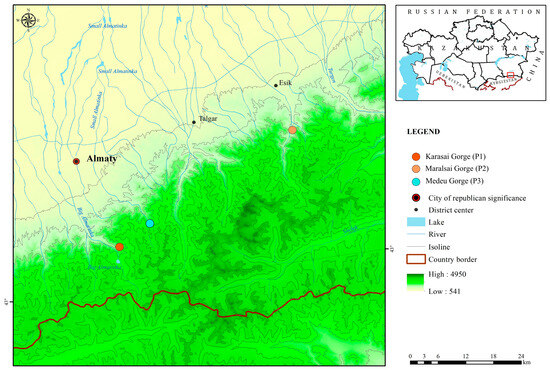
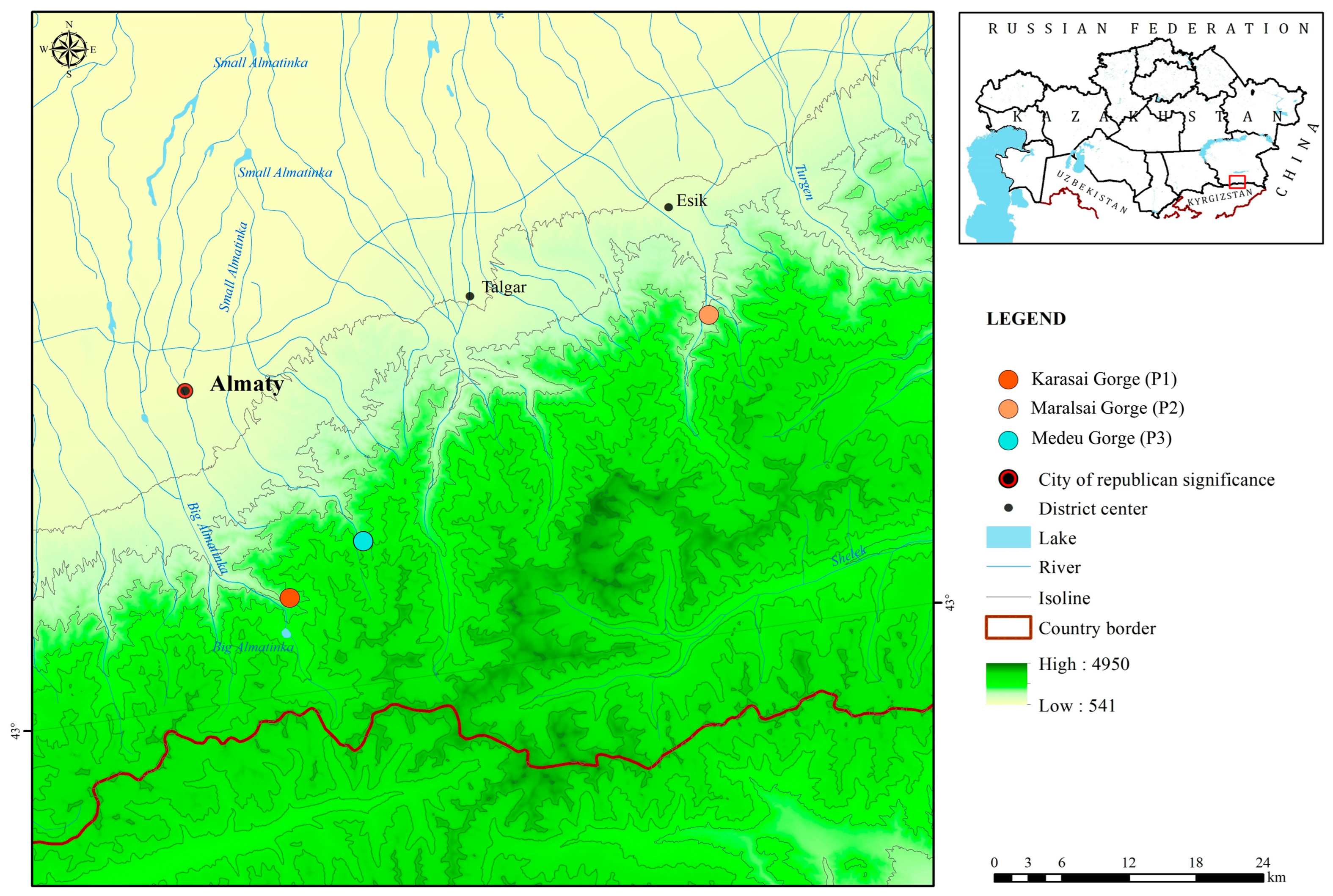
The three sites differed in elevation, relief position, vegetation structure, and soil conditions. This allowed us to describe how the structural population status of A. nudiflora was associated with contrasting habitat conditions along the studied gradient. The geographical position, altitude, habitat type, slope characteristics, and general vegetation features of the study sites are summarized in Table 1. The location of the study area and the investigated populations is shown in Figure 1.
Table 1.
Geographic and habitat characteristics of Alcea nudiflora populations in the Trans-Ili Alatau, Kazakhstan.
Figure 1.
Study area and locations of the three investigated Alcea nudiflora populations in the Trans-Ili Alatau, Kazakhstan. The map was generated using a digital elevation model (DEM) and shows the locations of populations P1, P2, and P3 along an elevational gradient.
2.2. Target Species and Taxonomic Identification
The target species of this study was Alcea nudiflora (Lindl.) Boiss., a biennial herbaceous species of the family Malvaceae, following the current taxonomic treatment in Plants of the World Online (POWO) [27]. In the studied habitats, the species occurred mainly in the herb layer; however, its abundance and coenotic role varied among the three sites. In the lower foothill population, A. nudiflora was one of the important components of the herbaceous community. In the middle-mountain population, A. nudiflora exhibited a moderate level of abundance according to the modified Drude-type abundance scale, whereas in the upper population the species was represented by scattered individuals corresponding to the lower abundance classes.
Taxonomic identification of A. nudiflora was confirmed using a set of diagnostic morphological characters examined during field surveys and verified from voucher specimens. Species determination was based on vegetative and reproductive traits, including plant habit, leaf morphology, floral structure, epicalyx, calyx, fruit morphology, and indumentum. The accepted name, Alcea nudiflora (Lindl.) Boiss., follows the current taxonomic treatment adopted by Plants of the World Online (POWO) and other internationally recognized taxonomic databases [27].
2.3. Vegetation Sampling and Floristic Survey
Alcea nudiflora (Lindl.) Boiss. was treated as a biennial herbaceous species following the current taxonomic treatment in Plants of the World Online (POWO). Vegetation and population surveys were conducted during the flowering period, when the species could be reliably identified in the field and individuals representing different ontogenetic stages could be distinguished based on diagnostic morphological characteristics. Ontogenetic stages were determined according to the approaches of Rabotnov (1950) [28] and Uranov (1975) [29].
In each population locality, a 10 × 10 m plot was established within the main occurrence area of A. nudiflora. The 10 × 10 m plot was used for a complete floristic inventory, description of vegetation layers, and estimation of species cover-abundance. Within each 10 × 10 m vegetation plot, ten 1 × 1 m subplots were examined to record the occurrence of A. nudiflora individuals representing different ontogenetic stages. Thus, the total sampling effort included three 10 × 10 m vegetation plots and 30 one-square-meter subplots for population-level assessment.
Within each 10 × 10 m plot, all vascular plant species were recorded. Species were assigned to vegetation layers according to height and life form. Four main layers were distinguished: tree layer, shrub layer, tall herb layer, and lower herb layer.
Species abundance was assessed in the field using a modified Drude-type abundance scale [30,31]. The abundance classes used in the present study were Sol, Sp, Cop1, Cop2, Cop3, and Soc, representing an ordinal gradient from solitary or sparsely occurring species to highly abundant species. For exploratory numerical ordination, these semi-quantitative abundance classes were converted to ordinal scores as follows: Sol = 1, Sp = 2, Cop1 = 3, Cop2 = 4, Cop3 = 5, and Soc = 6. The numerical coding was used solely to preserve the rank order of the field abundance classes for exploratory multivariate analysis and should not be interpreted as percentage cover or as an interval-scale measure of abundance.
2.4. Ontogenetic Structure of A. nudiflora
The ontogenetic structure of A. nudiflora populations was investigated using ten 1 × 1 m subplots established within each population. All individuals recorded within each plot were assigned to one of the following ontogenetic stages: juvenile (j), immature (im), virginal (v), young generative (g1), mature generative (g2), old generative (g3), subsenile (ss), and senile (s), following the ontogenetic classification proposed by Rabotnov (1950) [28] and further developed by Uranov (1975) [29].
Assignment of individuals to ontogenetic stages was based on a combination of diagnostic morphological characters, including plant size, the degree of vegetative development, the presence and developmental state of reproductive shoots, and morphological indicators of ageing.
Within each population, individuals encountered in the ontogenetic subplots were assigned to the observed ontogenetic stages on the basis of diagnostic morphological characters. Because complete individual counts by ontogenetic stage were not available for all three populations, the ontogenetic data were used primarily to characterize the occurrence and completeness of the observed ontogenetic spectrum rather than to calculate directly comparable stage proportions or population densities.
2.5. Soil Sampling and Morphological Description
Soil studies were conducted in the same localities where A. nudiflora populations were recorded. Before soil sampling, reconnaissance surveys were carried out. Soil-profile locations were selected with regard to relief, vegetation cover, and local habitat conditions.
A total of nine soil profiles were established, with three profiles examined at each population locality. Soil morphology was described in the field using standard morphological procedures. Horizon depth, colour, structure, moisture, compaction, root abundance, skeletal material, and reaction with HCl were recorded, and the profiles were photographed and described by genetic horizons. Soils were classified according to the World Reference Base for Soil Resources (WRB) [32], where possible, using field morphological observations and laboratory data.
A total of 44 horizon-level soil samples were collected from the nine profiles for laboratory analysis. All 44 samples were retained in the horizon-level physicochemical dataset and were used in the exploratory PCA. For the detailed descriptive presentation of soil morphology and vertical physicochemical patterns, one profile from each population locality (P1, P2, and P3) was selected and presented separately. The horizon-specific values shown for these profiles were not pooled with the other profiles.
2.6. Laboratory Soil Analyses
Soil samples were air-dried, gently crushed, and passed through a 1 mm sieve before laboratory analysis. The following physicochemical parameters were determined: humus content, readily hydrolysable nitrogen, available phosphorus, available potassium, pH, carbonate content, particle-size composition, exchangeable bases, and total soluble salts.
Humus content was determined using the Tyurin method. Readily hydrolysable nitrogen was determined using a hydrolysis procedure followed by Kjeldahl-based determination and was expressed as mg kg−1 of air-dry soil. Available phosphorus and potassium were determined using a Specord 210 Plus spectrophotometer. Soil pH was measured in aqueous suspension using an I-160MI pH meter. Carbonate content was determined by the calcimetric method and expressed as CO2. Particle-size composition was determined using the Kachinsky method. Total soluble salts and exchangeable cations were determined from soil extracts using standard laboratory procedures, including flame photometry with a FLAPHO-4 flame photometer where applicable.
All analyses were performed according to standard soil analytical protocols used in the laboratory. Analytical replicates were used to check measurement precision. The results were expressed on an air-dry soil basis using standard units for each parameter. The results were used to characterize soil fertility, reaction, carbonate status, salinity, and soil texture in the habitats of A. nudiflora.
2.7. Environmental Variables
The environmental dataset included topographic and soil variables. Elevation was included as a topographic descriptor of the elevational gradient, rather than as a direct causal environmental factor. It was used to characterize the position of each Alcea nudiflora population along the mountain gradient.
Soil variables included humus content, readily hydrolysable N, available P2O5, available K2O, pH, CO2 content, exchangeable Ca, Mg, Na, and K, total soluble salts, and particle-size fractions. Particle-size variables included sand, silt, clay, the fraction <0.001 mm, and physical clay, defined as particles <0.01 mm. These variables were included because they are related to soil fertility, nutrient storage, water-retention potential, aeration, and root-zone conditions.
For population-level comparison with vegetation data, topsoil values were used to construct the environmental matrix. Horizon-level data from all 44 soil samples collected across the nine profiles were analysed separately using exploratory PCA to characterize vertical variation in soil physicochemical properties.
2.8. Statistical Analysis
All statistical analyses were performed in R. Before analysis, environmental variables were checked for missing values and strongly skewed distributions. Soil variables were standardized to zero mean and unit variance. This was done because the variables were measured in different units.
Principal component analysis (PCA) was used as an exploratory method to summarize the main gradients in soil physicochemical properties. PCA was performed on the standardized horizon-level soil dataset comprising all 44 samples collected from the nine soil profiles. The analysis included humus content, readily hydrolysable N, available P2O5, available K2O, pH, CO2 content, exchangeable bases, total soluble salts, and particle-size fractions. The first two PCA axes were used to visualize soil differentiation among populations and soil horizons.
Redundancy analysis (RDA) was used as an exploratory ordination to visualise associations between floristic composition and environmental variables. The transformed species matrix was used as the response matrix, whereas soil and topographic variables were used as explanatory variables. Because vegetation data were available at the population level, the RDA was interpreted descriptively and was not used for formal significance testing.
3. Results
3.1. Habitat Differentiation of the Studied Populations
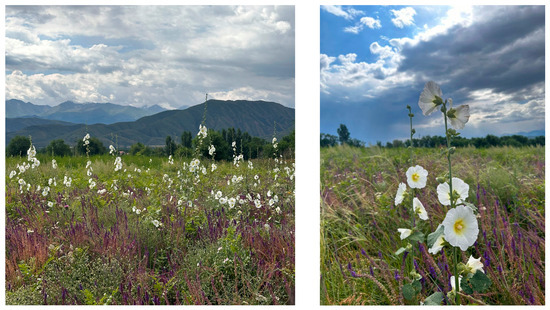
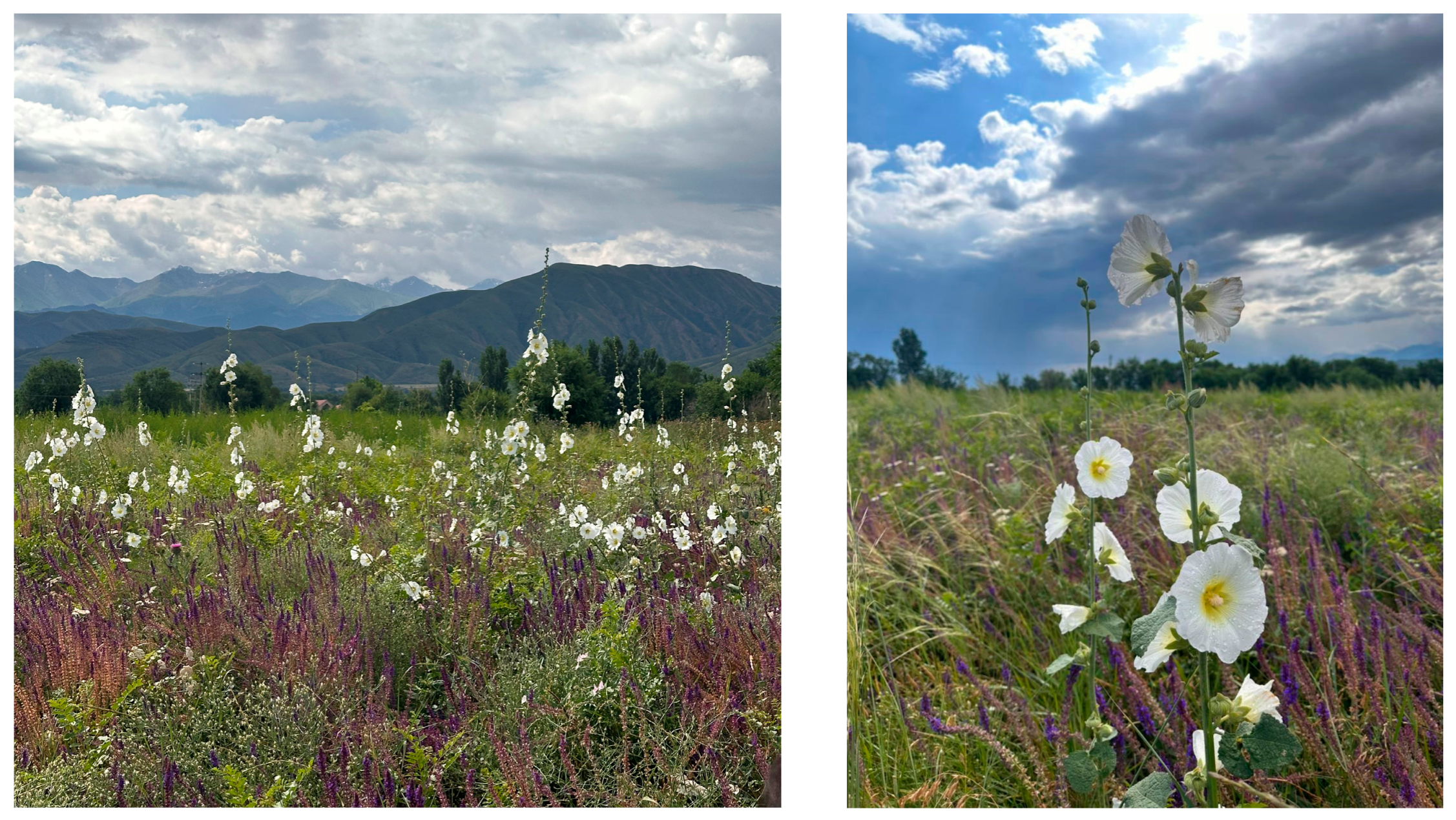
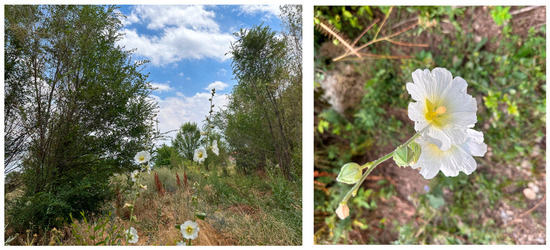
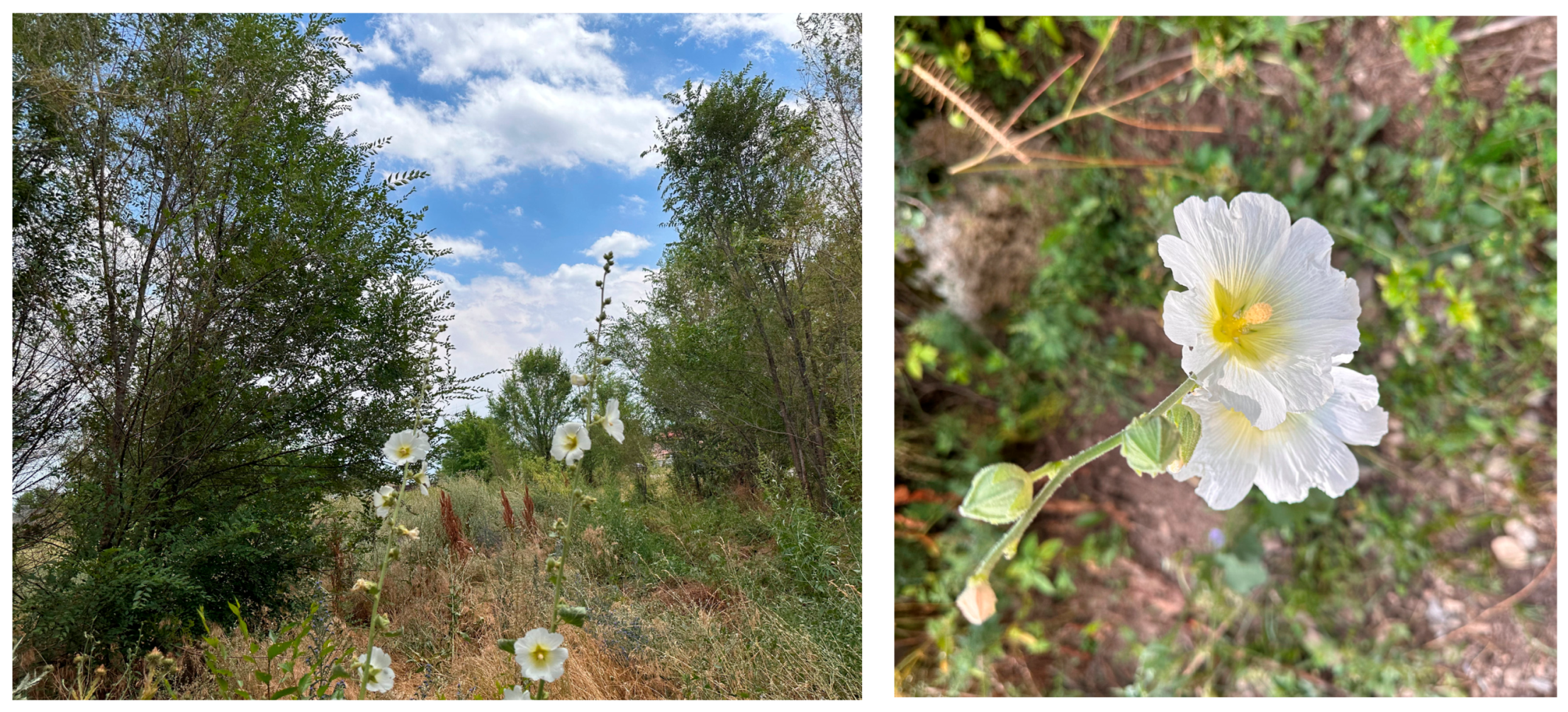
The studied populations differed in habitat openness, vegetation layering, and microsite structure. These characteristics were assessed qualitatively during field observations. P1 represented the most open habitat among the studied sites. The community had a meadow–shrub character, with a dense herbaceous layer and relatively open microsites. A. nudiflora occurred in the herb layer and showed the strongest coenotic expression in this population (Figure 2).
Figure 2.
Population P1 in Karasai Gorge: habitat view (left) and flowering generative individuals of A. nudiflora (right).
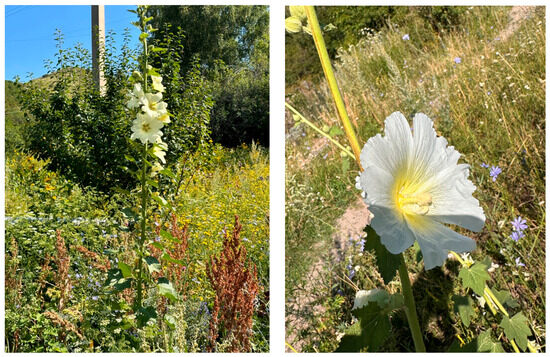
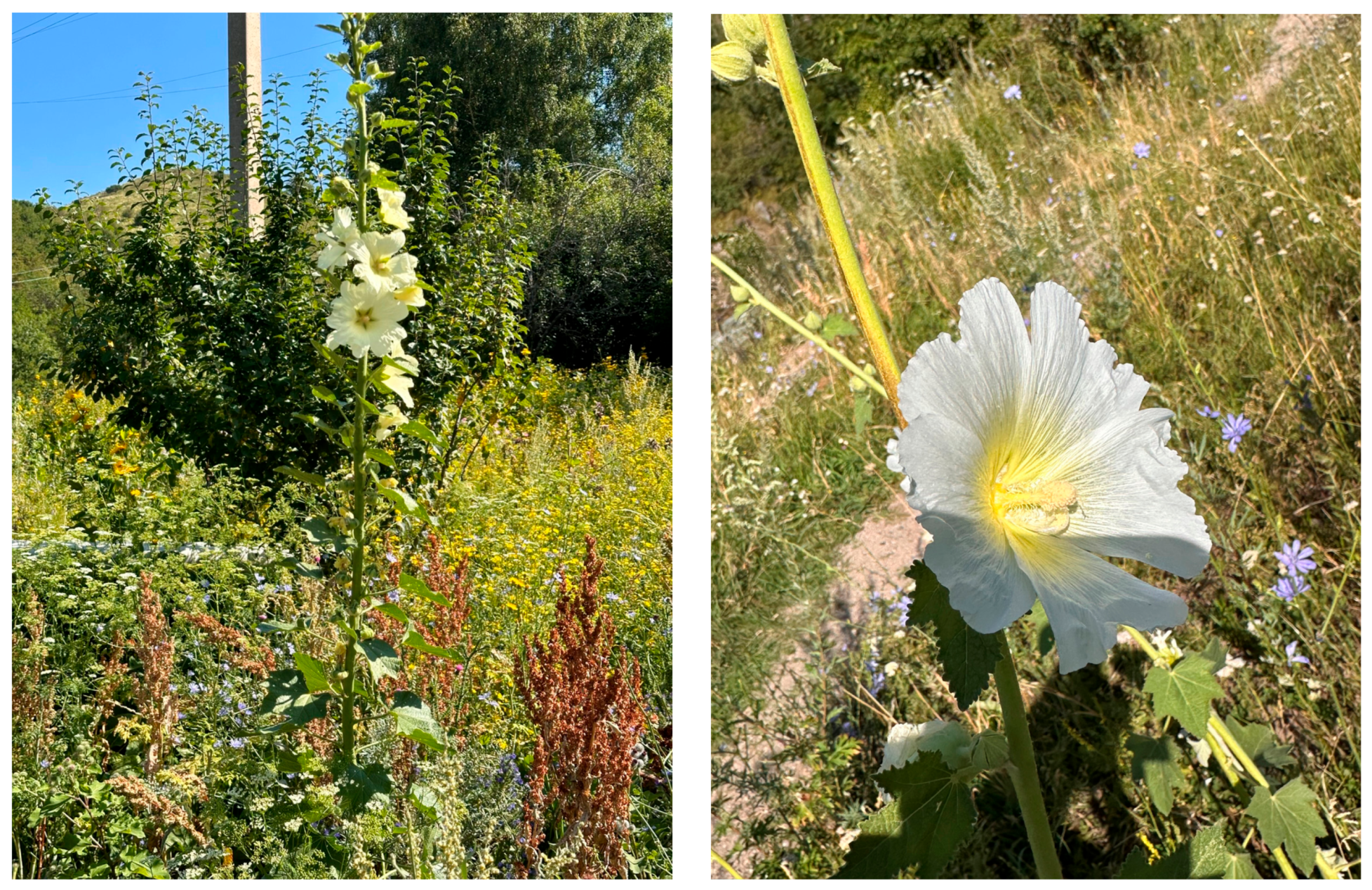
P2 showed a more pronounced shrub–forest-edge structure. The tree and shrub layers were better developed than in P1, creating a more structurally complex habitat. Under these conditions, A. nudiflora remained a regular component of the community, but its coenotic role was lower than in P1 (Figure 3).
Figure 3.
Population P2 in the Maralsai Gorge: habitat view (left) and flowering generative individuals of A. nudiflora (right).
P3 had the most heterogeneous habitat structure, with a pronounced mosaic of shaded and semi-shaded microsites. The species occurred mainly in meadow openings, forest edges, and light gaps between shrubs. This pattern suggests that the occurrence of A. nudiflora in P3 was associated with local habitat openness, although this interpretation requires confirmation by direct light measurements (Figure 4).
Figure 4.
Population P3 in the Medeu Gorge: habitat view (left) and flowering generative individuals of A. nudiflora (right).
The habitat gradient shifted from relatively open meadow–shrub conditions in P1 to more structurally complex shrub–forest-edge conditions in P2 and P3. This shift was associated with differences in the field expression of A. nudiflora: the species was abundant and coenotically more important in P1, less dominant in P2, and more scattered in P3.
3.2. Floristic Composition of the Plant Communities
The recorded floristic richness differed among the studied plots. P1 included 126 vascular plant species belonging to 42 families and 98 genera. In this population, A. nudiflora was one of the main components of the herbaceous community and was assigned to the Soc abundance class according to the modified Drude-type scale. P2 included 100 vascular plant species, and A. nudiflora was recorded mainly as Cop2. In P3, the species occurred more sparsely and was recorded mainly within the Sp–Sol–Cop1 range. In P3, the species occurred more sparsely, mainly as Sp–Sol–Cop1, and was not a community dominant. The main associated taxa were Malus sieversii, Elaeagnus angustifolia, Prunus spp., Rubus idaeus, Rosa beggeriana, Achillea millefolium, Taraxacum officinale, Trifolium pratense, Arctium tomentosum and Cichorium intybus.
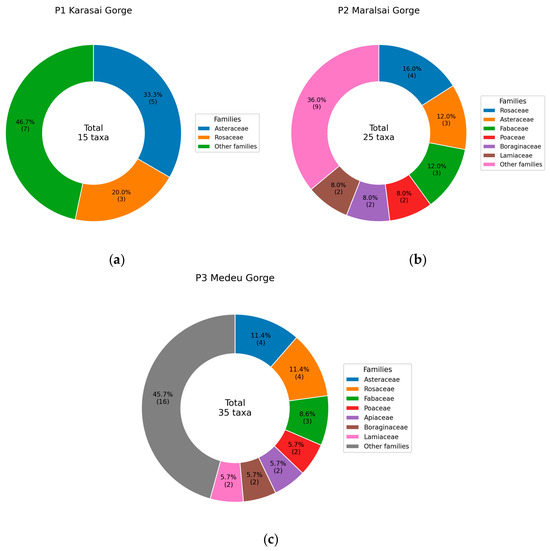
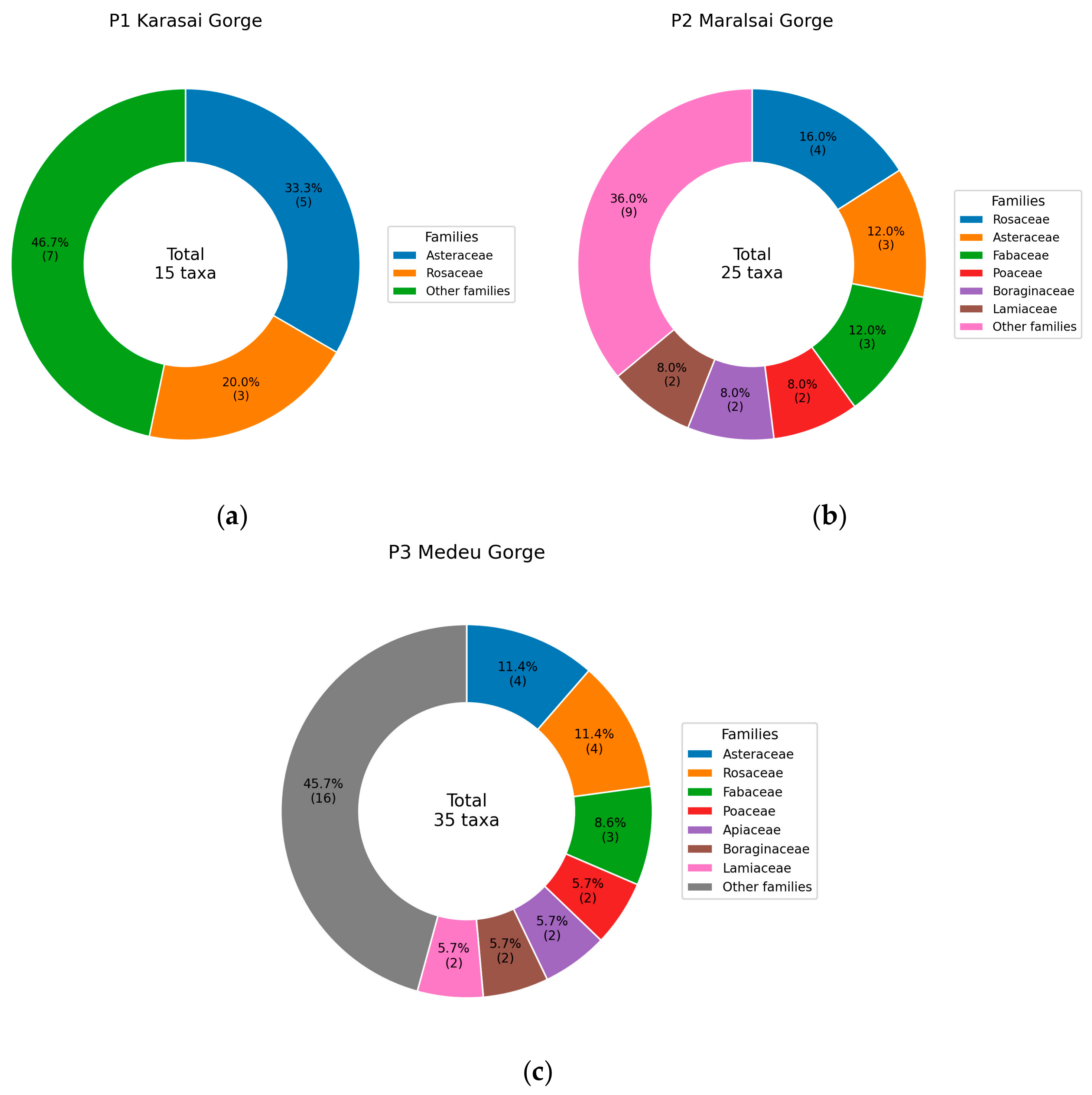
The family composition of the representative floristic tables also showed clear differences among populations (Figure 5). In P1, Asteraceae had the highest contribution among the listed taxa, followed by Rosaceae. This reflected the open meadow–shrub character of the habitat and the important role of herbaceous meadow species.
Figure 5.
Family composition of representative floristic tables for plant communities associated with A. nudiflora in the studied populations: (a) P1, Karasai Gorge; (b) P2, Maralsai Gorge; (c) P3, Medeu Gorge. Percentages may not sum to exactly 100% due to rounding.
In P2, Rosaceae, Asteraceae and Fabaceae were among the most represented families. The higher contribution of Rosaceae was consistent with the better development of tree and shrub layers in the Maralsai population. In P3, Asteraceae and Rosaceae were both important among the listed taxa. Fabaceae, Poaceae, Apiaceae, Boraginaceae and Lamiaceae also contributed to the floristic structure. This pattern reflected the more mosaic meadow–shrub and forest-edge character of the Medeu population.
In P1, A. nudiflora was one of the main species of the community. It was recorded in the tall herb layer and reached 60–150 cm in height. Its abundance was assessed as Soc. A total of 62 individuals were counted within the 100 m2 plot. The presence of juvenile, immature, virginal, generative, subsenile and senile stages indicated a complete ontogenetic spectrum.
P2 contained 100 vascular plant species belonging to 34 families and 78 genera. The floristic composition was dominated by representatives of Asteraceae, Fabaceae, Rosaceae, and Poaceae. The community differed from P1 by a stronger tree–shrub component. Rosaceae played a more important role in this population. This was linked to the presence of Malus sieversii, Crataegus almaatensis, Rubus idaeus and Rosa beggeriana.
In P2, A. nudiflora occurred in the tall herb layer. It also reached 60–150 cm in height. Its abundance was assessed as Cop2. This indicates that the species was a regular component of the community but was not dominant. Juvenile, immature, virginal, generative, subsenile, and senile individuals were also observed in P2, indicating a broad representation of the major ontogenetic stages.
P3 had a different floristic and structural pattern. The vegetation was more mosaic and mesophytic. Tree and shrub layers were better developed than in the lower foothill habitat. The most frequent or abundant associated species included Artemisia spp., Urtica dioica, Achillea millefolium, Cirsium arvense, Arctium tomentosum, Poa pratensis, Trifolium pratense, Plantago spp., Geranium spp. and Taraxacum officinale. In this population, A. nudiflora was recorded as Sp–Sol–Cop1. It was rare and scattered. It occurred mostly along forest edges, in open meadow patches and in light gaps between shrubs (Table 2).
Table 2.
Floristic and structural characteristics of the studied A. nudiflora communities.
P1 had the highest recorded species richness and the strongest coenotic role of A. nudiflora. In this population, the species was recorded as Soc, and 62 individuals were counted within the 100 m2 plot. P2 had lower species richness, but a more complex tree–shrub structure. In P3, A. nudiflora was more scattered and occurred mainly in suitable microsites.
3.3. Vertical Structure of Vegetation
All three communities had a multilayered vegetation structure, including tree, shrub, tall herb, and lower herb layers. However, the relative expression of these layers differed among the studied plots.
P1 had a meadow–shrub structure with a relatively well-developed herbaceous layer. The tree layer was sparse and consisted mainly of Malus sieversii, Elaeagnus angustifolia, Prunus spp., and Salix spp. The shrub layer included Rubus idaeus, Rosa beggeriana, Prunus sp., Elaeagnus angustifolia, and Crataegus sp. The tall herb layer represented the main layer for A. nudiflora and also included Arctium tomentosum, Cichorium intybus, Achillea millefolium, Urtica dioica, and Artemisia dracunculus. The lower herb layer included Taraxacum officinale, Trifolium pratense, Plantago major, Poa pratensis, and Capsella bursa-pastoris.
P2 had a more pronounced forest-edge structure. The tree layer included Malus sieversii, Crataegus almaatensis, and Salix alba. The shrub layer was better developed than in P1 and included Rubus idaeus, Rosa beggeriana, Berberis sphaerocarpa, and Lonicera tatarica. The tall herb layer included A. nudiflora, Cichorium intybus, Echium vulgare, Urtica dioica, Artemisia vulgaris, Hypericum perforatum, and Heracleum dissectum. The lower herb layer included Myosotis arvensis, Trifolium pratense, Medicago falcata, Taraxacum officinale, Poa pratensis, and Plantago media.
P3 had the most mosaic vegetation structure. In some parts of the plot, the tree and shrub layers were more developed, creating shaded and semi-shaded microsites. A. nudiflora occurred mainly in meadow openings, forest edges, and gaps between shrubs, and it was not a dominant species in this population. Because light availability was not measured directly, this distribution pattern is interpreted as a field observation suggesting a possible association with more open microsites, rather than as direct evidence of light limitation.
3.4. Population Status of A. nudiflora
The distribution and occurrence of A. nudiflora varied among the three studied populations. In P1, A. nudiflora was recorded more frequently, and individuals representing major pre-generative, generative, and post-generative ontogenetic stages were observed. P2 likewise contained individuals from several ontogenetic stages, although the species occurred less abundantly than in P1. In P3, A. nudiflora occurred mainly as scattered individuals or small groups in meadow openings, forest edges, and shrub gaps. Because complete stage-specific counts were not available for all three populations, these observations are interpreted qualitatively as indicators of structural population status.
These observations reflect the field characteristics of the three investigated populations under different habitat conditions. Since the study was designed as a comparative field survey of three natural populations, the results should be interpreted as a comparison of the selected populations rather than as evidence of long-term demographic stability or as a basis for generalizing population dynamics across the entire distribution range of the species (Table 3).
Table 3.
Field indicators of the structural population status of A. nudiflora in the studied habitats.
3.5. Soil Morphological Characteristics
Soil morphology differed among the three A. nudiflora habitats in horizon sequence, colour, structure, compaction, root distribution, skeletal material, and field reaction with HCl. Field carbonate reaction was interpreted as an indicator of carbonate presence, while soil alkalinity was evaluated using measured laboratory pH values. Nine soil profiles were examined across the three population localities, with three profiles per locality. To provide a concise description of the vertical soil morphology, one profile from each locality is presented in detail below and in Table 4. The complete horizon-level dataset from all nine profiles was retained for the multivariate analysis.
Table 4.
Main morphological characteristics of the soil profiles presented in detail for the three studied A. nudiflora population localities.
The P1 soil profile reached 70 cm and consisted of A0, A, B1, BC, and C1 horizons. The surface horizons contained many fine roots and plant residues, whereas the middle and lower horizons were denser and showed a stronger reaction with HCl. These features indicate a carbonate-influenced loamy profile with decreasing root abundance and increasing compaction with depth. The alkaline reaction of this profile was confirmed separately by laboratory pH values.
The P2 profile was shallower, reaching 60 cm, and consisted of A0, AC, C1, and C2 horizons. The surface horizon was loose and porous, with abundant roots and skeletal material. Skeletal content increased in the lower horizons, while root abundance decreased. No visible HCl reaction was recorded in the described horizons, indicating weak field expression of carbonates compared with P1 and P3.
The P3 profile reached 80 cm and included A0, A, B1, BC, and C1 horizons. The upper horizons were darker, fresher, and richer in fine roots, while the lower horizons were lighter, denser, and showed a stronger HCl reaction. Carbonate influence was most evident below 40 cm. Thus, the profile combined a biologically active upper part with a carbonate-influenced lower part (Table 4).
The three profiles presented in detail showed contrasting morphological features. P1 was characterized by a loamy carbonate-influenced profile with increasing density in the lower horizons. P2 differed by higher skeletal content, better drainage conditions, and weak visible carbonate expression. P3 had darker and root-rich upper horizons, with carbonate accumulation expressed mainly in the lower part of the profile. These field observations were interpreted together with laboratory data on pH, CO2, nutrients, and particle-size composition.
3.6. Soil Physicochemical Differentiation
The morphological differences among the profiles were also reflected in their physicochemical properties. The soil profiles presented for P1, P2, and P3 also differed in their physicochemical properties, including humus content, nutrient status, pH, and carbonate content.
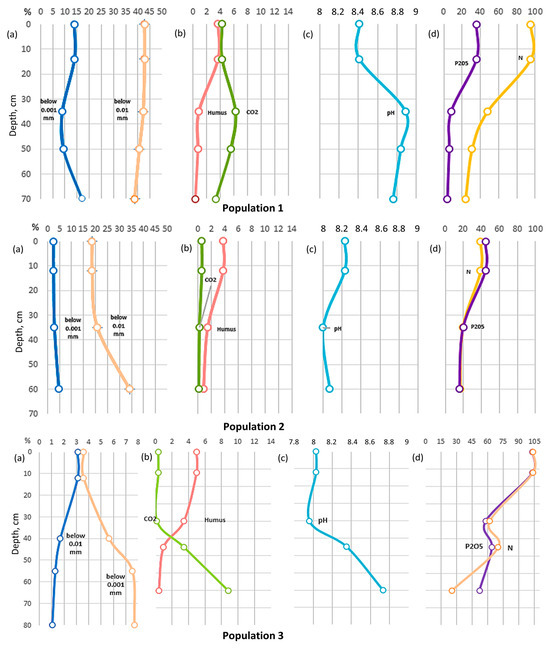
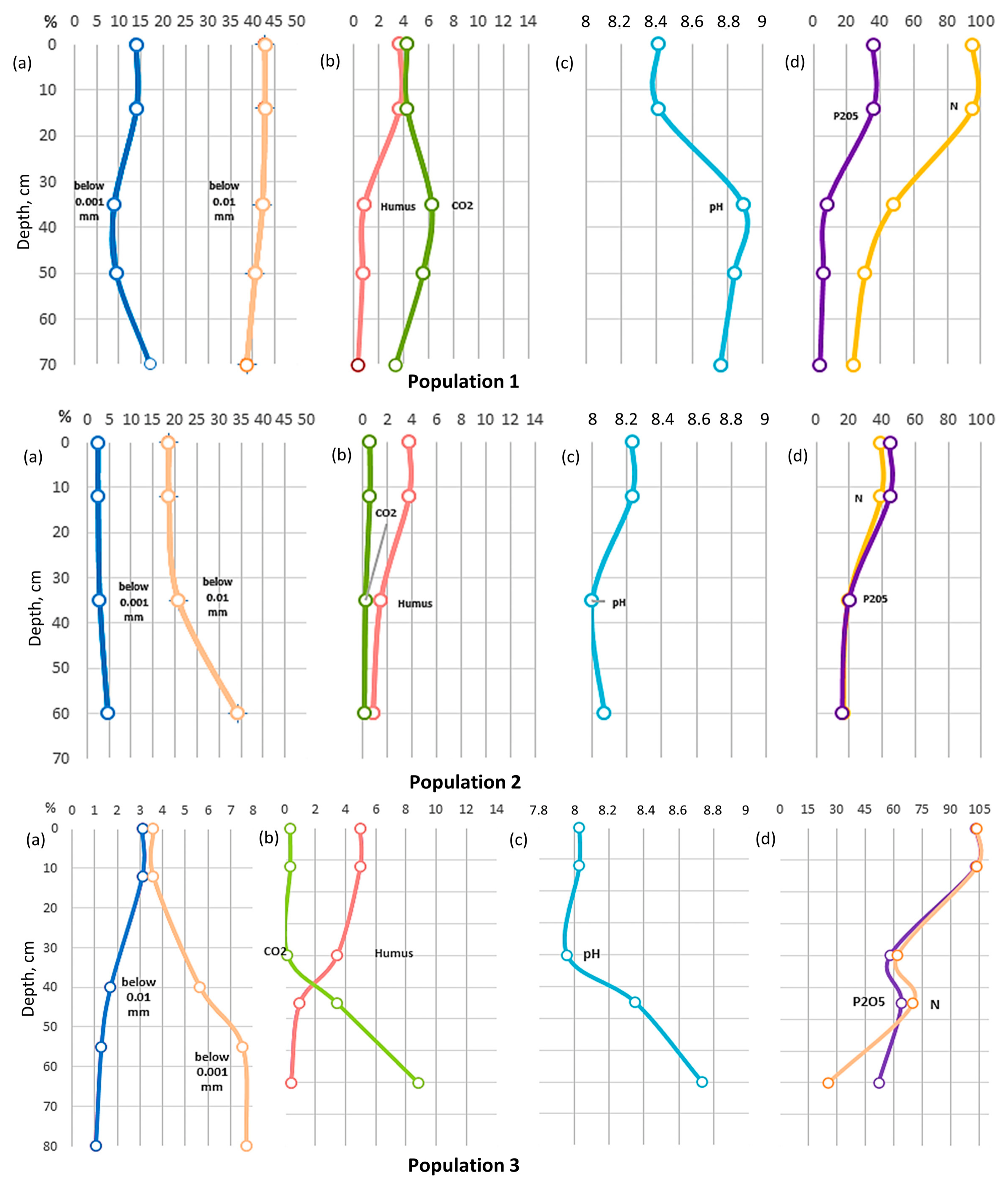
In P1, the upper horizon contained 3.67% humus, 95.2 mg kg−1 readily hydrolysable N, 36 mg kg−1 P2O5, and 610 mg kg−1 K2O. Soil pH was 8.41, and CO2 content was 4.28%. These values indicate a surface horizon with relatively high nutrient content and carbonate influence. With depth, humus and nutrient concentrations decreased, while pH remained alkaline, ranging from 8.76 to 8.89 in the lower horizons.
In P2, the upper horizon contained 3.72% humus, 39.2 mg kg−1 readily hydrolysable N, 44.8 mg kg−1 P2O5, and 450 mg kg−1 K2O. Soil pH was 8.23, while CO2 content was 0.54%, indicating weaker carbonate expression compared with P1. Nutrient concentrations decreased with depth, and the soil reaction remained slightly alkaline throughout the described profile.
In P3, the upper horizon had the highest recorded humus and nutrient values among the described profiles: 4.97% humus, 103.6 mg kg−1 readily hydrolysable N, 103 mg kg−1 P2O5, and 510 mg kg−1 K2O. Soil pH was 8.03, and CO2 content was 0.32% in the surface layer. In the lower horizons, carbonate content increased markedly, with CO2 reaching 8.78% at 55–80 cm, while pH increased to 8.73. The main vertical physicochemical patterns are illustrated in Figure 6.
Figure 6.
Vertical distribution of selected soil physicochemical properties in representative soil profiles from populations P1, P2, and P3. (a) Particle-size fractions <0.001 mm and <0.01 mm; (b) humus and CO2 contents; (c) pH; and (d) available P2O5 and N along the soil profile.
The profiles presented in detail showed that P1 was characterized by a carbonate-influenced alkaline profile, P2 by weaker carbonate expression and lighter upper horizons, and P3 by higher humus and nutrient values in the upper horizons together with carbonate accumulation in the lower part of the profile. These patterns provide an edaphic background for interpreting the observed differences in vegetation structure and the structural population status of A. nudiflora, but they should not be interpreted as statistically confirmed causal effects.
3.7. Soil Texture and Particle-Size Composition
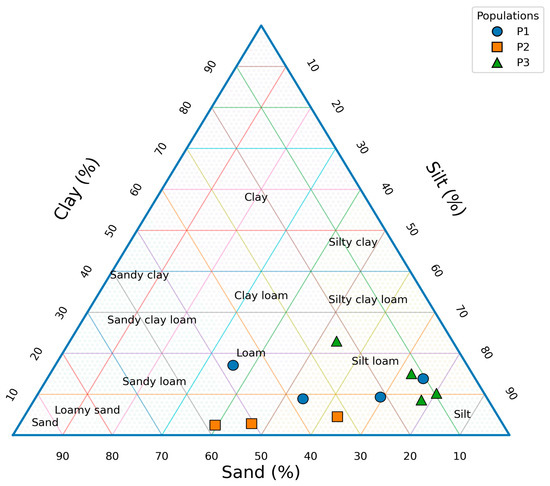
Soil texture also differed among the three habitats. The biggest differences were observed in the content of fine fractions and physical clay. These variables are important because they influence water retention, nutrient storage and root conditions.
P1 had a generally heavy loamy profile. The content of physical clay, defined as particles <0.01 mm, ranged from 38.63% to 42.71%. The upper and middle horizons had high proportions of silt and fine fractions. This indicates good water retention and relatively high buffering capacity. However, the lower horizon had a higher proportion of coarse sand. This may increase permeability in the deeper part of the profile.
P2 had the lightest texture among the studied populations. The content of physical clay was 18.50% in the upper horizon and 20.68% at 12–35 cm. It increased to 34.19% at 35–60 cm. This shows a clear vertical trend from coarser material in the upper part to finer material in the lower horizon. The lighter texture of the upper soil may improve aeration and drainage. At the same time, it may reduce nutrient retention compared with P1 and P3.
P3 had the highest content of fine material. Physical clay ranged from 41.82% to 52.44%. The maximum value was recorded at 40–55 cm. The clay fraction <0.001 mm also increased in this horizon and reached 22.94%. This indicates a heavier texture and stronger water-holding capacity. These properties may help explain the relatively high nutrient status of the P3 profile, especially in the upper and middle horizons (Figure 7).
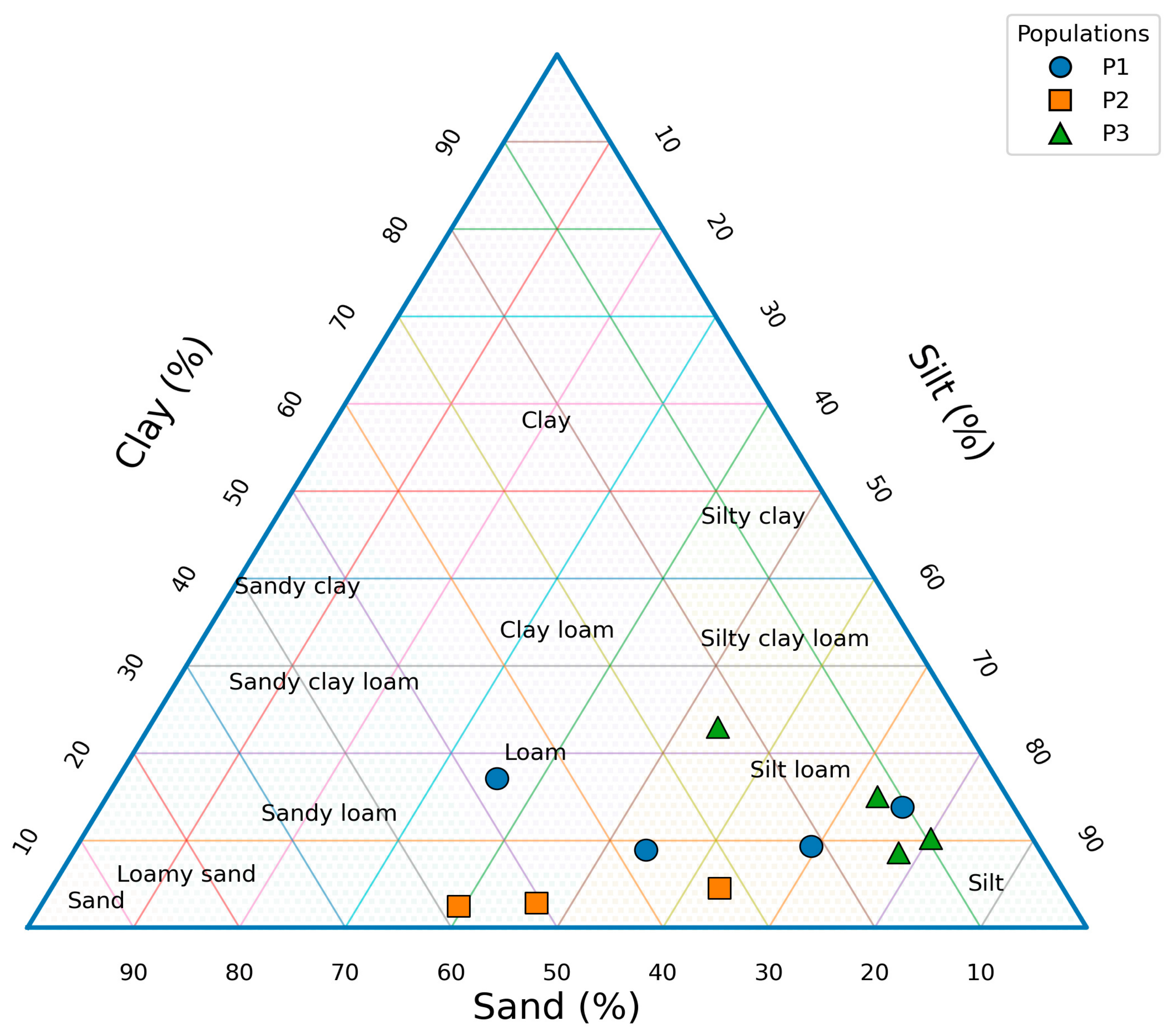
Figure 7.
USDA soil texture triangle of soil horizons in the three studied A. nudiflora populations. Points are coloured by population.
Thus, the texture data showed a clear descriptive contrast among the profiles: P2 had the lightest upper horizons, P1 had a heavy loamy carbonate-influenced profile, and P3 had the highest fine-fraction and physical clay content. These differences may contribute to variation in root-zone conditions among habitats, but their functional effects on water availability and plant performance require direct hydrophysical measurements.
The observed differences in soil chemistry and texture suggest that the studied habitats differed not only in elevation and vegetation structure, but also in edaphic conditions. PCA was therefore used as an exploratory method to summarize the main gradients in measured soil properties and to visualize which variables contributed most strongly to soil differentiation among the sampled horizons.
3.8. Exploratory PCA of Soil Properties
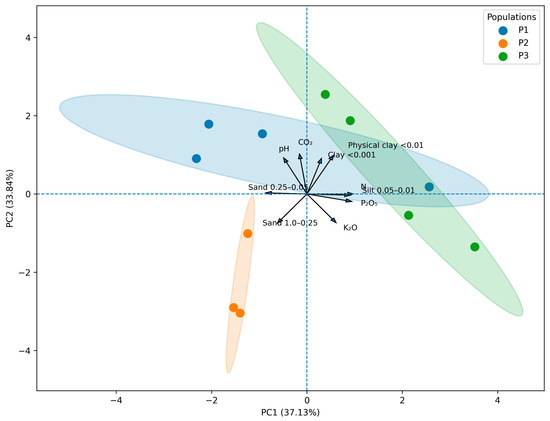
Principal component analysis was used as an exploratory method to summarize variation in measured soil physicochemical and particle-size properties across the sampled soil horizons. The analysis included all 44 horizon-level soil samples collected from the nine soil profiles across the three studied A. nudiflora population localities. The first two principal components explained 70.97% of the total variance, with PC1 accounting for 37.13% and PC2 for 33.84%. Thus, the first two axes provided a useful descriptive representation of the main soil gradients in the dataset (Figure 8).
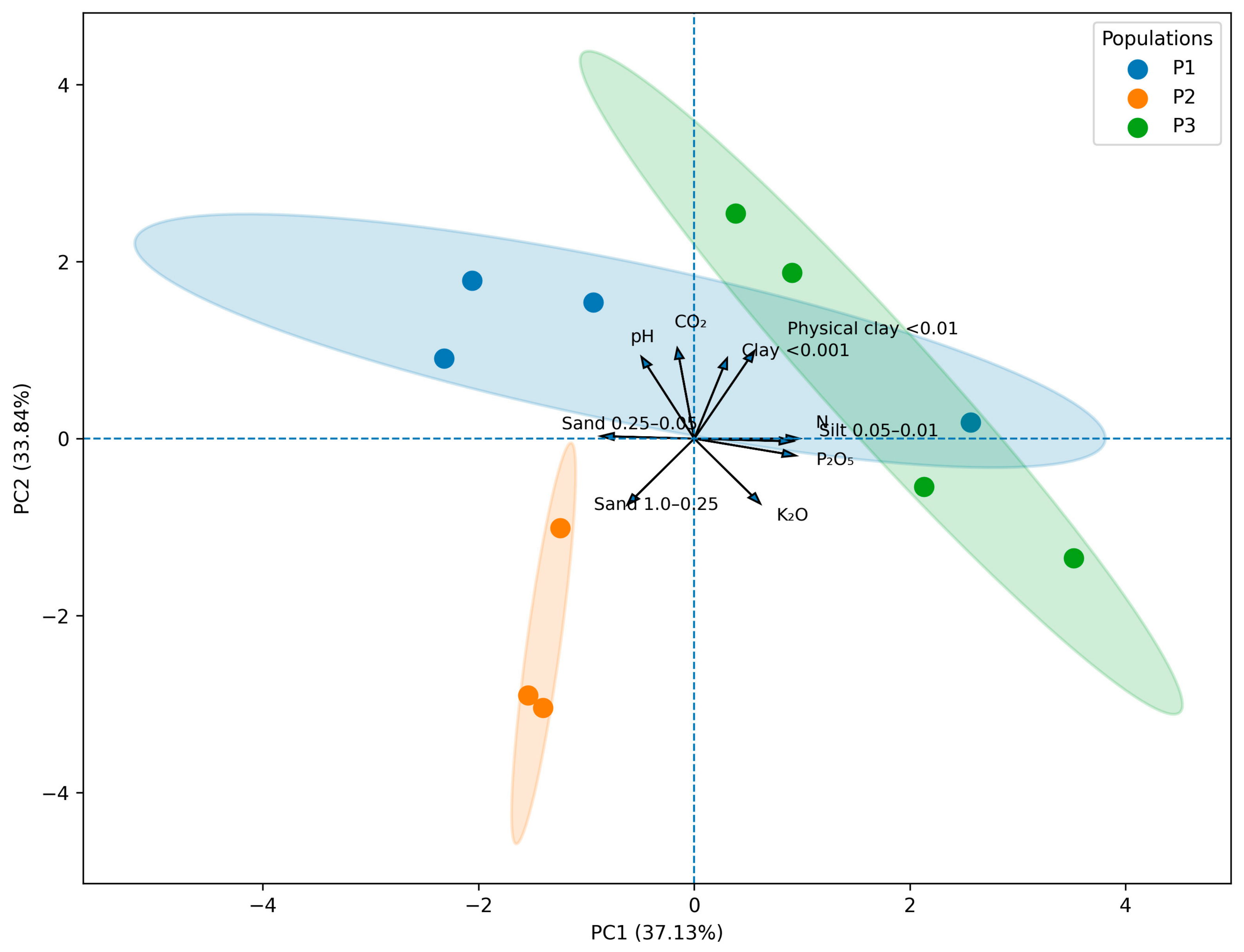
Figure 8.
Principal component analysis biplot of soil physicochemical and particle-size variables in the studied A. nudiflora habitats. Points represent soil horizons from P1, P2 and P3. Arrows indicate the direction and relative contribution of soil variables. PC1 represents a nutrient–texture gradient, while PC2 represents a carbonate–alkalinity and fine-fraction gradient.
PC1 was mainly associated with variation in nutrient-related and texture variables. Positive PC1 values were associated with higher readily hydrolysable N, available P2O5, available K2O, and silt content. The upper and middle horizons of P3 were positioned mostly on the positive side of PC1. This pattern reflects the relatively high nutrient status and fine-textured character of this soil profile. The upper horizon of P1 was also located on the positive side of PC1, mainly due to its high readily hydrolysable N, available K2O, and silt content.
Negative PC1 values were associated with sandier horizons. This was most evident for P2, which formed a distinct group on the negative side of PC1. The separation of P2 reflects its lighter texture, higher sand fraction and weaker fine-particle development compared with P1 and P3.
PC2 was mainly associated with carbonate, pH, and fine-fraction variables. Positive PC2 values corresponded to higher CO2 content, higher pH, clay <0.001 mm, and physical clay <0.01 mm. Middle and lower horizons of P1 and P3 tended to occur toward positive PC2 values, reflecting stronger carbonate expression and higher fine-fraction content in these horizons.
The PCA plot also showed clear population-level grouping. P1 occupied the upper-left and central part of the ordination space. This position reflects its alkaline and carbonate-rich profile, with moderate to high physical clay content. P2 was clearly separated in the lower-left part of the plot. This group was associated with sandier, weakly carbonate and more permeable soil conditions. P3 occupied the right side of the ordination space. Its position was related to higher readily hydrolysable N and greater fine-fraction content.
The PCA summarized the main descriptive soil contrasts among the sampled horizons. P2 was associated with lighter-textured and sandier soil conditions, whereas P1 and P3 showed stronger contributions of carbonate-related and fine-fraction variables in different parts of the profiles. These PCA patterns provide a descriptive edaphic context for interpreting the observed differences in vegetation structure and the structural population status of A. nudiflora (Table 5 and Table 6).
Table 5.
Explained variance of the first three PCA axes based on horizon-level soil samples.
Table 6.
Main PCA loadings for measured soil variables.
3.9. Soil–Vegetation Relationships
The distribution and population status of A. nudiflora were closely related to the combined effects of vegetation structure and soil conditions. The strongest population was recorded in P1. This population occurred in an open meadow–shrub habitat with a dense herbaceous layer and relatively stable moisture conditions. The species was abundant and reached a high coenotic role. It was recorded as Soc, and 62 individuals were counted within the 10 × 10 m plot. The complete observed ontogenetic spectrum indicated a favourable structural population status and evidence of ongoing regeneration.
The soil conditions of P1 supported this pattern. The upper horizon contained relatively high readily hydrolysable N and available K2O. It also had a high proportion of silt and physical clay. These properties may improve nutrient retention and water-holding capacity. At the same time, the profile was strongly alkaline and carbonate-influenced. This shows that A. nudiflora can maintain a strong population under carbonate-rich conditions when the surface layer contains enough humus and nutrients.
P2 showed a different pattern. The population occurred in a shrub–meadow and forest-edge habitat with a more developed tree and shrub layer than P1. A. nudiflora remained a regular component of the community and was recorded mainly as Cop2, but its coenotic role was lower than in P1. This pattern was associated with the more complex woody vegetation structure of P2, because light availability and canopy openness were not quantified directly.
The P2 soil profile had a lighter texture and showed weaker carbonate expression than those of P1 and P3. The upper horizons had a higher sand content and lower physical clay content. This was also reflected in the PCA, where P2 formed a separate group associated with sandier and more permeable soil conditions. Such soils may provide good aeration, but they can also have lower nutrient and moisture retention. This may partly explain why A. nudiflora was less dominant in P2.
P3 represented the highest and most heterogeneous habitat. The population occurred at 1620 m a.s.l. in a cooler mountain environment. The vegetation was more mosaic and included shaded or semi-shaded microsites. A. nudiflora was rare and scattered. It occurred mainly along forest edges, in open meadow patches and in light gaps between shrubs. The species was recorded as Sp–Sol–Cop1, which indicates a weaker coenotic role than in P1 and P2.
The soil profile of P3 had the highest nutrient status in the upper horizons. It also had the highest content of fine fractions and physical clay in several horizons. However, carbonate accumulation increased strongly in the lower part of the profile. Therefore, P3 combined favourable nutrient conditions in the upper soil with a more complex and heterogeneous vegetation environment. The comparatively low abundance of A. nudiflora in P3 cannot be attributed to soil fertility alone, because the upper soil horizons showed relatively high nutrient values. Its sparse occurrence was associated with higher elevation, heterogeneous vegetation structure, and restriction to particular microsites (Table 7).
Table 7.
Main soil–vegetation patterns associated with the status of A. nudiflora populations.
Among the three studied populations, the most favourable structural population status of A. nudiflora was observed in the relatively open meadow–shrub habitat of P1, where favourable surface-soil conditions and suitable microsite structure coincided. The species performed best in P1, where light availability, dense herbaceous cover and nutrient-supported surface soil created suitable conditions for regeneration. In contrast, the more shaded and heterogeneous habitats of P2 and P3 reduced the dominance of A. nudiflora, even though the species remained present.
To further test these associations, species composition will be analysed against the measured environmental variables using redundancy analysis. This analysis will allow us to identify which soil and habitat variables explain the strongest variation in community composition among the studied populations.
3.10. Exploratory Redundancy Analysis of Species–Environment Relationships
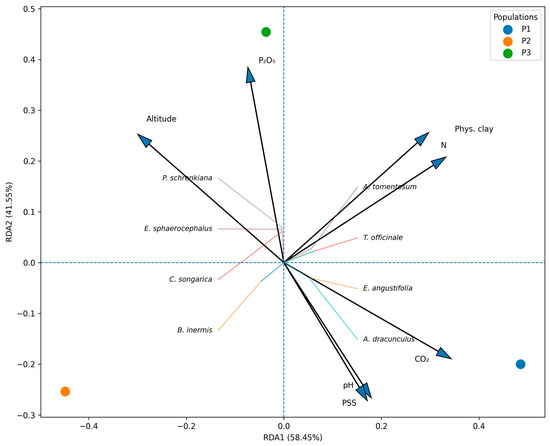
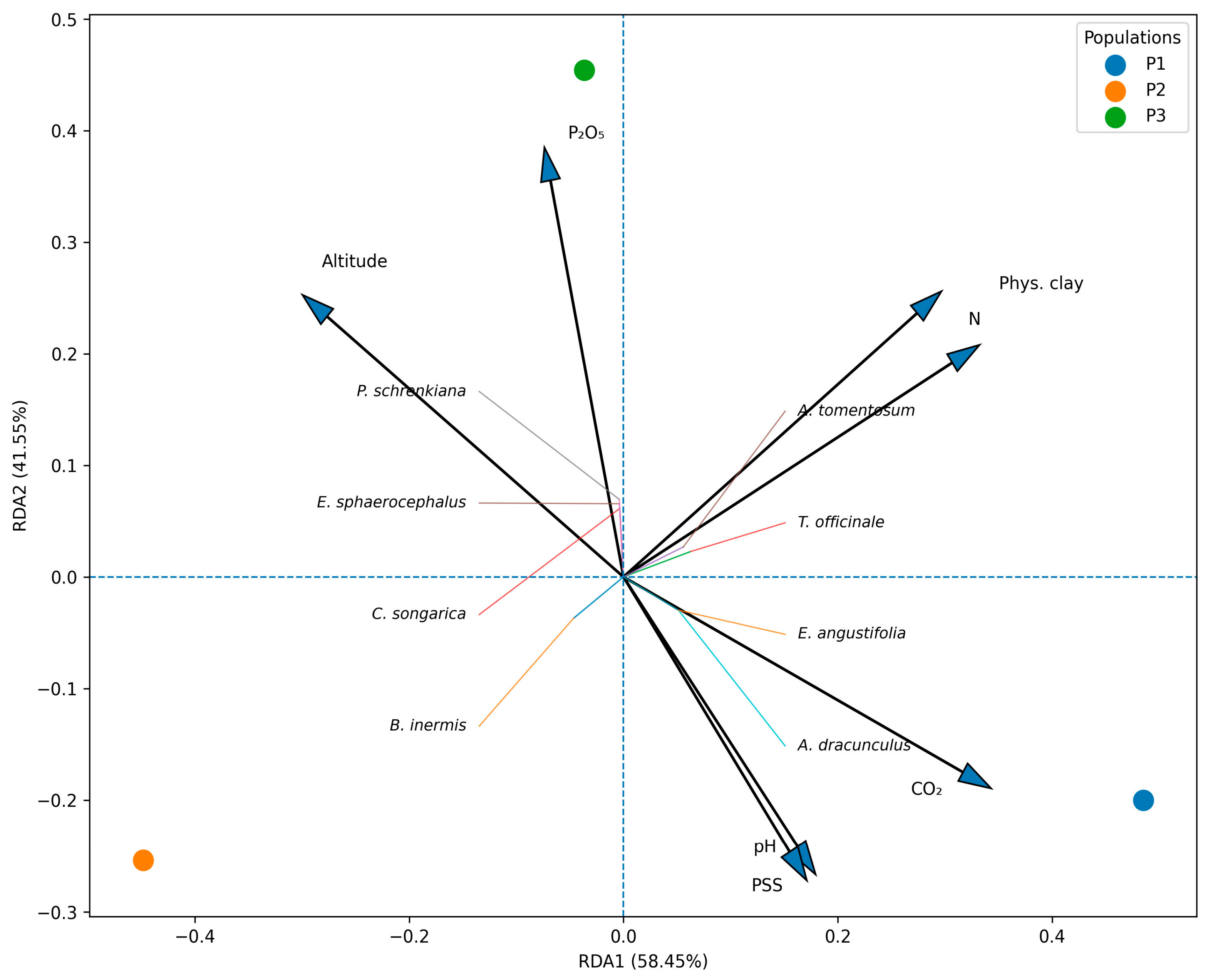
Exploratory redundancy analysis (RDA) was used to visualize associations between plant community composition and selected environmental variables (Figure 9). The analysis was based on a semi-quantitative species-abundance matrix derived from ordinal scores assigned to the Drude-type abundance classes and on the population-level environmental matrix. Because vegetation data were available at the population level, the RDA was interpreted strictly as an exploratory ordination rather than as a formal inferential test.
Figure 9.
Exploratory redundancy analysis (RDA) biplot showing associations between plant community composition and selected environmental variables in the three studied A. nudiflora populations. Points represent populations P1, P2, and P3. Arrows indicate the directions of increasing elevation and soil-variable values. Species names are abbreviated and shown with leader lines to improve readability. RDA1 and RDA2 accounted for 58.45% and 41.55% of the constrained variation, respectively.
The first two RDA axes explained all constrained variation in the exploratory model. RDA1 explained 58.45%, and RDA2 explained 41.55%. The ordination separated the three populations according to differences in their habitat conditions and soil properties.
P1 occupied a distinct position in the ordination, consistent with the high abundance and strong coenotic role of A. nudiflora at this site. The species was abundant in P1 and was recorded as Soc. Associated meadow species, including Taraxacum officinale, Arctium tomentosum and Elaeagnus angustifolia, contributed to the differentiation of this lower foothill meadow–shrub habitat.
P2 was separated from P1 and P3 by its shrub–forest-edge vegetation structure and weaker dominance of A. nudiflora. The species remained stable in the community, but it was recorded only as Cop2. The position of P2 in the ordination reflects its intermediate ecological status and stronger influence of woody and shrub components.
P3 was associated with higher altitude and a more heterogeneous mountain habitat. The population occurred at the highest elevation among the studied sites. It was characterized by a weaker coenotic role of A. nudiflora, which was recorded mainly as Sp–Sol–Cop1. Species such as Picea schrenkiana, Crataegus songarica, Bromus inermis, Artemisia dracunculus and Echinops sphaerocephalus contributed to the differentiation of this more montane and mosaic community.
Soil variables also contributed to the separation of the populations in the ordination space. Nutrient-related variables, particularly readily hydrolysable N and available P2O5, were associated with differences in the upper soil horizons, whereas pH, CO2, and physical clay reflected broader edaphic contrasts among the studied habitats.
The exploratory RDA was consistent with the field observations. P1, which showed the highest local abundance and the most favourable structural population status among the three studied populations, was associated with open meadow–shrub vegetation and a favourable combination of surface-soil conditions. In P2 and P3, the abundance and coenotic role of A. nudiflora were lower. These patterns suggest an association between structural population status, vegetation structure, and edaphic conditions.
4. Discussion
4.1. Habitat Differentiation Along the Elevational Gradient
The studied populations of A. nudiflora differed clearly in habitat structure, soil conditions and population status. This pattern agrees with the general ecological principle that mountain vegetation changes over short distances because altitude modifies temperature, moisture, radiation and soil development [33,34,35]. In the Trans-Ili Alatau, such changes are especially important because plant communities occur in a mosaic of foothill meadows, shrublands, forest edges and mountain slopes.
Among the three studied sites, P1 showed the most favourable combination of habitat conditions for A. nudiflora. It was located in the lower foothill belt and had an open meadow–shrub structure. The species was abundant and had the highest coenotic role. This suggests that open or semi-open habitats with sufficient soil moisture and a developed herbaceous layer are close to the ecological optimum of the species in the studied area.
P2 had an intermediate position among the studied populations. A. nudiflora remained a regular component of the community but was not dominant. The site had a more developed shrub and tree layer than P1, and the species showed a lower coenotic role.
P3 was the most heterogeneous habitat. It occurred at the highest elevation and had a more mosaic structure. Here, A. nudiflora was scattered and restricted mainly to suitable microsites. This agrees with studies showing that mountain plant communities are often controlled not only by altitude itself, but also by local habitat conditions and microsite availability [34,35,36,37,38].
4.2. Soil Conditions and Soil–Vegetation Feedback
Soil properties were associated with differences in vegetation structure and the structural population status of A. nudiflora. However, these associations should not be interpreted as one-way causal effects. Soil conditions may influence plant establishment, root development, and readily hydrolysable N, but vegetation can also modify soil properties through litter input, root activity, organic matter accumulation, and nutrient cycling.
P1 had alkaline and carbonate-rich soil, but its upper horizon also contained relatively high readily hydrolysable N and a large proportion of silt and physical clay. These properties can improve water retention and nutrient storage. Under open meadow–shrub vegetation, such conditions supported a strong population of A. nudiflora.
P2 had a lighter texture and a higher sand fraction. This soil type may improve aeration and drainage, but it can also reduce moisture and nutrient retention. This may partly explain the lower dominance of A. nudiflora in P2. Similar patterns have been reported in meadow and grassland systems, where soil texture, pH and readily hydrolysable N affected plant community composition more strongly than species richness alone [39,40,41,42].
P3 had the highest nutrient values in the upper soil horizons. It also had a high content of fine fractions. However, the population of A. nudiflora was weaker than in P1. This indicates that soil fertility alone did not determine population strength. In P3, the limiting factors were probably altitude, cooler conditions, shading and the patchy distribution of suitable microsites.
The PCA confirmed that the habitats were separated by combined chemical and textural gradients. P2 was associated with sandier and weakly carbonate conditions. P3 was related to nutrient-rich and fine-textured soils. P1 showed stronger carbonate and alkaline influence. This supports the view that soil variables act as ecological filters in plant communities [39,40,41,42,43].
4.3. Carbonates, pH, and Readily Hydrolysable N
The studied soils were generally alkaline, but the degree of carbonate influence differed among populations. In calcareous and alkaline soils, readily hydrolysable N may be limited by chemical fixation, especially for phosphorus [43,44]. This is relevant for P1, where the lower horizons had high pH and carbonate content, while available phosphorus decreased strongly with depth.
At the same time, the strong population in P1 shows that carbonate-rich conditions are not necessarily unfavourable for A. nudiflora. The surface horizon had enough nutrients and fine particles to support plant growth. Therefore, the key factor was not carbonate content alone, but the balance between alkalinity, surface fertility, soil texture and moisture conditions.
The P3 profile showed a different pattern. The upper horizons were nutrient-rich, but the lower horizons had strong carbonate accumulation. This vertical contrast may create favourable conditions for shallow herbaceous roots in the upper layer, while deeper carbonate enrichment may influence water and nutrient dynamics. Similar soil–vegetation interactions have been reported in calcareous grasslands, where pH, phosphorus availability and long-term nutrient inputs can shift species composition without necessarily reducing total species richness [43,44,45].
4.4. Vegetation Structure and Light Limitation
The role of vegetation structure was also important. A. nudiflora reached its strongest development in P1, where the tree and shrub layers were not closed. This allowed better light conditions for tall herb development. The dense herbaceous layer did not prevent the species from maintaining a strong population.
In P2 and P3, tree and shrub layers were more developed. These layers may stabilize the microclimate and retain moisture, but they also increase shading. For a tall herbaceous medicinal plant such as A. nudiflora, this can reduce abundance and flowering performance. The species therefore persisted mainly where light conditions remained suitable.
This interpretation is consistent with studies of grassland and shrub–meadow systems. These studies show that community composition changes when soil resources, vegetation density, disturbance and light conditions interact [38,41,46,47]. In our study, A. nudiflora was not limited by one factor. Its status reflected the combined effect of soil, altitude and vegetation structure.
4.5. Interpretation of the Exploratory RDA
The exploratory RDA supported the field observations. P1 was associated with open meadow–shrub vegetation. P3 was related to higher altitude and montane species. P2 occupied an intermediate position. This pattern agrees with the PCA and with the floristic descriptions.
However, the RDA should be interpreted cautiously. The analysis was based on population-level data rather than replicated plot-level data. Therefore, it was used as a visual exploratory tool, not as a formal test of significance. This limitation is important. Species–environment models are sensitive to sampling design, number of observations and ecological interpretation of predictors [31,32,33].
For a stronger analysis, future work should include replicated vegetation plots within each population. Ideally, each population should include at least three plots with matching soil samples. This would allow formal RDA testing and more reliable estimation of soil and habitat effects.
4.6. Conservation Implications
The results have direct relevance for conservation of wild medicinal plant resources in the Trans-Ili Alatau. P1 showed the most favourable structural population status among the three studied populations. It had high local abundance, a broad representation of major ontogenetic stages, and favourable habitat conditions. This population may therefore represent an important local population for conservation and monitoring.
P2 also has conservation value. Although A. nudiflora was less dominant in P2, it remained a regular component of the vegetation and occurred in a distinct habitat type. This population represents the shrub–forest-edge part of the species’ ecological range. Such habitats may become important under changing climate and land-use conditions.
P3 requires monitoring. The species was scattered and restricted to suitable microsites. This makes the population more vulnerable to trampling, shrub encroachment, vegetation closure and changes in moisture regime. Conservation measures should therefore focus not only on the protection of A. nudiflora individuals, but also on the maintenance of the habitat mosaic in which the species was recorded, including open meadow patches, shrub–meadow habitats, and forest-edge gaps. Such habitat-level conservation is important because local vegetation structure, canopy conditions, soil temperature, soil moisture, and microsite availability may influence plant regeneration and persistence [48,49].
Studies of grassland conservation show that habitat history, disturbance regime and management influence the persistence of specialist or semi-specialist species [46,47]. For A. nudiflora, moderate openness of vegetation appears to be important. Complete closure of shrub and tree layers may reduce the availability of suitable microsites.
5. Conclusions
Natural populations of Alcea nudiflora in the Trans-Ili Alatau showed clear differences in habitat structure, floristic composition, soil properties, abundance, and ontogenetic structure. The lower foothill population P1 was associated with relatively open meadow–shrub vegetation, comparatively favourable surface-soil conditions, a higher abundance of the target species, and a broad representation of major ontogenetic stages. The middle-mountain populations exhibited a more heterogeneous pattern. In P2, A. nudiflora remained a regular component of shrub–meadow and forest-edge communities, whereas in P3 the species occurred mainly as scattered individuals and small groups restricted to meadow openings, forest edges, and gaps between shrubs. This sparse distribution indicates comparatively lower local population performance under the existing habitat conditions.
The studied habitats also differed in humus content, nutrient status, carbonate concentration, pH, and particle-size composition. Principal component analysis summarized these edaphic contrasts, while exploratory ordination indicated possible associations between floristic composition and the measured environmental variables. Overall, the structural population status of A. nudiflora appears to be associated with the combined effects of surface-soil conditions, vegetation structure, habitat quality, and microsite availability.
Although A. nudiflora is not currently listed as a threatened species, the considerable variation observed among its natural populations indicates that local populations may respond differently to environmental conditions and anthropogenic pressure. The conservation of habitats supporting A. nudiflora is important not only for maintaining viable populations of the species but also for preserving the floristic diversity, structural organization, and ecological integrity of mountain plant communities. Increasing grazing intensity, trampling, recreational activities, habitat transformation, and progressive closure of the shrub or tree layer may negatively affect local populations, particularly those characterized by low abundance and restricted microsite occupancy.
Conservation and monitoring programmes should therefore assess not only the abundance and ontogenetic structure of A. nudiflora, but also the condition and spatial availability of suitable habitats. Particular attention should be given to open meadow patches, shrub–meadow communities, forest-edge habitats, and gaps between shrubs where the species was recorded. Regular monitoring is especially important for population P3 because of its low abundance and spatial restriction to local microsites. Recommended management measures include preventing excessive trampling and recreational disturbance, maintaining a semi-open vegetation structure, and avoiding complete closure of the shrub and tree layers at sites occupied by A. nudiflora. Further studies involving a larger number of populations across broader environmental gradients are required to clarify the ecological requirements, long-term population dynamics, and potential conservation needs of the species throughout its distribution range.
Author Contributions
Conceptualization, A.A., Z.T. and S.B.; methodology, A.A., Z.T., S.B. and K.K.; field investigation, A.A., Z.A., M.A., K.A., S.N. and T.S.; vegetation description and floristic data collection, A.A., Z.A., M.A., S.N. and T.S.; soil sampling and soil data interpretation, A.A., S.B., Z.O. and K.K.; formal analysis, A.A., Z.T. and S.B.; data curation, A.A., K.A. and Z.O.; visualization, A.A. and K.A.; writing—original draft preparation, A.A.; writing—review and editing, Z.T., S.B., Z.O., T.S. and K.K.; supervision, Z.T., S.B. and K.K.; project administration, Z.T. and K.K. All authors have read and agreed to the published version of the manuscript.
Funding
This research received no external funding.
Data Availability Statement
The data supporting the findings of this study are included within the article. Additional field notes and raw soil laboratory records are available from the corresponding authors upon request.
Acknowledgments
The authors thank the U.U. Uspanov Kazakh Research Institute of Soil Science and Agrochemistry for laboratory soil analyses. The authors are also grateful to colleagues and field assistants who supported vegetation surveys and soil sampling in the Trans-Ili Alatau, Northern Tien Shan.
Conflicts of Interest
The authors declare no conflicts of interest.
References
- Körner, C. The use of “altitude” in ecological research. Trends Ecol. Evol. 2007, 22, 569–574. [Google Scholar] [CrossRef] [Scilit]
- Sundqvist, M.K.; Sanders, N.J.; Wardle, D.A. Community and ecosystem responses to elevational gradients: Processes, mechanisms, and insights for global change. Annu. Rev. Ecol. Evol. Syst. 2013, 44, 261–280. [Google Scholar] [CrossRef] [Scilit]
- Critical Ecosystem Partnership Fund. Mountains of Central Asia Biodiversity Hotspot: Ecosystem Profile; CEPF: Arlington, VA, USA, 2017. [Google Scholar]
- Tojibaev, K.; Sennikov, A.; Lazkov, G.A.; Jang, C.-G.; Choi, H.-J.; Chang, K.S.; Jung, S.-Y.; Kim, A.; Choi, K. Checklist of Vascular Plants of the Tian-Shan Mountain System; Korea National Arboretum: Pocheon, Republic of Korea, 2021; 607p. [Google Scholar]
- Tojibaev, K.S.; Jang, C.G.; Lazkov, G.A.; Chang, K.S.; Sitpayeva, G.T.; Safarov, N.; Beshko, N.Y.; Muktubaeyeva, S.K.; Vesselova, P.V.; Turakulov, I.; et al. An annotated checklist of endemic vascular plants of the Tian-Shan Mountains in Central Asian countries. Phytotaxa 2020, 464, 117–158. [Google Scholar] [CrossRef] [Scilit]
- Dimeyeva, L.; Permitina, V.; Kurmantayeva, A.; Imanalinova, A.; Osmonali, B.; Kozybayeva, F.; Beiseyeva, G.; Ussen, K.; Iskakov, R.; Oyuntsetseg, B.; et al. Habitats, Plant Diversity, and Molecular Phylogeny of Endemic Relic Species Incarvillea semiretschenskia (Bignoniaceae). Plants 2024, 13, 3299. [Google Scholar] [CrossRef] [Scilit]
- Plants of the World Online. Alcea nudiflora (Lindl.) Boiss. Royal Botanic Gardens, Kew. Available online: https://powo.science.kew.org/taxon/urn:lsid:ipni.org:names:60465994-2 (accessed on 9 June 2026).
- GBIF Secretariat. Alcea nudiflora (Lindl.) Boiss. GBIF Backbone Taxonomy. Checklist Dataset. Available online: https://doi.org/10.15468/39omei (accessed on 9 June 2026).
- Buonincontri, M.P.; Bosso, L.; Smeraldo, S.; Chiusano, M.L.; Pasta, S.; Di Pasquale, G. Shedding light on the effects of climate and anthropogenic pressures on the disappearance of Fagus sylvatica in the Italian lowlands: Evidence from archaeo-anthracology and spatial analyses. Sci. Total Environ. 2023, 877, 162893. [Google Scholar] [CrossRef] [Scilit]
- Muhammad, M.; Wahab, A.; Waheed, A.; Hakeem, K.R.; Mohamed, H.I.; Basit, A.; Toor, M.D.; Liu, Y.-H.; Li, L.; Li, W.-J. Navigating climate change: Exploring the dynamics between plant–soil microbiomes and their impact on plant growth and productivity. Glob. Change Biol. 2025, 31, e70057. [Google Scholar] [CrossRef] [Scilit]
- Karabalayeva, D.; Kurmanbayeva, M.; Kulymbet, K.; Kusmangazinov, A.; Zhumagul, M.; Anatoliy, R.; Saken, M.; Kuanyshbayeva, M.; Alzhanova, B. Influence of soil characteristics on the distribution and evolution of Trollius dschungaricus Regel populations in the Northern Tien Shan, Kazakhstan. J. Ecol. Eng. 2025, 26, 450–459. [Google Scholar] [CrossRef] [Scilit]
- Aldassugurova, C.; Ultanbekova, G.; Ametov, A.; Aksoy, A.; Kulymbet, K.; Akhmetova, A.; Nazarbekova, S.; Childibayeva, A.; Bazarbayeva, T.; Mukanova, G.; et al. Agrochemical compositions of soils and rhizosphere microorganisms of Rosa potentilliflora Chrshan. et M. Pop. in eastern and central part of Zailiyskiy Alatau. Ecol. Process. 2025, 14, 66. [Google Scholar] [CrossRef] [Scilit]
- Karabalayeva, D.; Kurmanbayeva, M.; Mukhtubayeva, S.; Sharipova, M.; Kulymbet, K.; Kusmangazinov, A.; Sramkó, G.; Mamurova, A.; Aldibekova, A.; Kassymzhanova, K.; et al. Population Structure and Morphometrics of Trollius altaicus C.A. Mey and Trollius dschungaricus Regel (Ranunculaceae Juss.) from Kazakhstan. Diversity 2026, 18, 244. [Google Scholar] [CrossRef] [Scilit]
- Kenesbay, A.; Kurmantayeva, A.; Sitpayeva, G.; Shmakov, A.; Koltunova, A.; Kulymbet, K. Assessment of Cousinia mindshelkensis populations (Asteraceae) at the Karatau Ridge, South Kazakhstan. Biodiversitas 2025, 26, 6174–6187. [Google Scholar] [CrossRef] [Scilit]
- Kubentayev, S.A.; Alibekov, D.T.; Perezhogin, Y.V.; Lazkov, G.A.; Kupriyanov, A.N.; Ebel, A.L.; Izbastina, K.S.; Borodulina, O.V.; Kubentayeva, B.B. Revised checklist of endemic vascular plants of Kazakhstan. PhytoKeys 2024, 238, 241–279. [Google Scholar] [CrossRef] [Scilit]
- Muratbayeva, A.; Nurmahanova, A.; Kulymbet, K.; Myltykbayeva, A.; Akhmetova, A.; Abdullayeva, B.; Atabayeva, S.; Baitasheva, G.; Kyrbassova, E.; Omarova, Z. Soil morphological and chemical characteristics in the habitats of the rare, endemic plant Spiraeanthus schrenkianus in Karatau Mountains, Kazakhstan. Braz. J. Biol. 2025, 85, e295015. [Google Scholar] [CrossRef] [Scilit]
- Jenny, H. Factors of Soil Formation: A System of Quantitative Pedology; McGraw-Hill: New York, NY, USA, 1941. [Google Scholar]
- Aerts, R.; Chapin, F.S. The mineral nutrition of wild plants revisited: A re-evaluation of processes and patterns. Adv. Ecol. Res. 2000, 30, 1–67. [Google Scholar] [CrossRef] [Scilit]
- Wardle, D.A.; Bardgett, R.D.; Klironomos, J.N.; Setälä, H.; van der Putten, W.H.; Wall, D.H. Ecological linkages between aboveground and belowground biota. Science 2004, 304, 1629–1633. [Google Scholar] [CrossRef] [Scilit]
- Laliberté, E.; Zemunik, G.; Turner, B.L. Environmental filtering explains variation in plant diversity along resource gradients. Science 2014, 345, 1602–1605. [Google Scholar] [CrossRef] [Scilit]
- Sang, W. Plant diversity patterns and their relationships with soil and climatic factors along an altitudinal gradient in the middle Tianshan Mountain area, Xinjiang, China. Ecol. Res. 2009, 24, 303–314. [Google Scholar] [CrossRef] [Scilit]
- Liu, B. Vertical patterns in plant diversity and their relations with environmental factors on the southern slope of the Tianshan Mountains (middle section) in Xinjiang (China). J. Mt. Sci. 2017, 14, 742–757. [Google Scholar] [CrossRef] [Scilit]
- Legendre, P.; Legendre, L. Numerical Ecology, 3rd ed.; Elsevier: Amsterdam, The Netherlands, 2012; ISBN 978-0-444-53868-0. [Google Scholar]
- Ter Braak, C.J.F. Canonical correspondence analysis: A new eigenvector technique for multivariate direct gradient analysis. Ecology 1986, 67, 1167–1179. [Google Scholar] [CrossRef] [Scilit]
- Gégout, J.C.; Coudun, C.; Bailly, G.; Jabiol, B. EcoPlant: A forest site database linking floristic data with soil and climate variables. J. Veg. Sci. 2005, 16, 257–260. [Google Scholar] [CrossRef]
- Bosso, L.; Lacatena, F.; Varlese, R.; Nocerino, S.; Cristinzio, G.; Russo, D. Plant pathogens but not antagonists change in soil fungal communities across a land abandonment gradient in a Mediterranean landscape. Acta Oecol. 2017, 78, 1–6. [Google Scholar] [CrossRef] [Scilit]
- USDA Agricultural Research Service, National Plant Germplasm System. Alcea nudiflora (Lindl.) Boiss. Germplasm Resources Information Network (GRIN Taxonomy), National Germplasm Resources Laboratory, Beltsville, MD, USA. Available online: https://nordic-baltic-genebanks.org/gringlobal/taxon/taxonomydetail?id=402446 (accessed on 9 June 2026).
- Rabotnov, T.A. Life cycle of perennial herbaceous plants in meadow coenoses. In Proceedings of the Botanical Institute of the USSR Academy of Sciences; Series 3. Geobot-any; the USSR Academy of Sciences: Moscow, Russia, 1950; Volume 6, pp. 7–204. [Google Scholar]
- Uranov, A.A. Age spectrum of phytocoenopopulations as a function of time and energy wave processes. Biol. Sci. 1975, 2, 7–34. [Google Scholar]
- Whittaker, R.H. Evolution and measurement of species diversity. Taxon 1972, 21, 213–251. [Google Scholar] [CrossRef] [Scilit]
- Fang, J.; Wang, X.; Shen, Z.; Tang, Z.; He, J.; Yu, D.; Jiang, Y.; Wang, Z.; Zheng, C.; Zhu, J.; et al. Methods and protocols for plant community inventory. Biodivers. Sci. 2009, 17, 533–548. [Google Scholar] [CrossRef] [Scilit]
- IUSS Working Group WRB. World Reference Base for Soil Resources. In Ternational Soil Classification System for Naming Soils and Creating Legends for Soil Maps, 4th ed.; International Union of Soil Sciences (IUSS): Vienna, Austria, 2022. [Google Scholar]
- Elith, J.; Leathwick, J.R. Species distribution models: Ecological explanation and prediction across space and time. Annu. Rev. Ecol. Evol. Syst. 2009, 40, 677–697. [Google Scholar] [CrossRef] [Scilit]
- Qian, G.; Gong, L. Effects of soil factors on functional trait space of different vegetations in the Tianshan Mountains. Catena 2025, 252, 108852. [Google Scholar] [CrossRef] [Scilit]
- Sitpayeva, G.T.; Kudabayeva, G.M.; Dimeyeva, L.A.; Gemejiyeva, N.G.; Vesselova, P.V.; Sadyrova, G.A.; Ussen, K.; Islamgulova, A.F. Crop wild relatives of Kazakhstani Tien Shan: Flora, vegetation, resources. Plant Divers. 2020, 42, 19–32. [Google Scholar] [CrossRef] [Scilit]
- Zhumanova, M.; Wrage-Mönnig, N.; Jurasinski, G. Long-term vegetation change in the Western Tien-Shan Mountain pastures, Central Asia, driven by a combination of changing precipitation patterns and grazing pressure. Sci. Total Environ. 2021, 781, 146720. [Google Scholar] [CrossRef] [Scilit]
- Li, Z.; Chen, Y.; Li, W.; Deng, H.; Fang, G. Potential impacts of climate change on vegetation dynamics in Central Asia. J. Geophys. Res. Atmos. 2015, 120, 12345–12356. [Google Scholar] [CrossRef] [Scilit]
- Zong, H.; Sun, J.R.; Zhou, L.; Bao, F.; Zheng, X.Z. Effect of altitude and climatic parameters on shrub-meadow community composition and diversity in the dry valley region of the eastern Hengduan Mountains, China. J. Mt. Sci. 2022, 19, 1139–1155. [Google Scholar] [CrossRef] [Scilit]
- Palpurina, S.; Wagner, V.; von Wehrden, H.; Hájek, M.; Horsák, M.; Brinkert, A.; Hölzel, N.; Wesche, K.; Kamp, J.; Hájková, P.; et al. The relationship between plant species richness and soil pH vanishes with increasing aridity across Eurasian dry grasslands. Glob. Ecol. Biogeogr. 2017, 26, 425–434. [Google Scholar] [CrossRef] [Scilit]
- Gerlach, R.; Buhk, C.; Schirmel, J.; Jungkunst, H.F. Exploration of the response of soil properties and plant species composition to centuries-old traditional meadow irrigation. J. Plant Ecol. 2023, 16, rtac072. [Google Scholar] [CrossRef] [Scilit]
- Ferré, C.; Comolli, R.; Leip, A.; Seufert, G. Soil–plant interactions in a pasture of the Italian Alps. J. Plant Interact. 2020, 15, 39–49. [Google Scholar] [CrossRef] [Scilit]
- Mencel, J.; Klarzyńska, A.; Piernik, A.; Mocek-Płóciniak, A. Differentiation of grassland vegetation in relation to the physicochemical properties of peat soils in the Obra River valley, western Poland. Soil Sci. Annu. 2024, 75, 190113. [Google Scholar] [CrossRef] [Scilit]
- Carroll, J.A.; Caporn, S.J.M.; Johnson, D.; Morecroft, M.D.; Lee, J.A. The interactions between plant growth, vegetation structure and soil processes in semi-natural acidic and calcareous grasslands receiving long-term inputs of simulated pollutant nitrogen deposition. Environ. Pollut. 2003, 121, 363–376. [Google Scholar] [CrossRef] [Scilit]
- Diekmann, M.; Jandt, U.; Alard, D.; Bleeker, A.; Corcket, E.; Gowing, D.J.G.; Stevens, C.J.; Duprè, C. Long-term changes in calcareous grassland vegetation in North-western Germany: No decline in species richness, but a shift in species composition. Biol. Conserv. 2014, 172, 170–179. [Google Scholar] [CrossRef] [Scilit]
- Olsson, P.A.; Mårtensson, L.M.; Bruun, H.H. Acidification of sandy grasslands: Consequences for plant diversity. Appl. Veg. Sci. 2009, 12, 350–361. [Google Scholar] [CrossRef] [Scilit]
- Schnoor, T.K.; Bruun, H.H.; Olsson, P.A. Soil disturbance as a grassland restoration measure: Effects on plant species composition and plant functional traits. PLoS ONE 2015, 10, e0123698. [Google Scholar] [CrossRef] [Scilit]
- Ödman, A.M.; Olsson, P.A. Conservation of sandy calcareous grassland: What can be learned from the land use history? PLoS ONE 2014, 9, e90998. [Google Scholar] [CrossRef] [Scilit]
- Panero, I.; Santangelo, A.; Strumia, S.; Aronne, G.; Buonanno, M.; Fabrini, G.; Cambria, V.E.; Fanelli, G.; La Montagna, D.; Attorre, F.; et al. Iconic, rare, endemic and threatened: Macroecological insights to support conservation and management of Primula palinuri. Biodivers. Conserv. 2026, 35, 115. [Google Scholar] [CrossRef] [Scilit]
- Öztürk, M.; Bolat, İ.; Şensoy, H.; Çakiroğlu, K. Comparison of canopy–vegetation parameters from interior parts to edge of multi-story grove forest patch and meadow field within rural landscape for soil temperature and moisture. Forests 2025, 16, 904. [Google Scholar] [CrossRef] [Scilit]

Disclaimer/Publisher’s Note: The statements, opinions and data contained in all publications are solely those of the individual author(s) and contributor(s) and not of MDPI and/or the editor(s). MDPI and/or the editor(s) disclaim responsibility for any injury to people or property resulting from any ideas, methods, instructions or products referred to in the content. |
© 2026 by the authors. Licensee MDPI, Basel, Switzerland. This article is an open access article distributed under the terms and conditions of the Creative Commons Attribution (CC BY) license.