


Abstract
Bombiscardovia sp. JNUCC 75 (=CH12) was isolated from the flowers of Prunus yedoensis on Jeju Island, representing one of the few known flower-associated members of the Bombiscardovia asteroides group. Whole-genome sequencing revealed a compact 2.28 Mb genome and a functional gene profile enriched in translation, amino-acid metabolism, and DNA repair. Although the strain contains a pseudogene content comparable to other B. asteroides-group members, the overall genomic architecture—together with the presence of stress-response and polyprenyl/terpenoid biosynthetic pathways—suggests adaptation to oxygen-variable, phenolic-rich, and UV-exposed floral environments. Comparative genomic analyses (OrthoANIu 97.16%; dDDH 72.7%) demonstrated that JNUCC 75 is closely related to B. polysaccharolytica yet forms a genetically distinct lineage within the group. Genome mining uncovered two previously unreported terpenoid/polyprenyl biosynthetic gene clusters, indicating a novel isoprenoid-derived metabolic repertoire with potential roles in membrane stabilization and oxidative-stress defense. These genomic features collectively position JNUCC 75 as a bridge between gut-associated and environmental bifidobacteria and highlight its potential as a promising microbial resource for postbiotic, antioxidant, and skin-barrier-enhancing applications. This study expands the ecological range of bifidobacteria and provides a genomic framework for evaluating flower-derived Bombiscardovia strains in cosmeceutical and functional food innovation.
1. Introduction
The genus Bombiscardovia comprises Gram-positive, non-spore-forming bacteria with high GC content belonging to the phylum Actinobacteria. It represents a lineage within the family Bifidobacteriaceae that has been delineated through recent genome-based taxonomic reclassification. Members of this group were historically studied under the genus Bifidobacterium, and bacteria belonging to this lineage are well recognized as key constituents of the mammalian gut microbiota. They have been reported to play important roles in host health through modulation of immune responses, maintenance of the intestinal epithelial barrier, and production of short-chain fatty acids (SCFAs) and vitamins. Owing to their long history of safe use in fermented foods and functional dietary products, these bacteria have been widely utilized as probiotics and functional food ingredients [1,2,3,4].
Beyond the gut environment, members of the family Bifidobacteriaceae are increasingly being reported from diverse ecological niches such as honey, pollen, and plant-associated habitats, suggesting that certain lineages possess notable ecological adaptability and metabolic plasticity. Recent genome-based taxonomic frameworks, including the Genome Taxonomy Database (GTDB), have redefined the phylogenetic structure of this group, leading to the reclassification of several species previously assigned to Bifidobacterium into independent genera such as Bombiscardovia.
These non-gut-associated lineages may have acquired specialized biosynthetic pathways and stress-response systems to survive in nutritionally fluctuating environments such as floral surfaces and nectar. Investigating environmentally derived Bombiscardovia lineages thus contributes to a broader understanding of this group as metabolically versatile microorganisms capable of producing diverse secondary metabolites, rather than being viewed solely as host-dependent symbionts [5,6,7,8].
Jeju Island, located at the southernmost part of the Korean Peninsula, is a volcanic ecosystem characterized by endemic plant species and diverse microhabitats shaped by marine and climatic influences. The flowers of Prunus yedoensis (King cherry blossom) represent a transient seasonal habitat that hosts specialized microbial communities capable of withstanding oxidative stress, osmotic fluctuations, and ultraviolet exposure. Studying Bombiscardovia strains isolated from such environments provides a unique opportunity to explore their genomic adaptation strategies and potential functional applications [9,10,11].
Recently, increasing attention has been directed toward postbiotics—bioactive components and metabolites derived from probiotic microorganisms—rather than the use of live probiotics themselves. Postbiotic preparations, including secreted peptides, cell surface proteins, and metabolic by-products such as SCFAs, have been reported to exhibit various physiological activities, including anti-inflammatory effects, moisturization, and enhancement of skin barrier function. These properties highlight their potential as safe and effective functional ingredients for cosmetic and food applications [12,13]. Furthermore, recent studies on signaling molecules derived from Bifidobacteriaceae suggest that certain bacterial proteins can interact molecularly with host receptors and modulate immune responses and epithelial homeostasis even in the absence of viable cells [14,15].
Therefore, elucidating the genomic and metabolic characteristics of flower-derived Bombiscardovia lineages not only enhances our understanding of their ecological adaptation mechanisms but also holds significant potential for the discovery of biotechnologically valuable secondary metabolites, organic acids, and host-interaction proteins. Such integrative research provides a scientific foundation for the development of next-generation probiotic and postbiotic materials and broadens their applicability in the cosmetic and food industries.
2. Materials and Methods
2.1. Isolation and Cultivation
Flower samples of P. yedoensis were collected on 2 February 2024 from Cheomdan-ro, Jeju Island, Republic of Korea (33.448244° N, 126.568931° E). Fresh, fully opened blossoms were transferred into sterile 50 mL Falcon tubes and vortexed vigorously in sterile physiological saline to detach floral-associated microorganisms. The resulting suspension was serially diluted and spread onto De Man, Rogosa and Sharpe (MRS, BD Difco™, Sparks, MD, USA) agar plates without additional cysteine supplementation, and incubated anaerobically at 30 °C for 48 h. Colonies were selected and purified based on colony appearance, and the isolate was designated as strain JNUCC 75 (=CH12) prior to genome-based taxonomic identification.
2.2. Genome Sequencing, Assembly, and Annotation
Genomic DNA of Bombiscardovia sp. JNUCC 75 was extracted from freshly cultured cells using the Qiagen Genomic-tip 100/G kit (Qiagen, Hilden, Germany) following the manufacturer’s instructions for high-molecular-weight DNA isolation. DNA quantity and quality were assessed using a Qubit 2.0 fluorometer (Invitrogen, Carlsbad, CA, USA), and contamination was screened via 16S rRNA gene sequencing prior to library construction.
For short-read sequencing, genomic DNA was fragmented to approximately 550 bp using a Covaris M220 focused ultrasonicator (Covaris, Woburn, MA, USA). Libraries were prepared using the NEBNext® Ultra™ II FS DNA Library Prep Kit (New England Biolabs, Ipswich, MA, USA) and sequenced on the Illumina NovaSeq platform with 2 × 150 bp paired-end reads (NovaSeq 6000 S2 Reagent Kit v1.5 XP).
For long-read sequencing, high-molecular-weight DNA (3 µg) was sheared using g-tubes and purified using AMPure PB beads. SMRTbell libraries were constructed using the SMRTbell Prep Kit 3.0 (Pacific Biosciences, Menlo Park, CA, USA). Sequencing was performed on the PacBio Revio platform using Revio SMRT Cells, with 24 h movie collection per SMRT Cell.
Genome assembly was conducted using a hybrid long-read–first assembly strategy to enable resolution of complete circular bacterial replicons. PacBio long reads were assembled using the SMRT Link Microbial Assembly pipeline (v25.2) to generate primary contigs. Illumina short reads were quality-filtered using Trimmomatic v0.36, and PhiX contamination was removed using BBMap v38.32. The assembly was polished using short reads with unicycler_polish v0.4.9 to improve base-level accuracy. Circularization of contigs was validated, and sequences were rotated to start at the dnaA or repA gene, or at predicted replication origins, using Circlator v1.4.0.
This hybrid strategy resulted in a complete genome assembly consisting of two circular replicons: a 2,272,963 bp chromosome and a 9820 bp plasmid, with a total genome size of 2,282,783 bp. The overall sequencing depth of coverage was approximately 1180×, supporting high assembly confidence. The assembly statistics (number of contigs = 2, N50 = 2,272,963 bp) further confirm the complete and closed nature of the genome.
Genome completeness was assessed using BUSCO v5.1.3 with the bacteria_odb10 dataset [16]. Gene prediction and functional annotation were primarily based on the NCBI Prokaryotic Genome Annotation Pipeline (PGAP), ensuring consistency with the public GenBank/RefSeq record. For reference, coding sequence prediction in PGAP incorporates ab initio gene models such as Prodigal [17] within its annotation framework. Genome quality was further evaluated using the EzBioCloud genome QC pipeline, which indicated 100% coverage of bacterial core genes and no detectable contamination based on ContEst16S analysis. Taxonomic affiliation and genome comparison were additionally verified using the EzBioCloud database (https://www.ezbiocloud.net/, accessed on 12 October 2024).
2.3. Phylogenetic and Comparative Genomic Analyses
The 16S rRNA gene sequence of Bombiscardovia sp. JNUCC 75 was extracted from the assembled genome sequence and aligned with reference Bombiscardovia type strain sequences retrieved from the EzBioCloud database. Whole-genome-based phylogenomic trees were constructed using the Type Strain Genome Server (TYGS) with the Genome BLAST Distance Phylogeny (GBDP) method [18,19].
Digital DNA–DNA hybridization (dDDH) values were calculated using the Genome-to-Genome Distance Calculator (GGDC 3.0). Average Nucleotide Identity (ANI) values were obtained based on the GTDB framework to assess genomic relatedness among closely related taxa [19,20].
2.4. Secondary-Metabolite Gene Cluster Analysis
Biosynthetic gene clusters (BGCs) were predicted using antiSMASH v8.0 with default parameters. Cluster boundaries, core biosynthetic domains, and predicted metabolite types were compared against known reference BGCs in the MIBiG 3.0 database to infer potential secondary-metabolite pathways [21].
2.5. Functional Annotation
Functional gene categories were classified according to the Clusters of Orthologous Groups (COG) using EggNOG-mapper. The distribution of COG categories was visualized to highlight major metabolic functions related to translation, amino acid metabolism, replication, and stress response [17,22].
2.6. Statistical Analysis
This study is based on whole-genome sequencing and bioinformatics analysis; therefore, no experimental replicates or hypothesis-driven statistical tests were applicable. Statistical outputs were derived from computational algorithms within the tools used: genome completeness (BUSCO), ANI calculations (OrthoANIu), dDDH estimates with confidence intervals (GGDC 3.0), and phylogenomic distance measures (GBDP via TYGS). These algorithms incorporate built-in statistical models optimized for genomic comparison.
3. Results and Discussion
3.1. Genomic Features
The complete genome of Bombiscardovia sp. JNUCC 75, isolated from the flowers of P. yedoensis collected on Jeju Island, Republic of Korea, was assembled into two contigs totaling 2,282,783 bp with an N50 of 2,272,963 bp and an average G + C content of 59.66% (Table 1). The genome comprised 1903 predicted coding sequences (CDSs), 44 tRNA genes, and 6 rRNA genes (5S, 16S, and 23S), together with 560 pseudogenes. The genome size and base composition are comparable to those of Bombiscardovia polysaccharolytica W8117T and other members of the former B. asteroides group, indicating a compact and metabolically specialized genome characteristic of non-gut, nutrient-variable habitats.
Table 1.
General Genomic Features of Bombiscardovia sp. Strain JNUCC 75.
Genome quality was evaluated using multiple complementary approaches. Genome quality metrics obtained from the NCBI assembly quality assessment, which includes CheckM-based evaluation of the assembled genome, indicated a genome completeness of 96.25% and a contamination level of 1.59%, suggesting a near-complete genome with low but detectable contamination. In addition, the EzBioCloud genome QC pipeline showed full coverage of bacterial core genes, and contamination screening using the ContEst16S tool detected no foreign 16S rRNA sequences. Together, these independent assessments support the overall reliability of the assembled genome, while acknowledging the presence of minor lineage-level contamination typical of high-quality draft bacterial genomes.
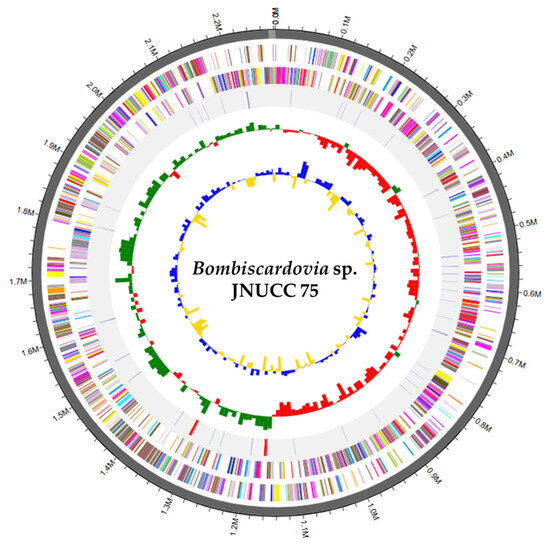
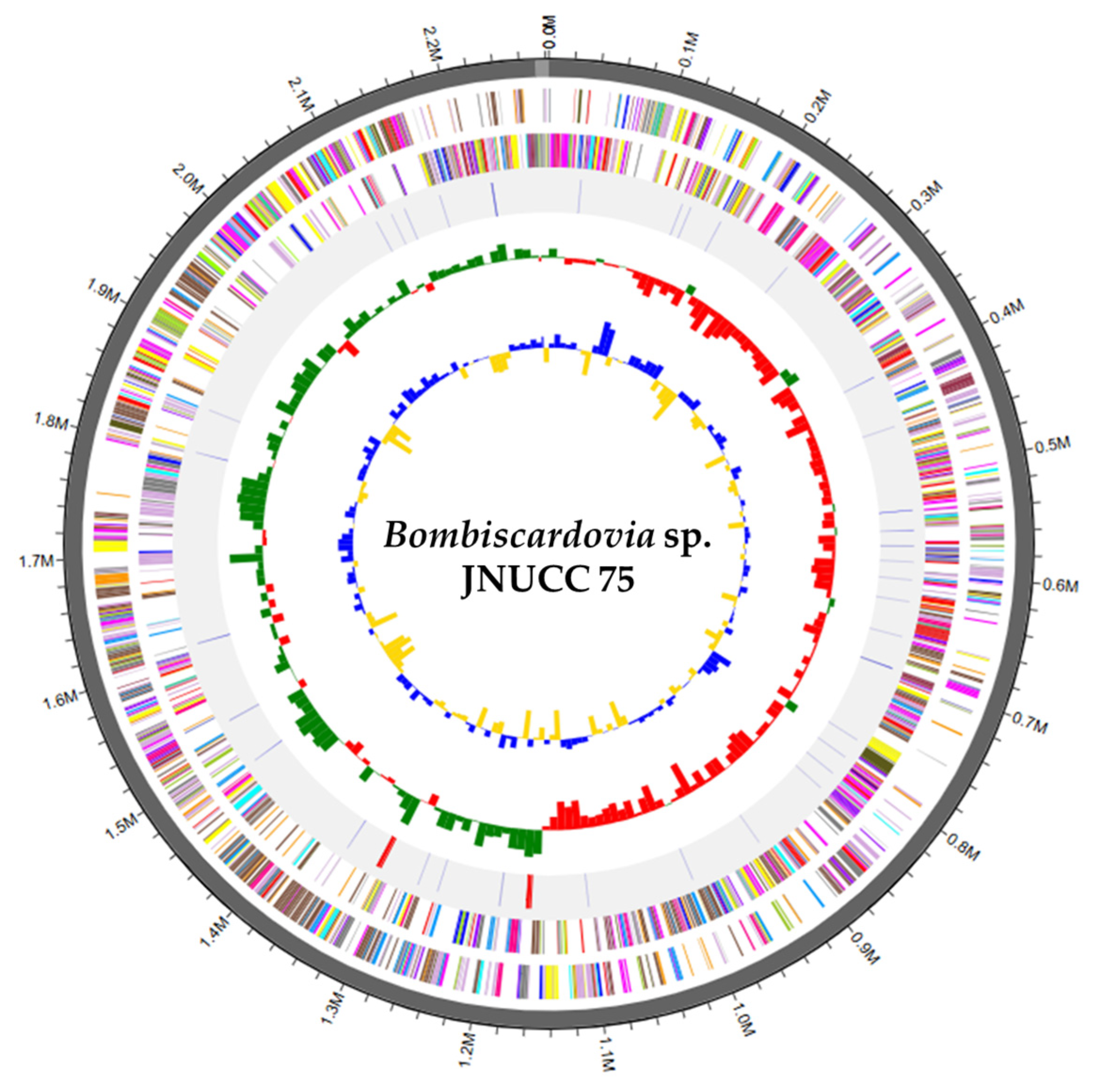
The circular genome map (Figure 1) displays a structurally balanced chromosome with coding sequences evenly distributed across both DNA strands. The outer rings represent coding sequences (CDSs) categorized by COG functional classes, while the inner rings indicate G + C content (green/red) and GC skew (purple/yellow) variations. The alternating GC skew pattern and short intergenic regions are consistent with a streamlined genome organization commonly observed in bacteria with efficient replication and transcription dynamics. The genomic compactness, together with the high proportion of genes associated with translation, amino acid metabolism, and coenzyme biosynthesis, may be associated with adaptation to nutrient-variable and oxygen-fluctuating environments such as floral surfaces. Notably, the G + C content (59.66%) and genome size (~2.28 Mb) are within the range reported for other members of the former B. asteroides lineage (59.2–60.1%; 2.1–2.4 Mb) [23,24].
Figure 1.
Circular genome map of Bombiscardovia sp. JNUCC 75. The complete circular chromosome of Bombiscardovia sp. JNUCC 75, isolated from the flowers of P. yedoensis in Jeju Island, is shown. From the outermost to the innermost rings: genome coordinates (Mb), coding sequences (CDSs) on the forward and reverse strands colored by functional categories, predicted RNA genes, GC content (green/red), and GC skew (purple/yellow). The genome exhibits a compact organization with a pronounced GC composition bias, indicative of genomic adaptation to a flower-associated and oxygen-variable ecological niche.
However, evidence of gene acquisition, loss, and decay has been reported in host-associated actinobacterial lineages as part of their ecological specialization. Several studies have suggested that elevated pseudogene content may reflect ongoing genome remodeling rather than simple genome reduction [1]. The relatively high pseudogene proportion (~29%) observed in strain JNUCC 75 may therefore represent functional turnover associated with ecological adaptation. Such patterns have been reported in bacteria occupying fluctuating or transitional habitats, where selective retention of beneficial traits and decay of dispensable functions occur over evolutionary time. The genome also displays a symmetrical GC skew pattern and does not show large-scale structural rearrangements, suggesting overall chromosomal integrity despite localized gene decay.
Overall, these features characterize Bombiscardovia sp. JNUCC 75 as a genomically compact, metabolically efficient, and ecologically specialized lineage within the former B. asteroides cluster. Its genome characteristics are consistent with an environmentally associated lineage and may reflect ecological association with aerated, sugar-rich, and phenolic-rich floral habitats rather than exclusive adaptation to the mammalian gastrointestinal tract.
3.2. Plasmid Replicon Structure and Genetic Features
Complete genome assembly of strain JNUCC 75 revealed two circular replicons. One corresponds to a chromosome of 2,272,963 bp, while the other is a small extrachromosomal replicon of 9820 bp (GenBank accession: JBSKGK010000002.1; RefSeq: NZ_JBSKGK010000002.1). This smaller replicon is explicitly annotated in the NCBI assembly record as plasmid “unnamed1,” confirming that it represents a plasmid rather than a chromosomal fragment. The GC content of this plasmid is 54.5%, which is lower than that of the chromosome (59.5%), a difference commonly observed in accessory replicons acquired through horizontal gene transfer.
Genomic analysis of the 9.8 kb plasmid identified several hallmark genes associated with plasmid maintenance. A ParA family ATPase is present, representing a key component of plasmid partitioning systems that ensure stable inheritance during bacterial cell division [25,26]. In addition, the plasmid encodes a recombinase family protein, suggesting potential roles in site-specific recombination, structural rearrangement, or plasmid multimer resolution, functions commonly linked to plasmid-associated recombination systems [25,26]. These genes are often found in low-copy-number plasmids that require active segregation and structural maintenance mechanisms [25,26].
The overall gene composition further supports its plasmid identity. The replicon lacks essential chromosomal housekeeping genes, including ribosomal proteins, core DNA replication machinery, and central metabolic enzymes. Instead, it is enriched in hypothetical proteins and small open reading frames, a pattern typical of compact accessory plasmids [27]. Several predicted membrane-associated proteins are also present, which may be related to niche adaptation or host interaction. Plasmids have been implicated in enhancing ecological adaptability and facilitating gene flow across microbial communities [27,28]. These features may contribute to persistence in the flower-associated environment from which the strain was isolated.
Taken together, the complete circular assembly, database annotation as a plasmid, distinct GC content, and presence of plasmid maintenance genes such as ParA and recombinase clearly demonstrate that JNUCC 75 harbors a small extrachromosomal plasmid. This plasmid likely functions as an accessory genetic element associated with environmental adaptation rather than core cellular metabolism. Furthermore, the characteristics of a small autonomously replicating plasmid suggest potential for future development as a gene delivery vector and as a foundational genetic platform for host-specific metabolic engineering applications [27,28].
3.3. Phylogenetic Relationships
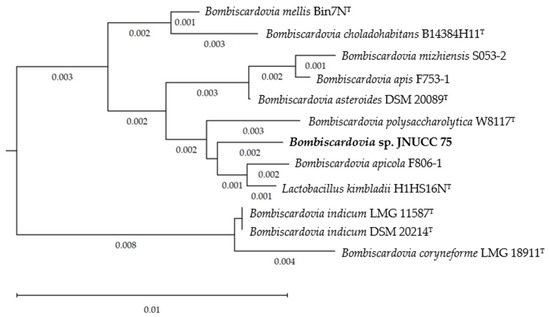
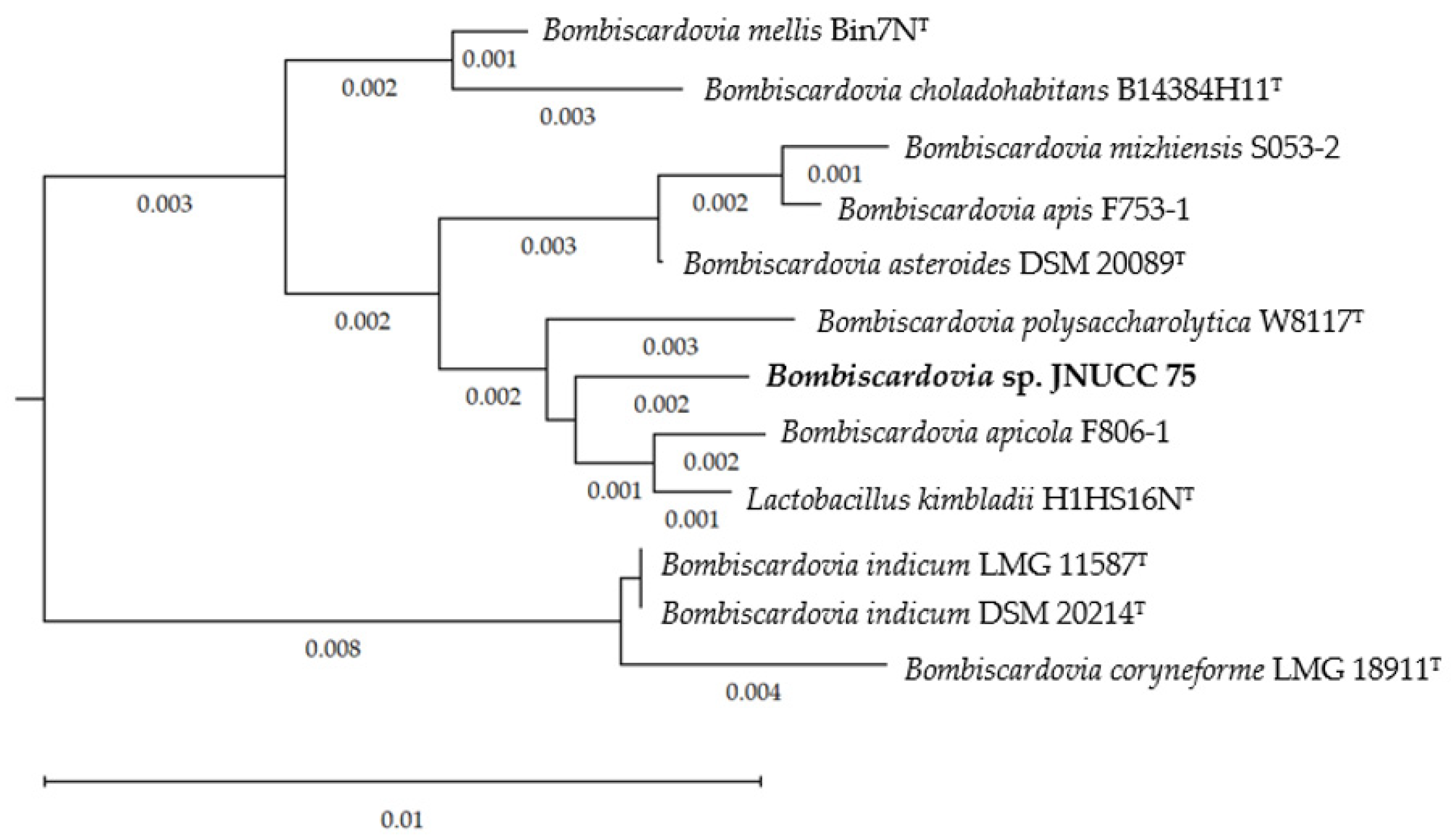
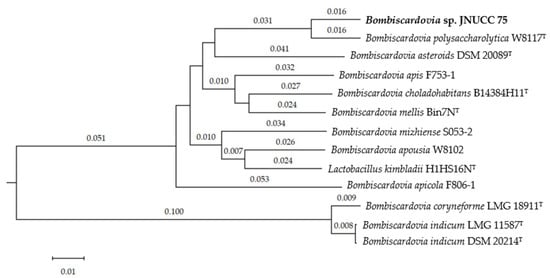
The 16S rRNA gene sequence analysis (Figure 2) showed that strain JNUCC 75 clustered within the Bombiscardovia lineage and exhibited highest sequence similarity to B. polysaccharolytica W8117T (99.4%). In the 16S rRNA gene phylogenetic tree, JNUCC 75 grouped with members of the former B. asteroides lineage, including B. asteroides DSM 20089T and related taxa, indicating close phylogenetic affinity at the ribosomal gene level.
Figure 2.
Phylogenetic tree of Bombiscardovia species based on 16S rRNA gene sequences. The tree was constructed using the GBDP-based approach implemented in the TYGS platform. Strain JNUCC 75 clustered with B. polysaccharolytica W8117T, indicating a close phylogenetic relationship within the former B. asteroides lineage. Branch lengths represent intergenomic distances, and the scale bar indicates the number of substitutions per site. Taxon names have been updated according to GTDB-based nomenclature.
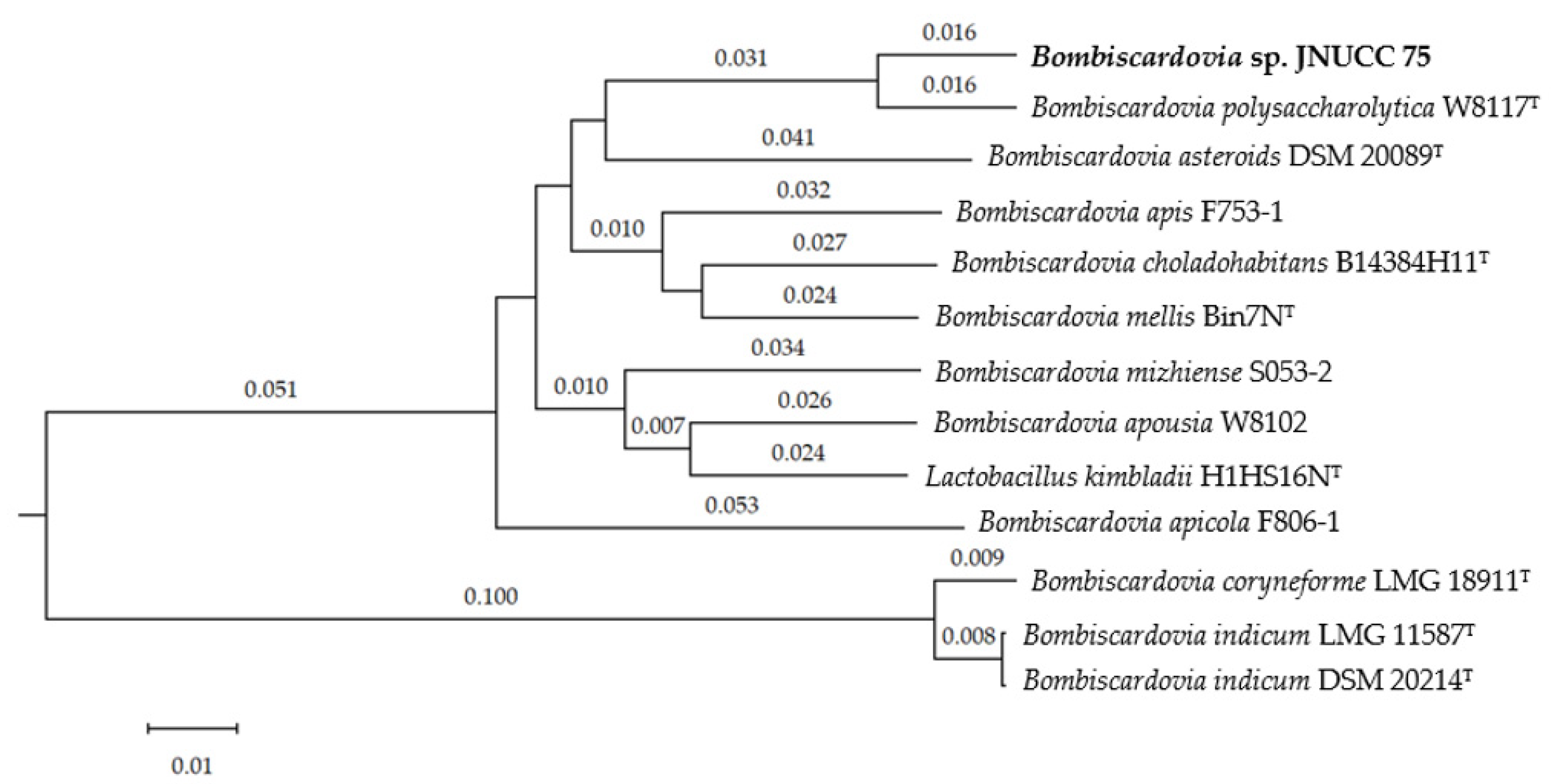
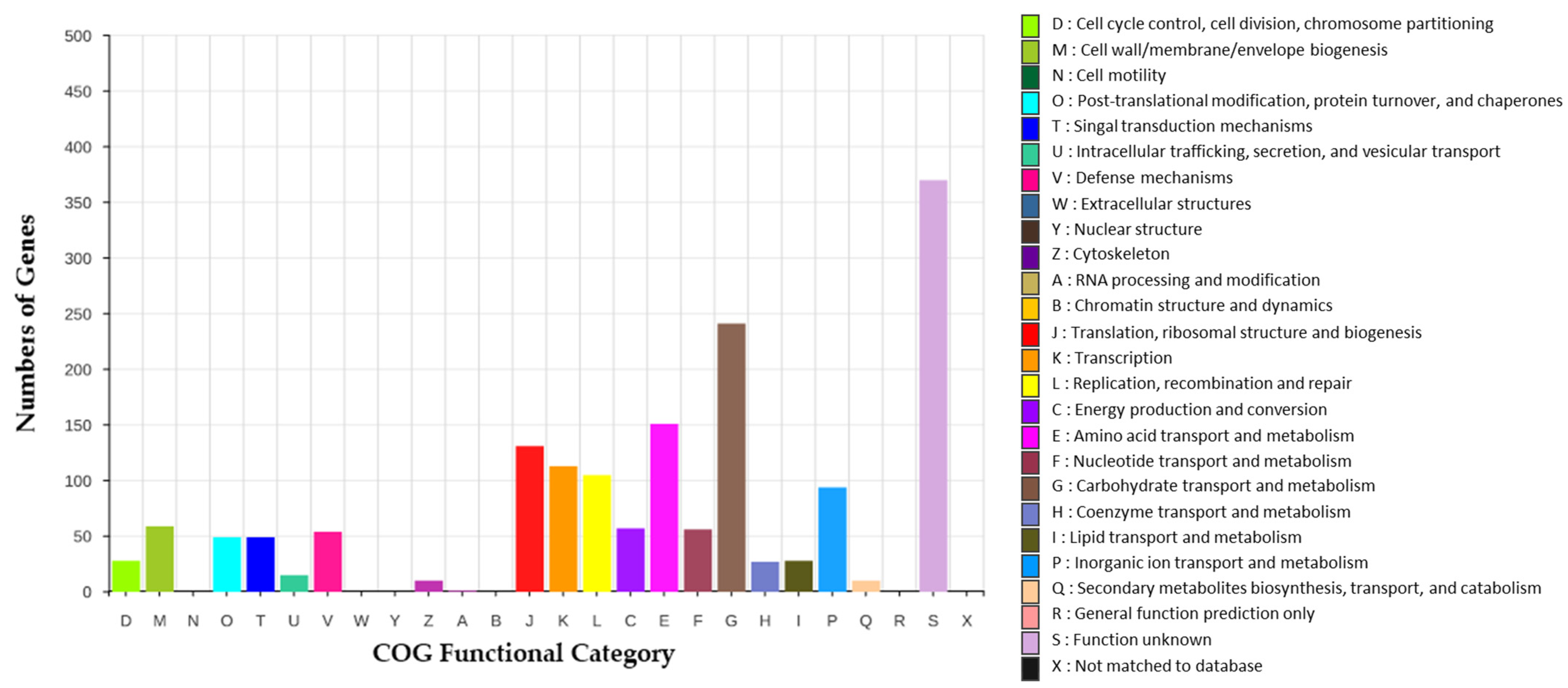
To obtain higher-resolution insight, genome-scale phylogenomic analysis was performed using the TYGS platform, which applies the GBDP method for whole-genome distance calculations (Figure 3). In the GBDP-based phylogenomic tree, strain JNUCC 75 formed a well-supported cluster with B. polysaccharolytica W8117T and was clearly separated from other Bombiscardovia species such as B. asteroides DSM 20089T, B. indicum LMG 11587T, and B. coryneforme LMG 18911T. The short branch length between JNUCC 75 and W8117T indicates close genomic relatedness at the whole-genome level, while still reflecting measurable interstrain divergence.
Figure 3.
Phylogenomic tree of Bombiscardovia species based on whole-genome sequences using the GBDP method. The tree was constructed using the GBDP approach implemented in the TYGS platform. Strain JNUCC 75 clustered with B. polysaccharolytica W8117T, indicating a close genomic relationship within the former B. asteroides phylogenetic lineage. Branch lengths represent intergenomic distances, and the scale bar indicates the number of substitutions per site. Taxon names have been updated according to the GTDB-based nomenclature.
Together, the congruent placement of strain JNUCC 75 in both the 16S rRNA gene tree and the whole-genome phylogenomic tree supports its assignment to the species B. polysaccharolytica under the current GTDB-based taxonomic framework. The genome-based tree further provides finer resolution among closely related taxa than the 16S rRNA gene alone, consistent with the known limitations of single-gene phylogeny in resolving relationships within the Bifidobacteriaceae.
3.4. Genomic Relatedness
Pairwise genomic comparisons were performed within the framework of the GTDB to determine the taxonomic placement and genomic relatedness of strain JNUCC 75. ANI values were calculated against GTDB-referenced genomes of closely related members of the genus Bombiscardovia (Table 2). The highest ANI value was observed between strain JNUCC 75 and B. polysaccharolytica W8117T, with an ANI of 97.41% and an alignment fraction (AF) ranging from 89.46% to 91.42%. ANI values between JNUCC 75 and other Bombiscardovia species were substantially lower (approximately 89.48–92.90%), clearly supporting its assignment to the species B. polysaccharolytica while distinguishing it from other congeners.
Table 2.
ANI values between strain JNUCC 75 and closely related reference genomes.
To further support this classification, dDDH values were calculated using the GGDC 3.0 based on formulae d0, d4, and d6 (Table 3). The highest dDDH estimate was obtained with B. polysaccharolytica W8117T, yielding values of 92.4% (d0), 72.7% (d4), and 91.7% (d6), all of which exceed the accepted species delineation threshold of 70%. In contrast, dDDH values between JNUCC 75 and other related Bombiscardovia species ranged from approximately 38.4% to 66.6%, well below the species boundary. The low G + C content differences (≤1.37%) further support close relatedness within the species while confirming genomic distinctiveness from other taxa. Together, the ANI and dDDH results consistently demonstrate that strain JNUCC 75 belongs to the species B. polysaccharolytica under the GTDB-based genomic taxonomy framework.
Table 3.
dDDH values between Bombiscardovia sp. JNUCC 75 and related Bombiscardovia species.
These genomic indices collectively indicate that strain JNUCC 75 belongs to the species B. polysaccharolytica within the former B. asteroides phylogenetic cluster, while still exhibiting measurable genomic divergence from the type strain B. polysaccharolytica W8117T. B. polysaccharolytica has been reported from plant- and insect-associated environments and is known to utilize diverse carbohydrates, features that may be consistent with adaptation to nutritionally variable microhabitats. The observed genomic differentiation between strain JNUCC 75 and W8117T may represent intraspecies microdivergence potentially associated with ecological specialization, including possible adaptation to non-gut floral surfaces where fluctuating oxygen exposure, ultraviolet radiation, and plant-derived phenolic compounds could act as environmental stressors.
Consistent with this ecological context, strain JNUCC 75 showed minimal growth under aerobic conditions, indicating strong oxygen sensitivity and supporting the possibility of association with microaerophilic floral niches. This pattern of strain-level differentiation is comparable to genomic and physiological traits reported for other environmentally derived members of the Bifidobacteriaceae isolated from honey, pollen, and flower-associated habitats.
3.5. Functional Annotation and COG Classification
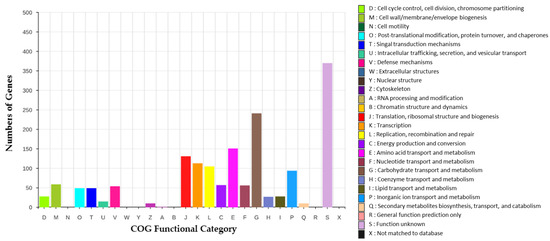
Functional annotation of the Bombiscardovia sp. JNUCC 75 genome using the COG database assigned a total of 1903 protein-coding genes to 23 functional categories (Figure 4). Among these, a substantial number of genes were associated with metabolic functions, highlighting the strain’s versatile biochemical potential. The largest group corresponded to category S (Function unknown), encompassing approximately 380 genes, followed by category G (Carbohydrate transport and metabolism; ~280 genes), category E (Amino acid transport and metabolism; ~150 genes), and category J (Translation, ribosomal structure and biogenesis; ~120 genes). This overall distribution pattern is broadly consistent with previously reported COG profiles of members of the former B. asteroides group and other non-gut-associated Bifidobacteriaceae, in which genes related to carbohydrate utilization and core metabolic functions predominate [24,29].
Figure 4.
COG functional classification of predicted protein-coding genes in Bombiscardovia sp. JNUCC 75. A total of 1903 genes were assigned to 23 functional categories. Metabolism-related categories (G, E, F, H) were predominant, while regulatory and structural categories (D, M, T) were less represented, reflecting the streamlined metabolic genome characteristic of environmental Bombiscardovia species.
In contrast, relatively few genes were assigned to categories related to regulatory and structural processes, such as D (Cell cycle control, cell division, and chromosome partitioning), M (Cell wall/membrane/envelope biogenesis), and T (Signal transduction mechanisms), each comprising fewer than 60 genes. Compared with host-adapted gut Bifidobacteriaceae, which often possess expanded repertoires of regulatory and host-interaction-related genes, this relatively lower representation of regulatory categories in strain JNUCC 75 may reflect a genome organization more similar to environmentally associated bifidobacterial lineages [24,29], although detailed comparative gene-by-gene analysis was beyond the scope of this study.
Notably, a substantial proportion of genes were assigned to category S (Function unknown). Such enrichment of uncharacterized or hypothetical proteins is a well-documented feature of Bifidobacteriaceae genomes [30], where a considerable fraction of coding sequences (often 25–40%) lack functional assignment. This pattern is commonly associated with lineage-specific adaptations and the limited experimental validation of niche-specialized genes [31]. The high number of category S genes in Bombiscardovia sp. JNUCC 75 is therefore consistent with previous genomic studies of bifidobacteria and reflects the presence of species-specific metabolic or ecological functions that remain to be elucidated.
The predominance of genes involved in carbohydrate and amino acid metabolism suggests an adaptive strategy for survival in floral or sugar-rich microhabitats, where readily available carbohydrates and amino acid derivatives serve as key nutritional resources. Similar enrichment of carbohydrate-active functions has been reported in Bifidobacteriaceae species isolated from honey, pollen, and plant-associated environments, supporting a potential link between COG category composition and environmental nutrient availability [24,29]. Moreover, the presence of numerous genes related to coenzyme transport and metabolism (H) and lipid metabolism (I) implies active redox regulation and membrane stability under fluctuating environmental conditions. While such functional categories are frequently discussed in relation to stress responses in bacteria, the specific roles of these genes in oxidative or UV stress tolerance in strain JNUCC 75 have not been experimentally validated and should therefore be interpreted cautiously [32,33]. Consistent with these genomic features, Bombiscardovia sp. JNUCC 75 exhibited almost no growth under strictly aerobic conditions in our cultivation assays, indicating strong oxygen sensitivity and supporting its association with microaerophilic or anaerobic floral niches. Although the genome encodes enzymes putatively involved in the biosynthesis of unusual isoprenoid lipids, their potential role in stabilizing the membrane under oxygen-fluctuating conditions remains hypothetical and requires further experimental validation. Collectively, the COG-based functional profile places strain JNUCC 75 within the general metabolic framework observed for environmentally derived Bifidobacteriaceae, while specific stress-adaptation mechanisms remain to be clarified by targeted comparative and experimental studies.
3.6. Secondary Metabolite Gene Clusters
antiSMASH v8.0.4 analysis of the Bombiscardovia sp. JNUCC 75 chromosome identified two putative terpenoid precursor BGCs (Region 1 and Region 2), both detected under “relaxed” stringency [21]. Neither cluster showed close homology to characterized BGCs in MIBiG 4.0; however, this observation alone is insufficient to conclude pathway novelty. Instead, these regions are here described as predicted isoprenoid (polyprenyl) biosynthesis-related loci requiring further functional validation [34,35].
At the core of each region are polyprenyl synthase genes (ORF1218 and ORF1583), both belonging to the polyprenyl diphosphate synthase family (Pfam: PF00432) and containing the conserved “DDXXD” metal-binding catalytic motif [35]. These enzymes are known to catalyze the sequential condensation of isopentenyl diphosphate (IPP) and dimethylallyl diphosphate (DMAPP) to form polyprenyl diphosphates, which serve as hydrophobic side-chain precursors for membrane-associated quinones such as ubiquinone, menaquinone, and dolichol. Based on annotation, these genes are predicted to contribute to membrane-associated isoprenoid metabolism in Bifidobacteriaceae [32,36,37].
Protein sequence alignment revealed 28.7% amino acid identity and 42.1% similarity between ORF1218 and ORF1583. Despite conservation of the catalytic motif, sequence divergence suggests that the two enzymes are likely paralogous proteins with potentially distinct functional properties, such as differences in product chain length or regulation. However, these functional distinctions remain to be experimentally confirmed. Polyprenyl-derived compounds are broadly associated with membrane structure and cellular redox processes in bacteria [38,39,40].
Therefore, the presence of two predicted polyprenyl synthases in JNUCC 75 indicates genomic potential for isoprenoid precursor biosynthesis; however, their precise physiological roles and ecological relevance remain to be experimentally determined.
Examination of gene organization in Regions 1 and 2 revealed that each synthase gene is located near genes annotated as putative phosphatases, reductases, and prenyltransfer-related enzymes, forming compact gene neighborhoods. While operon structure and co-regulation have not been experimentally validated, this genomic arrangement may indicate coordinated involvement in isoprenoid-related metabolism.
3.7. Ecological and Applied Implications
The isolation of strain JNUCC 75 from flowers of P. yedoensis in Jeju Island broadens the range of ecological settings in which members of the Bifidobacteriaceae have been detected. However, because this study is based on a single isolate, broader ecological interpretations should be considered preliminary.
The genomic features of strain JNUCC 75, including coding density and the presence of predicted terpenoid- and polyprenyl-related loci, may be consistent with adaptation to environments characterized by fluctuating oxygen levels, UV exposure, and plant-derived compounds. Similar genomic traits have been discussed in environmentally associated bifidobacterial lineages [41,42]. Nevertheless, direct functional links between these genomic features and specific ecological roles have not yet been experimentally demonstrated.
The occurrence of bifidobacteria in floral environments has also been reported for other members of the former B. asteroides group [41,42], and strain JNUCC 75 may represent a related environmentally associated lineage. However, whether this strain constitutes a distinct ecological type adapted to plant surfaces remains to be clarified through broader sampling and functional analyses.
From an applied perspective, members of the Bifidobacteriaceae have been explored as sources of postbiotic compounds and functional biomolecules [41,42]. The genome of strain JNUCC 75 encodes genes predicted to be involved in the biosynthesis of metabolites that, in other bacteria, have been associated with membrane function or redox balance. However, the production and biological activities of such compounds in this strain have not been experimentally verified, and any applied implications should therefore be regarded as preliminary.
3.8. Overall Significance
Although Bombiscardovia sp. JNUCC 75 is phylogenetically aligned with B. polysaccharolyticum, its floral isolation source, compact genome structure, and specialized metabolic potential broaden our understanding of the ecological and functional diversity within the Bombiscardovia genus. This strain exemplifies how bifidobacteria, traditionally associated with mammalian hosts, may undergo microevolutionary diversification to occupy epiphytic, oxygen-variable habitats, developing genomic features that support environmental resilience and metabolic versatility. Nevertheless, we acknowledge that its isolation from flowers does not exclude the possibility of an intestinal origin, as occasional cross-habitat transfer between gut-associated and environmental niches has been described for some Bifidobacteriaceae. To date, neither Bombiscardovia sp. JNUCC 75 nor its closest relative, B. polysaccharolyticum, has been reported from the gut microbiota of humans or native animals, and its natural reservoir therefore remains to be fully clarified.
Integrating the genomic and ecological observations, strain JNUCC 75 may represent an environmentally associated member of the former B. asteroides group that exhibits features found in both host-associated and environmental Bifidobacteriaceae. However, further comparative genomic and functional studies are required to clarify its evolutionary and ecological positioning. Its genome reveals adaptive traits—such as stress response mechanisms, amino acid and cofactor biosynthesis, and secondary metabolite gene clusters—that collectively enhance survival in fluctuating floral ecosystems while maintaining biochemical pathways beneficial to host interaction.
Although the present study focuses primarily on the genomic and ecological characterization of Bombiscardovia sp. JNUCC 75, it is noteworthy that Bifidobacterium-derived postbiotics and paraprobiotics are already utilized in skincare and microbiome-modulating products. Given its unique genomic features and its origin from the native cherry blossom (P. yedoensis) of Jeju Island, JNUCC 75 may represent a promising microbial resource for future evaluation as a natural postbiotic candidate.
Rather than providing direct evidence for cosmetic functionality, this study expands the ecological boundaries of bifidobacteria and establishes a genomic framework for exploring non-gut bifidobacterial diversity. Such knowledge may guide future efforts to identify innovative bioactive substances with potential relevance to the cosmetics and food sectors, pending additional functional and safety validations.
4. Conclusions
The comprehensive genomic characterization of Bombiscardovia sp. JNUCC 75, isolated from the flowers of P. yedoensis in Jeju Island, Republic of Korea, provides valuable insights into the ecological and functional diversity of the B. asteroides group. Although genome-based taxonomic indices, including Average Nucleotide Identity (ANI; 97.41%) and digital DNA–DNA hybridization (dDDH; 72.7% based on formula d4), confirmed that strain JNUCC 75 does not represent a novel species but belongs to B. polysaccharolytica, its genome exhibits strain-level functional features that may reflect adaptation to a non-intestinal, flower-associated habitat. The genome encodes a compact yet functionally rich repertoire of genes involved in translation, amino acid metabolism, and DNA repair, as well as biosynthetic clusters for terpenoid, squalene, and polyprenyl compounds. These genomic attributes suggest resilience to oxidative stress and the ability to thrive in oxygen-variable and nutrient-fluctuating environments such as floral surfaces. From an applied perspective, Bombiscardovia sp. JNUCC 75 represents a promising postbiotic and probiotic resource with potential applications in cosmeceutical and functional food formulations. The strain’s genomic capacity for producing short-chain organic acids, surface-associated proteins, and secondary metabolites supports its potential to modulate host–microbe interactions and contribute to skin barrier maintenance, antioxidant protection, and gut–skin axis balance. Overall, this study expands the ecological scope of Bombiscardovia beyond gastrointestinal niches and establishes a scientific foundation for utilizing flower-derived Bifidobacteriaceae as next-generation bioactive microbial resources for health-promoting and cosmetic applications.
Author Contributions
Conceptualization, C.-G.H.; methodology, K.-A.H. and J.-H.K.; investigation, K.-A.H. and J.-H.K.; resources, K.-A.H. and M.N.K.; data curation J.-H.K.; formal analysis, C.-G.H.; writing—original draft preparation, C.-G.H.; writing—review and editing, C.-G.H.; supervision, C.-G.H.; project administration, C.-G.H.; funding acquisition, C.-G.H. All authors have read and agreed to the published version of the manuscript.
Funding
This research was supported by the Regional Innovation System & Education (RISE) program through the Jeju RISE center, funded by the Ministry of Education (MOE) and the Jeju Special Self-Governing Province, Republic of Korea (2025-RISE-17-001).
Institutional Review Board Statement
Not applicable.
Informed Consent Statement
Not applicable.
Data Availability Statement
All data supporting the findings of this study are contained within the article. The complete genome sequence of Bombiscardovia sp. JNUCC 75 has been deposited in the NCBI database under BioProject accession number PRJNA1344845, BioSample accession number SAMN52655646, and GenBank accession number JBSKGK000000000. No additional data are available.
Conflicts of Interest
The authors declare no conflicts of interest. The funders had no role in the design of the study; in the collection, analyses, or interpretation of data; in the writing of the manuscript; or in the decision to publish the results.
References
- O’Callaghan, A.; van Sinderen, D. Bifidobacteria and Their Role as Members of the Human Gut Microbiota. Front. Microbiol. 2016, 7, 925. [Google Scholar] [CrossRef] [Scilit]
- Turroni, F.; van Sinderen, D.; Ventura, M. Bifidobacteria: Insights into the biology of a key microbial group of early life gut microbiota. Microbiome Res. Rep. 2021, 1, 2. [Google Scholar] [CrossRef] [Scilit]
- Alessandri, G.; van Sinderen, D.; Ventura, M. The genus bifidobacterium: From genomics to functionality of an important component of the mammalian gut microbiota. Comput. Struct. Biotechnol. J. 2021, 19, 1472–1487. [Google Scholar] [CrossRef] [Scilit] [PubMed]
- Ruiz, L.; Delgado, S.; Ruas-Madiedo, P.; Sánchez, B.; Margolles, A. Bifidobacteria and Their Molecular Communication with the Immune System. Front. Microbiol. 2017, 8, 2345. [Google Scholar] [CrossRef] [Scilit] [PubMed]
- Lugli, G.A.; Fontana, F.; Tarracchini, C.; Mancabelli, L.; Milani, C.; Turroni, F.; Ventura, M. Exploring the biodiversity of Bifidobacterium asteroides among honey bee microbiomes. Environ. Microbiol. 2022, 24, 5666–5679. [Google Scholar] [CrossRef] [Scilit]
- Prasad, A.; Pallujam, A.D.; Siddaganga, R.; Suryanarayanan, A.; Mazel, F.; Brockmann, A.; Yek, S.H.; Engel, P. Evolution of gut microbiota across honeybee species revealed by comparative metagenomics. Nat. Commun. 2025, 16, 9069. [Google Scholar] [CrossRef] [Scilit] [PubMed]
- Alberoni, D.; Gaggìa, F.; Baffoni, L.; Modesto, M.M.; Biavati, B.; Di Gioia, D. Bifidobacterium xylocopae sp. nov. and Bifidobacterium aemilianum sp. nov., from the carpenter bee (Xylocopa violacea) digestive tract. Syst. Appl. Microbiol. 2019, 42, 205–216. [Google Scholar] [CrossRef] [Scilit] [PubMed]
- Eckel, V.P.L.; Vogel, R.F. Genomic and physiological insights into the lifestyle of Bifidobacterium species from water kefir. Arch. Microbiol. 2020, 202, 1627–1637. [Google Scholar] [CrossRef] [Scilit]
- Choi, S.S.; Bakalin, V.A.; Bum, H.M.; Park, S.J.; Kim, D.S.; Ahn, U.S.; Moon, M.O. The Liverwort and Hornwort Flora of Jeju Island, Republic of Korea: A Volcanic Island with a Unique Mixture of Subtropical, Temperate, Boreal, and Arctomontane Taxa. Plants 2023, 12, 2384. [Google Scholar] [CrossRef] [Scilit]
- Cho, M.S.; Kim, C.S.; Kim, S.H.; Kim, T.O.; Heo, K.I.; Jun, J.; Kim, S.C. Molecular and morphological data reveal hybrid origin of wild Prunus yedoensis (Rosaceae) from Jeju Island, Korea: Implications for the origin of the flowering cherry. Am. J. Bot. 2014, 101, 1976–1986. [Google Scholar] [CrossRef] [Scilit]
- Kelly, S.M.; Munoz-Munoz, J.; van Sinderen, D. Plant Glycan Metabolism by Bifidobacteria. Front. Microbiol. 2021, 12, 609418. [Google Scholar] [CrossRef] [Scilit]
- Hong, J.Y.; Kwon, D.; Park, K.Y. Microbiome-Based Interventions for Skin Aging and Barrier Function: A Comprehensive Review. Ann. Dermatol. 2025, 37, 259–268. [Google Scholar] [CrossRef] [Scilit] [PubMed]
- Xiao, X.; Hu, X.; Yao, J.; Cao, W.; Zou, Z.; Wang, L.; Qin, H.; Zhong, D.; Li, Y.; Xue, P.; et al. The role of short-chain fatty acids in inflammatory skin diseases. Front. Microbiol. 2023, 13, 1083432. [Google Scholar] [CrossRef] [Scilit] [PubMed]
- Cui, H.; Feng, C.; Zhan, G.T.; Martínez-Ríos, V.; Martorell, P.; Tortajada, M.; Cheng, S.; Cheng, S.; Duan, Z. Effects of a lotion containing probiotic ferment lysate as the main functional ingredient on enhancing skin barrier: A randomized, self-control study. Sci. Rep. 2023, 13, 16879. [Google Scholar] [CrossRef] [Scilit] [PubMed]
- Amobonye, A.; Pillay, B.; Hlope, F.; Asong, S.T.; Pillai, S. Postbiotics: An insightful review of the latest category in functional biotics. World J. Microbiol. Biotechnol. 2025, 41, 293. [Google Scholar] [CrossRef] [Scilit]
- Seemann, T. Prokka: Rapid prokaryotic genome annotation. Bioinformatics 2014, 30, 2068–2069. [Google Scholar] [CrossRef] [Scilit]
- Cantalapiedra, C.P.; Hernández-Plaza, A.; Letunic, I.; Bork, P.; Huerta-Cepas, J. eggNOG-mapper v2: Functional Annotation, Orthology Assignments, and Domain Prediction at the Metagenomic Scale. Mol. Biol. Evol. 2021, 38, 5825–5829. [Google Scholar] [CrossRef] [Scilit]
- Yoon, S.H.; Ha, S.M.; Kwon, S.; Lim, J.; Kim, Y.; Seo, H.; Chun, J. Introducing EzBioCloud: A taxonomically united database of 16S rRNA gene sequences and whole-genome assemblies. Int. J. Syst. Evol. Microbiol. 2017, 67, 1613–1617. [Google Scholar] [CrossRef] [Scilit]
- Meier-Kolthoff, J.P.; Göker, M. TYGS is an automated high-throughput platform for state-of-the-art genome-based taxonomy. Nat. Commun. 2019, 10, 2182. [Google Scholar] [CrossRef] [Scilit]
- Meier-Kolthoff, J.P.; Auch, A.F.; Klenk, H.P.; Göker, M. Genome sequence-based species delimitation with confidence intervals and improved distance functions. BMC Bioinform. 2013, 14, 60. [Google Scholar] [CrossRef] [Scilit]
- Blin, K.; Shaw, S.; Vader, L.; Szenei, J.; Reitz, Z.L.; Augustijn, H.E.; Cediel-Becerra, J.D.D.; de Crécy-Lagard, V.; Koetsier, R.A.; Williams, S.E.; et al. antiSMASH 8.0: Extended gene cluster detection capabilities and analyses of chemistry, enzymology, and regulation. Nucleic Acids Res. 2025, 53, W32–W38. [Google Scholar] [CrossRef] [Scilit] [PubMed]
- Huerta-Cepas, J.H.; Szklarczyk, D.; Heller, D.; Hernández-Plaza, A.; Forslund, S.K.; Cook, H.; Mende, D.R.; Letunic, I.; Rattei, T.; Jensen, L.J.; et al. eggNOG 5.0: A hierarchical, functionally and phylogenetically annotated orthology resource based on 5090 organisms and 2502 viruses. Nucleic Acids Res. 2019, 47, D309–D314. [Google Scholar] [CrossRef] [Scilit] [PubMed]
- Lugli, G.A.; Milani, C.; Turroni, F.; Duranti, S.; Ferrario, C.; Viappiani, A.; Mancabelli, L.; Mangifesta, M.; Taminiau, B.; Delcenserie, V.; et al. Investigation of the evolutionary development of the genus Bifidobacterium by comparative genomics. Appl. Environ. Microbiol. 2014, 80, 6383–6394. [Google Scholar] [CrossRef] [Scilit] [PubMed]
- Bottacini, F.; Milani, C.; Turroni, F.; Sánchez, B.; Foroni, E.; Duranti, S.; Serafini, F.; Viappiani, A.; Strati, F.; Ferrarini, A.; et al. Bifidobacterium asteroides PRL2011 genome analysis reveals clues for colonization of the insect gut. PLoS ONE 2012, 7, e44229. [Google Scholar] [CrossRef] [Scilit]
- Schumacher, M.A. Bacterial plasmid partition machinery: A minimalist approach to survival. Curr. Opin. Struct. Biol. 2012, 22, 72–79. [Google Scholar] [CrossRef] [Scilit]
- Bouet, J.Y.; Funnell, B.E. Plasmid Localization and Partition in Enterobacteriaceae. EcoSal Plus 2019, 8, 23. [Google Scholar] [CrossRef] [Scilit]
- Shintani, M.; Sanchez, Z.K.; Kimbara, K. Genomics of microbial plasmids: Classification and identification based on replication and transfer systems and host taxonomy. Front. Microbiol. 2015, 6, 242. [Google Scholar] [CrossRef] [Scilit]
- Smillie, C.; Garcillán-Barcia, M.P.; Francia, M.V.; Rocha, E.P.; de la Cruz, F. Mobility of plasmids. Microbiol. Mol. Biol. Rev. 2010, 74, 434–452. [Google Scholar] [CrossRef] [Scilit]
- Milani, C.; Lugli, G.A.; Duranti, S.; Turroni, F.; Bottacini, F.; Mangifesta, M.; Sanchez, B.; Viappiani, A.; Mancabelli, L.; Taminiau, B.; et al. Genomic encyclopedia of type strains of the genus Bifidobacterium. Appl. Environ. Microbiol. 2014, 80, 6290–6302. [Google Scholar] [CrossRef] [Scilit]
- Bottacini, F.; Morrissey, R.; Esteban-Torres, M.; James, K.; van Breen, J.; Dikareva, E.; Egan, M.; Lambert, J.; van Limpt, K.; Knol, J.; et al. Comparative genomics and genotype-phenotype associations in Bifidobacterium breve. Sci. Rep. 2018, 8, 10633. [Google Scholar] [CrossRef] [Scilit]
- Argentini, C.; Lugli, G.A.; Tarracchini, C.; Fontana, F.; Mancabelli, L.; Viappiani, A.; Anzalone, R.; Angelini, L.; Alessandri, G.; Bianchi, M.G.; et al. Ecology- and genome-based identification of the Bifidobacterium adolescentis prototype of the healthy human gut microbiota. Appl. Environ. Microbiol. 2024, 90, e0201423. [Google Scholar] [CrossRef] [Scilit] [PubMed]
- Schöpping, M.; Zeidan, A.A.; Franzén, C.J. Stress Response in Bifidobacteria. Microbiol. Mol. Biol. Rev. 2022, 86, e0017021. [Google Scholar] [CrossRef] [Scilit] [PubMed]
- Duranti, S.; Longhi, G.; Ventura, M.; van Sinderen, D.; Turroni, F. Exploring the Ecology of Bifidobacteria and Their Genetic Adaptation to the Mammalian Gut. Microorganisms 2020, 9, 8. [Google Scholar] [CrossRef] [Scilit] [PubMed]
- Zdouc, M.M.; Blin, K.; Louwen, N.L.L.; Navarro, J.; Loureiro, C.; Bader, C.D.; Bailey, C.B.; Barra, L.; Booth, T.J.; Bozhüyük, K.A.J.; et al. MIBiG 4.0: Advancing biosynthetic gene cluster curation through global collaboration. Nucleic Acids Res. 2025, 53, D678–D690. [Google Scholar] [CrossRef] [Scilit]
- Chang, H.Y.; Cheng, T.H.; Wang, A.H. Structure, catalysis, and inhibition mechanism of prenyltransferase. IUBMB Life 2021, 73, 40–63. [Google Scholar] [CrossRef] [Scilit]
- Liang, P.H.; Ko, T.P.; Wang, A.H. Structure, mechanism and function of prenyltransferases. Eur. J. Biochem. 2002, 269, 3339–3354. [Google Scholar] [CrossRef] [Scilit]
- Kawamukai, M. Biosynthesis and applications of prenylquinones. Biosci. Biotechnol. Biochem. 2018, 82, 963–977. [Google Scholar] [CrossRef] [Scilit]
- Liu, M.; Ma, Y.; Du, Q.; Hou, X.; Wang, M.; Lu, S. Functional Analysis of Polyprenyl Diphosphate Synthase Genes Involved in Plastoquinone and Ubiquinone Biosynthesis in Salvia miltiorrhiza. Front. Plant Sci. 2019, 10, 893. [Google Scholar] [CrossRef] [Scilit]
- Satta, A.; Esquirol, L.; Ebert, B.E.; Newman, J.; Peat, T.S.; Plan, M.; Schenk, G.; Vickers, C.E. Molecular characterization of cyanobacterial short-chain prenyltransferases and discovery of a novel GGPP phosphatase. FEBS J. 2022, 289, 6672–6693. [Google Scholar] [CrossRef] [Scilit]
- Pichersky, E.; Raguso, R.A. Why do plants produce so many terpenoid compounds? New Phytol. 2018, 220, 692–702. [Google Scholar] [CrossRef] [Scilit]
- Yue, Y.; Wang, Y.; Han, Y.; Zhang, Y.; Cao, T.; Huo, G.; Li, B. Genome Analysis of Bifidobacterium bifidum E3, Structural Characteristics, and Antioxidant Properties of Exopolysaccharides. Foods 2023, 12, 2988. [Google Scholar] [CrossRef] [Scilit]
- Trompette, A.; Pernot, J.; Perdijk, O.; Alqahtani, R.A.A.; Domingo, J.S.; Camacho-Muñoz, D.; Wong, N.C.; Kendall, A.C.; Wiederkehr, A.; Nicod, L.P.; et al. Gut-derived short-chain fatty acids modulate skin barrier integrity by promoting keratinocyte metabolism and differentiation. Mucosal. Immunol. 2022, 15, 908–926. [Google Scholar] [CrossRef] [Scilit]

Disclaimer/Publisher’s Note: The statements, opinions and data contained in all publications are solely those of the individual author(s) and contributor(s) and not of MDPI and/or the editor(s). MDPI and/or the editor(s) disclaim responsibility for any injury to people or property resulting from any ideas, methods, instructions or products referred to in the content. |
© 2026 by the authors. Licensee MDPI, Basel, Switzerland. This article is an open access article distributed under the terms and conditions of the Creative Commons Attribution (CC BY) license.