


Abstract
The effects of thermal modification, lactic acid (LA) impregnation, and their combined application on the physical properties and biological durability of European beech (Fagus sylvatica L.) were investigated to identify potential synergistic interactions between these environmentally friendly wood-modification methods. Beech lamellae were subjected to thermal treatment at 180 °C, LA impregnation followed by polymerization at 120 or 160 °C, and two different treatment sequences combining both modifications. Density, moisture sorption, swelling–shrinking behavior, anti-swelling efficiency, anatomical changes, and fungal durability were evaluated. Thermal treatment caused a moderate mass loss of 3.2–3.7%, whereas LA-treatment produced weight gains of 39.3–56.5%. All treatments reduced moisture uptake and equilibrium moisture content, with the lowest value (5.6%) obtained after impregnation followed by thermal treatment. The combined treatment also provided the greatest dimensional stabilization, reducing volumetric swelling by 67.6% compared with untreated wood. SEM observations confirmed enhanced polymer fixation after higher-temperature curing. Overall, combining LA-treatment with thermal modification substantially improved the dimensional stability and durability-related properties of beech wood, while the treatment sequence proved critical for maximizing modification efficiency.
1. Introduction
Thermal treatment is a well-established route for improving wood performance, especially for beech, where higher temperatures reduce hygroscopicity and equilibrium moisture content, increase durability, and improve dimensional stability through chemical changes in hemicelluloses and lignin. Its most important characteristic is the removal of hydroxyl (-OH) groups [1,2,3,4]. Beech treated at elevated temperature shows clear shifts in chemistry and surface behavior, including deacetylation, hemicellulose degradation, reduced wettability, and altered mechanical response [2,5,6,7]. However, these gains are often accompanied by strength losses or brittleness, especially as treatment severity increases [4,8]. Thermal modification is defined as heat transfer that occurs at temperatures above 150 °C causing decomposition processes, significantly altering the properties of the wood.
Lactic acid (LA) oligomers have emerged as a promising bio-based modifying system for wood. In beech wood, impregnation with oligomeric lactic acid (OLA) followed by curing can markedly improve dimensional stability and biological resistance; curing at 160 °C for 48 h was reported as especially effective [9]. PLA/wood composite materials can be produced by impregnating OLA into solid wood and inducing in situ polymerization by heating, yielding softened, bendable wood or densified wood depending on processing conditions [10]. The second part of that study found improved dimensional stability and decay resistance, although leaching losses remained high and shear resistance decreased because of middle-lamella degradation [11].
Beech wood is a strong candidate for eco-friendly modification because, compared with many hardwoods, it has a more uniform structure, can be easily impregnated due to its open pores in the entire cross-section, and is available in large quantities at a low cost now and expectedly in the next decades. It has a low extractive content, which is advantageous for most modification processes.
Thermal treatment and LA-based impregnation both improve dimensional stability through a reduction in hygroscopicity. They improve biological durability, but each also introduces trade-offs in strength and uniformity of uptake [3,4,9,10,12]. A beech modification study with chestnut tannins found that OLA/PLA systems gave up to 70% improvement in dimensional stability and strong decay resistance, with the oligomeric system cured at 160 °C performing best [13]. Combined in the same way, LA with malic acid or polyols also showed that it can improve dimensional stability, but mechanical properties may become more variable or show trade-offs between stiffness and strength [14,15].
The sequence of thermal treatment and impregnation is important because heat can change both wood chemistry and accessibility. Thermal modification can create extra channels and larger pore spaces, which may facilitate later impregnation [16,17]. At the same time, thermal treatment lowers wettability and changes the chemical environment of the cell wall, which can either help or hinder uptake depending on the modifier and the process conditions [6,18]. Studies on other impregnation systems also show that penetration in beech is strongly shaped by anatomy, especially vessel pathways and wood structure [19,20].
Finally, moisture uptake, swelling–shrinking, and fungal degradation are central to dimensional stability; reduced water uptake and swelling–shrinking are among the main goals of thermal and LA-based modification. Durability against fungi determines whether modified beech can be used outdoors or in humid service classes, where untreated beech is non-durable. At the same time, these are the most direct indicators of whether modification actually improves service life. These are standard endpoints because wood failure in use is often guided by water-driven dimensional change and decay rather than chemistry alone [1,3,7,13,21,22,23]. These tests together show whether the modification produced a wood that is not only more durable and stable but also visually acceptable enough for real applications.
The investigations described above provide a comprehensive assessment in accordance with the objectives of the study. Thermally modified wood is also known to exhibit certain limitations and shortcomings. Therefore, the objective of this study was to evaluate, using the highly permeable beech wood species, the effects of thermal modification, LA/OLA impregnation employing different polymerization methods, and their combined treatments individually, with the aim of identifying potential synergistic effects between these modification processes. The hypothesis is that combined treatments can improve fungal durability, dimensional stability, and related physical properties of beech wood.
2. Materials and Methods
2.1. Samples and Thermal Treatment
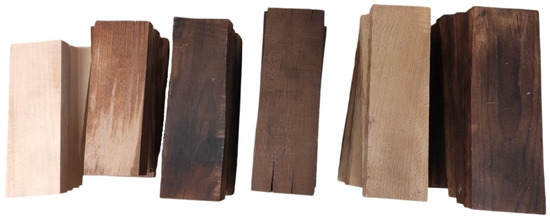
European beech (Fagus sylvatica L.) was used for all experimental samples. All specimens were prepared from a single kiln-dried board in order to minimize the influence of natural variability within the material. A total of 30 lamellae with nominal dimensions of 26 × 80 × 230 mm (thickness × width × length) were manufactured and subsequently assigned to six samples according to the modification treatments applied (Figure 1). The terms used to refer to the samples in the rest of the study are provided in parentheses.
Figure 1.
Ready lamellae of the six samples (from left to right: Untreated; Impregnated 120 °C; Impregnated 160 °C; Impregnated 120 °C and Thermally treated; Thermally treated; Thermally treated and Impregnated 120 °C). Thermal modification was performed at 180 °C. Impregnation was carried out using oligomeric lactic acid, followed by polymerization at the temperatures indicated for each sample.
- First sample: untreated (Untreated).
- Second sample: LA/OLA impregnated and polymerized at 120 °C (Impregnated 120 °C).
- Third sample: LA/OLA impregnated and polymerized at 160 °C (Impregnated 160 °C).
- Fourth sample: LA/OLA impregnated and polymerized at 120 °C, followed by thermal treatment at 180 °C (Impregnated 120 °C and Thermally treated).
- Fifth sample: thermally treated at 180 °C (Thermally treated).
- Sixth sample: thermally treated at 180 °C followed by LA/OLA impregnation and polymerization at 120 °C (Thermally treated and Impregnated 120 °C).
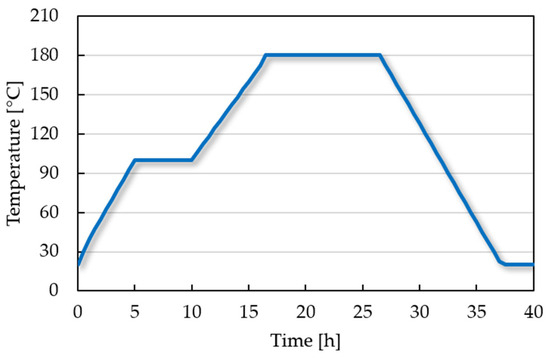
For all treatments including thermal modification, lamellae that had been stored in the workshop for an extended period and had reached an equilibrium moisture content (EMC) of approximately 6.6% were selected. The thermal treatment was performed in an oven under atmospheric pressure with continuous air circulation, while only the temperature was actively controlled. The maximum treatment temperature was 180 °C, which was maintained for 10 h. The complete thermal treatment schedule is presented in Figure 2.
Figure 2.
Time–temperature graph of the thermal modifications.
The mass loss caused by thermal treatment, or weight percentage loss (WPL; Equation (1)), was determined from the oven-dry mass of each lamella (m0a) measured before thermal modification (for the Thermally treated sample, and for the previously impregnated and cured lamellae of the Impregnated 120 °C and Thermally treated sample). The second measurement of the oven-dry mass of each lamella was performed directly after the completion of the thermal treatment (m0TT).
2.2. LA-Treatment
The impregnation medium consisted of a 90% (w/w) aqueous solution of Acros Organics b.v.b.a. (Geel, Belgium) L+ lactic acid monomer. Prior to impregnation of wood, the solution was dehydrated and partially oligomerized. This pretreatment produced oligomeric molecules that remained sufficiently small to penetrate the wood structure while considerably shortening and simultaneously moderating the subsequent in situ polymerization process within the wood. Oligomerization was carried out under continuous stirring in a Memmert VO-400 (Memmert GmbH + Co KG, Schwabach, Germany) vacuum chamber using three consecutive treatment cycles at different pressures, temperatures and durations. After preparation, the LA/OLA was poured into amber glass bottles and hermetically sealed to prevent moisture uptake from the atmosphere before use.
- First cycle (dehydration): 150 mbar; 75 °C; 175 rpm; 75 min.
- Second cycle (oligomerization step 1): 150 mbar; 100 °C; 175 rpm; 100 min.
- Third cycle (oligomerization step 2): 150 mbar; 130 °C; 175 rpm; 160 min.
Prior to impregnation, oven-dried lamellae were placed in a deep container separated by plastic mesh positioned both above and below the specimens, ensuring complete contact between the wood surfaces and the impregnation liquid. The specimens were weighted to prevent flotation, after which the container was filled with LA/OLA preheated to 60 °C until the liquid level exceeded the upper surface of the lamellae by approximately 1 cm. This excess volume compensated for liquid absorption during impregnation, thereby maintaining complete immersion throughout the process. The impregnation procedure consisted of several sequential stages. Initially, the container holding the specimens was placed on the heated shelf of the vacuum chamber, and its temperature was maintained at 60 °C while a vacuum of 10 mbar was applied for 120 min. Higher temperatures or lower pressure are intentionally avoided in combination, since preliminary tests have shown that LA/OLA begins to boil, which is disadvantageous in terms of the impregnation process. Vacuum treatment removed entrapped air from the entire cross-section of the wood, allowing the oligomer to penetrate the evacuated pore system during the subsequent 10 min exposure to atmospheric pressure. Following impregnation, the lamellae were tightly wrapped in aluminum foil to prevent contact with air, after which in situ polymerization of the absorbed oligomer was carried out in a drying chamber at atmospheric pressure. Polymerization proceeded for 6 h at 120 °C, followed by an additional two days at 103 °C. The only exception was sample 4, in which polymerization was performed at 160 °C for 6 h before the same two-day post-treatment at 103 °C. Upon completion, all specimens were stored in a desiccator at 20 °C until further processing and testing to eliminate moisture uptake from the surrounding atmosphere.
For the combined treatment, impregnation and curing were carried out according to the procedure described above, followed by thermal modification at 180 °C. During this stage, the specimens were no longer wrapped in aluminum foil but were thermally treated under the same conditions as the other specimens subjected to thermal treatment.
Lactic acid uptake causes an increase in weight; therefore weight percentage gain (WPG; Equation (2)) was determined from the oven-dry mass of each lamella measured immediately before impregnation, including previously thermally treated lamellae (m0b) and after completion of both impregnation and polymerization (m0LA). In every case, calculations were based exclusively on oven-dry mass values.
Assuming a homogeneous distribution of the LA/OLA/PLA throughout the wood structure, the pore filling ratio (PFR) was calculated following the procedure described by Wu et al. [24]. In Equation (3), mLA denotes the mass of LA/OLA absorbed by the lamellae, ρLA is the density of LA (1.200 g/cm3) [25], ρ0 is the oven-dry density of the wood before LA-treatment, including previously thermally treated lamellae, and ρCW represents the cell-wall density (1.472 g/cm3 for beech) [26]. Because the cell-wall density was taken from the literature rather than measured experimentally, the calculated PFR should be regarded as a theoretical parameter. Another modifying factor is that thermal modification alters the density of the wood, which was taken into account in the calculations. Another factor is that, due to the acidic nature of LA (pH < 1.2 [25]) and the curing temperatures used, the tissue and also the cellular components of the wood are subjected to acidic decomposition. This affects both the density of the wood and the density of the cell walls. In addition, thermal modification affects the density of the cell walls; another influencing factor is that water is produced during the polymerization of LA/OLA, which evaporates, thereby reducing the mass of LA remaining in the wood.
To evaluate the effects of the applied modifications, density, dimensional stability (swelling and shrinking), moisture absorption ability, and fungal durability were investigated in addition to the SEM analysis.
2.3. Scanning Electron Microscopy
Scanning electron microscopy (SEM) images were acquired using a Hitachi S-3400N microscope (Hitachi, Tokyo, Japan). All observations were performed under a chamber pressure of 6 kPa, with the electron beam operating at an accelerating voltage of 10 kV. After selecting the appropriate observation area and magnification, the automatic adjustment functions of the instrument were applied to optimize image focus, brightness, and contrast before image acquisition. Images were recorded at a resolution of 2560 × 1920 pixels using Hitachi software version 1.24 (serial number: 340632-01). Subsequently, image post-processing was limited to contrast and gamma adjustment using the freely available IrfanView 4.67 software. During the microscopy, both the end-grain and the tangential sides of the six samples were examined.
2.4. Physical Tests
Longitudinal dimensional changes in wood are generally considered negligible and are therefore omitted from conventional swelling and shrinking evaluations. This approach is reflected in the ISO 13061 standards series, which specifies only tangential, radial, and volumetric dimensional changes. The swelling–shrinking specimens measured approximately 12 × 12 × 18 mm (Tangential × Radial × Longitudinal anatomical directions). These dimensions were selected to maximize material utilization. Using the bending specimens, from each sample ten shrinking–swelling specimens were prepared for the measurements. Before testing, all specimens were conditioned at 20 °C and 65% relative humidity until equilibrium mass was reached. Specimen mass was determined to the nearest 0.001 g using a Precisa XT 1220M-FT balance (Precisa Gravimetrics AG, Dietikon, Switzerland), while dimensions were measured with 0.001 mm resolution using a Helios Economy digital caliper (Helios-Preisser GmbH, Gammertingen, Germany). The experimental sequence consisted of oven-drying, conditioning, water soaking, and oven-drying again in accordance with ISO 13061-13:2016, ISO 13061-14:2016, ISO 13061-15:2017, and ISO 13061-16:2017 [27,28,29,30].
The volumetric anti-swelling efficiency and anti-shrinking efficiency (ASE) was calculated according to the method proposed by Siuda et al. [31] using Equation (4), where Du represents the tangential or radial swelling (or shrinking) values of the untreated specimens, respectively, and Dt represents the tangential or radial swelling (or shrinking) values of the treated specimens, respectively. Moisture absorption ability was evaluated using the same specimen set.
Equation (5) shows the calculation method of the swelling–shrinking anisotropy (T/R) according to Sadegh et al. [32].
where Dt is the tangential swelling/shrinking value of a specimen and Dr is the radial swelling/shrinking value of a specimen.
The EMC was determined from the weight of the treated and conditioned specimens (mc), measured after storage at 20 °C and 65% relative humidity until constant mass had been achieved at the beginning of the swelling–shrinking experiments. The corresponding oven-dry mass of the specimens, on which all required treatments were carried out (m0d) was subsequently determined, and EMC was calculated according to Equation (6).
Moisture absorption ability was tested on ten specimens per sample with dimensions of 12 × 12 × 18 mm after oven-drying. The specimens were conditioned in a climate chamber (20 °C and 65% relative humidity), and their masses were recorded after 0.5, 1, 2, 3, 4, 5, 6, 8, 12, 24, 48, 72, 114, and 138 h. Their instantaneous moisture content (MC) was calculated using Equation (6), enabling the preparation of the moisture sorption curves. The moisture uptake rate was calculated as the ratio of the change in MC to the elapsed time.
Wood density in the oven-dry state was calculated from the dimensional and weight data obtained during the swelling–shrinking measurements. Because the specimens had a regular rectangular geometry, their volume could be determined accurately from the dimensions measured in the three principal anatomical directions, following the procedure specified in ISO 13061-2:2014 [33]. The densities were determined after the treatments and again after drying following the soaking stage of the swelling–shrinking test.
2.5. Fungal Degradation Test and Statistical Analysis
Biological durability was evaluated according to CEN/TS 15083-1 [34] using specimens measuring 15 × 25 × 50 mm at an initial MC of approximately 12%. The brown-rot fungus Coniophora puteana and, among the white-rot fungi, an erosive fungus, Trametes versicolor served as the test fungi. Five specimens from each sample, together with five untreated controls, were exposed to fungal attack. Incubation was carried out in a Lovibond TC 445 S climate chamber (Lovibond-Tintometer GmbH, Dortmund, Germany) maintained at 23 °C for 16 weeks. Following exposure, the decayed specimens were oven-dried in a Memmert 100–800 drying chamber (Memmert GmbH, Schwabach, Germany) and weighed, and the fungal mass loss (MLFD) was calculated from the oven-dry mass before (m0e) and after decay (m0decayed) according to Equation (7):
The effects of the treatments on the investigated material properties were analyzed by one-way analysis of variance (ANOVA) Fisher’s least significant difference (LSD) post hoc test at a significance level of p < 0.05 using TIBCO Statistica version 14.0.1.25 (TIBCO Software Inc., Palo Alto, CA, USA). Independence of observations was ensured by the experimental design, with six pieces of separate, non-overlapping samples by the clearly different treatments. To ensure that the effects of the treatments are as clearly visible as possible, every effort was made to homogenize the raw materials thoroughly. For this reason, the tests were carried out on specimens made from a single board. Normality of the results was determined using Shapiro–Wilk W test. Homogeneity of variances was verified by Levene’s test.
3. Results
For improved clarity and readability, the results are presented and discussed according to the types of methods investigated. Following a logical sequence, the direct effects of the modification treatments on specimen weight change, pore filling ratio, density and SEM analysis are presented first, followed by other physical properties (moisture absorption ability, swelling–shrinking behavior, anti-swelling and anti-shrinking efficiency), and finally the fungal durability.
3.1. Changes in Weight, Density, and Anatomy Resulting from the Treatments
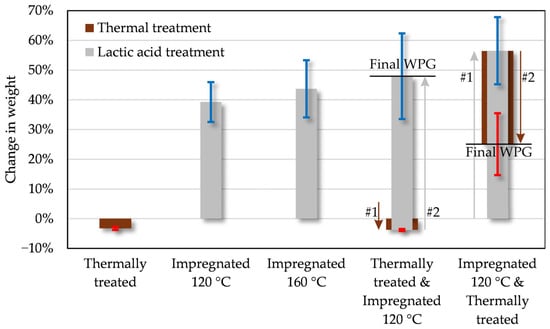
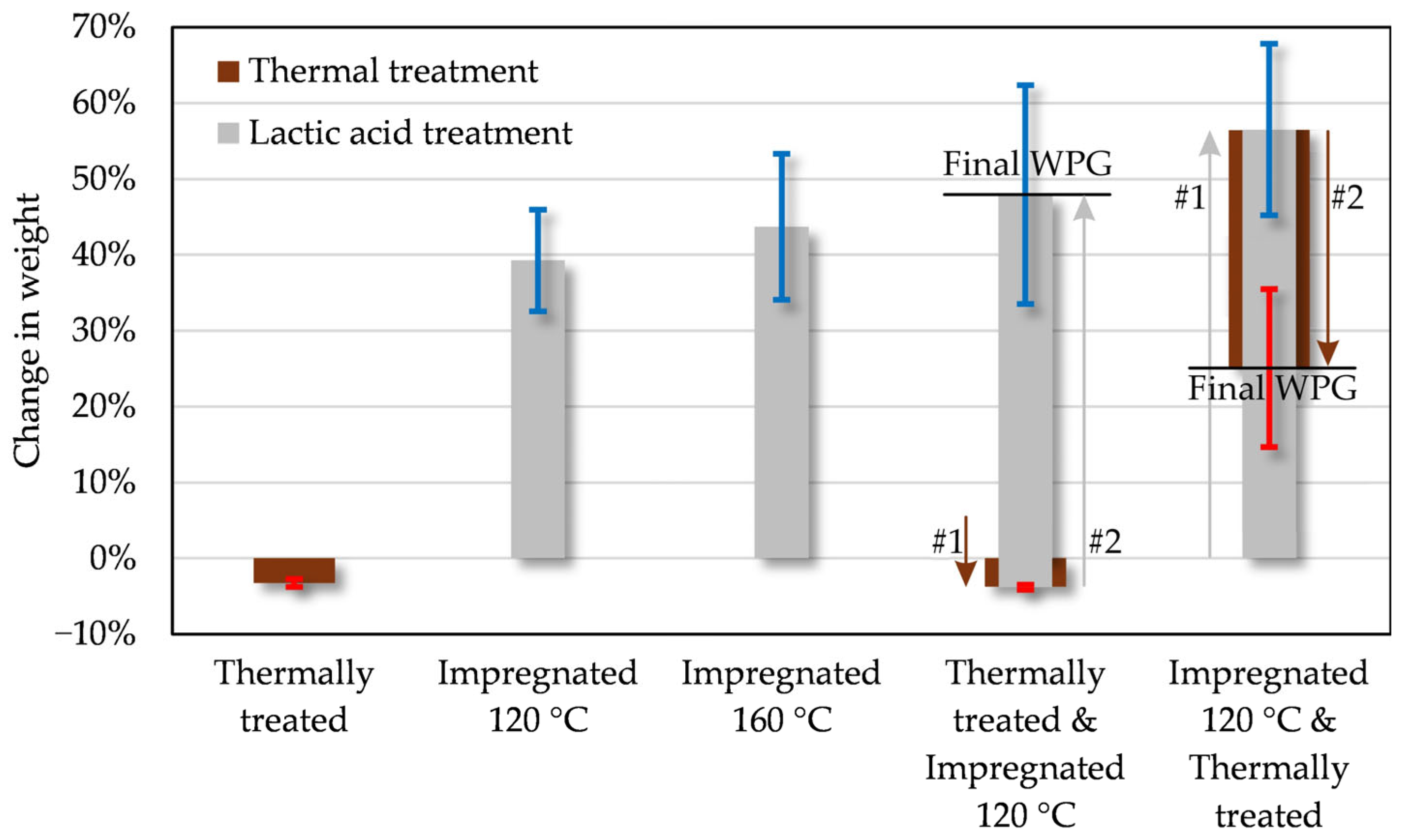
Changes in the weight of the specimens as a result of the treatments provide a simple and rapid indicator for the preliminary evaluation of the applied modification processes. Thermal modification generally results in mass loss owing to the degradation and transformation of wood constituents. In contrast, impregnation treatments are expected to increase specimen mass provided that the impregnating agent remains within the pores of the wood, as with lactic acid (LA) treatment. All weight changes were calculated using oven-dry masses (Figure 3).
Figure 3.
Changes in the oven-dry weight of beech wood specimens following the individual and combined modification treatments (WPG). Thermal modification was performed at 180 °C. Impregnation was carried out using oligomeric lactic acid, followed by polymerization at the temperatures indicated for each sample. Standard deviations are indicated by the red line for thermal treatment and by the blue line for impregnation. Arrows with numbers indicate the order and direction of the weight changes during combined modifications.
The thermal treatment was carried out at a temperature of 180 °C for 10 h. Thermal treatment at 180 °C typically produces a small-to-moderate mass loss, driven mainly by hemicellulose degradation, and the exact value depends strongly on treatment time, atmosphere, and wood species [35,36,37]. Accordingly, the thermal treatment resulted in a weight loss of 3.2–3.7% for the natural beech samples with coefficients of variation (CVs) of 10.4% and 16.0%, respectively.
Modification with oligomeric lactic acid (OLA) is a two-stage process consisting of bulk vacuum impregnation followed by in situ polymerization induced by thermal curing [9]. Since the objective of the present study was to evaluate the properties of the final modified material, specimen masses were recorded only after completion of the polymerization step rather than immediately after impregnation. The subsequent curing step induces in situ polymerization and results in significant weight loss during curing. This reduction in mass is attributed to three primary phenomena: the elimination of water during polycondensation, the evaporation of LA monomers and smaller LA oligomers, and a degree of wood polymer degradation facilitated by the acidic conditions [9]. The final WPG was 39.3% for LA/OLA impregnated and polymerized at 120 °C, 43.7% for LA/OLA impregnated and polymerized at 160 °C, and 56.5% for LA/OLA impregnated and polymerized at 120 °C (later followed by thermal treatment). The CVs were 17.1%, 22.0%, 20.0%, respectively (Figure 3). At the first stage, the LA/OLA primarily fills the cellular voids, as indicated by minimal volumetric swelling (less than 1%), suggesting that the oligomers do not yet penetrate the wood cell walls. It is estimated that approximately 80% of the vacuumed lumina of wood is filled by the LA/OLA during this phase [9,10]. As Grosse et al. [9] and Grosse et al. [13] concluded, anhydrous specimens (15 × 25 × 50 mm) show initial uptakes of approximately 58.7% to 59.6%. After polymerization, WPG typically ranged from 28.9% to 31.2% for anhydrous beech cured at 160 °C, and for wood with 12% initial moisture content (MC), the final retention was as high as 42.3%. Lower curing temperatures often result in higher final weight retention; curing at 140 °C caused values between 33.1% and 40.1%. The uptake of LA/OLA decreases with increasing specimen dimensions. In addition, oven-dry beech absorbs less LA/OLA than beech at approximately 12% MC [9,13]. These factors explain the comparatively lower average LA/OLA uptake of 47.0% obtained in the present study.
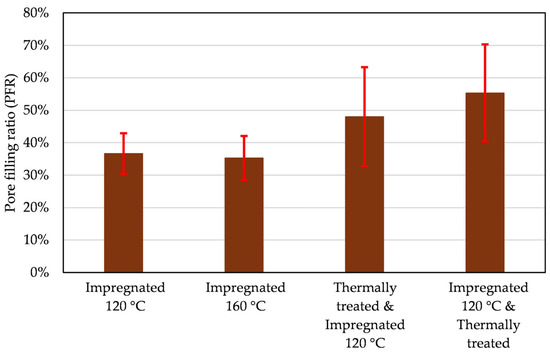
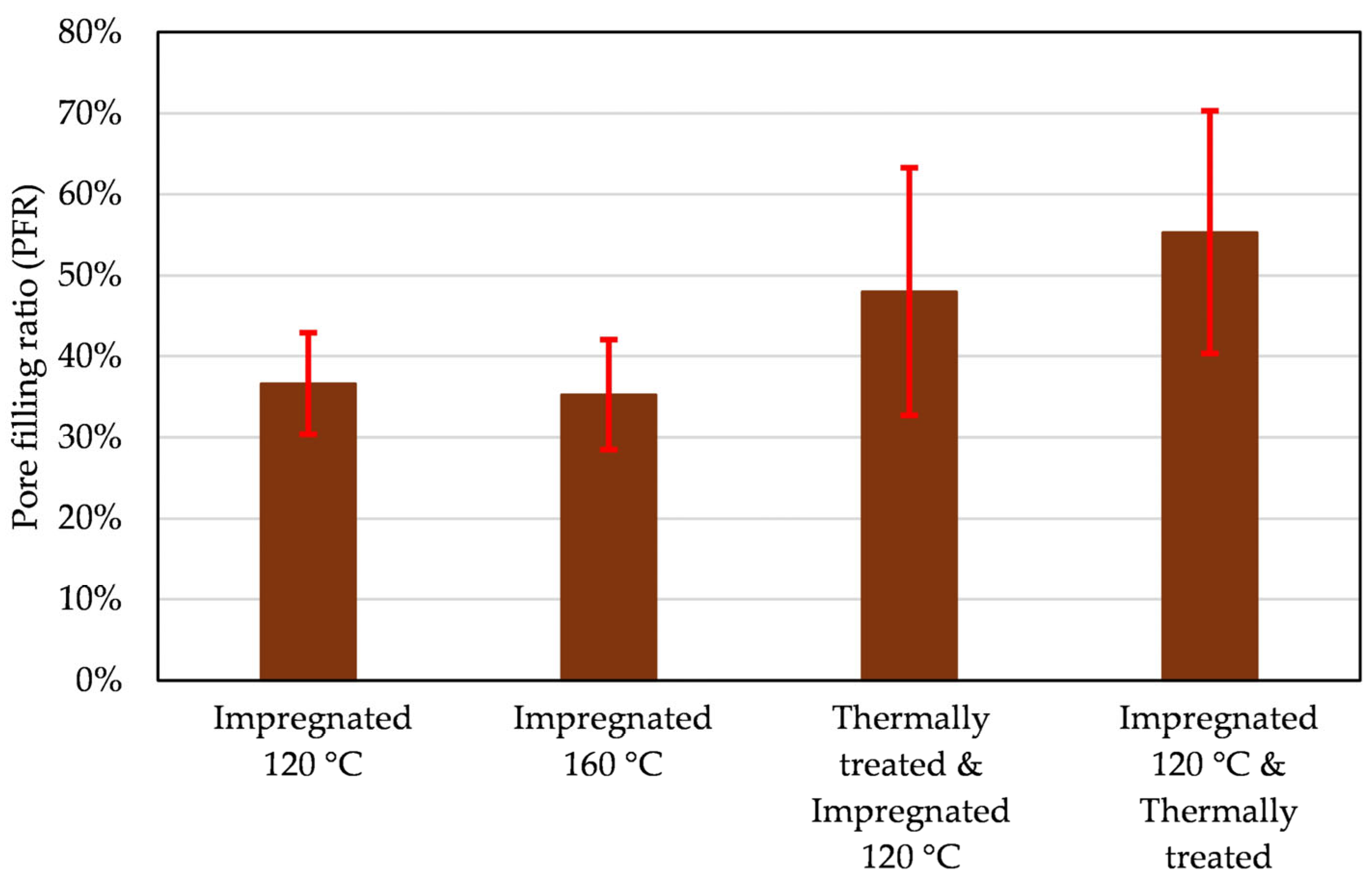
The pore filling ratio (PFR) provides valuable information regarding the volume occupied within the wood structure by the impregnating agent, in this case PLA, together with the residual OLA and LA. It also indicates the proportion of the wood volume that remained unfilled, thereby serving as an indicator of the effectiveness of the impregnation process. According to Wagenführ [38], the pore volume fraction of beech is 55%. The calculated PFR values were 36.6% for Impregnated 120, 35.3% for Impregnated 160, 48.0% for Thermally treated and Impregnated 120, and 55.3% for Impregnated 120 and Thermally treated samples, with corresponding CVs of 17.1%, 19.2%, 31.8%, and 27.1%, respectively. The two OLA impregnation treatments produced nearly identical PFR values, indicating that polymerization at the higher temperature did not result in a substantial volumetric change in the OLA/PLA system, in agreement with the findings of the weight change measurements. In contrast, considerably higher PFR values were obtained for the double-modified samples, among which Impregnated 120 °C and Thermally treated differed statistically significantly from Impregnated 160. This difference can partly be attributed to the natural variability in the uptake capacity of the wood, as the impregnation procedures themselves were identical. Although Impregnated 160 and Impregnated 120 and Thermally treated underwent the same impregnation process, substantial differences were observed in both PFR and WPG. The latter sample underwent a second polymerization step, which most likely promoted additional crosslinking and consequently increased the effective volume occupied by the introduced LA/OLA. It should be emphasized that the presented PFR values are theoretical estimates, and the accuracy of the calculations is influenced by several factors, as discussed in Section 2.2. But the substantial differences observed are meaningful and represent genuine trends, as shown in Figure 4.
Figure 4.
Pore filling ratio of beech wood specimens after impregnation with oligomeric lactic acid and polymerization at the temperatures indicated for each sample. Standard deviations are indicated by the red lines. Thermal modification was performed at 180 °C. Impregnation was carried out using oligomeric lactic acid, followed by polymerization at the temperatures indicated for each sample.
Regarding the combined modification treatments, as discussed in the Introduction, the sequence of the applied processes plays a crucial role because thermal modification alters both the chemical composition and permeability of wood. Thermal treatment may generate additional flow paths and enlarge existing pore spaces, thereby facilitating subsequent impregnation. Conversely, it reduces surface wettability and modifies the chemical environment of the cell wall, both of which influence impregnation efficiency [6,16,17,18]. The thermally modified specimens exhibited a mass loss of 3.7%, whereas the subsequent impregnation increased their mass by 53.6%, resulting in an overall weight gain of 48.0% compared with the untreated wood. In contrast, specimens impregnated with LA/OLA first exhibited a weight increase of 56.5% following in situ polymerization, after which the subsequent thermal treatment reduced this value by 16.1%, yielding a net mass increase of 31.4% compared with the untreated specimens. In this latter case, the mass loss caused by thermal treatment was approximately 4.3–5.0 times greater than that observed for thermal treatment alone. These findings suggest that the LA/OLA/PLA present within the wood underwent further polymerization during the exposure to 180 °C. Simultaneously, the acidic environment created by residual LA monomers and oligomers may have accelerated the thermal degradation of certain wood constituents, while additional water generated during continued polymerization evaporated at the elevated temperature. Consequently, in the specimens impregnated with LA/OLA followed by thermal treatment, the incorporated LA/OLA effectively underwent two effective polymerization stages.
Studies on other impregnation systems have demonstrated that impregnation efficiency in beech is strongly governed by wood anatomy, particularly vessel parameters and microstructure [19,20]. This helps explain why LA/OLA uptake was not always uniform as can be seen in Figure 1: the liquidous LA/OLA is not distributed equally across wood structure, and uptake depends on cell-wall accessibility, pore structure, treatment intensity, and curing process [16,19,20]. In beech, the interaction between thermal pre-treatment at about 180 °C and LA-based impregnation followed by curing at either 120 °C or 160 °C should therefore be understood as a balance between improved accessibility and heat-induced chemical constraint [4,9,10].
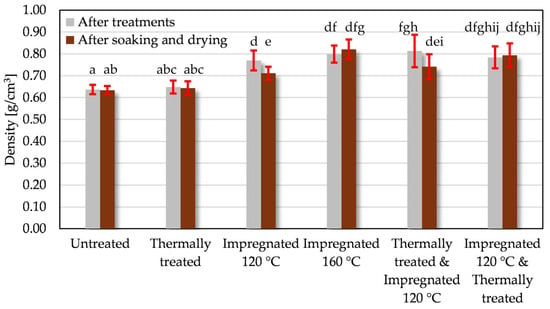
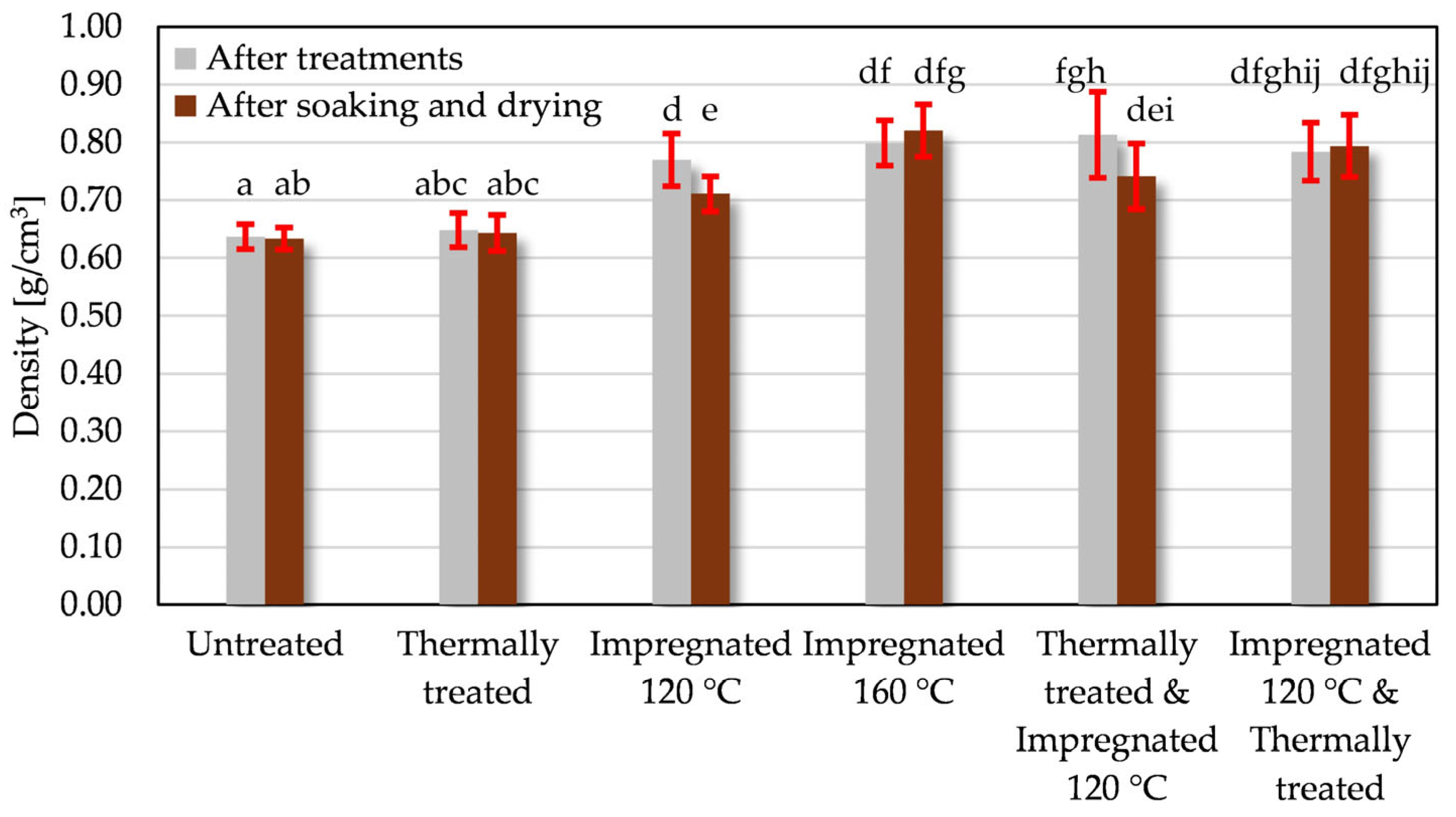
To ensure consistency, density in the oven-dry state was determined both immediately after the treatments (0.640 ± 0.019 kg/m3 for untreated) and after completion of the soaking–drying cycle during the swelling–shrinking tests (0.632 ± 0.023 kg/m3 for untreated). Compared with the average value in the literature (0.671 ± 0.0265 kg/m3; [39,40,41]), this is a similar value; the difference is likely due to the influence of site-specific conditions. Considerable differences were observed not only among the individual samples but also between the specimens cured at 120 °C (Impregnated 120 °C) and those subjected to thermal treatment followed by impregnation and curing at 120 °C (Thermally treated and Impregnated 120 °C) after the soaking (Figure 5). The highest CV in sample densities was only 9.1%, indicating both careful raw-material selection and excellent experimental reproducibility despite the extensive modifications of the wood.
Figure 5.
Oven-dry densities of the samples. Thermal modification was performed at 180 °C. Impregnation was carried out using oligomeric lactic acid, followed by polymerization at the temperatures indicated for each sample. Standard deviations are indicated by the red lines. The lowercase letters above the columns denote similarities according to the statistical analysis.
In agreement with the literature, the LA/OLA treatment results in a substantial density increase in the wood. As a result of soaking, part of the LA/OLA cured at 120 °C was leached from the wood, leading to a reduction in density, because OLA is the higher-density component of the wood–OLA composite. It can therefore be concluded that the higher-temperature treatments (160 and 180 °C) substantially enhanced the polymerization of LA/OLA and its fixation within the wood structure. Noёl et al. [10] and Grosse et al. [9] found that extended heating cycles can increase the density of beech wood to approximately 120% of its original anhydrous state. In the recent experiment, a smaller, but statistically significant increase, could be observed as the Latin letters denote in Figure 5.
Consistent with previous studies, LA/OLA treatment resulted in a pronounced increase in wood density. Following the soaking procedure, however, a portion of the impregnation agent cured at 120 °C was leached from the wood structure, leading to a 7.6–8.8% reduction in density and to statistically significant differences in density. These results indicate that curing at higher temperatures (160 °C and 180 °C) substantially improves both the polymerization and fixation of OLA within the wood. Grosse et al. [9] and Noёl et al. [10] reported that prolonged thermal curing can increase the oven-dry density of beech to approximately 120% of its original value. In the present study, the increase was smaller but remained statistically significant, as indicated by the Latin letters in Figure 5.
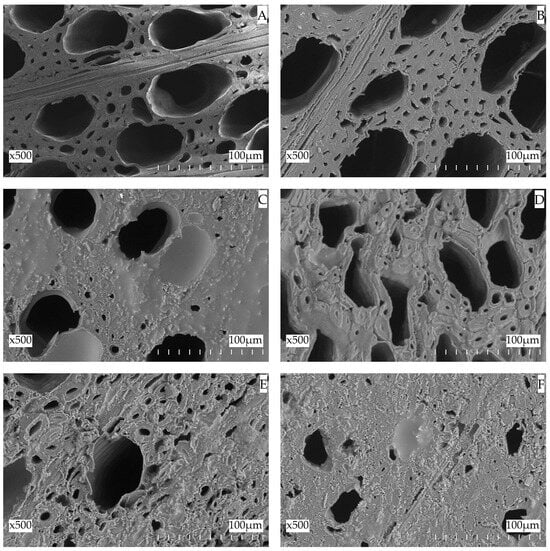
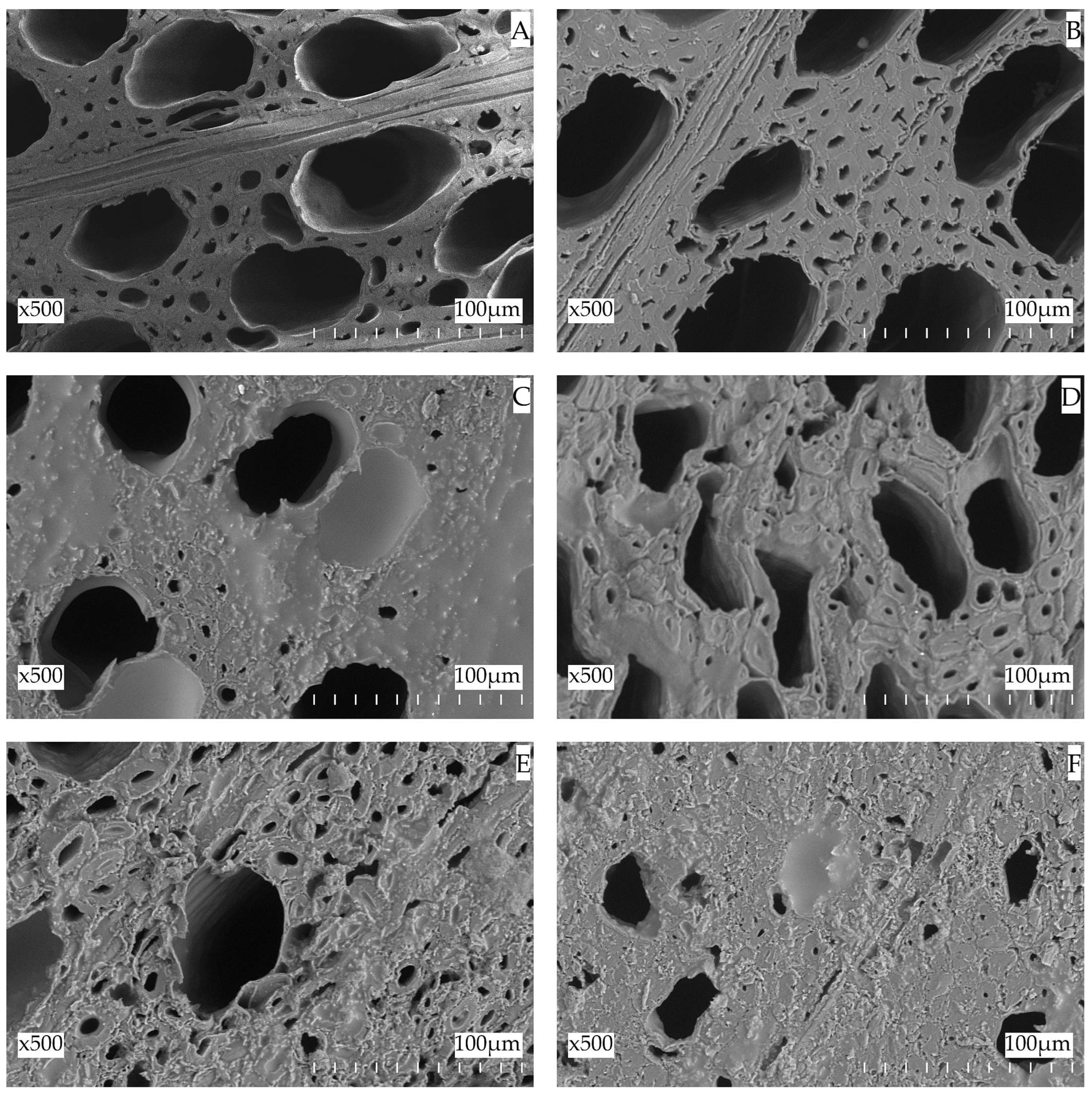
To investigate anatomical alterations and potential faults, SEM micrographs were obtained in both end-grain and tangential directions. The anatomical observations provided explanations for several of the physical and mechanical changes. These relationships are discussed in the corresponding sections of the study. The most universally applicable images were obtained from the end-grains. Figure 6 presents selected micrographs from all six samples. Each image represents a typical example of the respective treatment. The image of the untreated specimen (Figure 6A) shows a characteristic beech microstructure located at the annual ring boundary, containing both larger- and smaller-lumened vessels. The narrow and very wide rays typical of beech are clearly visible, and at higher magnification, the pits on the walls of the vessels can also be distinguished. Figure 6B presents the thermally treated specimen, where thanks to the higher magnification, the cross-sectioned pits can be observed directly on the vessel surfaces. In addition, microcracks resulting from thermal modification are evident.
Figure 6.
Scanning electron microscopy images of the end-grain of beech wood: (A) Untreated, (B) Thermally treated, (C) Impregnated 120 °C, (D) Impregnated 160 °C, (E) Thermally treated and Impregnated 120 °C, and (F) Impregnated 120 °C and Thermally treated. Thermal modification was performed at 180 °C, and impregnation was carried out using oligomeric lactic acid, followed by polymerization at the temperatures indicated for each sample. The magnifications and scales are shown in the images.
In the Impregnated 120 °C specimen (Figure 6C), a smooth coating formed from LA/OLA/PLA is visible on the lumen walls, covering the pits. Furthermore, within the impregnated cell lumina the LA/OLA/PLA exhibits a smooth and concave surface morphology due to surface tension effects, and LA/OLA/PLA also spread over the cut transverse surface. These observations indicate that a part of the impregnated material remained fluid, resembling freshly applied paint, suggesting that polymerization was only partially completed. In both the Impregnated 120 °C and Impregnated 160 °C specimens, vacuum conditions extracted part of the LA/OLA/PLA from the lumina (Figure 6D). Nevertheless, all impregnated samples were characterized by a distinct LA/OLA/PLA coating on the lumen walls (Figure 6E,F). In the Impregnated 160 °C, Thermally treated and Impregnated 120 °C, and Impregnated 120 °C and Thermally treated samples, acidic degradation of the cellular structure was so extensive that preparing high-quality (smooth) cut surfaces prior to SEM imaging was no longer possible (Figure 6D–F). This can be explained by degradation of the middle lamella caused either by the high-temperature acidic environment or by the combined action of thermal modification followed by an acidic treatment. As a result, the cells were able to move more independently relative to one another during sectioning, leading to poor surface quality shown on the micrographs. During vacuum treatment, the most pronounced outflow of LA/OLA/PLA from the cell lumina occurred in the Impregnated 120 °C specimen, whereas the Impregnated 120 °C and Thermally treated specimen exhibited the least outflow. These observations indicate that curing at higher temperatures resulted in a greater degree of LA/OLA/PLA polymerization.
3.2. Moisture Absorption Ability, Swelling–Shrinking, Shrinking Anisotropy, ASE
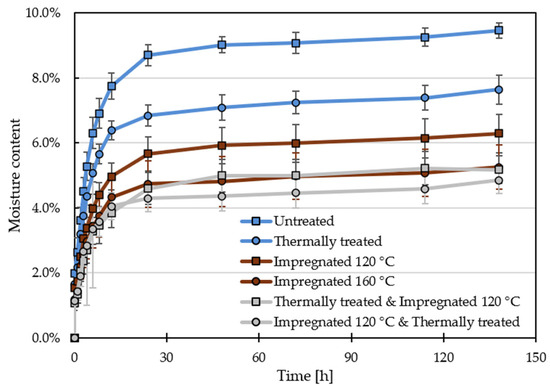
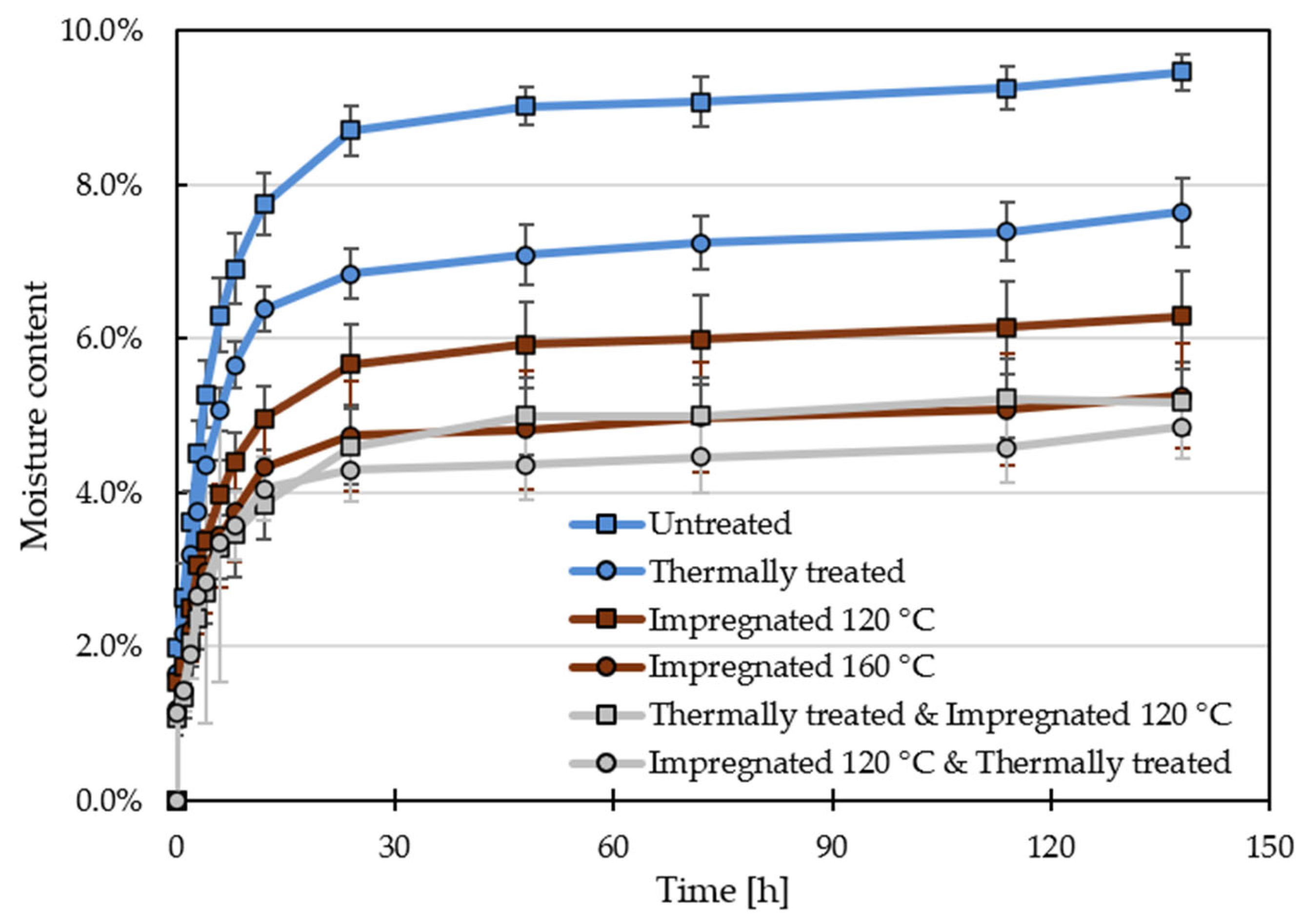
The moisture absorption ability provides two important insights into the performance of the modified wood. First, the rate of moisture uptake reflects the hygroscopic responsiveness of wood and, consequently, its dimensional stability in time. Wood that rapidly adjusts its MC to environmental fluctuations is generally less dimensionally stable and therefore less reliable in service. Conversely, slower moisture uptake indicates improved stability and reduced sensitivity to variations in ambient humidity. Second, the total amount of absorbed moisture allows the expected equilibrium moisture content (EMC) to be estimated. During the initial stage of the sorption experiment, specimens exhibiting higher EMC values produced considerably steeper sorption curves, indicating a substantially faster moisture uptake. These trends are clearly illustrated in Figure 7. Overall, all wood-modification treatments reduced the rate of moisture sorption of specimens and significantly lowered the MC during the first 138 h of exposure to 65% relative humidity and 20 °C.
Figure 7.
The moisture absorption ability of samples oven-dried and conditioned at 20 °C and 65% relative humidity. The treatments are as follows: thermal modification was performed at 180 °C and impregnation was carried out using oligomeric lactic acid, followed by polymerization at the temperatures indicated for each sample. Standard deviations are indicated by the whiskers.
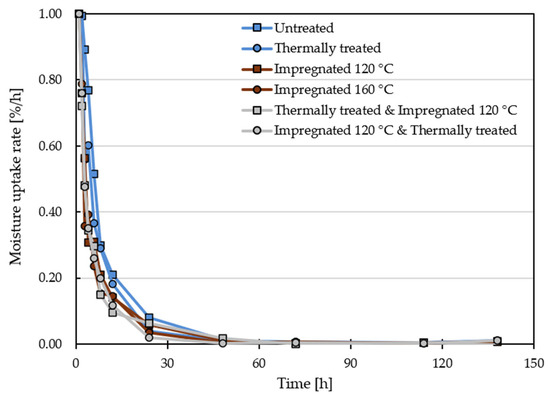
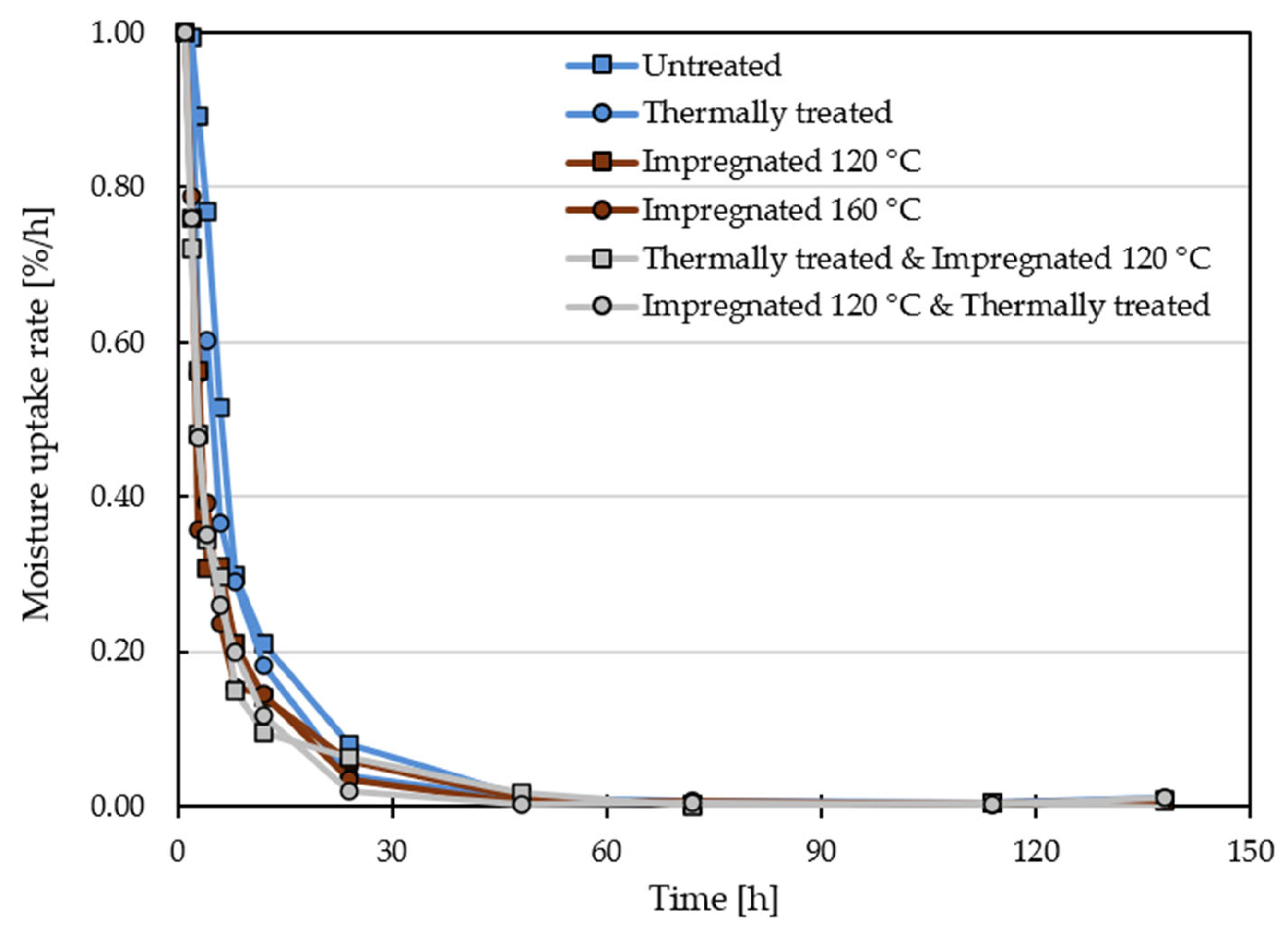
The LA-treated specimens exhibited on average a 39.8 ± 10.2% lower initial moisture uptake rate than the Untreated sample in the first 24 h of the experiment (Figure 8). Subsequently, the moisture uptake rate became very low and equalized between the different treatments. This is evidenced by the fact that the LA-treated samples reached a lower MC at all measurement times (Figure 7). However, the shape of the sorption curves is similar; only the initial phase is simply less steep for the LA-treated samples. Consequently, the LA-treated samples are able to absorb less water per unit time during the first 30 h. After that, the differences in slope decrease significantly and eventually disappear in Figure 7. As a result, at the end of the entire moisture absorption test, when constant weight is reached, significant differences are observed between the samples (Table 1). Although LA monomers and oligomers are inherently highly hydrophilic, their presence within the cell lumina hinders the penetration of water vapor into the deeper tissues of the wood. As exposure continued, however, the adverse effect of insufficiently polymerized LA/OLA became increasingly apparent, particularly in the Impregnated 120 °C sample and even more prominently in the Thermally treated and Impregnated 120 °C sample. These samples ultimately reached relatively high EMC values of 7.1% and 8.9%, respectively (Table 1). In the latter treatment, thermal modification partially hydrophobized the cell wall, reducing the availability of accessible hydroxyl groups and thereby limiting the bonding and fixation of LA/OLA. This phenomenon also explains the greater dimensional changes observed for this treatment during the swelling–shrinking experiments discussed in the following part of this section.
Figure 8.
The moisture uptake rate of samples oven-dried and conditioned at 20 °C and 65% relative humidity. The treatments are as follows: thermal modification was performed at 180 °C and impregnation was carried out using oligomeric lactic acid, followed by polymerization at the temperatures indicated for each sample.
Table 1.
Equilibrium moisture content (EMC) of samples conditioned at 20 °C and 65% relative humidity until constant mass. The two EMCs are measured after all treatments and after oven-drying. The marking of the treatments: thermal modification was performed at 180 °C and impregnation was carried out using oligomeric lactic acid, followed by polymerization at the temperatures indicated for each sample. Standard deviations are shown after the ± sign. The lowercase letters specified in superscript denote similarities according to the statistical analysis.
Considering both treatment efficiency and process complexity, polymerization of LA/OLA at 160 °C provided the most favorable moisture absorption performance. Comparable results were obtained for the Thermally treated and Impregnated 120 °C treatment, while the Impregnated 120 °C and Thermally treated sample yielded only slightly better performance despite the more complicated treatment. A comparison of the moisture absorption results with the EMC revealed consistent trends. The EMC values measured after re-drying and subsequent conditioning exhibited lower variability and therefore provide a more reliable basis for comparison (Table 1). Again, the Impregnated 160 °C and Impregnated 120 °C and Thermally treated samples showed the lowest EMC values, 5.8% and 5.6%, respectively. Higher EMC was observed for the other combined treatment, consistent with the Impregnated 120 °C sample (7.8%). Importantly, the EMC of every modified sample remained substantially lower than that of the untreated wood (10.8%).
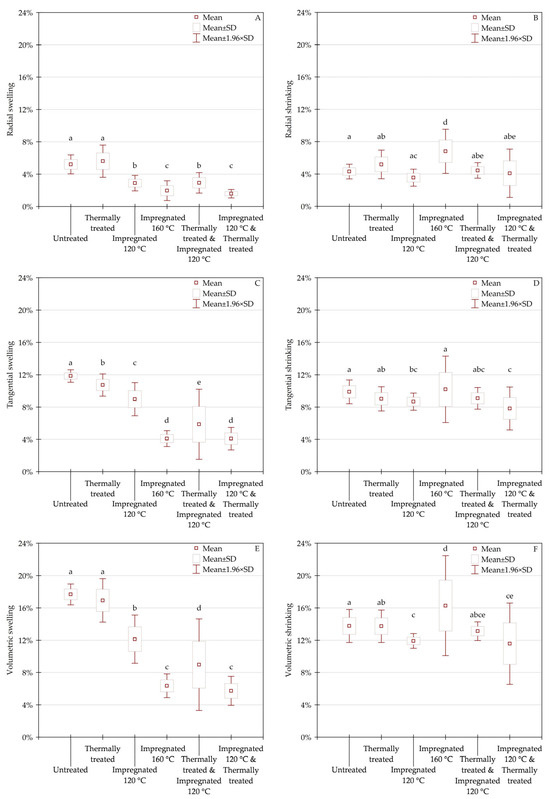
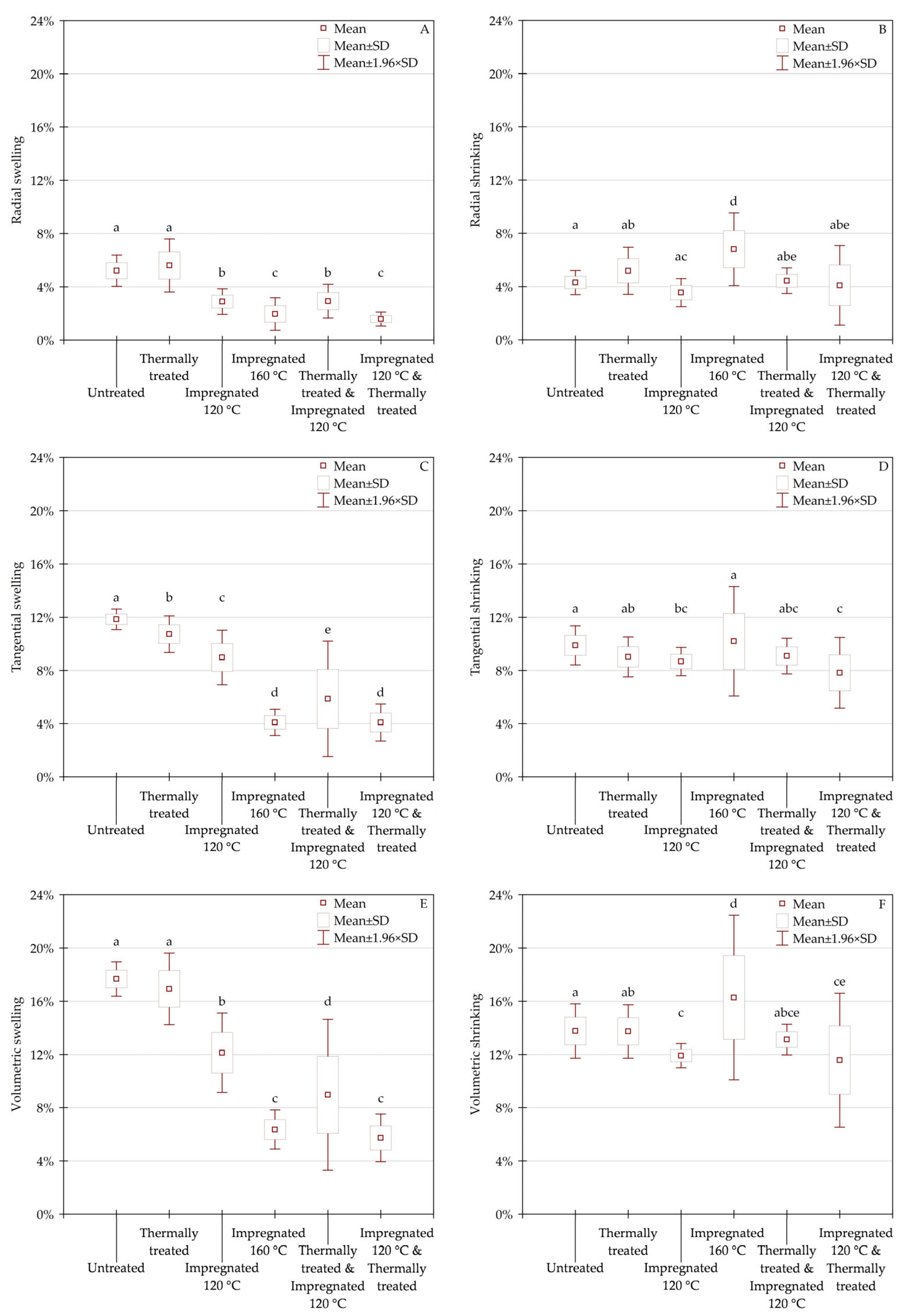
The swelling–shrinking results demonstrate that both thermal modification and LA-treatment substantially influenced the hygroscopic behavior of beech wood, although their effects differed depending on the treatment sequence (Figure 9). The untreated specimens exhibited the highest radial, tangential, and volumetric swelling (5.2%, 11.8%, and 17.7%, respectively), reflecting the inherently high hygroscopicity of diffuse-porous beech. In the literature, the average swellings in the different anatomical directions are 6.32 ± 0.61%, 12.70 ± 1.42%, and 19.07 ± 2.61%, respectively [39,41,42,43,44]. Thermal modification at 180 °C decreased swelling in all anatomical directions, whereas LA/OLA impregnation also provided a decrease, particularly after polymerization at 160 °C (Figure 9A,C,E). The most pronounced reduction was observed for the combined treatments, especially when impregnation preceded thermal modification, resulting in volumetric swelling values below 5.7 ± 0.9%, corresponding to a reduction of 67.6% compared with untreated wood. The improvement in dimensional stability primarily originates from chemical changes within the cell wall. Thermal modification decreases the concentration of accessible hydroxyl groups through the degradation of hemicelluloses and dehydration reactions, thereby reducing the affinity of wood polymers for bound water [3,45]. Simultaneously, condensation reactions occurring within lignin increase its hydrophobic character and stiffness, while the relative crystallinity of cellulose slightly increases because amorphous polysaccharides are preferentially degraded [45,46]. Consequently, fewer sorption sites remain available, leading to lower EMC and reduced dimensional changes during wetting.
Figure 9.
Box plot diagrams showing the results of (A) radial swelling, (B) radial shrinking, (C) tangential swelling, (D) tangential shrinking, (E) volumetric swelling, and (F) volumetric shrinking. The horizontal axis distinguishes the treatments: thermal modification was performed at 180 °C and impregnation was carried out using oligomeric lactic acid, followed by polymerization at the temperatures indicated for each sample. SD denotes standard deviation. The lowercase letters above the whiskers denote similarities according to the statistical analysis.
Impregnation with LA/OLA contributed through a different mechanism. Following polymerization, LA partially occupied cell lumina, pit apertures, and cell-wall micropores, thereby decreasing the free volume available for water penetration (Figure 6). The deposited polymer most likely reduced the accessibility of micropores within the cell wall while simultaneously restricting the swelling of cellulose microfibrils. Similar bulking effects have been reported for several cell-wall-modification technologies, where the introduced polymer permanently occupies swelling sites and limits reversible deformation of the cell wall [47,48]. Noël et al. [11] and Grosse et al. [9] determined that, during curing, the OLA diffuses from the lumens into the wood cell walls, which is evidenced by a bulking as a result of the treatment, reaching volumetric swelling up to 24.1% to 28.2% after treatment in their experiments. This suggests that the polymer is effectively retained within the lignocellulosic structure, likely through physical entanglement or hydrogen bonding rather than covalent grafting. In the present study, the lower swelling observed after polymerization at 160 °C compared with polymerization at 120 °C further suggests a higher degree of polymer conversion and fixation within the wood structure, reducing polymer leaching and improving dimensional stability.
Interestingly, the shrinking results do not mirror the swelling behavior. In the radial direction, the Impregnated 160 °C sample clearly differed from all other samples, exhibiting a shrinking value of 6.8%, whereas the remaining treatments showed similar average values of approximately 4.3%. In the tangential direction, most treatments closely resembled the untreated wood, although the Impregnated 120 °C and Thermally treated specimens showed a slightly lower shrinking value (7.8%). A similar trend was observed for volumetric shrinking, where the Impregnated 160 °C sample again showed the highest value of 16.3%, while the Impregnated 120 °C and Thermally treated sample exhibited a moderately lower volumetric shrinking (11.6%) than the Untreated sample. Interestingly, the Thermally treated sample showed identical shrinking to the untreated wood in all anatomical directions, consistent with the very low mass loss caused by the thermal modification. This apparent discrepancy can be explained by irreversible chemical and anatomical changes induced during thermal treatment. Thermal degradation increases cell-wall brittleness and reduces matrix flexibility because hemicellulose degradation weakens the amorphous polysaccharide network surrounding cellulose microfibrils. During drying, these stiffer cell walls undergo less recoverable deformation and may develop localized collapse, particularly in beech fibers and vessel-associated tissues, resulting in relatively large shrinking despite reduced moisture uptake [49,50]. The broader data distribution observed for thermally modified specimens also indicates greater anatomical heterogeneity, probably reflecting differences in local density, ray distribution, and vessel frequency as discussed previously.
The LA-treated samples exhibited an average weight gain of 40% after treatment, accompanied by a substantial increase in density despite the simultaneous increase in specimen volume (Figure 5). Swelling resulting from impregnation indicates that the LA/OLA/PLA successfully penetrated the wood microporous structure. Nevertheless, the Impregnated 120 °C sample lost a considerable amount of mass during the soaking cycle, suggesting that part of the impregnated material had not been adequately fixed through polymerization, also demonstrated by the SEM characterization. Consequently, the shrinking behavior became much closer to that of untreated wood than the swelling behavior (Figure 9B,D,F). Although the oven-dry density of the Impregnated 160 °C sample remained essentially unchanged after soaking and drying, its volumetric shrinking increased markedly by 156.0% compared with its swelling. This can be attributed to the pronounced swelling induced during high-temperature polymerization, after which these specimens absorbed only limited amounts of water during soaking, similarly to the Impregnated 120 °C and Thermally treated specimens. During soaking, however, non-polymerized LA incorporated within the micropores of the cell wall may have been leached out, creating additional void space and thereby promoting increased shrinking. This is evidenced by loss of density caused by the swelling–shrinking test (Figure 5). In contrast, polymerized LA located within the cell lumina remained largely intact, explaining why no measurable decrease in oven-dry density occurred for Impregnated 160 °C and Thermally treated and Impregnated 120 °C samples. These interpretations are further supported by the SEM observations presented earlier.
The sequence of modification proved equally important. Specimens impregnated before thermal treatment consistently exhibited lower swelling and shrinking than those thermally modified before impregnation. Thermal treatment prior to impregnation limits the penetration of LA/OLA. In contrast, impregnation of untreated wood allowed deeper polymer penetration before the subsequent thermal treatment that fixed the polymer within the cell wall. This sequence likely enhanced cell-wall bulking while simultaneously stabilizing the polymer network through additional thermal polymerization. Similar sequence-dependent behavior has been described for combined chemical and thermal wood-modification systems, where the interaction between cell-wall penetration and subsequent thermal fixation determines the final dimensional stability [51,52]. A specimen-by-specimen evaluation within each sample further indicated that lower LA/OLA uptake was generally associated with decreased swelling and shrinking, resulting in improved dimensional stability. In these cases, polymerization was probably more efficient because the smaller amount of LA/OLA allowed a more favorable molecular arrangement within both the cell lumina and the cell walls. Since water is generated as a by-product during polymerization, a lower amount of LA may also facilitate the removal of this water from the pore system of the wood, thereby improving the overall efficiency of the polymerization process.
Overall, the results demonstrate that dimensional stabilization was governed by complementary mechanisms. Thermal modification barely reduced hygroscopicity through irreversible chemical alteration of the cell wall, whereas LA/OLA impregnation likely introduced a physical bulking effect that restricted water accessibility and cell-wall deformation. Their combination produced the greatest improvements in radial, tangential, and volumetric stability before leaching, indicating an effective interaction between slightly reduced hydroxyl accessibility and permanent occupation of the cell-wall free volume.
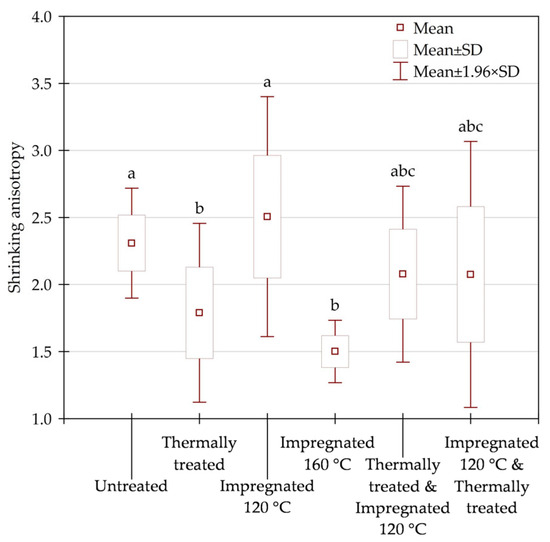
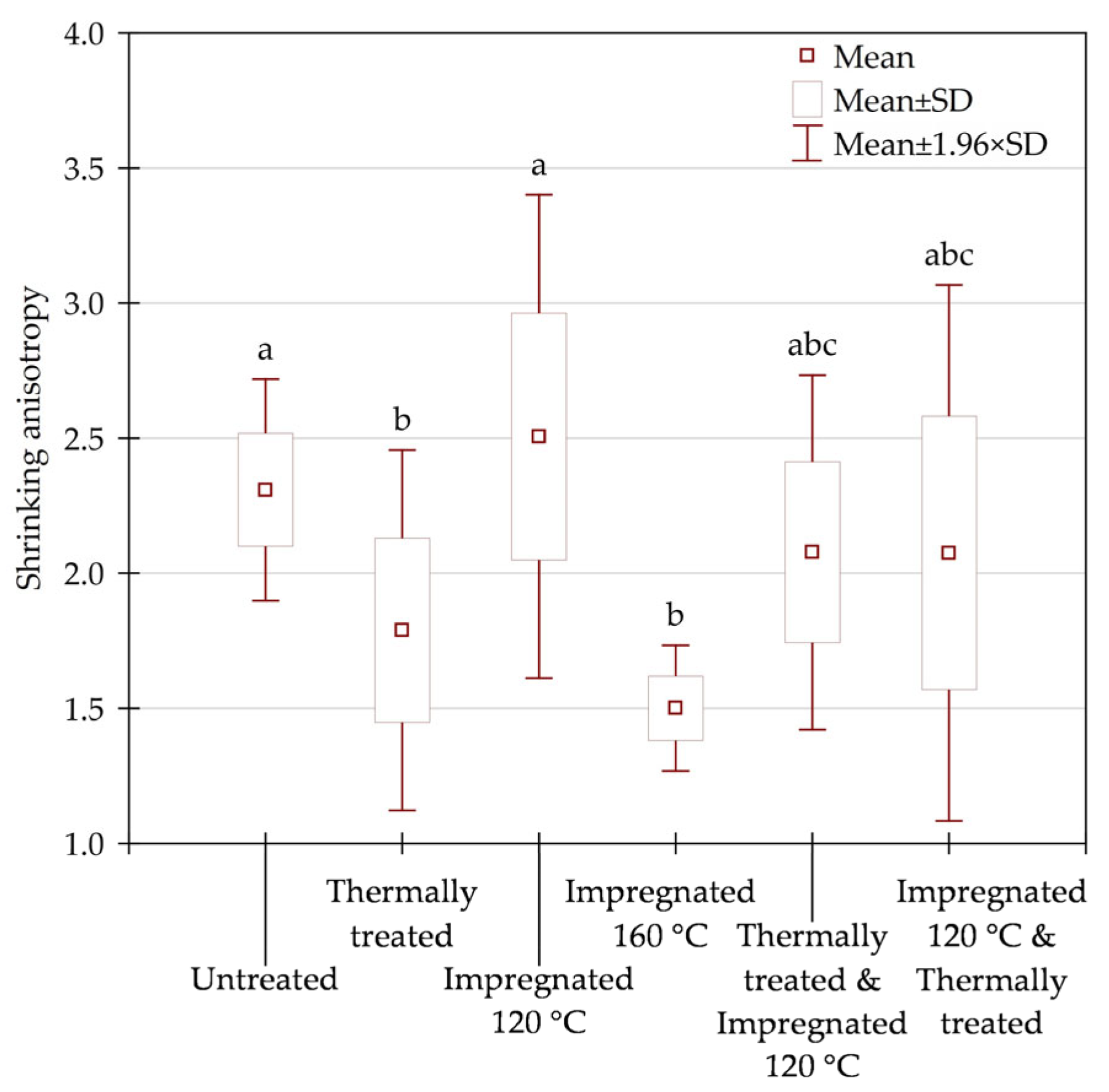
The shrinking anisotropy (T/R ratio) results indicate that both thermal modification and LA-treatment influenced the dimensional response of beech wood (Figure 10). Untreated specimens exhibited a T/R ratio of 2.31, which is characteristic of beech because radial rays mechanically restrain transverse deformation. In the literature, no value lower than 2 is reported for beech, meaning that its T/R ratio is significant [39,42]. Thermal modification alone slightly reduced the T/R ratio to 1.79, while the Impregnated 120 °C sample produced the highest value of 2.51, suggesting that radial stabilization was less pronounced than tangential stabilization as could be seen earlier. The Impregnated 160 °C sample achieved the best result with a T/R ratio of 1.50, indicating a more homogeneous dimensional response. The changes in this treatment are likely associated with the combined effects of hemicellulose degradation, reduced hydroxyl accessibility, and permanent cell-wall bulking by polymerized LA, which decreases differential shrinking between radial and tangential directions. Moreover, partial filling of vessels, rays, and cell-wall micropores may reduce moisture gradients and internal stresses during drying, thereby homogenizing transverse dimensional changes. Similar relationships between cell-wall modification, reduced hygroscopicity, and lower T/R ratio have been reported for thermally and chemically modified hardwoods [3,45,46,53]. In the Impregnated 160 °C sample, leaching increased the shrinking T/R ratio. In contrast, the combined treatments yielded an average T/R ratio of 2.08. This finding represents a drawback of the combined treatment. Although thermal modification alone improved the shrinking T/R ratio of the untreated wood, combining it with LA/OLA impregnation and polymerization at 120 °C effectively averaged the effects of the two individual treatments. As a result, the shrinking T/R ratio was statistically indistinguishable from that of the untreated specimens (Figure 10).
Figure 10.
Box plot diagram of shrinking anisotropy (T/R ratio). T/R ratio is dimensionless. The horizontal axis distinguishes the treatments: thermal modification was performed at 180 °C and impregnation was carried out using oligomeric lactic acid, followed by polymerization at the temperatures indicated for each sample. SD denotes standard deviation. The lowercase letters above the whiskers denote similarities according to the statistical analysis.
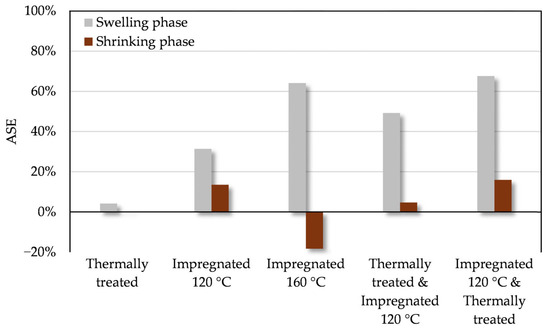
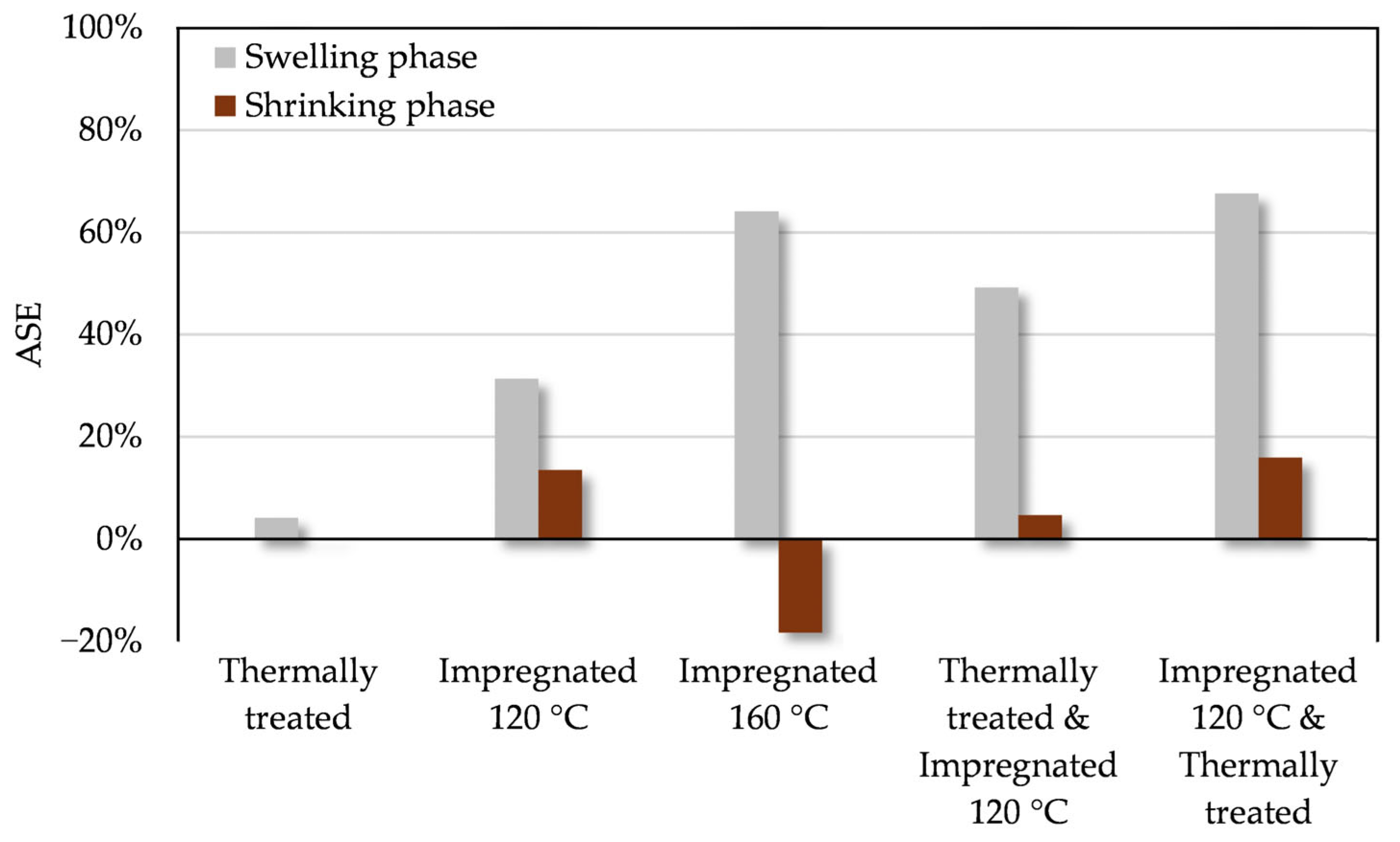
The specimens were in an oven-dry condition immediately after the treatments. Consequently, data for the anti-swelling efficiency (ASwE) were first determined, whereas the anti-shrinking efficiency (AShE) values were obtained after completion of the swelling– shrinking test. The effects observed in these two evaluations differed substantially, as reflected by the pronounced differences between the ASwE and AShE values (Figure 11).
Figure 11.
Diagram of the average anti-swelling efficiencies and anti-shrinking efficiencies (ASE). The horizontal axis distinguishes the treatments: thermal modification was performed at 180 °C and impregnation was carried out using oligomeric lactic acid, followed by polymerization at the temperatures indicated for each sample. No ASE could be seen during the shrinking phase of the Thermally treated sample, as it was only 0.2%.
The thermal modification yielded a relatively low average ASwE value of 4.2%. In contrast, all LA-based treatments produced substantially higher ASwEs. The primary consequence of LA/OLA impregnation followed by in situ polymerization is a considerable increase in wood volume due to cell-wall bulking [9]. As a result, the treated specimens exhibited only limited additional swelling during water immersion, leading to exceptionally improved ASwE values. ASwE was 31.4% for Impregnated 120 °C, 49.2% for Thermally treated and Impregnated 120 °C, and 67.6% for Impregnated 120 °C and Thermally treated sample. The Impregnated 160 °C sample also exhibited an outstanding ASwE value of 64.0%. These findings prove that the volumetric expansion induced by the LA-treatment largely restricted further swelling during water uptake. Following the soaking and subsequent drying, however, the AShE results differed markedly. The beneficial effect of thermal modification disappeared completely, whereas the AShE values of the LA-modified samples declined to only 4.7–15.9%. Extensive leaching occurred during soaking, which subsequently caused pronounced shrinking and dramatically reduced the corresponding AShE values. The most unexpected result was observed for the Impregnated 160 °C specimens, which exhibited a negative AShE value of −18.3%, indicating greater shrinking than that of the untreated sample. This finding appears contradictory because the oven-dry density remained unchanged after the soaking cycle, and the EMC after repeated oven-drying and conditioning remained low (5.8%), statistically identical to that of the Impregnated 120 °C and Thermally treated specimens. Nevertheless, the latter exhibited an AShE value that was 34.2 percentage points higher.
3.3. Fungal Durability
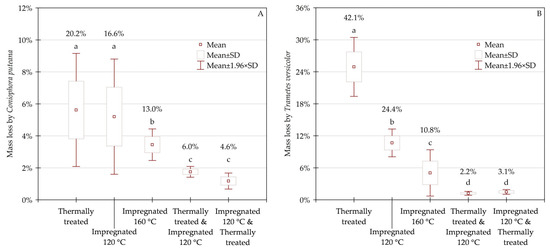
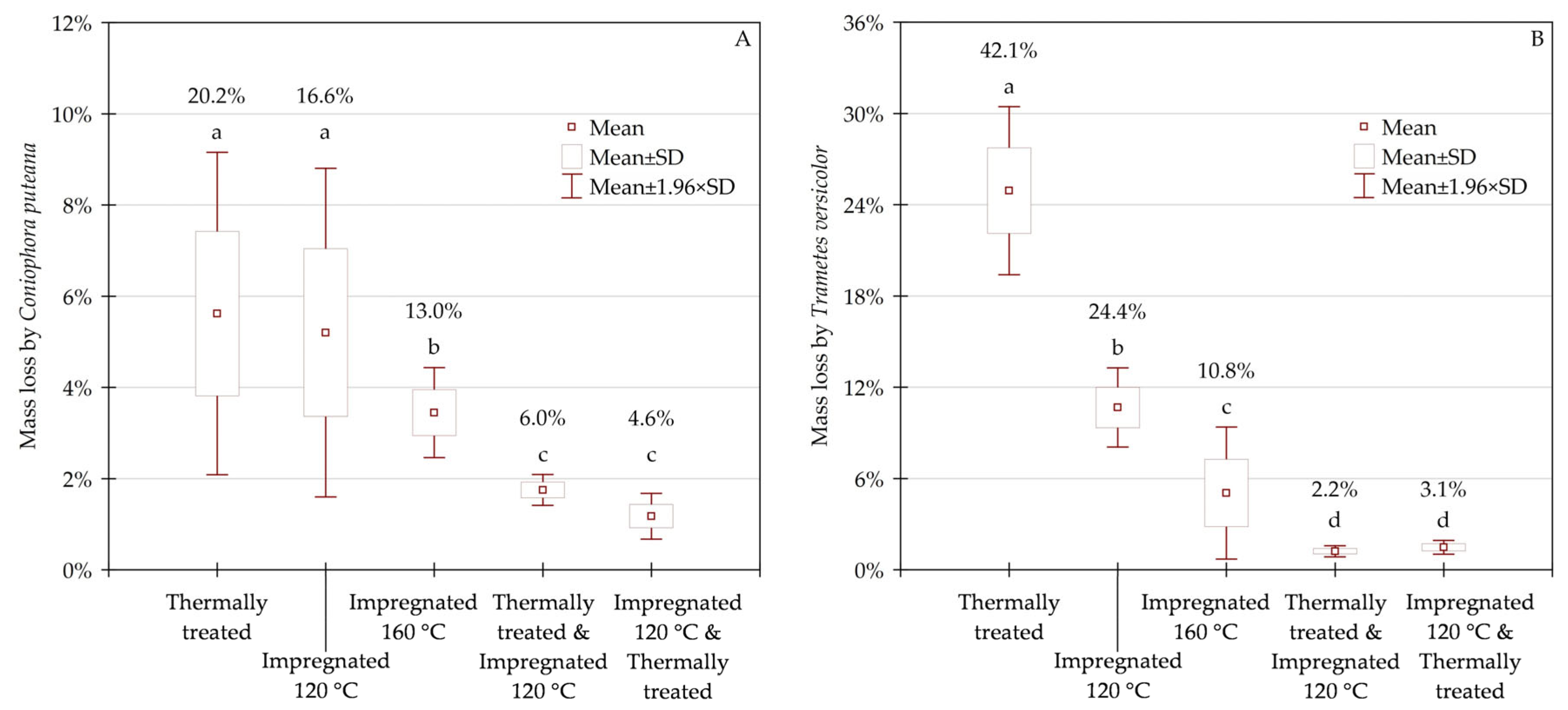
The fungal durability test demonstrated clear differences in the resistance of the modified beech wood against the two fungal species (Figure 12). For the brown-rot fungus Coniophora puteana, both Thermally modified and Impregnated 120 °C specimens exhibited the highest mass losses (5.6% and 5.2%) and did not differ statistically. Compared with the untreated specimens, these had a mass loss of 20.2 ± 5.0% and 16.6 ± 6.3%, respectively. Polymerization of LA/OLA at 160 °C reduced decay to 3.4%, whereas both combined treatments (Thermally treated and Impregnated 120 °C and Impregnated 120 °C and Thermally treated) showed the lowest mass losses of 1.8% and 1.2%, respectively, indicating a pronounced synergistic effect between thermal modification and LA-treatment. In the latter three samples, mass loss was only between 13.0% and 4.6% compared with the untreated sample, indicating a marked improvement. The enhanced durability can be attributed to the simultaneous reduction in EMC, degradation of hemicelluloses, and decreased hydroxyl accessibility caused by thermal modification, together with partial filling of cell lumina and micropores by polymerized LA. These changes reduce moisture availability and hinder the diffusion of low-molecular-weight oxidants that initiate brown-rot degradation. Similar mechanisms have been reported for thermally modified wood by Tjeerdsma et al. [46], Esteves and Pereira [3], and Zelinka et al. [54].
Figure 12.
Box plot diagrams showing mass losses of the differently treated samples caused by (A) brown-rot fungus Coniophora puteana, and (B) white-rot fungus Trametes versicolor. The horizontal axis distinguishes the treatments: thermal modification was performed at 180 °C and impregnation was carried out using oligomeric lactic acid, followed by polymerization at the temperatures indicated for each sample. SD denotes standard deviation. The lowercase letters above the whiskers denote similarities according to the statistical analysis. The percentages above the whiskers indicate weight loss compared with the untreated sample-pairs.
A different decay pattern was observed for the white-rot fungus Trametes versicolor. Thermal modification alone resulted in a mass loss of 24.9% (42.1% is the mass loss compared with untreated specimens), demonstrating that treatment at 180 °C was insufficient to effectively inhibit white-rot degradation. Unlike brown-rot fungi, T. versicolor produces extracellular oxidative enzymes, including laccases, manganese peroxidases, and lignin peroxidases, which degrade lignin in addition to hemicelluloses. Consequently, the chemical changes induced solely by thermal treatment provide only limited protection against this degradation mechanism. In contrast, impregnation substantially improved decay resistance, particularly after polymerization at 160 °C to 5.0%, while both combined treatments reduced mass loss to 1.2% and 1.5%. This is a fraction of the mass loss of untreated specimens, amounting to just 10.8–2.2%. These results suggest that the combination of thermal modification and LA-treatment altered both the chemistry and ultrastructure of the cell wall. Polymerized LA likely decreased cell-wall microporosity and partially blocked pits and lumen surfaces, thereby limiting enzyme penetration and substrate accessibility. Furthermore, the increased relative lignin content and cellulose crystallinity following thermal treatment may have further reduced enzymatic degradation, as well as the residual LA monomers and OLA through their acidity. Comparable improvements in fungal resistance following thermal modification have been reported for beech and other hardwoods exposed to brown-rot and white-rot fungi, confirming that increased biological durability is primarily associated with reduced hygroscopicity and restricted accessibility of cell-wall polymers rather than with direct fungicidal effects. Previous studies have demonstrated that reducing the microporosity of the cell wall and limiting moisture uptake are among the most important factors governing the biological durability of wood [45,52,53].
Unfortunately, many wood-modification technologies share a common limitation: improvements in biological durability are often accompanied by a significant deterioration in mechanical performance. The present study clearly illustrates the improvement in fungal durability and evaluates a broad range of material properties following several modification strategies. A thorough understanding of both the benefits and limitations of these treatments will facilitate the future development of optimized modification processes, thereby enabling new outdoor applications for beech, a species currently classified in durability class 5 (non-durable). Taken together, combined modification of beech wood with thermal treatment and LA-treatment is promising, but performance depends strongly on treatment order, curing temperature, and wood anatomy; this makes nonuniform uptake of LA/OLA a central issue rather than a minor processing defect.
4. Conclusions
This study evaluated the individual and combined effects of thermal modification (180 °C), lactic acid (LA) impregnation, and different treatment sequences on the physical properties, dimensional stability, and fungal durability of European beech (Fagus sylvatica L.) using density measurements, moisture sorption, swelling–shrinking analyses, SEM observations, and biological durability tests. LA impregnation after its oligomerization, followed by in situ polymerization by heat substantially increased specimen mass and pore filling, reaching weight gains of 39.3–56.5% and theoretical pore filling ratios up to 55.3%, while thermal treatment alone caused only 3.2–3.7% mass loss. Polymerization at elevated temperatures (160 °C and 180 °C) improved LA fixation, reducing density losses after leaching and producing more-complete polymerization, as confirmed by SEM. All modification methods decreased hygroscopicity, and the lowest equilibrium moisture contents after reconditioning were 5.6–5.8%, compared with 10.8% for untreated wood.
The sequence of modification proved decisive: impregnation before thermal treatment produced the best dimensional stability, reducing volumetric swelling by 67.6%, whereas thermal treatment before impregnation resulted in inferior performance because reduced wood permeability limited LA/OLA penetration. Although high-temperature polymerization improved moisture resistance, the 160 °C treatment also produced unexpectedly high volumetric shrinking after leaching, indicating that incomplete stabilization of the LA/OLA is a limitation. Overall, the results demonstrate that LA-treatment and thermal modification act through complementary mechanisms, combining cell-wall bulking with reduced hygroscopicity, and that optimization of treatment sequence and polymer fixation is essential for maximizing the long-term performance of modified beech wood.
Author Contributions
Conceptualization, M.B. (Mátyás Báder) and M.B. (Miklós Bak); Methodology, M.B. (Mátyás Báder) and M.B. (Miklós Bak); Validation, M.B. (Mátyás Báder) and M.B. (Miklós Bak); Formal Analysis, M.B. (Mátyás Báder); Investigation, T.B. and M.B. (Miklós Bak); Resources, M.B. (Mátyás Báder); Writing—Original Draft Preparation, M.B. (Mátyás Báder); Writing—Review and Editing, M.B. (Mátyás Báder) and M.B. (Miklós Bak); Visualization, M.B. (Mátyás Báder); Supervision, M.B. (Mátyás Báder) and M.B. (Miklós Bak); Project Administration, M.B. (Miklós Bak); Funding Acquisition, M.B. (Miklós Bak). All authors have read and agreed to the published version of the manuscript.
Funding
This paper was supported by the János Bolyai Research Scholarship of the Hungarian Academy of Sciences. Project identifier: BO/00872/23.
Data Availability Statement
Data are contained within the article.
Acknowledgments
Authors send a huge thank you to Imre Horváth for preparing the specimens.
Conflicts of Interest
The authors declare no conflicts of interest.
References
- Hakkou, M.; Pétrissans, M.; Gérardin, P.; Zoulalian, A. Investigations of the Reasons for Fungal Durability of Heat-Treated Beech Wood. Polym. Degrad. Stab. 2006, 91, 393–397. [Google Scholar] [CrossRef] [Scilit]
- Windeisen, E.; Strobel, C.; Wegener, G. Chemical Changes during the Production of Thermo-Treated Beech Wood. Wood Sci. Technol. 2007, 41, 523–536. [Google Scholar] [CrossRef] [Scilit]
- Esteves, B.; Pereira, H. Wood Modification by Heat Treatment: A Review. BioResources 2009, 4, 370–404. [Google Scholar] [CrossRef] [Scilit]
- Militz, H.; Altgen, M. Processes and Properties of Thermally Modified Wood Manufactured in Europe. In Deterioration and Protection of Sustainable Biomaterials; ACS Symposium Series; Schultz, T.P., Goodell, B., Nicholas, D.D., Eds.; American Chemical Society: Washington, DC, USA, 2014; Volume 1158, pp. 269–285. [Google Scholar]
- Németh, K. Degradation of Wood (A Faanyag Degradációja); Szaktudás Kiadó Ház Zrt.: Budapest, Hungary, 1998. [Google Scholar]
- Kúdela, J.; Lagaňa, R.; Andor, T.; Csiha, C. Variations in Beech Wood Surface Performance Associated with Prolonged Heat Treatment at 200 C. Acta Fac. Xylologiae Zvolen 2020, 62, 5–17. [Google Scholar]
- Oberle, A.; Výbohová, E.; Baar, J.; Paschová, Z.; Beránek, Š.; Drobyshev, I.; Čabalová, I.; Čermák, P. Chemical Changes in Thermally Modified, Acetylated and Melamine Formaldehyde Resin Impregnated Beech Wood. Holzforschung 2024, 78, 459–469. [Google Scholar] [CrossRef] [Scilit]
- Windeisen, E.; Bächle, H.; Zimmer, B.; Wegener, G. Relations between Chemical Changes and Mechanical Properties of Thermally Treated Wood 10th EWLP, Stockholm, Sweden, August 25–28, 2008. Holzforschung 2009, 63, 773–778. [Google Scholar] [CrossRef] [Scilit]
- Grosse, C.; Grigsby, W.J.; Noël, M.; Treu, A.; Thévenon, M.-F.; Gérardin, P. Optimizing Chemical Wood Modification with Oligomeric Lactic Acid by Screening of Processing Conditions. J. Wood Chem. Technol. 2019, 39, 385–398. [Google Scholar] [CrossRef] [Scilit]
- Noël, M.; Fredon, E.; Mougel, E.; Masson, D.; Masson, E.; Delmotte, L. Lactic Acid/Wood-Based Composite Material. Part 1: Synthesis and Characterization. Bioresour. Technol. 2009, 100, 4711–4716. [Google Scholar] [CrossRef] [Scilit]
- Noël, M.; Mougel, E.; Fredon, E.; Masson, D.; Masson, E. Lactic Acid/Wood-Based Composite Material. Part 2: Physical and Mechanical Performance. Bioresour. Technol. 2009, 100, 4717–4722. [Google Scholar] [CrossRef] [Scilit]
- Humar, M. Protection of the Bio-Based Material. In Performance of Bio-Based Building Materials; Elsevier: Amsterdam, The Netherlands, 2017; pp. 187–247. [Google Scholar]
- Grosse, C.; Noël, M.; Thévenon, M.-F.; Gérardin, P. Improvement of Modified Wood Properties with Addition of Chestnut Tannins in Lactic Acid-Based Treatments. J. Wood Chem. Technol. 2019, 39, 124–135. [Google Scholar] [CrossRef] [Scilit]
- Chabert, A.J.; Fredon, E.; Rémond, R. Improving the Stability of Beech Wood with Polyester Treatment Based on Malic Acid. Holzforschung 2022, 76, 268–275. [Google Scholar] [CrossRef] [Scilit]
- Chabert, A.J.; Fredon, E.; Florez, D.; Durand, A.; Rémond, R. Mechanical Properties of Beech Wood Treated with Malic Acid-Based Polyester. Holzforschung 2024, 78, 612–623. [Google Scholar] [CrossRef] [Scilit]
- Jiang, J.; Wang, C.; Ebrahimi, M.; Shen, X.; Mei, C. Eco-Friendly Preparation of High-Quality Mineralized Wood via Thermal Modification Induced Silica Sol Penetration. Ind. Crops Prod. 2022, 183, 115003. [Google Scholar] [CrossRef] [Scilit]
- Jiang, J.; Li, H.; Pang, J.; Mei, C. Heat Treatment Induces Chemical Changes and Silica Sol Penetration in Wood for Properties Improvement: Hydrophobicity, Thermal Stability, and Surface Hardness. J. Wood Chem. Technol. 2022, 42, 104–113. [Google Scholar] [CrossRef] [Scilit]
- Mastouri, A.; Azadfallah, M.; Gholamiyan, H.; Frigione, M. Heat-Treatment Effects on Wood Durability Outdoors and Performance of Polymeric Coatings—Adhesion and Wood-Water Interactions. J. Adhes. Sci. Technol. 2026, 40, 1022–1043. [Google Scholar] [CrossRef] [Scilit]
- Tondi, G.; Thevenon, M.F.; Mies, B.; Standfest, G.; Petutschnigg, A.; Wieland, S. Impregnation of Scots Pine and Beech with Tannin Solutions: Effect of Viscosity and Wood Anatomy in Wood Infiltration. Wood Sci. Technol. 2013, 47, 615–626. [Google Scholar] [CrossRef] [Scilit]
- Wascher, R.; Bittner, F.; Avramidis, G.; Bellmann, M.; Endres, H.-J.; Militz, H.; Viöl, W. Use of Computed Tomography to Determine Penetration Paths and the Distribution of Melamine Resin in Thermally-Modified Beech Veneers after Plasma Treatment. Compos. A Appl. Sci. Manuf. 2020, 132, 105821. [Google Scholar] [CrossRef] [Scilit]
- Reinprecht, L.; Repák, M. The Impact of Paraffin-Thermal Modification of Beech Wood on Its Biological, Physical and Mechanical Properties. Forests 2019, 10, 1102. [Google Scholar] [CrossRef] [Scilit]
- Hakkou, M.; Pétrissans, M.; Zoulalian, A.; Gérardin, P. Investigation of Wood Wettability Changes during Heat Treatment on the Basis of Chemical Analysis. Polym. Degrad. Stab. 2005, 89, 1–5. [Google Scholar] [CrossRef] [Scilit]
- Hughes, M. Plywood and Other Veneer-Based Products. In Wood Composites; Elsevier: Amsterdam, The Netherlands, 2015; pp. 69–89. [Google Scholar]
- Wu, G.; Shah, D.U.; Janeček, E.-R.; Burridge, H.C.; Reynolds, T.P.S.; Fleming, P.H.; Linden, P.F.; Ramage, M.H.; Scherman, O.A. Predicting the Pore-Filling Ratio in Lumen-Impregnated Wood. Wood Sci. Technol. 2017, 51, 1277–1290. [Google Scholar] [CrossRef] [Scilit]
- Thermo Fisher Scientific. Safety Data Sheet L(+)-Lactic Acid, 90% Solution in Water 2024. Available online: https://www.thermofisher.com/order/catalog/product/189870010 (accessed on 15 July 2026).
- Plötze, M.; Niemz, P. Porosity and Pore Size Distribution of Different Wood Types as Determined by Mercury Intrusion Porosimetry. Eur. J. Wood Prod. 2011, 69, 649–657. [Google Scholar] [CrossRef] [Scilit]
- ISO 13061-13; Physical and Mechanical Properties of Wood—Test Methods for Small Clear Wood Specimens—Part 13: Determination of Radial and Tangential Shrinkage. ISO: Geneva, Switzerland, 2016; p. 4.
- ISO 13061-14; Physical and Mechanical Properties of Wood—Test Methods for Small Clear Wood Specimens—Part 14: Determination of Volumetric Shrinkage. ISO: Geneva, Switzerland, 2016; p. 5.
- ISO 13061-15; Physical and Mechanical Properties of Wood—Test Methods for Small Clear Wood Specimens—Part 15: Determination of Radial and Tangential Swelling. ISO: Geneva, Switzerland, 2017; p. 3.
- ISO 13061-16; Physical and Mechanical Properties of Wood—Test Methods for Small Clear Wood Specimens—Part 16: Determination of Volumetric Swelling. ISO: Geneva, Switzerland, 2017; p. 4.
- Siuda, J.; Mazela, B.; Perdoch, W. Waterlogged Archaeological Wood Silanization with MTMOS. Drewno 2019, 62, 169–179. [Google Scholar] [CrossRef] [Scilit]
- Sadegh, A.; Kiaei, M.; Samariha, A. Experimental Characterization of Shrinkage and Density of Tamarix Aphylla Wood. Cellul. Chem. Technol. 2012, 46, 369–373. [Google Scholar]
- ISO 13061-02; Physical and Mechanical Properties of Wood—Test Methods for Small Clear Wood Specimens—Part 02: Determination of Density for Physical and Mechanical Tests. ISO: Geneva, Switzerland, 2014; p. 5.
- CEN/TS 15083-1; Durability of Wood and Wood-Based Products—Determination of the Natural Durability of Solid Wood against Wood-Destroying Fungi, Test Methods—Part 1: Basidiomycetes. European Committee for Standardisation: Brussels, Belgium, 2005.
- González-Peña, M.M.; Curling, S.F.; Hale, M.D.C. On the Effect of Heat on the Chemical Composition and Dimensions of Thermally-Modified Wood. Polym. Degrad. Stab. 2009, 94, 2184–2193. [Google Scholar] [CrossRef] [Scilit]
- Altgen, M.; Willems, W.; Militz, H. Wood Degradation Affected by Process Conditions during Thermal Modification of European Beech in a High-Pressure Reactor System. Eur. J. Wood Prod. 2016, 74, 653–662. [Google Scholar] [CrossRef] [Scilit]
- Chien, Y.-C.; Yang, T.-C.; Hung, K.-C.; Li, C.-C.; Xu, J.-W.; Wu, J.-H. Effects of Heat Treatment on the Chemical Compositions and Thermal Decomposition Kinetics of Japanese Cedar and Beech Wood. Polym. Degrad. Stab. 2018, 158, 220–227. [Google Scholar] [CrossRef] [Scilit]
- Wagenführ, R. Holzatlas (Atlas of Wood), 6th ed.; Carl Hanser Verlag GmbH & Co. KG: Leipzig, Germany, 2007. [Google Scholar]
- Molnár, S. Beech. In Industrial Wood Species of the World (Földünk Ipari Fái 2. Kiadás), 2nd ed.; Molnár, S., Farkas, P., Börcsök, Z., Zoltán, G., Eds.; Faipari Tudományos Egyesület: Sopron, Hungary, 2024; pp. 41–44. [Google Scholar]
- Miles, P.D.; Smith, W.B. Specific Gravity and Other Properties of Wood and Bark for 156 Tree Species Found in North America; U.S. Department of Agriculture, Forest Service, Northern Research Station: Newtown Square, PA, USA, 2009; p. NRS-RN-38. [Google Scholar]
- Meier, E. European Beech. Available online: http://www.wood-database.com/european-beech/ (accessed on 20 January 2018).
- Gryc, V.; Vavrčík, H.; Gomola, Š. Selected Properties of European Beech (Fagus sylvatica L.). J. For. Sci. 2008, 54, 418–425. [Google Scholar] [CrossRef] [Scilit]
- Percin, O.; Peker, H.; Atilgan, A. The Effect of Heat Treatment on the Some Physical and Mechanical Properties of Beech (Fagus orientalis Lipsky) Wood. Wood Res. 2016, 61, 443–456. [Google Scholar]
- Ghorbanian Far, M.; Najafian Ashrafi, M.; Shaabani Asrami, H.; Amiri Moghadam, Y.; Bari, E.; Niemz, P.; Hosseinpourpia, R.; Ribera, J. Physical and Mechanical Properties of Different Beech Wood Species Grown at Various Climate Conditions: A Review. Holzforschung 2024, 78, 377–386. [Google Scholar] [CrossRef] [Scilit]
- Hill, C. Wood Modification: Chemical, Thermal and Other Processes; Wiley Series in Renewable Resources; John Wiley & Sons: Chichester, UK; Hoboken, NJ, USA, 2006. [Google Scholar]
- Tjeerdsma, B.F.; Boonstra, M.; Pizzi, A.; Tekely, P.; Militz, H. Characterisation of Thermally Modified Wood: Molecular Reasons for Wood Performance Improvement. Holz Roh Werkst. 1998, 56, 149–153. [Google Scholar] [CrossRef] [Scilit]
- Donath, S.; Militz, H.; Mai, C. Wood Modification with Alkoxysilanes. Wood Sci. Technol. 2004, 38, 555–566. [Google Scholar] [CrossRef] [Scilit]
- Dieste, A.; Krause, A.; Bollmus, S.; Militz, H. Physical and Mechanical Properties of Plywood Produced with 1.3-Dimethylol-4.5-Dihydroxyethyleneurea (DMDHEU)-Modified Veneers of Betula sp. and Fagus sylvatica. Holz Roh Werkst. 2008, 66, 281–287. [Google Scholar] [CrossRef] [Scilit]
- Borrega, M.; Kärenlampi, P.P. Hygroscopicity of Heat-Treated Norway Spruce (Picea abies) Wood. Eur. J. Wood Wood Prod. 2010, 68, 233–235. [Google Scholar] [CrossRef] [Scilit]
- Zelinka, S.L.; Altgen, M.; Emmerich, L.; Guigo, N.; Keplinger, T.; Kymäläinen, M.; Thybring, E.E.; Thygesen, L.G. Review of Wood Modification and Wood Functionalization Technologies. Forests 2022, 13, 1004. [Google Scholar] [CrossRef] [Scilit]
- Lande, S.; Westin, M.; Schneider, M. Development of Modified Wood Products Based on Furan Chemistry. Mol. Cryst. Liq. Cryst. 2008, 484, 1/[367]–12/[378]. [Google Scholar] [CrossRef] [Scilit]
- Candelier, K.; Thevenon, M.-F.; Petrissans, A.; Dumarcay, S.; Gerardin, P.; Petrissans, M. Control of Wood Thermal Treatment and Its Effects on Decay Resistance: A Review. Ann. For. Sci. 2016, 73, 571–583. [Google Scholar] [CrossRef] [Scilit]
- Thybring, E.E. The Decay Resistance of Modified Wood Influenced by Moisture Exclusion and Swelling Reduction. Int. Biodeterior. Biodegrad. 2013, 82, 87–95. [Google Scholar] [CrossRef] [Scilit]
- Zelinka, S.L.; Ringman, R.; Pilgård, A.; Thybring, E.E.; Jakes, J.E.; Richter, K. The Role of Chemical Transport in the Brown-Rot Decay Resistance of Modified Wood. Int. Wood Prod. J. 2016, 7, 66–70. [Google Scholar] [CrossRef] [Scilit]

Disclaimer/Publisher’s Note: The statements, opinions and data contained in all publications are solely those of the individual author(s) and contributor(s) and not of MDPI and/or the editor(s). MDPI and/or the editor(s) disclaim responsibility for any injury to people or property resulting from any ideas, methods, instructions or products referred to in the content. |
© 2026 by the authors. Licensee MDPI, Basel, Switzerland. This article is an open access article distributed under the terms and conditions of the Creative Commons Attribution (CC BY) license.