1. Introduction
Geoparks are unified territories that promote the sustainable development of destinations. They protect and use their geological heritage in a sustainable way while promoting the economic well-being of local communities. These internationally recognized territories are distinguished not only by their outstanding geological heritage but also by their integrated management approach, which combines geoconservation, environmental education, biodiversity conservation, and sustainable regional development [
1]. Moreover, one of the core missions of UNESCO Global Geoparks is to promote an integrated understanding of Earth’s heritage by linking geological features with biodiversity, cultural values, ecosystem services, and sustainable development.
The most influential publication in the field highlights the importance of assessing geodiversity as a fundamental basis for effective geoconservation, sustainable site management, and the conservation of interconnected ecosystems, including forest landscapes. In particular, the proposed evaluation methods and inventory criteria provide practical guidelines for improving geodiversity inventories and supporting evidence-based decision-making for the integrated management of geological heritage, biodiversity, and forest ecosystems within geoparks [
2]. Geotourism, defined as the integration of geological heritage and tourism, focuses on geological features and processes while encouraging visitors to understand and appreciate geosites. It is widely recognized as a core component of UNESCO Global Geoparks and complements ecotourism by promoting geoconservation, biodiversity conservation, and the sustainable use of natural landscapes, including forest ecosystems [
3,
4,
5].
Thus, the geopark is approached as an integrative territory rather than merely as a repository of geological heritage. This perspective is based on an essential premise, often underestimated in the literature, namely that a geopark cannot be reduced to its geological heritage alone. According to the UNESCO conceptual framework, a geopark is a territory that “is not only geological heritage, but also habitats for biological species and interconnected ecosystems, a cultural and historical heritage”, while also constituting “a favorable environment for the development of ecotourism” [
6]. This integrative definition is essential because it establishes that forest ecosystems—as fundamental components of territorial biodiversity—are intrinsic constituents of geoparks rather than merely accessory elements.
Most UNESCO Global Geoparks encompass extensive forest areas, either as buffer zones or as protected habitats within their territorial boundaries. In this context, forests fulfill multiple functions, including biodiversity conservation, slope stabilization and geomorphosite protection, the provision of ecosystem services (such as regulation of the hydrological regime and retention of carbon), and, last but not least, the maintenance of landscapes and trail networks that support tourism and recreational activities.
Ecotourism has become one of the most influential concepts within sustainable tourism, evolving from a niche form of nature-based travel into a comprehensive framework that integrates environmental conservation, community well-being, education, and responsible visitor behavior [
7,
8]. The concept was first introduced by Ceballos-Lascuráin, who defined ecotourism as environmentally responsible travel to relatively undisturbed natural areas for the purpose of appreciating nature and associated cultural features while promoting conservation and generating socio-economic benefits for local communities [
9]. This definition was subsequently refined through the contributions of The International Ecotourism Society (TIES), which emphasizes responsible travel that conserves the environment, sustains the well-being of local people, and incorporates interpretation and environmental education [
10]. More recently, scholars have argued that ecotourism should be distinguished from the broader concept of nature-based tourism because genuine ecotourism requires measurable conservation outcomes, environmental stewardship, and long-term sustainability rather than merely the recreational use of natural environments [
8,
11,
12,
13]. Furthermore, UNESCO Global Geoparks contribute to the conservation of geological heritage, biodiversity, and forest ecosystems while fostering geotourism-based development. Their integrated management approach promotes the sustainable use of ecosystem services, creates employment opportunities, strengthens local economies, and enhances the resilience and sustainable development of rural communities [
1,
14,
15].
Beyond its tourism dimension, ecotourism is increasingly recognized as an effective mechanism for biodiversity conservation, ecosystem protection, and sustainable regional development [
12]. Properly managed ecotourism can generate financial resources for protected-area management, support habitat restoration, strengthen environmental awareness, and create alternative livelihood opportunities for local communities [
12,
16]. These functions are particularly relevant in protected landscapes where ecological integrity and socio-economic development must be balanced simultaneously [
17]. Consequently, ecotourism has become closely associated with ecosystem services, community participation, adaptive governance, and climate resilience, reinforcing its role as an important instrument for achieving sustainable development objectives [
11,
13]. In geoparks, where geological heritage coexists with biodiversity, cultural resources, and often extensive forest ecosystems, ecotourism provides an integrated framework that supports geoconservation, biodiversity conservation, and the sustainable management of ecosystem services through low-impact, education-oriented visitor experiences [
14].
Recent research has further expanded the conceptual scope of ecotourism by emphasizing regenerative tourism approaches, ecosystem stewardship, stakeholder collaboration, and evidence-based governance [
11,
18]. Rather than focusing exclusively on minimizing environmental impacts, contemporary ecotourism increasingly seeks to generate measurable ecological and social benefits through biodiversity conservation, restoration initiatives, environmental education, and active participation of local communities [
12,
17]. These developments are particularly relevant for UNESCO Global Geoparks, whose management extends beyond geoheritage conservation to encompass biodiversity protection, the conservation and sustainable management of forests and other natural ecosystems, ecosystem services, and community resilience [
17]. Consequently, ecotourism has emerged as a strategic component of integrated geopark management, complementing geotourism while strengthening the contribution of geoparks to sustainable development and global conservation agendas [
19,
20]. Comparative analyses of geopark strategies across different regions further demonstrate the role of geoparks as instruments for sustainable regional development, heritage management [
21,
22], biodiversity conservation, forest ecosystems, and ecosystem services.
The most relevant articles in the literature primarily address themes related to geodiversity, geoconservation, and geotourism, highlighting the necessity of protecting geological heritage and its significance for education, conservation, and tourism [
2,
23,
24]. Many studies emphasize the assessment and inventory of geosites as essential tools for effective geoconservation and management practices [
25,
26,
27]. In addition, the literature explores the role of geoparks as mechanisms for sustainable economic development in rural and peripheral regions, particularly through job creation, local product promotion, and tourism diversification [
14,
15,
28]. Geotourism is widely recognized as an emerging form of sustainable tourism that combines the exploration of geological landscapes with education and recreation, thereby contributing to sustainable development objectives [
3,
4,
28]. Moreover, several studies highlight the importance of community engagement, participatory governance, and innovative interpretation strategies for effective geopark management [
1,
15,
28], including interpretation strategies that enhance visitor engagement and promote meaningful learning experiences [
29,
30]. Collectively, these themes position geoparks within broader frameworks of sustainable development, environmental education, and geoheritage conservation [
31,
32,
33].
Geotourism combines geology and tourism by focusing on geological features and processes while encouraging visitors to understand and appreciate geosites. It is recognized as a fundamental component of UNESCO Global Geoparks and complements ecotourism by promoting geoheritage conservation, environmental education, and sustainable tourism development [
3]. Moreover, geoparks contribute to the conservation of natural and geological heritage, including forest ecosystems, while fostering geotourism, creating employment opportunities, and supporting local economic development, particularly in rural areas [
14]. Geotourism has been increasingly recognized as extending beyond its geological dimension to encompass a broader range of niche tourism forms, including cultural tourism and ecotourism [
34]. Geotourism is a form of tourism that, like ecotourism, incorporates the principles of sustainable tourism within a broader conceptual framework. By promoting local tourism and strengthening community participation in heritage management, geoparks contribute to the resilience and long-term sustainability of rural and peripheral regions. In this context, ecotourism reinforces the multifunctional role of geoparks by integrating ecosystem conservation, including the protection and sustainable management of forest ecosystems, sustainable land-use practices, and socio-economic development within a coherent territorial framework.
Many European geoparks are designated under extensive nature protection frameworks, requiring the integrated management of forest and other ecosystems alongside geodiversity conservation [
35]. A substantial proportion of their territories overlap with protected-area networks, such as Natura 2000 sites, national parks, and biosphere reserves, where conservation objectives extend beyond geological heritage to encompass forest ecosystems, habitats, biodiversity, and species conservation. In such contexts, tourism development cannot be confined to geotourism alone but requires a broader ecotourism perspective that integrates geological, biological, and ecological values, including the conservation and sustainable management of forest ecosystems.
This is particularly relevant in forest-dominated geoparks (e.g., the Hațegului UNESCO Global Geopark, where forests cover approximately 38% of the territory [
36]), where land cover, conservation regulations, and Natura 2000 management requirements constrain tourism development and necessitate integrated landscape governance. In this context, ecotourism provides a more appropriate framework for balancing visitor use with conservation objectives by promoting low-impact, education-oriented experiences while supporting both geoconservation and biodiversity protection. Consequently, emphasizing ecotourism represents not only a management imperative but also a conceptual advancement for geoparks embedded within multi-layered conservation frameworks that integrate geoheritage conservation with the protection of forest ecosystems, biodiversity, and other natural assets.
From the perspective of the United Nations Sustainable Development Goals (SDGs), the sustainability of geoparks can be further strengthened through tourism development because of its contribution to multiple sustainable development objectives [
37,
38,
39]. Within the framework of UNESCO Global Geoparks (UGGps), the most relevant SDGs include No. 3 (Good Health and Well-being), No. 4 (Quality Education), No. 5 (Gender Equality), No. 8 (Decent Work and Economic Growth), No. 11 (Sustainable Cities and Communities), No. 13 (Climate Action), No. 14 (Life Below Water), No. 15 (Life on Land), and No. 17 (Partnerships for the Goals) [
40]. Moreover, SDG No. 14 (Life Below Water) is also relevant to ecotourism, particularly in marine and coastal geoparks, where tourism activities can contribute to the conservation and sustainable use of marine ecosystems [
41]. SDG No. 15 (Life on Land) is particularly relevant, as many UNESCO Global Geoparks encompass protected forest ecosystems and contribute to biodiversity conservation, ecosystem restoration, and the sustainable management of natural resources [
42,
43]. Long-term sustainability further depends on investments in technology, education, innovation, and inclusive governance mechanisms that support resilient local economies while promoting the sustainable management of forest ecosystems and other natural resources [
44].
In Colombia, the implementation of the SDGs within geopark territories can be further supported through sustainable tourism development and the diversification of local economic activities, thereby contributing to poverty reduction and inclusive regional development. Capacity-building initiatives in scientific and technical fields can enhance educational quality, empower women through improved access to decent work, stimulate infrastructure development, and reduce socio-economic disparities in rural areas [
37].
More specifically, ecotourism, as a form of sustainable tourism, is closely aligned with SDGs 8, 11, 12, 13, 14, 15, and 17 by promoting sustainable livelihoods, responsible resource use, biodiversity conservation, and the sustainable management of forests and other natural ecosystems. By promoting decent employment, responsible production and consumption, environmental conservation, climate action, biodiversity conservation, and the sustainable management of forest ecosystems, while fostering multi-stakeholder partnerships, ecotourism positions geoparks as effective instruments for advancing sustainable development at both local and regional scales. Collectively, these elements underscore the central role of ecotourism in geoparks as a tangible pathway towards achieving the SDGs through place-based sustainable tourism practices. In this context, ecotourism functions not merely as an economic activity, but as a strategic mechanism for operationalizing the SDGs through place-based governance frameworks [
44].
While the academic literature on sustainable tourism in geoparks has predominantly focused on geotourism, reflecting the geological emphasis that has historically been central to the geopark concept, ecotourism constitutes a fundamental yet comparatively under-researched dimension of these territories. This systemic importance derives directly from UNESCO’s conceptual framework, which defines geoparks as integrated territories encompassing not only geological heritage but also interconnected ecosystems, biodiversity habitats, and cultural landscapes. Rather than representing an externally superimposed concept, ecotourism constitutes an inherently coherent form of sustainable tourism that complements geotourism by highlighting the biological and ecological assets of geoparks. Consequently, a systematic synthesis of this research domain is essential to identify its dominant themes, methodological approaches, critical knowledge gaps, and emerging research directions. To address this need, the present study provides a comprehensive bibliometric analysis of the scientific literature at the intersection of ecotourism and geoparks, offering evidence-based insights to support strategic management and sustainable territorial development.
Thus, the present study combines a systematic literature review with bibliometric analysis, enabling both a rigorous selection of the relevant literature and a comprehensive assessment of the research field. This integrated approach provides a broader and more robust understanding of the evolution of research on geoparks as drivers of sustainable ecotourism.
Therefore, this study employs bibliometric analysis, drawing on established bibliometric laws and conceptual structure analysis, to address the following research questions:
Q1: How extensive is the ecotourism-related scientific research on the geoparks theme?
Q2: How is the scientific performance of the written studies distributed across countries, over time, and among authors?
Q3: What are the core publication sources and the most influential papers in ecotourism research on geoparks?
Q4: What is the intellectual structure of the scientific literature in the field?
Q5: What are the strategic themes and research gaps in ecotourism research on geoparks?
Accordingly, this study aims to synthesize the global research landscape on geoparks and sustainable ecotourism through a systematic literature review and bibliometric analysis, addressing the identified gap in the literature [
45].
2. Materials and Methods
This study presents a systematic literature review combined with a bibliometric analysis and a science-mapping review of the scientific literature on ecotourism within geoparks. The methodology is based on a bibliometric analysis conducted using R (version 4.3.3) [
46], including its application for non-coders, and was guided by the PRISMA Statement (Preferred Reporting Items for Systematic Reviews and Meta-Analyses) [
47]. PRISMA 2020 provides a clear and rigorous framework for reporting the stages of a systematic review and is widely recognized for its effectiveness in structuring the processes of searching, selecting, analyzing, and synthesizing academic literature. In the present study, PRISMA 2020 was applied to ensure methodological transparency, consistency, and the quality of the literature selection process. PRISMA 2020 includes an expanded 27-item checklist and a revised flow diagram, enabling researchers to transparently document the procedures undertaken and the criteria applied. The application of PRISMA 2020 enhances the reliability of the conclusions drawn and is increasingly adopted in both bibliometric analyses and systematic literature reviews.
Although systematic literature reviews and bibliometric analyses are frequently conducted independently, combining these approaches enables a more comprehensive understanding of a research field. A PRISMA-guided systematic literature review ensures a transparent, rigorous, and reproducible process for identifying and selecting relevant studies, thereby minimizing selection bias. In contrast, bibliometric analysis provides quantitative insights into the intellectual structure of the field by examining publication performance, collaboration networks, citation patterns, thematic evolution, and methodological approaches. When combined, these approaches complement one another: the systematic review establishes a robust and reliable evidence base, while bibliometric techniques reveal the scientific landscape and its evolution. Finally, conceptual and thematic analyses facilitate the interpretation of bibliometric results by synthesizing key research themes and methodological approaches, identifying emerging topics, and highlighting existing knowledge gaps. This integrated methodological framework enables a more holistic assessment of research on geoparks and sustainable ecotourism.
However, the present study is designed as a bibliometric, science-mapping review and should not be construed as a full qualitative systematic review of empirical findings.
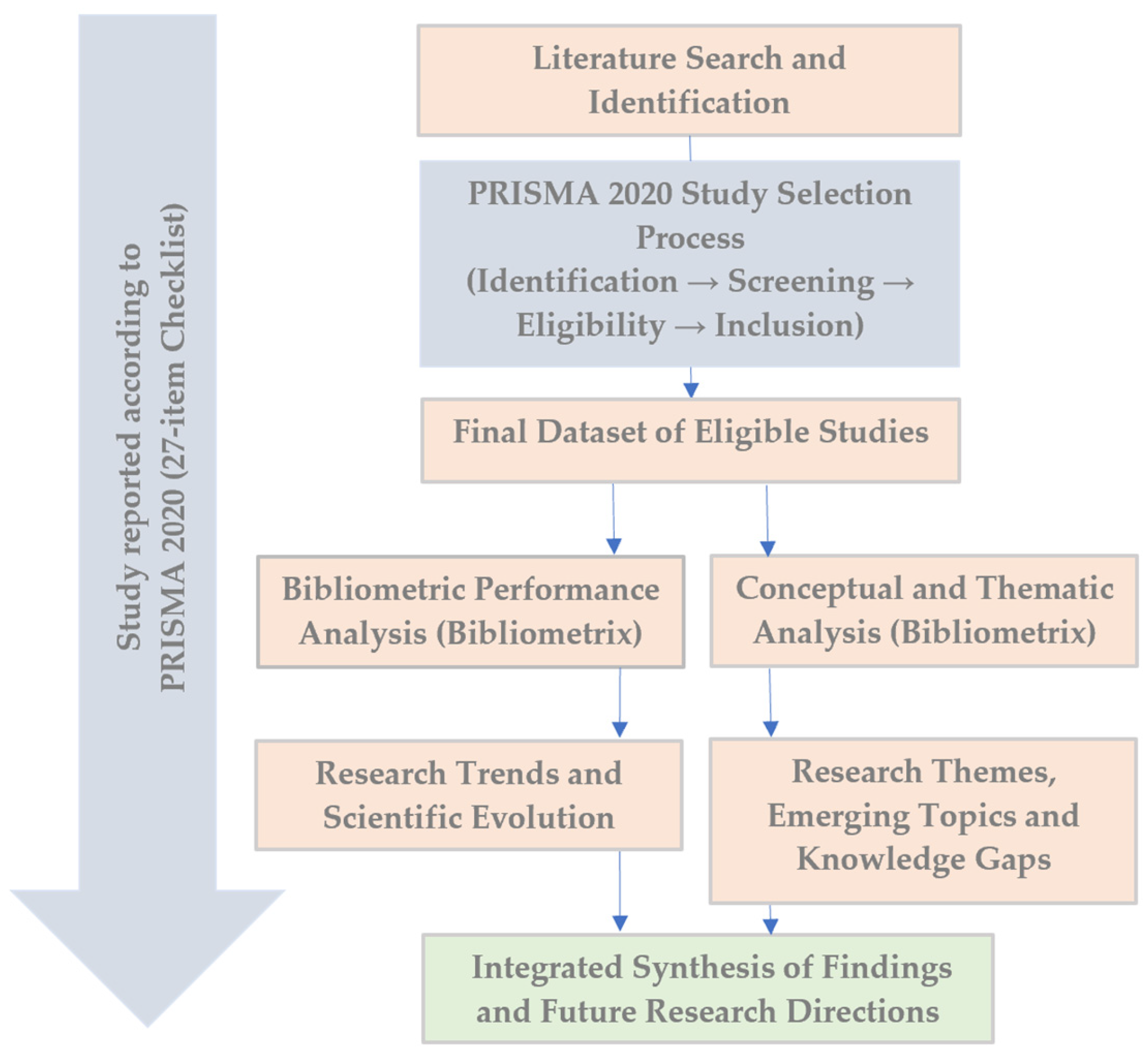
The conceptual framework of the study is presented in
Figure 1.
Figure 1 shows the conceptual framework of the study, illustrating the relationship among the PRISMA 2020 study selection process, bibliometric performance analysis, and conceptual structure and thematic analysis performed using Bibliometrix. The integrated approach combines systematic evidence identification and selection with quantitative knowledge mapping and thematic analysis to provide a comprehensive synthesis of the research field. The study was conducted and reported in accordance with the PRISMA 2020 reporting guideline (27-item checklist) [
47]. The completed PRISMA 2020 checklist is available in
Supplementary Material S1. Given the bibliometric nature of the study, some PRISMA 2020 checklist items were not applicable and are indicated accordingly in the checklist.
The bibliometric analysis was performed using the R software environment [
48] and its Bibliometrix (version 4.2.1) package [
49] for data analysis, synthesis, and visualization. The bibliometric analysis was conducted using RStudio Desktop (version 2026.01.1+403, “Apple Blossom”) and the Bibliometrix package in R. In addition, Microsoft Excel 365 and its advanced functions were used for data organization and pre-processing, while ArcGIS Pro (version 3.6.0) was employed to produce the spatial visualizations presented in the study. During the preparation of this manuscript/study, the author(s) used OpenAI ChatGPT (GPT-5.5) for multilingual text translation and scientific writing refinement.
2.1. Data Sources and Eligibility Criteria
In terms of data collection, we adopted a multidisciplinary approach that integrates insights from various fields to deliver comprehensive knowledge for experts collaborating across disciplines to address complex challenges. Accordingly, the literature search was conducted across seven multidisciplinary bibliographic databases: Web of Science (WoS), Scopus, Dimensions, Nature Journals, SpringerLink, Taylor & Francis, and CABI. The selected databases were chosen because they provide broad disciplinary coverage and are widely recognized as reliable sources of high-quality scientific literature. Initially, ten scientific databases were considered; however, three of them did not provide any data relevant to the scope of this study (PubMed, Wiley Journals, IEEE Xplore). The final selection of databases and publisher platforms was based on their relevance, credibility, scientific impact, multidisciplinary coverage, and availability of bibliographic data. Collectively, they provide comprehensive coverage of the scientific literature and are widely recognized as reliable sources for bibliometric research. The databases were selected based on the following criteria: (i) relevance (Does the source align with the research topic?); (ii) credibility (Is the source peer-reviewed and reputable?); (iii) scientific impact (Does the source have a high citation count or influence?); (iv) multidisciplinary coverage (Does it cover multiple related fields?); (v) recency (Is the information up-to-date?); (vi) diversity (Does it include different perspectives and global research?); and (vii) data availability (Does it provide access to datasets?) [
50]. Consequently, each database provides distinct advantages to the bibliometric analysis, collectively supporting a comprehensive and multidisciplinary research framework.
Web of Science (WoS) is widely recognized as one of the most reliable [
51] and selective [
52] independent databases in the world. The Web of Science Core Collection comprises several citation indexes, including the Science Citation Index Expanded (SCIE), the Social Sciences Citation Index (SSCI), the Arts & Humanities Citation Index (AHCI), and the Emerging Sources Citation Index (ESCI), among others. These citation indexes provide complementary temporal coverage, including the Science Citation Index Expanded (SCIE, 1970–present), the Social Sciences Citation Index (SSCI, 1956–present), the Arts & Humanities Citation Index (AHCI, 1975–present), the Conference Proceedings Citation Index—Science (CPCI–S, 2009–present), the Conference Proceedings Citation Index—Social Science & Humanities (CPCI-SSH, 2009–present), and the Emerging Sources Citation Index (ESCI, 2005–2025) [
53,
54]. Web of Science and Scopus are broadly acknowledged for their wide coverage of high-impact journals and strict indexing standards, which makes them fundamental resources for bibliometric research [
55]. In particular, Scopus was selected because of its extensive multidisciplinary coverage, comprehensive citation indexing, and rich bibliographic metadata, which facilitate robust and large-scale bibliometric analyses. Dimensions stands out for its extensive scope, offering a more comprehensive and dynamic dataset that combines citation data with information on grants, patents, and policy documents, thereby delivering insights beyond conventional citation indexes [
56]. At the same time, Dimensions includes numerous emerging and regional journals and a substantial volume of publications [
57]. In addition, Nature Journals, SpringerLink, Taylor & Francis, and CABI are leading academic publishing platforms that provide access to high-quality, peer-reviewed scholarly literature across a wide range of scientific disciplines. Nature Portfolio is widely regarded as one of the most prestigious scientific publishing outlets, particularly for its flagship journal Nature, which publishes high-impact research across a broad range of scientific disciplines [
58]. These platforms were included to enhance the comprehensiveness of the literature search by capturing relevant studies that might not be fully represented in the primary bibliographic databases due to differences in subject coverage, publisher-specific coverage, indexing practices, and metadata availability. The integration of these databases resulted in a robust and multidisciplinary dataset, encompassing both the core literature on geoparks and the broader scientific context relevant to the study. This strategy enhances the breadth and comprehensiveness of the literature retrieval process, supporting a more complete bibliographic dataset for bibliometric analysis.
Furthermore, the inclusion of multiple sources reduces the risk of omitting relevant studies due to differences in indexing policies, journal coverage, metadata completeness, and update frequency. Although integrating records from multiple databases required a more extensive data cleaning and deduplication process, this approach enhanced the completeness, transparency, and reliability of the final bibliographic dataset.
Although each database contains unique records that are not indexed by the others, substantial overlap exists among these platforms, making duplicate detection and removal an essential step in the data preparation process [
59,
60,
61,
62]. Together, these platforms enable comprehensive retrieval, analysis, and dissemination of scientific information. After identifying the data sources, the next step was to define the eligibility criteria (C
1–C
7). A comprehensive search strategy was adopted to maximize the retrieval of relevant studies by considering all document types, search fields (title, abstract, and keywords), publication years, accessibility categories, predefined keyword expressions, and all languages. This approach minimized the risk of excluding relevant publications because of journal visibility or language and reduced potential selection and language bias. The eligibility criteria C
1–C
7 are presented in
Table 1.
2.2. Search Strategy and Data Retrieval
Given the importance of the search strategy in systematic literature reviews, a structured and methodical approach was adopted to ensure a comprehensive and transparent retrieval of the relevant literature, minimize selection bias, and identify the most relevant and high-quality sources. Boolean operators, database-specific syntax, and the asterisk (*) truncation symbol were used to refine the search strategy and improve the relevance of the retrieved dataset.
Although the same core search concepts and keywords were applied across all information sources, minor adjustments to the search queries were necessary because each database and publisher platform offers different search functionalities and field options. For example, multidisciplinary databases such as Web of Science and Scopus allow searches within specific bibliographic fields (e.g., title, abstract, and keywords), whereas some publisher platforms, such as SpringerLink or Nature Journals, offer more limited field-specific search options, requiring broader searches (e.g., “everywhere” or “contains these terms”). Consequently, the search expressions were adapted to the technical capabilities of each platform while preserving conceptual equivalence. These adaptations maximized the retrieval of potentially relevant studies, although they also resulted in the retrieval of some records that did not meet the predefined eligibility criteria. Such records were subsequently excluded during the PRISMA screening process using a standardized keyword-based filtering procedure applied to the title and abstract fields through an IF function, ensuring the consistent application of the predefined eligibility criteria.
Data were collected from the seven databases—Web of Science, Scopus, Dimensions, Nature Journals, SpringerLink, Taylor & Francis, and CABI—between 10 December and 21 December 2025.
Table 2 summarizes the search strategies applied across the selected scientific databases to retrieve publications related to ecotourism in geoparks, together with the numerical results obtained from each database and the corresponding data file formats.
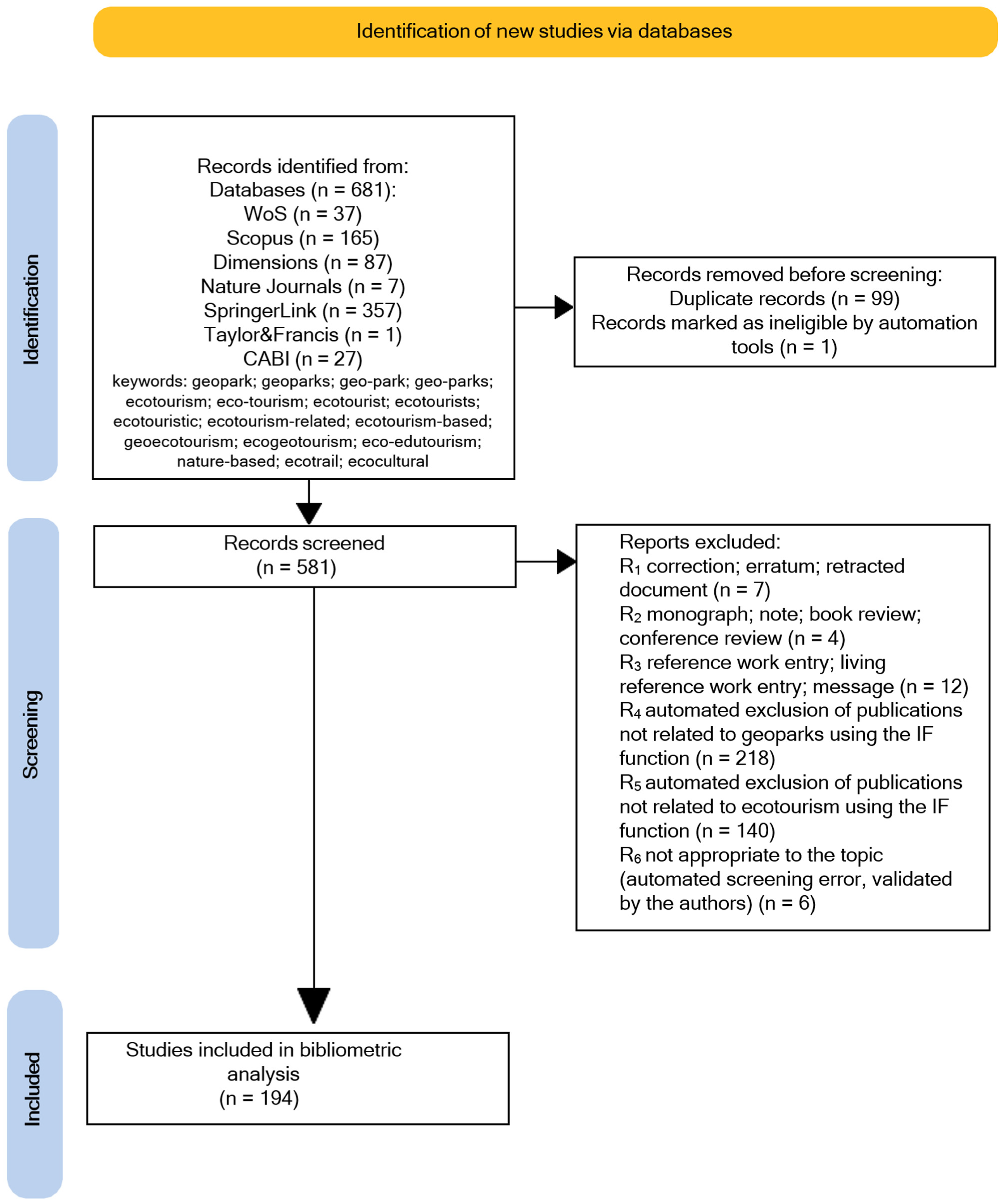
Furthermore, the systematic development and application of advanced Boolean search strings facilitated the identification of both foundational studies and recent scholarly contributions, thereby contributing to a comprehensive and balanced body of literature. In total, 681 documents were retrieved and distributed across the consulted databases as follows: 37 from WoS, 165 from Scopus, 87 from Dimensions, 7 from Nature Journals, 357 from SpringerLink, 1 from Taylor & Francis, and 27 from CABI.
Notably, searches conducted in three additional major scientific databases yielded no relevant results, indicating that PubMed, Wiley Journals, and IEEE Xplore do not index studies that simultaneously address geoparks and ecotourism. For example, although the IEEE Xplore search identified 24 publications related to geoparks and 122 related to ecotourism, none addressed both topics simultaneously, demonstrating the absence of thematic overlap within this database.
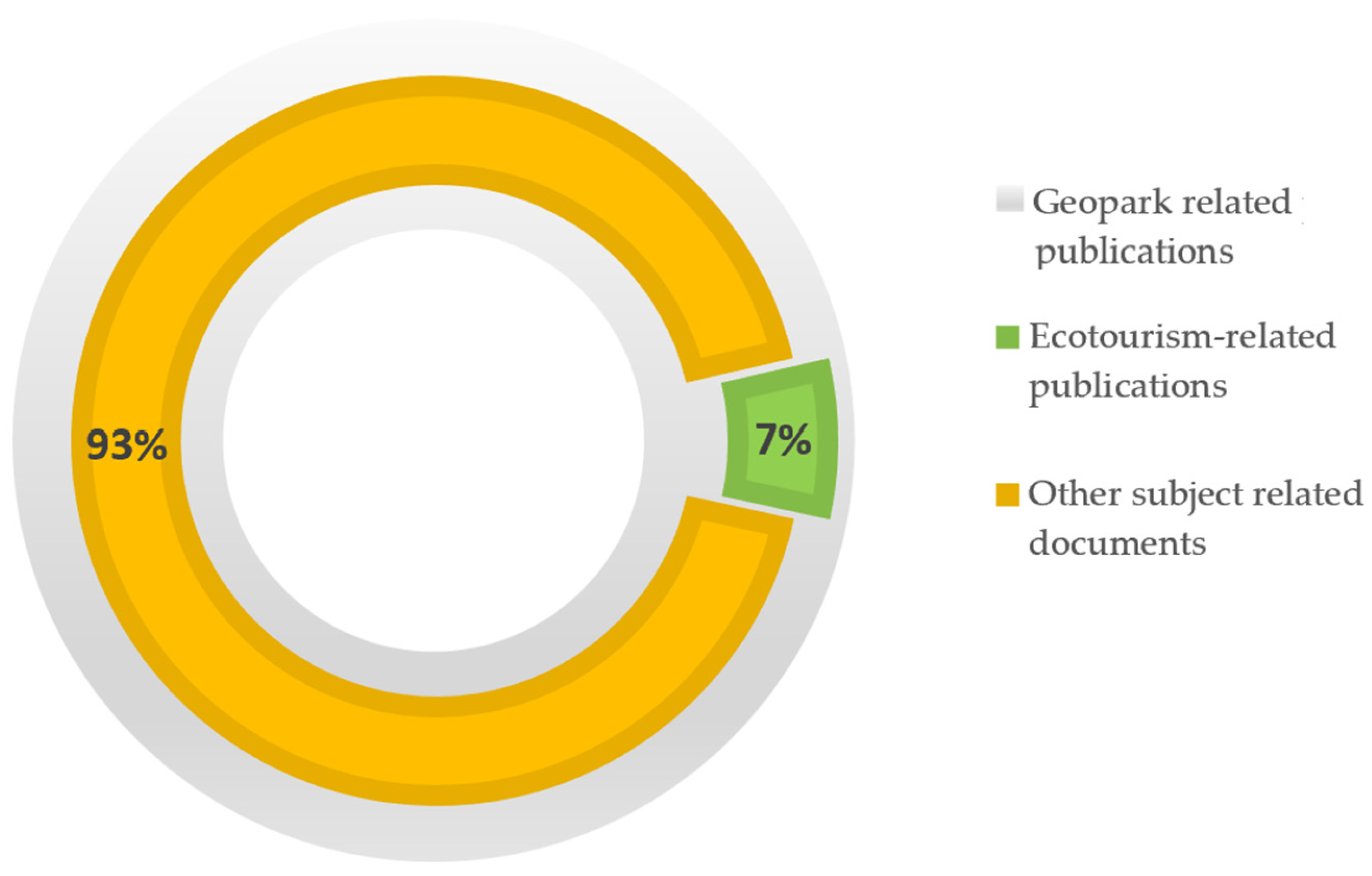
In addition, a comparative analysis of the scientific literature revealed that, although scholarly interest in geoparks continues to grow steadily, only a limited proportion of publications (7% of the total) explicitly focuses on ecotourism within geoparks (
Figure 2). As illustrated, the remaining 93% of the retrieved documents address other geopark-related or associated subject areas, indicating that ecotourism remains a relatively small research niche within the broader geopark literature. This distribution highlights the disparity between general geopark research and studies specifically focused on ecotourism, indicating considerable potential for further investigation in this specialized field.
This pattern can be explained by the historical evolution and multidisciplinary nature of geopark research [
2,
21,
63]. Since the establishment of the UNESCO Global Geoparks concept, scientific studies have primarily focused on geological heritage, geodiversity, geoconservation, geosite inventory and assessment, geopark management, geoeducation, and the scientific value of geological sites required for UNESCO Global Geopark designation. Over time, research has expanded [
45,
63] to encompass environmental sciences, geography, sustainable regional development, cultural heritage preservation, and local community participation [
28]. Consequently, ecotourism has evolved into a more specialized research topic within the broader geopark literature, which explains its relatively limited representation despite the continuous growth of publications on geoparks. Nevertheless, given that ecotourism is one of the key mechanisms through which geoparks promote sustainable tourism, environmental awareness, biodiversity conservation, and socio-economic benefits for local communities, its relatively limited representation highlights a significant research gap and the need for more comprehensive interdisciplinary research [
3,
34].
2.3. Integrated Automated Method for the Combination and Deduplication of Bibliographic Records in R
The 681 retrieved records were merged into a single bibliographic dataset, and duplicate records were removed in a single step, using the automated merging method proposed by Nyulas in “Using an Automated Merging Method of Multiple Databases in R” [
45]. Prior to the merging process, normalization procedures were required for several databases to ensure field consistency. Specifically, metadata fields were standardized, including publication title (TI), author (AU), DOI (DI), document type (DT), and source title/journal (SO), together with other metadata fields required for data integration.
The data processing workflow included three distinct stages: metadata preparation, verification of metadata completeness, and the actual merging process, including duplicate identification and removal.
An additional verification step was performed in Microsoft Excel using the built-in Remove Duplicates function to verify the accuracy of the duplicate removal process in the merged dataset. This verification was particularly necessary for records lacking a DOI and for non-English publications, where titles were represented differently across databases (e.g., one database indexed the English translation of a title, whereas another retained the original-language version), potentially preventing automatic duplicate detection.
Furthermore, one retrieved record was identified as ineligible during the automated screening process. The open-source reference management software Zotero (version 9.0.6) flagged the record as retracted, and it was subsequently excluded from the final dataset.
2.4. Semiautomated Screening and Eligibility Assessment
Once the data retrieved from the seven databases had been merged and duplicate records removed, the selection process was conducted. All inclusion and exclusion decisions were applied during the screening phase, in accordance with the PRISMA 2020 guidelines. The screening process employed a comprehensive set of ecotourism-related terms to account for conceptual and terminological variations in the literature (
Table 3).
The eligibility criteria were defined a priori and systematically applied during the screening process to ensure the inclusion of relevant and high-quality scientific literature.
Publication type—only peer-reviewed scholarly publications were considered eligible, including research articles, review papers, conference papers, books, and book chapters. Non-scholarly materials, including monographs, notes, book reviews, and other grey literature, were excluded.
Relevance to geoparks—eligible studies were required to explicitly address geoparks as the primary focus of the study. Publications that merely mentioned geoparks incidentally, without substantive analytical engagement, were excluded. The term “geopark” encompassed UNESCO Global Geoparks as well as nationally designated geoparks, provided that the study focused on their management, development, governance, conservation, or related dimensions.
Focus on ecotourism within geoparks—to ensure thematic relevance, only studies explicitly examining ecotourism within geopark contexts were included. Eligible publications included research addressing ecotourism activities (e.g., ecotrail development), visitor typologies (e.g., ecotourists), and broader ecotourism-related processes within protected area frameworks. The screening process also included studies employing related conceptualizations and terminological variants, such as ecotourism-related, eco-tourism-based, geoecotourism, ecogeotourism, eco-edutourism, nature-based tourism, and ecocultural approaches, provided that these concepts were explicitly linked to geopark contexts.
Thus, the screening phase (phase I) began with a preliminary screening step aimed at removing publication types that did not meet the predefined eligibility criteria. Excluded records included corrections, errata, retracted documents, monographs, notes, book reviews, conference reviews, reference work entries, living reference work entries, and messages from presidents (R1–R3).
As no language restrictions were applied during the search process, additional screening efforts were required to assess the eligibility of non-English publications. Titles and abstracts that were not available in English were translated into English to enable an accurate assessment of their relevance and eligibility. This approach reduced language-based selection bias and facilitated the inclusion of studies published in languages other than English.
Furthermore, the screening was supported by the automated method proposed by Nyulas [
50], in which automation tools were integrated within the overall study selection process. The accuracy of the automated screening was subsequently verified by one author, and each retrieved record was screened. Thus, the resulting set of documents was screened based on the titles and abstracts, using two complementary approaches.
The automated screening method (phase 2) comprised two sequential steps. First, records not related to geoparks were automatically excluded at stage R
4 using an IF function. In Microsoft Excel, the IF function was applied to the title (TI) and abstract (AB) columns to identify records containing any variant of the term “geopark” (geopark; geoparks; geo-park; geo-parks). Records that did not contain these terms were automatically excluded from the dataset (Equation (1)).
where Cell N2 represents the Title, and Cell D2 the Abstract.
Then, an automated exclusion procedure was implemented using an IF function to exclude records unrelated to ecotourism. A similar IF-function formula (Equation (2)) was applied to identify and retain only ecotourism-related documents, based on the presence of the following expressions: ecotourism; eco-tourism; ecotourist; ecotourists; ecotouristic; ecotourism-related; ecotourism-based; geoecotourism; ecogeotourism; eco-edutourism; nature-based; ecotrail; ecocultural; ecotour.
where Cell N2 represents the Title, and Cell D2 the Abstract.
The IF function was applied to both the Title (TI) and Abstract (AB) fields and returned a positive result when either field satisfied the predefined condition, e.g., ecotourism-related terms in the TI: fx = IF(OR(AW2 = 1, AX2 = 1, AY2 = 1, AZ2 = 1, BA2 = 1, BB2 = 1, BC2 = 1, BD2 = 1, BE2 = 1, BF2 = 1, BG2 = 1, BH2 = 1, BI2 = 1, BJ2), 1, 0) is assigned 1 or 0. The final result was given by the logical decision matrix too, by applying the function fx = IF(OR(AI2 = 1, AW2 = 1), 1, 0), where the scale was the Boolean logic scale 0, 1 (1 = yes, 0 = no). A value of 1 indicated that the document met the predefined screening criteria and was retained for further analysis, whereas a value of 0 indicated that the record did not meet the criteria and was excluded.
Finally, the formula fx = IF(AND(AF2 = 1, BL2 = 1), 1, 0) was used to determine document eligibility. A value of 1 indicates that the document simultaneously contains geopark-related terms (AF2 = 1) and ecotourism-related terms (BL2 = 1), and was therefore considered eligible for inclusion in the review. A value of 0 indicates that one or both criteria were not met.
This selection procedure, which used automated functions to support the decision-making process, was complemented by two levels of manual verification. The accuracy of the automated screening procedure was first assessed through a complete manual validation performed by one of the authors. Subsequently, the records retained after automated screening were independently assessed for eligibility by two authors, with any disagreements resolved through consensus.
To validate the accuracy of the automated screening procedure, all 558 records processed through the automated screening were manually reviewed and compared with the automated screening results. The comparison of the automated Excel IF-based screening with the manual review identified four false-negative records (0.72%) that were not retrieved by the automated procedure. These discrepancies resulted from text-formatting and keyword-matching issues rather than from deficiencies in the screening logic. Specifically, one record contained the term “geopark” enclosed in quotation marks, one contained the concatenated expression “geparksgeopark” resulting from a typographical error, one used the hyphenated form Marine-Geopark, and one relevant record on ecotourism in a UNESCO Global Geopark was not retrieved because the automated keyword-matching procedure did not recognize the contextual wording used in the abstract. All four records were subsequently identified during manual verification and included in the final review.
Following automated screening, the remaining 201 records were independently assessed for eligibility by two authors according to the predefined eligibility criteria. Initial agreement was reached for 191 records (95.0%). The remaining 10 records required further discussion due to differences in eligibility assessment. These disagreements were resolved through discussion until consensus was reached, leading to the exclusion of six records and the inclusion of four records in the final review. After consensus was reached, 194 records (96.5% of the 201 independently assessed records) met the eligibility criteria and constituted the final dataset.
Overall, the automated screening procedure demonstrated a low false-negative rate of 0.72% (4 of 558 records), with all missed records subsequently identified during manual verification. Following automated screening, 201 records were independently assessed for eligibility by two reviewers using the predefined eligibility criteria. Initial agreement was reached for 191 records (95.0%), whereas the remaining 10 records (5.0%) required discussion to resolve differences in eligibility assessments. After consensus was reached, six records (3.0% of the independently assessed records) were excluded, and four were retained, resulting in a final dataset of 194 publications. During the screening process, a total of 387 documents were excluded for the following reasons. First, records lacking relevance were removed: R1—corrections, errata, and retracted documents (n = 7); R2—monographs, notes, book reviews, and conference reviews (n = 4); and R3—reference work entries, living reference work entries, and messages from presidents (n = 12).
Second, publications identified as not relevant to the study topic were excluded through an automated screening procedure. This included R4—non-geopark-related publications excluded using an automated IF-function-based method (n = 218); and R5—publications not appropriate to the topic and excluded through the same automated procedure (n = 140).
Third, R6—records incorrectly retained by the automated screening procedure were identified during manual verification by the authors and excluded after confirming that they did not meet the predefined eligibility criteria (n = 6).
The study followed the PRISMA 2020 guidelines [
47,
64] for data identification, screening, retrieval, and synthesis, thereby ensuring the transparency and reproducibility of the review process (
Figure 3). The eligibility assessment was based on the title and abstract, as these provided adequate information to determine whether a publication addressed the intersection of ecotourism and geoparks and met the predefined aim and objectives of the review.
In summary, the literature search employed advanced retrieval techniques and citation-based exploration to identify both foundational studies and recent developments, thereby ensuring a comprehensive and balanced body of literature. A total of 681 documents were initially retrieved from the seven selected scientific databases and distributed as follows: Web of Science (n = 37), Scopus (n = 165), Dimensions (n = 87), Nature Journals (n = 7), SpringerLink (n = 357), Taylor & Francis (n = 1), and CABI (n = 27).
Following the removal of duplicate records and the application of the automated screening procedure, 194 documents were retained for the final bibliometric analysis.
The data retrieval process involved the systematic identification of records across the seven selected scientific databases. All records were consolidated into a single database, and duplicate documents were identified and removed prior to screening. This process resulted in a final metadata set of 194 publications, whose data were subsequently verified and normalized where necessary.
As the metadata were retrieved from multiple scientific databases, rigorous quality control procedures were required. A metadata completeness checklist provided by Biblioshiny was applied to assess the integrity of each metadata record. Where possible, missing metadata fields were completed through manual verification to improve the robustness and reliability of the analysis.
The metadata fields included document type, title, authors, affiliations, abstract, journal, publication year, and total citation counts. Biblioshiny also generated metadata completeness indicators, identifying which bibliometric analyses could be reliably performed. To ensure the accuracy and completeness of the dataset, only records classified within the “green zone” defined by Biblioshiny were retained for analysis.
In addition to completeness checks, metadata normalization procedures were applied where necessary to improve consistency across the bibliographic dataset. This process included the standardization of author names and institutional affiliations to resolve inconsistencies arising from abbreviated and full-name variants. Following normalization and completion of missing fields, 194 scientific articles with complete and standardized metadata were retained for subsequent bibliometric analysis using the R statistical computing environment.
3. Results
The metadata were processed and statistically analyzed using the R statistical environment through the Biblioshiny web interface. The bibliometric analysis of ecotourism research in geoparks was structured around three complementary dimensions: scientific performance, intellectual structure, and conceptual structure. The scientific performance analysis assesses publication output, citation patterns, influential documents, author productivity, and core publication sources. The intellectual structure was explored through historiographic mapping to identify the evolution and interrelationships of key knowledge contributions that have shaped the field. Finally, the conceptual structure was examined through thematic mapping and keyword co-occurrence networks to identify the principal research themes, their interrelationships, and the conceptual organization of the field.
3.1. Global Scientific Performance
3.1.1. Spatial Distribution of Scientific Output and Yearly Evolution
Scientific performance was assessed through the total number of documents, their annual evolution, and their global spatial distribution.
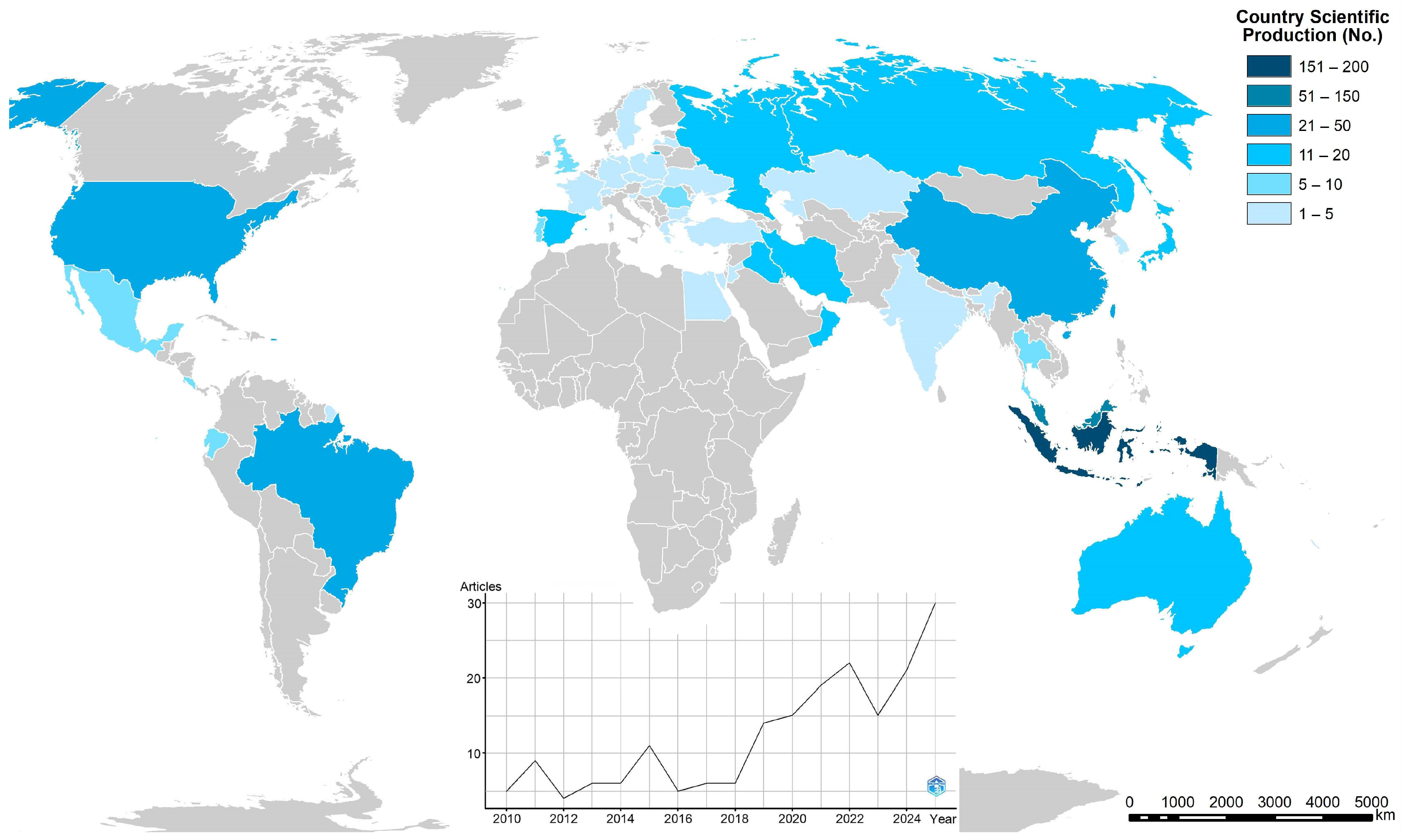
A total of 194 documents published between 2010 and 2025 were included in the bibliometric analysis. These publications involved 545 authors (3.11 authors per publication) and exhibited an annual growth rate of 12.69%, indicating the steady expansion of ecotourism research within geoparks and a collaborative research environment. However, prior to 2019, the number of publications remained low, ranging from 4 documents in 2012 to 11 in 2015, while only 5 or 6 documents were published annually in the remaining years. Most publications were produced after 2019, increasing from 14 documents in 2019 to 22 in 2022 and 30 in 2025 (
Figure 4), resulting in an average document age of only 6.09 years.
The geographical distribution of the 545 authors spans 38 countries, with Asian countries accounting for the highest publication output (
Figure 4): Indonesia, accounting for more than one-third of the authors, 36.5% (199 authors), followed by Malaysia, 24.2% (132 authors) and China, 8.1% (44 authors). Indonesia’s predominance can be attributed to the rapid expansion of its UNESCO Global Geoparks (10) and national geopark network, together with the integration of geoparks into regional development policies that promote sustainable tourism, biodiversity conservation, and community empowerment. In parallel, Indonesian universities have increasingly encouraged scientific publishing and international collaboration, further stimulating research output in this field [
65,
66]. Malaysia’s strong representation reflects the country’s long-standing commitment to geopark development, particularly through the pioneering role of Langkawi UNESCO Global Geopark, as well as the active involvement of universities and governmental institutions in geoheritage conservation, geoeducation, and sustainable tourism planning [
67,
68,
69]. Although China hosts the largest number of UNESCO Global Geoparks worldwide, 47 [
70], and has experienced well-documented rapid growth in scientific research, its comparatively lower representation in this dataset may be explained by differences in thematic research priorities, with a substantial proportion of Chinese publications focusing on geoheritage conservation, geosciences, and environmental interpretation rather than ecotourism specifically. Nevertheless, China’s continuously expanding scientific output provides a solid basis for future growth in this research area [
71]. Other countries with a substantial number of authors include the USA (27), Brazil (22), Japan (19), Russia (15), Iraq (14), Australia and Iran (12 each), and Oman and Spain (11 each). Several countries have between 5 and 10 authors: Ecuador and Thailand, 8 each; Portugal, Romania and the United Kingdom, 7 each; and Costa Rica and Mexico, 6 authors each. Greece and Kazakhstan have 4 authors each, and Sweden, 3. Other countries are represented by two authors, namely Egypt, France, Germany, Jordan, Slovakia, Slovenia and South Korea. Countries represented by a single author include Bulgaria, the Czech Republic, Hungary, India, Latvia, Poland, Switzerland, Türkiye and Ukraine.
The predominance of case studies indicates that research on geoparks and ecotourism remains strongly context-dependent. Geoparks differ considerably in terms of geological heritage, governance structures, tourism development, community participation, and environmental conditions, making individual case studies an appropriate methodological approach. While this diversity provides valuable insights into local management practices and sustainable tourism strategies, it also limits the generalizability of findings. Consequently, the field would benefit from more comparative and cross-regional studies capable of identifying broader patterns and transferable management principles [
20,
44,
63,
72,
73,
74]. This methodological shift would facilitate the development of a more comprehensive theoretical framework for understanding how governance models, stakeholder engagement, and environmental characteristics collectively influence ecotourism outcomes across different geopark contexts.
Beyond the quantitative increase in publication output, the bibliometric results suggest a gradual conceptual evolution of the field. Earlier studies primarily emphasized geoheritage conservation, geological value, and geotourism development [
3,
32,
33,
34]. Over time, research has increasingly incorporated broader sustainability perspectives, including community participation, ecosystem conservation, local economic development, and resilience [
14,
65,
75,
76]. This evolution reflects the growing recognition of geoparks as integrated socio-ecological systems rather than solely geological conservation areas, aligning the field with international sustainability agendas and the multifunctional role of UNESCO Global Geoparks [
14,
20,
32,
33,
77,
78].
A notable finding emerging from the geographical distribution of scientific contributions is the marked geographical imbalance in research output (
Figure 4). Although UNESCO Global Geoparks are established across numerous countries (241 geoparks in 51 countries) [
70], research on ecotourism remains concentrated in a limited number of nations, particularly Indonesia and Malaysia. In contrast, several countries with long-established geopark networks and extensive experience in geoheritage conservation, including Spain, Portugal, France, Germany, and the United Kingdom, as well as countries hosting numerous UNESCO Global Geoparks, such as China and Japan, are comparatively underrepresented in the present dataset. This imbalance suggests that ecotourism has not yet become a major research focus within geopark studies in many regions, where scientific attention has often been directed toward geoconservation, geosciences, geoheritage, or geological interpretation. Expanding ecotourism research in these countries would improve the geographical representativeness of the literature and enable broader comparative analyses of conservation practices, visitor management, community participation, and sustainable development across different UNESCO Global Geoparks. Addressing this geographical imbalance would also contribute to a more comprehensive understanding of how different environmental, socio-economic, and governance contexts influence ecotourism development and management in UNESCO Global Geoparks.
3.1.2. Performance of the Publications over Time
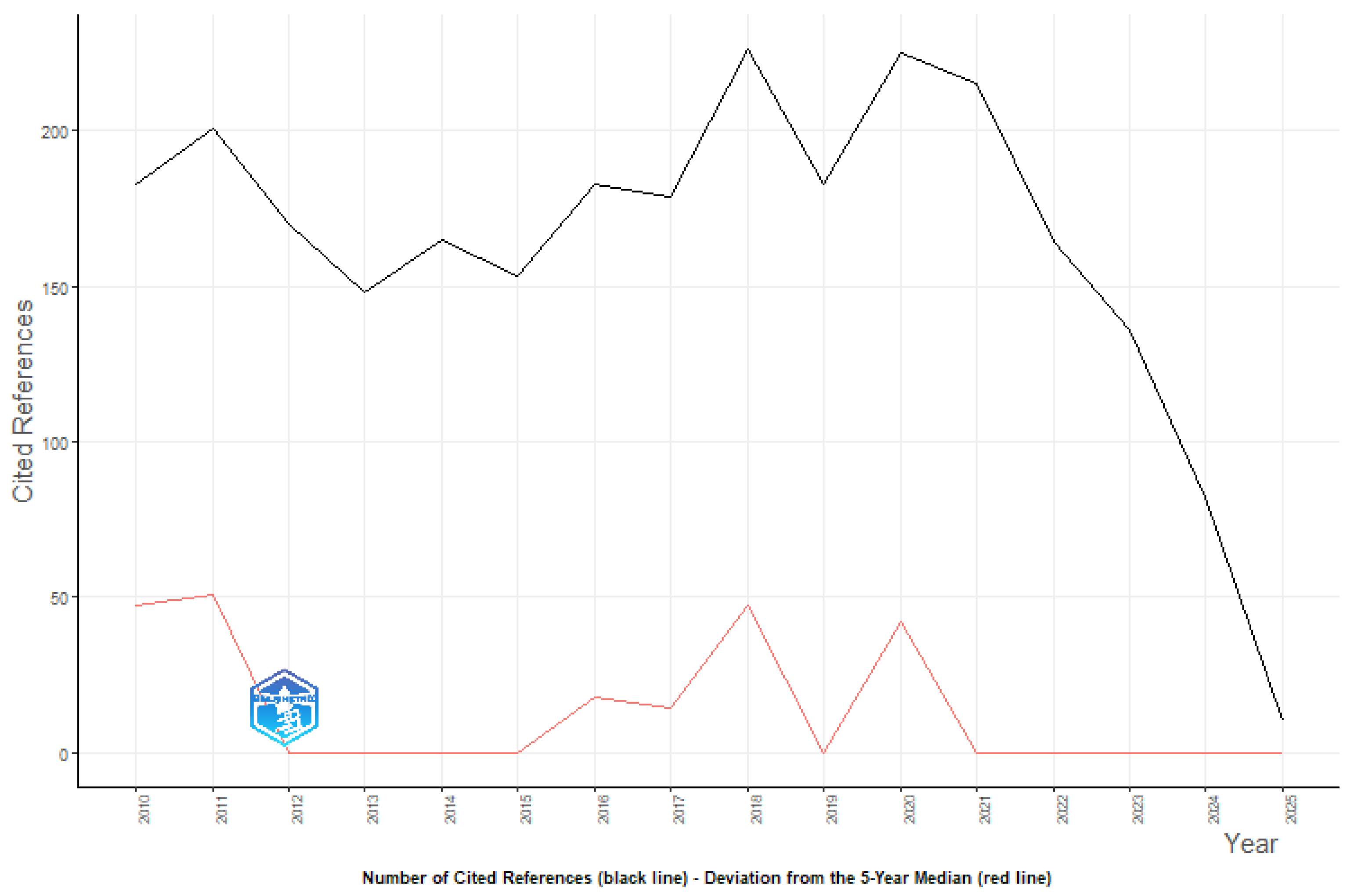
The Reference Publication Year Spectroscopy (RPYS) analysis (
Figure 5) reveals a well-established and historically layered knowledge base characterized by multiple periods of influential publications, thereby suggesting the progressive maturation of the field and justifying the need for a systematic and bibliometric synthesis.
RPYS was applied to examine the historical knowledge structure of the literature by analyzing cited references based on their publication year. Deviations from the five-year moving median were calculated to identify years with exceptional citation peaks, thereby highlighting the foundational and most influential contributions to the field.
The black line shows how frequently references from each publication year are cited, whereas the peaks indicate years containing influential or foundational publications that have shaped the development of the field. Scientists do not just ask, “How many articles are there?” but they also look back at the years when the most important publications appeared. Rather than simply quantifying publication output, RPYS identifies historical citation peaks corresponding to years in which influential publications introduced key concepts, theoretical frameworks, or methodological innovations. The red line indicates years in which substantially more (or fewer) references are cited than would be expected. Interpretation: A positive red line (>0) indicates that references published in that year were cited more frequently than expected based on the five-year moving median. A value of zero (=0) indicates citation frequencies consistent with the expected level, whereas a negative value (<0) indicates that references published in that year were cited less frequently than expected.
Therefore,
Figure 5 shows the number of references cited each year, identifies historical citation peaks, and highlights foundational and influential years in the development of the field.
The red line represents the deviations from the five-year moving median, highlighting publication years with unusually high citation frequencies that correspond to foundational or transformative contributions to the field.
Furthermore, examining the most influential publications provides valuable insights into the intellectual foundations of ecotourism research on geoparks. Highly cited publications reflect the key contributions that have advanced both the theoretical understanding and empirical evidence within the field (
Table 4).
The reviewed literature also underscores the importance of sustainable tourism development, nature conservation, environmental education, and the sustainable management of forest ecosystems, which constitute integral components of geopark landscapes. Researchers have consistently highlighted the need to balance tourism development with the protection of natural and cultural heritage, while promoting environmental awareness among visitors.
The ten most influential publications reveal several complementary research themes that have shaped the field of ecotourism research on geoparks. The first research direction focuses on visitor-related dimensions, particularly visitor motivations and preferences. Fung et al. examined visitor motivations in the Hong Kong UNESCO Global Geopark, demonstrating that understanding tourists’ expectations is essential for sustainable nature-based tourism and effective visitor management. Similarly, Drápela et al. analyzed visitor preferences in the Bohemian Paradise UNESCO Global Geopark, highlighting the importance of managing visitor flows, preventing overtourism, and aligning visitor experiences with conservation objectives [
79,
80].
The second research direction focuses on the development of ecotourism products and community-based ecotourism initiatives. Jaafar et al. focused on ecotourism product development in Kilim Geopark, emphasizing tourist satisfaction, service quality, and the role of nature-based ecotourism products in strengthening the attractiveness and sustainability of geopark destinations. Raharjo et al. extended this perspective by demonstrating that community-based ecotourism in the Ciletuh–Sukabumi UNESCO Global Geopark depends on local participation, community awareness, and community empowerment, positioning tourism villages as practical instruments for sustainable geopark development [
75].
Table 4.
The 10 most impactful research papers.
Table 4.
The 10 most impactful research papers.
| # | Title | Author | TC * | Journal | Main Topic/Study Focus |
|---|
| 1 | Segmentation by motivation of Hong Kong global geopark visitors in relation to sustainable nature-based tourism [79] | Fung, Charmaine K. W.; Jim, C.Y. | 82 | International Journal of Sustainable Development and World Ecology | Analysis of visitor motivations and segmentation in the Hong Kong Global Geopark to support sustainable nature-based tourism |
| 2 | Volcanoes and tourism [81] | Erfurt-Cooper, Patricia; Sigurdsson, Haraldur; Lopes, Rosaly M.C. | 52 | The Encyclopedia of Volcanoes | Exploration of volcano tourism as a form of geotourism and ecotourism that promotes geological heritage, visitor learning, and sustainable regional development |
| 3 | Urban development pressure: challenges in ensuring sustainable tourism development in Langkawi Island [82] | Samat, Narimah; Harun, Norhidayah | 40 | Procedia—Social and Behavioral Sciences | Assessment of land-use change and urban development pressures in relation to sustainable tourism development in Langkawi Island |
| 4 | Motivation and preferences of visitors in the Bohemian Paradise UNESCO Global Geopark [80] | Drápela, Emil; Boháč, Artur; Böhm, Hynek; Zágoršek, Kamil | 39 | Geosciences | Analysis of visitor motivations and preferences to support sustainable tourism management in the Bohemian Paradise UNESCO Global Geopark |
| 5 | Geopark ecotourism product development: a study on tourist differences [83] | Jaafar, Mastura; Shah Nordin, Aleff Omar; Abdullah, Shardy; Marzuki, Azizan | 34 | Asian Social Science | Evaluation of tourist preferences and satisfaction regarding ecotourism products and services in Kilim Geopark, Malaysia |
| 6 | Geoecotourism and environmental conservation education: insights from Japan [84] | Koizumi, Takeei; Chakraborty, Abhik | 34 | GeoJournal | The role of geoecotourism in environmental conservation education and the interpretation of geological–ecological interactions |
| 7 | Strategy for building independence and welfare of rural communities: evidence from the Gunung Sewu geopark, Indonesia [85] | Junarto, Rohmat; Salim, M. Nazir | 31 | Tunas Agraria | The role of ecotourism and local community participation in promoting sustainable rural development in Gunung Sewu Geopark |
| 8 | Biodiversity, geodiversity and conservation challenges in the humid mountains of Northeast Brazil [86] | Bétard, François; Peulvast, Jean-Pierre; De Oliveira Magalhâes, Alexsandra | 26 | Bulletin de l’Association de géographes français | The relationship between biodiversity, geodiversity, and conservation strategies in the humid mountains of Northeast Brazil, with a focus on the Araripe Geopark as a model of integrated natural heritage protection |
| 9 | The current observation and challenges of tourism development in Batur Global Geopark Area, Bali Province, Indonesia [87] | Rosyidie, A.; Sagala, S.; Syahbid, M.M.; Sasongko, M.A. | 26 | IOP Conference Series: Earth and Environmental Science | Assessment of the role of the Batur UNESCO Global Geopark in promoting sustainable tourism development and the challenges associated with balancing conservation, economic growth, community participation, and environmental protection |
| 10 | Community-based ecotourism (EBM): initiating a tourism village in the Ciletuh–Sukabumi Geopark area [75] | Raharjo, Santoso Tri; Apsari, Nurliana Cipta; Santoso, Meilanny Budiarti; Wibhawa, Budhi; Humaedi, Sahadi | 26 | Social Work Journal | The role of community-based ecotourism in fostering sustainable tourism village development within the Ciletuh–Sukabumi Geopark, emphasizing local participation, environmental conservation, community empowerment, and regional socio-economic development. |
The third research direction emphasizes sustainable tourism development, nature conservation, ecotourism, and environmental education. Koizumi and Chakraborty introduced the concept of geoecotourism as a bridge between geological and ecological conservation, demonstrating how geoparks can educate visitors about the interrelationships between abiotic and biotic components of nature, including biodiversity and forest ecosystems, which form integral elements of the geopark landscape. Similarly, Bétard et al. emphasized the need to conserve both biodiversity and geodiversity, using the Araripe UNESCO Global Geopark as an example of integrated conservation supporting sustainable development through ecotourism. Erfurt-Cooper’s work on volcanoes and tourism also contributes to this research direction by linking volcanic landscapes, geoheritage interpretation, ecotourism, and sustainable tourism development [
81,
84,
86].
Overall, these influential contributions demonstrate that UNESCO Global Geoparks function as integrated platforms where conservation, environmental education, community participation, and sustainable tourism development converge, while also supporting biodiversity conservation, ecosystem services, and, where applicable, the sustainable management of forest ecosystems, thereby reinforcing their role as important drivers of sustainable ecotourism.
3.1.3. Author Productivity
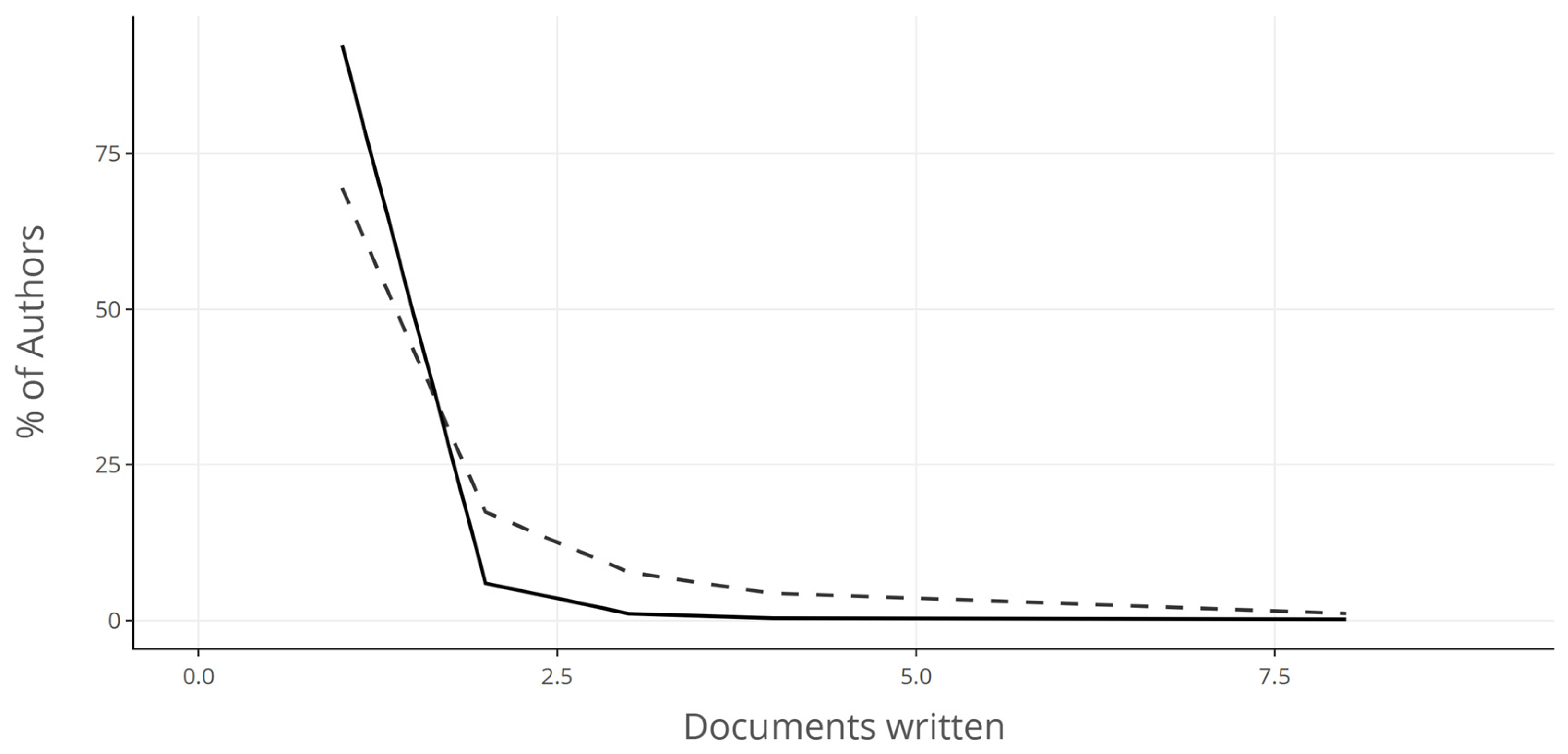
Author productivity was analyzed using the bibliometric principle proposed by Alfred J. Lotka in 1926, which describes the distribution of scientific publications among authors within a given research field [
88,
89]. It states that the number of authors is inversely proportional to the square of the number of publications, resulting in a distribution in which a small group, the elite, typically representing 5 to 10% of all authors, contributes 4 or more publications, whereas approximately 60% of the authors contribute only a single publication.
Lotka’s Law was implemented using the bibliometric functions available in the Biblioshiny interface of the Bibliometrix package within the R software environment [
46,
49].
Figure 6 illustrates the author productivity distribution according to Lotka’s Law. The solid line shows that 92% of the authors published a single paper, whereas only one author contributed as many as 8 papers, confirming the highly skewed distribution of scientific productivity within the field. The steep decline of the curve reflects the predominance of authors with one or two papers, whereas only a small number of authors contributed between three and eight publications.
Authors’ productivity over time is presented in
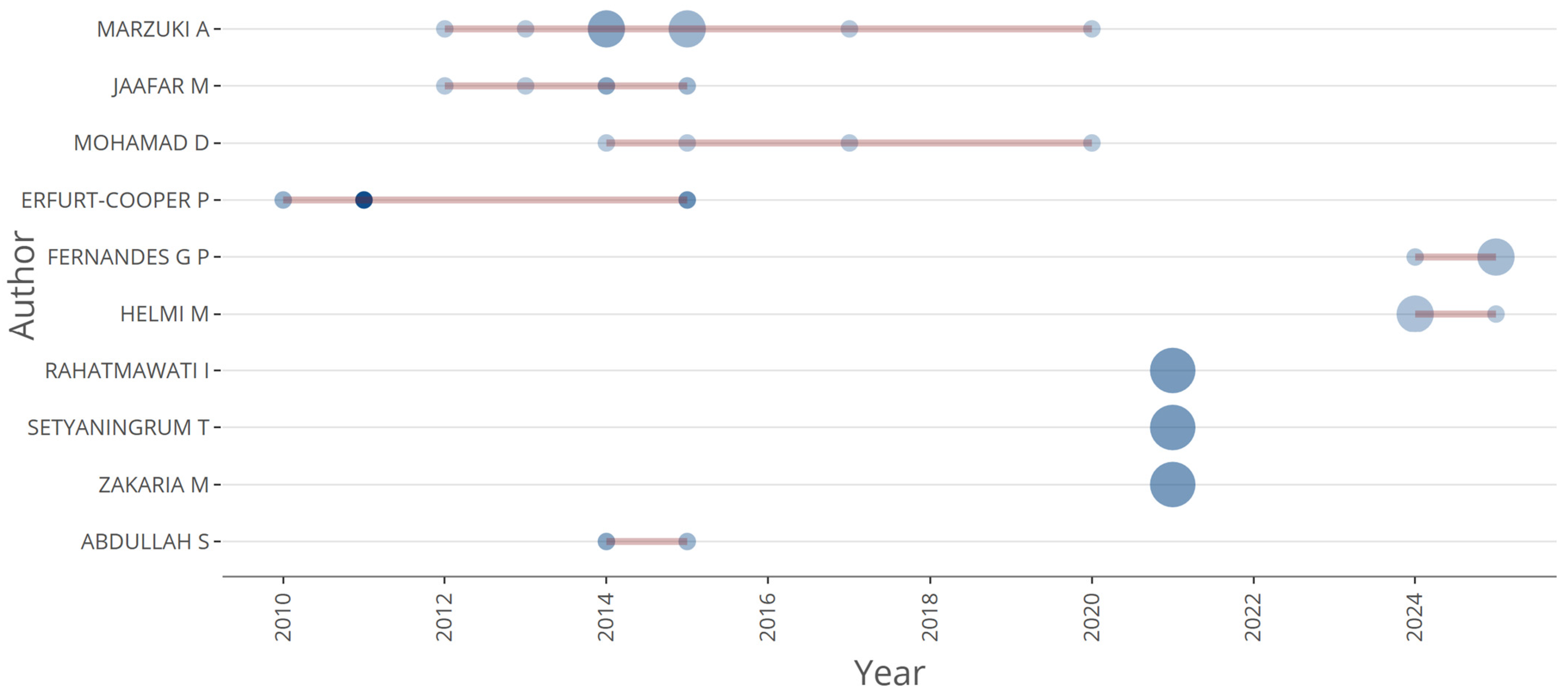
Figure 7. The horizontal bar represents the publication period for each author, while the dots indicate the years in which individual publications appeared. The size of each dot is proportional to the number of documents published in that year.
Of the 545 authors identified, 502 (92.1%) contributed a single publication, whereas 34 (6.2%) contributed two publications. Only 9 authors (1.7%) published three or more articles. In terms of the number of publications, Marzuki A. was the most prolific author, with eight publications, representing 4.1% of the total publications in the dataset. This author also maintained a consistent publication output over time, publishing across six years between 2012 and 2020.
Marzuki A. was followed by Jaafar M. and Mohamad D., each contributing four publications, representing 2.1% of the total publication output. Jaafar M. published one paper annually between 2012 and 2015, whereas Mohamad D. published one paper in each of four separate years between 2014 and 2020 (
Figure 7).
The six authors publishing three documents each (1.5% of the number of documents for each one) are Erfurt-Cooper P., Fernandes G. P., Helmi M., Rahatmawati I., Setyaningrum T. and Zakaria M. Erfurt-Cooper P. was among the earliest authors to publish on this topic, with publications appearing during the first two years of the study period and again in 2015. By contrast, Fernandes G. P. and Helmi M. each published three papers during the final two years, whereas Rahatmawati I., Setyaningrum T., and Zakaria M. co-authored all three publications in 2021.
3.1.4. Core Sources by Bradford’s Law
Bradford’s Law was applied to identify the core sources by analyzing the distribution of publications across scientific journals within the research field. It states that a small number of core journals publish most of the articles in a given field, whereas a much larger number of journals each contribute only a few articles. Beyond the core zone, the remaining journals are distributed into two additional zones following a geometric progression (1:
n:
n2), with each zone containing approximately the same number of publications [
90,
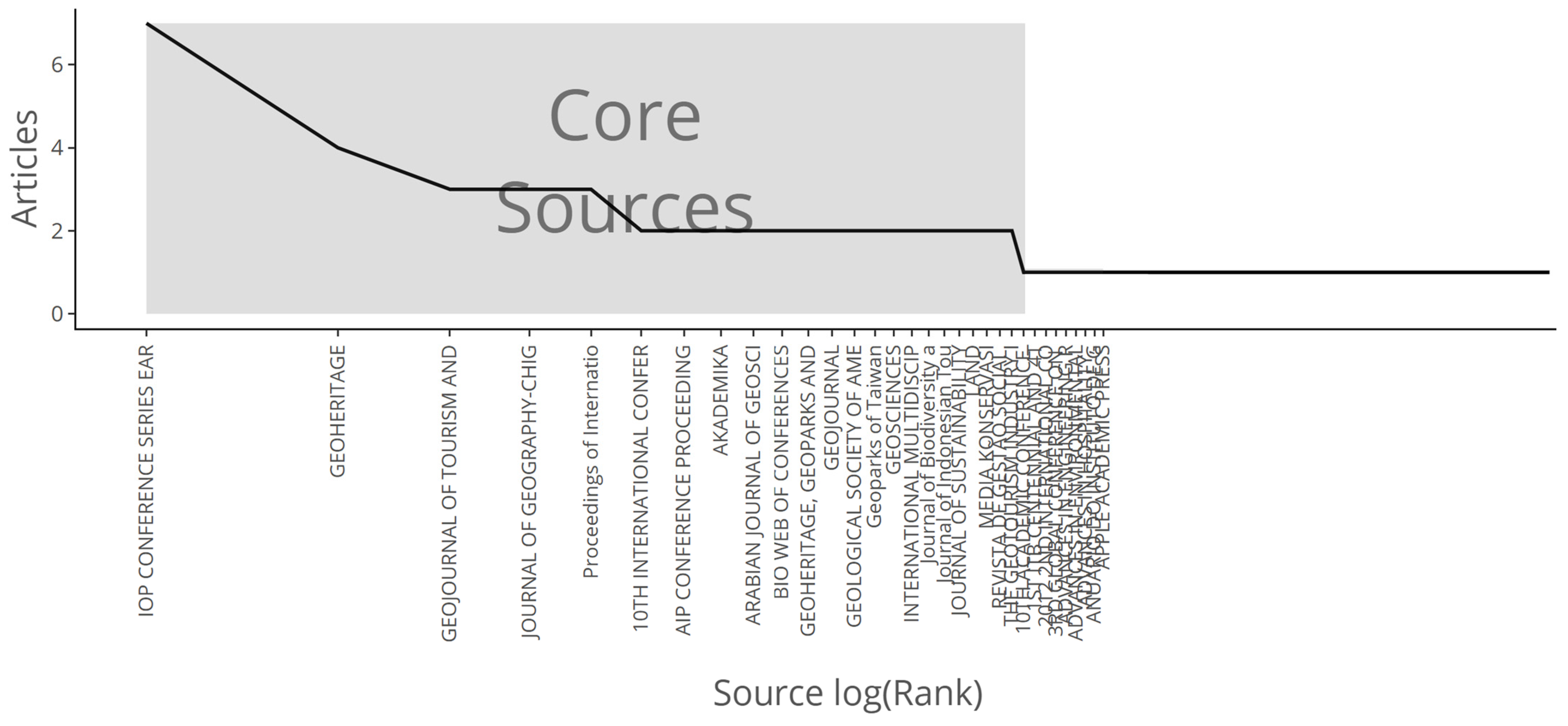
91]. Accordingly, the journals are classified into three Bradford zones, with the first zone representing the core set of journals that accounts for the largest share of publications. In this study, the niche nature of the research topic results in publications being dispersed across a large number of journals, many of which contain only a single document. Consequently, the second and third Bradford zones cannot be clearly distinguished (
Figure 8).
Of the 161 journals identified, 23 (14.3%) have more than one article and are assigned to Zone 1. Among these, the most productive sources, by the number of contributions, are: IOP Conference Series: Earth and Environmental Science (7 documents), Geoheritage (4 documents), Geojournal of Tourism and Geosites, Journal of Geography (Chigaku Zasshi), Proceedings of the International Conference on Tourism Development, “Building the future of tourism”, Penang, Malaysia, 4–5 February 2013 (3 documents each) and the 10th International Conference on Geomorphology, Abstracts with Programs (Geological Society of America), AIP Conference Proceedings, Akademika, Arabian Journal of Geosciences, Bio Web of Conferences, Geoheritage, Geoparks and Geotourism, Geojournal, Geoparks of Taiwan, Geosciences, International Multidisciplinary Scientific Geoconference Surveying Geology and Mining Ecology Management (SGEM), Journal of Biodiversity and Environmental Sciences (JBES), Journal of Indonesian Tourism and Development Studies, Journal of Sustainability Science and Management, Land, Media Konservasi, Revista de Gestão Social e Ambiental, and The Geotourism Industry in the 21st Century (2 documents each). The remaining 138 journals, each publishing a single article, represent 85.7% of the sources.
3.2. Intellectual Structure
Historiographic Mapping of the Intellectual Evolution of Geopark–Ecotourism Research
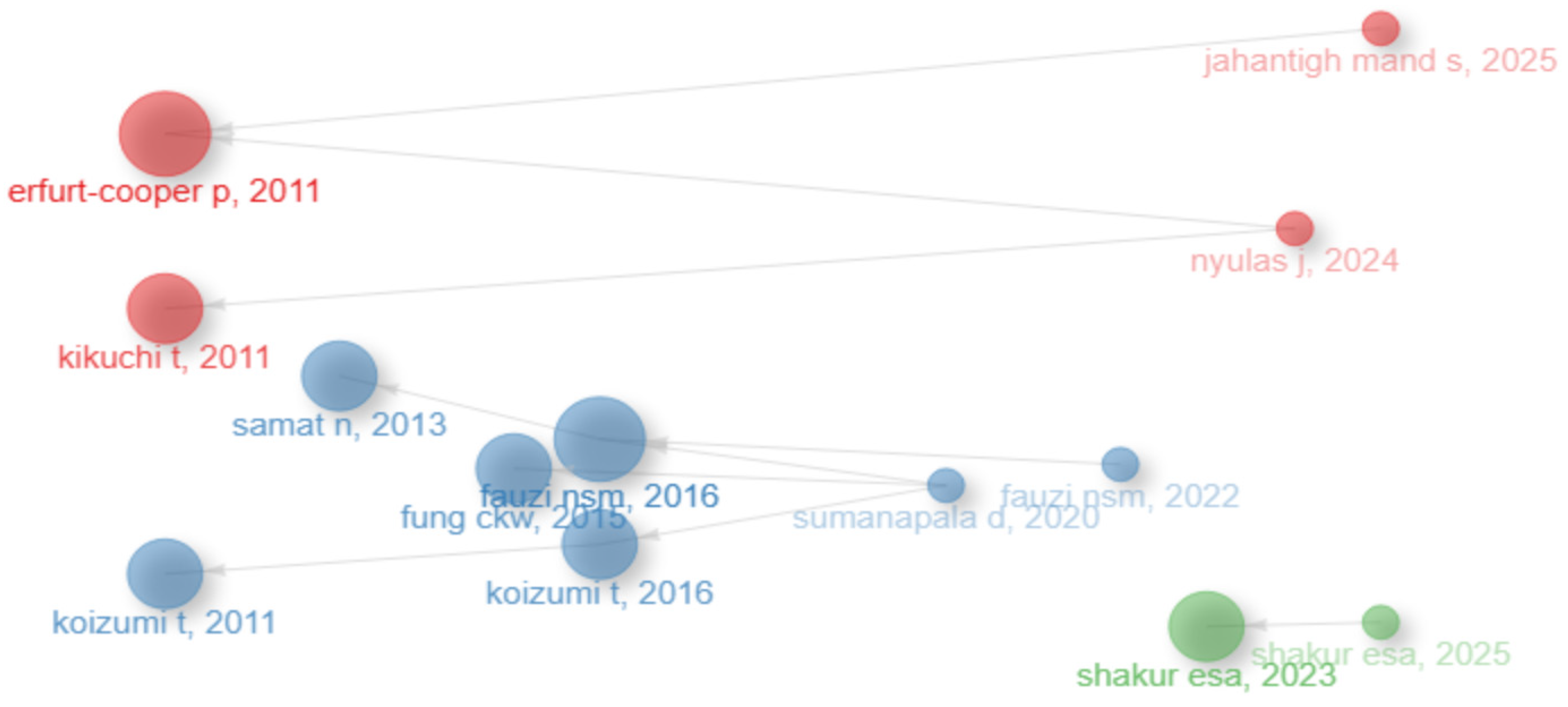
Historiography refers to an algorithmic, quantitative approach to mapping the historical development of a scientific field based on direct citation links. It is a tool designed to visualize the intellectual and chronological evolution of research by identifying the most influential, seminal, or “classic” papers in a given collection [
92].
The graph shows the core intellectual structure of the field, as identified through bibliometric historiography using the Bibliometrix science mapping tool. Initially, the mapping process constructs a historical direct citation network based on citation relationships among the most influential publications and subsequently visualizes the network in chronological order. The following subsections present these networks from the earliest to the most recent publications.
As shown in
Figure 9, the historiographic mapping indicates that the intellectual structure of geopark–ecotourism research began to emerge in 2011, with the seminal contributions of Erfurt-Cooper (2011) [
93], followed by those of Kikuchi (2011) [
94] and Koizumi (2011) [
95]. These early works established the conceptual and theoretical foundations of the field and continue to serve as key intellectual reference points for subsequent studies. Between 2013 and 2016, the research trajectory expanded through influential contributions such as Samat (2013) [
82], Fung (2015) [
79], Koizumi (2016) [
84], and Fauzi (2016) [
96], marking a transition toward applied, regional, and empirical research. The continuation of citation linkages into the 2020–2025 period—evident in works such as Sumanapala (2020) [
72], Fauzi (2022) [
97], Abdul Shakur (2023) [
98], Nyulas (2024) [
45], and the most recent contributions by Jahantigh Mand (2025) [
99] and Abdul Shakur (2025) [
100]—indicates the sustained influence of the early foundational literature.
The stable citation backbone across different node thresholds confirms the cumulative and coherent development of knowledge, suggesting that geopark–ecotourism research has evolved from an emerging conceptual field into a consolidated yet continuously expanding domain within sustainable tourism research.
3.3. Conceptual Structure
3.3.1. Strategic Mapping of Abstracts
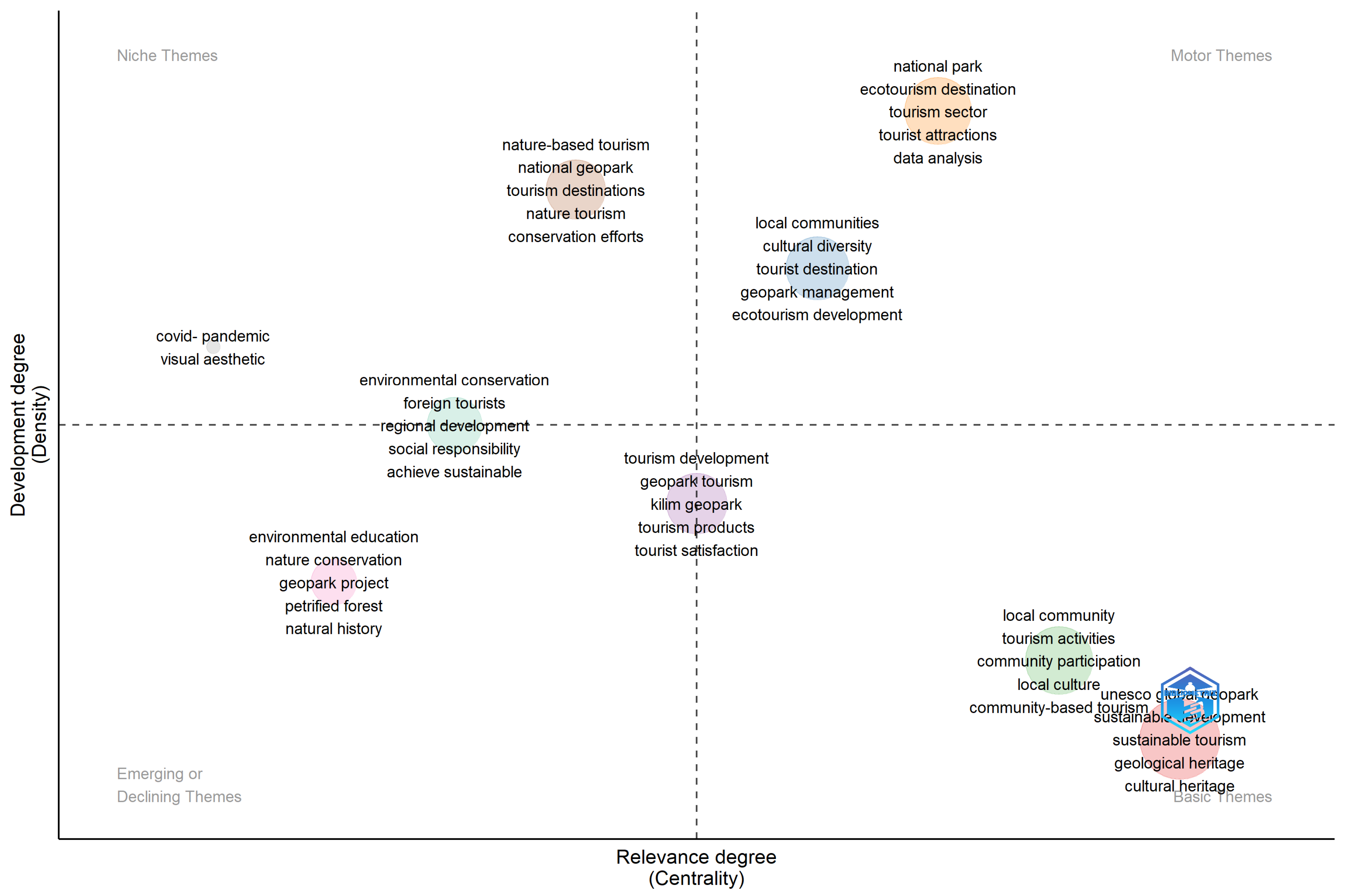
Thematic maps, also referred to as strategic maps, are used to visualize the conceptual structure of the scientific literature produced by researchers [
101]. This method is used to assess the importance, development, and maturity of research themes within a given field through the analysis of keyword co-occurrence. The map is divided into four quadrants, each representing a distinct thematic category defined by two axes. The
X-axis, referred to as centrality, reflects the importance and influence of a theme within the research field. The
Y-axis, known as density, indicates the level of development and maturity of a research theme [
45,
102]. In this study, research themes were identified using the Walktrap clustering algorithm and classified into four quadrants: motor themes, niche themes, emerging or declining themes, and basic themes (
Figure 10).
The Motor Themes (upper right quadrant), representing the central and well-developed topics within the research field, include nature reserves,
natural parks located within geoparks, and comparative studies of ecotourism development in natural parks and geoparks [
100,
103]. These themes are further associated with the development of
tourist attractions and the recognition of geoparks as
ecotourism destinations, thereby contributing significantly to regional economic development through the
tourism sector [
100,
104]. This relationship is evidenced through tourist-related
data analysis, generated through sustainable tourism activities [
83]. Innovation in the tourism sector is also recognized as a key driver of significant change.
The second motor theme is characterized by high centrality. It highlights the importance of
local communities,
cultural diversity,
geopark management,
ecotourism development, and the establishment of geoparks as
tourist destinations [
105,
106,
107,
108]. This theme emphasizes the role of participatory governance and community engagement in preserving cultural heritage, promoting sustainable tourism, and enhancing the attractiveness of geoparks as ecotourism destinations. Effective geopark management, together with the active involvement of local communities, contributes to both biodiversity conservation and socioeconomic development through ecotourism.
Basic Themes (lower right quadrant) are important to the field and contain the fundamental concepts underpinning the research field. They are characterized by high centrality and include three groups, one of which overlaps with the Emerging and Declining Themes quadrant, suggesting that it has the potential to become more prominent in future research. The most frequent theme is the
UNESCO Global Geopark, highlighting its central role in geopark-related research. It is followed by
sustainable development,
sustainable tourism,
geological heritage, and
cultural heritage which together reflect the interdisciplinary nature of the field. This theme emphasizes the role of UNESCO Global Geoparks in conserving and promoting geological and cultural heritage while fostering sustainable tourism in line with broader sustainable development objectives [
73,
109]. The integration of geological and cultural heritage strengthens the attractiveness of geoparks as tourism destinations [
42] and contributes to the development of less-developed regions through geotourism and other forms of sustainable tourism, including ecotourism, cultural tourism, and rural tourism. As a foundational theme, it provides the conceptual framework through which geoparks contribute to environmental protection, cultural heritage conservation, and long-term regional development.
The second basic theme identified in the literature focuses on the social and community dimensions of ecotourism in geoparks. The most prominent keywords in this cluster, including
local community,
tourism activities,
community participation,
local culture, and
community-based tourism, indicate that the literature consistently associates successful ecotourism development with the active involvement of local stakeholders. The prominence of these terms suggests that ecotourism in geoparks is regarded not only as a tool for environmental conservation but also as a catalyst for community engagement and sustainable local development [
110]. In particular, community participation emerges as a key factor in ensuring that tourism activities contribute to both conservation goals and the well-being of local communities [
111]. This finding reflects the fundamental principles of ecotourism, which emphasize responsible travel, community empowerment, and the generation of socio-economic benefits for host communities [
112]. The active involvement of local communities in tourism destination management promotes sustainable development by encouraging responsible use of natural and cultural resources while strengthening local development [
113].
The last cluster, although positioned within the Basic Themes quadrant, lies close to the boundary with the Emerging or Declining Themes quadrant, suggesting that it exhibits characteristics of both categories. This indicates that although the theme is relevant to the conceptual structure of ecotourism research in geoparks, it remains relatively underdeveloped and has not yet become a major focus of research. The cluster is characterized by keywords such as
tourism development,
geopark tourism,
Kilim Geopark,
tourism products, and
tourist satisfaction. These terms reflect a growing research interest in the development of ecotourism products and visitor experiences within geoparks, particularly through case-study-based research [
114]. The presence of
tourist satisfaction suggests increasing research attention to tourism outcomes and destination competitiveness [
115]. At the same time, the cluster’s low density indicates that this research area is still evolving and offers substantial opportunities for future studies on sustainable tourism development in geoparks [
116].
The Emerging and Declining Themes quadrant (
Figure 10), characterized by low centrality and low density, includes keywords such as
environmental education,
nature conservation,
geopark project,
petrified forest,
and natural history. Their low centrality and low density indicate that these themes remain peripheral and relatively underdeveloped within the ecotourism–geopark literature. Thematic analysis reveals that environmental education and awareness-raising strengthen local communities’ commitment to responsible environmental management while enhancing resilience to climate change through nature conservation and community participation in addressing local environmental challenges [
76]. In addition, ecotourism integrates recreation with environmental education, enhancing visitors’ appreciation of natural heritage while fostering conservation values and encouraging environmentally responsible behavior. Moreover, the presence of site-specific terms such as
petrified forest and
geopark project further indicates that research in this area is often fragmented and focused on individual case studies [
117,
118].
This final cluster, located at the intersection of the Niche Themes and Emerging or Declining Themes quadrants, represents a specialized area of research that has not yet achieved a central position within the ecotourism–geopark literature. The cluster comprises keywords such as
environmental conservation,
foreign tourists,
regional development,
social responsibility, and
achieve sustainable, reflecting a focus on the broader sustainability outcomes of ecotourism in geoparks [
119]. The reviewed studies consistently portray ecotourism as an integral component of geopark development, providing nature-based recreation opportunities while supporting regional socio-economic development and the conservation of unique natural areas [
120,
121].
These themes may represent promising directions for future research. However, their long-term development within the ecotourism–geopark literature remains uncertain and warrants further investigation.
Niche Themes (upper left quadrant) are highly specialized and less connected to the broader research field. They may form a niche cluster because they are highly specialized and technically well-developed but remain relevant primarily to a specific research community or application domain. This quadrant includes the following keywords:
nature-based tourism,
national geopark,
tourism destinations,
nature tourism, and
conservation efforts. The strong association between nature-based tourism and conservation efforts highlights the role of geoparks as destinations that combine environmental protection with sustainable tourism development, supported by their scenic landscapes, rich biodiversity, and opportunities for nature-based activities such as trekking and camping [
43,
122]. Moreover, it suggests that the conservation and sustainable development of geosites can foster ecotourism opportunities while contributing to local socio-economic well-being and supporting the establishment of future national geoparks [
123]. The presence of
national geopark and tourism destinations further suggests a research focus on destination management and the promotion of geoparks as attractive sites for sustainable tourism. It also highlights conservation efforts in national geoparks through studies examining visitors’ willingness to support eco-compensation mechanisms for sustainable nature-based tourism [
124,
125]. Although this theme is well developed internally, its specialized nature indicates limited integration with the broader conceptual structure of the field.
The second niche-theme cluster is characterized by the keywords
COVID-19 pandemic and
visual aesthetic. This cluster reflects a highly specialized and relatively isolated area of research that examines the impacts of the COVID-19 pandemic on tourism experiences and visitor perceptions in geoparks. The inclusion of
visual aesthetics demonstrates that the perceived aesthetic quality of nature-based tourism environments enhances tourists’ positive emotions by increasing their connectedness to nature and their sense of psychological restoration [
126,
127]. However, its peripheral position on the thematic map indicates that this topic remains a narrow research stream with relatively weak connections to the dominant themes in the ecotourism–geopark literature.
3.3.2. Co-Occurrence Network
The keyword co-occurrence network reveals three major thematic clusters within the geopark tourism literature (
Figure 11). The largest and most central cluster is organized around
geotourism, which is strongly connected to concepts such as
geoheritage,
geoconservation,
geoparks, and
conservation. A second cluster is centered on
ecotourism and includes themes related to
tourism development,
nature conservation,
geodiversity, and
sustainability. A third cluster links
sustainable development with
heritage conservation and
natural heritage management. The connections between these clusters indicate a growing integration of environmental conservation, heritage protection, and sustainable tourism practices within the geopark literature.
Despite the inclusion of ecotourism-related publications in the dataset, the network structure confirms the predominance of geotourism as the central organizing concept. Although ecotourism forms a distinct thematic cluster, its connections are primarily associated with sustainability- and conservation-related themes, suggesting that it is more often addressed as a complementary dimension of geopark tourism rather than as an independent research framework.
Consequently, while geotourism remains the dominant tourism paradigm in geoparks, ecotourism complements it by strengthening the sustainable development dimension. Through its emphasis on environmental responsibility, conservation awareness, low-impact tourism, and local community involvement, ecotourism strengthens geotourism by supporting the broader sustainability objectives of geoparks without replacing its conceptual and operational centrality.
3.4. Methodological Approaches
The methodological classification of the 194 documents indicates that the literature remains predominantly conceptual and descriptive. A total of 66 studies (34.0% of the sample) relied primarily on conceptual, descriptive, review-based, or commentary-oriented approaches. This substantial proportion suggests that a considerable share of geopark-ecotourism research remains focused on defining concepts, presenting destinations, describing tourism potential, and discussing conservation and development objectives rather than empirically testing relationships or measuring outcomes.
Qualitative research and case study designs constituted the second-largest methodological group, with 30 studies (15.5% of the total). These studies commonly employed interviews, focus-group discussions, ethnographic approaches, participant observation, document analysis, and thematic analysis. Their prominence reflects the importance of understanding local perceptions, community participation, governance structures, cultural identity, and power relations within geopark destinations.
Quantitative, survey-based, and statistical approaches were identified in 29 studies, accounting for 14.9% of the sample. These studies employed questionnaires, descriptive and inferential statistics, factor analysis, structural equation modeling (SEM), regression analysis, cluster analysis, willingness-to-pay models, and related techniques. Although these studies increased the analytical rigor of the field, many remained cross-sectional and relied on self-reported data from visitors or stakeholders.
Mixed-method studies represented 25 publications, accounting for 12.9% of the reviewed literature. These combined surveys, interviews, observations, document analysis, spatial analysis, and strategic tools. Their use reflects a growing effort to integrate quantitative assessments of tourism outcomes with the experiences and perspectives of local actors. Nevertheless, the extent to which qualitative and quantitative components were integrated was not always clearly reported.
Geospatial, geoscientific, and environmental methods were used as the dominant approach in 18 studies, accounting for 9.3% of the analyzed sample. These studies employed GIS, remote sensing, satellite imagery, geomorphometric analysis, geodiversity mapping, geological investigations, environmental sampling, and field-based ecological assessments. Such methods provide robust evidence for conservation planning and geosite management, but they are often insufficiently integrated with social, economic, and governance indicators.
A further 12 studies (6.2% of the analyzed sample) primarily applied geosite, geoheritage, ecotourism potential, or tourism suitability assessment frameworks. These studies employed assessment frameworks and tools such as the Geosite Assessment Model (GAM), the Modified Geosite Assessment Model (M-GAM), Brilha-based assessment, degradation-risk assessment, UNESCO evaluation criteria, and multi-criteria evaluation (MCE). Their main limitation is the lack of harmonization among indicators, scoring systems, weighting schemes, and assessment thresholds, which reduces the comparability of results across destinations.
Strategic, planning-oriented, and participatory methods accounted for nine studies (4.6% of the analyzed sample). These studies involved SWOT, TOWS, QSPM, stakeholder matrices, participatory approaches, planning analysis, value chain analysis, and route or guideline development. Although useful for management and policy formulation, these approaches sometimes relied heavily on expert judgment and did not always include independent validation or post-implementation evaluation.
Finally, five studies (2.6% of the analyzed sample) employed other specialized or intervention-oriented approaches, including training interventions, field studies, bibliographic surveys combined with site visits, and inventory-based investigations. Their limited representation illustrates the relatively infrequent use of experimental, intervention-based, and evaluative research designs in the current literature.
Overall, the distribution confirms that geopark–ecotourism research is methodologically diverse but remains dominated by conceptual and descriptive contributions. Empirical qualitative, quantitative, and mixed-methods studies are becoming increasingly common. However, comparative, longitudinal, experimental, and standardized sustainability assessment approaches remain comparatively underrepresented.
One of the most significant methodological gaps identified in the reviewed literature is the near absence of modeling approaches. Although several studies employed statistical analyses, assessment frameworks, or GIS techniques, very few developed predictive or simulation-based models capable of forecasting tourism growth, environmental change, visitor behavior, or alternative management scenarios. Likewise, longitudinal studies, experimental designs, economic modeling, advanced spatial modeling, artificial intelligence, machine learning, and integrated sustainability modeling remain largely underrepresented, highlighting important opportunities for future methodological development in geopark–ecotourism research.
4. Discussion
The findings of this study contribute to a relatively underexplored area of research. To the best of our knowledge, no previous studies have specifically examined ecotourism in the context of geoparks. Direct comparisons with previous research are therefore limited. This may be explained by the fact that geotourism has traditionally been regarded as the primary form of tourism associated with geoparks and has consequently received considerably greater scholarly attention. As a result, research has predominantly focused on geological heritage interpretation, geoconservation, and geotourism development, whereas ecotourism has received comparatively less research attention.
Despite the absence of directly comparable studies, the findings can be discussed in the context of the broader literature on sustainable tourism, nature-based tourism, geotourism, and protected-area management. The results suggest that geoparks can serve as important destinations for ecotourism by promoting environmental conservation, supporting local communities, and enhancing visitors’ awareness and appreciation of natural heritage. These findings are consistent with the fundamental principles of sustainable tourism and reinforce the role of geoparks as multifunctional destinations that integrate conservation, education, and local development.
The absence of comparable studies highlights an important research gap and emphasizes the novelty of the present study. Furthermore, the substantial overlap between the principles of ecotourism and geotourism—including environmental protection, visitor education, sustainable resource management, and community involvement—suggests that an ecotourism perspective can offer valuable insights for the sustainable management of geoparks.
4.1. Trends
The global scientific performance analysis provides an overview of the development and productivity of research on ecotourism in geoparks. This dimension reveals a clear interest in geotourism and ecotourism, with 194 documents published between 2010 and 2025 and contributions from 545 authors. The yearly growth rate of 12.69% indicates an intensification of research activity on these topics, particularly after 2019, when publication output accelerated considerably. The bibliometric analysis indicates a low average document age (6.09 years), highlighting the recent dynamism of this research area. The observed increase in publication output is consistent with broader bibliometric and review-based analyses of geopark research, which have likewise documented a sustained expansion of scientific interest over the past decade. Similar publication trends have been reported by Herrera-Franco et al. [
29], Pérez-Romero et al. [
63], Nyulas et al. [
50], Martínez-Martín et al. [
51], as well as by more recent review studies published in 2026 [
77,
78,
128], indicating that ecotourism has emerged as one of the most dynamic thematic directions within the broader geopark literature. Nevertheless, compared with the overall geopark research domain, ecotourism-focused studies remain relatively limited, suggesting that this field is still evolving and offers considerable opportunities for future interdisciplinary research.
The geographical distribution of authors indicates a global interest in geotourism and ecotourism research, with contributions from 38 countries. Nevertheless, the scientific output is highly concentrated in Asia, particularly in Indonesia, Malaysia, and China. This pattern reflects not only the significant number of geoparks in these countries [
70] but also the active involvement of academic institutions and governmental bodies in promoting research and employing geoparks as tools for sustainable regional development [
67,
68,
69]. The predominance of Asian countries is also consistent with previous reviews, which identified Asia as the principal driver of geopark research owing to its rapidly expanding UNESCO Global Geopark network and strong institutional support for geoheritage conservation and sustainable tourism [
29,
50,
63]. More recent review studies have confirmed that this leadership continues to be reinforced through the growing integration of sustainability education, community engagement, and interdisciplinary approaches within UNESCO Global Geoparks [
77,
78]. The present study further demonstrates that this leadership extends specifically to ecotourism research, highlighting the growing integration of biodiversity conservation, community participation, and regional development within Asian geopark studies.
The most influential publications constitute important reference points for understanding the evolution of research on ecotourism in geoparks. However, the overall citation performance remains relatively modest compared with the broader field of geopark research. The most highly cited publication in the dataset received 82 citations. By comparison, this figure remains considerably lower than that of the most influential studies in the wider geopark literature, which had accumulated more than 167 citations by 2023 [
14,
63]. Notably, several seminal works focusing on geoparks and geotourism have achieved exceptionally high citation impact, exceeding 768 citations by 2025 [
2,
50]. This difference may be attributed to the more specialized nature and relatively recent development of ecotourism-focused research within the broader field of geopark studies. Because research on ecotourism in geoparks only began to emerge as a research topic in the early 2010s [
129], publications in this field have had less time to accumulate citations than those in the broader geopark literature.
Many of the most influential publications have focused on visitor-related aspects, including visitor motivations, preferences, and satisfaction with ecotourism products and services. These studies emphasize the importance of understanding tourist behavior as a basis for enhancing visitor experiences while supporting conservation and environmental education objectives. Furthermore, several studies have examined challenges associated with geopark management, demonstrating that effective governance, stakeholder collaboration, and strategic planning are critical to achieving the long-term sustainability and resilience of geopark destinations.
Bibliometric analyses have shown that recently emerging research themes generally require longer periods to accumulate citations than well-established scientific domains [
50,
63]. Recent bibliometric reviews published in 2026 likewise indicate that rapidly developing research areas often experience substantial growth in publication output and thematic diversification before achieving high citation impact [
78,
130]. Therefore, the relatively modest citation impact should be interpreted primarily as a consequence of the field’s recent emergence and ongoing consolidation rather than as an indication of limited scientific relevance or influence.
One of the most noteworthy findings of this study is the emergence of geoecotourism as a distinct conceptual approach within the geopark literature [
84,
95]. While conventional geotourism primarily emphasizes geological heritage, geoecotourism extends this perspective by integrating geodiversity, biodiversity, environmental education, and conservation within a unified tourism framework. Although the concept appeared in only one of the most influential publications, it represents a promising research direction that aligns closely with the objectives of UNESCO Global Geoparks. By emphasizing the interactions between the abiotic and biotic components of nature, geoecotourism offers a more holistic perspective on sustainable tourism and may provide a valuable conceptual framework for future research on the relationship among geoparks, conservation, and ecotourism.
The emergence of geoecotourism also reflects a broader conceptual transition reported in recent reviews of geoparks and sustainable tourism. Rather than focusing exclusively on geological heritage, current research increasingly adopts integrated socio-ecological perspectives that combine geoconservation, biodiversity conservation, environmental education, community engagement, and sustainable regional development [
14,
32,
34,
63].
In the strategic map (
Figure 10), environmental education, nature conservation, natural history, and geopark projects appear as peripheral themes characterized by low centrality and low density. Although these topics represent fundamental principles of geopark management, their position in the peripheral quadrant suggests that they are not currently dominant or strongly interconnected within the geopark ecotourism literature. This may indicate that they are more often addressed as supporting elements [
73] rather than as a primary research focus [
111,
131]. Their peripheral position highlights opportunities for future research to further develop and better integrate these themes into the broader ecotourism–geopark literature. The identification of environmental education and nature conservation as peripheral themes differs from the priorities emphasized in UNESCO policy documents and several review papers, where these dimensions are considered fundamental components of geopark management. This discrepancy suggests that, despite their recognized importance in practice, these themes remain underrepresented in ecotourism-oriented scientific research, representing promising directions for future investigations.
The findings of this bibliometric analysis largely corroborate previous reviews on geoparks and geotourism while highlighting several distinctive characteristics of ecotourism-focused research. Although earlier bibliometric studies primarily examined geoparks from the perspectives of geoheritage conservation, geotourism, environmental education, or overall scientific production [
29,
50,
51,
63], more recent review studies have documented an increasing diversification of research themes within UNESCO Global Geoparks, with growing emphasis on sustainability, community engagement, ecosystem conservation, and interdisciplinary approaches [
77,
78]. In this context, the present study demonstrates that ecotourism has progressively evolved into a distinct research theme characterized by increasing interdisciplinarity and stronger links with sustainable development, community participation, ecosystem conservation, and forest ecosystem management. This conceptual evolution reflects the growing recognition that UNESCO Global Geoparks function as integrated socio-ecological systems in which geological heritage is closely interconnected with forest landscapes, biodiversity conservation, ecosystem services, and sustainable regional development.
Against this broader conceptual background, the systematic assessment of forest-related content across the reviewed case studies provides a more differentiated picture of how forest ecosystems are incorporated into geopark-based ecotourism research. Rather than being uniformly represented, forestry relevance varied considerably across the literature, ranging from studies in which forests constituted a central empirical component to those where forest-related elements appeared only as secondary contextual features or were entirely absent.
The forest-relevance classification further reveals a heterogeneous but substantial integration of forest dimensions across the reviewed literature. Only 15% of the studies showed no meaningful forest-related component, whereas 85% incorporated forests to some degree. However, the depth of this integration varied considerably: 24% of the studies were classified as
high, reflecting the direct incorporation of forest ecosystems into the analytical or methodological framework through vegetation assessments, forest-ecological measurements, forest management considerations, or evaluations of tourism-related impacts on forest environments [
117,
118,
131,
132]. A further 28% showed
moderate relevance, with forests representing a substantive component of ecotourism products, environmental education, conservation strategies, or visitor experiences, although without detailed forest-ecological or dedicated forest-management analysis [
80,
109,
133]. The largest share of studies (33%) fell within the
low category, indicating that forest-related elements were explicitly recognized but remained peripheral to the principal research objectives [
76,
114,
121]. Taken together, the HIGH and MODERATE categories accounted for 52% of the literature, suggesting that more than half of the reviewed studies moved beyond a merely contextual acknowledgment of forests and incorporated them as a substantive component of geopark-related ecotourism research.
A closer examination of the 22 studies classified as having high forest relevance showed that their connections with the forestry sector were not homogeneous. Instead, five major forestry dimensions emerged in
Table 5.
Among studies providing quantitative information on forest cover, reported forest coverage ranged from 20.9% to over 65%; however, the limited availability of comparable data precluded the calculation of a robust average across the complete set of case studies. Information on other conservation designations was similarly uneven: National Park status was explicitly reported in eight studies, Natura 2000 status in three, and Ramsar status in one. Based on information explicitly reported in the primary studies, inclusion or spatial overlap was identified for five case study areas in National Parks, three in Natura 2000 sites, and one in a Ramsar site, while various other protected-area designations were also reported across the reviewed literature (including forest reserves, natural monuments, and biosphere reserves). These figures should not be interpreted as a comprehensive assessment of spatial overlap across the complete dataset, as such relationships were not systematically reported in the primary studies. These reporting gaps highlight the need for future geopark research to document forest extent, land cover composition, and relationships with other conservation designations more systematically.
4.2. Limitations of the Study
The present study is subject to several limitations that should be considered when interpreting the findings. First, the datasets retrieved from the different academic databases were not identical, and several databases provided less comprehensive coverage than Web of Science and Scopus. Other databases export only a limited subset of metadata, which imposes certain constraints on the selection of variables for bibliometric analysis. This limitation can be mitigated through additional manual processing, especially since the resulting aggregated data is presented in an Excel file. Second, the relatively small sample size should be considered when interpreting the findings, as it may limit their generalizability. Future studies involving larger datasets would enable broader comparisons and facilitate the development of evidence-based strategies for the sustainable management of tourism in geoparks. They would also improve our understanding of the contribution of forest ecosystems, biodiversity conservation, and ecosystem services to sustainable tourism development, particularly in geoparks where forest landscapes constitute a dominant component of the natural environment.
With regard to the automated screening method (based on Excel IF functions to exclude ineligible records during the screening process), despite its efficiency, it is not intended to replace manual eligibility assessment and therefore cannot achieve perfect accuracy. Nevertheless, the observed false-negative rate was low (0.72%), indicating that the procedure provides a reliable approach to initial screening while substantially reducing the number of records requiring manual review. Its primary advantage lies in improving the efficiency of the screening process by reducing the manual workload required for eligibility assessment. However, the performance of the method is highly dependent on the quality and completeness of the bibliographic metadata, particularly the title and abstract. Inaccurate, incomplete, or poorly structured abstracts may lead to false-negative classifications, making manual verification of screened records an essential step to ensure that relevant studies are not inadvertently excluded. Furthermore, the automated screening procedure relies on English-language titles and abstracts, as the keyword-matching algorithm was developed using English search terms. Consequently, records lacking an English-language title or abstract cannot be reliably assessed by the automated procedure and should therefore be subjected to manual evaluation.
Despite these limitations, the validation results demonstrated that the automated screening procedure maintained a high level of performance when applied in the present study. The automated screening approach, previously described by Nyulas et al. (2025) [
50], showed reliable performance when applied to the present study dataset. Manual verification confirmed an overall screening accuracy of 99.3%, with a corresponding false-negative rate of only 0.72%. This value is comparable to the 99.2% accuracy reported in the original study, indicating that the method maintains consistent performance across different bibliographic datasets. Although manual verification remains essential for identifying the small number of false-negative records, the automated procedure substantially reduces the workload associated with the initial screening stage while maintaining high reliability.
As a systematic bibliometric review, the eligibility assessment was based on titles and abstracts rather than a full-text evaluation of all retrieved records. While this approach is consistent with the aim and objective of mapping the scientific literature, it may have resulted in the exclusion of studies whose relevance was not fully reflected in their titles or abstracts.
4.3. Future Research Directions
The findings of this review identify several key research priorities for advancing knowledge on geoparks and sustainable ecotourism. First, future research should place greater emphasis on strengthening the integration of environmental education, nature conservation, natural history, and geopark initiatives within ecotourism studies. Although these themes represent fundamental components of UNESCO Global Geoparks, their peripheral position indicates that they remain insufficiently integrated into the dominant research trends. Future studies should therefore investigate how these dimensions contribute to visitor awareness, conservation outcomes, and sustainable destination management.
Second, the themes of environmental conservation, regional development, social responsibility, and sustainable development are located in an intermediate position in the strategic map, indicating that they represent emerging areas of research with increasing relevance, but still require stronger theoretical and empirical integration. Future research should further explore the relationships among conservation policies, local community participation, social responsibility, and regional socio-economic development to better understand their combined contributions to sustainable geopark management.
Third, the identification of nature-based tourism, nature tourism, tourism destinations, national geoparks, and conservation efforts as highly developed themes indicates that future research should progress beyond descriptive analyses towards comparative and impact-oriented studies. Comparative research across different UNESCO Global Geoparks could provide deeper insights into how governance models, conservation strategies, and tourism management practices shape environmental protection, visitor experiences, and local development across diverse geographical and socio-economic contexts.
Finally, the emergence of themes such as foreign tourists, visual aesthetics, and the COVID-19 pandemic indicates opportunities to broaden the current research agenda. Future studies should investigate how visitor preferences, destination attractiveness, visual landscape perceptions, and tourism resilience evolve in response to global disruptions, while also assessing the role of international visitor behavior in sustainable ecotourism development within geoparks.
Overall, these findings highlight the need for future research to strengthen interdisciplinary integration among conservation, education, tourism management, and regional development, thereby fostering a more holistic understanding of geoparks as drivers of sustainable ecotourism.
Moreover, future research should seek to reduce the geographical concentration of scientific contributions by encouraging greater participation from underrepresented regions. The spatial distribution of publications reveals a persistent concentration of research in a limited number of countries and UNESCO Global Geoparks, leaving many regions underrepresented. Expanding research to less-studied geoparks and undertaking cross-regional comparative analyses would provide deeper insights into sustainable ecotourism development across diverse environmental, cultural, and socio-economic contexts.
Table 6 presents a structured future research agenda derived from the findings of this review, synthesizing the principal research themes, identified knowledge gaps, and priority directions for future research in geopark-based ecotourism.
5. Conclusions
This study provides a comprehensive synthesis of the global scientific literature on ecotourism in geoparks by integrating a systematic literature review based on the PRISMA framework with bibliometric analysis using Bibliometrix. The results reveal a growing body of research recognizing geoparks as important destinations for ecotourism and as effective platforms for integrating nature conservation, environmental education, sustainable local development, and the conservation of forest ecosystems.
The bibliometric analysis demonstrates a marked increase in scholarly interest since the early 2010s, reflecting the growing recognition of geoparks in sustainable tourism research as integrated frameworks for ecotourism, biodiversity and forest ecosystem conservation, environmental education, and sustainable development. At the same time, in the geopark literature, research on ecotourism [
129,
134] emerged considerably later than research on geotourism [
14,
21], which has been a central theme since the earliest publications in the field. Furthermore, the principal thematic trends identified in the literature include geotourism, ecotourism, geoheritage conservation, environmental interpretation, community participation, sustainable destination management, and visitor experiences. The growing interconnectedness of these themes reflects an increasing recognition of geoparks as multifunctional landscapes where tourism development and conservation objectives can be advanced simultaneously.
The findings also highlight the strong conceptual complementarity between ecotourism and geotourism in the context of geoparks. While ecotourism primarily emphasizes responsible travel, biodiversity conservation, environmental education, and community well-being, geotourism focuses on the appreciation, interpretation, and conservation of geological heritage. In practice, many tourism initiatives developed within geoparks integrate both approaches, creating holistic ecotourism experiences that promote the appreciation of geodiversity, biodiversity, forest ecosystems, cultural heritage, and environmental education. Consequently, the literature increasingly recognizes ecotourism as a complementary approach to geotourism, together supporting the broader objectives of sustainable tourism, biodiversity conservation, and sustainable territorial development.
At the same time, the literature identifies several promising avenues for future research, particularly concerning the role of ecotourism in advancing the sustainability of geoparks. Among these, one of the most promising research directions concerns environmental education and nature conservation, particularly the role of environmental education programs in promoting awareness of biodiversity and forest ecosystem conservation among geopark visitors. Future research should also examine the flow of international visitors and assess whether ecotourism initiatives effectively contribute to biodiversity and forest ecosystem conservation while enhancing community well-being. Moreover, additional investigation could focus on how geoparks balance biodiversity and forest ecosystem conservation objectives with regional economic development and social responsibility through ecotourism.
This review provides a comprehensive synthesis of the scientific literature on geoparks as drivers of sustainable ecotourism through an integrated PRISMA–Bibliometrix approach. By identifying publication trends, influential authors, thematic evolution, and emerging research hotspots, the study maps the global evolution of research on geoparks as drivers of sustainable ecotourism. The findings reveal that, despite the growing scientific interest in geoparks, important themes such as environmental education and nature conservation remain insufficiently integrated into the ecotourism literature. Moreover, the review highlights the need for broader geographical representation in geopark research, stronger integration of conservation and regional development perspectives, and more comparative studies across UNESCO Global Geoparks to support the advancement of evidence-based sustainable ecotourism.
Overall, the evidence synthesized in this review demonstrates that geoparks provide an integrated framework for sustainable ecotourism, in which ecotourism and geotourism complement one another by promoting biodiversity and forest ecosystem conservation, environmental education, and sustainable local development. Although geotourism continues to play a central role in the tourism development of geoparks, ecotourism enriches this role by strengthening biodiversity conservation and the sustainable management of forest ecosystems, fostering environmental responsibility and community engagement, and supporting the broader sustainable development objectives of geopark areas.
This forestry-oriented assessment further revealed that 52% of the reviewed studies displayed high or moderate forest relevance, encompassing dimensions ranging from forest biodiversity, conservation, and management to forest-based ecotourism, community livelihoods, and forest geoheritage. More systematic reporting of forest cover within geopark territories could reveal greater potential for forest-related research than is currently visible in the literature, providing a stronger basis for future studies on the interactions among forest ecosystems, conservation, and sustainable ecotourism in geoparks.





 ,
,