


Abstract
Adhesive technologies have expanded rapidly and are now widely employed across diverse industrial sectors. However, conventional wood adhesives emit substantial amounts of formaldehyde and rely on fossil-derived feedstocks, posing risks to human health and the environment. Developing sustainable, multi-functional bio-based adhesives has therefore become increasingly important. As a renewable, environmentally friendly, bio-based material, soy protein shows strong potential to replace formaldehyde-based adhesives in plywood. This review summarizes the molecular structure, bonding mechanisms, and recent advances in functional soy protein adhesives. Topics include bonding strength, water resistance, anti-mold and antibacterial performance, flame retardancy, and electromagnetic shielding. The review discusses theoretical foundations and application prospects for green adhesives and outlines opportunities to design and fabricate high-value, multi-functional bio-based composites.
1. Introduction
The global adhesives and sealants market is expanding rapidly and is projected to reach $85.8 billion by 2026 [1,2,3]. Adhesives are widely applied in diverse sectors, including renewable energy, construction, manufacturing, transportation, and packaging [4,5,6]. Traditional wood adhesives are primarily composed of urea-formaldehyde (UF), melamine-formaldehyde (MF), and phenolic (PF) resins [7,8,9,10,11]. These resins dominate the wood adhesive market due to their high cost-effectiveness, strong bonding properties, and efficient production processes. However, they pose health risks because formaldehyde emissions are carcinogenic, and their raw materials are derived from non-renewable fossil resources [12,13,14]. Maximizing the use of renewable agricultural and biomass materials is essential to reducing fossil fuel consumption and carbon emissions, thereby contributing to the goal of carbon neutrality by 2060. Consequently, the development of novel formaldehyde-free, biomass-based wood adhesives has become an urgent necessity [15,16].
A variety of bio-based materials derived from agricultural and biomass resources have been explored for the preparation of wood adhesives, including tannin [17], lignin [18], starch [19], cellulose [20,21], and soy protein [22]. Among these, soy protein, a byproduct of the soybean oil industry, can be used to produce biomass-based wood adhesives. Soy protein-based adhesives provide advantages including being formaldehyde-free, renewable, low-cost, widely available, and rich in functional groups, making them promising candidates for eco-friendly wood adhesives [23]. However, their strong intermolecular interactions and multiple hydrophilic groups result in low bonding strength and poor water resistance, which limit their practical applications [24,25].
In recent years, many studies have focused on the low bonding strength and poor water resistance of soy protein adhesives. A variety of modification techniques—such as cross-linking, organic–inorganic hybrid systems, biomimetic designs, and multi-network architectures—have improved the bonding performance and functionality of these adhesives. However, soy protein, being nutrient-rich, is vulnerable to microbial attack, which shortens its shelf life and weakens bonding strength, thus limiting its applications [26,27,28]. As society advances, adhesives face increasing performance demands. Beyond stronger bonding, functional designs are needed to enhance the market competitiveness of wood-based panels. For example, improving flame retardancy not only prevents property damage but also increases durability and safety [29,30]. Moreover, as indoor electromagnetic interference and radiation pollution intensify, developing adhesives with electromagnetic shielding properties becomes increasingly important. This paper therefore reviews recent advances in soy protein adhesives for plywood, including high-strength and tough bonding, water resistance, anti-mold and antibacterial functions, flame retardancy, and electromagnetic shielding. These advances help researchers better understand current multi-functional achievements in soy protein-based wood adhesives, providing a theoretical foundation for their comprehensive development and creating opportunities for broader applications. It also provides valuable guidance for further research and the development of multi-functional bio-based composites with diverse applications.
However, it is worth noting that direct quantitative comparisons of performance indicators—particularly wet shear strength—across different studies are often inappropriate. Variations in testing standards, wood species, pressing conditions, and sample preparation protocols (such as adhesive application rate and veneer moisture content) can significantly affect the reported absolute values. Therefore, the performance improvements cited in this review should be understood as representative examples illustrating the potential of each strategy, rather than directly comparable benchmarks. Whenever possible, we emphasize relative improvements in control samples prepared under identical conditions, as this provides a more reliable indication of the effectiveness of specific modifications.
2. Molecular Structure and Binding Mechanism of Soy Protein
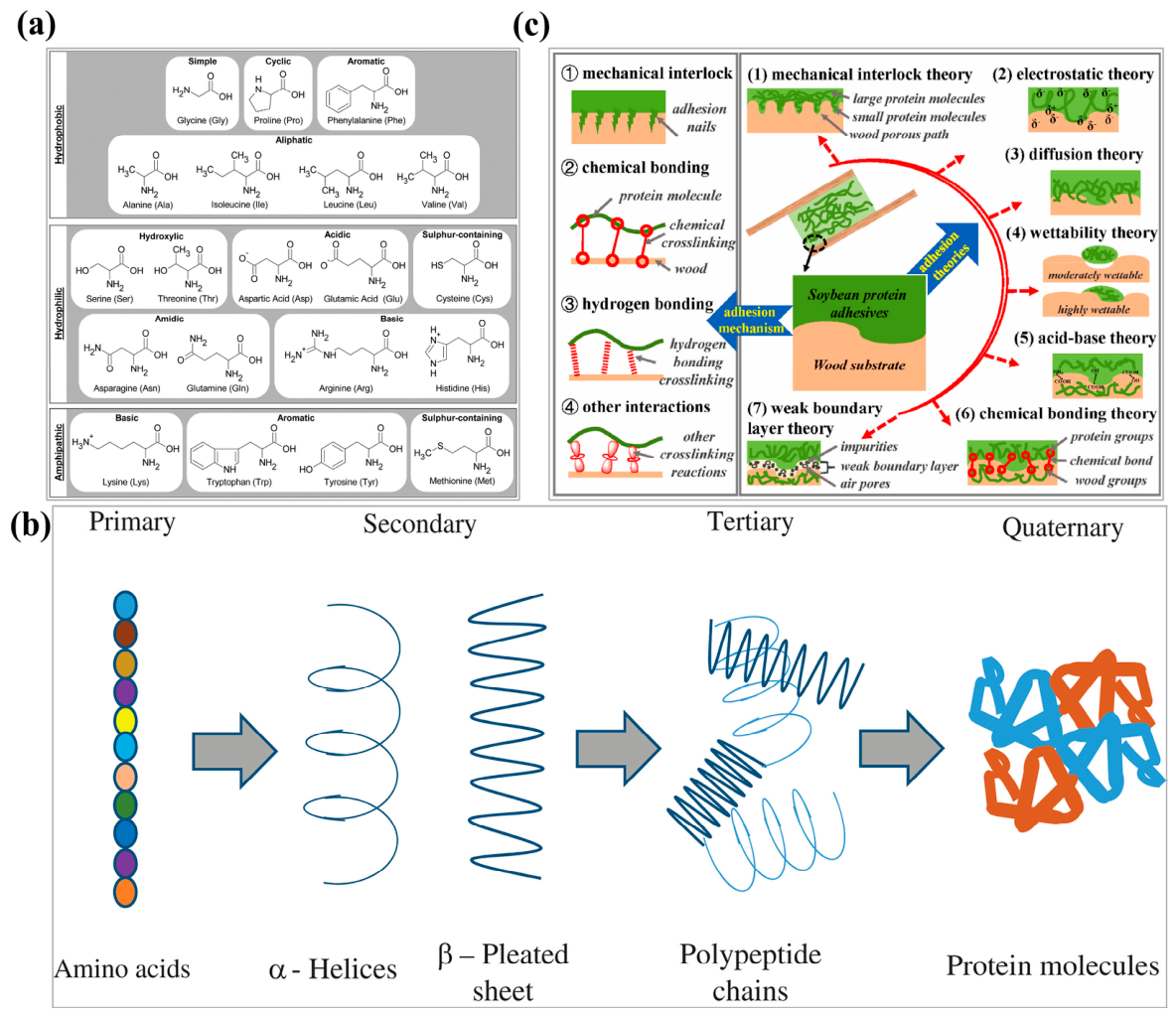
Soy protein contains about 40% protein and 20% oil [31]. The remaining components primarily consist of carbohydrates (including soluble sugars and polysaccharides such as stachyose and raffinose), dietary fiber, ash (minerals), and moisture. The exact composition varies depending on the processing method to obtain different commercial grades. Based on protein content, it is classified into three common products: defatted soy flour (SF), soy protein concentrate (SPC), and soy protein isolate (SPI) [32]. According to the Codex Alimentarius standard, these are defined as containing 50–65%, 65–90%, and ≥90% protein (dry basis), respectively. SPI has the highest protein content, about 90%. Proteins are linear polyamides made of amino acids linked by peptide bonds, comprising up to 20 distinct types. Depending on interactions between side chains and water molecules (Figure 1a), amino acids are classified as hydrophilic, hydrophobic, or amphiphilic [33,34]. Proteins exhibit primary, secondary, tertiary, and quaternary structures (Figure 1b), which are stabilized mainly by weak intermolecular forces such as hydrogen bonds, electrostatic interactions, van der Waals forces, disulfide bonds, and hydrophobic interactions. Amino acids form covalent peptide bonds through dehydration-condensation reactions, and the resulting polypeptide chains constitute the primary structure. Polypeptide chains further fold into secondary structures stabilized by hydrogen bonds: (i) α-Helices, short sequences of consecutive amino acids, and (ii) β-Pleated sheet, crystalline regions formed by non-adjacent segments through hydrogen and hydrophobic bonding, often interspersed with anti-parallel turns and random coils [35]. The tertiary structure mainly results from hydrophobic interactions within secondary structures, along with side-chain hydrogen bonds, ionic bonds, and van der Waals forces. It is stabilized by hydrophobic cores formed within helical and sheet segments, together with reverse turns and random coils [36]. The quaternary structure forms through the aggregation of multiple tertiary polypeptides, stabilized by hydrophobic interactions, disulfide bonds, and hydrogen bonds [37]. Changes in secondary, tertiary, and quaternary structures allow proteins to express specific biological and physicochemical properties. Furthermore, the protein surface contains diverse functional groups that can bond with polar and nonpolar wood components, thereby enhancing interactions between soy protein adhesives and substrates [38]. Processing conditions or chemical modifications can be adjusted to tailor protein properties for specific applications. Soy protein is composed of about 10% albumin and 90% globulin. One functional conformation of globular proteins is a branched bead-on-a-string structure that forms three-dimensional gels able to capture large amounts of water [39]. Such large aggregates may contribute to the adhesive strength of protein-based adhesives.
Adhesion refers to the interatomic and intermolecular interactions occurring at the interface between two surfaces. Studying adhesion mechanisms helps to explain material surface properties. In general, three primary adhesion mechanisms are recognized: mechanical interlocking, physical bonding, and chemical bonding [40,41,42]. Wood-based substrates contain abundant surface functional groups, particularly hydroxyl groups that readily form hydrogen bonds with amino acid side chains. They also exhibit anisotropy and inherent porosity. Hydrogen bonding plays a key role in the interactions between polar adhesive polymers, hemicellulose, and cellulose, which are rich in hydroxyl groups at the interface. The porous structure enables deep adhesive penetration, resulting in strong mechanical interlocking. Mechanical interlocking may dominate bonding in porous substrates such as wood, depending on the size and geometry of the interlocking sites. A critical property of adhesives is their ability to spread and wet the wood surface, ensuring contact with its molecular structure. Therefore, soy protein-based adhesives must have sufficient fluidity to ensure close surface contact. Such fluidity is essential for enabling molecular-level interactions with the wood surface. Adhesion between proteins and wood can be explained by seven theoretical models (Figure 1c): mechanical interlocking, chemical bonding, electrostatic, diffusion, adsorption, acid–base, and weak boundary layer theories [43].
Figure 1.
(a) Classify amino acids based on interactions between side chains and water molecules. Reproduced with permission from reference [33]. Copyright 2016, Taylor & Francis. (b) Structure of Protein Molecules. Reproduced with permission from reference [37]. Copyright 2021, John Wiley and Sons. (c) Soy Protein Adhesive-Adhesion Theory for Bonded Wood Composites. Reproduced with permission from reference [43]. Copyright 2024, Elsevier.
3. Functional Enhancement Modification of Soy Protein Adhesives
3.1. Strength and Toughness Enhancement Modification
The inherently weak intermolecular interactions (predominantly hydrogen bonds and van der Waals forces) and the low content of reactive functional groups in the native soy protein structure are the primary reasons for its poor bonding performance and high brittleness. The central challenge, therefore, is to optimize the cross-linked protein structure during curing to construct a more stable, multi-scale network that can effectively resist external forces. This section explores three primary design principles for achieving this goal: (1) employing crosslinkers of varying molecular architectures (e.g., small molecules, oligomers, or polymers) to modulate cross-link density and introduce sacrificial bonds for energy dissipation [44]; (2) using denaturants (e.g., SDS, enzymes) to unfold protein molecules and expose previously buried reactive sites for enhanced interaction with both the crosslinker and the wood substrate; and (3) applying biomimetic design to create hierarchical structures that combine both strength and toughness through multi-phase and multi-scale architectures. The following examples from the literature illustrate how these principles are being implemented and their relative effectiveness.
A range of strategies has been employed to address the strength-toughness trade-off inherent in soy protein adhesives. By forming covalent or non-covalent interactions between cross-linking agents and soy protein molecules, cross-linked networks can be constructed to resist external destructive forces [45]. Zhao et al. used a thermally driven dual-functional elastomer as a novel cross-linking agent, thereby optimizing cross-link density and promoting intermolecular interactions, resulting in simultaneous improvements in strength and toughness [46]. Jiang et al. synthesized a multi-functional cross-linking agent, diadipic acid diglycidyl ester (DADE), incorporating long aliphatic chains. This modification improved both wet adhesion strength and toughness. With 4% DADE, the wet adhesion strength of the soy protein adhesive reached 1.57 MPa. Fracture surface micrographs and force–distance curves from shear tests further confirmed that DADE significantly improved adhesive toughness [47]. This enhancement is attributed to a dual mechanism: (i) the epoxy groups in DADE react with the hydrophilic amino and carboxyl groups of soy protein, forming a covalently cross-linked network that effectively resists water penetration and increases cohesive strength; and (ii) the incorporation of flexible long aliphatic chains from DADE introduces a plasticizing effect within the rigid protein matrix, allowing for significant energy dissipation through chain slippage and segmental movement under stress, thereby improving toughness without sacrificing network integrity. Wang et al. developed a novel dual-network soy-based adhesive containing nano-crosslinkers (aldehyde and dopamine), cellulose nanofibers, and OCNF-CA (aldehyde- and dopamine-functionalized cellulose nanofibers). Another successful approach is the construction of multi-scale hierarchical structures, as demonstrated by Wang et al., who integrated nano-crosslinkers within a dual-network architecture. This design leverages the concept of energy dissipation via sacrificial hydrogen bonds at the nanoscale, a key principle in many tough biological materials. The combination of covalent nanofiber–protein interactions (providing elasticity and structural integrity) and reversible hydrogen bonds (providing energy dissipation) achieved both strengthening and toughening of the adhesive [48]. These studies collectively demonstrate that the key to overcoming the strength-toughness dilemma lies in designing networks with both permanent (load-bearing) and sacrificial (energy-dissipating) bonds.
Denaturants alter the structure of soy protein by unfolding molecules into a loose, disordered conformation, thereby exposing more hydrophobic subunits and enhancing interactions between the adhesive and substrate. They unfold protein molecules and expose internal hydrophobic groups, which reduces water intrusion and improves mechanical strength, water resistance, and toughness. Xu et al. hydrolyzed soybean protein into peptide chains using bromelain and added triglycidyl amine (TGA) to prepare a bioadhesive. The wet shear strength of the SPI/bromelain/TGA adhesive increased by 681.3%, reaching 1.25 MPa. The resulting cross-linked structure showed improved thermal stability and toughness after enzymatic treatment [49].
Nature provides a wide range of advanced materials with unique mechanical properties, whose structural designs span from the nanoscale to the macroscale. Examples include mussels, oysters, shells, dragonfly wings, and spider silk. These natural materials inspire the design of green, sustainable, multi-functional materials. The exoskeletons of arthropods show remarkable mechanical properties, mainly due to phenolic chemistry and mineral-reinforced organic–inorganic hybrid structures [50,51]. Phenol–amine chemistry entails covalent cross-linking between amine polymer matrices (e.g., proteins or chitin) and phenolic compounds (e.g., dopamine derivatives), forming a backbone network. Hydrogen bonds between dopamine derivatives and amine polymer matrices provide toughness to arthropod cuticles by dissipating energy. Drawing on the structural design of arthropod cuticles, incorporating organic–inorganic hybrid multi-bonded architectures into soy protein adhesives may enhance their performance [52,53]. Taking cues from snail mucus, Zhang et al. mimicked its complex structure and intermolecular interactions to design a soybean meal-based adhesive that integrates electrostatic interactions and hydrogen bonds, achieving high mechanical strength and pre-compression performance. Phytic acid-functionalized boron nitride nanosheets (PA@BNNSs) with opposite charges and quaternized chitosan (QCS) were blended with soybean meal (SM) to produce a biomimetic adhesive. Incorporating PA@BNNSs enhanced cohesive strength and toughness, raising the wet shear strength from 0.69 MPa to 1.50 MPa [54].
Drawing inspiration from the chemistry of boric acid in plant cell walls and the microstructure of dragonfly wings (Figure 2a), researchers produced a robust, tough, waterproof, mold-resistant, weather-resistant, and flame-retardant bio-based adhesive by rationally assembling SM, quaternary ammonium-functionalized chitosan (QCS), and molybdenum disulfide (MoS2). The modified adhesive achieved shear strength and fracture toughness of 1.58 MPa and 0.87 J, representing increases of 409.7% and 866.7% over those of the pure SM adhesive [55]. The integration of soft QCS segments and rigid MoS2 nanosheets creates a hierarchical structure reminiscent of the tough, energy-dissipating architecture found in dragonfly wings. In this system, the soft QCS matrix provides extensibility and dissipates energy through viscoelastic deformation and chain slippage, while the rigid MoS2 nanosheets bear the load and deflect propagating cracks. The boric acid-derived cross-linking chemistry further reinforces the network through reversible covalent bonds (borate esters) that can break and reform, providing an additional energy dissipation mechanism. Hu et al. developed a multi-functional soy protein adhesive. Compared with the original SPI, the modified adhesive showed dry and wet shear strengths of 2.01 MPa and 1.21 MPa, representing increases of 130% and 200%, respectively [56]. Emulating the structure of animal keratin, Huang et al. developed a strong, reusable adhesive (Figure 2b). This adhesive effectively bonded diverse substrates, enabling stainless steel plates to tow a 1135 kg car. In accelerated aging tests, it exhibited weather resistance comparable to phenolic resin (PF) adhesives [57]. Taking cues from the wet adhesion of mussels and the organic–inorganic mineralization of oysters, a catechol structure was grafted onto soybean protein molecules (SPU) through ring-opening reactions and radical polymerization. Subsequently, magnesium hydroxide with unsaturated bonds was synthesized and blended with SPU to form an organic–inorganic hybrid adhesive. The composite exhibited high stiffness and micro-adhesion, with dry and wet shear strengths of 1.07 MPa and 2.03 MPa, respectively [58]. Jiang et al. synthesized melamine–urea–formaldehyde prepolymers (MUFP) and incorporated them into SPI adhesives as cross-linking agents in varying amounts. At 2% MUFP, the wet shear strength of plywood increased by 115.9% over SPI adhesive, reaching 1.36 MPa [59]. The improvement is attributed to the multiple reactive sites (hydroxymethyl and epoxy groups) on MUFP, which can react with both amino and carboxyl groups on soy protein molecules, creating a densely cross-linked network. The melamine and urea components also contribute to hydrogen bonding with the protein matrix, further enhancing the network’s resistance to water penetration. These studies demonstrate that biomimetic design can markedly improve the water resistance, toughness, and strength of plant-based protein adhesives.
Figure 2.
(a) Plant-based protein adhesive inspired by the microscopic structures of wood cell walls and dragonfly wings. Reproduced with permission from reference [55]. Copyright 2024, American Chemical Society. (b) Preparation Process and Key Properties of BSPI/Cys/Gly/St/CaP adhesives. Reproduced with permission from reference [57]. Copyright 2024, Elsevier.
In summary, while simple cross-linking with commercial epoxies offers the most straightforward route to improved performance, its ability to simultaneously enhance toughness is limited by the inherent rigidity of the cross-links formed. Biomimetic approaches, though more complex and costly, provide superior results by introducing energy-dissipating mechanisms at multiple scales—from sacrificial hydrogen bonds to hierarchical structures. Organic–inorganic hybrid systems offer a middle ground, providing multi-functionality (e.g., flame retardancy) at moderate cost, but they face challenges with nanoparticle dispersion. The choice of strategy should therefore be guided by the specific application requirements, economic constraints, and the desired balance between strength, toughness, and additional functionalities.
3.2. Highly Water-Resistant of Soy Protein Adhesive
The inherent hydrophilicity of soy protein—arising from abundant polar amino acid residues (e.g., glutamine, asparagine, serine)—and the instability of its intermolecular interactions in the presence of water are the primary causes of its poor water resistance. Upon water exposure, hydrogen bonds are disrupted, the protein matrix swells, and the cohesive integrity of the adhesive is lost. This section reviews three main strategies developed to overcome this limitation: (1) chemical cross-linking to form stable covalent networks that are resistant to hydrolysis; (2) the introduction of hydrophobic components to create a physical barrier against water penetration; and (3) the construction of dense, multi-network structures that prevent water diffusion and maintain structural integrity.
Various cross-linking agents have been used to modify the molecular structure of soy protein, thereby improving the water resistance of soy protein-based adhesives. A one-pot synthesis using triethylenetetramine (TETA) and 1,6-hexanediol glycidyl ether (BEPH) produced a polymer that served as the cross-linking agent for soy protein-based adhesives. Epoxy groups formed stable chemical bonds with hydrophilic groups on soy protein molecules, creating a dense cross-linked network. The flexible long chains of the cross-linking agents enhanced adhesive toughness. The dry and wet bonding strengths increased to 2.79 MPa and 1.12 MPa, representing improvements of 151% and 409% compared with the original soy protein adhesive [60]. Among the various cross-linking strategies, epoxy-based crosslinkers have proven particularly effective, as the epoxy groups readily react with amino and carboxyl groups on soy protein under mild conditions. For example, Pang et al. grafted hydrophilic groups onto bisphenol A (E44) and prepared a water-based epoxy emulsion (WEU) through phase inversion of a water-in-oil emulsion. The reactive WEU acted as a cross-linking agent, forming physical and chemical interactions with soy protein molecules to create a dense, stable network. This improved water resistance and increased the wet shear strength of the adhesive by 20% [61]. The improved water resistance is a direct consequence of two synergistic effects: (1) the hydrophobic cross-linked structure formed by the reaction of WEU with the protein, which acts as a physical barrier against water, and (2) the enhanced interfacial interactions between the adhesive and the wood substrate, which reduce the susceptibility of the bond line to hydrolytic degradation. Similarly, Zeng et al. [62] synthesized bio-based core–shell hybrids that acted as both reinforcing elements and cross-linking agents, forming multiple networks that prevented water penetration. The melamine–epichlorohydrin prepolymer (MEP) developed by Luo et al. [63] also demonstrated effective cross-linking, with water resistance increasing by 10.5%. Collectively, these studies indicate that improvements in water resistance are directly correlated with cross-link density and the hydrophobicity of the crosslinker, with more hydrophobic, multi-functional crosslinkers generally yielding better performance. In another study, Pang et al. again used carboxymethylated WFs to enhance dispersion in the soy protein matrix. The resulting adhesive reached a waterproof bond strength of 1.69 MPa, showing excellent bonding strength and water resistance [64]. Yang et al. used glyoxal–urea (GU) resin, chitosan (CS), and soybean protein isolate (SPI) as raw materials to prepare a high-strength, water-resistant, and stable adhesive. Plywood prepared at 180 °C achieved cold-water strength of 2.14 MPa, hot-water strength of 1.47 MPa, and boiling-water strength of 1.21 MPa, all exceeding the Chinese national standard requirement (≥0.7 MPa) [65].
Heat treatment modifies the structure of soybean protein. Heat-induced denaturation and aggregation markedly influence protein solubility, gelation, foaming, and emulsifying properties [66]. Studies show that dispersing soy protein in water and applying heat treatment after hot pressing can enhance the water resistance of soy protein adhesives [67]. Zhang et al. proposed enhancing the water resistance of soy protein-based wood adhesives through thermochemical treatment. In this process, repolymerization or self-cross-linking of soy protein formed a stable three-dimensional network. The resulting adhesive exhibited a hydrothermal aging wet bond strength of 1.22 MPa, indicating improved adhesive strength [68]. Heat treatment at 120 °C in the presence of hydrochloric acid enhanced the water resistance of soy protein adhesives. This thermo-acidic treatment partially unfolded and released reactive groups embedded in the globular protein structure, thereby increasing cross-linking reactivity and physical adsorption to wood. This improvement enhanced the mechanical properties of soy protein-based composites. Soy protein showed improved water resistance due to the formation of a water-insoluble network generated by the rearrangement and aggregation of unfolded protein molecules [69]. Zhang et al. treated defatted soybean flour (DSF) with sodium dodecyl sulfate (SDS), followed by cross-linking with epoxy-modified polyamide (EMPA), to enhance the water resistance of DSF-based adhesives. Repolymerization of DSF, protein–carbohydrate reactions, and chemical cross-linking with EMPA formed a solid three-dimensional network, effectively improving water resistance [70]. Zheng et al. prepared soybean meal-based adhesives (SBA) with strong bonding and water resistance by hydrolyzing carbohydrates with hydrochloric acid (HCl) and cross-linking them with soybean protein in DSF. Hydrolyzed carbohydrates converted into reactive reducing sugars that readily cross-linked with proteins, forming a network that prevented water ingress and enhanced adhesive water resistance [71]. Fan et al. developed a soy protein adhesive with good water resistance and technical applicability by combining thermal–alkali degradation, thermal–acid treatment, and protein cross-linking. Thermal–acid treatment significantly improved the water resistance of the soy protein adhesive [72].
Developing highly water-resistant soy protein adhesives through biomimetic systems is also a highly effective approach. Mimicking the catechol and disulfide bond structures in mussel proteins and hair proteins (as shown in Figure 3a), Zhang et al. prepared an adhesive using tannic acid (TA), lauric acid (LA), and soy protein (SP). Compared to unmodified SP, this bio-based adhesive exhibited a significant 146.81% increase in bond strength, reaching 2.32 MPa. Its hydrophobic cross-linked structure and effective interfacial interactions enhanced water resistance, with wet bond strength improving by 306.45% to 1.26 MPa. The adhesive demonstrated excellent underwater bonding capabilities across various substrates [73]. Zhang et al. drew on the robust adhesion properties of the brush-like structure of gecko toe pads. They synthesized a catechol-functionalized brush polymer, thereby enhancing the adhesive performance of soybean meal-based adhesives. As shown in Figure 3b, the dry and wet shear strengths of plywood, in which bonded with SF@Ca/TGA/ADD adhesive, increased by 118.8% and 750%, respectively. The ring-opening reaction between SF and TGA indicates effective cross-linking within the matrix, enhancing the system’s water resistance [74]. Following a mussel-inspired strategy, Wang et al. synthesized nanostructured layers on cellulose nanofibers (CNF) to prepare soy protein isolate adhesives with water-repellent properties and high bonding strength. Their adhesive exhibited 189% and 95% higher strength than pure resin and adhesives prepared from native fibers, respectively. The incorporation networks effectively activated lignocellulose surfaces (Figure 3c), enhancing the bonding strength and water resistance of plant-protein-based adhesives. Enhanced hydrophobic interactions between hybrids and amphiphilic protein fragments generated a sufficient moisture barrier, preventing hydrogen bond disruption between adjacent wood substrates due to water penetration [75].
Figure 3.
(a) Schematic representation of interfacial adhesion of catechols in mussel proteins and internal cohesion of disulfide bonds in hair proteins. Reproduced with permission from reference [73]. Copyright 2025, American Chemical Society. (b) Schematic Diagram of Preparation and Curing of SF@Ca/TGA/ADD Adhesive. Reproduced with permission from reference [74]. Copyright 2022, Elsevier. (c) Synthesis Routes and Adhesive Properties of pAS@CNF. Reproduced with permission from reference [75]. Copyright 2019, Elsevier.
Among the various water-resistance strategies, chemical cross-linking remains the most widely adopted approach due to its simplicity and effectiveness. However, incorporating hydrophobic components (e.g., via biomimetic design or organic–inorganic hybridization) provides additional protection against water penetration by creating a physical barrier. Notably, the biomimetic systems reported by Zhang et al. [73] and Wang et al. [75] achieved wet shear strengths exceeding 1.2 MPa, which is comparable to or even higher than many cross-linked systems, while also offering underwater bonding capability—a feature not achievable with conventional cross-linking. This suggests that, despite its greater complexity, biomimetic design offers unique advantages for applications requiring extreme water resistance.
3.3. Antimicrobial and Mildew-Resistant Modification of Soy Protein Adhesives
Soy protein is an economical, environmentally friendly natural adhesive that reduces the harm caused by conventional chemical raw materials to humans and the environment. However, because it is a natural nutrient, it is prone to mold growth and spoilage. Nutrients in the adhesive are highly susceptible to fungal and bacterial contamination, reducing the service life and long-term bonding strength of soy protein-based adhesives [76]. Moreover, soy protein adhesives may spread fungi and bacteria into living spaces, potentially causing human infections. This severely limits their application in plywood. Consequently, researchers have extensively studied the mold-resistant and antibacterial properties of soy protein-based adhesives. Current strategies mainly involve incorporating antimicrobial agents and designing functional interlocking network structures to enhance these properties [77].
Antimicrobial agents used in SP adhesives include both organic and inorganic compounds. Inorganic antimicrobials mainly consist of metal ions. Silver nanoparticles (AgNPs) possess unique physical and chemical properties. They reduce adhesive viscosity, form cross-links with soy protein, and provide outstanding antimicrobial activity through sustained Ag release, ensuring long-term antibacterial performance in plywood. Bao et al. synthesized Ag nanoparticles in situ within soy protein. The SPI-RGT-AgNP adhesive, produced by incorporating AgNPs and modified rosin acid derivatives (RGT) into soy protein, demonstrated strong mold resistance and antimicrobial activity against Escherichia coli (98.18%) and Staphylococcus aureus (99.33%) [78]. The antibacterial activity is attributed to the sustained release of Ag+ ions from AgNPs, which disrupt bacterial cell membranes, generate reactive oxygen species (ROS), and interfere with DNA replication. The RGT component, with its rigid rosin acid backbone, also contributes to the hydrophobic barrier that reduces bacterial adhesion and colonization on the adhesive surface. Jin et al. designed hyperbranched structures in SM-based resins by incorporating TA/hyperbranched silica (HBSi) and introducing multi-functional copper ions to form multiple interfacial coordination bonds. The SM/TA/HBSi adhesive exhibited antibacterial activity, with Cu2+ promoting intracellular reactive oxygen species (ROS) production, inducing oxidative stress, and disrupting bacterial cell membranes. Under humid conditions, Cu2+ disrupted bacterial helical structures, impaired physiological functions, inactivated proteins, and ultimately caused cell death. TA contributed to antibacterial activity by inactivating enzymes and surface proteins through hydrogen bonding and hydrophobic interactions with bacterial proteins [79]. Based on the adhesion mechanisms of mussels, Liu et al. modified lignin with catechol moieties. Mixing lignin, copper ions, and soy protein isolate produced a bio-based adhesive with a triple-network structure. Its wet shear strength reached 1.29 MPa, 92.5% higher than that of the original adhesive. The lignin–Cu2+ compound provided strong mold-resistant and antibacterial properties, with an inhibition zone diameter of 6.8 mm and significant inhibition of Staphylococcus aureus [80].
Natural organic antimicrobial materials offer environmentally friendly properties. Xu et al. synthesized a multi-functional cross-linking agent (DDE) (Figure 4a) by reacting soybean-derived aglycone with epichlorohydrin (ECH) and incorporated it into soy protein. Incorporation of DDE increased the dry and wet shear strengths of the adhesive by 52.3% and 164.4%, respectively. Mold resistance also improved, extending the adhesive’s shelf life and enhancing plywood durability [81]. Chen et al. used larch tannin (LT) and self-synthesized triglycidyl amine (TGA) to reinforce soy protein adhesive (SPA). Hydrogen, ionic, and covalent bonds formed between tannin and protein, while TGA cross-linking produced a dense network that enhanced water resistance. Active components in LT acted as oxygen radical scavengers and lipid peroxidation inhibitors, conferring antibacterial properties. Its phenolic hydroxyl groups extended the adhesive’s effective period by 60 h [82]. Lei et al. found that epoxy cross-linking agents provide both cross-linking capability and antifungal activity. To develop a sustainable, active epoxy-cross-linked antifungal agent, biomass-derived oxalic acid (OA) was converted into epoxy oxalic acid (EOA) with two electron-withdrawing ester groups, showing 99.93% antifungal activity. This extended the mold-resistant lifespan of soy protein adhesives to more than 30 days [83]. Chen et al. synthesized a fully biobased adhesive (STF) using bio-derived furfural and natural tannic acid to construct a biomimetic physical–chemical cross-linking network for soy protein. Furfural improved adhesive hydrophobicity by reacting with protein amines, while the synergistic effect of TA and furfural significantly improved mold resistance (Figure 4b). STF remained mold-free for 7 days and showed storage stability beyond 72 h [84]. Li et al. prepared a low-temperature, antibacterial, mold-resistant, biodegradable soy protein adhesive with high bonding performance through radical polymerization. The ring-opening reaction between G and SP grafted allyl glycidyl ether (G) onto soy protein (SP) yielded SP with unsaturated double bonds (G@SP). Radical polymerization during curing formed the cross-linked structure G@SP/A, enhancing bonding performance. Compared with pure SP adhesive, G@SP/A showed superior mold resistance with a shelf life of 35 days [85]. Lei et al. observed that tetraepoxy L-tyrosine (ETY) significantly inhibited Candida albicans growth. Both uncured and cured SP adhesives containing 3 wt% ETY exhibited mold resistance beyond 30 days at 28 °C and 80% humidity [86]. Xing et al. synthesized β@SDS with a layered structure by encapsulating the hydrophobic cavity of β-CD with the protein denaturant SDS. β@SDS bound to the SP matrix through supramolecular hydrogen bonds. Natural polyphenol GA was then introduced as a glue molecule to enhance the cross-linking network and interfacial interactions of the protein system through catechol interactions (Figure 4c). The SP–GA–β@SDS adhesive exhibited strong adhesion and cohesive strength. GA’s inherent antioxidant activity prevented fungal infection, while its polyphenolic structure inhibited microbial growth, conferring antifungal properties to the composite adhesive. β@SDS encapsulated polysaccharide components, delaying adhesive deterioration [87].
Figure 4.
(a) Preparation of highly water-resistant and mold-resistant soy protein adhesives via synthesis of multi-functional crosslinker (DDE). Reproduced with permission from reference [81]. Copyright 2020, Elsevier. (b) Fully biobased soy protein adhesive with waterproof and mold-resistant properties. Reproduced with permission from reference [84]. Copyright 2024, Elsevier. (c) Synthesis process of SP-GA-β@SDS adhesive. Reproduced with permission from reference [87]. Copyright 2024, Elsevier. (d) DCS endows SM with outstanding antibacterial performance and wet shear strength. Reproduced with permission from reference [88]. Copyright 2023, Elsevier.
Water-soluble diacetyl chitosan (DCS) was obtained by oxidizing chitosan (CS) and used to cross-link soybean meal (SM) via a Schiff base reaction (Figure 4d). The water solubility of chitosan played a crucial role in its antibacterial activity. Under acidic conditions, amino groups of chitosan become protonated and interact electrostatically with the negatively charged phospholipid bilayer of bacterial membranes. This change alters membrane permeability, leading to microbial death. Aldehyde groups irreversibly disrupt microbial cell walls and membranes, while positively charged amino groups adsorb onto microbial surfaces through electrostatic attraction, also leading to microbial death. Thus, the amino and aldehyde groups of DCS, together with Schiff base formation, enhanced the antifungal properties of SM-based adhesives [88]. Hydroxymethyl L-tyrosine (TYF), synthesized from L-tyrosine and formaldehyde, enhanced the mold resistance and bonding strength of SP adhesives. The cross-linking reaction between TYF and SP molecules, together with the condensation of TYF, strengthened intermolecular forces, producing a more stable and denser cross-linked structure. The dry and wet shear strengths of plywood increased by 49.3% and 110.1%, respectively. The modified adhesive showed no fungal erosion after six days. TYF dehydrated to form an L-tyrosine Schiff base with antibacterial and antiviral properties. Concurrently, the TYF-containing adhesive released abundant hydroxymethyl groups that decomposed to free formaldehyde, inhibiting fungal growth [89]. Based on the creeping stem structure responsible for the adhesion of tunicate larvae, Zhang et al. grafted epichlorohydrin onto aminated diacetyl starch. When incorporated into a soy protein adhesive system, the resulting adhesive achieved dry and wet bond strengths of 1.82 and 1.02 MPa, respectively. Additionally, the modified soy protein adhesive demonstrated superior mold resistance [90].
Functionalized cross-linked networks provide another strategy. Among these, constructing ionic bonds is a common method for preparing antimicrobial networks. Xu et al. designed an eco-friendly adhesive with a triple-network structure composed of covalent, hydrogen, and ionic bonds. The flexible epoxy crosslinker 1,2,3-propanetriol diglycidyl ether (PTGE) reacted with soy protein functional groups to form a covalently cross-linked network. Catechol-based tannic acid generated a hydrogen bond network, while Zn2+ ions established an ionic bond network. The triple network structure reduced adhesive viscosity by 94.3% compared with SPI adhesive, while dry and wet shear strengths increased by 33.9% and 116%, respectively. Mold resistance increased from one day to more than 15 days. Metal chelation between Zn2+ ions and catechol/catechol-3-ol groups in tannic acid further enhanced the toughness and mold resistance of the soy protein adhesive [91].
To replace the negatively charged components in slug mucus, soy protein was used, and positively charged components (CCL) were prepared from chitosan (CS) co-grafted with caffeic acid (CA) and L-arginine (LAG). This formed a multi-crosslinked network with abundant electrostatic interactions within the soy protein structure. The addition of CCL significantly enhanced the antifungal activity of ST&CCL-based adhesives, with the ST&CCL-5% cured adhesive maintaining antifungal performance for 120 days. The antifungal and antibacterial properties of the ST&CCL-5% adhesive resulted from the synergistic effects of CS, CA, and LAG in the CCL. The –NH3+ groups in CS and LAG adsorbed onto bacterial surfaces, disrupted cell membranes, and compromised their integrity, causing leakage of intracellular substances and ultimately leading to cell death [92]. A biomimetic strategy was proposed, drawing on the cleavage and reformation of disulfide bonds in hair fibers during perming. This strategy involved constructing a soybean meal (SM)–disulfide bond–chitosan (CS) structure to enhance adhesive strength, water resistance, and mold resistance. CS penetrated into the cell interior and bound to nucleic acids, thereby influencing DNA expression. Interactions between positively charged amino groups in the polysaccharide and negatively charged microbial membranes caused leakage of proteins and intracellular components, leading to inactivation. This extended the service life of the SM adhesive and enhanced the durability of laminated boards [93]. Li et al. synthesized a cationic water-based polyurethane (CWPOU) crosslinker emulsion. The crosslinker modified soybean meal resin, increasing covalent crosslinking sites between protein molecules. Grafted resorcinol groups formed multiple hydrogen bonds with proteins. The modified soybean meal adhesive exhibited dry and wet bond strengths 169.6% and 191.4% higher than those of pure soybean meal adhesive. Pure soybean meal adhesive developed white mold spots by day 5, whereas the modified adhesive showed only slight discoloration by day 20. Quaternary ammonium structures in CWPOU and catechol imparted antibacterial properties, enhancing the mold resistance of the bio-adhesive [94].
3.4. Flame Retardant Modification of Soy Protein Adhesives
Engineered wood panels used in interior decoration are combustible and pose fire hazards, potentially causing major property damage and threatening human life. Therefore, developing soy protein adhesives with strong bonding and excellent flame retardancy offers a practical strategy to enhance the durability and fire resistance of such panels. Producing flame-retardant adhesives is therefore of great importance.
Incorporating inorganic fillers into organic–inorganic hybrid adhesive systems is an effective way to achieve flame-retardant properties. Cao et al. adopted a mussel-inspired approach, grafting quaternized hyperbranched polyamide (QHBPA) and polydopamine (PDA) onto MXene surfaces. The synthesized Q-MXene hybrid was incorporated into an SPI-based adhesive with phosphochitosan (PCS), producing a nanophase-enhanced organic–inorganic hybrid adhesive. Compared with the original SPI adhesive, the modified adhesive showed a 48% increase in dry shear strength and a 113.8% improvement in wet shear strength. The peak heat release rate (PHRR) decreased by 110.8 W/g (71.5%), while the temperature rise increased by 347.4 °C. The barrier effect of MXene prevented adhesive degradation, slowed the migration of flammable micromolecules from low- to high-temperature zones, and delayed fire spread (Figure 5a). The synergistic flame-retardant mechanism involves: (i) the physical barrier effect of MXene nanosheets, which retard heat and mass transfer; (ii) the char-forming ability of phosphorylated chitosan (PCS), which creates a protective carbonaceous layer; and (iii) the nitrogen-containing groups in Q-MXene and PCS, which release non-flammable gases (e.g., NH3) that dilute the oxygen concentration in the combustion zone. Synergistic interactions among PCS, Q-MXene, and TrGA improved interfacial compatibility and crosslinking density, producing a dense cross-linked structure that limited heat, oxygen, and gas transfer [95].
Figure 5.
(a) High strength and Flame-Retardant Properties of Soy Protein Isolate Adhesive modified with Synergistic Action of Phosphorylated Chitosan and Quaternary Ammonium-Functionalized MXene. Reproduced with permission from reference [95]. Copyright 2025, Elsevier. (b) Mussel “Secretion-Hardening” and Oyster Organic–Inorganic Hybrid Systems modified Soy Protein Adhesives. Reproduced with permission from reference [96]. Copyright 2021, American Chemical Society. (c) Nano-SiO2 Modified Soy Protein Adhesive. Reproduced with permission from reference [97]. Copyright 2022, Elsevier.
Emulating the “secretion-hardening” process of mussel adhesive proteins and oyster hybrid adhesives (Figure 5b), Pang et al. blended SP with acrylic acid (AA) and ammonium persulfate (APS) to prepare adhesive precursors. Calcium sulfoaluminate (CSA) was added to the mixture to induce AA polymerization and initiate adhesive curing. Plywood bonded with the hybrid adhesive gel showed a pre-compression bond strength of 544 kPa. Flame retardancy was evaluated by cone calorimetry. Veneers coated with the SP/AA/CSA adhesive showed peak and total heat releases of 365.8 kW/m2 and 29.9 MJ/m2, respectively, indicating improved flame retardancy. This improvement was attributed to heat dissipation. During combustion, decomposition of inorganic crystals lowered the adhesive surface temperature. Furthermore, decomposition generated water, and the resulting steam diluted combustion gases at high temperatures [96]. Nanosilica (SiO2) and polyethyleneimine (PEI) were grafted with 3,4-dihydroxybenzaldehyde (DBA) through electrostatic interactions and Schiff base reactions. The resulting structure was combined with the multi-functional crosslinker hexachlorocyclotriphosphazene (HCCP) and soy protein isolate (SPI). Due to its high phosphorus and nitrogen content, HCCP formed a nitrogen–phosphorus protective layer within the adhesive. The DP@SiO2 nanohybrid improved interfacial compatibility between the flame retardant and SPI, increased cross-linking density, and prevented flame-retardant aggregation, thereby enhancing the flame-retardant performance of wood products. The resulting adhesive achieved a limiting oxygen index (LOI) of 39.4%, a 71% improvement over SPI adhesives [97].
Flame retardancy of soy protein adhesives can also be improved by constructing cross-linked networks incorporating substances such as phytate or borate salts. Zhao et al. developed a fully biobased SPWA with strong bonding strength, water resistance, mold resistance, and flame retardancy through a simple cross-linking reaction between soy protein isolate (SPI), furfuryl alcohol (FA), and phytate (PA). Incorporation of PA as an acidic curing agent and FA as a chemical crosslinker enhanced char formation and thermal stability in SPWAs. The highly cross-linked network and phosphorus–nitrogen synergy contributed to the flame-retardant properties [98]. Zhang et al. synthesized reactive core–shell hybrids (POSS-U) by radical polymerization, with octadienyl-POSS as the core and phenolic resin (U) as the shell. Sodium borate (SB) was added as a crosslinker, together with POSS-U and SPI, to prepare SPI/POSS-U/SB adhesives. The SPI/POSS-U/SB-2.5 adhesive showed a 25.4% reduction in peak heat release rate (to 211.3 kW/m2) and a fire performance index (FPI) of 0.07, a 41.4% improvement. This improvement was attributed to the synergistic flame-retardant effect of octavinyl-POSS and SB. Octavinyl-POSS inhibited thermal degradation of SPI molecular chains, promoted protective char formation, and suppressed combustion. SB dehydrated to form boric oxide (B2O3), creating a protective surface layer [99]. Looking to barnacles and mussels as models, Ma et al. incorporated polyvinyl alcohol (PVA) into the adhesive system to eliminate the interfacial water layer by absorbing water molecules. PDA, containing polyphenolic groups, formed strong hydrogen bonds with SF, producing functionalized SF/PDA (SPA). Compared with the SM adhesive, this adhesive showed a 267.1% increase in cold-press bonding strength and a 208.0% improvement in toughness. The pHRR and total heat release (THR) of SM/PVA/SPAB-coated boards decreased by 26.6% and 42.0%, respectively, compared with bare wood. Compared with SM-coated panels, THR decreased by 31.4%. Synergistic effects of borate and phenolic hydroxyl groups enhanced mold resistance and flame retardancy. No mold growth occurred after 20 days of storage, and the adhesive showed combustion-inhibiting behavior in fire tests [100].
Among the flame-retardant strategies, the incorporation of phosphorus- and nitrogen-containing compounds (e.g., phytic acid, phosphorylated chitosan) has proven most effective, achieving LOI values above 35% while maintaining acceptable bonding strength. The synergistic combination of organic flame retardants with inorganic nanofillers (e.g., MXene, SiO2) further enhances flame retardancy by promoting char formation and providing a barrier effect. However, the trade-off between flame retardancy and mechanical properties remains a key challenge: systems with the highest LOI values often exhibit reduced toughness or increased viscosity. Future work should focus on balancing fire safety and structural integrity.
3.5. Electromagnetic Shielding Modification of Soy Protein Adhesives
As indoor electromagnetic interference (EMI) and radiation pollution intensify, implementing effective shielding measures has become particularly critical. Given the widespread use of plywood in interior decoration, developing soy protein adhesives with electromagnetic shielding properties holds practical value and opens new opportunities for green and sustainable materials.
Emulating the inorganic–organic hybrid structure of coral shells, Li et al. prepared multi-functional soy protein isolate (SPI) adhesives by introducing layered polyaniline/phenylphosphonic acid aggregate–loaded graphene nanosheet (GNP) hybrids (SPI/PA@G). The SPI/PA@G adhesive exhibited strong bonding, enabling engineered wood composites to reach a bending strength of 19.7 MPa. The composite achieved electrical conductivity of 43,100 S m−1 and an electromagnetic shielding effectiveness of 52.1 dB. An optimal GNP content formed a highly conductive network on the wood particle surface, greatly enhancing electrical conductivity and shielding effectiveness [101] (Figure 6a). Xu et al. constructed a nanophase-enhanced organic–inorganic hybrid structure. They synthesized quaternized hyperbranched polyamide (QHBPA), modified graphene nanosheets (GNS) via cation–π interactions, and formed G-co-Q hybrids. Phytic acid was incorporated to produce a strong, multi-functional adhesive that achieved sufficient strength (1.09 MPa) and toughness. At 7.5% G-co-Q content, the laminated board reached an electromagnetic shielding effectiveness of 43 dB. Electrical conductivity reached 1560 S m−1, 275 times higher than that of SPI/PA with 0.75% G-co-Q (Figure 6b). This demonstrated a marked increase in conductivity with higher G-co-Q content [102]. Zhang et al. sequentially grafted pyrrole (PY) and dopamine hydrochloride (DOPA) onto SPI, then combined it with AgNO3 and a self-synthesized bio-crosslinker, epoxidized quercetin (EQC), to develop a bio-based adhesive. The adhesive increased dry and wet shear strengths of bonded plywood by 78% and 52.4%, respectively, and showed mold resistance (shelf life >15 days) and flame retardancy (LOI 41.3%). Due to the conductivity of PPY and Ag NPs, SPI-MA-PPY-DOPA/Ag/EQC achieved an electrical conductivity of 709 S m−1, enabling its application in reflective particleboard with electromagnetic shielding capability [103].
Figure 6.
(a) Electromagnetic shielding soy protein adhesive inspired by coral shells. Reproduced with permission from reference [101]. Copyright 2025, John Wiley and Sons. (b) Organic–Inorganic Hybrid Systems Enhance the Flame Retardancy and Electromagnetic Shielding Properties of Soy Protein Adhesives. Reproduced with permission from reference [102]. Copyright 2022, Elsevier.
To provide a clear overview of the various modification strategies, we have compiled Table 1, which systematically compares the main approaches in terms of key performance improvements, advantages, limitations, and scalability potential.
Table 1.
Comparison of main modification strategies for soy protein adhesive.
To facilitate the industrial adoption of advanced soy protein adhesives, a balanced consideration of performance and cost is essential [104]. The use of complex, multi-step synthesis routes for crosslinkers, or the incorporation of sophisticated nanomaterials (e.g., MXene, functionalized graphene), significantly increases the final adhesive cost, potentially making it less competitive with conventional UF or PF resins. The economic viability of these systems will depend on the value they add (e.g., fire safety, electromagnetic shielding) to high-end engineered wood products. A comprehensive life-cycle cost analysis, including raw material sourcing, manufacturing, application, and end-of-life disposal, is urgently needed to validate the true sustainability of these systems.
At the same time, a key yet often overlooked challenge is the trade-off between different properties. Enhancing one property often comes at the expense of another. For example, adding high loads of inorganic flame retardants to improve fire resistance typically leads to a significant increase in binder viscosity, reducing its spreadability and potentially compromising its bond strength [105,106]. Similarly, high cross-linking to maximize water resistance usually reduces chain mobility within the binder, resulting in a more brittle matrix with lower toughness [107]. Although the addition of antimicrobial agents is beneficial for mold prevention, it may interfere with the curing reactions of certain cross-linking agents, thereby affecting the final bond strength. These interactions between properties are often underexplored in the literature, underscoring the need for a more comprehensive, system-level approach to the design of next-generation soy protein adhesives. Future research should systematically evaluate the full range of properties of modified adhesives—including mechanical properties, water resistance, durability, and processability—rather than focusing on individual metrics.
4. Research Gaps and Scientific Challenges
4.1. Industrial Applicability and Sustainability
The translation of laboratory-scale achievements to industrial practice faces multiple challenges that must be addressed before soy protein adhesives can significantly displace formaldehyde-based resins. First, many high-performance strategies rely on expensive reagents and multi-step syntheses, which are not economically viable for large-scale production. For example, the use of MXene, functionalized graphene, or biomimetic catechol-modified polymers, while yielding impressive results, is currently cost-prohibitive for the plywood industry, where margins are typically thin [108]. Second, critical processing parameters such as viscosity, pot life, curing speed, and storage stability are often not evaluated under conditions that mimic actual manufacturing lines. Laboratory-scale testing typically uses idealized conditions (e.g., controlled temperature, extended pressing time) that do not reflect the constraints of industrial hot-pressing. Third, the compatibility of these new adhesives with existing plywood manufacturing equipment—including mixing, spreader, and hot-press systems—must be validated. Future work should focus on developing simple, low-cost formulations that can be easily integrated into current production processes while still delivering acceptable performance for specific applications (e.g., interior-grade panels with moderate water-resistance requirements). Collaborative efforts between academia and industry are essential to bridge this gap and accelerate the commercialization of bio-based adhesives.
Beyond technical performance, the environmental sustainability of these advanced adhesives should be rigorously assessed through life-cycle assessment (LCA). A complete LCA should consider: (i) the environmental impact of raw material production (e.g., soybean cultivation, extraction, and purification); (ii) the energy and chemical inputs required for modification (e.g., synthesis of crosslinkers, nanomaterials); (iii) the manufacturing process of the adhesive and plywood panels; and (iv) the end-of-life disposal options (e.g., biodegradation, incineration, or recycling). Such analyses are essential to validate the ‘green’ claims of these bio-based products and to identify potential environmental hotspots that may offset their advantages over formaldehyde-based resins. Preliminary studies suggest that while soy protein adhesives significantly reduce formaldehyde emissions, their overall environmental footprint depends heavily on the sustainability of the modifiers used.
4.2. Current Issues
Despite these significant advances in soy protein-based wood adhesives, several key research gaps remain unaddressed:
- (1)
- Long-term durability: The vast majority of studies focus on short-term (typically 2–24 h) water immersion tests. Systematic investigations into long-term performance under cyclic humidity and temperature conditions, as well as the aging mechanisms of these bio-based adhesives over extended service periods (months to years), are urgently needed.
- (2)
- In-service biodegradation: While the biodegradability of soy protein is touted as an advantage at end-of-life, it also poses a risk during service life. The susceptibility of these adhesives to microbial and enzymatic degradation under field conditions (e.g., in humid environments) has not been studied, and the potential release of degradation products into the surrounding environment remains unknown.
- (3)
- Lack of standardized protocols: The absence of a unified testing standard for bio-based wood adhesives severely hampers the comparison of results across different studies. Establishing an internationally recognized testing protocol—including specimen preparation, conditioning, and testing conditions—is a high priority for the research community.
- (4)
- Scale-up and manufacturing challenges: Most studies are conducted at the laboratory scale using pristine wood surfaces and idealized conditions. The performance of these adhesives under industrial conditions—where wood quality varies, pressing times are shorter, and production speeds are higher—has not been adequately evaluated. Studies addressing these scale-up challenges are essential for bridging the gap between research and industrial application.
5. Conclusions and Perspective
Based on the critical analysis presented in this review, we identify three major technological advances that have propelled the field forward: (1) the construction of multi-scale cross-linking networks (e.g., covalent–hydrogen–ionic bond synergy) that significantly enhance wet strength and toughness, with wet shear strength values now exceeding 2.0 MPa in some systems; (2) the successful integration of multiple functionalities—including antibacterial, flame retardant, and electromagnetic shielding—into a single adhesive system through organic–inorganic hybridization and biomimetic design; and (3) the adoption of biomimetic strategies that provide unprecedented performance levels by mimicking natural adhesion mechanisms and hierarchical structures.
However, several critical bottlenecks remain unresolved. First, a pervasive trade-off phenomenon exists between different properties: enhancing one property often compromises another. For example, the incorporation of high loadings of inorganic flame retardants, while improving fire resistance, often leads to a significant increase in adhesive viscosity, reducing its spreadability and potentially compromising bonding strength. Similarly, a high degree of cross-linking to maximize water resistance typically reduces chain mobility, leading to a more brittle matrix and lower toughness. Second, there is a marked lack of long-term durability data under cyclic humidity and temperature conditions, as well as a limited understanding of aging mechanisms during extended service periods. Third, the absence of standardized testing protocols severely hampers fair comparison across studies. Fourth, the high cost and complex synthesis routes of many advanced modifiers (e.g., MXene, functionalized graphene) hinder industrial scalability and economic viability.
Therefore, future research should prioritize: (i) the development of cost-effective and sustainable modification routes using industrial by-products (e.g., lignin, tannin) and green chemistry principles; (ii) systematic aging studies under realistic service conditions, including accelerated weathering and natural exposure tests; (iii) the establishment of unified international evaluation standards for bio-based wood adhesives; and (iv) the optimization of adhesive viscosity, pot life, and curing speed to ensure seamless compatibility with existing plywood manufacturing lines. A comprehensive life-cycle cost analysis, covering raw material sourcing, production, application, and end-of-life disposal, is urgently needed to validate the true sustainability of these systems.
Author Contributions
Conceptualization, Y.W. and J.S.; methodology, F.X. and C.L.; software, J.L.; validation, J.L. and Q.Z.; formal analysis; C.L. and F.X.; investigation, J.L., W.L. and F.X.; resources, W.L. and J.G.; data curation, J.L. and F.X.; writing—original draft preparation, J.L., C.L. and F.X.; writing—review and editing, M.G., C.L. and Y.W.; vis supervision, Y.W.; project administration, F.X., Y.W. and J.S.; funding acquisition, F.X. and J.S. All authors have read and agreed to the published version of the manuscript.
Funding
This research was funded by the Standardization of bamboo and wood product quality and safety testing machines (2025ZCY004) and the Development and industrialization of new technologies for processing and utilizing bamboo, as well as research and development of intelligent equipment (2025ZCY003).
Data Availability Statement
All data and materials are available on request from the corresponding author. The data are not publicly available due to ongoing research using a part of the data.
Conflicts of Interest
The authors declare no conflicts of interest.
References
- Watcharakitti, J.; Win, E.E.; Nimnuan, J.; Smith, S.M. Modified Starch-Based Adhesives: A Review. Polymers 2022, 14, 2023. [Google Scholar] [CrossRef] [Scilit] [PubMed]
- Li, C.; Zhao, Z.J.; Li, M.; Ye, Q.Q.; Li, Z.G.; Wang, Y.; Peng, W.X.; Guo, J.H.; Chen, X.M.; Li, H.Y. Constructing Ultra-Strong and Water Resistance Magnesium Oxychloride Cement-Based Adhesive for Wood Industry. Adv. Compos. Hybrid Mater. 2024, 8, 90. [Google Scholar] [CrossRef] [Scilit]
- Li, C.; Zhou, N.; Guo, P.R.; Li, M.; Wang, F.; Li, J.J.; Han, Y.F.; Wu, Z.G.; Lu, W.J. Innovative Barnacle-Inspired Organic-Inorganic Hybrid Magnesium Oxychloride Cement Composites with Exceptional Mechanical Strength and Water Resistance. Adv. Compos. Hybrid Mater. 2024, 8, 43. [Google Scholar] [CrossRef] [Scilit]
- Zhao, D.; Li, Z.; Zhang, Y.; Fu, P. The role of lignin in adhesives for lignin-based formaldehyde-based resins: A review. Biomass Convers. Biorefinery 2025, 15, 16307–16341. [Google Scholar] [CrossRef] [Scilit]
- Shao, J.; Zhang, X.; Lei, Z.; Jiang, S.; Yao, M.; Wei, Y.; Li, J. Self-Assembled Nano-Structure Domain Via the Directionally Induced of Protein-Structure Enables Robust and Industrial Scalable Biomass Adhesives. Adv. Funct. Mater. 2026, 36, e20999. [Google Scholar] [CrossRef] [Scilit]
- Yang, L.; Xing, M.; Xue, X.; Jin, X.; Wang, Y.; Xiao, F.; Li, C.; Wang, F. Preparation and Characterization of a Novel Eco-Friendly Acorn-Based Wood Adhesive with High Performance. Forests 2025, 16, 853. [Google Scholar] [CrossRef] [Scilit]
- Zhu, Z.; Yang, P.; Huang, W.; Zhou, X. Photocatalytic Oxidation of Technical Lignin to Potent Modifiers for Improving the Performance of Urea-Formaldehyde Resin. ACS Appl. Polym. Mater. 2025, 7, 7575–7588. [Google Scholar] [CrossRef] [Scilit]
- Zhou, X.; Peng, J.; Wang, W.; Essawy, H.; Du, G. A novel route to enhance the ductile performance of MF resins by addition of polyamide amine (PA). Eur. J. Wood Wood Prod. 2020, 78, 835–837. [Google Scholar] [CrossRef] [Scilit]
- Li, C.; Li, Z.G.; Wang, L.H.; Xue, X.B.; Xiao, F.; Guo, J.H.; Li, J.J.; Dong, Y.M.; Li, J.Z.; Bao, C.Y. High-Performance Phenolic Resin Reinforced by Tannic Acid-Polyethyleneimine Functionalized Multi-Walled Carbon Nanotubes for Wood-Based Panels. Macromol. Rapid Commun. 2026, 47, e00814. [Google Scholar] [CrossRef] [Scilit] [PubMed]
- Jakob, M.; Hochwallner, C.; Halbauer, P.; Al-musawi, H.; van Herwijnen, H.W.G.; Gindl-Altmutter, W.; Müller, U. Robust and dimensionally stable birch wood laminates with increased relative cellulose content and phenol formaldehyde resin impregnation. Carbohydr. Polym. Technol. Appl. 2025, 9, 100744. [Google Scholar] [CrossRef] [Scilit]
- Ma, H.; Chen, J.; He, B.; Chang, S.; Wang, J.; Jiang, S.; Han, X. High-Performance Lignin Phenolic Resin Adhesives Constructed by Modifying with Deep Eutectic Solvents and Compositing with Mos2. Constr. Build. Mater. 2026, 522, 146198. [Google Scholar] [CrossRef] [Scilit]
- Lin, C.; Xia, L.; Chen, Q.; Jiang, M.; Yuan, J.; Xie, J. In-situ surface liquefaction strategy for bamboo bonding with high-performance. Compos. Part B Eng. 2025, 297, 112288. [Google Scholar] [CrossRef] [Scilit]
- Li, R.J.; Gutierrez, J.; Chung, Y.-L.; Frank, C.W.; Billington, S.L.; Sattely, E.S. A lignin-epoxy resin derived from biomass as an alternative to formaldehyde-based wood adhesives. Green Chem. 2018, 20, 1459–1466. [Google Scholar] [CrossRef] [Scilit]
- Wang, A.; Xu, L.; Wang, Y.; Chen, X.; Du, B.; Han, Y. Preparation of High-Performance Phenolic Resin Adhesives Using Demethylated Lignin as Substitutes for Phenol. Int. J. Biol. Macromol. 2025, 328, 147528. [Google Scholar] [CrossRef] [Scilit] [PubMed]
- Ma, C.; Pang, H.; Shen, Y.; Ji, W.; Zhang, S. Oyster-inspired organic-inorganic hybrid system to improve cold-pressing adhesion, flame retardancy, and mildew resistance of soybean meal adhesive. Compos. Part B Eng. 2022, 242, 110049. [Google Scholar] [CrossRef] [Scilit]
- Zhu, W.; Chen, X.; Lee, S.H.; Lum, W.C.; Wu, J.; Zhou, X.; Zhang, J. Phosphorus-Nitrogen Synergistic Crosslinking in Cellulose Acetate-Based Macromolecular Networks: A Multifunctional Flame-Retardant Bio-Adhesive with Enhanced Durability. Int. J. Biol. Macromol. 2026, 366, 152519. [Google Scholar] [CrossRef] [Scilit] [PubMed]
- Xu, G.; Zhang, Q.; Xi, X.; Lei, H.; Cao, M.; Du, G.; Wu, Z. Tannin-based wood adhesive with good water resistance crosslinked by hexanediamine. Int. J. Biol. Macromol. 2023, 234, 123644. [Google Scholar] [CrossRef] [Scilit] [PubMed]
- Kalami, S.; Arefmanesh, M.; Master, E.; Nejad, M. Replacing 100% of phenol in phenolic adhesive formulations with lignin. J. Appl. Polym. Sci. 2017, 134, 45124. [Google Scholar] [CrossRef] [Scilit]
- Tratnik, N.; Kuo, P.-Y.; Tanguy, N.R.; Gnanasekar, P.; Yan, N. Biobased Epoxidized Starch Wood Adhesives: Effect of Amylopectin and Amylose Content on Adhesion Properties. ACS Sustain. Chem. Eng. 2020, 8, 17997–18005. [Google Scholar] [CrossRef] [Scilit]
- Zhang, X.; Zhou, Y.; Li, Z.; Zhu, J.; Ren, J.; Duan, X.; Shen, J.; Duan, X.; Pei, C. High-performance, formaldehyde-free, multi-functional nitrocellulose adhesive in various environments. Chem. Eng. J. 2025, 511, 162064. [Google Scholar] [CrossRef] [Scilit]
- Xue, X.; Hu, J.; Guo, P.; Wang, L.; Wang, L.; Dong, Y.; Xiao, F.; Li, C.; Ding, S. Cellulose-Based Composite Hydrogels for Heavy Metal Ion Removal: Recent Advances and Engineering Perspectives. Gels 2026, 12, 380. [Google Scholar] [CrossRef] [Scilit] [PubMed]
- Xu, T.; Zhang, S.; Wang, Y.; Pan, A.; Zheng, G.; Zhang, X.; Xu, Y. A bio-based soy protein adhesive with high strength, toughness, and mildew resistance. Mater. Today Commun. 2025, 46, 112474. [Google Scholar] [CrossRef] [Scilit]
- Huang, W.; Lei, Z.; Zhang, A.; Xu, R.; Shao, J.; Wang, X.; Jiang, S.; Li, J.; Li, X. Coordinatively Robust and Toughen Plant Protein Adhesives Via the Synergy of Oligomer Domain Cross-Linking and Hierarchical Dissipation Architecture. Chem. Eng. J. 2026, 537, 176116. [Google Scholar] [CrossRef] [Scilit]
- Zhang, Y.; Zhang, M.; Chen, M.; Luo, J.; Li, X.; Gao, Q.; Li, J. Preparation and characterization of a soy protein-based high-performance adhesive with a hyperbranched cross-linked structure. Chem. Eng. J. 2018, 354, 1032–1041. [Google Scholar] [CrossRef] [Scilit]
- Yin, S.; Yuan, W.; Niu, Y.; Guo, J. Chitsoan Hydrogels for Antibiotic Remediation and Dye Removal: A Review. Gels 2026, 12, 658. [Google Scholar] [CrossRef] [Scilit]
- Huang, X.; Chen, Y.; Li, J.; Li, J.; Gao, Q.; Mao, A. Development of a strong soy protein-based adhesive with excellent antibacterial and antimildew properties via biomineralized silver nanoparticles. Ind. Crops Prod. 2022, 188, 115567. [Google Scholar] [CrossRef] [Scilit]
- Dong, Y.; Cui, X.; Hughes, M.; Li, J. Effects of taurine on the thermal degradation kinetics and flammability of poplar wood. Wood Sci. Technol. 2026, 60, 47. [Google Scholar] [CrossRef] [Scilit]
- Yuan, W.; Zhou, T.; An, M.; Li, X.; Ma, T.; Cai, L.; Xia, C. Mussel-Inspired Dual-Crosslinking: Integrating Tannic Acid and Glycerol Epoxy Resin for Superior Soy Protein Adhesives. Int. J. Adhes. Adhes. 2026, 151, 104413. [Google Scholar] [CrossRef] [Scilit]
- Lang, Y.; Dong, Y.; Li, X.; Yan, Q.; Zeng, G.; Li, J. Recent Progress on the Application of Hyperbranched Polymers in Biomass-Based Adhesives for Sustainable Wood Bonding. ChemSusChem 2026, 19, e70700. [Google Scholar] [CrossRef] [Scilit] [PubMed]
- Liu, R.; Feng, X.; Cui, X.; Liu, X.; Shi, J.; Dong, Y. Influence of Rosin Emulsion Impregnation on the Properties and Mold Resistance of Bamboo. Wood Mater. Sci. Eng. 2026, 1–8. [Google Scholar] [CrossRef] [Scilit]
- Chen, S.; Wang, Q.; Shao, J.; Li, X.; Bian, Y.; Jiang, S.; Cao, Z.; Li, J. Decoupling of Bonding Strength and Water Retention in Aqueous Wood Adhesive Inspired by Plant Cell. ACS Nano 2025, 19, 15876–15885. [Google Scholar] [CrossRef] [Scilit] [PubMed]
- Tian, H.; Guo, G.; Fu, X.; Yao, Y.; Yuan, L.; Xiang, A. Fabrication, properties and applications of soy-protein-based materials: A review. Int. J. Biol. Macromol. 2018, 120, 475–490. [Google Scholar] [CrossRef] [Scilit] [PubMed]
- Vnučec, D.; Kutnar, A.; Goršek, A. Soy-based adhesives for wood-bonding–A review. J. Adhes. Sci. Technol. 2017, 31, 910–931. [Google Scholar] [CrossRef] [Scilit]
- Li, C.; Zhang, X.; Zhou, C.; Yang, F.; Liang, J.; Gu, H.; Wang, J.; Wang, F.; Peng, W.; Guo, J.; et al. Performance and mechanism of a novel bamboo-based magnetic biochar composite for efficient removal of norfloxacin. Adv. Compos. Hybrid Mater. 2024, 8, 71. [Google Scholar] [CrossRef] [Scilit]
- Frihart, C.R.; Hunt, C.G. Protein structure and wood adhesives. Ind. Crops Prod. 2025, 229, 121008. [Google Scholar] [CrossRef] [Scilit]
- Glyakina, A.V.; Galzitskaya, O.V. How Quickly Do Proteins Fold and Unfold, and What Structural Parameters Correlate with These Values? Biomolecules 2020, 10, 197. [Google Scholar] [CrossRef] [Scilit] [PubMed]
- Lamaming, S.Z.; Lamaming, J.; Rawi, N.F.M.; Hashim, R.; Kassim, M.H.M.; Hussin, M.H.; Bustami, Y.; Sulaiman, O.; Amini, M.H.M.; Hiziroglu, S. Improvements and limitation of soy protein-based adhesive: A review. Polym. Eng. Sci. 2021, 61, 2393–2405. [Google Scholar] [CrossRef] [Scilit]
- Wang, Y.; Gu, W.; Gong, Y.; Wang, T.; Hu, X.; Sui, K.; Zhao, Y.; Gao, J.; Liu, X. Biomimetic Low-Porosity Framework Membranes for Efficient Power Generation and Acid Recycling from Industrial Wastewater. Mater. Horiz. 2026, 13, 6386–6397. [Google Scholar] [CrossRef] [Scilit] [PubMed]
- Santoni, I.; Pizzo, B. Evaluation of alternative vegetable proteins as wood adhesives. Ind. Crops Prod. 2013, 45, 148–154. [Google Scholar] [CrossRef] [Scilit]
- Raydan, N.D.V.; Leroyer, L.; Charrier, B.; Robles, E. Recent Advances on the Development of Protein-Based Adhesives for Wood Composite Materials—A Review. Molecules 2021, 26, 7617. [Google Scholar] [CrossRef] [Scilit] [PubMed]
- Guo, J.; Hu, Y.; Ma, C.; Zhang, W.; Dong, Y.; Niu, Y.; Liu, S.; Zhang, Y.; Li, C. Biodegradable Hydrogels for Pb2+ Removal from Water: Design Strategies, Mechanisms, and Future Perspectives. Gels 2026, 12, 667. [Google Scholar] [CrossRef] [Scilit]
- Liu, Y.; Zhang, X.; Du, Y.; Du, X.; Zhang, Y.; Deng, L.; Li, C.; Guo, J. Functionalization of Wood for the Removal of Heavy Metal Ions from Waster Water: A Review. Forests 2025, 16, 1684. [Google Scholar] [CrossRef] [Scilit]
- Zhao, S.; Kong, D.; Lian, X.; Zhang, Y.; Xiang, S.; Fu, F.; Liu, X. A review of recent developments for applicational performances in soybean protein-bonded wood composites. Int. J. Adhes. Adhes. 2024, 132, 103676. [Google Scholar] [CrossRef] [Scilit]
- Mazzotta, M.G.; Putnam, A.A.; North, M.A.; Wilker, J.J. Weak Bonds in a Biomimetic Adhesive Enhance Toughness and Performance. J. Am. Chem. Soc. 2020, 142, 4762–4768. [Google Scholar] [CrossRef] [Scilit] [PubMed]
- Wang, Z.; Zhao, S.; Pang, H.; Zhang, W.; Zhang, S.; Li, J. Developing Eco-friendly High-Strength Soy Adhesives with Improved Ductility through Multiphase Core–Shell Hyperbranched Polysiloxane. ACS Sustain. Chem. Eng. 2019, 7, 7784–7794. [Google Scholar] [CrossRef] [Scilit]
- Zhao, S.; Pang, H.; Li, Z.; Wang, Z.; Kang, H.; Zhang, W.; Zhang, S.; Li, J.; Li, L. Polyurethane as high-functionality crosslinker for constructing thermally driven dual-crosslinking plant protein adhesion system with integrated strength and ductility. Chem. Eng. J. 2021, 422, 130152. [Google Scholar] [CrossRef] [Scilit]
- Jiang, K.; Chen, Y.; Qi, J.; Xie, J.; Huang, X.; Jiang, Y.; Zhang, S.; Jia, S.; Chen, Q.; Xiao, H. A high wet strength and toughness soy-based adhesive prepared by single cross-linking. Int. J. Adhes. Adhes. 2023, 125, 103406. [Google Scholar] [CrossRef] [Scilit]
- Wang, Z.; Kang, H.; Liu, H.; Zhang, S.; Xia, C.; Wang, Z.; Li, J. Dual-Network Nanocross-linking Strategy to Improve Bulk Mechanical and Water-Resistant Adhesion Properties of Biobased Wood Adhesives. ACS Sustain. Chem. Eng. 2020, 8, 16430–16440. [Google Scholar] [CrossRef] [Scilit]
- Xu, Y.; Xu, Y.; Han, Y.; Chen, M.; Zhang, W.; Gao, Q.; Li, J. The Effect of Enzymolysis on Performance of Soy Protein-Based Adhesive. Molecules 2018, 23, 2752. [Google Scholar] [CrossRef] [Scilit] [PubMed]
- Vincent, J.F.V.; Wegst, U.G.K. Design and mechanical properties of insect cuticle. Arthropod Struct. Dev. 2004, 33, 187–199. [Google Scholar] [CrossRef] [Scilit]
- Chung, J.S.; Katayama, H.; Dircksen, H. New functions of arthropod bursicon: Inducing deposition and thickening of new cuticle and hemocyte granulation in the blue crab, Callinectes sapidus. PLoS ONE 2012, 7, e46299. [Google Scholar] [CrossRef] [Scilit] [PubMed]
- Xu, Y.; Liu, Y.; Pan, A.; Wang, Y.; Zhang, S.; Zheng, G.; Zhang, X. Preparation of a high-performance soy-based adhesive based on biomimetic construction of organic-inorganic hybrid structure. Colloids Surf. Physicochem. Eng. Asp. 2025, 710, 136281. [Google Scholar] [CrossRef] [Scilit]
- Chen, F.; Dong, Q.; Wang, J.; Wang, J.; Fan, C.; Hu, H.; Zheng, X.; Pang, Y.; Chen, H.; Wu, S.; et al. Improving the strength and toughness performance of urea-formaldehyde adhesive using a biomimetic strategy. Eur. J. Wood Wood Prod. 2025, 83, 21. [Google Scholar] [CrossRef] [Scilit]
- Zhang, F.; Zhu, Y.; Li, H.; Aladejana, J.T.; Dong, Y.; Li, K.; Li, J.; Li, X.; Li, J. Snail mucus-inspired soybean meal adhesive with excellent mechanical strength and prepressing performance. Polymer 2025, 316, 127885. [Google Scholar] [CrossRef] [Scilit]
- Zhang, F.; Bi, Z.; Luo, J.; Dong, Y.; Li, J.; Li, X.; Jiang, S.; Wei, Y.; Li, J. Locking Water, Unlocking Performance: Lignosulfonate-Driven Topology-Engineered Hydration for High-PerformanceBio-BasedAdhesives. Adv. Funct. Mater. 2026, 36, e76465. [Google Scholar] [CrossRef] [Scilit]
- Wang, L.; Gu, W.; Wang, Z. Topology-controlled hyperbranched polyesters enable balanced soy adhesive strengthening and toughening. Ind. Crop. Prod. 2025, 237, 122309. [Google Scholar] [CrossRef] [Scilit]
- Huang, X.; Chen, Y.; Lin, X.; Li, J.; Luo, J.; Li, J.; Gao, Q.; Song, P. A reusable soy protein adhesive with enhanced weather resistance through construction of a cutin-like structure. Cell Rep. Phys. Sci. 2024, 5, 102024. [Google Scholar] [CrossRef] [Scilit]
- Li, Y.; Cai, L.; Zhang, X.; Chen, Y.; Cui, Z.; Luo, J.; Li, J.; Li, J.; Shi, S.Q.; Gao, Q. Development of a strong and multifunctional soy protein-based adhesive with excellent coating and prepressing in wet state by constructing a radical polymerization and organic-inorganic mineralization bionic structure. J. Clean. Prod. 2023, 400, 136730. [Google Scholar] [CrossRef] [Scilit]
- Jiang, K.; Lei, Z.; Yi, M.; Lv, W.; Jing, M.; Feng, Q.; Tan, H.; Chen, Y.; Xiao, H. Improved performance of soy protein adhesive with melamine–urea–formaldehyde prepolymer. RSC Adv. 2021, 11, 27126–27134. [Google Scholar] [CrossRef] [Scilit] [PubMed]
- Zeng, Y.; Xu, P.; Yang, W.; Chu, H.; Wang, W.; Dong, W.; Chen, M.; Bai, H.; Ma, P. Soy protein-based adhesive with superior bonding strength and water resistance by designing densely crosslinking networks. Eur. Polym. J. 2021, 142, 110128. [Google Scholar] [CrossRef] [Scilit]
- Pang, H.; Zhao, S.; Wang, Z.; Zhang, W.; Zhang, S.; Li, J. Development of soy protein-based adhesive with high water resistance and bonding strength by waterborne epoxy crosslinking strategy. Int. J. Adhes. Adhes. 2020, 100, 102600. [Google Scholar] [CrossRef] [Scilit]
- Zeng, Y.; Yang, W.; Xu, P.; Cai, X.; Dong, W.; Chen, M.; Du, M.; Liu, T.; Jan Lemstra, P.; Ma, P. The bonding strength, water resistance and flame retardancy of soy protein-based adhesive by incorporating tailor-made core–shell nanohybrid compounds. Chem. Eng. J. 2022, 428, 132390. [Google Scholar] [CrossRef] [Scilit]
- Luo, J.; Luo, J.; Bai, Y.; Gao, Q.; Li, J. A high performance soy protein-based bio-adhesive enhanced with a melamine/epichlorohydrin prepolymer and its application on plywood. RSC Adv. 2016, 6, 67669–67676. [Google Scholar] [CrossRef] [Scilit]
- Pang, H.; Wang, Y.; Chang, Z.; Xia, C.; Han, C.; Liu, H.; Li, J.; Zhang, S.; Cai, L.; Huang, Z. Soy meal adhesive with high strength and water resistance via carboxymethylated wood fiber-induced crosslinking. Cellulose 2021, 28, 3569–3584. [Google Scholar] [CrossRef] [Scilit]
- Yang, S.; Li, Z.; Li, X.; Lu, Y.; Zhang, J.; Du, G.; Deng, S. Constructing a green modifier by using glyoxal-urea resin and chitosan to obtain a modified soy protein adhesive with high bonding strength and excellent water resistance. Int. J. Biol. Macromol. 2025, 291, 139176. [Google Scholar] [CrossRef] [Scilit] [PubMed]
- Cao, N.; Fu, Y.; He, J. Preparation and physical properties of soy protein isolate and gelatin composite films. Food Hydrocoll. 2007, 21, 1153–1162. [Google Scholar] [CrossRef] [Scilit]
- Vnučec, D.; Goršek, A.; Kutnar, A.; Mikuljan, M. Thermal modification of soy proteins in the vacuum chamber and wood adhesion. Wood Sci. Technol. 2015, 49, 225–239. [Google Scholar] [CrossRef] [Scilit]
- Zhang, B.; Fan, B.; Huo, P.; Gao, Z.-H. Improvement of the water resistance of soybean protein-based wood adhesive by a thermo-chemical treatment approach. Int. J. Adhes. Adhes. 2017, 78, 222–226. [Google Scholar] [CrossRef] [Scilit]
- Gao, Z.-H.; Zhang, Y.-H.; Fang, B.; Zhang, L.-P.; Shi, J. The effects of thermal-acid treatment and crosslinking on the water resistance of soybean protein. Ind. Crops Prod. 2015, 74, 122–131. [Google Scholar] [CrossRef] [Scilit]
- Zhang, B.; Li, J.; Kan, Y.; Gao, J.; Zhang, Y.; Gao, Z. The Effect of Thermo-Chemical Treatment on the Water Resistance of Defatted Soybean Flour-Based Wood Adhesive. Polymers 2018, 10, 955. [Google Scholar] [CrossRef] [Scilit] [PubMed]
- Zheng, P.; Li, Y.; Li, F.; Ou, Y.; Lin, Q.; Chen, N. Development of Defatted Soy Flour-Based Adhesives by Acid Hydrolysis of Carbohydrates. Polymers 2017, 9, 153. [Google Scholar] [CrossRef] [Scilit] [PubMed]
- Fan, B.; Zhang, L.; Gao, Z.; Zhang, Y.; Shi, J.; Li, J. Formulation of a novel soybean protein-based wood adhesive with desired water resistance and technological applicability. J. Appl. Polym. Sci. 2016, 133, 43586. [Google Scholar] [CrossRef] [Scilit]
- Zhang, W.; Zhu, M.; Li, M.; Hu, R.; Chang, Z.; Zhu, C.; Ying, H. Fabrication of Unprecedented Fully Biobased Recyclable Underwater Adhesives with High Bonding Strength and Water Resistance via an Adhesion-Cohesion Balance of Bioinspired Catechol-Disulfide Bond Strategy. ACS Sustain. Chem. Eng. 2025, 13, 8193–8205. [Google Scholar] [CrossRef] [Scilit]
- Zhang, J.; Long, C.; Zhang, X.; Liu, Z.; Zhang, X.; Liu, T.; Li, J.; Gao, Q. An easy-coating, versatile, and strong soy flour adhesive via a biomineralized structure combined with a biomimetic brush-like polymer. Chem. Eng. J. 2022, 450, 138387. [Google Scholar] [CrossRef] [Scilit]
- Wang, Z.; Zhao, S.; Zhang, W.; Qi, C.; Zhang, S.; Li, J. Bio-inspired cellulose nanofiber-reinforced soy protein resin adhesives with dopamine-induced codeposition of “water-resistant” interphases. Appl. Surf. Sci. 2019, 478, 441–450. [Google Scholar] [CrossRef] [Scilit]
- Pang, H.; Ma, C.; Zhang, S. Conversion of soybean oil extraction wastes into high-performance wood adhesives based on mussel-inspired cation-π interactions. Int. J. Biol. Macromol. 2022, 209, 83–92. [Google Scholar] [CrossRef] [Scilit] [PubMed]
- Ma, C.; Pang, H.; Shen, Y.; Liang, Z.; Li, J.; Zhang, S.; Shi, J. Plant Polyphenol-Inspired Crosslinking Strategy toward High Bonding Strength and Mildew Resistance for Soy Protein Adhesives. Macromol. Mater. Eng. 2021, 306, 2100543. [Google Scholar] [CrossRef] [Scilit]
- Sun, G.; Fan, W.; Chen, H.; Gu, W.; Sui, K. Gradient-Microstructure Synergy for Self-Powered Ionic Skins with Ultrahigh Sensitivity. ACS. Appl. Mater. Interfaces. 2026, 18, 37103–37112. [Google Scholar] [CrossRef] [Scilit] [PubMed]
- Jin, S.; Li, K.; Gao, Q.; Zhang, W.; Chen, H.; Li, J.; Shi, S.Q. Multiple crosslinking strategy to achieve high bonding strength and antibacterial properties of double-network soy adhesive. J. Clean. Prod. 2020, 254, 120143. [Google Scholar] [CrossRef] [Scilit]
- Liu, Z.; Liu, T.; Li, Y.; Zhang, X.; Xu, Y.; Li, J.; Gao, Q. Performance of soybean protein adhesive cross-linked by lignin and cuprum. J. Clean. Prod. 2022, 366, 132906. [Google Scholar] [CrossRef] [Scilit]
- Xu, C.; Xu, Y.; Chen, M.; Zhang, Y.; Li, J.; Gao, Q.; Shi, S.Q. Soy protein adhesive with bio-based epoxidized daidzein for high strength and mildew resistance. Chem. Eng. J. 2020, 390, 124622. [Google Scholar] [CrossRef] [Scilit]
- Chen, Y.; Chen, M.; Luo, J.; Li, J.; Gao, Q. Effect of tannin on the bonding performance and mildew resistance of soybean meal-based adhesive. Ind. Crops Prod. 2022, 189, 115740. [Google Scholar] [CrossRef] [Scilit]
- Lei, Z.; Qi, J.; Xie, J.; Huang, X.; Jiang, Y.; Zhang, S.; Jia, S.; Chen, Q.; Xiao, H.; Chen, Y. Epoxy oxalic acid antifungal agent reinforced soy protein adhesive with long mold resistance and high bonding strength. Int. J. Adhes. Adhes. 2023, 126, 103477. [Google Scholar] [CrossRef] [Scilit]
- Chen, S.; Liu, T.; Guo, Y.; Hao, X.; Sun, L.; Guo, C.; Fan, Q.; Ou, R. Handling-friendly, waterproof, and mildew-resistant all-bio-based soybean protein adhesives with high-bonding performance via bio-inspired hydrophobic-enhanced crosslinking network. Ind. Crops Prod. 2024, 214, 118583. [Google Scholar] [CrossRef] [Scilit]
- Li, Y.; Yan, L.; Cai, L.; Xu, Y.; Li, J.; Li, J.; Shi, S.Q.; Gao, Q. Low-temperature curable and strong soy protein/allicin adhesive with excellent mildew resistance via a free-radical-polymerization curing system. Ind. Crops Prod. 2022, 189, 115768. [Google Scholar] [CrossRef] [Scilit]
- Lei, Z.; Jiang, K.; Chen, Y.; Qi, J.; Xie, J.; Huang, X.; Jiang, Y.; Zhang, S.; Jia, S.; Xiao, H. Developing a high-strength antibacterial soy protein adhesive by adding low amount of tetraepoxy l-tyrosine. Polym. Test. 2022, 112, 107643. [Google Scholar] [CrossRef] [Scilit]
- Xing, J.; Jin, S.; Yu, Y.; Chen, H.; Xiao, H.; Li, K.; Li, J. Creation of strong and mildew resistant wood adhesive via high density nano-assemblies based interfacial enhancement strategy. Ind. Crops Prod. 2024, 221, 119369. [Google Scholar] [CrossRef] [Scilit]
- Chen, S.; Aladejana, J.T.; Li, X.; Bai, M.; Shi, S.Q.; Kang, H.; Cao, J.; Li, J. A strong, antimildew, and fully bio-based adhesive fabricated by soybean meal and dialdehyde chitosan. Ind. Crops Prod. 2023, 194, 116277. [Google Scholar] [CrossRef] [Scilit]
- Lei, Z.; Jiang, K.; Chen, Y.; Yi, M.; Feng, Q.; Tan, H.; Qi, J.; Xie, J.; Huang, X.; Jiang, Y.; et al. Study on the bonding performance and mildew resistance of soy protein-based adhesives enhanced by hydroxymethyl l-tyrosine cross-linker. Int. J. Adhes. Adhes. 2022, 117, 103167. [Google Scholar] [CrossRef] [Scilit]
- Zhang, J.; Zhang, X.; Long, C.; Cai, L.; Wang, G.; Liu, Z.; Liu, T.; Li, J.; Gao, Q.; Yu, H. Dual-crosslinked ascidian larvae-inspired strong soy flour adhesive with excellent coating, prepressing adhesion and mildew-resistance performance. Ind. Crops Prod. 2024, 220, 119270. [Google Scholar] [CrossRef] [Scilit]
- Xu, Y.; Han, Y.; Chen, M.; Luo, J.; Shi, S.Q.; Li, J.; Gao, Q. Constructing a triple network structure to prepare strong, tough, and mildew resistant soy protein adhesive. Compos. Part B Eng. 2021, 211, 108677. [Google Scholar] [CrossRef] [Scilit]
- Chen, Y.; Huang, X.; Wang, G.; Liu, H.; Lin, X.; Song, P.; Zhou, W.; Luo, J.; Gao, Q. Preparation of a long-term mildew resistant and strong soy protein adhesive via constructing multiple crosslinking networks. Chem. Eng. J. 2024, 492, 152045. [Google Scholar] [CrossRef] [Scilit]
- Zeng, G.; Zhou, Y.; Liang, Y.; Zhang, F.; Luo, J.; Li, J.; Fang, Z. A hair fiber inspired bio-based adhesive with high bonding strength and mildew tolerance. Chem. Eng. J. 2022, 434, 134632. [Google Scholar] [CrossRef] [Scilit]
- Li, Z.; Yan, Q.; Shen, Y.; Ma, C.; Zhang, S.; Jin, T. Thermal-driven cationic waterborne polyurethane crosslinker with oxime-based and catechol structure for the preparation of soybean protein-based adhesive with excellent adhesion properties. Int. J. Adhes. Adhes. 2023, 126, 103475. [Google Scholar] [CrossRef] [Scilit]
- Cao, F.; Xu, Y.; Hua, X.; Wang, Q.; Qiao, Z.; Fang, Z. Preparation of a multifunctional soybean protein isolate-based adhesive with enhanced mechanical and flame retardancy properties via the synergistic effect between phosphorylated chitosan and quaternary ammonium-functionalized MXene. Int. J. Biol. Macromol. 2025, 296, 139684. [Google Scholar] [CrossRef] [Scilit] [PubMed]
- Pang, H.; Ma, C.; Shen, Y.; Sun, Y.; Li, J.; Zhang, S.; Cai, L.; Huang, Z. Novel Bionic Soy Protein-Based Adhesive with Excellent Prepressing Adhesion, Flame Retardancy, and Mildew Resistance. ACS Appl. Mater. Interfaces 2021, 13, 38732–38744. [Google Scholar] [CrossRef] [Scilit] [PubMed]
- Xu, Y.; Zhang, X.; Liu, Z.; Zhang, X.; Luo, J.; Li, J.; Shi, S.Q.; Li, J.; Gao, Q. Constructing SiO2 nanohybrid to develop a strong soy protein adhesive with excellent flame-retardant and coating ability. Chem. Eng. J. 2022, 446, 137065. [Google Scholar] [CrossRef] [Scilit]
- Zhao, X.; Liu, T.; Ou, R.; Hao, X.; Fan, Q.; Guo, C.; Sun, L.; Liu, Z.; Wang, Q. Fully Biobased Soy Protein Adhesives with Integrated High-Strength, Waterproof, Mildew-Resistant, and Flame-Retardant Properties. ACS Sustain. Chem. Eng. 2022, 10, 6675–6686. [Google Scholar] [CrossRef] [Scilit]
- Zhang, Y.; Sun, L.; Li, X.; Fu, Z.; Li, Y.; Sun, W.; Sun, Y.; Huang, R.; Guo, M. Developing Eco-Friendly, High-Performance Soy Protein Plywood Adhesive via Core–Shell Hybridization and Borate Chemistry. Materials 2025, 18, 1144. [Google Scholar] [CrossRef] [Scilit] [PubMed]
- Ma, C.; Wei, J.; Cao, P.; Han, Y.; Zhang, S.; Chen, Y.; Guo, Y. Barnacle and mussel-inspired of functional silk fibroin to prepare biomass adhesive with ultra-high cold-pressing adhesion. Cellulose 2025, 32, 2383–2401. [Google Scholar] [CrossRef] [Scilit]
- Cai, L.; Zhang, X.; Li, Y.; Li, H.; Liao, S.; Luo, J.; Song, P.; Li, J.; Gao, Q.; Chen, H.; et al. A Coral Shell-Inspired Biomimetic Soy Protein Adhesive Toward Electromagnetic Shielding Wood-Based Composites. Small 2025, 21, 2502135. [Google Scholar] [CrossRef] [Scilit] [PubMed]
- Xu, Y.; Zhang, X.; Wang, G.; Zhang, X.; Luo, J.; Li, J.; Shi, S.Q.; Li, J.; Gao, Q. Preparation of a strong soy protein adhesive with mildew proof, flame-retardant, and electromagnetic shielding properties via constructing nanophase-reinforced organic–inorganic hybrid structure. Chem. Eng. J. 2022, 447, 137536. [Google Scholar] [CrossRef] [Scilit]
- Zhang, X.; Liu, Z.; Cai, L.; Zhang, X.; Long, C.; Li, J.; Li, J.; Gao, Q. Development of a strong and conductive soy protein adhesive by building a hybrid structure based on multifunctional wood composite materials. J. Clean. Prod. 2023, 412, 137461. [Google Scholar] [CrossRef] [Scilit]
- Bacigalupe, A.; Escobar, M.M. Soy Protein Adhesives for Particleboard Production—A Review. J. Polym. Environ. 2021, 29, 2033–2045. [Google Scholar] [CrossRef] [Scilit]
- Wang, W.; Zammarano, M.; Shields, J.R.; Knowlton, E.D.; Kim, I.; Gales, J.A.; Hoehler, M.S.; Li, J. A Novel Application of Silicone-Based Flame-Retardant Adhesive in Plywood. Constr. Build. Mater. 2018, 189, 448–459. [Google Scholar] [CrossRef] [Scilit] [PubMed]
- Mirski, R.; Kawalerczyk, J.; Dziurka, D.; Siuda, J.; Wieruszewski, M. The Application of Oak Bark Powder as a Filler for Melamine-Urea-Formaldehyde Adhesive in Plywood Manufacturing. Forests 2020, 11, 1249. [Google Scholar] [CrossRef] [Scilit]
- Pruksawan, S.; Lim, J.W.R.; Lee, Y.L.; Lin, Z.; Chee, H.L.; Chong, Y.T.; Chi, H.; Wang, F. Enhancing Hydrogel Toughness by Uniform Cross-Linking Using Modified Polyhedral Oligomeric Silsesquioxane. Commun. Mater. 2023, 4, 75. [Google Scholar] [CrossRef] [Scilit]
- Iravani, S.; Zarepour, A.; Nazarzadeh Zare, E.; Makvandi, P.; Khosravi, A.; Zarrabi, A. Synergistic Advancements: Exploring Mxene/Graphene Oxide and Mxene/Reduced Graphene Oxide Composites for Next-Generation Applications. FlatChem 2024, 48, 100759. [Google Scholar] [CrossRef] [Scilit]
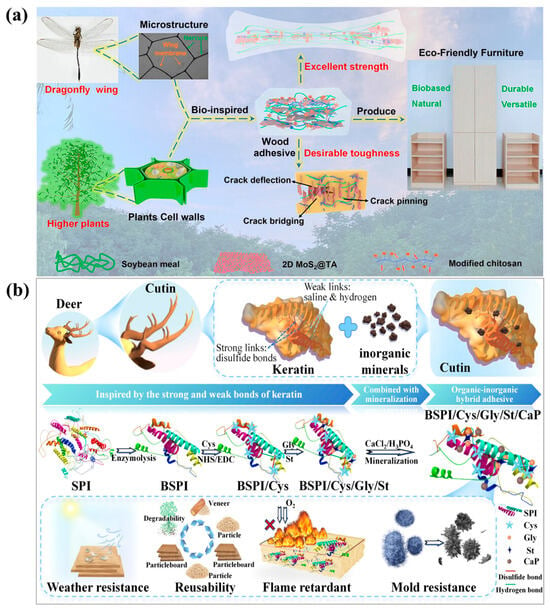
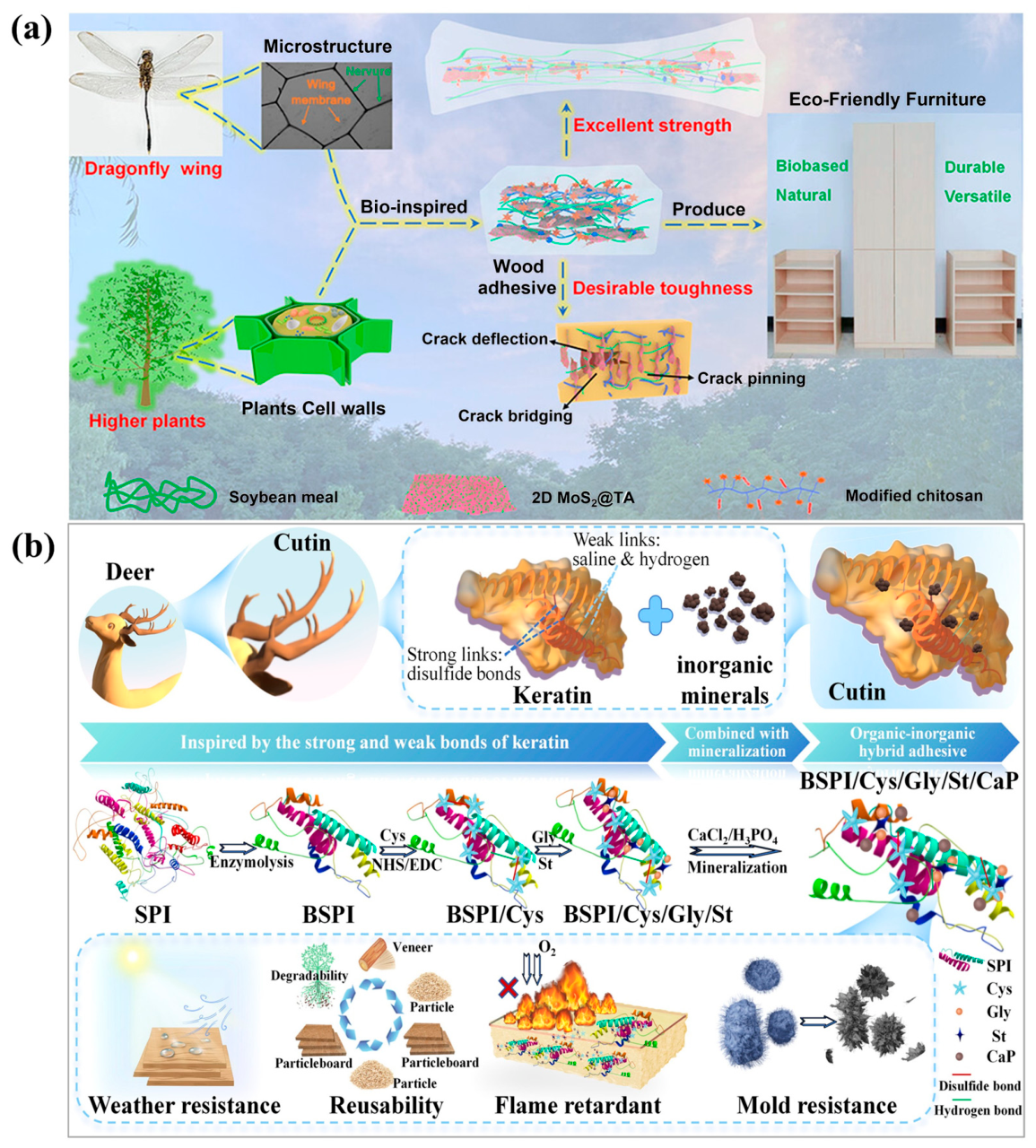
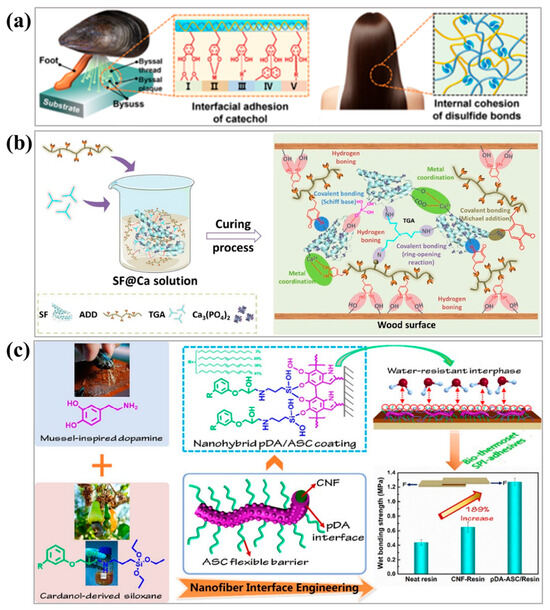
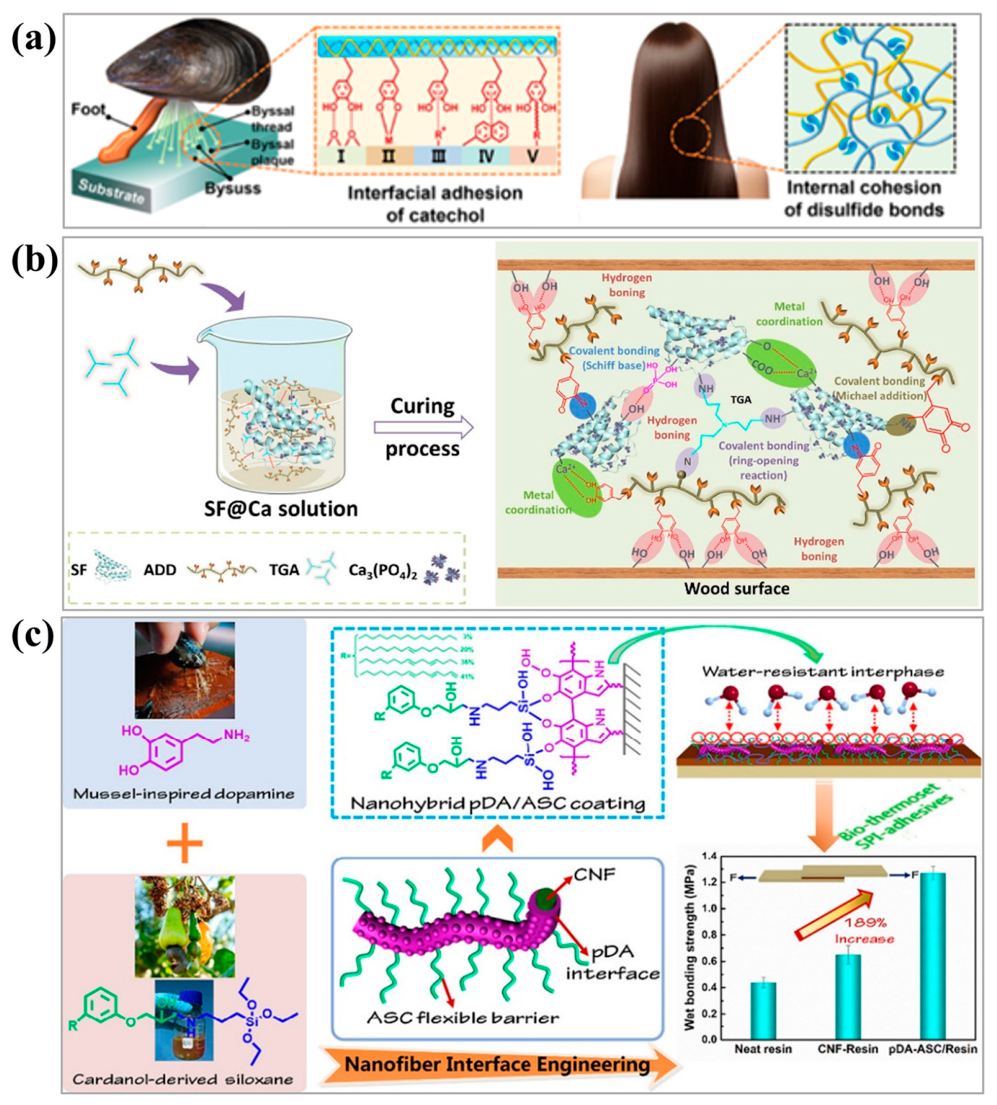
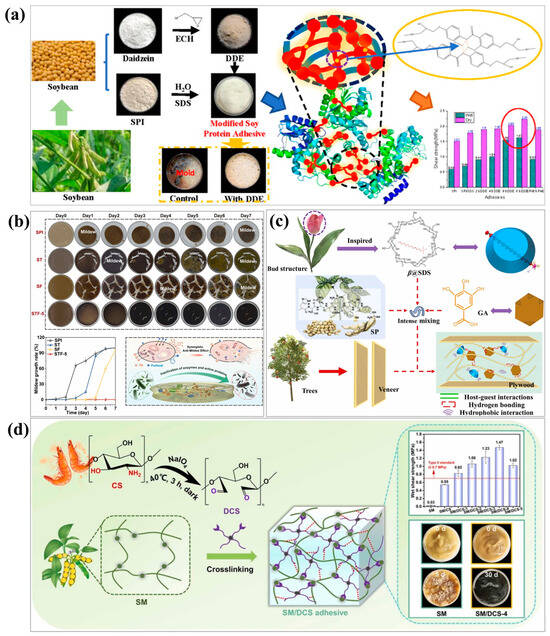
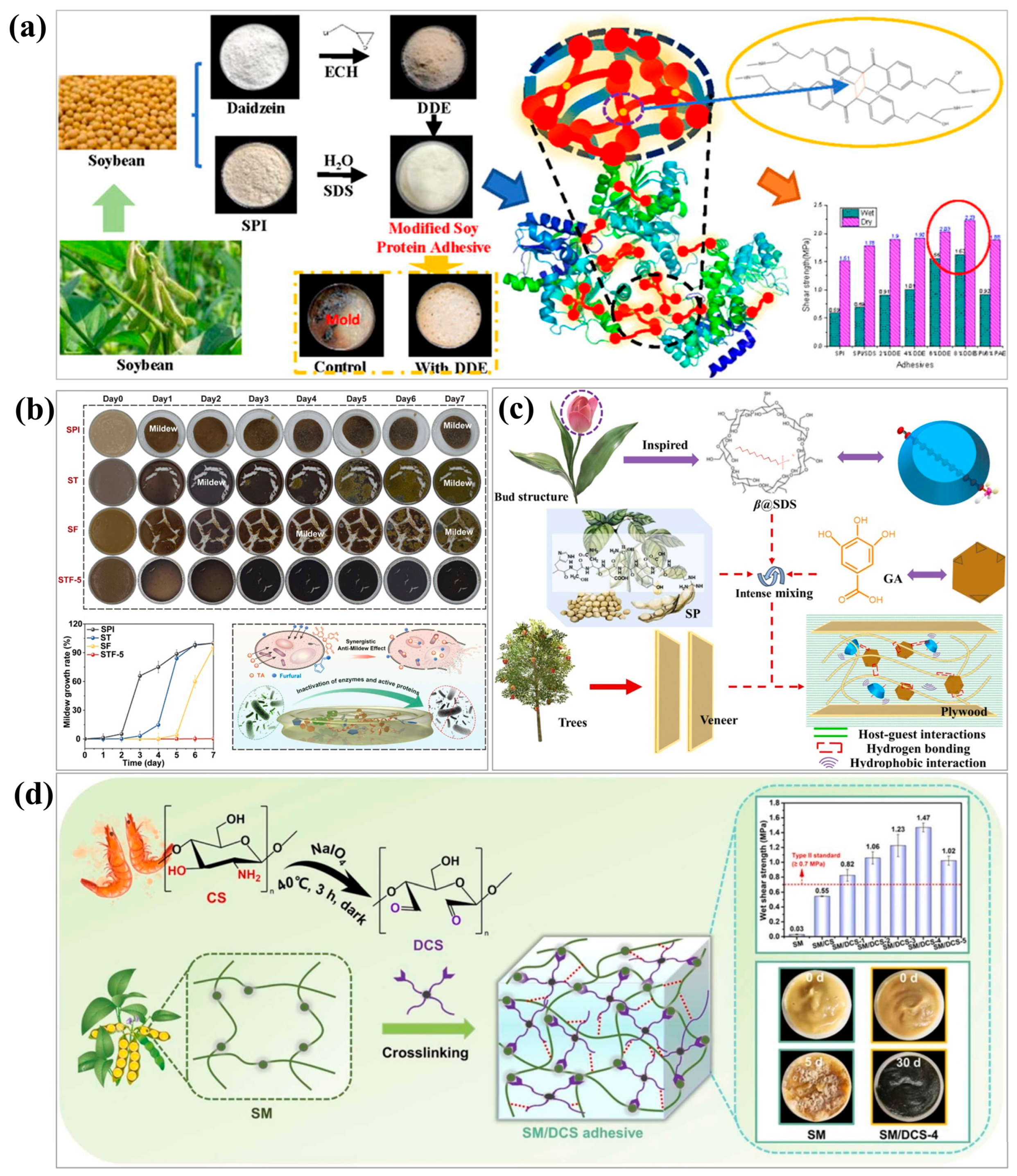
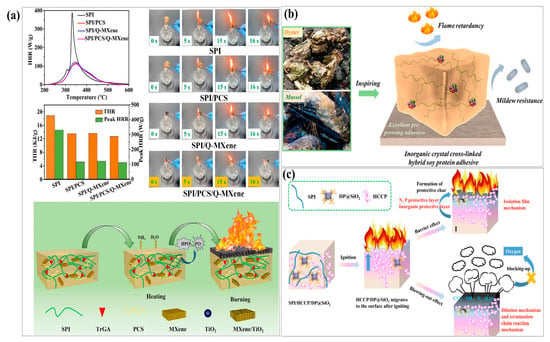
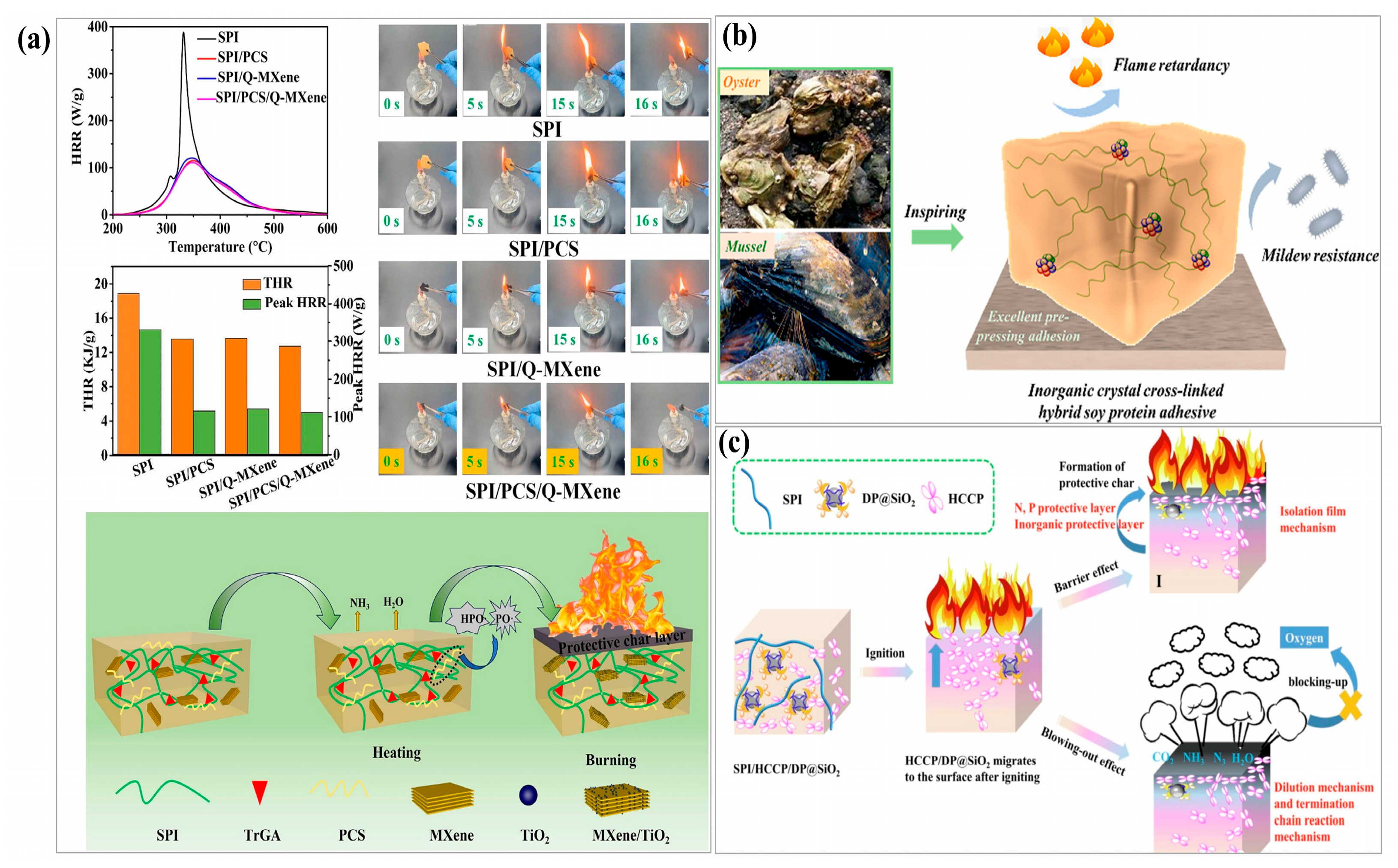
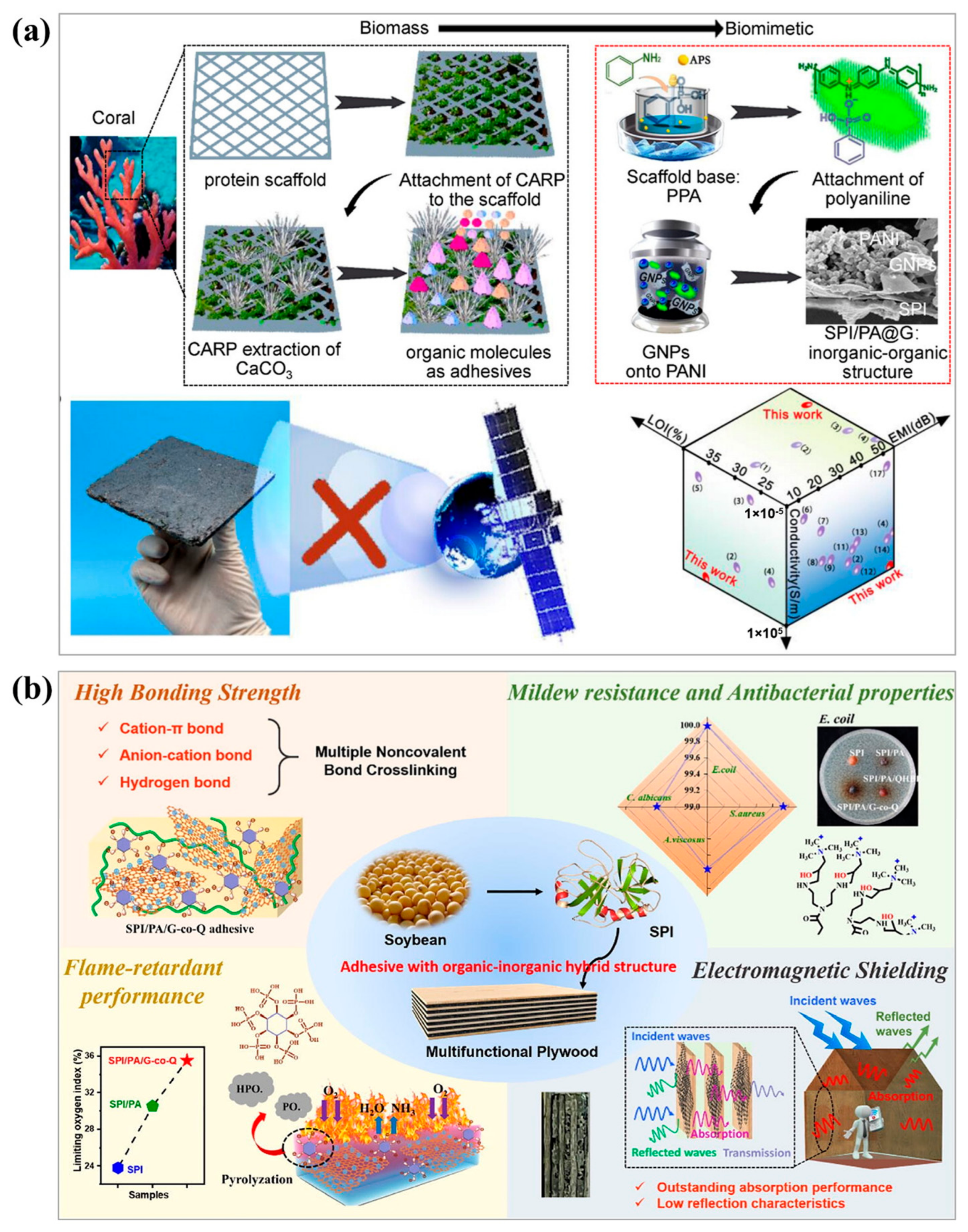

Disclaimer/Publisher’s Note: The statements, opinions and data contained in all publications are solely those of the individual author(s) and contributor(s) and not of MDPI and/or the editor(s). MDPI and/or the editor(s) disclaim responsibility for any injury to people or property resulting from any ideas, methods, instructions or products referred to in the content. |
© 2026 by the authors. Licensee MDPI, Basel, Switzerland. This article is an open access article distributed under the terms and conditions of the Creative Commons Attribution (CC BY) license.