


Abstract
Forest certification has become an important market-based tool for promoting environmental sustainability, biodiversity conservation, and improved governance across agricultural and forest production systems. This state-of-the-art (SotA) review examines forest and cocoa certification schemes in Brazil, focusing on cocoa-based agroforestry systems in southern Bahia. Major programs, including the Forest Stewardship Council (FSC), Brazilian Forest Certification Program (Cerflor), Instituto Biodinâmico (IBD), UTZ Certified (UTZ), Rainforest Alliance (RA), and Geographical Indication (GI) systems, were analyzed for implementation, sustainability outcomes, and accessibility across producer groups. This SotA review identifies persistent barriers to certification adoption, including high costs, complex regulations, limited technical capacity, and unequal access among producers. Certification adoption varies substantially among producer groups, with cooperatives playing a critical role as intermediaries that reduce barriers and facilitate market access. Finally, this SotA review proposes a conceptual classification of cocoa producers and an AI-enabled perspective for deforestation-free certification in biodiversity hotspots such as southern Bahia, offering new insights into sustainable cocoa production and forest conservation.
1. Introduction
Forest certification is widely recognized as a voluntary, market-driven instrument that promotes environmental management and supports ecosystem services, including water quality and biodiversity conservation [1,2,3]. The Programme for the Endorsement of Forest Certification (PEFC) and the Forest Stewardship Council (FSC) are the two largest forest certification systems worldwide, with more than 160 million hectares certified under FSC standards and over 295 million hectares covered by PEFC globally [4,5,6]. Established in 1993 and 1999, respectively, FSC and PEFC were designed to promote sustainable forestry practices and support smallholder and family-based forest operations [7]. PEFC currently represents the largest share of certified forest area worldwide, accounting for approximately 70% of all certified forests [8]. Forest certification requires compliance with multiple environmental, institutional, and social criteria, including sustainable forest management, protection of high-conservation-value forests, adherence to labor standards, and responsible management of non-timber forest products [9,10,11]. Although forest and cocoa certification pursue the common goal of sustainability, they differ in scope. Forest certification (e.g., FSC and Brazilian Forest Certification Program (Cerflor)) focuses on sustainable forest management, whereas cocoa certification (e.g., Rainforest Alliance (RA), UTZ Certified (UTZ), Geographical Indication (GI), and Instituto Biodinâmico (IBD)) emphasizes sustainable production, traceability, and market access. In cocoa-based agroforestry systems, however, these certification approaches are complementary because sustainable cocoa production depends on forest conservation.
In Brazil, recent developments in forest certification reflect both institutional progress and persistent governance challenges. Federal Law No. 14,590, approved in 2023, aims to facilitate carbon credit projects and environmental services within conservation units, potentially strengthening certification initiatives and environmental governance [12]. More recently, the FSC introduced a new national plantation standard that entered into force in 2025 and focused on responsible forest management practices. Brazil currently adopts several forest certification systems, including FSC and Cerflor. FSC and Cerflor have certified approximately 7 million and 4.2 million hectares of forest in Brazil, respectively [13]. Cerflor promotes the environmental, social, and economic sustainability of forest enterprises and production systems [14]. Despite the growing adoption of certification systems, existing studies remain fragmented and limited in their explanations of how forest and cocoa certification interact within cocoa-based agroforestry systems, particularly in southern Bahia. Cocoa and forest certification are discussed together in this state-of-the-art (SotA) review because cocoa trees are integral components of regional agroforestry landscapes. In Brazil, cocoa certification schemes such as RA, UTZ, GI, and IBD have become increasingly relevant in promoting sustainable production practices and market differentiation.
This SotA review critically examines the implementation of forest and cocoa certification systems in Brazil, with particular emphasis on cocoa-based agroforestry systems in southern Bahia. Specifically, the review analyzes: (i) the main certification schemes applied to cocoa production; (ii) the environmental, social, and economic barriers to adoption across producer groups; and (iii) the potential contribution of AI-enabled deforestation-free approaches to sustainable forest and cocoa management. The review provides an integrated assessment of certification adoption, governance challenges, and emerging technological opportunities within cocoa-based agroforestry systems, with particular attention to producer heterogeneity and evolving monitoring approaches. However, the literature also reveals persistent barriers, including governance limitations, certification costs, limited technical capacity, unequal access among producers, and monitoring challenges. Beyond synthesizing existing knowledge, this SotA review contributes by: (i) integrating forest and cocoa certification within tropical agroforestry systems; (ii) analyzing adoption patterns across smallholders, cooperatives, and large-scale farms; and (iii) proposing a conceptual AI-enabled deforestation-free framework tailored to biodiversity hotspots such as southern Bahia. Building upon previous reviews, this SotA review provides an integrated perspective on forest and cocoa certification within tropical agroforestry landscapes. It synthesizes and compares previous findings on certification schemes in terms of governance, implementation barriers, environmental outcomes, and market implications across different producer groups, while also highlighting the limitations and remaining knowledge gaps identified in the existing literature. Moreover, this review introduces a conceptual framework for classifying cocoa producers by their access to certification and discusses the potential of AI-enabled approaches to support deforestation-free certification in the context of emerging regulations such as the European Union Deforestation Regulation (EUDR). Together, these elements extend current knowledge by providing an integrated conceptual and practical perspective on sustainable certification systems. Beyond synthesizing the existing literature, this review contributes by (i) integrating forest and cocoa certification within agroforestry systems, (ii) proposing a producer-based analytical framework, and (iii) advancing an AI-enabled, deforestation-free certification model tailored to biodiversity hotspots such as southern Bahia.
Notably, this study is structured as follows. Following the Introduction, Section 2 outlines the methodology used. Section 3 focuses on certification experiences in Brazil. Section 4 examines cocoa certification, including IBD certification, certification and inspection in southern Bahia, and a comparative assessment of certification schemes, among other topics. Section 5 classifies cocoa producers (e.g., smallholders, cooperatives, and large-scale producers), while Section 6 discusses forest certification and market dynamics, including market benefits, consumer perceptions, and economic and trade implications. Section 7 addresses community-based forest certification in Brazil, covering stakeholder perceptions, certification challenges and benefits, and AI-enabled environmental monitoring for forest certification. Section 8 presents the application of artificial intelligence (AI) to support sustainable forest management. Finally, Section 9 presents future research directions and the conclusions.
2. Materials and Methods
A SotA review is a structured and evolving synthesis of current knowledge that emphasizes recent advances, emerging trends, methodological developments, and research gaps while proposing new perspectives for knowledge dissemination [15,16]. Accordingly, this study adopted a SotA review approach rather than a systematic review or meta-analysis, focusing on thematic integration and conceptual discussion instead of quantitative synthesis. This work examines institutional, technological, and sustainability-related developments associated with forest and cocoa certification in Brazil, with particular emphasis on agroforestry systems in southern Bahia. This SotA review pursued two main objectives: (i) to provide an overview of certification adoption in the Brazilian cocoa sector and (ii) to examine certification experiences in southern Bahia. Literature searches were conducted in the Scopus, Web of Science, and Google Scholar databases using keyword combinations related to forest and cocoa certification, agroforestry systems, sustainability, biodiversity conservation, and environmental monitoring. Search terms included “forest certification”, “cocoa certification”, “Forest Stewardship Council (FSC)”, “Cerflor”, “Rainforest Alliance”, “UTZ”, “cocoa”, “agroforestry systems”, “cabruca”, “southern Bahia”, “Brazil”, “certification adoption”, “certification barriers”, “biodiversity conservation”, “artificial intelligence”, and “machine learning”. Keywords were combined using Boolean operators (AND, OR) according to the objectives of each search. A total of 7863 records were initially identified through searches conducted in the aforementioned databases. After duplicate removal and title/abstract screening, the remaining records were assessed for thematic relevance to the objectives of this SotA review. Following this process, 92 publications were retained for detailed analysis and synthesis. The selected studies were synthesized using a thematic narrative approach. Evidence was organized into recurring themes, including certification governance, implementation barriers, producer typologies, market implications, environmental outcomes, and technological innovations. Similarities, differences, and emerging trends across certification systems were critically analyzed to develop an integrated conceptual synthesis and identify current knowledge gaps and future research directions. Studies were excluded if they were unrelated to the objectives of this review, duplicated, or lacked sufficient methodological or conceptual relevance. This SotA review included publications written in English and Portuguese between 1996 and 2025, including peer-reviewed articles, reports, and book chapters. This period was selected because it encompasses the modern development and expansion of forest and cocoa certification systems in Brazil, including the consolidation of major certification schemes and the emergence of recent technological innovations such as AI-assisted environmental monitoring. Studies were selected based on their relevance to certification systems, agroforestry sustainability, governance, cocoa production, and AI-based environmental monitoring. The reference lists of selected studies were also screened to identify additional relevant publications. Forest and cocoa certification were examined jointly because cocoa agroforestry systems, including the cabruca system, are closely associated with biodiversity conservation, forest connectivity, and sustainable production landscapes [17,18].
3. Experience of Certification in Brazil
Brazil holds approximately 12% of the world’s forests, placing it second after Russia, which holds around 20% of global forest area. At the same time, global forest area declined from 4128 million hectares in 1990 to 4059 million hectares by 2020 [19]. This decline is of particular concern because forests contribute significantly to biodiversity conservation, carbon sequestration, and the provision of essential ecosystem services [20]. Brazil leads the Southern Cone of America with respect to the share of land under forest certification [21]. A study indicated that there were 1363 companies certified by the FSC system and 60 companies certified by Cerflor in the chain of custody in the country [13]. Most certified companies are concentrated in Brazil’s southeast region, which has the highest certification density across the country, and concluded that FSC was the most prevalent certification type in some Brazilian states [13,22]. The influence of FSC and Cerflor varied across the Brazilian states and depended on multiple factors, including external market pressures and industry lobbying [23]. Certification schemes have become increasingly important in Brazil’s agricultural and forestry sectors, particularly in southern Bahia, where cocoa is traditionally cultivated under the cabruca agroforestry system.
3.1. Barriers to FSC Certification Implementation
FSC certification faces significant implementation challenges, particularly in developing countries, where legal, institutional, and governance constraints often limit adoption. In Brazil, major barriers include difficulties in complying with legal requirements for forest management, labor, health, and safety, which are essential prerequisites for certification [24]. Additional barriers include insecure land tenure, weak governance, limited institutional and political support, restricted market access for certified products, small-scale forest operations, and low consumer engagement [25,26]. Operational challenges have also been reported during FSC implementation. In Brazil, Principles 4 (community relations and workers’ rights) and 6 (environmental impacts) were identified as particularly difficult to implement [27]. These principles are intended to ensure environmentally sound, socially beneficial, and economically viable forest management, while the associated criteria are used to evaluate compliance [28]. In South America, approximately 80% of reported certification challenges were associated with certified forest management practices [29]. Climate change impacts and the protection of intact forest landscapes have become increasingly important concerns, leading to the development of new criteria and standards to strengthen forest conservation [30,31]. Additionally, a study conducted in Northwest Russia identified challenges related to the implementation of Free, Prior, and Informed Consent (FPIC), where governance responsibilities were transferred from state authorities to private actors and local communities without sufficient institutional capacity or support [32]. These findings suggest that certification effectiveness in developing countries depends not only on technical compliance but also on institutional capacity, stakeholder coordination, and the ability of producers to access financial and organizational support systems. Although forest certification has demonstrated important environmental and governance benefits, evidence regarding its long-term effectiveness remains fragmented across different regions and certification systems. Future studies should adopt standardized indicators to enable more robust comparisons of environmental and socioeconomic outcomes.
3.2. Procedures for Obtaining FSC Certification
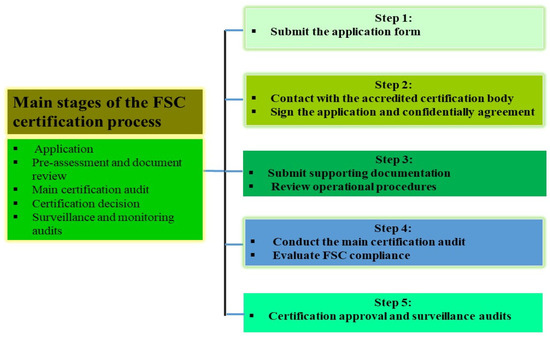
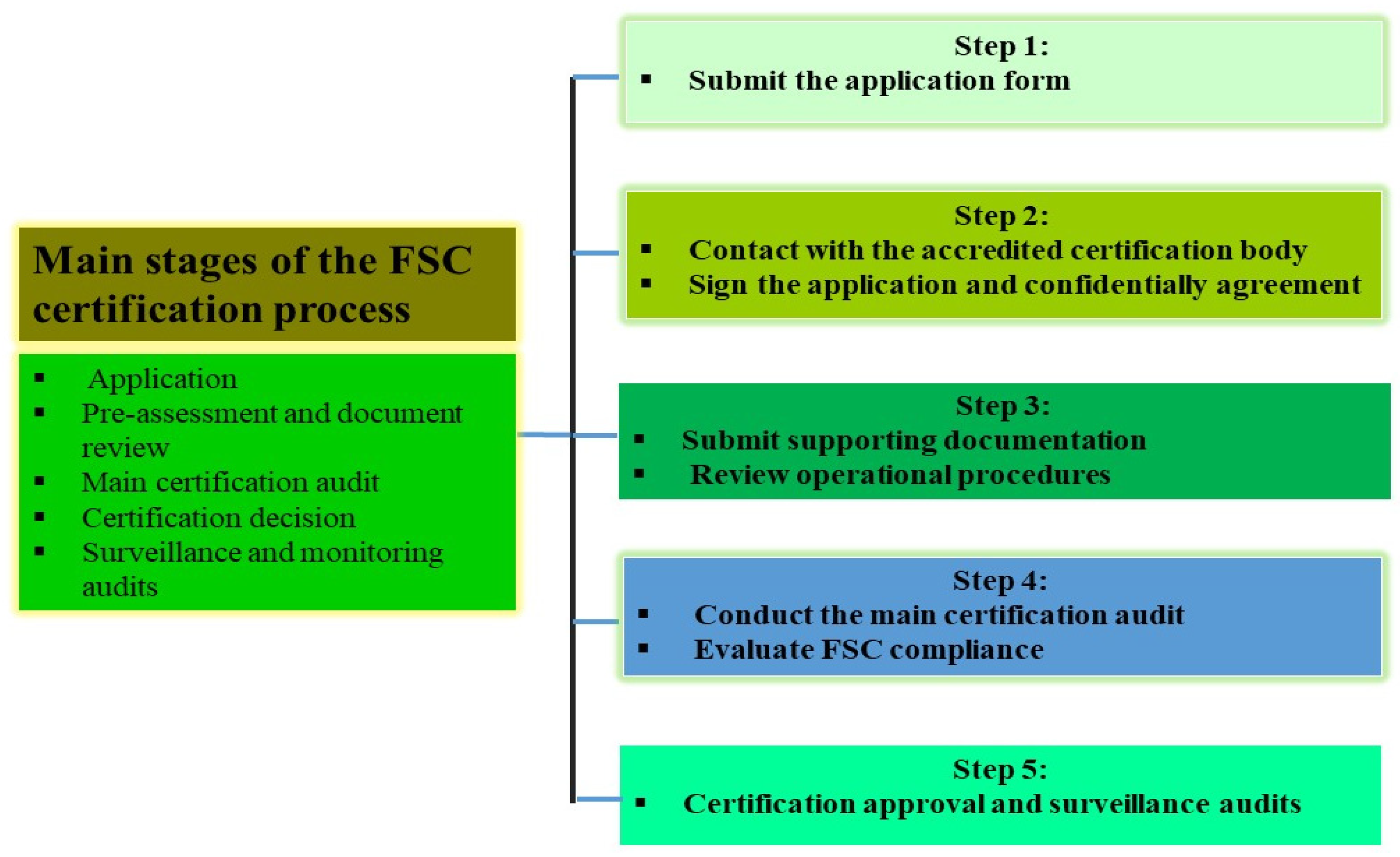
The certification process typically begins with completion of an online application form, after which an independent third-party certification body accredited by the FSC contacts the company to proceed with the formal application and confidentiality agreement [27,33]. FSC certification procedures generally include confidentiality requirements, submission of supporting documentation, and an evaluation process in which certification bodies communicate information requirements to applicants before assessment [34], as shown in Figure 1.
Figure 1.
Stepwise process of FSC certification and associated documentation.
Studies have highlighted that FSC does not issue certificates but accredits independent organizations to qualify via audits [35,36]. Authorities can develop their national FSC standards as long as they meet FSC principles and criteria; characteristics of the standard-developing group (e.g., research and expertise, socio-economic context, stakeholder dynamics, forest history, natural conditions, and attitudes toward certification); FSC international (checking the indicators and criteria); and, finally, national FSC standards [37], as illustrated in Figure 1. Notably, although the certification process appears straightforward, its administrative, technical, and financial requirements can create significant barriers for smallholders and community-based producers.
4. Case of Cocoa Products
There are different types of cocoa plantation systems, including shade and unshaded plantations. The primary cocoa certifications include Fair Trade (FT), UTZ, Instituto Biodinâmico (IBD), and Rainforest Alliance (RA) [38,39,40], which represented 22% of worldwide cocoa certification in 2012 [38]. The most commonly used type of certification in Brazil varies by state. For example, organic certified cocoa was the only type of cocoa certification that existed in the state of Pará [41], while RA certification is largely used in southern Bahia, Brazil [42].
4.1. IBD Certification
IBD is a Brazilian non-profit enterprise that inspects and certifies agricultural activities, particularly organic cultivation [43]. Cocoa-growing in the south of Bahia covers an area of approximately 92,000 km2 [44]. The main certifications used in cocoa cultivation are sustainability certification, IBD, and IG [45]. The first IBD certification took place in Ilhéus, Bahia, on a 2000-hectare cocoa area [46]. The IBD was used to certify 37 properties, and the area of conserved forest fragments corresponded to 764.95 km2 [38]. Despite the growing relevance of certification systems in southern Bahia, updated and consolidated statistics regarding the total number of certified cocoa farms and certified production areas remain limited and fragmented across different certification schemes. Existing studies mainly report isolated cases and certification-specific datasets, which makes it difficult to establish comprehensive regional estimates and adoption trajectories over time. It should be noted that cocoa was the first crop certified with the IBD organic seal [47] and contributed the most to the conservation of the Atlantic Forest [38].
4.2. Certification and Inspection in Southern Bahia
Other certifications, such as UTZ and RA, were also used to certify cocoa production in Brazil [48]. Organic certification and RA actions have been developed to boost the production of fine and organic cocoa in southern Bahia [49,50]. Importantly, IBD employs inspectors who visit properties to verify agricultural processes and ensure compliance with established norms [43]. The certification process of IBD can be done through checklists based on international standards while considering the different realities of each client and through periodically reviewed reports [43]. Studies have outlined that the GI, implemented in 2018, is the most recent certification used for cocoa in southern Bahia [51,52]. The success of certification schemes depends on consumer markets that value differentiated products and higher quality standards [46]. Certification schemes applied to cocoa production in southern Bahia differ in accessibility, environmental effectiveness, and market orientation.
FSC and Cerflor adopt stricter environmental and governance standards, but their implementation in cocoa agroforestry systems remains limited due to high costs and administrative complexity. In contrast, RA, UTZ, IBD, and GI certifications are more directly integrated into cocoa value chains and show greater adoption among producers. Certification schemes differ in their objectives and outcomes. Organic/IBD certification is generally associated with organic production and biodiversity conservation in cabruca systems, contributing to forest preservation [38], whereas RA and UTZ primarily focus on market access, traceability, and compliance with international sustainability standards [42,48]. However, the literature remains fragmented regarding their long-term socioeconomic and environmental impacts, with limited evidence on adoption continuity, abandonment trends, and outcomes for smallholders [17,53]. Despite the growing adoption of cocoa certification, quantitative evidence on its long-term impacts on biodiversity conservation, producer livelihoods, and certification continuity remains limited.
4.3. Comparative Assessment of Certification Schemes
Although several certification schemes are applied to cocoa and forest production systems in Brazil, they differ substantially in their environmental objectives, market benefits, traceability requirements, and implementation challenges. Table 1 summarizes the main characteristics of the principal certification schemes discussed in this review.
Table 1.
Comparative assessment of certification schemes relevant to cocoa agroforestry systems.
The comparison indicates that FSC and Cerflor place greater emphasis on forest conservation, biodiversity protection, and governance requirements, whereas RA and UTZ focus more strongly on sustainable agricultural practices, market integration, and supply-chain traceability. IBD Organic emphasizes organic production and biodiversity conservation, while GI primarily promotes product differentiation and territorial identity. These differences suggest that no single certification scheme simultaneously maximizes environmental conservation, market access, traceability, and accessibility. Consequently, certification systems should be viewed as complementary rather than competing approaches for promoting sustainable cocoa production and biodiversity conservation in agroforestry landscapes.
4.4. Project of Law on Cocoa-Cabruca in Brazil
The cabruca is a type of cultivation system within the forestry complex that promotes greater biodiversity maintenance [54]. Law No. 14,877 (2024) established the cacao cabruca system to promote certification focused on sustainability and social and environmental objectives in Brazilian cocoa production. This law, in Article 2, stipulates that the Green Seal of cacao cabruca may be awarded to growers who meet specific criteria. First, growers must comply with all national, state, and municipal environmental and labor laws. Second, they must cultivate cocoa under the cabruca agroforestry system within the Atlantic Forest to conserve ecological diversity and associated values, water resources, soils, ecosystems, and fragile or unique landscapes, while maintaining the forest’s ecological functions as much as possible.
A study emphasized the critical role of governments in forest certification, particularly in ensuring that such programs comply with national legislation and international commitments [55]. Also, the study highlighted that governments should carefully define the scope of their involvement in private certification initiatives to promote fairness, operational efficiency, and high-quality service delivery. This also entails addressing information asymmetries in the market to support more informed decision-making.
5. Case of Cocoa Producers
5.1. Smallholder Cocoa Challenges
To better understand the heterogeneity of certification adoption in Brazil’s cocoa sector, this review proposes a producer-based analytical framework that categorizes producers into three main groups: smallholders, cooperatives, and large-scale farms. The framework is based on structural, institutional, economic, and environmental dimensions that influence certification accessibility, monitoring capacity, market integration, and sustainability performance. Large-scale farms generally benefit from greater technical and financial capacity, while smallholders rely more heavily on cooperative structures to overcome certification barriers (see Table 2). This framework highlights key differences in certification accessibility, technical capacity, market integration, and sustainability potential among smallholders, cooperatives, and large-scale farms. Cocoa producers range from smallholders and cooperatives to large-scale farms, as shown in Table 2. Certain cocoa production practices can negatively affect environmental sustainability. Brazilian smallholders face significant obstacles in accessing and benefiting sustainably from the organic sector [56].
Table 2.
Comparative analytical framework summarizing the main structural, institutional, economic, and sustainability dimensions associated with smallholders, cooperatives, and large-scale cocoa production systems.
5.2. Cooperatives of Cocoa Producers
Farmer cooperatives are a well-established and important organizational structure for many smallholder cocoa producers. Moreover, they play a crucial role in promoting certified products and, consequently, contribute to rural development [17]. Farmers may question the advantages of maintaining their membership if cooperatives fail to deliver equitable value among members [17]. A study demonstrates that cooperative membership significantly enhances cocoa productivity and increases the income of FT producers, thereby supporting more sustainable and equitable farming systems [64]. Cooperatives play an important role in organizing smallholder farmers, facilitating access to certification programs, improving understanding of certification requirements, and strengthening market integration and supply-chain governance [65,66,67].
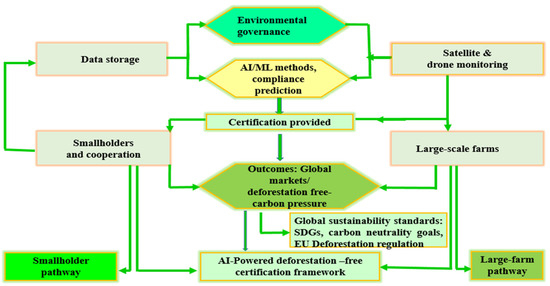
A study carried out in Peru reported that cooperatives also facilitated gender equality and enabled environmental justice for women [67]. Furthermore, a study conducted in the Ivory Coast found that cooperatives enhance supply chain traceability, which is a key element of effective certification and sustainability initiatives, particularly in major cocoa-producing countries [63]. Another study in Ecuador highlights that cooperative-based agroforestry systems promote environmental sustainability and strengthen community resilience, despite the economic challenges faced by smallholders [68]. In Brazil, smallholder producers who joined cooperatives and received technical training were more likely to pursue and maintain certification status [53], highlighting the importance of collective organization, technical assistance, and capacity building for expanding certification adoption among cocoa producers, as illustrated in Figure 2. Consistent with these findings, a study conducted in Thailand showed that smallholders with greater trust in certification systems were more inclined to adopt certified practices [69]. Certification may also improve household income. However, a recent systematic review concluded that although voluntary sustainability standards contribute to improved farming practices, traceability, and environmental management, evidence regarding poverty reduction and long-term livelihood improvements remains mixed [70].
Figure 2.
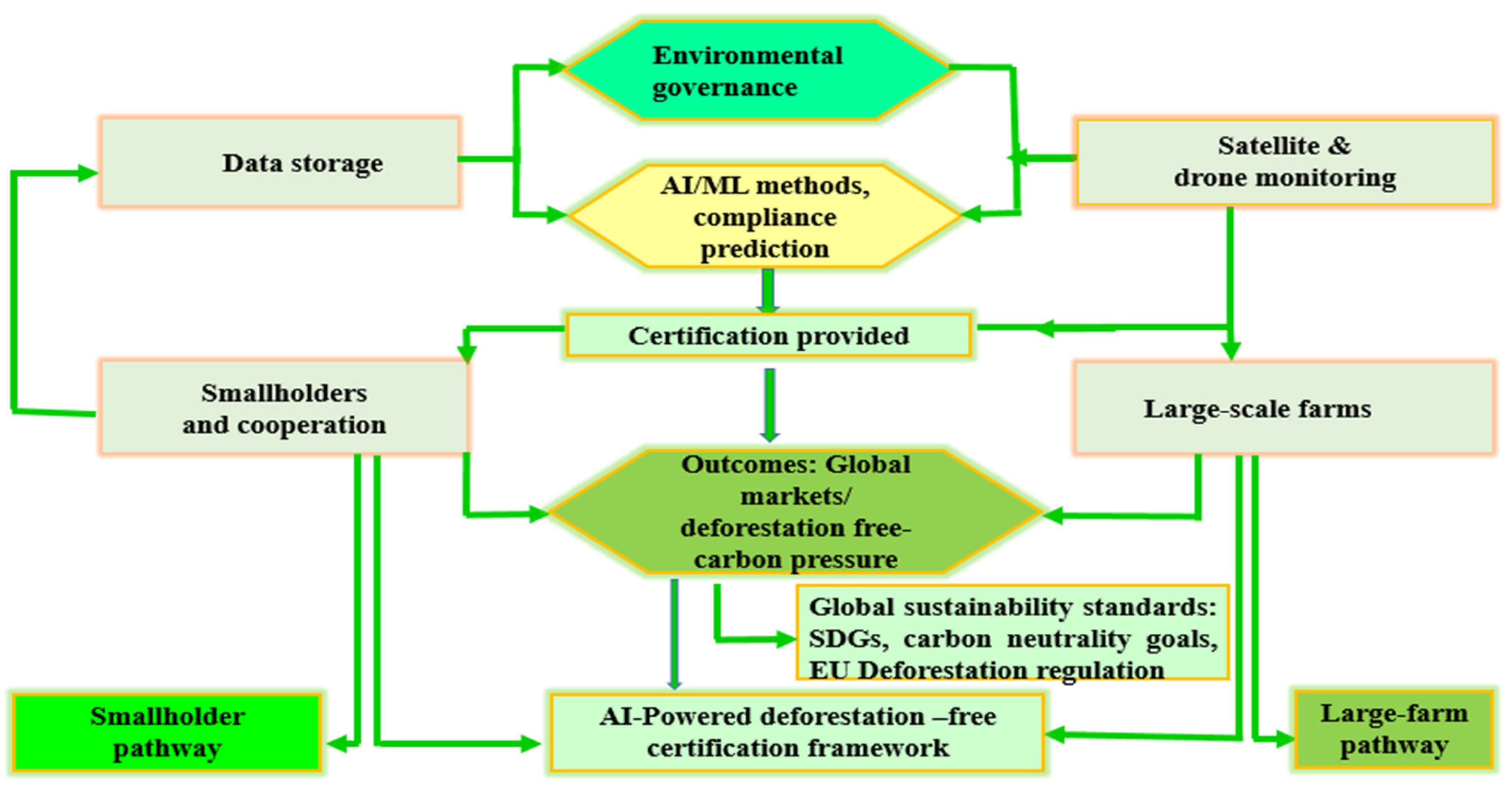
Conceptual framework illustrating the integration of AI-enabled monitoring, certification systems, environmental governance, and sustainability objectives in cocoa agroforestry landscapes.
5.3. Large-Scale Cocoa Producers
Large-scale cocoa farms are generally defined as production units exceeding 100 hectares. One or more professional managers typically manage them and rely on hired labor [57]. Brazil is currently the world’s seventh-largest cocoa producer, with major large-scale plantations concentrated in its northern and northeastern regions [71]. Compared with smallholder systems, large-scale cocoa plantations are often considered to have greater potential to contribute to sustainability objectives. This potential is particularly relevant in the context of climate change mitigation. Previous studies have indicated that large-scale producers generally possess stronger managerial capacity, better access to market information and financial services, and more advanced technical expertise [59,60], as shown in Table 2. These operations benefit from economies of scale, more streamlined land registration, improved traceability and quality control, and a greater ability to manage agricultural and climatic risks. In contrast, cooperatives are primarily composed of smallholder farmers who pool their resources to improve productivity, market access, and sustainability outcomes [72,73,74]. Large-scale cocoa farms tend to perform well in terms of management efficiency, scale, and technical capacity. Smallholder cooperatives, on the other hand, strengthen inclusiveness by providing collective support, market integration, and knowledge sharing. The proposed producer classification provides a useful conceptual framework; however, its applicability should be validated through empirical studies conducted across different cocoa-producing regions and certification systems.
6. Forest Certification and Market Dynamics
6.1. Market Benefits and Consumer Perceptions
By promoting environmental sustainability and commanding premium prices in domestic and international markets, certification incentivizes companies to adopt sustainable practices (see Figure 2). This may encourage companies with existing sustainability frameworks to self-select for PEFC certification [75]. A study indicated that certified cocoa commands price premiums varying from 4 to 20% in international markets [76]. Buyers have been reported to pay premiums of approximately 10% for cocoa certified under UTZ schemes [77]. Similarly, an average premium of around 10% has been documented for coffee certified by FT [78]. In the chocolate sector, certification enables producers to charge higher prices not only because of improved product quality but also due to the environmental and social services embedded in certified products [79]. Consumers generally have a positive attitude toward purchasing products from certified forests, although the added cost of certification affects the sale price [80]. These findings are consistent with the results of a study conducted in the European market for woody charcoal, which reported that approximately 80% of the options presented featured FSC or PEFC-certified alternatives, although the willingness to pay for certification was lower than for product origin [81].
6.2. Economic and Trade Implications
Certification serves as a mechanism to promote the economic and environmental sustainability of production processes while enabling producers to obtain price premiums [82]. Certification nevertheless offers important benefits, including the establishment of production standards, the creation of additional market value, and the signaling to external stakeholders that products comply with FSC requirements [83,84]. In this context, FSC certification also functions as a commercial marketing strategy that contributes to environmental preservation [36]. For example, the price premium for Brazilian cocoa certified under the UTZ scheme was projected to reach approximately 10% of the market price [85]. Although certification is generally associated with improved sustainability performance, quantitative evidence remains heterogeneous across regions and certification schemes. Using data from more than 1700 cocoa producers, a study showed that certification and cooperative membership significantly enhance the adoption of sustainable agricultural practices by improving access to technical assistance, training, and market information [17]. Similarly, RA and UTZ certification schemes have been associated with higher productivity, improved farming practices, and increased farm income among cocoa producers [86].
7. Community Forest Certification in Brazil
7.1. Perceptions, Challenges, and Benefits of Certification
The effectiveness and adoption of certification systems are strongly influenced by how enterprises and producers perceive their economic, institutional, and social impacts. In community forest enterprises (CFEs), certification has been associated with improvements in human wellbeing, equitable governance, forest restoration, and local economic opportunities [87,88]. However, certification adoption remains constrained by multiple institutional and economic barriers, including bureaucratic procedures, lengthy certification processes, difficulties complying with state regulations, and high implementation costs [35,36,61,89,90]. These costs include both direct expenses, such as audits, monitoring, and certification fees, and indirect costs related to forest management practices, chain-of-custody requirements, and taxation [36]. In the Brazilian cocoa sector, additional barriers include limited technical knowledge, financial constraints, fiscal disincentives, and restricted market access, which may be classified as internal and external factors affecting certification adoption.
7.2. Economic and Political Factors in Certification
Economic, institutional, and political constraints continue to limit the expansion of forest certification systems, particularly among community forest enterprises and small producers [84,89,91]. High bureaucratic costs and administrative delays reduce accessibility to certification processes, while limited economic incentives discourage adoption in some Brazilian companies that do not perceive certification as an effective mechanism for obtaining price premiums [92]. Despite these limitations, FSC certification is still recognized for improving access to international markets and generating benefits for private sector actors [93]. This dynamic is also reflected in the Brazilian cocoa sector, where certified cocoa is primarily exported to European markets, whereas non-certified cocoa remains largely directed toward domestic commercialization [94].
7.3. AI-Enabled Environmental Monitoring for Forest Certification and Climate Mitigation
As certification systems increasingly require transparent monitoring, traceability, and compliance verification, conventional field inspections alone may be insufficient to ensure efficient implementation, particularly in large and heterogeneous agroforestry landscapes. Consequently, emerging digital technologies, including AI, remote sensing, and machine learning (ML), have become important tools for strengthening certification systems by improving environmental monitoring, traceability, and compliance assessment. Forest certification has emerged as an important governance mechanism for promoting ecosystem resilience, reducing deforestation, and supporting climate change mitigation through sustainable production systems [95]. However, conventional certification systems often face limitations in monitoring capacity, traceability, and enforcement across complex agricultural supply chains. Existing certification procedures often rely on field inspections, periodic audits, and documentation-based verification [27,43]. AI-enabled monitoring systems that integrate remote sensing, ML, drone imagery, and georeferenced environmental datasets could substantially improve transparency, continuous compliance verification, and the scalability of certification systems, particularly in biodiverse agroforestry regions such as southern Bahia [96,97,98,99].
To address these challenges, the framework illustrated in Figure 2 proposes an AI-enabled, deforestation-free certification approach that integrates satellite and drone monitoring with centralized environmental data management. By combining AI and ML techniques, the system supports real-time environmental monitoring, compliance assessment, and predictive governance for both smallholder and large-scale agricultural production systems. The EUDR requires cocoa products entering the EU market to be deforestation-free and traceable to the production plot [100]. A deforestation-free certification protocol for smallholders in southern Bahia could combine Rural Environmental Registry (CAR)-based farm registration, satellite monitoring, and cooperative support. Certification would require compliance with the Brazilian Forest Code, maintenance of Atlantic Forest remnants, and proof that cocoa expansion did not involve recent deforestation. Cooperatives could facilitate technical assistance, traceability, and shared monitoring, while AI and remote sensing tools would support periodic compliance verification.
The implementation of the EUDR has further increased the importance of traceability and deforestation monitoring within cocoa supply chains. As illustrated in Figure 2, AI technologies can support certification systems by improving compliance verification, audit efficiency, and continuous monitoring through satellite imagery, drone observations, and ML-based analysis [97,98]. Compliance requires farm-level traceability and verification that cocoa production is not associated with deforestation after December 2020 [100]. Recent assessments have identified persistent traceability gaps in major cocoa-producing countries, highlighting the need for improved monitoring systems, digital traceability tools, and AI-assisted environmental monitoring approaches [101].
The framework shown in Figure 2 builds on technologies already used in environmental monitoring and traceability systems. A practical workflow could include georeferenced farm registration via the CAR, acquisition of satellite and UAV imagery, automated land-use classification using ML algorithms, continuous monitoring of forest cover, and integration of monitoring outputs into certification audits and compliance verification processes. This approach could support EUDR compliance while improving transparency, traceability, and monitoring efficiency [98,100,102].
Cocoa-cabruca systems in southern Bahia form complex agroforestry mosaics that contribute to biodiversity conservation and facilitate connectivity within the Atlantic Forest [42]. However, the heterogeneous structure of these landscapes complicates environmental monitoring, certification processes, and the assessment of sustainability indicators [38]. Cabruca systems structurally resemble the native Atlantic Forest because cocoa is cultivated under retained shade trees, making them difficult to distinguish from dense ombrophilous forest using conventional satellite imagery [42]. Landsat imagery (30 m) is useful for regional deforestation monitoring but may mix cocoa, forest, and shade trees within the same pixel [103,104]. Sentinel-2 imagery (10 m) improves differentiation between cabruca and full-sun cocoa systems, especially when combined with vegetation indices, texture metrics, and ML classification approaches [105]. However, high-resolution UAV/drone imagery is more appropriate for farm-level certification and detection of small-scale canopy changes [96].
In the cabruca context, several datasets can support the training of ML models for environmental monitoring and deforestation-free certification. Recent studies in southern Bahia have demonstrated the use of satellite imagery and supervised ML algorithms for cabruca classification and land-use mapping [99]. Landsat and Sentinel-2 imagery have been widely applied for vegetation monitoring and land-cover classification in agroforestry systems [106]. In addition, drone-based imagery and object-oriented image analysis can support the identification of cabruca systems and the assessment of canopy structure and vegetation patterns [96]. Public environmental datasets such as MapBiomas, INPE-PRODES, TerraClass, and Brazil’s CAR may be integrated with georeferenced farm-level information to improve traceability, deforestation monitoring, and certification assessments. Field datasets on cocoa productivity, biodiversity indicators, shade-tree composition, and soil characteristics may further support supervised ML models to predict ecosystem integrity and deforestation risk in cabruca agroforestry landscapes.
As shown in Figure 2, the integration of AI technologies with certification systems can support both product quality and compliance with global sustainability standards, particularly Sustainable Development Goals (SDGs) 12, 13, and 15, which emphasize sustainable production and consumption, climate action, and terrestrial ecosystem conservation [107]. In this context, certification and AI-based monitoring systems have increasingly been associated with reduced deforestation, improved forest structure, and enhanced ecosystem services. Across different regions, including Brazil, Portugal, and the Congo Basin, certified forests were consistently associated with improved forest structure and lower deforestation rates, although the magnitude of these effects varied according to governance conditions and monitoring capacity [95,108]. However, the environmental effectiveness of certification remains context-dependent. Previous research has shown that certified forest management may also generate indirect leakage effects, where deforestation pressures shift toward nearby non-certified regions [109]. The effectiveness of these approaches depends on governance quality, institutional coordination, data accessibility, and the capacity to implement landscape-scale monitoring strategies. This highlights the need to move beyond conventional certification models toward more adaptive and technology-assisted sustainability frameworks. Although AI-enabled monitoring has considerable potential to strengthen certification systems, its practical implementation remains constrained by data availability, technical capacity, and governance challenges.
8. AI-Powered Solutions for Sustainable Forest Management
The effectiveness of certification increasingly depends on reliable environmental monitoring, traceability, and compliance verification. AI, together with remote sensing and ML, provides new opportunities to strengthen certification systems by improving land-cover mapping, deforestation detection, and continuous environmental monitoring. A study conducted in Finland proposed the use of spatial conservation prioritization to improve conservation planning and decision-making [110]. ML approaches, including random forest (RF), artificial neural networks (ANNs), and adaptive neuro-fuzzy inference systems (ANFISs), have been successfully applied to deforestation prediction, although their performance depends on the number and type of input variables. In the Brazilian Amazon, several ML models, including decision trees (DTs), RF, and extra trees, were evaluated for deforestation prediction. RF models using 16 input variables achieved an R2 of 0.64 [97]. Incorporating such tools into certification frameworks could accelerate deforestation detection and reduce monitoring costs. Technologies such as drones enable real-time monitoring and early detection of disturbances [98]. The integration of AI in forestry faces various challenges. For example, a study conducted in Malaysia identified key barriers such as limited access to high-quality datasets, technical skill gaps, and computational constraints [111]. Addressing these issues requires open data platforms, collaborative frameworks, and targeted training programs. Public-private partnerships and supportive policy environments are essential to drive innovation and ensure the sustainable integration of AI in forest management. AI-enabled rapid detection systems enhance enforcement capabilities, protecting biodiversity-rich forests from illegal activities and supporting conservation efforts [102,112].
9. Conclusions
Forest certification improves environmental practices and increases market value. However, widespread adoption still faces significant challenges. Progress requires a more supportive framework that includes public financing mechanisms and reduced bureaucratic complexity, particularly for smallholders and cooperatives with limited resources. Digital technologies discussed in previous sections may improve transparency, traceability, compliance verification, and monitoring efficiency while reducing implementation costs. Future research should examine producers’ willingness to adopt forest certification, particularly in regions such as southern Bahia, under scenarios involving reduced costs and simplified administrative requirements. Understanding producers’ motivations and constraints would help design more effective and inclusive policies. Forest certification should be framed as a collaborative process involving producers, public authorities, and consumers to strengthen forest protection and advance long-term sustainability goals. Furthermore, this SotA review examined forest and cocoa certification systems in Brazil, with particular emphasis on cocoa-based agroforestry systems in southern Bahia. Certification schemes such as the FSC, Cerflor, RA, UTZ, IBD, and GI can promote environmental sustainability, biodiversity conservation, product traceability, and market differentiation. Nevertheless, certification adoption remains constrained by economic, institutional, and technical barriers, including certification costs, administrative complexity, limited technical capacity, and unequal access to markets and financial resources, particularly among smallholder producers. The analysis highlighted the important role of cooperatives in facilitating certification by improving access to technical assistance, strengthening traceability, enhancing market integration, and reducing organizational barriers. In contrast, large-scale farms generally possess greater financial and managerial capacity to comply with certification requirements, illustrating the heterogeneous nature of certification accessibility across producer groups. Beyond synthesizing the existing literature, this SotA review contributes a conceptual framework for classifying cocoa producers according to their structural, economic, institutional, and environmental characteristics, together with an AI-enabled perspective to support deforestation-free certification in biodiversity-rich agroforestry landscapes. The integration of AI, remote sensing, ML, drone imagery, satellite monitoring, and georeferenced environmental databases offers promising opportunities to strengthen environmental governance and support certification systems. Overall, the findings suggest that certification has significant potential to promote sustainable cocoa production and forest conservation in Brazil. Strengthening cooperative structures, improving institutional support, reducing barriers to certification adoption, and integrating digital technologies may contribute to more inclusive, effective, and transparent certification frameworks that support both biodiversity conservation and long-term rural development in cocoa-producing regions. This SotA review has some limitations. First, it is based on published literature rather than primary empirical data, and its conclusions depend on the availability and quality of existing studies. Second, despite a comprehensive literature search, evidence on cocoa certification in Brazil, particularly in southern Bahia, remains fragmented, with limited long-term quantitative data on certification outcomes and adoption dynamics. Finally, the AI-enabled framework proposed in this review is conceptual and should be validated through future empirical studies conducted under different production contexts. Future research should focus on developing standardized indicators for certification effectiveness, evaluating long-term environmental and socioeconomic outcomes, and validating AI-enabled monitoring frameworks across different tropical agroforestry systems.
Author Contributions
Conceptualization, M.F. and D.F.; methodology, M.F.; software, M.F.; validation, M.F., C.V.-D., E.M.-N., A.N.R. and D.F.; formal analysis, M.F.; investigation, M.F., C.V.-D., E.M.-N., A.N.R. and D.F.; resources, E.M.-N. and D.F.; data curation, M.F.; writing—original draft preparation, M.F.; writing—review and editing, M.F., C.V.-D., E.M.-N., A.N.R. and D.F.; visualization, M.F., C.V.-D., A.N.R. and D.F.; supervision, C.V.-D., E.M.-N., A.N.R. and D.F.; project administration, E.M.-N. and D.F.; funding acquisition, D.F. All authors have read and agreed to the published version of the manuscript.
Funding
This research was funded by the National Council for Scientific and Technological Development—CNPq (Grant No. 142018/2020-1).
Data Availability Statement
All relevant data are included in the paper; further inquiries can be directed to the corresponding author.
Conflicts of Interest
The authors declare no conflicts of interest. The funder had no role in the design of the study; in the collection, analyses, or interpretation of data; in the writing of the manuscript; or in the decision to publish the results.
References
- Paluš, H.; Krahulcová, M.; Parobek, J. Assessment of forest certification as a tool to support forest ecosystem services. Forests 2021, 12, 300. [Google Scholar] [CrossRef] [Scilit]
- Lewin, A.; Mo, K.; Scheyvens, H.; Gabai, S. Forest certification: More than a market-based tool, experiences from the Asia Pacific region. Sustainability 2019, 11, 2600. [Google Scholar] [CrossRef] [Scilit]
- Corticeiro, S.; Brás, G.; Tomé, M.; Lillebø, A.; Vieira, H. Forest certification and economic insights: A European perspective. Front. For. Glob. Change 2024, 7, 1464837. [Google Scholar] [CrossRef] [Scilit]
- FSC. Facts & Figures; FSC International: Bonn, Germany, 2024; Available online: https://connect.fsc.org/impact/facts-figures (accessed on 30 May 2026).
- Bruzzese, S.; Brun, F.; Galati, A.; Borsellino, V.; Mirabella, C.; Brunori, A.; Blanc, S. Examining the adoption of PEFC chain of custody certification in the Italian forest-based industry: An empirical study on motivations and impacts. For. Policy Econ. 2025, 170, 103385. [Google Scholar] [CrossRef] [Scilit]
- Zubizarreta, M.; Arana-Landín, G.; Cuadrado, J. Forest certification in Spain: Analysis of certification drivers. J. Clean. Prod. 2021, 294, 126267. [Google Scholar] [CrossRef] [Scilit]
- Paluš, H.; Marcineková, L.; Šálka, J. Was stakeholder participation in the PEFC revision process successful in Slovakia? For. Policy Econ. 2024, 158, 103118. [Google Scholar] [CrossRef] [Scilit]
- Zubizarreta, M.; Arana-Landín, G.; Siguenza, W.; Cuadrado, J. Forest certification and its impact on business management and market performance: The key role of motivations. For. Policy Econ. 2024, 166, 103266. [Google Scholar] [CrossRef] [Scilit]
- Cubbage, F.; Diaz, D.; Yapura, P.; Dube, F. Impacts of forest management certification in Argentina and Chile. For. Policy Econ. 2010, 12, 497–504. [Google Scholar] [CrossRef] [Scilit]
- Cerutti, P.O.; Tacconi, L.; Nasi, R.; Lescuyer, G. Legal vs. certified timber: Preliminary impacts of forest certification in Cameroon. For. Policy Econ. 2011, 13, 184–190. [Google Scholar] [CrossRef] [Scilit]
- Taha, D.D.H.; Jusoff, H.K. Environmental protection in Malaysia with sustainable forest management practices. In Proceedings of the 3rd IASME/WSEAS International Conference on Energy & Environment (EE’08), Cambridge, UK, 23–25 February 2008; pp. 439–447. [Google Scholar]
- Brown, M. Brazil Passes Federal Law Enabling Carbon Credit Projects and Other Environmental Services in Conservation Units, 2023. Available online: https://www.mayerbrown.com/en/pdf/insights/publications/2023/05/brazil-passes-federal-law-enabling-carbon-credit-projects-and-other-environmental-services-in-conservation-units (accessed on 1 June 2026).
- Meijueiro, D.; Lopes, C.; Alves, R.; Silveira, B.; Gracioli, C.; Rosso, S. Certificação em manejo florestal e em cadeia de custódia no Brasil. Braz. J. Dev. 2020, 6, 57324–57340. [Google Scholar] [CrossRef] [Scilit]
- Almeida, N.F.; Moraes, C.S.B.; Silva, E.J.V.; Gavira, M.O.; Pugliesi, É. A certificação florestal e ambiental como instrumento de melhoria contínua na gestão empresarial: Análise da contribuição CERFLOR e ISO 14001. In Proceedings of the Congresso Brasileiro de Engenharia Sanitária e Ambiental, Rio de Janeiro, Brazil, 4–8 October 2015. [Google Scholar]
- Barry, E.S.; Merkebu, J.; Varpio, L. How to conduct a state-of-the-art literature review. J. Grad. Med. Educ. 2022, 14, 663–665. [Google Scholar] [CrossRef] [Scilit] [PubMed]
- Barry, E.S.; Merkebu, J.; Varpio, L. State-of-the-art literature review methodology: A six-step approach for knowledge synthesis. Perspect. Med. Educ. 2022, 11, 281–288. [Google Scholar] [CrossRef] [Scilit] [PubMed]
- Krumbiegel, K.; Tillie, P. Sustainable practices in cocoa production: The role of certification schemes and farmer cooperatives. Ecol. Econ. 2024, 222, 108211. [Google Scholar] [CrossRef] [Scilit]
- Wanger, T.C.; Dennig, F.; Toledo-Hernández, M.; Tscharntke, T.; Lambin, E.F. Cocoa pollination, biodiversity-friendly production, and the global market. arXiv 2021, arXiv:2112.02877. [Google Scholar]
- FAO. Global Forest Resources Assessment 2020: Main Report; FAO: Rome, Italy, 2020; p. 164. [Google Scholar]
- IPBES. Global Assessment Report on Biodiversity and Ecosystem Services of the Intergovernmental Science-Policy Platform on Biodiversity and Ecosystem Services; Brondízio, E.S., Settele, J., Díaz, S., Ngo, H.T., Eds.; Intergovernmental Science-Policy Platform on Biodiversity and Ecosystem Services (IPBES): Bonn, Germany, 2019; pp. 1144. ISBN 978-3-947851-20-1. [Google Scholar] [CrossRef]
- FSC. Fatos e Números: Dezembro 2019; Forest Stewardship Council A.C.: Bonn, Germany, 2019; p. 12. [Google Scholar]
- Gomes, Y.G.N.; Santos, L.J.S.; Santos, Y.G.; Pereira, J.A.R.; Santos, M.L.S. Cenários das certificações ambientais no Brasil: Distribuição regional, aplicabilidade e sustentabilidade. Contrib. Las Cienc. Soc. 2024, 17, 1–19. [Google Scholar] [CrossRef] [Scilit]
- Sundstrom, L.; Henry, L. Private forest governance, public policy impacts: The Forest Stewardship Council in Russia and Brazil. Forests 2017, 8, 445. [Google Scholar] [CrossRef] [Scilit]
- May, P.; Lago, L.; Dubois, O.; Grieg-Gran, M. Instrumentos Para o Manejo Sustentável do Setor Florestal Privado no Brasil: Uma Análise das Necessidades, Desafios e Oportunidades para o Manejo de Florestas Naturais e Plantações Florestais de Pequena Escala; International Institute for Environment and Development (IIED): London, UK, 2002; p. 80. [Google Scholar]
- Becker, M.S.; Laaksonen-Craig, S. Barriers to forest certification in developing countries. In Proceedings of the Biennial Meeting of the Scandinavian Society of Forest Economics, Uppsala, Sweden, 8–11 May 2006; pp. 23–42. [Google Scholar]
- Xu, A.J.L. Forest certification in developing countries: Current status and hindrances to its adoption within a macro-framework. Int. For. Rev. 2021, 23, 105–126. [Google Scholar] [CrossRef] [Scilit]
- Leite, M.V.S.; Antunes, A.F.F.; Cabacinha, C.D.; Assis, A.L.; Gama, A.T.; Sales, N.L.P. Compliance with environmental and social legislation in certified forestry companies. Floresta Ambiente 2018, 25, e20150100. [Google Scholar]
- FSC. Princípios e Critérios do FSC. Available online: https://br.fsc.org/pt-br/polticas-e-padres/princpios-e-critrios (accessed on 5 July 2023).
- Dagnaisser, L.; Chaves Cardoso, J.; Ribeiro, L.; Monte, M.; Silva, E.; Basso, V. Forest Stewardship Council certification of forest plantation management in the Southern Cone of America. Small Scale For. 2022, 21, 601–619. [Google Scholar] [CrossRef] [Scilit]
- Hall, D.A. An introduction and perspectives on forest certification. In Encyclopedia of the World’s Biomes; Elsevier: Amsterdam, The Netherlands, 2020; pp. 153–159. ISBN 978-0-12-816097-8. [Google Scholar] [CrossRef] [Scilit]
- Kleinschroth, F.; Garcia, C.; Ghazoul, J. Reconciling certification and intact forest landscape conservation. Ambio 2019, 48, 153–159. [Google Scholar] [PubMed]
- Dobrynin, D.; Smirennikova, E.; Mustalahti, I. Non-state forest governance and ‘responsibilization’: The prospects for FPIC under FSC certification in Northwest Russia. For. Policy Econ. 2020, 115, 102142. [Google Scholar] [CrossRef] [Scilit]
- Hak, S. Green Seal and the Lodging Industry; Graduate School of International Relations and Pacific Studies, University of California: San Diego, CA, USA, 2007; p. 27. [Google Scholar]
- FSC. FSC Procedure for Disclosure of Information; FSC International: Bonn, Germany, 2022; pp. 1–9. [Google Scholar]
- Silva, C.E.S. O Processo de Certificação Florestal–FSC: Perfil de uma Instituição Certificadora e de uma Empresa Certificada. Bachelor’s Thesis, Instituto de Florestas, UFRRJ, Rio de Janeiro, Brazil, 2013; p. 374. [Google Scholar]
- Solana, J.C.B.; Simonagio, M. A Certificação FSC: Estudo de Caso Cartonagem Salinas. Bachelor’s Thesis, Faculdade FGP de Pederneiras, Pederneiras, Brazil, 2013; p. 53. [Google Scholar]
- Lehtonen, E.; Gustafsson, L.; Lõhmus, A.; von Stedingk, H. What does FSC forest certification contribute to biodiversity conservation in relation to national legislation? J. Environ. Manag. 2021, 299, 113606. [Google Scholar] [CrossRef] [Scilit]
- Marrocos, T.R.; Moraes, M.E.B.; Gomes, R.L. Diagnóstico dos padrões de certificação socioambiental do cacau na Bahia, Brasil. Rev. Bras. Gest. Desenvolv. Reg. 2018, 14, 76–100. [Google Scholar]
- Saravia-Matus, S.L.; Rodríguez, A.G.; Saravia, J.A. Determinants of certified organic cocoa production: Evidence from the province of Guayas, Ecuador. Org. Agric. 2019, 10, 23–34. [Google Scholar] [CrossRef] [Scilit]
- Opoku, C.H. The role of certificates and labels for cocoa in the face of climate change: A scientific review. Am. J. Clim. Change 2024, 13, 281–313. [Google Scholar] [CrossRef]
- Cesario, S. Organic Cacao Farming in Transamazônica: An Assessment of Sustainable Livelihood Development. Indep. Study Proj. Collect. 2012, 1489, 2–37. [Google Scholar] [CrossRef]
- Schroth, G.; Faria, D.; Araujo, M.; Bede, L.; Van Bael, S.A.; Cassano, C.R.; Oliveira, L.C.; Delabie, J.H.C. Conservation in tropical landscape mosaics: The case of the cacao landscape of southern Bahia, Brazil. Biodivers. Conserv. 2011, 20, 1635–1654. [Google Scholar] [CrossRef] [Scilit]
- Gomes, N.S.; Junior, E.F.C. Rotulagem ambiental de produtos: Uma análise de 14 programas do mercado brasileiro sob o olhar do consumidor. Rev. Gest. Sustent. Ambient. 2018, 7, 614–642. [Google Scholar] [CrossRef] [Scilit]
- Setenta, W.L.D.E. Conservação Produtiva: Cacau por Mais 250 Anos; Produção Independente: Itabuna, BA, Brazil, 2012. [Google Scholar]
- Hora, Y.O.S.; Santos, M.P.; Lima, F.S.; Jesus, M.N.; Cruz, R.L.; Castelhano, L.A.; Moreira, J.D.A.; Morais, V.V.; Alves, A.S. Aspectos relevantes da cacauicultura no Sul da Bahia: Do cacau certificado à fabricação de chocolate. In Agroecologia: Métodos e Técnicas para uma Agricultura Sustentável; Editora Científica Digital: São Paulo, Brazil, 2021; Volume 2, pp. 21–34. [Google Scholar]
- Silva, G.M.; Neto, C.P. Certificação de produtos agrícolas no Brasil: Panorama atual e tendências futuras. Rev. Adm. Pública 1997, 31, 103–115. [Google Scholar]
- Nascimento, F.G. O Mercado de Produtos Orgânicos em Silvânia-GO: Um Estudo de Caso. Master’s Thesis, Pontifícia Universidade Católica de Goiás, Goiás, Brazil, 2012. [Google Scholar]
- Silva, A.R.A. Avaliação da Qualidade de Amêndoas de Cacau da Região Transamazônica–Pará/Brasil Produzidas por Métodos Mais Sustentáveis (Orgânico e Fair Trade). Ph.D. Thesis, Universidade Estadual de Campinas, Campinas, Brazil, 2018. [Google Scholar]
- Viana, T.G. Indicadores de Sustentabilidade para o Sistema Agroflorestal Cabruca no Sudeste da Bahia. Master’s Thesis, Instituto de Pesquisas Ecológicas, Uruçuca, BA, Brazil, 2015; p. 100. [Google Scholar]
- Baiardi, A. Tecnologias sociais levando à competitividade: O caso do Instituto Cabruca na região cacaueira da Bahia. In Proceedings of the XVI Congresso Latino-Iberoamericano de Gestão da Tecnologia, Porto Alegre, Brazil, 19–22 October 2015. [Google Scholar]
- Christ, M.L. Do Cacau ao Chocolate: Internacionalização do Chocolate Tree to Bar da Bahia à Luz do Tripé da Estratégia. Master’s Thesis, Universidade Federal de Pernambuco (UFPE), Recife, Brazil, 2020. [Google Scholar]
- Sant’Ana, C.S.; Pereira, I.O.; Ferreira, A.C.R.; Silva, A.V.; Santos, L.S. Influência do período de colheita na qualidade do cacau da Indicação Geográfica Sul da Bahia. Braz. J. Dev. 2020, 6, 8295–8306. [Google Scholar] [CrossRef] [Scilit]
- Scalco, A.R.; Pinto, L.B. Certificação orgânica: Motivações e dificuldades na inserção e manutenção no sistema de produção certificada em regiões com características díspares no Brasil. Rev. Geogr. 2021, 38, 254–274. [Google Scholar] [CrossRef] [Scilit]
- Vieira, J.V.B.; Santos, A.C.D.; Ferreira, L.S.; Lima, M.Q.; Ferreira, W.A.; Santos, S.S.; Giese, J.G.L. Adubação orgânica: Biomassas vegetais no desenvolvimento do cacaueiro. In Gestão de Resíduos e a Elaboração de Bioprodutos para Uso na Agricultura: Pesquisa e Aplicação; Editora Científica Digital: São Paulo, Brazil, 2021; pp. 12–33. [Google Scholar]
- Rametsteiner, E. The role of governments in forest certification—A normative analysis based on new institutional economics theories. For. Policy Econ. 2002, 4, 163–173. [Google Scholar] [CrossRef] [Scilit]
- Blanc, J.; Kledal, P.R. The Brazilian organic food sector: Prospects and constraints of facilitating the inclusion of smallholders. J. Rural. Stud. 2012, 28, 142–154. [Google Scholar] [CrossRef] [Scilit]
- Daymond, A.; Giraldo Mendez, D.; Hadley, P.; Bastide, P. A Global Review of Cocoa Farming Systems; University of Reading: Reading, UK; International Cocoa Organisation: Abidjan, Ivory Coast, 2021; Available online: https://www.icco.org/wp-content/uploads/2021/04/Global-Review-of-Cocoa-Farming-Systems_low-res.pdf (accessed on 9 July 2025).
- Grashuis, J.; Higuchi, A. Cooperatives as instruments of smallholder development: Evidence from banana, cocoa, coffee, and palm oil producers in Peru. J. Agric. Rural Dev. Trop. Subtrop. 2023, 124, 137–148. [Google Scholar]
- Fule, C.B. Small-Scale versus Large-Scale Cocoa Farming in Cameroon. Master’s Thesis, Department of Economics, Swedish University of Agricultural Sciences (SLU), Uppsala, Sweden, 2014. [Google Scholar]
- Rueda, X.; Middendorp, R.; Puerto, S. The role of collective action in the cacao sector in enhancing sustainability, market upgrading and agro-biodiversity conservation. Environ. Res. Lett. 2023, 18, 075001. [Google Scholar] [CrossRef] [Scilit]
- Hajjar, R. Certifying small and community producers in developing countries: Prospects for adoption and diffusion. For. Trees Livelihoods 2013, 22, 230–240. [Google Scholar] [CrossRef] [Scilit]
- Kuan, M.-Y.; Wang, S.-Y.; Wang, J.-H. Investigating the association between farmers’ organizational participation and types of agricultural product certifications: Empirical evidence from a national farm households survey in Taiwan. Sustainability 2021, 13, 9429. [Google Scholar] [CrossRef] [Scilit]
- Renier, C.; Vandromme, M.; Meyfroidt, P.; Ribeiro, V.; Kalischek, N.; Zu Ermgassen, E.K.H.J. Transparency, traceability and deforestation in the Ivorian cocoa supply chain. Environ. Res. Lett. 2023, 18, 024030. [Google Scholar] [CrossRef] [Scilit]
- Zúniga Aguilar, I. Neuroeconomic decisions in cocoa producers: Impact of cooperative innovation methodology on prospecting for Fair Trade organic niche as an incentive for agricultural sustainability. Sustainability 2021, 13, 8373. [Google Scholar] [CrossRef] [Scilit]
- Boadu, F.N.; Appiah, P.; Tham-Agyekum, E.K.; Bakang, J.-E.A.; Nimoh, F. Does cooperative membership improve cocoa farmer income? Evidence from Mankranso Cocoa District, Ghana. Agric. Socio-Econ. J. 2023, 23, 345–356. [Google Scholar] [CrossRef] [Scilit]
- Kissi, E.; Herzig, C. The implications of governance factors for economic and social upgrading in Ghana’s cocoa value chain. Agric. Food Econ. 2024, 12, 1–23. [Google Scholar] [CrossRef] [Scilit]
- Maeder, M.; Thomas, E.; Villar, G.; Ramirez, M.; Fünfgeld, H.; Oberlack, C. Tackling gender inequality in community-based organizations. Int. J. Commons 2024, 18, 112–130. [Google Scholar] [CrossRef] [Scilit]
- Castañeda, J.; Bilhaut, A.; Mazé, A.; Fernández-Manjarrés, J. Unveiling cacao agroforestry sustainability through the socio-ecological systems diagnostic framework: The case of four Amazonian rural communities in Ecuador. Sustainability 2020, 12, 5934. [Google Scholar] [CrossRef] [Scilit]
- Nupueng, S.; Oosterveer, P.; Mol, A.P.J. Global and local sustainable certification systems: Factors influencing RSPO and Thai-GAP adoption by oil palm smallholder farmers in Thailand. Environ. Dev. Sustain. 2022, 25, 6337–6362. [Google Scholar] [CrossRef] [Scilit]
- Romano, S.; Demaria, F.; Carbone, A. A systematic review of the impacts of voluntary sustainability standards on the cocoa global value chain. Discov. Sustain. 2026, 7, 323. [Google Scholar] [CrossRef] [Scilit]
- Santos, L.M.; Ferreira Ribeiro, C.D.; Alves, J.C.; Silva, I.S.A.; Silva, V.L.; Santos, I.P.P.; Roselino, M.N. Multidimensional strategies for sustainable management of cocoa by-products. Front. Sustain. Food Syst. 2024, 8, 1460720. [Google Scholar] [CrossRef] [Scilit]
- Kehinde, A.; Adeyemo, R.; Oke, J.; Ogunleye, A. Effects of access to credit and membership in farmers’ cooperatives on improved technologies adoption categories in cocoa-based farming systems of Southwestern Nigeria. Int. J. Coop. Stud. 2018, 7, 22–29. [Google Scholar]
- Kehinde, A.D.; Ogundeji, A.A. The simultaneous impact of access to credit and cooperative services on cocoa productivity in South-western Nigeria. Agric. Food Secur. 2022, 11, 11. [Google Scholar] [CrossRef] [Scilit]
- Donkor, E.; Dela Amegbe, E.; Ratinger, T.; Hejkrlik, J. The effect of producer groups on the productivity and technical efficiency of smallholder cocoa farmers in Ghana. PLoS ONE 2023, 18, e0294716. [Google Scholar] [CrossRef] [Scilit] [PubMed]
- Zubizarreta, M.; Arana-Landín, G.; Wolff, S.; Egiluz, Z. Assessing the economic impacts of forest certification in Spain: A longitudinal study. Ecol. Econ. 2023, 204, 107630. [Google Scholar] [CrossRef] [Scilit]
- Brenes, E.R.; Martinez, O.; Lopez, M.F.; Ciravegna, L.; Pichardo, C.A. Cacao Oro. Int. Food Agribus. Manag. Rev. 2023, 26, 783–799. [Google Scholar] [CrossRef] [Scilit]
- Neto, E.T.; Pigatto, G.A.S.; Lourenzani, A.E.B.S. Produção de cacau com indicação geográfica (IG) na região de Linhares/ES: Aspectos de governança e qualidade. Rev. Bras. Gest. Desenvolv. Reg. 2018, 14, 233–257. [Google Scholar] [CrossRef] [Scilit]
- Smith, C.M.V.S. O Valor dos Selos de Certificação Ética e de Sustentabilidade. Master’s Thesis, Universidade de Lisboa, Lisboa, Portugal, 2016; p. 45. [Google Scholar]
- Neves, K.F.T.V. Formação Territorial do Sul da Bahia e Produção Não-Convencional do Cacau. Master’s Thesis, Universidade de São Paulo, São Paulo, Brazil, 2018. [Google Scholar]
- Deniz, T. The effect of forest certification on log sale prices: A case study in northwestern Turkey. Forests 2023, 14, 596. [Google Scholar] [CrossRef] [Scilit]
- Rocchi, L.; Campioni, R.; Brunori, A.; Mariano, E. Environmental certification of woody charcoal: A choice experiments application. For. Policy Econ. 2023, 154, 103042. [Google Scholar] [CrossRef] [Scilit]
- Nguyen, A.-T.; Oya, C.; Beban, A.; Gironde, C.; Cole, R.; Ehrensperger, A. Agricultural commercialization in the Mekong region: A meta-narrative review and policy implications. J. Land Use Sci. 2023, 18, 128–151. [Google Scholar] [CrossRef] [Scilit]
- Meidinger, E.E. The new environmental law: Forest certification. Buff. Environ. Law J. 2002, 10, 211. [Google Scholar]
- Stringer, C. Forest certification and changing global commodity chains. J. Econ. Geogr. 2006, 6, 701–722. [Google Scholar] [CrossRef] [Scilit]
- Nieburg, O. Brazilian UTZ Cocoa to Satisfy Industry Commitments in South America, Says Cargill, 2013. Available online: https://www.confectionerynews.com/Article/2013/07/23/Cargill-UTZ-Certified-Cocoa-in-Brazil/?utm_source=copyright&utm_medium=OnSite&utm_campaign=copyright (accessed on 15 November 2025).
- Koh, L.P.; Soh Wenda, B.D.; Nken, H.; Takam, H.N.T.; Eloundou, C.E.; Fon, D.E. Rainforest Alliance-UTZ cocoa certification scheme adoption: Determinants and financial implications for cocoa production in the Centre region of Cameroon. PLoS Sustain. Transform. 2024, 3, e0000115. [Google Scholar] [CrossRef] [Scilit]
- Humphries, S.S.; Kainer, K.A. Local perceptions of forest certification for community-based enterprises. For. Ecol. Manag. 2006, 235, 30–43. [Google Scholar] [CrossRef] [Scilit]
- Loveridge, R.; Marshall, A.R.; Pfeifer, M.; Rushton, S.; Nnyiti, P.P.; Fredy, L.; Sallu, S.M. Pathways to win-wins or trade-offs? How certified community forests impact forest restoration and human wellbeing. Philos. Trans. R. Soc. B Biol. Sci. 2022, 378, 20210080. [Google Scholar] [CrossRef] [Scilit]
- Fagundes, C.; Schreiber, D.; Pereira Nunes, M.; Fernandes, M.E. Perception of Brazilian companies on the potential and concrete benefits resulting from the FSC certification. Forests 2021, 12, 1622. [Google Scholar] [CrossRef] [Scilit]
- Nambiar, E.K.S. Tamm Review: Re-imagining forestry and wood business: Pathways to rural development, poverty alleviation and climate change mitigation in the tropics. For. Ecol. Manag. 2019, 448, 160–173. [Google Scholar] [CrossRef] [Scilit]
- Humphries, S.; Holmes, T.P.; Kainer, K.; Koury, C.G.G.; Cruz, E.; Miranda Rocha, R. Are community-based forest enterprises in the tropics financially viable? Case studies from the Brazilian Amazon. Ecol. Econ. 2012, 77, 62–73. [Google Scholar] [CrossRef] [Scilit]
- Araujo, M.; Kant, S.; Couto, L. Why Brazilian companies are certifying their forests? For. Policy Econ. 2009, 11, 579–585. [Google Scholar] [CrossRef] [Scilit]
- Mayr, G.G.O.; Borges, L.A.C.; Barros, V.C.C.; Júnior, L.M.C.; Castro, C.C.; Mariano, R.F. A certificação florestal traz benefícios para as empresas brasileiras? Does forest certification benefit Brazilian companies? Braz. J. Dev. 2020, 6, 39291–39303. [Google Scholar] [CrossRef] [Scilit]
- Fundação Viver, Produzir e Preservar (FVPP). Criação de Cooperativas Orgânicas na Amazônia e Criação de Mercados Diferenciados. 2011. Available online: http://www.fvpp.org.br/ (accessed on 4 May 2023).
- Mexia, T.; Caldeira, M.C.; Lecomte, X.; Dias, F.S.; Tomé, M.; Nunes, L.; Bugalho, M.N. Is forest certification mitigating oak decline in Mediterranean open woodlands? For. Ecol. Manag. 2024, 568, 122105. [Google Scholar] [CrossRef] [Scilit]
- Cavalcante, P.J.C.N.; Michel, R.F.M.; Moreau, M.S.; Paiva, A.Q.; Noronha, R.H.F.; Silva, T.M. Spectral evaluation of cocoa: A methodological proposal for its management and application of the cabruca decree. Floresta Ambiente 2023, 30, e20220050. [Google Scholar] [CrossRef] [Scilit]
- Dias, F.; Suhadolnik, N.; Camargo, H.; Da Silva, S. Predicting the pulse of the Amazon: Machine learning insights into deforestation dynamics. J. Environ. Manag. 2024, 362, 121359. [Google Scholar] [CrossRef] [Scilit]
- Buchelt, A.; Adrowitzer, A.; Kieseberg, P.; Gollob, C.; Nothdurft, A.; Eresheim, S.; Tschiatschek, S.; Stampfer, K.; Holzinger, A. Exploring artificial intelligence for applications of drones in forest ecology and management. For. Ecol. Manag. 2024, 551, 121530. [Google Scholar] [CrossRef] [Scilit]
- Silva, A.; Souza, R.; Oliveira, M.; Santos, J. Analysis and classification of the cabruca agroforestry system with machine learning in the Atlantic Forest biome—Brazil. RA’E GA O Esp. Geogr. Anál. 2025, 64, 71–91. [Google Scholar]
- European Commission. Regulation on Deforestation-Free Products, 2024. Available online: https://environment.ec.europa.eu/topics/forests/deforestation/regulation-deforestation-free-products_en (accessed on 29 May 2026).
- Rainforest Alliance. Explore Our 2024 Cocoa Certification Data Report, 2025. Available online: https://www.rainforest-alliance.org/business/certification/cocoa-certification-data-report-2024/ (accessed on 12 June 2026).
- Wang, T.; Zuo, Y.; Manda, T.; Hwarari, D.; Yang, L. Harnessing artificial intelligence, machine learning and deep learning for sustainable forestry management and conservation: Transformative potential and future perspectives. Plants 2025, 14, 998. [Google Scholar] [CrossRef] [Scilit] [PubMed]
- François, M.; Gonçalves Pontes, M.C.; Vasconcelos, R.N.; Oliveira, U.C.; Peixoto da Silva, H.; Faria, D.; Mariano-Neto, E. Assessing soil erosion and its drivers in agricultural landscapes: A case study in southern Bahia, Brazil. J. Water Clim. Change 2024, 15, 3312–3327. [Google Scholar] [CrossRef] [Scilit]
- François, M.; Gordon, C.A.; Costa de Oliveira, U.; Rousseau, A.N.; Mariano-Neto, E. Assessing the global sensitivity of RUSLE factors: A case study of southern Bahia, Brazil. Soil Syst. 2024, 8, 125. [Google Scholar] [CrossRef] [Scilit]
- Koralewicz, A.; Vlcek, J.; Menor, I.O.; Hirons, M.; Akinyugha, A.; Olowoyo, O.S.; Ajayi-Ebenezer, M.; Owen, O. Mapping the extent and exploring the drivers of cocoa agroforestry in Nigeria: Insights into trends for climate change adaptation. Agrofor. Syst. 2025, 99, 38. [Google Scholar] [CrossRef] [Scilit]
- Parreiras, T.C.; Santos, C.O.; Bolfe, É.L.; Sano, E.E.; Leandro, V.B.S.; Bayma, G.; Silva, L.A.P.; Furuya, D.E.G.; Romani, L.A.S.; Morton, D. Dense time series of harmonized Landsat Sentinel-2 and ensemble machine learning to map coffee production stages. Remote Sens. 2025, 17, 3168. [Google Scholar] [CrossRef] [Scilit]
- Krauss, J.E.; Jiménez Cisneros, A.; Requena-i-Mora, M. Mapping Sustainable Development Goals 8, 9, 12, 13 and 15 through a decolonial lens: Falling short of ‘transforming our world’. Sustain. Sci. 2022, 17, 1855–1872. [Google Scholar] [CrossRef] [Scilit] [PubMed]
- Rana, P.; Sills, E.O. Inviting oversight: Effects of forest certification on deforestation in the Brazilian Amazon. World Dev. 2024, 173, 106418. [Google Scholar] [CrossRef] [Scilit]
- Yamamoto, Y.K.M. The effect of forest certification on conservation and sustainable forest management. J. Clean. Prod. 2022, 363, 132374. [Google Scholar] [CrossRef] [Scilit]
- Mikkonen, N.; Leikola, N.; Lehtomäki, J.; Halme, P.; Moilanen, A. National high-resolution conservation prioritisation of boreal forests. For. Ecol. Manag. 2023, 541, 121079. [Google Scholar] [CrossRef] [Scilit]
- Raihan, A. Artificial intelligence and machine learning applications in forest management and biodiversity conservation. Nat. Resour. Conserv. Res. 2023, 6, 2. [Google Scholar] [CrossRef] [Scilit]
- Teixeira, T.A.; Vilaça, N.L.; Printes, A.L.; Gomes, R.C.S.; Torné, I.G.; Araújo, T.-Y.A.; Dias, A.G.D. Development of a monitoring system against illegal deforestation in the Amazon rainforest using artificial intelligence algorithms. In Proceedings of the ECSA 2023 Conference, Istanbul, Türkiye, 18–22 September 2023. [Google Scholar]

Disclaimer/Publisher’s Note: The statements, opinions and data contained in all publications are solely those of the individual author(s) and contributor(s) and not of MDPI and/or the editor(s). MDPI and/or the editor(s) disclaim responsibility for any injury to people or property resulting from any ideas, methods, instructions or products referred to in the content. |
© 2026 by the authors. Licensee MDPI, Basel, Switzerland. This article is an open access article distributed under the terms and conditions of the Creative Commons Attribution (CC BY) license.