


Abstract
Despite the significant reduction in the overall cultivated area registered in recent decades, poplar still plays an important economic role in the Po Valley–Italy, where many farms involved in the plantation of this species are present, and the leading wood-processing industries are located. This paper describes the current organization of the poplar plywood wood-chain and explores the challenges in introducing new cultivars into the sector. In particular, it analyzes the main physico-mechanical properties of solid wood from five selected poplar clones (‘Dvina’, ‘Lux’, ‘Mella’, ‘Soligo’, ‘Taro’) that are characterized by fast growth, more sustainable agronomic practices, and increased disease resistance. These clones were cultivated in a seven-year-old linear plantation located in Northern Italy. This model, widely used in the past, is being re-proposed as a complement to the traditional system with square planting distances. The peeling yields and some performances of plywood manufactured from their veneers were also investigated. Results indicate that all clones have a much higher (from +30% to +56%) wood basic density than the ‘I-214’, which remains the lighter and preferred reference. These clones appeared also suitable for rotary cutting, but only ‘Lux’ and ‘Soligo’, and to a lesser extent ‘Mella’, provided veneers of the best quality class. Interesting mechanical features were registered for the sample plywood produced, especially in relation to the age of the harvested timber, which reached a diameter adequate for processing in a shorter time compared to the turnover adopted in conventional plantations. Except for ‘Dvina’, for all the clones, bending MOE and MOR were found to be comparable with those of spruce plywood made of similar thickness and the same lay-up. The findings suggest that the availability of new poplar cultivars and that of different cultivation models designed to enhance fast growth, when supported by targeted research and cooperation among multiple stakeholders (including farmers and industrial manufacturers), can lead to new applications where their plywood performances are valued. This, in turn, allows the resulting panels to meet specific needs in previously unexplored sectors, offering additional market opportunities.
1. Introduction
Poplar cultivation represents one of the most efficient forms of industrial timber production and contributes to reducing harvesting pressure on natural forests. On a global scale, the production of industrial poplar roundwood is dominated by Canada and China. Canada manages approximately 3.9 million hectares dedicated to industrial use, while China’s 2.2 million hectares of specialized, high-yield plantations largely define global market volumes. In Europe, poplar cultivation is highly specialized. France is the leading producer with over 214,000 hectares dedicated to industrial timber, followed by Hungary (approximately 110,000 hectares [1]) and Sweden (88,630 hectares). In Italy, poplar cultivation covers 46,897 hectares, 44,552 of which are dedicated to industrial roundwood. This reflects the highly specialized nature of Italian poplar farming, which is almost exclusively dedicated to producing high-grade veneer logs for the plywood industry [2,3,4].
Of all the potential end uses for poplar wood, plywood manufacturing represents the most profitable option. Plantation management is typically oriented towards maximizing both the quality and volume of logs suitable for peeling. Many farmers adopt intensive arboriculture systems on fertile agricultural soils, often relying on the monoclonal planting model of the ‘I-214’ clone. These stands mostly consist of square-spaced saplings (e.g., 6 × 6 m) managed through irrigation, pruning, phytosanitary treatments, and weed control. The rotation period is usually 10 years, resulting in stems with an average diameter at breast height (DBH) of around 30 cm.
Considering that one hectare of mature poplar stand can yield over 100 m3 of logs for peeling, the domestic supply does not meet the national plywood industry’s demand. Moreover, the cultivated area has declined significantly over the past 50 years, falling from about 174,000 hectares in 1974 to around 52,000 hectares today. This decline is primarily due to changes in agronomic practices and mechanization, incentives for other crops, and fluctuations in wood market prices. However, a partial recovery has been observed over the last decade [5].
The widespread adoption of the ‘I-214’ clone for plywood production is mainly due to its low density (<300 kg/m3), ease of workability, and light colour. This allows the production of lightweight, dimensionally stable, and high-quality panels. Poplar plywood is indeed appreciated as a support for various decorative materials and is widely used in many applications in the furniture and motor-home sectors. However, despite its consolidated industrial use, the ‘I-214’ clone presents some limitations. These include an irregular trunk shape, which has a negative impact on peeling yields [6], and susceptibility to various diseases, which may increase cultivation costs.
To overcome these limitations, poplar breeding programs have been active in Italy since the early 20th century, with the aim of improving both genotypes and wood quality [7]. In recent years, poplar clones belonging to the MSA group (Italian acronym for “Maggiore Sostenibilità Ambientale”, meaning “greater environmental sustainability” in English) have been selected and are currently being cultivated, mainly in the Mediterranean area [8]. Under suitable conditions, these clones show a rapid increment (>20–22 m3/ha/year) in traditional stands [9], as well as a regular trunk shape and increased resistance to major pests and diseases. Their adoption is also required or suggested by forest certification schemes such as the Forest Stewardship Council (FSC) and the Programme for the Endorsement of the Forest Certification (PEFC), by local support policies (Common Agricultural Policy (CAP) measures), by site requirements, and to reduce phytosanitary costs [5].
At the national level, the qualification of new clones is based on the National Register of Vegetal Basic Materials. This register serves as the official national repository for approved forest reproductive material, and satisfies the genetic traceability and quality requirements of the Council Directive 19999/105/EC [10]. However, the registration process primarily focuses on growth performance and disease resistance, while detailed information on wood technological properties and processing suitability is not mandatory. As a result, while the biological and phytosanitary behaviour of MSA clones is well documented, their technological properties and suitability for veneering remain poorly investigated. This limits their acceptance by the industrial and discourages their adoption by poplar growers.
In parallel, increasing attention is being given to alternative systems for cultivating woodland aimed at enhancing ecosystem services, where sustainability can represent a relevant added value of the wood sourced [11]. These include polycyclic models, silvo-arable alley-cropping, and linear/widely spaced plantations [12,13]. These systems differ from Short-Rotation Plantations (SRP), which utilize rotations of around for industrial timber, and Short-Rotation Coppice (SRC), where high-density stands are harvested exclusively every 2–3 years for energetic biomass. Emerging agroforestry and linear systems represent a paradigm shift aimed at combining environmental benefits with the production of high-quality timber.
Linear plantations include different configurations: systems located on the edges of waterways; formations serving as windbreaks or to delimit the boundaries between land plots; silvo-arable agroforestry models combining trees and agricultural crops [14]. Although increasingly promoted by institutions, these systems are not yet systematically recorded in Italian national inventories [15]. Current studies suggest that linear and wide-spaced systems may offer greater phytosanitary resilience compared to traditional intensive monocultures by reducing canopy continuity, enhancing spatial heterogeneity, and limiting pathogen spread [16,17].
Previous research on MSA poplar clones has mainly focused on growth performance and disease resistance, whereas information on their technological properties and suitability for veneering and plywood production is limited. In addition, linear plantation systems are relatively recent systems and have not been extensively investigated in Italy for wood industrial production. Considering these knowledge gaps, this study aims to assess the suitability of five MSA poplar clones cultivated in linear plantations as an alternative to the “I-214” clone for veneer and plywood production. The clones selected for this study differ from those investigated by Calvano et al. (2026) [18]. Thus, this research provides new information about the wood properties of MSA clones. Specifically, the study aims to: (i) evaluate the physico-mechanical properties of solid wood obtained from the selected MSA clones; (ii) assess their performance during rotary cutting; (iii) evaluate the mechanical properties of the resulting plywood.
The results of this study are expected to provide farmers with novel experimental evidence useful for selecting new clones and agronomic models, aimed at achieving low environmental impacts and cost-effective management. The data can help manufacturers to overcome entrenched habits and to identify market outlets aligned with the properties of plywood made from the clones under examination.
2. Materials and Methods
2.1. Site Description
The experimental site is located in a farm managed by Veneto Agricoltura, in Ceregnano (Veneto Region, Italy–GPS data: 45°02′51″ N 11°52′50″ E, elevation above 5 m above sea level). The farm is dedicated to experimental and demonstrative activities, including agricultural crops, fruit cultivation, animal husbandry and new technologies. The soil of the site belongs to the “low calcareous plain” land system, and was formed from low-energy, silty, calcareous overbank deposits carried by rivers. Soil texture varies between silty clay loam and silty loam. The climatic conditions of the site align with the general requirements for poplar cultivation, showing only a very limited period of drought stress in July. Two-year-old poplar trees were planted in this environment in spring 2018.
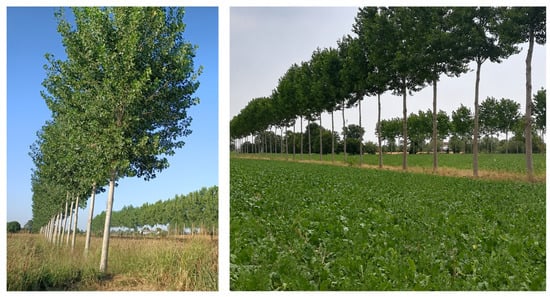
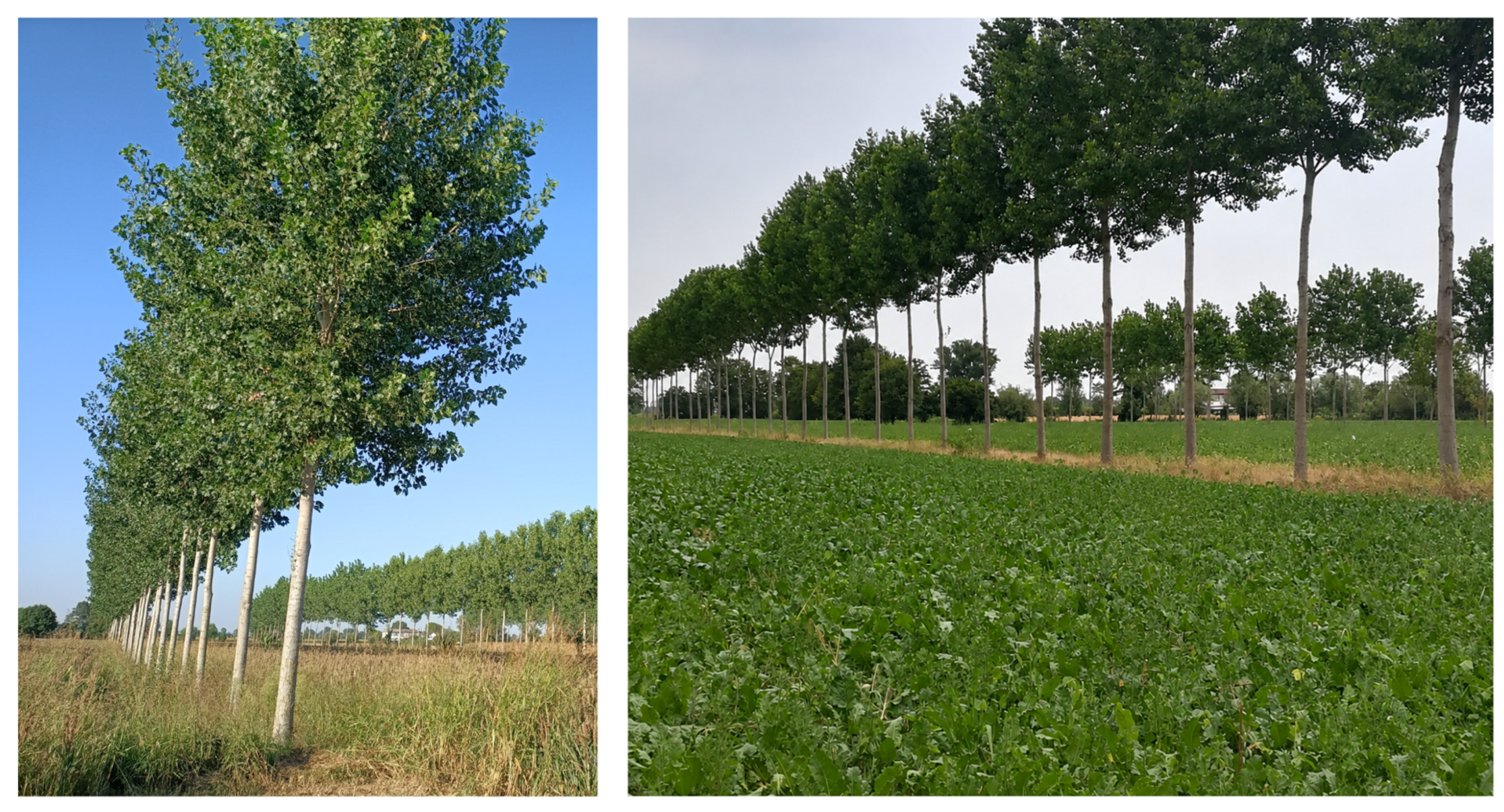
Part of the site (1.5 ha) was cultivated using a linear plantation of five recently selected MSA poplar clones: ‘Dvina’ and ‘Lux’ (P. deltoides Bartr.), ‘Mella’ and ‘Soligo’ (P. × canadensis Mœnch) and ‘Taro’ (Populus spp). The spacing was 38 m between rows and 6 m between trees along the alignment (Figure 1). The trees and crops were periodically monitored and measured. Weed growth along the rows was chemically controlled. Pruning was performed annually from the winter of the first year until the fifth year, resulting in the trunks being cleaned up to 6.3 m. No fertilization was used, and emergency irrigation was provided only during the first years.
Figure 1.
The linear plantations under study.
2.2. Sampling
Representative individuals were selected for each clone, and three 7-year-old trees were harvested in late spring of 2025. This sample size was determined by the experimental design of the plantation, as the harvest functioned as a silvicultural thinning. The remaining trees of each clone were left standing to monitor their long-term growth and performance with increased growing space in the coming years. Although harvesting three trees per clone represents a localized sample size limitation for wood analysis, it was necessary to maintain the integrity of the long-term trial. Differences among the trees within the same type of clone were limited. The logs were marked to ensure traceability during processing.
The total height of each tree was recorded, and the DBH was measured in crossed directions to determine the ovality of the section and the total aboveground volume. One first log, 2.60 m long, was collected for rotary cutting and plywood production. The diameter at the base and top of each log was also measured to determine the taper in accordance with EN 1309-3:2018 [19]. The measured DBH was used to calculate the logs’ volume.
2.3. Properties of Solid Wood
In addition to the logs for peeling, two 5 cm-thick round discs were collected from the cross sections at the base and top of each 2.6 m log to determine the main physical properties of the solid wood. Four 30 × 30 × 60 mm specimens were obtained from each disc, excluding the portions of the wood closest to the pith and bark. This was intended to exclude the high variability and lower mechanical properties typically associated with juvenile wood and the cambial layers. The tangential and radial dimensions of the freshly collected samples were measured using a digital calliper with an accuracy of 0.01 mm. Their mass was weighed using a laboratory analytical balance with an accuracy of 0.01 g.
Green density (in g/cm3) was calculated as the ratio of the mass to the volume of each specimen in a fully saturated state. In total, 40 specimens were analyzed (4 test pieces × 2 cross sections × 5 clones).
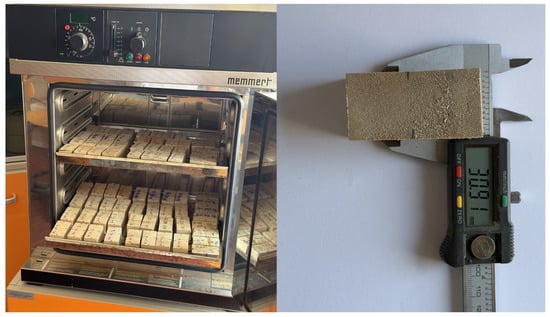
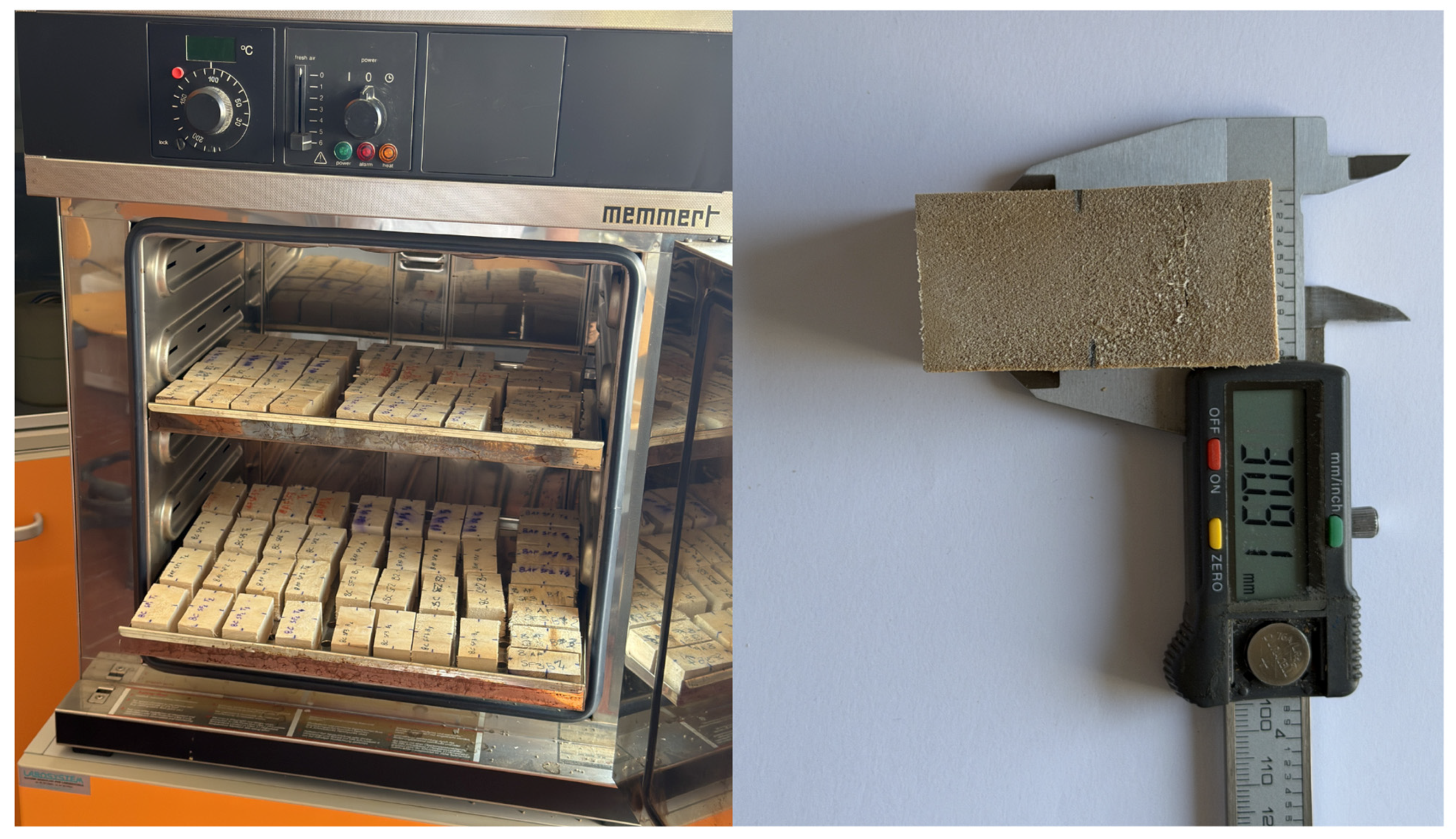
All specimens were dried in a ventilated oven at 103 ± 2 °C until they reached a constant mass. Dimensional measurements were repeated in the oven-dry state to quantify total shrinkage in both the tangential (T) and radial (R) directions and to calculate the T/R ratio (Figure 2). Axial shrinkage was not determined as its value is negligible. The moisture content (MC) of the green wood was obtained as a percentage by calculating the difference between the fully saturated and oven-dry masses. Basic density (ρb) was determined as the ratio of oven-dry mass to green volume of each specimen. All measurements were performed in accordance with ISO 13061-13:2024 [20].
Figure 2.
(Left): oven-drying of the specimens; (right): solid wood specimens used to determine the physico-mechanical properties.
2.4. Rotary Cutting and Plywood Production
The logs were peeled in a plywood mill (C.I.M.A. s.r.l., Limena, Italy). According to the mill’s standard manufacturing parameters, the nominal veneer thickness was set to 1.25 mm, and the sheets were cut to a size of 2.55 × 2.04 m. The yield of wet veneers was determined based on the initial log volumes. Some fishtails were also obtained and added to the debarking volume to calculate the peeling losses. These include the rounding phase of the logs, which is influenced by their ovality and taper, and the presence of other defects, like knots or cracks. The rotary cutting process continued until reaching a final core with a diameter of around 9 cm.
After drying, the veneer sheets were classified into three appearance quality levels, following the manufacturer’s operational method, which aligns with the requirements of EN 635-2:1996 [21]. To avoid the influence of defects, only first-grade veneers were used to produce plywood.
Given the limited amount of veneers available, a nine-ply composition was made using a single adhesive system, layering configuration, and pressing parameters. These options were discussed and agreed upon with the technical managers of the collaborating company. The choice is based on their experience in the current poplar plywood market, and on the necessity to evaluate potential end uses. A commercial urea-melamine-formaldehyde (UMF) adhesive, supplied by Chimica Pomponesco s.p.a.—from Pomponesco (MN), Italy, commonly available on the market, was used in this study. The basic parameters of the adhesive were as follows: viscosity (Ford 4): 78 s.; dry weight (2 h at 120 °C): 64.80%; pH (at 20 °C): 9.07; gel time (at 100 °C): 70 s. The adhesive components are shown in Table 1.
Table 1.
Formulations of the adhesive used for the manufacturing of plywood.
Plywood was manufactured by applying the adhesive mixture at 300 ± 15 g/m2 for the double side. All boards were produced separately by hot-pressing the veneers at 105 °C for 12 min at a pressure of 0.5 MPa, using a hydraulic single-floor laboratory equipment. These parameters were also defined according to the standard industrial production recommendation. Three panels measuring 600 × 600 mm with a nominal thickness of 12 mm were produced for each clone. The manufacturer chose the above specifications because they align with those often adopted for birch or beech plywood. In fact, the examined clones have denser wood compared to the ‘I-214’ clone, and plywood produced from them could therefore compete on the market with panels intended for light structural applications.
After pressing, they were trimmed to 500 × 500 mm to obtain perpendicular edges. Before testing, the panels were conditioned for 10 days at 20 ± 2 °C and a relative humidity of 65 ± 5%. Then, the equilibrium moisture content was measured. 24 specimens (8 per test) were randomly cut from each type of plywood to assess its density, bending modulus of elasticity and strength. Half of the specimens were cut with their grain parallel to the direction of outer layers, and the other half with perpendicular grain.
The density (ρ) was calculated according to EN 323:1994 [22] on specimens of 50 × 50 × panel thickness (mm3). Bending strength (MoR) and apparent Modulus of Elasticity (MoE) were determined according to EN 310:1994 [23] using a three–point test configuration; test pieces dimensions were 290 (l) × 50 (w) × panel thickness (mm3).
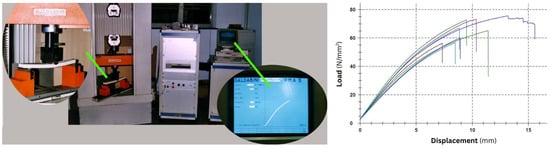
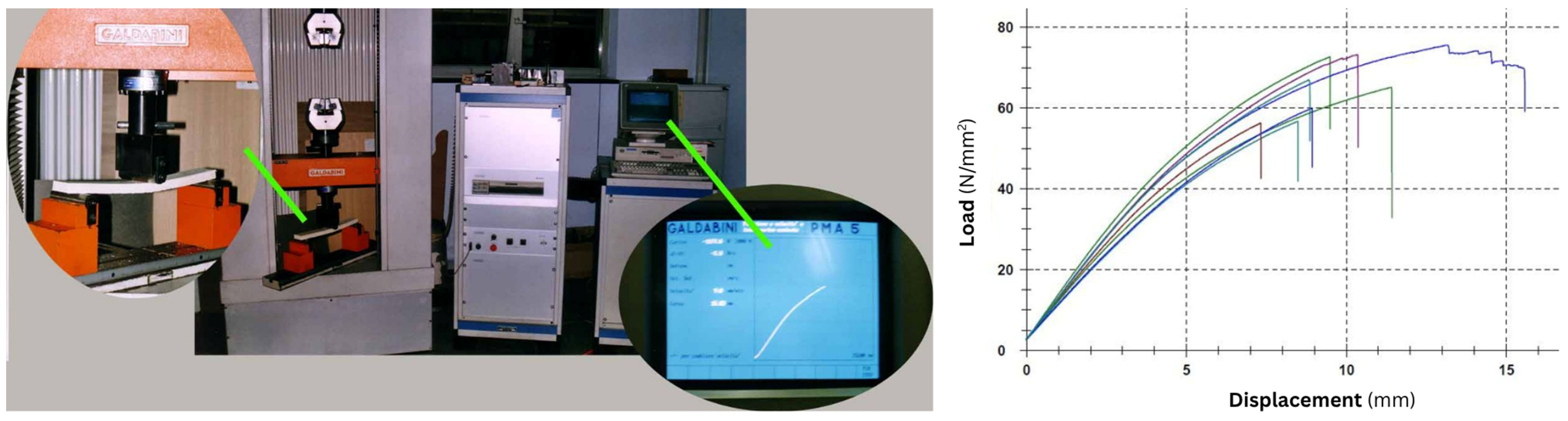
Tests were performed using a PMA5 universal machine (Galdabini S.p.A., Cardano al Campo, Italy) equipped with a 50 kN load cell and a dedicated acquisition system (testXpert V11.02 software, Zwick/Roell GmbH & Co. KG, Ulm, Germany) (Figure 3).
Figure 3.
(Left): equipment for determining plywood bending properties. (Right): example of a graphical result obtained for the specimens of one tested clone: the different colors refer to different specimens from the same panel.
2.5. Statistical Analysis
One-way analysis of variance (ANOVA) was performed to evaluate the differences between clones in terms of solid wood properties (green density, green moisture content, oven-dry density, basic density, radial and tangential shrinkages, T/R ratio) and plywood properties (density, MoE, and MoR). Assumptions were verified using Shapiro–Wilk and Levene’s tests. When homogeneity of variance was met, Tukey’s HSD test was used for post hoc comparisons; otherwise, Welch’s ANOVA followed by Games-Howell post hoc test was applied. Goodness-of-fit and Fisher’s exact test were used to assess differences in veneer quality classes. Statistical significance was always set at p = 0.05. All statistical analyses were performed using R software, version 4.5.2.
3. Results
3.1. Trees and Logs’ Features
Table 2 summarizes the dendrometric features of the trees and timber under investigation. After cutting at the end of the seventh year of growth, the average DBH for the clones was 32.4 cm, ranging from 35.9 cm for ‘Dvina’ to 29.7 cm for ‘Lux’.
Although there were some differences among clones, the examined linear plantation showed some ovality of the transversal section at the base of the stems and some tapered shape.
Table 2.
MSA clones with diameter, section ovality, taper, volumes of trees (TV) and logs (LV) were tested.
3.2. Solid Wood Properties
Table 3 shows the physical properties for the solid wood of the MSA clones examined, as well as the bibliographic values for the clone ‘I-214’ (from a traditional plantation).
Table 3.
Physical properties of the solid wood from the five MSA polar clones mean values, with standard deviation and statistical significance grouping (a,b,c,d) based on statistical analysis. The average values from literature for the wood of ‘I-214’ clone are also indicated.
The average green density of the clones was 0.785 g/cm3. The highest significant value was recorded for ‘Soligo’ (0.828 g/cm3), while the lowest was detected for ‘Mella’ (0.707 g/cm3, p < 0.05). No significant differences were found among the remaining clones.
Green wood moisture content values showed significant variation among clones (p < 0.001), with an average of 86.7%. ‘Dvina’ exhibited the highest moisture content (97.5%), which was significantly different from ‘Lux’ (76.4%), ‘Mella’ (87.2%) and ‘Taro’ (81.1%).
Regarding oven-dry density, the average value was 0.468 g/cm3. ‘Lux’ and ‘Taro’ showed the highest values (0.501 g/cm3 and 0.499 g/cm3, respectively), which are significantly higher than ‘Dvina’ (0.448 g/cm3) and ‘Mella’; the latter showing the lowest density (0.415 g/cm3, p < 0.05). A similar trend was observed for basic density, with an average of 0.423 g/cm3. ‘Lux’ (0.451 g/cm3) and ‘Taro’ (0.443 g/cm3) resulted significantly denser than ‘Dvina’ (0.406 g/cm3) and ‘Mella’ (0.378 g/cm3).
The average total tangential shrinkage value for all clones was 6.4%. Significant differences were detected (p < 0.001): ‘Taro’ (7.4%) and ‘Lux’ (6.8%) exhibited the highest shrinkage, while ‘Dvina, ‘Mella’, and ‘Soligo’ showed significantly lower values, ranging from 5.6% to 6.1%.
The average value for total radial shrinkage was 3.6%. ‘Lux’ and ‘Taro’ showed higher shrinkage values (4.2% and 4.1%, respectively), which were significantly different (p = 0.003) from ‘Soligo’, which recorded the lowest value (3.1%). ‘Dvina’ and ‘Mella’ showed intermediate behaviour, with no significant differences compared to the other clones.
The ratio of tangential to radial shrinkage ranged from a minimum of 1.7% (‘Lux’) to a maximum of 2.0% (‘Mella’, ‘Soligo’, and ‘Taro’). No significant differences (p < 0.005) were found for all clones.
The statistical analysis revealed significant differences among clones for almost all the investigated physical properties, as shown by the high F-values and low p-values (p < 0.05) reported in Table 4. The only exception was the T/R shrinkage ratio, which did not vary significantly across the clones (F (4, 105) = 1.255; p = 0.292).
Table 4.
F and p values from the statistical analysis.
3.3. Rotary Cutting, Veneers and Plywood
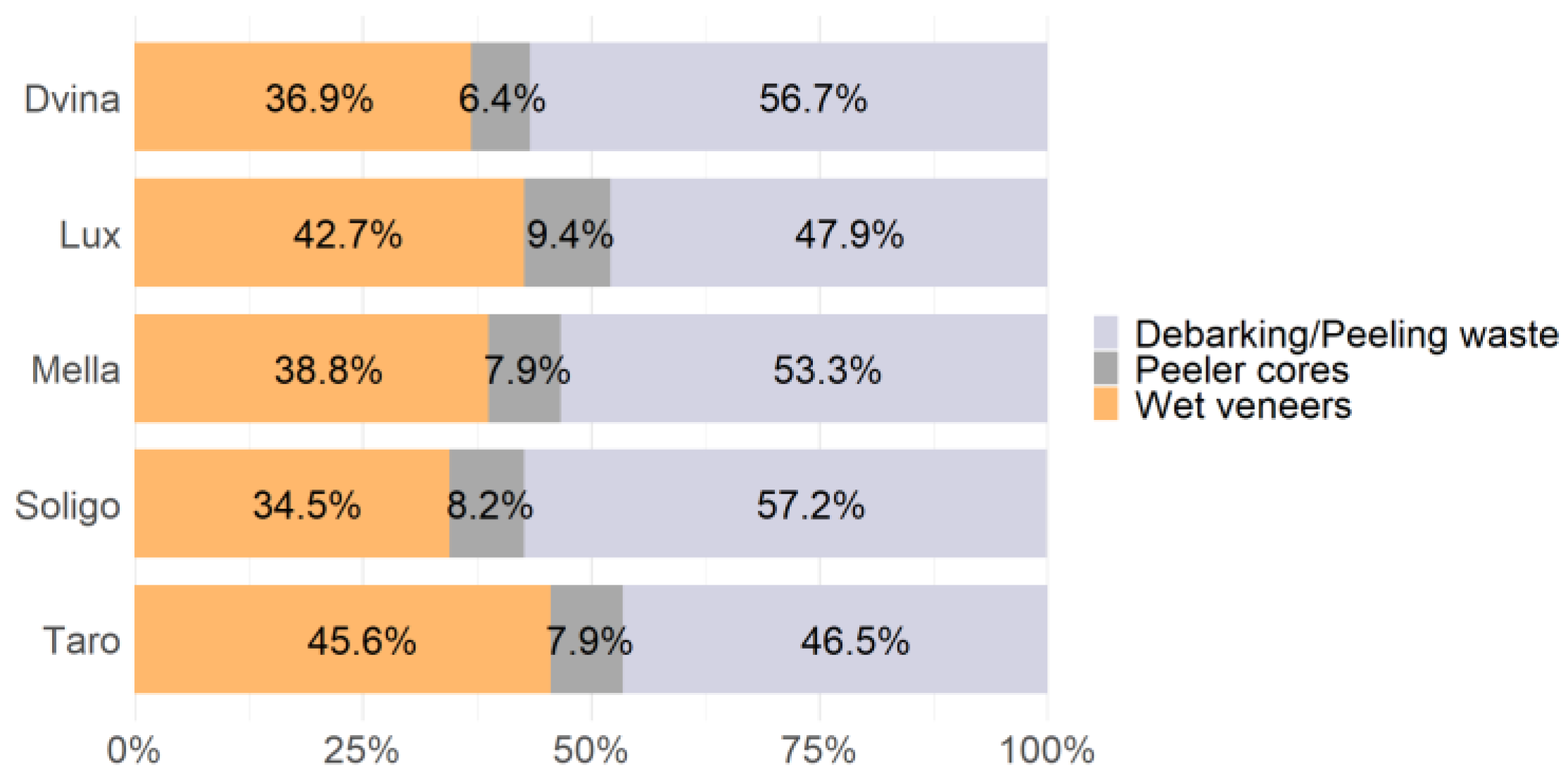
Figure 4 shows the yields resulting from rotary cutting. The values are reported as percentages of the average volume of wet veneer (full-size sheets only) obtained from the three logs processed per clone, of debarking/peeling losses (aggregated), and of the residual cores. The veneer yield ranges from a minimum of 34.5% for ‘Soligo’, to a maximum of 45.6% for ‘Taro’. The clone ‘Lux’ shows an intermediate value (42.7%), while ‘Mella’ and ‘Dvina’ reached 38.8% and 36.9%, respectively. Debarking/Peeling losses represent the largest fraction for all clones, exceeding 46% and reaching a maximum of 57.2% for the clone ‘Soligo’. The percentage of cores is relatively similar among clones (6.4–9.4%).
Figure 5 shows the percentage distribution of veneers across the three quality classes. All veneers from ‘Dvina’ were classified in Class III (100%), while ‘Taro’ showed a predominance of Class III (91.7%), with the remaining 8.3% graded as Class II. For the ‘Mella’ clone, veneers were mainly sorted in Class II (46.3%) and Class III (43.9%), while Class I accounted for 9.8%. ‘Lux’ veneers were distributed across all quality classes, with 39.5% in Class I, 42.1% in Class II and 18.4% in Class III. ‘Soligo’ veneers were distributed as 25.7% in Class I, 40.0% in Class II, and 34.3% in Class III.
Figure 4.
Results of the five MSA poplar clones from the rotary cutting process.
In terms of veneer visual grading, the main reasons for attributing veneers to Class III were fuzzy grain and waviness due to tension wood. In that case, many sheets also presented cracks due to the pressure of the feed rollers during passage through the dryer. Another common defect was the presence of small knots, which are not allowed on the faces of the final panels.
Figure 5.
Quality distribution of dried veneers in the three quality classes of appearance grading.
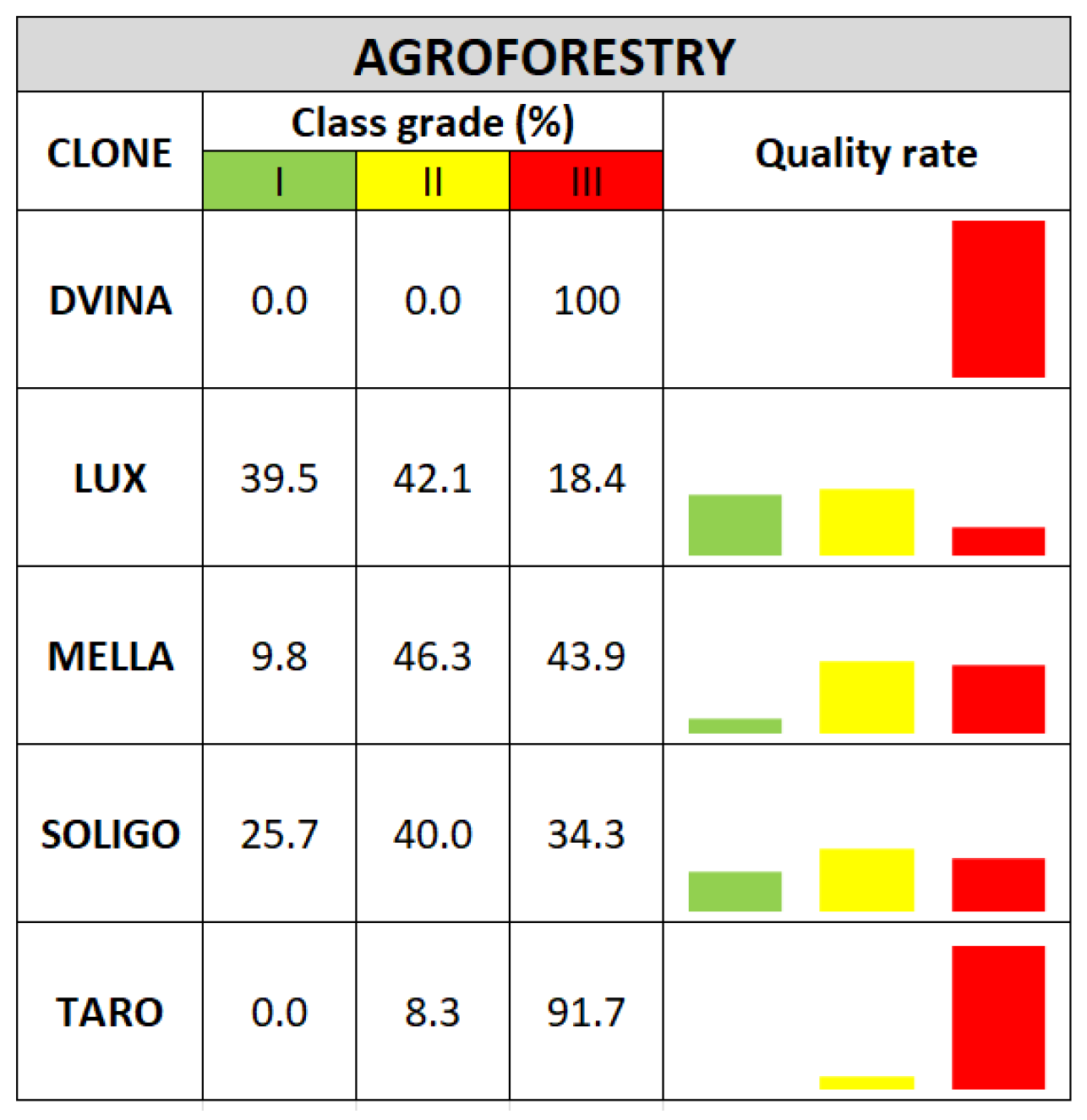
The statistical analysis revealed significant differences (p < 0.001) in Class I veneer yields (Table 5). ‘Lux’ had a significantly higher number of Class I veneers than all the other clones, except for ‘Soligo’. ‘Dvina’ and ‘Taro’, with no Class I veneers, had the lowest yield, while ‘Soligo’ and ‘Mella’ lay in an intermediate position.
Table 5.
Statistical differences between yields of Class I veneers determined through Fisher’s exact test (p-values are shown in the table). Symbols indicate significant differences: (↑) row clone significantly higher than column clone; (↓) row clone significantly lower than column clone.
After conditioning, the specimens recorded an average moisture content of 10 ± 1%, to which the following results refer. Table 6 lists the results of the statistical analysis for all the considered plywood properties.
Table 6.
F and p values from the statistical analysis.
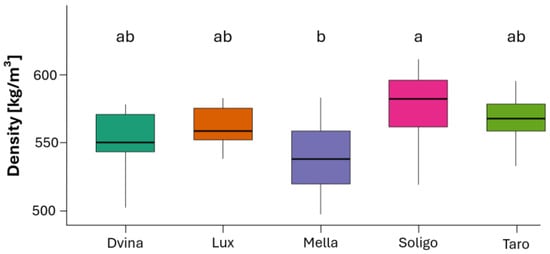
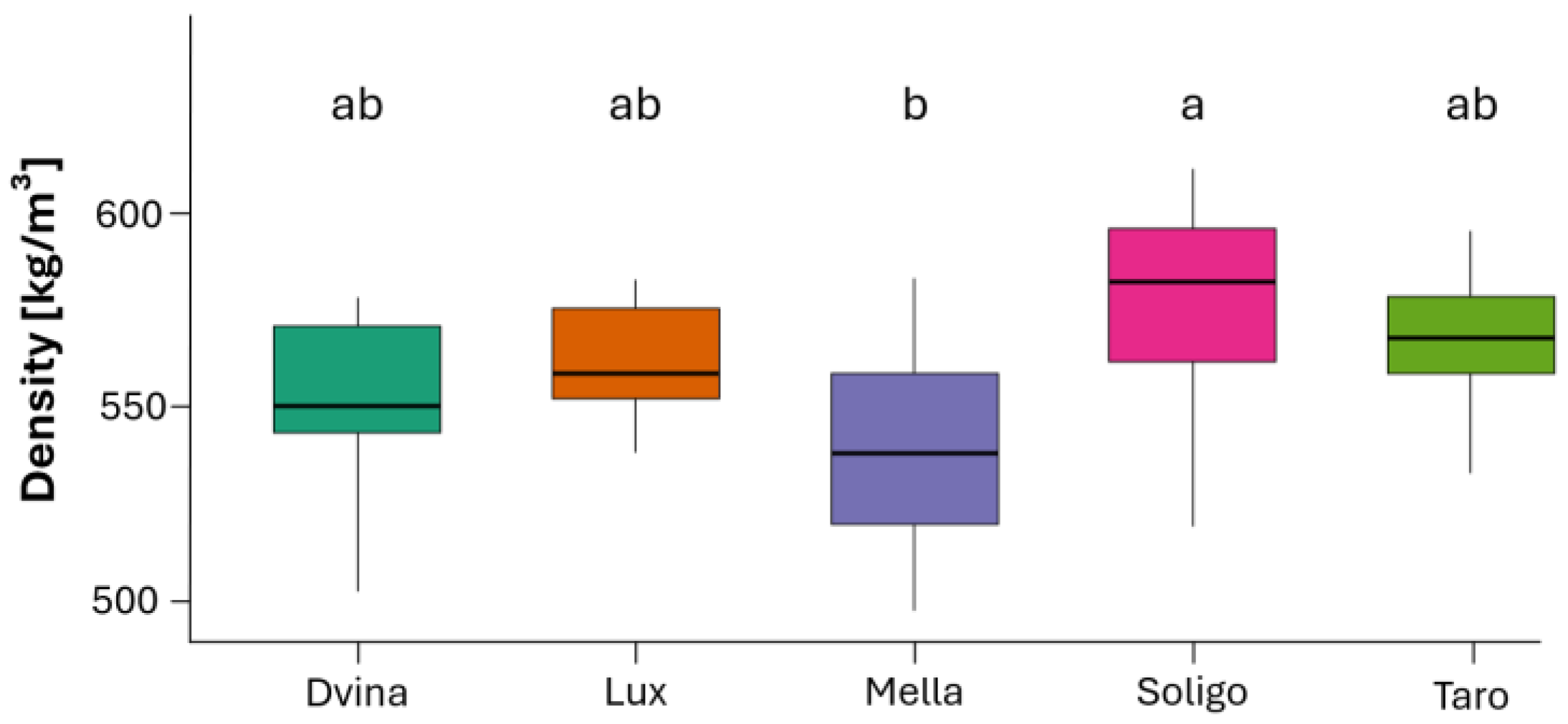
Figure 6 shows the average density of plywood. Panels produced from ‘Soligo’ exhibited the highest density (577 kg/m3), while the lowest value was recorded for ‘Mella’ (539 kg/m3). Plywood from ‘Taro’, ‘Lux’, and ‘Dvina’ clones showed intermediate density with 567, 562 and 539 kg/m3, respectively. No significant differences were found, except between ‘Mella’ and ‘Soligo’ (p < 0.05).
Figure 6.
Density of plywood produced from the examined clones. Different letters above the bars indicate significant differences between means (p < 0.05).
The bending properties of plywood were measured in both directions, i.e., parallel to the grain of faces (“longitudinal”) and perpendicularly to the grain (“transversal”). The type of test pieces is marked as “l” while the second is marked as “t”.
Figure 7 shows the results of longitudinal MoE (l-MoE). The highest average values were reported for ‘Mella’ and ‘Lux’ plywood (7007 and 6783 N/mm2, respectively). ‘Taro’ plywood showed an average value of 6581 N/mm2, while ‘Soligo’ showed 6177 N/mm2. The lowest l-MoE was recorded for ‘Dvina’ (5656 N/mm2). Significant differences were found between ‘Dvina’ and both ‘Lux’ and ‘Mella’ (p < 0.01).
Figure 7.
Longitudinal MoE (l-MoE) of the plywood produced from the examined clones. Different letters above the bars indicate significant differences between means (p < 0.05). The horizontal dashed line represents the mean bibliographic value for clone ‘I-214’.
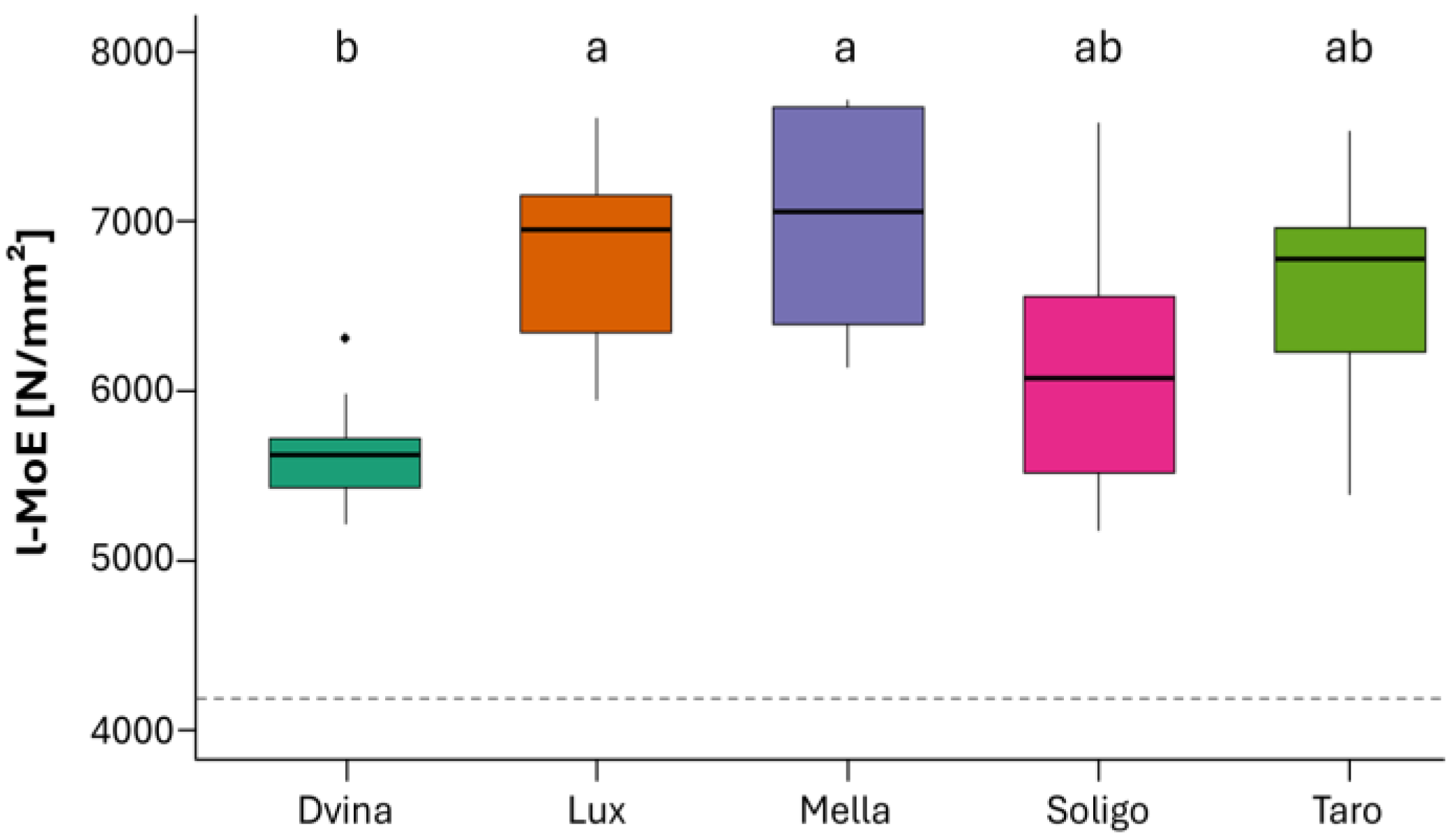
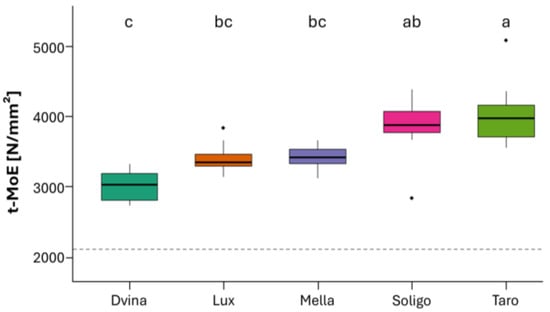
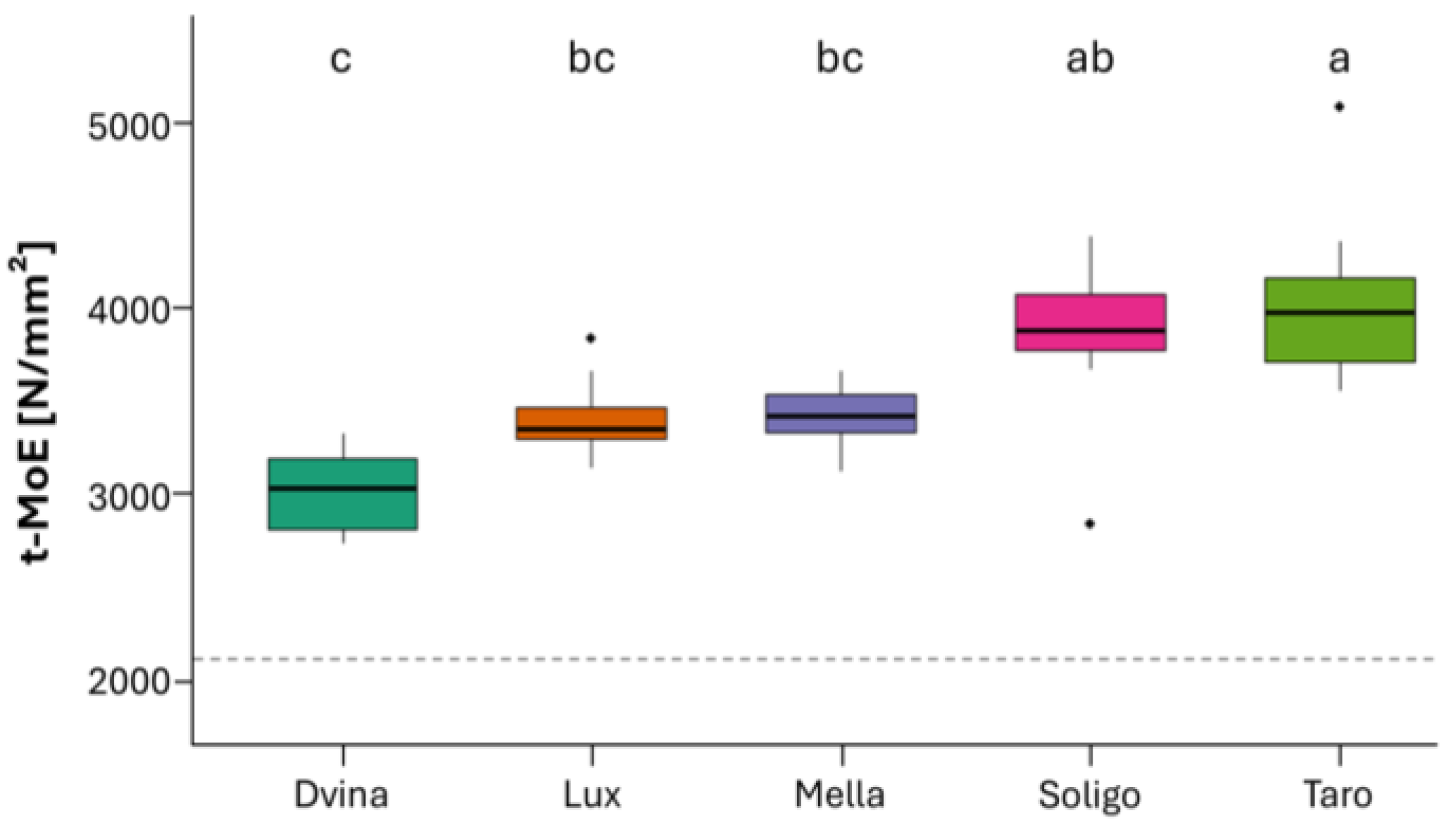
Figure 8 reports the average values of the transversal MoE (t-MoE). The highest average t-MoE was measured for ‘Taro’ plywood (4047 N/mm2 ). ‘Soligo’, ‘Mella’, and ‘Lux’ plywood showed an average value of 3838, 3405, and 3401 N/mm2, respectively. The lowest t-MoE value was reported for ‘Dvina’ plywood (3015 N/mm2). ‘Taro’ differed statistically (p < 0.01) from ‘Dvina’, ‘Lux’, and ‘Mella’ (p < 0.01), as well as ‘Soligo’ from ‘Dvina’ (p < 0.01).
Figure 8.
Transversal MoE (t-MoE) of plywood produced from the examined clones. Different letters above the bars indicate significant differences between means (p < 0.05). The horizontal dashed line represents the mean bibliographic value for clone ‘I-214’.
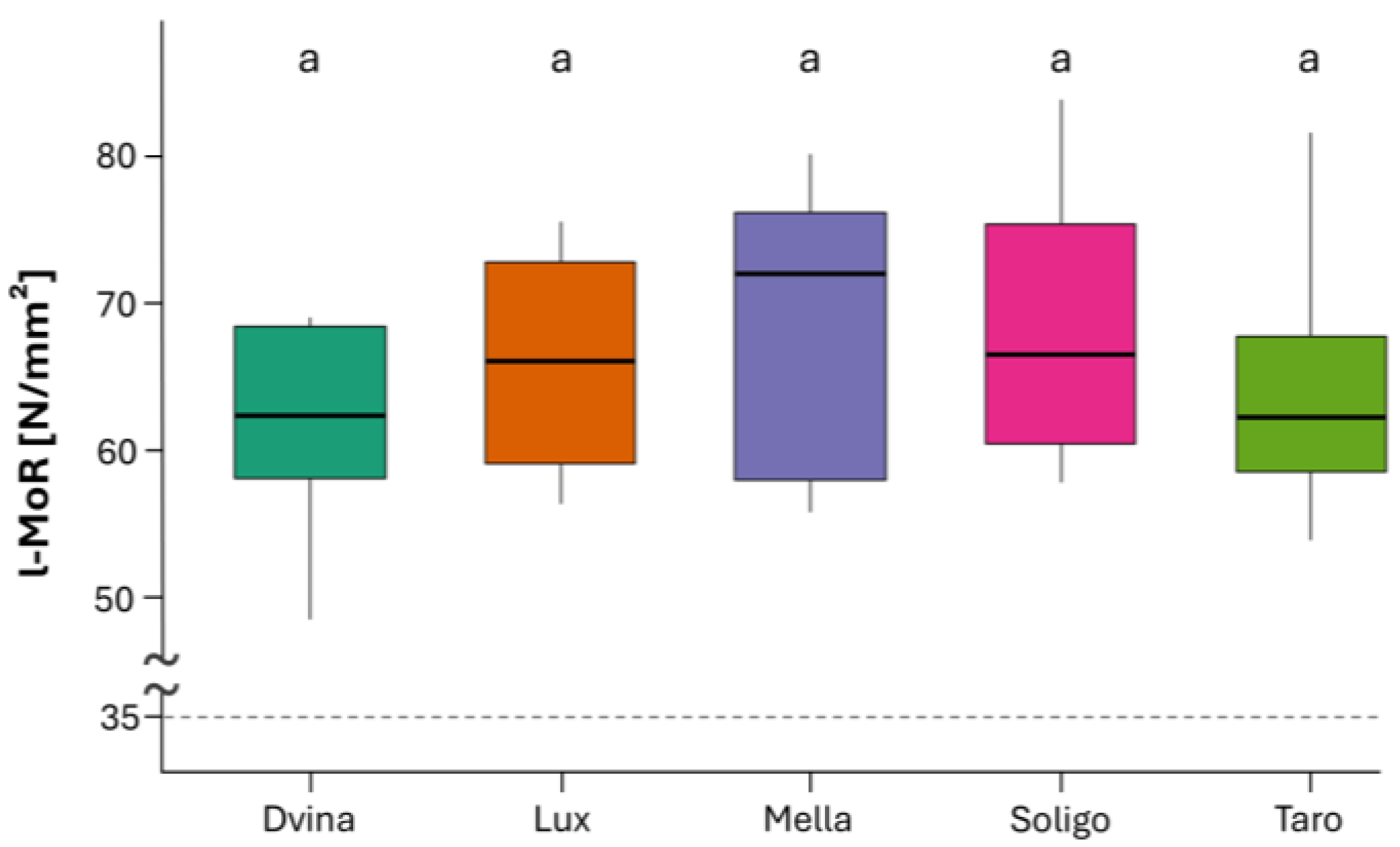
Figure 9 shows the longitudinal MoR (l-MoR) values. The highest average l-MoR values were obtained for ‘Mella’ and ‘Soligo’ plywood (68.8 N/mm2 each). ‘Lux’ plywood showed a value of 65.8 N/mm2, while ‘Taro’ reported 64.2 N/mm2. The lowest l-MoR was recorded for ‘Dvina’ (61.7 N/mm2). No statistically significant differences were observed (p > 0.05).
Figure 9.
Longitudinal MoR (l-MoR) of plywood produced from the examined clones. Different letters above the bars indicate that there is no significant difference between means (p > 0.05). The horizontal dashed line represents the mean bibliographic value for clone ‘I-214’.
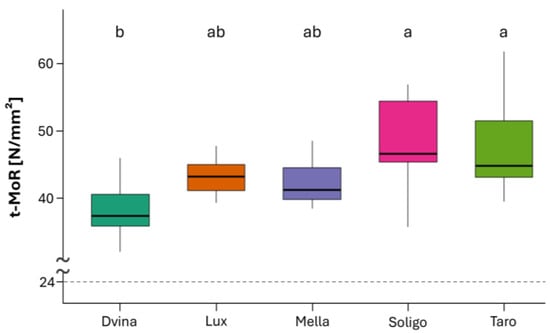
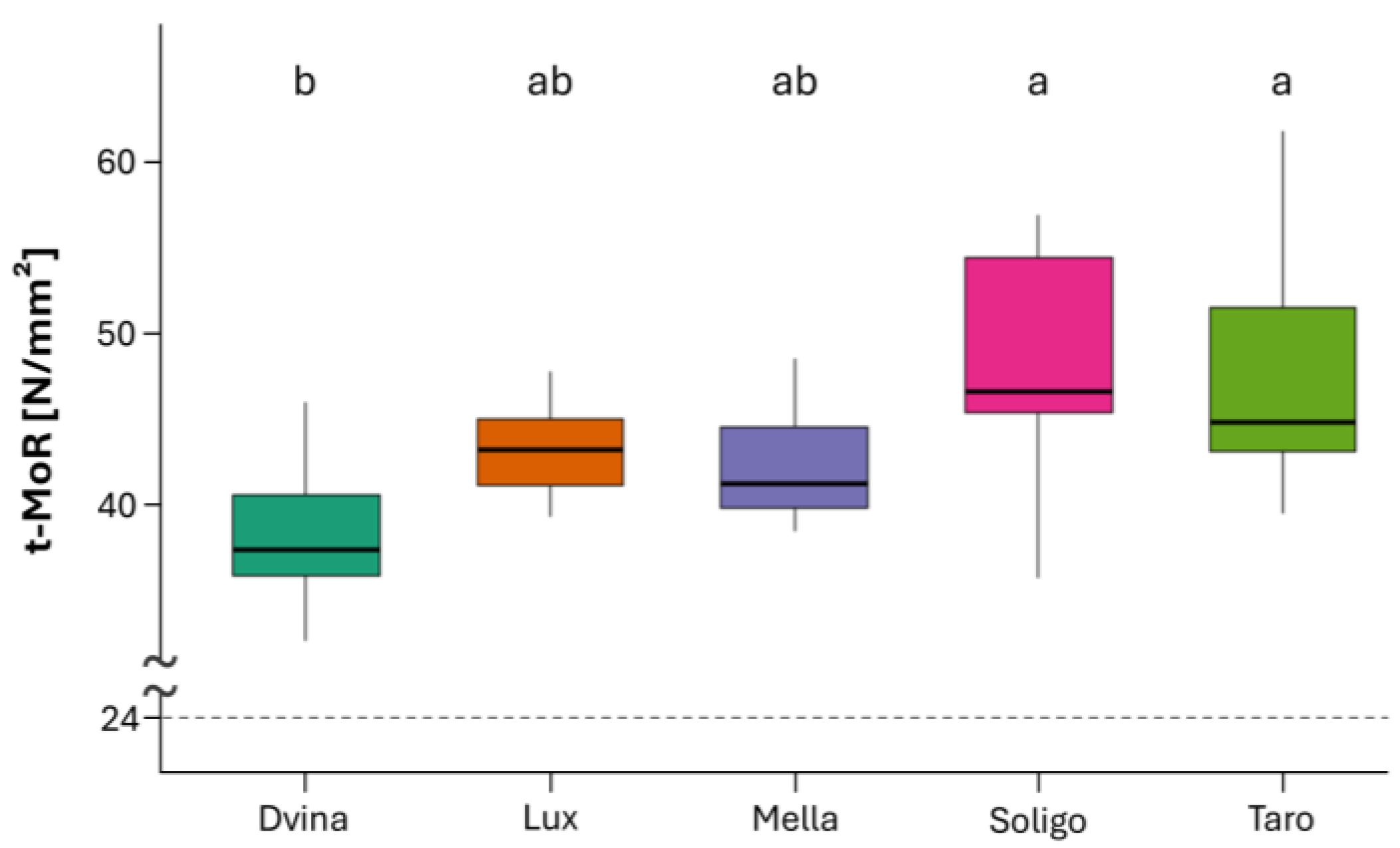
The transversal MoR (t-MoR) values are shown in Figure 10. The highest average t-MoR values resulted for plywood produced from ‘Soligo’ and ‘Taro’ (48.1 and 48.0 N/mm2, respectively). ‘Lux’ plywood showed an average value of 43.2 N/mm2, while the value for ‘Mella’ was 42.3 N/mm2. The lowest t-MoR was registered for ‘Dvina’ plywood (38.2 N/mm2). Differences between ‘Dvina’ and both ‘Soligo’ and ‘Taro’ were statistically significant (p < 0.01).
Figure 10.
Transversal MoR (t-MoR) of plywood produced from the examined clones. Different letters above the bars indicate that there is no significant difference between means (p > 0.05). The horizontal dashed line represents the mean bibliographic value for clone ‘I-214’.
In general terms, all MSA poplar clones always showed average values higher than ‘I-214’.
4. Discussion
The diameters of the trees selected for this study are similar to those obtained from traditional plantations, but were achieved in only seven years (compared to the traditional 10-year rotations). This suggests that the cultivation model of linear plantations notably promotes a more rapid growth of individuals. These findings are consistent with those of Paris et al. (2014) [25] and Bergante et al. (2015) [26], who attributed such vigour to reduced crown competition and optimized soil nutrient availability in wider-spaced configurations. However, the intensive growth in linear plantations often entails morphological trade-offs. The observed stem ovality (except for ‘Lux’) likely results from phototropic response. Trees may undergo asymmetric development or stem displacement to maximize light interception in a high-density arrangement. This stress often leads to the formation of tension wood, which impacts the industrial yield. Although the ‘Lux’ clone exhibited a regular cylindrical section (0.0% ovality), suggesting a potential genetic resistance to such irregularities, the limited sample size necessitates caution.
Inter-clonal variation in green density and wood moisture content was statistically significant but in line with the range of poplar wood. The higher green moisture content of all the clones compared to that of ‘I-214’ can be attributed to different harvesting seasons, which influenced the presence of free water in wood cellular lumens. While this is not a critical factor in the peeling process, variation in the moisture content of green poplar timber is important within the same trunk, as it requires differentiated drying of the veneers obtained from sapwood and heartwood, which are usually kept separate.
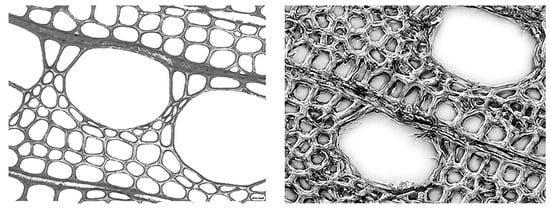
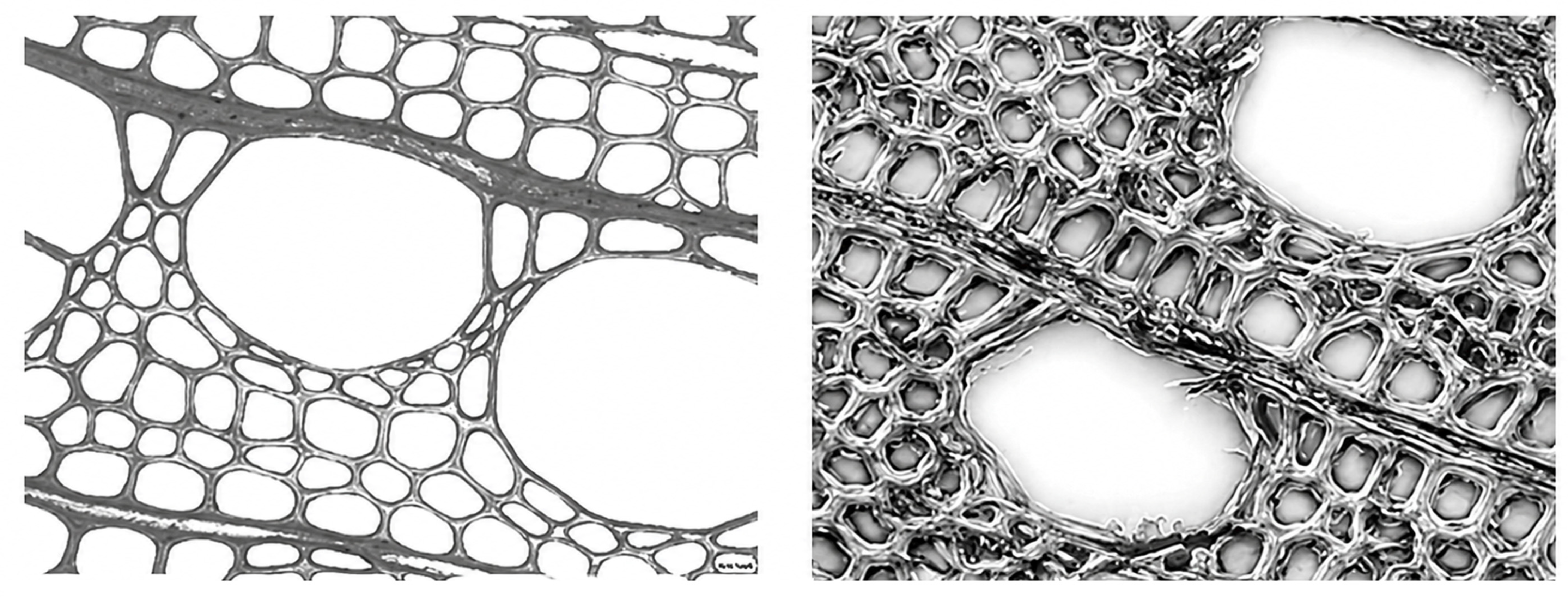
Oven-dry and basic density further emphasized the higher values of ‘Lux’ and ‘Taro’, which were significantly different from those of ‘Dvina’ and ‘Mella’. Although inter-cultivar variations were found, all MSA clones showed a basic density that was markedly higher than that of ‘I-214’. Density is under partial genetic control and gives a reliable indication of the ratio of cell walls (i.e., wood substance) to lumens. This is also evident when observing anatomical cross-sections prepared following the process by Vazquez-Cooz and Meyer (2002) [27] to highlight lignified tissues. The microscopic evaluation shows that, at the same magnification, the new clones have tissues with reduced lumens and thicker walls than ‘I-214’. This is linked to the deposition of greater amounts of cellulose and lignin (Figure 11).
Figure 11.
Examples of specimens’ cross sections under the optical microscope [40×]. On the left, the wood of ‘I-214’ [28], on the right, that of ‘Lux’, which showed the highest basic density among the MSA clones examined and visibly thicker cell walls.
The ‘Taro’ and ‘Lux’ clones exhibited the highest tangential and radial shrinkage, which is also consistent with their higher basic density. This trend is, in fact, frequently observed in hardwoods, as density and shrinkage magnitude present a strong positive correlation [29]. Despite variations in directional shrinkage values, the T/R ratio was not statistically significant across all clones (p = 0.292). These results are typical of the Populus genus, indicating good dimensional stability in its solid wood.
A comparative analysis with the available bibliographic data for the ‘I-214’ clone [30] reveals differences in the yield of wet veneers. The reference clone’s average yield, calculated as the volume of full sheets obtained from 10-year-old logs with diameters between 32 and 43 cm (from a traditional plantation in the Province of Mantova, Italy), was 51.5%, while all the MSA clones examined showed yields below this threshold.
These clones had a high percentage of volume discarded due to debarking/peeling. This depends on the shape of the processed timber. If it is irregular, a longer rounding phase in rotary cutting is required. The presence of other defects is also relevant because they must be removed by clipping, which determines the production of narrower veneers only. In this respect, the higher losses registered in ‘Dvina’ are in line with its higher ovality and taper, while the more regular shape of the bolts of ‘Lux’, ‘Mella’, and ‘Taro’ yielded better results. The core percentages are, instead, quite constant between clones because their initial log diameters are similar.
Given the main defects found in the visual classification of veneer (tension wood and small knots), the low percentage of Class I quality sheets obtained by some clones indicates the need for further investigation to optimize the spacing between trees. Additionally, developing more suitable pruning practices would limit the high propensity for branches to regrow.
Differences in the physico-mechanical values of plywood were found among clones. In particular, the panel’s density and its modulus of elasticity and bending strength are closely related and represent essential indicators for final uses. While new clones grow remarkably fast in linear plantations, their wood is considerably heavier than ‘I-214’. In terms of bending behaviour, however, the plywood produced from the clones under investigation exhibited mechanical properties that are comparable to those of softwood construction plywood, and closer to those of plywood made from hardwoods like eucalyptus [31], birch [32,33] and beech [34].
As for the industrial implications and potential end uses, the construction sector is showing a growing focus on wood-based products. This shift is due to the development of new building systems and the need to address climate change. Moreover, this sector includes not only load-bearing use but also light structural components, for which specific properties and safety requirements must be guaranteed. Higher-density poplar clones are interesting because they allow for the production of high-quality timber in a much shorter timeframe than natural forests. This is true even when considering the influence of juvenile wood, which forms during the first years after planting and has lower mechanical properties than mature wood. Introducing new clones into an established industrial sector requires adjustments and challenging long-standing habits, such as those regarding the lightness and use of the well-known ‘I-214’. Nevertheless, this would create opportunities to diversify domestic plywood manufacturing by developing panels for non-traditional markets and applications.
5. Limitations and Perspectives
This study has some limitations that should be considered when interpreting the results. First, only one type of linear plantation was considered, while several configurations are possible in terms of spacing between trees and crop mixing. Testing different setups/locations would provide further knowledge on the convenience of this type of arboriculture. Second, the small sample size used (three trees per clone, considering only the basal portion) does not fully capture the within-clone variability, which affects the possible extension of the data registered. Therefore, future research should increase the number of trees per clone under evaluation, verify the response of more bolts from the same stem, and explore a broader range of clones to strengthen the statistical reliability of the results. Such studies should also include the ‘I-214’ clone, which was not present in the linear plantation selected for this study.
Furthermore, a detailed examination should be reserved for the wood anatomical features, the presence of false heartwood and moisture gradients between the peripheral and central portions of the stems. A specific analysis of the defects found in the classification of the dried veneers should also be conducted. However, the results provide valuable insights into the wood features of the new clones and examine the cultivation system.
Plywood was produced at the laboratory level using only one adhesive with the related pressing temperature and pressure, and a single-panel lay-up. Further investigations are required to introduce other variables and assess their impact on plywood produced on an industrial scale.
Finally, in order to register new clones at the national level whose timber could be used for peeling and plywood production, it would be appropriate to propose the integration of a protocol or some technical guidelines. These could include industrial procedures designed to evaluate their suitability for the above processing and, ultimately, to promote the collection of valuable information for an objective comparison of the veneer and panel properties.
6. Conclusions
The study evaluated the wood technological properties and suitability of five MSA poplar clones cultivated in linear plantations for veneer and plywood production, with reference to the widely used ‘I-214’ clone.
The results confirm that linear plantations of MSA clones can produce a good supply of timber in a short rotation period. After seven years, the mean DBH was 32.4 cm, and log volumes ranged from 0.590 to 0.863 m3. These results support the clones’ suitability for industrial production. However, wood technological properties differed from those of the reference clone ‘I-214’. MSA clones’ basic density ranged from 0.378 to 0.451 g/cm3, approximately 30–55% higher than ‘I-214’ (0.290 g/cm3).
The rotary cutting process yielded veneers at a rate ranging from 34.5% to 45.6%. However, the distribution of veneer quality was highly variable; only “Lux” and “Soligo” provided a promising quantity of veneers of the first quality class. Despite limitations in veneer quality, the plywood exhibited good mechanical performance in general, with a longitudinal modulus of elasticity (l-MOE) ranging from 5656 to 7007 N/mm2 and a transverse modulus of elasticity (t-MOE) ranging from 3015 to 4047 N/mm2. All clones exhibited mechanical properties that were comparable to or higher than those reported for the “I-214” clone.
Overall, the results suggest that the examined MSA clones are not the best candidates to complement the technological characteristics of the reference clone, ‘I-214’. However, some clones, notably “Lux” and “Soligo,” appear suitable for manufacturing plywood intended for applications requiring higher mechanical performance. This presents an opportunity for the industry. Accelerated production across different arboriculture models generally yields wood with limited mechanical properties. In contrast, MSA poplar clones from linear plantations could supply timber with adequate dendrometric features and interesting mechanical performance within a few years.
Finally, since these cultivation models are still under preliminary evaluation, further studies are required to optimize clone selection and spacing to ensure the production of straight, large-diameter logs suitable for peeling. Currently, it is difficult to estimate the volume of poplar timber from linear plantations that could be destined for plywood production. However, this model is growing rapidly, and the increasing trend of managing forests to preserve carbon sinks could reinforce the importance of linear plantations. In this sense, additional research on the wood properties of the examined clones, their sustainability, and on the economic feasibility would be relevant to identifying reliable alternatives to ‘I-214’ for industrial applications.
Author Contributions
Conceptualization: P.M.C. and R.Z. Methodology: C.C., S.C., S.B. and F.N. Formal analysis: D.R. and A.B. Data curation: D.R. and A.B. Writing—original draft preparation: C.C., S.B., S.C. and R.Z. Writing—review and editing: S.B., S.C., F.N., P.M.C. and R.Z. Supervision: P.M.C. and R.Z. All authors have read and agreed to the published version of the manuscript.
Funding
This research was funded by Veneto Agricoltura. Collaboration agreement with DISAFA, University of Torino, “Caratterizzazione fisico-meccanica del legno di pioppo, cloni MSA, ottenuto dalle utilizzazioni di un sistema agro-forestale e un campo clonale presso l’Azienda Pilota Dimostrativa “Sasse Rami” in Ceregnano (RO)”, prot. N. 0005366/2025.
Data Availability Statement
Data can be requested from the corresponding author.
Conflicts of Interest
The authors declare no conflicts of interest. The funders had no role in the design of the study; in the collection, analyses, or interpretation of data; in the writing of the manuscript; or in the decision to publish the results.
References
- Komán, S.; Németh, R.; Báder, M. An Overview of the Current Situation of European Poplar Cultures with a Main Focus on Hungary. Appl. Sci. 2023, 13, 12922. [Google Scholar] [CrossRef] [Scilit]
- Castro, G.; Zanuttini, R. Poplar cultivation in Italy: History, state of the art, perspectives. In Proceedings of the 23rd Session of the International Poplar Commission, Working Party on Harvesting and Utilization of Poplar and Willow Wood Conference, Engineered Wood Product Based on Poplar/Willow Wood, Nanjing, China, 21–24 October 2008; p. 14. [Google Scholar]
- Pra, A.; Pettenella, D.; Romano, R. Dove va la pioppicoltura padana? Sherwood 2016, 220, 37–41. [Google Scholar]
- FAO. Consolidated Country Progress Reports: Twenty-Seventh Session of the International Commission on Poplars and Other Fast-Growing Trees Sustaining People and the Environment (IPC); Food and Agriculture Organization of the United Nations: Bordeaux, France, 2024; Available online: https://www.fao.org/fileadmin/user_upload/faoweb/2024/IPC_2024/DOCUMENTS/IPC_2024_INF_4_Consolidated_Country_Progress_Reports_final.pdf (accessed on 24 January 2026).
- Corona, P.; Bergante, S.; Castro, G.; Chiarabaglio, P.M.; Coaloa, D.; Facciotto, G.; Gennaro, M.; Giorcelli, A.; Rosso, L.; Vietto, L.; et al. Linee di Indirizzo per una Pioppicoltura Sostenibile; Rete Rurale Nazionale: Rome, Italy; Consiglio per la Ricerca in Agricoltura e L’analisi Dell’economia Agraria: Rome, Italy, 2018.
- Raddi, S.; Anichini, M.; Magnani, F.; Traversi, M.L.; Giovanelli, A. Risposte biometriche e fisiologiche allo stress idrico in due cloni di pioppo “Dvina” e “I214”. In Proceedings of the Congresso Nazionale SISEF Multifunzionalità Degli Ecosistemi Forestali Montani: Sfide e Opportunità per la Ricerca e lo Sviluppo, Bolzano, Italy, 16–19 September 2013; p. 135. [Google Scholar]
- Chiarabaglio, P.M.; Deidda, A.; Bergante, S.; Castro, G.; Facciotto, G.; Giorcelli, A.; Pagliolico, S.; Carbonaro, C. Life Cycle Assessment (LCA): New poplar clones allow an environmentally sustainable cultivation. Ann. Silvic. Res. 2020, 45, 76–82. [Google Scholar] [CrossRef] [Scilit]
- FAO. Poplar and others fast-growing trees—Renewable resources for Future Green Economies. In Synthesis of Country Progress Reports. 25th Session of the International Poplar Commission, Berlin, Germany, 13–16 September 2016; Working Paper IPC/15; Forestry Policy and Resources Division, FAO: Rome, Italy, 2016. [Google Scholar]
- Nervo, G.; Bergante, S.; Rosso, L.; Chiarabaglio, P.M.; Vietto, L.; Carra, A.; Giorcelli, A.; Coaloa, D.; Facciotto, G.; Gennaro, M.; et al. Latest results of the breeding activity of hybrid poplars for industrial purposes in Italy. Ann. Silvic. Res. 2024, 49, 39–43. [Google Scholar] [CrossRef] [Scilit]
- European Council. Council Directive 1999/105/EC of 22 December 1999 on the marketing of forest reproductive material. Off. J. Eur. Communities 2000, 17–40. [Google Scholar]
- Calvano, S.; Negro, F.; Blanc, S.; Bruzzese, S.; Brun, F.; Zanuttini, R. Adding value to wood-based products: A systematic literature review on drivers. Forests 2025, 16, 590. [Google Scholar] [CrossRef] [Scilit]
- FAO. FAO Council 174th Session, 4–8 December 2023. 2023. Available online: https://www.fao.org/newsroom/detail/agroforestry-is-a-key-climate-solution--director-general-says-at-fao-council-side-event (accessed on 13 January 2026).
- Piotto, S.; Panozzo, A.; Pasqualotto, G.; Carraro, V.; Barion, G.; Mezzalira, G.; Furlan, L.; Sterup Moore, S.; Vamerali, T. Phenology and radial growth of poplars in wide alley agroforestry systems and the effect on yield of annual intercrops in the first four years of tree age. Agric. Ecosyst. Environ. 2024, 361, 108814. [Google Scholar] [CrossRef] [Scilit]
- Blake-Rath, R.; Seegers, R.; Grote, U.; Nguyen, T.T. Agroforestry literature in the European Union: A bibliometric review and content analysis of key research areas and developments from 1984 to 2025. Agrofor. Syst. 2026, 100, 55. [Google Scholar] [CrossRef] [Scilit]
- MASAF; Ministero dell’Agricoltura, Della Sovranità Alimentare e Delle Foreste (n.d.). SINFor—Sistema Informativo Nazionale Delle Foreste e dei Serbatoi Forestali di Carbonio. 2026. Available online: https://sinfor.sian.it/#/ (accessed on 3 February 2026).
- Ostry, M.; Ramstedt, M.; Newcombe, G.; Steenackers, M. Diseases of poplars and willows. In Poplars and Willows: Trees for Society and the Environment; Isebrands, J.G., Richardson, J., Eds.; Food and Agriculture Organization of the United Nations: Rome, Italy; CAB International: Wallingford, UK, 2014; pp. 443–454. [Google Scholar] [CrossRef] [Scilit]
- Enescu, C.M.; Mihalache, M.; Ilie, L.; Dinca, L.; Chira, D.; Vasić, A.; Murariu, G. Advancing the Sustainability of Poplar-Based Agroforestry: Key Knowledge Gaps and Future Pathways. Sustainability 2026, 18, 341. [Google Scholar] [CrossRef] [Scilit]
- Calvano, S.; Bombieri, A.; Rizza, D.; Bergante, S.; Chiarabaglio, P.M.; Cremonini, C.; Negro, F.; Zanuttini, R. New Poplar Clones from Conventional and Agroforestry Plantations in Northern Italy: Preliminary Results on Peeling Attitude and Properties of Solid Wood and Plywood. Forests 2026, 17, 130. [Google Scholar] [CrossRef] [Scilit]
- EN 1309-3:2018; Round and Sawn Timber—Methods of Measurements—Part 3: Features and Biological Degradations. CEN-CENELEC Management Centre: Brussels, Belgium, 2018.
- ISO 13061-13:2024; Physical and Mechanical Properties of Wood-Test Methods for Small Clear Wood Specimens—Part 13: Determination of Radial and Tangential Shrinkage. ISO Central Secretariat: Geneva, Switzerland, 2024.
- EN 635-2:1996; Plywood—Classification by Surface Appearance—Part 2: Hardwood. CEN-European Committee for Standardization: Brussels, Belgium.
- EN 323:1994; Wood Based Panels—Determination of Density. CEN-European Committee for Standardization: Brussels, Belgium.
- EN 310:1994; Wood Based Panels—Determination of Modulus of Elasticity in Bending and of Bending Strength. CEN-European Committee for Standardization: Brussels, Belgium.
- Beaudoin, M.; Hernández Roger, E.; Koubaa, A.; Poliquin, J. Interclonal, intraclonal and within-tree variation in wood density of poplar hybrid clones. Wood Fiber Sci. 1992, 24, 147–153. [Google Scholar]
- Paris, P.; Facciotto, G.; Tosi, L.; Nahm, M.; Morhart, C.; Douglas, G.; Lunny, R.; Dupraz, C.; Andre, J.; Graves, A. Alley coppice: An innovative land use system-options of system design with experimental evidence. In Proceedings of the 2nd European Agroforestry Conference, European Agroforestry Federation (EURAF), Cottbus, Germany, 4–6 June 2014. [Google Scholar]
- Bergante, S.; Facciotto, G. Yields of poplar SRC and VRC grown with different fertilization and irrigation management. In Proceedings of the 23rd European Biomass Conference & Exhibition, Wien, Austria, 1–4 June 2015; pp. 214–218. [Google Scholar]
- Vazquez-Cooz, I.; Meyer, R.W. A differential staining method to identify lignified and unlignified tissues. Biotech. Histochem. 2002, 77, 277–282. [Google Scholar] [CrossRef] [Scilit] [PubMed]
- Fragnelli, G.; Castro, G.; Zanuttini, R. La Pioppicoltura e il Compensato di Pioppo dell’Industria Italiana. Istruzioni per l’uso; Assopannelli, Federlegno-Arredo: Milano, Italy, 2014. [Google Scholar]
- Schulgasser, K.; Witztum, A. How the relationship between density and shrinkage of wood depends on its microstructure. Wood Sci. Technol. 2015, 49, 389–401. [Google Scholar] [CrossRef] [Scilit]
- Castro, G.; Zanuttini, R.; Mori, P. Produttività di sfogliato e diametro dei fusti. Indagini preliminari sui cloni di pioppo “I-214” e “NEVA”. Sherwood 2013, 192, 5–9. [Google Scholar]
- Millaniyage, K.P.; Kotlarewski, N.; Wallis, L.; Taoum, A.T. Engineered flooring from low-density plantation hardwood: Evaluation of long-term in-service trials. Wood Fiber Sci. 2024, 56, 24–42. [Google Scholar] [CrossRef] [Scilit]
- Veistinen, J.; Pennala, E. Plywood Handbook; Finforest: Lahti, Finland, 1999. [Google Scholar]
- Wang, T.; Wang, Y.; Crocetti, R.; Wålinder, M. Influence of face grain angle, size, and moisture content on the edgewise bending strength and stiffness of birch plywood. Mater. Des. 2022, 223, 111227. [Google Scholar] [CrossRef] [Scilit]
- Hrázský, J.; Král, P. Assessing the bending strength and modulus of elasticity in bending of exterior foiled plywoods in relation to their construction. J. For. Sci. 2005, 51, 76–94. [Google Scholar] [CrossRef] [Scilit]

Disclaimer/Publisher’s Note: The statements, opinions and data contained in all publications are solely those of the individual author(s) and contributor(s) and not of MDPI and/or the editor(s). MDPI and/or the editor(s) disclaim responsibility for any injury to people or property resulting from any ideas, methods, instructions or products referred to in the content. |
© 2026 by the authors. Licensee MDPI, Basel, Switzerland. This article is an open access article distributed under the terms and conditions of the Creative Commons Attribution (CC BY) license.