Skip to Content
ForestsForests
  • Article
  • Open Access

15 May 2026

Uncertainty, Belief Bias, and Nudges in Forest Harvesting: Evidence from a Young Fruiting Body Experiment

,
,
and
School of Economics and Management, Beijing Forestry University, Beijing 100083, China
*
Author to whom correspondence should be addressed.
These authors contributed equally to this work.

Abstract

This paper uses a young fruiting body harvesting experiment to examine how uncertainty affects improper behavior and how two nudges, prior selection and consequence viewing, can mitigate or shape this behavior. Uncertainty promotes improper harvesting, with harvesting rates higher under ambiguity than under risk. It also induces belief bias, yet this bias drives behavior only when consequences are observable. Prior selection reduces harvesting through an anchoring mechanism, whereas consequence viewing alone has little effect. Notably, combining the two nudges produces a boomerang effect: harvesting rates rise above those observed under prior selection alone. These findings inform behavioral interventions for natural resource management.

1. Introduction

Natural resources constitute the material foundation for human survival and development, and their sustainable management represents a major global challenge [1,2,3,4]. In natural resource management contexts, individuals sometimes act improperly out of short-term self-interest, engaging in overfishing, deforestation, and overharvesting of non-timber forest products. These behaviors are among the key factors contributing to the tragedy of the commons and ecological degradation [5,6]. In common-pool resources such as forests, fisheries, and grasslands, individuals frequently face a take-or-stay dilemma. Harvesting immediately secures private benefits, but at the potential cost of undermining future regeneration capacity. This tension between private and social interests is further amplified when resource losses are uncertain, as in the case of diseases or climate shocks [7,8,9]. Traditional governance models often rely on mandatory regulations and economic incentives [10], yet their effectiveness is frequently undermined by high monitoring and enforcement costs as well as resistance from resource users. Behavioral nudges have emerged as low-cost interventions that subtly alter the decision environment to guide individuals toward better choices [11,12,13]. Field experiments demonstrate their potential in agricultural conservation [14], energy conservation [15], and even consumer food choices [16], suggesting broad applicability across diverse decision contexts. Yet evidence from forest and common-pool resource contexts remains limited, and the mechanisms through which nudges shape harvesting decisions under uncertainty are not yet well understood. Accordingly, exploring low-cost behavioral intervention pathways to promote sustainable governance has become a pressing practical concern.
In reality, resource management decisions are invariably made under conditions of uncertainty. Fishermen cannot be certain how today’s catch will affect fish stocks in the following year, and it is difficult for farmers to judge whether harvesting matsutake mushrooms will impair the long-term regeneration capacity of the underlying mycelial network. Such consequential uncertainty not only constitutes a problem of objective information deficiency but also distorts decision-makers’ subjective cognition. Research indicates that under uncertainty, individuals do not behave as rational Bayesian updaters. Instead, they develop belief biases that serve their self-interest [9,17]. People tend to believe that their self-serving actions are unlikely to lead to serious consequences, thereby constructing a plausible moral justification for their behavior [18,19,20]. This bias transforms uncertainty from a mere environmental feature into a cognitive and psychological mechanism that catalyzes improper behavior.
Forests play a fundamental and strategic role in national ecological security and the sustainable development of human society and the economy. They serve as reservoirs of water, wealth, food, and carbon, harboring abundant edible resources [21,22,23,24,25,26]. Although previous studies have confirmed that uncertainty promotes self-interested behavior in contexts such as monetary allocation or cheating games [27], in-depth analysis of this mechanism within the specific and pressing context of natural resource harvesting remains insufficient. Resource harvesting behavior involves multiple dimensions, including economic dependence, ecological constraints, and social norms, rendering its decision-making psychology potentially more complex. Specifically, the pathway from uncertainty to belief bias has not yet been directly examined in settings where ecological consequences are delayed and probabilistic. Moreover, the interactive effects of two different nudges, including the possible boomerang effect of combining them, have not been explored in the context of renewable resource management.
Therefore, incorporating uncertainty into research on resource harvesting decisions and comparing its effects with those of behavioral nudges can help expand the application of behavioral economics in natural resource management. We make three contributions in this paper. First, we use z-Tree v5.1.21 to design a young fruiting body harvesting experiment that simulates resource extraction behavior characterized by negative externalities and intergenerational ethical considerations. Second, multiple regression analysis is employed to examine how uncertainty affects belief bias and how belief bias influences harvesting behavior across different intervention conditions. This approach reveals the pathway through which uncertainty leads to unsustainable harvesting. Third, we test the main effects and interaction effects of two nudges, prior selection and consequence viewing. Our findings provide empirical evidence on the complex outcomes that can arise when behavioral interventions are combined.
The remainder of this paper is structured as follows. Section 2 presents the theoretical analysis and research hypotheses. Section 3 details the experimental design and research methods. Section 4 reports the empirical results. Section 5 concludes.

2. Theoretical Analysis and Research Hypotheses

2.1. Mechanisms Underlying the Effects of Uncertainty, Belief Biases, and Improper Behaviors

The classic tragedy of the commons theory posits that, in the absence of effective regulation and coordination, rational individuals’ self-interested competition for common-pool resources will lead to the systematic depletion of those resources [28]. In reality, decisions regarding resource use are not made under conditions of certainty. Decision makers are always confronted with dual uncertainties: ecological uncertainty regarding the impact of their own actions on the resource system, and social uncertainty regarding the behavior of other users [29,30,31]. The combination of these two uncertainties provides a complex psychological backdrop for individual improper behavior.
Research indicates that when decision-making problems become complex or information is ambiguous, individuals experience cognitive uncertainty, that is, uncertainty about what constitutes the optimal decision. This subjective cognitive difficulty makes decision makers less responsive to objective probabilities, and their behavior systematically reverts to a certain intermediate reference point, such as a 50 percent probability [32]. In resource extraction contexts, this implies that when faced with the objective probability of behavioral consequences, individuals with high cognitive uncertainty are more likely to form self-serving subjective beliefs that deviate from objective reality, underestimating the likelihood of adverse outcomes. The emergence of such belief bias is rooted in the psychological motivation for self-justification. Uncertainty creates moral wiggle room, allowing individuals to exploit informational ambiguity to construct a subjectively reasonable justification for their self-serving choices, thereby alleviating the cognitive dissonance between self-interested behavior and moral norms. Consequently, the progression of uncertainty from risk to ambiguity effectively expands decision makers’ scope for subjective interpretation, making self-serving belief biases easier to form and more pronounced. This leads to H1.
H1. 
Increased uncertainty exacerbates individuals’ belief bias, leading to more excessive forest harvesting.

2.2. Theoretical Mechanisms for Curbing Improper Behavior

To address belief biases and improper behavior arising from uncertainty, nudge theory, which is grounded in libertarian paternalism, offers two targeted, low-cost behavioral intervention approaches: prior selection and consequence viewing [33]. Prior selection requires individuals to indicate, in a hypothetical context that involves no economic incentives, whether they would harvest a given resource. This design integrates the anchoring effect with a commitment mechanism. In the absence of economic pressure, individuals’ responses are easily internalized as self-anchors and, through commitment consistency, continue to serve as reference points in subsequent real decision-making contexts [34], thereby curbing excessive harvesting. A context without economic pressure is more likely to elicit prosocial tendencies; choices made under such conditions tend to be more altruistic, thereby establishing a high moral anchor. Moreover, making an initial choice constitutes a mild form of self-commitment. Although this commitment is not legally binding, violating one’s prior commitment incurs psychological costs, which in turn constrain subsequent self-serving impulses [35,36,37,38]. The consequence viewing intervention allows decision makers to observe the exact outcomes of their actions before they commit to a choice. Its primary function is to eliminate or substantially reduce ecological uncertainty at the point of decision. When consequences are transformed from abstract probabilities into concrete figures, the negative impacts of one’s behavior become clear, direct, and unavoidable. This significantly enhances the moral salience of the decision, compelling individuals to confront the harm their actions may cause to shared resources, thereby evoking stronger moral sentiments or a sense of responsibility. By visualizing and amplifying moral costs, this intervention shifts the balance between private gains and psychological costs, making restraint a more appealing option. Research on resource governance suggests that social and moral constraints can sometimes foster cooperative behavior more effectively than material incentives [39]. Based on the above analysis, we propose the following hypotheses:
H2. 
The prior selection nudge can effectively reduce overharvesting through anchoring and commitment mechanisms.
H3. 
The consequence viewing nudge can effectively reduce overharvesting by eliminating uncertainty and making moral costs explicit.

2.3. The Complexity of Combined Nudge Effects

In practice, policymakers often favor combining multiple interventions hoping for synergistic effects. But behavioral interventions may interact in complex ways rather than simply adding up. This paper focuses on two distinct types of informational prompts: prior selection and consequence viewing. Their combination could lead to two entirely different outcomes.
When the two nudges complement each other, they reinforce moral judgment and promote responsible choices. When they conflict, a self-serving anchor collides with concrete consequence information, producing a boomerang effect. When a prior self-serving choice is paired with vivid ecological costs, the competing cues impose excessive cognitive load on decision-makers. Seufert [40] shows that when external cues conflict with internal regulatory demands and total demands exceed available resources, individuals reduce cognitive load by abandoning compensatory strategies and falling back on the least-effort default. Similarly, van der Veer et al. [41] finds that high cognitive load leads people to adopt attentional tunneling and heuristic rules, filtering out cues unrelated to their immediate goals. In this context, participants may downplay the binding force of their pre-commitment to simplify their decisions, ultimately reverting to self-serving behavior and undermining the intervention. Based on this, we propose a set of competing hypotheses regarding the effects of combining nudges:
H4a. 
Using prior selection and consequence viewing together will curb overharvesting more effectively than using either nudge alone.
H4b. 
Using prior selection and consequence viewing together will curb overharvesting less effectively than using either nudge alone.

3. Experimental Design and Research Methods

3.1. Experimental Procedure

The experimental design of this paper draws upon the misbehavior paradigm developed by Chen et al. [33] and was adapted to the context of harvesting young fruiting bodies under forest canopies. Specifically, the experimental scenario has been adapted from the transfer of charitable funds to the harvesting of young fruiting bodies under forest canopies. Improper behavior is operationalized as overharvesting. Drawing on the provision in the Chuxiong Yi Autonomous Prefecture Regulations on the Protection and Utilization of Wild Mushrooms, which prohibits the collection of matsutake, boletus, and other immature wild mushrooms shorter than five centimeters in length, overharvesting is defined as the collection of such undersized specimens. This operationalization brings the experimental scenario closer to the practical challenges of wild mushroom resource conservation. The experiment was conducted in December 2025 using the z-Tree v5.1.21 platform (the specific interface designs are presented in Appendix A) [42]. A 2 × 2 × 2 between-subjects design was employed, with 160 participants randomly assigned to eight experimental conditions, as shown in Table 1, with 20 participants per condition. Participants received a show-up fee of 10 yuan and earned an additional 10 to 30 yuan based on their performance in the experimental tasks.
Table 1. Experimental bureau structure.
Prior to the formal experiment, all participants attended a briefing session. After the experimenter distributed the instructions, participants were given 10 min to read them independently, during which questions were answered individually. Participants then completed a comprehension test, and any misunderstandings were clarified one by one until all participants passed the test. Participants then entered the experimental area and were seated in individual cubicles numbered 1 to 20, with physical partitions ensuring that their decisions were made independently. The procedures for each experimental condition were as follows. In the baseline conditions, participants proceeded directly to 10 rounds of the formal experiment. In each round, participants first made a harvesting decision, then completed a belief elicitation task, and finally received feedback on their earnings and the actual consequences of their decision.
In the prior selection conditions, participants first made harvesting decisions for different consequence levels (30, 50, 60, 70, and 80 points) in a hypothetical context without economic incentives. In the subsequent actual harvesting rounds, the decision screen displayed the choices they had made in the prior selection stage for the corresponding consequence levels. The remaining procedure was the same as in the baseline conditions. In the consequence viewing conditions, an additional option to view the actual consequences of the decision was provided on the harvesting screen in each round. Under these conditions, uncertainty was eliminated; belief elicitation was replaced with a lottery choice task with the same payoff structure. The rest of the procedure was the same as in the baseline conditions.
In the combined conditions, participants experienced both the prior selection stage and the consequence viewing feature. They first completed the prior selection stage, and in each subsequent round, both their prior choices and the actual consequences were displayed on the decision screen.

3.2. Experimental Tasks and Measurement of Variables

3.2.1. Harvesting Decision Task

The experiment consisted of 10 rounds. In each round, participants decided whether to harvest young fruiting bodies from the common pool for their own use. Each participant received a fixed reward of 30 points per round. The payoff structure was as follows. If a participant chose not to harvest, they received 30 points. If they chose to harvest, they received an additional 20 points, bringing the total to 50 points. Regardless of the harvesting decision, the common pool faced one of two consequences: a minor consequence that reduced the pool by 30 points, or a severe consequence that reduced it by 50 to 80 points, with the exact amount randomly drawn each round. The number of rounds (10) was chosen to provide sufficient observations while avoiding decision fatigue and repeated-game cooperation. The payoff parameters were calibrated to create a clear trade-off between private harvest gains and long-term resource sustainability.
During the instruction phase, participants were informed of the uncertainty type for the current round. In the risk condition, the probability of a mild or severe consequence was 50% each. In the ambiguity condition, the probabilities were unknown, though the actual random draw mechanism ensured that the objective probability of each consequence was the same as in the risk condition.

3.2.2. Belief Measurement Task

After each round of harvesting decisions, participants in the conditions without consequence viewing completed a belief elicitation task. To elicit truthful beliefs, we designed an incentivized measurement instrument, drawing on Vanberg (2008) [43] and Chen et al. (2023) [33], as shown in Table 2. This task was independent of the harvesting decisions; the more accurately participants predicted the actual outcomes, the higher the reward they received.
Table 2. Payoff structure for belief elicitation task.

3.2.3. Variable Measurement

The dependent variable in this paper is harvesting behavior (harvest), a binary variable equal to 1 if a participant chooses to harvest in a given round and 0 otherwise.
The core explanatory variables are defined as follows. Uncertainty indicates the type of uncertainty, taking the value of 1 for ambiguous scenarios and 0 for risky scenarios. Prior selection (pre) equals 1 for conditions that include the prior selection intervention and 0 otherwise. Consequence viewing (view) equals 1 for conditions that include the consequence viewing intervention and 0 otherwise. The interaction term (pre × view) captures the combined effect of the two interventions.
The mechanism variable is belief bias. The five options in the belief elicitation task are coded from 1 to 5 to form the belief level (perceive), which ranges from 1 to 5. A lower value indicates that the participant perceives a higher probability of a mild consequence. Belief bias is calculated as beliefbias = 3 perceive , yielding a value between 2 and 2. The value 3 corresponds to the “Uncertain” option in the belief elicitation task, as shown in Table 2, indicating that the participant perceives equal probabilities of a mild and a severe consequence. Positive values indicate an underestimation of severity, i.e., optimism, while negative values indicate an overestimation of severity, i.e., pessimism.
In the regression analysis, round fixed effects are included to account for potential learning effects and time trends.

3.3. Specification of the Empirical Model

To test the research hypotheses, this paper constructs the following empirical models.
First, to examine the effect of uncertainty on belief bias, Model (1) is specified as:
b e l i e f b i a s i = α 0 + α 1 u n c e r t a i n t y i + δ t + ϵ i t
Second, to test the main effects and interaction effect of the two nudges on harvesting behavior, Model (2) is specified as:
h a r v e s t i t = β 0 + β 1 u n c e r t a i n t y i + β 2 p r e i + β 3 v i e w i + β 4 ( p r e × v i e w ) i + δ t + ϵ i t
Third, to examine the effect of belief bias on harvesting behavior across different intervention conditions, Model (3) is estimated separately for each experimental group:
h a r v e s t i t = λ 0 + λ 1 u n c e r t a i n t y i + λ 2 b e l i e f b i a s i + δ t + ϵ i t
For the models with a binary dependent variable (harvest in Equations (2) and (3)), we use a linear probability model (LPM). This choice is justified by two considerations. First, the exogenous randomization of treatments ensures that the right-hand-side variables are uncorrelated with the error term, so the LPM yields consistent estimates of the average treatment effects despite its linear functional form. Second, the LPM allows direct interpretation of the interaction term ( p r e × v i e w ) as a difference-in-differences in probabilities, whereas nonlinear models (e.g., probit) require additional computation to obtain comparable marginal effects [44]. For the model with a continuous dependent variable ( b e l i e f b i a s in Equation (1)), ordinary least squares (OLS) is applied. All regressions employ robust standard errors clustered at the individual and session levels to account for correlations across rounds within the same participant and across participants within the same experimental session. Variable definitions are provided in Section 3.2.3.

4. Experimental Results

4.1. Randomization Balance Test

The Kruskal–Wallis nonparametric test results (see Table 3) indicate that, with the exception of grade ( χ 2 = 18.715, p = 0.009), no significant differences were found across experimental groups for the remaining demographic variables. Overall, only one out of the eight demographic variables showed a significant difference, suggesting that the random assignment was generally successful and achieved good balance.
Table 3. Randomization balance test results.

4.2. Regression Analysis of Uncertainty, Nudge Interventions, and Harvesting Behavior

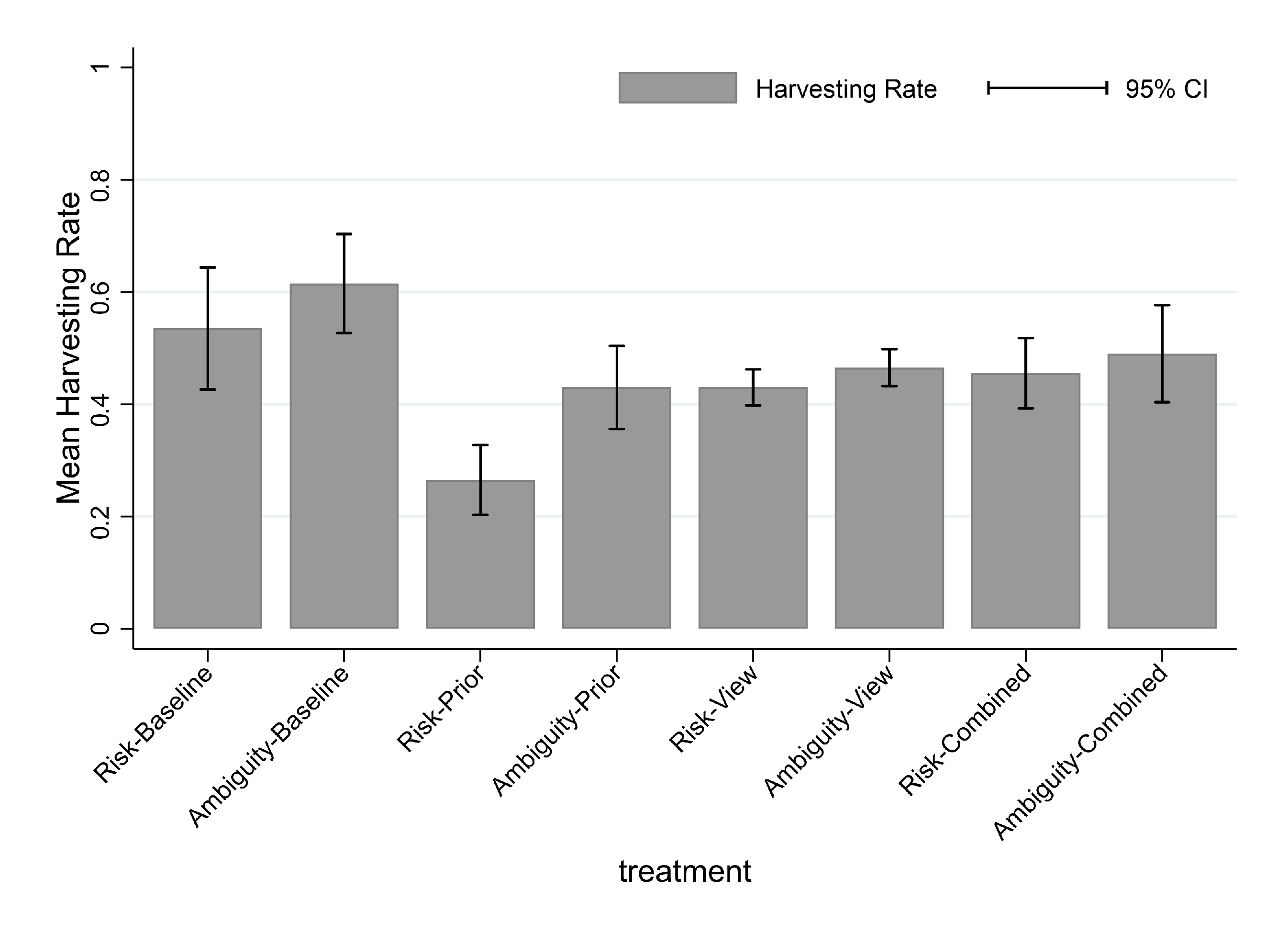
Figure 1 reports the average harvest rates and 95% confidence intervals for each experimental group. In the baseline conditions, the harvest rate under ambiguity (0.615) was higher than under risk (0.535), providing preliminary support for H1, that uncertainty exacerbates overharvesting. This pattern reflects cognitive uncertainty: when individuals cannot determine outcome probabilities, they develop self-serving optimistic biases, underestimating negative consequences and prioritizing immediate harvest over long-term risks. As a result, the harvest rate is higher under ambiguity than under risk, consistent with previous studies [45,46,47,48]. The harvest rate in the combined nudge group (0.455 for risk, 0.490 for ambiguity) was higher than that in the prior selection group but lower than that in the baseline group. This pattern suggests that combining the two nudges may produce complex interactive effects, which warrant further investigation.
Figure 1. Mean harvesting rate by experimental condition.
This paper employed multiple regression analysis, controlling for round fixed effects and robust standard errors clustered by participant, to examine the impact of uncertainty on harvesting behavior and its moderating mechanisms. The results are presented in Table 4. Model (1) included only uncertainty and was estimated using the baseline group sample. The results showed that uncertainty had no significant effect on harvesting behavior. Model (2) added prior selection and expanded the sample to include the prior selection group. Uncertainty had a significant positive effect on harvesting behavior, while prior selection had a significant negative effect. H2 is further confirmed. Model (3) added consequence viewing and was estimated using the baseline and consequence groups. Neither uncertainty nor consequence viewing reached statistical significance, and H3 is not supported. One possible explanation is that in resource harvesting contexts, individuals may have lower moral sensitivity toward ecological consequences, and the negative impact on harvesting behavior is indirect and cumulative [49,50], which may lead to weaker constraints from moral costs. This suggests that the effectiveness of nudges may be context-dependent [51], and the characteristics of the issue domain must be carefully considered when designing behavioral interventions.
Table 4. Results of the multiple regression analysis on improper harvesting practices.
Model (4) uses the full sample and includes all variables and their interaction terms to test the interaction effect between prior selection and consequence viewing. Uncertainty has a significant positive effect on harvesting behavior. This finding remains robust after controlling for other variables, indicating that uncertainty weakens individuals’ sense of control over decision outcomes and thereby drives overharvesting. Second, the main effect of prior selection is significantly negative. This result is consistent with Model (2): granting prior selection alone suppresses overharvesting. Prior selection increases individuals’ sense of participation and responsibility, making them more cautious or inclined to maintain the status quo. Third, the main effect of consequence viewing does not reach statistical significance. Finally, the interaction term between prior selection and consequence viewing is significantly positive. Although prior selection alone negatively affects harvesting behavior, when individuals have both prior selection and consequence viewing, their overharvesting increases significantly, producing a boomerang effect. H4b is confirmed. The underlying mechanisms of this boomerang effect, however, remain speculative. One candidate mechanism is that the increased cognitive load from processing both self-anchoring cues and precise outcome information may induce a selective reference strategy [52]. Another possibility is that individuals may disregard outcome information and diffuse responsibility [53,54] by assuming that other harvesters will also collect young fruiting bodies, thereby rationalizing their own improper behavior. These mechanisms were not directly tested in the present study and warrant further investigation.

4.3. The Mechanism of Belief Bias

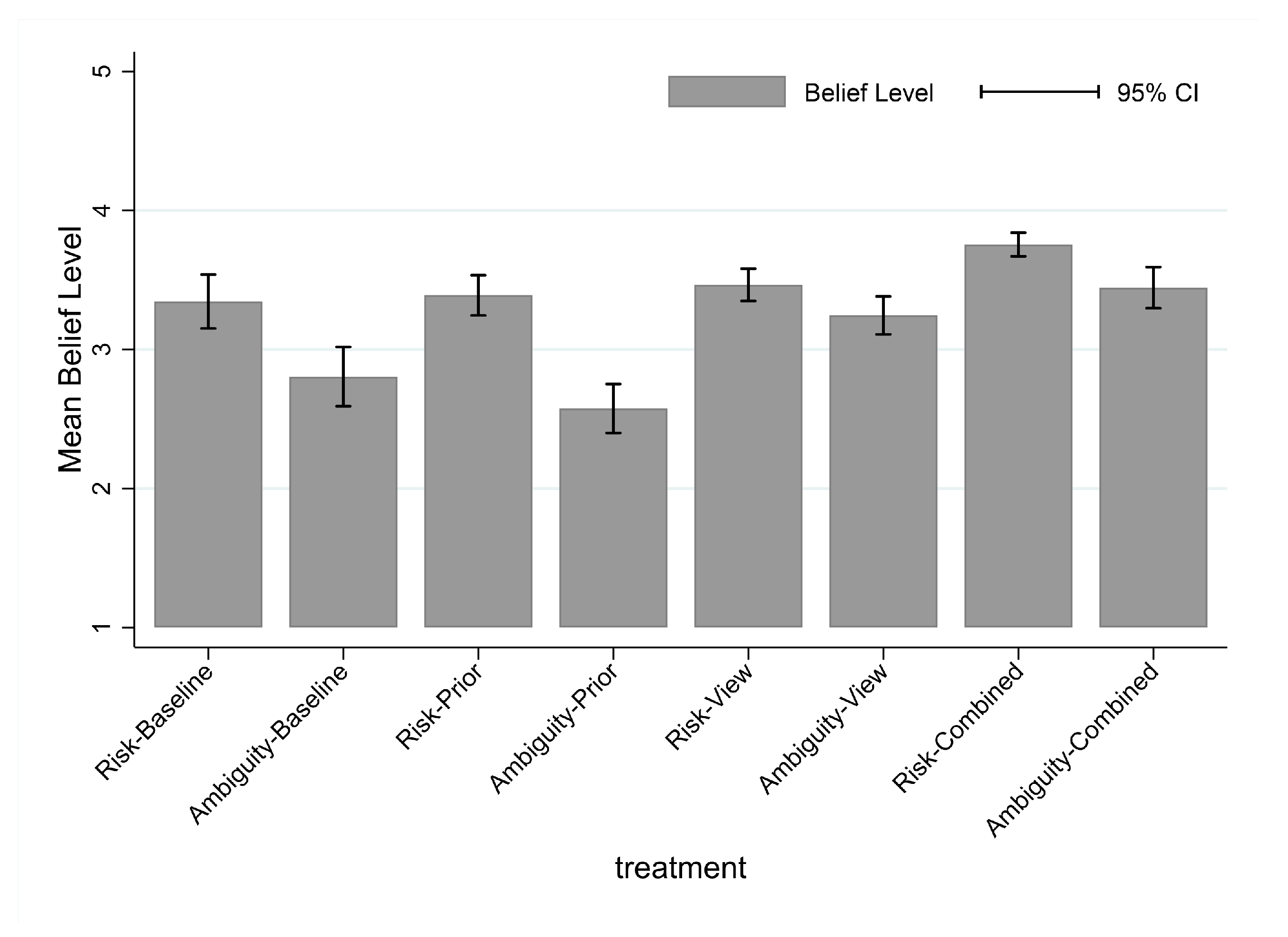
Figure 2 presents participants’ subjective probability judgments about the severity of consequences across the experimental conditions. The results show that in all four experimental conditions, the belief level under ambiguity is lower than under risk, indicating that as uncertainty increases, individuals tend to underestimate the severity of consequences. This pattern is particularly evident in the baseline and prior selection groups. Furthermore, although the belief level in the combined groups rebounds, the corresponding harvest rate in Figure 1 does not decrease accordingly, providing evidence for the mechanism underlying the boomerang effect.
Figure 2. Mean belief level by experimental condition.
Table 5 examines the mediating role of belief bias in the effect of uncertainty on harvesting behavior. In Models (1), (3), (5), and (7), where belief bias is the dependent variable, uncertainty has a significant positive effect across all four conditions. This indicates that ambiguous situations significantly increase individuals’ tendency to underestimate the severity of consequences, providing mechanistic support for H1. In Models (2), (4), (6), and (8), where harvesting behavior is the dependent variable, both uncertainty and belief bias are included as explanatory variables. The results reveal substantial variation across conditions. In the baseline condition, belief bias has a significant negative effect on harvesting ( β = 0.072 , p < 0.05 ), contrary to theoretical expectations. A possible explanation is that, without any feedback or intervention, optimistic participants (with higher belief bias) may overestimate the resource’s natural regeneration capacity and thus feel less urgency to harvest. This interpretation is broadly consistent with the evidence that individuals often hold overly optimistic expectations about resource dynamics in common-pool settings [55], although the behavioral consequences may depend on the specific decision context. In the prior selection condition, the effect is not significant ( β = 0.008 , p > 0.10 ). In the consequence viewing condition, belief bias has a strong positive effect on harvesting ( β = 0.386 , p < 0.01 ). In the combined condition, the effect remains positive but is considerably weaker ( β = 0.136 , p < 0.05 ).
Table 5. Mechanism analysis of belief bias.
These findings suggest that consequence viewing serves as a critical condition for activating the behavioral effect of belief bias. Only when individuals can observe the exact consequences of their actions does belief bias translate into improper harvesting. The data demonstrate that the belief bias coefficient decreases from 0.386 in the consequence-viewing condition to 0.136 in the combined condition, indicating a weakening of the belief-bias-to-behavior pathway. This finding, together with the positive interaction term in Table 4, provides empirical support for the boomerang effect. As to why this weakening occurs, we refer to the speculative mechanisms discussed in Section 4.2, namely increased cognitive load and responsibility diffusion, which were not directly tested in the present study and should be examined in future research.

5. Conclusions

This paper examined how uncertainty affects improper behavior and the effects of two nudges, prior selection and consequence viewing, through a young fruiting body harvesting experiment. The findings lead to three main conclusions. First, uncertainty can contribute to improper harvesting, but its effect operates through belief bias only when consequences are observable. Second, prior selection alone is an effective low-cost intervention, whereas consequence viewing alone has limited behavioral impact. Thirdly, combining the two nudges produces a boomerang effect. The addition of prior selection weakens the connection between belief bias and behavior.
These findings offer important insights for the conservation of wild mushroom resources and the management of improper harvesting practices. First, efforts should be made to reduce harvesters’ perceived uncertainty about consequences through information disclosure and public education, thereby curbing improper harvesting at its source. Second, before the harvesting season begins, harvesters could be encouraged to commit to following proper practices. Leveraging the anchoring effect in this way may help reduce actual violations. Such a pre-commitment mechanism has the advantages of being low-cost and easy to implement. Third, caution is needed when combining multiple nudges. Policymakers should evaluate the interactive effects of different interventions through pre-tests or pilot programs before implementation to avoid unintended consequences.
This paper has several limitations that warrant further investigation. First, the interaction estimate between prior selection and consequence viewing ( c o e f f i c i e n t = 0.253 , S E = 0.074 ), while statistically significant ( p < 0.05 ), has only moderate precision. Future studies with larger sample sizes may be able to provide more precise estimates of this boomerang effect. Second, the external validity of our findings is limited in two respects. One is the use of a student sample rather than actual harvesters who have economic dependence on the resource and ecological knowledge. The other is the controlled laboratory setting with only 10 rounds, which may not capture the long-term dynamics of real-world harvesting. Future field experiments with actual harvesters over extended time horizons are needed to assess whether the boomerang effect generalizes and how it may shift under different levels of resource dependency and repeated decision-making. Third, the psychological mechanisms underlying the boomerang effect, particularly why the influence of belief bias on harvesting behavior weakens when prior selection and consequence viewing are combined, were not directly measured in the present study. We have proposed increased cognitive load and responsibility diffusion as candidate explanations. However, these interpretations remain speculative. Future research should test these mechanisms directly, for instance by tracking response times as an indicator of cognitive load, by experimentally manipulating cognitive load through secondary tasks, or by administering post-experimental questionnaires to measure perceived responsibility.

Author Contributions

Conceptualization, J.L.; methodology, J.L.; software, J.L. and Y.Z.; validation, Y.J.; formal analysis, J.L. and Y.J.; investigation, J.L. and Y.J.; resources, Y.Z.; data curation, C.W.; writing—original draft preparation, J.L. and Y.J.; writing—review and editing, C.W.; visualization, C.W.; supervision, Y.Z.; project administration, C.W.; funding acquisition, Y.Z. All authors have read and agreed to the published version of the manuscript.

Funding

This research was funded by the National Social Science Fund of China, grant number 22BJY222.

Institutional Review Board Statement

This study conducted a questionnaire survey and experiments, and obtained the permission and assistance of the college. This study did not require any additional ethical approval and there was no ethical approval number. All respondents were aware that the information collected was for research purposes and agreed to fill out the questionnaire and participate in the experiments.

Data Availability Statement

The datasets supporting the conclusions of this article are fully presented in the manuscript and figures. Reasonable data requests can be sent to the corresponding author.

Acknowledgments

We thank all participants for their time and effort.

Conflicts of Interest

The authors declare no conflicts of interest.

Appendix A. Experimental Interface Design

The experiment was programmed using z-Tree v5.1.21. The experiment recruited 160 students from Beijing Forestry University. Participants were asked to take the role of forest farmers and make a series of harvesting decisions under different uncertainty conditions and behavioral interventions. In each round, the harvesting decision screen displayed the round number, and participants clicked a button to choose whether to harvest. After each decision, the system provided feedback on their earnings and the actual consequences. In the prior selection conditions, a separate preliminary task was included. Participants made hypothetical harvesting choices for five consequence levels (30, 50, 60, 70, and 80 points) without any economic incentive. In the subsequent formal rounds, the decision screen showed the choices they had made in the prior selection stage for the corresponding consequence level. In the consequence viewing conditions, participants were shown the actual consequences of their decision before making their choice in each round. For belief elicitation, participants in conditions without consequence viewing completed an incentivized belief measurement task after each round. In the consequence viewing conditions, this task was replaced with a lottery prediction task that had the same payoff structure. The specific interface designs are presented below.

Appendix A.1. Baseline Condition

Figure A1. Interface design in the baseline condition: (a) Harvesting decision screen; (b) belief elicitation screen; (c) results screen.

Appendix A.2. Prior Selection Condition
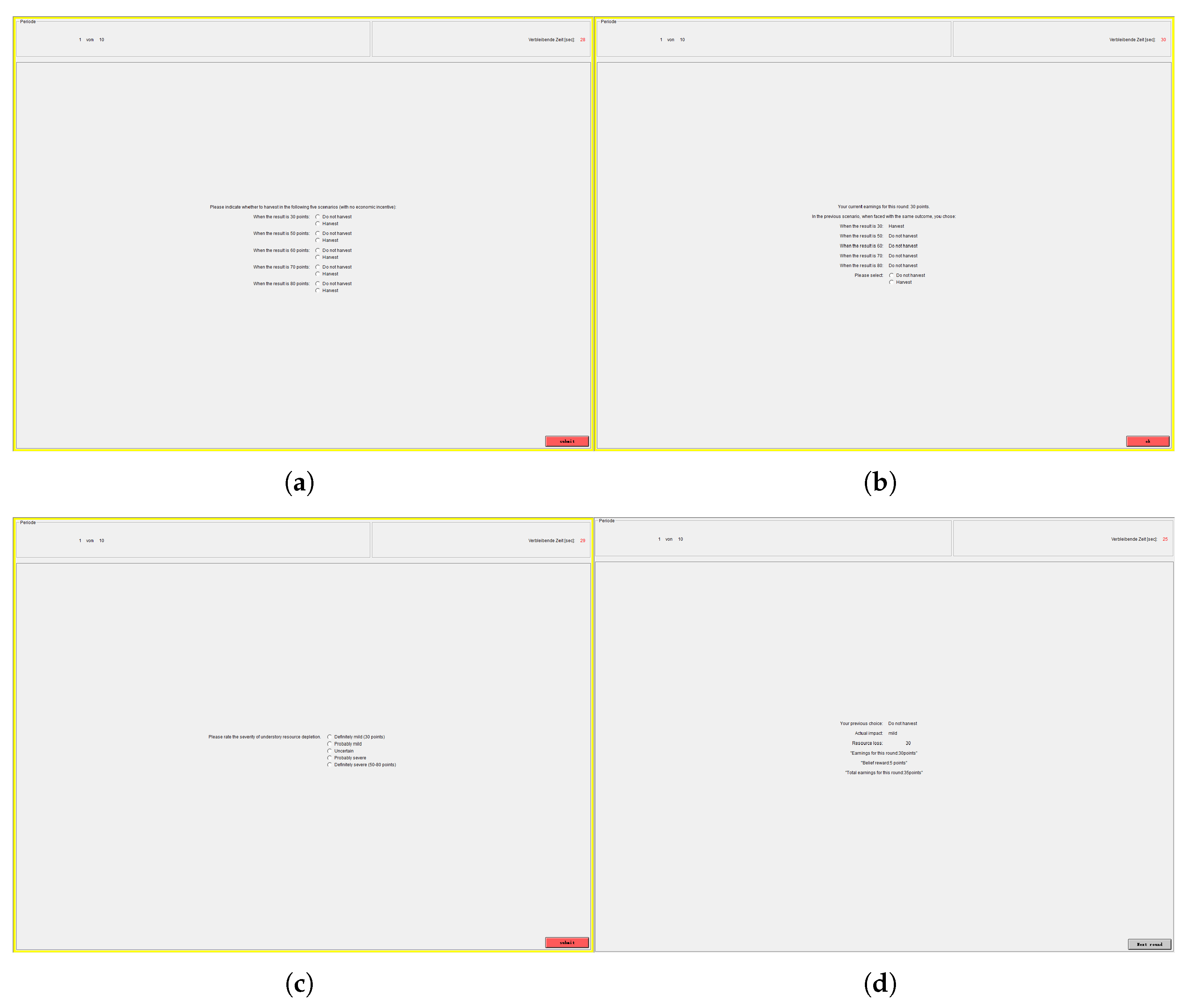
Figure A2. Interface design in the prior selection condition: (a) Prior selection screen; (b) harvesting decision screen; (c) belief elicitation screen; (d) results screen.

Appendix A.3. Consequence Viewing Condition

Figure A3. Interface design in the consequence viewing condition: (a) Harvesting decision screen; (b) lottery prediction screen; (c) results screen.

Appendix A.4. Combined Condition

Figure A4. Interface design in the combined condition: (a) Prior selection screen; (b) harvesting decision screen; (c) lottery prediction screen; (d) results screen.

References

  1. Ekins, P.; Simon, S.; Deutsch, L.; Folke, C.; De Groot, R. A framework for the practical application of the concepts of critical natural capital and strong sustainability. Ecol. Econ. 2003, 44, 165–185. [Google Scholar] [CrossRef] [Scilit]
  2. Mensah, J. Sustainable development: Meaning, history, principles, pillars, and implications for human action: Literature review. Cogent Soc. Sci. 2019, 5, 1653531. [Google Scholar] [CrossRef] [Scilit]
  3. Haregeweyn, N.; Tsunekawa, A.; Fenta, A.A.; Borrelli, P.; Panagos, P.; Aynekulu, E.; Abe, T.; Pablo, P.; West, S. A Transdisciplinary Framework to Bridge Science–Policy–Development Gaps in Global Land Management Initiatives. Glob. Chall. 2025, 9, 2400261. [Google Scholar] [CrossRef] [Scilit]
  4. Riva, M.; Kienast, F.; Grêt-Regamey, A. Aligning spatiotemporal supply and demand of nature’s contribution to people (NCPs) for sustainable resource management. Sci. Rep. 2025, 15, 32412. [Google Scholar] [CrossRef] [Scilit]
  5. Hardin, G. The tragedy of the commons: The population problem has no technical solution; it requires a fundamental extension in morality. Science 1968, 162, 1243–1248. [Google Scholar] [CrossRef] [Scilit]
  6. Wang, J.; Alita, L.; Jiang, M.; Nie, Z.; Tu, Q.; Liu, M. Collective action in the pastural area of Inner Mongolia, China: Evidence from a lab-in-the-field experiment. Land Use Policy 2024, 144, 107255. [Google Scholar] [CrossRef] [Scilit]
  7. Rocha, J.C.; Schill, C.; Saavedra-Díaz, L.M.; Moreno, R.d.P.; Maldonado, J.H. Cooperation in the face of thresholds, risk, and uncertainty: Experimental evidence in fisher communities from Colombia. PLoS ONE 2020, 15, e0242363. [Google Scholar] [CrossRef] [Scilit]
  8. Palm-Forster, L.H.; Suter, J.F. Experimental evidence of common pool resource use in the presence of uncertainty. J. Econ. Behav. Organ. 2022, 194, 139–160. [Google Scholar] [CrossRef] [Scilit]
  9. Nkuiya, B. Effects of increasing risk in common resource exploitation under cost asymmetry. Am. J. Agric. Econ. 2025, 107, 108–124. [Google Scholar] [CrossRef] [Scilit]
  10. Mertens, S.; Herberz, M.; Hahnel, U.J.; Brosch, T. The effectiveness of nudging: A meta-analysis of choice architecture interventions across behavioral domains. Proc. Natl. Acad. Sci. USA 2022, 119, e2107346118. [Google Scholar] [CrossRef] [Scilit]
  11. Hernández, F.; Jaime, M.; Vásquez, F. Nudges versus prices: Lessons and challenges from a water-savings program. Energy Econ. 2024, 134, 107546. [Google Scholar] [CrossRef] [Scilit]
  12. Buckley, P.; Llerena, D. Nudges and peak pricing: A common pool resource energy conservation experiment. J. Behav. Exp. Econ. 2022, 101, 101928. [Google Scholar] [CrossRef] [Scilit]
  13. Montero-Porras, E.; Suchon, R.; Lenaerts, T.; Domingos, E.F. Defaults: A double-edged sword in governing common resources. arXiv 2024, arXiv:2403.06796. [Google Scholar] [CrossRef] [Scilit]
  14. Correa, M.; Gsottbauer, E.; Nordén, A. Nudging fails to increase conservation actions among farmers. Front. Environ. Econ. 2025, 4, 1648280. [Google Scholar] [CrossRef] [Scilit]
  15. Igei, K.; Kurokawa, H.; Iseki, M.; Kitsuki, A.; Kurita, K.; Managi, S.; Nakamuro, M.; Sakano, A. Synergistic effects of nudges and boosts in environmental education: Evidence from a field experiment. Ecol. Econ. 2024, 224, 108279. [Google Scholar] [CrossRef] [Scilit]
  16. De Salvo, M.; Trovato, I.; Giuffrida, L.; Cerro, M.; Signorello, G.; Cucuzza, G. Nudging effects on consumer preferences and willingness to pay for lycopene-enriched fresh tomatoes. Future Foods 2025, 12, 100722. [Google Scholar] [CrossRef] [Scilit]
  17. Glynn, P.D.; Voinov, A.A.; Shapiro, C.D.; White, P.A. From data to decisions: Processing information, biases, and beliefs for improved management of natural resources and environments. Earth’s Future 2017, 5, 356–378. [Google Scholar] [CrossRef] [Scilit]
  18. Coutts, A.; Gerhards, L.; Murad, Z. What to blame? Self-serving attribution bias with multi-dimensional uncertainty. Econ. J. 2024, 134, 1835–1874. [Google Scholar] [CrossRef] [Scilit]
  19. Engelmann, J.B.; Lebreton, M.; Salem-Garcia, N.A.; Schwardmann, P.; van der Weele, J.J. Anticipatory anxiety and wishful thinking. Am. Econ. Rev. 2024, 114, 926–960. [Google Scholar] [CrossRef] [Scilit]
  20. Lench, H.C. Automatic optimism: The affective basis of judgments about the likelihood of future events. J. Exp. Psychol. Gen. 2009, 138, 187. [Google Scholar] [CrossRef] [Scilit] [PubMed]
  21. Raj, A.; Jhariya, M.; Yadav, D.; Banerjee, A. Forests for resource management and environmental protection. In Environmental and Sustainable Development Through Forestry and Other Resources; Apple Academic Press: Palm Bay, FL, USA, 2020; pp. 1–24. [Google Scholar]
  22. Wang, L.; Zheng, H.; Wen, Z.; Liu, L.; Robinson, B.E.; Li, R.; Li, C.; Kong, L. Ecosystem service synergies/trade-offs informing the supply-demand match of ecosystem services: Framework and application. Ecosyst. Serv. 2019, 37, 100939. [Google Scholar] [CrossRef] [Scilit]
  23. Wang, L.; Zheng, H.; Chen, Y.; Long, Y.; Chen, J.; Li, R.; Hu, X.; Ouyang, Z. Synergistic management of forest and reservoir infrastructure improves multistakeholders’ benefits across the forest-water-energy-food nexus. J. Clean. Prod. 2023, 422, 138575. [Google Scholar] [CrossRef] [Scilit]
  24. Dai, E.f.; Wang, X.l.; Zhu, J.j.; Xi, W.m. Quantifying ecosystem service trade-offs for plantation forest management to benefit provisioning and regulating services. Ecol. Evol. 2017, 7, 7807–7821. [Google Scholar] [CrossRef] [Scilit] [PubMed]
  25. Ford, C.R.; Laseter, S.H.; Swank, W.T.; Vose, J.M. Can forest management be used to sustain water-based ecosystem services in the face of climate change? Ecol. Appl. 2011, 21, 2049–2067. [Google Scholar] [CrossRef] [Scilit]
  26. Intralawan, A.; Wood, D.; Frankel, R.; Costanza, R.; Kubiszewski, I. Tradeoff analysis between electricity generation and ecosystem services in the Lower Mekong Basin. Ecosyst. Serv. 2018, 30, 27–35. [Google Scholar] [CrossRef] [Scilit]
  27. Dugar, S.; Mitra, A.; Shahriar, Q. Deception: The role of uncertain consequences. Eur. Econ. Rev. 2019, 114, 1–18. [Google Scholar] [CrossRef] [Scilit]
  28. Tu, C.; D’Odorico, P.; Li, Z.; Suweis, S. The emergence of cooperation from shared goals in the governance of common-pool resources. Nat. Sustain. 2023, 6, 139–147. [Google Scholar] [CrossRef] [Scilit]
  29. Hung, F.; Son, K.; Yang, Y.E. Investigating uncertainties in human adaptation and their impacts on water scarcity in the Colorado river Basin, United States. J. Hydrol. 2022, 612, 128015. [Google Scholar] [CrossRef] [Scilit]
  30. Anwar, C.M.S.; Georgalos, K. Position uncertainty in a sequential public goods game: An experiment. Exp. Econ. 2024, 27, 820–853. [Google Scholar] [CrossRef] [Scilit]
  31. Gächter, S.; Nosenzo, D.; Renner, E.; Sefton, M. Sequential vs. simultaneous contributions to public goods: Experimental evidence. J. Public Econ. 2010, 94, 515–522. [Google Scholar] [CrossRef] [Scilit]
  32. Enke, B.; Graeber, T. Cognitive uncertainty. Q. J. Econ. 2023, 138, 2021–2067. [Google Scholar] [CrossRef] [Scilit]
  33. Chen, Y.; Lu, L.; Wang, X.; Dai, B.; Luo, J. Uncertainty, belief bias and improper behavior: Experimental evidence from nudges. World Econ. 2023, 46, 231–256. (In Chinese) [Google Scholar]
  34. Brzozowicz, M.; Krawczyk, M. Anchors on prices of consumer goods only hold when decisions are hypothetical. PLoS ONE 2022, 17, e0262130. [Google Scholar] [CrossRef] [Scilit]
  35. Bazart, C.; Lefebvre, M.; Rosaz, J. Promoting socially desirable behaviors through persuasion and commitment: Experimental evidence. J. Behav. Exp. Econ. 2022, 101, 101931. [Google Scholar] [CrossRef] [Scilit]
  36. Martin, R.; Randal, J. How is donation behaviour affected by the donations of others? J. Econ. Behav. Organ. 2008, 67, 228–238. [Google Scholar] [CrossRef] [Scilit]
  37. Wang, X.; An, X.; Luo, H.; Xu, S.; Yu, X.; Hu, S.; Wang, Y. Anchoring effect as a nudge on improving public health: Two field experiments. Acta Psychol. Sin. 2018, 50, 848. [Google Scholar] [CrossRef] [Scilit]
  38. Strack, F.; Martin, L.L.; Schwarz, N. Priming and communication: Social determinants of information use in judgments of life satisfaction. Eur. J. Soc. Psychol. 1988, 18, 429–442. [Google Scholar] [CrossRef] [Scilit]
  39. Falk, T.; Vollan, B.; Kirk, M. Analysis of material, social, and moral governance in natural resource management in southern Namibia. Int. J. Commons 2012, 6, 271–301. [Google Scholar] [CrossRef]
  40. Seufert, T. Building bridges between self-regulation and cognitive load—An invitation for a broad and differentiated attempt. Educ. Psychol. Rev. 2020, 32, 1151–1162. [Google Scholar] [CrossRef] [Scilit]
  41. van der Veer, A.; Madern, T.; van Lenthe, F.J. Tunneling, cognitive load and time orientation and their relations with dietary behavior of people experiencing financial scarcity–an AI-assisted scoping review elaborating on scarcity theory. Int. J. Behav. Nutr. Phys. Act. 2024, 21, 26. [Google Scholar] [CrossRef] [Scilit]
  42. Fischbacher, U. z-Tree: Zurich toolbox for ready-made economic experiments. Exp. Econ. 2007, 10, 171–178. [Google Scholar] [CrossRef] [Scilit]
  43. Vanberg, C. Why do people keep their promises? An experimental test of two explanations 1. Econometrica 2008, 76, 1467–1480. [Google Scholar]
  44. Ai, C.; Norton, E.C. Interaction terms in logit and probit models. Econ. Lett. 2003, 80, 123–129. [Google Scholar] [CrossRef] [Scilit]
  45. Jager, W.; Janssen, M.A.; Vlek, C.A. How uncertainty stimulates over-harvesting in a resource dilemma: Three process explanations. J. Environ. Psychol. 2002, 22, 247–263. [Google Scholar] [CrossRef] [Scilit]
  46. Haisley, E.C.; Weber, R.A. Self-serving interpretations of ambiguity in other-regarding behavior. Games Econ. Behav. 2010, 68, 614–625. [Google Scholar] [CrossRef] [Scilit]
  47. Weinstein, N.D. Unrealistic optimism about future life events. J. Personal. Soc. Psychol. 1980, 39, 806. [Google Scholar] [CrossRef]
  48. Puntiroli, M.; Kandul, S.; Bezençon, V.; Lanz, B. Seeing through the fog: The ability to resolve ambiguity reduces dishonesty. Personal. Soc. Psychol. Bull. 2025, 52, 1299–1313. [Google Scholar] [CrossRef] [Scilit]
  49. Sandler, R. Ethical theory and the problem of inconsequentialism: Why environmental ethicists should be virtue-oriented ethicists. J. Agric. Environ. Ethics 2010, 23, 167–183. [Google Scholar] [CrossRef] [Scilit]
  50. Caplan, A.J.; Sims, C.; Anderson, E.J. Measuring the environmental cost of hypocrisy. Ecol. Econ. 2014, 108, 124–135. [Google Scholar] [CrossRef] [Scilit]
  51. Carlsson, F.; Gravert, C.; Johansson-Stenman, O.; Kurz, V. The use of green nudges as an environmental policy instrument. Rev. Environ. Econ. Policy 2021, 15, 216–237. [Google Scholar] [CrossRef] [Scilit]
  52. Savani, K.; Wadhwa, M. Choosing not to get anchored: A choice mindset reduces the anchoring bias. J. Exp. Soc. Psychol. 2024, 112, 104575. [Google Scholar] [CrossRef] [Scilit]
  53. Moore, C. Moral disengagement. Curr. Opin. Psychol. 2015, 6, 199–204. [Google Scholar] [CrossRef] [Scilit]
  54. Feess, E.; Kerzenmacher, F.; Muehlheusser, G. Morally questionable decisions by groups: Guilt sharing and its underlying motives. Games Econ. Behav. 2023, 140, 380–400. [Google Scholar] [CrossRef] [Scilit]
  55. Fischer, M.E.; Irlenbusch, B.; Sadrieh, A. An intergenerational common pool resource experiment. J. Environ. Econ. Manag. 2004, 48, 811–836. [Google Scholar] [CrossRef] [Scilit]
Disclaimer/Publisher’s Note: The statements, opinions and data contained in all publications are solely those of the individual author(s) and contributor(s) and not of MDPI and/or the editor(s). MDPI and/or the editor(s) disclaim responsibility for any injury to people or property resulting from any ideas, methods, instructions or products referred to in the content.

Article Metrics

Citations

Article Access Statistics

Multiple requests from the same IP address are counted as one view.