


Abstract
Monoculture plantations often face challenges of soil degradation and declining ecosystem services. Intercropping is beneficial to improving soil quality; however, the long-term effects of intercropping woody plants with medicinal herbs on soil ecosystems remain unclear. This study aimed to investigate the temporal effects of different durations of poplar intercropping with Aralia elata on soil physicochemical properties, enzyme activities, and soil microbial community structure. Soil samples were collected from the 0–20 cm soil layer, with composite samples obtained by mixing four soil cores per plot. We determined soil physicochemical properties, including pH, total carbon (TC), total nitrogen (TN), and total phosphorus (TP); soil enzyme activities, including invertase, urease, phosphatase, and β-N-acetylglucosaminidase (NAG); and soil microbial community structure using high-throughput sequencing of the bacterial 16S rRNA gene and fungal ITS region. Intercropping significantly affected soil chemical properties and enzyme activities in poplar plantations. Compared with the monoculture control (Y), TN (p < 0.01) and TC (p < 0.01) contents increased significantly in the 3- and 7-year intercropping treatments. The activity of β-N-acetylglucosaminidase (NAG) was enhanced following poplar–Aralia elata intercropping. In addition, intercropping significantly changed the composition and structure of soil microbial communities. In summary, introducing Aralia elata into poplar plantations can effectively improve soil fertility and reshape soil microbial community structure. This positive effect is time-dependent and becomes more significant with a 7-year intercropping duration. Poplar–Aralia elata intercropping represents a feasible management strategy to enhance ecological sustainability and soil health in plantation ecosystems of Northeast China.
1. Introduction
Populus L. (poplars) are versatile, high-yielding tree species recognized as one of the most valuable fast-growing resources for industrial applications. This status is primarily attributed to their rapid growth rate, strong interspecific compatibility, and efficient reproductive capacity [1,2]. Possessing high genetic diversity and a broad global distribution, poplars are widely utilized in papermaking, wood processing, and bioenergy production [3]. Data from the 9th National Forest Resources Inventory of China (2019) indicates that the area of poplar plantations in China has reached 7.57 million hectares, with a total standing volume of approximately 546 million cubic meters. As the second most widely planted tree species in China, poplars account for 13.25% of the national plantation area and contribute 16.12% of the total standing volume [4]. Given increasing global demands for socioeconomic development, environmental remediation, and sustainable resource utilization, the establishment and management of poplar plantations have emerged as a key research focus worldwide [1]. However, with the intensification of agricultural production, land degradation has become increasingly severe, accompanied by the gradual decline of critical ecosystem services. Long-term continuous monoculture often leads to nutrient depletion, reduced soil fertility, and diminished biomass productivity [5].
Continuous monocropping tends to result in nutrient exhaustion, decreased soil fertility, and reduced biomass productivity under long-term cultivation [6]. In contrast to monoculture forests, mixed-species forests can significantly enhance the ability of plants to utilize soil nutrient availability and water content, optimize the efficiency of resource and space usage as well as biodiversity, and exert more favorable impacts on strengthening the resistance and stability of forest ecosystems [6]. Thus, constructing poplar forests by combining them with other appropriate tree species might provide a practical approach to address the issue of stand growth restriction. A key factor that decides the success of mixed afforestation is the compatibility of interspecific interactions between the selected mixed tree species [7]. Aralia elata var Pritz. Pojark., is a valuable wild vegetable with a long history of traditional use in East Asia, including China, Japan, Korea, and Russia, where it has been employed in folk medicine for the management of diabetes and rheumatoid arthritis [8]. Beyond its culinary applications, this species represents an important medicinal herb with substantial cultural and pharmacological significance. In recent years, the edible young shoots of A. elata have attracted growing consumer attention, owing to their high nutritional and functional value, environmentally sustainable characteristics, and potential for pesticide-free cultivation. in both subtropical and temperate areas. Populus euramericana “I-214” serves as the primary poplar species for afforestation in European nations [9].
To our knowledge, no studies have yet focused on the growth characteristics of mixed Aralia elata and poplar stands in systems. Exploring the changes in soil physicochemical properties and soil microbial communities under different intercropping periods helps us better understand the beneficial effects of poplar–Aralia elata intercropping systems on soil quality. The alterations in soil fertility arising from the interactions among various species in intercropping systems have been widely recognized. This finding can offer guidance for introducing mutually compatible tree species into pure poplar forests to establish mixed stands. Consequently, this study is designed to comprehensively evaluate the variations in soil nutrient contents, enzyme activities, and microbial community structures related to these two plant species in a poplar–Aralia elata agroforestry system over different intercropping periods. In accordance with this research objective, the following research hypotheses are proposed:
- (i)
- In this intercropping system, intercropping duration significantly affects soil nutrient content; soil nutrient levels are expected to show an increasing trend as the intercropping period prolongs.
- (ii)
- With the increase in intercropping years, the interspecific competition between poplars and Aralia elata intensifies, leading to a significant increase in the activity of key soil enzymes.
- (iii)
- Different intercropping duration of poplar and Aralia elata will cause great variations in the structure and diversity of soil microbial communities; especially, it is expected that the main populations of bacteria and fungi will show regular changes with different intercropping times.
2. Materials and Methods
2.1. Experimental Locations
This study was conducted at Xinmin Machinery Forest Farm (41°59′59″ N, 122°48′19″ E), located in Shenyang City, Liaoning Province. From a climatic perspective, the study site falls within a temperate zone featuring continental monsoon conditions. The average annual temperature is 7.6 °C, with the maximum and minimum extreme temperatures reaching 35.5 °C and −31.5 °C, respectively. Additionally, the annual active accumulated temperature above 10°C is 3348.3 °C, the frost-free period lasts 151 days, and the annual precipitation amounts to 656.5 mm. A trial of interplanting Aralia elata under poplar forests was implemented in Liaoning Province. The poplar trees belonged to the ‘Poplars simonii Carrière’ cultivar and were 11 years old, with a planting spacing of 4.0 m × 6.0 m in the poplar plantation. The experimental plots were flat, free from waterlogging, and the soil at the experimental site was classified as Haplic Cambisol according to the WRB 2022 classification. To guarantee the rigor of the experiment, no chemical fertilizers were applied to any of the plots during the experimental period. Overall, the terrain of the study area is flat.
2.2. Experimental Setup and Soil Sampling
In July 2024, four stand types were established in the experimental area, namely: pure poplar plantation without intercropping, poplar–Aralia elata mixed plantation with 1 year of intercropping, poplar–Aralia elata mixed plantation with 3 years of intercropping, and poplar–Aralia elata mixed plantation with 7 years of intercropping. Each treatment included four replicates, with one 20 m × 20 m plot per replicate. The distance between adjacent plots was greater than 100 m to ensure experimental independence.
For soil sample collection, an S-shaped sampling layout was adopted within each plot using uniform random sampling. Prior to collection, the surface litter layer was removed. Soil samples at a depth of 0–20 cm were then collected using a soil auger with a diameter of 3 cm. Eight soil cores were randomly and uniformly collected from each plot and mixed into one composite sample, yielding a total of 16 soil samples. Each soil sample was divided into three subsamples and placed in sterile zip-lock bags. All samples were transported to the laboratory under low-temperature conditions for subsequent analysis, with treatments as follows: subsamples for soil chemical property analysis: air-dried after removing gravel and plant roots, then ground and sieved for storage; subsamples for soil enzyme activity analysis: stored at 4 °C after removing gravel and plant roots; subsamples for soil microbial analysis: stored at −80 °C after removing gravel and plant roots for subsequent determination of soil bacterial and fungal communities.
2.3. Soil Chemical Property
Soil physicochemical properties were determined as follows: (1) Soil pH was measured with a Leici PHS-3C pH meter (INESA Scientific Instrument Co., Ltd., Shanghai, China) using the electrode method. Briefly, 5.0 g of air-dried soil (2 mm sieve) was homogenized with CO2-free deionized water at a soil-to-water ratio of 1:2.5, shaken, and equilibrated for 30 min before measurement. (2) Soil total phosphorus (TP): Soil total phosphorus was determined by sulfuric acid-perchloric acid digestion followed by molybdenum-antimony anti-spectrophotometry. The absorbance was measured at a wavelength of 700 nm (Thermo Fisher Scientific, Waltham, MA, USA) and the total phosphorus content was calculated by combining with the standard curve. (3) Soil total carbon (TC) and total nitrogen (TN) were determined using an elemental analyzer (Elementar Vario EL III, Langenselbold, Germany), with reference to the methods specified in ISO 10694 [10] (for TC) and ISO 13878 [11] (for TN).
2.4. Soil Enzyme Activities
Soil invertase (IN) activity was determined using the DNS colorimetric method [12], with 5% (w/v) sucrose as the substrate. Briefly, 1 g of air-dried soil sample (sieved through a 2 mm sieve) was accurately weighed and mixed with 10 mL of sucrose solution and 5 mL of phosphate buffer (pH 5.5). The mixture was incubated at 37 °C for 24 h, and the reaction was terminated by boiling for 10 min. After centrifugation, the supernatant was collected and mixed with DNS reagent, followed by color development in a boiling water bath for 5 min. The absorbance was measured at 540 nm using a Model 722N visible spectrophotometer (Shanghai INESA Analytical Instrument Co., Ltd., Shanghai, China). The glucose concentration was quantified against a standard curve established with 0–1.0 mg/mL glucose solutions, and soil invertase activity was subsequently calculated accordingly.
Soil urease (Ure) activity was determined using the indophenol blue colorimetric method [13]. Briefly, 5 g of air-dried soil sample was incubated at 37 °C for 24 h. During incubation, urea was hydrolyzed into ammonia and carbon dioxide under the catalysis of soil urease. The released ammonia reacted with phenol and sodium hypochlorite under alkaline conditions to form a blue indophenol complex. The absorbance of the resulting solution was measured at 630 nm using a spectrophotometer. The ammonia concentration was quantified against a standard curve, and soil urease activity was subsequently calculated accordingly.
Soil neutral phosphatase (Phos) activity was determined using the disodium phenyl phosphate colorimetric method [14]. Briefly, 5 g of air-dried soil sample was incubated at 37 °C for 24 h. During incubation, disodium phenyl phosphate was hydrolyzed into phenol under the catalysis of soil neutral phosphatase. The liberated phenol then reacted with 4-aminoantipyrine in the presence of potassium ferricyanide under alkaline conditions to form a red quinone chromophore. The absorbance of the resulting solution was measured at 660 nm using a spectrophotometer. Phenol concentration was quantified against a standard curve, and soil neutral phosphatase activity was subsequently calculated accordingly.
The activity of soil β-1,4-N-acetylglucosaminidase (NAG) was determined as described previously [15] with minor modifications. Briefly, an appropriate volume of enzyme solution was mixed with p-nitrophenyl-N-acetyl-β-D-glucosaminide (pNPG) substrate solution, followed by the addition of 1 g of air-dried soil to the reaction mixture. The reaction system was incubated in a water bath at 37 °C for 1 h, after which the reaction was terminated by the addition of sodium hydroxide solution. Subsequently, the absorbance of the reaction mixture was measured at a wavelength of 405 nm using a spectrophotometer, and NAG activity was calculated by reference to a standard curve.
2.5. DNA Isolation and High-Throughput Sequencing
Total DNA was extracted from approximately 0.5 g of each sample using the MoBio PowerSoil DNA Isolation Kit (MP Biomedicals, Santa Ana, CA, USA) following the manufacturer’s instructions, with microbial cells separated by a 0.22 µm × 50 mm sterile nylon membrane. The quantity and quality of the extracted DNA were determined using a NanoDrop ND-1000 spectrophotometer (Thermo Fisher Scientific, Waltham, MA, USA). The V3–V4 region of the bacterial 16S rRNA gene was amplified using the primers 338F (5′-ACTCCTACGGGAGGCAGCA-3′) and 806R (5′-GGACTACHVGGGTWTCTAAT-3′) [16], while the fungal ITS region was amplified using primers ITS5 (5′-GGAAGTAAAAGTCGTAACAAGG-3′) and ITS2 (5′-GCTGCGTTCTTCATCGATGC-3′) [17]. PCR amplification was performed in a total volume of 25 µL, containing 2 µL of DNA template, 0.4 µM of each forward and reverse primer (0.1 µL, 10 µmol·L−1), 5 µL of buffer, 5 µL of Q high-fidelity buffer, 0.25 µL of high-fidelity DNA polymerase, 0.2 mmol·L−1 dNTP (2 µL, 2.5 mmol·L−1), and 8.75 µL of ultrapure water (ddH2O). Amplification was conducted on an ABI-2720 thermal cycler (Applied Biosystems, Waltham, MA, USA) under the following conditions: initial denaturation at 98 °C for 2 min, followed by 25 cycles of denaturation at 98 °C for 15 s, annealing at 55 °C for 30 s, and extension at 72 °C for 30 s, with a final extension at 72 °C for 5 min and holding at 4 °C. PCR products were purified using Agencourt AMPure Beads (Beckman Coulter, Indianapolis, IN, USA) and quantified using the QuantiFluor PicoGreen dsDNA Detection Kit (Invitrogen, Carlsbad, CA, USA). High-throughput sequencing of the purified amplicons was performed on the Illumina NovaSeq 6000 platform at Personalbio Biotechnology Co., Ltd. (Shanghai, China).
2.6. Data Analysis
Data processing was performed using Microsoft Excel 2019, and statistical analysis was conducted with SPSS 26.0 software. All data in the tables are expressed as the mean ± standard deviation (SD) of three replicates. One-way analysis of variance (ANOVA) was applied to determine significant differences in soil physicochemical properties among different treatments. Ecologists commonly use alpha diversity and beta diversity indices to describe species diversity within individual habitats and among different habitat types, respectively, allowing for a comprehensive assessment of overall biodiversity [17,18]. To characterize the alpha diversity of soil microbial communities, the Chao1 [19] and Observed species indices were used to evaluate species richness, while the Shannon [20] and Simpson [21] indices were applied to estimate species diversity. The Pielou evenness index [22] was used to quantify species evenness, and the Good coverage index [23] was calculated to assess sequencing coverage. Boxplots were constructed using the ggplot2 package in R software (Version 4.1.0). Principal Coordinates Analysis (PCoA), a classic unconstrained ordination method also known as Classical Multidimensional Scaling (cMDS), was performed in this study. Based on the Amplicon Sequence Variant (ASV) table, β-diversity differences among soil samples were analyzed and compared using R software (Version 3.4.4) combined with the ape package. For microbial community analysis, R software (Version 3.4.4) and the “Venn Diagram” package were used to identify and visualize shared and unique ASVs among different samples. Furthermore, heatmaps of the top 50 most abundant genera were generated using R software with the pheatmap package. The Linear Discriminant Analysis Effect Size (LEfSe) approach was used to identify dominant microbial taxa under default parameters, based on the normalized relative abundance matrix. By combining Linear Discriminant Analysis (LDA) with non-parametric Kruskal–Wallis and Wilcoxon rank-sum tests, significant microbial biomarkers were recognized [24]. The corresponding matrix was established using the Galaxy online platform, which supports interactive online analysis of microbial community data.
3. Results
3.1. Soil Chemical Properties Under Varying Intercropping Years
It can be seen from Table 1 that there are significant differences in the contents of TC, TN and TP in the soil under the understory of Aralia elata /Poplars and pure Poplars forests with different intercropping durations. Moreover, in the mixed forests, there are significant differences in the contents of TC, TN and TP between IYC and IIIYC, VIIYC (p < 0.05). The contents of TC, TN and TP in IYC are lower than those in IIIYC and VIIYC. The C/N ratio shows that Y is the highest, followed by Y and IIIYC, and VIIYC is the lowest; while the N/P ratio and C/P ratio both show that VIIYC is the highest and IYC is the lowest. Moreover, the pH value of the soil under the four different planting methods of Poplar forest has no obvious difference (p > 0.05) (Table 1).
Table 1.
Chemical properties of soil with different intercropping durations.
3.2. Enzyme Activities of Soil with Different Intercropping Durations
Soil invertase, urease, phosphatase, and β-1,4-N-acetylglucosaminidase activities increased significantly in the understory soil of Aralia elata–Populus mixed forests and pure Populus forests with different intercropping years. Among all treatments, VIIYC showed the highest activities of these four soil enzymes (Table 2).
Table 2.
Enzyme activities in soils of different intercropping years.
3.3. Compositions and Structural Features of Microbial Communities in Different Soils Under Varied Intercropping Durations
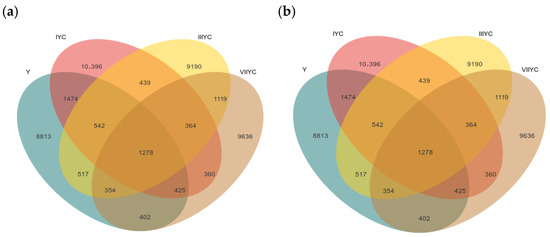
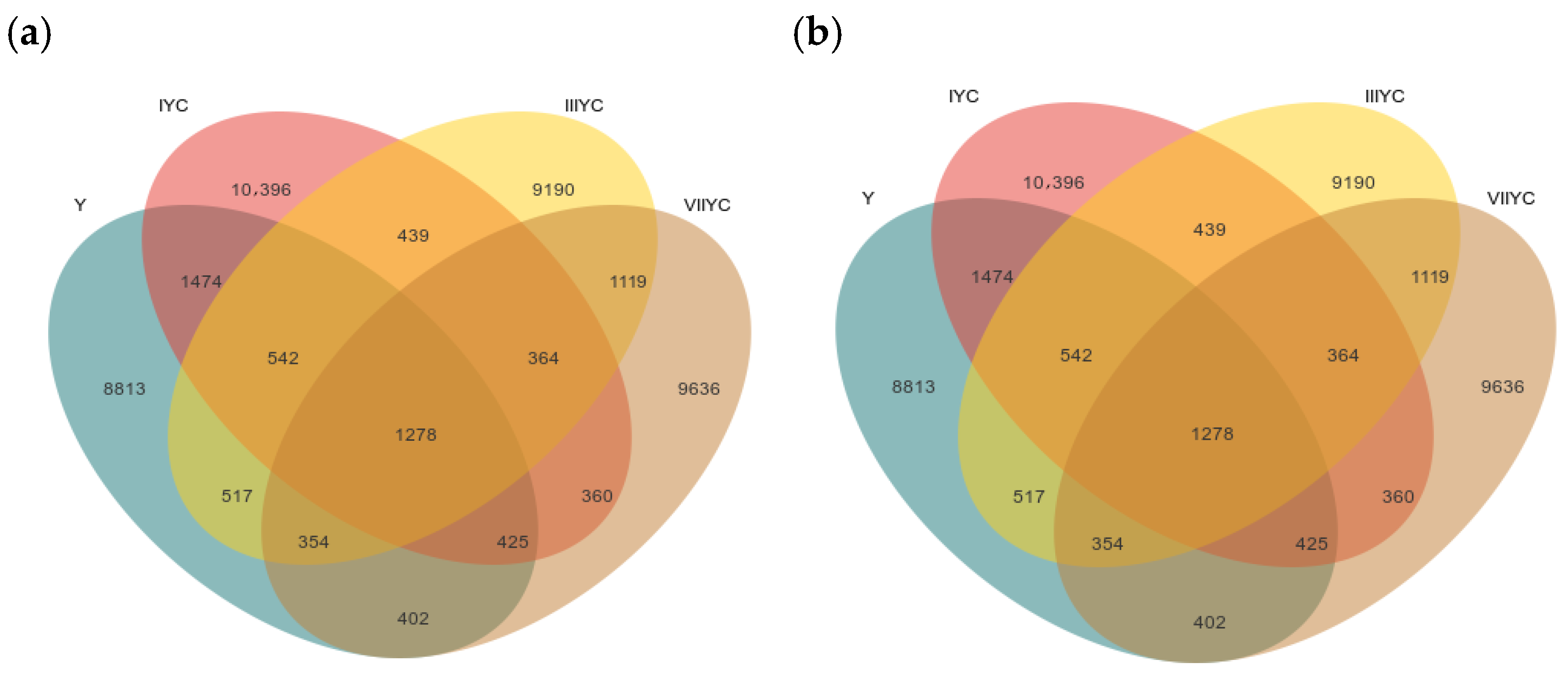
A total of 1278 shared amplicon sequence variants (ASVs) were detected among the four soil bacterial communities. The pure poplar forest (Y) had the smallest number of unique soil ASVs, amounting to 8813, while the treatment with three-year intercropping duration (IIIYC) had the largest number of unique soil ASVs, reaching 10,396. Among these treatments, the number of shared ASVs between Y and IYC was the highest (3719), whereas the number of shared ASVs between Y and VIIYC was the lowest (2459) (Figure 1a).
Figure 1.
Schematic Venn diagram displaying the individual and common ASVs of soil little microbes for four separate samples. (a) Bacteria; (b) Fungi. Y: Pure poplar forest; IYC: One-year intercropping; IIIYC: Three-year intercropping; VIIYC: Seven-year intercropping.
At the fungal level, a total of 86 ASVs were shared among the four soil fungal communities in poplar–Aralia elata forests with different intercropping durations. The pure poplar forest (Y) had the smallest number of unique soil ASVs, amounting to 646, while the seven-year intercropping treatment (VIIYC) had the largest number of unique soil ASVs, reaching 1027 (Figure 1b).
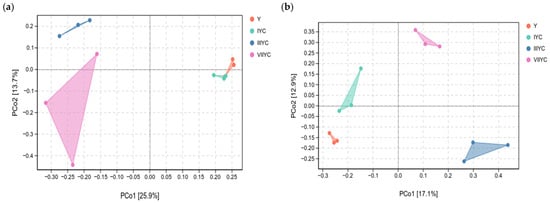
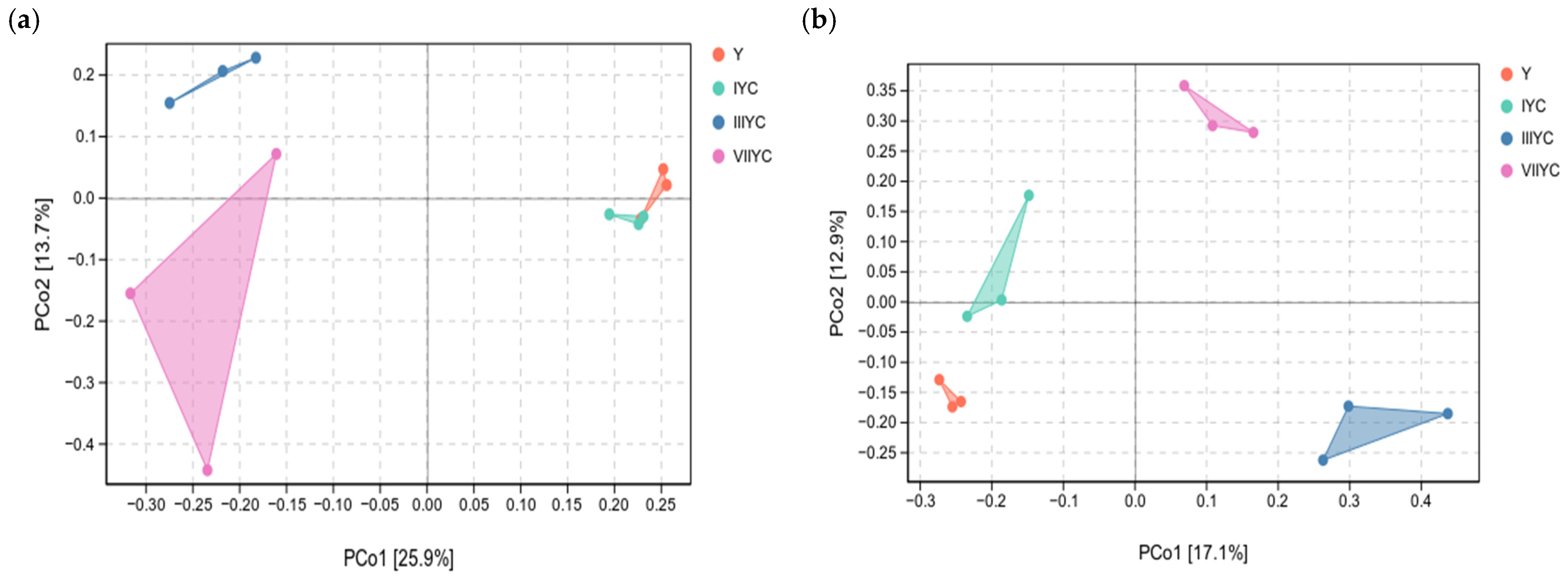
Unconstrained principal coordinate analysis (PCoA) based on the Bray–Curtis distance matrix was performed to characterize the distribution patterns of soil bacterial and fungal communities across groups Y, IYC, IIIYC, and VIIYC. The results showed distinct community discrepancies among these groups, which were clearly separated into three major clusters along the first principal coordinate (Figure 2).
Figure 2.
Principle coordinate analysis (PCoA) based on Bray–Curtis’s distance for all samples. (a) Bacteria; (b) Fungi. Y: Pure poplar forest; IYC: One-year intercropping; IIIYC: Three-year intercropping; VIIYC: Seven-year intercropping.
3.4. Microbial Population Diversity of Different Soil in Intercropping Durations
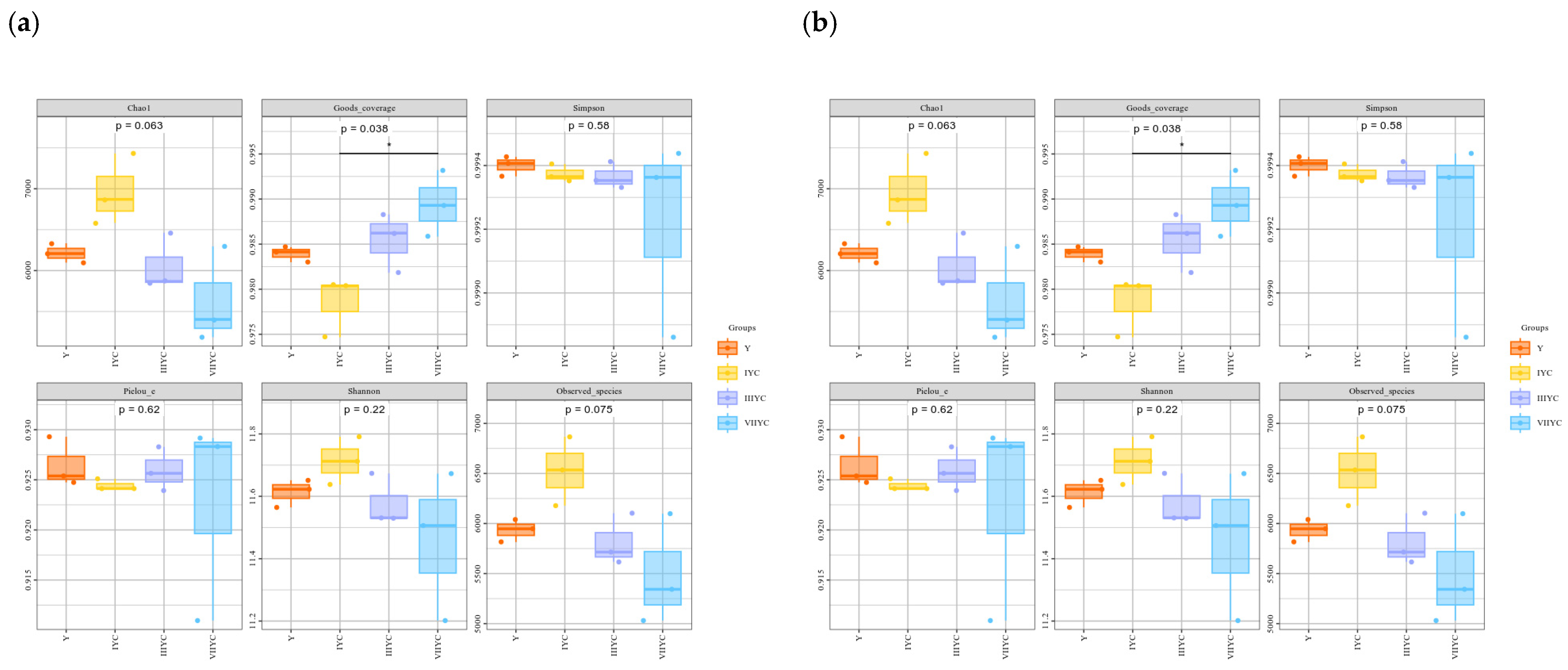
Alpha diversity indices of soil samples collected under varying intercropping durations were quantified, with the corresponding data presented in the form of box plots. With respect to soil bacterial diversity, the measured indices included the Chao 1 index (p = 0.063), Pielou_e index (p = 0.62), Shannon index (p = 0.22), Simpson index (p = 0.56) and Observed_species (p = 0.075). Among all tested groups, the Y group had the highest Pielou_e index of 0.926, whereas the IYC group recorded the peak values of Chao 1 (6962.746), Shannon (11.714) and Observed_species (6527.333) (Figure 3a). The maximum Simpson index of 0.9994 was found in the IIIYC group. Collectively, these results demonstrated that the IYC group harbored the most abundant and diverse soil bacterial communities. On the contrary, the soil fungal diversity indices displayed a completely opposite variation trend compared with soil bacteria. The analyzed fungal diversity metrics consisted of the Chao 1 index (p = 0.067), Pielou_e index (p = 0.62), Shannon index (p = 0.22), Simpson index (p = 0.58) and Observed_species (p = 0.075). The Y group yielded the highest Pielou_e index (0.764) and Simpson index (0.978), while the maximum Shannon index (6.674) was detected in the IYC group. It is worth noting that the VIIYC group had the highest Chao 1 index (554.801) and Observed_species (541.433) (Figure 3b), which implied that the fungal community abundance in the VIIYC group was superior to that in other groups.
Figure 3.
Soil microbial diversity index in Y, IYC, IIIYC and VIIYC. (a): Alpha diversity analysis of soil bacterial community; (b): Alpha diversity analysis of soil fungal community. Y: Pure poplar forest; IYC: One-year intercropping; IIIYC: Three-year intercropping; VIIYC: Seven-year intercropping. * meant significant difference at 0.05 level.
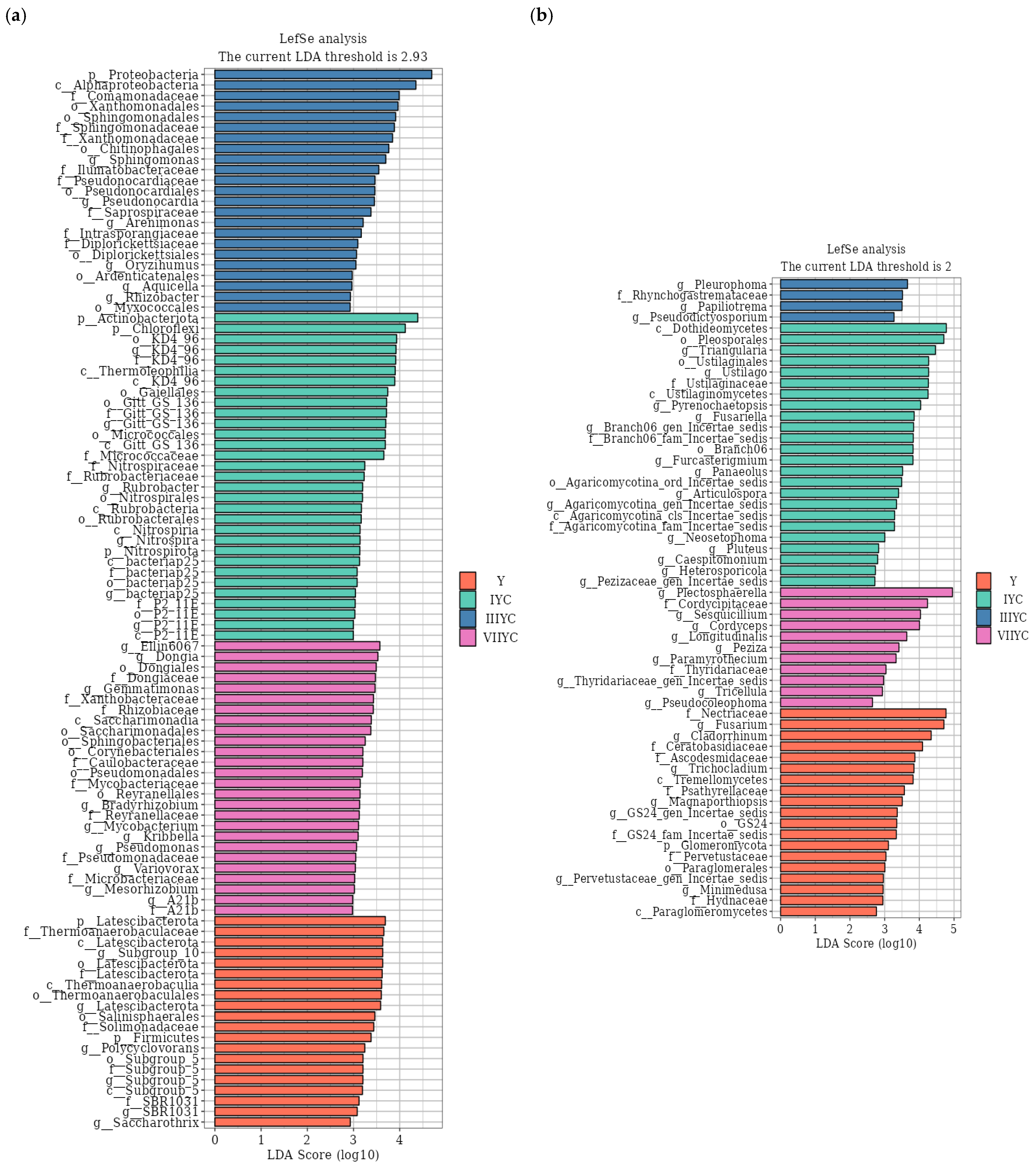
When the LDA effect size score is >2.93, there are significant differences in bacterial taxa among different treatment groups (Figure 4a). When the LDA effect size score is >2.93, there are significant differences in bacterial taxa in the soil of Y, IYC, IIIYC and VIIYC. Among these, at the phylum level, Firmicutes are mainly enriched in Y, Actinobacteria are mainly enriched in IYC, while Proteobacteria are mainly enriched in IIIYC and VIIYC (Figure 4a). As can be seen from Figure 4b, when the LDA effect size score is higher than 2, there are obvious differences in the relative abundance of fungal taxa between different treatment groups (p < 0.05). Ascomycota were mainly detected in Y, IIIYC, and VIIYC treatment soils, while Basidiomycota displayed enrichment in IYC treatment soil at the phylum level (Figure 4b).
Figure 4.
LEfSe plot of soil microorganisms under Y, IYC, IIIYC, and VIIYC treatments. (a) Bacteria; (b) Fungi. Y: Pure poplar forest; IYC: One-year intercropping; IIIYC: Three-year intercropping; VIIYC: Seven-year intercropping.
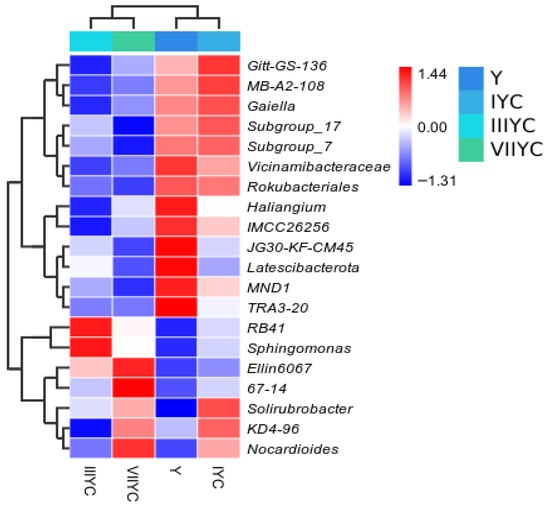
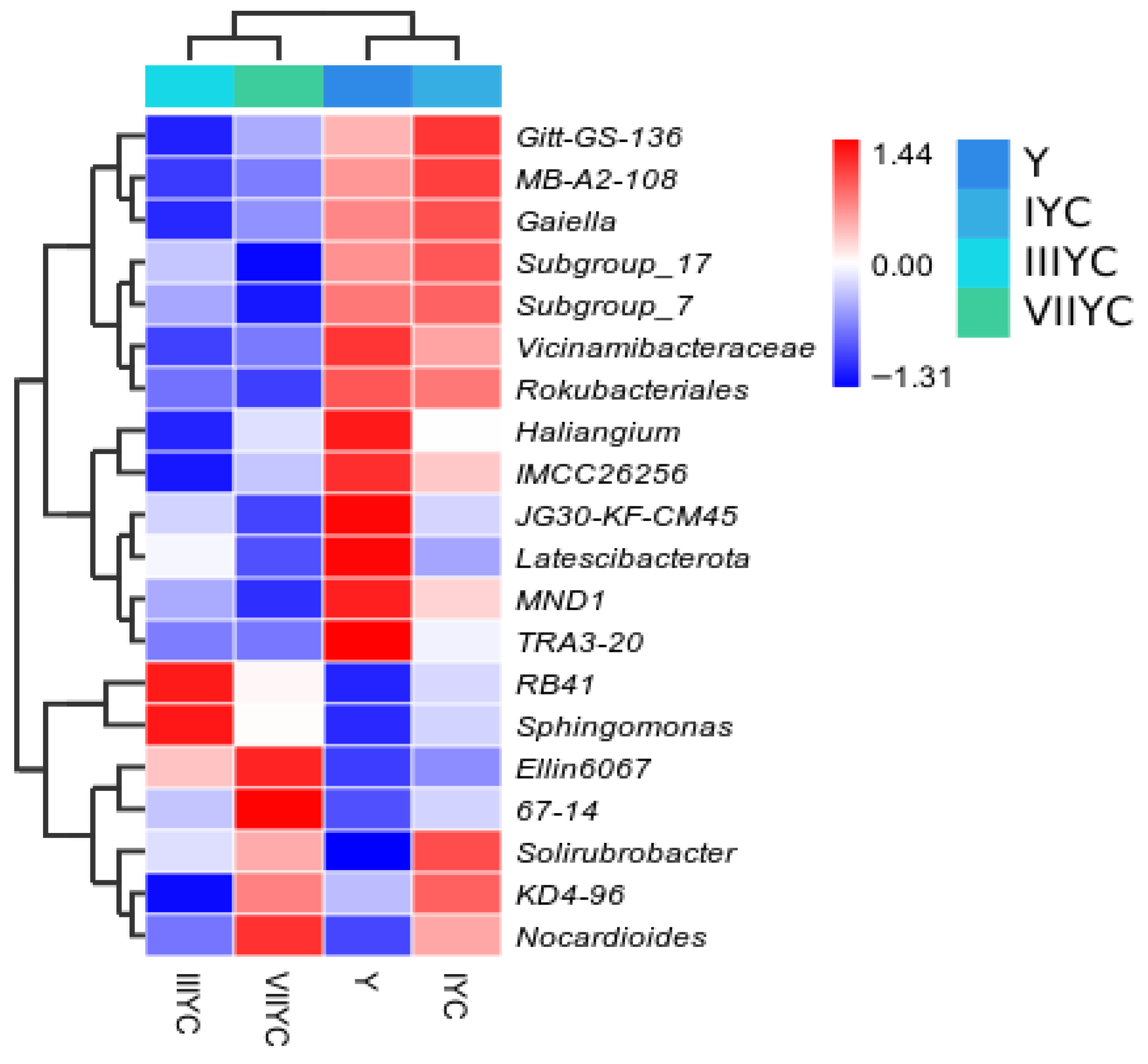
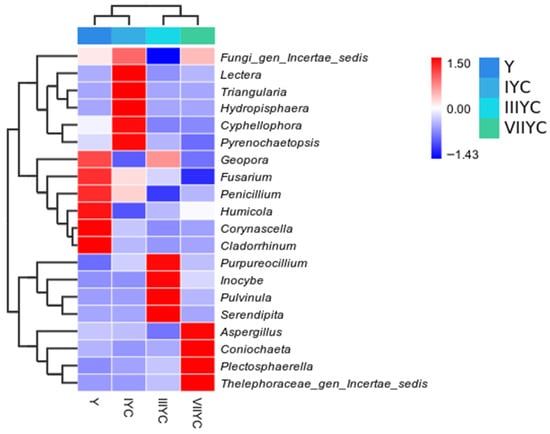
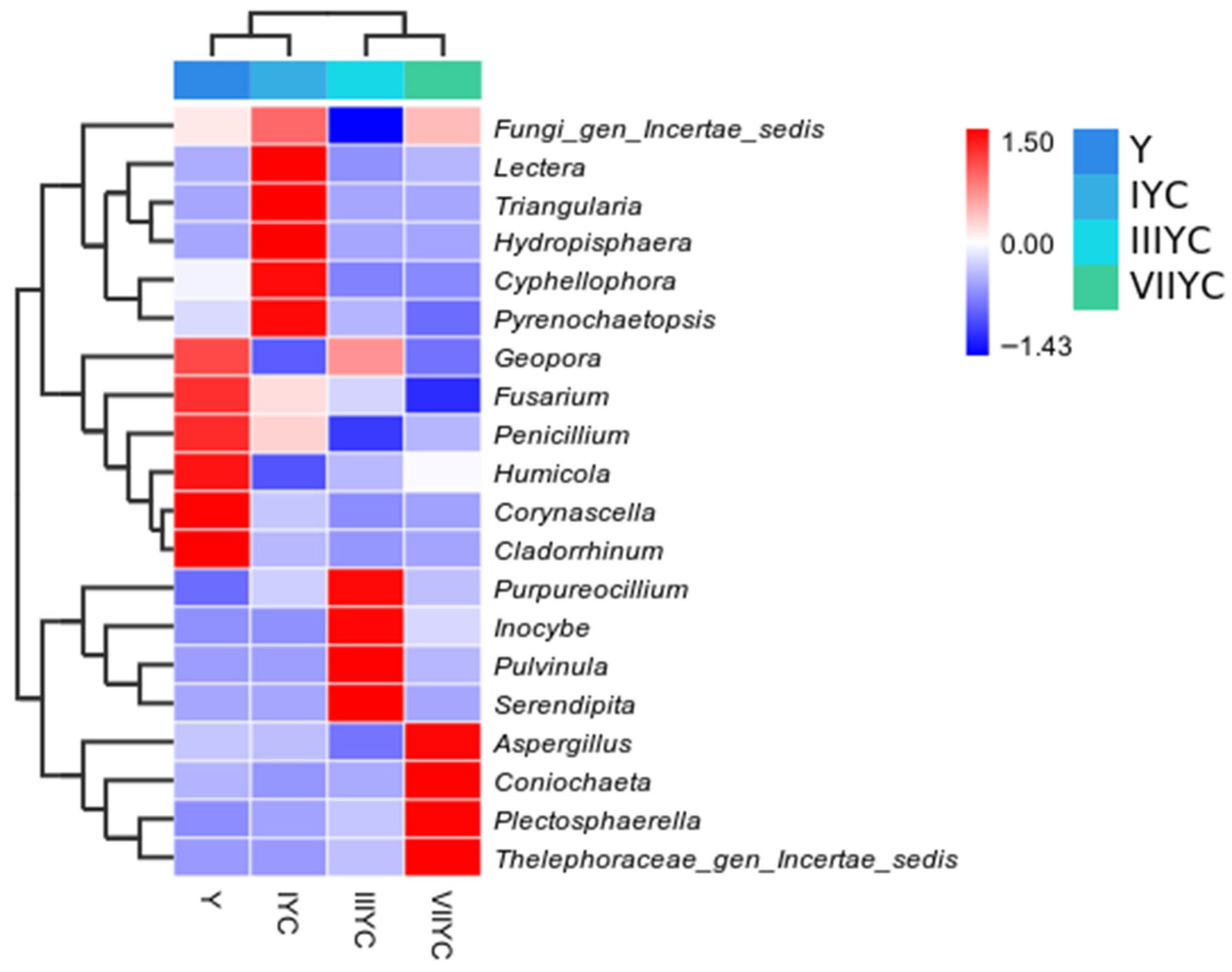
The Bray–Curtis heatmap revealed that soil bacterial communities in stands Y and IYC formed one cluster, while those in stands IIIYC and VIIYC formed a separate cluster, indicating distinct differences in soil bacterial communities between these two groups of stands (Figure 5). Soil fungal communities showed a similar clustering pattern (Figure 6).
Figure 5.
Soil bacterial heatmap under Y, IYC, IIIYC, and VIIYC treatments.
Figure 6.
Soil fungal heatmap under Y, IYC, IIIYC, and VIIYC treatments.
3.5. Correlation Analysis Between Soil Chemical Properties and Soil Microorganisms
According to Table 3, there is a greater relationship between the variety of bacteria and soil chemical properties. In terms of bacterial diversity, the Chao1 index was significantly related to TN (p < 0.05), and Goods_coverage is had a significant linkage with soil TC and TN (p < 0.01). But there’s no clear link between how many different kinds of fungi there are and those two chemical things (Table 3).
Table 3.
Soil physicochemical properties in relation to microbial stoichiometry and alpha diversity.
4. Discussion
4.1. Influence of Intercropping for Different Durations on Soil Chemical Properties
Carbon (C) constitutes the fundamental structural framework for plant organisms, whereas nitrogen (N) and phosphorus (P) act as indispensable functional elements governing plant growth and development, and are also recognized as widespread limiting nutrients in terrestrial ecosystems [25]. The interactive coupling effects among these three elements collectively regulate plant growth and physiological metabolic processes [26]. In both IYC and VIIYC soils, intercropping observably elevated the concentrations of soil total carbon (TC, p = 0.0041) and total nitrogen (TN, p = 0.0022), with remarkable quantitative discrepancies detected relative to the non-intercropping control group. These findings explicitly elucidate that the poplar–Aralia elata intercropping system exerts a positive effect on soil nutrient accumulation, which is closely correlated with the interspecific interactions between the two plant species within the agroforestry system.
The underlying mechanisms responsible for this phenomenon can be ascribed to two critical facets. Primarily, niche complementarity in resource utilization empowers agroforestry systems to exploit and allocate soil nutrient resources more efficiently in comparison with monoculture forests, given that different plant species possess disparate nutrient uptake preferences, thereby alleviating interspecific competition for nutrients [27]. Secondly, nutrients released from poplar (the tree component) via litter decomposition and root exudation can directly fulfill the nutrient requirements of understory Aralia elata in the intercropping system, which consequently reduces nutrient loss and improves nutrient retention [28].
Correspondingly, seven-year intercropping (VIIYC treatment) also significantly increased soil TN content (p = 0.0022), further corroborating the long-term beneficial impact of intercropping on soil nitrogen accumulation. In contrast, short-term intercropping (IYC treatment) presented numerical reductions in TN (from 0.66 to 0.54), total phosphorus (TP, from 0.33 to 0.26) and TC (from 8.59 to 7.64). This variation could be attributed to the initial nutrient consumption during the early establishment stage of intercropping, prior to the formation of a stable soil nutrient cycling system. Collectively, these results imply that intercropping can indirectly reshape soil physicochemical properties by altering the community composition and activity of soil microorganisms through plant-derived processes (e.g., root exudation, litter input), which in turn mediates the transformation and accumulation of nutrients in the soil environment.
Li et al. [29] investigated the potential driving factors underlying the variations in nitrogen/phosphorus (N/P) ratios across global forest ecosystems, and documented that the stoichiometric characteristics of soil microbial biomass were modulated by soil physicochemical properties [30]. In the present study, significant differences were detected in soil carbon/nitrogen (C/N, p < 0.05) and carbon/phosphorus (C/P, p < 0.05) ratios among poplar stands with different intercropping durations, and the soil N/P ratio exhibited an extremely significant difference (p < 0.01).
Aralia elata seedlings were pruned following a certain growth period, with their aboveground parts transplanted to a greenhouse and the root systems retained in the experimental plots. The residual root systems could effectively intercept plant litter that would otherwise be displaced by wind, and the decomposition of this trapped litter contributed to the increase in soil nutrient concentrations. Accordingly, the nutrient input derived from litter decomposition is likely to account for the enhanced soil nutrient status observed in this study [31].
The soil C/P ratio serves as an indicator to assess the migration potential of soil phosphorus between plants and the soil environment [32]. The findings of this study revealed significant differences in soil C/P ratios (p < 0.05) among stands with varying intercropping durations, with long-term intercropping stands exhibiting higher C/P ratios. This observation implies a numerical trend of decreased soil phosphorus content under long-term intercropping conditions. Nevertheless, the relatively high availability of soil carbon and phosphorus was sufficient to support normal plant growth [33]. The soil N/P ratio is commonly employed to identify nutrient limitation thresholds and nitrogen saturation levels [34]. In the present study, extremely significant differences in soil N/P ratios were detected among stands with different intercropping durations (p < 0.01), and long-term intercropping stands had higher N/P ratios. Consistent with prior research, intercropping can enhance plant species diversity, which may potentially improve the productivity and nutrient retention capacity of the entire ecosystem [35,36,37,38].
4.2. The Influence of Different Intercropping Durations on Soil Enzyme Activities
Soil enzyme activity, regarded as a key indicator of soil quality, plays an important role in the formation and decomposition of soil organic matter [39,40]. In general, soil enzyme activities are largely regulated by changes in soil physicochemical properties [41]. Afforestation exerts a significant influence on soil microbial activity and diversity, which in turn can alter the functional characteristics and catalytic behavior of soil extracellular enzymes [42,43]. Significant differences in invertase (25.76–34.88, p = 0.01) and β-1,4-N-acetylglucosaminidase (29.82–64.05, p = 0.02) activities were observed among stands with different intercropping durations, with higher activities detected in long-term intercropping stands. Intercropping also affected the activities of sucrase (25.76–34.88, p = 0.01), urease (0.26–0.37, p = 0.66), and phosphatase (29.89–37.62, p = 0.66), with the maximum values of all three enzymes observed in the VIIYC treatment. Notably, urease and phosphatase activities showed no significant differences among treatments (p > 0.05), with only numerical fluctuations observed across stands.
Under intercropping systems, aboveground and underground tissues of different plant species produce litter and root residues at various growth stages. A large number of soil microorganisms can synthesize sucrase and glucosidase, thereby enhancing the activities of these two enzymes in the soil. In long-term intercropping stands, these organic substances continuously accumulate in the soil, providing an abundant carbon source and energy for soil microorganisms. Intercropping promotes the cycling and transformation of soil nutrients; different plant species have distinct nutrient requirements and absorption characteristics, which leads to more sufficient and efficient utilization of soil nutrients in long-term intercropping stands. Additionally, these findings are consistent with the research results of Feng et al. [44], who reported that the addition of aboveground litter and fine roots to ecological restoration areas increased soil enzyme activities.
The present study found that the activities of enzymes associated with material decomposition were higher under the relay intercropping pattern, and this conclusion is consistent with the findings from other intercropping systems [45,46].
4.3. The Effects of Different Intercropping Durations on Soil Microorganisms
Microbial activity is widely recognized as a critical indicator of soil quality and plays an essential role in mediating soil nutrient cycling [47,48]. The diversity and structure of soil microbial communities are closely associated with plant species composition, soil physicochemical properties, and land use patterns [49,50,51]. To elucidate the effects of intercropping duration on soil microbial communities, the present study characterized the composition of soil bacterial and fungal communities in poplar plantations and poplar–Aralia elata intercropping systems with different cultivation years in Liaoning Province. Distinct differences were observed in soil bacterial and fungal community structures among stands with different intercropping durations, which is in line with the results of previous relevant studies.
The Chao1 index is widely used to estimate microbial community richness, whereas the Shannon and Simpson indices are generally applied to evaluate community evenness [52]. For fungal communities, no significant differences in α-diversity were detected across stands with different intercropping durations, as reflected by the Chao1 (p = 0.11) and Shannon (p = 0.075) indices, both of which showed fluctuating trends without an obvious monotonic pattern. The Simpson index (p = 0.1) exhibited a numerical tendency to be lower under long-term intercropping than under short-term intercropping, although this difference was not statistically significant. Bacterial and fungal communities showed relatively similar variation patterns among stands with different intercropping durations. Furthermore, α-diversity analyses provided no clear evidence that intercropping interactions significantly altered bacterial community structure. The observed shifts in microbial community structure may be associated with changes in soil nutrient conditions induced by intercropping practices [53,54]. Notably, the variations in soil bacterial and fungal community structure, together with diversity indices and the relative abundance of nutrient cycling-related taxa, mostly represented numerical trends rather than statistically supported effects [55].
With respect to soil bacteria, the present study revealed that Actinobacteria was the dominant phylum in short-term intercropping stands, whereas Proteobacteria was primarily enriched in the IIIYC and VIIYC treatments. Importantly, improvements in soil nutrient availability can alter the abundance of microbial carbon cycling genes and their corresponding ecological strategies. Previous studies have demonstrated that intercropping can induce changes in microbial community structure; notably, Actinobacteria, Proteobacteria, and Bacteroidetes are classified as typical nutrient-rich bacterial phyla that tend to accumulate in intercropping systems [27,56]. Consistent with these findings, the current study observed an increase in the number of nutrient-rich bacterial groups in the IIIYC and VIIYC treatments, indicating that soil microorganisms in short-term intercropping stands exhibited strong competitiveness and maintained stable population sizes. However, in long-term intercropping stands, soil microorganisms tended to allocate more energy to reproduction rather than to growth, metabolism, and the enhancement of competitiveness [57]. Regarding the composition of fungal communities across different treatments, Ascomycota was mainly enriched in soil samples from the Y, IIIYC, and VIIYC treatments, whereas Basidiomycota was predominantly concentrated in the soil of the IYC treatment.
Although the present study included sampling and analysis across stands with different intercropping durations, certain limitations remain. Specifically, time constraints prevented long-term sequential repeated observations, which may affect the interpretation of temporal dynamics. For future investigations, we recommend incorporating seasonal dynamic monitoring, establishing intercropping density gradients, conducting continuous long-term monitoring of the same intercropping system, and integrating multi-omics approaches to further reveal the functional traits of soil microbial communities.
5. Conclusions
This study investigated pure poplar stands and poplar–Aralia elata intercropping stands with different durations, and analyzed soil physicochemical properties, microbial community composition and diversity. The results showed that poplar–Aralia elata intercropping changed soil microbial community composition and led to numerical shifts in diversity indices compared with pure poplar stands. The novelty of this study is that it provides insights into this intercropping system and clarifies the potential mechanisms by which intercropping affects soil microecology, which can provide a theoretical basis for nutrient management in poplar–based intercropping systems.
Author Contributions
Conceptualization, C.D.; methodology, S.C.; software, W.Z. (Wenxu Zhu); validation, S.C. and W.Z. (Wenxu Zhu); formal analysis, S.C.; investigation, Y.P., K.Z., and L.M.; resources, H.Z. and Z.P.; data curation, S.C.; writing—original draft preparation, S.C., and W.Z. (Weixi Zhang); writing—review and editing, S.C.; visualization, R.P. and H.Z.; supervision, W.Z. (Weixi Zhang); project administration, L.M. and Y.P.; All authors have read and agreed to the published version of the manuscript. There is no compulsion in this paper.
Funding
This research was supported by the National Key Research and Development Program of China (Grant No. 2021YFD2201201). the Basic Research Fund of CAF (Grant No. CAFYBB2023QB003), the National Forestry and Grassland Administration Science and Technology Innovation Development Project (Grant No. 2024132027). the National Natural Science Foundation of China (grant no. 550 32271843).
Data Availability Statement
The original contributions presented in this study are included in the article. Further inquiries can be directed to the corresponding author.
Conflicts of Interest
Author Hengming Zhang was employed by the company Liaoning Academy for Environmental Planning Co., Ltd. The remaining authors declare that the research was conducted in the absence of any commercial or financial relationships that could be construed as a potential conflict of interest.
References
- Fang, S.-Z. Silviculture of poplar plantation in China: A review. Chin. J. Appl. Ecol. 2008, 19, 2308–2316. [Google Scholar]
- Colkesen, I.; Kavzoglu, T.; Atesoglu, A.; Hasan, T.; Muhammed, Y.O. Multi-Seasonal Evaluation of Hybrid Poplar (P. Deltoides) Plantations Using Worldview-3 Imagery and State-Of-The-Art Ensemble Learning Algorithms. Adv. Space Res. 2022, 71, 3022–3044. [Google Scholar] [CrossRef] [Scilit]
- Flathman, P.E.; Lanza, G.R. Phytoremediation: Current Views on an Emerging Green Technology. Soil Sediment Contam. 1998, 7, 415–432. [Google Scholar] [CrossRef] [Scilit]
- Zhang, B.; Liu, G.; Feng, Z.; Zhang, M.; Ma, T.; Zhao, X.; Su, Z.; Zhang, X. Constructing a Model of Poplus spp. Growth Rate Based on the Model Fusion and Analysis of Its Growth Rate Differences and Distribution Characteristics under Different Classes of Environmental Indicators. Forests 2023, 14, 2073. [Google Scholar] [CrossRef] [Scilit]
- Ripoche, A.; Autfray, P.; Rabary, B.; Randriamanantsoa, R.; Blanchart, E.; Trap, J.; Sauvadet, M.; Becquer, T.; Letourmy, P. Increasing plant diversity promotes ecosystem functions in rainfed rice based short rotations in Malagasy highlands. Agric. Ecosyst. Environ. 2021, 320, 107576. [Google Scholar] [CrossRef] [Scilit]
- Fang, S.Z.; Liu, D.; Tian, Y.; Deng, S.P.; Shang, S.L.; Chen, H.Y. Tree Species Composition Influences Enzyme Activities and Microbial Biomass in the Rhizosphere: A Rhizobox Approach. PLoS ONE 2013, 8, e61461. [Google Scholar] [CrossRef] [Scilit] [PubMed]
- Zhu, J.; Kang, H.; Tan, H.; Zhu, J.; Kang, H.; Tan, H.; Xu, M. Effects of drought stresses induced by polyethylene glycol on germination of Pinus sylvestris var. mongolica seeds from natural and plantation forests on sandy land. J. For. Res. 2006, 11, 319–328. [Google Scholar] [CrossRef] [Scilit]
- Zhao, P.-S.; Guo, M.-S.; Gao, G.-L.; Zhao, P.; Gao, G.; Ding, G.; Zhang, Y.; Ren, Y.; Wang, J. Community structure and functional group of root-associated Fungi of Pinus sylvestris var. mongolica across stand ages in the Mu Us Desert. Ecol. Evol. 2020, 10, 3032–3042. [Google Scholar] [CrossRef] [Scilit]
- Gao, G.L.; Ding, G.D.; Zhao, Y.Y.; Gao, G.L.; Ding, G.D.; Zhao, Y.Y.; Wu, B.; Liu, Y.D. Characterization of Soil Particle Size Distribution with a Fractal Model in the Desertified Regions of Northern China. Acta Geophys. 2016, 64, 1–14. [Google Scholar] [CrossRef] [Scilit]
- ISO 10694:1995; Soil Quality—Determination of Organic and Total Carbon After Dry Combustion (Elementary Analysis). International Organization for Standardization: Geneva, Switzerland, 1995.
- ISO 13878:1998; Soil Quality—Determination of Total Nitrogen Content by Dry Combustion (“Elemental Analysis”). International Organization for Standardization: Geneva, Switzerland, 1998.
- Li, Z.; Lu, Z. Soil Sucrase: Detection Conditions Based on DNS Colorimetric. Chin. Agric. Sci. Bull. 2016, 32, 171–176. [Google Scholar]
- Adhikari, K.P.; Surinder, S.; Hanly, J.A.; Adhikari, K.P.; Saggar, S.; Hanly, J.A.; Guinto, D.F.; Taylor, M.D. Why copper and zinc are ineffective in reducing soil urease activity in New Zealand dairy-grazed pasture soils. Soil Res. 2018, 56, 491. [Google Scholar] [CrossRef] [Scilit]
- Eivazi, F.; Tabatabai, M.A. Phosphatases in soils. Soil Biol. Biochem. 1977, 9, 161–172. [Google Scholar] [CrossRef] [Scilit]
- Ekenler, M.; Tabatabai, M.A. β-Glucosaminidase activity of soils: Effect of cropping systems and its relationship to nitrogen mineralization. Soil Biol. Biochem. 2022, 34, 1109–1117. [Google Scholar] [CrossRef] [Scilit]
- Claesson, M.J.; O’Sullivan, O.; Wang, Q. Comparative Analysis of Pyrosequencing and a Phylogenetic Microarray for Exploring Microbial Community Structures in the Human Distal Intestine. PLoS ONE 2009, 4, e6669. [Google Scholar] [CrossRef] [Scilit]
- White, T.J. Amplification and Direct Sequencing of Fungal Ribosomal RNA Genes for Phylogenetics. In PCR Protocols: A Guide to Methods and Applications; Academic Press: New York, NY, USA, 1990. [Google Scholar]
- Whittaker, R.H. Vegetation of the Siskiyou Mountains, Oregon and California. Ecol. Monogr. 1960, 30, 407. [Google Scholar] [CrossRef] [Scilit]
- Whittaker, R.H. Evolution and Measurement of Species Diversity. Taxon 1972, 21, 213–251. [Google Scholar] [CrossRef] [Scilit]
- Chao, A. Non-parametric estimation of the classes in a population. Scand. J. Stat. 1984, 11, 265–270. [Google Scholar]
- Shannon, C.E. A Mathematical Theory of Communication. Bell Syst. Tech. J. 1948, 27, 379–423. [Google Scholar] [CrossRef] [Scilit]
- Simpson, E.H. Measurement of Diversity. Nature 1949, 163, 688. [Google Scholar] [CrossRef] [Scilit]
- Pielou, E.C.J. The Measurement of Diversity in Different Types of Biological Collections. J. Theor. Biol. 1966, 13, 131–144. [Google Scholar] [CrossRef] [Scilit]
- Good, I.J. The population frequencies of species and the estimation of population parameters. Biometrika 1953, 40, 237–264. [Google Scholar] [CrossRef] [Scilit]
- Bradshaw, C.; Kautsky, U.; Kumblad, L. Ecological Stoichiometry and Multi-element Transfer in a Coastal Ecosystem. Ecosystems 2012, 15, 591–603. [Google Scholar] [CrossRef] [Scilit]
- Elser, J.J.; Bracken, M.E.; Cleland, E.E.; Gruner, D.S.; Harpole, W.S.; Hillebrand, H.; Ngai, J.T.; Seabloom, E.W.; Shurin, J.B.; Smith, J.E. Global analysis of nitrogen and phosphorus limitation of primary producers in freshwater, marine and terrestrial ecosystems. Ecol. Lett. 2007, 10, 1135–1142. [Google Scholar] [CrossRef] [Scilit] [PubMed]
- Zhang, C.; Liu, G.; Xue, S. Soil bacterial community dynamics reflect changes in plant community and soil properties during the secondary succession of abandoned farmland in the Loess Plateau. Soil Biol. Biochem. 2016, 97, 40–49. [Google Scholar] [CrossRef] [Scilit]
- Palm, C.A. Contribution of agroforestry trees to nutrient requirements of intercropped plants. Agrofor. Syst. 1995, 30, 105–124. [Google Scholar] [CrossRef] [Scilit]
- Li, P.; Yang, Y.; Han, W.; Li, P.; Yang, Y.; Han, W.; Fang, J. Global patterns of soil microbial nitrogen and phosphorus stoichiometry in forest ecosystems. Glob. Ecol. Biogeogr. 2014, 23, 979–987. [Google Scholar] [CrossRef] [Scilit]
- Xu, X.; Thornton, P.E.; Post, W.M. A global analysis of soil microbial biomass carbon, nitrogen and phosphorus in terrestrial ecosystems: Magnitude, stoichiometry, and pool size. In Proceedings of the 97th ESA Annual Convention 2012, Oregon, Portland, 5–10 August 2012. [Google Scholar]
- Isaac, M.E.; Borden, K.A. Nutrient acquisition strategies in agroforestry systems. Plant Soil 2019, 444, 1–19. [Google Scholar] [CrossRef] [Scilit]
- Yadav, A.; Bhatia, A.; Yadav, S.; Kumar, V.; Singh, B. The effects of elevated CO2 and elevated O3 exposure on plant growth, yield and quality of grains of two wheat cultivars grown in north India. Heliyon 2019, 5, e02317. [Google Scholar] [CrossRef] [Scilit]
- Mo, F.; Han, J.; Wen, X.X.; Wang, X.K.; Li, P.F.; Vinay, N.; Jia, Z.K.; Xiong, Y.C.; Liao, Y.C. Quantifying regional effects of plastic mulch on soil nitrogen pools, cycles, and fluxes in rain-fed agroecosystems of the Loess Plateau. Land Degrad. Dev. 2020, 31, 1675–1687. [Google Scholar] [CrossRef] [Scilit]
- Lu, J.; Tian, H.; Zhang, H.; Xiong, J.; Yang, H.; Liu, Y. Shoot-soil ecological stoichiometry of alfalfa under nitrogen and phosphorus fertilization in the Loess Plateau. Sci. Rep. 2021, 11, 15049. [Google Scholar] [CrossRef] [Scilit] [PubMed]
- Hooper, V. Effects of Plant Composition and Diversity on Nutrient Cycling. Ecol. Monogr. 1998, 68, 121–149. [Google Scholar] [CrossRef]
- Zhang, Y.; Chen, H.Y.H.; Reich, P.B. Forest productivity increases with evenness, species richness and trait variation: A global meta-analysis. J. Ecol. 2012, 100, 742–749. [Google Scholar] [CrossRef] [Scilit]
- Brooker, R.W.; Karley, A.J.; Newton, A.C.; Pakeman, R.J.; Schöb, C. Facilitation and sustainable agriculture: A mechanistic approach to reconciling crop production and conservation. Funct. Ecol. 2015, 30, 98–107. [Google Scholar] [CrossRef] [Scilit]
- Cong, W.F.; Hoffland, E.; Li, L.; Six, J.; Sun, J.H.; Bao, X.G.; Zhang, F.S.; Van Der Werf, W. Intercropping enhances soil carbon and nitrogen. Glob. Change Biol. 2015, 21, 1715–1726. [Google Scholar] [CrossRef] [Scilit]
- Doran, J.W.; Coleman, D.C.; Bezdicek, D.F.; Stewart, B.A.; Dick, R.P. Soil enzyme activities as indicators of soil quality. Soil Sci. Soc. Am. J. 1994, 58, 107–124. [Google Scholar] [CrossRef] [Scilit]
- Veres, Z.; Kotroczo, Z.; Fekete, I.; Toth, J.A.; Lajtha, K.; Townsend, K.; Tothmeresz, B. Soil extracellular enzyme activities are sensitive indicators of detrital inputs and carbon availability. Appl. Soil Ecol. 2015, 92, 18–23. [Google Scholar] [CrossRef] [Scilit]
- Allison, V.J.; Condron, L.M.; Peltzer, D.A.; Richardson, S.J.; Turner, B.L. Changes in enzyme activities and soil microbial community composition along carbon and nutrient gradients at the Franz Josef chronosequence, New Zealand. Soil Biol. Biochem. 2007, 39, 1770–1781. [Google Scholar] [CrossRef] [Scilit]
- Ren, C.; Kang, D.; Wu, J.P.; Zhao, F.; Yang, G.; Han, X.; Feng, Y.; Ren, G. Temporal variation in soil enzyme activities after afforestation in the Loess Plateau, China. Geoderma 2016, 282, 103–111. [Google Scholar] [CrossRef] [Scilit]
- Liu, J.; Li, S.; Ouyang, Z.; Tam, C.; Chen, X. Ecological and socioeconomic effects of China’s policies for ecosystem services. Proc. Natl. Acad. Sci. USA 2008, 105, 9477–9482. [Google Scholar] [CrossRef] [Scilit]
- Feng, C.; Ma, Y.; Jin, X.; Wang, Z.; Ma, Y.; Fu, S.; Chen, H.Y. Soil enzyme activities increase following restoration of degraded subtropical forests. Geoderma 2019, 351, 180–187. [Google Scholar] [CrossRef] [Scilit]
- Chander, K.; Goyal, S.; Nandal, D.P.; Kapoor, K.K. Soil organic matter, microbial biomass and enzyme activities in a tropical agroforestry system. Biol. Fertil. Soils 1998, 27, 168–172. [Google Scholar] [CrossRef] [Scilit]
- Hauggaard-Nielsen, H.; Jensen, E.S. Facilitative Root Interactions in Intercrops. Plant Soil 2005, 274, 237–250. [Google Scholar] [CrossRef] [Scilit]
- Fortier, J.; Gagnon, D.; Truax, B.; Lambert, F. Nutrient accumulation and carbon sequestration in 6-year-old hybrid poplars in multiclonal agricultural riparian buffer strips. Agric. Ecosyst. Environ. 2010, 137, 276–287. [Google Scholar] [CrossRef] [Scilit]
- Ludwig, M.; Achtenhagen, J.; Miltner, A.; Eckhardt, K.U.; Leinweber, P.; Emmerling, C.; Thiele-Bruhn, S. Microbial contribution to SOM quantity and quality in density fractions of temperate arable soils. Soil Biol. Biochem. 2015, 81, 311–322. [Google Scholar] [CrossRef] [Scilit]
- Bell, T.H.; Yergeau, E.; Maynard, C.; Juck, D.; Whyte, L.G.; Greer, C.W. Predictable bacterial composition and hydrocarbon degradation in Arctic soils following diesel and nutrient disturbance. ISME J. 2013, 7, 1200–1210. [Google Scholar] [CrossRef] [Scilit] [PubMed]
- Lauber, C.L.; Strickland, M.S.; Bradford, M.A.; Fierer, N. The influence of soil properties on the structure of bacterial and fungal communities across land-use types. Soil Biol. Biochem. 2008, 40, 2407–2415. [Google Scholar] [CrossRef] [Scilit]
- Mitchell, R.J.; Campbell, C.D.; Chapman, S.J.; Cameron, C.M. The ecological engineering impact of a single tree species on the soil microbial community. J. Ecol. 2010, 98, 50–61. [Google Scholar] [CrossRef] [Scilit]
- Liu, J.; Ding, C.; Zhang, Y.Z.W. Community Characteristics of Soil Ectomycorrhizal Fungi under Different Forests in the Sandy Areas of Northeastern China. J. Soil Sci. Plant Nutr. 2023, 23, 2273–2286. [Google Scholar] [CrossRef] [Scilit]
- Gong, X.W.; Liu, C.J.; Li, J.; Luo, Y.; Yang, Q.H.; Zhang, W.L.; Yang, P.; Feng, B.L. Responses of rhizosphere soil properties, enzyme activities and microbial diversity to intercropping patterns on the Loess Plateau of China. Soil Tillage Res. 2019, 195, 104355. [Google Scholar] [CrossRef] [Scilit]
- Tang, X.; Zhong, R.; Jiang, J.; He, L.; Huang, Z.; Shi, G.; Wu, H.; Liu, J.; Xiong, F.; Han, Z.; et al. Cassava/peanut intercropping improves soil quality via rhizospheric microbes increased available nitrogen contents. BMC Biotechnol. 2020, 20, 13. [Google Scholar] [CrossRef] [Scilit]
- Zhang, M.M.; Wang, N.; Hu, Y.B.; Sun, G.Y. Changes in soil physicochemical properties and soil bacterial community in mulberry (Morus alba L.)/alfalfa (Medicago sativa L.) intercropping system. MicrobiologyOpen 2018, 7, e00555. [Google Scholar] [CrossRef] [Scilit] [PubMed]
- Zechmeister-Boltenstern, S.; Keiblinger, K.M.; Mooshammer, M.; Peñuelas, J.; Richter, A.; Sardans, J.; Wanek, W. The application of ecological stoichiometry to plant–microbial–soil organic matter transformations. Ecol. Monogr. 2016, 85, 133–155. [Google Scholar] [CrossRef] [Scilit]
- Liao, J.; Dou, Y.; Yang, X.; An, S. Soil microbial community and their functional genes during grassland restoration. J. Environ. Manag. 2023, 325, 10. [Google Scholar] [CrossRef] [Scilit] [PubMed]

Disclaimer/Publisher’s Note: The statements, opinions and data contained in all publications are solely those of the individual author(s) and contributor(s) and not of MDPI and/or the editor(s). MDPI and/or the editor(s) disclaim responsibility for any injury to people or property resulting from any ideas, methods, instructions or products referred to in the content. |
© 2026 by the authors. Licensee MDPI, Basel, Switzerland. This article is an open access article distributed under the terms and conditions of the Creative Commons Attribution (CC BY) license.