


Abstract
Prickly cucumber (Echinocystis lobata), originating from eastern North America, exhibits a range of adaptations that enable it to effectively colonize temperate and humid forest environments, among others in Europe. This study examined the allelopathic effects of E. lobata as a factor influencing its competitive interactions with other plant species. Laboratory bioassays were conducted to evaluate the effects of aqueous extracts (2.5%, 5%, and 7.5%) obtained from different organs of E. lobata on the germination of grains or seeds and the early growth of seedlings of Festuca arundinacea Schreb. (monocotyledon) and Raphanus sativus L. var. sativus ‘China Rose’ (dicotyledon). Germination percentage, as well as root and shoot growth parameters, were analyzed. In addition, biochemical analyses of E. lobata organs (leaves, stalks, fruits) used in the experiment were performed. Analysis using a combined chromatographic and mass spectrometric technique identified 21 compounds, including secondary metabolites potentially associated with allelopathic activity. Petri dish assays revealed significant inhibition of the germination of grains and seeds and the growth of seedlings of both tested species, depending on the E. lobata organ and extract concentration. The strongest inhibitory effects were generally observed at concentrations of 5% and 7.5%. In conclusion, the biochemical analyses confirmed the clear primary allelopathic potential of E. lobata, which presumably may enhance its competitive ability.
1. Introduction
Plants produce a large number of chemical substances that are natural products of cellular metabolism. Their functions are highly diverse, and some of them are classified as secondary metabolites, whose ecological significance is not yet fully understood. To date, several thousand compounds belonging to this group have been identified, although it is estimated that their total number may reach approximately 200,000 [1]. Secondary metabolites include glycosides, flavonoids, lignans, coumarins, phenols, tannins, saponins, quinones, terpenes, steroids, alkaloids, and essential oils, among others [2]. As fragrances and flavor compounds, they may act as repellents against potential competitors and pathogens or as attractants for organisms that facilitate plant reproduction [3].
Secondary metabolites also include substances that interfere with the development of neighboring plants, which are introduced into the soil or subsequently modified by soil microorganisms [4,5,6,7]. The inhibition of one organism by another through the production of secondary metabolites is known as allelopathy and represents one of the mechanisms of plant competition [8,9]. Many alien species produce allelopathic compounds (allelochemicals) that facilitate the colonization of new habitats. These compounds, introduced by non-native invasive species, may pose a risk to native flora because they represent novel biochemical factors to which native species have not yet developed resistance. This concept is referred to as the “New Weapon Hypothesis” in invasion biology [10].
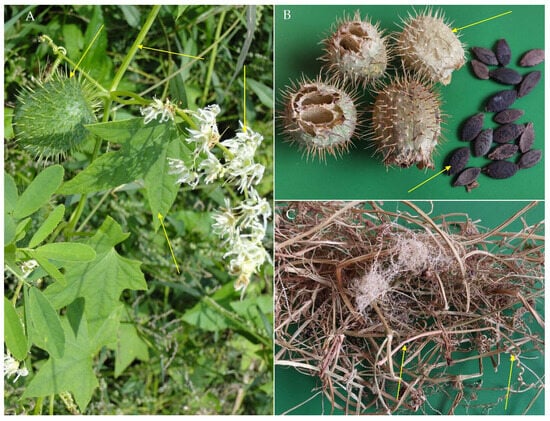
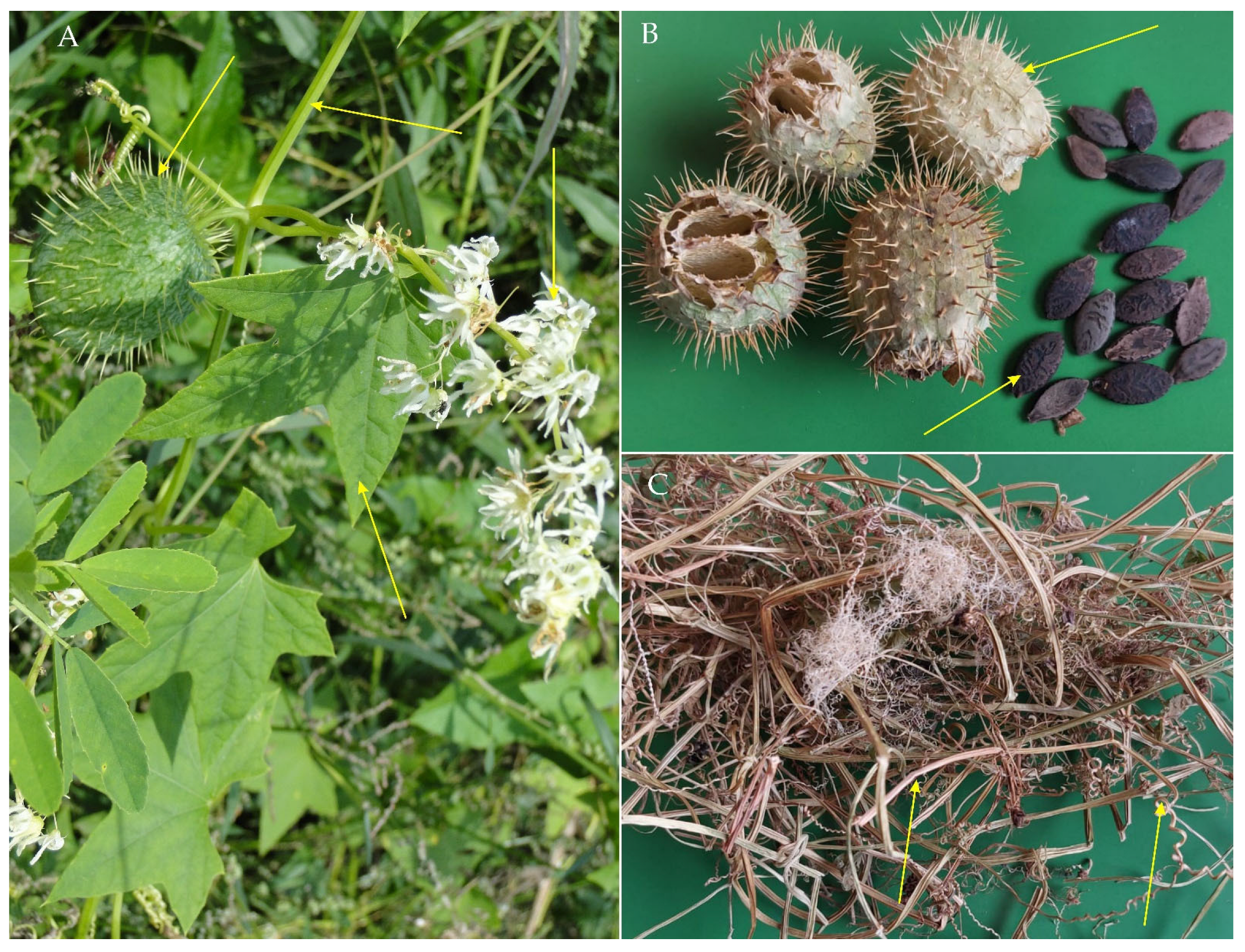
One highly invasive species is Echinocystis lobata (Michx.) Torr. et A.Gray, known as prickly (wild) cucumber. It belongs to the family Cucurbitaceae Juss. This species occurs naturally in eastern North America [11]. Prickly cucumber is an annual climbing plant that may reach lengths of up to 12 m (Figure 1). The leaves are simple and usually five-lobed. The stalk is angular and bears numerous branched tendrils. The flowers are dioecious, white or pale green, and arranged in inflorescences. The fruit is an oval, spiny capsule. The seeds are flat, smooth, brown to dark brown, usually numbering four (two per chamber), and resemble pumpkin seeds in shape [12,13,14].
Figure 1.
Prickly cucumber (Echinocystis lobata (Michx.) Torr. et A.Gray): appearance of the plant in the area—leaves, fruit, stalk, inflorescence (A), ripe fruits—pericarp and seeds (B), climbing stalk with tendrils (C).
Prickly cucumber was brought into Europe around the turn of the 19th and 20th centuries as an ornamental species. It was first recorded outside cultivation around 1904. The earliest reports of its spontaneous occurrence, for example, in Poland, date back to the 1930s [15]. The species has since become established in Central and Southeastern Europe as well as in the Far East, forming a secondary and extensive Euro-Asian range [16,17,18].
Echinocystis lobata is typically associated with river valleys and areas near water bodies. It occurs within ruderal vegetation belonging to the class Artemisietea vulgaris Lohm., Prsg et R. Tx. in R.Tx., reed communities of the class Phragmitetea australis (Klika in Klika et Novák 1941) R.Tx. et Preising, and floodplain forest communities of the alliances Alno-Ulmion Br.-Bl. et R.Tx. and Salicion albae R.Tx. [14]. It is classified as a so-called “transformer species”, meaning that it significantly alters the structure, condition, or functioning of the phytocoenoses it occupy [19].
In Central Europe, because of its fast growth and the formation of dense clusters, the species effectively displaces native climbing species in riparian woodland, such as Humulus lupulus L. and Calystegia sepium (L.) R.Br. [12,13,14,15]. In addition to its morphological traits, allelopathic mechanisms may also contribute to the rapid colonization of new habitats and the decline of native species. However, the allelopathic properties of E. lobata have so far been poorly studied. Csiszár et al. [20] demonstrated that aqueous extracts from the shoots of this species negatively affected germination of seed and growth of Sinapis alba L. seedling, with an inhibitory effect comparable to that of juglone. However, the chemical composition of potentially allelopathic compounds present in the organs of E. lobata has not yet been studied in detail, nor have allelopathic effects on monocotyledonous plants been investigated.
This study aims to determine whether the production of allelochemicals constitutes an additional factor contributing to the invasiveness of Echinocystis lobata and whether it poses a threat to native plant species. The specific objectives were to determine: (i) whether extracts obtained from E. lobata organs exert an inhibitory effect on monocotyledonous and dicotyledonous plant germination and seedling growth; (ii) whether allelochemicals present in E. lobata biomass induce environmental stress in the tested species; and (iii) which groups of compounds with known allelopathic properties are produced by the organs of E. lobata.
2. Materials and Methods
2.1. Material of Plant
Material of Echinocystis lobata (leaves, stalks, fruits) was harvested from two locations in central Slovakia: Budča, near the Hron River (48°33′44.7″ N, 19°02′36.2″ E), and the Slatina River (48°33′47.0″ N, 19°06′38.2″ E), both situated in riparian and gallery woodland habitats. The material was collected along rivers, over stretches of approximately 300 m in each case. This approach ensured that the material originated from different individuals. Healthy above-ground plant material, free from fungal infection and visible damage, was selected for the experiment, originating from both locations. All samples underwent drying at room temperature under dark conditions and were subsequently separated into leaves with petioles, twining stalks with tendrils, and fruits (pericarp) with seeds. The separated plant parts were stored in paper storage bags for the entire experiment. Seeds used for the germination tests were purchased from commercial suppliers. Grains of tall fescue (Festuca arundinacea Schreb.) were obtained from RVS Sklep-Rokicki (Sokoły, Poland), and seeds of radish (Raphanus sativus L. var. sativus ‘China Rose’) were purchased from World of Flowers Sp. z o.o. (Warsaw, Poland).
2.2. Procedures for the Preparation of Extracts for Allelopathic Studies
Dried Echinocystis lobata organs (leaves with petioles, stalks with tendrils, and fruits consisting of the pericarp with seeds) were ground separately using a laboratory mill. Extract concentrations were chosen following preliminary tests that determined the lowest range at which allelopathic effects could be detected. Aqueous extracts with concentrations of 2.5%, 5%, and 7.5% (w/v) were prepared from each organ of E. lobata. For example, a 2.5% extract was prepared by combining 2.5 g of dry plant material with 97.5 mL of distilled water. To facilitate efficient extraction of chemical compounds, the plant material was immersed in distilled water and incubated in the dark at room temperature (23 ± 2 °C) for 24 h. The obtained extracts were subsequently filtered through filter paper and stored at 8 ± 2 °C until they were used in the experiment.
The pH of the extracts was measured using an MP103 m (ChemLand, Stargard, Poland) (Table 1).
Table 1.
The pH of aqueous extracts prepared from the organs of Echinocystis lobata (Michx.) Torr. et A.Gray used in the experiment (mean ± SD, n = 3).
The extracts had a pH close to neutral or slightly alkaline, indicating that pH did not significantly influence the inhibition of germination or seedling growth.
2.3. Preparation of Seeds and Grains and Germination Conditions
Seeds and grains of both species were individually surface-sterilized for 1 min in a 1% (v/v) acetone solution and subsequently rinsed three times with distilled water. Twenty-five seeds or grains were placed in sterile Petri dishes lined with three layers of filter paper moistened with the appropriate Echinocystis lobata extract. Seeds and grains treated with distilled water served as the control. The Petri dishes were incubated in the dark at room temperature (23 ± 2 °C) under a relative humidity of approximately 60%–70%. Germination was monitored every 24 h for 7 days (radish) and 14 days (fescue). The experiment was performed in triplicate (n = 3) for each extract concentration, organ type, and the control. On this basis, the following parameters were determined:
Germination Percentage [GP] according to the formula
ni—number of seeds newly germinating on day i; N—total number of seeds tested and k—last day of germination [21].
Mean Germination Time [MGT, day] [22]
where k—last day of germination; ni—number of seeds newly germinating on day i; and ti—number of days from sowing.
Germination Index [GI, unitless] [22,23]
where k—last day of germination; ni—number of seeds newly germinating on day I; and ti—number of days from sowing.
Synchrony of germination [Z, unitless] [24,25]
CNi,2 is the partial combination of the two germinated seeds from among Ni, the number of seeds germinated on the ith time interval (estimated as CNi,2 = Ni(Ni − 1)/2), CΣNi,2 is the partial combination of the two germinated seeds from among the total number of seeds germinated at the final count, under the assumption that all germinated seeds sprouted simultaneously.
2.4. Elongation Growth of Seedlings
Biometric measurements of seedlings of the tested plants grown in the control and on extracts of Echinocystis lobata organs were performed by recording the lengths of the underground part, the aboveground part, and the entire seedling. Measurements were carried out using a caliper (Topex 31C615, GTX Poland Sp. z o.o. Sp. K., Warszawa, Poland) with a resolution of 0.1 mm, 7 days after germination for radish and 14 days for fescue. From all seedlings watered with the appropriate extract from E. lobata (from three Petri dishes), five seedlings were randomly selected and measured (n = 5).
2.5. Seedling Fresh and Dry Mass and Total Water Content
The fresh and dry mass of individual seedlings was determined using a laboratory balance (WPS-120, Radwag, Radom, Poland). Measurements were performed after 7 days of germination for radish seeds and after 14 days for fescue grains. A total of five seedlings (n = 5) were randomly selected from the group watered with the appropriate E. lobata extract (from three Petri dishes). To determine dry mass, the same seedlings were first dried at 105 °C for 48 h in a laboratory oven (SUP 100, WAMED, Warszawa, Poland) and then weighed. The total water content (%) was calculated using the formula below:
where DM—dry mass; FM—fresh mass [26].
2.6. Electrolyte Leakage
The percentage of electrolyte leakage was determined following the method described by Szafraniec et al. [27]. Five seedlings (n = 5) were randomly selected from all seedlings watered with the appropriate E. lobata extract (from three Petri dishes). Radish and fescue seedlings were treated separately and placed in polypropylene vials containing 30 mL of distilled water, after which they were shaken for 3 h on a shaker (Labnet Rocker, Edison, NJ, USA). Electrolyte leakage from living cells (E1) was measured using a CX-701 conductometer with an electrode (cell constant K = 1.02) (Elmetron, Zabrze, Poland). To induce cellular maceration, the seedlings were frozen in water at −25 °C for 24 h. After thawing, the samples were subjected to the same shaking and measurement procedure to determine total electrolyte leakage (E2), and the percentage was calculated using the formula provided below:
where EL—electrolyte leakage; E1—EL live seedling; and E2—EL dead seedling.
2.7. Statistical Analysis Methods
Data are expressed as mean ± SD (standard deviation). Statistical differences among the results were evaluated using one-way ANOVA after verifying homogeneity of variance with Levene’s test, followed by Duncan’s post hoc test (p ≤ 0.05). All analyses were conducted using Statistica 13.3 software.
2.8. Extraction of Organic Compounds from Echinocystis lobata
Methanol is more efficient than n-hexane, chloroform, and ethyl acetate for extracting total organic compounds from plant material [28]. For this reason, methanol was selected as the extraction solvent in the present study.
Ultrasound-assisted extraction (UAE) was applied to isolate organic compounds from dried Echinocystis lobata samples [29]. The silylating reagents BSTFA (N,O-bis(trimethylsilyl)trifluoroacetamide) and TMCS (trimethylchlorosilane) were obtained from Sigma-Aldrich (St. Louis, MI, USA). A 0.10 g portion of plant material was soaked in 10 mL of methanol for 1 h, followed by extraction under ultrasound for 15 min at 400 W. Prior to derivatization, methanol was replaced with n-hexane. Then, 50 µL of BSTFA+TMCS (98:2) was added to a 50 µL aliquot in n-hexane and incubated in an oven at 60 °C for 1 h. Any excess BSTFA and TMCS was removed under a nitrogen stream, and the remaining residue was redissolved in n-hexane prior to gas chromatography–mass spectrometry (GC–MS) analysis.
2.9. GC–MS Analysis (Gas Chromatography–Mass Spectrometry)
Sample analysis was performed using an Agilent 6890N GC system coupled with an Agilent 5975C mass spectrometer (Agilent Technologies, Santa Clara, CA, USA) operating in electron impact mode. Separation was carried out on an HP-5 ms capillary column (15 m × 0.25 mm × 0.25 µm). The oven temperature was initially maintained at 40 °C for 4 min, then increased to 200 °C at a rate of 20 °C/min, followed by a final isothermal period of 25 min. The transfer line temperature was set at 250 °C.
The injector port and interface were kept at 280 °C, and 1 µL of each sample was injected in splitless mode. Helium (6.0 purity) was used as the carrier gas at a constant flow rate of 1 mL/min. The ion source and quadrupole temperatures were maintained at 230 °C and 150 °C, respectively. Mass spectra were acquired over a range of 45–600 m/z using an ionization voltage of 70 eV. Identification of chemical compounds was carried out by comparison with the National Institute of Standards and Technology (NIST, version 14) mass spectral library.
3. Results
3.1. Germination Capacity
On day 7 of germination, Raphanus sativus L. var. sativus ‘China Rose’ seeds showed a significant reduction in germination percentage (GP) only when treated with 7.5% leaf extract in comparison with the control group. No statistically significant reduction in GP was observed for the other extracts. Similarly, for Festuca arundinacea Schreb. seeds on day 14 of germination, 7.5% extracts from all tested organs significantly inhibited germination relative to the control. In contrast, the 2.5% extract significantly stimulated germination, whereas the 5% fruit extract caused significant inhibition (Table 2).
Table 2.
Germination indices of Raphanus sativus L. var. sativus ‘China Rose’ (A) and Festuca arundinacea Schreb. (B) seeds and grains treated with extracts from organs of Echinocystis lobata (Michx.) Torr. et A.Gray at concentrations of 2.5%, 5%, and 7.5%. Means (±SD, n = 3) with different letters differ significantly according to Duncan’s test (p ≤ 0.05). Significant decreases are highlighted in gray, and significant increases are indicated by a frame.
The mean germination time (MGT) increased with higher extract concentrations for both radish and fescue seeds. In most cases, these differences were statistically significant compared to the control, except for fescue seeds treated with 2.5% fruit extract. The highest MGT values for both species were recorded at 7.5% extract concentration from all analyzed organs of Echinocystis lobata (Table 2).
The germination index (GI) showed a significant decrease versus the control group for both species when treated with leaf extracts of E. lobata at all tested concentrations. When extracts from E. lobata stalks (without leaves) were used, GI values were markedly lower in comparison with the control. For radish seeds, this reduction was observed for all extract types, whereas for fescue grains, it occurred only with the 7.5% extract. At lower extract concentrations, differences in GI relative to the control were not statistically significant. E. lobata fruit extracts caused a reduction in GI for radish seeds at all concentrations, while for fescue grains, significantly lower values were observed for the 5% and 7.5% extracts (Table 2).
The synchrony of germination (Z) for both species varied depending on extract type and concentration. In general, Z values were significantly lower compared to the control. For fescue grains exposed to all concentrations of E. lobata fruit extracts, Z values were also lower than the control, although the differences were not statistically significant (Table 2).
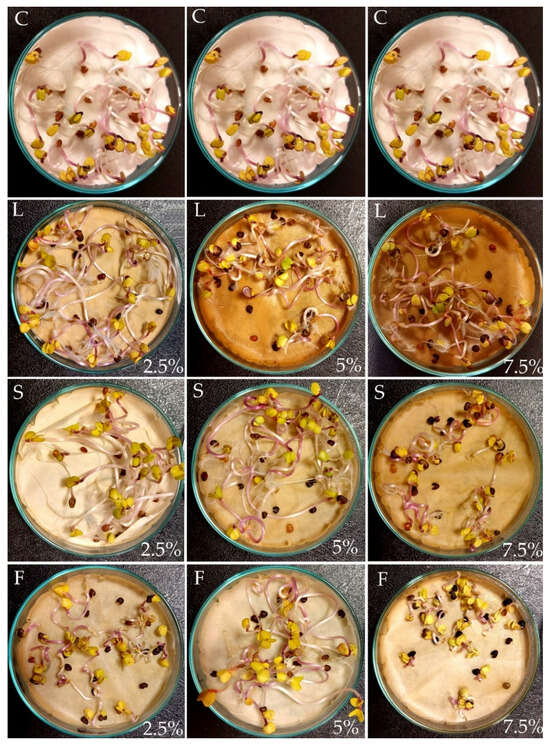
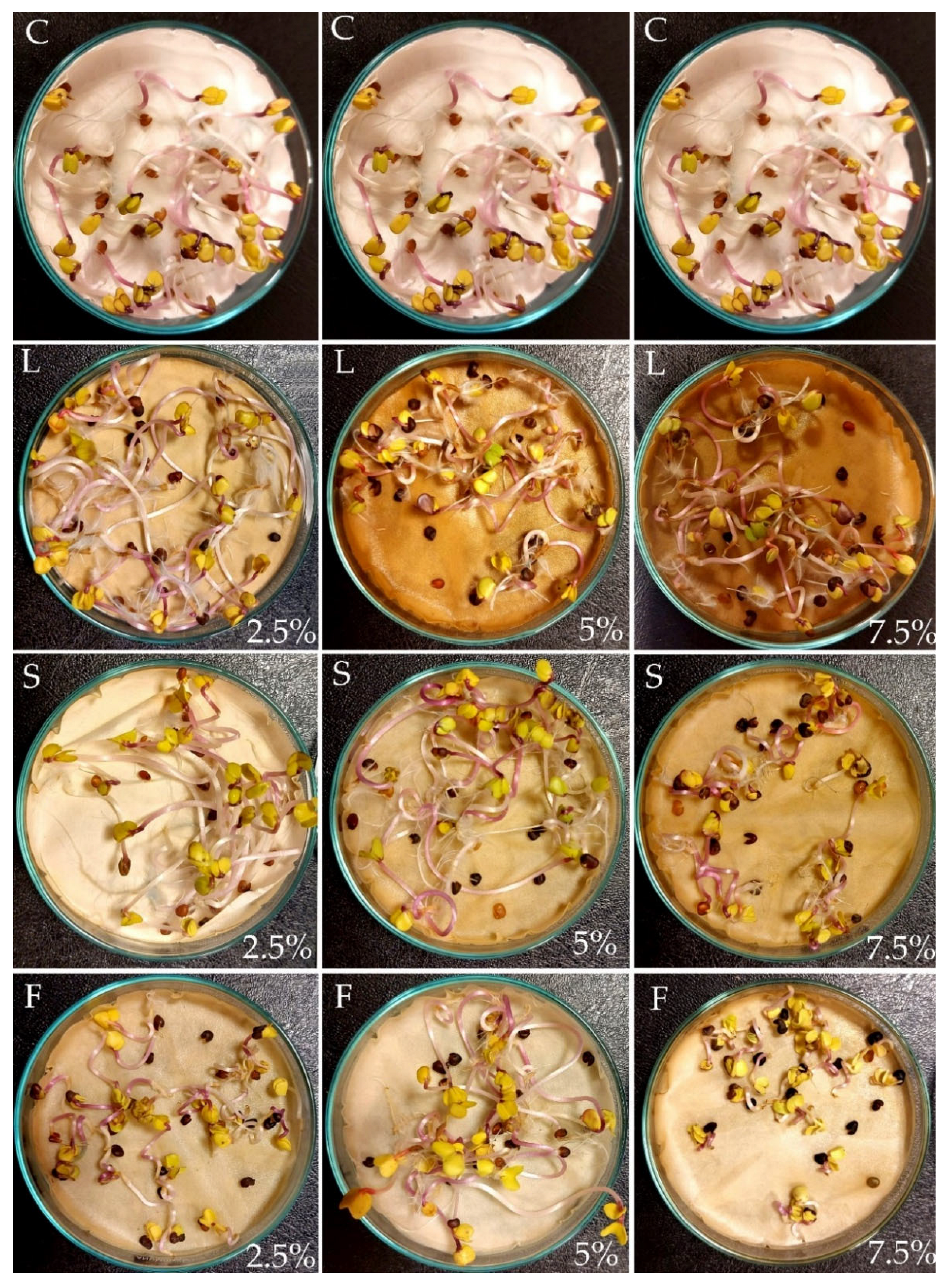
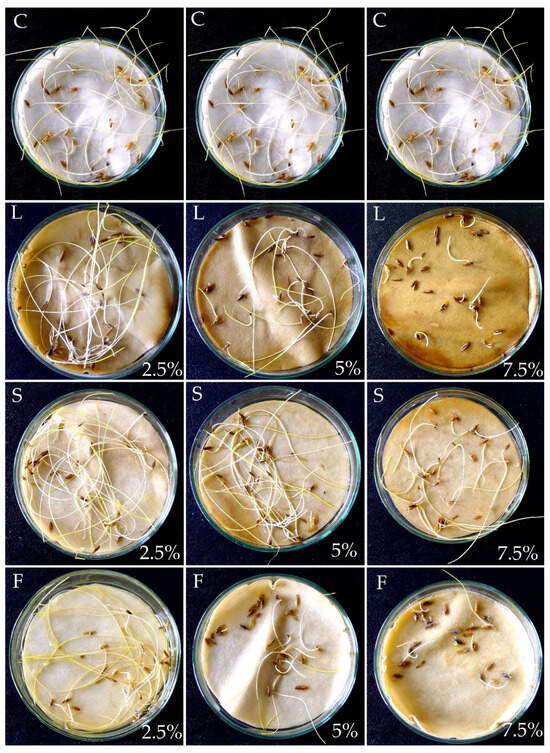
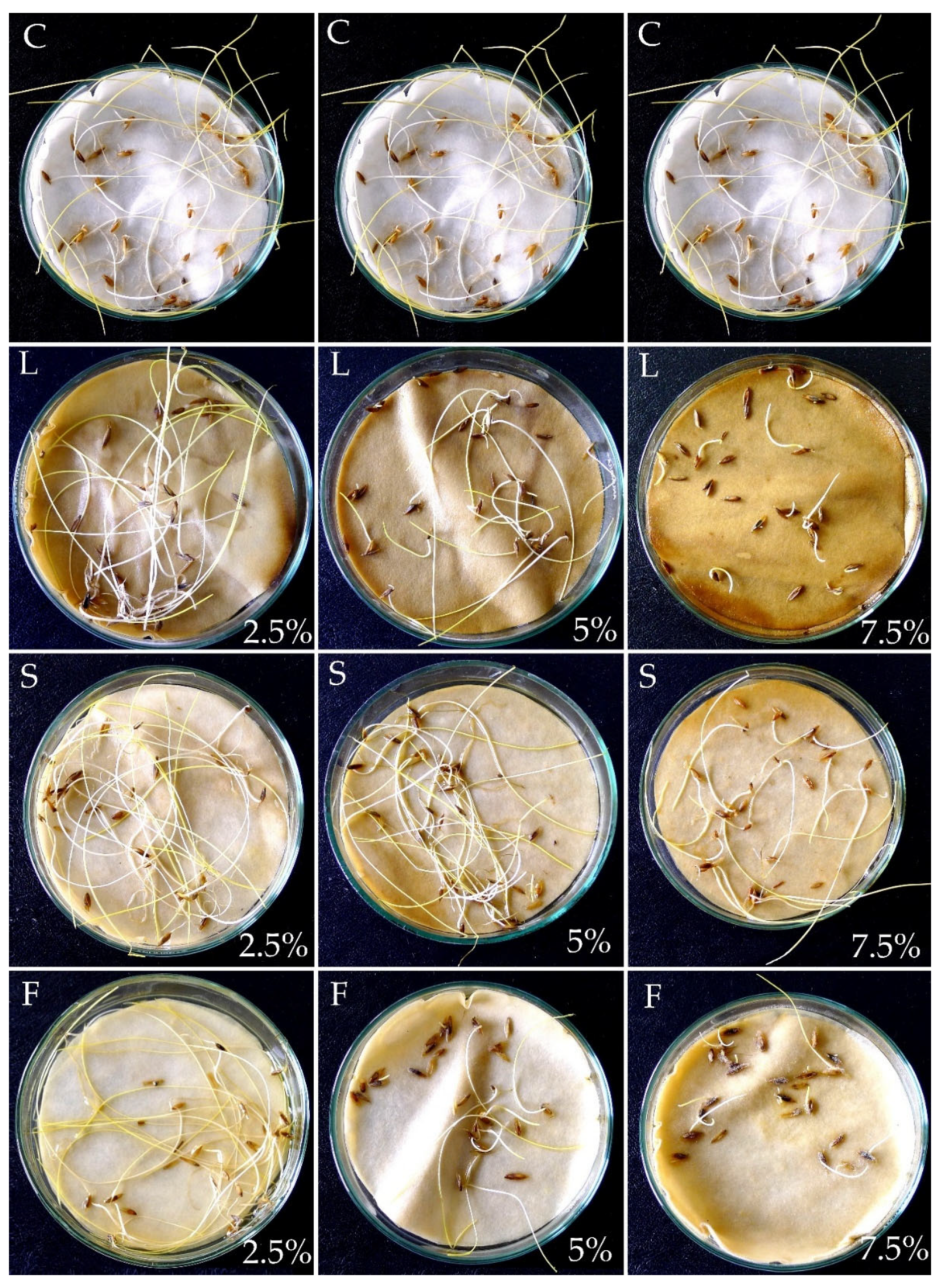
Direct observations of germination and early seedling growth in radish and fescue treated with E. lobata extracts showed inhibition at the highest concentration (7.5%) compared to the control (Figure 2 and Figure 3). For Raphanus sativus seeds, all extracts derived from prickly cucumber fruit significantly inhibited both germination and seedling growth (Figure 2). For Festuca arundinacea, a 5% extract, particularly from leaves and fruits, visibly inhibited seedling development (Figure 3).
Figure 2.
Effects of aqueous extracts (2.5%, 5% and 7.5%) from leaves (L), stalks (S), and fruits (F) of Echinocystis lobata (Michx.) Torr. et A.Gray on germination and early growth of Raphanus sativus var. sativus ‘China Rose’ seedlings on day 7 of the Petri dish assay; control—distilled water (C).
Figure 3.
Effects of aqueous extracts (2.5%, 5% and 7.5%) from leaves (L), stalks (S), and fruits (F) of Echinocystis lobata (Michx.) Torr. et A.Gray on germination and early growth of Festuca arundinacea Schreb. seedlings on day 14 of the Petri dish assay; control—distilled water (C).
3.2. Biometric Analyses
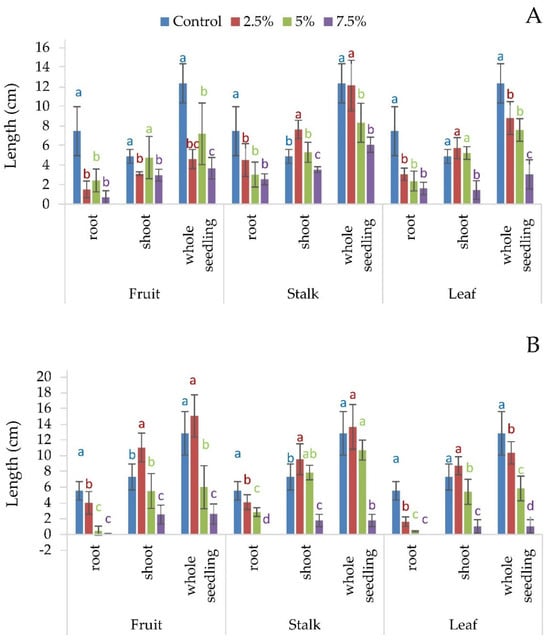
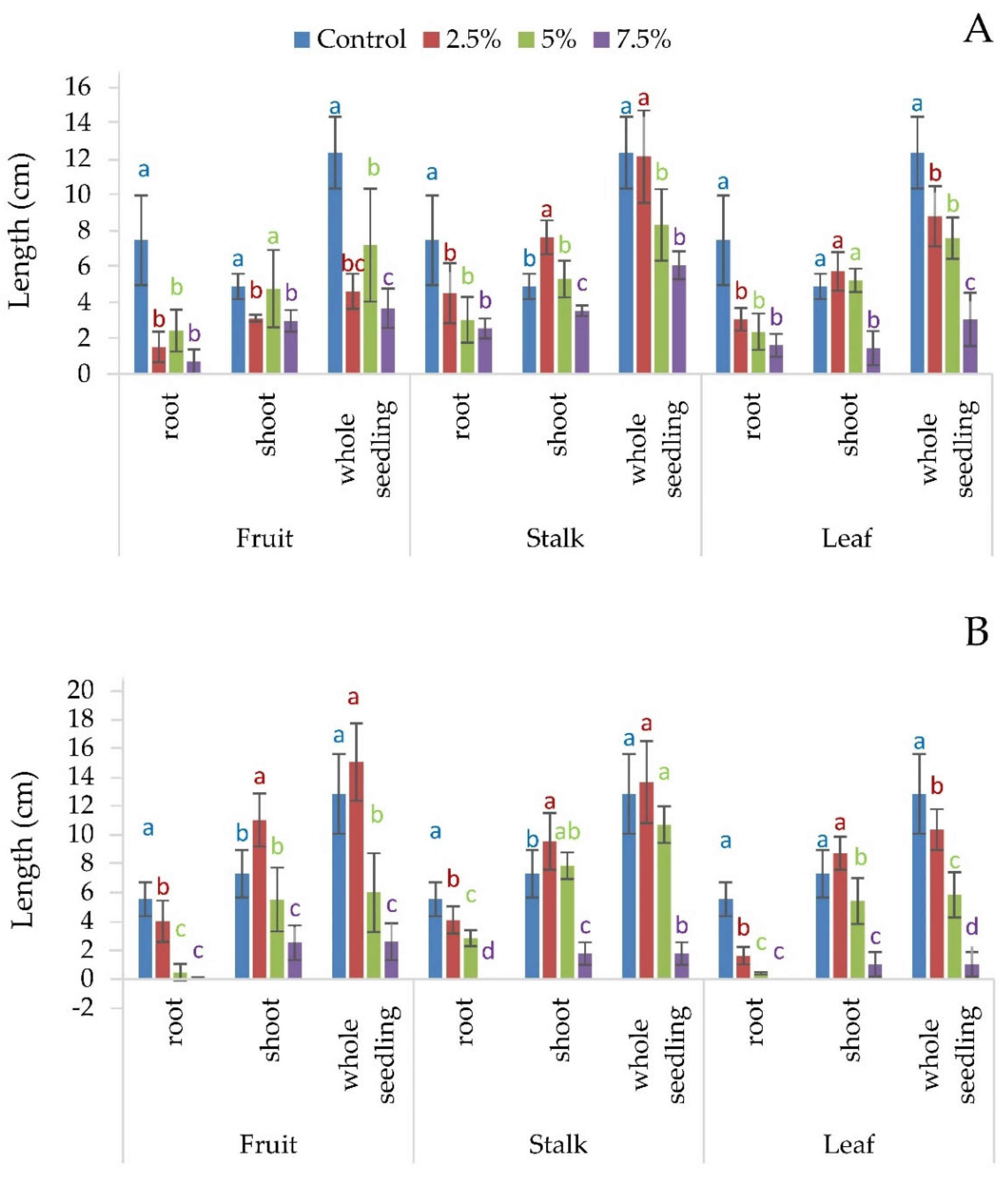
Detailed measurements of seedling elongation in Raphanus sativus and Festuca arundinacea treated with aqueous extracts from Echinocystis lobata organs showed that the extracts had a negative effect in most cases (Figure 4).
Figure 4.
Seedling length (cm) of Raphanus sativus L. var. sativus ‘China Rose’ (A) and Festuca arundinacea Schreb. (B) treated with aqueous extracts from organs of Echinocystis lobata (Michx.) Torr. et A.Gray at concentrations of 2.5%, 5%, and 7.5%. Means (±SD, n = 5) with different letters differ significantly according to Duncan’s test (p ≤ 0.05).
All concentrations of E. lobata extracts (fruit, stalk, and leaf) significantly inhibited radish embryonic root and whole seedling growth compared to the control, except for the 2.5% stalk extract, for which inhibition of whole seedling growth was not statistically significant (Figure 4A). Fruit extracts at 2.5% and 7.5% significantly inhibited radish shoot growth, while the 5% extract had no significant effect. Stalk extracts at 7.5% significantly inhibited shoot growth, whereas 2.5% and 5% extracts slightly stimulated it; the stimulation at 5% was not statistically significant. Leaf extracts at 7.5% significantly inhibited radish shoot growth, whereas 2.5% and 5% slightly stimulated growth, without statistical significance compared to the control.
For Festuca arundinacea, all E. lobata organ extracts significantly inhibited embryonic root growth compared to the control (Figure 4B). Extracts at 5% and 7.5% from fruits, stalks, and leaves inhibited the growth of the entire seedling; only the 5% stalk extract showed no statistically significant difference. Shoot growth was stimulated by 2.5% extracts from all organs, although the stimulation by leaf extracts was not statistically significant. The 5% stalk extract slightly stimulated shoot growth, whereas 5% fruit and leaf extracts inhibited it, with the inhibition for fruit extracts being non-significant. The highest concentration (7.5%) of extracts from all organs significantly inhibited fescue shoot growth compared to the control.
3.3. Results of Fresh and Dry Masses and Total Water Content
During the experiment, 5% and 7.5% stalk and fruit extracts of Echinocystis lobata substantially reduced the fresh mass of radish seedlings compared to the control watered with distilled water (Table 3).
Table 3.
Fresh mass, dry mass, and water content of Raphanus sativus L. var. sativus ‘China Rose’ (A) and Festuca arundinacea Schreb. (B) seedlings treated with extracts from the organs of Echinocystis lobata (Michx.) Torr. et A.Gray at concentrations of 2.5%, 5%, and 7.5%. Means (±SD, n = 5) with different letters differ significantly according to Duncan’s test (p ≤ 0.05). Significant reductions are highlighted in gray, and significant stimulation is indicated by a frame.
A similar effect was observed with the 2.5% fruit extract of E. lobata. In contrast, leaf extracts, regardless of concentration, did not cause statistically significant changes in the fresh mass of radish seedlings relative to the control. The 2.5% stalk extract of prickly cucumber significantly stimulated radish seedling fresh mass. A similar stimulatory effect was observed for the dry mass of radish seedlings treated with the 7.5% fruit extract of E. lobata. In other cases, differences in dry mass were not statistically significant compared to the control. The 7.5% extracts from all analyzed organs, the 5% stalk and fruit extracts, and the 2.5% fruit extract caused a statistically significant reduction in water content of radish seedlings versus the control.
For fescue seedlings, 5% and 7.5% extracts from E. lobata leaves and fruits, as well as the 7.5% stalk extract, significantly reduced fresh mass relative to the control (Table 3). No statistically significant changes were observed in the dry mass of fescue seedlings, regardless of the extract used. Water content in fescue seedlings was significantly reduced in comparison with the control when treated with 7.5% extracts from all analyzed organs, as well as the 5% fruit extract of E. lobata.
3.4. Electrolyte Leakage Results
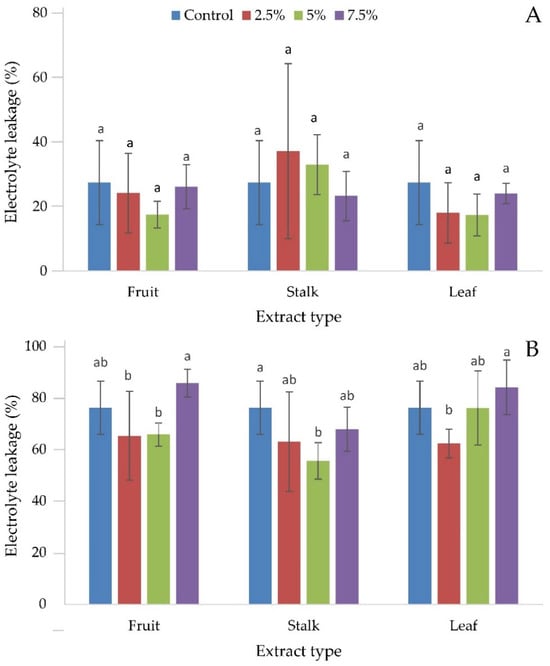
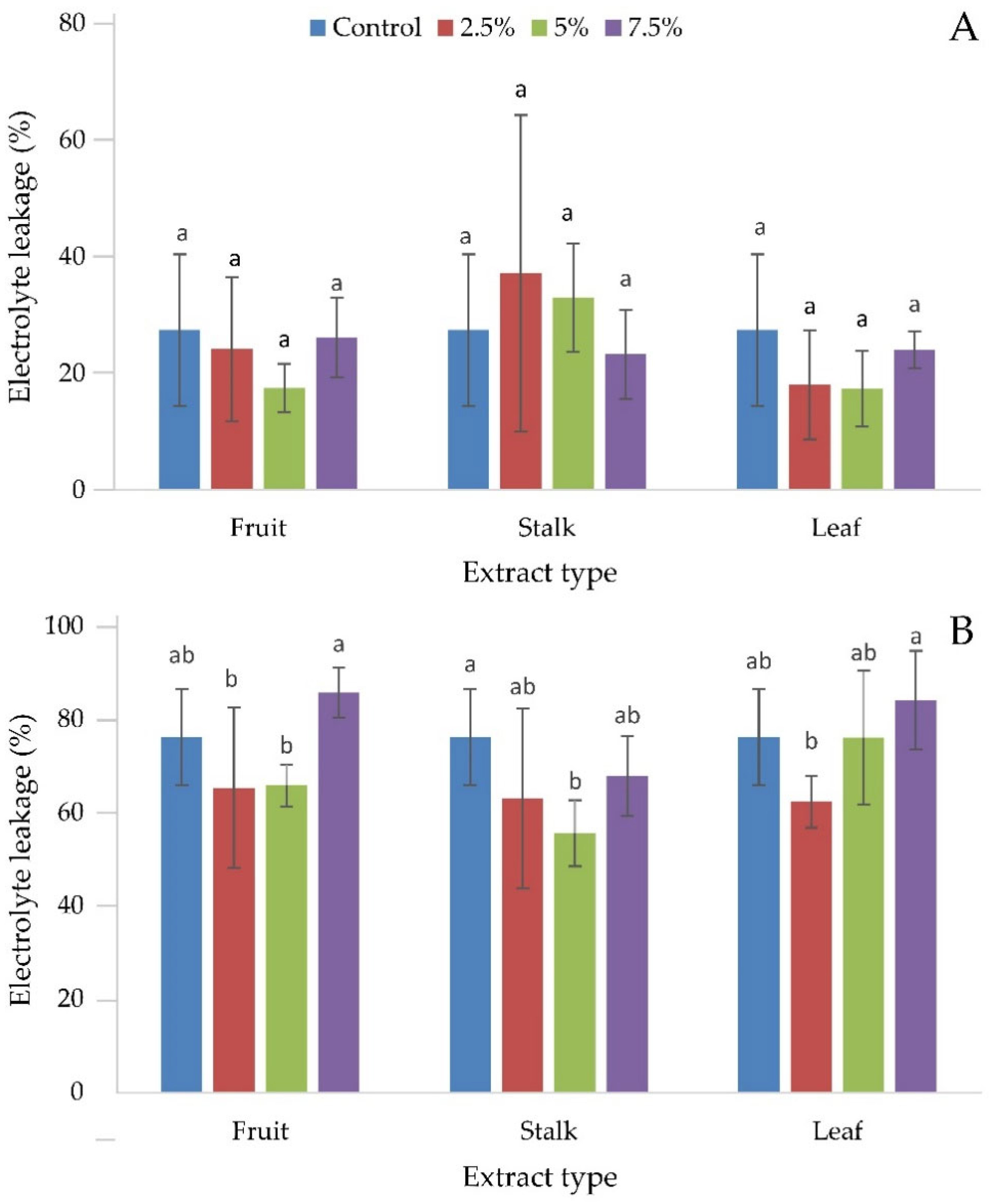
All extracts, regardless of concentration or the Echinocystis lobata organ used, did not cause statistically significant damage to the cell membranes of radish seedlings (Figure 5A).
Figure 5.
Electrolyte leakage in Raphanus sativus L. var. sativus ‘China Rose’ (A) and Festuca arundinacea Schreb. (B) seedlings treated with aqueous extracts from the organs of Echinocystis lobata (Michx.) Torr. et A.Gray at concentrations of 2.5%, 5%, and 7.5%. Means (±SD, n = 5) with different letters differ significantly according to Duncan’s test (p ≤ 0.05).
For fescue, the 5% stalk extract of E. lobata caused a statistically significant reduction in electrolyte leakage from seedling cell membranes in comparison with the control. At the highest concentration (7.5%), extracts from prickly cucumber fruits and leaves caused an increase in electrolyte leakage from fescue seedling cells, but the difference was not statistically significant in comparison with the control group (Figure 5B).
3.5. GC–MS Analysis Results
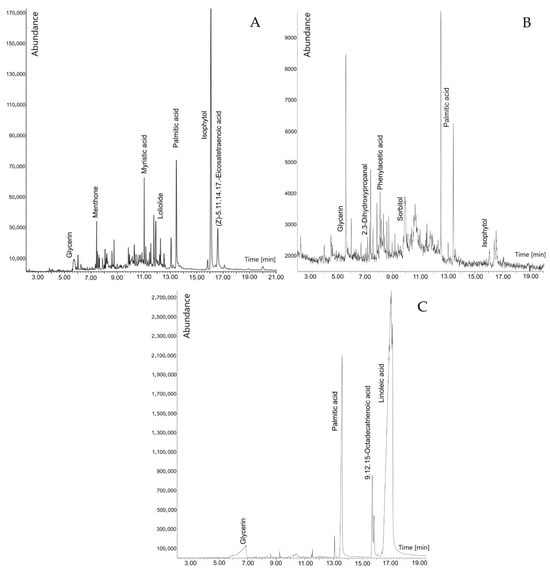
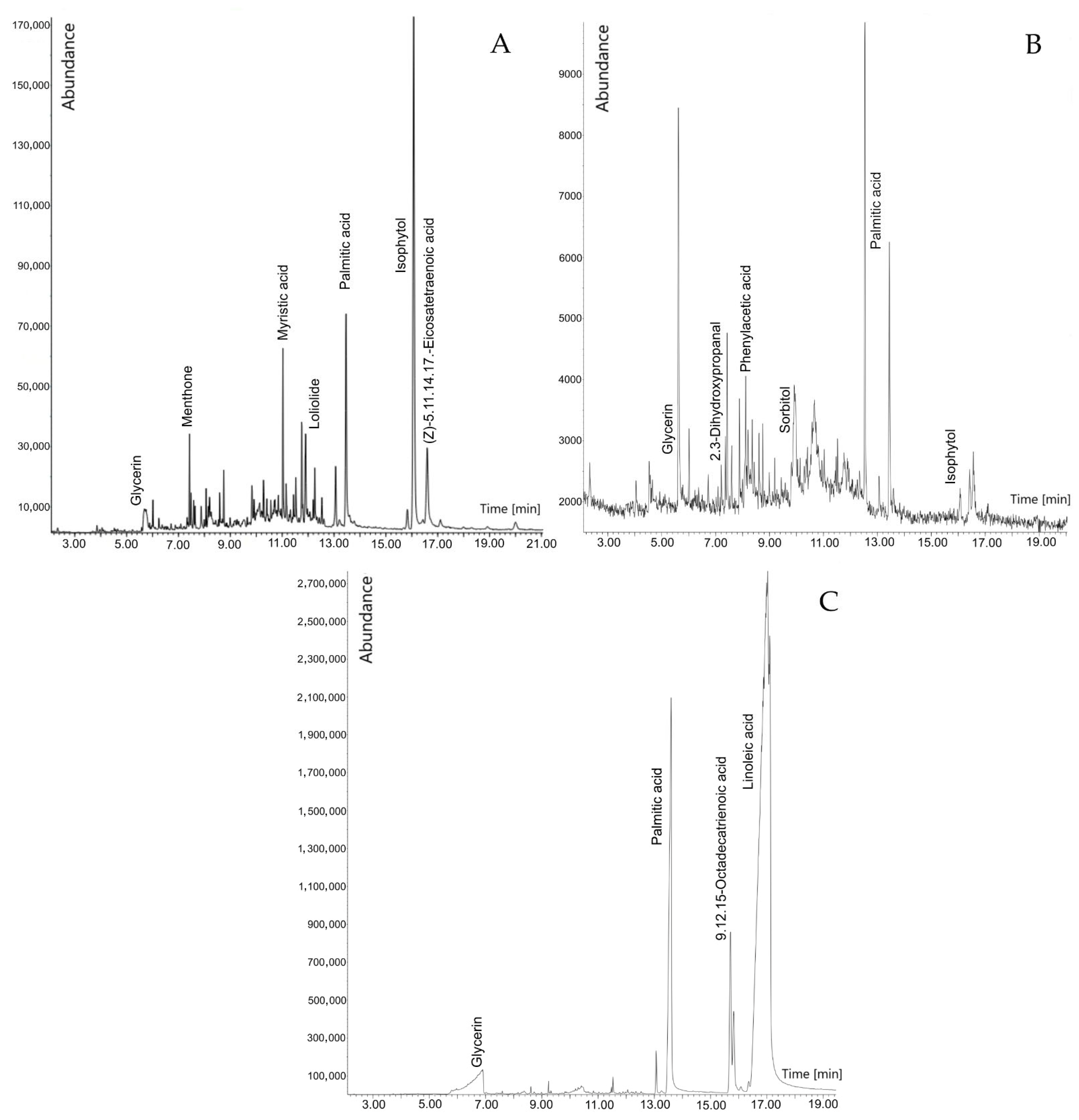
Chromatographic analysis identified chemical compounds classified into nine major groups: sugar alcohols, aldehydes, esters, monoterpenes, sesquiterpenoids, imides, lactams, carboxylic acids and lactones, and phenols and alcohols (Table 4; Figure 6A–C).
Table 4.
Chemical composition of methanolic extracts from Echinocystis lobata (Michx.) Torr. et A.Gray; the highest values are highlighted in gray.
Figure 6.
GC-MS chromatograms of methanolic extracts of Echinocystis lobata (Michx.) Torr. et A.Gray: leaves—(A); stalks—(B); and fruits—(C).
Among the analyzed organs of Echinocystis lobata, the stalk was identified as the richest in chemical compounds, containing as many as 15 compounds from eight chemical groups. In contrast, the prickly cucumber fruits exhibited the lowest diversity, with only five compounds detected (Table 4).
Carboxylic acids and lactones were the most abundant group of phytochemicals across all analyzed organs. For instance, in the fruits, 9,12-octadecadienoic acid accounted for over 75% of the total detected compounds (GC). The highest diversity of compounds from this group was observed in the leaves of E. lobata (Table 4; Figure 6A).
Among alcohols, isophytol was present at the highest percentage in the leaves. Regarding sesquiterpenoids, hexahydrofarnesylacetone was detected exclusively in the leaves and was absent from other organs. In the stalks, sugar alcohols such as sorbitol constituted a significant proportion (Figure 6B). Additionally, in the fruits, a unique ester, methyl linoleate, was identified; this compound was not detected in any other analyzed organs (Table 4; Figure 6C).
4. Discussion
Echinocystis lobata is characterized by several adaptations that facilitate the spontaneous colonization of new areas (Figure 1). Its seeds are dispersed by gravity, water currents, and wind; buoyant fruits can float and be transported over long distances by rivers. Its rapid growth, high biomass production, and climbing ability further enhance its competitiveness [13,14,15,19,30].
The spread of E. lobata in Europe has been strongly supported by both intentional and unintentional human activities [13]. Although still cultivated as an ornamental plant, it often escapes into the wild and colonizes disturbed and natural habitats [31]. Its use as a honey and medicinal plant may further promote its spread through deliberate sowing [12,30,32,33,34], while anthropogenic nitrogen pollution may additionally facilitate its expansion [35,36].
An additional factor contributing to the spread of this taxon may be its allelopathic potential. This study showed that aqueous extracts from the organs of prickly cucumber suppressed seed/grain germination and seedling growth in both radish and fescue (Table 5).
Table 5.
Comparison of germination and growth parameters of Raphanus sativus L. var. sativus ‘China Rose’ and Festuca arundinacea Schreb. seedlings grown on aqueous extracts from the organs of Echinocystis lobata (Michx.) Torr. et A.Gray at different concentrations (2.5%, 5%, 7.5%).
Similar effects were observed in white mustard (Sinapis alba) when treated with 1% and 5% aqueous extracts of E. lobata shoots [20]. Treatment with prickly cucumber extracts primarily resulted in an increase in mean germination time, a decrease in germination index, and reduced germination synchrony (Table 2). Furthermore, these extracts negatively affected seedling elongation (particularly embryonic roots), fresh mass, and water content (Figure 4; Table 3). Previous studies have shown that, in roots, contact with allelochemicals can cause cell and tissue dysfunction, leading to failure of root hairs, lateral roots, and horizontal root growth, as well as increased chromosomal aberrations, chromatin damage, and disruption of the karyokinetic spindle [37,38,39].
Allelochemicals can modify the levels of plant growth regulators and disturb the balance of phytohormones, which in turn inhibits plant growth and development and adversely affects seedling biomass parameters, e.g., [40,41,42,43]. These phenomena help explain the differences observed in the growth parameters of the tested plants compared to the control group in the E. lobata experiment. However, in some cases (mainly with 2.5% extracts), a minor stimulation of shoot and whole-seedling growth was observed, although these differences were typically not statistically significant compared to the control (Figure 4). Such growth stimulation is typically associated with lower concentrations of allelochemicals and has been documented in other studies, e.g., [44,45,46]. In contrast, high concentrations of allelochemicals are consistently inhibitory and generally toxic to plants, as shown in numerous experiments, e.g., [8,10]. Considering the high water demand of E. lobata [14], allelopathic reductions in growth rate, biomass, and water content in competing plants may have adaptive significance, especially during prolonged drought periods when soil water is limited.
Interestingly, watering radish seedlings with prickly cucumber extracts did not cause significant increases in electrolyte leakage from cell membranes. In fescue, however, a 5% extract from prickly cucumber stalks even reduced electrolyte leakage compared to the control (Figure 5). This suggests that E. lobata extracts probably do not appear to cause severe membrane damage in the tested plants, although they negatively affect germination and growth parameters, particularly at higher concentrations (Table 5).
These effects likely result from multiple factors influencing the composition and quantitative proportion of allelochemicals. The effectiveness of allelochemical release is modulated by environmental factors, including stress [47], and by the developmental stage of both the emitting and receiving organisms [48,49]. Under the influence of a stressor—such as allelochemicals—disruptive reactions can occur in cells, including alterations in ionic metabolism, energy balance, and qualitative and quantitative changes in basic metabolic processes, leading, for example, to growth inhibition. Nevertheless, plants possess defense mechanisms to mitigate environmental stress. If the stressor’s intensity is moderate, the plant can activate alternative metabolic pathways as a protective response [50,51].
The present study focuses on primary allelopathy, which results directly from chemical compounds produced by the plant. This type of allelopathic interaction may occur, for example, when compounds are leached from plant tissues by precipitation or released from aerial plant parts in gaseous form. Some of these compounds can directly enter plant tissues before soil organisms react with them [8]. However, allelopathic compounds, especially those originating from the decomposition of organic matter, can be transformed by soil microorganisms. This process is referred to as secondary allelopathy and may either enhance or reduce the observed effects due to microbial activity or interactions among allelopathic compounds [52,53]. Consequently, the laboratory bioassays presented here should be interpreted as an assessment of the primary allelopathic activity of E. lobata, rather than as a direct simulation of field conditions.
According to Ostrumow [54], secondary metabolites exhibiting allelopathic activity include alcohols, phenols, ketones, aldehydes, esters, non-protein amino acids, alkaloids, cyanogenic glycosides, terpenes, terpenoids, waxes, tannins, and steroids. In the organs of prickly cucumber, compounds belonging to several of these groups were detected (Table 6). Previous biochemical studies of this plant have mainly focused on two groups of compounds—polyphenols and flavonoids—which are of therapeutic importance, particularly for their anticancer and antioxidant effects, e.g., [30,32,33,34,55].
Based on the literature, the chemical composition of this plant also includes quercetin and isorhamnetin derivatives [56], enzymes [57], trypsin inhibitors [58], and carbohydrates such as galactose, xylose, rhamnose, arabinose, as well as mucilages—mainly present in the fruits [59]. The main groups of chemical compounds found in this species are summarized in Table 6.
Table 6.
Summary of the chemical composition of the above-ground organs of Echinocystis lobata (Michx.) Torr. et A.Gray, based on our own research and selected literature data. (A) present study; results from other authors are highlighted in gray: (B) Sokolov [32]—all compounds were isolated from E. lobata seed oil; (C) Ielciu et al. [33]; (D) Ielciu et al. [34]; (E) Vinogradova et al. [30].
Numerous compounds within this group are known to exhibit well-established allelopathic activity. For example, phenolic compounds are characterized by the presence of a hydroxyl group (-OH) directly bonded to an aromatic ring and are among the most widely recognized classes of natural allelochemicals [61]. These compounds have been identified in numerous weeds and are consistently documented as phytotoxic substances [62,63,64]. Furthermore, it has been reported that the content of phenolic compounds in alien invasive species may be higher than in native plants, highlighting their important role in invasion success [65].
However, a plant’s phytotoxicity often results from the synergistic effects of multiple chemical compounds rather than the action of a single substance. This synergistic activity arises from the simultaneous interaction of compounds with diverse chemical properties, acting together to produce a stronger effect. Such mechanisms represent a natural strategy employed by many plant species [66,67] and likely apply to E. lobata as well. It is worth emphasizing that although the identified compounds belong to chemical groups known for their allelopathic activity, the links between chemical composition and the observed biological effects certainly require further research.
Biochemical analyses conducted in this study demonstrated that individual organs of E. lobata differ in their chemical composition and in the relative abundance of detected compounds (Table 4), many of which exhibit allelopathic properties. The greatest variation was observed in the stalks and leaves, and the least in the fruits. The leaves are generally the richest source of allelopathic substances in both quality and quantity [68]. However, the content and diversity of chemical compounds in plants are strongly influenced by climatic and soil conditions. For example, analysis of E. lobata seeds from geographically distinct populations in central Russia revealed significant differences in flavonoid content depending on the collection site. Similarly, studies on Slovak and Russian populations showed higher flavonoid content in the seeds of the Slovak populations [31]. In contrast, earlier studies have shown that the composition of E. lobata seed oil from secondary-range populations in central Russia is comparable to that of native populations in North America [69].
Therefore, if location and environmental factors influence the content of chemical compounds, including allelopathic ones, these effects must also be reflected in the expression of the plant’s allelopathic properties. This certainly warrants further biochemical and ecophysiological investigation of this species.
5. Conclusions
The results showed that, in both radish and fescue, aqueous extracts from prickly cucumber organs exerted an inhibitory effect on several parameters: an increase in the mean germination time of the seeds, a reduction in the germination index and germination synchronization, inhibition of seedling elongation (especially embryonic roots), and a decrease in fresh mass and tissue water content [i]. However, the extracts did not cause a significant increase in electrolyte leakage from seedling cell membranes, indicating low environmental stress [ii]. Chemical analysis revealed that the organs of Echinocystis lobata contain compounds from nine main groups: sugar alcohols, aldehydes, esters, monoterpenes, sesquiterpenoids, imides, lactams, carboxylic acids and lactones, and phenols and alcohols [iii]. Many of these compounds have well-documented allelopathic properties.
Based on this study, it can be concluded that Echinocystis lobata possesses a high primary allelopathic potential under laboratory conditions and contains chemical compounds responsible for these effects. These compounds likely suppress the germination and early growth of the tested plants, which E. lobata may exploit in competition with other species, thereby supporting its invasiveness. It should be emphasized, however, that these results reflect laboratory conditions rather than field conditions. According to the literature, climatic and soil conditions at a given site may significantly influence the expression of its allelopathic potential. In the context of future research on this species, two questions arise: Do habitat conditions significantly influence the content of allelopathic compounds in E. lobata? What allelopathic effects does this species exert on wild-growing taxa?
Author Contributions
Conceptualization, A.T., B.B.-K., P.Z., K.K.-G. and A.P.; methodology, A.T., B.B.-K., A.K. and M.C.; software, A.T. and M.C.; validation, A.T., B.B.-K., M.C., K.K.-G. and A.P.; formal analysis, A.T., B.B.-K. and M.C.; investigation, A.T., P.Z., M.C. and A.K.; resources, A.T., B.B.-K., K.K.-G. and A.P.; data curation, A.T., A.K., M.C., and B.B.-K.; writing—original draft preparation, B.B.-K., A.T., A.K. and M.C.; writing—review and editing, B.B.-K., A.T., P.Z., K.K.-G. and A.P.; visualization, B.B.-K., A.T. and M.C.; supervision, B.B.-K. and A.T.; project administration, B.B.-K.; funding acquisition, B.B.-K. All authors have read and agreed to the published version of the manuscript.
Funding
The APC was funded by internal grants awarded by the University of the National Education Commission in Krakow (grant nos. DNa.302.103.2026.RN and DNa.711.306.2026.PN).
Data Availability Statement
The datasets generated and analysed during the current study are available in the figshare repository, https://doi.org/10.6084/m9.figshare.29978887.v1.
Acknowledgments
The authors would like to thank Ingrid Turisová and Peter Turis from Matej Bel University in Banská Bystrica (Slovakia) for their help in finding sites to collect Echinocystis plant material.
Conflicts of Interest
The authors declare no conflicts of interest.
References
- Hartmann, T. From waste products to ecochemicals: Fifty years research of plant secondary metabolism. Phytochemistry 2007, 68, 2831–2846. [Google Scholar] [CrossRef] [Scilit]
- Adaszyńska, M.; Swarcewicz, M. Wybrane wtórne metabolity roślinne jako środki przeciwdrobnoustrojowe (Secondary plant metabolities as antimicrobial agents). Wiad. Chem. 2013, 67, 303–319. [Google Scholar]
- Nowak, D. Metabolity wtórne—Znaczenie w środowisku przyrodniczym i gospodarce człowieka. In Inżynieria Środowiska i Biotechnologia. Wyzwania i Nowe Technologie; Rosińska, A., Karwowska, B., Madeła, M., Eds.; Wyd. Politechniki Częstochowskiej: Częstochowa, Poland, 2022; pp. 201–214. [Google Scholar]
- Inderjit; Callaway, R.M. Experimental designs for the study of allelopathy. Plant Soil 2003, 256, 1–11. [Google Scholar] [CrossRef] [Scilit]
- Stinson, K.A.; Campbell, S.A.; Powell, J.R.; Wolfe, B.E.; Callaway, R.M.; Thelen, G.C.; Hallett, S.G.; Prati, D.; Klironomos, J.N. Invasive plant suppresses the growth of native tree seedlings by disrupting belowground mutualisms. PLoS Biol. 2006, 4, e140. [Google Scholar] [CrossRef] [Scilit]
- Lankau, R.A. Species invasion alters local adaptation to soil communities in a native plant. Ecology 2013, 94, 32–41. [Google Scholar] [CrossRef] [Scilit]
- Saul, W.; Jeschke, J.; Heger, T. The role of eco-evolutionary experience in invasion success. NeoBiota 2013, 17, 57–74. [Google Scholar] [CrossRef] [Scilit]
- Barabasz-Krasny, B.; Zandi, P.; Puła, J.; Stachurska-Swakoń, A.; Schnug, E.; Danel, A. Allelopathy A Natural Factor Constraining or Supporting the Productivity of Soils? In Soil Constraints and Productivity; Bolan, H.S., Kirkam, M.B., Eds.; CRC Press: Boca Raton, FL, USA, 2023; pp. 301–318. [Google Scholar] [CrossRef] [Scilit]
- Zandi, P.; Darma, A.; Li, Q.; Zhou, X.; Yaosheng, W.; Schnug, E. A review of significance of allelopathy in anticipating negative climate change effects. AUPC Stud. Nat. 2023, 8, 253–275. [Google Scholar] [CrossRef] [Scilit]
- Hierro, J.L.; Callaway, R.M. Allelopathy and exotic plant invasion. Plant Soil 2003, 256, 29–39. [Google Scholar] [CrossRef] [Scilit]
- Najda, A.; Klimek, K.; Semeniuk, J.; Dyduch, J. Rośliny inwazyjne—Aktualny stan wiedzy (The selected invasive plants—Present state of knowledge). Episteme 2017, 37, 25–34. [Google Scholar]
- Dylewski, Ł.; Maćkowiak, Ł. Kolczurka klapowana (Echinocystis lobata)—Gatunek obcy o dużej inwazyjności. Wszechświat 2014, 115, 265–269. [Google Scholar]
- Celka, Z.; Chmiel, J.; Brzezińska, K.; Paweł, K.; Oświecimska-Piasko, Z.; Staniszewska, N.; Mazurska, K.; Dajdok, Z.; Krzysztofiak, L.; Mędrzycki, P.; et al. Metody Zwalczania Kolczurki Klapowanej. Kompendium; Celka, Z., Chmiel, J., Tokarska-Guzik, B., Eds.; Generalna Dyrekcja Ochrony Środowiska: Warszawa, Poland, 2022; p. 172. [Google Scholar]
- Kostrakiewicz-Gierałt, K.; Pliszko, A.; Barabasz-Krasny, B.; Bomanowska, A.; Dajdok, Z.; Gudžinskas, Z.; Kucharczyk, M.; Maćkowiak, Ł.; Majk, J.; Możdżeń, K.; et al. The Relationships of habitat conditions, height level, and geographical position with fruit and seed traits in populations of invasive vine Echinocystis lobata (Cucurbitaceae) in central and eastern Europe. Forests 2022, 13, 256. [Google Scholar] [CrossRef] [Scilit]
- Tokarska-Guzik, B.; Urbisz, A.; Urbisz, A.; Węgrzynek, B.; Nowa, T.; Pasierbiński, A. Regional Scale Assessment of Alien Plant Invasions: A Case Study for the Silesian Upland (Southern Poland); Tokarska-Guzik, B., Brock, J.H., Brundu, G., Child, L., Daehler, C.C., Pyšek, P., Eds.; Backhuys Publishers: Leiden, The Netherlands, 2008; pp. 171–188. [Google Scholar]
- Vinogradova, Y.K. Etapy formirovaniya vtorichnogo areala i izmenchivost’ invazionnyh populyacij ekhinocistisa shipovatogo [Stages of secondary range formation and variability of invasive populations of Echinocystis]. Bull. Gl. Botan. Sada 2006, 192, 8–23. [Google Scholar]
- Vinogradova, Y.K.; Mayorov, S.R.; Choroon, L.V. Black Book of Flora of the Middle Russia; Geos Press: Moscow, Russia, 2010; 512p. [Google Scholar]
- Tokarska-Guzik, B. Echinocystis lobata (wild cucumber). In CABI Compendium; CAB International: Wallingford, UK, 2015. [Google Scholar] [CrossRef] [Scilit]
- Richardson, D.M.; Pysek, P. Plant invasions: Merging the concepts of species invasiveness and community invasibility. Prog. Phys. Geogr. 2006, 30, 409–431. [Google Scholar] [CrossRef] [Scilit]
- Csiszár, Á.; Korda, M.; Schmidt, D.; Šporčić, D.; Süle, P.; Teleki, B.; Tiborcz, V.; Zagyvai, G.; Bartha, D. Allelopathic potential of some invasive plant species occurring in Hungary. Allelopath. J. 2013, 31, 309–318. [Google Scholar]
- Khan, R.; Khan, M.A.; Waqas, M.; Khan, A.M.; Hussain, Z.; Khan, A.; Raza, M.A. Allelopathic potential of Silybum marianum L. against the seed germination of edible legumes. Pak. J. Weed Sci. Res. 2011, 17, 293. [Google Scholar]
- AOSA (Association of Official Seed Analysis). Seed vigour testing. In Handbook on Seed Testing; Anmol Publications Pvt. Ltd.: New Delhi, India, 1983. [Google Scholar]
- Orchard, T. Estimating the parameters of plant seedling emergence. Seed Sci. Technol. 1977, 5, 61–69. [Google Scholar]
- Primack, R.B. Longevity of individual flowers. Annu. Rev. Ecol. Evol. Syst. 1985, 16, 15–37. [Google Scholar] [CrossRef]
- Ranal, M.A.; Santana, D.G. How and why to measure the germination process? Braz. J. Bot. 2006, 29, 1–11. [Google Scholar] [CrossRef] [Scilit]
- Lipniak, K.; Kliszcz, A. Allelopathic effect of goosefoot on germination and early stage growth of triticale and radish. AUPC Stud. Nat. 2020, 5, 110–128. [Google Scholar] [CrossRef] [Scilit]
- Szafraniec, R.; Możdżeń, K.; Barabasz-Krasny, B.; Zandi, P.; Wang, Y. Influence of volatile peppermint (Mentha × piperita L.) compounds on germination and seedling of radish (Raphanus sativus L. var. radicula Pers.) growth. Not. Bot. Horti Agrobot. Cluj Napoca 2019, 47, 1277–1284. [Google Scholar] [CrossRef] [Scilit]
- Al-Owaisi, M.; Al-Hadiwi, N.; Khan, S.A. GC-MS analysis, determination of total phenolics, flavonoid content and free radical scavenging activities of various crude extracts of Moringa peregrina (Forssk.) Fiori leaves. Asian Pac. J. Trop. Biomed. 2014, 4, 964–970. [Google Scholar] [CrossRef] [Scilit]
- Kumar, K.; Srivastav, S.; Sharanagat, V.S. Ultrasound assisted extraction (UAE) of bioactive compounds from fruit and vegetable processing by-products: A review. Ultrason. Sonochem. 2021, 70, 105325. [Google Scholar] [CrossRef] [Scilit]
- Vinogradova, Y.; Shelepova, O.; Vergun, O.; Grygorieva, O.; Brindza, J. Phenolic content and antioxidant activity of Echinocystis lobata (Mich.) Torr. et Gray (Cucurbitaceae). Slovak J. Food Sci./Potravin. 2021, 15, 784–791. [Google Scholar] [CrossRef] [Scilit]
- Sudnik-Wójcikowska, B. Rośliny Synantropijne. Flora Polski; MULTICO Oficyna Wyd.: Warszawa, Poland, 2023; p. 336. ISBN 978-83-7763-611-4. [Google Scholar]
- Sokolow, P.D. Rastitel’nye Resursy SSSR [PlantResources of the USSR]; Nauka: Leningrad, Russia, 1986; 336p. [Google Scholar]
- Ielciu, I.; Vlase, L.; Frederich, M.; Hanganu, D.; Păltinean, R.; Cieckiewicz, E.; Olah, N.; Gheldiu, A.; Crişan, G. Polyphenolic profile and biological activities of the leaves and aerial parts of Echinocystis lobata (Michx.) Torr. et A. Gray (Cucurbitaceae). Farmacia 2017, 65, 179–183. [Google Scholar]
- Ielciu, I.; Hanganu, D.; Păltinean, R.; Vlase, L.; Frederich, M.; Gheldiu, A.; Benedec, D.; Crişan, G. Antioxidant capacity and polyphenolic content of the Echinocystis lobata (Michx.) Torr. et A. Gray flowers. Pak. J. Pharm. Sci. 2018, 31, 677–683. [Google Scholar]
- Krokaitė, E.; Shakeneva, D.; Juškaityte, E.; Rekašius, T.; Nemaniūtė-Gužienė, J.; Butkuvienė, J.; Kupčinskienė, E.; Patamsytė, J.; Rančelienė, V.; Vyšniauskienė, R.; et al. Nitrogen concentration of the aquatic plant species in relation to land cover type and other variables of the environment. Zemdirbyste 2019, 106, 203–212. [Google Scholar] [CrossRef] [Scilit]
- Jocienė, L.; Krokaitė, E.; Rekašius, T.; Juškaitytė, E.; Ielciu, I.; Galanina, O.; Kupčinskienė, E. The molecular evidence for invasive climber Echinocystis lobata (Michx.) Torr. et A. Gray in eastern and central Europe. Diversity 2023, 15, 1084. [Google Scholar] [CrossRef] [Scilit]
- Baziramakenga, R.; Simard, R.R.; Leroux, G.D. Effects of benzoic and cinnamic acids on growth, mineral composition and chlorophyll content of soybean. J. Chem. Ecol. 1994, 20, 2821–2833. [Google Scholar] [CrossRef] [Scilit]
- Cai, S.L.; Mu, X.Q. Allelopathic potential of aqueous leaf extracts of Datura stramonium L. on seed germination, seedling growth and root anatomy of Glycine max (L.) Merrill. Allelopath. J. 2012, 30, 235–245. [Google Scholar]
- Teerarak, M.; Charoenying, P.; Laosinwattana, C. Physiological and cellular mechanisms of natural herbicide resource from Aglaia odorata Lour. on bioassay plants. Acta Physiol. Plant 2012, 34, 1277–1285. [Google Scholar] [CrossRef] [Scilit]
- Farooq, M.; Hussain, T.; Wakeel, A.; Cheema, Z.A. Differential response of maize and mung bean to tobacco allelopathy. Exp. Agric. 2014, 50, 611–624. [Google Scholar] [CrossRef] [Scilit]
- Cheng, F.; Cheng, Z. Research progress on the use of plant allelopathy in agriculture and the physiological and ecological mechanisms of allelopathy. Front. Plant Sci. 2015, 6, 1020. [Google Scholar] [CrossRef] [Scilit]
- Shah, A.N.; Iqbal, J.; Fahad, S.; Tanveer, M.; Yang, G.; Khan, E.A.; Shahzad, B.; Yousaf, M.; Hassan, W.; Ullah, A.; et al. Allelopathic Influence of Sesame and Green Gram Intercrops on Cotton in a Replacement Series. Clean-Soil Air Water 2016, 45, 1–10. [Google Scholar] [CrossRef] [Scilit]
- Siyar, S.; Chaudhry, Z.; Hussain, F.; Hussain, Z.; Majeed, A. Allelopathic effects of some common weeds prevailing in wheat fields on growth characteristics of wheat (Triticum aestivum L.). PSM Biol. Res. 2017, 2, 124–127. [Google Scholar]
- Skrzypek, E.; Repka, P.; Stachurska-Swakoń, A.; Barabasz-Krasny, B.; Możdżeń, K. Seedlings growth of common sunflower under influence of peppermint extract. Mod. Phytol. 2016, 9, 69–73. [Google Scholar] [CrossRef] [Scilit]
- Możdżeń, K.; Barabasz-Krasny, B.; Stachurska-Swakoń, A.; Zandi, P.; Puła, J. Effect of aqueous extracts of peppermint (Mentha × piperita L.) on the germination and the growth of selected vegetable and cereal seeds. Not. Bot. Horti Agrobot. Cluj Napoca 2019, 47, 412–417. [Google Scholar] [CrossRef] [Scilit]
- Możdżeń, K.; Tatoj, A.; Barabasz-Krasny, B.; Sołtys-Lelek, A.; Gruszka, W.; Zandi, P. The allelopathic potential of Rosa blanda Aiton on selected wild-growing native and cultivated plants in Europe. Plants 2021, 10, 1806. [Google Scholar] [CrossRef] [Scilit]
- Rice, E.L. Allelopathy, 2nd ed.; Academic Press Inc.: Orlando, FL, USA, 1984. [Google Scholar]
- Qasem, J.R.; Foy, C.L. Weed allelopathy, its ecological impacts and future prospects: A review. J. Crop Prod. 2001, 4, 43–119. [Google Scholar] [CrossRef] [Scilit]
- Jilani, G.; Mahmood, S.; Chaudhry, A.N.; Hassan, I.; Akram, M. Allelochemicals: Sources, toxicity and microbial transformation in soil—A review. Ann. Microbiol. 2008, 58, 351–357. [Google Scholar] [CrossRef] [Scilit]
- Bohnert, H.J.; Nelson, D.E.; Jensen, R.G. Adaptations to environmental stresses. Plant Cell 1995, 7, 1099–1111. [Google Scholar] [CrossRef] [Scilit]
- Demidchik, V.; Straltsova, D.; Medvedev, S.S.; Pozhvanov, G.A.; Sokolik, A.; Yurin, V. Stress induced electrolyte leakage: The role of K+-permeable channels and involvement in programmed cell death and metabolic adjustment. J. Exp. Bot. 2014, 65, 1259–1270. [Google Scholar] [CrossRef] [Scilit]
- Inderjit. Soil microorganisms: An important determinant of allelopathic activity. Plant Soil 2005, 274, 227–236. [Google Scholar] [CrossRef] [Scilit]
- Farooq, M.; Bajwa, A.A.; Cheema, S.A.; Cheema, Z.A. Application of allelopathy in crop production. Int. J. Agric. Biol. 2013, 15, 1367–1378. [Google Scholar]
- Ostrumow, S.A. Wprowadzenie do Ekologii Biochemicznej; Wydawnictwo Naukowe PWN: Warszawa, Poland, 1992. [Google Scholar]
- Purmalis, O.; Klavins, L.; Niedrite, E.; Mezulis, M.; Klavins, M. Invasive plants as a source of polyphenols with high radical scavenging activity. Plants 2025, 14, 467. [Google Scholar] [CrossRef] [Scilit]
- Krauze-Baranowska, M.; Cisowski, W. Flavonoids from Echinocystis lobata and E. wrightii. Pol. J. Chem. 1996, 70, 430–436. [Google Scholar]
- Gillard, D.F.; Walton, D.C. Abscisic acid metabolism by a cell-free preparation from Echinocystis lobata liquid endosperm. Plant Physiol. 1976, 58, 790–795. [Google Scholar] [CrossRef] [Scilit]
- Stachowiak, D.; Polanowski, A.; Bieniarz, G.; Wilusz, T. Isolation and amino-acid sequence of two inhibitors of serine proteinases, members of the squash inhibitor family, from Echinocystis lobata seeds. Acta Biochim. Pol. 1996, 43, 507–514. [Google Scholar] [CrossRef] [Scilit]
- Budantsev, A.L.; Lesiovskaya, E.E. Dikorastushchiye Poleznyye Rasteniya Rossii [Useful Wild Plants in Russia]; State Chemical Pharmaceutical Academy: St. Petersburg, Russia, 2014; 663p. [Google Scholar]
- Roshchina, V.V. Spectral methods for the search of azulene-containing allelopathic and medicinal species. Allelopath. J. 2024, 63, 59–70. [Google Scholar] [CrossRef] [Scilit]
- Li, Z.H.; Wang, Q.; Ruan, X.; Pan, C.D.; Jiang, D.A. Phenolics and plant allelopathy. Molecules 2010, 15, 8933–8952. [Google Scholar] [CrossRef] [Scilit]
- Deba, F.; Xuan, T.D.; Yasuda, M.; Tawata, S. Herbicidal and fungicidal activities and identification of potential phytotoxins from Bidens pilosa L. var. radiata Scherff. Weed Biol. Manag. 2007, 7, 77–83. [Google Scholar] [CrossRef] [Scilit]
- Batish, D.R.; Kaur, S.; Singh, H.P.; Kohli, R.K. Role of root-mediated interactions in phytotoxic interference of Ageratum conyzoides with rice (Oryza sativa). Flora Morphol. Distrib. Funct. Ecol. Plants 2009, 20, 388–395. [Google Scholar] [CrossRef] [Scilit]
- Gindri, D.M.; Coelho, C.M.M.; Uarrota, V.G.; Rebelo, A.M. Herbicidal bioactivity of natural compounds from Lantana camara on the germination and seedling growth of Bidens pilosa. Pesqui. Agropecu. Trop. 2020, 50, e57746. [Google Scholar] [CrossRef] [Scilit]
- Kim, Y.O.; Lee, E.J. Comparison of phenolic compounds and the effects of invasive and native species in East Asia: Support for the novel weapons hypothesis. Ecol. Res. 2011, 26, 87–94. [Google Scholar] [CrossRef] [Scilit]
- Kaur, S.; Singh, H.P.; Mittal, S.; Batish, D.R.; Kohli, R.K. Phytotoxic effects of volatile oil from Artemisia scoparia against weeds and its possible use as a bioherbicide. Ind. Crop. Prod. 2010, 32, 54–61. [Google Scholar] [CrossRef] [Scilit]
- Saharkhiz, M.J.; Esmaeili, S.; Merikhi, M. Essential oil analysis and phytotoxic activity of two ecotypes of Zataria multiflora Boiss. growing in Iran. Nat. Prod. Res. 2010, 24, 1598–1609. [Google Scholar] [CrossRef] [Scilit]
- Bhadoria, P.B.S. Allelopathy: A natural way towards weed management. Am. J. Exp. Agric. 2011, 1, 7–20. [Google Scholar] [CrossRef] [Scilit]
- Shelepova, O.; Kuklina, A.; Vinogradova, Y.K. Seeds of Echinocystis lobata (Mich.) Torr. et Gray, Cucurbitaceae as a promising pharmacological agent. Agrobiodivers. Improv. Nutr. Health Life Qual. 2016, 416–420. [Google Scholar] [CrossRef] [Scilit]

Disclaimer/Publisher’s Note: The statements, opinions and data contained in all publications are solely those of the individual author(s) and contributor(s) and not of MDPI and/or the editor(s). MDPI and/or the editor(s) disclaim responsibility for any injury to people or property resulting from any ideas, methods, instructions or products referred to in the content. |
© 2026 by the authors. Licensee MDPI, Basel, Switzerland. This article is an open access article distributed under the terms and conditions of the Creative Commons Attribution (CC BY) license.