


Abstract
Idesia polycarpa is a multipurpose tree species valued for both fruit production and timber and is often referred to as a “beautiful oil reservoir on trees”. However, research has largely focused on fruits, whereas the metabolic composition and potential value of other tissues, such as leaves and shoot tips, remain insufficiently characterized. Here, we employed UPLC–MS/MS-based untargeted metabolomics to compare metabolite profiles and functional components between the leaves and shoot tips of I. polycarpa. In total, 378 differential metabolites were identified, with 105 significantly upregulated in leaves and 273 significantly upregulated in shoot tips. Among these, 32 metabolites were detected exclusively in shoot tips, and 22 were unique to leaves. Leaves were enriched in secondary metabolites, particularly flavonoids and phenolic acids, with scutellarin and catechol as representative compounds. In contrast, shoot tips exhibited higher levels of primary metabolites, including nucleotides and their derivatives as well as amino acids, with catechin and epicatechin being representative compounds. In addition, targeted metabolomics was performed to quantify 53 flavonoids in leaves; scutellarin (2088.1350 μg/g) and apigenin-7-O-glucuronide (1020.9085 μg/g) showed the highest concentrations. Collectively, these results reveal tissue-specific metabolic characteristics in I. polycarpa and provide a data basis for future functional studies and the comprehensive utilization of leaves and shoot tips.
1. Introduction
Idesia polycarpa Maxim. is a deciduous tree species in the genus Idesia (family Flacourtiaceae) that is widely distributed across warm-temperate and subtropical regions of East Asia [1,2]. It is characterized by a straight trunk, a layered canopy, and abundant red fruits in autumn. Its wood has a clear and attractive grain and moderate hardness, making the species valuable for timber production and urban landscaping [3,4]. The fruits contain more than 30% oil, which is rich in unsaturated fatty acids; linoleic acid can account for up to 80% of the total fatty acids. Accordingly, I. polycarpa is considered an important woody edible oil crop and is often referred to as a “beautiful oil reservoir on trees” [5,6]. Given its multifunctional value, almost all parts of I. polycarpa have potential for utilization. To date, studies have primarily focused on fruit yield and production traits [7,8,9,10,11,12,13,14,15,16,17], optimization of oil extraction and refining processes [18,19,20,21,22], and high-value applications of fruit oil and oil residues [23,24,25,26,27,28]. In addition, branch extracts have been reported to exhibit anti-leukemic activity by regulating glucocorticoid receptor expression and modulating the mTOR and MAPK signaling pathways in CCRF-SB cells [29]. Despite these advances, the chemical composition and metabolic characteristics of vegetative organs, such as leaves and shoot tips, remain insufficiently explored, which limits the comprehensive utilization of whole-plant resources.
In many woody plant species, leaves and actively growing tissues are enriched in secondary metabolites (e.g., polyphenols, flavonoids, and terpenoids) that are closely associated with diverse biological activities. For instance, olive (Olea europaea L.) leaf extracts have been reported to significantly reduce systolic and diastolic blood pressure, as well as triglyceride levels, in subjects with stage I hypertension [30,31,32]. In Ginkgo biloba L., terpene lactones, ginkgolic acids, and flavonoids display dynamic changes during leaf development, indicating that metabolite composition is strongly influenced by developmental processes [33]. Similarly, tea (Camellia sinensis (L.) O. Kuntze) shoot tips and leaves contain abundant polyphenols, L-theanine, caffeine, and volatile compounds, underscoring the value of these tissues for linking chemical composition with biological functions [34,35]. Together, these studies suggest that leaves and shoot tips of woody plants can serve as important reservoirs of bioactive metabolites and that Idesia polycarpa may likewise harbor distinctive and potentially valuable compounds in these tissues. Accordingly, preliminary work has begun to characterize the chemical composition and bioactivities of I. polycarpa leaves. Huang [36,37] isolated four compounds using high-speed counter-current chromatography (HSCCC) coupled with preparative high-performance liquid chromatography (prep-HPLC) and demonstrated their antioxidant activity and cytotoxicity against tumor cells. Feistel et al. [38] reported that I. polycarpa leaf extracts were toxic to larvae of Lymantria dispar and Cerura vinula. From a metabolomics perspective, Zhang et al. [39] further indicated that differential metabolites between leaves and soil were mainly associated with sugars and phenolic acids. Despite these advances, current studies have largely focused on a limited set of compounds and do not yet provide a systematic view of leaf metabolite profiles; moreover, the composition and characteristics of metabolites in I. polycarpa shoot tips have rarely been reported.
However, leaves and shoot tips differ markedly in tissue structure and physiological function. Leaves primarily support photosynthesis and stress responses and are often enriched in secondary metabolites, such as phenolic acids and flavonoids, that are associated with antioxidant capacity and defensive functions [40]. In contrast, shoot tips represent meristematic growth centers and are more closely linked to metabolic processes underlying growth and developmental regulation, signal transduction, and the biosynthesis of structural components [41].
Therefore, we employed UPLC–MS/MS-based untargeted metabolomics to compare the metabolic profiles of Idesia polycarpa leaves and shoot tips and screened and annotated differential metabolites to elucidate tissue-specific metabolic characteristics. On this basis, flavonoids in leaves were quantified to validate key functional components, thereby providing a basis for the development and utilization of I. polycarpa leaf and shoot-tip resources.
2. Materials and Methods
2.1. Sample Collection
In July 2020, the leaves and shoot apices of Idesia polycarpa were collected concurrently at the Forestry Experimental Station of Henan Agricultural University (Zhengzhou, China) to minimize temporal variation during sampling. Fully expanded leaves were excised from the mid-canopy region of the main stem across multiple trees. In contrast, shoot apices were collected from the terminal portions of lateral branches at mid-canopy height, and any attached young leaves were carefully removed prior to processing. To reduce positional bias, samples were taken from branches with different orientations, and three independent biological replicates were prepared for each tissue type. Immediately after collection, all samples were cryopreserved in liquid nitrogen for 3 min and then stored at −80 °C until analysis. The frozen tissues were subsequently freeze-dried under vacuum using a Scientz-100F lyophilizer (Scientz, Ningbo, China) and ground to a uniform fine powder with a mixer mill (MM 400, Retsch) at 30 Hz for 1.5 min to ensure homogeneity. For subsequent analyses, mature leaves were designated as group A and shoot tips as group B.
2.2. Chemical Reagents and Materials
LC–MS-grade methanol, acetonitrile, and formic acid were purchased from Thermo Fisher Scientific (Fair Lawn, NJ, USA). Ultrapure water was produced using a Milli-Q purification system (Millipore, Bedford, MA, USA). Authentic reference standards were obtained from BioBioPha (Kunming, China) and Sigma-Aldrich (St. Louis, MO, USA). Prior to instrumental analysis, all sample solutions were filtered through a 0.22 μm nylon membrane (Jinteng, Tianjin, China) to remove particulate matter.
2.3. Metabolomics Sample Preparation
Approximately 100 mg of finely powdered leaf or shoot-tip tissue was accurately weighed and extracted with 1.2 mL of 70% (v/v) methanol (solvent-to-sample ratio: 12 mL·g−1). After thorough mixing, the suspension was incubated at 4 °C for 12 h to facilitate metabolite extraction, with intermittent vortexing (six times) to enhance solubilization. The extracts were then centrifuged at 12,000 rpm for 10 min at 4 °C, and the supernatants were collected and filtered through a 0.22 μm membrane to remove residual particulates. The clarified extracts were transferred to autosampler vials for subsequent UPLC–MS/MS analysis. Quality control (QC) samples were prepared by pooling equal aliquots of all leaf and shoot-tip extracts to obtain a representative matrix and were processed and analyzed under the same conditions as the test samples to monitor analytical stability and repeatability. To further assess instrument consistency, a pooled QC sample was injected after every six test samples throughout the sequence. Reproducibility of sample preparation and instrument performance was evaluated by comparing the total ion chromatograms across consecutive QC injections.
2.4. Metabolomic Analysis
Chromatographic separation was performed on a SHIMADZU Nexera X2 ultra-performance liquid chromatography (UPLC) system (Shimadzu Corporation, Kyoto, Japan) using an SB-C18 column (1.8 μm, 2.1 mm × 100 mm). The mobile phase consisted of solvent A (0.1% (v/v) formic acid in ultrapure water) and solvent B (0.1% (v/v) formic acid in acetonitrile). The gradient program was as follows: 5% B at 0 min, increased linearly to 95% B over 9.0 min, held at 95% B for 1.0 min, returned to 5% B from 10.0 to 11.1 min, and re-equilibrated at 5% B for 3.0 min. The flow rate was 0.35 mL·min−1, the column temperature was maintained at 40 °C, and the injection volume was 4 μL.
Prior to statistical analysis, the data were normalized and unit-variance (UV) scaled to reduce the influence of magnitude differences among variables. Principal component analysis (PCA) was then performed to visualize global metabolic variation among samples and to evaluate the clustering of biological replicates. To identify metabolites contributing to tissue discrimination, an orthogonal partial least squares discriminant analysis (OPLS-DA) model was constructed, and potential differential metabolites were selected based on variable importance in projection (VIP) scores. Metabolites with VIP ≥ 1, fold change (FC) ≥ 2 or ≤0.5, and p < 0.05 were considered significantly different. Model robustness and predictive performance were evaluated using a 200-permutation test. Metabolites meeting these criteria were further subjected to hierarchical clustering to assess within-group consistency and to characterize differences in metabolic profiles between tissue types.
2.5. Metabolomics Data Analysis
Metabolites were characterized based on MS/MS data acquired on the UPLC–MS/MS platform, and compound annotation was performed by matching spectra against the self-constructed MWDB library. During annotation, precursor m/z values, diagnostic fragment ions, and relative fragment-intensity patterns were jointly considered to improve confidence. Metabolites of particular interest were further verified using commercially available analytical standards (BioBioPha, Kunming, China; Sigma-Aldrich, St. Louis, MO, USA) analyzed under the same chromatographic and mass spectrometric conditions. Structural confirmation was achieved by matching both retention times and MS/MS fragmentation profiles between sample signals and authentic standards. Accordingly, the final metabolite list comprised compounds confirmed with standards and additional metabolites putatively annotated via spectral matching to the database.
After normalization and unit-variance (UV) scaling, multivariate statistical analyses were performed to explore metabolic variation among samples. Principal component analysis (PCA) was first applied to visualize overall metabolic differences and to evaluate the clustering consistency of biological replicates. To further discriminate between tissue types and identify metabolites contributing to classification, an orthogonal partial least squares discriminant analysis (OPLS-DA) model was constructed, and important variables were identified based on variable importance in projection (VIP) scores. Metabolites with VIP ≥ 1, fold change (FC) ≥ 2 or ≤0.5, and p < 0.05 were considered significantly differential. Model robustness and predictive performance were evaluated using a 200-permutation test. The selected differential metabolites were then subjected to hierarchical clustering to assess within-group consistency and to characterize tissue-specific metabolic patterns.
2.6. Quantitative Determination of Flavonoids in Leaves
2.6.1. Sample Preparation
Accurately weighed leaf powder (20 mg) was mixed with 10 μL of an internal standard mixed working solution (4000 nmol/L) and 500 μL of 70% (v/v) methanol. The mixture was ultrasonically extracted for 30 min and then centrifuged at 12,000 r/min for 5 min at 4 °C. The supernatant was collected and filtered through a 0.22 μm membrane to obtain the Idesia polycarpa leaf extract, which was transferred to autosampler vials for subsequent UPLC–MS/MS analysis.
2.6.2. Chromatographic and Mass Spectrometric Conditions
UPLC–MS/MS analysis was performed on a SHIMADZU Nexera X2 ultra-performance liquid chromatography (UPLC) system (Shimadzu, Kyoto, Japan) coupled to an Applied Biosystems 4500 QTRAP tandem mass spectrometer (AB Sciex LLC, Framingham, MA, USA).
- (1)
- Chromatographic conditions: Separation was performed on a Waters ACQUITY UPLC HSS T3 C18 column (1.8 μm, 100 mm × 2.1 mm i.d.; Waters, Milford, MA, USA). The mobile phase consisted of solvent A (0.05% formic acid in ultrapure water) and solvent B (0.05% formic acid in acetonitrile). The gradient program was as follows: 90:10 (A/B, v/v) at 0 min, 80:20 at 1 min, 30:70 at 9 min, and 5:95 at 12.5 min; 5:95 was maintained until 13.5 min, then returned to 90:10 at 13.6 min and re-equilibrated until 15 min. The flow rate was 0.35 mL·min−1; the column temperature was maintained at 40 °C, and the injection volume was 2 μL.
- (2)
- Mass spectrometric conditions: The electrospray ionization (ESI) source temperature was set to 550 °C. The ion spray voltage was 5500 V in positive ion mode and −4500 V in negative ion mode. The curtain gas (CUR) pressure was 25 psi, and collision-activated dissociation (CAD) was set to high. In the triple quadrupole (QQQ) mass analyzer (AB Sciex LLC, Framingham, MA, USA), each ion transition was monitored using the optimized declustering potential (DP) and collision energy (CE).
2.6.3. Calculation of Sample Contents
The integrated peak area ratio for each target compound was applied to the corresponding calibration curve to quantify its concentration in the extract. The calculated concentration was then used in the formula below to determine the absolute content of each compound in Idesia polycarpa leaves, expressed as nmol·g−1. For ease of interpretation and comparison, these values were subsequently converted to μg·g−1 and reported accordingly.
The flavonoid content in Idesia polycarpa leaves (nmol·g−1) was calculated using the following equation:
where c is the analyte concentration (nmol·L−1) calculated by substituting the sample’s integrated peak area ratio into the calibration curve, V is the volume of extraction solvent (μL), and m is the mass of the weighed sample (g).
Flavonoid content (nmol/g) = c* × V/1,000,000m
2.6.4. Construction of Calibration Curves
Standard working solutions were prepared at 0.5, 1, 5, 10, 20, 50, 100, 200, 500, 1000, and 2000 nmol·L−1. For each concentration level, the corresponding quantitative mass spectrometric responses were recorded. Calibration curves were constructed for each analyte by plotting the concentration ratio of the target compound to the internal standard (x-axis) against the corresponding peak area ratio (y-axis). The regression equations and correlation coefficients for all quantified metabolites are summarized in Table 1.
Table 1.
Regression equations and corresponding correlation coefficients for the 53 quantified flavonoid compounds.
2.7. Data Processing
In this section, chromatographic peaks were integrated and manually inspected using MultiQuant software (version 3.0.3), while mass spectrometric data were processed with Analyst 1.6.3. The resulting tables were compiled in Microsoft Excel (2022 version). Multivariate analyses and graphical visualizations, including principal component analysis (PCA) score plots, hierarchical clustering heatmaps, and Venn diagrams, were generated in R (version 4.3.2).
3. Results
3.1. UPLC–MS/MS Analysis and Multivariate Statistical Analysis
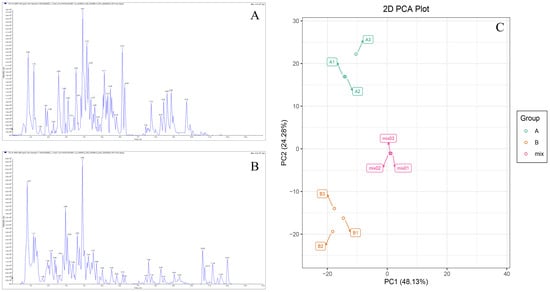
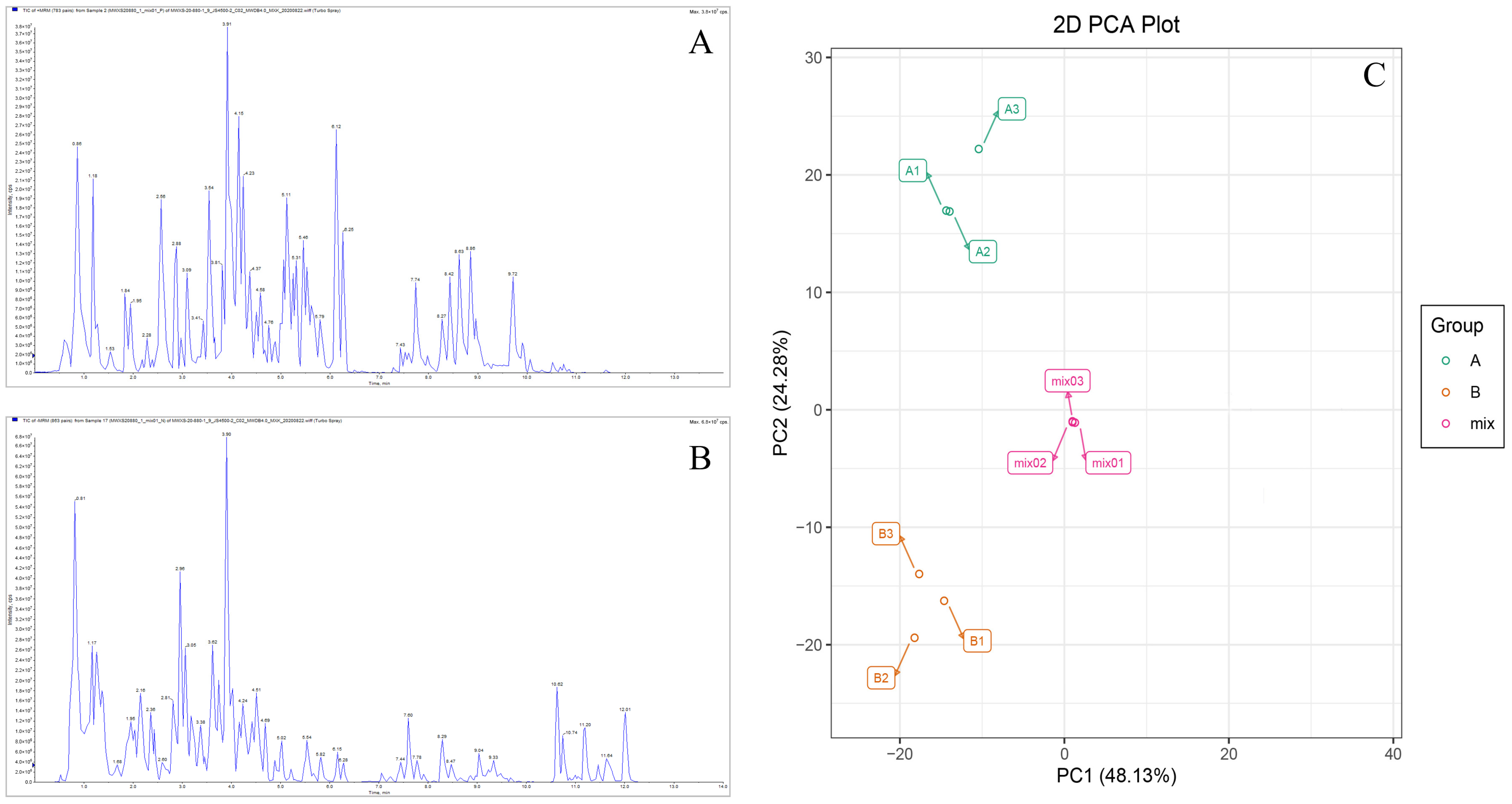
UPLC–MS/MS analysis was performed in both positive and negative electrospray ionization modes to characterize metabolic variation between the leaves and shoot tips of Idesia polycarpa. Representative total ion chromatograms for the two tissue types are shown in Figure 1A,B. To obtain an overview of metabolic differentiation and to evaluate sample consistency, principal component analysis (PCA) was conducted using data from leaf samples, shoot-tip samples, and quality control (QC) injections. As shown in Figure 1C, the first principal component (PC1) explained 48.13% of the total variance, while the second principal component (PC2) accounted for 24.28%, resulting in a cumulative explained variance of 72.41%. The PCA score plot showed a clear separation between leaves and shoot tips, indicating pronounced differences in metabolite profiles between the two tissues. In addition, biological replicates clustered tightly within each group, supporting strong analytical reproducibility and overall data reliability.
Figure 1.
Total ion chromatograms and PCA score plot. (A) Positive ion mode; (B) Negative ion mode; (C) PCA score plot. Note: Mix is the quality control sample.
3.2. Comparative Analysis of Metabolites in Leaves and Shoot Tips of Idesia polycarpa
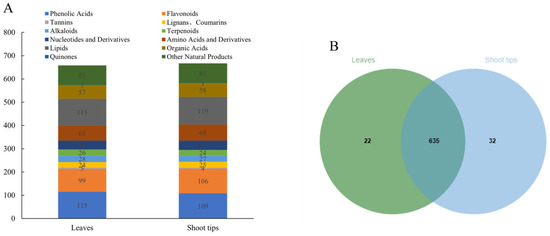
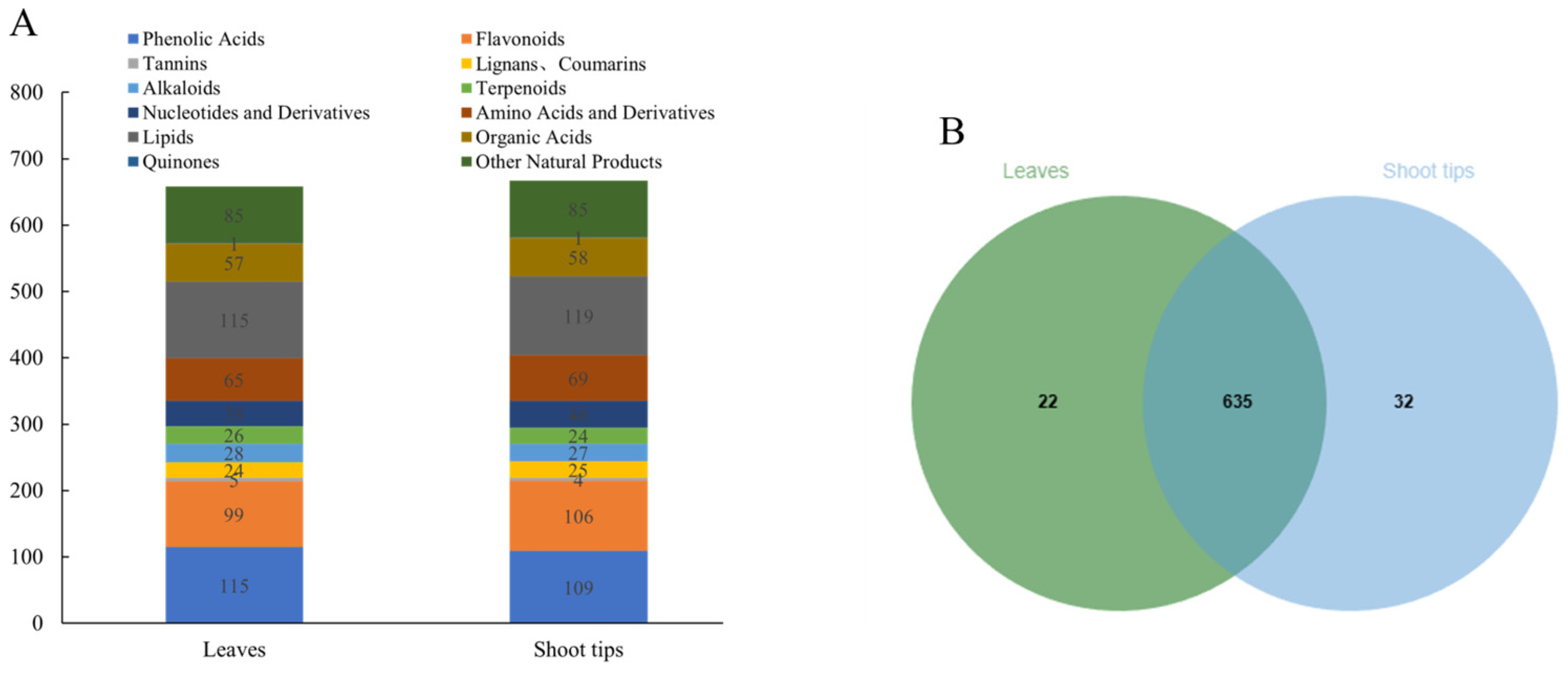
Database-based annotation identified 689 metabolites in Idesia polycarpa. Of these, 657 were detected in leaves and 667 in shoot tips, with 635 metabolites shared by both tissues. The annotated metabolites spanned diverse chemical classes, including phenolic acids, flavonoids, lipids, amino acids and related derivatives, organic acids, nucleotides and their derivatives, alkaloids, terpenoids, and other secondary metabolites. In terms of composition, flavonoids and phenolic acids were the predominant secondary-metabolite groups, whereas primary metabolites—such as lipids, amino acids and their derivatives, and organic acids—were also well represented (Figure 2A,B). Although leaves and shoot tips showed substantial overlap in metabolite identities, their relative abundances differed markedly.
Figure 2.
Classification of metabolites in leaves and shoot tips of Idesia polycarpa. (A) Metabolite categories and numbers; (B) Venn diagram.
3.3. Screening of Differential Metabolites Between Leaves and Shoot Tips of Idesia polycarpa
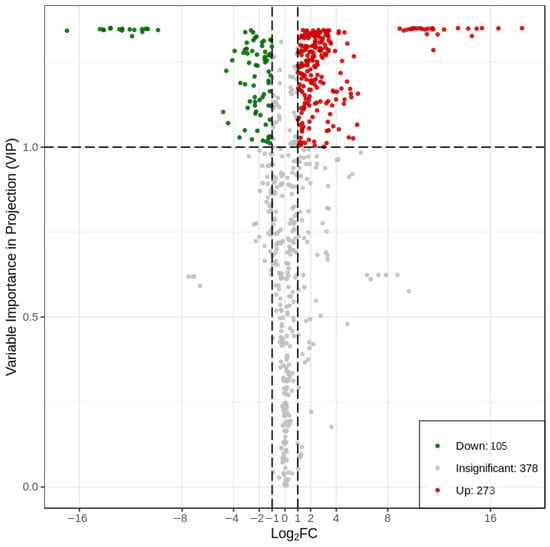
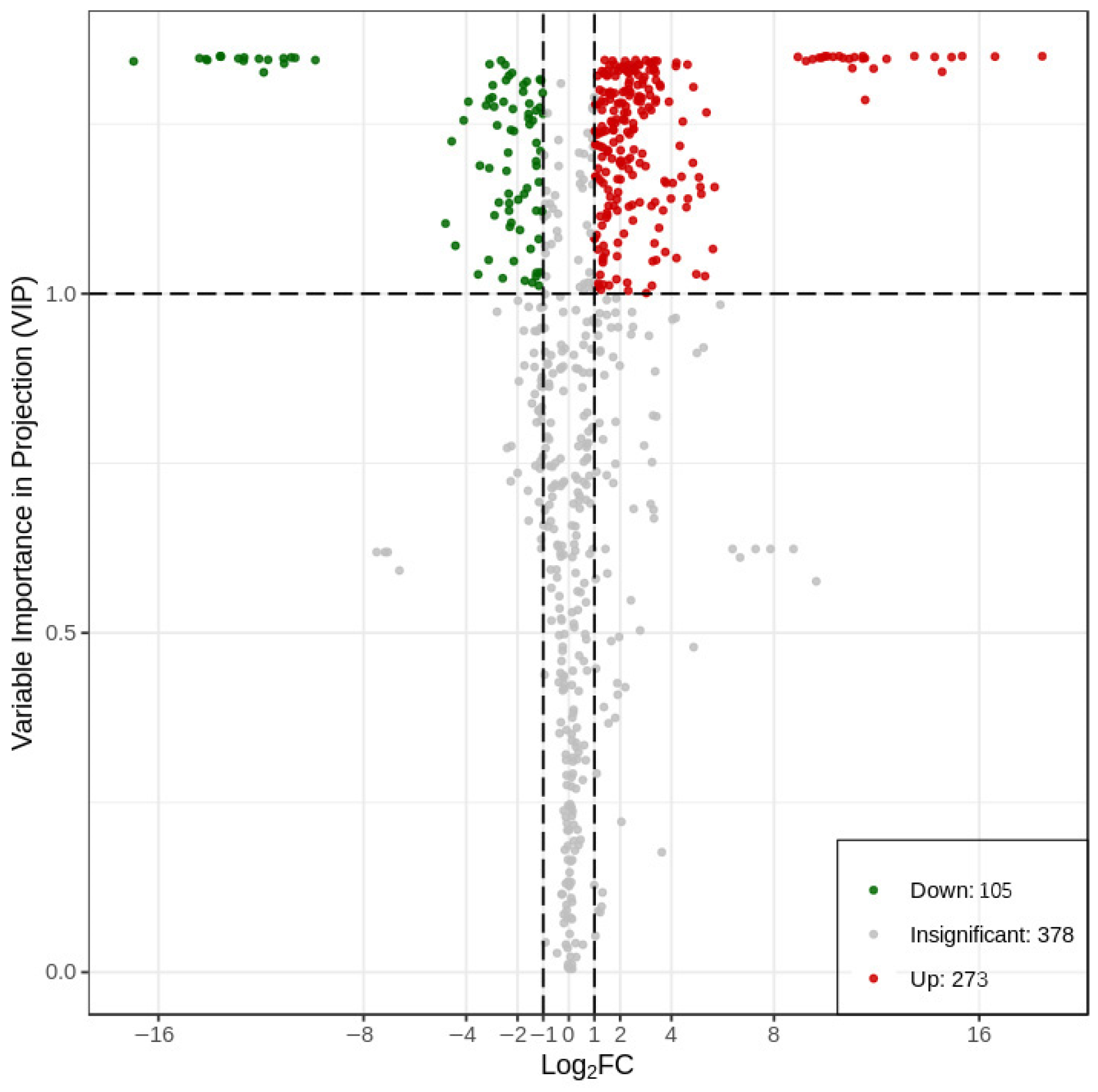
Based on OPLS-DA screening (VIP ≥ 1 and fold change ≥ 2 or ≤0.5), 378 significantly differential metabolites were identified. Among these, 273 metabolites were downregulated in leaves (i.e., accumulated at higher levels in shoot tips), whereas 105 metabolites were upregulated in leaves. With respect to chemical classes, lipids comprised the largest fraction of metabolites enriched in shoot tips (63 compounds, including glycerides, lysophosphatidylcholines, lysophosphatidylethanolamines, and free fatty acids), followed by amino acids and their derivatives (36 compounds), flavonoids (44 compounds), and organic acids (24 compounds), indicating that lipid-related metabolites were relatively abundant in shoot tips. In contrast, metabolites enriched in leaves were mainly phenolic acids (28 compounds) and flavonoids (16 compounds), together with lignans and coumarins (11 compounds) and several terpenoids and alkaloids, suggesting a higher accumulation of secondary metabolites in leaves. Overall, shoot tips were characterized by elevated levels of lipids and other primary metabolites, whereas leaves were significantly enriched in phenolic acids and flavonoids, reflecting distinct tissue-specific metabolic differentiation (Figure 3).
Figure 3.
Volcanic map of differential metabolites. Note: In the plot, each dot represents a metabolite showing differential accumulation. The x-axis indicates the fold change between the two groups; larger absolute values represent greater differences in abundance. The y-axis represents statistical significance, with higher values indicating stronger significance. Metabolites with significantly increased abundance are shown in red, whereas those with decreased abundance are shown in green; metabolites without significant differences are shown in gray. The horizontal dotted line indicates the threshold of VIP = 1, and the vertical dotted lines indicate the fold change thresholds (FC = 2 and FC = 0.5, corresponding to log2 FC = 1 and log2 FC = −1, respectively). Metabolites were considered significantly differential when they met the criteria of VIP ≥ 1, fold change ≥ 2 or ≤0.5, and p < 0.05.
3.4. Cluster Analysis of Differential Metabolites in Idesia polycarpa Leaves and Shoot Tips
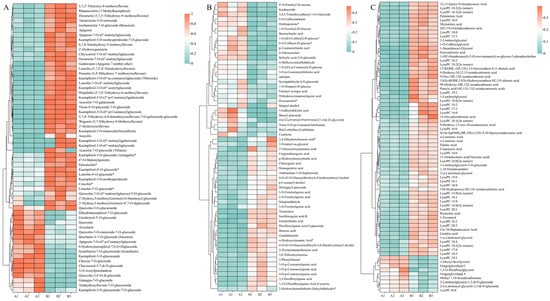
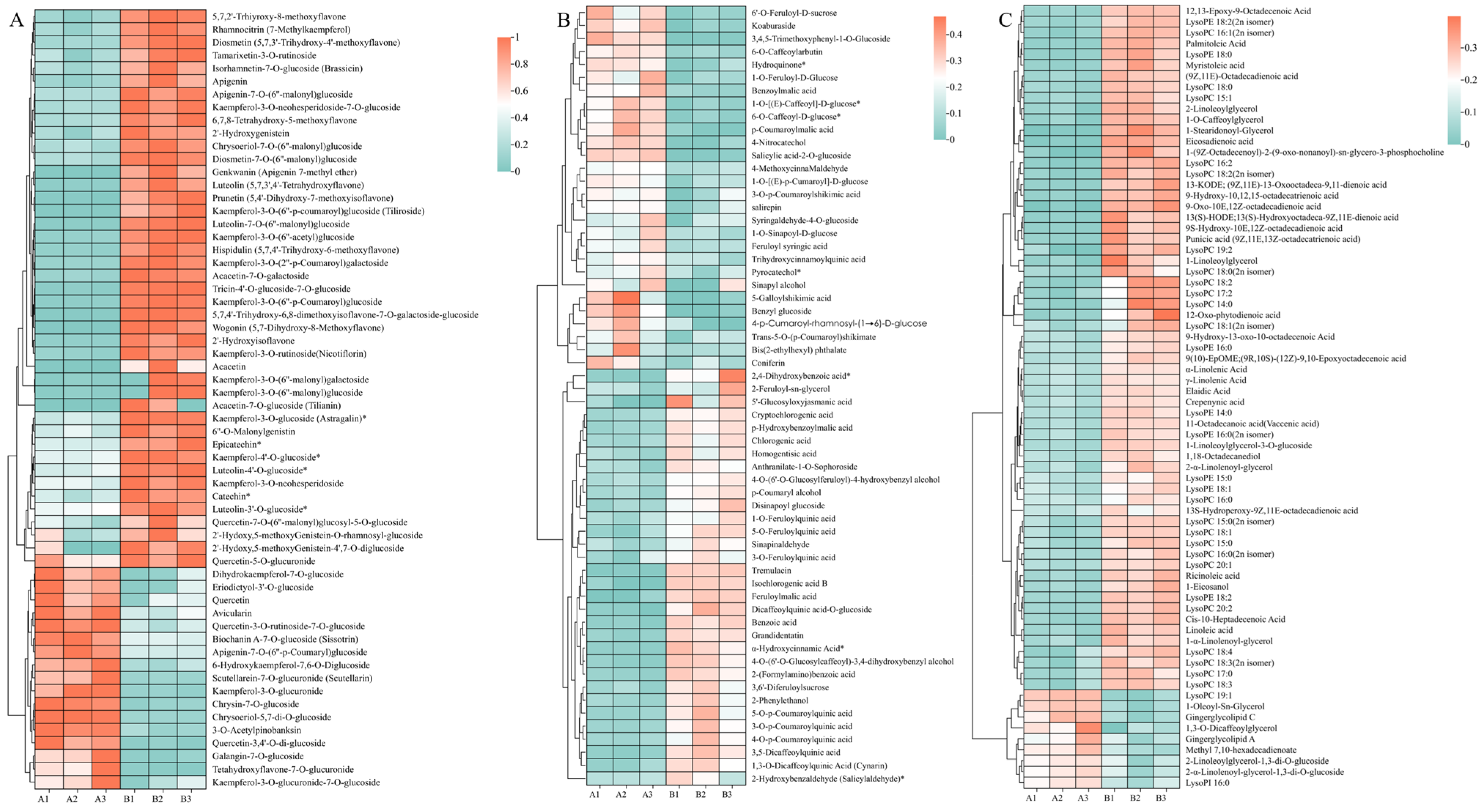
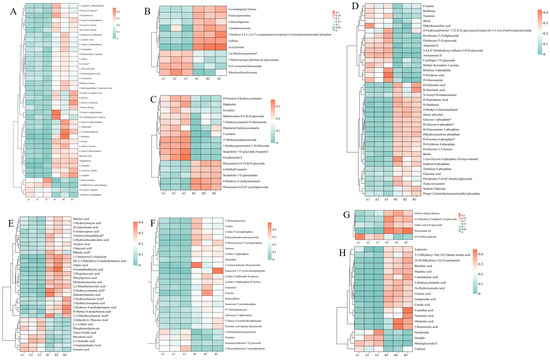
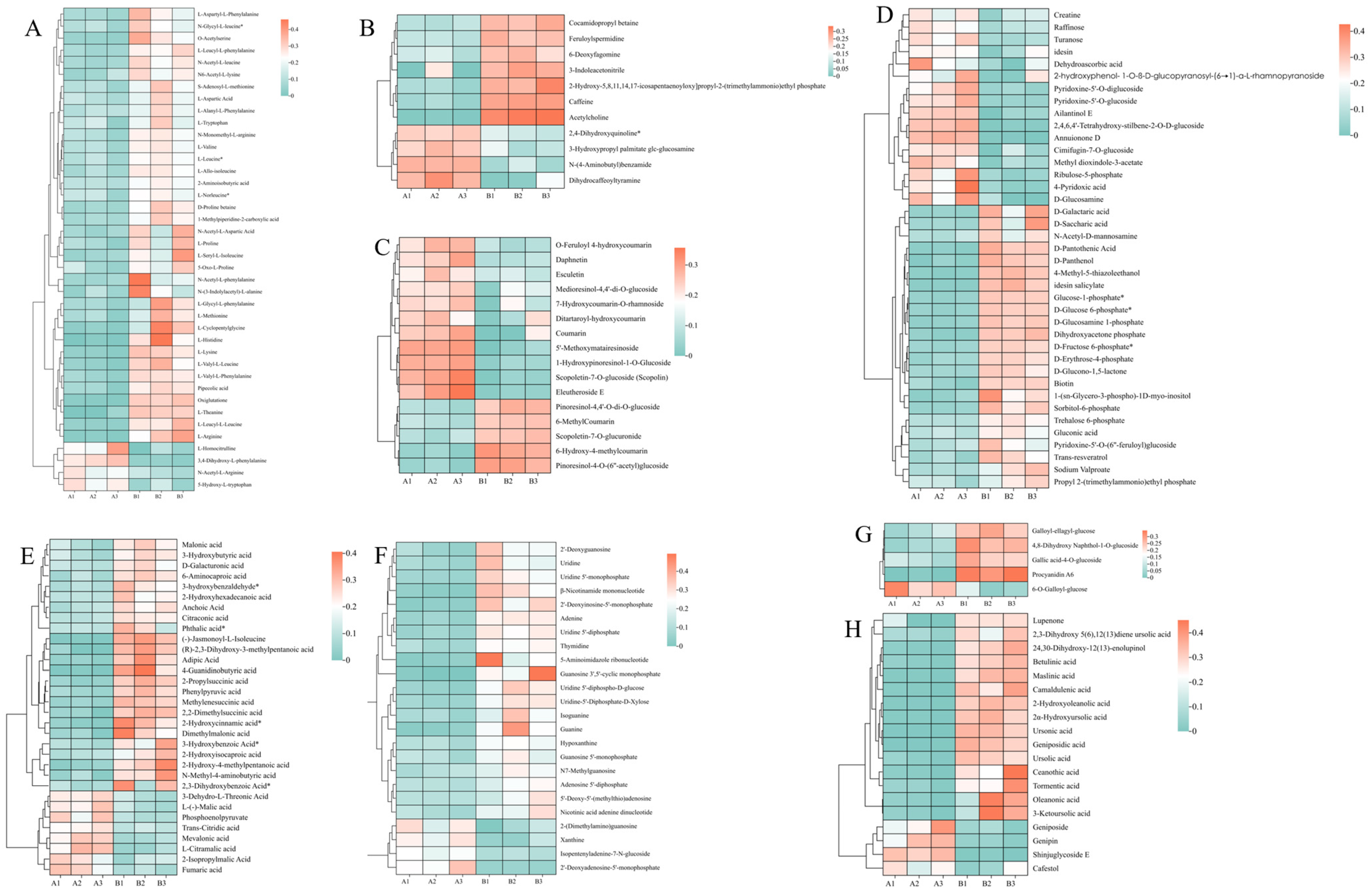
To further examine class-specific distribution patterns between the two tissues, hierarchical clustering was performed using all differential metabolites (Figure 4 and Figure 5). Overall, most metabolite classes showed higher abundance in shoot tips, whereas leaves were mainly enriched in specific secondary metabolites. Among differential flavonoids and phenolic acids, a relatively larger fraction accumulated in leaves (16/60 and 28/60, respectively), indicating a stronger enrichment of secondary metabolites in leaf tissue. In contrast, most differential metabolites classified as lipids (63/72), amino acids and their derivatives (36/40), organic acids (24/32), nucleotides and their derivatives (20/24), and terpenoids (15/19) were more abundant in shoot tips, suggesting more active primary metabolism and membrane lipid-associated processes in this tissue. In addition, alkaloid metabolites showed a slight enrichment in shoot tips (7/11), whereas coumarins and lignans were relatively enriched in leaves. Although only a few tannin-related differential metabolites were detected, they mainly accumulated in shoot tips. Only one quinone metabolite, 4,8-dihydroxynaphthol-1-O-glucoside, differed between the two tissues and was present at a higher level in shoot tips. Overall, shoot tips were enriched in lipids and a range of primary metabolism-related compounds, whereas leaves accumulated higher levels of phenolic acids, flavonoids, and other phenylpropanoid-derived secondary metabolites, further highlighting tissue-specific metabolic differentiation.
Figure 4.
Hierarchical clustering analysis of differential metabolites. (A) Flavonoids; (B) phenolic acids; (C) lipids.
Figure 5.
Hierarchical clustering analysis of differential metabolites. (A) Amino acids and their derivatives; (B) alkaloids; (C) coumarins and lignans; (D) others; (E) organic acids; (F) nucleotides and their derivatives; (G) tannins; (H) terpenoids.
3.5. Analysis of Unique and Key Bioactive Constituents in Different Parts of Idesia polycarpa
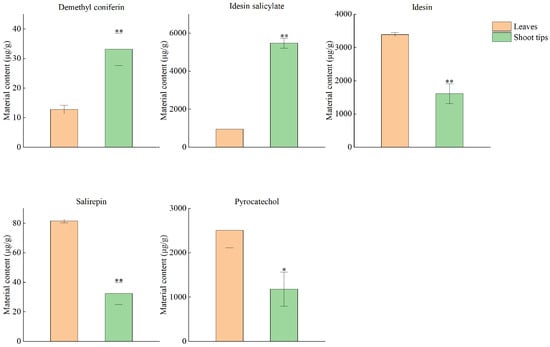
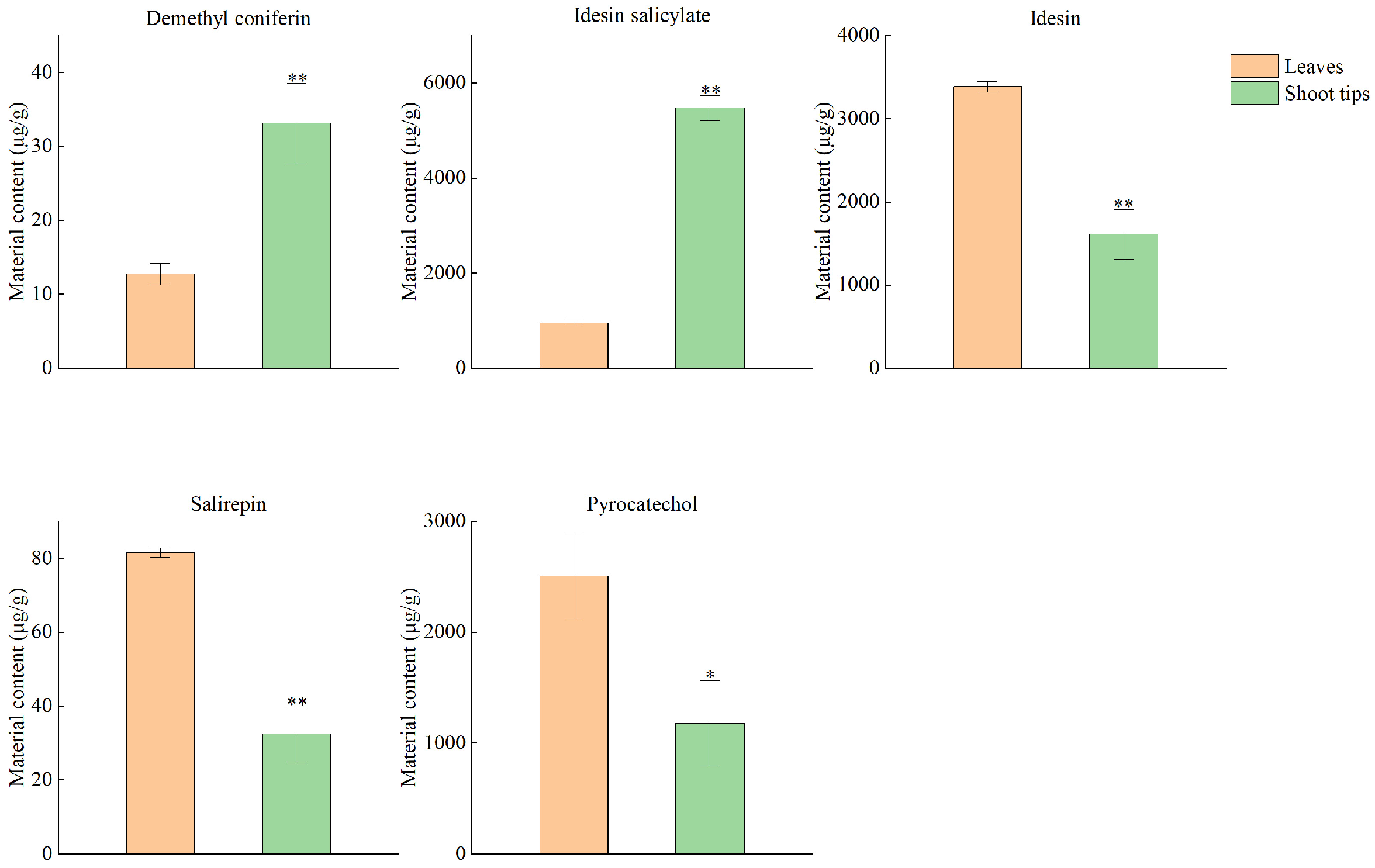
Among the detected metabolites, five representative compounds showing significant differences were selected for further analysis (Figure 6). Catechol, salidroside, and idesin accumulated at higher levels in leaves, whereas norconiferin and idesin salicylate were more abundant in shoot tips. In addition, 22 and 32 tissue-specific metabolites were identified in leaves and shoot tips, respectively (Table 2).
Figure 6.
Content of Key Functional Components (* p < 0.05, ** p < 0.01).
Table 2.
Characteristic Components of Different Parts of Idesia polycarpa.
3.6. Quantitative Determination of Flavonoid Contents in Leaves of Idesia polycarpa
In the classification of differential metabolites, flavonoids showed a pronounced enrichment in leaves and constituted an important class of secondary metabolites in Idesia polycarpa. Therefore, targeted quantitative analysis of leaf flavonoids was conducted. In total, 52 flavonoids were analyzed by UPLC–MS/MS (Table 3), and absolute quantification was obtained for 51 compounds, including flavones, flavonols, dihydroflavones, and chalcones. Overall, flavonoid contents varied substantially among compounds in leaves. Scutellarin (2088.1350 μg/g) and apigenin-7-O-glucuronide (1020.9085 μg/g) were the predominant constituents, followed by luteoloside and apigenin-7-O-glucoside. Among the flavonols, rutin showed the highest content (13.6801 μg/g). Aside from these major constituents, most other flavonoids occurred at relatively low levels, with the majority below 1 μg/g.
Table 3.
Flavonoid compounds identified in Idesia polycarpa leaves.
4. Discussion
4.1. Metabolomic Analysis of Shoot Tips and Leaves of Idesia polycarpa
In this study, untargeted metabolomics was used to systematically profile metabolites in the shoot tips and leaves of Idesia polycarpa. A total of 635 metabolites were shared between the two tissues, and 378 were identified as significantly differential; moreover, 32 metabolites were detected exclusively in shoot tips, and 22 were specific to leaves. In shoot tips, 273 metabolites showed higher abundance, mainly comprising primary metabolites (e.g., nucleotides and their derivatives and amino acids), together with compounds such as catechin, epicatechin, caffeine, and anthocyanins. Catechins are major constituents of tea polyphenols and contribute substantially to their health-promoting effects [42], whereas caffeine and anthocyanins are important contributors to bitterness in tea infusions [43]. In tea, polyphenols (including catechins), L-theanine, caffeine, theobromine, and volatile organic compounds have been associated with potential roles in the prevention and management of cardiovascular disease, cancer, digestive disorders, and metabolic diseases (e.g., obesity and diabetes) [14,35,36,44]. Phenolic acid extracts from I. polycarpa fruits have also been reported to alleviate non-alcoholic fatty liver disease by regulating lipid metabolism in oleic acid-induced HepG2 cells and high-fat diet-induced mice. Notably, the shoot tips of I. polycarpa contained L-theanine and various free amino acids. Free amino acids are major contributors to the umami taste of tea; among them, L-theanine, a characteristic amino acid in tea, has been reported to exhibit health-promoting and anticancer activities and to exert neuroprotective effects [45]. The enrichment of catechin, epicatechin, caffeine, anthocyanins, and free amino acids in I. polycarpa shoot tips provides a rationale for exploring shoot tips as a raw material for tea-like products. In contrast, 105 metabolites were more abundant in leaves, and secondary metabolites—particularly phenolic acids and flavonoids—accounted for the largest proportion, including catechol, salicortin, and idesin. Flavonoids are key components of plant defense against herbivorous insects and are generally considered safe for human consumption; they play central roles in biotic stress responses (e.g., herbivory and microbial and nematode infection) and can enhance tolerance to abiotic stresses such as ultraviolet radiation [46]. For example, herbivore feeding activates flavonoid-related genes in tea plants, promoting flavonoid accumulation and defense responses against the tea green leafhopper (Empoasca onukii Matsuda) [47], and elevated flavonoid levels in cotton have been linked to resistance against Spodoptera frugiperda (J. E. Smith) and Aphis gossypii Glover [48]. Catechol exhibits antibacterial activity, and its incorporation into hydrogels can confer antimicrobial properties [49]; additionally, catechol supplementation has been reported to preserve nutritional quality and enhance antioxidant capacity during the ensiling of Chinese toon (Toona sinensis (A. Juss.) M. Roem.) leaves [50]. Both salicortin and idesin have been shown to inhibit lipopolysaccharide-induced nitric oxide production in BV2 microglial cells, suggesting anti-inflammatory potential [51]. Collectively, the enrichment of catechol, salidroside, and idesin in I. polycarpa leaves indicates that this tissue may serve as a promising source of antioxidant and anti-inflammatory compounds; nevertheless, these activities require further experimental validation.
In addition, norconiferin and idesin salicylate were detected in Idesia polycarpa shoot tips for the first time, and idesin salicylate was also identified in leaves for the first time, further expanding the metabolite information available for different tissues of I. polycarpa. These compounds have been reported to exhibit antioxidant and anti-inflammatory activities [52,53], suggesting that they may represent promising bioactive constituents in I. polycarpa shoot tips and leaves; however, their activities in this species require further experimental validation.
4.2. Quantitative Analysis of Flavonoids in Idesia polycarpa Leaves
Flavonoids are a major class of plant secondary metabolites that are widely distributed across plant species and tissues. They exhibit anti-inflammatory, antibacterial, and antioxidant activities and have been implicated in the prevention and management of cancer, diabetes, and cardiovascular diseases [54,55,56]. In this study, UPLC–MS/MS was used to quantitatively analyze 53 flavonoids in Idesia polycarpa leaves. The most abundant compounds were scutellarin (2088.14 μg/g) and apigenin-7-O-glucuronide (1020.91 μg/g). Scutellarin has been reported to exert anti-inflammatory [57] and hypoglycemic activities [58], to provide protection against cerebrovascular diseases [59], and to induce apoptosis and inhibit the proliferation of human leukemia K562 cells [60]. Apigenin has been reported to inhibit pancreatic lipase activity [61], alleviate age-related aortic stiffness [62], and promote bone formation and fracture healing in vivo, suggesting potential value for managing obesity, vascular aging, and fracture repair [63]. In addition, I. polycarpa leaves contained other bioactive flavonoids, including luteolin-7-O-glucoside, sakuranetin, and chrysin. Although present at lower levels, these compounds have documented biological relevance. Luteolin-7-O-glucoside exhibits anticancer activity [64] and cardiovascular protective effects [65] and has been explored for respiratory diseases such as asthma [66]. Sakuranetin shows bioactivities comparable to those reported for idescarpin, including antioxidant effects and inhibition of melanogenesis, which may contribute to skin-whitening properties [67]. Chrysin isolated from hickory leaves has also shown antitumor activity against human hepatocellular carcinoma HepG2 cells, with an IC50 of approximately 53 μmol·L−1 [68]. Beyond flavones, I. polycarpa leaves were rich in flavonols, including rutin, quercitrin, isorhamnetin, and quercetin. Quercetin is widely recognized for its anti-inflammatory and antioxidant properties and has potential as an adjunct in the management of inflammatory diseases and oxidative stress-related disorders [69]. Overall, these results indicate that I. polycarpa leaves contain a diverse set of flavonoids with potential functional value, including scutellarin, apigenin derivatives, luteoloside, sakuranin, and chrysoeriol. Nevertheless, because functional assays were not performed in the present study, the bioactivities of these compounds in I. polycarpa leaves warrant further experimental validation.
5. Conclusions
This study systematically compared the metabolic characteristics of leaves and shoot tips of Idesia polycarpa, identifying 635 shared metabolites and 378 differential metabolites, including 32 and 22 tissue-specific metabolites in shoot tips and leaves, respectively. The results showed that shoot tips were relatively enriched in lipids and other primary metabolites, with catechin and epicatechin as representative compounds, whereas leaves accumulated higher levels of secondary metabolites, particularly phenolic acids and flavonoids, including scutellarin and catechol. Targeted quantification further indicated that scutellarin was the most abundant flavonoid in leaves. Collectively, these findings demonstrate pronounced tissue-specific metabolic differentiation in I. polycarpa and provide a data basis for the future development and utilization of its shoot tips and leaves.
Author Contributions
Conceptualization, Z.L. (Zhen Liu); methodology, Z.L. (Zhen Liu).; software, X.X. and G.L.; validation, F.L., Q.C. (Qi Cai) and Z.L. (Zhen Liu); formal analysis, F.L., X.X., Y.W., L.D., Z.L., X.G., C.L. and G.L.; investigation, G.L. and X.X.; resources, Q.C. (Qi Cai) and Z.L. (Zhen Liu); data curation, X.X. and G.L.; writing—original draft preparation, G.L. and Z.L. (Zhen Liu); writing—review and editing, G.L., Q.C. (Qi Cai) and Z.L. (Zhen Liu); visualization, Q.C. (Qi Cai), Z.L. (Zhen Liu), G.L., F.L., X.X., Y.W., L.D., Z.L., X.G. and C.L.; supervision, Q.C. (Qi Cai), Z.L. (Zhen Liu), F.L. and Y.W.; project administration, Q.C. (Qi Cai) and Z.L. (Zhen Liu); funding acquisition, Q.C. (Qi Cai) and Z.L. (Zhen Liu). All authors have read and agreed to the published version of the manuscript.
Funding
This research was funded by the Henan Provincial School–Enterprise Research and Development Center Project for Idesia polycarpa (25CY017).
Data Availability Statement
The data sets generated during and/or analyzed during the current study are available from the corresponding authors upon reasonable request.
Acknowledgments
We appreciate the reviewers’ insightful critique enhancing the caliber of the article.
Conflicts of Interest
All the authors declare that there is no conflict of interest.
References
- Liu, Z. Studies on the dormancy in Idesia polycarpa distributing in the subtropical zone. Bull. Mie Univ. For. 2000, 24, 107–161. [Google Scholar]
- Liu, Z.; Wang, L. Temperature characteristics of winter buds dormancy in Idesia polycarpa of different origins. J. Henan Agric. 2000, 34, 252–254, 297. [Google Scholar]
- Chen, J.Y.; Wu, J.; Fang, L.S.; Wang, Y.M.; Geng, X.D.; Liu, Z. Effects of Temperature and Photoperiod on the Branching after Sprouted from Buds in Idesia polycarpa. J. Northwest For. Univ. 2019, 34, 111–117. [Google Scholar]
- Xiong, X.Y.; Liu, Z. Stem Analysis and Physical and Mechanical Property Determination of Idesia polycarpa. Henan Sci. 2021, 39, 1828–1833. [Google Scholar]
- Zhang, W.; Zhao, C.; Karrar, E.; Du, M.; Jin, Q.; Wang, X. Analysis of Chemical Composition and Antioxidant Activity of Idesia polycarpa Pulp Oil from Five Regions in China. Foods 2023, 12, 1251. [Google Scholar] [CrossRef] [Scilit] [PubMed]
- Guo, X.; Zhang, Q.; Chen, Y.; Huang, X.; Yang, W.; Li, S.; Luo, K.; Xin, X. A systematic study on composition and antioxidant activity of 15 varieties of wild Idesia polycarpa fruits in China. Front. Sustain. Food Syst. 2023, 7, 1292746. [Google Scholar] [CrossRef] [Scilit]
- Zuo, Y.; Liu, H.; Li, B.; Zhao, H.; Li, X.; Chen, J.; Wang, L.; Zheng, Q.; He, Y.; Zhang, J.; et al. The Idesia polycarpa Genome Provides Insights into Its Evolution and Oil Biosynthesis. Cell Rep. 2024, 43, 113909. [Google Scholar] [CrossRef] [Scilit]
- Rana, S.; Jemim, R.S.; Li, Z.; Geng, X.; Wang, Y.; Cai, Q.; Liu, Z. Study on the pattern of reproductive allocation and fruit development in young dioecious trees of Idesia polycarpa Maxim. S. Afr. J. Bot. 2022, 146, 472–480. [Google Scholar] [CrossRef] [Scilit]
- Liu, Y.; Wang, S.; Wang, H.M.; Liu, Z. Variation pattern of fruit traits and superior individual selection in Idesia polycarpa. J. For. Environ. 2022, 42, 536–543. [Google Scholar]
- Xu, D.H.; Geng, X.D.; Wang, Y.M.; Zhu, X.Z.; Li, Z.; Cai, Q.F.; Liu, Z. Endogenous hormones in relationship to alternate bearing of Idesia polycarpa. Non-Wood For. Res. 2023, 41, 150–161. [Google Scholar]
- Luo, T.; Xu, J.; Zhen, Z.; Pan, X.; Feng, L.; Qin, L.; Ren, T. Quality analysis of Idesia polycarpa fruit oil samples from cultivars with different phenotypes. Food Chem. X 2024, 25, 102127. [Google Scholar] [CrossRef] [Scilit] [PubMed]
- Wang, H.M.; Li, Z.; Cai, Q.F.; Wang, Y.M.; Geng, X.D.; Li, S.F.; Fang, L.S.; Yao, S.Y.; Li, H.Y.; Li, Z. Mutant bisexual and wild Male flowers were compared by integrated proteome and transcriptome analyses to provide insight into the sex conversion of Idesia polycarpa Maxim. Forests 2023, 14, 1737. [Google Scholar] [CrossRef] [Scilit]
- Fang, L.; Zhang, M.; Liu, W.; Liu, Z.; Dai, L.; Wang, Y. Influence of fruit color on the oil quality and seed germination of Idesia polycarpa Maxim. J. Seed Sci. 2023, 45, e202345033. [Google Scholar] [CrossRef] [Scilit]
- Chen, Z.X.; Chen, Y.B.; Guo, X.N.; Liu, H.Q.; Huang, X.F.; Luo, K. Changes of Aroma Components in Fruit and Oil of Idesia polycarpa in Different Harvest Periods. J. Chin. Cereals Oils Assoc. 2023, 38, 108–114. [Google Scholar]
- Guo, J.; Li, K.; Lin, Y.; Liu, Y. Protective effects and molecular mechanisms of tea polyphenols on cardiovascular diseases. Front. Nutr. 2023, 10, 1202378. [Google Scholar] [CrossRef] [Scilit]
- Geng, X.D.; Zhang, Z.Z.; Zhu, X.Z.; Cai, Q.F.; Li, Z.; Wang, Y.M.; Liu, Z. Relationship between soluble sugar and soluble protein content in leaves, buds and fruits of Idesia polycarpa and its alternate bearing years. Non-Wood For. Res. 2024, 42, 62–71. [Google Scholar]
- Xie, H.D.; Xu, Z.H.; Tao, Y.H.; Zhou, Y.F.; Yue, J.F.; Zhang, Z.Z.; Geng, X.D.; Cai, Q.F.; Liu, Z. Changes in oil accumulation and nutritional component contents during Idesia polycarpa fruit development. Non-Wood For. Res. 2025, 43, 94–103. [Google Scholar]
- Zhang, D.; Peng, X.; Chen, H.; Tan, C.; Wang, Z.; Kan, J. Effects of different extraction methods on the trace components and volatile composition, antioxidant activity of Idesia polycarpa fruit oil. Food Sci. Biotechnol. 2025, 34, 3859–3871. [Google Scholar] [CrossRef] [Scilit]
- Hu, B.; Shui, H.; Geng, Y.; Zhang, D.; Yang, X. Effect of oil extraction process on the flavor of Idesia polycarpa oil. Food Flavor J. 2025, 41, 217–227. [Google Scholar]
- Feng, H.; Ye, W.; Wang, W.; Song, M.; Huo, J.; Chang, Y. Comparative Analysis of Degumming Effects on the Structural Profiles and Physicochemical Properties of Idesia polycarpa Phospholipids. Food Chem. 2026, 502, 147682. [Google Scholar] [CrossRef] [Scilit]
- Liu, F.; Xie, Y.; Geng, X.; Li, Z.; Cai, Q. The development and application of compound formulation of natural antioxidants in Idesia polycarpa maxim. Oil. Heliyon 2025, 11, e41648. [Google Scholar] [CrossRef] [Scilit]
- Ping, H.; Ge, Y.; Liu, W.; Yang, J.; Zhong, Z.; Wang, J. Effects of different drying methods on volatile flavor compounds in Idesia polycarpa Maxim fruit and oil. Molecules 2025, 30, 811. [Google Scholar] [CrossRef] [Scilit] [PubMed]
- Yang, H.; Feng, H.; Chen, Q.; Xu, C.; Song, M.; Huo, J.; Chang, Y. Fabrication and Characterization of Idesia polycarpa-Derived Conjugated Linoleic Acid Microcapsules by Spray Drying: In Vitro Digestion and Release Kinetics. Food Chem. X 2026, 33, 103420. [Google Scholar] [CrossRef] [Scilit]
- Feng, H.; Zhao, Y.; Li, Q.; Ye, W.; Zheng, S.; Hou, J.; Chang, Y. Pretreatment and Thermal Stability of Idesia polycarpa Virgin Oil. Foods 2025, 14, 4210. [Google Scholar] [CrossRef] [Scilit]
- Xiang, X.; Wen, L.; Wang, Z.; Yang, G.; Mao, J.; An, X.; Kan, J. A comprehensive study on physicochemical properties, bioactive compounds, and emulsified lipid digestion characteristics of Idesia polycarpa var. Vestita Diels fruits oil. Food Chem. 2023, 404, 134634. [Google Scholar] [CrossRef] [Scilit]
- Yang, W.; Zhang, Z.; Chen, Y.; Luo, K. Evaluation of the use of Idesia polycarpa Maxim protein coating to extend the shelf life of European sweet cherries. Front. Nutr. 2023, 10, 1283086. [Google Scholar] [CrossRef] [Scilit]
- Wang, J.H.; Yang, J.X.; Ping, H.R.; Zhao, S.; Liu, W.X.; Zhong, Z.X.; Liu, Y.W.; Gu, F. Effect of drying methods on the physicochemical properties and digestibility of microcapsules of Idesia polycarpa Maxim oil. China Oils Fats 2025, 50, 59–65. [Google Scholar]
- Nie, X.; Chen, M.; Jin, C.; Zhou, X.; Yu, N.; Lu, Y.; Meng, X. A comprehensive study of defatted Idesia polycarpa fruit: Phenolic profile and its relation with anti-inflammatory activity in seed, pulp, and whole fruit. Food Biosci. 2025, 66, 106228. [Google Scholar] [CrossRef] [Scilit]
- Kwon, C.S.; Lee, J.E.; Jeon, B.E.; Woo, Y.R.; Kim, Y.S.; Kim, J.W.; Park, C.J.; Jang, S.Y.; Kim, S.W. Anti-leukemic effects of Idesia polycarpa Maxim branch on human B-Cell acute lymphoblastic leukemia cells. Curr. Issues Mol. Biol. 2023, 45, 4035–4049. [Google Scholar] [CrossRef] [Scilit] [PubMed]
- Susalit, E.; Agus, N.; Effendi, I.; Tjandrawinata, R.R.; Nofiarny, D.; Perrinjaquet-Moccetti, T.; Verbruggen, M. Olive (Olea europaea) leaf extract effective in patients with stage-1 hypertension: Comparison with Captopril. Phytomedicine 2011, 18, 251–258. [Google Scholar] [CrossRef] [Scilit] [PubMed]
- Lamti, F.; Trabelsi, I.; Dhaoui, R.; Hajji, E.; Amor, B.B.; Sekma, A.; Keraani, L.; Toumia, M.; Boukadida, L.; Yaakoubi, H.; et al. Efficacy of Olive Leaf Extracts in Controlling Blood Pressure in Hypertensive Patients: A Double-Blind Randomized Clinical Trial. J. Hypertens. 2025, 43, 1878–1884. [Google Scholar] [CrossRef] [Scilit]
- Lachovicz, R.; Ferro-Lebres, V.; Almeida-de-Souza, J.; Pereira, J.A. Efficacy of Olive Leaf Extract in Improving Blood Pressure in Pre-Hypertensive and Hypertensive Individuals: A Systematic Review and Meta-Analysis. Phytother. Res. 2025, 39, 2863–2874. [Google Scholar] [CrossRef] [Scilit]
- Gao, H.; Chen, X.; Li, Y.; Gao, X.; Wang, J.; Qian, M.; Tong, X.; Wang, S.; Wang, Y.; Feng, J.; et al. Quality evaluation of Ginkgo biloba leaves based on non-targeted metabolomics and representative ingredient quantification. J. Chromatogr. B 2023, 1214, 123549. [Google Scholar] [CrossRef] [Scilit]
- Wu, W.; Shi, J.; Jin, J.; Liu, Z.; Yuan, Y.; Chen, Z.; Zhang, S.; Dai, W.; Lin, Z. Comprehensive Metabolic Analyses Provide New Insights into Primary and Secondary Metabolites in Different Tissues of Jianghua Kucha Tea (Camellia sinensis var. assamica cv. Jianghua). Front. Nutr. 2023, 10, 1181135. [Google Scholar] [CrossRef] [Scilit] [PubMed]
- Samanta, S. Potential Bioactive Components and Health Promotional Benefits of Tea (Camellia sinensis). J. Am. Nutr. Assoc. 2022, 41, 65–93. [Google Scholar] [CrossRef] [Scilit]
- Huang, L.; Peng, T.; Li, Y.; He, Y.; Wang, L.; Zhang, S.; Sun, Y.; Chen, F.; Tang, L. A new phenolic glycoside from the leaves of Idesia polycarpa Maxim. Nat. Prod. Res. 2019, 33, 3016–3020. [Google Scholar] [CrossRef] [Scilit] [PubMed]
- Huang, L.; Zhu, Y.; Peng, T.; Qiu, J.; Rao, Q.; Song, J.; Xiao, S.; Li, Y.; Tang, L. Drying methods and structure–activity relationships of hydroxycinnamic acid derivatives in Idesia polycarpa Maxim leaves. Food Funct. 2021, 12, 1651–1661. [Google Scholar] [CrossRef] [Scilit]
- Feistel, F.; Paetz, C.; Lorenz, S.; Beran, F.; Kunert, G.; Schneider, B. Idesia polycarpa (Salicaceae) leaf constituents and their toxic effects on Cerura vinula and Lymantria dispar larvae. Phytochemistry 2017, 143, 170–179. [Google Scholar] [CrossRef] [Scilit] [PubMed]
- Zhang, T.; Wang, S.; Rana, S.; Wang, Y.; Liu, Z.; Cai, Q.; Geng, X.; Yuan, Q.; Yang, Y.; Miao, C.; et al. Analysis of leaf and soil nutrients, microorganisms and metabolome in the growth period of Idesia polycarpa Maxim. Microorganisms 2024, 12, 746. [Google Scholar] [CrossRef] [Scilit]
- Shi, C.; Liu, H. How plants protect themselves from ultraviolet-B radiation stress. Plant Physiol. 2021, 187, 1096–1103. [Google Scholar] [CrossRef] [Scilit]
- Wang, Y.; Jiao, Y. Cell signaling in the shoot apical meristem. Plant Physiol. 2023, 193, 70–82. [Google Scholar] [CrossRef] [Scilit] [PubMed]
- Cao, H.M.; Fang, J.J.; Zhao, Y.T.; Zhao, P.H.; Chen, X. Extraction, Isolation and Purification of Catechins and their Applications. Med. Chem. 2025, 21, 899–911. [Google Scholar] [CrossRef] [Scilit] [PubMed]
- Shan, X.; Yu, Q.; Chen, L.; Zhang, S.; Zhu, J.; Jiang, Y.; Yuan, H.; Zhou, Q.; Li, J.; Wang, Y.; et al. Influence of withering degree on dynamic changes in non-volatile metabolites and sensory quality of Longjing green tea based on non-targeted metabolomics. Front. Nutr. 2023, 10, 1104926. [Google Scholar] [CrossRef] [Scilit]
- Chen, S.; Kang, J.; Zhu, H.; Wang, K.; Han, Z.; Wang, L.; Liu, J.; Wu, Y.; He, P.; Tu, Y.; et al. L-Theanine and Immunity: A Review. Molecules 2023, 28, 3846. [Google Scholar] [CrossRef] [Scilit]
- Liu, B.; Li, J.; Zhang, Z.; Roland, J.D.; Lee, B.P. pH Responsive Antibacterial Hydrogel Utilizing Catechol-Boronate Complexation Chemistry. Chem. Eng. J. 2022, 441, 135808. [Google Scholar] [CrossRef] [Scilit]
- Shinde, S.; Kundu, P.; Shrestha, K.; Kaler, E.; Verma, K.; Block, A.K.; Louis, J. Flavonoids at the Crossroads of Plant Defense: A Multifunctional Shield Against Insect Pests. J. Exp. Bot. 2026, erag096. [Google Scholar] [CrossRef] [Scilit]
- Zhao, X.M.; Chen, S.; Wang, S.S.; Shan, W.; Wang, X.; Lin, Y.; Su, F.; Yang, Z.; Yu, X. Defensive responses of tea plants (Camellia sinensis) against tea green leafhopper attack: A multi-omics study. Front. Plant Sci. 2020, 10, 1705. [Google Scholar] [CrossRef] [Scilit]
- Quijano-Medina, T.; Interian-Aguiñaga, J.; Solís-Rodríguez, U.; Mamin, M.; Clancy, M.; Ye, W.; Bustos-Segura, C.; Francisco, M.; Ramos-Zapata, J.A.; Turlings, T.C.J.; et al. Aphid and caterpillar feeding drive similar patterns of induced defences and resistance to subsequent herbivory in wild cotton. Planta 2023, 258, 113. [Google Scholar] [CrossRef] [Scilit]
- Chen, D.K.; Wu, S.; Zou, X.; Zhou, W.; Chen, X.Y.; Zhang, Q. Effect of catechol on the quality and antioxidant activity of Toona sinensis leaf silage. Acta Pratac. Sin. 2022, 31, 207–213. [Google Scholar]
- Pannucci, E.; D’Eliseo, D.; Ieri, F.; Romani, A.; Santi, L.; Bernini, R.; Sabatti, M.; Velotti, F. Perspectives on Populus spp. (Salicaceae) bud extracts as antioxidant and anti-inflammatory agents. Nat. Prod. Res. 2022, 36, 1648–1652. [Google Scholar] [CrossRef] [Scilit]
- Calorio, C.; Donno, D.; Franchino, C.; Carabelli, V.; Marcantoni, A. Bud extracts from Salix caprea L. inhibit voltage-gated calcium channels and catecholamine secretion in mouse chromaffin cells. Phytomedicine 2017, 36, 168–175. [Google Scholar] [CrossRef] [Scilit]
- Zhou, Y.; Zhou, Z.M.; Cao, P.; Tan, X.G.; Ding, L.S. Chemical constituents of Idesia polycarpa var. Vestita. Nat. Prod. Res. Dev. 2003, 15, 13–17. [Google Scholar]
- Kim, S.H.; Jang, Y.P.; Sung, S.H.; Kim, Y.C. Inhibitory activity of phenolic glycosides from the fruits of Idesia polycarpa on lipopolysaccharide-induced nitric oxide production in BV2 microglia. Planta Med. 2007, 73, 167–169. [Google Scholar] [CrossRef] [Scilit] [PubMed]
- Shen, N.; Wang, T.; Gan, Q.; Liu, S.; Wang, L.; Jin, B. Plant flavonoids: Classification, distribution, biosynthesis and antioxidant activity. Food Chem. 2022, 383, 132531. [Google Scholar] [CrossRef] [Scilit] [PubMed]
- Yi, X.; Dong, M.; Guo, N.; Tian, J.; Lei, P.; Wang, S.; Yang, Y.; Shi, Y. Flavonoids Improve Type 2 Diabetes Mellitus and Its Complications: A Review. Front. Nutr. 2023, 10, 1192131. [Google Scholar] [CrossRef] [Scilit]
- Liu, Y.; Luo, J.; Peng, L.; Zhang, Q.; Rong, X.; Luo, Y.; Li, J. Flavonoids: Potential Therapeutic Agents for Cardiovascular Disease. Heliyon 2024, 10, e32563. [Google Scholar] [CrossRef] [Scilit] [PubMed]
- Zhou, Y.; Gu, C.; Zhu, Y.; Chen, Y.; Shi, L.; Yang, Y.; Lu, X.; Pang, H. Pharmacological Effects and the Related Mechanism of Scutellarin on Inflammation-Related Diseases: A Review. Front. Pharmacol. 2024, 15, 1463140. [Google Scholar] [CrossRef] [Scilit]
- Fan, X.; Wang, Y.; Li, X.; Zhong, T.; Cheng, C.; Zhang, Y. Scutellarin Alleviates Liver Injury in Type 2 Diabetic Mellitus by Suppressing Hepatocyte Apoptosis In Vitro and In Vivo. Chin. Herb. Med. 2023, 15, 542–548. [Google Scholar] [CrossRef] [Scilit]
- Li, Y.F.; Zhang, Y.F.; Huang, C.; Jiang, J.M. Baicalin improves neurological outcomes in mice with ischemic stroke by inhibiting astrocyte activation and neuroinflammation. Int. Immunopharmacol. 2025, 149, 114186. [Google Scholar] [CrossRef] [Scilit]
- Bao, J.; Xia, L.; Zhao, Y.; Xia, R. Scutellarin exerts anticancer effects on human leukemia cells via induction of Sub-G1 cell cycle arrest, apoptosis and also inhibits migration and invasion by targeting Raf/MEK/ERK signalling pathway. J. Buon. 2020, 25, 1050–1055. [Google Scholar]
- Li, S.; Hu, X.; Pan, J.; Gong, D.; Zhang, G. Mechanistic insights into the inhibition of pancreatic lipase by apigenin: Inhibitory interaction, conformational change and molecular docking studies. J. Mol. Liq. 2021, 335, 116505. [Google Scholar] [CrossRef] [Scilit]
- Clayton, Z.S.; Hutton, D.A.; Brunt, V.E.; VanDongen, N.S.; Ziemba, B.P.; Casso, A.G.; Greenberg, N.T.; Mercer, A.N.; Rossman, M.J.; Campisi, J.; et al. Apigenin restores endothelial function by ameliorating oxidative stress, reverses aortic stiffening, and mitigates vascular inflammation with aging. Am. J. Physiol. Heart Circ. Physiol. 2021, 321, H185–H196. [Google Scholar] [CrossRef] [Scilit]
- Pan, F.; Shao, J.; Shi, C.J.; Li, Z.P.; Fu, W.M.; Zhang, J.F. Apigenin promotes osteogenic differentiation of mesenchymal stem cells and accelerates bone fracture healing via activating Wnt/β-catenin signaling. Am. J. Physiol. Endocrinol. Metab. 2021, 320, E760–E771. [Google Scholar] [CrossRef] [Scilit]
- Velmurugan, B.K.; Lin, J.T.; Mahalakshmi, B.; Chuang, Y.C.; Lin, C.C.; Lo, Y.S.; Hsieh, M.J.; Chen, M.K. Luteolin-7-O-Glucoside Inhibits Oral Cancer Cell Migration and Invasion by Regulating Matrix Metalloproteinase-2 Expression and Extracellular Signal-Regulated Kinase Pathway. Biomolecules 2020, 10, 502. [Google Scholar] [CrossRef] [Scilit]
- Muruganathan, N.; Dhanapal, A.R.; Baskar, V.; Muthuramalingam, P.; Selvaraj, D.; Aara, H.; Shiek Abdullah, M.Z.; Sivanesan, I. Recent Updates on Source, Biosynthesis, and Therapeutic Potential of Natural Flavonoid Luteolin: A Review. Metabolites 2022, 12, 1145. [Google Scholar] [CrossRef] [Scilit] [PubMed]
- Li, W.; Wang, X.; Chen, Y.; Ding, Y.; Ling, X.; Yuan, B.; Tao, J. Luteolin-7-O-glucoside promotes macrophage release of IFN-β by maintaining mitochondrial function and corrects the disorder of glucose metabolism during RSV infection. Eur. J. Pharmacol. 2024, 963, 176271. [Google Scholar] [CrossRef] [Scilit] [PubMed]
- Baek, S.H.; Kim, D.H.; Lee, C.Y.; Kim, S.Y.; Yoon, C.S. Idescarpin isolated from the fruits of Idesia polycarpa inhibits melanin biosynthesis. J. Microbiol. Biotechnol. 2006, 16, 667–672. [Google Scholar]
- Cao, X.D.; Ding, Z.S.; Jiang, F.S.; Ding, X.H.; Chen, J.Z.; Chen, S.H.; Lv, G.Y. Antitumor constituents from the leaves of Carya cathayensis. Nat. Prod. Res. 2012, 26, 2089–2094. [Google Scholar]
- Tian, C.L.; Liu, X.; Chang, Y.; Wang, R.; Lv, T.; Cui, C.; Liu, M. Investigation of the anti-inflammatory and antioxidant activities of luteolin, kaempferol, apigenin and quercetin. S. Afr. J. Bot. 2021, 137, 257–264. [Google Scholar] [CrossRef] [Scilit]

Disclaimer/Publisher’s Note: The statements, opinions and data contained in all publications are solely those of the individual author(s) and contributor(s) and not of MDPI and/or the editor(s). MDPI and/or the editor(s) disclaim responsibility for any injury to people or property resulting from any ideas, methods, instructions or products referred to in the content. |
© 2026 by the authors. Licensee MDPI, Basel, Switzerland. This article is an open access article distributed under the terms and conditions of the Creative Commons Attribution (CC BY) license.