1. Introduction
Hybrid poplars are widely cultivated due to their rapid growth, good workability, and homogeneous structure. Globally, poplar plantations cover approximately 31.4 million hectares [
1], while in Europe poplar-growing areas are estimated at about 1 million hectares [
2]. In Serbia, plantations of various poplar hybrids cover an area of approximately 40,000 ha [
3], making poplar wood an important raw material for veneer and plywood production, packaging, pulp and paper, and non-structural furniture components. Despite these advantages, poplar wood is characterized by low density, limited mechanical strength, and low natural durability, which restrict its use in load-bearing and high-wear applications [
4]. Consequently, there is strong interest in modification routes that can upgrade the mechanical performance of poplar wood to enable higher-value and more demanding applications.
Among available wood modification techniques, THM densification has emerged as an effective and environmentally favorable approach for improving mechanical properties by increasing density and load-bearing capacity, as it relies on physical processing rather than chemical modification. By upgrading low-density, fast-growing hardwoods, it improves material efficiency and promotes more resource-efficient wood utilization. Thermo-hydro-mechanical (THM) densification, which combines heat, moisture, and pressure, enables controlled deformation of wood cells while minimizing cell-wall fracture, resulting in reduced porosity and enhanced stiffness and strength [
5,
6,
7,
8]. Several studies have demonstrated that increasing compression ratio (CR) generally leads to substantial increases in the modulus of rupture (MOR) and the modulus of elasticity (MOE) in fast growing hardwoods [
9,
10]. However, the effectiveness of densification depends strongly on wood species, anatomical structure, and processing conditions [
5,
11,
12], and excessive compression may induce localized damage or non-uniform density profiles that limit further mechanical gains [
7,
9,
13,
14].
Although the influence of compression ratio on bending properties is well established, fewer studies have systematically examined how auxiliary treatments influence the development of MOR and MOE across different densification levels under a single, controlled THM schedule. In particular, it remains unclear whether such treatments improve properties beyond density-driven effects, and whether their influence depends on the degree of compression. Addressing this gap is essential for improving the efficiency and reliability of densification-based modification strategies for low-density hardwoods.
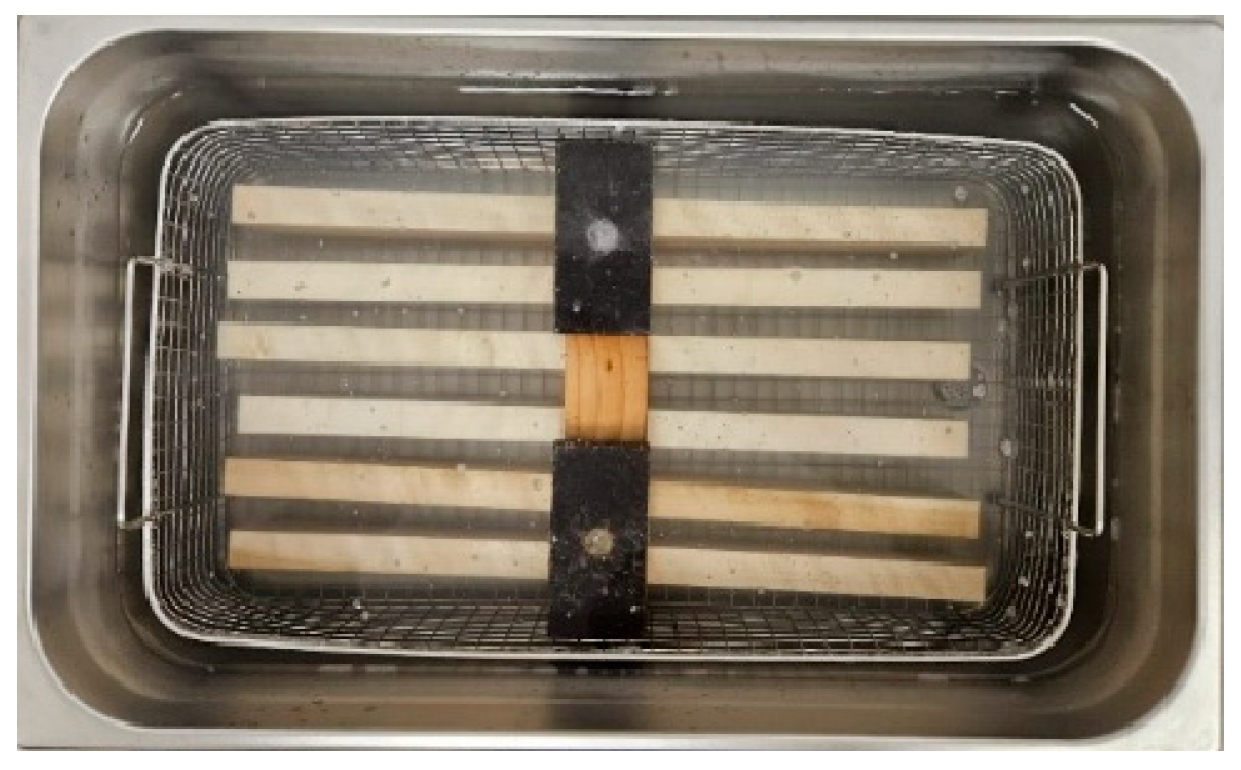
Physical pretreatments, such as ultrasonic (US) treatment have attracted attention as environmentally friendly methods for modifying wood structure and transport properties. US treatment in aqueous media has been shown to enhance permeability and moisture transport through pit disruption and formation of microchannels, thereby accelerating drying and improving fluid mobility [
15,
16,
17]. In the context of THM densification, such effects are relevant because uniform heat and moisture distribution are critical for effective viscoelastic softening and controlled deformation during compression [
6,
7,
8]. Previous studies have also suggested that US treatment may influence lignin structure and viscoelastic behavior, potentially lowering resistance to compression and contributing to more uniform deformation of the wood matrix [
17]. Moreover, a positive effect of ultrasonic pretreatment on the bending performance of densified wood has been reported [
18]. However, the extent to which these effects translate into measurable improvements in bending performance of densified wood remains insufficiently documented.
Thermal posttreatment (TM) is commonly applied after THM densification to stabilize compressed structure and reduce set-recovery and moisture sensitivity [
19]. From a mechanical perspective, TM treatment alters the chemical composition and viscoelastic behavior of wood, primarily through degradation of hemicelluloses and modification of lignin [
20]. These changes generally result in reduced bending strength and, to a lesser extent, stiffness, particularly at higher treatment intensities [
21,
22]. When combined with densification, TM may therefore modify the balance between density-induced mechanical gains and treatment-induced material degradation. The interaction between densification level and TM intensity; however, is not yet fully understood.
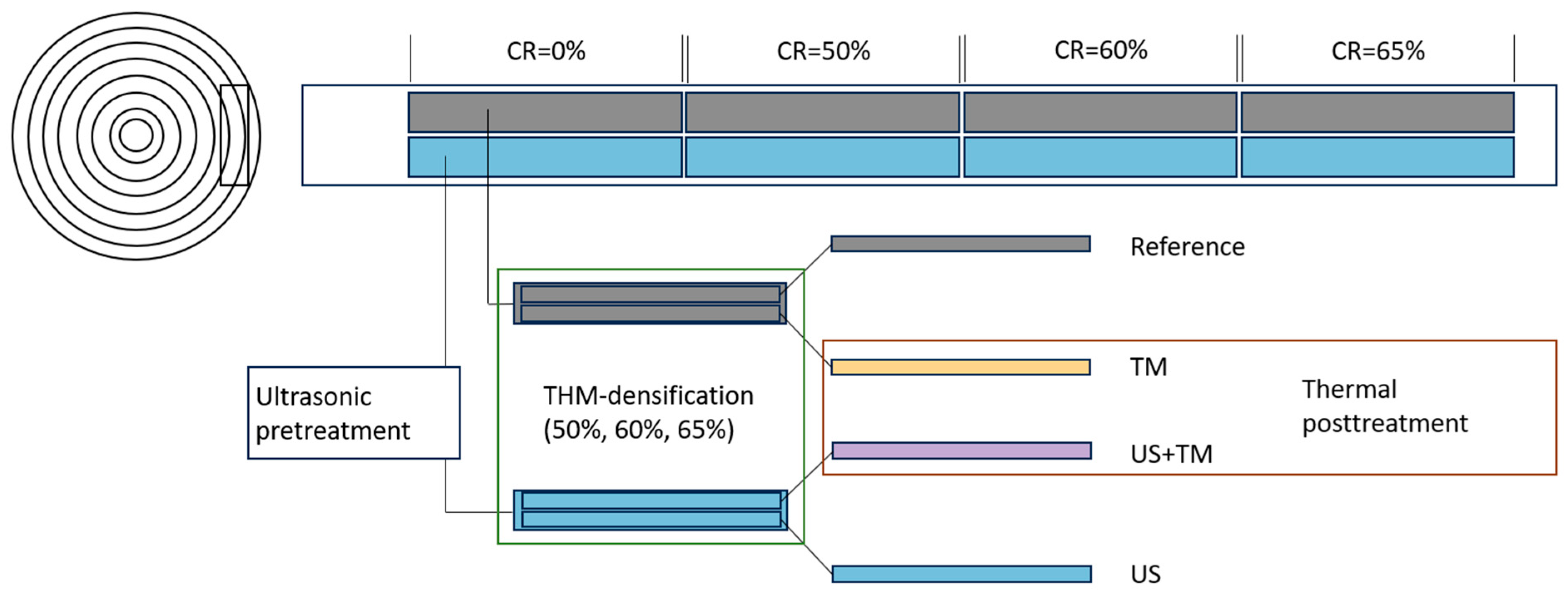
Accordingly, this study investigates performance of THM-densified poplar wood across multiple compression ratios (CR = 0%, 50%, 60%, and 65%), with particular emphasis on the effects of ultrasonic (US) pretreatment and thermal posttreatment (TM), applied individually and in combination. While the influence of densification and TM on mechanical properties has been previously reported, the compression-dependent interaction between densification and auxiliary treatments—particularly US—remains insufficiently understood. The novelty of this study lies in the systematic evaluation of US and TM across several compression levels under a unified THM schedule, enabling differentiation between density-driven mechanical gains and treatment-specific effects on bending strength (MOR) and stiffness (MOE).
3. Results
3.1. Compression Ratio
Based on post-densification measurements, the mean achieved compression ratios were 50.6%, 60.1%, and 65.8% for the nominal CR 50%, 60%, and 65% groups, respectively. The mean thickness immediately after densification decreased from approximately 20 mm in the non-densified specimens to about 9.9 mm (CR 50%), 8.0 mm (CR 60%), and 6.9 mm (CR 65%).
After conditioning at 20 ± 2 °C and 65 ± 5% relative humidity, a slight increase in thickness was observed for all densified groups, indicating partial set-recovery. The mean conditioned thicknesses were approximately 10.0 mm, 8.1 mm, and 7.1 mm for CR 50%, CR 60%, and CR 65%, respectively, while non-densified specimens retained a thickness close to the initial value.
3.2. Moisture Content and Density
Following two months of conditioning under identical conditions prior to mechanical testing, specimens exhibited different MC depending on the applied treatments (
Table 3). TM consistently resulted in lower MC values compared with non-thermally treated specimens within each compression-ratio group. In contrast, US alone did not result in a systematic change in MC across compression ratios.
Increasing compression ratio was associated with a general decrease in MC. For non-thermally treated specimens, MC ranged from approximately 11% in non-densified wood to about 8% at CR = 50% and 60%, and further to approximately 5% at CR = 65%. TM post-treated specimens exhibited even lower MC values, reaching below 3% at CR = 65%. These trends confirm the combined influence of densification and TM modification on hygroscopic behavior.
Density increased markedly with increasing compression ratio across all treatment groups. The mean density at testing conditions increased from approximately 450 kg·m
−3 in non-densified specimens to values approaching 800 kg·m
−3 at CR = 50% and exceeding 1100 kg·m
−3 at CR = 65% (
Table 3). This increase was observed consistently for all treatments, confirming compression ratio as the dominant factor governing density.
TM resulted in a reduction in density at both testing conditions and in the oven-dry state within each compression-ratio group, whereas US alone did not lead to systematic density changes relative to reference specimens. Oven-dry density exhibited a clear and nearly monotonic increase with compression ratio, accompanied by a reduction in relative variability. Treatment-related differences in oven-dry density were negligible at CR = 0% but became increasingly pronounced at higher compression ratios.
Inferential analysis using LMM confirmed that compression ratio had a highly significant effect on both density at testing conditions and oven-dry density. Treatment effects on density were statistically significant only in combination with densification, indicating that auxiliary treatments modulated density outcomes without overriding the dominant influence of compression ratio.
3.3. Bending Strength (MOR)
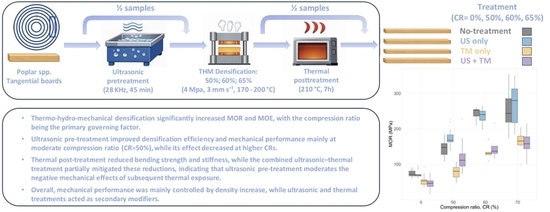
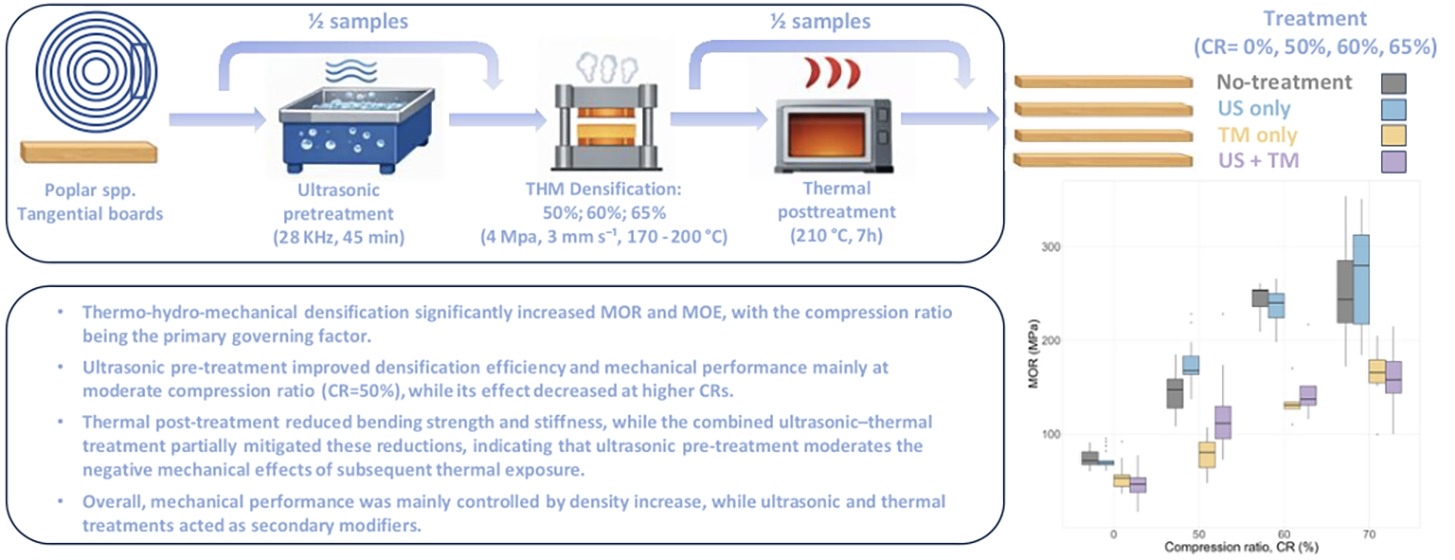
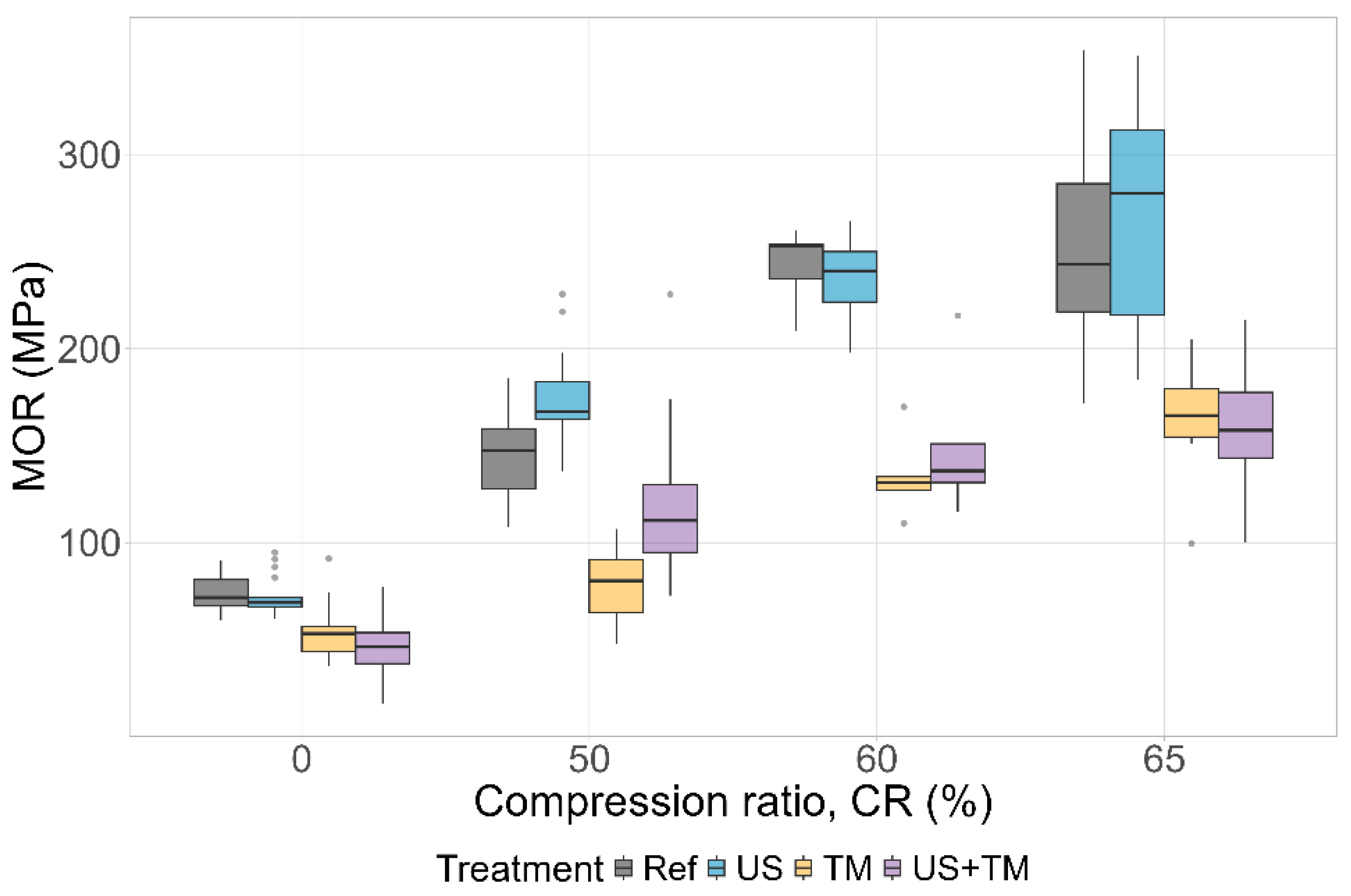
Bending strength increased markedly with increasing compression ratio for all treatment groups (
Table 3). Mean MOR values rose from approximately 70–75 MPa in non-densified specimens to values exceeding 250 MPa at the highest densification level, confirming the dominant influence of compression ratio on bending strength. This trend was observed consistently across all treatments, indicating that densification was the primary factor governing MOR (
Figure 4). Linear mixed-effects analysis confirmed a highly significant effect of compression ratio on MOR (
p < 0.001), as well as a highly significant CR × treatment interaction (
p < 0.001), indicating that treatment effects depended on the level of densification. Compared with non-densified specimens (CR = 0%), MOR increased by approximately 98% at CR = 50%, by about 226% at CR = 60%, and by roughly 242% at CR = 65%, demonstrating a strong but gradually diminishing incremental gain at higher compression levels.
Within individual compression-ratio groups, statistically significant differences among treatments were observed (
Table 3). At CR = 0%, no significant difference in MOR was detected between control specimens and US pretreated specimens, whereas TM post-treated specimens exhibited significantly lower MOR values compared with non-thermally treated groups. This indicates that US alone did not affect bending strength of non-densified wood, while TM reduced MOR even in the absence of densification.
For densified specimens, treatment effects were compression-dependent. At CR = 50%, US significantly increased MOR, whereas TM caused a pronounced reduction. The combined US and TM treatments resulted in intermediate MOR values. At CR = 60% and 65%, US did not result in significant differences relative to the reference group, while TM consistently reduced MOR. However, the reduced number of specimens at these compression ratios limited statistical power, and these results should therefore be interpreted cautiously.
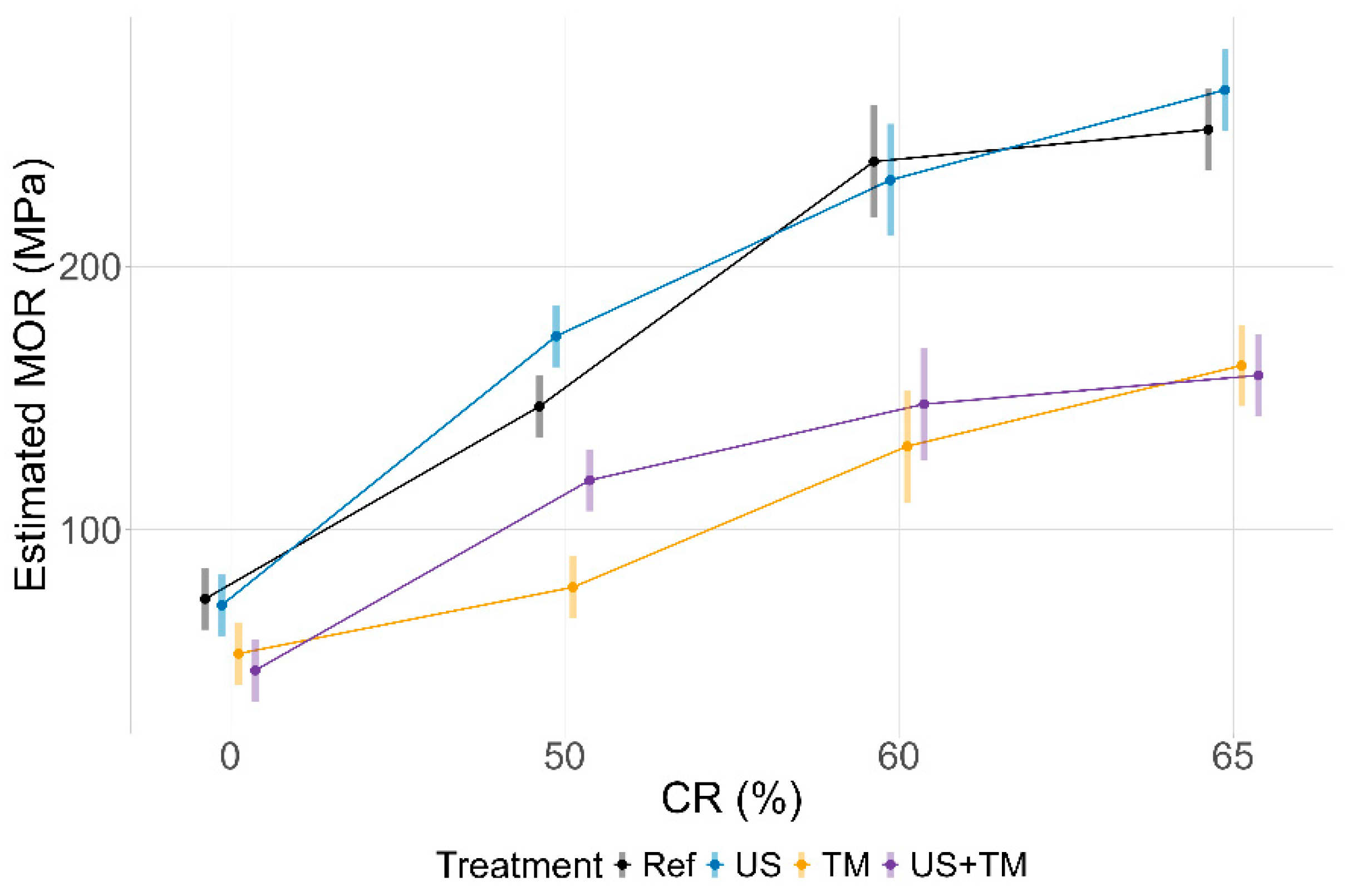
LMM confirmed that bending strength was significantly influenced by compression ratio and treatment, as well as by their interaction. The significant CR × treatment interaction indicates that the effect of US and TM treatments on MOR depended on the level of densification. Model-based EMM illustrates distinct MOR development trends for different treatments across the compression range (
Figure 5), with the strongest relative treatment effects observed at moderate densification.
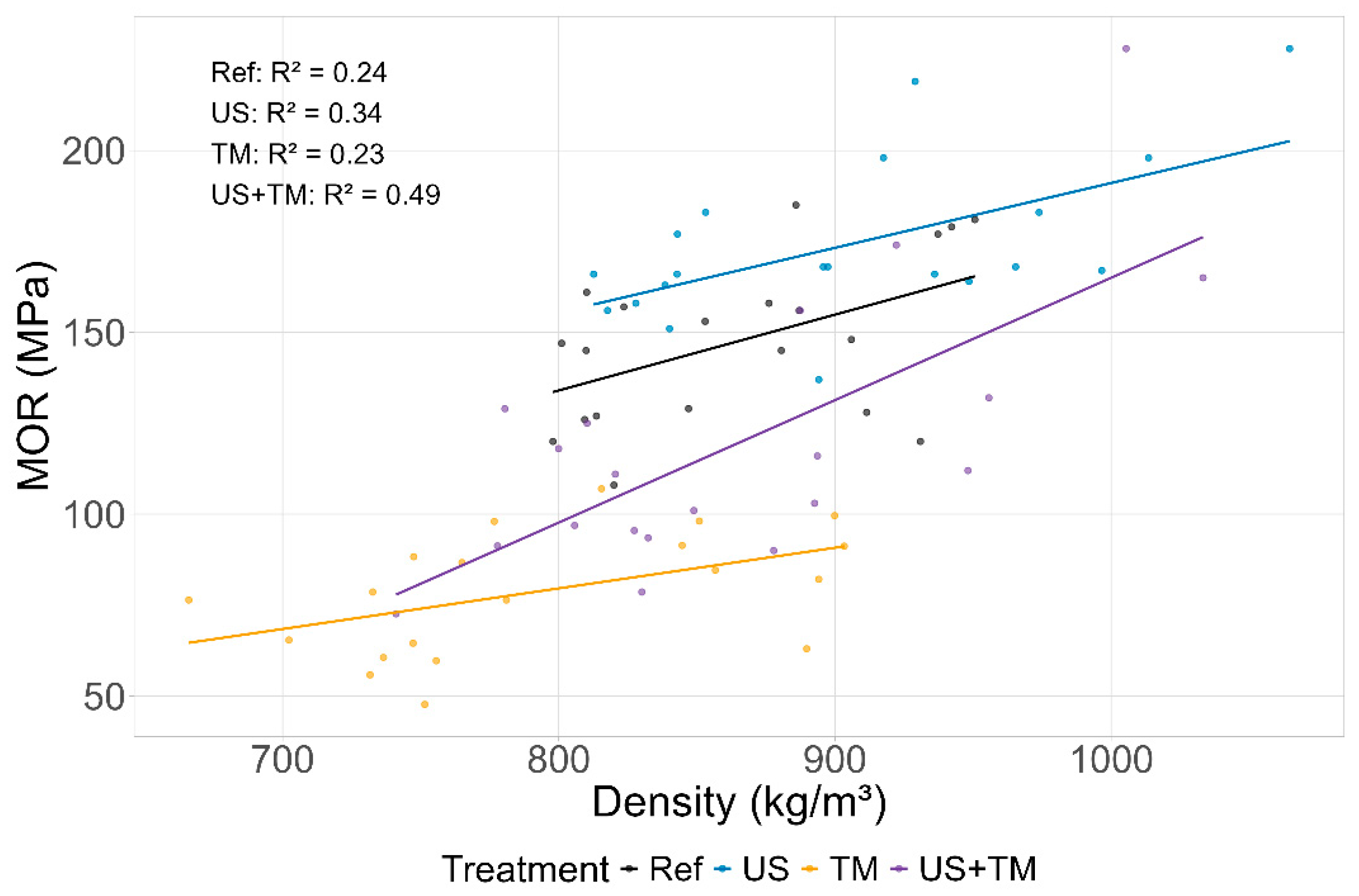
To evaluate whether observed treatment effects could be attributed solely to differences in density, a secondary analysis was conducted for specimens densified at CR = 50%, where sufficient density variability was present. As shown in
Figure 6, MOR increased with increasing density at testing conditions for all treatments, confirming density as a major determinant of bending strength. However, at comparable density levels, US pretreated specimens exhibited higher MOR values than reference specimens, while TM post-treated specimens consistently exhibited lower MOR values.
When density at testing conditions was included as a covariate in the LMM, density had a strong positive effect on MOR. Importantly, treatment remained a significant factor after density adjustment, and a significant interaction between density and treatment was detected. These results indicate that treatment-related differences in bending strength cannot be explained by density changes alone, and that US and TM treatments modify the relationship between density and MOR.
Overall, the MOR results demonstrate that while compression ratio governs the absolute strength level of THM-densified poplar, auxiliary treatments significantly influence strength development in a compression-dependent manner. US enhanced MOR at moderate densification levels, whereas TM consistently reduced bending strength across all compression ratios.
3.4. Modulus of Elasticity (MOE)
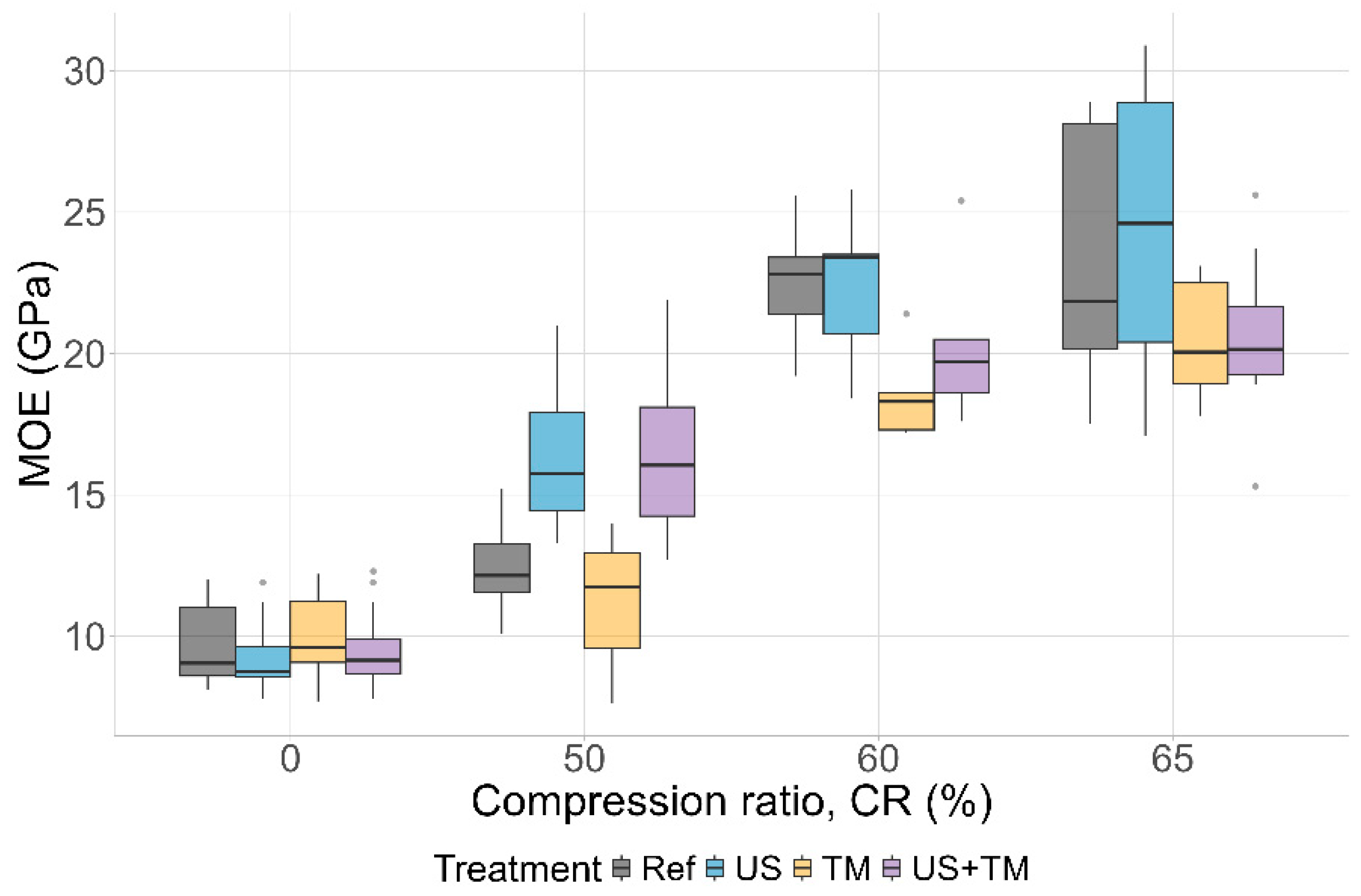
The modulus of elasticity increased systematically with increasing compression ratio for all treatment groups (
Table 3). Mean MOE values increased from approximately 9–10 GPa in non-densified specimens to values exceeding 22 GPa at the highest densification levels, confirming compression ratio as the dominant factor governing elastic stiffness. Compression ratio had a highly significant effect on MOE (
p < 0.001), while treatment and the CR × treatment interaction were also statistically significant (
p < 0.001). Relative to non-densified specimens, MOE increased by approximately 30% at CR = 50%, by about 133% at CR = 60%, and by roughly 143% at CR = 65%, confirming compression ratio as the dominant factor governing elastic stiffness. Compared with bending strength, MOE exhibited lower relative variability within compression-ratio groups, reflecting the more uniform response of elastic stiffness to densification.
Within individual compression-ratio groups, treatment-related differences in MOE were observed (
Figure 7), although these differences were generally less pronounced than those observed for MOR. At CR = 0%, no statistically significant differences in MOE were detected among treatment groups, indicating that neither US nor TM affected elastic stiffness of non-densified wood.
For densified specimens, treatment effects on MOE were compression-dependent. At CR = 50%, US significantly increased MOE, whereas TM significantly reduced stiffness, with the combined treatment resulting in intermediate values. At CR = 60%, no significant differences were detected between the reference, US, and combined treatments, while TM specimens exhibited lower MOE values. At CR = 65%, TM again resulted in significantly lower MOE values, whereas differences between reference and US treatments were not statistically significant.
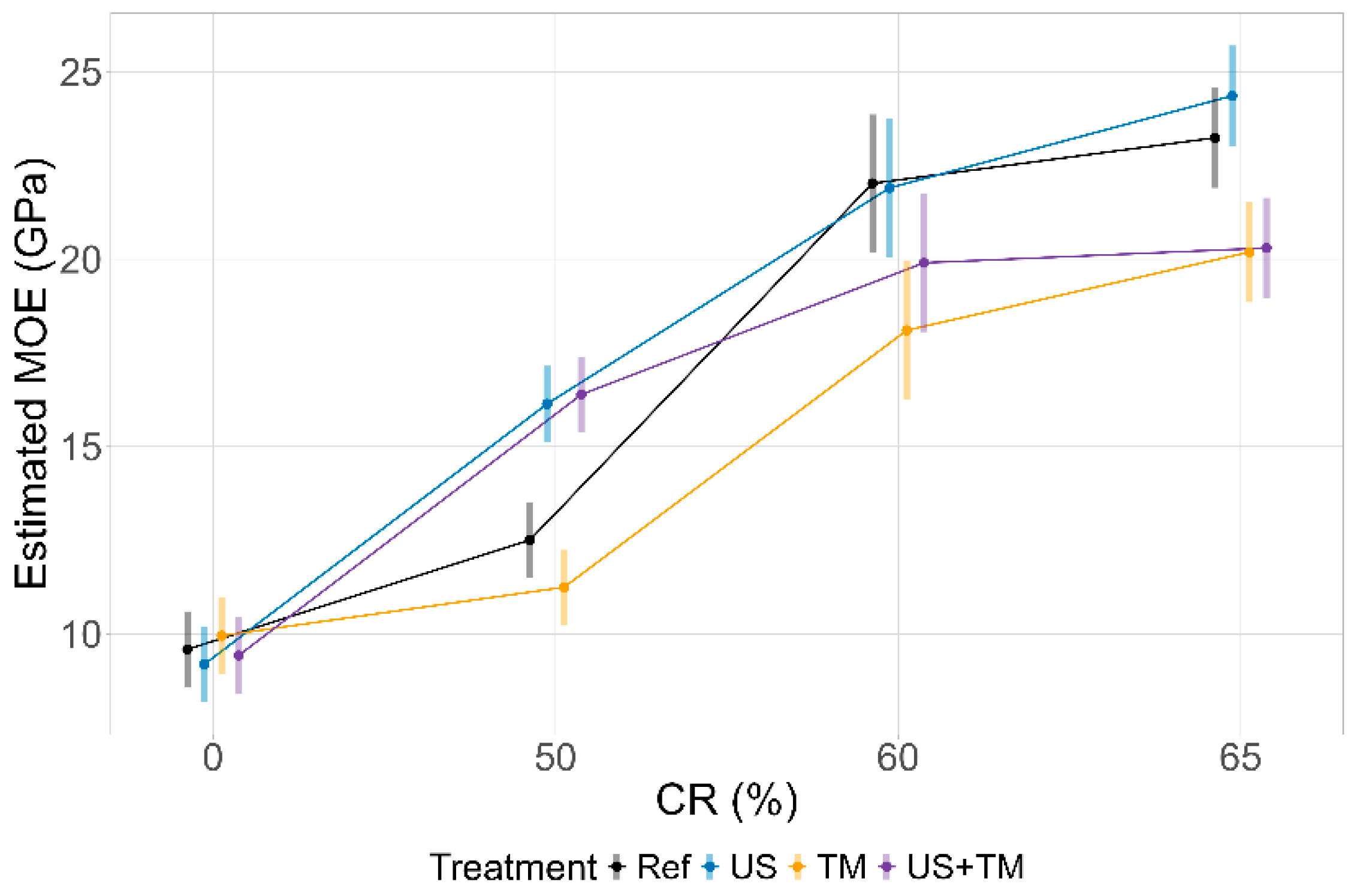
LMM confirmed that MOE was significantly influenced by compression ratio and treatment, as well as by their interaction. The significant CR × treatment interaction indicates that treatment effects on elastic stiffness depended on the level of densification. EMM derived from the LMM illustrates distinct stiffness development trends among treatments across the compression range (
Figure 8), with the most pronounced relative treatment effects occurring at moderate densification levels.
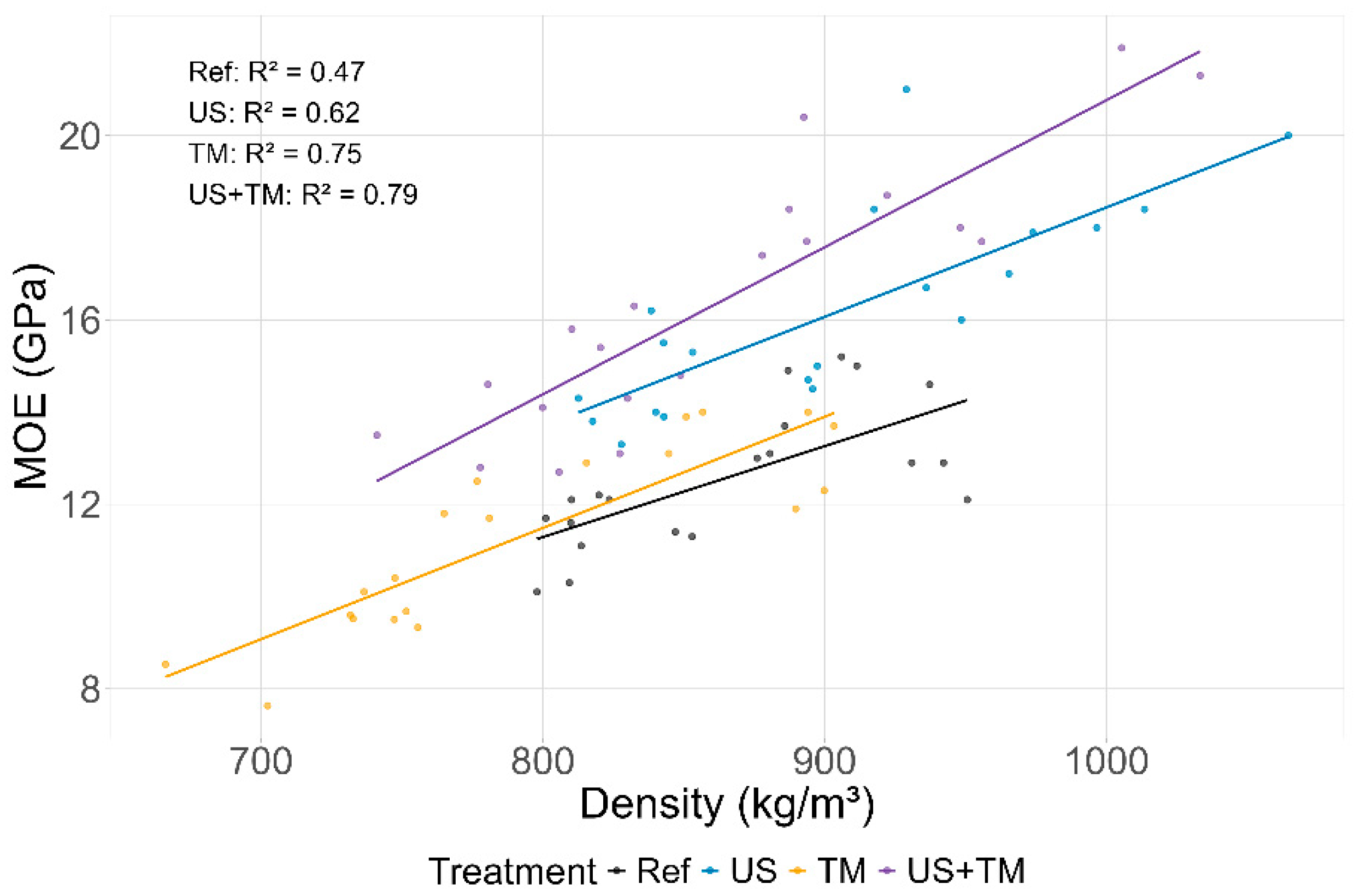
To assess the influence of density on elastic stiffness, a secondary analysis was conducted for specimens densified at CR = 50%. As shown in
Figure 9, MOE increased with increasing density at testing conditions for all treatments, confirming density as the primary determinant of elastic stiffness. Compared with MOR, the MOE–density relationship exhibited a clearer and less scattered trend.
When density at testing conditions was included as a covariate in the LMM, density had a strong positive effect on MOE. After density adjustment, treatment remained a significant factor, although its contribution was smaller than that of density. These results indicate that while MOE is predominantly controlled by density increase associated with densification, auxiliary treatments introduce secondary but statistically detectable modifications to stiffness development.
Overall, the MOE results demonstrate that elastic stiffness of THM-densified poplar wood is governed primarily by compression ratio and associated density increase, with US enhancing stiffness development at moderate compression levels and TM consistently reducing MOE across all compression ratios. Compared with bending strength, treatment-related effects on MOE were more modest, reflecting the fundamentally different mechanical nature of elastic stiffness.
4. Discussion
4.1. Effect of Compression Ratio on Bending Performance
The results clearly demonstrate that compression ratio is the dominant factor governing both bending strength (MOR) and elastic stiffness (MOE) of THM-densified poplar wood. Increasing compression ratio resulted in substantial and nearly monotonic increases in both properties, consistent with previous studies on densified hardwoods [
7,
9,
10]. This behavior reflects the increasing effective load-bearing fraction of the material due to lumen collapse and cell-wall compaction, leading to higher density and stiffness. To verify that these trends were not merely a consequence of treatment-induced differences in moisture content, exploratory LMM including moisture content as an additional covariate were evaluated. The analysis confirmed that the effects of compression ratio and treatment on both MOR and MOE remained statistically significant when moisture content was accounted for, indicating that the observed mechanical enhancements are primarily driven by densification-related structural modifications rather than moisture effects alone.
At higher compression ratios, however, the rate of mechanical improvement tended to diminish, suggesting a gradual approach toward structural saturation, where further densification yields smaller incremental gains. Similar trends have been reported for poplar and other low-density species, where excessive compression may introduce localized damage or non-uniform density profiles that limit further improvements in mechanical performance [
13,
14].
4.2. Effect of Ultrasonic Pretreatment on Bending Performance
US did not significantly affect bending properties of non-densified poplar wood, indicating that US alone is insufficient to enhance MOR or MOE under the applied conditions. In contrast, US significantly enhanced bending strength and stiffness after THM densification, as reported in [
18], particularly at a moderate compression ratio (CR = 50%). Importantly, density-adjusted analyses confirmed that these improvements persisted at comparable density levels, indicating that the observed effects cannot be explained by density differences alone.
These findings suggest that US influences the densification process itself rather than directly strengthening the wood material. Previous studies have shown that US treatment can increase wood permeability and moisture mobility through pit disruption and microchannel formation [
15,
17], which may promote more uniform heat and moisture distribution during THM processing. More specifically, ultrasonic waves in an aqueous medium induce cavitation, a phenomenon where the implosive collapse of micro-bubbles generates localized shockwaves and micro-jets [
15]. These mechanical stresses can lead to physical damage on wood surfaces, pit membrane disruption, and the formation of microchannels [
32]. Scanning electron microscopy has confirmed that ultrasonic treatment can damage the thin-walled tissues of wood cells and open internal pores, significantly enhancing fluid migration [
18]. Such modification of the cellular structure increases the transverse permeability of wood, as demonstrated in studies on Douglas-fir, where multiple increases in permeability coefficients were observed with extended ultrasonic treatment times [
17]. Some authors suggest that lateral chains of lignin are removed, indicating the physico-chemical effects of ultrasound and cavitation at the cellular level [
33].
Improved permeability and more homogeneous moisture distribution are critical for controlled viscoelastic softening and uniform cell-wall deformation during THM processing [
6,
8,
34]. While microstructural or chemical characterization was beyond the scope of the present study, the compression-dependent nature of the observed effects supports the interpretation that US enhances the efficiency of densification rather than altering intrinsic material properties.
At higher compression ratios (CR = 60% and 65%), the beneficial influence of US became less pronounced. This trend likely reflects the increasing dominance of density and extensive cell-wall compaction in controlling the mechanical response at high densification levels, thereby reducing the relative contribution of auxiliary treatments.
4.3. Effect of Thermal Posttreatment on Bending Performance
TM consistently reduced bending strength and, to a lesser extent, bending stiffness across all compression ratios. These reductions remained after adjusting for density differences, indicating that TM modification reduces the mechanical performance of densified wood beyond mass loss or density reduction alone. Similar strength losses after TM treatment are widely reported and are commonly attributed to degradation of hemicelluloses and associated changes in the load-bearing capacity of the wood cell wall [
20,
21,
35]. This degradation is a key factor, as hemicelluloses are the least thermally stable wood component, breaking down at temperatures above 150 °C and leading to a significant reduction in strength [
8]. Studies have correlated these losses in bending properties specifically to the degradation of hemicelluloses, while the modulus of elasticity losses is often linked to cellulose decomposition, particularly at higher treatment severities [
9]. While lignin is generally more resistant to thermal degradation compared to hemicelluloses, heat treatment can still induce significant changes in its structure [
36]. This chemical alteration contributes to a shift in the mode of failure, with heat-treated wood often exhibiting a more brittle response in mechanical tests [
8].
The reduction in mechanical properties observed in this study is not solely due to mass loss or density reduction but rather reflects a fundamental alteration of the cell wall matrix, making the wood more fragile [
37].
The lower MC observed in TM treated specimens indicates reduced hygroscopicity, consistent with previous studies reporting reduced hygroscopicity after TM [
20,
38]. From an application perspective, this represents a trade-off between improved dimensional stability and reduced mechanical performance, which is consistent with mechanisms described for heat/steam-treated lignocellulosic materials [
39]. The present results indicate that this trade-off persists even in highly densified wood, underscoring the importance of carefully balancing densification and TM treatment intensity depending on the intended end use.
4.4. Density- and Treatment-Specific Contributions to Bending Performance
The joint interpretation of MOR and MOE highlights important differences in the sensitivity of strength and stiffness to treatment-induced modifications. While both properties increased strongly with density, MOR exhibited greater relative sensitivity to auxiliary treatments than MOE. This distinction reflects the fundamentally different mechanical nature of the two properties: MOE primarily reflects the elastic response governed by the continuity and stiffness of the compacted cell-wall network, whereas MOR is controlled by damage initiation and propagation processes that are more sensitive to treatment-induced changes in cell-wall chemistry and microstructure [
9,
40].
The density-adjusted analyses provide important evidence that mechanical performance of densified wood cannot be fully explained by density differences alone. Instead, auxiliary treatments modify the efficiency with which density is translated into mechanical performance, particularly for bending strength at moderate compression ratios.
4.5. Limitations and Practical Implications
The reduced number of specimens at higher compression ratios (CR = 60% and CR = 65%) limited the statistical power for detecting treatment effects, at, and these results should therefore be interpreted cautiously. In addition, the US applied in this study was conducted under laboratory conditions using batch processing, which may pose challenges for industrial-scale implementation. From an industrial perspective, THM densification is technically feasible, but achieving uniform densification and limiting material loss at higher compression ratios remain key challenges. Large-scale implementation would require balancing mechanical gains with process efficiency and the trade-off introduced by thermal posttreatment.
Despite these limitations, the results provide valuable insights into the compression-dependent role of auxiliary treatments in THM densification. The pronounced benefits of US at moderate densification levels suggest a potential pathway for improving the mechanical efficiency of densification processes without increasing compression severity. Conversely, the consistent strength reduction after TM highlights the need for application-specific optimization when combining densification with stabilization-oriented thermal modification.
5. Conclusions
Thermo-hydro-mechanical (THM) densification substantially improved the bending performance of poplar wood, with compression ratio (CR) identified as the dominant factor controlling both modulus of rupture (MOR) and modulus of elasticity (MOE). Increasing CR resulted in pronounced and almost steady increases in strength and stiffness, confirming the effectiveness of densification as a strategy for upgrading low-density, fast-growing hardwoods. Densification led to substantial mechanical enhancement, with MOR increasing by approximately 98% at CR = 50%, 226% at CR = 60%, and 242% at CR = 65%, while MOE increased by about 30%, 133%, and 143%, respectively, compared with non-densified specimens.
US did not affect bending properties of non-densified wood but significantly enhanced MOR and MOE after densification, particularly at CR = 50%, where MOR increased by approximately 18% and MOE by about 29% relative to the corresponding reference group. Importantly, these improvements remained evident after adjusting for density, indicating that US improved the densification effect on strength and stiffness rather than just increasing density.
TM consistently reduced bending strength and, to a lesser extent, bending stiffness across all compression ratios. These reductions remained after adjusting for density, demonstrating that thermal modification alters the mechanical potential of densified wood despite its beneficial effect on reducing equilibrium moisture content. The combined US and TM treatment resulted in intermediate mechanical performance, suggesting that US can partly offset the strength loss caused by TM treatment.
Overall, the bending performance of THM-densified poplar wood is controlled not only by compression ratio and density but also by the interaction between densification and auxiliary treatments. US offers a promising route for improving densification efficiency at moderate compression levels, whereas TM creates a trade-off between mechanical performance and moisture-related stability. Higher compression ratios (CR = 60%–65%) provide the greatest absolute increases in strength and stiffness but are associated with greater material compaction and yield loss. Consequently, the optimal treatment strategy depends on balancing maximum mechanical performance with material efficiency and application-specific requirements.