Article

Can Forest Restoration Enhance the Water Supply to Respond to Climate Change?—The Case of North Korea


1
College of General Education, Kookmin University, 77 Jeongneungro, Seongbukgu, Seoul 02707, Korea
2
Future Korea Institute, Kookmin University, 77 Jeongneungro, Seongbukgu, Seoul 02707, Korea
*
Author to whom correspondence should be addressed.
Forests 2022, 13(10), 1533; https://doi.org/10.3390/f13101533
Submission received: 24 July 2022 / Revised: 23 August 2022 / Accepted: 16 September 2022 / Published: 20 September 2022
(This article belongs to the Special Issue Material Cycle of Forest Ecosystems)

Abstract

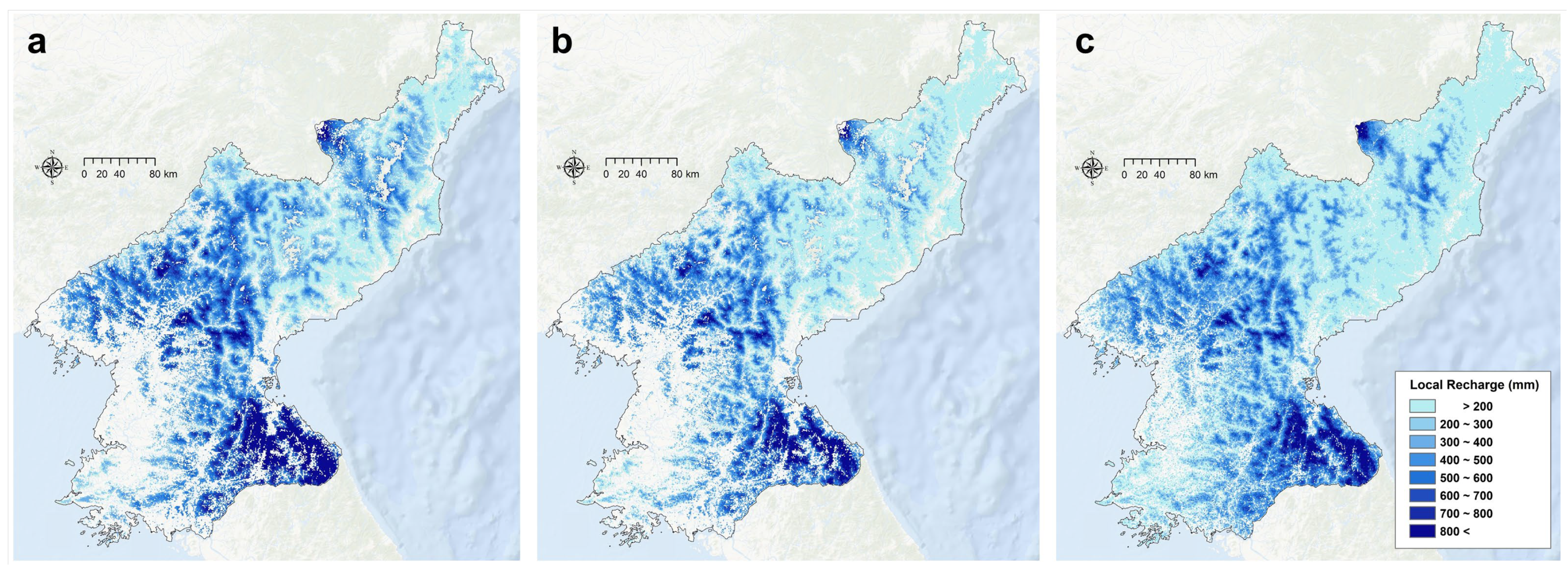
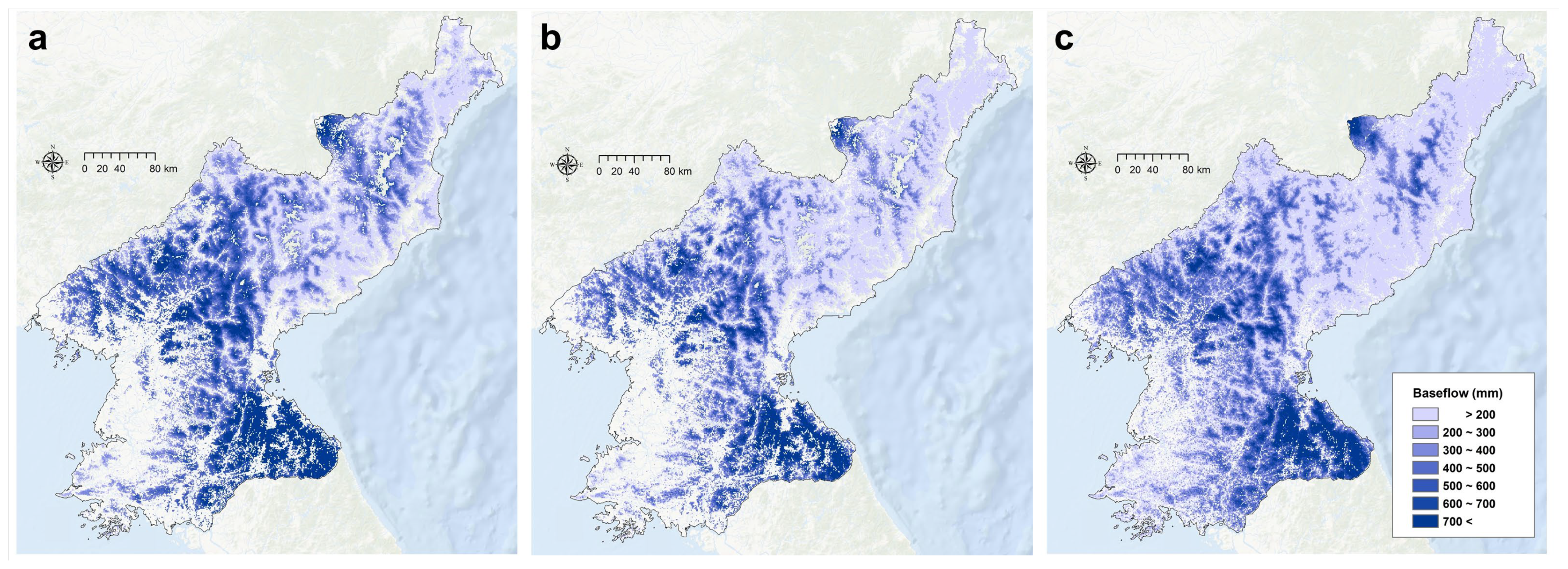
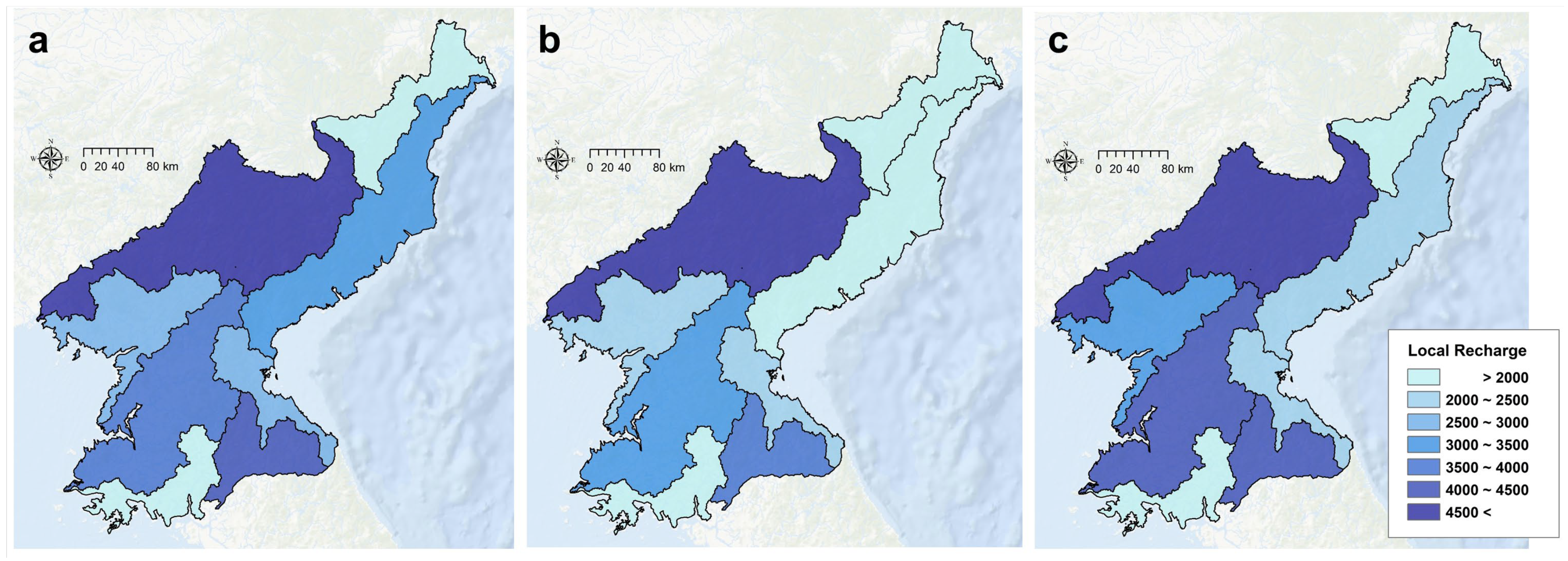
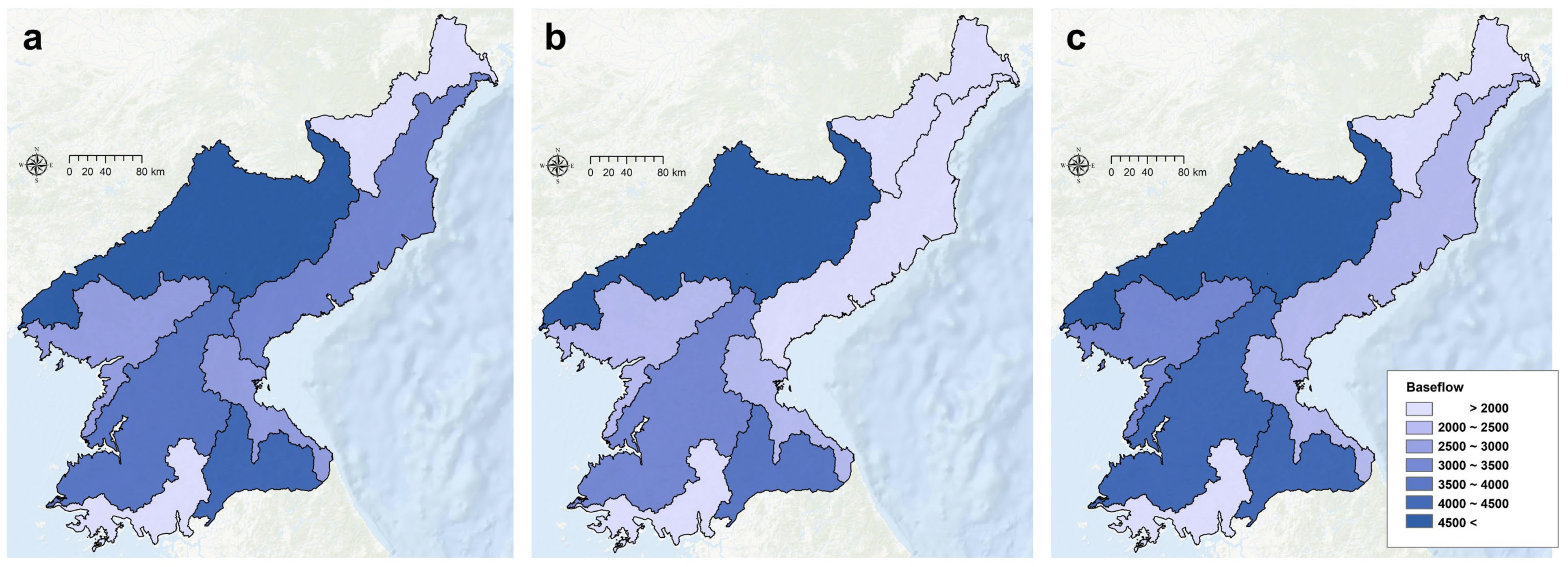
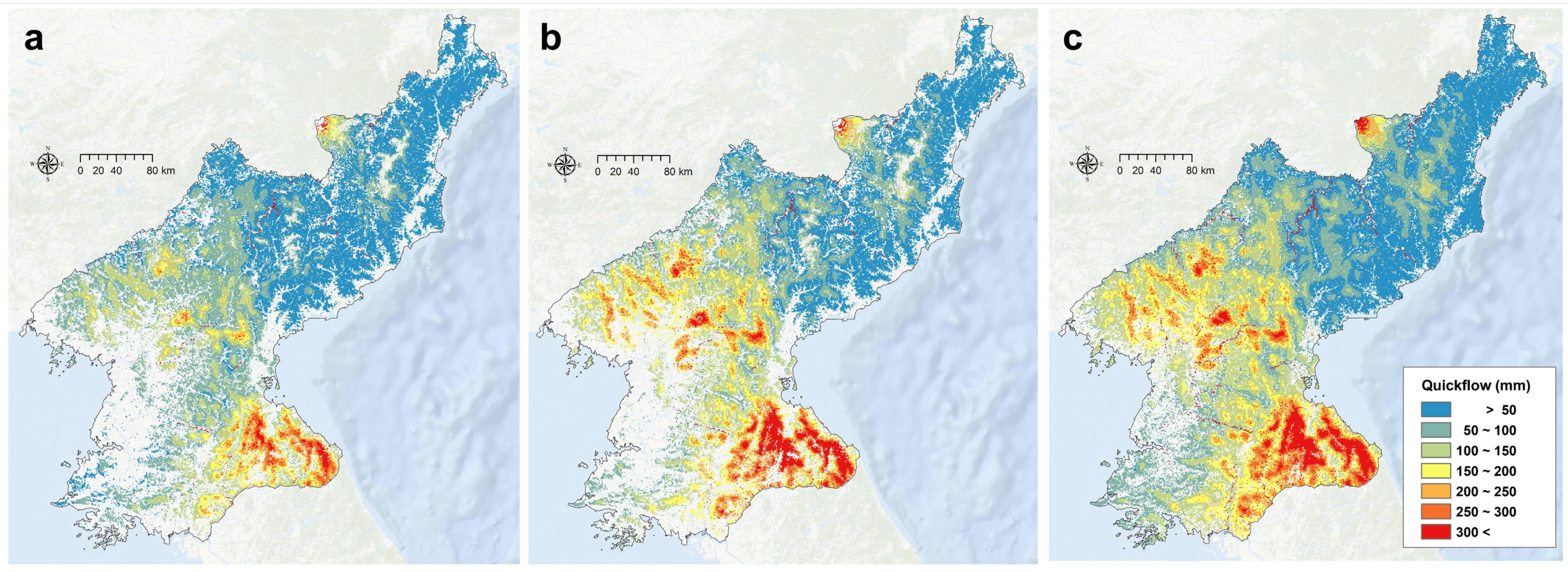
North Korea is a representative country that should restore its forest ecosystem, which is vital for responding to climate change. In this study, we assessed the extent to which afforestation can reduce the climate change impact on water resources by adding an afforestation scenario to the variables used to estimate the forest water yield. We applied the InVEST seasonal water yield model and constructed a data ensemble of the SSP5–8.5 scenario for this simulation. In the projection of future forest water supply according to the SSP5–8.5 scenario, baseflow and local recharge decreased by approximately 25%, and quickflow increased by approximately 47%, compared to the baseline period. Under the three reforestation scenarios, the future water supply from the forests showed significant positive changes. The baseflow increased by approximately 4%, 15%, and 28% in the reforestation scenario of Level 1, Level 2, and Level 3, respectively. In a Level 3 scenario, most of the baseflow and local recharge, which had decreased owing to the impact of climate change, was recovered. The baseflow in Level 3 was 26,882 million m3 y−1, which was approximately 98% of that in the baseline period. The Taedong River and Chongchon River, which are the major granary areas in North Korea, were directly affected by the climate change. However, it was confirmed that the water supply in these areas can be increased through forest restoration. These results indicate the deterministic role of forest restoration in increasing the water supply.
Keywords: forest water supply; North Korea; afforestation; climate change; InVEST seasonal water yield forest water supply; North Korea; afforestation; climate change; InVEST seasonal water yield