


Abstract
After large-scale disasters, swift and robust humanitarian logistics are crucial to provide timely assistance to injured people and displaced individuals. This study proposes a bi-objective optimization model for humanitarian logistics network design to simultaneously consider the facility location-allocation decisions, along with the transportation operation issues under uncertainty. The framework addresses the needs of both severely and mildly injured casualties and homeless populations. A hybrid robust optimization approach is accordingly developed that incorporates scenario-based, box-type, and polyhedral uncertainty representations to handle the uncertainty of factors such as casualty volume, travel times, facility failures, and demands for resources. More recently, machine learning methods have been applied to classify casualties and displaced individuals with respect to their geographic distribution and severity, further improving demand estimates and operational efficacy. This study seeks to develop a data-driven and robust optimization framework for designing humanitarian logistics networks under uncertainty, enabling decision-makers and emergency planners to gain insights into enhancing casualty evacuation, medical treatment, and shelter allocation in disaster response operations. The case of the Kermanshah earthquake in Iran is used for assessing the applicability of the model. The computational experiments and comparative analyses conducted show that the developed model exhibits high efficiency and robustness. The results are useful for guiding disaster preparedness and strategic decisions in humanitarian logistics. Besides operational performance, the model optimizes sustainability in the area of emergency response based on cost efficiency and social fairness, as underlined by SDGs 3 and 11.
1. Introduction
The growing occurrence and intensity of disasters caused by nature or human activity—ranging from earthquakes and floods to armed conflicts—have placed immense pressure on humanitarian logistics systems [1]. Disasters not only result in human casualties but also leave large numbers of individuals homeless and in urgent need of shelter, food, and medical care [2]. For instance, recent large-scale disasters have highlighted the challenges of providing coordinated relief to both the injured and displaced populations, particularly under conditions of infrastructure disruption and high uncertainty [3]. Traditional logistics planning approaches often fall short in such unpredictable environments [4]. In such scenarios, the design of an efficient and resilient humanitarian logistics network becomes essential [5].
This includes the strategic location of emergency facilities, effective allocation and transportation of medical supplies, and the evacuation and accommodation of both casualties (light and severe) and homeless individuals. However, several sources of uncertainty—including the number of casualties and homeless people, demand, transportation delays, and the potential disruption of critical facilities—complicate this task. Also, the probability of facility disruptions, which are common in disaster environments [6], is considered since it has a significant impact on network functionality and resource accessibility [7]. Each of these parameters has a different sort of uncertainty, so a specific approach should be applied to deal with each of them.
The injury severity score (IJS) system [8] is utilized to assess the casualties and categorize them as either severe or light casualties, each of whom has different ways of transportation and medical treatment. In addition to injured populations, the model incorporates homeless individuals who require immediate access to temporary shelters. Moreover, warehouses are located and used to store and distribute medical products to clinics.
To address these challenges, this study presents a bi-objective model for humanitarian logistics management. The model integrates location-allocation and transportation planning and aims to minimize both the total operational cost and the medical risk due to the delays in treatment. To handle the wide range of uncertainties, the model employs a hybrid robust optimization framework, including SCB, box, and polyhedral uncertainty set methods. These allow decision-makers to assess trade-offs between robustness and solution conservatism across different planning conditions [9].
1.1. Dealing with Uncertainties
Since historical data are not available, it is impractical to estimate probability distributions for uncertain parameters. Therefore, instead of stochastic programming, robust optimization is used to handle parameter uncertainty. Robust optimization uses an uncertainty budget as a control over the level of conservatism in solutions.
Since decisions made in humanitarian logistics directly affect human lives, the decision-maker must consider worst-case scenarios [10]. Therefore, robust optimization with a box uncertainty set is applied to manage uncertainties in casualty and homeless numbers and transportation times, which will make certain that the logistical plans are reliable and resilient under extreme conditions.
Demand uncertainty is handled in a different way. The medical demand relies on the uncertain number of casualties and the capacity of clinics. In addition, many real disaster scenarios usually involve a scarcity of medical supplies, such that some resources need to be shared or dosages reduced for temporary treatment. A robust optimization model based on polyhedral uncertainty sets is used in order to capture such flexibility while avoiding over-conservatism.
Unlike the box method, this approach allows decision-makers to adjust the level of conservatism according to situational needs, offering greater flexibility and potentially higher or lower conservatism than the box approach [11].
1.2. Questions This Study Seeks to Answer
Despite the volume of research on humanitarian logistics, several crucial gaps persist. For instance, many studies have independently addressed facility location, casualty evacuation, or relief distribution without taking real response to disasters into consideration. Again, since post-disaster environments naturally involve uncertainty, most models still depend on using a single approach to handle uncertainty, which seriously restricts flexibility when different parameters manifest fundamentally different uncertainty structures. Thirdly, facility disruptions, especially the failure of clinics, are often ignored or handled simplistically, distorting the realism of the proposed solution.
Meanwhile, recent advances in machine learning have also held promise for enhancing demand estimation and prioritization in humanitarian operations. However, the integration of data-driven learning techniques with robust optimization models has been limited so far, especially in comprehensive network design problems that simultaneously consider casualties with different injury severities and homeless populations.
The study addresses key questions, including:
- Determining optimal locations for emergency facilities and the efficient way of allocating medical products.
- Analyzing how casualty deterioration and injury severity influence transportation and medical care strategies.
- Evaluating the role of integrating ML with an optimization model in humanitarian logistics.
- Addressing various types of uncertainty by using proper hybrid methods.
This research proposes a bi-objective humanitarian logistics network design model that jointly optimizes facility location-allocation, casualty evacuation, and medical supply distribution under multiple sources of uncertainty. A hybrid robust optimization framework is developed that combines scenario-based, box-type, and polyhedral uncertainty sets to appropriately model different uncertain parameters. This research also embraces machine learning-based clustering to enhance demand estimation and spatial decision-making. Additionally, besides solving humanitarian logistics challenges, this research contributes to global sustainability efforts through alignment across several United Nations Sustainable SDGs. Notably, it supports SDG 3 (Good Health and Well-being) through minimized medical risks and improved casualty treatment, and SDG 11 (Sustainable Cities and Communities) through added city disaster response infrastructure resilience.
The remainder of this paper is structured as follows. Section 2 presents a comprehensive review of the related literature in humanitarian logistics under uncertainty. Section 3 introduces the problem definition and model. Section 4 describes the proposed methodology. Section 5 discusses the computational results. Section 6 provides the conclusion of the paper.
2. Literature Review
The design of humanitarian logistics networks has attracted significant attention due to its critical role in disaster response [12]. Facility placement, casualty evacuation, resource assignment, and the distribution of medical and relief supplies are the most critical issues. In the early stages of this field, many studies adopted deterministic models (e.g., [13,14,15,16]), which provided foundational insights but lacked the flexibility to address real-world uncertainty.
To overcome these limitations, researchers have increasingly adopted uncertainty-aware approaches. Stochastic programming has been widely used to handle uncertainties. Jamali et al. [17] introduced a stochastic multi-objective model for sustainable humanitarian logistics using an improved multi-choice goal programming method, and showed trade-offs among economic, social, and environmental objectives. Nezhadroshan et al. [18] proposed a SCB possibilistic-stochastic programming approach for designing a resilient humanitarian logistics network, addressing both operational and disruption uncertainties. A real case study validated the model, emphasizing the importance of route availability and facility resilience after disasters. Jin et al. [19] proposed a multistage stochastic programming model for planning drone-supported last-mile humanitarian logistics, addressing uncertainty across pre- and post-disaster phases. Benders decomposition was used to solve the model efficiently, outperforming standard solvers in an earthquake case study. Huang et al. [20] introduced a bi-objective two-stage stochastic programming model to balance efficiency and equity in emergency supply allocation under demand uncertainty. Using a Gini-based equity index and an accelerated branch-and-cut L-shaped algorithm, the model improved both computational performance and distribution fairness.
On the other hand, the reliance on probabilistic distributions limits stochastic programming in data-scarce disaster settings. As a result, robust optimization has gained attraction as a more practical alternative. Stienen et al. [21] applied robust optimization to determine the most efficient depot placements for organizations involved in humanitarian logistics, minimizing transportation costs and response time under disaster uncertainty. Using the UNHRD case, the results highlighted the value of robust solutions in reducing cost variability in worst-case situations. Faiz et al. [22] proposed a two-stage robust optimization for post-disaster two-echelon routing using trucks under demand uncertainty. A column-and-constraint generation approach was developed to determine robust delivery routes, validated through a Hurricane Maria-inspired case study. Li et al. [23] proposed a two-stage robust model for critical care service facility placement under demand uncertainty, incorporating cost, deprivation, and environmental impact. A column-and-constraint generation algorithm was used to solve the model, validated through a COVID-19 case in Wuhan. Chen [24] developed a robust multi-period relief supplies distribution model that incorporates transportation delays, donation uncertainty, and both vertical and horizontal fairness. Using a Wenchuan earthquake case, the model demonstrated improved reliability and equitable distribution outcomes.
Another important dimension in humanitarian logistics is facility disruption modeling, which reflects the vulnerability of infrastructure in disaster zones. While many models assume full facility operability [6], others incorporate facility failure scenarios to improve realism (e.g., [7,25,26,27]). Nevertheless, this area remains underexplored, especially in conjunction with integrated logistics operations involving shelters and warehouses.
ML techniques have recently emerged as powerful tools for supporting data-driven logistics decisions. Shakibaei et al. [28] investigated a bi-objective humanitarian supply chain model integrating ML for patient prioritization and multi-criteria decision-making for area risk assessment. A Tehran case study demonstrated the model’s effectiveness in minimizing human and financial losses. Soykan and Rabadi [29] proposed a deep reinforcement learning approach to solve the multi-commodity network flow problem in humanitarian logistics. Their method was enhanced by digital twins, and the results showed a better performance in relation to traditional methods under dynamic and uncertain conditions. Taouktsis and Zikopoulos [30] developed a decision-making tool based on a combination of heuristic algorithms with supervised deep learning for selecting distribution center locations in humanitarian logistics.
A summary of the literature is provided in Table 1. The contributions of this study to the literature are mentioned below:
Table 1.
A summary of literature review.
- Addressing a bi-objective location-allocation and transportation problem by considering medical facilities, shelters for homeless individuals, and supply distribution from warehouses.
- Applying a hybrid robust optimization approach using SCB, box, and polyhedral uncertainty sets to manage different types of uncertainties.
- Utilizing ML to cluster casualties and homeless populations based on location and condition.
- Considering facility disruption and its effects on logistics performance.
The review of studies evidences a clear trend of increasing applications of robust and stochastic optimization in humanitarian logistics problems, while machine learning enters into the field for data-driven decisions. Unfortunately, most of the existing works focus on limited population groups, single uncertainty representations, or partial logistics functions. This study bridges these gaps in the literature by integrating a bi-objective location-allocation and transportation model with hybrid robust optimization and machine learning, with explicit consideration of facility disruption and multiple affected populations.
3. Problem Definition
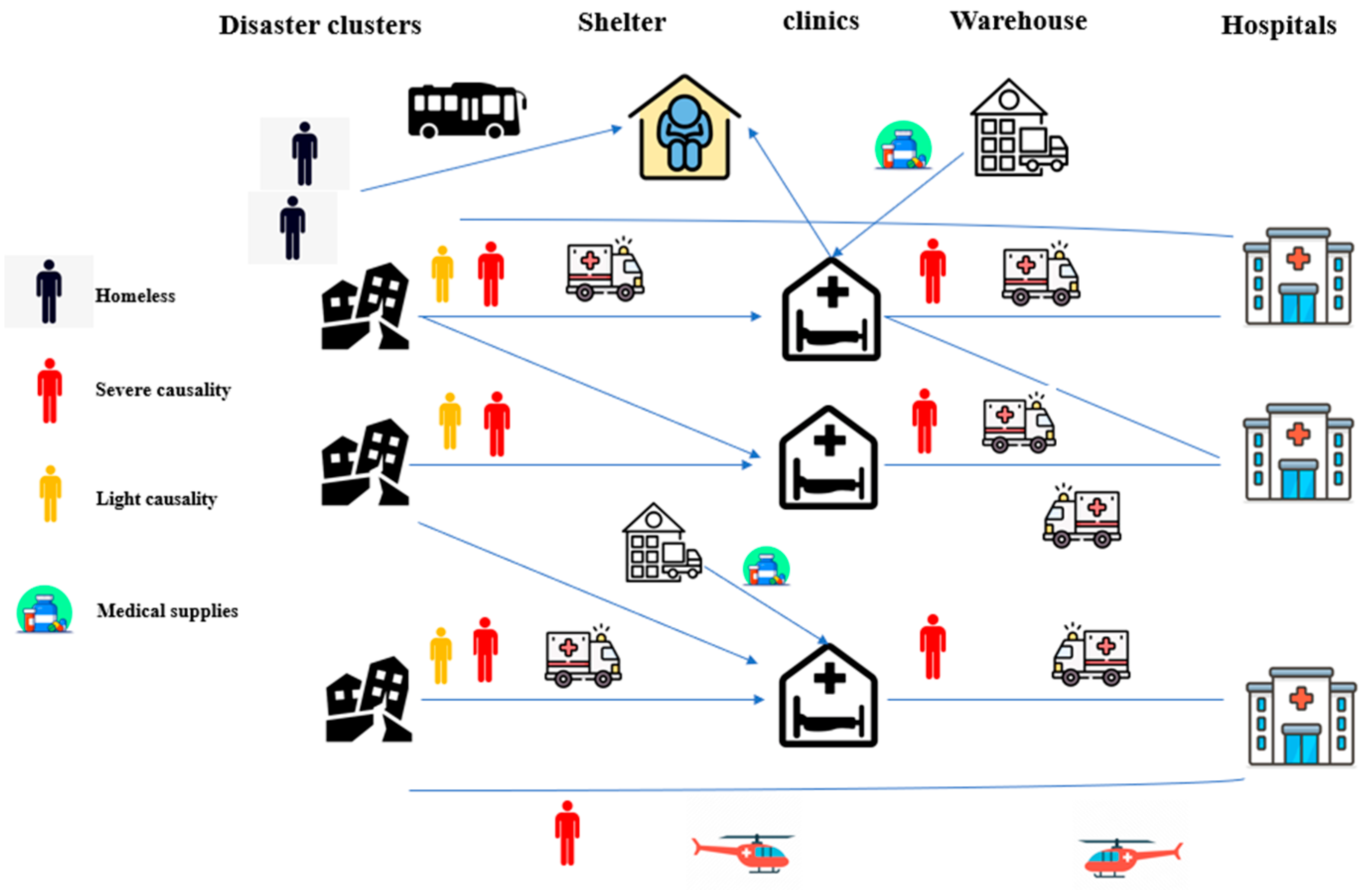
This study investigates the design of a comprehensive humanitarian logistics network in the aftermath of a disaster, aiming to ensure timely medical services and shelter provision to affected populations while minimizing total costs and medical risks. The population in need of assistance is classified into three categories: severely injured casualties, lightly injured casualties, and homeless individuals. The proposed logistics network comprises hospitals, temporary clinics, shelters, and warehouses. Medical products are supplied from warehouses to clinics, while casualties and homeless individuals are transported from affected areas to the appropriate facilities. Seriously injured casualties need more treatment supplies than the others, and there are two ways for them to access treatment services, including being transported by helicopter directly to hospitals and transferred to clinics by vehicles, then to hospitals. Furthermore, lightly injured casualties were first transferred to clinics to receive medical services, and then moved to shelters.
The core of the model is a bi-objective mathematical formulation that jointly optimizes two objectives. The first objective is to minimize the total health risk, which accounts for injury severity, deterioration rates due to delays in treatment, and penalties associated with untransported individuals. The other one seeks to minimize the total cost, including facility establishment, transportation, procurement of medical supplies, and penalties for unmet demand.
Uncertainty is a critical aspect of disaster logistics and is incorporated into the model through multiple robust optimization frameworks. SCB robust optimization is used to manage facility disruption and disaster intensity uncertainties. Additionally, box-based robust optimization is employed for uncertain parameters with known bounds, such as travel times and casualty numbers. To address uncertain medical demand—where overly conservative assumptions may reduce efficiency—the model uses a polyhedral uncertainty set, which allows flexible control over solution conservatism.
To better understand the spatial distribution of needs, ML techniques are integrated into the model. Specifically, clustering algorithms are used to group casualties and homeless individuals based on geographical coordinates and injury severity. This data-driven clustering not only enhances the accuracy of demand estimation but also improves the allocation and transportation decisions.
Overall, the problem is formulated as a bi-objective mixed-integer optimization model that integrates casualty and homeless evacuation, facility placement, and supply distribution under uncertainty. An illustration of the problem is provided in Figure 1.
Figure 1.
Proposed logistics network.
The following section presents the mathematical formulation and the solution methodology in detail.
3.1. Modeling Assumptions and Symbol Definitions
This study is based on the following key assumptions:
- Disruption of Temporary Medical Centers: It is assumed that aftershocks may cause disruptions in temporary medical centers, with at most two centers affected in each scenario [41].
- Scenario and Robust Optimization Approach: Based on sufficient historical, geographical, and expert data, SCB modeling is used for medical center disruptions. However, due to insufficient historical information for other uncertainties, the robust optimization approaches using box and polyhedral uncertainty sets are adopted to address them [42].
- Vehicle and Helicopter Characteristics: All rescue vehicles and helicopters are homogeneous, with fixed and identical capacities. Vehicles maintain a constant speed during transportation. Both vehicles and helicopters are limited in quantity and operational time [43].
- Capacity Constraints: Hospitals and temporary medical centers have limited capacities for accommodating medical supplies and casualties [43].
- Differentiated Medical Supply Needs: Each type of casualty requires different amounts of medical products for medical care.
- Emergency Treatment Time: Rapid treatment is assumed for severely injured individuals at temporary medical centers [27].
- IJS Trends: For both mild and severe casualties differs over time as patients are transported.
In Table 2, we present the sets, parameters, and decision variables employed in the formulation of the mathematical model.
Table 2.
Indices, parameters, and variables of the model.
Based on the introduced indices, parameters, and variables, the mathematical model is formulated in the next subsection.
3.2. Optimization Model
The mathematical model for the proposed problem is presented below, integrating evacuation, facility location, transportation, and uncertainty considerations.
The objective function in Equation (1) aims to minimize the IJSs of transported mild and severe casualties, as well as the penalty associated with untransported casualties. The other objective function, presented in Equation (2), is designed to reduce transportation costs and time. The total IJSs of transported mild and severe casualties and homeless individuals are calculated in Constraints (3), (4), and (5). Constraints (6), (7), and (8) ensure that the total number of transported casualties and homeless individuals does not exceed the capacity of emergency healthcare centers, hospitals, and shelters. The capacity constraints of these centers for each specific resource are defined in Constraints (9) and (10). Constraints (11) and (12) state that the quantity of goods delivered to medical centers and shelters must be greater than or equal to the needs of the casualties and homeless individuals at those centers. Constraints (13) to (17) limit the number of available vehicles, ambulances, and helicopters. Constraints (18) to (24) define the relationship between the transportation of casualties and homeless individuals, the number of ambulance and helicopter trips, and the capacities of these vehicles. Constraints (25) to (29) ensure that ambulances and helicopters are only available during working hours. Constraints (30) and (32) establish the relationships between different variables. Constraints (33) to (41) control the inbound and outbound flow of helicopters, ambulances, homeless individuals, and casualties from warehouses, hospitals, shelters, and emergency centers. Constraints (42) and (44) guarantee that all or part of the casualties and homeless individuals are transported. Constraint (45) guarantees that the delivered goods are not less than the resources needed by emergency medical centers. Finally, Constraints (46) to (52) establish relationships among variables.
4. Materials and Methods
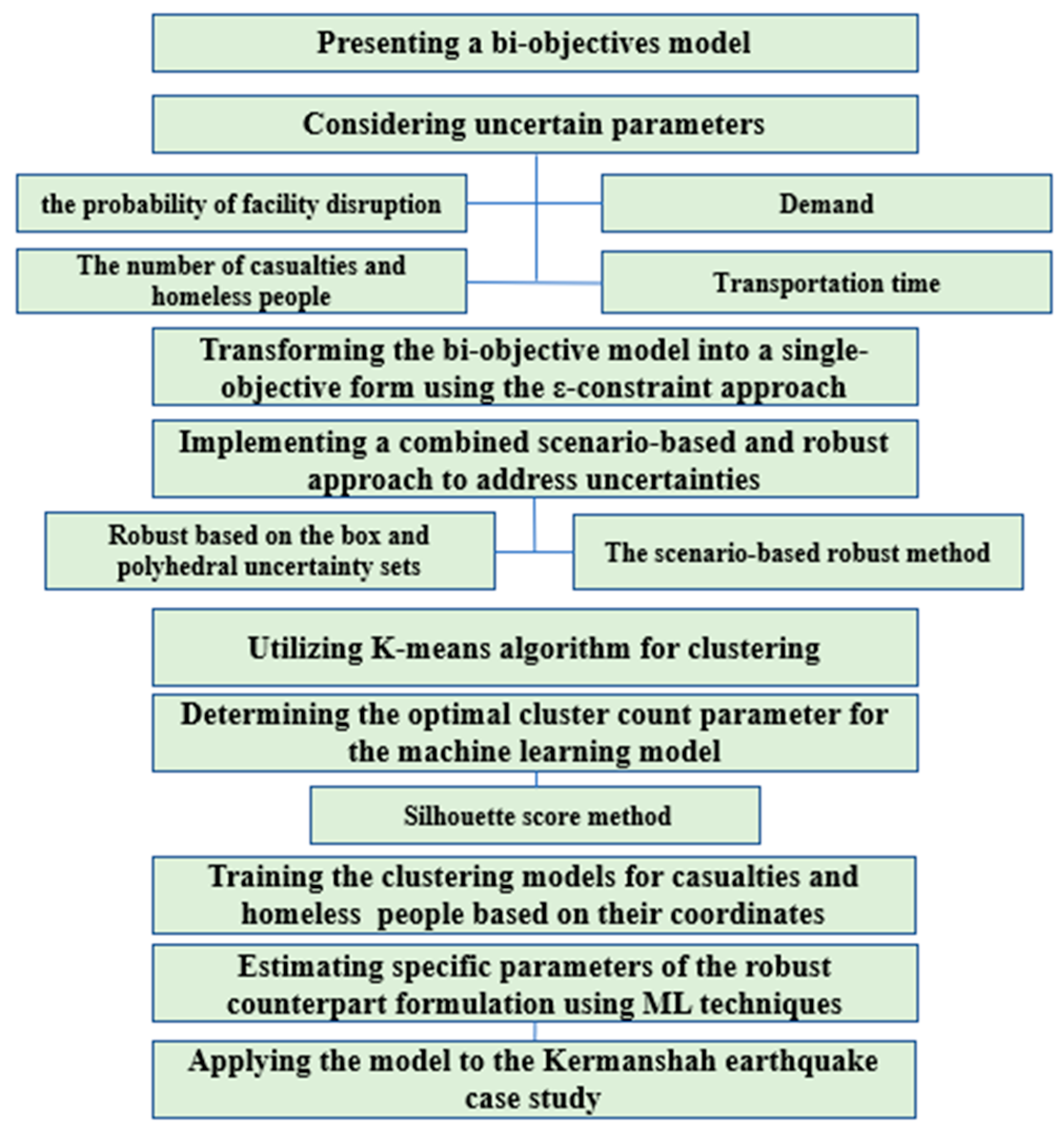
The approaches employed to address the issue are outlined in this section. An overview of the proposed methods is presented in Figure 2.
Figure 2.
Solution approach.
Each of these steps will be explained comprehensively in the following subsections, providing a clear and systematic description of their purpose and implementation.
4.1. Transformation of the Original Model
As the model includes two opposing objectives, optimizing them at the same time is not feasible. Therefore, multi-objective solution methods must be employed to obtain a set of Pareto-optimal solutions. Common approaches include the weighted metric method, ε-constraint method, weighted sum technique, lexicographic method, and goal programming [44].
In this study, the ε-constraint method is employed, a widely used approach for solving multi-objective problems [45]. This method retains one objective function while converting the others into constraints. The corresponding formulation is provided in Equation (55), where the value of is determined by the managers.
In the introduced model, the objective presented in Equation (1) is picked as the primary objective, while the other one is transformed into a constraint. Consequently, the reformulated model by considering Equation (1) as the objective is expressed as follows:
(3)–(54)
4.2. Hybrid Model
Mulvey et al. [46] introduced a SCB robust optimization approach, which is applied to the stochastic model. This method aims to reduce the model’s sensitivity to data variations, thereby producing solutions that remain effective across all scenarios. When applied to the objective function of the proposed model, the reformulated version is as follows:
s.t.
In Equation (57), and are two weighting parameters. The initial component denotes the anticipated value of the objective function; the second one reflects model robustness—quantified by the variance of the objective across different scenarios—and the third component imposes a penalty to control infeasibility. Notably, the second term is quadratic in form, which increases the complexity of the solution process. Leung et al. [47] introduced an approach to make the equation more straightforward and reduce computational complexity.
Furthermore, Equation (4) must also be linearized. Since the objective is formulated as a minimization task, it can be transformed into a linear form as follows:
In the following subsection, the way of dealing with the other uncertainties will be discussed.
4.3. Addressing Uncertainties
In the proposed model, several parameters are considered uncertain within each scenario. These include the number of light and serious injured individuals, the demand for products, the transit times between casualty clusters and temporary medical centers, as well as the travel times for transporting severe casualties by helicopter from clusters to hospitals. To address these uncertainties, a box-based robust optimization approach is applied. Under this technique, and by setting , uncertain parameters are represented as intervals centered around their nominal values with specified maximum deviations. For example, the uncertain parameter is expressed within the interval , where denotes the nominal value and represents the maximum deviation. Also, to handle the uncertainty of demand, the robust method based on polyhedral uncertainty sets is utilized, expressed as . Accordingly, after applying this method to the constraints involving uncertain parameters, the constraints can be reformulated as follows:
(6)–(24), (30)–(41), (46)–(52), (58), (60) and (61)
4.4. Application of ML Techniques
K-means is a widely used unsupervised ML algorithm, commonly applied in various fields such as data mining [48]. The algorithm partitions n observations into c distinct clusters, ensuring that each observation is assigned to the cluster with the nearest mean. Each cluster is represented by a centroid, and these centroids are required to be distinct. Once the initial k centroids are established, each data point is assigned to the nearest centroid. Subsequently, a new set of centroids is computed as the barycenter (i.e., geometric centers) of the newly formed clusters. This process is repeated in an iterative loop, where centroids are updated and data points reassigned accordingly. The algorithm continues until the centroids stabilize and no further changes occur [49].
The number of clusters obtained through the K-means algorithm determines the sets of mild-wounded clusters (i), severe injured individuals clusters (j), and homeless individuals clusters (u). Additionally, the count of injured people within each cluster is identified, providing the nominal values for the count of light casualties in cluster i and severe casualties in cluster j. The latitude and longitude of each cluster’s centroid are also derived, serving as practical approximations for estimating distances between casualties and medical facilities rather than treating each individual casualty as a separate node, which would significantly increase computational complexity. The formula used to calculate distances between two geographic points based on their coordinates is provided in Appendix A. Finally, based on the given distances and average vehicle speeds—40 km/h for ambulances and 200 km/h for helicopters—the expected travel durations are computed. These values are then incorporated into the model as the nominal transportation times.
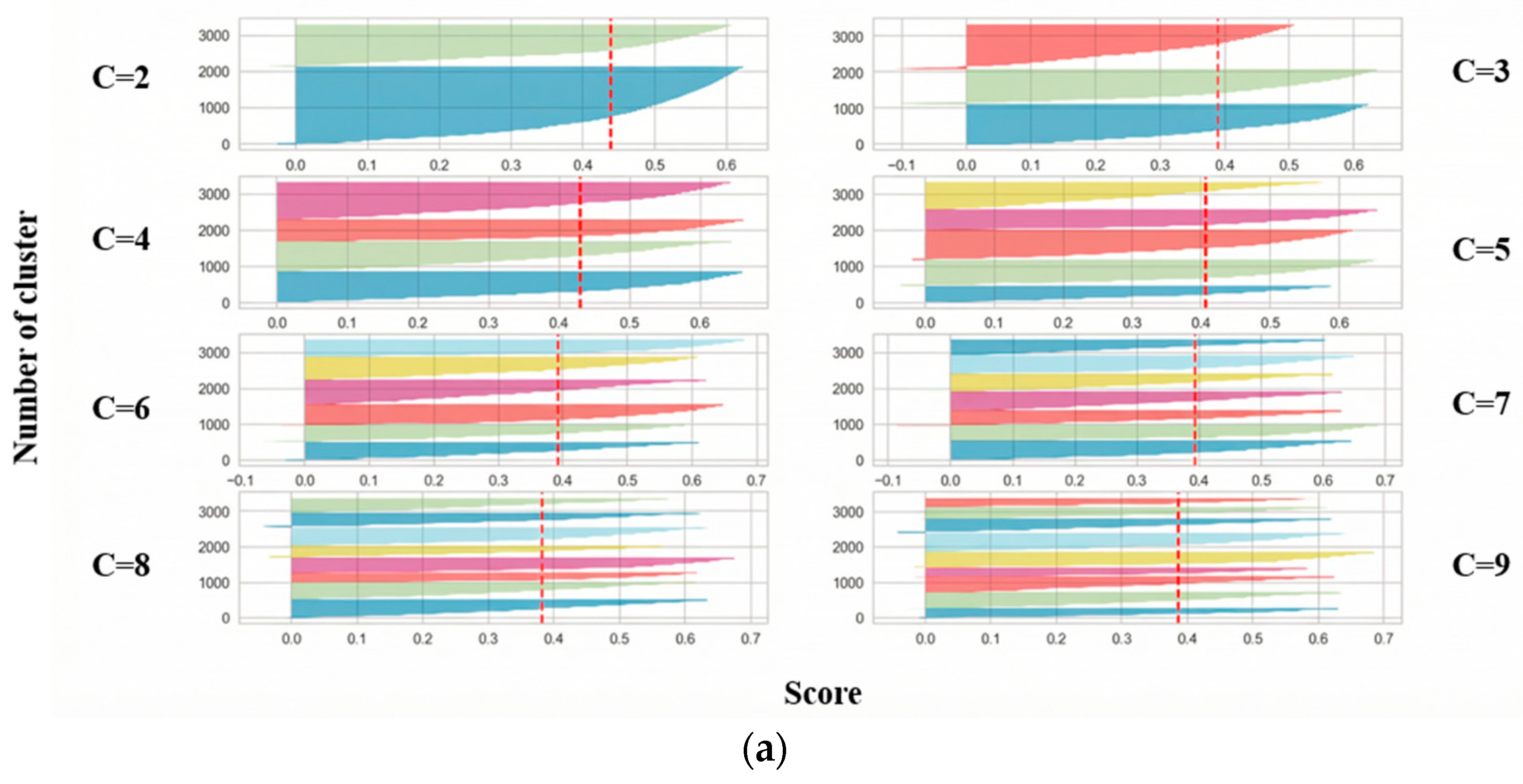
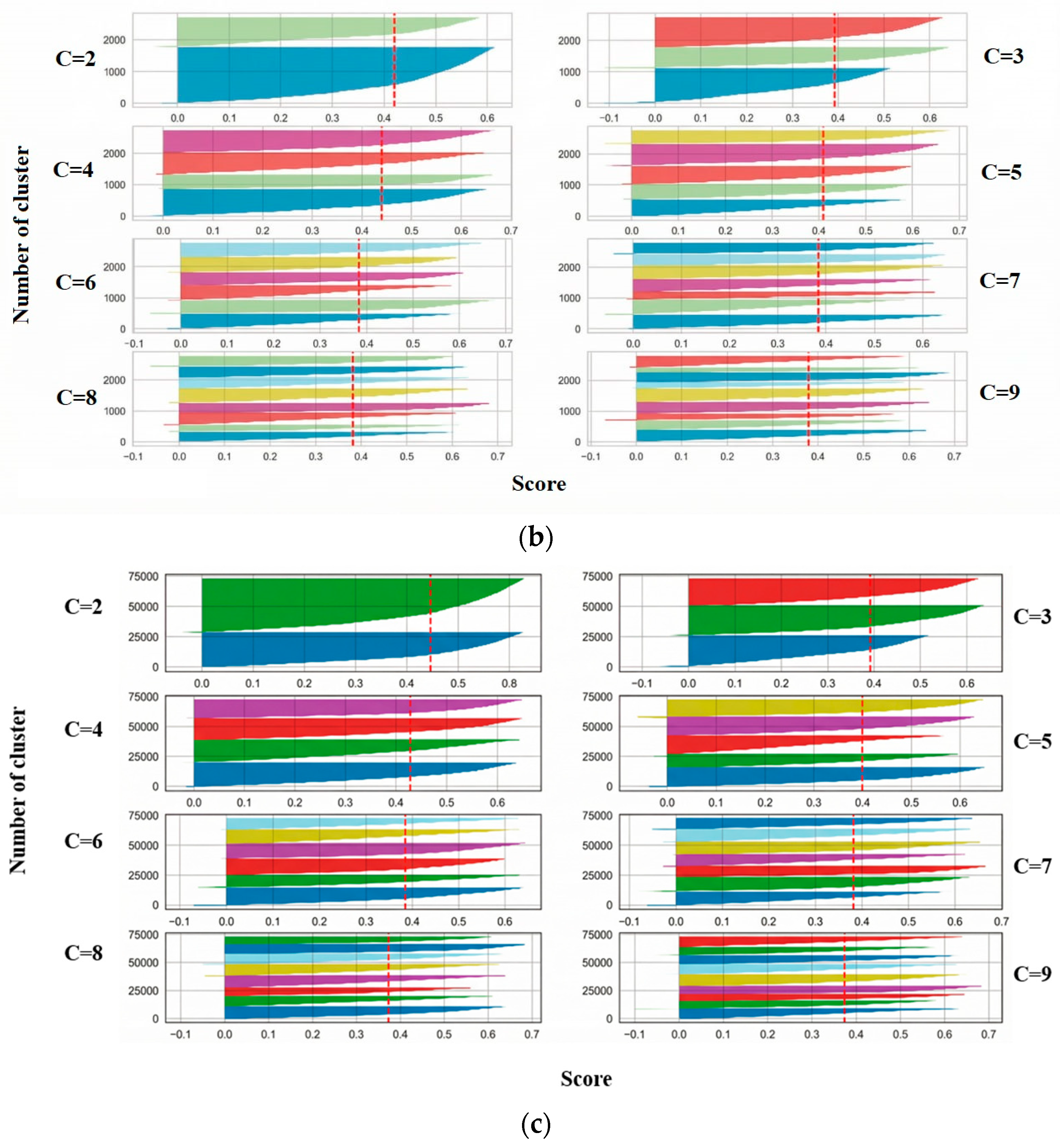
Silhouette score serves as a common metric for assessing the effectiveness of clustering techniques [50]. This score measures how well each data point fits within its assigned cluster compared to other clusters, with values ranging from −1 to 1. A score close to 1 indicates that the object is well matched to its own cluster and poorly matched to neighboring clusters, suggesting a well-formed clustering structure. Conversely, a score near 0 implies overlapping clusters, and a negative score indicates potential misclassification. The Silhouette score is particularly useful for assessing the effectiveness of clustering and identifying the optimal number of clusters for the data.
5. Results
In this section, the problem was addressed, and the numerical results were presented using GAMS 24.1.2, Python 3.8, and the scikit-learn library.
5.1. Case Study and Data
Iran is among the most earthquake-prone countries in the world, having experienced numerous destructive earthquakes over the years [51]. Between 1990 and 2013, earthquakes caused significant human and financial losses across various Iranian cities. One of the most devastating events occurred on 12 November 2017, when a 7.3-magnitude earthquake struck the Kermanshah province near the Iran-Iraq border. The disaster resulted in approximately 600 to 700 fatalities, about 70,000 homeless, and more than 6000 injuries. Additionally, around 30,000 residential units were severely damaged, with some areas reporting total destruction in both rural and urban zones [52].
5.2. Grouping Injured and Homeless Individuals Using ML
Injured and homeless individuals are clustered according to their IJSs and geographical positions (latitude and longitude). Although approximately 6000 individuals were reported injured in the Kermanshah earthquake, detailed coordinate data for these casualties is not publicly available. To address this, geographic coordinates were synthetically generated. Specifically, a shapefile of Kermanshah province was mapped using Python, and random points were generated within the province boundaries. Any points located outside the provincial borders were discarded. A higher density of generated points is concentrated in areas associated with higher earthquake severity. The synthetic data generation procedure for homeless people and casualties is depicted in Supplementary Material file (See Figures S1 and S2).
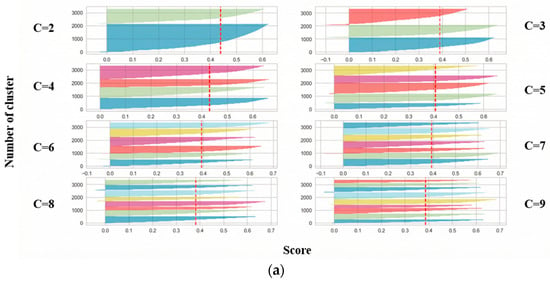
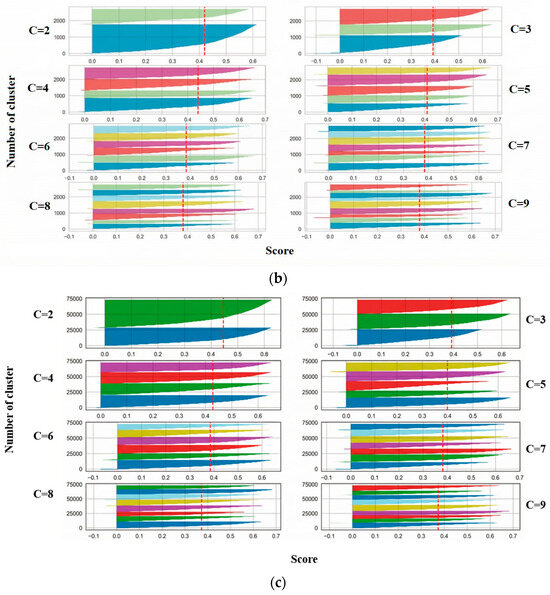
The Silhouette score analysis results for the homeless individuals and casualties are presented in Figure 3. As shown in the first subplot of Figure 3, the silhouette score—indicated by the red dashed line—is highest when the number of clusters is four. Additionally, the cluster widths are relatively uniform at this value, supporting the selection of four clusters for mild casualties. Similarly, subplots b and c of Figure 3 demonstrate that four clusters yield the most appropriate performance for grouping severe casualties and homeless people.
Figure 3.
Silhouette score. (a) Light injured individuals. (b) Severe injured individuals. (c) Homeless individuals.
5.3. Numerical Findings from the Suggested Model
The nominal transportation times for routes between all members of this network are detailed in the Supplementary Material (see Tables S1–S6).
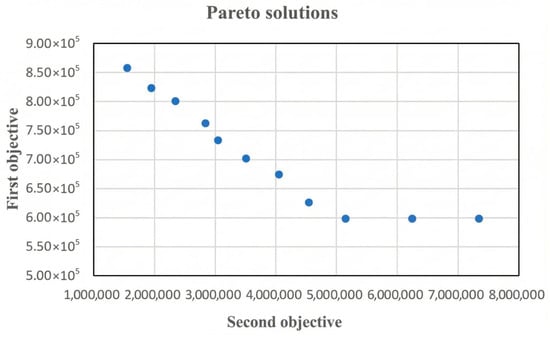
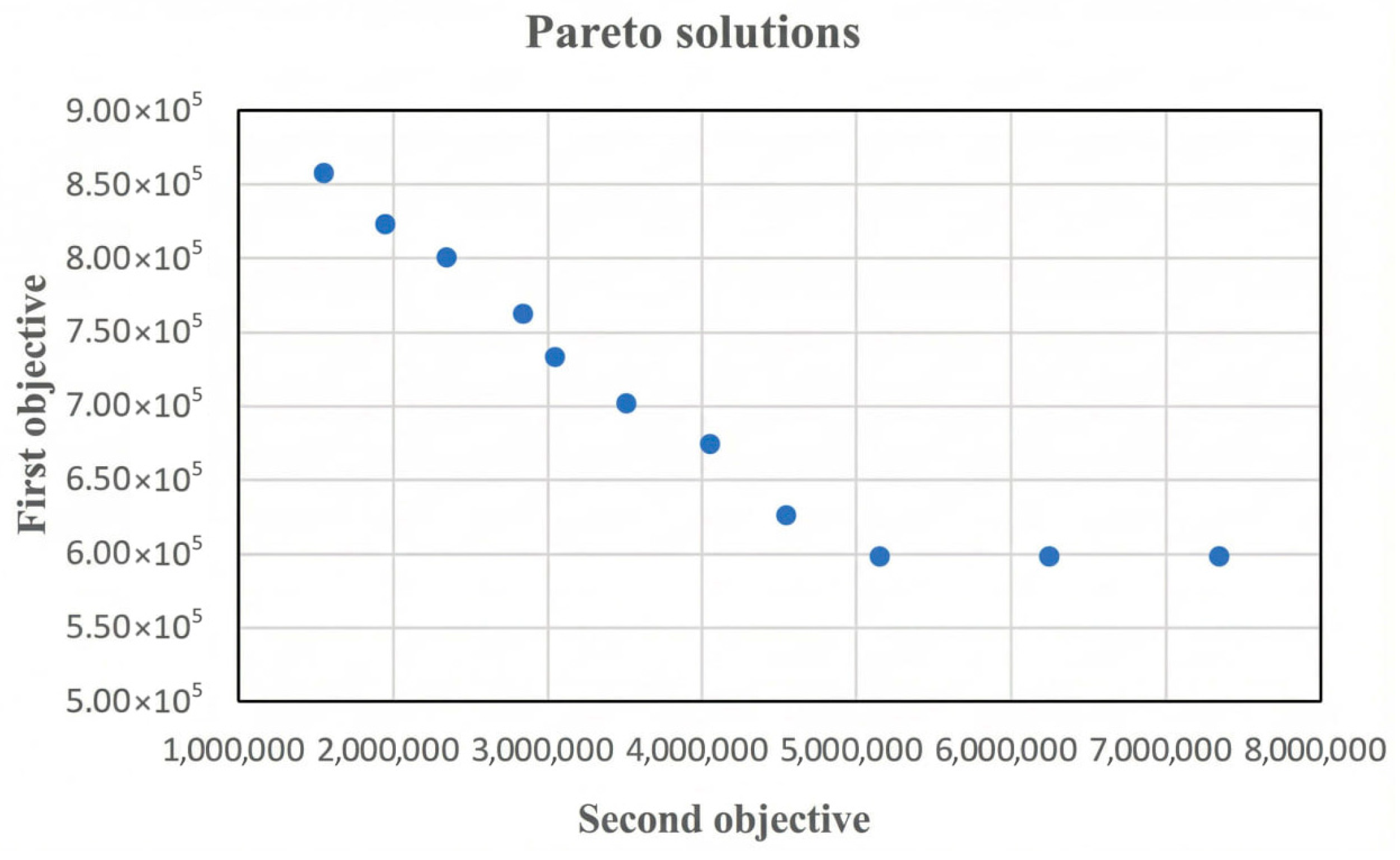
After solving the model, the Pareto-optimal outcomes are illustrated in Figure 4. At an epsilon value of 5,250,000, humanitarian objectives—such as the evacuations of all injured and homeless individuals and the provision of healthcare services—are fulfilled, resulting in decreased IJS and losses. Given that the choice of epsilon greatly influences the process of evacuating and providing care to casualties, it is crucial for decision-makers to select it carefully. An analysis examining the impact of different epsilon values is provided in Section 5.5.3.
Figure 4.
Pareto front.
5.4. Assessment of the Suggested Approach
5.4.1. Evaluating the Introduced Technique Against a Combination of Robust and Stochastic Models
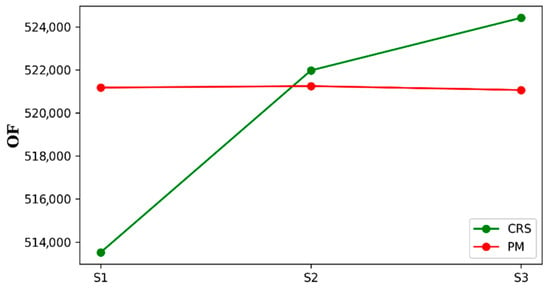
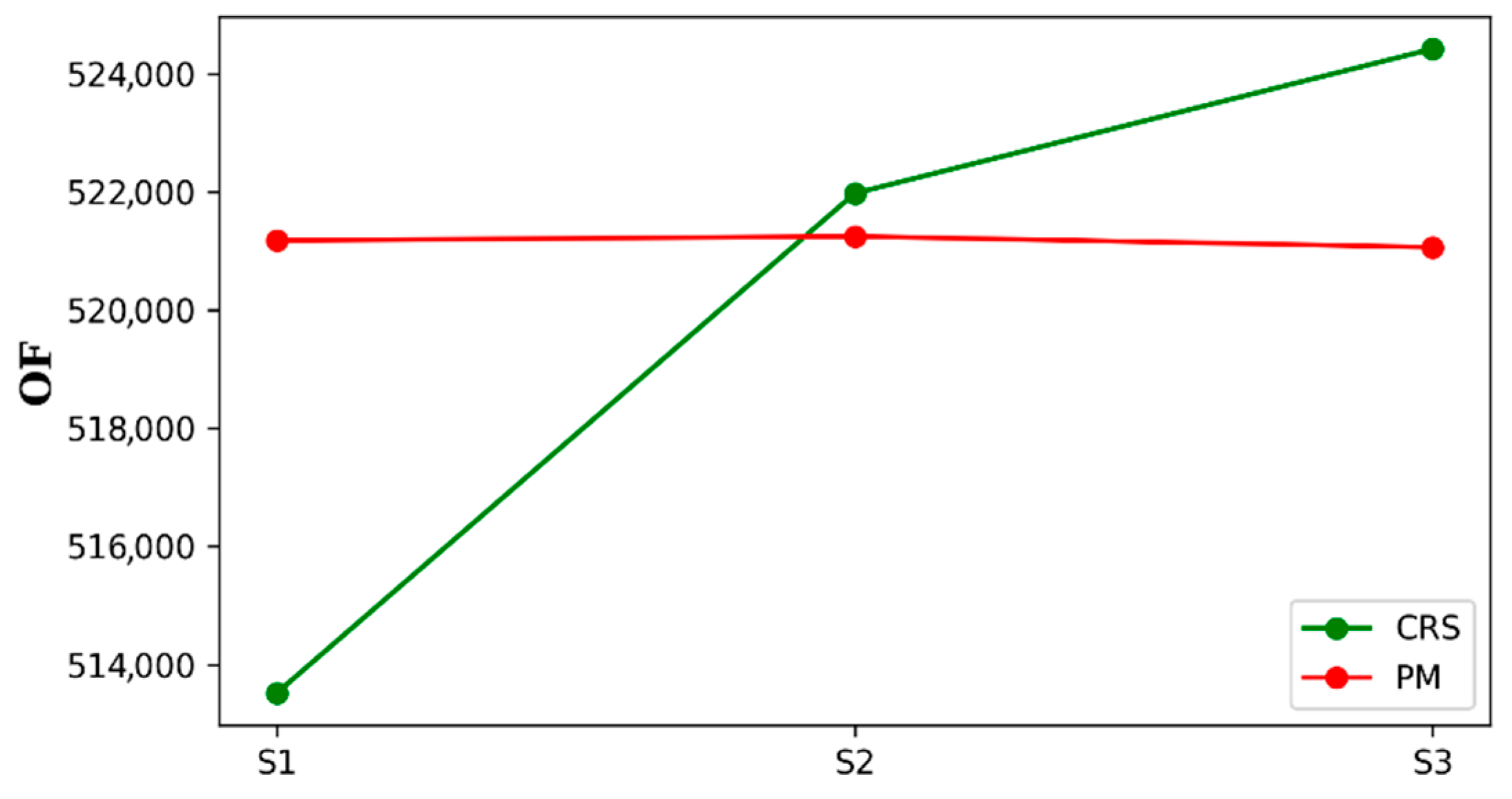
To examine the model’s robustness, the results of two approaches are compared side by side: the Combined Robust-Stochastic (CRS) method, which merges robust optimization with stochastic programming, and the hybrid SCB robust approach introduced in this study, which combines robust optimization with SCB robust rather than SCB stochastic programming. The comparative analysis outcomes are summarized in Table 3 and visualized in Figure 5.
Table 3.
Comparison between methods.
Figure 5.
Evaluation of the proposed method.
5.4.2. A Comparative Analysis Between the Robust and Deterministic Models
The model is also evaluated against a deterministic model using the realized values of uncertain parameters, with the results shown in Table 4. The findings indicate that the proposed model performs well, while the deterministic model is inefficient and often unable to generate feasible solutions under actual conditions. The cause of this is that the deterministic model allocates resources and plans facilities based only on nominal parameter values, ignoring the 5% to 20% uncertainty range associated with each parameter. Consequently, when applied to real-world data, the deterministic model’s resource allocations are insufficient to meet demand. Furthermore, although the proposed model takes slightly more time to solve due to the presence of auxiliary variables, it still achieves this within a reasonable computational timeframe.
Table 4.
Comparison of outcomes between the proposed hybrid robust model and the deterministic model.
5.5. Analysis of Parameter Influence
5.5.1. Link Between the Uncertainty in Injured and Homeless Individuals and the Objective Value
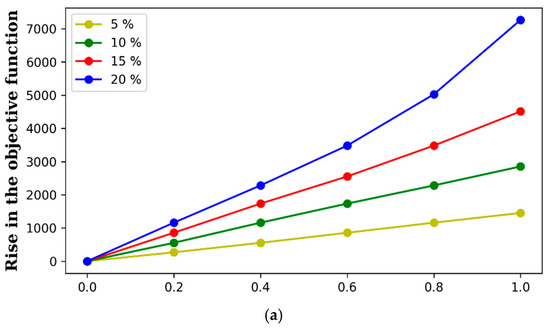
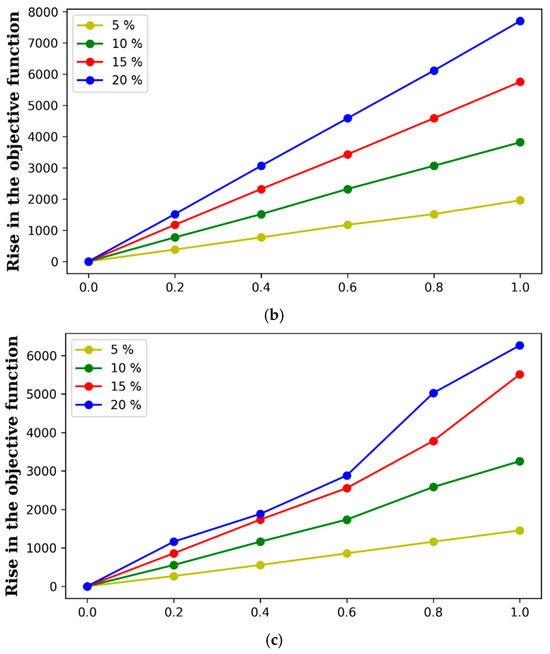
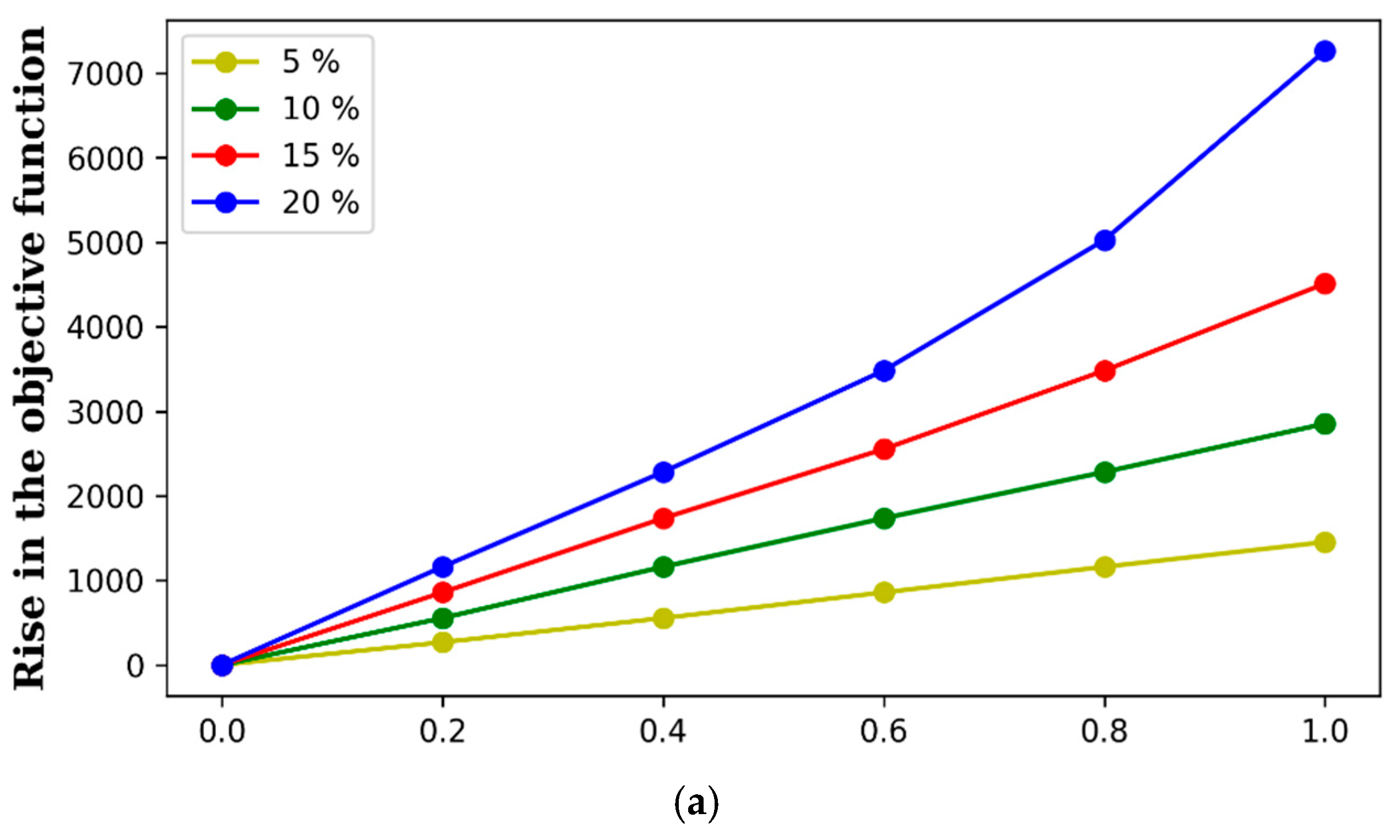
Analysis of parameters impact was performed on key parameters using five distinct levels along with four sets of varying data. As shown in Figure 6, the outcomes for casualties and homeless people are presented, respectively. As the uncertainty in the numbers of casualties and homeless individuals increases, the objective function value rises. Notably, the increase in the objective value is greater for severe casualties than for the others. Therefore, it is crucial for planners to emphasize timely evacuation and treatment efforts of severely injured individuals, as this approach is vital for optimizing resource distribution and providing prompt medical attention to those with the greatest need. Integrating these considerations into response protocols can lead to notable improvements in disaster management performance.
Figure 6.
Injured and homeless individuals. (a) Light injured individuals. (b) Severe injured individuals. (c) Homeless individuals.
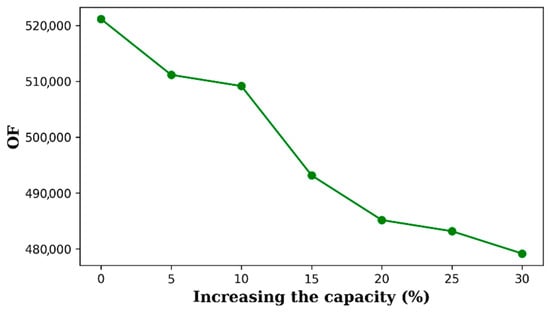
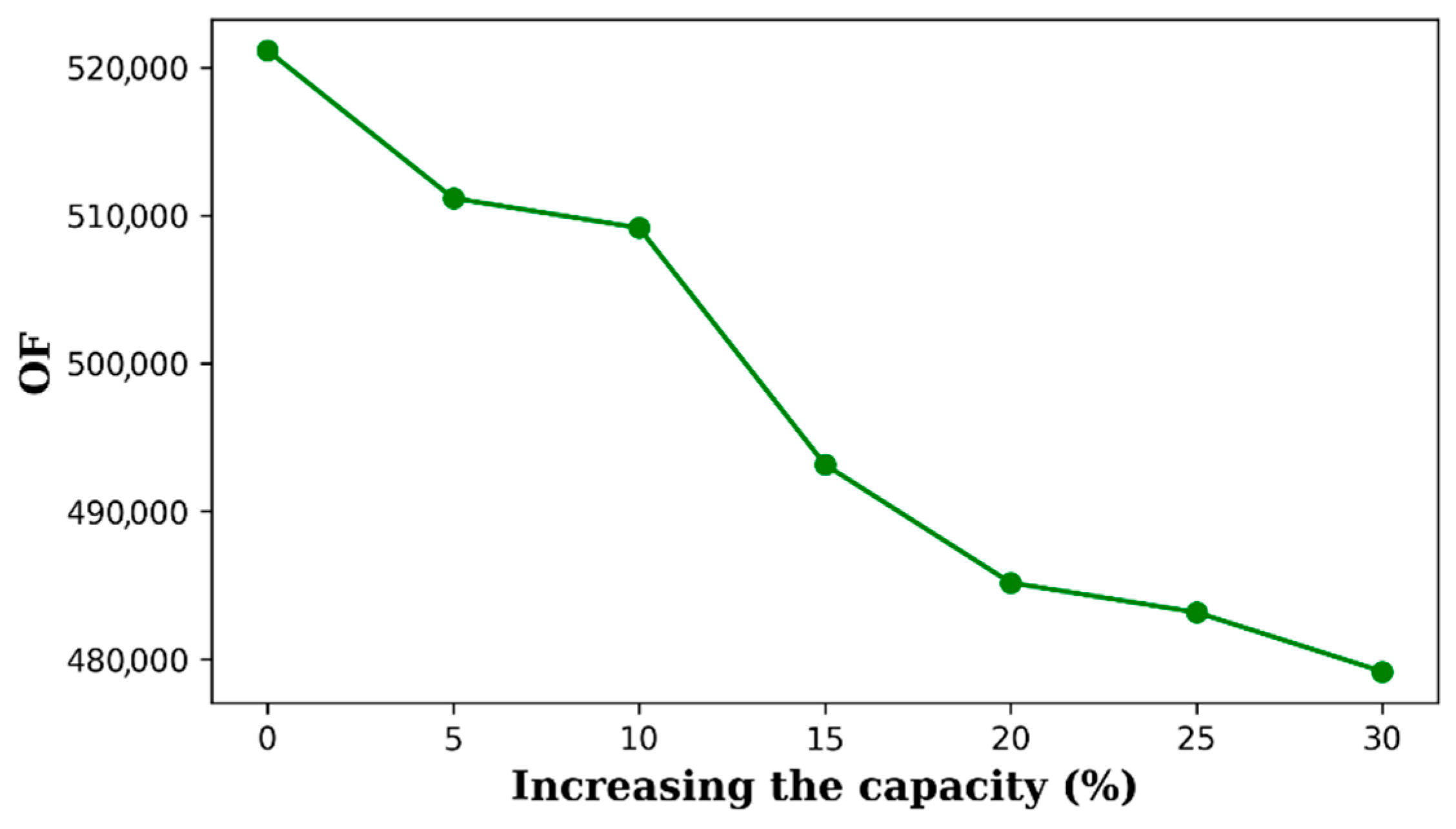
5.5.2. Impact of Clinic Capacity on the Objective Value
A sensitivity analysis on clinic capacity was performed. As illustrated in Figure 7, increasing clinic capacity results in a decrease in the objective value, indicating that capacity has the potential to improve the efficiency of the system.
Figure 7.
Clinic capacity.
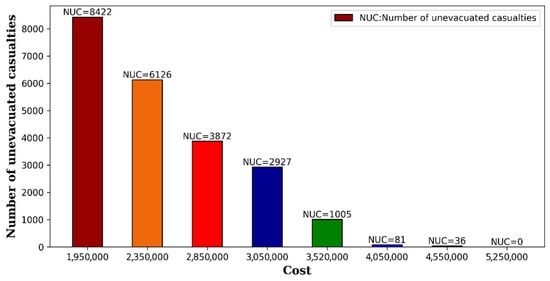
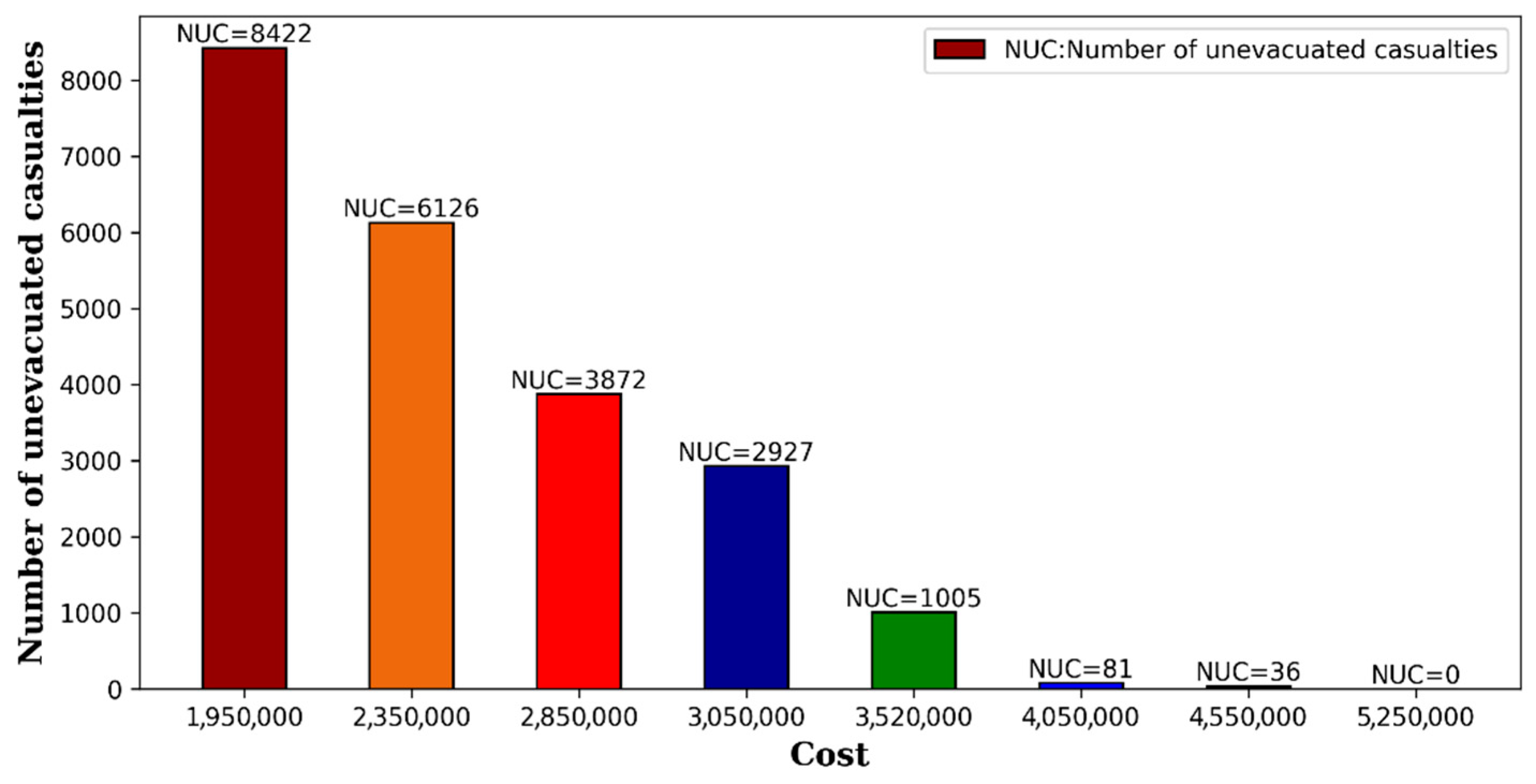
5.5.3. Impact of Cost on the Casualty Evacuation
As illustrated in Figure 8, the analysis of cost and casualty transport indicates that with a budget of 4,550,000, all except 36 casualties can be evacuated and treated. However, considering the importance of saving lives in humanitarian logistics, we recommend increasing the budget by 15.38% to 5,250,000, which would allow the transfer of all casualties. This extra funding ensures that everyone receives emergency medical care, emphasizing the crucial balance between financial limits and moral obligation to preserve human life. Additionally, this increased investment can contribute to a more resilient and effective medical care system.
Figure 8.
Cost and unevacuated casualties.
6. Discussion
This study provided valuable insights, which are beneficial for the strategic and operational decisions in humanitarian logistics planning under uncertainty. The response efficiency was improved by utilizing the proposed hybrid robust optimization and ML model.
The computational results showed that ML clustering significantly enhances the efficiency of decision-making. By clustering casualties and homeless individuals based on geographical location and injury severity score, the targeted allocation of medical resources and shelter capacity can be implemented. This is particularly important in real disaster problems because the timely provision of treatment supplies and evacuation of casualties are critical.
Another important insight stems from the comparative analysis between the hybrid robust model and traditional deterministic or single-set robust models. The hybrid approach outperforms the others by offering more balanced solutions that are neither overly conservative nor too optimistic. The decision-makers can deal with different types of uncertainties by utilizing the integration of SCB, box, and polyhedral uncertainty sets method.
Clear trade-offs between operational cost, medical risk, and solution robustness are demonstrated in the results. We observe a trend of increasing total cost—especially due to polyhedral and SCB uncertainty sets—by increasing robustness. This is expected, as the model prepares against facility disruptions and demand surges. But an increase in such costs yields significant drops in medical risk, especially due to severely injured casualties, highlighting that conservative planning directly improves treatment timeliness and survival outcomes.
The superiority of the performance of the hybrid robust approach can be explained by its ability to fit uncertainty modeling to parameter characteristics. Box uncertainty effectively protects against bounded variations in travel times and numbers of casualties, but when modeling medical demand, polyhedral uncertainty prevents excessive conservatism. Such a balance explains why the results demonstrate that a hybrid model attains lower risk levels compared to single-method robust models without incurring disproportionate costs.
Incorporating machine learning-based clustering further enhances the system performance: it reduces the dispersion of spatial demand and allows for more accurate decisions of facility allocation and routing. This leads to shorter transportation times and better medical resource utilization, especially in densely affected areas.
The results show that focusing on equitable allocation and reduced medical risk might increase the operational costs slightly but increases the health outcomes and accessibility of services considerably, hence underpinning the importance of social sustainability in disaster response planning while supporting resilient and equitable urban disaster management.
The managerial implications of the findings are that decision-makers adopt hybrid robust strategies in large-scale disasters where sources of uncertainty are heterogeneous. This can substantially reduce medical risk at moderate additional cost with investments in data-driven demand estimation and flexible facility planning, serving to make humanitarian response operations more resilient and equitable.
The study also highlights the importance of multimodal transportation. By using helicopters, the evacuation of severely injured individuals would be faster, which helps to reduce the deterioration in IJSs.
Several recommendations for managers and policymakers are proposed as follows:
- Prepositioning facilities and resources based on data analysis methods, such as ML clustering, can improve readiness to deal with the problems.
- Investment in flexible infrastructure, such as mobile clinics and shelters, can mitigate the impact of disruptions.
- Hybrid robust planning should be adopted to account for different types of uncertainties rather than relying on deterministic or single-method robust models.
- Integrated data systems that combine historical disaster data, population vulnerability, and geographic information are essential for training clustering algorithms and improving model input quality.
In summary, the proposed hybrid robust and data-driven framework enhances both operational efficiency and solution robustness in humanitarian logistics. The findings show the value added by incorporating uncertainty modeling and machine learning for making more reliable and information-based decisions in disaster responses.
7. Conclusions
This study presents a comprehensive and robust approach to the design of humanitarian logistics networks. A model was developed to minimize total operational costs and the health risks faced by injured individuals. The model integrated critical logistics decisions such as facility location, casualty and homeless evacuation, and treatment supplies distribution.
Furthermore, the model incorporates multiple robust optimization methods to capture the different types of uncertainties. SCB robust optimization is employed to address the disruption of medical facilities, while box and polyhedral uncertainty sets are used to manage the other uncertainties. Moreover, ML method is utilized to group casualties and homeless individuals based on their geographic positions, enabling more effective logistics planning.
The proposed model was tested by utilizing a real-world case study of the Kermanshah earthquake, and its performance was evaluated. The results of comparison with the deterministic model and the other combined robust-stochastic approach demonstrated that the model produced efficient solutions under various uncertainty scenarios.
Beyond being robust and effective, this study reveals how cutting-edge humanitarian logistics design contributes to global sustainability. Specifically, it contributes to SDG 3 (Good Health) and well-being in reducing medical treatment delays and to SDG 11 (Sustainable Cities and Communities) in urban resilience improvement through streamlined facility and shelter planning.
For future research, the dynamic or multi-period extensions of the model can be investigated. Also, applying deep learning techniques and other methods for dealing with uncertainties can be beneficial. Also, future research can extend this by incorporating other SDG indicators, such as minimizing waste or employing renewable energy sources in humanitarian operations. Finally, considering new technologies such as drones to allocate the products can be explored.
Supplementary Materials
The following supporting information can be downloaded at: https://www.mdpi.com/article/10.3390/a19020104/s1, Figure S1: Data generation for mild and severe casualties; Figure S2: Data generation for homeless people; Table S1: Nominal transport time from casualty clusters to clinics; Table S2: Nominal transport time from clinics to hospitals; Table S3: Nominal transport time from casualty clusters to hospitals; Table S4: Nominal transport time from homeless clusters to shelters; Table S5: Nominal transport time from warehouses to clinics; Table S6: Nominal transport time from clinics to shelters.
Author Contributions
S.J.: Writing—original draft, Visualization, Software, Methodology, Investigation, Formal analysis, Data curation, Conceptualization. M.B.F.: Review and editing, Validation, Resources, Supervision, Methodology, Conceptualization. H.H.N.: Writing—review and editing, Validation, Supervision, Resources. H.K.Z.: Writing—review and editing, Validation, Supervision, Resources. M.M.R.: Review and editing, Formal analysis, Supervision. All authors have read and agreed to the published version of the manuscript.
Funding
This research received no external funding.
Data Availability Statement
No data was used for the research described in the article.
Conflicts of Interest
The authors declare no conflicts of interest during this study.
Appendix A
The formula for deriving the distances between two points based on the latitude and longitude:
where D is the distance (Km), la (latitude), and lo (longitude) are based on radians.
D = 6371.1 arccos[(sin(la1) sin(la2)) + cos(la1) cos(la2) cos (lo2 − lo1)]
References
- Chingono, T.T.; Mbohwa, C. Humanitarian Logistics, Identifying and Reacting to Disasters. In Supply Networks in Developing Countries: Sustainable and Humanitarian Logistics in Growing Consumer Markets; Emerald Publishing Limited: Leeds, UK, 2023; pp. 1–17. [Google Scholar]
- Every, D.; Richardson, J.; Osborn, E. There’s nowhere to go: Counting the costs of extreme weather to the homeless community. Disasters 2019, 43, 799–817. [Google Scholar] [CrossRef] [Scilit]
- Uddin, M.S.; Ahmad, M.M.; Warnitchai, P. Surge dynamics of disaster displaced populations in temporary urban shelters: Future challenges and management issues. Nat. Hazards 2018, 94, 201–225. [Google Scholar] [CrossRef] [Scilit]
- Pasupuleti, V.; Thuraka, B.; Kodete, C.S.; Malisetty, S. Enhancing supply chain agility and sustainability through machine learning: Optimization techniques for logistics and inventory management. Logistics 2024, 8, 73. [Google Scholar] [CrossRef] [Scilit]
- Singh, R.K.; Gupta, A.; Gunasekaran, A. Analysing the interaction of factors for resilient humanitarian supply chain. Int. J. Prod. Res. 2018, 56, 6809–6827. [Google Scholar] [CrossRef] [Scilit]
- Akbarpour, M.; Torabi, S.A.; Ghavamifar, A. Designing an integrated pharmaceutical relief chain network under demand uncertainty. Transp. Res. Part E Logist. Transp. Rev. 2020, 136, 101867. [Google Scholar] [CrossRef] [Scilit]
- Yahyaei, M.; Bozorgi-Amiri, A. Robust reliable humanitarian relief network design: An integration of shelter and supply facility location. Ann. Oper. Res. 2019, 283, 897–916. [Google Scholar] [CrossRef] [Scilit]
- Baker, S.P.; O’neill, B. The injury severity score: An update. J. Trauma Acute Care Surg. 1976, 16, 882–885. [Google Scholar] [CrossRef] [Scilit]
- Amani, M.A.; Sarkodie, S.A.; Sheu, J.-B.; Nasiri, M.M.; Tavakkoli-Moghaddam, R. A data-driven hybrid scenario-based robust optimization method for relief logistics network design. Transp. Res. Part E Logist. Transp. Rev. 2025, 194, 103931. [Google Scholar] [CrossRef] [Scilit]
- Ghahremani-Nahr, J.; Nozari, H.; Szmelter-Jarosz, A. Designing a humanitarian relief logistics network considering the cost of deprivation using a robust-fuzzy-probabilistic planning method. J. Int. Humanit. Action 2024, 9, 19. [Google Scholar] [CrossRef] [Scilit]
- Mohseny-Tonekabony, N.; Sadjadi, S.J.; Mohammadi, E.; Tamiz, M.; Jones, D.F. Robust, extended goal programming with uncertainty sets: An application to a multi-objective portfolio selection problem leveraging DEA. Ann. Oper. Res. 2025, 346, 1497–1552. [Google Scholar] [CrossRef] [Scilit]
- Yin, Y.; Wang, J.; Chu, F.; Wang, D. Distributionally robust multi-period humanitarian relief network design integrating facility location, supply inventory and allocation, and evacuation planning. Int. J. Prod. Res. 2024, 62, 45–70. [Google Scholar] [CrossRef] [Scilit]
- Abounacer, R.; Rekik, M.; Renaud, J. An exact solution approach for multi-objective location–transportation problem for disaster response. Comput. Oper. Res. 2014, 41, 83–93. [Google Scholar] [CrossRef] [Scilit]
- Gu, J.; Zhou, Y.; Das, A.; Moon, I.; Lee, G.M. Medical relief shelter location problem with patient severity under a limited relief budget. Comput. Ind. Eng. 2018, 125, 720–728. [Google Scholar] [CrossRef] [Scilit]
- Yu, L.; Yang, H.; Miao, L.; Zhang, C. Rollout algorithms for resource allocation in humanitarian logistics. Iise Trans. 2019, 51, 887–909. [Google Scholar] [CrossRef] [Scilit]
- Wang, Y.; Zhang, L.; Li, R.; Lu, Y. The celebrity disaster area effect: Exploring the impact of social media on the distribution of humanitarian goods. Humanit. Soc. Sci. Commun. 2025, 12, 463. [Google Scholar] [CrossRef] [Scilit]
- Jamali, A.; Ranjbar, A.; Heydari, J.; Nayeri, S. A multi-objective stochastic programming model to configure a sustainable humanitarian logistics considering deprivation cost and patient severity. Ann. Oper. Res. 2022, 319, 1265–1300. [Google Scholar] [CrossRef] [Scilit]
- Nezhadroshan, A.M.; Fathollahi-Fard, A.M.; Hajiaghaei-Keshteli, M. A scenario-based possibilistic-stochastic programming approach to address resilient humanitarian logistics considering travel time and resilience levels of facilities. Int. J. Syst. Sci. Oper. Logist. 2021, 8, 321–347. [Google Scholar] [CrossRef] [Scilit]
- Jin, Z.; Ng, K.K.; Zhang, C.; Chan, Y.; Qin, Y. A multistage stochastic programming approach for drone-supported last-mile humanitarian logistics system planning. Adv. Eng. Inform. 2025, 65, 103201. [Google Scholar] [CrossRef] [Scilit]
- Huang, S.; Zhu, H.; Wang, H.; Liu, K.; Liu, X.; Zhang, Z.-H. Balancing the Trade-off between Efficiency and Equity in a Stochastic Emergency Supplies Allocation Problem. Appl. Math. Model. 2025, 148, 116242. [Google Scholar] [CrossRef] [Scilit]
- Stienen, V.; Wagenaar, J.; Den Hertog, D.; Fleuren, H. Optimal depot locations for humanitarian logistics service providers using robust optimization. Omega 2021, 104, 102494. [Google Scholar] [CrossRef] [Scilit]
- Faiz, T.I.; Vogiatzis, C.; Liu, J.; Noor-E-Alam, M. A robust optimization framework for two-echelon vehicle and UAV routing for post-disaster humanitarian logistics operations. Networks 2024, 84, 200–219. [Google Scholar] [CrossRef] [Scilit]
- Li, H.; Yu, D.; Zhang, Y.; Yuan, Y. A two-stage robust optimization model for emergency service facilities location-allocation problem under demand uncertainty and sustainable development. Sci. Rep. 2025, 15, 2895. [Google Scholar] [CrossRef] [Scilit]
- Chen, Y. Robust optimization model for relief supplies distribution considering fairness. Int. Trans. Oper. Res. 2024, 33, 682–711. [Google Scholar] [CrossRef] [Scilit]
- Mohammadi, S.; Darestani, S.A.; Vahdani, B.; Alinezhad, A. A robust neutrosophic fuzzy-based approach to integrate reliable facility location and routing decisions for disaster relief under fairness and aftershocks concerns. Comput. Ind. Eng. 2020, 148, 106734. [Google Scholar] [CrossRef] [Scilit]
- Wang, C.; Zhong, L.-M.-T. Reliable design of humanitarian supply chain under correlated disruptions: A two-stage distributionally robust approach. Ann. Oper. Res. 2024, 355, 2999–3047. [Google Scholar] [CrossRef] [Scilit]
- Sun, H.; Li, J.; Wang, T.; Xue, Y. A novel scenario-based robust bi-objective optimization model for humanitarian logistics network under risk of disruptions. Transp. Res. Part E Logist. Transp. Rev. 2022, 157, 102578. [Google Scholar] [CrossRef] [Scilit]
- Shakibaei, H.; Farhadi-Ramin, M.R.; Alipour-Vaezi, M.; Aghsami, A.; Rabbani, M. Designing a post-disaster humanitarian supply chain using machine learning and multi-criteria decision-making techniques. Kybernetes 2024, 53, 1682–1709. [Google Scholar] [CrossRef] [Scilit]
- Soykan, B.; Rabadi, G. Optimizing Humanitarian Logistics with Deep Reinforcement Learning and Digital Twins. In Proceedings of the 2024 Annual Modeling and Simulation Conference (ANNSIM), Washington, DC, USA, 20–23 May 2024; IEEE: New York, NY, USA, 2024. [Google Scholar]
- Taouktsis, X.; Zikopoulos, C. A decision-making tool for the determination of the distribution center location in a humanitarian logistics network. Expert Syst. Appl. 2024, 238, 122010. [Google Scholar] [CrossRef] [Scilit]
- Hamdan, B.; Diabat, A. Robust design of blood supply chains under risk of disruptions using Lagrangian relaxation. Transp. Res. Part E Logist. Transp. Rev. 2020, 134, 101764. [Google Scholar] [CrossRef] [Scilit]
- Haghjoo, N.; Tavakkoli-Moghaddam, R.; Shahmoradi-Moghadam, H.; Rahimi, Y. Reliable blood supply chain network design with facility disruption: A real-world application. Eng. Appl. Artif. Intell. 2020, 90, 103493. [Google Scholar] [CrossRef] [Scilit]
- Gharib, M.; Fatemi Ghomi, S.M.T.; Jolai, F. A dynamic dispatching problem to allocate relief vehicles after a disaster. Eng. Optim. 2021, 53, 1999–2016. [Google Scholar] [CrossRef] [Scilit]
- Ghasemi, P.; Goodarzian, F.; Muñuzuri, J.; Abraham, A. A cooperative game theory approach for location-routing-inventory decisions in humanitarian relief chain incorporating stochastic planning. Appl. Math. Model. 2022, 104, 750–781. [Google Scholar] [CrossRef] [Scilit]
- Sun, H.; Wang, Y.; Xue, Y. A bi-objective robust optimization model for disaster response planning under uncertainties. Comput. Ind. Eng. 2021, 155, 107213. [Google Scholar] [CrossRef] [Scilit]
- Zhang, J.; Li, Y.; Yu, G. Emergency relief network design under ambiguous demands: A distributionally robust optimization approach. Expert Syst. Appl. 2022, 208, 118139. [Google Scholar] [CrossRef] [Scilit]
- Ehsani, B.; Karimi, H.; Bakhshi, A.; Aghsami, A.; Rabbani, M. Designing humanitarian logistics network for managing epidemic outbreaks in disasters using Internet-of-Things. A case study: An earthquake in Salas-e-Babajani city. Comput. Ind. Eng. 2023, 175, 108821. [Google Scholar] [CrossRef] [Scilit]
- Yang, Y.; Yin, Y.; Wang, D.; Ignatius, J.; Cheng, T.; Dhamotharan, L. Distributionally robust multi-period location-allocation with multiple resources and capacity levels in humanitarian logistics. Eur. J. Oper. Res. 2023, 305, 1042–1062. [Google Scholar] [CrossRef] [Scilit]
- Zhang, W.; Huang, C.; Gao, J.; Hou, X. Robust location-allocation decision considering casualty prioritization in multi-echelon humanitarian logistics network. Inf. Sci. 2025, 695, 121731. [Google Scholar] [CrossRef] [Scilit]
- Gao, Y.; Ding, X.; Yu, W. Distributional robustness based on Wasserstein-metric approach for humanitarian logistics problem under road disruptions. Oper. Res. Perspect. 2024, 13, 100317. [Google Scholar] [CrossRef] [Scilit]
- Peng, P.; Snyder, L.V.; Lim, A.; Liu, Z. Reliable logistics networks design with facility disruptions. Transp. Res. Part B Methodol. 2011, 45, 1190–1211. [Google Scholar] [CrossRef] [Scilit]
- Haghi, M.; Ghomi, S.M.T.F.; Jolai, F. Developing a robust multi-objective model for pre/post disaster times under uncertainty in demand and resource. J. Clean. Prod. 2017, 154, 188–202. [Google Scholar] [CrossRef] [Scilit]
- Liu, Y.; Lei, H.; Zhang, D.; Wu, Z. Robust optimization for relief logistics planning under uncertainties in demand and transportation time. Appl. Math. Model. 2018, 55, 262–280. [Google Scholar] [CrossRef] [Scilit]
- Poonia, V.; Kulshrestha, R.; Sangwan, K.S. A comparative study of ε-constraint, LP-metric, and weighted sum multi-objective optimization methods in a circular economy. Procedia CIRP 2024, 122, 294–299. [Google Scholar] [CrossRef] [Scilit]
- Yuan, Z.; Wang, W.; Li, J. Carbon dioxide recycling in hydrogen-based energy systems using power-to-gas facility and stochastic multi-objective optimization. J. Clean. Prod. 2023, 387, 135892. [Google Scholar] [CrossRef] [Scilit]
- Mulvey, J.M.; Vanderbei, R.J.; Zenios, S.A. Robust optimization of large-scale systems. Oper. Res. 1995, 43, 264–281. [Google Scholar] [CrossRef] [Scilit]
- Leung, S.C.; Tsang, S.O.; Ng, W.-L.; Wu, Y. A robust optimization model for multi-site production planning problem in an uncertain environment. Eur. J. Oper. Res. 2007, 181, 224–238. [Google Scholar] [CrossRef] [Scilit]
- Naeem, S.; Ali, A.; Anam, S.; Ahmed, M.M. An unsupervised machine learning algorithms: Comprehensive review. Int. J. Comput. Digit. Syst. 2023, 13, 911–921. [Google Scholar] [CrossRef] [Scilit] [PubMed]
- Xia, S.; Peng, D.; Meng, D.; Zhang, C.; Wang, G.; Giem, E.; Wei, W.; Chen, Z. A fast adaptive k-means with no bounds. IEEE Trans. Pattern Anal. Mach. Intell. 2020, 44, 87–99. [Google Scholar] [CrossRef] [Scilit]
- Shutaywi, M.; Kachouie, N.N. Silhouette analysis for performance evaluation in machine learning with applications to clustering. Entropy 2021, 23, 759. [Google Scholar] [CrossRef] [Scilit]
- Khalilpourazari, S.; Arshadi Khamseh, A. Bi-objective emergency blood supply chain network design in earthquake considering earthquake magnitude: A comprehensive study with real world application. Ann. Oper. Res. 2019, 283, 355–393. [Google Scholar] [CrossRef] [Scilit]
- Khalilpourazari, S.; Soltanzadeh, S.; Weber, G.-W.; Roy, S.K. Designing an efficient blood supply chain network in crisis: Neural learning, optimization and case study. Ann. Oper. Res. 2020, 289, 123–152. [Google Scholar] [CrossRef] [Scilit]

Disclaimer/Publisher’s Note: The statements, opinions and data contained in all publications are solely those of the individual author(s) and contributor(s) and not of MDPI and/or the editor(s). MDPI and/or the editor(s) disclaim responsibility for any injury to people or property resulting from any ideas, methods, instructions or products referred to in the content. |
© 2026 by the authors. Licensee MDPI, Basel, Switzerland. This article is an open access article distributed under the terms and conditions of the Creative Commons Attribution (CC BY) license.