


Highlights
- Bio-inspired forms enhance the efficiency of steel grid shell structures.
- A comparative study of steel grid shell efficiency for various topologies.
- Interactive parametric FEM analysis supports the search for efficient steel structures at early design stages.
Abstract
Although steel grid shells are lightweight and materially efficient, their performance and material consumption depend on the interaction between material properties, geometry, topology, member cross-sections, support conditions, and loading. This study presents a parametric methodology for the comparative analysis and mass optimization of steel grid shells inspired by natural shell forms. Four topologies with different surface subdivisions were generated on a common bio-inspired reference surface. An integrated parametric workflow combined geometric modelling, first-order linear static analysis, linear buckling analysis, second-order P–Delta analysis, and genetic optimization, enabling the automated assessment of multiple design variants. The objective was to minimize structural mass while satisfying the adopted strength and serviceability requirements. Structural mass represented material efficiency, while the number of members and nodes and nodal valence characterized technological complexity and constructability. The investigated grid shells exhibited predominantly membrane-dominated behaviour, with axial force transfer and limited bending effects. The triangular topology achieved the highest material efficiency, whereas the quadrilateral topology offered the greatest constructability benefits due to its smaller number of members and joints and lower nodal complexity. Overall, the results demonstrate the influence of grid topology and surface subdivision on steel consumption and structural performance, supporting topology selection in the preliminary design of steel grid shells.
1. Introduction
Steel is particularly well suited to the design of large-span curvilinear structures composed of bar elements because of its high strength, stiffness, and suitability for the fabrication of complex geometries. Such structures enable the creation of extensive column-free spaces but must efficiently transfer substantial loads while satisfying the requirements of strength, stiffness, stability, serviceability, and material efficiency. At the same time, contemporary architecture increasingly favours geometrically complex and expressive forms, introducing additional challenges related to structural performance, fabrication, and construction. Furthermore, growing economic and environmental demands emphasize the need to reduce material consumption. Consequently, the design of large-span steel structures has evolved from conventional structural typologies towards computationally generated and geometrically optimized systems in which architectural form, structural behaviour, and material use are treated as interdependent design parameters [1,2,3]. In this context, structural optimization aimed at reducing steel consumption without compromising safety, stability, or stiffness has become an important aspect of the design process.
Steel grid shells constitute an important category of lightweight spatial structures used in long-span applications. Their load-bearing capacity is provided by a grid of interconnected members distributed over a curved surface, with geometry playing a fundamental role in structural performance. The combination of surface curvature and spatial connectivity enables loads to be transferred efficiently over large spans using relatively slender members. Unlike planar systems, the behaviour of grid shells is strongly influenced by their three-dimensional geometry. Their efficiency depends not only on material properties and member dimensions but also on surface curvature and rise-to-span ratio. The grid topology and density, and support configuration, affect the distribution of internal forces, structural mass, fabrication complexity, and architectural expression [4,5,6,7]. Therefore, form generation and structural discretization should be considered as interrelated components of an integrated design process. Form-finding is a fundamental stage in grid shell design. Its purpose is to identify geometries that satisfy predefined structural criteria, such as equilibrium, stiffness, favourable force distribution, and material efficiency. Contemporary computational methods extend traditional physical form-finding by enabling numerous geometric variants to be systematically generated and evaluated within a parametric environment. This approach is particularly relevant to free-form grid shells as it allows geometric parameters to be modified while their effects on structural performance are assessed.
Algorithmic and parametric modelling enhance the capabilities of form-finding and structural optimization by describing geometry through explicitly defined variables and relationships. Parameters such as surface curvature, grid density, member length, node distribution, support configuration, and overall dimensions can therefore be systematically varied. This facilitates the generation of multiple design alternatives and establishes a computational design space in which structural and architectural criteria can be evaluated simultaneously [4,5,6,8,9,10]. A critical stage in this process is the discretization of a continuous surface into a buildable network of nodes and members. The selected discretization strategy determines the grid topology and significantly affects structural behaviour, fabrication and assembly. Triangular grids provide high geometric stability and are well suited to complex surfaces, whereas quadrilateral grids may offer advantages in penalization, fabrication, and member organization. Previous research has demonstrated that the choice between triangular and quadrilateral mesh patterns constitutes an important optimization variable in the design of reticulated structures, including hyperbolic paraboloid canopies [7] and free-form roofs [5].
Grid shell optimization is inherently a multi-objective process that may involve minimizing structural mass and displacements, limiting stresses, increasing stiffness, reducing the number of structural components, and satisfying fabrication and architectural constraints. Since these objectives are frequently conflicting, improvements in one performance criterion may adversely affect another one. Increasing grid density enhances the geometric approximation of a curved surface but simultaneously increases the number of members, joints, and fabrication operations. Conversely, reducing the number of members may lower material consumption and simplify the structural layout, while resulting in longer elements, higher internal forces and displacements, and greater susceptibility to instability. Consequently, grid shell efficiency should be evaluated using a comprehensive set of structural performance criteria, design constraints, loading scenarios, and boundary conditions defined within the optimization problem [5,6]. Topology optimization broadens this framework by identifying an efficient distribution of material or structural components within a specified design domain.
Significant benefits in the form-finding of curvilinear steel structures can be achieved by drawing inspiration from forms occurring in nature. Biological structures evolve through interactions among geometry, material distribution, mechanical loading, environmental conditions, and functional demands. Biomimicry and biomimetics abstract these relationships and reformulate them as design principles applicable to architecture and structural engineering. Accordingly, biomimetic design encompasses not only morphological analogies, but also load-transfer mechanisms, hierarchical organization, material differentiation, geometric adaptation, and processes of growth and development [1,2,11,12,13,14]. Within this framework, natural systems are treated as sources of functional and structural principles rather than as formal models to be replicated. Their relevance to lightweight design arises from the efficient coordination of geometry and material organization, which enables high mechanical performance with limited material resources. Biological structures frequently combine stiffness and strength with flexibility, impact resistance, and environmental adaptability through hierarchical geometries and non-uniform material distributions [15]. The abstraction of these mechanisms establishes a theoretical basis for developing and evaluating biologically inspired geometries intended to enhance material efficiency, structural performance, and adaptability in civil engineering applications [16].
Many natural forms exhibit geometries that closely approximate minimal surfaces. Previous research has shown that using minimal surfaces as geometric references for shaping curvilinear steel bar structures can provide measurable structural benefits. In this approach, the nodes of the designed grids are positioned on minimal surfaces, resulting in a reduction in bending moments at the grid nodes [17]. This finding indicates that the selection of an appropriate base surface can significantly influence the force distribution and overall structural efficiency of a grid system.
Building on these findings, the present study investigates biologically inspired forms as reference surfaces for the parametric development of curvilinear steel grid shells. Four grid topologies generated on the same reference geometry are analysed and optimized to determine how structural discretization affects internal-force distributions, membrane-dominated behaviour, required cross-sections, and steel consumption. The configurations are compared using structural mass as an indicator of material efficiency and the numbers of members and nodes as indicators of fabrication and assembly complexity. The primary objective is to identify configurations that provide a favourable balance between mechanical performance, rational steel utilization, and technological feasibility while preserving the essential geometric characteristics of the biological reference form.
2. Inspiration from Nature in Structural Engineering
2.1. Nature-Inspired Approach
The objective of biomimetic structural design is not to replicate nature literally, but to abstract the relationships between form, material, force, and function. Biological systems provide numerous examples of structures in which material distribution and geometry are adapted to mechanical and environmental requirements. Due to this fact, biomimetic design is closely associated with lightweight design, understood not merely as material reduction, but as the optimization of structural mass in relation to the required mechanical performance. Through highly organized geometries and materials, biological structures can combine stiffness, strength, flexibility, impact resistance, and environmental adaptability [15]. These principles provide a theoretical basis for investigating whether biologically derived geometries can improve the efficiency of curvilinear steel grid structures. Advances in computational design enable complex biological forms to be captured, parameterized, discretized, and subjected to numerical analysis. Consequently, natural morphology can be investigated not only as an aesthetic reference, but also as a source of structurally relevant geometry [1,4,9,18,19].
Shell structures are particularly relevant in this context because their load-bearing behaviour is strongly governed by surface geometry. Their curved forms develop in response to interacting mechanical, environmental, and biological requirements. Previous studies have demonstrated the potential of shell-inspired geometries to inform engineered structures with specific mechanical properties [20,21]. Research on biomimetic torene shells exemplifies the structural investigation of geometries derived from natural shells [20], while studies of bioinspired helicoidal laminated shells further demonstrate the potential of biological morphology to inform mechanically efficient configurations [21]. Marine shells are of particular interest as potential structural prototypes. Bivalve and gastropod shells exhibit complex surface morphologies and pronounced curvature shaped by mechanical and environmental constraints. Their forms may therefore be interpreted as examples of the interaction between geometry, material organization, environmental exposure, and mechanical resistance [20,21,22,23,24,25]. From an engineering perspective, the relevance of applying biological forms to the design of building structures lies in identifying geometric principles that can be abstracted and translated into efficient structural systems. This approach was adopted in the presented study. Digital technologies helped to expand the possibilities for translating biological morphology into structural geometry. Three-dimensional scanning enabled physical objects to be captured as point clouds. Once digitized, biological surfaces served as a geometric basis for generating and comparing structural grids with different topologies and mesh densities while preserving the essential morphological characteristics of the biological prototype. This translation process linked biomimetic design with computational morphogenesis, understood as the algorithmic generation, transformation, and evaluation of form according to predefined rules and performance criteria. The proposed approach enabled biological geometry to be converted into parametric structural models and assessed in terms of structural behaviour and material efficiency.
2.2. Research Procedure Framework
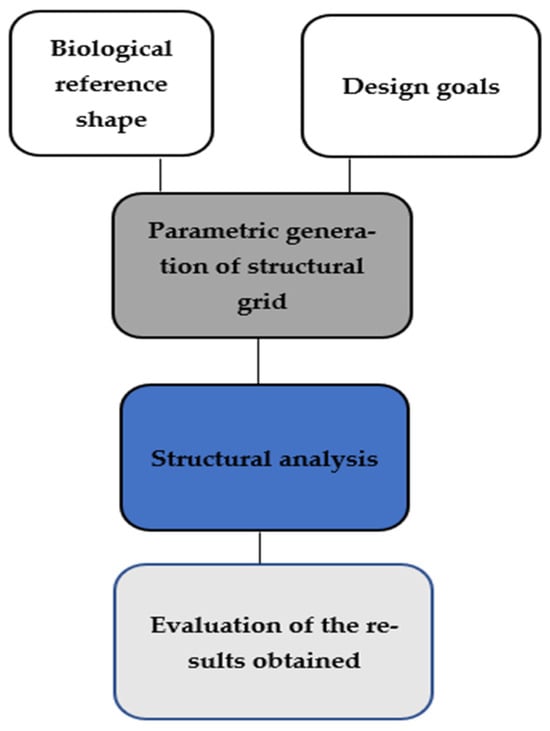
The research procedure comprised the following stages:
- development of the reference geometry as a bionic form;
- parametric generation of the structural grid;
- interactive parametric structural analysis and optimization;
- evaluation of the results obtained.
The research procedure adopted in this study is illustrated in Figure 1 and described in detail in the following sections.
Figure 1.
Schematic representation of the research procedure.
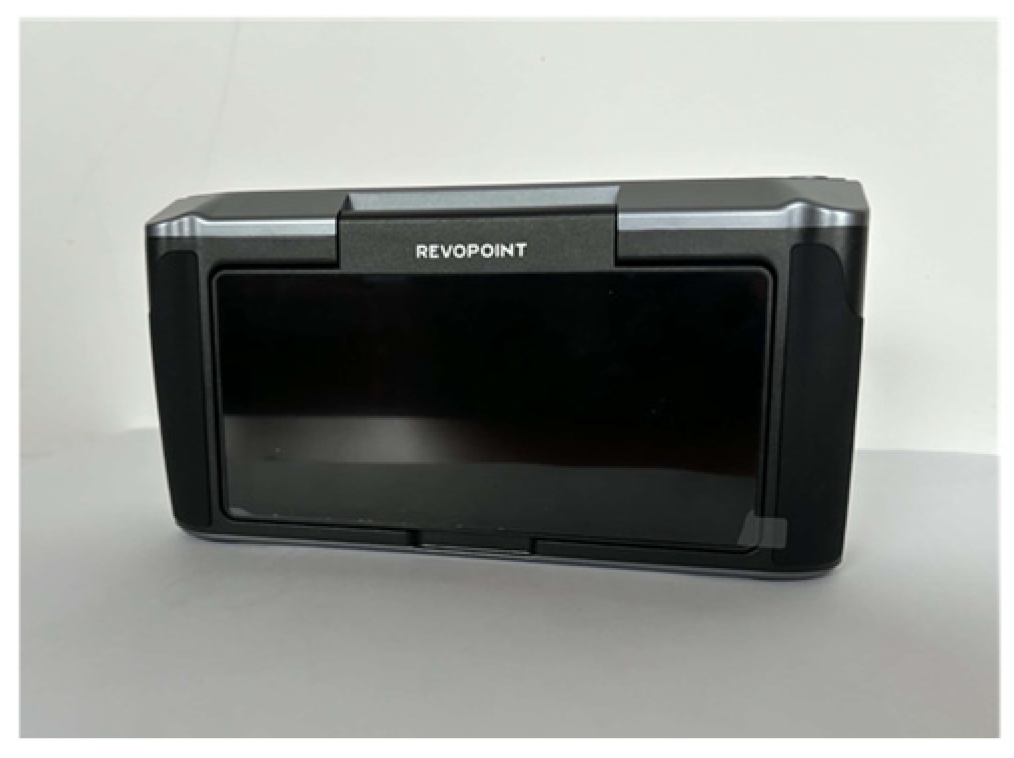
Shell morphology was selected as the reference geometry for the form development of grid structures owing to its high structural efficiency, resulting from millions of years of evolutionary adaptation to mechanical loading and hydrostatic pressure. The geometric data of the selected shells were acquired using a high-resolution Revopoint MIRACO 16G optical 3D scanner (Revopoint, Shenzhen, China), enabling the accurate capture of surface morphology Figure 2.
Figure 2.
Revopoint MIRACO 16G employed to capture the geometry of the natural shell form.
The resulting point clouds were subsequently processed The data-processing procedure included point-cloud filtering, the removal of measurement artefacts, and the reduction in scanning noise. The reconstructed shell surface was then adopted as the base geometry for generating the structural grid. Parametric geometric modelling and interactive structural analysis and optimization of the resulting spatial steel grid structures were performed in the Rhinoceros 3D (version 8) Seattle, WA, USA: Robert McNeel & Associates environment [26,27]. Autodesk Robot Structural Analysis Professional 2026 San Francisco, CA, USA: Autodesk, Inc. (ARSAP, Version 2024) was additionally used as an independent computational tool to verify the numerical results [28].
3. Results
3.1. Selection of a Reference Surface for Structural Form Development
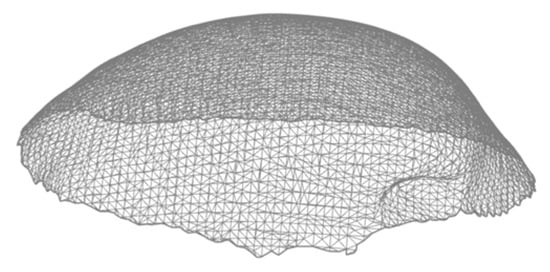
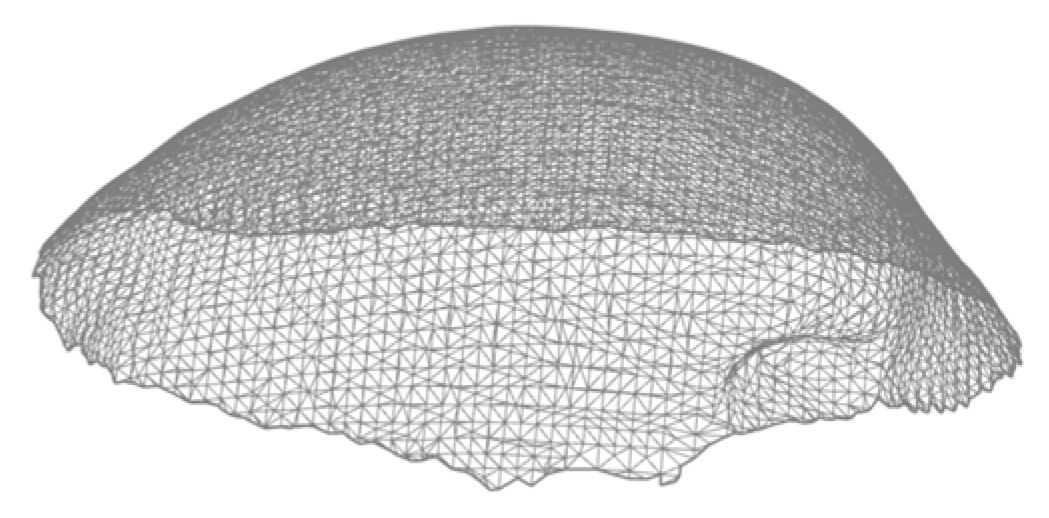
As previously indicated, preliminary scans of several Venus clam shells were performed using a Revopoint MIRACO 16G high-resolution optical 3D scanner, which enabled the accurate capture of their complex surface morphology. The resulting point clouds were subsequently processed through data filtering and scan-noise reduction. Next, the shell mesh exhibiting the most regular geometry was selected for further analysis, as its form was particularly suitable for the distribution of structural grid nodes (Figure 3).
Figure 3.
Venus clam shell mesh obtained from the scanning.
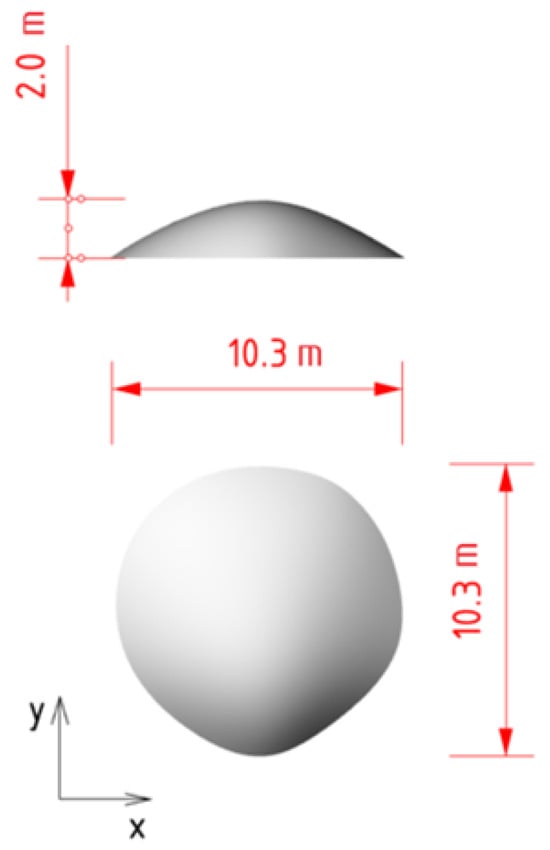
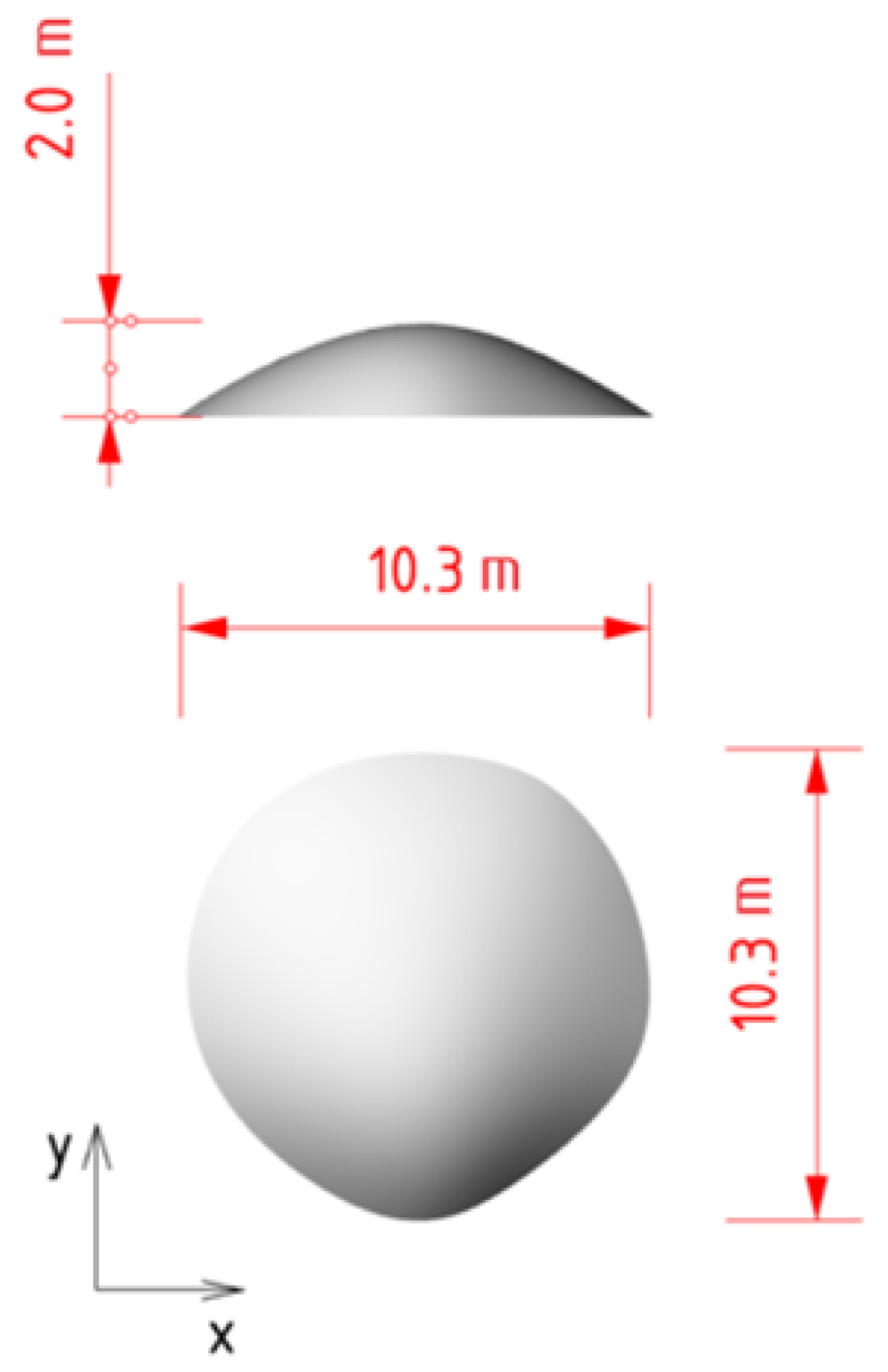
Since the selected scan form was intended to serve as the reference geometry for the development of a roof structure, it was subjected to further geometric transformations. The lower portion of the shell was trimmed using a horizontal plane, after which the remaining surface was scaled to obtain a roof model of the medium-scale architectural pavilion. Therefore, the maximum roof height was assumed to be 2.0 m, which, following 3D scaling, corresponded to maximum roof dimensions in plan of 10.3 m × 10.3 m (Figure 4).
Figure 4.
Orthogonal projections of the reference surface used for the grid shell creation.
3.2. Parametric Geometric Design of the Structure
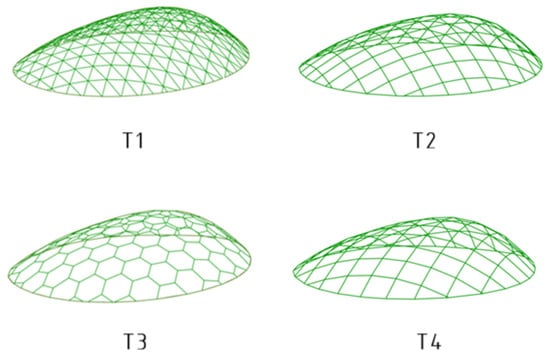
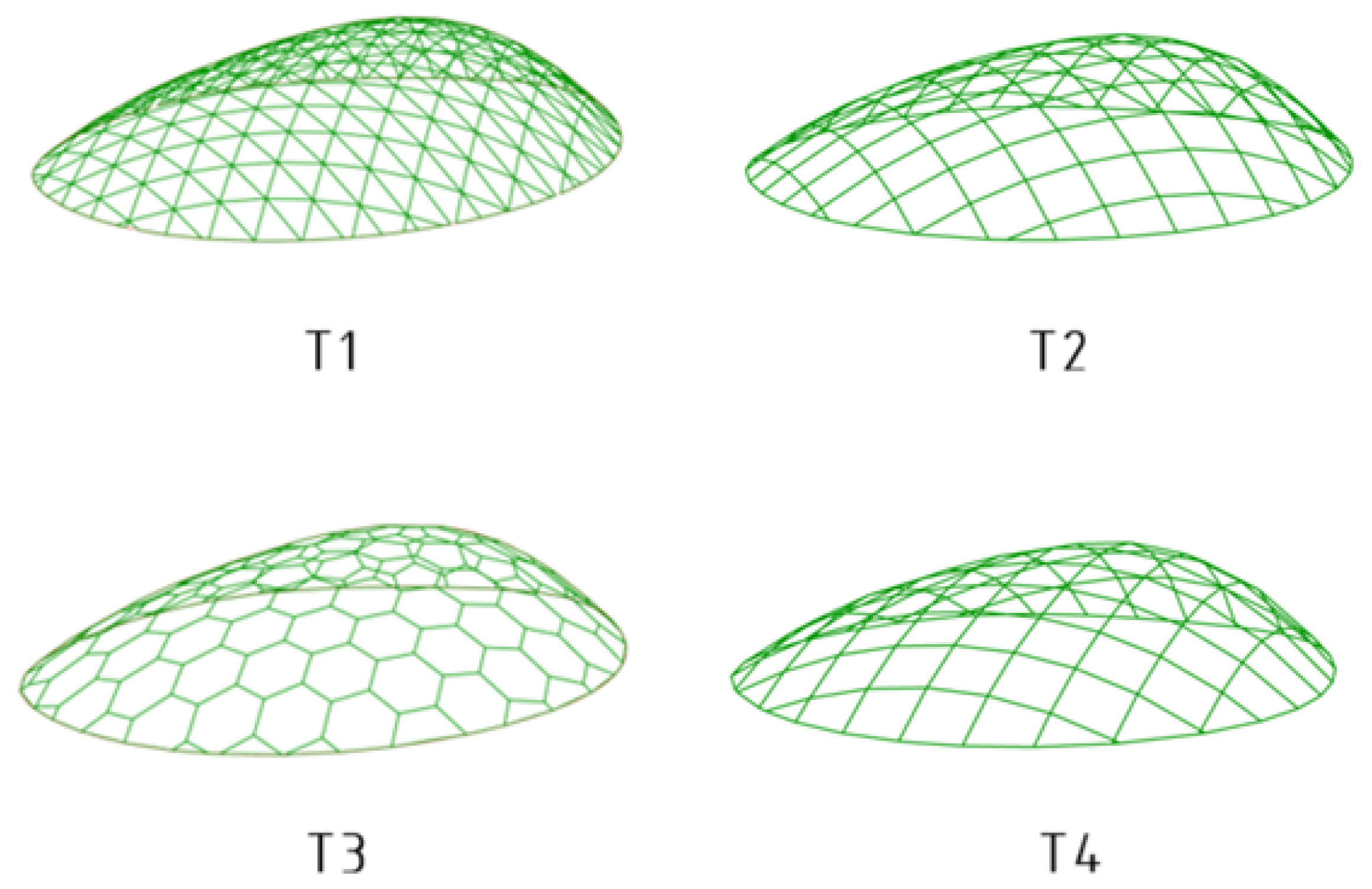
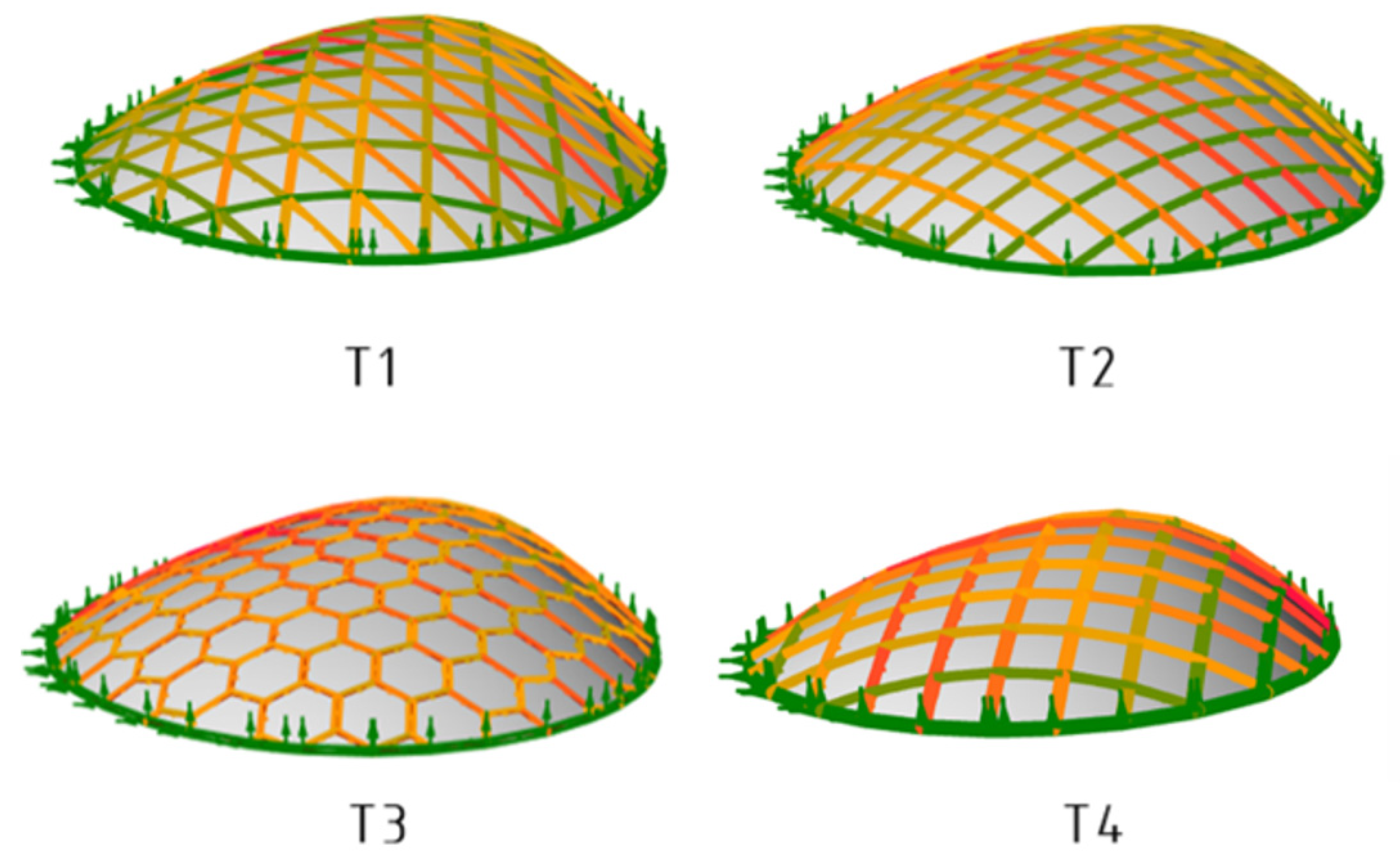
Next, four grid topologies, namely triangular, diagrid, hexagonal, and quadrilateral, were generated on the previously established base surface. To facilitate this process, the authors developed a Grasshopper workflow incorporating a custom Python 2.7 script component whose code for transformation flat grids onto base surfaces was created with the assistance of ChatGPT (GPT-5) Open AI), a large language model (LLM), to map planar grid configurations onto the reference surface. Following its development, the code was verified and tested during the subsequent stages of the computational procedure. The transformation was controlled by two variable parameters: the grid topology and the number of surface subdivisions in the orthogonal x and y directions. The procedure resulted in four families of reticulated structures characterized by different grid topologies, with all nodes located on the bionic reference form. The structural nodes were interconnected by straight members to form a lattice structure. Hereafter, these configurations will be referred to as Types 1, 2, 3, and 4 of the single-layer grid shell, as shown in Figure 5.
Figure 5.
Steel grid shell structures with topologies T1, T2, T3, and T4.
The triangular grid topology T1 consists of triangular cells that provide a high degree of geometric stability and structural stiffness. In a regular grid, six members typically converge at an internal node, resulting in a nodal valence of six. However, the high valence may increase the geometric complexity of the nodes and make their fabrication more challenging. The diagrid topology T2 consists of inclined members forming a repetitive pattern of rhombic cells. At a typical internal node, four inclined members intersect, corresponding to a nodal valence of four. This arrangement enables the efficient transfer of loads in different directions while combining structural performance with a distinctive architectural expression. On the other hand, the hexagonal grid topology T3 consists of six-sided cells resembling a honeycomb pattern. At a regular internal node, three members typically converge, resulting in a nodal valence of three. The low valence simplifies the connection geometry; however, hexagonal cells are not geometrically stable without additional bracing, rigid joints, or the stabilizing effect of surface curvature. Finally, the quadrilateral grid topology T4 consists of four-sided cells, typically resembling squares, rectangles, or spatial quadrilaterals. A typical internal node has a nodal valence of four.
3.3. Development of an Algorithm for Interactive Structural Analysis
After generating the grid geometry, the next stage of research involved further development of the script in the Rhino/Grasshopper environment to enable the transformation of the geometric bar-grid model into an interactive structural analysis model by means of Karamba3D 3.1 (K3D) [27,28]. Supports were introduced at the boundary nodes of each structure; therefore, their number varied depending on the adopted grid topology and base surface subdivision. Support conditions were incorporated into the model, and the applied loads were defined parametrically. The script input variables comprised grid topology, surface subdivision parameters in the x- and y-directions, load magnitudes, maximum allowable member utilization, maximum allowable displacement, and member cross-sections. The number of supports was treated as a dependent variable, determined by the adopted grid topology and the subdivision parameters in both directions. The resulting script formed the basis of the algorithm used in the subsequent structural optimization studies. The algorithm comprised cross-section optimization using first-order linear analysis, followed by linear eigenvalue buckling analysis to determine and verify the critical load factors, and second-order P–Delta analysis. The detailed design verification of the joints and supports was outside the scope of the study.
3.4. Structural Analysis and Evaluation of the Results
3.4.1. Script Validation Using a Representative Structure
To test the developed script, a representative grid shell structure was selected and analysed using two computational tools: the parametric structural engineering tool K3D [27] and the engineering structural analysis software ARSAP [28].
The representative steel grid structure was based on a triangular topology T1 and generated by subdividing the reference surface into ten parts along each of two mutually perpendicular directions x and y, corresponding to the length and width of the structure projected onto the horizontal base plane. Supports were assigned at the intersection points between the outermost grid members and the boundary of the reference surface. Their number was treated as a variable dependent on the grid topology; however, the representative model adopted for verification comprised sixty-six supports. All structural members were assigned to a single design group to ensure consistent design parameters in the subsequent calculations. The connections between the members were modelled as rigid. A first-order linear static analysis, a linear eigenvalue buckling analysis, and a geometrically nonlinear second-order P–Delta analysis were performed independently using K3D and ARSAP. The structural response of the representative model was then evaluated independently using K3D and ARSAP. The structural analysis accounted for the self-weight of the structure, the permanent load imposed by the roof cladding (sheet metal panels), assumed to be 0.1 kN/m2, and climatic actions due to snow and wind. During analysis, Rzeszow, Poland, was adopted as the reference location for the structure. The city is situated in the third snow load zone [29] and the first wind load zone [30]. Accordingly, the characteristic value of the ground snow load, sk, was assumed to be 1.2 kN/m2. Both the exposure coefficient and the thermal coefficient were taken as 1.0.
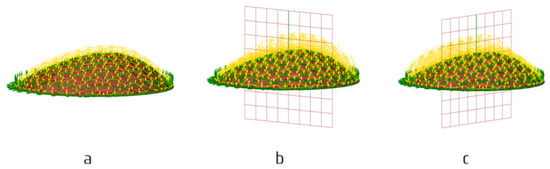
As the relevant design standards do not provide an explicit roof shape coefficient for the geometry considered, its value was determined with reference to the provisions applicable to cylindrical roofs. However, unlike a cylindrical roof, the analysed surface exhibited curvature in two mutually perpendicular directions. For the adopted structural span of 10.3 m × 10.3 m and a rise of f = 2.0 m, a roof shape coefficient of 0.8 was therefore assumed for the uniformly distributed snow load. For the non-uniform snow load cases, shape coefficients of 2.0 and 1.0 were assigned to the two respective parts of the roof surface (divided in both x-z and y-z directions). Consequently, three snow load cases were considered: one uniformly distributed load case and two non-uniformly distributed load cases. The latter were obtained by dividing the roof into two parts using two different mutually perpendicular vertical planes, xz and yz (Figure 6).
Figure 6.
Snow load cases: (a) uniformly distributed snow load, (b) non-uniformly distributed snow load with division in the x–z direction, and (c) non-uniformly distributed snow load with division in the y–z direction (The figure shows the surface division plane and the applied load distribution.).
For wind loading, the basic wind velocity, vbo, was assumed to be 22 m/s, which corresponded to a basic velocity pressure qb,o equal to 0.3 kN/m2.
In the structural analysis conducted using ARSAP, wind actions were generated automatically for eight wind directions. In the K3D analysis, however, the roof was divided, as a simplification, into four wind influence zones. Following an approach analogous to that adopted for the snow load analysis, four wind pressure cases and one wind suction case were considered. Both wind pressure and wind suction were applied normal to the surfaces of the roof panels. The resulting load combinations were generated automatically in ARSAP. However, in K3D, the resulting load cases were subsequently combined into 28 load combinations, comprising both individual and combined loading scenarios. Within the combined scenarios, snow or wind was adopted as the leading action, with wind or snow, respectively, treated as the accompanying action according to the standards [29,30]. Both wind pressure and wind suction conditions were included in the load combinations. However, steel grade 235 was selected as the structural material.
Subsequently, a first-order linear static analysis, a linear buckling analysis, and a second-order P-Delta analysis were performed, with the latter accounting for the influence of the deformed geometry of the structure on the internal forces, using ARSAP and K3D. Within the linear static analysis, the optimization problem was formulated to minimize the structural mass by selecting the optimal member cross-sections subject to the ultimate limit state (ULS) constraints. Next, for the optimized structure, the serviceability limit states (SLS) were verified. For the structure with a span of 10.3 m and the applied sheet-metal cladding, the maximum allowable nodal displacement in the vertical direction was limited to L/250, corresponding to approximately 40 mm, where L was the span of the structure. In both computational models, during cross-section optimization, circular hollow sections (CHSs) selected from the EN 10219-1:2019 [31] database were employed, with the minimum wall thickness restricted to 3.2 mm. Global stability was assessed using linear buckling analysis. The governing load combination was identified as the non-uniform snow load case in which the loaded surface was divided by the yz-plane. The first ten buckling modes and corresponding buckling load factors were examined to identify the governing global and local instability modes. The critical load factors ranged from 8.2 to 11.7. As several critical buckling load factors were below 10, a geometrically nonlinear second-order P–Delta analysis was performed to account for second-order effects and provide a more comprehensive assessment of structural stability. The inclusion of second-order effects in the nonlinear P–Delta analysis did not affect the optimized structural mass relative to that obtained from the first-order linear analysis. The resulting optimal structural masses were 887.32 kg for ARSAP and 884.42 kg for K3D.
The difference between the optimal masses obtained using the two software packages was very small. Since the present study focuses on the preliminary design stage and involves the evaluation of multiple structural variants, the observed agreement between the results was considered very satisfactory. The accuracy of the results obtained using K3D was therefore deemed sufficient for its application as a parametric structural engineering tool in further research. Since the same mesh-to-member load-transfer procedure was intended to be consistently applied to all grid configurations in K3D, the triangular topology was considered representative, and separate validation of the remaining topologies was not undertaken in further steps.
It is important to highlight that the global extreme values of the bending moments about the local y-axis MY and local z-axis MZ of the structural members, for all members ranged from −0.08 to −0.03 kNm and from −0.01 to 0.02 kNm, respectively. The relatively small bending moments indicated that the structural response was dominated by axial forces, as intended in an efficiently shaped grid shell.
3.4.2. Comparative Analysis of the Structural Efficiency of Curved Bar Structures Derived from Bionic Forms Using K3D
In the subsequent stage of the study, a comparative analysis was conducted on curvilinear steel grid shell structures developed from the shell-derived reference surface using four different topologies, T1, T2, T3, and T4, and varying values of their defining parameters x and y. The initial assumptions concerning the location of the structure, the adopted roof shape coefficients and the snow and wind loads as well as the CHS restriction were consistent with those applied in the preliminary design for the representative structure, presented in Section 3.4.1.
Two optimization approaches were developed and implemented in the further study. In the first approach, the relationship between the structural mass and the adopted surface subdivision parameters in the x and y directions was investigated for each grid topology T1–T4. During the optimization process, first-order linear analysis and linear eigenvalue buckling analysis were performed. The first ten buckling modes and corresponding critical load factors were examined to identify the governing global and local instability modes. Since the critical load factors were lower than 10 for some structural variants, a second-order P–Delta analysis was also performed for all ULS load combinations considered for all structures. The member cross-sections were optimized to minimize the structural mass while satisfying both the ULS and SLS requirements. During optimization, the maximum member utilization ratio was assumed to be 90%, and the allowable displacement was set at 40 mm. The investigated topologies were generated using equal numbers of surface subdivisions in the x- and y-directions, varying from 5 to 15 in increments of 1.
The results obtained for eleven structures of each topology, namely triangular T1, diagrid T2, hexagonal T3, and quadrilateral T4, are presented in Table 1, Table 2, Table 3 and Table 4 respectively.
Table 1.
Results of topology T1 optimization due to ULS and SLS.
Table 2.
Results of topology T2 optimization due to ULS and SLS.
Table 3.
Results of topology T3 optimization due to ULS and SLS.
Table 4.
Results of topology T4 optimization due to ULS and SLS.
In the second approach, a genetic algorithm-based procedure was applied to each topology to minimize structural mass. The optimization was performed using the Galapagos for Rhino8 evolutionary solver integrated with the parametric Grasshopper–Karamba3D model, with a population size of 50 individuals per generation. The initial boost factor of 2 was applied to increase the diversity of the initial solution set. An inbreeding rate of 75% promoted the exploration of the neighbourhood of promising solutions, while a maintenance rate of 5% allowed the best-performing individuals to be retained in subsequent generations. The optimization was terminated when no improvement in the fitness value was observed over 50 consecutive generations.
The mesh subdivision parameters in the x and y directions were adopted as geometric design variables, while the member cross-sections were treated as structural design variables. Both parameters x and y were defined as integers ranging from 5 to 15; however, CHSs were selected from the EN 10219-1:2019 [31] database. The objective of the optimization was to identify the combination of the x and parameters, which were allowed to vary independently, that resulted in the minimum structural mass and optimized cross-sections. During the optimization process, as previously, a first-order linear analysis, linear buckling and second-order P–Delta analysis were performed for each topology variant, and the member cross-sections were optimized to minimize the structural mass while satisfying both ULS and SLS. The utilization and displacement limits were set at 90% and 40 mm, respectively. The optimization results for all topologies T1, T2, T3, and T4 are presented in Table 5.
Table 5.
Optimization results for structures of four topologies: T1, T2, T3, and T4.
Since all the structures shared the same reference surface, corresponding to the shell surface, as well as the same enclosed volume and horizontal-plane projection, structural mass was adopted as the principal indicator of structural efficiency. Based on the results presented in Table 1, Table 2, Table 3 and Table 4, it can be concluded that the structural mass depended both on the grid topology and on the subdivision of the reference surface in the x and y directions. The mean masses of all the structures analysed with triangular T1, diagrid T2, hexagonal T3, and quadrilateral T4 topologies were 1009.07 kg, 1120.79 kg, 1491.42 kg, and 1122.44 kg, respectively. Thus, the structures with triangular topology exhibited the lowest mean mass, whereas those with hexagonal grids had the highest. The diagrid and quadrilateral structures were characterised by comparable mean mass values.
Furthermore, the structures with the quadrilateral topology proved to be the least sensitive to changes in the subdivision of the reference surface in the x and y directions. In other words, their mass varied to the smallest extent as the subdivision parameters were modified, compared with the structures featuring triangular, diagrid, or hexagonal topologies.
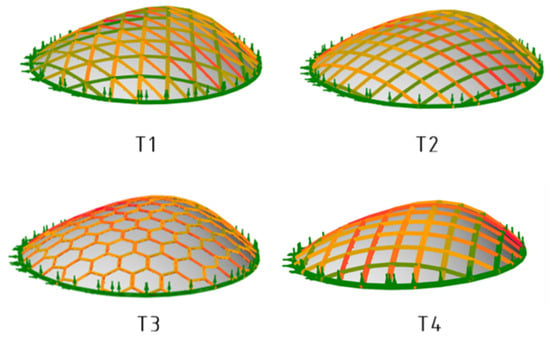
In turn, the genetic optimization of the structures showed that, among the investigated configurations, the triangular topology T1 was the most efficient, achieving the minimum structural mass for subdivision parameters of 10, 10. For topology T2, the minimum structural mass was obtained for a 6, 6 subdivision, whereas the optimal subdivisions for topologies T3 and T4 were 8, 8 and 7, 7, respectively. The bending moments occurring at the nodes were negligible or zero. In contrast, the magnitudes of the axial forces in the structural members depended on the load combination considered. The governing design case was the non-uniform snow load applied to the structure divided by the vertical yz plane. Figure 7 illustrates the utilization ratios of the structural members for the structures with a 10, 10 subdivision under the governing load combination. Among the analysed configurations, the structure with the hexagonal topology T3 exhibited the most uniform distribution of member utilization ratios.
Figure 7.
Utilization of axial force N capacity for the governing load combination for four topologies (T1, T2, T3, and T4) with a 10, 10 subdivision, (Red represents the highest utilization level, orange represents the average utilization level, and green represents the lowest utilization level).
4. Discussion
The study demonstrated a high degree of consistency between the results of the structural analyses performed using the conventional engineering software ARSAP and those obtained with K3D, a parametric and interactive structural analysis tool. This agreement confirms that K3D can be reliably applied to structural analyses at the preliminary design stage, when the rapid evaluation and comparison of multiple design alternatives are particularly important. Although developing a comprehensive computational script for the analysis of a curved structure is a time-consuming process, once established, the script enables a broad range of design solutions to be investigated efficiently. An important and original contribution of the present study is that the structural optimization incorporated first-order linear analysis, linear buckling and second-order P–Delta analysis and considered all permanent and variable actions relevant to the specified location. Consequently, the results can be regarded as sufficiently reliable for preliminary design purposes.
The analyses also confirmed the structural efficiency of the systems developed on the basis of bionic forms. This efficiency was reflected in the negligible or zero bending moments at the structural nodes and the predominantly axial distribution of forces within the structural members. Such structural behaviour contributed to minimizing the mass of the generated forms. A comparative analysis of the results indicates that the efficiency of a curved bar structure is largely dependent on its topology. However, no clear relationship could be established between structural mass and either the adopted topology or the subdivision density. However, the genetic optimization results showed that the most mass-efficient solutions were generally obtained when the reference surface was subdivided equally in the two orthogonal x and y directions. For variants characterized by equal values of the x and y subdivision parameters, the triangular topology proved to be the most structurally efficient. The ratio of the mean structural masses of the triangular, diagrid, hexagonal, and quadrilateral topologies was 1:1.111:1.478:1.112. Thus, relative to the mean mass of the T1 structure, the mean masses of the T2, T3, and T4 structures were higher by 11.1%, 47.8%, and 11.2%, respectively. The ratio of the mean numbers of structural members for topologies T1, T2, T3, and T4 was 1.53:1.08:1.79:1, whereas the corresponding ratio of the mean numbers of nodes was 1.19:1.08:2.16:1.
Analysis of the above ratios indicates that the structures with the triangular topology T1 were the most efficient in terms of structural mass, whereas those with the quadrilateral topology T4 were the most efficient from a technological perspective. Considering the entire set of structures representing four different topologies and x and y subdivision parameters ranging from 5 to 15, the T4 structure with a 7,7 subdivision can be regarded as the most advantageous overall solution. Regarding manufacturability, the quadrilateral topology T4 is significantly more suitable for industrial practice due to its lower node count and simplified joint detailing compared to topology T1. While other grid designs, such as Voronoi and Kagome patterns, can also be applied to the reference surface, the considered topologies T1 to T4 represent the most fundamental engineering patterns. However, the future development and evaluation of grids with alternative topologies, such as Voronoi and Kagome patterns, applied to bioinspired forms are not precluded.
It should be noted that the mass assessment included only the bar members and excluded the spatial joints. Joint geometry and complexity vary among grid topologies, while joint mass depends on the connection technology employed. Including joint mass at the detailed design stage could affect the comparative evaluation of the mass efficiency of the investigated configurations. Nevertheless, the analyses and optimization studies presented in this paper may provide useful guidelines for the development of efficient curved steel grid structures at the early design stage.
The authors wish to emphasize that the adopted wind-load model for the curved surface, including its division into windward and leeward zones, accounted for the most unfavourable loading scenarios. Both software packages ARSAP and K3D produced similar, although approximate, results. A detailed design of the structure to be constructed should additionally involve computational fluid dynamics (CFD) analysis to simulate fluid flow, primarily airflow in the present case, to accurately capture aerodynamic pressure distributions. Nevertheless, the adopted approach provides sufficiently reliable results for the preliminary design of curved steel grid structures.
The results confirmed that the use of natural forms in the development of steel grid structures promotes predominantly membrane-dominated structural behaviour. This limits the contribution of bending and enables a reduction in structural mass. However, owing to the asymmetry of the adopted forms, the resulting grid structures were characterized by a low degree of member repeatability. Furthermore, among the grid types considered, only the triangular grids consisted of planar cells. Consequently, the application of flat cladding panels to the generated forms would require further planarization of the diagrid, hexagonal, and quadrilateral grid cells. This process would inevitably involve some deviation from the reference surface and require a compromise between structural and technological efficiency.
Future research should examine the influence of structural scale on the relative material efficiency of the considered topologies. However, the developed algorithm offers a versatile framework for single- and multi-objective optimization using different objective functions. It enables structural grids to be generated on surfaces with different geometries and scales, as well as facilitates their analysis under climatic loads corresponding to different geographical locations.
5. Conclusions
The developed computational workflow provides an integrated framework for the comparative analysis and optimization of steel grid shells inspired by natural shell forms. By combining parametric geometric modelling with iterative first-order linear analysis, linear eigenvalue buckling analysis, geometrically nonlinear second-order P–Delta analysis, and genetic optimization, the proposed approach enables the automated generation and consistent assessment of multiple grid topologies and surface subdivision variants. Its main scientific contribution is the establishment of a unified methodology for investigating the relationships between structural geometry, mechanical performance, steel consumption, and fabrication complexity. This integrated approach facilitates the identification of configurations that use material efficiently while satisfying the adopted structural requirements and limiting technological complexity. The results demonstrate that grid topology and subdivision density are key design variables influencing the structural response and material demand of curved steel grid systems. The proposed methodology can therefore support topology selection and material-efficient preliminary design while providing a transferable basis for developing lightweight steel structures with enhanced structural and constructability performance.
Author Contributions
Conceptualization, J.D. and A.S.; methodology, J.D. and A.S.; software, J.D. and A.S.; validation, J.D. and A.S.; formal analysis, J.D. and A.S.; investigation, J.D. and A.S.; resources, J.D. and A.S.; data curation, J.D. and A.S.; writing—original draft preparation, J.D. and A.S.; writing—review and editing, J.D.; visualization, J.D. and A.S.; supervision, J.D.; project administration, J.D.; funding acquisition, J.D. All authors have read and agreed to the published version of the manuscript.
Funding
Financed by the Minister of Science and Higher Education Republic of Poland within the program “Regional Excellence Initiative” (project number RID/SP/0032/2024/01).
Institutional Review Board Statement
Not applicable.
Informed Consent Statement
Not applicable.
Data Availability Statement
The original contributions presented in this study are included in the article. Further inquiries can be directed to the corresponding author.
Acknowledgments
During the preparation of this manuscript/study, the authors used ChatGPT (GPT-5, Open AI) for support in Python code creation as well as for English-language editing of the manuscript. The authors have reviewed and edited the output and take full responsibility for the content of this publication.
Conflicts of Interest
The authors declare no conflicts of interest.
Abbreviations
The following abbreviations are used in this manuscript:
| sk | The characteristic value of the ground snow load |
| vbo | Wind velocity |
| CHS | Circular Hollow Section |
| ULS | Ultimate Limit State |
| SLS | Serviceability Limit State |
| ARSP | Autodesk Robot Structural Analysis Professional |
| K3D | Karamba3D |
| FEM | Finite Element Method |
| AI | Artificial intelligence |
References
- Mizobuti, V.; Vieira Junior, L.C.M. Bioinspired Architectural Design Based on Structural Topology Optimization. Front. Archit. Res. 2020, 9, 264–276. [Google Scholar] [CrossRef] [Scilit]
- Białkiewicz, J.J. Biomimetics and Biomimicry. Their Role as a Tool and Ideology in Contemporary Architecture. Architectus 2024, 3, 94–105. [Google Scholar] [CrossRef] [Scilit]
- Piętocha, A.; Koda, E. Sustainable Design and Energy Efficiency in Supertall and Megatall Buildings: Challenges of Multi-Criteria Certification Implementation. Energies 2026, 19, 133. [Google Scholar] [CrossRef] [Scilit]
- Stefańska, A.; Gawell, E. Contemporary Free-Form Pavilions with the Delaunay Gridshell Patterns. E3S Web Conf. 2020, 220, 01077. [Google Scholar] [CrossRef] [Scilit]
- Stefańska, A.; Rokicki, W. Architectural Design Optimisation in Reticulated Free-Form Canopies. Buildings 2022, 12, 1068. [Google Scholar] [CrossRef] [Scilit]
- Dasari, S.K.; Fantuzzi, N.; Trovalusci, P.; Panei, R.; Pingaro, M. Optimal Design of a Canopy Using Parametric Structural Design and a Genetic Algorithm. Symmetry 2023, 15, 142. [Google Scholar] [CrossRef] [Scilit]
- Dzwierzynska, J.; Lechwar, P. Comparative analysis of steel bar structures of solar canopies composed of hyperbolic paraboloid units using genetic algorithms. J. Build. Eng. 2024, 95, 110225. [Google Scholar] [CrossRef] [Scilit]
- Nowak, M.; Boguszewski, A. Topology Optimization without Volume Constraint—The New Paradigm for Lightweight Design. Bull. Pol. Acad. Sci. Tech. Sci. 2021, 69, e137732. [Google Scholar] [CrossRef] [Scilit]
- Bazmara, M.; Sauer, R.A.; Agrawal, A. Biomimetic Torene Shells. Math. Mech. Solids 2023, 28, 1926–1935. [Google Scholar] [CrossRef] [Scilit]
- Dzwierzynska, J.; Lechwar, P. Algorithmic-Aided Approach for the Design and Evaluation of Curvilinear Steel Bar Structures of Unit Roofs. Materials 2022, 15, 3656. [Google Scholar] [CrossRef] [Scilit]
- Kenny, V.; Bapat, S.; Smith, P.; La Scala, J.; Malshe, A.P. Bioinspired Designs for Lightweighting, a Critical Review for Manufacturing. Biomimetics 2025, 10, 150. [Google Scholar] [CrossRef] [Scilit]
- Wang, H.; Li, S.; Zhou, Q.; Peng, H.; Liu, X.; Shao, Z.; Song, P. A Review of Recent Research on Bionic Structural Characteristics and Performance Mechanisms of Biomimetic Materials. Compos. Part B Eng. 2025, 304, 112681. [Google Scholar] [CrossRef] [Scilit]
- Shen, Y.; Liu, Y. Bioinspired Building Structural Conceptual Design by Graphic Static and Layout Optimization: A Case Study of Human Femur Structure. J. Asian Archit. Build. Eng. 2022, 21, 1762–1778. [Google Scholar] [CrossRef] [Scilit]
- Aguilar-Planet, T.; Peralta, E. Innovation Inspired by Nature: Applications of Biomimicry in Engineering Design. Biomimetics 2024, 9, 523. [Google Scholar] [CrossRef] [Scilit]
- Bayat, M.J.; Kalhori, A.; Babaei, M.; Asemi, K. Buckling Characteristics of Bio-Inspired Helicoidal Laminated Composite Spherical Shells under External Normal and Torsional Loads Subjected to Elastic Support. Buildings 2025, 15, 3165. [Google Scholar] [CrossRef] [Scilit]
- Oguntona, O.A.; Aigbavboa, C.O. Nature Inspiration, Imitation, and Emulation: Biomimicry Thinking Path to Sustainability in the Construction Industry. Front. Built Environ. 2023, 9, 1085979. [Google Scholar] [CrossRef] [Scilit]
- Dzwierzynska, J.; Labuda, I. Modeling of Curvilinear Steel Rod Structures Based on Minimal Surfaces. Materials 2021, 14, 6826. [Google Scholar] [CrossRef] [Scilit]
- Pacios-Álvarez, A.; Fogaça, D.R.; Ordieres-Meré, J.; Vizier, E. Biomimetic Approaches for Carbon Neutrality in Construction: A Systematic Review of Nature-Inspired Solutions across the Life Cycle. Clean Technol. Environ. Policy 2026, 28, 129. [Google Scholar] [CrossRef] [Scilit]
- Jahed, S. Imitating Nature to Create Smart Technologies: Biomimicry and Artificial Intelligence for Sustainable Innovation. ARCENG 2025, 5, 175–182. [Google Scholar]
- Sadiq, M.A.; Kovács, G. Optimization of Composite Sandwich Structures: A Review. Machines 2025, 13, 536. [Google Scholar] [CrossRef] [Scilit]
- Sippach, T.; Dahy, H.; Uhlig, K.; Grisin, B.; Carosella, S.; Middendorf, P. Structural Optimization through Biomimetic-Inspired Material-Specific Application of Plant-Based Natural Fiber-Reinforced Polymer Composites (NFRP) for Future Sustainable Lightweight Architecture. Polymers 2020, 12, 3048. [Google Scholar] [CrossRef] [Scilit]
- Lin, S.-Y.; Lai, Y.-T. Stiffness and Lightweight Enhancement in Biomimetic Design of a Grinding Machine-Tool Structure. Appl. Sci. 2025, 15, 9449. [Google Scholar] [CrossRef] [Scilit]
- Stefańska, A.; Kurcjusz, M. From Nature to Neural Networks: AI-Driven Biomimetic Optimization in Architectural Design and Fabrication. Sustainability 2025, 17, 11333. [Google Scholar] [CrossRef] [Scilit]
- Saber, M.; Keshvari, P.; Zomorodian, Z.S. A Bio-Inspired Algorithmic Approach for Form Generation, Structural Analysis, and Optimization of Large Span Cantilevered Roofs. J. Build. Eng. 2026, 120, 115534. [Google Scholar] [CrossRef] [Scilit]
- Vatandoost, M.; Golabchi, M.; Ekhlassi, A.; Rahbar, M. Computational Morphogenesis of Lightweight Continuous Concrete Shell Structures by Utilizing Metaheuristic Algorithms. J. Int. Assoc. Shell Spat. Struct. 2024, 65, 171–188. [Google Scholar] [CrossRef] [Scilit]
- Robert McNeel & Associates. Rhinoceros 3D, Version 7.0. 2020. Available online: https://www.rhino3d.com (accessed on 12 September 2026).
- Preisinger, C. Linking Structure and Parametric Geometry. Archit. Des. 2013, 83, 110–113. [Google Scholar] [CrossRef] [Scilit]
- Autodesk. Autodesk Robot Structural Analysis Professional; Version 2024; Autodesk, Inc.: San Francisco, CA, USA, 2023; Available online: https://www.autodesk.com/products/robot-structural-analysis/overview (accessed on 7 September 2026).
- PN-EN 1991-1-3; Eurocode 1: Actions on Structures—Part 1–3: General Actions—Snow Loads. Polish Committee for Standardization (PKN): Warsaw, Poland, 2006.
- PN-EN 1991-1-4; Eurocode 1: Actions on Structures—Part 1–4: General Actions—Wind Actions. Polish Committee for Standardization (PKN): Warsaw, Poland, 2008.
- PN-EN 10219-1:2019-11; Cold Formed Welded Structural Hollow Sections of Non-Alloy and Fine Grain Steels. Part 1: Technical Delivery Conditions. Polish Committee for Standardization: Warsaw, Poland, 2019.


Disclaimer/Publisher’s Note: The statements, opinions and data contained in all publications are solely those of the individual author(s) and contributor(s) and not of MDPI and/or the editor(s). MDPI and/or the editor(s) disclaim responsibility for any injury to people or property resulting from any ideas, methods, instructions or products referred to in the content. |
© 2026 by the authors. Licensee MDPI, Basel, Switzerland. This article is an open access article distributed under the terms and conditions of the Creative Commons Attribution (CC BY) license.