


Abstract
Microalgae are a promising third-generation biomass resource due to their high photosynthetic efficiency, rapid growth rates, capacity to accumulate energy-rich biochemical fractions, and efficient utilisation of carbon dioxide (CO2). In this study, the effect of illumination colour on the growth and energetic properties of Chlorella vulgaris cultivated in laboratory-scale photobioreactors was investigated. Four independent cultivation cycles were conducted under controlled conditions using a 16 h light/8 h dark photoperiod, temperatures of 20–30 °C, and aeration with air enriched with 10% CO2. Cultures were illuminated using six light colours: plant-specific, white, green, red, blue, and ultraviolet. Biomass productivity was quantified, and the higher heating value (HHV) of the produced biomass was determined by bomb calorimetry. In addition, proximate (technical) analysis was performed for Chlorella vulgaris and compared with Chlorella pyrenoidosa, Spirulina, and Fucus vesiculosus (bladderwrack). The results showed that white illumination promoted both the highest biomass growth and the highest HHV for Chlorella vulgaris (15.08 MJ·kg−1), while ultraviolet illumination had a disruptive effect, leading to the lowest growth and calorific value (11.49 MJ·kg−1). Comparative analysis revealed that Chlorella pyrenoidosa exhibited the most favourable energetic properties; however, Chlorella vulgaris remains attractive for cultivation due to its robustness and broad tolerance to operating conditions.
1. Introduction
The transition towards low-carbon and renewable energy systems has intensified interest in biomass as a sustainable energy resource. Biomass encompasses organic matter derived from plants, animals, and microorganisms, and is widely regarded as carbon-neutral due to its ability to assimilate atmospheric carbon dioxide (CO2) through photosynthesis [1]. Beyond conventional lignocellulosic feedstocks, microalgae have attracted increasing attention as a third-generation biomass resource because of their high photosynthetic efficiency, rapid growth rates, and capacity to accumulate energy-rich biochemical fractions such as lipids and carbohydrates [2,3].
Unlike first- and second-generation bioenergy crops, microalgae cultivation does not compete directly with food production or require arable land and can be implemented in controlled systems such as photobioreactors or open ponds [4,5,6]. Furthermore, microalgae exhibit high CO2 uptake rates and can be integrated with industrial emission streams, positioning them as a promising platform for combined bioenergy production and carbon capture [7,8]. As a result, microalgal biomass has been investigated for a range of thermochemical and biochemical conversion pathways, including combustion, gasification, pyrolysis, hydrothermal liquefaction, and anaerobic digestion, yielding products such as heat, electricity, syngas, bio-oil, hydrogen, and biochar [9,10,11,12,13,14].
From an energy systems perspective, the suitability of microalgal biomass as a fuel is governed not only by biomass productivity but also by its physicochemical and energetic properties [15]. Parameters such as moisture content, ash content, volatile matter, fixed carbon, and higher heating value (HHV) directly influence combustion behaviour, conversion efficiency, and overall energy yield [16,17]. In particular, higher lipid and volatile matter contents are generally associated with increased calorific value, while elevated ash and moisture contents can adversely affect thermochemical conversion routes [17,18,19]. Consequently, cultivation conditions that influence both biomass yield and biochemical composition are critical in determining the net energy potential of microalgae [20].
Among the key cultivation parameters, CO2 availability and light conditions play a dominant role in regulating microalgal growth and composition. Numerous studies have demonstrated that Chlorella vulgaris can tolerate and effectively utilise elevated CO2 concentrations, with reported optimal growth occurring over a wide range (2–12% CO2), and some strains remaining viable even at substantially higher concentrations [21,22,23]. This robustness makes Chlorella vulgaris particularly attractive for coupling algal cultivation with industrial CO2 sources, including flue gas and biogas upgrading streams [24,25,26].
Light is the primary energy input driving photosynthesis, and its characteristics—intensity, photoperiod, and spectral quality—strongly impact microalgal physiology and productivity [27,28]. While light intensity and photoperiod have been extensively investigated, the role of light spectral composition remains less systematically explored, particularly in the context of energy-relevant biomass properties [29]. Microalgae possess photosynthetic pigments, such as chlorophylls a and b and accessory carotenoids, whose absorption spectra are concentrated primarily in the blue (400–500 nm) and red (600–700 nm) regions of the visible spectrum [30]. Consequently, illumination wavelength can influence not only growth kinetics but also metabolic pathways associated with lipid, protein, and carbohydrate synthesis.
Previous studies have shown that specific wavelengths can enhance biomass accumulation or alter biochemical composition, depending on species and cultivation conditions [30,31,32]. For example, red and blue light have been reported to stimulate growth in certain green microalgae, while excessive exposure to short-wavelength or ultraviolet [3] radiation can induce photoinhibition and cellular damage [33,34,35,36]. However, much of the existing literature focuses primarily on biomass productivity, pigment content, or nutrient uptake, with limited attention paid to how spectral quality translates into downstream energy properties such as calorific value and fuel proximate composition [37,38,39,40].
In addition, most comparative studies assess energy content on a mass basis alone, without explicitly accounting for biomass yield per unit culture volume [41,42,43,44]. From a systems and process design perspective, the recoverable energy per unit reactor volume is a critical metric, as it integrates both growth performance and fuel quality. The impact of illumination wavelength on this combined energy yield remains insufficiently quantified [27,45].
Against this background, the present study investigates the effect of light colour on the growth behaviour and energetic properties of Chlorella vulgaris cultivated in laboratory-scale photobioreactors under controlled conditions. Six lighting colours—plant-specific, white, green, red, blue, and ultraviolet—were examined over multiple cultivation cycles to assess biomass growth dynamics, stability, and reproducibility. Light spectrum plays a critical role in microalgal cultivation because different wavelengths influence photosynthetic efficiency, biomass productivity, and cellular metabolism [30]. Previous studies have shown that illumination conditions can also affect the biochemical composition of microalgae, including lipid, protein, and carbohydrate content, which are important parameters for bioenergy applications [27,46,47,48]. In the present study, the primary focus was placed on evaluating the influence of illumination colour on biomass growth kinetics and the resulting energetic properties of the produced biomass. Although detailed biochemical characterisation was beyond the scope of this work, the observed differences in biomass productivity and higher heating value provide an indication of how illumination conditions may affect the energy potential of microalgal biomass. To place the results in a broader energy-biomass context, the energetic and proximate properties of cultivated Chlorella vulgaris were compared with those of other algal species commonly discussed in bioenergy applications, namely Chlorella pyrenoidosa, Spirulina, and Fucus vesiculosus (bladderwrack). This comparative approach enables an assessment of trade-offs between biomass productivity, fuel quality, and species-specific cultivation constraints.
The novelty of this work lies in linking illumination wavelength not only to algal growth performance but also to fuel-relevant energetic characteristics and volumetric energy yield, thereby providing insights that are directly applicable to the design and optimisation of algal bioenergy systems. The findings contribute to a more integrated understanding of how cultivation strategies influence both biomass production and its suitability for thermochemical energy conversion.
2. Materials and Methods
2.1. Experimental Design and Scope of the Study
To address the research objectives, the study was structured into three interconnected experimental stages:
- Investigation of the effect of illumination colour on the growth dynamics of Chlorella vulgaris cultivated in laboratory-scale photobioreactors.
- Determination of the energetic properties (higher heating value, HHV) of the biomass obtained under different lighting conditions.
- Comparative proximate (technical) analysis of cultivated Chlorella vulgaris biomass against selected algal species commonly discussed in bioenergy applications.
All experiments were conducted under controlled laboratory conditions to ensure reproducibility and comparability between cultivation cycles.
2.2. Algal Species and Culture Medium
The primary species investigated in this study was Chlorella vulgaris, selected due to its rapid growth, broad tolerance to environmental conditions, and documented suitability for energy applications, including combustion and anaerobic digestion [49,50,51,52]. The algae were cultivated using Wright’s Cryptophyte (WC) medium, a well-established nutrient solution for freshwater microalgae [53].
The WC medium was prepared prior to each cultivation cycle and consisted of macronutrients, trace metals, vitamins, and a buffering agent. The spectral characteristics and nominal luminous flux of the light sources used in the experiments are summarised in Table 1. The composition of the WC culture medium used for algal cultivation is provided in Table 2. It includes components of the trace element solution added to the WC medium. The vitamin solution was composed of thiamine (3.36 g·L−1) and biotin (3.15 g·L−1). To maintain nutrient availability during cultivation, additional WC medium was supplied on the seventh day of each cycle at a rate of 5 mL per 50 mL of culture suspension. The initial concentration of algal biomass in the culture suspension (seston) did not exceed 0.2 g·L−1. All components were dissolved sequentially following the order reported in the tables, using continuous stirring. Sodium bicarbonate was used as a buffering agent, and the initial pH was adjusted to 7.0 ± 0.1.
Table 1.
Spectral characteristics and nominal luminous flux of light sources used for algal cultivation.
Table 2.
Composition of the WC culture medium used for Chlorella vulgaris cultivation (macronutrients, trace elements (microelements) and buffer).
2.3. Photobioreactor Setup and Cultivation Conditions
Algae were cultivated in laboratory-scale glass photobioreactors with a working volume of 900 mL (1000 mL of the total volume). Each reactor was equipped with an aeration system supplying air enriched with 10 vol.% CO2 to support algal growth and simulate intensified carbon capture conditions. The photobioreactor consisted of a glass cylinder with a height of 190 mm and a diameter of 90 mm. Daily mechanical mixing was applied to prevent sedimentation of biomass and to improve mass transfer of CO2 and nutrients. The aeration flow rate (20 L·min−1) was kept constant throughout the experiment and maintained using a low-flow rotameter.
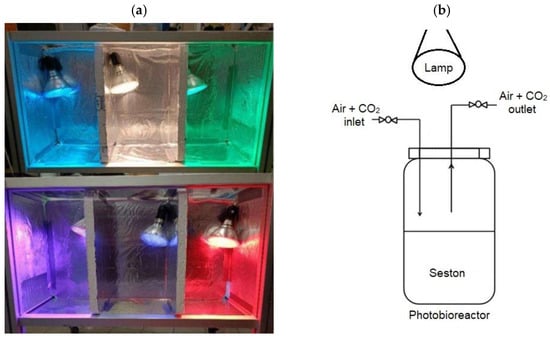
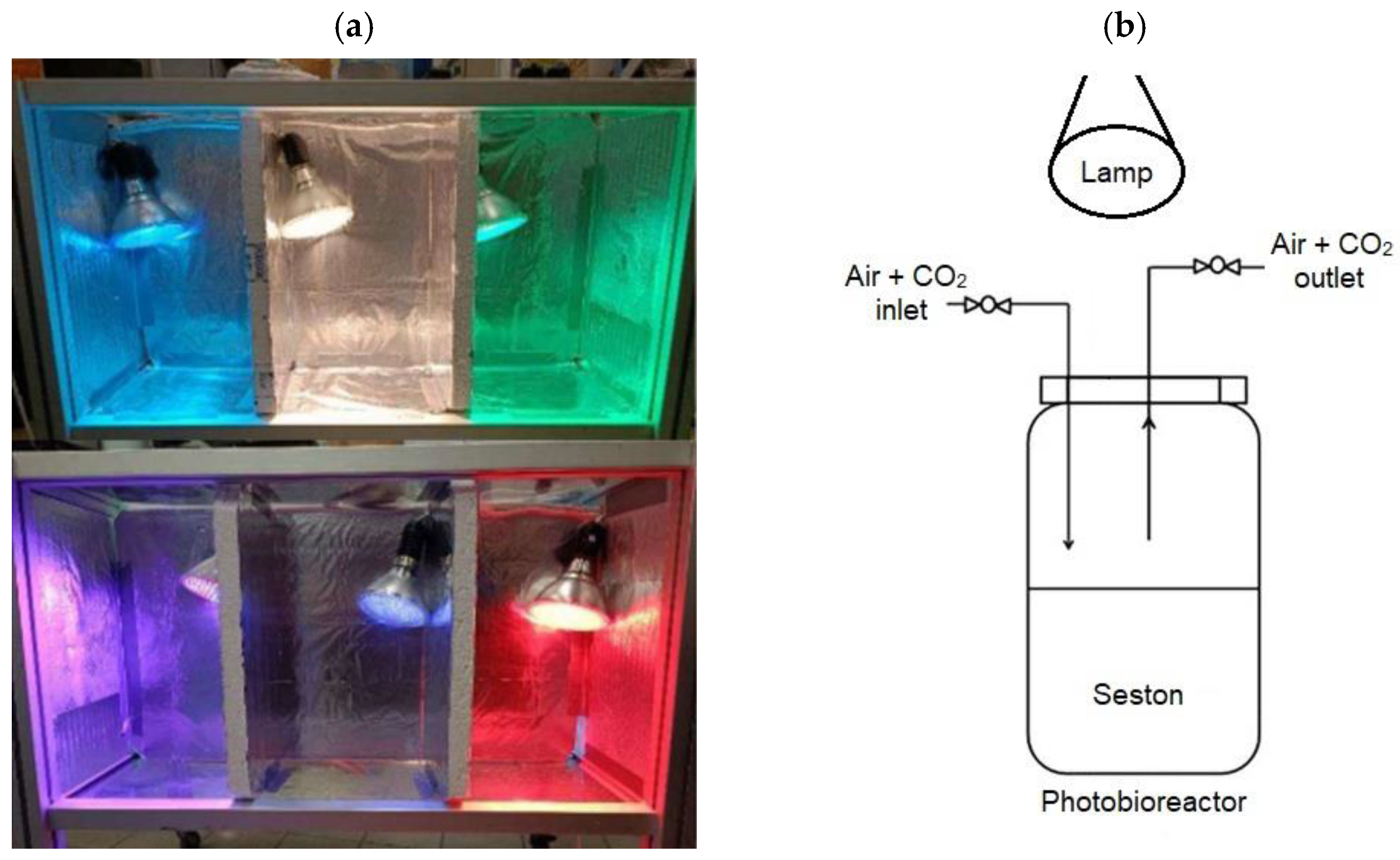
The photobioreactors were placed inside six isolated chambers designed to minimise spectral cross-illumination between different light sources. A photograph of the cultivation system and lighting arrangement is shown in Figure 1a, while a representative photobioreactor during operation is presented in Figure 1b.
Figure 1.
(a) Experimental test rig comprising six isolated illumination chambers for photobioreactor cultivation under different light colours: Blue, white, green, UV, plant and red (from left to right). (b) Photobioreactor during cultivation under white illumination (representative diagram).
Cultivation was conducted under the following controlled conditions:
- Temperature: maintained within the range of 20–30 °C
- Photoperiod: 16 h light/8 h dark
- Cultivation duration: 14 days per cycle
Each cultivation cycle was terminated after 14 days, as preliminary observations showed a significant reduction in biomass growth beyond this period. This approach also reflects practical constraints relevant to semi-continuous algal production systems, where periodic harvesting and medium reuse may enhance overall productivity.
The experimental system consisted of six identical laboratory-scale photobioreactors operating in parallel. Each reactor had the same geometry, working volume, aeration rate, and mixing conditions. The reactors were operated under controlled laboratory conditions to minimise variability between cultivation units. The only intentionally varied parameter was the illumination spectrum applied to each reactor, allowing evaluation of the influence of light wavelength on microalgal growth and biomass properties.
To ensure experimental consistency, all reactors were inoculated with the same initial biomass concentration and cultivated using the same culture medium composition. Temperature, aeration rate, and photoperiod were maintained constant throughout the experiments.
The experiments were performed in several independent cultivation cycles, allowing replication of the measurements. For each illumination condition, the obtained values were analysed using the specific growth rate (), calculated by linear regression of versus cultivation time for each illumination condition and cultivation cycle.
This approach enabled evaluation of variability between independent cultivation runs and improved the reliability of the obtained results. All cultivation experiments were conducted independently under each illumination condition, and the resulting growth parameters were used for subsequent statistical analysis of the illumination effects.
2.4. Illumination Conditions and Light Sources
Six different illumination colours were investigated to evaluate their effect on algal growth and energy properties: Plant-specific light (combined red and blue spectrum), white, green, red, blue and Ultraviolet [3]. All light sources were 15 W lamps positioned at a fixed distance from the photobioreactors, as shown in Figure 1a. The nominal wavelength ranges and luminous flux values provided by the lamps’ datasheets are summarised in Table 1.
The plant-specific lamp consisted of 126 surface-mounted diodes (SMDs), including 90 red and 36 blue LEDs, designed to support photosynthetic activity in higher plants. The white lamp had a correlated colour temperature of 2700 K, corresponding broadly to solar illumination.
It should be noted that illumination was characterised based on wavelength range and electrical power rather than photon flux density (µmol photons·m−2·s−1). While photon-based metrics are more directly relevant to photosynthesis, maintaining identical lamp power and reactor geometry allowed for a controlled comparative assessment of spectral effects. This limitation is acknowledged and considered in the interpretation of results.
2.5. Biomass Growth Measurement
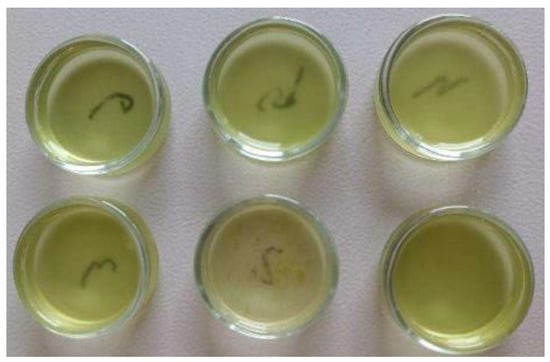
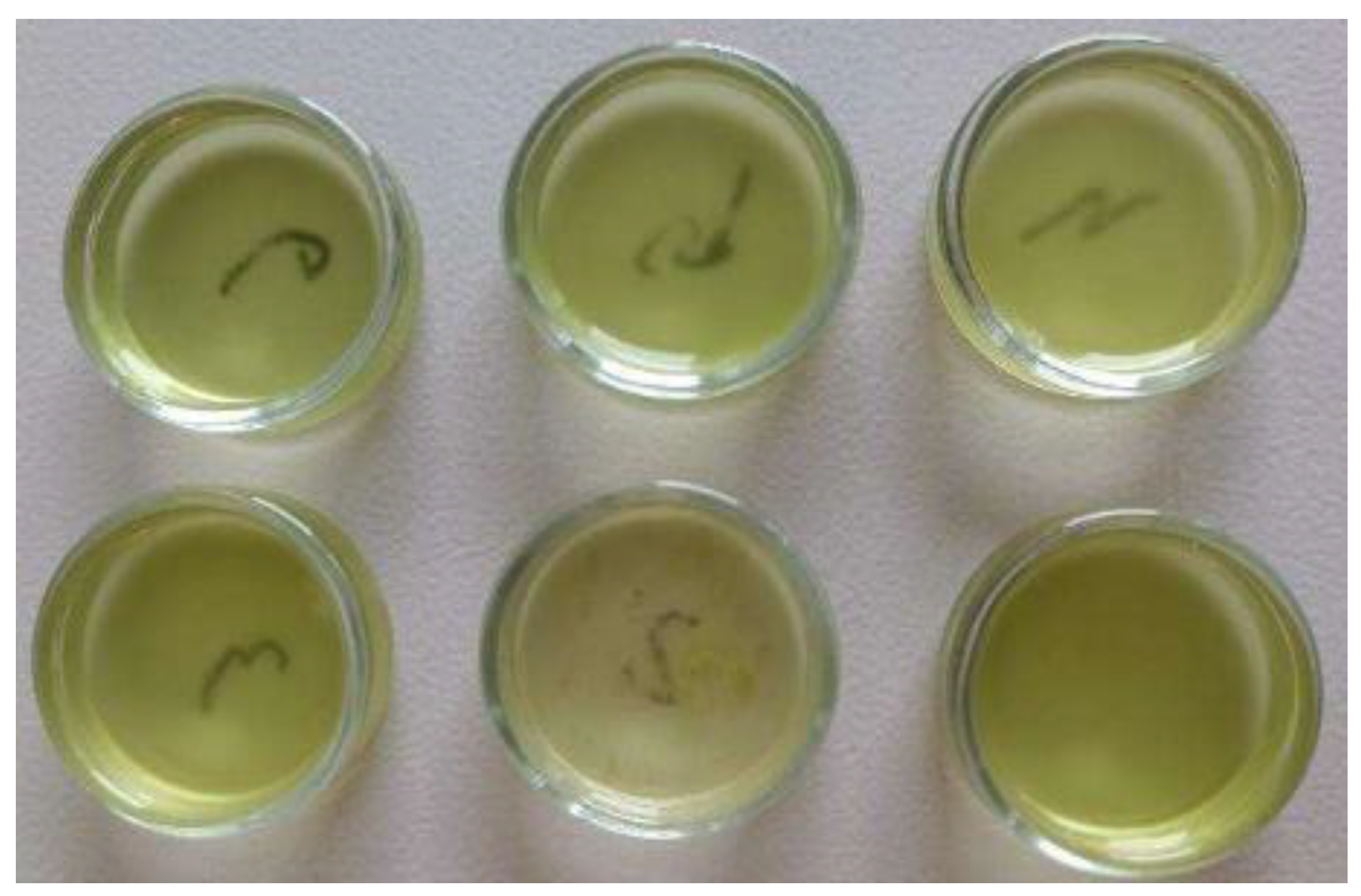
Algal growth was monitored by periodic determination of dry biomass content. Every 3–5 days, approximately 5 mL of culture suspension was extracted from each reactor. The samples were placed in laboratory dishes and dried using an electric dryer until a constant mass was achieved. Representative samples during the drying process are shown in Figure 2.
Figure 2.
Laboratory dishes are used for drying culture samples to determine dry biomass during cultivation.
The mass of dry biomass obtained per litre of culture suspension was used to quantify growth dynamics and calculate percentage increases relative to the initial biomass concentration. Four independent cultivation cycles were conducted under identical conditions to account for biological variability. Final growth values were obtained by averaging results across these cycles.
2.6. Biomass Drying and Sample Preparation
Following completion of each cultivation cycle, the algal biomass was separated from the culture medium and dried at 90 °C for six hours. To enhance evaporation efficiency and ensure uniform drying, the biomass suspension was distributed over a large surface area before drying. The dried biomass was subsequently homogenised and stored in airtight containers until further analysis.
2.7. Determination of Higher Heating Value
The higher heating value (HHV) of the algal biomass was determined using a bomb calorimeter in accordance with Polish Standard PN-C-04375-3:2013 [54,55]. The tests were conducted using a KL 14 calorimeter manufactured by Precyzja Bit, Bydgoszcz, Poland. The measurement method fully complies with the requirements of the relevant standard [54]. The measurement procedure involves the complete combustion of a fuel sample in an oxygen atmosphere under pressure in a calorimetric bomb immersed in water, followed by measurement of the resulting temperature increase of the water. The heat of combustion of the fuel is calculated automatically and displayed on the computer screen. The accuracy of the temperature increase measurement is approximately 0.001 °C.
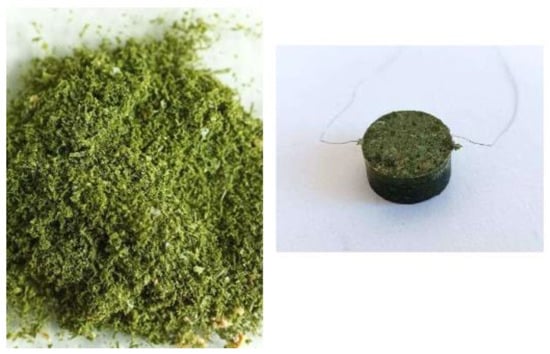
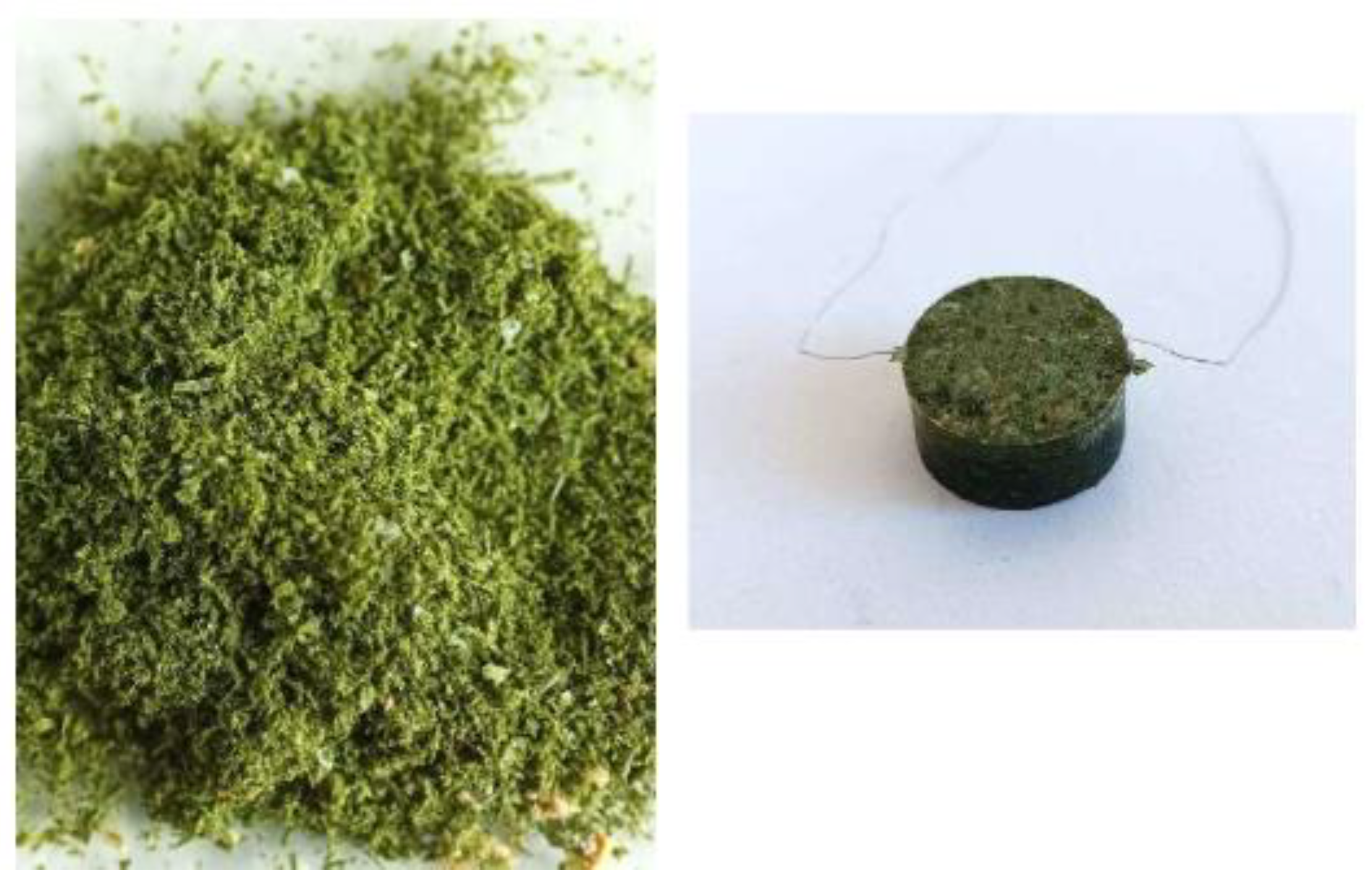
For each measurement, approximately 1 g of dried biomass was pressed into a pellet and fitted with an ignition wire. Biomass obtained from individual cultivation cycles under identical illumination conditions was thoroughly homogenised prior to palletisation and HHV determination to minimise batch-to-batch variability. A representative biomass pellet before and after preparation is shown in Figure 3.
Figure 3.
Biomass sample preparation for bomb calorimetry: dried algal biomass (left); and pressed pellet with ignition wire (right).
The calorimetric bomb was charged with oxygen, sealed, and placed in the calorimetric vessel. The heat of combustion was calculated analytically based on temperature rise and calibration constants of the calorimeter. For each lighting condition, multiple measurements were conducted and averaged to ensure reliability.
2.8. Proximate (Technical) Analysis
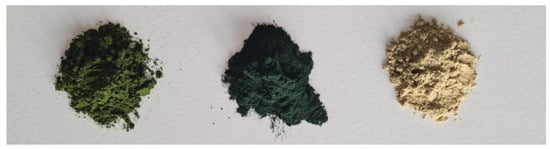
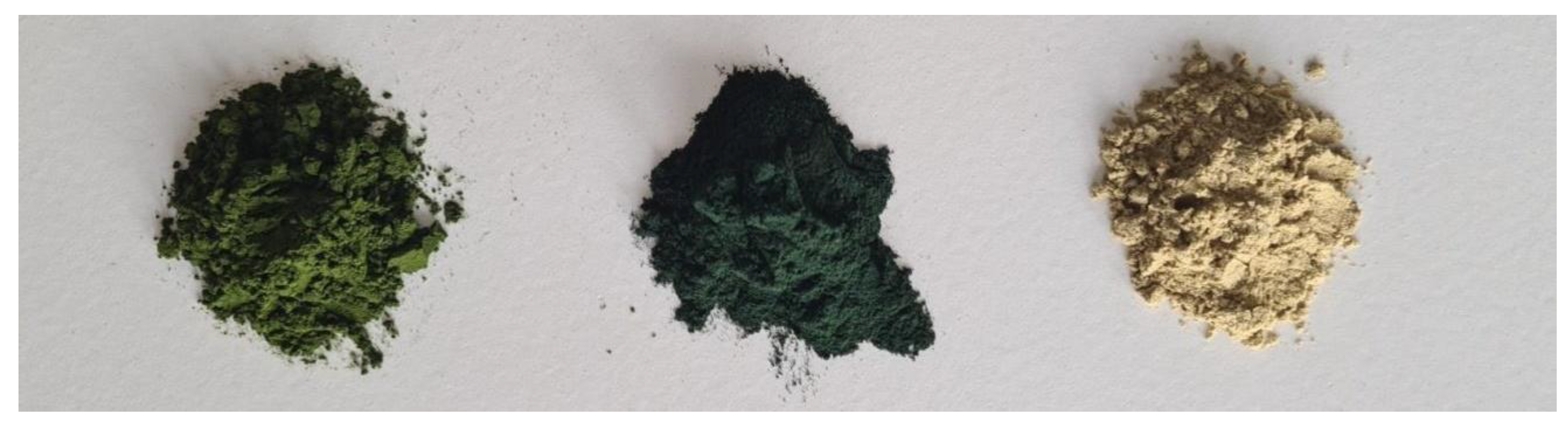
Proximate analysis of algal biomass included determination of analytical moisture content (), ash content [8], volatile matter (), and fixed carbon (). Analyses were performed according to relevant Polish standards [56,57]. The measurements were carried out using the mass difference method after thermal treatment of the samples under controlled conditions. The prepared samples are presented in Figure 4.
Figure 4.
Algal biomass used for comparative analysis (left to right): Chlorella pyrenoidosa, Spirulina, and bladderwrack (Fucus vesiculosus).
Analytical moisture was determined by drying approximately 1 g of biomass at 105–110 °C for 90 min, followed by cooling in a desiccator and repeated weighing until mass stabilisation. The moisture content was calculated using the following Equation (1):
where and are the initial mass of the sample before drying (g) and the mass of the sample after drying, respectively.
Ash content was measured by heating samples to 500 °C and subsequently to 815 ± 10 °C under controlled conditions, with a final holding time of 90 min. The ash content was calculated as (2):
where is the mass of ash remaining after combustion (g).
Volatile matter () was determined by heating samples in covered crucibles at 850 °C without air access for 3 min according to Equation (3):
where is the mass of the sample after volatile matter determination (g).
Fixed carbon () was calculated indirectly using Equation (4):
To contextualise the energetic performance of Chlorella vulgaris, proximate analysis was also conducted for Chlorella pyrenoidosa, Spirulina, and Fucus vesiculosus.
2.9. Data Processing and Averaging
Due to the biological nature of algal cultivation, variability between individual cultivation cycles was expected. To mitigate this effect, all reported growth and energetic values represent averages obtained from four independent cultivation cycles. This approach allows for a more robust comparison of illumination conditions while maintaining experimental feasibility at the laboratory scale.
2.10. Specific Growth Rate Analysis
The specific growth rate () was determined using exponential biomass growth during the cultivation period. Under exponential growth conditions, biomass concentration can be described as [58]:
where is the biomass concentration at time (, is the initial biomass concentration, and is the specific growth rate.
Taking the natural logarithm of Equation (5) gives:
This transformation produces a linear relationship between and time, where the slope corresponds to the specific growth rate .
In this study, was determined using linear regression of versus cultivation time based on all available experimental data points within each cultivation cycle. The slope of the regression line obtained using the least-squares method was taken as (day−1), while the coefficient of determination (R2) was used to evaluate the goodness of fit and verify the validity of the exponential growth assumption. The use of linear regression instead of a two-point estimation method reduces the influence of individual measurement errors, avoids subjective selection of exponential growth phase boundaries, and ensures reproducibility of the analysis.
To assess whether illumination colour had a statistically significant effect on the specific growth rate, a one-way analysis of variance (ANOVA) was performed using the calculated values obtained from the independent cultivation experiments conducted under different illumination colours.
3. Results and Discussion
3.1. Growth Response of Chlorella vulgaris to Illumination Colour
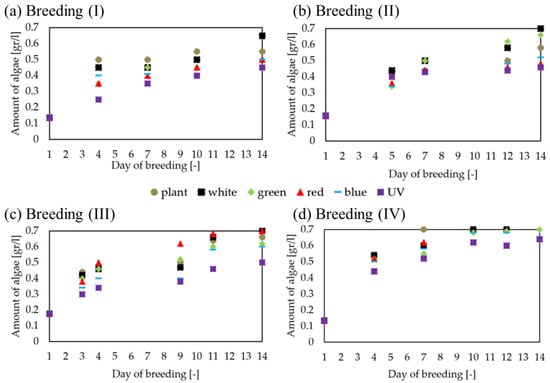
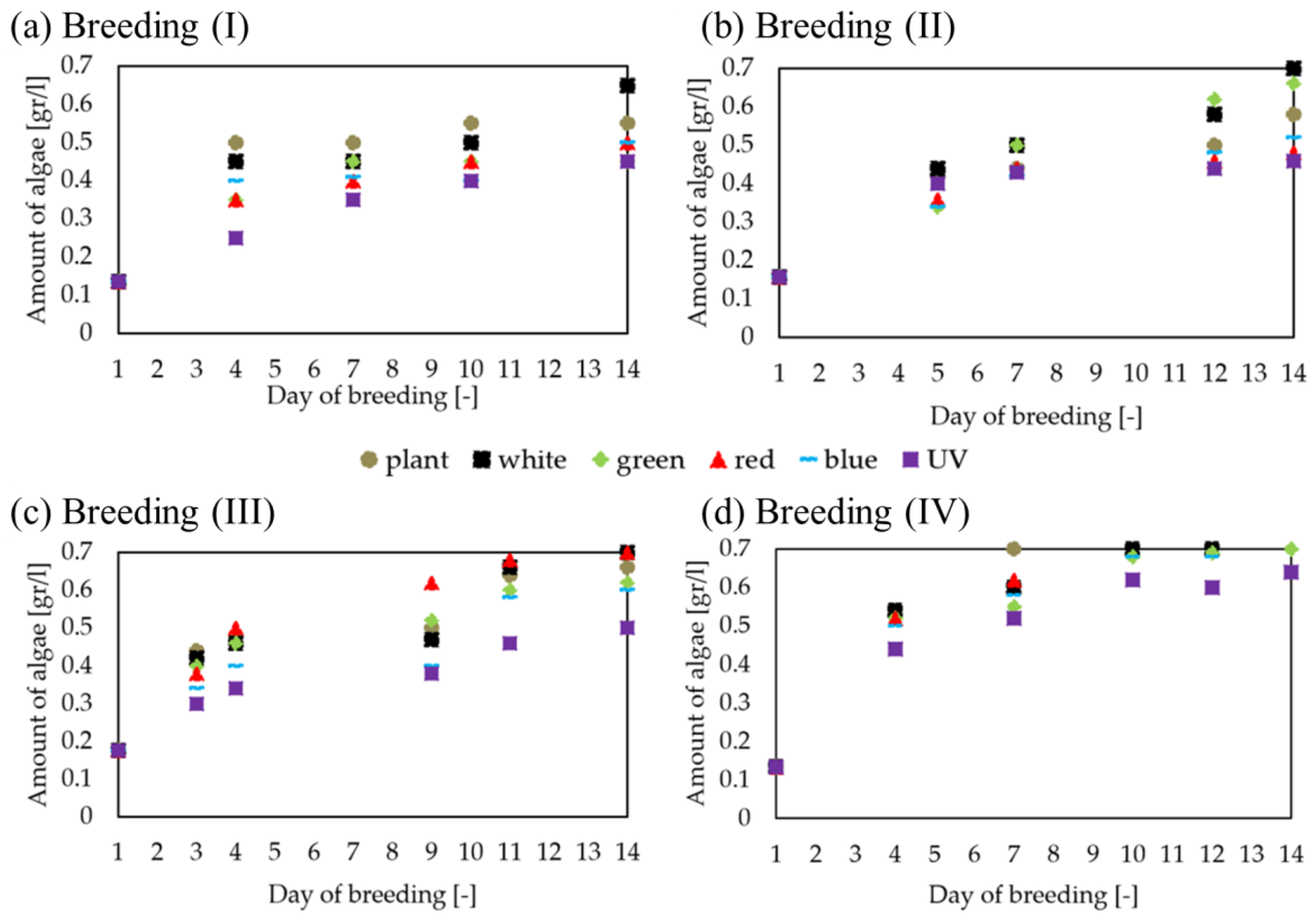
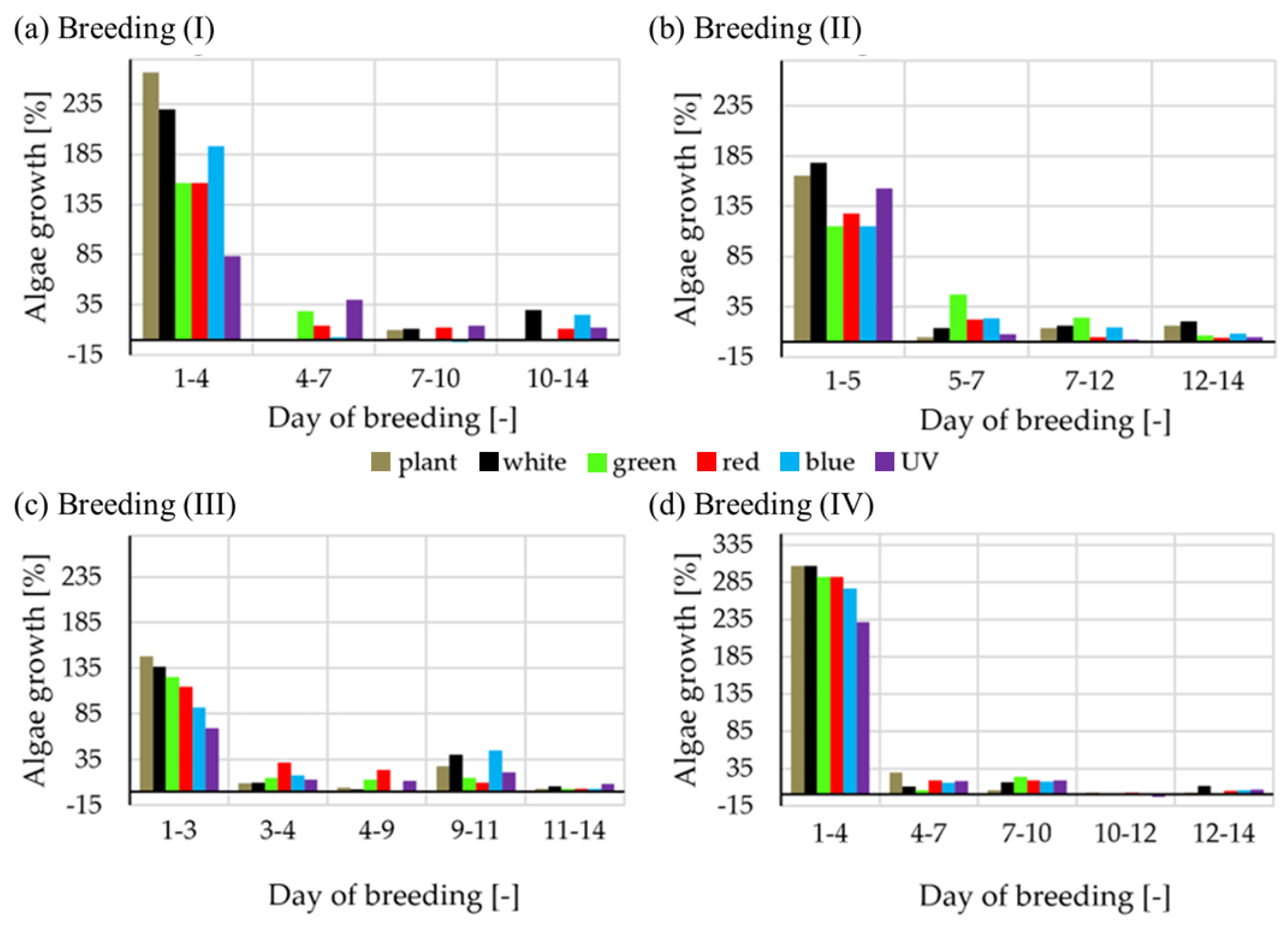
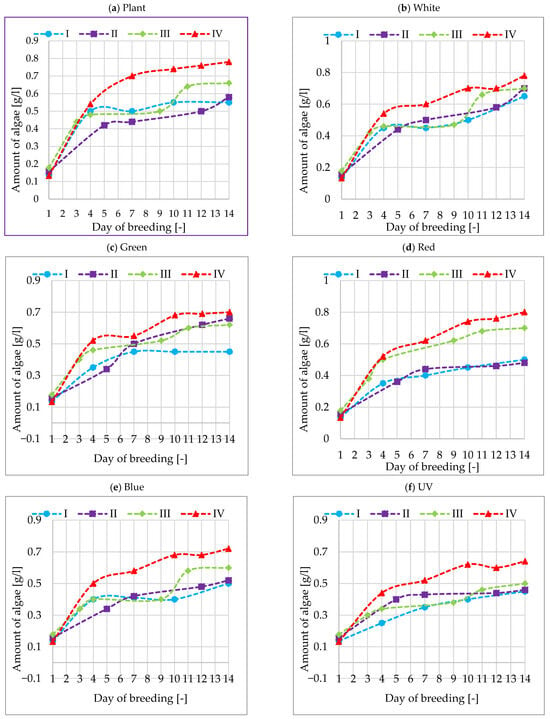
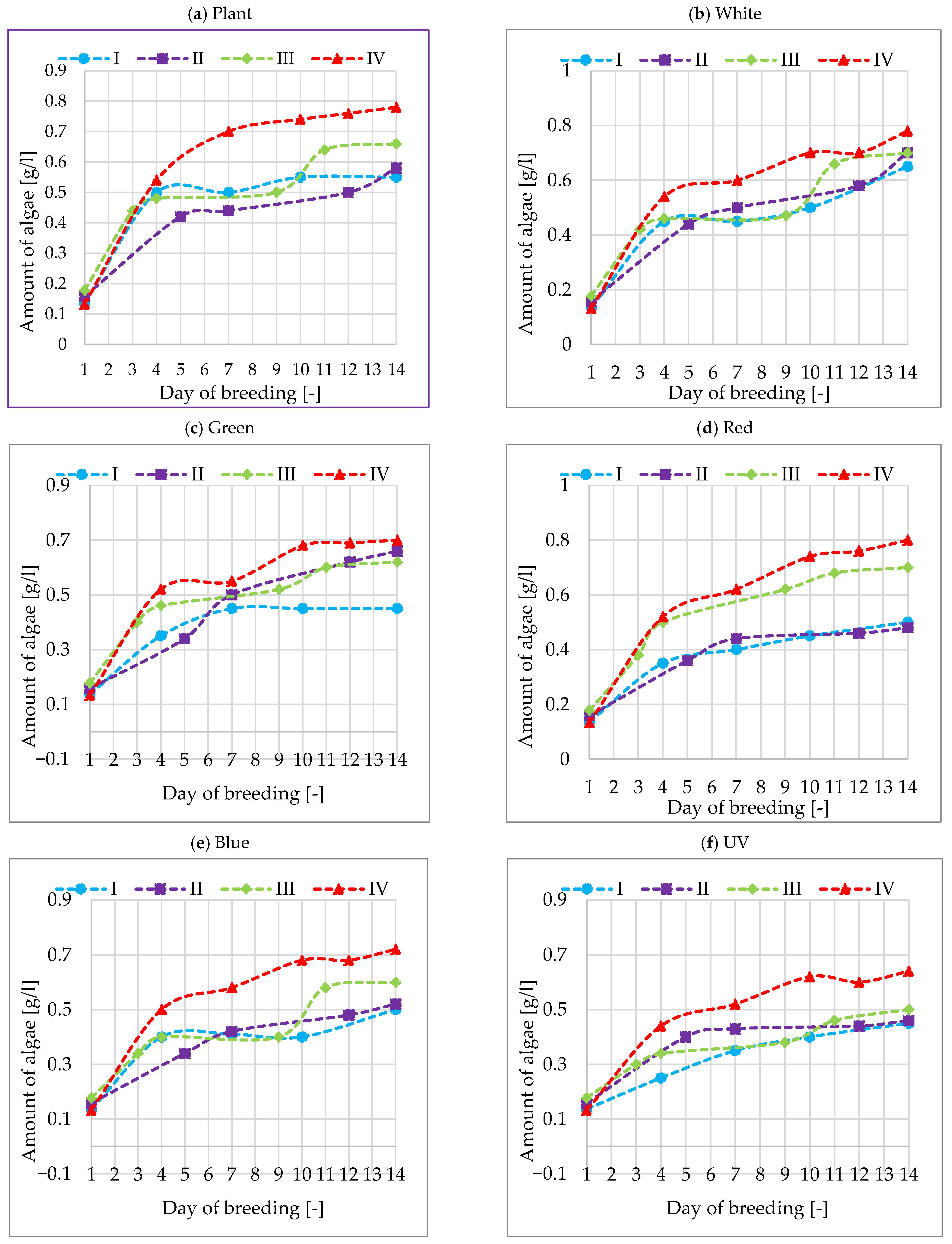
Figure 5, Figure 6 and Figure 7 summarise the growth dynamics of Chlorella vulgaris over the 14-day cultivation period for four independent cultivation cycles and six illumination colours. Across all cycles, biomass increased rapidly during the initial cultivation phase, with the most pronounced growth typically observed within the first 3–5 days. This behaviour is characteristic of microalgal cultures under nutrient-replete conditions, where early exponential growth is followed by a gradual reduction as light availability, self-shading, or nutrient limitations begin to constrain further biomass accumulation.
Figure 5.
Biomass growth characteristics of Chlorella vulgaris across four cultivation cycles under six illumination colours: (a) breeding I; (b) breeding II; (c) breeding III; (d) breeding IV.
Figure 6.
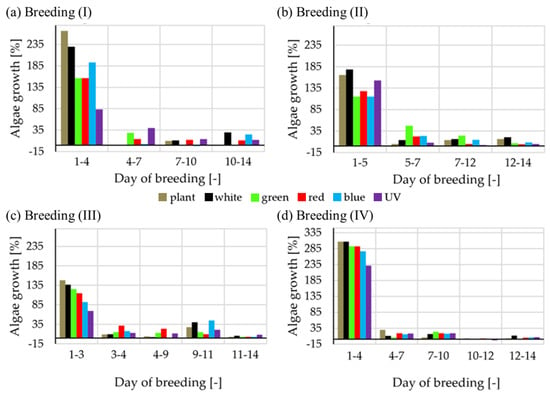
Culture volume increase characteristics across four cultivation cycles under six illumination colours: (a) breeding I; (b) breeding II; (c) breeding III; (d) breeding IV.
Figure 7.
Biomass growth characteristics of Chlorella vulgaris grouped by illumination colour across four independent cultivation cycles: (a) plant-specific; (b) white; (c) green; (d) red; (e) blue; (f) ultraviolet [3]. In each panel, the four curves represent replicate cultivation cycles (breeding I–IV) conducted under identical operating conditions (temperature, CO2 concentration, photoperiod, mixing, and culture medium).
Figure 5 presents the temporal biomass growth profiles for each cultivation cycle, while Figure 6 shows the corresponding culture volume increase. When illumination colours are compared over the full cultivation period, white light consistently produced the highest final biomass concentration, whereas UV illumination resulted in the lowest biomass yield across all cycles (Figure 5, Figure 6 and Figure 7). The averaged final biomass concentrations, calculated from four independent cultivation cycles and reported in Table 3, confirm this trend, with white light yielding 0.71 g·L−1 and UV yielding only 0.51 g·L−1.
Table 3.
Averaged dry biomass concentration of Chlorella vulgaris obtained under different illumination colours (mean values across four cultivation cycles) as well as Higher heating value (HHV) under different illumination colours (averaged values).
Although the relative ranking of intermediate colours (plant-specific, green, red, and blue) varied modestly between cultivation cycles, the white-light condition exhibited the greatest stability, indicating reduced sensitivity to inter-cycle biological variability (see Figure 7). In two cycles (breeding III and IV), red illumination produced final biomass levels comparable to white light, suggesting that under favourable conditions, red wavelengths can also support strong Chlorella vulgaris productivity.
The consistently poor performance observed under UV illumination is consistent with the known disruptive effects of UV radiation on photosynthetic organisms, including damage to cellular components and impairment of photosynthetic efficiency, ultimately suppressing growth [59]. In contrast, visible-spectrum illumination supports photosynthesis through absorption by chlorophylls and accessory pigments, and the observed differences between visible colours likely reflect both spectral matching to pigment absorption bands and physiological acclimation under each illumination regime [60].
It should be noted that illumination was controlled by lamp power and reactor geometry, and lamp specifications were characterised using nominal wavelength ranges and luminous flux rather than photon flux density. Consequently, the observed differences are interpreted as comparative spectral effects within the constraints of the adopted characterisation approach, rather than absolute wavelength-specific quantum efficiency.
Despite maintaining constant culture parameters (temperature, pH, light intensity, mixing, and substrate composition), differences in biomass growth were observed between individual cultivation cycles. The most probable cause of this variability is biological heterogeneity of the inoculum, including differences in the physiological state of cells at the time of inoculation. As culture density increased, self-shading effects may have contributed to a gradual reduction in effective light availability; however, this was mitigated through regular mixing of the cultures. Final biomass accumulation may have also been influenced by the extent of nutrient depletion, particularly nitrogen and phosphorus, as well as minor variations in hydrodynamic conditions and CO2 mass transfer. These observations confirm that even under controlled laboratory conditions, microalgal growth exhibits inherent biological variability, thereby justifying the use of repeated cultivation cycles.
Based on averaged final biomass concentrations, the illumination performance can be ranked as: white, red, plant-specific, green, blue and ultraviolet, respectively.
The specific growth rate () of Chlorella vulgaris was determined as described in Section 2.10. The obtained regression coefficients and coefficients of determination (R2) are presented in Table 4.
Table 4.
Specific growth rate (μ) of Chlorella vulgaris determined by linear regression of ln(X) versus cultivation time under different illumination spectra.
The calculated values varied between 0.0127 and 0.0665 day−1 depending on the illumination spectrum and cultivation cycle. In most cases, the coefficient of determination exceeded R2 > 0.80, indicating a good agreement between the experimental data and the exponential growth model. Lower R2 values were observed for several treatments in the first cultivation cycle, particularly under green and blue light, suggesting a less pronounced exponential growth phase.
Across all cultivation cycles, relatively higher values were generally observed under white, red, and green illumination, while lower values were obtained under the plant spectrum. The UV treatment showed higher variability between cultivation cycles, with values ranging from 0.013 to 0.0632 day−1. These results indicate that while the illumination spectrum influences the observed growth dynamics, the overall exponential growth behaviour of the culture is reasonably well described by the applied regression model.
The specific growth rates () calculated for the different illumination conditions were compared using one-way ANOVA. Although variations in values were observed between the tested light spectra, the statistical analysis indicated that these differences were not significant (F = 0.47, p = 0.796). This suggests that, under the investigated experimental conditions, illumination colour did not significantly influence the intrinsic growth kinetics of Chlorella vulgaris. Nevertheless, differences in final biomass concentration were still observed between treatments. These results suggest that illumination conditions may primarily affect metabolic pathways and biomass composition rather than the intrinsic growth kinetics of the microalgal cells [61].
3.2. Higher Heating Value as a Function of Illumination Colour
The higher heating values (HHV) of Chlorella vulgaris biomass cultivated under each illumination colour are summarised in Table 5. The results demonstrate that illumination colour influenced not only biomass growth but also the energetic quality of the produced biomass. The highest HHV was obtained under white light (15.08 MJ·kg−1), followed by red (14.21 MJ·kg−1) and green illumination (13.83 MJ·kg−1). In contrast, UV illumination resulted in the lowest HHV (11.49 MJ·kg−1).
Table 5.
Higher heating values (HHV) of different algal species were used for comparative analysis.
The reduced HHV associated with UV-grown biomass aligns with the suppression of growth and likely reflects stress-induced changes in cellular composition and/or increased degradation of energy-rich biochemical fractions under UV exposure [60,62]. Conversely, the higher HHV obtained under white light suggests that broader-spectrum illumination promoted biomass with more favourable fuel characteristics. Although ultimate (CHNS/O) analysis and detailed biochemical fractionation were not performed in this study, previous research has shown that cultivation conditions can significantly influence lipid, protein, and carbohydrate allocation in microalgae, thereby affecting calorific value [63,64].
An unexpected but informative observation was the relatively low HHV obtained under the plant-specific lamp (12.94 MJ·kg−1), despite its design to enhance photosynthetic growth in higher plants. This may indicate that illumination spectra optimised for terrestrial plant development do not necessarily maximise microalgal fuel quality under the present reactor configuration, and that enhanced growth does not directly translate into higher energy content when compositional shifts occur. The observed differences in HHV are consistent with the proximate analysis results, where higher volatile matter and lower ash and moisture contents are associated with higher calorific values, explaining the superior energetic performance under white illumination. Although detailed biochemical fractionation was not performed, the proximate analysis provides indirect evidence that the higher HHV observed under white illumination is associated with increased volatile matter and reduced ash and moisture contents.
3.3. Volumetric Energy Yield and Implications for Bioenergy Systems
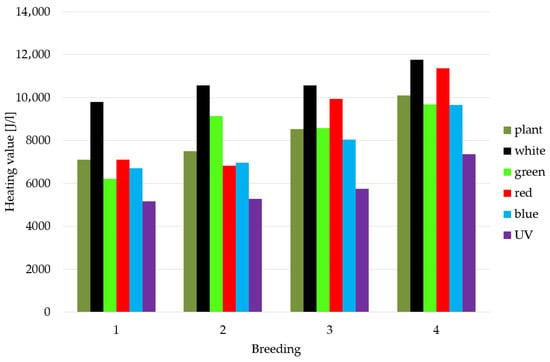
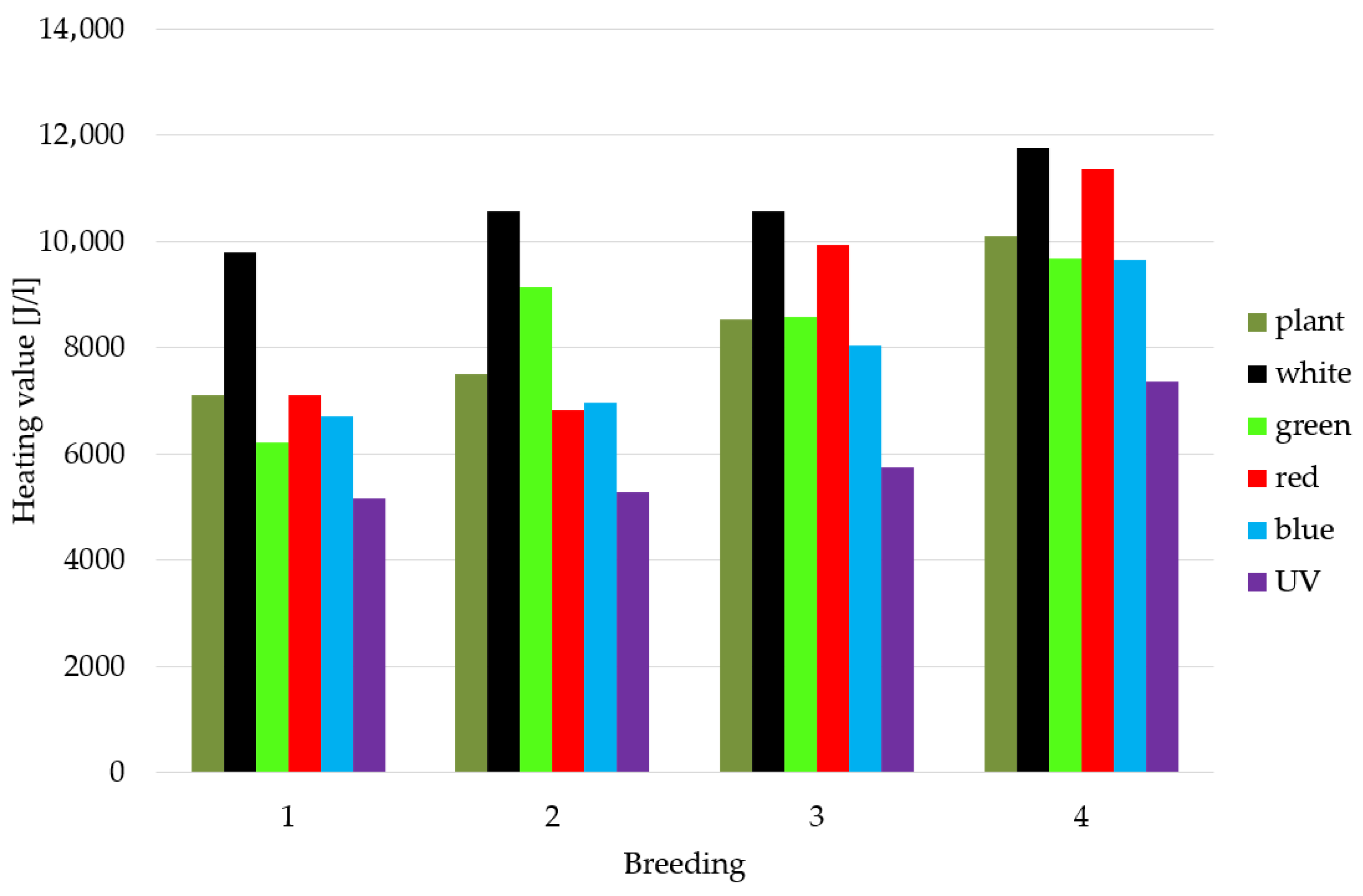
To interpret the results from a bioenergy systems perspective, HHVs were combined with biomass yield to calculate recoverable energy per unit culture volume, as shown in Figure 8. This volumetric energy metric integrates productivity and fuel quality and is directly relevant to photobioreactor sizing, cultivation strategy selection, and downstream energy conversion processes. Unlike most previous studies that report calorific value on a mass basis alone, this work evaluates volumetric energy yield, which integrates biomass productivity and fuel quality and is directly relevant to photobioreactor and process design.
Figure 8.
Summary of growth and energy results for Chlorella vulgaris cultivated under different illumination colours, including energy yield normalised per culture volume.
The analysis confirms that white illumination delivers the highest volumetric energy yield, combining both high biomass productivity and the highest HHV. In contrast, UV illumination produces the lowest energy per litre of culture, reflecting simultaneous reductions in growth and energetic quality. Notably, blue illumination, despite yielding lower biomass concentrations than most other visible colours, produced a volumetric energy yield comparable to several alternatives. This indicates that illumination colour influences biomass composition, as inferred from proximate analysis and HHV trends, and that biomass yield alone is insufficient to predict recoverable energy. These results highlight the importance of reporting both mass-based and volumetric energy metrics when evaluating algal cultivation strategies for energy applications, particularly in systems where reactor volume and cultivation time represent key constraints.
3.4. Cross-Species Comparison of Energetic and Proximate Properties
To place the performance of cultivated Chlorella vulgaris within a broader biomass context, a comparative analysis of energetic and proximate (technical) properties was conducted for Chlorella pyrenoidosa, Spirulina, and Fucus vesiculosus (bladderwrack). It should be noted that the comparative species were not cultivated under identical conditions; therefore, this analysis is intended to contextualise energetic potential rather than provide a direct productivity comparison. The HHVs for these species are presented in Table 5, while the corresponding proximate analysis results are summarised in Table 6.
Table 6.
Proximate analysis results of selected algal species, including analytical moisture (Wa), ash content (Aa), fixed carbon (), and volatile matter ().
Among the assessed species, Chlorella pyrenoidosa exhibited the most favourable fuel properties, with the highest HHV (23.31 MJ·kg−1), the lowest analytical moisture content (4.09%), the lowest ash content (4.37%), and the highest volatile matter fraction (76.61%). These characteristics are advantageous for thermochemical energy conversion, as high volatile matter content enhances ignition and combustion behaviour, while low moisture and ash contents reduce energy losses and mitigate ash-related operational challenges.
Spirulina also demonstrated a high HHV (21.25 MJ·kg−1) but exhibited higher moisture and ash contents than Chlorella pyrenoidosa, which may partially offset its energetic advantage during conversion. In contrast, bladderwrack displayed the least favourable energy characteristics, with the lowest HHV (12.66 MJ·kg−1), the highest moisture content, and the highest ash content, all of which are detrimental to efficient combustion-based energy recovery.
The proximate analysis results provide a mechanistic explanation for the observed HHV trends. Species with higher volatile matter fractions and lower ash contents exhibited higher calorific values, while increased moisture and ash contents were associated with reduced energetic performance. Fixed carbon values further support this interpretation, as higher fractions of slowly reacting carbonaceous material can prolong combustion but do not necessarily compensate for reduced volatile release in terms of overall energy efficiency.
While Chlorella pyrenoidosa appears superior from a fuel-quality perspective, Chlorella vulgaris remains attractive for large-scale cultivation due to its wider tolerance window and rapid growth, which may compensate for lower HHV in high-throughput production systems. Consequently, the selection of algal species and illumination strategy should be guided by the intended system objective: maximising fuel quality per unit mass or maximising recoverable energy per unit reactor volume under realistic operational constraints.
The calorific value and proximate composition of the biomass obtained in this study indicate that Chlorella vulgaris biomass may represent a promising feedstock for thermochemical bioenergy conversion technologies such as pyrolysis, gasification, or hydrothermal processing. The observed differences in biomass characteristics under different illumination conditions suggest that light spectrum may influence not only biomass growth but also its energetic properties.
It should also be acknowledged that the comparative species analysed in this work were not cultivated under identical experimental conditions. Therefore, the comparison is intended to provide contextual insight into the energetic potential of the biomass rather than a direct productivity benchmark between species. Furthermore, illumination conditions may influence the biochemical composition of microalgal biomass, including lipid and protein fractions that are relevant for biofuel production pathways such as biodiesel or biohydrogen generation. Although the present study focused primarily on biomass productivity and energy content, future investigations should include detailed biochemical characterisation in order to better understand the relationship between illumination spectrum, cellular composition, and the resulting bioenergy conversion potential.
4. Conclusions
This study investigated the influence of illumination colour on the growth behaviour and energetic properties of Chlorella vulgaris cultivated in laboratory-scale photobioreactors, with the aim of linking cultivation conditions not only to biomass productivity but also to fuel-relevant energy characteristics. In addition, a comparative energetic and proximate analysis was conducted to contextualise the performance of Chlorella vulgaris against other algal species commonly discussed in bioenergy applications.
The results demonstrate that illumination colour significantly affects both biomass yield and energetic quality. Among the tested conditions, white illumination consistently produced the highest biomass concentration and the highest higher heating value, resulting in the greatest recoverable energy per unit culture volume. In contrast, ultraviolet illumination led to the poorest performance, characterised by suppressed growth and reduced calorific value, confirming its unsuitability for productive algal cultivation under the investigated conditions. Red and green illumination supported intermediate performance, while blue light, despite lower biomass yield, delivered a volumetric energy output comparable to several other visible-light conditions, highlighting that growth alone is insufficient to predict energy recovery potential.
By explicitly relating biomass productivity to calorific value, this work shows that volumetric energy yield is a critical metric for assessing algal cultivation strategies from an energy systems perspective. This integrated metric captures trade-offs between growth rate and fuel quality and is particularly relevant for photobioreactor-based systems where reactor volume and cultivation time are key design constraints.
The cross-species comparison further illustrates the importance of biomass composition in determining energy performance. Chlorella pyrenoidosa exhibited the most favourable fuel characteristics, with high calorific value, low moisture and ash contents, and high volatile matter fraction, making it well suited for thermochemical energy conversion. However, despite its lower HHV, Chlorella vulgaris remains attractive for large-scale applications due to its rapid growth, broader tolerance to cultivation conditions, and operational robustness, which may compensate for lower energy density in high-throughput production systems. These findings emphasise that species selection should be guided by system objectives, balancing fuel quality against cultivation feasibility and productivity.
The results obtained in this study indicate that illumination conditions can influence biomass growth and energetic properties, which is relevant for the optimisation of microalgal biomass production for bioenergy applications.
It should be noted that illumination conditions in this study were characterised based on nominal wavelength ranges and electrical power rather than photon flux density. While this approach enables controlled comparative assessment of spectral effects, future work would benefit from photon-based characterisation and from incorporating ultimate (CHNS/O) analysis or detailed biochemical fractionation to further elucidate the mechanisms underlying the observed differences in calorific value. Future research should focus on extended cultivation experiments, a broader characterisation of biochemical composition, and optimisation of illumination parameters such as light intensity, photoperiod, and spectral distribution. Further studies may also investigate the applicability of optimised illumination strategies in larger-scale photobioreactors and evaluate their potential for improving biomass productivity and energy-related properties of microalgae.
Overall, this study provides experimental evidence that illumination wavelength influences not only algal growth but also biomass energetic properties and volumetric energy yield. By linking cultivation strategy to fuel-relevant metrics, the results contribute to the optimisation of algal bioenergy systems and support more informed design decisions for photobioreactor-based biomass production targeting thermochemical energy conversion. The main merit of this work lies in the comparative experimental evaluation of several illumination spectra and their influence on the cultivation performance of Chlorella vulgaris. The results contribute to a better understanding of how light conditions may affect biomass productivity and the potential energetic properties of microalgal biomass.
Author Contributions
Conceptualization, P.C., P.M. and M.A.; Data curation, P.C. and P.M.; Formal analysis, M.A., P.C. and P.M.; Funding acquisition, M.A. and A.V.-M.; Investigation, P.C., P.M., M.M., J.J., A.M.S.H.A.-M. and M.A.; Methodology, P.C., P.M., M.A. and A.M.S.H.A.-M.; Project administration, P.C. and M.A.; Resources, P.C., A.V.-M. and M.A.; Software, J.J. and H.S.; Supervision, P.C., M.A. and A.V.-M.; Validation, P.C., M.M., J.J. and H.S.; Visualization, M.A., M.M., A.M.S.H.A.-M., A.V.-M. and P.C.; Writing—original draft; P.C., P.M., M.M., J.J., A.M.S.H.A.-M. and M.A.; Writing—review & editing, M.A. All authors have read and agreed to the published version of the manuscript.
Funding
This research received no external funding.
Data Availability Statement
The data presented in this study are contained within the article.
Acknowledgments
Cardiff University authors gratefully acknowledge the support from the EPSRC through the projects Ocean-REFuel—Ocean Renewable Energy Fuels (EP/W005018/1) and Storage of Ammonia For Energy (SAFE)—AGT Pilot (EP/T009314/1). The author (A.M.) gratefully acknowledges the support provided by the Qatar National Research Fund under the doctoral project (GSRA5-1-0404-18034).
Conflicts of Interest
The authors declare no conflicts of interest.
Abbreviations
| Aa | Ash content (%, analytical basis) |
| CO2 | Carbon dioxide |
| FC | Fixed carbon (%) |
| HHV | Higher heating value (MJ·kg−1) |
| LED | Light-emitting diode |
| SMD | Surface-mounted diode |
| UV | Ultraviolet |
| VM | Volatile matter (%) |
| Wa | Analytical moisture content (%) |
| WC medium | Woods Hole Chu culture medium |
References
- Al-Moftah, A.M.S.; Alnajideen, M.; Alafifi, F.; Czyzewski, P.; Shi, H.; Alherbawi, M.; Navaratne, R.; Valera-Medina, A. Economic feasibility of using municipal solid waste and date palm waste for clean energy production in Qatar. Energies 2025, 18, 988. [Google Scholar] [CrossRef] [Scilit]
- Zhang, S.; Zhang, L.; Xu, G.; Li, F.; Li, X. A review on biodiesel production from microalgae: Influencing parameters and recent advanced technologies. Front. Microbiol. 2022, 13, 970028. [Google Scholar] [CrossRef] [Scilit] [PubMed]
- Behera, S.; Singh, R.; Arora, R.; Sharma, N.K.; Shukla, M.; Kumar, S. Scope of algae as third generation biofuels. Front. Bioeng. Biotechnol. 2015, 2, 90. [Google Scholar] [CrossRef] [Scilit]
- Singh, J.; Gu, S. Commercialization potential of microalgae for biofuels production. Renew. Sustain. Energy Rev. 2010, 14, 2596–2610. [Google Scholar] [CrossRef] [Scilit]
- Radican, E.; Luo, Y.; Xiao, Z. Microalgae Applications in the Agricultural and Food Sector: Towards a Sustainable Future. Molecules 2026, 31, 457. [Google Scholar] [CrossRef] [Scilit]
- Alazaiza, M.Y.; Albahnasawi, A.; Al Maskari, T.; Abujazar, M.S.S.; Bashir, M.J.; Nassani, D.E.; Abu Amr, S.S. Biofuel production using cultivated algae: Technologies, economics, and its environmental impacts. Energies 2023, 16, 1316. [Google Scholar] [CrossRef] [Scilit]
- Li, G.; Yao, J. A review of algae-based carbon capture, utilization, and storage (Algae-Based CCUS). Gases 2024, 4, 468–503. [Google Scholar] [CrossRef] [Scilit]
- Deshmukh, M.; Kothawade, T.R.; Pathan, A.; Behera, U.S.; Sangwai, J.S.; Byun, H.-S. A Review on Sustainable Microalgae-Based Approaches for CO2 Capture, Bioenergy, and Value-Added Products. Korean J. Chem. Eng. 2026, 1–38. [Google Scholar] [CrossRef] [Scilit]
- Xu, W.; Ding, K.; Hu, L. A mini review on pyrolysis of natural algae for bio-fuel and chemicals. Processes 2021, 9, 2042. [Google Scholar] [CrossRef] [Scilit]
- Osman, A.I.; Lai, Z.Y.; Farghali, M.; Yiin, C.L.; Elgarahy, A.M.; Hammad, A.; Ihara, I.; Al-Fatesh, A.S.; Rooney, D.W.; Yap, P.-S. Optimizing biomass pathways to bioenergy and biochar application in electricity generation, biodiesel production, and biohydrogen production. Environ. Chem. Lett. 2023, 21, 2639–2705. [Google Scholar] [CrossRef] [Scilit]
- Bora, A.; Thondi Rajan, A.S.; Ponnuchamy, K.; Muthusamy, G.; Alagarsamy, A. Microalgae to bioenergy production: Recent advances, influencing parameters, utilization of wastewater—A critical review. Sci. Total Environ. 2024, 946, 174230. [Google Scholar] [CrossRef] [Scilit]
- Raheem, A.; Wan Azlina, W.A.K.G.; Taufiq Yap, Y.H.; Danquah, M.K.; Harun, R. Thermochemical conversion of microalgal biomass for biofuel production. Renew. Sustain. Energy Rev. 2015, 49, 990–999. [Google Scholar] [CrossRef] [Scilit]
- Parakh, S.K.; Tian, Z.; Wong, J.Z.E.; Tong, Y.W. From Microalgae to Bioenergy: Recent Advances in Biochemical Conversion Processes. Fermentation 2023, 9, 529. [Google Scholar] [CrossRef] [Scilit]
- Hidalgo, D.; Urueña, A.; Martín-Marroquín, J.M.; Díez, D. Integrated Approach for Biomass Conversion Using Thermochemical Routes with Anaerobic Digestion and Syngas Fermentation. Sustainability 2025, 17, 3615. [Google Scholar] [CrossRef] [Scilit]
- Hasan, M.; Mofijur, M.; Uddin, M.; Kabir, Z.; Badruddin, I.A.; Khan, T.Y. Insights into anaerobic digestion of microalgal biomass for enhanced energy recovery. Front. Energy Res. 2024, 12, 1355686. [Google Scholar] [CrossRef] [Scilit]
- Esteves, B.; Sen, U.; Pereira, H. Influence of chemical composition on heating value of biomass: A review and bibliometric analysis. Energies 2023, 16, 4226. [Google Scholar] [CrossRef] [Scilit]
- Wang, Y.; Wu, J.J. Thermochemical conversion of biomass: Potential future prospects. Renew. Sustain. Energy Rev. 2023, 187, 113754. [Google Scholar] [CrossRef] [Scilit]
- Quan, C.; Ravelomanantsoa, V.S.; Olazar, L.; Santamaria, L.; Lopez, G.; Liu, L.; Gao, N. Thermochemical conversion of waste into energy: A review. Environ. Chem. Lett. 2025, 24, 295–320. [Google Scholar] [CrossRef] [Scilit]
- Jha, S.; Nanda, S.; Acharya, B.; Dalai, A.K. A Review of Thermochemical Conversion of Waste Biomass to Biofuels. Energies 2022, 15, 6352. [Google Scholar] [CrossRef] [Scilit]
- Yang, L.; Chen, J.; Qin, S.; Zeng, M.; Jiang, Y.; Hu, L.; Xiao, P.; Hao, W.; Hu, Z.; Lei, A. Growth and lipid accumulation by different nutrients in the microalga Chlamydomonas reinhardtii. Biotechnol. Biofuels 2018, 11, 40. [Google Scholar] [CrossRef] [Scilit] [PubMed]
- Clément-Larosière, B.; Lopes, F.; Gonçalves, A.; Taidi, B.; Benedetti, M.; Minier, M.; Pareau, D. Carbon dioxide biofixation by Chlorella vulgaris at different CO2 concentrations and light intensities. Eng. Life Sci. 2014, 14, 509–519. [Google Scholar] [CrossRef] [Scilit]
- Li, S.F.; Wang, C.C.; Taidi, B. Effective CO2 capture by the fed-batch culture of Chlorella vulgaris. J. Environ. Chem. Eng. 2023, 11, 110889. [Google Scholar] [CrossRef] [Scilit]
- Anjos, M.; Fernandes, B.D.; Vicente, A.A.; Teixeira, J.A.; Dragone, G. Optimization of CO2 bio-mitigation by Chlorella vulgaris. Bioresour. Technol. 2013, 139, 149–154. [Google Scholar] [CrossRef] [Scilit]
- Ashour, M.; Mansour, A.T.; Alkhamis, Y.A.; Elshobary, M. Usage of Chlorella and diverse microalgae for CO2 capture-towards a bioenergy revolution. Front. Bioeng. Biotechnol. 2024, 12, 1387519. [Google Scholar] [CrossRef] [Scilit]
- Chou, H.-H.; Su, H.-Y.; Song, X.-D.; Chow, T.-J.; Chen, C.-Y.; Chang, J.-S.; Lee, T.-M. Isolation and characterization of Chlorella sp. mutants with enhanced thermo-and CO2 tolerances for CO2 sequestration and utilization of flue gases. Biotechnol. Biofuels 2019, 12, 251. [Google Scholar] [CrossRef] [Scilit]
- Omokaro, G.O.; Nafula, Z.S.; Iloabuchi, N.E.; Chikukula, A.A.; Osayogie, O.G.; Nnoli, E.C. Microalgae as biofactories for sustainable applications: Advancing carbon sequestration, bioenergy, and environmental remediation. Sustain. Chem. Clim. Action 2025, 7, 100098. [Google Scholar] [CrossRef] [Scilit]
- Maltsev, Y.; Maltseva, K.; Kulikovskiy, M.; Maltseva, S. Influence of light conditions on microalgae growth and content of lipids, carotenoids, and fatty acid composition. Biology 2021, 10, 1060. [Google Scholar] [CrossRef] [Scilit]
- Songserm, R.; Nishiyama, Y.; Sanevas, N. Light influences the growth, pigment synthesis, photosynthesis capacity, and antioxidant activities in Scenedesmus falcatus. Scientifica 2024, 2024, 1898624. [Google Scholar] [CrossRef] [Scilit] [PubMed]
- Tarakanov, I.G.; Tovstyko, D.A.; Lomakin, M.P.; Shmakov, A.S.; Sleptsov, N.N.; Shmarev, A.N.; Litvinskiy, V.A.; Ivlev, A.A. Effects of light spectral quality on photosynthetic activity, biomass production, and carbon isotope fractionation in lettuce, Lactuca sativa L. plants. Plants 2022, 11, 441. [Google Scholar] [CrossRef] [Scilit] [PubMed]
- Esteves, A.F.; Pardilhó, S.; Gonçalves, A.L.; Vilar, V.J.P.; Pires, J.C.M. Unravelling the impact of light spectra on microalgal growth and biochemical composition using principal component analysis and artificial neural network models. Algal Res. 2025, 85, 103820. [Google Scholar] [CrossRef] [Scilit]
- Trofimchuk, O.A.; Yakovlev, A.N.; Turanov, S.B.; Trigub, M.V.; Romanenko, S. IOP Conference Series: Materials Science and Engineering. In The Influence of Diverse Optical Wavelengths on Growth Rate of Chlorella Vulgaris Microalgae; IOP Publishing: Bristol, UK, 2020; p. 012005. [Google Scholar]
- Esteves, A.F.; Soares, O.S.G.P.; Vilar, V.J.P.; Pires, J.C.M.; Gonçalves, A.L. The Effect of Light Wavelength on CO2 Capture, Biomass Production and Nutrient Uptake by Green Microalgae: A Step Forward on Process Integration and Optimisation. Energies 2020, 13, 333. [Google Scholar] [CrossRef] [Scilit]
- Wongsnansilp, T.; Khamcharoen, M. The Effects of Red–Blue Light on the Growth and Astaxanthin Production of a Haematococcus pluvialis Strain Isolated from Southern Thailand. Appl. Microbiol. 2024, 4, 1745–1756. [Google Scholar] [CrossRef] [Scilit]
- Baidya, A.; Akter, T.; Islam, M.R.; Shah, A.K.M.A.; Hossain, M.A.; Salam, M.A.; Paul, S.I. Effect of different wavelengths of LED light on the growth, chlorophyll, β-carotene content and proximate composition of Chlorella ellipsoidea. Heliyon 2021, 7, e08525. [Google Scholar] [CrossRef] [Scilit]
- Zhang, X.; Tang, X.; Zhou, B.; Hu, S.; Wang, Y. Effect of enhanced UV-B radiation on photosynthetic characteristics of marine microalgae Dunaliella salina (Chlorophyta, Chlorophyceae). J. Exp. Mar. Biol. Ecol. 2015, 469, 27–35. [Google Scholar] [CrossRef] [Scilit]
- Sydney, T.; Marshall-Thompson, J.-A.; Kapoore, R.V.; Vaidyanathan, S.; Pandhal, J.; Fairclough, J.P.A. The effect of high-intensity ultraviolet light to elicit microalgal cell lysis and enhance lipid extraction. Metabolites 2018, 8, 65. [Google Scholar] [CrossRef] [Scilit] [PubMed]
- Sweiss, M.; Assi, S.; Barhoumi, L.; Al-Jumeily, D.; Watson, M.; Wilson, M.; Arnot, T.; Scott, R. Qualitative and quantitative evaluation of microalgal biomass using portable attenuated total reflectance-Fourier transform infrared spectroscopy and machine learning analytics. J. Chem. Technol. Biotechnol. 2024, 99, 92–108. [Google Scholar] [CrossRef] [Scilit]
- Ahmad, A.; W Hassan, S.; Banat, F. An overview of microalgae biomass as a sustainable aquaculture feed ingredient: Food security and circular economy. Bioengineered 2022, 13, 9521–9547. [Google Scholar] [CrossRef] [Scilit]
- Sun, H.; Zhao, W.; Mao, X.; Li, Y.; Wu, T.; Chen, F. High-value biomass from microalgae production platforms: Strategies and progress based on carbon metabolism and energy conversion. Biotechnol. Biofuels 2018, 11, 227. [Google Scholar] [CrossRef] [Scilit] [PubMed]
- Varghese, S.; Ralph, P.; Kuzhiumparambil, U. Sustainable carbon-rich materials from algae and biomass: Synthesis, characterisation, and applications. Results Eng. 2025, 27, 106439. [Google Scholar] [CrossRef] [Scilit]
- Niu, Y.; Hemashini, T.; Leh, C.P. Comparative energy assessment and net energy return analysis of non-wood lignocellulosic bioethanol systems. In Cellulose; Springer: Berlin/Heidelberg, Germany, 2025; pp. 1–35. [Google Scholar]
- Dunca, E.C.; Ioniță, M.F.; Varga, L.A.; Radu, S.M.; Ionel, I.; Halmaciu, I.A.; Istrate, I.A.; Cocârță, D.M.; Botoran, O.R.; Irimie, S.I. Assessment of the Energy Recovery Potential of Biomass Obtained from Non-Productive Lands in the Jiu Valley, Romania. Sustainability 2025, 17, 9380. [Google Scholar] [CrossRef] [Scilit]
- Banerjee, N.; Sukichandran, P.; Chaudhari, P.; Thakur, A.K.; Kumar, R. Energy analysis and feasibility studies for algal biomass and biofuels. Mater. Today Proc. 2022, 57, 1448–1454. [Google Scholar] [CrossRef] [Scilit]
- Chen, M.; Chen, Y.; Zhang, Q. A Review of Energy Consumption in the Acquisition of Bio-Feedstock for Microalgae Biofuel Production. Sustainability 2021, 13, 8873. [Google Scholar] [CrossRef] [Scilit]
- Zhang, J.; Liu, F.; Wang, Q.; Gong, Q.; Gao, X. Effect of Light Wavelength on Biomass, Growth, Photosynthesis and Pigment Content of Emiliania huxleyi (Isochrysidales, Cocco-Lithophyceae). J. Mar. Sci. Eng. 2023, 11, 456. [Google Scholar] [CrossRef] [Scilit]
- Esteves, A.F.; Salgado, E.M.; Vilar, V.J.P.; Gonçalves, A.L.; Pires, J.C.M. A growth phase analysis on the influence of light intensity on microalgal stress and potential biofuel production. Energy Convers. Manag. 2024, 311, 118511. [Google Scholar] [CrossRef] [Scilit]
- Zhu, T.; Guan, G.; Huang, L.; Wen, L.; Li, L.; Ren, M. Transcriptomic and metabolomic analysis reveal the effects of light quality on the growth and lipid biosynthesis in Chlorella pyrenoidosa. Biomolecules 2024, 14, 1144. [Google Scholar] [CrossRef] [Scilit]
- Chunzhuk, E.A.; Grigorenko, A.V.; Kiseleva, S.V.; Chernova, N.I.; Vlaskin, M.S.; Ryndin, K.G.; Butyrin, A.V.; Ambaryan, G.N.; Dudoladov, A.O. Effects of light intensity on the growth and biochemical composition in various microalgae grown at high CO2 concentrations. Plants 2023, 12, 3876. [Google Scholar] [CrossRef] [Scilit]
- Ru, I.T.K.; Sung, Y.Y.; Jusoh, M.; Wahid, M.E.A.; Nagappan, T. Chlorella vulgaris: A perspective on its potential for combining high biomass with high value bioproducts. Appl. Phycol. 2020, 1, 2–11. [Google Scholar] [CrossRef] [Scilit]
- Trisakti, B.; Sidabutar, R.; Irvan, I.; Munir, E.; Sarah, M.; Hanum, F.; Syahputra, M.R.; Michael, M.; Vanness, V.; Sinamo, G.C.; et al. Sustainable lipid production from Chlorella vulgaris USU1 strain using packed absorption column-derived effluent as carbon source for biomass generation. Results Eng. 2025, 26, 105383. [Google Scholar] [CrossRef] [Scilit]
- Johnson, F.A.; Patel, B.; Ikotun, B.D. Enhanced biomass production from Chlorella micro-algae species: A review of new technologies towards sustainable energy development. RSC Adv. 2025, 15, 49809–49825. [Google Scholar] [CrossRef] [Scilit]
- Mendes, A.R.; Spínola, M.P.; Lordelo, M.; Prates, J.A. Advances in bioprocess engineering for optimising Chlorella vulgaris fermentation: Biotechnological innovations and applications. Foods 2024, 13, 4154. [Google Scholar] [CrossRef] [Scilit] [PubMed]
- Bilad, M.R.; Discart, V.; Vandamme, D.; Foubert, I.; Muylaert, K.; Vankelecom, I.F.J. Coupled cultivation and pre-harvesting of microalgae in a membrane photobioreactor (MPBR). Bioresour. Technol. 2014, 155, 410–417. [Google Scholar] [CrossRef] [Scilit] [PubMed]
- Porowski, R. Analiza metod określania ciepła spalania i wartości opałowej paliw. Zesz. Nauk. SGSP 2016, 59, 45–70. [Google Scholar]
- PN-C-04375-1:2013-07; Testing of Solid and Liquid Fuels-Calorimetric Bomb Calorimetry and Calorific Value Determination-Part 1: General, Apparatus, Methods. The Polish Committee for Standardization: Warsaw, Poland, 2013.
- Racero-Galaraga, D.; Rhenals-Julio, J.D.; Sofan-German, S.; Mendoza, J.M.; Bula-Silvera, A. Proximate analysis in biomass: Standards, applications and key characteristics. Results Chem. 2024, 12, 101886. [Google Scholar] [CrossRef] [Scilit]
- Jabeen, S.; Gao, X.; Altarawneh, M.; Hayashi, J.-I.; Zhang, M.; Dlugogorski, B.Z. Analytical procedure for proximate analysis of algal biomass: Case study for Spirulina platensis and Chlorella vulgaris. Energy Fuels 2019, 34, 474–482. [Google Scholar] [CrossRef] [Scilit]
- Richmond, A. Handbook of Microalgal Culture: Biotechnology and Applied Phycology; Wiley Online Library: Hoboken, NJ, USA, 2004; Volume 577. [Google Scholar]
- Kataria, S.; Jajoo, A.; Guruprasad, K.N. Impact of increasing Ultraviolet-B (UV-B) radiation on photosynthetic processes. J. Photochem. Photobiol. B Biol. 2014, 137, 55–66. [Google Scholar] [CrossRef] [Scilit] [PubMed]
- Liu, J.; Van Iersel, M.W. Photosynthetic physiology of blue, green, and red light: Light intensity effects and underlying mechanisms. Front. Plant Sci. 2021, 12, 619987. [Google Scholar] [CrossRef] [Scilit] [PubMed]
- Bialevich, V.; Zachleder, V.; Bišová, K. The effect of variable light source and light intensity on the growth of three algal species. Cells 2022, 11, 1293. [Google Scholar] [CrossRef] [Scilit] [PubMed]
- Shahzaidi, Z.S.; Tackallou, S.H.; Amjad, L.; Zali, H.; Iranbakhsh, A. Analysis of UV radiation-induced changes: Effects on morpho-physiological, and biochemical traits of Portulaca Oleracea. BMC Plant Biol. 2025, 25, 1318. [Google Scholar] [CrossRef] [Scilit]
- Brindhadevi, K.; Mathimani, T.; Rene, E.R.; Shanmugam, S.; Chi, N.T.L.; Pugazhendhi, A. Impact of cultivation conditions on the biomass and lipid in microalgae with an emphasis on biodiesel. Fuel 2021, 284, 119058. [Google Scholar] [CrossRef] [Scilit]
- Juneja, A.; Ceballos, R.M.; Murthy, G.S. Effects of environmental factors and nutrient availability on the biochemical composition of algae for biofuels production: A review. Energies 2013, 6, 4607–4638. [Google Scholar] [CrossRef] [Scilit]

Disclaimer/Publisher’s Note: The statements, opinions and data contained in all publications are solely those of the individual author(s) and contributor(s) and not of MDPI and/or the editor(s). MDPI and/or the editor(s) disclaim responsibility for any injury to people or property resulting from any ideas, methods, instructions or products referred to in the content. |
© 2026 by the authors. Licensee MDPI, Basel, Switzerland. This article is an open access article distributed under the terms and conditions of the Creative Commons Attribution (CC BY) license.