1. Introduction
The increasing penetration of renewable energy sources in isolated electrical systems has driven the search for generation architectures that offer stability, high efficiency, and emission-free operation [
1]. Traditionally, hybrid systems combining wind turbines with diesel generators have been the predominant solution in remote communities, rural microgrids, and island environments [
2]. However, the use of diesel generators presents well-documented drawbacks, such as high operating costs, continuous fuel dependence, noise, polluting emissions, and restrictions in their dynamic response capacity to abrupt load variations [
3]. These disadvantages have motivated the development of alternative strategies that replace or complement conventional generators with cleaner energy sources and improved control characteristics. In this context, fuel cells have emerged as a promising option thanks to their quiet operation, high efficiency at part loads, and ability to supply power without direct combustion, which significantly reduces
emissions and other pollutants [
4]. Furthermore, unlike diesel generators, fuel cells can be integrated with advanced control techniques, enabling them to operate as virtual synchronous machines capable of establishing the voltage and frequency of a microgrid [
5]. This property, known as Grid-Forming (GFM), is especially relevant in isolated systems where frequency stability can be compromised by the inherent variability of wind power generation and the absence of a strong electrical grid to act as a reference.
Several studies have demonstrated that the progressive replacement of diesel generators with GFM devices can provide significant improvements in terms of transient stability, power quality, and operational flexibility [
6,
7,
8,
9,
10,
11]. Some research indicates that fuel cell-based GFM inverters can fully assume the role of voltage reference, while wind generation provides most of the active power [
12,
13,
14]. Therefore, the growing interest in architectures entirely free of fossil fuels has led to the analysis of configurations where the fuel cell, along with charge controllers and protection mechanisms, allows for stable operation without the need for conventional rotating machinery [
15,
16,
17,
18,
19].
Operating wind turbines with asynchronous generators on isolated grids introduces additional challenges due to the risk of reverse power [
20,
21]. Under high wind conditions, the generated power can exceed the instantaneous load demand, creating the possibility that some of the energy flows back to the inverter or GFM source. This can cause instability, disconnections, or damage to power electronics devices [
22,
23]. To mitigate this phenomenon, it is common practice to incorporate a DL, designed to automatically consume excess active power and preserve system integrity [
24,
25]. Although its operating principle is simple, its proper integration within the control system is essential to ensure a smooth transition between operating modes and prevent unwanted oscillations.
Grid-forming converters have been widely investigated as a solution for maintaining voltage and frequency stability in power systems with high penetration of power-electronic interfaced sources [
26,
27,
28,
29,
30,
31]. Several control strategies have been proposed in the literature, including droop-based methods, virtual synchronous machines, and other converter-based grid-forming approaches [
32,
33,
34,
35,
36]. At the same time, fuel cells have attracted increasing attention as clean and reliable energy sources for isolated microgrids due to their capability as an energy vector and low environmental impact [
37,
38,
39,
40]. Previous studies have explored the integration of fuel cells with renewable energy sources such as wind and solar power [
41]. However, most existing hybrid systems are based on wind–diesel configurations, where the diesel generator provides the grid-forming capability [
42]. Despite recent advances, further research is still required to conduct a more comprehensive analysis of the interaction between GFM fuel cells, asynchronous wind turbines, and reverse power protection systems, particularly under varying demand and wind conditions.
Main Contributions
Unlike conventional wind–diesel hybrid systems, the proposed architecture replaces the diesel generator with a Proton Exchange Membrane (PEM) fuel cell to reduce emissions. This article analyses the joint operation of a fuel cell, a wind turbine, and a DL within an isolated microgrid, highlighting how their coordinated interaction ensures stability and continuity of service under varying generation and demand conditions. The fuel cell acts as the GFM source, establishing the system voltage and frequency, while the wind turbine supplies the available active power whenever wind conditions allow. To prevent excess energy from causing unwanted power flows to the GFM source, a dissipation scheme is included that activates the DL to avoid reverse power during periods of high wind generation. The proposed approach is evaluated through several simulation scenarios that examine the system’s dynamic behaviour under different load and wind-generation conditions. The results demonstrate that the proposed coordinated control of the fuel cell-wind system enables stable system regulation, ensures effective management of excess power, and improves the overall robustness of the microgrid.
2. Grid-Forming Control
The system shown in
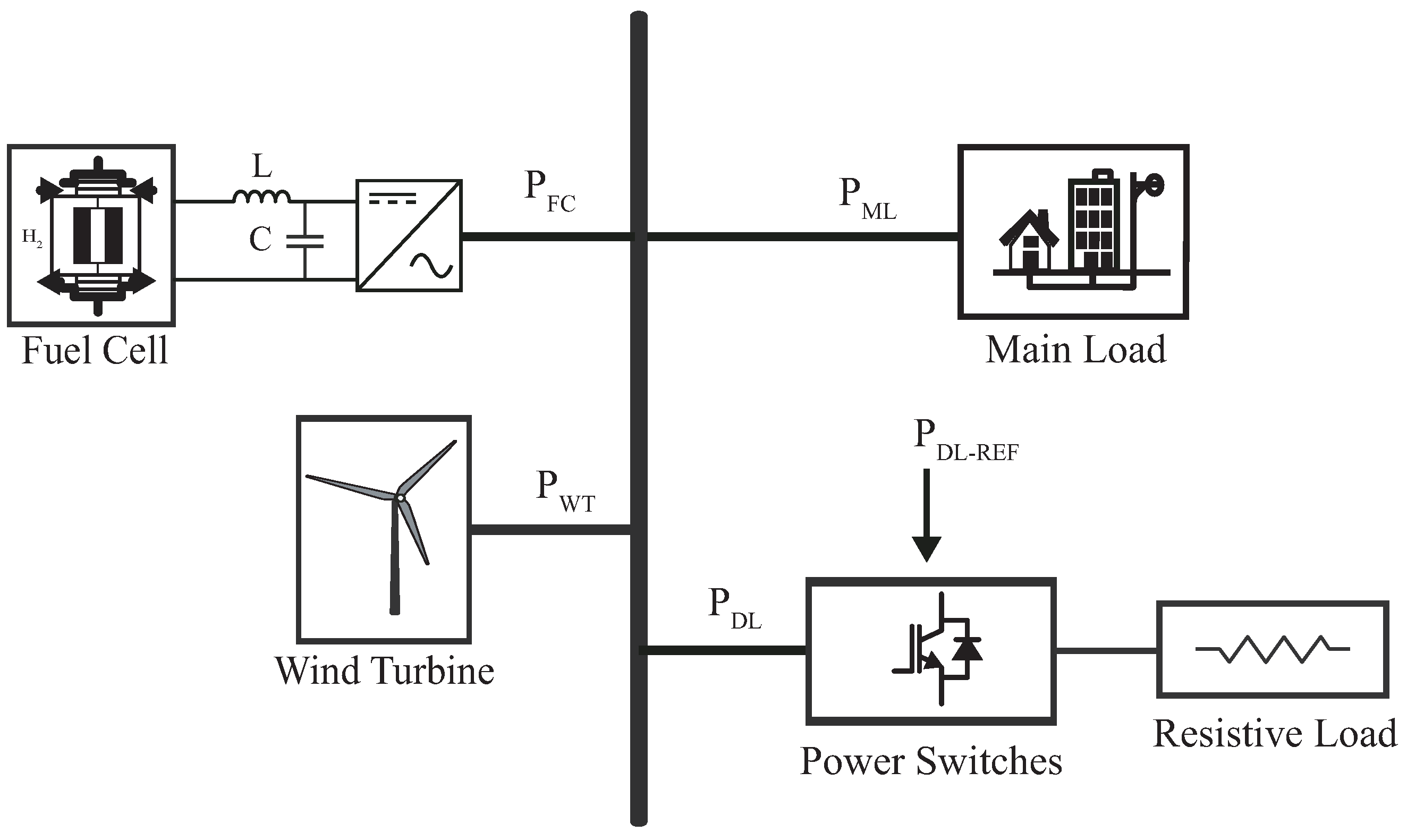
Figure 1 corresponds to an isolated microgrid with GFM capability, composed of a fuel cell, a wind turbine, a dump load and a main load.
The fuel cell is a low-temperature PEM hydrogen stack. The stack consists of multiple electrochemical cells arranged in a series-parallel configuration, allowing it to achieve the voltage and power levels required by the system. Specifically, it consists of a structure of 20 stacks connected in series and 3 strings connected in parallel, with a nominal voltage of 45 VDC per stack and an individual nominal power of 6 kW. The series connection increases the DC voltage, while the parallel branches increase the current capability of the system. The total DC voltage is obtained from the series connection as,
The current delivered by a single
stack can be calculated from the power relation
Since three identical strings are connected in parallel, the total current becomes
Thus, the total fuel cell system power is
Therefore, the complete fuel cell system corresponds to 60 identical stacks (), producing a DC bus and approximately , which results in the power level used in the simulation study. This modular scaling approach is consistent with practical fuel cell installations, where multiple low-voltage stacks are combined in series and parallel to reach higher voltage and power levels while maintaining manageable electrical ratings.
The fuel cell supplies a direct current (DC) and operates within defined current and voltage limits that ensure safe and efficient operation. The implemented model incorporates the basic electrical dynamics of the fuel cell, allowing for the measurement of output voltage and current.
The inverter coupled to the fuel cell enables the conversion of direct current (DC) to alternating current (AC) and the implementation of a GFM control.
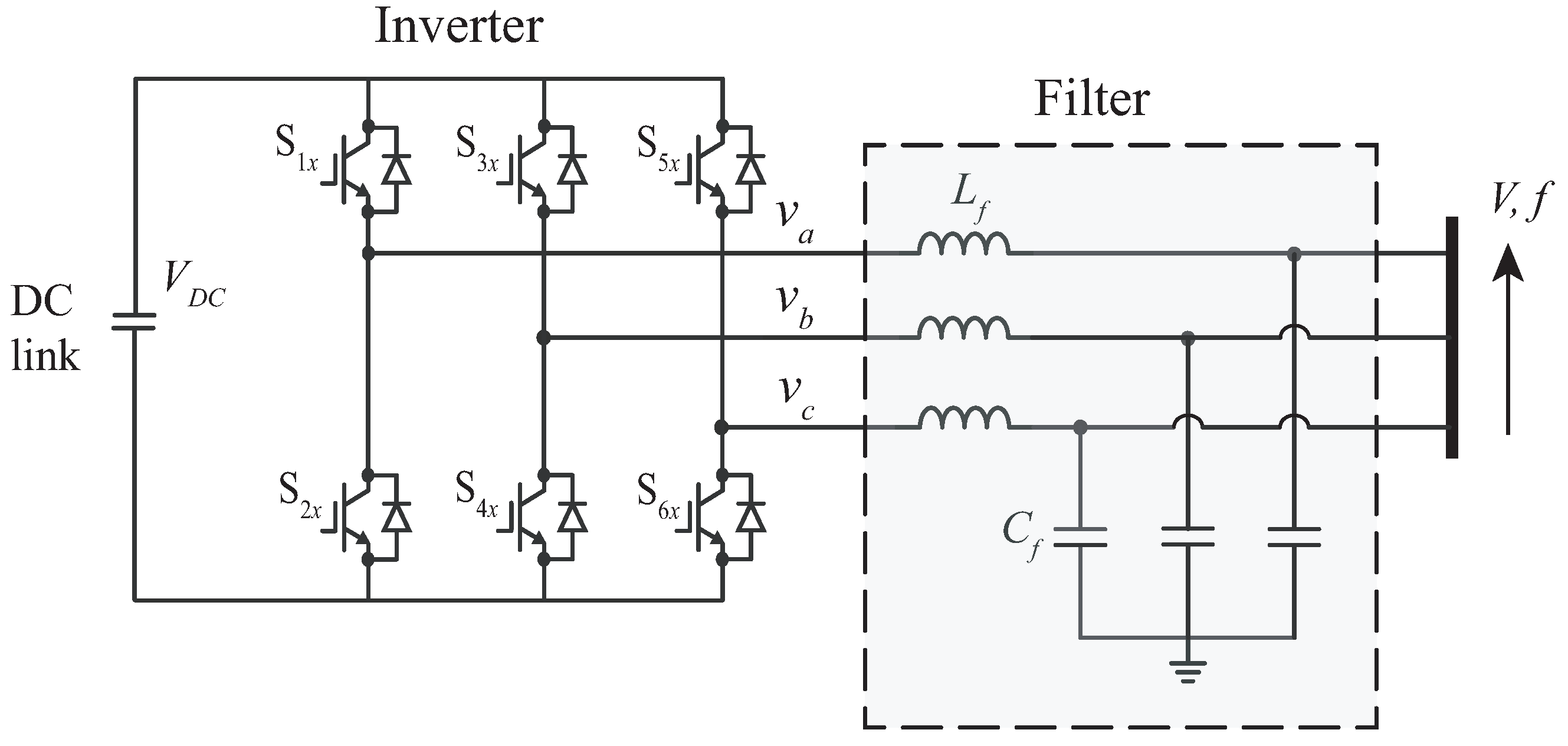
Figure 2 shows this three-phase converter based on Silicon Carbide (SiC) MOSFETs. The switching frequency is 20 kHz and LC-filters connect the converter to the AC grid to limit the harmonic content of the output voltage.
Using control strategies implemented in the dq synchronous reference frame, the converter precisely regulates the AC bus voltage and frequency, acting as the GFM source for the system. This control scheme establishes the system’s electrical reference and ensures stable operation in the face of variations in load demand or power generated by the wind turbine. This results in an effective emulation of the synchronous machine used in the wind–diesel hybrid system for the isolated operation.
In the case of the wind turbine, this work considers a fixed-speed wind turbine based on an asynchronous generator directly connected to the isolated grid. Fixed-Speed Asynchronous Generators (FSAGs) are widely used due to their simple structure, robustness, and high reliability [
43]. A key advantage of FSAG-based wind turbines is their simplicity, as they operate without power electronic converters or complex control schemes. This reduces system cost, improves reliability, and simplifies maintenance. Moreover, the long-term use of this technology in the wind industry has resulted in a mature and well-proven solution suitable for isolated power systems.
Due to the narrow operating speed range of the generator, the turbine operates at a nearly constant speed. From a dynamic perspective, FSAGs provide an inherent damping effect, since the electromagnetic torque is proportional to the slip. This characteristic contributes to improved frequency stability in isolated grids. In addition, the absence of slip rings and power electronic interfaces improves the efficiency. In the proposed system, the wind turbine drives a Squirrel-Cage Induction Generator (SCIG) rated at 275 kVA through a gearbox. Reactive power support is locally provided by a 25 kVAr capacitor bank connected at the generator terminals.
The DL is used as a protection and power-balancing mechanism in the hybrid system, absorbing excess active power generated by the wind turbine when generation exceeds instantaneous demand [
44,
45]. Its main purpose is to prevent reverse-power conditions at the synchronous generator or the GFM source, which could cause the sources to operate as a load and compromise their safe operation. The DL is implemented with binary resistors switched at zero-voltage crossings using IGBTs, resulting in current waveforms without harmonic distortion.
The DL consists of three-phase resistors controlled by solid-state switches, arranged in discrete stages with a binary progression. This configuration allows for stepped regulation of the dissipated power, while switching at zero-crossing voltages minimises harmonic injection into the system. The absorbed power is adjusted in increments defined by a base power, providing flexible regulation of excess generation. The power rating of each branch follows a binary progression, i.e., , where is the minimum power step. By combining these eight stages, the dump load provides possible switching combinations (including zero load). Therefore, it can deliver non-zero power levels (all resistors connected). This binary structure allows the dump load to absorb power in increments of , from zero up to a maximum capacity of . Thus, the DL contributes to maintaining power balance and system stability under high wind generation conditions.
The main load used in this project is modelled as a three-phase resistive load, whose function is to consume active power from the electrical system. This type of load simplifies the aggregate behaviour of real-world loads, such as residential loads or light industrial loads, where reactive power exchange is minimal and demand is dominated by active power. The main load allows for the evaluation of the GFM system’s capacity to supply active power, maintain power balance, and adequately regulate voltage and frequency under different demand levels. By varying its value, typical changes in electrical consumption, such as load increases or decreases, are simulated without introducing complex dynamic effects associated with nonlinear or frequency-dependent loads.
This approach facilitates the interpretation of the results and the study of power distribution among the fuel cell, the wind turbine, and the DL. Furthermore, the use of a resistive load is suitable for analysing isolated operating scenarios, as it allows the study to focus on the performance of GFM control and the management of active power within the hybrid system.
In
Figure 1, the fuel cell is connected to the bus via an electronic power converter that operates as the GFM unit. The primary function of the GFM control is to establish and regulate the system’s voltage and frequency, providing the electrical reference for the other components. Under normal conditions, the fuel cell is not intended to supply most of the active power demanded by the load; rather, it ensures system stability and continuity of supply during periods without wind. When the available wind power is insufficient, the fuel cell supplies active power to maintain system balance and guarantee continuous supply to the load. The wind turbine, coupled to an asynchronous generator, is primarily responsible for supplying the active power required by the main load, harnessing the available wind energy. Its operation depends on variations in wind resources, so its power output can fluctuate over time. The DL acts as a protective and energy-balancing element, absorbing excess active power when wind generation exceeds total system demand, and preventing power flow into the fuel cell. This prevents reverse-power operation of the fuel cell, which could otherwise damage the overall system. The main load represents the user’s electrical consumption.
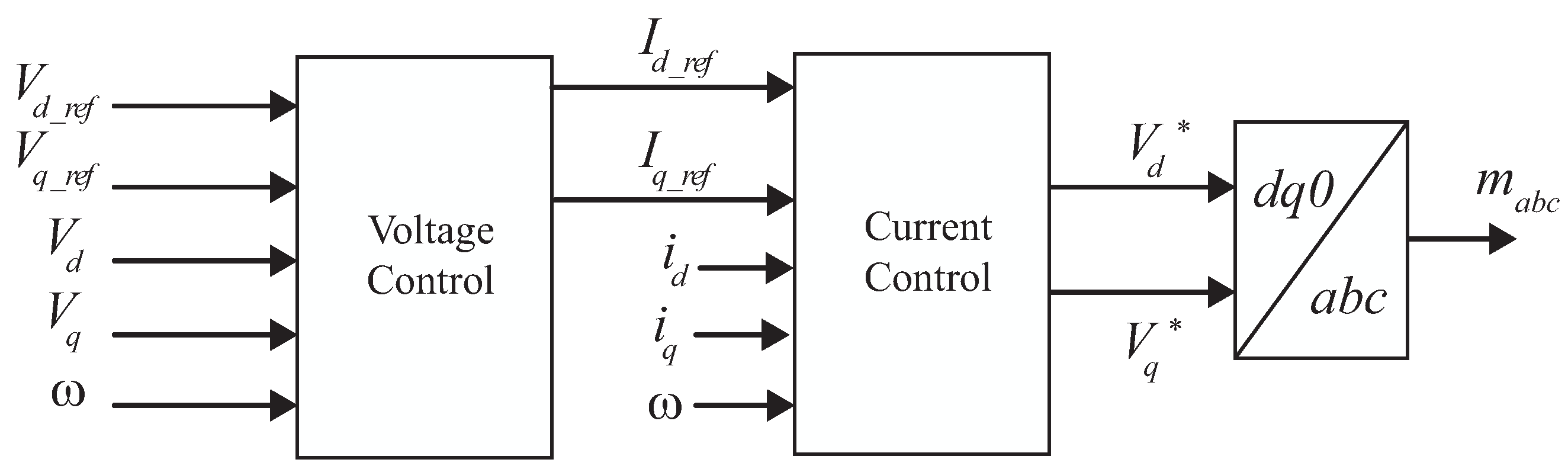
Figure 3 shows the general control structure of the GFM system, based on an external voltage control loop and an internal current control loop, implemented in the synchronous
reference frame.
The voltage control block is the core of the GFM behaviour. This block receives as inputs the direct and quadrature voltage references (, ), the voltages measured at the connection point (), and the electrical angular velocity . From these signals, the voltage controller regulates the magnitude and orientation of the grid voltage vector, generating the current references , . In this way, the converter imposes the system voltage and frequency, acting as a GFM source.
The current references generated by the voltage control are fed to the current control, which operates as a wider-bandwidth internal loop. This block compares the reference currents , with the measured currents , also incorporating the electrical frequency . The current control regulates the converter currents, producing the voltage references and necessary for accurate dynamic tracking. The role of the current controllers in limiting current magnitude and thereby protecting the power electronic converters is particularly relevant during faults.
The voltage references in the frame are transformed to the three-phase coordinate system by an inverse transformation . The resulting signals are used as modulation signals for the power electronic converter, allowing the synthesis of the three-phase voltages that feed the grid. The voltage control, angle generation, and current control are described in more detail in the following sections.
2.1. Voltage Control (External Loop)
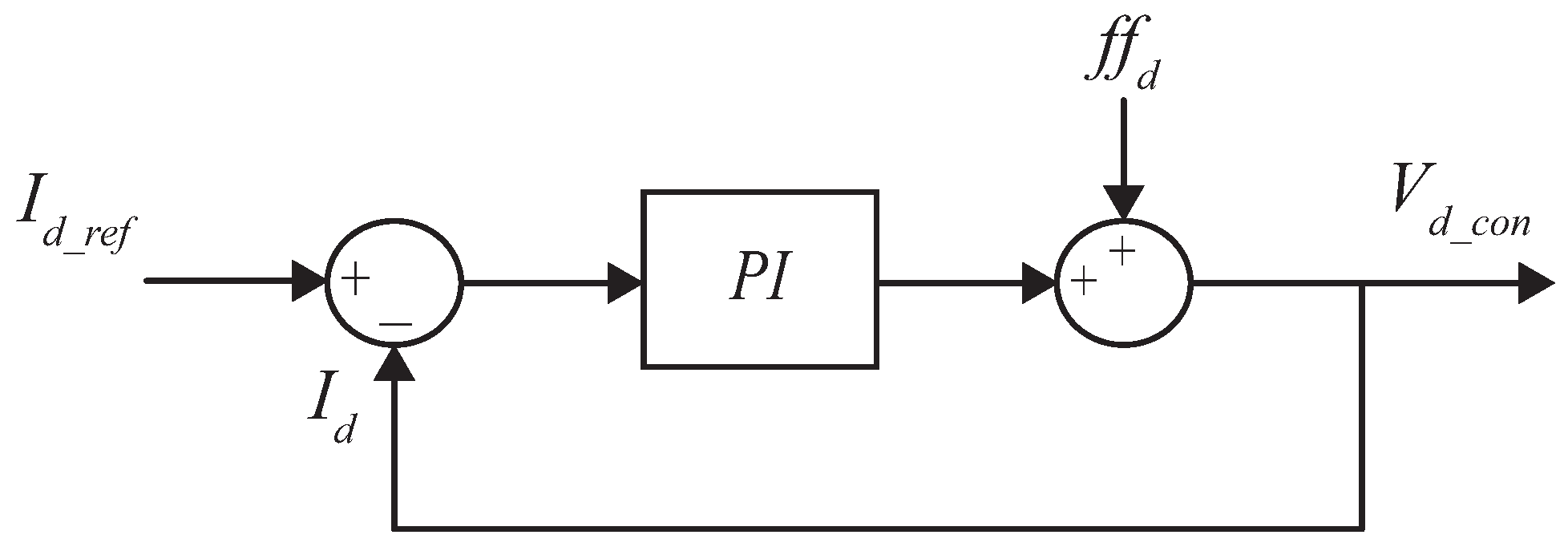
The voltage control of the GFM component is implemented in the synchronous
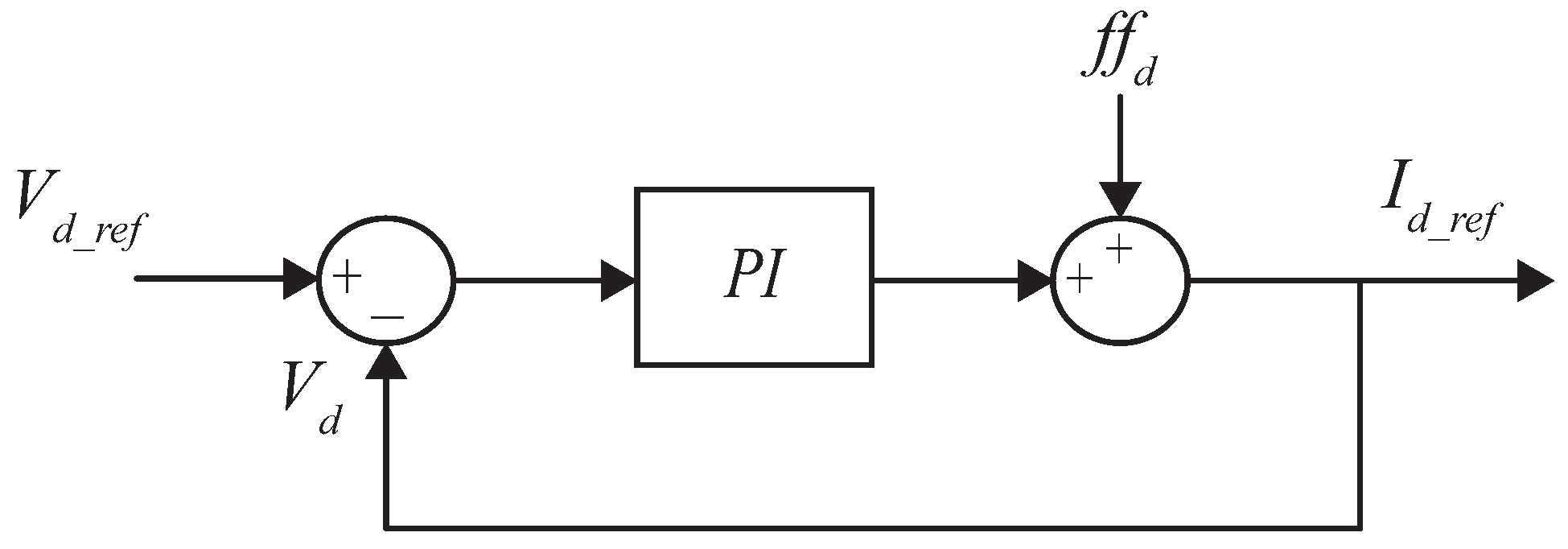
dq reference frame, allowing decoupled regulation of the direct and quadrature voltage components, as shown in
Figure 4. For simplicity, the following analysis only considers the
d-axis, since the
q-axis follows an analogous reasoning. This strategy enables the converter to behave as a GFM source, capable of autonomously establishing the system voltage amplitude and frequency. The reference
is set to the nominal grid voltage whereas
is set to zero.
The voltage reference
is compared with the measured voltage, as shown in the following equation:
The voltage error
feeds a PI controller, whose output defines the current reference
:
where
and
are the proportional and integral gains of the voltage control loop, and
is the corrective current that the converter has to provide to achieve the desired voltage profile.
To improve the system’s dynamic response and compensate for the cross-coupling effects inherent in the transformation, feed-forward terms dependent on the electrical frequency and measured currents are incorporated, reducing the controller load and improving transient stability. Because the plant is essentially an integrator corresponding to the filter capacitance, this commonly used procedure is the technical optimum. Load feed-forward improves the dynamic response.
The voltage regulation is constant with a single fuel cell system independent of the loading (zero droop). With several fuel cell systems operating in parallel, a droop is necessary for power sharing, in a manner analogous to that used with parallel diesel generator sets. The droop control, relating the voltage module and reactive power (assuming an inductive grid), will cause the power electronic converter to emulate the dynamic behaviour of an Automatic Voltage Regulator (AVR), ensuring robust and stable operation in isolated microgrids.
2.2. Angle Generation
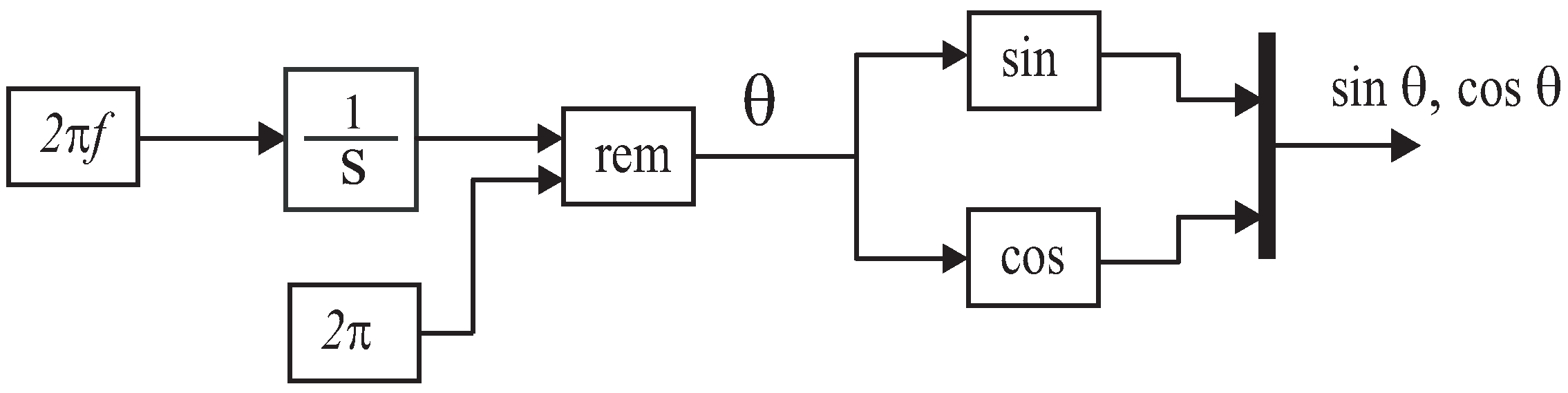
Generating the system’s electrical angle is an essential element in the GFM control strategy, since synchronisation is not based on the electrical grid, but rather built internally from the frequency generated by the controller itself. This approach allows the converter to establish its own phase reference, replicating the behaviour of a stand-alone synchronous generator. The process of generating the angle begins with the calculation of the electrical angular velocity
, as shown in
Figure 5.
The electrical angular velocity
is defined as:
where
f corresponds to the system frequency determined by the GFM control. This signal is integrated using a discrete integrator to obtain the electrical angle
, according to:
In a grid-forming configuration, the power electronic converter emulates the dynamic behaviour of a virtual synchronous machine. This behaviour is equivalent to conventional droop control [
46], in which the resulting virtual inertia is determined by the time constant of the active-power low-pass filter. When several fuel cell systems operate in parallel, droop control is required to ensure proper active-power sharing, consistent with the analogy of parallel diesel generator sets. In the case of a single fuel cell system acting as the GFM unit, the frequency regulation is isochronous and therefore independent of the load level (zero droop). In this condition, the nominal system frequency is directly imposed by the controller and remains constant regardless of variations in the load level.
Since the resulting angle grows indefinitely over time, it is normalised using the modulo function , ensuring that the angle remains within a periodic range and avoiding numerical problems associated with the unlimited growth of the variable. From the normalised angle, the functions and are generated, which are used to perform the transformations and , as well as for converter modulation. This procedure establishes a rotating reference frame consistent with the system’s internal frequency, ensuring proper synchronisation between control, modulation, and the generated voltage.
In this way, the proposed scheme effectively generates the angle and ensures stable, autonomous operation when applied to isolated systems.
2.3. Current Control (Internal Loop)
Current control constitutes the internal loop of the GFM scheme and aims to quickly and precisely limit the converter currents during transients and particularly during faults. This internal loop is fundamental for ensuring the dynamic stability of the system and for decoupling the converter’s electrical dynamics from external disturbances.
Figure 6 shows the current control for the GFM system.
The reference currents
,
, from the voltage controller, are compared with the measured currents
and
, obtained from the
transformation. This comparison generates the current errors, as shown in Equation (
9).
Similar to voltage control, the current error
feeds a PI controller, described in Equation (
10).
The PI controllers generate the control voltages , which represent the corrective action needed to force the current to follow the reference. To improve the dynamic response and compensate for the system dynamics, this signal is supplemented with feed-forward terms, which, when added to the corrective voltage, give rise to the final reference voltage , corresponding to the voltage that the converter must synthesize to impose the desired current.
The equation that describes the interconnection of the converter with the grid is given by:
where
R and
L are the resistance and inductance between the grid and the converter and,
is the cross coupling term.
The feed-forward term can be described as:
The sum of the PI action and the feed-forward terms produces the reference voltages that the converter must synthesize as:
The usual procedure for tuning the current controller is the technical optimum. Finally, the reference voltages in the frame are transformed to the three-phase system by the inverse transformation , using the angle generated by the GFM synchronisation block. The resulting signals are used for converter modulation.
2.4. Controller Tuning Using the IMC-2DF Method
The parameters of the voltage and current PI controllers are obtained using the Internal Model Control with Two Degrees of Freedom (2DF-IMC) tuning method. This approach incorporates an internal model of the plant into the controller design, allowing the controller gains to be directly related to the electrical parameters of the system.
In the two-degrees-of-freedom IMC structure, an additional internal feedback loop is introduced, providing an extra degree of freedom in the controller design [
47]. This feature improves disturbance rejection capability and allows the natural response of the plant to be shaped by modifying the system dynamics. One of the main advantages of this approach is that the controller parameters are directly derived from the plant parameters, leaving typically one main tuning parameter, the bandwidth parameter
, that determines the desired closed-loop response speed.
For the inner current control loop, the proportional and integral gains of the PI controller are obtained as
where
L and
r describe the inductance and resistance between the inverter and the
grid, respectively. The inner feedback gain is defined as
where the bandwidth parameter is
expressed in rad/s.
The current-controller bandwidth is selected to be between one-tenth and one-twentieth of the switching frequency. The IMC calculation for the voltage controller is analogous to the previous procedure. The voltage-controller bandwidth is selected to be ten times lower than the current-controller bandwidth.
These expressions relate the controller parameters directly to the electrical parameters of the plant, ensuring the desired closed-loop dynamics and improved disturbance rejection.
3. Replacing a Diesel Genset with Fuel Cell Systems
In wind–diesel hybrid systems, the diesel genset connects during periods with no wind power generation (“diesel-only” mode). In this mode, the genset’s speed governor controls the system frequency, and the synchronous generator’s AVR regulates terminal voltage. The diesel-only mode ensures stable operation under low or zero wind conditions; however, it implies continuous fuel consumption, mechanical wear, and reduced efficiency, particularly when the genset operates at partial load. When wind power is present but insufficient to meet the full demand (“wind–diesel” mode), the governor still controls the frequency and the AVR regulates the voltage amplitude. The renewable generation behaves as a negative load. Owing to the Willans’ curve of the diesel engine, which results in substantial fuel consumption even at zero load, fuel savings in wind–diesel mode are limited. Consequently, substantial fuel-consumption reduction is achievable only with the diesel genset off, motivating the development of alternative mechanisms capable of maintaining stable operation without continuous diesel support. In addition to the limited fuel savings, operating the diesel genset at low-load conditions may lead to inefficient combustion, increased maintenance requirements, and accelerated engine wear. These drawbacks highlight a fundamental limitation of wind–diesel architectures, where the diesel unit must remain operating to ensure voltage and frequency regulation, even when renewable generation is available.
When wind power exceeds the consumer load, the genset can be shut down; however, this complicates frequency regulation because the diesel unit cannot absorb power. To address this, controllable loads (e.g., irrigation pumps) or, more commonly, a DL (binary load bank) are employed. The dissipated heat can be recovered for space heating or for preheating diesel fuel in cold climates. To reduce start-stop cycling of the genset, energy storage is included, with batteries being the most common choice. In such operating conditions, the presence of excess renewable generation introduces challenges related to power balance and system stability, particularly in isolated networks. Since the diesel genset is unable to operate as a sink for active power, surplus energy must be dissipated or stored to prevent overfrequency events. Dump loads provide a simple and robust solution by absorbing excess power in a controlled manner, thereby maintaining system frequency within acceptable limits. However, frequent activation of dump loads represents an inefficient use of available renewable energy. For this reason, energy storage systems are often incorporated to temporarily store excess generation, smooth power fluctuations, and minimise genset cycling.
The objective in a wind–diesel system is to keep the genset off for as long as possible, thereby substantially reducing fuel consumption and emissions. The battery inverter interfacing the storage with the grid can also provide frequency regulation. In many cases, the DL remains an essential safety element to prevent reverse power when controllable loads lack sufficient bandwidth or when the battery is fully charged.
When replacing the diesel genset with a fuel cell system, its role as a voltage-waveform generator is entirely equivalent. The fuel cell system has a very limited capability to absorb power, lower even than that of the diesel genset, making the need to prevent reverse power even more critical. Unlike diesel generators, fuel cell systems are electrochemical devices inherently designed to operate as power sources rather than sinks. As a consequence, any sustained reverse power condition may lead to undesirable operating states, increased thermal stress, or accelerated degradation of the fuel cell stack [
48]. This limitation mandates the implementation of dedicated protection and control strategies capable of ensuring that power flow toward the fuel cell is effectively prevented. In GFM applications, this requirement becomes particularly relevant under high renewable penetration scenarios, where surplus generation may frequently occur. Therefore, auxiliary mechanisms such as dump loads or coordinated power management strategies are essential to safely dissipate excess energy and preserve the integrity of the fuel cell system while maintaining stable voltage and frequency regulation in isolated networks.
Because the interface between the isolated grid and the fuel cell is a three-phase power-electronic converter, transitions between operating modes are smooth. The fast transient response of the fuel cell inverter, combined with appropriate dump-load control, can deliver stable operation of the isolated grid.
Table 1 presents a comparison between wind–diesel and wind–fuel cell hybrid systems, highlighting the main differences in terms of GFM capability, efficiency, emissions, dynamic response, and operational characteristics.
4. No-Reverse-Power Control Strategy
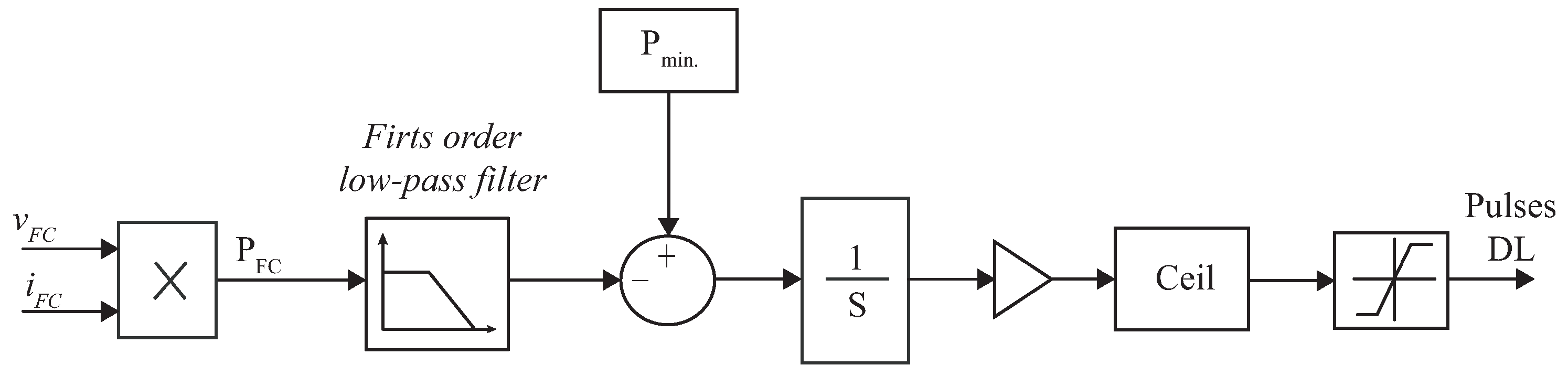
Compared with the diesel genset, the fuel cell does not incur the mechanical complexities associated with shutting down when wind power exceeds the load. The fuel cell system operates as a GFM source within the isolated grid. The power electronic converter has a very limited capability to absorb power, determined by the DC-link capacitor. Under these conditions, it is crucial to avoid reverse-power operation. To protect the fuel cell and ensure stable operation, a control scheme based on a DL is implemented to absorb the excess active power. This control arrangement is shown in
Figure 7.
The proposed control system is based on the direct measurement of the active power associated with the fuel cell. To achieve this, the three-phase voltages and currents at the fuel cell converter connection point,
and
, are used to calculate the instantaneous active power, as shown in Equation (
17):
where
,
represent the voltage and current magnitudes of the fuel cell. The power consumption and generation of the fuel cell are defined as follows: when
, it delivers power; when
, the operation is neutral; and when
, the fuel cell consumes power (undesired operation). The
value represents the actual power exchanged between the fuel cell and the isolated grid, and it constitutes the primary variable in the control loop. To avoid measurement noise and high-frequency oscillations associated with the converter, the measured power signal is filtered using a first-order low-pass filter.
The
power is compared to a predefined minimum positive threshold (
), which establishes a safety margin that prevents the fuel cell from operating under near-power absorption conditions. When the active power decreases to this threshold, a power error is generated, triggering the control mechanism, as described by Equation (
18).
The resulting error feeds a discrete integrator, whose function is to progressively generate a power reference for the DL. The minimum power threshold () is introduced as a fundamental safety margin within the control strategy, as it prevents the fuel cell from operating excessively close to the condition, a region where small disturbances can induce reverse power flows. This threshold allows for early activation of the DL, so that excess active power is dissipated before the fuel cell power becomes negative. Additionally, improves the system’s robustness against practical uncertainties, such as measurement errors, delays introduced by power signal filtering, and inherent system dynamics. Without this threshold, the controller would only react when the power is already negative, an undesirable condition for electrochemical devices like fuel cells, due to the potential adverse effects on their performance and lifespan.
The integrator’s output defines the power that must be dissipated locally, which is subsequently translated into discrete control signals that govern the conduction of the DL. Therefore, the relationship between the error
and the DL can be described by the Equation (
19).
The complete expression for the power balance in the system can be summarised as:
where
is the active power generated by the wind turbine,
is the active power consumed by the main load,
represents the active power absorbed by the DL,
denotes the active power supplied by the fuel cell, and
is the minimum positive active power threshold defined to prevent reverse power operation of the fuel cell.
As a result of this strategy, the excess active power generated in the system is absorbed by the DL, preventing it from flowing to the fuel cell. In this way, the active power associated with the fuel cell is kept at safe levels, ensuring that it operates exclusively as a GFM source and not as an electrical load. Simulation results confirm that the proposed control system responds appropriately to variations in generation and load, ensuring effective reverse power prevention and contributing to the overall stability of the isolated system.
5. Simulation Results
A detailed simulation was carried out to assess the behaviour of the proposed system and to confirm its correct functionality. The software for the simulations was MATLAB/Simulink R2021a, including the Simscape library for power electronics. The simulations consider the system to be composed of a wind turbine rated at 275 kVA, a fuel cell with a nominal power of 360 kW, and a DL with a total capacity of 446.25 kW implemented through 255 incremental stages of 1.75 kW. Under these conditions, three representative case studies are analysed, which are described below.
5.1. Case with Fuel Cell-Only
This case study focuses on analysing the behaviour of the GFM system when the fuel cell is the only active power source, while the wind turbine is not generating; that is, the wind turbine does not generate active power due to the lack of wind resources (). Under these conditions, all the power demanded by the main load is supplied by the fuel cell, which operates as the GFM source, establishing the system’s voltage and frequency.
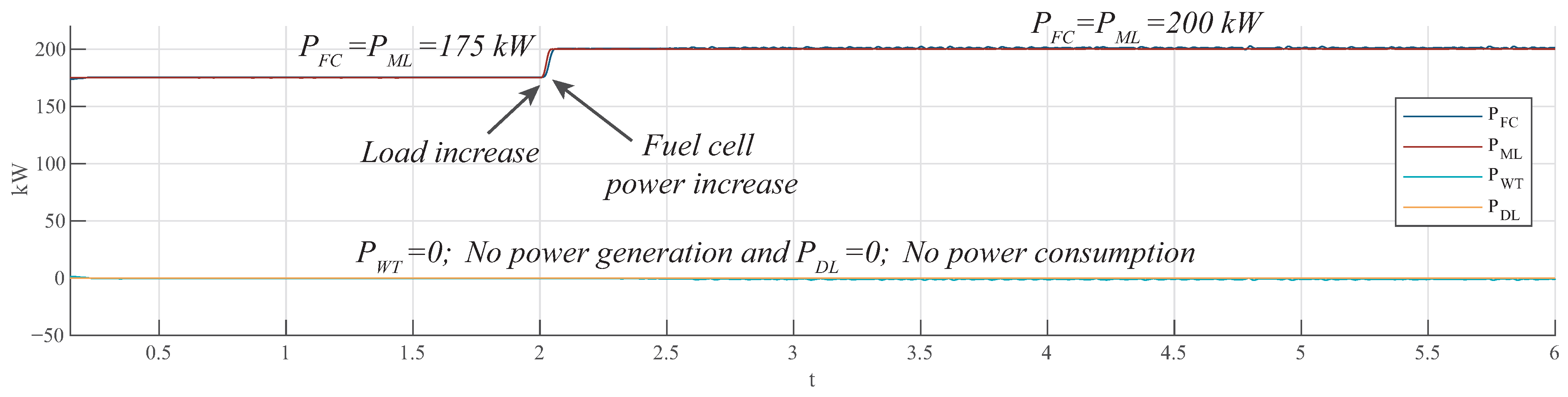
Figure 8 shows the time evolution of the active power corresponding to the main load (
), the fuel cell (
), the wind turbine (
), and the DL (
). Initially, for
, the main load demands a constant power of approximately
. During this interval, the wind turbine does not contribute any active power to the system (
) due to insufficient wind for its operation. Consequently, the entire power required by the main load is supplied by the fuel cell, which delivers
. In this scenario, the DL remains inactive (
) since there is no excess generation.
At
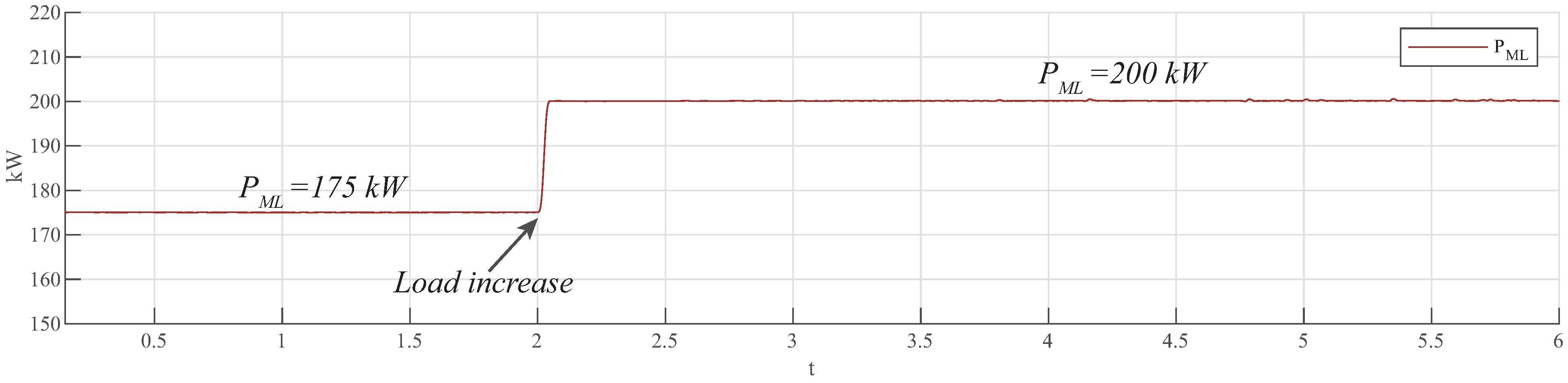
, a positive step occurs in the main load demand, increasing its consumption from
to
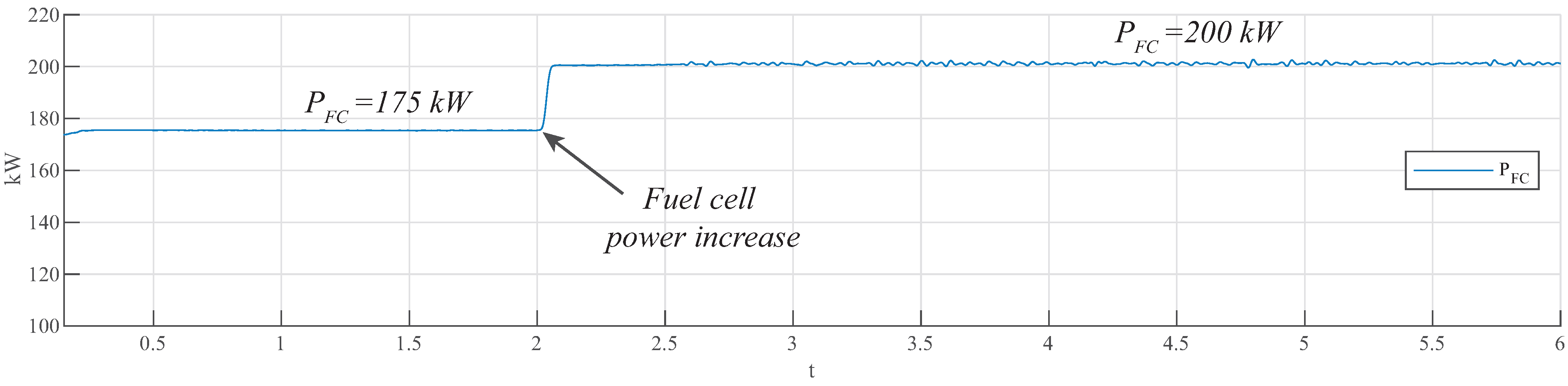
. This power increase is immediately compensated by the fuel cell, which raises its output to fully supply the new demand. After the transient response, the
and
signals remain practically superimposed, indicating that the fuel cell continues to provide the total active power required by the load. For clarity and improved visualisation, the active power of the fuel cell and the main load is also presented separately in
Figure 9 and
Figure 10, respectively.
Throughout the analysed period, the wind turbine does not contribute active power, and the DL does not operate, confirming that there is no excess generation in the system. This case demonstrates the correct operation of the GFM scheme, where the fuel cell acts as the primary power source and maintains the energy balance under variations in load demand.
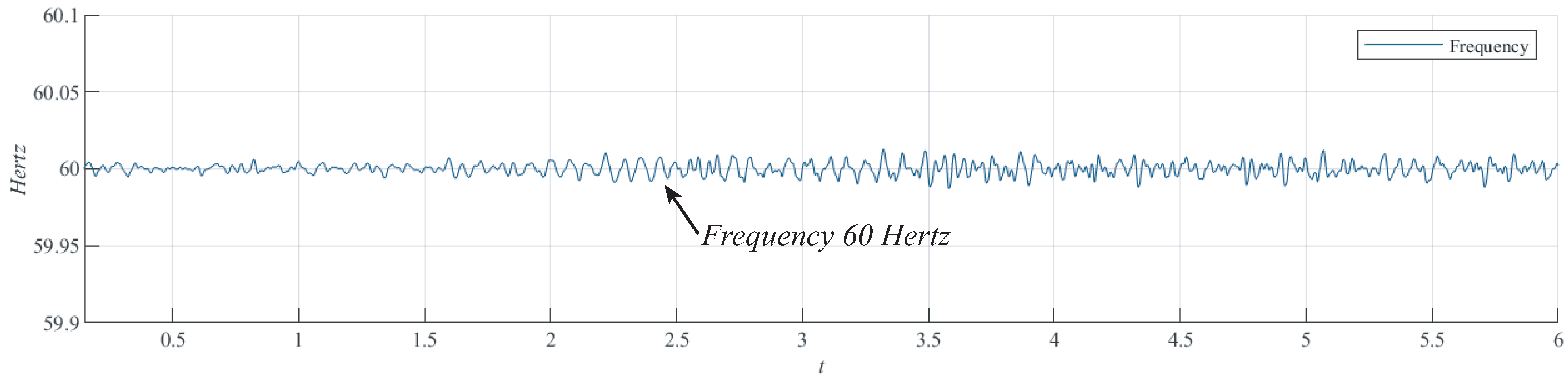
Figure 11 and
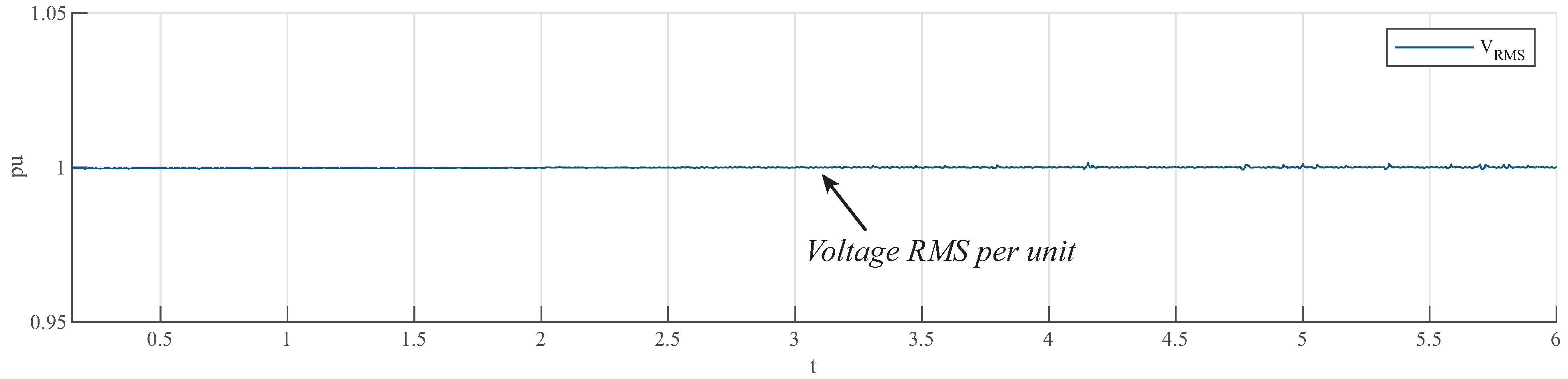
Figure 12, corresponding to the system frequency and RMS voltage, demonstrate the correct performance of the implemented GFM control scheme. In particular, it can be observed that the system frequency remains close to the nominal value of 60 Hz (Mexican AC frequency) throughout the simulation interval, exhibiting only small, low-amplitude oscillations. These variations are expected in isolated systems due to the inherent dynamics of the electronic converters, and do not compromise stability of the system.
Similarly, the system’s RMS voltage remains regulated at around 1 pu, indicating that the fuel cell, through its electronic power converter, is able to adequately establish and maintain the grid voltage level, even in the face of changes in power demand. The absence of significant voltage deviations confirms that the external voltage control loop is functioning effectively.
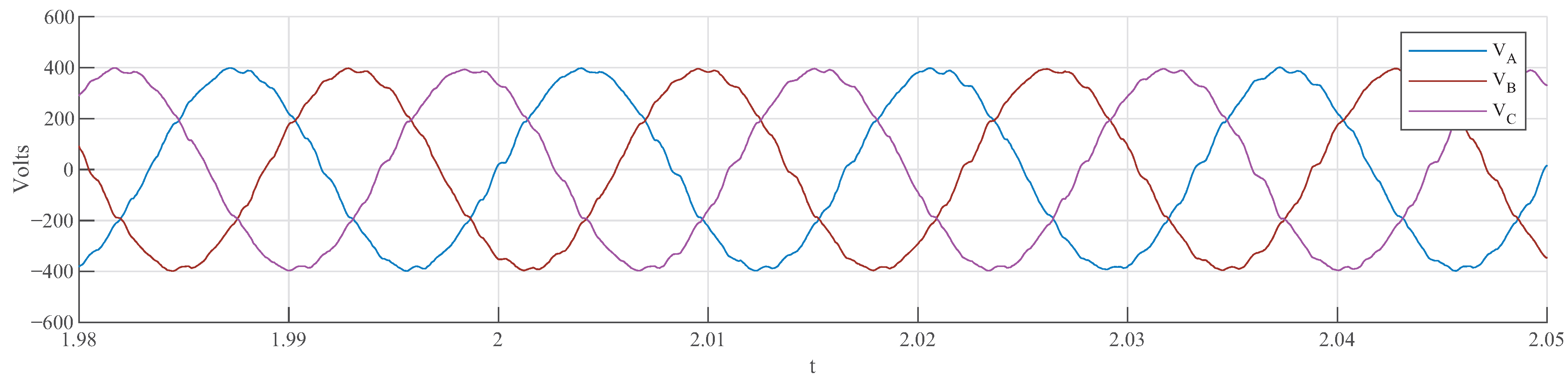
Figure 13 shows the three-phase voltage waveforms for this case. As can be seen, the phase voltages
,
, and
exhibit a clearly sinusoidal behaviour, with uniform amplitude and phase shift, demonstrating a balanced system operation. No significant harmonic distortion or waveform distortion is observed, confirming that the converter associated with the fuel cell is capable of synthesizing high-quality voltages.
Furthermore, no relevant disturbances are observed in the voltage waveforms during the change in the main load that occurred around . The continuity and smoothness of the signals during this event indicate that the GFM system maintains adequate decoupling between active power dynamics and voltage regulation. This demonstrates that the voltage control loop responds effectively, preventing overshoots or distortions during load transients.
Stable regulation of both frequency and voltage is a key outcome, as it ensures suitable operating conditions for connected loads and prevents undesirable phenomena such as instabilities, protective device tripping, or equipment degradation. These results demonstrate that the fuel cell-based GFM system operates correctly, providing a robust voltage and frequency reference, which is highly beneficial for the reliable operation of isolated microgrids.
5.2. Case of a Transition from Wind–Fuel Cell to Wind-Only
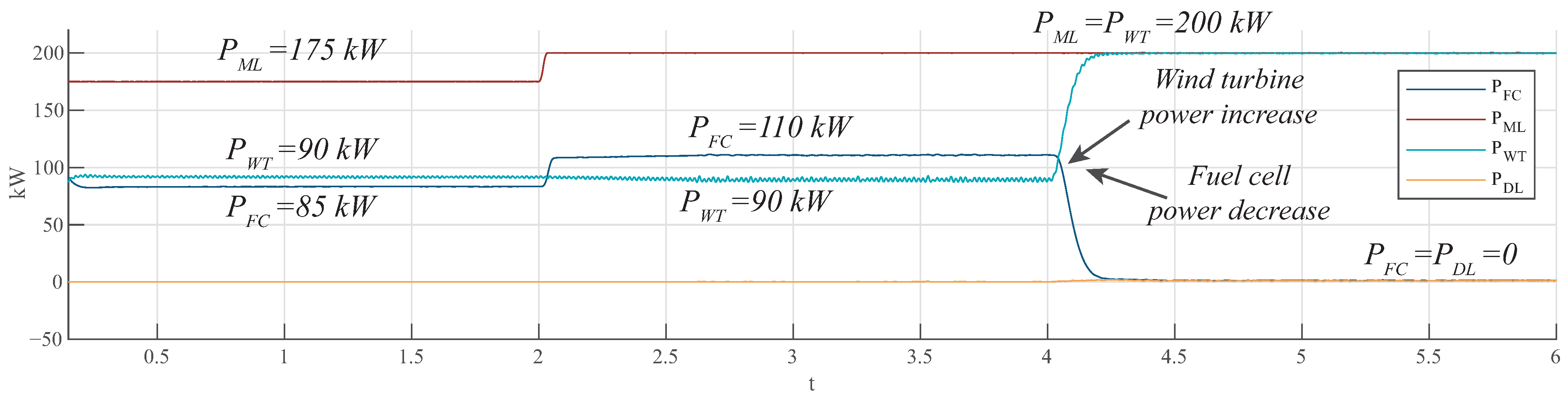
This case study analyses the behaviour of the GFM system when the power generated by the wind turbine is initially less than the main load demand. During this interval, the fuel cell acts as a backup source, supplying the missing power to fully meet the load’s consumption. Subsequently, due to an increase in wind speed, the power delivered by the wind turbine increases significantly until it matches the main load demand. As a result, the wind turbine takes over supplying the load entirely, while the fuel cell gradually reduces its power to zero. This scenario allows for the evaluation of the smooth transition of responsibilities between the two sources, as well as the system’s ability to maintain an appropriate power balance without generating reverse power conditions in the fuel cell.
The power outputs for the main load (
), the fuel cell (
), the wind turbine (
), and the DL (
) for the case of a transition from wind–fuel cell to wind-only, are shown in
Figure 14.
In this figure, during the initial interval, from to , the main load demands a constant power of 175 kW. In this period, the wind turbine generates 90 kW, an insufficient amount to fully meet the load’s demand. Consequently, the fuel cell supplies the missing active power, contributing approximately 85 kW, thus maintaining the power balance in the system. Under these conditions, the DL remains inactive (), as there is no excess power generated.
Subsequently, between and , the main load experiences an increase in demand, rising from 175 kW to 200 kW. Since the power generated by the wind turbine remains constant at 90 kW, the fuel cell increases its output to approximately 110 kW to compensate for the increased load and ensure the full supply of active power. Again, no activation of the DL is observed.
Finally, from to , the wind turbine’s power output increases significantly to 200 kW, a value sufficient to fully meet the main load’s demand. As a result, the fuel cell progressively reduces its active power output until it operates at virtually zero, limiting itself to maintaining the system’s voltage and frequency under a GFM scheme. During this period, the DL remains inactive, as there is no excess power in the system.
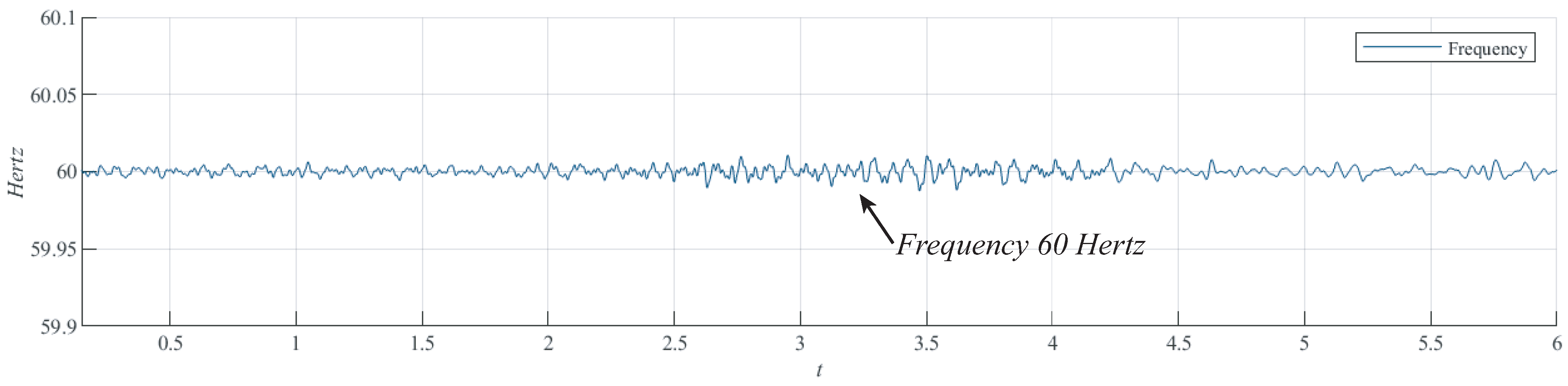
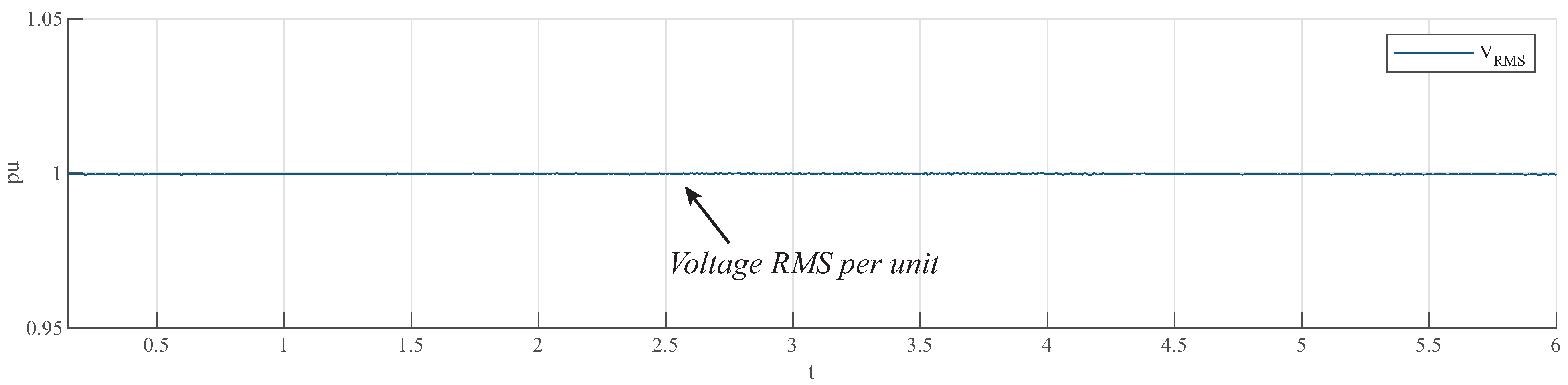
Similar to the previous,
Figure 15 and
Figure 16 show that the system’s frequency and voltage remain properly regulated during all the simulation periods.
Figure 15 shows that the frequency remains stable at around 60 Hz, with slight transient oscillations that do not affect system operation, even during changes in the power distribution between the wind turbine and the fuel cell.
Figure 16 shows that the RMS voltage remains close to 1 pu at all times, without significant deviations. This confirms that the GFM control implemented in the fuel cell is capable of establishing and maintaining the system voltage level appropriately.
The simultaneous stability of frequency and voltage demonstrates that the proposed control maintains proper functioning of the isolated system, ensuring suitable operating conditions even when the main source of active power changes from the fuel cell to the wind turbine.
5.3. Reverse Power Protection Case
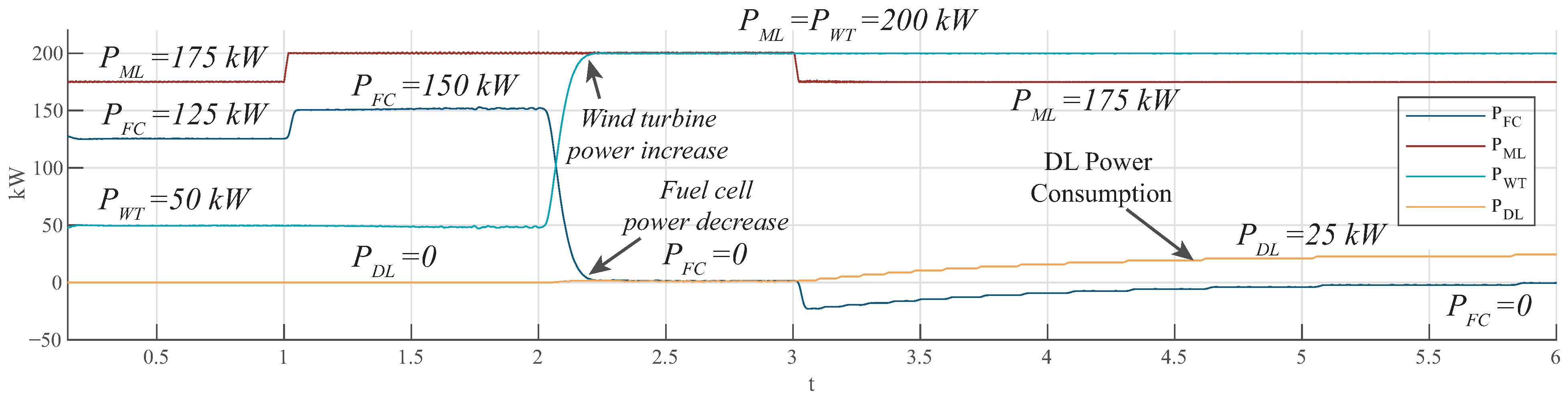
In this case, which tests the reverse power protection, the system initially operates in wind–fuel cell mode, where the wind turbine does not fully meet the demand and the fuel cell provides the missing active power. Subsequently, the system transitions from a deficit to a surplus of wind power generation. When the turbine’s power exceeds the main load demand, a critical risk of reverse power flow to the fuel cell arises, which is a highly undesirable condition. In this scenario, the DL plays a fundamental role as an active protection mechanism by instantly absorbing excess energy and acting as a ’release valve’ that prevents physical damage to the fuel cell. Thus, the correct activation of the DL not only ensures hardware integrity but also allows the GFM control to maintain voltage and frequency stability throughout the system. For this case,
Figure 17 shows the power outputs of the wind turbine (
), the fuel cell (
), the main load (
), and the DL (
).
During the first interval, from to , the system is in an initial equilibrium state where the load demands a constant 175 kW; since the turbine only contributes 50 kW, the fuel cell compensates for the deficit by delivering the remaining 125 kW, while the DL remains inactive. Upon reaching the second interval, between and , the main load increases to 200 kW, causing the fuel cell to react instantly by increasing its output to 150 kW to meet the new demand while wind generation remains constant.
From onward, a transition begins due to the sudden increase in the wind resource, which reaches 200 kW around . In response, the fuel cell reduces its power output proportionally until it reaches almost 0 kW, as the turbine becomes capable of supplying the load on its own.
However, the most critical scenario occurs in the interval from
to
, when the main load suddenly drops to 175 kW while the turbine continues to generate 200 kW. This 25 kW excess initially causes a reverse-power condition, indicating that the excess energy is attempting to flow into the fuel cell. To mitigate this risk, the DL is activated immediately after the transient, ramping up in stages to absorb the 25 kW excess. Towards the end of the study, at
, the DL takes full control of the excess, allowing the fuel cell to return to 0 kW. This eliminates reverse-power operation and protects hardware integrity, resulting in a stable system where the 200 kW generation is distributed as 175 kW for useful consumption and approximately 25 kW for controlled dissipation. For a faster transient, and thereby a shorter reverse-power period, the gain in the control arrangement shown in
Figure 7 should be increased, but without compromising system stability.
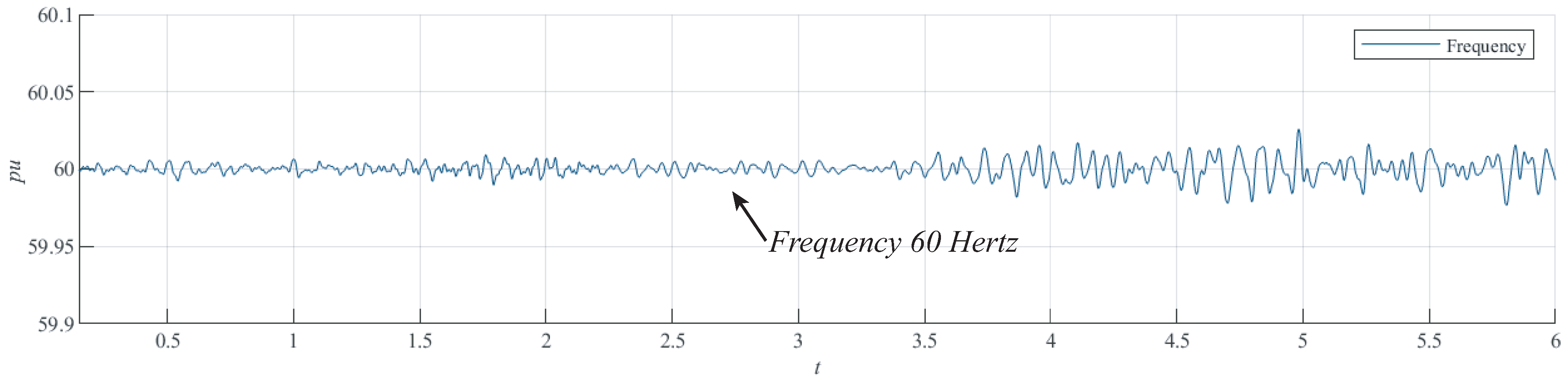
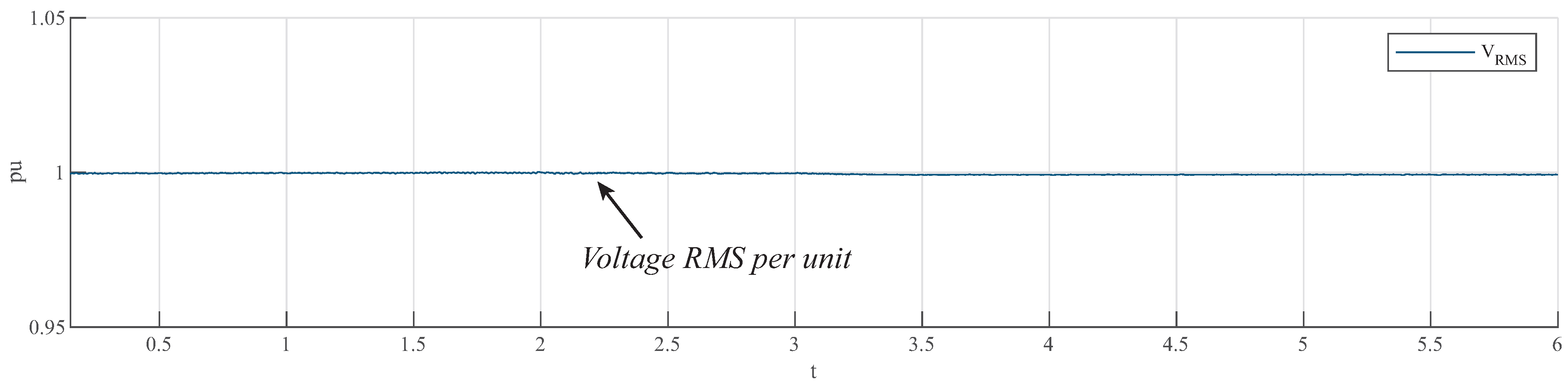
Figure 18 and
Figure 19 show that, despite significant changes in operating conditions, particularly the increase in power generated by the wind turbine and the activation of the DL to manage excess power, the system voltage and frequency remain within acceptable ranges throughout the simulation period.
Figure 18 shows that the system frequency remains close to the nominal 60 Hz, exhibiting only small transient oscillations associated with power variations, but without compromising the overall stability of the system. These oscillations remain within acceptable limits and demonstrate an adequate dynamic response of the frequency control.
Similarly,
Figure 19, shows that the RMS voltage remains regulated around 1 pu, without appreciable deviations, confirming that the fuel cell, acting as a GFM source through its electronic power converter, continues to correctly establish and maintain the system voltage level, even under conditions of excess generation and changes in the power balance.
6. Conclusions
This work proposed replacing the diesel genset in wind–diesel hybrid systems with a fossil-fuel-free hydrogen-based fuel-cell system. The aim of the system is still to obtain the maximum power from the wind resource, while minimising the hydrogen consumption in the fuel cells. When replacing the synchronous generator of the diesel genset with the fuel-cell-based system, the power electronic converter should emulate a virtual synchronous machine with GFM capability.
This work analysed the performance of an isolated hybrid system with GFM capability, based on the integration of a fuel cell and a wind turbine with an asynchronous generator. The fuel cell, coupled to the grid via a GFM-controlled power electronic converter, proved capable of effectively establishing and regulating the system’s voltage and frequency, acting as the primary electrical reference in isolated operation.
To validate the system’s performance under different operating conditions, three representative case studies were shown to evaluate its behaviour in response to variations in load demand and wind-power generation. In the first case, the fuel cell supplied all the active power required by the load; in the second, wind-power generation and the fuel cell shared the power supply; while in the third case, the condition of excess wind-power generation was analysed.
Simulation results confirmed that the wind turbine can supply most of the active power when wind conditions are favourable, while the fuel cell supplements the supply only when wind generation is insufficient. Furthermore, the effectiveness of the no-reverse-power control strategy was validated by incorporating a DL, which adequately absorbed excess active power, protecting the fuel cell from undesirable operating conditions.
Despite the abrupt changes in load and renewable generation considered in the different scenarios, the system maintained stable behaviour, with voltage and frequency regulated around their nominal values. Moreover, transitions between operating modes were smooth with minimal distortion in the voltage waveforms. Overall, the results demonstrate that the proposed architecture constitutes a viable, fossil-fuel-free alternative to traditional wind–diesel hybrid systems, suitable for isolated microgrids requiring stable and sustainable operation.




 ,
,