


Abstract
This study investigates the gasification of pistachio shells for the co-production of biochar and renewable energy, integrating process simulation, energy recovery, and techno-economic–environmental assessment. The investigation has been carried out by experimental tests in a 30 kg/h downdraft gasification–cogeneration system and process simulation. The zero-dimensional simulation model, validated against first-hand experimental data, was used to evaluate two operational scenarios differing in biochar yield (10% and 17%) and energy yield. The integration of the gasification–CHP system with a representative pistachio-processing facility (500 t yr−1 shell availability) demonstrated annual useful energy outputs ranging from 574 to 900 MWh yr−1 (as the sum of heat and electricity). The techno-economic analysis yielded operating profits of 96,720–117,637 € yr−1, return on investment (ROI) between 15.5% yr−1 and 18.85% yr−1, and payback periods of 6.45 and 5.3 years for the high- and low-char scenarios, respectively. The environmental assessment revealed total CO2-equivalent savings of 241–279 t yr−1, with biochar sequestration contributing up to 41% of avoided emissions. Overall, the results confirm that higher carbon conversion to syngas enhances energy, environmental and economic performance, while higher biochar yields favour fixing carbon in the soil, according to the assumed scenarios’ conditions. The proposed framework demonstrates a scalable, sustainable solution for coupling pistachio-shell gasification with industrial energy and a material valorization pathway.
1. Introduction
The increasing global demand for renewable energy, the need to reduce greenhouse gas emissions, and the necessity to manage agricultural and food industry residues efficiently have propelled bioenergy technologies and material valorization to the forefront of sustainable development agendas [1,2].
Among the various wastes or byproducts generated by the food sector, pistachio shells represent a significant yet underutilized lignocellulosic biomass resource, particularly abundant in the Mediterranean basin, the Middle East, and North America, where global pistachio production continues to expand [3].
Since pistachio nuts are typically consumed after shell removal, an estimated 30% of the harvested weight—accounting for thousands of tons annually worldwide—ends up as shell residue, posing both economic and environmental challenges if left unmanaged [3,4].
These shells, rich in cellulose, hemicellulose, and lignin, offer a structurally robust feedstock for the generation of value-added products via thermochemical conversion routes such as gasification and pyrolysis [5,6].
The transition from simple waste disposal toward circular economy principles encourages the conversion of such residues into commodities for energy, agricultural, and environmental use, consistent with the European Green Deal, the Circular Economy Action Plan, and several global sustainability goals [7,8].
In particular, biochar—an increasingly studied solid carbonaceous product—can be produced by adjusting process parameters to optimize yields and functionality for soil amendment, pollutant adsorption, and carbon sequestration [1,9].
Recent advances in thermochemical technologies have demonstrated that gasification of pistachio shells, either alone or co-fed with other biomass types, can generate not only biochar with tailored physicochemical properties but also combustible syngas for renewable energy production [5,10].
Carefully controlled gasification enables the recovery of a high-carbon, porous material characterized by a large specific surface area, beneficial for both agricultural (as a soil improver) and environmental (as an adsorbent for pollutants such as CO2 and heavy metals) applications [10,11]. Furthermore, such pathways contribute to the reduction of resource demand and emissions, as conversion processes minimize the environmental footprint compared to traditional fossil-based or landfilling approaches [12].
Moreover, the global interest in the multifunctionality of biochar—encompassing its use in water remediation, carbon capture, crop productivity, and industrial composites—has created robust impetus for the development of scalable, cost-effective processes utilizing agricultural residues, including byproducts from pistachio processing [9,13,14].
Techno-economic studies reinforce the feasibility of integrating pistachio-shell valorization with large-scale agricultural and energy systems, especially when considering opportunities for local resource utilization, improved waste management, and emerging carbon credit markets [15,16,17]. However, challenges remain in optimizing system design, process efficiency, regulatory compliance, and social acceptance. Overcoming these barriers requires interdisciplinary collaboration across technology, agriculture, and policy domains to fully realize the environmental and economic potential of circular bio-resource utilization [18].
This study aims to provide a comprehensive assessment of the techno-economic and environmental performance of pistachio-shell gasification for the co-production of biochar and energy, situating the findings within the broader context of circular economy strategies and emerging biochar markets. By addressing the scientific, technological, and sustainability dimensions of pistachio-shell valorization, the work contributes to advancing innovative solutions for renewable energy supply, soil health improvement, and climate change mitigation. Despite being relevant aspects of this topic, the regulatory compliance and the social acceptance of the proposed bioenergy process are out of the scope of this manuscript. Hence, they warrant specific research work.
1.1. State of the Art
In recent years, Agro-industrial lignocellulosic residues, such as pistachio shells, have increasingly been investigated as regionally abundant biomass resources and as suitable feedstocks for thermochemical conversion (pyrolysis and gasification), enabling the production of biochar and energy carriers. A growing body of literature has addressed the physicochemical characterization of pistachio shell feedstock, optimization of conversion conditions, and subsequent applications of the derived biochar (for instance, as soil amendments or adsorbents). Nonetheless, important methodological gaps remain, mainly in the combined application of process simulation, energy recovery, techno-economic analysis, and life-cycle environmental assessment, particularly for industrial-scale deployment.
The literature review reported here was conducted according to a structured bibliographic method:
- Databases consulted included Scopus, Web of Science and Google Scholar;
- Search keywords used were combinations of: “pistachio shell”, “nut shell biomass”, “pistachio shell pyrolysis”, “pistachio shell gasification”, “biochar from pistachio shells”, “techno-economic analysis pistachio shells”, and “life cycle assessment pistachio shell biomass”;
- Inclusion criteria: Peer-reviewed journal articles or conference papers published in English, from 2008 to 2025, explicitly dealing with pistachio shell (or nut shell) biomass conversion to biochar or bioenergy;
- Exclusion criteria: Studies focusing only on agricultural feed use, or only on non-thermochemical conversion without energy/biochar output;
- Data extracted for comparison included: feedstock and process type, scale (lab/pilot/industrial), key outputs (biochar yield, energy yield, syngas/producer gas quality), presence of TEA and/or LCA, and main limitations/gaps.
This method ensures consistency and transparency and guides the comparative assessment below.
A first cluster of studies focuses on characterizing pistachio shells as a raw biomass and on slow-pyrolysis conditions for biochar production. For instance, the thermogravimetric pyrolysis investigation of pistachio shell [19] investigated pistachio-shell thermal degradation kinetics and confirmed that the activation energy is relatively low compared to other biomasses, supporting its suitability for thermochemical conversion. Another example [20] examined fixed-bed slow-pyrolysis of pistachio shells, highlighting feasible biochar yields and favourable energy recovery potential. These studies confirm the potential of pistachio shells for biochar production but remain largely bench-scale and seldom integrate full downstream energy or economic assessments.
A second category includes studies that explore thermochemical conversion (either pyrolysis or gasification) of pistachio shells (sometimes co-fed with other biomasses) with the objective of obtaining producer/syngas, biochar and energy [21]. For example, Ryšavý et al. [22] report a semi-industrial co-gasification of pistachio shells + wood pellets: producer gas with 6.53 MJ·m−3 lower heating value, and hot gas efficiency about 89.6%. Also, the review by Dudek et al. [23] includes treatments of pistachio shell chars (torrefaction/char) in solid fuel contexts. Whilst promising, these works often lack detailed techno-economic modelling, full energy/material balances or environmental LCA tailored specifically for pistachio shells.
The third dimension pertains to works that attempt a broader evaluation beyond the conversion step: assessing energy generation, economics, and environmental impact (including carbon sequestration via biochar). A noteworthy example is illustrated in the book of Tan E. [24], which investigated gasification of pistachio shells and estimated a carbon-negative electricity output (−0.29 to −0.71 kgCO2/kWh) by accounting for biochar sequestration. Another relevant study [25] studied a blend of cotton stalks and pistachio shells in gasification and reported fuel quality outcomes.
A wider and more comprehensive overview of selected studies is presented in the following Table 1:
Table 1.
Comparative overview of selected studies on pistachio-shell valorization.
These contributions move toward integrated assessment, yet specific processes for pistachio shells that include all steps (feedstock → conversion → energy recovery → biochar valorization → economic/environmental assessment) remain rare. From the comparative review above, several gaps become evident:
- Many studies stop at biochar production and/or characterization or at small-scale conversions, without addressing the full chain from feedstock preparation to energy output and biochar management;
- Studies specific to pistachio-shell gasification are still limited in number, and often are at a restricted scale (lab or pilot) or lack full cost/energy flows, economic balances and environmental scenarios;
- Economic and environmental evaluations specific to pistachio shell conversion remain partial and often do not integrate process simulation, energy yield, biochar market value/sequestration credit, plant costs, operating costs, and environmental credits in one single framework;
- In particular, there is a lack of a fully integrated methodological framework where process simulation of pistachio-shell gasification is coupled with a comprehensive techno-economic-environmental assessment for an industrial transfer-scale scenario.
1.2. Novelty of the Study
Developing an integrated methodological framework is essential to assess the conversion of residual biomasses—such as pistachio shells—into valuable products through thermochemical routes. In this study, the adopted framework combines process simulation, energy integration, and techno-economic and environmental analyses within a coherent and reproducible structure. The approach aims to bridge the gap between laboratory-scale experimentation and full-scale industrial implementation, providing quantitative indicators of technical feasibility, economic performance, and environmental sustainability in the real context of the feasibility study of an existing pistachio processing factory.
Previous research on biomass gasification has demonstrated the importance of coupling experimental and modelling approaches to predict system behaviour and optimize design parameters [29,30]. However, most studies on pistachio-shell valorization focus on material characterization or small-scale pyrolysis, often neglecting the integration of process simulation with techno-economic and life-cycle analyses [31,32].
Whilst the literature base has developed solid foundations on feedstock characterization and biochar production from pistachio shells, and some gasification/TEA/LCA studies exist, virtually no study to date has proposed a complete methodological framework covering experimentally validated process simulation + energy recovery + economic and environmental evaluation in one unified study for pistachio shells at an industrial scale. The present work aims to fill that gap by proposing a systematic techno-economic-environmental approach for the valorization of pistachio shells via gasification and production of both biochar and bioenergy. Furthermore, two different scenarios were investigated to assess the effect of different energy and biochar yields on economic and environmental performance, which is an additional missing analysis in the scientific literature.
2. Materials and Methods
The work presents a structured bioenergy-based procedure for pistachio-shell gasification, encompassing feedstock characterization, process simulation and validation, energy integration, and economic and environmental analysis. The following subchapters are organized as follows:
- Feedstock characterization and simulation model: The feedstock was thoroughly characterized, and a detailed simulation model of the gasification unit was developed and subsequently validated against experimental data. A further simulation was then conducted by modifying the biochar yield while maintaining the operating parameters of the validated model. This procedure enabled a comparative analysis of two process design scenarios, as presented in the following sections.
- Experimental tests and model validation using a pilot-scale downdraft gasification system.
- Process integration and energy analysis: Two scenarios are assessed through an integrated energy analysis, comparing the potential annual outputs of energy and biochar under realistic process conditions.
- Economic and environmental analysis: The environmental and economic performances of the two scenarios are evaluated, highlighting the differences in the selected assessment indicators.
2.1. Feedstock Characterization and Simulation Model
The feedstock used for the gasification process consists of pistachio shells, an abundant agricultural residue generated from pistachio processing, and the residue of husks and pistachio harvesting, hereinafter referred to as “residues”. The characterization of the pistachio shells is critical for accurately modelling the thermochemical conversion process. In particular for the ultimate analysis, a CHNS/O analyzer from VELP SCIENTIFICA, model EMA 502 (Usmate, Italy) was used.
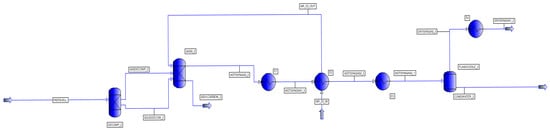
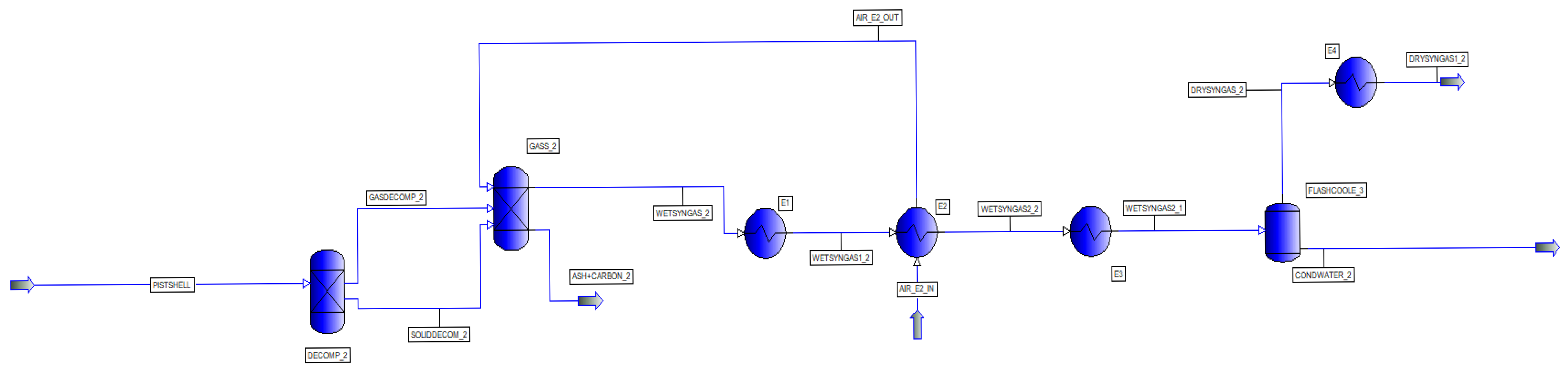
The ultimate analysis of the pistachio shells was the main input for the digital modelling of the biomass gasification system. The simulation model was developed with AVEVA PROII Simulation 2022. Figure 1 describes the global layout of the simulation model.
Figure 1.
Overview of the simulation model layout.
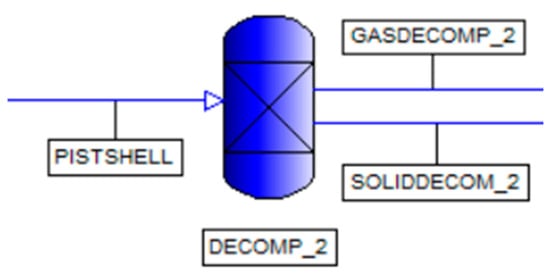
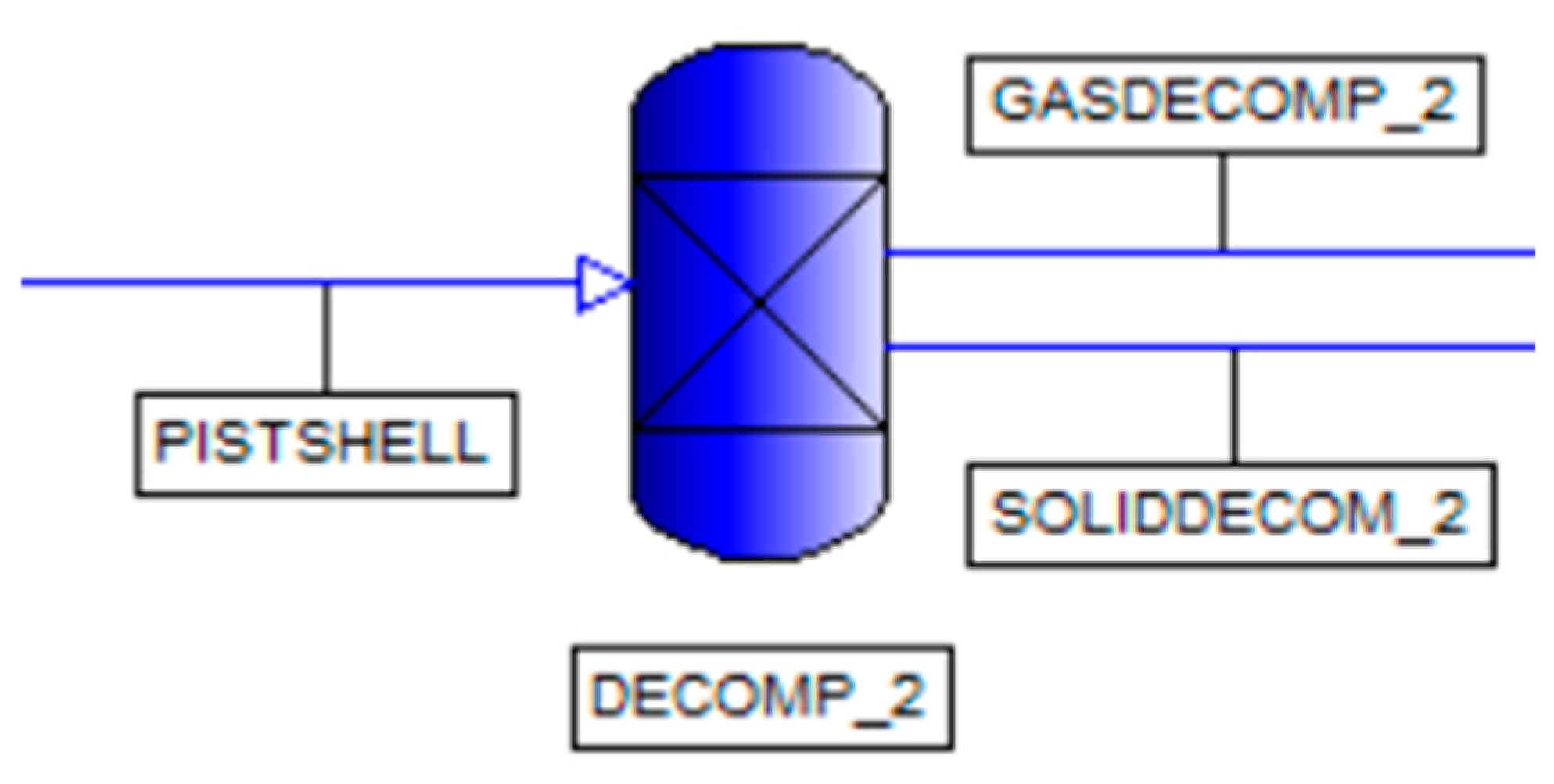
The ultimate and proximate analysis inputs allow the creation of an unconventional solid component defined by the user, which is introduced into the first reactor at a temperature of 25 °C and pressure p = 1.01325 bar, as shown in Figure 2. In this simulation model, the feedstock flow rate was 1 kg/h.
Figure 2.
Feedstock stream and decomposition reactor for the conversion of the feedstock into conventional gas and solid components.
The decomposition of the unconventional component representing pistachio shells (PISTSHELL) was defined according to the stoichiometric reaction implemented in the process simulator by the following stoichiometric decomposition:
This reaction allows the conversion of the non-conventional solid feedstock into conventional gas and solid components, which can then be handled by the thermodynamic property methods of the simulation environment. Specifically, the decomposition products were separated into two distinct outlet streams: one containing the gaseous species (GASDECOMP) and the other the solid products (DECOMP). This approach enables a proper representation of the pyrolytic decomposition behaviour of lignocellulosic biomass within the gasification process model.
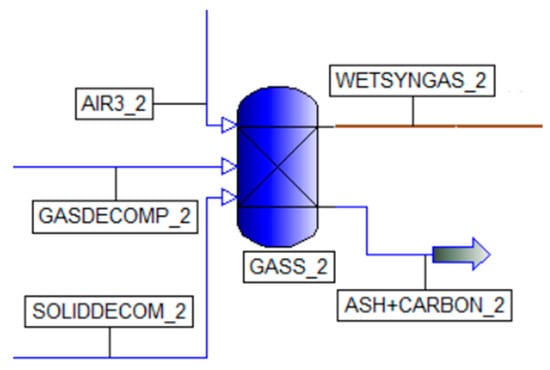
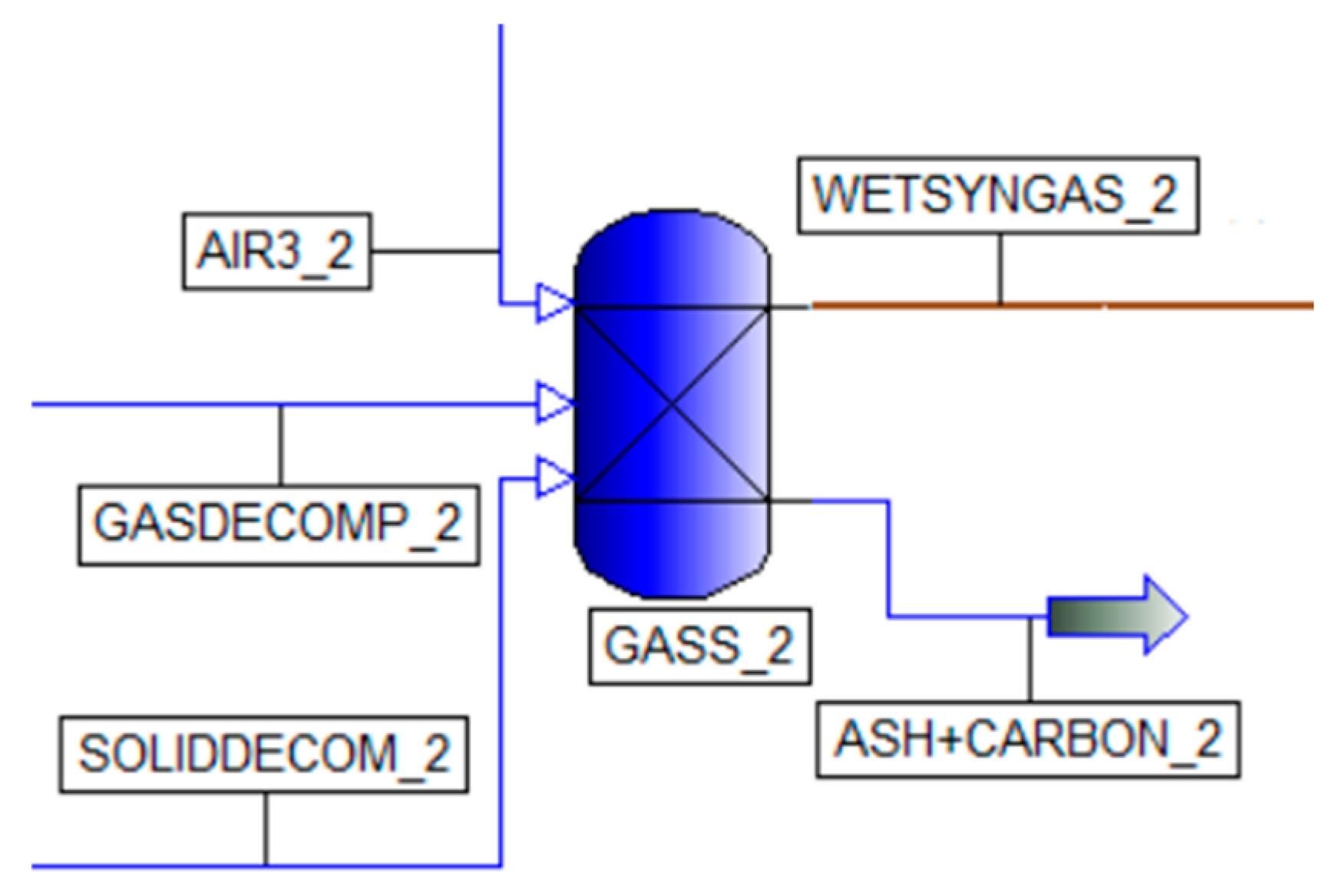
Furthermore, the role of these streams is also to connect the DECOMP reactor with a second conversion reactor named GASS (Figure 3) that is used to simulate the gasification reactions to which the biomass is subjected.
Figure 3.
Details of the gasification reactor.
In addition to the streams coming from the previous reactor, an additional one called “AIR” has been inserted to reproduce the gasification air inlet at the conditions of Tgass-air = 250 °C and pgass-air = 2 bar.
In this reactor, it is possible to define specific reactions, including their yields, and let the software calculate the final composition based on the minimization of the Gibbs free energy, considering the molecules included in the component-list section. To align with the experimental data, the carbon conversion rate was fixed.
An important parameter that has been defined in the various simulations carried out is the temperature approach to equilibrium, which allows compensating for the discrepancy between the equilibrium conditions of the simulation model and the non-equilibrium conditions of the experimental system.
An air-to-biomass ratio of 1.42 (on mass ratio) was determined from the experimental measurements, since the air-flow rate is not set in advance, but it is a consequence of the engine operations. The simulations were run using different values of the approach temperature, ranging from −300 °C to +400 °C. The final operating conditions were selected by comparing the experimental and simulated results in terms of syngas yield, as well as the Cold Gas Efficiency (CGE). Considering that the gasification system is supposed to be used for biochar, heat and power production, the most important fitting parameter considered in this work was the CGE. This efficiency indicator of the gasifier is calculated according to the following equation:
where LHVsyn and LHVbiom are the lower calorific values of the syngas and biomass, respectively, while is the biomass flow rate and is the syngas volumetric flow rate.
2.2. Experimental Gasification and Model Validation
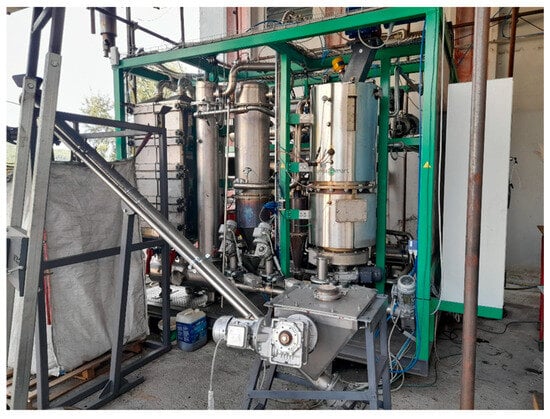
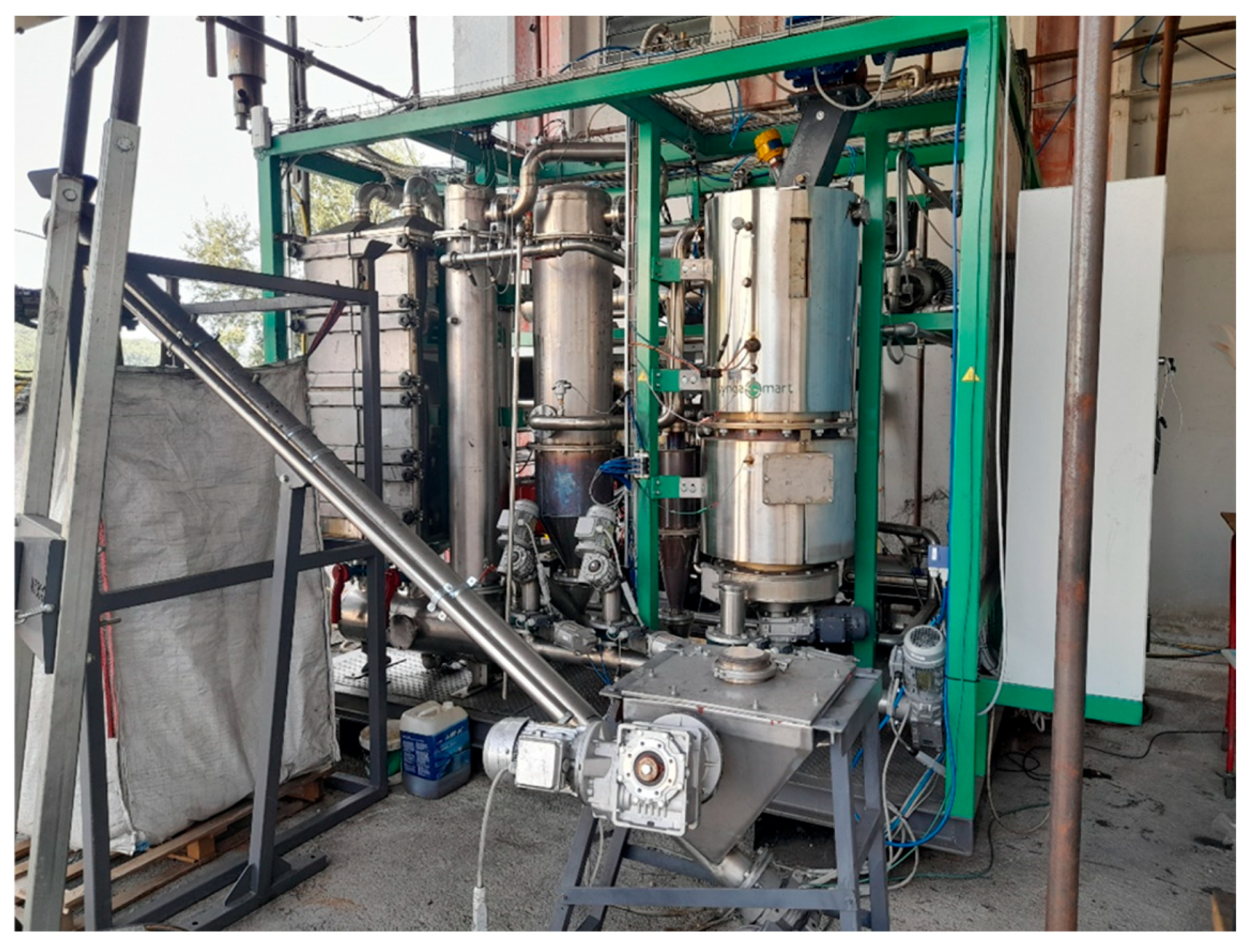
The experimental validation was conducted on a pilot-scale downdraft gasification–cogeneration rig with a biomass flow rate capacity in the range of 10–30 kg/h, which is shown in the following Figure 4.
Figure 4.
Experimental gasification rig based on a continuous downdraft reactor.
The tests were conducted under continuous operation, with the main operating parameters of the gasifier and engines reported in Table 2, which presents the average measured conditions.
Table 2.
Main parameters of the experimental set-up.
The test started with the reactor’s startup, which lasted about 2 h. In this preliminary operation, the gasifier is fed by woody biomass that has been previously dried and ground. When the reactor reaches 800 °C in the oxidation zone, the actual feedstock (pistachio shells) is introduced. In this case, the tested feedstock is not subjected to grinding or drying pretreatment, as it is already small and sufficiently dry to be tested as received, as reported in the previous section.
Downstream of the reactor, the gasification system is equipped with a syngas–air heat exchanger for air preheating and a wet scrubber for tar removal. The syngas composition during the test was detected with an online syngas analyzer manufactured by ETG, model MCA 100 Syn 2 portable, and an ETG transportable syngas pre-treatment. For the experiment, the average dry syngas composition is obtained and reported in the following sections for simulation model validation. In addition, a syngas flow meter is used for the determination of the produced syngas flow rate.
The gasification unit is coupled with an internal combustion engine synchronous electric generator with a nominal power of 25 kVA and a power factor of 0.8. The electrical and thermal efficiencies of the cogeneration engine will be used in the following sections to determine the bioenergy production potentials and impacts of the proposed system.
2.3. Process Integration and Energy Analysis
A representative industrial case was considered to evaluate the feasibility of integrating the proposed gasification–cogeneration system into a pistachio-processing facility. Based on typical operational data collected from industrial sources, the annual availability of pistachio shell residues was estimated at approximately 500 t yr−1, corresponding to the byproduct output of a medium-sized processing plant. The cogeneration unit was assumed to operate for ≈5882 h yr−1, a representative value for continuous industrial operation under scheduled maintenance cycles. On this basis, the corresponding biomass feed rate required to fully utilize the available residue was calculated to be about 85 kg h−1 of shells. These parameters were adopted as baseline conditions for the process integration and energy performance analysis presented in the following section. For the process integration of the gasification unit with the cogeneration unit (internal combustion engine), electrical and thermal energy efficiencies of the engine were assumed to be 34.5% and 40.0%, respectively, as reported in Table 3.
Table 3.
Main input parameters for the environmental analysis.
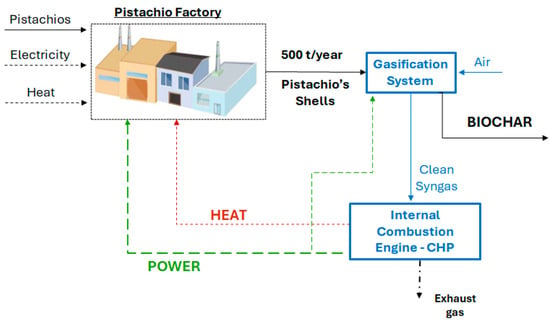
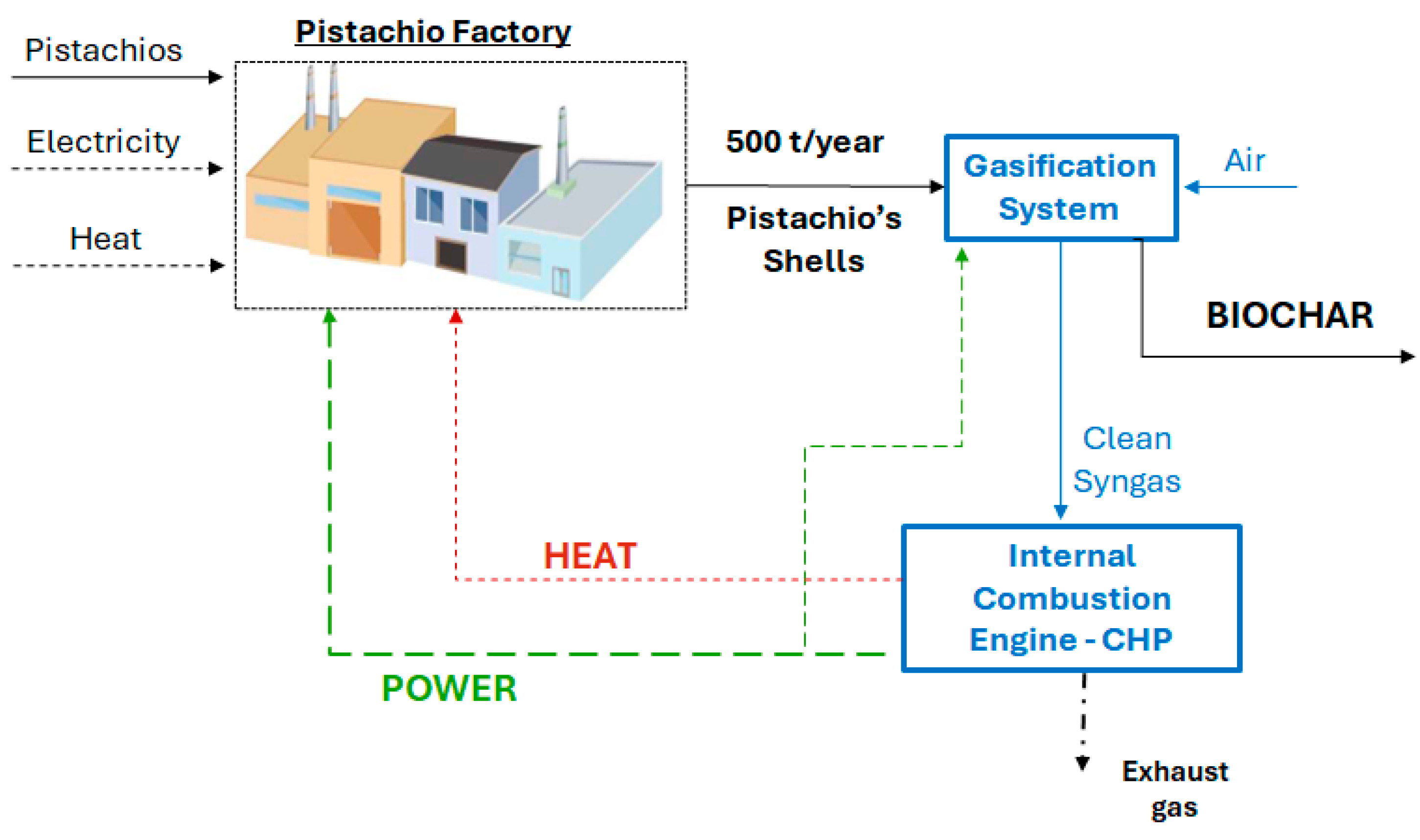
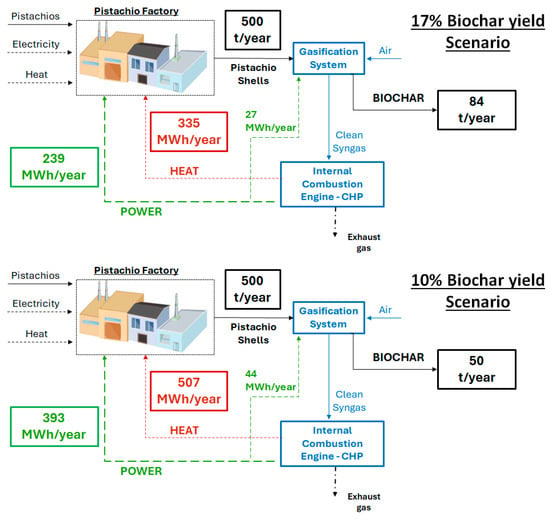
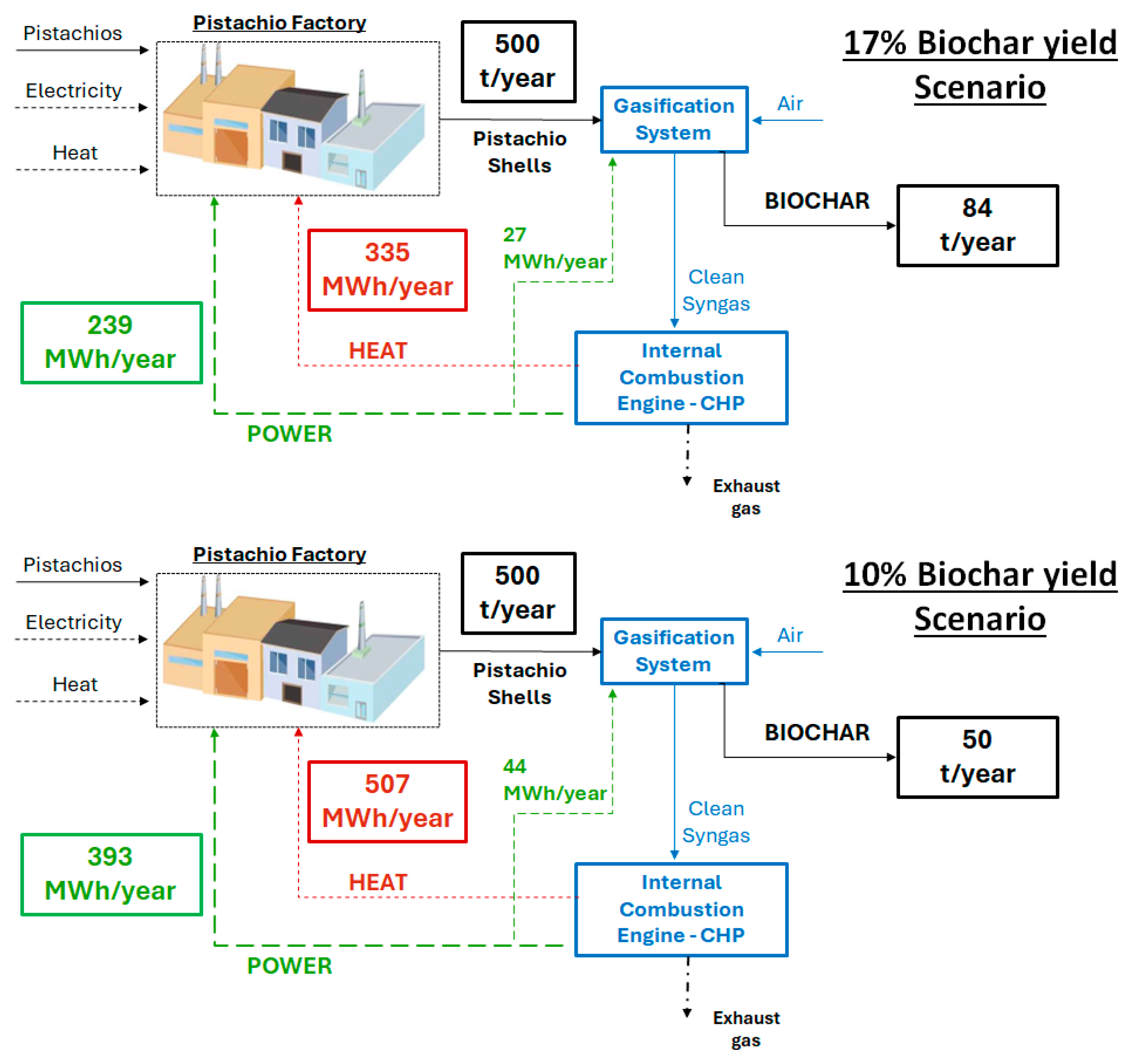
Figure 5 provides a schematic of the proposed process integration with the pistachio factory for the two biochar yield scenarios, along with their energy and material streams.
Figure 5.
Schematic of the proposed process integration with the pistachio factory for the two biochar-yield scenarios.
The integration of the gasification–CHP unit with a representative pistachio-processing facility was assessed under two operating scenarios that differ in carbon conversion, and consequently in biochar yield. In both configurations, the clean syngas produced by the gasifier feeds an internal combustion engine coupled to a heat recovery system (CHP), supplying electricity and useful heat to the factory, while the gasification and gas-cleaning sections consume a small fraction of the generated electricity (about 10%).
2.4. Environmental and Economic Analysis
The environmental and economic analyses were conducted to evaluate the sustainability and profitability of integrating a biomass gasification–CHP unit within a pistachio shell processing facility. The previous operational scenarios were compared, differing in biochar yield (17% and 10% on a dry-feed basis), which directly affects the distribution of carbon between solid and gaseous products.
The environmental evaluation followed a “gate-to-gate” approach, focusing on avoided emissions and carbon storage, while the economic analysis was based on a discounted cash flow model (DCF) considering revenues from electricity, heat, and biochar. The methodologies were adapted from ISO 14040/14044 guidelines for life-cycle assessment and from recent literature on techno-economic assessment of biomass gasification systems [31,32].
The environmental assessment quantifies the annual CO2 savings achieved by substituting fossil-based energy sources (electricity from the national grid and heat from LPG boilers) with renewable electricity and heat from the gasification–CHP system. Additionally, carbon sequestration in the biochar is accounted for as a permanent removal of atmospheric carbon. Upstream processes such as cultivation, transportation, and equipment manufacturing are excluded from the system boundaries, as the goal is to evaluate the direct environmental impact of the energy conversion stage.
The total avoided emissions were calculated as the sum of the avoided emissions of electricity from the grid (Emel) and heat from LPG combustion (Emth), which are substituted by the gasification–cogeneration heat and power production, and the avoided carbon emissions due to the carbon sequestration capacity of biochar (Emchar), as reported in the following equation:
where
- is the avoided CO2 from electricity substitution;
- is the avoided CO2 from heat substitution;
- is the CO2 permanently sequestered in the biochar.
In the previous equations of the avoided emissions contribution, Yel, Yth, and are the electricity and heat yields, the emission factors for grid electricity and LPG-based heat, respectively, while is the annual biomass. Regarding Emchar, fc and fC-rec are the carbon mass fraction in the produced biochar and the fraction of recalcitrant carbon, while is the biochar yield.
Input parameters and assumed constants are listed in Table 3. The adopted emission factors—236 kg CO2 MWh−1 for electricity and 227 kg CO2 MWh−1 for LPG—align with The International Energy Agency datasets [33] and recent studies on bioenergy substitution [31].
The techno-economic analysis (TEA) compares the two operational scenarios using standard profitability indicators: Operating Profit (OP), Overall Return on Investment (ROIoverall), Payback Period (PBP), and Cumulative Cash Flow (CCF) over a 20-year project horizon. The model applies a constant discount rate , consistent with the literature on distributed biomass systems [32].
The Net Annual Profit is defined as
where is the specific revenue from electricity sales (€/kWh), is the specific revenue from thermal energy, is the specific revenue from biochar sales, represents the operating costs (€ yr−1), the maintenance costs (€ yr−1), and the annual amortization cost of the capital investment (€ yr−1). The Overall Return on Investment is
where denotes the total capital investment (CAPEX, €), which includes the plant cost and the project development.
In this work, the safety margin is intended as the range of reduction from the designed nominal annual production capacity that makes the proposed bioenergy trigeneration system a good investment, as described in Equation (6). It can be noticed that the variable costs are not reported since they can be neglected compared to fixed costs for this specific case study.
The analysis assumes, as deeper reported in Table 4: electricity and thermal energy economic values of 0.25 €/kWh and 0.08 €/kWh, respectively; biochar market value, considering its variability, is in the range of 0.5–1.3 €/kg [34]; capital investment (CAPEX) of 624,000 €; and annual OPEX (operation + maintenance + amortization) of 66,200 €. These values are consistent with small-scale biomass CHP installations reported in the literature [35].
Table 4.
Main input parameters for economic analysis.
3. Results and Discussion
Table 5 presents the ultimate analysis of pistachio shells and their biochar, indicating very low water and relatively low ash concentrations. These properties make this biomass perfectly suitable for thermochemical gasification. Carbon and Hydrogen concentrations are in the range reported for lignocellulosic feedstocks, while Nitrogen is negligible in shells (lower than the detection limit of the instrument) [36]. The ultimate analysis of shells is the input of the simulation model described in the previous section.
Table 5.
Main characteristics of pistachio shells based on CHNS analysis.
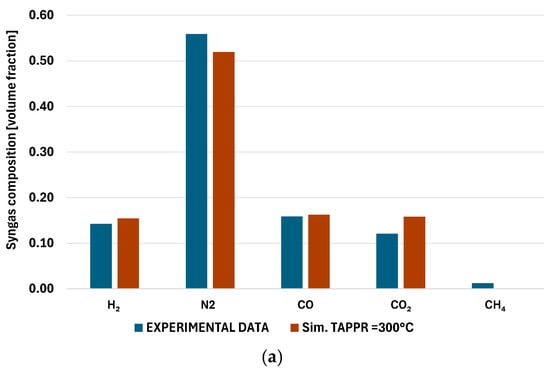
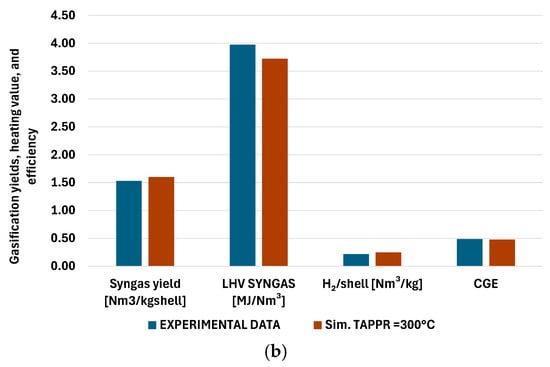
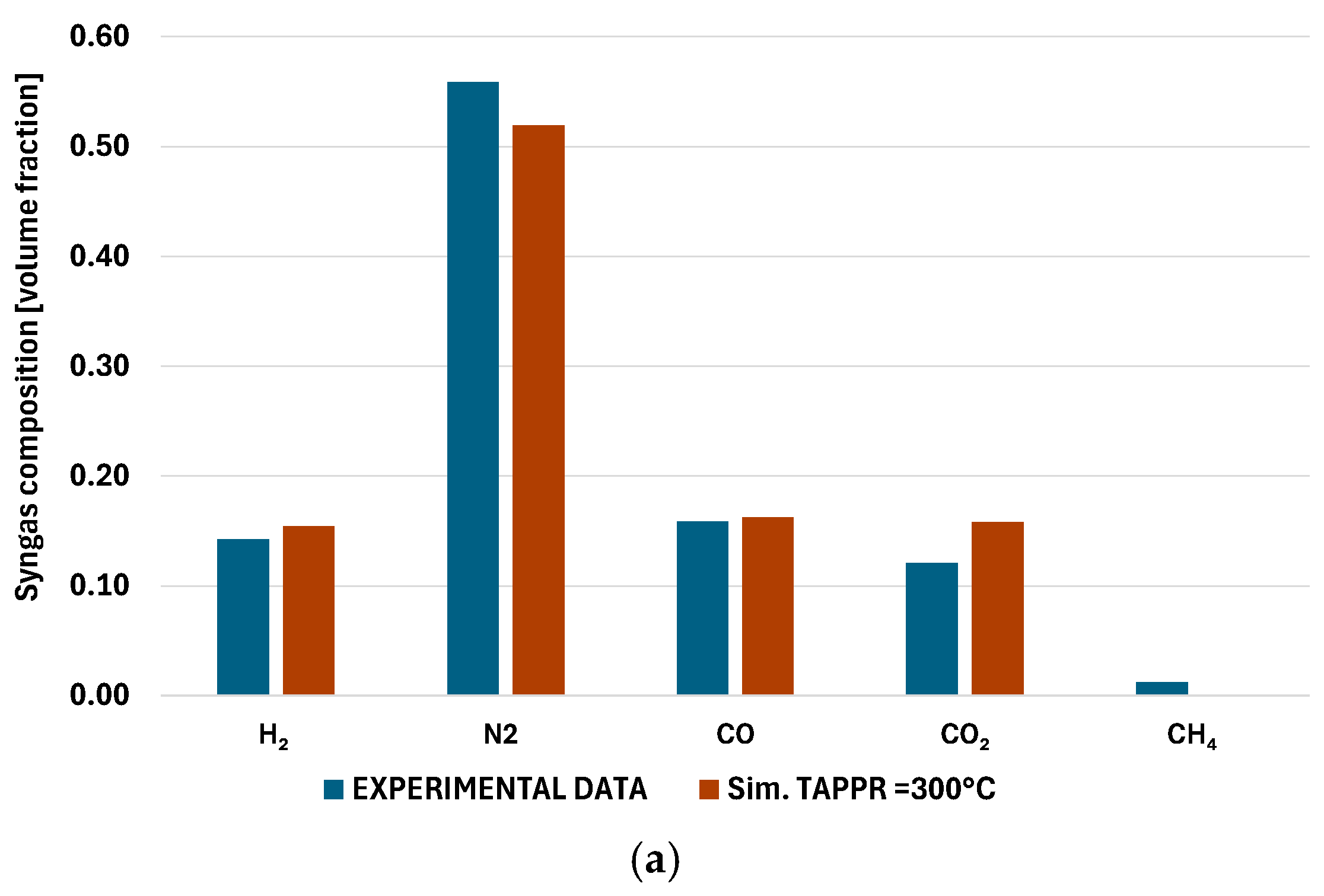
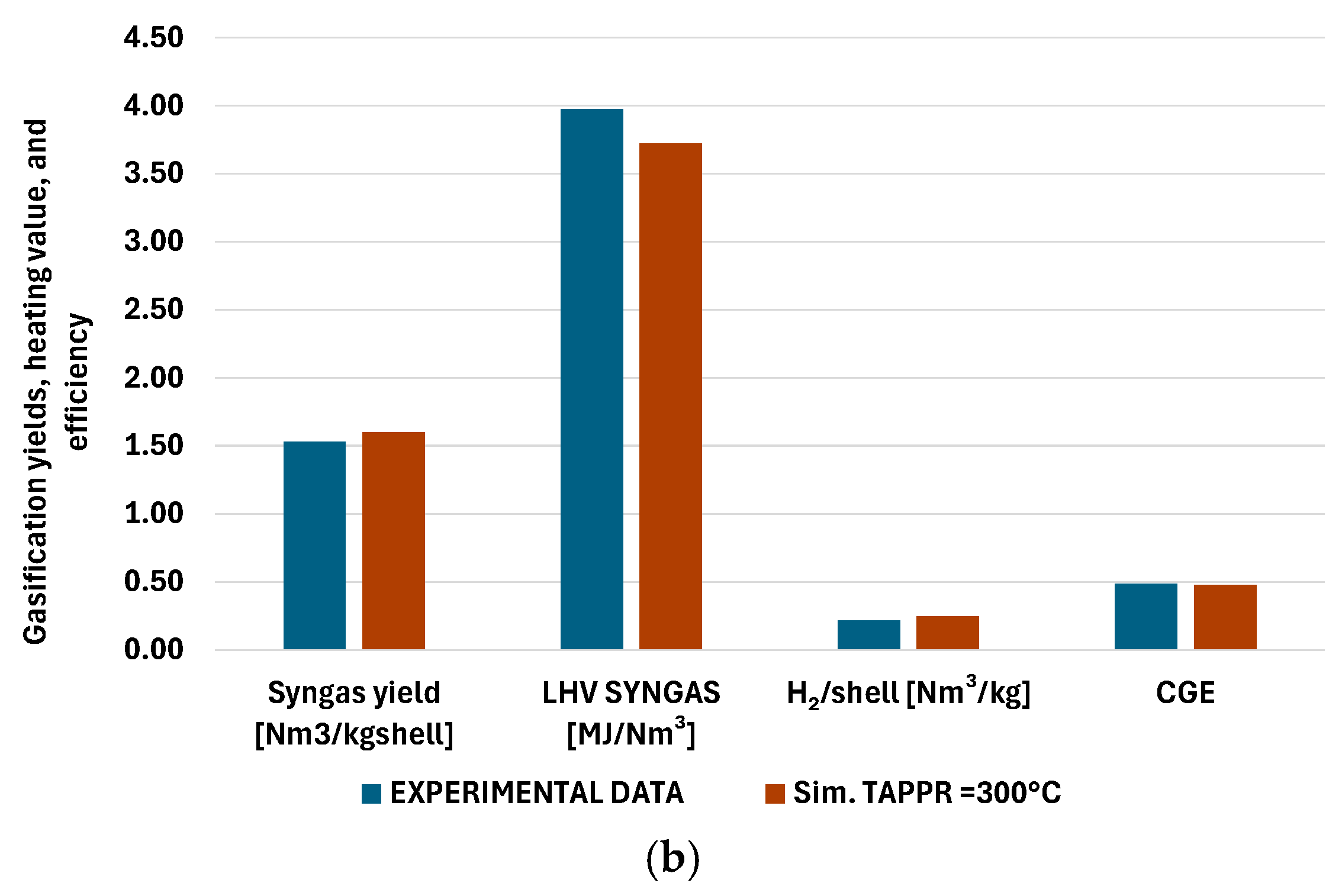
The following figure (Figure 6a,b) shows the comparison between the experimental results of pistachio shells gasification and the simulated ones, considering a temperature approach of 300 °C and a carbon conversion of 0.65.
Figure 6.
Compar. on of experimental and simulated results of the gasification unit in terms of syngas composition (a) and gasification performance (b).
These conditions were selected as the best-fitting ones among the performed simulations. It is possible to observe the good agreement between the experimental and simulated data. However, the carbon dioxide concentration in the simulated gasification is overestimated, while it is not possible to observe the formation of methane, as expected in such a simulation model. Consequently, the syngas heating value is underestimated compared to the experimental tests, while the syngas yield is slightly overestimated.
These two effects compensate each other, leading to very similar CGE values (0.48 vs. 0.49). Furthermore, it is possible to observe that the simulated hydrogen yield fits with the experimental model. This aspect is important in light of future process upgrades for bio-hydrogen production.
Once the condition that most closely matches the experimental results has been identified, starting from the values of the temperature drops that the syngas undergoes once it exits the experimental gasifier, these have been reproduced on the software model by inserting two heat exchangers (as reported in Figure 7).
Figure 7.
The details of two heat exchangers.
The first, called “E1”, allows for reproducing a temperature drop equal to . The residual thermal energy was used to preheat the gasification air entering the gasifier. This process was reproduced thanks to a second heat exchanger called “E2”, in which the input data were the temperature of the hot syngas , the temperature of the cold air and the temperature of the air exiting the exchanger was also set at . The syngas temperature at the exit of the heat exchanger is . After this point of the process, the syngas is directed to the cleaning section, which is not the object of this analysis, and no heat recovery is applied.
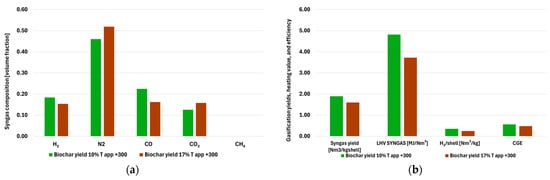
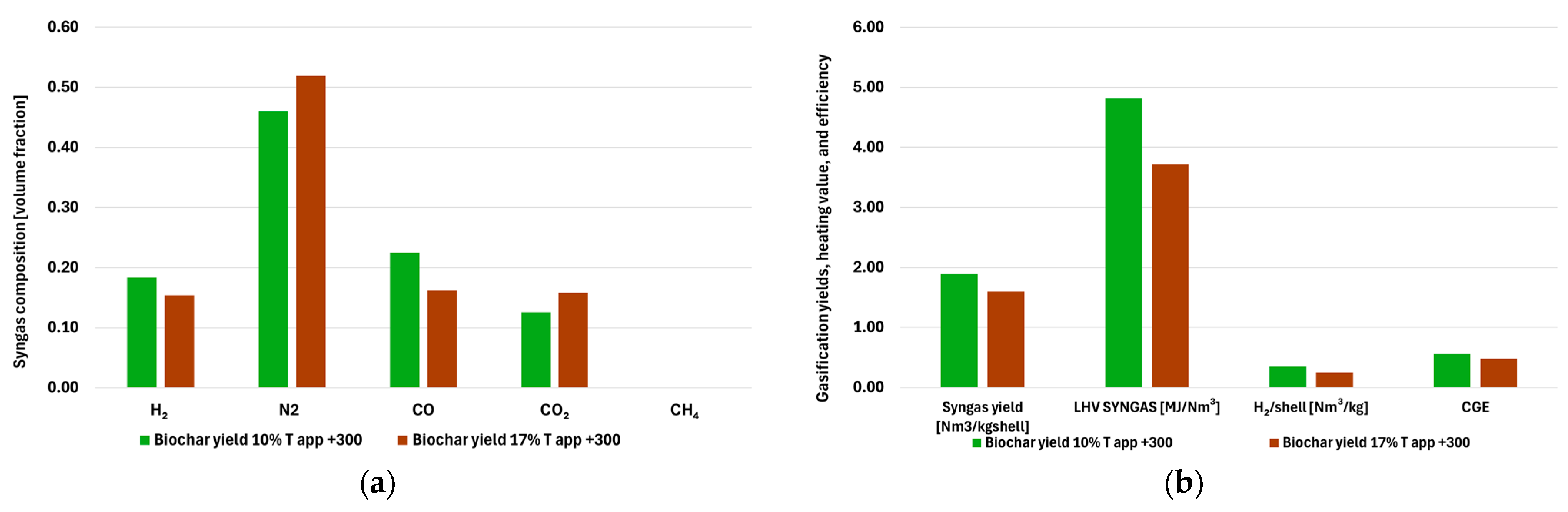
Thanks to the validated simulation model, it was possible to simulate a different operating condition of the gasifier with a lower biochar yield, which leads to higher syngas yield and different syngas composition, assuming a constant temperature approach between the two simulated scenarios. In the second scenario, the carbon conversion of the feedstock was set to 80% to reach a biochar yield of 10%. As expected, the lower the biochar yield, the higher the CGE, which reaches values of 0.56 and 0.48 for the 10% and 17% scenarios, respectively, as reported in Figure 8. Compared to the results reported by [5,37,38], the results of this work are less efficient from an energy point of view. This confirms the need for an analysis of the effects of different biochar yields on the environmental and economic performance. Regarding syngas composition, higher biochar yield is associated with higher carbon dioxide and nitrogen concentrations, owing to shorter biochar residence time and, consequently, lower syngas yield and lower biomass-to-syngas conversion, which leaves more oxygen available for the oxidation of the gas molecules.
Figure 8.
Comparison of simulated gasification output for different biochar yields in terms of syngas composition (a) and gasification performance (b).
Assuming constant electrical and thermal efficiencies of the cogeneration engine (see) and 10% of electrical consumption for the auxiliary components, the energy yields of the cogeneration system are reported in Table 6 for the two investigated scenarios, along with the carbon fraction in biochar.
Table 6.
Energy and mass yields of the gasification–cogeneration system.
From the above energy and materials yield, it is possible to obtain the annual energy and materials streams for the two scenarios integrated with the pistachio factory, as described in Figure 9. In Scenario A (higher biochar yield, ≈17%), the CHP delivers 266 MWh yr−1 of gross electricity, of which 27 MWh yr−1 are internally consumed by the gasification/clean-up line, resulting in a net output of 239 MWh yr−1 to the factory. The recovered heat amounts to 335 MWh yr−1, giving a heat-to-power ratio (heat/gross electricity) of approximately 1.26.
Figure 9.
Energy and mass annual flows of the bioenergy system integrated with the pistachio factory for the two scenarios.
In Scenario B (lower biochar yield, ≈10%), the higher conversion of carbon into syngas increases the CHP gross electricity to 437 MWh yr−1, with 44 MWh yr−1 consumed internally, resulting in 393 MWh yr−1 of net electricity. The useful heat recovery rises to 507 MWh yr−1, with a heat-to-power ratio of 1.19, equivalent to 0.77 MWhe t−1 and 1.01 MWhh t−1 per tonne of shells.
Overall, the total useful energy delivered to the factory (net electricity + heat) increases from 574 MWh yr−1 in Scenario A to 900 MWh yr−1 in Scenario B. This confirms the expected trade-off between biochar production and energy recovery: a lower char yield improves energy performance, whereas a higher yield favours carbon retention for potential material valorization or long-term storage.
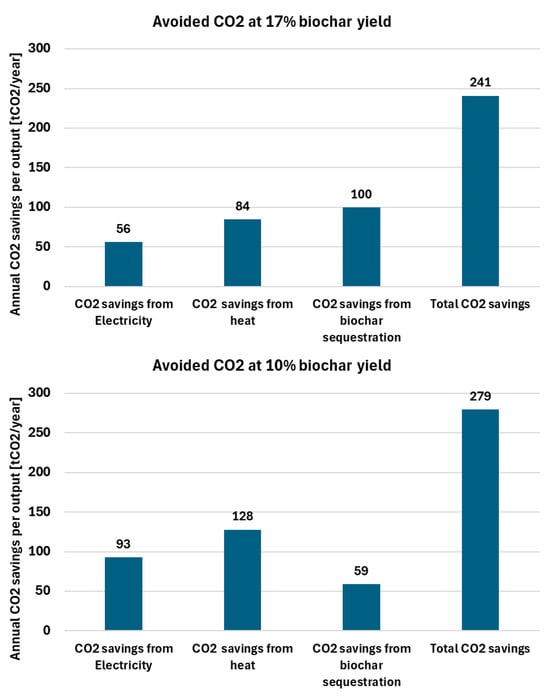
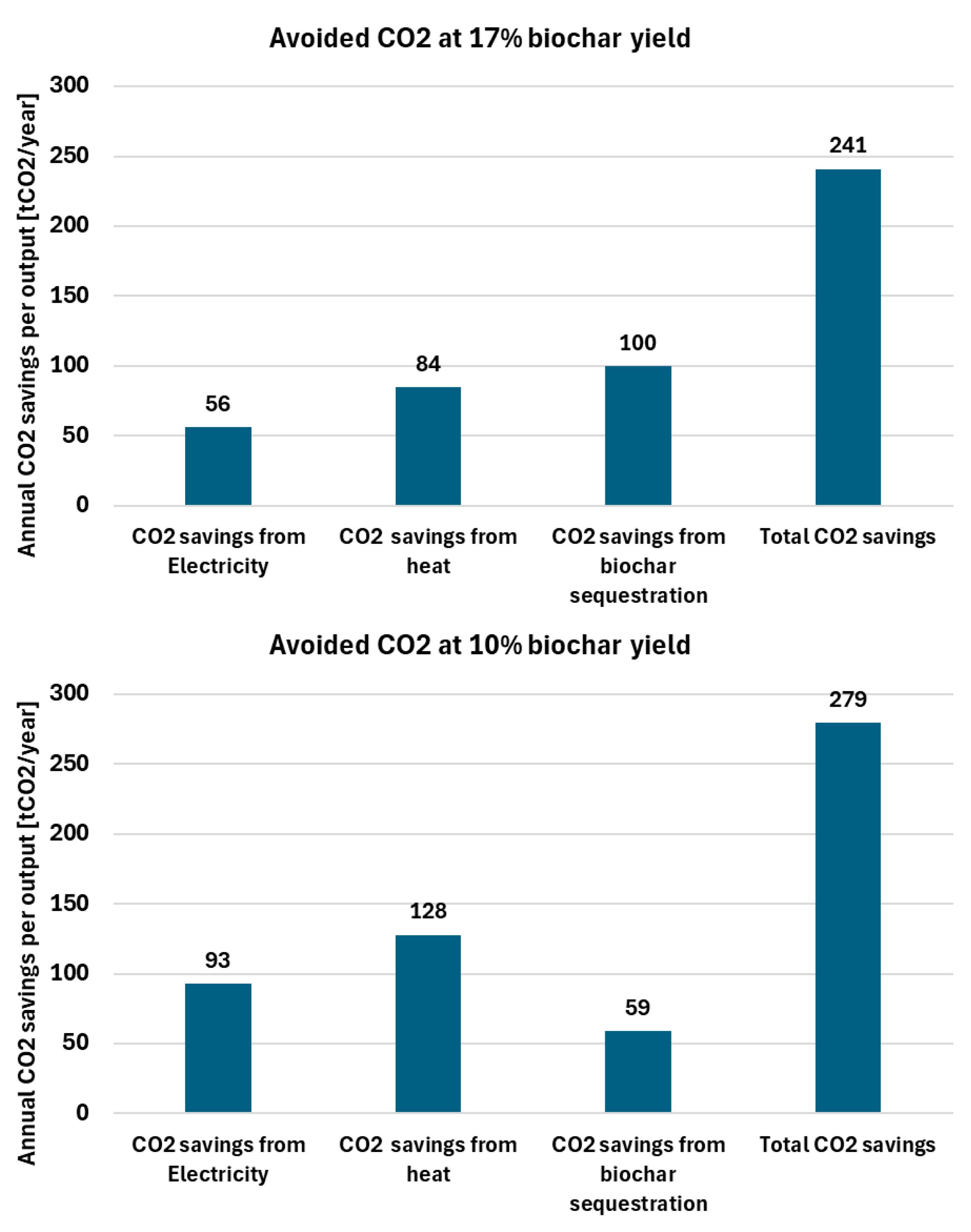
Environmental analysis indicates that integrating the gasification–CHP system enables a total CO2-eq reduction of approximately 241–279 t yr−1, depending on the biochar yield (Figure 10). In the 17% biochar yield scenario, carbon sequestration accounts for about 41% of total avoided emissions, while renewable electricity and heat contribute 36% and 23%, respectively.
Figure 10.
Avoided CO2 emissions for the 17% biochar yield and 10% biochar yield scenarios.
When the biochar yield decreases to 10%, its sequestration share drops to 21%, as more carbon is oxidized to syngas and converted into energy. However, this shift increases the avoided emissions associated with renewable energy generation.
These results highlight a trade-off between carbon sequestration and energy recovery: a higher char yield enhances long-term carbon storage but lowers immediate energy substitution benefits. This duality mirrors observations in other biomass gasification studies [39].
The environmental benefit per tonne of pistachio shells processed ranges from 0.48 t CO2-eq t−1 (high char yield) to 0.56 t CO2-eq t−1 (low char yield), indicating that even conservative operating conditions provide substantial decarbonization potential at small-scale industrial sites.
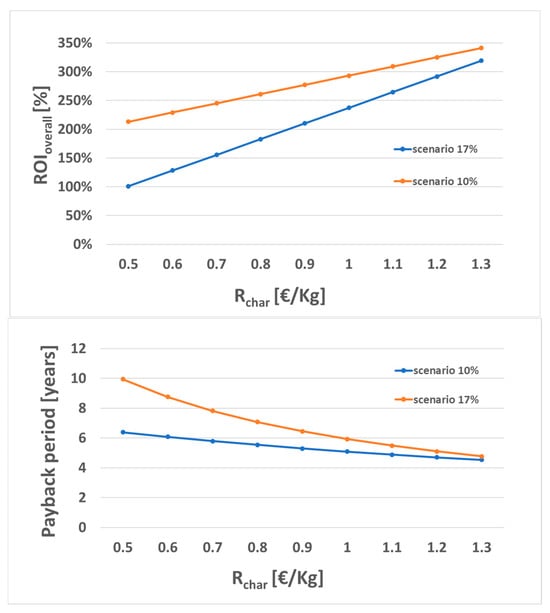
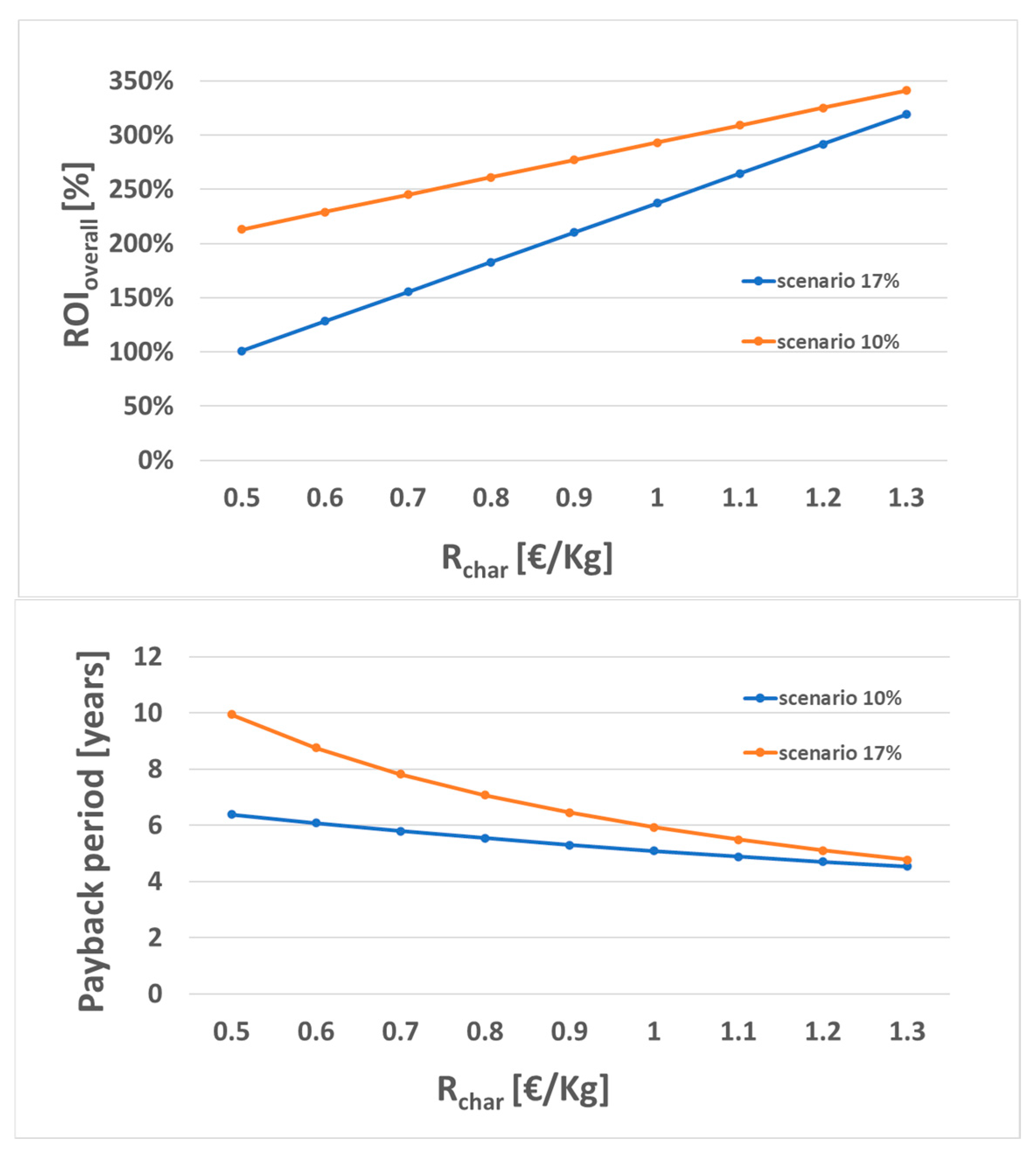
A sensitivity analysis of ROIoverall and payback period was performed for both scenarios by varying the specific biochar revenue from 0.5 to 1.3 €/kg, as reported in Figure 11. The lower biochar yield (scenario 10%) improves the economic performance of both indicators due to increased electricity and heat revenues, even though biochar sales decrease. In Scenario 17%, the ROIoverall reaches the value of 100% when is 0.5 €/kg, while at the same value of biochar in Scenario 10%, the ROIoverall is about 210%.
Figure 11.
The sensitivity results about ROIoverall and Payback for the 17% biochar yield and 10% biochar yield scenarios.
Table 7 shows specific results when is equal to the average of the range, 0.9 [€/kg].
Table 7.
Economic results for both scenarios with .
If = 0.9 €/kg is considered, the economic assessment highlights clear differences between the two operating configurations in terms of profitability and investment performance. In the scenario with the highest biochar yield, 17%, the system achieves an operating profit of approximately 96,720 € yr−1, corresponding to a Return on Investment (ROI) of 15.5% yr−1, and a Payback Period (PBP) of 6.45 years. In contrast, the scenario with the lowest biochar yield, 10%, characterized by a higher carbon conversion to syngas, shows a markedly improved economic performance, with an operating profit of about 117,637 € yr−1, a ROI of 18.85% yr−1, and a PBP of 5.3 years. Moving from 17% to 10% of biochar yield, the system shifts from a biochar-dominated annual revenue (76,500 euros corresponding to 47% of the total annual revenue) to an electricity-dominated annual revenue (98,319 euro corresponding to 53% of the total annual revenue), where the contribution of biochar revenue is just 25% of the total. It is crucial to underline that annual revenue is affected by the high cost of electricity in Italy. Indeed, here the annual revenues from electricity and heat are obtained as avoided costs of energy purchase by the pistachio factory that integrates the proposed system in its production process.
The cumulative cash flow (CCF) analysis over the 20-year project lifetime further confirms this trend: total positive cash accumulation increases from 1.31 M€ in Scenario 17% to 1.72 M€ in Scenario 10%, reflecting the enhanced energy output and associated revenues from electricity and heat.
The ROI (15.5–18.9% yr−1) and PBP (5.3–6.45 years) are competitive with small-scale biomass CHP systems and pistachio-shell gasification plants, where biochar revenue and electricity tariffs drive profitability [39].
Overall, the results indicate that Scenario 10% offers superior economic and environmental returns due to higher syngas production and energy conversion efficiency, making it more attractive from a financial standpoint. Nevertheless, Scenario 17% remains competitive in applications where biochar valorization or carbon sequestration is prioritized, as it ensures a secondary revenue stream and potential environmental credits linked to negative-emission pathways or higher biochar potential revenues. Indeed, the revenues and environmental implications of avoided consumption of fossil fuels and grid electricity, as well as those of biochar production, are influenced by the specific industrial or territorial context in which the proposed system is installed. More specifically, if the substituted electricity has lower emission factors, the relative contribution of electricity to reducing the industry’s environmental impacts will decrease, while that of carbon sequestration from biochar will increase.
4. Conclusions
This research investigates the technical, environmental, and economic aspects of converting pistachio shells into biochar and syngas via thermochemical gasification. Two process scenarios, differing in biochar yield, were investigated. The study, which is developed by applying process simulation and experimental tests, highlights the following key conclusions:
- The experimental tests and simulations demonstrate good potential for thermochemical conversion of pistachio shells, with a Cold Gas Efficiency of 0.56 and 0.48 for the 10% and 17% biochar yield scenarios.
- The energy output of the pre-commercial gasification–cogeneration system based on pistachio shells revealed the potential for scaling up the technology, since the energy yields are 0.477–0.786 kWh/kgshell and 0.671–1.013 kWh/kgshell for electricity and heat, respectively. The reported ranges refer to biochar yields of 0.17 and 0.10 kgbiochar/kgshell, respectively.
- The energy analysis of an existing pistachio processing facility generating 500 tons/year of shells, which leads to the production of 261–393 MWh/year of electricity, 335–507 MWh/year of heat, and 50–84 t/year of biochar, demonstrated the feasibility of commercial deployment of such technology at an industrial level.
- The implementation of the gasification–cogeneration system can significantly reduce CO2 emissions of the assumed pistachio processing facility in Sicily (Italy). The avoided carbon dioxide emissions range from 241 to 279 tCO2/year. The carbon sequestration potential of biochar contributes to 41% of avoided emissions in the 17% biochar yield scenario and 21% in the 10% yield scenario, while the remaining emissions savings are due to renewable heat and power production.
- The economic analysis indicates that the 10% scenario delivers better performance for every economic metric (ROIoverall, payback, Safety Margin), regardless of the biochar selling price. Assuming a biochar selling price of 0.9 €/kg—consistent with the average of current trends—we can state that the 10% scenario presents, in comparison with the 17% scenario, a shorter payback period (5.3 years vs. 6.4 years), higher ROIoverall (18.85% yr−1 vs. 15.50% yr−1), and greater cumulative cash flow over 20 years (1.72 M€ vs. 1.31 M€). This scenario is more favourable for market development in biochar and bioenergy.
In conclusion, the proposed technology offers a sustainable and economically viable solution for valorizing pistachio shells, with significant potential for environmental benefits and energy production, and shows the economic and environmental impacts of varying the process conditions. The findings support the integration of this system into pistachio processing facilities, paving the way for advancements in biochar and bioenergy markets.
Author Contributions
Conceptualization, M.P. and A.G.; methodology, M.P. and L.I.; software, A.G. and F.F.; validation, A.G. and L.I.; formal analysis, M.P.; investigation, M.P. and L.I.; resources, A.G.; data curation, M.P.; writing—original draft preparation, F.F. and M.P.; writing—review and editing, A.G. and F.F.; visualization, M.P.; supervision, A.G.; project administration, M.P.; funding acquisition, A.G. All authors have read and agreed to the published version of the manuscript.
Funding
This research was funded by Piano Nazionale di Ripresa e Resilienza and the European Union—NextGenerationEU “Istruzione e ricerca”—Componente 2 “Dalla ricerca all’impresa”—Investimento 1.4 “Potenziamento strutture di ricerca e creazione di “campioni nazionali di R&S” su alcune Key Enabling Technologies”, “National Research Centre for Agricultural Technologies—AGRITECH” CN 00000022 SPOKE 8 area tematica “Circular economy in agriculture through waste valorization and recycling, grant number J43C2400062000, project name BEST-Char.
Data Availability Statement
The original contributions presented in this study are included in the article. Further inquiries can be directed to the corresponding author.
Acknowledgments
The authors thank AVEVA for the agreement on the academic license of the AVEVA PRO/II simulation software provided to the University of Messina. The authors thank Giovanni Barbera for his support in developing the BEST-Char project.
Conflicts of Interest
The authors declare no conflicts of interest.
References
- Matarru, A.A.; Shin, D. Biochar Production Technology as a Negative Emission Strategy: A Review. Energies 2025, 18, 4898. [Google Scholar] [CrossRef] [Scilit]
- Taqvi, S.A.A.; Kazmi, B.; Naqvi, S.R.; Juchelková, D.; Bokhari, A. State-of-the-Art Review of Biomass Gasification: Raw to Energy Generation. ChemBioEng Rev. 2024, 11, e202400003. [Google Scholar] [CrossRef] [Scilit]
- Maklavani, N.M.P.; Maskani, M.; Karimi, S. Systematic Review of Pistachio Shell Waste: Environmental Applications, Sustainable Approaches, and Nanotechnology Insights. Clean. Waste Syst. 2025, 10, 100219. [Google Scholar] [CrossRef] [Scilit]
- Pradhan, S.; Parthasarathy, P.; Mackey, H.R.; Al-Ansari, T.; McKay, G. Effect of Pistachio Shell Biochar and Organic Cow Manure Application on Plant Growth, Water Retention Capacity and Nutrient Stress Mitigation. Waste Biomass Valorization 2025, 16, 761–772. [Google Scholar] [CrossRef] [Scilit]
- Ryšavý, J.; Čespiva, J.; Kuboňová, L.; Dej, M.; Szramowiat-Sala, K.; Molchanov, O.; Niedzwiecki, L.; Yan, W.-M.; Thangavel, S. Co-Gasification of Pistachio Shells with Wood Pellets in a Semi-Industrial Hybrid Cross/Updraft Reactor for Producer Gas and Biochar Production. Fire 2024, 7, 87. [Google Scholar] [CrossRef] [Scilit]
- Sanchez, E.; Zabaleta, R.; Navas, A.L.; Torres-Sciancalepore, R.; Fouga, G.; Fabani, M.P.; Rodriguez, R.; Mazza, G. Assessment of Pistachio Shell-Based Biochar Application in the Sustainable Amendment of Soil and Its Performance in Enhancing Bell Pepper (Capsicum annuum L.) Growth. Sustainability 2024, 16, 4429. [Google Scholar] [CrossRef] [Scilit]
- Bonoli, A.; Zanni, S.; Serrano-Bernardo, F. Sustainability in Building and Construction within the Framework of Circular Cities and European New Green Deal. The Contribution of Concrete Recycling. Sustainability 2021, 13, 2139. [Google Scholar] [CrossRef] [Scilit]
- Moreno-Virgen, M.R.; Rodríguez-García, K.A.; Bonilla-Petriciolet, A.; Reynel-Ávila, H.E.; Villalobos-Delgado, F.J.; Mendoza-Castillo, D.I.; González-Vázquez, O.F.; Reynel-Ávila, H.E.; Mendoza-Castillo, D.I.; Ortiz-Lozano, J.A. A Circular Economy-Based Valorization of Agricultural Residues to Remove Heavy Metals from Water: Adsorption and Final Disposal Strategy. Adsorpt. Sci. Technol. 2024, 42, 02636174241298784. [Google Scholar] [CrossRef] [Scilit]
- Curcio, I.; Gigli, R.; Mormile, F.; Mormile, C. A Comprehensive Review on Biochar, with a Particular Focus on Nano Properties and Applications. Nano Trends 2025, 10, 100117. [Google Scholar] [CrossRef] [Scilit]
- Márquez Negro, A.; Martí, V.; Sánchez-Hervás, J.M.; Ortiz, I. Development of Pistachio Shell-Based Bioadsorbents Through Pyrolysis for CO2 Capture and H2S Removal. Molecules 2025, 30, 1501. [Google Scholar] [CrossRef] [Scilit] [PubMed]
- Raj, L.; Sur, D.; Rekha, M.M.; Kundlas, M.; Krithiga, T.; Panigrahi, R.; Alqhtani, H.A.; Abo-Eleneen, R.E.; Sankhla, M.S.; Verma, M. Biochar Derived from Pistachio Shells: A Novel Adsorbent for Efficient Lead Sequestration in Water Treatment. J. Mol. Struct. 2025, 1344, 142930. [Google Scholar] [CrossRef] [Scilit]
- Carlos, R.F.; Page-Dumroese, D.S. Decreasing the Urban Carbon Footprint with Woody Biomass Biochar in the United States of America. Carbon Footpr. 2023, 2, 18. [Google Scholar] [CrossRef] [Scilit]
- Varkolu, M.; Gundekari, S.; Omvesh; Palla, V.C.S.; Kumar, P.; Bhattacharjee, S.; Vinodkumar, T. Recent Advances in Biochar Production, Characterization, and Environmental Applications. Catalysts 2025, 15, 243. [Google Scholar] [CrossRef] [Scilit]
- Peterson, S.C.; Chisholm, B.J. Utilizing Pistachio Shell Biochar to Replace Carbon Black in Natural Rubber Composites. J. Compos. Sci. 2024, 8, 482. [Google Scholar] [CrossRef] [Scilit]
- Amjed, M.A.; Sobic, F.; Romano, M.C.; Faravelli, T.; Binotti, M. Techno-Economic Analysis of a Solar-Driven Biomass Pyrolysis Plant for Bio-Oil and Biochar Production. Sustain. Energy Fuels 2024, 8, 4243–4262. [Google Scholar] [CrossRef] [Scilit]
- Swanson, R.M.; Platon, A.; Satrio, J.A.; Brown, R.C. Techno-Economic Analysis of Biomass-to-Liquids Production Based on Gasification. Fuel 2010, 89, S11–S19. [Google Scholar] [CrossRef] [Scilit]
- Liu, L.; Qian, H.; Mu, L.; Wu, J.; Feng, X.; Lu, X.; Zhu, J. Techno-Economic Analysis of Biomass Processing with Dual Outputs of Energy and Activated Carbon. Bioresour. Technol. 2021, 319, 124108. [Google Scholar] [CrossRef] [Scilit]
- Makepa, D.C.; Chihobo, C.H.; Ruziwa, W.R.; Musademba, D. A Systematic Review of the Techno-Economic Assessment and Biomass Supply Chain Uncertainties of Biofuels Production from Fast Pyrolysis of Lignocellulosic Biomass. Fuel Commun. 2023, 14, 100086. [Google Scholar] [CrossRef] [Scilit]
- Kumar, V.K.; Hallad, S.C.; Panwar, N.L. Thermogravimetric Pyrolysis Investigation of Pistachio Shell for Its Potential of Thermal Properties, Kinetics and Thermodynamics. Discov. Energy 2024, 4, 7. [Google Scholar] [CrossRef] [Scilit]
- Volpe, M.; Luz, F.C.; Messineo, A. Slow Pyrolysis for Energy Valorization of Pistachio Shells. AIP Conf. Proc. 2021, 2343, 110005. [Google Scholar] [CrossRef] [Scilit]
- Yurii, F.; Zhelykh, V.; Ulewicz, M.; Shepitchak, V.; Adamski, M. Maintenance of Thermal Regime in a Biogas Plant Used for Energy Supply of Modular Buildings. In Proceedings of the International Scientific Conference EcoComfort and Current Issues of Civil Engineering, Lviv, Ukraine, 11–13 September 2024; pp. 133–146. [Google Scholar]
- Dudek, M.; Adamczyk, B.; Grzywacz, P.; Lach, R.; Sitarz, M.; Leśniak, M.; Gajek, M.; Mech, K.; Wilk, M.; Rapacz-Kmita, A.; et al. The Utilisation of Solid Fuels Derived from Waste Pistachio Shells in Direct Carbon Solid Oxide Fuel Cells. Materials 2021, 14, 6755. [Google Scholar] [CrossRef] [Scilit]
- Tan, E.C.D. Sustainability Engineering: Challenges, Technologies, and Applications; CRC Press: Boca Raton, FL, USA, 2023. [Google Scholar]
- Dhaka, A.K.; Kaushal, R.; Pal, Y. Assessing the Power Generation Potential and Quality of Producer Gas from Blended of the Cotton Stalk and Pistachio Shell in an Open Core Downdraft Gasifier. Int. J. Ambient Energy 2022, 43, 8351–8360. [Google Scholar] [CrossRef] [Scilit]
- Komnitsas, K.; Zaharaki, D.; Pyliotis, I.; Vamvuka, D.; Bartzas, G. Assessment of Pistachio Shell Biochar Quality and Its Potential for Adsorption of Heavy Metals. Waste Biomass Valorization 2015, 6, 805–816. [Google Scholar] [CrossRef] [Scilit]
- Açikalin, K.; Karaca, F.; Bolat, E. Pyrolysis of Pistachio Shell: Effects of Pyrolysis Conditions and Analysis of Products. Fuel 2012, 95, 169–177. [Google Scholar] [CrossRef] [Scilit]
- Trnka, J.; Kantová, N.Č.; Holubčík, M.; Čaja, A.; Najser, T.; Najser, J. Comparison of Energy Properties of Pellets from Shells of Different Nut Species. Bioresources 2023, 18, 2137–2145. [Google Scholar] [CrossRef] [Scilit]
- Silva Ortiz, P.; Maier, S.; Dietrich, R.-U.; Pinto Mariano, A.; Maciel Filho, R.; Posada, J. Comparative Techno-Economic and Exergetic Analysis of Circulating and Dual Bed Biomass Gasification Systems. Front. Chem. Eng. 2021, 3, 727068. [Google Scholar] [CrossRef] [Scilit]
- Gómez-Barea, A.; Leckner, B. Modeling of Biomass Gasification in Fluidized Bed. Prog. Energy Combust. Sci. 2010, 36, 444–509. [Google Scholar] [CrossRef] [Scilit]
- Pérez-Almada, D.; Galán-Martín, Á.; Contreras, M.d.M.; Castro, E. Integrated Techno-Economic and Environmental Assessment of Biorefineries: Review and Future Research Directions. Sustain. Energy Fuels 2023, 7, 4031–4050. [Google Scholar] [CrossRef] [Scilit]
- Gogulancea, V.; Rolfe, A.; Jaffar, M.; Brandoni, C.; Atsonios, K.; Detsios, N.; Dieringer, P.; Huang, Y. Technoeconomic and Environmental Assessment of Biomass Chemical Looping Gasification for Advanced Biofuel Production. Int. J. Energy Res. 2023, 2023, 6101270. [Google Scholar] [CrossRef] [Scilit]
- The International Energy Agency (IEA). Available online: https://www.iea.org/ (accessed on 9 November 2025).
- Artigas-Sancho, J.; Godard, L.; Dorgeles, G.; Perrier, E.; Tiberghier, M. Biochar Market Study—Analysis of the Opportunity and Risks of Biochar through the Assessment of the Physical Outlets and Carbon Markets Trends; Nitidæ: Lyon, France, 2025. [Google Scholar]
- Yang, Y.; Wang, J.; Chong, K.; Bridgwater, A.V. A Techno-Economic Analysis of Energy Recovery from Organic Fraction of Municipal Solid Waste (MSW) by an Integrated Intermediate Pyrolysis and Combined Heat and Power (CHP) Plant. Energy Convers. Manag. 2018, 174, 406–416. [Google Scholar] [CrossRef] [Scilit]
- Basu, P. Biomass Gasification, Pyrolysis and Torrefaction: Practical Design and Theory; Academic Press: Cambridge, MA, USA, 2013. [Google Scholar]
- Sharma, M.; Kaushal, R. Enhanced Producer Gas Generation by Utilizing Pistachio Shells as a Biomass Feedstock in an Open Core Downdraft Gasifier. Energy Sources Part A Recovery Util. Environ. Eff. 2024, 46, 13844–13855. [Google Scholar] [CrossRef] [Scilit]
- Niksiar, A.; Nasernejad, B. Activated Carbon Preparation from Pistachio Shell Pyrolysis and Gasification in a Spouted Bed Reactor. Biomass Bioenergy 2017, 106, 43–50. [Google Scholar] [CrossRef] [Scilit]
- Tursi, A. A Review on Biomass: Importance, Chemistry, Classification, and Conversion. Biofuel Res. J. 2019, 6, 962–979. [Google Scholar] [CrossRef] [Scilit]
- Kirim, Y.; Yıldız, E.; Sadikoglu, H.; Melikoglu, M. Techno-Economic and Hybrid Energy System Analyses of Hazelnut Shell Gasification Based on Geographical Information System. Comput. Chem. Eng. 2025, 194, 108980. [Google Scholar] [CrossRef] [Scilit]

Disclaimer/Publisher’s Note: The statements, opinions and data contained in all publications are solely those of the individual author(s) and contributor(s) and not of MDPI and/or the editor(s). MDPI and/or the editor(s) disclaim responsibility for any injury to people or property resulting from any ideas, methods, instructions or products referred to in the content. |
© 2026 by the authors. Licensee MDPI, Basel, Switzerland. This article is an open access article distributed under the terms and conditions of the Creative Commons Attribution (CC BY) license.