


Abstract
This paper reviews research on energy management strategies (EMSs) for fuel-cell hybrid ships and introduces a “topology–strategy coupling” analytical framework, dividing system topology into two layers: energy-unit composition and DC-bus interface topology. It also introduces key concepts, such as EMS-independent dispatchability and the dominant DC-bus voltage-regulation unit. Based on this framework, the paper explains why certain strategies are easier to implement, tune, and validate under specific interface structures by considering the impact of interface topology on hybrid system efficiency and typical EMS constraints. It presents a unified four category EMS taxonomy, treating hybrid EMSs as a distinct class, and provides cross-category comparisons of different strategies. Additionally, it discusses the consistency and validation challenges when learning-based strategies transition from simulation to onboard deployment and further synthesizes mainstream approaches for integrating lifetime/health considerations into EMSs and their corresponding degradation modeling. Furthermore, the paper conducts a quantitative synthesis of relevant studies from 2016 to 2025, statistically summarizing and presenting the distributional characteristics of energy-unit composition, strategy categories, commonly used methods, validation approaches, and the inclusion of lifetime/health factors. In doing so, it uses data to describe the current state of research and identifies the key challenges and future research directions.
1. Introduction
Shipping is an important contributor to global anthropogenic greenhouse-gas emissions. According to the Executive Summary of the Fourth IMO Greenhouse Gas Study 2020 issued by the International Maritime Organization (IMO) (IMO, 2020, the latest IMO public global inventory baseline is updated to 2018), total shipping emissions (including international shipping, domestic shipping, and fishing) were about 1056 million tonnes CO2 in 2018 (or 1076 million tonnes CO2 when CH4 and N2O are included), accounting for 2.89% of global anthropogenic CO2 emissions; this share increased from 2.76% in 2012 to 2.89% in 2018 [1]. From an emissions-quantity perspective, regional monitoring likewise shows that shipping-related emissions cannot be ignored: the European Commission annual report indicates that, within the scope of the EU Maritime MRV system (voyages associated with ports in the European Economic Area), the monitored total emissions in 2023 were 126.7 million tonnes of CO2 [2]. To address these challenges, the IMO adopted the 2023 IMO Strategy on Reduction of GHG Emissions from Ships, which sets a pathway for international shipping to reach net-zero GHG emissions by or around 2050, and calls for at least a 40% reduction in carbon intensity by 2030 (relative to 2008). It also states that by 2030, zero or near-zero GHG emission technologies/fuels should account for at least 5%, striving for 10%, of the energy used by international shipping [3]. In addition, the IMO Data Collection System (DCS) for fuel oil consumption provides more recent evidence on industry activity and changes in the fuel mix: in the reporting year 2023, a total of 28,620 ships submitted fuel oil consumption data, with total fuel oil consumption of 211 million tonnes, of which 6.48% by mass fell into non-traditional fuel categories (i.e., not HFO/LFO/diesel/gasoil) [4].
Under the above emissions scale and regulatory targets, the most direct approach for shipping decarbonization is the low-carbon/zero-carbon substitution of onboard energy carriers. Therefore, this paper first provides a brief comparison of mainstream decarbonization pathways/technologies, including LNG, ammonia, methanol, and the fuel-cell pathway, to summarize their main advantages and key constraints. Compared with conventional marine fuels, LNG can reduce tank-to-wake CO2 emissions, but methane slip and upstream leakage may substantially weaken its life-cycle mitigation benefits; therefore, it remains uncertain as a long-term option for deep decarbonization [5]. Ammonia likewise requires low-carbon production pathways to be aligned with decarbonization goals, and it also brings more prominent safety and emissions-control challenges (e.g., toxicity risks associated with ammonia slip, NOx control, and the potential risk of N2O as a strong greenhouse gas) [6]. Methanol also depends on low-carbon production pathways, and its lower energy density implies larger fuel-tank volume requirements, thereby affecting range and arrangement [7]. The fuel-cell pathway can achieve near-zero local pollutant emissions on board and offers relatively high energy conversion efficiency; under low-carbon hydrogen supply, it has the potential to move toward net-zero mitigation, but its actual climate benefit still strongly depends on the upstream carbon intensity of hydrogen (or hydrogen-based carriers) and is constrained by the availability of bunkering infrastructure and current cost levels [8]. The above comparison indicates that different decarbonization pathways generally involve coexisting trade-offs between “potential” and “constraints”, and that the forms of constraints are not the same. While the constraints differ across fuels, similar policy-driven transitions and deployment bottlenecks have been discussed in road transportation. The FCHEV literature links policy-driven adoption with persistent constraints, including cold-start operability, cost reduction, and hydrogen-storage/safety issues [9].
Therefore, this paper takes the fuel-cell pathway as the main focus of discussion. The core reason is its mitigation potential: on board, fuel cells can achieve near-zero local pollutant emissions and relatively high energy conversion efficiency; if the hydrogen supply meets low-carbon requirements, this pathway can support low-emission operation and potentially support operation toward net-zero, and the electrochemical reaction products are mainly water. Meanwhile, fuel-cell ships have unique system-level advantages for deep decarbonization of shipping: they are naturally compatible with electric propulsion/DC-bus architectures. Under real sailing conditions, to meet peak and transient power demands of propulsion loads and to reduce unfavorable load cycling, fuel cells usually need to form a hybrid power system with batteries and supercapacitors [10]. Shipboard systems commonly employ fuel-cell types such as proton exchange membrane fuel cells (PEMFCs) and solid oxide fuel cells (SOFCs). On the energy-storage side, hybrid architectures typically use lithium-ion batteries as the primary energy buffer, and, when stronger transient power support is required, pair them with supercapacitors to suppress peaks and rapid fluctuations. Meanwhile, reversible solid oxide cells (rSOCs) can operate in SOEC mode to convert greenhouse gases (CO2) into fuels using intermittent renewable energy (e.g., solar, wind, and wave power); in the reverse mode, the produced carbon monoxide can be reused as a fuel for power generation, showing strong application potential in ship energy systems aimed at deep decarbonization [11,12]. However, PEMFC performance gradually decays during long-term operation due to MEA/material aging (catalyst/membrane and mechanical damage), and load cycling/start–stop transients can accelerate this, increasing efficiency loss and lifetime-related costs [13]. In fuel-cell hybrid ships (FCHS), the key issue is no longer whether fuel cells are used, but how power is allocated between fuel cells and energy storage, and how operability is maintained under constraints such as voltage/power/SOC. Hence, energy management strategies (EMSs) directly affect hydrogen consumption, efficiency, and lifetime-related costs, and are a key element for improving the techno-economic feasibility of FCHS, which is also the core of this review.
In this review, EMS is defined as the set of decision-making approaches that, given the topology and operational constraints of a fuel-cell hybrid power system, generate coordinated power references for multiple onboard energy units (e.g., the fuel-cell and energy storage devices) based on load demand and the states of individual units at the energy management layer. The objectives of EMSs extend beyond reducing hydrogen consumption and improving system efficiency and operating economy; they also require compliance with DC-bus voltage regulation, power/current constraints, and energy storage state of charge (SOC) limits, while seeking to mitigate the long-term impacts of fuel-cell degradation and storage aging [14]. A systematic and in-depth investigation of EMSs is therefore of clear practical significance [15].
Compared with EMS review articles published over the past 5–8 years, this review advances the field in three implementation-oriented respects:
- (1)
- This review proposes a “topology–strategy coupling” analytical framework by conceptualizing system topology in two layers: energy-unit composition and DC-bus interface topology and by introducing key notions that are directly tied to the interface configuration, such as EMS-independent dispatchability and the dominant DC-bus voltage-regulation unit. On this basis, by considering both the impact of interface topology on hybrid-system efficiency and typical EMS constraints (responsibility for voltage regulation, converter limits, SOC/voltage bounds, and fuel-cell ramp-rate, among others), we explain why certain strategies are easier to implement, tune, and validate under specific interface structures.
- (2)
- This review establishes a unified four-category taxonomy of EMS, treating hybrid EMS as a distinct class, and provides explicit cross-category comparison dimensions from real-time feasibility, robustness, and interpretability to model/data dependence, so that the trade-off boundaries among different strategies are made clear. Meanwhile, we not only discuss the consistency and validation issues that arise when learning-based strategies move from simulation toward onboard deployment, but also synthesize mainstream pathways for integrating lifetime/health considerations into EMSs and the associated forms of degradation modeling (e.g., simplified models and semi-empirical models), so that “health-aware EMS” can be addressed as an implementable design problem rather than remaining at the level of principle-based statements.
- (3)
- This review conducts a quantitative synthesis of 77 relevant studies published between 2016 and 2025, statistically summarizing and presenting the distributional characteristics of energy-unit composition, strategy categories, commonly used methods, validation approaches, and the inclusion of lifetime/health factors. In doing so, it uses data to delineate the current research landscape, and by integrating insights from the full text derives the key challenges and future research directions toward engineering deployment.
2. Topology of Fuel-Cell Hybrid Power Systems
Energy management strategies (EMSs) for fuel-cell hybrid ships need to coordinate the power outputs of heterogeneous energy units across multiple time scales to satisfy load demand while balancing multiple objectives, including efficiency, hydrogen consumption, dynamic performance, and degradation of critical components [16]. Fuel cells provide high conversion efficiency, low noise and vibration, and modular integration, and can deliver low local emissions during ship operation; however, their load following capability is inherently limited. They are also sensitive to frequent power transients and start–stop cycling, which, under sustained adverse operating conditions, can accelerate performance fade and shorten service life. Consequently, fuel cells are commonly integrated with onboard energy storage devices (batteries and supercapacitors) to form hybrid power systems in which the storage subsystem provides buffering and dynamic support. In general, batteries are deployed for low to mid-frequency power regulation and energy balancing, whereas supercapacitors are suited to high-frequency transient power support and fast DC-bus voltage stabilization.
2.1. Clarifying Topology: Energy-Unit Composition and DC-Bus Interface Topology
In the existing studies, topology is frequently used to describe both the composition of energy units and the electrical interfacing/bus architecture. To address this issue, this paper defines the topology of fuel-cell hybrid power systems in two layers. The first layer is the energy-unit composition, with common configurations including FC + Battery, FC + SC, and FC + Battery + SC. The second layer is the DC-bus interfacing topology, i.e., the configuration by which each unit is connected to the DC bus via direct coupling, a unidirectional DC/DC converter, or a bidirectional DC/DC converter. In shipboard DC power systems, energy units are typically interfaced to the bus through power electronic converters: a unidirectional DC/DC converter is often employed on the fuel-cell side to enable EMS-controllable power regulation while reducing the risk of reverse energy backflow, whereas bidirectional DC/DC converters are commonly used on the storage side to realize charge/discharge control, transient power sharing, and DC-bus voltage support [17,18,19].
2.2. DC-Bus Interface Topology
To compare the effects of different DC-bus interface topologies on EMS implementability, we introduce EMS-independent dispatchability, which characterizes whether under a given interface configuration the EMSs can issue relatively independent power commands to individual energy units. Three levels are defined as low, medium, and high. Under direct-bus connection, where no controllable converter interface is available, the EMS has limited ability to dispatch the power outputs of individual units; this case is classified as low independent dispatchability. When only a single controllable interface exists (typically a bidirectional DC/DC converter on the ESS side or a unidirectional DC/DC converter on the FC side), the EMSs can independently regulate only a subset of units; this is classified as medium. When both the FC and ESS are interfaced to the DC bus via DC/DC converters, enabling independent actuation of multiple units (potentially all units in the system), the configuration is classified as high independent dispatchability. Different DC-bus interface topologies also imply different dominant DC-bus voltage-regulating units. Here, the dominant voltage-regulating unit refers to the interface side that primarily governs DC-bus voltage regulation. In direct-connection structures, an explicit voltage-regulating unit is typically absent, and the bus voltage is largely dictated by the terminal voltage characteristics of the directly connected units. These definitions can be observed in the representative interface configurations in Figure 1. For instance, in the direct-coupled topology (Figure 1a, low dispatchability), DC-bus voltage limits and protection thresholds directly constrain transient current sharing among bus-coupled units. At the same time, FC ramp-rate and start–stop limits restrict the ability of the FC to follow fast load variations. In practice, the EMS often falls back on supervisory actions, such as start/stop decisions and power limiting. The ESS then absorbs most of the residual dynamics through passive bus coupling. This makes threshold tuning and protection coordination more critical under frequent switching.
Figure 1.
Schematic of representative DC-bus interface topologies: (a) FC and ESS directly coupled to the DC bus; (b) FC with unidirectional DC/DC; ESS directly coupled to the DC bus; (c) FC directly coupled to the DC bus; ESS with bidirectional DC/DC; (d) FC with unidirectional DC/DC; ESS with bidirectional DC/DC; (e) FC and battery directly coupled to the DC bus; SC with bidirectional DC/DC; (f) FC with unidirectional DC/DC; battery directly coupled; SC with bidirectional DC/DC; (g) FC with unidirectional DC/DC; battery with bidirectional DC/DC; SC with bidirectional DC/DC.
In addition, the interface topology can significantly affect the efficiency of a hybrid system, and this effect has two reasons. The first reason is the voltage coupling to the DC bus. A direct-coupled topology tightly couples the unit terminal voltage and current to the DC-bus voltage, so the bus directly constrains unit behavior [20]. In converter-interfaced structures, this coupling is weakened, and the EMS gains more control over power flow and operating points. The second reason is the number of converters in the topology. Each converter introduces conversion loss, and this loss mainly includes conduction loss and switching loss. As the number of converters increases, the loss also increases, so the overall efficiency is affected [21]. The system-level outcome therefore reflects a balance between the added conversion losses and the efficiency gains enabled by better decoupling. Better decoupling helps keep the FC closer to its high-efficiency region. It also reduces large DC-bus current excursions and associated resistive losses. It can further reduce unnecessary ESS round-trip power under frequent transients. For this reason, more conversion stages may reduce component-level efficiency, yet they can still improve system-level efficiency when they support constraint-feasible and smoother power allocation over time. In practice, these effects can be captured by including converter loss models (e.g., efficiency maps or current-dependent loss terms) together with DC-bus-current-related resistive losses in the EMS formulation. The specific loss model can be selected according to converter type and the available efficiency data; the purpose here is to clarify the underlying mechanisms and the system-level trade-off. These topology-related efficiency effects are directly linked to the constraint set in the energy management strategy (EMS), because the ability to control power flow and maintain optimal efficiency is a core requirement for high-efficiency energy management [22]. This is why interface choices affect not only conversion losses, but also how easily the EMSs can maintain efficient and constraint-feasible operation.
Moreover, the principal EMS constraints are jointly determined by the topology, converter capabilities, and the safety-protection boundaries of onboard energy devices. Typical constraints include battery SOC bounds or SC voltage bounds, converter current/power limits, FC power limits and ramp-rate constraints, and FC high-efficiency operating-region constraints. Under transient duty cycles, PEMFC voltage loss may exhibit partial recovery (i.e., non-monotonic behavior), which complicates health-constrained EMS modeling. Meng et al. [23] explicitly model this reversible voltage-loss recovery for life prediction and discuss its embedment into EMS-oriented prognostics, which is relevant for frequent transients and start/stop operations. Consequently, interface configuration directly affects EMS-independent dispatchability, the dominant voltage-regulating unit, and the control complexity and energy losses induced by the constraint set—thereby influencing EMS modeling difficulty and operational feasibility. Figure 1 illustrates representative DC-bus interface topologies. Figure 1a–d correspond to single-storage configurations with one ESS (battery or supercapacitor, hereafter denoted as ESS), whereas Figure 1e–g correspond to multi-storage configurations in which both a battery and a supercapacitor are present. Table 1 summarizes, for topologies Figure 1a–g, the independent dispatchability level, the dominant DC-bus voltage-regulating unit, and the main EMS constraints. Table 2 complements Table 1 by summarizing what can be directly regulated by the EMS at each level and the main constraint-driven implementation challenges.
Table 1.
EMS-independent dispatchability, dominant DC-bus voltage-regulation unit, impact of interface topology on hybrid system efficiency, and main EMS constraints for typical DC-bus interface topologies.
2.3. Multi-Source Extensions with DG and Renewable Energy Sources
In addition, shipboard energy systems that incorporate fuel cells may further integrate diesel generators (DGs) and renewable energy sources (RESs) such as photovoltaics (PVs) and wind turbines (WTs), yielding multi-energy hybrid architectures [24,25,26]. DGs are commonly deployed to provide redundancy, perform peak shaving/valley filling, or ensure reliable supply during transitional phases; in certain configurations, a DG may even serve as the primary generation unit, with the fuel cell used for low-emission supplemental supply, efficiency optimization, or satisfying emission constraints under specific operating conditions. RESs are intrinsically intermittent and uncertain. Although they can reduce energy use or emissions under favorable conditions, they markedly increase power-balance uncertainty and dispatch complexity. Relative to the baseline FC + energy storage architecture, multi-energy extensions impose three main additional requirements on the EMS:
- (1)
- stronger redundancy and reliability constraints, requiring consideration of DG start–stop scheduling, minimum load ratio, and emission constraints;
- (2)
- the variability and uncertainty of RES power output increase the need for forecasting and uncertainty handling;
- (3)
- stronger multi-objective coupling, requiring more complex trade-offs among efficiency/hydrogen consumption (or fuel consumption), emissions, reliability, and lifetime-related constraints.
2.4. Implications of Topology for EMS
In summary, system topology directly shapes EMS modeling complexity, the allocation of control responsibilities, and operational feasibility, primarily in the following respects:
- (1)
- EMS-independent dispatch capability: more comprehensive converter interfacing on both the fuel cell (FC) and storage sides generally grants the EMS greater authority to independently schedule individual units; however, this typically increases the optimization burden and the requirements for real-time computation.
- (2)
- Responsibility for DC-bus voltage regulation: in direct-coupled topologies, the DC-bus voltage is largely determined by the inherent voltage characteristics of all sources and storage devices connected directly to the bus. When bidirectional converters are employed on the energy-unit side, DC-bus voltage regulation is more often assigned to the storage side or to a designated converter-interfaced unit.
- (3)
- Constraint heterogeneity: on the FC side, constraints commonly include maximum power, power ramp-rate limits, and start/stop-related restrictions. In single-storage configurations, constraints typically include upper/lower bounds on battery state of charge (SOC) (or supercapacitor (SC) voltage) and charge/discharge current limits. Multi-storage configurations further introduce time-scale-dependent power-splitting between the battery and the SC, requiring coordinated handling of transient support, post-peak-shaving energy replenishment, and the recovery of battery SOC and SC voltage while respecting their operational constraints.
- (4)
- Strategy–topology matching: the selection of an appropriate energy management strategy (EMS) is closely linked to the system’s topology and the constraints it imposes. In simpler topologies, where there are fewer constraints and less interaction between energy units, rule-based strategies are typically sufficient to meet basic operational requirements. These strategies are computationally simple and well-suited for systems with minimal complexity. However, as the system topology becomes more intricate, incorporating more complete converter interfacing and stricter constraints (e.g., DC-bus voltage regulation, capacity limits, power flow control), the EMS needs to become more sophisticated. In these systems, optimization-based strategies, such as Model Predictive Control (MPC) or Dynamic Programming (DP), as well as learning-based strategies like Reinforcement Learning (RL), are more appropriate. These strategies excel at managing complex interdependencies, handling uncertainties, and adjusting to dynamic conditions, enabling more efficient and adaptive operation in systems with multiple interacting energy sources and storage units. Learning-based strategies are particularly effective in systems where there are unknown or unpredictable factors, such as fluctuations in renewable energy generation or varying load demands. These strategies, by leveraging data and past experiences, can improve decision-making over time, adapting to changing conditions without needing explicit reprogramming. Hybrid strategies, which combine rule-based and optimization or learning-based components, offer a middle ground. They can capitalize on the strengths of both approaches: the simplicity and speed of rule-based control for routine operations, while also incorporating the flexibility and adaptability of optimization or learning-based strategies when the system encounters more complex situations. This relationship between topology and EMS strategy selection is crucial to understanding system design. For example, in systems with direct-coupled topologies, where energy sources and storage devices are tightly coupled to the DC bus, the complexity of voltage regulation and power management often necessitates optimization or hybrid strategies. On the other hand, simpler topologies with fewer constraints may not require such advanced approaches, and rule-based strategies can be sufficient for optimal performance. In summary, the EMS choice is inherently tied to the system’s topology and constraints. Complex topologies with tighter control requirements and more interdependent components typically demand optimization-based or learning-based strategies, while simpler systems may function adequately with rule-based approaches. Hybrid strategies offer flexibility by combining the best features of both, allowing for adaptive control while maintaining efficiency in simpler conditions. The topology discussion in this review is not meant to suggest a one-to-one mapping from an interface structure to a single “best” EMS type. Instead, the interface mainly determines what the EMS can directly command and which constraints dominate in operation. This also shapes common failure patterns. When independent control is limited, outcomes can be strongly affected by protection and saturation behavior, rather than by the nominal control logic. When independent control is richer, feasibility depends more on how ramp limits, bus-voltage margins, and switching are enforced. Strategy choice is therefore discussed as a design choice under a given interface and constraint context, and cross-study comparisons are made only when those contexts are comparable.
2.5. A Case-Based Illustration of the Topology–Strategy Coupling Framework
2.5.1. Interface and EMS Control Authority
In fuel-cell hybrid ship and boat studies, the interface diagram often already sets the EMS room to act. When the ESS is directly coupled to the DC bus, the bus voltage tends to follow the terminal behavior of the bus-coupled device. Fast transients are then shaped by its internal dynamics and by protection and limiting actions. When the ESS is connected through a bidirectional DC/DC converter, the EMS can usually enforce current and power limits more explicitly. DC-bus voltage regulation can also be assigned more clearly to the converter-interfaced unit. The following cases illustrate how the framework is applied to published FC-hybrid ship/boat systems, and how it helps interpret reported EMS choices and limitations under a given interface condition.
Following Table 1, we identify whether the interface allows relatively independent dispatch commands to each unit (low/medium/high independent dispatchability). Under the reported control structure, we identify which unit actually regulates the DC-bus voltage. These two checks are often enough to explain why certain constraints dominate feasibility, especially during maneuvering transients, protection actions, and mode switching. This interface-first reading also helps avoid a common misattribution. Some behaviors described as “EMS performance” are outcomes of bus coupling, converter placement, and implicit protection or current-limiting assumptions. This matters most when papers compare EMS families without stating how feasibility is maintained.
The following cases illustrate how the framework is applied to published FC-hybrid ship/boat systems, and how it helps interpret reported EMS choices and limitations under a given interface condition.
2.5.2. Interface and EMS Control Authority
In the representative ship/boat cases selected in this section, the fuel-cell path is typically interfaced to the DC bus through a DC/DC stage rather than being directly tied to the bus. This aligns with common maritime fuel-cell power-system layouts, where a DC/DC converter is used to match the fuel-cell stack voltage to the bus level and to regulate the power injected into the DC bus. For this reason, the cases below focus mainly on (b)/(d) and their multi-storage extensions, because under these interfaces it is easier to see where the EMS can act directly and which constraints are most likely to become feasibility bottlenecks. Across these cases, the main differences come from three aspects: whether the storage path is bus-coupled or converter-interfaced, how DC-bus voltage regulation is assigned, and whether the EMS can issue relatively independent power/current commands to individual units.
(b) FC with a unidirectional DC/DC; ESS directly coupled to the DC bus (medium independent dispatchability; bus voltage dominated by the bus-coupled ESS).
A representative example is the FC–battery hybrid boat studied by Han et al. [27], where the fuel-cell system is connected to the DC bus through a boost converter and the battery is directly connected to the DC bus. The EMS adopts a state-based supervisory logic and is evaluated in simulation. Under this interface, the EMS can shape fuel-cell power through the FC-side converter. However, the bus-coupled battery behavior strongly constrains DC-bus dynamics. Feasibility becomes sensitive to bus-voltage limits and current limiting. When the study focus is power split or hydrogen consumption, these mechanisms are often simplified in the model. In practice, the discussion under this interface needs to stay anchored on DC-bus voltage margin, current limiting, and FC ramp/start–stop limits.
The same interface pattern also appears in studies built around the passenger ship “FCS Alsterwasser”. Bassam et al. [28] present an improved EMS for a hybrid fuel-cell/battery passenger vessel. In this bus-coupled condition, supervisory logic can remain practical because the battery side largely supports the bus voltage. Fuel-cell ramping and start/stop constraints also become central once fuel-cell power is shaped through a unidirectional converter. At the same time, feasibility in bus-coupled operation can be strongly influenced by protection actions and current limiting. If these mechanisms are not described clearly, any claimed “strategy advantage” becomes more tied to the modeling setup than to the high-level EMS family. Here again, the binding limits are typically bus-voltage thresholds, current limiting, and FC ramp/start–stop constraints.
(d) FC with a unidirectional DC/DC; battery with a bidirectional DC/DC (high independent dispatchability; voltage regulation can be clearly assigned).
A clear (d)-type implementation is reported by Al Amerl et al. [29] for a hybrid electric boat. The fuel cell is connected to the DC bus through an interleaved boost converter, and the battery is interfaced through a bidirectional buck–boost converter. They use the fuel-cell path to maintain DC-bus voltage while the battery converter provides bidirectional power support. This is a boat case rather than a ship case, but the interface implication is the same. Once the storage path is converter-interfaced, constraints can be enforced at the converter ports instead of being absorbed by bus-coupled dynamics. The remaining practical concern is whether current limiting and protection actions remain valid during fast transients and constraint activation, rather than only in steady segments. Under this interface, the EMS comparison should be read mainly through converter-port limits and how explicitly they are enforced.
(f) FC with a unidirectional DC/DC; battery bus-coupled; SC connected through a bidirectional DC/DC (high control on the fast path; fast transient support often assigned to the SC path).
Ge et al. [30] analyze an “Alsterwasser”-based hybrid power system and introduce a hybrid energy storage configuration, using an ECMS-type EMS in simulation. In this interface condition, the fast path becomes more controllable, while the bus-coupled battery remains a strong carrier of constraints. A key point is that the bus-coupled battery can still see large current swings during recovery and transients. Reported benefits therefore depend on how converter limits and protection behavior are implemented in the model, and on whether the test cases include switching and constraint-activation segments. A practical reading here is to separate what is achieved by the SC converter limits on the fast path from what is still governed by bus-coupled battery behavior.
(g) FC with a unidirectional DC/DC; battery and SC both interfaced through bidirectional DC/DC (high independent dispatchability; voltage regulation can be allocated across time scales).
Zhou et al. [31] propose a multi-temporal energy management strategy for fuel-cell ships and validate it in simulation. Under this interface, independent actuation is stronger, and voltage-regulation responsibility can be allocated more explicitly across time scales. In this condition, optimization and hierarchical EMS have more executable room because constraints can be imposed directly at each converter interface rather than being absorbed implicitly by bus coupling. The remaining concern is practical deployment. Performance depends on prediction robustness, model fidelity, and whether stated constraints match real converter behavior and protection actions. Under this interface, conclusions should be read mainly through converter-port constraints and multi-timescale allocation consistency.
Interface-driven limitations highlighted through topology discussion. Niu et al. [22] explicitly discuss how topology and local control affect EMS behavior in the hybrid power system of “FCS Alsterwasser”, and they frame interface changes as a way to improve controllability and feasibility when a bus-coupled layout becomes restrictive. This example is useful in a review context because it makes the mechanism visible: the limitation is tied to interface allocation and local control responsibilities, not simply to the choice of a high-level EMS algorithm. This also clarifies why, under bus-coupled storage, protection/limiting and voltage-margin assumptions can dominate what an EMS can realistically deliver.
2.5.3. Implications for Section 2.4 and Strategy–Topology Matching
In practical terms, EMS “optimization” should be framed in a way that matches the interface condition discussed here. For (b)-type layouts with bus-coupled storage, the first question is whether voltage margin and current limiting are represented and respected during transients; only then do fuel-split optimality claims become comparable. For (f)-type layouts, the same check remains essential, but the interpretation should separate what is achieved on the fast converter-interfaced path (e.g., the SC channel) from what is still governed by the bus-coupled battery. For more fully interfaced layouts such as (d)/(g), the emphasis shifts to how converter-port constraints are enforced and whether multi-timescale allocation remains consistent when constraints activate.
These cases support a simple engineering point. Interface topology first determines what can be dispatched and what can be regulated. Only after that does it shape which EMS families can reliably improve performance. When the ESS is bus-coupled, feasibility is often dominated by DC-bus dynamics, protection thresholds, and current limiting. In this setting, supervisory rules or lightweight hybrid schemes are common. Their success depends heavily on voltage margin and on how safely protection acts during transients. When both FC and ESS are converter-interfaced, constraints can be enforced more directly at each interface. Optimization-based or hierarchical hybrid EMS then tends to benefit more consistently from the extra degrees of freedom.
At the same time, these cases do not support a deterministic mapping from a topology to a single “required” EMS type. Even under the same interface condition, how firmly a conclusion can be carried over varies with whether constraints are implemented explicitly rather than assumed implicitly, whether current limiting and protection behavior are modeled in a way that matches real converter operation, and whether validation covers difficult segments such as switching events, maneuvering transients, and constraint activation, rather than only steady intervals. To make the framework usable in early-stage design, Table 1 can be applied as a short checklist. Under a bus-coupled ESS interface, EMS discussion should be anchored on DC-bus voltage margins, current limiting, and FC ramp/start–stop limits. Under a fully interfaced topology, EMS discussion should instead emphasize how converter limits are enforced and how multi-timescale allocation is handled. This clarifies what a reported “EMS gain” can reasonably be attributed to under a given interface, and what still depends on local control and protection assumptions.
3. Energy Management Strategy
Energy management strategy (EMS) for fuel-cell hybrid ships are generally defined as the set of decision-making approaches that, given a prescribed system topology and operating constraints, determine coordinated power references for multiple onboard energy units—such as the fuel cell and energy storage devices based on load demand and unit states at the supervisory energy management layer. The objectives of EMSs extend beyond reducing hydrogen consumption and improving overall efficiency and operating economics; they also require maintaining DC-bus voltage stability, respecting power/current limits and energy-storage state of charge (SOC) bounds, and, as far as practicable, mitigating the long-term impacts of fuel-cell degradation and energy-storage aging. A similar set of EMS decision paradigms is widely discussed in the FCHEV literature [9,28]. It commonly distinguishes rule-based, optimization-oriented, and learning-based approaches. Representative examples include fuzzy logic, model predictive control (MPC), and ECMS. In practice, these streams are often contrasted in terms of implementation burden. Rule-based schemes are lighter to deploy and compute. Optimization-based schemes handle constraints more explicitly, but they usually require more modeling effort and online computation.
Against this background, this paper categorizes EMS for fuel-cell hybrid ships into four classes: rule-based, optimization-based, learning-based, and hybrid. Rule-based EMS mainly encompasses deterministic rule and fuzzy rule. Optimization-based EMS is divided into global optimization and instantaneous optimization. Learning-based EMS covers reinforcement learning, supervised learning, unsupervised learning, and neural-network. Hybrid energy management strategies (hybrid EMS) are defined as frameworks that integrate two or more distinct decision mechanisms: rule-based, optimization-based, and learning-based, within the same energy-management architecture through explicit coupling interfaces, such that these mechanisms jointly influence power references, operating-mode decisions, and key management parameters. Figure 2 illustrates the EMS taxonomy for fuel-cell hybrid ships adopted in this study.
Figure 2.
Taxonomy of energy management strategy for fuel-cell hybrid ships.
3.1. Rule-Based EMS
Rule-based EMS typically employs pre-designed rule bases or threshold mapping for real-time power allocation during system operation [32]. Compared with optimization-based approaches that rely on accurate system models, rule-based EMS generally requires only a limited set of measured states (e.g., load power, storage state of charge (SOC), and DC-bus voltage) and thus offers strong interpretability and practical implementability. Depending on how rules are represented and how inference is performed, rule-based EMS can be categorized into deterministic rule EMS and fuzzy rule EMS.
3.1.1. Deterministic Rule EMS
Deterministic rule-based EMS employs pre-defined, deterministic logical rules that map measurable inputs (e.g., battery SOC and load demand) to a unique output, such as an operating mode or a power-allocation command. Deterministic rule-based EMS has no randomness or uncertainty. Common deterministic rule-based EMS approaches include finite-state-machine (FSM) strategies, droop control, and filter-based power allocation. Elkholy et al. [33] implemented FSM logic on an FPGA to achieve a centralized EMS with microsecond-level response, thereby suppressing DC-bus voltage oscillations and enhancing dynamic stability. Aziz et al. [34] combined master-slave control with droop characteristics to regulate energy-storage state of charge (SOC) while maintaining overall system reliability. Amerl et al. [29] employed a filter-based power-allocation scheme in which a low-pass filter (LPF) decomposes load-power variations into low and high frequency components: the fuel cell supplies the low-frequency component, whereas the battery pack compensates the high-frequency component. Moreover, the LPF time constant is adaptively tuned online as a function of the battery state of charge (SOC), enabling power balance and attenuating DC-bus voltage fluctuations.
3.1.2. Fuzzy Rule EMS
Fuzzy rule EMS primarily refers to fuzzy logic control (FLC) strategies. FLC is realized through IF–THEN rules coupled with membership functions [35]. A typical FLC framework comprises three key stages: fuzzification, fuzzy inference (driven by an IF–THEN rule base), and defuzzification (Figure 3). Specifically, FLC first fuzzifies input variables via membership functions and then, through rule-based inference and defuzzification, produces continuous power-allocation commands, thereby yielding smoother power transitions during operating-state changes. Common inputs include load power, battery state of charge (SOC), and DC-bus voltage, while the outputs are the power commands (or allocation coefficients) for the fuel cell and energy-storage system. Although FLC does not require a high-fidelity model, its performance depends strongly on the design of the rule base and membership functions and thus demands substantial expert knowledge; otherwise, suboptimal decisions and reduced operating efficiency may result.
Figure 3.
Flow chart of a fuzzy logic control-based EMS.
In fuel-cell ship applications, FLC is frequently adopted to achieve power allocation that jointly addresses DC-bus stability and energy storage protection. For example, Manickavasagam et al. [25] proposed an EMS architecture employing two fuzzy logic controllers (FLC1–FLC2); simulation results indicated that the approach can effectively stabilize the DC-bus voltage while improving energy-utilization efficiency. Likewise, Tang and Wang [36] developed an EMS that integrates wavelet transform with FLC, decomposing the load power into high- and low-frequency components: the supercapacitor (SC) supplies the high-frequency component, whereas the fuel cell (FC) and battery cover the low-frequency component. SOC-related rules are further introduced to prevent overcharge and overdischarge of the storage devices, thereby reducing power fluctuations and improving the effective operating window of the storage subsystem. In addition, Nivolianiti et al. [37] comparatively assessed multiple EMS options for a small hydrogen-powered passenger vessel. Their results suggested that, relative to deterministic rule schemes, fuzzy strategies offer superior load adaptiveness and lower energy consumption and can deliver smoother power sharing across different initial SOC conditions, reducing the risks of deep battery discharge and frequent FC power swings.
Rule-based EMS is fast and easy to implement, and it remains easy to explain. Its main limit is that it maps a few signals to a power split with no look-ahead. It can keep the response smooth in the short term but drift SOC, which then forces later correction. Its behavior is driven by thresholds, hysteresis, and filter time constants, so small retuning can change switching frequency and cycling severity. With frequent mode switching, boundary behavior becomes the main risk unless switching logic is carefully designed. Overall, rule-based EMS trades simplicity and transparency for limited optimality and limited transfer across operating envelopes.
3.2. Optimization-Based EMS
Optimization-based EMS formulates the power-splitting problem between the fuel cell and the energy-storage system as a constrained optimization problem by defining an objective function and operational constraints. An optimization algorithm is then used to obtain an optimal solution (via minimization or maximization), yielding globally optimal solutions when solved over a full horizon or locally optimal decisions when solved over a limited horizon. According to the optimization time horizon, optimization-based EMS can be categorized into global optimization and instantaneous optimization strategies.
3.2.1. Global Optimization EMS
Global optimization strategies assume that the load profile over the entire mission/operating cycle is available a priori. Under this premise, objectives and operational constraints are jointly embedded into a single optimization formulation, which is solved offline to obtain an optimal (or near-optimal) power-allocation trajectory over the full horizon. Such formulations can target, for example, minimization of hydrogen consumption, economic cost, and lifetime-related degradation cost, or maximization of overall energy efficiency. Representative global-optimization EMS methods include dynamic programming (DP), mixed-integer linear programming (MILP), and intelligent optimization algorithms (e.g., GA, PSO).
Dynamic Programming (DP)
Dynamic programming (DP) is grounded in the Bellman optimality principle. Its central idea is to decompose an optimization problem into a sequence of stages; by defining the state at each stage and the state–transition relationships, the method solves the associated subproblems iteratively and obtains the optimal solution through recursion. Wu and Bucknall [38] applied DP to derive an optimal EMS trajectory and, under their adopted degradation models and assessment boundaries, examined the resulting improvements in lifetime- and environment-related metrics. Yi et al. [39] considered a hybrid power system comprising a PEMFC, a lithium-ion battery, and a supercapacitor. Using a wavelet transform, they assigned the high-frequency power component to the supercapacitor for real-time balancing, while the low-frequency component was optimized offline via DP between the fuel cell and the battery to obtain a voyage-wide optimal allocation sequence, with the time-varying degradation costs of the PEMFC and lithium-ion battery explicitly incorporated into the objective function.
While DP offers the advantage of global optimality, its computational burden increases exponentially with the dimensionality of the state and control spaces (the “curse of dimensionality”), which generally precludes direct deployment in real-time or near-real-time control. Consequently, DP is most often used as an offline performance upper bound and benchmarking tool.
Mixed-Integer Linear Programming (MILP)
Mixed-integer linear programming (MILP) introduces integer (often binary) decision variables into a linear optimization formulation, enabling an explicit representation of discrete operating decisions in energy systems (e.g., start/stop actions and operating-mode switching). With commercial solvers such as Gurobi, MILP can be solved under multiple constraints to yield verifiable globally optimal solutions. Relative to dynamic programming, MILP offers stronger modeling capability for discrete events and complex operational constraints. Pivetta et al. [40] employed MILP for multi-objective design and operational optimization of a PEMFC/lithium-ion battery system, and—within a framework that accounts for cost and fuel-cell degradation—analyzed how capacity sizing influences aging and economic performance. Wang et al. [41] developed a bi-level framework (“NSGA-II sizing + MILP scheduling”), demonstrating how operating modes and power-splitting patterns shift under different emissions-reduction targets. Agostino et al. [42] applied MILP to a multi-energy-coupled cruise-ship microgrid and quantified the trade-off between capacity configuration and operating cost/carbon intensity under mandatory zero-emission constraints. Dall’Armi et al. [43] further incorporated health-aware management and uncertainty analysis into a two-stage MILP and, via sensitivity analysis, revealed the impacts of hydrogen price and component degradation on total life-cycle cost.
Intelligent Optimization Algorithms
Compared with dynamic programming, intelligent optimization algorithms often exhibit clear advantages in tackling complex non-linear problems, and they are widely used in EMSs for tasks such as parameter tuning and coordinated optimization across multiple strategies. Common intelligent optimization algorithms include the genetic algorithm (GA), particle swarm optimization (PSO), black hole algorithm (BHA), whale optimization algorithm (WOA), mayfly algorithm (MA), simulated annealing (SA), and differential evolution (DE). Table 3 summarizes the principal strengths and limitations of these representative intelligent optimization algorithms.
Table 3.
Typical advantages and limitations of common intelligent optimization algorithms.
In summary, intelligent optimization algorithms can substantially reduce computational time while retaining global-search capability, making them suitable for offline or semi-real-time applications. Nevertheless, their convergence behavior and solution robustness are sensitive to algorithmic parameter settings, and strict guarantees of global optimality are generally unavailable.
In fuel-cell ship EMS studies, GA and PSO have been widely used for fuel cell/battery power-splitting, parameter optimization, and controller tuning. Ganjian et al. [44] proposed a global-optimization framework combining GA with the mayfly algorithm (MA) to optimize comprehensive system-level indices for an all-electric fishing vessel. Peng et al. [15] integrated wavelet transform with PSO and, under a prescribed operating condition, reduced DC-bus voltage fluctuation amplitude by 55% and battery current fluctuations by 37%. Letafat et al. [45] employed an improved sine–cosine algorithm (ISCA) to optimize power allocation for a zero-emission ferry and reported improved economic performance relative to a rule-based strategy. For a multi-stack fuel-cell/lithium-ion battery hybrid system, Geng et al. [46] formulated an equivalent hydrogen-consumption objective that incorporates health-related factors and conducted global optimization using a GA–PSO hybrid; simulations indicated that, compared with a frequency-decoupling (FD) method and conventional PSO, the GA–PSO strategy markedly reduced hydrogen consumption and operating cost.
3.2.2. Instantaneous Optimization EMS
Instantaneous optimization EMS performs dynamic power coordination between the fuel-cell and energy-storage system by solving a local or short-horizon optimization problem online, conditioned on real-time system states and subject to an objective function and operational constraints. Unlike global optimization, these approaches prioritize real-time feasibility under limited computational resources: performance trade-offs are achieved via instantaneous minimization and receding-horizon optimization, with input/state constraints—such as permissible SOC windows and power/current saturation limits—explicitly embedded in the online problem to ensure safe and stable operation while respecting constraints. Instantaneous optimization strategies are commonly grouped into the equivalent consumption minimization strategy (ECMS) and model predictive control (MPC). ECMS exploits an energy-equivalence principle to obtain an instantaneous fuel-optimal decision, whereas MPC leverages a predictive model within a receding-horizon optimization framework to enable anticipative energy management.
Equivalent Consumption Minimization Strategy (ECMS)
ECMS introduces an equivalence factor to convert electrical energy usage into an equivalent hydrogen consumption and then minimizes an “instantaneous equivalent consumption” at each sampling instant to generate power-splitting commands between the fuel cell and the energy-storage system. The choice and adaptation of the equivalence factor are central to ECMS performance: under rapidly varying operating conditions or uncertain loads, a fixed equivalence factor can induce SOC drift, biased power allocation, or suboptimal local operating points. Accordingly, adaptive variants have been proposed to improve robustness and applicability. For example, Ge et al. [30] developed an adaptive ECMS (AECMS) in which the equivalence factor is adjusted online as a function of the lithium-battery SOC and fuel-cell power, and a supercapacitor SOC dependent filtering mechanism is further incorporated to realize high-/low-frequency power splitting. Simulation results indicate that, under identical operating conditions and an initial battery SOC of 65%, AECMS achieves lower hydrogen consumption and higher average efficiency than the benchmark strategies.
Löffler et al. [47] further developed a multi-objective ECMS by introducing an adaptive equivalence factor and a hierarchical optimization structure, achieving improvements in energy consumption and composite economic metrics at the cost of only a modest increase in computational burden. In addition, Zhang et al. [48] proposed an ECMS-Filter approach that embeds fuel-cell degradation, battery aging, and the supercapacitor’s high-frequency response capability into the equivalent hydrogen-consumption model. Power-splitting weights are adjusted via fuzzy logic, and a filtering stage is incorporated to attenuate high-frequency power fluctuations. Simulation results indicated a 68.37% reduction in the maximum fuel-cell power fluctuation and a 6.47% increase in overall system efficiency, alongside a marked extension of the service life of critical components.
Model Predictive Control (MPC)
Model predictive control (MPC) is a representative receding-horizon optimization approach: at each sampling instant, a finite-horizon open-loop optimal control problem is solved using a predictive system model to obtain a control sequence, of which only the first control action is applied before the horizon is shifted forward and the optimization is repeated [49]. Since MPC can explicitly handle hard input/state constraints within online optimization, it is particularly attractive for multi-objective problems with time-varying constraints.
To cope with strong disturbances and multi-coupled dynamics in fuel-cell ships, Chen et al. [50] proposed an adaptive MPC-based EMS (AMPC-EMS), validated controller stability on a hardware-in-the-loop platform, and considered economic metrics including fuel consumption, emissions cost, and component lifetime. Banaei et al. [51] developed a multi-objective stochastic MPC (SMPC) that uses scenario-based modeling to reduce the effects of uncertainties induced by waves, wind resistance, and other disturbances, thereby constraining fuel-cell power and reducing residence time in unfavorable operating regions. In comparative studies, Hwang et al. [52] benchmarked economic MPC (EMPC) against a state-machine strategy, ECMS, and DP, reporting that EMPC is the closest online strategy to DP and delivers a pronounced advantage in hydrogen consumption. To accommodate load variations across multiple time scales, Jiang et al. [53] and Zhou et al. [31] proposed three-layer or two-layer MPC frameworks that combine load forecasting with receding-horizon optimization to achieve coordinated long- and short-horizon power scheduling, substantially reducing operating cost and mitigating fuel-cell degradation. Moreover, Liu et al. [54] coupled MPC with lower-level controllers to coordinate dynamic modeling with real-time control, further improving energy efficiency and hydrogen utilization. Nevertheless, practical deployment of MPC remains constrained by model fidelity, solution time, and online feasibility. Under highly fluctuating loads and strong non-linearities, generic optimization solvers may struggle to meet real-time requirements; accordingly, some studies incorporate metaheuristic accelerators. For example, Vafamand et al. [55] employed an improved black hole algorithm (BHA) to solve the multi-step non-linear optimization embedded in MPC, enhancing real-time dispatch capability in complex scenarios.
Overall, MPC enables anticipative, constraint-aware energy scheduling via prediction and receding-horizon optimization, making it well suited for online EMS of fuel-cell ships. However, its effectiveness remains limited by model accuracy, computational burden, and real-time solvability.
Optimization-based EMS can express trade-offs in a unified way and can handle multiple constraints in principle. Its limit is that the outcome is tied to the model and constraints used in the formulation. If key limits are simplified, the solution may operate close to constraint boundaries and become difficult to execute once converter limits, ramp limits, and DC-bus margins are enforced. Global optimization relies on full-horizon information, so it is best seen as planning or a benchmark rather than an onboard control law. Instantaneous optimization is closer to onboard use, but it depends on prediction quality and on staying feasible step-by-step during fast transients. Overall, optimization-based EMS trades stronger performance potential for higher modeling effort and a higher risk of infeasibility or conservative decisions.
3.3. Learning-Based EMS
Learning-based EMS derives near-optimal power-allocation policies via data-driven modeling and interaction-driven learning with the operating environment, thereby reducing reliance on high-fidelity physics-based models while providing a degree of adaptive capability. Learning-based EMS can be broadly categorized into reinforcement learning (RL), supervised learning, unsupervised learning, and neural-network (NN).
3.3.1. Reinforcement Learning (RL)
Reinforcement learning (RL) is built on an agent’s closed-loop trial-and-error interaction with the environment via the “state–action–reward” paradigm, through which an energy-allocation policy is progressively learned to maximize long-term cumulative return. For fuel-cell ships, the state typically includes propulsion power demand, battery state of charge (SOC), and fuel-cell health indicators; the action commonly comprises power commands (or power-splitting ratios) for the individual energy units; and the reward function usually aggregates hydrogen consumption, degradation-related cost, power fluctuations, and safety/constraint-violation penalties [56]. RL methods are broadly divided into value-function-based approaches (e.g., Q-learning and DQN) and policy-gradient-based continuous-control approaches (e.g., DDPG and TD3). Value-based methods are better suited to discrete action spaces or discretized control problems; by contrast, in the continuous-action setting of fuel-cell ship power allocation, DDPG/TD3-type algorithms are more widely adopted due to their natural compatibility with continuous action spaces.
Jung et al. [57] developed a deep-RL-based EMS for a fuel-cell/lithium-ion battery hybrid propulsion system and validated it on multiple random load sequences not seen during training, achieving energy-allocation performance close to DP. Wu et al. [58] extended Double Q-learning to training with real-vessel voyage-segment data; after learning from 1081 voyage segments, the method reportedly maintained 96.9% near-optimality on more than 380 unseen segments, highlighting the potential for practical deployment of RL on fixed-route vessels. Zhu et al. [59] applied deep Q-learning within a multi-objective framework that simultaneously considers fuel-cell lifetime proxy metrics and SOC constraints. In addition, Zhao et al. [56] proposed a DDPG-EMS that treats the fuel-cell load factor as a continuous action and explicitly incorporates renewable-generation variability, aiming to improve continuous power splitting and reduce energy-storage cycling severity.
Fan et al. [60] integrated LSTM-based load forecasting with a DDPG policy, improving temporal-sequence modeling and enhancing stability under previously unseen operating conditions. Ünlübayir et al. [61] and Wu et al. [62] respectively adopted TD3 to perform continuous power coordination for an SOFC–battery cruise ship and a multi-fuel-cell-cluster system, and validated improvements in energy consumption and lifetime proxy metrics via hardware-in-the-loop (HIL) experiments or simulation.
Existing RL-based EMS studies still rely heavily on simulator-defined environments and mainly evaluate performance under in-distribution operating profiles. For real-ship deployment, it is more advisable to further test robustness under distribution shifts (e.g., sea-state variability, propulsion-efficiency degradation, and sensing delays/noise) and to report constraint-violation statistics in addition to energy and lifetime-proxy metrics. Meanwhile, the main cost of deep RL is usually concentrated in the training stage (sample- and compute-intensive), whereas onboard execution typically performs policy inference; therefore, in practice it is more common to complete training shore-side and conduct onboard inference with a safety layer [63,64,65].
3.3.2. Supervised Learning
Supervised learning builds predictive models by learning input–output mappings from labeled data. In fuel-cell ship EMS, it can support real-time power allocation and recognition of complex operating conditions. The key idea is to use regression models to approximate (near)optimal power-splitting laws and classification models to identify operating states (e.g., fault conditions and load levels). By learning the control logic offline, supervised learning can markedly reduce online computational complexity, enabling fast energy dispatch without the need to solve complex optimization problems in real time [66]. Chen et al. [67] proposed a frequency-domain EMS that integrates a support vector machine (SVM) for a fuel cell/battery–supercapacitor hybrid ship. The SVM module identifies cruising versus maneuvering conditions online and adaptively tunes filter parameters, enabling dynamic reconstruction and accurate allocation of high and low frequency power components. Simulation results showed that, relative to a conventional rule-based EMS, the proposed method reduced peak fuel-cell power by 34.8%, decreased DC-bus voltage fluctuations by 85%, and lowered total system energy consumption by 5.4%, thereby substantially improving energy efficiency. Overall, supervised learning approaches are straightforward to implement and offer fast inference, but their performance depends on training-data coverage and label quality.
Overall, supervised learning approaches are relatively easy to implement and provide fast inference, but their effectiveness depends largely on whether labeled data represent the real operational distribution, especially safety-critical boundary regimes. Therefore, evaluation is more recommended to use voyage-level data splits (e.g., by route/season/sea state) to reduce the risk of temporal leakage caused by correlated samples [68].
3.3.3. Unsupervised Learning
Unsupervised learning extracts latent structure from unlabeled operational data and is commonly used for voyage-condition clustering, representative scenario mining, anomaly detection, and dimensionality reduction, thereby providing data support for EMS development. It typically does not output power-allocation commands directly; rather, it serves as an auxiliary module for condition segmentation, EMS modeling, and parameter calibration, improving the applicability and training efficiency of rule-based, optimization-based, and learning-based strategies. Clustering is among the most widely used unsupervised techniques. Li et al. [69] employed an improved k-means algorithm to identify typical and extreme operating days from historical data and used them to select initial conditions for optimal scheduling; under their study settings, this accelerated genetic-algorithm convergence without materially degrading solution quality.
3.3.4. Neural Network
Neural-network (NN) strategies can be trained on historical voyage-condition data, multi-energy system operational records, and simulation samples to learn a non-linear mapping between ship load-power demand, the state of charge (SOC) of energy-storage devices, and the power outputs of multiple energy units (e.g., fuel cells, batteries, and supercapacitors). Jamma et al. [70] proposed a three-layer NN-based EMS that uses load power and system states as inputs and is trained to predict fuel-cell power output and battery charge/discharge status, thereby achieving power balance and improving system response under dynamic loading. They adopted Bayesian regularization for supervised training and carried out simulation and experimental validation using real operating data from the Danish double-ended ferry “M/F Langeland”. The results indicated that the proposed NN-based EMS can effectively track dynamic loads, maintain DC-bus voltage stability, keep battery SOC within a healthy window, and markedly alleviate fuel-cell degradation stress.
Learning-based EMS can reduce reliance on explicit plant models in the online decision, and it can adapt to patterns present in the training data. Its limit is that performance depends strongly on data coverage and training design, and formal guarantees are uncommon. A learned policy can behave well in familiar patterns yet degrade when conditions shift. This risk is highest near SOC and DC-bus limits, during sharp power steps, and under frequent switching, where small action errors can trigger limit hits. Interpretability is limited, which makes it harder to diagnose failures and adjust the controller. Overall, learning-based EMS trades adaptability for weaker verifiability and a higher need for explicit safety handling near limits.
3.3.5. From Simulation to Real Ship: Consistency and Validation
In real-ship applications, learning-based EMS often faces a “simulation-to-ship” consistency issue. Sea states, routing and maneuvering, hull fouling, and propulsion-efficiency variations can shift the load distribution. Measurement delays and noise can also change the observed dynamics. Meanwhile, simulation models often simplify fuel-cell electrochemical and thermal behavior. Energy-storage dynamics are also simplified in many cases. These gaps can affect stability after transfer. They can also change constraint behavior.
For RL-based EMSs in fuel-cell power systems, some studies have discussed the implementation workflow from a sim-to-real design and development perspective (although the target is FCEV, it provides methodological reference for transfer issues in fuel-cell power-system EMSs), particularly for fuel-cell powertrain EMSs where the sim-to-real mechanism is analogous [71].
Therefore, during training and validation, it is more advisable to treat “simulation–ship consistency” as an explicit objective: on the one hand, model calibration/parameter identification can be conducted using voyage or bench data; on the other hand, physics-informed or grey-box modeling can be combined so that dominant dynamics and constraints are more reasonably captured in the environment. In addition, domain randomization can be introduced to perturb uncertainties such as propulsion efficiency, auxiliary loads, component parameters/time constants, and sensing/actuation non-idealities (noise, delay, saturation), so that the policy is trained over a set of uncertain conditions that is closer to reality. The idea of using offline data to estimate and implement domain randomization for improving transfer robustness has been formulated in related journal studies [72].
In the learning-based EMS literature for ships, simulation-based validation remains the most common method. Jung and Chang [57] developed a DRL-based EMS for a liquid-hydrogen-fueled hybrid electric ship and evaluated it in closed-loop simulation against optimization baselines. This type of work is useful. It supports controlled comparisons and fast iteration. It also helps examine reward terms and constraint settings. At the same time, the training and test conditions in many studies remain too similar. The load model, constraint implementation, and disturbance assumptions often stay unchanged. This makes distribution shift less visible. It can also keep constraint failure modes from surfacing. Real-time effects are also often idealized. Sampling, computation latency, quantization, and actuator saturation are frequently absent or simplified. Yet these factors commonly trigger the first constraint violations after integration. For ship energy scheduling, Xiao et al. [73] reported an improved DQN variant (DQN-CE) and evaluated it on an all-electric ferry scheduling problem in simulation. The study provides algorithmic comparisons and multiple cases. It still follows the simulation-first pattern. Two gaps are common in this setting. First, the execution loop is “clean”. Sensitivity to delays, quantization, and saturation is easy to underestimate. Second, generalization is often inferred from structurally similar scenario sets. Without voyage-level splits and tail-risk reporting, robustness can be overstated. Some studies also bring real data into the simulation setting. Fang et al. [74] studied reinforcement-learning-based energy management for a mobile microgrid with PV uncertainty and built the case analysis using real shipboard microgrid data. This improves realism in load and uncertainty description. It still does not test the policy under real-time I/O limits. Constraint violations often appear there first. Guo et al. [75] applied DDPG to a multi-energy cruise-ship case study and supported the analysis with comparisons and data-informed scenarios. This strengthens scenario plausibility. The validation is still largely model-based.
In engineering deployment, simulation alone is not a sufficient validation step. A staged workflow is more defensible. It typically moves from MiL/SiL to real-time simulation and then to HiL. HiL makes timing, delay, quantization, and saturation visible. These effects often drive constraint violations in practice. Hasanvand et al. [76] reported learning-based power scheduling for an emission-free ship and included a real-time simulation-based HiL step. This makes real-time execution constraints explicit. It also provides a more direct transfer check than offline simulation alone. Deng et al. [77] evaluated a learning-based shipboard power control scheme on an OPAL-RT HiL platform. This work targets power control rather than full EMS. Even so, it shows a practical verification path. Learning-based decision modules can be checked under real-time I/O limits and computation budgets before onboard integration. Bench validation provides another practical layer. Jamma et al. [70] evaluated a learning-based EMS in simulation and then tested it experimentally at IFE Hynor. The setup includes a PEMFC stack, a lithium-ion battery bank interfaced through DC/DC converters, and a common DC bus. The EMS runs on a CompactRIO system. LabVIEW is used for communication and data logging. This type of validation does not replace sea trials. It can still expose timing issues, interface behavior, and safety interlocks before onboard integration.
Training-data coverage alone does not guarantee “generality”. What matters is coverage of boundary and safety-critical regimes. This includes SOC near limits, rapid load transients, fuel-cell ramp-rate constraints, and DC-bus voltage excursions. A common issue is that typical operation is well represented, while the tails are not. The tails often dominate deployment risk. For supervised learning, voyage-level splits are more reliable for validation. Splits by route, season, or sea state can reduce temporal leakage. Random shuffling is often too optimistic. For RL, evaluation should include out-of-distribution tests. Sea states can be worsened. Propulsion efficiency can be degraded to reflect fouling. Delays and noise can be injected. Reports should include constraint-violation rates, not only energy metrics. Offline RL discussions also stress representativeness and evaluation protocols, rather than dataset size alone [63]. To make coverage auditable, it is helpful to define a test matrix. The matrix can be binned by sea-state severity and maneuver intensity. It can also include propulsion-efficiency degradation and auxiliary-load steps. Results can then be summarized by bins and by worst-case constraint statistics, not only by average fuel savings or cost. Such tests are especially important for offline-trained policies, where actions weakly supported by the dataset can lead to brittle behavior under distribution shifts.
Different learning paradigms also behave differently under unseen conditions. Supervised policies rely on label and scenario coverage, and they degrade quickly when the operating envelope shifts. Offline RL is sensitive to support mismatch, and it can produce unsafe actions when the dataset does not cover safety-critical regions well. Online RL can adapt to new conditions, but onboard exploration is limited by safety and update governance. In practice, adaptation is often conservative and is paired with explicit constraint enforcement. Transfer learning or fine-tuning can reduce mismatch, but it is constrained by data quality, safety, and operational approval. It is therefore more realistic to treat transfer updates as controlled adjustments, not as unconstrained online learning.
Finally, regarding training cost and hardware constraints, the computational burden of deep RL is mainly concentrated in the training stage, whereas inference is relatively lightweight; accordingly, training is better suited to shore-based servers/GPUs or accelerated simulators, while onboard deployment mainly performs real-time inference. A common deployment arrangement is a hierarchical structure: the learning module provides reference power commands, while a rule-based or optimization-based safety/constraint layer enforces hard constraints and fail-safe logic (e.g., action saturation/ramp-rate limiting, online correction via constraint projection, or lightweight online optimization to enforce SOC/DC-bus limits), thereby reducing the risk associated with unsafe online exploration in maritime environments. Safe RL and constrained RL literature also provides systematic reviews and representative methods for “hard constraints/safety shielding/state projection” type implementations [65,78]. A practical extension is an OOD monitor. When conditions drift outside the training support, the controller can fall back to a conservative mode. The safety layer still enforces hard constraints.
Overall, learning-based EMS can reduce reliance on detailed mechanistic models and exhibit adaptive potential under uncertain and disturbance-rich conditions. For onboard use, it still depends on tests beyond simulation, checks under condition shifts, and an onboard structure that enforces constraints and safety explicitly.
3.4. Hybrid EMS
In this review, hybrid energy management strategies (hybrid EMS) are defined as frameworks that integrate two or more distinct decision mechanisms: rule-based, optimization-based, and learning-based, within the same energy-management architecture through explicit coupling interfaces, such that these mechanisms jointly influence power references, operating-mode decisions, and key management parameters. Within a typical hybrid EMS architecture, rule-based components act as the lower-level safety layer, enforcing boundary constraints and mode-switching logic to guarantee safety margins and fast real-time response. Optimization-based components perform instantaneous or receding-horizon decision-making subject to objective functions and constraints, aiming to improve energy efficiency, economic performance, and multi-objective trade-offs. Learning-based components provide data-driven functions such as operating-condition recognition and load forecasting, supplying more accurate predictive information and adaptive capability to support both the rule-based and optimization layers. To facilitate comparison across strategies and clarify their typical roles in hierarchical EMS, Table 4 summarizes the advantages of different EMS categories and their primary functions.
Table 4.
Summary of the advantages and roles of different energy management strategies.
Hybridization may be implemented in different structural forms, including hierarchical hybrid (tuning-assisted), hierarchical hybrid (decision-coupled), parallel/fusion hybrids, policy-library selection hybrids, and embedded-fusion hybrids, depending on how the mechanisms are connected and how the final command is generated.
At the implementation level, hybrid EMS can be realized through different combinations of strategy categories. To avoid ambiguity between “hierarchical calling/parameter tuning” and “hybrid collaboration”, this review further distinguishes tuning-assisted hybridization and decision-coupled hybridization, and provides an operational criterion in Section 3.4.1 based on the integration of rule-based and optimization-based strategies studies. From the perspective of decision-mechanism combinations, existing hybrid EMS can be grouped into four combinations: integration of rule-based and optimization-based strategies, integration of rule-based and learning-based strategies, integration of optimization-based and learning-based strategies, and integration of rule-based, optimization-based, and learning-based strategies.
This review distinguishes coordination structures in hybrid EMS based on two aspects: how the online command is formed and how decision mechanisms are coupled. Table 5 summarizes the key features. Table 6 applies the same features to the representative hybrid EMS studies discussed in Section 3.4, so that each example in the text is traceable to a structure form. Table 6 covers only the representative studies discussed in this section.
Table 5.
Key features of coordination structures in hybrid EMS.
Table 6.
Classification of representative hybrid EMS studies discussed in Section 3.4.
3.4.1. The Integration of Rule-Based and Optimization-Based Strategies
The integration of rule-based and optimization-based strategies has been widely adopted in fuel-cell ship energy-management studies. A common realization is to use offline global optimization to generate a baseline/policy library, and then employ a rule-based strategy for online decision-making. When the optimization layer mainly serves offline (or slow-timescale) parameter/rule-base tuning for the rule layer, such implementations are more appropriately described as hierarchical tuning-assisted hybridization. Zhao [79] integrated wavelet transform, DP, and fuzzy control; DP was used offline to optimize the fuzzy-rule set; fuzzy control then executed power allocation online, and MPPT together with PI closed-loop control was employed to improve dynamic response. Simulations reported a 14.39% hydrogen saving under a representative sightseeing-ship profile, illustrating the practical feasibility of combining DP-based optimization with rule-based control. Similarly, metaheuristic optimizers such as particle swarm optimization (PSO) and the whale optimization algorithm (WOA) have been used to tune rule parameters or fuzzy-rule bases offline, improving the rule layer’s performance and robustness over a targeted set of operating conditions. For instance, Ma et al. [83] adopted a deterministic-rule framework and used PSO to optimize key parameters, while leveraging distributed droop control and variable filter parameters to enhance SOC balancing and power response. Yang et al. [80] employed an adaptive WOA (AWOA) to optimize fuzzy rules, mitigating the tendency of conventional WOA to become trapped in local optima and improving fuzzy-control rules with ship energy consumption as the management objective. A critical boundary condition is the role of offline (or slow-timescale) tuning: a scheme is classified as hybrid EMS only if such tuning is performed by a different decision-mechanism category (e.g., optimization- or learning-based tuning of rule thresholds, weights, membership functions, or rule/policy libraries); in contrast, purely rule-based hierarchical implementations (including manual/heuristic tuning without an optimization/learning mechanism) are not regarded as hybrid EMS under the above definition. In addition, Xie et al. [82] proposed a two-layer EMS combining day-ahead global optimization with real-time rule-based control. The upper layer performs day-ahead global optimization using the anticipated load profile to minimize hydrogen consumption, whereas the lower layer implements state-based control to realize millisecond-level power allocation. Under their study setting, the proposed scheme achieves near-global-optimal performance while substantially reducing the online computational burden and overall fuel consumption.
Rule layers are also frequently combined with instantaneous optimization. For example, Sun et al. [81] proposed a fuzzy-logic-based equivalent minimum-hydrogen-consumption EMS, where a fuzzy controller adaptively adjusts the penalty factor and PI closed-loop control is incorporated to enable online response to complex load transients. Therefore, this scheme is categorized as hierarchical tuning-assisted hybridization: the fuzzy logic mainly updates key parameters (e.g., equivalence/penalty factors) online, while the power split is obtained by solving the instantaneous equivalent-consumption minimization at each control step.
3.4.2. The Integration of Rule-Based and Learning-Based Strategies
The integration of rule-based and learning-based strategies mainly uses learning techniques to enhance the adaptability of rule-based strategies under complex and varying operating conditions. Gaber et al. [86] proposed an EMS based on an adaptive neuro-fuzzy inference system (ANFIS). ANFIS combines the learning capability of artificial neural networks (ANNs) with the inference mechanism of fuzzy-logic control, enabling adaptive power-allocation adjustment; their results indicated improved operating-condition adaptability across different initial SOC levels. In practice, rule–learning integration commonly appears in two forms: learning modules mainly perform condition recognition, prediction, or parameter adaptation to provide information/parameter support to a downstream rule/optimization module, while the final power reference/power split is generated by the downstream strategy; and embedded-fusion designs in which learning and fuzzy inference are merged within a single decision module (e.g., ANFIS). Only when the literature explicitly reports “multiple online command paths + arbitration/fusion mechanism + final command generation” should it be further interpreted as a parallel/fusion hybrid.
3.4.3. The Integration of Optimization-Based and Learning-Based Strategies
The integration of optimization-based and learning-based strategies focuses on using learning methods to improve the real-time performance and adaptability of optimization strategies in complex environments. Liu et al. [84] proposed a hybrid MPC–TD3 scheme in which MPC supplies a baseline control input, while TD3 provides a compensatory action to address model uncertainty and external disturbances. This structure is representative of a parallel/fusion hybrid, because the final command is jointly formed through an explicit combination (baseline + compensation), rather than a top-down calling structure. In addition, Liu et al. [85] developed a two-layer EMS: the upper layer computes a voyage-wide globally optimal power-allocation trajectory offline via dynamic programming combined with low-pass filtering, and then constructs a policy library using a backpropagation neural network optimized by the sparrow search algorithm (SSA-BPNN). The lower layer performs online condition recognition using an SVM and selects the matched policy to achieve millisecond-level power allocation. This framework is best categorized as a policy-library selection hybrid, coupled through an explicit “offline library construction, online recognition/selection, real-time execution” interface. Simulation results indicated that, while closely approximating the offline optimum, the approach reduced fuel-cell power fluctuations by 44%, lowered lithium-ion battery capacity-fade cost by 28.9%, and achieved a per-step control response time of only 9.1 ms.
3.4.4. The Integration of Rule-Based, Optimization-Based, and Learning-Based Strategies
The integration of rule-based, optimization-based, and learning-based strategies is still in an exploratory stage. In existing studies, there are relatively few integrated frameworks that are clearly structured, hierarchically defined, and can be systematically validated. Coupling multiple layers increases computational burden and parameter-tuning complexity, but with improvements in ship digitalization and computing platform capabilities, research on integrated frameworks combining rule-based, optimization-based, and learning-based strategies is expected to gradually increase. From the structural perspective, such tri-category integration may be implemented as multi-layer hierarchical hybrids, parallel/fusion hybrids, policy-library selection hybrids, or embedded-fusion hybrids.
Hybrid EMS can combine complementary strengths by assigning different roles to different modules. Its limit is interaction: modules can conflict and create unstable arbitration or inconsistent commands, especially during switching. Hybrid designs add parameters and coupling points, so tuning becomes harder because the best setting for one layer depends on the behavior of the others. A useful distinction is the online command path: if one layer only tunes parameters offline, the online behavior is still driven by the executor layer, while online-coupled designs must coordinate decisions in real time. Feasibility then depends on clear responsibility for SOC and DC-bus limits and a clear conflict-resolution rule. Overall, hybrid EMS trades potential performance gains for higher design complexity and more demanding testing.
3.5. Comparison of EMS Strategies for FCHS
After introducing the four EMS categories, Table 7 provides a comparative summary across eight aspects: computational complexity, real-time performance, optimality guarantee, adaptability/robustness, interpretability, dependence on model accuracy, training data requirement, and implementation difficulty. The labels “low/medium/high” in the table summarize the relative characteristics of typical implementations, mainly in terms of whether online iterative solving is required, whether verifiable guarantees are available, and how strongly performance relies on model accuracy and training-data coverage, as a qualitative synthesis (i.e., relative tendencies rather than quantitative scores).
Table 7.
Comparison of EMS Categories for FCHS.
Under complex sea states and frequent switching, the key for EMS is often not the formal optimality of a single power split, but whether it can maintain constraint feasibility over time and keep operation smooth. Rule-based EMS tends to exhibit chattering or abrupt power-split changes near thresholds or switching boundaries, which may amplify DC-bus voltage disturbances and increase back-and-forth ESS power, thereby raising stress and losses. Optimization-based EMS can incorporate multiple objectives and constraints within a unified framework, yet it is more sensitive to prediction errors and model mismatch; when operating conditions change abruptly or parameters drift, online solving may become infeasible, converge more slowly, or be forced into overly conservative decisions, weakening its efficiency advantage. Learning-based EMS imposes a light online inference burden, but its reliability depends strongly on training-data coverage and generalization; under out-of-distribution sea states or rare switching sequences, the policy may deviate from expectations, and without explicit safety mechanisms, hard constraints often fail to obtain a verifiable strict guarantee. Overall, a more deployable route is typically hybrid integration: an interpretable safety/degradation layer prioritizes constraint enforcement and operating boundaries, while a performance layer (optimization or learning) improves economy and adaptability within the feasible region. Therefore, in FCHS applications, the core design driver is often constraint feasibility and switching robustness, rather than pursuing formal theoretical optimality under idealized modeling assumptions.
3.6. Integrating Lifetime and Health Factors into Energy Management Strategies
As research on fuel-cell hybrid ships has progressed, an increasing number of studies have started to incorporate lifetime/health considerations into EMS modeling and decision-making. This is mainly because voyage conditions, power fluctuations, and environmental factors can change the aging rates of fuel cells and batteries, which in turn affects operating cost and lifecycle cost. The literature does not follow a single treatment: some studies emphasize how aging impacts are quantified and brought into the EMS model (e.g., equivalent costs, health states, or measurable degradation quantities), while others emphasize the role that lifetime/health plays within the EMS (as objective terms, as constraints, or as higher-level assessment inputs in a hierarchical structure). In practice, these differences usually reflect constraints on data and parameter availability, whether health states can be estimated online, the computational burden, and the time scale that the EMS is expected to cover.
In the reviewed ship EMS studies, lifetime and health are often implemented via surrogate models. In this review, “health-aware” is not treated as a generic label. We read it through two concrete questions: which surrogate tier is used, and which degradation drivers the surrogate represents. This is what keeps lifetime terms interpretable and makes cross-paper comparison defensible.
3.6.1. Degradation Drivers and Health-Aware in Ship EMS
Ship duty cycles are not steady. They contain start–stop events, low-load dwelling, repeated ramps, and occasional high-load periods. These patterns do not contribute to degradation in the same way. A single lifetime cost term can hide this difference.
For PEMFCs, the degradation drivers most often reflected in ship EMS surrogates are start–stop cycling, low-load/idling exposure, load-change intensity (ramping or cycling), and sustained high-power operation. This is not an abstract list. It is exactly how several representative ship EMS studies structure PEMFC voltage-loss surrogates (e.g., [39,43,57,87]).
For batteries, the drivers are more often expressed through capacity-fade proxies tied to charge–discharge throughput and operating conditions. Table 8 shows common ingredients such as Ah-throughput, C-rate, SOC-related terms, and temperature dependence when the data are available (e.g., [39,43,57]).
Table 8.
Representative lifetime/health models in fuel-cell hybrid ship EMS and their objective-function integration.
A paper can be “health-aware” in name but still be vague in substance. If the surrogate does not state which degradation drivers it represents, the EMS may reduce a penalty without making clear what stress pattern was actually avoided. This is one reason why cross-paper comparison of lifetime terms remains difficult.
3.6.2. Two Surrogate Tiers: Simplified and Semi-Empirical Models
From the surveyed literature, degradation representation for lifetime/health modeling is most often realized in two practical categories, and these choices show a fairly stable correspondence with application level. The first category is simplified models, which express aging effects indirectly through equivalent lifetime costs, degradation penalty indicators, or discrete health states; in learning-based EMS, lifetime effects are often embedded into the policy through reward function design. The advantages of this category are that it has a low computational burden, making it suitable for scenarios that require real-time decision-making, and its simple implementation is ideal for fast decision-making and real-time scheduling. However, the drawbacks include low degradation accuracy, as it typically relies on proxy indicators, leading to poor transferability across different operating conditions and limitations in prediction accuracy. These models are often used in scenarios where health data is limited or updated infrequently. The second category is semi-empirical models, which establish computable relationships based on observable aging phenomena (such as PEMFC voltage degradation and battery capacity fade) and then incorporate them into optimization-based EMS as objective terms, penalty terms, or explicit constraints. This model provides a clearer trade-off between energy/fuel cost and aging, balancing interpretability and implementability. The advantages of semi-empirical models include their ability to provide a more transparent view of the degradation process and their suitability for planning-level and rolling optimization. Additionally, they can serve as calibratable surrogates in real-time EMS. However, the need for calibration and parameter updates to maintain accuracy, especially in dynamic environments, is a significant challenge. These models are typically used for long-term planning and optimization and can also be adapted for real-time scheduling as a calibration surrogate.
3.6.3. How Lifetime/Health Is Integrated into EMS Decisions
When lifetime/health is brought into EMS decision-making, three integration approaches are commonly used. The first approach is objective-function integration: aging impacts are written into the objective function, and lifetime-related cost terms, degradation penalty terms, or replacement-related costs are traded off against hydrogen/energy cost. This makes the “energy–lifetime” trade-off explicit and is one of the most common approaches in optimization-based EMS. The second approach is constraint/health-state integration: lifetime/health is introduced as constraints or state variables, for example by using lifetime-related constraints to limit usage/throughput, or by explicitly using health states (including discrete health states) in scheduling and dispatch to guide module allocation and rotation. This approach aligns well with scheduling logic and engineering constraints, but it relies on reliable estimation and updating of health states. The third approach is hierarchical or multi-time-scale integration: lifetime assessment and parameter updating are placed at the planning/rolling layer, while the real-time power-allocation layer adopts lower-complexity calibrated surrogates; for learning-based EMS, lifetime effects are incorporated through reward function design to meet second-level update requirements. The value of this organization is that it separates the complexity of lifetime characterization from real-time computational pressure, which makes it easier to balance lifetime awareness with online implementability. To facilitate comparison, Table 8 summarizes five representative lifetime/health-aware studies.
Tang et al. [88] provide a clear example of time-scale separation. They report a rolling durability-prediction workflow and validate it with a 2500-h durability experiment. For long-horizon voltage-decay prediction over a future 300–700 h window, they report an RMSE of 0.33–1.04 V and a MAPE below 0.5%. After the initial training stage, they refresh the predictor with onboard data every 300 h. The study is vehicular rather than maritime, but the implementation logic still transfers to ship EMS: the fastest power-splitting loop can remain lightweight, while the health predictor is updated on a slower schedule and used to retune targets, penalties, or operating limits.
3.6.4. Practical Choice Under Frequent Start–Stop and Mode Switching
For ship applications with frequent start–stop and mode switching, the surrogate should avoid blending incompatible drivers into one scalar term. A driver-resolved semi-empirical surrogate is usually easier to justify in this setting. It does not need to be complex. It needs to separate at least start–stop exposure and low-load/idling exposure, and it should include a term for load-change intensity when ramps are frequent. If data and identification capacity are limited, a simplified surrogate can still be acceptable. In that case, it is safer to use a small set of penalties rather than a single lifetime cost. The EMS then has a clearer interpretation. It also avoids “one penalty explains everything,” which is where transferability usually breaks. If the paper claims long-horizon durability awareness, then an updating mechanism becomes part of the story. A static surrogate with fixed parameters cannot represent condition drift well. This is exactly why rolling or periodically refreshing ideas, as demonstrated by Tang et al., are relevant to ship EMS even when the predictor itself is not embedded in the fastest dispatch loop.
In the current ship EMS literature, more and more studies have started to include lifetime/health impacts in optimization objectives and decision-making, rather than focusing only on efficiency or energy consumption. Most studies adopt simplified or semi-empirical models, and represent aging effects through lifetime-related cost/penalty terms in the objective function, lifetime-related constraints, or reward function design in learning-based policies. Based on the comparison in Table 8, studies targeting real-time application tend to favor simplified or semi-empirical degradation representations grounded in measurable quantities, and they often use hierarchical structures to separate lifetime assessment from real-time dispatch. Looking ahead, a worthwhile question is how to build a hierarchical integration framework that allows lifetime assessment and parameter updating at the planning/rolling layer to interface effectively with calibrated surrogates or lightweight learning strategies at the real-time layer, and to achieve continual correction through online monitoring and health estimation.
4. Summary and Analysis of Energy Management Strategies
This section mainly conducts a statistical analysis of the selected study sample, focusing on distributions of energy-unit composition, EMS category, commonly used EMS methods, validation approaches, and whether lifetime/health aspects are considered. All descriptive statistics (counts and percentages) were calculated and summarized in Microsoft Excel.
We searched the Web of Science database for journal and conference papers published between 1 January 2016 and 30 November 2025 using combinations of the keywords “fuel-cell hybrid ship energy management,” “energy management strategy,” and “fuel-cell ship.” The search returned 374 records. After manual screening and de-duplication, 220 records remained. We then conducted full-text assessment and excluded studies whose research object was not a ship, based on title/abstract screening (n = 90); studies irrelevant to fuel cells (n = 16); and studies that, upon full-text review, did not clearly report energy-unit configuration, EMS category, and validation approach, or were not closely aligned with the topic of EMS for fuel-cell hybrid ships (n = 37). Finally, 77 studies were retained as the statistical sample. Figure 4 shows the literature screening flowchart.
Figure 4.
The literature screening flowchart.
To ensure consistency in statistics, this study coded the following information and summarized it in Appendix A Table A1:
- (1)
- Topology category (energy-unit composition): FC + Battery, FC + SC, FC + Battery + SC, and FC + other sources (one or more of DG, PV, WT, GT, etc.). External supplies such as shore power and cold ironing (CI) are excluded from the onboard energy-unit composition statistics.
- (2)
- EMS category: The category was determined by the dominant decision layer in online energy management, whose outputs directly determine power allocation, operating mode, or key parameters. A strategy is classified as hybrid when at least two method categories directly contribute to decisions on power commands, operating modes, or key parameters. Limiting, protection, and PI modules at the execution level only enforce constraints and do not change the type. In addition, EMS categories were counted using a single-label rule, i.e., each study was assigned to only one of the four EMS categories (rule-based, optimization-based, learning-based, and hybrid).
- (3)
- Method: following the authors’ descriptions of the decision-layer strategy, methods with clear mechanisms that can be mapped to standardized method are preferentially grouped under standardized method (e.g., FSM, FLC, MPC, ECMS, DP, MILP, and learning-based algorithms). For methods with idiosyncratic mechanisms or those that cannot be reliably mapped, the authors’ original naming and main abbreviations are retained.
- (4)
- Validation: simulation; simulation + hardware validation; and hardware validation. Simulation mainly refers to software-based simulation; hardware validation includes bench tests, semi-physical testing, or full-scale ship experiments; simulation + hardware validation indicates that both simulation and hardware-related validation are included.
- (5)
- Lifetime/health consideration: determined by whether fuel-cell degradation, battery aging, or lifetime-related metrics were included in the objective function or constraints. If included, it was counted as “Yes”; if only qualitatively discussed, it was counted as “No”.
From Table A1, it can be seen that the overall energy unit composition is dominated by FC + Battery, followed by FC + other sources and FC + Battery + SC, with FC + SC being relatively rare. Therefore, the FC + SC result is retained in the statistics but not used for trend analysis. Therefore, the statistics in Table 9 are intended as a descriptive summary of the retrieved dataset rather than evidence of statistically significant differences across energy unit compositions. In particular, any cross-composition comparison involving less-represented compositions (especially FC + SC, and to a lesser extent FC + Battery + SC) should be interpreted with caution, and related statements may not be generalizable beyond the collected sample. From Table 9, it can be seen that the distribution of EMS categories varies according to the energy unit composition. In the FC + Battery architecture, optimization-based EMS has the highest proportion, followed by rule-based and learning-based EMS, with hybrid EMS accounting for only 9.3%. This indicates that research in this architecture tends to focus on a single strategy. In the FC + Battery + SC architecture, hybrid EMS is most commonly used, as high- and low-frequency power and energy scheduling are more easily managed using hierarchical or combined strategy structures. In the FC + other sources architecture, this multi-energy expansion is often associated with scheduling constraints such as redundant power supply and uncertainty, which leads to a preference for optimization-based EMS. Finally, for FC + SC (n = 1), the single observed case adopts a rule-based EMS; however, this single instance is not sufficient to support any composition-specific inference and is reported only as an individual observation rather than a trend.
Table 9.
Distribution of strategy categories by energy unit composition (descriptive statistics, not intended for significance testing) (data source: Table A1; n = 77).
Combining Figure 5 with Table A1, it is evident that research on fuel-cell hybrid ship energy management strategies saw a significant increase from 2020 onwards compared to the period of 2016–2019. As shipboard electrification expands and decarbonization requirements tighten, hybrid architectures become more power-electronics-intensive and constrained, which has in turn driven a gradual increase in EMS-related research. Figure 5 shows that from 2016 to 2019, rule-based EMS was applied more frequently due to its clear structure, high real-time capability, and ease of implementation. However, its growth slowed after this period due to difficulties in operating under complex conditions and multi-objective constraints. As hybrid powertrains evolved to include more degrees of freedom (e.g., independent power commands under converter-interfaced topologies), purely heuristic rules became increasingly hard to tune and maintain across wide operating envelopes (dynamic positioning, maneuvering, wave-induced load fluctuations), motivating a transition to systematic optimization formulations. As a result, researchers gradually transitioned EMS design from experience-driven rule-based strategies to optimization-based EMS, focusing on mathematical modeling and optimal constraint-solving to further improve energy efficiency and overall system performance. Optimization-based EMS has experienced a rapid increase since 2019, and learning-based EMS saw accelerated growth after 2022, suggesting that with improvements in algorithms and computational power, researchers’ interest in learning-based EMS has also grown. In parallel, hybrid EMS began to accelerate after 2020 because it provides a pragmatic “middle ground”: optimization or learning components improve optimality/adaptability, while rule- or constraint-handling layers preserve safety, feasibility, and interpretability under marine-specific constraints (e.g., hard limits on DC-bus voltage, ramp rates, and fault-tolerant operation). Since single strategies have limited problem-solving capabilities, researchers have gradually started to explore hybrid EMS, combining the strengths of different strategies to better address energy management challenges.
Figure 5.
Trend of EMS strategy categories for fuel-cell hybrid ships from 2016 to 2025 (data source: Table A1; n = 77).
At the method level, Figure 6 shows the occurrence frequency of commonly used energy management strategies in the Table A1 sample. This study uses a multi-label counting rule: when a single study includes multiple method names, each method is counted once. Figure 6 show that among rule-based strategies, FLC and FSM are most commonly used. FSM is simple and easy to implement, while FLC offers better robustness under model uncertainty and fluctuations in operating conditions and is highly flexible, making it easy to combine with other types of strategies. Filter-based power allocation is often used in energy management strategies for decomposing power demand and generating power references, often working alongside optimization-based strategies. Figure 6 shows that optimization-based strategies often use methods like MPC, MILP, ECMS, DP, and Day-ahead offline optimization. MPC is frequently adapted into SMPC/EMPC/AMPC/NMPC due to its flexibility, and its strong forecasting capability allows it to be combined with other strategies to enhance overall performance. In learning-based strategies, deep reinforcement learning methods that focus on continuous action spaces, such as DDPG and TD3, are more concentrated, while SVM and NN methods are mainly used to support other strategies in energy management. In addition, intelligent optimization methods like PSO and AWOA are commonly applied to parameter optimization and the optimization of energy management objective functions. Furthermore, in addition to the high frequency methods mentioned earlier, many methods and hybrid approaches with lower frequencies of occurrence are often tailored to match specific system configurations, constraint settings, or control objectives.
Figure 6.
Frequency of commonly used EMS methods for fuel-cell hybrid ships from 2016 to 2025 (data source: Table A1; n = 77).
From Figure 7, simulation remains the dominant validation approach for FCHS EMS studies from 2016 to 2025. This also means that some conclusions may depend on model assumptions, parameter tuning, and the selected operating profiles. In this review, hardware-related validation refers to any study reporting hardware-involved evidence, such as controller implementation, HIL/PHIL, bench tests, or prototype tests. Each study is counted once as hardware-related, even if it also reports simulation results. Since the number of publicly reported hardware-involved cases is limited, these practical validation routes are grouped into a single hardware-related category for analysis. Table A1 shows that only two studies report hardware-only experiments. Most hardware-involved papers still pair hardware evidence with simulation. For this reason, we merge “simulation + hardware” and “hardware-only” into one hardware-related category. In Figure 7 and Figure 8, “simulation” therefore denotes studies without hardware-involved evidence, while “hardware-related” denotes studies with any hardware-involved evidence. The yearly distribution in Figure 7 suggests that hardware-related validation was absent in the early years. It starts to appear from 2019. It becomes more visible in the later years of the review window. This pattern indicates a gradual shift from feasibility-focused simulation studies to more engineering-grounded validation. Figure 8 presents the association between EMS categories and validation approaches during 2016–2025. This cross-category analysis is derived from Figure 8 and complements the yearly trend in Figure 7. It shows how the validation evidence is distributed across EMS categories.
Figure 7.
Distribution of EMS validation approaches for fuel-cell hybrid ships from 2016 to 2025 (data source: Table A1; n = 77).
Figure 8.
Association between EMS categories and validation approaches for fuel-cell hybrid ships during 2016–2025 (data source: Table A1; n = 77).
A cross-category breakdown shows that the availability of hardware-related evidence differs across EMS types. Rule-based EMS shows the highest share of hardware-related validation (5/17, 29.4%). Optimization-based EMS follows (7/35, 20.0%). Learning-based EMS remains rare (1/10, 10.0%). No hybrid EMS study in our sample reports hardware-related validation (0/15, 0%). These gaps reflect practical barriers. Rule-based controllers are light and easy to interpret. They are easier to implement with protection logic. Optimization-based methods face real-time solving and model-mismatch issues. They often need simplification or layered execution before hardware tests. Learning-based methods depend on data coverage and generalization. Safety assurance is also harder, which raises the entry barrier for hardware validation. For hybrid EMS, the lack of hardware-related validation in the current sample (0/15) is better interpreted as limited publicly reported evidence, rather than as an inherent unsuitability for hardware testing. Hybrid frameworks often rely on multi-layer coordination, such as combining an optimization or learning layer with a supervisory protection layer. This increases integration and tuning effort, which can delay hardware testing and lead to simulation-focused reporting. Overall, hardware-related validation remains limited (13/77, 16.9%). This is likely due to integration complexity, cost, and safety constraints. Still, its growing presence strengthens the credibility of EMS findings and supports the move toward deployable solutions.
Figure 9 shows that more and more studies incorporate lifetime/health considerations into energy management. Different EMS categories adopt different methods to extend lifetime. Rule-based EMS mainly improves lifetime by limiting fuel-cell power variations and constraining the operating ranges of battery SOC and SC voltage. Optimization-based EMS usually constructs equivalent objectives or aging models for fuel-cell or battery degradation, balancing energy consumption, performance, and durability to extend lifetime. Learning-based EMS mainly extends lifetime by incorporating aging or durability metrics into the reward function or constraint design. Hybrid EMS integrates different approaches to improve lifetime. Integrating lifetime and health models into EMS for fuel-cell hybrid ships is vital for improving sustainability, efficiency, and longevity. By balancing energy use and degradation, EMS can extend operational life. Additionally, integrating temperature-sensitive adaptive models into EMS offers a promising direction, allowing systems to optimize performance under varying environmental conditions. Temperature fluctuations, like cold starts and high-temperature operations, accelerate PEMFC degradation. Adaptive models help EMS adjust fuel-cell performance in real time, improving cold start management, high-temperature constraints, and overall system resilience. Future research should focus on integrating high-precision temperature models into real-time EMS, addressing computational challenges, and ensuring compatibility with existing health models for better fuel-cell health management.
Figure 9.
Distribution of EMS studies that incorporate lifetime/health considerations for fuel-cell hybrid ships from 2016 to 2025 (data source: Table A1; n = 77).
5. Challenges and Future Research Directions
5.1. Challenges
Rule-based EMS features a clear structure and is easy to implement, but its performance depends heavily on experience-based rules and threshold settings. Given the complex and variable operating environment of ships and the significant differences in equipment configurations and load characteristics across vessel types, a fixed rule base is difficult to cover all scenarios, and transferring the strategy across ship types requires manual retuning.
Optimization-based EMS can obtain optimal solutions under multi-objective and multi-constraint formulations. Offline global optimization is often used as a performance benchmark, and instantaneous optimization is more suitable for real-time ship optimization. However, when the system scale increases, constraints grow, or prediction uncertainty rises, the real-time computational burden increases significantly, and the optimization performance depends heavily on model accuracy and prediction quality.
Learning-based EMS has advantages in reduced model dependence and adaptability, but training and generalization depend heavily on data coverage and training design. Moreover, in current research, learning strategies are mainly evaluated in simulation, and their stability and reliability when transferring from simulation to semi-physical or real-ship validation remain to be examined.
Hybrid EMS can integrate the strengths of multiple approaches, but the resulting structure is more complex; switching between strategies, coordinating different strategies, and online parameter adjustment all require more advanced design experience.
Handling lifetime and health factors remains a weak point in EMS design, reflected in the calibration, dynamic correction, and experimental validation of degradation models. Most studies either do not include the long-term impacts of fuel-cell stack degradation, battery and supercapacitor aging or rely on simplified surrogate models without considering real operating conditions. Given long vessel service lives and highly variable environments, the long-term absence of lifetime/health considerations may keep key components under harsh states such as overcurrent, overcharge, or near-limit loads for extended periods, accelerating degradation and ultimately affecting operational reliability and life-cycle economics. The challenge is not only to write a computable degradation model, but also to consider how to calibrate parameters based on real-ship operational data, continuously correct model bias using dynamic data, and validate model effectiveness under standardized and reproducible experimental conditions.
As photovoltaics, wind energy, and other sources are gradually introduced, system coupling becomes stronger. Energy management is then no longer only a power allocation problem between sources and loads, but also involves power sharing among parallel systems. Under renewable fluctuations and sea-state disturbances, strategies must consider both performance and constraint feasibility, significantly increasing design difficulty.
Differences in ship types and operating conditions also increase EMS design difficulty. Different ship types vary significantly in power rating, mission profile, voyage time scale, and dynamic characteristics, so conclusions drawn from a single typical condition or a single ship type may not extrapolate to other ships or conditions. Meanwhile, limited public data, non-uniform test conditions, and inconsistent evaluation metrics often make strict cross-study comparisons difficult and hinder reproducibility.
5.2. Future Research Directions
These issues indicate that future progress cannot be achieved simply by switching to another algorithm. Instead, coordinated improvements are needed in the strategy framework, lifetime/health modeling, and the validation system, so that conclusions are closer to engineering use and more suitable for cross-study comparison. More importantly, EMS should increasingly be understood as a system-level capability that evolves with powertrain topology, onboard computing conditions, and the development of port energy infrastructure, rather than as an isolated controller.
Implementable hybrid strategies will remain an important direction in the future. Different strategies should be placed at appropriate layers to work collaboratively: clear and verifiable rule-based strategies serve as the bottom-layer logic to ensure safety boundaries and real-time response; optimization-based strategies are introduced on top to improve overall performance; and learning-based methods assist decision-making, such as operating-condition recognition, parameter adaptation, or model-error compensation. To move beyond conventional layering, a digital-twin-enabled “predictive and adaptive” EMS is worth further development. In this approach, a ship digital twin (covering the plant, degradation behavior, environment, and mission profile) is continuously updated using operational data to provide short-horizon predictions and uncertainty assessment, and the EMS adjusts set-points, constraints, and model parameters online accordingly. Key challenges include reliable online calibration under limited sensing and drifting parameters, decision-making that remains safe and effective under uncertainty, and traceable validation workflows in which the same digital twin supports controller design, verification, and post-deployment assessment. Meanwhile, validation credibility should be progressively strengthened through hardware-in-the-loop, semi-physical testing, and real-ship trials. Digital-twin-based testing can further connect these stages by enabling systematic scenario generation (e.g., faults, sensor delays, and disturbances), accelerated aging emulation, and benchmarking through consistent model I/O interfaces.
Future EMS research should consider the vessel’s full-life health cycle. Strategies should incorporate long-term factors such as fuel-cell stack degradation, battery aging, supercapacitor degradation, and maintenance costs, and establish a unified lifetime-metric evaluation system to balance economics, reliability, and maintainability.
Beyond onboard health, EMS should also reflect ship–port interactions, including the availability of shore power and hydrogen bunkering, time-varying electricity/hydrogen carbon intensity, price signals, and berth-time constraints, all of which can materially change what is “optimal” for onboard dispatch. Therefore, ship–port coordinated energy management is a forward-looking direction, where voyage power scheduling, target arrival SOC/pressure levels, and refueling/charging plans are optimized jointly and aligned with green port energy supply and operational timetables. This naturally becomes a multi-time-scale problem. The port side typically focuses on minutes-to-hours replenishment and operational scheduling, while onboard power allocation often requires seconds-level online response. It is also a multi-stakeholder problem (ship operator, port microgrid, and fuel provider), constrained by limited communication quality and data-sharing boundaries.
With the rapid deployment of shore power systems and port microgrids, electrified vessels may increasingly operate as grid-interactive assets rather than purely self-contained onboard systems. Similar requirements have been widely studied in other e-mobility domains, particularly EV charging and bidirectional grid support, where standardization and grid-facing constraints are treated as first-class design considerations [89,90,91]. Beyond meeting onboard demand, EMS designs should account for interface-level compliance constraints during shore-power connection and power exchange, including allowable power-transfer capability, power-factor and reactive-power behavior, and ramp-rate limits. Where applicable, disturbance ride-through requirements should also be considered. Interoperability and communication assumptions merit explicit treatment, since practical deployment depends on reliable information exchange across the shore-connection and supervisory layers. Importantly, scenario design and validation should incorporate non-ideal and extreme conditions, including grid disturbances, abnormal switching between shore power and onboard sources, communication disruptions, and emergency operating modes.
Future studies will more often adopt multi-objective hierarchical co-design to optimize efficiency, emissions, economics, and durability, while combining advanced optimization algorithms (e.g., quantum computing and distributed optimization) to improve solution efficiency for multi-constraint and multi-objective problems. This co-design should include emerging system topologies, such as multi-bus DC architectures, modular multi-stack fuel-cell systems, hybrid energy storage with reconfigurable converter networks, and medium-voltage DC (MVDC) integration, because topology directly shapes controllability, feasible power-flow paths, and the degrees of freedom available to EMS. Accordingly, topology-aware EMS should jointly optimize component sizing, converter/interconnection configuration, and dispatch policies, while embedding stability, protection, and fault-handling constraints from the outset. Regarding optimization methods, future attention is better placed on the engineering practicality of quantum-inspired algorithms for complex scheduling and co-design, rather than on conceptual extensions of quantum computing. For large-scale mixed-integer scheduling and co-design problems, especially in ship–port coordination where decomposition and distributed solving are often required, the focus should be on quantifiable improvements. Under strict constraints and real-time computational limits, whether such methods can obtain feasible, high-quality solutions faster and maintain stable performance across multiple validation scenarios still needs to be demonstrated through systematic comparisons.
In the future, it is necessary to promote the construction of benchmark operating-profile libraries covering multiple ship types and mission scenarios, establish open data platforms, and share representative models, operational datasets, and source codes, enabling reproducibility and subsequent improvements, thereby advancing EMS development. To support the frontier directions above, benchmarks should be expanded from “power-demand profiles” to “mission datasets” that include port call schedules, weather/sea-state, energy price and carbon signals, communication delays, and representative fault scenarios. Open evaluation frameworks should also report computational settings (edge hardware class, latency budget, and memory footprint), so that comparisons between centralized EMS and edge/distributed architectures are comparable and reproducible, and support engineering credibility.
Author Contributions
Conceptualization, M.B. and W.K.; methodology, M.B. and W.K.; formal analysis, M.B., W.K., C.W. and H.C.; investigation, H.C. and J.Z.; resources, J.Z.; data curation, M.B.; writing—original draft preparation, M.B. and W.K.; writing—review and editing, X.Y.; visualization, M.B.; supervision, X.Y.; project administration, X.Y.; funding acquisition, X.Y. All authors have read and agreed to the published version of the manuscript.
Funding
This research received no external funding.
Data Availability Statement
The data presented in this study are available in the Appendix A.
Conflicts of Interest
The authors declare no conflicts of interest.
Abbreviations
The following abbreviations are used in this manuscript:
| EMS | Energy Management Strategy |
| DC-bus | Direct Current bus |
| FC | Fuel Cell |
| SC | Supercapacitor |
| SOC | State of Charge |
| ESS | Energy Storage System |
| DGs | Distributed Generators |
| RES | Renewable Energy Sources |
| PV | Photovoltaics |
| WT | Wind Turbines |
| FSM | Finite-State Machine |
| FPGA | Field Programmable Gate Array |
| LPF | Low Pass Filter |
| FLC | Fuzzy Logic Control |
| PEMFC | Proton Exchange Membrane Fuel Cell |
| DP | Dynamic Programming |
| MILP | Mixed-Integer Linear Programming |
| GA | Genetic Algorithm |
| PSO | Particle Swarm Optimization |
| BHA | Black Hole Algorithm |
| WOA | Whale Optimization Algorithm |
| MA | Mayfly Algorithm |
| SA | Simulated Annealing |
| DE | Differential Evolution |
| ECMS | Equivalent Consumption Minimization Strategy |
| MPC | Model Predictive Control |
| ISCA | Improved Sine–Cosine Algorithm |
| AECMS | Adaptive Equivalent Consumption Minimization Strategy |
| AMPC | Adaptive Model Predictive Control |
| RL | Reinforcement Learning |
| NN | Neural Network |
| DQN | Deep Q-Network |
| DDPG | Deep Deterministic Policy Gradient |
| TD3 | Twin Delayed Deep Deterministic Policy Gradient |
| LSTM | Long Short-Term Memory |
| SVM | Support Vector Machine |
| HIL | Hardware-in-the-Loop |
| ANFIS | Adaptive Neuro-Fuzzy Inference System |
| ANNs | artificial neural networks |
| SSA | Sparrow Search Algorithm |
| BPNN | Backpropagation Neural Network |
| SA-BPNN | Sparrow Search Algorithm-Backpropagation Neural Network |
| CI | Cold Ironing |
| FD | Frequency-Decoupling |
| GA-PSO | Genetic Algorithm-Particle Swarm Optimization |
| SOFC | Solid Oxide Fuel Cell |
| NSGA-II | Non-dominated Sorting Genetic Algorithm II |
| AWOA | Adaptive Whale Optimization Algorithm |
| MPPT | Maximum Power Point Tracking |
| PI | Proportional-Integral |
| SMPC | Stochastic Model Predictive Control |
| EMPC | Economic Model Predictive Control |
| NMPC | Nonlinear Model Predictive Control |
| QPSO | Quantum Particle Swarm Optimization |
Appendix A
Table A1.
Representative EMS studies for fuel-cell hybrid ships published in 2016–2025.
References
- International Maritime Organization. Fourth IMO Greenhouse Gas Study 2020-Executive Summary. Available online: https://www.imo.org/en/ourwork/environment/pages/fourth-imo-greenhouse-gas-study-2020.aspx (accessed on 8 February 2026).
- European Commission. 2024 Report from the European Commission on CO2 Emissions from Maritime Transport. Available online: https://eur-lex.europa.eu/legal-content/EN/TXT/PDF/?uri=CELEX:52025DC0039 (accessed on 8 February 2026).
- International Maritime Organization. 2023 IMO Strategy on Reduction of GHG Emissions from Ships. Available online: https://www.imo.org/en/ourwork/environment/pages/2023-imo-strategy-on-reduction-of-ghg-emissions-from-ships.aspx (accessed on 8 February 2026).
- International Maritime Organization. Update on IMO’s Work to Address GHG Emission from International Shipping. Available online: https://wwwcdn.imo.org/localresources/en/OurWork/Environment/Documents/IMO%20submission%20to%20SBSTA%2062.pdf (accessed on 8 February 2026).
- Pavlenko, N.C.B.; Zhou, Y.; Clark, N.; Rutherford, D. The Climate Implications of Using LNG as a Marine Fuel. Available online: https://cyprusshippingnews.com/2020/01/29/the-climate-implications-of-using-lng-as-a-marine-fuel/ (accessed on 8 February 2026).
- Mærsk Mc-Kinney Møller Center for Zero Carbon Shipping. Managing Emissions from Ammonia-Fueled Vessels. Available online: https://www.zerocarbonshipping.com/publications/managing-emissions-from-ammonia-fueled-vessels (accessed on 8 February 2026).
- Harmsen, J. Green Maritime Methanol. Towards a Zero Emission Shipping Industry. Available online: https://repository.tno.nl/SingleDoc?docId=52338 (accessed on 8 February 2026).
- Van Hoecke, L.; Laffineur, L.; Campe, R.; Perreault, P.; Verbruggen, S.; Lenaerts, S. Challenges in the use of hydrogen for maritime applications. Energy Environ. Sci. 2021, 14, 815–843. [Google Scholar] [CrossRef] [Scilit]
- Waseem, M.; Amir, M.; Lakshmi, G.S.; Harivardhagini, S.; Ahmad, M. Fuel cell-based hybrid electric vehicles: An integrated review of current status, key challenges, recommended policies, and future prospects. Green Energy Intell. Transp. 2023, 2, 100121. [Google Scholar] [CrossRef] [Scilit]
- van Biert, L.; Godjevac, M.; Visser, K.; Aravind, P.V. A review of fuel cell systems for maritime applications. J. Power Sources 2016, 327, 345–364. [Google Scholar] [CrossRef] [Scilit]
- Draz, U.; Di Bartolomeo, E.; Panunzi, A.; Laverdura, U.; Lisi, N.; Chierchia, R.; Duranti, L. Copper-Enhanced CO2 Electroreduction in SOECs. ACS Appl. Mater. Interfaces 2024, 16, 8842–8852. [Google Scholar] [CrossRef] [Scilit] [PubMed]
- Duranti, L.; Panunzi, A.P.; Draz, U.; D’Ottavi, C.; Licoccia, S.; Di Bartolomeo, E. Pt-Doped Lanthanum Ferrites as Versatile Electrode Material for Solid Oxide Cells. ECS Trans. 2023, 111, 2425. [Google Scholar] [CrossRef] [Scilit]
- Meng, X.; Mei, J.; Tang, X.; Jiang, J.; Sun, C.; Song, K. The Degradation Prediction of Proton Exchange Membrane Fuel Cell Performance Based on a Transformer Model. Energies 2024, 17, 3050. [Google Scholar] [CrossRef] [Scilit]
- Bassam, A.; Phillips, A.; Turnock, S.; Wilson, P. Development of a multi-scheme energy management strategy for a hybrid fuel cell driven passenger ship. Int. J. Hydrogen Energy 2017, 42, 623–635. [Google Scholar] [CrossRef] [Scilit]
- Peng, X.; Chen, H.; Guan, C. Energy Management Optimization of Fuel Cell Hybrid Ship Based on Particle Swarm Optimization Algorithm. Energies 2023, 16, 1373. [Google Scholar] [CrossRef] [Scilit]
- Aboelezz, A.M.; Sedhom, B.E.; El-Saadawi, M.M.; Eladl, A.A.; Siano, P. State-of-the-Art Review on Shipboard Microgrids: Architecture, Control, Management, Protection, and Future Perspectives. Smart Cities 2023, 6, 1435–1484. [Google Scholar] [CrossRef] [Scilit]
- Dhimish, M.; Schofield, N. Single-switch boost-buck DC-DC converter for industrial fuel cell and photovoltaics applications. Int. J. Hydrogen Energy 2022, 47, 1241–1255. [Google Scholar] [CrossRef] [Scilit]
- Xu, L.; Guerrero, J.; Lashab, A.; Wei, B.; Bazmohammadi, N.; Vasquez, J.; Abusorrah, A. A Review of DC Shipboard Microgrids-Part I: Power Architectures, Energy Storage, and Power Converters. IEEE Trans. Power Electron. 2022, 37, 5155–5172. [Google Scholar] [CrossRef] [Scilit]
- Wu, J.; Cai, S.; Guan, Y.; Li, S.; Tu, Z. Design and performance evaluation of power system for unmanned ship based on proton exchange membrane fuel cell. Int. J. Hydrogen Energy 2024, 59, 730–741. [Google Scholar] [CrossRef] [Scilit]
- Valdez-Resendiz, J.E.; Rosas-Caro, J.C.; Mayo-Maldonado, J.C.; Claudio-Sanchez, A.; Ruiz-Martinez, O.; Sanchez, V.M. Improvement of ultracapacitors-energy usage in fuel cell based hybrid electric vehicle. Int. J. Hydrogen Energy 2020, 45, 13746–13756. [Google Scholar] [CrossRef] [Scilit]
- Yedukondalu, G.; Samanta, S. Efficiency enhancement of high-power interleaved DC–DC converter by using an improved phase shedding control with phase equivalent resistance. ISA Trans. 2024, 148, 528–539. [Google Scholar] [CrossRef] [Scilit]
- Niu, L.; Xiao, L. Optimization of topology and energy management in fuel cell cruise ship hybrid power systems. Intell. Mar. Technol. Syst. 2024, 2, 12. [Google Scholar] [CrossRef] [Scilit]
- Meng, X.; Sun, C.; Mei, J.; Tang, X.; Hasanien, H.; Jiang, J.; Fan, F.; Song, K. Fuel cell life prediction considering the recovery phenomenon of reversible voltage loss. J. Power Sources 2025, 625, 235634. [Google Scholar] [CrossRef] [Scilit]
- Accetta, A.; Pucci, M. Energy Management System in DC Micro-Grids of Smart Ships: Main Gen-Set Fuel Consumption Minimization and Fault Compensation. IEEE Trans. Ind. Appl. 2019, 55, 3097–3113. [Google Scholar] [CrossRef] [Scilit]
- Manickavasagam, K.; Thotakanama, N.; Puttaraj, V. Intelligent energy management system for renewable energy driven ship. IET Electr. Syst. Transp. 2019, 9, 24–34. [Google Scholar] [CrossRef] [Scilit]
- Hajizadeh, A.; Shahirinia, A.; Yu, D. Fuzzy Control of Supercapacitor Current in Hybrid Diesel Generator/Fuel Cell Marine Power System. J. Fuel Cell Sci. Technol. 2015, 12, 021009. [Google Scholar] [CrossRef] [Scilit]
- Han, J.; Charpentier, J.-F.; Tang, T. An Energy Management System of a Fuel Cell/Battery Hybrid Boat. Energies 2014, 7, 2799–2820. [Google Scholar] [CrossRef] [Scilit]
- Bassam, A.M.; Phillips, A.B.; Turnock, S.R.; Wilson, P.A. An improved energy management strategy for a hybrid fuel cell/battery passenger vessel. Int. J. Hydrogen Energy 2016, 41, 22453–22464. [Google Scholar] [CrossRef] [Scilit]
- Al Amerl, A.; Oukkacha, I.; Camara, M.B.; Dakyo, B. Real-Time Control Strategy of Fuel Cell and Battery System for Electric Hybrid Boat Application. Sustainability 2021, 13, 8693. [Google Scholar] [CrossRef] [Scilit]
- Ge, Y.; Zhang, J.; Zhou, K.; Zhu, J.; Wang, Y. Research on Energy Management for Ship Hybrid Power System Based on Adaptive Equivalent Consumption Minimization Strategy. J. Mar. Sci. Eng. 2023, 11, 1271. [Google Scholar] [CrossRef] [Scilit]
- Zhou, X.; Yang, X.; Zhou, M.; Liu, L.; Niu, S.; Zhou, C.; Wang, Y. Multi-Temporal Energy Management Strategy for Fuel Cell Ships Considering Power Source Lifespan Decay Synergy. J. Mar. Sci. Eng. 2025, 13, 34. [Google Scholar] [CrossRef] [Scilit]
- Feng, G.; Feng, Z.; Sun, P.; Guo, L.; Chen, Z. A Overview of Energy Management Strategies for Hybrid Power Systems. Energies 2025, 18, 4769. [Google Scholar] [CrossRef] [Scilit]
- Elkholy, M.; Metwally, H.; Farahat, M.; Senjyu, T.; Lotfy, M. Smart centralized energy management system for autonomous microgrid using FPGA. Appl. Energy 2022, 317, 119164. [Google Scholar] [CrossRef] [Scilit]
- Aziz, M.; Trinh, P.; Hudaya, C.; Chung, I. Coordinated control strategy for hybrid multi-PEMFC/BESS in a shipboard power system. Electr. Power Syst. Res. 2025, 243, 111495. [Google Scholar] [CrossRef] [Scilit]
- Sulaiman, N.; Hannan, M.; Mohamed, A.; Majlan, E.; Daud, W. A review on energy management system for fuel cell hybrid electric vehicle: Issues and challenges. Renew. Sustain. Energy Rev. 2015, 52, 802–814. [Google Scholar] [CrossRef] [Scilit]
- Tang, D.; Wang, H. Energy Management Strategies for Hybrid Power Systems Considering Dynamic Characteristics of Power Sources. IEEE Access 2021, 9, 158796–158807. [Google Scholar] [CrossRef] [Scilit]
- Nivolianiti, E.; Karnavas, Y.L.; Charpentier, J.-F. Fuzzy Logic-Based Energy Management Strategy for Hybrid Fuel Cell Electric Ship Power and Propulsion System. J. Mar. Sci. Eng. 2024, 12, 1813. [Google Scholar] [CrossRef] [Scilit]
- Wu, P.; Bucknall, R. Hybrid fuel cell and battery propulsion system modelling and multi-objective optimisation for a coastal ferry. Int. J. Hydrogen Energy 2020, 45, 3193–3208. [Google Scholar] [CrossRef] [Scilit]
- Yi, H.; Du, Z.; Chen, H.; Zhang, K. Multi-objective optimization framework for PEMFC hybrid marine power Systems: Integrating dynamic lifetime degradation and energy management. Ocean Eng. 2025, 340, 122248. [Google Scholar] [CrossRef] [Scilit]
- Pivetta, D.; Dall’Armi, C.; Taccani, R. Multi-objective optimization of hybrid PEMFC/Li-ion battery propulsion systems for small and medium size ferries. Int. J. Hydrogen Energy 2021, 46, 35949–35960. [Google Scholar] [CrossRef] [Scilit]
- Wang, X.; Shipurkar, U.; Haseltalab, A.; Polinder, H.; Claeys, F.; Negenborn, R. Sizing and Control of a Hybrid Ship Propulsion System Using Multi-Objective Double-Layer Optimization. IEEE Access 2021, 9, 72587–72601. [Google Scholar] [CrossRef] [Scilit]
- Agostino, F.D.; Gallo, M.; Saviozzi, M.; Silvestro, F. Performance Investigation of an Optimal Control Strategy for Zero-Emission Operations of Shipboard Microgrids. In Proceedings of the 2024 International Symposium on Power Electronics, Electrical Drives, Automation and Motion (SPEEDAM), Ischia, Italy, 19–21 June 2024; IEEE: Piscataway, NJ, USA, 2024; pp. 1048–1052. [Google Scholar]
- Dall’Armi, C.; Pivetta, D.; Taccani, R. Health-Conscious Optimization of Long-Term Operation for Hybrid PEMFC Ship Propulsion Systems. Energies 2021, 14, 3813. [Google Scholar] [CrossRef] [Scilit]
- Ganjian, M.; Farahabadi, H.; Alirezapouri, M.; Firuzjaei, M. Optimal design strategy for fuel cell-based hybrid power system of all-electric ships. Int. J. Hydrogen Energy 2024, 50, 1558–1571. [Google Scholar] [CrossRef] [Scilit]
- Letafat, A.; Rafiei, M.; Sheikh, M.; Afshari-Igder, M.; Banaei, M.; Boudjadar, J.; Khooban, M. Simultaneous energy management and optimal components sizing of a zero-emission ferry boat. J. Energy Storage 2020, 28, 101215. [Google Scholar] [CrossRef] [Scilit]
- Geng, P.; Xu, J. State-Aware Energy Management Strategy for Marine Multi-Stack Hybrid Energy Storage Systems Considering Fuel Cell Health. Energies 2025, 18, 3892. [Google Scholar] [CrossRef] [Scilit]
- Löffler, C.; Geertsma, R.; Polinder, H.; Coraddu, A. Energy management for hybrid and fully electric vessels via a multi-objective Equivalent Consumption Minimization Strategy. Energy Convers. Manag. 2025, 343, 120150. [Google Scholar] [CrossRef] [Scilit]
- Zhang, Z.; Guan, C.; Liu, Z. Real-Time Optimization Energy Management Strategy for Fuel Cell Hybrid Ships Considering Power Sources Degradation. IEEE Access 2020, 8, 87046–87059. [Google Scholar] [CrossRef] [Scilit]
- Nauman, M.; Shireen, W.; Hussain, A. Model-Free Predictive Control and Its Applications. Energies 2022, 15, 5131. [Google Scholar] [CrossRef] [Scilit]
- Chen, W.; Tai, K.; Lau, M.; Abdelhakim, A.; Chan, R.; Ådnanes, A.; Tjahjowidodo, T. Robust Real-Time Shipboard Energy Management System with Improved Adaptive Model Predictive Control. IEEE Access 2023, 11, 110342–110360. [Google Scholar] [CrossRef] [Scilit]
- Banaei, M.; Boudjadar, J.; Khooban, M. Stochastic Model Predictive Energy Management in Hybrid Emission-Free Modern Maritime Vessels. IEEE Trans. Ind. Inform. 2021, 17, 5430–5440. [Google Scholar] [CrossRef] [Scilit]
- Hwang, S.; Lee, C.; Ryu, J.; Lim, J.; Chung, S.; Park, S. Optimal EMS Design for a 4-MW-Class Hydrogen Tugboat: A Comparative Analysis Using DP-Based Performance Evaluation. Energies 2024, 17, 3146. [Google Scholar] [CrossRef] [Scilit]
- Jiang, J.; Zou, L.; Zhang, L.; Wang, H.; Wang, Y.; Liu, X.; Pang, S. A three-layer energy management system for hydrogen-powered ships combined instantaneous load forecasting. Electr. Power Syst. Res. 2025, 243, 111494. [Google Scholar] [CrossRef] [Scilit]
- Liu, H.; Fan, A.; Li, Y.; Bucknall, R.; Vladimir, N. Multi-objective hierarchical energy management strategy for fuel cell/ battery hybrid power ships. Appl. Energy 2025, 379, 124981. [Google Scholar] [CrossRef] [Scilit]
- Vafamand, N.; Boudjadar, J.; Khooban, M. Model predictive energy management in hybrid ferry grids. Energy Rep. 2020, 6, 550–557. [Google Scholar] [CrossRef] [Scilit]
- Zhao, Y.; Wen, S.; Zhao, Q.; Zhang, B.; Huang, Y. Deep Reinforcement Learning-Based Energy Management Strategy for Green Ships Considering Photovoltaic Uncertainty. J. Mar. Sci. Eng. 2025, 13, 565. [Google Scholar] [CrossRef] [Scilit]
- Jung, W.; Chang, D. Deep Reinforcement Learning-Based Energy Management for Liquid Hydrogen-Fueled Hybrid Electric Ship Propulsion System. J. Mar. Sci. Eng. 2023, 11, 2007. [Google Scholar] [CrossRef] [Scilit]
- Wu, P.; Partridge, J.; Bucknall, R. Cost-effective reinforcement learning energy management for plug-in hybrid fuel cell and battery ships. Appl. Energy 2020, 275, 115258. [Google Scholar] [CrossRef] [Scilit]
- Zhu, L.; Liu, Y.; Zeng, Y.; Guo, H.; Ma, K.; Liu, S.; Zhang, Q. Energy management strategy for fuel cell hybrid ships based on deep reinforcement learning with multi-optimization objectives. Int. J. Hydrogen Energy 2024, 93, 1258–1267. [Google Scholar] [CrossRef] [Scilit]
- Fan, A.; Liu, H.; Wu, P.; Yang, L.; Guan, C.; Li, T.; Bucknall, R.; Liu, Y. LSTM-augmented DRL for generalisable energy management of hydrogen-hybrid ship propulsion systems. Etransportation 2025, 25, 100442. [Google Scholar] [CrossRef] [Scilit]
- Ünlübayir, C.; Youssfi, H.; Khan, R.; Ventura, S.; Fortunati, D.; Rinner, J.; Börner, M.; Quade, K.; Ringbeck, F.; Sauer, D. Comparative analysis and test bench validation of energy management methods for a hybrid marine propulsion system powered by batteries and solid oxide fuel cells. Appl. Energy 2024, 376, 124183. [Google Scholar] [CrossRef] [Scilit]
- Wu, P.; Partridge, J.; Anderlini, E.; Liu, Y.; Bucknall, R. An intelligent energy management framework for hybrid-electric propulsion systems using deep reinforcement learning. Int. J. Hydrogen Energy 2025, 106, 282–294. [Google Scholar] [CrossRef] [Scilit]
- Prudencio, R.; Maximo, M.; Colombini, E. A Survey on Offline Reinforcement Learning: Taxonomy, Review, and Open Problems. IEEE Trans. Neural Netw. Learn. Syst. 2024, 35, 10237–10257. [Google Scholar] [CrossRef] [Scilit]
- Ladosz, P.; Weng, L.; Kim, M.; Oh, H. Exploration in deep reinforcement learning: A survey. Inf. Fusion 2022, 85, 1–22. [Google Scholar] [CrossRef] [Scilit]
- García, J.; Fernández, F. A Comprehensive Survey on Safe Reinforcement Learning. J. Mach. Learn. Res. 2015, 16, 1437–1480. [Google Scholar]
- Guo, X.; Lang, X.; Yuan, Y.; Tong, L.; Shen, B.; Long, T.; Mao, W. Energy management system for hybrid ship: Status and perspectives. Ocean Eng. 2024, 310, 118638. [Google Scholar] [CrossRef] [Scilit]
- Chen, H.; Zhang, Z.; Guan, C.; Gao, H. Optimization of sizing and frequency control in battery/supercapacitor hybrid energy storage system for fuel cell ship. Energy 2020, 197, 117285. [Google Scholar] [CrossRef] [Scilit]
- Xu, Y.; Goodacre, R. On Splitting Training and Validation Set: A Comparative Study of Cross-Validation, Bootstrap and Systematic Sampling for Estimating the Generalization Performance of Supervised Learning. J. Anal. Test. 2018, 2, 249–262. [Google Scholar] [CrossRef] [Scilit]
- Li, F.; Su, J.; Sun, B. An Optimal Scheduling Method for an Integrated Energy System Based on an Improved k-Means Clustering Algorithm. Energies 2023, 16, 3713. [Google Scholar] [CrossRef] [Scilit]
- Jamma, M.; Bujlo, P.; Ulleberg, O. Intelligent Energy Management System for Hybrid Fuel Cell/Battery Powered Ships. IEEE Trans. Ind. Appl. 2025, 61, 8283–8296. [Google Scholar] [CrossRef] [Scilit]
- Lei, N.; Zhang, H.; Hu, J.; Hu, Z.; Wang, Z. Sim-to-real design and development of reinforcement learning-based energy management strategies for fuel cell electric vehicles. Appl. Energy 2025, 393, 126030. [Google Scholar] [CrossRef] [Scilit]
- Tiboni, G.; Arndt, K.; Kyrki, V. DROPO: Sim-to-real transfer with offline domain randomization. Robot. Auton. Syst. 2023, 166, 104432. [Google Scholar] [CrossRef] [Scilit]
- Xiao, H.; Fu, L.; Shang, C.; Bao, X.; Xu, X.; Guo, W. Ship energy scheduling with DQN-CE algorithm combining bi-directional LSTM and attention mechanism. Appl. Energy 2023, 347, 121378. [Google Scholar] [CrossRef] [Scilit]
- Fang, H.; Zhang, H.; Wen, S.; Li, Z.; Zeng, Z.; Zhu, M.; Lin, P. A reinforcement learning based real-time energy management method for mobile microgrid considering photovoltaic uncertainty. Int. J. Electr. Power Energy Syst. 2025, 170, 110844. [Google Scholar] [CrossRef] [Scilit]
- Guo, X.; Tang, D.; Yuan, Y.; Yuan, C.; Shen, B.; Guerrero, J. A New Energy Management Strategy Supported by Reinforcement Learning: A Case Study of a Multi-Energy Cruise Ship. J. Mar. Sci. Eng. 2025, 13, 720. [Google Scholar] [CrossRef] [Scilit]
- Hasanvand, S.; Rafiei, M.; Gheisarnejad, M.; Khooban, M. Reliable Power Scheduling of an Emission-Free Ship: Multiobjective Deep Reinforcement Learning. IEEE Trans. Transp. Electrif. 2020, 6, 832–843. [Google Scholar] [CrossRef] [Scilit]
- Deng, W.; Lu, K.; Li, X.; Muyeen, S.; Khandakar, A.; Mohammadzadeh, A. Intelligent power control using deep neural networks and regularized learning for shipboard microgrid. Sci. Rep. 2025, 15, 37592. [Google Scholar] [CrossRef] [Scilit]
- Jin, X.; Li, K.; Jia, Q. Constrained reinforcement learning with statewise projection: A control barrier function approach. Sci. China Inf. Sci. 2024, 67, 132202. [Google Scholar] [CrossRef] [Scilit]
- Zhao, Z. Improved fuzzy logic control-based energy management strategy for hybrid power system of FC/PV/battery/SC on tourist ship. Int. J. Hydrogen Energy 2022, 47, 9719–9734. [Google Scholar] [CrossRef] [Scilit]
- Yang, R.; Li, K.; Du, K.; Shen, B. An ameliorative whale optimization algorithm (AWOA) for HES energy management strategy optimization. Reg. Stud. Mar. Sci. 2021, 48, 102033. [Google Scholar] [CrossRef] [Scilit]
- Sun, Y.; Shang, Q.; Jiang, W. Equivalent Minimum Hydrogen Consumption of Fuzzy Control-Based Fuel Cells: Exploration of Energy Management Strategies for Ships. Batteries 2024, 10, 66. [Google Scholar] [CrossRef] [Scilit]
- Xie, P.; Asgharian, H.; Guerrero, J.; Vasquez, J.; Araya, S.; Liso, V. A two-layer energy management system for a hybrid electrical passenger ship with multi-PEM fuel cell stack. Int. J. Hydrogen Energy 2024, 50, 1005–1019. [Google Scholar] [CrossRef] [Scilit]
- Ma, Z.; Chen, H.; Han, J.; Chen, Y.; Kuang, J.; Charpentier, J.-F.; Aϊt-Ahmed, N.; Benbouzid, M. Optimal SOC Control and Rule-Based Energy Management Strategy for Fuel-Cell-Based Hybrid Vessel including Batteries and Supercapacitors. J. Mar. Sci. Eng. 2023, 11, 398. [Google Scholar] [CrossRef] [Scilit]
- Liu, S.; Cheng, H.; Jung, S.; Kim, Y. Novel energy management strategy for fuel cell/battery hybrid energy systems combining MPC and deep reinforcement learning. Energy Convers. Manag. 2025, 341, 120081. [Google Scholar] [CrossRef] [Scilit]
- Liu, L.; Yang, X.; Li, X.; Zhou, X.; Wang, Y.; Tang, T.; Song, Q.; Liu, Y. Prior Knowledge-Based Two-Layer Energy Management Strategy for Fuel Cell Ship Hybrid Power System. J. Mar. Sci. Eng. 2025, 13, 94. [Google Scholar] [CrossRef] [Scilit]
- Gaber, M.; El-Banna, S.; El-Dabah, M.; Hamad, M. Intelligent Energy Management System for an all-electric ship based on adaptive neuro-fuzzy inference system. Energy Rep. 2021, 7, 7989–7998. [Google Scholar] [CrossRef] [Scilit]
- Xie, P.; Asgharian, H.; Vasquez, J.; Guerrero, J.; Araya, S.; Liso, V. Day-ahead energy management for hybrid electric vessel with different PEM fuel cell modular configurations. Energy Rep. 2023, 9, 99–106. [Google Scholar] [CrossRef] [Scilit]
- Tang, X.; Shi, L.; Li, M.; Xu, S.; Sun, C. Health State Estimation and Long-Term Durability Prediction for Vehicular PEM Fuel Cell Stacks Under Dynamic Operational Conditions. IEEE Trans. Power Electron. 2025, 40, 4498–4509. [Google Scholar] [CrossRef] [Scilit]
- Acharige, S.S.G.; Haque, M.E.; Arif, M.T.; Hosseinzadeh, N.; Hasan, K.N.; Oo, A.M.T. Review of Electric Vehicle Charging Technologies, Standards, Architectures, and Converter Configurations. IEEE Access 2023, 11, 41218–41255. [Google Scholar] [CrossRef] [Scilit]
- Arif, S.M.; Lie, T.T.; Seet, B.C.; Ayyadi, S.; Jensen, K. Review of Electric Vehicle Technologies, Charging Methods, Standards and Optimization Techniques. Electronics 2021, 10, 1910. [Google Scholar] [CrossRef] [Scilit]
- Parchomiuk, M.; Moradewicz, A.; Gawiński, H. An Overview of Electric Vehicles Fast Charging Infrastructure. In Proceedings of the 2019 Progress in Applied Electrical Engineering (PAEE), Koscielisko, Poland, 17–21 June 2019; IEEE: Piscataway, NJ, USA, 2019; pp. 1–5. [Google Scholar]
- Kim, J.M.; Oh, J.S. Hybrid Power Management System Using Fuel Cells and Batteries. J. Inf. Commun. Converg. Eng. 2016, 14, 122–128. [Google Scholar] [CrossRef] [Scilit]
- Banaei, M.; Alizadeh, R. Simulation-Based Modeling and Power Management of All-Electric Ships Based on Renewable Energy Generation Using Model Predictive Control Strategy. IEEE Intell. Transp. Syst. Mag. 2016, 8, 90–103. [Google Scholar] [CrossRef] [Scilit]
- Roh, G.; Kim, H.; Jeon, H.; Yoon, K. Fuel Consumption and CO2 Emission Reductions of Ships Powered by a Fuel-Cell-Based Hybrid Power Source. J. Mar. Sci. Eng. 2019, 7, 230. [Google Scholar] [CrossRef] [Scilit]
- Letafat, A.; Rafiei, M.; Ardeshiri, M.; Sheikh, M.; Banaei, M.; Boudjadar, J.; Khooban, M. An Efficient and Cost-Effective Power Scheduling in Zero-Emission Ferry Ships. Complexity 2020, 2020, 6487873. [Google Scholar] [CrossRef] [Scilit]
- Ahmadi, H.; Rafiei, M.; Igder, M.; Gheisarnejad, M.; Khooban, M. An Energy Efficient Solution for Fuel Cell Heat Recovery in Zero-Emission Ferry Boats: Deep Deterministic Policy Gradient. IEEE Trans. Veh. Technol. 2021, 70, 7571–7581. [Google Scholar] [CrossRef] [Scilit]
- Haseltalab, A.; van Biert, L.; Sapra, H.; Mestemaker, B.; Negenborn, R. Component sizing and energy management for SOFC-based ship power systems. Energy Convers. Manag. 2021, 245, 114625. [Google Scholar] [CrossRef] [Scilit]
- Dall’Armi, C.; Privetta, D.; Taccani, R. Uncertainty analysis of the optimal health-conscious operation of a hybrid PEMFC coastal ferry. Int. J. Hydrogen Energy 2022, 47, 11428–11440. [Google Scholar] [CrossRef] [Scilit]
- Pan, X.; Zhu, X.; Zhao, F. More Environmental Sustainability Routing and Energy Management for All Electric Ships. Front. Energy Res. 2022, 9, 821236. [Google Scholar] [CrossRef] [Scilit]
- Fan, F.; Aditya, V.; Xu, Y.; Cheong, B.; Gupta, A. Robustly coordinated operation of a ship microgird with hybrid propulsion systems and hydrogen fuel cells. Appl. Energy 2022, 312, 118738. [Google Scholar] [CrossRef] [Scilit]
- Pourrahmani, H.; Gay, M.; Yavarinasab, A.; Van Herle, J. Optimization and dynamic responses of an integrated fuel cell and battery system for an 800 kW ferry: A case study. Energy Rep. 2022, 8, 9757–9776. [Google Scholar] [CrossRef] [Scilit]
- Kistner, L.; Bensmann, A.; Hanke-Rauschenbach, R. Optimal Design of a Distributed Ship Power System with Solid Oxide Fuel Cells under the Consideration of Component Malfunctions. Appl. Energy 2022, 316, 119052. [Google Scholar] [CrossRef] [Scilit]
- Si, Y.; Wang, R.; Zhang, S.; Zhou, W.; Lin, A.; Zeng, G. Configuration optimization and energy management of hybrid energy system for marine using quantum computing. Energy 2022, 253, 124131. [Google Scholar] [CrossRef] [Scilit]
- Wang, Z.; Ma, Y.; Sun, Y.; Tang, H.; Cao, M.; Xia, R.; Han, F. Optimizing Energy Management and Case Study of Multi-Energy Coupled Supply for Green Ships. J. Mar. Sci. Eng. 2023, 11, 1286. [Google Scholar] [CrossRef] [Scilit]
- Chen, W.; Tai, K.; Lau, M.; Abdelhakim, A.; Chan, R.; Ådnanes, A.; Tjahjowidodo, T. Optimal Power and Energy Management Control for Hybrid Fuel Cell-Fed Shipboard DC Microgrid. IEEE Trans. Intell. Transp. Syst. 2023, 24, 14133–14150. [Google Scholar] [CrossRef] [Scilit]
- Ren, H.; Hou, X.; Jia, Z.; Mashhadi, A. A new optimal energy management strategy of microgrids using chaotic map-based chameleon swarm algorithm. IET Renew. Power Gener. 2023, 17, 1978–1992. [Google Scholar] [CrossRef] [Scilit]
- Jin, H.; Yang, X. Bilevel Optimal Sizing and Operation Method of Fuel Cell/Battery Hybrid All-Electric Shipboard Microgrid. Mathematics 2023, 11, 2728. [Google Scholar] [CrossRef] [Scilit]
- Luna, M.; La Tona, G.; Accetta, A.; Pucci, M.; Pietra, A.; Di Piazza, M.C. Optimal Management of Battery and Fuel Cell-Based Decentralized Generation in DC Shipboard Microgrids. Energies 2023, 16, 1682. [Google Scholar] [CrossRef] [Scilit]
- Gan, S.; Shi, W.; Xu, X. Proposed Z-Source Electrical Propulsion System of a Fuel Cell/Supercapacitor-Powered Ship. J. Mar. Sci. Eng. 2023, 11, 1543. [Google Scholar] [CrossRef] [Scilit]
- Stamatakis, M.E.; Stamataki, E.E.; Stamelos, A.P.; Ioannides, M.G. Energy Management in a Super-Tanker Powered by Solar, Wind, Hydrogen and Boil-Off Gas for Saving CO2 Emissions. Electronics 2024, 13, 1567. [Google Scholar] [CrossRef] [Scilit]
- Ganjian, M.; Farahabadi, H.; Firuzjaei, M. Voyage scheduling and energy management co-optimization in hydrogen-powered ships. Int. J. Hydrogen Energy 2024, 86, 788–799. [Google Scholar] [CrossRef] [Scilit]
- Zhang, Q.; Xiong, F.; Zeng, Y.; Yu, H. Collaborative optimization of zero-emission vessels considering power system volume and operation economy. Int. J. Hydrogen Energy 2024, 90, 1059–1069. [Google Scholar] [CrossRef] [Scilit]
- Zeng, Y.; Zhang, Q.; You, S.; Liu, Y.; Iu, H.; Guo, H.; Liu, S. Bilayered Real-Time Energy Management Strategy for Hybrid Power Systems in Hydrogen Fuel Cell Vessels. IEEE Trans. Transp. Electrif. 2024, 10, 7954–7970. [Google Scholar] [CrossRef] [Scilit]
- Truong, H.V.A.; Do, T.C.; Dang, T.D. Enhancing Efficiency in Hybrid Marine Vessels through a Multi-Layer Optimization Energy Management System. J. Mar. Sci. Eng. 2024, 12, 1295. [Google Scholar] [CrossRef] [Scilit]
- Cha, M.; Enshaei, H.; Nguyen, H.; Jayasinghe, S. Optimal sizing and evaluation of efficient fuel cell utilization for fuel cell battery hybrid electric ferry. Energy Convers. Manag. 2024, 315, 118723. [Google Scholar] [CrossRef] [Scilit]
- Pandurangam, S.; Kanimozhi, T. A Lightweight and Smart Deep Kernel Network Learning System for Energy Management and Control in Electrical Ships. Iran. J. Sci. Technol. Trans. Electr. Eng. 2025, 49, 745–764. [Google Scholar] [CrossRef] [Scilit]
- Barone, G.; Buonomano, A.; Del Papa, G.; Giuzio, G.; Palombo, A. Reducing carbon footprint in ports through electrification and flexible energy management of ships. Energy Convers. Manag. 2025, 332, 119742. [Google Scholar] [CrossRef] [Scilit]
- Kopka, T.; Coraddu, A.; Polinder, H. Virtual impedance-based frequency decoupling for modular fuel cell-battery DC shipboard power systems. J. Mar. Eng. Technol. 2025. [Google Scholar] [CrossRef] [Scilit]
- Zeng, Y.; Zhang, Q.; Iu, H.H.C.; Chen, X.; Liu, Y.; Guo, H.; Zhang, X.; Wang, N.; Liu, S. Integrated Power Management Strategy for Multi-Source Hybrid Power Systems in Fuel Cell Vessels: Focusing on Dynamic Lifetime Extension and Optimal Hydrogen Consumption. IEEE Trans. Power Electron. 2025, 40, 8792–8811. [Google Scholar] [CrossRef] [Scilit]
- Qu, J.; Wang, H.; Zou, L.; Zhang, L.; Zhang, T.; Zhou, J.; Zhang, B. A Two-Layer Energy Management Strategy of Fuel Cell Hybrid System in Electric Ships. IEEE Trans. Ind. Appl. 2025, 61, 4246–4256. [Google Scholar] [CrossRef] [Scilit]
- Mi, X.; Wen, J.; Xiao, S.; Sun, X.; Jia, X.; Weng, Y.; Weng, S.; Lv, X. Quick-safe intelligent control strategy for SOFC/GT all-electric ship propulsion system under pulsed load using EO-NN approach. Energy 2025, 333, 137490. [Google Scholar] [CrossRef] [Scilit]
- Zhou, P.; Ning, W.; Ming, P.; Liu, Z.; Wang, X.; Zhao, Z.; Yan, Z.; Yang, W.; Jia, B.; Xu, Y. Minimum Hydrogen Consumption Energy Management for Hybrid Fuel Cell Ships Using Improved Weighted Antlion Optimization. J. Mar. Sci. Eng. 2025, 13, 1929. [Google Scholar] [CrossRef] [Scilit]
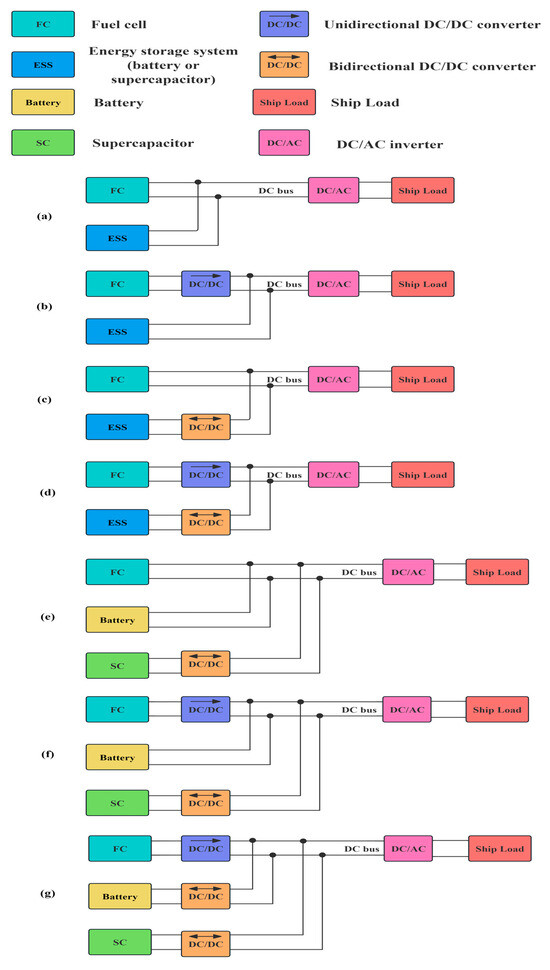
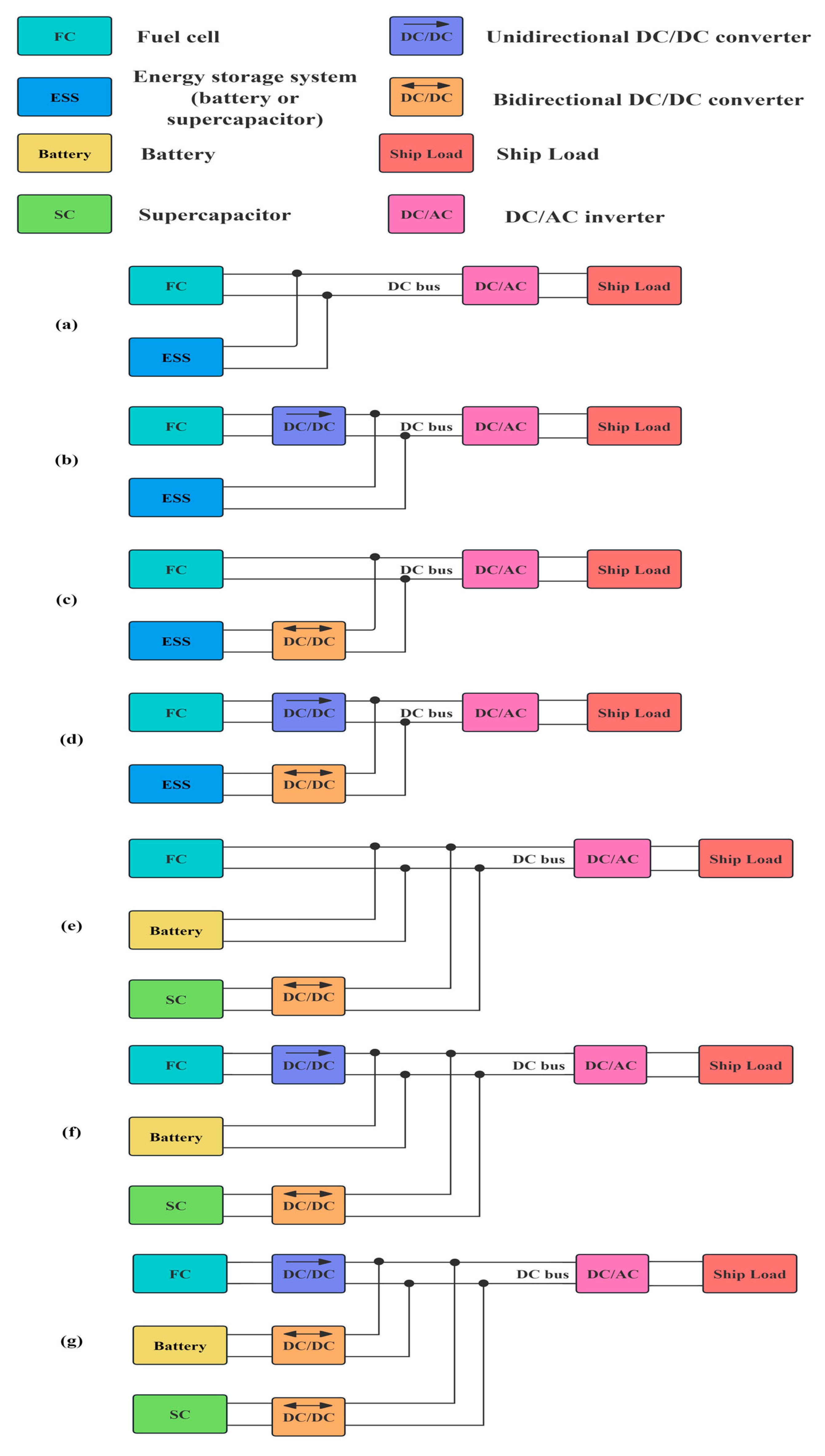
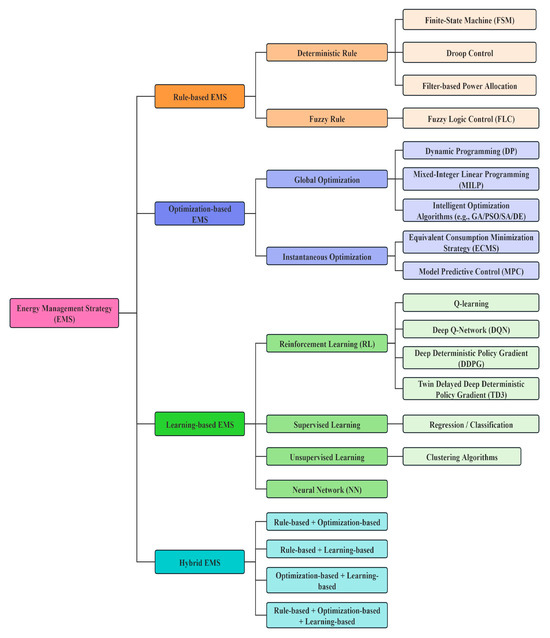
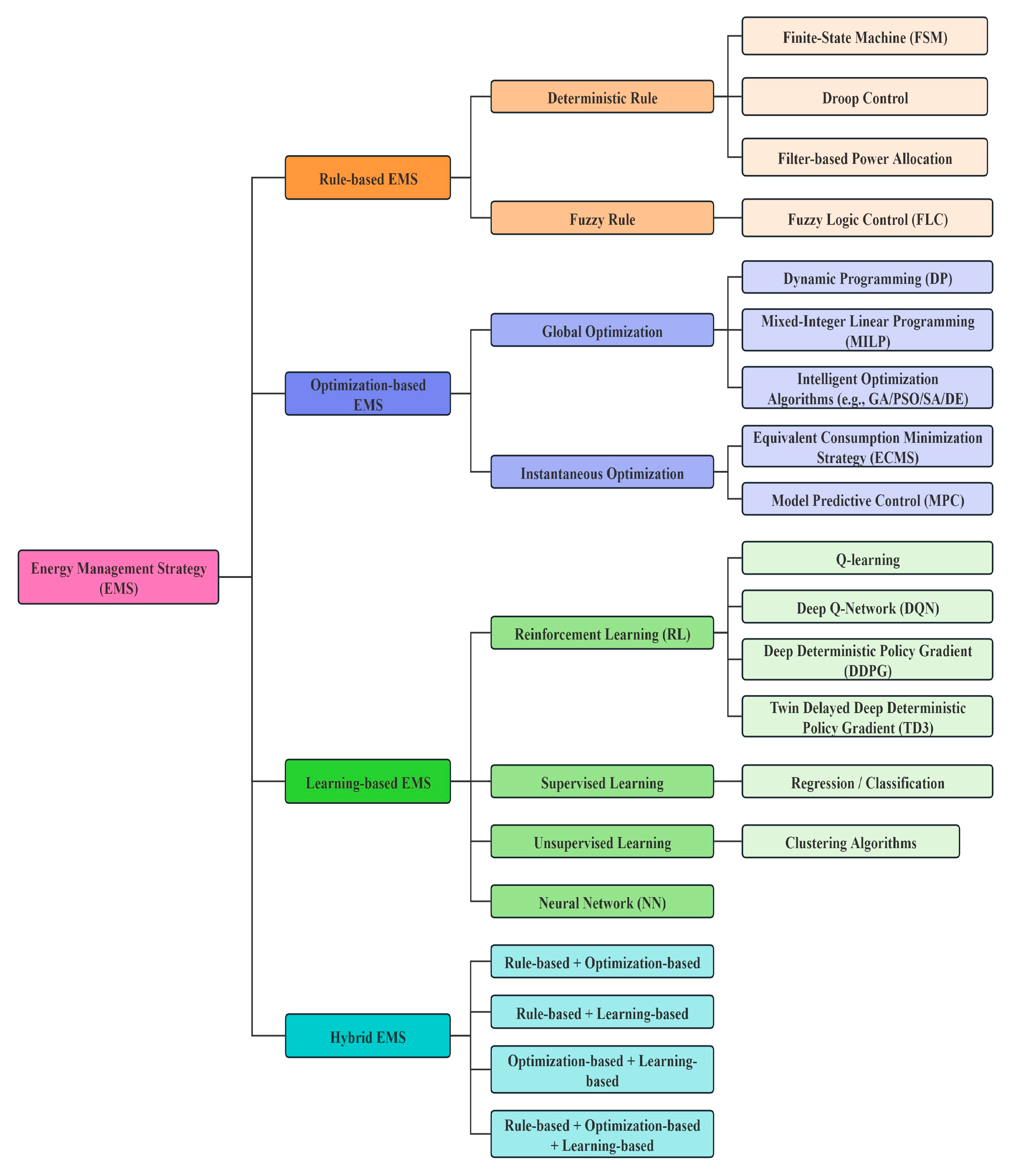
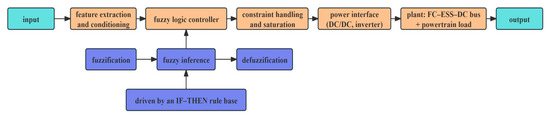
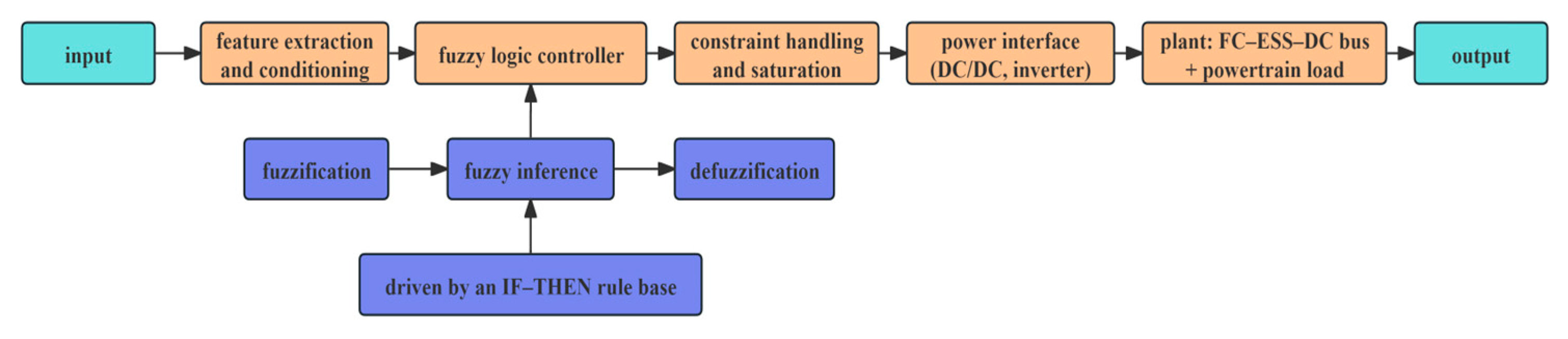
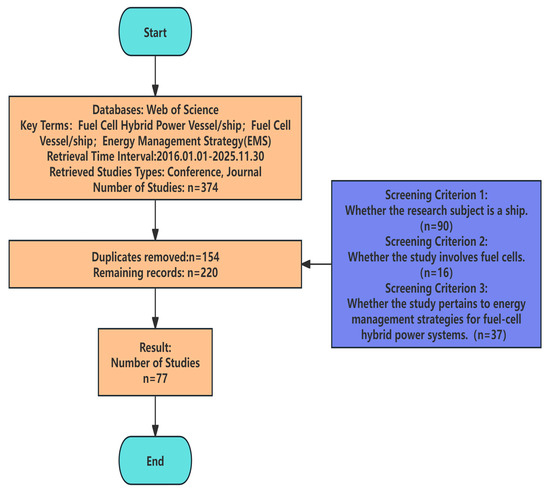
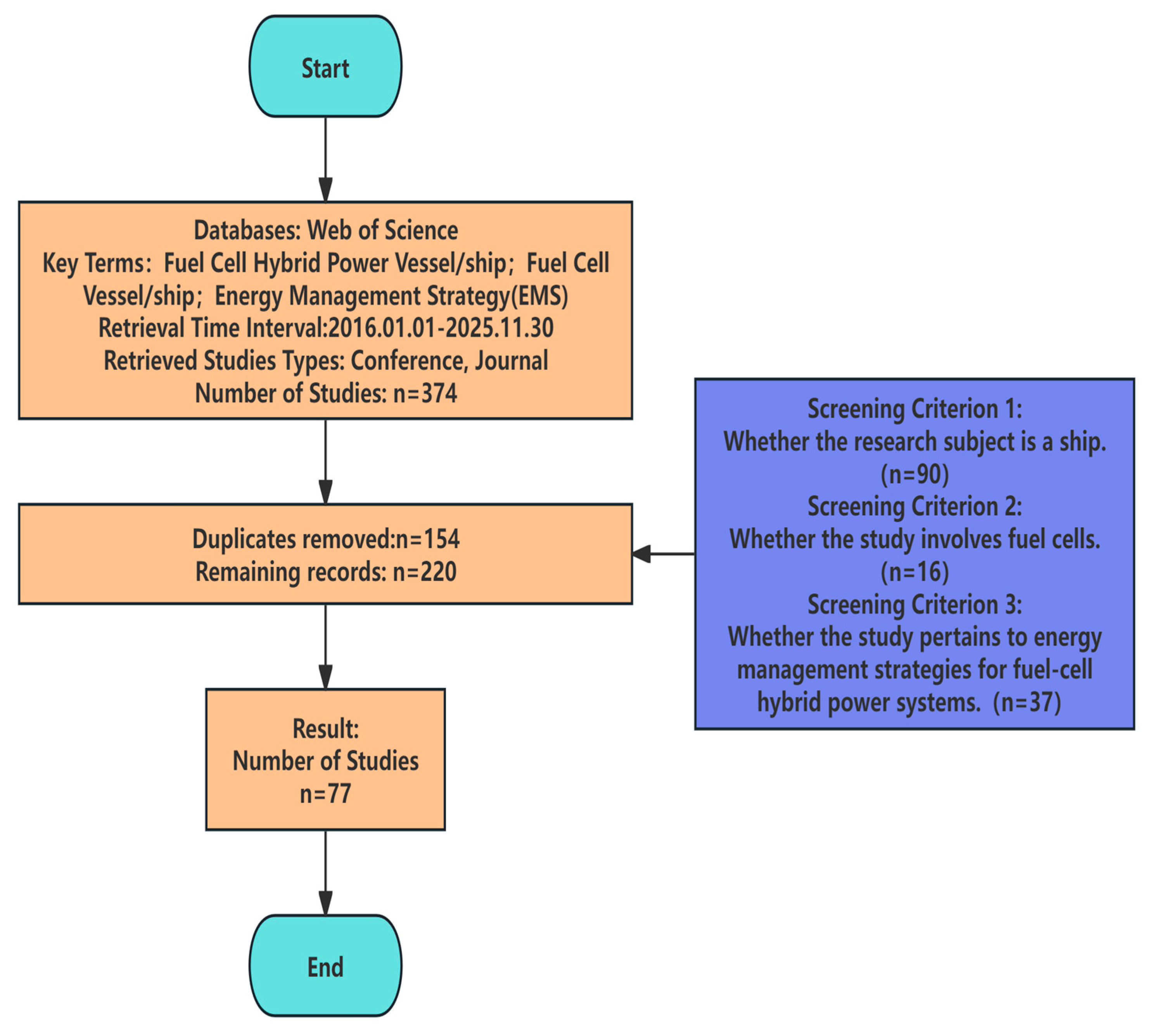
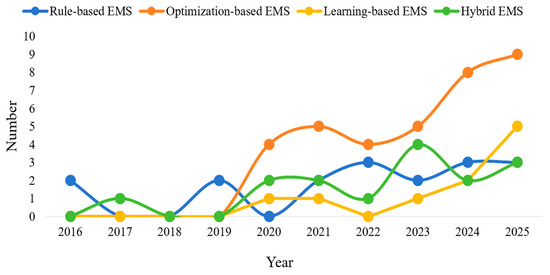
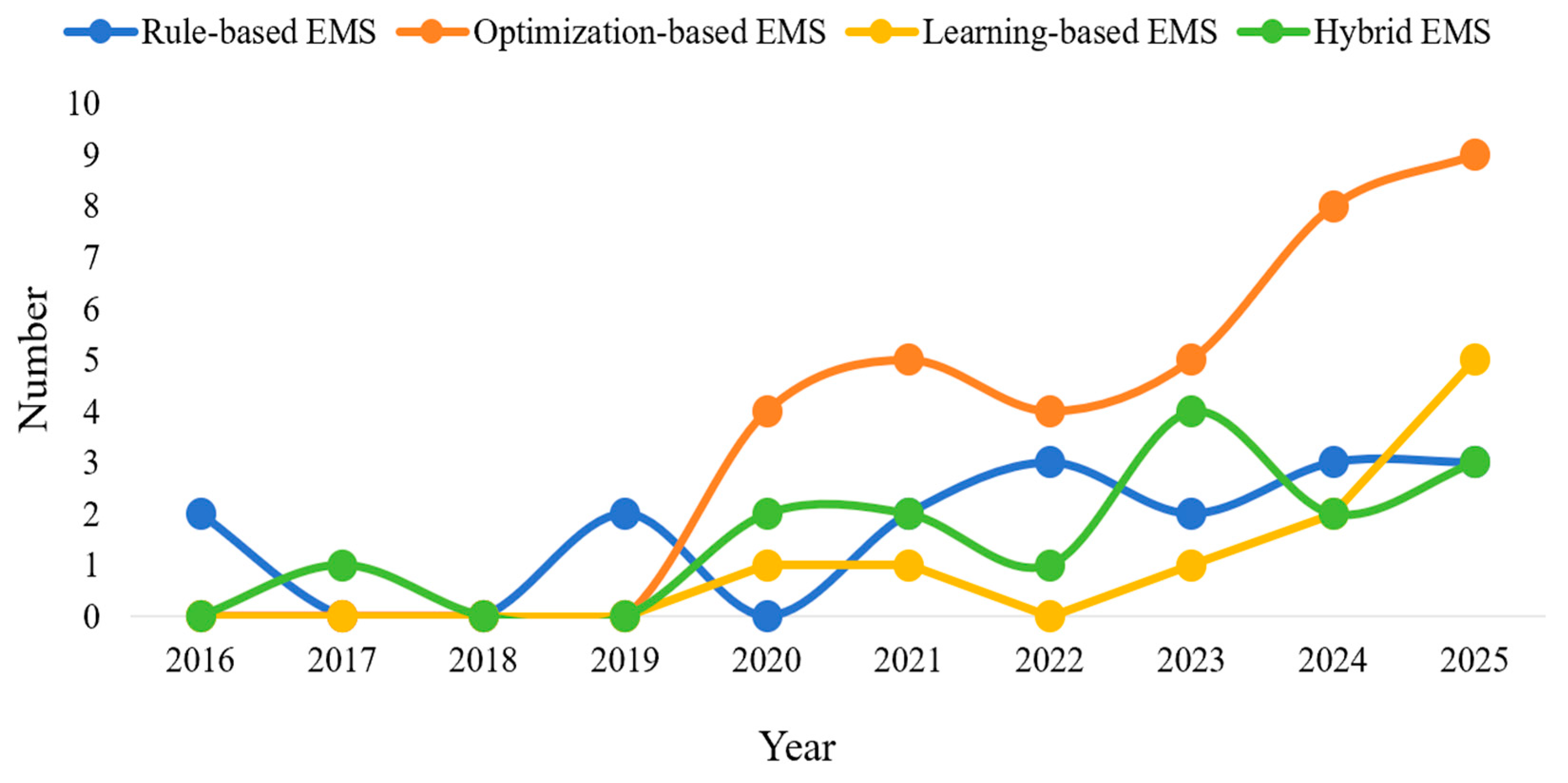
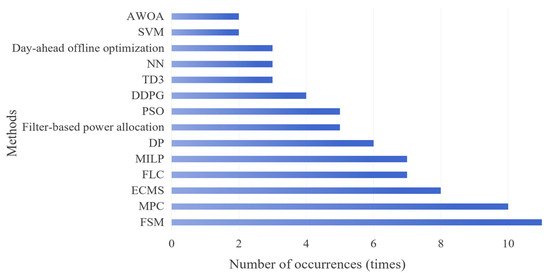
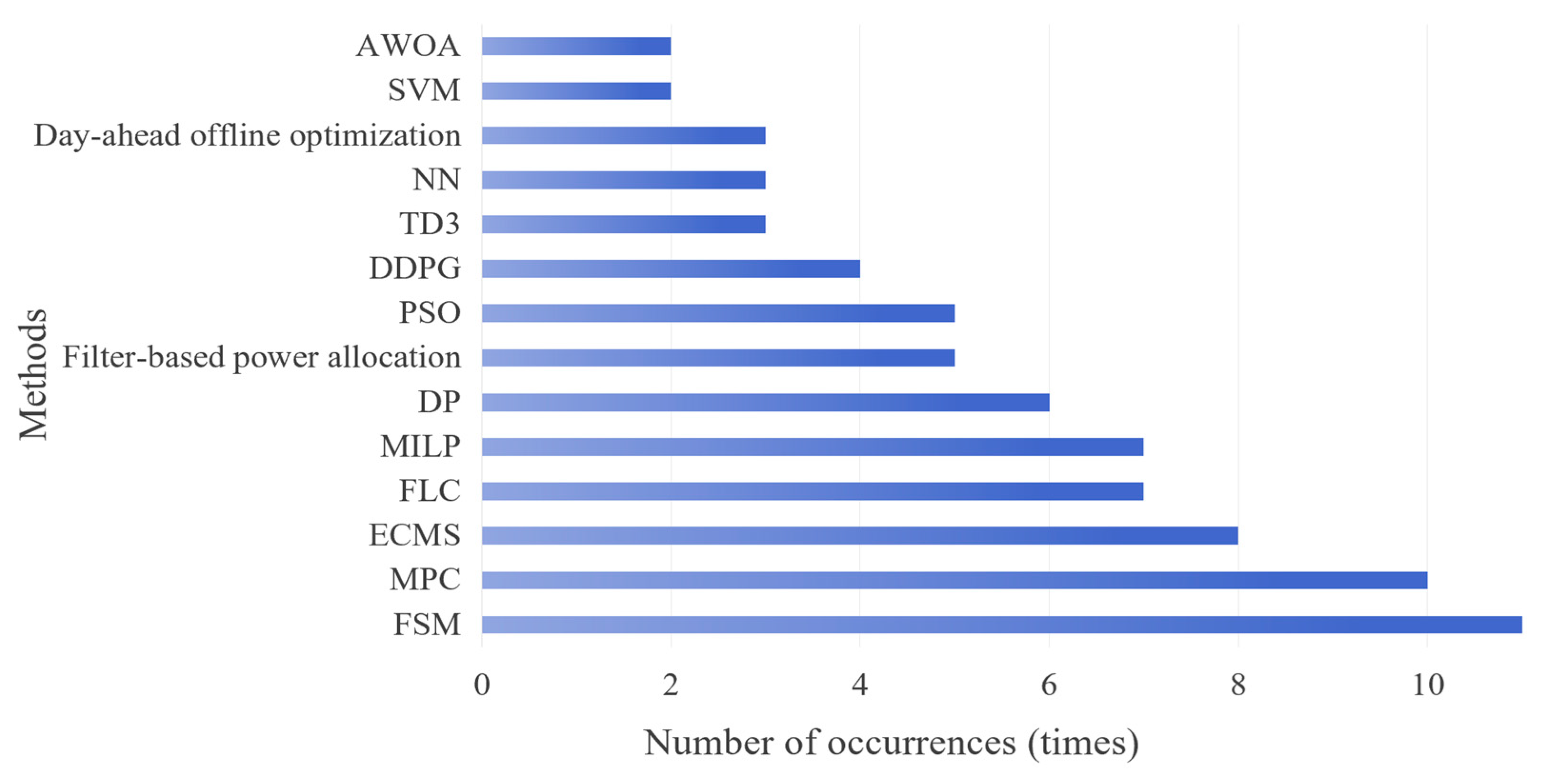
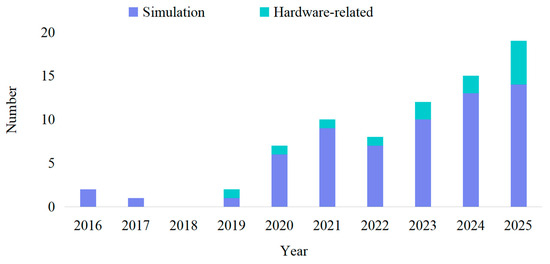
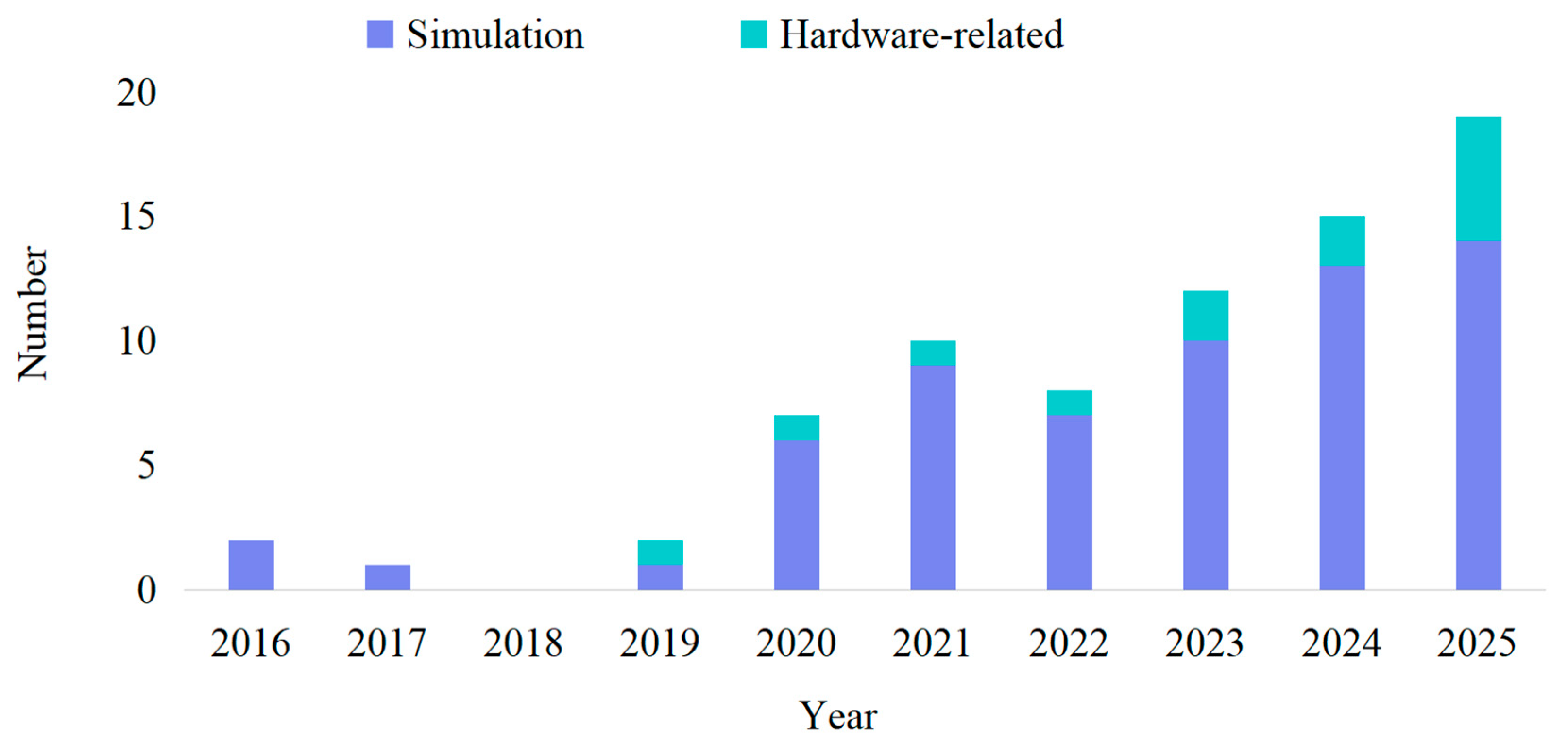
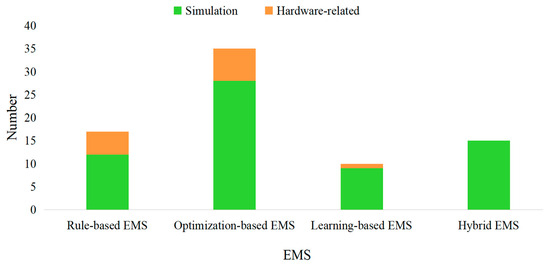
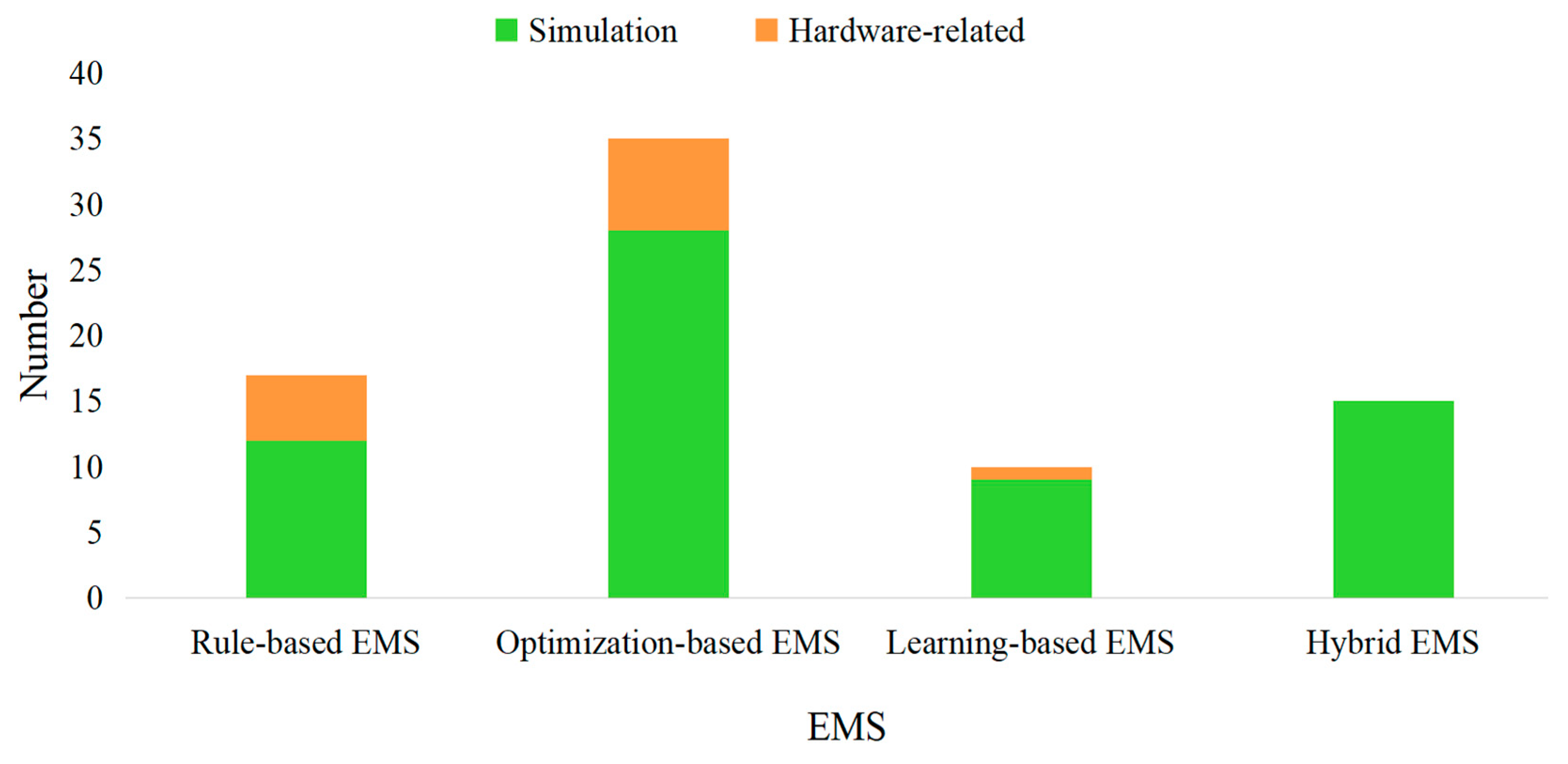
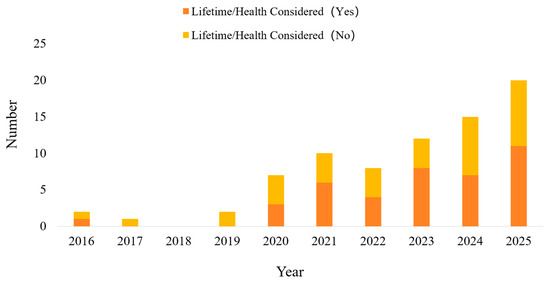

Disclaimer/Publisher’s Note: The statements, opinions and data contained in all publications are solely those of the individual author(s) and contributor(s) and not of MDPI and/or the editor(s). MDPI and/or the editor(s) disclaim responsibility for any injury to people or property resulting from any ideas, methods, instructions or products referred to in the content. |
© 2026 by the authors. Licensee MDPI, Basel, Switzerland. This article is an open access article distributed under the terms and conditions of the Creative Commons Attribution (CC BY) license.