Overview of Iron Energy Utilization: Update Status and Prospective Development


 ,
, 

Abstract
1. Introduction
1.1. The Need for Clean Recyclable Fuels
1.2. Hydrogen
1.3. Solar Hydrocarbon Fuels
1.4. Metal Fuels

| Material Sorts | Melting Point/K | Boiling Point/K | Reacting with Oxygen | |
|---|---|---|---|---|
| Metal | Mass energy density/MJ·kg−1 | Volume energy density/MJ·L−1 | ||
| Fe | 1811 | 3273 | 7.397 | 58.14 |
| Al | 933 | 2767 | 31.054 | 83.847 |
| Mg | 923 | 1366 | 24.761 | 43.085 |
| Li | 454 | 1620 | 42.998 | 22.79 |
| Be | 1560 | 2744 | 62.700 | 116.00 |
| B | 2450 | 3931 | 267.06 | 135.00 |
| Hydrocarbon | ||||
| Gasoline | 300–600 | 44–46 | 32–34 | |
| Methanol | 338 | 19.7–22.7 | 15.9–17.9 | |
| Ethanol | 352 | 26.8–29.7 | 21.1–23.4 | |
| Energy Carrier | Gravimetric Energy Density (MJ/kg) | Volumetric Energy Density (MJ/L) | Round-Trip Efficiency (RTE) | Estimated Cost ($/kWh Delivered) | Storage/Transport Maturity |
|---|---|---|---|---|---|
| Iron Powder (Fe) | ~7.4 | ~113.0 | 35–50% | $0.05–$0.15 | High (Solid/Stable) |
| Liquid Hydrogen (LH2) | ~120.0 | ~8.5 | 30–40% | $0.20–$0.50 | Complex (Cryogenic) |
| Ammonia (NH3) | ~18.6 | ~12.7 | 20–35% | $0.12–$0.30 | Moderate (Toxic/Pressure) |
| Synthetic Fuels (e-Methanol) | ~19.9 | ~15.8 | 10–20% | $0.30–$0.80 | High (Drop-in) |
1.5. Terminology Definition
1.5.1. Metallic Energy and Iron as an Energy Carrier
1.5.2. Zero-Carbon Cycle Fuel
1.5.3. Iron Oxide Reduction Pathways
Technical Bottlenecks in the Reduction Cycle
2. Iron Combustion
2.1. Combustion Mechanism
2.1.1. Single Particle Combustion
2.1.2. Particle Group Combustion
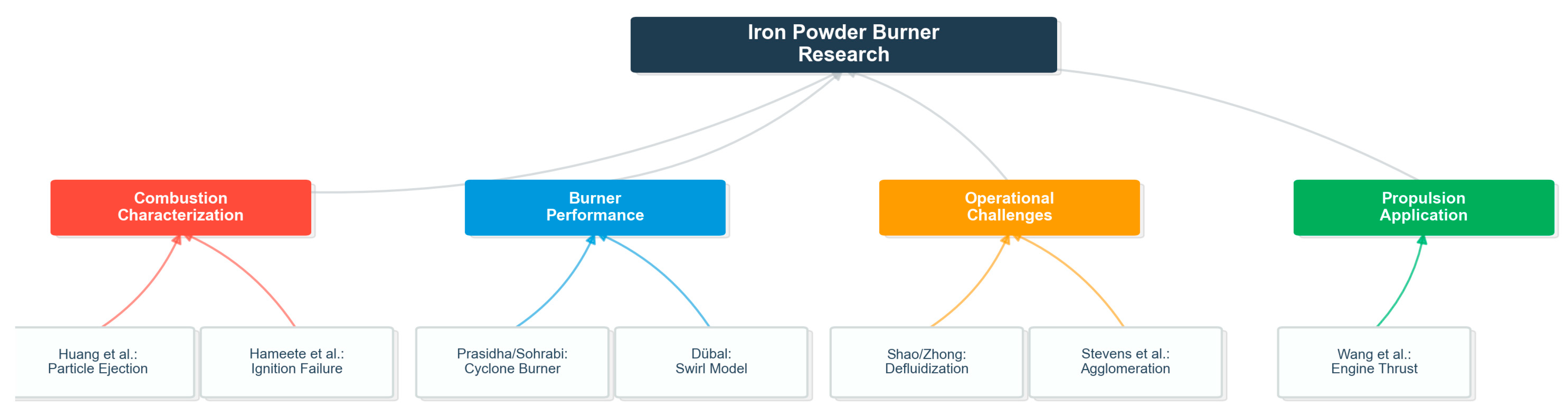
2.2. Iron Burner
- (1)
- Research progress at home and abroad
- (2)
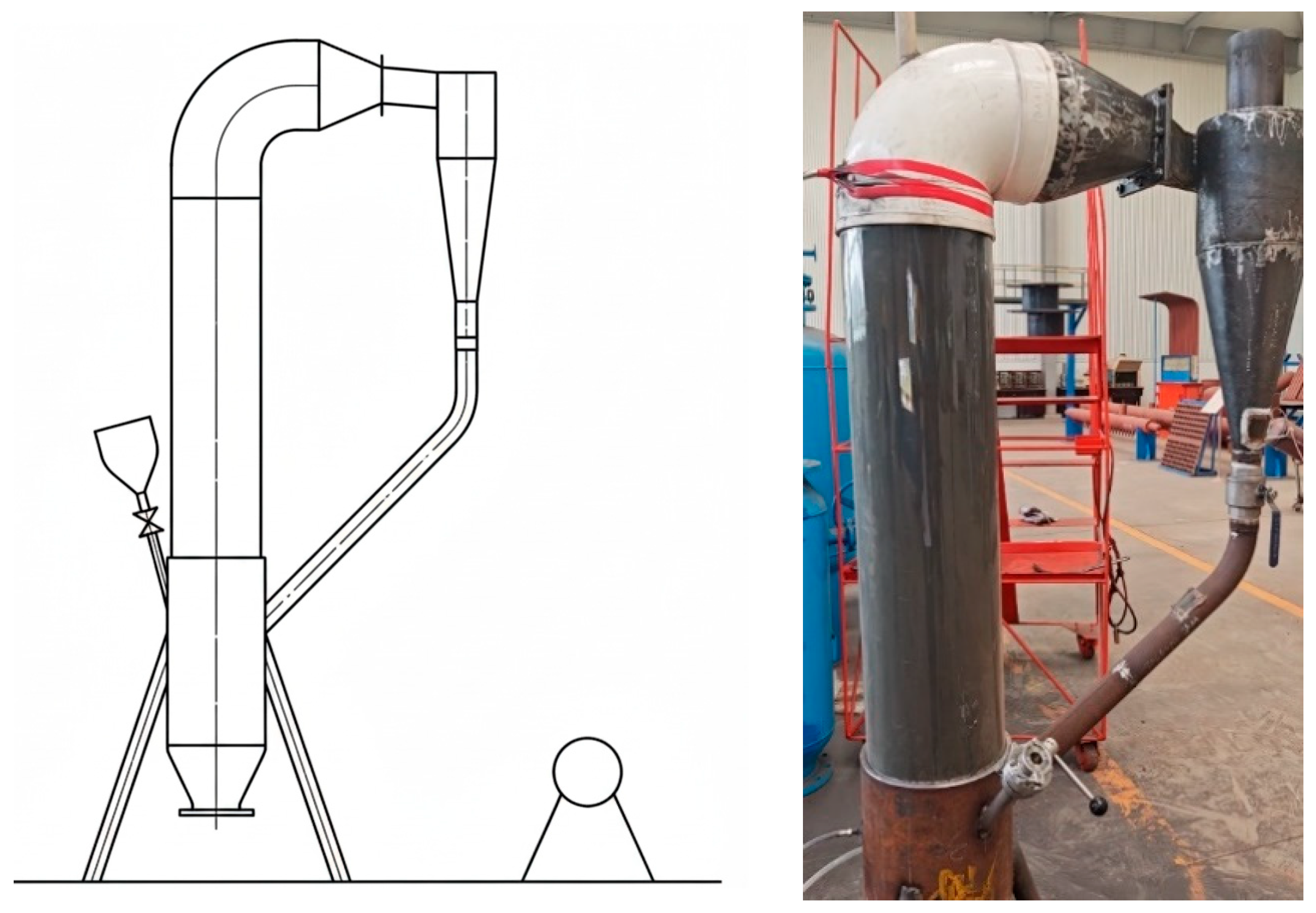
- Progress of Our Research
3. Iron Cell
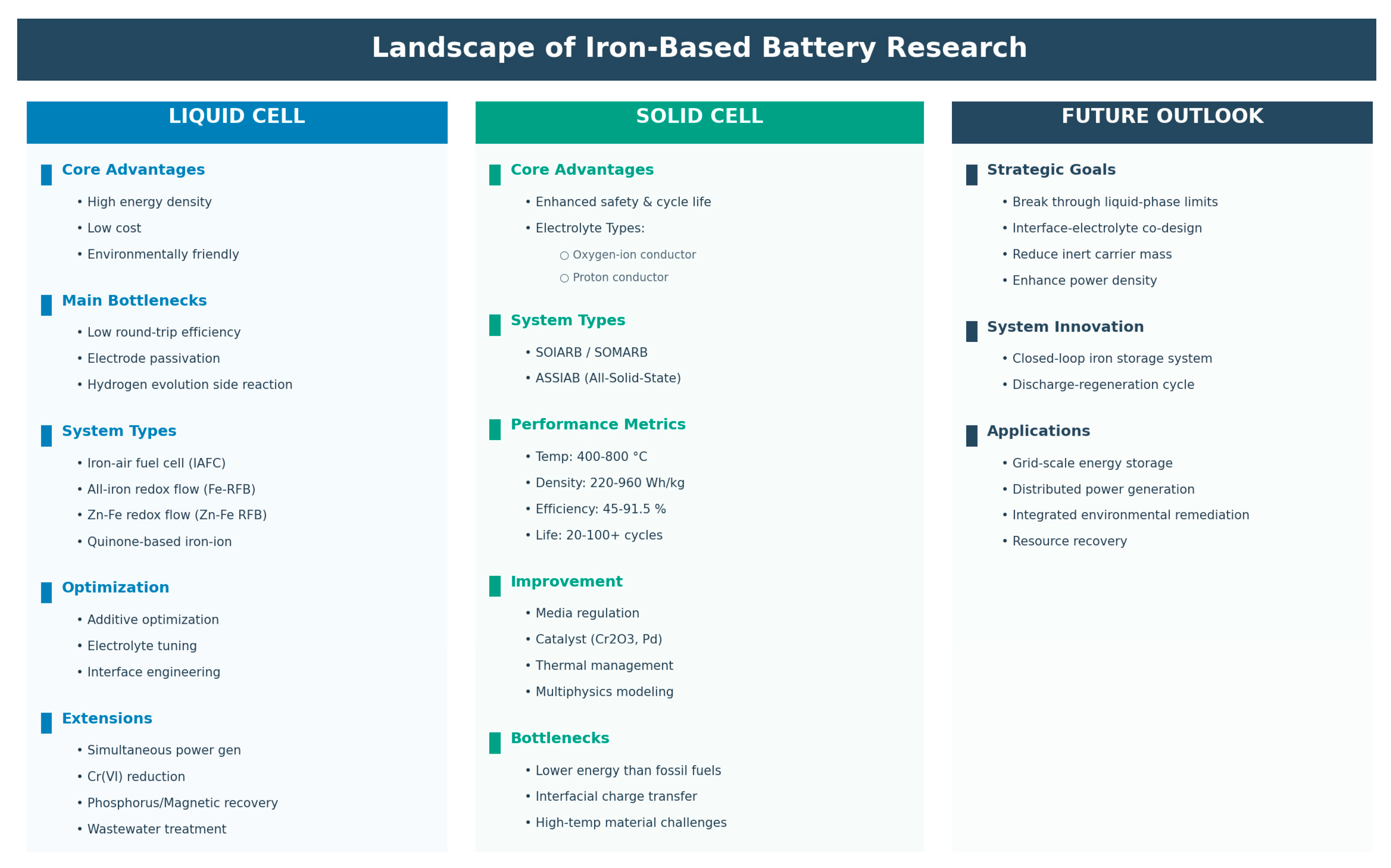
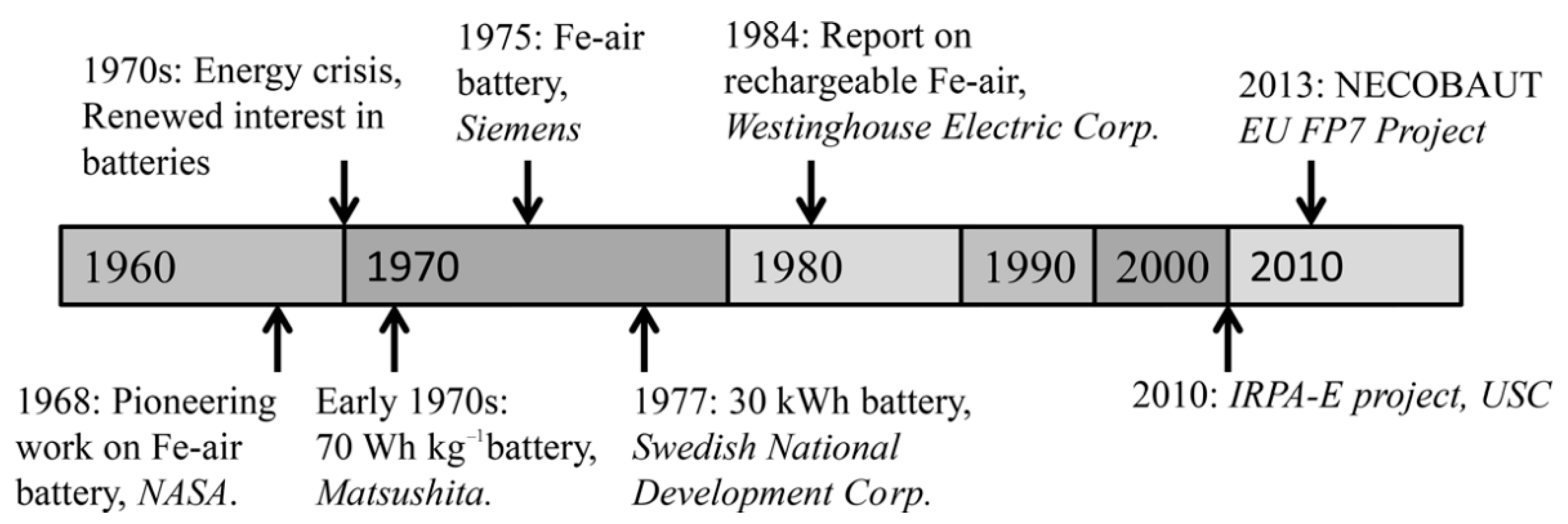
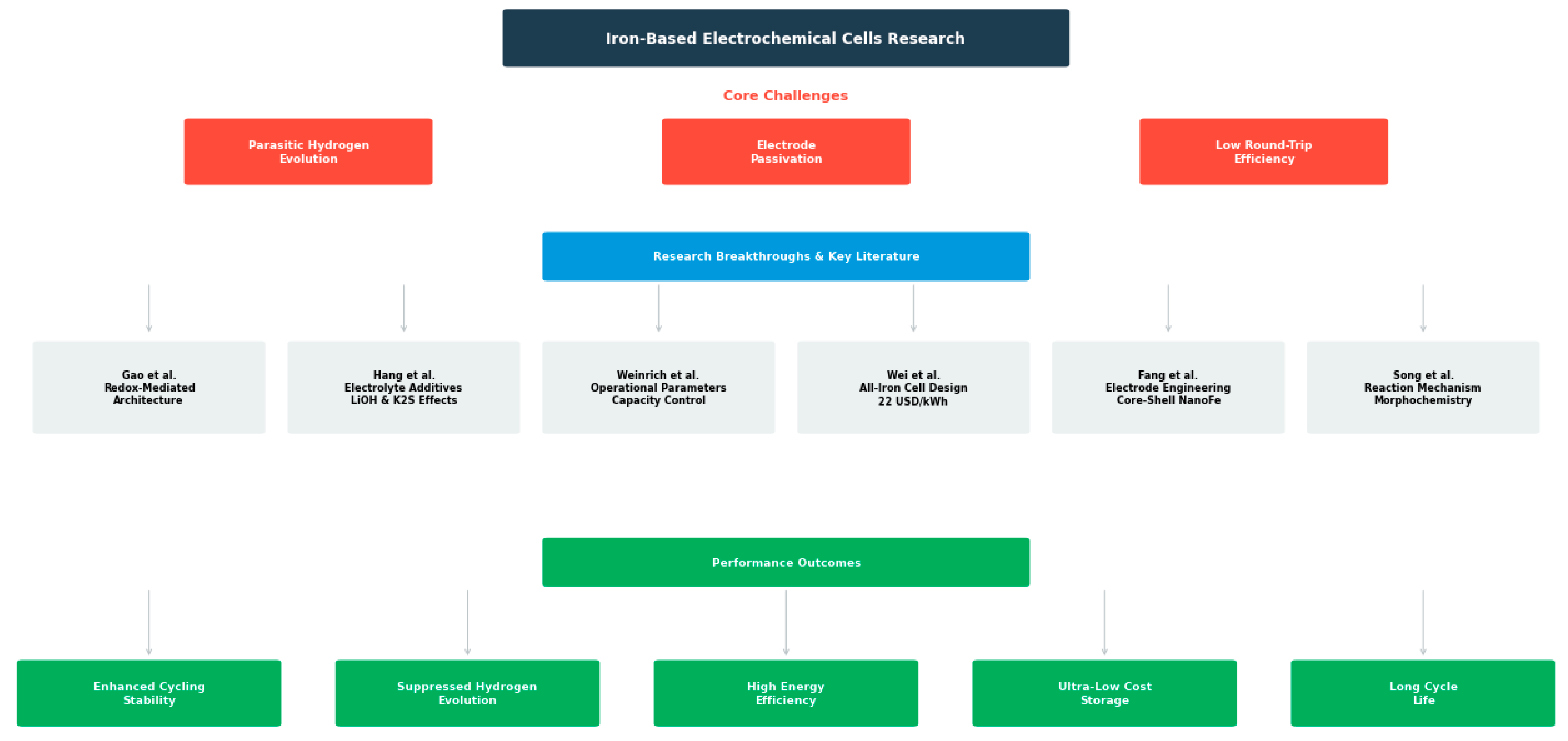
3.1. Liquid Cell
3.2. Solid Cell
3.3. Levelized Cost of Iron Cell
3.3.1. Thermodynamic Analysis: Entropy Increase and Energy Penalty
3.3.2. Simplified LCOE Model for Iron Fuel
- : Price of renewable electricity ().
- : System-wide efficiency (Electrolysis Reduction ).
- : Annualized capital cost of electrolyzers and fluidized bed reactors.
- : Capacity factor of the renewable energy source.
3.3.3. Economic Feasibility Thresholds
3.3.4. Conclusion of Analysis
4. Conclusions and Future Directions
4.1. Conclusions
- (1)
- Combustion Pathway:
- ①
- At the single-particle scale, a five-stage mechanistic framework of “heating–melting–intense combustion–cooling–re-ignition” has been established, clarifying that gas-phase FeO(g) reactions contribute ≥18% to the total heat release and proposing Da ≈ 1.2 as the criterion for the diffusion–kinetics transition.
- ②
- At the particle-cloud scale, the macroscopic scaling laws of te ∝ d2 and Sl ∝ d−1 have been elucidated, revealing the mechanisms of micro-explosion, agglomeration, and nanoparticle generation governed by the coupling of particle size, porosity, and oxide layer thickness.
- ③
- At the combustor level, it has been demonstrated that a coupled field of “controlled oxygen gradient, intensified recirculation, and rapid quenching” can simultaneously achieve ≥94% burnout efficiency with low NOx and nPM emissions, providing design guidelines for the scale-up of MW-level fluidized-bed and cyclone combustors.
- (2)
- Electrochemical Pathway:
- ①
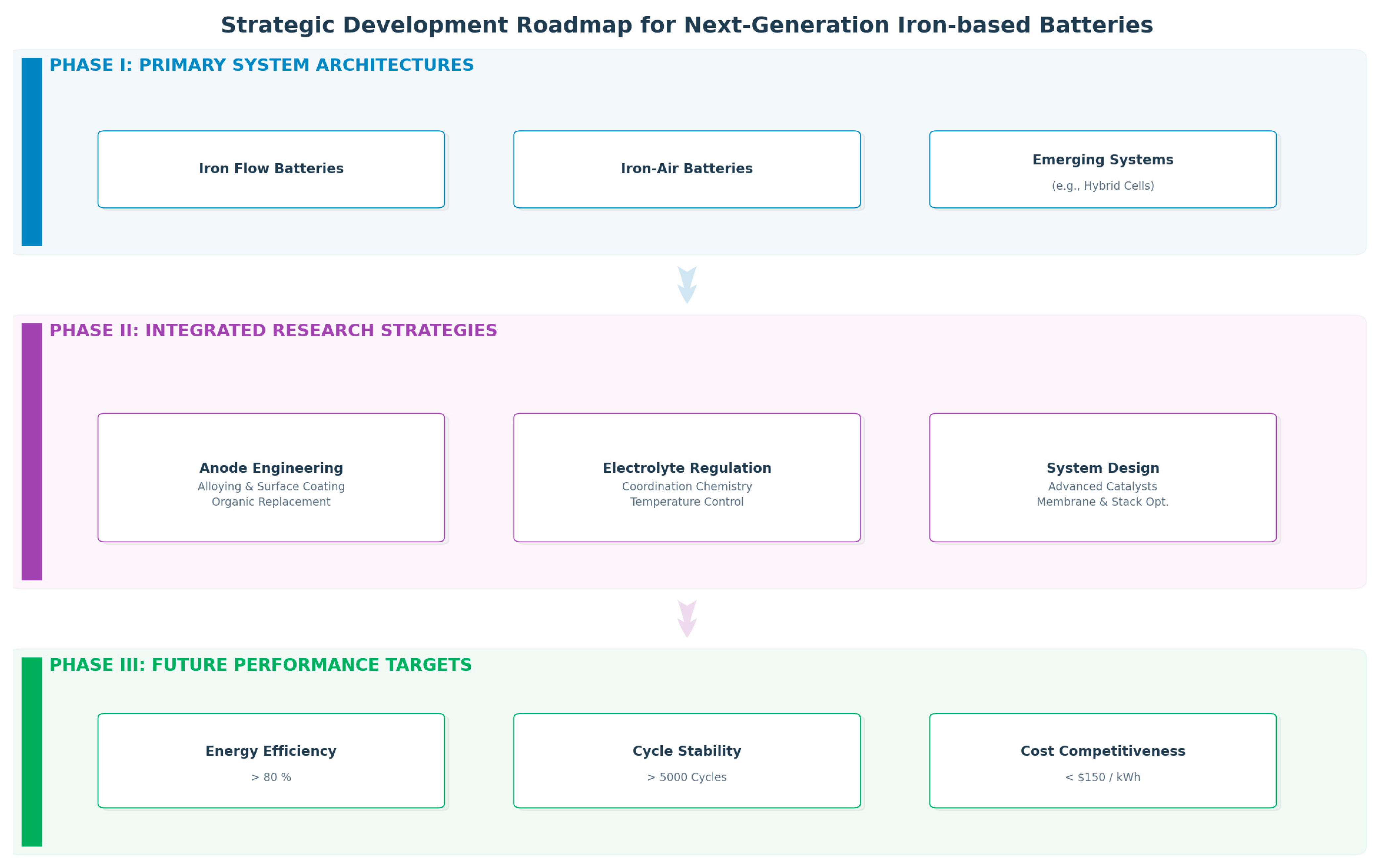
- Liquid Systems: Alkaline/neutral Fe-air batteries and Fe-RFBs have achieved coulombic efficiencies of 76–99%, cycle lives of 150–10,000 cycles, and demonstrated that the synergistic “elevated temperature + coordination” strategy suppresses hydrogen evolution and dendrites, reducing energy costs to <150 USD kWh−1.
- ②
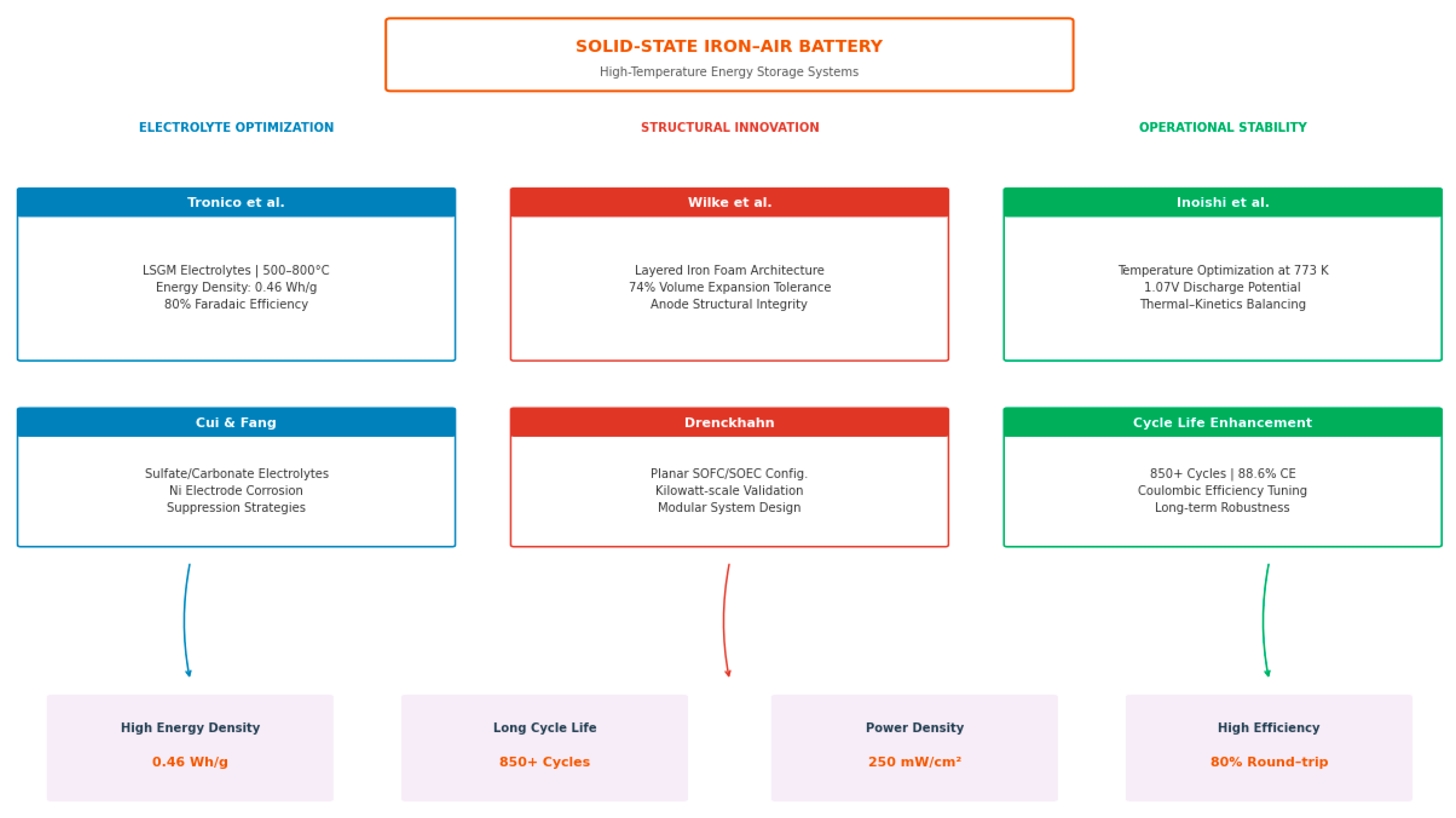
- Solid Systems: Batteries utilizing 800 °C-class LSGM oxygen-ion conductors have achieved 0.22–0.46 Wh g−1, 80% round-trip efficiency, and stable operation for 100–250 h, although their volumetric energy density remains an order of magnitude lower than gasoline.
- ③
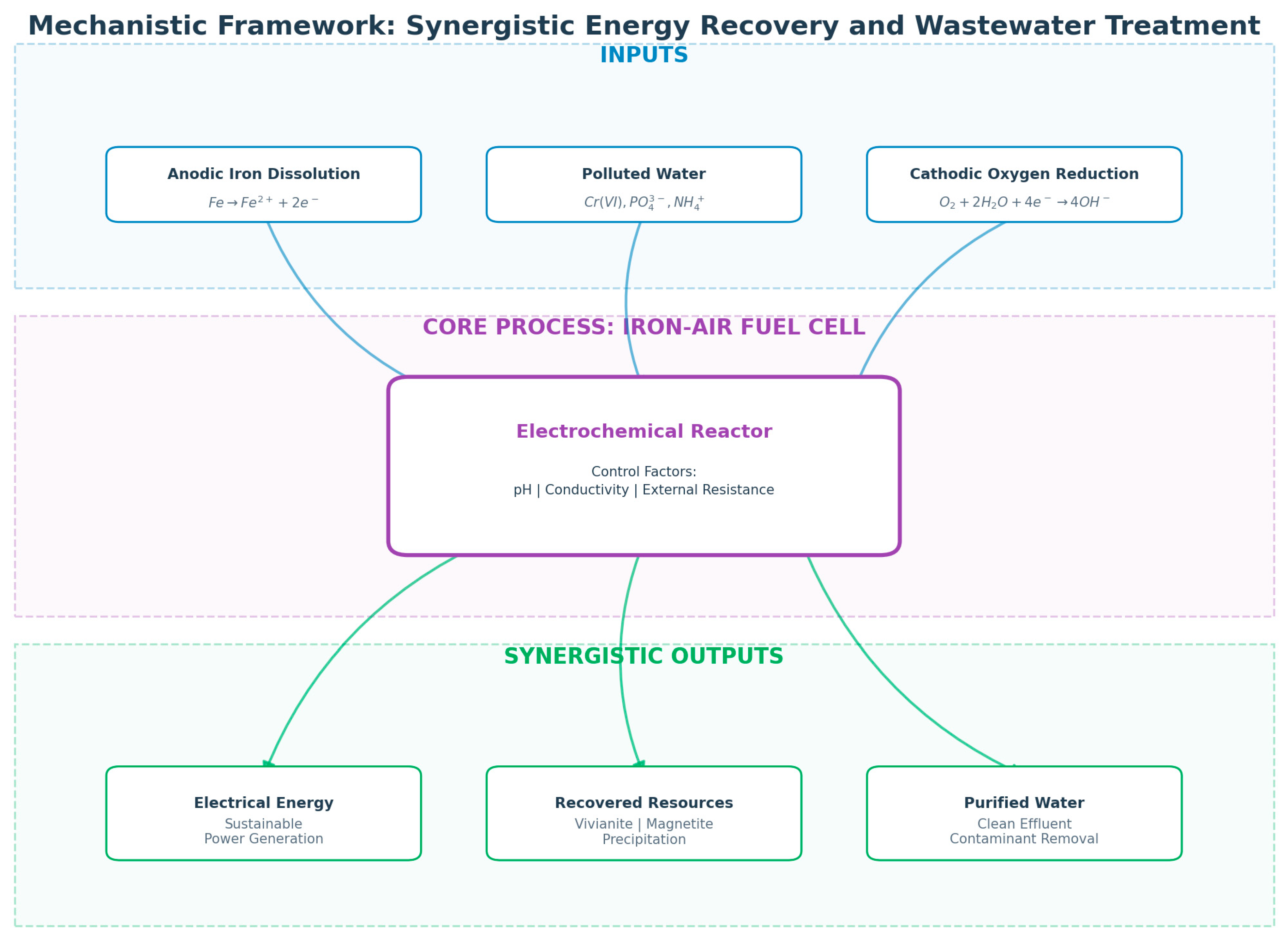
- Functional Extension: Iron-Air Fuel Cells (IAFCs) have simultaneously achieved Cr(VI), phosphate, and organic pollutant removal alongside power generation at 2.88 W m−2, validating the feasibility of the triple synergy of “energy storage–pollution control–resource recovery.”
- (3)
- Common Bottlenecks:
- ①
- Combustion Side: High-temperature reduction–oxidation cycles lead to particle agglomeration, defluidization, and sintering, necessitating the development of online regeneration technologies coupling controlled atmospheres with mechanical intervention.
- ②
- Battery Side: Liquid-phase systems are limited by Fe(OH)2/Fe3O4 passivation films and hydrogen evolution side reactions, while solid-state systems are constrained by Fe/FeOx volume expansion, interfacial delamination, and the insufficient low-temperature conductivity of oxygen-ion conductors.
- ③
- System Side: The closed-loop iron–iron oxide cycle has not yet undergone economic validation, and there is a lack of integrated GW-scale demonstrations coupling “powder production–combustion–reduction” with renewable electricity.
4.2. Strategic Research Needs and Future Outlook
Author Contributions
Funding
Data Availability Statement
Acknowledgments
Conflicts of Interest
References
- Hall, C.A.S.; Klitgaard, K.A. Explaining Economics from an Energy Perspective. In Energy and the Wealth of Nations: Understanding the Biophysical Economy; Hall, C.A.S., Klitgaard, K.A., Eds.; Springer: New York, NY, USA, 2012; pp. 95–130. [Google Scholar] [CrossRef]
- Energy Institute. Statistical Review of World Energy 2025, 74th ed. 2025. Available online: https://www.energyinst.org/statistical-review (accessed on 17 November 2025).
- Jacobson, M.Z. Review of solutions to global warming, air pollution, and energy security. Energy Environ. Sci. 2009, 2, 148–173. [Google Scholar] [CrossRef]
- Denholm, P.; Margolis, R.M. Land-use requirements and the per-capita solar footprint for photovoltaic generation in the United States. Energy Policy 2008, 36, 3531–3543. [Google Scholar] [CrossRef]
- Li, X.; Ye, T.; Meng, X.; He, D.; Li, L.; Song, K.; Jiang, J.; Sun, C. Advances in the Application of Sulfonated Poly(Ether Ether Ketone) (SPEEK) and Its Organic Composite Membranes for Proton Exchange Membrane Fuel Cells (PEMFCs). Polymers 2024, 16, 2840. [Google Scholar] [CrossRef]
- MacLean, H.L.; Lave, L.B. Evaluating automobile fuel/propulsion system technologies. Prog. Energy Combust. Sci. 2003, 29, 1–69. [Google Scholar] [CrossRef]
- Nakata, T.; Silva, D.; Rodionov, M. Application of energy system models for designing a low-carbon society. Prog. Energy Combust. Sci. 2011, 37, 462–502. [Google Scholar] [CrossRef]
- Mazloomi, K.; Gomes, C. Hydrogen as an energy carrier: Prospects and challenges. Renew. Sustain. Energy Rev. 2012, 16, 3024–3033. [Google Scholar] [CrossRef]
- Hammerschlag, R.; Mazza, P. Questioning hydrogen. Energy Policy 2005, 33, 2039–2043. [Google Scholar] [CrossRef]
- Schlapbach, L.; Züttel, A. Hydrogen-storage materials for mobile applications. Nature 2001, 414, 353–358. [Google Scholar] [CrossRef]
- Zhou, L. Progress and problems in hydrogen storage methods. Renew. Sustain. Energy Rev. 2005, 9, 395–408. [Google Scholar] [CrossRef]
- Durbin, D.J.; Malardier-Jugroot, C. Review of hydrogen storage techniques for on board vehicle applications. Int. J. Hydrogen Energy 2013, 38, 14595–14617. [Google Scholar] [CrossRef]
- Gust, D.; Moore, T.A.; Moore, A.L. Solar fuels via artificial photosynthesis. Acc. Chem. Res. 2009, 42, 1890–1898. [Google Scholar] [CrossRef]
- Bergthorson, J.M.; Thomson, M.J. A review of the combustion and emissions properties of advanced transportation biofuels and their impact on existing and future engines. Renew. Sustain. Energy Rev. 2015, 42, 1393–1417. [Google Scholar] [CrossRef]
- Herron, A.; Kim, J.; Upadhye, A.A.; Huber, G.W.; Maravelias, C.T. A general framework for the assessment of solar fuel technologies. Energy Environ. Sci. 2015, 8, 126–157. [Google Scholar] [CrossRef]
- Van Der Giesen, C.; Kleijn, R.; Kramer, G.J. Energy and climate impacts of producing synthetic hydrocarbon fuels from CO2. Environ. Sci. Technol. 2014, 48, 7111–7121. [Google Scholar] [CrossRef]
- Kim, J.; Miller, J.E.; Maravelias, C.T.; Stechel, E.B. Comparative analysis of environmental impact of S2P (Sunshine to Petrol) system for transportation fuel production. Appl. Energy 2013, 111, 1089–1098. [Google Scholar] [CrossRef]
- Shkolnikov, E.; Zhuk, A.; Vlaskin, M. Aluminum as energy carrier: Feasibility analysis and current technologies overview. Renew. Sustain. Energy Rev. 2011, 15, 4611–4623. [Google Scholar] [CrossRef]
- Liu, D.; Xia, Z.; Huang, L.; Hu, J. Boron Particle Combustion in Solid Rocket Ramjets. J. Aerosp. Eng. 2015, 28, 04014112. [Google Scholar] [CrossRef]
- Vishnevetsky, I.; Epstein, M.; Abu-Hamed, T.; Karni, J. Boron hydrolysis at moderate temperatures: First step to solar fuel cycle for transportation. J. Sol. Energy Eng. 2008, 130, 014506. [Google Scholar] [CrossRef]
- Kuehl, D.K. Ignition and combustion of aluminum and beryllium. AIAA J. 1965, 3, 2239–2247. [Google Scholar] [CrossRef]
- Eisenbud, M. Origins of the standards for control of beryllium disease (1947–1949). Environ. Res. 1982, 27, 79–88. [Google Scholar] [CrossRef]
- Fischer, S.H.; Grubelich, M.C. Theoretical Energy Release of Thermites, Intermetallics, and Combustible Metals; Sandia National Labs: Albuquerque, NM, USA, 1998. [Google Scholar] [CrossRef]
- Seshadri, K.; Berlad, A.L.; Tangirala, V. The structure of premixed particle-cloud flames. Combust. Flame 1992, 89, 333–342. [Google Scholar] [CrossRef]
- Beach, D.B.; Sumpter, B.G.; Labinov, S.D.; Richards, R.K.; Rondinone, A.J. Solid-state combustion of metallic nanoparticles: New possibilities for an alternative energy carrier. J. Energy Resour. Technol. 2007, 129, 29–32. [Google Scholar] [CrossRef]
- ASTM E711-23e1; Standard Test Method for Gross Calorific Value of Refuse-Derived Fuel by the Bomb Calorimeter. ASTM: West Conshohocken, PA, USA, 2023.
- Mukherjee, S.; Jha, R.; Patra, S.; Singh, K.K. Sustainable plasma technology for oxide ore reduction: A review. Steel Res. Int. 2025, 96, 15–29. [Google Scholar] [CrossRef]
- Xu, H.; Li, R.; Kou, J.; Wen, X.; Lin, J.; Yin, J.; Sun, C.; Sun, T. Coal-based direct reduction for dephosphorization of high-phosphorus iron ore: A critical review. Minerals 2025, 15, 1067. [Google Scholar] [CrossRef]
- Bidabadi, M.; Mafi, M. Time variation of combustion temperature and burning time of a single iron particle. Int. J. Therm. Sci. 2013, 65, 136–147. [Google Scholar] [CrossRef]
- Li, S.; Huang, J.; Weng, W.; Qian, Y.; Lu, X.; Aldén, M.; Li, Z. Ignition and combustion behavior of single micron-sized iron particle in hot gas flow. Combust. Flame 2022, 241, 112099. [Google Scholar] [CrossRef]
- Li, T.; Heck, F.; Reinauer, F.; Böhm, B.; Dreizler, A. Visualizing particle melting and nanoparticle formation during single iron particle oxidation with multi-parameter optical diagnostics. Combust. Flame 2022, 245, 112357. [Google Scholar] [CrossRef]
- Ning, D.; Shoshin, Y.; van Oijen, J.A.; Finotello, G.; de Goey, L.P.H. Burn time and combustion regime of laser-ignited single iron particle. Combust. Flame 2021, 230, 111424. [Google Scholar] [CrossRef]
- Ning, D.; Shoshin, Y.; van Oijen, J.A.; Finotello, G.; de Goey, L.P.H. Critical temperature for nanoparticle cloud formation during combustion of single micron-sized iron particle. Combust. Flame 2022, 244, 112296. [Google Scholar] [CrossRef]
- Ning, D.; Shoshin, Y.; van Stiphout, M.; van Oijen, J.; Finotello, G.; de Goey, P. Temperature and phase transitions of laser-ignited single iron particle. Combust. Flame 2022, 236, 111801. [Google Scholar] [CrossRef]
- Palečka, J.; Sniatowsky, J.; Goroshin, S.; Higgins, A.J.; Bergthorson, J.M. A new kind of flame: Observation of the discrete flame propagation regime in iron particle suspensions in microgravity. Combust. Flame 2019, 209, 180–186. [Google Scholar] [CrossRef]
- Thijs, L.C.; van Gool, C.E.A.G.; Ramaekers, W.J.S.; Kuerten, J.G.M.; van Oijen, J.A.; de Goey, L.P.H. Improvement of heat- and mass transfer modeling for single iron particles combustion using resolved simulations. Combust. Sci. Technol. 2022, 196, 572–588. [Google Scholar] [CrossRef]
- van Gool, C.E.A.G.; Thijs, L.C.; Ramaekers, W.J.S.; van Oijen, J.A.; de Goey, L.P.H. Particle Equilibrium Composition model for iron dust combustion. Appl. Energy Combust. Sci. 2023, 13, 100115. [Google Scholar] [CrossRef]
- Broumand, M.; Bidabadi, M. Modeling combustion of micron-sized iron dust particles during flame propagation in a vertical duct. Fire Saf. J. 2013, 59, 88–93. [Google Scholar] [CrossRef]
- Mi, X.; Fujinawa, A.; Bergthorson, J.M. A quantitative analysis of the ignition characteristics of fine iron particles. Combust. Flame 2022, 240, 112011. [Google Scholar] [CrossRef]
- Wan, J.; Wei, H.; Tang, Z.; Wu, Y.; Goey, P.D.; Zhou, L. Study on the ignition characteristics of porous iron particles based on fractal theory. Fuel 2025, 398, 135499. [Google Scholar] [CrossRef]
- Luu, T.D.; Shamooni, A.; Kronenburg, A.; Braig, D.; Mich, J.; Nguyen, B.-D.; Scholtissek, A.; Hasse, C.; Thäter, G.; Carbone, M.; et al. Carrier-Phase DNS of Ignition and Combustion of Iron Particles in a Turbulent Mixing Layer. Flow Turbul. Combust. 2024, 112, 1083–1103. [Google Scholar] [CrossRef]
- Huang, J.; Li, S.; Sanned, D.; Xu, L.; Xu, S.; Wang, Q.; Stiti, M.; Qian, Y.; Cai, W.; Berrocal, E.; et al. A detailed study on the micro-explosion of burning iron particles in hot oxidizing environments. Combust. Flame 2022, 238, 111755. [Google Scholar] [CrossRef]
- Peng, F.; Liu, H.; Kong, C.; Mi, X.; Tian, B.; Zheng, Y.; Xu, S.; Cai, W. Micro-explosion of burning iron particles with carbon impurity. Combust. Flame 2025, 274, 113974. [Google Scholar] [CrossRef]
- Nguyen, B.-D.; Scholtissek, A.; Li, T.; Ning, D.; Stein, O.T.; Dreizler, A.; Hasse, C. Nanoparticle formation in the boundary layer of burning iron microparticles: Modeling and simulation. Chem. Eng. J. 2025, 507, 160039. [Google Scholar] [CrossRef]
- Poletaev, N.I.; Khlebnikova, M.Y. Combustion of Iron Particles Suspension in Laminar Premixed and Diffusion Flames. Combust. Sci. Technol. 2020, 194, 1356–1377. [Google Scholar] [CrossRef]
- Chen, R.; Brun Hansen, B.; Lin, W.; Wu, H.; Glarborg, P. Deactivation of iron particles during combustion and reduction. Fuel 2024, 378, 132915. [Google Scholar] [CrossRef]
- Lee, C.W.; Hameete, J.; Finotello, G.; Mi, X. A study on surface deposition of combusting iron particles. Combust. Sci. Technol. 2024, 197, 3829–3855. [Google Scholar] [CrossRef]
- Xu, S.; Qiu, Y.; Xu, L.; Huang, J.; Li, S.; Nilsson, E.J.K.; Li, Z.; Cai, W.; Aldén, M.; Bai, X.-S. Phase change and combustion of iron particles in premixed CH4/O2/N2 flames. Combust. Flame 2024, 259, 113171. [Google Scholar] [CrossRef]
- Huang, J.; Li, S.; Cai, W.; Qian, Y.; Berrocal, E.; Aldén, M.; Li, Z. Quantification of the size, 3D location and velocity of burning iron particles in premixed methane flames using high-speed digital in-line holography. Combust. Flame 2021, 230, 111430. [Google Scholar] [CrossRef]
- Hameete, J.; Boone, L.J.; Homan, T.A.M.; Shoshyn, Y.; Dam, N.J.; de Goey, L.P.H. Aerosol ignition in iron powder flames stabilized on a new type of jet-in-hot-coflow burner. Appl. Energy Combust. Sci. 2024, 20, 100301. [Google Scholar] [CrossRef]
- Prasidha, W.; Baigmohammadi, M.; Shoshin, Y.; de Goey, P. Towards an efficient metal energy carrier for zero–emission heating and power: Iron powder combustion. Combust. Flame 2024, 268, 113655. [Google Scholar] [CrossRef]
- Sohrabi, M.; Ghobadian, B.; Najafi, G.; Choisez, L.; Prasidha, W.; Baigmohammadi, M.; de Goey, P. Iron powder particles as a clean and sustainable carrier: Investigating their impact on thermal output. Process Saf. Environ. Prot. 2024, 188, 957–969. [Google Scholar] [CrossRef]
- Dübal, S.; Steffens, P.; Mich, J.; Braig, D.; Vahl, A.; Berkel, L.L.; Scholtissek, A.; Faravelli, T.; Hasse, C.; Nicolai, H.; et al. A chemical reactor network approach for a gas-assisted iron dust flame in a laboratory-scale combustor. Therm. Sci. Eng. Prog. 2025, 60, 103435. [Google Scholar] [CrossRef]
- Shao, J.-H.; Guo, Z.-C.; Tang, H.-Q. Influence of Temperature on Sticking Behavior of Iron Powder in Fluidized Bed. ISIJ Int. 2011, 51, 1290–1295. [Google Scholar] [CrossRef]
- Zhong, Y.; Wang, Z.; Guo, Z.; Tang, Q. Defluidization behavior of iron powders at elevated temperature: Influence of fluidizing gas and particle adhesion. Powder Technol. 2012, 230, 225–231. [Google Scholar] [CrossRef]
- Stevens, N.C.; Prasidha, W.; Deen, N.G.; Meeuwsen, L.; Baigmohammadi, M.; Shoshin, Y.; de Goey, L.P.H.; Finotello, G. Cyclic reduction of combusted iron powder: A study on the material properties and conversion reaction in the iron fuel cycle. Powder Technol. 2024, 441, 119786. [Google Scholar] [CrossRef]
- Wang, J.-Y.; Yang, Z.-L.; Wang, M.-J. Numerical and experimental studies on nozzle two-phase flow characteristics of nanometer-scale iron powder metal fuel motor. Adv. Powder Technol. 2018, 29, 2753–2764. [Google Scholar] [CrossRef]
- McKerracher, R.D.; Ponce de Leon, C.; Wills, R.G.A.; Shah, A.A.; Walsh, F.C. A Review of the Iron–Air Secondary Battery for Energy Storage. ChemPlusChem 2015, 80, 323–335. [Google Scholar] [CrossRef]
- Gao, M.; Song, Y.; Zou, X.; Salla, M.; Zhang, H.; Wang, Z.; Huang, S.; Wang, Q. A Redox-Mediated Iron-Air Fuel Cell for Sustainable and Scalable Power Generation. Adv. Energy Mater. 2023, 13, 2301868. [Google Scholar] [CrossRef]
- Hang, B.T.; Thang, D.H. Effect of additives on the electrochemical properties of Fe2O3/C nanocomposite for Fe/air battery anode. J. Electroanal. Chem. 2016, 762, 59–65. [Google Scholar] [CrossRef]
- Weinrich, H.; Gehring, M.; Tempel, H.; Kungl, H.; Eichel, R.-A. Impact of the charging conditions on the discharge performance of re-chargeable iron-anodes for alkaline iron–air batteries. J. Appl. Electrochem. 2018, 48, 451–462. [Google Scholar] [CrossRef]
- Wei, L.; Wu, M.C.; Zhao, T.S.; Zeng, Y.K.; Ren, Y.X. An aqueous alkaline battery consisting of inexpensive all-iron redox chemistries for large-scale energy storage. Appl. Energy 2018, 215, 98–105. [Google Scholar] [CrossRef]
- Fang, C.; Tang, X.; Wang, J.; Yi, Q. Performance of iron-air battery with iron nanoparticle-encapsulated C-N composite electrode. Front. Energy 2023, 18, 42–53. [Google Scholar] [CrossRef]
- Song, W.; Zhai, L.-F.; Cui, Y.-Z.; Sun, M.; Jiang, Y. Carbonate-Mediated Fe(II) Oxidation in the Air-Cathode Fuel Cell: A Kinetic Model in Terms of Fe(II) Speciation. J. Phys. Chem. A 2013, 117, 4627–4635. [Google Scholar] [CrossRef]
- Kim, J.H.; Park, I.S.; Park, J.Y. Electricity generation and recovery of iron hydroxides using a single chamber fuel cell with iron anode and air-cathode for electrocoagulation. Appl. Energy 2015, 160, 18–27. [Google Scholar] [CrossRef]
- Lai, L.-L.; Liu, C.; Liu, M.-Y.; Wan, S.-Z.; Zhao, Z.-G.; Wang, R.; Yuan, L.-J. Condition optimization of iron-air fuel cell to treat phosphate-containing wastewater regarding sustainable development. Chemosphere 2023, 313, 137507. [Google Scholar] [CrossRef]
- Maitlo, H.A.; Kim, K.-H.; Park, J.Y.; Kim, J.H. Removal mechanism for chromium (VI) in groundwater with cost-effective iron-air fuel cell electrocoagulation. Sep. Purif. Technol. 2019, 213, 378–388. [Google Scholar] [CrossRef]
- Liu, Y.; Yuan, J.; Ning, Y.; Tang, Y.; Luo, S.; Jiang, B. Efficient reduction of Cr(VI) and immobilization of Cr driven by an iron-air fuel cell: Reaction mechanisms and electricity generation. Chemosphere 2020, 253, 126730. [Google Scholar] [CrossRef] [PubMed]
- An, R.; Lu, N.; Ju, H.; Li, Z.; Zelang, X.; Lu, P.; Sheng, L.; Bian, H.; Guan, J. Driving mechanism of iron cycling towards energy recovery and pollutant removal in constructed wetland-microbial fuel cell. J. Environ. Chem. Eng. 2025, 13, 118885. [Google Scholar] [CrossRef]
- Wang, R.; Liu, M.-Y.; Zhang, M.; Ghulam, A.; Yuan, L.-J. An iron-air fuel cell system towards concurrent phosphorus removal and resource recovery in the form of vivianite and energy generation in wastewater treatment: A sustainable technology regarding phosphorus. Sci. Total Environ. 2021, 791, 148213. [Google Scholar] [CrossRef] [PubMed]
- Dinesh, A.; Olivera, S.; Venkatesh, K.; Santosh, M.S.; Priya, M.G.; Inamuddin; Asiri, A.M.; Muralidhara, H.B. Iron-based flow batteries to store renewable energies. Environ. Chem. Lett. 2018, 16, 683–694. [Google Scholar] [CrossRef]
- He, Z.; Xiong, F.; Tan, S.; Yao, X.; Zhang, C.; An, Q. Iron metal anode for aqueous rechargeable batteries. Mater. Today Adv. 2021, 11, 100156. [Google Scholar] [CrossRef]
- Huang, H.; Zhu, Y.; Chu, F.; Wang, S.; Cheng, Y. Low-cost Zinc-Iron Flow Batteries for Long-Term and Large-Scale Energy Storage. Chem.—Asian J. 2023, 18, e202300492. [Google Scholar] [CrossRef]
- Narayanan, S.R.; Prakash, G.K.S.; Manohar, A.; Yang, B.; Malkhandi, S.; Kindler, A. Materials challenges and technical approaches for realizing inexpensive and robust iron–air batteries for large-scale energy storage. Solid State Ion. 2012, 216, 105–109. [Google Scholar] [CrossRef]
- Li, C.; Guo, X.; Deng, W.; Shen, N.; Zhou, Y.; Chen, Y.; Li, R. Iron-Free Anode Boosting High Energy Efficiency Aqueous Full Iron-Ion Batteries. Small 2024, 20, 2407715. [Google Scholar] [CrossRef]
- Wu, X.; Markir, A.; Xu, Y.; Zhang, C.; Leonard, D.P.; Shin, W.; Ji, X. A Rechargeable Battery with an Iron Metal Anode. Adv. Funct. Mater. 2019, 29, 1900911. [Google Scholar] [CrossRef]
- Zhang, Q.; Song, Y. Electrochemical analysis of electrolyte temperature and composition for all-iron redox flow battery. Int. J. Green Energy 2021, 19, 1285–1289. [Google Scholar] [CrossRef]
- Wang, H.; Sun, B.; Peng, C. All-Solid-State Iron-Air Batteries: A Promising High-Temperature Battery Technology for Large-Scale Energy Storage. J. Electrochem. Soc. 2024, 171, 070530. [Google Scholar] [CrossRef]
- Zhang, C.; Huang, K. A Comprehensive Review on the Development of Solid-State Metal–Air Batteries Operated on Oxide-Ion Chemistry. Adv. Energy Mater. 2020, 11, 2000630. [Google Scholar] [CrossRef]
- Trocino, S.; Zignani, S.C.; Faro, M.L.; Antonucci, V.; Aricò, A.S. Iron–Air Battery Operating at High Temperature. Energy Technol. 2017, 5, 670–680. [Google Scholar] [CrossRef]
- Trocino, S.; Lo Faro, M.; Zignani, S.C.; Antonucci, V.; Aricò, A.S. High performance solid-state iron-air rechargeable ceramic battery operating at intermediate temperatures (500–650 °C). Appl. Energy 2019, 233–234, 386–394. [Google Scholar] [CrossRef]
- Wilke, S.K.; Dunand, D.C. Finite Element Model for Coupled Diffusion and Elastoplastic Deformation during High-Temperature Oxidation of Fe to FeO. J. Electrochem. Soc. 2020, 167, 080532. [Google Scholar] [CrossRef]
- Drenckhahn, W.W.; Greiner, H.; Kühne, M.; Landes, H.; Leonide, A.; Litzinger, K.; Lu, C.; Schuh, C.; Shull, J.; Soller, T. A Novel High Temperature Metal—Air Battery. ECS Trans. 2013, 50, 125. [Google Scholar] [CrossRef]
- Cui, B.; Zhang, J.; Liu, S.; Xin, H.; Liu, X.; Lefler, M.; Licht, S. Enhanced Iron Molten Air Battery Cycle Life and the Chemistry of the Nickel Oxide/Air Interface. J. Electrochem. Soc. 2018, 165, A235–A243. [Google Scholar] [CrossRef]
- Fang, Q.; Berger, C.M.; Menzler, N.H.; Bram, M.; Blum, L. Electrochemical characterization of Fe-air rechargeable oxide battery in planar solid oxide cell stacks. J. Power Sources 2016, 336, 91–98. [Google Scholar] [CrossRef]
- Inoishi, A.; Sakai, T.; Ju, Y.W.; Ida, S.; Ishihara, T. Improved cycle stability of Fe–air solid state oxide rechargeable battery using LaGaO3-based oxide ion conductor. J. Power Sources 2014, 262, 310–315. [Google Scholar] [CrossRef]
- Jin, X.; Zhao, X.; White, R.E.; Huang, K. Heat Balance in a Planar Solid Oxide Iron-Air Redox Battery: A Computational Analysis. J. Electrochem. Soc. 2015, 162, F821–F833. [Google Scholar] [CrossRef]
- Jin, X.; Zhao, X.; Zhang, C.; White, R.E.; Huang, K. Computational Analysis of Performance Limiting Factors for the New Solid Oxide Iron-air Redox Battery Operated at 550 °C. Electrochim. Acta 2015, 178, 190–198. [Google Scholar] [CrossRef]
- Kim, H.; Ida, S.; Ju, Y.-W.; Matsuda, J.; Kim, G.; Ishihara, T. Mixing effects of Cr2O3–PrBaMn2O5 for increased redox cycling properties of Fe powder for a solid-oxide Fe–air rechargeable battery. J. Mater. Chem. A 2017, 5, 364–371. [Google Scholar] [CrossRef]
- Kim, H.; Inoishi, A.; Ida, S.; Ishihara, T. Solid-oxide Fe–air rechargeable battery using Fe–Ce(Mn, Fe)O2 for low temperature operation. J. Mater. Chem. A 2016, 4, 5482–5488. [Google Scholar] [CrossRef]
- Tang, Q.; Morey, C.; Zhang, Y.; Xu, N.; Sun, S.; Huang, K. Proton-Mediated and Ir-Catalyzed Iron/Iron-Oxide Redox Kinetics for Enhanced Rechargeability and Durability of Solid Oxide Iron–Air Battery. Adv. Sci. 2022, 9, 2203768. [Google Scholar] [CrossRef] [PubMed]
- Zhang, C.; Huang, K. An Intermediate-Temperature Solid Oxide Iron–Air Redox Battery Operated on O2–-Chemistry and Loaded with Pd-Catalyzed Iron-Based Energy Storage Material. ACS Energy Lett. 2016, 1, 1206–1211. [Google Scholar] [CrossRef]
- Wagner, F.T.; Lakshmanan, B.; Mathias, M.F. Electrochemistry and the future of the automobile. J. Phys. Chem. Lett. 2010, 1, 2204–2219. [Google Scholar] [CrossRef]
- Huan, Z.; Sun, C.Y.; Ge, M.M. Progress in profitable Fe-based flow batteries for broad-scale energy storage. Wiley Interdiscip. Rev. Energy Environ. 2024, 13, e541. [Google Scholar] [CrossRef]


| Parameter | H2-Based Thermochemical (H2-DRI) | Aqueous Electrochemical (Electrowinning) |
|---|---|---|
| Specific Energy Consumption | 3.8–4.2 MWh/ton-Fe | 2.9–3.5 MWh/ton-Fe |
| Reduction Efficiency | 60–70% | 75–85% |
| Operating Temperature | 800–1000 °C | 80–110 °C |
| Sintering Risk | High: High temps lead to particle necking and surface area loss (<0.1 m2/g). | Low: Low-temp process preserves morphology; risk of dendritic growth instead. |
| Purity/Impurities | Dependent on ore grade; requires high-grade magnetite (>65% Fe). | High selectivity; can handle lower grade ores by dissolving Fe selectively. |
| Energy Loss Mechanism | Sensible heat in off-gases and incomplete H2 utilization. | Ohmic losses and oxygen evolution reaction (OER) overpotential. |
| Cell Sorts | Electrolyte | Temperature Range | Energy Efficiency | Operating Cycle | Current Density/mA·cm−2 | Specific Energy/Wh·kg−1 |
|---|---|---|---|---|---|---|
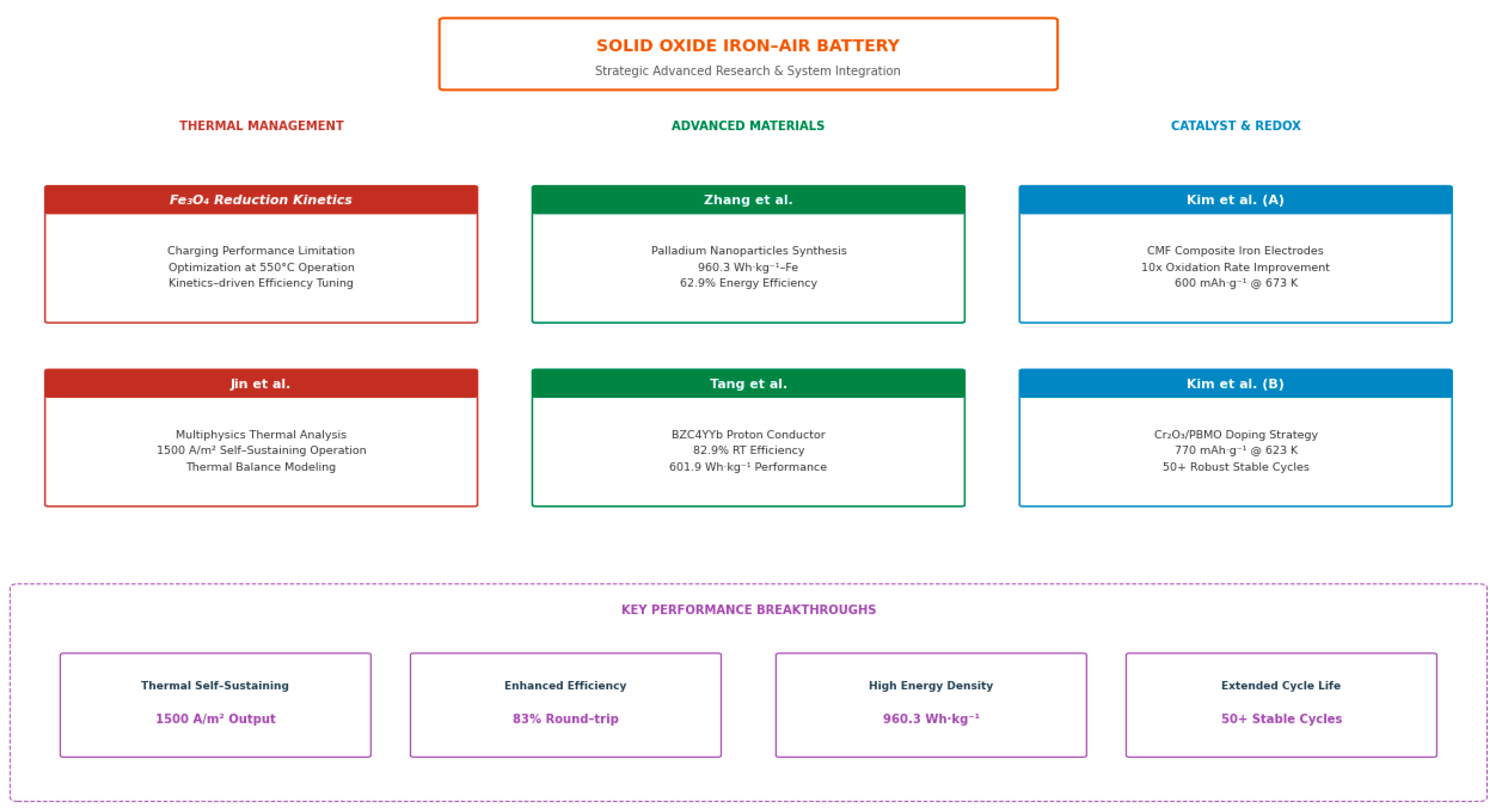
| SOMARB | YSZ | 800 °C | 91.5% | 20 cycles | 50 | 348 |
| ScSZ | 550 °C | 62.9% | 12.5 h | 10 | 625 | |
| LSGM | 500 °C | 90% | 30 cycles | 5 | —— | |
| LSGM | 450 °C | 80% | 50 cycles | 0.04 | 500 | |
| ScSz | 550 °C | 45% | 2.5 h | 10 | 601.9 | |
| LSGM | 400 °C | 82.9% | —— | —— | 600 | |
| ASSIAB | LSGM | 800 °C | —— | —— | 0.4 A·g−1 | 220 |
| LSGM | 650 °C | 54% | 100 cycles | 1.4 A·g−1 | 458 | |
| RFB | PEMFC | 600 °C | —— | —— | —— | 209.4 |
| Parameter | Value (Conservative) | Value (Optimistic) |
|---|---|---|
| Electricity Price () | $0.06/kWh | $0.02/kWh |
| System Efficiency () | 50% | 65% |
| Levelized Capital Cost | $0.02/kW | $0.01/kW |
| Total |
| Feature | Combustion Pathway | Liquid Electrochemical Pathway | Solid Electrochemical Pathway |
|---|---|---|---|
| Core Technology | MW-scale Fluidized-bed/Cyclone Combustors | Alkaline/Neutral Fe-Air & Fe-Redox Flow Batteries | 800 °C-class LSGM Oxygen-Ion Conductor Batteries |
| Energy Output | High-grade Thermal Energy (>1500∘C) Steam/Electricity | Direct Electrical Power (Low-cost discharge) | High-efficiency Direct Electrical Power |
| Performance Metrics | ≥94%Burnout efficiency; Low NOx and nPM | Coulombic efficiency; 150–10,000 cycles | ; Round-trip efficiency (RTE) |
| Byproduct Management | Dry Iron Oxide () particles via cyclone capture | Iron Oxide sludge; multi-synergy for pollution control (IAFCs) | Solid-state transition; Risk of interfacial delamination |
| Primary Use Cases | Heavy Industry Heat, Retrofitted Power Plants, Maritime Shipping | Grid-scale Long-duration Storage (LDES), Distributed Power | High-efficiency Stationary Storage, Specialized Power Units |
| Critical Bottlenecks | Particle sintering, agglomeration, and defluidization during redox cycles | Passivation films () and Hydrogen Evolution Reaction (HER) | Volume expansion and low-temperature ionic conductivity limits |
Disclaimer/Publisher’s Note: The statements, opinions and data contained in all publications are solely those of the individual author(s) and contributor(s) and not of MDPI and/or the editor(s). MDPI and/or the editor(s) disclaim responsibility for any injury to people or property resulting from any ideas, methods, instructions or products referred to in the content. |
© 2026 by the authors. Licensee MDPI, Basel, Switzerland. This article is an open access article distributed under the terms and conditions of the Creative Commons Attribution (CC BY) license.
Share and Cite
Xu, Z.; Zhou, T.; Hu, X.; Yang, M.; Wang, T.; Zhang, M.; Yang, H. Overview of Iron Energy Utilization: Update Status and Prospective Development. Energies 2026, 19, 1172. https://doi.org/10.3390/en19051172
Xu Z, Zhou T, Hu X, Yang M, Wang T, Zhang M, Yang H. Overview of Iron Energy Utilization: Update Status and Prospective Development. Energies. 2026; 19(5):1172. https://doi.org/10.3390/en19051172
Chicago/Turabian StyleXu, Zhuangzhuang, Tuo Zhou, Xiannan Hu, Mengqiang Yang, Tao Wang, Man Zhang, and Hairui Yang. 2026. "Overview of Iron Energy Utilization: Update Status and Prospective Development" Energies 19, no. 5: 1172. https://doi.org/10.3390/en19051172
APA StyleXu, Z., Zhou, T., Hu, X., Yang, M., Wang, T., Zhang, M., & Yang, H. (2026). Overview of Iron Energy Utilization: Update Status and Prospective Development. Energies, 19(5), 1172. https://doi.org/10.3390/en19051172