


Abstract
The purpose of this paper is to analyze recent publications in scientific journals on the circular economy and energy through a systematic review using the PRISMA method and to propose a framework. In recent years, the circular economy has been widely recognized as a viable solution to address environmental and economic challenges. The transition to renewable sources, such as solar, wind, and biomass, is essential for a clean and balanced energy market. The methodology adopted was a systematic review of the scientific literature using the PRISMA method, which aims to categorize published research, evaluating it in terms of its objectives, methodologies, results, and conclusions. To this end, full articles published in scientific journals between 2021 and 2025 on the subject were identified. The analysis of the selected studies reveals an intrinsic relationship between the circular economy and sustainable energy, particularly in the context of Sustainable Development Goals (SDGs) 7 and 12. The results highlight that circular economy practices, such as waste recovery, bioenergy generation, and gasification, not only demonstrate their ability to create sustainable value chains but also contribute to reducing environmental impacts, promoting energy efficiency, and present a proposed framework for analysis and proposition.
1. Introduction
The concept of sustainable development is widely discussed as an essential approach to balancing economic progress, environmental protection, and social well-being. According to the Brundtland Report, prepared by the World Commission on Environment and Development in 1987, it is defined as “development that meets the needs of the present without compromising the ability of future generations to meet their own needs” [1]. This definition highlights the importance of adopting integrated strategies that promote natural resource conservation, social inclusion, and responsible economic growth, ensuring that the benefits are sustainable in the long term. This concept continues to evolve and highlights the urgency of concrete actions to address environmental and social challenges. According to António Guterres [2], Secretary-General of the United Nations, “Climate change is here. It is frightening. And it is only the beginning.” This statement emphasizes the severity of the climate crisis and the need to adopt sustainable practices immediately to ensure a viable future for the next generations.
The Sustainable Development Goals (SDGs), their targets, and global indicators were launched in 2015 and, according to the UN [3], less than 20% of their targets have been achieved in various countries around the world. The main obstacles encountered were the effects of the COVID-19 pandemic and various wars in countries around the world, in addition to climate change. The results were millions of people in extreme poverty, more people going hungry worldwide, and more civilian deaths in armed conflicts, in addition to an increase in global temperatures.
The global challenges [3] are international cooperation to eradicate poverty, end armed conflicts, and mitigate climate change. An important initiative would be to provide funding to developing countries to achieve the goals and objectives of sustainable development and world peace.
Life in society is directly influenced by technological advances, which reshape habits, transform social interactions, and generate new perspectives on innovation. Industries that adopt renewable energy (RE) can benefit from reduced energy costs, green marketing strategies, environmental preservation, and efficiency in the production processes by reusing waste and thus avoiding losses [4]. Economic activities often affect the environment, as development models focused solely on growth frequently fail to adequately account for the finite capacity of natural resources [5].
The circular economy (CE) has been widely recognized in recent years as a viable solution to address environmental and economic challenges. It offers an approach that requires a reconfiguration of production and consumption practices, promoting reuse, recycling, and the extension of product life cycles to reduce environmental impacts. In this sense, the CE is understood as a production model that aims to minimize waste and resource extraction, while maximizing the value retained in materials and products [6,7]. The CE can be defined as a model that reduces the need for extracting new raw materials by keeping them within closed consumption cycles, thus avoiding the traditional linear flow of extraction, use, and disposal [6,7].
The relevance of this research lies in the effort to understand how CE and RE can contribute to sustainability, evaluating their positive effects on sustainable development. Accordingly, this study is guided by the following research question: What are the results and contributions of recent studies on CEs and energy? Is there a framework for a circular economy and renewable energy?
The aim of this paper is to analyze recent publications in scientific journals on CE and energy through a systematic review using the PRISMA (Preferred Reporting Items for Systematic Reviews and Meta-Analyses) method and to propose a framework. The PRISMA method provides a rigorous and systematic protocol for the selection and review of the literature [8].
This article is structured as follows: (1) the Introduction Section; (2) circular economy and energy; (3) methodology based on the application of the PRISMA checklist; (4) results and discussion of the findings; and (5) final considerations and directions for future research.
2. Theoretical Framework
2.1. Circular Economy
The linear production model, in place since the Industrial Revolution, exploits resources without replacement, leading to scarcity and exceeding the planet’s capacity to absorb waste. Rising production and population growth have intensified solid waste generation, posing threats to both the environment and human health. This challenge has spurred policies on recycling, composting, and plastic reduction, as well as educational initiatives promoting responsible consumption. In this context, sustainable practices and CE strategies, increasingly defined as systematic approaches that replace the traditional linear model, are essential to ensure a more balanced future for present and future generations [6].
In response to environmental collapse and in search of alternatives to the traditional linear model of production and consumption, the concept of the CE emerged, first introduced as a solution for the more efficient and sustainable use of resources [9]. The CE seeks to replace the linear system of extraction, use, and disposal with a regenerative and sustainable model [10]. This understanding continues to be reinforced in the recent literature, which highlights the need to integrate circularity principles into production and consumption systems [6,11]. The CE emphasizes the 6R practices, namely Reuse in a coordinate system where all specified sources or flows can be methodically Recycled, Redesigned, Remanufactured, Reduced, and Recovered [12]. Instead of discarding products at the end of their life cycle, the CE encourages material recovery and recycling, promoting a continuous cycle of use [13].
In recent years, the CE has grown rapidly, particularly driven by European Union initiatives. Since 2015, the European Commission has been implementing policies to finance reuse and recycling projects, support companies with circular practices, and promote public–private partnerships [14], with the goals of fostering innovation, reducing environmental impacts, and promoting sustainable growth.
The intersection between the CE and sustainable development is crucial for building a more equitable and resilient future. By prioritizing social inclusion, it minimizes waste and ensures that the benefits of economic growth are more fairly distributed, benefiting vulnerable communities. New business models with circular practices increase efficiency, reduce costs, and promote green jobs and training [15]. This holistic approach addresses pressing challenges such as poverty, inequality, and climate change, ensuring development within planetary boundaries [1].
The transition to a CE requires sustainability-driven innovation, including redesigning products for greater durability, introducing efficient processes, and adopting circular business models and paths that strengthen organizational resilience and consolidate an integrated and environmentally sustainable economy [16].
The pillars proposed guide the CE by integrating ecological, social, and economic dimensions into sustainable development [15]. They promote practices that balance resource use, preserve the environment, and drive innovative solutions that combine profitability and responsibility. Thus, the CE aligns economic growth with planetary preservation, regenerating ecosystems and fostering a more conscious and supportive society.
2.2. Renewable Energy
The energy matrix based on fossil fuels faces serious challenges to sustainability and planetary health, as it significantly increases greenhouse gas emissions and drives climate change, a scenario that reinforces the urgent need for energy transition [17,18,19].
Authors highlight that energy produced from natural sources—such as wind, water, solar, biomass, and tides—has gained increasing importance and visibility over the last decade, a trend that is expected to intensify in the coming years [20,21]. As RE sources are cleaner and more environmentally friendly, with less negative impacts on ecosystems, they have been progressively adopted by various countries and policymakers worldwide.
International organizations such as the International Energy Agency, the United Nations, the World Bank, and the International Renewable Energy Agency have expressed concerns about the harmful effects of modern economies on the environment. Consequently, these institutions have incorporated RE and the CE into their agendas, also proposing the definition of indicators to assess the extent to which countries are adopting RE as a driver of economic development [22].
Solar energy, for example, has become a consolidated business strategy not only because of its environmental relevance but also for enhancing competitiveness and efficiency [23]. Investments in solar technologies contribute to cost reduction, diversification of the energy matrix, decentralization of the electricity system, job creation, and socioeconomic development in disadvantaged regions, while simultaneously reinforcing organizational resilience and corporate sustainability [6,11,24,25].
Green energy, also known as clean energy, is generated from natural and renewable sources, such as solar, wind, hydropower, geothermal, and biomass. These sources are inexhaustible and constantly renewed, playing a crucial role in the energy transition toward more sustainable and resilient systems [26]. Recent studies indicate that these sources could account for up to two-thirds of the global primary energy supply by 2050 [27], and by 2024 alone, they already represented around one-third of global electricity generation [28]. Furthermore, wind and solar energy together exceeded 13% of the global electricity matrix in 2023, highlighting their growing robustness in the energy system [29].
Despite this significant expansion, it is important to note that not all renewable sources can be classified as green. While all green energy is renewable, the reverse is not always true, since the label “green” implies consistent environmental benefits and the minimization of socioecological impacts [30]. Large-scale hydropower plants (above 10 MW), for instance, despite being renewable and low in greenhouse gas emissions, cause significant changes to river ecosystems, biodiversity, and local communities and therefore cannot be classified as green energy [31,32,33]. Only sources that combine renewability with effective environmental sustainability, such as solar, wind, geothermal, small hydropower plants, and certain forms of biomass, should be recognized as green energy [33]. Similarly, it should be emphasized that the concept of green energy presupposes not only renewability but also the minimization of negative externalities, reinforcing the need to distinguish between what is renewable and what is truly sustainable [34].
For institutional investors and portfolio managers, energy has become an attractive investment, and assets linked to this sector have been incorporated into investment portfolios [35]. The emergence and expansion of portfolios with green energy assets has led to significant development in financial markets, as this type of energy is considered a sustainable alternative to polluting sources. The positive media portrayal of the energy transition toward a less-polluting world, along with the incentives that clean energy has received from governments and supranational institutions, also contribute to its performance in financial markets by attracting environmentally conscious and committed investors [36].
The circular economy offers several important benefits for the environment and global industry, reducing ecological impacts, promoting innovation, and increasing industrial efficiency. However, its true potential is only realized when combined with robust public policies, profound industrial transformation, and a paradigm shift towards truly regenerative production systems. Therefore, the circular economy is important, but its implementation demands analytical rigor, systemic planning, constant innovation, and long-term investments.
3. Materials and Methods
The methodology adopted in this research is a systematic review (SR), following the PRISMA 2020 protocol [8] (Supplementary Materials). This protocol ensures that the systematic review is replicable, comprehensive, and accurate, providing a solid foundation for decision-making [8].
The present study aims to analyze recent publications in scientific journals on the CE and energy through a systematic review using the PRISMA method and to propose a framework. The existing literature on the CE and energy was reviewed to identify key practices, challenges, and opportunities. The study seeks to answer the following research question: What are the results and contributions of recent studies on the CE and energy?
Research on the CE and energy was analyzed with a focus on objectives, methodologies, results, and conclusions. For this purpose, full articles published in scientific journals between 2021 and 2025 addressing this topic were identified.
As a search strategy, a systematic search was conducted in academic databases, including Scopus and Web of Science, in March 2025, covering both international journals. Searches were performed in the title, abstract, or keywords of publications from 2021 to 2025, using the following keywords: “Circular Economy” AND “Sustainable Development Goal” AND “Energy*” “Sustainable Development Goal”. The screening stage in PRISMA was used to determine whether they generally meet the inclusion criteria.
The screening process was conducted by five researchers, from this stage to the final selection. Each researcher examined the records independently and in Excel, without the aid of automation tools. In cases where there were differences of judgment among the researchers, these were discussed by consensus.
This study used the CASP (Critical Appraisal Skills Programme) method, as it is suitable for systematic review studies in the areas of education, public health, and social sciences. The following criteria were considered: “Is the study valid?”; “Are the results and conclusions important?”; “systematic reviews”; “empirical research”; and “publications in Scopus and WOS journals”. The authors declare that this paper is in full compliance with the PRISMA guidelines.
- -
- Inclusion criteria:Peer-reviewed articles addressing the CE, energy, and sustainability;Case studies demonstrating the implementation of circular practices related to energy.
- -
- Exclusion criteria:Articles without empirical data or relevant analyses;Studies not specifically focused on the CE and energy;Research from around the world, regardless of the authors’ origin.
The study selection process was carried out in two stages. In the first stage, the titles and abstracts of the identified articles were screened for relevance. In the second stage, the full texts of the selected articles were read to confirm compliance with the inclusion and exclusion criteria.
- -
- Data Extraction
Data were extracted from each selected article and compiled into an Excel table. The information collected included the following: authors, year of publication, study title, methodology, main results, and conclusions.
- -
- Data Analysis
The extracted data were analyzed qualitatively, focusing on the identification of patterns and recurring themes. The results were organized in tables to facilitate the visualization of key practices and barriers. The analysis was based on thematic analysis and on the challenges associated with the CE and energy. Finally, a critical discussion was conducted to contextualize the findings within the broader literature on the CE and energy.
- -
- Ethical Considerations
This study did not involve research with humans or animals; therefore, formal ethical approval was not required. However, all articles used were properly cited, respecting the intellectual property rights of the original authors.
The PRISMA method presents a checklist with twenty-seven steps, which are shown in Supplementary Materials.
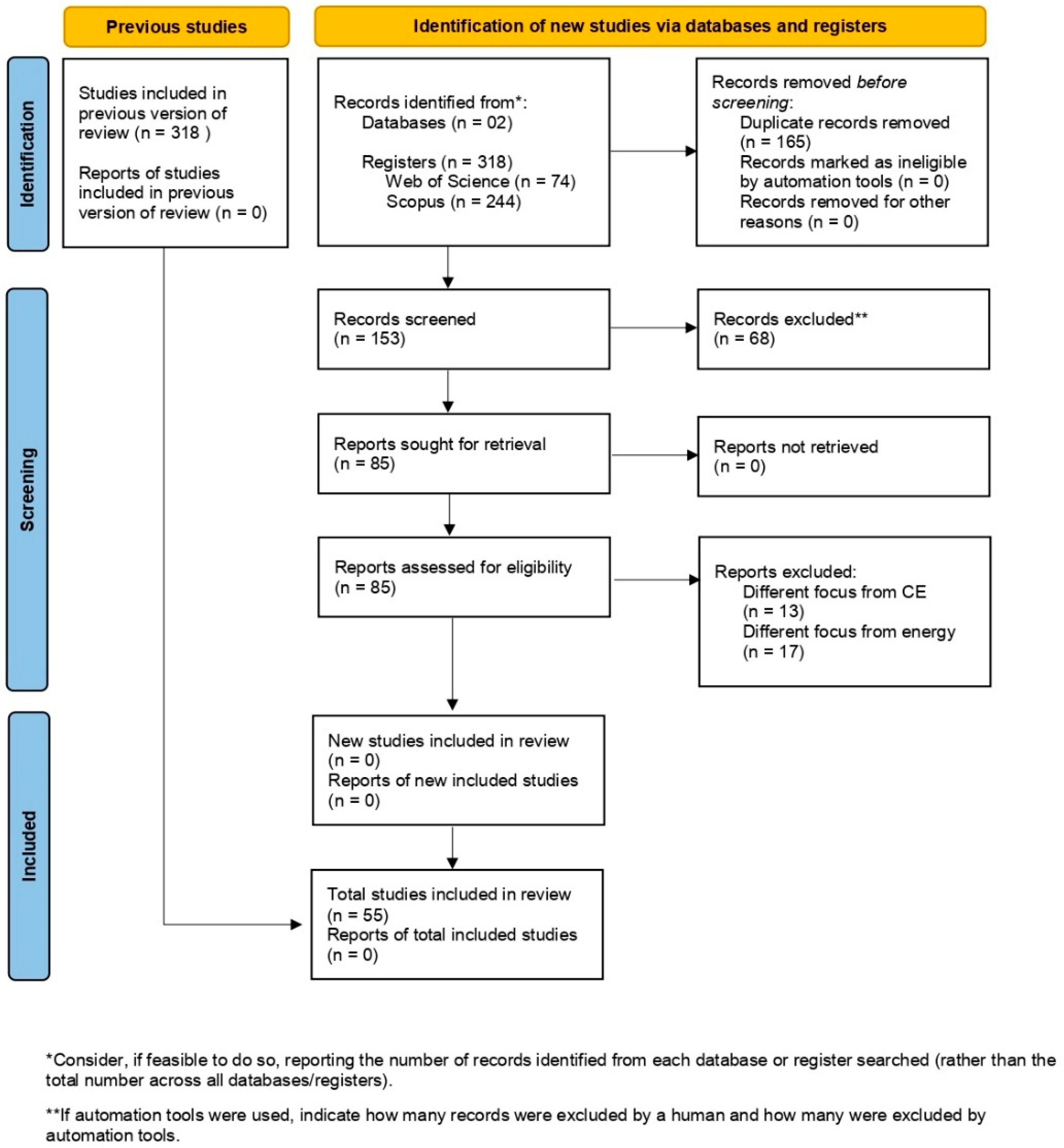
Based on the PRISMA checklist, the screened articles were included after reviewing their titles, abstracts, and keywords, as illustrated in Figure 1, the PRISMA research diagram:
Figure 1.
PRISMA research diagram. Source: the authors and [8].
A total of 318 documents were initially identified. Of these, 283 duplicate articles and 165 articles on unrelated topics were excluded. Subsequently, screening items identified 153 full papers. A total of 55 scientific publications were selected as meeting the eligibility criteria, studies deemed most relevant for the research objectives. Below are the results and discussions with authors, systematizing the research findings (Table 1).
Table 1.
Study screening process.
Figure 1 details the study screening process for a review that integrates previously published research with new evidence. Robust databases such as Scopus (n = 244) and Web of Science (n = 74) were used. A total of 318 previous studies were included, representing an important contribution to this review and update study.
The efficiency of the methodological funnel is observed in the significant reduction in the volume of raw data for the final corpus, as duplicates were eliminated: from an initial total of 318 records, 165 were removed at the beginning (mostly duplicates), leaving 153 records for title and abstract screening.
Exclusion Criteria: After the initial analysis, 68 records were excluded. In the full-text reading stage (n = 85), there was a significant loss due to lack of thematic adherence of the research study: 13 studies focused outside of “CE” and 17 focused outside of “Energy”. Final Sample: The study culminated in the inclusion of 55 studies for qualitative/quantitative synthesis.
The application of the PRISMA protocol presents important methodological rigor. Transparency in the justification of exclusions (specifically the reasons “Different focus from CE” and “energy”) strengthens the internal validity of the research, allowing readers and researchers to understand exactly why certain boundaries of knowledge were delimited. The authors assessed their confidence in the body of evidence.
4. Results and Discussions
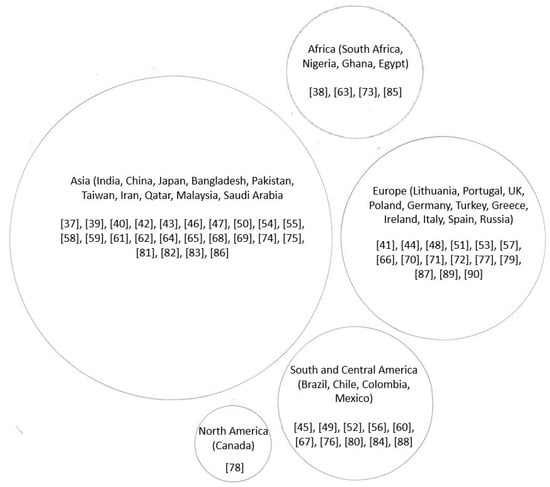
Figure 2, which shows the authors and locations of the studies conducted, was constructed following the application of the PRISMA checklist and an analysis of the selected articles.
Figure 2.
Authors and locations of the studies conducted.
Figure 2 shows that there were a total of 54 studies from four continents. Asia stands out with 24 studies and Europe with 15 studies, followed by North, Central and South America with 11 and Africa with 4 studies. The country with the most authors was India with 11 studies, followed by China with 5 and Brazil with 4, among other countries. A total of 31 different countries were counted with research related to the research topic. The analysis reveals several thematic clusters across the reviewed studies:
Green Energy: Five studies directly addressed green energy [37], highlighting advancements in green technologies, their connections to the green economy [38,39], discussions of green products [40], and circular economy and digital technologies that positively influence responsible consumption and green energy [39].
Circular Economy: Eight studies examined the CE, focusing on its role [37,41], integration practices [37,42], implementation of the circular bioeconomy [43], motivating factors for circular behavior, barriers to adoption, and importance and promotion through industrial symbiosis [44,45]. Some studies reported progress toward a CE [38], resource and waste reuse across industries for efficiency [40,46], and links between Industry 4.0 and a CE [47].
Energy and Sustainability: Ten studies explored the intersection between energy and sustainability. They analyzed emerging trends and challenges [48], energy distribution and commercialization [49], conceptual frameworks for enhancing sustainability and linking climate impacts with required investments [37], positive effects of the ReSOLVE framework (Regenerate, Share, Optimize, Loop, Virtualize, and Exchange) on sustainable practices [47,50], co-benefits of regenerative and sustainable strategies [51], and methane recovery that can generate energy and reduce emissions by 88% [52]. Solar energy with storage guarantees efficiency and energy independence [53], recovery of high-purity materials for reuse in solar energy [54], and recycling of photovoltaic solar panels [55], and solar dryers prevent food loss and use renewable energy for agricultural drying [56].
Industrial Symbiosis: Three studies suggested the implementation of industrial symbiosis practices [40] as a viable model, creating impactful symbiotic interconnections both regionally and internationally, strengthening collaborative networks [44] and forestry clusters in southern Brazil [45].
Innovative Solutions: Studies presented innovative approaches and analyses, including the following: the use of the nexus framework (FWE)2 to address integrated management of food, waste, water, energy, and ecosystems with an evaluation of goals and benefits [57]; plastic waste gasification with positive environmental impacts and economic feasibility [58]; post-biohydrogen fermentation broth treatment with industrial-scale focus and zero-liquid discharge advancements [42]; challenges in pathogen inactivation in animal manure via anaerobic digestion [59]; environmental impacts in craft beer production with mitigation strategies, such as electric mobility and local consumption [60]; GHG emission reduction with economic impact analysis and bioenergy facility costs [61]; proper e-waste management with life-cycle assessments [40]; integration of RE in mining with the identification of challenges, high initial costs, and lack of technical knowledge [62]; biotechnological valorization of corncobs as raw material for new bioproducts and nanoproducts [63]; and challenges in adopting electric vehicles (EVs), such as battery degradation, charging infrastructure, and recycling [64]. BESS can reduce oil prices, support circular economies, and generate economic value [65], and wastewater reuse improves water and energy efficiency [66], innovations in green and blue urban infrastructure for sustainable and efficient cities [67], hazardous waste treatment for energy conversion [68], and eco-innovations and sustainability in solid waste management [69].
Biomass: Fourteen studies addressed biomass: one analyzed biomass residues as a sustainable and carbon-neutral source for industrial bioenergy processes [70], and the other compared the “As-Is” model (biomass waste treatment) with the “To-Be” model (biomass residues for energy) [61]. Research focuses on the problem of food waste and food waste recycling [71], systematic reviews on the use of aquatic plants in biorefinery schemes [72], suggestions of using sargassum for energy, reviews of bioethanol production [73], advancements of the biodiesel production system from mixed vegetable oil waste [74], catalytic aspects of used cooking oils for biodiesel production [58], biolubricants from waste cooking oil [75], industrial food sludge in sustainable resources [76], recovery of textile waste [77], and biorefineries from waste that process organic matter for energy generation [69]. Biorefineries indicate the use of organic matter to generate bioenergy [78,79,80], new insights into the adsorption of HFO-1234ze(E) on optimized sugarcane bagasse carbons for thermal applications [81], and transformations of food waste [71] into hydrochar through hydrothermal carbonization (HTC) [82].
Carbon Emissions and Policy: Two studies evaluated the impact of the analyzed factors on carbon emissions, highlighting green technological innovation for emission reduction while promoting energy efficiency and sustainability [39], as well as strategies for assessing and reducing carbon emissions in production chains [40]. Two studies outlined policy guidelines and the need for R&D collaboration to achieve SDG 12 targets [40] and analyzed the positive environmental impact and economic feasibility of policy recommendations for plastic waste gasification [58]. Four addressed decarbonization as a strategy within energy policies [83], mining decarbonization [84], RDF production and industrial decarbonization [85] and assessed the impact of natural resource rents, R&D spending, green finance, and energy efficiency on carbon emissions in the BRICS economies [86].
Interlinked Sectors and Stakeholders: The three sectors were analyzed in one study as interlinked strategies to optimize resource use and reduce waste [38]. One study examined stakeholders with inclusive approaches, integrating multiple perspectives and proposing new metrics to evaluate environmental, energy, and health impacts across production sectors, addressing dimensions such as circularity, climate change, biodiversity, and health [51]. Another study analyzed adverse conditions, including the impact of the war in Ukraine on global food and biofuel markets [87]. One study presented emerging interdisciplinary research trends in climate change and the CE, highlighting knowledge gaps (social dimension and climate adaptation) and proposing promising topics for future research, such as the bioeconomy, CE practices, and nature-based solutions [88]. And one study suggested business models that can integrate the CE and green energy for inclusive urban development [89].
Studies Related to SDGs: A significant number of studies directly linked their findings to SDG 7 and SDG 12. Specifically, studies that address SDG 7 and address SDG 12 are summarized in Table 2 below:
Table 2.
Studies related to SDGs.
Appendix A presents the authors of the selected studies, along with their main findings, conclusions, contributions, year of publication, and publishing journal. The analysis reveals significant thematic diversity, underscoring the multidisciplinary and systemic nature of approaches focused on sustainability, the bioeconomy, and energy transition. The identified thematic groups—green energy, circular economy, energy and sustainability, biomass, industrial symbiosis, innovative solutions, carbon emissions and policies, interconnected sectors, and the Sustainable Development Goals (SDGs)—reflect not only technical and scientific advances but also the maturation of discussions on sustainable practices across various contexts and scales.
The findings address a notable gap in the literature by exploring the intersection between Industry 4.0 and sustainable operations, aligned with the ReSOLVE framework (Regenerate, Share, Optimize, Loop, Virtualize, and Exchange), which guides circular economy (CE) practices. The study also outlines CE initiatives that directly contribute to specific SDGs, particularly SDG 7—affordable and clean energy—and SDG 12—responsible consumption and production [47]. Based on these connections, a conceptual framework is proposed to support organizations in realigning their management practices toward achieving sustainability goals.
The prominence of green energy and the circular economy in the reviewed studies indicates that these areas are foundational to building sustainable models. Evidence suggests that green technologies, sustainable products, and digital tools are driving responsible consumption and energy efficiency [37,38,39,40,90]. The circular economy is examined from multiple perspectives—from integration practices and industrial symbiosis to adoption barriers and links with Industry 4.0—highlighting both its transformative potential and the challenges that still hinder its effective implementation [37,38,40,41,42,43,44,45,46,47].
New business models are shown to be essential for advancing the circular economy, as they address current ecological concerns and enhance resilience through the development of cross-sectoral value chains [37]. The analysis focuses particularly on the relationship between CE and green energy, revealing a rapid convergence between the concepts of renewable energy and sustainability. This convergence is fostering new business opportunities, including the anticipated full replacement of fossil fuels by renewable sources in the near future, as well as the integration of green energy into CE principles.
The intersection of energy and sustainability is emerging as a strategic axis, supported by conceptual frameworks such as ReSOLVE and by emerging technologies like methane recovery and solar energy storage systems. These solutions contribute directly to reducing greenhouse gas emissions and promoting energy independence [37,47,50,51,52,53,54,55,56]. Collectively, these findings reinforce the importance of regenerative and integrated strategies as promising pathways to address climate change and accelerate the transition to sustainable development models.
The innovative solutions category comprises fifteen studies that propose disruptive approaches, including the use of the nexus framework (FWE)2, plastic waste gasification, corncob valorization, and the adoption of electric vehicles. These proposals reflect a convergence of technological innovation, economic viability, and positive environmental impact [40,42,44,45,47,48,49,51,57,58,59,60,61,62,63,64,65,66,67,68,69]. Notably, the circular economy gained momentum between 2018 and 2020 as a practical alternative to linear economic models, particularly in the Global North. However, research in the Global South—especially in Africa—remains nascent, with limited tangible progress. The literature emphasizes the need to overcome the thematic bias toward energy by strengthening connections with the water and food sectors. Integrating the CE into a polycentric framework, such as the water–energy–food nexus, presents a strategic opportunity to broaden adoption among policymakers and accelerate the transition to sustainable economies [38].
Although the CE is inherently an integrated approach, the analysis revealed a predominant focus on energy, underscoring the importance of reinforcing links with water and food systems. This expansion is crucial to encourage broader adoption of the CE by public policymakers. Nevertheless, the literature review facilitated the development of a conceptual framework designed to guide strategic policy formulation toward more sustainable economic models.
Embedding the CE within a polycentric approach—such as the water–energy–food nexus—offers an effective strategy to address this thematic imbalance. Such integration represents a key opportunity to accelerate the sustainability transition by fostering synergies across critical sectors and amplifying the global impact of circular practices.
Based on 789 peer-reviewed publications retrieved from the Scopus database, research on climate change and the circular economy (CE) has shown to be steadily expanding and distinctly interdisciplinary [88]. Europe emerges as a leading contributor to scientific output in this field, underscoring its central role in global environmental discourse. An analysis of keyword evolution reveals that the CE has been shaped by a broader array of research streams compared to climate change.
Among circular approaches, waste management is most frequently linked to climate change, while mitigation stands out as the climate action most influenced by CE practices. Food is the most commonly cited greenhouse gas (GHG)-emitting material in the studies analyzed. Regarding future research directions, five key areas emerge: carbon recovery technologies, development of sustainable materials, strengthening regional supply chains, circular agriculture models, and nature-based solutions. Of these, the third—climate and energy—represents a strategic domain for deepening the integration between energy transition and circular practices.
Discussions on carbon emissions and public policy underscore the need for coordination among technological innovation, energy policy, and collaborative research and development. The studies highlight decarbonization strategies, evaluation of production chains, and the influence of green finance in emerging economies, reinforcing the CE’s role as a catalyst for structural transformation toward sustainability [39,40,58,83,84,85,86].
In this context, findings from the energy sector play a crucial role in achieving Sustainable Development Goals (SDGs) such as clean and affordable energy (SDG 7), with emphasis on governance, policy frameworks, and technological innovation [48]. Furthermore, linkage analyses between the SDGs demonstrate that SDG 7 (clean and affordable energy) and SDG 12 (responsible consumption and production) are closely interconnected, reinforcing the importance of integrated approaches [40].
Case studies indicate that the nature of forestry activities enhances the formation of industrial clusters, particularly when Thermal Power Plants (TPPs) utilize forest residues for energy production, thereby intensifying industrial symbiosis (IS) practices [44]. In the study region, three clusters were identified involving trade in logs (78.6% and 100%), processed wood (75% and 66.7%), and wood waste (45.5% and 83.3%). These practices demonstrate strong alignment with circular economy (CE) principles and contribute directly to four SDGs, including SDG 7 and SDG 12.
Biohydrogen emerges as a promising concept for transforming waste into energy, particularly in connection with SDG 7 [42]. Among the available methods, biomass fermentation stands out as an effective approach, utilizing industrial and municipal waste streams as feedstock for biohydrogen production and advancing CE principles.
Amid the war in Ukraine, the transition from first-generation to more advanced biofuels presents a strategic opportunity to foster clean and affordable energy (SDG 7) and circular economy practices in the post-war period [87].
Biomass also stands out as a strategic resource, with fourteen studies addressing its application in bioenergy, biodiesel, bioproducts, and hydrochar. The diversity of raw materials—such as cooking oil, corncobs, food sludge, and textile waste—reinforces the potential of biomass in building a circular bioeconomy [50,58,61,70,71,72,73,74,75,76,77,78,79,80,81,82]. One study highlights how biomass waste can be used to produce bioenergy and biofuels, promoting responsible consumption and production (SDG 12) and clean and affordable energy (SDG 7) [70]. Additionally, the valorization of waste is identified as a key element in the transition to a CE. Investment in bioenergy systems is presented as an effective strategy for reducing greenhouse gas (GHG) emissions, particularly through carbon pricing, aligning directly with the goals of SDG 7 [61].
A roadmap integrating technology, policy, and infrastructure adaptation is essential for an inclusive transition to electric mobility, aligned with clean energy (SDG 7) and responsible consumption (SDG 12) [64].
Treating food waste (FW) as a valuable resource is also aligned with SDG 12, promoting CE principles through nutrient recovery and the generation of energy resources (ER). Moreover, energy efficiency and the use of ER sources in waste management support SDG 7 [57]. Policy actions are recommended to increase investment in ER technologies to advance SDG 7 and foster CE practices aligned with SDG 12 [39].
The energy sector warrants special attention and has prompted the proposal of new metrics focused on four key dimensions: circularity, climate change, biodiversity, and health (including well-being) [51]. To better compare energy sources, adjustments to metrics such as Return on Energy Investment (REI) and energy intensity are recommended to account for negative health effects and environmental degradation linked to energy production. These refinements are consistent with CE principles and the targets of SDGs 7 and 12.
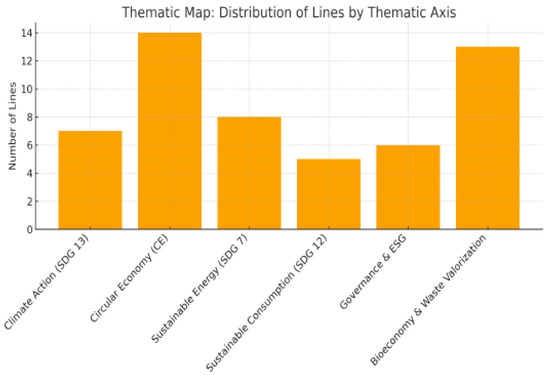
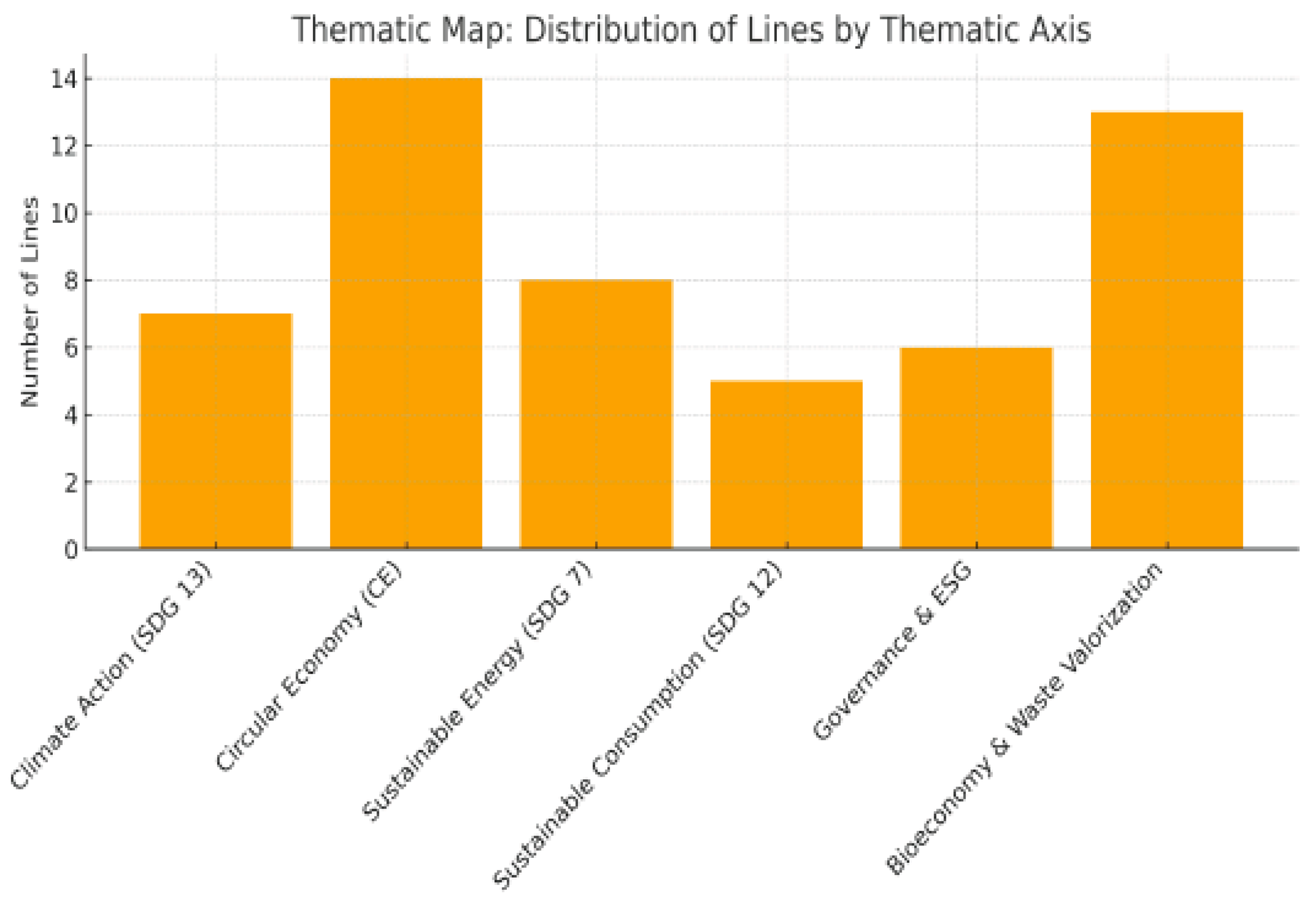
The selected papers were analyzed according to Thematic Axes, Thematic Classification, and Convergence or Divergence with the CE and Figure 3: a thematic map of the distribution of lines by thematic axis, as presented below:
Figure 3.
Thematic map: distribution of lines by thematic axis. Source: the authors.
- (1)
- Impacts of climate change, global warming, ozone layer depletion, and sea-level rise: Climate change; Convergence;
- (2)
- Impacts on CO2 emissions, green innovation, CE, and carbon neutrality: Climate + innovation; Convergence;
- (3)
- Climate change, CE, mitigation, waste management, and SDG 13: Climate + mitigation; Convergence;
- (4)
- Circular economy and sustainable energy are pillars for carbon neutrality in BRICS economies: Energy transition + climate; Convergence;
- (5)
- Carbon circular economy and clean energy are pillars for achieving net-zero emissions: Climate + CE; Convergence;
- (6)
- Impacts on carbon reduction, equity, and inclusive transition to global electric mobility: Climate + energy justice; Convergence;
- (7)
- Impacts on greenhouse gas emissions, urban sustainability, CE, and energy independence: Urban climate action; Convergence;
- (8)
- Transformative approaches, resource efficiency, CE, and SDG 12: CE + efficiency; Convergence;
- (9)
- CE as a driver of sustainable growth and clean energy: CE central; Convergence;
- (10)
- ReSOLVE framework leading to CE practices: Digital CE; Convergence;
- (11)
- Circular economy is essential for mitigating climate change: CE + climate; Convergence;
- (12)
- Integration of CE and ESG in decision-making: CE + governance; Convergence;
- (13)
- Forest clusters, industrial symbiosis, and CE practices: Industrial CE; Convergence;
- (14)
- Awareness exists, but environmental education must be strengthened: CE + behavior; Divergence;
- (15)
- Digital and circular strategies accelerate SDG 12 and support energy transition: Energy transition; Convergence;
- (16)
- Untapped solar and wind potential may hinder sustainable development: Renewable energy challenges; Divergence;
- (17)
- EU programs and RE strategies help advance clean energy: Energy policy; Convergence;
- (18)
- Energy sector, SDG 7, SDG 13, and technological innovations: Energy + innovation; Convergence;
- (19)
- Stationary storage is key for clean energy: Energy infrastructure; Convergence;
- (20)
- Renewable energy and circular economy are pillars of the European green transition: Energy transition; Convergence;
- (21)
- Electric mobility, local consumption, and emission reduction: Sustainable transport; Convergence;
- (22)
- Carbon neutrality with sustainable energy in BRICS: Energy + climate; Convergence;
- (23)
- SDG 12, SDG 13, CE, and sustainable production and consumption: Sustainable consumption; Convergence;
- (24)
- E-waste, green products, and sustainable management: Green production; Convergence;
- (25)
- Social responsibility: Ethical consumption; Convergence;
- (26)
- Food security, CE, and energy efficiency: Food systems; Convergence;
- (27)
- Post-war food market needs advanced biofuels: Agroenergy; Divergence;
- (28)
- Integration of CE and ESG in decision-making: Sustainable governance; Convergence;
- (29)
- Each country addresses energy sustainability differently (energy law): Energy policies; Divergence;
- (30)
- Transparency and standardization of ESG metrics: Governance + metrics; Convergence;
- (31)
- Adjusting EROI metrics to include health/environmental impacts: Energy metrics; Divergence;
- (32)
- Cooperation among industries: Collaborative governance; Convergence;
- (33)
- EU programs supporting clean energy: Supranational policy; Convergence;
- (34)
- Biohydrogen and CE: Bioenergy; Convergence;
- (35)
- BES systems with CE: Bioenergy + CE; Convergence;
- (36)
- Wastewater valorization → CE + sustainable energy: Water–energy nexus; Convergence;
- (37)
- Food waste valorization: Agro-residues; Convergence;
- (38)
- Organic waste valorization: CE + bioenergy; Convergence;
- (39)
- Photovoltaic waste management: Tech waste; Convergence;
- (40)
- Agricultural waste reduction + microbial biotechnology: Agroenergy; Convergence;
- (41)
- Waste-based biodiesel is viable: Biofuels; Convergence;
- (42)
- Sargassum → CE + sustainable energy: Marine biomass; Convergence;
- (43)
- Bioeconomy for Mexico → CE + energy: Bioeconomy; Convergence;
- (44)
- Conversion of organic waste into hydrochar: Advanced bioenergy; Convergence;
- (45)
- Food industry waste valorization: Industrial residues; Convergence;
- (46)
- Mining with CE + sustainable energy: Natural resources; Convergence.
Six Thematic Axes were identified, as shown in Figure 3: Climate Action (mitigation), Circular Economy, Sustainable Energy (Energy Transition), Sustainable Consumption (Sustainable Mobility), Governance and ESG, Bioeconomy, and Tech Waste.
The use of energy resources (ERs) in the mining industry also demonstrates potential to foster circular practices, reduce operational costs, and mitigate environmental pollution, contributing to both SDG 7 and SDG 12 [62].
A bibliometric analysis reveals that the research network comprises several isolated clusters, each representing groups of authors who collaborated on at least one article. The absence of inter-cluster connections indicates a lack of co-authorship between different research groups. The largest visible clusters contain eight authors [38,45], suggesting strong internal collaboration. Groups with five to six authors reflect productive interdisciplinary cores [44,88], while isolated nodes [70] suggest individual contributions or collaborations outside the sample scope. Smaller pairs indicate occasional partnerships [42].
Several advances have been identified to support the achievement of SDGs 7 and 12, particularly in expanding the adoption of renewable energy technologies such as hydrogen and waste-to-energy conversion [88]. The integration of bioenergy, biogas, and biorefineries aims to transform waste and CO2 into energy and industrial inputs. The CE is closely linked to energy transition, promoting resource efficiency and sustainable energy. For SDG 12, waste management is a key strategy associated with a CE and climate change mitigation, alongside resource efficiency models and industrial symbiosis. Multiple industrial sectors show potential to reduce billions of tons of CO2 by 2050.
However, several obstacles remain. These include low levels of social and community integration, limited consumer participation in many countries, and technological gaps in energy systems and closed-loop carbon reuse processes. Notably, only 10% of the reviewed publications report concrete results in large-scale emission reductions through the CE, indicating limited implementation [88]. Future research should focus on integrating the social dimension into the CE, enhancing climate adaptation strategies; strengthening alignment with the SDGs; and advancing green materials, supply chains, circular agriculture, and emerging energy technologies.
Denser clusters with more internal connections suggest stable partnerships, likely institutional or thematic. The lack of links between clusters points to low interdisciplinarity or possible thematic, regional, or institutional segmentation within the sample.
Ultimately, studies addressing interconnected sectors and the SDGs reinforce the importance of integrated and inclusive approaches. The direct linkage to SDG 7 (clean and affordable energy) and SDG 12 (responsible consumption and production) underscores the alignment of current research with global sustainability agendas, while also revealing knowledge gaps and opportunities for future investigation [38,51,87,88,89]. Identifying potential connectivity gaps and developing strategies to foster more integrated research networks remains a relevant priority.
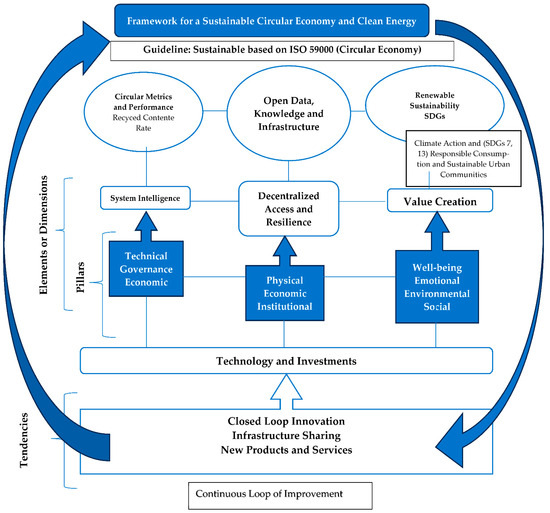
This systematic review using the PRISMA method provides qualitative insights into the circular economy and energy. One of the main motivations for conducting these analyses was to provide a useful framework to support decision-makers, policymakers, and investors in reflecting on best practices and actions in the circular economy and energy and on trends highlighted in the analysis categories discussed in this study. In this context, a framework (Figure 4) indicates how different dimensions interact.
Figure 4.
Framework of elements and trends on sustainable circular economy and energy. Source: research (2025).
This framework (Figure 4) presents an integrated model for a sustainable energy transition that goes beyond decarbonization. It establishes a systemic approach to merge the principles of the circular economy (CE)—focusing on maintaining value and minimizing the input of natural resources—with the deployment and management of renewable energy (RE). It aims to mitigate the challenges of waste and dependence on raw materials inherent in the rapid growth of RE infrastructure.
This model is guided by the need to adhere to sustainability and natural resource efficiency standards with Normative Guidance and Scope. It is based on the Guiding Standard: reference to ISO 59000 (circular economy) positions the framework within a technical–normative rigor, requiring that resource optimization and circularity be measurable goals and not just environmental ones.
The Analysis Categories: Define the scope of evaluation. The inclusion of Circular Metrics and Performance and Open Data, Knowledge, and Infrastructure reflects the need for transparency and material traceability in the context of Industry 4.0. The link with the Sustainable Development Goals for Renewable Energy ensures alignment with the global agenda (e.g., SDGs 7, 12, and 13).
The dimensions and pillars: the Systemic Architecture divides the strategy into action elements (Pillars) and high-level results (Dimensions). The pillars represent the areas of intervention and policy, being mutually dependent on the success of the system:
Technical, Governance, and Economic: This is the axis of Disruptive Innovation and Market Regulation. Life Cycle Engineering requires Design for Disassembly (DfD) and modularity.
Governance: This implements the principle of extended responsibility through Extended Producer Responsibility (EPR), internalizing end-of-life environmental costs in the product price.
Economic: This promotes the transition from linear to circular business models, such as Product-as-a-Service (PaaS), which monetize performance and longevity, not just the sale of assets.
Physical and Institutional: This is the axis of Support Infrastructure. It requires the development of Reverse Logistics and physical infrastructure for Reuse and Recycling.
The Institutional aspect deals with the standardization of components and Circular Procurement policies that create demand for secondary materials. Well-being, Environmental, and Social: This is the axis of Value and Equity. It measures the macroeconomic and social impacts.
Elements or Dimensions―Strategic Results; System Intelligence: This is the result of applying technologies (such as AI and machine learning) to optimize energy and material flows, linking the point of consumption (ER) to the point of return (EC).
Decentralized Access and Resilience: This is a more robust system, less vulnerable to supply shocks and enabled by modularity and the Second-Life component market. Value Creation and Quality: This maximizes the economic and functional value of assets across multiple usage cycles, as opposed to rapid value degradation.
Dynamics and Tendencies: This model is represented by a Continuous Improvement Cycle that underscores its dynamic nature. Trends are the strategic investment areas that feed back into the system, ensuring that advances in Enhanced Material Recovery (R&D) directly inform design decisions (Technical Pillar), closing the value loop.
This framework figure proposes an interconnected process between climate goals (CR) and resource goals (RGs), treating energy infrastructure as a “material bank” to be utilized, rather than a linear asset to be discarded. The final considerations of the study are presented below.
5. Conclusions
This systematic review, conducted using the PRISMA (Preferred Reporting Items for Systematic Reviews and Meta-Analyses) method, aimed to answer the following research question: What are the findings and contributions of recently published studies on the circular economy (CE) and renewable energy (RE)? Is there a framework for the circular economy and renewable energy? The studies analyzed reveal several important contributions to the understanding of the CE and RE, demonstrating their strong connection with the Sustainable Development Goals (SDGs), but they do not present a consistent framework for analysis and proposition.
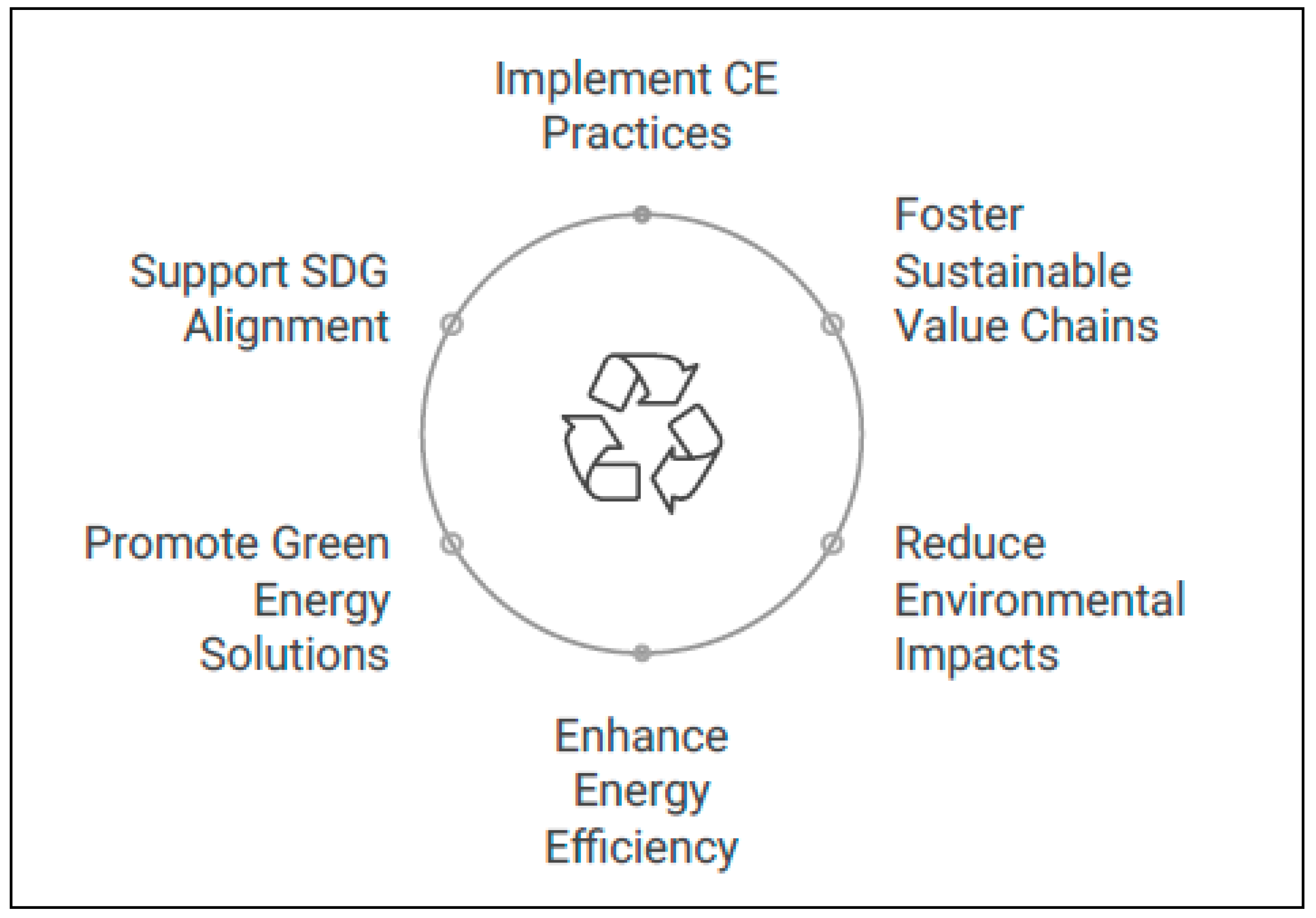
The results underscore an intrinsic relationship between the CE and sustainable energy, particularly in the context of SDG 7 (affordable and clean energy) and SDG 12 (responsible consumption and production). CE practices—such as waste valorization, bioenergy generation, and gasification—not only foster sustainable value chains but also reduce environmental impacts and enhance energy efficiency.
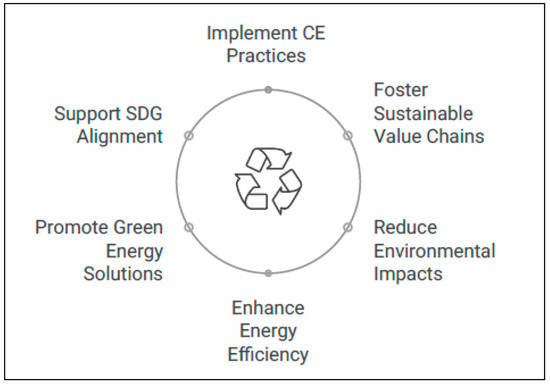
The intersection of green energy and the CE is emerging as a critical trend, supported by innovative solutions including industrial symbiosis, biomass utilization, and plastic waste gasification, which anticipate the gradual replacement of fossil fuels with renewable sources. Additionally, strategies such as electric mobility, biomass fermentation, adaptation of energy metrics, integration of renewable energy in mining, and biotechnological waste valorization reinforce the role of these practices in environmental sustainability and alignment with the SDGs, as shown in Figure 5.
Figure 5.
Circular economy and sustainable energy circle. Source: the authors.
The studies also emphasize the need to expand the adoption of these practices in the Global South by addressing structural and political barriers. They highlight the importance of integrating approaches such as the water–energy–food nexus to maximize benefits. This integration fosters intersectoral and interregional collaboration, amplifying the impact of the CE and clean energy initiatives.
Beyond thematic findings, the review identified structural gaps in scientific production, including low connectivity among research groups and limited interdisciplinarity. These gaps underscore the need to promote more integrated collaborative networks capable of accelerating innovation in the CE and RE. The analysis also revealed obstacles to effective implementation, such as low social participation, technological limitations, and limited large-scale results in emission reduction. Overcoming these challenges requires inclusive public policies, targeted investments, and stronger community engagement—especially in Global South contexts.
The use of the VOSViewer software enhanced the transparency and dissemination of information extracted from the reviewed articles, strengthening bibliometric analysis and enabling the visualization of collaborative and thematic patterns.
For academia, this paper highlights the importance of further research on the CE and RE, particularly in underexplored regions. Future studies should compare areas not covered in this review to identify implementation challenges and shared strategies for overcoming them. Disseminating knowledge about the SDGs, the 2030 Agenda, and sustainable development remains essential to expanding the impact of these practices across diverse contexts.
In conclusion, the alignment between the CE and sustainable energy plays a vital role in the global transition toward resilient and responsible systems. In addition to facilitating the mitigation of greenhouse gas emissions, these practices pave the way for innovation, reinforce SDGs 7 and 12, and promote a more inclusive and sustainable future for current and future generations.
Supplementary Materials
The following supporting information can be downloaded at: https://www.mdpi.com/article/10.3390/en19030725/s1, Table S1: PRISMA 2020 Checklist.
Author Contributions
Conceptualization, S.R.S., L.C. and J.R.; methodology, J.R. and C.K.; software, J.R. and C.K.; validation, S.R.S., L.C., J.R., C.K. and J.S.; formal analysis, P.M. and M.J.L.; validation, S.R.S., L.C., J.R., C.K. and J.S.; writing—original draft preparation, J.R. and C.K.; writing—review and editing, L.C., P.M., M.J.L. and J.S.; supervision, L.C. and S.R.S. All authors have read and agreed to the published version of the manuscript.
Funding
This research was supported by the Portuguese Foundation for Science and Technology I.P. (FCT) under grant number UID/CED/04748/2025. Financial support CAPES and CNPq—Brazil was for the scholarships of the doctoral students participating in the study.
Data Availability Statement
The original contributions presented in this study are included in the article. Further inquiries can be directed to the corresponding author.
Conflicts of Interest
The authors declare no conflicts of interest.
Appendix A
The following is presented based on the analysis of the articles, considering the study title, methodologies employed, main results, and conclusions of each study.
Table A1.
Articles Analyzed Using the PRISMA Checklist.
References
- World Commission on Environment and Development (WCED). Our Common Future; Oxford University Press: Oxford, UK, 1987. [Google Scholar]
- Captain Planet. Global Warming Has Ended and the Era of Global Boiling Has Begun. 2023. Available online: https://www.captain-planet.net/global-warming-has-ended-and-era-of-global-boiling-has-begun/ (accessed on 10 August 2025).
- The Sustainable Development Goals Report. United Nations. 2024. Available online: https://unstats.un.org/sdgs/report/2024/The-Sustainable-Development-Goals-Report-2024.pdf (accessed on 10 August 2025).
- Alves, J.L.; Chagas, M.J.R.; Faria, E.d.O.; Caldeira-Pires, A.d.A. Economia circular e energias renováveis: Uma análise bibliométrica da literatura internacional. Interações 2022, 23, 267–283. [Google Scholar] [CrossRef] [Scilit]
- Döhring, B.; Hristov, A.; Thum-Thysen, A.; Carvell, C. Reflections on the Role of Natural Capital for Economic Activity. In European Economy—Discussion Papers 180, Directorate General Economic and Financial Affairs; European Commission: Brussels, Belgium, 2023. [Google Scholar] [CrossRef]
- Kirchherr, J.; Yang, N.H.N.; Schulze-Spüntrup, F.; Heerink, M.J.; Hartley, K. Conceptualizing the circular economy (revisited): An analysis of 221 definitions. Resour. Conserv. Recycl. 2023, 194, 107001. [Google Scholar] [CrossRef] [Scilit]
- Geissdoerfer, M.; Savaget, P.; Bocken, N.M.P.; Hultink, E.J. The Circular Economy—A new sustainability paradigm? J. Clean. Prod. 2017, 143, 757–768. [Google Scholar] [CrossRef] [Scilit]
- Page, M.J.; McKenzie, J.E.; Bossuyt, P.M.; Boutron, I.; Hoffmann, T.C.; Mulrow, C.D.; Shamseer, L.; Tetzlaff, J.M.; Akl, E.A.; Brennan, S.E.; et al. The PRISMA 2020 statement: An updated guideline for reporting systematic reviews. BMJ 2021, 372, 71. [Google Scholar] [CrossRef] [Scilit]
- Kneese, A.V. The economics of natural resources. Popul. Dev. Rev. 1988, 14, 281–309. [Google Scholar] [CrossRef] [Scilit]
- Pearce, D.W.; Turner, R.K. Economics of Natural Resources and the Environment; Johns Hopkins University Press: Baltimore, MD, USA, 1989. [Google Scholar]
- Munoz, S.; Hosseini, M.R.; Crawford, R.H. Towards a holistic assessment of circular economy strategies: The 9R circularity index. Sustain. Prod. Consum. 2024, 47, 400–412. [Google Scholar] [CrossRef] [Scilit]
- Zorpas, A.A. The hidden concept and the beauty of multiple “R” in the framework of waste strategies development reflecting to circular economy principles. Sci. Total Environ. 2024, 952, 175508. [Google Scholar] [CrossRef] [Scilit] [PubMed]
- Yu, H.; Zahidi, I.; Fai, C.M.; Liang, D.; Madsen, D.Ø. Mineral waste recycling, sustainable chemical engineering, and circular economy. Results Eng. 2024, 21, 101865. [Google Scholar] [CrossRef] [Scilit]
- European Commission. European Green Deal. 2020. Available online: https://commission.europa.eu/strategy-and-policy/priorities-2019-2024/european-green-deal_en (accessed on 10 August 2025).
- Scarpellini, S. Social impacts of a circular business model: An approach from a sustainability accounting and reporting perspective. Corp. Soc. Responsib. Environ. Manag. 2022, 29, 646–656. [Google Scholar] [CrossRef] [Scilit]
- Koval, V.; Arsawan, I.W.E.; Suryantini, N.P.S.; Kovbasenko, S.; Fisunenko, N.; Aloshyna, T. Circular economy and sustainability-oriented innovation: Conceptual framework and energy future avenue. Energies 2022, 16, 243. [Google Scholar] [CrossRef] [Scilit]
- Foster, V.; Trotter, P.A.; Werner, S.; Niedermayer, M.; Mulugetta, Y.; Achakulwisut, P.; Brophy, A.; Dubash, N.K.; Fankhauser, S.; Hawkes, A.; et al. Development transitions for fossil fuel-producing low and lower–middle income countries in a carbon-constrained world. Nat. Energy 2024, 9, 242–250. [Google Scholar] [CrossRef] [Scilit]
- Heras, A.; Gupta, J. Fossil fuels, stranded assets, and the energy transition in the Global South: A systematic literature review. Wiley Interdiscip. Rev. Clim. Change 2024, 15, e866. [Google Scholar] [CrossRef] [Scilit]
- Omar, S.M.; Khalifa, W.M.; Oz, T. From fossil dependence on sustainability: The effects of energy transition, green growth, and financial inclusion on environmental degradation in the MENA region. Energies 2025, 18, 3668. [Google Scholar] [CrossRef] [Scilit]
- Sassanelli, C.; Rosa, P.; Rocca, R.; Terzi, S. Circular economy performance assessment methods: A systematic literature review. J. Clean. Prod. 2019, 229, 440–453. [Google Scholar] [CrossRef] [Scilit]
- Bist, N.; Sircar, A.; Yadav, K. Holistic review of hybrid renewable energy in circular economy for valorization and management. Environ. Technol. Innov. 2020, 20, 101054. [Google Scholar] [CrossRef] [Scilit]
- Mutezo, G.; Mulopo, J. A review of Africa’s transition from fossil fuels to renewable energy using circular economy principles. Renew. Sustain. Energy Rev. 2021, 137, 110609. [Google Scholar] [CrossRef] [Scilit]
- Lin, C.-H.; Wen, L.-C.; Lo, J.-C. Optimizing Corporate Energy Choices: A Framework for the Net-Zero Emissions Transition. Energies 2025, 18, 1582. [Google Scholar] [CrossRef] [Scilit]
- Dirma, V.; Neverauskienė, L.O.; Tvaronavičienė, M.; Danilevičienė, I.; Tamošiūnienė, R. The impact of renewable energy development on economic growth. Energies 2024, 17, 6328. [Google Scholar] [CrossRef] [Scilit]
- Sitompul, H.; Saifi, M.; Hutahayan, B.; Sunarti. Use of renewable energy to enhance firm performance: A systematic review. Sustainability 2024, 16, 9157. [Google Scholar] [CrossRef] [Scilit]
- Zhang, J. Energy access challenge and the role of fossil fuels in meeting electricity demand: Promoting renewable energy capacity for sustainable development. Geosci. Front. 2024, 15, 101873. [Google Scholar] [CrossRef] [Scilit]
- Hassan, Q.; Viktor, P.; Al-Musawi, T.J.; Ali, B.M.; Algburi, S.; Alzoubi, H.M.; Jaszczur, M. The renewable energy role in the global energy transformations. Renew. Energy Focus 2024, 48, 100545. [Google Scholar] [CrossRef] [Scilit]
- International Energy Agency. Global Energy Review 2025. 2025. Available online: https://www.iea.org/reports/global-energy-review-2025 (accessed on 10 August 2025).
- Ember. Global Electricity Review 2024. 2024. Available online: https://ember-energy.org/latest-insights/global-electricity-review-2024/ (accessed on 10 August 2025).
- Ghorbani, Y.; Zhang, S.E.; Nwaila, G.T.; Bourdeau, J.E.; Rose, D.H. Embracing a diverse approach to a globally inclusive green energy transition: Moving beyond decarbonisation and recognising realistic carbon reduction strategies. J. Clean. Prod. 2024, 434, 140414. [Google Scholar] [CrossRef] [Scilit]
- Zhou, Y.; Xu, H.; Xia, T.; Xiong, L.; Chang, L.C.; Chang, F.J.; Xu, C.Y. Methane degassing in global river reservoirs and its impacts on carbon budgets and sustainable water management. Sci. Total Environ. 2024, 957, 177623. [Google Scholar] [CrossRef] [Scilit]
- Ai, Y.; Huang, T.; Duan, C.; Huang, D.; Gong, Y.; Cheng, H. Knowledge domain of greenhouse gas emissions from hydropower reservoirs: Hotspots, frontiers and future perspectives. Front. Environ. Sci. 2022, 10, 1055891. [Google Scholar] [CrossRef] [Scilit]
- Bipa, N.J.; Stradiotti, G.; Righetti, M.; Pisaturo, G.R. Impacts of hydropeaking: A systematic review. Sci. Total Environ. 2024, 912, 169251. [Google Scholar] [CrossRef] [Scilit]
- Androniceanu, A.; Sabie, O.M. Overview of green energy as a real strategic option for sustainable development. Energies 2022, 15, 8573. [Google Scholar] [CrossRef] [Scilit]
- Naqvi, B.; Rizvi, S.K.A.; Hasnaoui, A.; Shao, X. Going beyond sustainability: The diversification benefits of green energy financial products. Energy Econ. 2022, 111, 106111. [Google Scholar] [CrossRef] [Scilit]
- Long, P.D.; Tram, N.H.; Ngoc, P.T.B. Financial mechanisms for energy transitions: A review article. Fullbright Rev. Econ. Policy 2024, 4, 126–153. [Google Scholar] [CrossRef] [Scilit]
- Kumar, S.; Darshna, A.; Ranjan, D. A review of literature on the integration of green energy and circular economy. Heliyon 2023, 9, e21091. [Google Scholar] [CrossRef] [Scilit]
- Naidoo, D.; Nhamo, L.; Lottering, S.; Mpandeli, S.; Liphadzi, S.; Modi, A.T.; Trois, C.; Mabhaudhi, T. Transitional pathways towards achieving a circular economy in the water, energy, and food sectors. Sustainability 2021, 13, 9978. [Google Scholar] [CrossRef] [Scilit]
- Amin, N.; Sharif, A.; Tayyab, M.; Pan, Y. Green technological advances and resource rents as levers for carbon reduction in BRICS: Implications for SDGs 7, 8, 9, 12, and 13. Sustain. Dev. 2024, 33, 3171–3195. [Google Scholar] [CrossRef] [Scilit]
- Raman, R.; Lathabai, H.; Nedungadi, P. Sustainable development goal 12 and its synergies with other SDGs: Identification of key research contributions and policy insights. Discov. Sustain. 2024, 5, 150. [Google Scholar] [CrossRef] [Scilit]
- Jakubelskas, U.; Skvarciany, V. Circular economy practices as a tool for sustainable development in the context of renewable energy: What are the opportunities for the EU? Oeconomia Copernic. 2023, 14, 833–859. [Google Scholar] [CrossRef] [Scilit]
- Tiwari, A.; Nakamura, K. Closing the loop on biohydrogen production: A critical review on the post-fermentation broth management techniques. Int. J. Hydrogen Energy 2024, 81, 595–614. [Google Scholar] [CrossRef] [Scilit]
- Chakraborty, I.; Dubey, B.K. Implementation of the circular bioeconomy and life cycle assessment of bioelectrochemical systems. In Microbial Electrochemical Technologies: Fundamentals and Applications (Chapter 25); Ghangrekar, M.M., Duteanu, N.M., Surampalli, R.Y., Zhang, T.C., Eds.; Wiley: Hoboken, NJ, USA, 2023. [Google Scholar] [CrossRef] [Scilit]
- Cudečka-Puriņa, N.; Atstāja, D.; Koval, V.; Purviņš, M.; Nesenenko, P.; Tkach, O. Achievement of sustainable development goals through the implementation of circular economy and developing regional cooperation. Energies 2022, 15, 4072. [Google Scholar] [CrossRef] [Scilit]
- Simioni, F.J.; Soares, J.F.; Rosário, J.D.A.D.; Sell, L.G.; Bertol, E.; Souza, F.M.P.; Júnior, E.P.S.; Junior, L.M.C. Industrial symbiosis and circular economy practices towards sustainability in forest-based clusters: Case studies in southern Brazil. Sustainability 2024, 16, 9258. [Google Scholar] [CrossRef] [Scilit]
- Lakshmi, K.V.N.; S, G.; R, S.H.; S, N.M.; Rajan, R.; Pandey, D.; Pandey, B.K. Circular Economy: A catalyst for economic growth—An empirical study. Circ. Econ. Sustain. 2025, 5, 729–750. [Google Scholar] [CrossRef] [Scilit]
- Patyal, V.S.; Sarma, P.R.S.; Modgil, S.; Nag, T.; Dennehy, D. Mappin57. g the links between Industry 4.0, circular economy and sustainability: A systematic literature review. J. Enterp. Inf. Manag. 2022, 35, 1–35. [Google Scholar] [CrossRef] [Scilit]
- Carvalho, L.; Santos, M.R. The role of the energy sector in contributing to sustainability development goals: A text mining Analysis of literature. Energies 2024, 17, 208. [Google Scholar] [CrossRef] [Scilit]
- Martínez, J.S.R. El Enfoque de Sostenibilidad en el Servicio Público Domiciliario de Energía Eléctrica: Colombia—México. Sapiendus 2025, 1, e004. [Google Scholar] [CrossRef] [Scilit]
- Bherwani, H.; Nair, M.; Niwalkar, A.; Balachandran, D.; Kumar, R. Applying the circular economy framework to reduce the impacts of climate change: An Indian case study on assessing the carbon footprint-materials nexus. Nexus Energy 2022, 5, 100047. [Google Scholar] [CrossRef] [Scilit]
- Vineis, P.; Mangone, L. The need for new metrics in the Anthropocene era. Front. Public Health 2022, 10, 935743. [Google Scholar] [CrossRef] [Scilit] [PubMed]
- Matus, S.S.; Fernández, D.; Montañez, A.; Gil, M.; Blanco, E.; Llavona, A.; Naranjo, L.; Sarmanto, N. From wastewater to renewable energy production: Opportunities and challenges in medium-sized cities in Latin America and the Caribbean. Natl. Resour. Forum 2023, 47, 789–816. [Google Scholar] [CrossRef] [Scilit]
- Czajkowski, A.; Poranek, N.; Remiorz, L. Renewable energy sources as an element of european green deal and sustainable developnemt goals (SDG). In Proceedings of the 21st International Multidisciplinary Scientific GeoConference SGEM 2021, 7–10 December 2021; Trofymchuk, O., Baiba, R., Eds.; SGEM: Sofia, Bulgaria, 2021. [Google Scholar] [CrossRef] [Scilit]
- Tripathi, A.K.; Aruna, M.; Thandlam, A.K.; Sharma, S.; Jhalani, A.; Kumar, R. Recovery strategies for end-of-life solar panels: Sustainable and circular economy practices. Green Mater. 2025, ahead-of-print. [Google Scholar] [CrossRef] [Scilit]
- Rahman, M.M.; Chowdhury, F.N. Recycling of photovoltaic solar panels in Bangladesh and South and Southeast Asia. Curr. Opin. Sustain. Green Chem. 2023, 44, 100862. [Google Scholar] [CrossRef] [Scilit]
- Messina, S.; González, F.; Saldaña, C.; Peña-Sandoval, G.R.; Tadeo, H.; Juárez-Rosete, C.R.; Nair, P.K. Solar-powered dryers in agricultural product processing for sustainable rural development worldwide: A case study from Nayarit, Mexico. Clean. Bioecon. Circ. 2022, 3, 100027. [Google Scholar] [CrossRef] [Scilit]
- Chaher, N.E.H.; Nassour, A.; Nelles, M. The (FWE)2 nexus: Bridging food, food waste, water, energy, and ecosystems for circular systems and sustainable development. Trends Food Sci. Technol. 2024, 154, 104788. [Google Scholar] [CrossRef] [Scilit]
- Javed, M.H.; Ahmad, A.; Rehan, M.; Musharavati, F.; Nizami, A.-S.; Khan, M.I. Advancing sustainable energy: Environmental and economic assessment of plastic waste gasification for syngas and electricity generation using life cycle modeling. Sustainability 2025, 17, 1277. [Google Scholar] [CrossRef] [Scilit]
- Lin, M.; Wang, A.; Ren, L.; Qiao, W.; Wandera, S.M.; Dong, R. Challenges of pathogen inactivation in animal manure through anaerobic digestion: A short review. Bioengineered 2022, 13, 1149–1161. [Google Scholar] [CrossRef] [Scilit]
- Diniz, D.D.P.; Carvalho, M. Environmental repercussions of craft beer production in Northeast Brazil. Sustainability 2024, 16, 4566. [Google Scholar] [CrossRef] [Scilit]
- Kuo, T.-C.; Chen, H.-Y.; Chong, B.; Lin, M. Cost benefit analysis and carbon footprint of biogas energy through life cycle assessment. Clean. Environ. Syst. 2024, 15, 100240. [Google Scholar] [CrossRef] [Scilit]
- Pouresmaieli, M.; Ataei, M.; Qarahasanlou, A.N.; Barabadi, A. Integration of renewable energy and sustainable development with strategic planning in the mining industry. Results Eng. 2023, 20, 101412. [Google Scholar] [CrossRef] [Scilit]
- Elegbede, J.A.; Ajayi, V.A.; Lateef, A. Microbial valorization of corncob: Novel route for biotechnological products for sustainable bioeconomy. Environ. Technol. Innov. 2021, 24, 102073. [Google Scholar] [CrossRef] [Scilit]
- Udendhran, R.; Mohan, T.R.; R, B.; Uthra, R.A.; G, A.C.; Selvakumarasamy, S.; Dinesh, G.; Mukhopadhyay, M.; Saraswat, V.; Chakraborty, P. Transitioning to sustainable E-vehicle systems—Global perspectives on the challenges, policies, and opportunities. J. Hazard. Mater. Adv. 2025, 17, 100619. [Google Scholar] [CrossRef] [Scilit]
- Lin, B.; Liu, Z. Could coal-fired power plants with CCS be an effective way to achieve carbon neutrality in China? J. Manag. Sci. Eng. 2024, 9, 461–473. [Google Scholar] [CrossRef] [Scilit]
- Dolgen, D.; Alpaslan, M.N. Wastewater reuse from a circular economy perspective. In A Sustainable Green Future: Perspectives on Energy, Economy, Industry, Cities and the Environment.; Springer: Cham, Switzerland, 2023; pp. 385–408. [Google Scholar] [CrossRef] [Scilit]
- Puppim de Oliveira, J.A.; Bellezoni, R.A.; Shih, W.; Bayulken, B. Innovations in green and blue urban infrastructure: Addressing local and global challenges in cities. Clean. Prod. 2022, 362, 132355. [Google Scholar] [CrossRef] [Scilit]
- Xiong, X.; Zhang, Y.; Wang, L.; Tsang, D.C.W. Overview of hazardous waste treatment and stabilization/solidification technology. In Stabilization and Solidification of Low-Carbon Hazardous Waste; Elsevier: Amsterdam, The Netherlands, 2022; pp. 1–14. [Google Scholar] [CrossRef] [Scilit]
- Rena, S.; Yadav, S.; Patel, S.; Killedar, D.J.; Kumar, S.; Kumar, R. Eco-innovations and sustainability in solid waste management: An Indian vanguard in terms of technological, organizational, startup and financial structure. Rev. Gest. Ambient. 2022, 302, 113953. [Google Scholar] [CrossRef] [Scilit]
- Vasileiadou, A. From organic wastes to bioenergy, biofuels, and value-added products for urban sustainability and circular economy: A review. Urban Sci. 2024, 8, 121. [Google Scholar] [CrossRef] [Scilit]
- Papamonioudis, K.; Zabaniotou, A. Exploring the circular thinking of Greek citizens regarding food waste recycling in a circular economy—A survey-based investigation. Energies 2022, 15, 2584. [Google Scholar] [CrossRef] [Scilit]
- Morris, S.; Lens, P.N.L.; Kotamraju, A. Aquatic biomass as a sustainable feedstock for biorefineries. Biofuels Bioprod. Biorefin. 2023, 17, 1012–1029. [Google Scholar] [CrossRef] [Scilit]
- Owusu, W.A.; Marfo, S.A.; Osei, H. Sargassum for energy: A review of bioethanol production and its importance in Ghana. Sustain. Environ. 2024, 10, 2299541. [Google Scholar] [CrossRef] [Scilit]
- Musharavati, F.; Sajid, K.; Anwer, I.; Nizami, A.-S.; Javed, M.H.; Ahmad, A.; Naqvi, M. Advancement of the Biodiesel Production System from Mixed Vegetable Oil Waste: A Life Cycle Assessment of Environmental and Economic Results. Sustainability 2023, 15, 16550. [Google Scholar] [CrossRef] [Scilit]
- Teh, J.L.; Walvekar, R.; Ho, K.C.; Khalid, M. Biolubricants from waste cooking oil: A review of extraction technologies, conversion techniques, and performance enhancement using natural antioxidants. Rev. Gest. Ambient. 2025, 375, 124267. [Google Scholar] [CrossRef] [Scilit]
- Aryanfar, Y.; García Alcaraz, J.L.; Keçebaş, A.; Fernández, J.B.; Arslan, B. Transforming industrial food sludge into sustainable resources: Innovations in waste management and renewable energy recovery. Bus. Strategy Environ. 2025, 34, 3672–3700. [Google Scholar] [CrossRef] [Scilit]
- Papamichael, I.; Voukkali, I.; Economou, F.; Loizia, P.; Demetriou, G.; Esposito, M.; Naddeo, V.; Liscio, M.C.; Sospiro, P.; Zorpas, A.A. Mobilizing textile waste to recover high value-added products and energy for the transition to a circular economy. Environ. Res. 2024, 242, 117716. [Google Scholar] [CrossRef] [Scilit]
- Padilla-Rivera, A.; Merveille, N. Indicators of social circular economy applied to waste-to-energy biorefineries. In Waste-to-Energy Biorefinery Handbook: Circular Economy of Renewable Energies; Springer: Cham, Switzerland, 2022; pp. 885–893. [Google Scholar] [CrossRef] [Scilit]
- Sadhukhan, J.; Martínez-Hernandez, E.; Amezcua Allieri, M.A.; Zermeño Eguía-Lis, J.A.; Castillo, A.; Dominguillo, D.; Torres-García, E.; Aburto, J. Strategic navigation of the world’s leading biorefineries and the political landscape of Mexico: A gateway to a sustainable circular bioeconomy. Clean. Prod. 2024, 434, 140386. [Google Scholar] [CrossRef] [Scilit]
- Jacob-Lopes, E.; Zepka, L.Q.; Deprá, M.C. Waste Biorefinery Manual: Circular Economy of Renewable Energies; Springer: Cham, Switzerland, 2022; pp. 1–1014. [Google Scholar] [CrossRef] [Scilit]
- Chauhan, P.R.; Islam, M.A.; Saha, B.B.; Tyagi, S.K. New insights into the adsorption of HFO-1234ze(E) on optimized sugarcane bagasse carbons for thermal applications. Appl. Therm. Eng. 2025, 264, 125463. [Google Scholar] [CrossRef] [Scilit]
- Dhull, S.B.; Rose, P.K.; Rani, J.; Goksen, G.; Bains, A. Food waste in hydrochar: A potential approach to the Sustainable Development Goals, carbon neutrality and circular economy. Rev. Eng. Quím. 2024, 490, 151609. [Google Scholar] [CrossRef] [Scilit]
- Alnuaim, S.A. Energy Transition or Energy Advancement! Presented at the SPE Annual Technical Conference and Exhibition, San Antonio, TX, USA, 16–18 October 2023. [Google Scholar] [CrossRef] [Scilit]
- Negrete, M.; Fuentes, M.; Kraslawski, A.; Irarrazaval, F.; Herrera-León, S. Socio-environmental implications of decarbonizing copper and lithium mining and mineral processing. Recursal Policy 2024, 95, 105135. [Google Scholar] [CrossRef] [Scilit]
- Shehata, N.; Obaideen, K.; Sayed, E.T.; Abdelkareem, M.A.; Mahmoud, M.S.; El-Salamony, A.R.; Mahmoud, H.M.; Olabi, A.G. Role of refuse-derived fuel in the circular economy and sustainable development goals. Process Saf. Environ. Prot. 2022, 163, 558–573. [Google Scholar] [CrossRef] [Scilit]
- Amin, N.; Sharif, A.; Shabbir, M.S.; Pan, Y. Assessing the impact of natural resource income, R&D spending, green finance, and energy efficiency on carbon emissions in BRICS economies: Greening the path to carbon neutrality in the post-COP 27 era. Tecnol. Soc. 2025, 81, 102826. [Google Scholar] [CrossRef] [Scilit]
- Esfandabadi, Z.S.; Ranjbari, M.; Scagnelli, S.D. The imbalance of food and biofuel markets amid Ukraine-Russia crisis: A systems thinking perspective. Biofuel Res. J. 2022, 9, 1640–1647. [Google Scholar] [CrossRef] [Scilit]
- Romero-Perdomo, F.; Carvajalino-Umaña, J.D.; Moreno-Gallego, J.L.; Ardila, N.; González-Curbelo, M.Á. Research trends on climate change and circular economy from a knowledge mapping perspective. Sustainability 2022, 14, 521. [Google Scholar] [CrossRef] [Scilit]
- Usanova, K.I.; Anuradha, K.; Prasad, R.; Gandhi, A.; Kalele, G.; Pawaiya, A. Incorporating Sustainable Development Goals (SDGs) into building environment-related business models: A comprehensive review. E3S Web Conf. 2024, 588, 01005. [Google Scholar] [CrossRef] [Scilit]
- Balsalobre-Lorente, D.; Shah, S.A.R. Circular economy, empowerment and use of natural resources: Factual factors for SDG 12? The key role of digital technologies. J. Environ. Manag. 2024, 370, 122459. [Google Scholar] [CrossRef] [Scilit]


Disclaimer/Publisher’s Note: The statements, opinions and data contained in all publications are solely those of the individual author(s) and contributor(s) and not of MDPI and/or the editor(s). MDPI and/or the editor(s) disclaim responsibility for any injury to people or property resulting from any ideas, methods, instructions or products referred to in the content. |
© 2026 by the authors. Licensee MDPI, Basel, Switzerland. This article is an open access article distributed under the terms and conditions of the Creative Commons Attribution (CC BY) license.