


Abstract
Sustainability and nearly zero-energy consumption of new and existing buildings is a keystone in the new guidelines established by the European Commission. Likewise, waste management is in the focus of reducing the impact of industrial processes. The use of industrial byproducts, such as biomass ashes (BA), can be an interesting solution for waste valorization, reducing the carbon footprint and enhancing sustainability. In addition, Phase Change Materials (PCMs) can be used for improving energy efficiency due to their thermal storage capacity. An experimental study on the effect of biomass ash (BA) and PCM on the microstructure, chemical, physical and mechanical properties of cement–lime pastes was carried out. The partial replacement of cement with BA reduced compressive strength although did not substantially modify other paste properties, while the addition of PCM had a huge impact on microstructure and, therefore, physical and mechanical properties. PCM had a remarkable effect on thermal properties, endowing thermal storage capacity and reducing thermal conductivity, and the combination with BA further improved paste thermal properties.
1. Introduction
Buildings are currently required to comply with increasingly demanding international regulations aimed to improving sustainability and energy efficiency, in response to reduced CO2 emissions [1,2,3]. Regarding construction and building materials, efforts head towards developing sustainable materials with reduced carbon footprint and energy and resources consumption [4,5,6,7]. The valorization of industrial byproducts and waste management through their incorporation into cement-based materials (CBM) is a promising strategy to reduce the environmental footprint of construction and building materials, promoting circular economy and new production cycles [8,9,10]. Recycled materials are a good example [11,12,13,14]. The savings in their manufacturing (efficiency and sustainability) and the improvements in the mechanical, physical and thermal properties that these materials can provide, make recycled materials a good option [15,16,17].
Among these byproducts, ashes have been, for decades, investigated as supplementary cementitious materials (SCM) due to their availability, chemical composition and potential pozzolanic and filler effects [18,19,20,21,22,23]. In particular, biomass ashes (BA), generated as a residue of biomass combustion for energy production, represent a resource whose management poses increasing environmental challenges. Biomass ashes are characterized by low organic content, irregular shape, rough surface, low density and porosity, and lower water absorption compared to conventional siliceous aggregates and are used as supplementary cementitious materials in construction and building materials [24,25,26,27,28]. Biomass ashes can partially replace cement without significantly compromising the physical and mechanical properties of the materials. Cement substitution by biomass ash leads to a direct reduction in CO2 emissions associated with clinker production, which is responsible for substantial global emissions. Therefore, the use of BA in cementitious systems not only mitigates environmental impacts but also provides an effective pathway for waste valorization and resource efficiency in the construction sector. The incorporation of BA to CBM does not significantly modify their physical and mechanical properties while helping to reduce CO2 emissions and improving the carbon footprint [18,19,20,21,22,23,24,25,26,27,28,29].
Designing energy-efficient materials is another approach towards sustainability in buildings, reducing energy consumption by taking advantage of passive energy systems and limiting the use of active systems like air conditioning or heating [29,30,31,32,33,34,35,36,37,38,39,40,41]. In this regard, phase change materials (PCMs) have emerged as advanced thermal energy storage solutions to mitigate energy consumption of buildings. A wide range of PCMs has been developed, including organic, inorganic and hydrated salts [30,31,32], which can be incorporated as microencapsulated additives for CBM [36,37,38,39,40]. PCMs change phase (from liquid to solid and vice versa) at a specific temperature (melting point) [40], storing and releasing thermal energy while maintaining a constant temperature (latent heat). Among them, organic phase change materials have been widely adopted in building applications due to their high latent heat, chemical stability and absence of phase segregation. Microencapsulated PCM paraffin can be incorporated into cement-based matrices, preventing leakage during phase change and preserving the integrity and durability of the composite material. Previous studies have demonstrated that microencapsulated PCMs can significantly improve the thermal storage capacity of construction and building materials [42,43,44,45,46,47,48].
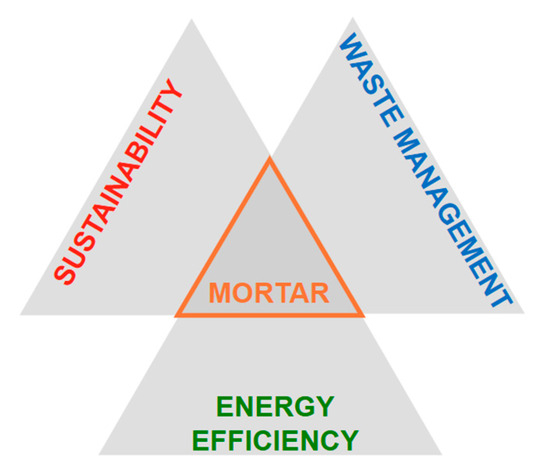
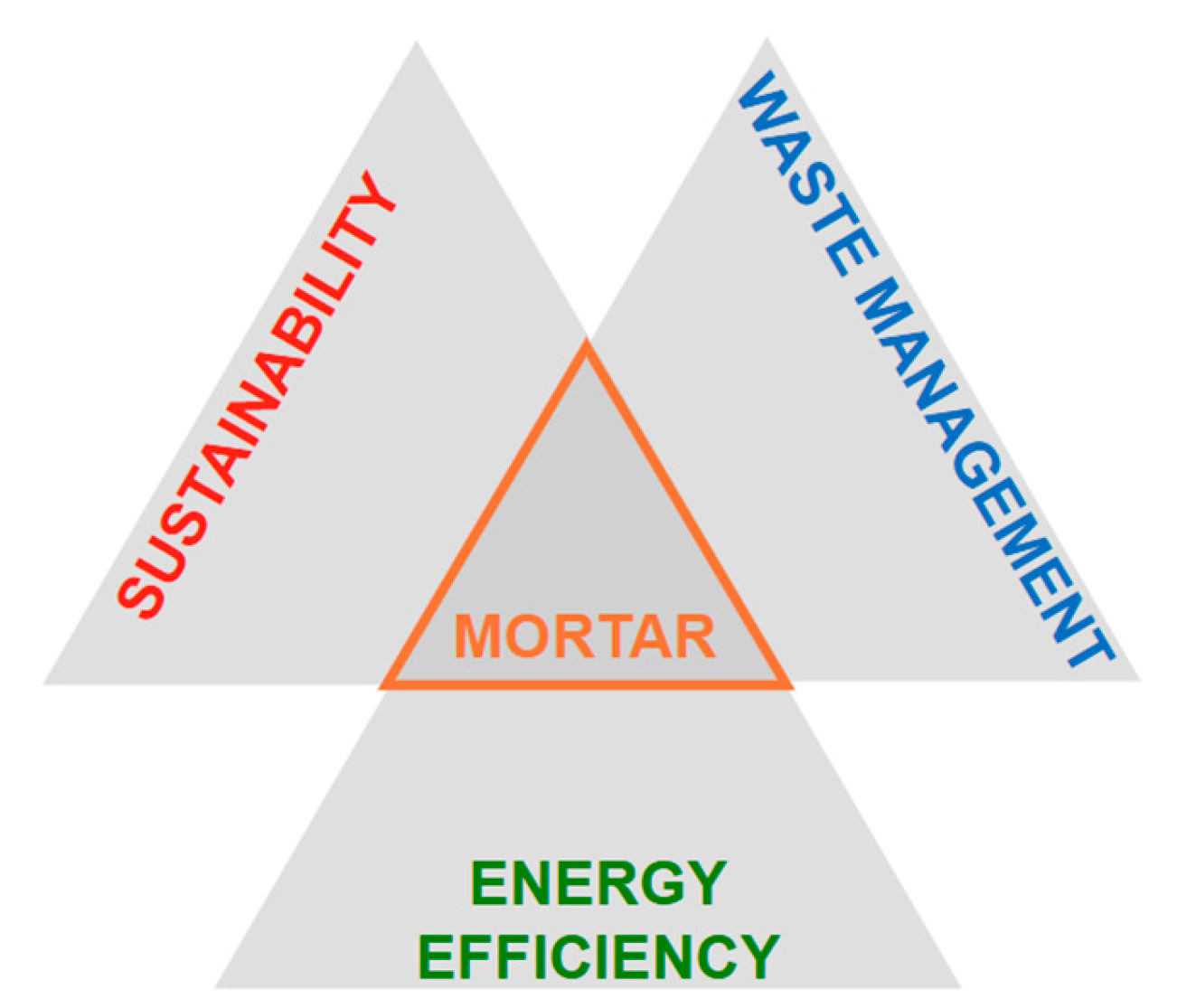
Accordingly, the aim of this study is to enhance both sustainability and energy efficiency of cement-based pastes through the combined incorporation of biomass ashes as a partial cement replacement and microencapsulated PCM as a thermal energy storage additive (Figure 1). Biomass ash is used to reduce carbon footprint associated with cement production, whereas PCM incorporation aims to improve the thermal performance of the material by increasing its latent heat storage capacity.
Figure 1.
Low carbon footprint mixtures.
A complete chemical, mineralogical, physical, mechanical and thermal characterization was conducted to analyze the synergies between biomass ash and PCM on paste’s properties. This study represents the initial stage of an extensive research program devoted to the development of sustainable and energy-efficient cement–lime mortars, where the analyzed pastes corresponded to the paste phase of rendering mortars formulated with a binder-to-aggregate ratio of 1:0.5:4.5 (cement:lime:aggregate), including biomass ash as partial cement replacement and PCM as partial substitute of the sand fraction [46].
2. Materials and Methods
2.1. Materials and Paste Compositions
Figure 2 shows the design criteria used for the pastes under study, and the paste components were as follows:
- Cement type CEM I-42.5R, with a density of 1270 kg/m3 designated according to the European standard UNE-EN 197-1 [49] and supplied by Cementos Portland Valderribas (Madrid, Spain).
- Air lime class CL90-S (European Standard UNE-EN 459-1 [50]) with a density of 400 kg/m3.
- Biomass ash with a particle size of 186 µm and a density of 1200 kg/m3, supplied by ENCE Energía & Celulosa (Mérida, Spain).
- The phase change material (PCM) employed in this study was MICRONAL® DS 5040X, a microencapsulated paraffin wax with a particle size of approximately 50–300 µm, a density of 500 kg·m−3, and a melting temperature of approximately 23 ± 1 °C, an enthalpy fusion of ca. 96 kJ·kg−1 and a thermal capacity (10–30 °C) of 136 kJ·kg−1 supplied by Master Builders Solutions (Madrid, Spain).
Figure 2.
Compositions’ design.
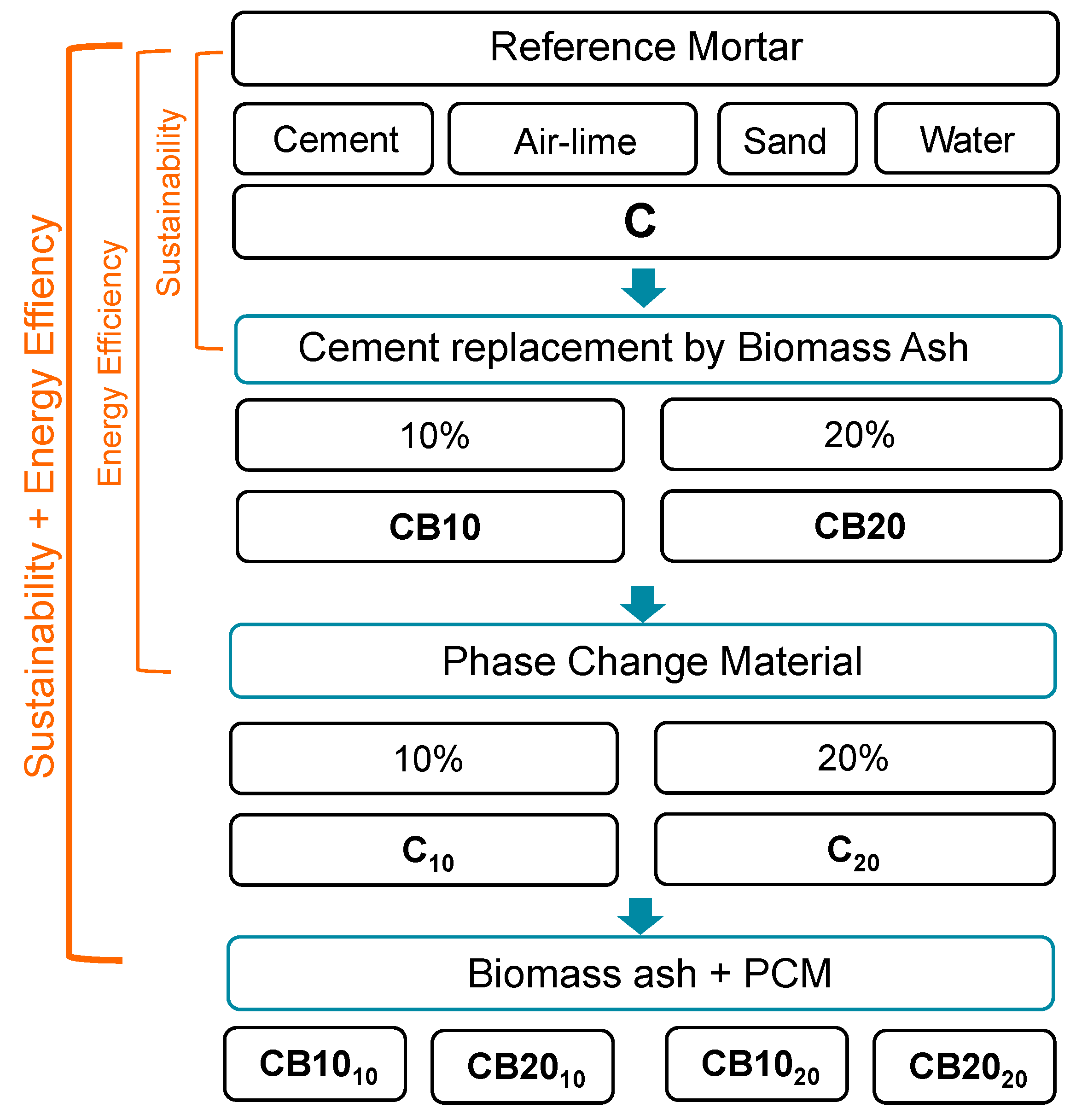
A cement–lime reference paste (C) was modified by replacing 10% and 20% of cement with biomass ash (CB10 and CB20, respectively), according to the literature [18,19,20,21,22,23,24,25,26,27,28,29]. Subsequently PCM was added to the paste to reach 10 and 20% in volume (C10 and C20) of a target fresh mortar with a binder to aggregate ratio of 1:0.5:4.5 [30]. Finally, the synergy of biomass ash and microencapsulated PCM was assessed in order to design a sustainable and energy efficiency material (CB1010, CB1020, CB2010 and CB2020). Table 1 summarizes paste compositions. Water to binder ratio was modified to reach a plastic consistency (180 ± 10 mm of spread diameter in a slump test, following UNE-EN 1015-3 European standard) [51]. Dry components were homogeneously mixed with a planetary mixer for one minute, water was added afterwards and mixing continued for three more minutes.
Table 1.
Cement-lime pastes compositions (components in g).
2.2. Fresh Pastes Testing Methods
The consistency of fresh mortars was assessed by the flow table method according to UNE-EN 1015-3. Initial and final setting times were determined using an automatic Vicat apparatus (VICATRONIC C0016) in compliance with UNE-EN 1015-9 [52]. The entrained air content of fresh pastes was measured with a mortar air-entrainment meter (ETI-C0050, PROETI) following UNE-EN 1015-7 [53].
2.3. Hardened Physical and Mechanical Properties Testing Methods
The pastes were characterized on 40 × 40 × 160 mm specimens demolded after 24 h and cured under laboratory conditions until testing at 28 days, in accordance with UNE-EN 1015-2 [54]. Bulk density and open porosity accessible to water were determined using a hydrostatic balance, following the procedure specified in UNE-EN 1015-10 [55].
Small bulk pieces or powder of the specimens were used for pore structure analysis by N2 adsorption–desorption isotherms in a Micromeritics ASAP 2010 apparatus. Surface area measurements were made by the BET multipoint method, using N2-77K gas. The specific surface area was obtained from nitrogen sorption isotherms by applying the BET method in the relative pressure range of 0.003–0.30. Pore volume and pore-size distribution were calculated using the Barrett–Joyner–Halenda (BJH) method based on the adsorption branch of the isotherm. The thickness (t) of the adsorbed layer on the pore walls at each relative pressure (P/P0) was determined using the Harkins and Jura equation, t = [13.99/(0.034 − log10(P/P0))]1/2. In addition, pore-size distribution and total porosity were evaluated on 1 cm3 paste samples by mercury intrusion porosimetry (MIP, Micromeritics Model 9320).
Thermal analyses by thermogravimetry (TG/DTG) were carried out with a Netzch STA 409 simultaneous thermal analyzer fitted with a Data Acquisition Systems 414/1 programmer (Netzch-Gerätebau GmbH, Selb, Germany). For this study, about 50 mg of samples were heated to 100 °C at a rate of 10 °C/min in an inert atmosphere. Before thermal analysis, the samples were dried at room temperature. Fourier transform infrared (FTIR) spectra were obtained using a Nicolet FTIR spectrometer and processed with OMNIC™ Spectasoftware. Sample preparation was performed by the potassium bromide (KBr) pellet method, and spectra were collected over the wavenumber range of 400–4000 cm−1.
Capillary water absorption was measured at 28 days following the procedure specified in UNE-EN 1015-18 [56] on 40 × 40 × 160 mm specimens, with one 40 × 40 mm face exposed to water and the remaining lateral faces sealed with plastic film. The water vapour diffusion resistance factor was determined in accordance with UNE-EN 1015-19 [57] by means of the wet-cup method on cylindrical specimens (35 mm in diameter and 40 ± 2 mm in thickness) containing a saturated saline solution to provide a relative humidity of 75%.
Compressive and flexural strength were tested at 28 days with an AUTOTEST-300/200 testing machine, according to UNE-EN 1015-11 [58]. A minimum compressive strength of 3.5 MPa was adopted as the target value, corresponding to the requirements for CS-III grade rendering mortars according to UNE-EN 998-1 [59]. Ultrasonic pulse velocity propagation (UPV) was measured with a PUNDIT LAB® Ultrasonic device (Proceq, Zurich, Switzerland) equipped with 250 kHz P- and S-waves transducers on 40 × 40 × 160 mm specimens at 28 days. Transmission times were triggered by using the Hilbert transform algorithm and Ultrasonic Young modulus (Es) was calculated according to Equations (1)–(3) [26,41]:
where ρ is the apparent density (g/cm3), vp and vs. are the P- and S-wave velocities (m/s, respectively, ν is the Poisson coefficient and Gs is the UPV shear modulus.
2.4. Thermal Performance Testing Methods
Thermal conductivity was determined on cylindrical hardened specimens (100 mm diameter and 25 mm height) at two temperature and humidity conditions: 20 °C and 60% RH, corresponding to the solid state of the PCM (λS), and 30 °C and 33% RH inside a climatic chamber, corresponding to the liquid state of the PCM (λL). A portable heat transfer analyser (ISOMET 2114, Applied Precision) (APPLIED PRECISION s.r.o., Bratislava, Slovakia) equipped with a surface probe with a measurement range of 0.30–3.0 W·m−1·K−1 was employed.
Thermal energy storage capacity was evaluated by differential scanning calorimetry (DSC) using a Mettler Toledo DSC822 calorimeter (METTLER TOLEDO, Greifensee, Switzerland). Heat flow and temperature calibrations were carried out using gallium and indium as reference materials. Aluminium crucibles with a volume of 25 mL were employed, and high-purity dry nitrogen (99.99%) was used as the purge gas. Cement–lime pastes were gently ground with a mortar and pestle prior to being placed in the crucibles. Three specimens per mixture were prepared and tested in accordance with the procedures recommended in IEA Task 42–Annex 29 [60]. Measurements were conducted at a heating and cooling rate of 1 K·min−1. The thermal cycle comprised a minimum temperature of 10 °C and a maximum temperature of 28 °C, with 5 min isothermal holds between successive heating and cooling ramps.
3. Results
Table 2 shows the chemical, physical, mechanical, and thermal characterization results of the nine pastes studied in this work.
Table 2.
Chemical, physical, mechanical and thermal hardened properties of the mixtures.
3.1. Fresh State Characterization
The initial and final setting times are reported in Table 1. Initial setting time fluctuated from 110 min (CB10) to 310 min (CB2020) and final setting time ranged from 150 min (C) to 330 min (CB2020). It was observed that BA and PCM modified both initial and final setting times. Replacing 10% of cement–lime binder by BA shortened initial and final setting times, while PCM enlarged both times.
3.2. Chemical Characterization
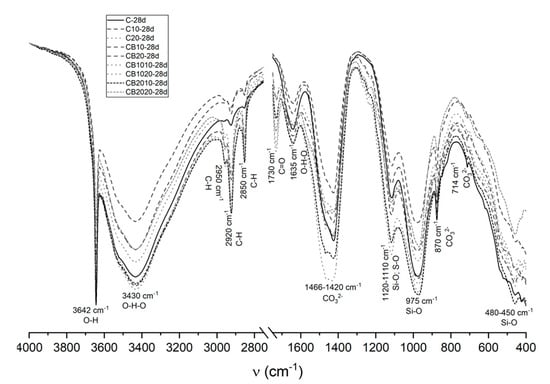
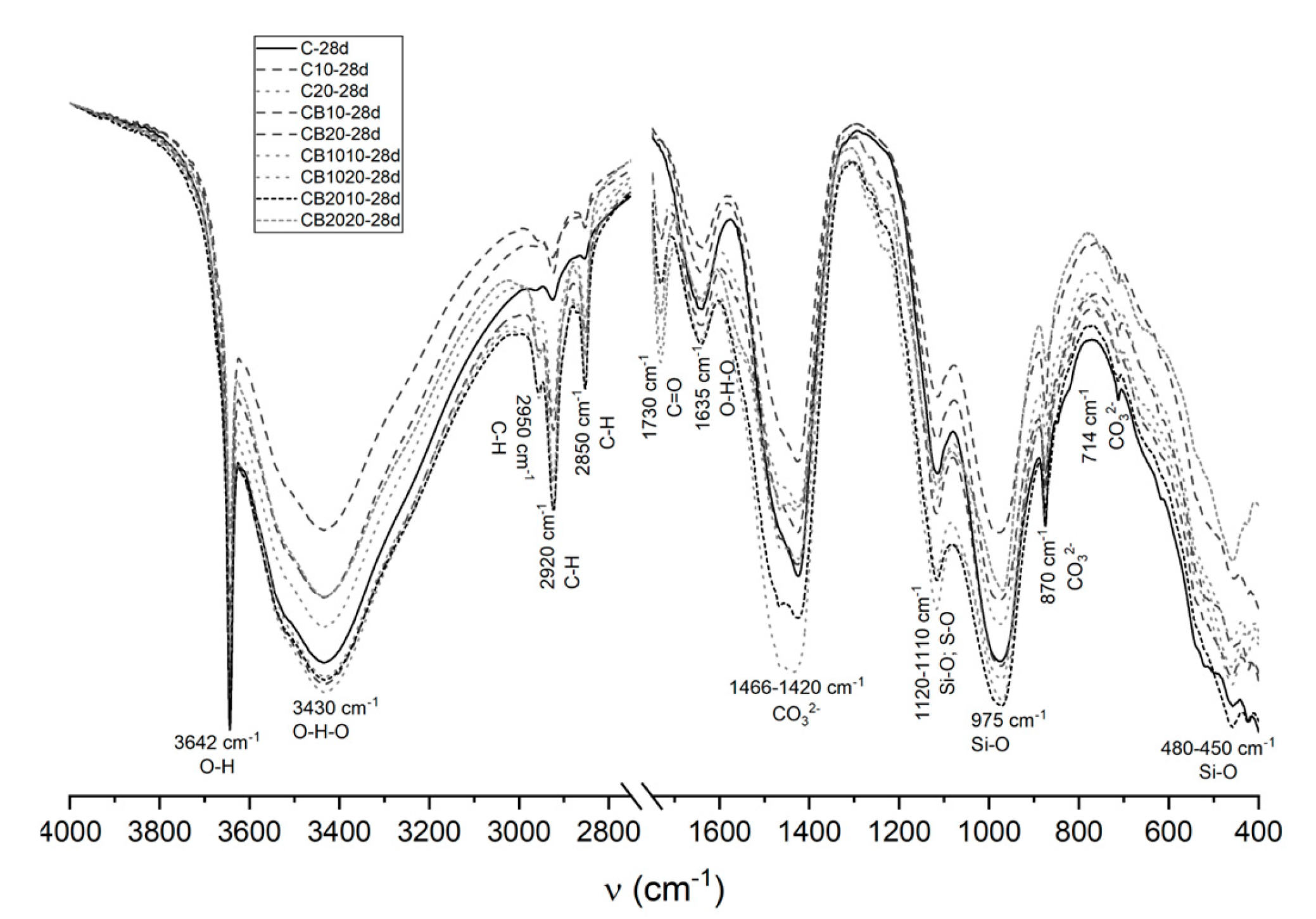
Figure 3 shows the Fourier Transform Infrared Spectroscopy (FTIR) spectra results of pastes at 28d of hydration. A narrow and pronounced absorption band at 3640 cm−1 highlights, which can be associated with the O-H bond in hydroxyl groups belonging to portlandite phase. The presence of water is confirmed by the broad band centered at 3430 cm−1 and the shoulder at 1635 cm−1 corresponding to the O-H-O bending vibration of water molecules. The high absorption band observed in the range of 1400–1500 cm−1 corresponded to the asymmetric stretching (ʋ3) of carbonate group. The narrow peak at 870 cm−1 is due to the out-of-plane bending (ʋ2) of this carbonate group. The weak absorption at 714 cm−1, can be related to the C-O bond vibrations in carbonate groups (CO3)2−. The Si-O bond tension vibration, pointing out the presence of silicon oxides in the sample, is observed in the band with minimal transmission at 1120 cm−1, corresponding to different symmetries of the (SiO4)4− group. This band overlaps at 1100 cm−1 with absorption band related to S-O bands in sulfates, mainly the ettringite phase identified by XRD patterns in a previous study [35]. The bands around 975 cm−1 are Si-O stretching bands of the C-S-H gel. Additionally, the bands between 2950 and 2850 cm−1, and 1730 cm−1 corresponded to C-H and C=O groups of organic compounds, in this case, related to the main component of the PCM, the acrylate ion: CH2=CHOO−.
Figure 3.
Fourier Transform Infrared measurements of the pastes at 28 days.
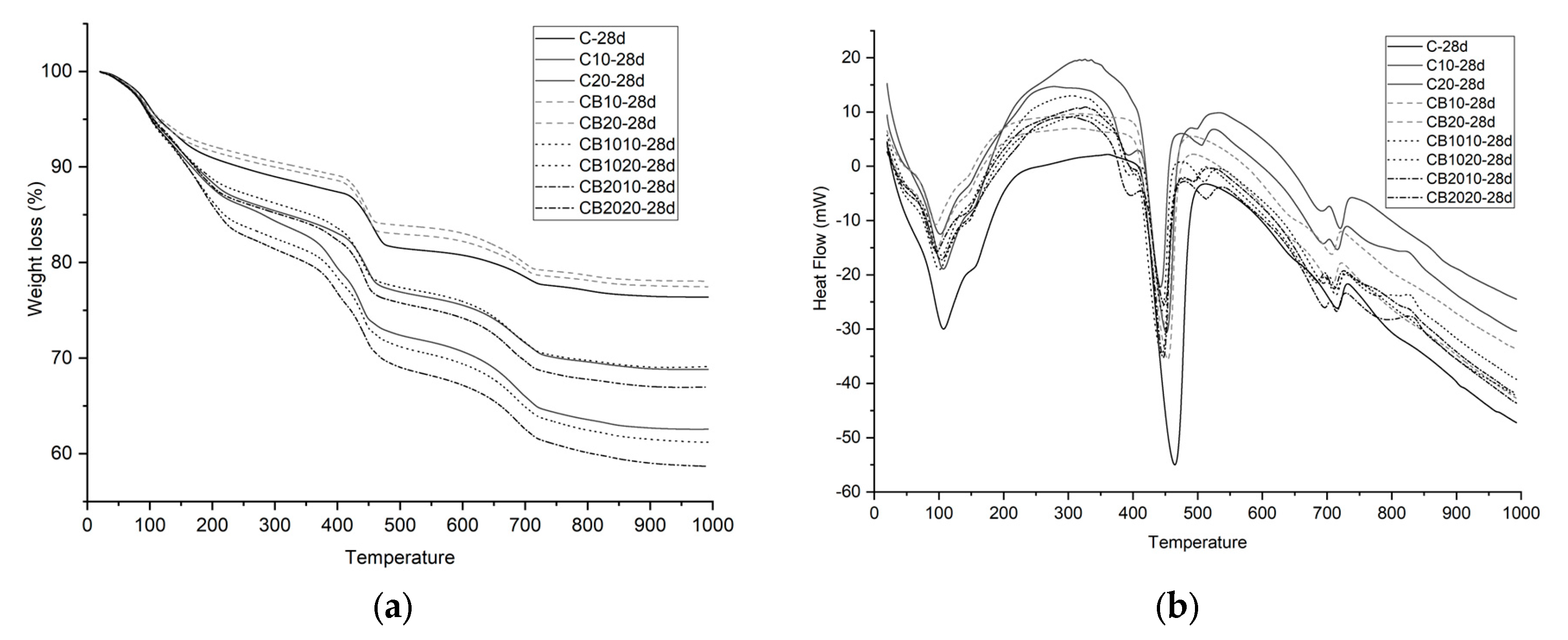
In the nine samples, a mass loss is observed in the TG curve between 25 °C and 350 °C, which is due to the excess water that was released by evaporation and to water molecules from C-S-H gel and sulphate phase’s decomposition (Figure 4a). In the corresponding DSC curves, a minimum and a shoulder are observed in this temperature range, at 100 °C and 160 °C (Figure 4b). A second weight loss is observed between 350 °C and 550 °C, related to the water molecules released due to portlandite decomposition, and a continuous mass loss to 800 °C corresponding to the loss of the CO2 molecules from possible carbonation or weathering of the samples [45,46] (Figure 4a). These mass losses correspond to the two minima in DSC curves at around 450 °C and 690–720 °C, respectively (Figure 4b).
Figure 4.
Thermogravimetric measurements of the mass loss (a) and heat flow (b) based on temperature of the pastes at 28 days.
It is interesting to point out the appearance of a shoulder at around 80 °C, which is related to water-taking part of the gel-like C-S-H phase. On the other hand, the peak corresponding to portlandite phases have a shift in the peak position from 463 °C for the C sample to 443–450 °C for the rest of the samples. In addition, samples with PCM promote the presence of two small peaks at 390 °C and 515 °C.
The relative amount of the portlandite and calcium carbonate phases may be quantified from the thermal analysis. Table 2 shows the mass fraction of these two components as calculated from TG/DSC curves. An increase in Ca(OH)2 and CaCO3 content is detected in the sustainability and energy efficiency samples. CB2020 showed the highest percentage of Ca(OH)2 (35.11%) and also the highest value of CaCO3 (18.33%). In contrast, CB10 had the lowest value of Ca(OH)2 (22.64%), while the reference paste (C) had the lowest value of CaCO3 (9.36%).
The results from infrared spectroscopy and thermal analysis are coherent with those of X-ray diffraction study and it was observed that the replacement of 10% and 20% of cement with BA, along with the addition of 10% and 20% of PCM, did not disturb the microstructure formation with regard to the reference paste (C). Furthermore, the replacement of 20% cement with BA and the addition of PCM increased the hydration reaction of the samples [36].
3.3. Physical Characterization
Bulk density values of pastes varied from 900kg/m3 (CB2020) to 1590 kg/m3 (CB10) (Table 2). The reference paste (C) and those containing BA (CB10 and CB20) showed the highest bulk density and the addition of PCM reduced bulk density values. Reference mixture (C) showed the highest open porosity (accessible to water), reaching 36%, while C20 had the lowest (20.9%). Table 2 shows entrapped air values between 2.3% (C) and 18% (CB1020 and CB2020). Mixtures without PCM (C, CB10, and CB20) showed values under 5%, while mixtures with PCM increased entrapped air over 9%.
BET-N2 surface area values ranged from 4.65 m2/g to 13.66 m2/g, with C having the highest value and CB2020 the lowest (Table 2). The replacement of cement with BA and PCM addition reduced BET-N2 values, showing synergies when combined.
Total intrusion volume (TIV) values ranged from 1% for pores larger than 0.05 µm (C) to 42% (CB2020) (Table 2). In this case, cement replacement with BA and/or PCM increased TIV.
Regarding capillary water absorption (CAP), values ranged from 0.7 kg/m2min0.5 (CB20) to 0.15 kg/m2 min0.5 (C20) (Table 2). An addition of 20% of BA tended to increase CAP while the addition of 10% or 20% of PCM reduced it. Samples which combined BA and PCM have a lower CAP value than C. Finally, considering water vapor permeability (VD), CB1010 had the highest value (1.56υ), while CB2020 showed the lowest (1.15υ). These results indicate that BA modified paste microstructure, increasing pore tortuosity, while PCM facilitated vapor transport.
3.4. Mechanical Characterization
The experimental results of flexural and compressive strength at 28 days of hydration and the Ultrasonic Young modulus are summarized in Table 2.
Flexural strength values ranged from 2.25 MPa (C20) to 4.17 MPa (CB2010). Pastes with 20% of BA and without PCM showed higher value than the reference sample. The addition of 10% PCM increased flexural strength, while 20% PCM addition reduced flexural strength. In the case of combined samples (CB1010; CB1020; CB2010 and CB2020), the values are similar regardless of the amount of PCM.
Regarding compressive strength, CB10 showed the highest value (54.21 MPa), while CB2020 showed the lowest (9.30 MPa). Replacement of cement with BA did not modify the compressive strength significantly, almost exceeding it. However, the addition of 10% and 20% PCM reduced compressive strength by 50% and 80%, respectively, as expected according to previous studies [46,47]. The presence of PCM in CB1010, CB1020, CB2010 and CB2020 mixtures has a predominant effect in compressive strength behavior.
Ultrasonic Young Modulus (Es) results varied between 3.41 GPa (CB1020) and 13.54 GPa (CB10). The addition of BA did not modify the E values, while PCM addition reduced them.
3.5. Thermal Characterization
Thermal conductivity of pastes with PCM at solid state (λS) and at liquid state (λL) are also reported in Table 2. In all cases, λL values were slightly lower than λS values. This could be not only due to PCM behavior but also due to the evaporation of free water in the microstructure pores, leaving more air voids. λS values varied between 0.3 W/m K (CB1020) and 0.72 W/m K (CB10), while λL ranged from 0.23 W/m K (CB2020) to 0.63 W/m K (C). The replacement of cement with BA did not modify thermal conductivity while PCM addition reduced the value, especially when PCM was in the liquid state (λL).
4. Analysis and Discussion
4.1. Effect of Biomass Ash and PCM on Porous Network and Transport Properties of Pastes
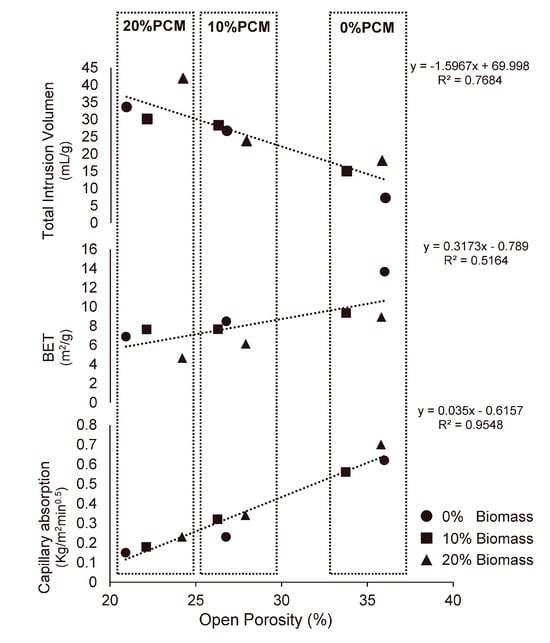
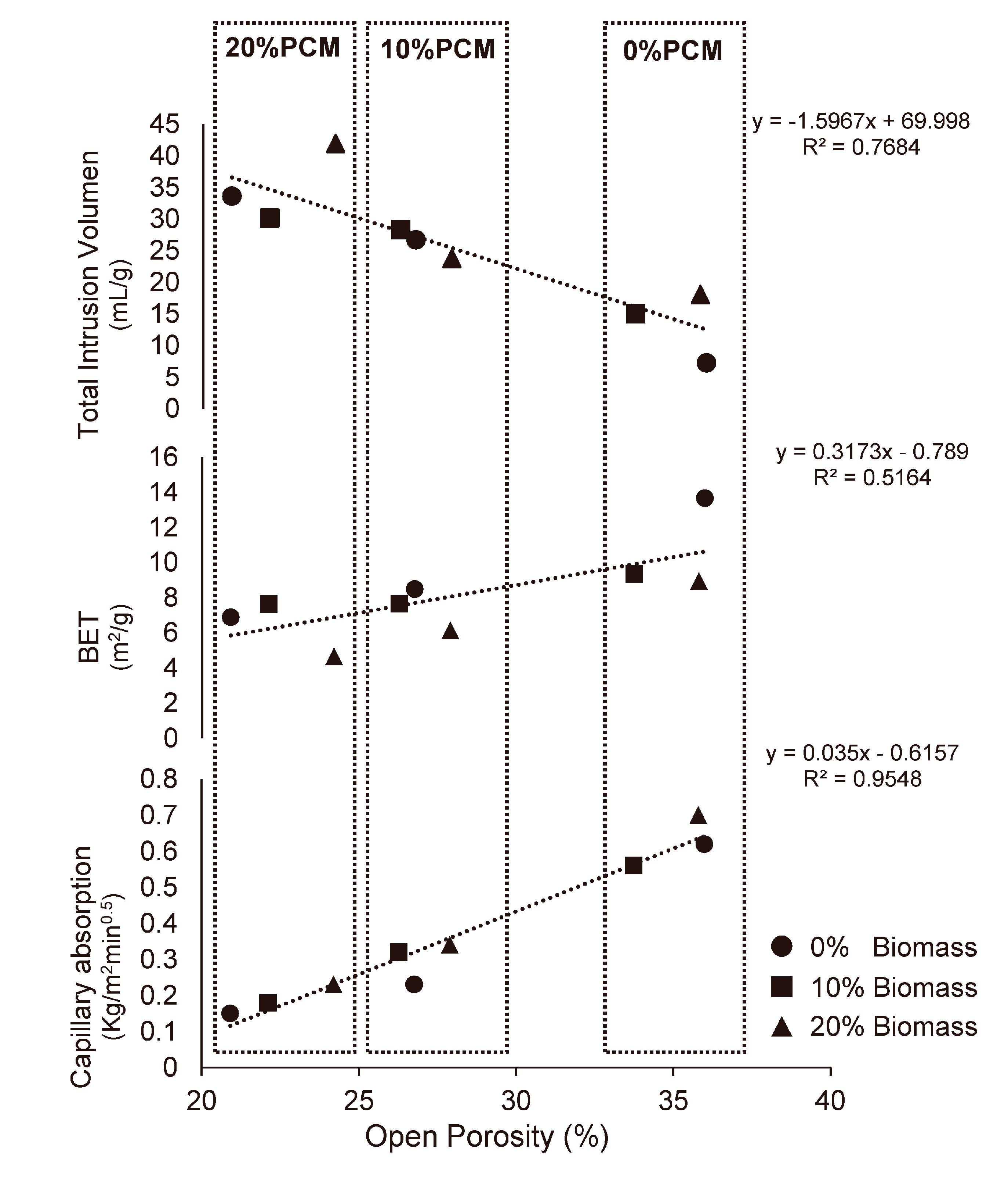
Figure 5 relates capillary water absorption (CAP), BET-N2 surface area and total intrusion volume (TIV) results to open porosity (OP) of pastes. It can be observed that all the properties related to the paste porous network can be grouped according to PCM content, as OP, CAP and BET-N2 surface area decreased with PCM content and they were directly related. Conversely, TIV values were inversely related to OP. Replacing cement with BA did not modify significantly the porous network. Furthermore, Figure 5 shows that increasing PCM content leads to a systematic reduction in open porosity. These results indicate that, due to its particle size and morphology, PCM behaves as a filler within the paste mixture, partially filling pores of different sizes and types, as confirmed for example, by the capillary absorption data. In all cases, the open porosity is reduced by approximately 20% when 20% PCM is incorporated compared to the reference paste without PCM.
Figure 5.
Effect of the biomass ash and PCM content on the physical properties of pastes.
The data further reveal a linear correlation between the TIV and BET parameters and total porosity, which is directly governed by the presence of PCM, whereas biomass ash does not exert a significant influence on this relationship.
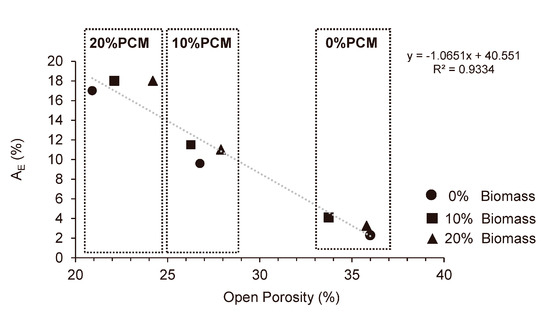
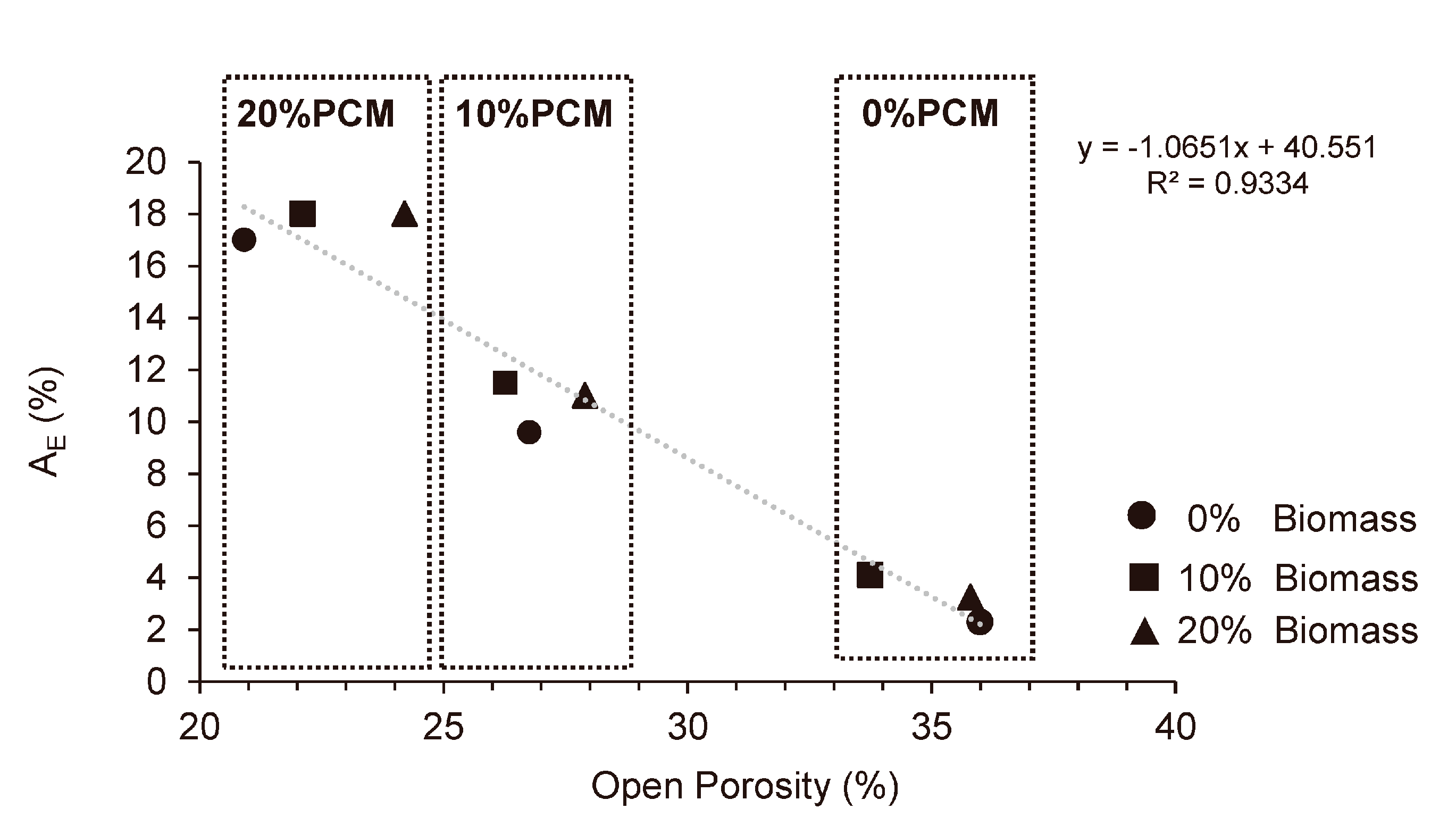
In addition, Figure 6 shows a direct correlation between the different pore types, namely air- and water-accessible pores. An increase in the fraction of air-accessible pores is associated with a corresponding decrease in open porosity accessible to water. Both parameters are strongly affected by PCM addition at both 10% and 20% replacement levels. Higher PCM contents result in increased air-accessible porosity and a concomitant reduction in total open porosity.
Figure 6.
Effect of biomass ash and PCM content on the porous structure of the cement–lime pastes.
In addition, measured entrapped air of the pastes (AE) and OP were directly related, as shown in Figure 6. Figure 6 showed a direct correlation between the different pore types, namely air and water-accessible pores. An increase in the fraction of air-accessible pores is associated with a corresponding decrease in open porosity accessible to water. Both parameters are strongly affected by PCM addition at both 10% and 20% replacement levels. Higher PCM contents result in increased air-accessible porosity and a concomitant reduction in total open porosity.
Once again, the experimental results related to porous microstructure can be grouped according to PCM content, regardless of BA content. Thus, the waterproofing of the shell and the spherical shape of the PCM microcapsules governed the porous network of pastes, rather than the BA content.
4.2. Effect of Biomass Ash and PCM on Mechanical Properties of Pastes
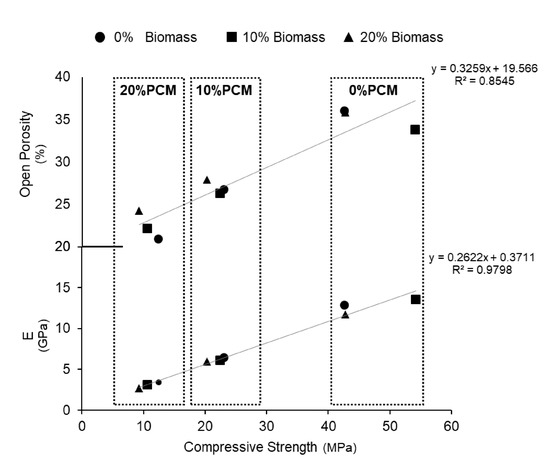
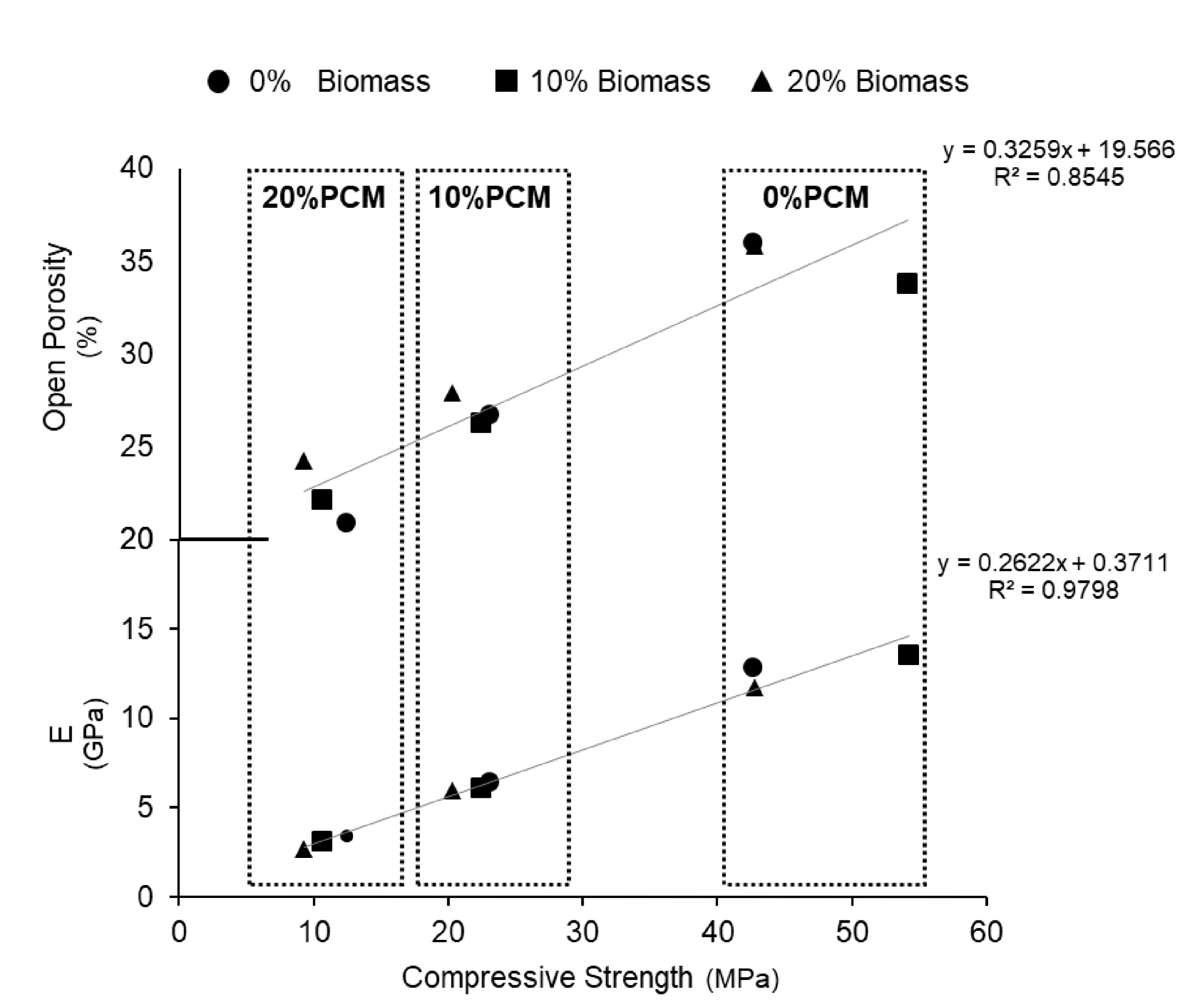
Figure 7 relates OP and Ultrasonic Young Modulus (ES) with compressive strength (CS). As expected, CS and ES showed a linear correlation with a high R2 coefficient, independent of the paste composition. When results were grouped according to the PCM content, it can be seen that a higher PCM content reduced the CS and the ES.
Figure 7.
Effect of biomass ash and PCM content on pastes’ mechanical properties.
However, contrary to expectations, OP and CS were also directly related only when PCM content was considered, although an inverse relation can be identified for each PCM content separately. As described previously, PCM reduced OP, and as expected, due to the weakening effect of PCM microcapsules on the paste microstructure [35,46,47], reduced CS and, consequently ES.
Regarding BA content, it can be observed that higher amounts of BA reduced CS and ES moderately, while slightly increased OP.
4.3. Effect of Biomass and PCM on Thermal Properties of Pastes
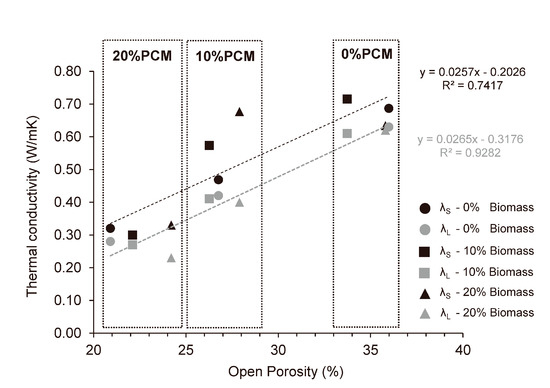
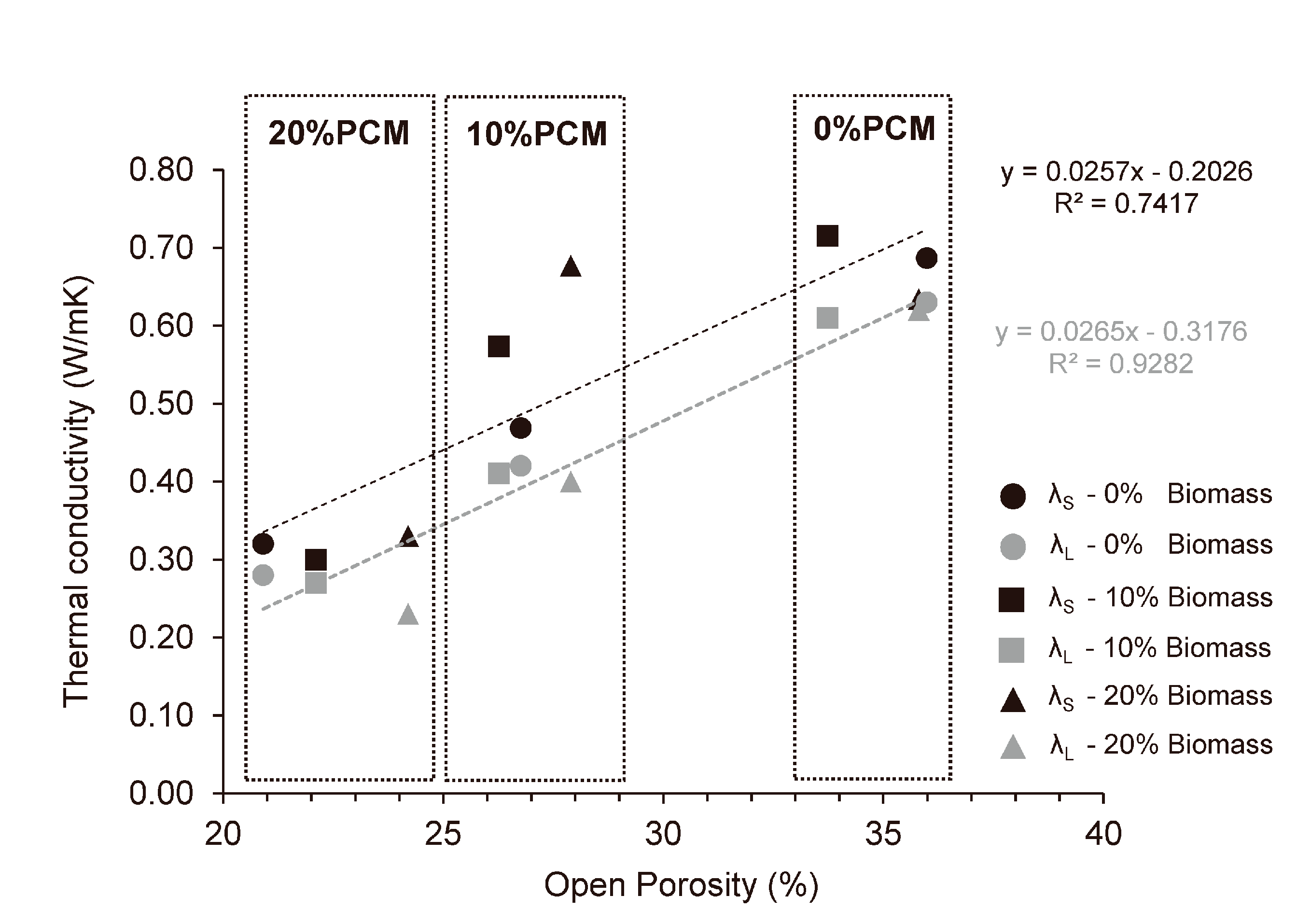
Figure 8 relates thermal conductivity for pastes with PCM in solid state (λS) and in liquid state (λL,) to open porosity accessible to water (OP). It can be seen that λL was lower than λS in all cases (Table 2), due to the lower conductivity of liquid microencapsulated PCM [47].
Figure 8.
Effect of biomass ash and PCM content on thermal conductivity and open porosity.
Contrary to expectations, as observed for the mechanical properties, OP and λL and λS were not inversely related when only the PCM content was considered, although an inverse relation can be identified for each PCM content separately. As described previously, PCM reduced OP and, as expected due to the lower thermal conductivity of PCM microcapsules regarding to the paste [47], also reduced λL and λS.
Regarding the BA content, higher amounts of BA slightly increased OP and consequently, reduced λL and λS.
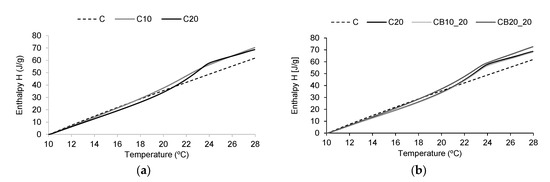
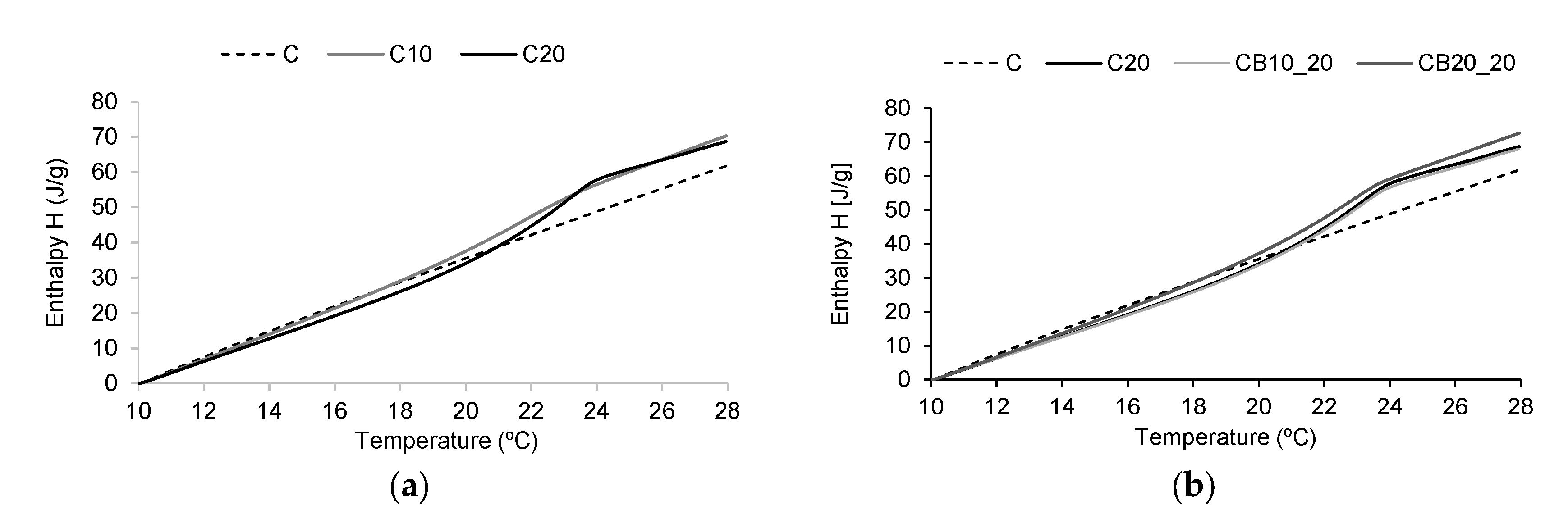
Figure 9a shows the enthalpy (H) in J/g of the reference mixture (C) and those with 10% and 20% of PCM (C10 and C20, respectively) during a DSC heating cycle. As expected, the reference mixture (C) exhibited a linear enthalpy increase with temperature, corresponding to the specific heat of the paste (sensible heat). On the other hand, pastes with PCM (C10 and C20) displayed an inflection point corresponding to the PCM melting point at 23 °C (latent heat), remarkably increasing thermal energy storage capacity. There was no significant difference in the final enthalpy values between C10 and C20, reaching approximately 70 J/g. However, C20 shows a more pronounced curve between 18 °C and 24 °C, meaning the material requires less thermal energy to reach the melting temperature. This may be due to the microstructure of the material, which presented less open porosity accessible to water and a lower thermal conductivity than mixture with 10% of PCM (C10) (Table 2).
Figure 9.
(a) Enthalpies of the reference mixture and mixtures with 10% and 20% of PCM measured in DSC during heating cycles. (b) Enthalpies of the reference mixture, mixture with 10% and 20% and biomass ashes and 20% of PCM measured in DSC during heating cycles.
Figure 9b compares the DSC enthalpy results of the reference mixture (C) with pastes with 20% of PCM and different amounts of BA (C20, CB1020 and CB2020). While C showed a constant increase with temperature (sensible heat), pastes with 20% of PCM produced an inflection point at approximately 23 °C, increasing pastes’ enthalpy. While C20 and CB1020 exhibit almost identical behavior, reaching a total of 70 J/g, CB2020 (20% replacement of cement with BA and 20% PCM) consistently presented slightly higher enthalpy values during material heating showing the highest thermal energy storage capacity.
5. Conclusions
The effects of 10% and 20% cement replacement with biomass ash (BA) and the addition of 10% and 20% of PCM on chemical, physical, mechanical and thermal properties of cement–lime pastes were evaluated. The aim was to characterize the paste phase of future mortars for rendering applications with improved sustainability and energy efficiency. The main conclusions of the study were:
- A partial replacement of cement with BA did not significantly modify the chemical, physical, mechanical, and thermal properties of the cement–lime pastes, making it a feasible way to improve material sustainability.
- The addition of PCM modified the paste porous microstructure, reducing open porosity (accessible to water), fresh entrapped air and capillary water absorption. PCM also reduced mechanical properties such as compressive strength and Ultrasonic Young modulus.
- PCM reduced thermal conductivity, being lower for temperatures above PCM melting point, and enhanced the thermal storage capacity of cement–lime pastes.
- The combination of 20% of BA and the addition of 20% of PCM showed the best thermal performance with the largest energy storage capacity.
The combination of 20% biomass ash and 20% PCM addition demonstrated synergies for a new sustainable mortar, aiming to a reduction in carbon footprint and improving thermal performance compared to conventional mortars.
Author Contributions
Conceptualization, C.G., A.G. and G.B.; methodology, C.G., A.G. and G.B.; software, C.G.; validation, C.G., A.G. and G.B.; formal analysis, C.G.; investigation, C.G., A.G. and G.B.; resources, G.B. and A.G.; data curation, C.G.; writing—original draft preparation, C.G.; writing—review and editing, C.G., A.G. and G.B.; visualization, C.G.; supervision, A.G. and G.B.; project administration, C.G.; funding acquisition, C.G. and G.B. All authors have read and agreed to the published version of the manuscript.
Funding
The authors acknowledge the financial support provided by the University of Alcalá (Spain), the Spanish Ministry of Universities and the European Union “Next Generation EU”—Margarita Salas Grant, awarded to Dr. Cynthia Guardia and the project CALTH3D (TED2021-132585B-I00) and RED2022-134219-T, funded by the Spanish Ministry of Science and Innovation (MCIN/AEI/10.13039/501100011033). The authors gratefully acknowledge the financial support from the European Commission through the Marie Skłodowska-Curie Actions (MSCA) under Grant Agreement ID: 101086440, BEST—Bio-based Energy-efficient Materials and Structures for Tomorrow project (https://doi.org/10.3030/101086440). This work reflects the views and opinions of the authors only, and neither the European Union nor the granting authority can be held responsible for any use that may be made of the information contained herein.
Data Availability Statement
The original contributions presented in this study are included in the article. Further inquiries can be directed to the corresponding author.
Acknowledgments
Some of the components were supplied by Master Builders Solutions, Cementos Portland Valderrivas and ENCE Energía and Celulosa.
Conflicts of Interest
The authors declare no conflicts of interest.
References
- European Commission. Available online: https://ec.europa.eu/info/energy-climate-change-environment/topics/energy_en (accessed on 26 January 2026).
- European Commission. Available online: https://ec.europa.eu/info/funding-tenders/find-funding/eu-funding-programmes/recovery-and-resilience-facility_en (accessed on 26 January 2026).
- European Commission: Directorate-General for Environment. 2020 Circular Economy Action Plan–International Aspects; Publications Office of the European Union: Luxembourg, 2020; Available online: https://data.europa.eu/doi/10.2779/085517 (accessed on 26 January 2026).
- Pedreño-Rojas, M.A.; Porras-Amores, C.; Villoria-Sáez, P.; Morales-Conde, M.J.; Flores-Colen, I. Characterization and performance of building composites made from gypsum and woody-biomass ash waste: A product development and application study. Constr. Build. Mater. 2024, 419, 135435. [Google Scholar] [CrossRef] [Scilit]
- Scrivener, K.L.; John, V.M.; Gartner, E.M. Eco-efficient cements: Potential economically viable solutions for a low-CO2 cement-based materials industry. Cem. Concr. Res. 2018, 114, 2–26. [Google Scholar] [CrossRef] [Scilit]
- Mirzaei, L.; Ghebrab, T.; Fedler, C.B. Review and evaluation of agricultural biomass ashes as supplementary cementitious materials for sustainable concrete. Processes 2025, 13, 3571. [Google Scholar] [CrossRef] [Scilit]
- Fořt, J.; Šál, J.; Keppert, M.; Mildner, M.; Hotěk, P.; Ślosarczyk, A.; Klapiszewski, Ł.; Černý, R. Durability analysis of sustainable mortars with biomass fly ash as high-volume replacement of Portland cement. J. Build. Eng. 2024, 91, 109565. [Google Scholar] [CrossRef] [Scilit]
- Fořt, J.; Šál, J.; Žák, J.; Černý, R. Assessment of Wood-Based Fly Ash as Alternative Cement Replacement. Sustainability 2020, 12, 9580. [Google Scholar] [CrossRef] [Scilit]
- Duchesne, J. Alternative supplementary cementitious materials for sustainable concrete structures: A review on characterization and properties. Waste Biomass. Valoriz. 2021, 12, 1219–1236. [Google Scholar] [CrossRef] [Scilit]
- Guerra, B.C.; Shahi, S.; Mollaei, A.; Skaf, N.; Weber, O.; Leite, F.; Haas, C. Circular economy applications in the construction industry: A global scan of trends and opportunities. J. Clean. Prod. 2021, 324, 129125. [Google Scholar] [CrossRef] [Scilit]
- Rodríguez, J.; Frías, M.; Tobón, J.I. Eco-efficient cement based on activated coal washing rejects with low content of kaolinite. Constr. Build. Mater. 2021, 274, 122118. [Google Scholar] [CrossRef] [Scilit]
- Velardo, P.; Sáez del Bosque, I.F.; Matías, A.; Sánchez de Rojas, M.I.; Medina, C. Properties of concretes bearing mixed recycled aggregate with polymer-modified surfaces. J. Build. Eng. 2021, 38, 102211. [Google Scholar] [CrossRef] [Scilit]
- Moreno, S.; Rosales, M.; Rosales, J.; Agrela, F.; Díaz-López, J.L. Feasibility of Using New Sustainable Mineral Additions for the Manufacture of Eco-Cements. Materials 2024, 17, 777. [Google Scholar] [CrossRef] [Scilit]
- Juenger, M.C.G.; Siddique, R. Recent advances in understanding the role of supplementary cementitious materials in concrete. Cem. Concr. Res. 2015, 78, 71–80. [Google Scholar] [CrossRef] [Scilit]
- Cantero, B.; Sáez del Bosque, I.F.; Matías, A.; Medina, C. Statistically significant effects of mixed recycled aggregate on the physical-mechanical properties of structural concretes. Constr. Build. Mater. 2018, 185, 93–101. [Google Scholar] [CrossRef] [Scilit]
- Khankhaje, E.; Kim, T.; Jang, H.; Kim, C.S.; Kim, J.; Rafieizonooz, M. Properties of pervious concrete incorporating fly ash as partial replacement of cement: A review. Dev. Built Environ. 2023, 14, 100130. [Google Scholar] [CrossRef] [Scilit]
- Sigvardsen, N.M.; Geiker, M.R.; Ottosen, L.M. Phase development and mechanical response of low-level cement replacements with wood ash and washed wood ash. Constr. Build. Mater. 2021, 269, 121234. [Google Scholar] [CrossRef] [Scilit]
- Rajamma, R.; Ball, R.J.; Tarelho, R.A.C.; Allen, G.C.; Labrincha, J.A.; Ferreira, V.M. Characterization and use of biomass fly ash in cement-based materials. J. Hazard. Mater. 2009, 172, 1049–1060. [Google Scholar] [CrossRef] [Scilit]
- Teixeira, E.R.; Mateus, R.; Camões, A.; Branco, F.G. Quality and durability properties and life-cycle assessment of high volume biomass fly ash mortar. Constr. Build. Mater. 2019, 197, 195–207. [Google Scholar] [CrossRef] [Scilit]
- Thomas, B.S.; Yang, J.; Mo, K.H.; Abdalla, J.A.; Hawileh, R.A.; Ariyachandra, E. Biomass ashes from agricultural wastes as supplementary cementitious materials or aggregate replacement in cement/geopolymer concrete: A comprehensive review. J. Build. Eng. 2021, 40, 102332. [Google Scholar] [CrossRef] [Scilit]
- Fořt, J.; Šál, J.; Ševčík, R.; Doleželová, M.; Keppert, M.; Jerman, M.; Záleská, M.; Stehel, V.; Černý, R. Biomass fly ash as an alternative to coal fly ash in blended cements: Functional aspects. Constr. Build. Mater. 2021, 271, 121544. [Google Scholar] [CrossRef] [Scilit]
- Velardo, P.; del Bosque, I.F.S.; de Rojas, M.I.S.; De Belie, N.; Medina, C. Effect of incorporating biomass bottom ash and construction and demolition waste powder on the physical-mechanical properties and micro-structure of ternary-blended mortars. Constr. Build. Mater. 2024, 432, 136628. [Google Scholar] [CrossRef] [Scilit]
- Munawar, M.A.; Khoja, A.H.; Naqvi, S.R.; Mehran, M.T.; Hassan, M.; Liaquat, R.; Dawood, U.F. Challenges and opportunities in biomass ash management and its utilization in novel applications. Renew. Sustain. Energy Rev. 2021, 150, 111451. [Google Scholar] [CrossRef] [Scilit]
- Carević, I.; Baričević, A.; Štirmer, N.; Bajto, J.S. Correlation between physical and chemical properties of wood biomass ash and cement composites performances. Constr. Build. Mater. 2020, 256, 119450. [Google Scholar] [CrossRef] [Scilit]
- Pavlíková, M.; Zemanová, L.; Pokorný, J.; Záleská, M.; Jankovský, O.; Lojka, M.; Pavlík, Z. Influence of Wood-Based Biomass Ash Admixing on the Structural, Mechanical, Hygric, and Thermal Properties of Air Lime Mortars. Materials 2019, 12, 2227. [Google Scholar] [CrossRef] [Scilit]
- Velay-Lizancos, M.; Azenha, M.; Martínez-Lage, I.; Vázquez-Burgo, P. Addition of biomass ash in concrete: Effects on E-Modulus, electrical conductivity at early ages and their correlation. Constr. Build. Mater. 2017, 157, 1126–1132. [Google Scholar] [CrossRef] [Scilit]
- Marieta, C.; Guerrero, A.; León, I. Municipal solid waste incineration fly ash to produce eco-friendly binders for sustainable building construction. J. Waste Manag. 2021, 120, 114–124. [Google Scholar] [CrossRef] [Scilit]
- Xu, M.; Takasu, K.; Wang, Y.; Liu, Z.; Suyama, H. Synergistic effects of mixed biomass fly ashes on cement mortar performance: A strategy for sustainable and low-carbon building materials. J. Build. Eng. 2025, 112, 113691. [Google Scholar] [CrossRef] [Scilit]
- Thomas, B.S.; Gupta, R.C.; Panicker, V.J. Biomass ashes from agricultural wastes as supplementary cementitious materials in concrete. J. Build. Eng. 2021, 44, 102654. [Google Scholar] [CrossRef] [Scilit]
- Zhou, D.; Zhao, C.Y.; Tian, Y. Review on thermal energy storage with phase change materials in building applications. Appl. Energy 2019, 92, 593–605. [Google Scholar] [CrossRef] [Scilit]
- Cabeza, L.F.; Miró, L.; Oró, E.; Barreneche, C. Review of thermal energy storage with phase change materials (PCMs) in buildings. Renew. Sustain. Energy Rev. 2015, 43, 531–544. [Google Scholar] [CrossRef] [Scilit]
- Rathore, P.K.S.; Gupta, N.K.; Yadav, D.; Shukla, S.K.; Kaul, S. Thermal performance of the building envelope integrated with phase change material for thermal energy storage: An updated review. Sustain. Cities Soc. 2022, 79, 103690. [Google Scholar] [CrossRef] [Scilit]
- Palomar, I.; Barluenga, G.; Ball, R.J.; Lawrence, M. Laboratory characterization of brick walls rendered with a pervious lime-cement mortar. J. Build. Eng. 2019, 23, 241–249. [Google Scholar] [CrossRef] [Scilit]
- Figueiredo, A.; Silva, T.; Gonçalves, M.; Samagaio, A. Application of Novel Phase Change Material Constructive Solution for Thermal Regulation of Passive Solar Buildings. Buildings 2024, 14, 493. [Google Scholar] [CrossRef] [Scilit]
- Mankel, C.; Caggiano, A.; Koenders, E. Thermal energy storage characterization of cementitious composites made with recycled brick aggregates containing PCM. Energy Build. 2019, 202, 109395. [Google Scholar] [CrossRef] [Scilit]
- Guardia, C.; Guerrero, A.; Barluenga, G. Novel Cement-Lime Composites with Phase Change Materials (PCM) and Biomass Ash for Energy Efficiency in Architectural Applications. In International RILEM Conference on Synergising Expertise Towards Sustainability and Robustness of Cement-Based Materials and Concrete Structures, SynerCrete 2023; RILEM Bookseries; Springer: Cham, Switzerland, 2023; Volume 43, pp. 1253–1263. [Google Scholar] [CrossRef] [Scilit]
- Wu, W.Y.; Yeap, I.S.R.; Wang, S.; Tomczak, N.; Lin, M.; Kai, D.; Ye, E.; Thitsartarn, W.; Tan, J.B.H.; Yin, X.; et al. Advancements in sustainable phase change materials: Valorizing waste for eco-friendly applications. Mater. Today Chem. 2024, 39, 102163. [Google Scholar] [CrossRef] [Scilit]
- Fabiani, C.; Santini, C.; Barbanera, M.; Giannoni, T.; Rubino, G.; Cotana, F.; Pisello, A.L. Phase change materials-impregnated biomass for energy efficiency in buildings: Innovative material production and multiscale thermophysical characterization. J. Energy Storage 2023, 58, 106223. [Google Scholar] [CrossRef] [Scilit]
- Shoeibi, S.; Jamil, F.; Parsa, S.M.; Mehdi, S.; Kargarsharifabad, H.; Mirjalily, S.A.A.; Guo, W.; Ngo, H.H.; Ni, B.J.; Khiadani, M. Recent advancements in applications of encapsulated phase change materials for solar energy systems: A state of the art review. J. Energy Storage 2024, 94, 112401. [Google Scholar] [CrossRef] [Scilit]
- Junaid, M.F.; Rehman, Z.U.; Ijaz, N.; Farooq, R.; Khalid, U.; Ijaz, Z. Performance evaluation of cement-based composites containing phase change materials from energy management and construction standpoints. Constr. Build. Mater. 2024, 416, 135108. [Google Scholar] [CrossRef] [Scilit]
- Venkateswara, R.V.; Parameshwaran, R.; Vinayaka, R.V. PCM-mortar based construction materials for energy efficient buildings: A review on research trends. Energy Build. 2018, 158, 95–122. [Google Scholar] [CrossRef] [Scilit]
- Rebelo, F.; Figueiredo, A.; Vicente, R.; Ferreira, V.M. Study of a thermally enhanced mortar incorporating phase change materials for overheating reduction in buildings. J. Energy Storage 2022, 46, 103876. [Google Scholar] [CrossRef] [Scilit]
- Laasri, I.A.; Es-sakali, N.; Charai, M.; Mghazli, M.O.; Outzourhit, A. Recent progress, limitations, and future directions of macro-encapsulated phase change materials for building applications. Renew. Sustain. Energy Rev. 2024, 199, 114481. [Google Scholar] [CrossRef] [Scilit]
- Kim, H.G.; Qudoos, A.; Jeon, I.K.; Woo, B.H.; Ryou, J.S. Assessment of PCM/SiC-based composite aggregate in concrete: Energy storage performance. Constr. Build. Mater. 2020, 258, 119637. [Google Scholar] [CrossRef] [Scilit]
- Ates, F.; Woo, B.H.; Jang, C.; Kim, H.G. Enhancing cementitious composites with PCM-impregnated cork granules for sustainable and energy-efficient building elements. Constr. Build. Mater. 2024, 416, 135071. [Google Scholar] [CrossRef] [Scilit]
- Soares, N.; Matias, T.; Durães, L.; Simões, P.N.; Costa, J.J. Thermophysical characterization of paraffin-based PCMs for low temperature thermal energy storage applications for buildings. Energy 2023, 269, 126745. [Google Scholar] [CrossRef] [Scilit]
- Guardia, C.; Barluenga, G.; Palomar, I.; Diarce, G. Thermal enhanced cement-lime mortars with phase change materials (PCM), lightweight aggregate and cellulose fibers. Constr. Build. Mater. 2019, 221, 586–594. [Google Scholar] [CrossRef] [Scilit]
- Guardia, C.; Barluenga, G.; Palomar, I. Evaluation of the energy storage capacity of Phase Change Material cement-lime mortars by using heat flux meters and ultrasonic pulse transmission. J. Energy Storage 2022, 50, 104674. [Google Scholar] [CrossRef] [Scilit]
- UNE EN 197-1 (European Standard); Cement—Part 1: Composition, Specifications and Conformity Criteria for Common Cements. AENOR: Madrid, Spain, 2011.
- UNE-EN 459-1 (European Standard); Building Lime—Part 1: Definitions, Specifications and Conformity Criteria. AENOR: Madrid, Spain, 2016.
- UNE-EN 1015-3 (European Standard); Methods of Test for Mortar for Masonry. Part 3: Determination of Consistence of Fresh Mortar (by Flow Table). AENOR: Madrid, Spain, 2000.
- UNE-EN 1015-9 (European Standard); Methods of Test for Mortar for Masonry—Part 9: Determination of Workable Life and Correction Time of Fresh Mortar. AENOR: Madrid, Spain, 2000.
- UNE-EN 1015-7 (European Standard); Methods of Test for Mortar for Masonry—Part 7: Determination of Air Content of Fresh Mortar. AENOR: Madrid, Spain, 1999.
- UNE-EN 1015-2 (European Standard); Methods of Test for Mortar for Masonry—Part 2: Bulk Sampling of Mortars and Preparation of Test Mortars. AENOR: Madrid, Spain, 2007.
- UNE-EN 1015-10 (European Standard); Methods of Test for Mortar for Masonry—Part 10: Determination of Dry Bulk Density of Hardened Mortar. AENOR: Madrid, Spain, 2007.
- UNE-EN 1015-18 (European Standard); Methods of Test for Mortar for Masonry—Part 18: Determination of Water Absorption Coefficient Due to Capillary Action of Hardened Mortar. AENOR: Madrid, Spain, 2003.
- UNE-EN 1015-19 (European Standard); Methods of Test for Mortar for Masonry—Part 19: Determination of Water Vapour Permeability of Hardened Rendering and Plastering Mortars. AENOR: Madrid, Spain, 2005.
- UNE-EN 1015-11 (European Standard); Methods of Test for Mortar for Masonry—Part 11: Determination of Flexural and Compressive Strength of Hardened Mortar. AENOR: Madrid, Spain, 2020.
- UNE-EN 998-1(European Standard); Specification for Mortar for Masonry—Part 1: Rendering and Plastering Mortar. AENOR: Madrid, Spain, 2018.
- Ristić, A.; Furbo, S.; Moser, C.; Schranzhofer, H.; Lazaro, A.; Delgado, M.; Peñalosa, C.; Zalewski, L.; Diarce, G.; Alkan, C.; et al. IEA SHC Task 42/ECES Annex 29 WG A1: Engineering and Processing of PCMs, TCMs and Sorption Materials. Energy Procedia 2016, 91, 207–217. [Google Scholar] [CrossRef] [Scilit]

Disclaimer/Publisher’s Note: The statements, opinions and data contained in all publications are solely those of the individual author(s) and contributor(s) and not of MDPI and/or the editor(s). MDPI and/or the editor(s) disclaim responsibility for any injury to people or property resulting from any ideas, methods, instructions or products referred to in the content. |
© 2026 by the authors. Licensee MDPI, Basel, Switzerland. This article is an open access article distributed under the terms and conditions of the Creative Commons Attribution (CC BY) license.