


Abstract
Agricultural tractors operate at low speeds under heavy loads. Disturbances from multiple load sources and coupled power flows challenge the fuel economy, transient response, and adaptability of conventional diesel powertrains. Hybrid powertrains offer a viable route to improve energy efficiency and dynamic performance; however, their design and control must be tailored to agricultural operating conditions. This review synthesizes recent literature on hybrid tractor powertrains through an operating-condition-oriented framework. It first characterizes the power demands of traction, power take-off (PTO), transport, and hydraulic operations and compares the applicability of series, parallel, and compound hybrid architectures. It then reviews key component technologies, including engines, electric-drive systems, and energy-storage systems, with an emphasis on coordinated design and power-flow allocation. Control strategies, energy-management approaches, and powertrain parameter-matching methods are further assessed in relation to transient load compensation, energy balance, and long-duration operation. Emerging directions, including multisource load prediction, data-driven control, and intelligent energy management, are also discussed. The synthesis indicates that powertrain suitability depends on agricultural task requirements and that component sizing and energy management should be evaluated together under representative operating cycles. It examines trade-offs among operational quality, energy consumption, reliability, and cost, and identifies coordinated design and long-duration field validation as priorities for hybrid tractor development.
1. Introduction
Tractors are important power units in agricultural production and perform a wide range of tasks, including tillage and seedbed preparation, sowing, and field transport [1,2]. Compared with other specialized agricultural machinery, a tractor serves not only as the primary power platform for field operations but also as a key interface linking implements, power delivery, and field operations. The performance of a tractor powertrain directly affects operational efficiency, work quality, energy-utilization efficiency [3,4,5], and the overall level of agricultural equipment modernization.
Compared with on-road vehicles, agricultural tractors operate in more complex environments and experience more variable load profiles [6,7,8]. During field operations, their engines cannot remain continuously within high-efficiency operating regions. In addition, their powertrains must continuously deliver power to external devices through the power take-off (PTO), hydraulic system, and implement interfaces [9,10]. Thus, a tractor powertrain is designed not merely to satisfy a single propulsion demand; rather, it operates under the simultaneous influence of multiple power paths, task phases, and load sources [11,12]. This complexity necessitates the analysis of hybrid tractors in terms of operating-condition identification, load-variation patterns, and power-demand characteristics, as well as the examination of the required system architectures, power-flow paths, and dynamic responses under different operating conditions.
Against this background, the technical development of hybrid tractors involves two primary aspects: system architecture and key powertrain components. Depending on the coupling arrangement between the engine and electric motor, hybrid tractors are generally classified into series, parallel, and series-parallel configurations [13,14,15]. The coordinated design of the engine, electric-drive system, energy-storage devices, and implement power-delivery system directly determines the tractor’s sustained operating capability, transient-compensation performance, and energy-utilization efficiency [16,17,18].
Beyond system architecture and component design, the performance of hybrid tractors depends critically on control strategies, energy management, and parameter matching. Agricultural operations typically involve long operating durations, substantial load fluctuations, and frequent mode transitions. Conventional control methods based on a single set of empirical rules are therefore insufficient for complex agricultural conditions. In response, research has progressively developed rule-based, optimization-based, learning-based, and integrated control and energy-management approaches [19,20]. Parameter matching, operating-condition adaptation, performance evaluation, and intelligent coordinated control have likewise been incorporated into a unified analytical framework. With advances in operating-condition prediction, model predictive control, reinforcement learning, and autonomous operation [21,22,23,24], hybrid tractors are evolving from power-coupling systems into intelligent, coordinated platforms.
Recent reviews have examined tractor electrification from complementary perspectives. Gade et al. [4] discussed the transition toward battery-electric tractors, emphasizing powertrain technologies, traction motors, power converters, and charging approaches. Zhang et al. [3] examined powertrain configurations, control algorithms, and intelligent farming applications. Yang et al. [19] reviewed energy-management strategies for hybrid tractors. Mocera et al. [9] addressed tractor-implement electrification and introduced a hybridization classification incorporating electrical power and onboard energy storage.
The present review builds on these syntheses by organizing the discussion around linked engineering decisions: how traction, PTO, hydraulic, and transport demands affect configuration selection; how component sizing constrains energy management; and how operating conditions and validation methods affect assessments of operational quality, energy consumption, reliability, and cost. Patent examples complement the academic literature by illustrating specific component connections, operating modes, and power-flow arrangements.
The analytical framework in Figure 1 organizes this synthesis from load characteristics to powertrain configurations, component technologies, control and energy management, and parameter matching. It then examines the resulting trade-offs among operational quality, energy consumption, reliability, and cost, and relates intelligent control and cooperative operation to tractor power-demand requirements.
Figure 1.
Overall analytical framework for the review of hybrid powertrain technologies in agricultural tractors.
This review contributes an operating-condition-oriented synthesis of hybrid tractor powertrains in three respects. First, it connects traction, PTO, hydraulic, and transport load characteristics with the suitability of powertrain configurations and component technologies, clarifying how task requirements shape technology selection. Second, it examines the interdependence of powertrain architecture, component sizing, and energy management, with attention to continuous power delivery, transient compensation, and SOC maintenance. Third, it brings operational quality, energy consumption, reliability, and cost into a common assessment framework, highlighting the engineering trade-offs that arise under different agricultural tasks.
2. Materials and Methods
2.1. Review Design and Analytical Framework
This review employed a structured narrative approach to synthesize research on hybrid powertrain technologies for agricultural tractors. Agricultural operating conditions provided the starting point for examining how load characteristics and power demands affect powertrain configuration, key component selection, control and energy management, parameter matching, engineering applicability, and intelligent cooperative control. Because the available studies differ substantially in tractor power class, operating task, attached implement, environmental conditions, system boundaries, and evaluation metrics, a quantitative meta-analysis based on a common effect size was not appropriate. The literature was instead evaluated through thematic classification, comparative analysis, and narrative synthesis following the framework in Figure 1.
2.2. Literature Search Strategy
The initial literature search was conducted on 5 July 2026 using the Web of Science Core Collection, Google Scholar, and China National Knowledge Infrastructure (CNKI). Database searches were limited to publication years 2000–2026. This restriction applied to the database searches; earlier foundational publications were considered separately through citation tracking.
Web of Science searches used the Topic field (TS), with Boolean operators combining tractor-related terms with terms concerning energy management, parameter matching, agricultural operating conditions, and predictive or learning-based control. Google Scholar searches used shorter phrase combinations. In CNKI, the English phrase “hybrid tractor” was searched in the title field. The complete search expressions are provided in Table S1. Reference lists and forward and backward citation tracking were also used to identify relevant publications.
During revision, the Web of Science search was updated on 8 October 2026 using the original search strategy and the same publication-year window. A separate keyword search was conducted in Google Patents on the same date using “hybrid tractor”. Three patent documents were selected for their relevance to tractor powertrain configurations and power-flow arrangements. The patent search was targeted rather than an exhaustive patent landscape analysis.
2.3. Inclusion and Exclusion Criteria
Publications were eligible if they directly addressed hybrid, electrified, or multi-energy tractor powertrains, or provided transferable theories or methods relevant to tractor powertrain research. They also had to examine at least one of the following: agricultural loads and power demands; powertrain configurations; engines, electric machines, energy-storage systems, transmissions, or implement-side power interfaces; traction control, energy management, mode transitions, or power compensation; parameter matching and multi-objective optimization; or load prediction, autonomous operation, and intelligent cooperative control.
Eligible evidence included modeling and simulation, hardware-in-the-loop (HIL) testing, powertrain bench testing, whole-vehicle field trials, and directly relevant reviews. Peer-reviewed English-language journal articles formed the main evidence base, while conference papers were included selectively when they reported important methods or experimental results. Studies directly evaluating tractor powertrains were considered tractor-specific evidence, with conclusions limited to the reported configurations, operating conditions, and validation settings. Studies that did not evaluate tractor powertrains, including research on road vehicles, non-tractor fuel-cell systems, agricultural robots, path planning [25], and perception, were considered only when they provided relevant methods or operational context. Their findings were not treated as direct evidence of tractor powertrain performance.
Publications were excluded from the scholarly synthesis if they lacked a clear connection to agricultural powertrains or transferable methodological value; focused solely on agronomic outcomes or unrelated processing technologies; provided insufficient information on system configuration, methods, operating conditions, or evaluation measures; or repeated previously reported results without an additional contribution. Non-peer-reviewed scholarly material was excluded.
The same relevance and technical-information criteria were applied to records from all three academic sources, including CNKI. Patent documents were assessed separately for their relevance to tractor powertrain configurations, component connections, operating modes, and power-flow arrangements.
2.4. Literature Screening, Data Extraction, and Synthesis
The initial search identified 310 records across the three academic sources. After removing 33 duplicate records, 277 records remained for screening. The first and second authors jointly screened the records by title and abstract, followed by full-text relevance assessment. A total of 86 records were excluded, leaving 191 publications in the original review.
During revision, 19 references were removed from the original bibliography following reassessment of their relevance. The supplementary Web of Science search contributed 45 additional scholarly publications, and the separate patent search contributed three patent documents. The revised bibliography therefore contains 220 references, comprising 217 scholarly publications and three patent documents. The 45 additional scholarly publications represent the final additions to the bibliography, rather than the total number of records retrieved during the supplementary search.
Extracted information included publication year and study type; tractor power class and hybrid configuration; traction, PTO, transport, hydraulic, and combined operating conditions; component parameters; control and energy-management methods; validation conditions; and performance metrics such as fuel consumption, equivalent energy consumption, emissions, state of charge (SOC), dynamic response, PTO speed stability, traction efficiency, thermal load, and component service life.
Evidence was interpreted according to the validation method and methodological transparency. Field trials were used primarily to assess practical applicability; bench and hardware-in-the-loop tests were used to characterize dynamic responses and component coordination; and simulations were used to examine mechanisms, compare control strategies, and estimate potential performance. Because the included evidence encompassed heterogeneous study designs, no formal risk of bias scoring tool was applied. Instead, evidence quality was evaluated qualitatively according to the transparency of system boundaries and parameter sources, the representativeness of operating conditions, and the level of experimental validation. Results from different validation levels were not treated as directly equivalent, and simulation findings were not generalized beyond their stated assumptions and duty cycles.
The literature was organized into six themes: tractor load characteristics and power demands; hybrid powertrain configurations; key components and multiple power paths; traction control and energy management; parameter matching and optimization; and system applicability and intelligent cooperative control. Comparisons accounted for the configuration, operating conditions, assumptions, and validation method of each study to avoid generalizing results from a specific duty cycle or single prototype to all agricultural scenarios.
3. Operating-Condition-Driven Hybrid Powertrain Configurations for Tractors
3.1. Analysis of Tractor Load Characteristics
Unlike road vehicles, which are primarily designed around wheel-end propulsion and standardized driving cycles, agricultural tractors typically operate under conditions characterized by low speeds, heavy loads, strong disturbances [26], and multiple power outputs [6,8,27]. Their load levels vary substantially with soil conditions, implement type, operating depth, gear selection, and task phase [28,29,30,31]. Therefore, when designing hybrid tractor architectures, evaluations based solely on peak power or road-vehicle driving cycles are insufficient. The load sources, energy-transfer paths, and dynamic power-demand characteristics associated with different agricultural operations must first be clarified [12].
Typical tractor operating conditions can be broadly categorized into traction operations, PTO operations, transport operations, and hydraulic operations [2,9]. Each operating condition involves distinct energy-transfer paths and load-generation mechanisms. Table 1 summarizes the load sources, load characteristics, and basic requirements for hybrid powertrains under these four typical tractor operating conditions.
Table 1.
Typical tractor operating conditions and their requirements for hybrid powertrain systems.
As indicated in Table 1, tractor loads do not arise solely from wheel-end propulsion; rather, they result from the combined action of multiple power paths [12,27]. Based on load intensity, tractor operations can be broadly classified into high-, medium-, and low-load scenarios. Heavy traction operations, such as plowing and subsoiling, generally fall into the high-load category. Conventional transport and light PTO operations typically fall within the medium-load range, whereas spraying and film-wrapping operations are relatively low-load activities. This classification, however, is only qualitative. Even for the same type of operation, actual load magnitude is affected by tillage stage, gear selection, and soil condition [28,30,31,32]. In rotary-tillage tests conducted using a 42 kW tractor, Kim et al. [29] found that primary tillage increased engine load by up to 14% and PTO-shaft load by up to 29.1% relative to secondary tillage. This finding demonstrates that operational stage and field conditions directly alter the powertrain load envelope [6,33]. If configuration matching is based solely on average or rated power, transient impacts and sustained heavy-load requirements may be underestimated [12,34].
Tractor loads also exhibit pronounced dynamic fluctuations [35,36,37]. During traction operations, interactions among soil, tires [34,38], and implements [39,40,41,42] continuously alter tractive force and driving torque. Similarly, the implement-side load during PTO operation is not constant. Based on field measurements, Wang et al. [43] reported PTO-shaft torques ranging from 63.24 to 469.50 N·m. The hydraulic system generates short-duration power pulsations during headland turning, implement lifting, and attitude adjustment [44,45,46]. For hybrid tractors, this implies that the system must pursue more than steady-state efficiency; it must also provide rapid torque response, power buffering, and energy distribution across multiple power paths [47,48,49].
Furthermore, agricultural operations exhibit a clear stage-wise structure [7,8,50]. Straight-line field operations are typically dominated by traction or PTO loads, whereas headland turns, implement lifting, and attitude adjustments involve transient demands associated with steering, hydraulic actuation, and speed changes. These load variations feed back into the tractor’s overall power balance through changes in slip ratio, transmission load, PTO speed, and hydraulic pressure. Accordingly, hybrid powertrain design should move beyond static parameter calibration. A power-allocation mechanism for the complete operation process should be established by integrating operating-condition identification [24], dynamic response, and long-horizon energy optimization [21,51].
The load characteristics described above reveal the limitations of conventional diesel-only powertrains [52]. To meet peak-power demands under extreme operating conditions, conventional tractors are often equipped with engines with relatively high power ratings [17,53]. During light-or medium-load operations, or periods of temporarily low power demand, however, these engines may operate outside their high-efficiency regions for extended periods. In addition, diesel-engine transient response is constrained by rotational inertia and the combustion-control process. When traction resistance changes abruptly or a PTO load shock occurs, the engine may experience speed drops, insufficient power response, and deteriorated fuel economy. Hybrid powertrains can mitigate the effects of agricultural load fluctuations on operational stability and energy-utilization efficiency through rapid electric-motor torque compensation [23], power buffering by the energy-storage system, and optimization of the engine operating point [54,55].
Overall, the power demands of hybrid tractor powertrains can be summarized in three aspects: (i) dynamic power delivery through multiple channels; (ii) dynamic responses to changes in soil resistance, implement impacts, and hydraulic actuation; and (iii) energy management for long-duration continuous operation [17,56]. Ozturk et al. [57] investigated real-time energy management for a parallel hybrid tractor using the equivalent consumption minimization strategy (ECMS) and achieved improved fuel economy and emissions performance under different soil conditions. This study indicates that the effectiveness of an energy-management strategy depends largely on its ability to identify and exploit specific agricultural operating conditions [24,58], rather than relying solely on generic vehicle-control rules.
3.2. Classification of Hybrid Powertrain Configurations
Unlike road vehicles, which are primarily centered on wheel-end propulsion, hybrid tractor architectures must also accommodate external power channels, including the PTO, hydraulic system, and implement interfaces. Accordingly, the differences among series, parallel, and series-parallel configurations are reflected not only in the presence or absence of a mechanical connection between the engine and the drive wheels, but also in their ability to decouple multiple load sources and coordinate power flows. To further illustrate the structural differences and power-flow characteristics of these configurations, Figure 2 presents three typical architectures and their corresponding power-transfer paths.
Figure 2.
Typical hybrid tractor configurations and their power-transfer paths.
As shown in Figure 2, the three configurations differ primarily in the coupling relationships among the engine, electric motor, energy-storage system, and transmission system. Consequently, they exhibit significant differences in their adaptability to diverse operating conditions and power-transfer efficiency in practical applications.
The defining feature of the series configuration is the absence of a mechanical connection between the engine and the drive wheels [17,59]. This arrangement largely decouples the engine operating condition from the wheel-end load, thereby allowing the engine to operate stably within its high-efficiency region. By relying on an all-electric power path for propulsion, the series configuration fully exploits the high torque available at low speeds and the rapid response of electric motors. It is therefore suitable for operating scenarios characterized by pronounced low-speed load fluctuations, frequent mode transitions, and high requirements for mechanical-layout flexibility [14,17]. However, engine power passes through mechanical–electrical–mechanical conversions in a series system. During sustained heavy traction, reliance on this electrical path incurs conversion losses that limit power-transfer efficiency [14,60,61,62]. These losses also increase demands on the generator, power electronics, and thermal-management system.
Unlike the series configuration, the parallel configuration retains a mechanical power path from the engine to the transmission system or PTO output [53,63,64]. Its relatively short energy-transfer chain enables it to take full advantage of the power-transfer efficiency associated with continuous high-load operation. According to the power-coupling method, parallel configurations can be further classified as torque-coupled, speed-coupled, and tractive-force-coupled configurations [13,65,66]. Torque-coupled configurations generally use clutches or gear mechanisms to combine the torques generated by the engine and electric motor, making them suitable for operations involving substantial fluctuations in traction resistance. Speed-coupled configurations commonly employ planetary gear mechanisms to coordinate engine and motor speeds, while offering the potential for engine-speed regulation and continuously variable transmission. Tractive-force-coupled configurations typically distribute power through separate front-and rear-axle drives [66,67,68], providing improved traction adaptability under low-adhesion, sloped, or complex-terrain conditions.
In addition, parallel systems can switch among electric-only propulsion, engine-only propulsion, combined engine–motor propulsion, and motor-generating operation [53,64] according to the operating load and battery state of charge (SOC). The involvement of the electric motor can improve engine load distribution and provide supplementary torque during starting, heavy-load disturbances, and operating-mode transitions. However, because the engine remains strongly coupled to the mechanical transmission, its operating point cannot be completely isolated from severe transient shocks caused by agricultural load fluctuations. Moreover, the control complexity associated with multi-mode switching and torque coordination [69,70] between the two power sources is relatively high.
Compound hybrid tractors combine the power-transfer characteristics of series and parallel configurations. Through power-coupling or power-split mechanisms, they can split, recombine, and redistribute engine output power while enabling flexible operating-mode transitions [14,65,71]. Their main forms include series-parallel and power-split configurations. The former emphasizes the combined switching of different operating modes, whereas the latter focuses on the continuous allocation of mechanical and electrical power [13,72].
Compound configurations can reduce energy consumption during prolonged operations by exploiting the mechanical direct-drive path while flexibly adjusting the engine operating point through the electric-power branch. In complex field operations that require simultaneous power delivery through multiple channels, compound configurations offer the greatest potential for power coordination and multi-objective optimization. However, their multi-path power-splitting and recombination mechanisms also introduce considerable structural complexity [65,71,73]. This creates stringent engineering challenges related to vehicle packaging space, controller computational capacity, and whole-tractor reliability under harsh agricultural environments.
3.3. Comparison and Applicability of Hybrid Powertrain Configurations
The series, parallel, and compound configurations represent three distinct technical pathways: electric-drive dominance, mechanical direct-drive dominance, and coordinated electromechanical power splitting, respectively. None of these configurations is universally superior under all operating conditions. Their performance differences fundamentally depend on how the mechanical and electrical power paths are organized under traction, PTO, hydraulic, and transport conditions [11,14,74].
Under low-speed, high-torque conditions with pronounced load fluctuations [17,18], the system requires rapid motor response, stable traction performance, and effective suppression of load disturbances. Therefore, the series configuration and compound configurations with relatively strong electric-power branches offer certain advantages. For prolonged heavy-load traction operations, such as plowing and subsoiling, continuous power-delivery capability and power-transfer efficiency are more critical [11,14,53]. Because the parallel configuration retains a mechanical direct-drive path, it generally provides greater efficiency advantages in such applications. When an operation involves concurrent power delivery through multiple power paths, the compound configuration can improve adaptability through multi-mode operation and power splitting [65,71,72]. This advantage, however, requires higher levels of control performance, component integration, and system reliability.
To compare the applicability of different hybrid powertrain configurations to typical agricultural operations, a qualitative assessment of the series, parallel, and compound configurations was conducted based on their power-transfer characteristics and load requirements under different operating conditions. The results are shown in Figure 3.
Figure 3.
Applicability assessment of hybrid tractor configurations under major agricultural operating modes.
Figure 3 provides a starting point for relating configuration choices to agricultural task requirements. For sustained traction, the assessment should examine continuous wheel-end power and the efficiency of the active power path. For PTO-driven operations, it should consider whether the configuration can maintain PTO speed while meeting concurrent traction demand [10,75]. For hydraulic operations, it should consider transient power support and coordination among output channels [47,49]. Configuration selection should therefore account for the magnitude, duration, and overlap of these demands, together with the component ratings and control capabilities of each architecture. The resulting choices require validation under representative field conditions and long-duration operation [6,8,12].
3.4. Tractor Powertrain Design Examples from Patents
Patent documents provide concrete examples of how tractor powertrain components and output channels can be arranged. US9067493B2 [76] describes a tractor combining electric propulsion with a mechanical connection between the engine and the PTO shaft. An engine-connected motor/generator and a battery also allow electrical energy to contribute to PTO operation. This arrangement illustrates how traction and implement power can follow different transmission paths within the same tractor.
US11433875B2 [75] describes a multi-mode hybrid PTO system comprising an engine, two reversible electric machines, a planetary gearset, and several clutches. Clutch switching and coordination of the electric machines enable different operating modes, including power-split operation and PTO speed regulation. For powertrain analysis, this arrangement highlights the need to coordinate electric-machine operation and clutch states when engine speed and implement demand change.
US12502945B2 [77] describes a transaxle arrangement integrating electric traction with PTO and hydraulic functions. In the hybrid configuration, the engine drives the PTO and an electric machine that supplies electrical power for traction. In the electric-only configuration, battery power drives the second electric machine to operate the PTO and hydraulic pump. The arrangement illustrates how component integration can support multiple agricultural power outputs under different energy-source configurations.
These examples show that tractor architecture should be characterized through both propulsion and implement-side power paths. Their comparative value lies in identifying component connections, operating modes, and power-allocation options that can inform component matching and control design. The patent discussion therefore complements the academic literature through concrete design arrangements, while performance assessment remains a separate task requiring suitable validation.
4. Key Powertrain Component Technologies for Agricultural Operating Conditions
The overall performance of a hybrid tractor is determined not by the peak specifications of any single component, but by the coordinated operation of the engine, electric-drive system, energy-storage system, transmission system, and implement-side power-delivery channels under specific agricultural operating conditions. The design and matching of key components should be analyzed in relation to the time scales, dynamic characteristics, and power-transfer paths associated with different operating loads. To further illustrate the coordination between agricultural operating loads and key powertrain components, Figure 4 presents a power-path and tractor-level energy-management framework for combined tractor operating conditions.
Figure 4.
Multiple power paths and functional allocation of key components in a hybrid tractor under agricultural operating loads.
As shown in Figure 4, the key components of a hybrid tractor jointly contribute to system-level energy distribution through multiple power paths, including traction, PTO, hydraulic, and implement interfaces [2,9,10]. This framework indicates that key powertrain components should not be evaluated solely on the basis of individual-component efficiency or peak performance. Rather, their performance should be analyzed in relation to power demand, load fluctuations, and energy-allocation processes under specific agricultural operating conditions.
4.1. Hybrid-Powertrain-Specific Engines
In hybrid tractors, although the engine is no longer the sole power source, it still largely determines the tractor’s sustained operating capability, fuel economy, and emissions performance. Engine specialization does not simply involve reducing rated power. Rather, with motor assistance and energy management, the engine is transformed from a general-purpose power source designed to cover the entire operating range into a base power unit optimized to operate within its high-efficiency region [17,53,64].
The functional role of the engine varies across hybrid powertrain configurations. In a series configuration, it operates more like a relatively stable generator; in a parallel configuration, it performs the primary mechanical direct-drive function; and in a compound configuration, it must adapt to power splitting and coordination between the mechanical and electrical paths. Accordingly, engine parameters should not be determined solely on the basis of vehicle speed, acceleration performance, and peak power. The load distribution among multiple power paths and the characteristics of typical agricultural operating cycles [6,8,12] should also be considered. For low- to medium-power platforms with substantial load fluctuations, the engine power share can be moderately reduced so that the engine operates more frequently within its high-efficiency region. For medium- to high-power platforms operating under prolonged heavy loads, however, excessive engine downsizing would shift peak and continuous power demands to the electric motor, battery, and thermal-management system [17], while also increasing vehicle-packaging complexity.
Existing simulation studies indicate that optimization methods, such as dynamic programming, can keep the engine and electric motor closer to their high-efficiency operating regions under traction and full-load conditions, thereby reducing equivalent fuel consumption. However, these conclusions are generally based on specific simulation cycles and modeling assumptions [18,78,79], and their energy-saving effects still require further validation using long-term field-operation data. Current research on hybrid-tractor-specific engines remains primarily diesel-based, with major efforts focusing on appropriate engine downsizing, load decoupling, parameter matching [17,53,65] under agricultural operating constraints, and coordinated thermal management among the engine, electric motor, and energy-storage system.
4.2. Electric Drive Systems
4.2.1. Traction Motors
The traction motor is the core actuator responsible for transient torque compensation and operating-mode switching in hybrid tractors. The selection and design of the main traction motor for agricultural applications [80,81] must address three distinctive challenges: sustained high-torque output at extremely low vehicle speeds [73,82], thermal stability under frequent load shocks, and reliable operation in dusty, high-vibration environments [83,84,85]. To compare the applicability of different traction motors to hybrid tractors, Table 2 summarizes common motor types in terms of power density, reliability, cost, control complexity, and adaptability to agricultural operating conditions.
Table 2.
Comparison of common traction motor types for hybrid tractors and their applicability.
The comparison in Table 2 should be interpreted at the drive-system level. PMSMs are attractive [82] when high torque density and limited installation space are important, but their suitability also depends on cooling capacity and the thermal conditions associated with sustained loading. Induction motors avoid permanent-magnet-related constraints [2], although rotor losses and cooling requirements still need consideration. SRMs offer structural simplicity [2,4], but torque ripple introduces additional control requirements where smooth traction or PTO output is needed. Motor selection should therefore compare the continuous torque–speed envelope after transmission matching, cooling demand, torque quality, and total drive-system cost alongside peak specifications.
4.2.2. Motor Controllers
The motor controller regulates torque [86], speed [82,87,88], and operating modes in the electric-drive system. Its performance affects the tractor’s dynamic response and operational stability. In hybrid tractor applications, the controller must support both speed and torque control. Speed control primarily serves constant-speed PTO operation and transport cruising, whereas torque control is mainly required for traction, rotary tillage, and abrupt load changes [67,73,89]. Existing systems generally regulate motor output through closed-loop current control, pulse-width modulation (PWM) [82,90,91], and operating-mode switching logic. These functions are coordinated with the vehicle control unit, engine controller, and battery management system to achieve propulsion, torque compensation, and energy recuperation.
Torque and speed regulation also depend on the accuracy of the parameters used by the drive model. Electrical parameters support current control and torque estimation, while equivalent inertia, damping, and torsional stiffness help characterize the mechanical response. For low-speed, high-torque drives, parameter identification should therefore support both controller tuning and assessment of resonance-related limits on dynamic response [92]. The interaction between identified parameters and component matching is discussed in Section 6.2.1, and data-assisted identification methods are considered in Section 6.3.3.
Because tractors operate for extended periods under complex conditions involving high loads, severe vibration [93], dust, moisture, and large temperature variations, motor controllers must meet more stringent reliability requirements than their counterparts in conventional road vehicles. Accordingly, controller design should address not only algorithmic accuracy but also heat dissipation, electromagnetic compatibility, ingress protection, vibration resistance [2,82], and the real-time performance of bus communications. It should also evolve toward vehicle-level power-coordination control tailored to the full range of tractor operating conditions.
4.3. Energy Storage Systems
Energy-storage systems in hybrid tractors perform critical functions, including supplying power to the electric motor, providing transient power support, recovering energy, buffering load fluctuations, and preserving battery life. Because agricultural operations vary substantially in duration, peak intensity, and required dynamic-response speed [94,95], tractor power demand typically includes long-duration base loads, medium-frequency power fluctuations, and high-frequency transient shocks. Therefore, the energy-storage system of a hybrid tractor cannot be configured solely on the basis of its total static capacity [96,97]. Rather, a coordinated power-allocation mechanism for multiple energy-storage sources should be established to address power demands across multiple time scales, as illustrated in Figure 5.
Figure 5.
Energy-storage allocation logic for hybrid tractors considering power demands across multiple time scales.
As shown in Figure 5, the power demand of tractor operations exhibits clear stage-dependent and multi-time-scale characteristics. Starting, acceleration, hill climbing, PTO load shocks, and hydraulic actuation generate power fluctuations with different intensities and durations. Regenerative energy may also be produced during braking or load-reduction phases. In response to these characteristics, fuel cells are better suited to supplying stable, long-duration base power [48,98,99,100]; power lithium-ion batteries primarily accommodate medium-frequency power fluctuations and provide energy buffering; and supercapacitors are well suited to responding to high-frequency transient peaks and regenerative power pulses [96,97]. Thus, the core value of a hybrid energy-storage system lies not simply in adding different energy sources, but in decomposing power demand and achieving coordinated optimization according to the agricultural operating load spectrum.
4.3.1. Power Lithium-Ion Batteries
Battery assessment should distinguish the usable energy required over the operating period from the power required during transient loading. A pack with adequate energy capacity may still be constrained by allowable current and temperature [94,101] during traction or PTO load shocks. Increasing capacity provides more electrical energy but also adds mass, cost, and packaging demand [95,102,103]. Selection should therefore consider the usable SOC range, continuous and peak discharge capability, heat rejection, and expected cycling duty together. Pack protection against vibration, dust, and moisture remains necessary. The BMS must provide SOC, SOH, and temperature information so that the EMS can adjust power allocation as available battery capability changes.
4.3.2. Supercapacitors
Supercapacitors are most relevant when repeated short-duration power demands would otherwise impose substantial current pulses on the traction battery. Their power-buffering role should be assessed using pulse magnitude, duration, and repetition frequency [96,97], together with the battery existing power capability. Low energy density limits their contribution to sustained demand, while the additional converter, packaging, and control requirements increase system complexity. The design trade-off is therefore between reduced battery loading and the mass, cost, and losses introduced by the additional storage branch [95,103]. A battery–supercapacitor system is justified when these added requirements are outweighed by improvements in transient response or battery loading over the intended operating cycle.
4.3.3. Fuel Cells
Fuel cells provide a technological pathway for tractor platforms operating at moderate- to high power levels and over extended continuous-duty periods, enabling a transition from single-source electrical storage toward coordinated multi-energy utilization. Hydrogen fuel cells require relatively short refueling times and produce water as their primary emission product. They are therefore well suited to meeting relatively stable and long-duration base-power demands [56,99,100] and show considerable application potential in moderate- and high-power tractor platforms designed for prolonged continuous operation.
The slow dynamic response of fuel cells creates a design trade-off between stable stack operation and the demands placed on auxiliary storage. Limiting rapid changes in fuel-cell power shifts more transient demand to the battery or supercapacitor, increasing the required buffering capability [48,98,104,105]. The EMS must therefore coordinate stack operating power with storage power limits, SOC availability, and the duration of load disturbances [56,106]. Suitability should be assessed at the complete-system level, including hydrogen storage, cooling, auxiliary equipment, and refueling access. A fuel-cell architecture is most credible when stable power delivery and working duration justify these integration requirements under the intended agricultural task.
Overall, the design focus of energy-storage systems for hybrid tractors should shift from sizing a single energy-storage device toward multi-time-scale power decomposition and coordinated matching based on actual agricultural operating load spectra [8,94,95].
4.4. Implement Systems and Power-Delivery Systems
Implement-side power-delivery channels are a defining feature that distinguishes tractors from road vehicles and are critical for enabling hybrid tractors to meet agricultural operating requirements. Their integration determines whether a hybrid tractor can effectively perform agricultural tasks. Accordingly, the PTO, hydraulic system, and implement interfaces should not be treated as auxiliary subsystems; rather, they should be incorporated into the overall energy-management and system-matching framework.
4.4.1. Power Take-Off (PTO) Systems
The PTO is the primary interface through which a tractor delivers mechanical power to external implements. In conventional systems, the PTO is powered directly by the engine, resulting in strong coupling between PTO output speed and engine speed. By contrast, an electrified PTO can drive implements through an independent motor or a high-voltage electrical interface, thereby shifting power delivery from rigid mechanical transmission toward controllable, on-demand power supply [10,47,107].
Existing studies have shown that using the PTO to drive an external generator and supply power to electric sprayers and mowers can reduce fuel consumption per unit area by 33.3% and 29.8%, respectively [107], while effectively reducing operating noise. More importantly, decoupling PTO output from vehicle speed substantially improves the tractor’s adaptability to variable operating conditions. This also means that the vehicle-level energy-management strategy must be capable of coordinating power among multiple channels, including traction, PTO operation, and energy storage.
4.4.2. Hydraulic Implement Systems
The hydraulic system performs functions such as lifting, steering, attitude adjustment, and auxiliary actuation [44,45,46,108], making it a typical source of dynamic disturbances during tractor operations. Unlike continuous traction loads, hydraulic loads are generally intermittent, impulsive, and highly dependent on operating conditions. Their pressure and flow demands can vary rapidly with tillage-depth adjustment, implement lifting and lowering, and changes in soil resistance [109,110]. Although conventional constant-flow or constant-pressure power-supply systems can satisfy basic actuation requirements, they have difficulty simultaneously achieving fast dynamic response, appropriate power matching, and high energy-use efficiency.
To address the excessive energy consumption and delayed response associated with conventional hydraulic systems, load-sensing control, variable-speed pumps, and motor-driven hydraulic pumps [47] have received considerable attention. Studies have shown that these hydraulic energy-saving solutions can reduce energy consumption by approximately 9–22%, while energy savings of up to 45–53% [47] can be achieved with decentralized hydraulic architectures. Within a hybrid powertrain framework, the broader engineering value of hydraulic electrification lies not merely in reducing localized power consumption, but also in substantially improving the controllability and predictability of hydraulic loads. This enables hydraulic systems to coordinate more closely with wheel-end traction, external PTO operation, and energy-storage units. To further illustrate the deep coupling among mechanical, electrical, and hydraulic power flows, Figure 6 presents a typical hydraulic–electric hybrid drive powertrain architecture.
Figure 6.
Hydraulic–electric hybrid drive system: 1—methanol engine; 2—hydraulic pump; 3—relief valve; 4—hydraulic pump/motor; 5—check valve; 6—on–off valve; 7—accumulator; 8—transmission; 9—drive motor; 10—charger; 11—planetary gear. Adapted from [49].
Figure 6 illustrates that the hydraulic pump/motor, accumulator, electric motor, and traction battery jointly form a mechanical–electrical–hydraulic hybrid power path [49]. This configuration can transform short-duration hydraulic load shocks caused by headland turning and implement lifting into controllable, flexible loads, thereby reducing transient engine fluctuations and improving response stability at the implement side.
4.4.3. Hitch Systems, Implement Interfaces, and Power Matching
In hybrid tractors, implement interfaces are evolving from single mechanical connections into integrated architectures that coordinate mechanical, hydraulic, and electrical links, including high-voltage, low-voltage, and communication interfaces [1,2,9]. Existing solutions show that tractors can not only supply electrical power to implements but also monitor their operating states and perform closed-loop control.
During combined rotary-tillage operations, implement interfaces must accommodate simultaneous traction and PTO power demands [10,29,30]. Their design should support the exchange of implement-state information and the coordination of power delivery across mechanical, hydraulic, and electrical channels. These interfaces connect implement power demands and operating-state information to the tractor powertrain. Section 5 examines how control and energy management coordinate these demands within component operating limits.
5. Control Strategies and Energy Management
Control of hybrid tractors is a system-level coordinated-control problem involving multiple heterogeneous power paths [71,111,112]. In addition to satisfying operational requirements such as traction performance, constant-speed PTO operation, and hydraulic response, the control system must also balance fuel economy, SOC maintenance, component service life, and overall system reliability [20,21,113].
This chapter reviews existing research from two perspectives: traction and powertrain control, and energy management. The former primarily addresses traction output, PTO speed regulation, operating-mode switching, and transient compensation, whereas the latter focuses on power allocation among the engine, electric motor, generator, and energy-storage system. To clarify the relationship between these two aspects, Figure 7 presents a control-strategy and energy-management framework for hybrid tractors.
Figure 7.
Control strategy and energy management framework for hybrid tractors.
As shown in Figure 7, the traction and powertrain control layer uses complex, multisource load disturbances arising during field operations as inputs and maintains operational stability through load observation, speed regulation, and torque coordination. Speed regulation primarily serves PTO speed stabilization [10,75], output-shaft speed control, and transport cruising. Torque coordination, in contrast, addresses traction control, rotary-tillage operations, heavy-load disturbances, and torque allocation [67,68,89,114]. Transient compensation by the electric motor further reduces the impact of abrupt load changes [23,69] on overall tractor operation.
The energy-management layer focuses on power allocation among the engine, electric motor, generator, and energy-storage system. Existing energy-management systems (EMSs) mainly employ rule-based, optimization-based, learning-based, and integrated multi-strategy approaches [19,20]. Overall, control strategies for hybrid tractors are evolving from isolated speed, torque, or power-allocation control toward hierarchical coordinated control [56,71,115] tailored to real-world agricultural operating conditions.
5.1. Traction and Powertrain Control Technologies
5.1.1. Continuously Variable Transmission Control for Agricultural Operations
In hybrid tractors, continuously variable transmission (CVT) control during agricultural operations is no longer limited to continuously adjusting the transmission ratio. Instead, it has evolved into the dynamic coordination of the engine, electric motor, transmission system, and agricultural load. Hydro-mechanical continuously variable transmissions (HMCVTs), electro-mechanical continuously variable transmissions (ECVTs), and power-split configurations can all use electric motors to compensate, split, or reconfigure engine output. However, their control priorities differ considerably. HMCVTs emphasize motor-assisted speed correction and smooth mode transitions [69], ECVTs focus on regulating the mechanical-to-electrical power ratio [65,72], and power-split configurations place greater emphasis on efficiency allocation between mechanical and electrical power paths.
CVT control under agricultural operating conditions can be organized around speed regulation and torque coordination. Speed regulation supports PTO speed stability, transport cruising, and implement-speed control, subject to the transmission architecture. Torque coordination addresses traction and rotary-tillage loads through coordinated engine–motor output. Where front- and rear-axle torques are independently controllable [116,117], axle torque allocation can also regulate slip ratio and improve traction stability [67,68,89,114]. Transient compensation and mode-switching mechanisms are discussed in Section 5.1.2.
In hybrid ECVT or power-split configurations, the partial decoupling of PTO output from vehicle speed enables the control objectives to be further extended to multichannel coordination among the traction, PTO, and energy-storage branches. These configurations offer strong adaptability to varying operating conditions. However, their main control challenges involve coordinating mode-switching boundaries, the mechanical-to-electrical power-split ratio, and PTO speed-regulation constraints [10,65,72,75]. Current studies commonly use output-shaft speed fluctuations, engine torque fluctuations, or mode-switching shocks as evaluation metrics. A unified evaluation framework that simultaneously covers traction efficiency, PTO stability, SOC variation, and operational quality is still lacking.
5.1.2. Power Compensation and Mode-Switching Control
Power compensation control primarily exploits the electric motor rapid torque response to compensate for power deficits caused by abrupt changes in traction resistance or during mode transitions, thereby maintaining overall tractor stability. Its basic allocation principle is that the engine supplies the average power and low-frequency load components [23,70], whereas the electric motor handles peak power, short-duration shocks, and transient demands during mode transitions. The required compensation is generally determined by the difference between the demanded power and the engine’s stable output capability, subject to constraints imposed by the SOC, operating mode, peak motor capability, and power limits of the energy-storage system [23,70,113].
The hybrid supervisory controller integrates engine speed, motor torque, SOC, PTO load, and external agricultural load to generate engine power and motor torque-compensation commands. Load observation or operating-condition recognition [24] updates the estimate of external demand as traction or PTO loads vary. These commands aim to maintain PTO speed stability and operational quality [23,112].
Mode-switching control can be regarded as a specific application of power compensation control during transitions between operating modes. In an HMCVT system, for example, switching from pure-electric operation to hybrid-drive operation may induce dynamic shocks because of clutch engagement and engine intervention. Coordinated control of clutch pressure and motor torque compensation [69] can reduce output-shaft speed drops and dynamic load fluctuations. The focus of compensation control also varies across configurations. Series configurations primarily rely on the rapid response of the electric-drive side, whereas parallel configurations place greater emphasis on real-time engine–motor torque coordination [53,63,64]. Compound and power-split configurations must additionally consider mechanical direct-drive efficiency, the mechanical-to-electrical power-split ratio, and compensation during mode transitions. Accordingly, traction and powertrain control is evolving from isolated speed or torque regulation toward dynamic coordinated control tailored to variations in agricultural operating loads [23,71,112].
5.2. Energy Management Strategies
The core task of an energy management strategy (EMS) for hybrid tractors is to achieve a balanced optimization of operational stability, energy balance, and energy consumption under varying agricultural operating conditions. Existing EMS approaches can be broadly classified into four categories: rule-based, optimization-based, learning-based, and integrated multi-strategy methods [19,20].
5.2.1. Rule-Based Control Strategies
Rule-based EMSs are currently among the approaches closest to engineering application and generally take either deterministic-rule or fuzzy-rule forms. Deterministic rules dispatch energy among the engine, electric motor, and battery by presetting SOC thresholds, demanded-power ranges, or high-efficiency engine operating boundaries [70,118]. Typical methods include thermostat control, power-following control, and charge-depleting/charge-sustaining (CD-CS) staged control [119]. Thermostat control has a simple structure but is sensitive to threshold selection and may cause frequent engine start–stop events. Power-following control adjusts engine output according to instantaneous power demand but may lead to an imbalance in energy use during long-duration agricultural operations. CD-CS staged control is more suitable for plug-in hybrid systems or systems with large energy-storage capacity; however, its stage boundaries are influenced by the operating cycle, system configuration, and battery capacity. For example, under cyclic plowing conditions, power-following control may leave excessive electrical energy at the end of the operation. Equivalent fuel consumption can be further reduced by introducing time windows and adaptive thresholds [70,118].
Fuzzy-rule control mitigates the hard-boundary effects associated with fixed thresholds through membership functions and fuzzy inference [120,121]. It typically uses SOC, demanded power, vehicle speed, and load state as inputs [24,58] and outputs power-allocation commands for the engine and electric motor. For agricultural operating scenarios that are difficult to model accurately, fuzzy control can achieve smoother power transitions under conditions such as moderate SOC levels, high-load shocks, and slowly varying loads. Representative studies have shown that, in high-power parallel hybrid tractors equipped with HMCVTs, an SOC-based fuzzy PI controller [113] can adjust the equivalence factor in real time and improve both fuel-consumption performance and battery-energy-sustaining performance during plowing and transport cycles. Fuzzy adjustment of an ECMS equivalence factor should be understood as an adaptation module within an optimization-based strategy. Its effectiveness depends on both the fuzzy tuning and the underlying ECMS, whereas direct fuzzy power allocation depends on the rule base itself [58,70,113]. Rule-based approaches should therefore be assessed through mode-transition stability, SOC regulation, and the amount of retuning required when the agricultural task or component configuration changes [24,58].
5.2.2. Optimization-Based Control Strategies
Optimization-based EMSs seek the optimal power-allocation solution under multiple system constraints [122] and can explicitly account for the coupled relationships among fuel consumption, SOC maintenance, and component power limits. Dynamic programming (DP), in particular, is often used as an offline benchmark for evaluating the performance of other control strategies because of its ability to obtain a global optimum [78,79,123]. For tractors operating under high-load and nonstationary conditions, DP can substantially optimize the operating-point trajectories of the engine and electric motor. Related studies have shown that, under cyclic plowing and rotary-tillage conditions, DP can reduce equivalent fuel consumption by 13–25% [59] compared with conventional power-following strategies. However, because DP requires complete information about the operating cycle and its computational burden increases rapidly with the dimensions of the state and control variables, it is difficult to apply directly to real-time control.
To achieve real-time optimization, the equivalent consumption minimization strategy (ECMS) introduces an equivalence factor that converts instantaneous electrical energy consumption into equivalent fuel consumption, thereby reducing global optimization to a sequence of instantaneous optimization problems [123,124,125]. ECMS offers good real-time performance and has been validated for optimizing energy consumption and emissions during heavy-load tractor operations [54,57,126]. In actual agricultural scenarios, however, a single fixed equivalence factor cannot adequately adapt to the rapidly varying characteristics of soil-specific resistance and traction resistance. Consequently, dynamically and adaptively updating the equivalence factor [54,113,127] through online operating-condition recognition and multisensor information fusion has become a central challenge in the engineering implementation of ECMS.
For the frequent PTO load shocks and hydraulic transients encountered in agricultural operations, model predictive control (MPC) offers significant advantages through its rolling-horizon optimization and multi-constraint handling capabilities [128,129,130,131]. By incorporating preview-based load prediction [132], MPC can schedule energy-storage power in advance and thereby suppress oscillations in the electromechanical system. For example, a hybrid DP–MPC strategy that uses the globally optimal SOC trajectory obtained by DP as the boundary for state constraints achieved 91–96% [21] of the theoretical fuel-saving potential of DP in validation tests involving combined agricultural operations. Figure 8 presents a typical closed-loop MPC architecture for a hybrid tractor.
Figure 8.
MPC-based control framework for energy management with multiple constraints.
Figure 8 illustrates the feedback structure of predictive power allocation. The practical distinction among DP, ECMS, and MPC concerns the information and computation required for decision-making. Offline DP provides a reference solution for a specified cycle and discretized model [59,78,79], whereas ECMS makes instantaneous decisions whose long-term energy balance depends on equivalence-factor calibration [54,113,125]. MPC explicitly handles predicted demand and operating constraints, but its performance depends on model accuracy [133], prediction quality, horizon selection, and timely optimization [21,128,129]. For tractor applications, strategy selection should therefore reflect the available load information and controller resources: ECMS requires effective adaptation to changing tasks, while MPC requires reliable short-term prediction and a solution time compatible with the control interval.
5.2.3. Learning-Based Control Strategies
Learning-based EMSs learn power-allocation patterns from historical data or real-time interactions, thereby enhancing state representation, load prediction, and strategy adaptation under complex operating conditions. Existing studies have mainly focused on two directions. The first uses neural networks or deep-learning methods to predict short-term power demand, load variations, and operating states [51,132,134,135], providing inputs for ECMS parameter adaptation or forward prediction in MPC. The second uses reinforcement learning to achieve adaptive optimization [22,23,115,136] of power-allocation strategies.
Among reinforcement-learning methods, deep Q networks (DQNs) and deep deterministic policy gradients (DDPGs) have been applied to energy management in diesel–electric [22,23] and fuel-cell hybrid tractors. By continuously interacting with the operating environment, these methods learn the power-allocation relationships among the engine, electric motor, and energy-storage system, thereby achieving a dynamic balance between fuel economy and SOC maintenance.
Assessment of learning-based EMSs should distinguish offline training requirements from online policy-evaluation time [22,23,115]. Real-time feasibility should be measured using inference latency on the intended controller, while adaptability should be examined under load sequences that differ from those used for training. Performance also depends on the state representation and reward function [22,115]: optimizing fuel consumption and SOC alone may leave transient tracking and component loading insufficiently addressed. Learned commands must therefore be checked against admissible engine, motor, and storage operating limits. Deployment requires a suitable combination of training coverage, constraint handling, and a fallback strategy for unfamiliar operating conditions.
5.2.4. Integrated Multi-Strategy Methods
Because a single EMS cannot simultaneously satisfy the requirements for real-time performance, energy efficiency, robustness, and generalization, energy management for hybrid tractors is gradually evolving from individual strategies toward an integrated framework combining rule-based constraints, predictive optimization, and learning-based enhancement.
The key to multi-strategy integration lies not in simply stacking algorithms but in achieving functional complementarity through hierarchical decomposition. One approach uses rules or state logic to construct an upper-level mode-management framework, while optimization methods perform lower-level power allocation. For example, introducing SOC feedback and operating-condition prediction into an ECMS framework enables dynamic adjustment of the equivalence factor [54,58,113,127]. This enhances adaptability to varying operating conditions while retaining the structure of instantaneous optimization. Another approach embeds intelligent-optimization or data-driven modules within the optimizer to calibrate critical parameters offline [55] or adjust them online. In DP–MPC strategies, DP provides a globally optimal SOC reference [21], while MPC performs online receding-horizon optimization. This approach can therefore accommodate global-optimality information and real-time control requirements to some extent.
Different integrated strategies address different weaknesses. In DP–MPC, offline planning supplies a longer-term energy reference [21] for online optimization; in fuzzy adaptive ECMS, SOC feedback adjusts the equivalence factor [113]; in learning–fuzzy combinations, a learned power command can be corrected using tracking errors [23]. These functions should be compared separately because energy planning, parameter adaptation, and transient compensation serve different objectives. Integration is beneficial when the added module improves the relevant task outcome without introducing conflicting commands or excessive calibration and computation. Comparisons with the corresponding single-strategy and partial-combination baselines are needed to establish the contribution of each module.
Accordingly, EMS evaluation should not rely solely on fuel savings as a single metric. Vehicle-speed stability, SOC-sustaining capability, dynamic response to abrupt load changes, and the real-time implementation complexity of the strategy [21,22,23,70,113,128] should also be considered. To facilitate comparison of different EMS approaches, Table 3 further summarizes the differences among rule-based, optimization-based, learning-based, and integrated strategies in terms of representative methods, primary inputs, advantages, limitations, and applicable operating scenarios.
Table 3.
Comparison of energy management strategies for hybrid tractors [19,20].
Figure 9 summarizes a conceptual supervisory EMS framework that links load sensing and prediction, power allocation, and actuator feedback under agricultural operating conditions [51,71,127].
Figure 9.
Unified supervisory EMS closed-loop framework for hybrid tractors under multiple agricultural load disturbances.
As shown in Figure 9, the supervisory EMS connects an information sensing–prediction–decision loop with a power execution–load response loop. The information loop uses measured states and predicted loads [51,132,134] to generate power-source commands, while the execution loop applies power allocation and returns feedback on SOC, speed, and load to update subsequent decisions.
6. Powertrain Parameter Matching and Objective Optimization
Powertrain parameter matching for hybrid tractors is not simply a matter of selecting the specifications of the engine, electric motor, battery, and transmission system. Rather, it constitutes a system-level coordinated-design process oriented toward agricultural operating tasks. The heterogeneity of agricultural operations in terms of power demand and load fluctuations requires powertrain design to evolve from conventional static component selection toward a coordinated optimization framework that links operating-condition requirements, parameter matching, control strategies, and overall tractor performance [17,137,138,139]. This framework enables efficient coupling among the engine, electric motor, energy-storage system, and transmission.
6.1. Concept of Parameter Matching and Definition of the Generalized Degree of Hybridization
The essence of parameter matching for hybrid tractors lies in appropriately assigning responsibility for continuous power, peak power, and transient disturbances under a given system configuration and set of operating constraints. It also involves defining the functional roles of heterogeneous power sources and implement-side power interfaces. From a design perspective, parameter matching for hybrid tractors constitutes a multi-objective constrained optimization problem [17,18,95,137,140] oriented toward agricultural operating tasks. In addition to conventional performance metrics such as traction force, continuous power, and gradeability, the evaluation criteria encompass multiple dimensions, including fuel or equivalent energy consumption, emission characteristics, battery stress, motor thermal load, SOC-sustaining capability, and control implementation complexity.
The degree of hybridization (DoH) is an important parameter for characterizing the extent to which the electric-drive system participates in overall power allocation. It also serves as a key link between configuration selection, component matching, and performance evaluation. Because agricultural field operations are characterized by low speeds, heavy loads, strong disturbances from multiple load sources, and limited regenerative braking energy, the conventional road-vehicle definition of DoH based solely on the electric-motor power ratio [141,142] is insufficient. Accordingly, the DoH for agricultural applications is better understood from two perspectives: power-based hybridization and energy-based hybridization [9]. The former reflects the motor’s capability to provide traction power, peak torque, and transient compensation, whereas the latter reflects the energy-storage system’s capability to support continuous operation, buffer peak power, and accommodate changes in operating conditions.
Different operating conditions impose different DoH requirements. Heavy-load traction operations rely more heavily on power-based hybridization to improve peak-torque compensation and suppress load fluctuations. PTO operations place greater emphasis on output stability and power-path allocation, whereas transport operations are more concerned with part-load efficiency, energy recovery, and smooth mode transitions. It should be noted that increasing the DoH does not produce monotonically increasing system benefits. An excessively high DoH can substantially increase curb mass, thermal-management requirements, and upfront cost, and may even occupy the limited packaging space available in the tractor chassis. Therefore, the central engineering objective of DoH design is to establish an optimal physical basis for the functional allocation of multiple power sources [9,17,62].
6.2. Powertrain Parameter Matching
Parameter matching translates the target degree of hybridization into component specifications. It should involve the coordinated design [17,18,143] of the engine, electric motor, energy-storage system, and transmission system around objectives such as traction performance, PTO stability, energy-storage power limits, transmission efficiency, and economic performance.
6.2.1. Parameter Matching of the Engine and Main Traction Motor
In the powertrain of a hybrid tractor, matching the parameters of the engine and main traction motor is essential for the coordinated optimization of continuous power supply and dynamic power compensation. Accordingly, component selection should not only satisfy peak-power requirements, but should also be comprehensively optimized according to load characteristics under representative agricultural operating conditions. Pascuzzi et al. [74] modeled and compared the powertrains of conventional, series, and parallel agricultural tractors. Their results showed that hybrid configurations can effectively reduce fuel consumption and CO2 emissions while maintaining operational performance. In addition to providing high torque at low speed, the main traction motor must also offer an appropriate speed-control range, sufficient peak-overload capability [73,82], and fast dynamic response under frequent mode transitions.
However, parameter matching for the main traction motor depends not only on whether its peak and rated specifications cover the aforementioned load boundaries, but also on the overall energy-conversion efficiency across the operating-point space under a specific tillage cycle [137,138,139]. As shown in Figure 10, current studies commonly use quasi-static efficiency-map models constructed from experimental data [55] to evaluate motor performance. In these models, motor speed and torque are used as inputs, while the efficiency map describes the energy-conversion efficiency under different operating states.
Figure 10.
Efficiency-mapping model of the main traction motor in a hybrid tractor. The asterisk (*) in the Multiport Switch block denotes the default case, used when the control input does not match any specified data-port index. Adapted from [55].
As shown in Figure 10, this relationship reveals the strong coupling among motor speed, torque, efficiency, and thermal behavior in the traction motor. If the motor is oversized, the main field operating points may shift toward low-load and low-efficiency regions, aggravating inverter switching losses and excitation losses. If the motor is undersized, its long-term operation in the low-speed, high-torque range—the constant-torque region characteristic of tractor operation—will result in high copper losses and substantial thermal stress. This may readily overload the liquid-cooling system and increase the risk of high-temperature demagnetization of the permanent magnets. Accordingly, modern component-matching methods have evolved from simple static power-rating matching toward joint optimization based on full-operating-condition operating-point trajectories and global efficiency-map representations [73,137,138,139].
Dynamic matching should also account for the identified mechanical response of the electric drive [92]. Where drivetrain compliance is significant, reflected load inertia, torsional stiffness, and damping characteristics are needed to describe the response to torque disturbances. Mode transitions, PTO load shocks, and changes in traction resistance can introduce excitation near drivetrain resonance frequencies. Motor overload capability should therefore be assessed together with speed-loop bandwidth, torque-command response, and resonance-suppression settings. Frequency-response testing provides a basis for checking these dynamic parameters and control settings under representative load conditions [92].
6.2.2. Energy-Storage System Matching
The core of parameter matching for energy-storage systems lies in coordinating the multidimensional trade-offs among energy capacity, transient power capability, life-cycle service life, and safety [96,97,102,103]. The specification design of energy-storage systems for hybrid agricultural machinery is essentially a process of decoupling electrochemical stresses under highly disturbed agricultural operating conditions. Static parameter selection must not only ensure compatibility with the voltage level of the high-voltage DC bus, but must also satisfy two stringent constraints: the energy-sustaining requirement over a typical operating cycle [94,95] and the instantaneous peak charging/discharging power requirement imposed by abrupt load changes.
Building on the functional allocation described in Section 4.3, battery–supercapacitor sizing should address both energy and transient power requirements over a representative operating cycle. Battery capacity should reflect the energy assigned to the battery by the EMS and its usable SOC range [97,103], whereas supercapacitor sizing should account for the magnitude and duration of transient power demand. The combination should then be checked against charging/discharging power limits, thermal constraints, and converter power limits [95,96,101].
The emergence of hydrogen fuel-cell agricultural machinery further demonstrates the necessity of hierarchical power supply based on the frequency-domain separation of multiple power sources [48,98,105]. Zhang et al. [98] performed multiband power-demand decomposition for plowing operations in a three-source hybrid system comprising a fuel cell, traction battery, and supercapacitor. The experimental results showed that this frequency-domain hierarchical matching scheme achieved a maximum system output efficiency of 55.0%, improved energy efficiency by 27.31%, and reduced hydrogen consumption by 3.49%.
The selected storage configuration should therefore be evaluated together with the intended EMS over a representative operating cycle [95,97,103], checking energy balance, transient power capability, and compliance with thermal limits.
6.2.3. Transmission Ratio Optimization
Transmission-ratio matching is an important component of parameter optimization for hybrid tractors. It directly affects the distribution of engine operating points, the coverage of the electric motor’s high-efficiency operating region [137,139,144,145], PTO speed stability, and overall traction performance. Agricultural tractors must also simultaneously satisfy the power demands of the traction side and multiple external implement-side power paths. If the transmission ratios are improperly configured, the engine may operate outside its optimal fuel-economy region for extended periods, while the traction motor may frequently operate in low-efficiency regions. In addition, under heavy-load traction conditions, wheel-end speed fluctuations caused by variations in soil resistance may affect PTO output stability and consequently reduce operational quality. Therefore, transmission-ratio matching influences not only power-transfer efficiency but also the coordinated operation of multiple power channels [10,65,72].
With the development of complex hybrid powertrain configurations, including power-split systems, HMCVTs, and ECVTs, transmission-system optimization has gradually shifted from conventional static ratio design toward system-level coordinated optimization. Recent studies commonly incorporate transmission-ratio parameters, mechanical–electrical power-split ratios, and energy management strategies into a unified optimization framework [17,138,143,144,146]. Multi-objective optimization methods, such as the nondominated sorting genetic algorithm II (NSGA-II) and particle swarm optimization (PSO) [137], are then used with engine fuel consumption, overall motor efficiency, traction performance, and PTO speed stability as optimization objectives. These methods enable coordinated matching of powertrain parameters and control strategies under different agricultural operating conditions, thereby improving overall energy-utilization efficiency and adaptability to varying operating conditions.
6.3. Parameter-Matching Optimization Methods
Parameter-matching methods for hybrid tractors have evolved from experience-based design toward a multifaceted framework supported by simulation, optimization algorithms, and operating-condition data. The evaluation objectives have likewise shifted from a single performance metric to a comprehensive assessment framework that considers energy efficiency, emissions, operational quality, and economic performance [62,74,137,147].
6.3.1. Simulation-Based Matching Methods
Simulation-based matching methods establish a mapping among operating conditions, system parameters, and performance through system modeling and represent a commonly used foundation for parameter design. Hybrid tractors involve the coupled operation of multiple subsystems, including the engine, electric motor, battery, transmission, PTO, and vehicle dynamics. Simulation enables design screening, parameter-sensitivity analysis, and preliminary validation of control strategies [17,60,148,149] before prototype fabrication. Existing studies generally develop models at three levels: the component level, the system level [150], and the closed-loop control level [151]. Pascuzzi et al. [74] used Autonomie to model conventional, series, and parallel agricultural tractors and compared fuel consumption, CO2 emissions, and battery depth of discharge under a customized duty cycle involving the towing of a large square baler. Their results demonstrated that general-purpose vehicle-simulation platforms can be applied to agricultural-machinery powertrain research after being adapted to agricultural operating conditions. However, the results of purely simulation-based matching remain highly dependent on model accuracy and the representativeness of the selected operating cycles [6,8].
To validate the reliability of simulation results and capture nonlinear dynamic characteristics, researchers commonly conduct further powertrain bench tests [70]. Figure 11 presents a typical bench-test platform for a hybrid tractor powertrain together with its dynamic response results.
Figure 11.
Hybrid tractor powertrain bench-test platform and dynamic response results: (a) Powertrain bench-test platform; (b) Dynamic responses of motor speed and currents from multiple power sources. Adapted from [70].
Figure 11 shows that bench testing can effectively validate the transient response characteristics of hybrid powertrains under dynamic load conditions and provide a basis for simulation-model calibration and parameter matching. This indicates that parameter matching for hybrid tractors should not rely solely on rated power or steady-state operating-condition analysis, but should also incorporate dynamic response characteristics [64,70,73,152]. Accordingly, a parameter-matching methodology that combines simulation analysis with experimental validation is gradually being established.
6.3.2. Optimization-Algorithm-Based Parameter Design
For hybrid tractors, parameter optimization should begin with the power requirements of the intended agricultural tasks. Design variables can include engine and motor ratings, battery and supercapacitor sizing parameters, transmission ratios, and the degree of hybridization [17,95,137,148,153]. Candidate designs should be evaluated over agricultural operating cycles that specify traction loads, PTO torque and speed requirements, and hydraulic demand. The constraints should reflect required working duration, operating speed, transient power capability, SOC operating limits, and component thermal limits [97,102,103,140]. Energy use and cost can then be compared while maintaining the specified task requirements.
Component sizing and energy management are interdependent design decisions. For example, assigning a larger share of transient load to the electric motor changes the required motor power, storage power capability, and charging/discharging duty, while the selected component limits constrain the power allocation available to the EMS. Under sustained traction or PTO demand, the design must also maintain SOC and satisfy continuous power and thermal requirements. Candidate configurations should therefore be assessed using representative agricultural operating cycles and an explicitly specified EMS, with component ratings and control settings examined together. Such comparisons can clarify how energy use, transient response, and component loading vary with the combination of sizing and control decisions [17,138,143,149,153].
6.3.3. Data-Driven Methods
Compared with the mechanistic modeling and optimization algorithms discussed above, data-driven methods are still at an early stage of application in parameter matching for hybrid tractors, although their value is becoming increasingly evident. Their primary contribution lies in using real-world operating data to address the idealization of simulated operating conditions, the static definition of parameter boundaries, and the insufficient representation of load characteristics. Tractor loads are strongly influenced by soil conditions, implement type, tillage depth, operating speed [154], and driver behavior. Standard cycles and empirically defined operating conditions therefore often fail to accurately reflect real-world load fluctuations [7,8,50,155]. Accordingly, incorporating CAN-bus data, traction force, vehicle speed, PTO torque [156], hydraulic states, and battery operating data into the parameter-matching process [157] is an important means of improving design credibility.
Data-driven methods are first applied to real-world operating-condition modeling [158,159,160] and task recognition. Long-term acquisition of operating data makes it possible to extract the power-demand distribution, load-fluctuation frequency, average power level, and peak-duration characteristics associated with different tasks, thereby constructing more representative operating cycles [6,7,8,50,155]. On this basis, the optimization of engine power, peak motor power, energy-storage capacity, and transmission ratios can be grounded in realistic load spectra. In addition, data-driven methods can be combined with artificial intelligence techniques [161] for operating-condition recognition [24,162], energy management, and rapid parameter screening [157].
Data-assisted identification can also refine component-level dynamic models [163]. Chen et al. [92] studied magnetic-geared motors using resonance-based algebraic identification and back-propagation neural networks (BP-NNs). Shifts in resonance and anti-resonance frequencies under no-load and known-load conditions were used to identify inner-rotor inertia, outer-rotor inertia, and equivalent magnetic stiffness without high-dynamic torque sensors. Two BP-NNs reconstructed the magnitude and phase responses to improve resonance-feature extraction. This approach combines learned measurement reconstruction with physically interpretable parameter estimation. For tractor-drive research, it suggests a route to combining measurement reconstruction with physical parameter models for dynamic matching and controller tuning.
Nevertheless, data-driven methods still face challenges, including the high cost of collecting agricultural operating data, limited generalization across regions and implements, and the lack of publicly available datasets [8]. Although purely data-driven models have strong pattern-recognition capabilities, they provide limited interpretability with respect to powertrain constraints, thermal-safety boundaries, battery degradation mechanisms, and mechanical-transmission limitations. Parameter matching and co-design for hybrid agricultural machinery should therefore combine measured data, mechanistic models, and optimization methods [157,164].
7. Operating-Scenario-Driven Applicability and Application Evaluation of Hybrid Powertrains
The engineering application of hybrid powertrains requires more than combining technologies that are individually optimal. Their suitability under a given agricultural task depends on the coordination between energy-demanding subsystems and energy-storage units [48,95,97]. Agricultural tractors operate for extended periods in highly disturbed and unstructured environments [165,166,167] characterized by multiple coupled loads. Under these conditions, the advantages of hybrid powertrains extend beyond improved fuel economy to include the suppression of abrupt load changes, constant-speed PTO operation, transient hydraulic power support [47,49], and the maintenance of system reliability.
This chapter therefore presents an integrated applicability and evaluation framework for hybrid powertrains based on representative combined operating conditions and system-level trade-offs. The framework further clarifies the application boundaries of different configurations, key components, and control strategies in real-world agricultural operations. Using representative combined agricultural scenarios, Table 4 summarizes the main disturbance characteristics, potentially suitable configurations, coordination mechanisms between components and energy management, and the key engineering trade-offs under different operating conditions.
Table 4.
System applicability and engineering trade-offs for hybrid tractors under representative combined agricultural operating conditions.
As shown in Table 4, the applicability of hybrid tractors is not determined simply by whether a particular configuration reduces fuel consumption. Rather, it requires the coordination of powertrain stability, energy efficiency, component service life [102], real-time control, and system reliability within the operating envelope of specific agricultural tasks [17,68,74,114]. In particular, under combined-load conditions and transient disturbances, the coordination among the engine, electric motor, energy-storage system, PTO, hydraulic system, and vehicle controller directly affects overall operational quality and engineering value.
7.1. Analysis of Multi-Component Coordinated Coupling Under Combined Operating Conditions
Compared with classifications based solely on “traction” or “transport” operations, combined-load conditions and transient disturbances provide a clearer basis for assessing the applicability of hybrid powertrains. Consider a heavy-load rotary-tillage operation with abrupt changes in soil resistance [31,40,168,169]. In this case, periodic load shocks from the rotary-tillage implement [29,30,37] act on the PTO side, while variations in soil strength may simultaneously disturb traction resistance [34,41,42,170]. The interaction between these load sources creates pronounced dynamic coupling among the engine, transmission system, PTO output, and energy-storage system.
Under a conventional power-following strategy, the engine cannot respond sufficiently quickly to PTO load shocks or abrupt changes in traction resistance. This may lead to engine-speed drops and unstable operational quality. A hybrid powertrain can address this issue through the hierarchical allocation of loads among multiple components [23,98,112]. When short-term load prediction is incorporated, for example through Markov models, neural networks, or other data-driven methods [51,132,134,135], the system can anticipate load variations and reduce PTO speed fluctuations through motor torque compensation.
Under these combined disturbances, the benefit of rapid motor compensation depends on its interaction with drivetrain dynamics. Where compliant transmission elements couple the motor, driveline, and implement, abrupt torque changes may excite torsional modes. Compensation commands should therefore be coordinated with the identified resonance characteristics [92], using appropriate command shaping or resonance suppression in the drive controller. System evaluation should jointly consider PTO speed error, torque oscillation, transient response, SOC maintenance, and energy consumption. This connects the parameter-identification methods in Section 6.3.3 to the operational-quality requirements of combined agricultural tasks.
7.2. System Integration Complexity and Engineering Trade-Offs
Hybrid tractors are evolving toward multiple energy sources, multiple actuation channels, and intelligent operation, which substantially increases the complexity of whole-vehicle system integration. Figure 12 presents a conceptual vehicle-level architecture of a series-parallel hybrid electric tractor. The architecture integrates mechanical power transmission, high-voltage electrical energy conversion and storage, and CAN-based control-information flows. It also reflects the functional coupling among operating-condition sensing, the hybrid supervisory controller (HCU), subsystem controllers, the battery pack, power electronic converters, electric machines, the transmission, and work-output interfaces. This conceptual representation synthesizes the typical functional elements reported for series-parallel hybrid tractor systems [71].
Figure 12.
Conceptual vehicle-level system integration architecture of a series–parallel hybrid electric tractor [71].
The integration shown in Figure 12 supports vehicle-level energy optimization and multi-mode operation. It also introduces trade-offs among real-time control performance, environmental robustness, and engineering cost [2,71,82].
First, control performance must be balanced against real-time implementation requirements. MPC requires online optimization [21,128,129,130], whose computational cost depends on model complexity, prediction horizon, and the solution method. Learning-based DRL may require substantial offline training, whereas deployment of a trained policy relies on online inference [22,23,115]. Its online cost depends on the network architecture, state-processing requirements, and any additional adaptation. For both approaches, real-time feasibility should be assessed using computation and communication delays on the intended controller under representative agricultural load disturbances. Delays that approach or exceed the control-update interval can weaken transient torque compensation and compromise closed-loop stability.
Second, configuration flexibility must be balanced against system reliability. Although series–parallel and power-split configurations can improve power-allocation flexibility in multi-task operating scenarios, they also require more complex gearsets, multiple clutches, high-voltage electrical networks, and coordinated subsystem controllers [13,65,71]. Under agricultural conditions involving dust, humidity, elevated temperatures, and severe vibration [35,36,37,171], increased system complexity may increase failure risk, maintenance difficulty, and the cost of reliability validation. Configuration assessment should therefore consider not only theoretical energy-efficiency benefits, but also long-term reliability under harsh operating conditions [2,82].
Finally, the degree of hybridization must be balanced against vehicle packaging and thermal-management constraints. Increasing the electric-drive share can enhance transient compensation capability; however, it may also increase vehicle mass [140], manufacturing cost, thermal-management demand [101,102,103], and competition for limited chassis space [165,166,167]. Conversely, insufficient energy-storage capacity may prevent satisfactory SOC maintenance during sustained heavy-load operation. Therefore, hybrid-tractor system integration should not be regarded as the simple addition of technological components. Its central objective is to achieve coordinated optimization of powertrain stability, overall energy consumption, real-time control performance, emissions, service-life reliability, and economic cost under specific agricultural tasks and cost constraints.
7.3. Comprehensive Evaluation Framework for Operational Quality and Service-Life Reliability
The applicability assessment of hybrid tractors should not be limited to the fuel-economy metrics commonly used for road vehicles. Instead, it should establish a multidimensional evaluation system that accounts for operational quality [172], overall energy consumption, life-cycle reliability, and total cost of ownership (TCO). Because the primary value of agricultural machinery lies in implement-side performance [173], the evaluation should focus on key indicators such as PTO speed stability, traction efficiency, slip ratio, and hydraulic response characteristics [10,47,68,114] to reflect the advantages of hybrid tractors under complex field operating conditions. Energy evaluation should also shift from single-operation fuel-consumption comparisons toward cycle-based equivalent energy-consumption analysis [54,57,126,174], while incorporating SOC constraints to ensure overall energy balance during the operation of multi-energy systems.
In addition, the evaluation framework should consider component health status [175,176,177], emission characteristics, and economic impacts [52,74,147,178]. Although hybrid powertrains can mitigate engine load fluctuations, they may also increase the operating stress on energy-storage systems and power-electronic devices. Battery degradation, thermal loads, and maintenance costs [101,102,103] should therefore be incorporated into a unified evaluation framework. Moreover, improved fuel economy does not necessarily correspond to reduced emissions, and the long-term reliability of highly integrated electromechanical–hydraulic systems cannot be fully validated through simulation alone. Overall, the optimal applicability of a hybrid tractor does not lie in maximizing any single metric, but in achieving a comprehensive balance among operational performance, energy consumption, emissions, service-life reliability, and economic cost under specific agricultural tasks.
8. Intelligent and Cooperative Control of Hybrid Tractors
The increasing use of automated operation [179,180,181,182] is changing the role of hybrid tractor controllers. In addition to regulating power flows, these controllers must use information about terrain [183], implement state, workload, and task progress to anticipate changes in power demand. This creates a closer link among environmental perception [184,185,186], load prediction [51,132,134], energy management, and task coordination [187,188,189] at the vehicle level. For hybrid tractors, the practical objective is to use these information sources to allocate power before disturbances propagate through the powertrain, while retaining feedback control for unforeseen events.
8.1. Mapping from Perception and Load Prediction to Energy Management
Sensing for hybrid-tractor energy management should focus on the operating variables that determine traction and implement power demand. For traction operations, relevant variables include engine speed and torque, travel speed, tillage depth, and wheel slip. Gong et al. [190] used these variables in machine-learning models to predict tractor drawbar pull under different tillage tools. For implement operations, PTO speed and torque [156], hydraulic pressure and flow [47,49], and implement operating state [191] provide information for estimating additional power demand. Combining these measurements produces a load-oriented description of tractor operation, which provides the basis for the load prediction and control functions discussed below.
These measurements are useful only when they are linked to control decisions. Slope, soil resistance, and tillage depth [109,110,169,192,193] can be used to estimate traction-side power demand, while path length, headland-turning frequency [194], and remaining cultivated area can inform the SOC reference trajectory over the operating cycle. PTO-torque variation and hydraulic actuation frequency can be used to update the motor compensation command and engine operating point [23,112] in real time. Recognizing high-load regions and transition stages in advance also gives the controller time to reserve motor overload capacity and battery discharge headroom. This feedforward information can reduce engine-speed deviations and limit some of the fuel-consumption penalties associated with abrupt load changes.
Recent studies have combined multisource sensing, mechanistic models, and predictive control for energy management. In one DP–MPC framework, imposing a globally optimal SOC trajectory as a constraint reduced equivalent fuel consumption by 7.97%, 13.06%, and 11.03% [21] under plowing, rotary-tillage, and transport conditions, respectively. These results support the use of sensing information in SOC planning and online power allocation, although the reported gains remain dependent on the load model and validation cycle. Figure 13 illustrates an intelligent closed-loop controller that combines deep deterministic policy gradient (DDPG) reinforcement learning with fuzzy control [23].
Figure 13.
Intelligent torque-compensation control framework for tractors integrating DDPG and fuzzy control. Adapted from [23].
As shown in Figure 13, an adaptive predictor first estimates agricultural load variations. The fuzzy controller then generates a transient-compensation torque, which is combined with the torque command from the DDPG controller through a weighted coupling scheme [23]. By integrating prediction, learning, and rule-based compensation within a single control loop, the system can reduce the response lag that individual methods may exhibit under rapidly changing field loads. This architecture provides one possible approach for coordinating data-driven and rule-based control in hybrid tractor powertrains.
8.2. Cooperative Scheduling and Energy Optimization for Agricultural Machinery Fleets
Research on fleet path planning and task allocation [187,188,189,195,196,197] addresses how fieldwork and machine movements are organized. For hybrid tractors, the resulting sequence of working, turning, waiting, and transport shapes the duration and combination of traction, PTO, and hydraulic demands. Fleet scheduling is therefore relevant to powertrain design and control because it defines the load sequence that the engine, electric motor, and energy-storage system must accommodate.
A more complete fleet-level framework would schedule tasks together with the energy use of each machine. A cloud layer could integrate historical operating data, environmental information, and machine states [164] for global planning [198]. Edge nodes could coordinate machines within local areas, while onboard controllers could adapt control commands to current operating conditions. This arrangement would link fleet-level task scheduling with real-time vehicle energy management.
Route optimization and cooperative scheduling can reduce nonproductive field time [187,188,194,195,196]. Figure 14 presents representative scenarios of cooperative harvesting and autonomous field operation.
Figure 14.
Typical unmanned operation scenarios for intelligent agricultural machinery: (a) Cooperative operation between a harvester and a transport vehicle; (b) Autonomous field operation along a planned route. Adapted from [3].
The scenarios in Figure 14 provide a context for considering energy constraints in autonomous agricultural operations [199,200,201,202,203]. In Figure 14a, an energy-aware scheduler could account for remaining energy, operating progress, and transport capacity [187,188]. In Figure 14b, route planning [204,205,206] could consider energy consumption, SOC variation, and operational quality alongside path length and field coverage [194,195,207]. These task-level requirements could be passed to onboard energy management controllers [51,112,115] as constraints or reference inputs for power allocation.
8.3. Engineering Challenges in AI-Enabled Intelligent Integration
AI methods support load prediction and energy-management decisions in hybrid tractors [208]. Machine-learning models can recognize operating conditions online [24] and adjust the ECMS equivalence factor [54,58,113,127]. They can also adapt mode switching to changing operating conditions [24,69].
The real-time computation and hardware integration constraints [209] discussed in Section 7.2 also affect AI-enabled control. This section therefore focuses on sensing uncertainty [210] and the generalization of learned models across agricultural operating conditions.
Onboard agricultural sensors and AI decision-making modules are susceptible to environmental factors such as high temperature, high humidity, strong vibration [211,212], mud, water, and dust during actual operations. These conditions may cause signal distortion [213,214,215] or prediction errors [185,216,217,218]. Such errors can result in insufficient SOC reserves, premature engine operation in high-power regions, or inadequate motor compensation, thereby reducing the practical effectiveness of predictive energy management. In addition, data-driven and adaptive-learning models continue to face insufficient samples and limited transferability and generalization [157,179,199,200] when applied across different fields, implements, and seasons. Therefore, future research on AI-enabled hybrid tractors should focus not only on improving algorithmic performance, but also on developing intelligent decision-making frameworks that balance prediction accuracy, real-time performance, reliability, and engineering deployability, thereby enabling the deep integration of data-driven methods with physical-system constraints [92,192,219,220].
9. Conclusions and Outlook
9.1. Overall Summary
This review examined hybrid powertrain technologies for agricultural tractors from the perspective of real operating conditions. Across the studies reviewed, neither architecture comparison nor component-level optimization alone is sufficient. Traction, PTO, hydraulic, and transport loads may occur within the same operation, and they differ in magnitude, duration, and response time. A configuration that performs well in one task may therefore be less suitable for another. Its suitability depends on the agricultural task, the coupling among power paths, and the control strategy used to coordinate them.
Component sizing and energy management jointly determine how continuous and transient demands are shared among the engine, electric motor, and energy-storage system. Their interaction affects energy use, SOC maintenance, and component stress. Powertrain assessment should therefore consider operational quality, energy consumption, reliability, and cost together under representative agricultural operating cycles, with explicit attention to the trade-offs imposed by the intended task.
9.2. Key Bottlenecks and Technical Challenges
Hybrid tractors have made progress in fuel economy and transient-load control, but several issues continue to limit their deployment in the field.
The evidence base remains weak for combined agricultural operations. Long-term field datasets are scarce, and widely accepted agricultural load spectra and system-level evaluation metrics have yet to be established. Most studies rely on simulated cycles, bench tests, or limited hardware-in-the-loop validation. These methods are useful for controlled comparisons, but they do not fully capture how soil conditions, implements, operating seasons, and driver behavior affect energy use, emissions, and economic performance over long periods.
Reliability remains a key deployment constraint. Long-duration validation should assess battery degradation and power-electronic durability under sustained heavy loads and harsh field conditions.
The economic case also remains uncertain. Hybridization adds electric motors, batteries, power-electronic devices, controllers, and high-voltage safety components to the tractor. Although users may benefit from lower fuel consumption and improved operational performance, purchase price, maintenance requirements, reliability, and payback period are often more decisive in equipment selection. Unless these benefits offset the additional hardware cost within an acceptable service period, large-scale adoption will remain difficult.
9.3. Development Trend
Several directions emerge from the literature.
(1) Diversified energy sources and hybrid architectures. Diesel-electric hybrids are likely to remain an important pathway for agricultural electrification in the near term. Over a longer time horizon, traction batteries, supercapacitors, hydrogen fuel cells, and low-carbon fuels may be combined in different configurations. The design problem will therefore shift from selecting a single energy source to determining how multiple sources should be sized and assigned across the agricultural load spectrum.
(2) Data-informed energy management. The priority is to develop and validate predictive EMSs using representative field data, with attention to prediction uncertainty, SOC maintenance, and real-time performance.
(3) Task–energy coordination for autonomous fleets. Future studies should evaluate joint task and energy scheduling under realistic charging or refueling constraints, using task completion time and total energy consumption as key outcomes.
The near-term priority is not simply to add more energy sources or more complex control algorithms. More representative field datasets, long-duration validation, and common evaluation metrics for energy use, reliability, emissions, and cost are needed before hybrid tractor concepts can move from simulation and laboratory studies to routine field operation.
Supplementary Materials
The following supporting information can be downloaded at: https://www.mdpi.com/article/10.3390/en19215066/s1, Table S1. Information sources, search fields, and search expressions used for literature identification.
Author Contributions
Conceptualization, Y.L. and Z.T.; methodology, Y.L.; literature search and data curation, Y.L., Y.X., Y.W. and Y.D.; writing—original draft preparation, Y.L.; writing—review and editing, Y.L., Y.W., Y.D. and Z.T.; visualization, Y.L.; supervision, Z.T. All authors have read and agreed to the published version of the manuscript.
Funding
This research was supported by the Modern Agricultural Machinery Equipment and Technology Promotion Project of Jiangsu Province (Grant No. NJ2025-16) and the Science and Technology Plan Project of Inner Mongolia Autonomous Region (Grant No. 2025YFDZ0033).
Institutional Review Board Statement
Not applicable.
Informed Consent Statement
Not applicable.
Data Availability Statement
No new data were created or analyzed in this study. Data sharing is not applicable to this article.
Acknowledgments
The authors thank the School of Electrical Information Engineering and the College of Agricultural Engineering at Jiangsu University for their institutional support during the preparation of this review.
Conflicts of Interest
The authors declare no conflicts of interest.
References
- Moreda, G.P.; Muñoz-García, M.A.; Barreiro, P. High voltage electrification of tractor and agricultural machinery—A review. Energy Convers. Manag. 2016, 115, 117–131. [Google Scholar] [CrossRef] [Scilit]
- Scolaro, E.; Beligoj, M.; Estevez, M.P.; Alberti, L.; Renzi, M.; Mattetti, M. Electrification of Agricultural Machinery: A Review. IEEE Access 2021, 9, 164520–164541. [Google Scholar] [CrossRef] [Scilit]
- Zhang, C.; Li, J.; Li, C.; Lin, P.; Shi, L.; Xiao, B. Electrification and Smartification for Modern Tractors: A Review of Algorithms and Techniques. Agriculture 2025, 15, 1943. [Google Scholar] [CrossRef] [Scilit]
- Gade, C.R.; Razia Sultana, W.; Sunitha, V. Towards sustainable farming: A state of art review on electrification of a farm tractor. Results Eng. 2025, 25, 104403. [Google Scholar] [CrossRef] [Scilit]
- Shen, Y.; Yang, F.; Wu, J.; Luo, S.; Khan, Z.; Zhang, L.; Liu, H. Advances and Future Trends in Electrified Agricultural Machinery for Sustainable Agriculture. Agriculture 2025, 15, 2367. [Google Scholar] [CrossRef] [Scilit]
- Angelucci, L.; Mattetti, M. The development of reference working cycles for agricultural tractors. Biosyst. Eng. 2024, 242, 29–37. [Google Scholar] [CrossRef] [Scilit]
- Mattetti, M.; Maraldi, M.; Lenzini, N.; Fiorati, S.; Sereni, E.; Molari, G. Outlining the mission profile of agricultural tractors through CAN-BUS data analytics. Comput. Electron. Agric. 2021, 184, 106078. [Google Scholar] [CrossRef] [Scilit]
- Götz, K.; Kusuma, A.; Dörfler, A.; Lienkamp, M. Agricultural load cycles: Tractor mission profiles from recorded GNSS and CAN bus data. Data Brief 2025, 60, 111494. [Google Scholar] [CrossRef] [Scilit] [PubMed]
- Mocera, F.; Somà, A.; Martelli, S.; Martini, V. Trends and Future Perspective of Electrification in Agricultural Tractor-Implement Applications. Energies 2023, 16, 6601. [Google Scholar] [CrossRef] [Scilit]
- Quattromini, N.F.; Petrelli, G.; Nuzzo, S.; Barater, D.; Rossi, C. Power Take-Off Electrification Through Power Flow Analysis of a Specialized Tractor. IEEE Trans. Transp. Electrif. 2025, 11, 8177–8188. [Google Scholar] [CrossRef] [Scilit]
- Mattetti, M.; Annesi, G.; Intrevado, F.P.; Alberti, L. Investigating the efficiency of hybrid architectures for agricultural tractors using real-world farming data. Appl. Energy 2025, 377, 124499. [Google Scholar] [CrossRef] [Scilit]
- Ahn, D.-V.; Kim, J.-T.; Kim, K.; Han, G.-H.; Cho, S.-J.; Kim, W.; Park, Y.-J. Determination of design requirements and characteristic analysis of powertrain configurations for electric tractors based on actual agricultural workload. Sci. Rep. 2026, 16, 14381. [Google Scholar] [CrossRef] [Scilit] [PubMed]
- Zhuang, W.; Li, S.; Zhang, X.; Kum, D.; Song, Z.; Yin, G.; Ju, F. A survey of powertrain configuration studies on hybrid electric vehicles. Appl. Energy 2020, 262, 114553. [Google Scholar] [CrossRef] [Scilit]
- Mocera, F.; Martini, V.; Somà, A. Comparative Analysis of Hybrid Electric Architectures for Specialized Agricultural Tractors. Energies 2022, 15, 1944. [Google Scholar] [CrossRef] [Scilit]
- Yue, H.; Lin, J.; Dong, P.; Chen, Z.; Xu, X. Configurations and Control Strategies of Hybrid Powertrain Systems. Energies 2023, 16, 725. [Google Scholar] [CrossRef] [Scilit]
- Troncon, D.; Alberti, L.; Bolognani, S.; Bettella, F.; Gatto, A. Electrification of agricultural machinery: A feasibility evaluation. In Proceedings of the 2019 Fourteenth International Conference on Ecological Vehicles and Renewable Energies (EVER), Monte-Carlo, Monaco, 8–10 May 2019; pp. 1–7. [Google Scholar] [CrossRef] [Scilit]
- Perez Estevez, M.A.; Melendez Frigola, J.; Armengol Llobet, J.; Alberti, L.; Renzi, M. Optimal design of a series hybrid powertrain for an agricultural tractor. Energy Convers. Manag. X 2024, 24, 100789. [Google Scholar] [CrossRef] [Scilit]
- Li, B.; Pan, J.; Li, Y.; Yang, F.; Jiang, H.; Liu, F.; Liu, Z. Design of tractor hybrid electric powertrain and optimization control strategy based on dynamic programming algorithm. Energy Nexus 2025, 20, 100558. [Google Scholar] [CrossRef] [Scilit]
- Yang, Y.; Wen, Y.; Sun, X.; Wang, R.; Dong, Z. A Review of Green Agriculture and Energy Management Strategies for Hybrid Tractors. Energies 2025, 18, 3224. [Google Scholar] [CrossRef] [Scilit]
- Xu, N.; Kong, Y.; Chu, L.; Ju, H.; Yang, Z.; Xu, Z.; Xu, Z. Towards a Smarter Energy Management System for Hybrid Vehicles: A Comprehensive Review of Control Strategies. Appl. Sci. 2019, 9, 2026. [Google Scholar] [CrossRef] [Scilit]
- Zhao, Y.; Xu, L.; Zhao, C.; Xu, H.; Yan, X. Research on Energy Management Strategy for Hybrid Tractors Based on DP-MPC. Energies 2024, 17, 3924. [Google Scholar] [CrossRef] [Scilit]
- Wu, Y.; Zhao, Y.; Wen, C.; Zhang, J.; Yan, X. Research on energy management strategies for high-power diesel-electric hybrid tractors based on double deep Q-network. Sci. Rep. 2025, 15, 17130. [Google Scholar] [CrossRef] [Scilit] [PubMed]
- Fan, S.; Yan, X.; Ge, S.; Zhang, J.; Liu, M. Research on Energy Saving for Hybrid Tractor Based on Working Condition Prediction and DDPG-Fuzzy Control. World Electr. Veh. J. 2025, 16, 490. [Google Scholar] [CrossRef] [Scilit]
- Ghobadpour, A.; Mousazadeh, H.; Kelouwani, S.; Zioui, N.; Kandidayeni, M.; Boulon, L. An intelligent energy management strategy for an off-road plug-in hybrid electric tractor based on farm operation recognition. IET Electr. Syst. Transp. 2021, 11, 333–347. [Google Scholar] [CrossRef] [Scilit]
- Sun, Y.; Cao, Z.; Yan, W.; Lv, X.; Zhang, Z.; Zhao, D.A. TSO-HA*-Net: A Hybrid Global Path Planner for the Inspection Vehicles Used in Caged Poultry Houses. Agriculture 2025, 15, 532. [Google Scholar] [CrossRef] [Scilit]
- Jing, T.; Tang, Z.; Ding, Z.; Liang, Y.; Fang, M.; Wang, T. Paddy Soil Compaction Effect Undergoing Multi-Dimensional Dynamic Load of Combine Harvester Crawler. Agriculture 2024, 14, 202. [Google Scholar] [CrossRef] [Scilit]
- Ryu, M.-J.; Kang, S.-W.; Chung, S.-O.; Kim, Y.-J.; Lee, D.-H.; Choi, C.-H. Load Characteristics of 30 and 75 kW Agricultural Tractors during Field Operations. In Proceedings of the 2013 ASABE Annual International Meeting, Kansas City, MO, USA, 21–24 July 2013; pp. 676–685. [Google Scholar] [CrossRef] [Scilit]
- Kim, Y.-S.; Kim, W.-S.; Baek, S.-Y.; Baek, S.-M.; Kim, Y.-J.; Lee, S.-D.; Kim, Y.-J. Analysis of Tillage Depth and Gear Selection for Mechanical Load and Fuel Efficiency of an Agricultural Tractor Using an Agricultural Field Measuring System. Sensors 2020, 20, 2450. [Google Scholar] [CrossRef] [Scilit] [PubMed]
- Kim, Y.-S.; Bae, B.-M.; Kim, W.-S.; Kim, Y.-J.; Lee, S.-D.; Kim, T.-J. Working Load Analysis of a 42 kW Class Agricultural Tractor According to Tillage Type and Gear Selection during Rotary Tillage Operation. Agriculture 2023, 13, 1556. [Google Scholar] [CrossRef] [Scilit]
- Kim, Y.-J.; Chung, S.-O.; Choi, C.-H. Effects of gear selection of an agricultural tractor on transmission and PTO load during rotary tillage. Soil Tillage Res. 2013, 134, 90–96. [Google Scholar] [CrossRef] [Scilit]
- Kim, Y.-S.; Lee, S.-D.; Baek, S.-M.; Baek, S.-Y.; Jeon, H.-H.; Lee, J.-H.; Kim, W.-S.; Shim, J.-Y.; Kim, Y.-J. Analysis of the Effect of Tillage Depth on the Working Performance of Tractor-Moldboard Plow System under Various Field Environments. Sensors 2022, 22, 2750. [Google Scholar] [CrossRef] [Scilit] [PubMed]
- Liu, S.; Tang, Z.; Shen, C.; Wang, T.; Liang, Y. Effect of Rice Stubble on Soil Compaction Properties of A Crawler Undergoing Combine Harvester Harvesting. Eng. Agric. 2023, 43, e20230057. [Google Scholar] [CrossRef] [Scilit]
- Kim, W.-S.; Chung, S.-O.; Choi, C.-H.; Kim, Y.-J. Development of working cycle for an agricultural tractor during plow tillage. In Proceedings of the 2017 ASABE Annual International Meeting, Spokane, WA, USA, 16–19 July 2017; p. 1700873. [Google Scholar] [CrossRef] [Scilit]
- Shao, X.; Yang, Z.; Mowafy, S.; Zheng, B.; Song, Z.; Luo, Z.; Guo, W. Load characteristics analysis of tractor drivetrain under field plowing operation considering tire-soil interaction. Soil Tillage Res. 2023, 227, 105620. [Google Scholar] [CrossRef] [Scilit]
- Dai, D.; Chen, D.; Wang, S.; Li, S.; Mao, X.; Zhang, B.; Wang, Z.; Ma, Z. Compilation and Extrapolation of Load Spectrum of Tractor Ground Vibration Load Based on CEEMDAN-POT Model. Agriculture 2023, 13, 125. [Google Scholar] [CrossRef] [Scilit]
- Sun, L.; Liu, M.; Wang, Z.; Wang, C.; Luo, F. Research on Load Spectrum Reconstruction Method of Exhaust System Mounting Bracket of a Hybrid Tractor Based on MOPSO-Wavelet Decomposition Technique. Agriculture 2023, 13, 1919. [Google Scholar] [CrossRef] [Scilit]
- Gao, Y.; Yang, Y.; Fu, S.; Feng, K.; Han, X.; Hu, Y.; Zhu, Q.; Wei, X. Analysis of Vibration Characteristics of Tractor–Rotary Cultivator Combination Based on Time Domain and Frequency Domain. Agriculture 2024, 14, 1139. [Google Scholar] [CrossRef] [Scilit]
- Chen, Y.; Chen, L.; Huang, C.; Lu, Y.; Wang, C. A dynamic tire model based on HPSO-SVM. Int. J. Agric. Biol. Eng. 2019, 12, 36–41. [Google Scholar] [CrossRef] [Scilit]
- Guan, C.; Fu, J.; Xu, L.; Jiang, X.; Wang, S.; Cui, Z. Study on the reduction of soil adhesion and tillage force of bionic cutter teeth in secondary soil crushing. Biosyst. Eng. 2022, 213, 133–147. [Google Scholar] [CrossRef] [Scilit]
- Gao, P.; Liu, X.; Xu, Z.; Wang, S.; Qu, M.; Ma, Y. DEM Simulation and Experimental Investigation of Draft-Reducing Performance of Up-Cutting Subsoiling Method Inspired by Animal Digging. Agriculture 2025, 15, 2046. [Google Scholar] [CrossRef] [Scilit]
- Ahmad, F.; Qiu, B.; Ding, Q.; Ding, W.; Khan, Z.M.; Shoaib, M.; Chandio, F.A.; Rehim, A.; Khaliq, A. Discrete element method simulation of disc type furrow openers in paddy soil. Int. J. Agric. Biol. Eng. 2020, 13, 103–110. [Google Scholar] [CrossRef] [Scilit]
- Han, J.; Liu, C. Research on a method to measure and calculate tillage resistance of tractor mounted plough. AMA-Agric. Mech. Asia Afr. Lat. Am. 2018, 49, 67–73. [Google Scholar]
- Wang, Y.; Wang, L.; Zong, J.; Lv, D.; Wang, S. Research on Loading Method of Tractor PTO Based on Dynamic Load Spectrum. Agriculture 2021, 11, 982. [Google Scholar] [CrossRef] [Scilit]
- Wang, R.; Zhang, K.; Ding, R.; Jiang, Y.; Jiang, Y. A Novel Hydraulic Interconnection Design and Sliding Mode Synchronization Control of Leveling System for Crawler Work Machine. Agriculture 2025, 15, 137. [Google Scholar] [CrossRef] [Scilit]
- Hu, J.; Pan, J.; Dai, B.; Chai, X.; Sun, Y.; Xu, L. Development of an Attitude Adjustment Crawler Chassis for Combine Harvester and Experiment of Adaptive Leveling System. Agronomy 2022, 12, 717. [Google Scholar] [CrossRef] [Scilit]
- Hu, J.; Shi, M.; Ma, T.; Liu, P.; Chai, X.; Cao, G.; Xu, L. Adaptive synchronous sliding mode levelling system for combine harvester considering track circumference: Co-simulation and experimental verification. Biosyst. Eng. 2026, 264, 104396. [Google Scholar] [CrossRef] [Scilit]
- Berto, M.; Beligoj, M.; Alberti, L. Quasi-Static Tractor Implement Model for Assessing Energy Savings in Partial Electrification. Energies 2025, 18, 2766. [Google Scholar] [CrossRef] [Scilit]
- Xu, W.; Liu, M.; Xu, L.; Zhang, S. Energy Management Strategy of Hydrogen Fuel Cell/Battery/Ultracapacitor Hybrid Tractor Based on Efficiency Optimization. Appl. Sci. 2023, 13, 151. [Google Scholar] [CrossRef] [Scilit]
- Wu, H.; Quan, L.; Hao, Y.; Pan, Z.; Xie, S. Research on the Characteristics of a Range-Extended Hydraulic–Electric Hybrid Drive System for Tractor Traveling Systems. Energies 2025, 18, 2075. [Google Scholar] [CrossRef] [Scilit]
- Bettucci, F.; Sozzi, M.; Benetti, M.; Sartori, L. A data-driven approach to agricultural machinery working states analysis during ploughing operations. Smart Agric. Technol. 2024, 8, 100511. [Google Scholar] [CrossRef] [Scilit]
- Feng, G.; Zhang, J.; Yan, X.; Dong, C.; Liu, M.; Xu, L. Research on energy-saving control of agricultural hybrid tractors integrating working condition prediction. PLoS ONE 2024, 19, e0299658. [Google Scholar] [CrossRef] [Scilit] [PubMed]
- Mousazadeh, H.; Keyhani, A.; Javadi, A.; Mobli, H.; Abrinia, K.; Sharifi, A. Life-cycle assessment of a Solar Assist Plug-in Hybrid electric Tractor (SAPHT) in comparison with a conventional tractor. Energy Convers. Manag. 2011, 52, 1700–1710. [Google Scholar] [CrossRef] [Scilit]
- Mocera, F.; Somà, A. Analysis of a Parallel Hybrid Electric Tractor for Agricultural Applications. Energies 2020, 13, 3055. [Google Scholar] [CrossRef] [Scilit]
- Zhu, Z.; Zhang, Y.; Zhang, H.; Wang, D.; Chen, L. Equivalent consumption minimization strategy based on global optimization of equivalent factor for hybrid tractor. Sci. Rep. 2024, 14, 12911. [Google Scholar] [CrossRef] [Scilit] [PubMed]
- Liu, X.; Wu, Y.; Zhang, J.; Zhao, Y.; Hu, Y.; Yan, X. Research on energy optimization control strategy for parallel hybrid tractor based on AIPSO. PLoS ONE 2025, 20, e0315369. [Google Scholar] [CrossRef] [Scilit] [PubMed]
- Lei, S.; Li, Y.; Liu, M.; Li, W.; Zhao, T.; Hou, S.; Xu, L. Hierarchical Energy Management and Energy Saving Potential Analysis for Fuel Cell Hybrid Electric Tractors. Energies 2025, 18, 247. [Google Scholar] [CrossRef] [Scilit]
- Ozturk, M.; Sandalci, T.; Buyuk, C.; Guclu, M.; Karagoz, Y. The Effect of Converting a Conventional Tractor into a Hybrid Drive Tractor Using the ECMS Method on Fuel Consumption and Emissions. Int. J. Energy Res. 2024, 2024, 8832086. [Google Scholar] [CrossRef] [Scilit]
- Yin, B.; Yun, L.; Xie, X.; Wang, J.; Huang, Y. Optimized fuzzy control energy management strategy for hybrid tractors considering working conditions adaptation. J. Mech. Sci. Technol. 2025, 39, 3443–3455. [Google Scholar] [CrossRef] [Scilit]
- Yan, X.; Zhao, Y.; Liu, X.; Liu, M.; Wu, Y.; Zhang, J. Research on Energy Management Strategy for Series Hybrid Tractor under Typical Operating Conditions Based on Dynamic Programming. World Electr. Veh. J. 2024, 15, 156. [Google Scholar] [CrossRef] [Scilit]
- Lajunen, A.; Kivekäs, K.; Freyermuth, V.; Vijayagopal, R.; Kim, N. Simulation-Based Assessment of Energy Consumption of Alternative Powertrains in Agricultural Tractors. World Electr. Veh. J. 2024, 15, 86. [Google Scholar] [CrossRef] [Scilit]
- Medževeprytė, U.K.; Makaras, R.; Lukoševičius, V.; Kilikevičius, S. Application and Efficiency of a Series-Hybrid Drive for Agricultural Use Based on a Modified Version of the World Harmonized Transient Cycle. Energies 2023, 16, 5379. [Google Scholar] [CrossRef] [Scilit]
- Paciolla, F.; Patimisco, P.; Farella, A.; Quartarella, T.; Pascuzzi, S. Performance Evaluation of Hybrid-Electric Architectures for Agricultural Tractors. In Farm Machinery and Processes Management in Sustainable Agriculture; Lorencowicz, E., Huyghebaert, B., Uziak, J., Eds.; Springer: Cham, Switzerland, 2024; Volume 609, pp. 346–356. [Google Scholar] [CrossRef] [Scilit]
- Lee, D.-H.; Kim, Y.-J.; Choi, C.-H.; Chung, S.-O.; Inoue, E.; Okayasu, T. Development of a Parallel Hybrid System for Agricultural Tractors. J. Fac. Agric. Kyushu Univ. 2017, 62, 137–144. [Google Scholar] [CrossRef] [Scilit] [PubMed]
- Mocera, F. A Model-Based Design Approach for a Parallel Hybrid Electric Tractor Energy Management Strategy Using Hardware in the Loop Technique. Vehicles 2021, 3, 1–19. [Google Scholar] [CrossRef] [Scilit]
- Rossi, C.; Pontara, D.; Falcomer, C.; Bertoldi, M.; Mandrioli, R. A Hybrid–Electric Driveline for Agricultural Tractors Based on an e-CVT Power-Split Transmission. Energies 2021, 14, 6912. [Google Scholar] [CrossRef] [Scilit]
- Li, J.; Wu, X.; Zhang, X.; Song, Z.; Li, W. Design of distributed hybrid electric tractor based on axiomatic design and Extenics. Adv. Eng. Inform. 2022, 54, 101765. [Google Scholar] [CrossRef] [Scilit]
- Yan, X.; Zhang, H.; Li, X.; Li, Y.; Xu, L. Control Strategy of Torque Distribution for Hybrid Four-Wheel Drive Tractor. World Electr. Veh. J. 2023, 14, 190. [Google Scholar] [CrossRef] [Scilit]
- Cao, G.; Jiang, Y.; Zhang, J.; Yan, X.; Liu, M.; Xu, L.; Tao, Y. Research on Hierarchical Collaborative Control of Dual-Axis Drive Hybrid Electric Tractor for Hill and Mountain Terrain Considering Traction Efficiency and Energy Consumption Economy. World Electr. Veh. J. 2026, 17, 136. [Google Scholar] [CrossRef] [Scilit]
- Zhu, Z.; Sheng, J.; Zhang, H.; Wang, D.; Chen, L. Optimization of Mode-Switching Quality of Hybrid Tractor Equipped with HMCVT. Appl. Sci. 2024, 14, 6288. [Google Scholar] [CrossRef] [Scilit]
- Zhao, X.; Zhang, G.; Wang, J.; Xue, Z.; Liu, M.; Liu, Y. Study and Verification of a Fuzzy-Following Energy Management Strategy for Hybrid Tractors. World Electr. Veh. J. 2025, 16, 18. [Google Scholar] [CrossRef] [Scilit]
- Ai, Q.; Wei, H.; Zhai, Y.; Zhang, Y. An integrated control strategy of parallel-series hybrid electric powertrain systems for agricultural tractors. Renew. Energy 2025, 253, 123647. [Google Scholar] [CrossRef] [Scilit]
- Mocera, F.; Martini, V. Numerical Performance Investigation of a Hybrid eCVT Specialized Agricultural Tractor. Appl. Sci. 2022, 12, 2438. [Google Scholar] [CrossRef] [Scilit]
- Xie, B.; Wang, S.; Wu, X.; Wen, C.; Zhang, S.; Zhao, X. Design and hardware-in-the-loop test of a coupled drive system for electric tractor. Biosyst. Eng. 2022, 216, 165–185. [Google Scholar] [CrossRef] [Scilit]
- Pascuzzi, S.; Łyp-Wrońska, K.; Gdowska, K.; Paciolla, F. Sustainability Evaluation of Hybrid Agriculture-Tractor Powertrains. Sustainability 2024, 16, 1184. [Google Scholar] [CrossRef] [Scilit]
- CNH Industrial America LLC. Hybrid Multi-Mode Power Take Off System (PTO). U.S. Patent US11433875B2, 6 September 2022. [Google Scholar]
- Husson, G.; Shute, M.; Menier, G. Tractor with Hybrid Power System. U.S. Patent US9067493B2, 30 June 2015. [Google Scholar]
- Deere & Company. Hybrid or Electric-Only Transaxle Arrangement for Work Vehicle. U.S. Patent US12502945B2, 23 December 2025. [Google Scholar]
- Zhang, K.; Deng, X.; Lu, Z.; Wang, T. Research on the Energy Management Strategy of a Hybrid Tractor OS-ECVT Based on a Dynamic Programming Algorithm. Agriculture 2024, 14, 1658. [Google Scholar] [CrossRef] [Scilit]
- Zhang, J.; Feng, G.; Liu, M.; Yan, X.; Xu, L.; Shang, C. Research on Global Optimal Energy Management Strategy of Agricultural Hybrid Tractor Equipped with CVT. World Electr. Veh. J. 2023, 14, 127. [Google Scholar] [CrossRef] [Scilit]
- Han, J.; Wang, F. Design and testing of a small orchard tractor driven by a power battery. Eng. Agric. 2023, 43, e20220195. [Google Scholar] [CrossRef] [Scilit]
- Liu, J.; Xia, C.; Jiang, D.; Sun, Y. Development and Testing of the Power Transmission System of a Crawler Electric Tractor for Greenhouses. Appl. Eng. Agric. 2020, 36, 797–805. [Google Scholar] [CrossRef] [Scilit]
- Zhang, C.; Xia, X.; Zheng, H.; Jia, H. Permanent Magnet Synchronous Motor Drive System for Agricultural Equipment: A Review. Agriculture 2025, 15, 2007. [Google Scholar] [CrossRef] [Scilit]
- Chen, S.; Zhou, Y.; Tang, Z.; Lu, S. Modal vibration response of rice combine harvester frame under multi-source excitation. Biosyst. Eng. 2020, 194, 177–195. [Google Scholar] [CrossRef] [Scilit]
- Gao, Y.; Hu, Y.; Yang, Y.; Feng, K.; Han, X.; Li, P.; Zhu, Y.; Song, Q. Optimization of Operating Parameters for Straw Returning Machine Based on Vibration Characteristic Analysis. Agronomy 2024, 14, 2388. [Google Scholar] [CrossRef] [Scilit]
- Pang, J.; Li, Y.; Ji, J.; Xu, L. Vibration excitation identification and control of the cutter of a combine harvester using triaxial accelerometers and partial coherence sorting. Biosyst. Eng. 2019, 185, 25–34. [Google Scholar] [CrossRef] [Scilit]
- Qian, Y.; Quan, L.; Zhu, X.; Xu, L.; Xiang, Z.; Shen, Y. Innovative Configuration Design and Experimental Evaluation of a Distributed Electric Drive System for a Hybrid Combine Harvester. Appl. Eng. Agric. 2026, 42, 177–192. [Google Scholar] [CrossRef] [Scilit]
- Qian, Y.; Quan, L. Cooperative Control Strategy of Multi-Component Speed of Distributed Electric Drive Combine Harvester. Appl. Eng. Agric. 2025, 41, 205–215. [Google Scholar] [CrossRef] [Scilit]
- Zhu, Z.; Chai, X.; Xu, L.; Quan, L.; Yuan, C.; Tian, S. Design and performance of a distributed electric drive system for a series hybrid electric combine harvester. Biosyst. Eng. 2023, 236, 160–174. [Google Scholar] [CrossRef] [Scilit]
- Yu, Y.; Hao, S.; Guo, S.; Tang, Z.; Chen, S. Motor Torque Distribution Strategy for Different Tillage Modes of Agricultural Electric Tractors. Agriculture 2022, 12, 1373. [Google Scholar] [CrossRef] [Scilit]
- Zhang, X.; Chen, Y.; Sun, X. Overview of Active Disturbance Rejection Control for Permanent Magnet Synchronous Motors. J. Electr. Eng. Technol. 2024, 19, 1237–1255. [Google Scholar] [CrossRef] [Scilit]
- Tang, L.; Wang, W.; Zhang, C.; Wang, Z.; Ge, Z.; Yuan, S. Linear Active Disturbance Rejection Control System for the Travel Speed of an Electric Reel Sprinkling Irrigation Machine. Agriculture 2024, 14, 1544. [Google Scholar] [CrossRef] [Scilit]
- Chen, J.; Wu, J.; Shi, B.; Chen, Q.; Fan, Y.; Fang, Y.; Wang, X. Parameter identification for magnetic-geared motors combining resonance characteristics and BP-NN. Measurement 2026, 290, 122794. [Google Scholar] [CrossRef] [Scilit]
- Gao, Y.; Yang, Y.; Hu, Y.; Han, X.; Feng, K.; Li, P.; Wei, X.; Zhai, C. Study on Operating Vibration Characteristics of Different No-Tillage Planter Row Units in Wheat Stubble Fields. Agriculture 2024, 14, 1878. [Google Scholar] [CrossRef] [Scilit]
- Siddique, M.A.A.; Yang, C.-W.; Chung, N.; Baek, S.-M.; Baek, S.-Y.; Jeon, H.-H.; Kim, Y.-S.; Kim, W.-S.; Kim, Y.-J. Usable time estimation and suitable battery selection for electric tractor considering agricultural operational load. Sci. Rep. 2025, 15, 36606. [Google Scholar] [CrossRef] [Scilit] [PubMed]
- Yu, Q.; He, X.; Chen, Y.; Jiang, Z.; Tan, Y.; Liu, L.; Xie, B.; Wen, C. Multi-objective optimization for energy-efficient management of electric Tractors via hybrid energy storage systems and scenario recognition. Appl. Energy 2025, 391, 125898. [Google Scholar] [CrossRef] [Scilit]
- Gopi, C.V.V.M.; Ramesh, R. Review of battery-supercapacitor hybrid energy storage systems for electric vehicles. Results Eng. 2024, 24, 103598. [Google Scholar] [CrossRef] [Scilit]
- Li, J.; He, H.; Wei, Z.; Zhang, X. Hierarchical Sizing and Power Distribution Strategy for Hybrid Energy Storage System. Automot. Innov. 2021, 4, 440–447. [Google Scholar] [CrossRef] [Scilit]
- Zhang, M.; Li, X.; Han, D.; Shang, L.; Xu, L. Energy management strategy for fuel cell hybrid tractor considering demand power frequency characteristic compensation. Sci. Rep. 2024, 14, 27844. [Google Scholar] [CrossRef] [Scilit] [PubMed]
- Martini, V.; Mocera, F.; Somà, A. Comparative analysis of hybrid fuel cell powertrain architectures for orchard tractors using hardware-in-the-loop technique. Energy 2025, 340, 139331. [Google Scholar] [CrossRef] [Scilit]
- Martini, V.; Mocera, F.; Somà, A. Numerical Investigation of a Fuel Cell-Powered Agricultural Tractor. Energies 2022, 15, 8818. [Google Scholar] [CrossRef] [Scilit]
- Yang, X.-G.; Liu, T.; Wang, C.-Y. Thermally modulated lithium iron phosphate batteries for mass-market electric vehicles. Nat. Energy 2021, 6, 176–185. [Google Scholar] [CrossRef] [Scilit]
- Frambach, T.; Liedtke, R.; Figgemeier, E. Battery sizing of 48 V plug-in hybrids considering calendar and cycle degradation. J. Energy Storage 2023, 60, 106681. [Google Scholar] [CrossRef] [Scilit]
- Tu, J.; Bai, Z.; Wu, X. Sizing of a Plug-In Hybrid Electric Vehicle with the Hybrid Energy Storage System. World Electr. Veh. J. 2022, 13, 110. [Google Scholar] [CrossRef] [Scilit]
- Zhao, S.; Gao, Z.; Li, X.; Li, Y.; Xu, L. Research on Energy Management Strategy of Fuel Cell Tractor Hybrid Power System. World Electr. Veh. J. 2024, 15, 61. [Google Scholar] [CrossRef] [Scilit]
- Zhao, X.; Wang, L.; Zhou, Y.; Pan, B.; Wang, R.; Wang, L.; Yan, X. Energy management strategies for fuel cell hybrid electric vehicles: Classification, comparison, and outlook. Energy Convers. Manag. 2022, 270, 116179. [Google Scholar] [CrossRef] [Scilit]
- Yang, H.; Sun, Y.; Xia, C.; Zhang, H. Research on Energy Management Strategy of Fuel Cell Electric Tractor Based on Multi-Algorithm Fusion and Optimization. Energies 2022, 15, 6389. [Google Scholar] [CrossRef] [Scilit]
- Varani, M.; Mattetti, M.; Molari, G. Performance Evaluation of Electrically Driven Agricultural Implements Powered by an External Generator. Agronomy 2021, 11, 1447. [Google Scholar] [CrossRef] [Scilit]
- Liu, Y.; Li, Y.; Ji, K.; Yu, Z.; Ma, Z.; Xu, L.; Niu, C. Development of a hydraulic variable-diameter threshing drum control system for combine harvester part I: Adaptive monitoring method. Biosyst. Eng. 2025, 250, 174–182. [Google Scholar] [CrossRef] [Scilit]
- Zhu, Y.; Cui, B.; Yu, Z.; Gao, Y.; Wei, X. Tillage Depth Detection and Control Based on Attitude Estimation and Online Calibration of Model Parameters. Agriculture 2024, 14, 2130. [Google Scholar] [CrossRef] [Scilit]
- Han, J.; Yan, X.; Tang, H. Method of controlling tillage depth for agricultural tractors considering engine load characteristics. Biosyst. Eng. 2023, 227, 95–106. [Google Scholar] [CrossRef] [Scilit]
- Yu, X.; Lin, C.; Tian, Y.; Zhao, M.; Liu, H.; Xie, P.; Zhang, J. Real-time and hierarchical energy management-control framework for electric vehicles with dual-motor powertrain system. Energy 2023, 272, 127112. [Google Scholar] [CrossRef] [Scilit]
- Zhang, J.; Feng, G.; Yan, X.; He, Y.; Liu, M.; Xu, L. Cooperative control method considering efficiency and tracking performance for unmanned hybrid tractor based on rotary tillage prediction. Energy 2024, 288, 129874. [Google Scholar] [CrossRef] [Scilit]
- Zhu, Z.; Zeng, L.; Chen, L.; Zou, R.; Cai, Y. Fuzzy Adaptive Energy Management Strategy for a Hybrid Agricultural Tractor Equipped with HMCVT. Agriculture 2022, 12, 1986. [Google Scholar] [CrossRef] [Scilit]
- Wang, S.; Wu, X.; Zhao, X.; Zhang, S.; Wang, S.; Zhu, M.; Xie, B.; Song, Z.; Wang, D. An integrated control strategy for reducing equivalent fuel consumption and improving traction efficiency of a distributed hybrid electric tractor considering farmland terrain adaptability. Energy 2025, 334, 137560. [Google Scholar] [CrossRef] [Scilit]
- He, X.; Yu, Q.; Jiang, Z.; Tan, Y.; Chen, Y.; Xie, B.; Wen, C. Dual-layer adaptive power management strategy for E-tractor incorporating operating information and deep reinforcement learning. Energy 2025, 319, 134942. [Google Scholar] [CrossRef] [Scilit]
- Liu, H.; Yan, S.; Shen, Y.; Li, C.; Zhang, Y.; Hussain, F. Model predictive control system based on direct yaw moment control for 4WID self-steering agriculture vehicle. Int. J. Agric. Biol. Eng. 2021, 14, 175–181. [Google Scholar] [CrossRef] [Scilit]
- Guo, N.; Zhang, X.; Zou, Y.; Lenzo, B.; Du, G.; Zhang, T. A Supervisory Control Strategy of Distributed Drive Electric Vehicles for Coordinating Handling, Lateral Stability, and Energy Efficiency. IEEE Trans. Transp. Electrif. 2021, 7, 2488–2504. [Google Scholar] [CrossRef] [Scilit]
- Shabbir, W.; Evangelou, S.A. Threshold-changing control strategy for series hybrid electric vehicles. Appl. Energy 2019, 235, 761–775. [Google Scholar] [CrossRef] [Scilit]
- Zhang, B.; Mi, C.C.; Zhang, M. Charge-Depleting Control Strategies and Fuel Optimization of Blended-Mode Plug-In Hybrid Electric Vehicles. IEEE Trans. Veh. Technol. 2011, 60, 1516–1525. [Google Scholar] [CrossRef] [Scilit]
- Schouten, N.J.; Salman, M.A.; Kheir, N.A. Energy management strategies for parallel hybrid vehicles using fuzzy logic. Control Eng. Pract. 2003, 11, 171–177. [Google Scholar] [CrossRef] [Scilit]
- Liu, Y.; Li, Y.; Ji, K.; Yu, Z.; Ma, Z.; Xu, L.; Niu, C. Development of a hydraulic variable-diameter threshing drum control system for combine harvester part II: Controller design and field performance. Biosyst. Eng. 2025, 254, 104160. [Google Scholar] [CrossRef] [Scilit]
- Zhou, R.; Wang, L.; Deng, X.; Su, C.; Fang, S.; Lu, Z. Research on Energy Distribution Strategy of Tandem Hybrid Tractor Based on the Pontryagin Minimum Principle. Agriculture 2024, 14, 440. [Google Scholar] [CrossRef] [Scilit]
- Sciarretta, A.; Back, M.; Guzzella, L. Optimal Control of Parallel Hybrid Electric Vehicles. IEEE Trans. Control Syst. Technol. 2004, 12, 352–363. [Google Scholar] [CrossRef] [Scilit]
- Kessels, J.T.B.A.; Koot, M.W.T.; van den Bosch, P.P.J.; Kok, D.B. Online Energy Management for Hybrid Electric Vehicles. IEEE Trans. Veh. Technol. 2008, 57, 3428–3440. [Google Scholar] [CrossRef] [Scilit]
- Paganelli, G.; Delprat, S.; Guerra, T.M.; Rimaux, J.; Santin, J.J. Equivalent consumption minimization strategy for parallel hybrid powertrains. In Proceedings of the IEEE 55th Vehicular Technology Conference (VTC Spring 2002), Birmingham, AL, USA, 6–9 May 2002; Volume 4, pp. 2076–2081. [Google Scholar] [CrossRef] [Scilit]
- Zhang, J.; Feng, G.; Xu, L.; Yan, X.; Wang, W.; Liu, M. Energy-Saving Control of Hybrid Tractors Based on Instantaneous Optimization. World Electr. Veh. J. 2023, 14, 27. [Google Scholar] [CrossRef] [Scilit]
- Dou, H.; Wei, H.; Ai, Q.; Zhang, Y. Optimal energy management strategy for dual-power coupling tractor based on the adaptive control technology. PLoS ONE 2023, 18, e0292510. [Google Scholar] [CrossRef] [Scilit] [PubMed]
- Curiel-Olivares, G.; Johnson, S.; Escobar, G.; Schacht-Rodríguez, R. Model Predictive Control-Based Energy Management System for a Hybrid Electric Agricultural Tractor. IEEE Access 2023, 11, 118801–118811. [Google Scholar] [CrossRef] [Scilit]
- Radrizzani, S.; Panzani, G.; Trezza, L.; Pizzocaro, S.; Savaresi, S.M. An Add-On Model Predictive Control Strategy for the Energy Management of Hybrid Electric Tractors. IEEE Trans. Veh. Technol. 2024, 73, 1918–1930. [Google Scholar] [CrossRef] [Scilit]
- Huang, Y.; Wang, H.; Khajepour, A.; He, H.; Ji, J. Model predictive control power management strategies for HEVs: A review. J. Power Sources 2017, 341, 91–106. [Google Scholar] [CrossRef] [Scilit]
- Borhan, H.; Vahidi, A.; Phillips, A.M.; Kuang, M.L.; Kolmanovsky, I.V.; Di Cairano, S. MPC-Based Energy Management of a Power-Split Hybrid Electric Vehicle. IEEE Trans. Control Syst. Technol. 2012, 20, 593–603. [Google Scholar] [CrossRef] [Scilit]
- Varlese, C.; Konrad, J.; Volf, T.; Brunner, D.; Hametner, C.; Hofmann, P. Predictive power demand for energy management of hybrid electric tractors. Smart Agric. Technol. 2025, 11, 101026. [Google Scholar] [CrossRef] [Scilit]
- Zhu, Z.; Chai, X.; Xu, L.; Quan, L.; Yuan, C.; Lu, E.; Weng, S. Design and performance analysis of an electric threshing drum and its speed control system for combine harvester. Biosyst. Eng. 2025, 260, 104313. [Google Scholar] [CrossRef] [Scilit]
- Deng, X.; Wang, Z.; Lu, Z.; Zhang, K.; Sun, X.; Huang, X. Real-Time Energy-Efficient Control Strategy for Distributed Drive Electric Tractor Based on Operational Speed Prediction. Agriculture 2025, 15, 1398. [Google Scholar] [CrossRef] [Scilit]
- Weng, S.; Yuan, C.; He, Y.; Shen, J.; Xu, L.; Zhu, Z.; Yu, Q.; Yang, X. Energy optimization control of extended-range hybrid combine harvesters based on quasi-cycle power demand estimation. J. Agric. Eng. 2025, 56. [Google Scholar] [CrossRef] [Scilit]
- Zhao, J.; Fan, S.; Zhang, B.; Wang, A.; Zhang, L.; Zhu, Q. Research Status and Development Trends of Deep Reinforcement Learning in the Intelligent Transformation of Agricultural Machinery. Agriculture 2025, 15, 1223. [Google Scholar] [CrossRef] [Scilit]
- Chen, Y.; Xie, B.; Du, Y.; Mao, E. Powertrain parameter matching and optimal design of dual-motor driven electric tractor. Int. J. Agric. Biol. Eng. 2019, 12, 33–41. [Google Scholar] [CrossRef] [Scilit]
- Wang, S.; Wu, X.; Zhao, X.; Wang, S.; Xie, B.; Song, Z.; Wang, D. Co-optimization energy management strategy for a novel dual-motor drive system of electric tractor considering efficiency and stability. Energy 2023, 281, 128074. [Google Scholar] [CrossRef] [Scilit]
- Zhang, J.; Zhao, B.; Yan, X.; Liu, M.; Xu, L.; Shang, C. Design and optimization of dual-motor electric tractor drive system based on driving cycles. PLoS ONE 2023, 18, e0286378. [Google Scholar] [CrossRef] [Scilit] [PubMed]
- Zhang, J.; Shi, M.; Liu, M.; Wang, D.; Yan, X.; Xu, L.; Wu, Y. Design method of dual-motor electric tractor drive system based on mass constraint algorithm under uncertainty using mass. Energy 2025, 322, 135140. [Google Scholar] [CrossRef] [Scilit]
- Yuan, X.; Lu, Y.; Bao, J.; Han, P.; Yin, Y.; Wang, X. Design and Optimization on the Degree of Hybridization of Underground Hybrid Electric Trackless Rubber-Tyred Vehicle. Energies 2022, 15, 6544. [Google Scholar] [CrossRef] [Scilit]
- Braumandl, A.; Kim, G.; Bause, K.; Albers, A. Expanding the Definition of the Degree of Hybridization of Fuel Cell Electric Vehicles. In Proceedings of the 23rd Stuttgart International Symposium, Stuttgart, Germany, 4–5 July 2023; p. 2023-01-1202. [Google Scholar] [CrossRef] [Scilit]
- Fu, Y.; Fan, Z.; Lei, Y.; Wang, X.; Sun, X. Integrated Optimization of Component Parameters and Energy Management Strategies for A Series–Parallel Hybrid Electric Vehicle. Automot. Innov. 2024, 7, 492–506. [Google Scholar] [CrossRef] [Scilit]
- Tong, Y.; Zhang, J.; Xu, L.; Yan, X. Driving System Design and Power Source Parameter Optimization of Tractor with Dual-Motor Coupling Drive. World Electr. Veh. J. 2023, 14, 63. [Google Scholar] [CrossRef] [Scilit]
- Li, T.; Xie, B.; Li, Z.; Li, J. Design and Optimization of a Dual-Input Coupling Powertrain System: A Case Study for Electric Tractors. Appl. Sci. 2020, 10, 1608. [Google Scholar] [CrossRef] [Scilit]
- Zhu, Z.; Yang, Y.; Wang, D.; Cai, Y.; Lai, L. Energy Saving Performance of Agricultural Tractor Equipped with Mechanic-Electronic-Hydraulic Powertrain System. Agriculture 2022, 12, 436. [Google Scholar] [CrossRef] [Scilit]
- Kivekäs, K.; Lajunen, A. Energy efficiency and carbon dioxide emissions of agricultural tractors using different powertrains. Energy Rep. 2025, 14, 2755–2767. [Google Scholar] [CrossRef] [Scilit]
- Kim, K.; Kim, N.; Jeong, J.; Min, S.; Yang, H.; Vijayagopal, R.; Rousseau, A.; Cha, S.W. A Component-Sizing Methodology for a Hybrid Electric Vehicle Using an Optimization Algorithm. Energies 2021, 14, 3147. [Google Scholar] [CrossRef] [Scilit]
- Wu, X.; Cao, B.; Li, X.; Xu, J.; Ren, X. Component sizing optimization of plug-in hybrid electric vehicles. Appl. Energy 2011, 88, 799–804. [Google Scholar] [CrossRef] [Scilit]
- Chai, X.; Hu, J.; Ma, T.; Liu, P.; Shi, M.; Zhu, L.; Zhang, M.; Xu, L. Construction and Characteristic Analysis of Dynamic Stress Coupling Simulation Models for the Attitude-Adjustable Chassis of a Combine Harvester. Agronomy 2024, 14, 1874. [Google Scholar] [CrossRef] [Scilit]
- Chen, Y.; Chen, L.; Wang, R.; Xu, X.; Shen, Y.; Liu, Y. Modeling and test on height adjustment system of electrically-controlled air suspension for agricultural vehicles. Int. J. Agric. Biol. Eng. 2016, 9, 40–47. [Google Scholar] [CrossRef]
- Varlese, C.; Ferrara, A.; Hametner, C.; Hofmann, P. Experimental validation of a predictive energy management strategy for agricultural fuel cell electric tractors. Int. J. Hydrogen Energy 2024, 77, 1–14. [Google Scholar] [CrossRef] [Scilit]
- Madanipour, V.; Montazeri-Gh, M.; Mahmoodi-k, M. Multi-objective component sizing of plug-in hybrid electric vehicle for optimal energy management. Clean Technol. Environ. Policy 2016, 18, 1189–1202, Erratum in Clean Technol. Environ. Policy 2017, 19, 291. https://doi.org/10.1007/s10098-016-1195-y. [Google Scholar] [CrossRef] [Scilit]
- Zhang, B.; Bai, T.; Wu, G.; Wang, H.; Zhu, Q.; Zhang, G.; Meng, Z.; Wen, C. Fatigue Analysis of Shovel Body Based on Tractor Subsoiling Operation Measured Data. Agriculture 2024, 14, 1604. [Google Scholar] [CrossRef] [Scilit]
- Colendi, L.; Tentarelli, M.; Varani, M.; Mattetti, M. CANBUS to drawbar load estimation: Mapping real-world tractor loads for mission profiling. Smart Agric. Technol. 2026, 13, 101777. [Google Scholar] [CrossRef] [Scilit]
- Roeber, J.B.; Pitla, S.K.; Hoy, R.M.; Luck, J.D.; Kocher, M.F. Tractor Power Take-Off Torque Measurement and Data Acquisition System. Appl. Eng. Agric. 2017, 33, 679–686. [Google Scholar] [CrossRef] [Scilit]
- Ding, P.; Gao, J. Digital Twin- and AI-Enabled Intelligent Optimisation Design of Agricultural Machinery: A Review. Agronomy 2026, 16, 1038. [Google Scholar] [CrossRef] [Scilit]
- Wang, H.; Noguchi, N. Real-time states estimation of a farm tractor using dynamic mode decomposition. GPS Solut. 2021, 25, 16. [Google Scholar] [CrossRef] [Scilit]
- Chen, J.; Ji, J.; Ji, K.; Chen, Y. Deep Learning-Driven Predictive Control Method for Optimizing Combine Harvester Operation Speed. Eng. Agric. 2025, 45, e20240150. [Google Scholar] [CrossRef] [Scilit]
- Liang, Z.; Qin, Y.; Su, Z. Establishment of a Feeding Rate Prediction Model for Combine Harvesters. Agriculture 2024, 14, 589. [Google Scholar] [CrossRef] [Scilit]
- Chen, J.; Ning, X.; Li, Y.; Yang, G.; Wu, P.; Chen, S. A Fuzzy Control Strategy for the Forward Speed of a Combine Harvester Based on KDD. Appl. Eng. Agric. 2017, 33, 15–22. [Google Scholar] [CrossRef] [Scilit]
- Zhu, Y.; Ma, Z.; Wu, Z.; Zhang, Z.; Li, Y.; Wang, L.; Pan, Y. Monitoring and blockage diagnosis in axial flow threshing and separation device under variable feed conditions. Biosyst. Eng. 2025, 258, 104262. [Google Scholar] [CrossRef] [Scilit]
- Li, Y.; Xu, L.; Lv, L.; Shi, Y.; Yu, X. Study on Modeling Method of a Multi-Parameter Control System for Threshing and Cleaning Devices in the Grain Combine Harvester. Agriculture 2022, 12, 1483. [Google Scholar] [CrossRef] [Scilit]
- Zhang, R.; Zhu, H.; Chang, Q.; Mao, Q. A Comprehensive Review of Digital Twins Technology in Agriculture. Agriculture 2025, 15, 903. [Google Scholar] [CrossRef] [Scilit]
- Tang, Z.; Chu, P.; Ding, Z.; Fang, M. From compaction to coexistence: A review of chassis engineering for intelligent agricultural machinery in complex paddy field ecosystems. Sci. Prog. 2026, 109, 00368504261420946. [Google Scholar] [CrossRef] [Scilit] [PubMed]
- Jiang, Y.; Wang, R.; Ding, R.; Sun, Z.; Jiang, Y.; Liu, W. Research Review of Agricultural Machinery Power Chassis in Hilly and Mountainous Areas. Agriculture 2025, 15, 1158. [Google Scholar] [CrossRef] [Scilit]
- Ding, R.; Qi, X.; Meng, X.; Chen, X.; Zhang, L.; Mei, Y.; Li, A.; Ye, Q. A Review on the Chassis Configurations and Key Technologies of Agricultural Robots. Agriculture 2025, 15, 2379. [Google Scholar] [CrossRef] [Scilit]
- Gao, J.; Qi, H. Soil Throwing Experiments for Reverse Rotary Tillage at Various Depths, Travel Speeds, and Rotational Speeds. Trans. ASABE 2017, 60, 1113–1121. [Google Scholar] [CrossRef] [Scilit]
- Yang, Q.; Shi, L.; Shi, A.; He, M.; Zhao, X.; Zhang, L.; Addy, M. Determination of key soil characteristic parameters using angle of repose and direct shear stress test. Int. J. Agric. Biol. Eng. 2023, 16, 143–150. [Google Scholar] [CrossRef] [Scilit]
- Kostić, M.; Rajković, M.; Ljubičić, N.; Ivošević, B.; Radulović, M.; Blagojević, D.; Dedović, N. Georeferenced tractor wheel slip data for prediction of spatial variability in soil physical properties. Precis. Agric. 2021, 22, 1659–1684. [Google Scholar] [CrossRef] [Scilit]
- Wang, X.; Hong, T.; Fang, W.; Chen, X. Optimized Design for Vibration Reduction in a Residual Film Recovery Machine Frame Based on Modal Analysis. Agriculture 2024, 14, 543. [Google Scholar] [CrossRef] [Scilit]
- He, X.; Tang, Z.; Ding, Z.; Tian, L.; Wang, M. Study of the interaction between performance and vibration of a threshing system under variable rotational speed. Eng. Agric. 2026, 46, e20250158. [Google Scholar] [CrossRef] [Scilit]
- Yu, Y.; Wang, G.; Tang, Z.; Cao, Y.; Zhao, Y. Structural Form and Field Operation Effect of Crawler Type Broccoli Harvester. Eng. Agric. 2023, 43, e20230132. [Google Scholar] [CrossRef] [Scilit]
- Wang, S.; Wu, X.; Zhao, X.; Zhang, S.; Wang, S.; Zhu, M.; Xie, B.; Song, Z.; Wang, D. A novel energy management strategy based on Game Theory for distributed hybrid electric tractor to reduce equivalent fuel consumption and improve traction efficiency. Comput. Electron. Agric. 2025, 239, 110922. [Google Scholar] [CrossRef] [Scilit]
- Li, Y.; Liu, Y.; Ji, K.; Zhu, R. A Fault Diagnosis Method for a Differential Inverse Gearbox of a Crawler Combine Harvester Based on Order Analysis. Agriculture 2022, 12, 1300. [Google Scholar] [CrossRef] [Scilit]
- Ma, Z.; Zhang, Z.; Zhang, Z.; Song, Z.; Liu, Y.; Li, Y.; Xu, L. Durable Testing and Analysis of a Cleaning Sieve Based on Vibration and Strain Signals. Agriculture 2023, 13, 2232. [Google Scholar] [CrossRef] [Scilit]
- Tang, Z.; Wang, H.; Tian, L.; Lao, L.; Sun, H. Enhancing grain harvester fatigue reliability to support sustainable agriculture: A review of research status and prospects. Sci. Prog. 2025, 108, 00368504251400813. [Google Scholar] [CrossRef] [Scilit] [PubMed]
- Balcı, Ö.; Karagoz, Y.; Sandalci, T.; Teksan, E. Investigation of the Effect of Using Plug-In Hybrid Drive Systems in Tractors on Performance and Emissions. Int. J. Automot. Technol. 2026. Advance online publication. [Google Scholar] [CrossRef] [Scilit]
- Liu, L.; Yang, F.; Liu, X.; Du, Y.; Li, X.; Li, G.; Chen, D.; Zhu, Z.; Song, Z. A review of the current status and common key technologies for agricultural field robots. Comput. Electron. Agric. 2024, 227, 109630. [Google Scholar] [CrossRef] [Scilit]
- Wu, H.; Wang, X.; Chen, X.; Zhang, Y.; Zhang, Y. Review on Key Technologies for Autonomous Navigation in Field Agricultural Machinery. Agriculture 2025, 15, 1297. [Google Scholar] [CrossRef] [Scilit]
- Yao, Z.; Zhao, C.; Zhang, T. Agricultural machinery automatic navigation technology. iScience 2024, 27, 108714. [Google Scholar] [CrossRef] [Scilit] [PubMed]
- Fontani, M.; Luglio, S.M.; Gagliardi, L.; Peruzzi, A.; Frasconi, C.; Raffaelli, M.; Fontanelli, M. A Systematic Review of 59 Field Robots for Agricultural Tasks: Applications, Trends, and Future Directions. Agronomy 2025, 15, 2185. [Google Scholar] [CrossRef] [Scilit]
- Zhao, Z.; Wei, H.; Liu, S.; Xue, Z. Estimation of agricultural soil surface roughness based on ultrasonic echo signal characteristics. Soil Tillage Res. 2024, 239, 106038. [Google Scholar] [CrossRef] [Scilit]
- Zhou, X.; Chen, W.; Wei, X. Improved Field Obstacle Detection Algorithm Based on YOLOv8. Agriculture 2024, 14, 2263. [Google Scholar] [CrossRef] [Scilit]
- Ma, Z.; Wang, X.; Chen, X.; Hu, B.; Li, J. Advances in Crop Row Detection for Agricultural Robots: Methods, Performance Indicators, and Scene Adaptability. Agriculture 2025, 15, 2151. [Google Scholar] [CrossRef] [Scilit]
- Chen, Z.; Yin, J.; Farhan, S.M.; Liu, L.; Zhang, D.; Zhou, M.; Cheng, J. A comprehensive review of obstacle avoidance for autonomous agricultural machinery in multi-operational environment. Artif. Intell. Agric. 2026, 16, 139–163. [Google Scholar] [CrossRef] [Scilit]
- Wang, N.; Li, S.; Xiao, J.; Wang, T.; Han, Y.; Wang, H.; Zhang, M.; Li, H. A collaborative scheduling and planning method for multiple machines in harvesting and transportation operations-Part I: Harvester task allocation and sequence optimization. Comput. Electron. Agric. 2025, 232, 110060. [Google Scholar] [CrossRef] [Scilit]
- Wang, N.; Yang, X.; Wang, T.; Xiao, J.; Zhang, M.; Wang, H.; Li, H. Collaborative path planning and task allocation for multiple agricultural machines. Comput. Electron. Agric. 2023, 213, 108218. [Google Scholar] [CrossRef] [Scilit]
- Mao, W.; Liu, Z.; Liu, H.; Yang, F.; Wang, M. Research Progress on Synergistic Technologies of Agricultural Multi-Robots. Appl. Sci. 2021, 11, 1448. [Google Scholar] [CrossRef] [Scilit]
- Gong, S.-Y.; Lee, S.-E.; Min, Y.-S.; Baek, S.-M.; Baek, S.-Y.; Kim, Y.-J.; Kim, W.-S. Prediction of tractor drawbar pull under different tillage tools using machine learning and low-cost sensors. Sci. Rep. 2025, 15, 41100. [Google Scholar] [CrossRef] [Scilit] [PubMed]
- Gao, Y.; Feng, K.; Yang, S.; Han, X.; Wei, X.; Zhu, Q.; Chen, L. Design and Experiment of an Unmanned Variable-Rate Fertilization Control System with Self-Calibration of Fertilizer Discharging Shaft Speed. Agronomy 2024, 14, 2336. [Google Scholar] [CrossRef] [Scilit]
- Luo, Z.-H.; Xie, B.; Tong, Y.-K.; Zhao, Z.-H.; Zheng, B.-W.; Chen, Z.-Y.; Wen, C.-K. Energy-saving drive control strategy for electric tractors based on terrain parameter identification. Appl. Energy 2024, 376, 124230. [Google Scholar] [CrossRef] [Scilit]
- Chandio, F.A.; Li, Y.; Xu, L.; Ma, Z.; Ahmad, F.; Cuong, D.M.; Lakhiar, I.A. Predicting 3D forces of disc tool and soil disturbance area using fuzzy logic model under sensor based soil-bin. Int. J. Agric. Biol. Eng. 2020, 13, 77–84. [Google Scholar] [CrossRef] [Scilit]
- Tu, X.; Tang, L. Headland turning optimisation for agricultural vehicles and those with towed implements. J. Agric. Food Res. 2019, 1, 100009. [Google Scholar] [CrossRef] [Scilit]
- Conesa-Muñoz, J.; Bengochea-Guevara, J.M.; Andujar, D.; Ribeiro, A. Route planning for agricultural tasks: A general approach for fleets of autonomous vehicles in site-specific herbicide applications. Comput. Electron. Agric. 2016, 127, 204–220. [Google Scholar] [CrossRef] [Scilit]
- Soitinaho, R.; Väyrynen, V.; Oksanen, T. Heuristic cooperative coverage path planning for multiple autonomous agricultural field machines performing sequentially dependent tasks of different working widths and turn characteristics. Biosyst. Eng. 2024, 242, 16–28. [Google Scholar] [CrossRef] [Scilit]
- Lu, Z.; Wang, Y.; Dai, F.; Ma, Y.; Long, L.; Zhao, Z.; Zhang, Y.; Li, J. A reinforcement learning-based optimization method for task allocation of agricultural multi-robots clusters. Comput. Electr. Eng. 2024, 120, 109752. [Google Scholar] [CrossRef] [Scilit]
- Ding, C.; Wang, L.; Chen, X.; Yang, H.; Huang, L.; Song, X. A Blockchain-Based Wide-Area Agricultural Machinery Resource Scheduling System. Appl. Eng. Agric. 2023, 39, 1–12. [Google Scholar] [CrossRef] [Scilit]
- Zhang, Y.; Liu, H.; Shen, Y.; He, S.; Wang, H.; Shen, Y. A Systematic Review of Modeling and Control Approaches for Path Tracking in Unmanned Agricultural Ground Vehicles. Agronomy 2025, 15, 2274. [Google Scholar] [CrossRef] [Scilit]
- Sun, C.; Sun, J.; Ding, S.; Li, Q.; Ma, L. Path Tracking Control in Autonomous Agricultural Vehicles: A Systematic Survey of Models, Methods, and Challenges. Agriculture 2025, 15, 2522. [Google Scholar] [CrossRef] [Scilit]
- Sun, J.; Wang, Z.; Ding, S.; Xia, J.; Xing, G. Adaptive disturbance observer-based fixed time nonsingular terminal sliding mode control for path-tracking of unmanned agricultural tractors. Biosyst. Eng. 2024, 246, 96–109. [Google Scholar] [CrossRef] [Scilit]
- Wang, A.; Ji, X.; Song, Q.; Wei, X.; Chen, W.; Wang, K. Path Tracking Controller and System Design for Agricultural Tractors Based on Improved Stanley and Sliding Mode Algorithms Considering Sideslip Compensation. Agronomy 2025, 15, 2329. [Google Scholar] [CrossRef] [Scilit]
- Zhu, L.; Sun, W.; Zhang, Q.; Lu, E.; Xue, J.; Sha, G. Tractor Path Tracking Control Method Based on Prescribed Performance and Sliding Mode Control. Agriculture 2025, 15, 1663. [Google Scholar] [CrossRef] [Scilit]
- Jiang, Q.; Shen, Y.; Liu, H.; Khan, Z.; Sun, H.; Huang, Y. A Hybrid Path Planning Algorithm for Orchard Robots Based on an Improved D* Lite Algorithm. Agriculture 2025, 15, 1698. [Google Scholar] [CrossRef] [Scilit]
- Chakraborty, S.; Elangovan, D.; Govindarajan, P.L.; ELnaggar, M.F.; Alrashed, M.M.; Kamel, S. A Comprehensive Review of Path Planning for Agricultural Ground Robots. Sustainability 2022, 14, 9156. [Google Scholar] [CrossRef] [Scilit]
- Cui, B.; Cui, X.; Wei, X.; Zhu, Y.; Ma, Z.; Zhao, Y.; Liu, Y. Design and Testing of a Tractor Automatic Navigation System Based on Dynamic Path Search and a Fuzzy Stanley Model. Agriculture 2024, 14, 2136. [Google Scholar] [CrossRef] [Scilit]
- Mier, G.; Vélez, S.; Valente, J.; de Bruin, S. Soil2Cover: Coverage path planning minimizing soil compaction for sustainable agriculture. Precis. Agric. 2025, 26, 57. [Google Scholar] [CrossRef] [Scilit] [PubMed]
- Zhang, S.; Xue, X.; Chen, C.; Sun, Z.; Sun, T. Development of a low-cost quadrotor UAV based on ADRC for agricultural remote sensing. Int. J. Agric. Biol. Eng. 2019, 12, 82–87. [Google Scholar] [CrossRef] [Scilit]
- Wang, C.; Chen, X.; Jiao, Z.; Song, S.; Ma, Z. An Improved YOLOP Lane-Line Detection Utilizing Feature Shift Aggregation for Intelligent Agricultural Machinery. Agriculture 2025, 15, 1361. [Google Scholar] [CrossRef] [Scilit]
- Ahmed, S.; Qiu, B.; Ahmad, F.; Kong, C.-W.; Xin, H. A State-of-the-Art Analysis of Obstacle Avoidance Methods from the Perspective of an Agricultural Sprayer UAV’s Operation Scenario. Agronomy 2021, 11, 1069. [Google Scholar] [CrossRef] [Scilit]
- Wang, B.; Que, K.; Tang, Z.; Sun, M.; Lian, Y.; Wang, H. Multivariate Structural Vibration Coupling Response of the Self-Propelled Straw Pickup Baler Under Time-Varying Loads. Agriculture 2024, 14, 1960. [Google Scholar] [CrossRef] [Scilit]
- Wang, B.; Chen, S.; Wang, G.; Tang, Z.; Ding, H. Damping Optimization Method of Combine Harvester Frame Undergoing Multi-Source Excitation. Agriculture 2024, 14, 815. [Google Scholar] [CrossRef] [Scilit]
- Yu, Z.; Li, Y.; Du, X.; Liu, Y. Threshing cylinder unbalance detection using a signal extraction method based on parameter-adaptive variational mode decomposition. Biosyst. Eng. 2024, 244, 26–41. [Google Scholar] [CrossRef] [Scilit]
- Ji, K.; Li, Y.; Liu, Y.; Yu, Z.; Cheng, J. Vibration Signal Extraction and Analysis of Combine Harvester Based on Low-Pass Filter-Eemd Combination. Eng. Agric. 2024, 44, e20240006. [Google Scholar] [CrossRef] [Scilit]
- Gu, X.; Wang, B.; Tang, Z.; Zhang, H.; Zhang, H. Automatic Vibration Balancing System for Combine Harvester Threshing Drums Using Signal Conditioning and Optimization Algorithms. Agriculture 2025, 15, 1564. [Google Scholar] [CrossRef] [Scilit]
- Li, J.; Wu, Z.; Li, M.; Shang, Z. Dynamic Measurement Method for Steering Wheel Angle of Autonomous Agricultural Vehicles. Agriculture 2024, 14, 1602. [Google Scholar] [CrossRef] [Scilit]
- Liang, Z.; Jiang, Q. Sensors in Combine Harvesters for Process Monitoring and Control. Agriculture 2026, 16, 1315. [Google Scholar] [CrossRef] [Scilit]
- Qian, P.; Lu, T.; Shen, C.; Chen, S. Influence of vibration on the grain flow sensor during the harvest and the difference elimination method. Int. J. Agric. Biol. Eng. 2021, 14, 149–162. [Google Scholar] [CrossRef] [Scilit]
- Wang, D.; Yuan, H. Data-driven tube model predictive control of autonomous agricultural tractors for cross-slope navigation. Smart Agric. Technol. 2025, 10, 100844. [Google Scholar] [CrossRef] [Scilit]
- Lu, E.; Xue, J.; Chen, T.; Jiang, S. Robust Trajectory Tracking Control of an Autonomous Tractor-Trailer Considering Model Parameter Uncertainties and Disturbances. Agriculture 2023, 13, 869. [Google Scholar] [CrossRef] [Scilit]
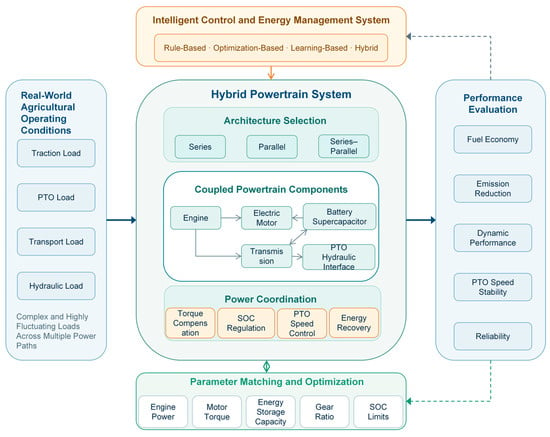
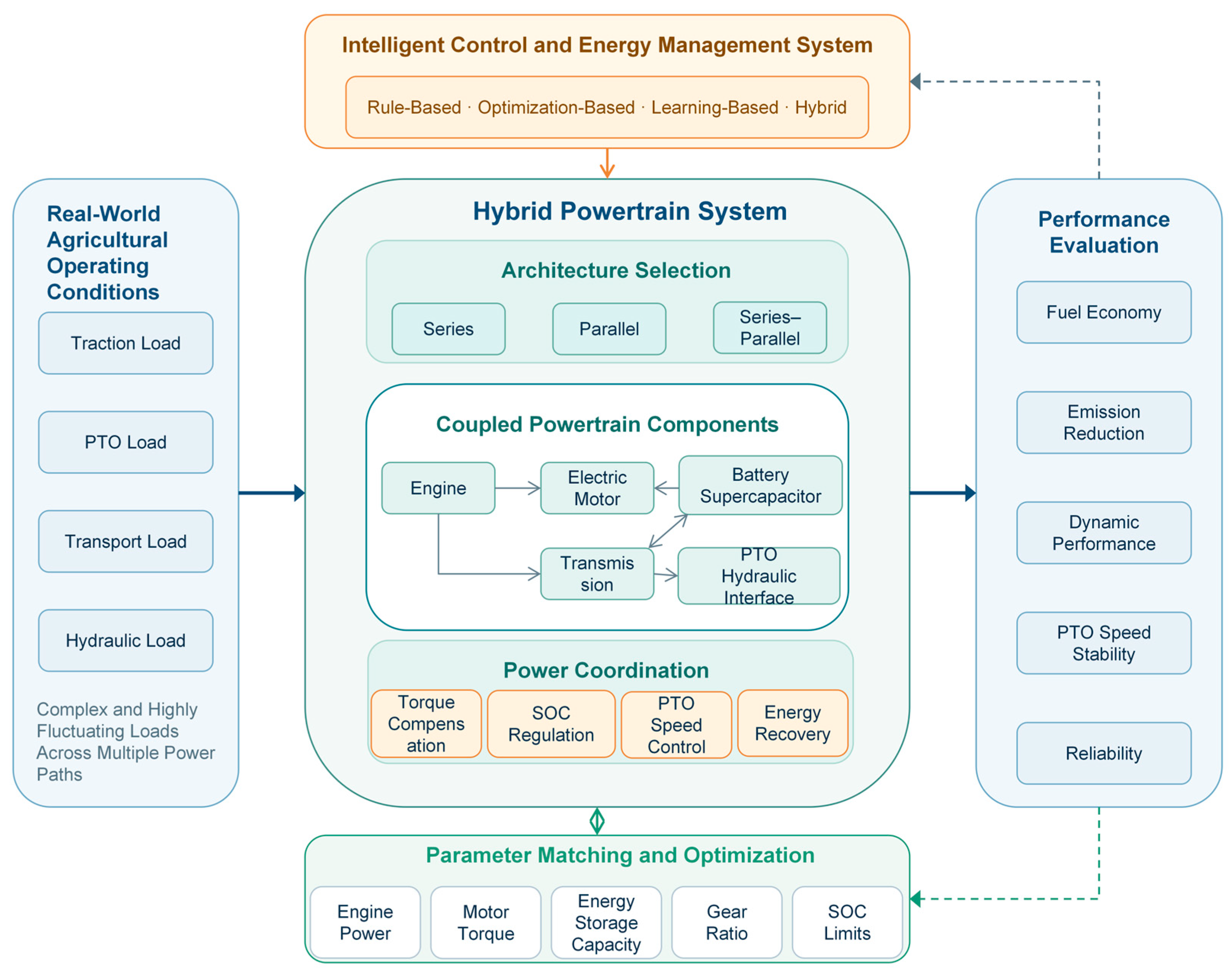
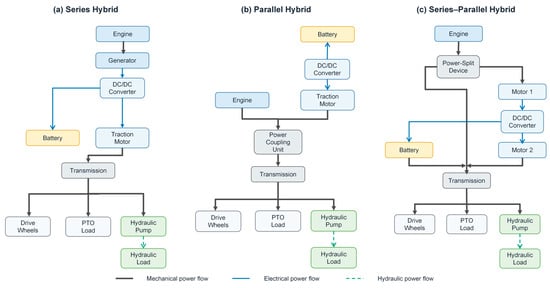
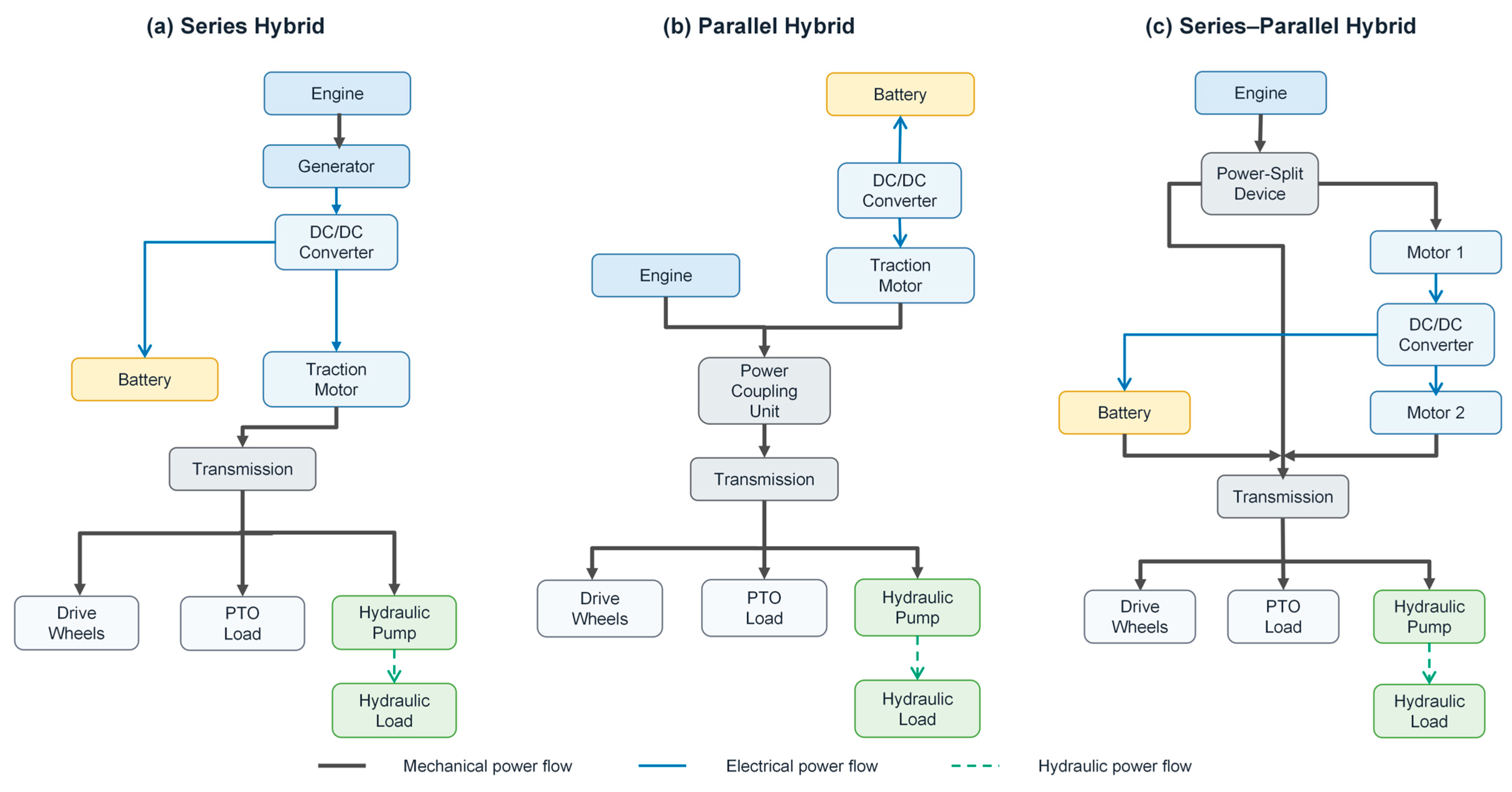
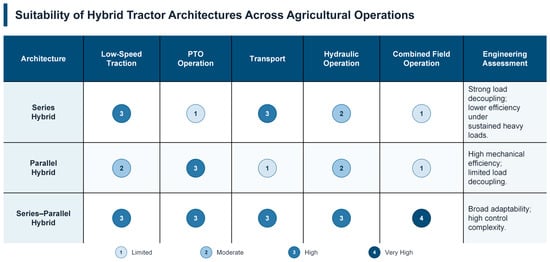
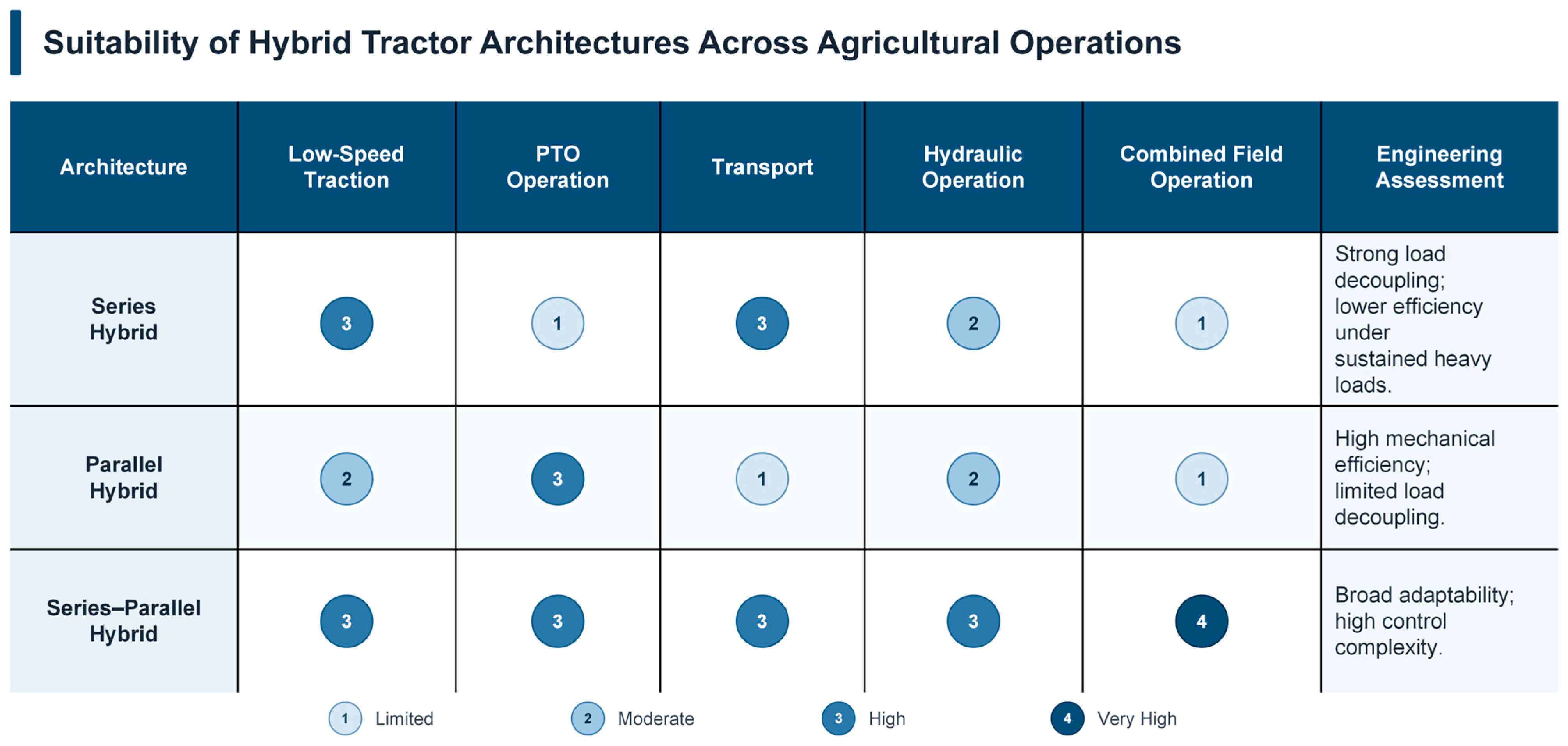
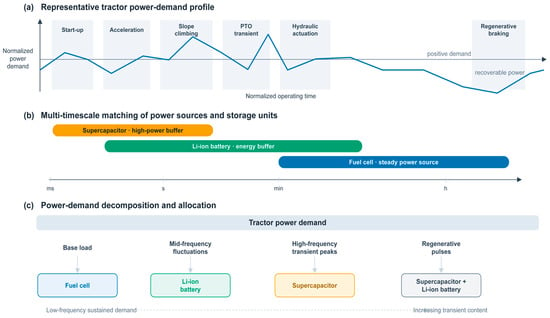
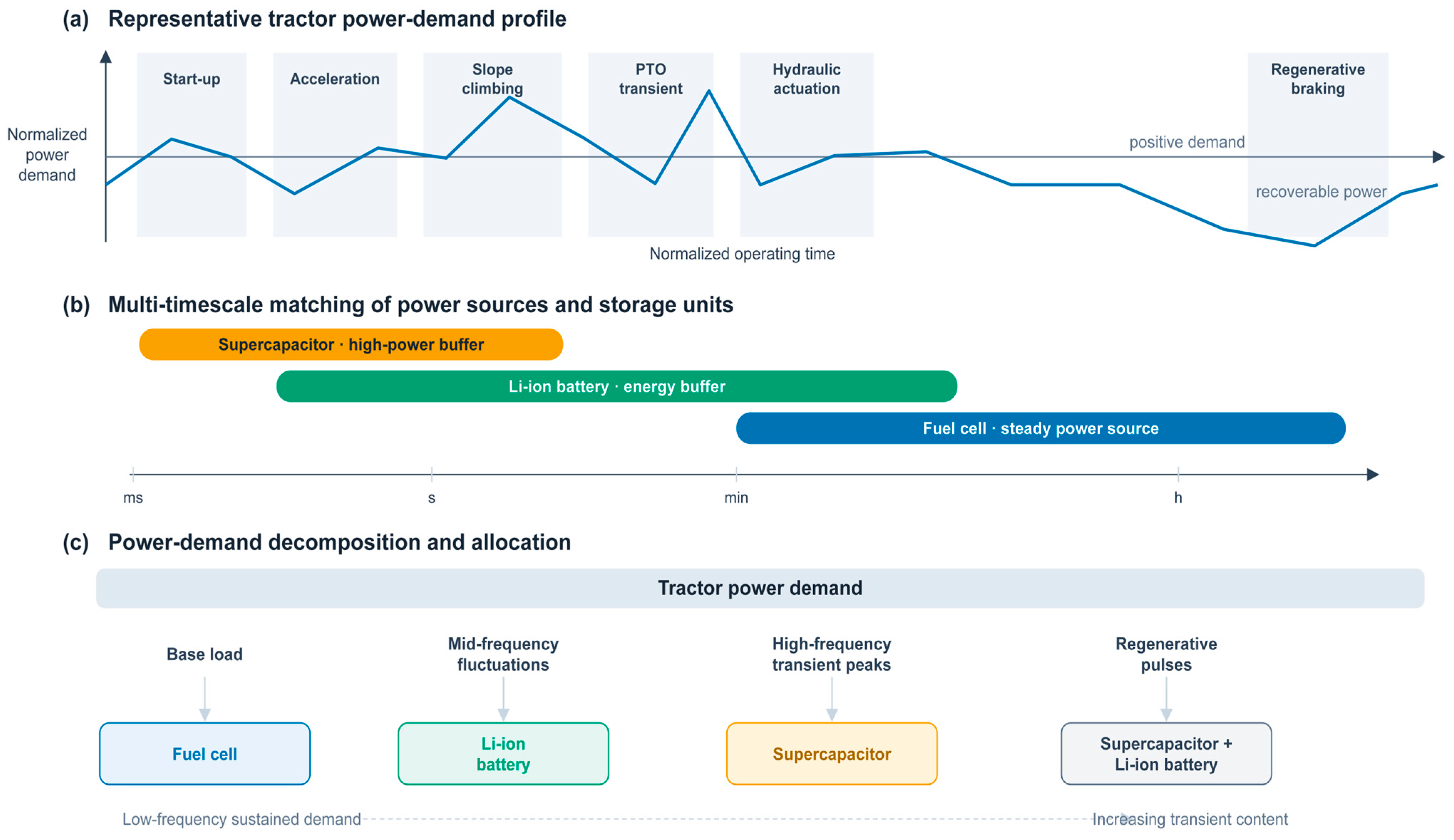
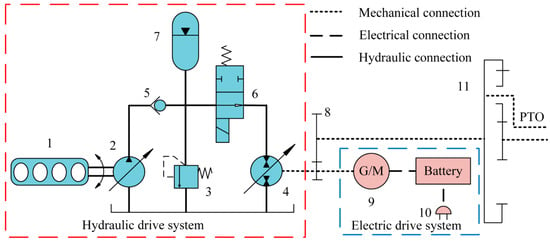
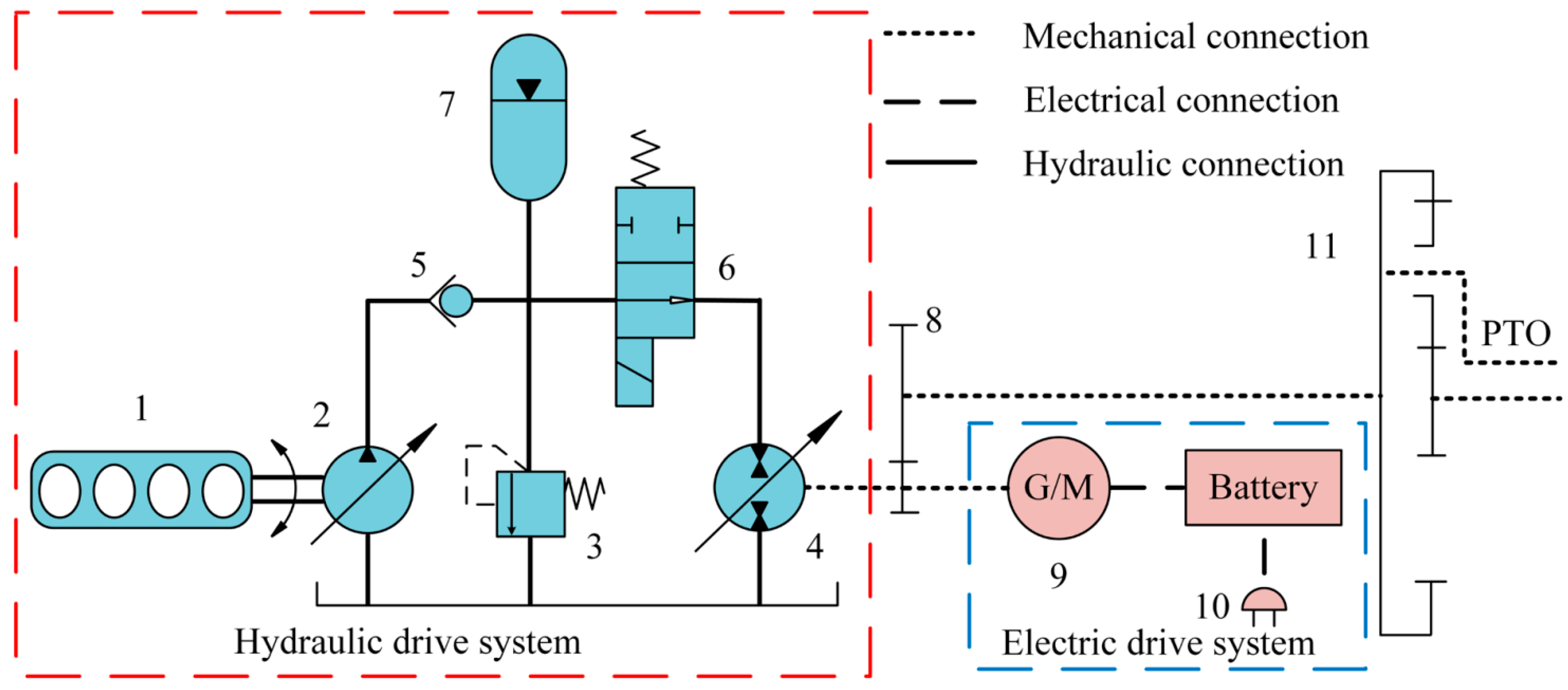
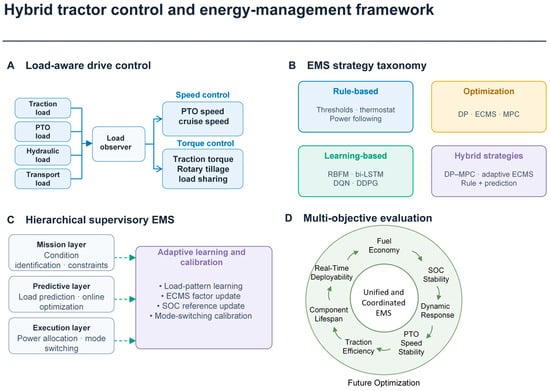
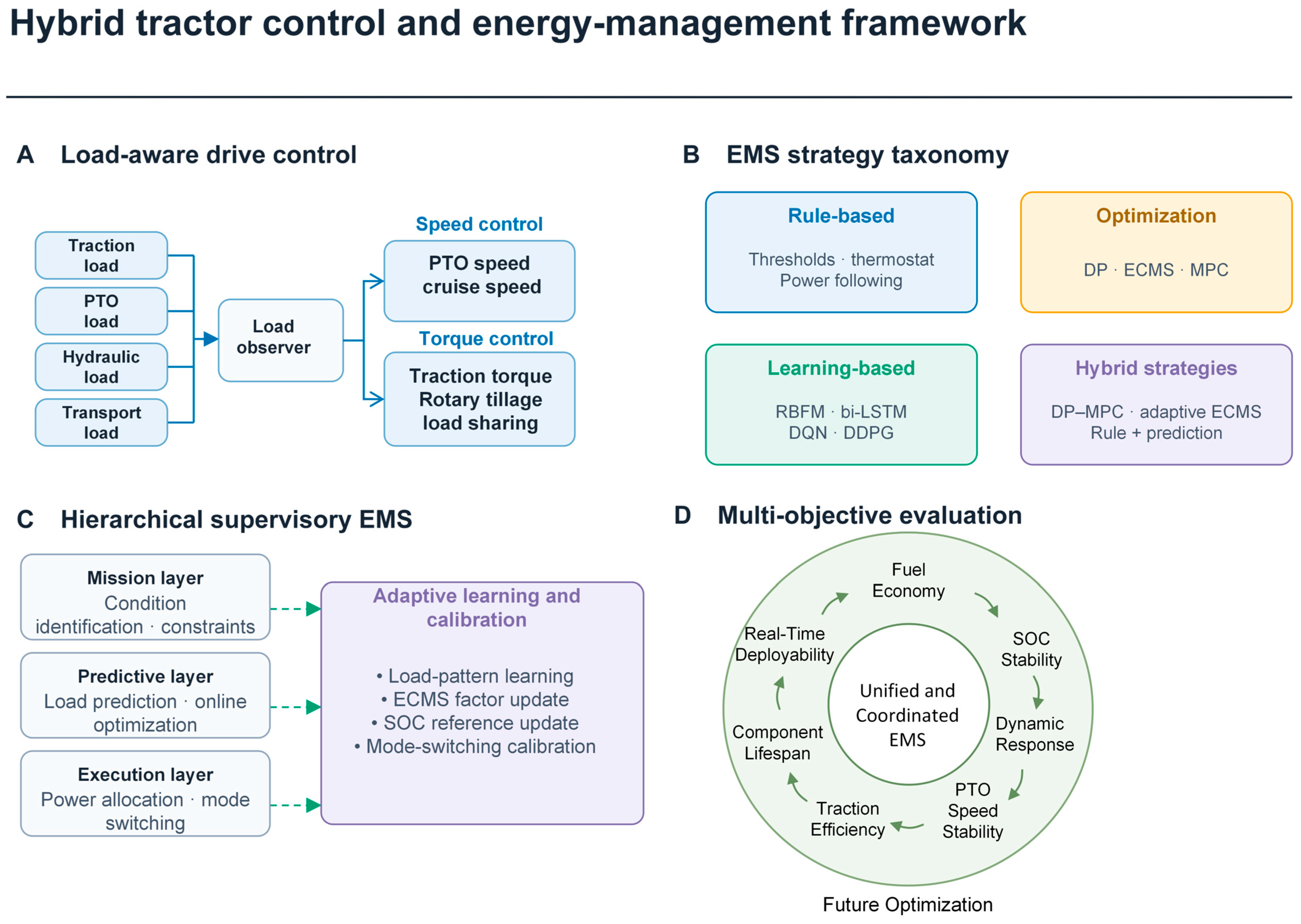
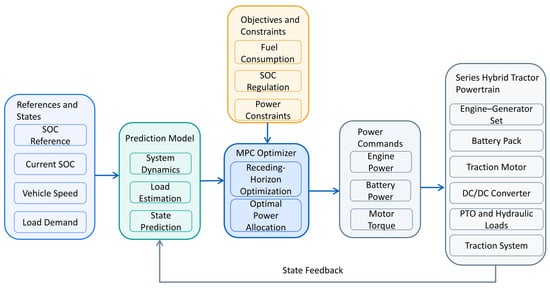
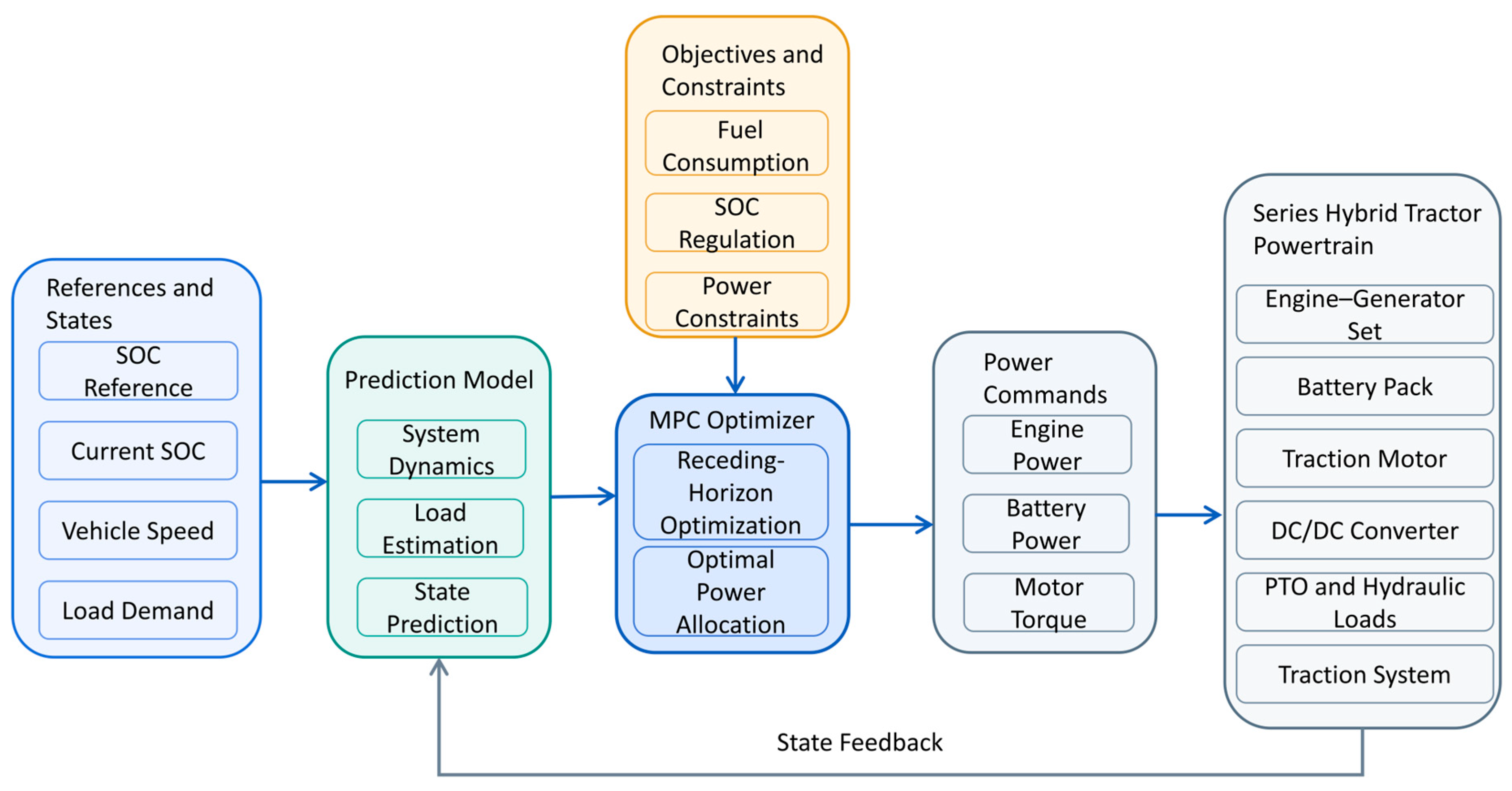
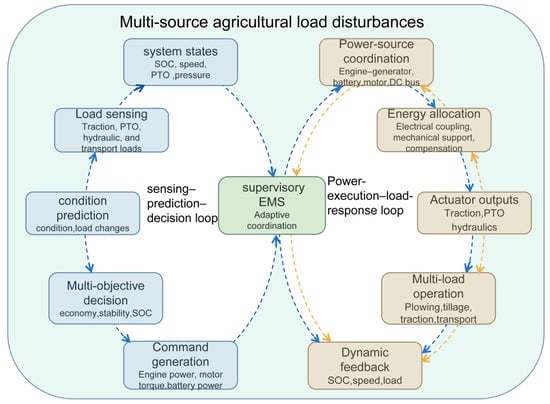
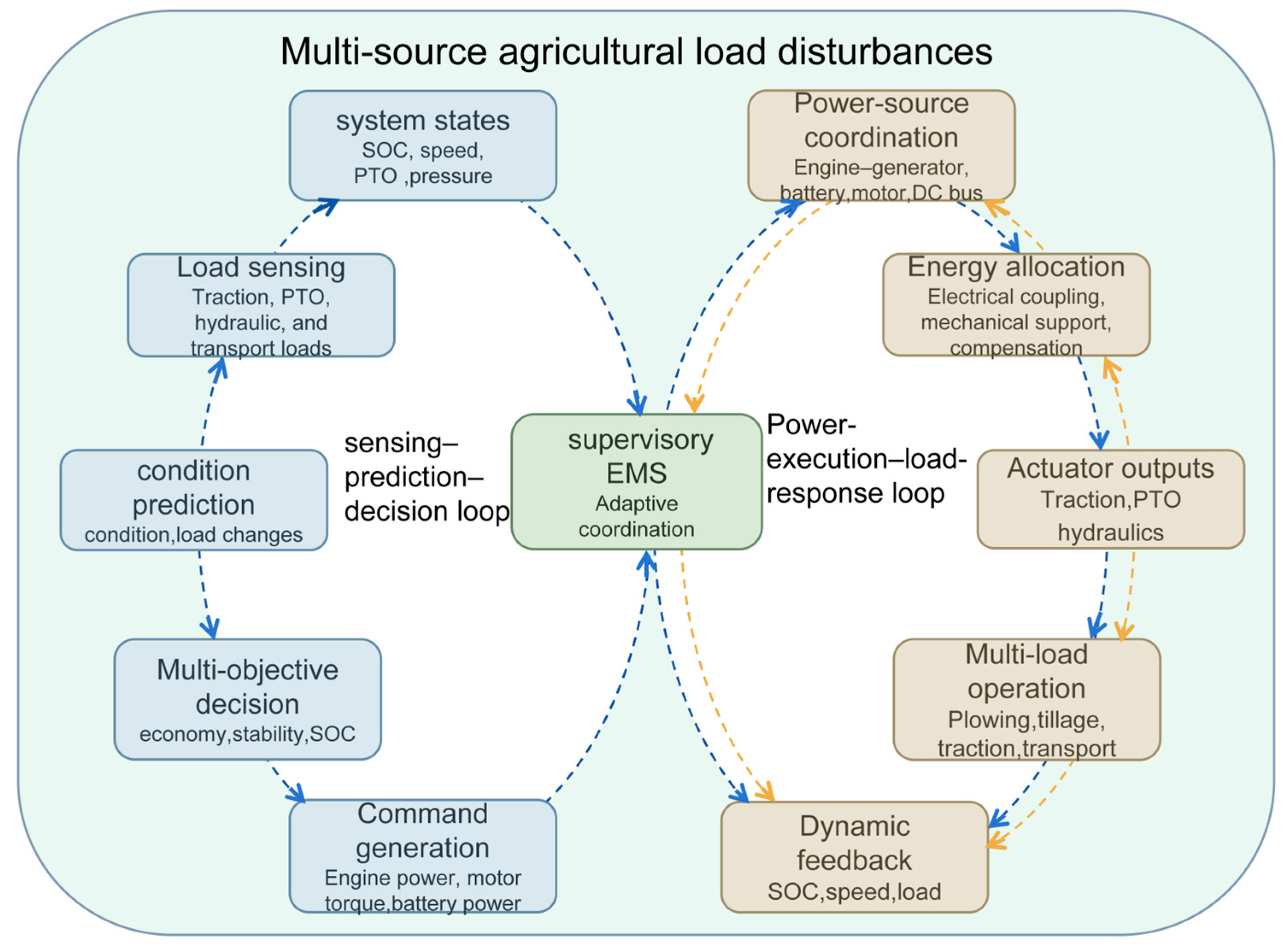
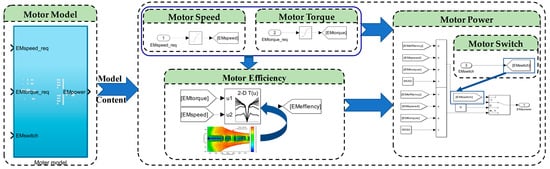
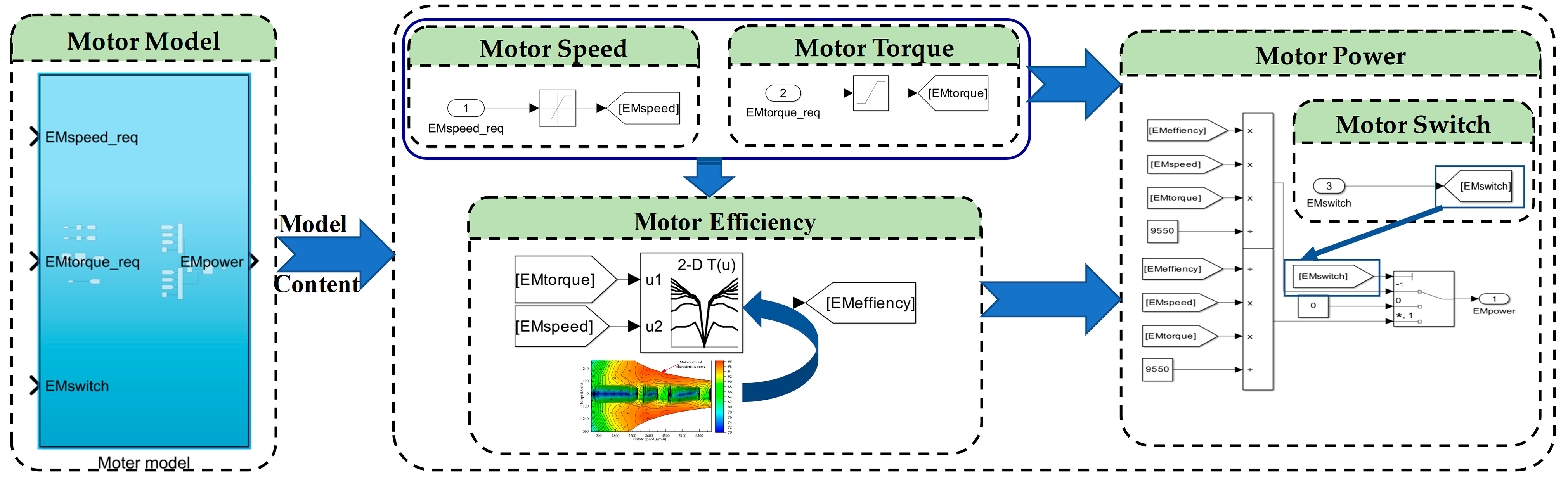
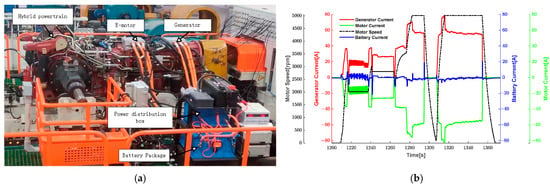
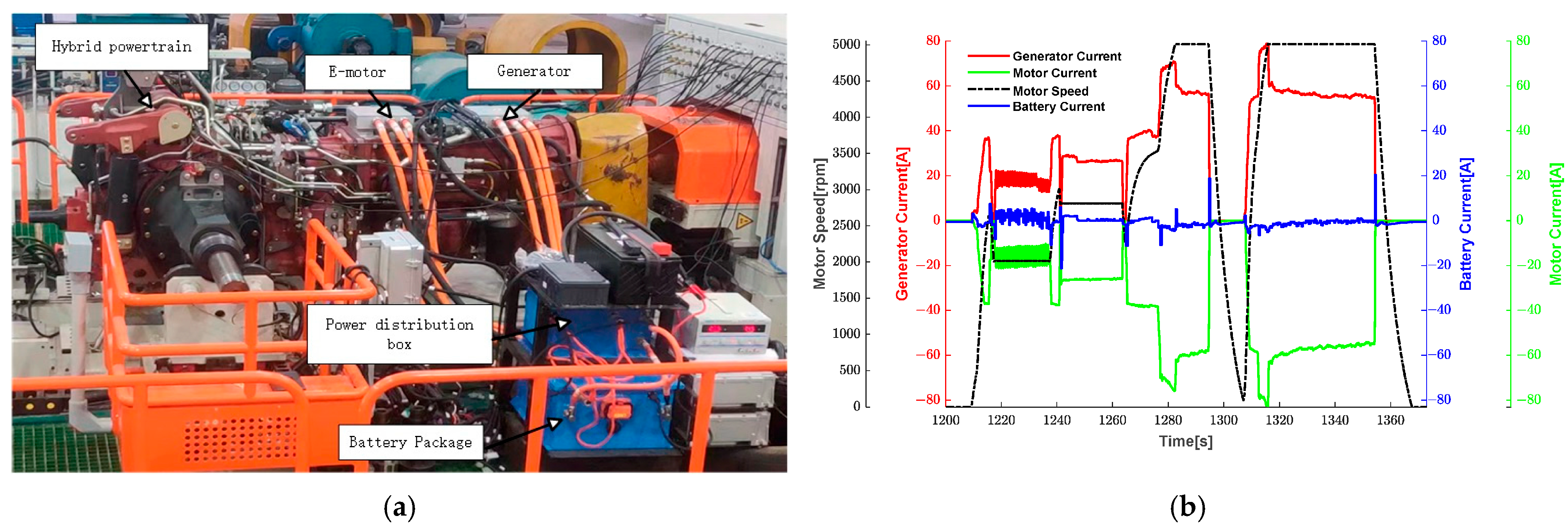
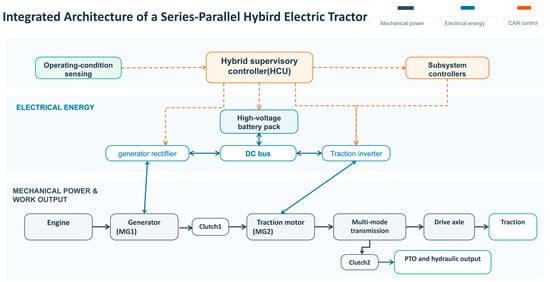
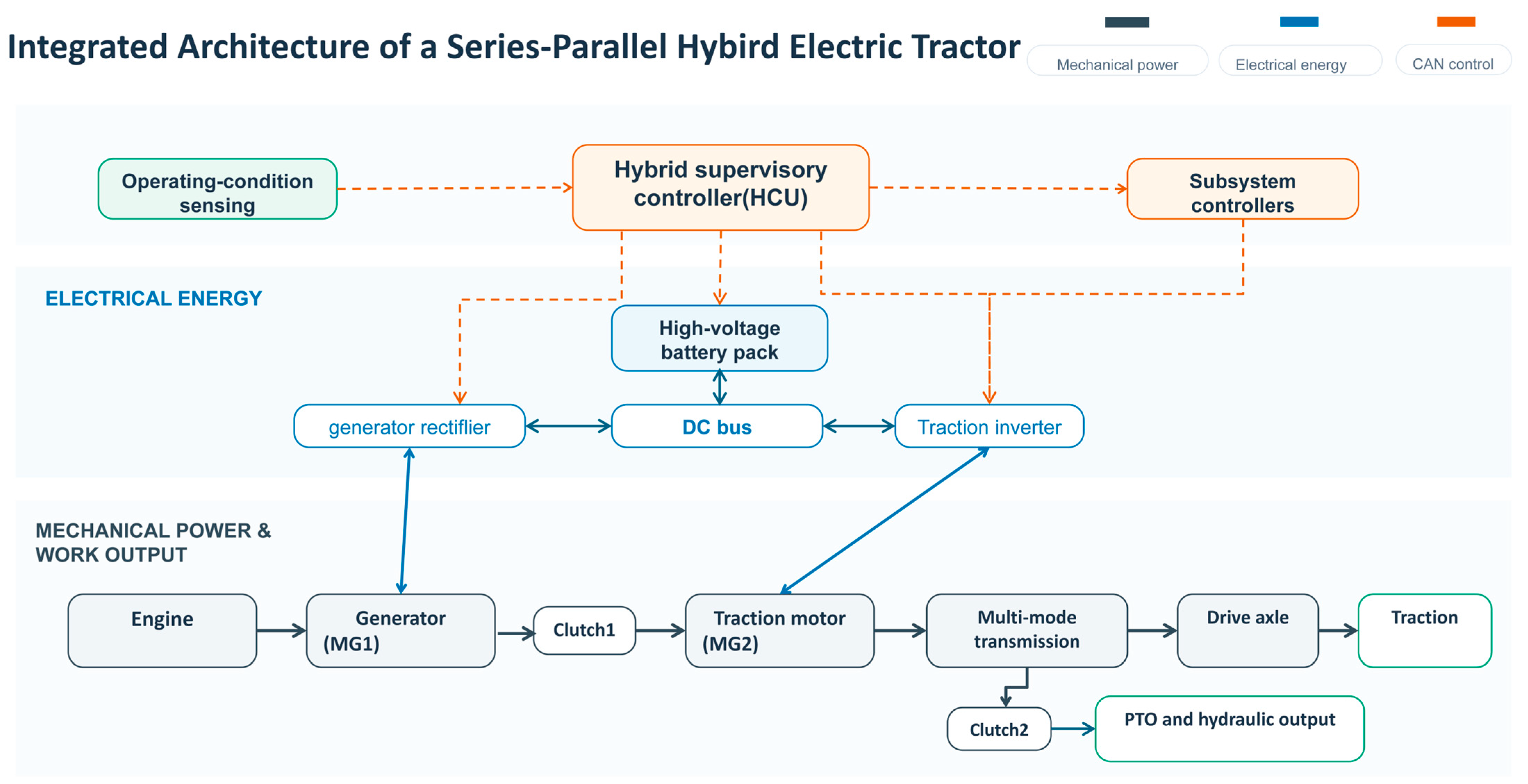
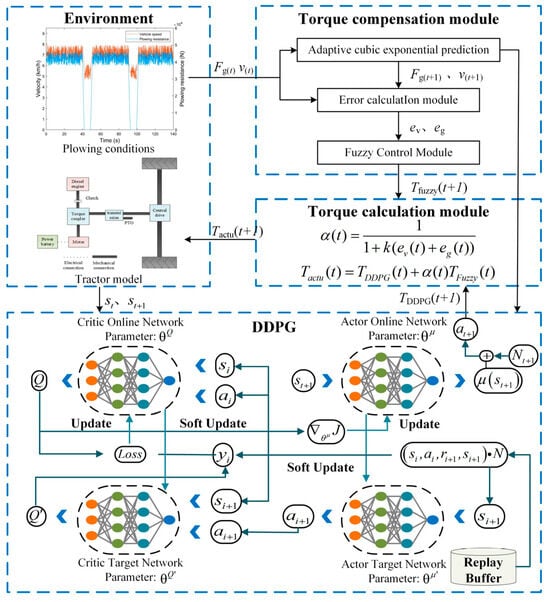
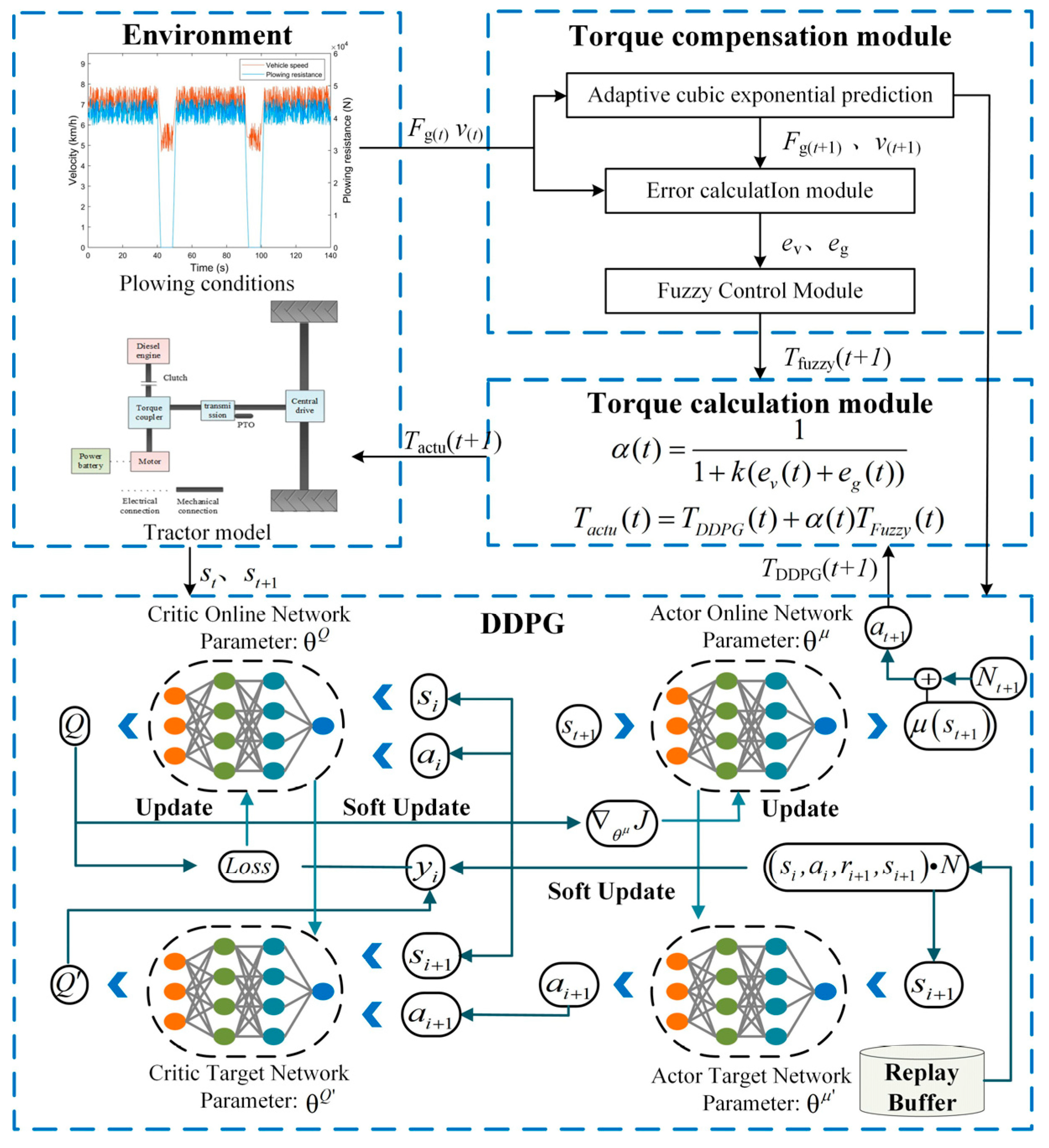
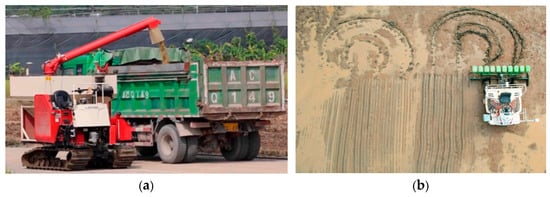
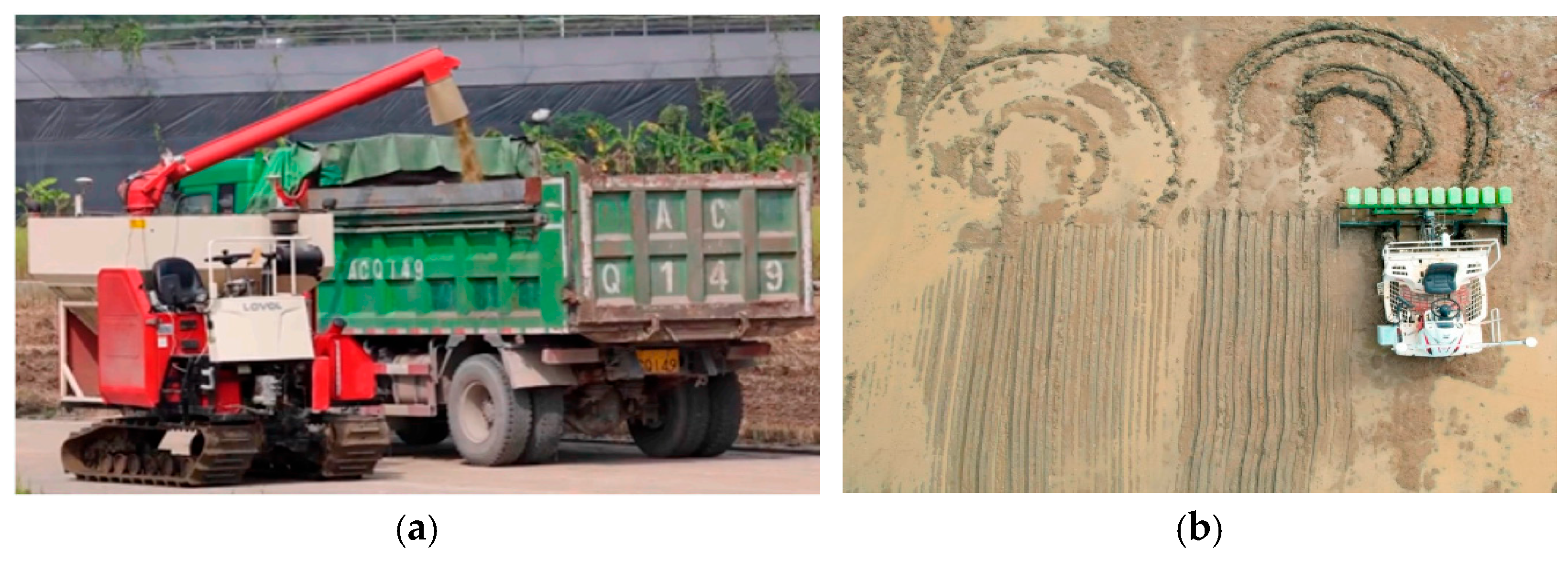

Disclaimer/Publisher’s Note: The statements, opinions and data contained in all publications are solely those of the individual author(s) and contributor(s) and not of MDPI and/or the editor(s). MDPI and/or the editor(s) disclaim responsibility for any injury to people or property resulting from any ideas, methods, instructions or products referred to in the content. |
© 2026 by the authors. Licensee MDPI, Basel, Switzerland. This article is an open access article distributed under the terms and conditions of the Creative Commons Attribution (CC BY) license.