


Abstract
The increasing integration of distributed energy resources (DERs), particularly photovoltaic (PV) systems, is transforming modern power systems and introducing new challenges for protection, reliability, and stability. The transition toward smart grids with bidirectional power flows has significantly changed the operating conditions under which protection systems must perform. Among the key challenges associated with DER integration is unintentional islanding, in which a DER or a group of DERs continues to energize a portion of the distribution network after disconnection from the main utility grid. If not detected and cleared within the required time, islanding may pose risks to personnel safety, power quality, equipment, and system stability. This paper presents a comprehensive review and critical analysis of islanding detection methods for PV and inverter-based DER systems, including passive, active, hybrid, and communication-based techniques. The methods are evaluated with respect to detection speed, the non-detection zone (NDZ), false-trip behavior, power-quality impact, implementation complexity, cost, and adaptability to different inverter and grid conditions. Particular attention is given to multi-inverter systems, weak and converter-dominated grids, communication and cybersecurity, and standardization and benchmarking challenges. Based on the identified limitations and research gaps, future research directions are discussed, with emphasis on AI/ML-based detection, adaptive protection, grid-forming inverters, multi-inverter coordination, PV–battery systems, weak-grid and low-inertia networks, and experimental validation. The review highlights the need for adaptive, coordinated, and intelligent islanding protection frameworks capable of ensuring reliable detection in increasingly complex inverter-dominated power systems.
1. Introduction
The global energy sector is currently undergoing a significant transformation due to increased electricity demand, decarbonization policies, and the integration of renewable energy sources (RES). Electricity has become one of the most important factors in social and economic growth. Recent projections indicate that global electricity demand will continue to increase rapidly during the coming years, creating additional pressure on existing power systems and accelerating investments in sustainable energy technologies [1]. The introduction of distributed generation (DG) has significantly transformed power systems from centralized systems to decentralized small-scale power systems [2]. The increasing penetration of distributed energy resources (DERs) offers numerous technical and economic benefits. DG can reduce transmission losses, improve local voltage support, increase energy efficiency, and contribute to the decarbonization of electricity production. Furthermore, renewable energy technologies support the development of smart grids, which utilize advanced communication, automation, and control technologies to improve system reliability, operational flexibility, and energy management capabilities [3]. Despite these advantages, the integration of DG introduces several new technical challenges for distribution system operators (DSOs). Issues such as voltage regulation, reverse power flows, protection coordination, power quality, and frequency stability have become increasingly important as renewable energy penetration levels continue to rise [4]. One of the most critical challenges associated with high DER penetration is the phenomenon known as islanding operation. Islanding occurs when a portion of the electrical network containing one or more DG units becomes electrically isolated from the main utility grid while continuing to energize local loads. Depending on the operating conditions, islanding can be either intentional or unintentional. A schematic representation of an islanding condition is shown in Figure 1. Unintentional islanding poses serious risks to both personnel safety and system operation. Maintenance workers may incorrectly assume that disconnected lines are de-energized, while DG units continue supplying power to the isolated section. In addition, islanded systems may experience significant voltage and frequency deviations due to the absence of support from the main grid. These deviations can damage equipment, compromise power quality, and create hazardous operating conditions [5,6]. To mitigate these risks, modern grid codes and international standards require DG units to detect islanding conditions and disconnect from the network within specified time limits. Over the past decades, numerous islanding detection techniques have been developed, ranging from simple passive protection schemes to advanced active and communication-based methods. Each approach presents unique advantages and limitations regarding detection speed, reliability, implementation complexity, and non-detection zone (NDZ) performance [7,8,9,10]. This paper provides a comprehensive overview of islanding detection methods in distribution networks with high penetration of distributed photovoltaic (PV) generation.
Figure 1.
Schematic representation of an islanding condition.
The literature included in this review was collected through a structured search of IEEE Xplore, Scopus, and Web of Science. Search terms combined islanding/anti-islanding/loss-of-mains with PV, inverter-based DG, NDZ, rate of change of frequency (ROCOF), active frequency/voltage shift, hybrid, transfer trip (TT), power line carrier communication (PLCC), supervisory control and data acquisition (SCADA), and, more recently, grid-forming (GFM), multi-inverter, PV–battery, artificial intelligence/machine learning (AI/ML), and cybersecurity. The publication period of the included references spans from 2003 to 2026. Studies were included if they addressed islanding operation or islanding detection principles, performance, or validation for DG/PV-dominated distribution networks. Studies focusing exclusively on unrelated protection topics were excluded. For the quantitative synthesis of research trends, application contexts, and research gaps in islanding detection, a subset of method-focused contributions was used according to the following criteria: single primary assignment to avoid double counting, exclusion of review articles, standards, technical reports, general background studies, and studies focused solely on experimental testing of existing methods, with [11,12] counted as one contribution.
The remainder of this paper is organized as follows. Section 2 provides an overview of islanding operation and the main islanding detection methods, including passive, active, hybrid, and communication-based approaches. Section 3 presents a comprehensive discussion of the key performance aspects and research gaps associated with islanding detection, including detection speed and NDZ, false trips and detection reliability, power quality, implementation complexity and cost, multi-inverter systems, weak-grid and converter-dominated conditions, communication and cybersecurity, and standardization and benchmarking. Section 4 discusses future research perspectives, with particular emphasis on AI/ML-based detection, adaptive protection, GFM inverters, multi-inverter coordination, PV–battery systems, weak-grid and low-inertia networks, and standardization and experimental validation. Finally, Section 5 summarizes the main findings of this study and provides the concluding remarks.
2. Islanding Operation and Detection Methods
2.1. Islanding Operation
The integration of DERs has significantly increased the chances of islanding events within modern distribution networks. Traditional power systems were designed with unidirectional power flows, where electricity was generated in centralized power plants and delivered to consumers through transmission and distribution infrastructures. The introduction of DG has altered this paradigm by enabling bidirectional power flows and localized energy production [13]. At the distribution level, islanding operation refers to a condition in which a DG unit, either independently or together with other generation units, continues supplying electrical energy to a portion of the network after it has become electrically separated from the remainder of the utility system [5]. The resulting electrically isolated portion of the distribution network constitutes an unintentional island. Although such an island may exhibit characteristics similar to those of a microgrid, it should not necessarily be regarded as a microgrid, since a microgrid generally has defined electrical boundaries, coordinated control, and the capability to operate in grid-connected and/or islanded modes. Islanding operation can be classified as either intentional or unintentional. Intentional islanding is often employed as a planned operational strategy in microgrids and resilient power systems. During severe disturbances, operators may deliberately isolate portions of the network to maintain service continuity for critical loads. Once normal system conditions are restored, the isolated sections can be resynchronized and reconnected to the main grid [14]. Beyond the detection and prevention of unintentional islanding, a related but distinct research direction addresses the controlled formation and partitioning of microgrid islands for resilient power supply during faults. Recent work on microgrid island partitioning with DERs formulates partitioning as an optimal decision-making problem under uncertainty, considering outage-related economic loss, network loss cost, switching operation cost, restoration performance, and user satisfaction [15]. In that framework, the island partitioning problem is described as a Markov decision process and solved by reinforcement learning-based optimization combining Cumulative Prospect Theory (CPT) and transfer learning validated on an improved IEEE-69 node system. This illustrates that research on islanded operation extends beyond anti-islanding detection and includes intentional island reconstruction and partitioning for fault recovery. In contrast, the present review focuses on the detection of unintentional islanding in distribution networks with high penetration of PV generation. Unintentional islanding, however, occurs unexpectedly and is generally considered undesirable. It may result from faults, breaker operations, maintenance activities, protection system actions, or failures within the transmission or distribution network. If a DG unit remains connected after the utility supply is disconnected, local loads may continue receiving power, creating an islanded operating condition [13]. The occurrence of unintentional islanding introduces several technical and safety concerns. The most significant risk involves personnel safety. Utility workers performing maintenance or fault repair activities may assume that disconnected lines are de-energized, while a DG unit continues supplying voltage and current to the isolated section of the network [5]. Additional concerns arise from the operational characteristics of islanded systems. Unlike large interconnected power systems, islanded networks possess significantly lower inertia. Consequently, relatively small variations in generation or load can produce substantial frequency deviations. Such frequency instability may negatively affect power quality, system reliability, and equipment operation [5]. Voltage regulation also becomes more challenging during islanded operation. In a grid-connected system, voltage is maintained by the utility network and associated control mechanisms. Following islanding, voltage levels depend primarily on the balance between local generation and load demand. Excess generation can lead to overvoltage conditions, whereas insufficient generation may cause unacceptable voltage drops [6]. Furthermore, reconnection of an islanded system to the utility grid without proper synchronization may result in severe transient currents and mechanical stresses on generation equipment. These conditions can damage generators, inverters, transformers, and other electrical apparatus, highlighting the necessity for rapid and reliable islanding detection mechanisms [5].
2.2. Islanding Detection Methods
To address the risks associated with islanding operation, numerous detection techniques have been developed and implemented within DG systems. These methods can generally be classified into passive, active, hybrid, and communication-based approaches, as shown in Figure 2.
Figure 2.
General classification of islanding detection methods.
Passive methods rely on local measurements obtained at the point of common coupling (PCC). Parameters such as voltage magnitude, frequency, phase angle, harmonic distortion, and ROCOF are continuously monitored to identify abnormal conditions indicating potential islanding operation. Common passive techniques include under/overvoltage (UV/OV) protection, under/overfrequency (UF/OF) protection, ROCOF, vector-shift (VS) detection, voltage-unbalance (VU) analysis, and harmonic distortion monitoring [16,17]. Passive techniques are attractive because of their simplicity, low implementation cost, and minimal impact on power quality. In many cases, the required measurements are already available within existing protection devices. However, passive methods suffer from the presence of an NDZ, where generation and load are closely matched, resulting in only minor variations of monitored electrical quantities following islanding [17]. Among passive approaches, ROCOF protection is one of the most widely adopted techniques. The method monitors the rate of frequency variation over time and detects islanding when the measured frequency derivative exceeds a predefined threshold. Large generation–load imbalances typically produce significant frequency deviations, allowing rapid detection. Nevertheless, ROCOF performance deteriorates when generation and load remain nearly balanced immediately after island formation. Active methods attempt to overcome the limitations of passive detection by intentionally introducing controlled disturbances into the system and observing the resulting response. During normal grid-connected operation, the utility network suppresses these disturbances. Following islanding, however, the system response becomes significantly different, enabling reliable detection [18]. Examples of active methods include active frequency drift (AFD), Sandia frequency shift (SFS), Sandia voltage shift (SVS), impedance measurement (IM) techniques, and slip-mode frequency shift (SMS). Although active methods generally exhibit smaller NDZs compared to passive approaches, they may degrade power quality due to the intentional perturbations introduced into the system [18]. Hybrid methods combine passive and active detection principles to achieve improved performance. Typically, a passive technique continuously monitors system conditions and activates an active detection mechanism only when abnormal behavior is suspected. This approach reduces unnecessary disturbances while simultaneously minimizing the NDZ [18]. Communication-based methods represent another category of anti-islanding protection. These techniques utilize communication channels between DG units and utility infrastructure to verify grid connectivity. Examples include power line carrier communication (PLCC), transfer-trip (TT) schemes, and supervisory control and data acquisition (SCADA)-based approaches. Communication-based methods provide highly reliable islanding detection but require additional infrastructure and investment costs [19].
The ratings in Table 1, Table 2, Table 3 and Table 4 constitute an ordinal qualitative synthesis, not measured values or universal limits. For each method row, the rating was assigned based on the results reported in the sources cited in that row, as follows: NDZ reflects detection capability under the generation–load mismatch and load quality factor range investigated in those sources; speed refers only to the local detection decision at the PCC, not to communication latency or total trip/clearing time; complexity reflects additional measurement, control, injection, logic, or communication infrastructure required beyond standard UV/OV and UF/OF protection schemes; false-trip behavior reflects sensitivity to non-islanding disturbances, interacting converters, or communication failure reported in those sources; power-quality impact reflects the intentional perturbation introduced by the method itself.
Table 1.
Qualitative comparison of passive islanding detection methods in DG systems.
Table 2.
Qualitative comparison of active islanding detection methods in DG systems.
Table 3.
Qualitative comparison of hybrid islanding detection methods in DG systems.
Table 4.
Qualitative comparison of communication-based islanding detection methods in DG systems.
Where the cited sources for one method used different test networks, configurations (single/multi-inverter), inverter controls, thresholds, or grid strengths, the rating represents the dominant trend across those sources. Divergent conditions are retained in the Strengths/Limitations columns. Simulation, controller-hardware-in-the-loop/power-hardware-in-the-loop (CHIL/PHIL), laboratory, and field results were not mixed into a single number: the Ref. column identifies the source type, and standardized test frameworks [17,77,78,79] with NDZ assessment or grid codes [35] are used as the reference basis. Detailed test-specific Qf, ΔP, ΔQ, and grid-strength values are therefore not reproduced as universal NDZ boundaries because they are not directly comparable across studies.
2.3. Passive Islanding Detection Methods
2.3.1. Rate of Change of Frequency (ROCOF)
ROCOF protection is among the most widely implemented passive islanding detection methods in modern distribution networks. The principle of operation is based on monitoring the rate of frequency variation over time at the PCC. Following island formation, the sudden imbalance between local generation and load causes a frequency deviation whose rate of change is typically significantly higher than during normal grid operation. Since island formation separates the DG unit from the larger interconnected system, the effective inertia and frequency-support capability of the resulting island are generally reduced, making frequency variations more pronounced for a given power imbalance [20,27,28]. The effectiveness of ROCOF protection strongly depends on the magnitude of the active-power imbalance between the DG unit and local loads. Large imbalances generally result in rapid frequency change and reliable detection. However, when generation and consumption are closely matched, frequency deviations may remain below the detection threshold, resulting in the formation of an NDZ [8,27].
2.3.2. Under/Overvoltage and Under/Overfrequency (UV/OV, UF/OF) Protection
UV/OV and UF/OF protection schemes represent the simplest and most commonly implemented anti-islanding techniques. These methods continuously monitor voltage magnitude and system frequency at the PCC and compare measured values with predefined operating limits. If frequency or voltage exceeds acceptable boundaries, the protection system initiates disconnection of the DG [21,80]. The operation of these methods is directly related to the mismatch between generated and consumed active and reactive power following islanding. Active-power imbalance primarily affects frequency, whereas reactive-power imbalance influences voltage magnitude. Although UV/OV and UF/OF protection schemes are inexpensive and easy to implement, their performance is limited by relatively large NDZs when generation and load are nearly balanced [21,22].
2.3.3. Rate of Change of Output Power (ROCOP)
The ROCOP method is based on monitoring variations in the active power delivered by the DG. During normal operation, output power changes according to operating conditions and load demand. Following islanding, the change in network conditions can produce a rapid variation in the active-power output, which can be used as an indication of island formation [26,32,33]. ROCOP provides a fast response and can exhibit a relatively small NDZ. However, its effectiveness remains dependent on operating conditions and power mismatch, while load switching and other power disturbances may produce similar power transients [26,32,33].
2.3.4. Rate of Change of Frequency over Power (ROCOFOP)
The ROCOFOP method combines frequency variation measurements with power variation analysis to improve islanding detection sensitivity. Instead of relying solely on the rate of frequency change, the method evaluates the relationship between frequency variation and active-power variation. This provides increased sensitivity under small generation–load mismatches, where conventional ROCOF may exhibit reduced detection capability [26,32,35]. Compared with conventional ROCOF protection, ROCOFOP can provide a smaller NDZ and lower detection error under the investigated conditions. However, accurate implementation requires reliable measurements of both frequency and power quantities, while appropriate threshold selection remains important for avoiding incorrect decisions [26,32,35].
2.3.5. Rate of Change of Phase-Angle Difference (ROCOPAD)
The ROCOPAD protection evaluates the variation of phase-angle difference over time. Islanding alters the dynamic relationship between local generation and loads, resulting in measurable phase-angle shifts at the PCC. By monitoring the rate of change of these phase-angle differences, islanding conditions can be identified before substantial voltage or frequency deviations occur [29]. The method can provide rapid detection because phase-angle variations can occur immediately following island formation. Its effectiveness, however, depends on the operating conditions, system dynamics, and selected detection threshold [29].
2.3.6. Voltage Unbalance (VU) and Total Harmonic Distortion (THD)
VU and THD methods rely on power-quality indicators. During islanded operation, the absence of support from the main utility grid often causes an increase in voltage asymmetry and harmonic distortion. Monitoring these parameters provides an additional means of detecting abnormal operating conditions associated with island formation [21]. Although these techniques can improve detection capability, they may also be influenced by non-islanding disturbances, including load switching events and nonlinear loads [41]. Consequently, they are commonly used in combination with other passive detection methods.
2.3.7. Vector Shift (VS)
The VS method detects sudden changes in the phase angle of the voltage waveform at the PCC. Immediately following disconnection from the utility grid, the voltage phase angle may experience a significant displacement due to the altered system dynamics. If the measured phase shift exceeds a predefined threshold, islanding is assumed and the DG unit is disconnected [38]. VS protection is characterized by fast response times and relatively simple implementation. However, similar to other passive techniques, its effectiveness depends on system operating conditions and may be affected by non-islanding disturbances.
The previous sections described the principal passive islanding detection methods and their operating principles. The performance of these methods can be comparatively assessed using the NDZ, detection speed, implementation complexity, false-trip behavior, and impact on power quality. Passive methods rely exclusively on locally measured electrical quantities, such as voltage, frequency, active power, phase angle, voltage unbalance, and harmonic distortion, without intentionally perturbing the DG system. Consequently, they generally have negligible direct impact on power quality. However, their detection capability depends strongly on the magnitude of the electrical changes produced by island formation and on the selected detection thresholds [13,19,20,23,24,26,33]. Table 1 provides a qualitative comparison of the considered passive islanding detection methods.
The qualitative ratings in Table 1 are based on the operating conditions, system configurations, and parameter settings reported in the analyzed studies. They are intended for comparative synthesis and should not be interpreted as universal characteristics of the considered methods. The NDZ, detection speed, false-trip behavior, and power-quality impact depend on power mismatch, load characteristics, grid strength, measurement techniques, threshold settings, and inverter control strategy. The Low power-quality rating reflects the absence of intentional perturbation in passive methods, while indirect effects associated with nuisance tripping or sensitivity to waveform disturbances are reflected in the false-trip behavior and limitations.
As shown in Table 1, passive islanding detection methods provide a simple and non-invasive solution because they do not introduce intentional disturbances into the grid. However, their detection capability is strongly dependent on the electrical mismatch between local generation and load. Conventional UV/OV and UF/OF protection methods generally exhibit a relatively large NDZ because voltage and frequency may remain within their prescribed protection limits following islanding, particularly under closely balanced generation and load conditions [13,20,23,24,25]. ROCOF and ROCOP can provide faster detection than conventional magnitude-based protection because they respond to rapid changes in frequency and active-power dynamics following loss of the utility grid. Nevertheless, their performance remains sensitive to power imbalance, system inertia, measurement characteristics, threshold selection, and non-islanding disturbances [19,26,27,32,33]. ROCOFOP extends this principle by considering the relationship between frequency and active-power variations, potentially providing improved discrimination under operating conditions in which frequency-only indicators may be less effective [26,32,35]. Similarly, phase-angle-based methods such as ROCOPAD and VS can provide rapid detection without intentionally perturbing the network. However, their effectiveness depends on system dynamics, operating conditions, measurement accuracy, and threshold selection [23,29,33,38]. VU and harmonic-based methods provide additional local indicators that may improve discrimination under particular three-phase and inverter-based operating conditions, although they remain susceptible to voltage-unbalance, harmonic, and other non-islanding disturbances [33,36,37]. By and large, passive methods offer simple implementation, low computational requirements, and negligible intentional impact on power quality, but they generally cannot eliminate the NDZ and may experience false or nuisance trips when non-islanding disturbances produce electrical signatures similar to those associated with islanding [13,19,26,35]. These limitations provide the main motivation for the development of active, hybrid, and remote islanding detection techniques discussed in the subsequent sections.
2.4. Active Islanding Detection Methods
2.4.1. Impedance Measurement (IM)
The IM method is an active islanding detection technique in which a controlled perturbation is injected into the system and the resulting voltage and current response is used to estimate the equivalent impedance seen from the PCC. Under grid-connected conditions, the measured impedance is strongly influenced by the utility network, whereas island formation changes the electrical conditions seen by the DG unit. An islanding condition can therefore be identified when the estimated impedance exceeds a predefined criterion [11,12,43,44,45,46]. An important advantage of impedance-based detection is its ability to detect islanding even under conditions of small or nearly zero generation–load mismatch. However, the method requires accurate measurement and estimation of the relevant impedance and depends on the magnitude, frequency, and characteristics of the injected perturbation. Consequently, measurement accuracy, background harmonics, and injection strategy can affect detection reliability and implementation complexity [11,12,44,45,46].
2.4.2. Active Frequency Drift (AFD)
AFD is one of the most widely investigated active islanding detection methods for inverter-based DG systems. The method introduces asymmetry into the inverter output current waveform by slightly modifying the duration of positive and negative half-cycles. This controlled distortion causes a gradual drift of system frequency following island formation [48]. While the utility grid is connected, the imposed disturbance has negligible influence on system frequency because of the strong stabilizing effect of the interconnected network. After islanding occurs, however, the frequency begins to deviate from its nominal value. Once the deviation exceeds the thresholds defined by conventional UF or OF protection functions, the DG unit is disconnected [48]. The primary advantage of AFD is its relatively simple implementation and its ability to reduce the NDZ compared with conventional passive methods. However, the intentional frequency perturbation can introduce waveform distortion and harmonic components into the inverter output. Excessive perturbation may therefore degrade power quality and interfere with other control and protection functions. The effectiveness of AFD also depends on the selected chopping fraction, current control characteristics, load quality factor, and power mismatch [48,49,50,51].
2.4.3. Slip-Mode Frequency Shift (SMS)
SMS is an active frequency-based islanding detection technique that introduces positive feedback between the measured frequency deviation and the inverter phase response. Under grid-connected conditions, the strong frequency stiffness of the utility system suppresses the effect of the feedback mechanism. Following island formation, however, the positive feedback reinforces the frequency deviation and drives the operating point away from the nominal frequency until a UF or OF protection threshold is reached [53]. The effectiveness of SMS depends strongly on the feedback characteristics and operating conditions. Appropriate parameter selection can significantly reduce the NDZ and accelerate detection, particularly under conditions of small generation–load mismatch. However, excessive feedback may increase frequency perturbations and waveform distortion, thereby affecting power quality and potentially interacting with other inverter control functions [53].
2.4.4. Sandia Frequency Shift (SFS)
SFS is an active islanding detection technique based on positive feedback between the measured frequency deviation and the inverter’s phase or frequency control. The feedback is designed so that the effect of the perturbation is negligible during grid-connected operation but becomes progressively stronger after island formation [55]. Following island formation, the positive feedback drives the operating frequency away from its nominal value until the UF or OF protection threshold is reached. Consequently, SFS can provide a small NDZ and rapid islanding detection under appropriate operating conditions [49,55,56]. However, the imposed frequency perturbation can introduce power-quality degradation and may interact with inverter controls or system dynamics if the feedback gain is not appropriately selected. Therefore, the detection performance and power-quality impact depend on the feedback parameters, inverter control structure, and operating conditions [49,56].
2.4.5. Sandia Voltage Shift (SVS)
The SVS method applies a positive-feedback principle to voltage magnitude rather than frequency. The method modifies the inverter reactive-power control according to the measured voltage deviation at the PCC. During grid-connected operation, the relatively stiff utility network suppresses the resulting voltage perturbation. Following island formation, the reduced voltage-support capability of the isolated system allows the feedback mechanism to amplify the voltage deviation until a UV or OV protection threshold is reached [55,57,58]. SVS can provide effective detection when the islanded system exhibits a sufficiently strong voltage response. However, excessive reactive-power perturbation may produce voltage fluctuations and deteriorate power-quality performance. Consequently, appropriate feedback-gain and threshold selection are required to balance detection sensitivity against voltage disturbance during normal operation [55,57,58].
2.4.6. Negative-Sequence Current Injection
Negative-sequence current injection is an active islanding detection technique in which a controlled negative-sequence current component is introduced into the inverter output. Under grid-connected conditions, the utility network suppresses the resulting voltage response because of its relatively low negative-sequence impedance. Following island formation, the negative-sequence voltage response becomes more pronounced and can therefore be used as an indicator of islanding [59,60,61,62,63]. The method can provide rapid detection with a relatively small disturbance to the positive-sequence fundamental component. However, the injected negative-sequence component can increase voltage unbalance and may interact with phase-locked loop (PLL) and inverter control functions. Consequently, the magnitude and frequency of the injected component must be carefully selected to achieve reliable detection without excessive power-quality degradation [59,60,61,62,63].
2.4.7. Active P + Q Injection
Active P + Q injection represents an active islanding detection approach in which controlled perturbations of active and reactive power are used to produce a detectable voltage and frequency response following island formation. The simultaneous use of multiple electrical quantities can increase the distinguishability of islanding from operating conditions in which a single perturbation produces an insufficient response [20,65]. However, simultaneous perturbation of active and reactive power requires coordinated control of multiple inverter references and may introduce additional implementation complexity. Moreover, the magnitude and duration of the injected perturbations must be selected carefully to avoid unnecessary voltage, frequency, and power-quality disturbances during grid-connected operation [20,65].
The previous sections introduced the principal active islanding detection methods and their operating principles. Their performance can be comparatively assessed using the NDZ, detection speed, implementation complexity, false-trip behavior, and impact on power quality. Unlike passive methods, active techniques intentionally introduce controlled perturbations into the inverter or network in order to create a detectable electrical response following island formation. Therefore, their main trade-off involves reducing the NDZ and detection time while limiting the associated disturbance to power quality and normal grid operation. Table 2 provides a qualitative comparison of the considered active islanding detection methods.
The qualitative ratings in Table 2 are based on the operating conditions, system configurations, and parameter settings reported in the analyzed studies. They are intended as a comparative synthesis rather than as universal characteristics of the considered methods. The NDZ, detection speed, false-trip behavior, and power-quality impact depend on power mismatch, load characteristics, grid strength, perturbation magnitude, measurement techniques, threshold settings, inverter control strategy, and feedback parameters. In particular, the Power-Quality Impact ratings reflect the intentional disturbances introduced by active detection methods and their potential influence on voltage, frequency, current, and harmonic characteristics.
As shown in Table 2, active islanding detection methods can substantially reduce the NDZ compared with conventional passive techniques by deliberately modifying an electrical quantity and monitoring the resulting system response. IM methods can provide effective discrimination based on changes in the equivalent network impedance following island formation, but their performance depends on accurate impedance estimation and the characteristics of the injected perturbation [11,12,43,44,45,46,47]. Frequency-based methods, including AFD, SMS, and SFS, are designed to accelerate the frequency deviation following island formation and can therefore achieve faster detection and a smaller NDZ than conventional magnitude-based passive protection under appropriate operating conditions. However, the frequency perturbations introduced by these methods may increase waveform distortion and affect power-quality performance, particularly when the perturbation or feedback gain is excessive [48,49,50,51,52,53,55,56]. Similarly, SVS applies positive feedback to the voltage/reactive-power characteristic and can provide effective detection when the islanded system exhibits a sufficiently strong voltage response, although excessive reactive-power perturbation may produce undesirable voltage deviations [55,57,58].
Other active techniques based on negative-sequence current injection and simultaneous active–reactive power perturbation provide additional detection mechanisms that can be particularly effective for inverter-based DG. Negative-sequence current injection can provide a rapid detection response by exploiting the change in negative-sequence voltage characteristics following island formation, although the injected component may increase VU and interact with inverter control or PLL functions [59,60,61,62,63,64]. P + Q injection can improve detection robustness by simultaneously perturbing active and reactive power, but this advantage is obtained at the expense of increased control and implementation complexity [20,46,65]. By and large, active methods provide a favorable reduction in NDZ and detection time compared with conventional passive approaches, but this improvement is achieved through intentional system perturbation. Consequently, the main design challenge is to obtain sufficient disturbance for reliable islanding detection while minimizing its effect on power quality, normal operation, and inverter control stability. These limitations motivate the development of hybrid islanding detection methods, which selectively combine passive indicators with active perturbations to retain the detection advantages of active techniques while reducing unnecessary disturbance during normal grid-connected operation.
2.5. Hybrid Islanding Detection Methods
2.5.1. Positive Feedback Between Active Current and Voltage-Unbalance Factor
This hybrid technique combines voltage-unbalance monitoring with positive feedback control of inverter output current. Under normal operating conditions, voltage asymmetry remains within acceptable limits and the active feedback mechanism remains inactive. Following island formation, however, VU begins to increase due to the altered relationship between generation and load [42]. Once the measured voltage unbalance exceeds a predefined threshold, positive feedback is introduced into the inverter control system. This accelerates voltage deviations and allows conventional protection functions to rapidly identify islanding conditions. The method achieves improved sensitivity while avoiding continuous perturbation of the network during normal operation [42]. Because the disturbance is conditional, continuous perturbation during parallel operation is avoided, and normal power quality is largely preserved [42]. The key design trade-off is threshold selection: a lower unbalance threshold reduces the NDZ under near-balanced conditions but increases sensitivity to unbalanced load switching unrelated to islanding, while a higher threshold improves security against false trips at the cost of longer detection time. Implementation requires only local voltage measurement and a modification of the inverter current controller, without additional injection hardware.
2.5.2. Average Rate of Voltage Change–Real Power-Shift Method
The average rate of voltage change (ROCOV)–real power-shift (RPS) method combines passive voltage monitoring with active power perturbation. The passive component continuously evaluates the rate of voltage variation at the PCC. When abnormal voltage behavior is detected, a controlled active-power shift is introduced into the DG system [66]. If the utility grid remains connected, the power system absorbs the disturbance with minimal impact. In contrast, under islanded conditions, the imposed power shift produces a significantly larger voltage response, allowing reliable detection of the islanding event. This approach improves detection accuracy while maintaining acceptable power-quality performance [66]. This conditional activation improves detection accuracy while maintaining acceptable power quality performance [66]. The passive ROCOV stage governs speed and security: it must be sensitive enough to trigger under a small power mismatch but selective enough to ride through faults, capacitor switching, and load changes. The active-power-shift magnitude then determines NDZ reduction versus voltage disturbance, which is particularly relevant for LV networks with strict power-quality limits.
2.5.3. SMS–QF Hybrid Method
This hybrid approach combines the SMS technique with the quality factor (QF) evaluation of the local load. Initially, passive monitoring is used to estimate system operating conditions and determine whether islanding is likely to have occurred. If suspicious conditions are identified, the SMS frequency perturbation mechanism is activated [67]. The integration of load quality factor analysis enables the method to adapt its operation according to system characteristics. As a result, detection performance is improved under conditions where conventional active methods may experience reduced sensitivity. The approach has been shown to significantly reduce the NDZ while maintaining stable operation during normal grid-connected conditions [67]. From an application viewpoint, the benefit is adaptivity to resonant loads without permanent frequency bias, so steady-state power quality and stability are preserved. The cost is added complexity in QF estimation and SMS gain tuning and the need to coordinate the SMS trigger with frequency-ride-through requirements to avoid false operation during grid frequency events.
2.5.4. SFS–ROCOF Hybrid Method
The hybrid SFS–ROCOF method combines the SFS technique with ROCOF protection. In this configuration, ROCOF serves as the primary passive detection stage, continuously monitoring frequency variations at the PCC. When frequency behavior indicates a possible islanding event, the SFS mechanism is activated to accelerate frequency deviation and confirm the islanding condition [16]. The combination of passive monitoring and active verification provides both rapid response and improved detection reliability. Furthermore, the method significantly reduces the NDZ compared to standalone ROCOF protection while minimizing unnecessary disturbances during normal operation [16]. The ROCOF threshold and measurement window set the balance between detection speed and false-trip immunity under phase jumps and rate-of-change events in weak grids. Once triggered, the SFS positive feedback drives the islanded frequency outside protection limits even at near-zero power mismatch, so the NDZ is governed mainly by the passive trigger security rather than by the active gain alone.
2.5.5. Hybrid Detection Method for Low-Voltage Distribution Networks
Hybrid protection strategies have also been specifically developed for low-voltage (LV) distribution systems containing large numbers of inverter-based DG units. These approaches typically combine multiple passive indicators, such as voltage magnitude, frequency variation, harmonic distortion, and phase-angle measurements, with selected active perturbation techniques [18]. The objective is to improve detection reliability under a wide range of operating conditions while maintaining compliance with modern grid codes and power-quality requirements. Research has demonstrated that hybrid techniques are particularly suitable for future smart-grid applications characterized by high renewable energy penetration and increasingly complex network topologies [18]. For LV application, the multi-indicator passive stage is essential because no single quantity is reliable across diverse feeder impedances, unbalanced loading, and high harmonic background. Active confirmation is then applied sparingly to resolve only ambiguous cases, which limits cumulative power-quality degradation when many inverters operate in parallel and simplifies compliance with connection requirements.
The previous sections introduced the considered hybrid islanding detection methods and their operating principles. The main parameters used to compare their performance are the NDZ, islanding detection time, false-trip behavior, power-quality impact, implementation complexity, strengths, and limitations. Table 3 summarizes these characteristics for the considered hybrid methods.
The qualitative ratings in Table 3 are based on the performance reported under the specific test conditions of the analyzed studies and should not be interpreted as universal characteristics of the considered methods. In particular, NDZ, detection speed, false-trip behavior, power-quality impact, and implementation complexity may vary with power mismatch, load quality factor, grid strength, inverter control strategy, measurement technique, threshold settings, and network configuration.
Hybrid islanding detection methods combine complementary passive and active detection principles to reduce the NDZ while limiting the adverse effects associated with continuous active perturbations. The ROCOV–RPS method uses a passive criterion to initiate active real-power shifting when passive detection cannot clearly discriminate islanding from non-islanding disturbances, providing a compromise between the low disturbance of passive methods and the smaller NDZ associated with active methods [66]. Similarly, the SMS–QF method combines active frequency and reactive-power characteristics and has demonstrated improved detection performance, particularly for high- loads, together with reduced detection time and NDZ under the investigated conditions [67]. The SFS–ROCOF method combines a fast passive frequency indicator with active frequency perturbation and has been reported to provide a small NDZ, rapid detection, and improved power-quality performance compared with the individual techniques [16]. For LV distribution networks, the hybrid method proposed by Mlakič et al. provides a network-oriented solution that considers the operating characteristics of LV systems and DG units [18]. A similar selective-disturbance principle is adopted by the hybrid ROCOF–real power variation (RPV) method, in which reactive-power variation is activated only when the operating condition falls within the ROCOF non-detection region, thereby reducing unnecessary active disturbance and its associated impact on power quality [81]. For PV-based microgrids, Bakhshi-Jafarabadi and Popov proposed a two-stage method based on PCC-voltage deviation and reference-current disturbance, demonstrating a small NDZ, fast detection, and limited impact on power quality under the investigated operating conditions [82]. These developments indicate a transition from fixed active perturbation toward selective, conditional, and multi-stage hybrid detection, in which passive indicators are first used to identify suspicious operating conditions and active disturbances are introduced only when additional discrimination is required. More recent combinations of phase-angle information and intermittent reactive-power variation further demonstrate this trend toward minimizing disturbance while maintaining high detection sensitivity [83]. By and large, the main advantage of hybrid methods is therefore not that they universally outperform passive or active methods but that they provide a flexible compromise among NDZ, detection speed, false-trip immunity, implementation complexity, and power-quality impact. Their performance remains dependent on power mismatch, load characteristics, grid strength, inverter control strategy, measurement accuracy, and parameter settings [13,19,35].
2.6. Communication-Based Islanding Detection Methods
Communication-based islanding detection methods, also referred to as remote islanding detection methods, rely on communication between the utility system and DG units rather than solely on local measurements at the PCC. Their main advantage is that the islanding decision can be based on information about network topology, switching status, or protection operations, allowing the NDZ associated with local generation–load mismatch to be substantially reduced or effectively eliminated under normal communication operation. However, these methods require communication infrastructure and appropriate coordination between utility and DG protection systems, which increases implementation cost and complexity [26,33,71,72].
2.6.1. Power Line Carrier Communication (PLCC)
PLCC is a communication-based islanding detection method that uses the existing electrical network as the communication path for transmitting a signal between the utility system and DG units [68,69]. During normal grid-connected operation, the DG unit receives a continuously transmitted communication signal from the utility side. If the feeder becomes disconnected, the signal is interrupted or lost, providing an indication of a possible islanding condition [69]. An important advantage of PLCC is that the existing power network can serve as the communication path, thereby avoiding dedicated communication wiring. However, signal propagation conditions, attenuation, interference, and communication reliability can affect the performance of the method [68,69]. Because detection is based on presence or loss of the carrier rather than on local power mismatch, the NDZ is in principle not determined by active- and reactive-power balance, which is a fundamental advantage over passive methods in near-balanced islands. Detection time is then governed by the loss-of-signal confirmation delay and the associated security timer, which must be set to ride through short signal interruptions and switching transients without causing false trips. From the power-quality point of view, the method is non-invasive, since no intentional voltage or frequency perturbation is injected by the DG unit. Implementation requires a utility-side transmitter and a receiver at each monitored DG unit, with attention to coupling, frequency selection, branching, transformer blocking, and selectivity in feeders with multiple branches and PCCs. This increases retrofit effort compared with purely local relays but avoids continuous power-quality degradation in multi-inverter systems.
2.6.2. Signal Produced by Disconnect (SPD)
The SPD method associates the operation of utility switching devices with the transmission of a disconnect signal to the DG units affected by the network separation [26,73,84]. When a breaker or other switching device capable of creating an island changes state, a communication signal is transmitted to the corresponding DG units. Upon receiving the disconnect signal, the DG units initiate disconnection from the network [26,73,84]. Because the trip decision is based on utility-side switching information rather than solely on local electrical measurements, SPD can achieve a negligible or effectively zero NDZ under normal communication operation [26,73]. However, the reliability of the method depends on the availability, security, and correct coordination of the communication infrastructure. In addition, the required communication equipment increases implementation cost and complexity [26,73]. Detection speed is determined mainly by breaker-status acquisition and communication latency rather than by island power imbalance, so it can be fast and independent of grid-following (GFL) or GFM control behavior. The critical design issue is correct mapping between switching devices and affected DG units: an outdated topology mapping can cause failure to trip or unnecessary tripping of unaffected units after reconfiguration, maintenance switching, or protection operation. For this reason, SPD requires maintained topology logic and a defined fallback to local detection when communication is delayed, lost, or compromised. Like other remote schemes, it introduces no intentional power-quality disturbance during normal operation.
2.6.3. Transfer Trip (TT)
The TT method is a widely used communication-based anti-islanding approach in which utility protection or switching devices transmit information to the DG protection system [75]. The method monitors circuit breakers, reclosers, or other switching devices capable of creating an island. When a relevant switching event occurs, a TT signal is transmitted to the DG protection system, which initiates disconnection without requiring the islanding decision to be based solely on local voltage, frequency, or power measurements [75]. Because the trip decision is based primarily on utility-side switching status and communication, TT is not subject to the same generation–load mismatch limitations that affect many local measurement-based methods. Consequently, TT schemes can provide very small or negligible NDZ and fast detection when the communication and protection systems operate correctly [33,75]. Their principal limitations are the requirement for communication infrastructure, coordination with utility protection systems, cost, and the possibility of communication failure [33,75]. In multi-inverter and multi-PCC systems, TT has a coordination advantage because one utility-side event can address all DG units affected by the same separation. False-trip behavior is dominated by communication security and protection coordination, including recloser sequences, temporary switching states, and restoration actions, rather than by voltage or frequency thresholds. Power-quality impact is negligible in normal operation because no DG-side perturbation is required. The cost of this performance is protection-grade communication, utility–DG coordination, commissioning and maintenance, and the need for a supervised fallback when the TT path is unavailable.
2.6.4. SCADA-Based Islanding Detection
SCADA-based islanding detection uses communication networks and supervisory monitoring of circuit breakers, switching devices, and electrical operating conditions to identify network separation events and initiate appropriate protection actions [71,72,73]. In a SCADA-based scheme, information from utility-side switching devices and field measurements can be transmitted to a supervisory system, which coordinates the detection and tripping of affected DG units [72,73]. An important advantage of SCADA-based approaches is their ability to provide coordinated monitoring and control across geographically distributed devices. However, their implementation requires suitable communication infrastructure, monitoring devices, and coordination between utility and DG protection systems. These requirements can increase system cost and implementation complexity compared with local islanding detection methods [33,71,72]. Compared with direct TT, SCADA-based detection is more flexible for system-wide supervision but may be slower if it relies on polling, data concentration, and supervisory decision logic rather than on dedicated event-driven trip channels. The NDZ can still be effectively eliminated under healthy communication because the decision uses topology status, but selectivity depends on observability of all relevant switches and on correct association of DG units with separation events. Security against false operation during maintenance, database errors, communication delay, and cyber-related loss of supervision must therefore be addressed explicitly, with local passive or hybrid protection retained as backup.
The performance of communication-based islanding detection methods can be comparatively assessed using the NDZ, detection speed, implementation complexity, false-trip behavior, and impact on power quality. Unlike passive and active methods, communication-based techniques do not primarily rely on local electrical disturbances or intentional perturbations to identify islanding. Instead, they use communication channels to transmit information about utility switching status, network conditions, or protection operations to DG units. Consequently, these methods can provide reliable islanding detection with little or no direct impact on power quality and can substantially reduce or eliminate the NDZ associated with generation–load mismatch. However, their effectiveness depends on the availability, reliability, and coordination of the communication infrastructure. Table 4 provides a qualitative comparison of the considered communication-based islanding detection methods.
The ratings in Table 4 represent qualitative assessments based on the characteristics reported in the analyzed literature and are intended for comparative purposes rather than as universal performance limits. For communication-based methods, the NDZ is considered negligible or effectively eliminated under normal communication operation because islanding is identified from the status of the upstream network rather than inferred solely from local electrical parameters. The actual detection time, communication reliability, false-trip behavior, implementation complexity, and power-quality impact depend on the communication architecture, protection coordination, network configuration, and equipment used. In particular, response times should not be interpreted as fixed limits applicable to all implementations.
The comparison in Table 4 shows that communication-based islanding detection methods offer an important alternative to local passive, active, and hybrid approaches. Their main advantage is that islanding can be identified from utility-side switching or protection information rather than from the magnitude of local electrical disturbances. Consequently, these methods can largely eliminate the dependence on generation–load mismatch that contributes to the NDZ of local techniques. PLCC, SPD, and TT can provide fast detection, whereas SCADA additionally offers broader monitoring and control capabilities. These advantages, however, require reliable communication infrastructure and coordinated utility–DG protection, resulting in greater implementation complexity and cost. Thus, communication-based methods are particularly attractive where dependable communication infrastructure is available and high islanding detection reliability is prioritized over implementation simplicity and cost.
2.7. Comprehensive Comparative Analysis of Islanding Detection Methods
The preceding sections have examined passive, active, hybrid, and communication-based islanding detection methods, highlighting their operating principles, advantages, limitations, and characteristic performance with respect to NDZ, detection speed, implementation complexity, false-trip behavior, and power-quality impact. Although these characteristics provide a basis for evaluating individual methods, no single islanding detection technique can be considered universally optimal for all DG applications. The appropriate selection depends on the characteristics of the DG system, network configuration, generation–load mismatch, inverter control strategy, required detection time, power-quality requirements, availability of communication infrastructure, and overall protection objectives [13,19,26,33,35,85].
To provide a comprehensive assessment, this section compares the four main categories considered in this paper from both a general performance and an application-oriented perspective. The cross-category comparison summarizes the principal technical trade-offs between passive, active, hybrid, and communication-based approaches, while the application-oriented comparison relates these characteristics to representative DG and distribution-network operating scenarios. The purpose is not to identify a universally superior method but rather to indicate the circumstances under which a particular category may provide a more suitable balance between detection capability, reliability, power quality, implementation complexity, and infrastructure requirements.
The main characteristics of the four islanding detection categories are summarized in Table 5. The comparison emphasizes the fundamental trade-offs among NDZ, detection speed, implementation complexity, false-trip behavior, power-quality impact, and communication requirements. The ratings are qualitative and represent typical characteristics reported in the literature rather than universal performance limits, since the actual performance of a given method depends on the network configuration, DG technology, operating conditions, and protection settings. No category is universally superior. Passive methods become less effective under small generation–load mismatch, high load quality factor, and weak-grid/converter-dominated conditions where voltage, frequency, and phase-angle deviations remain small [8,20,23,25,33]. Active methods become less effective when perturbation gain must be limited for power-quality or stability reasons, when multiple perturbations interact or cancel, or when GFM/grid-support controls mask the forced response [9,48,49,53,55,86]. Hybrid methods mitigate continuous disturbance by conditional activation but become less effective when the passive trigger cannot be set securely, i.e., sensitive enough for near-balanced islands yet selective enough against faults, switching, and frequency events [16,66,67,81]. Communication-based PLCC, SPD, TT, and SCADA methods remove the power-mismatch dependence under healthy communication but become less effective under latency, loss of communication, outdated topology mapping, or cyber-related loss of supervision, where fallback to local detection is required [26,71,75,87,88]. Details of active and passive methods are given in Section 2.1, Section 2.2, Section 2.3 and Section 2.4, details of hybrid methods in Section 2.5, details of communication-based methods in Section 2.6, and application implications in Table 6.
Table 5.
Cross-category comparison of islanding detection methods for DG systems.
Table 6.
Application-oriented comparison of islanding detection methods in DG systems.
The ratings in Table 1, Table 2, Table 3 and Table 4 remain qualitative because the reviewed studies report NDZ, detection time, and power-quality effects under study-specific power mismatch, load quality factor, grid strength, inverter control, measurement window, and threshold settings [8,20,27,28,30,31,49]. Direct numerical ranking across studies would therefore be misleading.
While the cross-category comparison provides an overall assessment of the principal characteristics of each islanding detection category, practical method selection also depends strongly on the application in which the protection scheme is implemented. Different DG configurations and network operating conditions impose different requirements regarding detection speed, NDZ, power-quality disturbance, communication availability, and implementation cost. Therefore, an application-oriented comparison is provided in Table 6 to relate the four detection categories to representative DG and distribution-network scenarios.
The predominant detection category in Table 6 indicates a generally suitable class of islanding detection methods for the specified application and should not be interpreted as a universally optimal choice. Final method selection depends on DG technology, inverter control, network strength, generation–load mismatch, required detection time, power-quality constraints, communication availability, protection coordination, and applicable grid requirements.
3. Discussion and Research Gaps
The comparative analysis presented in the previous section demonstrates that the performance of islanding detection methods cannot be characterized by a single criterion. Detection speed, NDZ, false-trip behavior, power-quality impact, implementation complexity, cost, and adaptability to different inverter and grid conditions are strongly interrelated. Passive methods generally offer simple and non-invasive implementation but may exhibit larger NDZs and greater sensitivity to threshold selection. Active methods can reduce the NDZ by intentionally perturbing inverter operating variables, although the introduced disturbances may affect power quality and interact with inverter control systems. Hybrid methods combine passive and active principles to obtain a compromise between detection sensitivity and disturbance level. In contrast, communication-based methods can provide a very small or effectively negligible NDZ because the islanding decision can be based on upstream switching or network-status information, but they require additional communication infrastructure and protection coordination [20,26,33,35].
These characteristics indicate that the selection of an islanding detection method is inherently application-dependent. Moreover, the increasing penetration of inverter-based DG introduces additional challenges associated with multiple inverters, weak grids, converter control interactions, and communication-dependent protection. Therefore, beyond comparing the conventional performance indices, it is necessary to identify the conditions under which existing methods may become less effective and to determine the research directions required for reliable islanding detection in future distribution networks. The following subsections discuss these issues and identify the principal research gaps.
3.1. Detection Speed and NDZ
Detection speed and NDZ are among the most important performance indicators for islanding detection. The NDZ represents the range of operating conditions, particularly generation–load mismatch conditions, for which an islanding detection method may fail to identify the islanding event. Passive methods generally exhibit a larger NDZ because they rely on electrical variables such as voltage, frequency, phase angle, or their rates of change, whose deviations may remain small when the generation and local load are closely balanced [8,20,23,25,33]. Their main advantage is that no intentional disturbance is introduced and detection can be implemented using relatively simple protection functions.
Active methods reduce the NDZ by intentionally perturbing inverter operating variables and observing the resulting response. Positive-feedback methods such as SFS and SMS can force larger frequency or voltage deviations after islanding, thereby improving detection under small power mismatch conditions [49,53,55,92]. A systematic evaluation of AFD, SFS, SMS, and SVS also demonstrates that the resulting detection performance depends on the quality factor, load characteristics, operating conditions, and perturbation parameters rather than on the method name alone [49]. Hybrid methods further reduce the limitations of individual passive and active approaches by activating an active detection mechanism only after a passive criterion indicates a possible islanding event [66,67].
Communication-based methods provide a different solution because their decision is based primarily on information concerning the upstream network rather than on the magnitude of local electrical disturbances. Consequently, their NDZ can be considered negligible or effectively eliminated under normal communication operation [26,33,71,75]. However, communication latency and failure must be considered when assessing their actual detection time.
A significant research gap is therefore the lack of fully standardized cross-category comparisons of detection speed and NDZ. Reported values are often obtained using different network configurations, load quality factors, generation–load mismatches, inverter controls, thresholds, and testing conditions. As a result, a method reported to have a smaller NDZ or faster response in one study cannot necessarily be considered universally superior. Future studies should evaluate islanding detection methods under common benchmark systems and standardized operating scenarios, while reporting both the NDZ and the complete detection-time distribution.
3.2. False Trips and Detection Reliability
Although reducing the NDZ is an important objective, reliable islanding detection also requires discrimination between genuine islanding events and non-islanding disturbances. Passive methods are particularly sensitive to this issue because voltage, frequency, phase angle, and rate-of-change quantities may also change during faults, switching events, voltage disturbances, and other grid transients. Consequently, threshold selection represents an important compromise between sensitivity to islanding and immunity to nuisance tripping [20,26,33].
Active methods can improve islanding discrimination by introducing a controlled perturbation and evaluating the system response. Nevertheless, the perturbation itself may interact with grid disturbances, inverter control loops, and other active detection functions. In systems containing multiple inverter-based DG units, simultaneous or interacting perturbations may further complicate the interpretation of measured responses [49,91]. Hybrid methods attempt to improve reliability by combining passive supervision with active confirmation, thereby reducing unnecessary activation of the active disturbance [66,67].
Communication-based methods can provide high dependability because the islanding decision can be associated directly with utility-side switching or protection information. However, the communication system introduces a different class of failure modes, including communication loss, delayed messages, incorrect status information, and coordination errors [26,71,75]. Thus, communication-based detection should not be considered intrinsically immune to false or incorrect tripping.
An important research gap is the development of reliability-oriented evaluation frameworks that simultaneously quantify correct islanding detection, false trips, missed detections, communication failures, and responses to severe non-islanding disturbances. Many published studies focus primarily on successful islanding detection and report limited information regarding long-duration testing under realistic disturbance scenarios. Future research should therefore evaluate islanding detection methods using statistically representative sets of both islanding and non-islanding events.
3.3. Power Quality
Power quality represents an important trade-off in islanding detection, particularly for active and hybrid methods. Passive methods monitor existing electrical variables and therefore do not intentionally perturb inverter operation. Their main limitation is that the absence of an injected disturbance may result in a larger NDZ under closely balanced generation–load conditions [20,26,33].
Active methods reduce the NDZ by modifying inverter control variables such as frequency, phase, voltage, active power, reactive power, or current. Although these perturbations are designed to be small during normal operation, they can introduce harmonic distortion, voltage fluctuations, frequency deviations, or other disturbances. The magnitude of these effects depends on the perturbation strategy, injection level, inverter controller, grid strength, and operating conditions [48,49,53,55]. The comparative evaluation of AFD, SFS, SMS, and SVS illustrates the importance of considering both islanding detection performance and the associated disturbance characteristics [49].
Hybrid methods provide a potential compromise because the active perturbation can be activated only after passive criteria indicate a possible islanding event. Consequently, the disturbance can be reduced during normal operation while maintaining improved detection sensitivity [66,67]. Communication-based methods generally have little direct impact on the electrical waveform because the detection decision is based on communication rather than intentional electrical perturbation [26,71,75].
A remaining research gap is the absence of a unified power-quality metric for comparing islanding detection methods. Total harmonic distortion, voltage deviation, voltage unbalance, frequency deviation, and transient disturbances are often considered separately. Furthermore, power-quality effects are strongly dependent on inverter control and grid conditions. Future research should therefore evaluate islanding detection and power quality simultaneously, including the interaction between anti-islanding functions and other inverter-based grid-support functions.
3.4. Complexity and Cost
Implementation complexity and cost are important factors when selecting an islanding detection method for practical DG applications. Passive methods generally require measurements already available within the inverter or protection system and therefore can be implemented with relatively limited additional hardware. Their main implementation challenges are associated with threshold selection, coordination, and maintaining adequate sensitivity under changing grid conditions [20,26].
Active methods require additional control logic and the capability to introduce controlled perturbations into inverter operation. Their complexity therefore depends on the perturbation strategy, feedback structure, measurement requirements, and interaction with the inverter controller [49,53]. Hybrid methods require both passive monitoring and active detection logic, which increases algorithmic and control complexity, although this additional complexity can provide improved detection performance [66,67].
Communication-based methods introduce the greatest dependence on external infrastructure. Communication equipment, communication links, protection coordination, maintenance, cybersecurity measures, and redundancy may all contribute to overall implementation cost [26,71,75]. Consequently, their economic attractiveness depends strongly on whether suitable communication infrastructure is already available.
For review purposes, implementation cost should be distinguished by driver rather than by a single Low/Medium/High label. Sensor and measurement cost denotes additional voltage, current, or high-bandwidth acquisition beyond standard UV/OV and UF/OF protection. It remains low for passive methods using existing PCC measurements [20,26], and increases for active and hybrid methods requiring accurate frequency, power, phase-angle, or impedance estimation [11,12,49,53]. Computation and control cost denotes additional filtering, detection logic, perturbation generation, or classifier execution. It is limited for threshold-based passive schemes, higher for coordinated hybrid logic with SMS/SFS tuning and conditional triggering [16,66,67], and highest for data-driven AI/ML models requiring training, feature extraction, and real-time inference [93,94,95,96]. Communication infrastructure cost denotes transmitters, receivers, protection-grade channels, SCADA extension, and redundancy for PLCC, SPD, TT, and SCADA-based schemes [26,68,70,71,75]. Engineering and lifecycle cost denotes threshold coordination, multi-inverter commissioning, maintenance, and cybersecurity measures including authentication, monitoring, and fail-safe fallback [26,71,75,87,88]. Certification and testing cost denotes validation under IEC 62116 test procedures [78], IEEE 1547 interconnection requirements [79], and supporting evaluation guidance [17,77], extended where needed to multi-inverter HIL, laboratory, and field testing [97,98]. Universal monetary ranges are therefore not stated because they depend on system size, existing infrastructure, DER category, and local implementation.
In practical terms, measurement and processing requirements increase from passive to active to hybrid and data-driven schemes. Passive UV/OV and UF/OF use PCC voltage and frequency already available in inverter or protection devices [20,26]. Derivative-based ROCOF, ROCOP, ROCOFOP, and ROCOPAD additionally require filtering, measurement window selection, and threshold coordination to separate islanding from faults, switching, and phase jumps [20,27,28,29]. VU, THD, and VS require reliable three-phase, phase-angle, or harmonic information and are therefore more sensitive to load composition, background distortion, and network asymmetry [33,36,37,38]. Active IM and negative-sequence injection require controlled perturbation and accurate impedance or sequence-component estimation, with attention to injection level, background harmonics, and interaction with PLL and current control [11,12,44,45,46,59,60,62]. Frequency- and voltage-shift methods such as AFD, SMS, SFS, and SVS are implemented inside the inverter controller, so their suitability depends on firmware access, feedback-gain tuning, and coordination with frequency and voltage ride-through [48,49,53,55,57,58]. Hybrid schemes add passive-trigger logic with conditional activation of SMS, SFS, power shift, or reactive-power variation, which improves selectivity but requires coordination of trigger threshold, confirmation delay, and ride-through behavior [16,66,67,81,82,83]. Data-driven AI/ML schemes further require feature extraction, training data, and real-time inference in digital relays, inverter digital signal processors (DSPs), or edge platforms [93,94,95,96]. Communication-based PLCC, SPD, TT, and SCADA schemes shift the burden to protection-grade channels, topology mapping, commissioning, and fallback to local UV/OV, UF/OF, or hybrid protection when communication is delayed, lost, or compromised, with the response governed by loss-of-signal confirmation and communication latency rather than by local mismatch alone [26,68,70,71,75]. For real networks, this implies passive or local hybrid schemes where no communication and only existing devices are available, coordinated active or hybrid schemes where inverter-controller integration is possible, and communication-assisted coordination with local backup where reliable infrastructure, multi-inverter selectivity, and high dependability are required [17,77,78,79].
A major research gap concerns the lack of consistent lifecycle-based economic comparisons. Published studies frequently describe implementation cost qualitatively, while less attention is given to communication infrastructure, commissioning, maintenance, computational requirements, cybersecurity, hardware redundancy, and lifecycle costs. Future comparisons should therefore consider not only initial installation cost but also operational, maintenance, communication, and cybersecurity requirements.
3.5. Multi-Inverter Systems
The increasing penetration of inverter-based DG means that islanding detection can no longer be evaluated exclusively for a single inverter connected to a balanced local load. In multi-inverter systems, the electrical response following grid disconnection is determined by the combined behavior of several converters, their control systems, the network impedance, and the local loads. Consequently, the response observed at the PCC may differ significantly from that of a single-inverter system [33,91].
For passive methods, this has a direct effect on thresholds and NDZ. Thresholds tuned for single-inverter sensitivity may become either insensitive or insecure when several inverters regulate voltage, frequency, and phase angle simultaneously. The simultaneous response of multiple inverters may modify voltage, frequency, phase-angle, and harmonic characteristics, potentially changing the thresholds required for reliable islanding detection [21,57]. Single- versus multi-inverter and single- versus multi-PCC comparisons show that the same UF/OF, UV/OV, THD, or phase-based criterion does not retain the same NDZ when the number of units and PCCs changes [21,57,97]. The resulting NDZ is therefore a system property, not an inverter property.
Active methods are affected differently. Perturbations generated by individual inverters can interact or partially cancel each other. The resulting system response may therefore depend on the number, ratings, control strategies, and operating states of the connected converters [49,91]. In particular, uncoordinated frequency or phase perturbations from heterogeneous units may weaken the forced deviation used to confirm islanding, while increasing cumulative disturbance during parallel grid-connected operation. Parallel PV and battery-storage inverters further show that non-detection can occur under particular combinations of PV output and converter operating states that are not visible in single-inverter tests [98,99,100].
False-trip behavior also changes. In multi-inverter systems, harmonic, unbalance, and ROCOF indicators observed locally contain contributions from neighboring converters, switching actions, and grid-support functions, making it harder to distinguish genuine islanding from normal multi-converter dynamics [33,57,91]. Hybrid methods can partially mitigate these limitations by combining multiple indicators, but their coordination becomes increasingly complex as the number of DG units grows.
Coordination between protection devices is therefore the fourth effect. Local relays act on different PCC measurements without knowledge of which switching event created the island, while communication-based PLCC, SPD, and TT schemes can address all DG units affected by the same separation if the mapping between switches and DG units is correct [26,68,71,75]. Without such coordination, some units may trip unnecessarily while others fail to trip. This requires coordinated communication and protection logic capable of identifying which DG units must disconnect following a particular network separation event [26,71,75].
The principal research gap is therefore the limited generalization of islanding detection results from single-inverter systems to heterogeneous multi-inverter networks. Future coordinated solutions for this gap are addressed in Section 4.4.
3.6. Weak-Grid and Converter-Dominated Systems
The increasing penetration of inverter-based DG is changing the electrical characteristics under which islanding detection methods operate. Compared with conventional synchronous generation, converter-interfaced DG units contribute different dynamic responses and typically provide limited physical inertia. As a result, the voltage, frequency, phase-angle, and impedance responses following network separation can differ substantially from those assumed in conventional islanding detection studies [9,27,101].
Weak-grid and low short-circuit-ratio conditions change the PCC response in two opposite ways. Voltage magnitude becomes more sensitive to active- and reactive-power variations, while frequency, phase-angle, and impedance measurements become more coupled to converter control dynamics [27,86,101]. As a result, passive UV/OV thresholds tuned for strong grids may become either oversensitive to normal voltage fluctuations or still insensitive to islanding when grid-support functions compensate the deviation [6,86,101].
PLL dynamics are the second effect. In weak grids, the PLL operates with reduced phase stiffness, so phase jumps, switching transients, and harmonic distortion produce larger measured ROCOF, ROCOPAD, and VS excursions [20,27,28]. This increases false-trip risk for ROCOF and VS if measurement window and filtering are not retuned, and it degrades sequence-component extraction used by VU and negative-sequence injection methods because the synchronization reference itself is disturbed [59,60,62,63].
The third effect is voltage instability and grid-support masking. Inverter Q(V), P(f), and fault-ride-through functions intentionally oppose voltage and frequency deviations during grid-connected operation [6,9,86]. In weak and converter-dominated systems, this legitimate support can mask the small deviations used by passive detection and can oppose the forced response of active AFD, SMS, SFS, and SVS perturbations, so the same perturbation gain does not produce the same islanded response as in strong grids [48,49,53,55].
Finally, control architecture determines which indicator remains usable. GFL, grid-supporting, and GFM modes show different islanded voltage and frequency behavior for the same power mismatch [9,86,101]. GFM inverters actively regulate voltage and frequency and can therefore maintain them within normal limits after separation, increasing the NDZ of conventional loss-of-mains criteria [102,103,104,105]. Active perturbations designed for GFL current-source behavior must therefore be reassessed for GFM voltage-source behavior, including interaction with droop, virtual synchronous-machine (VSM), and current-limiting functions [102,105].
A major research gap is therefore the development of islanding detection methods that are explicitly robust to variations in short-circuit strength, grid impedance, inverter control mode, and converter penetration level. Future studies should evaluate detection performance across a range of short-circuit ratios and should explicitly consider interactions between islanding detection functions, PLL dynamics, grid-forming controls, and grid-support functions. Experimental validation under weak-grid conditions is also required because simulation models may not fully reproduce the control interactions of practical converters.
3.7. Communication and Cybersecurity
Communication-based islanding detection methods can provide highly dependable protection because the islanding decision can be based on utility-side switching status and communicated directly to the affected DG units. However, this architecture also introduces communication-dependent failure modes that are not present in purely local detection methods. Communication latency, packet loss, communication failure, synchronization problems, and incorrect status information may affect the dependability of the protection decision [26,71,75].
The increasing digitalization of distribution networks introduces an additional cybersecurity dimension. Communication channels connecting utility protection systems, SCADA systems, intelligent electronic devices (IEDs), and DERs may be exposed to unauthorized access, data manipulation, denial-of-service attacks, and malicious control commands. In such cases, an attacker may attempt to prevent a legitimate trip command, generate an unauthorized trip command, or modify the information used by an islanding detection algorithm. Therefore, communication reliability and cybersecurity should be considered jointly rather than as independent design issues.
This issue becomes increasingly important as DERs are connected through large-scale communication and supervisory control architectures. Cybersecurity guidance for DERs emphasizes the protection of communication and data integrity, authentication and access control, continuous monitoring, and protection of grid-edge devices [87]. Recent research has also specifically investigated islanding detection architectures that account for cyberattack protection, demonstrating that communication-dependent islanding detection can be vulnerable to attacks affecting the underlying measurement and communication infrastructure [88].
A significant research gap therefore concerns the development of cyber-resilient islanding detection schemes capable of maintaining dependable protection under simultaneous electrical disturbances and communication or cyber events. Future research should investigate secure authentication, communication redundancy, anomaly detection, fail-safe protection logic, and coordinated cyber-physical validation. The impact of communication latency and cybersecurity mechanisms on the overall islanding detection time should also be quantified rather than treating communication availability as an ideal assumption.
3.8. Standardization and Benchmarking
Despite the large number of published islanding detection techniques, direct comparison of their reported performance remains difficult because studies frequently employ different test networks, generation–load mismatch conditions, load quality factors, inverter controls, thresholds, and performance definitions. International standards such as IEC 62116 and IEEE 1547 provide important requirements and testing frameworks for anti-islanding performance [78,79]. Nevertheless, research studies often report NDZ, detection time, false-trip behavior, and power quality using different experimental or simulation conditions. This limits the extent to which numerical results from different studies can be compared directly. A significant research gap therefore remains in the development of common benchmark systems and reproducible test scenarios covering single- and multi-inverter systems, strong- and weak-grid conditions, and different converter control architectures. Such benchmarking would enable more meaningful comparison of conventional, active, hybrid, communication-based, and emerging intelligent islanding detection methods.
For practical application, IEC 62116 and IEEE 1547 cover complementary aspects of anti-islanding requirements. IEC 62116 defines the test procedure for islanding prevention measures of utility-interconnected PV inverters, including test circuit, balanced operating conditions, and evaluation of islanding prevention performance [78]. IEEE 1547 defines interconnection and interoperability requirements for DERs, including response to abnormal conditions, islanding, power quality, and reconnection and resynchronization aspects [79]. Screening and evaluation guidance for practical anti-islanding assessment is additionally provided in Sandia-based reports [17,77], while assessment of NDZ in comparison with grid-code requirements has been discussed for microgrid applications [35].
In this framework, four practical constraints should be distinguished: (i) required islanding detection and clearing behavior, (ii) disconnection requirements following loss of utility, (iii) reconnection and resynchronization conditions after normal conditions are restored, and (iv) coordination with other protection, fault ride-through, and grid-support functions. The applicable numerical settings and test conditions are defined in the current versions of the above standards and guidelines and depend on DER technology, system category, and local grid-code implementation. They are therefore not reproduced here as universal values. Future studies should state explicitly which standard version, test circuit, category, and settings were used, so that reported detection time, NDZ, and false-trip results can be related to the same requirement basis.
4. Future Research Perspectives
The increasing penetration of inverter-based DG, energy storage, and converter-interfaced resources is changing the operating characteristics of distribution networks and creating new requirements for islanding detection. Although passive, active, hybrid, and communication-based methods provide a mature foundation for anti-islanding protection, their performance can be affected by inverter control characteristics, weak-grid conditions, multiple interacting converters, and changing operating points. Consequently, future research should move beyond the development of isolated detection algorithms toward adaptive, coordinated, and experimentally validated protection solutions. Particular attention is required for intelligent detection, GFM inverters, multi-inverter systems, PV–battery configurations, weak-grid operation, and standardized validation. The following subsections summarize the most relevant research directions.
4.1. AI/ML-Based Detection
AI/ML-based techniques represent a promising direction for overcoming several limitations of conventional threshold-based islanding detection. Passive methods generally require appropriately selected thresholds, while active methods depend on the selection of disturbance parameters. AI/ML-based approaches can instead identify characteristic patterns in voltage, current, frequency, phase-angle, and sequence-component measurements and classify islanding and non-islanding events according to learned features. Previous studies have investigated artificial neural networks (ANNs), fuzzy systems, adaptive neuro-fuzzy inference systems (ANFISs), decision trees, support vector machines (SVMs), random forests, and other computational intelligence techniques for this purpose [14,32,64,93,94,106]. Pattern-recognition approaches based on feature extraction and ML classifiers have demonstrated the potential to reduce the dependence on fixed protection thresholds and improve discrimination between islanding and non-islanding disturbances. In particular, random forest-based approaches have been investigated for universal islanding detection across different DG technologies and operating conditions [107]. Ensemble learning and optimized random forest techniques have also been combined with signal-processing methods to improve classification under noisy conditions and to distinguish islanding from other power-quality disturbances [95].
Signal-processing techniques combined with intelligent classifiers have received considerable attention because transient and spectral information contained in voltage and current waveforms may provide discriminative features that are not readily identifiable using conventional protection quantities. Wavelet transforms, empirical mode decomposition, and related feature-extraction techniques have therefore been combined with SVM, random forests, and other classifiers for islanding detection [20,31,89,95,108,109]. Such approaches can improve detection performance for small power mismatches and transient operating conditions. However, their effectiveness remains dependent on the selected signal-processing method, feature set, sampling rate, and training data. Experimental investigations have also demonstrated the potential of ML-based approaches using measurements from practical PV systems, indicating that the transition from simulation-based studies toward experimental validation is an important step for assessing their practical applicability [109,110].
More recent research has extended conventional ML approaches toward deep learning architectures, including multilayer neural networks, convolutional neural networks (CNNs), and recurrent neural networks. These methods are attractive because they can learn nonlinear and temporal relationships directly from electrical measurements and may reduce the need for extensive manual feature engineering. However, the increasing model complexity can introduce additional computational requirements and may complicate real-time implementation in protection devices. Furthermore, high classification accuracy obtained on a particular simulation dataset does not necessarily imply robust performance under different network topologies, inverter control strategies, grid strengths, or operating conditions.
Despite this progress, AI/ML-based islanding detection still faces several practical limitations. First, dataset availability remains a major constraint. Most published studies rely on simulation-generated data or small experimental datasets, and the resulting models are often trained and validated on a limited set of grid topologies, inverter controls, and loading scenarios [94,95,96,97,108,111]. This limits reproducibility and makes it difficult to assess whether a classifier will remain reliable when deployed on a different feeder, inverter type, or operating point.
Second, class imbalance is a recurring problem because islanding events are rare compared with normal operating conditions and other non-islanding transients. Without careful preprocessing, an AI model may achieve high overall accuracy while still missing the minority islanding class or producing biased decision boundaries. Several recent studies address this issue through resampling or feature-selection strategies, but the imbalance problem remains a central challenge for real-world deployment [95,96,108]. This is especially important because the operational cost of missed islanding and false positives is not symmetric.
Third, generalization to unseen network conditions remains uncertain. A model trained on one mix of PV, battery, and inverter-control settings may not transfer well to a feeder with different short-circuit strength, different penetration levels, or different GFM and GFL control interactions [86,102,103,104,105]. This limitation is particularly relevant for practical distribution networks, where topology changes, controller updates, and changing operating points can shift the data distribution after deployment.
Fourth, explainability is still insufficient in many ML studies. Although some recent work uses SHapley Additive exPlanations (SHAP) or other explainable artificial intelligence (XAI) methods to improve transparency, many classifiers remain difficult to interpret in operational terms, especially when utilities need to understand which features triggered a trip decision and whether the decision is robust under disturbance conditions [94,96,108]. For protection engineers, interpretability is not optional; it is necessary for parameter validation, operator trust, and post-event analysis.
Fifth, computational requirements and real-time implementation cannot be ignored. Feature extraction, model inference, communication handling, and decision logic must all fit within the detection window required by islanding protection. Lightweight classifiers may be practical on embedded controllers, but more complex deep learning architectures can impose higher latency and memory demands, which makes hardware selection and real-time validation critical [94,95,96,97]. In this context, real-time capability should be assessed together with detection accuracy rather than as a separate afterthought.
Finally, cybersecurity must be considered when AI/ML depends on communication links, phasor measurement unit (PMU) data, or remotely collected measurements. Data-driven protection can be affected by false-data injection, delayed measurements, spoofed signals, and attack-induced feature corruption, so future systems should combine detection logic with authentication, redundancy, and attack-aware validation [87,88]. This is particularly important for communication-assisted and wide-area AI/ML schemes, where the integrity of the input data directly determines the trustworthiness of the detection output.
Taken together, these limitations show that AI/ML can strengthen islanding detection but only if future work addresses dataset diversity, imbalance handling, robustness to unseen grid conditions, explainability, real-time constraints, and cybersecurity in a unified validation framework.
A major research challenge is therefore the generalization capability of AI/ML-based islanding detection. Many existing classifiers are trained using data generated for a specific network configuration, inverter model, operating range, and predefined set of disturbances. Consequently, a model that performs well under one set of conditions may experience performance degradation when applied to a different inverter, network topology, or operating point. Training datasets should therefore cover a broad range of generation–load mismatches, grid strengths, inverter control modes, measurement noise, harmonic distortion, and network configurations. In addition, non-islanding disturbances such as faults, switching events, voltage sags/swells, frequency excursions, and capacitor switching should be explicitly represented to reduce false-trip behavior. Transfer learning and domain-adaptation techniques may provide a promising means of reducing the dependence of intelligent detection methods on system-specific training datasets [111].
Another emerging research direction is the integration of XAI into islanding detection. Although ensemble and deep learning models can provide high classification performance, their black-box nature may limit their acceptance in safety-critical protection applications. XAI techniques, such as SHAP, can provide information regarding the contribution of individual electrical features to a particular classification decision and may therefore improve model transparency, validation, and post-event analysis. Recent research has demonstrated the integration of anomaly detection, multi-class ML, adaptive decision thresholds, and SHAP-based explanations for distinguishing islanding from faults and switching events [96]. Such approaches are particularly relevant for addressing the inherent trade-off between high sensitivity required to minimize the NDZ and high specificity required to avoid false trips.
Future research should consequently focus on developing lightweight and robust AI/ML models suitable for real-time implementation in inverter controllers, digital protection devices, and edge-computing platforms. Physics-informed ML may further improve generalization by incorporating electrical-system constraints and physically meaningful features into the learning process. In addition, standardized and publicly accessible datasets are required to enable meaningful benchmarking between different AI/ML-based islanding detection methods. Validation should progressively move from offline simulations toward CHIL, PHIL, laboratory experiments, and field measurements. Such developments are essential for demonstrating that AI/ML-based methods can maintain reliable detection performance under previously unseen operating conditions and can ultimately complement or replace conventional threshold-based islanding protection in complex inverter-dominated power systems.
4.2. Adaptive Detection
Adaptive islanding detection is an important research direction because the operating conditions of modern distribution networks are highly variable. Generation output, loading conditions, network topology, inverter operating mode, and grid strength can change significantly during normal operation. Consequently, fixed thresholds and fixed perturbation parameters may not provide consistent detection performance over the entire operating range. Adaptive islanding detection schemes should therefore dynamically adjust their decision thresholds, disturbance parameters, or classification criteria according to the instantaneous operating condition of the system [48,51,54].
Future research should investigate adaptive algorithms capable of distinguishing islanding from severe but legitimate grid disturbances. The combination of adaptive signal processing, ML, and real-time operating-state information may provide a means of improving detection sensitivity while reducing false trips. However, adaptive algorithms should also be designed with explicit constraints on convergence time, computational burden, stability, and protection dependability. The development of adaptive methods that remain reliable during abrupt changes in operating conditions represents an important research challenge.
4.3. Grid-Forming Inverters
The increasing deployment of GFM inverters introduces a fundamental challenge for conventional islanding detection. Traditional passive and active islanding detection methods have largely been developed for GFL inverters, whose voltage and frequency behavior is strongly influenced by the utility grid. In contrast, GFM inverters actively regulate voltage and frequency and can therefore maintain these quantities within their normal operating ranges following network separation. Consequently, the voltage and frequency deviations traditionally exploited by passive islanding detection may become less pronounced, potentially increasing the NDZ of conventional loss-of-mains protection schemes [86,102].
The impact of inverter control characteristics on islanding detection performance has been demonstrated for different converter operating modes, including grid-feeding, grid-supporting, and grid-forming operation [9,86,101]. In particular, the islanding behavior of GFM inverters depends strongly on their control structure and operating parameters, meaning that detection performance cannot necessarily be inferred from methods developed for conventional GFL-based systems. Liu et al. provided a dedicated review of the mechanisms, methods, and challenges associated with islanding detection for GFM inverters, emphasizing the influence of GFM control characteristics on the electrical response following grid separation [102]. More recent performance evaluations have further demonstrated that the effectiveness of islanding detection methods can vary significantly when DERs operate with GFM control [103]. In addition, the impact of GFM converters on existing islanding detection schemes in LV networks has been investigated, indicating that the introduction of GFM units can modify the electrical response used by conventional protection functions [104].
These findings indicate that the performance of conventional islanding detection methods for GFM inverters is strongly control-dependent. Therefore, the direct application of detection thresholds and criteria originally developed for GFL-based systems may not provide consistent performance across different GFM control strategies. This issue is particularly relevant for passive methods based on voltage, frequency, phase-angle, VU, and harmonic quantities, as well as for active methods that intentionally perturb the inverter operating point. The interaction between such perturbations and the voltage-source behavior of GFM inverters must be considered when assessing their detection performance and NDZ [102,103,104].
Compared with GFL operation, grid-supporting and GFM controls change the islanded voltage and frequency response for the same power mismatch [9,86,101]. GFL behavior is strongly grid-driven, while grid-supporting functions and GFM voltage-source behavior can maintain voltage and frequency within normal limits after separation and therefore increase the NDZ of conventional passive criteria [102,103,104,105]. Droop, VSM, and virtual oscillator control (VOC) are implementations of GFM with different dynamic and synchronization principles [102,105]. For islanding detection, their common effect is voltage-source regulation, while detailed transient response remains parameter- and operating-point dependent. Table 7 summarizes the qualitative effect of converter control on islanding detection.
Table 7.
Qualitative effect of converter control on islanding detection.
Table 7 summarizes only the direction of effect, not quantitative NDZ ranges or detection times. Detailed transient response remains dependent on droop gains, inertia emulation, oscillator parameters, current limiting, fault ride-through, and operating point [102,105]. For islanding detection, the common consequence across droop, VSM, and VOC implementations is therefore voltage-source regulation that can maintain voltage and frequency within normal limits after separation and reduce the discriminative capability of conventional passive criteria [102,103,104].
Recent research has consequently begun to investigate islanding detection methods specifically designed or adapted for GFM inverters. One approach is to exploit the response of the GFM controller to controlled changes in its operating references. For example, Choi et al. proposed an unintentional islanding detection method based on voltage and reactive-power adjustment, in which the response of the GFM inverter to controlled reference changes is used to distinguish islanding conditions from normal grid-connected operation [112,113]. Such approaches are particularly attractive because the detection mechanism can be incorporated into the GFM control structure rather than relying solely on naturally occurring deviations in voltage or frequency.
At the same time, the coexistence of GFM and conventional GFL resources creates additional challenges for protection coordination. In practical distribution networks, several inverter technologies may operate simultaneously, while their different control responses can affect the observability of grid separation. Consequently, islanding detection should be evaluated at the system level rather than only for an individual inverter. The effects of GFM converters on existing LV islanding detection schemes and the resulting changes in protection performance further emphasize the need for coordinated protection settings and control strategies [103,104].
Future research should therefore consider islanding detection methods that are compatible with voltage-source behavior, droop control, virtual synchronous-machine control, virtual oscillator control, and other GFM strategies. Particular attention should be given to distinguishing unintentional islanding from intentional island operation and grid-support functions. This distinction is especially important in microgrids, where GFM inverters may be intentionally operated to establish and maintain voltage and frequency during islanded operation. Accordingly, the objective of the protection system may shift from simply detecting loss of the utility grid toward identifying whether the resulting island is intentional, stable, and permitted to remain energized [105].
Finally, coordination between islanding detection, GFM control, and protection functions should be investigated so that detection does not compromise voltage regulation, frequency support, current limiting, fault ride-through, or transient stability. Recent reviews of GFM control and protection highlight the importance of considering these functions jointly because the control actions required for grid support may interact with conventional protection principles [105]. Consequently, future islanding detection schemes for GFM-dominated networks should be evaluated not only in terms of detection time and NDZ but also in terms of their impact on GFM control performance, transient stability, power quality, protection coordination, and the transition between grid-connected and intentional islanded operation.
4.4. Multi-Inverter Coordination
Building on the research gap identified in Section 3.5, this subsection addresses only future perspectives for coordinated detection in heterogeneous multi-inverter systems.
Future research should investigate coordinated active perturbations for heterogeneous combinations of GFL and GFM inverters, including PV inverters, battery converters, and other converter-interfaced resources. In multi-inverter systems, perturbations generated by individual units can interact or partially cancel, so simultaneous uncoordinated injection may change the system response observed at the PCC compared with single-inverter tests [49,57,91]. Priority should therefore be given to coordinated or orthogonal perturbation strategies and to gain tuning that maintains small NDZ without cumulative power-quality degradation when many inverters operate in parallel.
Second, cooperative passive detection using shared local information should be investigated as a complement to active coordination. Phase-angle, ROCOF, voltage-unbalance and sequence-component indicators observed at different PCCs can be combined through distributed decision-making to improve reliability without large intentional disturbances [21,57,60,62,63]. Such cooperation is particularly relevant where single-point measurements provide ambiguous islanding indicators due to diverse ratings, control structures, and grid-support functions.
Third, communication-assisted coordination should be investigated with explicit fallback to local detection. Transfer-trip, PLCC, and SCADA-based schemes allow one utility-side separation event to address all affected DG units [26,33,68,75], but future architectures must quantify communication latency, loss of communication, and outdated topology mapping, and retain local passive or hybrid protection as backup when the communication path is delayed, lost, or compromised.
Finally, validation must be extended beyond single-inverter simulation to heterogeneous multi-PCC experiments. Future studies should consider GFL and GFM units operating simultaneously, PV–battery combinations with independent controllers, and inverters from different manufacturers with different detection algorithms, since such interactions cannot be predicted from single-inverter tests [57,97,98,99,100]. Controller-hardware-in-the-loop and power-hardware-in-the-loop testing should be used as an intermediate step between simulation and field testing [97].
4.5. PV–Battery Systems
The increasing integration of PV generation with battery energy storage systems (BESSs) creates additional challenges for islanding detection. Unlike conventional PV-only systems, PV–battery systems can maintain power exchange with local loads through the battery converter even when PV output changes significantly. The islanded response therefore depends on the PV operating point, battery state of charge, charging or discharging mode, converter control strategy, and generation–load balance.
Experimental investigations of parallel PV and BESS inverters have demonstrated that the operating state of the storage converter can influence islanding detection performance and that detection failure may occur under particular combinations of PV output and BESS charging conditions [98,99,100]. Future research should therefore evaluate islanding detection under different battery states of charge, charging and discharging modes, PV irradiance levels, and converter control modes. Particular attention should be given to coordinated detection in systems where the PV and BESS converters are controlled by independent controllers. Detection methods should also be designed so that islanding protection does not interfere with the battery energy management system (EMS), voltage support, or GFM functions.
4.6. Weak-Grid and Low-Inertia Networks
The increasing penetration of inverter-based generation and the reduction of synchronous generation are leading to distribution networks with lower effective inertia and, in some locations, weaker electrical coupling to the main grid. These conditions can significantly alter the voltage and frequency dynamics used by conventional islanding detection methods. Moreover, inverter grid-support functions can intentionally modify active and reactive power in response to voltage and frequency variations, potentially masking or modifying the electrical signatures associated with islanding.
The influence of inverter-based generation on the NDZ of loss-of-mains protection has been demonstrated for grid-feeding, grid-supporting, and grid-forming operating conditions [9,27,28,86]. Future research should therefore evaluate islanding detection over a wide range of short-circuit ratios, grid strengths, inertia levels, inverter penetration levels, and operating points. Particular emphasis should be placed on distinguishing islanding from legitimate responses to faults, voltage disturbances, frequency excursions, and grid-code-mandated support functions. Grid-strength-aware and operating-condition-aware islanding detection may therefore become necessary for converter-dominated distribution networks.
4.7. Standardization and Experimental Validation
A major requirement for future islanding detection research is the development of more consistent experimental and benchmarking procedures. The performance of proposed islanding detection methods is currently reported using different test networks, generation–load mismatches, disturbance conditions, inverter models, and performance criteria, making direct comparison between studies difficult. Existing standards such as IEC 62116 and IEEE 1547 provide important requirements and testing frameworks for DER interconnection and islanding prevention [78,79]. However, future validation should extend beyond conventional single-inverter test configurations.
Experimental studies should increasingly include multiple inverters, different inverter control modes, weak-grid conditions, PV–battery systems, and communication-assisted protection. HIL and CHIL testing can provide an effective intermediate step between numerical simulation and full-scale field testing. In particular, standardized benchmark networks and test scenarios should be developed for evaluating detection time, NDZ, false-trip probability, power-quality impact, communication delays, and robustness to different operating conditions. Recent experimental work on commercial PV inverters has highlighted the importance of laboratory and field validation and the need to consider multi-inverter interactions and emerging technologies such as battery storage [98].
From a validation-maturity viewpoint, reported results should be distinguished according to the platform on which they were obtained. Simulation-based studies provide the lowest maturity level because inverter controls, PLL dynamics, measurement filtering, and multi-converter interactions are represented only to the extent included in the model [9,86,101]. CHIL and PHIL testing provide an intermediate level by executing real control or power hardware against a simulated network, which is particularly relevant for multi-inverter islands where interactions are not apparent in single-inverter simulations [97]. Laboratory testing of commercial inverters further increases maturity by including real measurement chains, protection firmware, and parallel operation effects [98,99,100]. Field experience and case studies of parallel PV and battery-storage inverters provide the highest maturity because they capture operating states and non-detection conditions that may not be covered by standardized test circuits [98,100].
Existing standards and screening guidelines define the minimum test framework for this progression [17,77,78,79]. Future validation should therefore explicitly report (i) the platform used (simulation, CHIL/PHIL, laboratory, or field platform); (ii) the configuration (single- or multi-inverter and single- or multi-PCC); (iii) the control mode (GFL or GFM); and (iv) the non-islanding disturbances and communication conditions included. Without this information, the detection time, NDZ, and false-trip results cannot be compared across studies.
4.8. Research Trends and Application Gaps: A Quantitative Synthesis
The preceding sections identified several major directions in islanding detection research, ranging from conventional passive, active, hybrid, and communication-based techniques to more recent negative-sequence-based, AI/ML-based, and GFM-oriented approaches. To assess the relative development of these research directions and their relevance to emerging distribution-system applications, a quantitative synthesis of the reviewed literature was performed.
Rather than considering the absolute number of publications associated with each topic, the analysis focuses on the distribution of method-focused research across the identified detection-method families. This distinction is important because a larger number of studies within an established method family does not necessarily imply higher future relevance. Furthermore, emerging approaches may currently be represented by fewer studies while addressing technological challenges that are becoming increasingly important in inverter-dominated distribution systems, such as reduced system inertia, multiple inverter interactions, advanced converter controls, and the transition from GFL to GFM operation.
The resulting quantitative synthesis is presented in Table 8.
Table 8.
Quantitative synthesis of research trends, application contexts, and research gaps in islanding detection.
In Table 8, N denotes the number of unique method-focused or application-focused research contributions included in the quantitative synthesis, while “Share” represents their percentage of the total quantitative dataset (). Each contribution was assigned to one primary detection-method family according to its principal detection mechanism or research contribution, thereby avoiding double counting. The classification does not represent all techniques mentioned or used for comparison within an individual study. Review articles, standards, technical reports, general background studies, and studies focused solely on experimental testing or performance assessment of existing methods were excluded from the quantitative denominator. References [11,12] were treated as a single research contribution because they represent the conference and journal versions of the same signal-injection study. Negative-sequence-based methods were considered as separate method families. GFM-oriented studies were classified separately as an emerging research direction because the transition from GFL to GFM converter control introduces fundamentally different dynamics and may require reconsideration of conventional islanding detection principles.
The quantitative synthesis indicates that the research landscape is distributed across several detection-method families rather than being dominated by a single approach. Active methods represent the largest group in the analyzed dataset, accounting for 23.6% of the method-focused contributions, followed by hybrid methods (21.6%) and passive methods (17.6%). This distribution confirms the continued importance of conventional local detection principles while also indicating a gradual shift toward combining complementary detection mechanisms to improve sensitivity and reduce the NDZ.
At the same time, the quantitative results demonstrate a substantial presence of emerging detection approaches. Negative-sequence-based, AI/ML-based, and GFM-oriented contributions together account for 31.3% of the analyzed method-focused research. Although these categories differ considerably in their underlying principles, their increasing presence reflects a common research objective: improving islanding detection under operating conditions in which conventional voltage- and frequency-based criteria may become less reliable. This is particularly relevant for inverter-dominated distribution systems, where converter controls increasingly determine the electrical response observed at the PCC.
The results also reveal an important distinction between established and emerging application contexts. Passive and active methods remain strongly associated with conventional grid-connected PV and inverter-based DG, whereas hybrid methods are increasingly investigated for more complex configurations involving multiple inverters and microgrids. Negative-sequence-based methods offer an additional detection variable that can be particularly relevant in converter-dominated systems. These approaches therefore represent promising directions for applications in which conventional local voltage and frequency deviations are insufficient for reliable islanding discrimination.
A particularly important research gap concerns the relatively limited number of GFM-oriented contributions compared with conventional GFL applications. The smaller representation of GFM-related research in the quantitative dataset should not be interpreted as lower importance. Rather, it reflects the relatively recent development and deployment of GFM converter technology. Because GFM converters actively establish or regulate voltage and frequency characteristics, the assumptions underlying conventional passive detection criteria may not remain valid. Consequently, the coexistence of GFL and GFM converters represents an important unresolved challenge for future islanding detection schemes.
Several research priorities can therefore be identified from the quantitative synthesis. First, future investigations should evaluate detection methods in heterogeneous systems containing multiple converter technologies and control strategies. Particular attention should be given to systems in which GFL and GFM converters operate simultaneously, as their different dynamic responses may affect both the detectability of islanding and the performance of existing protection thresholds.
Second, future research should move toward unified and adaptive detection frameworks capable of maintaining reliable performance over a wider range of operating conditions, including weak-grid and low-inertia conditions, multi-inverter configurations, and small generation–load mismatches. Such frameworks should not be evaluated solely according to detection time or NDZ but should also consider false-alarm rate, power-quality impact, parameter uncertainty, converter-control interaction, and computational requirements.
Third, the increasing representation of AI/ML and data-driven approaches highlights the need to improve the quality and generalizability of their validation. Future studies should employ more diverse datasets containing variations in network topology, generation–load balance, inverter control modes, grid strength, disturbance characteristics, and measurement conditions. Experimental and real-time validation should complement simulation-based evaluation, while explainability and robustness to previously unseen operating conditions should become important evaluation criteria.
Fourth, negative-sequence-based approaches require further investigation in multi-inverter and unbalanced distribution systems. Their potential advantage is the availability of additional electrical information beyond conventional voltage and frequency measurements. However, their robustness to harmonics, background unbalance, converter interactions, measurement noise, and different control strategies remains to be systematically established.
Finally, communication-based islanding detection introduces an additional dimension of reliability and cybersecurity. Future protection architectures should therefore consider communication latency, loss of communication, measurement integrity, and cyber disturbances together with the electrical detection performance. Hybrid architectures combining local measurements with communication-assessed information may provide a promising compromise between autonomous detection and coordinated network-level protection.
Overall, the quantitative synthesis suggests that the future of islanding detection is unlikely to be defined by a single universally dominant technique. Instead, the research direction is moving toward application-specific, adaptive, and multi-layer protection frameworks that combine local electrical measurements, converter-control information, signal-injection principles, sequence components, intelligent classification, and, where available, communication-assessed information. The central challenge for future research is therefore not simply the development of additional detection algorithms but the establishment of experimentally validated and technology-agnostic protection frameworks capable of maintaining high detection sensitivity and low false-alarm rates across increasingly heterogeneous, inverter-dominated distribution systems.
5. Conclusions
This review provides a comprehensive assessment of islanding detection for distribution networks with high penetration of photovoltaic generation and inverter-based resources. Compared with previous reviews focused mainly on operating principles, this work provides a unified comparison basis across passive, active, hybrid, and communication-based methods using common qualitative criteria for NDZ, speed, complexity, false-trip behavior, and power-quality impact, together with cross-category and application-oriented comparisons and a quantitative synthesis of method-focused contributions.
No single detection category is universally optimal. For small residential PV without communication, passive UV/OV, UF/OF, and ROCOF, and local passive–active hybrids offer the most practical balance of cost and non-invasive implementation. For grid-connected inverter-based PV and large-scale plants, frequency-based active methods and selective hybrid schemes improve small-mismatch sensitivity where controller integration is possible. For multi-inverter, microgrid, and multi-PCC systems, hybrid local methods combined with PLCC, SPD, TT, or SCADA coordination are most promising where reliable communication and fallback to local protection are available, as summarized in Table 6.
The main unresolved barriers are generalization from single-inverter tests to heterogeneous GFL/GFM systems, robustness under weak-grid and low-inertia conditions with PLL and grid-support interaction, dataset diversity and explainability for AI/ML-based classification, and cyber-resilience of communication-dependent schemes. Before deployment, validation must move beyond simulation toward CHIL/PHIL, multi-inverter laboratory, and field testing under common benchmarks, with explicit reporting of the standard version, mismatch range, control mode, and non-islanding disturbances.
Author Contributions
Conceptualization, M.B. and N.N.; methodology, M.B.; investigation, M.B. and N.N.; writing—original draft preparation, M.B. and N.N.; writing—review and editing, M.B. and N.N. All authors have read and agreed to the published version of the manuscript.
Funding
This research received no external funding.
Data Availability Statement
No new data were created or analyzed in this study. Data sharing is not applicable to this article.
Conflicts of Interest
The authors declare no conflicts of interest.
Abbreviations
The following abbreviations are used in this manuscript:
| AFD | Active Frequency Drift |
| AI | Artificial Intelligence |
| ANN | Artificial Neural Network |
| ANFIS | Adaptive Neuro-Fuzzy Inference System |
| BESS | Battery Energy Storage System |
| CPT | Cumulative Prospect Theory |
| CHIL | Controller Hardware in the Loop |
| DER | Distributed Energy Resource |
| DG | Distributed Generation |
| DSO | Distribution System Operator |
| DSP | Digital Signal Processor |
| EMS | Energy Management System |
| GFL | Grid-Following |
| GFM | Grid-Forming |
| HIL | Hardware in the Loop |
| IED | Intelligent Electronic Device |
| IM | Impedance Measurement |
| ML | Machine Learning |
| NDZ | Non-Detection Zone |
| OF | Overfrequency |
| OV | Overvoltage |
| PCC | Point of Common Coupling |
| PMU | Phasor Measurement Unit |
| PLCC | Power Line Carrier Communication |
| PLL | Phase-Locked Loop |
| PHIL | Power Hardware in the Loop |
| QF | Quality Factor |
| RES | Renewable Energy Sources |
| ROCOF | Rate of Change of Frequency |
| ROCOP | Rate of Change of Output Power |
| ROCOPAD | Rate of Change of Phase-Angle Difference |
| ROCOFOP | Rate of Change of Frequency over Power |
| SCADA | Supervisory Control and Data Acquisition |
| SFS | Sandia Frequency Shift |
| SHAP | SHapley Additive exPlanations |
| SMS | Slip-Mode Frequency Shift |
| SPD | Signal Produced by Disconnect |
| SVM | Support Vector Machine |
| SVS | Sandia Voltage Shift |
| THD | Total Harmonic Distortion |
| UF | Underfrequency |
| UV | Undervoltage |
| VOC | Virtual Oscillator Control |
| VS | Vector Shift |
| VSM | Virtual Synchronous Machine |
| VU | Voltage Unbalance |
| XAI | Explainable Artificial Intelligence |
References
- International Energy Agency. Electricity 2026; IEA: Paris, France, 2026; Available online: https://www.iea.org/reports/electricity-2026 (accessed on 9 June 2026).
- Saxena, V.; Manna, S.; Rajput, S.K.; Kumar, P.; Sharma, B.; Alsharif, M.H.; Kim, M.K. Navigating the complexities of distributed generation: Integration, challenges, and solutions. Energy Rep. 2024, 12, 3302–3322. [Google Scholar] [CrossRef] [Scilit]
- Cecati, C.; Mokryani, G.; Piccolo, A.; Siano, P. An overview on the smart grid concept. In Proceedings of the IECON 2010—36th Annual Conference on IEEE Industrial Electronics Society, Glendale, AZ, USA, 7–10 November 2010; pp. 3322–3327. [Google Scholar] [CrossRef] [Scilit]
- Javed, A.; Nguyen, P.; Morren, J.; Slootweg, J. Review of Operational Challenges and Solutions for DER Integration with Distribution Networks. In Proceedings of the 56th International Universities Power Engineering Conference (UPEC), Middlesbrough, UK, 31 August–3 September 2021; pp. 1–6. [Google Scholar] [CrossRef] [Scilit]
- Noor, F.; Arumugam, R.; Vaziri, M. Unintentional islanding and comparison of prevention techniques. In Proceedings of the 37th Annual North American Power Symposium, Ames, IA, USA, 23–25 October 2005; pp. 90–96. [Google Scholar] [CrossRef] [Scilit]
- Ramos, C.R.; Zorzela, G.C.; Marchesan, G.; Freitas-Gutierres, L.F.; Cardoso, G. Impacts of output voltage control on PV generation islanding detection function. Electr. Power Syst. Res. 2024, 235, 110897. [Google Scholar] [CrossRef] [Scilit]
- Hatata, A.; Abd-Raboh, E.-H.; Sedhom, B. A review of anti-islanding protection methods for renewable distributed generation systems. J. Electr. Eng. 2016, 16, 1–12. [Google Scholar]
- Wu, Y.; Ma, X.; Feng, Z.; Cao, S.; Wei, F.; Li, Z.; Lin, X.; Zhang, F.; Xiong, X.; Xu, H. Nondetection zone computation and analytics for unintentional islanding in a distribution grid. Int. J. Electr. Power Energy Syst. 2022, 140, 107986. [Google Scholar] [CrossRef] [Scilit]
- Abu Sarhan, M. Performance of Grid-Following and Grid-Forming Inverters Under Unintentional Islanding Events: A Comparative Study. Energies 2026, 19, 250. [Google Scholar] [CrossRef] [Scilit]
- Matišić, Z.; Antić, T.; Havelka, J.; Capuder, T. Voltage Frequency Differential Protection Algorithm. Energies 2024, 17, 1845. [Google Scholar] [CrossRef] [Scilit]
- Reigosa, D.; Briz, F.; Blanco, C.; Guerrero, J.M. Islanding Detection in Three-Phase and Single-Phase Systems Using Pulsating High Frequency Signal Injection. In Proceedings of the 2014 IEEE Energy Conversion Congress and Exposition (ECCE), Pittsburgh, PA, USA, 14–18 September 2014; pp. 5659–5666. [Google Scholar] [CrossRef] [Scilit]
- Reigosa, D.D.; Briz, F.; Blanco, C.B.; Guerrero, J.M. Islanding Detection in Three-Phase and Single-Phase Systems Using Pulsating High-Frequency Signal Injection. IEEE Trans. Power Electron. 2015, 30, 6672–6683. [Google Scholar] [CrossRef] [Scilit]
- Alobaid, M.; Abo-Khalil, A.G. A comprehensive review and assessment of islanding detection techniques for PV systems. Int. J. Thermofluids 2023, 18, 100353. [Google Scholar] [CrossRef] [Scilit]
- Vyas, S.; Kumar, R.; Kavasseri, R. Data analytics and computational methods for anti-islanding of renewable energy based Distributed Generators in power grids. Renew. Sustain. Energy Rev. 2017, 69, 493–502. [Google Scholar] [CrossRef] [Scilit]
- Wang, C.; Li, P.; Wang, Z.; Xi, L.; Yang, N.; Zhao, Z.; Lai, C.S.; Lai, L.L. Microgrid Island Partitioning Strategy Integrating Cumulative Prospect Theory and Transfer Learning. IEEE Trans. Smart Grid 2026, early access. [Google Scholar] [CrossRef] [Scilit]
- Khodaparastan, M.; Vahedi, H.; Khazaeli, F.; Oraee, H. A Novel Hybrid Islanding Detection Method for Inverter-Based DGs Using SFS and ROCOF. IEEE Trans. Power Deliv. 2017, 32, 2162–2170. [Google Scholar] [CrossRef] [Scilit]
- Bower, W.; Ropp, M.E. Evaluation of Islanding Detection Methods for Utility-Interactive Inverters in Photovoltaic Systems, Revision 1; Technical Report SAND2021-14065; Sandia National Laboratories: Albuquerque, NM, USA, 2021; Available online: https://api.semanticscholar.org/CorpusID:14603232 (accessed on 10 June 2026).
- Mlakič, D.; Nikolovski, S.; Baghaee, H.R. Hybrid Method for Islanding Detection of Distributed Generators in LV Distribution Networks. In Proceedings of the IEEE EUROCON 2019-18th International Conference on Smart Technologies, Novi Sad, Serbia, 1–4 July 2019; pp. 1–6. [Google Scholar] [CrossRef] [Scilit]
- Worku, M.Y.; Hassan, M.A.; Maraaba, L.S.; Abido, M.A. Islanding detection methods for microgrids: A comprehensive review. Mathematics 2021, 9, 3174. [Google Scholar] [CrossRef] [Scilit]
- Bakhshi-Jafarabadi, R.; Sadeh, J.; Serrano-Fontova, A.; Rakhshani, E. Review on Islanding Detection Methods for Grid-Connected Photovoltaic Systems, Existing Limitations and Future Insights. IET Renew. Power Gener. 2022, 16, 3406–3421. [Google Scholar] [CrossRef] [Scilit]
- Kulkarni, N.K.; Khedkar, M. Performance Study of OUV, OUF and THD Passive Islanding Detection Methods for Single and Multiple Inverter based DGs and PCCs. In Proceedings of the 2019 Innovations in Power and Advanced Computing Technologies (i-PACT), Vellore, India, 22–23 March 2019; pp. 1–7. [Google Scholar] [CrossRef] [Scilit]
- Yingram, M.; Premrudeepreechacharn, S. Over/Undervoltage and Undervoltage Shift of Hybrid Islanding Detection Method of Distributed Generation. Sci. World J. 2015, 2015, 654942. [Google Scholar] [CrossRef] [Scilit] [PubMed]
- Yu, B.; Matsui, M.; Yu, G. A Review of Current Anti-Islanding Methods for Photovoltaic Power System. Sol. Energy 2010, 84, 745–754. [Google Scholar] [CrossRef] [Scilit]
- Chowdhury, S.P.; Chowdhury, S.; Crossley, P.A. Islanding Protection of Active Distribution Networks with Renewable Distributed Generators: A Comprehensive Survey. Electr. Power Syst. Res. 2009, 79, 984–992. [Google Scholar] [CrossRef] [Scilit]
- Velasco, D.; Trujillo, C.; Garcerá, G.; Figueres, E. Review of Anti-Islanding Techniques in Distributed Generators. Renew. Sustain. Energy Rev. 2010, 14, 1608–1614. [Google Scholar] [CrossRef] [Scilit]
- Abu Sarhan, M. An Extensive Review and Analysis of Islanding Detection Techniques in DG Systems Connected to Power Grids. Energies 2023, 16, 3678. [Google Scholar] [CrossRef] [Scilit]
- Deng, X.; Mo, R.; Wang, P.; Chen, J.; Nan, D. Review of RoCoF Estimation Techniques for Low-Inertia Power Systems. Energies 2023, 16, 3708. [Google Scholar] [CrossRef] [Scilit]
- Tshenyego, O.; Samikannu, R.; Mtengi, B. Wide Area Monitoring, Protection, and Control Application in Islanding Detection for Grid Integrated Distributed Generation: A Review. Meas. Control 2021, 54, 585–617. [Google Scholar] [CrossRef] [Scilit]
- Samui, A.; Samantaray, S.R. Assessment of ROCPAD Relay for Islanding Detection in Distributed Generation. IEEE Trans. Smart Grid 2011, 2, 391–398. [Google Scholar] [CrossRef] [Scilit]
- Alam, M.R.; Begum, M.T.A.; Muttaqi, K.M. Assessing the Performance of ROCOF Relay for Anti-Islanding Protection of Distributed Generation Under Subcritical Region of Power Imbalance. IEEE Trans. Ind. Appl. 2019, 55, 5395–5405. [Google Scholar] [CrossRef] [Scilit]
- Hovanessian, A.; Norouzi, M.-A. Islanding Detection Using Wavelet Transform and Rate of Change of Frequency Relay Method in Presence of Different Distributed Generation Technologies. IEEE Trans. Electr. Electron. Eng. 2016, 11, S68–S77. [Google Scholar] [CrossRef] [Scilit]
- Manikonda, S.K.G.; Gaonkar, D.N. Comprehensive Review of IDMs in DG Systems. IET Smart Grid 2019, 2, 11–24. [Google Scholar] [CrossRef] [Scilit]
- Kim, M.-S.; Haider, R.; Cho, G.-J.; Kim, C.-H.; Won, C.-Y.; Chai, J.-S. Comprehensive Review of Islanding Detection Methods for Distributed Generation Systems. Energies 2019, 12, 837. [Google Scholar] [CrossRef] [Scilit]
- Bakhshi-Jafarabadi, R.; Sadeh, J.; Chavez, J.d.J.; Popov, M. Two-Level Islanding Detection Method for Grid-Connected Photovoltaic System-Based Microgrid with Small Non-Detection Zone. IEEE Trans. Smart Grid 2021, 12, 1063–1072. [Google Scholar] [CrossRef] [Scilit]
- Cebollero, J.A.; Cañete, D.; Martín-Arroyo, S.; García-Gracia, M.; Leite, H. A Survey of Islanding Detection Methods for Microgrids and Assessment of Non-Detection Zones in Comparison with Grid Codes. Energies 2022, 15, 460. [Google Scholar] [CrossRef] [Scilit]
- Laaksonen, H.J.J. Enhanced Multi-Criteria-Based Passive Islanding Detection Scheme. Int. Rev. Electr. Eng. 2014, 9, 1162–1170. [Google Scholar] [CrossRef] [Scilit]
- Laaksonen, H. Comparison of Possible Future Passive Islanding Detection Methods. Int. Rev. Electr. Eng. 2013, 8, 1098–1107. [Google Scholar]
- Kandakatla, M.; Laaksonen, H.; Bonela, S. Advanced vector shift algorithm for islanding detection. In Proceedings of the 23rd International Conference on Electricity Distribution (CIRED), Lyon, France, 15–18 June 2015; Available online: https://api.semanticscholar.org/CorpusID:165154837 (accessed on 10 May 2026).
- Datta, A.; Saha, D.; Ray, A.; Das, P. Evaluation of Anti-Islanding Techniques for Renewable Energy Powered Distributed Generators Using Analytic Network Process (ANP). IET Renew. Power Gener. 2016, 10, 1245–1254. [Google Scholar] [CrossRef] [Scilit]
- Mastromauro, R.A. Grid Synchronization and Islanding Detection Methods for Single-Stage Photovoltaic Systems. Energies 2020, 13, 3382. [Google Scholar] [CrossRef] [Scilit]
- Misra, S.; Jha, B.; Mishra, V.M. A Novel Islanding Detection Method for Microgrid Using Complex Voltage Unbalance Factor. Electr. Eng. 2026, 108, 276. [Google Scholar] [CrossRef] [Scilit]
- Sun, B.; Mei, J.; Zheng, J. A novel islanding detection method based on positive feedback between active current and voltage unbalance factor. In Proceedings of the 2014 IEEE Innovative Smart Grid Technologies—Asia (ISGT ASIA), Kuala Lumpur, Malaysia, 20–23 May 2014; pp. 31–34. [Google Scholar] [CrossRef] [Scilit]
- Chaitanya, B.K.; Yadav, A.; Pazoki, M.; Abdelaziz, A.Y. A comprehensive review of islanding detection methods. Uncertainties Mod. Power Syst. 2021, 211–256. [Google Scholar] [CrossRef] [Scilit]
- Zhu, K.; Wang, Y.; Lu, X.; Vieira, J.C.M. A new DG anti-islanding protection technique based on harmonic impedance measurement. Int. Trans. Electr. Energy Syst. 2017, 27, e2251. [Google Scholar] [CrossRef] [Scilit]
- Liu, M.; Zhao, W.; Wang, Q.; Huang, S.; Shi, K. An Irregular Current Injection Islanding Detection Method Based on an Improved Impedance Measurement Scheme. Energies 2018, 11, 2474. [Google Scholar] [CrossRef] [Scilit]
- Mostaro, M.; Monteiro, H.L.M.; Dias, F.M.; Silva, L.R.M.; Duque, C.A. Islanding detection based on impedance estimation using small signal injection. Int. J. Electr. Power Energy Syst. 2022, 139, 107983. [Google Scholar] [CrossRef] [Scilit]
- Wei, Z.; Xu, T.; Mu, J.; Cheng, L.; Chen, N.; Ge, L.; Du, X.; Wang, G. An Impedance Measurement Method for Renewable Energy Power Station. Electronics 2025, 14, 4793. [Google Scholar] [CrossRef] [Scilit]
- Al-Maitah, K. Adaptive Active Frequency Drift Islanding Detection for PV Inverters. Jordan J. Energy 2023, 1. [Google Scholar] [CrossRef] [Scilit]
- Barkat, F.; Cheknane, A.; Guerrero, J.M.; Lashab, A.; Istrate, M.; Gavrilas, M.; Motas, J.G.; Banu, I.V. Review, Analysis, and Performance Evaluation of the Most Common Four Active Methods for Islanding Detection in Grid-Connected Photovoltaic Systems. Electr. Power Syst. Res. 2023, 214, 108909. [Google Scholar] [CrossRef] [Scilit]
- Aguiar, C.R.; Bastos, R.F.; Gonçalves, A.F.Q.; Neves, R.V.A.; Reis, G.B.; Machado, R.Q. Frequency Fuzzy Anti-Islanding for Grid-Connected and Islanding Operation in Distributed Generation Systems. IET Power Electron. 2015, 8, 1255–1262. [Google Scholar] [CrossRef] [Scilit]
- Abo-Khalil, A.G.; Sayed, K.; Mbungu, N.T.; Elnady, A.; Ismail, A.A.A.; Siti, M.W. Reinforcement Learning Driven Adaptive Active Frequency Drift for Fast and Reliable Islanding Detection. Sci. Rep. 2026, 16, 876. [Google Scholar] [CrossRef] [Scilit] [PubMed]
- Kunte, R.S.; Gao, W. Comparison and review of islanding detection techniques for distributed energy resources. In Proceedings of the 40th North American Power Symposium, Calgary, AB, Canada, 28–30 September 2008. [Google Scholar] [CrossRef] [Scilit]
- Mohammadpour, B.; Pahlevaninezhad, M.; Kaviri, S.M.; Jain, P. A New Slip Mode Frequency Shift Islanding Detection Method for single phase grid connected inverters. In Proceedings of the 2016 IEEE 7th International Symposium on Power Electronics for Distributed Generation Systems (PEDG), Vancouver, BC, Canada, 27–30 June 2016; pp. 1–7. [Google Scholar] [CrossRef] [Scilit]
- Chen, X.; Li, Y. A Nondestructive Islanding Detection Method Based on Adaptive and Periodic Disturbance on Reactive Power Output of Inverter-Based Distributed Generation. J. Appl. Math. 2014, 2014, 132348. [Google Scholar] [CrossRef] [Scilit]
- Hatata, A.; Abd-Raboh, E.H.; Sedhom, B.E. Proposed Sandia frequency shift for anti-islanding detection method based on artificial immune system. Alex. Eng. J. 2018, 57, 235–245. [Google Scholar] [CrossRef] [Scilit]
- Biyya, I.; Oubrahim, Z.; Abbou, A. Fast Hybrid Islanding Detection for DGs with Inverters Using Maximum Likelihood-Based ROCOF and SFS. Comput. Electr. Eng. 2024, 116, 109176. [Google Scholar] [CrossRef] [Scilit]
- El-Moubarak, M.; Hassan, M.; Faza, A. Performance of Three Islanding Detection Methods for Grid-Tied Multi-Inverters. In Proceedings of the 2015 IEEE 15th International Conference on Environment and Electrical Engineering (EEEIC), Rome, Italy, 10–13 June 2015; pp. 1999–2004. [Google Scholar] [CrossRef] [Scilit]
- Vazquez, E.; Vazquez, N.; Femat, R. Modified Sandia Voltage Shift Anti-Islanding Scheme for Distributed Power Generator Systems. IET Power Electron. 2020, 13, 4226–4234. [Google Scholar] [CrossRef] [Scilit]
- Karimi, H.; Yazdani, A.; Iravani, R. Negative-Sequence Current Injection for Fast Islanding Detection of a Distributed Resource Unit. IEEE Trans. Power Electron. 2008, 23, 298–307. [Google Scholar] [CrossRef] [Scilit]
- Shamseh, M.B.; Inzunza, R.; Ambo, T. A Novel Islanding Detection Technique Based on Positive-Feedback Negative Sequence Current Injection. IEEE Trans. Power Electron. 2022, 37, 8611–8624. [Google Scholar] [CrossRef] [Scilit]
- Biswas, C.; Chakraborty, S.; Patro, K.; Nain, J.; Chakrabarti, A.; Roy, R.; Das, B.; Kasari, P.R.; Majumder, S.; Das, J.; et al. Negative Sequence Current Injection Based Active Islanding Detection Method. IEEE Trans. Ind. Appl. 2025, 61, 2093–2102. [Google Scholar] [CrossRef] [Scilit]
- Kim, H.J.; Kim, M.S.; Lee, E.S. Enhanced Islanding Detection for GFM and GFL Inverters Using Negative Sequence Current Injection. IEEE Trans. Ind. Electron. 2025, 72, 10119–10129. [Google Scholar] [CrossRef] [Scilit]
- Biswas, C.; Chakrabarti, A.; Majumder, S.; Jamatia, A. A cross-correlation based islanding detection technique using negative sequence injection. Electr. Power Syst. Res. 2026, 255, 112805. [Google Scholar] [CrossRef] [Scilit]
- Panigrahi, B.K.; Bhuyan, A.; Shukla, J.; Ray, P.K.; Pat, S. A comprehensive review on intelligent islanding detection techniques for renewable energy integrated power system. Int. J. Energy Res. 2021, 45, 14085–14116. [Google Scholar] [CrossRef] [Scilit]
- Abo-Khalil, A.G.; Abdalla, M.; Bansal, R.C.; Mbungu, N.T. A critical assessment of islanding detection methods of solar photovoltaic systems. Case Stud. Therm. Eng. 2023, 52, 103681. [Google Scholar] [CrossRef] [Scilit]
- Mahat, P.; Chen, Z.; Bak-Jensen, B. A Hybrid Islanding Detection Technique Using Average Rate of Voltage Change and Real Power Shift. IEEE Trans. Power Deliv. 2009, 24, 764–771. [Google Scholar] [CrossRef] [Scilit]
- Akhlaghi, S.; Ghadimi, A. A novel hybrid islanding detection method combination of SMS and Q-f for islanding detection of inverter- based DG. In Proceedings of the Power and Energy Conference at Illinois (PECI), Champaign, IL, USA, 28 February–1 March 2014. [Google Scholar] [CrossRef] [Scilit]
- Perlenfein, S.; Cui, Y.; Ropp, M. Islanding and Single Phase Open Detection Effectiveness of a Subharmonic PLCP Based Island Detection System. In Proceedings of the 2018 IEEE 7th World Conference on Photovoltaic Energy Conversion (WCPEC), Waikoloa, HI, USA, 10–15 June 2018; pp. 1457–1461. [Google Scholar] [CrossRef] [Scilit]
- Funabashi, T.; Member, S.; Koyanagi, K.; Yokoyama, R. A review of islanding detection methods for distributed resources. In Proceedings of the 2003 IEEE Power Tech Conference Proceedings, Bologna, Italy, 23–26 June 2003. [Google Scholar] [CrossRef] [Scilit]
- Etxegarai, A.; Eguía, P.; Zamora, I. Analysis of Remote Islanding Detection Methods for Distributed Resources. Renew. Energy Power Qual. J. 2011, 9, 1142–1147. [Google Scholar] [CrossRef] [Scilit]
- Khamis, A.; Shareef, H.; Bizkevelci, E.; Khatib, T. A review of islanding detection techniques for renewable distributed generation systems. Renew. Sustain. Energy Rev. 2013, 28, 483–493. [Google Scholar] [CrossRef] [Scilit]
- Hosseinzadeh, M.; Rajaei Salmasi, F. Islanding Fault Detection in Microgrids—A Survey. Energies 2020, 13, 3479. [Google Scholar] [CrossRef] [Scilit]
- Larik, N.A.; Tahir, M.F.; Elbarbary, Z.M.S.; Yousaf, M.Z.; Khan, M.A. A comprehensive literature review of conventional and modern islanding detection methods. Energy Strategy Rev. 2022, 44, 101007. [Google Scholar] [CrossRef] [Scilit]
- Mahat, P.; Chen, Z.; Bak-Jensen, B. Review of Islanding Detection Methods for Distributed Generation. In Proceedings of the 2008 Third International Conference on Electric Utility Deregulation and Restructuring and Power Technologies (DRPT), Nanjing, China, 6–9 April 2008; pp. 2743–2748. [Google Scholar] [CrossRef] [Scilit]
- Naraghipour, K.; Ahmed, K.; Booth, C. A Comprehensive Review of Islanding Detection Methods for Distribution Systems. In Proceedings of the 2020 9th International Conference on Renewable Energy Research and Application (ICRERA), Glasgow, UK, 27–30 September 2020; pp. 428–433. [Google Scholar] [CrossRef] [Scilit]
- Chen, L.; Saylor, J.; Liu, Y. A Systematic Approach to Light Load Calculation for DG Un-Intentional Islanding. In Proceedings of the 2020 IEEE/PES Transmission and Distribution Conference and Exposition (T&D), Chicago, IL, USA, 12–15 October 2020; pp. 1–5. [Google Scholar] [CrossRef] [Scilit]
- Ropp, M.E.; Ellis, A. Suggested Guidelines for Anti-Islanding Screening; Sandia National Laboratories: Livermore, CA, USA, 2013. [Google Scholar]
- IEC 62116:2014; Utility-Interconnected Photovoltaic Inverters—Test Procedure of Islanding Prevention Measures. IEC: Geneva, Switzerland, 2014.
- IEEE Std 1547-2018; IEEE Standard for Interconnection and Interoperability of Distributed Energy Resources with Associated Electric Power Systems Interfaces. IEEE: New York, NY, USA, 2018.
- Razavi, S.-E.; Rahimi, E.; Javadi, M.S.; Nezhad, A.E.; Lotfi, M.; Shafie-khah, M.; Catalão, J.P.S. Impact of distributed generation on protection and voltage regulation of distribution systems: A review. Renew. Sustain. Energy Rev. 2019, 105, 157–167. [Google Scholar] [CrossRef] [Scilit]
- Wang, S.K.; Lien, C.C. Development of Hybrid ROCOF and RPV Method for Anti-Islanding Protection. J. Chin. Inst. Eng. 2019, 42, 613–626. [Google Scholar] [CrossRef] [Scilit]
- Bakhshi-Jafarabadi, R.; Popov, M. Hybrid Islanding Detection Method of Photovoltaic-Based Microgrid Using Reference Current Disturbance. Energies 2021, 14, 1390. [Google Scholar] [CrossRef] [Scilit]
- Kulkarni, M.S.; Mishra, S.; Sudabattula, S.; Sharma, N.K.; Jadoun, V.K. Efficient Islanding Detection in Hybrid Microgrids: The Hybrid Approach Integrating ROCPAD and IB-RPV. Renew. Energy Focus 2024, 51, 100629. [Google Scholar] [CrossRef] [Scilit]
- Chandrakar, C.S.; Dewani, B.; Chandrakar, D. An assessment of distributed generation islanding detection methods. Int. J. Adv. Eng. Technol. 2012, 5, 218. [Google Scholar]
- Raza, S.; Mokhlis, H.; Arof, H.; Laghari, J.A.; Wang, L. Application of Signal Processing Techniques for Islanding Detection of Distributed Generation in Distribution Network: A Review. Energy Convers. Manag. 2015, 96, 613–624. [Google Scholar] [CrossRef] [Scilit]
- Markovic, U.; Chrysostomou, D.; Aristidou, P.; Hug, G. Impact of inverter-based generation on islanding detection schemes in distribution networks. Electr. Power Syst. Res. 2021, 190, 106610. [Google Scholar] [CrossRef] [Scilit]
- McCarthy, J.; Division, E.; Faatz, D.; Urlaub, N.; Wiltberger, J.; Yimer, T. Securing Distributed Energy Resources: An Example of Industrial Internet of Things Cybersecurity; NIST Special Publication 1800-32; National Institute of Standards and Technology: Gaithersburg, MD, USA, 2022. [Google Scholar] [CrossRef] [Scilit]
- Shukla, A.; Dutta, S.; Sadhu, P.K.; Dey, B. An island detection methodology with protection against cyber attack. Microsyst. Technol. 2024, 30, 1165–1175. [Google Scholar] [CrossRef] [Scilit]
- Edhura, K.N.; Selvaraj, J.; Abd Rahim, N. A review of the islanding detection methods in grid-connected PV inverters. Renew. Sustain. Energy Rev. 2013, 21, 756–766. [Google Scholar] [CrossRef] [Scilit]
- Dutta, S.; Sadhu, P.K.; Reddy, M.J.B.; Mohanta, D.K. Shifting of Research Trends in Islanding Detection Method—A Comprehensive Survey. Prot. Control Mod. Power Syst. 2018, 3, 1–20. [Google Scholar] [CrossRef] [Scilit]
- Li, C.; Cao, C.; Cao, Y.; Kuang, Y.; Zeng, L.; Fang, B. A review of islanding detection methods for microgrid. Renew. Sustain. Energy Rev. 2014, 35, 211–220. [Google Scholar] [CrossRef] [Scilit]
- Liu, F.; Kang, Y.; Zhang, Y.; Duan, S.; Lin, X. Improved SMS islanding detection method for grid-connected converters. IET Renew. Power Gener. 2010, 4, 36–42. [Google Scholar] [CrossRef] [Scilit]
- Azim, R.; Li, F.; Xue, Y.; Starke, M.; Wang, H. An Islanding Detection Methodology Combining Decision Trees and Sandia Frequency Shift for Inverter-Based Distributed Generations. IET Gener. Transm. Distrib. 2017, 11, 4104–4113. [Google Scholar] [CrossRef] [Scilit]
- Kaluđer, S.; Fekete, K.; Čvek, K.; Klaić, Z. Application of Artificial Neural Networks to Islanding Detection in Distribution Grids: A Literature Review. Appl. Sci. 2023, 13, 13047. [Google Scholar] [CrossRef] [Scilit]
- Mishra, S.; Mallick, R.K.; Gadanayak, D.A.; Nayak, P. A Novel Hybrid Downsampling and Optimized Random Forest Approach for Islanding Detection and Non-Islanding Power Quality Events Classification in Distributed Generation Integrated System. IET Renew. Power Gener. 2021, 15, 1662–1677. [Google Scholar] [CrossRef] [Scilit]
- Shahade, S.K.; Jawadekar, A.U.; Shahade, A.K. An Ensemble Hybrid and Explainable AI (XAI) Framework for Zero False-Positive Islanding Detection in Distribution Networks. Sci. Rep. 2026, 16, 13460. [Google Scholar] [CrossRef] [Scilit] [PubMed]
- Hoke, A.F.; Nelson, A.; Chakraborty, S.; Bell, F.; McCarty, M. An Islanding Detection Test Platform for Multi-Inverter Islands Using Power HIL. IEEE Trans. Ind. Electron. 2018, 65, 7944–7953. [Google Scholar] [CrossRef] [Scilit]
- Chmielowiec, K.; Piszczek, A.; Topolski, L. Experimental Insights into Islanding Detection in PV Inverters: Foundations for a Parallel-Operation Test Standard. Sensors 2025, 24, 7582. [Google Scholar] [CrossRef] [Scilit] [PubMed]
- Serrano-Fontova, A.; Azab, M. Development and performance analysis of a multi-functional algorithm for AC microgrids: Simultaneous power sharing, voltage support and islanding detection. Int. J. Electr. Power Energy Syst. 2022, 135, 107341. [Google Scholar] [CrossRef] [Scilit]
- Lim, J.R.; Hwang, H.M.; Shin, W.G.; Song, H.-J.; Ju, Y.-C.; Jung, Y.S.; Kang, G.H.; Ko, S.W. Case Studies for Non-Detection of Islanding by Grid-Connected In-Parallel Photovoltaic and Electrical Energy Storage Systems Inverters. Appl. Sci. 2019, 9, 817. [Google Scholar] [CrossRef] [Scilit]
- Aslani, F.; Li, S. Islanding Detection Methods and Challenges for Distribution Generation: A Technological Review. IEEE Access 2025, 13, 133568–133595. [Google Scholar] [CrossRef] [Scilit]
- Liu, T.; Wang, X.; Liu, F.; Xin, K.; Liu, Y. Islanding Detection of Grid-Forming Inverters: Mechanism, Methods, and Challenges. IEEE Electrif. Mag. 2022, 10, 30–38. [Google Scholar] [CrossRef] [Scilit]
- Zhu, S.; Liu, Y.; Shi, X.; Zhou, Y.; Wang, Z.; Lin, L. Performance Evaluation of Islanding Detection for Distributed Energy Resources with Grid-Forming Control. IEEE Trans. Power Deliv. 2025, 40, 3118–3130. [Google Scholar] [CrossRef] [Scilit]
- Winter, B.O.; Schulz, N.; Engel, B. Effects of the Use of Grid-Forming Converters on the Islanding Detection of Existing Low-Voltage Systems. In Proceedings of the NEIS 2024–Conference on Sustainable Energy Supply and Energy Storage Systems, Hamburg, Germany, 16–17 September 2024; pp. 121–126. [Google Scholar] [CrossRef]
- Hasan, M.M.; Razmi, D.; Babayomi, O.; Davidson, I.; Terzija, V.; Zhang, Z. Advanced Control and Protection Strategies for Grid-Forming Inverters in Microgrids—A Review. Int. J. Electr. Power Energy Syst. 2025, 172, 111297. [Google Scholar] [CrossRef] [Scilit]
- Singh, N.; Ansari, M.A.; Tripathy, M.; Gupta, P.; Ali, I.; Alward, Y.; Rawea, A. Islanding Event Detection in Grid-Connected Distributed Generation Systems Using Unscented Kalman Filter. Int. J. Energy Res. 2023, 2023, 8887455. [Google Scholar] [CrossRef] [Scilit]
- Faqhruldin, O.N.; El-Saadany, E.F.; Zeineldin, H.H. A Universal Islanding Detection Technique for Distributed Generation Using Pattern Recognition. IEEE Trans. Smart Grid 2014, 5, 1985–1992. [Google Scholar] [CrossRef] [Scilit]
- Kumar, R.; Kumar, J.; Sinha, U.K. A comprehensive review of islanding detection methods: Transition to intelligent classifier based approaches. Renew. Sustain. Energy Rev. 2026, 231, 116732. [Google Scholar] [CrossRef] [Scilit]
- Khan, M.A.; Haque, A.; Kurukuru, V.S.B.; Saad, M. Islanding Detection Techniques for Grid-Connected Photovoltaic Systems—A Review. Renew. Sustain. Energy Rev. 2022, 154, 111854. [Google Scholar] [CrossRef] [Scilit]
- Baghaee, H.R.; Mlakić, D.; Nikolovski, S.; Dragicevic, T. Support Vector Machine-Based Islanding and Grid Fault Detection in Active Distribution Networks. IEEE J. Emerg. Sel. Top. Power Electron. 2020, 8, 2385–2403. [Google Scholar] [CrossRef] [Scilit]
- Manikonda, S.K.G.; Gaonkar, D.N. A New Islanding Detection Method Using Transfer Learning Technique. In Proceedings of the IEEE International Conference on Power Electronics (IICPE), Jaipur, India, 13–15 December 2018. [Google Scholar] [CrossRef] [Scilit]
- Choi, Y.; Jeong, S.; Yoo, Y.-T. Proposal of an Islanding Detection Method for Grid-Forming Inverters Using Voltage Reference Perturbation. Trans. Korean Inst. Electr. Eng. 2026, 75, 784–790. [Google Scholar] [CrossRef] [Scilit]
- Choi, Y.; Hong, I.; Jung, J.; Jung, S.; Yoo, Y. Unintentional Islanding Detection Method based on Voltage and Reactive Power Adjustment in Grid-Forming Inverter Systems. In Proceedings of the 2025 7th International Conference on Smart Power and Internet Energy Systems (SPIES), Shanghai, China, 17–20 October 2025; pp. 65–69. [Google Scholar] [CrossRef] [Scilit]
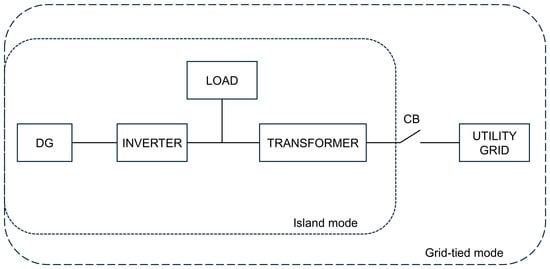
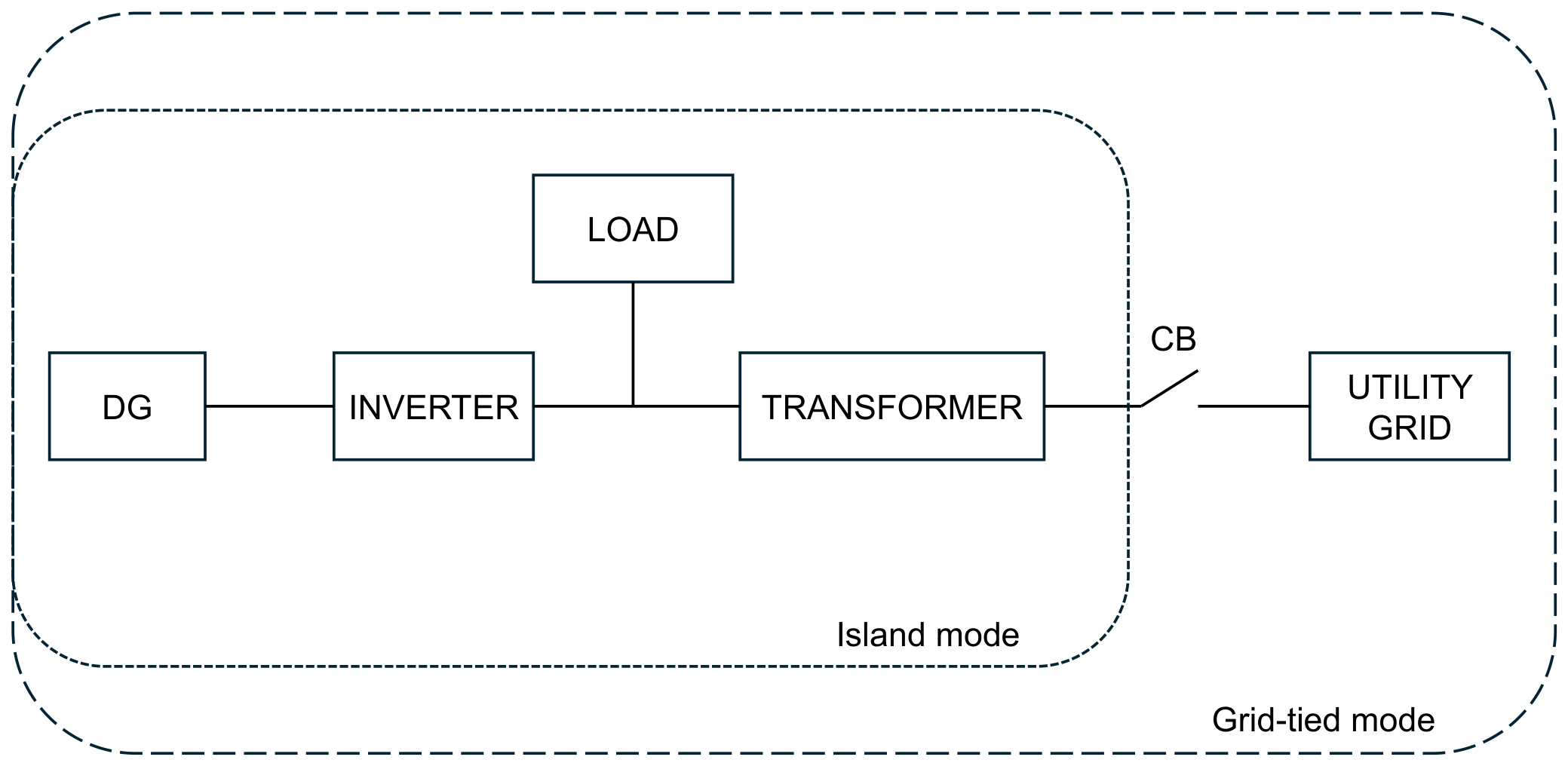
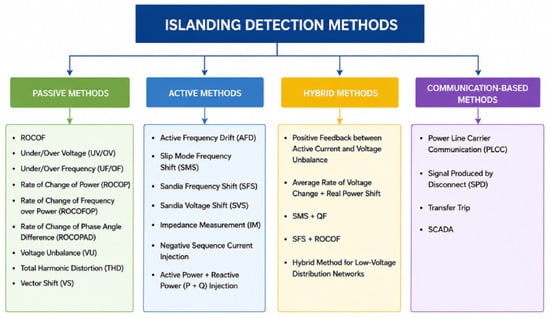
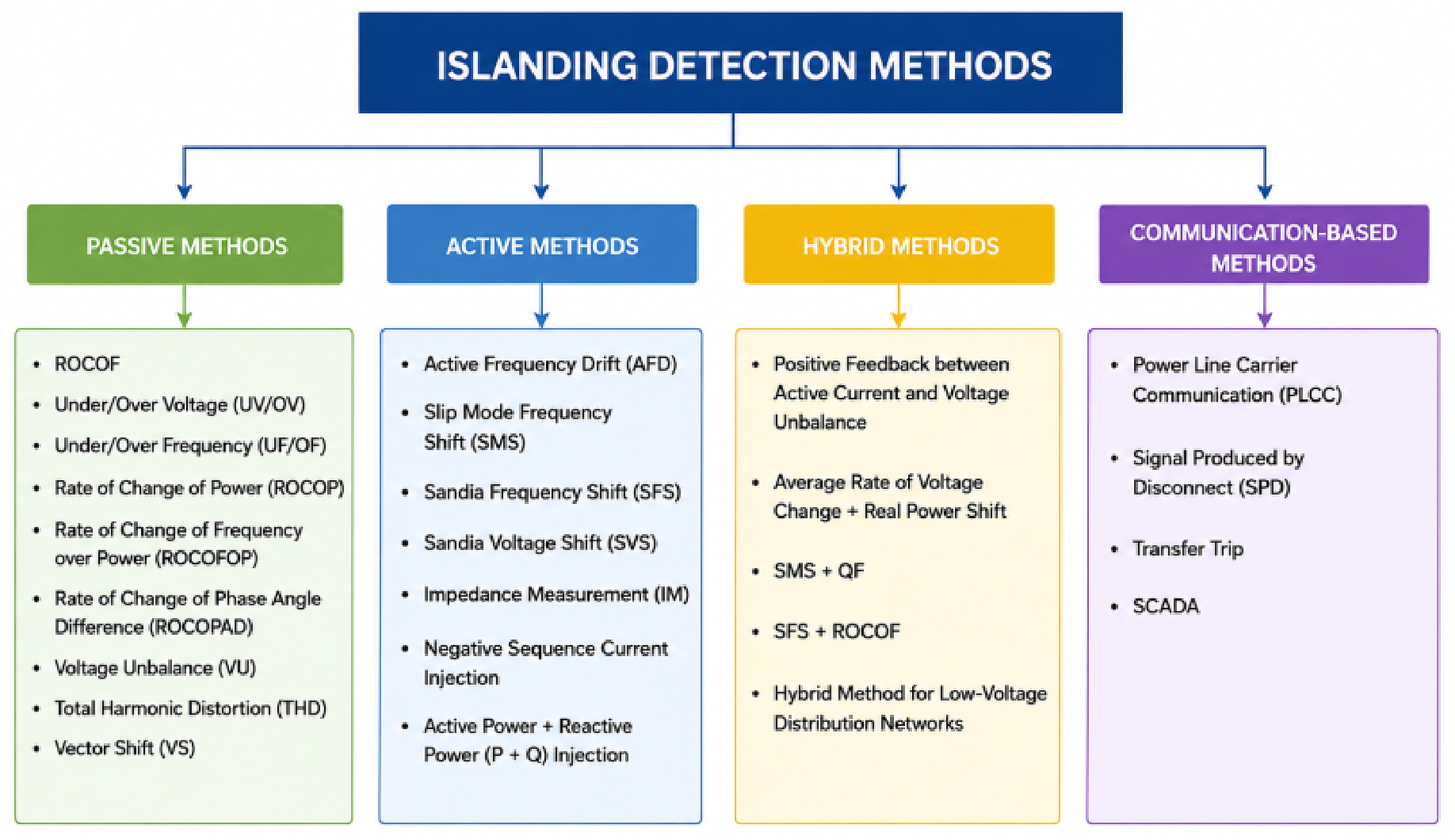

Disclaimer/Publisher’s Note: The statements, opinions and data contained in all publications are solely those of the individual author(s) and contributor(s) and not of MDPI and/or the editor(s). MDPI and/or the editor(s) disclaim responsibility for any injury to people or property resulting from any ideas, methods, instructions or products referred to in the content. |
© 2026 by the authors. Licensee MDPI, Basel, Switzerland. This article is an open access article distributed under the terms and conditions of the Creative Commons Attribution (CC BY) license.