


Abstract
In this work a comprehensive analysis of Small Modular Reactors (SMRs) as a pivotal technology for addressing global energy challenges while minimizing carbon emissions is presented. The study examines SMRs’ technical characteristics, economic considerations, and technological maturity, with particular emphasis on their potential as polygeneration systems. SMRs, representing evolutionary advancements of nuclear fission technology, offer near-term deployability, enhanced safety features, and modular economic benefits through factory fabrication and standardized production. The analysis specifically focuses on the competitiveness of SMRs in electricity, hydrogen and large-scale water desalination production. Through parametric optimization using complementary algorithms, the study rigorously quantifies SMR competitiveness by calculating the Levelized Cost of Electricity (LCOE), Levelized Cost of Hydrogen (LCOH), and Levelized Cost of Water (LCOW) across varying capacity ranges (50–600 MWe) and capital costs (3000–8000 US$/kW). The results demonstrate that capital cost minimization is the primary factor for achieving cost-competitiveness, with economies of scale providing secondary benefits. The findings indicate that SMRs can achieve competitive LCOE values within the 40–100 US$/MWh range for electricity markets, while hydrogen production costs range from 3.33 to 11.68 US$/kg and desalination costs from 0.40 to 0.98 US$/m3, positioning SMRs as economically viable solutions for integrated energy–water–hydrogen systems.
1. Introduction
Decarbonization, in this present age, is a critical undertaking aimed at mitigating climate change and fostering a sustainable future. The necessity for decarbonization stems directly from the escalating impacts of climate change, primarily caused by the accumulation of greenhouse gases in the atmosphere from human activities. Driven by the urgent need to shift away from fossil fuel dependency [1,2], countries and organizations worldwide are increasingly investing in renewable energy sources, enhancing energy efficiency, and developing innovative technologies like carbon capture and storage [3,4,5,6,7]. This transformative process encompasses fundamental changes across various sectors, including power generation, industry, transport and buildings [8,9], with a collective goal to achieve net-zero emissions to limit global warming to 1.5 °C above pre-industrial levels [10,11,12,13]. However, a significant challenge with these renewable sources is their intermittency [14,15,16] that can lead to imbalances between energy supply and demand, potentially impacting grid stability. Small Modular Reactors (SMRs) offer a promising solution to the intermittency challenges of renewable energy sources by providing a reliable and dispatchable source of carbon-free power [17,18,19]. Unlike large, traditional nuclear plants that typically operate as baseload power, SMRs are designed with enhanced flexibility and load-following capabilities [20,21,22]. This means they can adjust their power output more readily in response to fluctuations in electricity demand or changes in renewable energy generation [23,24].
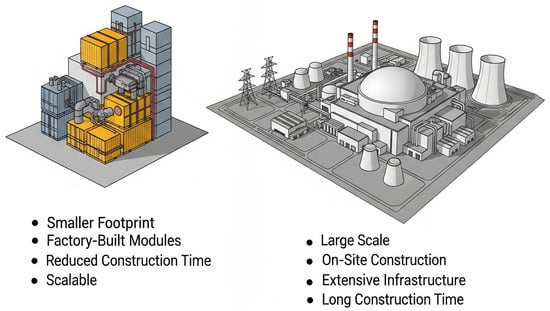
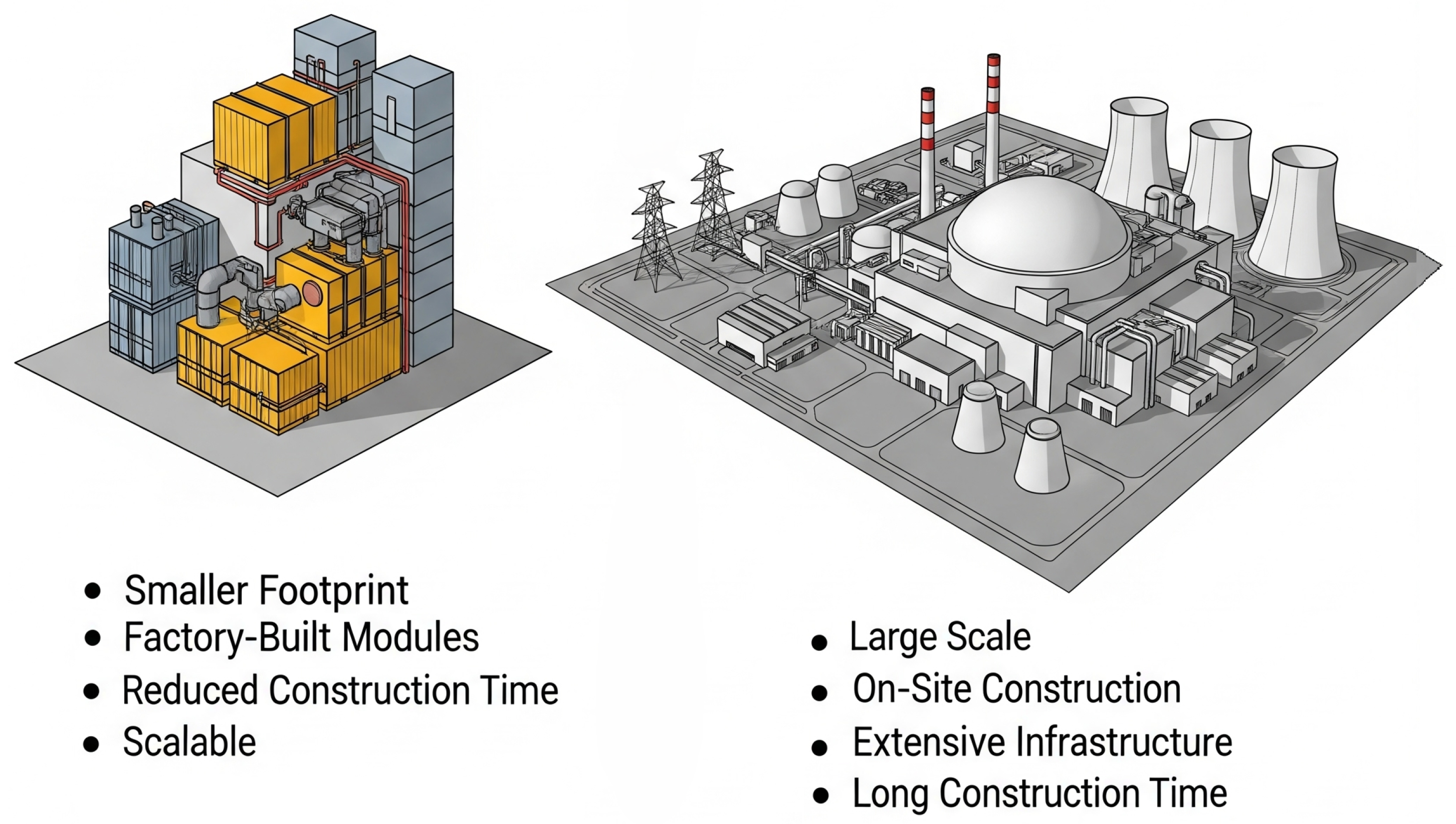
SMRs represent a groundbreaking advancement in nuclear fission technology, not only in aiding renewable resources, but generally in offering a more flexible, scalable, and potentially safer approach to energy generation compared to traditional large-scale nuclear plants [25,26], as seen in Figure 1. SMRs are significantly smaller than conventional nuclear plants (typically between 10 MWe and 300 MWe), which can often exceed 1000 MWe [25,27,28,29]. They are designed with a modular construction, allowing for quicker construction times, reduced capital costs, and the ability to incrementally add capacity as energy demands evolve. This enables standardized production and potentially reduces construction time and costs [30,31]. In addition, SMRs offer greater siting flexibility. Their smaller physical footprint and reduced need for extensive water and infrastructure allow them to be deployed in diverse locations, including remote areas, smaller grids, or even at decommissioned fossil fuel plant sites, leveraging existing transmission infrastructure [22,32,33]. This adaptability is crucial for bringing clean energy closer to demand centers and supporting energy access in underserved regions. Beyond their physical attributes, SMRs are often touted for their enhanced safety features, many incorporating passive safety systems that rely on natural forces like gravity and convection rather than active pumps and valves, further minimizing the risk of accidents [29]. Lastly, SMRs can provide versatility beyond just electricity generation. They have the ability to produce high-temperature process heat for various industrial applications like hydrogen production and desalination [34]. Their ability to operate for extended periods without refueling also reduces the frequency of fuel handling and transportation [17,35].
Figure 1.
Comparison between SMRs and a conventional nuclear power plant.
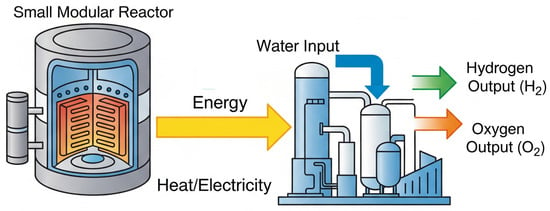
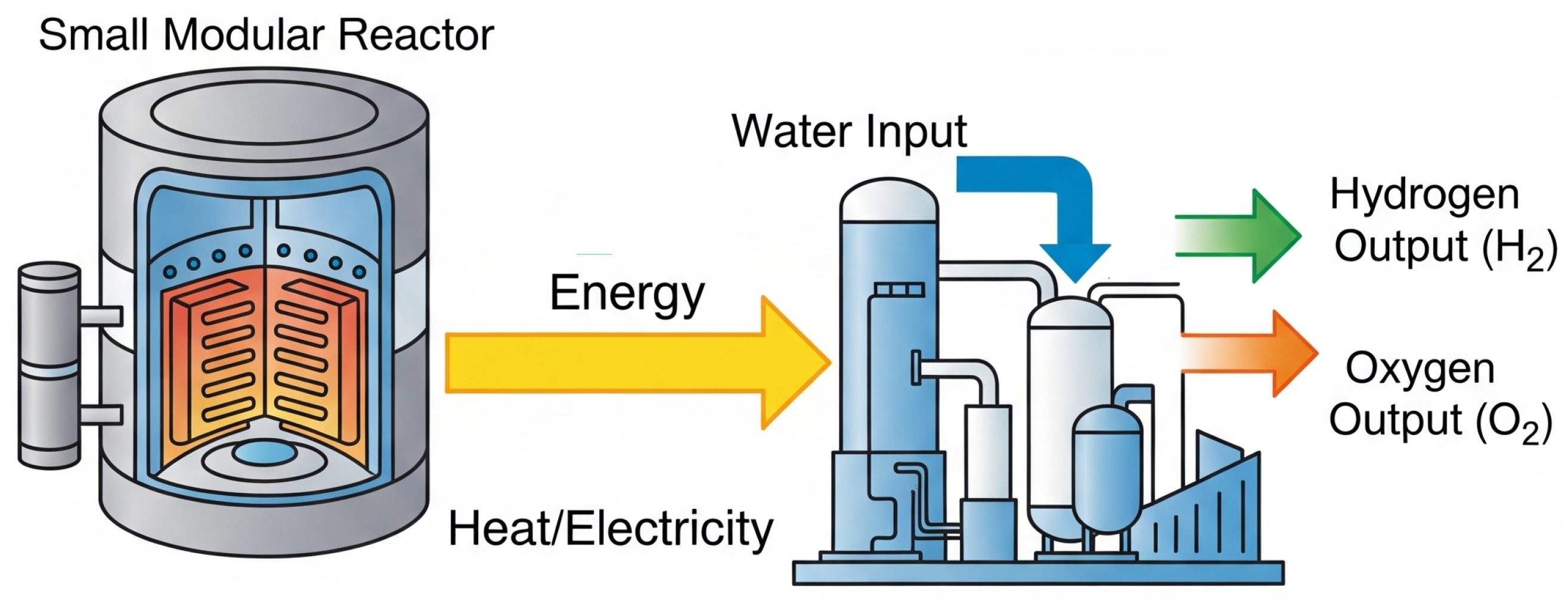
As illustrated in Figure 2, SMRs can aid in hydrogen production [36,37,38]. SMRs offer high-capacity, carbon-neutral power and heat that is fully dispatchable. This consistency is vital for industrial hydrogen synthesis, where steady-state operation is necessary to maintain production quotas and plant stability [39].
Figure 2.
Hydrogen production powered by SMRs.
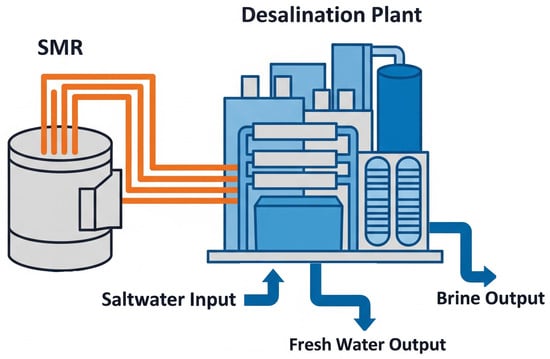
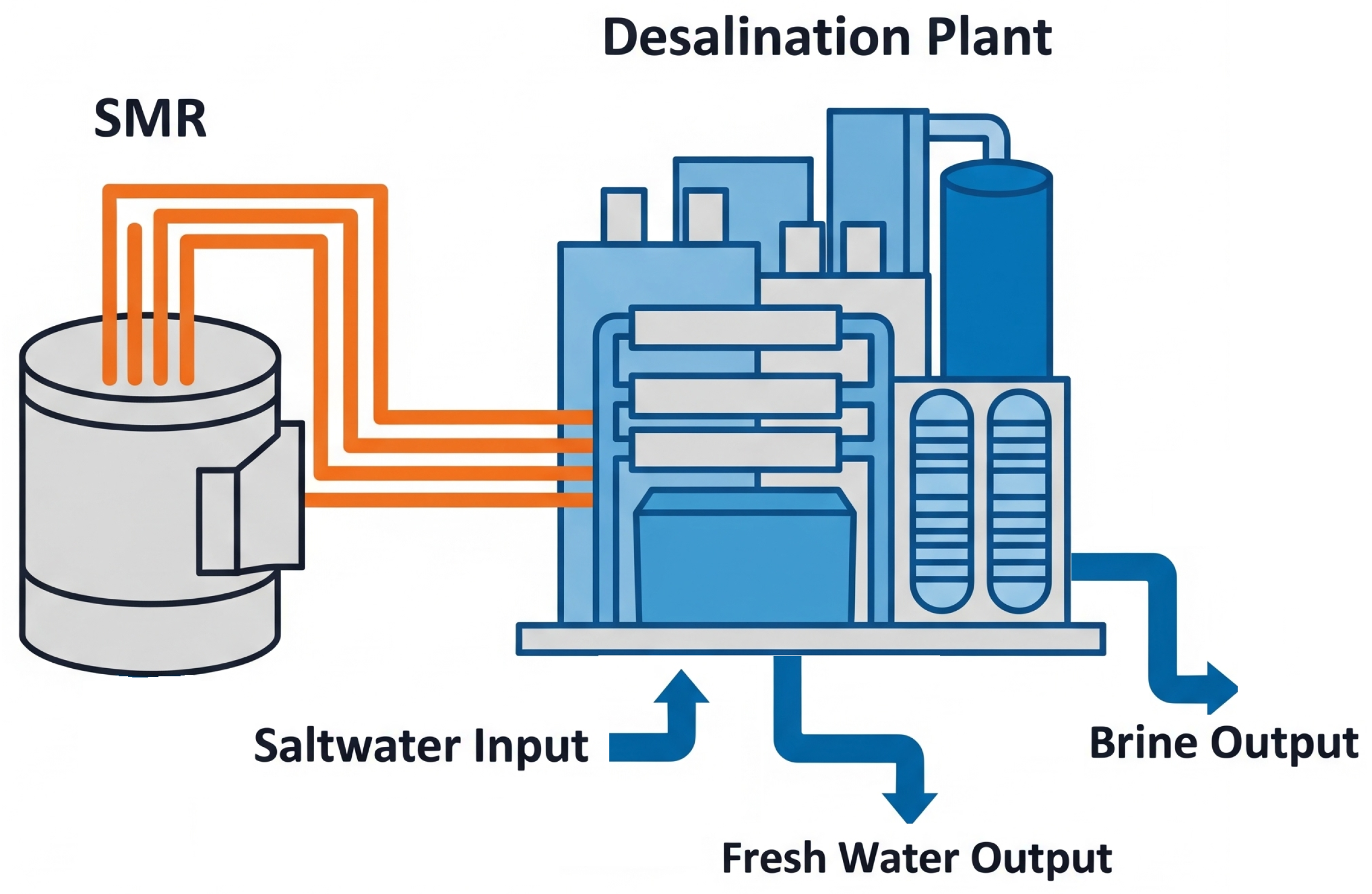
SMRs are also emerging as a highly attractive option for water desalination, particularly in regions facing water scarcity or inaccessibility to large centralized power grids [40,41,42,43]. The intensive energy demands of desalination are effectively met by the dual-output nature of SMRs. By utilizing both thermal energy and electrical power, as seen in Figure 3, SMRs optimize the desalination process through enhanced thermodynamic efficiency, as well as reducing overall carbon footprints and operational costs [44,45,46,47].
Figure 3.
Desalination plant powered by SMRs.
This work provides a comprehensive review of SMRs, examining their defining technical characteristics and crucial economic considerations. The primary objective of this study is to investigate the cost-effectiveness of SMR technology for the production of electricity, hydrogen and desalinated water through a systematic parametric optimization approach. Unlike previous studies that focus on single applications [36,48,49,50] or limited parameter ranges [49,51], this work specifically assesses the potential of SMRs as polygeneration systems for coupling nuclear energy with industrial processes. The novelty of this approach lies in the employment of two complementary optimization algorithms extensively used in recent literature [52,53,54,55]: the Independent Power Producer (IPP) algorithm [56] and the Computer Aided Reverse Osmosis Calculations (CAROC) algorithm [57], to rigorously quantify SMR competitiveness in electricity, hydrogen and large-scale water desalination. This framework distinguishes itself by aligning financial risk with operational expertise, shifting the burden of nuclear construction costs away from governments and onto private-sector infrastructure specialists. This parametric analysis differentiates from the existing literature by systematically evaluating the economic trade-offs between economies of scale and capital cost variations, providing a quantitative framework for determining optimal SMR deployment strategies. The economic analysis rigorously quantifies this competitiveness by calculating the Levelized Cost of Electricity (LCOE), Levelized Cost of Hydrogen (LCOH), and Levelized Cost of Water (LCOW), offering unprecedented insight into the market viability of SMR-based polygeneration systems.
In Section 2 the defining technical characteristics of SMRs are discussed, along with the economic considerations arising from their utilization. Section 3 examines the technological maturity spectrum of SMRs, spanning from operational units to conceptual designs, and addresses the regulatory frameworks and licensing challenges that must be overcome for widespread deployment. Section 4 explores the potential of utilizing SMRs for industrial-scale hydrogen production through various electrolysis methods and water desalination technologies, demonstrating their versatility as polygeneration systems. Section 5 presents the comprehensive parametric optimization results for LCOE, LCOH and LCOW calculations. Finally, Section 6 synthesizes the findings and provides strategic recommendations for SMR deployment, regulatory harmonization, and future research directions to support the transition to integrated low-carbon energy systems.
2. Technical and Economic Considerations
The diversity of SMR designs under development worldwide is considerable. According to the International Atomic Energy Agency’s Advanced Reactor Information System (ARIS), there are more than 68 active SMR designs at different stages of development [20]. These designs can be categorized based on their cooling technology: water-cooled, gas-cooled, via liquid metal coolants or via molten salt fuel carrier/coolant. These cooling technologies are summarized and explained in Table 1, including typical outlet temperatures and consequent potential process–heat applications. Overall, most SMR designs incorporate innovative features that distinguish them from conventional nuclear plants. Smaller cores enable the use of integral designs where all components of the nuclear steam supply system are incorporated into a single vessel, increasing the heat capacity and thermal inertia of the system. The lower power output and higher surface-to-volume ratio of smaller cores increase the efficiency of passive safety systems [58,59]. Many SMR designs incorporate passive safety features that function without operator intervention or external power, using natural forces like gravity, natural circulation, and convection [20,60]. Several SMR designs incorporate underground containment structures to enhance safety against external threats [60]. Lastly, factory fabrication and modular construction offer advantages such as shorter construction schedules, better quality control and simplified manufacturing through standardization [61,62,63].
Table 1.
SMR types.
SMRs target diverse markets and applications beyond traditional baseload electricity generation, including replacement of aging fossil fuel plants, remote and off-grid applications, integration with renewables, industrial heat applications and data centers. The flexibility of SMRs covers deployment capabilities and diversity of products, opening new market opportunities where conventional nuclear plants are not viable. However, the economic case for SMRs centers on overcoming the financial barriers that have hindered conventional nuclear power plant construction, particularly the high upfront capital costs and long construction periods that increase financial risk.
SMRs aim to address the high upfront capital costs of conventional nuclear plants through several approaches. The reduced absolute investment, even though SMRs may have higher costs per unit of capacity due to diseconomies of scale, means lower total capital investment per unit (due to their smaller absolute size). This makes financing potentially more accessible [75,76,77,78]. Modular deployment allows for phased investment and earlier revenue generation, improving project cash flow [60,79]. Additionally, their small size also expands the potential market for SMRs by allowing them to meet much smaller increments in demand and alleviating the burden of financing much bigger projects [30]. Shorter construction times through factory fabrication and simplified on-site assembly aim to reduce construction schedules by 25–50%, decreasing financing costs and reducing market and regulatory risks [60,80]. Their standardized production may also partially offset diseconomies of scale, particularly if a standardized design achieves sufficient market penetration [31,75,78]. Reusing the existing infrastructure of retiring coal or gas power plants can also reduce the manufacturing and construction cost of SMR facility by 15–35% [81].
The LCOE is a key economic metric for comparing different energy generation technologies based on the total cost of an electricity-generating asset throughout its entire lifespan. As summarized by [82], the largest component of the LCOE for nuclear power plants is the investment cost. In the case of SMRs, one of the main factors negatively affecting their capital cost is the lack of economies of scale. This results in the specific (per MWe) capital costs of the SMR to be tens to hundreds of percent higher than for large reactors [82]. In addition, according to the designers’ estimates, a full factory-fabricated, barge-mounted nuclear power plant could be 20% less expensive than a land-based nuclear power plant with an SMR of the same type [82,83]. In order for the capital costs of SMRs to be reduced, learning effects of factory fabrication have to be achieved. This, however, is contingent upon the number of units needed; this is reported to be between 5 and 7 units in series [82]. However, the limited information available suggests considerable variation in projected LCOE for SMRs, and results are impacted heavily by the assumptions made about the input variables [75]. Available LCOE values range from 60 to 120 US$/MWh depending on the source [20,84,85,86,87]. Important parameters that should be taken into consideration when examining LCOE values are the discount rate, as well as whether they are First-of-a-kind (FOAK) or Nth-of-a-kind (NOAK) values. Overall, LCOE provides a simplified metric that can be used to compare generation technologies on a somewhat like-for-like basis, but it is not a replacement for the substantial financial analysis of a potential project [88,89]. In order to achieve economies of scale and, hence, reduced LCOE cost, there needs to be a process of utilizing design simplification approaches that could translate into lower construction costs, both directly through a reduction in the number and size of components and systems, and indirectly through benefits at the project management level [20]. Standardization of their design and their inherent modularity via factory-based construction will also yield lower construction and commissioning costs [20].
Despite their potential advantages, SMRs face several economic challenges. FOAK costs mean initial SMR projects will likely face higher costs until learning and economies of series production take effect [88,90]. Regulatory requirements could significantly impact costs, particularly for designs that deviate substantially from existing nuclear technologies [83]. Market size constraints mean the benefits of series production require sufficient market scale, suggesting that only a subset of the many designs under development may achieve economic viability. The economic case for SMRs remains theoretical until demonstrated through actual construction and operation at commercial scale. Due to their small size, the diseconomies of small unit construction can be quite severe [30]. It has also been suggested that SMRs may cost around 30% more than current large reactors, with operating costs projected to be between one-fifth and one-quarter higher than for large reactors, as well as decommissioning costs which are projected to be three times as high [30]. The underestimation of costs has been an issue in several instances and can sometimes be attributed to the need for communicating an economic success in order to distract from any difficulties encountered, adding to “the nuclear hype cycle” [30]. Overall, for SMRs to establish a global market that enables economies of series production, cooperation among nuclear safety regulators to increase the harmonization of licensing regimes will play a central role.
3. Technology Maturity
SMRs span a range of technological maturity levels, from operational plants to conceptual designs. According to the IAEA, there are more than 68 active SMR designs at different stages of development [28]. Some SMR units are already deployed or in advanced stages of construction, including China’s high-temperature reactor–pebble–bed module, which was connected to the grid in December 2021 and has operated at full power since 2022. Other SMR units are already deployed in China and Russia. The BREST-OD-300, a lead-cooled fast-neutron reactor, is under construction in Russia. In addition, NuScale Power developed the first Nuclear Regulatory Commission approved model for the US market, with the approved certification taking effect in February 2023 [91,92].
The maturity of SMR technology varies significantly by design type. Light water-based SMR concepts are generally the most mature with the highest Technology Readiness Levels and Licensing Readiness Levels, and they are likely to be the earliest available for commercial deployment. Gas-cooled reactors have demonstrated operational experience with test reactors in China and Japan operating for over 20 years [20]. Advanced designs like molten salt and some fast-neutron concepts generally have lower Technology Readiness Levels and face additional development challenges. Consequently, the diverse Technology Readiness Levels across SMR architectures necessitate an expanded range of capital cost sensitivities. This ensures that any economic assessment accurately captures the technical uncertainties and the FOAK cost premiums inherent in non-light–water reactor designs [93].
Licensing is a significant issue for SMRs for several reasons, primarily due to the fact that the existing regulatory frameworks were designed for large, conventional nuclear power plants. SMRs are a FOAK, novel technology, and have innovative aspects, including different coolants (see Table 1), passive safety systems and integrated designs. This novelty means there is less existing data and experience for regulators to draw upon [94,95]. The current regulatory framework is tailored for large, custom-built reactors, often involving separate construction and operating licenses and a focus on site-specific assessments. SMRs are designed for factory fabrication and modular construction, aiming for standardization and rapid deployment. However, the existing regulations often require extensive site-specific reviews for each unit, even if they are identical modules. As a result, the economic benefits of modularity and mass production can be undermined, ultimately increasing CAPEX values through extended construction timelines, high contingency fees and supply chain immaturity [35,64,95]. In addition, some regulations are country-specific, as nuclear regulation is primarily a national responsibility. This means an SMR design certified in one country may still face significant re-evaluation and adaptation to meet the specific requirements of another country, hindering global deployment and economies of scale [25,64,96]. Lastly, there is a lack of regulatory capacity and expertise; regulatory bodies themselves need to develop the expertise and resources to effectively review and license the diverse range of SMR technologies. This can be a challenge, especially for countries new to nuclear power or those considering advanced SMR designs [78,97,98]. Therefore, the regulatory framework can act as a cost-multiplier, where site-specific reviews prevent the CAPEX reductions associated with modularity, highlighting the need for a broad CAPEX range tested within economic analyses.
In order to alleviate licensing issues, international collaborative efforts have to be actively sought out. Regulators must join their efforts, either through forums like the IAEA’s SMR Regulators’ Forum or other bilateral agreements (e.g., US, Canada, UK), in order to share knowledge, harmonize approaches and explore opportunities for collectively leveraging reviews [94,99]. In addition, regulators can approach the regulatory issues in a graded manner, in order to tailor the level of regulatory oversight to the specific risks of SMRs, recognizing their enhanced safety features and smaller scale [99]. Design certification can also be implemented. Many countries are moving towards a single-step licensing model where reactor designs are precertified, allowing for quicker deployment once a site is approved [64]. This allows for “economy of multiples”, where multiple identical units can be deployed without repetitive technology reviews [100]. Overall, regulatory approval represents a critical milestone in SMR development. International efforts toward regulatory harmonization could facilitate global deployment, though significant challenges remain in aligning diverse national regulatory regimes.
Ultimately, the near-term economic viability of SMRs depends less on the maturity of the technology and more on the modernization of the regulatory framework. Until licensing processes transition from site-specific custom reviews to standardized type-approvals that are recognized across international borders, the industry will struggle to unlock the economies of series production, keeping capital costs high and deployment timelines uncertain.
4. Hydrogen Production and Water Desalination
SMRs are increasingly being explored for their potential to provide clean, carbon-free, reliable energy for non-electric applications, particularly hydrogen production and water desalination [36,42]. They are a polygeneration system, i.e., they have the ability to provide both consistent heat and electricity, making them ideal for these energy-intensive processes. This synergy is a key aspect of their versatility and appeal for a sustainable energy future [101,102].
Hydrogen has come to the forefront of the current global decarbonization efforts due to its unique properties as a versatile, clean energy carrier and its critical role in addressing emissions [103,104,105,106]. In addition, hydrogen holds immense potential for sustainable transportation, particularly in heavy-duty sectors like long-haul trucking, shipping and aviation, where batteries may be too heavy or impractical for the required range and power [107,108,109]. Unlike electricity, hydrogen can be stored and transported, making it an excellent medium for integrating intermittent renewable energy sources.
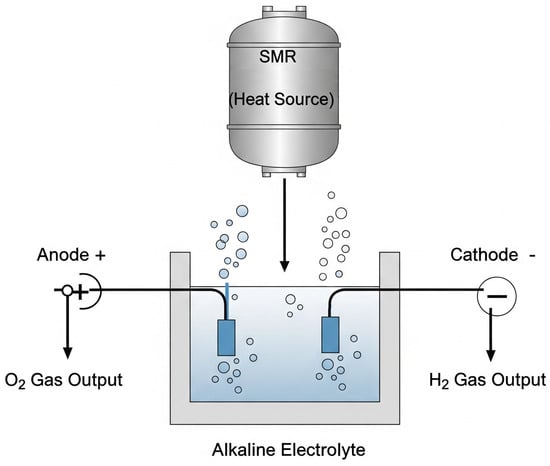
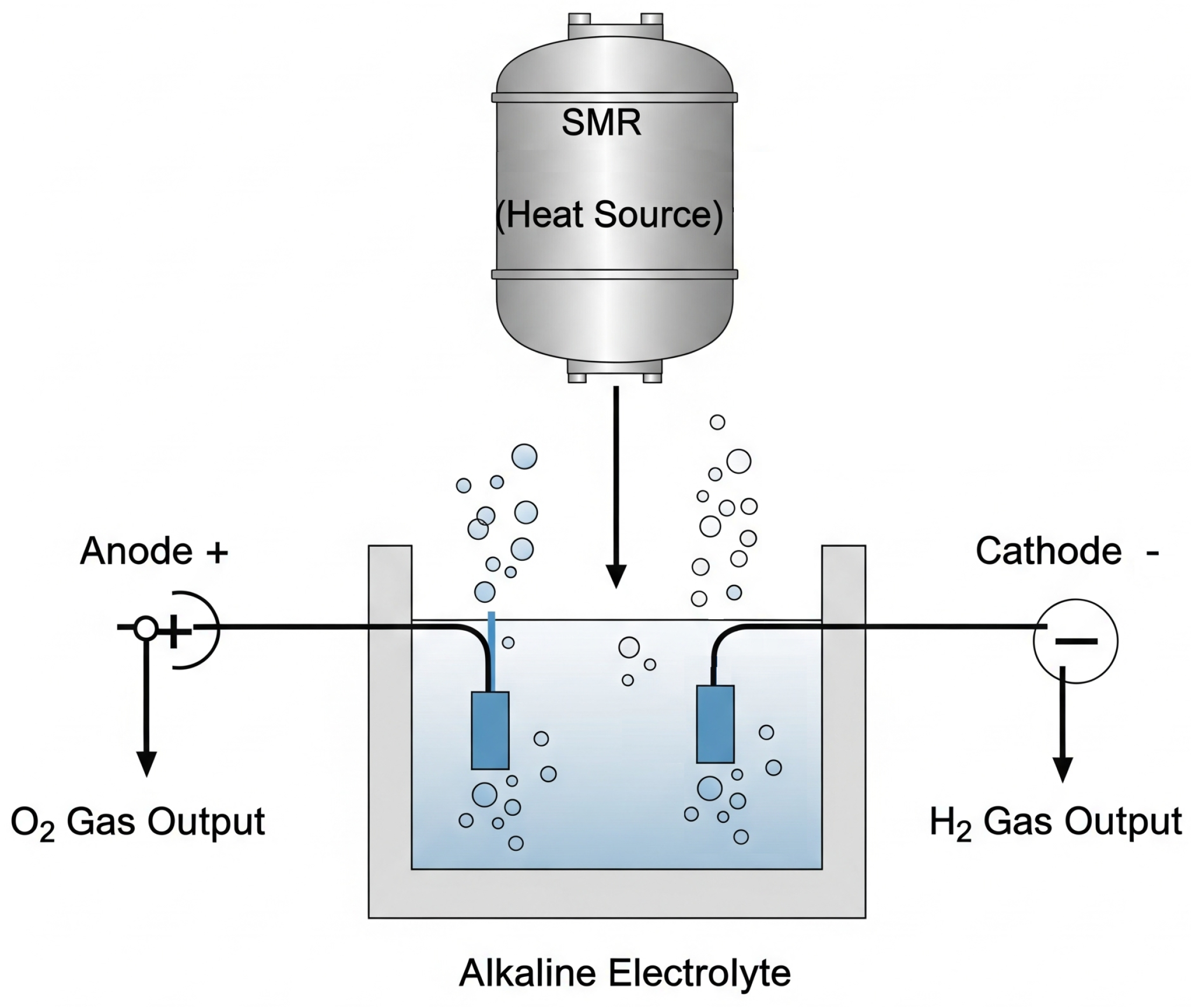
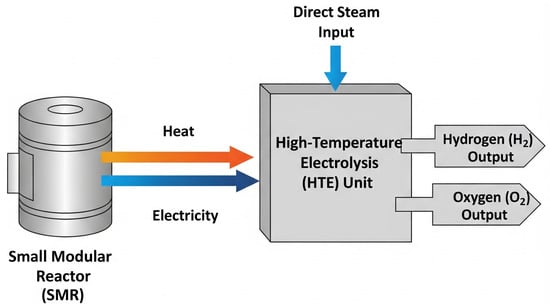
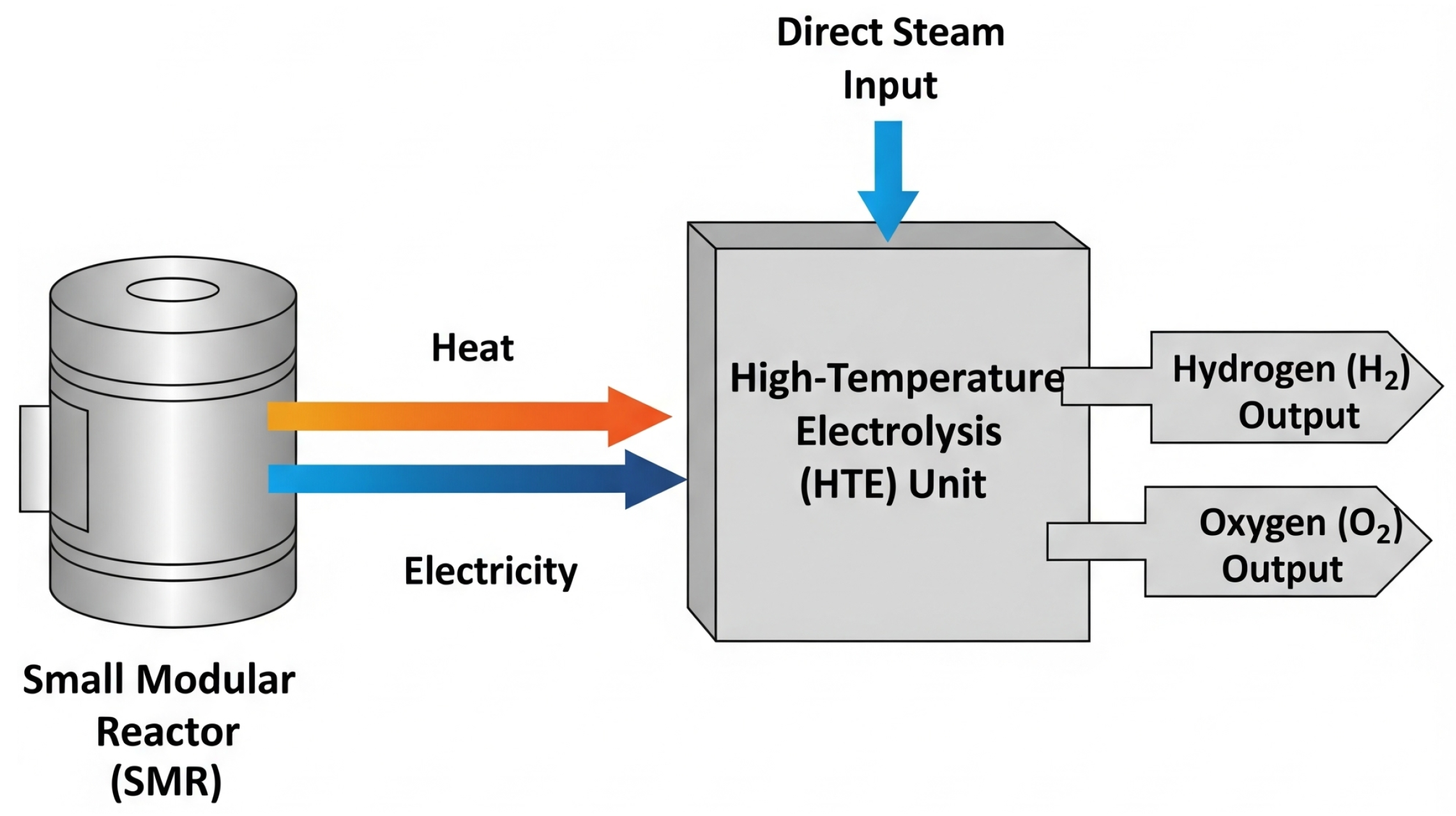
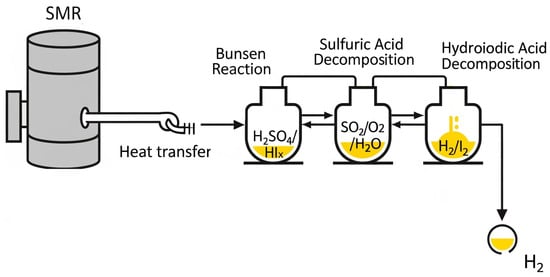
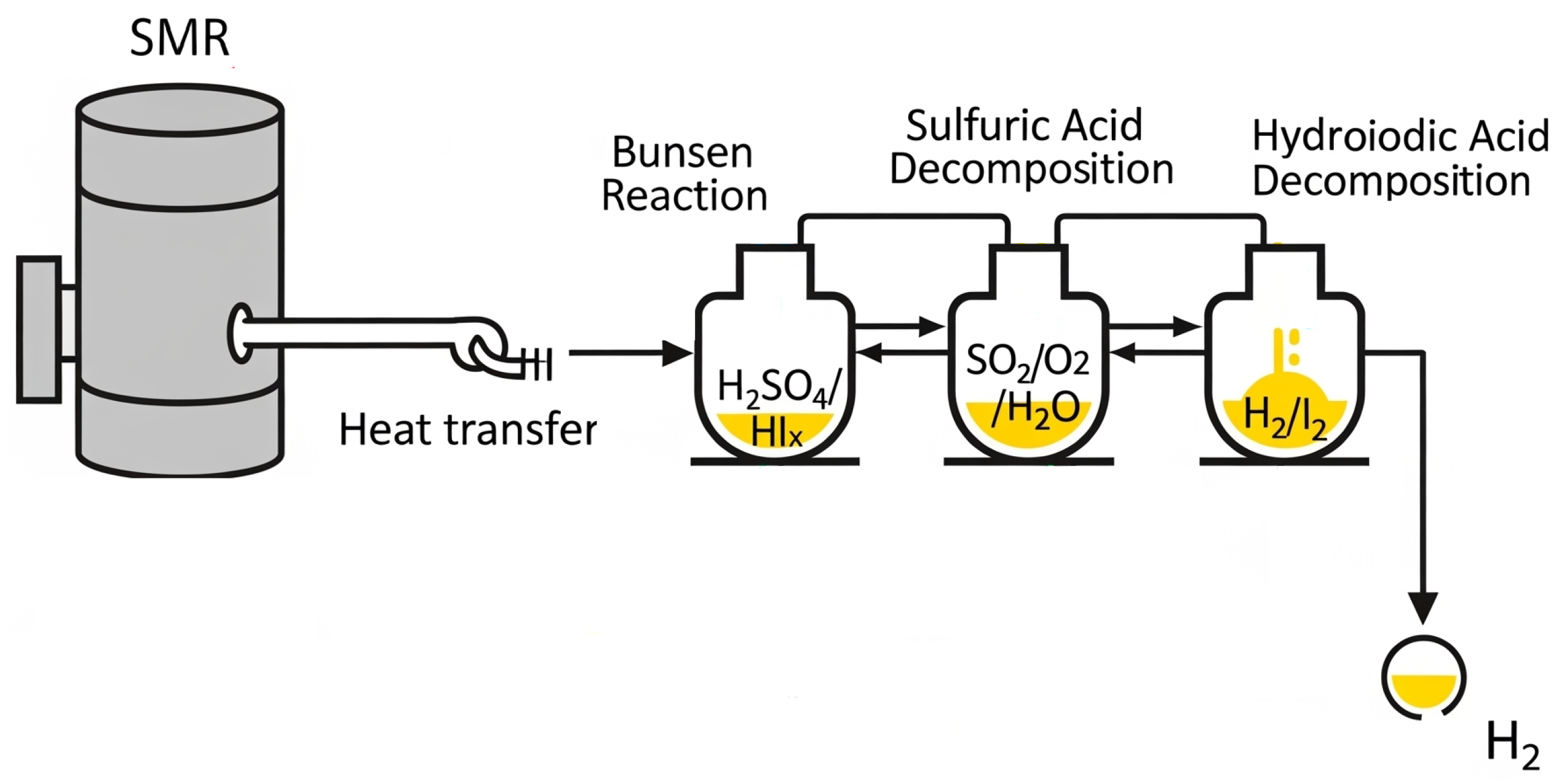
SMRs can provide a continuous, dispatchable, and virtually emissions-free source of electricity and heat. This consistent energy supply is critical for the large-scale, continuous operation required for industrial hydrogen production, ensuring a stable output of hydrogen without any possible interruptions [39]. Hydrogen production using SMRs, also known as “pink hydrogen”, can be accomplished via different methods [72]. One method to produce hydrogen from SMRs is via electrolysis, where SMRs can power electrolysers, which in turn split water into hydrogen and oxygen using electricity [110,111,112]. Different electrolysis methods can be employed, including alkaline–water electrolysis, high-temperature steam electrolysis and the sulfur–iodine cycle [36]; these are presented in Figure 4, Figure 5 and Figure 6, and summarized in Table 2. Studies have been focusing on different parameters to evaluate SMR use for electrolysis, including a study by [113], where hydrogen production costs via SMRs were evaluated based on two different SMRs. It was determined that the observed difference between the hydrogen production costs using the two reactors was insignificant, ranging from 3.27 US$/kg to 3.42 US$/kg. However, the most important parameter was the heat consumption (MWth/unit) at the hydrogen generation plants, as well as other significant parameters including electricity rating and heat for hydrogen generation plants [113]. A study by [36] also investigated the different electrolysis methods in terms of their technical aspects, economic aspects and coupling abilities. It was determined that alkaline water electrolysis can produce hydrogen at competitive prices (around 0.40 €/m3). High-temperature steam electrolysis and the sulfur–iodine cycle were determined to produce hydrogen with higher efficiency in comparison to alkaline–water electrolysis; however, they are still at their research and development stages.
Figure 4.
Simplified schematic of an SMR coupled with alkaline electrolysis.
Figure 5.
Simplified schematic of an SMR coupled with high-temperature steam electrolysis.
Figure 6.
Simplified schematic of an SMR coupled with the sulfur–iodide cycle.
High-temperature steam electrolysis requires high-temperature steam for its operation. Some advanced electrolysis designs, particularly high-temperature reactors like molten salt reactors and high-temperature gas reactors, can provide the high temperature needed [114,115]. This method is generally more efficient than conventional electrolysis as it utilizes both heat and electricity [116]. Specifically, authors [116] report electrical efficiencies up to 89%, which are higher than other forms of electrolysis (up to 30% higher in some cases). However, although hydrogen generation through high-temperature steam electrolysis is a promising technique, it still needs further development in terms of materials, efficiency, capital costs of hydrogen production, etc. [117]. This is especially so when employed via SMRs.
The sulfur–iodine cycle is a thermochemical cycle that produces hydrogen, also requiring high operational temperatures. The use of high-temperature SMRs could enable such thermochemical cycles that directly split water using heat, offering potentially even higher efficiencies for hydrogen production without relying on electricity [118,119]. However, the coupling of SMRs with hydrogen facilities working at high temperatures (about 800 °C) still requires substantial research and development to reach commercialization [36]. Other novel approaches are also investigated, including the brine-to-hydrogen approach. Companies like NuScale are exploring innovative methods that utilize the leftover brine from desalination as feedstock for hydrogen production via hydrothermal chemical decomposition. This approach addresses both brine waste and hydrogen production without traditional water electrolysis, potentially reducing energy and water usage, and lowering costs [120,121].
Table 2.
Hydrogen production methods.
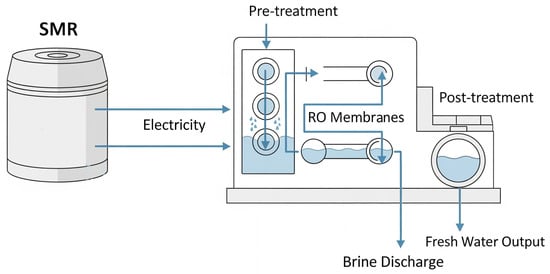
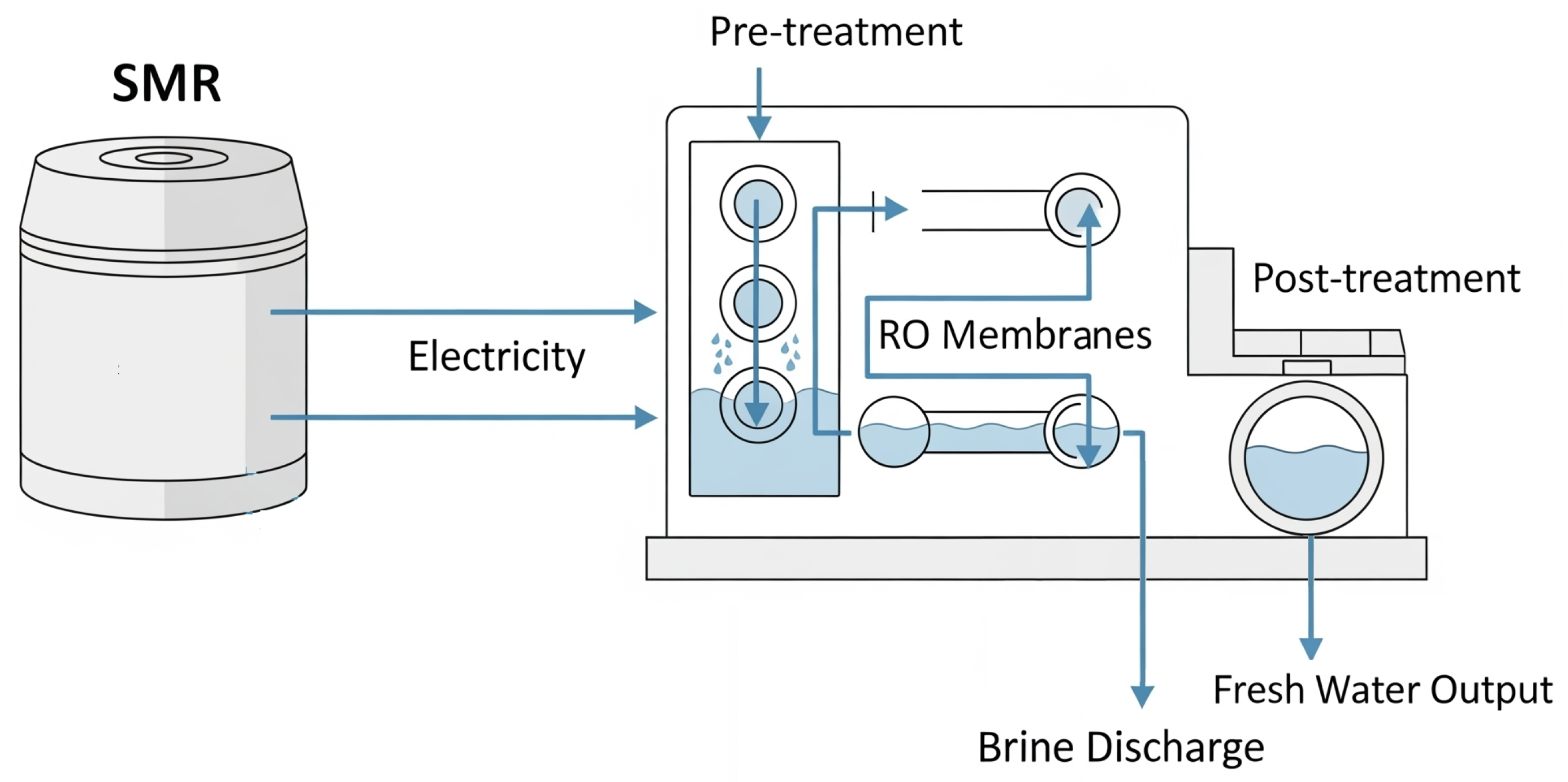
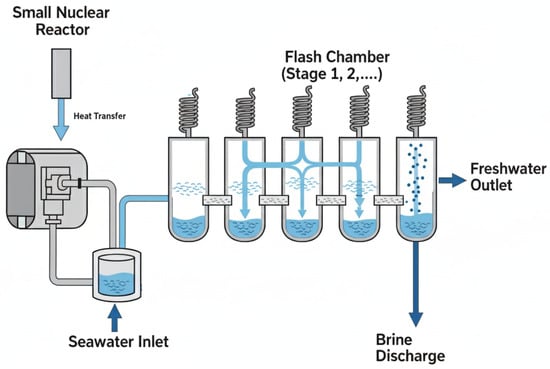
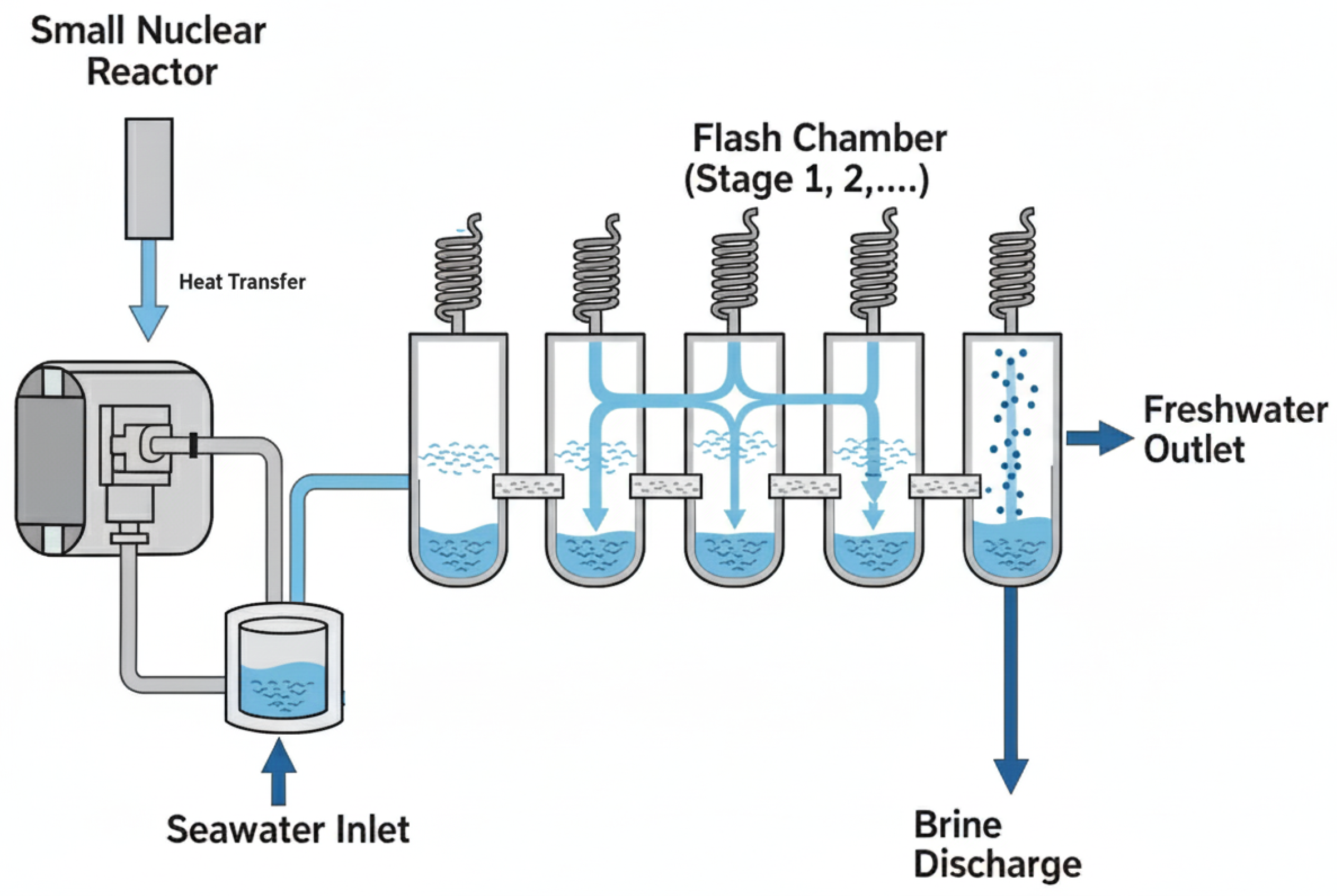
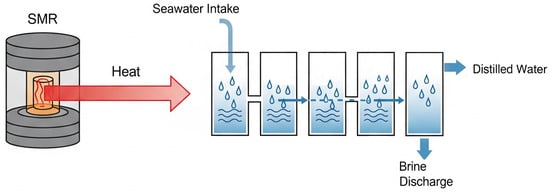
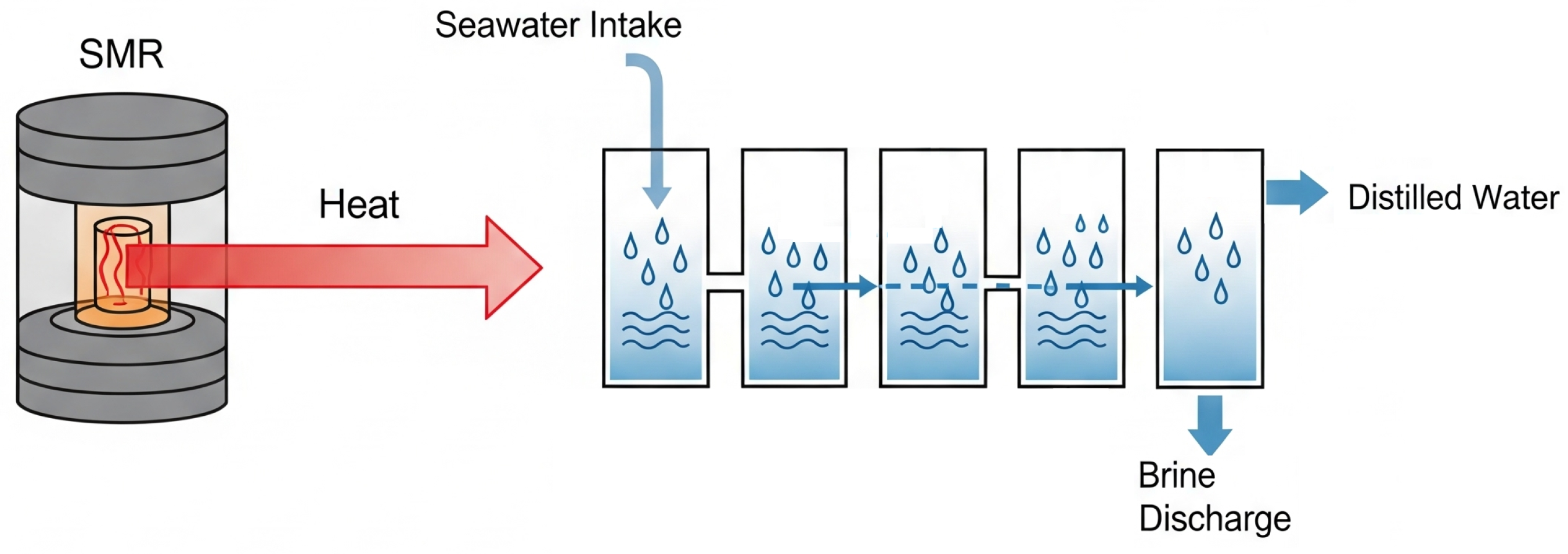
SMRs can also be used for powering desalination technologies, presenting a highly attractive option for water desalination in regions facing water scarcity. The modular nature and smaller footprint of SMRs allow them to be deployed in a wider range of locations, including coastal areas where desalination plants are typically sited. This is particularly beneficial for remote areas or islands that may not have access to large centralized power grids [40,41,42]. As discussed, SMRs have the potential for co-generation, meaning they can simultaneously produce both electricity and large amounts of process heat [44,45,46,47]. This means that SMRs can provide the electricity needed to power reverse osmosis plants, as well as supply heat to other thermal desalination methods like multi-stage flash or multi-effect distillation [18,126,127]; see Figure 7, Figure 8 and Figure 9. These technologies are summarized in Table 3, including specific energy consumptions, required temperatures and current market LCOW benchmarks. Lastly, by powering desalination with SMRs, the significant energy demand of water purification can be met without emitting greenhouse gases. This directly contributes to decarbonization efforts and aids in addressing the energy–water nexus, by providing a clean source of both energy and potable water [128]. Some advanced SMR designs, particularly SMRs designed by NuScale, are even exploring ways to use the leftover industrial brine from desalination for clean hydrogen production [120].
Figure 7.
Simplified schematic of an SMR coupled with a reverse osmosis desalination plant.
Figure 8.
Simplified schematic of an SMR coupled with a multi-stage flash desalination plant.
Figure 9.
Simplified schematic of an SMR coupled with a multi-effect distillation desalination plant.
Table 3.
Desalination technologies.
A study [18] has compared the viability of SMRs as a carbon-neutral energy source for various desalination configurations, with renewable energy resources. They determined that the renewable energy sources showed significantly higher costs, with LCOE for onshore wind and PV at 126% and 190% higher than the respective SMR case. In addition, they note that SMRs hold a distinct advantage as their operation and cost-effectiveness do not depend on geographical factors [18]. Another study [140] examined the potential of SMRs to be employed as “back-up” for the intermittent renewable sources and desalinate water, as well as generate electricity when the renewables are not producing enough output. It was determined that such a system is likely to be cost-competitive in the U.S. when compared with a similar system that uses a natural gas plant combined with carbon capture, utilization and storage, and geological sequestration. Another similar study [41] focusing on a nuclear–renewable hybrid system with desalination, showed that the load-following procedure, in the worst-case scenario, does not compromise the lifetime of nuclear components. Additionally, the electricity used for the desalination process is less than 5% of the total electricity generated by the SMRs, and the load following mode using all the reactors does not pose as an additional thermal stress to the system, reducing maintenance costs in the long run.
Overall, in order to evaluate the economic advantages of coupling SMRs with hydrogen production and/or desalination, the following critical metrics have to be considered: LCOH and LCOW. LCOH is used to assess and compare the total cost of producing hydrogen over the entire life-cycle of a production plant [72,141,142]. More specifically, it is the average price per kilogram of hydrogen that needs to be charged over the lifetime of the production facility to cover all its costs and break even, making it a key tool for comparing the cost-effectiveness of different hydrogen production technologies. Similarly, LCOW is used to evaluate and compare the total cost of producing desalinated water over the entire life cycle of a water production plant, usually given as the average price per unit of water produced [143,144]. Since SMRs represent a significant capital investment and often function as a polygeneration system, LCOH and LCOW add more insight to the analysis beyond LCOE considerations. Calculating LCOH and LCOW allows the determination of the market competitiveness of the hydrogen and water produced via SMR use, and can aid in accurately modeling the revenue necessary for financial viability compared to conventional production methods.
5. Economic Assessment Through Parametric Optimization
The main objective of this work is to investigate the cost-effectiveness of SMR technology use for the production of electricity, hydrogen and desalinated water. This is achieved via the calculation of LCOE, LCOH and LCOW. The methodology employed in this parametric analysis is based on two complementary optimization algorithms: the Independent Power Producer (IPP) algorithm [56] and the Computer Aided Reverse Osmosis Calculations (CAROC) algorithm [57], extensively utilized in recent literature [52,53,54,55]. The cases explored, in order to showcase LCOE, LCOH and LCOW, vary with different capital cost values between 3000 and 8000 US$/kW and SMR capacity between 50 and 600 MWe [25,27,28,29]. The technical and economical parameters implemented in the algorithm are presented in Table 4. The comprehensive results are shown in Table 5.
Table 4.
Technical and economic parameters.
Table 5.
Overall results for LCOE, LCOH and LCOW.
Overall, the economic assessment presented herein adopts a technology-agnostic approach, focusing on the fundamental relationship between plant capacity, capital investment, and levelized output costs. This enables the identification of economic feasibility thresholds that remain independent of specific reactor coolant types or chemical designs. To achieve this, the study utilizes a cost-minimization optimization model that targets the reduction in LCOE, LCOH, and LCOW as its primary objectives. The model operates under a rigorous framework of capacity, capital, and operational constraints, ensuring that the resulting cost structures reflect realistic technical limitations and market requirements.
It should be noted that while LCOE, LCOH and LCOW are utilized within this work for their comparative transparency, other frameworks such as Value-Adjusted LCOE (VALCOE), Real Options Analysis, Net Present Value (NPV), or System Levelized Cost offer deeper insights into market value and modular flexibility [85,145,146,147]. Furthermore, advanced frameworks like multi-objective optimization algorithms can deliver more granular optimal solutions by simultaneously balancing trade-offs across competing criteria such as cost and system reliability, offering superior analytical depth compared to single-objective approaches [52]. However, for the purposes of this techno-economic benchmark, the levelized approach is maintained to allow for easier and more direct comparisons. Additionally, the resulting LCOE, LCOH, and LCOW values reported in this study are calculated under a fixed financial and operational baseline, as summarized in Table 4. This approach is taken to provide a consistent comparison across the diverse range of reactor sizes and applications explored, and allows for the isolation of thermal integration efficiency as the primary economic driver.
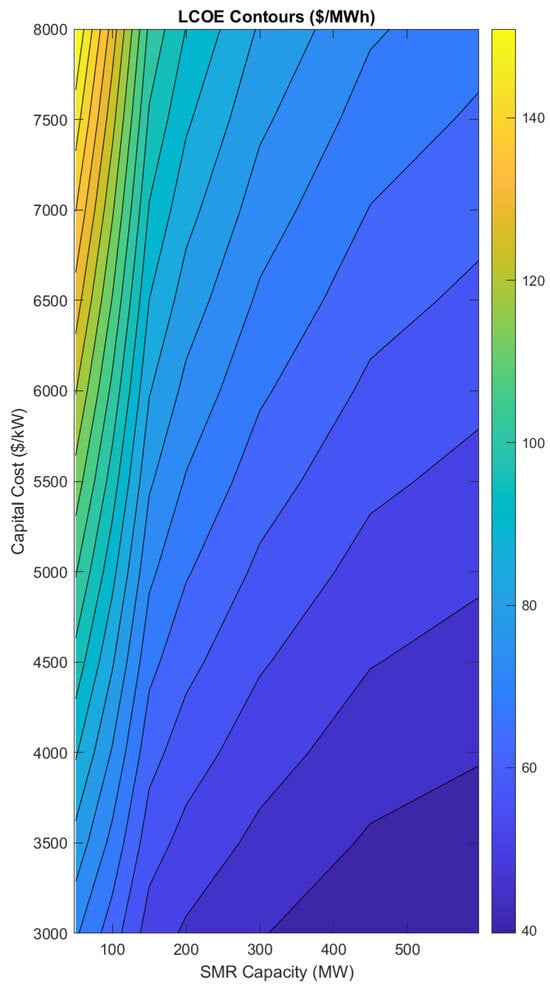
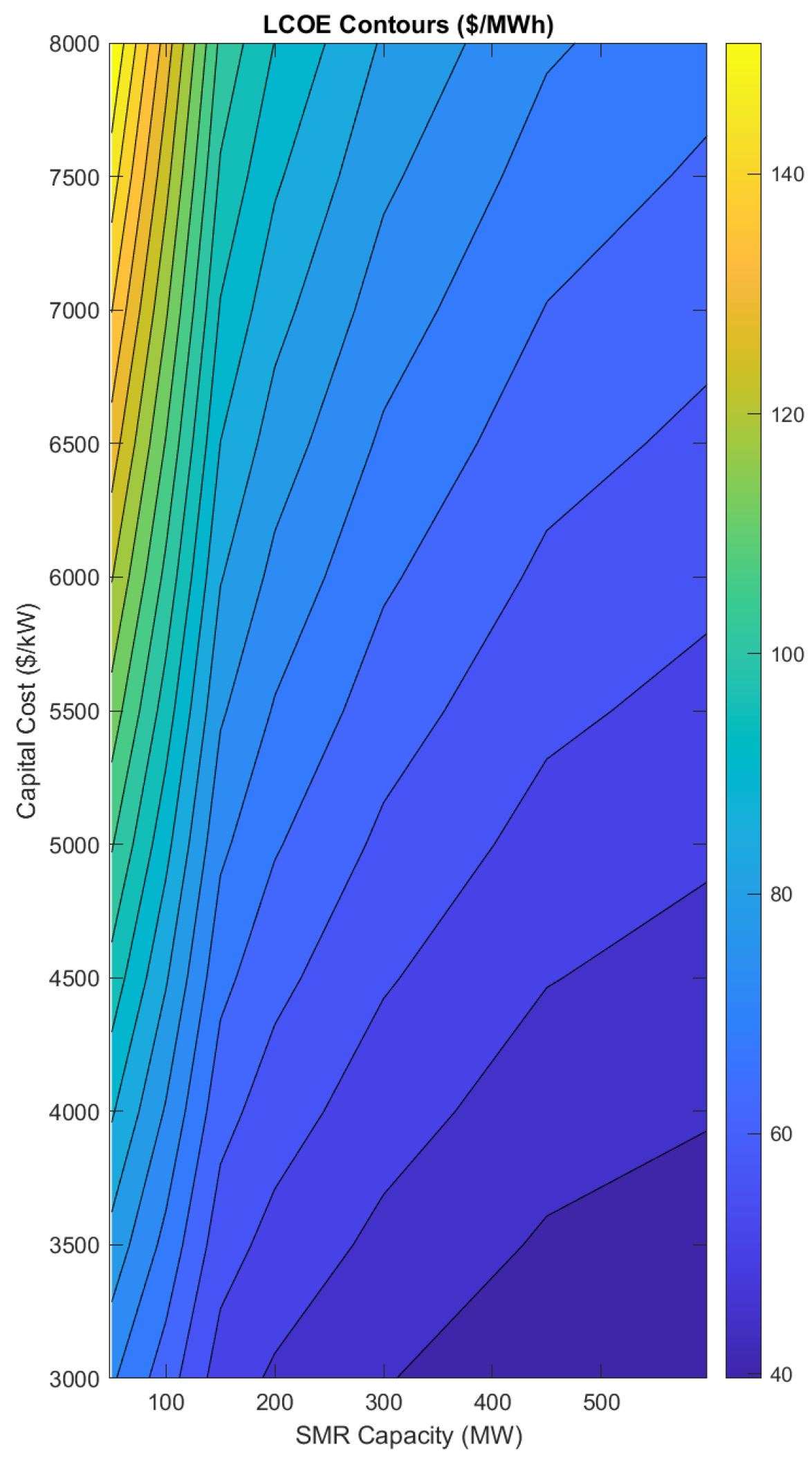
Following the dedicated assumptions outlined in the beginning of Section 5, Figure 10 presents the economic trade-offs for SMRs based on the different SMR capacities, capital cost and the resulting LCOE. Two key economic principles are clearly illustrated: economies of scale, where larger SMR capacity leads to a lower LCOE, and the direct impact of capital cost, where higher capital investment results in a higher LCOE. As a result, the most economically favorable outcomes, i.e., the lowest LCOE values, are attributed to high capacity SMRs and low capital cost. Specifically, at an SMR capacity of 600 MWe and a capital cost of 3000 US$/kW, a minimum LCOE amount of 39.60 US$/MWh is exhibited. Interestingly, at the minimum capacity of 50 MWe (12 times smaller) and highest capital cost of 8000 US$/kW (more than 2.6 times higher), LCOE is almost four times higher, at 156.48 US$/MWh.
Figure 10.
LCOE with varying SMR capacity and capital cost.
Clearly, economies of scale and the capacity of the SMR have an effect on LCOE, with LCOE values almost cut in half when capacity increases by 12 times. However, capital cost has a much greater effect on LCOE; for LCOE to almost half in value, capital cost only has to decrease by only 2.6 times. Therefore, for SMRs to be cost-competitive in terms of LCOE, capital cost has to be preferentially minimized, followed by attempts at achieving economies of scale. Recent data indicates that wholesale electricity prices across the European Union, India, the United States and the United Kingdom have declined by approximately 20% relative to 2024 levels, currently spanning a range of 40 to 100 US$/MWh [148]. Consequently, for SMRs to achieve market parity, the calculated LCOE must align with this benchmark, ideally targeting the lower bound of this range to ensure long-term economic viability. Based on the results acquired, the three lower contours in Figure 10 fall within this range (up to 80 US$/MWh). A large number of combinations of SMR capacity and capital cost seems to be able to achieve a LCOE below 80 US$/MWh, even at the lowest possible capacity.
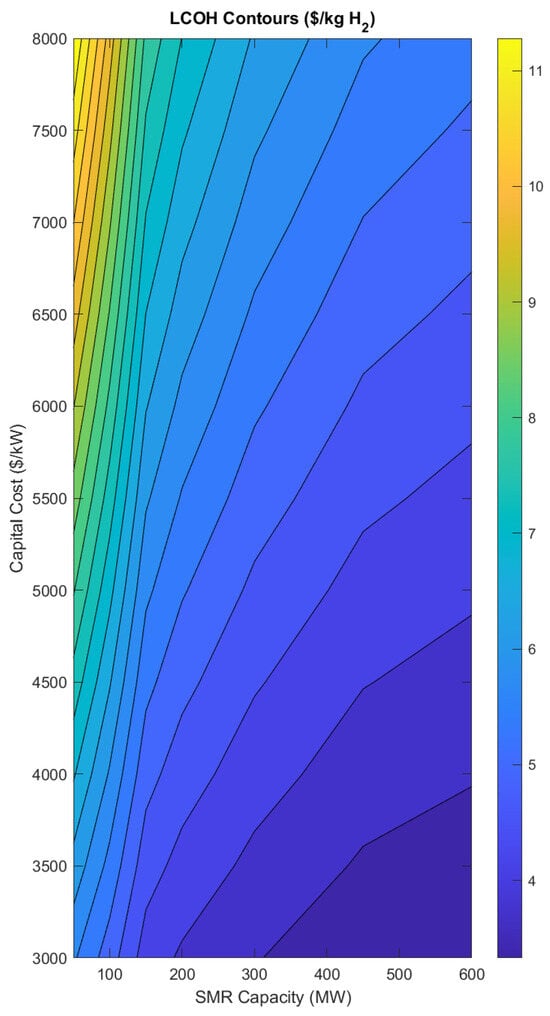
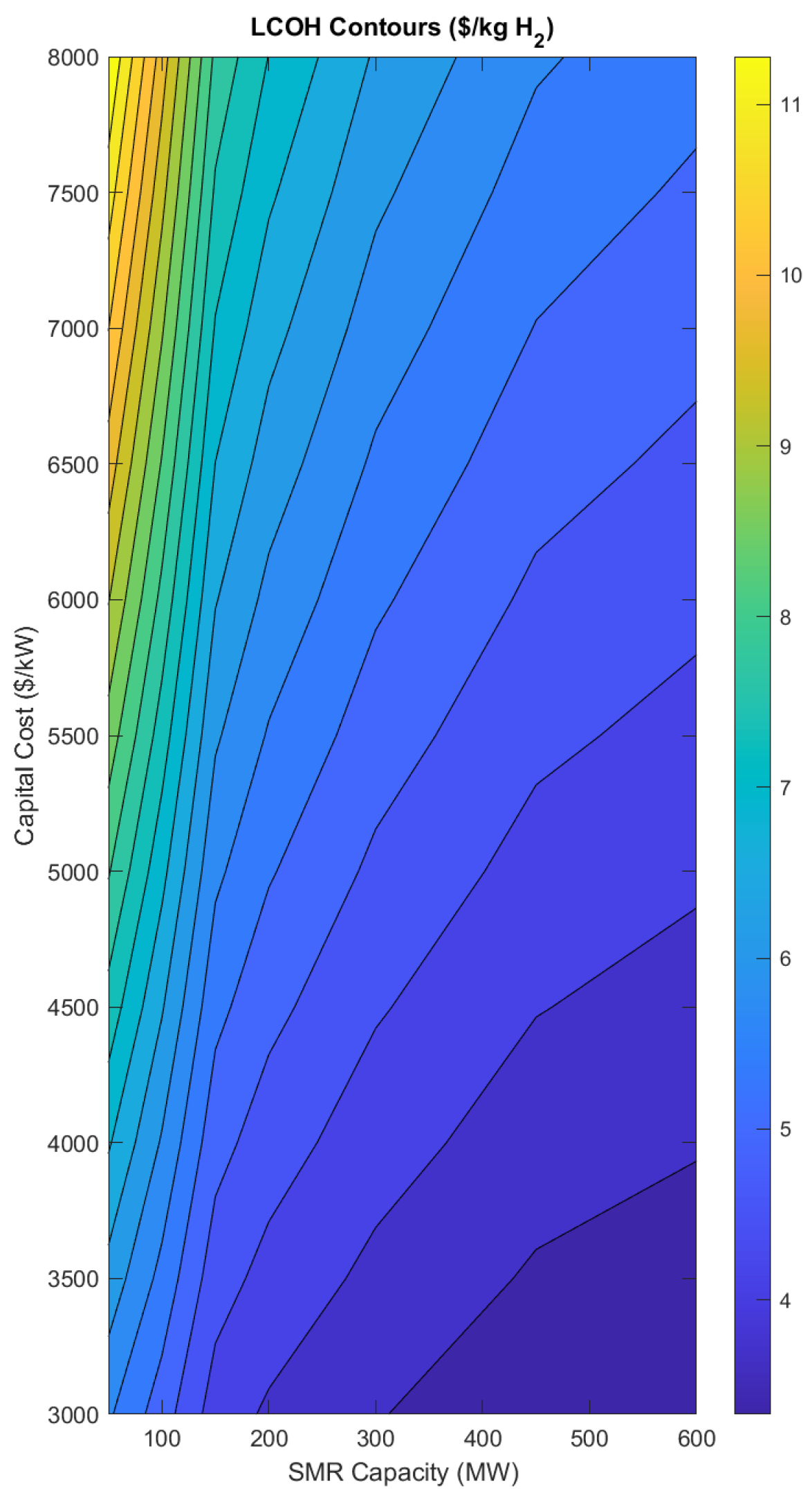
For Figure 11, a higher SMR capacity and a lower capital cost lead to a lower LCOH, reflecting the benefits of economies of scale. The most economically viable scenarios (with the lowest LCOH) are found where capacity is high and capital cost is low. Specifically, LCOH is at a minimum of 3.33 US$/ at the highest capacity–lowest capital cost combination (600 MWe with 3000 US$/kW), and almost triples at the lowest capacity–highest capital cost combination (11.68 US$/). The effect of economies of scale on LCOH is evident; when capacity increases by 12 times, LCOH is around half in value. However, similarly to LCOE, capital cost has a much greater effect, as it causes LCOH to half when it only decreases by 2.6 times. Again, capital cost seems to be the major factor in affecting LCOH, followed by the economies of scale. Based on the different technologies used to produce hydrogen, the cost varies from 0.8 to 5 US$/ for natural gas-produced hydrogen (with carbon capture, utilization and storage), 1.8–4.6 US$/ for coal-produced hydrogen (with carbon capture, utilization and storage), and from 3.8 up to more than 12 US$/ for renewable source-produced hydrogen [149]. In order for SMRs to produce hydrogen and be cost-competitive with the existing cheaper, fossil fuel-based techniques, the LCOH has to be below the maximum 5 US$/, achieved only at the lower two contours of Figure 11. At the highest SMR capacity this is achieved only for a maximum capital cost of 6500 US$/kW, whereas the smallest possible SMR capacity is 150 MWe, with a capital cost not exceeding 3500 US$/kW.
Figure 11.
LCOH with varying SMR capacity and capital cost.
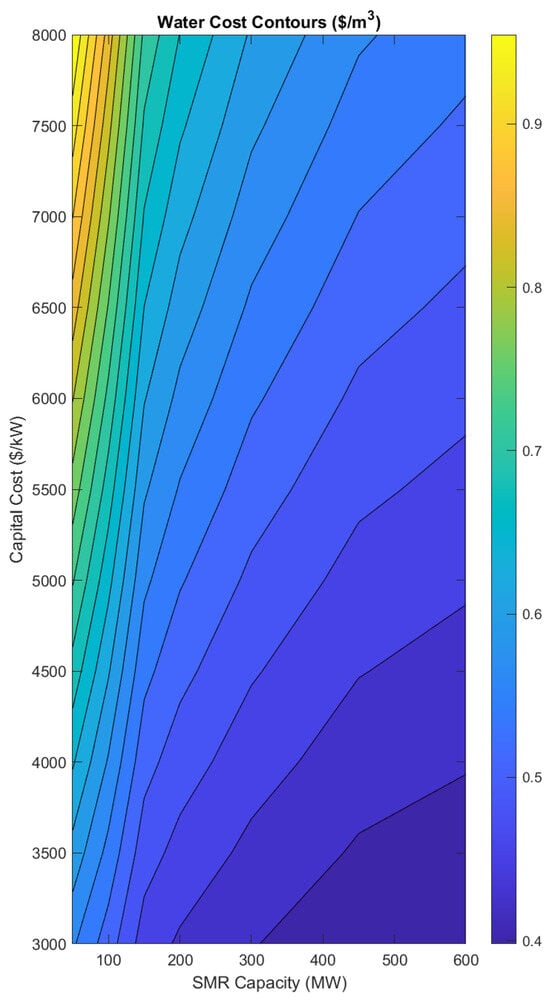
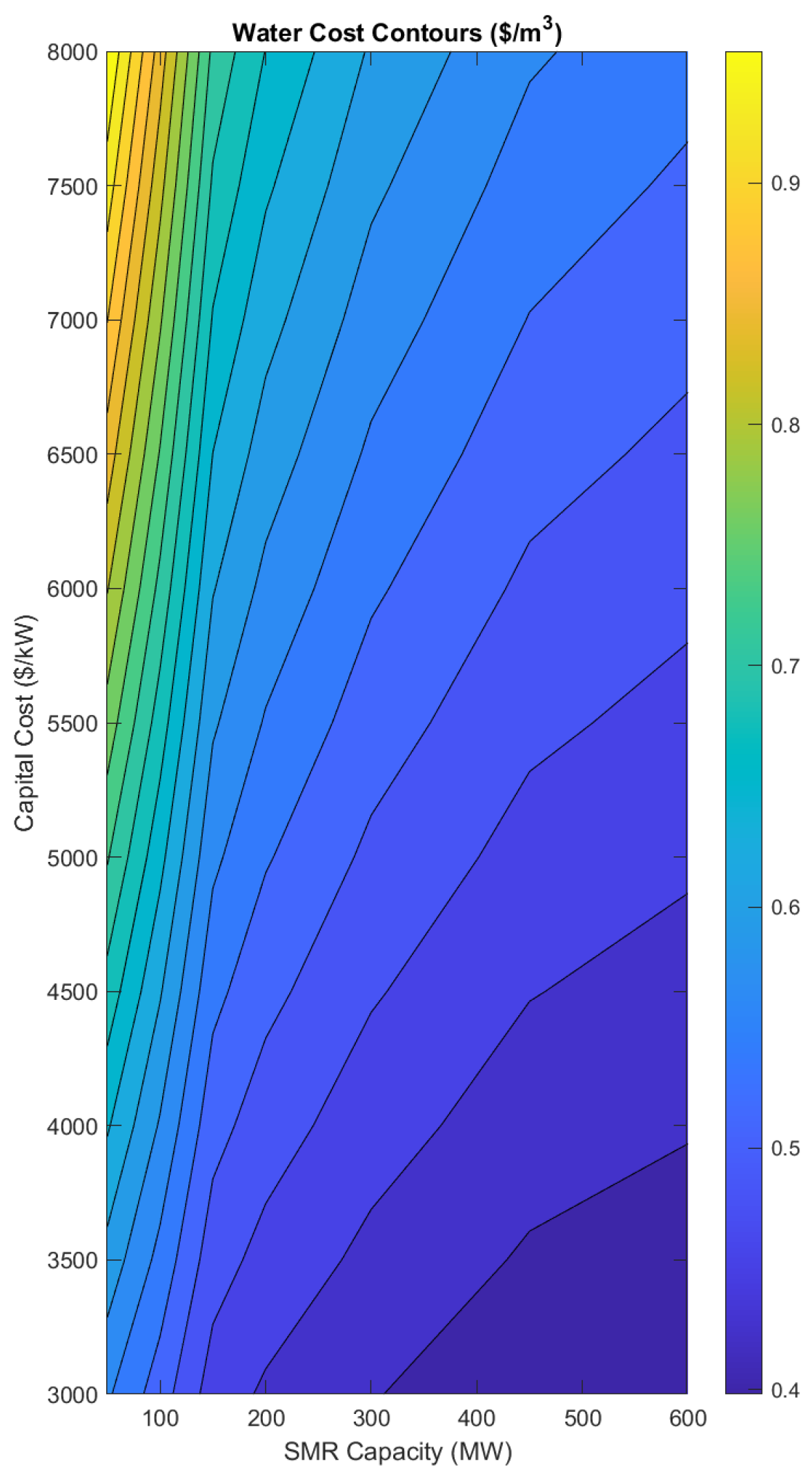
Lastly, LCOW follows a similar pattern to LCOE and LCOH, as seen in Figure 12. This plot clearly demonstrates that as SMR capacity increases and capital cost decreases, the cost of the desalinated water produced also decreases. LCOW is seen to be at a minimum of 0.40 US$/ at the highest capacity–lowest capital cost combination, and is almost 2.5 times higher at the lowest capacity–highest capital cost combination (0.98 US$/). Interestingly, the pattern shown by LCOE and LCOH is also shown in LCOW calculations, with capital cost having a much greater influence on LCOW than economies of scale and the capacity of the SMR. The cost of desalinated water varies depending on the technology used to produce it, and it can vary from 0.40 to 7.00 US$/ [150,151,152,153], also seen in Table 3. Therefore, LCOW from SMR use has to fall within this range, preferably on the lower end. As seen in Figure 12, all values acquired are below 1 US$/, making SMR use a highly attractive cost-efficient method for desalination. Ideally, a lower capital cost and a higher SMR capacity will drive LCOW to the lower end of the range, reducing the cost of desalinated water to a greater extent.
Figure 12.
LCOW with varying SMR capacity and capital cost.
6. Conclusions
This comprehensive analysis of SMRs reveals their significant potential as a transformative technology for low-carbon energy production, particularly in polygeneration applications combining electricity, hydrogen production, and water desalination. SMRs demonstrate considerable technological diversity with over 68 active designs under development globally, ranging from mature water-cooled systems to advanced Generation IV concepts. The economic analysis through parametric optimization clearly establishes that capital cost reduction is the primary driver for SMR competitiveness, having a more pronounced impact than economies of scale. For cost-competitive deployment, SMRs must achieve LCOE values within the 40–100 US$/MWh range to match current wholesale electricity prices.
The study demonstrates that SMR-based hydrogen production (pink hydrogen) can achieve costs ranging from 3.33 US$/kg at optimal 600 MWe capacity with 3000 US$/kW capital cost to 11.68 US$/kg at minimum configurations. To compete with existing fossil fuel-based hydrogen production methods, LCOH must remain below 5 US$/kg, achievable only under specific capacity and capital cost combinations. High-temperature electrolysis methods show promise for enhanced efficiency but require further technological development. SMR-powered desalination emerges as highly attractive, with LCOW values ranging from 0.40 to 0.98 US$/, all falling within competitive ranges for desalinated water production. The technology offers particular advantages for regions with limited grid infrastructure, providing scalable solutions that can be phased according to growing water demands.
Despite technical promise, SMRs face significant regulatory hurdles due to existing frameworks designed for conventional large nuclear plants. International regulatory harmonization, standardized licensing processes, and recognition of SMRs’ enhanced safety features are crucial for global deployment and achieving economies of series production. The maturity spectrum varies significantly across SMR designs, with light water-based concepts showing the highest readiness levels for near-term deployment, while advanced designs like molten salt reactors require continued development. Several units are already operational or under construction globally, demonstrating the technology’s progression toward commercial viability.
The analysis supports a multi-faceted approach including development of tailored regulatory frameworks that recognize SMR-specific characteristics, international collaboration to harmonize licensing processes, continued investment in factory fabrication capabilities to achieve learning effects, focus on design standardization to enable economies of series production, and integration strategies that leverage SMRs’ polygeneration capabilities for maximum economic benefit. SMRs represent a near to medium-term solution for decarbonization that can complement renewable energy sources by providing reliable baseload power while addressing intermittency challenges. Their modular nature enables incremental capacity additions, making them particularly suitable for evolving energy demands and smaller grid applications. The successful deployment of SMRs could maintain nuclear expertise and supply chains while contributing significantly to global decarbonization goals.
The evidence presented demonstrates that SMRs offer a technically feasible and potentially economically competitive pathway for integrated low-carbon energy systems, provided that capital costs can be controlled through standardization and series production, and regulatory frameworks evolve to support their unique characteristics and deployment strategies. The technology’s versatility in polygeneration applications, combined with its enhanced safety profile and modular deployment flexibility, positions SMRs as a valuable component of future energy systems that can address multiple challenges simultaneously while supporting the transition to a low-carbon economy.
Author Contributions
Conceptualization, E.H. and A.P.; Methodology, E.H. and A.P.; Software, A.P.; Validation, A.P.; Formal analysis, E.H. and A.P.; Investigation, E.H.; Resources, A.P.; Data curation, E.H. and A.P.; Writing—original draft, E.H. and A.P.; Writing—review & editing, E.H. and A.P.; Supervision, A.P. All authors have read and agreed to the published version of the manuscript.
Funding
This research received no external funding.
Data Availability Statement
The original contributions presented in this study are included in the article. Further inquiries can be directed to the corresponding author.
Conflicts of Interest
The authors declare no conflicts of interest.
References
- Mathew, M. Nuclear energy: A pathway towards mitigation of global warming. Prog. Nucl. Energy 2022, 143, 104080. [Google Scholar] [CrossRef] [Scilit]
- Velev, K. The Causes of Climate Change. 2024. Available online: https://science.nasa.gov/climate-change/causes/ (accessed on 19 September 2025).
- Zhao, B. The Potential of Small Modular Reactors in Industrial Decarbonization: Case Studies for Ssab, Outokumpu and Kokkola Industrial Park. Master’s Thesis, University of Oulu, Oulu, Finland, 2025. [Google Scholar]
- Chen, H.; Qi, S.; Tan, X. The improvement pathway for industrial energy efficiency under sustainability perspective. Sustain. Energy Technol. Assess. 2022, 51, 101949. [Google Scholar] [CrossRef] [Scilit]
- Mahi, M.A.; Ismail, I.; Phoong, S.W.; Isa, C.R. Mapping trends and knowledge structure of energy efficiency research: What we know and where we are going. Environ. Sci. Pollut. Res. 2021, 28, 35327–35345. [Google Scholar] [CrossRef] [Scilit]
- Gayen, D.; Chatterjee, R.; Roy, S. A review on environmental impacts of renewable energy for sustainable development. Int. J. Environ. Sci. Technol. 2024, 21, 5285–5310. [Google Scholar] [CrossRef] [Scilit]
- Østergaard, P.A.; Duic, N.; Noorollahi, Y.; Kalogirou, S. Renewable energy for sustainable development. Renew. Energy 2022, 199, 1145–1152. [Google Scholar] [CrossRef] [Scilit]
- World Bank. Understanding Transport-Related Carbon Emissions: Learning from Decoupling Trends. 2021. Available online: https://documents1.worldbank.org/curated/en/099519403102321338/pdf/IDU0640c92bb018ff040e609f5101dbf71d73454.pdf (accessed on 19 September 2025).
- U.S. Environmental Protection Agency. Transportation Sector Emissions. 2024. Available online: https://www.epa.gov/ghgemissions/transportation-sector-emissions (accessed on 19 September 2025).
- Rohde, R. Global temperature report for 2024. 2025. Available online: https://berkeleyearth.org/global-temperature-report-for-2024/ (accessed on 19 September 2025).
- Himona, E.; Poullikkas, A. Comparative Review of Natural Gas Vehicles During the Energy Transition. Energies 2025, 18, 3512. [Google Scholar] [CrossRef] [Scilit]
- Fatima, N.; Li, Y.; Ahmad, M.; Jabeen, G.; Li, X. Factors influencing renewable energy generation development: A way to environmental sustainability. Environ. Sci. Pollut. Res. 2021, 28, 51714–51732. [Google Scholar] [CrossRef] [Scilit]
- Liu, T.; Chen, L.; Yang, M.; Sandanayake, M.; Miao, P.; Shi, Y.; Yap, P.-S. Sustainability Considerations of Green Buildings: A Detailed Overview on Current Advancements and Future Considerations. Sustainability 2022, 14, 14393. [Google Scholar] [CrossRef] [Scilit]
- Cho, R. How Climate Change Impacts Renewable Energy–State of the Planet. 2024. Available online: https://news.climate.columbia.edu/2024/10/31/how-climate-change-impacts-affect-renewable-energy/ (accessed on 19 September 2025).
- Gowrisankaran, G.; Reynolds, S.S.; Samano, M. Intermittency and the Value of Renewable Energy. J. Political Econ. 2016, 124, 1187–1234. [Google Scholar] [CrossRef] [Scilit]
- Gross, R.; Heptonstall, P.; Leach, M.; Anderson, D.; Green, T.; Skea, J. Renewables and the grid: Understanding intermittency. Proc. Inst. Civ. Eng.-Energy 2007, 160, 31–41. [Google Scholar] [CrossRef] [Scilit]
- Liou, J. What are Small Modular Reactors (SMRs)? 2021. Available online: https://www.iaea.org/newscenter/news/what-are-small-modular-reactors-smrs (accessed on 19 September 2025).
- Yoo, Y.; Arunachalam, M.; Elmakki, T.; Al-Ghamdi, A.S.; Bassi, H.M.; Mohammed, A.M.; Ryu, S.; Yong, S.; Shon, H.K.; Park, H.; et al. Evaluating the economic and environmental viability of small modular reactor (SMR)-powered desalination technologies against renewable energy systems. Desalination 2025, 602, 118624. [Google Scholar] [CrossRef] [Scilit]
- Halkos, G.; Zisiadou, A. Energy Crisis Risk Mitigation through Nuclear Power and RES as Alternative Solutions towards Self-Sufficiency. J. Risk Financ. Manag. 2023, 16, 45. [Google Scholar] [CrossRef] [Scilit]
- Nuclear Energy Agency. Small Modular Reactors: Challenges and Opportunities. 2021. Available online: https://www.oecd-nea.org/jcms/pl_57979/small-modular-reactors-challenges-and-opportunities (accessed on 19 September 2025).
- Godsey, K.M. Life Cycle Assessment of Small Modular Reactors Using U.S. Nuclear Fuel Cycle. Master’s Thesis, Clemson University, Clemson, SC, USA, 2019. [Google Scholar]
- International Atomic Energy Agency. Technology Roadmap for Small Modular Reactor Deployment. 2021. Available online: https://www.iaea.org/publications/14861/technology-roadmap-for-small-modular-reactor-deployment (accessed on 19 September 2025).
- Boudot, C.; Droin, J.-B.; Sciora, P.; Besanger, Y.; Robisson, B.; Mazauric, A.-L. Small Modular Reactor-based solutions to enhance grid reliability: Impact of modularization of large power plants on frequency stability. EPJ Nucl. Sci. Technol. 2022, 8, 16. [Google Scholar] [CrossRef] [Scilit]
- Sustainability Directory. How Can SMRs Enhance Grid Stability? 2025. Available online: https://energy.sustainability-directory.com/question/how-can-smrs-enhance-grid-stability (accessed on 19 September 2025).
- Gaster, R. Small Modular Reactors: A Realist Approach to the Future of Nuclear Power. 2025. Available online: https://itif.org/publications/2025/04/14/small-modular-reactors-a-realist-approach-to-the-future-of-nuclear-power/ (accessed on 19 September 2025).
- Zarębski, P.; Katarzyński, D. Small Modular Reactors (SMRs) as a Solution for Renewable Energy Gaps: Spatial Analysis for Polish Strategy. Energies 2023, 16, 6491. [Google Scholar] [CrossRef] [Scilit]
- International Energy Agency (IEA). The Path to a New Era for Nuclear Energy; IEA: Paris, France, 2025; Available online: https://www.iea.org/reports/the-path-to-a-new-era-for-nuclear-energy (accessed on 15 January 2026).
- International Atomic Energy Agency. Advances in SMR Developments 2024; International Atomic Energy Agency: Vienna, Austria, 2024. [Google Scholar]
- European Commission. Small Modular Reactors Explained. 2025. Available online: https://energy.ec.europa.eu/topics/nuclear-energy/small-modular-reactors/small-modular-reactors-explained_en (accessed on 19 September 2025).
- Cooper, M. Small Modular Reactors and the future of nuclear power in the United States. Energy Res. Soc. Sci. 2014, 3, 161–177. [Google Scholar] [CrossRef] [Scilit]
- Locatelli, G.; Mancini, M.; Galli, A. Introducing nuclear power plants in an OECD country: Size influence on the external factors. Int. Conf. Nucl. Eng. 2010, 49309, 367–379. [Google Scholar]
- Tan, S.; Cheng, S.; Wang, K.; Liu, X.; Cheng, H.; Wang, J. The development of micro and small modular reactor in the future energy market. Front. Energy Res. 2023, 11, 1149127. [Google Scholar] [CrossRef] [Scilit]
- Zhang, X.Y.; Huang, G.H.; Liu, L.R.; Chen, J.P.; Luo, B.; Fu, Y.P.; Zheng, X.G.; Han, D.C.; Liu, Y.Y. Perspective on Site Selection of Small Modular Reactors. J. Environ. Inform. Lett. 2020, 3, 39–48. [Google Scholar] [CrossRef] [Scilit]
- Sustainable Nuclear Energy Technology Platform (SNETP). Small Modular Reactors – Nuclear Energy Factsheet 10. 2020. Available online: https://snetp.eu/wp-content/uploads/2020/05/SNETP-Factsheet-10-Small-Modular-Reactors.pdf (accessed on 19 September 2025).
- U.S. Department of Energy, Office of Nuclear Energy. Benefits of Small Modular Reactors (SMRs). 2025. Available online: https://www.energy.gov/ne/benefits-small-modular-reactors-smrs (accessed on 19 September 2025).
- Locatelli, G.; Boarin, S.; Fiordaliso, A.; Ricotti, M. Load following of Small Modular Reactors (SMR) by cogeneration of hydrogen: A techno-economic analysis. Energy 2018, 148, 494–505. [Google Scholar] [CrossRef] [Scilit]
- Nian, V.; Zhong, S. Economic feasibility of flexible energy production by small modular reactors from the point of view of integrated planning. Prog. Nucl. Energy 2020, 118, 103138. [Google Scholar] [CrossRef] [Scilit]
- Slavin, B.; Wang, R.; Roy, D.; Ling-Chin, J.; Roskilly, A.P. Techno-economic analysis of direct air carbon capture and hydrogen production integrated with a small modular reactor. Appl. Energy 2024, 356, 122407. [Google Scholar] [CrossRef] [Scilit]
- Liou, J. Nuclear and Renewables: Modelling Tool to Evaluate Hybrid Energy Systems. 2021. Available online: https://www.iaea.org/newscenter/news/nuclear-and-renewables-modelling-tool-to-evaluate-hybrid-energy-systems (accessed on 19 September 2025).
- Ahmed, S.; Hani, H.; Bazedi, G.; El-Sayed, M.; Abulnour, A. Small/medium nuclear reactors for potential desalination applications: Mini review. Korean J. Chem. Eng. 2014, 31, 924–929. [Google Scholar] [CrossRef] [Scilit]
- Alonso, G.; Montaño, J. Economic competitiveness of a nuclear-renewable hybrid energy system with water desalination: Case of study. Prog. Nucl. Energy 2025, 186, 105819. [Google Scholar] [CrossRef] [Scilit]
- Locatelli, G.; Fiordaliso, A.; Boarin, S.; Ricotti, M.E. Cogeneration: An option to facilitate load following in Small Modular Reactors. Prog. Nucl. Energy 2017, 97, 153–161. [Google Scholar] [CrossRef] [Scilit]
- Ingersoll, D.T.; Houghton, Z.J.; Bromm, R.; Desportes, C. Integration of NuScale SMR With Desalination Technologies. In Small Modular Reactors Symposium; American Society of Mechanical Engineers: Washington, DC, USA, 2014; p. V001T01A009. [Google Scholar]
- Kessides, I.N.; Kuznetsov, V. Small Modular Reactors for Enhancing Energy Security in Developing Countries. Energies 2023, 16, 813. [Google Scholar]
- Ingersoll, D.; Houghton, Z.; Bromm, R.; Desportes, C. NuScale small modular reactor for Co-generation of electricity and water. Desalination 2014, 340, 84–93. [Google Scholar] [CrossRef] [Scilit]
- Oktavian, M.R.; Febrita, D.; Arief, M.M. Cogeneration Power-Desalination in Small Modular Reactors (SMRs) for Load Following in Indonesia. In Proceedings of the 2018 4th International Conference on Science and Technology (ICST), Yogyakarta, Indonesia, 7–8 August 2018; pp. 1–6. [Google Scholar]
- Gohil, P.P.; Desai, H.; Kumar, A.; Kumar, R. Current Status and Advancement in Thermal and Membrane-Based Hybrid Seawater Desalination Technologies. Water 2023, 15, 2274. [Google Scholar] [CrossRef] [Scilit]
- Pompodakis, E.E.; Papadimitriou, T. Techno-Economic Assessment of Pink Hydrogen Produced from Small Modular Reactors for Maritime Applications. Hydrogen 2025, 6, 47. [Google Scholar] [CrossRef] [Scilit]
- Guo, Y.; Yuan, X.; Zhao, H.; Dai, Y. Coupling a small modular molten salt reactor with desalination. Nucl. Eng. Des. 2023, 413, 112513. [Google Scholar] [CrossRef] [Scilit]
- Alnuaimi, R.R.; Khuwaileh, B.; Zubair, M.; Hartanto, D. Nuclear design of an integrated small modular reactor based on the APR-1400 for RO desalination purposes. Nucl. Sci. Tech. 2022, 33, 95. [Google Scholar] [CrossRef] [Scilit]
- Al-Mutairi, A.; Al-Enezi, M.A.; Abido, M.S. Techno-economic assessment of a small modular reactor integrated with a desalination plant: A case study of Kuwait. Nucl. Eng. Des. 2023, 412, 112467. [Google Scholar] [CrossRef] [Scilit]
- Venizelou, V.; Poullikkas, A. Energy–water–transport nexus modeling for energy transition: A system dynamics approach. Sustain. Energy Technol. Assess. 2026, 85, 104805. [Google Scholar] [CrossRef] [Scilit]
- Venizelou, V.; Poullikkas, A. The effect of carbon price towards green hydrogen power generation. Renew. Sustain. Energy Rev. 2025, 211, 115254. [Google Scholar] [CrossRef] [Scilit]
- Poullikkas, A. A Decouple Optimization Method for Power Technology Selection in Competitive Markets. Energy Sources Part B 2009, 4, 199–211. [Google Scholar] [CrossRef] [Scilit]
- Poullikkas, A. An optimization model for the production of desalinated water using photovoltaic systems. Desalination 2010, 258, 100–105. [Google Scholar] [CrossRef] [Scilit]
- Poullikkas, A. A Technology Selection Algorithm for Independent Power Producers. Electr. J. 2001, 14, 80–84. [Google Scholar] [CrossRef] [Scilit]
- Poullikkas, A. Optimization algorithm for reverse osmosis desalination economics. Desalination 2001, 133, 75–81. [Google Scholar] [CrossRef] [Scilit]
- Bundesamt für die Sicherheit der Nuklearen Entsorgung (BASE). Gutachten Small Modular Reactors; Report KT-XX/2024; Bundesamt für die Sicherheit der Nuklearen Entsorgung: Salzgitter, Germany, 2021. [Google Scholar]
- Nuclear Energy Agency (NEA). Small Modular Reactors: Nuclear Energy Market Potential for Near-Term Deployment; OECD Publishing: Paris, France, 2016. [Google Scholar]
- French Nuclear Safety Authority. The Small Modular Reactors (SMR). 2025. Available online: https://www.asn.fr/en/smr (accessed on 19 September 2025).
- Cunningham, N.; American Security Project. Small Modular Reactors: A Possible Path Forward for Nuclear Power; American Security Project (ASP): Washington, DC, USA, 2012. [Google Scholar]
- Ingersoll, D. Deliberately small reactors and the second nuclear era. Prog. Nucl. Energy 2009, 51, 589–603. [Google Scholar] [CrossRef] [Scilit]
- Poullikkas, A. An overview of future sustainable nuclear power reactors. Int. J. Energy Environ. 2013, 4, 743–776. [Google Scholar]
- Ramana, M.; Hopkins, L.B.; Glaser, A. Licensing Small Modular Reactors. Energy 2013, 61, 555–564. [Google Scholar] [CrossRef] [Scilit]
- Kindra, V.; Maksimov, I.; Zlyvko, O.; Rogalev, A.; Rogalev, N. Thermodynamic Analysis and Comparison of Power Cycles for Small Modular Reactors. Energies 2024, 17, 1650. [Google Scholar] [CrossRef] [Scilit]
- Pioro, I.; Duffey, R. Current and future nuclear power reactors and plants. In Managing Global Warming; Letcher, T.M., Ed.; Academic Press: Warsaw, Poland, 2019; pp. 117–197. [Google Scholar]
- World Nuclear Association. Small Modular Reactor (SMR) Design Database. Information Library. 2025. Available online: https://world-nuclear.org/information-library/nuclear-power-reactors/small-modular-reactors/small-modular-reactor-smr-design-database (accessed on 15 January 2026).
- International Atomic Energy Agency. Advances in Small Modular Reactor Technology Developments: A Supplement to: IAEA Advanced Reactors Information System (ARIS); IAEA: Vienna, Austria, 2020; Available online: https://aris.iaea.org/publications/smr_book_2020.pdf (accessed on 15 January 2026).
- International Atomic Energy Agency. Industrial Applications of Nuclear Energy; IAEA Nuclear Energy Series No. NP-T-4.3; IAEA: Vienna, Austria, 2017; Available online: https://www-pub.iaea.org/MTCD/Publications/PDF/P1772_web.pdf (accessed on 15 January 2026).
- Nelson, L.O.; Gandrik, A.; McKellar, M.; Patterson, M.; Robertson, E.; Wood, R. Optimum Reactor Outlet Temperatures for High Temperature Gas-Cooled Reactors Integrated with Industrial Processes; INL/EXT-11-21652; Idaho National Laboratory (INL): Idaho Falls, ID, USA, 2011. Available online: https://inldigitallibrary.inl.gov/sites/sti/sti/4953394.pdf (accessed on 15 January 2026).
- OECD Nuclear Energy Agency. High-Temperature Gas-Cooled Reactors and Industrial Heat Applications. NEA No. 7629. 2022. Available online: https://www.oecd-nea.org/upload/docs/application/pdf/2022-06/7629_htgr.pdf (accessed on 15 January 2026).
- Venizelou, V.; Poullikkas, A. Comprehensive Overview of Recent Research and Industrial Advancements in Nuclear Hydrogen Production. Energies 2024, 17, 2836. [Google Scholar] [CrossRef] [Scilit]
- Rowinski, M.K.; White, T.J.; Zhao, J. Small and Medium sized Reactors (SMR): A review of technology. Renew. Sustain. Energy Rev. 2015, 44, 643–656. [Google Scholar] [CrossRef] [Scilit]
- Sabharwall, P.; Kim, E.S.; McKellar, M.G.; Patterson, M. Small Modular Molten Salt Reactor (SM-MSR). In Proceedings of the ASME 2011 Small Modular Reactors Symposium, Washington, DC, USA, 28–30 September 2011; pp. 329–336. [Google Scholar]
- Krall, L.M.; Macfarlane, A.M.; Ewing, R.C. Nuclear waste from small modular reactors. Proc. Natl. Acad. Sci. USA 2022, 119, e2111833119. [Google Scholar] [CrossRef] [Scilit]
- Mignacca, B.; Locatelli, G.; Sainati, T. Deeds not words: Barriers and remedies for Small Modular nuclear Reactors. Energy 2020, 206, 118137. [Google Scholar] [CrossRef] [Scilit]
- Liu, Z.; Fan, J. Technology readiness assessment of Small Modular Reactor (SMR) designs. Prog. Nucl. Energy 2014, 70, 20–28. [Google Scholar] [CrossRef] [Scilit]
- Hidayatullah, H.; Susyadi, S.; Subki, M.H. Design and technology development for small modular reactors—Safety expectations, prospects and impediments of their deployment. Prog. Nucl. Energy 2015, 79, 127–135. [Google Scholar] [CrossRef] [Scilit]
- Mignacca, B.; Locatelli, G. Economics and finance of Small Modular Reactors: A systematic review and research agenda. Renew. Sustain. Energy Rev. 2020, 118, 109519. [Google Scholar] [CrossRef] [Scilit]
- Lloyd, C.A.; Roulstone, A. A methodology to determine SMR build schedule and the impact of modularisation. In International Conference on Nuclear Engineering; American Society of Mechanical Engineers: New York, NY, USA, 2018; Volume 51432, p. V001T13A010. [Google Scholar]
- Lee, J.I. Review of Small Modular Reactors: Challenges in Safety and Economy to Success. Korean J. Chem. Eng. 2024, 41, 2761–2780. [Google Scholar] [CrossRef] [Scilit]
- Lokhov, A.; Cameron, R.; Sozoniuk, V. OECD/NEA study on the economics and market of small reactors. Nucl. Eng. Technol. 2013, 45, 1. [Google Scholar] [CrossRef] [Scilit]
- Morales Pedraza, J. (Ed.) Small Modular Reactors for Electricity Generation; Springer International Publishing: Cham, Switzerland, 2017. [Google Scholar]
- OECD Nuclear Energy Agency and International Energy Agency. Projected Costs of Generating Electricity 2020 Edition. NEA No. 7531. 2020. Available online: https://www.oecd-nea.org/upload/docs/application/pdf/2020-12/egc-2020_2020-12-09_18-26-46_781.pdf (accessed on 15 January 2026).
- International Atomic Energy Agency. Climate Change and Nuclear Power 2024: Financing Nuclear Energy in Low Carbon Transitions; IAEA: Vienna, Austria, 2024; Available online: https://www.iaea.org/publications/15754/climate-change-and-nuclear-power-2024-financing-nuclear-energy-in-low-carbon-transitions (accessed on 15 January 2026).
- Prieto, C.; Patiño, D.; Vuelvas, J. Estimation of Levelized Cost of Energy for Small Modular Reactors in Colombia: A Monte Carlo Simulation Approach. Int. J. Energy Econ. Policy 2025, 15, 24–33. [Google Scholar] [CrossRef] [Scilit]
- Hee, N.V.; Peremans, H.; Nimmegeers, P. Economic potential and barriers of small modular reactors in Europe. Renew. Sustain. Energy Rev. 2024, 203, 114743. [Google Scholar] [CrossRef] [Scilit]
- Hugall, I.; Lee, K.; Pinnegar, M.; Son, A.; Wymond, B. Levelised Cost of Electricity Review. 2024. Available online: https://cleanenergycouncil.org.au/getmedia/2c81080a-cd54-4845-904e-4846606c26cf/levelised-cost-of-electricity-review.pdf (accessed on 15 September 2025).
- Abdulla, A.; Azevedo, I.L.; Morgan, M.G. Expert assessments of the cost of light water small modular reactors. Proc. Natl. Acad. Sci. USA 2013, 110, 9686–9691. [Google Scholar] [CrossRef] [Scilit] [PubMed]
- Cooper, M. The Economic Failure of Nuclear Power and the Development of a Low Carbon Electricity Future: Why Small Modular Reactors Are Part of the Problem, Not the Solution. 2014. Available online: https://www.nirs.org/wp-content/uploads/reactorwatch/newreactors/cooper-smrsaretheproblemnotthesolution.pdf (accessed on 15 September 2025).
- NuScale Power. NuScale Power’s Small Modular Reactor (SMR) Achieves Standard Design Approval from U.S. Nuclear Regulatory Commission for 77 MWe. 2025. Available online: https://www.nuscalepower.com/press-releases/2025/nuscale-powers-small-modular-reactor-smr-achieves-standard-design-approval-from-us-nuclear-regulatory-commission-for-77-mwe (accessed on 7 October 2025).
- Office of Nuclear Energy. NRC Certifies First U.S. Small Modular Reactor Design. 2023. Available online: https://www.energy.gov/ne/articles/nrc-certifies-first-us-small-modular-reactor-design (accessed on 7 October 2025).
- National Academies of Sciences, Engineering, and Medicine. Laying the Foundation for New and Advanced Nuclear Reactors in the United States; The National Academies Press: Washington, DC, USA, 2023. [Google Scholar] [CrossRef] [Scilit]
- Gaspar, M. Technology Neutral: Safety and Licensing of SMRs. 2020. Available online: https://www.iaea.org/newscenter/news/technology-neutral-safety-and-licensing-of-smrs (accessed on 19 September 2025).
- Shobeiri, E.; Genco, F.; Hoornweg, D.; Tokuhiro, A. Small Modular Reactor Deployment and Obstacles to Be Overcome. Energies 2023, 16, 3468. [Google Scholar] [CrossRef] [Scilit]
- International Atomic Energy Agency. Technology Options for a Country’s First Nuclear Power Plant. 2012. Available online: https://www.iaea.org/sites/default/files/gc/gc56inf-3-att4_en.pdf (accessed on 19 September 2025).
- Sustainability Directory. What Regulatory Adaptations Are Needed for SMRs? 2025. Available online: https://energy.sustainability-directory.com/question/what-regulatory-adaptations-are-needed-for-smrs/ (accessed on 19 September 2025).
- International Atomic Energy Agency. Advances in Small Modular Reactor Technology Developments. Vienna, Austria. 2016. Available online: https://aris.iaea.org/publications/smr-book_2016.pdf (accessed on 19 September 2025).
- Josephs, R.E.; Yap, T.; Alamooti, M.; Omojiba, T.; Benarbia, A.; Tomomewo, O.; Ouadi, H. Regulation of Small Modular Reactors (SMRs): Innovative Strategies and Economic Insights. Eng 2025, 6, 61. [Google Scholar] [CrossRef] [Scilit]
- Mignacca, B.; Locatelli, G.; Alaassar, M.; Invernizzi, D. We Never Built Small Modular Reactors (SMRs), but What Do We Know About Modularization in Construction? In Proceedings of the 2018 26th International Conference on Nuclear Engineering, London, UK, 22–26 July 2018. [Google Scholar]
- Reyes, J.N. The Hydrogen Rush: Ushering in a New Era of Energy with Small Modular Reactors. 2024. Available online: https://www.nuscalepower.com/smr-insights-blog/the-hydrogen-rush-ushering-in-a-new-era-of-energy-with-small-modular-reactors (accessed on 19 September 2025).
- Institution of Mechanical Engineers. Rolls-Royce Small Modular Reactors Could Power Electrolysis for Low-Carbon Hydrogen. 2023. Available online: https://www.imeche.org/news/news-article/rolls-royce-small-modular-reactors-could-power-electrolysis-for-low-carbon-hydrogen (accessed on 19 September 2025).
- Nikolaidis, P.; Poullikkas, A. A comparative overview of hydrogen production processes. Renew. Sustain. Energy Rev. 2017, 67, 597–611. [Google Scholar] [CrossRef] [Scilit]
- International Energy Agency. Hydrogen. 2025. Available online: https://www.iea.org/energy-system/low-emission-fuels/hydrogen (accessed on 22 September 2023).
- Active Sustainability. Green Hydrogen: The Key to Decarbonizing Industry? 2019. Available online: https://www.activesustainability.com/sustainable-development/green-hydrogen-decarbonizing/ (accessed on 19 September 2025).
- Hydrogen Council and McKinsey & Company. Hydrogen for Net-Zero: A Critical Cost-Competitive Energy Vector. 2021. Available online: https://hydrogencouncil.com/wp-content/uploads/2021/11/Hydrogen-for-Net-Zero.pdf (accessed on 19 September 2025).
- Heid, B.; Martens, C.; Wilthaner, M. Unlocking Hydrogen’s Power for Long-Haul Freight Transport. 2022. Available online: https://www.mckinsey.com/industries/infrastructure/our-insights/unlocking-hydrogens-power-for-long-haul-freight-transport#/ (accessed on 19 September 2025).
- Li, S.; Djilali, N.; Rosen, M.A.; Crawford, C.; Sui, P.-C. Transition of heavy-duty trucks from diesel to hydrogen fuel cells: Opportunities, challenges, and recommendations. Int. J. Energy Res. 2017, 46, 11718–11729. [Google Scholar] [CrossRef] [Scilit]
- Wright, M.L.; Lewis, A.C. Decarbonisation of heavy-duty diesel engines using hydrogen fuel: A review of the potential impact on NOx emissions. Environ. Sci. Atmos. 2022, 2, 852–866. [Google Scholar] [CrossRef] [Scilit]
- Ciftcioglu, M.; Genco, F.; Tokuhiro, A. Optimized Clean Hydrogen Production using Nuclear Small Modular Reactors and Renewable Energy Sources: A Review. ATW Int. Z. für Kernenerg. 2022, 67, 16–30. [Google Scholar]
- Chalkiadakis, N.; Stamatakis, E.; Varvayanni, M.; Stubos, A.; Tzamalis, G.; Tsoutsos, T. A New Path towards Sustainable Energy Transition: Techno-Economic Feasibility of a Complete Hybrid Small Modular Reactor/Hydrogen (SMR/H2) Energy System. Energies 2023, 16, 6257. [Google Scholar] [CrossRef] [Scilit]
- Nevodini, D. The Role of Small Modular Reactors in Decarbonizing Hydrogen Production: Electro-Thermal Integration and Economic Insights. Master’s Thesis, Università degli Studi di Padova, Padova, Italy, 2025. [Google Scholar]
- Kim, J.; Rweyemamu, M.; Purevsuren, B. Machine Learning-Based Approach for Hydrogen Economic Evaluation of Small Modular Reactors. Sci. Technol. Nucl. Install. 2022, 2022, 9297122. [Google Scholar] [CrossRef] [Scilit]
- Stoots, C.M.; O’Brien, J.E.; Condie, K.G.; Hartvigsen, J.J. High-temperature electrolysis for large-scale hydrogen production from nuclear energy—Experimental investigations. Int. J. Hydrogen Energy 2010, 35, 4861–4870. [Google Scholar] [CrossRef] [Scilit]
- Fujiwara, S.; Kasai, S.; Yamauchi, H.; Yamada, K.; Makino, S.; Matsunaga, K.; Yoshino, M.; Kameda, T.; Ogawa, T.; Momma, S.; et al. Hydrogen production by high temperature electrolysis with nuclear reactor. Prog. Nucl. Energy 2008, 50, 422–426. [Google Scholar] [CrossRef] [Scilit]
- Mougin, J. Hydrogen Production by High-Temperature Steam Electrolysis; Elsevier: Amsterdam, The Netherlands, 2015; pp. 225–253. [Google Scholar]
- Vostakola, M.F.; Ozcan, H.; El-Emam, R.S.; Horri, B.A. Recent Advances in High-Temperature Steam Electrolysis with Solid Oxide Electrolysers for Green Hydrogen Production. Energies 2023, 16, 3327. [Google Scholar] [CrossRef] [Scilit]
- Juárez-Martínez, L.; Espinosa-Paredes, G.; Vázquez-Rodríguez, A.; Romero-Paredes, H. Energy optimization of a Sulfur–Iodine thermochemical nuclear hydrogen production cycle. Nucl. Eng. Technol. 2021, 53, 2066–2073. [Google Scholar] [CrossRef] [Scilit]
- Brown, N.R.; Oh, S.; Revankar, S.T.; Vierow, K.; Rodriguez, S.; Cole, R., Jr.; Gauntt, R. Simulation of Sulfur-Iodine Thermochemical Hydrogen Production Plant Coupled to High-Temperature Heat Source. Nucl. Technol. 2009, 167, 95–106. [Google Scholar] [CrossRef] [Scilit]
- NuScale Power. NuScale Advances Clean Water and Hydrogen Production with Breakthrough Research. 2025. Available online: https://www.nuscalepower.com/press-releases/2025/nuscale-advances-clean-water-and-hydrogen-production-with-breakthrough-research (accessed on 19 September 2025).
- Khan, M.A.; Al-Attas, T.; Roy, S.; Rahman, M.M.; Ghaffour, N.; Thangadurai, V.; Larter, S.; Hu, J.; Ajayan, P.M.; Kibria, M.G. Seawater electrolysis for hydrogen production: A solution looking for a problem. Energy Environ. Sci. 2021, 14, 4831–4839. [Google Scholar] [CrossRef] [Scilit]
- Mrabet, R.E.; Berrada, A. Hydrogen production and derivatives from renewable energy systems for a best valorization of sustainable resources. Hybrid Energy Syst. Model. 2021, 343–363. [Google Scholar] [CrossRef] [Scilit]
- David, M.; Ocampo-Martínez, C.; Sánchez-Peña, R. Advances in alkaline water electrolyzers: A review. J. Energy Storage 2019, 23, 392–403. [Google Scholar] [CrossRef] [Scilit]
- Shin, Y.; Park, W.; Chang, J.; Park, J. Evaluation of the high temperature electrolysis of steam to produce hydrogen. Int. J. Hydrogen Energy 2007, 32, 1486–1491. [Google Scholar] [CrossRef] [Scilit]
- Boardman, R.D. High Temperature Steam Electrolysis. In Encyclopedia of Nuclear Energy; Greenspan, E., Ed.; Elsevier: Amsterdam, The Netherlands, 2021; pp. 82–93. [Google Scholar] [CrossRef] [Scilit]
- Buzzetti, R.; Frano, R.L.; Cancemi, A.S. Feasibility study of desalination plant powered by smr. Nucl. Eng. Des. 2024, 418, 112897. [Google Scholar] [CrossRef] [Scilit]
- International Atomic Energy Agency. Nuclear Desalination. 2025. Available online: https://www.iaea.org/topics/non-electric-applications/nuclear-desalination (accessed on 19 September 2025).
- Yusuf, O. Harnessing Nuclear Power for Desalination to Secure Freshwater Resources. IAEA Bull. 2023, 64, 10–11. [Google Scholar]
- Kim, J.; Park, K.; Yang, D.R.; Hong, S. A comprehensive review of energy consumption of seawater reverse osmosis desalination plants. Appl. Energy 2019, 254, 113652. [Google Scholar] [CrossRef] [Scilit]
- Wang, C.; Wang, L.; Dong, L.; Shon, H.K.; Kim, J. Specific energy consumption of seawater reverse osmosis desalination plants using machine learning. Desalination 2025, 602, 118654. [Google Scholar] [CrossRef] [Scilit]
- Zhang, Z.; Atia, A.A.; Andrés-Mañas, J.A.; Zaragoza, G.; Fthenakis, V. Comparative techno-economic assessment of osmotically-assisted reverse osmosis and batch-operated vacuum-air-gap membrane distillation for high-salinity water desalination. Desalination 2022, 532, 115737. [Google Scholar] [CrossRef] [Scilit]
- Atia, A.A.; Allen, J.; Young, E.; Knueven, B.; Bartholomew, T.V. Cost optimization of low-salt-rejection reverse osmosis. Desalination 2023, 551, 116407. [Google Scholar] [CrossRef] [Scilit]
- Thabit, Q.; Nassour, A.; Nelles, M. Water Desalination Using the Once-through Multi-Stage Flash Concept: Design and Modeling. Materials 2022, 15, 6131. [Google Scholar] [CrossRef] [Scilit]
- El-Dessouky, H.T.; Ettouney, H.M.; Al-Roumi, Y. Multi-stage flash desalination: Present and future outlook. Chem. Eng. J. 1999, 73, 173–190. [Google Scholar] [CrossRef] [Scilit]
- Al-Karaghouli, A.; Kazmerski, L.L. Energy consumption and water production cost of conventional and renewable-energy-powered desalination processes. Renew. Sustain. Energy Rev. 2013, 24, 343–356. [Google Scholar] [CrossRef] [Scilit]
- Muftah, A.K.; Zili-Ghedira, L.; Abugderah, M.M.; Hassen, W.; Becheikh, N.; Alshammari, B.M.; Kolsi, L. Sustainable Water Production: Solar Energy Integration in Multi-Effect Desalination Plants. Water 2025, 17, 647. [Google Scholar] [CrossRef] [Scilit]
- Ellersdorfer, P.; Omar, A.; Taylor, R.A.; Daiyan, R.; Leslie, G. Multi-effect distillation: A sustainable option to large-scale green hydrogen production using solar energy. Int. J. Hydrogen Energy 2023, 48, 31491–31505. [Google Scholar] [CrossRef] [Scilit]
- Sheta, M.; Elwardany, A.; Ookawara, S.; Hassan, H. Energy analysis of a small-scale multi-effect distillation system powered by photovoltaic and thermal collectors. J. Energy Syst. 2023, 7, 89–105. [Google Scholar] [CrossRef] [Scilit]
- Khouya, A. Performance evaluation of a MED-MVC desalination plant driven by a concentrated photovoltaic thermal system and an organic Rankine cycle. Energy Convers. Manag. 2022, 274, 116428. [Google Scholar] [CrossRef] [Scilit]
- Rath, M.; Morgan, M.G. Assessment of a hybrid system that uses small modular reactors (SMRs) to back up intermittent renewables and desalinate water. Prog. Nucl. Energy 2020, 122, 103269. [Google Scholar] [CrossRef] [Scilit]
- Poudel, B.; Wendt, D.; McJunkin, T.; Kang, N.; Boardman, R. Baseload Hydrogen Production Using Nuclear and Renewable Energy: A Comparative Analysis. In Proceedings of the 2024 IEEE Green Technologies Conference (GreenTech), Springdale, AR, USA, 3–5 April 2024; pp. 106–110. [Google Scholar]
- Bhattacharyya, R.; Singh, K.; Bhanja, K.; Grover, R. Assessing techno-economic uncertainties in nuclear power-to-X processes: The case of nuclear hydrogen production via water electrolysis. Int. J. Hydrogen Energy 2023, 48, 14149–14169. [Google Scholar] [CrossRef] [Scilit]
- Bouma, A.T.; Wei, Q.J.; Parsons, J.E.; Buongiorno, J.; Lienhard, J.H. Energy and water without carbon: Integrated desalination and nuclear power at Diablo Canyon. Appl. Energy 2022, 323, 119612. [Google Scholar] [CrossRef] [Scilit]
- Ho, A.; Billings, B.W.; Hedengren, J.D.; Powell, K.M. Flexible operation of nuclear hybrid energy systems for load following and water desalination. Renew. Energy Focus 2024, 51, 100641. [Google Scholar] [CrossRef] [Scilit]
- Ueckerdt, F.; Hirth, L.; Luderer, G.; Edenhofer, O. System LCOE: What are the costs of variable renewables? Energy 2013, 63, 61–75. [Google Scholar] [CrossRef] [Scilit]
- Binder, W.; Paredis, C.J.J.; Garcia, H.E. The Value of Flexibility in the Design of Hybrid Energy Systems: A Real Options Analysis. IEEE Power Energy Technol. Syst. J. 2017, 4, 130–138. [Google Scholar] [CrossRef] [Scilit]
- Short, W.; Packey, D.J.; Holt, T. A Manual for the Economic Evaluation of Energy Efficiency and Renewable Energy Technologies; NREL/TP-462-5173; National Renewable Energy Laboratory: Golden, CO, USA, 1995. Available online: https://www.nrel.gov/docs/legosti/old/5173.pdf (accessed on 15 January 2026).
- International Energy Agency. Electricity 2025. Available online: https://www.iea.org/reports/electricity-2025 (accessed on 15 January 2026).
- International Energy Agency. Global Hydrogen Review 2025. Available online: https://www.iea.org/reports/global-hydrogen-review-2025 (accessed on 15 January 2026).
- Feo-García, J.; Pulido-Alonso, A.; Florido-Betancor, A.; Florido-Suárez, N.R. Cost Studies of Reverse Osmosis Desalination Plants in the Range of 23,000–33,000 m3/day. Water 2024, 16, 910. [Google Scholar] [CrossRef] [Scilit]
- Karagiannis, I.C.; Soldatos, P.G. Water desalination cost literature: Review and assessment. Desalination 2008, 223, 448–456. [Google Scholar] [CrossRef] [Scilit]
- Ferris, N. Can Desalination Save a Drying World? 2023. Available online: https://www.energymonitor.ai/tech/can-desalination-save-a-drying-world/?cf-view (accessed on 19 September 2025).
- Cosín, C. Evolution of Rates in Desalination (Part I). 2019. Available online: https://smartwatermagazine.com/blogs/carlos-cosin/evolution-rates-desalination-part-i (accessed on 15 January 2026).

Disclaimer/Publisher’s Note: The statements, opinions and data contained in all publications are solely those of the individual author(s) and contributor(s) and not of MDPI and/or the editor(s). MDPI and/or the editor(s) disclaim responsibility for any injury to people or property resulting from any ideas, methods, instructions or products referred to in the content. |
© 2026 by the authors. Licensee MDPI, Basel, Switzerland. This article is an open access article distributed under the terms and conditions of the Creative Commons Attribution (CC BY) license.