


Abstract
This study examines growing tensions between household energy security and climate and energy policy objectives in Poland. It aims to analyze household attitudes towards the decarbonization of heating, particularly the phase-out of solid fuels and gas, and to assess perceptions of alternative heat sources as a means of ensuring energy security. The analysis draws on a survey of representatives of 508 households in five municipalities in the Małopolska Voivodeship, characterized by diverse heating structures. The quantitative study was complemented by 18 in-depth interviews with local government representatives. The results indicate low public acceptance of heating decarbonization amid growing energy uncertainty. Respondents recognized the importance of diversifying heat sources and supported retaining a solid-fuel boiler, regardless of its class, as an emergency backup. Energy security was associated more strongly with autonomy, independence, and freedom of choice than with low-carbon technologies. Solid-fuel heating was perceived as strengthening household resilience to supply disruptions and crises. The findings highlight the need to consider household energy security, particularly energy costs and resilience, when designing energy policies and regulatory instruments such as ETS2 (EU Emissions Trading System 2), especially in municipalities with socio-economic and energy conditions similar to those of the municipalities included in the study.
1. Introduction
One of the key challenges facing the modern world is the energy crisis, which centers on how, in the face of growing energy demand, to achieve a secure transition to renewable, low-carbon energy sources with lower climate impacts. On a global scale, the deployment of renewable energy sources is still lagging behind the overall growth in energy demand, a large proportion of which continues to be met by fossil fuels [1,2]. Consequently, global demand for fossil fuels and related carbon dioxide emissions have continued to reach record levels, demonstrating the structural difficulties involved in reconciling rising energy needs with climate objectives [1]. In this situation, the European Union’s climate policy is increasingly coming into conflict with the harsh reality of the risk of losing energy security for households. Meanwhile, this security is a particularly important aspect of the functioning of EU countries in the third decade of the 21st century, a period marked by the COVID-19 pandemic, climate change, as well as armed conflicts and unprecedented geopolitical upheavals [3,4].
The challenge of meeting fuel and energy demand may already be a cause for concern, particularly in the context of the European Union’s drive towards net-zero emissions and the impending introduction of the ETS2 emissions charge on the combustion of coal, gas, heating oil and other fuels [5].
ETS2 (EU Emissions Trading System 2) is a cap-and-trade mechanism separate from the EU ETS, which has operated since 2005, and is expected to become fully operational in 2028. It covers CO2 emissions from fuel combustion in the buildings sector, including residential buildings, road transport, and additional sectors not covered by the existing EU ETS. Unlike the EU ETS, under which operators of covered installations are directly responsible for surrendering allowances for their emissions, ETS2 operates further upstream in the fuel supply chain. The obligation to monitor and report emissions and surrender the corresponding number of allowances will apply to entities releasing fuels for consumption rather than directly to households. The cost of purchasing allowances will be passed on to final consumers through fuel prices. By progressively reducing the number of available allowances and establishing a carbon-price signal, ETS2 is intended to encourage emission reductions, improvements in energy efficiency, and a transition towards low-emission energy sources.
Calls to revise this policy have intensified, particularly in view of the military conflict in Ukraine, which has entered its fifth year, and the risk of the conflict spreading to NATO countries [6,7,8].
It is also worth noting that the largest emitters of greenhouse gases (China, the US, India and Russia), which together account for around 55 per cent of global emissions, have shown less commitment to climate action than the EU, which is responsible for only 6 per cent of these emissions [9].
The issue of energy security has assumed even greater importance in the wake of the military conflict in the Persian Gulf. Within the first few days, the conflict had spread to 12 countries in the region, including several key global fuel producers such as Saudi Arabia, Iraq, Iran, the UAE, Kuwait and Qatar [10,11].
In this context, Poland’s current energy situation appears challenging and unpredictable, shaped by:
- ‑
- The prospect of rising energy prices, and consequently, a general rise in prices;
- ‑
- The need to prepare for the next heating season;
- ‑
- An energy mix in which fossil fuels continue to play a significant role;
- ‑
- Energy dependence, which has deepened over the last decade;
- ‑
- Pressure from EU climate policy measures, particularly the ETS2 system;
- ‑
- The ongoing war immediately beyond the country’s eastern border;
- ‑
- Disruptions to fuel supply chains caused by conflicts in the Middle East.
This situation will have a direct impact on the functioning of Polish households in the near future, which are already concerned about the continuity of electricity supplies and the availability of coal, gas and pellets [12].
The high dependence of Polish households on centralized energy systems, combined with rising energy costs, contributes to greater vulnerability to supply disruptions and increases the risk of more widespread energy poverty [13,14].
The gradual phasing out of fossil fuels (particularly coal) from Poland’s energy mix over the last decade has contributed to an increase in the country’s energy dependence, from an energy mix proportion of 0.30 to 0.45. Consequently, Poland—which as recently as 2016 stood out for its considerable energy independence (compared with other EU countries)—has become a country that has fallen into an energy trap and relies on energy imports to ensure its energy security. At the same time, the vulnerability of the national energy system to the effects of geopolitical turbulence and developments on global energy markets has increased. This is clearly reflected in the costs incurred for importing fuels and energy raw materials—in 2024, Poland’s expenditure on fuels and energy raw materials reached EUR 25,9 billion. These changes, which raise concerns from the perspective of energy security, have been largely driven by EU policy aimed at protecting air quality and the climate. The implementation of this policy has been accompanied by rising energy costs within the EU, alongside an ever-increasing energy dependence on imported fossil fuels. Paradoxically, this dependence is considered one of the EU’s greatest sources of uncertainty and a particular point of vulnerability [15]. For households living in the 6.4 million detached houses in Poland, this is a challenging time, as 44 per cent of heat sources registered in Polish homes in the Central Register of Building Emissions (CEEB) [16] were fuelled by solid fuels—most of them by coal, which is expected to be covered by the EU’s ETS2 scheme in 2028. This scheme will also cover gas, which, according to CEEB reports, accounted for 28 per cent of heat sources in Polish homes. The more than twofold increase in pellet prices in Poland at the beginning of 2026 demonstrated to owners of pellet-fired boilers that they, too, are not free from vulnerability. Owners of heat pumps (installed in around 3 per cent of buildings in Poland) are exempt from the direct effects of the implementation of ETS2, yet they are becoming increasingly aware of their vulnerability to breakdowns and power outages during the heating season. These disruptions may be caused not only by the military conflict in Ukraine but also by the growing frequency of extreme weather events in Europe (extremely high or low temperatures, floods, gales, hailstorms, freezing rain). The residents of more than 550,000 multi-family homes in Poland, which are supplied with district heating or gas during the heating season, appear to be even more vulnerable to potential energy crises (as demonstrated by the military conflict in Ukraine and attacks on civilian infrastructure), as they have virtually no alternative heat sources available.
Diversification of heat sources can enhance household energy security. During the heating season, in the event of a disruption to the gas supply, solid-fuel boilers can provide heat, provided that fuel is available. During a power outage, however, their operation will require an additional source of electricity to power circulation pumps and control systems. Greater independence from external infrastructure is provided by simple solid-fuel appliances, such as fireplaces, cast-iron stoves, tiled stoves, and cooking stoves fuelled by wood or coal. Generators and battery energy storage systems can, in turn, maintain the operation of heating systems that depend on electricity, but currently, only a small number of households own one of these systems, usually wealthier ones that are aware of such a need. It should be noted, however, that simple solid-fuel heat sources are being systematically phased out under anti-smog regulations, which have been adopted in 14 of Poland’s 16 provinces as of 2025. The phase-out of such heat sources is also a condition for receiving grants under the ‘Clean Air’ programme, the most important nationwide programme for reducing low-stack emissions from household heating.
To sum up, the threat of an energy crisis places households in a situation where having several independent heat sources can be considered a prudent measure wherever this is technically and economically feasible. At the same time, however, such diversification comes at the cost of losing subsidies, facing a ban on use under anti-smog resolutions adopted by local authorities, and the risk of fines during inspections. This raises a number of important questions: Do households recognize the need to diversify their heating sources? How many of them are currently prepared for emergencies or prolonged energy crises? To what extent do the energy costs incurred during the heating season represent a burden for them? How are solid-fuel and natural gas heat sources perceived? Do households still regard them as desirable solutions? Finally, are Poles aware of the consequences of the planned implementation of the ETS2 system, and how do they assess its potential impact on energy costs?
The answers to these questions form the main focus of the research presented in this study. Its aim is to highlight the dilemmas faced by households, which are simultaneously under pressure from climate and environmental policies and the need to ensure an adequate level of energy security.
Household energy resilience refers to the ability to maintain adequate thermal conditions and meet basic energy needs in the face of disruptions, limited energy availability, or rising energy costs. It encompasses both the physical availability of energy sources and the ability to cover the costs of energy consumption. This issue is particularly significant during the winter months, when heating costs rise substantially, posing a major economic and social challenge for many households and local communities. Household energy resilience is not equated with energy self-sufficiency. A household may not be energy self-sufficient but may nevertheless demonstrate resilience through the diversification of energy sources and the capacity to adapt to disruptions. In this study, having a backup heat source or the ability to switch between energy sources is regarded as a potential mechanism for strengthening energy resilience at the household level, referred to as micro-resilience.
Household energy resilience should also be distinguished from the systemic resilience of the energy sector promoted by EU energy policy. Systemic resilience concerns the capacity of energy systems and network infrastructure to maintain continuity of supply, absorb disruptions, adapt to changing conditions, and restore normal operation following a crisis. By contrast, the present study focuses on households’ capacity to maintain adequate thermal conditions and meet basic energy needs when external energy supplies are disrupted, limited, or become substantially more expensive. It does not assess the resilience of the national energy system or energy network infrastructure. The two levels may nevertheless be interrelated, as resilient infrastructure can reduce households’ exposure to disruptions, while household-level flexibility and diversification can mitigate the consequences of system failures.
2. Household Energy Security—A Theoretical Framework and Crisis Context
The concept of energy security is one of the most frequently analyzed issues in contemporary energy economics and energy policy, and its importance is growing rapidly in the context of armed conflicts involving global fuel producers and the risk of disruptions to energy supply chains. In the classical sense, energy security is defined as the ability of the energy system to ensure a continuous supply of energy in quantities sufficient to meet consumer demand [17,18]. Contemporary approaches extend this definition to include economic, social and environmental aspects. Particularly popular is the ‘4A’ concept, according to which energy security encompasses: availability of resources, physical accessibility of energy, affordability and environmental acceptability [19,20].
From a microeconomic perspective, energy security shifts the focus from the state or the energy system to the individual energy consumer. The focus here is on a household’s ability to meet its energy needs in a continuous, affordable and socially acceptable manner [21,22].
In recent years, considerable attention has been devoted to the issue of energy resilience. Whilst energy security focuses primarily on preventing disruptions to energy supplies, energy resilience refers to the energy system’s ability to prepare for disruptions, absorb their effects, adapt to changing conditions, and quickly return to normal operation following a crisis [23]. The literature indicates that resilience is becoming particularly important in the context of the energy transition, climate change, geopolitical tensions and the increasing share of renewable energy sources [24,25].
At the microeconomic level, the concept of ‘household energy security’ has been developed. This term refers to a household’s ability to ensure stable access to the energy necessary to meet basic living needs, such as heating, lighting, cooking and the use of domestic appliances [26,27,28]. The literature emphasizes that household energy security encompasses not only physical access to energy, but also its affordability, the reliability of supply, and the ability to maintain an adequate standard of living without placing an excessive strain on the household budget. This concept is closely linked to the issues of energy poverty and the vulnerability of households to energy crises [29,30]. At the same time, the academic literature lacks studies examining ways to strengthen households’ energy resilience in the face of permanent, long-term disruptions to the main electricity supply. Such situations affect not only homes equipped with low-emission heating systems but also the vast majority of households relying on solid-fuel heating. This is because heating systems incorporate circulation pumps, thermostats, relays, sensors, and control systems, many of which require electricity to operate properly. Internet connectivity is also increasingly used for remote monitoring and control; its absence generally limits system functionality, although it does not prevent the heating system from operating.
The concepts under analysis are closely interrelated. A country’s energy security is the overarching objective of energy policy. Energy resilience refers to the ability to cope with threats and crises, whilst household energy security reflects the effectiveness of the energy system from the perspective of the end consumer. In the context of the threat of an energy crisis, analyzing the interrelationships between these three dimensions and their impact on household decisions is of particular importance.
Discussions of energy security at the microeconomic level are grounded in economic theories and concepts relating to household behaviour, households’ responses to changes in energy prices and availability, risk perception, and decisions regarding how to meet energy needs in a situation of growing uncertainty in the energy market.
One such theory is the theory of rational consumer choice, which assumes that consumers seek to maximize their utility within existing budget constraints. In the context of energy security, it helps to explain households’ decisions regarding the choice of energy sources, the level of energy consumption and how they respond to changes in energy prices. According to this approach, households make decisions that enable them to achieve the greatest possible benefits with the financial resources available [31,32].
Expected utility theory posits that individuals make decisions under conditions of risk and uncertainty by maximizing expected utility. In the context of energy security, this theory explains households’ responses to the risk of rising energy prices, supply disruptions and energy market volatility. According to the theory, households assess the probability of threats occurring and their consequences, and then take risk-mitigating measures, such as investing in energy efficiency or renewable energy sources [33].
It is also worth noting the contribution of behavioural economics, which posits that consumers’ decisions are not always fully rational, as they are influenced by emotions, heuristics, and limited information-processing capacities. In the context of energy security, this theory helps to explain why households choose not to invest in energy efficiency, even though such investments could generate tangible economic benefits in the long term [34]. This may result, among other factors, from placing greater emphasis on current costs than on future savings, as well as from reluctance to embrace change and assume investment risk.
The theory of externalities suggests that actions taken by individuals may generate costs or benefits for other parties that are not reflected in market prices. In the context of energy security, it helps to explain the conflict between households’ desire to use cheap energy sources and the need to protect the environment [35]. The use of cheaper but more polluting energy sources can lead to negative environmental and social impacts, the costs of which are borne by society as a whole. This theory also provides a justification for state intervention through regulations, environmental taxes, support schemes or programmes promoting clean energy sources.
The theory of public goods posits that certain goods are non-excludable and non-rivalrous, which can lead to market failure [36,37]. In the context of energy security, it suggests that stable and reliable energy supplies can be regarded as a public good from which society as a whole benefits. For this reason, ensuring an adequate level of energy security requires state involvement through the creation of regulations, the development of energy infrastructure and the implementation of measures to mitigate the risk of disruptions to energy supplies.
The theory of sustainable development posits that the development process should strike a balance between economic, social and environmental objectives. In the context of energy security, it enables an analysis of the trade-offs between the need to ensure stable and accessible energy supplies and the necessity to protect the natural environment. This theory emphasizes the importance of solutions that will enable current household energy needs to be met without compromising the ability of future generations to meet their own needs [38].
Resilience Theory posits that a system should be capable of absorbing disruptions, adapting to changing conditions, and recovering following a crisis. In the context of energy security, this theory enables the analysis of households’ ability to cope with rising energy prices, supply disruptions and other consequences of energy crises [39]. The theory emphasizes the importance of measures to increase households’ energy resilience and self-sufficiency, thereby helping to mitigate the negative consequences of unforeseen events.
It is also worth citing here the findings of research on energy poverty. Inadequate access to energy results from the interplay between household income, energy prices and the energy performance of buildings [20,40,41]. This perspective makes it possible to identify households particularly vulnerable to a loss of energy security, which struggle to meet their basic energy needs. This concept also allows for the analysis of the social impacts of rising energy prices and the identification of measures and support instruments to mitigate the scale of this phenomenon.
The Household Energy Security Framework assumes that household energy security encompasses several interrelated dimensions, such as energy availability, affordability, reliability of supply and the quality of energy services provided [26,42]. This concept provides a direct framework for analyzing energy security at the household level, enabling an assessment of the extent to which energy needs are met and the identification of factors that increase households’ vulnerability to the effects of energy crises. Thanks to its comprehensive approach, it allows for the analysis of both the economic and technical as well as the social aspects of energy security.
The theory of energy transition posits that the energy system is gradually evolving from a fossil-fuel-based model towards low-carbon, renewable and distributed sources [14,43,44]. In the context of energy security, this theory helps to explain the growing role of prosumers and the importance of solutions such as photovoltaic installations, energy storage systems and modern energy management technologies. The theory suggests that the development of decentralized energy sources can increase households’ energy independence, reduce their vulnerability to fluctuations in energy prices and strengthen their resilience to potential energy crises.
Taken together, the theoretical perspectives discussed above were synthesised into four broader perspectives, which provide a framework for analysing household attitudes towards energy security and the energy transition (Figure 1). These perspectives indicate that household attitudes may be shaped by four interrelated explanatory dimensions: household economic vulnerability, risk perception, building heating infrastructure, and energy and regulatory knowledge. These dimensions were used to interpret household support for retaining backup solid-fuel boilers, perceptions of ETS2 as a threat, and attitudes towards phasing out solid fuels and natural gas. The analysis also considered households’ self-reported preparedness for disruptions based on respondents’ declarations regarding whether their homes could be heated without electricity or gas. Survey findings were supplemented by evidence from interviews with local government representatives, which provided additional context concerning geopolitical and infrastructure-related uncertainty and perceived policy inconsistency.
Figure 1.
Conceptual framework for analysing household attitudes towards energy security and the energy transition.
Based on a review of economic theories and concepts, and in the context of the research undertaken, a definition of energy security from a microeconomic perspective can be proposed. From this perspective, household energy security refers to the ability to ensure continuous, reliable access to the energy required to meet basic living needs, at an acceptable cost, whilst remaining resilient to supply disruptions and fluctuations in energy prices. At the local or municipal level, however, energy security can be understood as a state in which the majority of households within a given community have sustainable access to the energy required to meet basic living needs at costs that do not lead to economic exclusion and demonstrate the ability to adapt to disruptions in the energy market.
3. Research Methodology
The research was conducted in southern Poland, in five municipalities located in the Małopolska Voivodeship. The municipalities were selected purposively. The selection was intended to include municipalities differing in the structure of their heating sources, their proximity to Kraków, and the links between their local communities and the neighbouring Silesian coal-mining region. Wieprz and Przeciszów represented municipalities located further from Kraków, where solid-fuel heating remains predominant, whereas Kłaj, Liszki, and Niepołomice are characterized by a greater prevalence of gas and other low-emission heating sources (Table 1). The selection of the municipalities was therefore intended to account for variation in local energy contexts. A mix of solid-fuel and low-emission heat sources, which is of particular interest from the perspective of energy security, was most widespread in the municipality of Niepołomice and considerably less common in the municipalities of Wieprz and Przeciszów.
Table 1.
Structure of heat sources in detached houses within the surveyed municipalities.
Specifically, according to data from the Central Register of Building Emissions, there were approximately 21,400 detached houses in the study area, of which almost half were heated by low-emission heat sources and one-third exclusively by solid-fuel heat sources. A mix of low-emission and solid-fuel heat sources was used in only 13% of homes in the study area.
The research employed a mixed-methods approach: quantitative methods (questionnaires among household representatives) and qualitative methods (in-depth interviews (IDIs) with local authority staff).
The questionnaires, which were available in both paper and electronic formats, comprised 48 questions concerning household structure, sources of income, housing conditions, the energy performance of the homes occupied, energy expenditure, and knowledge and opinions on the EU’s climate and energy policy (including ETS2 charges).
Within each municipality, respondents were recruited using a non-probability, mixed-mode strategy based on voluntary participation. Paper questionnaires were made available through municipal consultation points of the Clean Air programme and municipal social welfare centres, while electronic questionnaires were published on the official municipal websites. The use of both paper and online channels was intended to broaden access to the survey, including among people less likely to participate exclusively online and households potentially experiencing economic or energy-related vulnerability. However, respondents were not selected from an individual-level sampling frame, and the number of people who received or viewed the invitation cannot be determined. Consequently, a conventional response rate could not be calculated.
The resulting sample should therefore not be considered statistically representative of all households in the five municipalities. In particular, voluntary participation and recruitment through municipal institutions may have increased the participation of households already interested in energy issues, using public support services, or experiencing energy-related difficulties. The findings describe the surveyed households and allow relationships between household characteristics, energy vulnerability, and attitudes towards the energy transition to be examined, but population-level generalizations should be made with caution.
Primary qualitative data were collected through 18 individual in-depth interviews (IDIs) with staff members of the municipal offices in the five municipalities studied. Participants were selected purposively on the basis of their professional responsibilities and knowledge of the local energy situation, environmental protection, investment, social assistance, and the implementation of programmes supporting the energy transition. The participants included a municipal mayor, a municipal guard involved in environmental interventions and scheduled inspections and inventories of heat sources, three municipal eco-advisers acting as operators of the national Clean Air programme, two heads of municipal social welfare centres, and directors and inspectors of organisational units responsible for environmental and climate protection, energy management, agriculture, and spatial planning. This selection made it possible to include different institutional perspectives on the energy transition and energy security.
The interviews were conducted at municipal offices using a common semi-structured interview guide containing 23 questions. The duration of individual interviews ranged from over ten minutes to several dozen minutes. The guide comprised five thematic blocks: (1) an introduction and the local context of the study; (2) perceptions of challenges related to European Union energy and climate policy, including the planned introduction of ETS2; (3) the local energy situation and measures undertaken by the municipality; (4) institutional cooperation and barriers to addressing energy poverty; and (5) planned measures and needs for further support. Depending on the responsibilities of the interviewee, all or selected topics were addressed. In the municipalities of Liszki and Wieprz, the interviews were recorded with the participants’ consent using a Zoom H8 recorder. The recordings were transcribed using Microsoft Word’s transcription function and subsequently checked and corrected against the audio material. In the remaining municipalities, detailed notes were taken during the interviews.
After the collected textual material, comprising transcripts and notes and totalling 33,285 words, had been checked and organised, the authors conducted a comparative analysis of the accounts provided by individual interviewees. Attention was paid both to recurring opinions and experiences and to differences arising from participants’ professional roles and local contexts. The analysis focused on issues directly related to the subject of the article, particularly perceptions of energy security, emergency heating sources, energy costs, energy poverty, ETS2, and the stability of public policy. The qualitative material was used to supplement and deepen the interpretation of the survey results, not to quantify the frequency of particular views in the study population. Given the different nature of the two parts of the study, statements made by interview participants were not linked to the responses of individual survey respondents.
The ChatGPT 5.6 Sol language model was used as an auxiliary tool in the analysis of the textual material. It was used to identify, within their context, passages in the transcripts and notes that related to the issues examined in the article. The passages identified were subsequently checked by the authors against the source materials, compared, and critically analysed. On this basis, the authors synthesised the material and formulated the conclusions.
The interview excerpts were selected based on their direct relevance to the issues examined and their ability to illustrate concisely the views and experiences identified in the qualitative material. Repetition of excerpts conveying the same meaning was avoided. The generalisations presented in the article were formulated by the authors based on a comparison and critical analysis of the collected material. The statements were presented in a manner that protected the identity of the study participants.
4. Characteristics of the Research Sample
Fieldwork was carried out simultaneously in all municipalities between July and September 2025. As a result, information was obtained from 508 households (approximately 2.4% of the total) in the study area.
As shown in Table 2 the largest age group comprised respondents aged 41–50. The educational attainment of the respondents was high, with half having completed higher education and one-third having completed secondary education. Multi-person households predominated in the sample: half comprised four or five people, while 36% comprised two or three people. In terms of financial circumstances, 75% of households reported an average monthly income of no more than PLN 5000 per household member. Approximately two-thirds of households saved part of their income regularly or irregularly, while 26% reported that they were unable to save. The limited capacity of a substantial group of households to accumulate financial reserves is particularly relevant in the context of their vulnerability to rising energy costs. Almost half of the residential buildings for which the year of completion was reported had been constructed before 1990, while 28% had been completed between 2010 and 2025. The sample therefore included households differing in their demographic and financial circumstances and occupying buildings from different construction periods, providing an appropriate context for analysing perceptions of energy security and the household energy transition.
Table 2.
Selected characteristics of the respondents, their households, and residential buildings.
Gas boilers were the heat source most frequently reported by respondents (61%). This percentage included both households using a gas boiler as their sole heat source and households in which it formed one component of a system comprising several heat sources. It was therefore not directly comparable with the share presented in Table 1, in which buildings using exclusively low-emission heat sources and buildings combining low-emission and solid-fuel heat sources were classified separately. Solid-fuel sources also remained a significant component of heating systems: 29% of respondents reported having a solid-fuel boiler as part of their system, with low-grade boilers predominating in this category.
Households occupied homes that varied in terms of age and technical specifications: the median year of completion was 1992, and the median floor area was 140 m2. The median heated floor area was only slightly lower (138 m2).
Most respondents (73%) stated that the walls of their buildings were fully insulated. This result should not, however, be interpreted as evidence of a favourable level of thermal performance. Although respondents were asked about the insulation material and its thickness, this information was frequently not provided. Moreover, the presence of insulation alone does not indicate that it meets current thermal standards, particularly in older buildings where relatively thin insulation layers may have been installed. Regarding roof insulation, 46% of respondents stated that their roofs were fully insulated, while 36% reported that they were not insulated.
Respondents most frequently assessed the condition of their buildings in terms of energy demand as good (38%) or very good (22%), while 36% described it as average, poor, or very poor. To facilitate this assessment, the response categories were accompanied by descriptions referring to the scale of the required investment: from no investment being necessary to the need for comprehensive thermal modernisation. Nevertheless, these responses represented householders’ subjective assessments and were not based on energy performance certificates, energy audits, or measurements of actual heat losses. They should therefore be interpreted as perceptions of the buildings’ energy condition rather than as objective evaluations of their thermal performance.
It is also worth mentioning that as many as 62% of respondents stated that they had undertaken investments to improve their home’s energy performance in the last five years, with 44% indicating that these were significant or very significant investments. On the other hand, as many as 36% of respondents had not undertaken such investments during the period in question.
5. Perceptions of Energy Security and Households’ Self-Reported Preparedness for Crisis Situations
Household energy security was examined in this study from two perspectives: perceived energy costs and respondents’ reported capability to heat their homes during disruptions or prolonged interruptions to energy supplies. The results show that the vast majority of respondents (84%) believed that homes should be prepared for challenges such as power outages or disruptions to gas supplies. Just under 5% explicitly expressed scepticism regarding the need to prepare households for such situations, whilst 11% had no clear opinion or provided no answer. These findings indicate that most respondents perceived the capability to function during energy disruptions as an important aspect of household energy security (Table 3).
Table 3.
Self-reported capability to heat their home without using gas or electricity and perceptions of the need to prepare homes for crisis situations.
Paradoxically, however, the need expressed by respondents was not matched by their self-reported preparedness for potential crises. Only 31% reported that their homes could be heated for several days without using gas or electricity, whereas around 67% reported that this would not be possible. Even among respondents who recognised the need to prepare their households for crisis situations, only one in three reported such a capability, whilst two-thirds did not. Among respondents who reported that their homes could be heated without gas or electricity, more than 87% emphasised the need to prepare for precisely such situations. These responses describe respondents’ assessments and were not verified through technical inspections or tests of heating systems.
Observations made by local government representatives during interviews also indicated that concerns regarding energy security are a recurring theme in residents’ day-to-day dealings with the local authorities. Officials pointed out that households generally lack a clear strategy for dealing with rising energy costs or supply disruptions, and that investment decisions are made by residents amid significant regulatory and price uncertainty.
In summary, the view that households should prepare for energy supply disruptions was widely shared. However, it was not accompanied by an equally high proportion of respondents reporting that their homes could be heated without gas or electricity. The responses therefore indicate a gap between the perceived need for preparation and self-reported preparedness. Explicit scepticism about preparing for power outages was rare, whilst uncertainty or the absence of an opinion was more common.
At the same time, almost 69% of all respondents believed that a solid-fuel boiler (regardless of its class) should be retained as an alternative heat source for use in exceptional circumstances (Table 4). This finding indicates that a significant proportion of respondents viewed solid-fuel heat sources not only in terms of their role in everyday heating of buildings and the associated emissions, but also as a means of enhancing household energy security.
Table 4.
Self-reported capability to heat their home without using gas or electricity and opinions on retaining a solid-fuel boiler as a backup heat source.
Among the 348 respondents in favour of retaining a solid-fuel boiler as a backup heat source, only 125 (36%) reported that their homes could be heated for several days without using electricity or gas. The majority of this group (221 respondents, or 64%) reported that this would not be possible. To keep the questionnaire concise, no follow-up question was included to determine whether the reported absence of an alternative heating option resulted from a deliberate household decision or from technical, infrastructural, spatial, or financial constraints. The findings therefore do not allow the relative importance of these factors to be determined.
As shown in Table 4, the strongest support for retaining a solid-fuel heating source, regardless of its class, was expressed by respondents who reported that their homes could be heated for several days without using gas or electricity. Among these 159 respondents, 125 (79%) were in favour of retaining such a boiler as a backup heat source for emergency situations.
Interestingly, reporting no emergency heating option did not prevent respondents from expressing substantial support for retaining solid-fuel boilers as a backup. Among the 342 respondents who reported that their homes could not be heated without using gas or electricity, 221 (65%) believed that such a boiler should be retained as a backup heat source (Table 4).
Although the qualitative interviews cannot be directly linked to individual survey responses, they provide additional context for interpreting the widespread support for retaining solid-fuel boilers. Municipal officials reported that some residents regarded older heating appliances not as systems intended for regular use, but as emergency safeguards against potential interruptions to electricity or gas supplies. Concerns about war, infrastructure failures, and the future availability of energy carriers were repeatedly mentioned as reasons for maintaining an independent heating option. According to the interviewees, some households installing gas boilers or heat pumps even chose not to apply for public subsidies because the funding conditions required the removal of the existing solid-fuel appliance. This behaviour was common among older residents, although it was not limited to this group. Taken together, the interview accounts suggest that retaining an older boiler may represent a deliberate risk-management strategy rather than an intention to continue using it as the primary source of heat.
Among the 11% of respondents who opposed retaining a solid-fuel boiler as a backup heat source, two-thirds reported that their homes could not be heated without electricity or gas. Opposition to retaining such a boiler was therefore not limited to respondents reporting an alternative emergency heating option. This attitude may also have been related to respondents’ experience of the effects of emissions. The lowest proportion reporting the capability of emergency heating was found among respondents who had no clear opinion on solid-fuel boilers: only 17% of this group reported that their homes could be heated without electricity or gas.
To summarise, the overwhelming majority of respondents favoured retaining a solid-fuel boiler as a backup heat source for emergencies, which was consistent with their previously expressed views on the need to prepare for power outages or disruptions to gas supplies. However, this support did not necessarily correspond to respondents reporting that their homes could be heated during such a crisis. Support for retaining a solid-fuel boiler appeared to reflect not only concerns about the continuity of energy supplies but also economic considerations. Therefore, the relationship between respondents’ opinions and their perceived energy expenditure burden was examined. This burden was measured using respondents’ subjective assessments rather than thresholds based on the share of energy expenditure in household income. The study sought to capture how households perceived the impact of energy costs on their financial situation. Accurately determining the share of energy expenditure based on income would have required total household income and energy expenditure to be calculated for the same period, increasing the burden on respondents and the risk of approximate or missing responses. The categories used therefore reflect perceived financial burden and should not be interpreted as corresponding to fixed percentage thresholds.
Half of the respondents (50%) perceived the financial burden associated with energy expenditure as high or very high (Table 5). Only 6% described this burden as low, while 44% considered it moderate. Respondents reporting a high burden expressed concern about each subsequent energy bill, whereas those reporting a very high burden considered energy expenditure unacceptable and unaffordable. Against this background, the relationship between the perceived energy expenditure burden and opinions on retaining a solid-fuel boiler as a backup heat source was examined.
Table 5.
Perceived energy expenditure burden during the heating season and views on retaining a solid-fuel boiler as a backup heat source.
Among respondents in favour of retaining a solid-fuel boiler, 55% perceived their energy expenditure burden as high or very high. By comparison, the corresponding proportion among those opposed to retaining such a boiler was 34%. Support for retaining a solid-fuel boiler as a backup heat source was therefore more common among households reporting a greater financial burden associated with energy costs. This pattern suggests that opinions on retaining a solid-fuel boiler, irrespective of its emission class, were related not only to concerns about the continuity of energy supplies but also to the perceived financial burden of energy expenditure.
An analysis of respondents’ opinions and self-reported situation indicated a clear discrepancy between the expressed need for energy security and self-reported preparedness for crisis situations. Among those who believed that homes should be prepared for a power outage or disruption to gas supplies, the majority reported that their homes could not be heated for even a few days without access to these utilities. A similar pattern was observed among respondents who supported retaining a solid-fuel boiler as a backup heat source: most also reported that their homes could not be heated in the event of a power outage or disruption to gas supplies. Half of the respondents perceived the financial burden of energy expenditure during the heating season as high or very high. Within this group, support for retaining solid-fuel boilers was more common.
Against this backdrop, it is worth examining public perceptions of the announced introduction of ETS2, which is expected to increase the costs of heating homes with coal, gas, and heating oil (Figure 2). A higher proportion of respondents who perceived their energy expenditure burden as high or very high expressed concern about the additional financial burden associated with climate policy. This pattern suggests that perceptions of ETS2 may be related not only to knowledge of the mechanism but also to respondents’ perceived economic vulnerability and their assessment of their household’s capacity to absorb rising energy costs.
Figure 2.
Perception of ETS2 as a threat to household finances across groups with varying energy expenditure burdens. Source: own analysis.
Among respondents who perceived their energy expenditure burden as low or moderate, nearly half regarded ETS2 as a threat to their household, whilst 51% did not. The pattern was different among respondents who perceived this burden as high or very high: 74% believed that ETS2 could pose a threat to their household, whereas 26% did not share these concerns. Concerns about the energy transition may therefore reflect not only attitudes towards its objectives but also perceived economic vulnerability and the anticipated effects of ETS2 on household energy security.
In response to emerging proposals and calls for the phase-out of solid fuels—and, in the longer term, gaseous fuels—from domestic heating, respondents expressed clear disapproval (Figure 3). In the case of solid fuels, only 9% of respondents supported their phase-out, whereas 46% opposed it. A relatively large group of respondents (33%) adopted a moderate, conditional position, acknowledging that efforts could be made to reduce the use of solid fuels but arguing that households should not be compelled to abandon them. Opposition was even more pronounced regarding the phase-out of gas: 72% of respondents opposed such a change, whereas only 1% supported it. These findings indicate that the decarbonization of residential heating faces limited public acceptance, particularly when it concerns natural gas, which many households continue to perceive as a modern and acceptable heating source that, until recently, was promoted and supported through public programmes.
Figure 3.
Respondents’ views on phase-out of solid fuels and gas for the heating of flats and houses. Source: own analysis.
The interviews with local government representatives provided further context for the particularly strong opposition to the phase-out of natural gas. Municipal officials emphasized that gas heating had for many years been promoted as a modern alternative to outdated solid-fuel boilers, while its adoption had also been supported through public funding. In their view, the subsequent withdrawal of financial support for gas boilers, the prospect of additional costs associated with ETS2, and announcements of future restrictions on gas installations created a perception of inconsistent public policy. Interviewees reported that these changes weakened residents’ confidence in the stability of the regulatory framework and also undermined the credibility of local energy advisers who had previously encouraged households to invest in gas heating. Consequently, some residents perceived the changing regulatory status of gas as a reversal of earlier policy signals and feared that investments undertaken in accordance with previous recommendations could become a financial and regulatory burden.
Choosing a heat source is becoming one of the key challenges facing households amid the ongoing energy transition and the implementation of air and climate protection policies. Households face a dilemma between investing in modern, low-emission heating technologies, which offer high energy efficiency and low emissions, and adopting hybrid solutions that combine these technologies with older-generation solid-fuel boilers (using wood or coal) in order to maintain energy security. Hybrid systems could serve as a backup and enhance households’ energy resilience; however, this may come at the cost of higher emissions in emergency situations and a negative impact on the environment. Moreover, such solutions effectively preclude access to public support schemes, such as the ‘Clean Air’ programme or local authority schemes providing subsidies for the replacement of heat sources.
The decision of which heating system to choose therefore requires a balance to be struck between environmental and economic considerations whilst taking into account the consequences for air quality and operating costs. In lower-income households, there is a risk that economic considerations will take precedence over environmental ones. At the same time, alongside the ongoing phase-out of coal-fired stoves, public awareness is growing regarding potential threats to households’ energy security. Replacing traditional heat sources with modern systems that rely on electricity and external infrastructure is prompting households to reassess the resilience of their heating systems in the event of a crisis. In public debate, concerns about the limited capacity of new technologies to ensure heating continuity in emergency situations are being raised with increasing frequency, and perceived household energy security is becoming a key criterion for public acceptance of subsequent stages of the energy transition.
6. Discussion
Despite its ambitious targets, EU climate policy is often perceived as significantly undermining energy security [45,46]. The main emphasis has been placed on emissions reduction and climate protection whilst issues such as the stability of energy supply and households’ resilience to price fluctuations have remained in the background. Increasingly, it is argued that the legal instruments implemented by the European Union concerning the energy efficiency of buildings and the promotion of renewable energy sources are driven more by environmental objectives than by strategic considerations related to energy security [47,48]. Households that move away from solid fuels become, to a large extent, dependent on energy from unstable sources, making them more vulnerable to price fluctuations and disruptions to supply continuity.
The findings align with a growing body of research on household energy security that extends beyond infrastructural and macroeconomic perspectives. Contemporary approaches increasingly emphasize that energy security should be analyzed at the household level, taking into account energy availability, affordability, reliability of supply, and the ability to maintain basic functions in crisis situations [26,49]. In this context, the concept of household energy resilience—understood as a household’s ability to maintain an acceptable level of functioning despite disruptions to energy supply, price increases, or shortages [27]—is also gaining importance. This perspective is complemented by the concept of energy vulnerability, which highlights that energy insecurity encompasses not only the financial aspect but also a perceived lack of control over the fulfilment of basic needs [50]. The findings of this study show that respondents interpret energy security in a manner consistent with these approaches—as the ability to maintain control over heating and ensure access to energy in crisis situations.
It is noteworthy that energy security was more often associated with a sense of control and independence than with low-carbon technologies themselves. Households therefore assess modern technologies not only in terms of economic or environmental efficiency, but also in terms of flexibility, choice, and autonomy under conditions of uncertainty. This approach is consistent with the concept of energy resilience, which emphasizes the importance of flexibility, adaptability, and the ability to utilize alternative energy sources [27,51].
The results indicate that solid-fuel heat sources are perceived less as emission-intensive heating technologies and more as components of energy security. The widespread support for retaining them as a backup heat source can be interpreted as a risk-mitigation strategy. From the perspective of resilience theory, maintaining access to an alternative energy source increases a household’s capacity to absorb shocks related to infrastructure failures, price increases, or fuel shortages [51]. At the same time, the literature indicates that households seek to diversify their energy sources, which enhances their sense of security and reduces their vulnerability to disruptions [27]. In this context, solid-fuel boilers serve as an important contingency solution, even though their use is subject to local, regional, and national environmental regulations.
The findings are consistent with the view that energy security is a multidimensional concept and can involve tensions between environmental, economic, and social objectives [52,53]. In situations of uncertainty, households may prefer the reliability and availability of energy over environmental considerations.
The findings also align with the concept of a just transition. Acceptance of energy transition processes depends on the perceived social and economic costs associated with these changes [54,55]. Consequently, energy security comes into competition with climate objectives.
The findings indicate a discrepancy between the stated need for energy security and households’ self-reported preparedness (an ‘attitude–preparedness gap’). Although respondents recognised the importance of protective measures, only a small proportion reported that their homes could be heated without gas or electricity. Possible explanations for this gap include:
- ‑
- Limited adaptive capacity resulting, amongst other things, from limited household resources [26,40,50,56];
- ‑
- Behavioural economics mechanisms, including future discounting and present bias [34,57].
Furthermore, the problem of public goods and the ‘free-rider’ effect play a significant role, as they may discourage individual investment in energy security based on the expectation that the state will assume responsibility [36,58,59].
Energy costs are among the key factors shaping attitudes towards energy security. In the present study, respondents who perceived their energy expenditure burden as high or very high more often supported retaining a solid-fuel boiler and regarded ETS2 as a threat to their household. This pattern is consistent with the literature on energy poverty, which shows that a high financial burden on households can increase pressure for changes in climate policy [41,60]. Economic considerations may therefore take precedence over environmental concerns. The findings also align with research on public acceptance of climate policy, which indicates lower support for decarbonisation among groups with limited financial resources [61]. Concerns among lower-income and socially disadvantaged groups regarding additional energy costs may consequently represent a significant barrier to achieving the objectives of the green transition [62].
Regulatory uncertainty is a significant factor limiting investment in the energy transition. Frequent changes to public policies, support mechanisms and environmental requirements reduce households’ willingness to make long-term investments [63,64]. In the case of natural gas, uncertainty is growing regarding its future role in the energy system [65]. This uncertainty results from political signals that suggest a significant shift in policy direction perceived as a form of policy reversal. Its manifestations include the sudden withdrawal of support for replacing non-compliant heat sources with gas boilers, the prospect of a ban on the installation of gas boilers in new homes, and the inclusion of natural gas in the ETS2 scheme—a move that has surprised many members of the public. At the same time, regulatory stability is crucial for building trust in decarbonization processes [61,62]. A lack of consistent signals may lead to delays in investment decisions and undermine trust in public institutions.
The findings indicate that, from the household perspective, the effectiveness of the energy transition depends not only on technological and economic factors but also on whether the proposed changes are perceived as consistent with the need to ensure continuity of energy supply, affordable energy costs, and the capacity to respond to crises. Reducing regulatory uncertainty should therefore be an integral component of policies supporting the household energy transition. This requires both stable funding arrangements and a predictable transition pathway that takes account of households’ diverse financial circumstances and their need to maintain energy security. In this context, EU policy instruments and initiatives supporting the energy transition in buildings, including the Social Climate Fund (SCF) and the Renovation Wave, may play an important role.
From the perspective of the present findings, these instruments should be assessed not only in terms of their capacity to reduce emissions and energy costs but also in terms of their impact on household-level energy resilience. This creates a dual challenge for public policy: emission reductions should be achieved without weakening households’ capacity to cope with energy supply disruptions. Existing instruments focus primarily on improving energy efficiency, renovating buildings, and decarbonising heat sources. However, the assessment and further design of these instruments should give greater consideration to the security function provided by reducing energy demand, enabling energy storage, and ensuring access to an alternative means of heating during a crisis. This does not necessarily imply retaining high-emission appliances; rather, it calls for solutions that reconcile decarbonisation objectives with resilience to disruptions.
In light of the findings, support instruments should therefore be designed so that heating system modernisation does not merely involve replacing one technology with another but instead contributes to the development of integrated solutions that simultaneously ensure energy efficiency, affordability, and household resilience to disruptions. This would entail moving away from an approach focused exclusively on the selection of a particular technology towards supporting integrated household energy systems.
In a context of growing energy uncertainty, security is increasingly perceived as taking precedence over the convenience offered by modern technological solutions. This raises the question of whether households will be willing to accept a lower level of user comfort in exchange for greater energy security, continuity of supply, and resilience to crises, thereby treating security as a key criterion in their investment decisions.
7. Summary and Conclusions
The empirical findings indicate that surveyed households perceived a clear tension between the European Union’s climate and energy policy objectives and household energy security. In the surveyed municipalities, this perceived tension was shaped by wider national conditions, including Poland’s dependence on fossil fuels and the impending implementation of ETS2. At the local level, the energy transition was perceived not only as a technological and financial challenge but also as a social one, shaped by income, institutional, and attitudinal factors. Within the surveyed municipalities, limited awareness of ETS2, restricted access to information, and the perceived absence of a stable support framework may hinder households’ preparations for rising energy costs.
The research findings indicate that respondents perceive energy security primarily as the ability to maintain control over home heating and ensure the continuity of energy supply in the face of price, regulatory, and infrastructure-related uncertainty. This is reflected both in the high importance respondents attach to preparing their homes for crisis situations and in their support for retaining solid-fuel boilers as a backup heat source. These findings suggest that the surveyed households evaluated energy technologies not only in terms of their efficiency and environmental impact but also with regard to their perceived capacity to strengthen energy resilience and autonomy.
At the same time, the study revealed a clear discrepancy between the stated need for energy security and households’ self-reported preparedness for crisis situations. Although respondents recognised the importance of measures intended to strengthen energy resilience, only a small proportion reported that their homes could be heated without gas or electricity. This gap may reflect economic constraints, behavioural mechanisms, and decision-making under conditions of uncertainty; however, the survey did not directly establish the reasons for individual households’ responses.
Among the surveyed households, perceived economic circumstances were associated with attitudes towards the energy transition. Respondents reporting a higher energy expenditure burden more often supported retaining traditional solid-fuel heating systems and expressed concerns about the financial consequences of climate policy. Scepticism towards decarbonisation may therefore reflect not only attitudes towards environmental objectives but also concerns about rising living costs and energy security. The qualitative material further indicated that volatility and inconsistency in public policy signals, including those relating to natural gas, were perceived as undermining trust in public institutions and delaying investment decisions.
In the five surveyed municipalities, the tension between the need to protect the environment and the need to ensure the continuity and reliability of the energy supply was perceived as a serious challenge. The adaptive behaviour reported by the surveyed households was not always fully aligned with climate policy objectives. These findings suggest that the success of the transition in the surveyed municipalities depends not only on the availability of technologies and financial resources but also on regulatory stability, public communication, and the level of public trust.
The findings from the five surveyed municipalities suggest that an effective energy transition should take account of the social dimension of energy security, including the need to mitigate the economic risks faced by households, ensure a stable and predictable regulatory framework, and develop support mechanisms that strengthen residents’ energy resilience. The results also point to the importance of tailoring policies to local conditions—in terms of infrastructure, income, and social factors—in order to reduce the risk of widening spatial inequalities.
In municipalities with socio-economic and energy conditions similar to those of the municipalities included in this study, it may be particularly important to integrate energy transition measures with efforts to combat energy poverty, including through the development and more effective use of existing databases (e.g., the Central Register of Building Emissions) and the expansion of energy advisory services. Such an approach could support rational investment decisions and help reconcile environmental objectives with the need for energy security, particularly among lower-income households. Otherwise, decarbonization measures may encounter public resistance arising not from a rejection of their objectives but from concerns that basic energy needs are being threatened and from fears regarding household financial stability. Because the study covered households in only five municipalities and respondents were not randomly selected, the findings should not be generalised to all Polish households. Nevertheless, they may provide useful insights into challenges faced by municipalities with similar socio-economic and energy conditions.
Author Contributions
Conceptualization, M.D., P.N., T.W. and P.Z.; methodology, M.D., P.N., T.W. and P.Z.; software, M.D., P.N. and P.Z.; validation, M.D., P.N., T.W. and P.Z.; formal analysis, M.D., P.N. and P.Z.; investigation, M.D., P.N., T.W. and P.Z.; resources, M.D., P.N., T.W. and P.Z.; data curation, M.D., P.N., T.W. and P.Z.; writing—preparation of the original draft, M.D., P.N., T.W. and P.Z.; writing—review and editing, M.D., P.N., T.W. and P.Z.; visualization, M.D. and P.N.; supervision, M.D., P.N. and P.Z.; project administration, P.N.; funding acquisition, M.D. and P.N. All authors have read and agreed to the published version of the manuscript.
Funding
This research was co-financed by the Minister of Science under the ‘Regional Initiative of Excellence’ programme (Agreement No. RID/SP/0039/2024/01).
Data Availability Statement
Data is contained within the article. The original contributions presented in this study are included in the article material. Further inquiries can be directed to the corresponding author.
Acknowledgments
ChatGPT 5.6 Sol was used solely as an auxiliary tool to identify contextually relevant passages in interview transcripts and notes. All retrieved passages were verified against the source materials, and their critical analysis, interpretation, and synthesis were conducted by the authors. ChatGPT was not used independently to define themes, interpret findings, or formulate conclusions. The authors take full responsibility for the analysis and content of the article.
Conflicts of Interest
The authors declare no conflicts of interest.
References
- Statistical Review of World Energy 2025. Available online: https://www.energyinst.org/statistical-review/resources-and-data-downloads (accessed on 10 June 2026).
- Gajdzik, B.; Wolniak, R.; Grebski, W.-W. Poland’s Renewable Energy Transition (2010–2023): A Fuzzy Time Series and Multi-Criteria Assessment of Transition Quality in Electricity Production. Energies 2026, 19, 1248. [Google Scholar] [CrossRef] [Scilit]
- Zakeri, B.; Paulavets, K.; Barreto-Gomez, L.; Echeverri, L.G.; Pachauri, S.; Boza-Kiss, B.; Zimm, C.; Rogelj, J.; Creutzig, F.; Ürge-Vorsatz, D.; et al. Pandemic, War, and Global Energy Transitions. Energies 2022, 15, 6114. [Google Scholar] [CrossRef] [Scilit]
- Ibekwe, K.I.; Etukudoh, E.A.; Nwokediegwu, Z.Q.S.; Umoh, A.A.; Adefemi, A.; Ilojianya, V.I. Energy security in the global context: A comprehensive review of geopolitical dynamics and policies. Eng. Sci. Technol. Int. J. 2024, 5, 152–168. [Google Scholar] [CrossRef] [Scilit]
- Cui, Y.; Wu, W. The Economic Burden of EU ETS2 Carbon Pricing on Single and Childless Households: Focusing on Transport and Building Sectors. Front. Environ. Sci. 2025, 13, 1572246. [Google Scholar] [CrossRef] [Scilit]
- Haywood, L.; Jakob, M. The Role of the Emissions Trading Scheme 2 in the Policy Mix to Decarbonize Road Transport in the European Union. Transp. Policy 2023, 139, 99–108. [Google Scholar] [CrossRef] [Scilit]
- Goldthau, A.; Youngs, R. The EU Energy Crisis and a New Geopolitics of Climate Transition. J. Common Mark. Stud. 2023, 61, 115–124. [Google Scholar] [CrossRef] [Scilit]
- Jirušek, M. The EU and the new energy reality: Lessons learned from the vortices of 2022. Eur. View 2023, 22, 30–38. [Google Scholar] [CrossRef] [Scilit]
- Crippa, M.; Guizzardi, D.; Pagani, F.; Banja, M.; Muntean, M.; Schaaf, E.; Quadrelli, R.; Risquez Martin, A.; Taghavi-Moharamli, P.; Köykkä, J.; et al. GHG Emissions of All World Countries: 2025 Report; Publications Office of the European Union: Luxembourg, 2025. [Google Scholar] [CrossRef]
- International Energy Agency. The Middle East and Global Energy Markets. Available online: https://www.iea.org/ (accessed on 10 June 2026).
- Organization of the Petroleum Exporting Countries. Annual Statistical Bulletin 2025, 60th ed.; Organization of the Petroleum Exporting Countries: Vienna, Austria, 2025; Available online: https://www.opec.org/assets/assetdb/asb-2025.pdf (accessed on 10 June 2026).
- Pasińska, D.; Augustyńska, I.; Judkowiak, A.; Kurdyś-Kujawska, A. Energy Expenditure in Households in Poland: The Scale and Directions of Changes in the Structure of Consumer Expenditure. Energies 2026, 19, 1145. [Google Scholar] [CrossRef] [Scilit]
- Gromada, A.; Wiluk, M.; Trocewicz, A.; Siedlecka, A.; Płonka, A.; Bórawski, P.; Bełdycka-Bórawska, A. Multidimensional Index of Energy Poverty of Households in Poland—Measurement Concept. Energies 2024, 17, 6067. [Google Scholar] [CrossRef] [Scilit]
- Marciniuk-Kluska, A.; Kluska, M. Transformation of the energy market in Poland in the context of the European Union over the last 20 years. Energies 2025, 18, 3410. [Google Scholar] [CrossRef] [Scilit]
- Energetyka 24. Available online: https://energetyka24.com/gaz/wiadomosci/naukowcy-ostrzegaja-zaleznosc-energetyczna-slabym-punktem-europy (accessed on 14 April 2026).
- Central Register of Building Emissions, (CEEB). Available online: https://zone.gunb.gov.pl/pl/raporty (accessed on 28 August 2025).
- Strojny, J.; Krakowiak-Bal, A.; Knaga, J.; Kacorzyk, P. Energy Security: A Conceptual Overview. Energies 2023, 16, 5042. [Google Scholar] [CrossRef] [Scilit]
- Bałamut, A.; Ruszel, M. Evolution of the definition of energy security and local component (clusters) in the theoretical perspective. Energy Policy Stud. 2023, 2, 3–13. [Google Scholar] [CrossRef] [Scilit]
- Kruyt, B.; van Vuuren, D.P.; de Vries, H.J.M.; Groenenberg, H. Indicators for Energy Security. Energy Policy 2009, 37, 2166–2181. [Google Scholar] [CrossRef] [Scilit]
- Bouzarovski, S. Energy poverty in the European Union: Landscapes of vulnerability. WIREs Energy Environ. 2014, 3, 276–289. [Google Scholar] [CrossRef] [Scilit]
- Hesselman, M. Energy poverty and household access to energy services in international, regional and national law. In Energy Law, Climate Change and the Environment, 1st ed.; Roggenkamp, M., de Graaf, K., Fleming, R., Eds.; Edward Elgar Publishing: Cheltenham, UK; Northampton, MA, USA, 2021; pp. 695–706. [Google Scholar] [CrossRef] [Scilit]
- Bouzarovski, S.; Tirado Herrero, S. The energy divide: Integrating energy transitions, regional inequalities and poverty trends in the European Union. Eur. Urban Reg. Stud. 2017, 24, 69–86. [Google Scholar] [CrossRef] [Scilit] [PubMed]
- Jasiūnas, J.; Lund, P.D.; Mikkola, J. Energy system resilience—A review. Renew. Sustain. Energy Rev. 2021, 150, 111476. [Google Scholar] [CrossRef] [Scilit]
- Wojewódzka-Wiewiórska, A.; Dudek, H.; Ostasiewicz, K. Household Energy Poverty in European Union Countries: A Comparative Analysis Based on Objective and Subjective Indicators. Energies 2024, 17, 4889. [Google Scholar] [CrossRef] [Scilit]
- Xu, L.; Feng, K.; Lin, N.; Perera, A.T.D.; Poor, H.V.; Xie, L.; Ji, C.; Sun, X.A.; Guo, Q.; O’Malley, M. Resilience of renewable power systems under climate risks. Nat. Rev. Electr. Eng. 2024, 1, 53–66. [Google Scholar] [CrossRef] [Scilit]
- Hernández, D. Understanding ‘energy insecurity’ and why it matters to health. Soc. Sci. Med. 2016, 167, 1–10. [Google Scholar] [CrossRef] [Scilit] [PubMed]
- Hasselqvist, H.; Renström, S.; Strömberg, H.; Håkansson, M. Household energy resilience: Shifting perspectives to reveal opportunities for renewable energy futures in affluent contexts. Energy Res. Soc. Sci. 2022, 88, 102498. [Google Scholar] [CrossRef] [Scilit]
- Wejnert-Depue, C.; Zhang, Y.; Casper, K.; O’Neill, B.C.; Waldhoff, S.T. A conceptual framework for residential energy security in the context of clean energy transitions. Energy Res. Soc. Sci. 2025, 126, 104096. [Google Scholar] [CrossRef] [Scilit]
- Świerszcz, K. Energy poverty as a determinant of the level of social security of polish house-holds. Prz. Nauk. O Obron. 2017, 2017, 187–196. [Google Scholar] [CrossRef] [Scilit]
- Thomson, H.; Snell, C.; Bouzarovski, S. Health, well-being and energy poverty in Europe: A comparative study of 32 European countries. Int. J. Environ. Res. Public Health 2017, 14, 584. [Google Scholar] [CrossRef] [Scilit] [PubMed]
- Leonavicius, V.; Genys, D. The perception of energy security: The types of uninformed rational actors. Philos. Sociol. 2016, 27, 313–322. [Google Scholar] [CrossRef] [Scilit]
- Stańczyk, E.; Szalonka, K.; Niklewicz-Pijaczyńska, M.; Nowak, W.; Stańczyk, P.; Witczyńska, K.; Ziobrowska-Sztuczka, J. Rationalization of energy expenditure: Household behaviour in Poland. Energies 2024, 17, 5329. [Google Scholar] [CrossRef] [Scilit]
- Markandya, A.; Pemberton, M. Energy security, energy modelling and uncertainty. Energy Policy 2010, 38, 1609–1613. [Google Scholar] [CrossRef] [Scilit]
- Frederiks, E.R.; Stenner, K.; Hobman, E.V. Household energy use: Applying behavioural economics to understand consumer decision-making and behaviour. Renew. Sustain. Energy Rev. 2015, 41, 1385–1394. [Google Scholar] [CrossRef] [Scilit]
- Jack, B.K.; Jayachandran, S.; Malagutti, F.; Rao, S. Environmental externalities and free-riding in the household. J. Dev. Econ. 2024, 170, 103294. [Google Scholar] [CrossRef] [Scilit]
- Samuelson, P.A. The pure theory of public expenditure. Rev. Econ. Stat. 1954, 36, 387–389. [Google Scholar] [CrossRef] [Scilit]
- Desmarais-Tremblay, M. Musgrave, Samuelson, and the crystallization of the standard rationale for public goods. Hist. Polit. Econ. 2017, 49, 59–92. [Google Scholar] [CrossRef] [Scilit]
- Dacko, M.; Paluch, Ł.; Mickiewicz, B.; Mickiewicz, P.; Nowak, M. Energy Production and Consumption in the European Union—Assessment of Changes in the Aspects of Sustainability and the Energy Self-Sufficiency. Eur. Res. Stud. 2020, 23, 1100–1112. [Google Scholar] [CrossRef] [Scilit]
- Bouzarovski, S.; Petrova, S. A global perspective on domestic energy deprivation: Overcoming the energy poverty–fuel poverty binary. Energy Res. Soc. Sci. 2025, 10, 31–40. [Google Scholar] [CrossRef] [Scilit]
- Boardman, B. Fixing Fuel Poverty: Challenges and Solutions, 1st ed.; Earthscan: London, UK; New York, NY, USA, 2010; p. 244. [Google Scholar] [CrossRef] [Scilit]
- Krzemień, R.; Ogurek, A. Energetistic poverty and safety social states. J. Mod. Sci. 2015, 27, 275–292. [Google Scholar]
- Cherp, A.; Jewell, J. The concept of energy security: Beyond the four As. Energy Policy 2014, 75, 415–421. [Google Scholar] [CrossRef] [Scilit]
- Smil, V. Energy Transitions: Global and National Perspectives, 2nd ed.; PRAEGER: Santa Barbara, CA, USA; Denver, CO, USA, 2017; p. 282. [Google Scholar] [CrossRef] [Scilit]
- Prol, J.L.; Schill, W.-P. The Economics of Variable Renewable Energy and Electricity Storage. Annu. Rev. Resour. Econ. 2020, 13, 443–467. [Google Scholar] [CrossRef] [Scilit]
- Goldthau, A.; Sitter, N. A liberal Actor in a Realist World: The European Union Regulatory State and the Global Political Economy of Energy, 1st ed.; Oxford University Press: Oxford, UK, 2015; p. 180. [Google Scholar] [CrossRef] [Scilit]
- Pronińska, K. Climate policy and energy security in a time of trouble in the Western world. Strateg. Yearb. 2017, 22, 101–113. [Google Scholar] [CrossRef] [Scilit]
- Fernandez, R.M. Conflicting energy policy priorities in EU energy governance. J. Environ. Stud. Sci. 2018, 8, 239–248. [Google Scholar] [CrossRef] [Scilit]
- Bostan, M.M. EU electricity policy (in) balance: A quantitative analysis of policy priorities since 1986. Int. J. Energy Econ. Policy 2021, 11, 298–309. [Google Scholar] [CrossRef] [Scilit]
- Sovacool, B.K.; Mukherjee, I. Conceptualizing and measuring energy security: A synthesized approach. Energy 2011, 36, 5343–5355. [Google Scholar] [CrossRef] [Scilit]
- Middlemiss, L.; Gillard, R. Fuel poverty from the bottom-up: Characterising household energy vulnerability through the lived experience of the fuel poor. Energy Res. Soc. Sci. 2015, 6, 146–154. [Google Scholar] [CrossRef] [Scilit]
- Walker, B.; Salt, D. Resilience Practice: Building Capacity to Absorb Disturbance and Maintain Function, 1st ed.; Island Press: Washington, DC, USA, 2012; p. 226. [Google Scholar] [CrossRef] [Scilit]
- Sovacool, B.K. The Routledge Handbook of Energy Security, 1st ed.; Routledge: London, UK; New York, NY, USA, 2011; p. 446. [Google Scholar] [CrossRef] [Scilit]
- Jenkins, K.E.H.; McCauley, D.; Heffron, R.; Stephan, H.; Rehner, R. Energy justice: A conceptual review. Energy Res. Soc. Sci. 2016, 11, 174–182. [Google Scholar] [CrossRef] [Scilit]
- Newell, P.; Mulvaney, D. The political economy of the ‘just transition’. Geogr. J. 2013, 179, 132–140. [Google Scholar] [CrossRef] [Scilit]
- McCauley, D.; Heffron, R.; Stephan, H.; Jenkins, K. Advancing energy justice: The triumvirate of tenets. Int. Energy Law Rev. 2013, 32, 107–110. [Google Scholar]
- Thomson, H.; Snell, C. Quantifying the prevalence of fuel poverty across the European Union. Energy Policy 2013, 52, 563–572. [Google Scholar] [CrossRef] [Scilit]
- Gillingham, K.; Palmer, K. Bridging the Energy Efficiency Gap: Policy Insights from Economic Theory and Empirical Evidence. Rev. Environ. Econ. Policy 2014, 8, 18–38. [Google Scholar] [CrossRef] [Scilit]
- Olson, M. The Logic of Collective Action: Public Goods and the Theory of Groups, revised ed.; Harvard University Press: Cambridge, MA, USA; London, UK, 1971; p. 208. [Google Scholar]
- Grösche, P.; Vance, C. Willingness to pay for energy conservation and free-ridership on subsidization: Evidence from Germany. Energy J. 2009, 30, 135–154. [Google Scholar] [CrossRef] [Scilit]
- Sokołowski, J.; Mazurkiewicz, J. Social Climate Fund. How Can Households Be Protected from Rising Energy Prices? IBS Policy Pap. 2025, 2, 1–4. Available online: https://ibs.org.pl/wp-content/uploads/2025/06/Policy_Paper_Spoleczny_Fundusz_Klimatyczny.pdf (accessed on 10 June 2026).
- Carattini, S.; Carvalho, M.; Fankhauser, S. Overcoming public resistance to carbon taxes. WIREs Clim. Change 2018, 9, e531. [Google Scholar] [CrossRef] [Scilit] [PubMed]
- Żuk, P.; Żuk, P. The role of trust, information and legal stability in the development of renewable energy: The analysis of non-economic factors affecting entrepreneurs’ investments in green energy in Poland. Environ. Dev. Sustain. 2024, 26, 18161–18196. [Google Scholar] [CrossRef] [Scilit] [PubMed]
- Habermacher, F.; Lehmann, P. Commitment Versus Discretion in Climate and Energy Policy. Environ. Resour. Econ. 2020, 76, 39–67. [Google Scholar] [CrossRef] [Scilit]
- Assereto, M.; Byrne, J. The implications of policy uncertainty on solar photovoltaic investment. Energies 2020, 13, 6233. [Google Scholar] [CrossRef] [Scilit]
- Szabo, J. Energy transition or transformation? Power and politics in the European natural gas industry’s trasformismo. Energy Res. Soc. Sci. 2022, 84, 102391. [Google Scholar] [CrossRef] [Scilit]
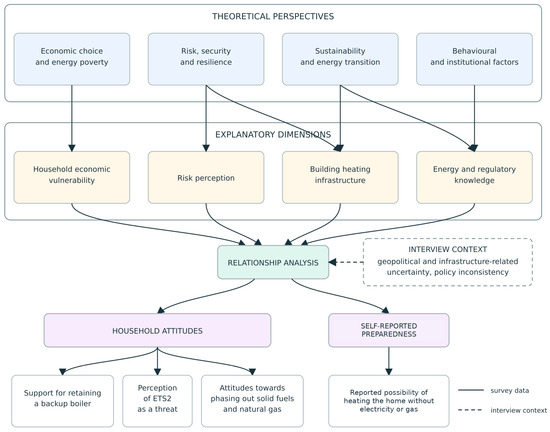
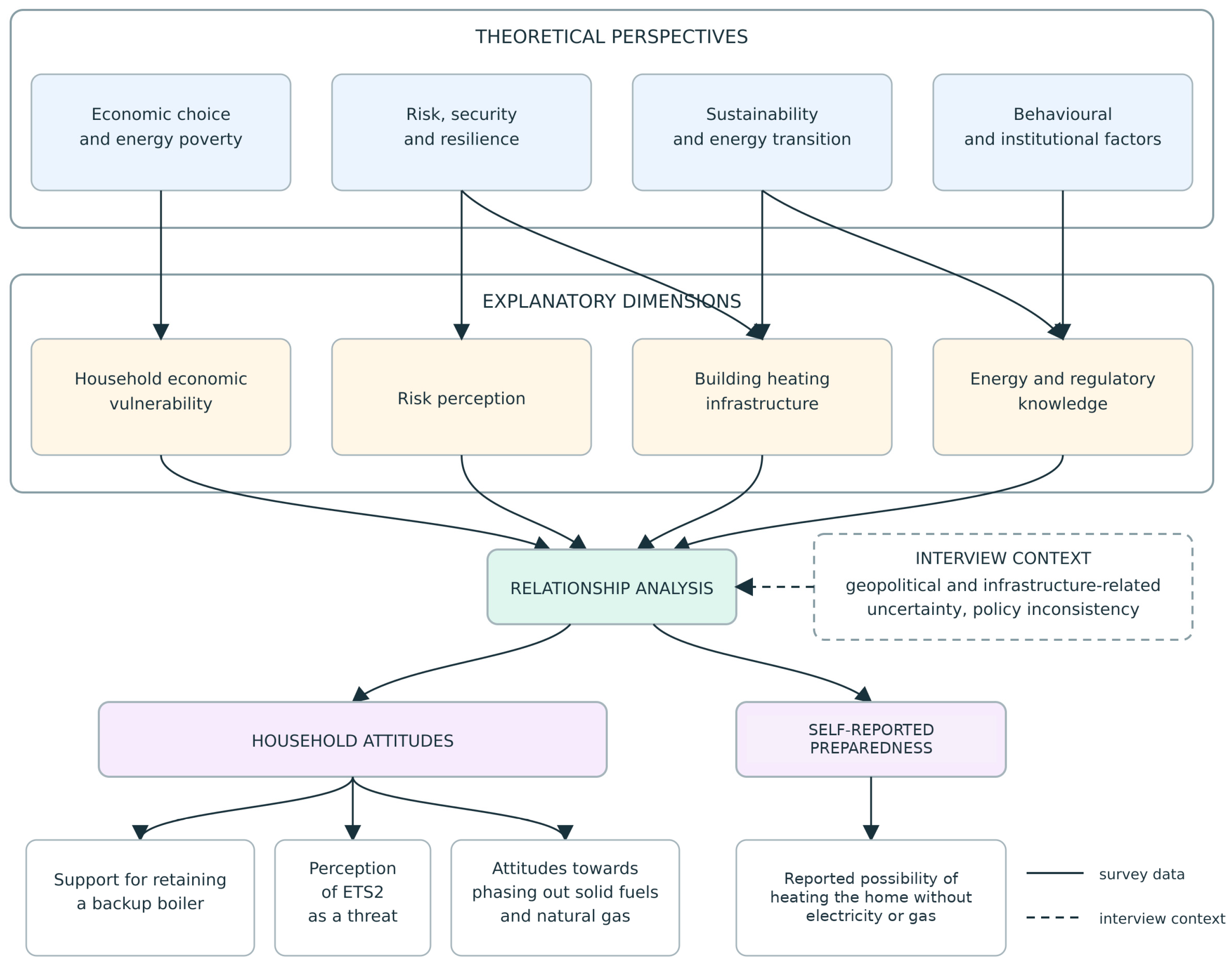
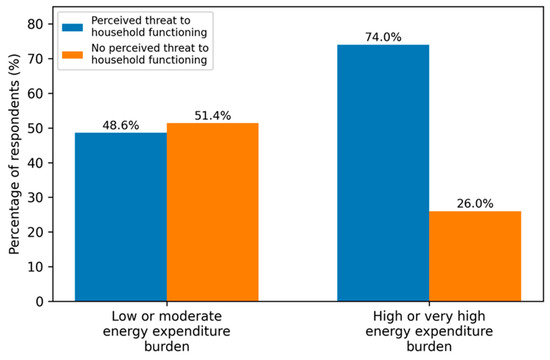
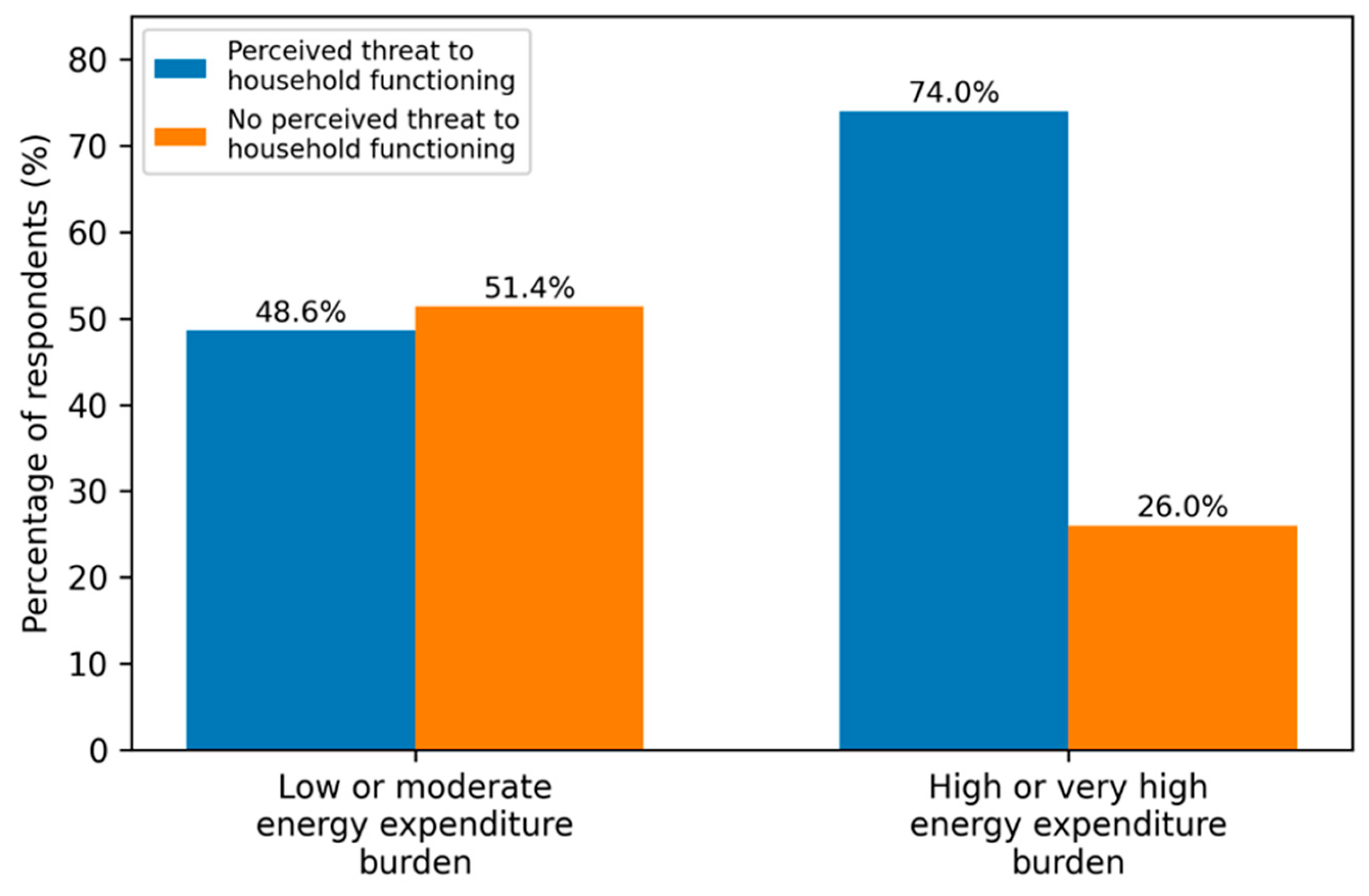
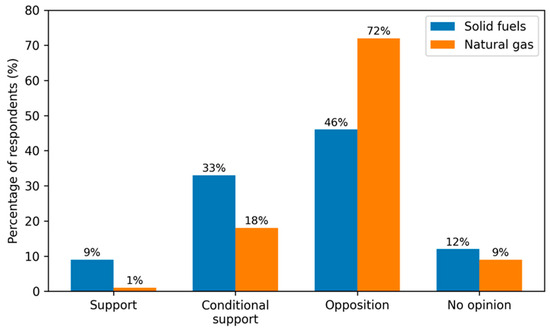

Disclaimer/Publisher’s Note: The statements, opinions and data contained in all publications are solely those of the individual author(s) and contributor(s) and not of MDPI and/or the editor(s). MDPI and/or the editor(s) disclaim responsibility for any injury to people or property resulting from any ideas, methods, instructions or products referred to in the content. |
© 2026 by the authors. Licensee MDPI, Basel, Switzerland. This article is an open access article distributed under the terms and conditions of the Creative Commons Attribution (CC BY) license.