


Abstract
Cellulose insulation paper used in oil-immersed power transformers is vulnerable to molecular chain loosening and aging-product transport under thermal and electrical stresses. Nanomodification is a promising route for improving insulation-paper stability, but the atomistic mechanisms by which KH550-grafted oxide nanoparticles regulate cellulose structure and aging-molecule mobility under an external electric field remain insufficiently clarified, particularly when the role of oilpaper insulation aging and oil-contact environments is considered. In this work, pristine cellulose and cellulose modified with KH550-grafted SiO2 and Al2O3 nanoparticles were investigated using molecular dynamic simulations at 343 K under a uniform electric field of 0.01 V/Å (100 kV/mm) applied along the Z-axis. Based on the MSD and apparent transport-parameter results, nanomodification reduced the MSD-derived apparent coefficients of H2O and CO2 by 33.7–51.9%. The external field produced apparent directional transport bias, with Z/X apparent-coefficient ratios of 2.21 for H2O and 2.02 for CO2 in pristine cellulose. These ratios decreased to 1.62 and 1.51, respectively, in the KH550–Al2O3 model. Interfacial interaction energy analysis showed that the KH550–SiO2 interface became more strongly bound under the field (−240.50 to −252.13 kcal/mol), whereas the KH550–Al2O3 interface remained nearly unchanged (−541.65 to −538.81 kcal/mol). Because the two nanomodified systems use different nanoparticle loadings and KH550 grafting ratios, cross-system differences are interpreted as model-specific outcomes rather than effects attributable only to nanoparticle chemistry. These results indicate that KH550-grafted nanoparticles may help maintain cellulose packing under the modeled conditions and suppress aging-molecule mobility in the simulated cellulose matrix, while the conclusions should be interpreted as atomistic simulation evidence rather than direct proof of long-term transformer reliability.
1. Introduction
The long-term safe operation of oil-immersed power transformers critically depends on the structural stability and dielectric reliability of oilpaper insulation systems. As the principal solid insulating component, cellulose insulation paper is exposed to elevated temperature, nonuniform electric fields, moisture, and aging products during service. These stresses can promote molecular chain polarization, hydrogen-bond disruption, local free-volume enlargement, and transport of small aging molecules such as H2O and CO2. Because H2O accelerates hydrolysis and CO2 is a characteristic product of deeper cellulose degradation, their migration behavior is closely related to insulation aging and diagnostic interpretation. Improving the resistance of cellulose insulation paper to electric field-induced structural loosening and aging-molecule diffusion is therefore important for designing higher-performance transformer insulation materials [1,2,3,4,5,6,7,8].
Nanomodification has been widely studied as a strategy for enhancing polymeric insulating materials because oxide nanoparticles can provide high-specific-area interfaces, physical filling effects, and polar interaction sites. Recent experimental studies on nanofluid-impregnated Kraft paper, nano-BN/nanocellulose systems, KH550-hBN-modified cellulose, plasma-modified cellulose paper, and oxide-nanoparticle insulation systems have shown that nanoparticle modification can improve mechanical, thermal, dielectric, or aging-related properties under selected conditions [9,10,11,12,13,14,15,16,17,18,19,20,21,22]. In parallel, molecular dynamic studies have been used to examine impurity transport, gas diffusion, moisture migration, and nanomodified cellulose interactions in oilpaper insulation environments [5,6,23,24,25,26,27,28]. These studies establish the relevance of nanomodification and MD analysis, but they do not fully resolve how different KH550-grafted oxide interfaces respond to an imposed electric field and how that response affects cellulose free volume and directional diffusion of representative aging molecules.
The scientific gap addressed here Is therefore the lack of a comparative atomistic description linking nanoparticle type, KH550-mediated interfacial interactions, free-volume evolution, and field-biased H2O/CO2 mobility in nanomodified cellulose. Compared with prior experimental work on nanomodified oilpaper insulation and prior MD studies of field or moisture effects, the present contribution is a controlled model comparison of KH550–SiO2 and KH550–Al2O3 cellulose systems under the same temperature and electric field settings, while recognizing that the two nanomodified models differ in nanoparticle loading and KH550 grafting ratio. The novelty lies in combining: (i) electric field-dependent FFV analysis, (ii) decomposition of interfacial interaction energies for two KH550-grafted oxide interfaces, and (iii) internally consistent directional mean square displacement (MSD) analysis of H2O and CO2 apparent transport.
Because practical transformer insulation operates as an oilpaper composite rather than dry cellulose alone, oil contact is also important for moisture partitioning, dissolved-gas transport, and nanoparticle-related interfacial behavior [15,16,17,18,19,20,21,26,27,29]. The present simulations intentionally isolate the cellulose matrix and representative aging molecules to clarify the solid-phase atomistic mechanism. The absence of transformer oil is therefore treated as a model boundary and is discussed explicitly in Section 4.5.
2. Model Construction and Electric Field Simulation Methods
To investigate how an external electric field affects the microscopic structural stability of nanomodified cellulose insulation paper, molecular dynamic simulations were performed on pristine cellulose and two KH550-grafted nanoparticle-modified cellulose models. The analyses used the equilibrated field-free models as initial structures, and then evaluated changes in free volume, interfacial interaction energy, and aging-molecule transport after applying a uniform electric field along the Z-axis.
Model Construction and Simulation Details
All simulations were conducted using the Forcite module in Materials Studio 2020. The pristine cellulose model was constructed as an amorphous cellulose system with degree of polymerization (DP) = 10 and six cellulose chains. The final equilibrated simulation cell was 22.39 Å × 22.39 Å × 22.39 Å, with a density of 1.455 g/cm3. For the nanomodified systems, SiO2 and Al2O3 clusters with a radius of 5 Å were grafted with KH550. The SiO2 surface was hydroxylated before grafting. The KH550 grafting ratios were 12.5% for SiO2 and 2.5% for Al2O3, and the nanoparticle loadings were 3 wt% for KH550–SiO2 and 2 wt% for KH550–Al2O3. The final equilibrated KH550–SiO2 and KH550–Al2O3 cellulose cells were 40.83 Å × 40.83 Å × 40.83 Å and 44.41 Å × 44.41 Å × 44.41 Å, respectively, containing 36 and 46 cellulose chains and densities of 1.485 and 1.490 g/cm3. Because the nanomodified systems differ in loading and grafting ratio, comparisons between them are treated as outcomes of the constructed model systems rather than as isolated measures of oxide chemistry. Partial atomic charges were assigned by the COMPASS III force field. No additional manual charge was imposed on the nanoparticles beyond the force-field assignment.
A uniform external electric field was applied along the Z-axis using a self-developed Perl script, following the common MD practice of imposing prescribed external fields along selected simulation-cell directions in oilpaper insulation studies [5]. The counter electric field was disabled so that the prescribed external field was retained during the simulations.
Before production analysis, each model underwent geometry optimization, annealing, and relaxation. The COMPASS III force field was used throughout. Electrostatic interactions were calculated by Ewald summation, van der Waals interactions were treated with the atom-based method, and the van der Waals cutoff radius for the aging-molecule simulations was 12.5 Å. Temperature was controlled at 343 K using an Andersen thermostat. The simulation time step was 1 fs, and the production simulation duration for the aging-molecule diffusion analysis was 100 ps.
The electric field strength of 0.01 V/Å corresponds to 100 kV/mm. This value is higher than the nominal macroscopic operating field in transformer insulation, but comparable accelerated fields have been used in MD studies to obtain measurable field-driven transport or polarization responses within nanosecond- or sub-nanosecond-scale simulations [5,8]. It is therefore interpreted here as a local high-field or accelerated atomistic stress condition rather than a direct representation of the average insulation stress in service. The same field strength and direction were applied to all models to enable controlled comparison.
The molecular dynamic simulations were performed in the canonical ensemble (NVT) at 343 K, corresponding to a representative transformer operating temperature. These settings were kept consistent across the field-free and field-applied systems. Because the simulations were conducted at one fixed temperature and one prescribed electric field strength, the results describe the atomistic response to a fixed-temperature external electric field condition rather than a fully coupled electrothermal aging process.
3. Results and Discussion: Structural Stability Under an External Electric Field
3.1. Free-Volume Fraction
Free volume refers to the unoccupied void space within polymeric materials that is not occupied by molecular chains. Its magnitude and distribution play a crucial role in determining structural compactness, molecular chain mobility, and the diffusion behavior of small molecules within the material. Since the total volumes of different systems are not identical, the free-volume fraction (FFV) was introduced to eliminate the influence of volume variation. The FFV is defined as follows [6]:
where FFV is the free-volume fraction, Vfree is the volume not occupied by atoms or molecular chains, and Voccupied is the occupied volume of the cellulose or nanocomposite model.
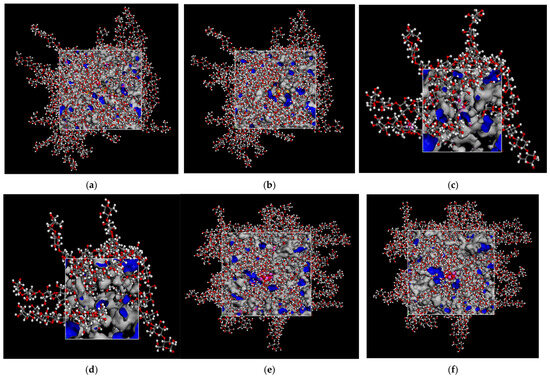
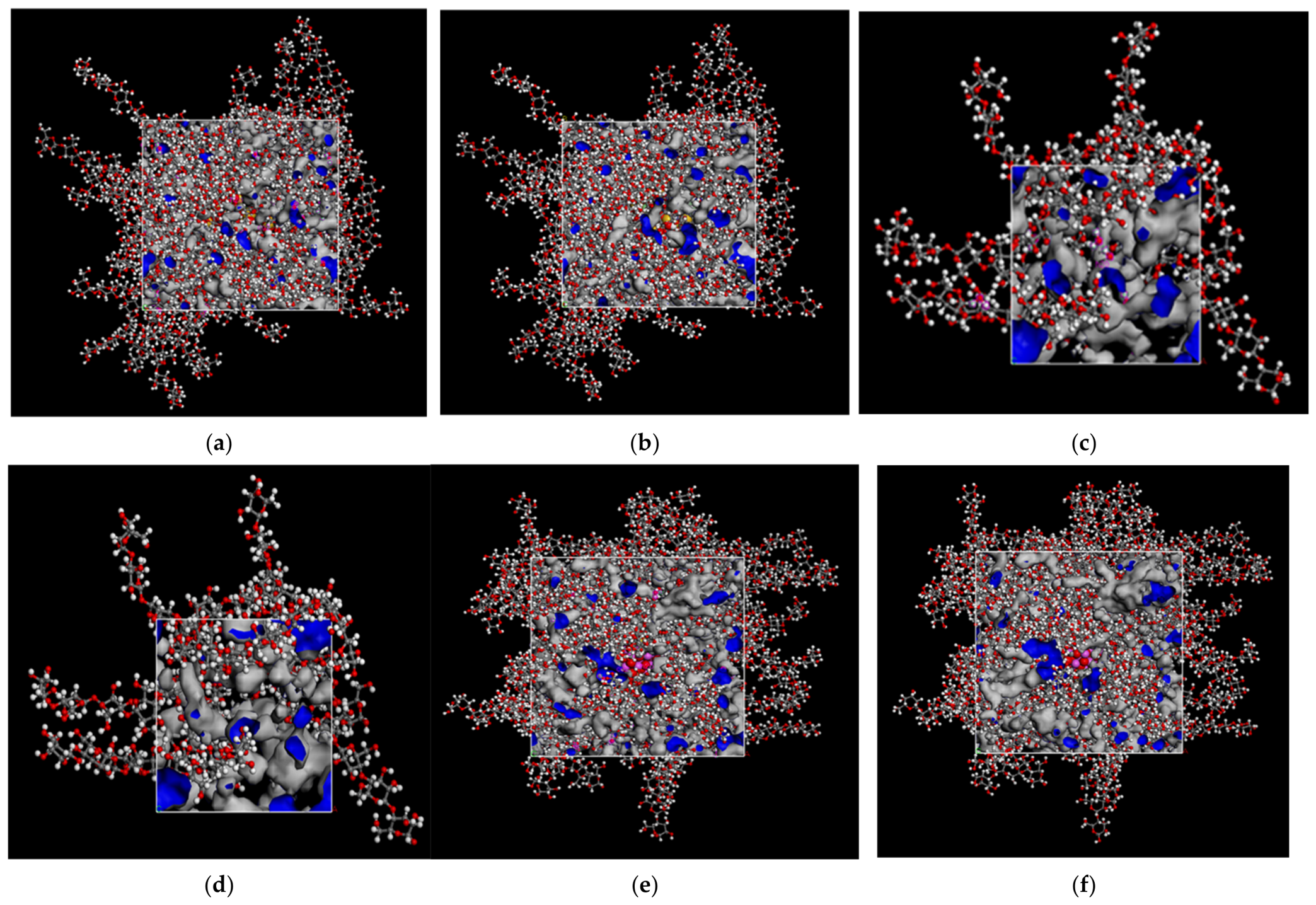
To clarify the direct influence of electric fields on the microscopic structure of insulation paper, the FFV values of pristine cellulose, KH550–SiO2-modified cellulose, and KH550–Al2O3-modified cellulose were comparatively analyzed before and after applying an external electric field of 0.01 V/Å at 343 K. The corresponding free-volume distributions are shown in Figure 1.
Figure 1.
Comparison of free-volume fractions of insulation paper with and without an electric field. (a) Pristine cellulose under electric field; (b) pristine cellulose without electric field; (c) KH550–SiO2-modified cellulose under electric field; (d) KH550–SiO2-modified cellulose without electric field; (e) KH550–Al2O3-modified cellulose under electric field; (f) KH550–Al2O3-modified cellulose without electric field.
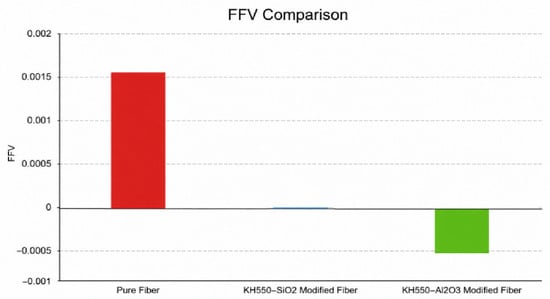
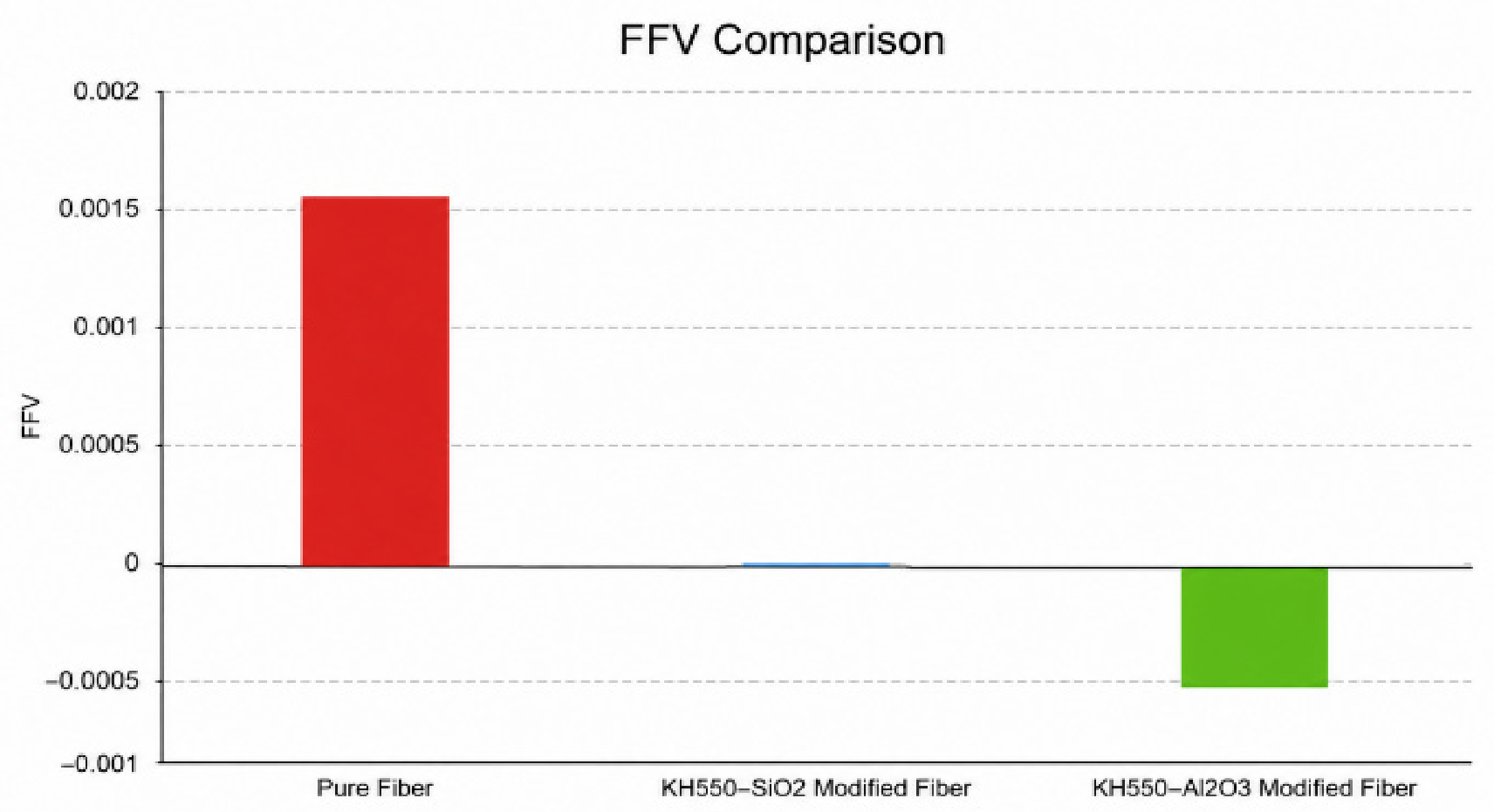
The simulation results show that the average FFV of pristine cellulose increased from 0.12326 to 0.12484 under the applied electric field, corresponding to an increment of 0.00158. Because independent replicate simulations and uncertainty estimates are not available, this small change is interpreted as a single-trajectory tendency toward field-induced loosening of the cellulose matrix rather than as a statistically significant difference by itself.
In contrast to pristine cellulose, both nanomodified systems exhibited slight reductions in FFV under electric field conditions. Specifically, the FFV of the KH550–SiO2 system decreased by approximately 5.27 × 10⁻⁵, whereas that of the KH550–Al2O3 system decreased by approximately 5.64 × 10⁻⁴. Because independent replicate simulations and uncertainty estimates are not available, these very small changes are interpreted strictly as single-trajectory numerical tendencies rather than statistically established evidence of structural stabilization.
The KH550-grafted nanoparticles established polar interfacial interactions with the cellulose matrix through electrostatic interactions and hydrogen bonding. Under the external field, these interfaces may act as anchoring regions that restrict large-scale cellulose-chain rearrangement and partly counteract polarization-induced loosening. The small FFV decreases observed in the two nanomodified systems should therefore be interpreted as model-scale evidence of improved packing stability under the imposed field rather than as a macroscopic densification measurement. Quantitative data are summarized in Table 1, and the trend is compared in Figure 2.
Table 1.
Free-volume fractions under electric field conditions.
Figure 2.
Comparison of FFV variations among the three models. Quantitative FFV values are provided in Table 1. This figure is used only as a visual summary of the trend.
3.2. Interfacial Interaction Energy
Interfacial interaction energy is a key thermodynamic parameter used to quantitatively characterize the interfacial bonding strength between nanoparticles and the cellulose matrix. It also represents a major factor influencing the diffusion behavior of aging gas molecules within cellulose. The interaction energy is calculated as follows [6]:
where Einter is the interfacial interaction energy, Etotal is the total potential energy of the nanomodified cellulose composite, Ecellulose is the potential energy of the cellulose matrix extracted from the same composite configuration, and Enanoparticle is the potential energy of the isolated KH550-grafted nanoparticle cluster. A negative Einter indicates favorable interfacial binding, and a larger absolute value indicates stronger calculated interaction for the model under the same construction protocol.
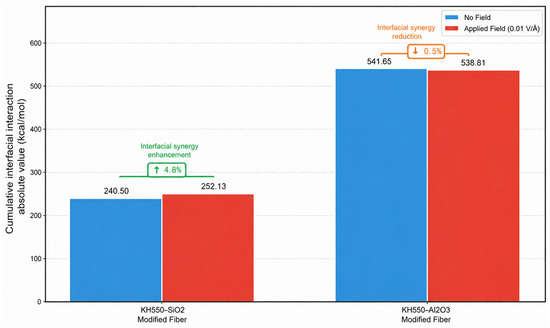
To evaluate the influence of the external field on interfacial stability, the interaction energies of the two nanomodified systems were calculated before and after applying the 0.01 V/Å field at 343 K. Because the two models have different nanoparticle compositions, nanoparticle loadings, and KH550 grafting ratios, the values were compared primarily within the same nanoparticle system before and after field application. Direct cross-system comparison is treated cautiously unless normalized interfacial area data and matched grafting/loadings are available. The calculated interaction energies of the two nanomodified models are summarized in Table 2 and the influence of the external electric field on the interaction energies of the two models is compared in Figure 3.
Table 2.
Interaction energies of modified models under electric field conditions.
Figure 3.
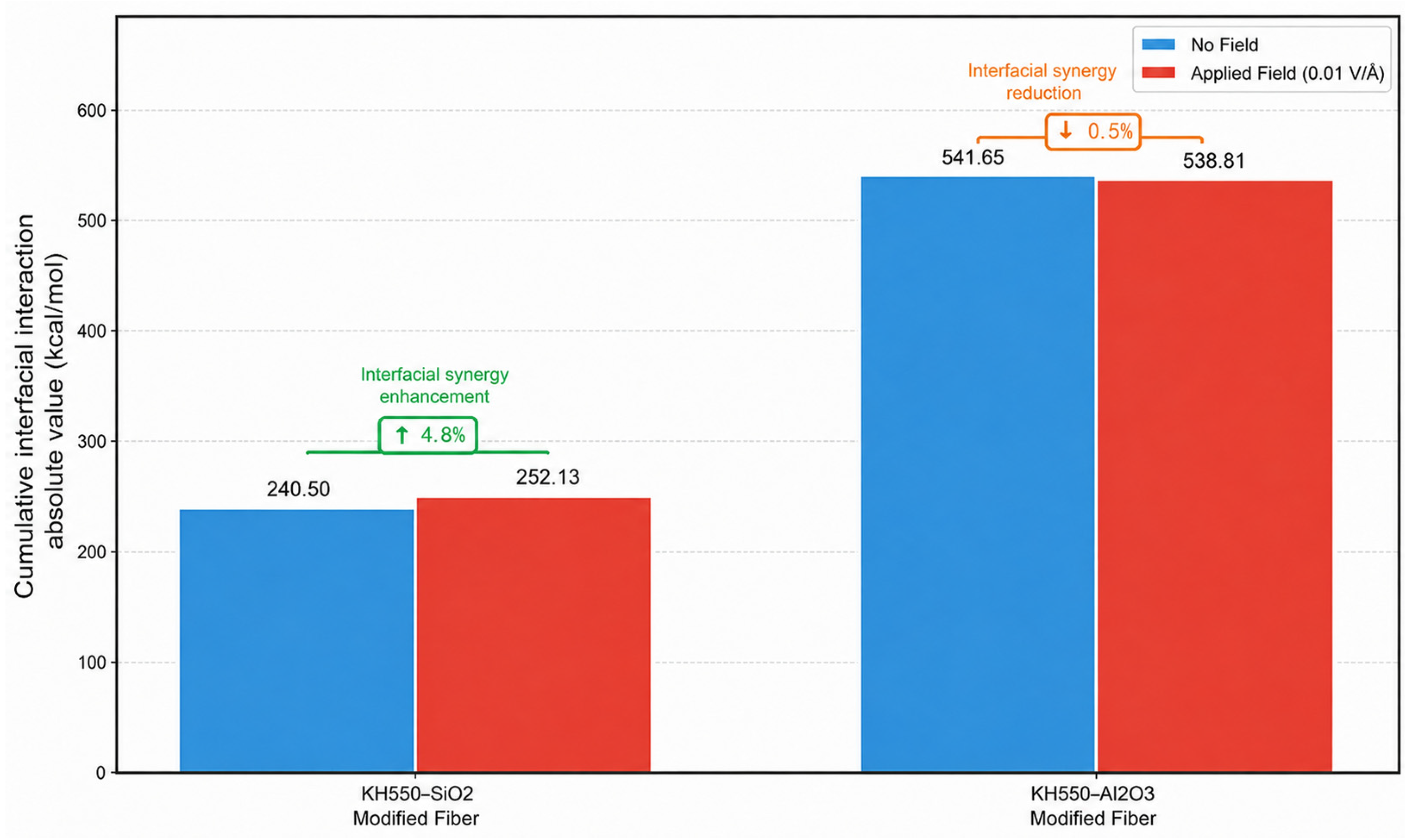
Influence of electric field on the interaction energies of the two models.
The results demonstrate that the electric field exerts distinctly different effects on the two nanocomposite systems. For the KH550–SiO2 system, the interaction energy decreases from −240.50 kcal/mol to −252.13 kcal/mol after the application of the electric field, corresponding to an increase of approximately 4.8% in absolute value. This indicates that the electric field strengthens the interfacial bonding between SiO2 nanoparticles and the cellulose matrix.
By contrast, the interaction energy of the KH550–Al2O3 system slightly increases from −541.65 kcal/mol to −538.81 kcal/mol, corresponding to a reduction of approximately 0.5% in absolute value. Although the variation is extremely small, the results suggest that the electric field induces only a negligible weakening effect on the interfacial bonding of the KH550–Al2O3 system.
3.3. Decomposition of Interfacial Interaction Energy
Previous studies have generally evaluated interfacial compatibility solely based on the magnitude of the total interaction energy while neglecting the dynamic responses of different interaction components under multiphysics conditions, particularly under electric field environments. To further elucidate the distinct electric field responses observed in the two nanocomposite systems, the interfacial interaction energy was decomposed into several energy contributions:
where is the Coulombic electrostatic contribution, is the van der Waals contribution, and ELRC is the long-range correction term. In this system, Ecoulomb is associated with polar interactions including hydrogen bonding and dipole–dipole interactions; however, it should not be treated as a direct quantitative hydrogen-bond count.
represents the van der Waals contribution, including dispersion and close-contact physical adsorption among cellulose chains, KH550 alkyl groups, and nanoparticle surfaces.
ELRC represents the long-range correction term used to compensate for truncated long-range nonbonded interactions beyond the cutoff radius. In the present COMPASS III/atom-based setting, this term mainly corrects the van der Waals tail contribution and is not assigned to a specific interfacial bonding mechanism.
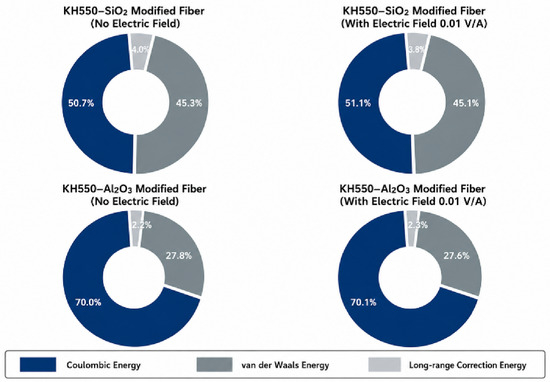
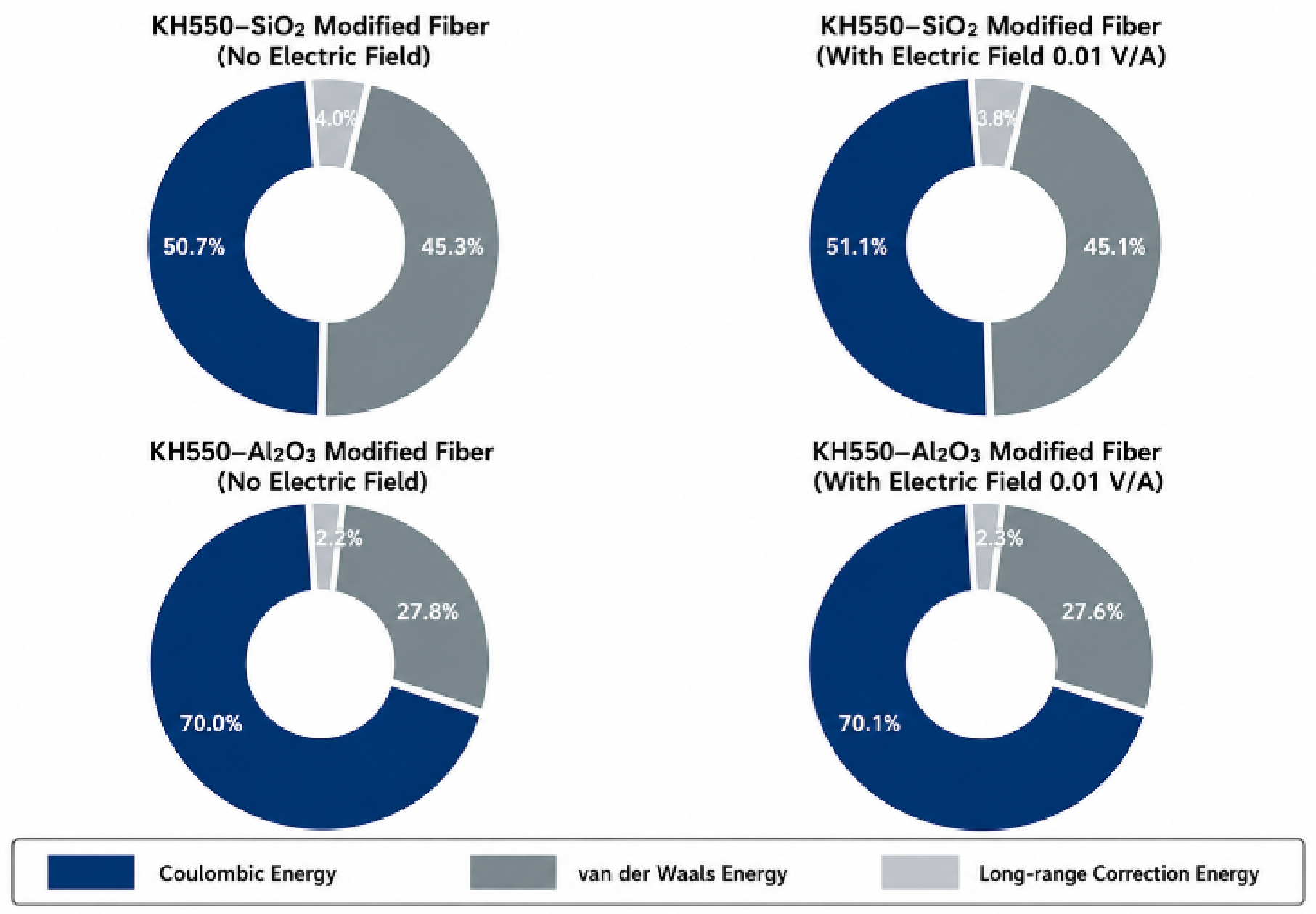
As shown in Figure 4, Under field-free conditions, the calculated interfacial binding of both modified systems is dominated by Coulombic interactions, with contributions exceeding 50% of the total interaction energy. This supports the interpretation that KH550 acts as a molecular bridge between the nanoparticle surface and cellulose hydroxyl groups. Because no independent hydrogen-bond population or lifetime statistics are available from the present dataset, the hydrogen-bond discussion is treated as a qualitative mechanistic interpretation supported by energy decomposition and structural visualization.
Figure 4.
Proportional contributions of decomposed interaction energies.
The KH550–Al2O3 system demonstrates a higher Coulombic contribution ratio (70.0%) compared with the KH550–SiO2 system (50.7%), along with a larger absolute Coulombic interaction energy in the present model. This observation suggests that the Al2O3-containing interface forms a stronger polar interaction network within the specific constructed system. However, because the two models differ in nanoparticle loading and KH550 grafting ratio and because no normalized interfacial-area data or independent hydrogen-bond statistics are available, the comparison is used mainly to support a qualitative interface-stability interpretation rather than a definitive ranking of intrinsic interfacial strength.
3.3.1. Electric Field-Induced Polarization Enhancement in the KH550–SiO2 System
As listed in Table 3, after the application of the external electric field, the absolute value of the Coulombic interaction energy in the KH550–SiO2 system increased from −121.96 to −128.93 kcal/mol, while its proportional contribution slightly increased to 51.1%. Within this model, the result indicates that the external electric field did not deteriorate the interfacial interaction. Instead, it was consistent with an induced enhancement of the interface.
Table 3.
Decomposition of interaction energies of modified models under electric field conditions.
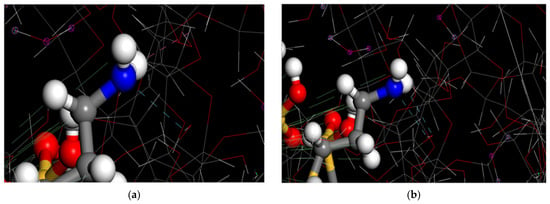
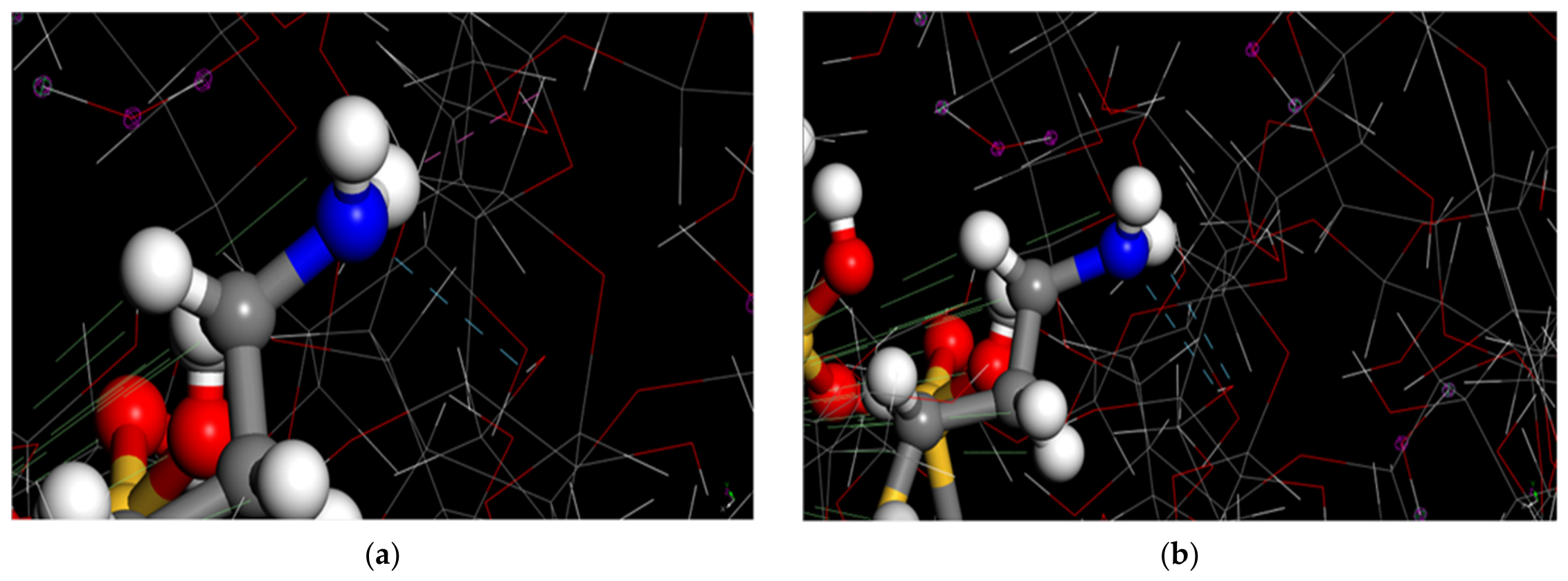
The underlying microscopic mechanism may be related to the intrinsic dipole moments of polar functional groups on cellulose molecular chains and the KH550 coupling agent, such as hydroxyl (–OH) and amino (–NH2) groups. Under the constant electric field applied along the Z-axis, these dipoles may undergo local orientation changes, which can alter the spatial configuration between hydrogen-bond donors and acceptors. As illustrated in Figure 5, the representative structures are consistent with an interfacial hydrogen-bond network, but they do not provide quantitative hydrogen-bond counts or lifetimes.
Figure 5.
Representative hydrogen-bonding structures at the KH550–SiO2–cellulose interface: (a) without electric field and (b) under the 0.01 V/Å external field. The figure provides qualitative structural evidence. Quantitative hydrogen-bond statistics require additional trajectory analysis.
For the KH550–SiO2 system, the absolute value of the total interaction energy increased after the application of the electric field. Decomposition analysis further suggests that the increase in Coulombic interaction energy is the dominant contribution. This observation is consistent with field-induced orientation of interfacial polar groups on cellulose chains and KH550 molecules, which may improve the geometric configuration of interfacial polar interactions and enhance the calculated interfacial bonding strength in this model.
3.3.2. Electric Field Response of the KH550–Al2O3 Model
In contrast to the KH550–SiO2 system, the KH550–Al2O3 system exhibited only extremely minor fluctuations in total interaction energy, Coulombic interaction energy, and van der Waals interaction energy after the application of the electric field, with the decrease in the absolute value of the total interaction energy being less than 0.5%. The Coulombic contribution remained nearly unchanged at approximately 70.1%. This result suggests that the KH550–Al2O3 interface is relatively insensitive to the imposed field in the present model.
Under field-free conditions, the KH550–Al2O3–cellulose interface already exhibits a large Coulombic contribution in the calculated interaction-energy decomposition. The small field-induced changes in total, Coulombic, and van der Waals energy components suggest that this interface is less sensitive to the imposed field than the KH550–SiO2 interface. This interpretation is based on energy decomposition within the constructed models and should not be extended to a general claim about all Al2O3–cellulose interfaces without normalized interfacial-area and hydrogen-bond statistics.
In summary, the decomposed interaction energies show that polar interfacial interactions are a major contributor to the stability of KH550-grafted nanoparticle–cellulose interfaces. For the KH550–SiO2 model, the external field increases the absolute Coulombic contribution, suggesting field-induced alignment of interfacial polar groups. For KH550–Al2O3, the interaction-energy components vary only slightly, indicating low sensitivity to the imposed field in this constructed model. These interpretations are based on relative changes within each model and should be complemented by matched loading/grafting designs, normalized interfacial-area analysis, and hydrogen-bond lifetime statistics in future work.
4. Results and Discussion: Aging-Molecule Diffusion Under an External Electric Field
During long-term operation of power transformers, insulation paper is continuously subjected to coupled electric and thermal fields. Under such conditions, thermal–oxidative aging of cellulose insulation paper generates various aging-related molecular products, including water (H2O) and carbon dioxide (CO2). The accumulation and diffusion of these aging products can further accelerate the degradation of insulation performance. Therefore, investigating the diffusion behavior and spatial distribution characteristics of aging molecules in nanomodified cellulose insulation paper under a fixed-temperature external electric field condition is of great significance for comprehensively evaluating the aging evolution of insulation paper under representative transformer operating temperatures and accelerated external-field conditions [3,4,26,27,28,29,30,31,32].
Water molecules play a central role in the aging process of cellulose insulation paper and exhibit dual functionality, acting not only as a critical catalyst for aging reactions but also as one of the primary degradation products. Cellulose macromolecules are composed of D-glucose units connected by 1,4-β-glycosidic bonds. Water molecules can directly attack and cleave these backbone chemical bonds, leading to a reduction in the degree of polymerization (DP) of cellulose and severe deterioration in both mechanical strength and polymerization degree. This hydrolysis reaction is regarded as the dominant aging mechanism of insulation paper under transformer operating temperatures. Consequently, the moisture content within insulation paper directly determines the hydrolysis reaction rate. The introduction of water molecules into the simulation system was therefore intended to establish the microscopic environment corresponding to this dominant aging pathway [3,4,30].
In addition, water molecules can disrupt the hydrogen-bonding network and deteriorate material properties. Rich intra- and intermolecular hydrogen-bonding networks exist within cellulose molecular chains, which constitute the fundamental basis for maintaining high mechanical strength. Due to their strong polarity, water molecules can penetrate and disrupt this hydrogen-bonding network, acting as plasticizing agents. As a result, intermolecular interactions between cellulose chains are weakened, chain-segment mobility increases, and macroscopic properties such as glass-transition temperature and flexibility are altered, making the material more susceptible to creep deformation [4,30].
Moreover, water molecules can initiate and accelerate autocatalytic degradation cycles. Small quantities of organic acids generated during the initial stage of cellulose thermal aging, such as formic acid and acetic acid, can dissociate to release H+ ions. The presence of water provides an effective medium for proton transport, thereby promoting acid-catalyzed hydrolysis of glycosidic bonds. Newly generated chain ends may subsequently undergo further oxidation to form additional acids, resulting in a vicious autocatalytic cycle characterized by “acid accumulation → hydrolysis → generation of more acids and water,” which significantly accelerates the overall degradation process of insulation paper [3,4,30].
From the perspective of molecular dynamic simulations and dielectric diagnostics, water molecules directly influence both the free-volume distribution and dielectric environment of the system. Previous studies have shown that moisture migration and temperature-driven redistribution at the oilpaper interface can strongly affect insulation behavior. These findings highlight the importance of investigating moisture diffusion and distribution for insulation lifetime assessment [7,27,29].
Unlike the “participant” role of water molecules, carbon dioxide mainly acts as a product and indicator of the aging process, and its generation is directly associated with severe cellulose degradation. The formation of CO2 primarily originates from thermal cracking and oxidation reactions of cellulose glucose units at elevated temperatures, involving complex chemical processes such as pyran-ring opening and decarboxylation reactions. Since the generation of CO2 requires destruction of the fundamental glucose-ring structure, it indicates that the aging process has progressed beyond simple backbone hydrolysis into deeper structural degradation stages [4,30].
Accordingly, the production rate of CO2 is closely related to the degradation degree of cellulose materials. In dissolved gas analysis (DGA) of transformer oil, CO and CO2 are regarded as important characteristic gases for evaluating solid insulation aging. In particular, the CO2/CO ratio has been widely recognized as a key parameter for assessing the aging condition of insulation paper. Experimental studies have demonstrated a clear correlation between this ratio and the degree of polymerization of insulation paper. As aging progresses, the generation rate of CO2 typically increases more rapidly than that of CO, resulting in an increased CO2/CO ratio. Therefore, monitoring and simulating the generation and diffusion behavior of CO2 serves as an important bridge connecting microscopic molecular simulation results with macroscopic engineering diagnostic indicators.
H2O and CO2 were selected as representative aging products in this study based on the following three considerations: (a) both are among the most critical and characteristic products generated during cellulose degradation; (b) they play distinctly different, yet strongly correlated roles throughout the aging process; and (c) their behaviors effectively reflect microscopic structural variations of insulating materials. Accordingly, molecular dynamic simulations were performed to investigate the diffusion and distribution characteristics of these representative aging molecules.
The objective of this section is to reveal at the atomic scale how nanomodification influences the diffusion and distribution behavior of aging products, thereby elucidating the microscopic mechanism by which nanomodification enhances the long-term stability of insulation paper. Based on the nanomodified cellulose models established previously, representative aging molecules were introduced to construct composite “aging molecule–insulation paper” systems. Subsequently, molecular dynamic simulations were performed to investigate the diffusion kinetics and spatial distribution behavior of aging molecules under external electric field conditions.
4.1. Model Construction
To simulate the diffusion behavior of aging products within insulation paper under realistic aging conditions, two representative aging products of cellulose insulation paper, water molecules (H2O) and carbon dioxide molecules (CO2), were selected as the research objects in this study. Based on the pristine cellulose, KH550–SiO2-modified cellulose, and KH550–Al2O3-modified cellulose models, the Amorphous Cell module was employed to randomly introduce a certain number of H2O and CO2 molecules into each model, thereby constructing composite “aging molecule–insulation paper” systems.
The quantities of aging molecules were determined according to their typical solubility and concentration ranges in cellulose insulation paper reported in the literature. During the aging process of cellulose insulation paper, the moisture content differs significantly between the early and late aging stages, increasing from approximately 0.3% in the initial stage to as high as 4.8% in the later stage. Since aging gas molecules such as CO2 possess relatively larger molecular volumes and lower concentrations, the mass fractions of H2O and CO2 were set to 1.5% and 1.0%, respectively, to represent the average aging condition encountered under most operating states [26,27,29,31,32].
Considering the differences in the masses of the three models, H2O and CO2 molecules were introduced into the pristine cellulose, KH550–SiO2-modified cellulose, and KH550–Al2O3-modified cellulose models with molecule-number ratios of 8:2, 51:14, and 65:18, respectively, as detailed in Supplementary Figure S2. These numbers correspond to the selected mass fractions of 1.5% H2O and 1.0% CO2 for the three model sizes.
4.2. Simulation Details
All simulations were carried out using the Forcite module in Materials Studio. After construction, all composite systems underwent energy minimization and short-time relaxation processes to eliminate unreasonable atomic contacts and ensure the rationality of the initial configurations. Structural files were used for simulations, while trajectory files were employed for subsequent analyses.
Equilibrium simulations were performed in the canonical ensemble (NVT) at 343 K. Stable trajectories obtained after equilibration were collected for subsequent analyses. A uniform electric field of 0.01 V/Å was applied along the Z-axis throughout the simulations as an accelerated atomistic field condition.
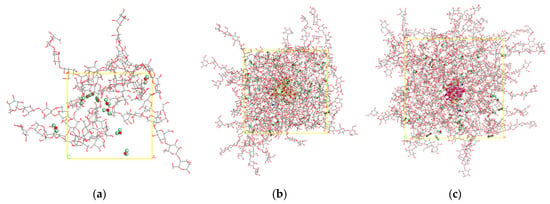
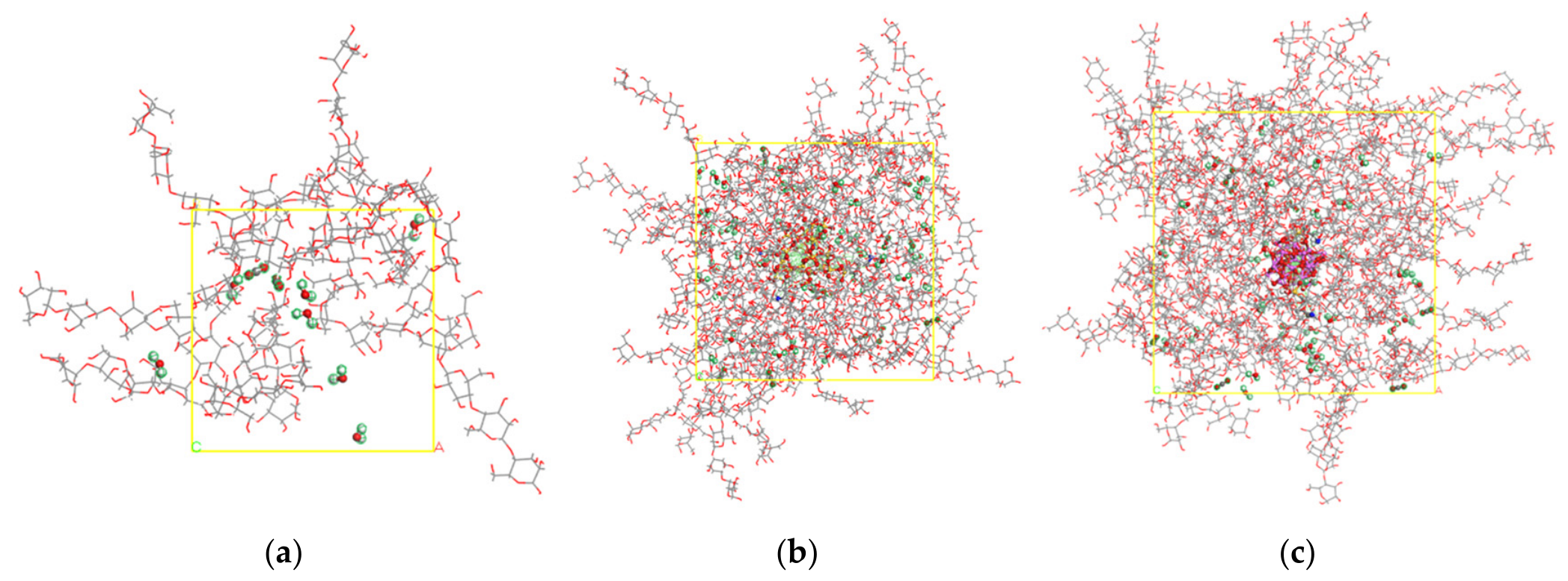
The COMPASS III force field was employed throughout the simulations. Electrostatic interactions were calculated using the Ewald summation method, while van der Waals interactions were treated using the atom-based method with a cutoff radius of 12.5 Å. Temperature regulation was achieved using an Andersen thermostat. The simulation time step was set to 1 fs, and the total simulation duration was 100 ps. After embedding H2O and CO2 molecules into the three cellulose systems, the constructed composite aging molecule–insulation paper models are displayed in Figure 6, which serve as the basis for subsequent apparent transport simulations.
Figure 6.
Representative composite insulation-paper molecular configurations containing H2O and CO2 molecules. (a) Pristine cellulose. (b) KH550–SiO2-modified cellulose. (c) KH550–Al2O3-modified cellulose.
4.3. Equilibration and Stability of the MD Models
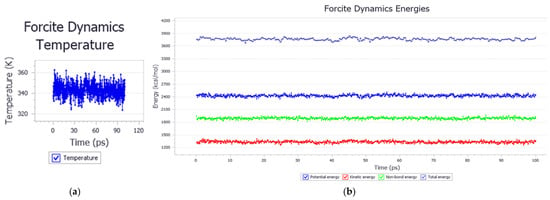
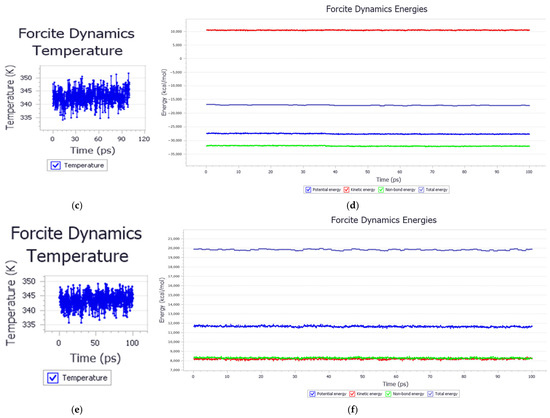
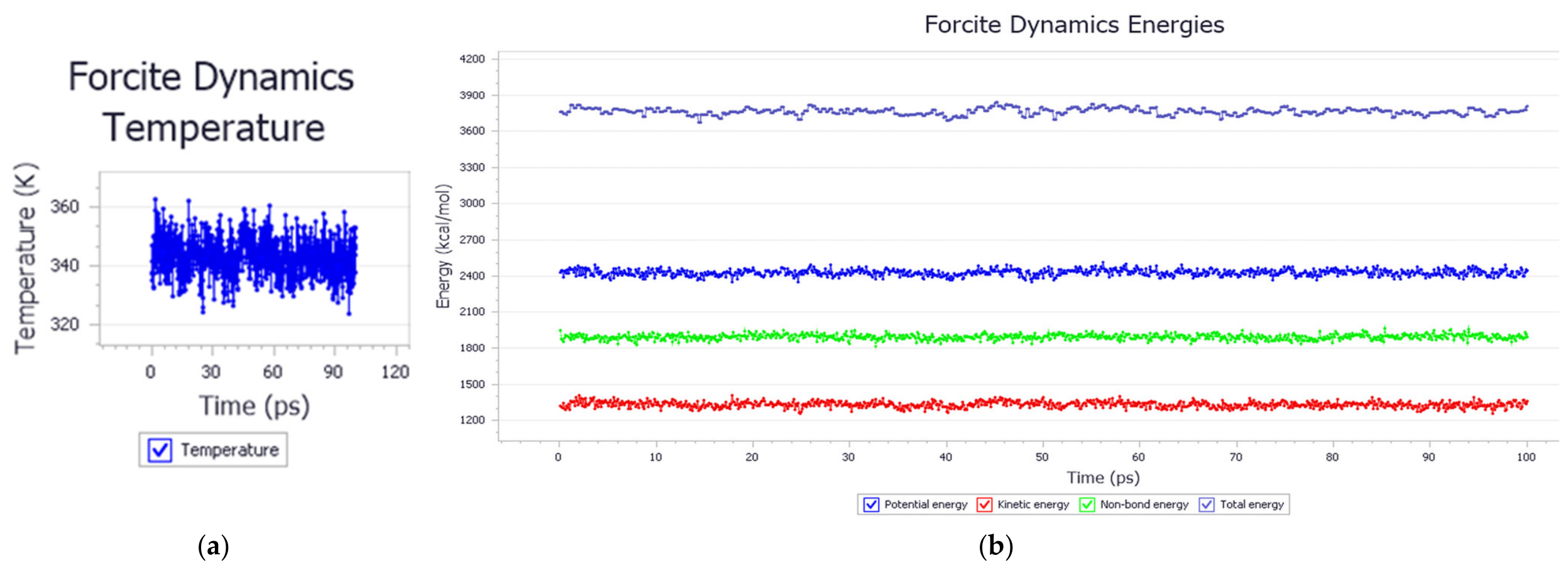
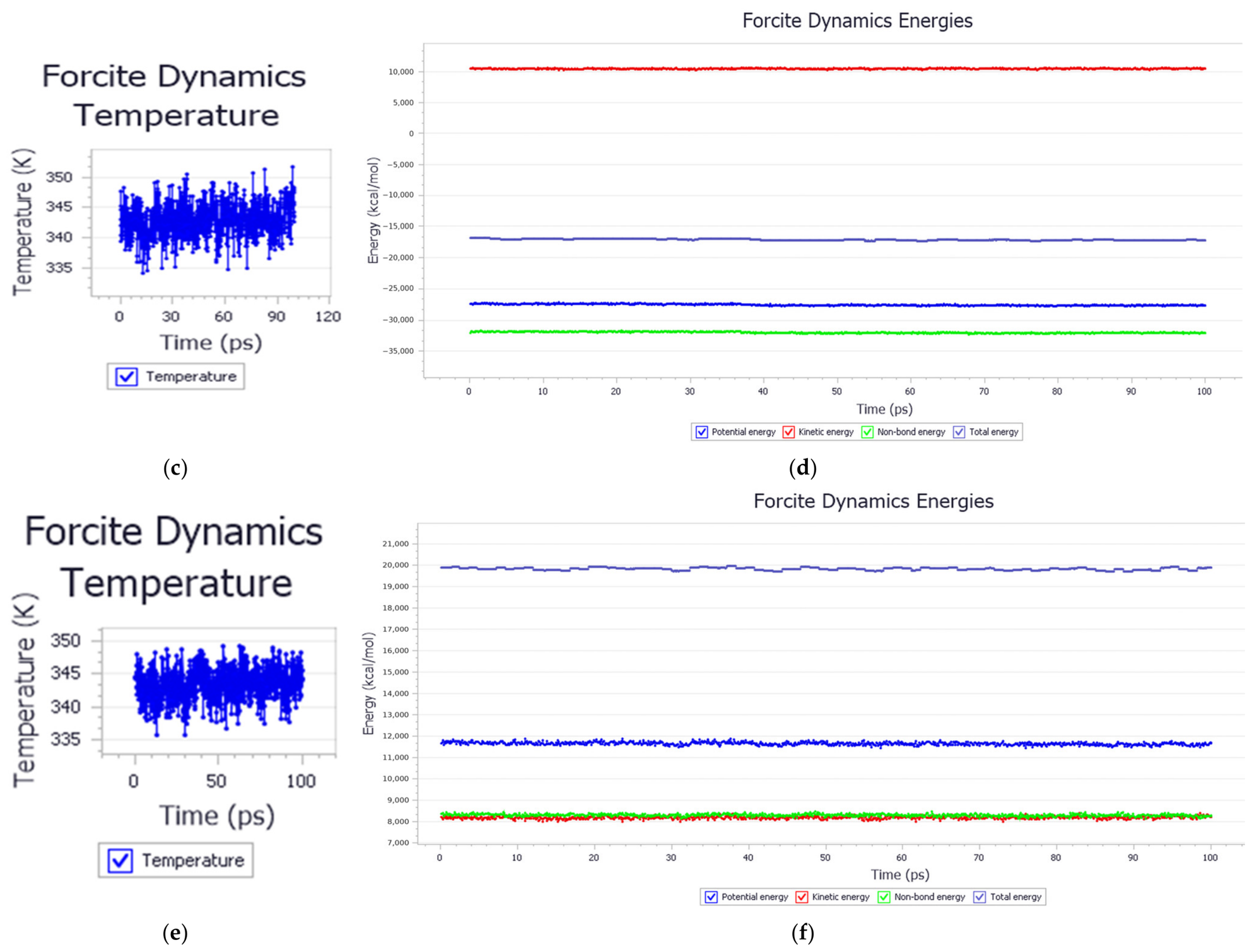
Model equilibration was assessed by monitoring temperature and total-energy evolution. As illustrated in Figure 7, the curves gradually stabilized during the simulation process, indicating that the constructed systems reached stable states suitable for comparative MD analysis. This procedure verifies numerical equilibration of the simulated systems, but it should not be regarded as full experimental validation of the physical model.
Figure 7.
Equilibration and stability histories of the three MD models. (a) Temperature of pristine cellulose. (b) Energy of pristine cellulose. (c) Temperature of KH550–SiO2-modified cellulose. (d) Energy of KH550–SiO2-modified cellulose. (e) Temperature of KH550–Al2O3-modified cellulose. (f) Energy of KH550–Al2O3-modified cellulose.
4.4. Apparent Transport Behavior of Aging Molecules Under Electric Field Conditions
To investigate the apparent mobility of representative aging-product molecules within nanomodified cellulose insulation paper under the fixed-temperature external-field condition, molecular dynamic simulations were performed to calculate the mean square displacement (MSD) of H2O and CO2 in the three equilibrated cellulose models.
The simulations were conducted at 343 K, while the external electric field was applied along the Z-axis. Because an electric field can introduce directional drift or field-biased migration, the parameters reported here are described as MSD-derived apparent transport coefficients under the imposed field, calculated consistently for all three systems.
MSD is a key statistical parameter used to characterize the random thermal migration capability of molecules and is defined as follows:
where N is the number of diffusing molecules of the selected species, (t) is the position vector of molecule i at time t, and is its initial position. According to the Einstein relation, the slope of the approximately linear region of the MSD curve can be used here to estimate an MSD-derived apparent transport coefficient:
Under the present external-field conditions, Equation (5) is used as an empirical estimator of MSD-derived apparent transport rather than as a drift-corrected equilibrium diffusion relation. To analyze apparent directional transport under the external field, the total MSD and the MSD components along the three orthogonal directions (MSDx, MSDy, and MSDz) were analyzed separately. The directional components help distinguish field-aligned migration from transverse molecular motion.
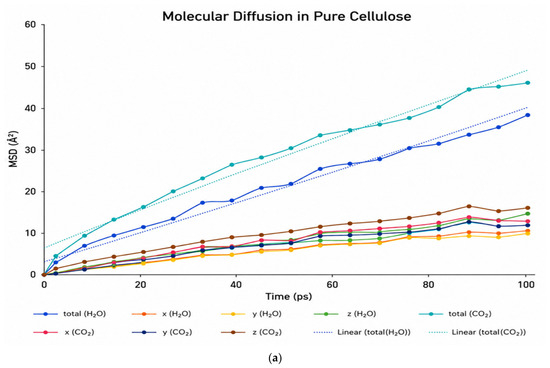
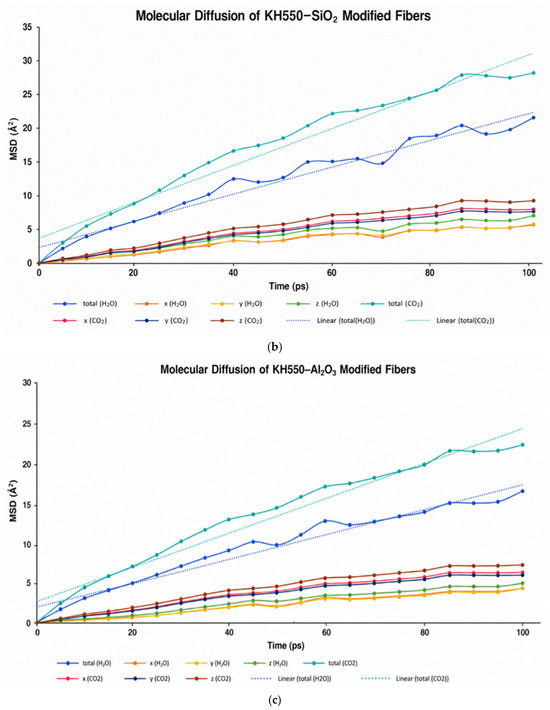
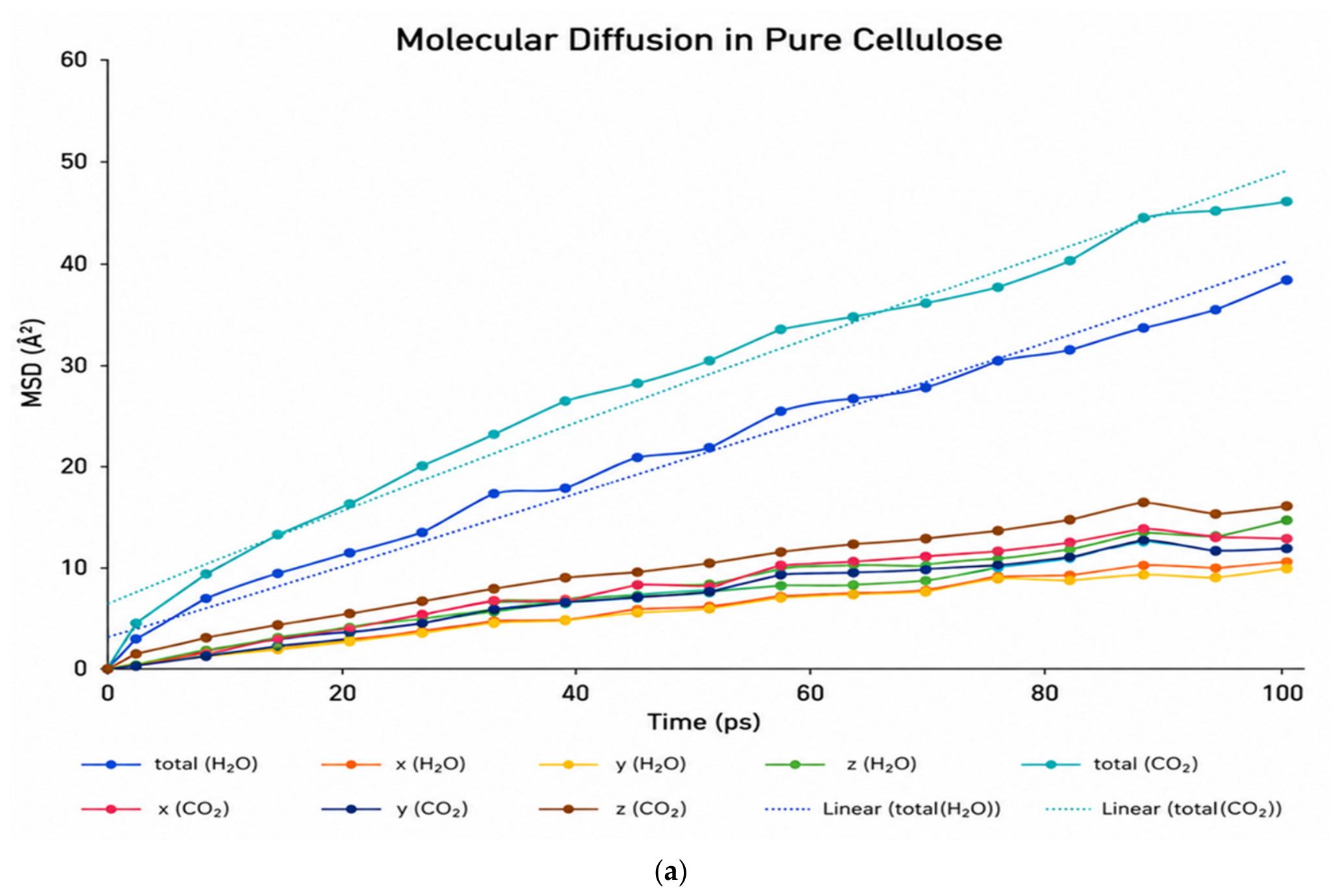
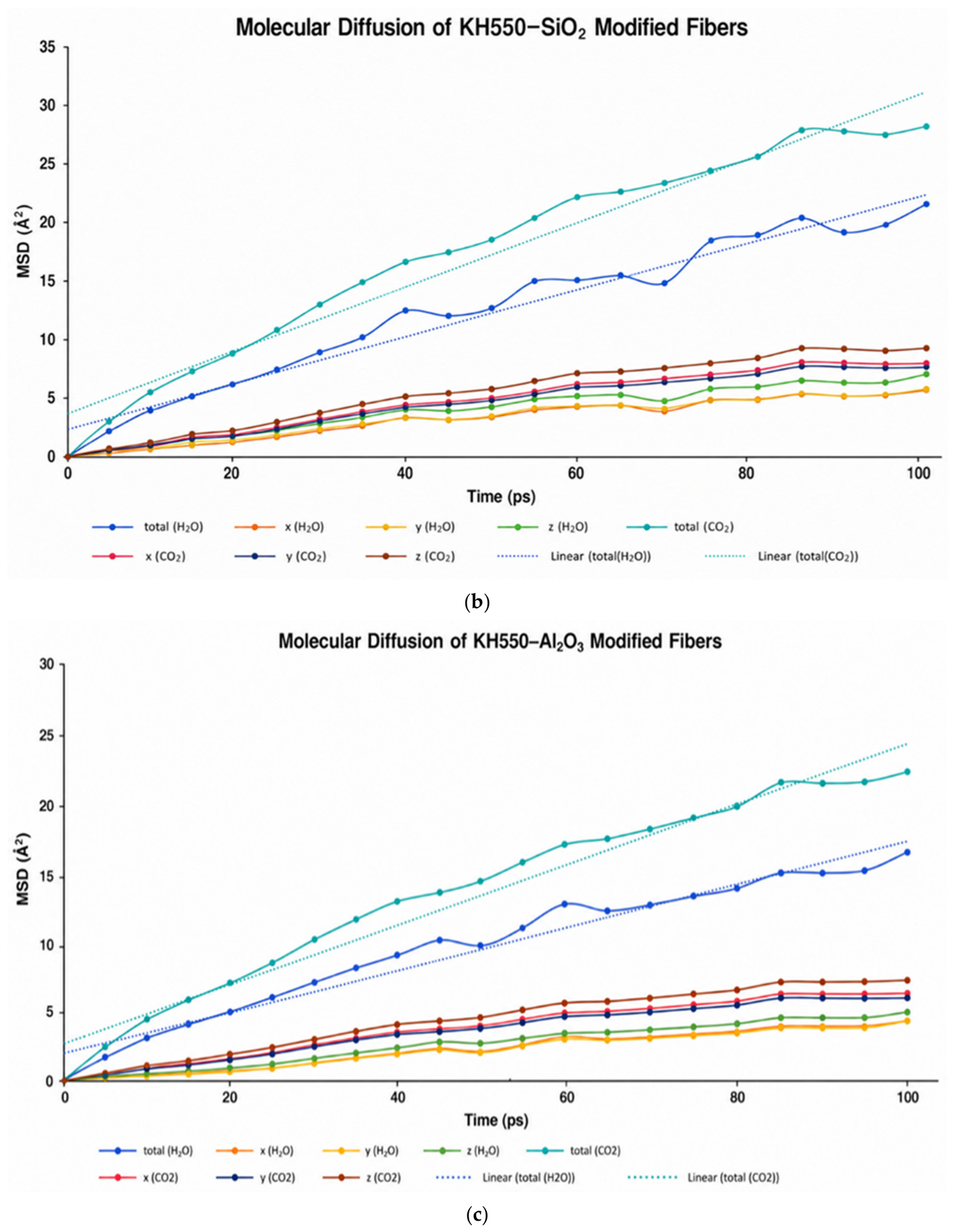
As summarized in Table 4, comparison of these data reveals the apparent directional transport bias induced by the electric field and the regulatory effect of nanomodification on such field-biased mobility. The evolution curves of total MSD with simulation time for H2O and CO2 in the three systems are plotted in Figure 8 to show the differences in apparent mobility.
Table 4.
MSD values under electric field conditions: (a) pristine cellulose; (b) KH550–SiO2-modified cellulose; (c) KH550–Al2O3-modified cellulose.
Figure 8.
Apparent transport behavior of H2O and CO2 in the three models: (a) pristine cellulose; (b) KH550–SiO2-modified cellulose; (c) KH550–Al2O3-modified cellulose.
Linear fitting of the MSD data within a time interval of 0–60 ps was performed to estimate the MSD-derived apparent transport coefficients of H2O and CO2 molecules in the three models, as summarized in Table 5. This interval was selected empirically because the MSD curves show an approximately linear early-time region before stronger late-stage fluctuations appear, especially for H2O after about 60 ps. The fitting coefficients in Table 5 describe the linearity of this selected interval, but they do not replace a formal convergence or fitting-window sensitivity analysis. Apparent directional transport bias was estimated from the fitted MSD components using the Z/X apparent-coefficient ratio as a simple axial-to-transverse indicator. Because the X- and Y-direction MSD components are not identical, this ratio should be interpreted as a directional index rather than a complete diffusion-tensor description.
Table 5.
MSD-derived apparent transport coefficients and empirical fitting parameters of H2O and CO2 in the three models.
The MSD data and apparent coefficients show that under identical imposed-fieldconditions, CO2 exhibits higher apparent mobility than H2O. In the pristine cellulose model, the MSD-derived apparent coefficient of CO2 is 9.05 × 10⁻⁶ cm2/s, which is approximately 29.8% higher than that of H2O (6.97 × 10⁻⁶ cm2/s). This trend is consistent with the weaker polarity and weaker cellulose interaction of CO2 compared with H2O.
H2O is a strongly polar molecule capable of forming hydrogen-bonding interactions with the hydroxyl groups (–OH) on cellulose molecular chains. Such intermolecular interactions can partly anchor water molecules around cellulose chains and restrict their migration. In contrast, CO2 is a nonpolar linear molecule whose interaction with cellulose mainly arises from relatively weak van der Waals forces. Consequently, CO2 experiences weaker constraints and can diffuse more freely through the free-volume regions of the cellulose matrix.
The apparent transport of H2O is strongly coupled with the segmental motion of cellulose chains within amorphous regions. Therefore, the MSD curve of H2O continues to increase with noticeable fluctuations during the later simulation stage (e.g., after 60 ps), and the fitting coefficient remains relatively lower, reflecting the complexity and activated characteristics of its apparent transport behavior. By comparison, CO2 apparent transport more closely follows migration through free-volume regions within a relatively fixed pore network, resulting in more linear MSD curves and higher fitting quality.
Nanomodification suppresses the apparent transport of both aging molecules. As summarized in Table 5, the KH550–SiO2 model reduces the MSD-derived apparent coefficients of H2O and CO2 by 41.9% and 33.7%, respectively, whereas the KH550–Al2O3 model produces larger reductions of 51.9% and 48.8%, respectively. Therefore, within the specific simulated model set, the KH550–Al2O3 system shows a larger apparent mobility reduction; however, this difference cannot be attributed exclusively to nanoparticle chemistry because the two nanomodified models use different nanoparticle loadings and KH550 grafting ratios.
Notably, the suppression effect of nanomodification on H2O apparent mobility is generally stronger than that on CO2 apparent mobility. This is consistent with the stronger polarity of H2O and its ability to interact with cellulose hydroxyl groups and polar KH550 groups. The present data support a qualitative trapping interpretation, but quantitative hydrogen-bond population, lifetime, and residence-time analyses would be required to establish this mechanism more rigorously.
The externally applied electric field along the Z-axis induces apparent directional transport bias in all models, where the fitted Z-direction component is larger than the fitted X-direction component. As listed in Table 5, the Z/X apparent-coefficient ratios of H2O and CO2 in pristine cellulose reach 2.21 and 2.02, respectively. This result is consistent with field-biased molecular migration along the applied-field direction; however, because drift-subtracted trajectories were not available, the values should be regarded as apparent directional transport indicators rather than purely diffusive tensor components.
Nanomodification weakens this directional bias in the fitted MSD components. In both KH550–SiO2- and KH550–Al2O3-modified systems, the Z/X apparent-coefficient ratios decrease. In particular, for the KH550–Al2O3 model, the Z/X ratios of H2O and CO2 decrease to 1.62 and 1.51, respectively. These results suggest that interfacial interactions between nanoparticles and the cellulose matrix can reduce field-biased molecular mobility, while a full tensor or drift-corrected analysis would be required for a more rigorous assessment of directional transport.
Consequently, the nanomodified systems show lower apparent H2O and CO2 mobility than pristine cellulose under the same fixed-temperature external-field condition. The results support the use of nanomodification to reduce aging-molecule migration at the atomistic level, while additional long-term and experimental validation would be required to confirm practical transformer-insulation reliability.
4.5. Scope and Limitations of the MD Interpretation
The present simulations provide atomistic evidence for how KH550-grafted SiO2 and Al2O3 nanoparticles affect cellulose packing, interfacial energies, and H2O/CO2 migration under a prescribed external field. Several limitations should be considered when interpreting the results. First, the models include cellulose and representative aging molecules, but they do not include transformer oil, electrode geometry, or macroscopic defects. Oil contact can affect moisture partitioning, dissolved-gas transport, nanoparticle dispersion, and oilpaper interfacial behavior; therefore, the simulations cannot reproduce the complete oilpaper insulation environment.
Second, only a single temperature (343 K), one electric field strength (0.01 V/Å), and one field direction were considered. The field strength was selected as an accelerated atomistic condition, so the results should be used for comparative mechanistic interpretation rather than direct lifetime prediction. Third, the reported transport parameters are MSD-derived apparent coefficients under the imposed field and may include directional field-biased migration. Pure diffusive coefficients would require additional drift-adjusted trajectory analysis.
Finally, independent replicate simulations, explicit uncertainty estimates, formal fitting-window sensitivity tests, and drift-subtracted trajectory analyses were not available in the present dataset. The fitting coefficients in Table 5 indicate the linearity of the empirically selected MSD fitting interval, but they do not replace replicate-based statistical confidence intervals or convergence analysis. Similarly, the hydrogen-bonding mechanism is supported by energy decomposition and representative structural visualization, but quantitative hydrogen-bond criteria, average hydrogen-bond numbers, and lifetime statistics should be added in future work to further strengthen the microscopic interpretation. The molecular configuration figures should therefore be interpreted as representative visualizations rather than quantitative structural statistics.
5. Conclusions
In this study, atomistic MD simulations were used to investigate how KH550–SiO2 and KH550–Al2O3 nanomodification affects cellulose structural stability and aging-molecule apparent transport at 343 K under a uniform external field of 0.01 V/Å. The MSD data in Table 4 and the apparent transport parameters in Table 5 were used to compare aging-molecule mobility among the three cellulose models. The main conclusions are as follows.
- Under the external electric field, the FFV of pristine cellulose increased from 0.12326 to 0.12484, indicating a single-trajectory tendency toward field-induced loosening of cellulose packing. In contrast, the KH550–SiO2 and KH550–Al2O3 systems showed slight FFV decreases of 5.27 × 10⁻⁵ and 5.64 × 10⁻⁴, respectively. These very small decreases are treated as numerical tendencies rather than statistically established evidence of structural stabilization.
- The external electric field affected the two nanomodified interfaces differently. For KH550–SiO2, the interfacial interaction energy changed from −240.50 to −252.13 kcal/mol, mainly because of the increased Coulombic contribution. For KH550–Al2O3, the interaction energy remained nearly unchanged (−541.65 to −538.81 kcal/mol), indicating low sensitivity to the imposed field in this constructed model. Because the SiO2 and Al2O3 models use different nanoparticle loadings and KH550 grafting ratios, these comparisons are most reliable within each model before and after field application.
- Under the fixed-temperature external-field condition, nanomodification reduced the MSD-derived apparent coefficients of H2O and CO2 by 33.7–51.9% relative to pristine cellulose. The KH550–SiO2 model reduced the apparent coefficients of H2O and CO2 by 41.9% and 33.7%, respectively, while the KH550–Al2O3 model showed larger apparent mobility reductions of 51.9% for H2O and 48.8% for CO2. These reductions are apparent transport indicators under field-biased conditions rather than drift-corrected equilibrium diffusion coefficients.
- The external field induced apparent directional transport, with larger fitted MSD slopes along the Z-axis than along the X-direction. The Z/X apparent-coefficient ratios were 2.21 for H2O and 2.02 for CO2 in pristine cellulose and decreased to 1.62 and 1.51, respectively, in the KH550–Al2O3 model. These findings suggest that nanomodification suppresses overall molecular mobility and weakens field-biased directional transport, while drift-corrected and replicate simulations are still required for rigorous diffusion-tensor validation.
Overall, the simulations indicate that KH550-grafted nanoparticles show a model-scale tendency to improve cellulose stability through a combination of physical packing constraints and polar interfacial interactions under the modeled conditions. The results provide molecular-level guidance for nanomodified insulation-paper design, while future work should include matched nanoparticle loading and grafting-ratio designs, transformer oil, multiple temperatures and electric field strengths, quantitative hydrogen-bond statistics, drift-corrected transport analysis, replicate simulations, and experimental validation.
Supplementary Materials
The following supporting information can be downloaded at https://www.mdpi.com/article/10.3390/en19174013/s1. Figure S1: Original software-setting screenshots for the external-electric-field simulations: (a) pristine cellulose, (b) KH550-SiO2-modified cellulose, and (c) KH550-Al2O3-modified cellulose. Figure S2: Original software-setting screenshots for aging-molecule insertion before apparent-transport simulation: (a) pristine cellulose, (b) KH550-SiO2-modified cellulose, and (c) KH550-Al2O3-modified cellulose.
Author Contributions
Conceptualization, S.R.; methodology, S.R.; formal analysis and investigation, S.R.; writing—original draft preparation, S.R.; writing—review and editing, S.R. and Z.Y.; supervision, Z.Y. and C.D.; funding acquisition, Z.Y. and C.D.; resources, Z.Y. and C.D. All authors have read and agreed to the published version of the manuscript.
Funding
This research received no external funding.
Data Availability Statement
The data that support the findings of this study are available within the article.
Conflicts of Interest
The authors declare no conflicts of interest.
References
- Tang, C.; Chen, R.; Zhang, J.; Peng, X.; Chen, B.; Zhang, L. A review on the research progress and future development of nano-modified cellulose insulation paper. IET Nanodielectr. 2022, 5, 63–84. [Google Scholar] [CrossRef] [Scilit]
- Adekunle, A.A.; Oparanti, S.O.; Fofana, I. Performance assessment of cellulose paper impregnated in nanofluid for power transformer insulation application: A review. Energies 2023, 16, 2002. [Google Scholar] [CrossRef] [Scilit]
- Liao, R.; Yang, L.; Zheng, H.; Wang, K.; Ma, Z. Reviews on Oil-Paper Insulation Thermal Aging in Power Transformers. Trans. China Electrotech. Soc. 2012, 27, 1–12. (In Chinese) [Google Scholar]
- Emsley, A.M.; Stevens, G.C. Review of chemical indicators of degradation of cellulosic electrical paper insulation in oil-filled transformers. IEE Proc. Sci. Meas. Technol. 1994, 141, 324–334. [Google Scholar] [CrossRef] [Scilit]
- Ren, Y.; Wang, Y.; Zhang, Q.; Xiong, J.; Cao, W.; Lv, Z.; Wu, K. Dynamics of an impurity ion transport in oil-paper insulation under various electric fields. High Volt. 2024, 9, 66–80. [Google Scholar] [CrossRef] [Scilit]
- Liao, R.; Gong, C.; Zhou, X.; Yang, L.; Duan, L. Diffusion behavior of gas small molecules in oil-paper insulation systems based on molecular dynamics simulation. High Volt. Eng. 2012, 38, 2373–2382. (In Chinese) [Google Scholar]
- Liu, Y.; Yang, C.; Zhao, T.; Yang, J.; Liu, Y. Effect of Temperature on Moisture Migration and Partial Discharge at the Oil-Paper Interface. Trans. China Electrotech. Soc. 2024, 39, 5182–5193. (In Chinese) [Google Scholar] [CrossRef]
- Cong, H.; Wang, Y.; Pan, H.; Hu, X.; Li, Q. Multiple sulfur corrosion simulation on the oil-paper insulation system under synergistic electric and thermal fields. IEEE Trans. Dielectr. Electr. Insul. 2023, 30, 634–642. [Google Scholar] [CrossRef] [Scilit]
- Wei, W.; Zhang, Y.; Chen, H.; Xu, C.; Zha, J.; Nie, S. Molecular dynamics simulations guided the preparation of nano-silica/polyimide/cellulose composite insulating paper. Mater. Des. 2023, 233, 112176. [Google Scholar] [CrossRef] [Scilit]
- Wei, W.; Zhang, Y.; Chen, H.; Su, Z.; Lan, D.; Zha, J. Nano-BN and nano-cellulose synergistically enhanced the mechanical, thermal, and insulating properties of cellulose insulating paper. Compos. Sci. Technol. 2024, 256, 110748. [Google Scholar] [CrossRef] [Scilit]
- Wang, Z.; Zeng, Z.; Li, H.; Tang, C. Properties of ladder-like polysilsesquioxane-modified insulation paper cellulose with different substituents. J. Ind. Eng. Chem. 2024, 132, 437–447. [Google Scholar] [CrossRef] [Scilit]
- Wang, Z.; Peng, X.; Chronis, I.; Wu, Y.; Psomopoulos, C.S.; Tang, C. Cellulose-based nanocomposite insulation material with excellent thermal aging resistance: KH550-hBN-modified cellulose insulation paper. IEEE Trans. Dielectr. Electr. Insul. 2025, 32, 2639–2648. [Google Scholar] [CrossRef] [Scilit]
- Pan, M.; Gao, H.; Zhang, X.; Yang, Q. Enhancing comprehensive performance of cellulose insulating paper modified by atmospheric pressure low-temperature plasma with octamethylcyclotetrasiloxane/O2 addition. Front. Energy Res. 2026, 14, 1773802. [Google Scholar] [CrossRef] [Scilit]
- Huang, X.; Zhou, Y.; Gesang, Q.; Zhang, L.; Zhang, Y.; Teng, C.; Huang, M. Construction of nanocellulose sandwich-structured insulating paper and its enhancement for mechanical and electrical properties. IEEE Trans. Dielectr. Electr. Insul. 2021, 28, 1127–1135. [Google Scholar] [CrossRef] [Scilit]
- Adekunle, A.A.; Oparanti, S.O.; Hamzat, A.; Abdelmalik, A. Dielectric response of vegetable oil-based nanofluid and impregnated Kraft paper for high voltage transformer insulation. J. Mol. Liq. 2023, 391, 123391. [Google Scholar] [CrossRef] [Scilit]
- Jacob, J.; Preetha, P.; Sindhu, T.K.; Rao, U.M. Electro-thermal and mechanical aspects of thermally aged cellulose insulation impregnated with nanofluids. Measurement 2023, 209, 112506. [Google Scholar] [CrossRef] [Scilit]
- Naidu, G.T.; Rao, U.M.; Suresh, S. Influence of ester liquids on dielectric strength of cellulose kraft paper. Energies 2022, 15, 762. [Google Scholar] [CrossRef] [Scilit]
- Oparanti, S.O.; Khaleed, A.A.; Abdelmalik, A.A. Nanofluid from palm kernel oil for high voltage insulation. Mater. Chem. Phys. 2021, 259, 123961. [Google Scholar] [CrossRef] [Scilit]
- Chakraborty, B.; Raj, K.; Pradhan, A.; Chatterjee, B.; Chakravorti, S.; Dalai, S. Investigation of dielectric properties of TiO2 and Al2O3 nanofluids by frequency domain spectroscopy at different temperatures. J. Mol. Liq. 2021, 330, 115642. [Google Scholar] [CrossRef] [Scilit]
- Perez-Rosa, D.; Garcia, B.; Burgos, J.C. Influence of nanoparticles on the degradation processes of ester-based transformer insulation systems. Energies 2022, 15, 1520. [Google Scholar] [CrossRef] [Scilit]
- Adekunle, A.A.; Oparanti, S.O. A review on physicochemical and electrical performance of vegetable oil-based nanofluids for high voltage equipment. Electr. Power Syst. Res. 2023, 214, 108873. [Google Scholar] [CrossRef] [Scilit]
- Mahmood, M.K.; Nyamupangedengu, C.; Gomes, C.; Smith, A. Reducing hydrophilic characteristics of kraft paper insulation by reinforcing with surface modified rutile-TiO2 nanoparticles. IEEE Access 2022, 10, 102237–102246. [Google Scholar] [CrossRef] [Scilit]
- Du, D.; Tang, C.; Tang, Y.; Yang, L.; Hao, J. Molecular simulation on the mechanical and thermal properties of carbon nanowire modified cellulose insulating paper. Compos. Struct. 2021, 261, 113283. [Google Scholar] [CrossRef] [Scilit]
- Yin, F.; Yang, L.; Mo, Y.; Hou, W.; Yuan, Y. Origin of low dielectric permittivity in crosslinked cellulose/Kevlar fiber composites as revealed via molecular dynamics simulation. Mater. Chem. Phys. 2022, 286, 126008. [Google Scholar] [CrossRef] [Scilit]
- Wei, S.; Wu, X.; Li, X. Solubility analysis of nano particles, cellulose crystalline region and cellulose molecule, and the impact study of crystalline region on properties of cellulose insulating paper. Mol. Simul. 2021, 47, 1522–1529. [Google Scholar] [CrossRef] [Scilit]
- Lundgaard, L.E.; Hansen, W.; Linhjell, D.; Painter, T.J. Aging of oil-impregnated paper in power transformers. IEEE Trans. Power Deliv. 2004, 19, 230–239. [Google Scholar] [CrossRef] [Scilit]
- Wang, W.; Dong, W.; Li, F.; Jiang, D.; Ning, Z. Molecular simulation of the diffusion and aggregation of water at the interface between mineral oil and cellulose during temperature rising. Trans. China Electrotech. Soc. 2019, 34, 3696–3704. (In Chinese) [Google Scholar] [CrossRef]
- Tao, J.; Zhan, H.; Luo, C.; Hu, S.; Duan, X.; Liao, M. Diffusion properties of gas molecules in oil-paper insulation system based on molecular dynamics simulation. Energies 2024, 17, 3811. [Google Scholar] [CrossRef] [Scilit]
- Liang, Z.; Fang, Y.; Cheng, H.; Sun, Y.; Li, B.; Li, K.; Zhao, W.; Sun, Z.; Zhang, Y. Innovative transformer life assessment considering moisture and oil circulation. Energies 2024, 17, 429. [Google Scholar] [CrossRef] [Scilit]
- Adekunle, A.A.; Oparanti, S.O.; Fofana, I.; Picher, P.; Rodriguez-Celis, E.M.; Arroyo-Fernandez, O.H.; Meghnefi, F. Degradation Mechanisms of Cellulose-Based Transformer Insulation: The Role of Dissolved Gases and Macromolecular Characterisation. Macromol 2025, 5, 20. [Google Scholar] [CrossRef] [Scilit]
- Liao, R.; Wang, K.; Yin, J.; Yang, L.; Sun, H.; Deng, X. Influence of initial moisture content on the thermal aging characteristics of oil-paper insulation. High Volt. Eng. 2012, 38, 1172–1178. (In Chinese) [Google Scholar]
- Liao, R.; Sun, H.; Yin, J.; Gong, J.; Yang, L.; Zhang, Y. Influence on the thermal aging rate and thermal aging characteristics caused by water content of oil-paper insulation. Trans. China Electrotech. Soc. 2012, 27, 34–42. (In Chinese). Available online: https://dgjsxb.ces-transaction.com/CN/Y2012/V27/I5/34 (accessed on 24 August 2026).

Disclaimer/Publisher’s Note: The statements, opinions and data contained in all publications are solely those of the individual author(s) and contributor(s) and not of MDPI and/or the editor(s). MDPI and/or the editor(s) disclaim responsibility for any injury to people or property resulting from any ideas, methods, instructions or products referred to in the content. |
© 2026 by the authors. Licensee MDPI, Basel, Switzerland. This article is an open access article distributed under the terms and conditions of the Creative Commons Attribution (CC BY) license.