


Abstract
Channeling control remains the most critical challenge in fluid injection for enhanced oil recovery (EOR). Polymer gels are widely applied in channeling control due to their capability to alter the permeability of flow channels. However, high temperature and high salinity lead to low efficiency of gels, causing injected fluid to flow away through high-permeability channels and thereby hindering petroleum production. To address this, this study developed and applied a new gel, synergistically combining a tailored temperature-/salt-resistant co-polymer with an optimized cross-linker. Laboratory evaluation experiments demonstrated that this gel could resist high temperature (>130 °C) and high salinity (>20 × 104 mg/L), exhibit remarkable stability (gel dehydration rate <20% after 100 days aging), and achieve a plugging rate exceeding 98%. A pilot field case, designed based on laboratory outcomes, was successfully implemented in the Gasikule Block of the Qinghai Oilfield. The field validation indicated that this advanced gel system effectively restored reservoir pressure, thereby establishing critical prerequisites for subsequent EOR operations. This study advances the application of polymer gels in channeling control, demonstrating their superior performance and broad perspective in enhancing channeling control.
1. Introduction
At present, most already-developed reservoirs have entered the high-water-cut stage after water, polymer and gas flooding operations, with fragmented oil distribution and increasingly severe channeling phenomena. Injected liquid flows through preferential channels and has low efficacy in driving the remaining oil out. Gas leakage causes energy waste and security risks [1,2]. Channeling increases the heterogeneity, which is the principal factor limiting macroscopic sweep efficiency and ultimate recovery of reservoirs [3,4]. As channeling becomes severe and heterogeneity increases, gas breakthrough occurs earlier. This brings significant challenges to the further development and utilization of oil and gas reservoirs.
Plugging and channeling control agents are utilized to treat the problem of leaking prior to gas injection in EOR projects. High-performance agents and optimal control procedures are essential, especially in high-temperature and high-salinity reservoirs, as conventional agents tend to fail under such conditions. To maximize crude oil recovery efficiency from these reservoirs and meet the growing energy demand, researchers have been developing chemical agents with strong resistance and enhanced performance, along with the corresponding technologies for their field application.
Regular plugging and channel control agents include precipitation, polymer, nanoparticle, foam, resin, and microbial agents. Inorganic precipitations such as clay, calcium, and cement are traditionally utilized to block large-size fractures or channels, especially in the drilling process or after polymer flooding [5,6,7]. Calcium salt blocking agents were also used to control steam channeling in steam injection for heavy oil recovery, due to their resistance to high temperature [8]. Calcium carbonate induced by microbes could significantly reduce permeability and control seepage [9]. Inorganic chemicals tend to plug the high-permeability channels or fractures permanently. This poses a risk of reservoir blockage and subsequent decline in well productivity. Compared with inorganic matter, organic chemicals such as polymer gel are more sensitive to temperature and salt. However, polymer gels offer distinct advantages. Their formation time and spatial distribution can be designed and controlled, and effective methods exist for gel breaking and plugging removal. Owing to their superior controllability, polymer gels have emerged as the most widely used channeling control agents in various reservoir applications [10,11,12].
Due to their mechanical deformability, polymer gels can penetrate into channels of varying sizes, plugging high-permeability channels and fractures [13,14]. Traditional gels composed of guar and xanthan gum suffer from insufficient mechanical strength and limited thermal stability, leading to compromised plugging efficiency and increased operational costs [15,16]. In addition, temperature governs the flow regimes of reservoir fluids, primarily by modulating fluid viscosity [17,18]. This thermally induced viscosity variation directly influences the stability of the displacement front, manifesting as viscous fingering and the subsequent formation of bypass channels.
Methods such as dispersed particle gels (DPGs) were proposed to improve the performance of channeling control. The DPG particles can accumulate in and block the high-permeability rock zones or plug small pore throats [19]. The temperature- and salinity-resistance of DPG particles is attributed to their fast coalescence rate [20,21,22,23]. The practical application of DPGs is significantly constrained by their suboptimal injectability, particularly under harsh downhole conditions. Other methods of increasing the resistance of gels have been indicated. The network of the polymer gel is most critical to the stability of the polymer gel. For example, a shear-responsive, self-lubricating hydrogel was developed by integrating a thixotropic FT (N-fluorenylmethoxycarbonyl-L-tryptophan) supramolecular network with a high-strength PAM-PAANa (polyacrylamide–sodium polyacrylate) network. The PAM-PAANa framework, functioning as a robust scaffold, endows the composite hydrogel with exceptional mechanical resilience, enabling it to be stable [24].
The scientific challenge facing current channeling control technology lies in the lack of an effective injection system that is both temperature-tolerant and salt-resistant, while ensuring the injected agents can achieve in situ gelation and plugging underground. In this study, we adopted the technical framework of in situ cross-linked gel systems [25]. Cross-linked polymer gels typically consist of polymers, cross-linkers, and other additives. Previous researchers developed high-temperature-resistant gels using cross-linked terpolymer, which could be stabilized at 120–150 °C but with low salinity (<1 × 10⁴ mg/L) [26,27,28]. We want to further validate this methodology through a field trial.
The Gasikule Block of the Qinghai Oilfield is characterized by deep sandstone reservoirs. The average porosity of the reservoir is 13.9%; the effective permeability is 26 mD; and the formation crude oil viscosity is 1.76 mPa·s [29,30]. Currently, it has entered the high-water-cut development stage, with a geological reserve recovery factor of 40.4% and a water cut of 78%. Fine reservoir description studies indicate that the remaining oil in the main layers is highly dispersed, accounting for 51% of the remaining geological reserves [31]. A large amount of remaining oil is trapped within microscopic pore structures. The average permeability of the preferential channels is about 100~1000 mD, and the average permeability of the matrix is about one-third of that. This makes it difficult to mobilize this portion of residual oil using conventional water flooding methods or enhanced oil recovery measures. The reservoir in the Gasikule Block exhibits a formation temperature of 115~130 °C and a formation water salinity in the range of 16~21 × 104 mg/L, making it a typical high-temperature and high-salinity reservoir. Due to these reservoir conditions, polymer viscosity-increasing chemical flooding techniques are not suitable for this type of reservoir, and deoxygenated air flooding has become the regular enhanced oil recovery technology for such formations [32,33]. Controlling the flow channel of gas injection is the key to the production of those reservoirs.
In general, the mechanics of increasing gels’ stability involves the formation of particles or a network framework. To enhance the performance of a channel-controlling gel without compromising its injectability, this study proposed a novel polymer gel that can be injected into the reservoir as an aqueous phase. Under high-temperature reservoir conditions, the aqueous liquid can transform into gel. Due to the addition of high-resistance co-polymer and cross-linker, this gel exhibits remarkable stability. The results of the field-scale pilot tests were consistent with those of the laboratory experiments, confirming the efficacy of this gel and providing new insights into the design and application of gel-based agent systems in channel control.
2. Materials and Methods
2.1. Materials
Chemical Reagents: The chemical reagents used include temperature- and salt-resistant monomer sodium 2-acrylamido-2-methylpropanesulfonate (Na-AMPS), N-alkyl acrylamide (N-AM), acrylamide (AM), initiator ammonium persulfate (APS)/potassium persulfate (KPS), azobis (isobutyronitrile, AIBN)/azobis (2-methylpropionamidine) dihydrochloride (AIBA), sodium sulfite (Na2SO3)/sodium bisulfite (NaHSO3). Polyphenol cross-linking agents were utilized to form the gel network.
Brine: Simulated formation brine was used to prepare various solutions in this study. The salinity of the simulated formation brine was about 20 × 104 mg/L, with the concentration of calcium being about 1.2 × 10⁴ mg/L.
2.2. Synthesis of the Polymer Gel
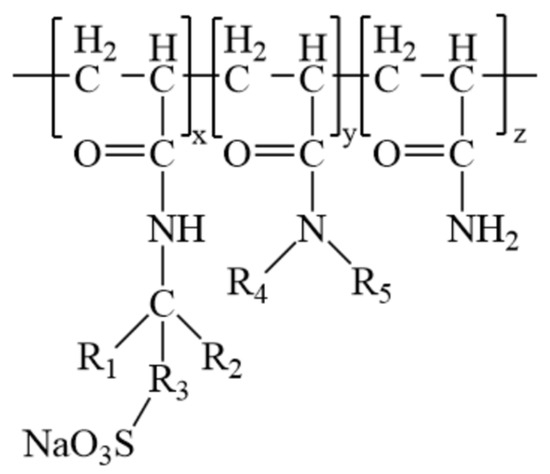
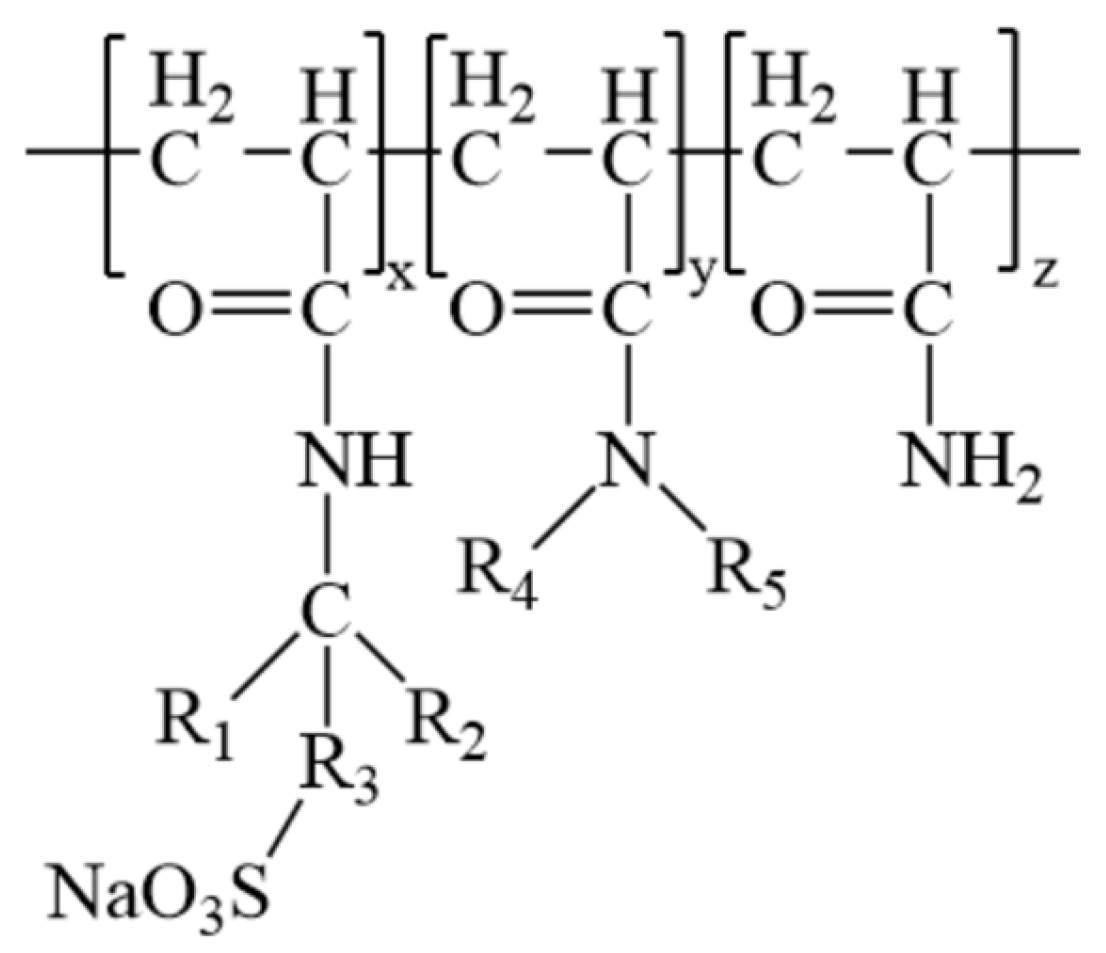
Preparation of the co-polymer: Under the high-temperature and high-salinity condition, conventional polyacrylamide (PAM) loses its thickening performance due to mechanisms such as salt-sensitive dehydration. Novel polymers containing a large number of sulfonate groups or bulky side chains grafted onto the amide nitrogen can form strong steric hindrance effects. These effects suppress polymer chain thermal motion, inhibit thermal contraction, and protect the amide groups from exposure to high-temperature aqueous environments by encapsulating them within the side chains, thereby enhancing hydrolytic stability. Based on this principle, we developed a co-polymer with a sulfonate-functionalized monomer (Na-AMPS) as the main component, co-polymerized with branch-structured functional monomers (N-AM). A small amount of acrylamide (AM) serves as a cross-linking and activity-enhancing agent. Figure 1 presents the proposed molecular structure of the co-polymer formed by the polymerization of those monomers. The hydrolysis-resistant sulfonate groups surrounding acrylamide effectively shield it from hydrolysis and free radical attacks, ensuring high stability under high-temperature and high-salinity conditions. The co-polymer was synthesized via aqueous-phase co-polymerization. Na-AMPS, N-AM, and AM were thoroughly dissolved in ultrapure water at a mass ratio of 90:2:8. The pH of the solution system was adjusted to 6~8 using NaOH. A composite initiation assistant was added, followed by purging with high-purity nitrogen for 30 min to displace oxygen. Subsequently, under nitrogen protection, a polymerization catalyst and ammonium persulfate were introduced. The reaction was maintained at 5 ± 1 °C for over 6 h. The synthesized co-polymer was subjected to shearing, granulation, drying, and crushing and then filtered through 20~80 mesh screens to powder. Fourier-transform infrared (FTIR) spectroscopy was subsequently performed to characterize the obtained product.
Figure 1.
Sulfonic acid-containing polymer expected molecular structure.
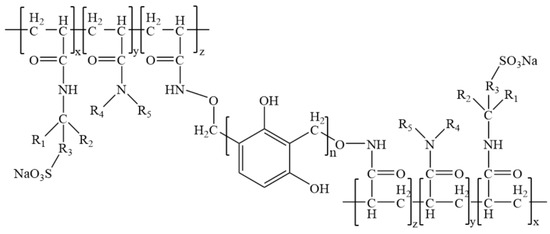
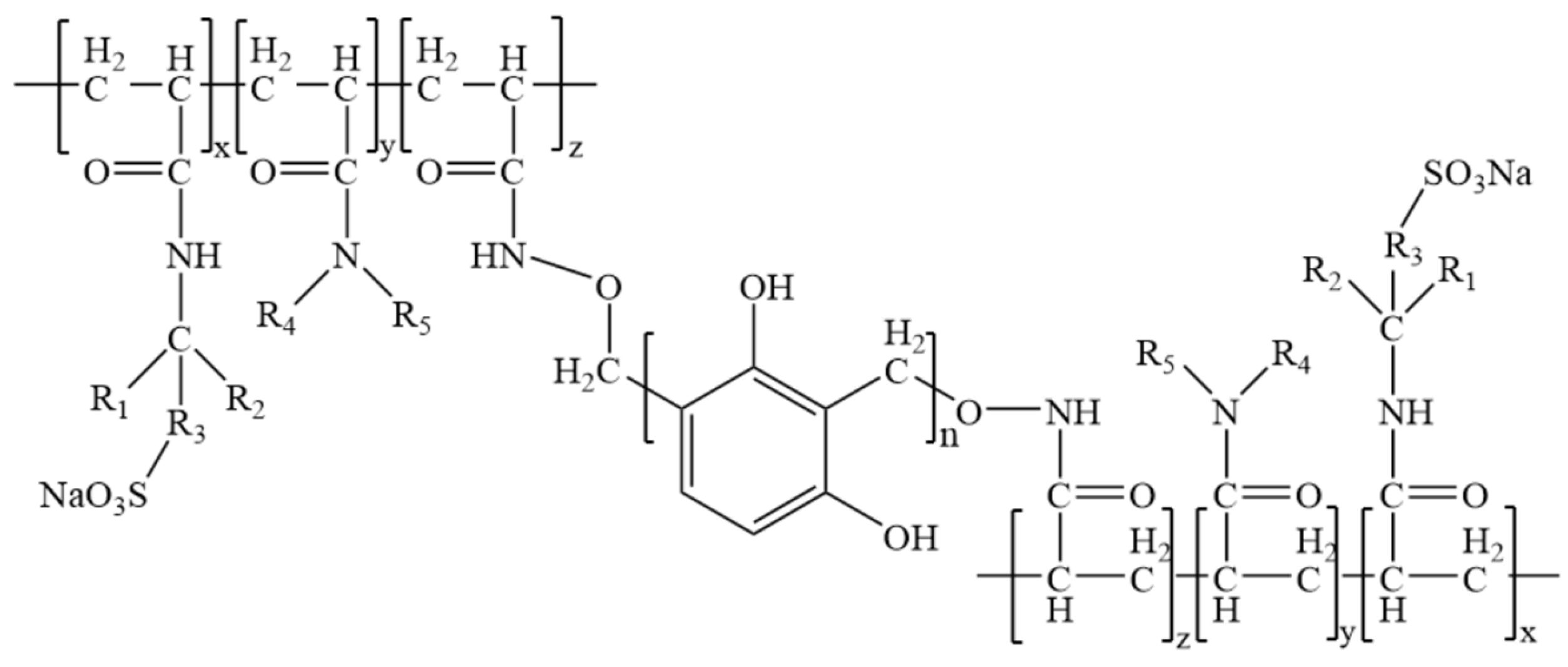
Poly-phenol cross-linking agents: In the poly-phenol composite system, the -CH2OH groups and a small number of -CONH2 groups in the co-polymer undergo a dehydration–condensation reaction to form a three-dimensional network structure. Figure 2 presents the proposed molecular structure of the gel composed of co-polymer with polyphenol cross-linking agents. To delay cross-linking time, long-chain aldehydes are introduced to modify the phenolic resin structure and develop cross-linkages, effectively addressing the issues of excessive gel formation and brittle gel formation that plague conventional phenolic cross-linkers under high-temperature reservoir conditions. Additionally, the incorporation of multiple benzene ring functional groups enhances the thermal stability of the gel system.
Figure 2.
Proposed molecular structure of the mixture composed of the co-polymer with polyphenol cross-linking agents.
2.3. Evaluation of the Polymer Gel
Co-polymer Characterization: The synthesized co-polymer was characterized by infrared spectroscopy (IR) to confirm its molecular structure. The molecular weight, degree of hydrolysis (%), dissolution time, and water-insoluble matter (%) of the co-polymer were analyzed.
Gelation Performance: Gel strength was measured under conditions of 8 h and 48 h at 130 °C. A certain amount of polymer powder was dissolved in simulated formation water to prepare a 0.5 wt% polymer solution. Subsequently, polyphenolic cross-linker was added. After deoxygenation, the mixture was placed in a 130 °C forced-air drying oven for static curing. Gel forming time was recorded by observing the complete transformation of the solution into a solid gel. The aged stability of the gel-based plugging agent system was further monitored under static conditions. To simulate the conditions in CO2 injection wells, the stability of the polymer gel in a CO2 environment was additionally evaluated.
Plugging capability: Plugging capability of the gel was evaluated using a self-prepared sand-packed column (length was 20 cm, and inner diameter was 3 cm). The evaluation was conducted at 130 °C. The column was vacuum-saturated with simulated brine to determine porous volume and porosity. Simulated brine was injected forward at 1.0 mL/min until pressure stabilization. Initial permeability (Ki, mD) was calculated using Equation (1). The polymer gel was injected in reverse at 1.0 mL/min, followed by thermal curing at 130 °C for 24 h. Forward injection of simulated brine resumed at 1.0 mL/min until pressure stabilization. Final permeability (Kf, mD) was recalculated using Equation (1). The permeability decreasing rate (DRK, %) was computed via Equation (2) based on Ki and Kf. DRK was used to characterize the plugging capability of the polymer gel.
2.4. Field Pilot Test
A pilot field test was conducted in the Gasikule Block of the Qinghai Oilfield. To conduct the field pilot trial, several tons of co-polymer, cross-linker, and surfactant were pilot-produced in a chemical factory. The following equation was used to calculate the volume of polymer gel that must be formed in the reservoir:
where
V = πR2HΦ
V: adjusting agent volume (m3);
R: 20 m (minimum well spacing connected oil layer radius);
H: effective thickness of connected oil layer (10.2 m);
Φ: formation porosity (minimum value: 12.5%).
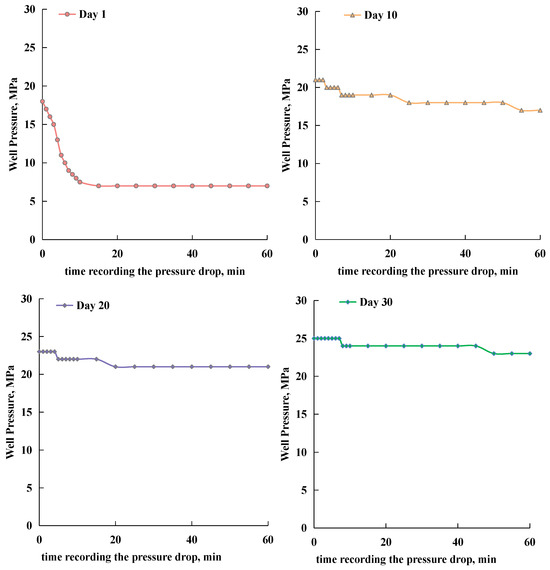
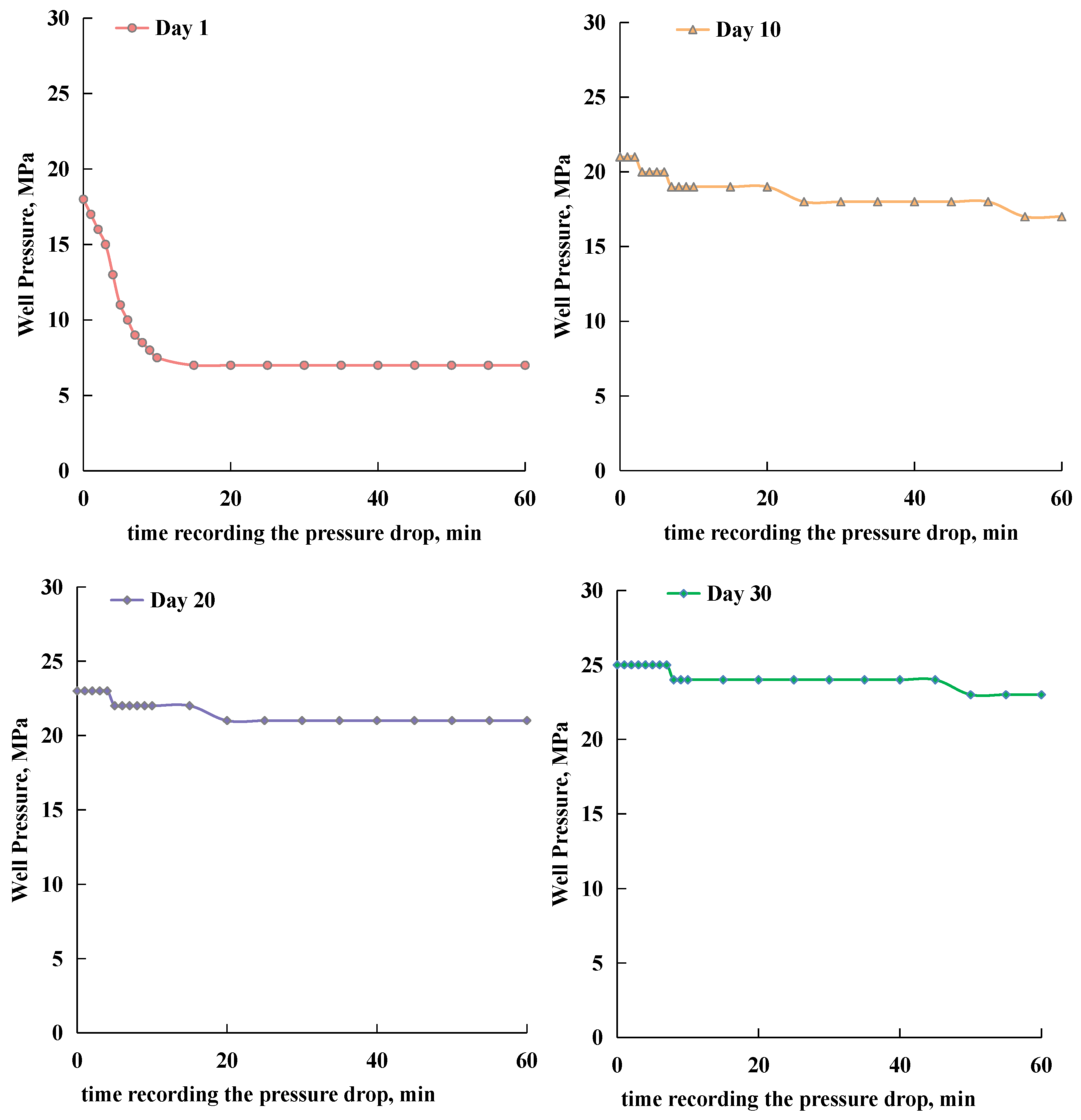
As a result, the suggested polymer gel volume V was 1600 m3, and the injection method was mixed injection through tubing string. Co-polymer and cross-linker were blended with clear water, and surfactant was blended with injected water. The injection pressure limit of the field operations was 35 MPa. The injection process lasted 30 days, during which temporary halts were made on Day 1, Day 10, and Day 20 to measure the pressure drawdown curve. The pressure drop curves were analyzed to evaluate the trial’s effectiveness.
During the preparation of this manuscript/study, the authors used Tencent Yuanbao (v2.37.0.617) for the purposes of analyzing the flow behavior and stability of the gel depicted in the captured figures. The authors have reviewed and edited the output and take full responsibility for the content of this publication.
3. Results and Discussions
Through a series of laboratory evaluations and the pilot field test, this study provides a high-performance polymer gel that can resist high temperature and salinity. This field study was a success, with the channel of injection being controlled. This provides valuable guidance for further applications of polymer gel in reservoir channeling control including operation protocol design.
3.1. Characterization of Polymer Gel
3.1.1. Fourier-Transform Infrared (FTIR) Characterization
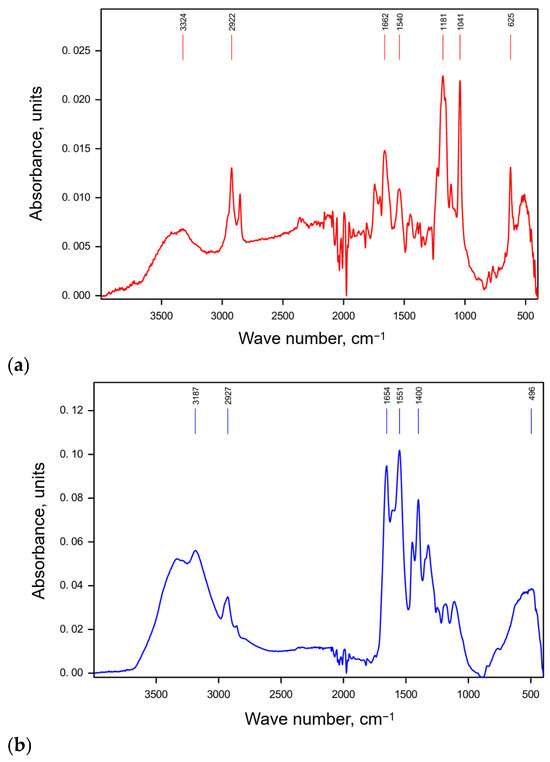
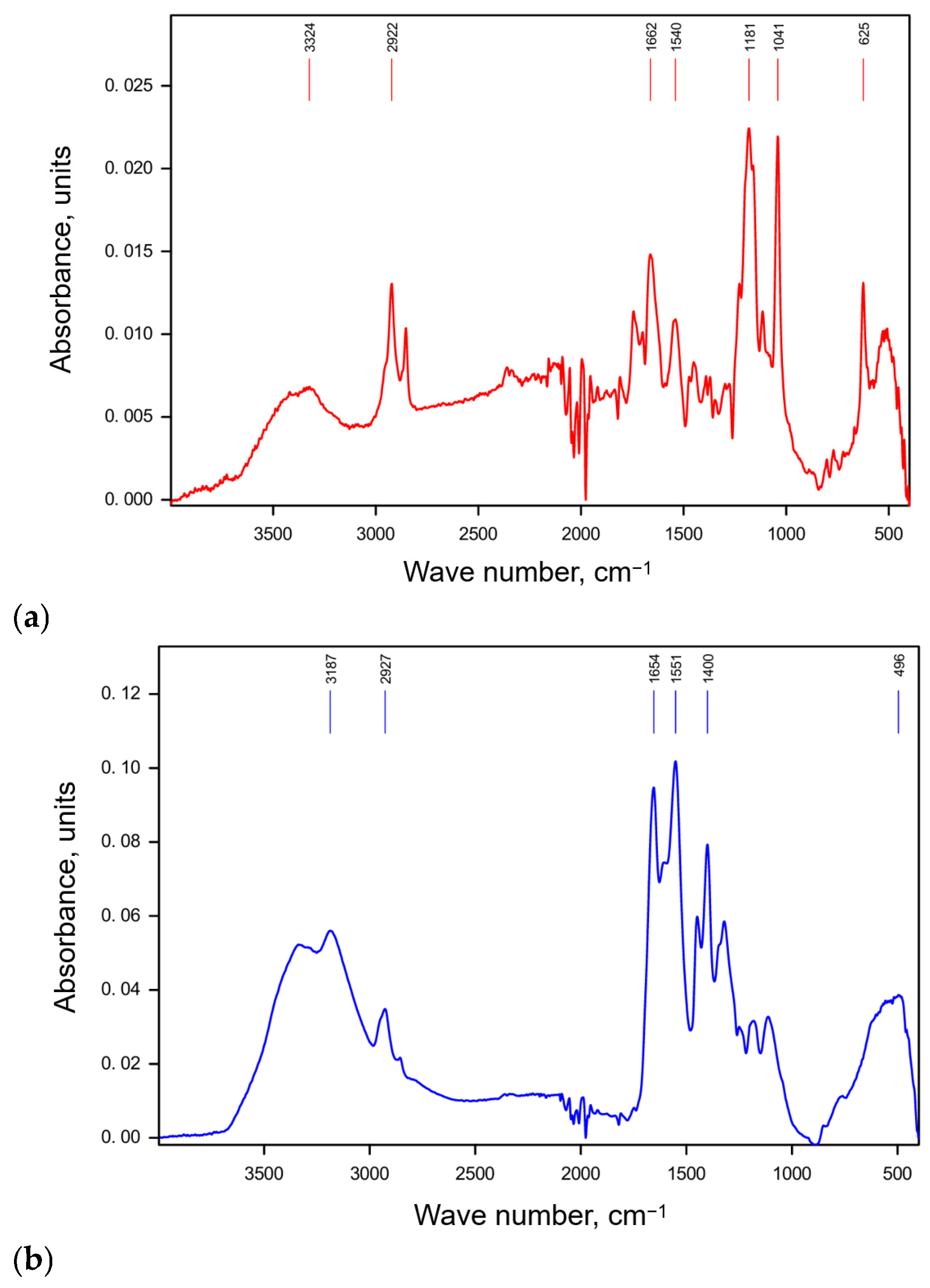
The characteristic absorption peak positions and shapes of the self-developed co-polymer are presented in Figure 3 and compared with regular HPAM. The absorption peaks at 3427 and 3334 cm−1 correspond to the asymmetric and symmetric stretching vibrations of N-H, respectively. The peaks at 2923 and 2852 cm−1 are assigned to the asymmetric and symmetric stretching vibrations of methylene (-CH2-) in the polymer backbone. The absorption bands at 1740 and 1652 cm−1 are attributed to the C = O stretching vibrations of carboxyl and amide groups, respectively. The band at 1537 cm−1 arises from the bending vibration of C-N-H in secondary amides (i.e., the amide II band), while the peak at 1456 cm−1 corresponds to the scissoring vibration of methylene. The bands at 1178 and 1041 cm−1 represent the asymmetric and symmetric stretching vibrations of the sulfonate group (SO3−), respectively.
Figure 3.
FTIR characterization of (a) self-developed co-polymer and (b) regular HPAM.
The FTIR results confirmed that both target functional groups are present in the synthesized co-polymers, demonstrating that Na-AMPS, N-AM, and AM all participated in the polymerization reaction. This is consistent with the expected structure illustrated in Figure 1 and Figure 2. Furthermore, the co-polymer has a molecular weight of approximately 10 million. The degree of hydrolysis is lower than 4%, and the water-insoluble substance is less than 0.2%. The co-polymer is completely soluble in the simulated brine with a salinity of 20 × 104 mg/L. The dissolution time is less than 2 h.
3.1.2. Gel Forming Performance
The main mechanism of gel forming involves a dehydration–condensation reaction between the -CH2OH groups in the polyphenol and the -CONH2 groups in the co-polymer, which leads to the formation of a three-dimensional network structure. To delay the cross-linking time, long-chain aldehydes were applied to modify the structure of phenolic resin. This effectively addressed the issues of rapid gelation and brittle gels caused by conventional phenolic cross-linkers under high-temperature conditions. Meanwhile, multiple benzene ring functional groups were introduced into the system to enhance their thermal stability.
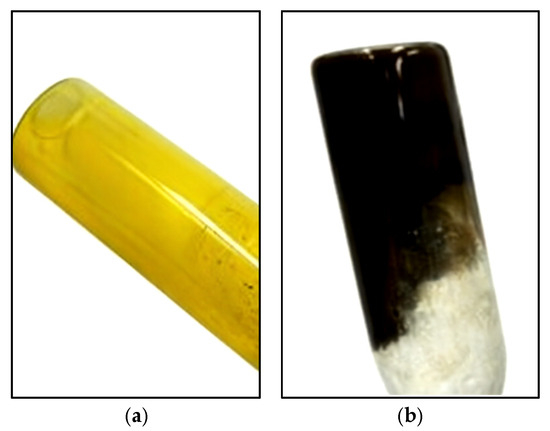
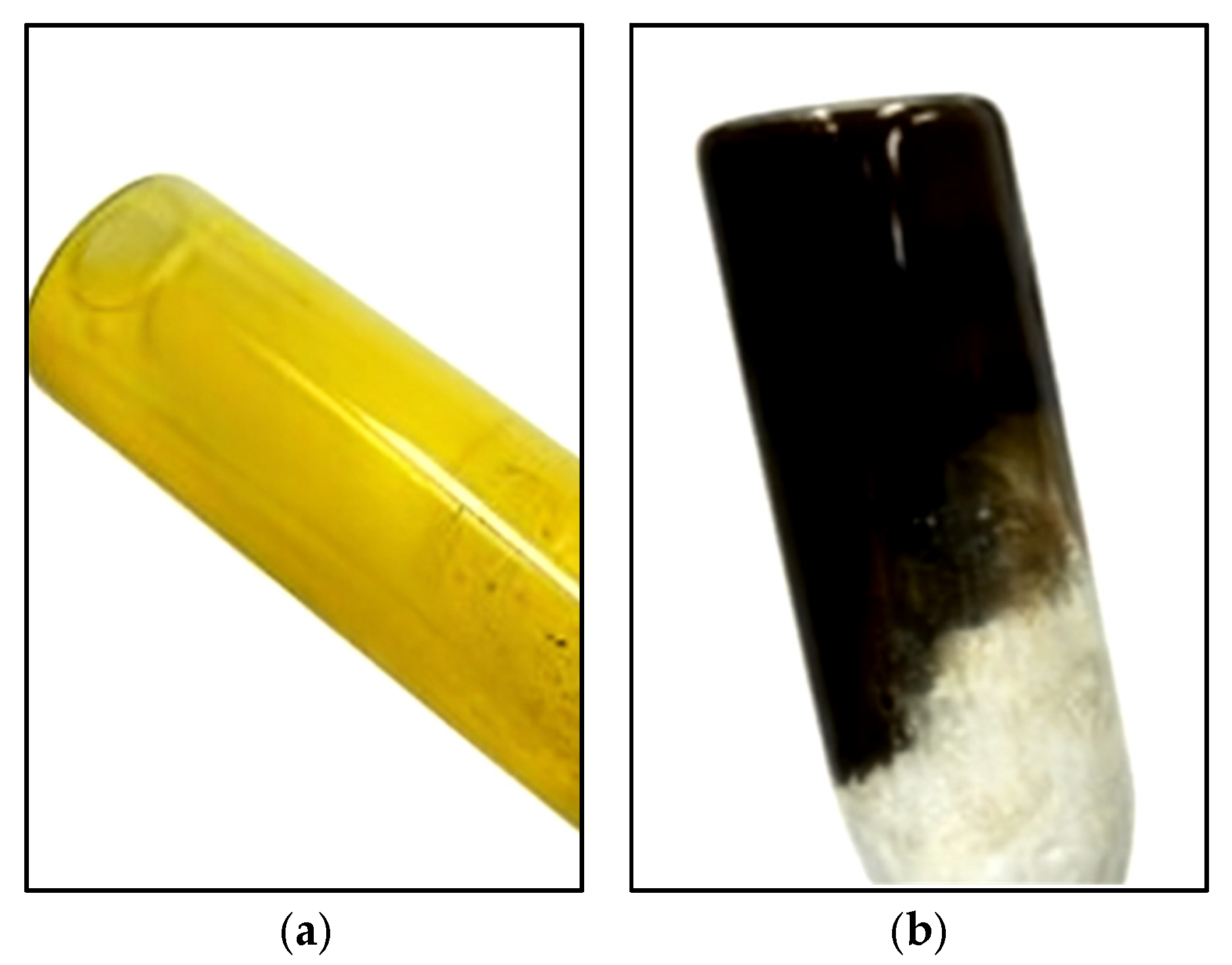
The composite composed of co-polymer and polyphenol cross-linker, under conditions of 130 °C and salinity of 20 × 104 mg/L, forms a gel within 8 h. The rheology of the gels and the gelation rates were determined by rheometry or, in a qualitative mode, through bottle testing with the well-known Sydansk gel-strength code (GSC). The gel strength was determined using the code criteria listed in Table 1. Strong gel formed after 8 h and retained its strength over 48 h. Figure 4 shows examples of weak gel (standing for 1 h, code C) and strong gel (aged for 10 days, code H). It was also observed that, although the gel was still strong after 10 days of aging, it turned brown, which was attributed to the influence of oxygen.
Table 1.
Sydansk gel-strength codes used to determine the strength of the formed gel [34,35].
Figure 4.
(a) Weak gel, 1 h standing after mixing co-polymer with cross-linker; the gel could flow. (b) Strong gel, gel formed and aged for 100 days; the gel is rigid.
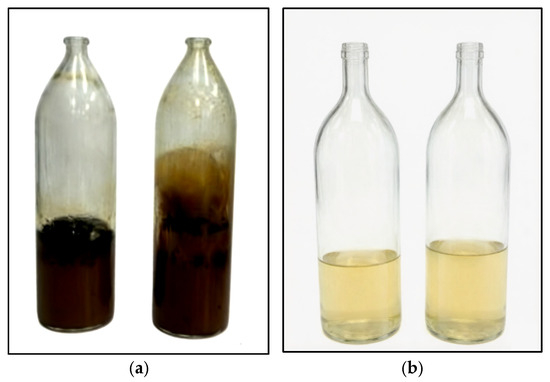
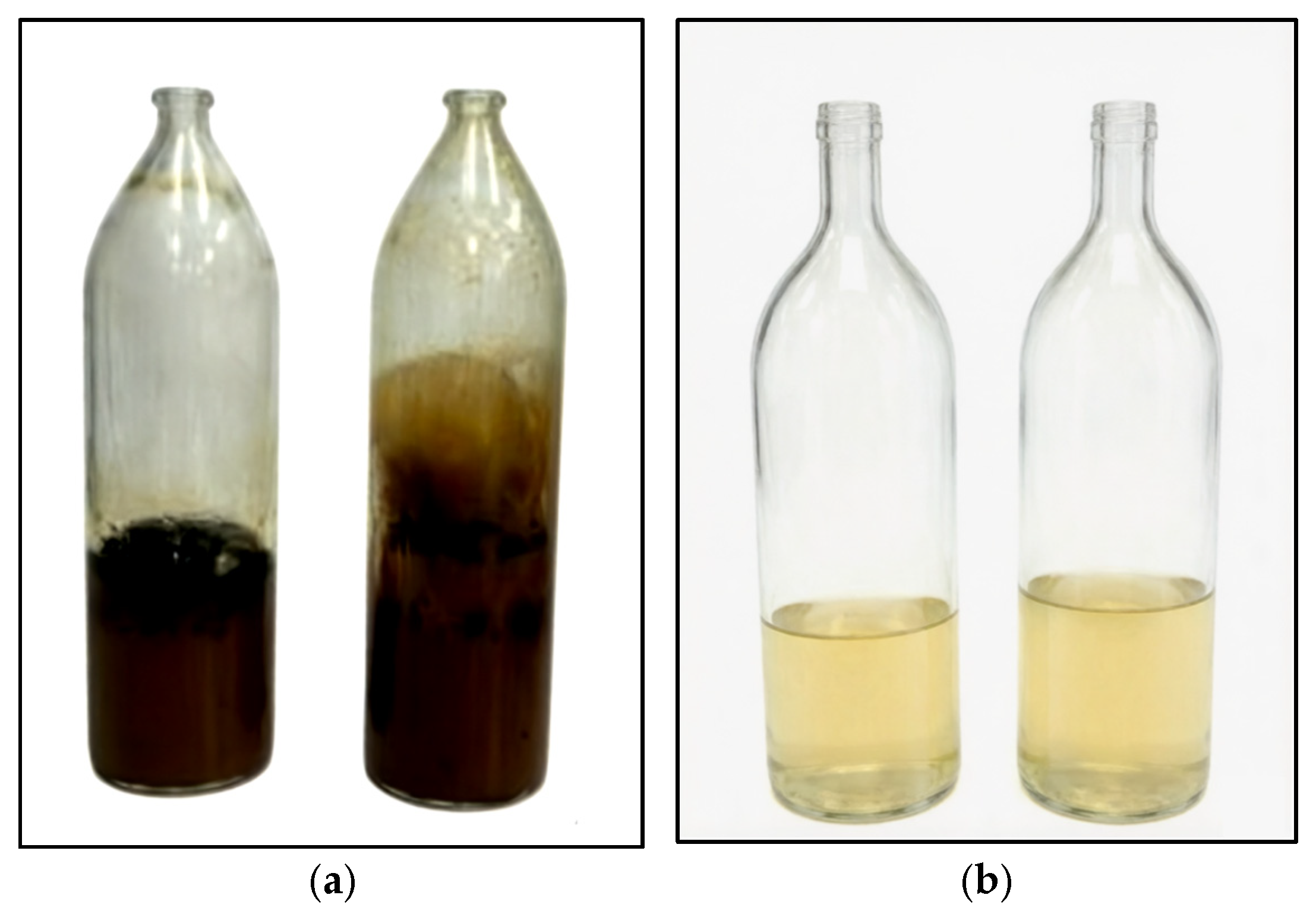
Oxygen in the system has a significant impact on gel stability as shown in Figure 5. Trace amounts of oxygen can generate free radicals under high-temperature conditions, which can cleave the molecular chains of the gel network structure, leading to gel instability and dehydration failure. Although reservoirs are virtually devoid of oxygen, the injection of exogenous water introduces dissolved oxygen into the subsurface environment. This would lead to low efficacy of the gel in plugging high-permeability channels. Consequently, deoxygenation of the injection brine is an operational imperative to mitigate oxidative degradation. Experimental results demonstrate that deoxygenation, coupled with effective sealing, significantly enhances the long-term stability of the polymer gel. Notably, the gel remained optically clear and structurally intact even after 100 days of static aging.
Figure 5.
Performance of the gel: (a) without deoxygenation, the gels turned brown and had weaker stability: (b) with deoxygenation, the gel remained clear and stable.
3.1.3. Gel Aging Stability
The polymer gel, under conditions of 130 °C and 20 × 104 mg/L salinity, was aged for 100 days after deoxygenation and sealing. The results are comprehensively presented in Table 2, which details the characterization of gels with distinct numbering, each exhibiting unique compositional concentrations (variations in the concentrations of their constituent components, such as polymers, cross-linkers). Specifically, Gel #2 (formulated with a phenolic cross-linker) and Gel #3 (incorporating polymer Q, previously utilized in Qinghai field applications for channeling control) were deliberately selected as control groups. Their roles were to establish baseline performance benchmarks against which the novel Gel #1 system could be compared.
Table 2.
Dehydration results of the aged polymer gel.
The self-developed gel systems demonstrated high stability compared with other chemical systems under the high-temperature and high-salinity condition. After 7 days, the comparison groups showed dehydration rates greater than 20%, while the self-developed gel showed no dehydration phenomena. In 60 days, the dehydration rate of gel #1 was lower than 10%, and, in 100 days, the dehydration rate of gel #1 was lower than 20%. The self-developed gel is stable especially when the concentration of co-polymer is 1% and that of cross-linker is 0.9%. This meets the demand of field application. The aging experiment was repeated in a CO2 environment, and the self-developed gel also showed remarked stability with CO2.
3.2. Channel Plugging Capability of Polymer Gel
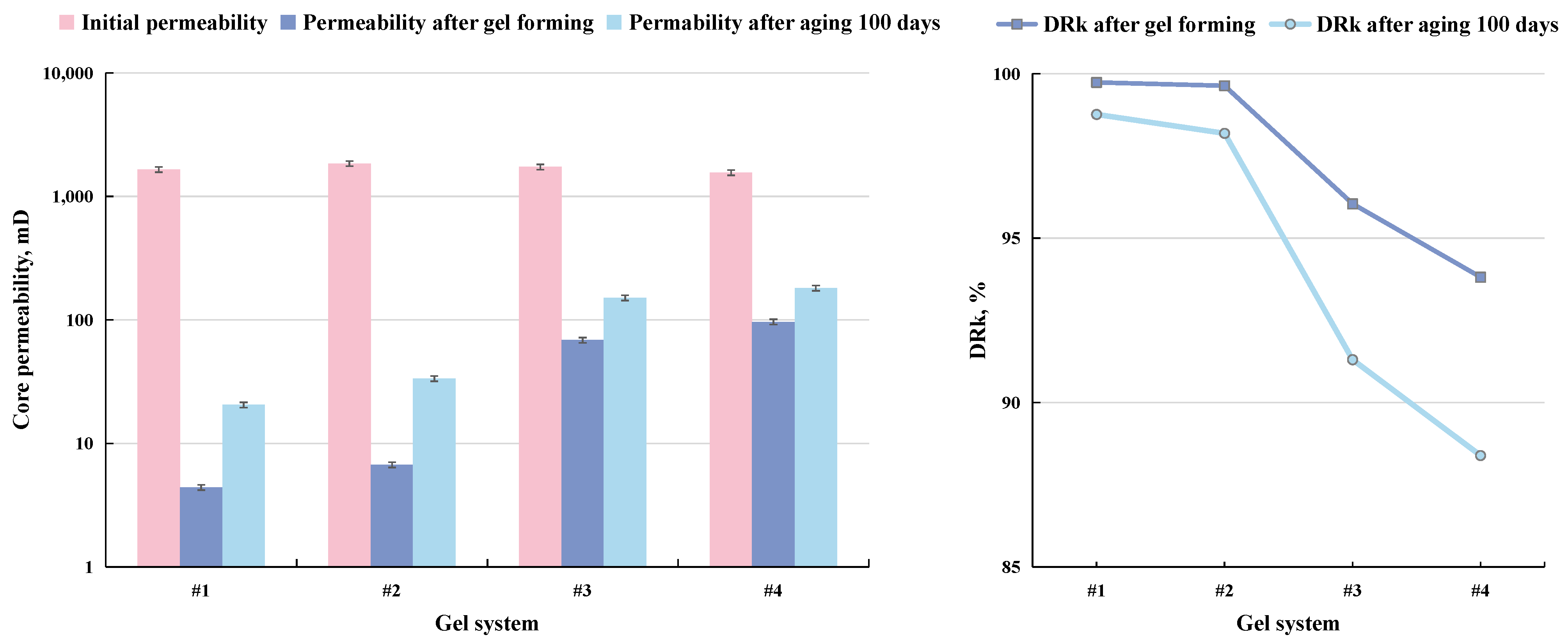
The plugging capability of the gel was measured at different concentrations of synthesized co-polymer and polyphenol cross-linker. The composites were formulated in simulated brine (20 × 104 mg/L), injected into a core, and statically aged at 130 °C for 24 h. During the aging time, polymer gel gradually formed. The change in permeability was measured through displacement, and the plugging rate was determined by the permeability decreasing rate.
Figure 6 presents the results of the polymer gel’s plugging with injected liquid of different concentrations and different injected pore volumes. High-permeability (>1500 mD) cores were used, and the initial permeability of the cores was in the same range. After the injection and aging process, permeability of the cores decreased significantly. In the four scenarios, the permeability decreasing rates (DRk) were all greater than 90%, which demonstrated the strong plugging capability of the gel. In the scenario in which the concentration of co-polymer is 1% and that of cross-linker is 0.7%, with injection volume being 1 PV, the DRk was greater than 99%. The core’s permeability was reduced to approximately 4 mD, which indicated that the polymer gel efficiently distributed in the high-permeability channels and plugged the channel. This had a continuous effect for 100 days. After aging for 100 days, the permeability of the cores tested increased by a small amount, while the DRk was still greater than 88%. These lab results verified the efficiency of the developed gel at high temperature, high salinity, and over a long timescale.
Figure 6.
Plugging results of polymer gel with different compositions and different injected volumes. Gel #1: 1% co-polymer and 0.7% cross-linker, and 1 pore volume liquid was injected. Gel #2: 0.75% co-polymer and 0.7% cross-linker, and 1 pore volume liquid was injected. Gel #3: 1% co-polymer and 0.7% cross-linker, 0.5 pore volume liquid was injected. Gel #4: 0.75% co-polymer and 0.7% cross-linker, 0.5 pore volume liquid was injected.
3.3. Field Case of Channeling Control Gel
A pilot field test of channeling control using polymer gel was conducted in Well Y-1 of the Gasi Oilfield in Qinghai. The well was previously developed as a gas injection well, having an average permeability of 10–30 mD. As a result of long-time gas injection, preferential channeling paths have formed widely. Due to the high heterogeneity of the reservoir, the wellbore pressure decreased rapidly after gas injection, indicating gas channeling. As a result, the efficiency of gas-driving oil was low, and production was unsatisfying. No useful development techniques could be applied before channeling control. The objective of the channeling control and flooding operation is to plug the preferential channels, optimize the injection path, and restore oil production capacity.
To control the channeling, the self-developed co-polymer and cross-linker were proposed to be injected into the reservoir. The injection procedure was precisely designed, and the step-by-step dosage is listed in Table 3, including aqueous phase volume and slug requirements. Briefly, 50 m3 of water was first injected into the well, and the pressure drop was measured for 1 h after completion. This was to replenish the energy depletion of the reservoir. Then 40 m3 of co-polymer was injected to test its injectability. Lately, the co-polymer and cross-linker were injected into the well at a certain concentration. The concentration was designed considering both lab evaluation performance and economic cost. The injection rate was 30~50 m3/d, and the injection of co-polymer and cross-linker took 12 days. With a gelation time of approximately 12 h, the injected liquid gradually flowed into high-permeability channels, formed gel in situ, and plugged the channels. Subsequently, the injected liquid flowed into other channels, ensuring complete plugging of the reservoir’s channel network. After the injection of co-polymer, 1000 m3 of surfactant containing betaine surfactant was injected to drive oil. The surfactants were injected to improve oil recovery after the channeling control.
Table 3.
Procedure of field test injection.
During the whole injection process, the construction pressure and displacement were continuously monitored. Based on the real-time pressure and displacement data, the injection speed of the channeling control gel, the concentration of the polymer gel, and the dosage were dynamically adjusted to optimize the treatment effectiveness.
Injection Trial results: The co-polymer and cross-linker were mixed on the ground of the field and injected into the well as a flowing fluid. The mixture flowed into high-permeability channels in the reservoir and formed a gel therein. Figure 7 shows the pressure drop in Well Y-1 measured on Day 1, Day 10, Day 20 and Day 30 after the channeling control operation. The wellbore pressure was measured and recorded. Each pressure test lasted for one hour. The pressure drop curve serves as the most critical indicator for evaluating the success of the profile-control operation.
Figure 7.
Pressure drop curve of Y-1 Well measured during the injection; temporary halts were made on Day 1, Day 10, Day 20, and Day 30 to measure the pressure drop curve.
The pressure drop curve after 1 day of co-polymer injection indicates that, before gel formed in the reservoir, the pressure decreased rapidly, with two-thirds of the pressure lost within 10 min. This demonstrates that the injected fluid quickly flowed into high-permeability channels and even leaked. In contrast, after channeling control had been in operation for 10 days, the pressure decreased gradually and tended to level off. The pressure remained at 81% of the initial pressure after 1 h of measurement. After the channeling control had been in operation for 30 days, larger amounts of the co-polymer and cross-linker were injected, and gel formed in the reservoir. The initial pressure measured on the pressure curve was higher, which indicates the plugging effect of the gel. The energy imparted by the injection fluid is retained within the reservoir zone rather than being dissipated through preferential flow paths. The gel could resist the high-temperature and high-salinity reservoir environment. The pressure decreased gradually and tended to level off. After 1 h, the pressure was 92% of the initial pressure. The energy loss in the 1 h measurement period was much lower. From Day 1 to Day 10 and then to Day 30, the initial pressure gradually increased from 18 MPa to 25 MPa, which means the gel successfully plugged high-permeability channels. Injected liquid did not leak quickly through those channels, and materials and energy would not be wasted. This indicates the efficacy and stability of the gel. This provides sufficient prerequisites for further EOR operations such as surfactant injection and gas injection.
4. Conclusions
This study conducted a pilot field trial using a self-developed high-performance polymer gel consisting of synthesized co-polymer and cross-linker. Laboratory experiments demonstrated excellent stability under high temperature and salinity, as well as high plugging efficiency of preferential channels. The efficacy was verified through the field injection. The injected polymer gel successfully plugged the high-permeability channel of the gas injection reservoir and stabilized the well pressure. This is significantly important for development of wells with strong heterogeneity. A few findings can be summarized through this study.
- The main mechanism for increasing the resistance of polymer gel is by designing the chemical structure of the polymer, grafting sulfonate groups and bulky side chains onto the molecular structure of co-polymer, and choosing a favorable cross-linker. Comparison experiments in the study proved the efficacy of the mechanism.
- Through the gel forming process, the injected polymer fluid could plug high-permeability flowing channels after flowing into them. This effect protects the subsequently injected gas or water from being lost through preferential channels and makes sure that the injected gas or water can increase the pressure/energy of the reservoir and improve oil or gas recovery. This is important for “old” wells’ development.
- Larger-scale field trials should be conducted to thoroughly validate the effectiveness of the proposed technology, generate greater economic value, and contribute to energy production.
Future research will focus on large-scale field validation and comprehensive techno-economic assessments to fully unlock the potential of this gel system.
Author Contributions
Conceptualization, W.C., Z.Z. and Q.H.; methodology, Z.Z. and Q.H.; validation, Y.W. and X.Y.; formal Y.W. and X.Y.; investigation, Z.Z. and Q.H.; data curation, W.C.; writing—original draft preparation, W.C.; writing—review and editing, W.C., Z.Z. and Q.H.; supervision, W.L.; project administration, Q.H.; funding acquisition, Q.H. All authors have read and agreed to the published version of the manuscript.
Funding
This research received no external funding.
Data Availability Statement
The raw data supporting the conclusions of this article will be made available by the authors on request.
Acknowledgments
During the preparation of this manuscript/study, GenAI tool Tencent Yuanbao (v2.37.0.617) was used for the purpose of analysis.
Conflicts of Interest
Authors Weidong Chen, Zhuoyan Zhu, Qingfeng Hou, Yuanyuan Wang, Xiaoling Yi and Weidong Liu were employed by the company PetroChina and China National Petroleum Corporation (CNPC). The remaining authors declare that the research was conducted in the absence of any commercial or financial relationships that could be construed as a potential conflict of interest.
Abbreviations
The following abbreviations are used in this manuscript:
| EOR | Enhanced oil recovery |
| PV | Pore volume |
References
- He, B.; Newell, P. Multi-physics modeling of injected nanoparticles effect on remediation of CO2 leakage through cracks. Int. J. Greenh. Gas. Control. 2020, 95, 102955. [Google Scholar] [CrossRef] [Scilit]
- Olayiwola, O.; Nguyen, V.; Liu, N.; Guo, B. Prior assessment of CO2 leak rate through cracks sealed by nanoparticle gels. J. Pet. Explor. Prod. Technol. 2023, 13, 1509–1517. [Google Scholar] [CrossRef] [Scilit]
- Li, L.; Zhou, X.; Su, Y.; Xiao, P.; Chen, Z.; Zheng, J. Influence of heterogeneity and fracture conductivity on supercritical CO2 miscible flooding enhancing oil recovery and gas channeling in tight oil reservoirs. Energy Fuels 2022, 36, 8199–8209. [Google Scholar] [CrossRef] [Scilit]
- Hu, Z.; Gan, Q.; Jia, S.; Ren, X. Numerical simulation of CO2 enhanced gas recovery and sequestration in heterogeneous shale gas reservoirs. Energy Fuels 2026, 40, 342–352. [Google Scholar] [CrossRef] [Scilit]
- Zhang, A.; Fan, Z.; Zhao, L.; He, C. An investigation on sensitivity analysis and performance prediction of profile control by clay particles for polymer flooded reservoir. J. Pet. Sci. Eng. 2020, 196, 107690. [Google Scholar] [CrossRef] [Scilit]
- Dai, C.; Zhao, F.; Xiao, J. Studies on the reutilization techniques of the residual polymer in formation after polymer flooding. J. Xi’an Shiyou Univ. 2006, 6, 56. [Google Scholar]
- Liu, C.; Han, Y.; Liu, H.H.; Abousleiman, Y.N. Wellbore-stability analysis by integrating a modified hoek-brown failure criterion with dual-porochemoelectroelastic theory. SPE J. 2019, 24, 1957–1981. [Google Scholar]
- Shao, G.; Shi, Z.; Jia, Y.; Cheng, Q.; Kang, N.; Wang, X. Calcium precipitates as novel agents for controlling steam channeling in steam injection processes for heavy oil recovery. Processes 2025, 13, 1319. [Google Scholar] [CrossRef] [Scilit]
- Muhammad, S.A.; Jethoo, A.S. Microbial-induced calcite precipitation (micp) for seepage control & stabilization of unlined channels. Geomicrobiol. J. 2025, 42, 680–695. [Google Scholar] [CrossRef] [Scilit]
- Abe, K.; Seddiqi, K.N.; Hou, J.; Fujii, H. Experimental Performance Evaluation and Optimization of a Weak Gel Deep-Profile Control System for Sandstone Reservoirs. ACS Omega 2024, 9, 7597–7608. [Google Scholar] [CrossRef] [Scilit] [PubMed]
- Zaltoun, A.; Kohler, N.; Guerrinl, Y. Improved polyacrylamide treatments for water control in producing wells. J. Pet. Technol. 1991, 43, 862–867. [Google Scholar] [CrossRef] [Scilit]
- Wang, C.; Zhang, L.; Ju, G.; Sun, Q. Development and performance evaluation of a high-temperature profile control system. ACS Omega 2020, 5, 17828–17838. [Google Scholar] [CrossRef] [Scilit] [PubMed]
- Pu, W.; Zhao, S.; Wang, S.; Wei, B.; Yuan, C.; Li, Y. Investigation into the migration of polymer microspheres (PMs) in porous media: Implications for profile control and oil displacement. Colloids Surf. A Physicochem. Eng. Asp. 2018, 540, 265–275. [Google Scholar] [CrossRef] [Scilit]
- Sun, J.; Yang, J.; Bai, Y.; Lv, K.; Wang, J.; Wang, R. Review and prospect of bridging plugging technology in fractured formation. Pet. Sci. Bull. 2023, 8, 415–431. [Google Scholar]
- Liu, Y.; Bai, Y.R.; Sun, J.S.; Lv, K.H.; Yang, J.B.; Yang, K.Q. High-temperature and high-strength polymer gel for plugging in fractured formations. Pet. Sci. 2026, 23, 1955–1969. [Google Scholar] [CrossRef] [Scilit]
- Zhu, W.; Zheng, X. Effective modified xanthan gum fluid loss agent for high-temperature water-based drilling fluid and the filtration control mechanism. ACS Omega 2021, 6, 23788–23801. [Google Scholar] [CrossRef] [Scilit] [PubMed]
- Yan, Q.; Li, L.; Tan, Y. Energy Transfer Characteristics of Surface Vortex Heat Flow Under Non-Isothermal Conditions Based on the Lattice Boltzmann Method. Processes 2026, 14, 378. [Google Scholar] [CrossRef] [Scilit]
- Sun, Z.; Yao, Q.; Jin, H.; Xu, Y.; Hang, W.; Chen, H.; Li, K.; Shi, L.; Gu, J.; Zhang, Q.; et al. A novel in-situ sensor calibration method for building thermal systems based on virtual samples and autoencoder. Energy 2024, 297, 131314. [Google Scholar] [CrossRef] [Scilit]
- Bai, B.; Zhou, J.; Yin, M. A comprehensive review of polyacrylamide polymer gels for conformance control. Pet. Explor. Dev. 2015, 42, 525–532. [Google Scholar] [CrossRef] [Scilit]
- Liu, Y.; Dai, C.; Wang, K.; Zhao, M.; Gao, M.; Yang, Z.; Fang, J.; Wu, Y. Investigation on preparation and profile control mechanisms of the dispersed particle gels (DPG) formed from phenol-formaldehyde cross-linked polymer gel. Ind. Eng. Chem. Res. 2016, 55, 6284–6292. [Google Scholar] [CrossRef] [Scilit]
- Lv, D.; Li, J.; Bo, Q.; Xie, Z.; Dai, C.; Zhao, G. A Novel Profile Control Agent in High-Temperature and High-Salinity Reservoirs: Dispersed Particle Gel Prepared from Modified Nanographite-Strengthened Bulk Gel. Energy Fuels 2023, 37, 19487–19498. [Google Scholar] [CrossRef] [Scilit]
- Yao, C.; Lei, G.; Li, L.; Gao, X. Selectivity of pore-scale elastic microspheres as a novel profile control and oil displacement agent. Energy Fuels 2012, 26, 5092–5101. [Google Scholar] [CrossRef] [Scilit]
- Yang, N.; Wang, Z.; Li, Z.; Si, S.; Liu, Y.; Dai, C.; Zhao, G. Comprehensive Displacement System Utilizing Dispersed Particle Gels Coupling Viscosity Reduction and Breakthrough Channel Control for Heavy Oil Cold Production. Energy Fuels 2025, 39, 12449–12461. [Google Scholar] [CrossRef] [Scilit]
- Bai, Y.; He, S.; Lian, Y.; Yu, T.; Dai, C.; Zhao, J.; Zhang, H. Self-Lubricating Supramolecular Hydrogel for In-Depth Profile Control in Fractured Reservoirs. ACS Omega 2020, 5, 7244–7253. [Google Scholar] [CrossRef] [Scilit] [PubMed]
- Kang, Z.; Liu, Y.T.; Jia, H.; Xia, B.; Ou, H.M.; Pu, Q.B.; Hussein, I.A. Progress and Prospects of In Situ Polymer Gels for Sealing Operation in Wellbore and Near-Well Zone. Energy Fuels 2024, 38, 3539–3563. [Google Scholar] [CrossRef] [Scilit]
- Zhu, D.; Hou, J.; Wei, Q.; Chen, Y. Development of a hightemperature-resistant polymer-gel system for conformance control in Jidong oil field. SPE Reserv. Eval. Eng. 2019, 22, 100–109. [Google Scholar]
- Hardy, M.; Botermans, W.; Hamouda, A.; Valdal, J.; Warren, J. The first carbonate field application of a new organically crosslinked water shutoff polymer system. In Proceedings of the SPE International Symposium on Oilfield Chemistry, Houston, TX, USA, 16–19 February 1999. [Google Scholar] [CrossRef]
- Reddy, B.R.; Eoff, L.; Dalrymple, E.D.; Black, K.; Brown, D.; Rietjens, M. A natural polymer-based cross-linker system for conformance gel systems. SPE J. 2003, 8, 99–106. [Google Scholar] [CrossRef] [Scilit]
- Yang, Z.; Jia, S.; Zhang, L.; Wu, X.; Dou, H.; Guo, Z.; Zeng, L.; Li, H.; Guo, L.; Jia, Z.; et al. Deep profile adjustment and oil displacement sweep control technique for abnormally high temperature and high salinity reservoirs. Pet. Explor. Dev. 2016, 43, 91–98. [Google Scholar] [CrossRef] [Scilit]
- Long, A.; Lu, S.; Yang, Y.; Ma, F.; Huang, C.; Jia, F.; Wang, Y.; Li, P.; Zhao, Z.; Gui, L.; et al. Study on Enhancing Recovery by Multi-Scale Geomechanics Reconstruction and Combined Displacement and Imbibition in Unconventional Resources. In Proceedings of the SPE Advances in Integrated Reservoir Modelling and Field Development Conference and Exhibition, Abu Dhabi, United Arab Emirates, 2–4 June 2025; Society of Petroleum Engineers: Richardson, TX, USA, 2025; Paper Number SPE-225646-MS. [Google Scholar] [CrossRef] [Scilit]
- Wu, X.; Xiong, C.; Han, D.; Liu, H.; Gao, S.; Xu, H.; Dong, F.; Ren, F. A New IOR Method for Mature Waterflooding Reservoirs: Sweep Control Technology; SPE-171485-MS; SPE: Richardson, TX, USA, 2014. [Google Scholar]
- Cheng, T.; Zhang, Y.; Song, Y.; Dang, Y.; Jia, Z.; Zhu, X.; Pu, L.; Shao, L. Formulation optimization of oxygen-reduced air flooding foam system for high-temperature and high-salinity reservoir in Gasi Block. Spec. Oil Gas. Reserv. 2023, 30, 121–126. [Google Scholar]
- Hou, J.; Wu, C.; Zhao, F.; Liu, G.; Hao, H.; Jiang, K. Optimization and performance evaluation of complex flooding systems for high-temperature and high-salinity oil reservoirs. Pet. Geol. Oilfield Dev. Daqing 2014, 33, 121–126. [Google Scholar]
- Sydansk, R.D. New Conformance-Improvement-Treatment Chro-mium(III) Gel Technology. In Proceedings of the Paper SPE 17329 presented at the SPE Enhanced Oil Recovery Symposium, Tulsa, OK, USA, 16–21 April 1988. [Google Scholar] [CrossRef]
- Romero-Zerón, L.; Manalo, F.; Kantzas, A. Characterization of Crosslinked Gel Kinetics and Gel Strength by Use of NMR. SPE Res. Eval. Eng. 2008, 11, 439–453. [Google Scholar] [CrossRef] [Scilit]

Disclaimer/Publisher’s Note: The statements, opinions and data contained in all publications are solely those of the individual author(s) and contributor(s) and not of MDPI and/or the editor(s). MDPI and/or the editor(s) disclaim responsibility for any injury to people or property resulting from any ideas, methods, instructions or products referred to in the content. |
© 2026 by the authors. Licensee MDPI, Basel, Switzerland. This article is an open access article distributed under the terms and conditions of the Creative Commons Attribution (CC BY) license.