


Abstract
Mobile eye tracking has opened up new possibilities for studying teachers’ visual attention as it unfolds in authentic classroom settings, yet the field continues to face important theoretical and methodological challenges. This reflective study revisits three empirical studies, all stemming from a single large-scale mobile eye-tracking project in early childhood education, in order to develop a new theoretical framework, methodological insights, and recommendations for future eye-tracking research in education. Across the three studies, quantitative eye-tracking data, stimulated recall interviews, and multimodal conversation analysis were combined to examine how teachers distribute their visual attention among children, how they reason about their own gaze behaviour, and how gaze relates to patterns of classroom interaction. These three empirical studies jointly show that linguistically vulnerable children are overlooked and that this cannot be explained with a strict dichotomy between intentional and unintentional processes, but instead operates along a continuum shaped by teachers’ expectations, beliefs, and biases. Building on these insights, this study proposes adaptations to existing theoretical frameworks on teacher attention and professional vision, rendering them eye-tracking-informed, and argues for a shift towards in-action, multimodal, mixed-methods, and theory-driven eye-tracking research in educational settings. Implications for future research design on data triangulation and technological development are discussed.
1. Introduction
Eye tracking has increasingly been embraced within educational research as a methodology capable of rendering visible what is normally invisible: where and how teachers direct their visual attention while managing the complexity of the classroom [1,2]. Because looking constitutes a necessary first step towards noticing, interpreting, and ultimately acting upon classroom events, the study of teachers’ eye gaze offers a unique entry point into their professional vision [3]. Over the past two decades, this research tradition has evolved considerably [4]. Whereas eye-tracking research on teaching initially relied almost exclusively on screen-based, on-action designs in which teachers watched video recordings of classroom situations, the more recent development of lightweight, mobile eye-tracking glasses has enabled researchers to study teachers’ gaze in-action, that is, while they are actually teaching within their own classrooms. This shift towards ecologically valid, in-action research constitutes a promising development for the field, yet it simultaneously raises theoretical and methodological questions that have, until now, remained insufficiently addressed.
This reflective study takes these questions as its starting point. Rather than presenting new empirical findings, it looks back on three empirical studies that were previously published in A1 peer-reviewed journals [5,6,7], all originating from one and the same large-scale mobile eye-tracking project conducted in early childhood education (ECE) classrooms in Flanders. All of these studies aim to investigate the mechanisms of (in)equity in the involvement of children during language-stimulating moments in the classroom. By following the teachers’ gaze, the researchers aimed to study, at a fine-grained level and objectively, which children were being involved and addressed and which children were positioned as bystanders during classroom interactions. By reflecting on the results of these three studies jointly rather than in isolation, this study aims to develop a new theoretical framework, distil methodological insights, and formulate recommendations that can inform and inspire future eye-tracking research in educational contexts.
More specifically, this study pursues three interrelated aims. First, it presents and discusses three good practice examples of A1-published mobile eye-tracking research, each relying on a distinct methodology, ranging from quantitative modelling to stimulated recall interviews (SRI) and multimodal conversation analysis. Second, building on the combined results of these three studies, it seeks to refine existing theoretical frameworks on teacher attention and professional vision so that they become eye-tracking-informed. Third, it formulates overarching implications for future research, with the aim of helping to shape the direction that the field of eye-tracking research in education might take moving forward. Throughout the results section, concrete examples drawn from the three empirical studies are used to illustrate and substantiate the theoretical insights and implications put forward in this study.
2. Literature Review
2.1. Eye Tracking in Education
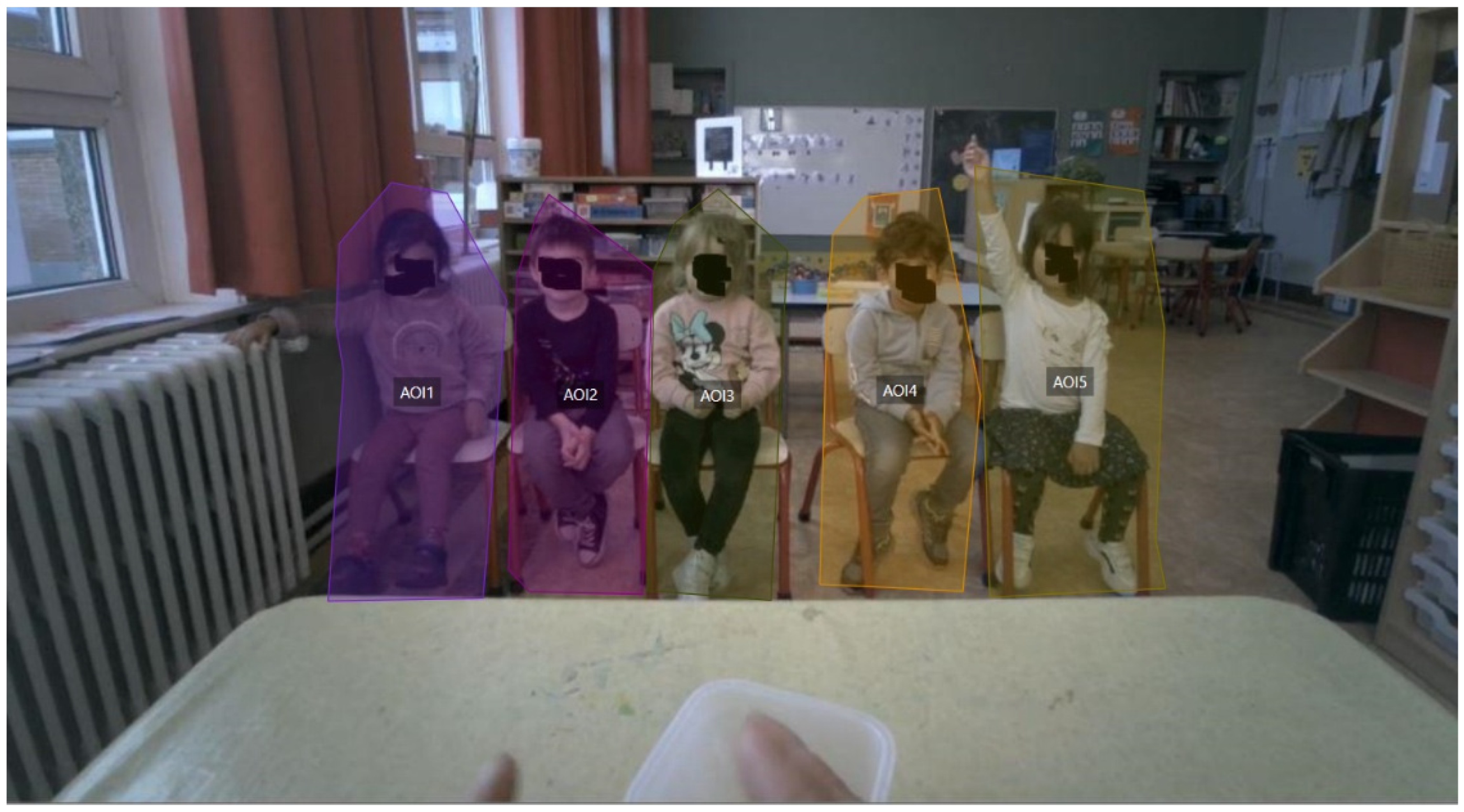
Eye tracking is a video-based research method that makes it possible to objectively register where a person’s gaze is directed, generating real-time information about visual attention processes that would otherwise be difficult to access through other means [8]. Most eye-tracking systems achieve this by using infrared light to illuminate the pupil, while small-scale infrared cameras record its movements; dedicated software then converts these recordings into estimates of gaze position within the visual field [2]. For these gaze coordinates to become analytically meaningful, researchers typically define areas of interest (AOIs): Delineated regions within the visual scene, such as a particular student, a piece of instructional material, or the blackboard, which allow gaze targets to be systematically categorised [9].
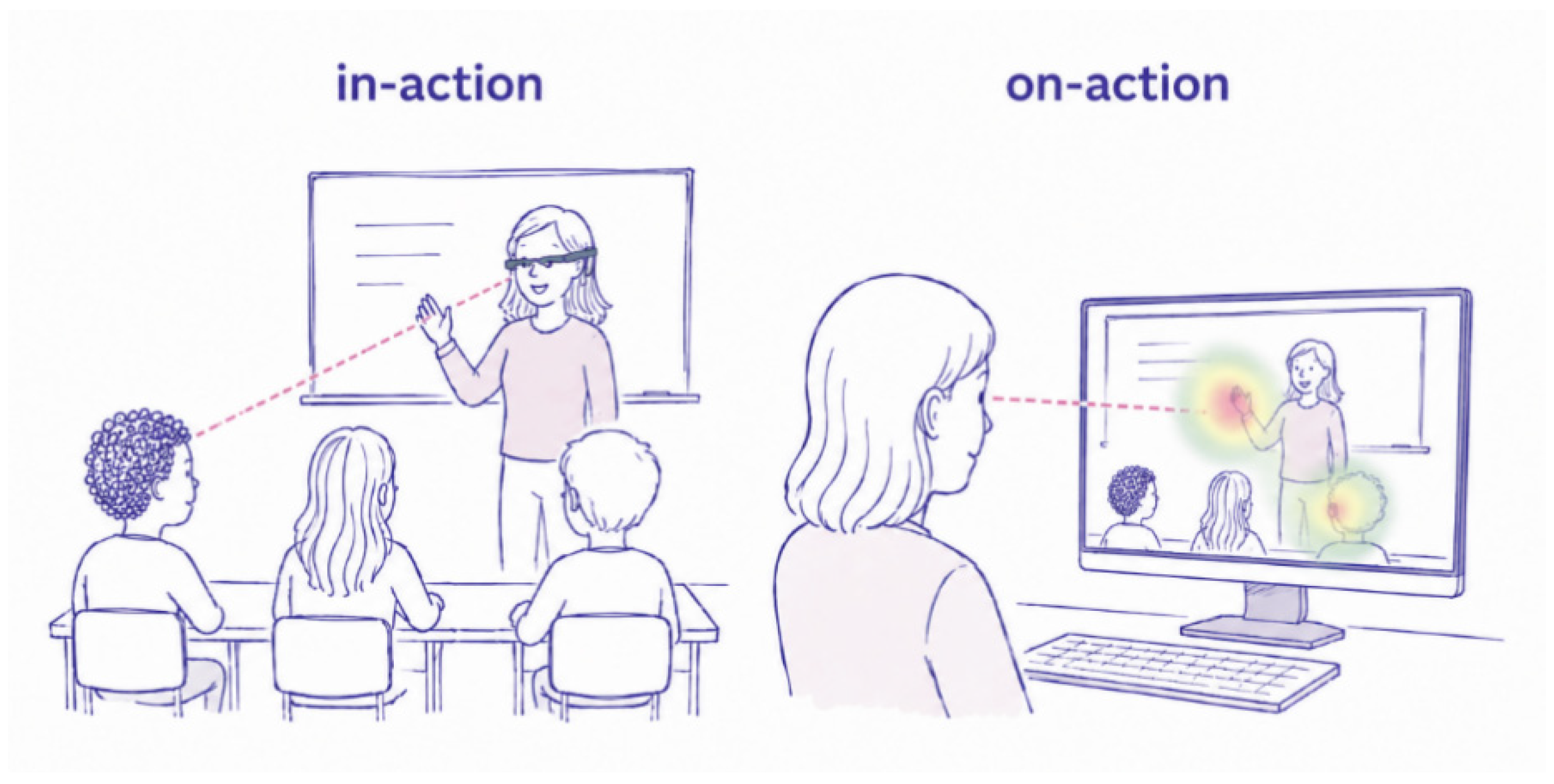
Compared to screen-based eye tracking, which has a considerably longer history within educational research, mobile eye tracking is a relatively recent addition to the field. Although the two approaches share important conceptual and technical foundations, they differ in several important respects, as illustrated in Figure 1. The terms in-action and on-action are used to refer to a methodological distinction. Screen-based eye tracking is generally situated within an on-action research paradigm, in which teachers view pre-recorded video material, whereas mobile eye tracking allows for in-action research, in which gaze is recorded while teachers are actually teaching.
Figure 1.
Visualization of different types of eye-tracking research.
One of the main strengths of screen-based eye tracking lies in the predictability of the research setting, which in turn makes large-scale sampling feasible. Gilliam and colleagues, for instance, presented a large sample of early childhood teachers with a carefully designed video in which a Black boy, a Black girl, a White boy, and a White girl were shown while playing together, and asked teachers to indicate the moment at which they expected challenging behaviour to occur. Although no challenging behaviour was actually depicted, the teachers’ eye movements within this controlled setting, in which the prompt was identical for all participants, revealed a pronounced tendency to fixate disproportionately on the Black boy, pointing towards an implicit negative bias against Black boys at a large scale [10]. Mobile eye tracking, by contrast, foregoes this level of experimental control in favour of considerably greater ecological validity, as it allows researchers to examine teachers’ gaze behaviour within their own, authentic classrooms rather than in a standardised, lab-based viewing task.
2.2. Eye Tracking Within Research on Professional Vision
When overviewing the eye-tracking literature in education, as several recent review studies have done [2,4,11], it becomes clear that teacher professional vision constitutes by far the most frequently used framework to interpret and situate eye-tracking findings. The concept was first introduced in educational contexts by Sherin (2001) to capture teachers’ ability to observe and interpret classroom situations [12]. As a situation-specific skill, professional vision shapes teachers’ professional knowledge and performance [12,13], and is considered essential for analysing classroom interactions, identifying instructionally relevant moments, and adjusting teaching accordingly [14].
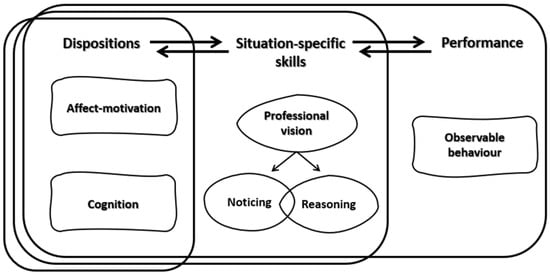
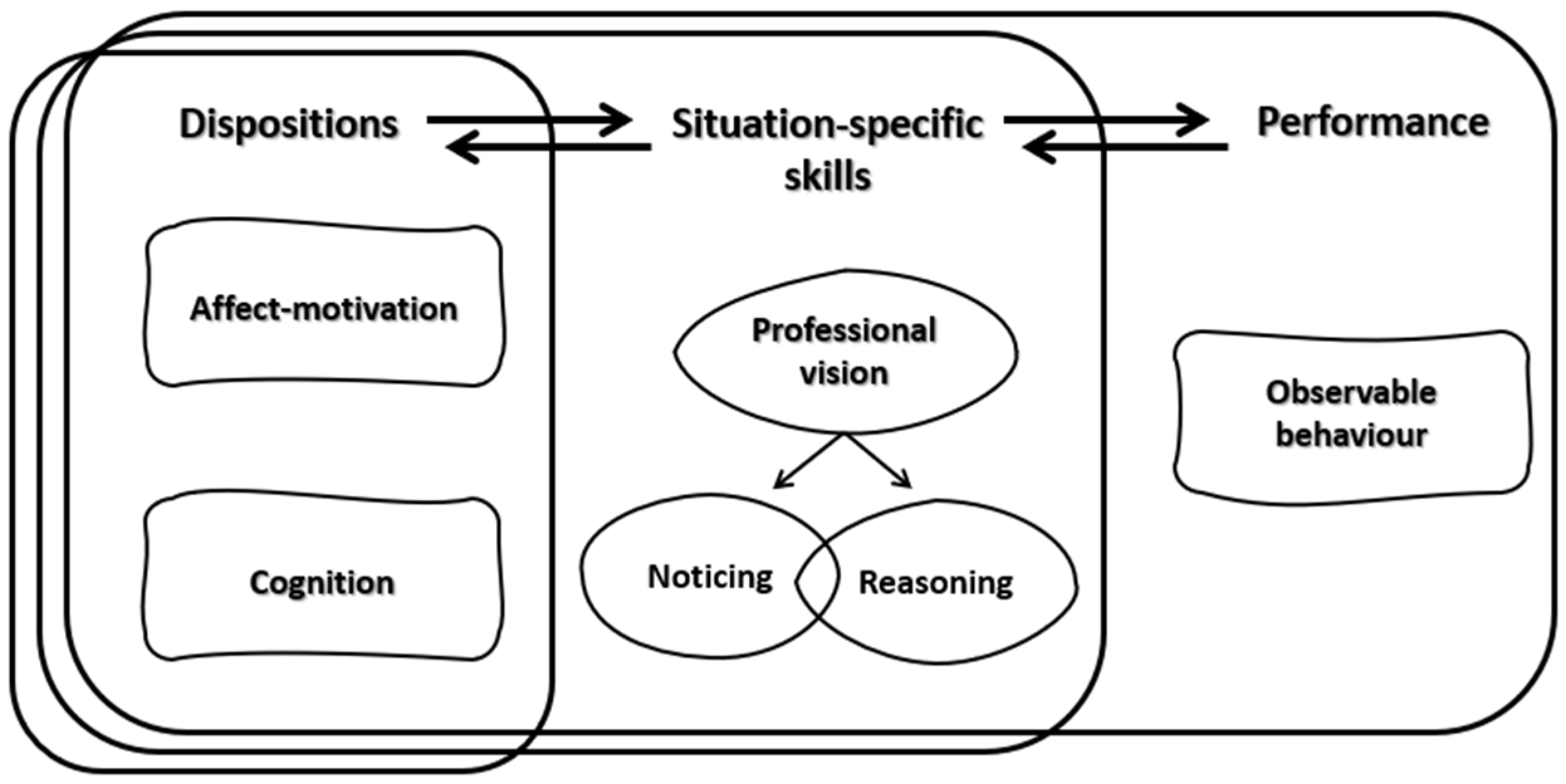
Within research on teacher competence, professional vision has been conceptualised through Blömeke and colleagues’ competence-as-a-continuum model, a framework that has gained substantial traction in educational research and has since been adapted in various ways. This study draws on the version proposed by Vanderlinde and colleagues, illustrated in Figure 2, who describe competence as a reciprocal continuum in which professional vision functions as the situation-specific skill linking teacher dispositions to teacher performance [15]. The model was originally developed to connect teachers’ dispositions, for example teachers’ knowledge and awareness of the importance of asking open questions, to their actual classroom behaviour, such as whether they indeed pose open questions when interacting with children in their classrooms. In doing so, it aims to illuminate the “black box” of processes that mediate between knowledge and action, which helps explain the instability and inconsistency often observed in teacher behaviour: a teacher who fully understands the value of language stimulating conversations may, in a given moment, still fail to realise them in practice.
Figure 2.
The competence-as-a-continuum model by Blömeke and colleagues, adapted by Vanderlinde and colleagues [13,15].
Put differently, this model assumes that before teachers can translate their motivation or knowledge into concrete action, they first need to observe the classroom and reason about what they perceive. Something, or someone, has to be seen before a teacher can respond to it, act upon it, or make an instructional decision based on it. From this perspective, eye tracking has increasingly been used to study professional vision from a literal, visual angle, measuring whether teachers “see” the opportunities that are critical in a classroom. Within mobile eye-tracking research more specifically, noticing is typically operationalised through the professional vision framework [16] using eye-tracking metrics, whereas reasoning is usually examined by inviting teachers to reflect on their own eye-tracking recordings in stimulated recall studies [6,9,17].
2.3. Research on Teacher Attention
Alongside professional vision, a substantial part of the eye-tracking literature has approached teachers’ visual behaviour through the lens of teacher attention. This has traditionally been described through a two-dimensional framework distinguishing top-down, intentional attention from bottom-up, unintentional attention [18,19]. Goldberg and colleagues (2021) applied this framework to the educational context, proposing that classroom events with salient characteristics, such as disruptive student behaviour, are likely to capture teachers’ bottom-up, unintentional attention, whereas top-down, intentional attention is guided by teachers’ own goals, for instance, monitoring a particular student’s learning process [5,20].
2.4. Challenges Within the Field of (Mobile) Eye Tracking in Education
Mobile eye-tracking research in education has so far remained largely descriptive and exploratory [11]. A recurring pitfall is that data-driven analyses, often based on relatively small samples, tend to generate a range of isolated, “nice-to-know” findings rather than cumulative theoretical insight. Early childhood teachers with more teaching experience, for example, have been found to look less frequently, and for shorter durations, at children’s faces during snack time compared to their less experienced colleagues [21]. Other studies have shown that teachers direct considerably more visual attention towards students seated in the front row and the middle section of the classroom than towards students seated elsewhere [22], while Verdel and colleagues found that teachers fixate longer on individual students during whole-class formats, such as lecture-style teaching or oral assessment, than during individual or small-group work. Although such exploratory findings offer valuable glimpses into the complex reality of teaching, shaped as it is by the interplay between teachers, children, pedagogical activities, and spatial classroom layout [23], they have thus far contributed only modestly to a cumulative understanding of effective teaching or of the role that visual attention plays in the successful execution of teacher competencies.
A related challenge concerns the frequent use of eye-tracking metrics in isolation, without triangulation with other sources of data. This makes results considerably harder to interpret than in on-action designs, where researchers control the video stimulus and therefore always have contextual information available. Isolated eye-tracking data, that is, gaze metrics collected without accompanying video or observational data on what is actually happening in the classroom, can as a result sometimes lead to seemingly contradictory findings.
The field has yet to reach a clear, shared understanding of what constitutes “good” or “proficient” gaze behaviour within in-action eye-tracking research. An example of the incongruence within the field is that after comparing expert teachers with novice teachers, Pouta and colleagues (2026) define expert noticing as comprising “fewer but longer fixations in classroom settings”, whereas Huang and colleagues (2023) conclude that expert teachers exhibit “more frequent but shorter fixations overall” [14,24].
3. Research Setup and Goals
Taken together, the literature review points to a clear shift within educational eye-tracking research, moving away from on-action, screen-based designs towards in-action research relying on mobile eye tracking. This shift, however, brings important challenges along with it. Mobile eye-tracking research remains predominantly descriptive and exploratory, and its data are often insufficiently interpreted. Building on the results of three empirical studies conducted within one large-scale mobile eye-tracking project, this study pursues the following research goals:
RG1: To reflect on distinct mobile eye-tracking studies within educational settings to define proficient gaze behaviour during teaching.
RG2: To adapt theoretical frameworks in light of the results of large-scale mobile eye-tracking studies.
RG3: To formulate methodological recommendations based on the results of empirical eye-tracking studies.
4. Materials and Methods
This conceptual study forms the concluding chapter of a large-scale empirical mobile eye-tracking project conducted in ECE in Flanders. The empirical data on which this study builds have already been published elsewhere: a quantitative eye-tracking study in Early Childhood Quarterly, a mixed-methods study incorporating interviews in Teaching and Teacher Education, and a multimodal conversation analysis study in Applied Linguistics.
4.1. Sample
Across these studies (as reported in Table 1), the analysis alternates between zooming in and out of a large dataset. In the first empirical study, statistical associations are examined to uncover broader mechanisms within a large-sample design. In other studies, fine-grained dynamics are explored by drawing on a subsample for interviews or by applying conversation analysis. These insights mutually reinforce and explain one another.
Table 1.
Methodological overview of the empirical studies.
To recruit teachers, all educational providers in Flanders were contacted via e-mail and asked to disseminate the study’s call for participation through their communication channels to ECE teachers of year 2 and 3. A total of 238 ECE teachers registered, of whom 60 withdrew before the intervention began, resulting in a final sample of 178 teachers. From this sample, 50 teachers (1 male, 49 female, aged 26–62 years, M = 37 years) were randomly selected to participate in the eye-tracking study (i.e., simple random sampling without stratification). Teaching experience ranged from 1 to 39 years (M = 16). Regarding language background, 43 spoke the language of instruction at home, 4 were multilingual (including the language of instruction), and 3 spoke a different language at home. Forty-five teachers (90%) had no migration background, while 5 (10%) had a European migration background. Additionally, 20 teachers (40%) had prior training in language-stimulating interactions.
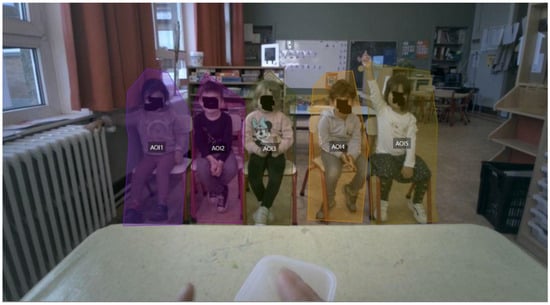
From each class, two monolingual children (whose home language matched the language of instruction) and three multilingual children (whose home language differed from the language of instruction) were randomly selected, resulting in a total sample of 250 children. The number of focal children (i.e., five) was chosen to guarantee accurate gaze mapping, as this requires all AOIs to be captured within the same reference frame by the eye-tracking glasses, as illustrated in Figure 3. Of the 250 children, 48% were boys (n = 121) and 52% were girls (n = 129), aged 45–72 months (M = 58 months, SD = 7.7). In a handful of classrooms consisting of almost solely multilingual children, four or five multilingual children were sampled instead. As a result, 157 children (63%) had a multilingual background, while 93 children (37%) came from monolingual backgrounds. All teachers and parents of the children gave written consent for their participation. Teachers and parents were informed that participation was voluntary, and that they could withdraw from the study at any time without consequences; this was communicated to the children as well, prior to the start of data collection.
Figure 3.
Experimental eye-tracking setup.
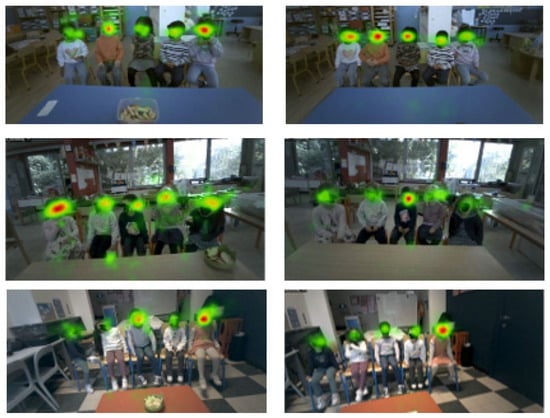
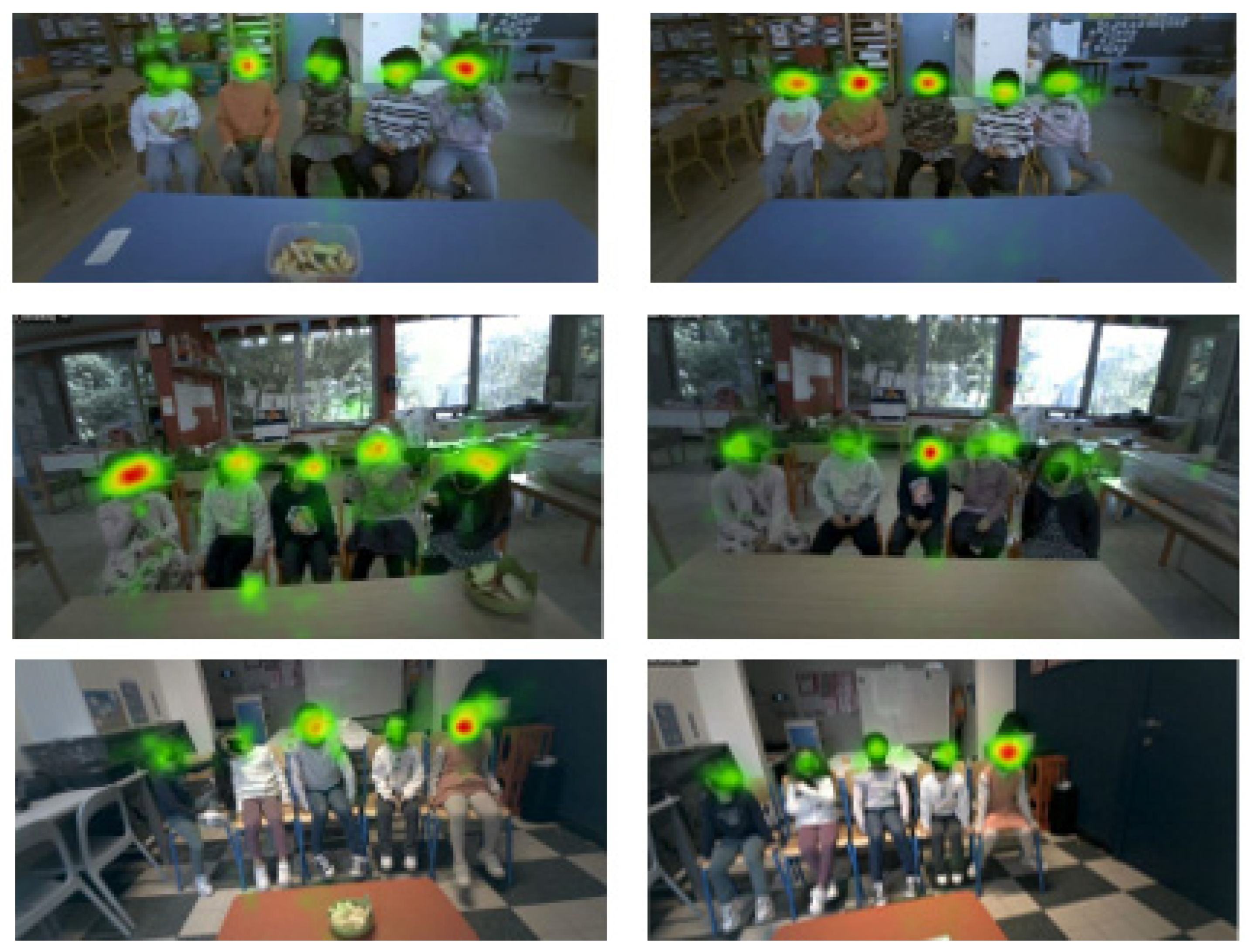
Areas of interest were defined at the level of each child’s full body, rather than the head or face alone, to accommodate the gaze-estimation error inherent to mobile eye-tracking glasses, which can compromise the precision of fixation mapping onto smaller AOIs. Importantly, all automatically mapped fixations were subsequently checked and, where necessary, manually corrected by the first author as part of the gaze-mapping procedure, ensuring that the use of a broader AOI did not compromise the precision of the reported fixation data. Despite the whole-body definition of the AOIs, fixations were predominantly concentrated on the child’s face, as illustrated in the heatmap below (Figure 4).
Figure 4.
Six examples of heatmaps from Study 1.
4.2. Data
Data were collected in September and October 2024. The main component of the data collection consisted of the experimental eye-tracking set-up in which the teacher and five children carried out two ten-minute activities in a separate classroom, with the teacher wearing Tobii Pro Glasses 3 (Tobii AB, Danderyd, Sweden) with a one-point calibration system and a data rate of 50 Hz. The eye tracker yielded a 1920 × 1080-pixel video at 25 frames per second, capturing 95° horizontally and 63° vertically.
Gaze data were subsequently processed using the I-VT fixation filter to identify fixations from the raw gaze signal. The average gaze data validity across all 100 activities was 78%, calculated as the percentage of frames per activity for which valid gaze coordinates were recorded, averaged across the 100 activities. This value exceeds thresholds commonly applied in comparable classroom-based mobile eye-tracking research, where a gaze capture rate of 60% has been considered an optimal threshold for maintaining data reliability in natural classroom contexts [25].
Eye-tracking analysis software iMotions 10.1 was used to perform gaze mapping, combined with manual mapping by the researcher. In a first step, an exact ten-minute time interval was selected from the video recording. In a second step, the most accurate possible reference image was chosen, onto which the software automatically mapped gaze, that is, translated gaze data from the dynamic video onto a static image. In a third step, this automatic mapping was manually reviewed and adjusted frame by frame, in intervals of 20 ms. In a final step, AOIs were defined on the reference image, after which iMotions calculated the desired eye-tracking metrics for each AOI.
4.2.1. Empirical Study 1
This study used mobile eye tracking to examine teachers’ in-action noticing, operationalized as their distribution of attention. In-action noticing was measured as the number of seconds that the teacher’s gaze was directed towards a given child (i.e., dwell time).
Methodology
This study examines teachers’ expectations regarding the assessment of students’ skills and proficiencies (i.e., social skills and language development), as well as their perceptions of student characteristics (i.e., socio-economic status and speaking confidence). Taken together, the study investigates four child characteristics as perceived by teachers: (1) teachers’ expectations about children’s language development, (2) teachers’ expectations about children’s social skills development, (3) teachers’ perceptions of children’s speaking confidence, and (4) teachers’ perceptions of children’s socio-economic background, alongside children’s gender and language background (i.e., monolingual vs. multilingual). A negative binomial model was chosen in which the natural logarithm of the total dwell time per activity (i.e., the sum of the dwell times of the five AOIs) was included as the offset. This model can therefore be interpreted as a rate model, modelling the ratio of dwell time a child received relative to their four peers within the same activity. The model therefore aimed to predict the ratio of dwell time, allowing us to statistically model whether, and how, teachers’ perceptions of who these children are significantly influence how much they are looked at, and therefore visually involved, in the classroom.
Empirical Results
Results indicate that teachers do not distribute their attention equally among children, suggesting that not all children have equal access to teacher-child interaction. The negative binomial models indicate that the attention children receive can be predicted based on teachers’ perceptions and expectations of child characteristics (i.e., language development, speaking confidence, socio-economic background, and language background). This study showed that linguistically vulnerable children are most often overlooked in the early childhood classroom.
4.2.2. Empirical Study 2
In the second empirical study, mobile eye-tracking recordings were used to contextualize the insights gained in the first study by adopting a broader perspective, examining both the noticing and reasoning dimensions of teachers’ situation-specific skills (i.e., professional vision) through the combination of eye-tracking data and SRIs on eye-tracking point-of-view recordings.
Methodology
Immediately following the two eye-tracking activities, a random subsample of teachers took part in SRIs to measure reasoning. By doing so, the participants’ own perspective is incorporated, thereby enhancing the trustworthiness and validity of the study. To this end, teachers were asked to watch their own 20 min video recordings, in which their gaze was visualized, made by the eye-tracking glasses immediately following data collection, and to verbalize their thoughts. The researcher paused the recording every 30 s to give participants time to speak, and asked the following two questions: “Could you elaborate on where your attention was directed during this fragment?” and “Could you explain why these aspects of the situation attracted your attention?”
The SRIs were conducted as semi-structured interviews, with these two questions fixed, while allowing the interviewer to probe further based on the teacher’s responses. Concepts and events could only be introduced into the conversation by the participant, and the researcher encouraged teachers to continue elaborating if they remained silent for more than 30 s. Interviews lasted 55 min on average (min = 26 min, max = 1 h 47 min) and were audio-recorded and transcribed verbatim. To study teachers’ reasoning, thematic analysis was performed on the SRIs. This analytical approach, involving a systematic and rigorous examination of transcribed data [26], allows the complexity of qualitative data to be organized into meaningful codes, categories, and themes. Analyses were conducted using NVivo 14, combining a deductive framework, distinguishing between describing, explaining, and predicting as levels of reasoning, with inductive thematic analysis, building on previous studies [9,16,27].
Empirical Results
Results from the interview data (n = 20) show that teachers’ reasoning primarily involves low-level reflection. In addition, teachers’ attention processes, as identified in their reflections, could be positioned along a continuum ranging from intentional, top-down attention to non-intentional, bottom-up attention. It became clear that professional vision is deeply shaped by teachers’ beliefs, expectations, and biases. Teachers’ reflections show that when they engaged in non-intentional, bottom-up gaze behaviour, this was often linked to salient features of the classroom, such as children moving vigorously or spontaneously speaking out. These reflections could be linked to linguistically proficient children, who, based on empirical study 1, are already known to receive more visual attention in the classroom; here, expectations and biases emerged as strong, non-intentional driving processes. However, when top-down reflections could be identified within teachers’ reasoning, these most often concerned linguistically vulnerable children: when teachers consciously acted from a pedagogical goal, they tended to deliberately choose less salient children. Teachers’ pedagogical goals were thus frequently directed towards the very children who, according to empirical study 1, received less visual attention. The latter processes occurred less frequently than the non-intention, bottom-up processes.
4.2.3. Empirical Study 3
In the third empirical study, mobile eye tracking was used in an attempt to explore variations in children’s involvement in interactions, through a fine-grained account of multimodal turn-taking within the ECE classroom. In doing so, an additional layer was added to the data, seeking to understand the mechanisms of inequity established in the previous studies within the complex reality of the classroom. Through extensive data triangulation using epistemic network analysis and mixed-methods multimodal conversation analysis, the conversational patterns needed to understand both the causes and consequences of equitable and inequitable opportunities for interaction were uncovered.
Methodology
To carry out the conversation analyses, a multivoiced, multimodal transcript (i.e., time sequences per speaking turn, indicating who is speaking, to whom the interaction is directed verbally, and to whom it is directed visually) was created, providing a rich dataset for analysis [28] that combines gaze and verbal data. First, based on the gaze cursor in the eye-tracking video, the visual recipient of each teacher’s speaking turn was coded (i.e., the child or children to whom the speaking turn was visually directed). Second, the sequences between children’s verbal behaviours and teachers’ verbal and gaze behaviours were examined in order to code the initiation of children’s speaking turns.
Empirical Results
Results revealed a relationship between teachers’ eye gaze and both teachers’ and children’s speaking turns, underscoring the central importance of gaze in the conversational dynamics of classrooms. Conversation analysis further shows that children’s participation is largely teacher-driven, with most child turns being non-verbally initiated by the teacher. This finding offers an important qualification to the results of empirical study 1, where effects of children’s speaking confidence were identified: this effect cannot be explained by children with high speaking confidence simply attracting the teacher’s gaze by taking the floor, since teachers were found to look at these children before they began to speak. Consequently, these findings reinforce the insights from the second study, pointing to the central role of expectations, unintentional beliefs, and biases: although teachers intentionally aim to involve all children, these unintentional processes (e.g., looking at a child from whom a teacher expects they will answer) stand in the way of doing so.
5. Resulting Insights
5.1. Reflection on the Empirical Studies
These three studies demonstrate that large-scale research is possible within in-action designs, provided that specific choices are made in the research setup to ensure comparability and to support fixation mapping (e.g., a one-on-five setting). However, an important observation is that these results can only be meaningfully interpreted when complemented by additional studies examining what unfolds moment-to-moment during these lessons, given that this cannot be controlled in advance, unlike in on-action research, where the video prompt is fixed. In our case, conversation analysis and interview studies proved necessary to adequately interpret the quantitative findings.
In an attempt to compare the present findings with, and building on, previous studies, it became apparent that a clear definition of “proficient gaze behaviour” was necessary, but lacking.
No relationship was found between static measures such as average fixation duration or fixation frequency and the extent to which children were engaged in interactions. The only measure that showed a consistent association was total dwell time. More dynamic gaze measures, such as gaze paths or being looked at during critical moments, appeared to be strongly context-dependent and could therefore not be universally classified as indicative of proficient or non-proficient teaching behaviour. This suggests that proficient noticing, that is, gaze behaviour that contributes to effective teaching, can only be meaningfully assessed in a context-specific manner (i.e., in relation to gaze behaviour that supports the conduct of interactions).
In addition, what helped in interpreting the data was adopting a hypothesis-driven approach from the outset. These three studies start from a clear paradigm and hypothesis: noticing for equity [29]. The studies examine which children are seen during language-rich moments, building on the understanding that one-on-one interaction with the teacher constitutes the most important didactic resource for language learning. Based on this understanding, we adopted equal distribution of attention as our guiding principle. It is important to note, however, that this operationalisation reflects a context-specific hypothesis rather than a universal criterion for proficient gaze behaviour. Studies conducted in other pedagogical contexts, such as classroom management [30], may operationalise different gaze-based outcomes as indicative of proficient gaze. The interview studies and multimodal conversation analysis, however, allowed us to examine equal distribution of attention not only at an aggregated level, but also to give it meaning on a moment-to-moment basis, both from the teacher’s own perspective and within the actual interactional dynamics of the classroom.
It has become clear to us that theory-driven and mixed-methods research is needed within this field. Below, we discuss the theoretical insights and methodological recommendations that follow from the three studies.
5.2. Theoretical Insights: Towards Eye-Tracking Informed Theoretical Frameworks
In this section, we propose renewed, eye-tracking-informed adaptations to theoretical frameworks that were originally developed without reference to mobile eye-tracking data. We start with the dichotomous model of teacher attention proposed by Theeuwes and colleagues (2010) and adapted by Goldberg and colleagues (2021), before turning to the competence-as-a-continuum model of Blömeke and colleagues (2015) [13,19,20].
5.2.1. An Adapted Framework on Teacher Attention
Above all else, the gaze data collected across these studies point to one recurring phenomenon: a teacher cannot ‘not’ notice. Teachers are continuously confronted with an unrelenting overload of visual stimuli, and as a result, they are constantly ‘perceiving’. However, not all of this perceiving contributes equally to good teaching. A clear example from our studies is that looking at children who frequently take the floor contributes less to an equitable, language-stimulating environment than intentionally addressing, and clearly looking at, linguistically vulnerable children, in order to involve them multimodally in the learning moment as well. This raises an increasingly pressing question within the field: is a teacher’s gaze intentional or unintentional?
Taken together, the findings of these studies indicate that noticing is not a binary phenomenon (i.e., noticed versus not noticed), but an inherently selective one [31,32]. When considered jointly, the findings of empirical studies 1–3 suggest that attention processes arising from teachers’ decisions cannot, by default, be categorized as intentional. For example, empirical study 1 found that linguistically proficient children received disproportionate teacher attention, and that this pattern was largely teacher-initiated (empirical study 3); yet teachers’ reasoning revealed that this was not intentional (empirical study 2). These combined findings point to a grey zone between intentional and unintentional action, in which teachers’ expectations, beliefs, and biases exert a substantial influence on classroom attention processes.
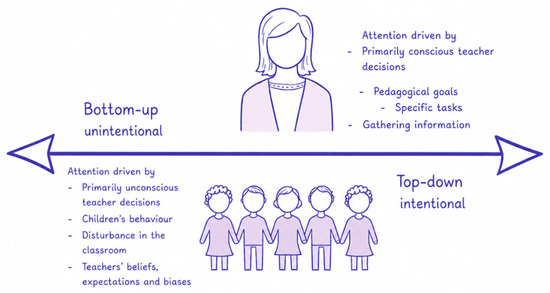
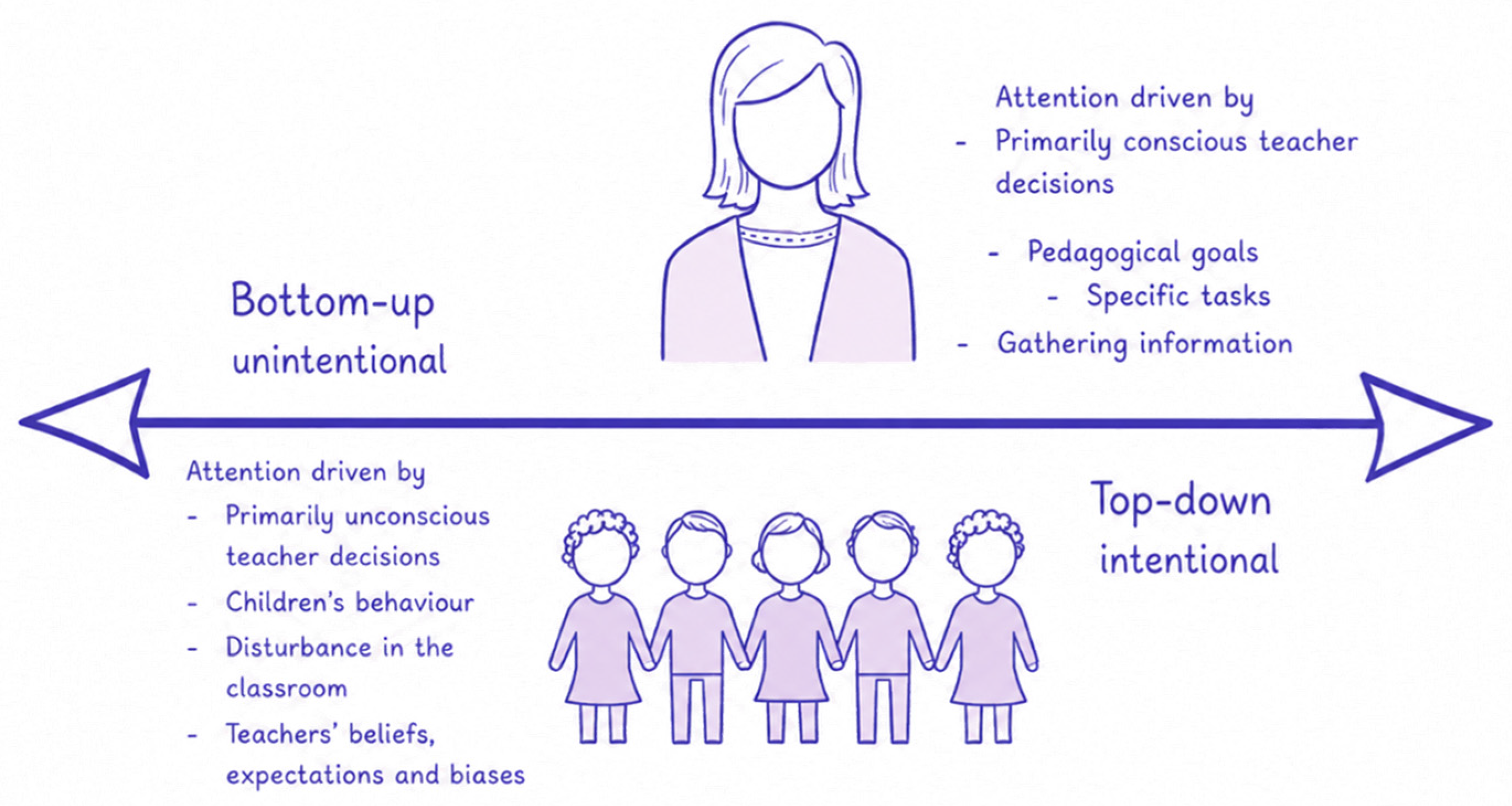
We therefore propose two changes to the model presented by Theeuwes and colleagues and later Goldberg and colleagues [19,20]. As shown in Figure 5, first, we position top-down and bottom-up attention processes, as described by Theeuwes and colleagues [19], on a continuum, answering the critique that a dichotomous model cannot account for all processes. Second, we add “teachers’ expectations, beliefs and biases” to the operationalization of Goldberg’s framework within educational practice.
Figure 5.
Visualization of the proposed definition of teacher attention as inspired by Goldberg and colleagues.
A contextualised theoretical model in which attention is placed along a continuum can help future research interpret teachers’ gaze behaviour in a more nuanced way.
5.2.2. An Adapted Framework on In-Action Professional Vision Within the Competence-As-a-Continuum Model
Both the interview data in empirical study 2 and the conversation analyses in empirical study 3 reveal that teachers indeed intentionally create, or aim to create, opportunities for linguistically vulnerable children. Yet the moments in which more unintentional mechanisms shape classroom reality seem to dominate. This implies that across many Flemish classrooms, proficient, enthusiastic, and vocal children receive, or claim, a disproportionate share of interactional space and that this largely resides within covert processes embedded in the eyes of the teachers.
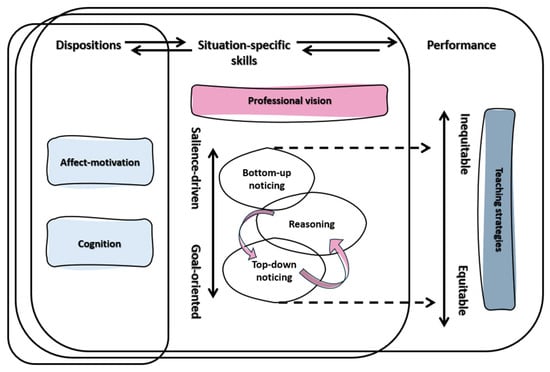
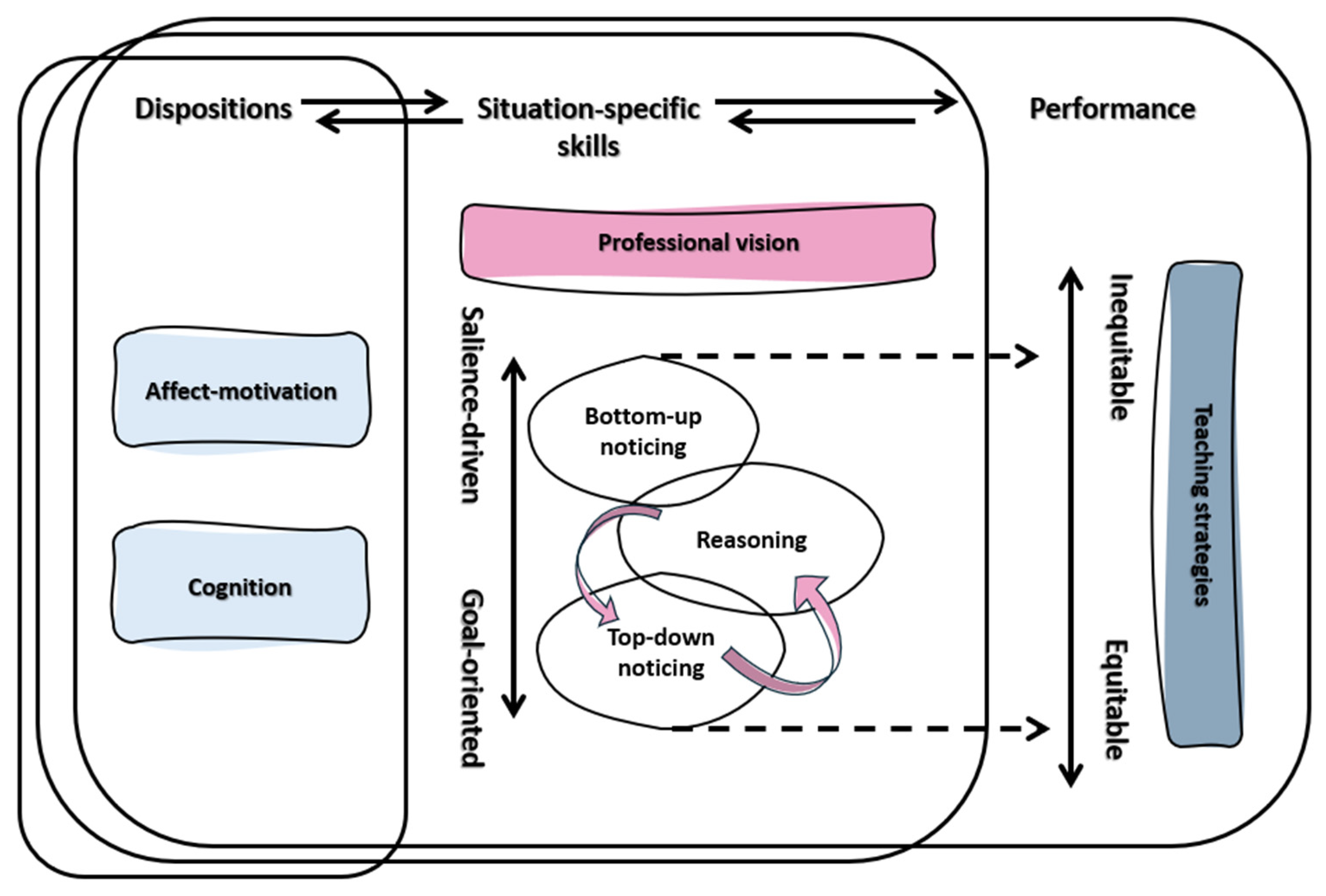
In order to strengthen the theoretical foundation for the decisive role of covert processes at the level of teachers’ professional vision, we propose to incorporate a multidimensional operationalization of noticing, situated on a continuum from bottom-up unintentional to top-down intentional [20], into the competence-as-a-continuum model [13,20]. As empirical studies 2 and 3 illustrate, within the context of language-stimulating competencies, bottom-up noticing can be understood as salience-driven, whereas top-down noticing can be understood as goal-oriented. In doing so, we build on Gegenfurtner (2025), who describes an evolution from salience-driven, bottom-up noticing towards knowledge-based noticing, in which selecting and ignoring visual information, based on knowledge stored in long-term working memory, represent necessary preceding steps [33]. Synthesizing across these three studies, we interpret top-down noticing in the context of equitable language stimulation not solely a matter of selecting and ignoring within the broader stream of visual input. Rather, we argue that it entails deliberately scanning for the quiet zones of the classroom, attending to withdrawn or less visible children [33]. We believe top-down noticing should entail an active role in drawing those children from the periphery of classroom interaction towards its centre.
As visualized in Figure 6, we hypothesize that when a teacher’s attention is governed by salient features of the classroom environment and remains limited to bottom-up noticing, this may predominantly translate into inequitable performance, in which proficient children, those able to create and seize interactional opportunities independently, are enabled to claim a disproportionate share of teacher interaction. Empirical study 2 provides indications that when attention processes are accompanied by reasoning (i.e., deep-level reflection), teachers’ attention may become more intentional and goal-oriented. This shift towards top-down noticing appears to be associated with more equitable performance, in which children at risk of being positioned as bystanders in classroom conversation are more actively drawn into interaction. In this sense, noticing and reasoning can mutually reinforce one another in a cyclical process (see Figure 6): unintentional, bottom-up noticing triggers reasoning, prompting questions such as ‘what am I seeing’, ‘why’, and ‘what am I not seeing’, which in turn initiates intentional, top-down noticing, prompting questions such as ‘how can I include the child I previously overlooked’. This intentional noticing then initiates a renewed cycle of noticing and reasoning that continuously shapes classroom practice.
Figure 6.
Visualization of the proposed adaptations to the competence-as-a-continuum model inspired by Blömeke and colleagues.
In Box 1, we illustrate how the concepts of bottom-up and top-down noticing manifest in a classroom setting. The data are drawn from multimodal conversation analysis and are complemented by gaze scanpaths.
Box 1. Example of an interaction–mixed-methods, multimodal insights.
To illustrate how eye-tracking metrics can be meaningfully interpreted in light of complementary data sources, we present a single, illustrative example that integrates gaze data with the stimulated recall interviews conducted as part of empirical study 2 and the multimodal conversation analysis developed in empirical study 3. By combining these three data sources, we are able to reconstruct not only what occurred in the classroom and how the teacher’s gaze moved across children, but also what the teacher was thinking at each moment and how this thinking translated into observable gaze behaviour. The figure in the Box 1 presents the gaze scanpath of a single classroom interaction lasting fourteen seconds, during which several instances of both top-down and bottom-up noticing can be observed within a remarkably short timeframe. The bottom-up and top-down labels displayed in the figure were derived from the teacher’s own reflections during the stimulated recall interview, rather than inferred from the gaze data alone. This particular excerpt was deliberately selected because it captures several interactional dynamics that were observed repeatedly in the conversation-analytic findings of empirical study 3.
Empirical study 3 demonstrated, among other things, that teachers tend to rely on a fixed reference point at which their gaze consistently begins and ends, and that classroom interactions are frequently teacher-initiated rather than child-initiated: children tend to begin speaking only after the teacher has already looked at them. This suggests that it is not linguistically proficient children who initiate turn-taking and thereby draw the teacher’s attention; rather, it is the teacher’s expectation that a particular child will take the floor that drives her gaze behaviour, which in turn shapes the subsequent interactional dynamics.
In the fixation data displayed below, children are labelled Child 1 through Child 5 according to the number of teacher fixations they received, and are presented in the order in which they were seated in the classroom, with the child positioned highest in the figure seated furthest to the left.
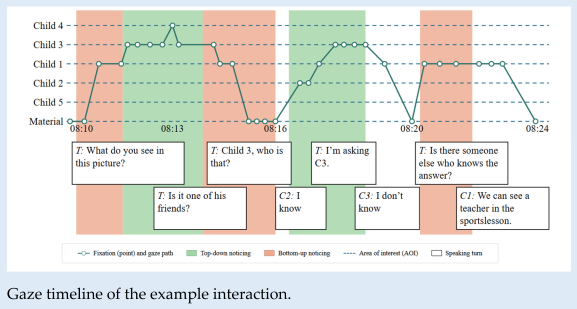
In the present example, illustrated the figure in the Box 1, the teacher’s gaze repeatedly returns to Child 1 (at 08:10, 08:16, and again from 08:21 onward), functioning as a recurrent reference point each time the teacher’s gaze departs from or returns to the instructional material. Stimulated recall data indicate that this reference-point behaviour was not intentional: the teacher was unaware that she consistently anchored her gaze on this particular child. This pattern of attention can therefore be characterised as predominantly bottom-up.
Alongside this reference-point behaviour, the excerpt also contains clearly intentional moments. When the teacher prompts Child 3 to respond, explicitly using the child’s name, this is reflected in a top-down shift of gaze toward Child 3. However, the teacher’s attention is momentarily diverted by Child 2, who begins to move and subsequently takes the floor, illustrating a bottom-up capture of attention. The teacher then recovers and, after explicitly signalling to the whole class that she is awaiting Child 3′s answer, intentionally redirects her gaze toward Child 3 again, a clear instance of top-down noticing. When Child 3 indicates that she does not know the answer, the teacher intends to give all children an equal opportunity to respond; her gaze behaviour, however, reveals that she once again expects Child 1 to know the answer, and she looks at Child 1 before this child begins to speak. During the stimulated recall interview, the teacher explained that she felt pressure to keep the lesson moving forward, noting that ‘if a child gives an answer, I can go on and the others can learn from it’, which points to an unintentional, teacher-driven orientation toward Child 1, best characterised as bottom-up noticing.
This example illustrates that top-down and bottom-up noticing are not stable, teacher-inherent traits, but that the two dimensions of the attention continuum (as illustrated in Figure 5) alternate within a single interaction lasting no more than fourteen seconds. Moreover, this example demonstrates that in-the-moment conversational dynamics in the classroom are closely intertwined with teachers’ expectations and beliefs, and that these, in turn, shape the interactional opportunities afforded to individual children. Attention processes should therefore consistently be understood as arising from a bidirectional and dynamic relationship between classroom-initiated, bottom-up dynamics and teacher-initiated, top-down processes, with an important role reserved for the grey zone in between: unintentional, teacher-initiated processes driven by expectations or beliefs.
Our studies jointly indicate that this iterative process between noticing and reasoning moves teachers from bottom-up noticing towards more intentional, top-down noticing. We hypothesize that this higher-order, situation-specific skill is able to make the difference between a general execution of teacher competencies and an equitable execution of teacher competencies, in which every child remains in sight.
This theoretical model is innovative in that it interprets noticing multidimensionally, moving beyond an exclusive focus on the teacher to also account for the visual stimulus itself, that is, what is being seen, overlooked, or ignored. As such, this model constitutes an adaptation of the competence-as-a-continuum model, offering a valuable framework for future eye-tracking research seeking to interpret moment-to-moment, in-action results. In this article, the model is applied to the specific research context of equitable language stimulation in the early childhood classroom, but it is also serves as an invitation for future research to study the layered continuum from salience-driven, bottom-up noticing to goal-oriented, top-down noticing, in a cycle with reasoning, in other pedagogical contexts as well.
5.3. Methodological Insights: Towards In-Action, Multimodal, Mixed-Methods Research
This part of the discussion moves from theoretical to methodological insights. Our studies quickly made clear that combining multiple data sources is indispensable within in-action eye-tracking research.
When eye-tracking software is used to analyse gaze data, researchers obtain metrics such as fixation duration (i.e., the length of time gaze remains on a particular AOI), overall attention distribution, or gaze entropy (i.e., a measure of the randomness versus predictability of fixation patterns, with lower entropy indicating more consistent, predictable gaze behaviour and higher entropy indicating more dispersed, less predictable gaze behaviour). As can be seen in previous research, these metrics alone say little about teachers’ contextualised professional vision, let alone about their actual teaching effectiveness. Based on our empirical work, we argue that answering such questions in-action requires the combination of multiple data sources. In screen-based research, hypothesis-driven designs are more readily achievable, as researchers can control the visual stimulus and identify critical events in advance. The authentic and complex nature of mobile eye-tracking settings renders this kind of design considerably more difficult to achieve [14].
As a result, quantitative findings obtained through mobile eye tracking cannot be explained on the basis of gaze data alone. To address these challenges, that is, the need for hypothesis-driven work that gives contextualised meaning to eye-tracking data, we recommend a multimodal, mixed-methods approach to data triangulation for future research. Because of the ecologically valid setting, we have access not only to gaze behaviour, but also to teachers’ actual classroom actions, which is not the case when teachers view a video recording within a screen-based, laboratory setting. Conversation analysis and interview data, in turn, allowed us to open up the black box of internal teacher processes and the dynamics between teachers and children.
Multimodality, as used here, refers to the integration of multiple data sources, encompassing both verbal and non-verbal information, which together enable a richer and more comprehensive representation of the inherent complexity of classroom reality. In other words, it entails multi-source data integration. As Hannula and colleagues (2022) argue, learning itself should be understood as a social, multimodal practice, and it is precisely multimodality that allows researchers to zoom in on the situational, micro-level interactions through which learning is constructed [34]. Our empirical studies show that eye-tracking metrics alone were insufficient to open the black box of classroom dynamics underlying inequity. It was only by examining gaze data moment-to-moment, alongside spoken and embodied data, that we were able to move beyond broad patterns, such as more or less attention, towards richer, more nuanced explanations of how unequal involvement actually comes about.
Mixed-methods research, as used here, refers to the simultaneous or sequential application of multiple analytical approaches to a single data source, enabling a more nuanced understanding of the phenomenon under study. In other words, it entails methodological integration of different types of analyses.
We believe that it is precisely at the intersection of multiple methodologies and data sources that the answers to our methodological challenges are to be found [35]. It was only by looking across the three empirical studies jointly that we were able to uncover the true complexity of teachers’ in-action noticing. Strong precedents for this kind of triangulation already exist in the literature, such as combining eye tracking with think-aloud data [9,36]. We argue that such triangulated approaches represent the most promising avenue for future research in this field, since making well-founded claims about what constitutes proficient in-action noticing, first requires understanding what actually unfolds in the classroom and what role gaze plays within the learning process. Triangulation with think-aloud data offers a promising route towards this end. With this article, however, we argue that such triangulation should not remain limited in scope: combining quantitative noticing data with interview data capturing teachers’ reasoning, and further enriching this with assessments of classroom reality through network approaches or conversation analysis, proved to be the most effective way of capturing the intentionality underlying in-action noticing behaviour.
6. Implications for Future Research
As outlined above, we recommend that future researchers adopt multimodal, mixed-methods approaches. In addition, we would like to put forward two further recommendations for future in-action eye-tracking research.
First, it is important that claims about “good” or “proficient” gaze behaviour always be considered in relation to context and pedagogical goals. In this study, we equate equal distribution of attention with good gaze behaviour. However, we argue that this holds true only within the specific context of ECE and language stimulation, given that every child needs to be involved in conversations in order to learn language. Other pedagogical settings or goals may call for different, contextualised definitions of proficient or good gaze behaviour. Therefore, it is essential to interpret data in a contextualized manner and to be transparent about contextual differences in pedagogical goals or settings when comparing or building on one another’s eye-tracking studies within the field.
Second, an important avenue for future research concerns software development. The main limitation of our research was the relatively static one-on-five setting, in which children remained seated so that fixation mapping could be carried out partially automatically. Although suitable for research purposes, this setting does not reflect the reality of educational practice, and particularly not of early childhood settings. Software developments, including facial recognition and the tracking of moving areas of interest, are likely to substantially increase the ecological validity of large-scale, in-action studies in the future.
7. Limitations
The in-action design underlying the three studies discussed here merits closer consideration within the broader spectrum of ecological validity. Compared to screen-based, on-action paradigms, recording gaze during live classroom activity constitutes a substantial gain in authenticity. At the same time, the present setup does not capture unrestricted, whole-class teaching: five children were purposefully selected and seated together with the teacher in a separate room, and each activity was bounded to a ten-minute window. These parameters were not incidental, but necessary to keep gaze mapping technically feasible, since accurately assigning fixations to individual children requires all areas of interest to remain within a stable reference frame throughout the recording. This trade-off between technical feasibility and classroom realism should be borne in mind throughout interpretation of this article, particularly when the reported findings are used to draw broader claims about teachers’ attention in authentic classroom settings. As mobile eye-tracking technology continues to evolve, future research will increasingly be able to examine natural, full-classroom settings without this constraint. Next, it should be emphasized that the theoretical models presented in Section 5.2.1 and Section 5.2.2 are proposed here as conceptual interpretations, or working frameworks, rather than as empirically validated models. Constructs such as intentionality, or the distinction between top-down and bottom-up noticing, were not measured one-to-one through eye tracking, but were inferred by triangulating multiple data sources, namely stimulated recall accounts and the alignment between gaze behaviour and interactional events.
8. Conclusions
This study set out to reflect on three empirical eye-tracking studies conducted within a single, large-scale mobile eye-tracking dataset in ECE. Together, these studies show that eye-tracking data can be mobilised in a variety of ways to answer different kinds of research questions, ranging from statistical modelling of attention distribution, to SRIs capturing teachers’ reasoning, to multimodal conversation analysis of classroom interaction. More importantly, this study demonstrates that using teachers’ gaze data to open the black box of what happens inside teachers’ minds, in order to understand the complex reality of the classroom, only becomes possible when multiple methods and data sources are combined.
Descriptive, exploratory eye-tracking research that remains limited to eye-tracking metrics, without interpreting these in relation to teachers’ behaviour or classroom events, will not move the field substantially forward. Combining different data sources with eye-tracking technology, alongside different methodological approaches, is what will ultimately allow researchers to determine whether eye-tracking findings can be attributed to, for instance, intentional noticing of students or events that contribute to equity in the classroom, or rather to unintentional noticing that favours the most salient, or loudest, child in the room, steering classroom dynamics towards inequity instead.
Building on the three empirical studies discussed in this paper, we proposed an adapted, continuum-based framework of teacher attention, and an eye-tracking-informed extension of the competence-as-a-continuum model of professional vision, both of which foreground the central role of teachers’ intentions as well as expectations. We further argued for a shift towards in-action, multimodal, mixed-methods, theory-driven eye-tracking research, capable of interpreting gaze behaviour in a contextualised and multidimensional way. We hope that these theoretical and methodological reflections offer a constructive starting point for the next generation of eye-tracking research in education, one in which technological advances and cross-methodological triangulation jointly help to shape a field capable of moving beyond isolated, descriptive findings towards cumulative, theory-driven knowledge.
Author Contributions
Conceptualization, T.D.; Methodology, T.D.; Software, T.D.; Validation, T.D.; Formal analysis, T.D.; Investigation, T.D.; Data curation, T.D.; Writing—original draft, T.D.; Writing—review & editing, T.D., R.V., P.V.A. and M.M.P.; Visualization, T.D. All authors have read and agreed to the published version of the manuscript.
Funding
This work is part of the TACOS-project that was supported by the FWO [S007223N].
Institutional Review Board Statement
This research was approved on 26 May 2023 by the Ethics Committee of the Faculty of Arts and Philosophy at Ghent University under approval number 2023-22.
Informed Consent Statement
Informed consent was obtained from all subjects involved in the study.
Data Availability Statement
The datasets presented in this article are available upon request. The analyses the corresponding results are fully documented in R code (i.e., a Quarto file) and an easy-to-read PDF, both available on the Open Science Framework: https://doi.org/10.17605/OSF.IO/T763S. Requests to access the datasets should be directed to the corresponding author.
Acknowledgments
We would like to thank Dries Debeer for his statistical advice. We are also grateful to Maarten Ravier, Liese Konings, Amandine Tsekouras, Flore Bollaert, Ymke Tallieu, and Sarah Van Liedekerke for their assistance with the data collection.
Conflicts of Interest
The authors declare no conflicts of interest.
Abbreviations
The following abbreviations are used in this manuscript:
| ECE | Early childhood education |
| AOI | Area of interest |
| SRI | Stimulated recall interview |
References
- Chaudhuri, S.; Muhonen, H.; Pakarinen, E.; Lerkkanen, M.-K. Teachers’ Focus of Attention in First-Grade Classrooms: Exploring Teachers Experiencing Less and More Stress Using Mobile Eye-Tracking. Scand. J. Educ. Res. 2022, 66, 1076–1092. [Google Scholar] [CrossRef] [Scilit]
- Witt, J.; Schorer, J.; Loffing, F.; Roden, I. Eye-Tracking Research on Teachers’ Professional Vision: A Scoping Review. Teach. Teach. Educ. 2024, 144, 104568. [Google Scholar] [CrossRef] [Scilit]
- Grub, A.-S.; Selisko, T.J.; Lewalter, D.; Biermann, A. A Quasi-Experimental Eye-Tracking Study Investigating the Relationship between Professional Vision and the Dispositions for Inclusive Teaching. Front. Educ. 2025, 10, 1635351. [Google Scholar] [CrossRef] [Scilit]
- Keskin, Ö.; Seidel, T.; Stürmer, K.; Gegenfurtner, A. Eye-Tracking Research on Teacher Professional Vision: A Meta-Analytic Review. Educ. Res. Rev. 2024, 42, 100586. [Google Scholar] [CrossRef] [Scilit]
- Duthois, T. The Role of Teacher Gaze in Speaking Turns during Interactive Book Reading: A Multiple Case Mobile-Eye-Tracking Study. Appl. Linguist. 2026, amag051. [Google Scholar] [CrossRef] [Scilit]
- Duthois, T.; Montero-Perez, M.; Van Avermaet, P.; Vanderlinde, R. Early Childhood Education Teachers’ Professional Vision of Language-Stimulating Interactions: A Mixed-Method Mobile Eye-Tracking Study. Teach. Teach. Educ. 2025, 166, 105199. [Google Scholar] [CrossRef] [Scilit]
- Duthois, T.; Vanderlinde, R.; Van Avermaet, P.; Montero Perez, M. What Children Get Overlooked? The Distribution of Teachers’ Attention in Early Childhood Education: A Mobile Eye-Tracking Study. Early Child. Res. Q. 2026, 75, 109–119. [Google Scholar] [CrossRef] [Scilit]
- Duvivier, V.; Derobertmasure, A.; Demeuse, M. Eye Tracking in a Teaching Context: Comparative Study of the Professional Vision of University Supervisor Trainers and Pre-Service Teachers in Initial Training for Secondary Education in French-Speaking Belgium. Front. Educ. 2024, 9, 1326752. [Google Scholar] [CrossRef] [Scilit]
- Muhonen, H.; Pakarinen, E.; Lerkkanen, M.-K. Professional Vision in the Classroom: Teachers’ Knowledge-Based Reasoning Explaining Their Visual Focus of Attention to Students. Teach. Teach. Educ. 2023, 121, 103907. [Google Scholar] [CrossRef] [Scilit]
- Gilliam, W.S.; Maupin, A.N.; Reyes, C.R.; Accavitti, M.; Shic, F. Do Early Educators’ Implicit Biases Regarding Sex and Race Relate to Behavior Expectations and Recommendations of Preschool Expulsions and Suspensions? Yale Univ. Child Study Cent. 2016, 9, 1–18. [Google Scholar]
- Mendes, R.; Pereira, M.; Nobre, P.; Dias, G. Analysis of Teachers’ Visual Behaviour in Classes: A Systematic Review. Eur. J. Investig. Health Psychol. Educ. 2025, 15, 54. [Google Scholar] [CrossRef] [Scilit] [PubMed]
- Sherin, M. Developing a Professional Vision of Classroom Events. In Beyond Classical Pedagogy; Taylor and Francis: Abingdon, UK, 2001. [Google Scholar]
- Blömeke, S.; Gustafsson, J.-E.; Shavelson, R.J. Beyond Dichotomies: Competence Viewed as a Continuum. Z. Psychol. 2015, 223, 3–13. [Google Scholar] [CrossRef] [Scilit]
- Pouta, M.; Lehtinen, E.; Palonen, T. Student Teachers’ and Experienced Teachers’ Situation Awareness and Professional Vision in Real-Life Classrooms. Teach. Teach. Educ. 2026, 175, 105428. [Google Scholar] [CrossRef] [Scilit]
- Vanderlinde, R. Competentiegericht opleiden en beoordelen in de lerarenopleiding: Naar een nieuw conceptueel model. Tijdschr. Lerarenopleiders 2020, 41, 238–252. [Google Scholar]
- Sherin, M.; van Es, E.A. Effects of Video Club Participation on Teachers’ Professional Vision. J. Teach. Educ. 2009, 60, 20–37. [Google Scholar] [CrossRef] [Scilit]
- Heinonen, N.; Katajavuori, N.; Södervik, I. University Teachers’ Professional Vision with Respect to Their Conceptions of Teaching and Learning: Findings from an Eye-Tracking Study. Front. Educ. 2023, 8, 1232273. [Google Scholar] [CrossRef] [Scilit]
- Schütz, A.C. Eye Movements and Perception: A Selective Review. J. Vis. 2011, 11, 9. [Google Scholar] [CrossRef] [Scilit] [PubMed]
- Theeuwes, J. Top–down and Bottom–up Control of Visual Selection. Acta Psychol. 2010, 135, 77–99. [Google Scholar] [CrossRef] [Scilit] [PubMed]
- Goldberg, P.; Schwerter, J.; Seidel, T.; Müller, K.; Stürmer, K. How Does Learners’ Behavior Attract Preservice Teachers’ Attention during Teaching? Teach. Teach. Educ. 2021, 97, 103213. [Google Scholar] [CrossRef] [Scilit]
- Ishibashi, M.; Takahashi, M.; Nozawa, S. Relationship between ECEC (Early Childhood Education and Care) staff’s years of professional experience and gaze patterns: A study using wearable eye trackers. Cogn. Stud. 2020, 27, 540–553. [Google Scholar] [CrossRef]
- Smidekova, Z.; Janik, M.; Minarikova, E.; Holmqvist, K. Teachers’ Gaze over Space and Time in a Real-World Classroom. J. Eye Mov. Res. 2020, 13, 1–20. [Google Scholar] [CrossRef] [Scilit] [PubMed]
- Verdel, H.; Brix, F.; Dinet, J. Teachers’ Gaze According to Classroom Layouts: An Eye-Tracker Study. Learn. Environ. Res. 2026, 29, 11. [Google Scholar] [CrossRef] [Scilit]
- Huang, Y.; Miller, K.F.; Cortina, K.S.; Richter, D. Teachers’ Professional Vision in Action: Comparing Expert and Novice Teacher’s Real-Life Eye Movements in the Classroom. Z. Pädagog. Psychol. 2023, 37, 122–139. [Google Scholar] [CrossRef] [Scilit]
- Villalta-Paucar, M.; Rebolledo-Etchepare, J.V. Visual Attention in Real Classrooms: A Study with Eye-Tracking in Urban and Rural Schools of Chile. JEMR 2026, 19, 32. [Google Scholar] [CrossRef] [Scilit] [PubMed]
- Howitt, D. Introduction to Qualitative Research Methods in Psychology; Pearson: London, UK, 2019; Volume 4. [Google Scholar]
- Walsh, M.; Matsumura, L.C.; Zook-Howell, D.; Correnti, R.; DiPrima Bickel, D. Video-Based Literacy Coaching to Develop Teachers’ Professional Vision for Dialogic Classroom Text Discussions. Teach. Teach. Educ. 2020, 89, 103001. [Google Scholar] [CrossRef] [Scilit]
- Heyd-Metzuyanim, E.; Haataja, E.S.H.; Hannula, M.S.; Garcia Moreno-Esteva, E. What Can Eye-Tracking, Combined with Discourse Analysis, Teach Us about the Ineffectiveness of a Group of Students Solving a Geometric Problem? Instr. Sci. 2023, 51, 363–396. [Google Scholar] [CrossRef] [Scilit]
- Patterson Williams, A.D.; Higgs, J.M.; Athanases, S.Z. Noticing for Equity to Sustain Multilingual Literacies. J. Adolesc. Adult Lit. 2020, 63, 457–461. [Google Scholar] [CrossRef] [Scilit]
- Ebright-Jones, B.D.; Cortina, K.S.; Mahler, N.; Miller, K.F. Racialized Reprimands: A Mobile Eye-Tracking Study on Teachers’ Responses to Students’ Norm-Violating Behaviors. Contemp. Educ. Psychol. 2025, 80, 102351. [Google Scholar] [CrossRef] [Scilit]
- Gegenfurtner, A.; Stahnke, R. Advancing Research on Teacher Professional Vision and Teacher Noticing. In Teacher Professional Vision Volume 1: Theoretical and Methodological Advances; Routledge: London, UK, 2025; pp. 3–10. [Google Scholar]
- Van Es, E.A.; Sherin, M.G. Mathematics Teachers’ “Learning to Notice” in the Context of a Video Club. Teach. Teach. Educ. 2008, 24, 244–276. [Google Scholar] [CrossRef] [Scilit]
- Gegenfurtner, A. Cognitive Theory of Visual Expertise. In Teacher Professional Vision: Volume 1; Routledge: London, UK, 2025. [Google Scholar]
- Hannula, M.S.; Haataja, E.; Löfström, E.; Garcia Moreno-Esteva, E.; Salminen-Saari, J.F.A.; Laine, A. Advancing Video Research Methodology to Capture the Processes of Social Interaction and Multimodality. ZDM Math. Educ. 2022, 54, 433–443. [Google Scholar] [CrossRef] [Scilit]
- Gold, B.; Pfirrmann, C.; Holodynski, M. Promoting Professional Vision of Classroom Management Through Different Analytic Perspectives in Video-Based Learning Environments. J. Teach. Educ. 2021, 72, 431–447. [Google Scholar] [CrossRef] [Scilit]
- Haataja, E.S.H.; Södervik, I. Ecological Validity of Retrospective Reflections in Eye Tracking. Learn. Instr. 2025, 98, 102147. [Google Scholar] [CrossRef] [Scilit]

Disclaimer/Publisher’s Note: The statements, opinions and data contained in all publications are solely those of the individual author(s) and contributor(s) and not of MDPI and/or the editor(s). MDPI and/or the editor(s) disclaim responsibility for any injury to people or property resulting from any ideas, methods, instructions or products referred to in the content. |
© 2026 by the authors. Licensee MDPI, Basel, Switzerland. This article is an open access article distributed under the terms and conditions of the Creative Commons Attribution (CC BY) license.