Prognostic Significance of Lung Immune Prognostic Index at Diagnosis in Stage III Non-Small Cell Lung Cancer


Department of Medical Oncology, Ankara Etlik City Hospital, 06170 Ankara, Türkiye
*
Author to whom correspondence should be addressed.
Curr. Oncol. 2026, 33(1), 43; https://doi.org/10.3390/curroncol33010043
Submission received: 3 December 2025
/
Revised: 25 December 2025
/
Accepted: 10 January 2026
/
Published: 13 January 2026
(This article belongs to the Section Thoracic Oncology)
Simple Summary
Patients with stage III non-small cell lung cancer receive different combinations of surgery, chemotherapy, and radiotherapy, yet their outcomes vary widely. Identifying simple markers that help predict prognosis remains an important clinical need. The Lung Immune Prognostic Index is based on routine blood tests that reflect inflammation and tumor metabolism. In this study, we evaluated whether this index, calculated at the time of diagnosis, could predict survival outcomes in patients with stage III lung cancer. We found that patients with higher Lung Immune Prognostic Index scores had significantly shorter survival and higher risk of disease progression. These findings suggest that routinely available blood parameters may help identify high-risk patients early in the disease course. Future studies may use this information to improve risk stratification and guide clinical trial design in locally advanced lung cancer.
Abstract
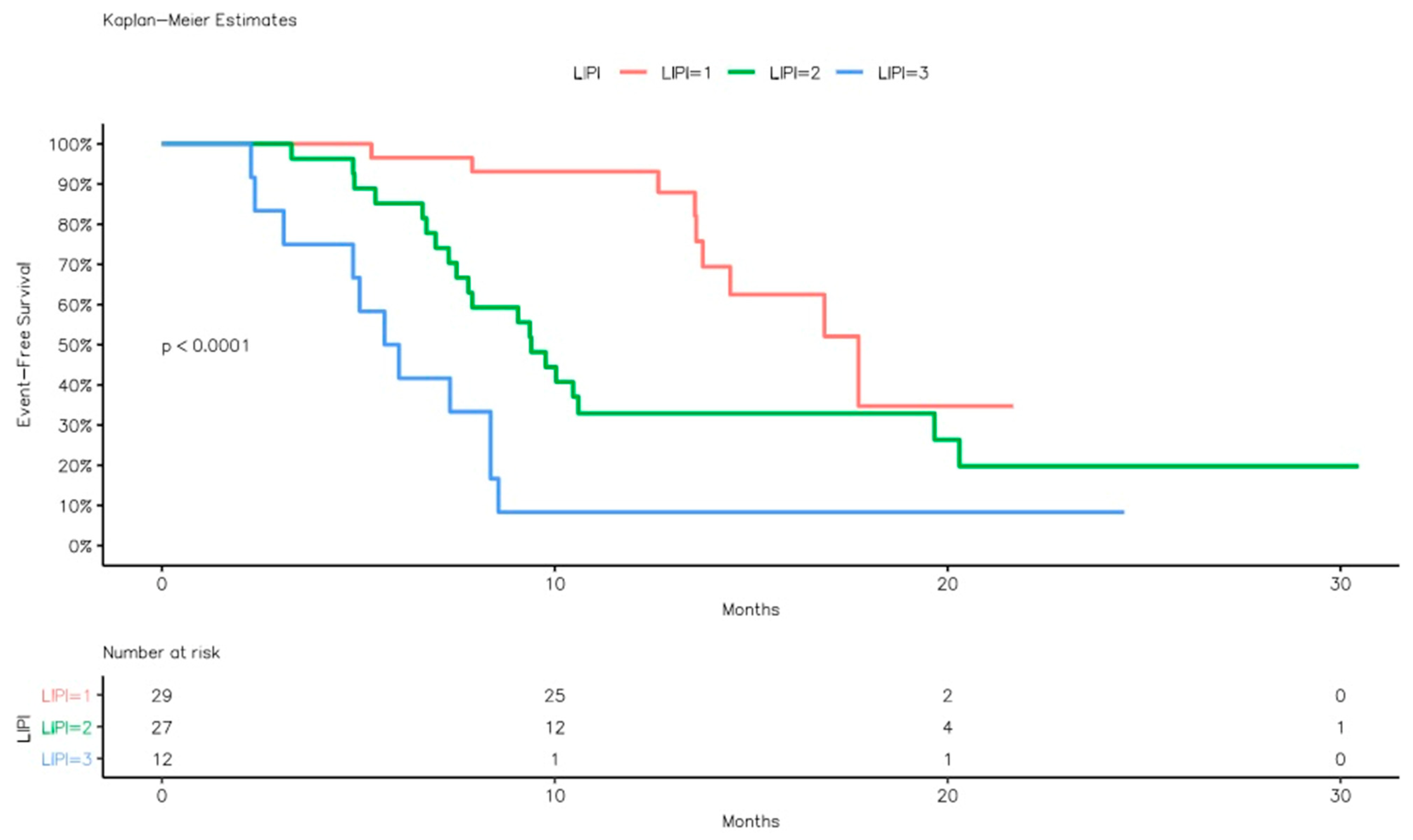
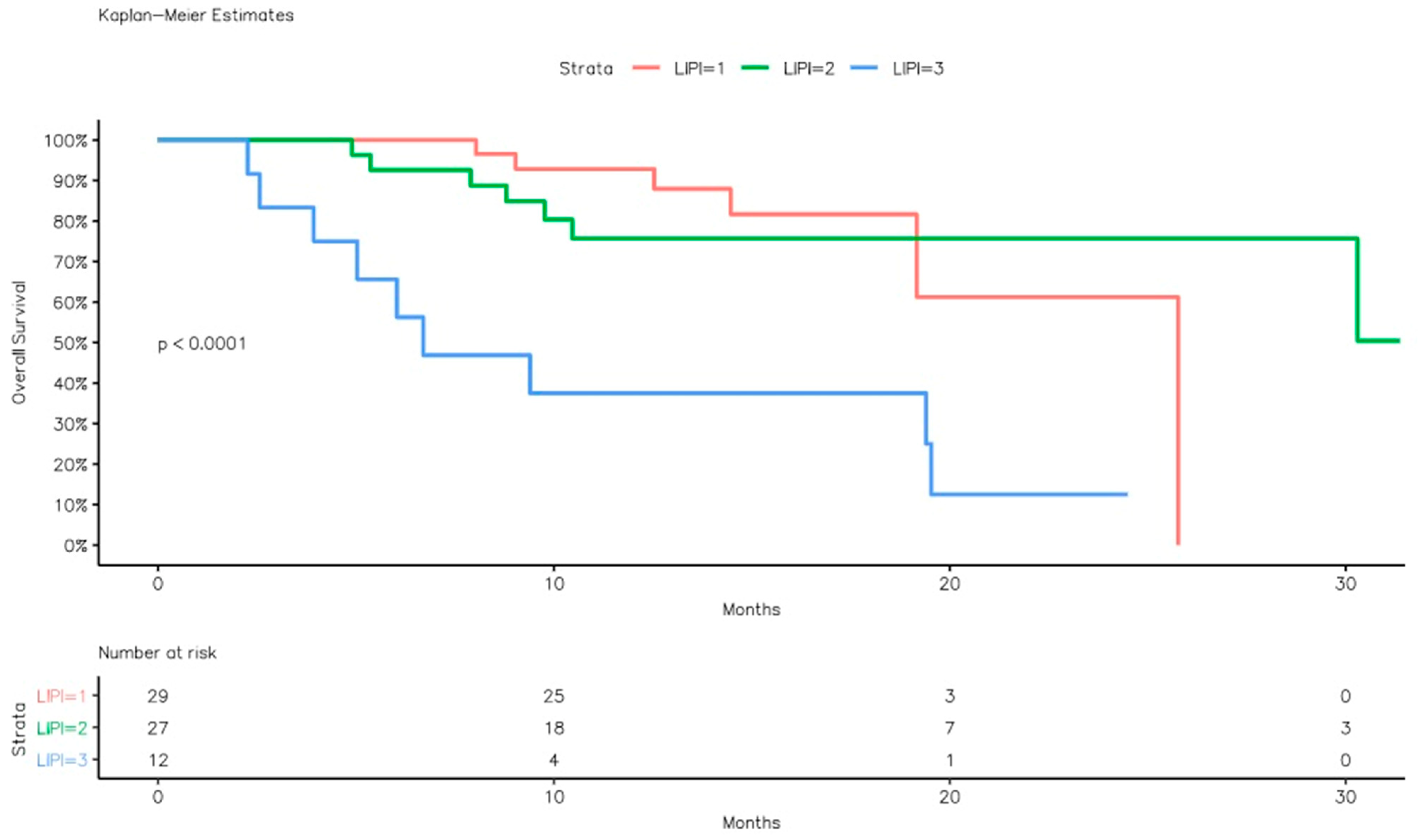
Objective: The aim of this study was to assess the association between the Lung Immune Prognostic Index (LIPI) measured at diagnosis and both event-free survival (EFS) and overall survival (OS) in patients with stage III non-small cell lung cancer (NSCLC). Methods: This retrospective cohort included patients diagnosed with stage III NSCLC between September 2022 and July 2024, all of whom had a minimum follow-up duration of six months. LIPI was calculated using the derived neutrophil-to-lymphocyte ratio (dNLR) and lactate dehydrogenase levels at diagnosis. Clinical, demographic, and treatment-related data were systematically collected. Survival outcomes were estimated using the Kaplan–Meier approach, while factors associated with prognosis were examined through Cox proportional hazards models. Results: The study population consisted of 68 patients, predominantly male (86.8%), with a mean age of 63.4 ± 8.7 years. According to the Lung Immune Prognostic Index classification, 29 patients (42.6%) were categorized as having a good score, 27 (39.7%) as intermediate, and 12 (17.6%) as poor. During a median follow-up of 15.4 months, a total of 40 progressions and 22 deaths occurred. Median EFS was 17.7, 9.4, and 5.8 months for good, intermediate, and poor LIPI groups, respectively (p < 0.001). Median OS was 25.7 months in the good LIPI group, was not reached in the intermediate group due to insufficient events, and was 6.7 months in the poor group (p < 0.001). In multivariate Cox analysis, poor LIPI was independently associated with inferior survival (EFS: HR = 2.87, 95% CI: 1.85–4.46, p < 0.001; OS: HR = 2.59, 95% CI: 1.40–4.78, p = 0.002). Conclusions: LIPI calculated at diagnosis is an independent prognostic factor for both EFS and OS in stage III NSCLC. Validation in larger, prospective cohorts is warranted to further define its prognostic role in stage III NSCLC.
Keywords:
NSCLC; stage 3; LIPI score; overall survival; prognostic factor