


Abstract
This study aimed to extract and microencapsulate anthocyanins from the red jambo fruit using supercritical fluid extraction with a co-solvent, targeting applications in functional ingredients. The red jambo peel was pre-processed in two forms, crushed and peeled only, and characterized in terms of proximate composition and bioactive compounds. The supercritical extraction bed was evaluated for particle diameter, apparent density, real density, and porosity. Supercritical fluid extraction was performed at 50 °C and 350 bar using acidified water as a co-solvent to obtain aqueous extracts. The extracts were microencapsulated to improve the availability of bioactives for use as functional ingredients. The extracts and microcapsules were analyzed for their bioactive compound content and antioxidant activity. The crushed sample showed greater anthocyanin content than the peeled sample; however, both samplescontents were higher than those reported in previous studies for conventional extraction techniques. The aqueous extracts and microcapsules exhibited high levels of anthocyanins, bioactive compounds, and antioxidant activity. These results demonstrate that supercritical fluid extraction is an efficient and sustainable technique for obtaining aqueous extracts rich in anthocyanins and related antioxidant compounds and free of organic solvents, with promising applications in the food, nutraceutical, pharmaceutical, and cosmetic industries, adding value to species and diversifying the sources of anthocyanins.
1. Introduction
The growing interest in sustainable and functional food systems has encouraged the exploration and appreciation of underused plant materials as sources of high-value bioactive compounds. According to the United Nations Food and Agriculture Organization, about 13.3% of food produced is lost after harvest, even before reaching the commercialization stage [1]. This situation becomes even more critical in the case of fruits and vegetables, which have the highest rates of loss, sometimes exceeding 25%, due to their high perishability. Losses of perishable foods are linked to factors like physiological deterioration, high metabolic activity, and logistical limitations, directly impacting food security and the sustainability of production systems [2].
The high biodiversity of the Amazon encourages the exploration of a wide range of native species for the development of promising food products, in both their nutritional and bioactive composition. Among these species, the red jambo (Syzygium malaccense) stands out. The peel of this tropical fruit is concentrated in compounds such as anthocyanins and phenolic compounds, which are mainly responsible for its bioactive capabilities [3]. Regarding the anthocyanin composition, the fruit peel stands out for its high concentration of cyanidin-3-glucoside, and cyanidin 3,5-diglucoside and peonidin 3-glucoside are also present [4]. The significant composition of these antioxidant compounds makes the fruit promising for applications such as functional food and natural food colorings [5]. However, the red jambo also suffers from high perishability and a short shelf life, resulting from its high water content, with these being the main factors contributing to the underutilization of the fruit, despite the high productivity of the species [6,7]. As a consequence, the main way red jambo is consumed is fresh, and its application in an industrial setting, despite its potential, remains limited [6].
Anthocyanins are natural pigments that belong to the flavonoid class; they are compounds of great technological interest, especially because of their wide range of biological properties, such as anti-inflammatory, anticancer, and antidiabetic effects [8]. Concentrated anthocyanin extracts are becoming increasingly appealing to the food industry, where the replacement of synthetic components with natural compounds in food formulations has been encouraged as a result of growing consumer interest in products that can offer health benefits [9]. The coloring properties of anthocyanins are of interest for developing natural food dyes that can offer functional properties. The water-soluble and non-toxic nature of these compounds facilitates their incorporation into food systems [10]. The recovery of anthocyanins can therefore be a promising strategy for the exploitation of red jambo, inserting it into the production chain.
To obtain anthocyanins from natural sources, a series of extraction technologies has been extensively investigated in recent years. The use of extraction techniques that provide high yields, generate less waste, and allow high-quality products free of toxic compounds to be obtained has been encouraged, as the inputs obtained can have greater added value and a wider range of applications [11,12]. In this context, supercritical fluid extraction (SFE) with CO2 is a technique that has been receiving attention, presenting significant advantages, such as high selectivity and shorter extraction times [13]. It is considered an environmentally friendly technology, as it minimizes dependence on conventional organic solvents and allows for the complete utilization of the plant matrix, demonstrating excellent potential for reducing environmental impacts in various industrial processes [14]. The application of SFE has shown promising results in the separation of bioactive compounds from various species in the Amazon region, including different classes of carotenoids, fatty acids, and tocopherols [15,16,17]. However, the water-soluble nature of anthocyanins confers limited solubility in supercritical CO2. The addition of small fractions of co-solvents in the process allows for modulating the polarity of the supercritical solvent, potentially increasing the solvation power and solubility of polar bioactive compounds [18,19]. Furthermore, for the separation of anthocyanins, the addition of acidified co-solvents can play a key role, since these compounds are more stable under low-pH conditions, where they are predominantly found in the form of flavylium cations [20]. Based on these characteristics, using supercritical CO2 combined with an acidified co-solvent can help recover anthocyanins from red jambo peel, reducing the need for conventional organic solvents and avoiding overly harsh processing conditions that could lead to anthocyanin degradation. In this way, SFE is considered in this study not just as an extraction alternative but as a potentially suitable approach to obtaining an anthocyanin-rich extract with properties compatible with subsequent stabilization steps. Studies with other plant materials have shown that SFE using CO2 and polar co-solvents can improve anthocyanin recovery from the extract compared to traditional extraction methods [19,21]. In this way, this could be a promising strategy to improve the separation of these compounds during the extraction process.
Despite their potential, a major challenge for anthocyanins as food colorants and functional ingredients lies in their low stability. These compounds can be easily degraded by factors such as light, oxygen, pH, enzymes, and metal ions, resulting in a decrease in their beneficial potential [22]. With the goal of expanding the range of uses for this class of compounds, micro- and nanoencapsulation techniques have been investigated to increase the anthocyanin content [23]. In short, encapsulating agents are applied to act as a protective layer against adverse environmental conditions, such as light, moisture, and oxygen, with the goal of extending their shelf life and potentially offering advantages like controlled release and masking unwanted tastes and odors [10]. Microencapsulation technologies, like spray-drying, freeze-drying, fluidized bed coating, and emulsification, have been investigated in recent years, with promising results [24]. So, it has become interesting to investigate encapsulation as an alternative to obtain anthocyanins through supercritical extraction from the red jambo peel.
Therefore, this work aims to investigate the extraction with supercritical fluid and microencapsulation of anthocyanins from the red jambo (Syzygium malaccense) peel as a sustainable alternative for the exploitation of this underutilized fruit of the Amazonian biodiversity, aiming at obtaining functional ingredients for application in nutraceutical products.
2. Materials and Methods
2.1. Sample Acquisition and Preparation
Red jambo fruits were bought at the Ver-o-Peso Market in Belém, Pará. After purchasing them, the fruits were sorted and cleaned, first by washing them in drinking water to remove any visible dirt, followed by sanitizing them with a chlorine solution, according to the guidelines established by current sanitary legislation for fruits and vegetables. The process was carried out to ensure a chlorine concentration of 2.0 mg L−1, as per RDC No. 352/2002. After cleaning, the fruits were placed in polypropylene bags, vacuum-sealed, and stored at −18 °C until processing.
2.2. Sample Pre-Processing
The samples were removed from the freezer, and the red jambo fruits were manually peeled. Then, a portion of this peel was subjected to an additional processing step by grinding. Subsequently, the crushed (CP) and uncrushed (UP) peels were subjected to a freeze-drying process in a freeze dryer (LS 3000, Terroni, São Carlos, SP, Brazil) for 24 h. After dehydration, the samples were packaged in containers lined with aluminum foil until analysis was performed.
2.3. Proximate Composition Analyses in Fresh and Lyophilized Red Jambo
Proximate composition analyses were performed on fresh and lyophilized samples, according to the Physicochemical Methods for Food Analysis of the [25] Moisture content was determined in a forced-air oven at 105 °C until constant weight was reached; lipid content in the samples was determined by the Soxhlet method, using petroleum ether P.N. as the solvent; ash content was determined by incineration in a muffle furnace at 550 °C until the ash became white or slightly grayish; protein content was determined by the Kjeldahl method; total carbohydrates were calculated from the sum of the results of the moisture, ash, lipid, and protein analyses, and the difference was calculated in relation to 100. All analyses were performed in triplicate.
2.4. Analysis of Bioactive Compounds from Fresh and Lyophilized Bark
2.4.1. Phenolic Compounds
The content of phenolic compounds was determined by spectroscopy, according to the Folin–Ciocalteu method, with absorbance readings at 760 nm and the results obtained from the gallic acid calibration curve (y = 0.0122x − 0.0129 and R2 = 0.9945). A 500 µL aliquot of the sample diluted 20 times was added to plastic cuvettes, followed by the addition of 250 µL of Folin–Ciocalteu reagent and 1250 µL of 7.5 m/vol (75%) sodium carbonate solution. The mixture was homogenized and left to sit for 30 min, protected from light. Then, absorbances were measured using a UV/VIS spectrophotometer (UV-M90 model, Bel Engineering, Monza, Italy), and the results were expressed in milligrams of gallic acid equivalent (GAE) per gram of dry extract.
2.4.2. Anthocyanin Content
The analysis of total anthocyanins was carried out on fresh and freeze-dried peels. The analyses used the differential pH spectrophotometric method described by [26], which looks at the specific extinction coefficient for cyanidin-3-glucoside. Absorbance readings were taken using a UV/VIS spectrophotometer (UV-M90 model, Bel Engineering, Monza, Italy) at wavelengths of 510 and 700 nm, and the analysis was done in triplicate. Anthocyanins were determined according to the following equation.
where
Total anthocyanins = ((Aλvismáx−A700)pH 1.0) − ((Aλvismáx-A 700)pH 4.5) × Pm × Fd × 103)/(ε × 1)
Aλvismáx: Absorbance measured at the specific wavelength for the type of anthocyanin.
A700: Absorbance read at a wavelength of 700 nm.
Pm: Molecular weight of the type of anthocyanin.
Fd: Sample dilution factor in the reaction.
ε: Absorptivity coefficient of the anthocyanin type (cyanidin-3-glucoside).
2.4.3. DPPH
The determination of antioxidant activity by the DPPH (2,2-diphenyl-1-picrylhydrazyl) assay was performed using the methodology described [27], which is based on the scavenging of the DPPH radical by the antioxidants present in the extracts. A volume of 0.5 mL of the sample was mixed with 1.95 mL of the DPPH solution and protected from light for 30 min. Then, readings were taken at 515 nm. A standard curve was prepared with a Trolox solution (y = 0.0006 + 0.0206r2 = 0.991), and the results were expressed in μmol TEAC·100 g−1.
2.4.4. ABTS
The assay of antioxidant activity involved the removal of the ABTS+• cationic radical generated from the oxidation of 7 mM 2,2′-azinobis-3-ethylbenzothiazoline-6-sulfonic acid (ABTS) with 2.45 mM potassium persulfate; the mixture was pre-incubated in amber glass for 16 h before use. The ABTS+• solution was adjusted to an absorbance of 0.700 ± 0.05 at 734 nm in a spectrophotometer, by dilution, as described by [28]. Aliquots of 20 µL of the sample were mixed with 1 mL of the diluted ABTS solution (ABTS Radical). The mixture was incubated for 6 min in the dark. Absorbance readings were taken at 734 nm, and ABTS radical scavenging activity was expressed in Trolox equivalents (TEAC) per 100 g of sample, based on the calibration curve (y = 0.0006 + 0.0206R2 = 0.991).
2.5. Scanning Electron Microscopy (SEM)
SEM analysis was carried out at the Electron Microscopy Laboratory of the Institute of Geosciences at UFPA. Scans were performed on all slides to obtain images. The instrument used was a microscope (LEO-Zeiss, 430Vp, Oberkochen, Germany), under analysis conditions using secondary images obtained at 20 kV, with a working distance of 11 mm.
2.6. Characterization of Extraction Bed
The characterization of the extraction bed was performed through analyses of apparent density, real density, and bed porosity in lyophilized samples of crushed and fileted red jambo peel. Real density (ρr) was determined using the nitrogen gas pycnometry methodology, using a gas pycnometer (model Ultrapyc 5000, Anton Paar GmbH., Graz, Austria). Bulk density (ρa) was determined using the volume of the cell and the mass of the sample deposited inside it. The porosity of the sample (ε) was determined according to the following equation:
where
ρa = apparent density (g/cm3).
ρr = real density (g/cm3).
2.7. Supercritical Fluid Extraction
Extractions were carried out at the Supercritical Technology Laboratory (LABTECS) at the Federal University of Pará (UFPA), using an SPE-ED SFE supercritical fluid extraction unit (model 7071, Applied Separations, Allentown, PA, USA). The system was connected to a CO2 cylinder, a compressor (model CSA 78, Schulz S/A, Joinville, SC, Brazil), a thermostatic recirculator (model F08400796, PolyScience, Niles, IL, USA), and a CO2 flow meter (model M 5SLPM, Alicat Scientific, Tucson, AZ, USA). The extraction cell used has an internal diameter of 0.032 m and a height of 0.126 m.
To obtain the anthocyanin extract, 0.7 g of the sample was mixed with 5 g of glass beads. A ratio of 7:5 (sample:glass beads) was used. The extractions were carried out at a temperature of 50 °C and a pressure of 350 bar, according to [29]. The overall yield of the extracts was calculated as a mathematical ratio between the mass of dry extract and the mass of the lyophilized sample.
2.8. Identification of Anthocyanins by Ultra-High-Performance Convergence Chromatography (UPC2)
A qualitative analysis was conducted to identify the presence of anthocyanins in the extract through the Ultra-High-Performance Convergence Chromatography system (ACQUITY UPC2/MS) (Waters®, Milford, MA, USA), based on the methodology of [30] originally developed for HPLC and later adapted for convergence chromatography. For the analysis, the following settings were adopted for the system: The convergence manager (CC) was set with an ABPR pressure of 1800 psi, and CO2 (A) and methanol acidified with 0.2% formic acid as a co-solvent (B) were used for the mobile phase. The binary solvent manager (BSM) operated in isocratic mode with 95% CO2 (A) and 5% methanol acidified with 0.2% formic acid (B), at a constant flow of 1 mL/min. The temperature chosen for the sample manager (SM) was 25 °C, and the sample volume was 5 μL. The column used in this analysis was the Torus 2-PIC 130 Å column (1.7 μm, 3.0 mm × 100 mm), and the column manager was set to 40 °C. The photodiode array detector (PDA) was set to monitor a wavelength range of 500 to 520 nm. The isocratic solvent manager (ISM) operated with methanol acidified with 0.2% formic acid at a flow rate of 0.8 mL/min, while the mass manager (QDA) operated in positive mode (ESI+) with an acquisition range of m/z 100–600. Qualitative identification was carried out by evaluating both the retention time and the mass spectra, with special attention to the m/z 449.22 ion. The ion at m/z 449.22 was considered consistent with a cyanidin hexoside for this analysis. For data processing, Empower 3 software version 3.6.0 was used. The authentic cyanidin-3-O-glucoside standard was not analyzed under the same chromatographic conditions; therefore, the comparison relied on the certificate of analysis of the reference material, issued by Phytolab Safeguarding Botanical Quality [31]. It was considered just as supporting information, not used as proof of matching experimental retention times. So, the structural assignment was reported as a tentative identification of a cyanidin hexoside.
2.9. Microencapsulation of Extract
The microencapsulation of the CT and CN extracts was based on the methodology used by [32] with some modifications. Maltodextrin with a dextrose equivalent of 10 was used as the wall material. A mass of 10 g of maltodextrin was dissolved in 50 mL of distilled water, and then 5 g of the aqueous extract was added. The mixture was homogenized for 10 min, frozen, lyophilized in a vacuum dryer (LS 3000, Terroni, São Carlos, SP, Brazil) for 24 h, and stored in hermetically sealed containers for further analyses.
2.10. Characterization of Microcapsules
2.10.1. Phenolic Encapsulation Efficiency
Microencapsulation efficiency was determined according to the methodology described by [32], with modifications. The phenolic compounds on the surface were extracted by mixing 0.3 g of microcapsules with 1125 μL of ethanol and centrifuging for 2 min. To determine the content of phenolic compounds inside the microcapsules, 0.2 g of microcapsules and 1500 μL of water were used for extraction; the mixture was centrifuged for 2 min. Subsequently, 1000 μL of each supernatant was used to determine the total phenolic compounds by the Folin–Ciocalteu method. The difference between the content of microencapsulated phenolic compounds (MPCs) and the content of phenolic compounds on the surface of the microcapsules (PCSMs) was determined by the equation below.
EE = (MPC − PCSM)/MPC (×100)
2.10.2. Initial Physicochemical Characterization of Microcapsules
Color
The color parameters of the microcapsules were measured using a YS6010 benchtop colorimeter (Shenzhen 3nh Technology Co., Ltd., Shenzhen, China) calibrated with CIELab color coordinates.
Moisture
The moisture content of the microcapsules was determined by the gravimetric method, considering loss on drying in an oven [32].
Water Activity
Water activity was measured by direct reading at 25 °C in an Aw analyzer (AquaLab, Decagon Devices, Pullman, WA, USA).
Hygroscopicity
Approximately 0.5 g of the samples was weighed onto previously weighed Petri dishes. The plates containing the sample were conditioned and kept for seven days in a desiccator containing saline solution (NaCl: 75.3% RH). Next, the sample was weighed, and hygroscopicity was calculated according to the equation below [32].
where
H = (mf − mi)/mi (×100)
mf: Final mass.
mi: Initial mass.
2.10.3. Analysis of Bioactive Compounds of Microcapsules
The analyses of anthocyanins, DPPH, and ABTS in the microcapsules were carried out according to the methodologies described in Section 2.4.2 and Section 2.4.4.
3. Results
3.1. Proximate Composition of Fresh and Freeze-Dried Red Jambo
The peel of the fresh red jambo had a high moisture content. After freeze-drying, the moisture content in the peel was reduced to less than 6%. The levels of lipids and proteins were low, as expected for tropical fruits. As a result of water removal, the levels of proteins, lipids, and especially carbohydrates showed a relative increase. The proximate composition is shown in Table 1.
Table 1.
Results of the proximate composition of fresh and freeze-dried red jambo.
3.2. Bioactive Composition of Fresh and Freeze-Dried Red Jambo
The bioactive composition of fresh and freeze-dried red jambo peel is shown in Table 2. Anthocyanins were detected in the peel, confirming that the pigment compounds are highly concentrated in the fruit’s outer tissues. The peel showed considerable concentrations of phenolic compounds and high antioxidant activity, as determined by the DPPH and ABTS methods. The antioxidant activity assessment using the DPPH method revealed that the peel had a value of 220.98 µmol TE/g of dry weight. Similarly, using the ABTS method, the present study showed a value of 1229.53 µmol Trolox eq./100 g of dry weight.
Table 2.
Results of the bioactive composition of fresh and freeze-dried red jambo.
The anthocyanin value for the red jambo peel was 1546.59 mg/100 g of dry weight, a value higher than that found for the fresh peel. Regarding antioxidant activity, the fresh sample showed a greater capacity for scavenging the DPPH radical and higher ABTS values when compared to the lyophilized sample, which presented values of 20.79 μmol TE/g dry weight and 38.23 μmol Trolox eq./100 g dry weight, respectively.
3.3. Bed Characterization and Extraction Process Evaluation
Table 3 presents the physical characterization of the freeze-dried red jambo peels subjected to two different pretreatments: grinding and fileting. The ground peel showed higher apparent density (0.57 g/cm3) and lower porosity (0.79), while the fileted peel showed lower apparent density (0.30 g/cm3) and higher porosity (0.86).
Table 3.
Characterization of extraction bed for freeze-dried red jambo peel.
3.4. Bioactive Characterization of Supercritical Extracts
The pretreatment applied to the red jambo peel influenced the extraction of bioactive compounds during supercritical extraction. The crushed peel extract (CPE) showed a higher content of total phenolics (8.72 mg GAE/g dry basis) and anthocyanin concentration (48.36 mg/g dry basis) compared to untreated bark extract (UBE), which showed 6.43 mg GAE/g dry basis and 30.69 mg/100 g dry basis, respectively.
3.5. Identification of Anthocyanins in Red Jambo Extract
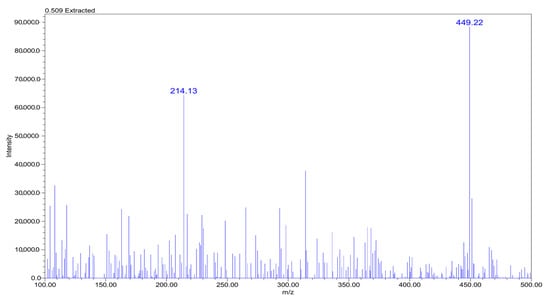
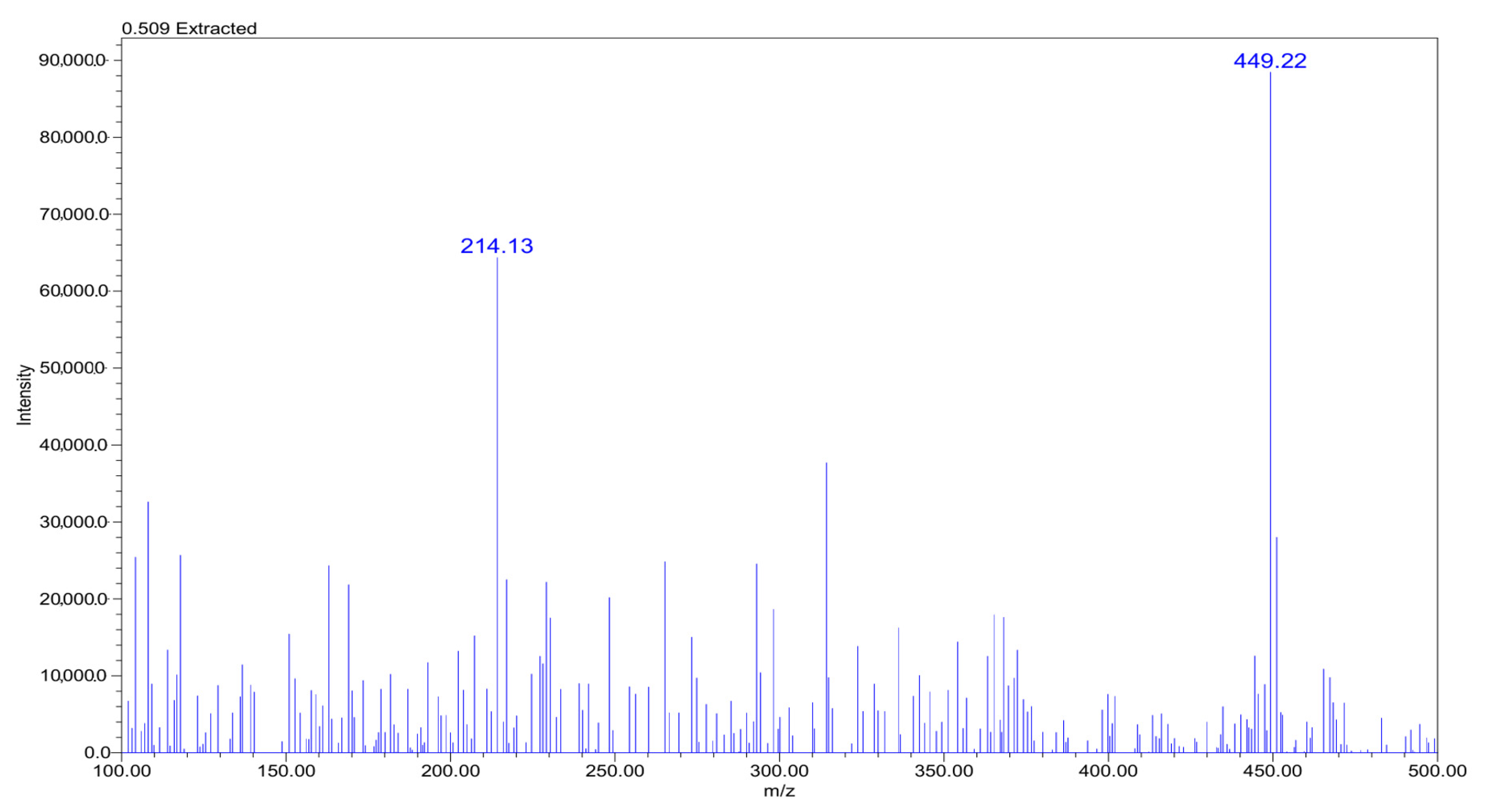
The qualitative analysis by CC coupled to mass spectrometry (CC–UPC2/QDa) made it possible to observe, in the extract of red jambo peel obtained by supercritical fluid extraction, a chromatographic signal at approximately 0.509 min. The mass spectrum associated with this event showed a precursor ion at m/z 449.22, observed in positive ionization mode (ESI+). At the same retention time, a fragment ion at m/z 287 was observed, compatible with the cyanidin aglycone. The mass difference between the ions m/z 449.22 and 287 is compatible with the loss of about 162 Da, corresponding to the loss of the hexose unit 334. Together, the presence of the precursor ion at m/z 449.22 and the fragment ion at m/z 287 is consistent with the occurrence of a cyanidin hexoside. Considering that the authentic anthocyanin standard was not analyzed under the same chromatographic conditions, the compound was therefore provisionally identified as a cyanidin hexoside. Although the system included a photodiode array (PDA) detector, no chromatographic signal clearly attributable to anthocyanins in the 500–520 nm range was observed under the conditions used. Thus, the identification presented in this study was mainly based on the information provided by mass spectrometry, particularly the ion pair m/z 449.22 and 287, and not on spectral evidence from the PDA. Figure 1 shows the mass spectrum obtained at the retention time of 0.509 min, in which the ion at m/z 449.22 is observed.
Figure 1.
Mass spectrum extracted at 0.509 min for jambo extract.
Even though the method used has not yet been validated due to the absence of an analytical standard, CC showed good method practicality compared to conventional methods like HPLC, allowing for faster analysis, avoiding very laborious sample preparations, and reducing the use of toxic organic solvents, since the mobile phase is mainly composed of CO2.
3.6. Scanning Electron Microscopy (SEM) of Microcapsules
Scanning electron microscopy revealed significant morphological differences.
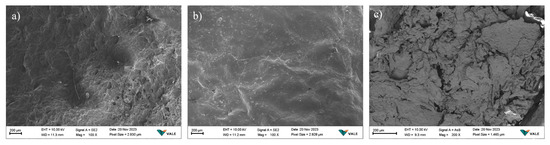
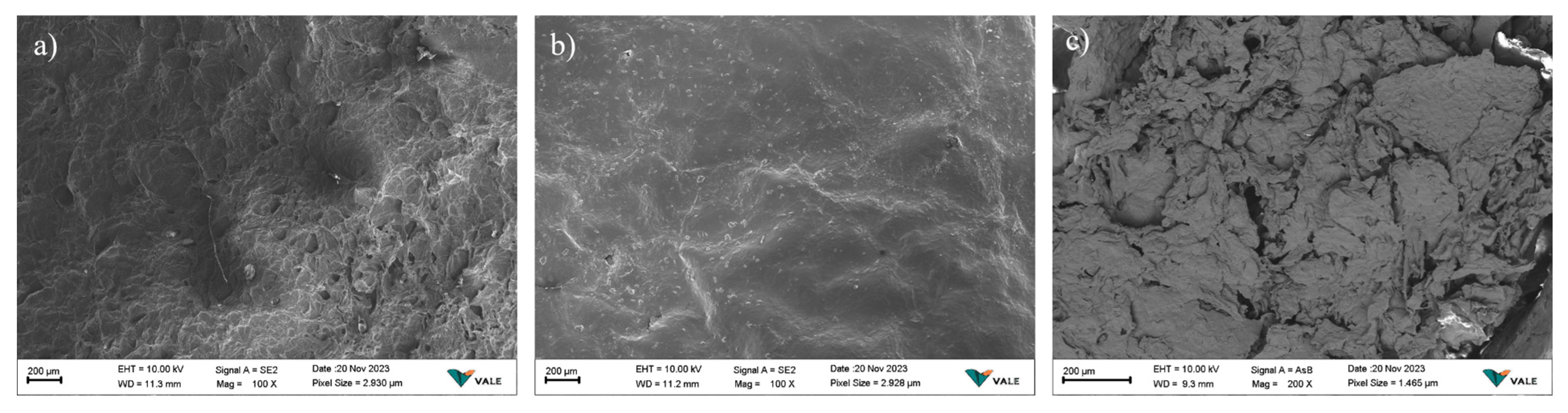
The SEM images obtained from the freeze-dried red jambo peel are shown in Figure 2. The inner surface of the sliced peel (Figure 2a) showed pores of different sizes distributed throughout the structure, as well as fissures and ruptures along the surface.
Figure 2.
(a,b) show the uncrushed outer and inner parts of the husk, respectively; (c) the crushed husk.
The outer surface of the peeled peel (Figure 2b) showed a more compact and less porous morphology, with surface protuberances and depressions covered by waxy deposits.
In contrast, the crushed peel sample (Figure 2c) showed a highly porous structure with interconnected channels and greater surface roughness when compared to the sliced samples.
3.7. Characterization of Microcapsules
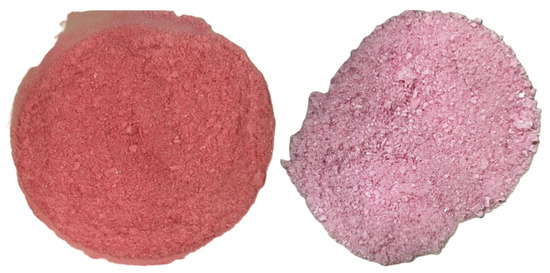
The microcapsules synthesized in this study are shown in Figure 3.
Figure 3.
Microcapsules of MCS and MUS samples, respectively.
3.7.1. Color Stability
The color parameters of the microcapsules produced from the extract of ground bark and the extract of the sliced bark of red jambo are presented in Table 4 and Table 5, respectively.
Table 4.
The color of the microcapsules of the crushed bark extract.
Table 5.
The color of the microcapsules of the fileted bark extract.
The hue angle (h*) values ranged from 355.39 to 358.56, indicating coloration in the red-violet region. The microcapsules obtained from the ground bark extract showed lower luminosity (L* = 63.78) compared to those produced from the sliced bark extract (L* = 78.43), indicating a darker appearance for the first samples.
The chroma (C*) values were 26.92 for the ground bark microcapsules and 18.30 for the sliced bark microcapsules, demonstrating greater color saturation in the samples obtained from the ground bark extract.
Positive a* values were observed for both samples, confirming a tendency towards red coloration, while negative b* values indicated a slight tendency towards blue coloration. These results are consistent with the characteristic coloration associated with materials rich in anthocyanins. The results found in the color analysis of the microcapsules using the extracts from the crushed and uncrushed peels are shown in Table 4 and Table 5.
3.7.2. Water Activity
Water activity values ranged from 0.2441 to 0.2461 for MCS, while for MUS they ranged from 0.2221 to 0.2185.
3.7.3. Microencapsulation Efficiency
Encapsulation efficiency (EE) reached 79% for MCS and 76% for MUS, demonstrating the high effectiveness of maltodextrin in retaining anthocyanins within the microcapsule matrix.
3.7.4. Humidity
Moisture content refers to the amount of water contained in a material. The moisture content of MCS was 5.03% and MCF was 2.43%.
3.7.5. Hygroscopicity
Low hygroscopicity values were observed for both MCS and MUS, indicating low moisture absorption from the environment and better storage. In the current study, values of 10.30 and 10.37 were obtained for the MCS and MUS samples, respectively.
3.7.6. Scanning Electron Microscopy of Microcapsules
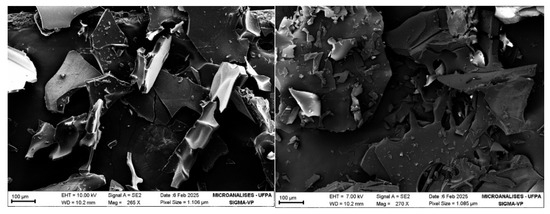
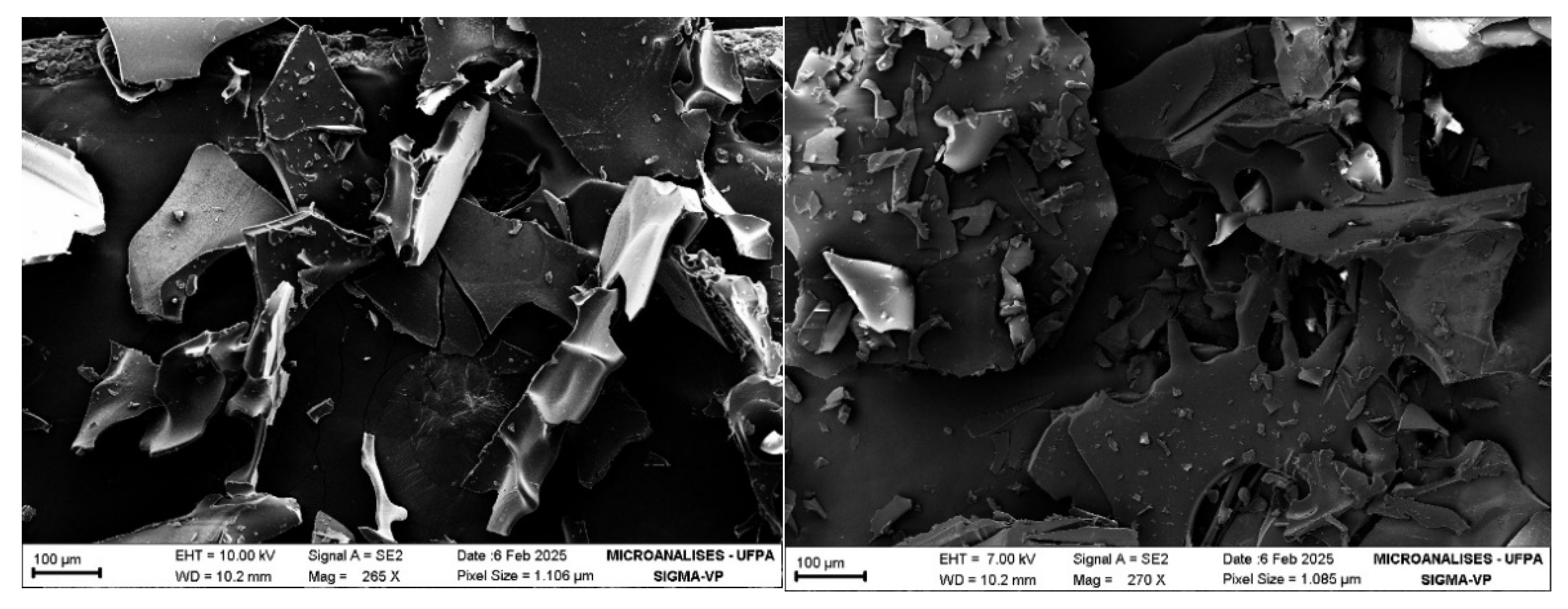
The micrographs obtained from the maltodextrin-prepared microcapsules of the MCS and MUS samples are shown in Figure 4. The successful formation of maltodextrin-based microcapsules for the MCS and MUS samples was observed (Figure 4). The micrographs revealed well-defined and intact structures, without visible cracks, fissures, or surface ruptures.
Figure 4.
MCS and MUS, respectively.
Both samples exhibited crystalline morphology with relatively smooth surfaces, characteristic of materials encapsulated by lyophilization.
3.7.7. Total Anthocyanin Content
The total content of monomeric anthocyanins in the microcapsules reached 58.21 mg/g for MCS and 16.38 mg/g for MUS, confirming the better performance of the crushed bark extract throughout the encapsulation process.
For MCS, the concentration of anthocyanins after encapsulation was greater than that observed in the aqueous extract (48.36 mg/g), indicating that the encapsulation process not only preserved but also concentrated the bioactive compounds due to water removal and solid concentration during lyophilization. In contrast, MUS showed lower anthocyanin retention, reflecting the lower initial extraction efficiency previously observed for the fileted bark extract.
4. Discussion
The results obtained in this research demonstrate that the peel of the red jambo fruit represents a promising source of anthocyanins and phenolic compounds with potential application in functional foods and nutraceutical systems. The high moisture content observed in the fresh samples confirms the perishable nature of the fruit and highlights the importance of conservation strategies to improve the shelf life of the bioactive compounds. A similar behavior has already been described for fruits rich in phenolic compounds, where the high water content is linked to greater susceptibility to microbial spoilage and enzymatic degradation [33].
Lyophilization reduced the moisture content of the samples, promoting the concentration of compounds.
The preservation of anthocyanins after lyophilization demonstrates the suitability of this process for heat-sensitive compounds, since dehydration at low temperature minimizes pigment degradation [34].
Anthocyanins were predominant in the peel of the red jambo fruit, confirming that pigment compounds are highly concentrated in the outer tissues of the fruit, as frequently observed in species of the Myrtaceae family. Lower values (300.54 mg·100 g−1) were reported by [35], which also identified anthocyanin levels in the peel compared to other parts of the fruit, highlighting the potential of this fraction as a natural source of pigments.
Although freeze-drying led to a higher concentration of anthocyanins, lower antioxidant activity values were observed after processing. The difference between anthocyanin content and antioxidant activity might be related to changes in the chemical environment of the compounds in the extract. Pretreatment and extraction conditions can favor not only the recovery of anthocyanins but also the co-extraction of other phenolic compounds present in the plant matrix. These compounds can form non-covalent interactions with anthocyanins, including copigmentation phenomena, molecular organization, and the properties of the pigments. So, the antioxidant response of the extracts should not be attributed just to the total anthocyanin concentration but to the combined contribution of anthocyanins and other co-extracted phenolic compounds, as well as possible interactions between these compounds [36].
The physical characterization of the extraction bed demonstrated that the applied pretreatment strongly influenced extraction performance. Crushing promoted the reduction in particle size and the mechanical disruption of cellular structures, increasing the surface area and facilitating solvent penetration into the plant matrix. Consequently, the crushed peel samples showed higher extraction efficiency and better recovery of anthocyanins and phenolic compounds compared to the sliced peel samples. Similar results have been widely reported in supercritical extraction systems, where particle size reduction improves mass transfer and increases solvent accessibility to intracellular compounds [37].
The formation of porous channels after lyophilization is consistent with previous reports describing microstructural modifications caused by ice crystal formation and subsequent water sublimation during freeze-drying, resulting in porous matrices with enhanced mass transfer properties, as observed by SEM analysis [38].
The use of supercritical CO2 combined with water as a co-solvent has proven to be an efficient and environmentally friendly extraction strategy. Since anthocyanins exhibit high polarity and low solubility in pure supercritical CO2, the addition of water increases the polarity of the medium, favoring the recovery of these bioactive compounds [39,40]. Furthermore, studies highlight that the use of co-solvents in supercritical systems improves the extraction of natural compounds, especially anthocyanins [21]. Not using toxic organic solvents reinforces the sustainable nature of this technology, expanding its applicability in the food, pharmaceutical, and cosmetic sectors [41].
In the stage of identifying anthocyanins, even with a broad scan in the mass spectrum, it was only possible to make a tentative identification of the species based on the occurrence of an ion at m/z 449.22 which is often associated with cyanidin hexosides, as well as the ion at m/z 287 corresponding to the cyanidin aglycone. In the present study, the observation of these two ions associated with the same chromatographic event (0.509 min) provides evidence for the attribution of a cyanidin hexoside in the sample. The difference of approximately 162 Da between the ions is consistent with the loss of a hexose unit, a behavior expected for this type of structure. However, the observation of m/z 449.22 and 287.58 alone does not allow for the exact anthocyanin present in the analyzed extract to be defined, given that an analysis using a commercial anthocyanin standard under the same experimental conditions was not conducted.
Some studies on the identification of anthocyanins in the red jambo fruit peel highlight the presence of the main anthocyanins found in this species, like [42] which reported the identification of five anthocyanins in the fruit peel, although two were present in smaller amounts. In this study, the authors quantified the anthocyanins found, with cyanidin-3-O-glucoside being the main one in the fruit peel, with m/z 449.22 and fragment ions of m/z 287. The study of this compound showed its various functional properties, such as its antidiabetic, antioxidant, antimicrobial, and anti-inflammatory activity, as well as anticancer effects [42]. The presence of this compound boosts the potential of red jambo peel as a source of bioactive compounds for making functional ingredients.
It is worth noting that the methodology used in this study, employing convergence chromatography (CC-UPC2)—and considering the scarcity of studies in the literature using this technique for this purpose—required adapting chromatographic conditions previously described for high-performance liquid chromatography (HPLC). The adjustments made to the method may have influenced the results obtained in the exact identification of anthocyanins in the red jambo peel, especially due to the lack of analysis of a chromatographic standard to compare retention times.
However, Ref. [5] carried out a quantitative analysis of bioactive compounds in fruits of the Myrtaceae family and reported the presence of only cyanidin-3-glucoside in the peel of S. malaccense, confirming this compound as the main anthocyanin in the fruit’s composition. So, although the data from the present study do not allow for a definitive structural confirmation, the literature provides independent support for the provisional assignment of a cyanidin hexoside and, particularly, for the possibility that this signal is related to cyanidin-3-O-glucoside. Moreover, detection by PDA may have been affected by the analyte concentration, the matrix, separation efficiency, and detection conditions, so in this case, mass spectrometry was more informative than the optical response obtained in the 500–520 nm range, which is why PDA is considered here as a complementary detector, not used as primary evidence for identification.
Microencapsulation with maltodextrin successfully protected the extracted anthocyanins, resulting in high encapsulation efficiencies for both samples, corroborating studies that point to maltodextrin as an efficient wall material for phenolic compounds and natural pigments [43]. The absence of cracks and fissures observed in scanning electron microscopy (SEM) images indicates the good structural integrity of the microcapsules, an important characteristic for reducing oxygen diffusion, moisture absorption, and premature release of the encapsulated compounds [44]. The higher encapsulation efficiency observed for MCS may be related to the higher concentration of anthocyanins, favoring more stable intermolecular interactions between the core compounds and the encapsulation matrix, which contributes to the higher encapsulation efficiencies of the microcapsules, as reported by [45].
The colorimetric parameters confirmed the presence of anthocyanins in the microcapsules. The hue angle values are in the red range. The violet region, along with positive a* and negative b* values, is characteristic of anthocyanin-rich systems. The lower luminosity observed for MCS suggests a higher pigment concentration and greater color intensity, while the higher chroma values indicate more saturated coloration. These characteristics are desirable for the application of natural pigments as substitutes for synthetic food colorings [46].
The low water activity and reduced hygroscopicity values characterized the powders in terms of their initial physicochemical properties, decreasing their tendency to absorb moisture. These characteristics are relevant for the characterization of powdered food ingredients, since the observed water activity is in the range of 0.1–0.4, as described by [47].
The high anthocyanin content retained after encapsulation demonstrates the effectiveness of the developed system in preserving bioactive compounds. The values obtained for MCS were substantially higher than those reported for similar encapsulated systems rich in anthocyanins, highlighting the exceptional potential of jambo peel as a natural source of bioactive pigments. Considering current dietary recommendations for anthocyanin intake, relatively small quantities of the produced microcapsules would be sufficient to provide nutritionally relevant doses of these compounds [48]. Overall, the results demonstrate that freeze-dried jambo peel, combined with supercritical extraction and microencapsulation with maltodextrin, constitutes a promising strategy for the development of stable ingredients rich in anthocyanins, with potential application in functional foods, nutraceutical products and natural colorants, corroborating the findings of [49], which highlighted the importance of sustainable extraction and encapsulation technologies in obtaining more stable bioactive compounds with greater potential for industrial application.
5. Conclusions
This study demonstrated the high technological potential of red jambo peel as a natural source of anthocyanins and bioactive compounds for application in functional foods and nutraceutical systems. Lyophilization proved to be efficient in preserving and concentrating bioactive compounds, promoting a reduction in moisture and an increase in anthocyanin content in the processed matrix while decreasing microbial contamination.
The pretreatment of the peel had a direct influence on the efficiency of supercritical extraction. The crushed peel showed better performance compared to the fileted peel, resulting in the greater recovery of phenolic compounds, anthocyanins, and antioxidant activity. Morphological analyses by scanning electron microscopy corroborated these results, showing smaller porosity, cell rupture, and solvent accessibility in the crushed matrix, favoring mass transfer during extraction.
The use of supercritical CO2 combined with water as a co-solvent has proven to be an efficient and environmentally friendly strategy to obtain extracts rich in anthocyanins, eliminating the use of organic solvents and allowing for the production of extracts with potential industrial applications. Additionally, microencapsulation with maltodextrin showed good encapsulation, helping with structural stability, low water activity, low hygroscopicity, and preserving the functional properties of anthocyanins.
The microcapsules obtained, especially those from the crushed peel extract, showed a high content of anthocyanins, suitable physical characteristics, and color properties compatible with their use as a natural dye and functional ingredient. Thus, the results highlight the potential of red jambo peel as a promising raw material for developing high-value natural ingredients, contributing to the sustainable use of plant by-products and the replacement of synthetic dyes in the food industry.
Author Contributions
Conceptualization, G.I.A.C., R.N.d.C.J., L.V.G.d.M. and A.P.d.S.e.S.; methodology, G.I.A.C., J.W.G.L., A.H.S.d.S., M.A.R.C. and R.N.d.C.J.; validation, R.N.d.C.J., L.V.G.d.M. and F.C.S.P.; formal analysis, G.I.A.C., A.H.S.d.S., M.A.R.C. and J.W.G.L.; investigation, G.I.A.C., A.H.S.d.S., M.A.R.C. and J.W.G.L.; resources, R.N.d.C.J., L.V.G.d.M. and A.P.d.S.e.S.; data curation, G.I.A.C., G.I.d.A.C., J.W.G.L. and A.H.S.d.S.; writing—original draft preparation, G.I.A.C. and G.I.d.A.C.; writing—review and editing, L.V.G.d.M., A.P.d.S.e.S., F.C.S.P., R.N.d.C.J. and G.I.d.A.C.; visualization, G.I.A.C., G.I.d.A.C. and F.C.S.P.; supervision, R.N.d.C.J. and A.P.d.S.e.S.; project administration, R.N.d.C.J. and G.I.A.C.; funding acquisition, R.N.d.C.J. All authors made substantial contributions to the conception or design of this study or to the acquisition, analysis or interpretation of the data. All authors participated in drafting this manuscript or critically revising it for important intellectual content, approved the final version to be published and agreed to be accountable for all aspects of the work, ensuring that any questions related to the accuracy or integrity of this study are appropriately investigated and resolved. Each author is able to identify the specific contributions of the co-authors and has confidence in the integrity of their work. All authors have read and agreed to the published version of the manuscript.
Funding
This study was partly funded by the Coordination for the Improvement of Higher Education Personnel—Brazil (CAPES)—Financial Code 001.
Institutional Review Board Statement
Not applicable.
Informed Consent Statement
Not applicable.
Data Availability Statement
The data used to support the results of this study are available upon request from the corresponding author.
Acknowledgments
The authors thank the Supercritical Technology Laboratory (LABTECS) and the Federal University of Pará (UFPA) for the technical support and infrastructure provided for the development of this research. The authors are also grateful for the scientific and operational support received during the experimental and analytical stages of this study.
Conflicts of Interest
The authors declare no conflicts of interest. The funders had no involvement in the design of the study; in the collection, analysis, or interpretation of the data; in the writing of the manuscript; or in the decision to publish the results.
Abbreviations
The following abbreviations are used in this manuscript:
| UFPA | Federal University of Pará |
| LABTECS | Supercritical Technology Laboratory |
| MPC | Microencapsulated Phenolic Content |
| PCSM | Phenolic Content on the Surface of Microcapsules |
| EE | Encapsulation Efficiency |
| DPPH | 2,2-diphenyl-1-picrylhydrazyl |
| ABTS | 2,2′-azinobis-3-ethylbenzothiazoline-6-sulfonic acid |
| UP | Untreated Peel |
| CP | Crushed Peel |
| ECST | Untreated Bark Extract |
| SEM | Scanning Electron Microscopy |
| MUS | Microcapsule of the Uncrushed Sample |
| MCS | Microcapsule of the Crushed Sample |
| CPE | Crushed Peel Extract |
| UBE | Untreated Bark Extract |
| CC | Convergence Manager |
| BSM | Binary Solvent Manager |
| SM | Sample Manager |
| CM | Column Manager |
| PDA | Photodiode Array Detector |
| ISM | Isocratic Solvent Manager |
| QDA | Mass Manager |
References
- Food and Agriculture Organization of the United Nations. Tracking Progress and Agriculture-Related SDG Indicators 2023; Food and Agriculture Organization of the United Nations: Rome, Italy, 2023. [Google Scholar]
- Silveira, A.C.; Rodríguez, S.; Kluge, R.; Palaretti, L.F.; Inestroza, C.; Escalona, V.H. Non-Destructive Techniques for Mitigating Losses of Fruits and Vegetables. Agrociencia Urug. 2021, 25, e850. [Google Scholar] [CrossRef] [Scilit]
- Vuolo, M.M.; Batista, Â.G.; Biasoto, A.C.T.; Correa, L.C.; Júnior, M.R.M.; Liu, R.H. Red-Jambo Peel Extract Shows Antiproliferative Activity against HepG2 Human Hepatoma Cells. Food Res. Int. 2019, 124, 93–100. [Google Scholar] [CrossRef] [Scilit]
- Nunes, P.C.; De Souza Aquino, J.; Rockenbach, I.I.; Stamford, T.L.M. Physico-Chemical Characterization, Bioactive Compounds and Antioxidant Activity of Malay Apple [Syzygium malaccense (L.) Merr. & L.M. Perry]. PLoS ONE 2016, 11, e0158134. [Google Scholar] [CrossRef] [Scilit]
- Reynertson, K.A.; Yang, H.; Jiang, B.; Basile, M.J.; Kennelly, E.J. Quantitative Analysis of Antiradical Phenolic Constituents from Fourteen Edible Myrtaceae Fruits. Food Chem. 2008, 109, 883–890. [Google Scholar] [CrossRef] [Scilit]
- Pazzini, I.A.E.; de Melo, A.M.; Ribani, R.H. Bioactive Potential, Health Benefits and Application Trends of Syzygium malaccense (Malay Apple): A Bibliometric Review. Trends Food Sci. Technol. 2021, 116, 1155–1169. [Google Scholar] [CrossRef] [Scilit]
- Fernandes, F.A.N.; Rodrigues, S. Jambo—Syzygium malaccense. In Exotic Fruits Reference Guide; Elsevier: Amsterdam, The Netherlands, 2018; pp. 245–249. [Google Scholar]
- Kowalczyk, T.; Muskała, M.; Merecz-Sadowska, A.; Sikora, J.; Picot, L.; Sitarek, P. Anti-Inflammatory and Anticancer Effects of Anthocyanins in In Vitro and In Vivo Studies. Antioxidants 2024, 13, 1143. [Google Scholar] [CrossRef] [Scilit]
- Martins, N.; Roriz, C.L.; Morales, P.; Barros, L.; Ferreira, I.C.F.R. Food Colorants: Challenges, Opportunities and Current Desires of Agro-Industries to Ensure Consumer Expectations and Regulatory Practices. Trends Food Sci. Technol. 2016, 52, 1–15. [Google Scholar] [CrossRef] [Scilit]
- Yousuf, B.; Gul, K.; Wani, A.A.; Singh, P. Health Benefits of Anthocyanins and Their Encapsulation for Potential Use in Food Systems: A Review. Crit. Rev. Food Sci. Nutr. 2016, 56, 2223–2230. [Google Scholar] [CrossRef] [Scilit]
- Pinto, R.H.H.; Sena, C.; Santos, O.V.; Da Costa, W.A.; Rodrigues, A.M.C.; Carvalho, R.N. Extraction of Bacaba (Oenocarpus bacaba) Oil with Supercritical CO2: Global Yield Isotherms, Fatty Acid Composition, Functional Quality, Oxidative Stability, Spectroscopic Profile and Antioxidant Activity. Grasas Aceites 2018, 69, e246. [Google Scholar] [CrossRef] [Scilit]
- Saini, A.; Panesar, P.S.; Bera, M.B. Valorization of Fruits and Vegetables Waste through Green Extraction of Bioactive Compounds and Their Nanoemulsions-Based Delivery System. Bioresour. Bioprocess. 2019, 6, 26. [Google Scholar] [CrossRef] [Scilit]
- Aslanbay Guler, B.; Tepe, U.; Imamoglu, E. Sustainable Point of View: Life Cycle Analysis for Green Extraction Technologies. ChemBioEng Rev. 2024, 11, 348–362. [Google Scholar] [CrossRef] [Scilit]
- Gaalich, I.; Lee, D.; Aymonier, C.; Sonnemann, G.; Olchowka, J.; Philippot, G.; Loubet, P. Environmental Impacts of Supercritical Fluids Processes: A Critical Review of Life Cycle Assessment Studies. Environ. Impact Assess. Rev. 2026, 116, 108106. [Google Scholar] [CrossRef] [Scilit]
- Menezes, E.G.O.; Barbosa, J.R.; Pires, F.C.S.; Ferreira, M.C.R.; de Souza e Silva, A.P.; Siqueira, L.M.M.; de Carvalho Junior, R.N. Development of a New Scale-up Equation to Obtain Tucumã-of-Pará (Astrocaryum vulgare Mart.) Oil Rich in Carotenoids Using Supercritical CO2 as Solvent. J. Supercrit. Fluids 2022, 181, 105481. [Google Scholar] [CrossRef] [Scilit]
- Pires, F.C.S.; e Silva, A.P.d.S.; Salazar, M.d.l.A.R.; da Costa, W.A.; da Costa, H.S.C.; Lopes, A.S.; Rogez, H.; de Carvalho Junior, R.N. Determination of Process Parameters and Bioactive Properties of the Murici Pulp (Byrsonima crassifolia) Extracts Obtained by Supercritical Extraction. J. Supercrit. Fluids 2019, 146, 128–135. [Google Scholar] [CrossRef] [Scilit]
- Cordeiro, R.M.; Pantoja, K.R.P.; de Melo, L.V.G.; de Carvalho, M.E.F.; de Carvalho Junior, R.N. Supercritical Fluid Extraction of Piquiá (Caryocar villosum (Aubl.) Pers.) Pulp: Influence of Operating Conditions on Yield, α-Tocopherol Content and Extract Characterization. J. Supercrit. Fluids 2024, 212, 106322. [Google Scholar] [CrossRef] [Scilit]
- Pereira, C.G.; Meireles, M.A.A. Supercritical Fluid Extraction of Bioactive Compounds: Fundamentals, Applications and Economic Perspectives. Food Bioproc. Technol. 2010, 3, 340–372. [Google Scholar] [CrossRef] [Scilit]
- Idham, Z.; Putra, N.R.; Aziz, A.H.A.; Zaini, A.S.; Rasidek, N.A.M.; Mili, N.; Yunus, M.A.C. Improvement of Extraction and Stability of Anthocyanins, the Natural Red Pigment from Roselle Calyces Using Supercritical Carbon Dioxide Extraction. J. CO2 Util. 2022, 56, 101839. [Google Scholar] [CrossRef] [Scilit]
- Khoo, H.E.; Azlan, A.; Tang, S.T.; Lim, S.M. Anthocyanidins and Anthocyanins: Colored Pigments as Food, Pharmaceutical Ingredients, and the Potential Health Benefits. Food Nutr. Res. 2017, 61, 1361779. [Google Scholar] [CrossRef] [Scilit]
- Nunes, A.N.; Borges, A.; Matias, A.A.; Bronze, M.R.; Oliveira, J. Alternative Extraction and Downstream Purification Processes for Anthocyanins. Molecules 2022, 27, 368. [Google Scholar] [CrossRef] [Scilit]
- Enaru, B.; Drețcanu, G.; Pop, T.D.; Stǎnilǎ, A.; Diaconeasa, Z. Anthocyanins: Factors Affecting Their Stability and Degradation. Antioxidants 2021, 10, 1967. [Google Scholar] [CrossRef] [Scilit]
- Rodriguez-Amaya, D.B. Update on Natural Food Pigments—A Mini-Review on Carotenoids, Anthocyanins, and Betalains. Food Res. Int. 2019, 124, 200–205. [Google Scholar] [CrossRef] [Scilit]
- Feitosa, B.F.; Decker, B.L.A.; de Brito, E.S.; Marques, M.C.; Rodrigues, S.; Mariutti, L.R.B. Anthocyanins Stability Theory—Evidence Summary on the Effects of Microencapsulation. Food Bioprod. Process. 2025, 153, 77–86. [Google Scholar] [CrossRef] [Scilit]
- Instituto Adolfo Lutz. Normas Analíticas do Instituto Adolfo Lutz: Métodos Físico-Químicos Para Análise de Alimentos, 4th ed.; Instituto Adolfo Lutz: São Paulo, Brazil, 2008. [Google Scholar]
- Giusti, M.M.; Wrolstad, R.E. Characterization and Measurement of Anthocyanins by UV-Visible Spectroscopy. Curr. Protoc. Food Anal. Chem. 2001, 1, F1.2.1–F1.2.13. [Google Scholar] [CrossRef] [Scilit]
- Brand-Williams, W.; Cuvelier, M.E.; Berset, C. Use of a Free Radical Method to Evaluate Antioxidant Activity. LWT—Food Sci. Technol. 1995, 28, 25–30. [Google Scholar] [CrossRef] [Scilit]
- Nenadis, N.; Wang, L.F.; Tsimidou, M.; Zhang, H.Y. Estimation of Scavenging Activity of Phenolic Compounds Using the ABTS·+ Assay. J. Agric. Food Chem. 2004, 52, 4669–4674. [Google Scholar] [CrossRef] [Scilit]
- De Cássia Rodrigues Batista, C.; De Oliveira, M.S.; Araújo, M.E.; Rodrigues, A.M.C.; Botelho, J.R.S.; Da Silva Souza Filho, A.P.; Machado, N.T.; Carvalho, R.N. Supercritical CO2 Extraction of Açaí (Euterpe oleracea) Berry Oil: Global Yield, Fatty Acids, Allelopathic Activities, and Determination of Phenolic and Anthocyanins Total Compounds in the Residual Pulp. J. Supercrit. Fluids 2015, 107, 364–369. [Google Scholar] [CrossRef] [Scilit]
- Tian, Q.; Giusti, M.M.; Stoner, G.D.; Schwartz, S.J. Screening for Anthocyanins Using High-Performance Liquid Chromatography Coupled to Electrospray Ionization Tandem Mass Spectrometry with Precursor-Ion Analysis, Product-Ion Analysis, Common-Neutral-Loss Analysis, and Selected Reaction Monitoring. J. Chromatogr. A 2005, 1091, 72–82. [Google Scholar] [CrossRef] [Scilit]
- PhytoLab GmbH & Co. KG. Certificado de Análise N° 174831: Cloreto de Cianidina 3-Glicosídeo; PhytoLab GmbH & Co. KG: Vestenbergsgreuth, Germany, 2024. [Google Scholar]
- Dos Santos Silva, M.E.; de Oliveira, R.L.; Sousa, T.C.d.A.; Grisi, C.V.B.; Ferreira, V.C.d.S.; Porto, T.S.; Madruga, M.S.; da Silva, S.P.; da Silva, F.A.P. Microencapsulated Phenolic-Rich Extract from Juice Processing Grape Pomace (Vitis labrusca. Isabella Var): Effects on Oxidative Stability of Raw and Pre-Cooked Bovine Burger. Food Biosci. 2022, 50, 102212. [Google Scholar] [CrossRef] [Scilit]
- Alp, D.; Bulantekin, Ö. The Microbiological Quality of Various Foods Dried by Applying Different Drying Methods: A Review. Eur. Food Res. Technol. 2021, 247, 1333–1343. [Google Scholar] [CrossRef] [Scilit]
- Shofian, N.M.; Hamid, A.A.; Osman, A.; Saari, N.; Anwar, F.; Dek, M.S.P.; Hairuddin, M.R. Effect of Freeze-Drying on the Antioxidant Compounds and Antioxidant Activity of Selected Tropical Fruits. Int. J. Mol. Sci. 2011, 12, 4678–4692. [Google Scholar] [CrossRef] [Scilit]
- Augusta, I.M.; Resende, J.M.; Borges, S.V.; Maia, M.C.A.; Couto, M.A.P.G. Caracterização Física e Química Da Casca e Polpa de Jambo Vermelho (Syzygium malaccensis, (L.) Merryl & Perry). Food Sci. Technol. 2010, 30, 928–932. [Google Scholar] [CrossRef] [Scilit][Green Version]
- Sadowska-Bartosz, I.; Bartosz, G. Antioxidant Activity of Anthocyanins and Anthocyanidins: A Critical Review. Int. J. Mol. Sci. 2024, 25, 12001. [Google Scholar] [CrossRef] [Scilit]
- Krakowska-Sieprawska, A.; Kiełbasa, A.; Rafińska, K.; Ligor, M.; Buszewski, B. Modern Methods of Pre-Treatment of Plant Material for the Extraction of Bioactive Compounds. Molecules 2022, 27, 730. [Google Scholar] [CrossRef] [Scilit]
- Wang, B.; Liu, L.; Liang, H.; Li, X.; Li, H.; Deng, Y.; Huang, L.; Luo, P.; Wang, G.; Mao, J. Impact of Four Drying Methods, Including Freeze-Drying, on the Microstructure and Main Bioactive Components of Gastrodia elata Bl. J. Agric. Food Res. 2025, 23, 102301. [Google Scholar] [CrossRef] [Scilit]
- Vinitha, U.G.; Sathasivam, R.; Muthuraman, M.S.; Park, S.U. Intensification of Supercritical Fluid in the Extraction of Flavonoids: A Comprehensive Review. Physiol. Mol. Plant Pathol. 2022, 118, 101815. [Google Scholar] [CrossRef] [Scilit]
- Tena, N.; Asuero, A.G. Up-To-Date Analysis of the Extraction Methods for Anthocyanins: Principles of the Techniques, Optimization, Technical Progress, and Industrial Application. Antioxidants 2022, 11, 286. [Google Scholar] [CrossRef] [Scilit]
- Abou Elmaaty, T.; Sayed-Ahmed, K.; Elsisi, H.; Magdi, M. Optimization of Extraction of Natural Antimicrobial Pigments Using Supercritical Fluids: A Review. Processes 2022, 10, 2111. [Google Scholar] [CrossRef] [Scilit]
- Ozaki, G.E.d.N.; Pinheiro, M.V.B.; Viana, P.G.d.A.M.; Barreto, J.S.; Santana, I.V.R.; de Souza, V.B.; Tulini, F.L. Evaluation of the Proximal Composition, Antioxidant Activity and Phytochemical Profiling Through UHPLC-Q-Orbitrap-HRMS Analysis of Red Jambo (Syzygium malaccense L.) Collected in Brazil. Food Anal. Methods 2026, 19, 171. [Google Scholar] [CrossRef] [Scilit]
- Tolun, A.; Artik, N.; Altintas, Z. Effect of Different Microencapsulating Materials and Relative Humidities on Storage Stability of Microencapsulated Grape Pomace Extract. Food Chem. 2020, 302, 125347. [Google Scholar] [CrossRef] [Scilit]
- Paes, F.E.R.; Sabino, L.B.d.S.; da Silva, L.M.R.; da Silva, I.J.; Ricardo, N.M.P.S.; de Brito, D.H.A.; de Menezes, F.L.; de Figueiredo, R.W. Anthocyanins Extracted from Jamelon Fruits (Syzygium cumini L.): Effect of Microencapsulation on the Properties and Bioaccessibility. S. Afr. J. Bot. 2024, 166, 423–431. [Google Scholar] [CrossRef] [Scilit]
- Deng, W.; Li, X.; Ren, G.; Bu, Q.; Ruan, Y.; Feng, Y.; Li, B. Stability of Purple Corn Anthocyanin Encapsulated by Maltodextrin, and Its Combinations with Gum Arabic and Whey Protein Isolate. Foods 2023, 12, 2393. [Google Scholar] [CrossRef] [Scilit]
- Weatherall, I.L.; Coombs, B.D. Skin Color Measurements in Terms of CIELAB Color Space Values. J. Investig. Dermatol. 1992, 99, 468–473. [Google Scholar] [CrossRef] [Scilit]
- Tonon, R.V.; Brabet, C.; Hubinger, M.D. Influence of Process Conditions on the Physicochemical Properties of Açai (Euterpe oleraceae Mart.) Powder Produced by Spray Drying. J. Food Eng. 2008, 88, 411–418. [Google Scholar] [CrossRef] [Scilit]
- Sebastian, R.S.; Enns, C.W.; Goldman, J.D.; Martin, C.L.; Steinfeldt, L.C.; Murayi, T.; Moshfegh, A.J. A New Database Facilitates Characterization of Flavonoid Intake, Sources, and Positive Associations with Diet Quality among US Adults. J. Nutr. 2015, 145, 1239–1248. [Google Scholar] [CrossRef] [Scilit]
- Rigolon, T.C.B.; Silva, R.R.A.; de Oliveira, T.V.; Nascimento, A.L.A.A.; de Barros, F.A.R.; Martins, E.; Campelo, P.H.; Stringheta, P.C. Exploring Anthocyanins-Polysaccharide Synergies in Microcapsule Wall Materials via Spray Drying: Interaction Characterization and Evaluation of Particle Stability. Meas. Food 2024, 13, 100126. [Google Scholar] [CrossRef] [Scilit]



Disclaimer/Publisher’s Note: The statements, opinions and data contained in all publications are solely those of the individual author(s) and contributor(s) and not of MDPI and/or the editor(s). MDPI and/or the editor(s) disclaim responsibility for any injury to people or property resulting from any ideas, methods, instructions or products referred to in the content. |
© 2026 by the authors. Licensee MDPI, Basel, Switzerland. This article is an open access article distributed under the terms and conditions of the Creative Commons Attribution (CC BY) license.