Article

Active and Happy? Physical Activity and Life Satisfaction among Young Educated Women

by
Agata Wypych-Ślusarska
1,
Natalia Majer
2,
Karolina Krupa-Kotara
1,* and
Ewa Niewiadomska
3
1
Department of Epidemiology, Faculty of Health Sciences in Bytom, Medical University of Silesia in Katowice, 41-902 Bytom, Poland
2
Student Scientific Society at the Department of Epidemiology, Faculty of Health Sciences in Bytom, Medical University of Silesia in Katowice, 41-902 Bytom, Poland
3
Department of Biostatistics, Faculty of Health Sciences in Bytom, Medical University of Silesia in Katowice, 41-902 Bytom, Poland
*
Author to whom correspondence should be addressed.
Int. J. Environ. Res. Public Health 2023, 20(4), 3145; https://doi.org/10.3390/ijerph20043145

Submission received: 4 January 2023 / Revised: 1 February 2023 / Accepted: 8 February 2023 / Published: 10 February 2023
(This article belongs to the Special Issue New Challenges and Trends in Physical Activity and Leisure)

Abstract

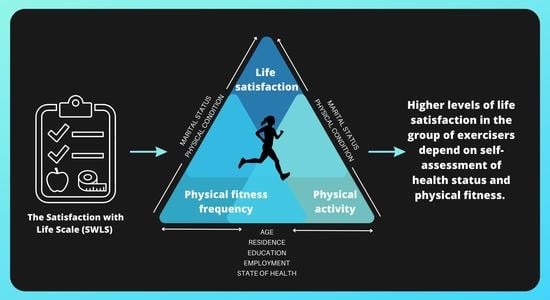
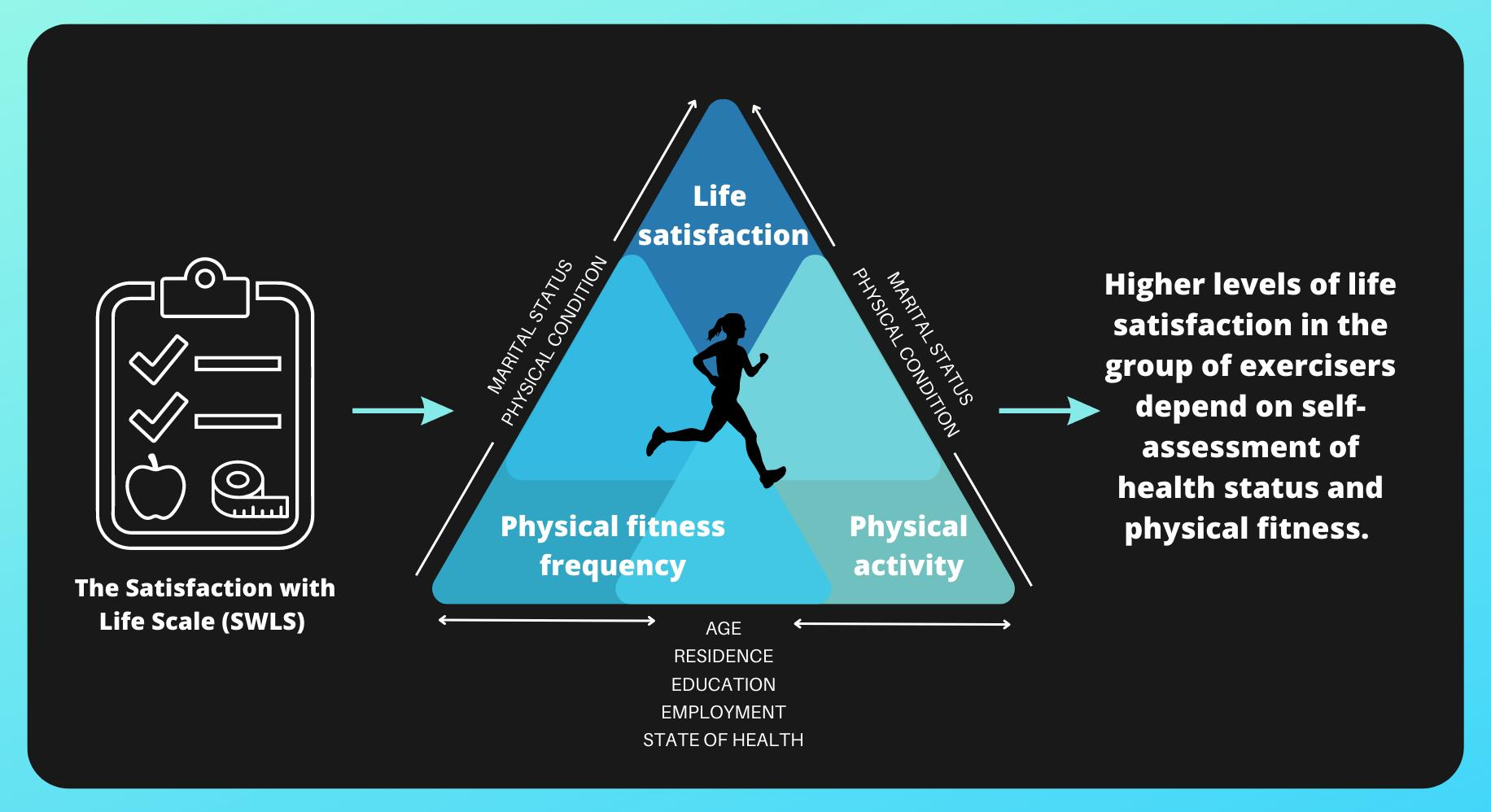
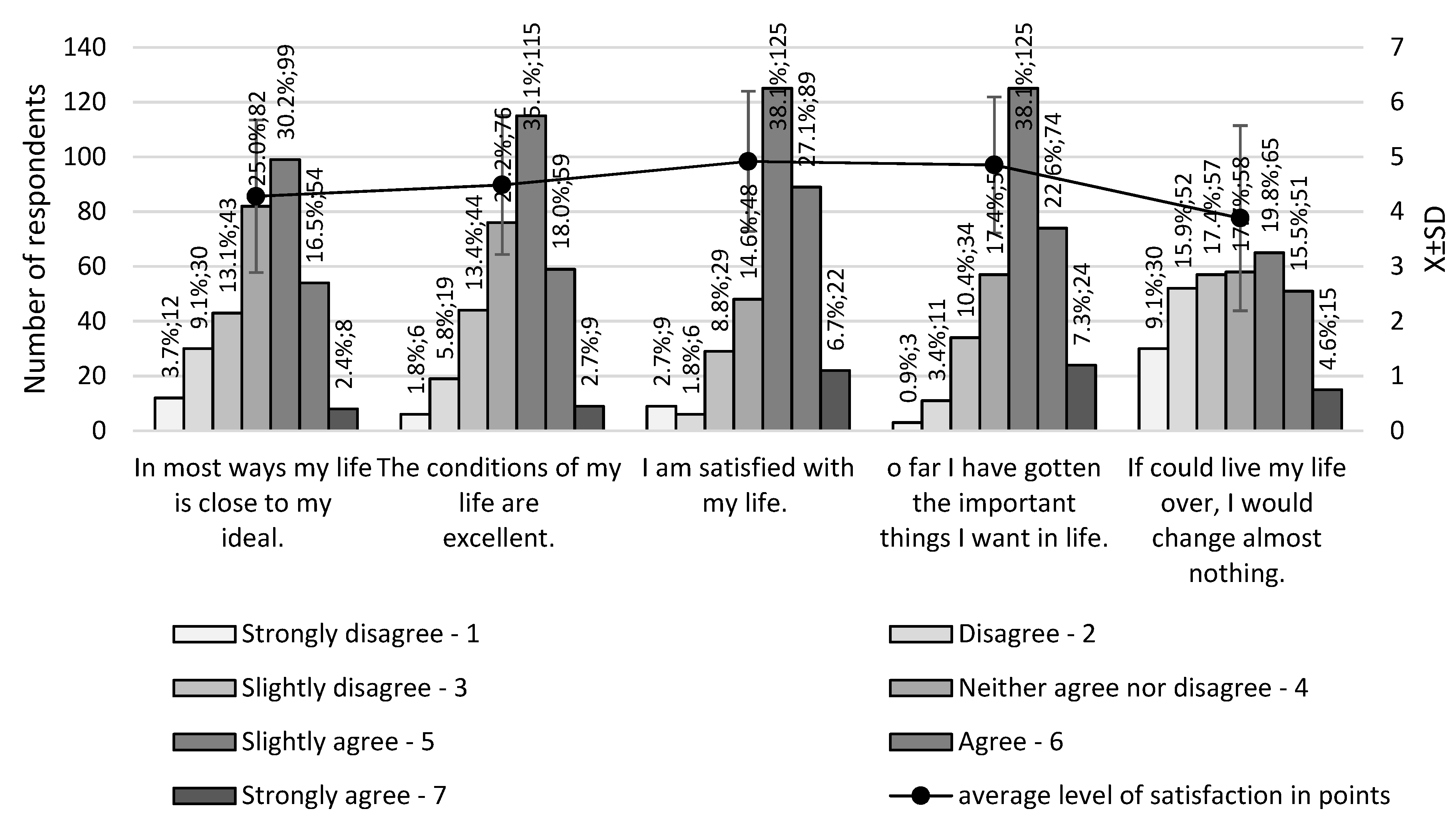
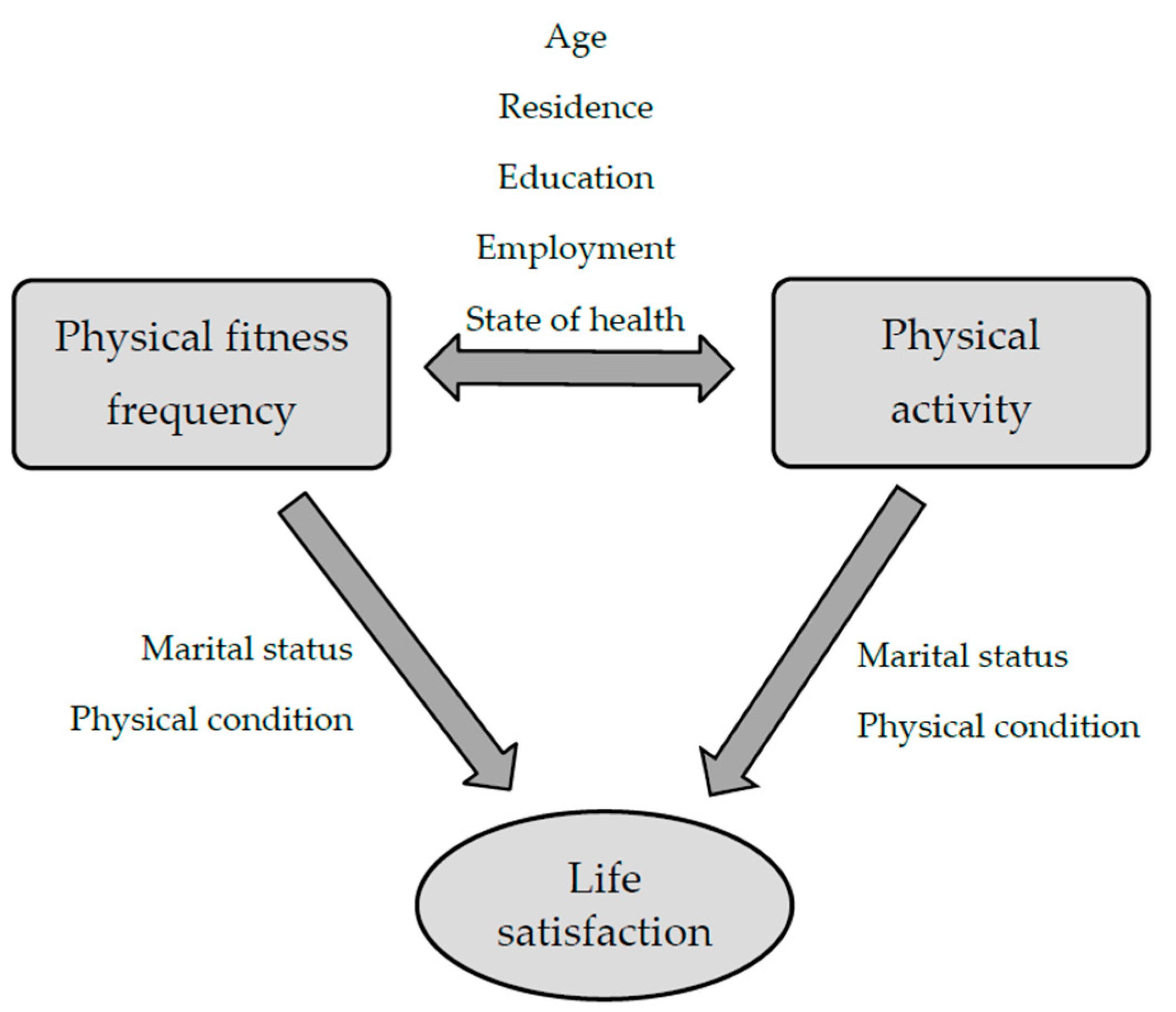
Background: Physical activity belongs to the group of health-promoting behaviors. It also affects emotional well-being, which is linked to a higher quality of life. Individuals who participate in physical activity practice regardless of age reap several positive health benefits that affect both body and mind. The aim of this study was to assess the life satisfaction of young adults in the context of physical activity undertaken. Material and methods: Study material was collected via anonymous questionnaire surveys among 328 young women (between the ages of 18 and 30 with secondary or higher education) in Poland. Satisfaction with life was assessed using The Satisfaction with Life Scale (SWLS). Statistical calculations were performed using the STATISTICA 13.3 program, Stat Soft Poland. Interdependence of unmeasured characteristics was assessed using the X2 test. Multivariate analysis for the direct effect of physical activity on life satisfaction (LS) and the influence of frequency of physical fitness on life satisfaction was performed based on regular OLS multiple regression. Results: The majority of respondents (74.7%) reported engaging in physical exercise. The mean level of life satisfaction was 4.5 ± 1.1 (on a scale of 1 to 7). Multivariate analysis showed no statistically significant relationship with life satisfaction in the physically active and inactive groups. It was observed that significantly higher levels of life satisfaction were found among respondents: married 5.1 ± 1.1, median = 5.2 (4.5–5.9) compared to single 4.4 ± 1.2, median = 4.6 (3.6–5.2) and in informal relationships 4.5 ± 1.0, median = 4.4 (3.8–5.2); p = 0.02; declaring rather good 4.5 ± 1.0, median = 4.6 (3.8–5.2) or very good health 4.8 ± 1.1, median = 5.0 (4.2–5.6) compared to rather poor 4.1 ± 1.0, median = 4.1 (3.4–4.8) and poor health 3.6 ± 1.4, median = 3.1 (2.6–4.4); p = 0.0006; rating their physical condition moderately 4.7 ± 1.1, median = 4.8 (4.0–5.6) or highly 4.9 ± 1.0, median = 5.0 (4.3–5.4) compared to rating their fitness low 4.2 ± 0.9, median = 4.2 (3.6–4.8); p < 0.0001. Multivariate analyses confirmed a significant effect of marital status and subjective assessment of physical condition on the average level of life satisfaction. Conclusions: Physical activity does not differentiate the level of life satisfaction in the studied group of young women. Marital status and the subjective assessment of physical condition are factors that have a significant impact on the level of satisfaction with the life of young women. Given the beneficial effect of physical activity on the sense of satisfaction with life, which can lead to an increase in its quality, physical activity should be promoted, not only among children but also in the group of young adults.
Keywords: physical activity; life satisfaction; young adults; SWLS physical activity; life satisfaction; young adults; SWLS
Graphical Abstract