

 Open Access
 - Article

29 Pages
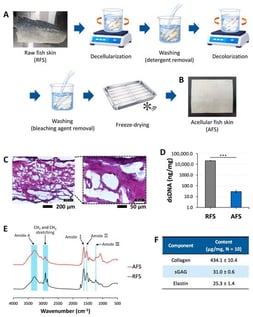
Although fish skin-derived acellular dermal matrices (ADMs) are emerging non-mammalian wound matrices, species beyond cod and tilapia remain underexplored. In this study, we prepared an ADM from Japanese amberjack (Seriola quinqueradiata) skin and evaluated its physicochemical properties, biocompatibility, and wound-healing performance in comparison with a commercial cod skin-derived matrix (Kerecis Omega3 Wound) and untreated wounds. The amberjack skin-derived ADM (AFS) was produced through decellularization, decolorization, and freeze-drying and was characterized by residual dsDNA content, extracellular matrix composition, microstructure, swelling behavior, tensile properties, cytocompatibility (ISO 10993-5), rat subcutaneous implantation (ISO 10993-6), and a 42-day porcine full-thickness wound model. AFS showed efficient decellularization, with residual dsDNA reduced to 29.2 ± 7.6 ng/mg, and retained a collagen-rich extracellular matrix with asymmetric porous microarchitecture, rapid swelling, a hydrated tensile strength of 2.4 ± 0.4 MPa, and acceptable cytocompatibility. In porcine wounds, AFS significantly enhanced early re-epithelialization compared with untreated wounds on Days 7 and 11 and reduced early expansion of the periwound tattooed area, while barrier-related parameters normalized over time. During remodeling, AFS-treated wounds showed greater total collagen and type I collagen deposition than untreated wounds, with no significant differences from the comparator. These findings support amberjack skin as a promising marine-derived source for resorbable wound-covering ADMs.
Mar. Drugs
17 October 2026
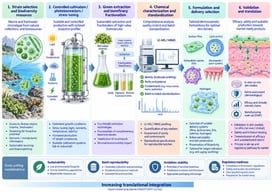
![PRISMA 2020 flow diagram of the study selection process. Adapted from [17].](https://mdpi-res.com/cdn-cgi/image/width=281%2Cheight=192/https://mdpi-res.com/marinedrugs/marinedrugs-24-00358/article_deploy/html/images/marinedrugs-24-00358-ag-550.jpg)
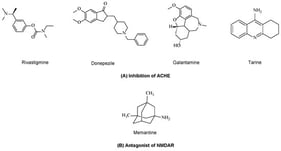
![Representative diversity of the phylum Cnidaria, showing the three subphyla: Anthozoa, Medusozoa, and Endocnidozoa. Phylogeny follows previous studies [7,10]. (a) Actinia equina; (b) Acropora palmata; (c) Palythoa caribaeorum; (d) Corynactis californica; (e) Pachycerianthus delwynae; (f) Stichopathes luetkeni; (g) Eunicella singularis; (h) Ptilosarcus gurneyi; (i) Carybdea marsupialis; (j) Chrysaora fuscescens; (k) Physalia physalis; (l) Calvadosia campanulata. Photograph sources and Creative Commons license attributions are provided in Table S1.](https://mdpi-res.com/cdn-cgi/image/width=281%2Cheight=192/https://mdpi-res.com/marinedrugs/marinedrugs-24-00306/article_deploy/html/images/marinedrugs-24-00306-g001-550.jpg)