


Abstract
Background and Objectives: Chronic low back pain (LBP) is frequently associated with recurrent exacerbations, incomplete symptom resolution, and functional limitations. This study aimed to characterize retrospectively reported symptom patterns over the preceding 12 months in hospitalized adults with chronic LBP and to examine the cross-sectional association between systemic comorbidity burden, assessed using the Age-Adjusted Charlson Comorbidity Index (ACCI), and the absence of sustained pain-free periods. Materials and Methods: This cross-sectional observational study included 97 consecutively enrolled hospitalized patients with chronic LBP (mean age 66.61 ± 10.01 years; 74.2% women; mean body mass index 33.14 ± 6.10 kg/m2). Symptom characteristics over the preceding 12 months, including exacerbation frequency and duration, inter-episode recovery, sustained pain-free periods, and perceived symptom evolution, were assessed using a structured, non-validated clinical questionnaire. Functional limitations were evaluated using a single self-reported item. Comorbidity burden was quantified using the ACCI. Descriptive statistics and 95% confidence intervals (CIs) were calculated, while the association between ACCI and the absence of sustained remission was examined using Spearman correlation and unadjusted binary logistic regression. Results: Frequent exacerbations were reported by 77.3% (95% CI 68.0–84.5) of participants, who experienced at least three episodes annually, including 42.3% reporting six or more episodes. Incomplete inter-episode recovery was reported by 84.5%, while 59.8% (95% CI 49.8–69.0) experienced no sustained pain-free period lasting at least one month. Self-reported functional limitations were present in 92.8% (95% CI 85.8–96.5) of participants, with 56.7% reporting moderate and 36.1% severe limitations. Overall, 66.0% retrospectively reported unchanged or worsening symptoms. The mean ACCI was 3.55 ± 1.75. The association between ACCI and the absence of sustained remission was weak and not statistically significant (Spearman ρ = 0.117, p = 0.253). Unadjusted logistic regression yielded an odds ratio of 1.17 per ACCI point (95% CI 0.92–1.49; p = 0.208). Conclusions: Hospitalized adults with chronic LBP frequently reported recurrent exacerbations, incomplete inter-episode recovery, absence of sustained remission, and substantial perceived functional limitations. No statistically significant association between ACCI and the absence of sustained remission was detected; however, the confidence interval does not exclude a potentially meaningful association. These findings highlight the importance of multidimensional clinical assessment, while the cross-sectional design and retrospective symptom reporting preclude causal, prognostic, or longitudinal interpretations.
1. Introduction
Low back pain (LBP) is the leading cause of disability worldwide, generating substantial direct costs through the disability it produces and considerable indirect social costs. The clinical classification of LBP is generally based on the duration of the painful episode [1]. Acute pain lasts less than four weeks, subacute pain persists between four and twelve weeks, and chronic pain exceeds twelve weeks [2].
Although these definitions are simple and operational, they reflect important changes in pain physiology, psychological responses, and patient behaviour. The distinction between the three phases is not merely temporal; it also signals a shift in the underlying pathophysiological mechanisms [3]. The transition from acute to chronic LBP manifests clinically through the emergence of the subacute phase, in which the initial peripheral nociceptive input is progressively replaced by an integrative, maladaptive pattern of systemic neuroinflammation, neuromuscular asynchrony, and cognitive–behavioural interference [4]. This intermediate stage constitutes a critical therapeutic window in which reversible biological and biomechanical links can be redirected through active interventions before central sensitisation becomes consolidated [2].
The clinical course of chronic low back pain (LBP) in adults is rarely linear, typically exhibiting highly heterogeneous and fluctuating trajectories. Rather than a simple, continuous state of pain, the clinical reality is dominated by frequent acute exacerbations (flare-ups) interspersed with periods of incomplete recovery. This cyclical pattern of stability and worsening creates a substantial cumulative burden, leading to a progressive decline in physical capacity. In older populations, these fluctuating pain trajectories severely impact functional independence, restricting basic activities of daily living and significantly reducing overall quality of life.
Understanding the factors that drive these complex clinical trajectories is essential for effective patient stratification and rehabilitation planning. While local structural and biomechanical changes play a role, the broader systemic context of the aging patient may heavily influence pain persistence and recovery potential. In particular, older adults frequently present with multiple co-occurring chronic conditions. It is therefore crucial to investigate whether the overall systemic comorbidity burden, quantified through standardized clinical indices such as the Charlson Comorbidity Index (CCI), is associated with less favorable clinical trajectories and the absence of sustained pain-free periods.
The chronification of LBP is therefore not simply a temporal prolongation of the acute episode, but the result of an interaction between biological, somatosensory, psychosocial, and functional factors [5,6,7]. Assessing the risk of chronification must include not only pain intensity but also the characteristics of its course, such as episode frequency, symptom duration, and functional recovery. Recent data show that the frequency and intensity of pain in the acute phase, together with baseline disability, are associated with an increased risk of transition to chronic LBP. Its course is influenced by psychosocial factors, systemic factors, comorbidities, and elevated disability, all of which are associated with an unfavourable prognosis [6].
The present study aimed to characterize retrospectively reported symptom patterns over the preceding 12 months in hospitalized adults with chronic low back pain (LBP), including exacerbation frequency, inter-episode recovery, sustained pain-free periods, perceived symptom evolution, and self-reported functional limitations. Additionally, we examined the cross-sectional association between systemic comorbidity burden, assessed using the Age-Adjusted Charlson Comorbidity Index (ACCI), and the absence of sustained pain-free periods.
For rigorous clinical systematisation, Table 1 synthesises the factors involved in this dynamic, encompassing somatic as well as psychosocial and iatrogenic elements [2].
Table 1.
Predictors and risk factors involved in the chronification of low back pain.
2. Materials and Methods
2.1. Study Design and Participants
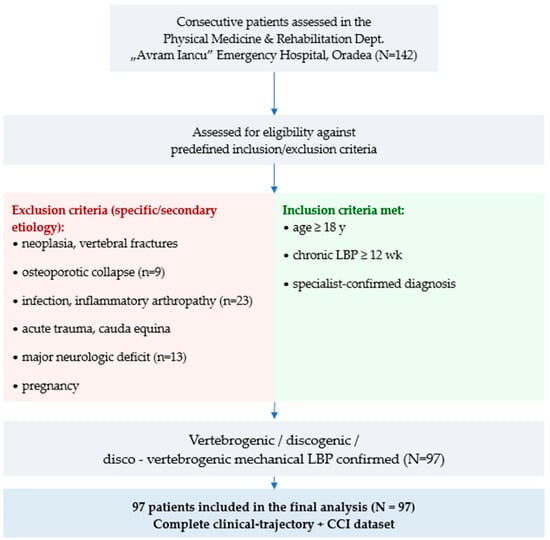
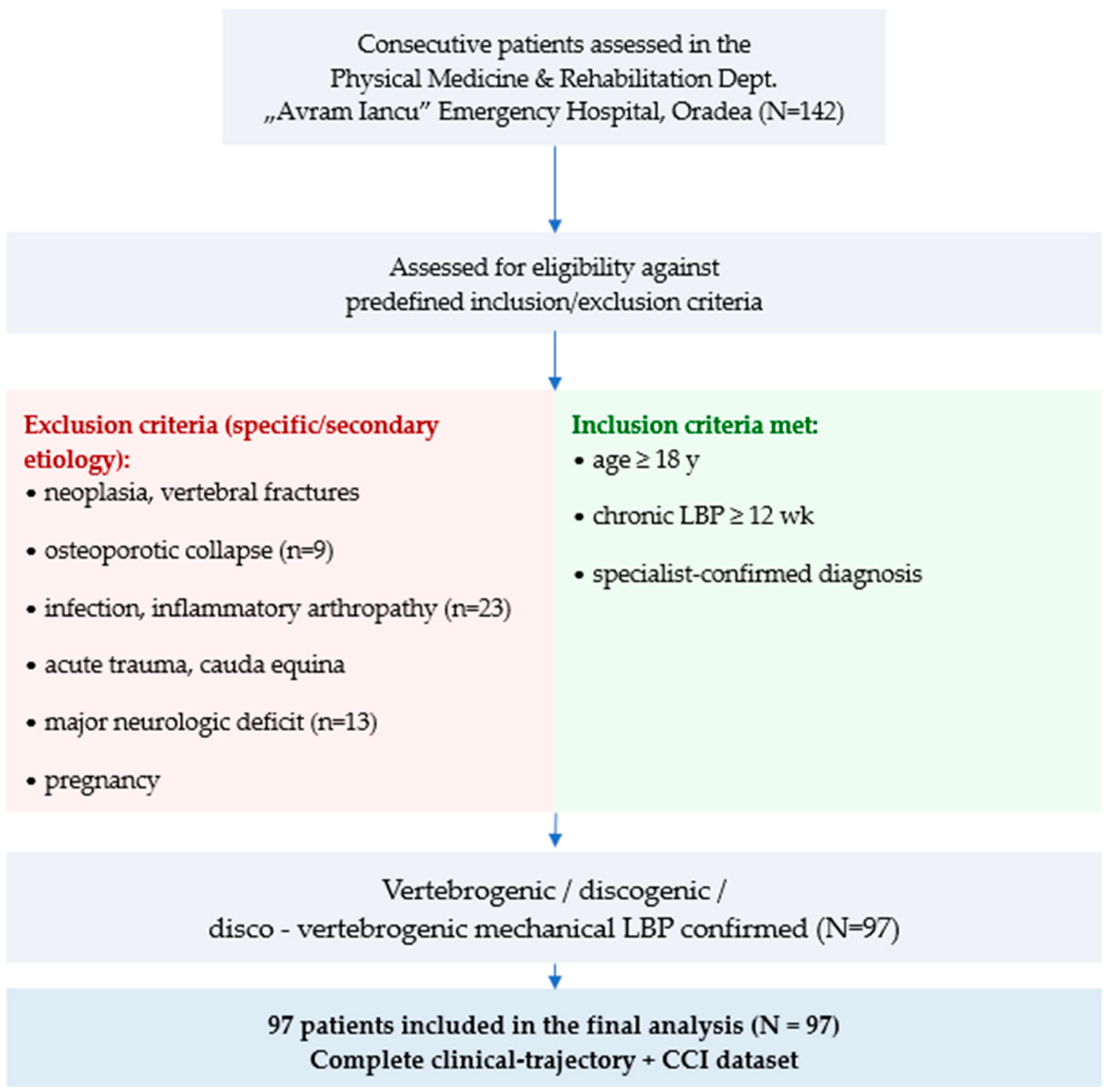
The present research was designed as a cross-sectional observational study. Participants were enrolled through consecutive sampling between January and December 2025. Recruitment took place in the Department of Physical Medicine and Rehabilitation of the “Avram Iancu” Emergency Clinical Hospital, Oradea, Romania. Each patient included in the study underwent a standardised clinical evaluation protocol supervised by specialised personnel. Of the initial cohort of 142 patients with lower back pain who were evaluated consecutively, 97 were included in the final analysis after applying the eligibility criteria (inclusion/exclusion) and excluding cases of nonparticipation or those with incomplete data. Of the 142 consecutive patients assessed for eligibility, 45 were excluded because of osteoporotic vertebral collapse (n = 9), infection or inflammatory arthropathy (n = 23), or major neurological deficits (n = 13). The remaining 97 patients met the eligibility criteria and were included in the final analysis.
The participant flow and application of eligibility criteria are summarised in Figure 1.
Figure 1.
Participant flow and eligibility (cross-sectional, consecutive sampling). The final analytical sample comprised 97 patients with a complete clinical trajectory and ACCI dataset.
2.2. Eligibility Criteria
Cohort selection was based on the cumulative fulfilment of the following inclusion criteria:
- Legal age of majority (at least 18 years completed at enrolment);
- Clinical confirmation of a diagnosis of chronic low back pain, defined anatomically as discomfort or pain located between the lower costal margin and the inferior gluteal folds (with possible radiation into the lower limbs), with continuous or recurrent persistence of at least 12 weeks;
- Certification of the diagnosis by a specialist in Physical Medicine and Rehabilitation, following corroboration of the anamnestic data, the objective clinical examination, and—where the clinical context required it—review of specialist imaging documents. Eligible mechanical phenotypes were vertebrogenic, discogenic, and disco-vertebrogenic.
Non-eligibility or subsequent exclusion from the sample was determined by the presence of any of the following: evidence of specific or secondary aetiologies of spinal pathology, including neoplastic processes (spinal tumours), osteoporosis with vertebral collapse, pain associated with internal diseases, infectious phenomena, systemic inflammatory arthropathies, acute trauma (vertebral body fractures), or features suggestive of cauda equina syndrome; major neurological dysfunction associated with severe motor deficits or impaired locomotion; and pregnancy.
2.3. Study Instrument—LBP Clinical Trajectory Questionnaire
The clinical characteristics of pain and its evolutionary dynamics were quantified using a structured anamnestic instrument (the LBP Clinical Trajectory Questionnaire). This tool was developed specifically for the current investigation by physical medicine and rehabilitation specialists. The items were derived from current clinical consensus regarding low back pain fluctuations and the established frameworks in pain trajectory literature [1]. The questionnaire consists of six scorable items (total score 0–14 points). The instrument captures the recalled 12-month history of acute episodes (frequency, duration, and evolution), the presence of asymptomatic (“no-pain”) windows, the general evolution of symptoms, and the current functional impact on daily activities. Specifically, Item 6 evaluated self-reported functional limitations, where ‘moderate’ restriction was defined as subjective difficulty completing daily household or professional tasks without stopping, and ‘severe’ restriction was defined as requiring physical assistance or being completely unable to perform basic activities of daily living. These categories represent self-reported perceived restrictions rather than objective, standardized disability severity tiers.
Crucially, this instrument has not undergone formal psychometric validation for reliability or construct validity. Therefore, its individual items are interpreted strictly as distinct descriptive clinical markers of symptom persistence rather than as an established aggregate predictive score. The complete questionnaire, including response categories and scoring instructions, is provided in Appendix A.
2.4. Comorbidity Assessment
Systemic morbidity burden was quantified with the Age-Adjusted Charlson Comorbidity Index (ACCI), which assigns weighted points according to age (1 point per decade for ages > 40 years) and to the severity of chronic conditions (e.g., type 2 diabetes mellitus, cardiovascular and renal disease). Higher scores denote greater systemic biological vulnerability.
2.5. Statistical Analysis
Statistical analyses were performed using IBM SPSS Statistics (Version 29.0; IBM Corp., Armonk, NY, USA), integrated with Python (Version 3.11). Data visualizations and figures were generated using the Matplotlib library (Version 3.8.3) within the Python environment. Descriptive statistics were used to summarize the study variables. Categorical variables were presented as absolute frequencies and percentages, with 95% confidence intervals where appropriate. Continuous variables were summarized using means and standard deviations or medians and interquartile ranges, depending on their distribution. The clinical relevance of this comparison is purely exploratory, serving as a baseline mathematical check to verify that patient clustering within specific symptom tiers (such as high flare frequency) was significantly non-random, rather than representing a clinical diagnostic standard.
The association between the ACCI and the absence of sustained remission was examined with the non-parametric Spearman rank correlation coefficient (ρ). Univariable binary logistic regression was performed to assess the unadjusted association with the absence of a sustained one-month pain-free window (“no-pain” = score 2) as the target event; results are reported as odds ratios (OR) with 95% CI, model deviance, the omnibus likelihood-ratio χ2 test, and Nagelkerke R2. A two-sided p-value < 0.05 was considered statistically significant. Reporting follows the STROBE recommendations for observational studies.
2.6. Ethical Considerations
The study was conducted in accordance with the Declaration of Helsinki and approved by the Institutional Review Board/Ethics Committee of the Clinical Emergency Hospital “Avram Iancu”, Oradea, Romania (Approval No. 1118263/30 May 2024). Written informed consent was obtained from all participants.
3. Results
3.1. Baseline Characteristics
The descriptive analysis of the 97 patients revealed a predominantly female cohort (74.2%; 95% CI 64.7–81.9), with a mean age of 66.61 ± 10.01 years and a mean body-mass index (BMI) of 33.14 ± 6.10 kg/m2, indicating a prevalence of grade I obesity. Of the 97 participants, 32 patients (32.98%) were 60 years of age or older, 22 subjects (22.68%) were between 60 and 65 years of age, while 43 (44.32%) were 65 years of age or older. Pain of vertebrogenic origin was dominant (67.0%; 95% CI 57.2–75.6), suggesting age-related degenerative changes, whereas the excess weight identified represents an important metabolic factor in the chronification of LBP through pro-inflammatory mechanisms (Table 2).
Table 2.
Baseline characteristics of the study population (N = 97).
The comorbidity burden, quantified by the ACCI, showed a mean value of 3.55 ± 1.75 points, ranging from 0 (no indexed comorbidities) to 8. This reflects a cohort with a moderate-to-severe associated pathological burden, typical of an elderly population hospitalised for rehabilitation, and indicates elevated systemic biological vulnerability.
3.2. Exacerbation Frequency
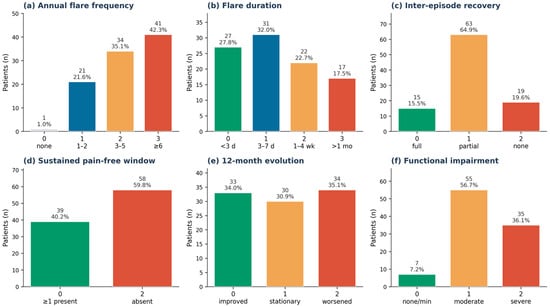
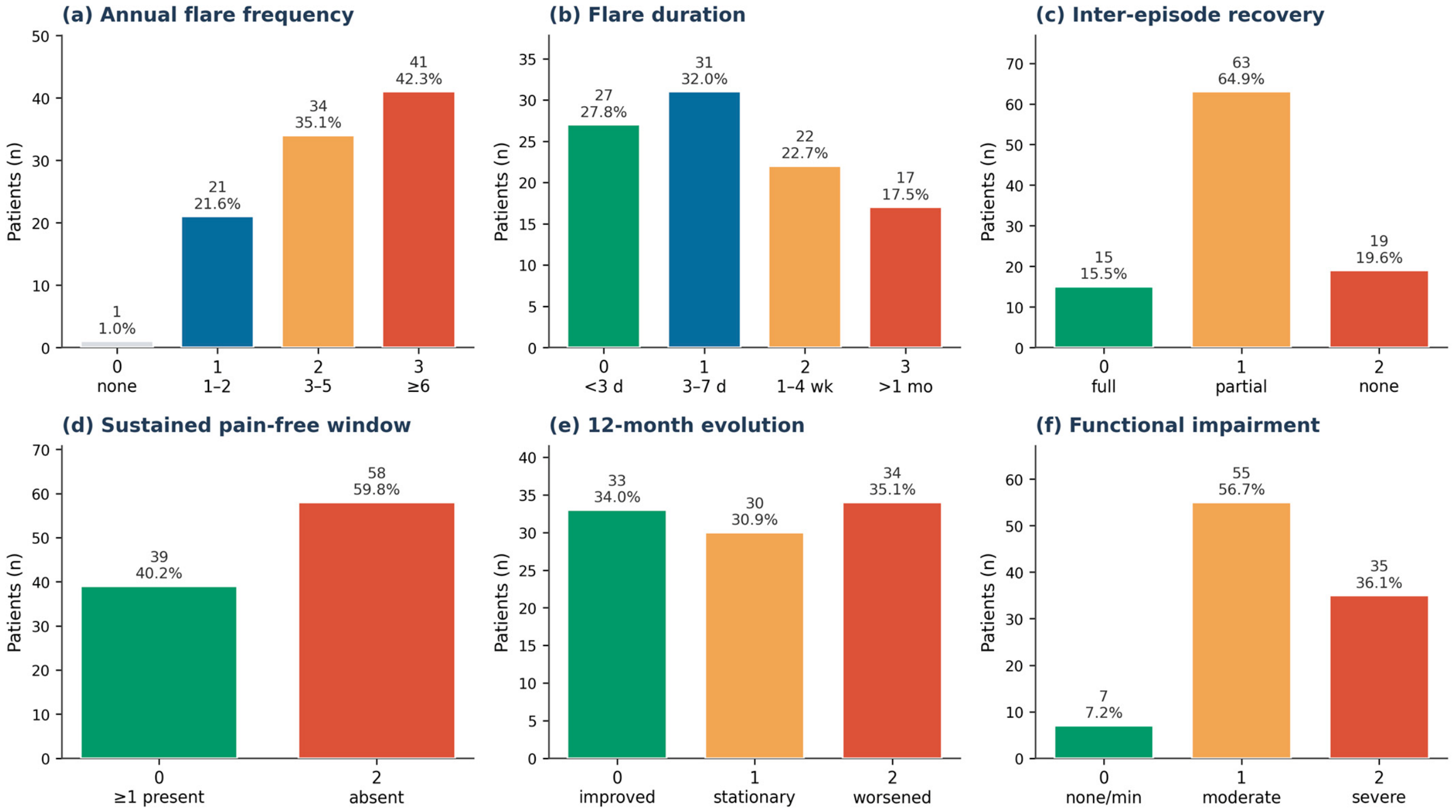
Analysis of exacerbation frequency over the preceding 12 months revealed a predominantly recurrent pattern. Only a single patient (1.03%) reported no exacerbation (score 0). By contrast, 42.3% (n = 41; 95% CI 32.9–52.2) presented a highly recurrent profile with six or more major flares (score 3), 35.1% (n = 34) experienced three to five episodes (score 2), and 21.6% (n = 21) reported one to two episodes (score 1). Cumulatively, 77.3% (95% CI 68.0–84.5) experienced at least three exacerbations, indicating major clinical instability (Figure 2a).
Figure 2.
Clinical trajectory profile of the cohort (N = 97): (a) annual flare frequency; (b) flare duration; (c) inter-episode recovery; (d) sustained pain-free window; (e) 12-month evolution; (f) functional impairment. Bars show absolute counts with the corresponding percentages.
3.3. Duration of Exacerbations
Transient episodes lasting under three days (score 0) were reported by 27.8% (n = 27), while the largest proportion, 32.0% (n = 31), reported flares lasting three to seven days (score 1). A concerning proportion presented prolonged exacerbations: 22.7% (n = 22) experienced pain persisting for one to four weeks (score 2), and 17.5% (n = 17) had refractory flares exceeding one month (score 3). Cumulatively, 40.2% (95% CI 31.0–50.2; scores 2 and 3) faced long-lasting exacerbations exceeding the threshold of a simple acute flare (Figure 2b).
3.4. Inter-Episode Recovery Pattern
Analysis of recovery between painful episodes indicated a major recovery deficit: only 15.5% (n = 15) reported total remission (score 0), whereas 64.9% (n = 63) reported partial recovery (score 1) and 19.6% (n = 19) reported no meaningful recovery (score 2). An overwhelming 84.5% (95% CI 76.0–90.4; scores 1 and 2) therefore lacked full inter-episode recovery (Figure 2c).
3.5. Sustained Remission (Pain-Free “No-Pain” Windows)
A majority of 59.8% (n = 58; 95% CI 49.8–69.0) reported the complete absence of any remission period of at least one month (score 2), facing a persistent or continuously fluctuating pain picture across the 12 months. Conversely, 40.2% (n = 39) experienced at least one prolonged symptom-free interval (score 0) (Figure 2d).
3.6. Long-Term Evolutionary Trajectory
A progressive-ascending trajectory with worsening symptoms (score 2) was reported by 35.1% (n = 34); the picture was stationary (score 1) for 30.9% (n = 30); and improvement (score 0) was felt by 34.0% (n = 33). Cumulatively, for almost two-thirds of the sample (66.0%; 95% CI 56.1–74.6; scores 1 and 2), the pathology followed an unfavourable (stationary or progressive) trajectory (Figure 2e).
3.7. Functional Impact
Only 7.2% (n = 7) reported minimal or absent impact (score 0). By contrast, 56.7% (n = 55; 95% CI 46.8–66.1) faced moderate functional limitation (score 1), and a critical 36.1% (n = 35; 95% CI 27.2–46.0) reported self-reported severe functional limitations (score 2). Cumulatively, an overwhelming 92.8% (95% CI 85.8–96.5; scores 1 and 2) presented self-reported functional limitations, highlighting the highly prevalent perceived limits on daily activities (Figure 2f).
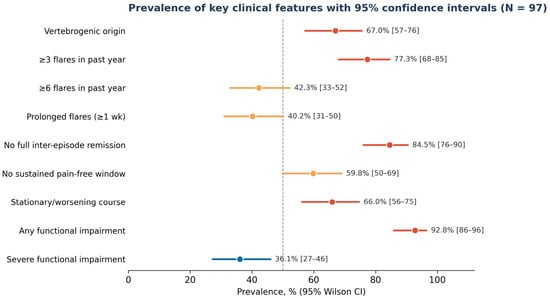
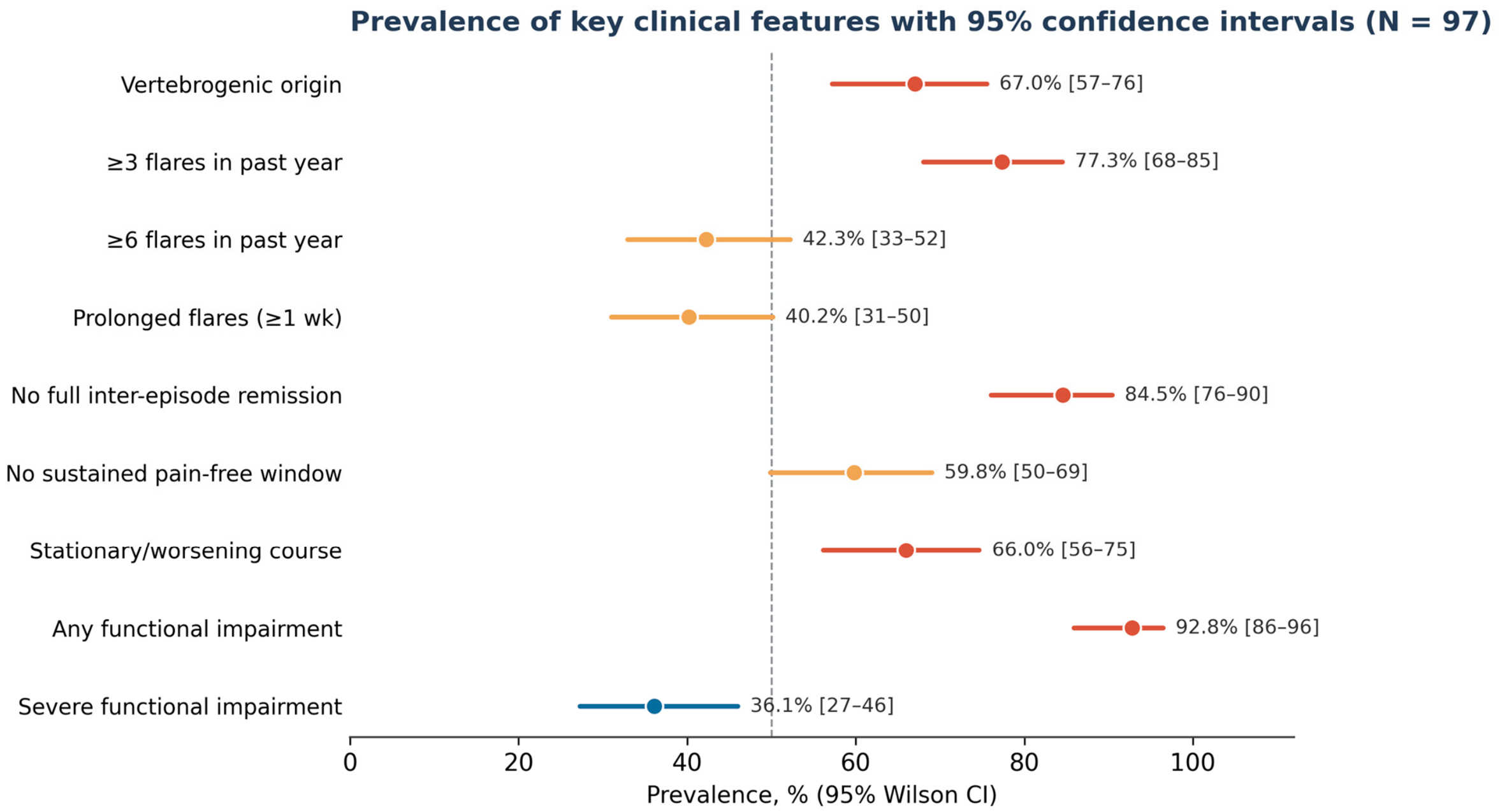
An overview of the prevalence of the principal clinical features, each with its 95% confidence interval, is provided in Figure 3; most instability and disability indicators cluster well above the 50% reference line.
Figure 3.
Prevalence of key clinical features with 95% Wilson confidence intervals (N = 97). The dashed line marks the 50% reference. Most instability and disability indicators lie well above 50%, whereas comorbidity did not translate into a corresponding observed association (Section 3.8).
3.8. Association Between Comorbidity Burden and Remission
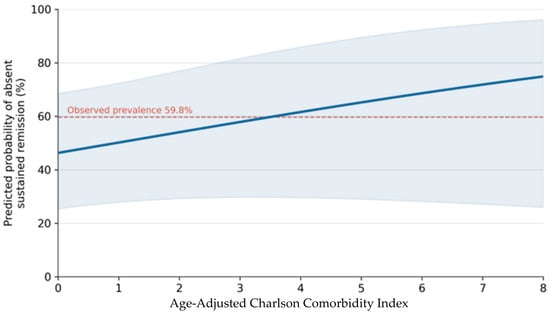
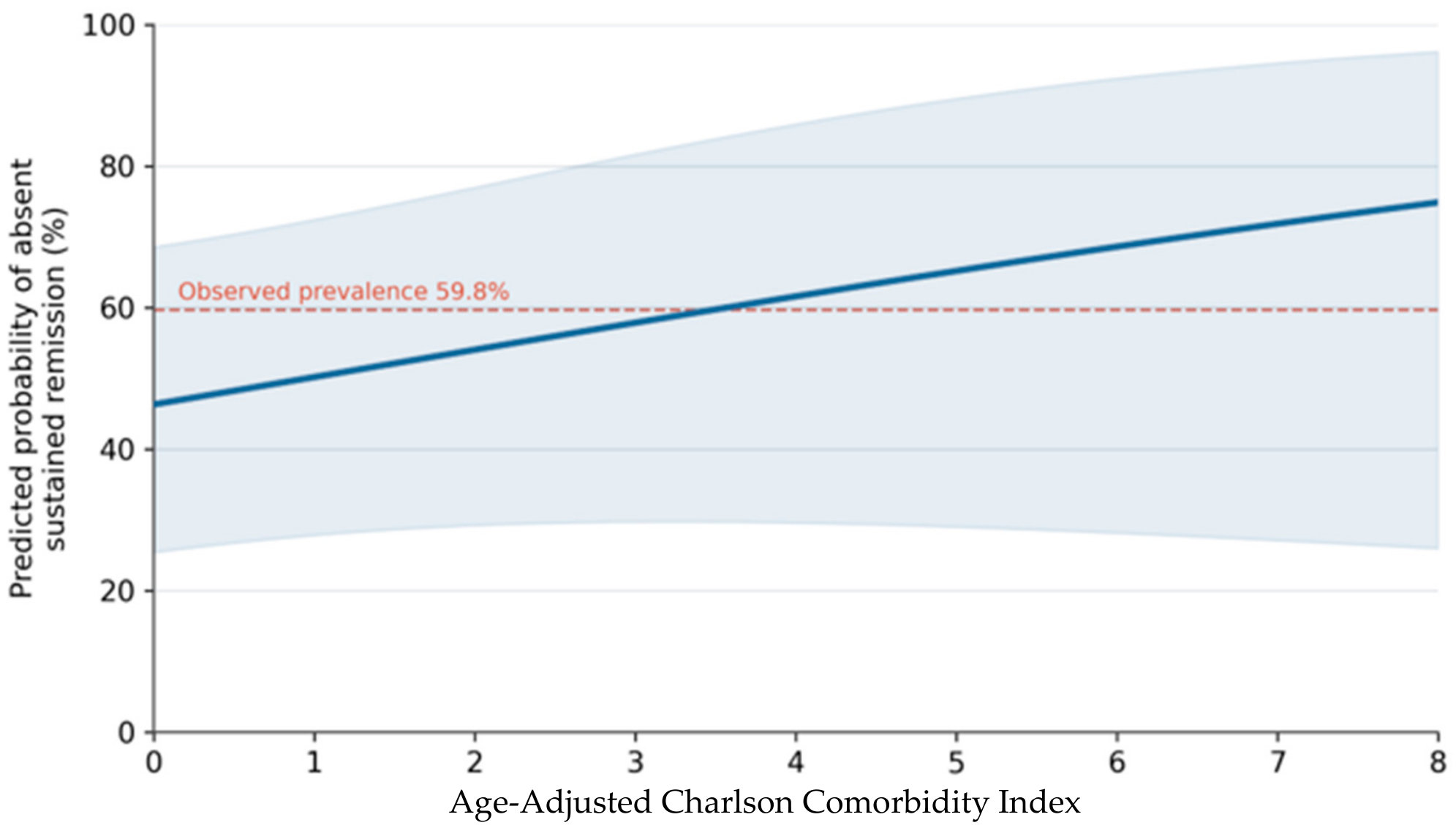
To assess the association between systemic morbidity burden and the absence of sustained asymptomatic windows, the Spearman rank correlation coefficient was applied between the ACCI and the “no-pain” item. Spearman rank correlation analysis showed a weak positive, non-significant association between the ACCI and the absence of sustained pain-free periods (ρ = 0.117, p = 0.253; Table 3). Unadjusted binary logistic regression was performed with the absence of a sustained one-month pain-free period as the dependent variable and ACCI as the sole explanatory variable. The analysis yielded an odds ratio of 1.17 per ACCI point (95% CI 0.92–1.49; p = 0.208). The overall model was not statistically significant (likelihood-ratio χ2(1) = 1.641, p = 0.200), with a Nagelkerke R2 of 0.023 (Table 4). The estimated probabilities of absent sustained remission across the observed ACCI range are illustrated in Figure 4.
Table 3.
Spearman rank correlation between the Age-Adjusted Charlson Comorbidity Index (ACCI) and the absence of sustained pain-free periods.
Table 4.
Unadjusted binary logistic regression analysis of the association between the Age-Adjusted Charlson Comorbidity Index (ACCI) and the absence of sustained remission.
Figure 4.
The solid blue line represents the estimated probability of the absence of a sustained one-month pain-free period across the observed ACCI range, based on unadjusted binary logistic regression. The shaded area represents the 95% confidence interval. The dashed horizontal line indicates the observed prevalence of absent sustained remission (59.8%).
4. Discussion
The demographic and clinical characteristics of the cohort provide relevant context for interpreting the observed symptom patterns. The mean age was 66.61 ± 10.01 years, and 67.0% of participants were classified as having predominantly vertebrogenic low back pain. However, this classification does not establish that structural degeneration was responsible for symptom persistence or the retrospectively reported worsening of symptoms. Chronic low back pain is a multifactorial condition, and structural, metabolic, psychological, and neurophysiological mechanisms may contribute to its clinical presentation. Their relative contributions were not directly investigated in the present study and therefore remain hypothetical explanations rather than conclusions supported by our data.
4.1. Retrospectively Reported Symptom Profiles and Fluctuations
The present study highlights a highly recurrent symptom profile within this hospitalized cohort, where 77.3% of participants reported at least three LBP exacerbations. The frequent exacerbations and incomplete inter-episode recovery reported by participants indicate a substantial burden of recurrent and persistent symptoms within this hospital-based cohort. However, these findings are based on retrospective reports covering the preceding 12 months and should not be interpreted as prospectively documented symptom trajectories or evidence of progressive clinical deterioration. Longitudinal studies have demonstrated the heterogeneous and fluctuating nature of low back pain, but the present findings remain descriptive and cannot establish individual patterns of clinical progression [6,7,8,9].
Our descriptive findings line up with recent community-based prospective data. Pfeiffer et al. (2024) [9] identified distinct, non-linear trajectories over one year following an LBP episode—including fluctuating and persistent moderate pain phenotypes—where nearly half of the participants experienced less favorable, non-recovering pathways. Similarly, Burke et al. [7] demonstrated that early pain frequency and recurrence profiles provide critical prognostic info that cross-sectional intensity scales fail to capture.
However, because our data rely on a 12-month recall window, these results must be interpreted with caution. Longitudinal monitoring with weekly diaries has demonstrated that retrospective patient recollections accurately mirror cumulative pain intensity but may over- or underestimate the precise episodic and fluctuating nature of past flares. Furthermore, the persistent absence of sustained pain-free periods should be interpreted as a clinical marker of symptom persistence rather than direct evidence of central sensitization or nociplastic pain mechanisms, which require specific clinical and neurophysiological assessments [10,11,12,13].
4.2. Perceived Functional Limitations in Hospitalized Adults
Self-reported functional limitations represent one of the most prominent characteristics of our cohort: 92.8% of participants reported perceived daily activity restrictions, with 36.1% experiencing major difficulties in maintaining their functional independence. The relationship between pain and disability is complex and multidimensional, influenced by symptom intensity and persistence, physical capacity, psychological factors, and social context [8,14]. In older adults with chronic LBP, the impact of pain extends to mobility and activities of daily living, contributing to functional decline and reduced independence [15,16,17]. Recent longitudinal studies indicate that pain intensity, its interference with daily activities, and physical disability are among the factors that differentiate favourable trajectories from those characterised by persistent pain [9,18]. The self-reported functional limitations observed in our cohort are consistent with previous findings describing the relationship between chronic LBP, reduced physical capacity, frailty, and loss of independence [14,15,19,20].
Psychological factors may amplify this relationship, although their contribution differs between individuals and disease stages. Catastrophising, fear-avoidance beliefs, and kinesiophobia are frequently associated with disability in persistent LBP and are targets of contemporary rehabilitation interventions [21,22]. A 2024 meta-analysis showed that cognitive-functional therapy can reduce disability and fear-avoidance beliefs, although the certainty of evidence remains low [21]; a meta-analysis of digital self-management interventions demonstrated improvements in disability, catastrophising, and avoidance behaviours [22]. These data justify including psychological factors in a multidimensional assessment, without presuming the presence of kinesiophobia in our cohort, as it was not measured directly.
4.3. Age-Adjusted Charlson Comorbidity Burden and Symptom Persistence
Evaluating the cross-sectional relationship between systemic comorbidities and pain persistence was a primary objective of this study. The cohort had a mean Age-Adjusted Charlson Comorbidity Index (ACCI) of 3.55 ± 1.75, reflecting the combined contribution of age and comorbidity burden. While multimorbidity is highly prevalent in older adults with chronic LBP and frequently drives healthcare utilization, our unadjusted univariate logistic regression revealed a positive but statistically non-significant association between ACCI and the absence of sustained remission (unadjusted OR = 1.17, 95% CI 0.92–1.49, p = 0.208) [22,23,24].
This finding must be interpreted with high statistical caution. The wide 95% confidence interval crosses unity, reflecting a limited statistical precision driven by our sample size (N = 97). Therefore, our failure to capture a significant p-value must not be misused to claim a complete absence of an association. The upper confidence limit indicates that the data remain compatible with a potentially clinically relevant positive association.
Furthermore, because this univariate model was unadjusted, we cannot rule out the confounding effects of age, sex, or metabolic profiles—such as the grade I obesity indicated by our sample’s mean BMI of 33.14 ± 6.10 kg/m2. The limited exploratory value of an aggregate metric like the ACCI in this study aligns with data from the BACE cohorts, which suggest that global comorbidity indices often wash out the distinct impacts of specific conditions. Overlapping musculoskeletal and psychological comorbidities (such as concurrent osteoarthritis or depression) typically display much stronger, direct ties to back pain persistence and functional restrictions than a summed index of systemic diseases. As ACCI incorporates age, its association with symptom persistence cannot be attributed solely to comorbidity burden. The absence of an age-independent CCI sensitivity analysis further limits this interpretation.
4.4. Clinical Implications
From a clinical perspective, the results suggest that assessing LBP in the elderly patient should go beyond the mere quantification of pain intensity. Exacerbation frequency, episode duration, inter-episode recovery, the existence of asymptomatic periods, and functional impact may provide additional information on clinical course [8]. Prospective studies show that initial intensity and a history of low-back episodes are associated with less favourable subsequent trajectories [8], and that pain frequency helps identify people with a higher probability of transition to chronic LBP [6]. Comorbidity assessment remains relevant, particularly in the elderly patient, but our results suggest that although comorbidity assessment remains clinically relevant, the present findings do not establish the usefulness of ACCI as a standalone prognostic tool for symptom persistence in patients with chronic LBP. Separate assessment of musculoskeletal, metabolic, cardiovascular, and psychological comorbidities may provide more clinically relevant information than a global score [23,24]. This is concordant with the current orientation towards individualised, stratified LBP management [2,4]. The very high level of perceived daily activity restrictions observed also supports interventions oriented towards maintaining activity, restoring function, and reducing maladaptive pain-related behaviours. Recent evidence supports integrating physical exercise, education, and cognitive-functional interventions in the management of persistent LBP, although the magnitude of effects and the certainty of evidence differ among interventions [21]. For the elderly, these strategies must be individualised according to functional capacity and comorbidity profile [24,25].
4.5. Principal Significance of the Study
The principal contribution of the study lies in integrating exacerbation frequency, inter-episode recovery, asymptomatic periods, and self-reported functional limitations with the assessment of comorbidity burden through the ACCI. The results highlight a high frequency of recurrences and perceived daily activity restrictions. No statistically significant association was detected between ACCI and the absence of sustained remission. This does not diminish the relevance of multimorbidity in LBP; rather, it suggests that the type and clinical impact of individual comorbidities may be more informative than their aggregate burden in a global score [24,26]. Future prospective studies should integrate repeated monitoring of pain and disability with individual assessment of comorbidities, frailty, and psychosocial factors and, where possible, with phenotyping of nociceptive and nociplastic mechanisms [4].
4.6. Strengths and Limitations
A strength of the study is the multidimensional characterisation of LBP, integrating exacerbation frequency, inter-episode recovery, pain-free periods, and functional impact with a standardised assessment of comorbidity burden through the ACCI. This permits a more nuanced description of symptom persistence than the isolated assessment of pain intensity and is concordant with the recent literature highlighting the heterogeneity of LBP trajectories [3,27]. The reporting of key proportions with 95% confidence intervals improves the precision and transparency of the descriptive findings.
The results must, however, be interpreted in the context of several limitations. First, the study is highly susceptible to recall bias, as data regarding annual flare-up frequency, perceived inter-episode recovery, and symptom durations over the preceding 12 months were collected retrospectively based on patient recollection. In this cohort, this retrospective reporting can lead to under- or overestimation of past pain patterns compared to prospective weekly diaries. Second, our sample was recruited via consecutive sampling from a single specialized inpatient hospital department of Physical Medicine and Rehabilitation, and the hospital-based recruitment setting may have selected patients with greater clinical complexity, potentially limiting the generalizability of the findings to community-dwelling individuals with chronic low back pain.
The cross-sectional design does not allow causal or temporal relationships to be established. Furthermore, the relatively small sample size (N = 97) may have limited statistical power, particularly for detecting associations of small magnitude. Accordingly, the non-significant association between ACCI and the absence of sustained remission should be interpreted cautiously, as the 95% confidence interval (OR 0.92–1.49) does not exclude a potentially clinically relevant positive association. The logistic regression analysis was univariable and unadjusted, with ACCI as the sole explanatory variable; therefore, potential confounding factors were not separately accounted for. Because ACCI incorporates age, the absence of a sensitivity analysis using the original, non-age-adjusted Charlson Comorbidity Index (CCI) further limits the interpretation of the respective contributions of age and comorbidity burden [28,29]. The trajectory questionnaire may be a useful clinical instrument but requires prospective validation before it can be considered a prognostic tool. Our logistic regression analysis was unadjusted and restricted to a single explanatory metric (ACCI). Because we did not build a multivariable model controlling for potential confounding factors such as age, sex, and BMI, we cannot definitively rule out the masking of minor associative signals or verify true prognostic independence. Future larger-scale trials should utilize fully adjusted multivariable modeling. The lack of a sensitivity analysis using the original CCI limits the ability to distinguish age-related effects from those of comorbidity burden.
Furthermore, a major limitation of this study is that the 12-month trajectory questionnaire has not been subjected to formal psychometric validation, meaning its internal consistency and test–retest reliability remain unknown. Consequently, it must not be viewed as an established prognostic tool, and its results should be interpreted strictly within a descriptive, exploratory framework.
Another prominent limitation is that functional impact was captured via a single, non-validated ordinal item rather than established patient-reported outcome measures (PROMs) such as the Oswestry Disability Index (ODI) or the Roland-Morris Disability Questionnaire (RMDQ). Consequently, our findings of 92.8% functional restriction must be interpreted strictly as self-reported functional limitations rather than standardized clinical categories of disability severity. This measurement constraint prevents direct comparison of our cohort’s disability levels with broader international populations, and future studies must mandate the use of ODI or RMDQ to ensure standardized functional phenotyping.
The ACCI, as an aggregate measure of multimorbidity, does not specifically capture the individual contribution of different comorbidities to pain and disability [1,27,28].
Finally, the study did not include specific assessments of nociceptive processing; central sensitisation or nociplastic mechanisms cannot be inferred directly from symptom persistence or the absence of pain-free periods [5,29].
Despite these limitations, the integration of symptom-trajectory characteristics with functional disability and comorbidity burden is a distinctive element of the study. The recent literature highlights the need for multidimensional prognostic models that integrate clinical, functional, and individual variables and are validated prospectively before clinical implementation. Our results thus provide a basis for prospective, multicentre studies with larger samples and repeated longitudinal assessments.
5. Conclusions
The present study highlights a highly recurrent and persistent clinical profile of chronic low back pain in this selected hospitalized older population. The cohort was characterized by a high frequency of retrospectively reported exacerbations, a marked deficit in full inter-episode recovery, and highly prevalent self-reported functional limitations that significantly impact perceived daily independence. Regarding the systemic comorbidity burden, the Charlson Comorbidity Index was not significantly associated with the absence of sustained pain-free periods in the unadjusted statistical analysis, and it explained very little of its variability. Given the cross-sectional and exploratory nature of this study, these descriptive findings cannot establish causal relationships or predict long-term rehabilitation outcomes. Future prospective investigations using longitudinally validated outcome measures and appropriate statistical adjustments for relevant confounding factors are strictly required to better characterize these clinical trajectories and guide targeted therapeutic interventions.
Author Contributions
Conceptualization, S.T. and A.G.; methodology, S.T., C.D.N.C. and A.G.; software, L.C.N. and C.D.N.C.; validation, S.T., C.D.N.C. and M.L.C.; formal analysis, S.T., C.D.N.C. and M.L.C.; investigation, S.T., C.D.N.C. and A.G.; resources, S.T., C.D.N.C. and A.G.; data curation, S.T., C.D.N.C. and A.G.; writing—original draft preparation, S.T., C.D.N.C. and A.G.; writing—review and editing, L.C.N., and M.L.C.; visualization, S.T., C.D.N.C., M.L.C., L.C.N. and A.G.; supervision, C.D.N.C. and M.L.C.; All authors have read and agreed to the published version of the manuscript.
Funding
The APC was funded by the University of Oradea, Romania.
Institutional Review Board Statement
The study was conducted in accordance with the Declaration of Helsinki and approved by the Ethics Committee of the Clinical Emergency Hospital “Avram Iancu”, Oradea, Romania (Approval No. 1118263/30 May 2024).
Informed Consent Statement
Informed consent was obtained from all subjects involved in the study. Written informed consent has been obtained from the patients to publish this paper.
Data Availability Statement
The data presented in this study are available from the corresponding authors upon reasonable request. The data are not publicly available due to privacy and ethical restrictions.
Acknowledgments
The authors would like to thank the University of Oradea, Oradea, Romania, for supporting the APC.
Conflicts of Interest
The authors declare no conflicts of interest.
Abbreviations
The following abbreviations are used in this manuscript:
| ACCI | Age-Adjusted Charlson Comorbidity |
| LBP | low back pain |
| CCI | Charlson Comorbidity Index |
| CI | confidence interval |
| OR | odds ratio |
| BMI | body-mass index |
| SD | standard deviation |
| AIC | Akaike information criterion |
| fMRI | functional magnetic resonance imaging |
| MRI | magnetic resonance imaging |
| OIH | opioid-induced hyperalgesia |
| CBT | cognitive-behavioural therapy |
| STROBE | Strengthening the Reporting of Observational Studies in Epidemiology |
Appendix A
- Frequency of flare-upsIn the last year, how often have you experienced episodes of worsening back pain?
- ☐
- Never (0)
- ☐
- 1–2 times (1)
- ☐
- 3–5 times (2)
- ☐
- ≥6 times (3)
- Duration of flare-upsHow long did these episodes usually last?
- ☐
- <3 days (0)
- ☐
- 3–7 days (1)
- ☐
- 1–4 weeks (2)
- ☐
- >1 month (3)
- Recovery between episodesBetween episodes, did the pain return to its usual baseline level?
- ☐
- Yes, completely (0)
- ☐
- Partially (1)
- ☐
- No, the pain increased over time (2)
- Pain-free periodsHave you had back pain-free periods lasting at least one month?
- ☐
- Yes (0)
- ☐
- No (2)
- Progression over timeHow has your back pain progressed over the last years?
- ☐
- It has improved (0)
- ☐
- It has remained the same (1)
- ☐
- It has worsened (2)
- Functional impactHow much does your back pain currently affect your daily activities?
- ☐
- Little or not at all (0)
- ☐
- Moderately (1)
- ☐
- A lot (2)
Total score = sum of points (range 0–14) Suggested interpretation- 0–3 → episodic pain/low risk of chronicity
- 4–7 → moderate risk of chronicity
- ≥8 → chronic pain/high risk of persistence
References
- Von Korff, M.; DeBar, L.L.; Krebs, E.E.; Kerns, R.D.; Deyo, R.A.; Keefe, F.J. Graded chronic pain scale revised: Mild, bothersome, and high-impact chronic pain. Pain 2020, 161, 651–661. [Google Scholar] [CrossRef] [Scilit] [PubMed]
- Migliorini, F.; Schäfer, L.; Simeone, F.; Memminger, M.K.; Eschweiler, J.; Vaishya, R. Evidence-based insights into the transition from acute to chronic non-specific mechanical low back pain. Eur. J. Med. Res. 2026, 31, 522. [Google Scholar] [CrossRef] [Scilit]
- Airaksinen, O.; Brox, J.I.; Cedraschi, C.; Hildebrandt, J.; Klaber-Moffett, J.; Kovacs, F.; Mannion, A.F.; Reis, S.; Staal, J.B.; Ursin, H.; et al. Chapter 4. European guidelines for the management of chronic nonspecific low back pain. Eur. Spine J. 2006, 15, S192–S300. [Google Scholar] [CrossRef] [Scilit] [PubMed]
- Nijs, J.; Kosek, E.; Chiarotto, A.; Cook, C.; Danneels, L.; Fernandez-de-las-Penas, C.; George, S.Z.; Hermans, L.; Kregel, J.; Lluch Girbes, E.; et al. Nociceptive, neuropathic, or nociplastic low back pain? The low back pain phenotyping (BACPAP) consortium’s international and multidisciplinary consensus recommendations. Lancet Rheumatol. 2024, 6, e178–e188. [Google Scholar] [CrossRef] [Scilit] [PubMed]
- Stevans, J.M.; Delitto, A.; Khoja, S.S.; Patterson, C.G.; Smith, C.N.; Schneider, M.J.; Freburger, J.K.; Greco, C.M.; Sowa, G.A.; Wasan, A.D.; et al. Risk Factors Associated with Transition from Acute to Chronic Low Back Pain in US Patients Seeking Primary Care. JAMA Netw. Open 2021, 4, e2037371. [Google Scholar] [CrossRef] [Scilit] [PubMed]
- Foster, N.E.; Thomas, E.; Bishop, A.; Dunn, M.K.; Main, C.J. Distinctiveness of psychological obstacles to recovery in low back pain patients in primary care. Pain 2010, 148, 398–406. [Google Scholar] [CrossRef] [Scilit] [PubMed]
- Burke, C.A.; Fillipo, R.; George, S.Z.; Kapos, F.P.; Kosinski, S.; Ford, E.; Danyluk, S.T.; Kingsbury, C.A.; Seebeck, K.; Lewis, C.E.; et al. Transition from acute to chronic low back pain in a community-based cohort. J. Pain 2025, 26, 104704. [Google Scholar] [CrossRef] [Scilit] [PubMed]
- Wallwork, S.B.; Braithwaite, F.A.; O’Keeffe, M.; Travers, M.J.; Summers, S.J.; Lange, B.; Hince, D.A.; Costa, L.O.P.; Menezes Costa, L.C.; Chiera, B.; et al. The clinical course of acute, subacute and persistent low back pain: A systematic review and meta-analysis. Can. Med. Assoc. J. 2024, 196, E29–E46. [Google Scholar] [CrossRef] [Scilit] [PubMed]
- Pfeiffer, F.; Luomajoki, H.; Meichtry, A.; Hotz Boendermaker, S. The course of acute low back pain: A community-based inception cohort study. Pain Rep. 2024, 9, e1152. [Google Scholar] [CrossRef] [Scilit] [PubMed]
- Nim, C.G.; Vach, W.; Downie, A.; Kongsted, A. Do Visual Pain Trajectories Reflect the Actual Course of Low Back Pain? A Longitudinal Cohort Study. J. Pain 2023, 24, 1506–1521. [Google Scholar] [CrossRef] [Scilit] [PubMed]
- Kyrönlahti, S.M.; Nygård, C.H.; Prakash, K.C.; Neupane, S. Trajectories of low back pain from midlife to retirement and functional ability at old age. Eur. J. Public Health 2022, 32, 497–503. [Google Scholar] [CrossRef] [Scilit] [PubMed]
- McNaughton, D.T.; Roseen, E.J.; Patel, S.; Downie, A.; Øverås, C.K.; Nim, C.; Harsted, S.; Jenkins, H.; Young, J.J.; Hartvigsen, J.; et al. Long-term Trajectories of Low Back Pain in Older Men: A Prospective Cohort Study with 10-Year Analysis of the Osteoporotic Fractures in Men Study. J. Gerontol. A Biol. Sci. Med. Sci. 2024, 79, glae175. [Google Scholar] [CrossRef] [Scilit] [PubMed]
- Varrassi, G.; Farì, G.; Narváez Tamayo, M.A.; Gómez, M.P.; Guerrero Liñeiro, A.M.; Pereira, C.L.; Aziz, E.S.; Gharibo, C.; Kaye, A.; Garcia-Larrea, L.; et al. Mixed pain: Clinical practice recommendations. Front. Med. 2025, 12, 1659490. [Google Scholar] [CrossRef] [Scilit] [PubMed]
- Wong, C.K.; Mak, R.Y.W.; Kwok, T.S.Y.; Tsang, J.S.H.; Leung, M.Y.C.; Funabashi, M.; Macedo, L.G.; Dennett, L.; Wong, A.Y.L. Prevalence, Incidence, and Factors Associated with Non-Specific Chronic Low Back Pain in Community-Dwelling Older Adults Aged 60 Years and Older: A Systematic Review and Meta-Analysis. J. Pain 2022, 23, 509–534. [Google Scholar] [CrossRef] [Scilit] [PubMed]
- Iwata, S.; Hashizume, H.; Yoshimura, N.; Oka, H.; Iwahashi, H.; Ishimoto, Y.; Nagata, K.; Teraguchi, M.; Kagotani, R.; Sasaki, T.; et al. Osteoporosis, spinal degenerative disorders, and their association with low back pain, activities of daily living, and physical performance in a general population. Sci. Rep. 2024, 14, 15860. [Google Scholar] [CrossRef] [Scilit] [PubMed]
- Han, C.S.; Maher, C.G.; Steffens, D.; Diwan, A.; Magnussen, J.; Hancock, E.C.; Hancock, M.J. Some magnetic resonance imaging findings may predict future low back pain and disability: A systematic review. J. Physiother. 2023, 69, 79–92. [Google Scholar] [CrossRef] [Scilit] [PubMed]
- Dragsbæk, L.; Jensen, T.S.; Kjær, P.; Hancock, M.; Clausen, S.; Jensen, R.K. Associations Between Sum Scores or Combinations of MRI Findings in the Lumbar Spine and Low Back Pain-Related Outcomes: A Systematic Review. Eur. J. Pain 2025, 29, e70076. [Google Scholar] [CrossRef] [Scilit] [PubMed]
- Coyle, P.C.; Pohlig, R.T.; Knox, J.M.; Pugliese, J.M.; Sions, J.M.; Hicks, G.E. Trajectories of Physical Function and Disability Over 12 Months in Older Adults with Chronic Low Back Pain. J. Geriatr. Phys. Ther. 2024, 47, 3–12. [Google Scholar] [CrossRef] [Scilit] [PubMed]
- Soares Fonseca, L.; Pereira Silva, J.; Bastos Souza, M.; Campos, M.G.M.; Mascarenhas, R.O.; Silva, H.J.; Pereira, L.S.M.; Oliveira, M.X.; Oliveira, V.C. Effectiveness of pharmacological and non-pharmacological therapy on pain intensity and disability in older people with chronic nonspecific low back pain: A systematic review with meta-analysis. Eur. Spine J. 2023, 32, 3245–3271. [Google Scholar] [CrossRef] [Scilit] [PubMed]
- Kawashima, A.; Komatsu, X.; Jin, X.; Shimada, H.; Arai, H.; Saito, T. Chronic pain and decline in activities of daily living among community-dwelling older adults: A systematic review of longitudinal studies. Eur. Geriatr. Med. 2025, 16, 2085–2096. [Google Scholar] [CrossRef] [Scilit] [PubMed]
- Knox, P.J.; Simon, C.B.; Pohlig, R.T.; Pugliese, J.M.; Coyle, P.C.; Sions, J.M.; Hicks, G.E. Examining Psychological Factors as Contributors to Pain, Disability, and Physical Function in Geriatric Chronic Low Back Pain: A Prospective Analysis of the Delaware Spine Studies Cohort. J. Pain 2024, 25, 104448. [Google Scholar] [CrossRef] [Scilit] [PubMed]
- Rashed, R.; Niazigharemakher, A.; Walton, D.; Kowalski, K.; Rushton, A. Physical measures of physical functioning as prognostic factors to predict outcomes in low back pain: A systematic review and narrative synthesis. PLoS ONE 2025, 20, e0335535. [Google Scholar] [CrossRef] [Scilit] [PubMed]
- Bayartai, M.E.; Lam, S.Y.; Chan, K.Y.; Lau, W.Y.; Lee, S.Y.; Yip, C.Y.; Chang, J.R.; Wong, E.C.M.; Ferreira, M.L.; Wong, A.Y.L. A systematic review on the associations between low back pain and frailty in community-dwelling older adults. Chiropr. Man. Therap. 2025, 33, 40. [Google Scholar] [CrossRef] [Scilit] [PubMed]
- Rocha, V.T.M.; Leopoldino, A.A.O.; de Queiroz, B.Z.; Lopes, R.A.; da Silva, S.L.A.; Diz, J.B.M.; Pereira, D.S.; Pereira, L.S.M. The impact of low back pain and disability on frailty levels in older women: Longitudinal data from the BACE-Brazil cohort. Eur. Geriatr. Med. 2023, 14, 181–189. [Google Scholar] [CrossRef] [Scilit] [PubMed]
- Gräper, P.J.; Hartvigsen, J.; Scafoglieri, A.; Clark, J.R.; van Trijffel, E.; Hallegraeff, M. Sensory profiles and their role in the persistence of central sensitization symptoms in low back pain. A prospective cohort study. Physiother. Theory Pract. 2025, 41, 317–326. [Google Scholar] [CrossRef] [Scilit] [PubMed]
- Zhang, J.; Jiang, N.; Xu, H.; Wu, Y.; Cheng, S.; Liang, B. Efficacy of cognitive functional therapy in patients with low back pain: A systematic review and meta-analysis. Int. J. Nurs. Stud. 2024, 151, 104679. [Google Scholar] [CrossRef] [Scilit] [PubMed]
- Emery, C.F.; Finkel, D.; Dahl Aslan, A.K. Bidirectional associations between body mass and bodily pain among middle-aged and older adults. Pain 2022, 163, 2061–2067. [Google Scholar] [CrossRef] [Scilit] [PubMed]
- Huijbers, J.C.J.; Coenen, P.; Burchell, G.L.B.; Coppieters, M.W.; Steenhuis, I.H.M.; Van Dieen, J.H.; Koes, B.W.; Kempen, D.H.R.; Anema, J.R.; Kingma, I.; et al. The (cost-)effectiveness of combined lifestyle interventions for people with persistent low-back pain who are overweight or obese: A systematic review. Musculoskelet. Sci. Pract. 2023, 65, 102770. [Google Scholar] [CrossRef] [Scilit] [PubMed]
- Vidal, R.; Grotle, M.; Johnsen, M.B.; Yvernay, L.; Hartvigsen, J.; Ostelo, R.; Kjønø, L.G.; Enstad, C.L.; Killingmo, R.M.; Halsnes, E.H.; et al. Prediction models for outcomes in people with low back pain receiving conservative treatment: A systematic review. J. Clin. Epidemiol. 2025, 177, 111593. [Google Scholar] [CrossRef] [Scilit] [PubMed]

Disclaimer/Publisher’s Note: The statements, opinions and data contained in all publications are solely those of the individual author(s) and contributor(s) and not of MDPI and/or the editor(s). MDPI and/or the editor(s) disclaim responsibility for any injury to people or property resulting from any ideas, methods, instructions or products referred to in the content. |
© 2026 by the authors. Published by MDPI on behalf of the Lithuanian University of Health Sciences. Licensee MDPI, Basel, Switzerland. This article is an open access article distributed under the terms and conditions of the Creative Commons Attribution (CC BY) license.