


Abstract
Background: Glucagon-like peptide-1 receptor agonists are increasingly prescribed for weight loss, but concerns remain regarding adverse events beyond gastrointestinal, renal, and pancreatic effects. Understanding these risks is essential to guide safe clinical application and public health policy. The study aims to characterize psychiatric risks, administration-related adverse events, and patterns of inappropriate use associated with semaglutide, liraglutide, and tirzepatide for weight management. Methods: Disproportionality analysis using proportional reporting ratios and reporting odds ratios was conducted to detect significant signals in adverse event reports within the U.S. Food and Drug Administration Adverse Event Reporting System, identifying semaglutide, liraglutide, or tirzepatide as drugs used for weight loss while excluding gastrointestinal, renal, and pancreatic adverse events. Results: Among 40,253 adverse event reports (68.6% female; median ages: semaglutide, 62 years; liraglutide, 59 years; tirzepatide, 53 years), semaglutide demonstrated the strongest disproportionality signal for psychiatric adverse events, notably anxiety (PRR 1.34, 95% CI 1.18–1.51), depression (PRR 1.83, 95% CI 1.62–2.07), and suicidal ideation (PRR 3.44, 95% CI 2.98–3.97). Tirzepatide showed markedly higher signals for injection-site reactions (PRR 7.98, 95% CI 7.8–8.18) and inappropriate use, including incorrect dosing and off-label administration (PRR 5.98, 95% CI 5.9–6.06). Conclusions: In real-world use, semaglutide is disproportionately associated with psychiatric adverse events, whereas tirzepatide demonstrates higher rates of injection-site complications and misuse. Liraglutide presents a comparatively lower risk profile. These findings underscore the need for vigilant psychiatric monitoring, patient education on injection technique and dosing, and stronger regulatory oversight to reduce misuse of GLP-1 receptor agonists for weight loss.
1. Introduction
Recently, glucagon-like peptide-1 receptor agonists (GLP-1 RAs) have become a cornerstone in the pharmacological management of obesity due to their dual impact on metabolic regulation and appetite suppression [1]. These agents mimic the action of endogenous GLP-1, enhancing insulin secretion, delaying gastric emptying, and reducing appetite [2]. Liraglutide and semaglutide, initially developed for glycaemic control in T2DM, were later approved by the U.S. Food and Drug Administration (FDA) for chronic weight management based on substantial weight reduction seen in clinical trials [3]. In November 2023, tirzepatide, a dual GLP-1 and glucose-dependent insulinotropic polypeptide (GIP) receptor agonist, was approved by the FDA for chronic weight management in adults with obesity or overweight [4].
The efficacy of these medications in achieving clinically significant weight loss has been demonstrated across several large randomized controlled trials, such as the STEP [5], SCALE [6], and SURMOUNT [7]. Compared to traditional weight management strategies such as lifestyle interventions or older pharmacotherapies, clinical data showed that patients using these injectables can lose up to 25.3% of their body weight compared to the 2–10% weight reduction typically achieved through conventional methods over the same period of time (68–72 weeks) [8,9,10]. These trials have also shown that GLP-1 RAs not only promote weight loss but also improve cardiometabolic risk profiles, contributing to their rapid adoption in both diabetes and obesity care [11,12]. As a result, their use has expanded significantly, not only among individuals with obesity and metabolic disease but also increasingly among younger and adults populations seeking weight loss despite no clinical indication [13]. This surge in demand has brought attention to their safety profile, particularly in real-world settings that extend beyond the controlled environment of clinical trials.
While gastrointestinal (GI) and pancreatic adverse events are well recognized and consistent with the pharmacodynamic properties of GLP-1 RAs, emerging post-marketing evidence has raised concerns about a broader range of potential adverse events [14]. These include psychiatric symptoms such as depression, anxiety, and suicidal ideation [15,16]; sexual dysfunction [17]; and other reported outcomes, including malignancy-related events [18,19]. Many of these safety signals have been highlighted through case reports, patient anecdotes, and social media discourse, prompting regulatory agencies and researchers to call for more comprehensive investigation [20,21,22]. However, the existing evidence remains inconclusive, as most RCTs are not designed or powered to detect rare, long-term, or unexpected adverse events [21,22].
Concerns regarding safety are further amplified by the increasing prevalence of inappropriate use of GLP-1 RAs, including use for cosmetic weight loss, use without appropriate medical supervision, and acquisition through non-regulated or online sources. This issue is particularly salient given the rapid expansion of GLP-1 RA use among younger populations; between 2020 and 2023, utilization among adolescents increased by 594%, with a disproportionately higher increase observed among females [13].
In parallel, injection site reactions including erythema, pain, swelling, and localized nodules have been reported with injectable GLP-1 therapies [23]. However, these reactions are underrepresented in clinical trial data, which typically prioritize systemic and serious adverse events, thereby underscoring the importance of real-world pharmacovigilance analyses.
The rapid expansion of GLP-1 RA use for weight management necessitates clearer characterization of their full adverse event spectrum. This is especially important for informing long-term treatment planning, identifying at-risk subgroups, and supporting patient-centered decision-making. Real-world pharmacovigilance data can play a critical role in this effort. The U.S. Food and Drug Administration’s Adverse Event Reporting System (FAERS) offers a large and publicly accessible dataset of spontaneously reported adverse drug events.
In this study, we aim to evaluate the adverse event profiles of semaglutide, liraglutide, and tirzepatide with a focus on less commonly investigated adverse events, specifically psychiatric disorders, injection site reactions, and other emerging areas of concern using FAERS data.
2. Results
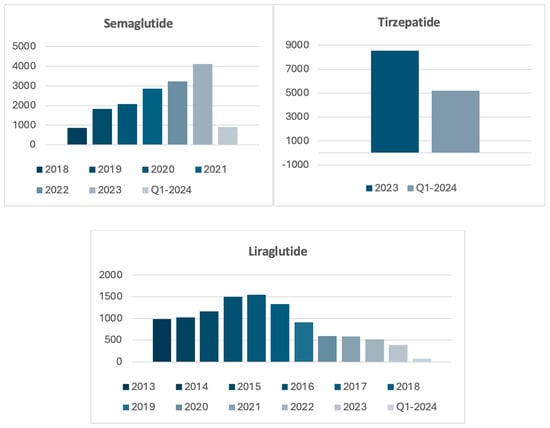
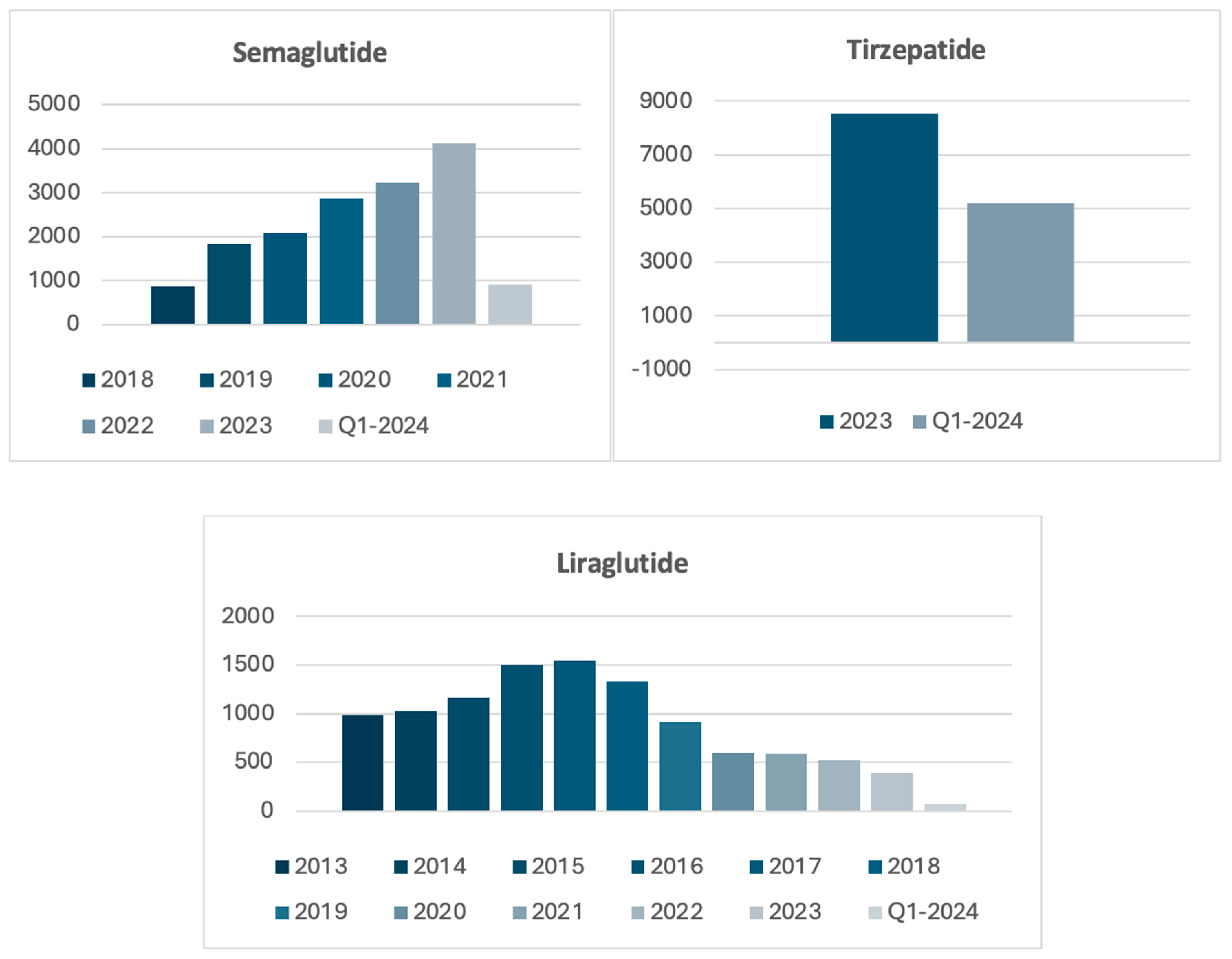
Inclusion periods for each drug were aligned with their respective FDA approval timelines for obesity: January 2013 to June 2024 for liraglutide, January 2018 to June 2024 for semaglutide, and January 2023 to June 2024 for tirzepatide (Figure 1).
Figure 1.
Reporting Years of Side Effects.
During the study period, a total of 40,253 adverse drug reaction (ADR) reports were collected, with semaglutide accounting for 15,890 reports (39.5%), liraglutide for 10,623 (26.4%), and tirzepatide for 13,740 (34.1%). Across all three drugs, the majority of reports originated from females, who made up an average of 68.6% of the cases, while males accounted for 31.4%. In terms of geographic distribution, 85.3% of the reports were submitted from the United States. Consumers were the primary source of these reports, contributing to 74% of the total (Table 1).
Table 1.
Study Population Characteristics.
Demographic data showed that the median weight of patients was 92.25 kg for semaglutide, 94 kg for liraglutide, and 92.5 kg for tirzepatide. The median age of patients varied slightly across the drugs: 62 years for semaglutide users, 59 years for those on liraglutide, and 53 years for tirzepatide.
The study identified 531 overall deaths associated with the use of these drugs, with 176 associated with semaglutide, 304 with liraglutide, and 51 with tirzepatide. Additionally, there were 438 life-threatening events reported: 217 for semaglutide, 195 for liraglutide, and 26 for tirzepatide. Hospitalisation was also a reported outcome in a subset of cases, occurring 2725 times for semaglutide, 2357 times for liraglutide, and 564 times for tirzepatide (Table 1).
2.1. Inappropriate Use
Across all three drugs, a total of 12,158 inappropriate use events were reported. Tirzepatide accounted for the majority of these cases (n = 9402), followed by semaglutide (n = 2020) and liraglutide (n = 736). Incorrect dosing was the most frequently reported inappropriate use event overall, representing 50.51% of tirzepatide cases (n = 4749), 12.47% of semaglutide cases (n = 252), and 8.28% of liraglutide cases (n = 61). Off-label use was also highly prevalent, comprising 77.42% (n = 1564) of semaglutide reports, 81.36% (n = 598) of liraglutide reports, and 21.29% (n = 2002) of tirzepatide reports. Tirzepatide also showed notable frequencies of extra dose administration (n = 1384; 14.72%), accidental underdose (n = 620; 6.59%), dose omission (n = 441; 4.69%), and accidental overdose (n = 206; 2.19%). Individual breakdown of the three drugs for inappropriate use is provided in Table 2.
Table 2.
Full dataset of main adverse event and inappropriate use reports related to the use of tirzepatide, semaglutide, and liraglutide.
2.2. Injection Site Reactions
A total of 6573 injection site reactions were reported: 5250 for tirzepatide, 685 for liraglutide, and 638 for semaglutide. Injection site pain was the most common reaction overall, particularly prominent in tirzepatide (n = 1872; 35.66%) and semaglutide (n = 219; 34.32%). Other frequently reported reactions across the three drugs included haemorrhage (tirzepatide: n = 970; 18.47%, semaglutide: n = 134; 21.00%), erythema (tirzepatide: n = 681; 12.97%, liraglutide: n = 140; 20.43%), and bruising (tirzepatide: n = 471; 8.97%, liraglutide: n = 125; 18.24%, semaglutide: n = 104; 16.30%). Less frequent but notable reactions included mass formation, swelling, injury, rash, and pruritus, with the highest overall incidence in the tirzepatide group. Individual breakdown of the three drugs for injection site reactions is provided in Table 2. Furthermore, tirzepatide exhibits striking figures across several categories. For extra dose administered, tirzepatide has 1384 associated reports out of 2955 reports, representing approximately 46.8% of total extra doses administered in the FAERS during that period. Similarly, for accidental underdose, tirzepatide shows 620 associated reports out of 1165 in total, accounting for 53.2%. Additionally, for injection site injury, tirzepatide has 211 associated reports out of 425 in total, equating to 49.6%. Notably, these high proportions were observed despite tirzepatide having a relatively short reporting period, from January 2023 to June 2024 (Table 2).
2.3. Psychiatric Events
A total of 2349 psychiatric adverse events were recorded: 1547 for semaglutide, 573 for liraglutide, and 229 for tirzepatide. Anxiety was the most commonly reported psychiatric event across all drugs, especially for tirzepatide (n = 95; 41.5%), followed by semaglutide (n = 262; 16.9%) and liraglutide (n = 76; 13.3%). Depression followed closely, comprising (n = 253; 16.35%) of semaglutide cases, (n = 83; 14.48%) of liraglutide cases, and (n = 59; 25.76%) of tirzepatide cases. Suicidal ideation was reported in 187 semaglutide cases (12.08%), 48 liraglutide cases (8.37%), and 41 tirzepatide cases (17.9%). Individual breakdown of the three drugs for psychiatric events is provided in Table 2.
2.4. Inferential Analysis
2.4.1. Inappropriate Use
Tirzepatide demonstrated a significantly stronger disproportionality signal for overall inappropriate use (PRR: 5.98, ROR: 16.78) compared to liraglutide (PRR: 0.90, ROR: 0.89) and semaglutide (PRR: 1.28, ROR: 1.32). This pattern was consistent across subcategories including incorrect dose administered, extra dose administered, accidental underdose, off-label use, accidental overdose, and product dose omission. The non-overlapping confidence intervals suggest statistically significant differences in reporting patterns among the three drugs (Table 3).
Table 3.
Comparative Analysis of proportional reporting ratios and reporting odds ratios for reported adverse drug reactions and inappropriate use.
2.4.2. Injection Site Reaction
Tirzepatide also showed a stronger disproportionality signal for injection site reactions overall (PRR: 7.98; ROR: 12.3) compared to liraglutide (PRR: 1.39, ROR: 1.41) and semaglutide (PRR: 0.96, ROR: 0.96). This included specific events such as injection site pain, haemorrhage, bruising, mass, swelling, injury, rash, pruritus, and erythema (Table 3).
2.4.3. Psychiatric
Semaglutide exhibited a modestly stronger disproportionality signal for psychiatric adverse events (PRR: 1.33, ROR: 1.36) compared to liraglutide (PRR: 0.67, ROR: 0.66) and tirzepatide (PRR: 0.61, ROR: 0.61). Psychiatric events included depression, suicidal ideation, anxiety, panic attack, and fatigue. No significant differences were observed among the three drugs in terms of emotional distress reports (Table 3).
3. Discussion
This study evaluated the safety profiles of semaglutide, liraglutide, and tirzepatide, focusing on psychiatric disorders, inappropriate use, and injection-site reactions. Our findings revealed distinct safety signals across the three drugs, with tirzepatide showing disproportionately higher reports of injection-site reactions and inappropriate use compared to semaglutide and liraglutide. In contrast, semaglutide showed a stronger association with psychiatric adverse events, although the degree of disproportionality was not substantially elevated.
The higher number of inappropriate use reports related to tirzepatide raises significant concerns about how individuals are accessing these medications and the adequacy of available information for consumers. Compounded versions of semaglutide and tirzepatide are widely available in the commercial market despite lacking FDA approval for weight loss. This situation has created a regulatory and clinical gray zone [24]. These compounded products are frequently used as alternatives during shortages and periods of high demand. However, they are not subject to FDA review for safety, efficacy, manufacturing standards, or dosing accuracy, thereby introducing substantial clinical risk [25,26]. As of 30 April 2025, the FDA had received 520 adverse event reports related to compounded semaglutide and 480 reports for compounded tirzepatide, highlighting both the widespread use and potential dangers of these unregulated alternatives [24].
While these figures are concerning on their own, our analysis of the FAERS database further revealed a disproportionately higher frequency of overdose reports involving tirzepatide compared to semaglutide and liraglutide.
Tirzepatide was introduced relatively recently and has demonstrated superior efficacy. This combination has driven extensive media coverage and marketing that frame it as a rapid weight loss solution. This public narrative may be driving individuals to seek unregulated or non-prescription sources, often without sufficient understanding of dosing requirements or safety risks. For instance, there has been cases of individuals accessing these medicines via online pharmacies, black markets, and beauty salons that typically offer little to no medical supervision and, in some cases, counterfeit medications [26,27]. The scale of the problem has prompted international warnings. Both the WHO and the UK Medicines and Healthcare Products Regulatory Agency (MHRA) have issued alerts regarding counterfeit weight loss injectables, citing severe adverse effects and, in some cases, fatalities [28,29].
Beyond misuse and counterfeit access, device-related adverse events emerged as a distinct and clinically relevant safety signal. We also observed a stronger disproportionality signal for injection-site reactions associated with tirzepatide compared to liraglutide and semaglutide, despite tirzepatide being relatively new to the market. Tirzepatide is administered via a multi-dose, disposable KwikPen, which features an integrated 29G, 5 mm fixed needle. This needle is hidden until the moment of injection, a design intended to reduce anxiety in needle-phobic patients [30]. However, real-world user feedback indicates that the plunger mechanism requires significantly more force than semaglutide or liraglutide pens, which are generally regarded as more intuitive and easier to use. This increased resistance may contribute to slower injections, greater user difficulty, and, in some cases, injection-site bruising or incomplete dose delivery [31]. Future improvements in device design such as reducing plunger resistance, enhancing ergonomic features, and incorporating clearer user feedback mechanisms may help minimize injection site reactions and improve overall patient experience.
Beyond dosing challenges, cutaneous adverse effects are an important and increasingly recognized concern in GLP-1RA therapy [32,33]. Our analysis of the FAERS database revealed that tirzepatide accounts for nearly half of the total reports related to extra doses administered, accidental underdosing, and injection site injuries in the system. This disproportionate representation suggests that administration difficulties and device-related factors may significantly contribute to the observed safety signals. Similarly, recent reviews of large-scale clinical trials identified rash, erythema, and pruritus as the most commonly reported injection-site reactions among users [33,34]. These reactions occur more frequently with tirzepatide compared to liraglutide and semaglutide, which tend to have lower injection site reaction rates [34,35]. Notably, findings from the SURPASS clinical program, a key body of evidence evaluating GLP-1 drugs, demonstrated a dose-dependent increase in injection-site reactions, particularly at higher doses (10 mg and 15 mg) [36,37]. This trend suggests that a localized accumulation of the drug may contribute to injection site reaction frequency, reinforcing the need for patient education on proper injection technique and site rotation. In addition, the European/UK version of the pen includes a rotational dose-selector mechanism, which can allow for a “fifth dose” beyond the labeled four doses per pen. While intended to reduce waste, this feature introduces ambiguity about proper usage and may inadvertently contribute to dosing errors or intentional overuse, as also reflected in FAERS narratives [38]. In contrast, semaglutide and liraglutide use more intuitive prefilled pens with simpler injection mechanics and standardized needle attachments, offering greater user familiarity and fewer mechanical issues [39]. While these findings primarily relate to administration and device factors, our analysis also identified signals that extend beyond mechanical explanations.
We next examined psychiatric adverse events associated with GLP-1 receptor agonists. Compared to previous pharmacovigilance analyses such as the EudraVigilance review (2021–2023), our dataset showed a notably higher proportion of psychiatric reports overall, particularly for semaglutide and tirzepatide. While depression was the most frequently reported event in the EudraVigilance data, anxiety featured more prominently in our findings, especially for tirzepatide [40]. In addition, our findings indicate a proportionally higher reporting of suicidal ideation associated with semaglutide compared to liraglutide and tirzepatide. This emerging signal aligns with recent pharmacovigilance analyses, including a disproportionality study using the World Health Organization’s global database, which identified a potential association between semaglutide and suicidal ideation, an observation that warrants further research [41]. Although these findings generate important safety hypotheses, they must be interpreted within the methodological constraints of spontaneous reporting systems.
This study provides a comparative safety analysis of injection site reactions, inappropriate use, and psychiatric adverse events for GLP-1RAs. Several limitations inherent to the analysis of spontaneous reporting systems must be acknowledged. First, passive surveillance systems introduce well-established biases, including underreporting, overreporting, incomplete information, and reporting delays. These factors may influence the strength and detection of the safety signals we identified. Second, and critically, the absence of a defined base population precludes the calculation of incidence rates or relative risks. Consequently, our findings indicate disproportionality of reporting rather than definitive causality. Third, as tirzepatide received regulatory approval more recently than liraglutide and semaglutide, its safety profile is subject to the Weber effect (i.e., increased reporting frequency immediately after a drug’s launch). This may lead to an artificial inflation of signals for tirzepatide compared to the older drugs. Furthermore, this study did not adjust for potential confounding factors, such as underlying patient comorbidities, disease severity, specific drug dosages, or the use of concomitant medications. These unmeasured variables could influence the observed associations. Despite these limitations, the FAERS remains an invaluable tool for generating hypotheses regarding post-marketing drug safety. Unlike RCTs, which are conducted in highly selected populations under controlled conditions, FAERS provides insight into real-world drug use and can detect rare or long-term adverse events that may not be evident in pre-marketing studies. The signals identified here warrant further investigation through formal epidemiological studies designed to overcome these limitations. Education campaigns should clearly inform patients on proper dosing and administration; stricter regulatory oversight is crucial to address compounded and counterfeit GLP-1 receptor agonists; and collaboration between healthcare providers, regulators, and pharmaceutical companies is needed to mitigate misuse.
4. Materials and Methods
This study utilized a retrospective, observational pharmacovigilance design based on data from the U.S. FAERS data. FAERS data were extracted from the publicly available Quarterly Data Extract Files, covering the period from January 2018 to June 2024. The analysis focused on three GLP-1 receptor agonists, namely semaglutide, liraglutide, and tirzepatide, specifically in the context of weight management.
Data was downloaded as ASCII files from the FDA official website and then extracted, combined, and queried using DB Browser for SQLite Version 3.13.1. For each query, datasets were cleaned to remove duplicate entries, identified through matching case IDs, patient demographics, event dates, and drug names, retaining only the most recent version of each case following FDA guidance on deduplication.
We included reports that identified one of the three drugs as a suspect agent and contained an adverse event falling outside the gastrointestinal, renal, and pancreatic domains. Specifically, the study focused on adverse events related to psychiatric conditions, injection site reactions, and other emerging events such as fatigue and hypersensitivity. Reports with missing essential information (e.g., age, gender, suspect drug) were excluded from analysis to maintain data integrity. Drug names were standardized using generic names according to the FDA’s Structured Product Labeling resources, and AEs were coded using MedDRA version 27.0 Preferred Terms (PTs). Higher-level clinical categories were constructed from manually selected PTs based on predefined clinical relevance rather than Standardised MedDRA Queries.
To identify potential safety signals, disproportionality analyses were conducted using two standard methods: the Proportional Reporting Ratio (PRR) and the Reporting Odds Ratio (ROR). These metrics compared the frequency of specific adverse events reported for a drug of interest to the frequency of those events for all other drugs in the FAERS database. PRR and ROR were calculated as follows:
where represents the number of reports for the event of interest with the drug, the number of reports for other events with the drug, the number of reports for the same event with other drugs, and all other reports in the database. We considered a signal present when the 95% confidence interval of the PRR or ROR excluded 1.0, indicating a statistically significant increase in reporting frequency [42,43]. Signal strength across the three drugs was assessed using descriptive ranking rather than formal statistical comparisons between agents.
Data management and analysis were performed using R (Version 4.4.2) and Python (Version 3.13.0), following FDA-recommended practices for FAERS data handling. As the analysis was conducted using de-identified, publicly available data, institutional review board (IRB) approval was not required.
5. Conclusions
Our study leveraging the FAERS database provides a systematic comparison of the safety profiles of semaglutide, liraglutide, and tirzepatide. While previous concerns have focused on psychiatric adverse events, our real-world analysis found a less pronounced safety signal in this domain. In contrast, we identified robust and disproportionate reporting for inappropriate use, misuse, and injection site reactions, with tirzepatide demonstrating a notably stronger association compared to the other agents. The strong signal for injection site reactions with tirzepatide warrants heightened vigilance to ensure proper administration. Similarly, the signal for misuse highlights an emerging public health concern that requires regulatory and clinical attention. Furthermore, the strong signal concerning misuse and inappropriate use underscores an emerging public health risk that warrants immediate attention. Future initiatives should focus on two key areas: first, the development of pharmacovigilance strategies and public health campaigns to mitigate the risks of misuse and educate on safe use. Second, further research is needed to understand the behavioral drivers and circumstances behind the inappropriate use of these medications.
Author Contributions
Conceptualization, H.S. and A.H.; methodology, H.S. and A.H.; validation, H.S., A.H. and M.M.; formal analysis, H.S., A.H. and M.M.; investigation, H.S., A.H. and M.M.; data curation, H.S., A.H. and M.M.; writing—original draft preparation, H.S. and A.H.; writing—review and editing, H.S., A.H. and M.M.; visualization, H.S., A.H. and M.M. All authors have read and agreed to the published version of the manuscript.
Funding
This research received no external funding.
Institutional Review Board Statement
Ethical review and approval were waived for this study due to it being a retrospective study.
Informed Consent Statement
Patient consent was waived due to it being a retrospective study.
Data Availability Statement
The original contributions presented in this study are included in the article. Further inquiries can be directed to the corresponding authors.
Conflicts of Interest
The authors declare no conflicts of interest.
References
- Iqbal, J.; Wu, H.-X.; Hu, N.; Zhou, Y.-H.; Li, L.; Xiao, F.; Wang, T.; Jiang, H.-L.; Xu, S.-N.; Huang, B.-L.; et al. Effect of Glucagon-like Peptide-1 Receptor Agonists on Body Weight in Adults with Obesity without Diabetes Mellitus—A Systematic Review and Meta-Analysis of Randomized Control Trials. Obes. Rev. 2022, 23, e13435. [Google Scholar] [CrossRef] [Scilit]
- Michos, E.D.; Lopez-Jimenez, F.; Gulati, M. Role of Glucagon-Like Peptide-1 Receptor Agonists in Achieving Weight Loss and Improving Cardiovascular Outcomes in People with Overweight and Obesity. J. Am. Heart Assoc. 2023, 12, e029282. [Google Scholar] [CrossRef] [Scilit]
- Lupianez-Merly, C.; Dilmaghani, S.; Vosoughi, K.; Camilleri, M. Review Article: Pharmacologic Management of Obesity—Updates on Approved Medications, Indications and Risks. Aliment. Pharmacol. Ther. 2024, 59, 475–491. [Google Scholar] [CrossRef] [Scilit]
- Syed, Y.Y. Tirzepatide: First Approval. Drugs 2022, 82, 1213–1220. [Google Scholar] [CrossRef] [Scilit]
- Garvey, W.T.; Batterham, R.L.; Bhatta, M.; Buscemi, S.; Christensen, L.N.; Frias, J.P.; Jódar, E.; Kandler, K.; Rigas, G.; Wadden, T.A.; et al. Two-Year Effects of Semaglutide in Adults with Overweight or Obesity: The STEP 5 Trial. Nat. Med. 2022, 28, 2083–2091. [Google Scholar] [CrossRef] [Scilit] [PubMed]
- Davies, M.J.; Bergenstal, R.; Bode, B.; Kushner, R.F.; Lewin, A.; Skjøth, T.V.; Andreasen, A.H.; Jensen, C.B.; DeFronzo, R.A. NN8022-1922 Study Group Efficacy of Liraglutide for Weight Loss Among Patients with Type 2 Diabetes: The SCALE Diabetes Randomized Clinical Trial. JAMA 2015, 314, 687–699. [Google Scholar] [CrossRef] [Scilit] [PubMed]
- Wadden, T.A.; Chao, A.M.; Machineni, S.; Kushner, R.; Ard, J.; Srivastava, G.; Halpern, B.; Zhang, S.; Chen, J.; Bunck, M.C.; et al. Tirzepatide after Intensive Lifestyle Intervention in Adults with Overweight or Obesity: The SURMOUNT-3 Phase 3 Trial. Nat. Med. 2023, 29, 2909–2918. [Google Scholar] [CrossRef] [Scilit] [PubMed]
- Drucker, D.J. Efficacy and Safety of GLP-1 Medicines for Type 2 Diabetes and Obesity. Diabetes Care 2024, 47, 1873–1888. [Google Scholar] [CrossRef] [Scilit]
- Efficacy and Safety of Tirzepatide, GLP-1 Receptor Agonists, and Other Weight Loss Drugs in Overweight and Obesity: A Network Meta-analysis. Obesity 2024, 32, 840–856. [CrossRef] [Scilit]
- Wong, H.J.; Sim, B.; Teo, Y.H.; Teo, Y.N.; Chan, M.Y.; Yeo, L.L.L.; Eng, P.C.; Tan, B.Y.Q.; Sattar, N.; Dalakoti, M.; et al. Efficacy of GLP-1 Receptor Agonists on Weight Loss, BMI, and Waist Circumference for Patients with Obesity or Overweight: A Systematic Review, Meta-Analysis, and Meta-Regression of 47 Randomized Controlled Trials. Diabetes Care 2025, 48, 292–300. [Google Scholar] [CrossRef] [Scilit]
- Mullur, N.; Morissette, A.; Morrow, N.M.; Mulvihill, E.E. GLP-1 Receptor Agonist-Based Therapies and Cardiovascular Risk: A Review of Mechanisms. J. Endocrinol. 2024, 263, e240046. [Google Scholar] [CrossRef] [Scilit]
- Kumar, S.; Blaha, M.J. GLP-1 RA for Cardiometabolic Risk Reduction in Obesity—How Do We Best Describe Benefit and Value? Am. J. Prev. Cardiol. 2024, 18, 100682. [Google Scholar] [CrossRef] [Scilit]
- Lee, J.M.; Sharifi, M.; Oshman, L.; Griauzde, D.H.; Chua, K.-P. Dispensing of Glucagon-Like Peptide-1 Receptor Agonists to Adolescents and Young Adults, 2020–2023. JAMA 2024, 331, 2041–2043. [Google Scholar] [CrossRef] [Scilit]
- Shokr, H.; Mekkawy, M.; Hindi, A. Comparative Safety of GLP-1 Receptor Agonists Across Gastrointestinal, Renal and Pancreatic Systems. Pharmaceuticals 2026, 19, 136. [Google Scholar] [CrossRef] [Scilit]
- Salvo, F.; Faillie, J.-L. GLP-1 Receptor Agonists and Suicidality—Caution Is Needed. JAMA Netw. Open 2024, 7, e2423335. [Google Scholar] [CrossRef] [Scilit] [PubMed]
- Tempia Valenta, S.; Nicastri, A.; Perazza, F.; Marcolini, F.; Beghelli, V.; Atti, A.R.; Petroni, M.L. The Impact of GLP-1 Receptor Agonists (GLP-1 RAs) on Mental Health: A Systematic Review. Curr. Treat. Options Psych. 2024, 11, 310–357. [Google Scholar] [CrossRef] [Scilit]
- Salvio, G.; Ciarloni, A.; Ambo, N.; Bordoni, M.; Perrone, M.; Rossi, S.; Balercia, G. Effects of Glucagon-like Peptide 1 Receptor Agonists on Testicular Dysfunction: A Systematic Review and Meta-Analysis. Andrology 2025, 13, 2022–2034. [Google Scholar] [CrossRef] [Scilit]
- Bezin, J.; Gouverneur, A.; Pénichon, M.; Mathieu, C.; Garrel, R.; Hillaire-Buys, D.; Pariente, A.; Faillie, J.-L. GLP-1 Receptor Agonists and the Risk of Thyroid Cancer. Diabetes Care 2022, 46, 384–390. [Google Scholar] [CrossRef] [Scilit]
- Dai, H.; Li, Y.; Lee, Y.A.; Lu, Y.; George, T.J.; Donahoo, W.T.; Lee, K.P.; Nakshatri, H.; Allen, J.; Guo, Y.; et al. GLP-1 Receptor Agonists and Cancer Risk in Adults with Obesity. JAMA Oncol. 2025, 11, 1186. [Google Scholar] [CrossRef] [Scilit] [PubMed]
- Alibilli, A.S.; Jain, V.; Mane, H.; Yue, X.; Ratzki-Leewing, A.; Merchant, J.S.; Criss, S.; Nguyen, Q.C.; McCoy, R.G.; Nguyen, T.T. Harnessing Facebook to Investigate Real-World Mentions of Adverse Events of Glucagon-Like Peptide-1 Receptor Agonist (GLP-1 RA) Medications: Observational Study of Facebook Posts From 2022 to 2024. JMIR Infodemiology 2025, 5, e73619. [Google Scholar] [CrossRef] [Scilit]
- Merhi, Z.; Karekar, M.; Mouanness, M. GLP-1 Receptor Agonist for Weight Loss and Fertility: Social Media and Online Perception versus Evidence-Based Medicine. PLoS ONE 2025, 20, e0326210. [Google Scholar] [CrossRef] [Scilit] [PubMed]
- Rad, J.; Melendez-Torres, G.J. Critical Discourse Analysis of Social Media Advertisements for GLP-1 Receptor Agonist Weight Loss Drugs: Implications for Public Perceptions and Health Communication. BMC Public Health 2025, 25, 2996. [Google Scholar] [CrossRef] [Scilit]
- Taj, S.; Zuber, M.; Rashid, M.; Chhabra, M.; Undela, K.; Rawal, S.; Villa Zapata, L. Injection-Site and Dermatologic Reactions Associated with Glucagon-like Peptide-1 Receptor Agonists: Insights from Meta-Analysis of Randomised Controlled Trials and Real-World Evidence. Diabetes Obes. Metab. 2025, 28, 1956–1971. [Google Scholar] [CrossRef] [Scilit]
- Research, C. for D.E. and FDA’s Concerns with Unapproved GLP-1 Drugs Used for Weight Loss. FDA 2025. Available online: https://www.fda.gov/drugs/postmarket-drug-safety-information-patients-and-providers/fdas-concerns-unapproved-glp-1-drugs-used-weight-loss (accessed on 13 January 2026).
- Research, C. for D.E. and FDA Clarifies Policies for Compounders as National GLP-1 Supply Begins to Stabilize. FDA 2025. Available online: https://www.fda.gov/drugs/drug-safety-and-availability/fda-clarifies-policies-compounders-national-glp-1-supply-begins-stabilize (accessed on 13 January 2026).
- Mattingly TJ, I.I.; Conti, R.M. Marketing and Safety Concerns for Compounded GLP-1 Receptor Agonists. JAMA Health Forum 2025, 6, e245015. [Google Scholar] [CrossRef] [Scilit]
- Echeverry-Guerrero, S.; González-Vélez, S.; Arévalo-Lara, A.-S.; Calvache-Orozco, J.-C.; Villarroel-Hagemann, S.K.; Rojas-Rodríguez, L.C.; Pérez-Acosta, A.M.; Calderon-Ospina, C.-A. The Inappropriate Use of GLP-1 Analogs: Reflections from Pharmacoepidemiology. Pharmacoepidemiology 2024, 3, 365–372. [Google Scholar] [CrossRef] [Scilit]
- WHO Issues Warning on Falsified Medicines Used for Diabetes Treatment and Weight Loss. Available online: https://www.who.int/news/item/20-06-2024-who-issues-warning-on-falsified-medicines-used-for-diabetes-treatment-and-weight-loss (accessed on 20 September 2025).
- MHRA Warns of Unsafe Fake Weight Loss Pens. Available online: https://www.gov.uk/government/news/mhra-warns-of-unsafe-fake-weight-loss-pens (accessed on 20 September 2025).
- How to Use, Dosing & Side Effects|Mounjaro® (Tirzepatide). Available online: https://mounjaro.lilly.com/how-to-use-mounjaro (accessed on 20 September 2025).
- Troubleshooting Common Mounjaro® (Tirzepatide) KwikPen® Questions. Available online: https://medical.lilly.com/uk/products/answers/troubleshooting-common-mounjaro-tirzepatide-kwikpen-questions-237208 (accessed on 20 September 2025).
- Salazar, C.E.; Patil, M.K.; Aihie, O.; Cruz, N.; Nambudiri, V.E. Rare Cutaneous Adverse Reactions Associated with GLP-1 Agonists: A Review of the Published Literature. Arch. Dermatol. Res. 2024, 316, 248. [Google Scholar] [CrossRef] [Scilit] [PubMed]
- Patino, W.; Thomas, A.; Jain, S.; Del Rosso, J.Q.; Issa, N.T. A Review of Glucagon-like Peptide-1 in Dermatology. J. Clin. Aesthet. Dermatol. 2025, 18, 42–50. [Google Scholar] [PubMed]
- Filippatos, T.D.; Panagiotopoulou, T.V.; Elisaf, M.S. Adverse Effects of GLP-1 Receptor Agonists. Rev. Diabet. Stud. 2014, 11, 202–230. [Google Scholar] [CrossRef] [Scilit]
- Trujillo, J. Safety and Tolerability of Once-Weekly GLP-1 Receptor Agonists in Type 2 Diabetes. J. Clin. Pharm. Ther. 2020, 45, 43–60. [Google Scholar] [CrossRef] [Scilit] [PubMed]
- Mishra, R.; Raj, R.; Elshimy, G.; Zapata, I.; Kannan, L.; Majety, P.; Edem, D.; Correa, R. Adverse Events Related to Tirzepatide. J. Endocr. Soc. 2023, 7, bvad016. [Google Scholar] [CrossRef] [Scilit]
- Mizumoto, J. Tirzepatide-Induced Injection Site Reaction. Cureus 2023, 15, e45181. [Google Scholar] [CrossRef] [Scilit] [PubMed]
- Mounjaro 5th Dose: Is It Safe? Available online: https://www.ukmeds.co.uk/blog/mounjaro-5th-dose (accessed on 29 September 2025).
- GLP-1 Medicines for Weight Loss and Diabetes: What You Need to Know. Available online: https://www.gov.uk/government/publications/glp-1-medicines-for-weight-loss-and-diabetes-what-you-need-to-know/glp-1-medicines-for-weight-loss-and-diabetes-what-you-need-to-know (accessed on 29 September 2025).
- Tobaiqy, M.; Elkout, H. Psychiatric Adverse Events Associated with Semaglutide, Liraglutide and Tirzepatide: A Pharmacovigilance Analysis of Individual Case Safety Reports Submitted to the EudraVigilance Database. Int. J. Clin. Pharm. 2024, 46, 488–495. [Google Scholar] [CrossRef] [Scilit]
- Schoretsanitis, G.; Weiler, S.; Barbui, C.; Raschi, E.; Gastaldon, C. Disproportionality Analysis From World Health Organization Data on Semaglutide, Liraglutide, and Suicidality. JAMA Netw. Open 2024, 7, e2423385. [Google Scholar] [CrossRef] [Scilit]
- Evans, S.J.; Waller, P.C.; Davis, S. Use of Proportional Reporting Ratios (PRRs) for Signal Generation from Spontaneous Adverse Drug Reaction Reports. Pharmacoepidemiol. Drug Saf. 2001, 10, 483–486. [Google Scholar] [CrossRef] [Scilit]
- van Puijenbroek, E.P.; Bate, A.; Leufkens, H.G.M.; Lindquist, M.; Orre, R.; Egberts, A.C.G. A Comparison of Measures of Disproportionality for Signal Detection in Spontaneous Reporting Systems for Adverse Drug Reactions. Pharmacoepidemiol. Drug Saf. 2002, 11, 3–10. [Google Scholar] [CrossRef] [Scilit] [PubMed]

Disclaimer/Publisher’s Note: The statements, opinions and data contained in all publications are solely those of the individual author(s) and contributor(s) and not of MDPI and/or the editor(s). MDPI and/or the editor(s) disclaim responsibility for any injury to people or property resulting from any ideas, methods, instructions or products referred to in the content. |
© 2026 by the authors. Licensee MDPI, Basel, Switzerland. This article is an open access article distributed under the terms and conditions of the Creative Commons Attribution (CC BY) license.