


Abstract
Natural and human-made disasters can severely impair terrestrial communication infrastructures and disrupt emergency response coordination in modern smart cities. To address these challenges, this paper introduces the Weighted Average Yo-Yo-based Clustering and Routing (WAY-CR) scheme, an adaptive, secure, and energy-efficient drone-assisted solution for post-disaster network recovery and emergency response. WAY-CR integrates three main components: First, a novel WAY-based metaheuristic optimizer incorporates the concept of Yo-Yo Motion into the conventional Weighted Average Algorithm (WAA), improving the balance between exploration and exploitation during CH selection and clustering. Second, a secure communication model combines the Paillier Homomorphic Cryptosystem (PHC) with a trust evaluation model to provide end-to-end security and authenticity, ensuring that only authenticated and trustworthy drones participate in communication and routing. Third, a Trust-Aware Boltzmann Path Selection method introduces probabilistic decision-making into routing, allowing adaptive selection of secure and energy-efficient routing paths. WAY-CR formulates a multi-objective optimization model that minimizes communication cost and energy consumption while maximizing trust, link stability, and coverage. Stage 1 addresses secure intra-Ground Control Station (GCS) clustering, authentication, and trust management, whereas Stage 2 restores inter-GCS connectivity through a Secure Relay Discovery and Verification procedure based on Boltzmann Path Selection. An adaptive maintenance mechanism further supports dynamic reconfiguration in response to CH failures, mobility, or trust degradation, thereby preserving stable network performance under disaster-induced disruptions. Extensive simulation results show that WAY-CR outperforms state-of-the-art Flying Ad Hoc Network (FANET) baselines in energy efficiency, cluster stability, trust accuracy, and end-to-end packet delivery, highlighting its potential as a resilient, scalable, and secure solution for post-disaster smart-city environments.
1. Introduction
Natural and human-made disasters pose serious threats to communities, infrastructure, and communication systems. During such events, terrestrial communication facilities, including cellular towers and radio repeaters, may become partially or completely unavailable, leaving first responders without reliable channels for coordination and information exchange [1,2,3,4,5]. This limitation highlights the need for communication solutions that are adaptive, robust, and rapidly deployable in disrupted environments.
In this context, Unmanned Aerial Vehicles (UAVs), also referred to as drones, have emerged as an effective platform for post-disaster communication and emergency support because of their mobility, flexibility, and cost-effectiveness. Their ability to access hazardous or hard-to-reach areas makes them suitable for tasks such as aerial surveillance, victim detection, real-time mapping, and communication restoration [6]. Advances in artificial intelligence and sensing technologies further enhance drone capabilities by supporting autonomous navigation, survivor identification, and real-time data transmission [7,8,9,10]. Drones have also shown effectiveness across the pre-disaster, response, and recovery phases of disaster management, using fixed-wing platforms for large-area monitoring and rotary-wing platforms for localized tactical missions [11]. Equipped with thermal sensors, millimeter-wave radar, and GPS modules, drones can detect survivors, navigate complex environments, and transmit situational data in real time [12].
To extend the capabilities of individual drones, Flying Ad Hoc Networks (FANETs) have attracted increasing attention as a multi-drone communication paradigm that operates without fixed infrastructure. FANETs enable rapid deployment, collaborative coverage, and resilient communication in disaster environments [13,14,15]. However, their design remains challenging because clustering and routing must operate reliably under high mobility, energy limitations, dynamic topology changes, and potential security threats. Addressing these challenges is essential for maintaining network survivability and secure data exchange during rescue and recovery operations.
1.1. Background and Motivation
Research on drone-assisted disaster response can be broadly viewed from two complementary perspectives. The first focuses on system-level emergency communication, where drones are used to restore connectivity, extend coverage, and support secure backhaul links. The second focuses on network-layer clustering and routing in FANETs, where self-organization and data forwarding must be maintained despite mobility, resource constraints, and adversarial conditions. Although substantial progress has been made in both directions, most existing studies address connectivity, efficiency, or security separately rather than within an integrated and adaptive FANET framework.
At the system level, prior studies have demonstrated the feasibility of drone-assisted emergency communications in disaster scenarios. Examples include temporary ad hoc networking for victims and responders under bandwidth and flight-time constraints [16], resource allocation for drone-mounted base stations after terrestrial infrastructure failure [17], and optimized drone placement, trajectory planning, and user clustering in software-defined networking (SDN)-based architectures to improve throughput, energy efficiency, and convergence speed [18,19]. Drone-based sensing has also been used for infrastructure damage assessment and situational awareness, including search-and-rescue human detection and environmental disaster monitoring through joint aerial-ground observation systems [20,21,22]. In addition, tethered drones, distributed clustering of ground devices, free-space optical (FSO) aerial relays, and software-defined multi-drone systems have been investigated to improve coverage continuity, mission duration, and communication responsiveness [23,24,25,26]. Field experiments further confirm that drone-mounted radio repeaters can restore communications within minutes, even in complex terrain [27].
Recent studies have also examined route optimization and adaptive networking for disaster scenarios. Centralized and hierarchical SDN-based routing schemes improve throughput and responsiveness in affected regions [18,26], while mesh-based systems such as UbiQNet support rapid deployment and victim connectivity using commercial drones [28]. Learning-based optimization and NOMA-enabled relay drones have additionally been proposed to enhance scalability and spectral efficiency [29]. Recent work on learning-based communication design has shown that multi-agent reinforcement learning can optimize MAC protocols effectively; however, many such approaches still depend on centralized training, simplified simulation assumptions, and limited generalization, which can reduce practical deployability in highly dynamic environments [30]. Energy-aware path planning, vehicle-routing formulations, low-complexity data collection algorithms, and cooperative drone replacement strategies have also been introduced to cope with limited battery capacity and continuous mission demands [31,32,33]. Despite these advances, many of these frameworks do not explicitly integrate secure data exchange, trust evaluation, and adaptive reconfiguration under adversarial conditions.
To improve resilience and security, several studies have explored blockchain-based and learning-driven control mechanisms. Blockchain-enabled drone networks can strengthen privacy, decentralized coordination, and resistance to cyberattacks in large-scale multi-drone deployments [34], while multi-agent reinforcement learning frameworks support energy-aware, coverage-aware, and context-aware trajectory optimization in disaster scenarios [35]. At the physical layer, FSO communication has been investigated as a high-speed, directional, and low-interception backhaul option for drone-assisted networks when terrestrial infrastructure is unavailable [36]. More broadly, system-level studies on disaster-resilient architectures emphasize the importance of resource allocation, edge intelligence, secure communication, and dynamic network configuration across integrated terrestrial, aerial, and spaceborne systems [37]. Similarly, AIoT-based early-warning platforms show that secure sensing, edge computing, and real-time data fusion can improve disaster response performance [38]. Nevertheless, a unified FANET architecture that jointly incorporates trust management, secure authentication, clustering, routing, and adaptive maintenance remains insufficiently explored.
Motivated by these limitations, this paper proposes the Weighted Average Yo-Yo-based Clustering and Routing (WAY-CR) framework, an adaptive, secure, and energy-efficient drone-assisted communication architecture for post-disaster network recovery and emergency response. WAY-CR combines a novel WAY-based metaheuristic optimizer for cluster-head (CH) selection and shelter location planning, a trust-authentication model to exclude unverified drones, a multi-objective fitness function for clustering and routing, and an adaptive maintenance mechanism for dynamic cluster and route reconfiguration.
The framework operates in two stages. In Stage 1, authenticated drones are organized into clusters through a metaheuristic-driven process in which selected CHs manage local communication and data aggregation under a Trust-Aware Routing (TAR) mechanism. An adaptive maintenance strategy preserves cluster stability as network conditions change. In Stage 2, selected CHs act as secure relays to restore connectivity among isolated Ground Control Stations (GCSs) through multi-hop aerial links, thereby enabling mission coordination to resume when terrestrial infrastructure is unavailable.
1.2. Major Contribution
WAY-CR advances the design of a resilient, scalable, and secure drone-based FANET architecture that can operate effectively in post-disaster environments. By jointly considering optimization, trust, authentication, and dynamic network conditions, the framework contributes to next-generation emergency communication systems capable of saving lives and supporting critical infrastructure recovery. An illustration of the proposed WAY-CR framework in a fire disaster scenario is shown in Figure 1, where the drones form authenticated clusters under each GCS, with selected CHs establishing secure airborne relay links to restore inter-GCS connectivity when terrestrial infrastructure is unavailable. The major contributions of this paper include:
Figure 1.
Illustration of the WAY-CR framework for post-disaster communication (fire disaster scenario). Drones form authenticated clusters under each GCS, with selected CHs establishing secure airborne relay links to restore inter-GCS connectivity when terrestrial infrastructure is unavailable.
- A novel WAY-CR framework for secure, efficient, and adaptive drone-assisted communication in post-disaster FANET environments. It integrates optimization intelligence, security mechanisms, and Trust-Aware Routing within a unified architecture.
- An efficient WAY-based metaheuristic optimizer for intelligent CH selection. By embedding the Yo-Yo Motion Operator into the original Weighted Average Algorithm (WAA), the proposed WAY optimizer effectively balances exploration and exploitation, enhancing clustering stability and coverage efficiency.
- A unified multi-criteria fitness function for FANET CH selection, formulated as a single, minimizable objective that combines residual energy, intra- and inter-cluster distances, load balance (via Jain’s fairness index), mobility stability, and trust, enabling robust clustering decisions in dynamic drone networks.
- A Trust-Aware Boltzmann Path Selection mechanism for both intra- and inter-GCS routing stages. By probabilistically selecting best forwarding paths using a composite fitness function in terms of trust, residual energy, link stability, and mobility, it ensures routing reliability, load balancing, and adaptability under frequent topology changes.
- An adaptive maintenance mechanism to handle CH mobility, trust degradation, and drone failures through dynamic reconfiguration and cluster member (CM) reassignment, thereby maintaining continuous network connectivity while reducing re-clustering overhead during network disruptions.
- Comprehensive simulations validating the performance of the proposed WAY-CR framework against state-of-the-art FANET clustering and routing protocols. Results demonstrate significant improvements in energy efficiency, cluster stability, trust, and end-to-end packet delivery, confirming its effectiveness in building a resilient and secure drone communication infrastructure for post-disaster scenarios.
The remainder of this paper is organized as follows. Section 2 reviews the related work. Section 3 describes the system model, including network setup, energy consumption, communication, trust computation, and security aspects. Section 4 presents the problem formulation. Section 5 introduces the proposed WAY-CR framework, where it discusses the proposed WAY optimizer algorithm, intra-GCS operations, and inter-GCS communication and relay mechanisms in detail. Section 6 provides the simulation results and performance analysis. Finally, Section 7 concludes the paper and outlines future research directions.
2. Related Work
Drone-assisted emergency communications aim to enable rapid recovery, broad coverage, resilience, and secure data exchange. These objectives closely align with the FANET design, where clustering governs drone self-organization and stable CH election, and routing ensures reliable, low-latency, and trustworthy data delivery. Thus, energy efficiency, mobility awareness, scalability, and trust management have emerged as major challenges in FANET, especially in critical post-disaster scenarios. A wide range of the literature has explored clustering and routing strategies tailored for FANETs to improve resilience, scalability, and survivability [39,40,41]. This section critically examines the key advances in clustering and routing mechanisms relevant to our WAY-CR framework. Classical routing baselines have also been examined in FANET environments. Leonov and Litvinov [42] compared the reactive AODV and proactive OLSR protocols in air-to-air mini-drone communications and showed that routing performance is strongly dependent on the selected metric and operating scenario. In their study, AODV achieved better packet delivery and throughput, whereas OLSR provided lower delay and jitter. This comparison highlights an important point for FANET design: routing effectiveness cannot be judged by a single metric, especially under highly mobile aerial conditions. Trust management plays a central role in FANET security. Numerous studies emphasize the significance of trust computation as a foundation for secure clustering and routing and highlight the necessity of adaptive trust evaluation for detecting misbehaving drones and maintaining network reliability [43,44]. A trust-based leader selection mechanism for FANETs (TDLS-FANET) is proposed in [15], incorporating QoS metrics, social trust, and fitness functions to dynamically elect reliable CHs. A fuzzy-logic-based model that blends geocasting with trust-aware node behavior analysis is developed in [45]. In addition, the SCFS scheme [46] employs fuzzy trust evaluation at both the cluster and individual node levels, permitting nodes with multiple opportunities to prove their trustworthiness before final classification, thereby enhancing overall network security. This study also introduces a Cluster Confidence (C) metric to strengthen routing security and overall network trustworthiness. The Fuzzy-Based Trusted Malicious Drone Detection Scheme proposed in [47] enhances the security and reliability of FANETs. It employs a fuzzy logic-based trust evaluation mechanism that integrates multiple parameters, enabling a more accurate distinction between intentional and accidental misbehavior, supporting secure clustering. By incorporating a dynamic trust decay function, the system continuously adapts to network changes and drone behavior over time. To further strengthen authentication and trust propagation, blockchain-based strategies have been explored. The Trust Establishment Mechanism for FANET (TEM-FANET) in [48] presented a lightweight blockchain-based trust and authentication system designed to identify malicious drones in real time, while [49] extended this concept by developing a hybrid FANET trust model incorporating flying and stationary nodes, using a blockchain-based record system to securely share and manage trust information among network nodes.
Beyond trust-centric designs, several works employ metaheuristic optimization and learning techniques to address FANET clustering and routing challenges. The CLARA technique in [50] is a five-phase routing algorithm that uses learning automata to adapt CH selection and form routes based on energy and link quality. A combination of game theory and decision trees with path similarity is employed in [51] to form stable clusters. The k-means clustering is employed in [52]; however, the fixed selection of the k value limits its effectiveness, leading to a significantly shorter cluster lifetime. A mobility-aware clustering scheme, MWCRSF, introduced in [53], is based on the Sparrow Search Algorithm (SSA), where the CH selection is governed by a weighted function over mobility, connectivity, energy, and distance. Hybrid and bio-inspired routing approaches have also gained attention. The ICRP method [14], a hybrid ant colony routing protocol enhanced by Physarum-inspired behavior, dynamically adjusts routes using predictive maintenance and pheromone feedback. Bio-inspired clustering methods have been explored using Grey Wolf Optimization (GWO) and Moth Flame Optimization (MFO), targeting energy-efficient clustering [54,55]. The GWO-based clustering for wildfire monitoring in [54] reduces energy consumption and minimizes routing delays. The MFO-based method in [55] considers drone location and residual energy during CH election. However, these methods often incur high clustering overhead, neglect Cluster Maintenance, or fail to account for drone mobility and trust, limiting their reliability and applicability in dynamic environments. Latency and energy efficiency remain critical constraints for FANETs. A latency-oriented clustering scheme using reward indices, distance, and speed is presented in [56]. The ICBM-UAV technique [57] focuses on search-and-rescue missions, forming intelligent clusters for victim detection while minimizing delay and energy usage. HMGOC [58] combines Mountain Gazelle Optimization (MGO) with the Jaya algorithm for clustering and uses Bayesian inference for routing decisions, improving stability and latency performance. Scalability concerns have driven the adoption of biologically inspired models. The PICA framework [59], inspired by Physarum behavior, improves CH stability and cluster merging while minimizing reclustering using distributed multi-hop logic.
Recently, optimization and trust-integrated methods have been gaining popularity. TMFCS [60] integrates trust evaluation with fitness-based clustering and introduces a maintenance phase to limit reclustering frequency. The Squirrel Search Optimization-based approach (SSAFANET) in [41] jointly considers residual energy, trust, mobility, node degree, and distance to the ground station, with CH reselection rules for cluster stability. Routing is performed using a multi-hop cost function based on hop distance and residual energy. The ICW technique in [40] employs a Whale Optimization Algorithm (WOA)-based method to form mobility-aware clusters with adaptive hello intervals. CHs are selected based on a score combining residual energy, average link lifetime, neighbor degree, and average neighbor distance. It employs intra-cluster greedy routing to the CH and inter-cluster multi-hop CH-to-CH routing, where next hops are chosen by ranking residual energy, distance to destination, and link lifespan. SSACEER [61] targets disaster monitoring scenarios such as forest fire using SSA-based clustering that selects CHs via a weighted sum of residual energy, distance to the BS, relative mobility, and degree difference, and position-based greedy routing, where the next hop is chosen according to link lifetime and the future direction of one-hop neighbors to ensure reliable delivery to the BS. The Adaptive Artificial Fish Swarm Strategy (AAFSA) [62] integrates trust-aware CH selection with ITOPSIS-based multi-hop routing that ranks candidate routes using metrics such as flight autonomy, trust value, mobility, neighbor range, link quality, and RSSI to choose reliable paths. More recently, EESCRA [63] introduced a trust- and energy-aware clustered routing approach, where drones are modeled on a bipartite graph. The malicious drones are excluded based on a threshold, and routes are ranked based on a composite metric that jointly considers average path trust and energy costs.
Overall, recent works show a growing trend toward integrating trust-aware, adaptive, and bio-inspired techniques in FANET routing. However, most approaches focus on isolated aspects, such as clustering stability, routing efficiency, or trust management, without holistically integrating optimization, trust verification, routing adaptability, and maintenance within a unified framework. Moreover, many schemes lack explicit mechanisms to jointly address mobility dynamics, malicious behavior, and post-disaster operational constraints. The proposed WAY-CR framework aims to bridge this gap by combining multi-objective optimization, trust verification, and adaptive routing maintenance to meet the demands of dynamic post-disaster response environments. Table 1 gives a comparison of trust-aware and optimization-based clustering and routing methods in FANETs.
Table 1.
Comparative summary of trust-aware and optimization-based clustering and routing methods in FANETs
3. System Model
This section presents the system architecture and the foundational assumptions supporting the proposed framework, including the network and communication energy modeling, mobility characteristics, and trust and security model employed in this work.
3.1. Network Model
The network comprises N drones distributed in a 3D space, represented as an undirected graph , where denotes the set of drones, and represents the communication links between them. The drones follow a smooth 3D random-walk model (SmoothRW3D) [64]. Each drone is equipped with location-aware sensors (e.g., GPS, IMU) and wireless communication interfaces. The drones are dynamically organized into clusters consisting of a CH and several CMs. CHs are responsible for: (i) monitoring and managing their respective clusters, (ii) coordinating communication with the shelters or GCSs through CHs, (iii) enabling both intra-cluster and inter-cluster communication, and (iv) periodically updating and maintaining the list of active CMs. CMs perform sensing and transmission tasks under the supervision of the CH.
Assumptions:
The following assumptions are considered in this work:
- Each drone U has a unique identifier ().
- Drones are mobile, and the distances between them change over time.
- Drones are equipped with wireless transceivers and location sensors (e.g., GPS, IMU).
- The communication range of each drone is denoted as R.
- Each drone knows its current position and velocity .
- Two drones are neighbors if the Euclidean distance between them, given by , is less than R. If this condition is satisfied, the pair forms an edge in .
Similar to many existing drone/FANET studies considered for comparative analysis [15,39,40,41,60,61,62,63], this work assumes the availability of sufficiently accurate local information, such as position, neighbor connectivity, and trust-related observations for decision-making. This assumption is adopted to maintain the tractability of the proposed framework in terms of design and evaluation. In practical deployments, however, such information may be affected by sensing inaccuracies, communication delays, intermittent links, and incomplete observations.
3.2. Communication Energy Model
The drones consume energy primarily during transmission, reception, hovering, and flying. The data transmission energy is modeled using the first-order radio model [65]. The energy to transmit j bits over distance and to receive a j-bit message are given as follows:
where : energy for processing per bit, , : amplifier parameters, and : threshold distance, respectively.
3.3. Flight Energy Model
Hovering and flying power are calculated as in [65,66]:
where and denote the drone hovering power and flying power, and is the maximum power, respectively; is the maximum drone power; is the drone mass; g is the gravitational acceleration; and are the number and radius of the rotors, respectively; is the air density; is the drone speed at time t; and is the maximum drone speed.
The total energy consumed () during hovering and flying is:
where and are the durations of hovering and flying.
3.4. Trust Model
This section describes an adapted trust model designed specifically for FANETs, where highly mobile drones dynamically form a wireless communication network. The model extends the conventional WSN trust mechanism [67] by incorporating mobility-aware metrics, dynamic clustering, and aerial-specific constraints. In each communication round, drones exchange data and monitor neighboring drones’ behavior. Trust is evaluated based on first-hand observations and periodically exchanged reports. Trust computation occurs in two tiers: at the Drone tier and the GCS or Distributed tier, as follows.
3.4.1. Drone Tier Trust Computation
Each drone computes a first-hand trust value for neighboring drones based on a weighted combination of mobility-aware metrics, such as packet forwarding ratio, signal strength, link duration, position consistency (GPS accuracy), and mobility deviation (flight path stability). These metrics are physically interpretable in FANET operation: packet forwarding ratio reflects relay cooperation, signal strength and link duration capture wireless link stability, position consistency indicates navigation plausibility, and mobility deviation characterizes flight-path stability. The trust value of drone i as observed by drone j is calculated using:
where is the score of metric k for drone i as observed by drone j, is the weight assigned to metric k, and . Due to node mobility, trust values are decayed over time when no recent observations are available, ensuring outdated information is gradually disregarded.
3.4.2. Cluster-Based Aggregation and Trust Propagation
Drones periodically form dynamic clusters. Within each cluster, the cluster members (CMs) send trust assessments of peer drones to the cluster head (CH), which aggregates these reports according to where denotes the cluster-level trust value of drone i, b is the number of CMs that reported on drone i, and is the first-hand trust value assigned by node r to node i.
To compute the overall trust of a drone, we employ an Exponentially Weighted Moving Average (EWMA) model, which smoothly blends new trust evidence with historical values. This gives more importance to recent behavior while still retaining the past trust context:
where is the updated overall trust of drone i at time t, is the CH’s direct observation of node i, is the aggregated collective trust from other CMs, is the smoothing factor that determines the influence of new vs. past information, are source weighting parameters, allowing emphasis control between direct and indirect trust. The EWMA-based formulation provides a resilient trust estimation mechanism that dynamically adapts to drone behavior over time, even under network volatility.
When connected to a GCS, trust reports are aggregated for centralized evaluation; otherwise, drones perform a distributed trust assessment through a CH. The GCS or the CH compares computed trust values against predefined thresholds, excluding nodes that fall below these limits from routing or cooperative tasks. Validated data increases a drone’s trust score, thereby enhancing overall network reliability.
3.5. Security Model
The security model employed in the WAY-CR framework uses homomorphic encryption to enable secure drone-to-drone and drone-to-GCS communication through public-key cryptography, while still allowing computations to be performed directly on encrypted data. This ensures that sensitive information remains protected even in untrusted environments. Among existing schemes, the Paillier cryptosystem [68] is widely adopted because of its additive homomorphic property, which allows encrypted values to be combined without decryption. Paillier-based homomorphic encryption has also been successfully applied in drone-based systems. For instance, Yan et al. [69] proposed a secure distributed estimation method that uses partially homomorphic encryption to protect transmitted measurements and estimates. Similarly, Alzahrani et al. [70] employed a homomorphic encryption method for secure communication and proposed a key regeneration algorithm based on Paillier homomorphic encryption.
The security of the Paillier cryptosystem relies on the hardness of the composite residuosity class problem. If two messages are encrypted under the same public key, the product of their ciphertexts decrypts to the sum of the corresponding plaintexts modulo n. Thus, the Paillier cryptosystem satisfies the following homomorphic property:
Let Then,
Therefore, Here, and denote the encryption and decryption functions, respectively, in the Paillier cryptosystem. The parameter , where p and q are two large prime numbers, is part of the public key and defines the plaintext space . The value g is another public parameter, chosen such that the decryption procedure is valid; in the standard Paillier construction, a common choice is . Thus, a message is encrypted as where is a random value, and decryption recovers the original message by applying to the ciphertext.
The proposed security model is integrated across all stages of the WAY-CR framework. During the Drone Registration and Cluster Formation stages, homomorphic encryption is used to enable privacy-preserving authentication and membership verification by allowing computations on encrypted data without revealing the underlying information, thereby helping prevent unauthorized drone participation. In the Trust-Aware Routing, Cluster Maintenance, and Inter-GCS Communication phases, encrypted trust metrics and routing information enable secure computation and information exchange without exposing sensitive data, thereby supporting confidentiality and privacy preservation across the network.
Compromised Node Attack Model
We consider an insider adversary scenario in which a drone or CH, after successful registration, becomes compromised due to capture, malware injection, or key exposure. A compromised node is, therefore, a legitimate network participant with valid protocol access, but with malicious behavior. Such a node may: (i) advertise false state information (e.g., energy, location, or trust-related reports), (ii) selectively drop, delay, or misroute packets, (iii) attempt to attract traffic by presenting itself as a favorable relay/CH, and (iv) replay or inject previously observed control packets.
However, the adversary is assumed not to break the underlying cryptographic primitives, forge valid GCS signatures, or compromise all GCSs simultaneously. Under this model, WAY-CR limits the impact of compromised nodes through authenticated registration, signature-based inter-GCS relay verification, Trust-Aware Routing that penalizes unreliable forwarding behavior and Adaptive Cluster Maintenance that triggers re-association or CH replacement when abnormal activity is detected.
4. Problem Formulation
After a large-scale disaster (e.g., earthquake, flood, or infrastructure collapse), the terrestrial communication infrastructure connecting GCSs or shelters may become partially or entirely inoperable. Although optimization methods can determine the GCS locations to maximize coverage and accessibility, establishing direct ground-based communication links (e.g., fiber, cellular BSs, or microwave backhaul) is often infeasible due to physical damage and environmental constraints. To restore coordination and situational awareness, a set of drones can be deployed to form a resilient airborne relay network that enables reliable inter-GCS communication.
Let denote the sets of GCSs and drones, respectively. Each drone authenticates with its nearest GCS , forming an Authenticated_Drone_List (ADL) given by:
Only authenticated drones are permitted to participate in network operations. The authenticated drones are subsequently organized into clusters using a metaheuristic-based optimization process such that: where each cluster is managed by a designated CH. To ensure integrity, authenticity, and trustworthiness, the GCS issues a digitally signed Cluster_Authentication_Descriptor (CAD) to each selected CH.
The intra-GCS optimization objective is to minimize the communication cost while ensuring energy efficiency, trustworthiness, and connectivity, which is given by:
subject to the following constraints:
- Authentication constraint: , for all drones .
- Trust constraint: , for all drones .
- Unique cluster association: , for each drone .
Here, denotes the total intra-cluster communication energy, including the transmission and reception costs between CMs and their CHs, whereas denotes the average intra-cluster communication delay.
Minimizing this combined cost ensures energy-efficient and low-latency communication within each GCS domain. Once stable clusters are formed, the selected CHs serve as relay nodes to restore inter-GCS connectivity. The inter-GCS relay network is modeled as a graph , where and denotes the set of secure links between CHs. The global objective is to minimize the total communication delay and energy consumption across the network:
subject to the following constraints:
- Inter-GCS connectivity constraint: , for all required GCS pairs .
- Authentication constraint: only authenticated CHs may participate in relay formation, i.e., .
Here, denotes the connectivity status, while denotes the authentication status. Both are binary indicators that take the value 1 when the corresponding condition is satisfied and 0 otherwise. Furthermore, and represent the total energy consumption and end-to-end delay of multi-hop CH–CH relay communication between GCSs, respectively. The weighting factor balances the trade-off between latency and energy efficiency in the overall optimization.
Overall, the proposed problem is formulated as a two-tier optimization task:
- Intra-GCS clustering: secure, trust-aware Cluster Formation minimizing local delay and energy.
- Inter-GCS relay formation: energy-efficient multi-hop communication among GCSs via authenticated CHs.
5. Proposed WAY-CR Framework
The WAY-CR framework is designed to provide secure, energy-efficient, and resilient drone-assisted communication in post-disaster environments where conventional ground-based networks become inoperable or unavailable.
The framework adopts a two-stage approach. In the first stage, drones undergo secure registration with their nearest GCS through an authentication process and are organized into clusters using the proposed metaheuristic-optimizer algorithm. Each CH is responsible for managing intra-cluster communication, data aggregation, and Trust-Aware Routing. An adaptive maintenance mechanism continuously monitors cluster stability, accounting for drone mobility, energy difference, and dynamic trust levels. In the second stage, the framework establishes inter-GCS communication by designating selected CHs as relay nodes. These CHs form authenticated CH-to-CH relay links, creating multi-hop airborne paths (Inter-GCS relay links) that restore communication among GCSs. This ensures end-to-end data delivery and enables mission coordination to resume across isolated GCSs. The overall workflow of WAY-CR, shown in Figure 2, highlights the two-stage structure and the interaction between Cluster Formation, Trust-Aware Routing, and inter-GCS relay establishment.
Figure 2.
The two-stage operational workflow of the proposed WAY-CR framework.
Following the background description of the WAA metaheuristic optimizer, we discuss the proposed WAY algorithm, which enhances the original WAA by replacing its stochastic phase-switching mechanism with a smooth, deterministic Yo-Yo motion controller. Then, the two main stages of the WAY-CR framework are presented in detail.
5.1. Background: WAA Meta-Heuristic Optimizer
The Weighted Average Algorithm (WAA), introduced by Cheng and De Waele [71], is a population-based meta-heuristic designed for complex nonlinear and high-dimensional optimization problems. Since it is gradient-free, WAA is suitable for objective functions that are non-differentiable or prone to local-optimum trapping. The overall workflow of WAA is illustrated in Figure 3.
Figure 3.
Flow diagram of the Weighted Average Algorithm (WAA).
In its original form, WAA uses three random selectors, , , and , to switch between exploration and exploitation strategies. Although this mechanism helps maintain population diversity, it also introduces abrupt and fully stochastic behavioral transitions. In constrained FANET environments, such abrupt switching may be undesirable because clustering decisions must remain consistent with energy, trust, and coverage requirements.
To address this limitation, we developed an enhanced WAA variant called WAY. The proposed optimizer replaces the original stochastic switching mechanism with a unified Yo-Yo motion-based search operator, as described next.
5.2. Proposed WAY Optimizer Algorithm
The proposed WAY optimizer (Yo-Yo Motion-Embedded WAA) is a novel enhanced variant of the WAA optimizer, which embeds the Yo-Yo motion concept into WAA for enhanced performance. The Yo-Yo Motion-Based Operator represents the fundamental movement mechanism of the proposed WAY optimizer. This operator is inspired by the physical Yo-Yo motion phenomenon, characterized by a cyclic pattern of expansion and contraction [72]. In meta-heuristic optimization, this behavior is modeled as an oscillatory movement of agents around a guidance point, allowing the algorithm to alternate between exploration and exploitation phases during the search process. The WAY replaces the three stochastic selectors used in WAA to alternate between exploration strategies (Lévy jumps or random restarts) and three exploitation cases with a Yo-Yo Motion-Based Operator, which models the search dynamics as a continuous, oscillatory process that governs search dynamics over time. This unified mechanism eliminates the need for hard phase switching, enhances stability, and preserves the algorithm’s global search capability. The primary objective of WAY is to improve the stability and convergence behavior of the algorithm by introducing a continuous, oscillatory movement model inspired by Yo-Yo dynamics. While the WAA alternates between discrete exploration and exploitation phases, WAY replaces this binary switching mechanism with a unified motion operator that naturally oscillates between both behaviors. This design makes WAY especially suitable for constrained and dynamic FANET scenarios.
Algorithm Description
Given an objective , population size N, dimension d, and a maximum of iterations, the algorithm begins by randomly initializing candidate solutions for . It then evaluates their fitness , set personal bests with , and the global best . For each iteration , the current costs are evaluated and a fixed elite subset of size n (the n lowest-cost individuals) is selected.
The weighted mean (guidance center ) is computed as follows:
The weights sum to one by construction since . After generating new candidates from (per the chosen update rule), we update personal bests when improved and the global best . The final output is given by .
Damped Yo-Yo control signal: A key feature in WAY is the damped Yo-Yo controller, which replaces WAA’s random phase selectors with a structured oscillatory signal:
where C is a constant offset that defines the baseline level of the control signal, A and define the burst amplitude and frequency, while reduces oscillations over time, naturally biasing the run toward exploitation as t increases. The search phase is determined by the value of as follows:
Unlike WAA’s random selector , this rule produces a structured and gradually damped oscillation, ensuring a smooth transition from global exploration in early iterations to focused exploitation in later iterations. As t increases, concentrates and stabilizes toward exploitation, improving convergence stability and reducing abrupt search transitions seen in the original WAA.
WAY update operator: The WAY update rule eliminates the stochastic selectors and and unifies the exploitation mechanism into a single convex pull. The update rule is defined as follows:
where is a step size, which may be fixed or slowly decreasing, and the weights , , and satisfy thereby promoting role diversity among collective knowledge, personal memory, and global leadership. The vectors ℓ and denote the lower and upper bounds of the search space, respectively.
The exploration phase uses heavy-tailed Lévy steps, with scale parameter computed using the Mantegna formula, given by
After each update, a boundary check is applied before fitness evaluation and before updating the personal and global best solutions, in order to ensure that all candidate solutions remain within the feasible search space:
Table 2 summarizes the key differences between the WAA and the WAY. While WAA relies on random phase switching and discrete exploration strategies, WAY replaces these with a deterministic, oscillatory controller that ensures smooth transitions between exploration and exploitation. This improves stability, reduces randomness, and supports better convergence in constrained binary search spaces such as CH selection in FANETs.
Table 2.
Comparison: WAA versus proposed WAY algorithm.
5.3. Stage One: Intra-GCS Operations
Stage 1 covers the intra-GCS clustering, routing, and maintenance processes, which are divided into seven key steps, given by: 1. GCS Location Determination, 2. Drone Registration, 3. Cluster Count Estimation, 4. CH selection, 5. Cluster Formation, 6. Trust-Aware Routing (TAR), and 7. Cluster Maintenance.
In this stage, once the CHs are selected, the remaining non-CH drones join their respective clusters to form a complete network structure. Subsequently, data routing is performed using the TAR mechanism, followed by an Adaptive Cluster Maintenance procedure to ensure stable and reliable intra-GCS operations. The following subsections describe each step in detail.
5.3.1. Step 1: GCS Location Determination
To enhance communication efficiency and resilience in disaster scenarios, a GCS location determination module is incorporated as a pre-processing stage within the WAY-CR framework. This module identifies the positions of the communication shelters, referred to in this work as GCSs, which act as communication anchors and influence the subsequent clustering and routing phases by shaping the spatial organization of drones. Disaster scenarios exhibit substantial heterogeneity in type, scale, severity, and spatial impact [73]. Because disaster conditions evolve dynamically, jointly optimizing GCS placement in real time together with clustering, trust evaluation, and routing would introduce an additional decision layer beyond the scope of the present work. Therefore, the proposed framework does not treat GCS placement as an optimization variable. Instead, the locations of the available GCSs are assumed to be identified or assigned at deployment time and are used as external inputs to the network initialization process. These GCSs may correspond to surviving fixed stations, portable emergency GCS units, or mobile command vehicles. The minimum assumption of WAY-CR is that at least one operational or deployable GCS is available to initialize Drone Registration and local Cluster Formation. When inter-GCS communication is required, the framework further assumes that two or more GCSs are present in the affected region, but direct communication between them may be disrupted due to infrastructure damage, range limitations, or terrain obstruction. Under this condition, WAY-CR restores connectivity among disconnected GCS domains through trusted drone/CH relay discovery, relay verification, and inter-GCS path formation. Once the available GCS locations are identified, the framework proceeds to the secure integration of drones into the network. Each drone must authenticate itself with the nearest GCS before participating in clustering or communication.
5.3.2. Step 2: Drone Registration
Once the GCS locations are established, drones are deployed, and each drone sends an authentication request message Auth_Request(drone_id, credentials) to the nearest GCS. To ensure confidentiality during the authentication exchange, the proposed Security Model (Section 3.5) is employed. Specifically, the identity of drones and credential parameters are encrypted using the Paillier Homomorphic Cryptosystem (PHC) before transmission, enabling secure verification without exposing plaintext data. The GCS decrypts and verifies the credentials using its private key. If verification succeeds, the drone is added to the Authenticated_Drone_List (ADL) with the status active and receives an Auth_OK message; otherwise, it receives an Auth_FAIL response. The ADL thus serves as the authoritative record of drones that have successfully completed encrypted identity verification through the GCS, ensuring that only legitimate and trusted drones participate in clustering and routing activities. If a drone fails authentication, it is automatically assigned a trust score of zero, thereby excluding it from both CH candidacy and routing participation.
During CH selection and route formation, an identity verification step is executed as a preliminary check using encrypted authentication records. Nodes failing authentication are not allowed to participate in any framework operations. Trust is computed (Section 3.4) only if authentication succeeds. By integrating homomorphic encryption in this phase, authentication data remains confidential and tamper-resistant, while enabling the GCS to perform necessary trust computations securely. Once a GCS has obtained a set of authenticated drones, it performs Cluster Count Estimation as follows.
5.3.3. Step 3: Cluster Count Estimation
To ensure energy-efficient and delay-aware clustering in FANETs, the number of clusters (equivalently, the number of CHs) must be estimated before CH selection. This step is critical in the proposed framework since the cluster count directly affects communication overhead, CH workload, and the feasibility of balanced bandwidth allocation for both intra- and inter-cluster communication.
Our proposed framework follows a Cluster Count Estimation strategy that employs node connectivity, drone coverage conditions, and bandwidth balance to derive the optimal number of clusters [58]. For each drone and candidate CH , connectivity between them is established if the Euclidean distance satisfies = , where m is the desired number of clusters and N is the number of drones. A binary connectivity indicator is defined as:
Each drone is associated with its nearest CH within range R, ensuring full coverage. The connectivity constraints are expressed as follows:
where denotes the number of members in cluster k.
Given the limited bandwidth in FANETs, intra- and inter-cluster communications must be balanced to avoid CH overloading (for small m) and bandwidth underutilization (for large m). Let denote the available intra-cluster bandwidth, the inter-cluster bandwidth, and the number of members under . We impose the bandwidth-balance constraint given by:
Assuming approximately balanced clusters, for all k, (16) yields the upper bound:
In practice, we approximate the target number of clusters by this bound, and pass as the desired number of CHs to the selection algorithm, providing a simple bandwidth-aware initialization for the clustering process.
5.3.4. Step 4: CH Selection
To address the optimization problem defined in Section 4, we adapt the WAY to operate over a binary search space. This section describes how candidate solutions are encoded, how constraint handling is enforced, and how the algorithm updates binary representations while maintaining feasibility, as follows:
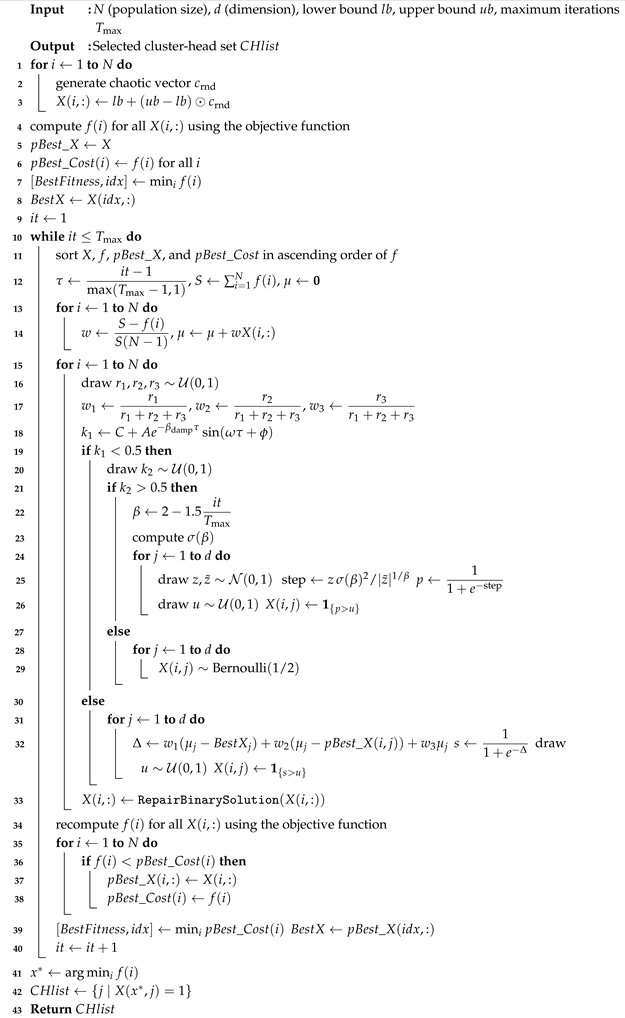
The CH selection process in the WAY-CR framework serves a dual purpose: ensuring efficient network operation and reducing the number of drones required to maintain effective communication and secure data exchange. This process is formulated as a multi-objective optimization problem. By evaluating multiple performance criteria, including energy balance, communication costs, mobility stability, trustworthiness, and load distribution, our model selects the best subset of CHs from the available drones. These CHs are responsible for data aggregation, cluster coordination, and communication with the shelter or GCS, thereby reducing the computational and communication burden on regular drones. The WAY-Based CH Selection procedure is outlined in Algorithm 1. The proposed CH selection procedure acts as a multi-criteria decision-making mechanism that not only maximizes communication efficiency and security, but also implicitly minimizes the number of drones required for resilient FANET operations. To solve this optimization problem, we first formulate the proposed fitness function and subsequently detail the solution procedure based on the proposed WAY algorithm.
Fitness Function Design: The longevity and stability of a FANET significantly depend on the strategic selection of CHs, which are inherently more energy-intensive due to their responsibilities in both intra- and inter-cluster communication. Additionally, factors such as drone mobility, communication distances, and trustworthiness significantly affect overall network performance. To address these challenges, we propose a multi-objective fitness function that integrates essential network characteristics to guide the best CH selection.
| Algorithm 1: WAY-Based CH selection |
 |
Let denote the CH, where and m is the total number of clusters. Each cluster k contains members, represented as for the member, with . The Euclidean distance between any two drones i and j is denoted by . The network consists of a total of N drones, where represents the number of direct neighbors (or communication links) associated with drone . Let denote the energy of , and denotes the average speed variation between a drone and its neighbors . Based on these definitions, the following factors are incorporated into the fitness function:
- Energy Consumption : For a given clustering configuration, we estimate the total communication energy spent by all drones in one reporting round, including transmission, reception, and data aggregation at the CHs. Let denote this total consumed energy and let be the total available network energy. The energy cost (to be minimized) is then defined as:so that smaller values of indicate more energy-efficient clustering (more residual energy left in the network).
- Intra-cluster Communication Distance : Measures the average distance between CHs and their members to minimize communication energy consumption:
- Distance to GCS : Quantifies how far the selected CHs are from the GCS by comparing their average fourth-power distance to the worst-case drone distance. A smaller value of indicates that CHs are, on average, much closer to the GCS, which helps reduce delay and improve link reliability:
- Load Balancing : We measure load balancing with respect to two aspects: (i) the number of CMs served by each CH and (ii) the aggregate communication distance from CMs to their CHs.First, we quantify the uniformity of cluster sizes via Jain’s index on the CM counts :This yields a count-based load-balancing cost so that corresponds to perfectly balanced CM counts and larger values indicate more imbalance.Second, for each CH k we compute a distance-based load as the sum of distances from k to its assigned CMs, and apply Jain’s index to the load vector :with the corresponding distance-based cost given byThe final load-balancing cost (to be minimized) is a convex combination of the two components,with in our experiments. Hence, , with 0 indicating perfectly balanced load and larger values indicating more imbalance across CHs.
- Speed Variation : Captures the relative mobility of drones in 3D space. High variation may cause unstable clustering, so low-speed deviation is preferred:
- Overall Trust : Ensures that drones with a higher reputation and reliable behavior are more likely to become CHs. The trust is computed using Equation (5).
To unify these metrics into a single fitness score, each normalized objective function is weighted by a tunable parameter such that . The overall CH fitness value is then computed as follows:
To ensure fair contribution of each objective in the fitness calculation, all fitness components are normalized to a common scale before applying the weights. The normalization is performed using min-max scaling as shown:
where is the raw value of the objective function, and are the minimum and maximum values of that function observed in the population during evaluation, and is the normalized value used for weighted computation.
While the core fitness captures the quality of a candidate CH set based on the underlying performance metrics (lower is better), we further scale it by a soft trust factor. Let be the trust ratio, defined as the fraction of selected CHs whose trust value exceeds a given threshold. The full objective (to be minimized) is therefore given by:
where is a tunable weight that controls how strongly the objective is penalized when the trust ratio is low, with larger values of placing more emphasis on trust.
WAY-Based CH Selection Operations: The proposed WAY-based optimizer performs an iterative, population-based search that balances exploration and exploitation through the Yo-Yo motion embedding into the WAA. In this work, the WAY is adapted to a binary form suitable for CH selection in FANETs, where a sigmoid transfer function maps continuous position updates into binary states. To enhance robustness under dynamic drone mobility, a stochastic exploration strategy is incorporated using Lévy-inspired bit flips and partial reinitialization, ensuring diversity in the binary search space. Exploration and exploitation are adaptively controlled by a sinusoidal time-varying function that alternates the search between global and local modes. Only drones that appear in the Authenticated_Drone_List (ADL) participate in the CH selection process. The complete computational flow of the proposed WAY-Based CH Selection is formally presented in Algorithm 1. The steps are detailed as follows:
- Problem encoding: Let the number of drones be n and the search dimension be . Each candidate solution is a binary vector where indicates that drone is selected as a CH, and indicates that it is a CM. A feasible solution must contain at least one CH.
- Initialization: Given the drones count N, lower and upper bounds , and maximum iterations , the initial population is generated as follows:
For each individual , generate a chaotic random vector and set Then, apply a binarization step (e.g., if , else 0) to obtain . Evaluate all individuals using the clustering objective in (28) and denote the resulting fitness values by . Initialize , and set to the best individual in this initial population.
- Main optimization loop: While , the algorithm updates the population as:
- (i)
- Sorting and guidance center construction: Sort the population in ascending order of fitness, such that , with corresponding solutions . Compute the sum of fitness values and the normalized iteration counter given by: Initialize and form the weighted guidance center:
- (ii)
- WAY-based branching for each individual: For each individual i, compute the time-varying control parameter: and draw to obtain normalized weights If , the algorithm applies an exploration update to individual i; otherwise, it applies an exploitation update.
- (iii)
- Exploration branch (): Sample to select the exploration mode.
- Lévy-inspired exploration (): Define the iteration-dependent shape and its scaleFor each dimension , then with , update
- Random restart (): Draw a single Bernoulli random variable and set
- (iv)
- Exploitation branch ( ): In exploitation, individual i is guided simultaneously by the current center , the current global best BestX, and its personal best . For each dimension ,and
- (v)
- Constraint enforcement and re-evaluation: After either branch, the updated individual is checked for feasibility as follows:
- (a)
- CH repair strategy: To avoid degenerate solutions with too few CHs, a repair operator is applied whenever a candidate solution contains at most one CH. Let and let denote the target number of CHs estimated in Step 3 (Cluster Count Estimation). If , the solution is left unchanged. For , the single node is trivially set as CH. For , we first determine an effective upper bound on the CH count, and then randomly choose a target CH count in the range (or , if ).If , we start with and consider all nodes as candidates. If , we keep the existing CH , set , and block and its neighbors (from the neighbor list) from being selected again. In both cases, the initial candidate set is the set of nodes that are not blocked.We then iteratively select new CHs from the current candidate set: at each step, a node k is chosen at random, added to , and both k and its neighbors are removed from the candidates. This process continues until either no candidates remain or . If after this process while and , one additional CH is randomly selected from the non-CH nodes to guarantee . Finally, the repaired solution is defined by:This operator enforces a minimum of two CHs when possible, promotes spatial separation between CHs by blocking their neighbors, and keeps the number of CHs close to the bandwidth-aware target implied by the cluster-count estimation step (Section 5.3.3).
- (b)
- Update and re-evaluation: The updated population is then re-evaluated using Equation (28); if a solution improves on BestFitness, then are replaced by this solution. Finally, the iteration counter is incremented: .
- Termination and output. When , the algorithm selects the solution with the minimum fitness, and extracts the final CH set as CHlist = . The list CHlist is returned as the final CH configuration.
5.3.5. Step 5: Cluster Formation
After the CHs are selected using the WAY-Based CH Selection procedure, the remaining drones, referred to as CMs, must associate with suitable CHs to form fully functional clusters. This stage transforms the optimized CH set into a structured and connected cluster topology. The process is entirely decentralized, enabling each drone to make autonomous decisions based on locally observable information and periodic broadcasts from nearby CHs.
Each GCS generates a signed Cluster_Authentication_Descriptor (CAD) containing the cluster ID, selected CH, potential members, CH neighbor list, timestamp, and digital signature. The CAD is encrypted using the PHC and distributed to the designated CH. Upon receiving the CAD, the CH verifies the GCS signature to confirm authenticity and broadcasts a CH_Announcement to nearby drones. Each drone independently selects its CH through the following decentralized procedure:
- (i)
- Local Table Construction: Each drone compiles a local table of candidate CHs based on the received announcement information CH_Announcement.
- (ii)
- Scoring and Selection: Each drone evaluates every candidate CH (s) using a multi-criteria score:where denotes the normalized Euclidean distance between the drone and the candidate CH s, ensuring that nearer CHs are preferred. quantifies the reliability of the communication link. It is defined between any two drones i and j as an exponentially weighted function of their relative velocity and mutual distance:where and denote the speeds of drones i and j, respectively, represents the maximum drone velocity (used for normalization), is the Euclidean distance between the two drones, and is the nominal communication range. Higher values of indicate stronger and more stable communication links. represents the CH’s trustworthiness as determined by the proposed trust model. is the estimated transmission energy required to reach CH s, and is the drone’s remaining energy. Their ratio promotes energy-efficient associations by favoring CHs that require lower transmission costs relative to available power. The drone then selects its CH as:
- (iii)
- Trust-Aware Registration: After selecting , each drone encrypts its registration request and trust parameters using PHC before transmission, and then sends a registration request to the chosen CH.Upon receiving the request, the CH verifies the CM’s trust level using recent trust updates. Furthermore, the CH checks whether the drone is listed in the CAD and whether its encrypted trust scores satisfy the threshold condition . Only CMs that are both authenticated and have trust values exceeding a predefined trust threshold are admitted into the cluster. This mutual trust validation mechanism prevents compromised or low-trust drones from joining the cluster, ensuring that authentication and trust collectively safeguard intra-cluster communication.
Once all drones complete the selection and verification process, the network self-organizes into a set of clusters, with each CH acting as a local coordinator responsible for intra-cluster communication, data aggregation, and forwarding toward the GCS. This trust-aware clustering mechanism ensures that clusters are energy-balanced, secure, and dynamically maintained as drones move or as environmental conditions change, providing a stable and resilient foundation for subsequent routing and data delivery phases.
5.3.6. Step 6: Trust-Aware Routing (TAR)
In the WAY-CR framework, the routing phase plays a critical role in establishing secure, energy-efficient, and mobility-aware communication between drones and the GCS. Following the clustering and CH selection process, this phase ensures that data generated by CMs is reliably forwarded through selected CHs to the GCS. After clustering, the routing stage in the WAY-CR framework establishes multi-hop communication between CHs and GCSs to restore connectivity among shelters. In this stage, drones act as aerial relays that must maintain stable, secure, and energy-efficient links under highly dynamic network conditions. Deterministic routing schemes can quickly become unstable when the topology changes; therefore, the mechanism should be probabilistic and adaptive.
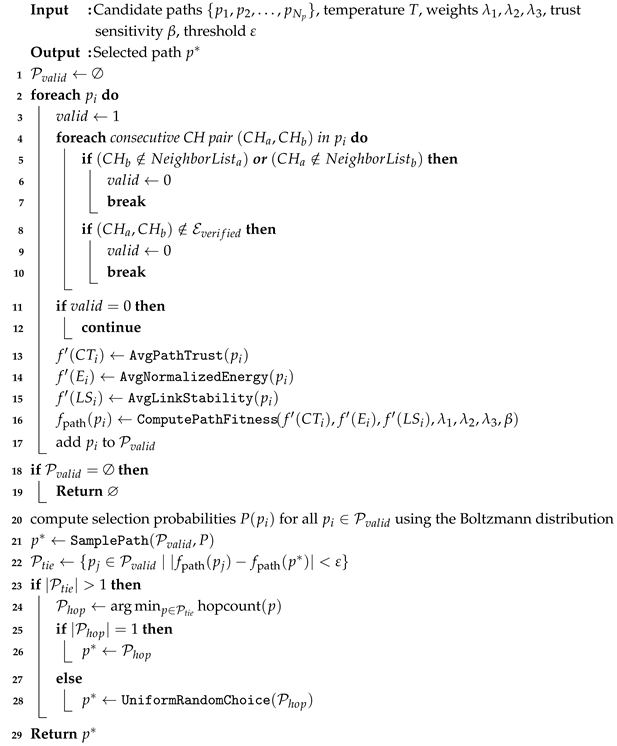
To address this, the WAY-CR employs a Unified trust-aware Boltzmann distribution-based path selection approach. The proposed routing algorithm is outlined in Algorithm 2. Each candidate route is assigned a probabilistic weight based on its normalized fitness, balancing exploitation (selecting the best-known path) and exploration (considering alternative stable routes). This mechanism mitigates premature convergence to suboptimal paths and enhances resilience under frequent link fluctuations. Before path fitness evaluation, each candidate route undergoes a CAD-based neighbor consistency check. For every CH pair along the path, both nodes must appear in each other’s Neighbor_List field. Only topology-consistent and mutually authenticated CH pairs are considered for trust-aware path selection. This ensures that routing paths are constructed exclusively over verified CH-CH links, preventing falsified or mismatched connections. Each candidate path is then evaluated using three key normalized metrics: denotes the normalized average trust along the path, reflecting its reliability and resistance to malicious or failing nodes; represents the normalized average residual energy of drones along the path, ensuring balanced power consumption and prolonged network lifetime; and measures the normalized link stability, estimating the expected duration of link availability based on drone mobility and signal strength dynamics. The composite path fitness is defined as:
where are the weighting coefficients, and is the trust amplification parameter. The multiplicative term strengthens the influence of trust: when , unreliable paths are heavily penalized; when , trust sensitivity is softened to tolerate minor estimation noise.
Each path’s selection probability follows the Boltzmann distribution:
where T is the temperature coefficient controlling randomness. A high T encourages exploration by allowing more candidate paths to be selected, while a low T favors exploitation of high-fitness, stable, and trusted routes.
A two-level tie-breaking rule is applied to ensure efficient routing decisions:
- (i)
- If two or more candidate paths have similar fitness values, i.e., , then the path with the fewer hop count is preferred to reduce latency.
- (ii)
- If such paths also have the same hop count, one of them is selected randomly to maintain path diversity and load balance.
Algorithm 2 provides a balanced tradeoff between security, endurance, and robustness, the key requirements for drone-based communication restoration between GCSs. The Boltzmann selection mechanism ensures adaptive path selection and resilience, while the two-level tie-breaking rule guarantees both efficiency and fairness in routing. While trust metrics are designed to mitigate insider threats, they operate under the assumption that all participating drones are legitimate. To uphold this assumption, authentication is enforced during the early stages of the framework, specifically in Step 2 (Section 5.3.2), before clustering and routing take place. Only authenticated drones are permitted to form or join clusters, ensuring identity validation prior to trust computation. This pre-authentication mechanism effectively blocks spoofed or unauthorized nodes from entering the network, thereby protecting the integrity of trust evaluation and ensuring that routing decisions are based solely on verified, trustworthy participants.
Boltzmann Temperature Parameter Tuning for TAR: To further enhance the adaptability of the trust-aware Boltzmann routing mechanism, the temperature parameter can be tuned online using an Upper Confidence Bound (UCB)-based Multi-Armed Bandit (MAB) strategy [74]. Instead of selecting a fixed temperature a priori, the controller progressively learns which temperature values provide the most effective exploration–exploitation balance under dynamic FANET conditions.
| Algorithm 2: Unified Trust-Aware Boltzmann Path Selection |
 |
Let the discrete candidate set of temperature values be where each corresponds to one bandit arm. At routing epoch t, the controller selects one temperature arm and applies it to the Boltzmann path-selection rule:
where is the trust-aware fitness of candidate path defined by Equation (36).
Each arm is associated with an empirical mean reward and a selection count . To guarantee valid initialization, each temperature arm is selected once before the standard UCB rule is applied. After initialization, the arm selected at routing epoch t is determined by where is the exploration coefficient and is the selected arm index. The corresponding temperature used in the routing epoch is After applying , the routing controller computes the Boltzmann probabilities of feasible routing alternatives and selects the corresponding CH-to-BS routing paths. Since one routing epoch may produce one selected path for each source CH, let denote the set of successful selected paths at epoch t.
The UCB reward is then defined as the mean trust-aware fitness of the selected successful paths: where is computed using Equation (36). If no successful routing path is obtained during epoch t, the reward is set to zero. Since the path fitness is constructed from normalized trust, residual energy, and link-stability terms, the resulting reward remains bounded and fully consistent with the Trust-Aware Routing objective. After observing reward , the count of the selected arm is first incremented: and its empirical mean reward is updated as
Through this mechanism, the controller gradually identifies temperature values that yield better long-term routing behavior. In particular, the UCB policy balances exploration of underutilized temperature values with exploitation of temperatures that have previously produced high-quality routing decisions. As a result, the routing process can adapt more effectively to mobility changes, trust variation, link disruption, and fluctuating communication conditions. Temperature tuning is performed globally, meaning that one temperature value is selected per routing epoch and is applied uniformly to all routing decisions performed during that epoch. This design preserves the probabilistic structure of the Boltzmann routing policy while introducing only limited computational overhead compared with more complex contextual or per-path adaptation strategies.
5.3.7. Step 7: Cluster Maintenance
To ensure robustness, energy efficiency, and trust-aware adaptation in highly dynamic FANET environments, the WAY-CR framework integrates an Adaptive Cluster Maintenance mechanism, as detailed in Algorithm 3. This process maintains cluster stability over time by dynamically adjusting beacon intervals, monitoring node fitness, and managing membership changes such as CH inactivity, CM disconnection, or the integration of new drones.
Each drone periodically broadcasts a beacon according to an adaptive interval defined as:
where denotes the speed-variation metric of drone i, is the normalized residual-energy ratio, and represent the minimum and maximum allowable beacon intervals, and are sensitivity parameters controlling the effects of mobility and energy, respectively. This formulation is designed to decrease the beacon interval as drone mobility increases, enabling faster topology updates, and to increase the beacon interval as residual energy decreases, thereby reducing control overhead for energy-constrained nodes. Moreover, the normalization by ensures that remains bounded within , providing a practical balance between network responsiveness and signaling efficiency.
| Algorithm 3: Adaptive Cluster Maintenance |
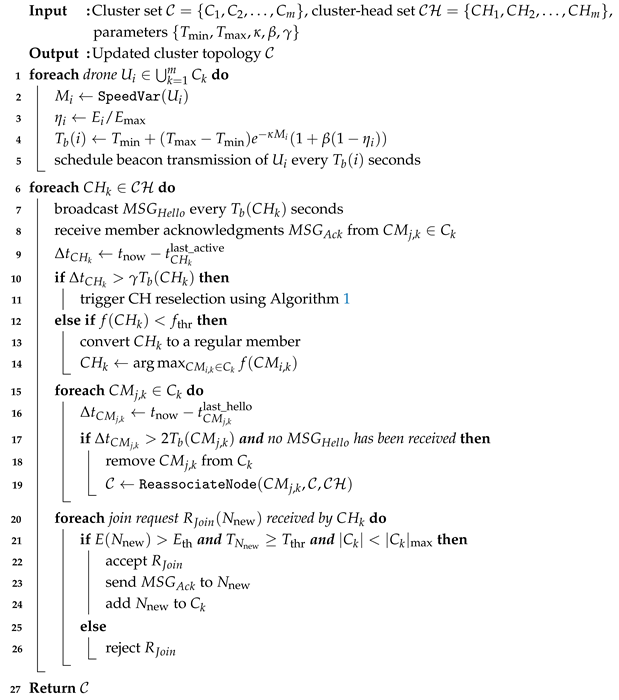 |
Each CH periodically transmits a MSG_Hello message to its associated CMs at the adaptive interval and updates its timestamp . CMs reply with acknowledgment messages (MSG_Ack) to confirm connectivity. If a CH exhibits inactivity, detected when the elapsed time , the node is considered inactive, and the re-selection procedure defined in Algorithm 1 is triggered. Alternatively, if the CH’s fitness value , as defined in Equation (26), falls below the threshold , the node is demoted to a regular CM, and the member with the highest fitness is promoted as the new CH:
Similarly, each CM monitors its CH’s activity. If a CM fails to receive any MSG_Hello messages for more than , it is considered disconnected and triggers CM registration (as mentioned in Section 5.3.5). This enables decentralized, self-healing cluster reconfiguration without centralized coordination.
When a new or previously disconnected drone seeks to join a cluster, it sends a join request (R_Join) to the nearest available CH. The CH consults the latest ADL record to verify its authentication status. Only drones listed as active proceed to the trust and energy evaluation phase; otherwise, the CH requests re-authentication from the corresponding GCS. If the drone is present in the latest ADL, the CH then verifies its residual energy, trust value, and the current cluster capacity. A drone is admitted to cluster only if its residual energy exceeds the threshold , its trust value is not less than the threshold , and the current cluster size remains below the maximum allowed size . Otherwise, the admission request is rejected or deferred.
Finally, fitness scores for both CHs and CMs are periodically updated based on current observations of trust, residual energy, and mobility within the WAA-based multi-objective evaluation framework. These proactive updates allow the system to respond promptly to node failures, mobility-induced link disruptions, or declining trust levels, maintaining a resilient, secure, and energy-balanced cluster topology throughout the network lifecycle.
The Authenticated_Drone_List (ADL) serves as the authoritative record of drones that have successfully completed identity verification through the GCS. It ensures that only legitimate and trusted drones participate in clustering and routing activities throughout the WAY-CR framework. The ADL is dynamically maintained and updated as follows: During the registration phase (Step 2, Section 5.3.2), each drone submits an Auth_Request containing its credentials to the nearest GCS. Upon successful verification, the drone is added to the ADL with the status active, along with its trust value, residual energy, and the timestamp of the last authentication. The GCS periodically revalidates ADL entries. Drones that fail authentication or show degraded trust behavior are flagged as revoked and temporarily excluded from routing and clustering operations. If a drone becomes inactive, unresponsive, or malicious, its ADL status is immediately updated to revoked. Such drones must reauthenticate through the GCS before being allowed to rejoin any cluster or participate in routing.
5.4. Stage Two: Inter-GCS Operations
After completing Stage One, all drones are organized into authenticated clusters, each governed by a CH and secured through CADs and the ADL. This establishes a trusted intra-GCS communication backbone where CMs exchange data securely under their respective GCSs. However, once network fragmentation or GCS disconnection occurs, intra-cluster communication alone becomes insufficient to maintain global coordination.
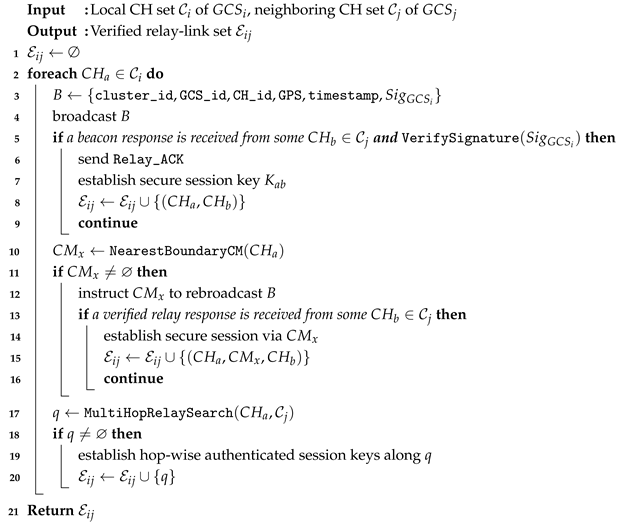
To restore full mission-level connectivity across distributed GCS domains, Stage Two introduces a secure inter-GCS relay mechanism that enables communication between geographically separated control segments through authenticated CH-CM relay links, using two integrated mechanisms: (i) the Secure Inter-GCS Relay Discovery and Verification Algorithm (Algorithm 4), which establishes authenticated and trusted relay links between clusters managed by different GCSs, (ii) the Unified Trust-Aware Boltzmann Path Selection Algorithm (Algorithm 2), which determines the most reliable and energy-efficient route across the verified relay graph. This ensures a resilient, trust-aware, and adaptive recovery process during inter-GCS reconfiguration. Inter-GCS connectivity is re-established through hierarchical multi-hop relays composed of CHs and CMs. When intends to communicate with , the relay structure depends on spatial separation and the available network topology. Three operational scenarios are considered:
- (i)
- Direct CH–CH Relay: If and are within mutual communication range, a single-hop relay path is established: This configuration achieves the lowest latency and minimal energy cost.
- (ii)
- Single-Hop Intra-Cluster Assistance: When direct CH–CH connectivity is unavailable but an intermediate CM can bridge the link, the assisted path is formed as: This arrangement provides moderate latency with stable connectivity.
- (iii)
- Multi-Hop Relay via Intermediate CMs: In sparse or partitioned topologies, multi-hop relaying extends communication over longer distances: While more energy intensive, this approach ensures robust end-to-end connectivity.
| Algorithm 4: Secure Inter-GCS Relay Discovery and Verification |
 |
The secure establishment of these relay scenarios relies on mutual authentication between CHs belonging to different GCSs. The following subsections discuss the discovery, verification, and key exchange processes that governs this inter-GCS authentication layer in detail, as follows:
5.4.1. Inter-GCS Relay Discovery and Verification
The Secure Inter-GCS Relay Discovery and Verification procedure (Algorithm 4) governs the establishment of authenticated and trusted inter-GCS relay links. CHs belonging to distinct GCSs authenticate one another using GCS-signed credentials and then form the verified communication links. Each holds a credential containing its identifier, trust level, and timestamp, digitally signed using the GCS’s private key. Neighboring CHs verify this credential using the public key of the issuing GCS. Only after successful mutual authentication and trust validation are the relay links added to the verified edge set for subsequent routing.
Scenario 1: Direct CH–CH Discovery: Each cluster head periodically broadcasts a signed Cluster_Beacon message:
thereby advertising its availability for inter-GCS communication. When a neighboring receives this beacon, it verifies using the public key of . Upon successful verification, replies with a Relay_ACK, acknowledging authenticity and readiness to establish a link. The mutual trust coefficient is then computed as: ensuring effective trust estimation. The verified pair is recorded in , providing a low-delay, energy-efficient relay channel.
Scenario 2: Assisted CH–CM–CH Discovery: If and are not within direct range, delegates a nearby trusted cluster member () to rebroadcast its Cluster_Beacon. The intermediate forwards the signed beacon to , which again verifies using ’s public key. Following validation, returns a signed Relay_ACK, which is relayed back via . Both CHs then establish a session key through hop-wise authenticated exchange. The verified relay tuple is added to , providing reliable inter-GCS connectivity through adjacent clusters.
Scenario 3: Multi-Hop CM Relay Discovery: In sparse or fragmented environments where direct or single-hop discovery fails, controlled multi-hop propagation is used. initiates beacon forwarding through a sequence of trusted CMs until a remote is reached. At each hop, integrity and trust are verified using CAD-based credentials and intra-cluster Neighbor Lists, preventing route falsification. Once receives a valid beacon, it performs the same authentication and key exchange steps as Scenario 1. The resulting relay chain is recorded in , providing robust communication in partitioned topologies.
Unified Trust and Authentication Model: Across all scenarios, the mutual trust between connected CHs is conservatively evaluated as the minimum trust value of both endpoints. Each verified link in is secured using its session key and authenticated through GCS-issued credentials. Only these verified, trusted links are subsequently employed within the Unified Trust-Aware Boltzmann Path Selection Algorithm (Algorithm 2) to construct secure and energy-aware inter-GCS relay routes. This process is further constrained by the ADL list and CADs, ensuring that only legitimate CHs and CMs participate in inter-GCS routing.
The procedural description of the Secure Inter-GCS Relay Discovery and Verification Process is given in Algorithm 4, which adaptively executes direct, assisted, and multi-hop relay formation based on network conditions.
5.4.2. Inter-GCS Relay Formation and Path Selection
Once verified, the relay links have been established using Algorithm 4, the best inter-GCS path between and is determined using the Unified Trust-Aware Boltzmann Path Selection Algorithm (Algorithm 2). Each candidate path is evaluated using three normalized metrics: —average trust of CHs along the path, —normalized residual energy, and —average link stability.
Before path fitness evaluation, each consecutive CH pair is validated:
- For intra-GCS links, CAD-based Neighbor List cross-checking ensures mutual inclusion.
- For inter-GCS links, authenticity is confirmed via verified Cluster_Beacon/ RELAY_ACK pairs in .
Each valid path’s fitness is calculated using Equation (36), and its selection probability is derived using Equation (37). This Boltzmann-based probabilistic mechanism ensures that higher-fitness paths are favored while maintaining exploration to avoid route overutilization, thereby enhancing reliability and load distribution during inter-GCS recovery. By integrating secure relay discovery with probabilistic TAR, Stage Two ensures that inter-GCS communication remains both adaptive and resilient, even under dynamic topological or environmental disruptions.
5.5. Computational Complexity Analysis
The computational complexity of the proposed WAY-CR framework can be analyzed by decomposing it into its major operational components, namely: secure registration and clustering, Trust-Aware Routing, adaptive maintenance, and inter-GCS relay discovery. Let n denote the total number of drones, m the number of selected CHs, N the optimizer population size, d the search-space dimension, the maximum number of optimization iterations, the number of candidate routing paths, and L the average hop length of a candidate path.
In the first stage, the dominant cost arises from the WAY-Based CH Selection algorithm. During each iteration, the population is sorted in time, the weighted mean and position updates are computed in time, and the fitness values are re-evaluated in time, where is the cost of evaluating the objective function for one candidate solution. Therefore, the total complexity of the CH selection process is
If the objective evaluation is linear in the dimension, i.e., , then this reduces to
After CH selection, Cluster Formation requires associating drones with selected CHs. Under a straightforward implementation where each drone checks all CHs, the complexity is Secure Drone Registration with the nearest GCS is performed once per drone and contributes a linear cost of For routing, the Unified Trust-Aware Boltzmann Path Selection algorithm evaluates each candidate path by verifying consecutive CH pairs and computing trust, residual energy, and link stability. If each path contains on average L hops, then the complexity is since path validation and metric aggregation are both linear in the path length, and the Boltzmann probability computation adds only overhead.
The Adaptive Cluster Maintenance procedure scans drone states, updates beacon intervals, checks CH activity, and handles re-association events. For one maintenance cycle, the complexity is linear in the number of drones and CHs: If re-election of CHs is triggered R times during operation, the maintenance overhead becomes where H is the number of maintenance rounds.
In the second stage, the secure inter-GCS relay discovery and verification algorithm operates over neighboring CHs belonging to adjacent GCS regions. Let and denote the number of CHs in two neighboring GCS domains. Direct CH-to-CH discovery requires, in the worst case, checking possible relay opportunities across CH pairs, giving If assisted or multi-hop relay discovery is required through CMs, the search behaves like a graph exploration over boundary relay nodes. Let and denote the number of boundary relay nodes and links, respectively. Then, the worst-case relay discovery cost becomes
Accordingly, the overall complexity of the WAY-CR framework for one full execution cycle can be expressed as:
where is the set of neighboring GCS pairs participating in inter-GCS relay establishment. Since the metaheuristic CH selection is iterative, it constitutes the dominant computational cost in most scenarios. Hence, the practical overall complexity of WAY-CR is mainly governed by for moderate routing and relay-search overhead, with additional linear maintenance cost during network operation.
5.6. Message Complexity Analysis
The message complexity of the proposed WAY-CR framework is evaluated by counting the number of control-message transmissions required during registration, clustering, routing, maintenance, and inter-GCS relay establishment. Let n denote the total number of drones, m the number of CHs, H the number of maintenance rounds, J the total number of join/re-association events, L the hop length of the finally selected routing path, and the number of CHs associated with neighboring . We count one broadcast as one logical transmission, and assume that cryptographic protection only adds constant-size authentication fields without changing the asymptotic number of exchanged messages.
(1) Secure registration and cluster setup. In the first stage, every drone performs secure registration with its nearest GCS before clustering. Since each registration requires only a constant number of request/response authentication packets, the registration overhead is linear in the number of drones: where is a constant handshake factor. The cluster-count estimation and WAY-based CH optimization are executed locally once node information is available, so they do not introduce iterative network-wide message exchanges. Thus, the optimizer increases computational cost, but not the message complexity beyond the initial state collection and final CH announcement. After CH selection, Cluster Formation requires CH advertisement and member association. If each CH broadcasts one advertisement, and each non-CH node sends one join request and receives one acknowledgment, then
Therefore, the total message cost for the initial intra-GCS setup is given by:
(2) Trust-Aware Routing. The unified trust-aware Boltzmann path-selection algorithm evaluates candidate paths using already available neighbor lists, verified relay-link information, trust, residual energy, and link stability. Hence, the scoring of candidate paths is primarily local and does not require network-wide message flooding. Once the best path is selected, the control overhead is limited to establishing or activating that route, which is proportional to the path length: If an inter-GCS link is not yet verified, the routing stage invokes relay discovery, whose cost is accounted for separately in .
(3) Adaptive Cluster Maintenance. The maintenance algorithm periodically schedules drone beacons, CH HELLO messages, member acknowledgments, and re-association requests for disconnected or newly arriving nodes. In one maintenance round, at most one beacon/HELLO is transmitted per drone or CH, and each active cluster member may return one acknowledgment. If denotes the number of join/re-association events during round h, then the message cost per round is Across H maintenance rounds, the total maintenance overhead becomes where . If a CH timeout triggers re-selection, the extra communication remains bounded by the affected cluster-state refresh and announcement process, which is still linear in the number of involved drones.
(4) Inter-GCS relay discovery and verification. In the second stage, each local CH broadcasts a Cluster_Beacon to discover reachable CHs in adjacent GCS domains. A successful direct discovery generates one acknowledgment, while assisted or multi-hop discovery adds rebroadcast and relay-forwarding messages through boundary CMs. Let denote the total number of boundary relay transmissions explored between neighboring and . Then, the message complexity for relay discovery between these neighboring domains is In the best case, where direct CH–CH discovery succeeds, this reduces to . In the worst case, multi-hop controlled propagation dominates, and the overhead becomes proportional to the number of explored relay forwards. Summing over all neighboring GCS pairs in the inter-GCS graph gives
(5) Overall message complexity. Combining all phases, the total message complexity of one complete execution cycle of WAY-CR is
which simplifies to
Thus, the dominant message overhead of WAY-CR is not produced by the metaheuristic CH optimizer itself, but by the periodic cluster-maintenance exchanges and the inter-GCS relay-discovery process. The initial registration, Cluster Formation, and route activation stages remain linear or near-linear in the network size.
6. Results and Discussion
This section presents and compares the results of the proposed WAY-CR framework with recent state-of-the-art FANET methods. We first evaluate the WAY optimizer against the WAA baseline, then analyze how weight settings affect clustering performance, and finally compare WAY-CR with existing approaches. The following state-of-the-art FANET methods are considered for comparative analysis: TMFCS [60], TDLS [15], SSACEER [61], SSAFANET [41], ICW [40], EESCRA [63], CSBWOA [39], and AAFSA [62]. Simulations are performed in MATLAB 2016b. The experiments focus on clustering and routing performance and on the impact of compromised nodes. The simulation settings are summarized as follows, and the simulation parameters are provided in Table 3.
Table 3.
Simulation parameters.
6.1. Simulation Scenario
For experimental analysis, a FANET comprising drones is deployed in a three-dimensional region of size . The GCS is located at the center of the region and is assumed to have unlimited energy and processing capability, while each drone is initialized with the same energy level (). Drone mobility follows a smooth 3D random-walk model (SmoothRW3D) with speed uniformly bounded in and an update period of per step.
To evaluate adversarial behavior, a fraction of drones is designated as compromised. Trust is initialized with a threshold : compromised drones are assigned low initial trust values in , while normal drones are initialized in . Communication ranges are set to for drone–drone (and CH–CH) links and = for CH–GCS connectivity. Link reliability is modeled using a distance and lifetime-based stability model with bounded delivery probabilities (intra-cluster: ; inter-cluster: ). The radio energy model follows the first-order model with parameters , , , and , using a packet size of 8192 bits. Flight-related parameters are set to , wings, and wing radius (with air density and ) to compute a coarse flight-power proxy. Each configuration is repeated over multiple independent runs with 20 different random seeds, and results are reported as averages across runs. The complete simulation parameters are summarized in Table 3.
6.2. Performance Metrics
To ensure completeness and clarity, we report the base metrics that capture clustering and routing performance, and the coverage/ trust-weighted metrics that reflect connectivity and security effects, as follows.
- (i)
- Clustering structure and fairness: At each time step t, the clustering process produces a set of CHs ; thus, the number of CHs is . To measure load balance among CHs, we use Jain’s fairness index over cluster sizes. Let be the number of drones assigned to CH (including the CH itself). Then, where . Higher values (closer to 1) indicate more balanced clusters.
- (ii)
- Energy metrics: The cumulative energy consumed by the network is computed as where is the initial energy per drone and is the residual energy of drone i. To incorporate coverage effects, we also report the average consumed energy per covered drone:where . For reference, is only a normalization by n.
- (iii)
- Trust and Reliability metrics: We evaluate the trustworthiness of the backbone by measuring the average trust of elected CHs: To quantify how trust affects inter-cluster delivery, we compute trust-weighted CH-to-BS reliability as: where is the mean node trust along selected CH→BS paths (averaged over reachable paths). Hence, . Similarly, the trust-aware global PDR applies the same coverage scaling:In our analysis, represents the cause metric (route trustworthiness), while is the effect metric reflecting trust-weighted delivery.
- (iv)
- Backbone latency metric: Since the focus is backbone performance, we report the CH-to-BS end-to-end delay (), which measures latency over CH→CH→BS paths, averaged over CHs whose routes successfully reach the BS.
- (v)
- CH-to-GCS PDR ( ): At time step t, each CH selects a CHGCS path. The end-to-end PDR for is computed as the product of hop delivery probabilities along this path (and set to 0 if the GCS is unreachable). To account for different cluster sizes, we report the cluster-size-weighted average:where is the number of drones assigned to (including the CH).
6.3. Performance Evaluation of the WAY Optimizer Against the WAA Baseline
To provide a comprehensive comparison between WAY and WAA, we first analyze convergence efficiency and final best-fitness behavior, and then present an ablation study to isolate the contribution of the proposed Yo-Yo operator. We use the same settings as in Section 6.1 and Table 3, with a fleet of 100 drones. Both WAY and WAA are run with a population size of 30 and an iteration budget of 100. For WAY, the Yo-Yo controller parameters are (vertical offset), (initial amplitude), (damping), , (angular frequency), and (phase shift). Each configuration is executed for 20 independent runs. The multi-objective fitness weights correspond to a uniform configuration, where all objectives are weighted equally .
Figure 4 compares the best-so-far fitness (lower is better) over iterations for WAY and the baseline WAA. WAY exhibits a steep initial descent during approximately the first 10 iterations, dropping from about to nearly , and then enters a slower refinement phase, approaching a final plateau around . In contrast, WAA improves more gradually and levels off at a noticeably higher plateau around . The performance gap appears early and persists throughout the run, indicating that WAY reaches higher-quality solutions much faster and maintains its advantage until convergence.
Figure 4.
Convergence efficiency of WAY versus WAA. Bold lines show run-wise means; shaded regions denote 95% confidence intervals across runs.
Figure 5 presents the distributions of the final best fitness values for WAY and WAA across the 20 paired runs. The boxplots show that WAY consistently achieves lower final fitness (better solution quality) than WAA. The notches suggest a clear separation between the medians, while the paired outcomes further show that the improvement is systematic across runs rather than being driven by a small number of outliers. A paired Wilcoxon signed-rank test confirms that the difference is highly significant, with and a rank-biserial effect size of . The magnitude indicates a maximal practical effect in favor of WAY, whereas the negative sign shows that WAY yields smaller (better) final fitness values than WAA in every paired run.
Figure 5.
Final best fitness distributions for WAY versus WAA (lower is better). Notched boxplots show medians and their confidence intervals; dots denote paired outcomes. Paired Wilcoxon signed-rank test: , ().
Ablation Study: WAA vs. WAY Optimizer
To isolate the contribution of the proposed Yo-Yo operator, we compared the baseline WAA against its Yo-Yo-enhanced variant, denoted as WAY, under matched scenarios. Table 4 reports the results separately for , 100, and 150, together with a pooled summary over all matched runs. The results show that the Yo-Yo operator consistently preserves full coverage while making the clustering structure substantially reduced and more energy-efficient. In particular, the number of CHs is reduced by , , and for , 100, and 150, respectively, with a pooled reduction of . Similarly, total energy consumption decreases by , , and , yielding a pooled reduction of . At the same time, WAY improves CH trust, path trust, trust-aware link reliability, Jain load fairness, and trust-weighted total PDR across all network sizes, confirming that the Yo-Yo operator consistently enhances the trust-oriented behavior of the FANET.
Table 4.
Ablation study comparing WAA and WAY under matched scenarios. Each entry is reported as WAA/WAY followed by the relative change in WAY with respect to WAA. The pooled column aggregates all matched runs across .
The main trade-off is that the more compact CH structure comes at the cost of higher delay. Although the raw total PDR decreases only slightly across all sizes, from approximately under WAA to under WAY. In addition, the average node-level end-to-end delay increases by about to . Overall, the ablation confirms that the Yo-Yo operator is the key component responsible for transforming WAA into a more selective, balanced, and trust-aware FANET solution, while introducing a clear trade-off in CH persistence and node-level latency.
6.4. Impact of Weight Selection on Clustering Performance
To investigate the sensitivity of the proposed clustering scheme to the multi-objective fitness weights, we consider seven weight configurations for the six objectives . Cases 1–6 are single-dominant settings, in which one objective is assigned a weight of while the remaining five objectives each receive . These correspond to energy-dominant (Case 1), intra-cluster-distance-dominant (Case 2), distance-to-BS-dominant (Case 3), load-balancing-dominant (Case 4), speed-variation-dominant (Case 5), and trust-dominant (Case 6) configurations. Case 7 is the uniform setting, in which all objectives are weighted equally . Together, these cases span a representative range of design priorities and allow us to assess how emphasizing a single objective, or weighting all objectives uniformly, affects cluster-head selection and network performance.
Among these seven configurations, we focus on three representative cases:
- The intra-cluster-distance-dominant case,
- The load-balancing-dominant case,
- The uniform configuration,
In the -dominant case, the optimizer selects on average CHs, yielding the lowest average energy consumption (257.7 units) and the highest average packet delivery ratio, but at the cost of lower fairness, with Jain’s index equal to . This suggests that prioritizing intra-cluster distance produces many small clusters with shorter communication links, which improves energy efficiency and reliability, but makes the distribution of members across CHs less uniform.
In contrast, the -dominant setting produces a smaller number of CHs on average (), with slightly higher energy consumption (290.6 units), but significantly improves load fairness (Jain’s index ) while still maintaining a high average PDR () and the best observed PDR over all runs, The uniform-weight configuration behaves as a balanced compromise between these two extremes. It yields CHs on average, intermediate energy consumption (279.4 units), and robust performance in both reliability, and fairness (Jain’s index ).
Figure 6 visually confirms the same trends. In particular, the -dominant configuration achieves the strongest energy–PDR combination but with weaker fairness, whereas the - and -dominant configurations provide the highest fairness. The equal-weight setting remains the most balanced overall configuration. By contrast, the -dominant case performs poorly in both energy and PDR. Since all drones have similar speeds in our scenarios, assigning a high weight to the speed-variation objective does not yield meaningful gains in reliability or fairness. Therefore, in the remainder of the experiments, we adopt the uniform setting for all j as the main baseline.
Figure 6.
Normalized performance results of the seven weight configurations in terms of inverted energy consumption, average PDR, and Jain’s load-fairness index. Each metric is scaled to , with brighter colors indicating better performance.
6.5. Comparison of WAY-CR with Existing Approaches
This subsection presents the comparative analysis results of WAY-CR against existing approaches, using the performance metrics given in Section 6.2. We first analyze and compare the clustering and routing performance, and then examine the impact of compromised nodes on network robustness.
6.5.1. Analysis: Clustering and Routing Performance
This section discusses the clustering and routing performance of the WAY and the baseline methods in terms of multiple metrics. We infer the following from the experimental results. As the number of drones increases from 50 to 150, all baseline methods elect a larger number of CHs, which expands the backbone and increases clustering/routing overhead. In contrast, WAY-CR consistently forms the smallest CH set across all network sizes, indicating more compact and scalable backbone formation.
In terms of load balance, WAY-CR achieves the highest and most stable Jain index ( for ), showing that it maintains well-balanced cluster sizes as the network scales. Most baselines exhibit decreasing fairness with larger networks (e.g., TMFCS: , AAFSA: ), while EESCRA becomes highly imbalanced (). These results confirm that WAY-CR improves scalability by limiting backbone size and preserving cluster-size fairness under increasing network density. The results are discussed in detail, as follows:
(i) Scalability: number of CHs: Figure 7 compares the number of elected CHs under different network sizes (). As n increases, all baseline methods tend to elect more CHs, which enlarges the backbone and increases clustering and routing overhead. In contrast, WAY-CR consistently produces the smallest CH set across all node densities, indicating a more compact backbone formation and reduced control overhead. Notably, methods such as SSAFANET and AAFSA exhibit the highest CH counts at large n, implying higher inter-cluster coordination cost and potentially more frequent backbone maintenance.
Figure 7.
Number of CHs vs. number of drones ().
(ii) Load balance: Jain fairness of cluster sizes: Figure 8 reports Jain’s load fairness index, which captures how evenly drones are distributed among CHs. WAY-CR achieves the highest and most stable fairness across all tested network sizes (Jain for ), indicating that it maintains balanced cluster sizes even as the network scales. In contrast, most baselines show a monotonic decrease in fairness with increasing n (e.g., TMFCS: and AAFSA: ), reflecting increasing load imbalance at higher densities. EESCRA exhibits the lowest fairness values (), which indicates highly uneven clustering and suggests that a small subset of CHs becomes overloaded. Overall, these results show that WAY-CR improves scalability by limiting backbone size while maintaining superior load balancing.
Figure 8.
Jain load fairness vs. number of drones ().
(iii) Energy consumption: Figure 9a reports the cumulative energy consumption () for different network sizes (). As expected, energy consumption increases with n for all methods due to the higher communication and processing load. However, WAY-CR consistently achieves the lowest energy usage across all scenarios (23.70 J, 40.18 J, and 54.15 J for , respectively). Compared to the most energy-efficient baseline (TDLS), WAY-CR reduces energy consumption by approximately 51–52% across all network sizes (e.g., at : 54.15 J vs. 112.20 J). In contrast, EESCRA incurs the highest energy cost, which becomes increasingly severe as the network grows (e.g., 474.28 J at ), indicating substantial overhead and inefficient load distribution. The energy gains of WAY-CR are consistent with its compact backbone formation (fewer CHs) and balanced clustering, which reduce unnecessary control and relay operations.
Figure 9.
Energy efficiency under different network sizes ().
(iv) Average consumed energy per covered drone: Figure 9b shows the results in terms of , defined as the consumed energy normalized by the number of covered drones. In these experiments, all drones remain covered (i.e., ); therefore, . WAY-CR again achieves the lowest values (0.474, 0.402, and 0.361 J per drone for ), which is about 51–52% lower than the best baseline (TDLS) at each network size. EESCRA shows the highest normalized cost, rising sharply with n (2.23, 2.96, and 3.51 J per drone), which reflects its high absolute energy consumption under scaling.
(v) Route and CH trust (cause metrics): Figure 10a reports the route trust metric , while Figure 10b reports the average trust of the elected CHs ( ). WAY-CR maintains consistently high trust values across all network sizes (), with only a mild decrease as the network scales (e.g., : ). This indicates that the proposed clustering and backbone selection favor trustworthy relays even in denser deployments. Although EESCRA attains higher trust values at larger n (e.g., reaches at ), this does not necessarily imply better overall performance because trust must be considered jointly with coverage, energy cost, and clustering balance.
Figure 10.
Trust cause metrics versus number of drones ().
(vi) Trust-weighted backbone reliability (effect metric): Figure 11a represents the CH-to-GCS delivery probability weighted by path trust (). As expected, the results follow the same ordering as the underlying trust metrics: methods with higher generally achieve higher trust-weighted backbone reliability. WAY-CR provides strong and stable backbone reliability (approximately as n increases), outperforming most baselines. EESCRA becomes higher at larger n (up to at ), reflecting its high trust in the selected backbone paths.
Figure 11.
Trust effect metrics versus number of drones ().
(vii) Trust-aware total and global reliability: Figure 11b reports , which combines trust-weighted inter-cluster delivery with intra-cluster delivery, while Figure 11c further applies coverage scaling to obtain . EESCRA yields the highest values as n increases (e.g., ). However, after accounting for coverage, WAY-CR achieves the best global trust-aware performance (e.g., : ), while EESCRA drops substantially (e.g., ), indicating that its higher trust-weighted reliability is partly offset by reduced coverage. This confirms that provides a more conservative and system-level view by penalizing unreachable or uncovered drones.
(viii) Backbone latency (CH-to-BS delay): Figure 12a reports the average CH-to-BS end-to-end delay, given by , for different network sizes (). The results show that WAY-CR achieves a stable backbone delay of approximately ms across all tested network sizes, which is comparable to most baseline methods (TMFCS, TDLS, SSACEER, SSAFANET, ICW, EESCRA, and CSBWOA). In contrast, AAFSA exhibits consistently higher delay that increases with network size (from ms at to ms at ), suggesting longer CH-to-BS routes and/or higher hop counts. Overall, the WAY-CR maintains low backbone latency while scaling to larger networks.
Figure 12.
End-to-end delay versus number of drones (). (a) Average CH-to-GCS end-to-end delay (). (b) Access + backbone end-to-end delay ().
(ix) Access + backbone delay (node-to-BS latency): Although our main latency KPI targets the backbone (CH→BS), we additionally report the access + backbone end-to-end delay, , in Figure 12b. This metric includes both the intra-cluster access hop (CM→CH) and the inter-cluster backbone path (CHBS). WAY-CR shows higher node-to-BS delay across all network sizes (approximately ms for ), while most baselines remain in the range of –15 ms. This outcome is consistent with WAY-CR’s compact clustering (fewer CHs): larger clusters increase the average CM→CH distance, which raises the access component of latency. Importantly, the backbone delay remains low and comparable to other methods; therefore, the increase in primarily reflects an access-to-backbone trade-off rather than inefficient backbone routing.
Although WAY-CR yields a higher than several baselines, the absolute delay remains low (approximately 17–18 ms across all network sizes), which is acceptable for typical FANET monitoring and coordination applications. This observation is also consistent with the simulator delay model. In our implementation, the per-hop delay is dominated by the transmission and processing components: where bits, bps, and ms, while the propagation term is negligible (microseconds). Therefore, the transmission time is ms and the per-hop processing delay adds 1 ms, giving ms. Consequently, the observed WAY-CR node-to-BS delay of 17.5 ms corresponds to roughly two hops on average (CM→CH plus ≈ one CH→BS backbone hop), indicating reasonable routing behavior rather than excessive latency. The slightly higher is primarily attributed to the access component (CM→CH), since WAY-CR forms fewer CHs and hence larger clusters. Importantly, the backbone delay remains comparable to other methods; therefore, the node-to-BS latency reflects a modest access-to-backbone trade-off in exchange for improved energy efficiency, reduced clustering overhead, and stronger trust-aware reliability.
(x) Backbone delivery reliability (CH-to-GCS PDR): Figure 13 presents the average CH-to-GCS delivery reliability () over the selected backbone paths. Overall, this metric remains high and stable across all methods (approximately –) and changes only slightly as the network scales from to . TDLS and EESCRA achieve the highest CH-to-GCS PDR (e.g., TDLS: ), while SSACEER and SSAFANET show the lowest values (around ). WAY-CR also maintains strong backbone reliability (about ), indicating robust CH-to-GCS communication. Since this metric captures only backbone link delivery, we further analyze coverage- and trust-weighted metrics to reflect end-to-end system performance under partial connectivity and adversarial behavior.
Figure 13.
Average CH-to-GCS PDR () versus number of drones ().
As summarized in Table 5, WAY-CR consistently achieves the best energy efficiency and clustering overhead across all node counts, while maintaining strong trust-aware delivery. Although minor negative gains are observed at for (0.6814/0.7002, ) and (0.8085/0.8295, ), these differences are small and do not indicate a meaningful degradation in backbone reliability. Importantly, the obtained trust values remain above the adopted trust acceptance threshold, confirming that WAY-CR preserves a trustworthy backbone even when it is marginally outperformed by the strongest baseline in a single operating point.
Table 5.
WAY-CR vs. the best baseline at fixed compromised ratio () across different network sizes. Gain (%) is computed as for ↑ metrics and for ↓ metrics.
6.5.2. Analysis: Impact of Compromised Nodes
This section stress-tests the robustness of the proposed WAY-CR against insider compromise by increasing the ratio of compromised drones from 10% to 30%. Since several KPIs are trust-weighted or coverage-weighted (e.g., trust-aware delivery), results are interpreted using a cause/effect perspective: backbone trustworthiness (cause) versus trust-aware delivery performance (effect). Studying such adversarial conditions is critical because compromised nodes can mislead clustering decisions, degrade routing reliability, and reduce overall network performance.
(i) Backbone trustworthiness (cause metrics): The above stability is consistent with the trust properties of the selected backbone. Figure 14a confirms that WAY-CR sustains high cluster-head trust as compromise increases, remaining within . This sustained CH trust directly supports stable trust-aware forwarding and prevents compromised nodes from dominating backbone decisions.
Figure 14.
Impact of compromised nodes (10–30%) on backbone trustworthiness and trust-aware delivery.
(ii) Trust-aware delivery (effect metrics): For CH-to-GCS trust-weighted forwarding, Figure 14b shows that remains highly stable for WAY-CR ( from 10% to 30%, i.e., only 2.52% reduction). At 10% and 20%, WAY-CR is the best performer, and at 30% it is effectively tied with the best baseline (EESCRA), with a negligible difference of ( relative).
(iii) Raw vs. trust-aware delivery: Figure 14c shows that WAY-CR achieves the highest trust-aware global delivery at all compromise levels. Specifically, decreases from at 10% to at 30%, corresponding to a relative drop of only ≈7.78%. In contrast, most competitors experience a substantially larger degradation of ≈21.4–23.6%, while the strongest baseline (TMFCS) still drops by ≈13.47%. This indicates that WAY-CR preserves trusted connectivity and delivery even as adversarial presence increases. Although WAY-CR does not always maximize the raw delivery (which ignores trust), it consistently dominates trust-aware delivery under all compromise levels (Figure 14c). This gap reflects the design objective of WAY-CR: prioritizing delivery through trusted relays rather than maximizing throughput through potentially compromised or low-trust paths.
(iv) Energy efficiency and clustering overhead: Figure 15a reports the energy consumed per covered drone. WAY-CR is consistently the most energy-efficient method, achieving as compromise increases. Compared to the best baseline (TDLS) at each operating point, this corresponds to an energy reduction of approximately (Table 6), demonstrating that WAY-CR improves efficiency even under increasing adversarial pressure. In addition, WAY-CR substantially reduces clustering overhead. Figure 15b shows that WAY-CR uses only CHs on average, whereas the strongest competing baseline still requires CHs. This corresponds to about fewer CHs, lowering control overhead and reducing contention and attack exposure within the backbone.
Figure 15.
Impact of compromised nodes on energy consumption and clustering overhead.
Table 6.
Comparison of WAY-CR against the best baseline at each compromise level. Gain (%) is computed as for ↑ metrics and for ↓ metrics.
(v) Fairness and latency: Balanced load is crucial under compromise because overloaded CHs become bottlenecks and high-value attack targets. Figure 16a shows that WAY-CR achieves the highest fairness, with 0.900 at 10–20% and at 30%, improving by 7.60%–10.81% over the best baseline (Table 6). Meanwhile, backbone latency remains essentially unchanged across methods; Figure 16b confirms that for WAY-CR, with only negligible gains versus the best baseline ().
Figure 16.
Impact of compromised nodes on fairness and backbone latency.
Overall analysis: Table 6 summarizes the mean performance under 10%, 20%, and 30% compromised nodes. As the compromised-node ratio increases from 10% to 30%, most methods exhibit a clear decline in backbone trust (), which propagates to trust-weighted delivery performance ( and ). Delay remains nearly constant for all methods (), except AAFSA, which retains higher latency. The most discriminative trends, therefore, appear in trust-weighted delivery, clustering overhead, fairness, and energy efficiency. WAY-CR is the least sensitive to compromise while maintaining the strongest performance overall. drops only from to (), and remains stable (, ), supported by consistently high (, ). Energy efficiency remains the best across all settings (), while clustering overhead decreases further under stronger attacks (, ). Fairness remains the highest (). TMFCS provides the strongest baseline for trust-aware global delivery, but degrades more rapidly than WAY-CR: decreases from to () and from to (), consistent with a decline in (, ). Energy remains nearly unchanged, and slightly increases. EESCRA maintains very stable backbone trust and link-trust delivery: () and (). However, its still drops sharply (, ), and its energy consumption is consistently the highest among all methods (). The fairness index rises with compromise, yet remains low in absolute terms. Other methods exhibit strong sensitivity to increasing compromise, with large trust and delivery degradation. For instance, drops by (SSAFANET), (SSACEER), (ICW), and (CSBWOA), accompanied by comparable declines in and . Their energy and CH counts remain relatively stable, but none approaches the efficiency or trust-aware delivery of WAY-CR. However, TDLS remains almost constant across compromise levels in trust-aware delivery (), but its absolute trust-aware performance is significantly lower than all other methods. TDLS is the strongest baseline for energy among the competitors, yet it remains far less efficient than WAY-CR. AAFSA experiences strong delivery degradation under compromise (, ), while also incurring the highest delay (). Its CH count remains very high (75), leading to persistent overhead under attack.
6.6. Discussion Summary
This section summarizes why the proposed WAY-CR achieves higher performance than state-of-the-art FANET solutions, including TMFCS [60], TDLS [15], SSACEER [61], SSAFANET [41], ICW [40], EESCRA [63], CSBWOA [39], and AAFSA [62].
As reported in Table 5 and Table 6, WAY-CR improves trusted delivery while simultaneously reducing control overhead and energy cost. In particular, WAY-CR increases by up to under severe compromise, improves load fairness (Jain’s index) by approximately –, reduces by about 49–, and decreases the number of CHs by approximately –, without increasing end-to-end delay. These gains stem from three main design choices: (i) a unified multi-criteria clustering fitness that jointly considers energy, trust, mobility stability, distance efficiency, and fairness, (ii) Trust-Aware Boltzmann path selection that enables adaptive and reliable routing under dynamic conditions, and (iii) WAY metaheuristic optimizer to select stable CHs while balancing exploration and exploitation.
TMFCS relies on hybrid trust (message and interaction trusts) and trust-based CH selection; however, its trust updating process is mainly reactive, and it lacks strong joint optimization for mobility stability and fairness. As a result, its global trusted delivery degrades faster as attacks intensify, whereas WAY-CR sustains a higher (Table 6). Similarly, TDLS provides trust-based leader selection, but frequent leader and cluster reconfiguration under mobility increases control overhead and energy consumption.
In contrast, WAY-CR explicitly controls CH population and applies adaptive maintenance, leading to consistently lower across all compromise levels (Table 5 and Table 6). EESCRA is highly competitive at link-level trust forwarding, which explains why and can be close to (or slightly higher than) WAY-CR in dense settings. However, EESCRA typically forms a significantly larger number of CHs to maintain connectivity, which increases overhead and reduces global efficiency. WAY-CR mitigates this limitation through CH-count targeting and fairness-aware clustering, achieving fewer CHs and better scalability (Table 5). SSAFANET, which integrates trust and energy using SSA, does not explicitly enforce fairness (Jain’s index) or CH-count constraints. This may result in unbalanced CH workloads and reduced stability in larger networks. By contrast, WAY-CR directly optimizes fairness and load distribution, producing consistently higher as the network size increases (Table 5). SSACEER, CSBWOA, and ICW mainly focus on energy- or stability-oriented clustering with geographic or conventional routing. However, their routing decisions are not fully trust-integrated under adversarial conditions. Consequently, these methods may still select routes that traverse compromised relays, which reduces trusted delivery in post-disaster scenarios. AAFSA improves CH selection through fish swarm intelligence, but it lacks explicit global controls for fairness, CH population targeting, and coverage-aware stability, making it more sensitive to dense and high-mobility scenarios.
WAY-CR addresses these limitations by embedding trust into both CH selection and route selection, while maintaining comparable delay (Table 5 and Table 6). WAY-CR strengthens exploration-exploitation through the Yo-Yo Motion Operator and uses a unified fitness incorporating fairness and stability, which improves clustering balance and trusted delivery at scale (Table 5). Overall, the baseline methods typically suffer from one or more limitations: incomplete joint optimization across clustering and routing, weak fairness and CH-count control, and limited trust integration under high compromise. WAY-CR overcomes these limitations using unified optimization, trust-aware probabilistic routing, and adaptive maintenance, which explains its consistent gains in trusted delivery, load balancing, CH reduction, and energy efficiency (Table 5 and Table 6).
7. Conclusions
This paper presented WAY-CR, a trust-aware and mobility-adaptive framework for drone-assisted communication recovery in post-disaster FANET environments. In Stage 1, WAY-CR performs intra-GCS clustering, routing, and maintenance. An enhanced WAY optimizer is employed to select stable CHs using a unified multi-criteria objective. This stage organizes drones into authenticated clusters and establishes a trusted intra-GCS backbone, enabling secure data exchange between CMs under their associated GCS domains. When network fragmentation or GCS disconnection occurs, Stage 2 restores mission-level connectivity by enabling secure inter-GCS communication through authenticated CH–CM relay links. Furthermore, WAY-CR employs a trust-aware Boltzmann-based routing strategy to support both intra-GCS and inter-GCS routing decisions, improving reliability under dynamic mobility and adversarial conditions. Extensive simulations against several state-of-the-art FANET clustering and routing baselines demonstrate that WAY-CR consistently achieves superior performance across varying network sizes and compromise levels. In particular, WAY-CR consistently outperforms the best baseline at each setting, improving by – and load fairness by –, while reducing energy consumption per covered drone by – and decreasing the number of CHs by –, without incurring any delay penalty.
Limitations and Future Work
Despite the promising performance of WAY-CR, several limitations should be acknowledged. First, this work does not provide implementation-level measurements of the computational, memory, or energy overhead introduced by Paillier homomorphic encryption on resource-constrained drone platforms. Although related encryption mechanisms have been investigated in prior drone-oriented studies [69,70], hardware-level validation of lightweight secure deployment is still needed.
Second, the evaluation is based on simulation rather than real-world flight experiments. The simulation setup was designed to reflect practical post-disaster conditions by incorporating drone mobility, energy constraints, communication limitations, dynamic trust assessment, and authentication within a secure and adaptive FANET framework. However, real-world drone experiments are still required to validate the framework under physical channel impairments, hardware limitations, and operational uncertainties.
Third, WAY-CR integrates several functional modules, including clustering optimization, trust evaluation, secure communication, and adaptive routing. In practice, the framework is modular, and its components can be simplified or introduced incrementally according to mission requirements and hardware capabilities. Prototype-oriented validation and reproducibility-focused implementation therefore remain part of ongoing and future work.
Fourth, the Yo-Yo operator consistently improves energy efficiency, trust-related metrics, and load fairness, but these gains come with a trade-off in the form of higher node-level end-to-end delay. In addition, the Yo-Yo operator was evaluated only within the WAA framework; therefore, its applicability to other FANET clustering and routing strategies remains an open question.
Future work will focus on deployment-aware decision-making for disaster environments, including adaptive placement strategies for recovery and coordination sites under dynamic constraints. We also plan to extend WAY-CR through tighter IoT integration in order to improve situational awareness, coordination efficiency, and network adaptability in heterogeneous disaster-response scenarios.
Author Contributions
Conceptualization, A.M.K.; Methodology, B.A. and A.M.K.; Validation, A.S., P.R.P.V., and A.M.K.; Formal analysis, W.O.; Investigation, A.S. and W.O.; Resources, P.R.P.V.; Writing—original draft, W.O.; Writing—review and editing, B.A. and W.O.; Visualization, A.S.; Project administration, B.A. All authors have read and agreed to the published version of the manuscript.
Funding
This research received no external funding.
Data Availability Statement
The original contributions presented in this study are included in the article. Further inquiries can be directed to the corresponding author.
Acknowledgments
The Researchers would like to thank the Deanship of Graduate Studies and Scientific Research at Qassim University for financial support (QU-APC-2026).
Conflicts of Interest
The authors declare no conflicts of interest.
References
- Varghese, B.V.; Kannan, P.S.; Jayanth, R.S.; Thomas, J.; Shibu Kumar, K.M.B. Drone Deployment Algorithms for Effective Communication Establishment in Disaster Affected Areas. Computers 2022, 11, 139. [Google Scholar] [CrossRef] [Scilit]
- Khedr, A.M.; Al Aghbari, Z.; Khalifa, B.E. Fuzzy-based multi-layered clustering and ACO-based multiple mobile sinks path planning for optimal coverage in WSNs. IEEE Sens. J. 2022, 22, 7277–7287. [Google Scholar] [CrossRef] [Scilit]
- Salim, A.; Osamy, W.; Khedr, A.M.; Aziz, A.; Abdel-Mageed, M. A secure data gathering scheme based on properties of primes and compressive sensing for IoT-based WSNs. IEEE Sens. J. 2020, 21, 5553–5571. [Google Scholar] [CrossRef] [Scilit]
- Almutairi, S. Model-Driven Engineering for Smart Cities: A Systematic Literature Review of Techniques, Challenges, and Emerging Trends. J. Eng. Comput. Sci. 2024, 16, 19–37. [Google Scholar]
- Alkhalifah, A. Understanding IoT Mobile Payment Adoption: Incorporating the UTAUT Theory with the Trust Acceptance Model. J. Eng. Comput. Sci. 2022, 14, 24–56. [Google Scholar]
- Nair, V.G.; D’Souza, J.M.; Asha, C.S.; Rafikh, R.M. A scoping review on unmanned aerial vehicles in disaster management: Challenges and opportunities. J. Robot. Control JRC 2024, 5, 1799–1826. [Google Scholar]
- Kedys, J.; Tchappi, I.; Najjar, A. Uavs for disaster management-an exploratory review. Procedia Comput. Sci. 2024, 231, 129–136. [Google Scholar] [CrossRef] [Scilit]
- Osamy, W.; Khedr, A.M.; Salim, A.; Al Ali, A.I.; El-Sawy, A.A. A review on recent studies utilizing artificial intelligence methods for solving routing challenges in wireless sensor networks. PeerJ Comput. Sci. 2022, 8, e1089. [Google Scholar] [CrossRef] [Scilit] [PubMed]
- Khedr, A.M.; Osamy, W. Mobility-assisted minimum connected cover in a wireless sensor network. J. Parallel Distrib. Comput. 2012, 72, 827–837. [Google Scholar] [CrossRef] [Scilit]
- Khedr, A.M.; Osamy, W. Minimum connected cover of a query region in heterogeneous wireless sensor networks. Inf. Sci. 2013, 223, 153–163. [Google Scholar] [CrossRef] [Scilit]
- Hell, P.M.; Varga, P.J. Classification of Drones in Disaster Management. In Proceedings of the 2024 IEEE 7th International Conference and Workshop Óbuda on Electrical and Power Engineering (CANDO-EPE); IEEE: New York, NY, USA, 2024; pp. 301–306. [Google Scholar]
- Panjavarnam, B.; Anish Bose, S.S.; Dinesh, K.; Nataraj, P. Unmanned Aerial Vehicle–Disaster Management. In Proceedings of the 2024 International Conference on Power, Energy, Control and Transmission Systems (ICPECTS); IEEE: New York, NY, USA, 2024; pp. 1–4. [Google Scholar]
- Abbas, S.; Abu Talib, M.; Ahmed, I.; Belal, O. Integration of UAVs and FANETs in Disaster Management: A Review on Applications, Challenges and Future Directions. Trans. Emerg. Telecommun. Technol. 2024, 35, e70023. [Google Scholar] [CrossRef] [Scilit]
- Yang, S.; Wang, S.; Li, T.; Hu, T.; Xu, Z.; He, R.; Zhang, B. Hybrid ant colony-based inter-cluster routing protocol for FANET. Sci. Rep. 2024, 14, 15632. [Google Scholar] [CrossRef] [Scilit]
- Kundu, J.; Alam, S.; Koner, C.; Piran, M.J. Trust-based dynamic leader selection mechanism for enhanced performance in flying ad-hoc networks (FANETs). IEEE Trans. Intell. Transp. Syst. 2024, 25, 20616–20627. [Google Scholar] [CrossRef] [Scilit]
- Erdelj, M.; Natalizio, E. UAV-assisted disaster management: Applications and open issues. In Proceedings of the ICNC 2016, Kauai, HI, USA, 15–18 February 2016; pp. 1–5. [Google Scholar]
- Liu, X.; Ansari, N. Resource Allocation in UAV-Assisted M2M Communications for Disaster Rescue. IEEE Wirel. Commun. Lett. 2019, 8, 580–583. [Google Scholar] [CrossRef] [Scilit]
- ur Rahman, S.; Kim, G.H.; Cho, Y.Z.; Khan, A. Positioning of UAVs for throughput maximization in software-defined disaster area UAV communication networks. J. Commun. Netw. 2018, 20, 452–463. [Google Scholar] [CrossRef] [Scilit]
- Nguyen, L.D.; Nguyen, K.K.; Kortun, A.; Duong, T.Q. Real-Time Deployment and Resource Allocation for Distributed UAV Systems in Disaster Relief. In Proceedings of the SPAWC 2019, Cannes, France, 2–5 July 2019; pp. 1–5. [Google Scholar]
- Chowdhury, T.; Rahnemoonfar, M. Attention Based Semantic Segmentation on UAV Dataset for Natural Disaster Damage Assessment. In Proceedings of the IGARSS 2021, Brussels, Belgium, 11–16 July 2021; pp. 2325–2328. [Google Scholar]
- Wan, Y.; Hu, X.; Zhong, Y.; Ma, A.; Wei, L.; Zhang, L. Tailings Reservoir Disaster and Environmental Monitoring Using the UAV-ground Hyperspectral Joint Observation and Processing: A Case of Study in Xinjiang, the Belt and Road. In Proceedings of the IGARSS 2019–2019 IEEE International Geoscience and Remote Sensing Symposium, Yokohama, Japan, 28 July–2 August 2019; pp. 9713–9716. [Google Scholar]
- Zacharie, M.; Fuji, S.; Minori, S. Rapid Human Body Detection in Disaster Sites Using Image Processing from Unmanned Aerial Vehicle (UAV) Cameras. In Proceedings of the 2018 International Conference on Intelligent Informatics and Biomedical Sciences (ICIIBMS), Bangkok, Thailand, 21–24 October 2018; Volume 3, pp. 230–235. [Google Scholar]
- Saif, A.; Dimyati, K.; Noordin, K.A.; Shah, N.S.M.; Alsamhi, S.H.; Abdullah, Q. Energy-Efficient Tethered UAV Deployment in B5G for Smart Environments and Disaster Recovery. In Proceedings of the eSmarTA 2021, Sana’a, Yemen, 10–12 August 2021; pp. 1–5. [Google Scholar]
- Saif, A.; Dimyati, K.; Noordin, K.A.; Shah, N.S.M.; Alsamhi, S.; Abdullah, Q.; Farah, N. Distributed clustering for user devices under UAV coverage area during disaster recovery. In Proceedings of the 2021 IEEE International Conference in Power Engineering Application (ICPEA); IEEE: New York, NY, USA, 2021; pp. 143–148. [Google Scholar]
- Esubonteng, P.K.; Rojas-Cessa, R. RESTORE: Low-energy drone-assisted NLoS-FSO emergency communications. IEEE Access 2022, 10, 115282–115294. [Google Scholar] [CrossRef] [Scilit]
- Zhou, J.; Yang, J.; Lu, L. Research on multi-UAV networks in disaster emergency communication. In Proceedings of the IOP Conference Series: Materials Science and Engineering; IOP Publishing: Bristol, UK, 2020; Volume 719, p. 012054. [Google Scholar]
- McRae, J.N.; Nielsen, B.M.; Gay, C.J.; Hunt, A.P.; Nigh, A.D. Utilizing drones to restore and maintain radio communication during search and rescue operations. Wilderness Environ. Med. 2021, 32, 41–46. [Google Scholar] [CrossRef] [Scilit]
- Ganesh, S.; Gopalasamy, V.; Sai Shibu, N.B. Architecture for Drone Assisted Emergency Ad-hoc Network for Disaster Rescue Operations. In Proceedings of the 2021 International Conference on COMmunication Systems & NETworkS (COMSNETS), Bangalore, India, 5–9 January 2021; pp. 44–49. [Google Scholar]
- Li, L.; Zhu, L.; Huang, F.; Wang, D.; Li, X.; Wu, T.; He, Y. Post-disaster emergency communications enhanced by drones and non-orthogonal multiple access: Three-dimensional deployment optimization and spectrum allocation. Drones 2024, 8, 63. [Google Scholar] [CrossRef] [Scilit]
- Miuccio, L.; Riolo, S.; Samarakoon, S.; Bennis, M.; Panno, D. On Learning Generalized Wireless MAC Communication Protocols via a Feasible Multi-Agent Reinforcement Learning Framework. IEEE Trans. Mach. Learn. Commun. Netw. 2024, 2, 298–317. [Google Scholar] [CrossRef] [Scilit]
- Liu, F.; Lu, C.; Gui, L.; Zhang, Q.; Tong, X.; Yuan, M. Heuristics for vehicle routing problem: A survey and recent advances. arXiv 2023, arXiv:2303.04147. [Google Scholar] [CrossRef] [Scilit]
- Duong, T.Q.; Nguyen, L.D.; Nguyen, L.K. Practical optimisation of path planning and completion time of data collection for UAV-enabled disaster communications. In Proceedings of the 2019 15th International Wireless Communications & Mobile Computing Conference (IWCMC); IEEE: New York, NY, USA, 2019; pp. 372–377. [Google Scholar]
- Noguchi, T.; Komiya, Y. Persistent cooperative monitoring system of disaster areas using UAV networks. In Proceedings of the 2019 IEEE Smartworld, Ubiquitous Intelligence & Computing, Advanced & Trusted Computing, Scalable Computing & Communications, Cloud & Big Data Computing, Internet of People and Smart City Innovation (SmartWorld/SCALCOM/UIC/ATC/CBDCom/IOP/SCI); IEEE: New York, NY, USA, 2019; pp. 1595–1600. [Google Scholar]
- Hafeez, S.; Cheng, R.; Mohjazi, L.; Sun, Y.; Imran, M.A. Blockchain-Enhanced UAV Networks for Post-Disaster Communication: A Decentralized Flocking Approach. arXiv 2024, arXiv:2403.04796. [Google Scholar] [CrossRef] [Scilit]
- Qiu, W.; Shao, X.; Masui, H.; Liu, W. Optimizing Drone Energy Use for Emergency Communications in Disasters via Deep Reinforcement Learning. Future Internet 2024, 16, 245. [Google Scholar] [CrossRef] [Scilit]
- Wu, D.; Sun, X.; Ansari, N. An FSO-based drone assisted mobile access network for emergency communications. IEEE Trans. Netw. Sci. Eng. 2019, 7, 1597–1606. [Google Scholar] [CrossRef] [Scilit]
- Matracia, M.; Saeed, N.; Kishk, M.A.; Alouini, M.S. Post-Disaster Communications: Enabling Technologies, Architectures, and Open Challenges. IEEE Open J. Commun. Soc. 2022, 3, 1177–1205. [Google Scholar] [CrossRef] [Scilit]
- Sung, W.T.; Devi, I.V.; Hsiao, S.J. Early warning of impending flash flood based on AIoT. EURASIP J. Wirel. Commun. Netw. 2022, 2022, 15. [Google Scholar] [CrossRef] [Scilit]
- Yan, Y.; Xia, X.; Zhang, L.; Li, Z.; Qin, C. A clustering scheme based on the binary whale optimization algorithm in FANET. Entropy 2022, 24, 1366. [Google Scholar] [CrossRef] [Scilit]
- Hosseinzadeh, M.; Tanveer, J.; Alanazi, F.; Aurangzeb, K.; Yousefpoor, M.S.; Yousefpoor, E.; Darwesh, A.; Lee, S.W.; Rahmani, A.M. An intelligent clustering scheme based on whale optimization algorithm in flying ad hoc networks. Veh. Commun. 2024, 49, 100805. [Google Scholar] [CrossRef] [Scilit]
- Sadrishojaei, M.; Kazemian, F. New routing method in flying ad hoc networks based on squirrel search algorithm. Int. J. Comput. Appl. 2025, 47, 518–531. [Google Scholar] [CrossRef] [Scilit]
- Leonov, A.V.; Litvinov, G.A. Applying AODV and OLSR routing protocols to air-to-air scenario in flying ad hoc networks formed by mini-UAVs. In Proceedings of the 2018 Systems of Signals Generating and Processing in the Field of on Board Communications, Moscow, Russia, 14–15 March 2018; pp. 1–10. [Google Scholar]
- Benfriha, S.; Labraoui, N.; Salameh, H.B.; Saidi, H. A Survey on Trust Management in Flying Ad Hoc Networks: Challenges, Classifications, and Analysis. In Proceedings of the 2023 Tenth International Conference on Software Defined Systems (SDS), San Antonio, TX, USA, 23–25 October 2023; pp. 107–114. [Google Scholar]
- Kundu, J.; Alam, S.; Das, J.C.; Dey, A.; de, D. Trust-Based Flying Ad Hoc Network: A Survey. IEEE Access 2024, 12, 99258–99281. [Google Scholar] [CrossRef] [Scilit]
- Alam, S.; Kundu, J.; Ghosh, S.; Dey, A. Trusted fuzzy routing scheme in flying ad-hoc network. J. Fuzzy Ext. Appl. 2024, 5, 48–59. [Google Scholar]
- Gupta, S.; Sharma, N. SCFS-securing flying ad hoc network using cluster-based trusted fuzzy scheme. Complex Intell. Syst. 2024, 10, 3743–3762. [Google Scholar] [CrossRef] [Scilit]
- Kundu, J.; Alam, S.; Dey, A. Fuzzy based trusted malicious unmanned aerial vehicle detection using in flying ad-hoc network. Alex. Eng. J. 2024, 99, 232–241. [Google Scholar] [CrossRef] [Scilit]
- Qureshi, K.N.; Nafea, H.; Tariq Javed, I.; Zrar Ghafoor, K. Blockchain-Based Trust and Authentication Model for Detecting and Isolating Malicious Nodes in Flying Ad Hoc Networks. IEEE Access 2024, 12, 95390–95401. [Google Scholar] [CrossRef] [Scilit]
- Francis, J.J.; Parmeswaran, M. A Secure Trust Model for Hybrid FANET Including Flying and Stationary Nodes. In Proceedings of the 2023 International Conference on New Frontiers in Communication, Automation, Management and Security (ICCAMS), Bangalore, India, 27–28 October 2023; Volume 1, pp. 1–6. [Google Scholar]
- Danesh, S.; Akbari Torkestani, J. CLARA: Clustered learning automata-based routing algorithm for efficient FANET communication. Clust. Comput. 2024, 27, 9569–9585. [Google Scholar] [CrossRef] [Scilit]
- Abd Mohammed, N.; Oglah, M.K.; Almutoki, S.M.M.; Abd, H.J.; Jasim, M.H.; Alsalamy, A.H. A Novel Mobility and Connectivity Aware Stable Clustering Approach for Effective Communication in Flying Ad-Hoc Network. In Proceedings of the 2023 Al-Sadiq International Conference on Communication and Information Technology (AICCIT); IEEE: New York, NY, USA, 2023; pp. 34–39. [Google Scholar]
- Raza, A.; Khan, M.F.; Maqsood, M.; Haider, B.; Aadil, F. Adaptive k-means clustering for Flying Ad-hoc Networks. KSII Trans. Internet Inf. Syst. 2020, 14, 2670–2685. [Google Scholar] [CrossRef] [Scilit]
- Khedr, A.M.; Salim, A.; PV, P.R.; Osamy, W. MWCRSF: Mobility-based weighted cluster routing scheme for FANETs. Veh. Commun. 2023, 41, 100603. [Google Scholar] [CrossRef] [Scilit]
- Arafat, M.Y.; Moh, S. Bio-inspired approaches for energy-efficient localization and clustering in UAV networks for monitoring wildfires in remote areas. IEEE Access 2021, 9, 18649–18669. [Google Scholar] [CrossRef] [Scilit]
- Bharany, S.; Sharma, S.; Bhatia, S.; Rahmani, M.K.I.; Shuaib, M.; Lashari, S.A. Energy efficient clustering protocol for FANETS using moth flame optimization. Sustainability 2022, 14, 6159. [Google Scholar] [CrossRef] [Scilit]
- Khayat, G.; Mavromoustakis, C.X.; Pitsillides, A.; Batalla, J.M.; Markakis, E.K.; Mastorakis, G. On the Weighted Cluster S-UAV Scheme Using Latency-Oriented Trust. IEEE Access 2023, 11, 56310–56323. [Google Scholar] [CrossRef] [Scilit]
- Mehmood, A.; Iqbal, Z.; Shah, A.A.; Maple, C.; Lloret, J. An Intelligent Cluster-Based Communication System for Multi-Unmanned Aerial Vehicles for Searching and Rescuing. Electronics 2023, 12, 607. [Google Scholar] [CrossRef] [Scilit]
- Khedr, A.M.; Pravija, R.P. A hybrid MGO-JAYA based clustered routing for FANETs. Veh. Commun. 2024, 45, 100729. [Google Scholar] [CrossRef] [Scilit]
- Yang, S.; Li, T.; Wu, D.; Hu, T.; Deng, W.; Gong, H. Bio-inspired multi-hop clustering algorithm for FANET. Ad Hoc Netw. 2024, 154, 103355. [Google Scholar] [CrossRef] [Scilit]
- Gao, J.; Cheong, C.; Zhang, M.; Cao, Y.; Peng, T.; Pervez, S. A Trust Model with Fitness-Based Clustering Scheme in FANETs. In Proceedings of the 2024 IEEE 23rd International Conference on Trust, Security and Privacy in Computing and Communications (TrustCom); IEEE: New York, NY, USA, 2024; pp. 978–985. [Google Scholar]
- Agrawal, J. Clustering-Based Energy Efficient Routing for Flying Ad Hoc Networks. In Proceedings of the 2023 International Conference on Communication, Security and Artificial Intelligence (ICCSAI); IEEE: New York, NY, USA, 2023; pp. 733–737. [Google Scholar]
- Priya, S.S.; Mohanraj, M. Flying Ad-Hoc Networks rely on Trust-Aware Route Selection for Efficient Packet Transmission. J. Algebr. Stat. 2022, 13, 682–692. [Google Scholar]
- Ananthi, J.V. Implementation of an energy-efficient secure clustering algorithm with trusted path for flying ad hoc networks. Wirel. Netw. 2025, 31, 4929–4943. [Google Scholar] [CrossRef] [Scilit]
- Lin, N.; Gao, F.; Zhao, L.; Al-Dubai, A.; Tan, Z. A 3D Smooth Random Walk Mobility Model for FANETs. In Proceedings of the 2019 IEEE 21st International Conference on High Performance Computing and Communications; IEEE 17th International Conference on Smart City; IEEE 5th International Conference on Data Science and Systems (HPCC/SmartCity/DSS), Zhangjiajie, China, 10–12 August 2019; pp. 460–467. [Google Scholar]
- Hosseinzadeh, M.; Husari, F.M.; Yousefpoor, M.S.; Benkhelifa, F.; Husseini, G.A. A local filtering-based energy-aware routing scheme in flying ad hoc networks. Sci. Rep. 2024, 14, 17733. [Google Scholar] [CrossRef] [Scilit]
- Zeng, Y.; Zhang, R.; Lim, T.J. Wireless communications with unmanned aerial vehicles: Opportunities and challenges. IEEE Commun. Mag. 2016, 54, 36–42. [Google Scholar] [CrossRef] [Scilit]
- Gaber, T.; Gaballah, S.; Elhoseny, M.; Hassanien, A.E. Trust-based Secure Clustering in WSN-based Intelligent Transportation Systems. Comput. Netw. 2018, 146, 151–158. [Google Scholar] [CrossRef] [Scilit]
- Paillier, P. Public-key cryptosystems based on composite degree residuosity classes. In Proceedings of the International Conference on the Theory and Applications of Cryptographic Techniques; Springer: Berlin/Heidelberg, Germany, 1999; pp. 223–238. [Google Scholar]
- Yan, X.; Zhou, G.; Huang, Y.; Meng, W.; Nguyen, A.T.; Huang, H. Secure Estimation Using Partially Homomorphic Encryption for Unmanned Aerial Systems in the Presence of Eavesdroppers. IEEE Trans. Intell. Veh. 2025, 10, 2508–2518. [Google Scholar] [CrossRef] [Scilit]
- Alzahrani, M.Y.; Khan, N.A.; Georgieva, L.; Bamahdi, A.M.; Abdulkader, O.A.; Alahmadi, A.H. Protecting attacks on unmanned aerial vehicles using homomorphic encryption. Indones. J. Electr. Eng. Inform. 2023, 11, 88–96. [Google Scholar] [CrossRef] [Scilit]
- Cheng, J.; De Waele, W. Weighted average algorithm: A novel meta-heuristic optimization algorithm based on the weighted average position concept. Knowl.-Based Syst. 2024, 305, 112564. [Google Scholar] [CrossRef] [Scilit]
- Krupa, E.; Tanska-Krupa, W. Newton’s second law and the physics of a yo-yo. Phys. Educ. 1997, 32, 185–187. [Google Scholar] [CrossRef] [Scilit]
- CRED. EM-DAT: The International Disaster Database. Centre for Research on the Epidemiology of Disasters (CRED), Université Catholique de Louvain. 2023. Available online: https://www.emdat.be/ (accessed on 13 September 2025).
- Elumar, E.C.; Tekin, C.; Yağan, O. Multi-Armed Bandits with Costly Probes. IEEE Trans. Inf. Theory 2025, 71, 618–643. [Google Scholar] [CrossRef] [Scilit]
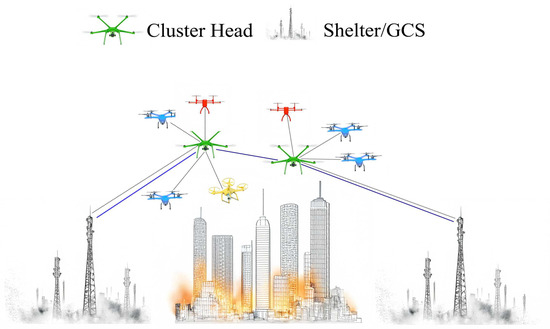
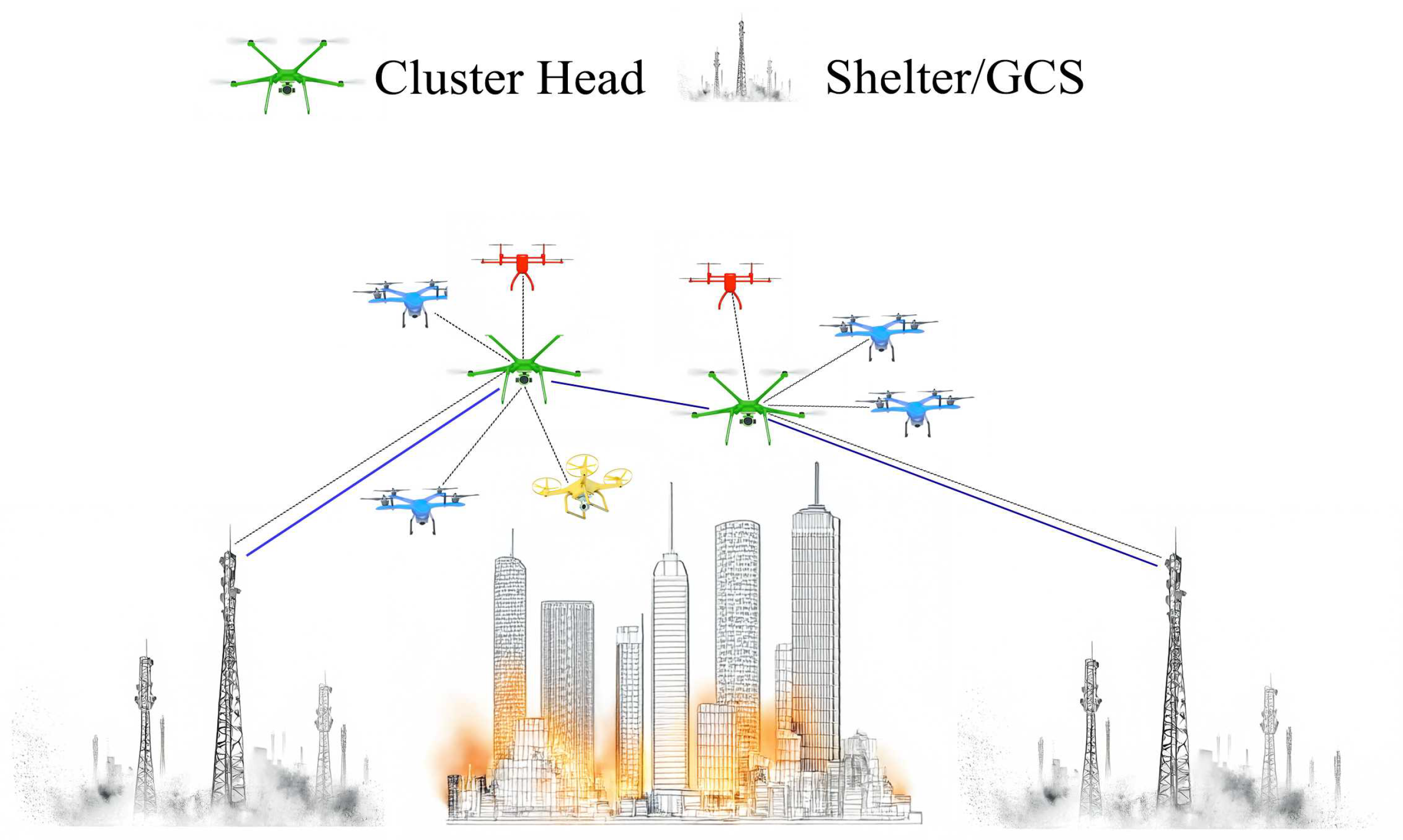
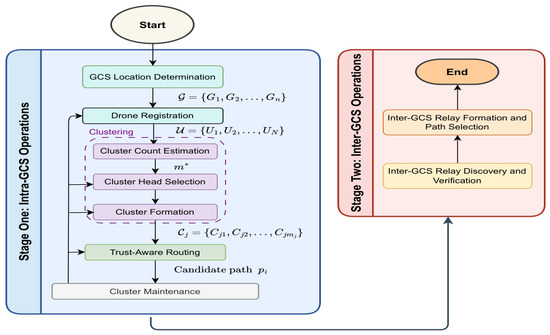
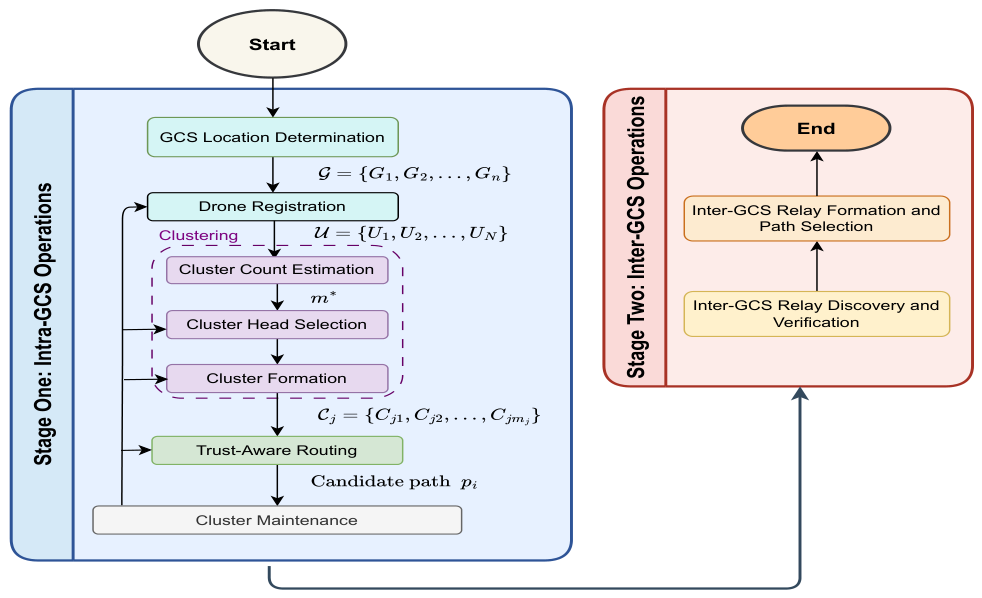
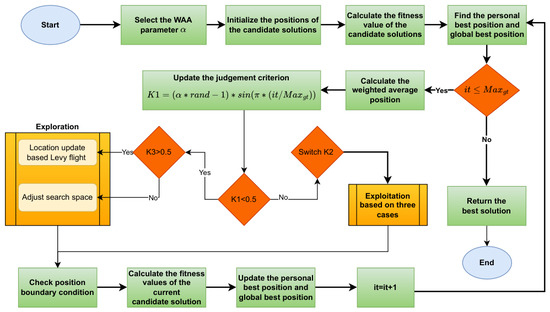
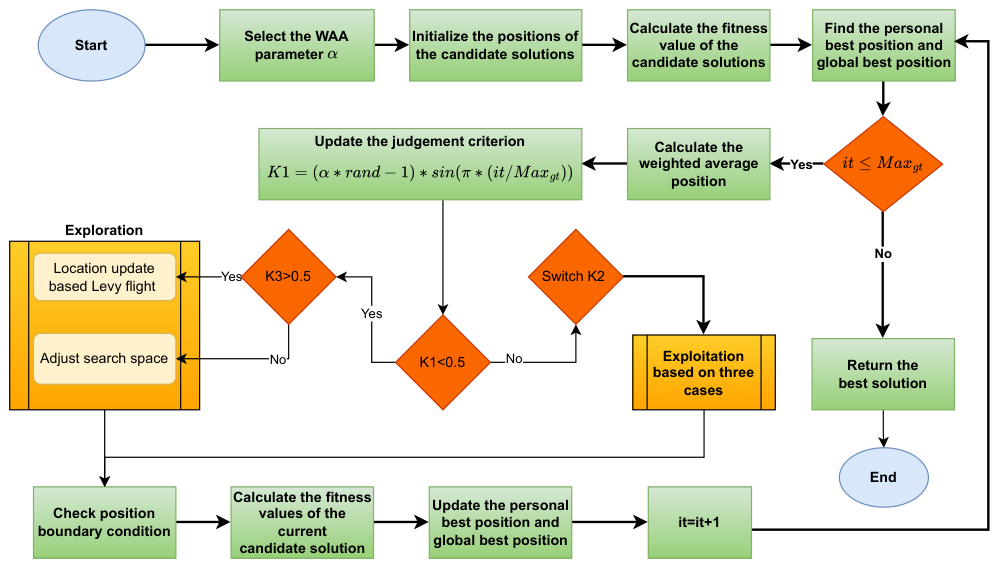
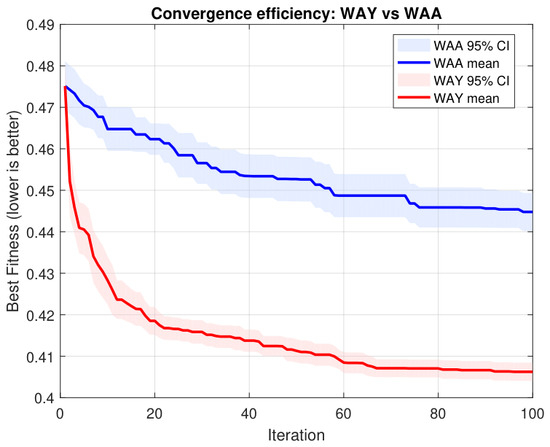
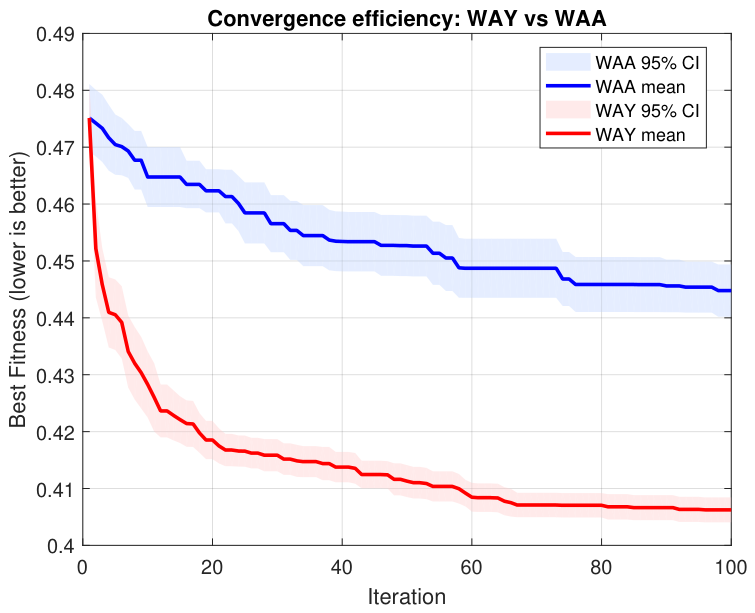
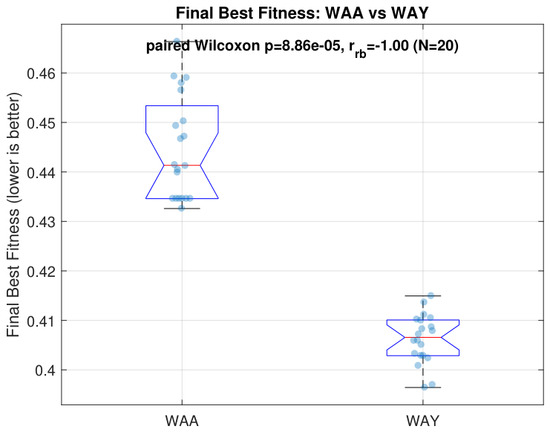
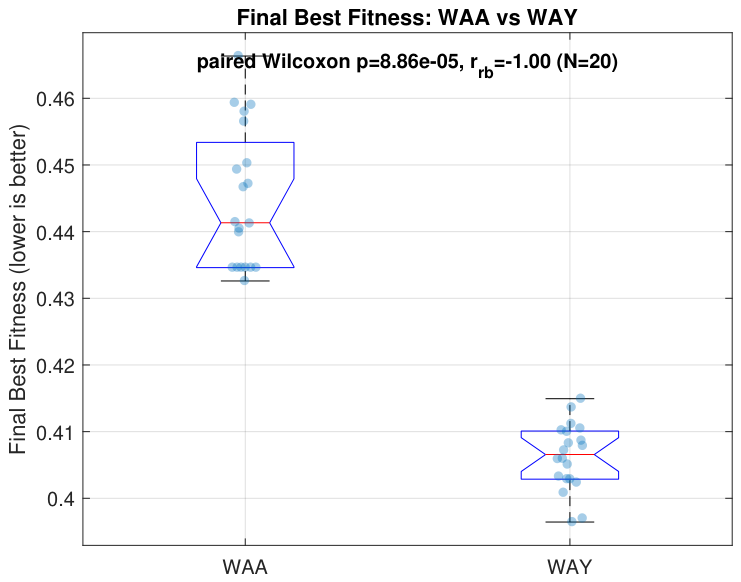
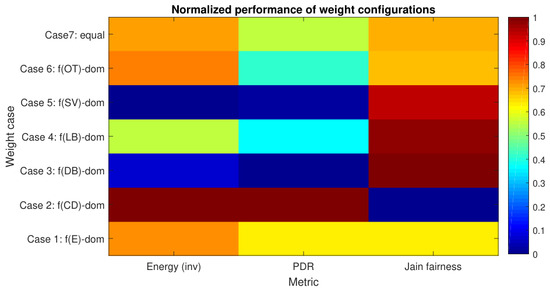
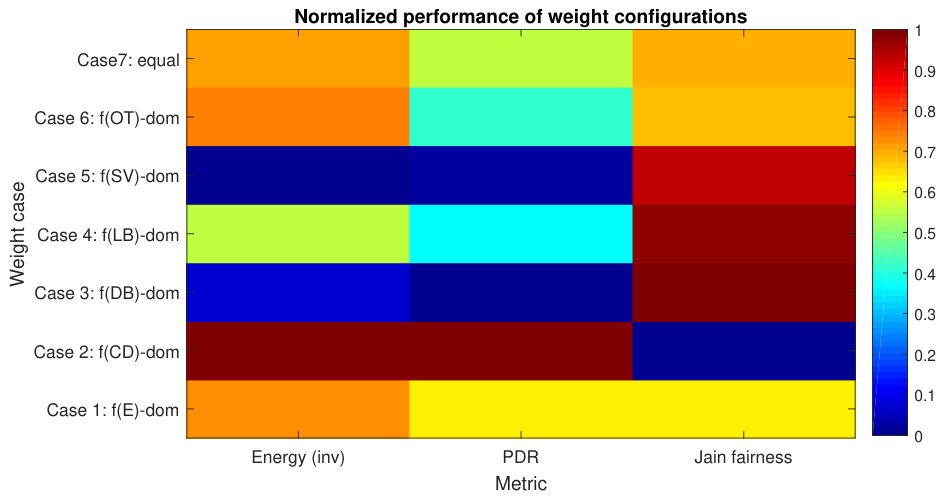
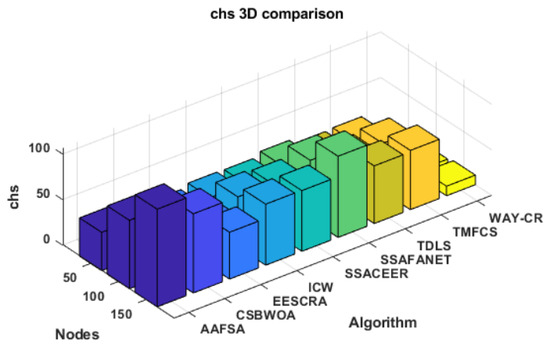
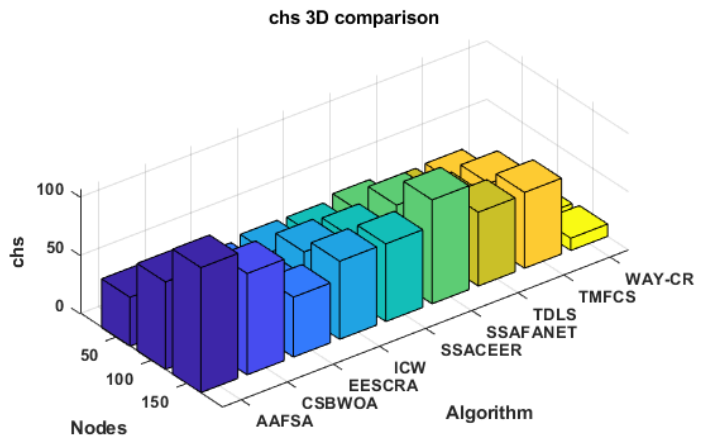
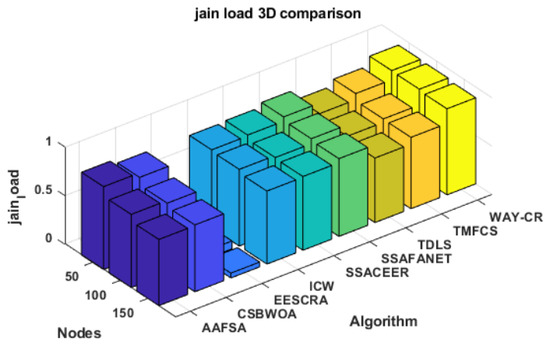
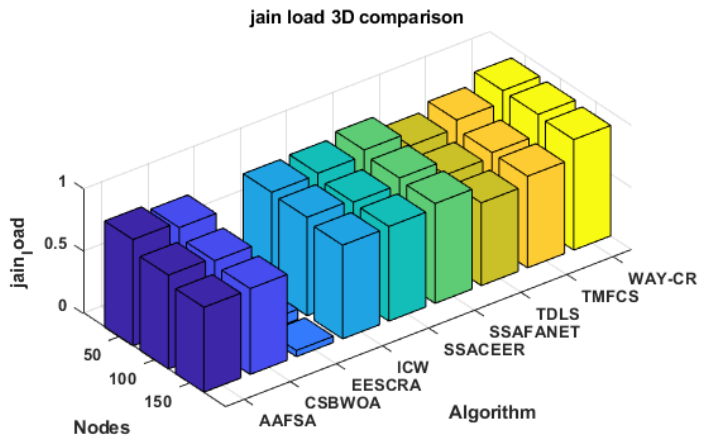
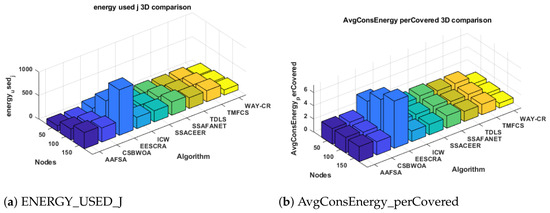
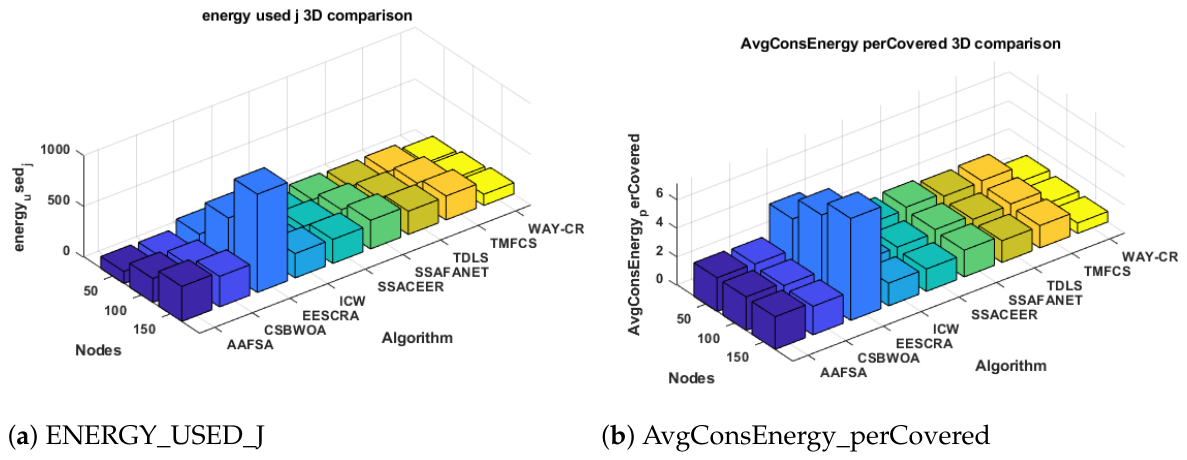
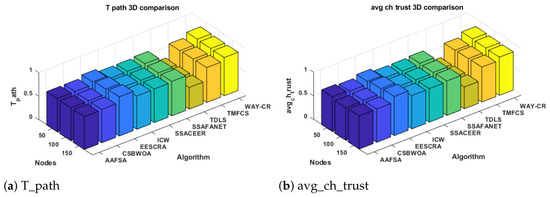
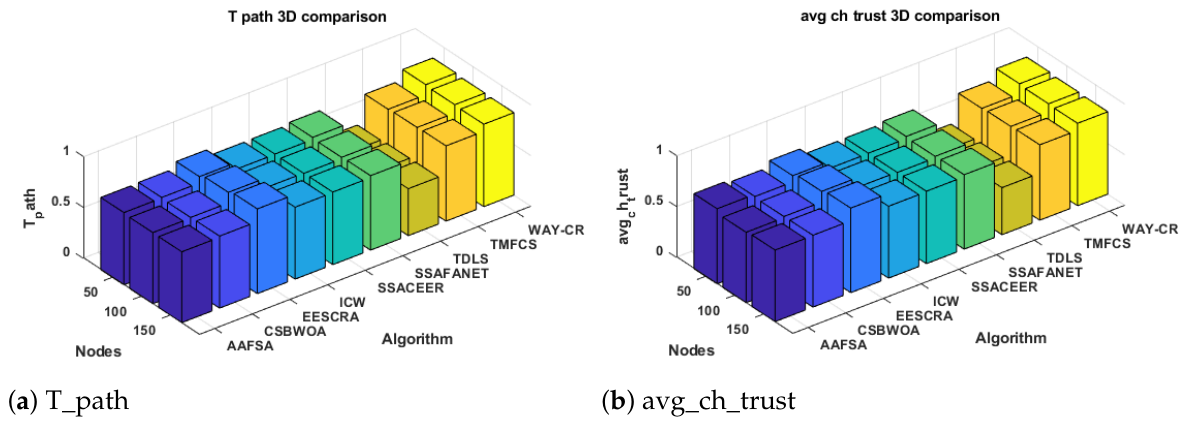
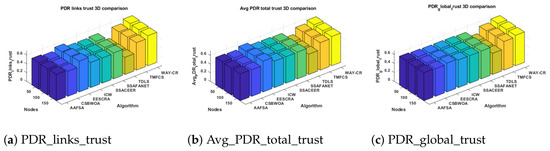
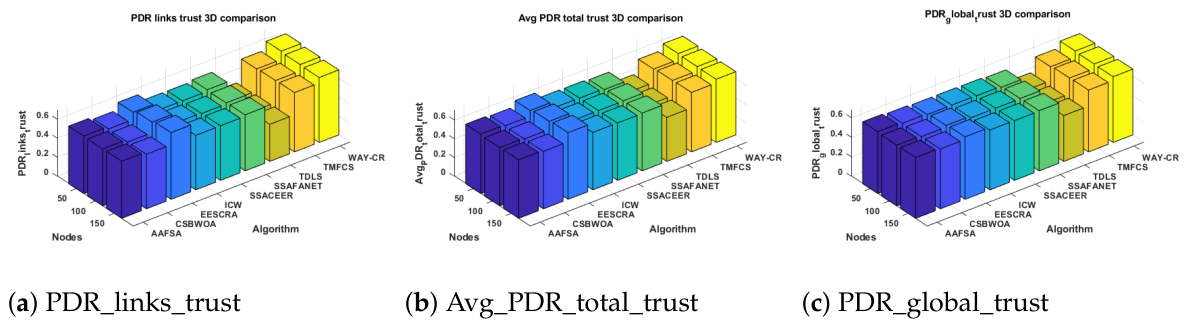
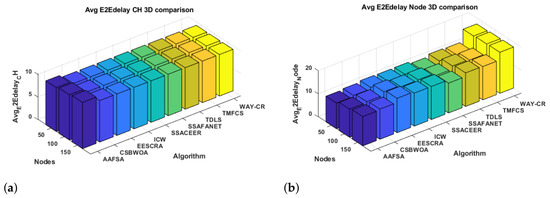
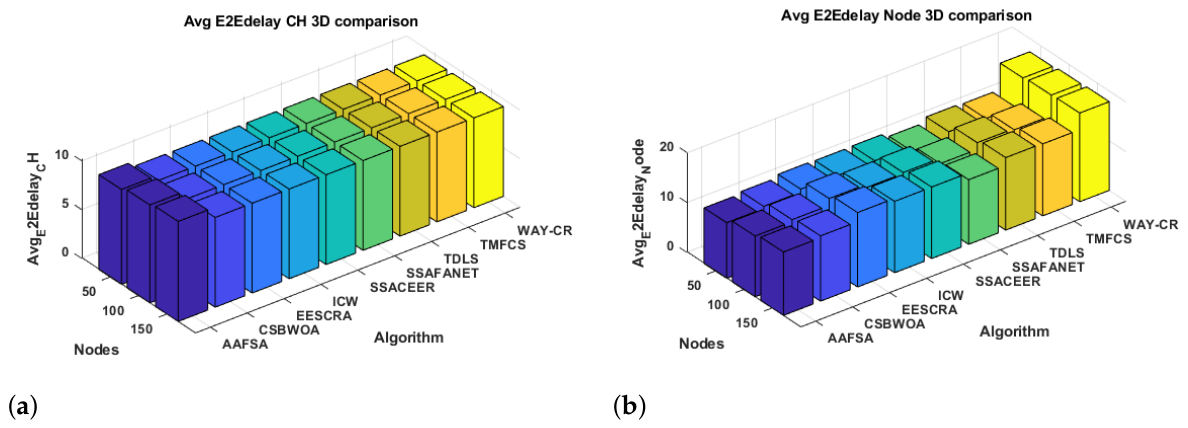
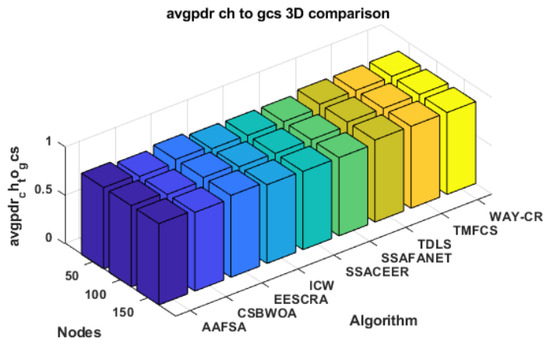
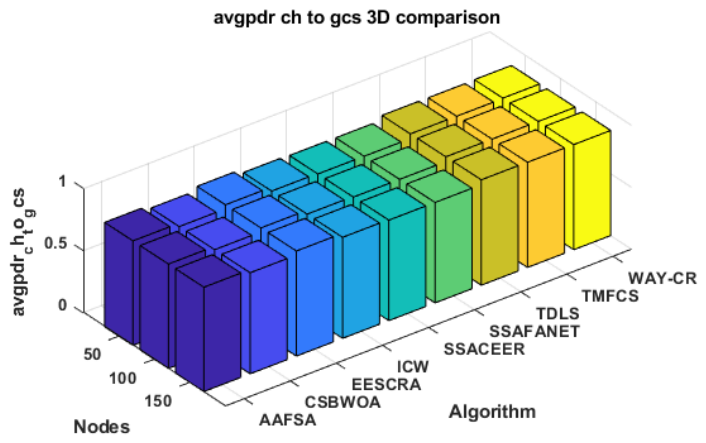
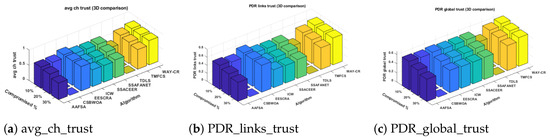
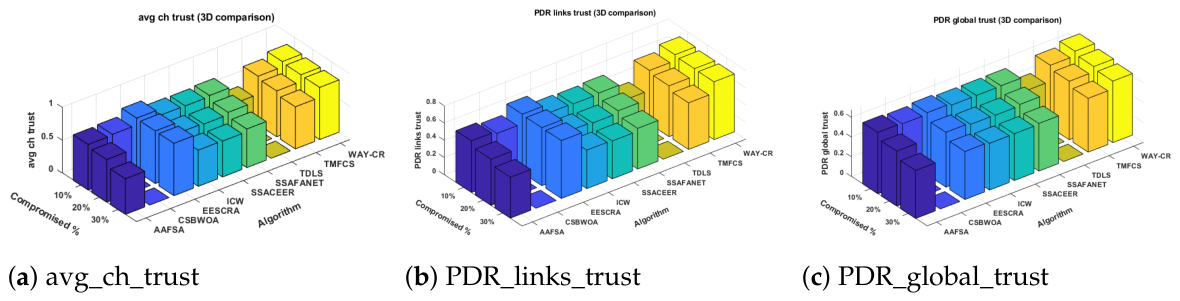
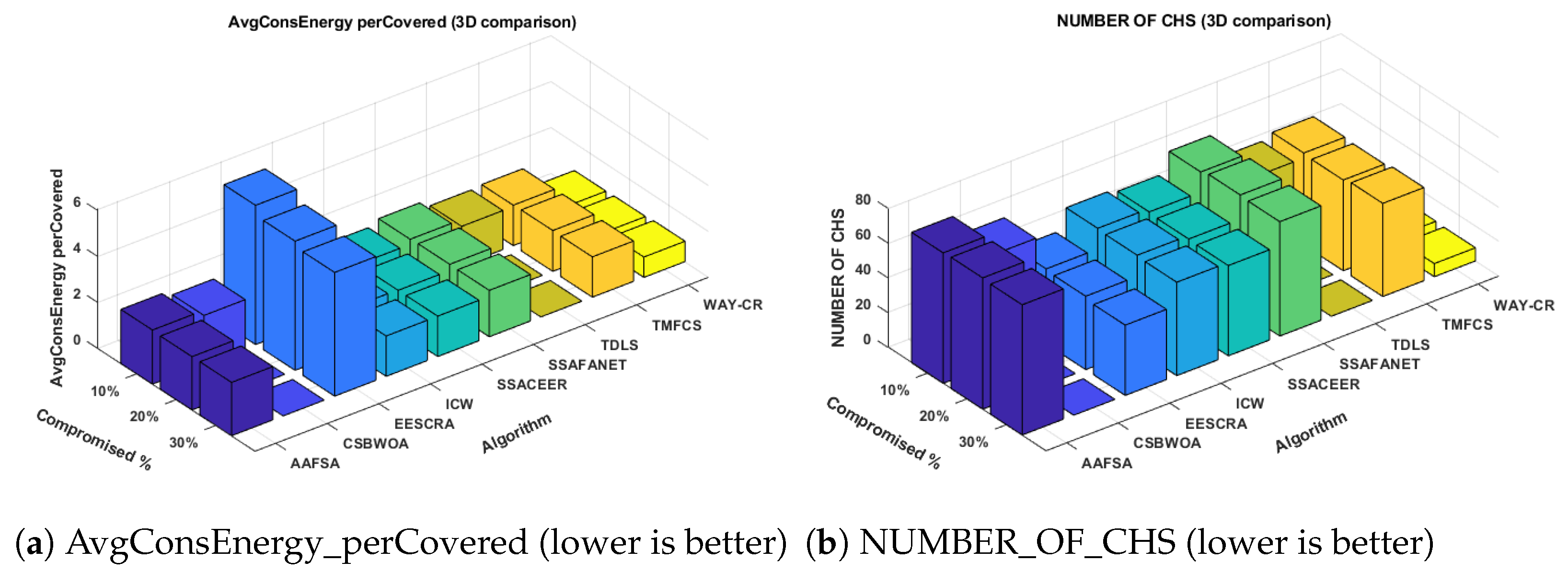
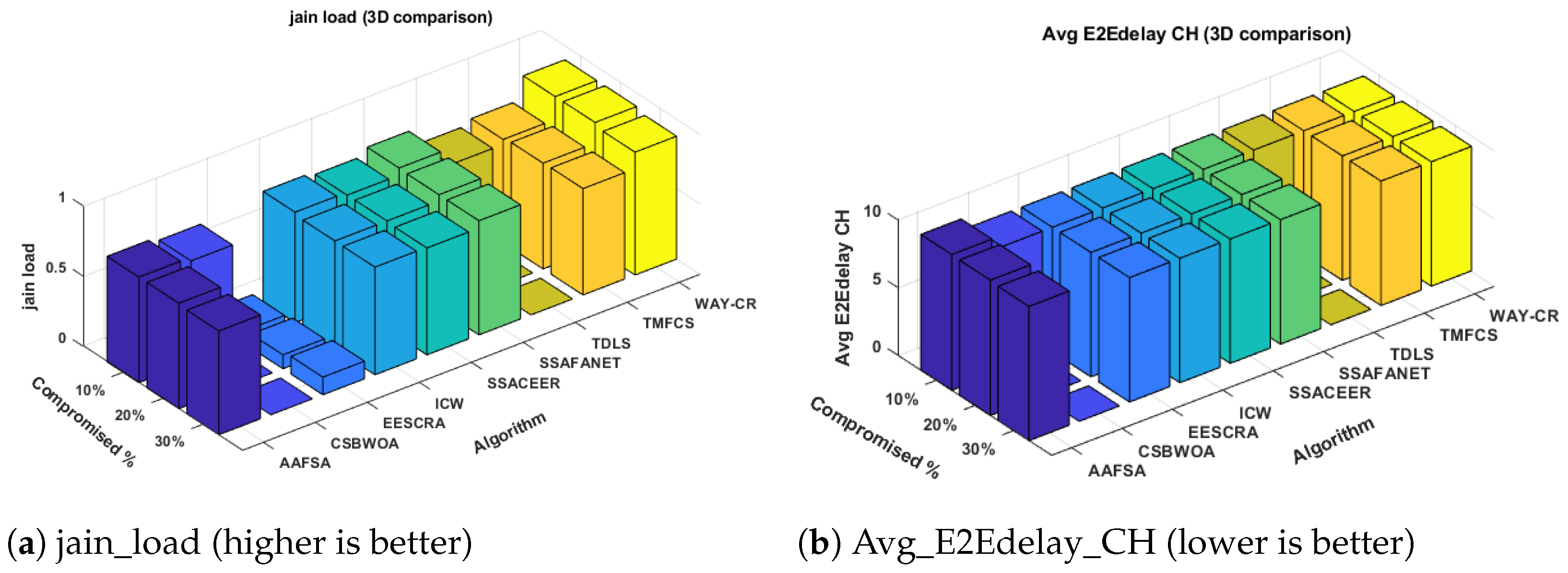

Disclaimer/Publisher’s Note: The statements, opinions and data contained in all publications are solely those of the individual author(s) and contributor(s) and not of MDPI and/or the editor(s). MDPI and/or the editor(s) disclaim responsibility for any injury to people or property resulting from any ideas, methods, instructions or products referred to in the content. |
© 2026 by the authors. Licensee MDPI, Basel, Switzerland. This article is an open access article distributed under the terms and conditions of the Creative Commons Attribution (CC BY) license.