Article

Human Digital Twin in Industry 5.0: A Holistic Approach to Worker Safety and Well-Being through Advanced AI and Emotional Analytics


by
Saul Davila-Gonzalez
1 and
Sergio Martin
2,*
1
Escuela Internacional de Doctorado, Universidad Nacional de Educación a Distancia (UNED), 28040 Madrid, Spain
2
Industrial Engineering Faculty, Universidad Nacional de Educación a Distancia (UNED), 28040 Madrid, Spain
*
Author to whom correspondence should be addressed.
Sensors 2024, 24(2), 655; https://doi.org/10.3390/s24020655
Submission received: 5 December 2023 / Revised: 22 December 2023 / Accepted: 12 January 2024 / Published: 19 January 2024
(This article belongs to the Special Issue Feature Papers in the Internet of Things Section 2023)

Abstract

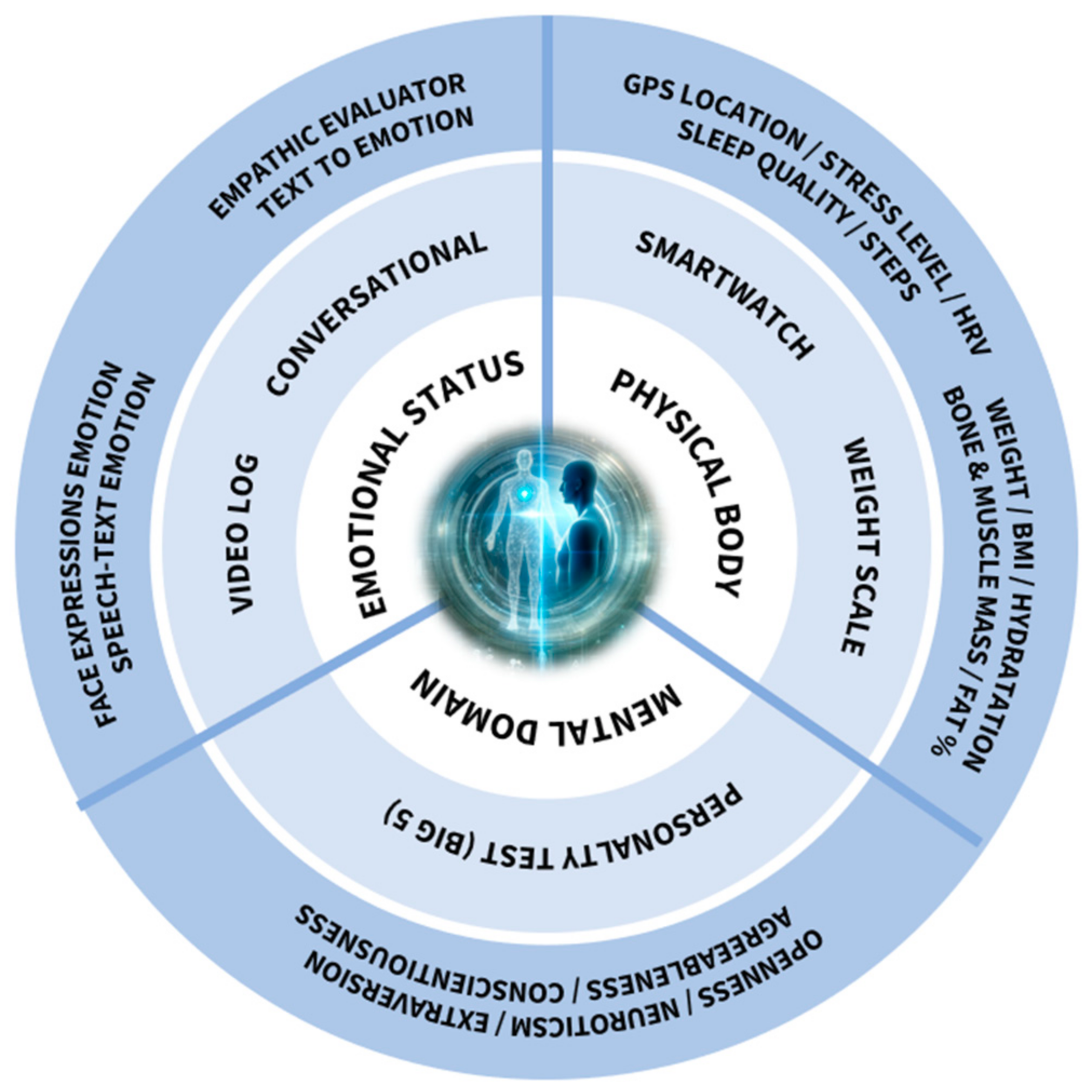
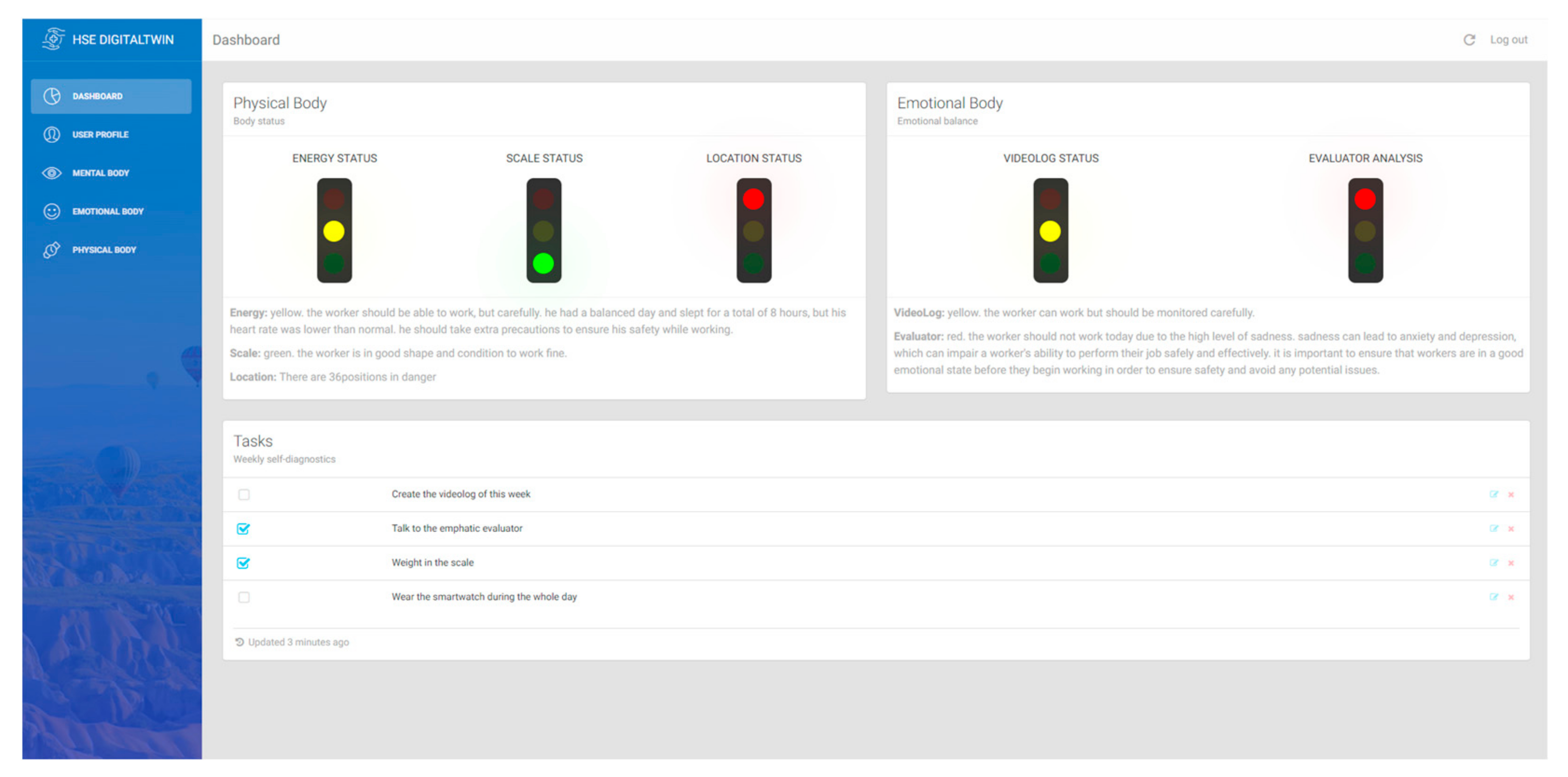
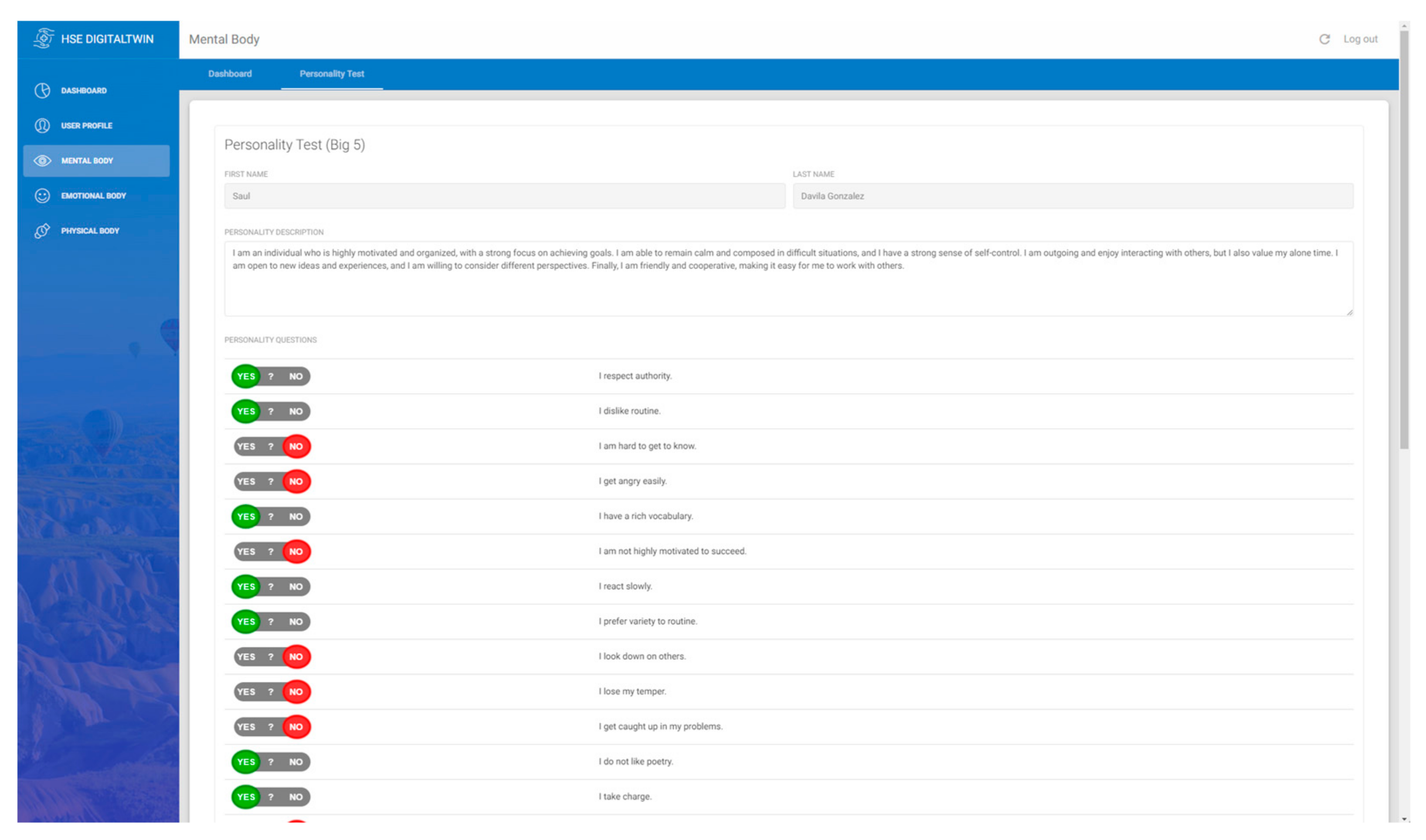
This research introduces a conceptual framework designed to enhance worker safety and well-being in industrial environments, such as oil and gas construction plants, by leveraging Human Digital Twin (HDT) cutting-edge technologies and advanced artificial intelligence (AI) techniques. At its core, this study is in the developmental phase, aiming to create an integrated system that could enable real-time monitoring and analysis of the physical, mental, and emotional states of workers. It provides valuable insights into the impact of Digital Twins (DT) technology and its role in Industry 5.0. With the development of a chatbot trained as an empathic evaluator that analyses emotions expressed in written conversations using natural language processing (NLP); video logs capable of extracting emotions through facial expressions and speech analysis; and personality tests, this research intends to obtain a deeper understanding of workers’ psychological characteristics and stress levels. This innovative approach might enable the identification of stress, anxiety, or other emotional factors that may affect worker safety. Whilst this study does not encompass a case study or an application in a real-world setting, it lays the groundwork for the future implementation of these technologies. The insights derived from this research are intended to inform the development of practical applications aimed at creating safer work environments.
Keywords: Human Digital Twin; Industry 5.0; Internet of Things; artificial intelligence; health and safety environment; physiological health; mental health; emotional well-being Human Digital Twin; Industry 5.0; Internet of Things; artificial intelligence; health and safety environment; physiological health; mental health; emotional well-being