Article

Various Types of Light Guides for Use in Lossy Mode Resonance-Based Sensors

by
Dmitriy P. Sudas
1,2,*,
Viktor A. Jitov
1 and
Petr I. Kuznetsov
1
1
Kotel’nikov Institute of Radioengineering and Electronics of the Russian Academy of Sciences (Fryazino Branch), sq. Vvedenskogo 1, Fryazino, Moscow 141190, Russia
2
World-Class Research Center, Peter the Great St. Petersburg Polytechnical University, Polytechnicheskaya ul.29, St. Petersburg 195251, Russia
*
Author to whom correspondence should be addressed.
Sensors 2023, 23(13), 6049; https://doi.org/10.3390/s23136049
Submission received: 4 June 2023 / Revised: 27 June 2023 / Accepted: 28 June 2023 / Published: 30 June 2023
(This article belongs to the Section Sensor Materials)

Abstract

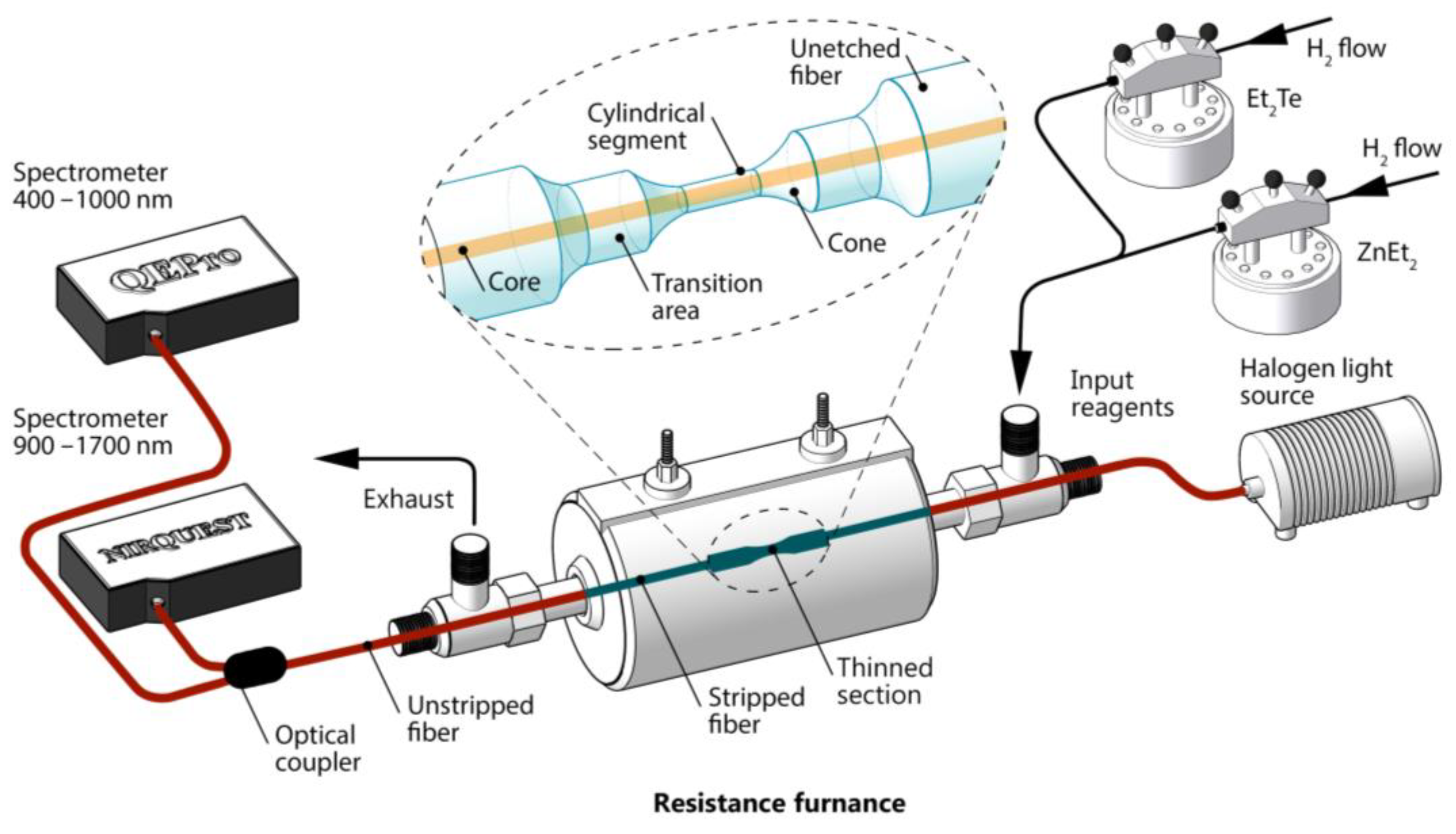
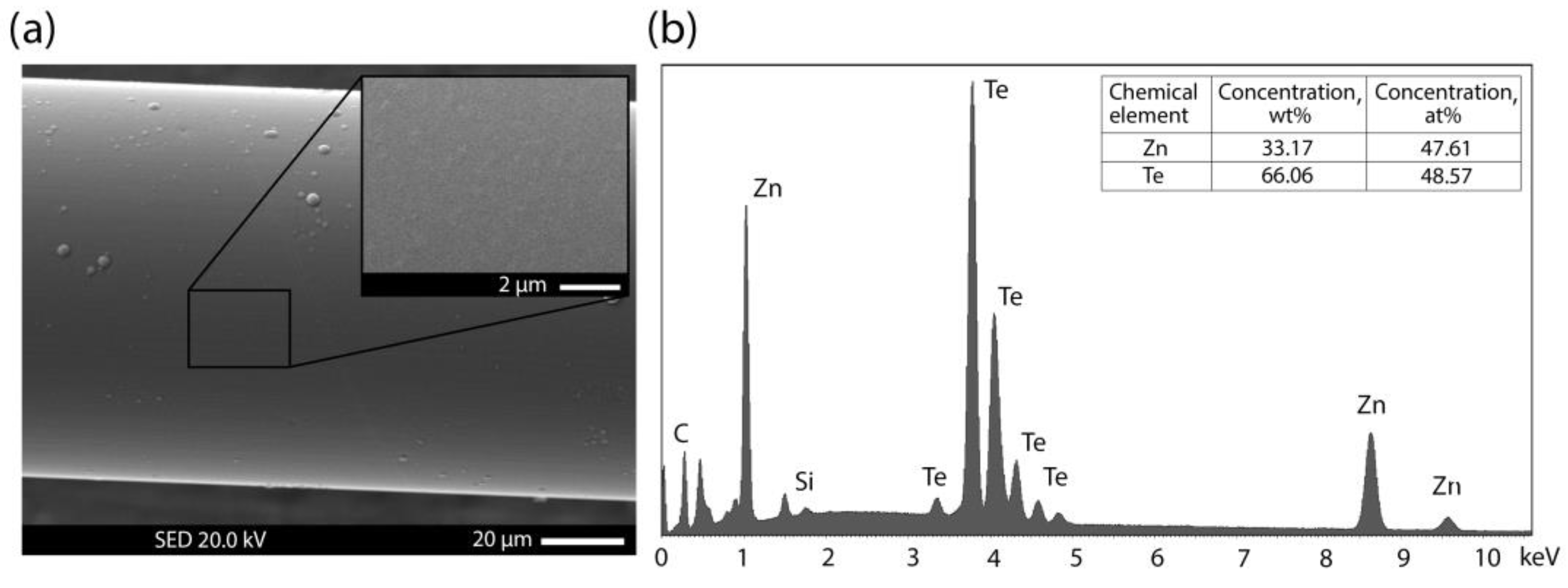
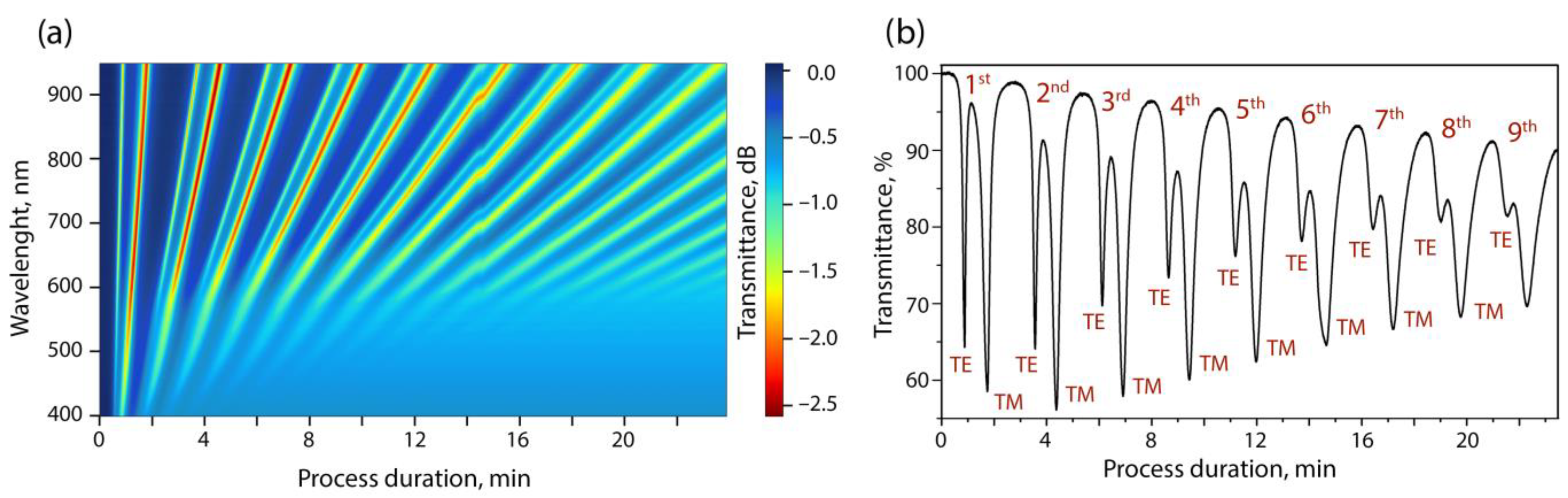
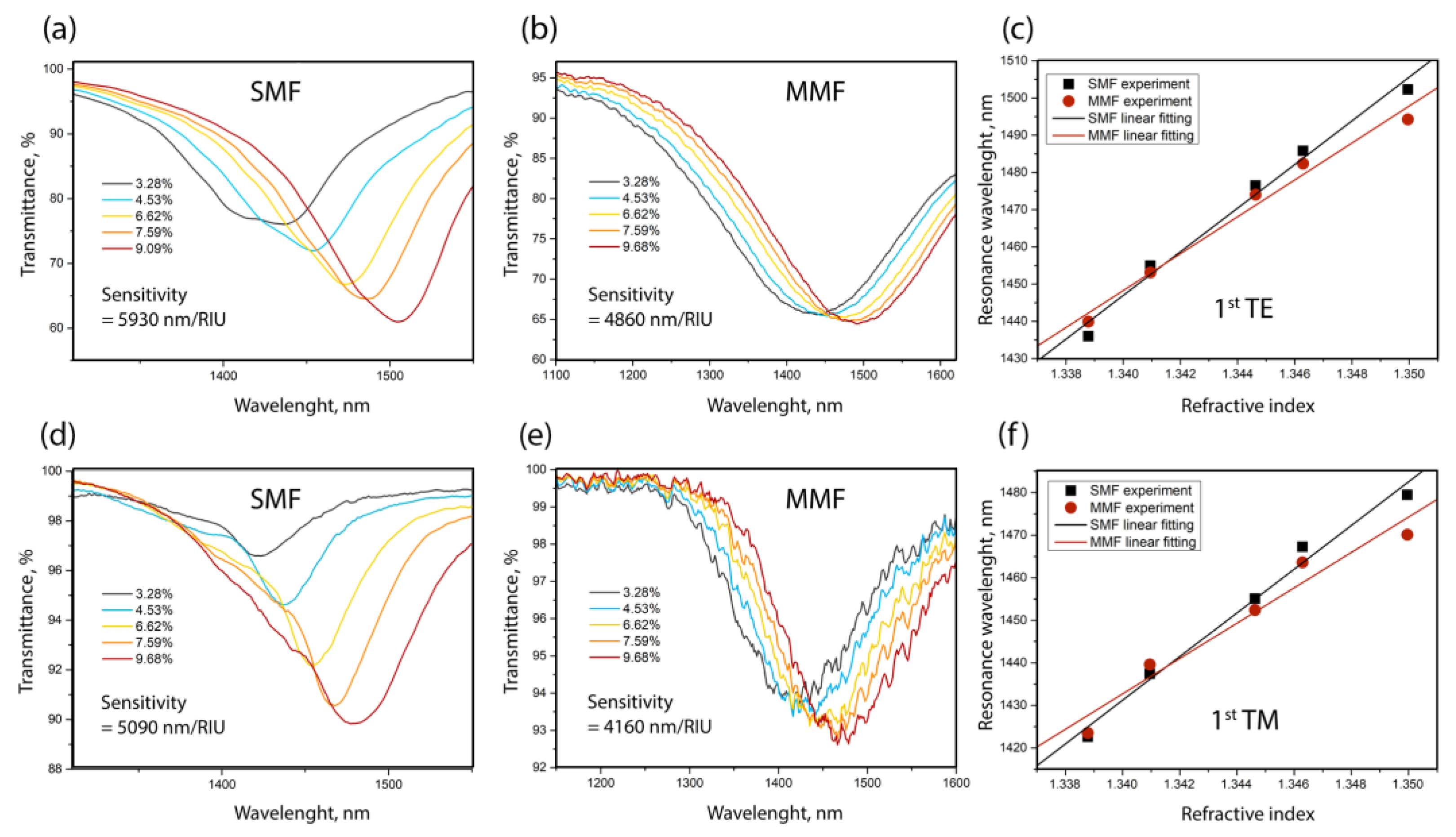
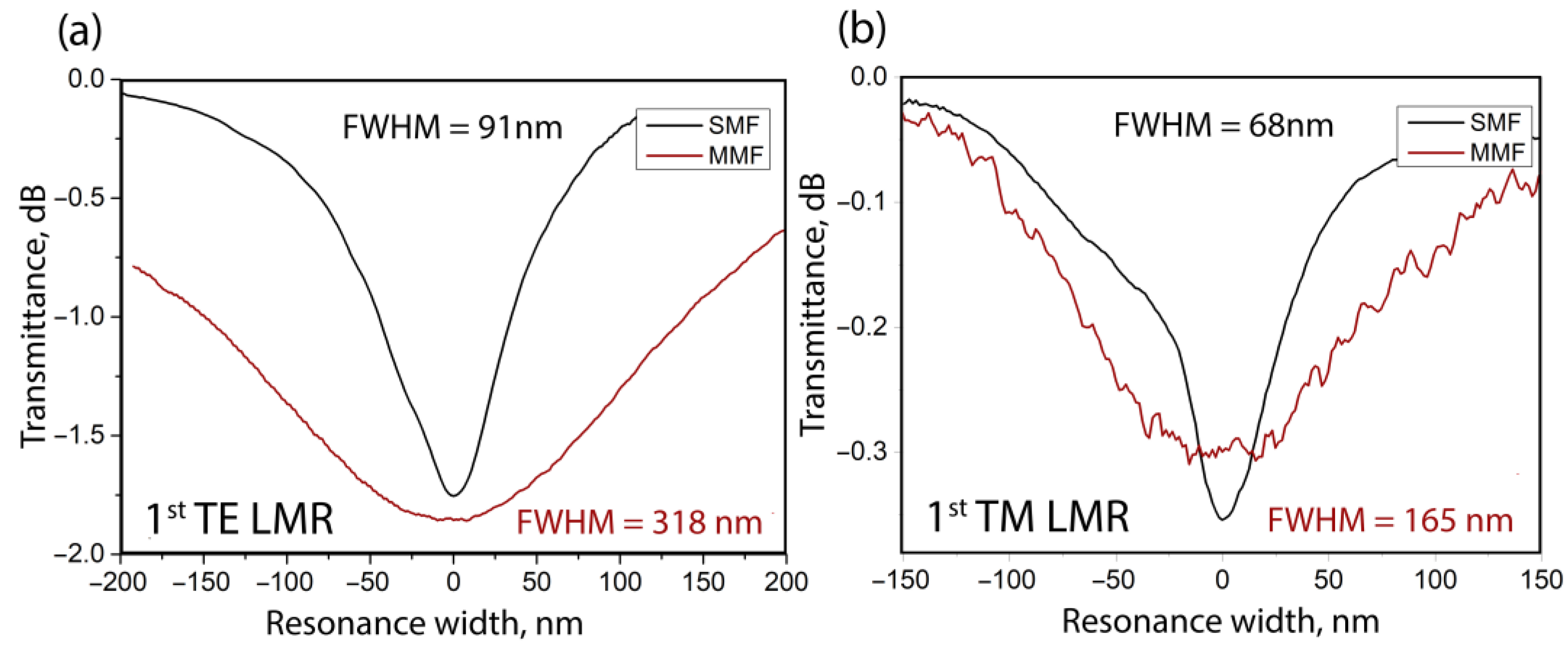
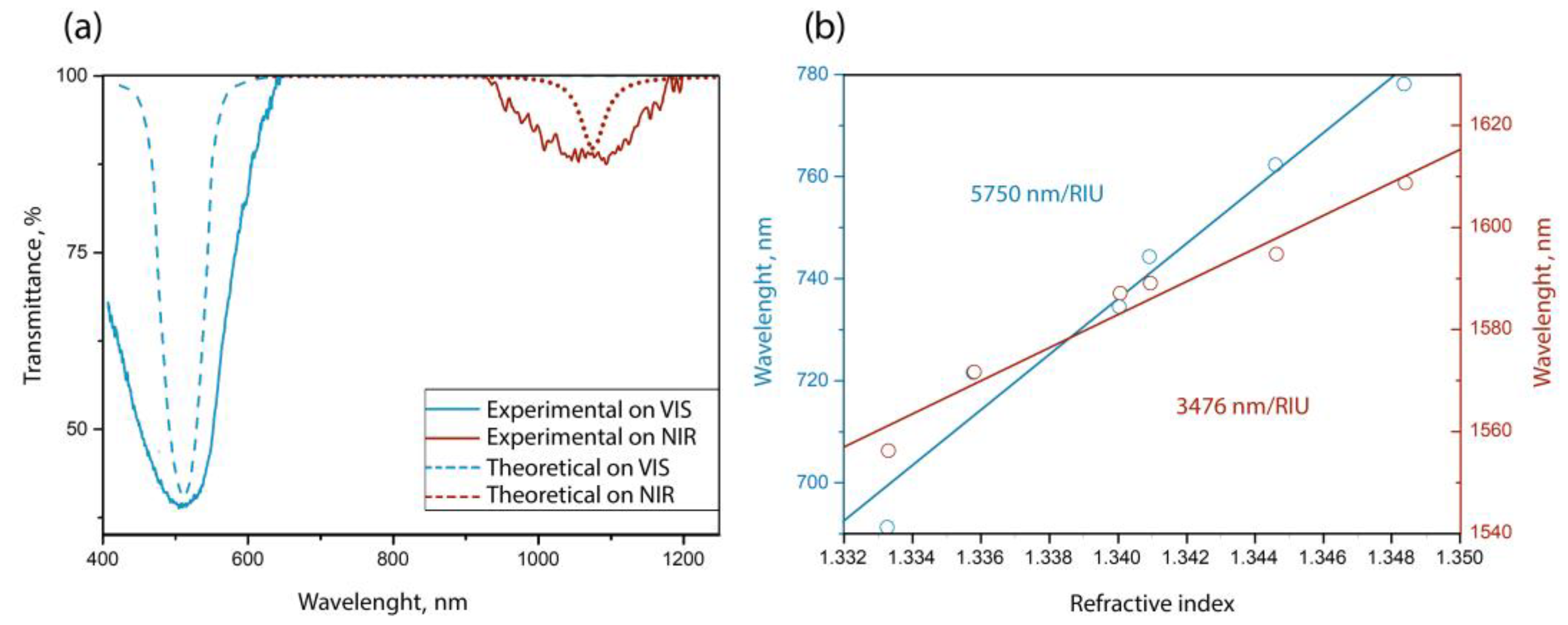
A comparative study of figure-of-merit fiber sensors of the mass concentration of NaCl solutions based on single-mode and multi-mode fibers was carried out. Lossy mode resonance is realized on chemically thinned sections of optical fibers to various diameters (from 26 to 100 μm) coated with ZnTe. Thin-film coatings were applied using the method of metalorganic chemical vapor deposition (MOCVD). Samples of single-mode and multi-mode fiber sensors were created in such a way that the depth and spectral position of resonances in aqueous NaCl solutions coincided. Sensors implemented on a single-mode fiber have a higher sensitivity (5930 nm/refractive index unit (RIU)) compared to those on a multi-mode fiber (4860 nm/RIU) and a smaller half-width of the resonance in the transmission spectrum. According to the results of experiments, figure-of-merit sensors are in the range of refractive indices of 1.33–1.35 for: multi-mode fiber—25 RIU−1, single-mode fiber—75 RIU−1. The sensitivity of the resulting sensors depends on the surface roughness of the ZnTe coating. The roughness of films synthesized on a single-mode fiber is four times higher than this parameter for a coating on a multi-mode fiber. For the first time, in the transmission spectrum during the synthesis of a thin-film coating on a multi-mode fiber, the possibility of separating the first nine orders of resonances into electric and magnetic transverse components has been demonstrated. The characteristics of sensors with the operating wavelength range in the visible (500–750 nm) and infrared (1350–1550 nm) regions of the spectrum are compared. The characteristics of multi-mode lossy mode resonance sensors are demonstrated, which make them more promising for use in applied devices than for laboratory research.
Keywords: lossy mode resonance; fiber chemosensor; figure of merit; ZnTe; MOCVD lossy mode resonance; fiber chemosensor; figure of merit; ZnTe; MOCVD