A Blockchain Framework for Securing Connected and Autonomous Vehicles

 ,
,  ,
,  ,
,
Abstract
1. Introduction
1.1. Motivation of the Paper
1.2. Research Significance
2. Related Work
3. Proposed Blockchain Framework for CAV Services Delivery
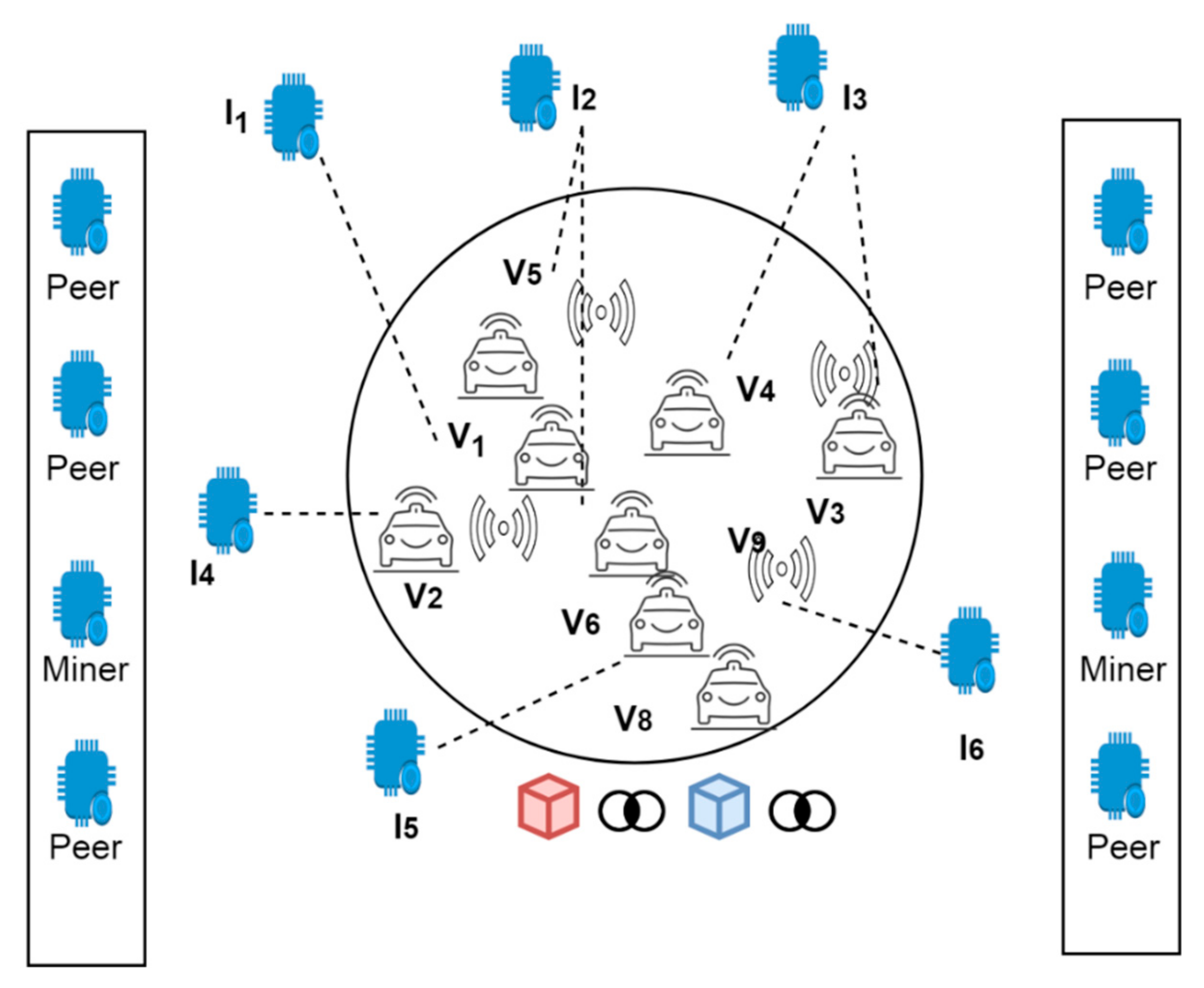
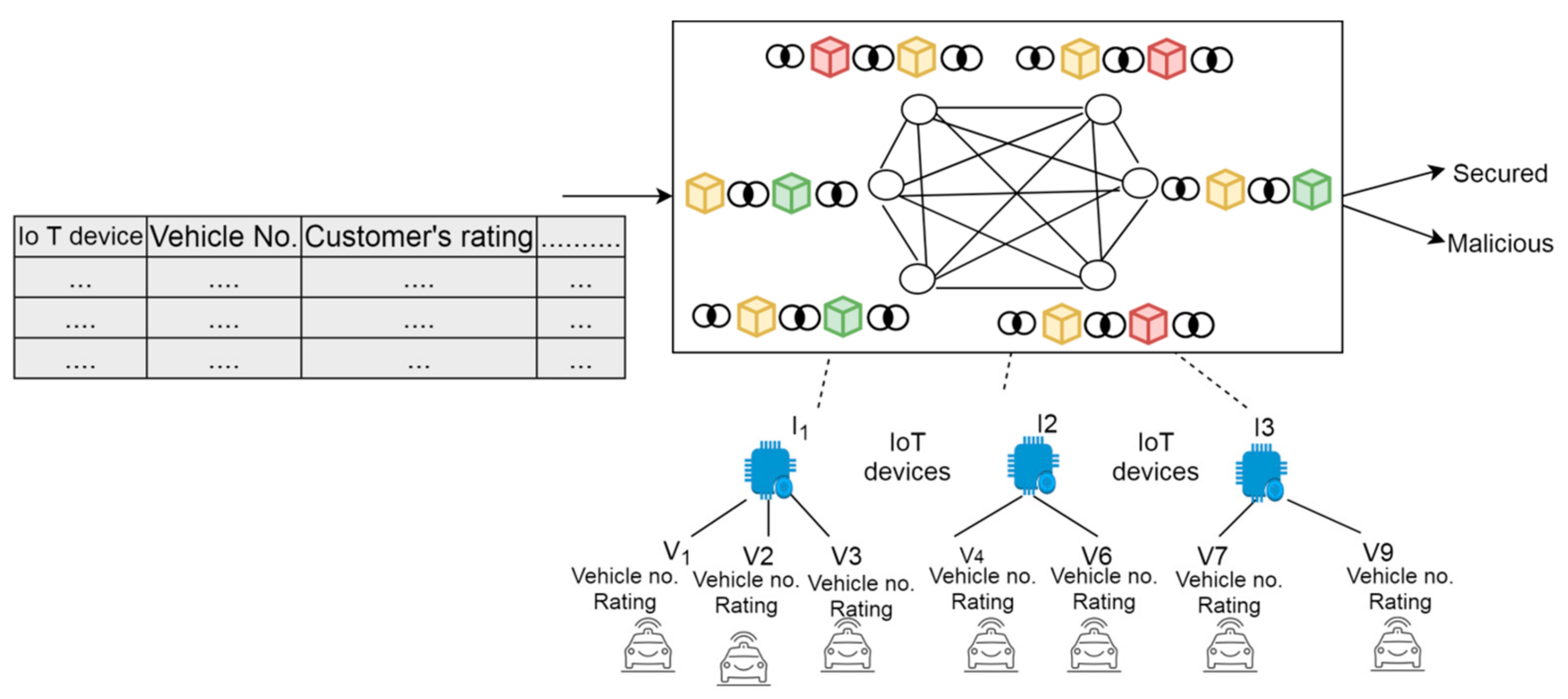
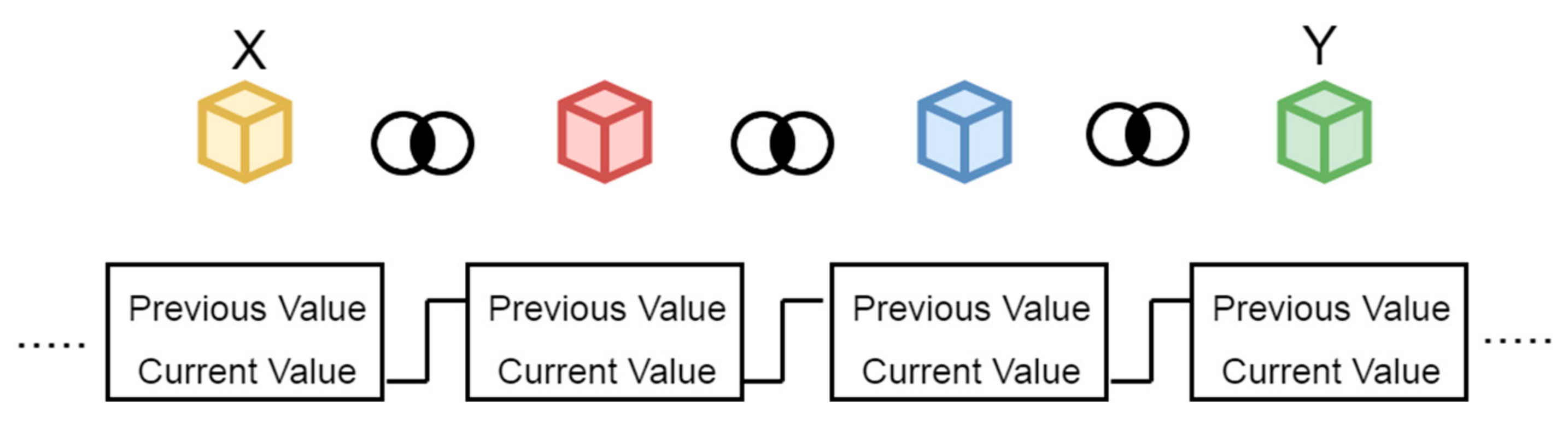
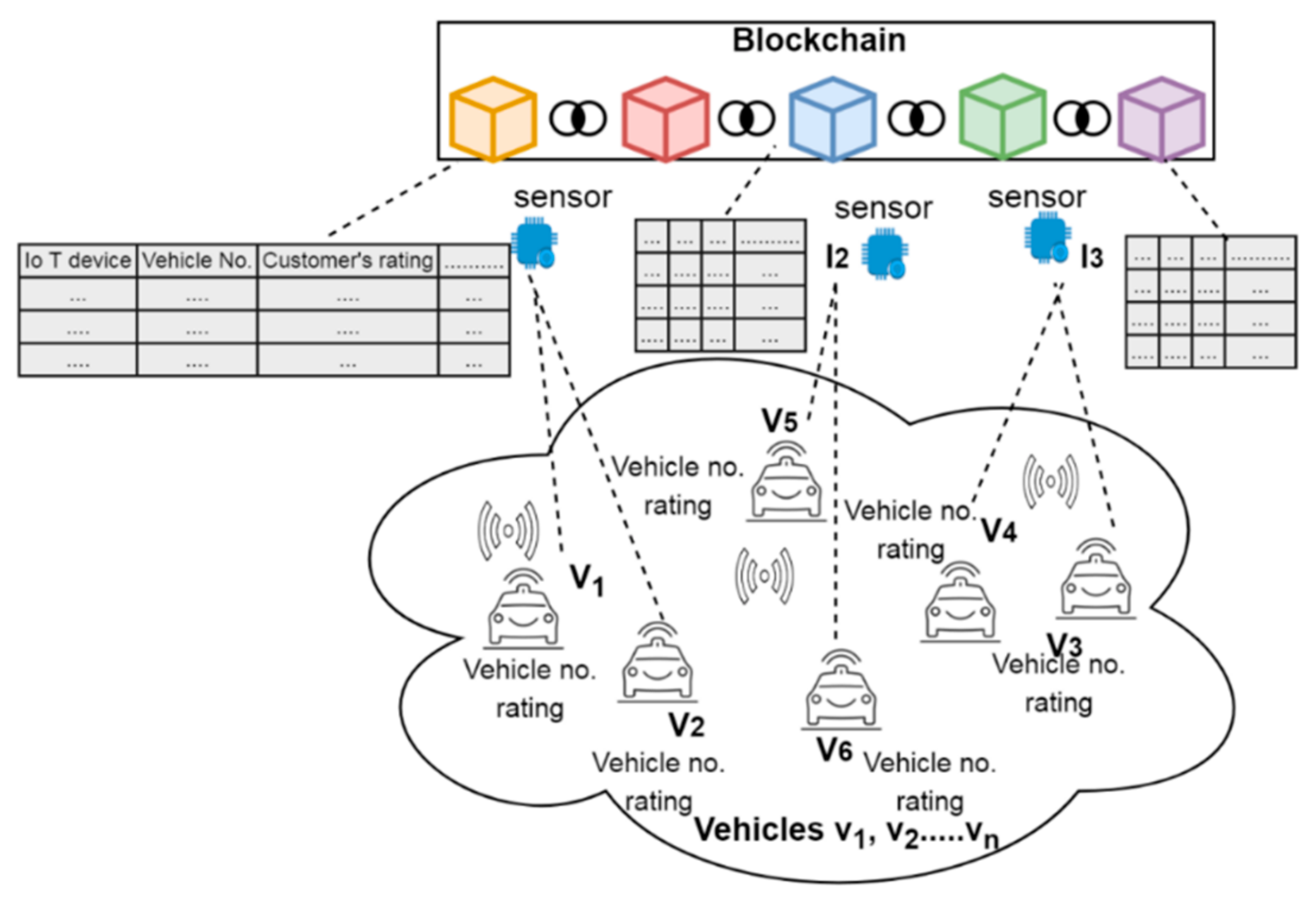
3.1. Vehicle Security: Registration of Every IoT Device on the Blockchain Network
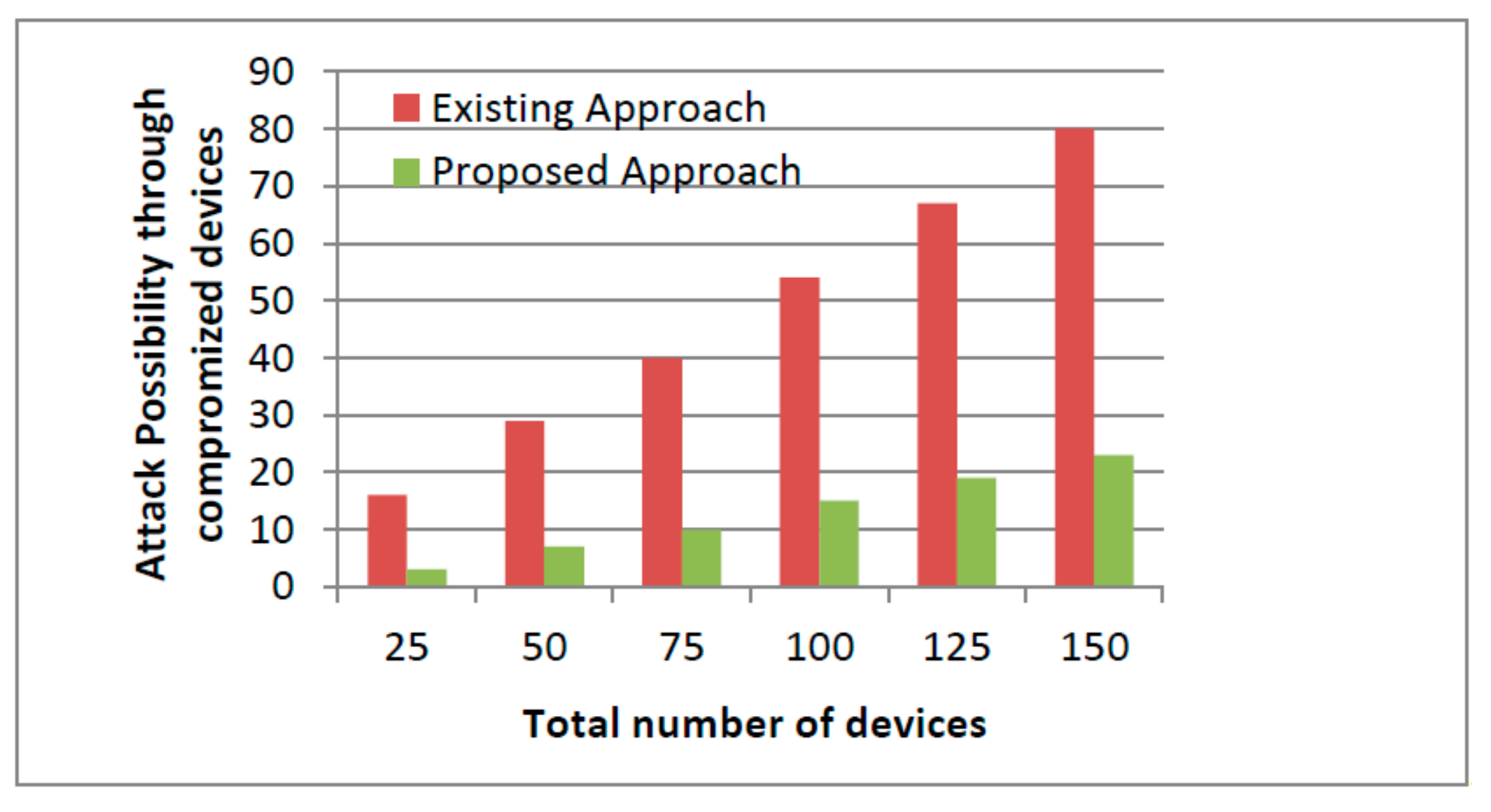
3.2. Attacking Scenarios
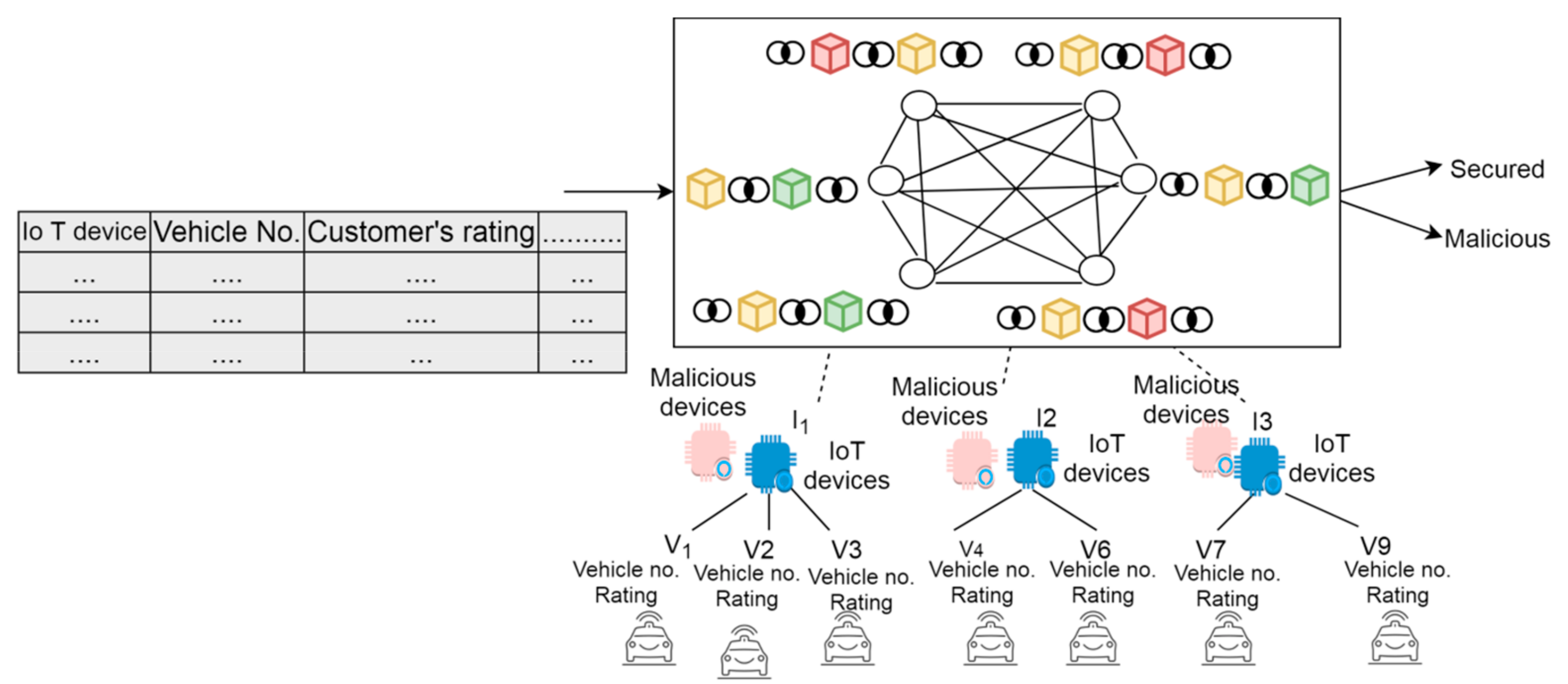
- Addition of compromised IoT by intruders: When the intruder registers its compromised IoT for executing its active or passive attacks, the blockchain peer nodes immediately identify by checking its illegal actions, like stealing or compromising of legitimate IoT devices.
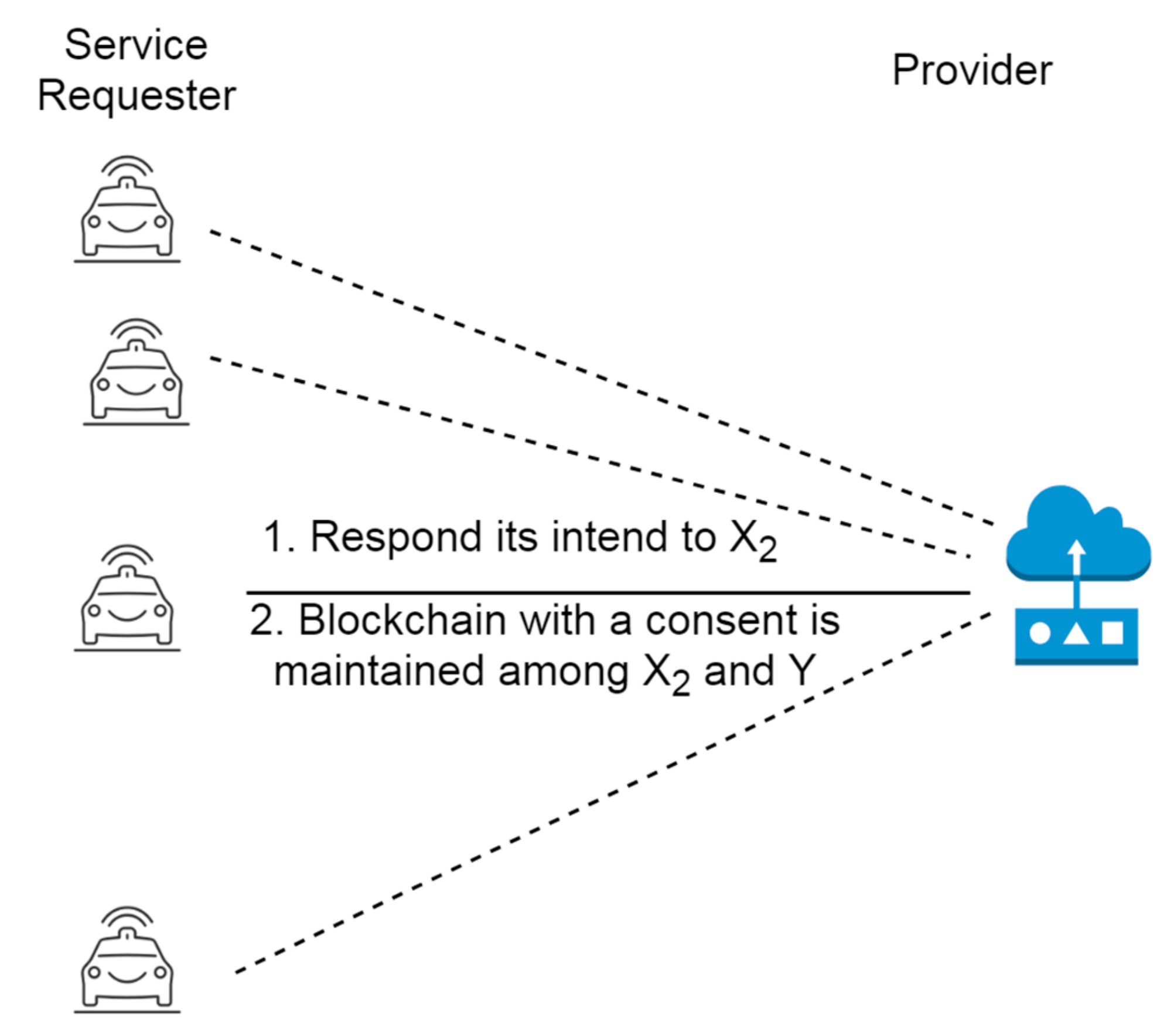
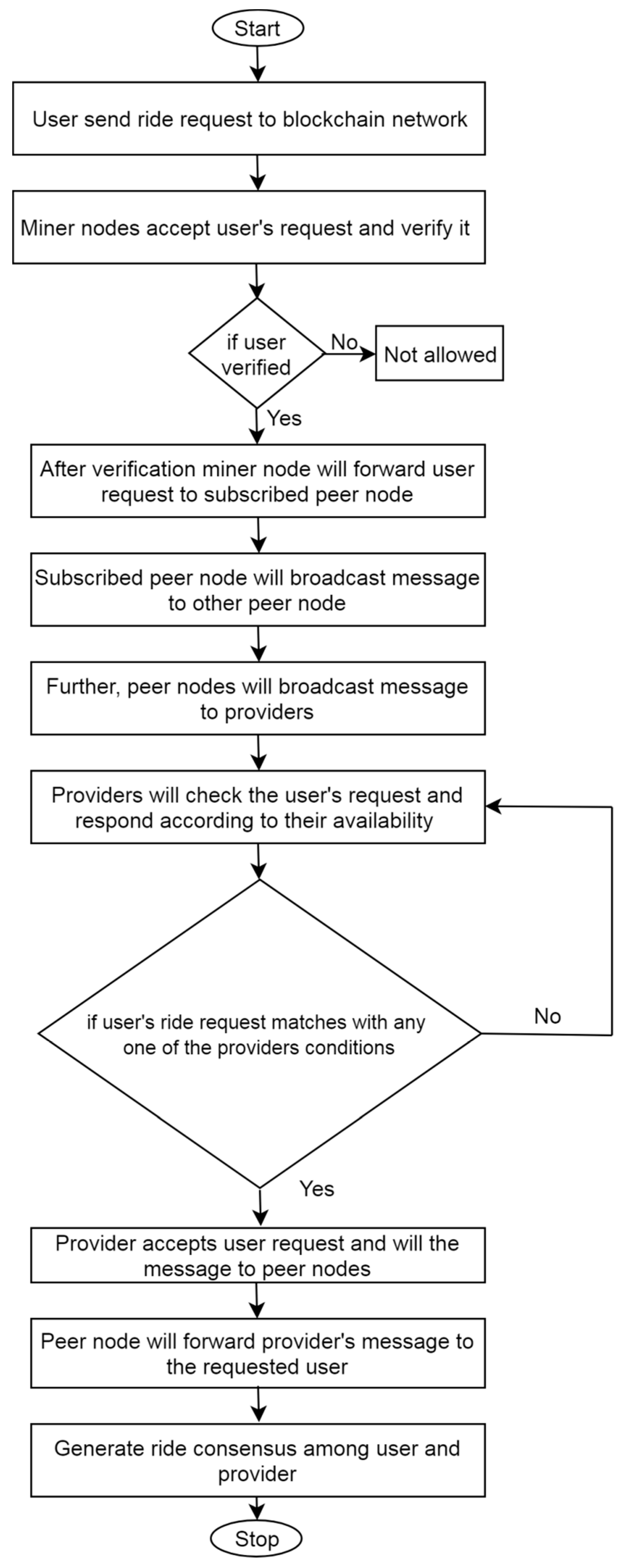
- Misbehaving with the user: For example, a user, Alice, asks for a ride and a cab driver (provider) agrees to give the ride. However, during the ride the provider starts misbehaving with the user either by changing the route as chosen by the user, Alice or by stopping unnecessarily. Then, the IoT sensors which continuously monitor or trace the location of that cab takes action in order to prevent the user from any mishap. Simultaneously, the cab driver should be at the receiving end of the punishment with degradation in its rank or other necessary actions.
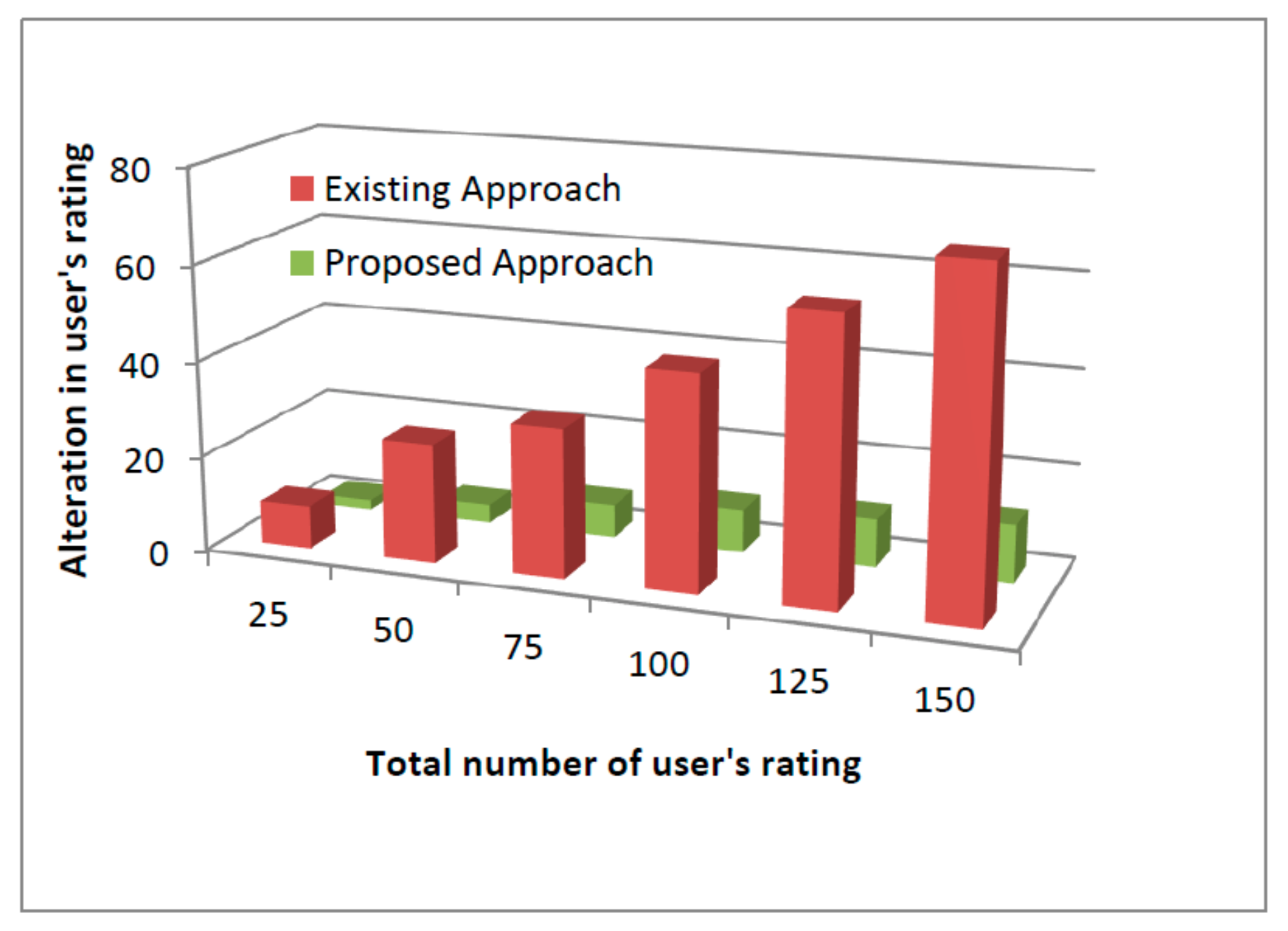
- Modification of ratings: Once the ratings have been submitted corresponding to any cab driver, it cannot be altered even after successfully compromising the IoT devices.
- Data falsification attack: It is one of the main security issues in CAV where vehicles rely on information received from other vehicles or peers.
- Traffic jam: In this, the intruders may try to divert the path suggestions on the roads for their own benefits.
4. Performance Analysis
Existing Method
5. Conclusions
Author Contributions
Acknowledgments
Conflicts of Interest
References
- Tonguz, O.; Wisitpongphan, N.; Bait, F.; Mudaliget, P.; Sadekart, V. Broadcasting in VANET. In Proceedings of the 2007 Mobile Networking for Vehicular Environments, Anchorage, AK, USA, 11 May 2007; pp. 7–12. [Google Scholar]
- Hartenstein, H.; Laberteaux, K. VANET: Vehicular Applications and Inter-Networking Technologies; Wiley: Chichester, UK, 2010; Volume 1. [Google Scholar]
- Alkheir, A.A.; Aloqaily, M.; Hussein, T.M. Connected and autonomous electric vehicles (caevs); IEEE: New York, NY, USA, 2018; Volume 20, pp. 54–61. [Google Scholar]
- Toglaw, S.; Aloqaily, M.; Alkheir, A.A. Connected, Autonomous and Electric Vehicles: The Optimum Value for a Successful Business Model. In Proceedings of the 2018 Fifth International Conference on Internet of Things: Systems, Management and Security, Valencia, Spain, 15–18 October 2018; pp. 303–308. [Google Scholar]
- Zhang, J.; Wang, F.-Y.; Wang, K.; Lin, W.-H.; Xu, X.; Chen, C. Data-Driven Intelligent Transportation Systems: A Survey. IEEE Trans. Intell. Transp. Syst. 2011, 12, 1624–1639. [Google Scholar] [CrossRef]
- Rezazadeh, H.; Azar, S.M.; Kisomi, M.S.; Bagheri, R. Robust cooperative maximal covering location problem: A case study of the locating Tele-Taxi stations in Tabriz, Iran. Int. J. Serv. Oper. Manag. 2018, 29, 163–183. [Google Scholar] [CrossRef]
- Chim, T.W.; Yiu, S.M.; Hui, L.C.; Li, V.O. VANET-based secure taxi service. Ad Hoc Netw. 2013, 11, 2381–2390. [Google Scholar] [CrossRef]
- Ammar, M.; Russello, G.; Crispo, B. Internet of Things: A survey on the security of IoT frameworks. J. Inf. Secur. Appl. 2018, 38, 8–27. [Google Scholar] [CrossRef]
- Xu, T.; Wendt, J.B.; Potkonjak, M. Security of IoT systems: Design challenges and opportunities. In Proceedings of the 2014 IEEE/ACM International Conference on Computer-Aided Design, San Jose, CA, USA, 2–6 November 2014; pp. 417–423. [Google Scholar]
- Sharma, A.; Rathee, G.; Kumar, R.; Saini, H.; Vijaykumar, V.; Nam, Y.; Chilamkurti, N. A Secure, Energy- and SLA-Efficient (SESE) E-Healthcare Framework for Quickest Data Transmission Using Cyber-Physical System. Sensors 2019, 19, 2119. [Google Scholar] [CrossRef] [PubMed]
- Rathee, G.; Sharma, A.; Saini, H.; Kumar, R.; Iqbal, R. A hybrid framework for multimedia data processing in IoT-healthcare using blockchain technology. Multimed. Tools Appl. 2019, 78, 1–23. [Google Scholar] [CrossRef]
- Khan, M.A.; Salah, K. IoT security: Review, blockchain solutions, and open challenges. Future Gener. Comput. Syst. 2018, 82, 395–411. [Google Scholar] [CrossRef]
- Lin, J.; Yu, W.; Yang, X.; Yang, Q.; Fu, X.; Zhao, W. A Real-Time En-Route Route Guidance Decision Scheme for Transportation-Based Cyberphysical Systems. IEEE Trans. Veh. Technol. 2017, 66, 2551–2566. [Google Scholar] [CrossRef]
- Wang, F.Y. Parallel control and management for intelligent transportation systems: Concepts, architectures, and applications. IEEE Trans. Intell. Transp. Syst. 2010, 11, 630–638. [Google Scholar] [CrossRef]
- Hamid, U.Z.A.; Zamzuri, H.; Limbu, D.K. Internet of vehicle (IoV) applications in expediting the implementation of smart highway of autonomous vehicle: A survey. In Performability in Internet of Things; Springer: Cham, Switzerland, 2019; pp. 137–157. [Google Scholar]
- Wu, W.; Yang, Z.; Li, K. Internet of Vehicles and applications. In Internet of Things; Elsevier: Amsterdam, The Netherlands, 2016; pp. 299–317. [Google Scholar]
- Dandala, T.T.; Krishnamurthy, V.; Alwan, R. Internet of Vehicles (IoV) for traffic management. In Proceedings of the 2017 International Conference on Computer, Communication and Signal Processing (ICCCSP), Chennai, India, 10–11 January 2017; pp. 1–4. [Google Scholar]
- Liang, W.; Li, Z.; Zhang, H.; Wang, S.; Bie, R. Vehicular Ad Hoc Networks: Architectures, Research Issues, Methodologies, Challenges, and Trends. Int. J. Distrib. Sens. Netw. 2015, 11, 745303. [Google Scholar] [CrossRef]
- Rawat, D.B.; Garuba, M.; Chen, L.; Yang, Q. On the security of information dissemination in the Internet-of-Vehicles. Tsinghua Sci. Technol. 2017, 22, 437–445. [Google Scholar] [CrossRef]
- Qian, Y.; Chen, M.; Chen, J.; Hossain, M.S.; Alamri, A. Secure Enforcement in Cognitive Internet of Vehicles. IEEE Internet Things J. 2018, 5, 1242–1250. [Google Scholar] [CrossRef]
- Sharma, V. An Energy-Efficient Transaction Model for the Blockchain-Enabled Internet of Vehicles (IoV). IEEE Commun. Lett. 2019, 23, 246–249. [Google Scholar] [CrossRef]
- Contreras-Castillo, J.; Zeadally, S.; Guerrero-Ibanez, J.A.; Contreras, J. Internet of Vehicles: Architecture, Protocols, and Security. IEEE Internet Things J. 2018, 5, 3701–3709. [Google Scholar] [CrossRef]
- Pustišek, M.; Kos, A.; Sedlar, U. Blockchain based autonomous selection of electric vehicle charging station. In Proceedings of the 2016 International Conference on Identification, Information and Knowledge in the Internet of Things (IIKI), Beijing, China, 20–21 October 2016; pp. 217–222. [Google Scholar]
- Buzachis, A.; Celesti, A.; Galletta, A.; Fazio, M.; Villari, M. A secure and dependable multi-agent autonomous intersection management (MA-AIM) system leveraging blockchain facilities. In Proceedings of the 2018 IEEE/ACM International Conference on Utility and Cloud Computing Companion (UCC Companion), Zurich, Switzerland, 17–20 December 2018; pp. 226–231. [Google Scholar]
- Kuzmin, A.; Znak, E. Blockchain-base structures for a secure and operate network of semi-autonomous Unmanned Aerial Vehicles. In Proceedings of the 2018 IEEE International Conference on Service Operations and Logistics, and Informatics (SOLI), Singapore, 31 July–2 August 2018; pp. 32–37. [Google Scholar]
- Yang, H.-K.; Cha, H.-J.; Song, Y.-J. Secure Identifier Management Based on Blockchain Technology in NDN Environment. IEEE Access 2019, 7, 6262–6268. [Google Scholar] [CrossRef]
- Chen, C.-M.; Xiang, B.; Liu, Y.; Wang, K.-H. A Secure Authentication Protocol for Internet of Vehicles. IEEE Access 2019, 7, 12047–12057. [Google Scholar] [CrossRef]
- Dua, A.; Kumar, N.; Das, A.K.; Susilo, W. Secure Message Communication Protocol among Vehicles in Smart City. IEEE Trans. Veh. Technol. 2018, 67, 4359–4373. [Google Scholar] [CrossRef]
- Otoum, S.; Kantarci, B.; Mouftah, H.T. On the feasibility of deep learning in sensor network intrusion detection. IEEE Networking Lett. 2019, 1, 68–71. [Google Scholar] [CrossRef]





| Number of Nodes in a CRN | 25, 500 |
| Grid facet | 700 × 700 m |
| Transmission Range | 140 m (approx.) |
| Data Size or users request | 256 Bytes |
| Simulation time | 80 s |
| Physical Layer | PHY 802.11 |
| S. No. | Transmitting Nodes | IoT Nodes | Compromised Miners | Attack Probability |
|---|---|---|---|---|
| 1 | 25 | 5, 10, 20 | 2, 10, 20 | 5% |
| 2 | 100 | 25, 50, 75 | 15, 25, 50 | 25% |
© 2019 by the authors. Licensee MDPI, Basel, Switzerland. This article is an open access article distributed under the terms and conditions of the Creative Commons Attribution (CC BY) license (http://creativecommons.org/licenses/by/4.0/).
Share and Cite
Rathee, G.; Sharma, A.; Iqbal, R.; Aloqaily, M.; Jaglan, N.; Kumar, R. A Blockchain Framework for Securing Connected and Autonomous Vehicles. Sensors 2019, 19, 3165. https://doi.org/10.3390/s19143165
Rathee G, Sharma A, Iqbal R, Aloqaily M, Jaglan N, Kumar R. A Blockchain Framework for Securing Connected and Autonomous Vehicles. Sensors. 2019; 19(14):3165. https://doi.org/10.3390/s19143165
Chicago/Turabian StyleRathee, Geetanjali, Ashutosh Sharma, Razi Iqbal, Moayad Aloqaily, Naveen Jaglan, and Rajiv Kumar. 2019. "A Blockchain Framework for Securing Connected and Autonomous Vehicles" Sensors 19, no. 14: 3165. https://doi.org/10.3390/s19143165
APA StyleRathee, G., Sharma, A., Iqbal, R., Aloqaily, M., Jaglan, N., & Kumar, R. (2019). A Blockchain Framework for Securing Connected and Autonomous Vehicles. Sensors, 19(14), 3165. https://doi.org/10.3390/s19143165