


Abstract
Mangroves form an integral habitat component for species of the southern Arabian Gulf, yet their role in supporting fish remains limited. This study investigated habitat use by fish in mangroves to determine the diversity, abundance, size, and whether microhabitat complexity and environmental conditions influence fish assemblage. Fish were surveyed using an underwater visual census among mangrove habitat types across seasonal cycles. Results revealed 1137 individuals belonging to eleven families and fourteen species, a majority being juveniles with Gerres longirostris (44.59%) the most abundant. High-commercial-value species were documented, including Lutjanus ehrenbergii (dominance 18.65%) and Lutjanus argentimaculatus (dominance 15.48%). To date, this study reports the first evidence of Epinephelus coioides in the mangroves of this region. Results showed significant variation in fish assemblage among habitat types and seasons, with markedly higher abundance and diversity during the summer and in mangroves close to structural habitats. Seawater temperature emerged as the most influential environmental variable for fish. Together, structurally complex habitat settings and seawater temperatures were the key drivers shaping the fish assemblage in mangroves. Future investigations would benefit from diel and tidal sampling within multiple habitats near mangroves to better understand fish populations. Findings may guide research and conservation strategies by integrating coastal habitats and fish populations.
1. Introduction
The southern Arabian (Persian) Gulf, herein ‘the Gulf’, hosts some of the world’s most extreme conditions for mangrove ecosystems [1,2]. The Gulf is characterized by an arid climate, fluctuating sea surface temperatures ranging between 16 °C and 36 °C, high evaporation rates, and elevated salinity (up to 46 ppt) due to limited precipitation of less than 90 mm annually [2,3,4]. Mangroves along the Gulf comprise naturally sparse and fragmented patches typically intermingled with tidal flats, rocky shores, seagrass beds, and saltmarshes [5,6]. Approximately 45% of the Gulf’s mangroves are situated along the Abu Dhabi Emirate, accounting for an extent of approximately 111 km2 [5], dominated by one species, Avicennia marina [7,8,9]. This coverage is represented by 0.1% of the global mangrove distribution [10]. Mangrove ecosystems are one of the most important vegetative habitats for species in this arid region [8].
Mangrove ecosystems provide an essential nursery habitat, especially for economically important fish [11,12]. They support fish by offering habitat resources such as shelter, food, and protection [12,13]. Consequently, juvenile fish grow and develop in mangroves and nearby vegetated habitats, such as seagrass beds, before migrating to offshore coral reefs [14,15]. However, despite the importance of these ecosystems, mangroves are facing multiple threats worldwide, such as urban development and climate change [16,17].
It is well established that connectivity between mangroves and nearby habitats enhances fish biomass and overall populations [18,19]. However, the link between mangrove habitats and fish populations could be complex [12,20]. Studies show that environmental variations and habitat proximity drive spatial and temporal differences in fish communities and habitat use [20,21]. In addition, differences in fish use are apparent regionally [22,23]. Coastal habitat configuration and the availability of habitat resources potentially influence such differences [12,23].
Mangroves in the Caribbean region are known to harbor higher densities of juvenile fishes than non-reef habitats [12,23]. However, seagrass beds of the Indo-Pacific region contain higher fish populations than in mangrove habitats [15,23]. In the Arabian region along the Egyptian coast, higher abundances of juvenile fish are found in mangroves and seagrass beds than in coral reefs [24]. Similarly, fish studies in multiple vegetated habitats in the Red Sea, Saudi Arabia, determined that mangroves harbor 83% of juvenile fish, emphasizing the potential for high biological connectivity in arid coastal mosaic habitats [25]. Many of these studies employed a widely accepted method for sampling fish in coastal habitats: the belt-transect technique using underwater visual census [26]. This non-disruptive approach is applicable across multiple habitats and records species diversity, abundance, and sizes, facilitating comparisons with other studies and repeated surveys over time [14].
The existing body of literature on the habitat use of fish in mangroves has been well documented worldwide (see [18,27,28,29]). While some of the literature exists in parts of the Gulf [25,30], studies documenting fish habitat use in mangrove ecosystems along the coast of Abu Dhabi Emirate in the southern Arabian Gulf remain scarce. Fisheries research in the southern Gulf depends solely on commercial landings data, which has suggested that several exploited fish species utilize mangroves; however, the evidence is insufficient to fully validate these claims [31,32,33]. The distinct setting of mangroves in Abu Dhabi’s coastline offers a multi-habitat and microhabitat complexity that could provide new insight into the fish community structure in coastal habitats; ultimately supporting conservation efforts [8]. Therefore, the present study was undertaken to investigate the fish assemblage in mangrove habitats along Abu Dhabi Emirate’s coastline in the southern Arabian Gulf. The main objectives were to (1) identify the diversity, abundance, and size structure of fish species in mangrove habitats; (2) assess whether mangrove microhabitat complexity influences fish assemblage; (3) highlight which fish species are commercially important in the region; and (4) describe which environmental variables and seasons are most influential to fish assemblage.
2. Materials and Methods
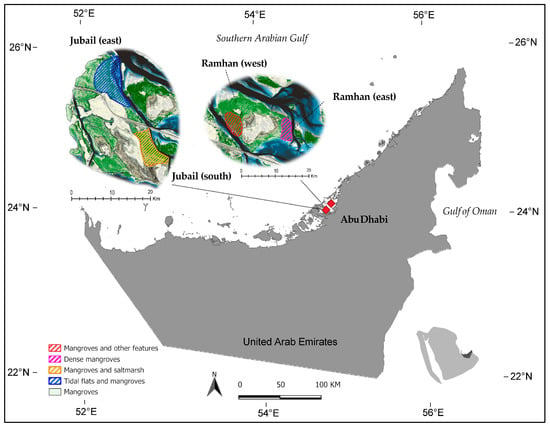
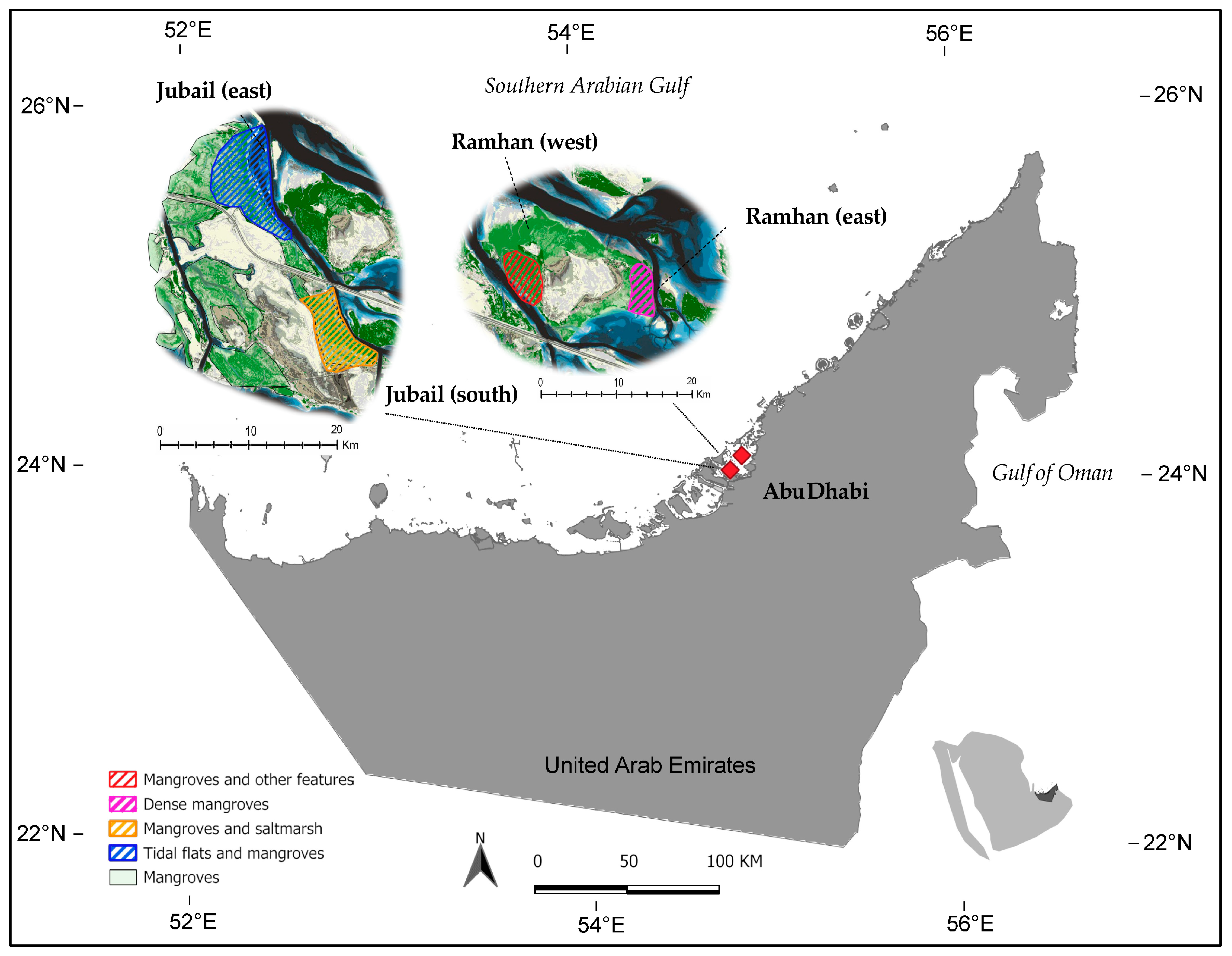
Fish assemblages were investigated in mangroves along the coast of Abu Dhabi in the United Arab Emirates, southern Arabian Gulf (Figure 1). A pre-site survey was conducted in January 2022 to determine the habitat types and characteristics of the study area (Table 1). The survey followed the guidelines of the Abu Dhabi Classification of Intertidal Habitats and Mangrove Forest Assessment [5,34], the IUCN Habitats Classification of the region [35], and the IUCN Global Ecosystem Typology [36]. The classification of the mangrove typologies was based on Worthington and Spalding [37], and the mangrove habitat characteristics (e.g., maturity, canopy cover, and density) were based on English et al. [38].
Figure 1.
Map of the study area in mangroves of the southern Arabian Gulf. Red squares indicate sampling stations (Jubail and Ramhan in Abu Dhabi, United Arab Emirates), and colored lines represent the habitat classification.
The study area was dominated by one type of mangrove species, Avicennia marina, considered a lagoonal mangrove type [37]. They grow in monospecific, narrow fringes often restricted to the intertidal zone of shallow waters (<1 m deep). Tides occur twice daily, ranging from 0.2 to 2.5 m, leaving many creek-like channels along the intertidal areas partially flooded [5]. The physical characteristics of mangrove creeks vary in size and habitat composition, typically creating diverse patterns of microhabitats [39]. Tidal flats and saltmarshes were often found near mangroves, while rocky shores formed the seaward habitats. Rocky shores consisted of solid rocks with various rock pools, boulder platforms, and cliffs, rich in macroalgae, mollusks, and bivalves. Seagrass beds formed the immediate subtidal habitats adjacent to the mangroves (Figure S1).
Table 1.
Classification of habitat types and characteristics. Mangrove area (sqm) and width of creek (m) are derived from the Environmental Agency Coastal and Marine Portal Viewer Map [40]. Mangrove maturity and mangrove canopy cover (%) are based on English et al. [38]. Mangrove typologies are based on Worthington and Spalding [37].
Based on these habitat characteristics, the study area was categorized as: JA site—sheltered tidal flats exposed at low tide that typically form when mud is deposited by tide and currents, with a lack of vegetation and less than 10% mangrove vegetation area (11 to 30% canopy cover) along the seaward edge; JB site—saltmarsh vegetation (Sp. Arthrocnemum macrostachyum and Halocnemum strobilaceum) on the upper margin of the tidal flat (>50%) partially covered at high tide and sparse patches of short mangrove stands (0 to 10% canopy cover); RA site—mature mangrove stands (height > 1.3 m and 51–75% canopy cover); and RB site—comprising mature and dense mangrove stands (76 to 100% canopy cover) with patches of seagrass beds (Sp. Halodule uninervis, Halophila stipulacea, and Halophila ovalis) along the shallow subtidal substrate of unconsolidated sediments at mid-depths (4 to 10 m), and subtidal feature of exposed rocks and hard-bottom habitat in shallow areas at mid-depths (0 to 2 m). Due to the local geomorphology variation, the site selection criteria included accessible natural creeks with a length greater than 100 m and a width range of 2 to 5 m. Modified or dredged channels by human activities were excluded.
A belt-transect technique using an underwater visual census (UVC) was utilized to observe and record fish in mangroves due to the method’s wide application. However, to overcome potential challenges of UVC (i.e., observer speed), the speed was confined to two gentle swimming strokes, limited to 5 to 10 min per transect. Before sampling, the observer was trained by an expert fisheries scientist using pre-defined fish identification and a ruler to practice size estimation underwater using objects (Figure S2).
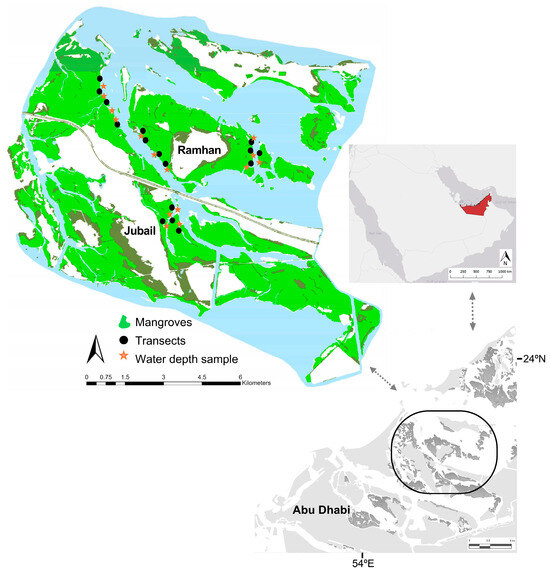
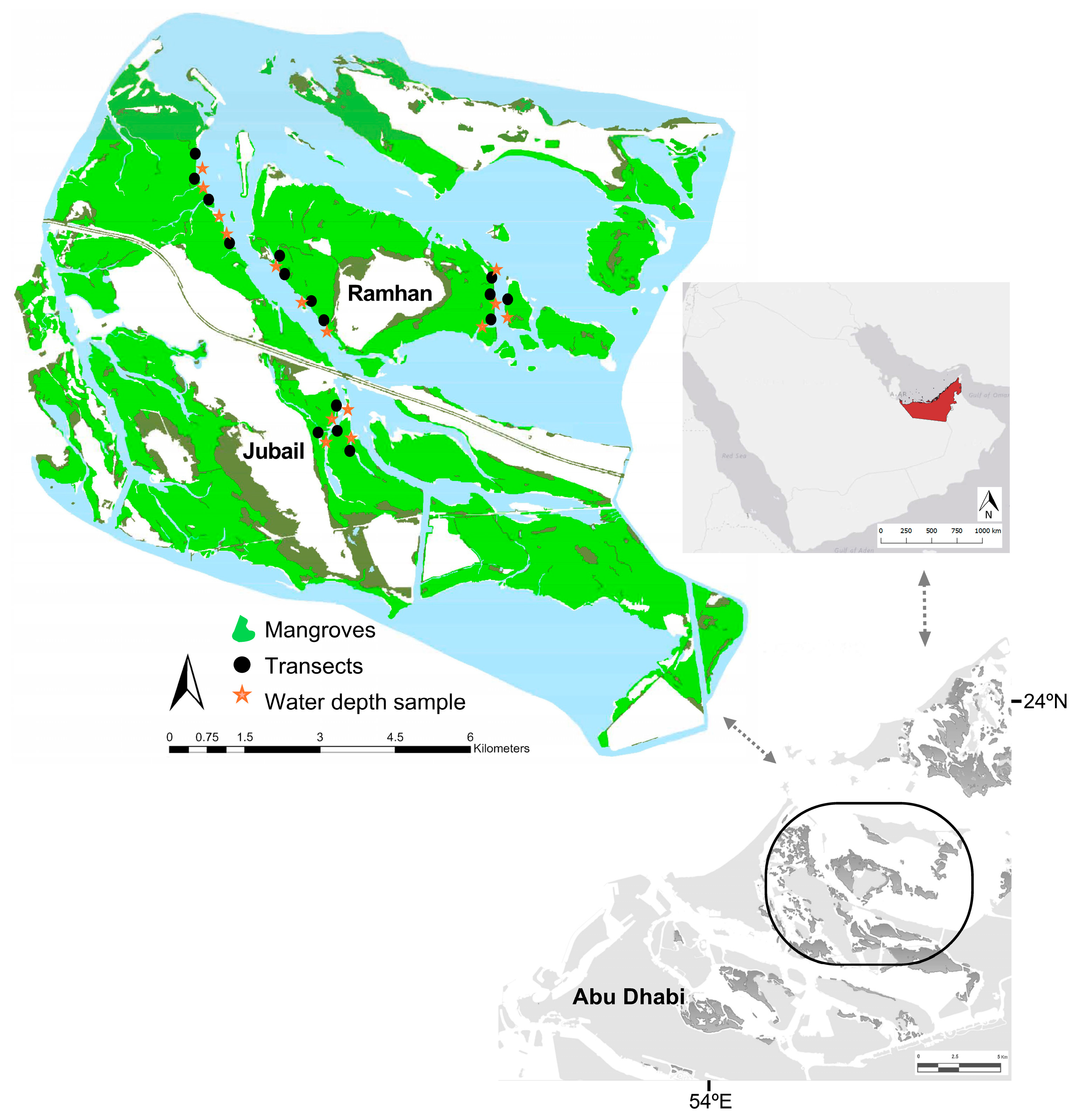
Each site was sampled once during the daytime over seven months from January to September 2022, following the protocol by Bohnsack and Bannerot [26] and English et al. [38] (Figure 2). To maintain consistency, the sampling commenced during the first peak of the high tide and in water depths ranging from 0.8 to 2 m. A total of twenty-four transects were taken during each sampling month (six transects per site) across four days per month (n = 168). Each transect was collected by a single observer using snorkeling gear parallel to the submerged roots of mangroves, covering a sampling area of 750 m2 at each site. It is acknowledged that fish may avoid the observer by sheltering in mangrove roots. Therefore, the transect width was pre-defined to 5 m (2.5 m × 2.5 m): (a) to ensure fish count is restricted to the 2.5 m distance from the observer to the edge of the channel, and (b) to avoid variability in the water depths, which restricted the sampling of fish at depths greater than 0.8 within transects and at each habitat. Prior to fish surveys, the environmental variables were recorded at each site during each sampling day, using the following instruments: an HI-98194 multiparameter waterproof meter for salinity, seawater temperature, and pH; a Hondex Digital Depth Sounder for measuring water depth; and a Secchi disk to ensure clarity of the water (Table S1).
Figure 2.
Map of sampling location in mangroves of the eastern coast in Abu Dhabi, United Arab Emirates.
Fish observed along the transect were counted, and total body length was estimated according to pre-defined categories: abundance (Log1) and size (Log2) to ensure standardization adapted from English et al. [38] (Table S2). Fish during post-larval stages were not counted (<3 cm) to avoid potential errors in species identification due to small body size [38]. The maturation size of each fish and its exploitation status (i.e., commercial importance) were assessed based on reports and databases from FishBase, IUCN Red List Status, and Local Fisheries Stock Assessments [31,33,41,42,43]. A pre-determined fish species ID list supplied by fisheries experts and local authorities was used as a guide during the survey [32,44] (Table S3).
Pearson’s correlation coefficient using the function cor in R software version 2023.06.2+561 was performed to determine whether any relationship occurs between variables [45]. The values of the correlation coefficient range from +1 to the value −1, where numbers closer to 1 show a strong relationship, the negative values show a strong negative relationship, and those closer to 0 suggest no relationship. To describe the difference in environmental variables, i.e., sea-surface temperature, salinity, water depth, and pH, and fish community structure, i.e., fish abundance and length (response variables), between different habitat density, i.e., types; sparse, very sparse, dense, very dense (explanatory variable), an analysis of variance (ANOVA) using the function aov in R software was performed [46]. The Kruskal–Wallis test (non-parametric) was used if the assumptions of ANOVA were not met [47]. Following a Dunn-Bonferroni post hoc test was used for the pairwise multiple-comparison procedure among groups [48].
The relative abundance (RA = Number of individuals for species A/Total number of individuals) × 100% was computed to determine the dominant species. To estimate the diversity of species between habitat types, a Shannon index was calculated, where S is the number of species, N is the total number of individuals within the community, ni is the number of individuals of the i-th species, and pi represents the proportion of the number of individuals of the i-th species relative to the total number of individuals in the sample [49]. To evaluate the number of different species and the evenness of distribution among species, Simpson’s diversity index was calculated, where ni is the number of individuals in species i, N is the total number of species in the sample, pi is the proportional abundance for each species, and R is the total number of species within the sample. Values ranging from 0, representing infinite diversity, to 1, representing no diversity [50]. To present the rank abundance distribution a Whittaker Plot was performed [51]. To visualize the differences in fish assemblage and habitat types across mangrove density, a Non-metric Multidimensional Scaling (nMDS) was performed using metaMDS, and further, an analysis of similarities (ANOSIM) was performed to compare differences in the fish community structure using the dissimilarity measure Bray–Curtis in the function anosim in the R package vegan 2.6-4 [46].
3. Results
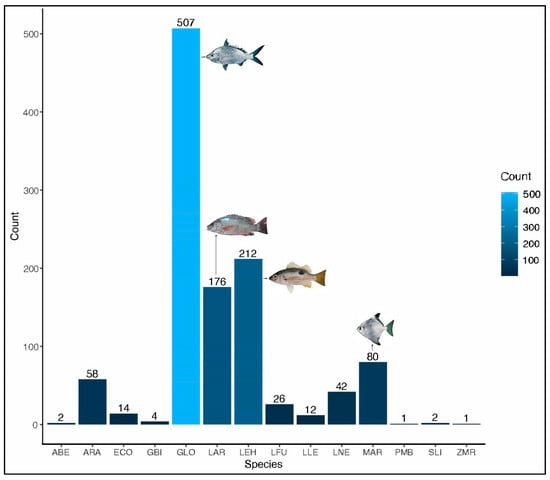
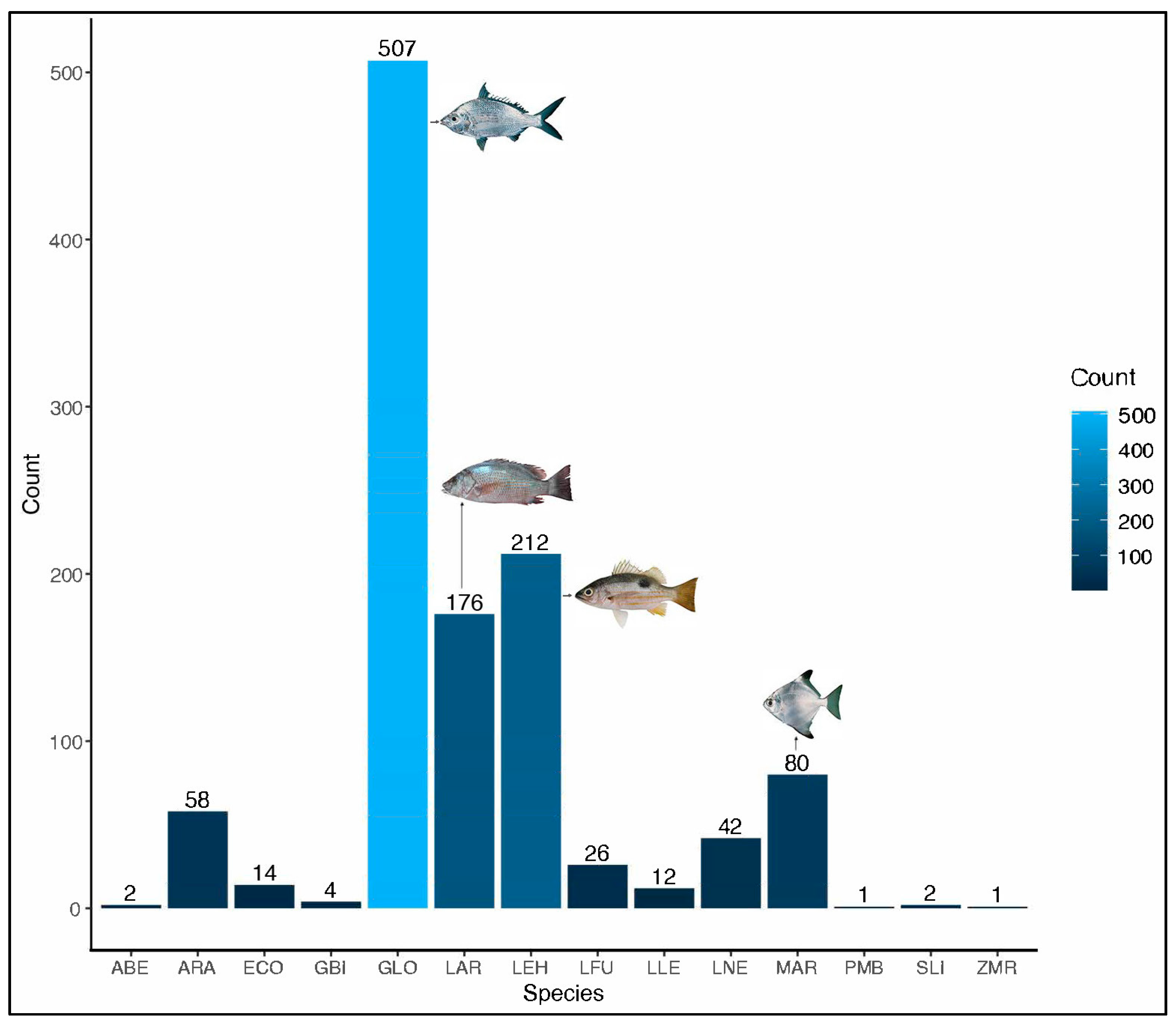
A total of 1137 fish were recorded during this study, belonging to eleven families and fourteen species. Among these, Gerres longirostris was the most abundant, accounting for 44.59% of the total species (Figure 3). The other dominant species were Lutjanus ehrenbergii (18.65%), Lutjanus argentimaculatus (15.48%), and Monodactylus argenteus (7.04%), which comprised 41.17% of the total fish abundance (Table 2a). However, the dominant fish species varied in habitat types. The species Gerres longirostris dominated the mangroves and other habitats (i.e., seagrass, rocky shores), whereas the Lutjanus ehrenbergii dominated the mangrove with saltmarsh habitats. Following them, the latter habitat was also dominated by Lutjanus argentimaculatus, Monodactylus argenteus, and Lethrinus nebulosus, whereas the species Acanthopagrus latus and Epinephelus coioides had a minor contribution (Figure 4). One species (Maculabatis arabica) that belongs to the family Dasyatidae (stingrays) was observed once in the mangroves with saltmarsh habitat.
Figure 3.
Fish abundance and diversity. Species code: ABE (Acanthopagrus berda), ARA (Acanthopagrus latus), ECO (Epinephelus coioides), GBI (Gobiidae), GLO (Gerres longirostris), LAR (Lutjanus argentimaculatus), LEH (Lutjanus ehrenbergii), LFU (Lutjanus fulviflamma), LLE (Lethrinus lentjan), LNE (Lethrinus nebulosus), MAR (Monodactylus argenteus), PMB (Pomacanthus maculosus), SLI (Strongylura leiura), ZMR (Maculabatis arabica).
Table 2.
(a) List of fish species and their distribution among different habitats in mangrove ecosystems. TFSM—tidal flat with sparse mangroves; MGSM—mangroves with saltmarsh; DM—dense mangroves; MGOT—mangroves with other (i.e., seagrass, rocky shores); NA—not applicable. (b) Total fish length (cm) list.
Figure 4.
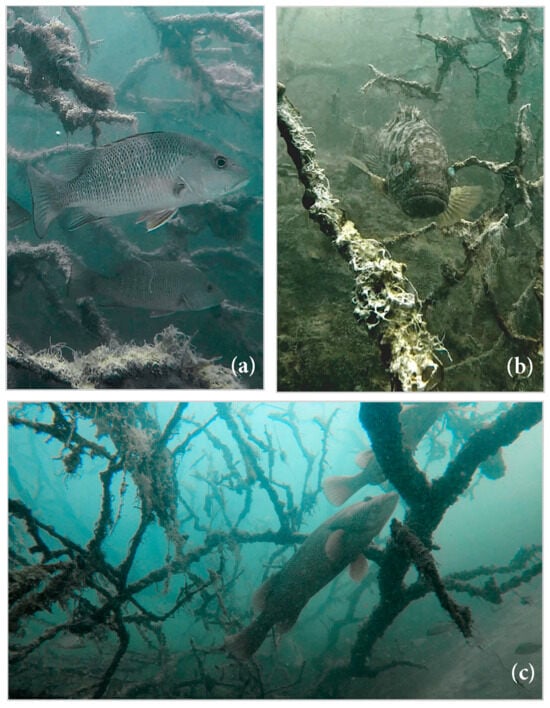
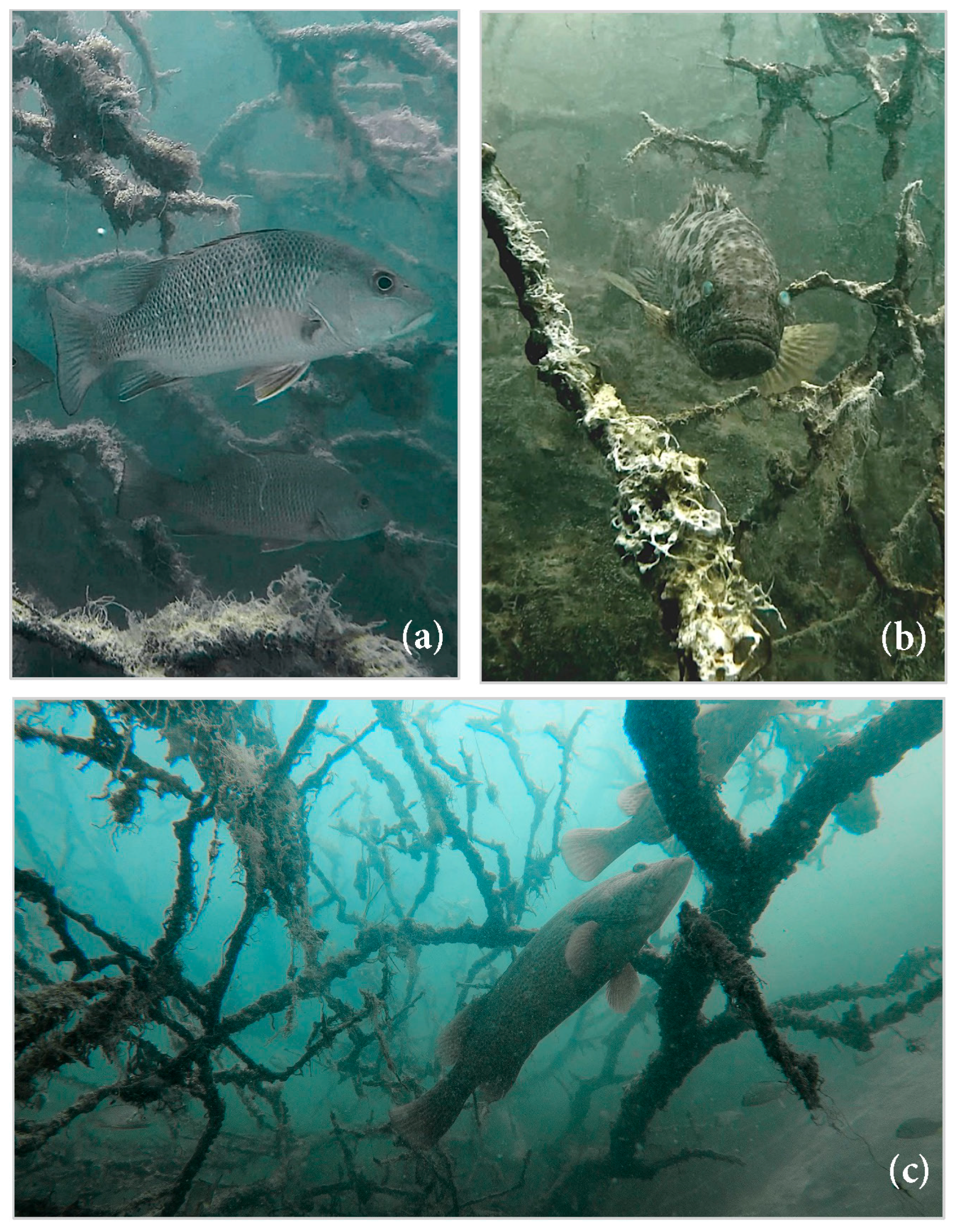
Fish species observed during sampling in mangroves. (a) Lutjanus argentimaculatus. (b,c) Epinephelus coioides.
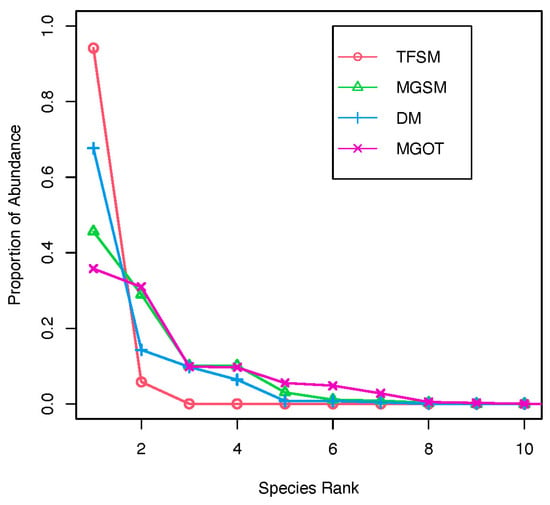
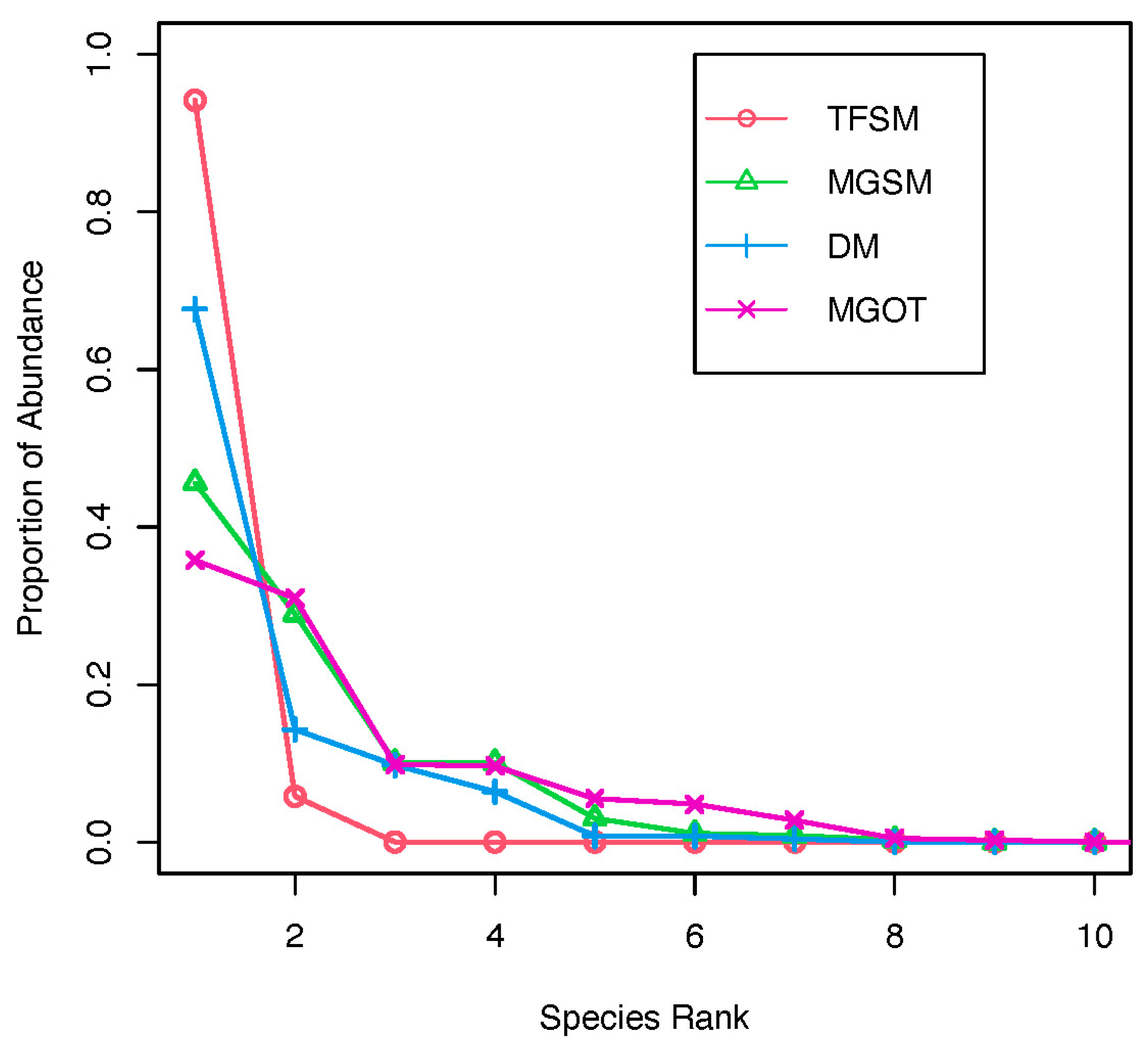
Additionally, according to local fisheries stock assessments, nine out of the fourteen species were found commercially important, and four were previously exploited in the region, with the majority of species found below adulthood stages that performed ontogenetic migration (Table 3). The most species-rich habitat was found in dense mangroves adjacent to other structured habitats (H′ = 1.63, D′ = 0.75) when compared to all other habitat types. High fish species evenness was found most in mangroves with other features, i.e., saltmarsh or rocky shores (Figure 5).
Table 3.
Description of fish species found in mangroves. The commercial importance and availability of regional biology data are based on regional fisheries stock assessments [31,32,33,41,43]. The IUCN Red List Status is derived from the IUCN database [52]. The maturation size and ontogenetic migration are based on FishBase [42]. Maturation size refers to the sexual maturity of the fish species. Ontogenetic migration refers to the migration of juvenile species to offshore (or deeper) habitats when reaching adulthood (e.g., coral reefs). +/−—partial ontogenetic migration; NA—not applicable.
Figure 5.
Rank–Abundance distribution for the total sample of fish species across habitat types; TFSM—tidal flat with sparse mangroves; MGSM—mangroves with saltmarsh; DM—dense mangroves; MGOT—mangroves with other (i.e., seagrass, rocky shores).
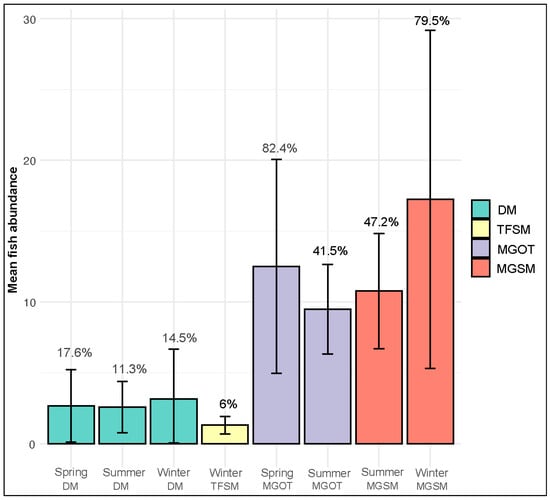
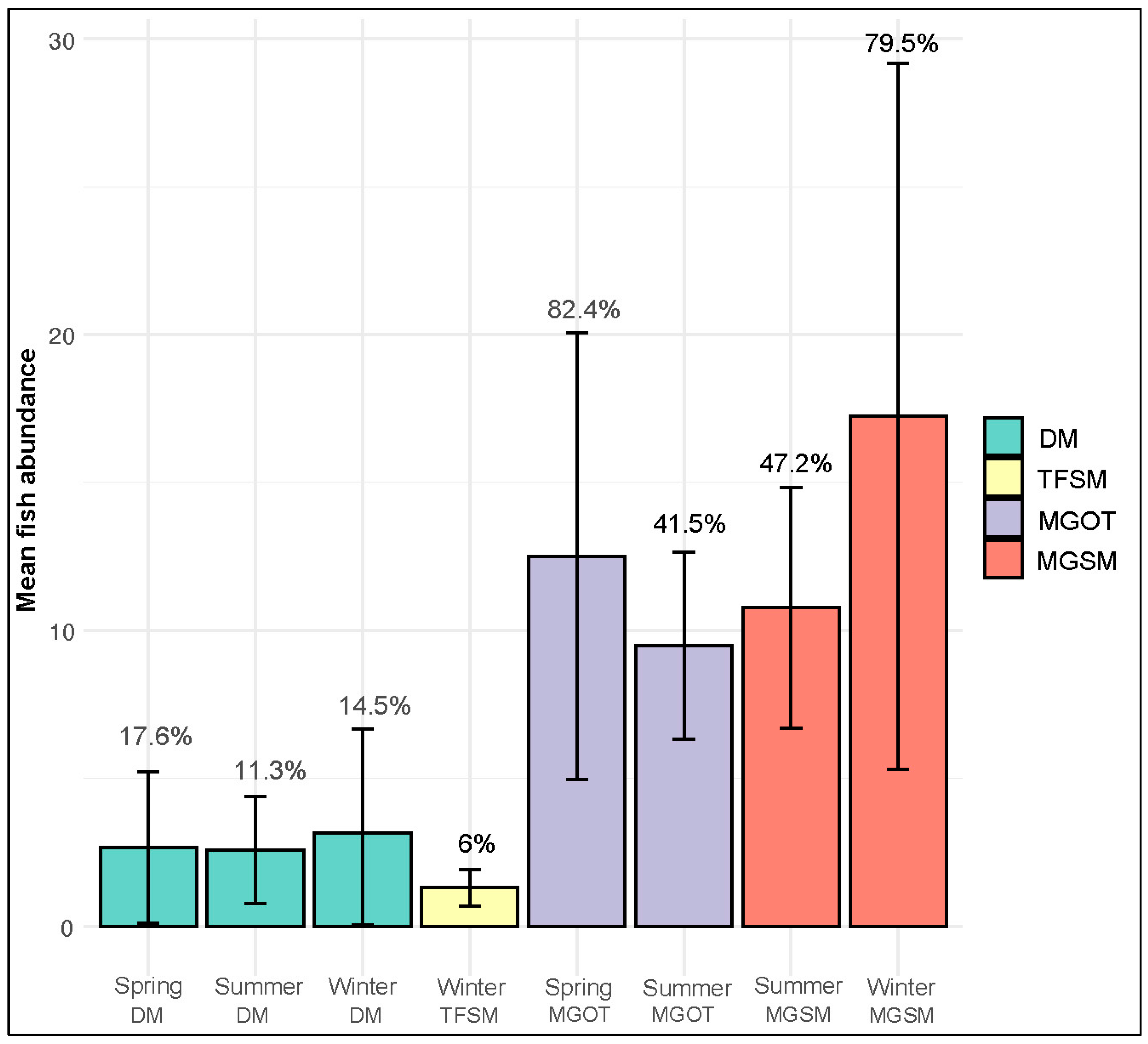
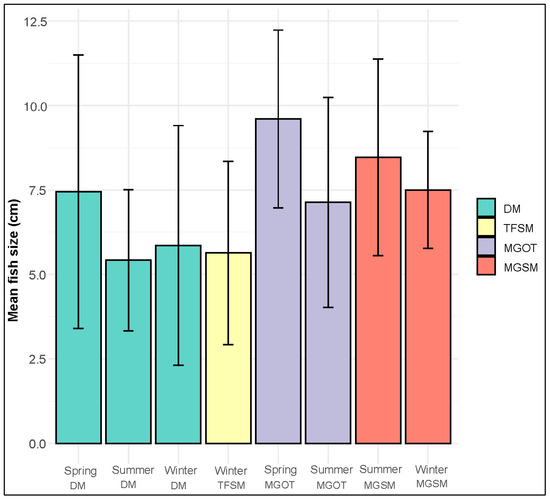
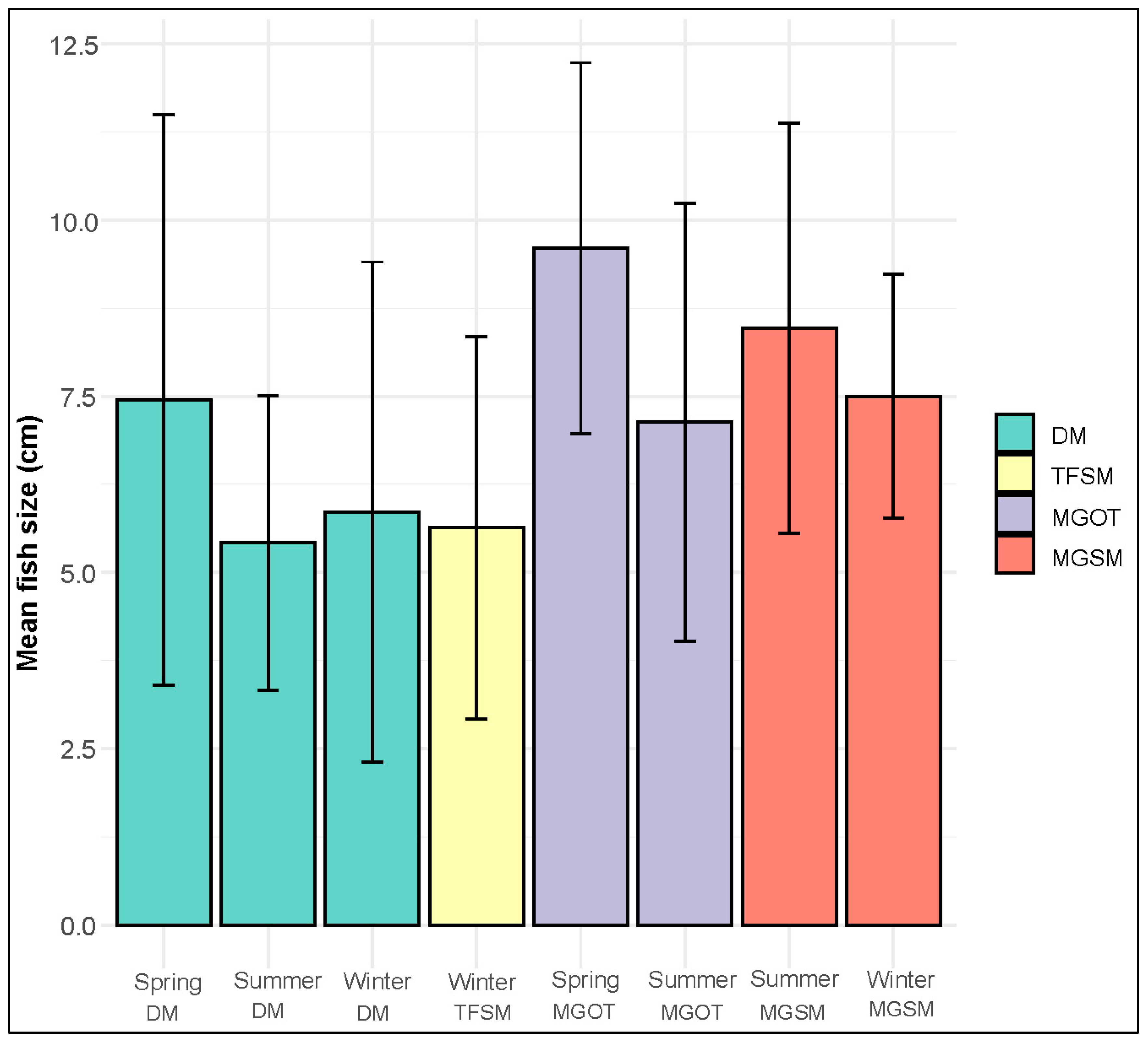
Only two species (Gerres longirostris and Lutjanus ehrenbergii) were represented by tidal flats with sparse mangroves, while mangroves with other features (i.e., seagrass beds and rocky shores) observed the largest variations in fish diversity, abundance, and length (Figure 6). The recorded individuals were juvenile fish with an average total length of 8.05 cm (Table 2b). The largest fishes were found in the habitat type MGOT (mangroves with other) (Figure 7). ANOVA revealed a statistically significant difference between fish length among habitat types (p = <0.001). The Dunn–Bonferroni post hoc test showed that habitat types TFSM (tidal flats with sparse mangroves) and MGSM (mangroves with saltmarsh); TFSM (tidal flats with sparse mangroves) and MGOT (mangroves with other); and MGSM (mangroves with saltmarsh) and DM (dense mangroves) were each statistically significant pairwise (p = <0.05).
Figure 6.
The mean abundance of fish species among habitat types and seasons. DM—dense mangroves; TFSM—tidal flat with sparse mangroves; MGOT—mangroves with other (i.e., seagrass, rocky shores); MGSM—mangroves with saltmarsh.
Figure 7.
The mean size of fish species among habitat types and seasons. DM—dense mangroves; TFSM—tidal flat with sparse mangroves; MGOT—mangroves with other (i.e., seagrass, rocky shores); MGSM—mangroves with saltmarsh.
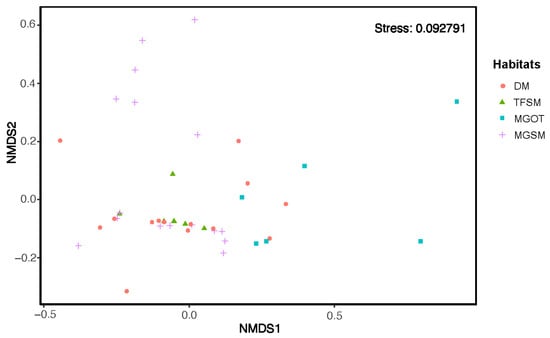
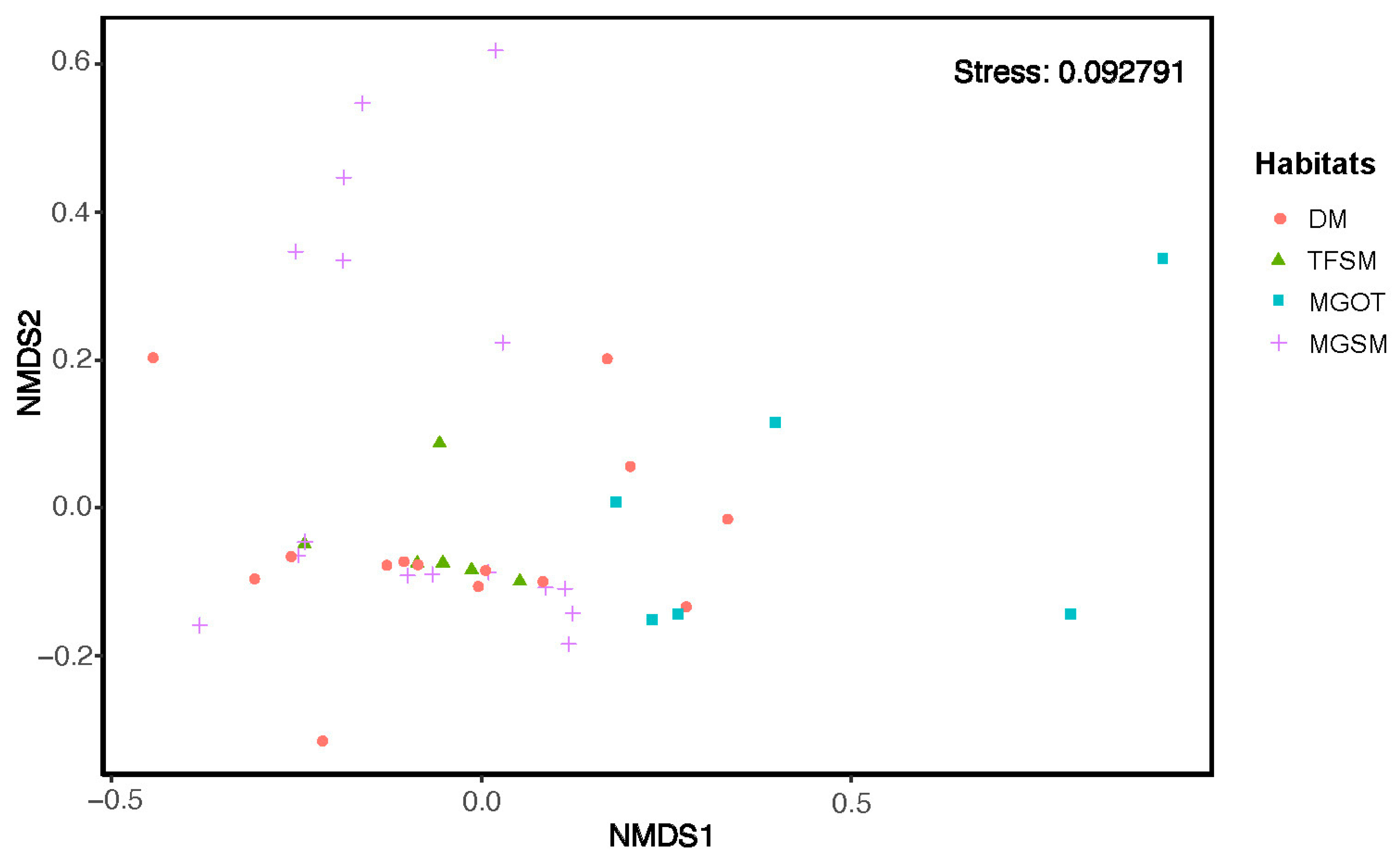
The variation in fish community structure using abundance data between the different habitat types was visualized using Non-metric Multidimensional Scaling (nMDS) (Figure 8). The nMDS presents a stress value of 0.092791, a good inferential confidence value (goodness of fit range between 0.05 and 0.1). The ANOSIM showed a difference in fish community structure (r = 0.04). Fish communities in DM (dense mangroves) and TFSM (tidal flats with sparse mangroves) were associated together, while fish communities in MGSM (mangroves with saltmarsh) were found both separately and in association with other habitats, whereas fish communities in MGOT (mangroves with other) were found separate from other habitats.
Figure 8.
Non-metric Multidimensional Scaling (nMDS) ordination of fish assemblage across habitat types. The plot displays the difference in assemblage structure between the different habitat types, with habitat category 1 = dot (DM—dense mangroves), 2 = triangle (TFSM—tidal flats with sparse mangroves), 3 = square (MGOT—mangroves with other, i.e., seagrass, rocky shores), and 4 = plus (MGSM—mangroves with saltmarsh). Each data point represents the abundance of fish communities within each transect during the survey.
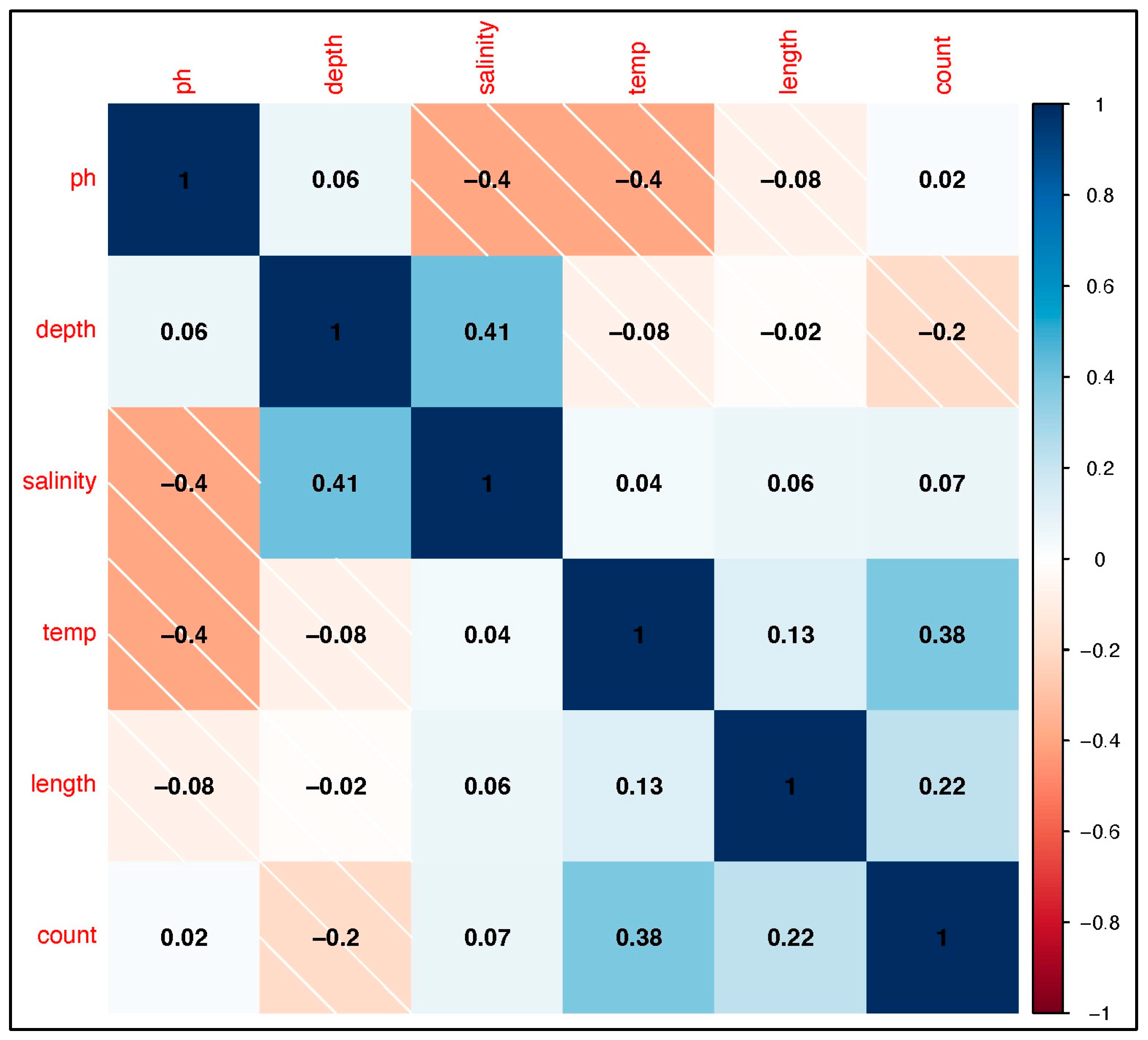
The correlation analysis showed a positive correlation between the environmental variable seawater temperature and the number of fish observed, as well as the length of fish with the number of fish observed (r = 0.38 and r = 0.22, respectively) (Figure 9). A one-way analysis of variance revealed no difference in the environmental variables sea-surface temperature (p = 0.975), salinity (p = 0.294), water depth (p = 0.262), and pH (p = 0.33) between habitat types (Table 4), as well as in fish abundance between seasons (p = 0.114). However, the Kruskal–Wallis test showed a significant difference in fish abundance between seasons (p = 0.006), while the Dunn–Bonferroni post hoc test showed a difference in the pairwise group comparison between winter and summer (p = <0.05).
Figure 9.
Pearson’s correlation coefficient plot between variables is presented using the function CORRPLOT in R software. Variables, as follows: pH—pH levels, depth—water depth, salinity—sea-surface salinity, temp—seawater temperature, length—total fish length, i.e., size (cm), and count—total number of fish. The values of the correlation coefficient range from +1 to the value −1.
Table 4.
The differences in environmental variables between the habitat types. TFSM—tidal flat with sparse mangroves; MGSM—mangroves with saltmarsh; DM—dense mangroves; MGOT—mangroves with other (i.e., seagrass, rocky shores).
4. Discussion
The distinct complexity setting of mangroves and nearby habitats offers new insight into the use of fish populations in Abu Dhabi’s coastline. Numerous fish species inhabit mangroves, exhibiting significant differences in fish assemblage structure across seasons and among habitat types. Nearly all recorded fish individuals in mangroves were juveniles, consistent with the general pattern observed elsewhere in the Gulf. Previous studies along mangroves of the Red Sea in Saudi Arabia have similarly shown a dominance of juvenile fishes [25], as well as along the coast of Egypt [24]. Moreover, this study suggests that mangrove microhabitat complexity influences fish assemblage, with higher abundances and diversity in mangroves adjacent to structured habitats, such as seagrass beds and rocky shores, compared to those near tidal flats. The diversity indices from this study indicate that structurally complex habitats are indeed species-rich.
Mangroves were dominated by the fish families Gerreidae, Lutjanidae, and Monodactylidae, mainly species of Gerres longirostris, Lutjanus ehrenbergii, Lutjanus argentimaculatus, and Monodactylus argenteus. Of the fourteen species observed, nine proved commercially valuable locally, where most were juveniles undergoing ontogenetic migration (i.e., Lutjanus ehrenbergii, Lethrinus nebulosus, and Lutjanus fulviflamma). A record worth noting was the presence of the species Epinephelus coioides, commonly known as the Orange-spotted grouper, in mangroves, where it was only previously recorded in coral reef habitats in the southern Arabian Gulf region [32]. The Epinephelus coioides is one of the most commercially important fish in the Arabian Gulf and the dominant grouper species [53].
The results in this study suggest differences in the size distribution of fish between habitat types, with higher proportions of larger fish in mangroves adjacent to structured habitats. Variations in fish assemblage are commonly found between vegetated and non-vegetated habitats, provided it offers complexity [18,19,54]. Though the high abundance of juvenile fish in mangroves could imply that the habitat is a nursery ground, their role in providing this service remains complex and should be interpreted with caution [13,54,55]. However, the pattern observed here could be confounded by factors such as sampling frequency, tidal influences, or ontogenetic shifts in fish habitat use, which might lead to under- or overestimation of habitat-specific effects. Future research would benefit from data comparing fish densities per unit area in mangrove habitats to adult fish populations in other habitats, such as coral reefs [18,56], which could help improve conservation efforts in coastal areas [57].
Studies from elsewhere have shown variations in juvenile fish populations among coastal habitats. For example, mangroves of the Caribbean hosted an abundance of juvenile fish, while adults of the same species were present on neighboring coral reefs [18]. In Southeast Asia, fish community structure in mangroves showed distinctly higher proportions of smaller-size classes of fish than those in artificial shorelines [54]. Accordingly, the majority of these juvenile fish will eventually seek to migrate from mangrove habitats to adjacent offshore areas [58,59]. Therefore, considering the proximity of such areas is crucial for sustaining fish populations.
Besides proximity to other habitats such as coral reefs, variations in mangrove fish assemblages are driven by local environmental conditions. This study found that fish abundance was most correlated with the variable environmental seawater temperatures. Fish abundance and diversity were greater in mangroves during summer relative to winter, indicating that elevated seawater temperatures substantially promoted fish populations in the study area. Within other parts of the Gulf, seawater temperature and salinity influenced the structure of fish in mangroves, i.e., Qeshm Island in Iran [60]. Research across tropical regions, i.e., the Mexican Pacific, found salinity as a significant variable in structuring mangrove fish assemblage [61,62]. In other cases, tidal ranges and rainfall regimes had a profound effect on fish structure across habitats (see [21,63]). However, rainfall regimes may be less relevant in the Gulf, where annual precipitation is relatively low, with <90 mm annually [4]. Taken together, this study suggests that seasonal fluctuations, particularly changes in seawater temperature, and higher habitat complexity (i.e., mangroves nearby structured features) serve as the primary factors influencing fish assemblage structure in mangroves of the southern Arabian Gulf. Future studies may benefit from diel sampling that accounts for tidal regimes. The findings from this study could guide research and conservation strategies in the region by integrating coastal habitats and fish populations.
5. Conclusions
This study demonstrated that mangrove habitats along the Abu Dhabi coastline served as fish habitats, supporting fourteen fish families dominated by juveniles, many of which were of high commercial value. Of particular interest was the presence of commercially important species, such as Epinephelus coioides and Lutjanus ehrenbergii, as it confirms previous claims that mangrove habitats are one of their critical habitats [32,43]. Fish assemblage varied across seasons and habitat types within mangrove areas, with greater abundance and diversity in mangroves adjacent to structurally complex habitats, such as rocky shores. Seasonality, particularly seawater temperature, was the primary environmental driver with markedly higher abundance and diversity during summer. Warm seawater temperatures and habitat complexity emerged as the dominant factors influencing mangrove fish assemblages, underscoring the importance of habitat configuration and complexity in shaping fish assemblages in the Gulf. Study limitations, such as sampling frequency, tidal influences, or ontogenetic shifts, may have led to the over- or underestimation of fish habitat use in mangroves. Future investigations will benefit from a broader coastal area to incorporate for the dynamic configuration of multiple habitats adjacent to mangroves, such as seagrass beds and saltmarshes, that incorporates diel sampling. Overall, the findings acknowledged mangroves as integral components of connected coastal seascapes for fish species. Conservation strategies would benefit from an integrated management approach for sustaining fish populations and coastal ecosystems in the Gulf.
Supplementary Materials
The following supporting information can be downloaded at: https://www.mdpi.com/article/10.3390/d18020116/s1. Table S1—Dates of sampling period and tidal regimes. Table S2—Standardized Log categories for sampling fish abundance and total length in mangroves, adapted and modified from English et al. [38]. Table S3—A pre-determined fish species ID list supplied by fisheries experts at the Environment Agency of Abu Dhabi [32,43]. Figure S1. The different habitat types of the study area along the Southern Arabian Gulf, Abu Dhabi, United Arab Emirates. Figure S2. Species accumulation curve across study stations; JA+JB (left) and RA+RB (right). Figure S3. Histogram of total fish length.
Author Contributions
Writing—original draft preparation, methodology, data collection, formal analysis, visualization, and writing—review and editing; A.A. Writing—review and editing, supervision; P.M. and C.F. All authors have read and agreed to the published version of the manuscript.
Funding
This research received no external funding or any specific grant from agencies in the public, commercial, or not-for-profit sectors.
Institutional Review Board Statement
Not applicable. This research neither involved human subjects nor experiments on animals, and it was conducted in full compliance with UAE federal laws.
Data Availability Statement
All data can be acquired from the corresponding author upon request.
Acknowledgments
This research was supported as part of a postgraduate program by the School of Natural and Environmental Sciences, Newcastle University, United Kingdom.
Conflicts of Interest
The authors declare no conflicts of interest.
Abbreviations
The following abbreviations are used in this manuscript:
| IUCN | The International Union for Conservation of Nature |
| UAE | United Arab Emirates |
References
- Price, A.; Sheppard, C.; Roberts, C. The Gulf: Its biological setting. Mar. Pollut. Bull. 1993, 27, 9–15. [Google Scholar] [CrossRef] [Scilit]
- Sheppard, C.; Price, A.; Roberts, C. Marine Ecology of the Arabian Region Patterns and Processes in Extreme Tropical Environments; Harcourt Brace Jovanovich; Academic Press: London, UK, 1992; p. 359. [Google Scholar]
- Kottek, M.; Grieser, J.; Beck, C.; Rudolf, B.; Franz, R. World Map of the Köppen-Geiger Climate Classification Updated. Meteorol. Z. 2006, 15, 259–263. [Google Scholar] [CrossRef] [Scilit] [PubMed]
- Vaughan, G.; Al-mansoori, N.; Burt, J. The Arabian Gulf. In World Seas: An Environmental Evaluation, 2nd ed.; Sheppard, C., Ed.; Academic Press: London, UK, 2019; pp. 1–23. [Google Scholar]
- Almansoori, A.; Castellanos, M.; Zager, I.; García, L. Mangrove forests Assessment of Abu Dhabi Emirate. In Red List of Ecosystems for Abu Dhabi Emirate: An Assessment of the Conservation Status of the Ecosystems of Abu Dhabi; Javed, S., Soorae, P., Zager, I., Castellanos, M., Garcia, L., Al-Dhaheri, S., Eds.; International Union for Conservation of Nature: Gland, Switzerland, 2023; Available online: https://portals.iucn.org/library/sites/library/files/documents/2023-033-En.pdf (accessed on 8 January 2026).
- Alsalam, T. Marine Environment and Resources of Abu Dhabi; Environment Agency of Abu Dhabi: Abu Dhabi, United Arab Emirates, 2007; p. 255. [Google Scholar]
- Almahasheer, H. Spatial coverage of mangrove communities in the Arabian Gulf. Environ. Monit. Assess. 2018, 190, 85. [Google Scholar] [CrossRef] [Scilit] [PubMed]
- Almansoori, A.; Macintosh, D.J.; Almahasheer, H.; Suárez, E.L. IUCN Red List of Ecosystems, Mangroves of the Arabian (Persian) Gulf. EcoEvoRxiv 2024, in press. [Google Scholar] [CrossRef] [Scilit]
- Saenger, P.; Blasco, F.; Youssef, A.; Loughland, R.; Wrydani, S. Mangroves of the United Arab Emirates with particular emphasis on those of Abu Dhabi Emirate. In Marine Atlas of Abu Dhabi; Loughland, R.A., Al-Muhairi, F.S., Fadel, S.S., Al-Mehdi, A.M., Hellyer, P., Eds.; Emirates Heritage Club: Abu Dhabi, United Arab Emirates, 2004; pp. 58–69. [Google Scholar]
- Bunting, P.; Rosenqvist, A.; Hilarides, L.; Lucas, R.; Thomas, N.; Tadono, T.; Worthington, T.; Spalding, M.; Murray, N.; Rebelo, L. Global Mangrove Extent Change 1996–2020: Global Mangrove Watch Version 3.0. Remote Sens. 2022, 14, 3657. [Google Scholar] [CrossRef] [Scilit]
- Carrasquilla-Henao, M.; Juanes, F. Mangroves enhance local fisheries catches: A global meta-analysis. Fish Fish. 2017, 18, 79–93. [Google Scholar] [CrossRef] [Scilit]
- Igulu, M.; Nagelkerken, I.; Dorenbosch, M.; Monique, G.; Harborne, A.; Kimirei, I.; Mumby, P.; Olds, A.; Mgaya, Y. Mangrove Habitat Use by Juvenile Reef Fish: Meta-Analysis Reveals that Tidal Regime Matters More than Biogeographic Region. PLoS ONE 2014, 9, e114715. [Google Scholar] [CrossRef] [Scilit]
- Nagelkerken, I. (Ed.) Evaluation of Nursery function of Mangroves and Seagrass beds for Tropical Decapods and Reef fishes: Patterns and Underlying Mechanisms. In Ecological Connectivity Among Tropical Coastal Ecosystems, 1st ed.; Springer: Berlin/Heidelberg, Germany, 2009; pp. 357–400. [Google Scholar]
- Nagelkerken, I.; van der Velde, G.; Gorissen, M.; Meijer, G.; Hof, T.V.; Hartog, C.D. Importance of Mangroves, Seagrass Beds and the Shallow Coral Reef as a Nursery for Important Coral Reef Fishes, Using a Visual Census Technique. Estuarine Coast. Shelf Sci. 2000, 51, 31–44. [Google Scholar] [CrossRef] [Scilit]
- Unsworth, R.; Nordlund, L.; Cullen-Unsworth, L. Seagrass meadows support global fisheries production. Conserv. Lett. 2018, 12, e12566. [Google Scholar] [CrossRef] [Scilit]
- MOCCAE. The UAE National Framework Statement for Sustainable Fisheries (2019–2030); Ministry of Climate Change and Environment: Abu Dhabi, United Arab Emirates, 2019. Available online: https://www.moccae.gov.ae/assets/download/749e9268/UAE%20National%20Framework%20Statement%20for%20Sustainable%20Fisheries%20(2019–2030)%20English.pdf.aspx (accessed on 25 February 2024).
- Halpern, B.S.; Walbridge, S.; Selkoe, K.A.; Kappel, C.V.; Micheli, F.; d’Agrosa, C.; Bruno, J.F.; Casey, K.S.; Ebert, C.; Fox, H.E.; et al. A global map of human impact on marine ecosystems. Science 2008, 319, 948–952. [Google Scholar] [CrossRef] [Scilit]
- Mumby, P.J.; Edwards, A.J.; Arias-González, J.E.; Lindeman, K.C.; Blackwell, P.G.; Gall, A.; Gorczynska, M.I.; Harborne, A.R.; Pescod, C.L.; Renken, H.; et al. Mangroves enhance the biomass of coral reef fish communities in the Caribbean. Nature 2004, 427, 533–536. [Google Scholar] [CrossRef] [Scilit] [PubMed]
- Nagelkerken, I.; Huebert, K.; Serafy, J.; Grol, M.; Dorenbosch, M.; Bradshaw, C. Highly localized replenishment of coral reef fish populations near nursery habitats. Mar. Ecol. Prog. Ser. 2017, 568, 137–150. [Google Scholar] [CrossRef] [Scilit]
- Bradley, M.; Nagelkerken, I.; Baker, R.; Sheaves, M. Context dependence: A conceptual approach for understanding the habitat relationships of coastal marine Fauna. BioScience 2020, 70, 986–1004. [Google Scholar] [CrossRef] [Scilit]
- Bradley, M.; Dubuc, A.; Piggott, C.V.H.; Sambrook, K.; Hoey, A.S.; Depczynski, M.; Langlois, T.J.; Gagliano, M.; Wilson, S.K.; Cure, K.; et al. The fish–mangrove link is context dependent: Tidal regime and reef proximity determine the ecological role of tropical mangroves. Fish Fish. 2024, 25, 523–541. [Google Scholar] [CrossRef] [Scilit]
- Reis-Filho, J.; Giarrizzo, T.; Barros, F. Tidal migration and cross-habitat movements of fish assemblage within a mangrove ecotone. Mar. Biol. 2016, 163, 111. [Google Scholar] [CrossRef] [Scilit]
- Sambrook, K.; Hoey, A.; Andréfouët, S.; Cumming, G.; Duce, S.; Bonin, M. Beyond the reef: The widespread use of non-reef habitats by coral reef fishes. Fish Fish. 2019, 20, 903–920. [Google Scholar] [CrossRef] [Scilit]
- El-regal, M.A.; Ibrahim, N. Role of mangroves as a nursery ground for juvenile reef fishes in the southern Egyptian Red Sea. Egypt. J. Aquat. Res. 2014, 40, 71–78. [Google Scholar] [CrossRef] [Scilit]
- Dunne, A.; Coker, D.J.; Kattan, A.; Tietbohl, M.; Ellis, J.; Jones, B.; Berumen, M. Importance of coastal vegetated habitats for tropical marine fishes in the Red Sea. Mar. Biol. 2023, 170, 90. [Google Scholar] [CrossRef] [Scilit]
- Bohnsack, J.A.; Bannerot, S.P. A Stationary Visual Census Technique for Quantitatively Assessing Community Structure of Coral Reef Fishes; NOAA Technical Report, NMFS, 41; National Oceanic and Atmospheric Administration (NOAA): Silver Spring, MD, USA, 1986; pp. 1–15. [Google Scholar]
- Carrasquilla-Henao, M.; Ban, N.; Rueda, M.; Juanes, F. The mangrove-fishery relationship: A local ecological knowledge perspective. Mar. Policy 2019, 108, 103656. [Google Scholar] [CrossRef] [Scilit]
- Dorenbosch, M.; Grol, M.; Christianen, M.; Nagelkerken, I.; van der Velde, G. Indo-Pacific seagrass beds and mangroves contribute to fish density and diversity on adjacent coral reefs. Mar. Ecol. Prog. Ser. 2005, 302, 63–76. [Google Scholar] [CrossRef] [Scilit]
- Kimirei, I.A.; Mgaya, Y.D.; Huijbers, C.M. The Mangrove Nursery Paradigm Revisited: Otolith Stable Isotopes Support Nursery-to-Reef Movements by Indo-Pacific Fishes. PLoS ONE 2013, 8, e66320. [Google Scholar] [CrossRef] [Scilit] [PubMed]
- Al-Jufaili, S.M.; Jawad, L.A.; Park, J.M.; Al-Sariri, T.S.; Al-Balushi, B.Y. Fish diversity of mangrove ecosystems in Sultanate of Oman. Cah. De Biol. Mar. 2021, 62, 235–249. [Google Scholar] [CrossRef]
- Francis, F.; Al-Shamsi, A.; Hartmann, S. Reproductive Biology and Spawning Season of ‘Badah’ (Gerres longirostris) in Abu Dhabi Waters—Report; Fisheries Investigation and Monitoring Unit, Environment Agency Abu Dhabi: Abu Dhabi, United Arab Emirates, 2016; p. 16. [Google Scholar]
- Francis, F.; Al-Shamsi, A.; Pinello, D. An Assessment of the Stock Status of Seven Commercially Exploited Fish Species in Abu Dhabi—Report; Fisheries Investigation and Monitoring Unit, Environment Agency Abu Dhabi: Abu Dhabi, United Arab Emirates, 2022; p. 8. [Google Scholar]
- Grandcourt, E.; Alabdessalaam, T.; Francis, F.; Alshamsi, A. Reproductive Biology and Implications for Management of the Spangled Emperor, Lethrinus nebulosus (Shaari), in Abu Dhabi—Report; Fisheries Investigation and Monitoring Unit, Environment Agency Abu Dhabi: Abu Dhabi, United Arab Emirates, 2010; p. 31. [Google Scholar]
- EAD. Terrestrial, Marine and Intertidal Habitat Classification Schema Document: V3.5; S-Dite, H., Ed.; Environment Agency of Abu Dhabi: Abu Dhabi, United Arab Emirates, 2020; p. 170. [Google Scholar]
- IUCN. IUCN Habitat Classification Scheme Version 3.1. International Union for Conservation of Nature. 2012. Available online: https://www.iucnredlist.org/resources/habitat-classification-scheme (accessed on 8 January 2026).
- Keith, D.A.; Ferrer-Paris, J.R.; Nicholson, E.; Kingsford, R.T. (Eds.) IUCN Global Ecosystem Typology 2.0: Descriptive Profiles for Biomes and Ecosystem Functional Groups; International Union for Conservation of Nature: Gland, Switzerland, 2020. [Google Scholar] [CrossRef] [Scilit]
- Worthington, T.; Spalding, M. Mangrove Restoration Potential: A Global Map Highlighting a Critical Opportunity; Apollo—University of Cambridge Repository: Cambridge, UK, 2018. [Google Scholar] [CrossRef]
- English, S.; Wilkinson, C.; Baker, V. Survey Manual for Tropical Marine Resources, 2nd ed.; Australian Institute of Marine Science: Townville, Australia, 1997; p. 385. [Google Scholar]
- Loughland, R.; Al Muhairi, F.; Fadel, S.; Al Mehdi, A.; Hellyer, P. Marine Atlas of Abu Dhabi; Emirates Heritage Club: Abu Dhabi, United Arab Emirates, 2004; p. 277. [Google Scholar]
- EAD. Environmental Agency Coastal and Marine Portal Viewer Map. 2021. Available online: https://enviroportal.ead.ae/map/ (accessed on 8 January 2026).
- Francis, F.; Al-Shamsi, A.; Al-Hameli, S.; Hartmann, S. Reproductive Biology and Stock Assessment of Naiser in Abu Dhabi Waters—Report; Fisheries Investigation and Monitoring Unit, Environment Agency Abu Dhabi: Abu Dhabi, United Arab Emirates, 2019; p. 19. [Google Scholar]
- Froese, R.; Pauly, D. FishBase. 2023. Available online: https://www.fishbase.se/search.php (accessed on 8 January 2026).
- Grandcourt, E.; Alabdessalaam, T.; Francis, F.; Alshamsi, A.; Hartmann, S.; Alali, S.; Alali, K. Reproductive Biology and Implications for the Management of Hamoor (Epinephelus coioides) in Abu Dhabi Waters—Report; Fisheries Investigation and Monitoring Unit, Environment Agency Abu Dhabi: Abu Dhabi, United Arab Emirates, 2008; p. 46. [Google Scholar]
- Grandcourt, E. Fish and Fisheries. In Marine Environment and Resources of Abu Dhabi; Al-Abdessalaam, T.Z., Ed.; Motivate Publishing: Dubai, United Arab Emirates, 2008; pp. 200–255. [Google Scholar]
- Freedman, D.R.; Pisani, R.; Purves, R. Statistics, 4th ed.; W. Norton & Company: New York, NY, USA, 2007; pp. 415–424+488–495+523–540. [Google Scholar]
- RStudio Team. RStudio: Integrated Development for, R. RStudio; PBC: Boston, MA, USA, 2022. Available online: http://www.rstudio.com/ (accessed on 8 January 2026).
- Kruskal, W.H.; Wallis, W.A. Use of Ranks in One-Criterion Variance Analysis. J. Am. Stat. Assoc. 1952, 47, 583–621. [Google Scholar] [CrossRef]
- Dunn, O.J. Multiple Comparisons Using Rank Sums. Technometrics 1964, 6, 241–252. [Google Scholar] [CrossRef]
- Clarke, K.R.; Warwick, R.M. Changes in Marine Communities: An Approach to Statistical Analysis and Interpretation, 2nd ed.; PRIMER-E: Plymouth, UK, 2001; p. 176. [Google Scholar]
- Simpson, E.H. Measurement of Diversity. Nature 1949, 163, 688. [Google Scholar] [CrossRef] [Scilit]
- Whittaker, R.H. Dominance and Diversity in Land Plant Communities: Numerical relations of species express the importance of competition in community function and evolution. Science 1965, 147, 250–260. [Google Scholar] [CrossRef] [Scilit]
- IUCN. The IUCN Red List Status: Search Database. 2022. Available online: https://www.iucnredlist.org/ (accessed on 8 January 2026).
- Grandcourt, E.M.; Al Abdessalaam, T.Z.; Francis, F.; Al Shamsi, A.T. Population biology and assessment of the orange-spotted grouper, Epinephelus coioides (Hamilton, 1822), in the southern Arabian Gulf. Fish. Res. 2005, 74, 55–68. [Google Scholar] [CrossRef] [Scilit]
- Benzeev, R.; Hutchinson, N.; Friess, D. Quantifying fisheries ecosystem services of mangroves and tropical artificial urban shorelines. Hydrobiologia 2017, 803, 225–237. [Google Scholar] [CrossRef] [Scilit]
- Nagelkerken, I.; van der Velde, G. Relative importance of interlinked mangroves and seagrass beds as feeding habitats for juvenile reef fish on a Caribbean island. Mar. Ecol. Prog. Ser. 2004, 274, 153–159. [Google Scholar] [CrossRef] [Scilit]
- Whitfield, A.K. The role of seagrass meadows, mangrove forests, salt marshes and reed beds as nursery areas and food sources for fishes in estuaries. Rev. Fish Biol. Fish. 2017, 27, 75–110. [Google Scholar] [CrossRef] [Scilit]
- Friess, D.A.; Yando, E.S.; Abuchahla, G.M.; Adams, J.B.; Cannicci, S.; Canty, S.W.; Cavanaugh, K.C.; Connolly, R.M.; Cormier, N.; Dahdouh-Guebas, F.; et al. Mangroves give cause for conservation optimism, for now. Curr. Biol. 2020, 30, R153–R154. [Google Scholar] [CrossRef] [Scilit]
- Buscher, E.; Olson, A.M.; Pascoe, E.S.; Weil, J.; Juanes, F. David H. Secor: Migration ecology of marine fishes. Rev. Fish Biol. Fish. 2016, 26, 609–610. [Google Scholar] [CrossRef] [Scilit]
- Faunce, C.; Serafy, J. Mangroves as fish habitat: 50 Years of field studies. Mar. Ecol. Prog. Ser. 2006, 318, 1–18. [Google Scholar] [CrossRef] [Scilit]
- Shahraki, M.; Saint-Paul, U.; Krumme, U.; Fry, B. Fish use of intertidal mangrove creeks at Qeshm Island, Iran. Mar. Ecol. Prog. Ser. 2016, 542, 153–166. [Google Scholar] [CrossRef] [Scilit]
- Amezcua, F.; Ramírez, M.; Flores-Verdugo, F. Classification and comparison of five estuaries in the southeast Gulf of California based on environmental variables and fish assemblages. Bull. Mar. Sci. 2019, 95, 139–159. [Google Scholar] [CrossRef] [Scilit]
- Barletta, M.; Barletta-Bergan, A.; Saint-Paul, U.; Hubold, G. The role of salinity in structuring the fish assemblages in a tropical estuary. J. Fish Biol. 2005, 66, 45–72. [Google Scholar] [CrossRef] [Scilit]
- Nagelkerken, I.; Sheaves, M.; Baker, R.; Connolly, R.M. The seascape nursery: A novel spatial approach to identify and manage nurseries for coastal marine fauna. Fish Fish. 2015, 16, 362–371. [Google Scholar] [CrossRef] [Scilit]

Disclaimer/Publisher’s Note: The statements, opinions and data contained in all publications are solely those of the individual author(s) and contributor(s) and not of MDPI and/or the editor(s). MDPI and/or the editor(s) disclaim responsibility for any injury to people or property resulting from any ideas, methods, instructions or products referred to in the content. |
© 2026 by the authors. Licensee MDPI, Basel, Switzerland. This article is an open access article distributed under the terms and conditions of the Creative Commons Attribution (CC BY) license.