Review

The Evolving Role of Coastal and Marine Spatial Planning in Enhancing Blue Carbon Ecosystems Governance: A Bibliometric Analysis


1
School of Computer and Information Engineering, Xiamen University of Technology, Xiamen 361024, China
2
Key Laboratory of Marine Spatial Planning Technology, China Oceanic Development Foundation, Tianjin 300112, China
3
Third Institute of Oceanography, Ministry of Natural Resources, Xiamen 361005, China
4
Guangxi Key Laboratory of Mangrove Conservation and Utilization, Guangxi Academy of Marine Sciences (Guangxi Mangrove Research Center), Guangxi Academy of Sciences, Beihai 536007, China
*
Authors to whom correspondence should be addressed.
Diversity 2026, 18(2), 115; https://doi.org/10.3390/d18020115
Submission received: 15 January 2026 / Revised: 6 February 2026 / Accepted: 9 February 2026 / Published: 11 February 2026
(This article belongs to the Special Issue Biodiversity and Ecosystem Conservation of Coastal Wetlands)

Abstract

Blue carbon ecosystems are critical biodiversity hotspots facing escalating threats. Coastal and Marine Spatial Planning (CMSP) is a key policy tool for protecting their biodiversity and enhancing ecosystem services, resilience, climate action, and sustainable development. We performed a systematic bibliometric analysis (1981–2025) using the Web of Science Core Collection. The results indicated that global CMSP–blue carbon ecosystems collaborative research exhibits a three-stage evolutionary pattern: the initial phase (2008–2012) of blue carbon concept introduction; the development phase (2013–2018), where research focus shifted to carbon sinks and ecology driven by policy initiatives; and the growth phase (2019–2025), where research focused on precision systematic governance. Research has evolved from baseline ecosystem assessments to policy governance integration, which emerged as a core component of Marine Spatial Planning to advance sustainable development. Research networks exhibit a “center–periphery” pattern. However, the international influence of China’s research output remains limited. Future CMSP collaborative governance will require refining planning frameworks, addressing regional technical adaptation challenges, and establishing a multidimensional policy system to reconcile the effective conservation of blue carbon ecosystems in order to reconcile biodiversity, resilience, and sustainable development. This study maps the CMSP–blue carbon ecosystems research landscape, informing improved climate-friendly marine and coastal spatial planning for enhanced coastal wetland biodiversity and ecological resilience.

1. Introduction

Coastal zones serve as primary habitats for blue carbon ecosystems, such as mangrove forests, seagrass beds, and salt marsh wetlands. These are crucial biodiversity hotspots, supporting a vast array of marine and terrestrial species and providing essential ecosystem functions (e.g., nutrient cycling and coastal protection). The United Nations has estimated that approximately 2.4–4.6% of global carbon emissions are captured and sequestered by marine organisms, with at least half of this sequestration occurring within blue carbon ecosystems such as mangrove forests, seagrass beds, and salt marshes [1]. Beyond these, blue carbon ecosystems are intrinsically high-biodiversity homes, whose structural integrity and ecological processes directly influence species survival, genetic diversity, and the overall health and functionality of the broader coastal environment. Moreover, these ecosystems support the livelihoods of three billion people who depend on marine fisheries, coastal tourism, and maritime trade [2]. The global ocean economy amounted to USD 2.6 trillion in 2020 and contributed 3–4% of the global gross value added from 1995 to 2020 [3]. However, the intensified use of marine space has led to increasingly severe issues, such as the degradation of ecosystems [4] and amplified spatial conflicts [5] The global mangrove area decreased from 152,604 km2 in 1996 to 147,359 km2 in 2020 [6], and the annual seagrass bed loss rate was 7% [7], directly undermining their ecological resilience and ability to provide vital ecosystem services and climate adaptation potential.
Coastal and Marine Spatial Planning (CMSP) has garnered major attention as a comprehensive governance tool that integrates ecological conservation and economic development. CMSP is not merely a mechanism for resolving spatial conflicts; it serves as a critical strategy for protecting and enhancing the rich biodiversity of blue carbon ecosystems. Its synergistic value in protecting blue carbon ecosystems, enhancing carbon sink functions, safeguarding their biodiversity, enhancing their ecological resilience, and advancing climate action has been increasingly recognized. By systematically organizing human activities in marine areas, CMSP aims to reduce cumulative impacts, ensure sustainable resource use, and preserve essential habitats. CMSP uses scientific functional zoning, land use control, and intensity regulation [8,9,10] to prioritize ecological integrity, perform integrated land–sea management, and sustainably utilize resources. CMSP thus provides a spatial governance framework for the systematic conservation of coastal resources. This involves delineating protected areas for vulnerable species, managing fishing activities to protect marine biodiversity, and conducting zoning for sustainable aquaculture that minimizes habitat destruction.
Since the 1990s, CMSP has undergone rapid development globally, evolving from theoretical exploration to practical application [11]. Countries and regions such as Australia, the United States, the European Union, and China have pioneered a series of planning practices that have resulted in representative planning outcomes. The Great Barrier Reef Marine Park Authority substantially expanded no-take zones through the Representative Areas Program (1998–2003; [12]), a move primarily aimed at safeguarding marine biodiversity and enhancing the reef’s resilience to various stressors. The European Union adopted the Marine Spatial Planning Directive to integrate blue carbon ecosystems into the planning of marine protected area networks [13,14]. The United States has advanced the development of protected marine areas through science-driven stakeholder-engaged planning mechanisms. The highly protected United States marine reserves include mangroves and seagrass beds, thereby preserving their inherent biodiversity and bolstering their ecological resilience through strict control of extraction and destructive activities [15,16]. China established a protection system through its national territorial spatial planning and ecological red line system [17]. As of late 2025, data retrieved from the European Commission’s monitoring platform indicates that over 280 CMSP initiatives are currently being implemented worldwide [18]. CMSP has unequivocally become a key mechanism for global efforts to protect coastal wetland biodiversity, enhance ecological resilience, and boost carbon sink potential.
Despite the increasing recognition and implementation of CMSP for coastal wetland conservation and management, a glaring research gap persists in systematically examining the development of research within CMSP concerning coastal wetland biodiversity and ecological resilience. Previous studies have predominantly focused on specific issues such as spatial conflict mediation between wind power and fisheries in Europe’s North Sea [19], land reclamation control policies along China’s southeastern coast [20], or Marine Spatial Planning practices in Australia based on the 1975 Great Barrier Reef Marine Park Act [21]. While these studies offer valuable insights and partial solutions within their respective fields, they often lack a comprehensive understanding of the nexus between academic tool development and practical execution, leaving a gap in understanding how CMSP effectively integrates with conservation efforts for blue carbon ecosystems, specifically in the context of biodiversity protection and resilience building. This hinders the accurate identification of novel research directions and knowledge gaps in the field, resulting in both redundant research and the absence of theoretical advances. This fragmentation creates a notable “deficiency” in integrated strategic oversight—specifically, the absence of a synthesized overview that connects isolated case studies to broader global governance needs. A bibliometric map addresses this by quantitatively visualizing knowledge structures to improve research–policy alignment. For instance, such mapping can reveal critical misalignments—such as an academic overabundance of theoretical carbon assessment models contrasted with a scarcity of practical zoning protocols—thereby guiding funding agencies to redirect resources toward these urgent implementation gaps.
Although CMSP possesses cross-border and interdisciplinary attributes, few studies have systematically mapped global collaborative CMSP networks specifically in the context of coastal wetland biodiversity and resilience. This lack of a synthesized overview hinders the optimization of international scientific resource allocation and impedes the formation of robust academic communities focused on these critical challenges, further exacerbating knowledge gaps in global ocean governance. At the policy level, this deficiency directly impacts the alignment between research investment and strategic objectives: decision-makers lack quantifiable data to determine which technological fields or regional issues, particularly concerning coastal wetland biodiversity hotspots and vulnerable ecosystems, require urgent support, and where innovative frameworks for ecological restoration and sustainable resource utilization are being developed within CMSP initiatives.
To address these limitations, we used the Web of Science Core Collection, along with R-language bibliometric toolkits and visualization tools, to conduct a systematic bibliometric analysis of global collaborative research on CMSP and coastal wetland conservation from 1981 to 2024. Specifically, this study aims to address the following four core research questions (Qs):
Q1: What are the temporal developmental trajectories and evolutionary stages of global research output in this field?
Q2: How have the research foci shifted over time, and what paradigm transitions characterize the integration of blue carbon ecosystems into CMSP?
Q3: What are the structural characteristics of global collaborative networks, and which countries or institutions act as central hubs?
Q4: What are the critical knowledge gaps, and what future directions should be prioritized to advance collaborative governance?
Through answering these questions, we present a systematic quantitative analysis of global CMSP research, providing methodological references for interdisciplinary integration (e.g., across marine science, ecology, geography, and management) and identifying shortcomings in current research through data mining. We aim to provide the global academic community engaged in CMSP for coastal wetland conservation research with a “research map,” optimize resource allocation, advance the integration of research and policy, support nations in adjusting marine governance strategies, and contribute to the sustainable development of the world’s oceans.
The remainder of this paper is organized as follows: Section 2 describes the methodology; Section 3 presents the results corresponding to Q1 (Section 3.1), Q2 (Section 3.2), and Q3 (Section 3.3); Section 4 discusses the current challenges and future directions (Q4); and this is followed by the conclusion in Section 5.

2. Methods

2.1. Literature Data Sources

The literature retrieval was performed based on the Web of Science Core Collection (SCI-EXPANDED/SSCI) database. This database was selected for its extensive coverage of high-quality publications across various academic fields and for being one of the largest repositories from 1900 onward. Notably, this database provides comprehensive bibliographic information, including author details, citations, and journal sources, thus facilitating in-depth analysis. The search time spanned from 1 January 1981 to 30 October 2025. To capture the interdisciplinary research landscape concerning Marine Spatial Planning (MSP) and the conservation of blue carbon ecosystems, particularly regarding their biodiversity and ecological resilience, a comprehensive search string was constructed. This string combined core terms related to spatial planning with keywords identifying coastal wetland ecosystems and their critical ecological functions. The search query included: (“Marine Spatial Planning” OR “Maritime Spatial Planning” OR “Coastal Spatial Planning” OR “Marine Zoning” OR “Ocean Zoning” OR “Coastal Zone Management” OR “Ocean Governance” OR “Marine management”) AND (“Blue Carbon” OR Mangrove* OR Seagrass* OR “Salt Marsh” OR “Coastal wetlands” OR “Carbon Sequestration” OR “Carbon Sink” OR “Carbon Stock” OR “Climate Mitigation” OR “Climate change”).
The initial search, conducted on 30 October 2025, yielded a collection of 1030 documents. Each selected article subsequently underwent individual screening to ensure its relevance to this study’s focus. Articles clearly unrelated to this scope (e.g., studies mentioning search terms in a non-marine context) were excluded via manual screening of titles and abstracts by two independent authors. Ultimately, 1011 documents were retained for final analysis. To ensure the timeliness of the review prior to manuscript submission, a supplementary verification search was conducted on 4 January 2026. This update yielded a total of 1057 documents. Following identical screening criteria, the final dataset was updated to 1030 qualified documents. The comparative analysis between the two search windows (October 2025 and January 2026) revealed that while there was a marginal increase in publication volume, the core bibliometric structures and emerging trends remained consistent. Specifically, the rankings of the top 10 high-frequency keywords and top 5 producing countries remained identical between the two retrieval windows. Consequently, this study incorporates these latest records to provide the most current overview of the field, reinforcing the validity of the analytical results.

2.2. Analytical Methods

Systematically summarizing the developmental trajectory, current status, research hotspots, and trends of research topics within vast volumes of the literature has become increasingly challenging. Bibliometric analysis employs mathematical and statistical methods to quantitatively examine various knowledge carriers, which has been widely adopted by many researchers owing to its objectivity, scientific rigor, and reproducibility.
We utilized the Bibliometrix package in R (Version 2025.09.1) for bibliometric analysis. Developed in 2017 by the Italian scholars Massimo Aria and Corrado Cuccurullo, Bibliometrix is a bibliometric tool designed to allow structured analysis of research disciplines, temporal trend analysis, research topic identification, disciplinary boundary identification, and knowledge mapping, among other functions [22]. This tool systematically identifies development trajectories, thematic hotspots, and collaborative networks within research fields using methods such as bibliographic coupling, co-citation analysis, and co-word analysis. The analytical process included: (1) basic literature statistics (annual publication volume and country/institution distribution), (2) thematic evolution analysis (high-frequency keyword clustering and time-series evolution), and (3) collaborative network analysis (strength of cooperation between countries and institutions). Specifically, the keyword clustering employed the Louvain clustering algorithm and the association strength normalization method.
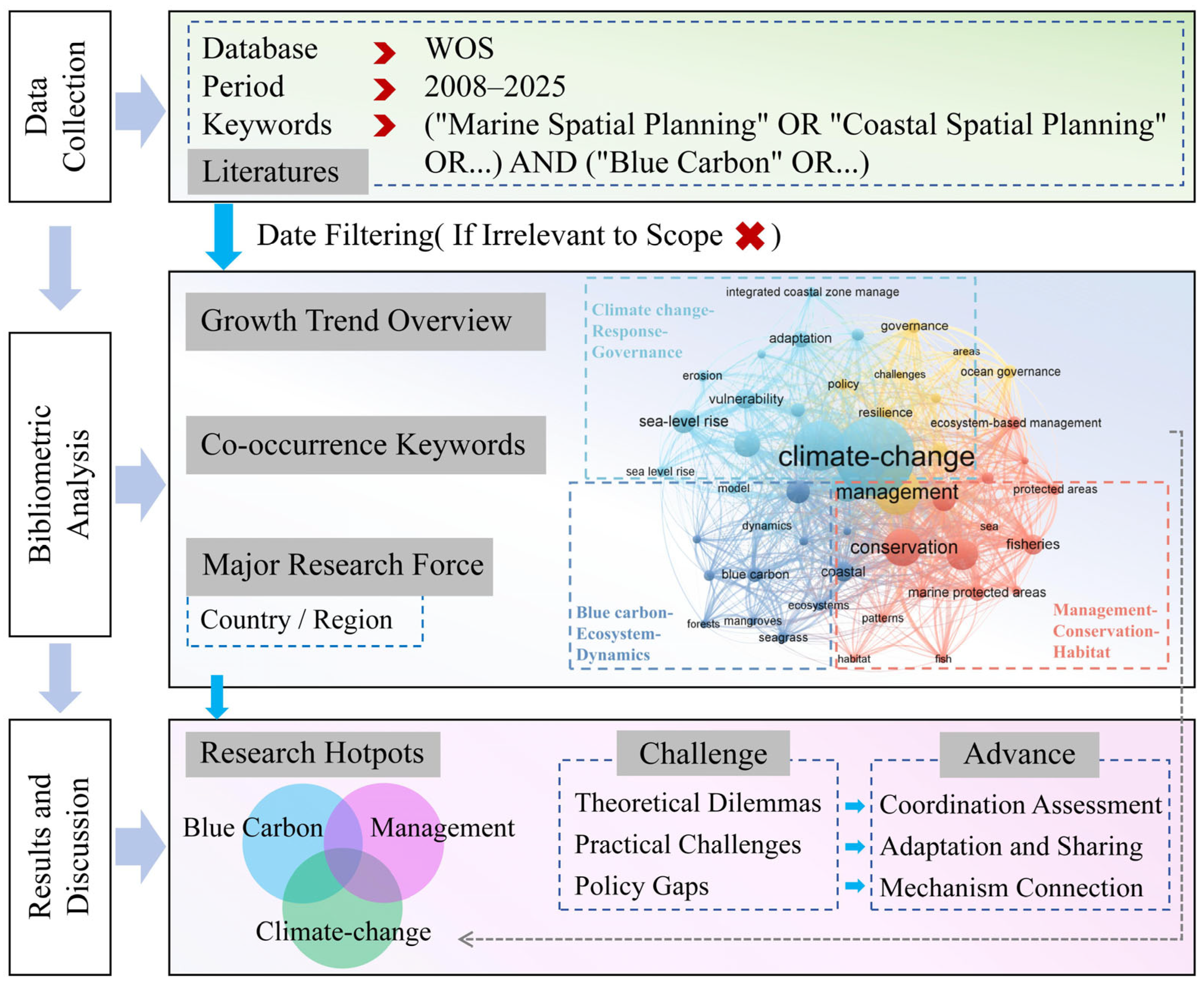
The “Full Records and Cited References” for the returned documents were exported as a plain text file according to Bibliometrix’s data import requirements. The file was imported and analyzed on the Bibliometrix main page. A flowchart of the methodology is shown in Figure 1.

3. Results

3.1. Overall Research Output: Three-Stage Growth Driven by Multiple Factors

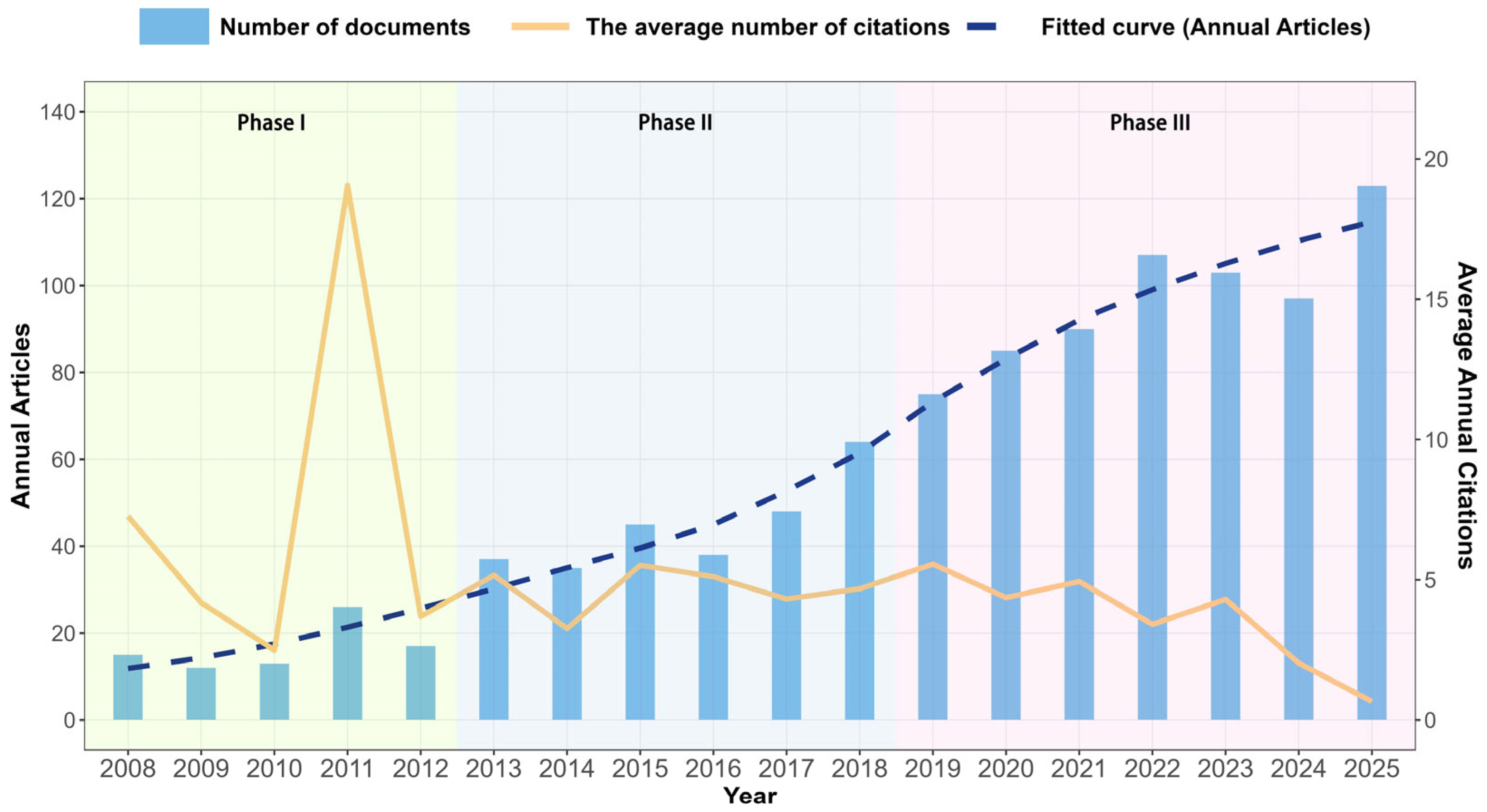
Figure 2 shows the annual publication volume and citation trends for the literature in this field retrieved from the Web of Science Core Collection between 1980 and 2024. The concept of integrating coastal wetland values, including their blue carbon aspects, into CMSP can be traced back to 2008 [23]. The number of annual publications showed an overall upward trend, with particularly notable growth after 2020, reaching 724 papers by 2024. This trajectory indicated sustained research momentum on CMSP for coastal wetland management. Average Citations per Article (TC/Year) exhibited a decline, followed by an increase between 2008 and 2011, peaking at 19.05 citations in 2011 before entering a general downward trajectory. This suggests that early pioneering studies gained increased attention through sustained academic dissemination, while the diversification of research directions within the field dispersed the average influence per study. Based on the publication trends in Figure 2 and the timeline of pivotal international policy events, research on CMSP and blue carbon can be divided into three developmental stages: the initial phase, the development phase, and the growth phase. These stages are delimited not merely by statistical fluctuations in publication volume, but by landmark governance milestones—specifically the 2013 IPCC Wetlands Supplement and the 2019 IPCC (SROCC)—which served as qualitative drivers, shifting the research paradigm.
Phase I: The initial phase (2008–2012) was characterized by 17 publications per year, a cumulative number of publications of 83 (approximately 8.1% of total output), and an average annual growth rate in the number of publications of 2.5%. In 2009, the United Nations Environment Programme and other organizations jointly released the report “Blue Carbon: The Role of Healthy Oceans in Carbon Sequestration,” which systematically introduced the concept of blue carbon for the first time [24]. At that time, keywords related to “blue carbon” lacked specific clustering, indicating that blue carbon was not established as an independent academic discipline or research paradigm [25], and the academic understanding of blue carbon ecosystems remained confined to fundamental ecological characteristics, such as the species composition and distribution patterns of mangrove forests and seagrass beds [26,27]. A systematic research framework encompassing theory, methodology, and application, for their comprehensive management to support biodiversity and enhance resilience, was largely lacking. Meanwhile, research in the field of CMSP focused on establishing foundational frameworks for Marine Spatial Planning and managing individual resources [28,29], with a core emphasis on resource development and conflict resolution [30]. However, the broader ecological value of these ecosystems, including their carbon sequestration potential and their crucial role in supporting biodiversity and enhancing resilience, had not been fully integrated into CMSP objectives. The annual average citations in the field of CMSP trended upward and peaked in 2011 (20.77 citations), reflecting a few pioneering studies during this phase (such as those related to the identification of blue carbon ecosystems) [31] that garnered academic attention. However, the overall research in this field has not yet differentiated, being concentrated on core issues.
At the policy and international consensus levels, global climate governance and marine policy frameworks have yet to incorporate blue carbon as a core issue. While the Conference of the Parties to the United Nations Convention on Biological Diversity (CBD) emphasized the ecological conservation of coastal wetlands, it did not address the dimension of their carbon sink function [32]. National ocean policies (such as the Final Recommendations of the Interagency Ocean Policy Task Force signed by U.S. President Obama in July 2010) [33] and China’s National Marine Functional Zoning Plan (2011–2020) [34] prioritize resource development, treating blue carbon ecosystems as ordinary “ecologically sensitive areas” for management [35]. This low level of policy attention has constrained the systematic advancement of research. However, global marine development is intensifying, and the core demand for CMSP centers is to resolve conflicts over limited marine resources and fundamental ecological conservation. For instance, when some coastal nations delineate marine protected areas, they only need to define boundaries to protect mangrove forests and seagrass beds. Early coastal ecological restoration projects (such as the mangrove restoration initiative in Florida, United States) focused on restoring ecological functions [36,37] without establishing planning or practice requirements oriented toward carbon sequestration. This resulted in research lacking clear application scenarios and systematic objectives.
Phase II: The development phase (2013–2018) marked a definitive paradigm shift, characterized by an average number of annual publications of 41, with a cumulative total of 267 publications (accounting for approximately 25.9% of the total) and an annual growth rate of 9.6%. The delineation of this phase aligns with a pivotal policy milestone: the release of the 2013 Supplement to the 2006 IPCC Guidelines for National Greenhouse Gas Inventories: Wetlands [38]. This initiative incorporated blue carbon ecosystems into greenhouse gas inventories for the first time, drawing worldwide attention to their carbon sink functions. Simultaneously, it provided a policy basis for synergies between coastal wetland management and Marine Spatial Planning, shifting the research focus from general “ecological conservation” to a more integrated view encompassing “carbon sink potential and ecology” [39]. This shift is directly reflected in an increase in the volume of the literature output. The annual average citation count, however, showed a fluctuating downward trend, reflecting the gradual diversification of research directions within the field and the formation of multidimensional research branches. For instance, some studies began exploring synergistic models between blue carbon ecosystem services and marine spatial functional zones [40], while others investigated blue carbon economic models that integrate carbon credits with payments for multiple ecosystem services [41]. The average impact per study somewhat dispersed with the diversification of topics.
Collaborative research on blue carbon ecosystems issues and Marine Spatial Planning has drawn academic attention. Studies have shifted from investigating fundamental ecological characteristics to exploring carbon sink functions and spatial correlations. Spatial analysis techniques (such as geographical information systems) allowed for comprehensive assessments of marine protected area planning and coastal wetland ecosystem functions, for instance, evaluating their contribution to biodiversity, and the mitigation effects on blue carbon emissions from protected mangrove areas in Indonesia have been evaluated using such techniques [42]. At the practical demand level, conflicts over marine resource use have shifted from single-resource conflicts to complex conflicts involving resource development, ecological conservation, and carbon sink demands. With increasing global marine development intensity, these compound demands have compelled researchers to explore overlapping planning models for blue carbon ecosystems and marine protected areas [43]. Moreover, the increased international attention to climate issues has driven coastal nations to reduce carbon through blue carbon ecosystems [41], further stimulating research on blue carbon ecosystems.
Phase III: The growth phase (2019–2025) was characterized by an average of 93 publications annually, 680 cumulative publications (accounting for 66.0% of the total), and an average annual publication growth rate of 7.3%; the number of annual publications exceeded 100 in 2025. The 2019 IPCC Special Report on the Ocean and Cryosphere in a Changing Climate identified blue carbon ecosystems like mangroves, seagrass beds, and salt marshes as the primary pathway for mitigating climate change within marine ecosystems. It explicitly defined blue carbon as “all biologically driven carbon fluxes and stocks in the ocean system that are easily managed,” emphasizing the importance of these ecosystems, not just for carbon, but for their critical role in supporting biodiversity and enhancing ecosystem resilience [44]. The “MSP global 2030” initiative proposed in 2019 by the Intergovernmental Oceanographic Commission (IOC) of the UNESCO and the European Commission’s Directorate-General for Maritime Affairs and Fisheries [45] emphasized spatial management based on a blue economy and ecosystems, advocating for “climate-smart Marine Spatial Planning (MSP)” that explicitly integrates biodiversity conservation, ecological restoration, and resilience building alongside climate objectives, and advocates for developing the corresponding adaptive management measures. These key events have propelled global research in this field. Although the average annual citation rate shows a decline, this primarily reflects the time lag required for recent publications to accumulate citations, rather than a decrease in research quality. Given that this phase accounts for 66.0% of the total publications, the rapid influx of new papers naturally dilutes the average metric. However, the total citation count for this phase reaches 2318, significantly surpassing the totals of Phase I (749) and Phase II (1254), indicating that the aggregate academic attention and the field’s overall influence remain on a strong upward trajectory.
As global carbon neutrality goals advance, managing blue carbon ecosystems for their multiple benefits, especially carbon sequestration, has become a crucial pathway for coastal nations to achieve their emission reduction targets. This has stimulated research quantifying carbon sequestration potentials and spatial management. The integration of blue carbon ecosystems into collaborative management through CMSP has emerged as a core focus at the scientific level. Studies have been performed across specialized fields, ranging from biodiversity assessment, quantification of multiple ecosystem services (including carbon sequestration) [46], and climate change adaptation planning [47] to spatial management of blue carbon ecosystems [48,49]. Remote sensing technology [50,51], big data analysis, ecological modeling [52], and other technologies have provided technical support in these studies. Practical cases and policy innovations in the United States [53], the European Union [54], China [55], and Australia [49] have increased substantially. Notably, China’s “Methodology for Marine Carbon Sink Accounting” [56] has become a milestone in advancing standardization and scientific development in this field. Research has transitioned from preliminary exploration to precise, systematic, and in-depth exploration across multiple fields.
Overall, synergistic research on CMSP and blue carbon ecosystems follows a phased growth trajectory that is shaped by policy, global climate objectives, and practical demands. This trajectory primarily reflects the alignment of publication growth and policy inflection points regarding the increasing recognition of the climate value of blue carbon ecosystems—evolving from conceptual recognition (initial phase) to policy application (development phase) and global governance (growth phase). This trajectory embodies the paradigm shift from a focus on ecological conservation to the synergistic governance of climate, ecology, and the economy. Blue carbon ecosystems have evolved from a regional issue to a critical domain in global ocean and climate governance.

3.2. Research Focus: Blue Carbon Ecosystem Integration and Multi-Objective Co-Evolution

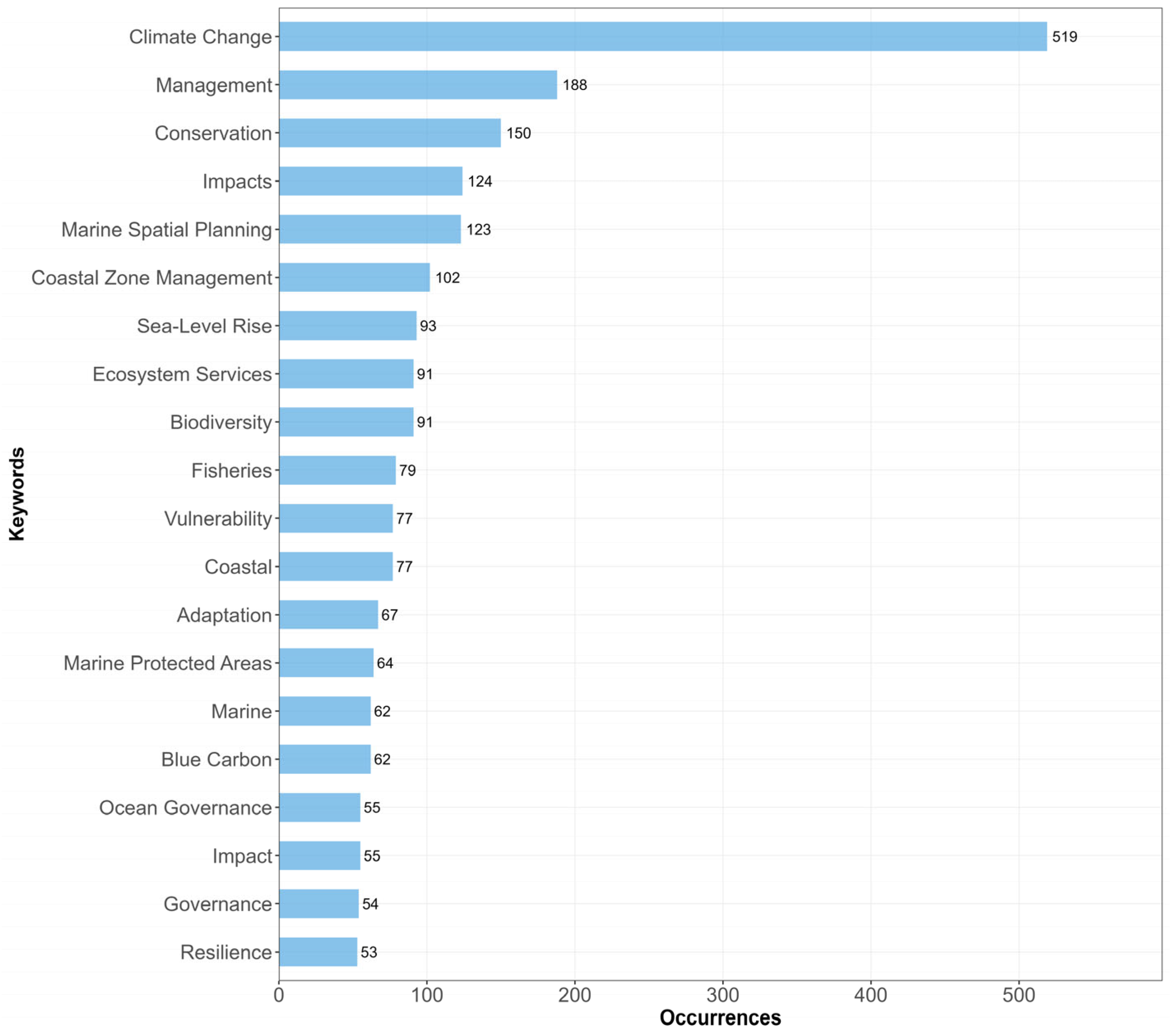
Analysis of high-frequency keyword co-occurrence networks (Figure 3) revealed that the top five most influential keywords in the research field were “Climate Change” (502 occurrences), “Management” (183 occurrences), “Conservation” (148 occurrences), “Marine Spatial Planning” (122 occurrences), and “Impacts” (121 occurrences). The top 20 high-frequency thematic keywords exhibited distinct disciplinary characteristics, primarily revolving around climate change responses—“Climate Change”, “Impacts”, “Sea-Level Rise”, “Ecosystem Services”, “Biodiversity”, and “Blue Carbon”—and management governance—“Management”, “Conservation”, “Adaptation”, and “Governance.” Together, these keywords outline a research landscape wherein the dynamic functions of blue carbon ecosystems are intertwined with management practices.

3.2.1. Clustering Characteristics of Research Topics

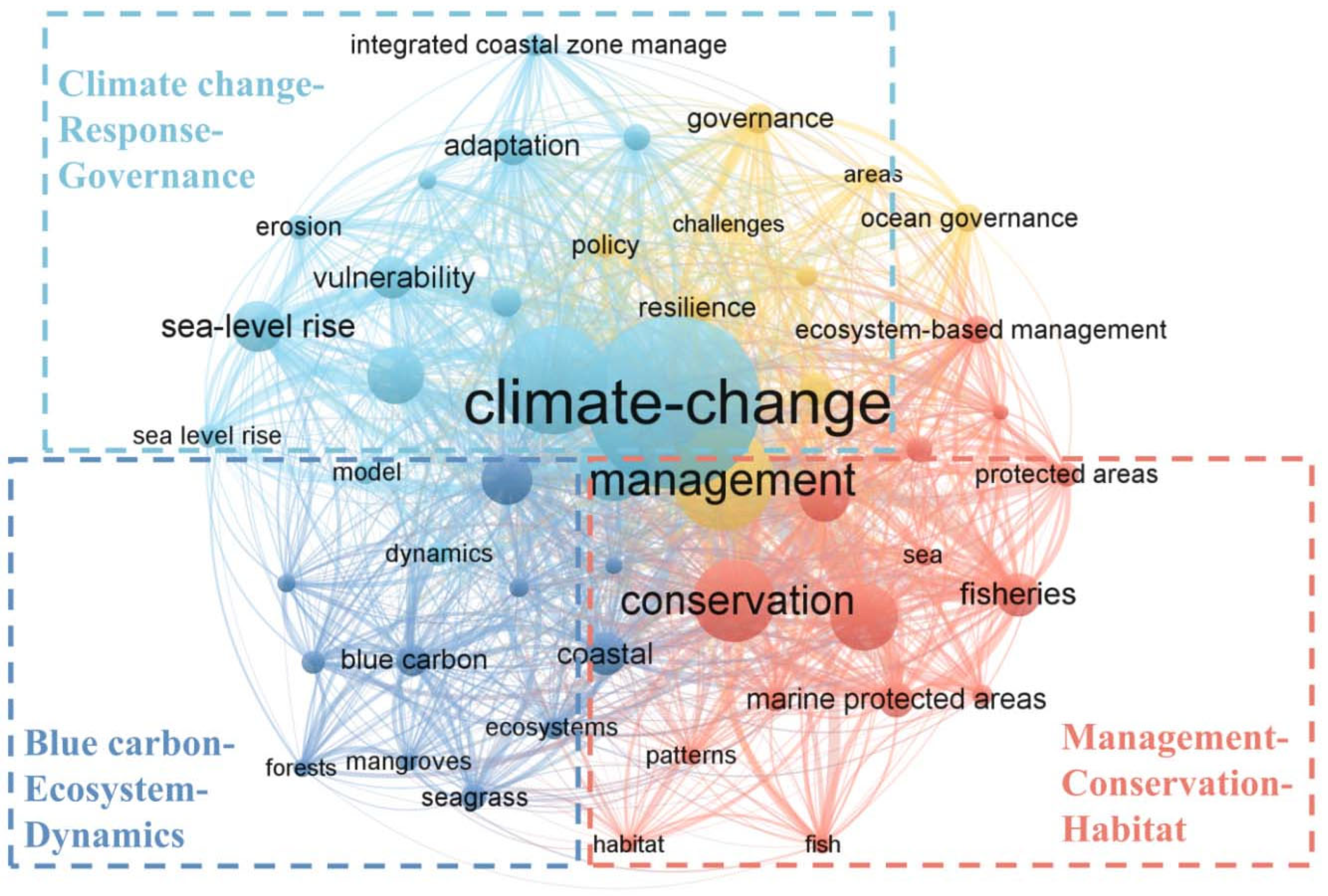
We employed VOSviewer (Version 1.6.20) to visualize the keyword relationships and generate a co-occurrence network (Figure 4). Collaborative blue carbon ecosystem research within CMSP formed three major thematic clusters. Blue carbon ecosystem-related topics were deeply embedded within the research logic of each cluster, revealing a research trajectory ranging from ecosystem management to multidimensional collaboration.
Core Cluster I: Climate Change, Response, and Governance
This cluster reflected research exploring the responses to external pressures exerted by climate change and governance pathways. Climate change and its interactive impacts on the spatial utilization of marine environments, such as its relationship with the impact of sea level rise on coastal zone planning, have become critical variables which should be incorporated into CMSP. Key topics revolved around the interplay of blue carbon ecosystem dynamics, responses, and governance: one key topic was studying the response and adaptation of blue carbon ecosystems to climate change, including succession processes, with a focus on optimizing CMSP governance pathways based on enhanced carbon sequestration. For example, studies have investigated the spatial functional zoning of coastal areas (such as restricting high-emission marine activities and expanding blue carbon ecosystem areas) to strengthen the regional carbon sink capacity and climate adaptation resilience [35,57]. Another key topic was climate change impacts on blue carbon ecosystem dynamics and carbon sequestration as caused by climate stresses, such as sea-level rise in mangrove forests and seagrass beds [58,59]. Studies have also simulated spatial retreat risks for blue carbon habitats under different climate scenarios to inform governance strategies [60]. Deciphering the mechanisms underlying the adaptation of blue carbon ecosystems to climate change and the pathways for integrating these ecosystems into governance was a further key topic. For instance, a study explored how the buffering function of mangroves against coastal storm surges can be incorporated into disaster-reduction spatial governance planning [61]. The study thereby provided scientific support for spatial governance focused on carbon sequestration and climate adaptation.
The emergence of the themes “climate change” and “response” is directly linked to the broadening of global environmental governance and the geographical expansion of MSP practices. These practices now cover temperate seas as well as polar and tropical regions, such as Norway’s Barents Sea [62] and the Seychelles’ “Debt-for-Climate” initiative [63]. Admittedly, the efficiency of these “debt-for-climate” instruments still requires rigorous verification [64]. Furthermore, climate change impacts such as sea-level rise and coral reef degradation have become critical variables in governance planning. Simulations of species habitat shifts (e.g., using MaxEnt models [65] provide adaptive governance tools for MSP in low-latitude nations such as the Seychelles. Meanwhile, the InVEST model has been used to assess ecosystem services [66] by integrating climate change impacts into an “eco-economic” synergistic governance framework, addressing the sustainability demands of a “blue economy”.
Core Cluster II: Blue Carbon Ecosystem and Dynamics
This cluster reflects the baseline characteristics, species diversity, and habitat dynamics of blue carbon ecosystems (e.g., mangroves and seagrass beds). The primary research focuses on the community structure, species composition, and distribution dynamics of these ecosystems. Studies have examined vegetation characteristics and species diversity in mangroves and seagrass beds, exploring their spatial patterns, dynamic changes, and ecological functions [67,68,69]. This provides foundational ecological data for spatial planning and conservation of blue carbon ecosystems.
Building upon these biological baselines, the literature within this cluster further extends to practical applications. Some studies have also explored pathways to realize the economic value of blue carbon resources [19,70], such as by incorporating the carbon sink functions of mangroves and seagrass beds into ecological compensation [71] and regional carbon trading markets [72]. This approach promotes the synergistic development of a “blue carbon economy” and ecological conservation by clarifying the property rights and spatial boundaries in the trade of blue carbon resources through CMSP. Concurrently, it addresses the impact of blue carbon conservation on coastal community livelihoods (e.g., fisheries and tourism) [73], thereby achieving synergies between sustainable development goal (SDG)1 (No Poverty), SDG8 (Decent Work), and SDG14 (Life Below Water). This research phenomenon underscores that economic assessments are fundamentally predicated on the accurate quantification of biological baselines (e.g., biomass and carbon stocks). The terms “ecosystem” and “dynamics” highlight the systematic focus of CMSP on the changing dynamics of blue carbon ecosystems and habitats [74,75], along with their foundational role in supporting broader socio-economic synergies (SDGs 1, 8, and 14).
Core Cluster III: Management, Conservation, and Habitat
Distinct from Cluster I, which addresses strategic responses to climate pressures (governance), this cluster emphasizes the operational tools for spatial implementation (management). Specifically, research here centers on management strategies, conservation measures, and habitat optimization for blue carbon ecosystems. Examples include exploring ecosystem service-based management frameworks for blue carbon ecosystems and achieving sustainable use and protection through spatial planning [76] while optimizing habitat quality and connectivity [77]; optimizing mangrove reserve layouts based on carbon sequestration potential and biodiversity value [78]; integrating the carbon sequestration functions of blue carbon ecosystems with species habitat requirements through spatial models such as Marxan to achieve scientific site selection and range optimization for protected areas [79,80]; and addressing degradation issues in blue carbon ecosystems such as seagrass beds and salt marsh wetlands by exploring ecological restoration strategies and the functional enhancement of habitats within the CMSP framework [81], such as constructing blue carbon habitat networks based on ecological connectivity [82].
The core terms “conservation” and “management” align closely with the central CMSP objective of “advancing marine conservation and promoting integrated management to support sustainable development” [83,84]. This objective is grounded in early practices, such as the Great Barrier Reef Zoning Plan (1998–2003 Representative Areas Plan) [85], which emphasized ecological conservation and habitat restoration, while also responding to the global demand for the development of marine protected areas [86]. The sustained prominence of the term “management” reflects the utility of CMSP as a policy tool, encompassing research from single-sector management to multi-stakeholder collaborative governance [23,87,88].
In summary, the three interconnected thematic clusters form a comprehensive picture of synergistic research on blue carbon ecosystems and CMSP. This research covers climate change responses and governance optimization, the baseline characteristics and dynamics of blue carbon ecosystems, and habitat conservation and management strategies. This demonstrates the multifaceted value and practical potential of CMSP as a comprehensive spatial governance tool for collaborative blue carbon ecosystem governance.

3.2.2. Evolutionary Trends of Keywords

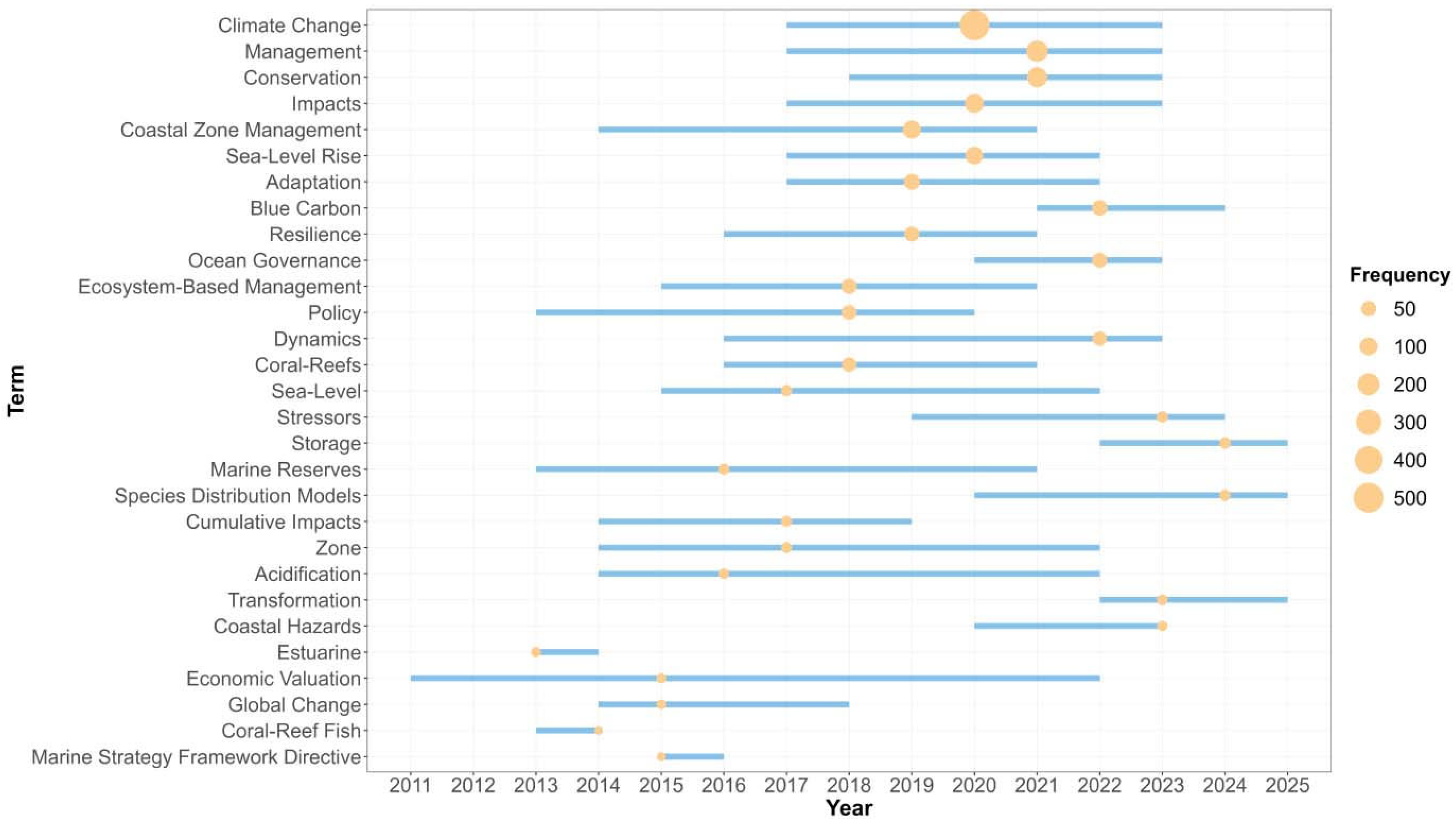
To gain deeper insight into the evolution of research topics, we traced the developmental trajectory of core keywords during the study period (Figure 5). Figure 5 serves as a proxy for time-sliced analysis, visualizing the paradigm shift from baseline assessments to governance. The evolution of keywords reflects a focus shift from ecosystem baseline assessments to the gradual integration of synergistic blue carbon concepts into policy and management frameworks (e.g., blue carbon, ocean governance, and conservation). This evolution aligns closely with the intensification of global climate change and the escalating demands for sustainable ocean development.
Early keywords such as “Coral Reef Fish” and “Estuarine” reflect the initially shallow systemic understanding and that the policy exploration was focused on ecological baseline conditions. Keywords such as “Economic Valuation” and “Marine Strategy Framework Directive” highlight the economic value of blue carbon ecosystems and their responses within the context of global change.
In the mid-to-late stages, the emergence and sustained presence of keywords such as “Cumulative Impacts”, “Sea Level Rise”, and “Acidification” indicate growing emphasis on the cumulative effects of multiple factors. They include interactions within ecosystems (e.g., relationships between blue carbon ecosystems and ocean acidification), land–sea connections (e.g., links between coastal development and marine ecology), and the interplay between long-term trends and short-term measures (e.g., long-term trajectories of sea level rise versus short-term disaster mitigation strategies). This reflects the growing need to unlock the multifaceted value of blue carbon ecosystems for climate mitigation and adaptation. For instance, the synergistic roles of blue carbon ecosystems in carbon sequestration and sea level rise buffering have gained importance in climate-related research, as long-term climate impacts have become more relevant. For example, the appearance of the keyword “Sea-Level Rise” across different years reflects the evolution of blue carbon ecosystem research—from ecological baseline studies to the development of adaptation strategies—in addressing the threats entailed by a rising sea level. This highlights the thorough integration of sea level rise into the climate change discourse.
The inclusion of keywords such as “Blue Carbon”, “Ocean Governance”, and “Conservation” in recent analyses underscores the urgency of blue carbon synergies at the policy and management levels. Collaboration with respect to blue carbon ecosystems extends beyond ecological conservation and is integrated into a multi-stakeholder, multi-objective framework for ocean governance. This shift signifies the transformation of blue carbon ecosystems as a research object into a policy tool and governance instrument, reflecting management demands for integrated land–sea planning [35], multi-departmental coordination, and comprehensive ecological restoration [89]. This indicates the progression of blue carbon ecosystem collaboration from technical implementation to institutionalization. For example, the artificial reconstruction of 85 ha of mangrove coastal ecosystems in the Xiamen Xiatanwei Mangrove Blue Carbon Ecosystems Restoration and Management Project has significantly enhanced the blue carbon sequestration capacity. This project has simultaneously established a complete “mangrove–mudflat–marine” ecological landscape. This initiative has not only enhanced biodiversity but also created a public space that integrates science education, recreational activities, and climate resilience while serving as a long-term carbon sink under the BRICS Carbon Neutrality Forest initiative.
From the temporal perspective, keywords such as “Blue Carbon” became dominant high-frequency nodes between 2021 and 2024, while keywords such as “Transformation”, “Storage”, and others extended into 2025. This indicates that collaborative blue carbon ecosystem research has gained momentum and that blue carbon synergies have become a key agenda of international platforms for ocean and climate governance to advance global sustainable development [90,91,92].

3.3. Global Collaboration Network Analysis: The “Center–Periphery” Pattern of Collaboration

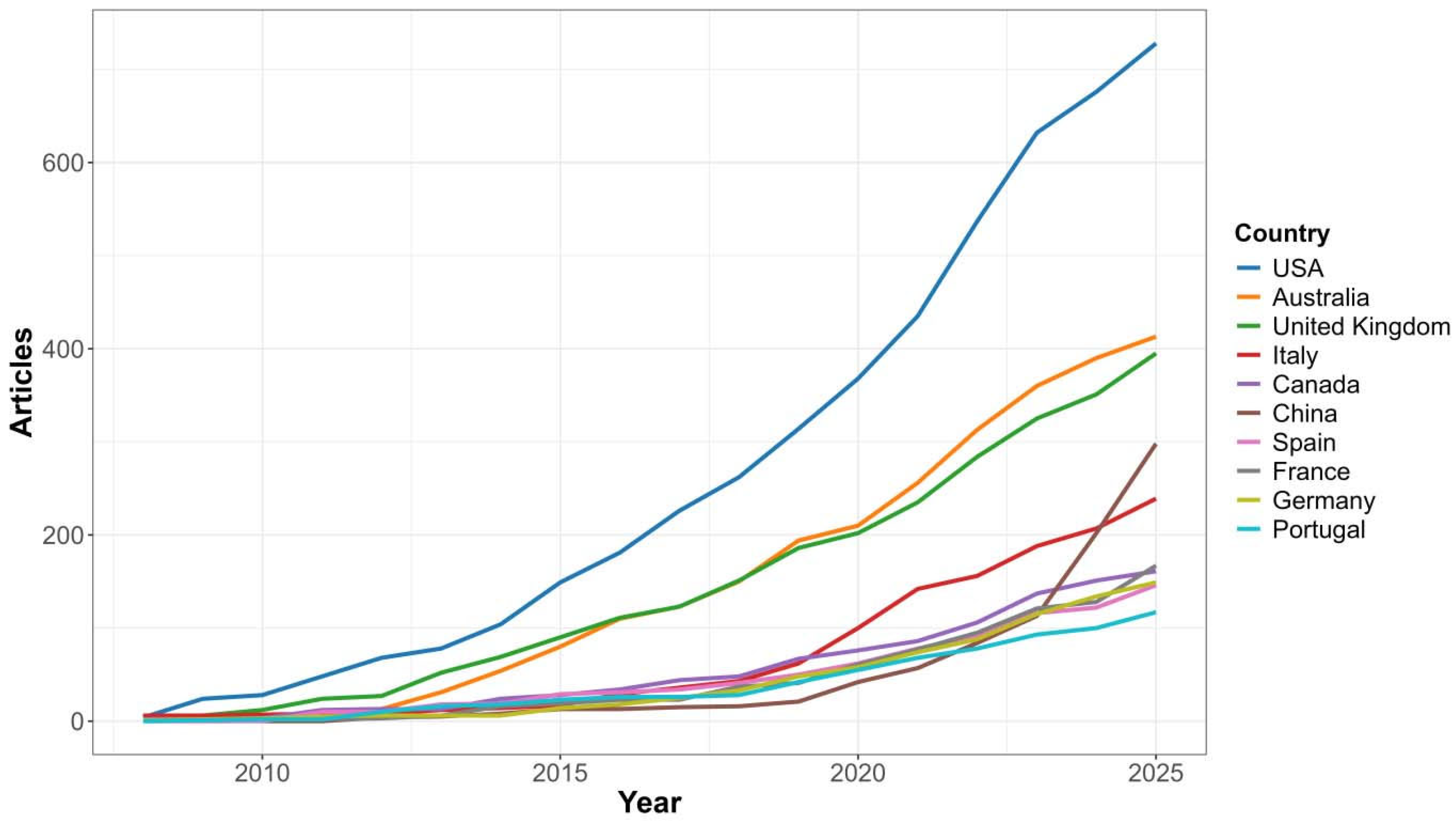
Figure 6 illustrates the distribution of global research outputs on “blue carbon ecosystem synergies within CMSP” and inter-country collaboration. The top three most productive nations were the United States (728 papers), Australia (413 papers), and the United Kingdom (395 papers), with outputs far exceeding those of other countries and regions. These nations possess abundant marine resources and engage in frequent ocean development activities, thus funding substantial research activities in this field. The United States is a long-standing leader in this research domain and has maintained a leading position in areas such as blue carbon sequestration mechanisms and spatial planning tools (e.g., application of the Marxan model in optimizing protected areas) [93]. Its rich marine resources and mature Marine Spatial Planning practices (e.g., the Massachusetts Marine Spatial Plan) provide extensive case studies for academic research. China’s research output has grown rapidly in recent years, leveraging marine functional zoning, the ecological red line system, and the “land–sea integration” reform within the national territorial spatial planning framework [94]. China has developed a regionally distinct research system focusing on spatial management and restoration of blue carbon ecosystems such as mangroves and salt marsh wetlands (e.g., blue carbon conservation planning practices along the Fujian and Guangdong coasts) [95].
The global distribution of research in this field exhibits a pronounced “center–periphery” structure, shaped by the synergistic interplay between policy intensity, marine resource endowment, and practical pathway selection. As the core leader in this field, the United States derives its advantage primarily from its robust academic infrastructure and sustained government research funding, rather than solely from its extensive coastlines (approximately 153,646 km) [96] and rich marine ecosystems [97]. The United States are dominating the development of models such as Marxan and InVEST [66,93], which have a significant influence on planning technology research. Although federal MSP practices face constraints due to policy shifts (e.g., the Trump administration’s 2018 withdrawal of regional planning directives [98], local initiatives such as Massachusetts’ Marine Spatial Planning [99] provide ongoing case studies for academic research, fostering a “local practice–global theory” output model.
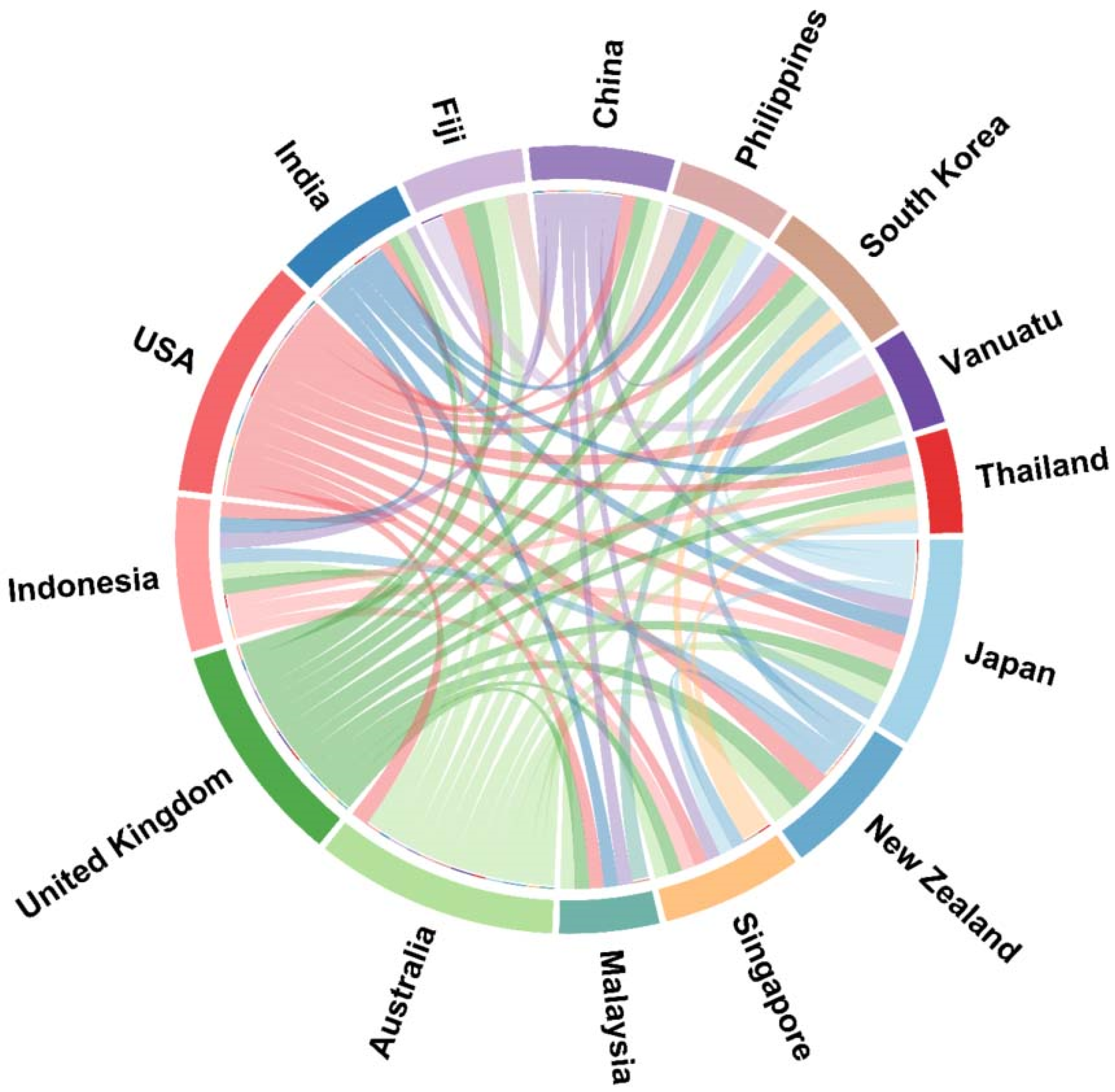
Figure 7 reveals international collaboration networks centered around the United States, Australia, and select European nations. Frequent collaboration occurred between the United States and United Kingdom, United States and Australia, United States and China, and Australia and United Kingdom. The United States served as a pivotal node within these networks owing to its core strengths in theoretical development and tool innovation. The collaboration between the United States and Australia focused on establishing blue carbon conservation zones, such as those related to the application of spatial optimization models to protect seagrass beds in Australia’s Great Barrier Reef [93]. Cooperation between the United States and China emphasized advancing theoretical innovation in transregional blue carbon planning by combining China’s data integration experience from its “multi-planning integration” approach [100] with the quantitative assessment methods of the United States [83]. China has been actively pursuing international cooperation with the United States, Australia, and other nations in areas such as the dynamic monitoring of blue carbon ecosystems and climate change adaptation planning. However, owing to insufficient theoretical refinement and international dissemination efforts, the global influence of China’s practical achievements lags behind that of the United States and the European Union.
Overall, this collaborative model, grounded in complementary academic resources, has significantly advanced interdisciplinary and transnational development in blue carbon ecosystem synergies within CMSP. However, developing countries barely participate in these networks and are yet to establish mature, localized blue carbon CMSP methodologies. Future efforts should prioritize enhanced international collaboration and capacity building to promote the cross-regional protection of blue carbon resources and realize their carbon sink value. Research institutions may shift their geographical focus toward the Asia-Pacific and Africa in the future as China deepens its land–sea integration practices (e.g., Guangdong–Hong Kong–Macao Greater Bay Area coastal zone planning [101] and as the MSP demand grows in the global south (e.g., MSP proposal launched by ten African countries) [102]. This will drive the evolution of theoretical frameworks with a multicultural and collaborative focus. Such frameworks would ultimately form a CMSP knowledge map that would accommodate the needs of countries at different stages of development and provide more inclusive theoretical support for global ocean governance.

4. Challenges and Future Directions

Despite significant progress in integrated blue carbon ecosystems and CMSP research and practice, three major gaps persist.

4.1. Theoretical Constraints: Immature Blue Carbon Ecosystem Integration Mechanisms

The integration of blue carbon ecosystems into CMSP frameworks remains at an underdeveloped stage, representing a theoretical gap. Although the emerging literature explores this intersection, our bibliometric analysis indicates that the depth and breadth of such integration are currently insufficient. Current CMSP frameworks do not consistently consider blue carbon and lack effective pathways for its systematic incorporation into planning systems. This specific deficiency is evidenced by the keyword co-occurrence analysis (Figure 4), where terms related to “integration mechanisms” or “synergistic assessment” appear with low frequency and weak centrality relative to established disciplinary terms. This severely limits the integrated value of blue carbon in ecological conservation and climate response.
First, blue carbon ecosystems play a crucial role in achieving SDGs [103], such as mitigating climate change through carbon sequestration (SDG13), providing habitats for marine life (SDG14), and generating employment through related industries (SDG8). However, the lack of effective and synergistic assessment methods hampers the accurate evaluation of these synergistic benefits and full consideration of the comprehensive contributions of blue carbon ecosystems to CMSP.
Second, while the substantial impacts of terrestrial activities (e.g., nutrient and pollutant inputs via rivers) on blue carbon ecosystems [104] and the feedback effects of those ecosystems on terrestrial ecology and human well-being have been recognized, a comprehensive theoretical framework to guide integrated land–sea spatial planning and coordinated management within CMSP is yet to be established. The absence of such a framework results in fragmented land–sea planning practices that often favor one aspect over another [57]. This prevents the full realization of the pivotal role of blue carbon ecosystems in connecting and coordinating terrestrial and marine ecosystems.

4.2. Practical Challenges: Mismatch Between Technical Tools and Regional Adaptability

The mismatch between technical tools and regional development needs has become a major obstacle to advancing collaboration on blue carbon ecosystems, particularly in constraining the balanced protection and utilization of blue carbon resources globally.
Developing countries face multiple practical challenges owing to a lack of localized methodologies. Without technical guidance tailored to national circumstances, these nations struggle to accurately identify key blue carbon conservation areas, assess carbon sink potentials, and formulate targeted conservation and development strategies [105]. Insufficient funding further impedes blue carbon ecosystem research, monitoring, and model development. This results in the inadequate protection of blue carbon resources and a passive position of these nations within global ocean and climate governance.
The technological gap between developed and developing countries exacerbates inequalities in global governance. Leveraging financial and technological advantages, developed nations efficiently utilize existing tools to refine blue carbon planning systems [98,99], while the needs and rights of developing countries remain unprotected. This geographical mismatch is corroborated by the collaboration network (Figure 7), which shows a strong centralization of tool development within the Global North. This severely undermines the fairness and effectiveness of global blue carbon ecosystem governance and hinders the establishment of an inclusive and cooperative global ocean governance framework.

4.3. Policy Shortcomings: Absence of Collaborative Governance Mechanisms

The management of blue carbon ecosystems faces the severe challenge of a lack of coordinated governance mechanisms at the policy level. This has significantly hindered the contribution of blue carbon resources to achieving global carbon neutrality and sustainable ocean development.
Blue carbon ecosystems are inadequately integrated into global governance frameworks. For instance, the United Nations Convention on the Law of the Sea lacks specific and targeted provisions for the protection and management of blue carbon ecosystems [106]. Moreover, although the Paris Agreement emphasizes the urgency of global climate action and national emission reduction responsibilities [107], it does not adequately address the unique role of blue carbon in climate mitigation and related collaborative governance measures. This ambiguity in the status of blue carbon ecosystems within international climate governance has hindered the formation of unified global actions for its protection and development. While recent landmark agreements such as the High Seas Treaty (BBNJ) and the Kunming–Montreal Global Biodiversity Framework represent significant progress in filling these gaps, specific mechanisms to operationalize blue carbon spatial planning within these new frameworks remain underdeveloped. Bibliometrically, this is reflected in the weak linkage strength between keywords representing international conventions (e.g., UNCLOS) and those related to practical implementation.
At the national level, the interface between CMSP and blue carbon conservation remains inadequate. Marine spatial planning in most countries prioritizes development activities, such as port construction, marine fisheries, and offshore energy development [97], but systematic conservation plans for blue carbon ecosystems are lacking. This exposes these ecosystems to threats such as overexploitation and pollution and causes a continuous decline in their carbon sink function [59,60]. Furthermore, unclear connections with carbon trading markets, inconsistent blue carbon accounting standards, and significant monitoring challenges hinder the realization of the economic value of blue carbon, thereby reducing the participation of social capital. This is exacerbated by market rules that fail to accommodate the ecological attributes of blue carbon.

4.4. Future Outlook: Deepening Blue Carbon Ecosystem Collaborative Governance

Given the numerous challenges in achieving blue carbon synergies within current CMSP at the theoretical, practical, and policy levels, deepening collaborative governance on blue carbon ecosystems is crucial. This not only concerns the effective protection and sustainable use of blue carbon ecosystems, but also has profound significance for achieving global carbon neutrality goals and marine sustainable development.
From a theoretical perspective, the blue carbon ecosystems integration framework within CMSP should be refined to fully incorporate blue carbon ecosystems as a core consideration throughout the planning process, from resource allocation and functional zoning to project implementation [24,27]. Bibliometric clustering (Figure 4) identifies distinct research foci across ecological, climate, and economic themes. Synthesizing these dimensions into a unified multi-objective assessment framework is essential to provide an evidence-based foundation for planning decisions. Additionally, a synergistic assessment system that links blue carbon ecosystems to the SDGs should be constructed. Through integrating multidisciplinary theories, a unified framework comprising indicator systems, evaluation models, and validation methods should be developed. Differential indicators should be formulated targeting core SDGs such as SDG 13 (Climate Action), SDG 14 (Life Below Water), and SDG 8 (Decent Work and Economic Growth). Dynamic models should be developed to accurately identify synergistic effects and trade-off relationships, thereby quantifying the multidimensional comprehensive value of blue carbon. This serves as a vision for the future development of the discipline.
On the practical front, regional adaptability challenges should be addressed by establishing a coordination mechanism that integrates international technical support, adapts to local demands, and empowers capacity building. International organizations and developed countries should transfer low-cost monitoring technologies [108] to developing nations, tailor localized planning methodologies based on ecological characteristics and development needs, and conduct technical training to enhance local research capabilities. Additionally, technological innovations in global blue carbon management and sharing of these innovations could be achieved by forming a global innovation alliance focused on joint research in core areas, such as carbon sink measurement and ecological restoration, thus establishing universal technical standards. A global technology-sharing platform should be created to integrate monitoring data, case studies, and technical achievements, and to promote technologies such as monitoring via satellite remote sensing to provide foundational data services for developing countries.
At the policy level, blue carbon ecosystems have to be integrated into international governance frameworks. Building on existing international conventions, it is advocated to develop blue carbon protection annexes clarifying conservation standards and a collaborative action plan. Drawing on practices in China [56], we advocate for establishing international accounting standards for blue carbon sinks, incorporating them into the global carbon reduction system, and building a global collaborative governance platform to foster deep international cooperation. At the national level, a rigid linkage mechanism between the CMSP and blue carbon conservation has to be established, with blue carbon objectives proposed to be integrated into the core of spatial planning. It is also necessary that ecological red lines should be designated to prevent destructive development and that funding support for restoration should be increased. Furthermore, carbon trading market linkage mechanisms should be improved by unifying accounting, monitoring, and certification standards; adding blue carbon trading categories; and achieving a virtuous conversion of ecological and economic value through policy incentives.

5. Conclusions

We conducted a systematic bibliometric analysis of 1030 academic papers on blue carbon ecosystem research and CMSP between 1981 and 2025 utilizing the Web of Science database, R (Version 2025.09.1) programming (Bibliometrix software package), and VOSviewer (VOSviewer 1.6.20). By tracing the temporal evolution of research in this field, identifying thematic hotspots, and analyzing the characteristics of collaboration networks, we revealed key gaps and future research directions. The main conclusions are detailed below.
First, research on blue carbon ecosystems exhibited a phased growth that was driven by policy, reflecting a paradigm shift in ocean governance. The trajectory clearly demonstrated a progression from “conceptual understanding” to “policy application” and ultimately to “global governance.” This evolution aligned closely with the release of key policy documents and global carbon neutrality goals. A growth in the number of publications after 2020 confirms a shift in the perception of blue carbon ecosystems from a regional ecological issue to a core domain of global ocean and climate governance. Furthermore, ocean governance models have undergone a paradigm shift from a focus on ecological conservation to a focus on synergistic governance of climate, ecological, and economic dimensions.
Second, the high-frequency keywords “climate change”, “management”, and “blue carbon” formed three distinct, yet multidimensionally interconnected, core clusters. Cluster I (climate change, response, and governance) focuses on optimizing governance pathways under external climate pressures; Cluster II (blue carbon ecosystem and dynamics) emphasizes the baseline characteristics, dynamic changes, and economic value realization of blue carbon ecosystems; and Cluster III (management, conservation, and habitat) addresses specific conservation strategies and habitat optimization. These clusters outline a comprehensive research landscape ranging from macro-level responses to micro-level management and from fundamental research to practical applications. This highlights the multifaceted value of CMSP as an integrated spatial governance tool in blue carbon ecosystem synergies.
Third, global scientific collaboration exhibits a “center–periphery” imbalance. Developed nations, such as the United States, Australia, and the United Kingdom, have led academic output and international collaboration, thus establishing a “local practice–global theory” export model. China, leveraging integrated land–sea reforms and ecological red line systems, has made regionally distinctive achievements in the spatial management and restoration of blue carbon ecosystems. However, developing countries generally remain on the periphery of the network because of a lack of localized methodologies, technology, and funding. This imbalance constrains the coordination and equity of global blue carbon conservation.
Fourth, current research exhibits systemic shortcomings across the theoretical, practical, and policy dimensions. Theoretically, the integration of blue carbon ecosystems and CMSP, along with systems that evaluate their synergistic contribution to SDGs, remains underdeveloped. In practice, advanced technological tools and region-specific needs do not match, particularly in developing countries. At the policy level, international governance frameworks lack sufficient incorporation of blue carbon, and national-level CMSP and blue carbon conservation have yet to establish rigid linkages, whose absence hampers the conversion of blue carbon value into governance momentum. Addressing these challenges requires the integration of theory, technology, and policies. As practices are expanding in regions such as China’s Guangdong–Hong Kong–Macao Greater Bay Area and the MSP demand is increasing in African nations, the research focus is expected to shift toward the Asia-Pacific and Africa. This will propel theoretical frameworks from a “Western-centric” to a “multicultural and collaborative” paradigm, thereby offering more inclusive governance solutions for global marine sustainability.
In summary, collaborative blue carbon CMSP research has transitioned from rapid growth to maturity. Through synergistic innovation in theory, technology, and policy, blue carbon is no longer considered in fragmented efforts but subject to systemic governance. CMSP holds promise for playing a pivotal role in protecting blue carbon ecosystems, enhancing the global carbon sink capacity, and advancing sustainable marine development.

Author Contributions

Y.L.: Writing—original draft, Writing—review and editing, Conceptualization, Data curation, Methodology, Supervision, Formal analysis, Project administration, Funding acquisition, Visualization. J.L. (Jiaju Lin): Writing—review and editing, Software, Data curation, Methodology, Supervision, Formal analysis, Visualization. F.H.: Writing—review and editing, Conceptualization, Methodology, Supervision, Project administration, Funding acquisition, Validation. Y.T.: Writing—review and editing, Methodology, Supervision, Project administration, Funding acquisition, Validation. J.L. (Jianhua Liao): Writing—review and editing, Software, Data curation, Visualization. K.W.: Writing—review and editing, Formal analysis, Supervision. G.Q.: Writing—review and editing, Project administration. W.L.: Writing—review and editing, Supervision. All authors have read and agreed to the published version of the manuscript.

Funding

This research was funded by the Natural Science Foundation of Xiamen Municipality of Xiamen Municipal Bureau of Science and Technology, China [Grant No. 3502Z202573067]; the High-level Talent Program of Xiamen University of Technology, China [Grant No. YKJ24008R]; the Guangxi Forestry Scientific Research, China [Grant No. 2025KX No. 06], the Innovation and Development fund of Guangxi Academy of Sciences, China [Grant No. 2024YGFZ504-101], the Research Fund Program of Guangxi Key Lab of Mangrove Conservation and Utilization, China [Grant No. GKLMC-22A03], the Guangxi Mangrove Research Center Basic Research Fund, China [Grant No. 2023GMRC-03], and the Key Laboratory of Marine Spatial Planning Technology, China Oceanic Development Foundation, China [grant ZK-HZ25005].

Institutional Review Board Statement

Not applicable.

Data Availability Statement

The original data presented in the study are openly available in: Web of Science (https://www.webofscience.com).

Conflicts of Interest

The authors declare that the research was conducted in the absence of any commercial or financial relationships that could be construed as a potential conflict of interest.

References

  1. Nature. Blue future. Coastal wetlands can have a crucial role in the fight against climate change. Nature 2016, 529, 255–256. [Google Scholar] [CrossRef]
  2. Reimann, L.; Vafeidis, A.T.; Honsel, L.E. Population development as a driver of coastal risk: Current trends and future pathways. Camb. Prism. Coast. Futures 2023, 1, e14. [Google Scholar] [CrossRef]
  3. Organisation for Economic Co-operation and Development(OECD). The Ocean Economy to 2050; OECD Publishing: Paris, France, 2025. [Google Scholar] [CrossRef]
  4. Eddy, T.D.; Lam, V.W.Y.; Reygondeau, G.; Cisneros-Montemayor, A.M.; Greer, K.; Palomares, M.L.D.; Bruno, J.F.; Ota, Y.; Cheung, W.W. Global decline in capacity of coral reefs to provide ecosystem services. One Earth 2021, 4, 1278–1285. [Google Scholar] [CrossRef]
  5. Boussarie, G.; Kopp, D.; Lavialle, G.; Mouchet, M.; Morfin, M. Marine spatial planning to solve increasing conflicts at sea: A framework for prioritizing offshore windfarms and marine protected areas. J. Environ. Manag. 2023, 339, 117857. [Google Scholar] [CrossRef]
  6. Bunting, P.; Rosenqvist, A.; Hilarides, L.; Lucas, R.M.; Thomas, N.; Tadono, T.; Worthington, T.A.; Spalding, M.; Murray, N.J.; Rebelo, L.M. Global Mangrove Extent Change 1996–2020: Global Mangrove Watch Version 3.0. Remote Sens. 2022, 14, 3657. [Google Scholar] [CrossRef]
  7. Waycott, M.; Duarte, C.M.; Carruthers, T.J.B.; Orth, R.J. Accelerating loss of seagrass across the globe threatens coastal ecosystems. Proc. Natl. Acad. Sci. USA 2009, 106, 12377–12381. [Google Scholar] [CrossRef]
  8. Brennan, J.; Fitzsimmons, C.; Gray, T.; Raggatt, L. Corrigendum to “EU Marine Strategy Framework Directive (MSFD) and Marine Spatial Planning (MSP): Which is the more dominant and practicable contributor to maritime policy in the UK?”. Mar. Policy 2014, 44, 478. [Google Scholar] [CrossRef]
  9. Douvere, F.; Ehler, C.N. Ecosystem-based marine spatial management: An evolving paradigm for the management of coastal and marine places. Ocean. Yearb. Online 2009, 23, 1–26. [Google Scholar] [CrossRef]
  10. Ehler, C.N. Two decades of progress in Marine Spatial Planning. Mar. Policy 2021, 132, 104134. [Google Scholar] [CrossRef]
  11. Halpern, B.S.; Diamond, J.; Gaines, S.; Gelcich, S.; Gleason, M.; Jennings, S.; Lester, S.; Mace, A.; McCook, L.; McLeod, K.; et al. Near-term priorities for the science, policy and practice of Coastal and Marine Spatial Planning (CMSP). Mar. Policy 2012, 36, 198–205. [Google Scholar] [CrossRef]
  12. Australian Government, Great Barrier Reef Marine Park Authority. Overview of the Representative Areas Programme (RAP). 2018. Available online: http://www.gbrmpa.gov.au/our-work/our-programs-and-projects/rap (accessed on 19 November 2025).
  13. The European Parliament and of the Council. DIRECTIVE 2014/89/EU of Establishing a Framework for Maritime Spatial Planning. 2014. Available online: https://eur-lex.europa.eu/eli/dir/2014/89/oj/eng (accessed on 19 November 2025).
  14. Wang, X.Y.; Ma, X.G. Concepts and Methods of EU Marine Spatial Planning and Its Enlightenment for China’s Reference. J. Zhejiang Ocean. Univ. Humanit. Sci. 2022, 39, 9. (In Chinese) [Google Scholar]
  15. Conserving and Restoring America the Beautiful. Marine Protected Areas in the United States: What They Are, Why They Matter, and How to Maximize Their Effectiveness; Conserving and Restoring America the Beautiful: El Paso, TX, USA, 2021.
  16. Dabalà, A.; Dahdouh-Guebas, F.; Dunn, D.C.; Everett, J.D.; Lovelock, C.E.; Hanson, J.O.; Buenafe, K.C.V.; Neubert, S.; Richardson, A.J. Priority areas to protect mangroves and maximise ecosystem services. Nat. Commun. 2023, 14, 5863. [Google Scholar] [CrossRef] [PubMed]
  17. Fang, Q.H.; Ma, D.Q.; Zhang, L.Y.; Zhu, S. Marine functional zoning: A practical approach for integrated coastal management (ICM) in Xiamen. Ocean Coast. Manag. 2021, 207, 104433. [Google Scholar] [CrossRef]
  18. European Commission. An Integrated Maritime Policy for the European Union. European Commission. European MSP Platform. 2007. Available online: https://maritime-spatial-planning.ec.europa.eu/countries/finland (accessed on 18 November 2025).
  19. Voyer, M.; Quirk, G.; McIlgorm, A.; Azmi, K. Shades of blue: What do competing interpretations of the Blue Economy mean for oceans governance? J. Environ. Policy Plan. 2018, 20, 595–616. [Google Scholar] [CrossRef]
  20. Lin, Y.H.; Xue, X.Z.; Hu, W.J.; Chen, Q.; Zhang, Y.; Huang, F.; Huang, J.; Wang, C. Implementing Regional Sea Use Planning system in China: Evolution, drivers and experiences. Mar. Policy 2022, 146, 105298. [Google Scholar] [CrossRef]
  21. Hassan, D.; Alam, A. Marine spatial planning and the Great Barrier Reef Marine Park Act 1975: An evaluation. Ocean Coast. Manag. 2019, 167, 188–196. [Google Scholar] [CrossRef]
  22. Aria, M.; Cuccurullo, C. Bibliometrix: An R-tool for comprehensive science mapping analysis. J. Informetr. 2017, 11, 959–975. [Google Scholar]
  23. Christensen, S.M.; Tarp, P.; Hjortso, C.N. Mangrove forest management planning in coastal buffer and conservation zones, Vietnam: A multimethodological approach incorporating multiple stakeholders. Ocean Coast. Manag. 2008, 51, 712–726. [Google Scholar] [CrossRef]
  24. Nellemann, C.; Corcoran, E.; Duarte, C.M.; Valdés, L.; De Young, C.; Fonseca, L.; Grimsditch, G. Blue Carbon: The Role of Healthy Oceans in Binding Carbon; UNEP: Nairobi, Kenya; FAO: Rome, Italy; IOC/UNESCO: Paris, France, 2009; Available online: https://www.grida.no/publications/145 (accessed on 10 November 2025).
  25. Jiang, L.; Tang, Y.; Jing, Y. Global trends and prospects of blue carbon sinks: A bibliometric analysis. Environ. Sci. Pollut. Res. 2022, 29, 22216–22224. [Google Scholar] [CrossRef]
  26. Barbier, E.B.; Koch, E.W.; Silliman, B.R.; Hacker, S.D.; Wolanski, E.; Primavera, J.; Granek, E.F.; Polasky, S.; Aswani, S.; Cramer, L.A.; et al. Coastal ecosystem-based management with nonlinear ecological functions and values. Science 2008, 319, 321–323. [Google Scholar] [CrossRef] [PubMed]
  27. He, L.; Ye, S.; Zhao, G.; Xie, L.; Pei, S.; Ding, X.; Yang, S.; Brix, H.; Laws, E.A. Research progress on blue carbon management in coastal wetland ecotones. Geol. China 2023, 50, 777–794. (In Chinese) [Google Scholar]
  28. Portman, M.E.; Duff, J.A.; Köppel, J.; Reisert, J.; Higgins, M.E. Offshore wind energy development in the exclusive economic zone: Legal and policy supports and impediments in Germany and the US. Energy Policy 2009, 37, 3596–3607. [Google Scholar] [CrossRef]
  29. Stål, J.; Paulsen, S.; Pihl, L.; Rönnbäck, P.; Söderqvist, T.; Wennhage, H. Coastal habitat support to fish and fisheries in Sweden: Integrating ecosystem functions into fisheries management. Ocean Coast. Manag. 2008, 51, 594–600. [Google Scholar] [CrossRef]
  30. Katsanevakis, S.; Stelzenmüller, V.; South, A.; Sorensen, T.K.; Jones, P.J.S.; Kerr, S.; Badalamenti, F.; Anagnostou, C.; Breen, P.; Chust, G.; et al. Ecosystem-based marine spatial management: Review of concepts, policies, tools, and critical issues. Ocean Coast. Manag. 2011, 54, 807–820. [Google Scholar] [CrossRef]
  31. Mcleod, E.; Chmura, G.L.; Bouillon, S.; Salm, R.; Björk, M.; Duarte, C.M.; Lovelock, C.E.; Schlesinger, W.H.; Silliman, B.R. A blueprint for blue carbon: Toward an improved understanding of the role of vegetated coastal habitats in sequestering CO2. Front. Ecol. Environ. 2011, 9, 552–560. [Google Scholar] [CrossRef]
  32. Convention on Biological Diversity (CBD). 1992. Available online: https://www.cbd.int/ (accessed on 19 November 2025).
  33. Interagency Ocean Policy Task Force. Final Recommendations of the Interagency Ocean Policy Task Force; The White House Council on Environmental Quality: Washington, DC, USA, 2010. Available online: https://obamawhitehouse.archives.gov/files/documents/OPTF_FinalRecs.pdf (accessed on 19 November 2025).
  34. Fang, Q.H.; Zhang, R.; Zhang, L.P.; Hong, H.S. Marine functional zoning in China: Experience and prospects. Coast. Manag. 2011, 39, 656–667. [Google Scholar] [CrossRef]
  35. Wang, S.; Lin, J.J.; Xue, X.Z.; Lin, Y.H. Benefits and approaches of incorporating land–sea interactions into coastal spatial planning: Evidence from Xiamen, China. Front. Mar. Sci. 2024, 11, 1337147. [Google Scholar] [CrossRef]
  36. Chen, S.Y.; An, W.S.; Chen, B.; Chen, G.C. Decisive Factors Impacting the Carbon Sequestration in Mangrove Ecological Restoration. J. Appl. Oceanogr. 2021, 40, 34–42. Available online: http://www.jao.org.cn/en/article/doi/10.3969/J.ISSN.2095-4972.2021.01.004 (accessed on 20 January 2026). (In Chinese)
  37. Marchio, D.A., Jr.; Savarese, M.; Bovard, B.; Mitsch, W.J. Carbon Sequestration and Sedimentation in Mangrove Swamps Influenced by Hydrogeomorphic Conditions and Urbanization in Southwest Florida. Forests 2016, 7, 116. [Google Scholar] [CrossRef]
  38. Hiraishi, T.; Krug, T.; Tanabe, K.; Srivastava, N.; Baasansuren, J.; Fukuda, M.; Troxler, T.G. (Eds.) Supplement to the 2006 IPCC Guidelines for National Greenhouse Gas Inventories: Wetlands; Intergovernmental Panel on Climate Change (IPCC): Geneva, Switzerland, 2013; Available online: https://www.ipcc.ch/publication/2013 (accessed on 8 November 2025).
  39. Sutton-Grier, A.E.; Moore, A. Leveraging carbon services of coastal ecosystems for habitat protection and restoration. Coast. Manag. 2016, 44, 259–277. [Google Scholar] [CrossRef]
  40. Queirós, A.M.; Huebert, K.B.; Keyl, F.; Fernandes, J.A.; Stolte, W.; Maar, M.; Kay, S.; Jones, M.C.; Hamon, K.G.; Hendriksen, G.; et al. Solutions for ecosystem-level protection of ocean systems under climate change. Glob. Change Biol. 2016, 22, 3927–3936. [Google Scholar] [CrossRef]
  41. Hejnowicz, A.P.; Kennedy, H.; Rudd, M.A.; Huxham, M.R. Harnessing the climate mitigation, conservation and poverty alleviation potential of seagrasses: Prospects for developing blue carbon initiatives and payment for ecosystem service programmes. Front. Mar. Sci. 2015, 2, 32. [Google Scholar] [CrossRef]
  42. Miteva, D.A.; Murray, B.C.; Pattanayak, S.K. Do protected areas reduce blue carbon emissions? A quasi-experimental evaluation of mangroves in Indonesia. Ecol. Econ. 2015, 119, 127–135. [Google Scholar] [CrossRef]
  43. Khan, A.S.; Amelie, V. Assessing climate change readiness in Seychelles: Implications for ecosystem-based adaptation mainstreaming and marine spatial planning. Reg. Environ. Change 2015, 15, 721–733. [Google Scholar] [CrossRef]
  44. Intergovernmental Panel on Climate Change (IPCC). Special Report on the Ocean and Cryosphere in a Changing Climate; Cambridge University Press: Cambridge, UK, 2019; Available online: https://www.ipcc.ch/srocc/ (accessed on 19 November 2025).
  45. 45. IOC-UNESCO and EC. Marine Spatial Planning Global 2030. 2019. Available online: https://www.mspglobal2030.org/ (accessed on 19 November 2025).
  46. Ochoa-Gómez, J.G.; Lluch-Cota, S.E.; Rivera-Monroy, V.H.; Lluch-Cota, D.B.; Troyo-Diéguez, E.; Oechel, W.; Serviere-Zaragoza, E. Mangrove wetland productivity and carbon stocks in an arid zone of the Gulf of California (La Paz Bay, Mexico). Forest Ecol. Manag. 2019, 442, 135–147. [Google Scholar] [CrossRef]
  47. Chow, J. Mangrove management for climate change adaptation and sustainable development in coastal zones. J. Sustain. For. 2018, 37, 139–156. [Google Scholar] [CrossRef]
  48. Borges, R.; Ferreira, A.C.; Lacerda, L.D. Systematic planning and ecosystem-based management as strategies to reconcile mangrove conservation with resource use. Front. Mar. Sci. 2017, 4, 353. [Google Scholar] [CrossRef]
  49. Bax, N.; Barnes, D.K.A.; Pineda-Metz, S.E.A.; Pearman, T.; Diesing, M.; Carter, S.; Downey, R.V.; Evans, C.D.; Brickle, P.; Baylis, A.M.; et al. Towards incorporation of blue carbon in Falkland Islands marine spatial planning: A multi-tiered approach. Front. Mar. Sci. 2022, 9, 872727. [Google Scholar] [CrossRef]
  50. Carpenter, S.; Byfield, V.; Felgate, S.L.; Price, D.M.; Andrade, V.; Cobb, E.; Strong, J.; Lichtschlag, A.; Brittain, H.; Barry, C.; et al. Using unoccupied aerial vehicles (UAVs) to map seagrass cover from Sentinel-2 imagery. Remote Sens. 2022, 14, 477. [Google Scholar] [CrossRef]
  51. Noble, M.M.; Harasti, D.; Pittock, J.; Doran, B. Linking the social to the ecological using GIS methods in marine spatial planning and management to support resilience: A review. Mar. Policy 2019, 108, 103657. [Google Scholar] [CrossRef]
  52. Karp, M.A.; Cimino, M.; Craig, J.K.; Crear, D.P.; Haak, C.; Hazen, E.L.; Kaplan, I.; Kobayashi, D.R.; Moustahfid, H.; Muhling, B.; et al. Applications of species distribution modeling and future needs to support marine resource management. ICES J. Mar. Sci. 2025, 82, fsaf024. [Google Scholar] [CrossRef]
  53. Queirós, A.M.; Talbot, E.; Beaumont, N.J.; Somerfield, P.J.; Kay, S.; Pascoe, C.; Dedman, S.; Fernandes, J.A.; Jueterbock, A.; Miller, P.I.; et al. Bright spots as climate-smart marine spatial planning tools for conservation and blue growth. Glob. Change Biol. 2021, 27, 5514–5531. [Google Scholar] [CrossRef]
  54. Calado, H.; Cervera-Núñez, C.; Gutierrez, D.; Stojanovic, I. Forging ahead: Climate-smart maritime spatial planning for the future. Mar. Policy 2025, 171, 106503. [Google Scholar] [CrossRef]
  55. Li, H.T.; Liu, Y. Legal pathways for China’s blue carbon conservation: A perspective of synergizing ocean and climate rule of law. Front. Mar. Sci. 2024, 11, 1497767. [Google Scholar] [CrossRef]
  56. HY/T 0349-2022; Accounting Methods for Economic Value of Ocean Carbon Sink. Standards Press of China: Beijing, China. (In Chinese)
  57. Lu, W.H.; Liu, J.; Xiang, X.Q.; Song, W.L.; McIlgorm, A. A comparison of marine spatial planning approaches in China: Marine functional zoning and the marine ecological red line. Mar. Policy 2015, 62, 94–101. [Google Scholar] [CrossRef]
  58. Lu, Y.; Li, Y.; Duan, J.; Lin, P.; Wang, F. Multidecadal Sea Level Rise in the Southeast Indian Ocean: The Role of Ocean Salinity Change. J. Clim. 2022, 35, 1479–1496. [Google Scholar] [CrossRef]
  59. Qi, D.; Ouyang, Z.; Chen, L.; Wu, Y.; Lei, R.; Chen, B.; Feely, R.A.; Anderson, L.G.; Zhong, W.; Lin, H.; et al. Climate change drives rapid decadal acidification in the Arctic Ocean from 1994 to 2020. Science 2022, 377, 1544–1550. [Google Scholar] [CrossRef]
  60. Xu, C.; Xue, Z.; Jiang, M.; Lyu, X.; Zou, Y.; Gao, Y.; Sun, X.; Wang, D.; Li, R. Simulating potential impacts of climate change on the habitats and carbon benefits of mangroves in China. Glob. Ecol. Conserv. 2024, 54, e03048. [Google Scholar] [CrossRef]
  61. Mosoni, C.; Hildén, M.; Fronzek, S.; Reyer, C.; Carter, T. Cross-border dimensions of Arctic climate change impacts and implications for Europe. WIREs Clim. Change 2024, 15, 5. [Google Scholar] [CrossRef]
  62. The European Maritime Spatial Planning Platform, Norwegian Ministry of Climate and Environment. Update of the Integrated Management Plan for the Barents Sea—Lofoten Area. 2015. Available online: https://maritime-spatial-planning.ec.europa.eu/practices/update-integrated-management-plan-barents-sea-lofoten-area (accessed on 19 November 2025).
  63. Booth, M.; Brooks, C.M. Financing marine conservation from restructured debt: A case study of the Seychelles. Front. Mar. Sci. 2023, 10, 899256. [Google Scholar] [CrossRef]
  64. Olsen, L.; de Mariz, F. Attracting More Capital for Biodiversity Finance: The Case of Debt-for-Nature Instruments. Commodities 2025, 4, 7. [Google Scholar] [CrossRef]
  65. Phillips, S.J.; Dudík, M. Modeling of species distributions with Maxent: New extensions and a comprehensive evaluation. Ecography 2008, 31, 161–175. [Google Scholar] [CrossRef]
  66. Mukhopadhyay, A.; Hati, J.P.; Acharyya, R.; Pal, I.; Tuladhar, N.; Habel, M. Global trends in using the InVEST model suite and related research: A systematic review. Ecohydrol. Hydrobiol. 2025, 25, 389–405. [Google Scholar] [CrossRef]
  67. Liu, Z.; Fagherazzi, S.; Cui, B. Success of coastal wetlands restoration is driven by sediment availability. Commun. Earth Environ. 2021, 2, 44. [Google Scholar] [CrossRef]
  68. Kang, B.Y.; Chen, X.Q.; Du, Z.B.; Meng, W.; Li, H. Species-based mapping of carbon stocks in salt marsh: Tianjin coastal zone as a case study. Ecosyst. Health Sustain. 2023, 9, 0052. [Google Scholar] [CrossRef]
  69. Sigamani, S.; Kolandhasamy, P.; Behera, D.P.; Sarathy, P.P.; Chandra, R.; Aljarba, N.H.; AL-Hazani, T.M.; Moovendhan, M.; Dilipan, E. Assessment of blue carbon sequestration potential of Avicennia marina in the semi-arid zone of Gulf of Kutch, Gujarat, India. Reg. Stud. Mar. Sci. 2023, 62, 102937. [Google Scholar] [CrossRef]
  70. Farahmand, S.; Hilmi, N.; Duarte, C.M. The rise and flows of blue carbon credits advance global climate and biodiversity goals. Npj Ocean Sustain. 2025, 4, 39. [Google Scholar] [CrossRef]
  71. Nie, X.; He, L.; Chen, Z.P.; Yang, M.; Li, Y.; He, X.; Wang, H.; Gao, W. Study on ecological compensation quotas in different confined areas of coastal zone—A case study of mangrove reserve in Shankou, Guangxi, China. Ocean Coast. Manag. 2023, 246, 106865. [Google Scholar] [CrossRef]
  72. Afzal, A.; Firdousi, S.F.; Rafiq, M.I. Assessing the blue economy’s impact on carbon mitigation growth levels: Evidence from North and Latin America. Mar. Policy 2025, 180, 106803. [Google Scholar] [CrossRef]
  73. Lester, S.E.; Stevens, J.M.; Gentry, R.R.; Kappel, C.V.; Bell, T.W.; Costello, C.J.; Gaines, S.D.; Kiefer, D.A.; Maue, C.C.; Rensel, J.E.; et al. Marine spatial planning makes room for offshore aquaculture in crowded coastal waters. Nat. Commun. 2018, 9, 945. [Google Scholar] [CrossRef]
  74. Menegon, S.; Depellegrin, D.; Farella, G.; Sarretta, A.; Venier, C.; Barbanti, A. Addressing cumulative effects, maritime conflicts and ecosystem services threats through MSP-oriented geospatial webtools. Ocean Coast. Manag. 2018, 163, 417–436. [Google Scholar] [CrossRef]
  75. Huang, Z.X.; Qian, L.Y.; Cao, W.Z. Developing a Novel Approach Integrating Ecosystem Services and Biodiversity for Identifying Priority Ecological Reserves. Resour. Conserv. Recycl. 2022, 179, 106128. [Google Scholar] [CrossRef]
  76. Arceo-Carranza, D.; Mendoza, L.C.H.; Teutli-Hernández, C.; Chiappa-Carrara, X. Mangrove ecosystems as fundamental habitats for fish from the Mexican Caribbean: An evaluation between a conserved and restoration zone. Reg. Stud. Mar. Sci. 2024, 77, 103650. [Google Scholar] [CrossRef]
  77. Chung, A.E.; Wedding, L.M.; Meadows, A.; Moritsch, M.M.; Donovan, M.K.; Gove, J.; Hunter, C. Prioritizing reef resilience through spatial planning following a mass coral bleaching event. Coral Reefs 2019, 38, 837–850. [Google Scholar] [CrossRef]
  78. Magris, R.A.; Pressey, R.L.; Mills, M.; Vila-Nova, D.A.; Floeter, S. Integrated conservation planning for coral reefs: Designing conservation zones for multiple conservation objectives in spatial prioritisation. Glob. Ecol. Conserv. 2017, 11, 53–68. [Google Scholar] [CrossRef]
  79. Domínguez-Tejo, E.; Metternicht, G.; Johnston, E.; Hedge, L. Marine Spatial Planning advancing the Ecosystem-Based Approach to coastal zone management: A review. Mar. Policy 2016, 72, 115–130. [Google Scholar] [CrossRef]
  80. Ansong, J.; Gissi, E.; Calado, H. An approach to ecosystem-based management in maritime spatial planning process. Ocean Coast. Manag. 2017, 141, 65–81. [Google Scholar] [CrossRef]
  81. Tian, P.; Liu, Y.C.; Li, J.L.; Pu, R.L.; Cao, L.D.; Zhang, H.T. Spatiotemporal patterns of urban expansion and trade-offs and synergies among ecosystem services in urban agglomerations of China. Ecol. Indic. 2023, 148, 110057. [Google Scholar] [CrossRef]
  82. Li, J.F.; Zhang, Y.; Xia, L.F.; Wang, J.; Ye, H.P.; Liu, S.Q.; Zhang, Z.Y. Research on zoning and carbon sink enhancement strategies for ecological spaces in counties with different landform types. Sustainability 2024, 16, 5700. [Google Scholar] [CrossRef]
  83. Gissi, E.; Fraschetti, S.; Micheli, S. Incorporating change in marine spatial planning: A review. Environ. Sci. Policy 2019, 92, 191–200. [Google Scholar] [CrossRef]
  84. Grip, K.; Blomqvist, S. Marine spatial planning: Coordinating divergent marine interests. Ambio 2021, 50, 1172–1183. [Google Scholar] [CrossRef]
  85. Ainsworth, T.D.; Heron, S.F.; Ortiz, J.C.; Mumby, P.J.; Grech, A.; Ogawa, D.; Eakin, C.M.; Leggat, W. Climate change disables coral bleaching protection on the Great Barrier Reef. Science 2016, 352, 338–342. [Google Scholar] [CrossRef] [PubMed]
  86. Javed, S.; ElAlQamy, H.; Khan, S.B.; Ahmed, S.; Al Dhaheri, S.S.; Al Hammadi, A.; Al Hammadi, E. Using greater flamingo tracking and count data in delineating marine protected areas in the coastal zone of Abu Dhabi, United Arab Emirates: Conservation planning in an economically important area. Glob. Ecol. Conserv. 2019, 17, e00557. [Google Scholar] [CrossRef]
  87. Freeman, M.C.; Whiting, L.; Kelly, R.P. Assessing potential spatial and temporal conflicts in Washington’s marine waters. Mar. Policy 2016, 70, 137–144. [Google Scholar] [CrossRef]
  88. Fang, J.; Cheng, Y.X.; Liu, B.Q. From two-dimensional to three-dimensional marine spatial planning methodology: A case study of Qidong. Ocean Coast. Manag. 2024, 253, 107163. [Google Scholar] [CrossRef]
  89. Zhao, D.; Cai, J.; Shen, S.J.; Liu, Q.; Lan, Y. Nature-based solutions: Assessing the carbon sink potential and influencing factors of urban park plant communities in the temperate monsoon climate zone. Sci. Total Environ. 2024, 950, 175347. [Google Scholar] [CrossRef]
  90. Cinar, M.; Hilmi, N.; Arruda, G.; Elsler, L.; Safa, A.; van de Water, J.A.J.M. Blue carbon as a nature-based mitigation solution in temperate zones. Sustainability 2024, 16, 7446. [Google Scholar] [CrossRef]
  91. Macreadie, P.I.; Costa, M.D.P.; Atwood, T.B.; Friess, D.A.; Kelleway, J.J.; Kennedy, H.; Lovelock, C.E.; Serrano, O.; Duarte, C.M. Blue carbon as a natural climate solution. Nat. Rev. Earth Environ. 2021, 2, 826–839. [Google Scholar] [CrossRef]
  92. Wang, J.; Liu, J.; Qin, G.; Zhang, J.; Zhou, J.; Wu, J.; Zhang, L.; Thapa, P.; Sanders, C.J.; Santos, I.R.; et al. Coastal blue carbon in China as a nature-based solution toward carbon neutrality. Innovation 2023, 4, 100481. [Google Scholar] [CrossRef] [PubMed]
  93. Watts, M.E.; Ball, I.R.; Stewart, R.S.; Klein, C.J.; Wilson, K.; Steinback, C.; Lourival, R.; Kircher, L.; Possingham, H.P. Marxan with Zones: Software for optimal conservation based land- and sea-use zoning. Environ. Model. Softw. 2009, 24, 1513–1521. [Google Scholar] [CrossRef]
  94. Liu, Y.S.; Zhou, Y. Territory spatial planning and national governance system in China. Land Use Policy 2021, 102, 105288. [Google Scholar] [CrossRef]
  95. Teng, X.; Zhao, Q.W.; Zhang, P.P.; Liu, L.; Dong, Y.E.; Hu, H.; Yue, Q.; Ou, L.; Xu, W. Implementing marine functional zoning in China. Mar. Policy 2021, 132, 103484. [Google Scholar] [CrossRef]
  96. National Oceanic and Atmospheric Administration (NOAA). How Long Is the U.S. Shoreline; NOAA: Washington, DC, USA, 2025. Available online: https://oceanservice.noaa.gov/facts/shorelength.html (accessed on 15 November 2025).
  97. McGuire, C.J.; Goodman, M.; Lynch, D. Planning for Sustainable Coastlines in the United States in an Era of Climate Change: An Examination of Major Policy Barriers. In Sustainability in Natural Resources Management and Land Planning; World Sustainability Series; Leal Filho, W., Azeiteiro, U.M., Setti, A.F.F., Eds.; Springer: Cham, Switzerland, 2021. [Google Scholar]
  98. National Oceanic and Atmospheric Administration (NOAA). Executive Order 13840 Regarding the Ocean Policy to Advance the Economic, Security, and Environmental Interests of the United States (revoking EO 13547); NOAA: Washington, DC, USA, 2018. Available online: https://portadministration.as.gov/images/documents/AS-Ocean-Plan-FNL-Interactive_9MB.pdf (accessed on 15 November 2025).
  99. Massachusetts Office of Coastal Zone Management (CZM). Massachusetts Ocean Management Plan; Massachusetts Office of Coastal Zone Management: Boston, MA, USA, 2022. Available online: https://www.mass.gov/service-details/massachusetts-ocean-management-plan (accessed on 15 November 2025).
  100. Ye, G.Q.; Fei, J.H.; Wang, Z.S.; Jiang, Q.; Gaines, S.D.; Ming, C.L. A novel marine spatial management tool for multiple conflicts recognition and optimization of marine functional zoning in the East China sea. J. Environ. Manag. 2021, 298, 113506. [Google Scholar] [CrossRef] [PubMed]
  101. Wang, J.H.; Huang, H.M.; Jia, H.L.; Zhen, S.X.; Zhao, M.L.; Chen, M.R.; Zhao, X.H.; Zhuang, D. Discussion on the strategies of coastal ecosystem protection and restoration in the Guangdong-Hong Kong-Macao Greater Bay Area. Acta Ecol. Sin. 2020, 40, 8430–8439. [Google Scholar]
  102. Commonwealth Secretariat. Seychelles’ Blue Economy: Strategic Policy Framework and Roadmap, Charting the Future. 2018–2030. 2018. Available online: https://seymsp.com/wp-content/uploads/2018/05/CommonwealthSecretariat-12pp-RoadMap-Brochure.pdf (accessed on 15 November 2025).
  103. United Nations. Transforming Our World: The 2030 Agenda for Sustainable Development (A/RES/70/1). 2015. Available online: https://sdgs.un.org/2030agenda (accessed on 9 November 2025).
  104. Smith, V.H.; Tilman, G.D.; Nekola, J.C. Eutrophication: Impacts of excess nutrient inputs on freshwater, marine, and terrestrial ecosystems. Environ. Pollut. 1999, 100, 179–196. [Google Scholar] [CrossRef]
  105. Feng, C.; Ye, G.; Zeng, J.; Zeng, J.; Jiang, Q.; He, L.; Zhang, Y.; Xu, Z. Sustainably developing global blue carbon for climate change mitigation and economic benefits through international cooperation. Nat. Commun. 2023, 14, 6144. [Google Scholar] [CrossRef] [PubMed]
  106. United Nations. United Nations Convention on the Law of the Sea. New York: United Nations. 1982; Available online: https://www.unclos.org/ (accessed on 5 November 2025).
  107. Khan, M.; Northrop, E.; Schindler Murray, L. Ocean Based Climate Action in New and Updated Nationally Determined Contributions; World Resources Institute: Washington, DC, USA, 2022. [Google Scholar]
  108. Jundi, Z.S.; Al-Waeli, A.H.A.; Switzner, N.T. A systematic review of low-cost photovoltaic monitoring systems: Technologies, challenges, and opportunities. Renew. Sustain. Energy Rev. 2026, 226, 116417. [Google Scholar] [CrossRef]
Figure 1. Methodological framework applied in the bibliometric analysis. The red cross symbol (×) indicates the exclusion of records identified as irrelevant to the study’s scope (e.g., non-marine context) during the manual screening process.
Diversity 18 00115 g001
Figure 2. Trends in the number of annual publications and citations from 2008 to 2025. The blue bar chart (number of documents) represents the annual volume of the relevant literature; the orange line chart (average number of citations) represents the average citation count per paper annually; the dark blue dashed line [fitted curve (Annual Articles)] represents the fitted curve for the annual paper volume, reflecting its trend.
Diversity 18 00115 g002
Figure 3. Occurrences of top 20 keywords. The vertical axis represents the most influential keywords, and the horizontal axis represents the frequency of keyword occurrences.
Diversity 18 00115 g003
Figure 4. Co-occurrence network of keywords. The co-occurrence frequency threshold for keywords was set to five. The node size reflects the frequency of occurrence. The curves between the nodes indicate the co-occurrence of keywords within the same document, with smaller node distances signifying a higher co-occurrence frequency between two keywords.
Diversity 18 00115 g004
Figure 5. Evolution of high-frequency keywords. The dots in the figure represent the frequency of the corresponding keywords in the research cycle, and the blue lines represent the timespan in which the keywords were used, reflecting emerging research trends.
Diversity 18 00115 g005
Figure 6. Publishing activities across countries over time. The x-axis represents the publication year; the y-axis represents the number of papers published by a country in a given year. Papers with authors from multiple countries (international collaborations) were counted repeatedly in each participating country’s annual output.
Diversity 18 00115 g006
Figure 7. Collaboration among main contributing countries. The chord diagram illustrates the collaborative relationships between countries in synergistic research on blue carbon ecosystems in CMSP. The width of the lines represent the strength of these connections; bands indicate stronger collaboration.
Diversity 18 00115 g007
Disclaimer/Publisher’s Note: The statements, opinions and data contained in all publications are solely those of the individual author(s) and contributor(s) and not of MDPI and/or the editor(s). MDPI and/or the editor(s) disclaim responsibility for any injury to people or property resulting from any ideas, methods, instructions or products referred to in the content.