


Abstract
Springs are often considered as “hotspots” of aquatic biodiversity. However, small organisms, such as rotifers, substantially contribute to secondary production, but they are rarely investigated in springs. We surveyed the rotifer fauna of 47 springs in the Knyszyn Forest (north-eastern Poland) in summer and autumn 2014–2015. We hypothesized that stream communities of Rotifera may be specific to this habitat. Rotifer samples were taken using a Plexiglas tube in the spring current. Concurrently, water temperature, pH, conductivity, water redox potential and phosphorus and nitrogen concentrations were determined. The springs did not differ statistically in water quality and were stable regarding their temperature and conductivity. Rotifer densities and mean number of monogonont species were very low both in summer and autumn. Nevertheless, the total number of species recorded in all springs was relatively high and accounted for 101 in total. Although strongly differentiated, the rotifer fauna contained a set of several species common to most of the springs. Most of the recorded species are eurytopic and widely spread in water ecosystems. Only the concentration of magnesium and chloride ions had an impact on Monogononta numbers.
1. Introduction
Springs are small, often isolated habitats that are also characterized by high physical and chemical stability. One of the main characteristics of springs is that their thermal stability supports cold-stenothermic fauna [1,2,3]. The biodiversity of spring fauna is dependent on the within-spring habitat heterogeneity and local environmental conditions [4].
Springs can be considered as unique habitats contributing to local and regional diversity [5,6,7] and many others. Spring communities that are interconnected by their dispersal may act as parts of a metacommunity [8]. However, if springs are strongly isolated, they may act as a kind of small island-like habitat. In the former case, we can expect a high degree of similarity in the rotifer communities of springs. In the latter case, the communities should be markedly different.
Considering ATBI (all taxa biological inventory) for macro- and meioinvertebrates, springs are often considered as “hotspots” of aquatic biodiversity [4,9], which is explained by the high number of microhabitats in these ecosystems due to their mosaic structure. Despite of the importance of the springs and their biocoenoses for understanding how organisms disperse in very diverse ecosystems, studies of fauna in springs are rare and usually limited to macroinvertebrates [10,11,12]. These communities showed often a high species diversity, a result from the high variability in microhabitats [13].
Spring invertebrates may be divided into three groups: crenobionts, crenophiles and crenoxenes. Crenobionts are species that occur only in crenic (spring) habitats, whereas crenophiles prefer springs but are also found in other habitats. The last group, crenoxenes are organisms widely distributed in different types of ecosystems, and occasionally in springs [14,15]. Spring communities may also involve stygobionts, i.e., species reaching this habitat from groundwaters [16].
Small benthic organisms, such as rotifers, contribute substantially to secondary production due to their high biomass and short lifespan [17], although they and most other meio- and microfaunal groups are rarely investigated in springs. There are few publications describing rotifers in hyporheos, summarized and discussed by Schmid-Araya [18,19,20]. Rotifera from springs have gained no attention.
In the Knyszyn Forest (Supraśl catchment) located in the Polish Lowland (North Podlasie Lowland), springs are quite common. In terms of hydrobiology, rheocrenes—37 springs—dominate, there are fewer helocrenes—7 springs, and limnocrenes—2 springs (including one artificially created) (Table 1). The predominant share of rheocrenes results from the varied topography of the Knyszyn Forest (ground level differences reach several dozen meters). During low water levels in the summer of 2014 and 2015, the outflow yields most often fluctuated within the range of 0.5–2.0 L s–1 [21].
Table 1.
Characteristics of the springs in the Knyszyn Forest.
The hydrochemical type of spring waters in the Knyszyn Forest was typical of lowland areas. A characteristic feature of spring waters was a high content of nutrients [21].
The springs of the Knyszyn Forest share more or less similar environmental conditions [22,23,24,25], so their rotifer fauna may be similar.
We also hypothesized that the rotifer fauna of springs has a set of qualitative and quantitative features that are specific to this habitat. Our purpose was to characterize those features of rotifer communities inhabiting spring water.
2. Material and Methods
2.1. Study Area
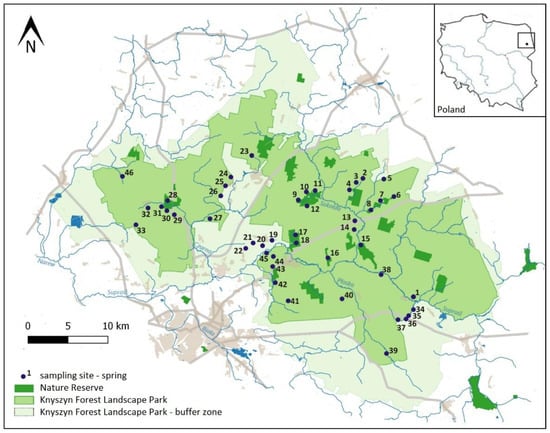
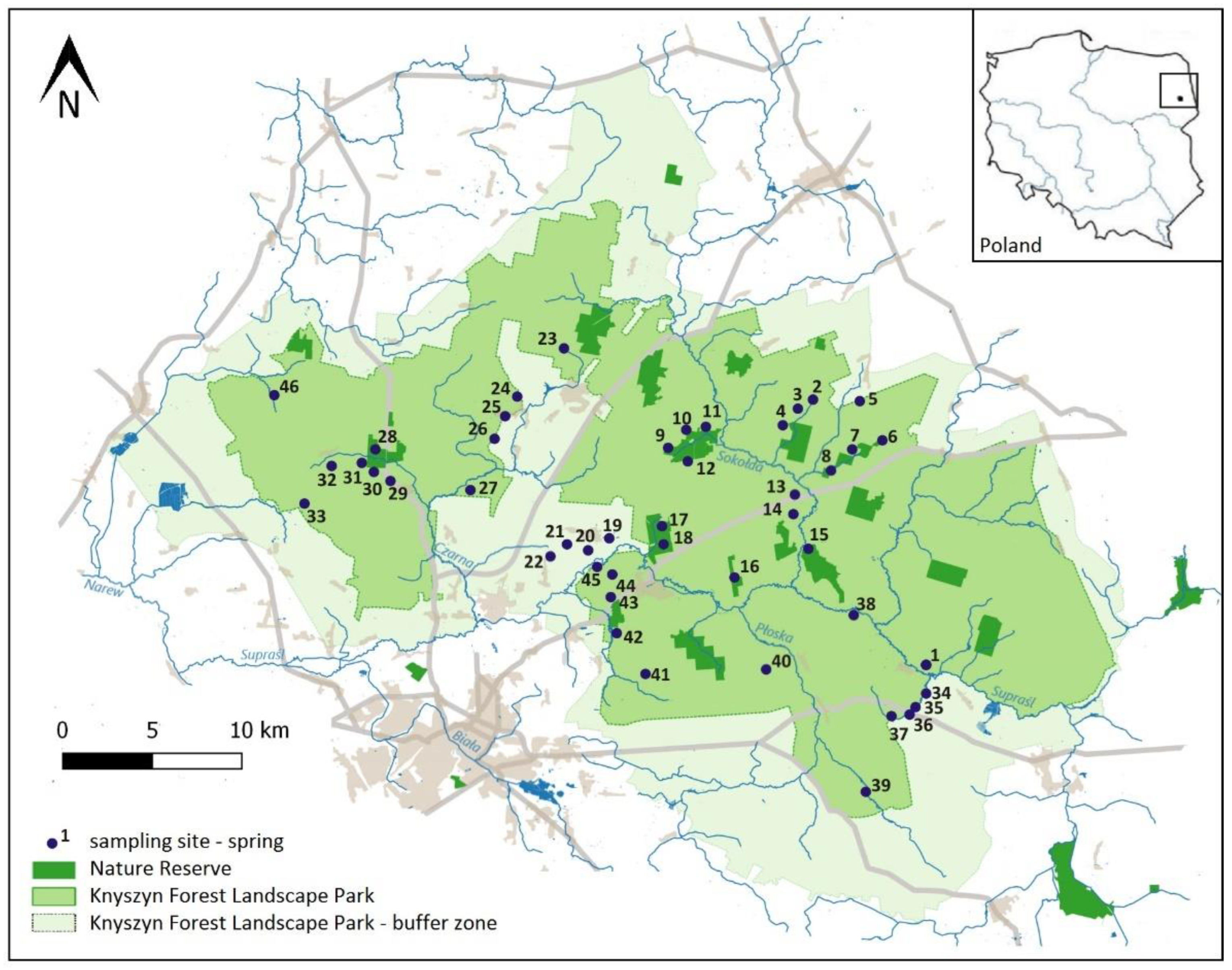
The springs under study are located in the Knyszyn Forest (Figure 1), which is situated in the north-eastern part of Poland, in the region of Podlasie. The area of the Forest is ca. 105,000 ha, and a large part of the area is occupied by the Landscape Park of the Knyszyn Forest with 22 nature reserves. Forests and woodlands occupy ca. 82% of the area and 13.4% are arable lands and meadows. As little as 3.4% of the Knyszyn Forest is occupied by settlements and roads.
Figure 1.
Locations of the studied springs in the Knyszyn Forest.
A unique advantage of the nature of the study area is the presence of about 430 springs. Their largest concentrations are located in the valleys of major rivers. Their presence is one of the main reasons for the special protection of the catchment area [23,26,27].
The spring discharge varied from 0.02 to 27 L s−1; however, most of the springs had a yield in the range of 0.1 to 0.5 L s−1 [28,29]. Their variability over time is low and their water quality is very good, as they are not under the influence of anthropogenic activity [21,22,23,24].
Nevertheless, studies by Jekatierynczuk-Rudczyk et al. [23,27] revealed effects of human activity on the springs, such as the construction of ponds, illegal garbage dumps and deforestation in the spring vicinity. In 2014–2015, 47 springs were examined (Figure 1). Most of them are rheocrenes, i.e., springs that flow from a defined openings into a confined channel. The studied springs were located in the forest or on grassland. Several outflows are located in the rural area (Table 1).
Hydrological research of springs in Podlasie is carried out to a limited extent. The main reason is the low efficiency of outflows and its variability over time. During the hydrological drought in August 2015, the outflows yield usually fluctuated between 0.5–2 L s−1. Low concentration of water outflow from the niche makes hydrological measurements very difficult. In the crenological works, measurements of efficiency of inefficient outflows are often neglected [23,27].
2.2. Sampling Methods
Single samples (10 to 30 L, depending on the filtering capacity, i.e., detritus concentrations) were taken with a Plexiglas tube in the spring, filtered through a 30-μm plankton net and fixed with Lugol’s solution and then in 4% formalin. Monogonont rotifers were determined to species and all rotifers (both Monogononta and Bdelloidea) were counted in whole samples. All spellings and relevant information have been checked using a taxonomy database Rotifer World Catalog [30].
Water temperature, pH, electrical conductivity (EC) and water redox potential (Eh) were determined with a HachLange multiparameter probe (HQ40). Chemical water analyses were carried out in accordance with ISO standards, by means of methods described by APHA [31]. The following analyses were performed: ammonium nitrogen (NH4+-N) by the indophenol method and nitrate nitrogen (NO3−-N) by the reduction method with N-(1-Naphthyl) ethylene diamine. Total nitrogen was analyzed in a Kjeldahl analyzer (Tecator 2300). Phosphorus ions were determined by the molybdenum method. The total fraction was determined in non-filtered water after prior digestion with concentrated sulfuric acid (VI) and 30% hydrogen peroxide. The soluble fraction was determined in water filtered through a filter GF/F with a pore diameter of 0.45 μm and subject to digestion with concentrated sulfuric acid (VI) and 30% hydrogen peroxide. The reactive fraction was determined in water filtered through a filter GF/F without prior mineralization. Dissolved organic carbon concentration (DOC) was determined by using a Shimadzu TOC-5050A analyzer with a CO2 IR detector.
2.3. Analyses
The Shannon-Weaver, species-diversity index [32] was used:
where N = total numbers of rotifers; ni = numbers of a species i.
Evenness index (J) was calculated using the formula:
where Dmax is the maximum possible value of D.
J = D/Dmax
Species accumulation curves based on the calculated and estimated species richness were used to compare rotifer diversities between samples taken in summer and autumn. The second-order Jackknife nonparametric estimator (Jackknife2) was used to assess species richness in the studied environments based on the observed number of species [33]. The estimator uses counts of “uniques“ and “duplicates”, i.e., species that are present only in one or two samples, respectively.
The nonparametric Spearman’s correlation test was used to assess the association between values of species diversity index and evenness.
In order to describe the relationships between water quality and Rotifera, principal component analysis (PCA) was used to examine visually and compare differences in water of springs. PCA is a multivariate statistical method which is applied in environmental studies to explain data structures [34]. PCA indicates the most meaningful parameters which describe the whole data set interpretation with minimal loss of original information [35].
The redundancy analysis (RDA) was used to describe the association between the Rotifera data matrix and environmental variables. The variance inflation factors (VIF) value was calculated. VIF gives a measure of the extent of multicollinearity in the predictors of a regression. If the VIF of a predictor is high, it indicates that the predictor is highly correlated with other predictors, it contains little or no unique information, and there is redundancy in the set of predictors. Eleven species of rotifers were selected for analysis. A log transformation of exploratory and response variables was used prior to the regression analysis to reduce deviation from normality [36].
The XLStat version 2020.3.1 and Past 4.11 programs were used for statistical analysis [37].
3. Results
3.1. Water Quality in Springs
Anaerobic conditions were found in only one outflow. Concentrations of the main macroelements allowed for the classification of spring water into two-ion (HCO3-Ca) or three-ionic waters (HCO3-Ca-Mg) (Table 1). Nutrient concentrations, including dissolved organic carbon, were high and the spring waters were well-oxygenated (Table 2). Springs were rather stable regarding their temperature and conductivity. A specific feature of the spring water was the significant nutrient content (mean value: TN = 1.96 mg L−1, TP = 0.22 mg L−1, DOC = 4.15 mg L−1). In the spring waters, a high content of total iron (TFe) was also found (average value—1.32 mg L−1).
Table 2.
Summary statistics for spring water chemistry (EC—electrical conductivity, Eh—water redox potential, TFe—total iron, TN—total nitrogen, TP—total phosphorus, SRP—soluble reactive phosphorus, DP—dissolved phosphorus, DOC—dissolved organic carbon).
3.2. Structure of Rotifer Communities
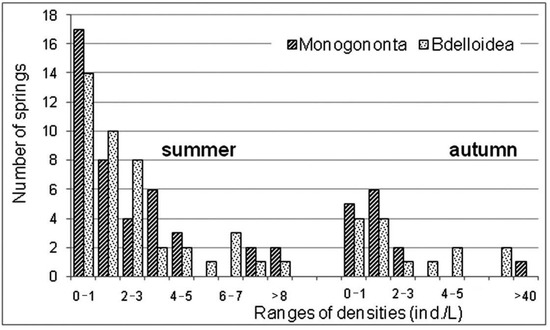
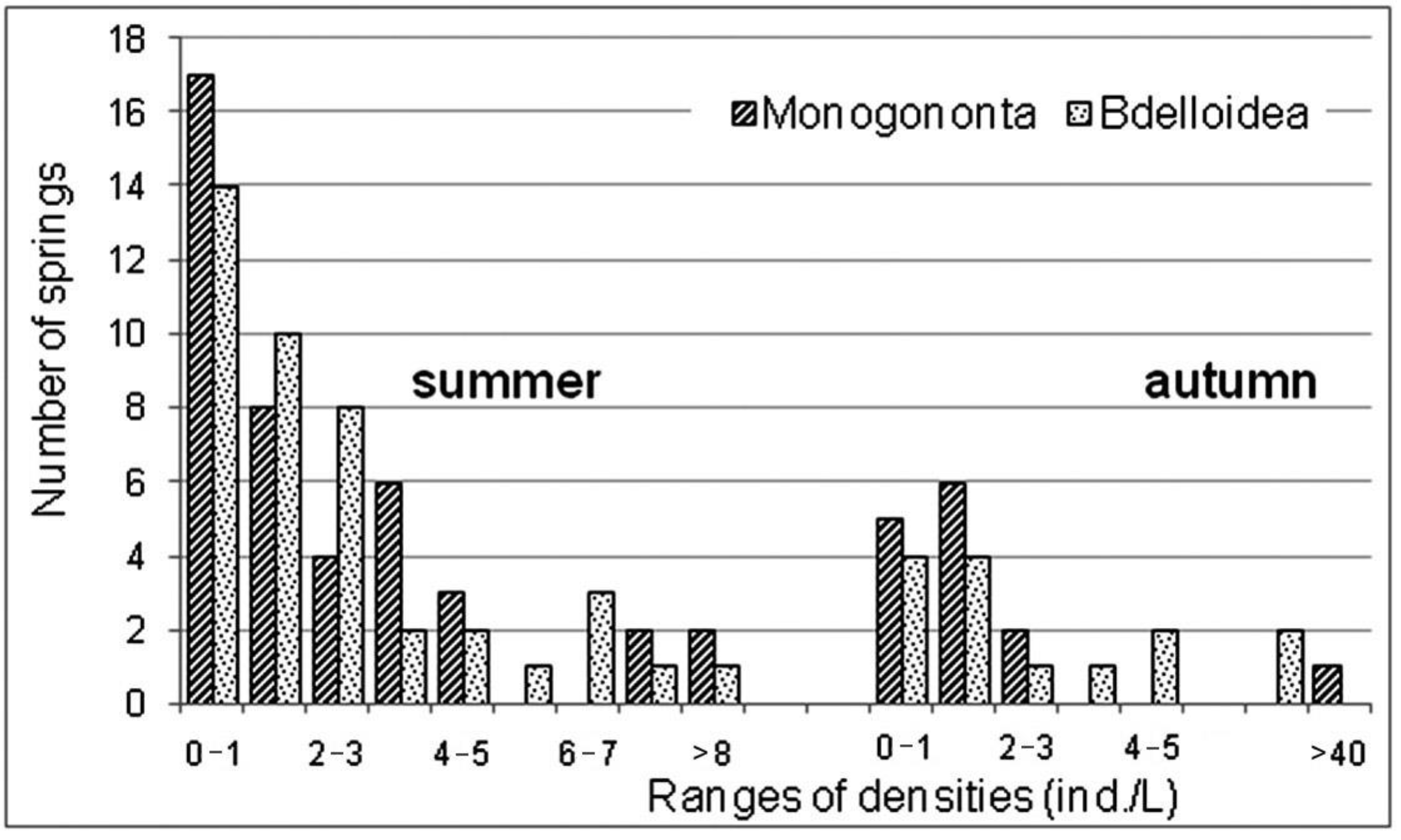
Rotifer densities in the springs were relatively low in summer., i.e., up to 10 ind. L−1 of Monogononta and 22 ind. L−1 of Bdelloidea. Similarly, they were low in autumn, with up to 42 and 10 ind. L−1, respectively (Figure 2). In summer, the highest density of Monogononta was noted in a helocrenic spring surrounded by forest in Kolonia Ratowiec (spring no. 26; Table 1), whereas bdelloids were most abundant in a rheocren spring surrounded by meadows in Studzianki 1 (spring no. 20; Table 1). In autumn, bdelloids were less abundant than monogononts. However, due to the wide spread of values, these differences were not statistically significant. The highest density of Monogononta was found in a rheocren spring surrounded with meadows and forests in Studzianki. Bdelloidea were most abundant in a helocren spring situated within a village (Czarna Wieś Kościelna—spring no. 23; Table 1).
Figure 2.
Range of rotifer densities in particular springs in the Knyszyn Forest.
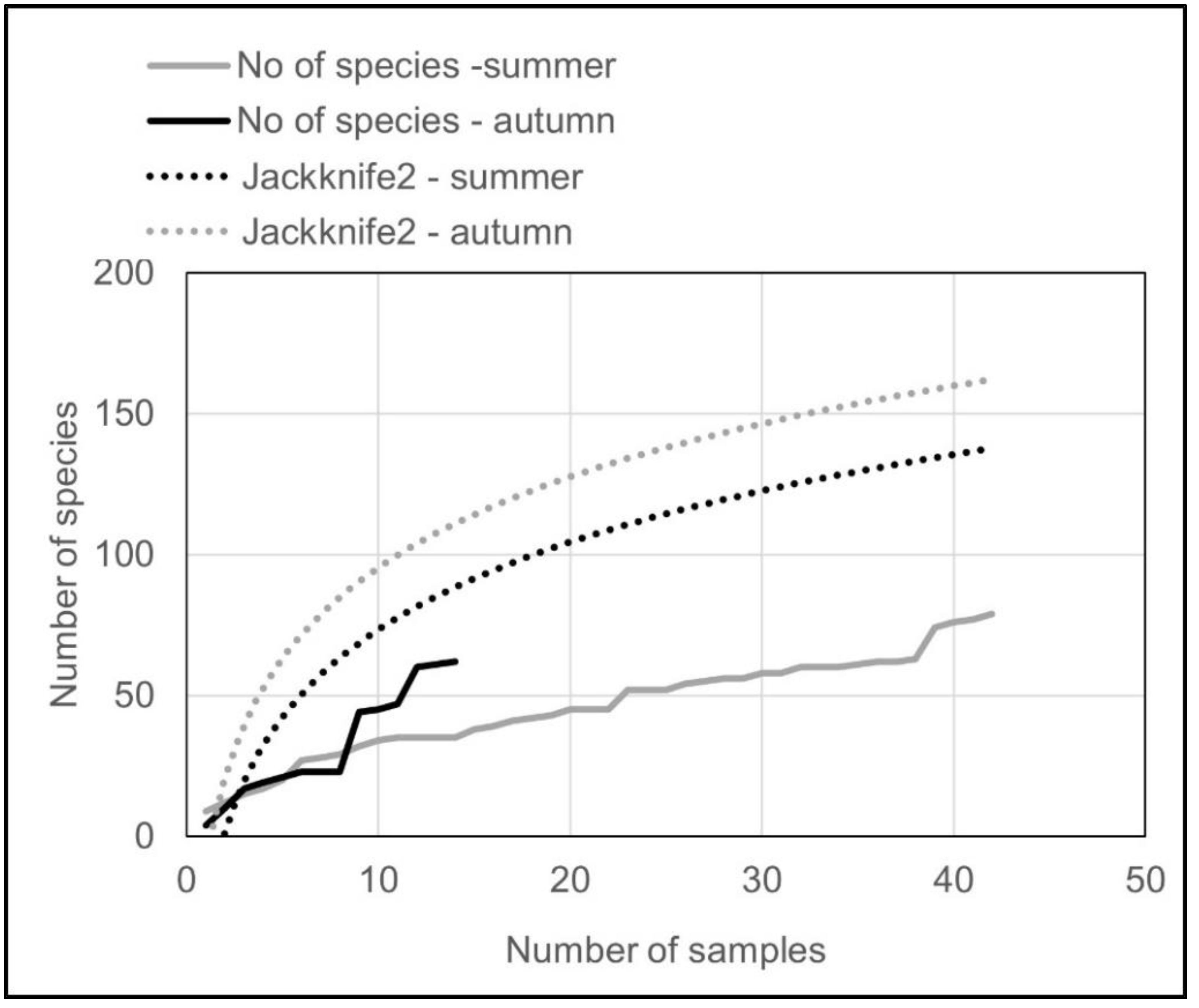
The mean number of monogonont species per spring was very low in both summer (6 ± 5) and autumn (9 ± 6). Nevertheless, the total number of species recorded in all springs under study was relatively high and accounted for 101 species, 79 in summer and 62 in autumn. Most (i.e., 57% in summer and 60% in autumn) of the recorded rotifer species were single observations (Table 3).
Table 3.
A list of rotifer species. their maximum abundance and frequency in the springs of the Knyszyn Forest; single observations are marked with stars (*); Supplementary Materials.
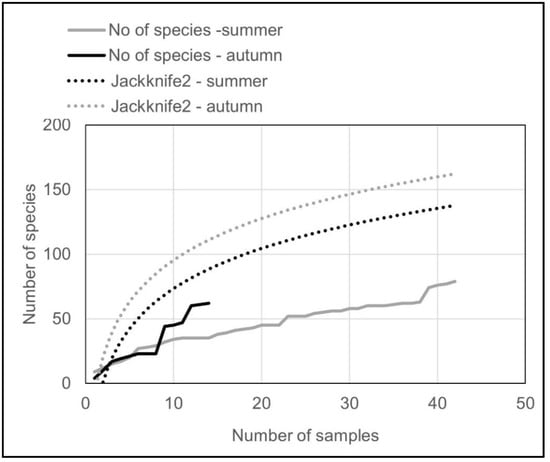
The high share of singletons resulted in a very high number of species assessed using the Jack-knife2 estimator. In the case of both summer and autumn rotifer communities, the estimated number of species was approx. two times higher than that of the accumulation curve (Figure 3).
Figure 3.
Accumulated (solid line) and estimated by Jackknife2 (dotted line) rotifer species richness in summer and autumn sets of streams.
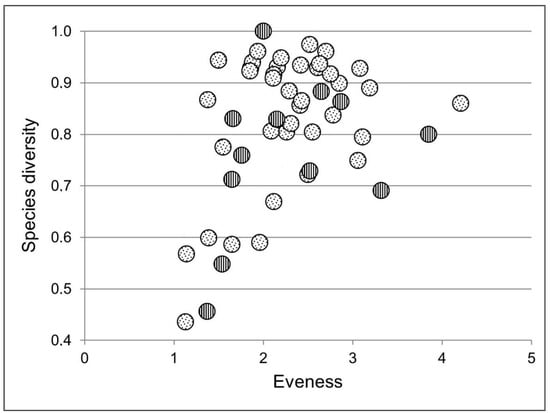
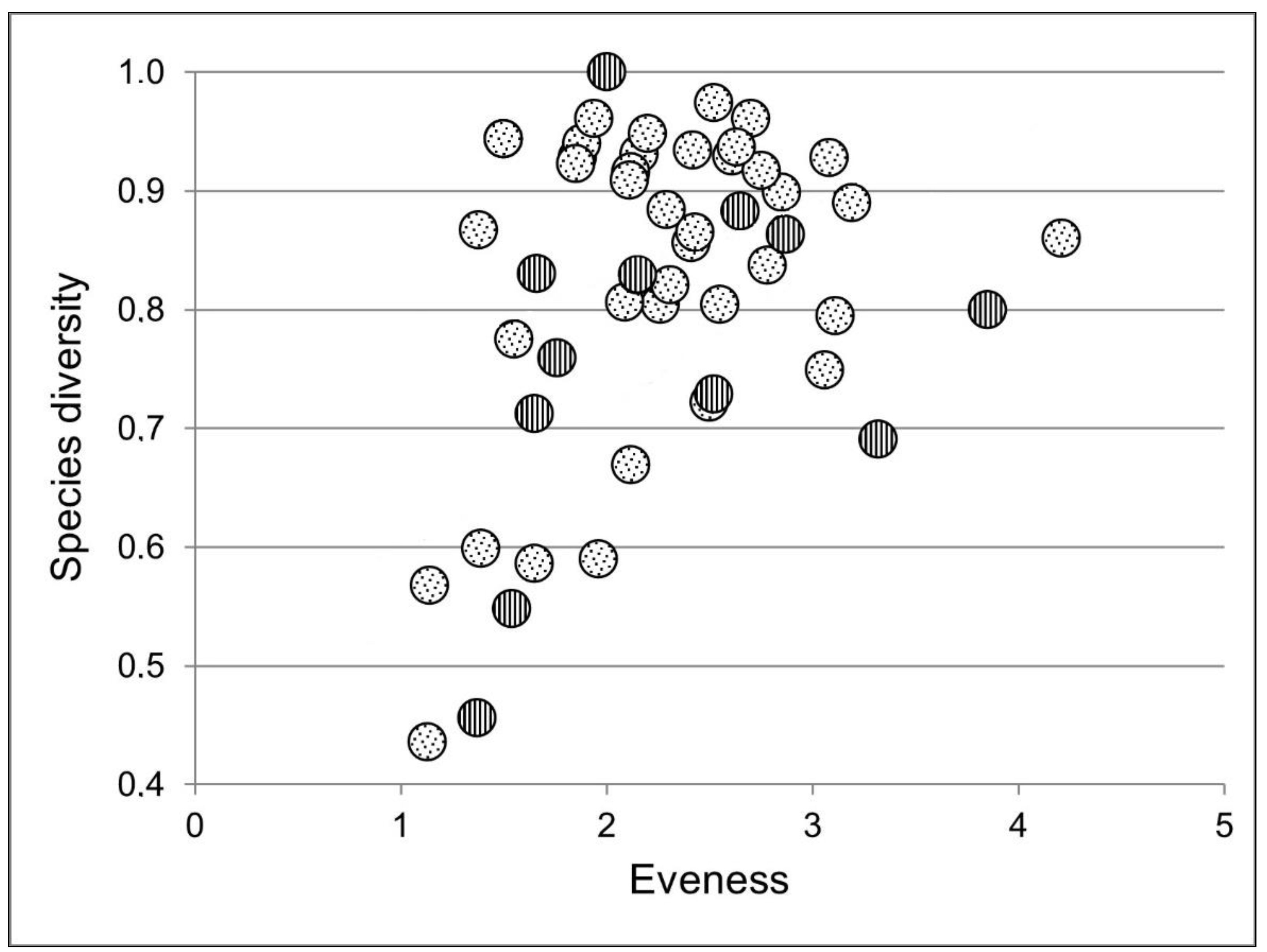
Despite a very low number of species in particular springs, Shannon’s index values were relatively high, i.e., 2.16 ± 0.73 in summer and 2.07 ± 0.90 in autumn. The high species diversity was a result of high values of species evenness, which ranged from 0.44 to 1.00 (mean 0.84 ± 0.13) in summer and from 0.36 to 1.00 (mean 0.75 ± 0.19) in autumn. There is a certain trend of increasing species diversity as evenness increases (Figure 4). However, Spearman’s correlation coefficient for the relationship was 0.047 (n = 42; p = 0.77) for summer community and 0.306 (n = 14; p = 0.29) for autumn, showing that the relationship does not exist, or it is very weak.
Figure 4.
The relationship between species diversity and evenness for summer (light circles and straight line) and autumn (dashed circles and dotted line) communities of Rotifera in the studied springs.
Although strongly differentiated, rotifer fauna consisted of a set of several species common to most of the studied springs. These were: Colurella adriatica, Lecane closterocerca, Lepadella acuminata, Trichocerca taurocephala in summer and C. adriatica, L. acuminata and Lepadella patella in autumn. The mean contribution of the species listed above to the total numbers of monogonont rotifers was 49.6% (SD = 27.2) in summer and 48.4% (SD = 32.7) in autumn. In summer, the listed above set of most common species was present in 40 (i.e., 95%) springs; the species were absent in the limnocrenic Łaźnie and the helocrenic Krynice springs (spring no. 33; Table 1). The highest contribution of the dominant species to the total density (97.6%) was observed in the rheocrenic Kolonia Ratowiec (spring no. 45; Table 1). In autumn, C. adriatica, L. acuminata and L. patella were found in all studied springs, with the highest contribution (100%) in the helocrenic Mostek spring (spring no. 27; Table 1).
In summer, the most abundant rotifer species was Trichocerca taurocephala, which occurred in 25 springs (62%). The highest density of the species was 7.9 ind. L−1 in Kolonia Ratowiec (spring no. 26; Table 1). In autumn, the species occurred in low numbers in two springs. Colurella adriatica was the second most numerous species at the site, where its abundance was 1.8 ind. L−1. The species occurred in 73.8% of the springs studied in summer and 57.1% in autumn.
In autumn, the most abundant were species of the genus Lepadella. L. ovalis (Müller), which occurred in 50% of the springs, with the highest abundance of 36.5 ind L−1 in Studzianki (spring no. 20; Table 1). The highest density of another Lepadella (L. acuminata) was observed in the same spring, and it reached a density of 5.0 ind. L−1. The species was found in relatively high densities in 12 (i.e., 86%) springs under study.
Bdelloidea were present in all studied springs, in summer and autumn. In summer, their density ranged from 0.17 to 22.00 ind. L−1, with a mean value of 2.73 ± 3.58 ind. L−1. Thus, their contribution to the total rotifer abundance was relatively high and ranged from 18 to 93%. In autumn, bdelloid densities ranged between 0.18 and 9.90 ind. L−1 with a mean value of 2.86 ± 2.78 ind. L−1; their contribution to the total rotifer abundance ranged from 4 to 95%.
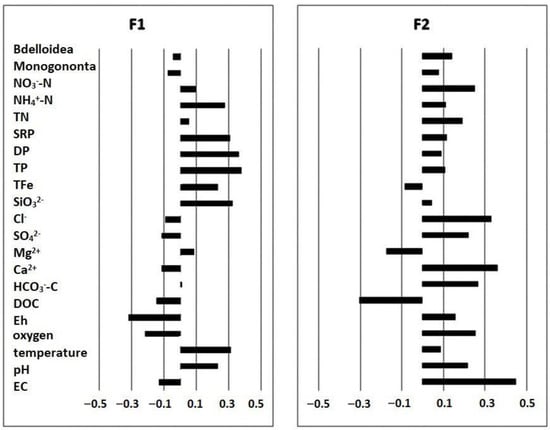
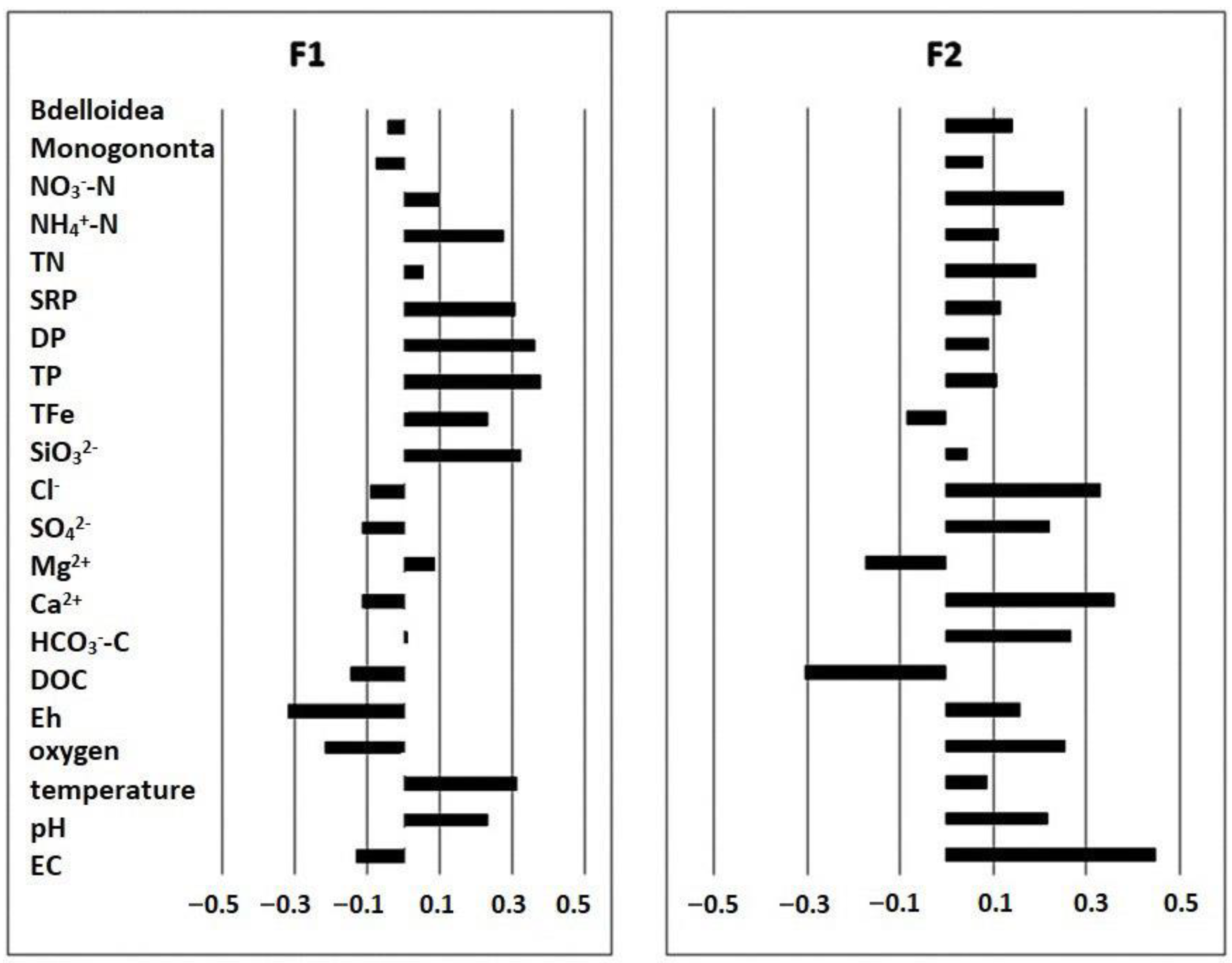
Although the total density of Monogononta is based mostly on dominants, in this case it involves a group of the abundant species, which are characteristic of most of the studied streams. Six principal components were identified with eigenvalues larger than 1 (Table 4). The eigenvectors of individual water quality parameters are shown in Figure 5. The first component, which explains 26% of the total variance within the dataset, is characterized by positive loadings for temperature, pH, and phosphorous and nitrogen compounds. Negative loadings were observed for conductivity, redox potential, oxygen concentration, and DOC, sulfates, chlorides.
Table 4.
Eigenvalues, variance and cumulative variance of the principal components of water chemical parameters of springs in Knyszyn Forest.
Figure 5.
Eigenvectors of individual water quality parameters for Factor 1 and Factor 2 of PCA analysis.
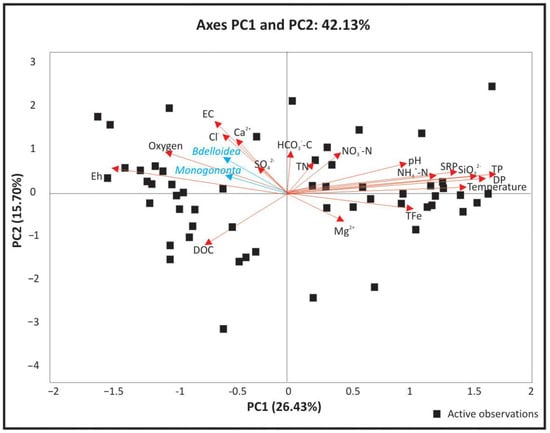
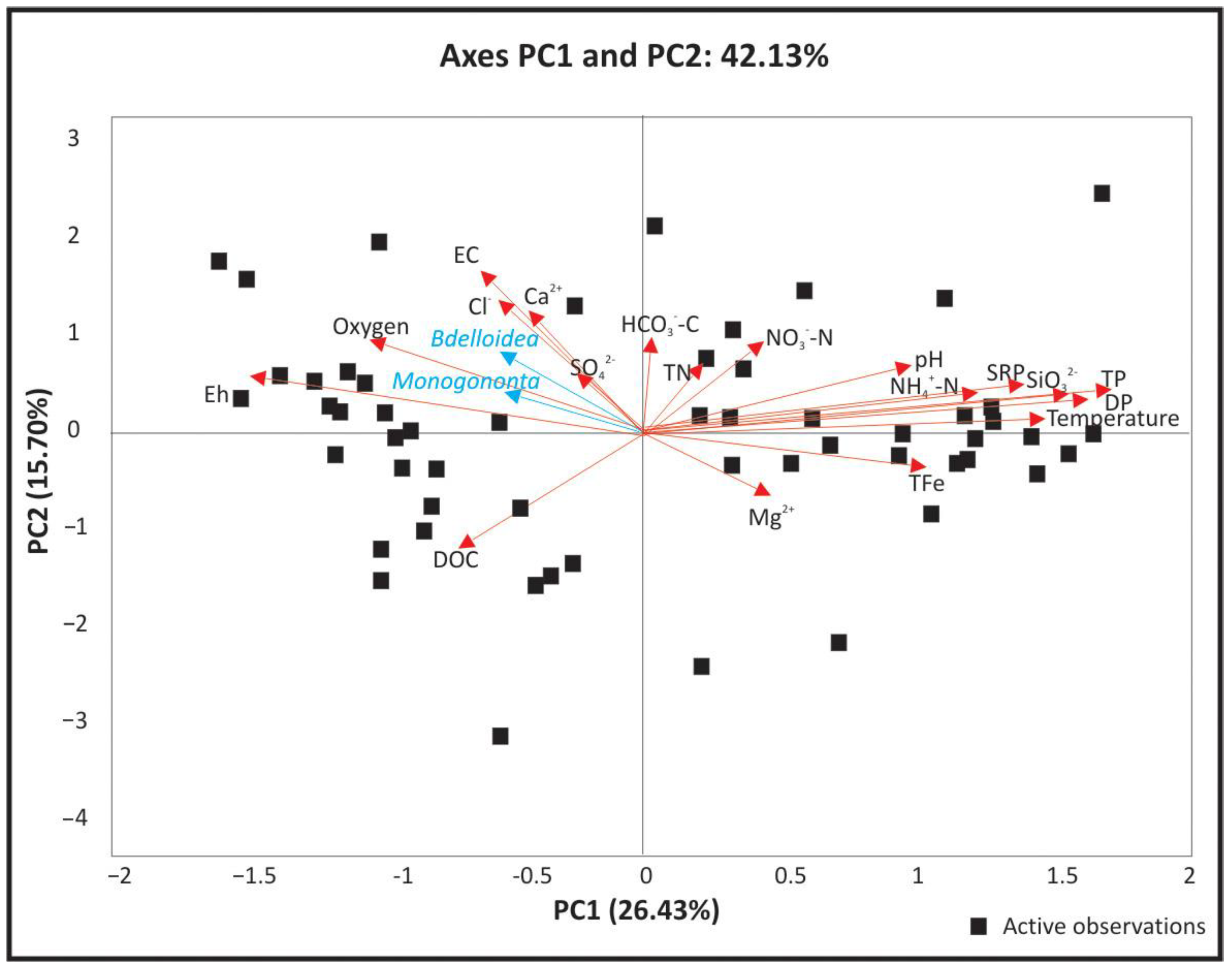
The second component, which explains a further 15% of the variance, is characterized by high positive loadings for all tested parameters with the exception of DOC, TFe, and magnesium ions. The ordination of samples and variables on the PCA biplot is depicted in Figure 6. Numbers of Bdelloidea and Monogononta are negatively associated with the distribution of water samples along the horizontal axis.
Figure 6.
Principal component analysis (PCA) biplot; factor loadings of water quality parameters and Monogononta and Bdelloidea numbers are shown as arrows and water sample sites as points (N = 56).
Variance inflation factors (VIF) values for most water characteristics ranged from 2.4 (DOC) to 10.3 (EC). Only the phosphorus compounds were higher.
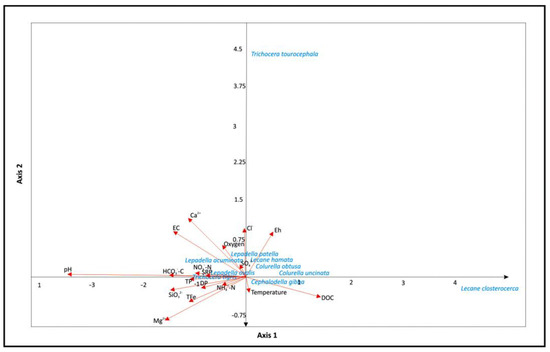
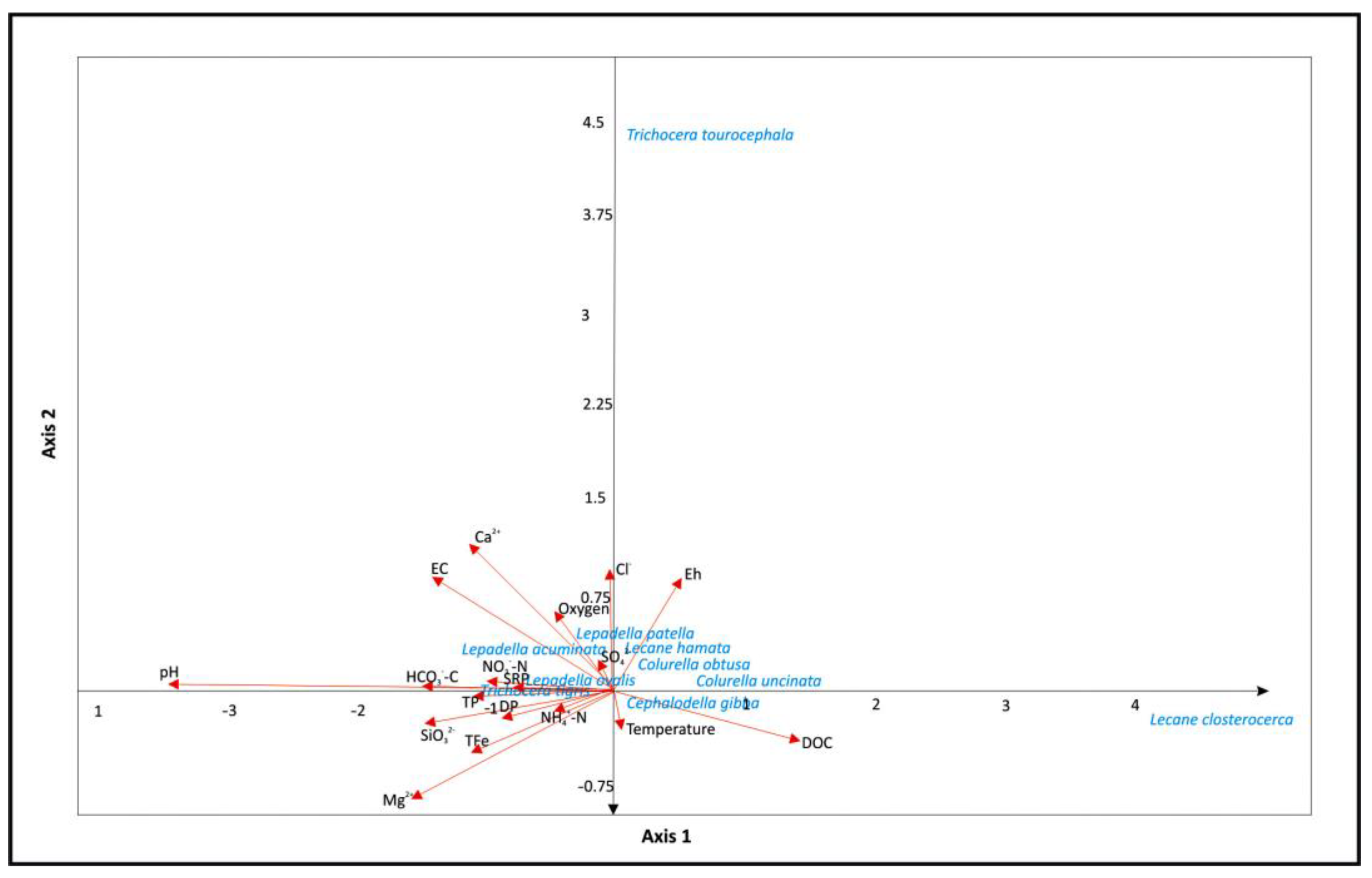
The greatest positive contribution to the first axis of the RDA (axis 1) was made by the concentration of DOC, Cl and the value of the oxidation–reduction potential (Figure 7). The parameters controlled the abundance of rotifer species such as: Colurella adriatica, Colurella obtusa, Colurella uncinata, Lecane hamata, Lecane closterocerca, Trichocerca taurocephala and Cepalodella gibba. On the other hand, in the case of the second RDA axis (axis 2), the greatest positive impact on the number of rotifers species had specific electrolytic conductivity, concentration of calcium and some nutrients (N-NO3 -, SRP) and oxygen. These parameters influenced the number of the following species of rotifers: Lepadella acuminata, Lepadella ovalis and Lepadella patella. However, these relationships are not significant.
Figure 7.
The impact of water quality in the springs on the most numerous species of Rotifers in the Knyszyńska Forest (R2 = 0.3779 and R2 adjusted = 0.04957).
4. Discussion
Springs are a unique resource from an ecological, economic, and cultural perspective [16,22,23,27,38]. Springs occur at the interface between groundwater, surface water and terrestrial ecosystems, and as such they constitute a unique three-way ecotone [13]. Ecotones possess specific physical and chemical attributes, biotic values, and energy and matter exchange processes. They are unique in their interactions with adjacent ecosystems [39,40]. Ecotones often contain significant biodiversity values, including a diverse mixture of cosmopolitan and endemic flora and fauna, and a range of ecosystem functions specific to the ecotone [7,9,24,25].
A specific feature of water in lowland areas is the high content of nutrients (compounds of carbon, nitrogen and phosphorus). They are less abundant in mountainous and upland areas. The content of DOC in the waters of lowland springs may exceed several milligrams per liter [21,23,27].
The meiofaunal component of spring fauna has often been neglected [41]. It seems, however, that it may constitute a relatively important part of the spring invertebrate community [4,42]. However, Rotifera constituted less than 0.1% of meiofaunal numbers in 31 springs in Finland [43].
Rotifer fauna from the studied springs was characterized by very low densities and relatively high species richness (if summed for all the studied springs) as compared to open waters of lakes and large rivers. The very low number of monogonont species in particular springs was, however, slightly higher than that noted by Wallace et al. [44] in the Big Bend National Park in Texas. The drift communities were markedly different than those described in the literature for benthic habitats. Reiss & Schmid-Araya [17] studied two streams in which the benthic communities of rotifers were both extremely species rich and abundant. Schmid-Araya [45] recorded 42 Monogononta species and 27 Bdelloidea species [18] in the bed sediments of the mountain gravel stream Oberer Seebach.
All rotifer taxa collected in the present study typically occur in a broad range of different freshwater ecosystems, and most of them show a wide ecological tolerance. No crenoxenic or crenophilic rotifer species were determined in the springs’ drift. This differs from the results of studies on copepod assemblages that involved numerous crenoxenic (with stygobiotic) species [4].
It is hard to assess the source of the species with the highest frequency. They are not likely carried away from benthic habitats. In our study, we did not find any of the species found in the benthic community of two streams studied by Reiss and Schmid-Araya [17], which possibly may be the result of a difference between the compared springs, i.e., one cited stream was acidic while the other was highly eutrophic and severely impacted by agricultural lands. On the other hand, Trichocerca taurocephala was observed in high densities in the upper layer of lake hydroarenal [46]. Recorded in the springs, species of the genera Colurella, Lecane and Lepadella are common inhabitants of littoral plankton and periphyton, but they can be found also in psammon communities [47]. The large number of singletons (species noted only once) may indicate an important role of external sources such as streams, wetlands and bogs as sources of rare species.
According to Gathmann et al. [48], individual coldwater springs represent “habitat islands” because many of their inhabitants have no way to move from one spring to another. It seems that this is not true for both dominant spring rotifers and relatively rare species. The fact that most of the recorded species in our study are eurytopic and widely spread in different water ecosystems may explain the lack of strong differences in rotifer species structure. It seems that differences in rotifer species composition may be accounted for by the position of springs in different watersheds, as well as by differences in the substratum composition. If biotic factors such as competition and predation were important in structuring the rotifer communities in the studied springs, their role could not be assessed in this study because of the lack of taxonomic studies on meio- and macrofauna. Since the low variability of rotifers has not been explained by water quality characteristics, other environmental variables would be more appropriate to explain this variability and should be investigated in the future.
5. Conclusions
In conclusion, the rotifer fauna of the studied springs was characterized by extremely low abundance and very low number of monogonont species per spring, both in summer and autumn. However, despite the low number of species, due to very high species evenness, Shannon’s index values were relatively high. The rotifer communities involved a group of a few species common to most of the studied streams. Most of the species recorded in our study are eurytopic and widely spread in different water ecosystems. Only two chemical parameters in water, i.e., the concentration of magnesium ions and chloride ions, had an impact on Monogononta numbers. Correlations between the density of species and water quality parameters were observed for Cephalodella gibba, Colurella adriatica, Colurella obtusa, Colurella uncinata, Lecane hamata, Lecane clasterocerca, Lepadella acuminata, Lepadella ovalis, Lepadella patella and Trichocerca taurocephala.
Supplementary Materials
The following supporting information can be downloaded at: https://www.mdpi.com/article/10.3390/d15020153/s1.
Author Contributions
Both authors contributed to the study conception and design. Material preparation, data collection, and analysis were performed by E.J.-R. and J.E-K. The first draft of the manuscript was written by E.J.-R. and J.E.-K. All authors have read and agreed to the published version of the manuscript.
Funding
This research received no external funding.
Institutional Review Board Statement
Not applicable.
Informed Consent Statement
Not applicable.
Data Availability Statement
All data generated or analyzed during this study are available via the Data Repository of the University of Bialystok (https://repozytorium.uwb.edu.pl, accessed on 6 January 2023). Requests for material should be made to the corresponding author.
Conflicts of Interest
The authors declare no conflict of interest.
References
- Erman, N.A.; Erman, D.C. Spring permanence. Trichoptera species richness and the role of drought. Kans. Entomol. Soc. Suppl. 1995, 68, 50–64. [Google Scholar]
- Cantonati, M.; Spitale, D.; Calfi, A.S.; Guealla, G. Exploring the contrasting seasonal strategies of two crenic macroalgae. Fottea Olomouc 2016, 16, 133–143. [Google Scholar] [CrossRef] [Scilit]
- Cantonati, M.; Lichtenwöhrer, K.; Leonhardt, G.; Seifert, L.; Mustoni, A.; Hotzy, R.; Schubert, E.; Blattner, L.; Bilous, O.; Lotz, A.; et al. Using Springs as Sentinels of Climate Change inNature Parks North and South of theAlps: A Critical Evaluation ofMethodological Aspects and Recommendations for Long-Term Monitoring. Water 2022, 14, 2843. [Google Scholar] [CrossRef] [Scilit]
- Bottazzi, E.; Bruno, M.C.; Pieri, V.; Di Sabatino, A.; Silveri, L.; Carolli, M.; Rossetti, G. Spatial and seasonal distribution of invertebrates in Northern Apennine rheocrene spring. J. Limnol. 2011, 70 (Suppl. 1), 77–92. [Google Scholar] [CrossRef] [Scilit]
- Meyer, J.L.; Wallace, J.B. Lost Linkages and Lotic Ecology: Rediscovering Small Streams; Blackwell Scientific: Oxford, UK, 2001. [Google Scholar]
- Meyer, J.L.; Strayer, D.L.; Wallace, J.B.; Eggert, S.L.; Helfman, G.S.; Leonard, N.E. The contribution of headwater streams to biodiversity in river networks. J. Am. Water Resour. Assoc. 2007, 43, 86–103. [Google Scholar] [CrossRef] [Scilit]
- Richardson, J.S.; Danehy, R.J. A synthesis of the ecology of headwater streams and their riparian zones in temperate forests. For. Sci. 2007, 53, 131–147. [Google Scholar]
- Leibold, M.A.; Holyoak, M.; Mouquet, N.; Amarasekare, P.; Chase, J.M.; Hoopes, M.F.; Holt, R.D.; Shurin, J.B.; Law, R.; Tilman, D.; et al. The metacommunity concept: A framework for multi-scale community ecology. Ecol. Lett. 2004, 7, 601–613. [Google Scholar] [CrossRef] [Scilit]
- Scarsbrook, M.; Barquin, J.; Gray, D.P. New Zealand Coldwater Springs and Their Biodiversity; Science for Conservation; Department of Conservation: Wellington, New Zealand, 2007; Volume 278. [Google Scholar]
- Botosaneanu, L. Studies in Crenobiology: The Biology of Springs and Springbrooks; Blackhuys Publishers: Leiden, The Netherlands, 1998. [Google Scholar]
- Hoffsten, P.; Malmqvist, B. The macroinvertebrate fauna and hydrogeology of springs in central Sweden. Hydrobiologia 2000, 436, 91–104. [Google Scholar] [CrossRef] [Scilit]
- Zawal, A.; Stryjecki, T.; Buczyńska, E.; Buczyński, P.; Pakulnicka, J.; Bańkowska, A.; Czernicki, T.; Janusz, K.; Szlauer-Łukaszewska, A.; Pešić, V. Water mites (Acari, Hydrachnidia) of riparian springs in a small lowland river valley: What are the key factors for species distribution? PeerJ 2018, 6. [Google Scholar] [CrossRef] [Scilit]
- Staudacher, K.; Fureder, L. Habitat complexity and invertebrates in selected alpine springs (Schütt. Carinthia. Austria). Int. Rev. Hydrobiol. 2007, 92, 465–479. [Google Scholar] [CrossRef] [Scilit]
- Cantonati, M.; Gerecke, R.; Bertuzzi, E. Springs of the Alps—Sensitive ecosystems to environmental change: From biodiversity assessments to long-term studies. Hydrobiologia 2006, 562, 59–96. [Google Scholar] [CrossRef] [Scilit]
- Von Fumetti, S.; Blattner, L. Faunistic assemblages of natural springs in different areas in the Swiss National Park: A small-scale comparison. Hydrobiologia 2017, 793, 175–184. [Google Scholar] [CrossRef] [Scilit]
- Jekatierynczuk-Rudczyk, E.; Puczko, K.; Żukowska, J.; Sawicka, A. Biota communities influence on nutrients circulation in hyporheic zone—A case study in urban spring niches in Bialystok (NE Poland). Aquat. Sci. 2021, 83, 75. [Google Scholar] [CrossRef] [Scilit]
- Reiss, J.; Schmid-Araya, J.M. Existing in plenty: Abundance, biomass and diversity of ciliates and meiofauna in small streams. Freshw. Biol. 2008, 53, 652–668. [Google Scholar] [CrossRef] [Scilit]
- Schmid-Araya, J. Rotifers in interstitial sediments. Hydrobiologia 1998, 387/388, 231–240. [Google Scholar] [CrossRef] [Scilit]
- Ríos-Arana, J.V.; Agüero-Reyes, L.D.C.; Wallace, R.L.; Walsh, E.J. Limnological characteristics and rotifer community composition of Northern Mexico Chihuahuan Desert Springs. J. Arid. Environ. 2019, 160, 32–41. [Google Scholar] [CrossRef] [Scilit]
- Brown, P.D.; Schröder, T.; Ríos-Arana, J.V.; Rico-Martinez, R.; Silva-Briano, M.; Wallace, R.L.; Walsh, E.J. Patterns of Rotifer Diversity in the Chihuahuan Desert. Diversity 2020, 12, 393. [Google Scholar] [CrossRef] [Scilit]
- Jekatierynczuk-Rudczyk, E.; Zieliński, P.; Puczko, K.; Micun, K.; Puczyłowska, E. The Role of the Catchment Area in Shaping Water Quality in the Lowland Springs of the Knyszyn Forest (NE Poland). Water 2022, 14, 3202. [Google Scholar] [CrossRef] [Scilit]
- JekatierynczukRudczyk, E. Effects of drainage basin managment on the chemical composition of waters in lowlands springs. Acta Hydrobiol. 1999, 41, 97–105. [Google Scholar]
- Jekatierynczuk-Rudczyk, E. Transformation in Physicochemical Composition of Groundwaters within Lowland Drainage Zones; Wydawnictwo Uniwersytetu w Białymstoku: Białystok, Poland, 2010. [Google Scholar]
- Puczko, K.; Zieliński, P.; Jusik, S.; Kołakowska, A.; JekatierynczukRudczyk, E. Vascular plant and bryophyte species richness in response to water quality in lowland spring niches with different anthropogenic impacts. Environ. Monit. Assess. 2018, 190, 338. [Google Scholar] [CrossRef] [Scilit]
- Zieliński, P.; Jekatierynczuk-Rudczyk, E.; Puczko, K. Factors affecting the abundance and activity of the bacterioplankton in lowland forest springs in northeastern Poland. Ecohydrol. Hydrobiol. 2020, 20, 675–686. [Google Scholar] [CrossRef] [Scilit]
- Górniak, A. Wody Krajobrazowego Parku Puszczy Knyszyńskiej (Waters of the Landscape Park of te Knyszyn Forest); Abstract; Park Krajobrazowy Puszczy Knyszyńskiej: Supraśl, Poland, 1999; Volume 48. (In Polish) [Google Scholar]
- Jekatierynczuk-Rudczyk, E.; Zieliński, P.; Puczko, K. Is the protection of springs in Knyszyn Forest effective and satisfactory? Prot. Nativ. Nat. 2017, 73, 135–147, (In Polish with English summary). [Google Scholar]
- Łoszewski, H. Springs in the Supraśl river basin. Sci. Pract. 1984, OBN 4, 111–150. (In Polish) [Google Scholar]
- Pawłowska, T.; Miodek, K. Physico-geographic characteristics. In Natural and Cultural Documentation along with the Principles of Spatial Management; Gacka-Grześkiewicz, E., Ed.; Knyszyn Forest Landscape Park: Knyszyn, Poland, 1993; pp. 14–39. (In Polish) [Google Scholar]
- Jersabek, C.D.; Leitner, M.F.; The Rotifer World Catalog. World Wide Web Electronic Publication. 2013. Available online: http://www.rotifera.hausdernatur.at/ (accessed on 2 October 2022).
- APHA. Standard Methods for Examination of Water and Waste Water; APHA, AWWA: Washington, DC, USA, 1992. [Google Scholar]
- Basualdo, C.V. Choosing the best nonparametric richness estimator for benthic macroinvertebrates databases. Rev. Soc. Entomol. Argent. 2011, 70, 27–38. [Google Scholar]
- Margalef, R. Information theory in ecology. Gen. Syst. 1958, 3, 36–71. [Google Scholar]
- Vialle, C.; Sablayrolles, C.; Lovera, M.; Jacob, S.; Huau, M.C.; Montréjaud-Vignoles, M. Monitoring of water quality from roof runoff: Interpretation using multivariate analysis. Water Res. 2011, 45, 3765–3775. [Google Scholar] [CrossRef] [Scilit]
- Helena, B.; Pardo, R.; Vega, M.; Barrado, E.; Fernandez, J.M.; Fernandez, L. Temporal evolution of groundwater composition in an alluvial aquifer (Pisuerga River, Spain) by principal component analysis. Water Res. 2000, 34, 807–816. [Google Scholar] [CrossRef] [Scilit]
- Sliva, L.; Williams, D.D. Buffer zone versus whole catchment approaches to studying land use impact on river water quality. Water Res. 2001, 35, 3462–3472. [Google Scholar] [CrossRef] [Scilit]
- Hammer, Ø.; Harper, D.A.T.; Ryan, P.D. PAST: Paleontological statistics software package for education and data analysis. Palaeontol. Electron. 2001, 4, 9. [Google Scholar]
- Suring, L.H. Lotic Freshwater: Springs. In Encyclopedia of the World’s Biomes; Elsevier: Amsterdam, The Netherlands, 2020; pp. 131–133. [Google Scholar] [CrossRef] [Scilit]
- Barquín, P.; Scarsbrook, M. Management and conservation strategies for coldwater springs. Aquat. Conserv. Mar. Freshw. Ecosyst. 2008, 18, 580–591. [Google Scholar] [CrossRef] [Scilit]
- Pradhan, N. Conserving Springs and its Significance for Water Security in Himalayas. 2005. Available online: https://thesarcist.org/Opinion/103 (accessed on 20 November 2022).
- Hakenkamp, C.C.; Morin, A. The importance of meiofauna to lotic ecosystem functioning. Freshw. Biol. 2000, 44, 165–175. [Google Scholar] [CrossRef] [Scilit]
- Sarkka, J.; Levonen; Makela, J. Meiofauna of spring in Finland in relation to environmental factors. Hydrobiologia 1997, 347, 139–150. [Google Scholar] [CrossRef] [Scilit]
- Robertson, A.L.; Rundle, S.D.; Schmid-Araya, J.M. Putting the meio- into stream ecology: Current findings and future directions for lotic meiofauna research. Freshw. Biol. 2000, 44, 177–183. [Google Scholar] [CrossRef] [Scilit]
- Wallace, R.L.; Walsh, E.J.; Arroyo, M.L.; Starkweather, P.L. Life on the edge: Rotifers from springs and ephemeral waters in the Chihuahuan Desert. Big Bend National Park (Texas. USA). Hydrobiologia 2005, 546, 147–157. [Google Scholar] [CrossRef] [Scilit]
- Schmid-Araya, J. Benthic rotifera inhabiting the bed sediments of a mountain gravel stream. J. Biol. Stn. Lunz 1993, 14, 75–101. [Google Scholar]
- Ejsmont-Karabin, J. Vertical microzonation of psammon rotifers (Rotifera) in the psammolittoral habitat of an eutrophic lake. Pol. J. Ecol. 2008, 56, 351–357. [Google Scholar]
- Ejsmont-Karabin, J.; Radwan, S.; Bielańska-Grajner, I. Monogononta—Atlas gatunków. 32B. In Wrotki (Rotifera). Fauna słodkowodna Polski. 32. Polskie Towarzystwo Hydrobiologiczne; Radwan, S., Ed.; Uniwersytet Łódzki, Oficyna Wydawnicza Tercja: Łódź, Poland, 2004; pp. 147–448. [Google Scholar]
- Gathmann, F.O.; Manne, L.L.; Williams, D.D. Spatial patterns in insect community composition in coldwater springs. Aquat Ecol. 2009, 42, 501–512. [Google Scholar] [CrossRef] [Scilit]

Disclaimer/Publisher’s Note: The statements, opinions and data contained in all publications are solely those of the individual author(s) and contributor(s) and not of MDPI and/or the editor(s). MDPI and/or the editor(s) disclaim responsibility for any injury to people or property resulting from any ideas, methods, instructions or products referred to in the content. |
© 2023 by the authors. Licensee MDPI, Basel, Switzerland. This article is an open access article distributed under the terms and conditions of the Creative Commons Attribution (CC BY) license (https://creativecommons.org/licenses/by/4.0/).