Review

Unveiling the Chemical Composition and Biofunctionality of Hericium spp. Fungi: A Comprehensive Overview †

by
Elizabeth Kostanda
1,2,
Sanaa Musa
2,3 and
Idan Pereman
1,2,*
1
Molecular Biology and Analytics of Medicinal Mushrooms Laboratory, Migal-Galilee Research Institute, Kiryat Shmona 11016, Israel
2
Department of Biotechnology, Tel-Hai Academic College, Kiryat Shmona 11060, Israel
3
Natural Compounds and Organic Synthesis Laboratory, Migal-Galilee Research Institute, Kiryat Shmona 11016, Israel
*
Author to whom correspondence should be addressed.
Dedicated to Professor Dan Levanon on the occasion of his 84th birthday.
Int. J. Mol. Sci. 2024, 25(11), 5949; https://doi.org/10.3390/ijms25115949
Submission received: 10 April 2024 / Revised: 26 May 2024 / Accepted: 27 May 2024 / Published: 29 May 2024
(This article belongs to the Special Issue Investigation of Natural Products as Sources of Bioactive Molecules)

Abstract

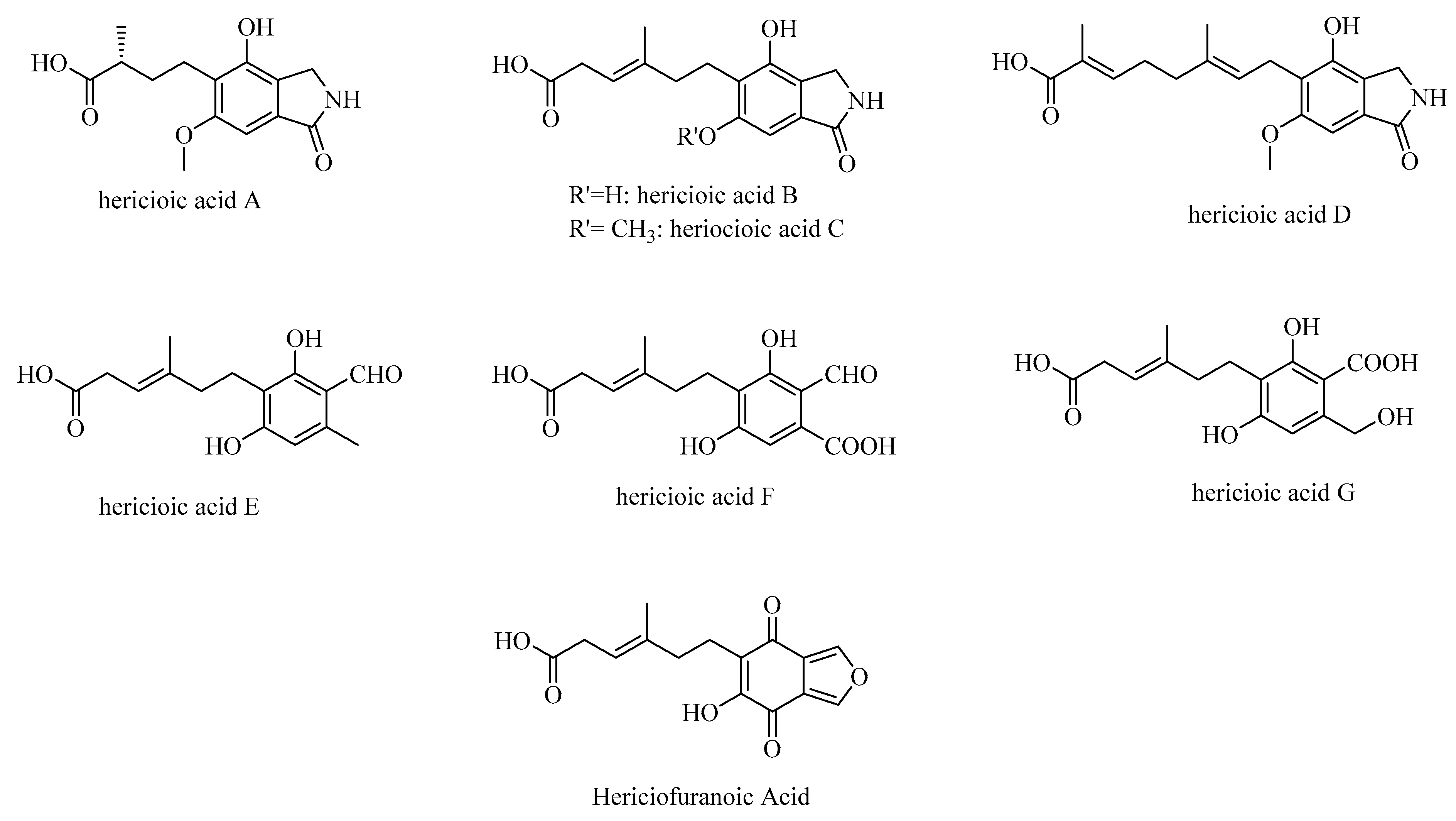
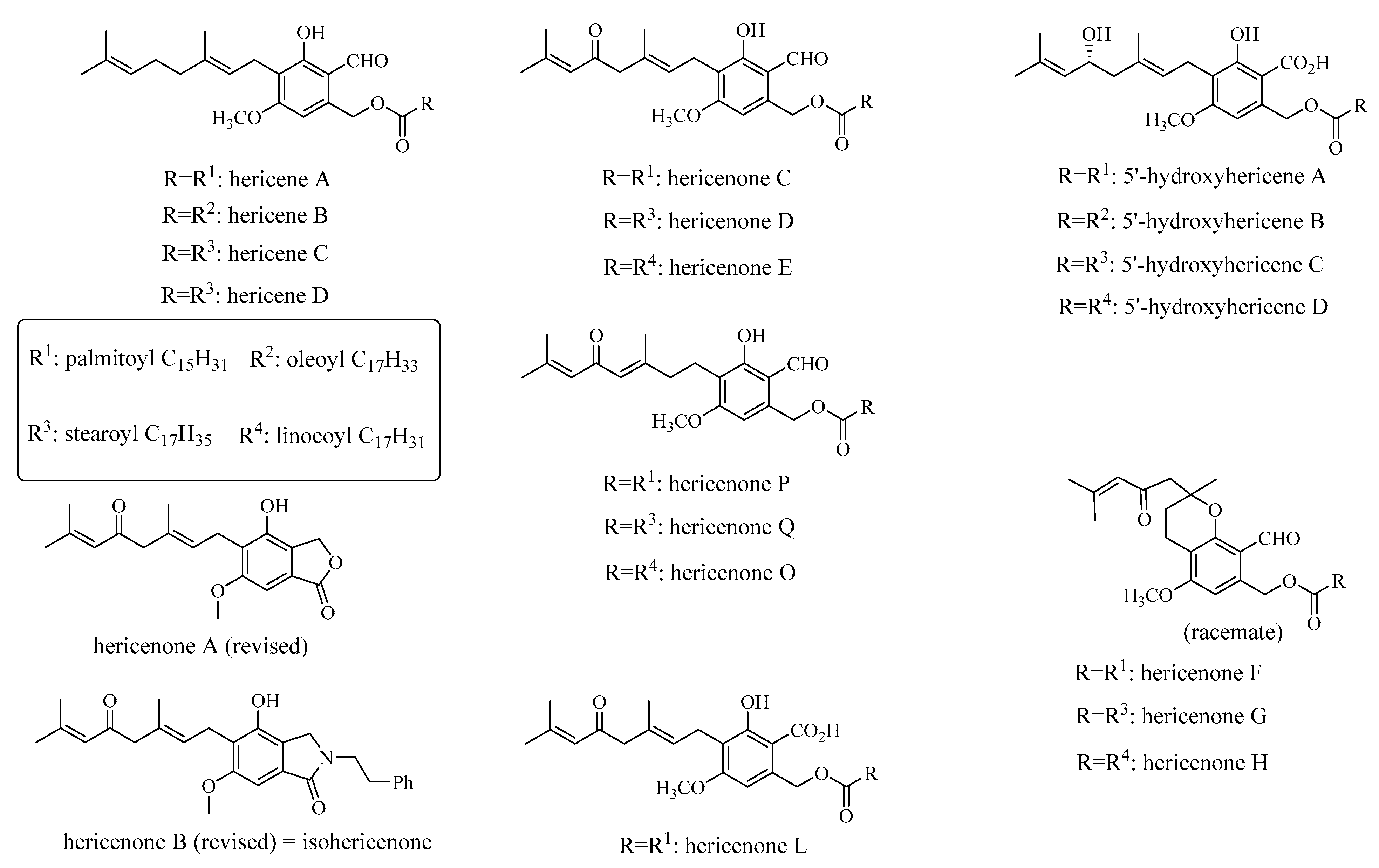
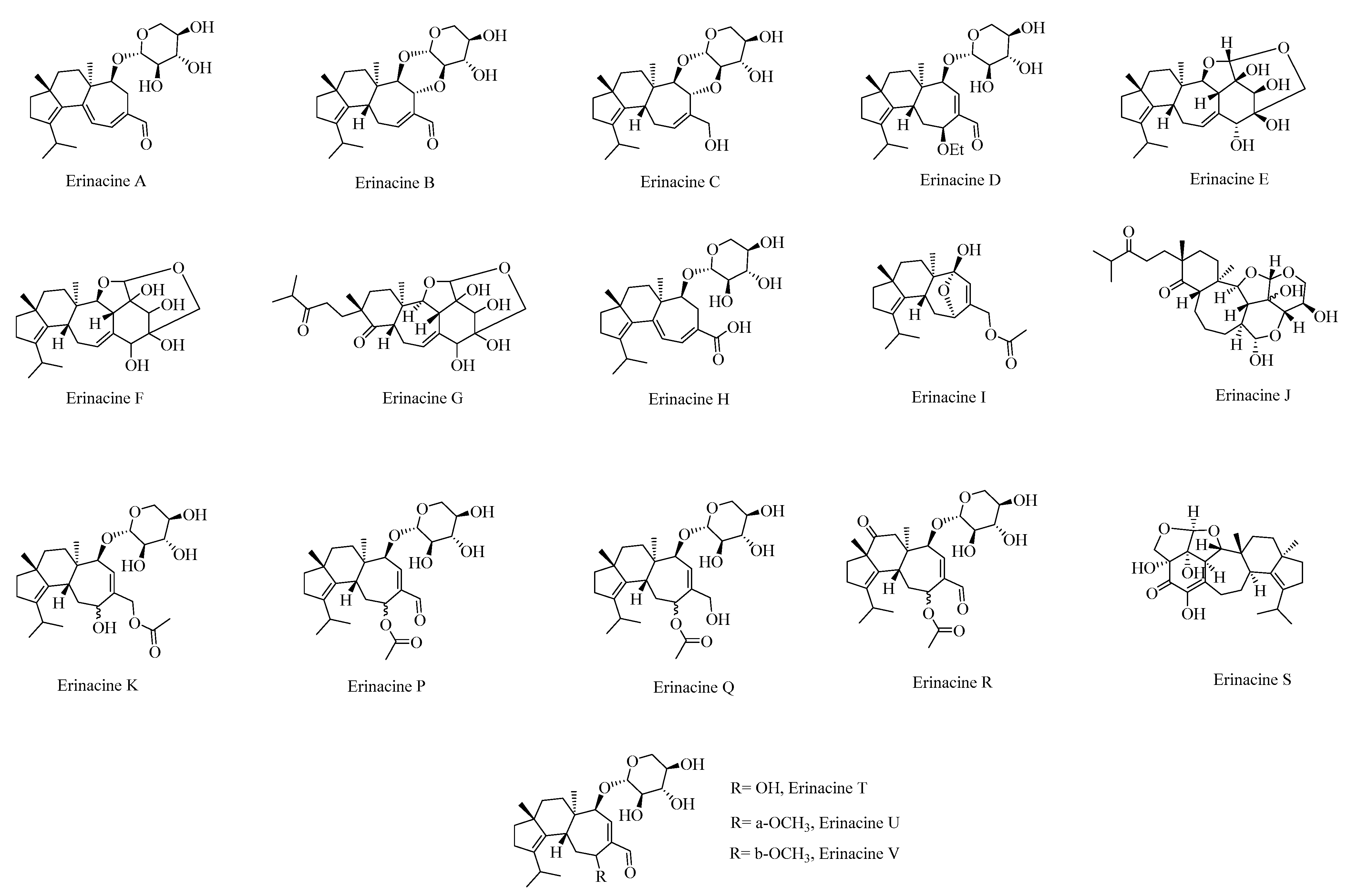
In recent years, research on mushrooms belonging to the Hericium genus has attracted considerable attention due to their unique appearance and well-known medicinal properties. These mushrooms are abundant in bioactive chemicals like polysaccharides, hericenones, erinacines, hericerins, resorcinols, steroids, mono- and diterpenes, and corallocins, alongside essential nutrients. These compounds demonstrate beneficial bioactivities which are related to various physiological systems of the body, including the digestive, immune, and nervous systems. Extensive research has been conducted on the isolation and identification of numerous bioactive chemicals, and both in vitro and in vivo studies have confirmed their antimicrobial, antioxidant, immunomodulatory, antidiabetic, anticholesterolemic, anticancer, and neuroprotective properties. Therefore, this review aims to provide a comprehensive summary of the latest scientific literature on the chemical composition and secondary metabolites profile of Hericium spp. through an introduction to their chemical characteristics, speculated biosynthesis pathways for key chemical families, potential toxicological aspects, and a detailed description of the recent updates regarding the bioactivity of these metabolites.
Keywords: Hericium; secondary metabolites; fruiting bodies; mycelia; polysaccharides; bioactive compounds; neurotrophins Hericium; secondary metabolites; fruiting bodies; mycelia; polysaccharides; bioactive compounds; neurotrophins
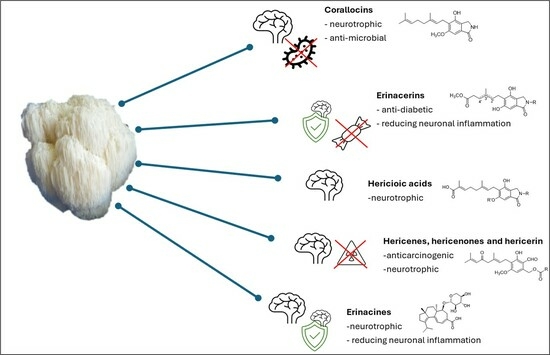
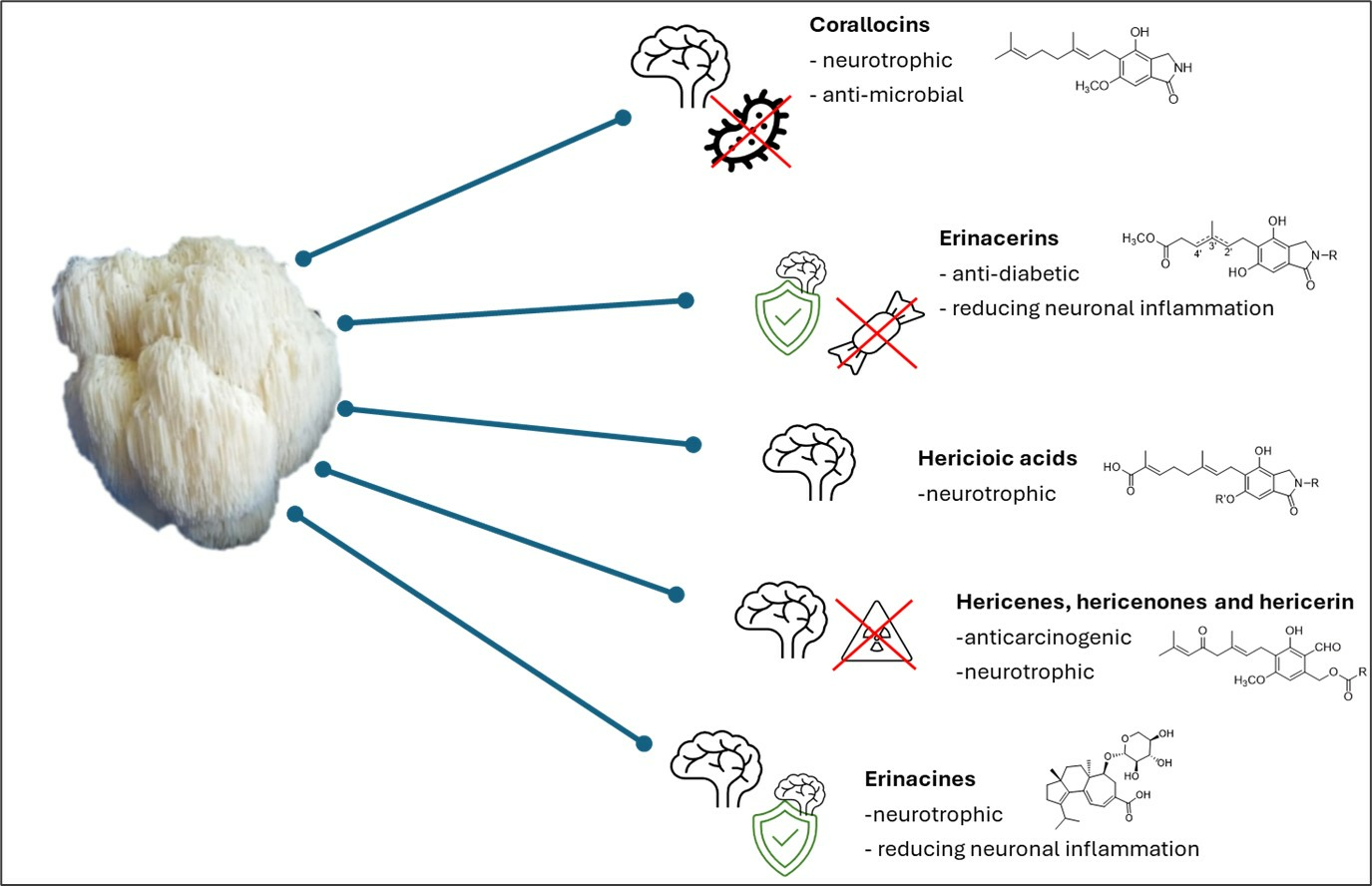
Graphical Abstract