Review

Lp(a) in the Pathogenesis of Aortic Stenosis and Approach to Therapy with Antisense Oligonucleotides or Short Interfering RNA

by
Assunta Di Costanzo
1,*,
Ciro Indolfi
1,
Anna Franzone
2,
Giovanni Esposito
2 and
Carmen Anna Maria Spaccarotella
2
1
Division of Cardiology, Cardiovascular Research Center, University Magna Graecia Catanzaro, 88100 Catanzaro, Italy
2
Division of Cardiology, Department of Advanced Biomedical Sciences, University of Naples Federico II, 80131 Naples, Italy
*
Author to whom correspondence should be addressed.
Int. J. Mol. Sci. 2023, 24(19), 14939; https://doi.org/10.3390/ijms241914939
Submission received: 24 August 2023 / Revised: 28 September 2023 / Accepted: 2 October 2023 / Published: 6 October 2023
(This article belongs to the Special Issue Lipoprotein(a) and Cardiovascular Diseases)

Abstract

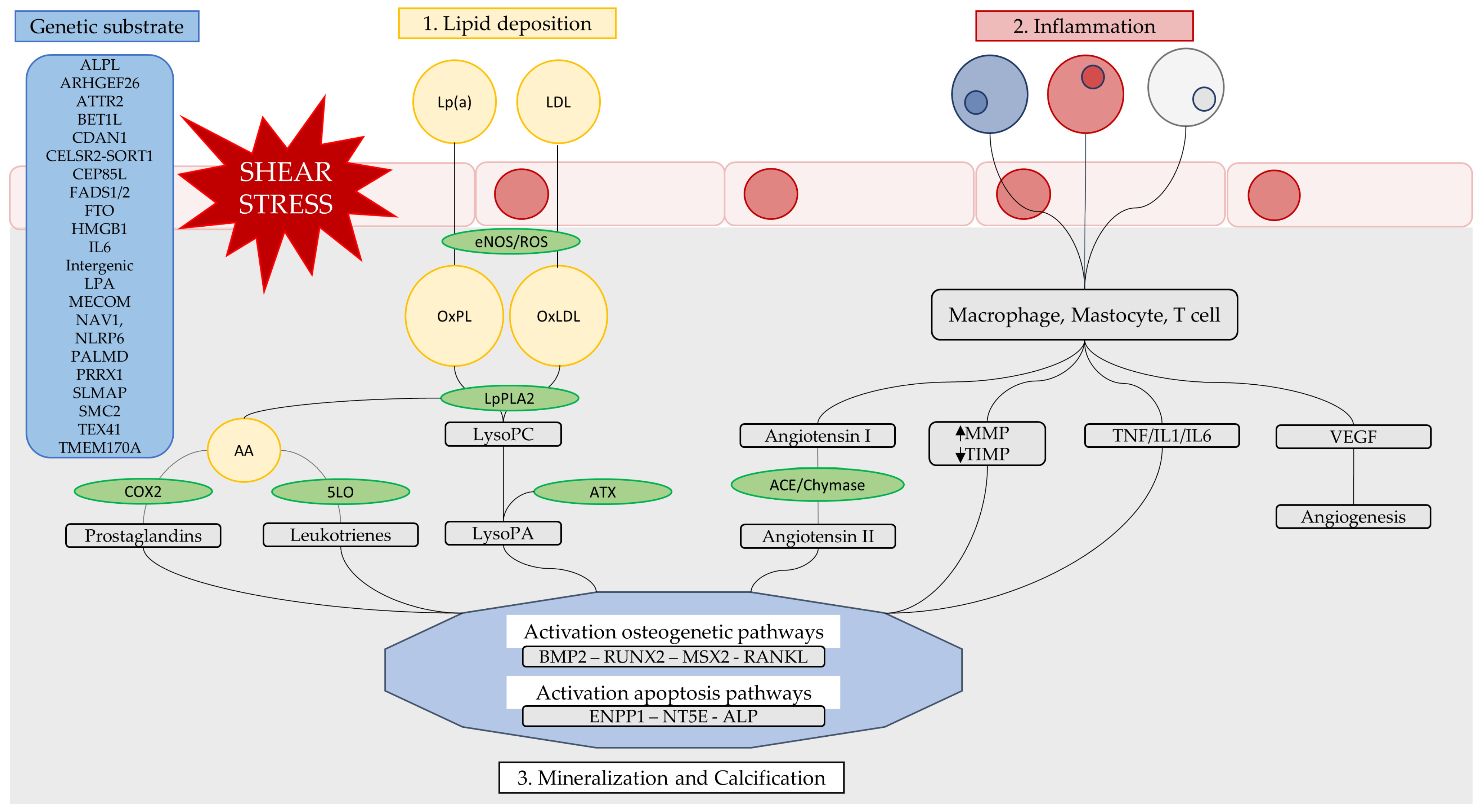
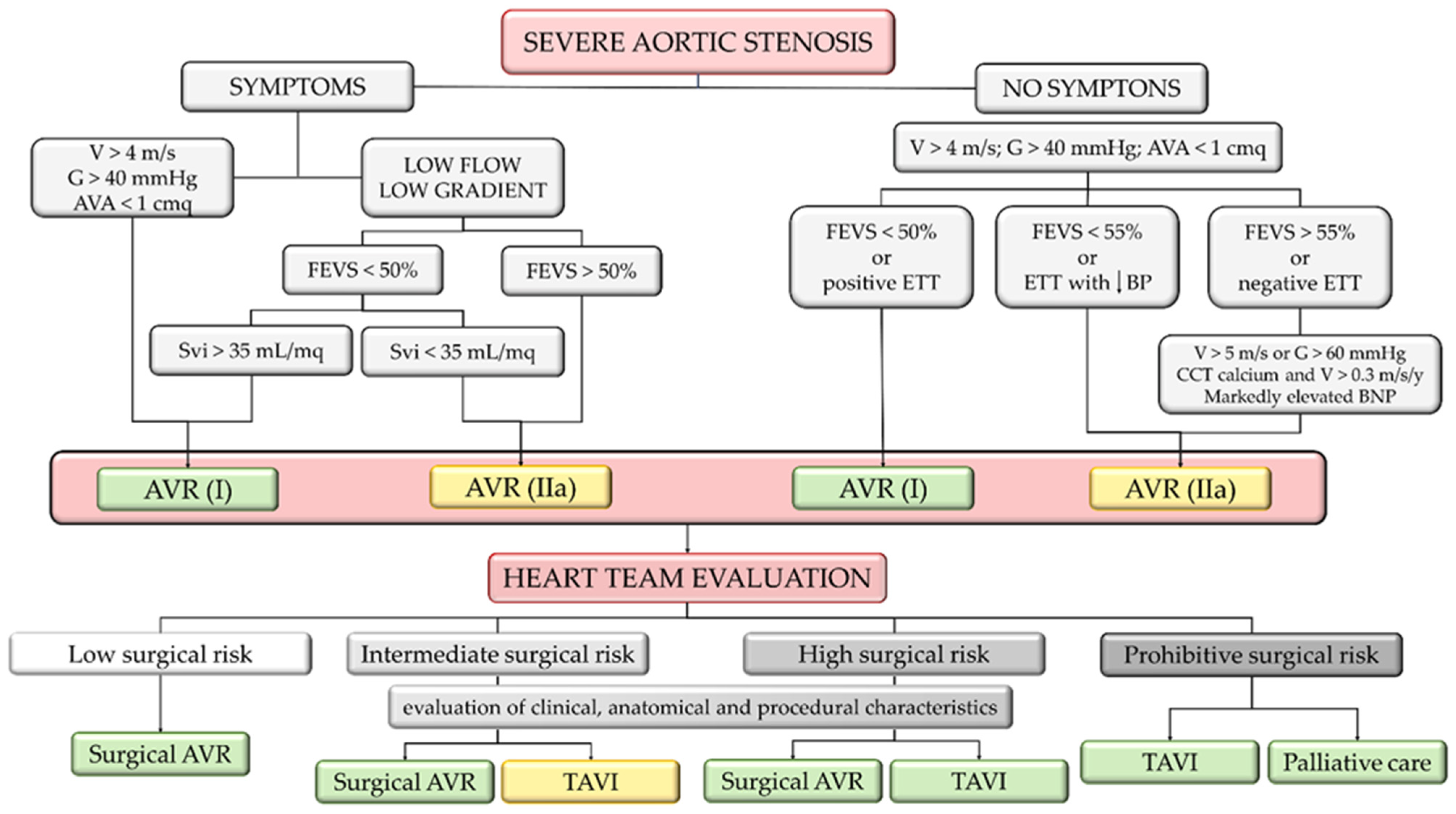
To date, no medical therapy can slow the progression of aortic stenosis. Fibrocalcific stenosis is the most frequent form in the general population and affects about 6% of the elderly population. Over the years, diagnosis has evolved thanks to echocardiography and computed tomography assessments. The application of artificial intelligence to electrocardiography could further implement early diagnosis. Patients with severe aortic stenosis, especially symptomatic patients, have valve repair as their only therapeutic option by surgical or percutaneous technique (TAVI). The discovery that the pathogenetic mechanism of aortic stenosis is similar to the atherosclerosis process has made it possible to evaluate the hypothesis of medical therapy for aortic stenosis. Several drugs have been tested to reduce low-density lipoprotein (LDL) and lipoprotein(a) (Lp(a)) levels, inflammation, and calcification. The Proprotein Convertase Subtilisin/Kexin type 9 inhibitors (PCSK9-i) could decrease the progression of aortic stenosis and the requirement for valve implantation. Great interest is related to circulating Lp(a) levels as causally linked to degenerative aortic stenosis. New therapies with ASO (antisense oligonucleotides) and siRNA (small interfering RNA) are currently being tested. Olpasiran and pelacarsen reduce circulating Lp(a) levels by 85–90%. Phase 3 studies are underway to evaluate the effect of these drugs on cardiovascular events (cardiovascular death, non-fatal myocardial injury, and non-fatal stroke) in patients with elevated Lp(a) and CVD (cardiovascular diseases). For instance, if a reduction in Lp(a) levels is associated with aortic stenosis prevention or progression, further prospective clinical trials are warranted to confirm this observation in this high-risk population.
Keywords: Lp(a); dyslipidemia; inflammation; calcification; aortic valve stenosis; TAVI; AVR; pelacarsen; olpasiran; artificial intelligence Lp(a); dyslipidemia; inflammation; calcification; aortic valve stenosis; TAVI; AVR; pelacarsen; olpasiran; artificial intelligence