


Abstract
Infertility represents a significant global health issue, and the use of antioxidants in sperm preservation techniques provides an effective strategy to improve sperm quality. This study aims to examine the phytochemical components of Phlai and Njui extracts and their antioxidant effects on enhancing the motility of fresh bull semen. Among the extracts, Njui contained the highest levels of total phenolics, total tannins, and lycopene contents along with the strongest DPPH, ABTS, and AOPP inhibition. Phlai contained the highest levels of total flavonoids. Njui and combined extracts showed the strongest AGE inhibition. The motility of sperm in the semen extender supplemented with Phlai, Njui, and their combination exhibited greater total motility, particularly progressive motility, compared to sperm in the normal extender after 48–72 h. Furthermore, there was a reduced generation of ROS compared to sperm in the normal extender and with vitamin E acetate supplementation after 24–72 h. In conclusion, Phlai and Njui extracts, plentiful in bioactive chemicals, showed significant antioxidant activity and enhanced sperm motility by neutralizing free radicals and strengthening antioxidant defenses. The findings indicate that Phlai and Njui, especially in combination, provide advantages for sperm preservation.
1. Introduction
Male reproductive dysfunction is a significant contributor to infertility, which has considerable implications for population growth [1]. Globally, half of infertility cases are caused by male factors, which are related to sperm parameters [2]. An imbalance between reactive oxygen species (ROS) and the antioxidant defense system leads to cellular damage, recognized as a significant contributor to male infertility [3].
Lipid peroxidation, protein oxidation, and DNA damage have been demonstrated to impair spermatogenesis, resulting in decreased sperm concentration, motility, viability, and normal morphology [4,5,6,7]. The characteristics of sperm quality are essential factors influencing male reproductive capacity [5,6]. Oxidative stress has been demonstrated to reduce fertilization potential, thereby contributing to male infertility [3]. As a result, the application of assisted reproductive technologies (ARTs) in humans and animals has risen to enhance reproductive achievements [8]. Sperm quality is a crucial determinant of procedural success across these applications.
Before artificial insemination, semen samples are gathered and processed to isolate high-quality spermatozoa for preservation and future application [9]. Semen extenders are essential for preserving spermatozoa during storage and cryopreservation by guarding cellular structures and reducing oxidative stress linked to freezing and natural deterioration [9,10]. A previous study has demonstrated that forward progressive motility is a crucial factor in fertilization success [2,11], and high-quality extenders facilitate effective sperm movement towards the oocyte [12]. Nonetheless, the success rates of artificial insemination of bulls remain relatively low, approximately 40–50% in 2021 [13], thereby increasing operational expenses and constraining reproductive efficiency.
Male reproductive performance may be enhanced by reducing oxidative stress, with antioxidant consumption acting as an essential protective factor [3]. Synthetic antioxidants, as effective, are costly and have been associated with substantial deleterious effects [14], including disruption of DNA synthesis, carcinogenic potential, fibrosis, and embryotoxicity [15]. Consequently, natural antioxidants have received increased popularity as safer and more sustainable options for reducing oxidative stress.
Phlai (Zingiber montanum: Z. montanum) is a Thai medicinal plant recognized as an essential herbal ingredient by the National List of Essential Medicines, Ministry of Public Health, Thailand. Phlai has been extensively utilized in traditional medicine, and prior research has shown that it contains essential phytochemicals with anti-inflammatory, antioxidant, and antibacterial activities [16,17]. Njui (Bombax ceiba L.: B. ceiba) is a remarkable flowering tree from the Bombacaceae family, demonstrating several biological properties such as anti-inflammatory, aphrodisiac, antibacterial, hepatoprotective, anti-diabetic, anti-aging, and hypotensive benefits [18,19,20,21]. The stamen of Njui is acknowledged as a traditional medicinal ingredient with significant economic value, but the petals are typically considered agricultural byproducts. Research on the biological characteristics of Njui petals is currently limited.
Furthermore, the potential use of Phlai, Njui petals, and their combined extracts in enhancing sperm resilience and improving sperm preservation in semen extender for artificial insemination has not been thoroughly explored. Accordingly, the present study aimed to investigate the effects of Phlai and Njui petal extracts supplemented in bull semen extenders or diluents on antioxidant potential and sperm motility, with the objective of reducing the costs associated with artificial insemination, improving fertilization success rates, and providing insights for future approaches in human sperm preservation.
2. Results
2.1. Detection and Measurement of Phytochemical Constituents
The levels of total phenolics, tannins, flavonoids, monomeric anthocyanins, and lycopene of Phlai rhizome and Njui petal are presented in Table 1. Njui extract had significantly the highest total phenolic and total tannin contents, followed by the mixture of Phlai and Njui, and the Phlai extract. In contrast, the total flavonoid content was significantly highest in the Phlai extract, followed by the mixture and the Njui extract. Pure Njui and the mixture had significantly higher lycopene content than the Phlai extract. Total monomeric anthocyanins were not detected in any of the extracts (Table 1).
Table 1.
Total phenolic, total tannins, total flavonoid, total monomeric anthocyanins, and lycopene content of Phlai and Njui extracts.
Representative HPLC chromatograms of the Phlai extract are displayed in Figure S1. Quantification was carried out by comparing the peak areas of sample constituents with those of standard compounds of known concentrations. The Phlai extract contained significantly higher amounts of capsaicin, apigenin, kaempferol, and quercetin than the mixture and the Njui extract. Apigenin, kaempferol, and quercetin were not detected in the Njui extract. However, the Njui extract significantly showed the highest concentration of gallic acid, chlorogenic acid, ellagic acid, and rutin, followed by the mixture extract and the Phlai extract (Table 2).
Table 2.
The values of capsaicin, gallic acid, chlorogenic acid, ellagic acid, apigenin, kaempferol, rutin, and quercetin of Phlai and Njui extracts.
2.2. Antioxidant and Anti-Glycation Capacities in Cell-Free System
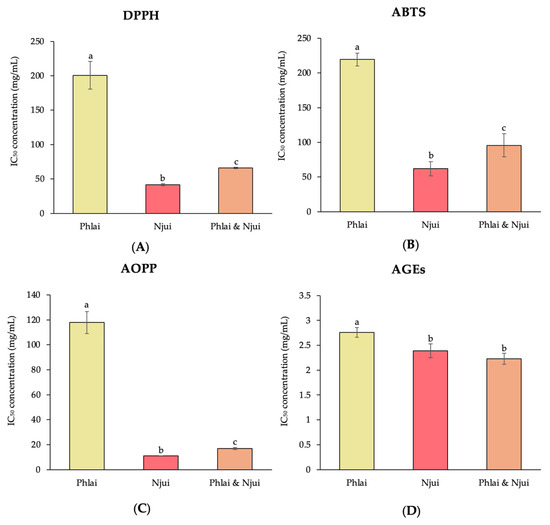
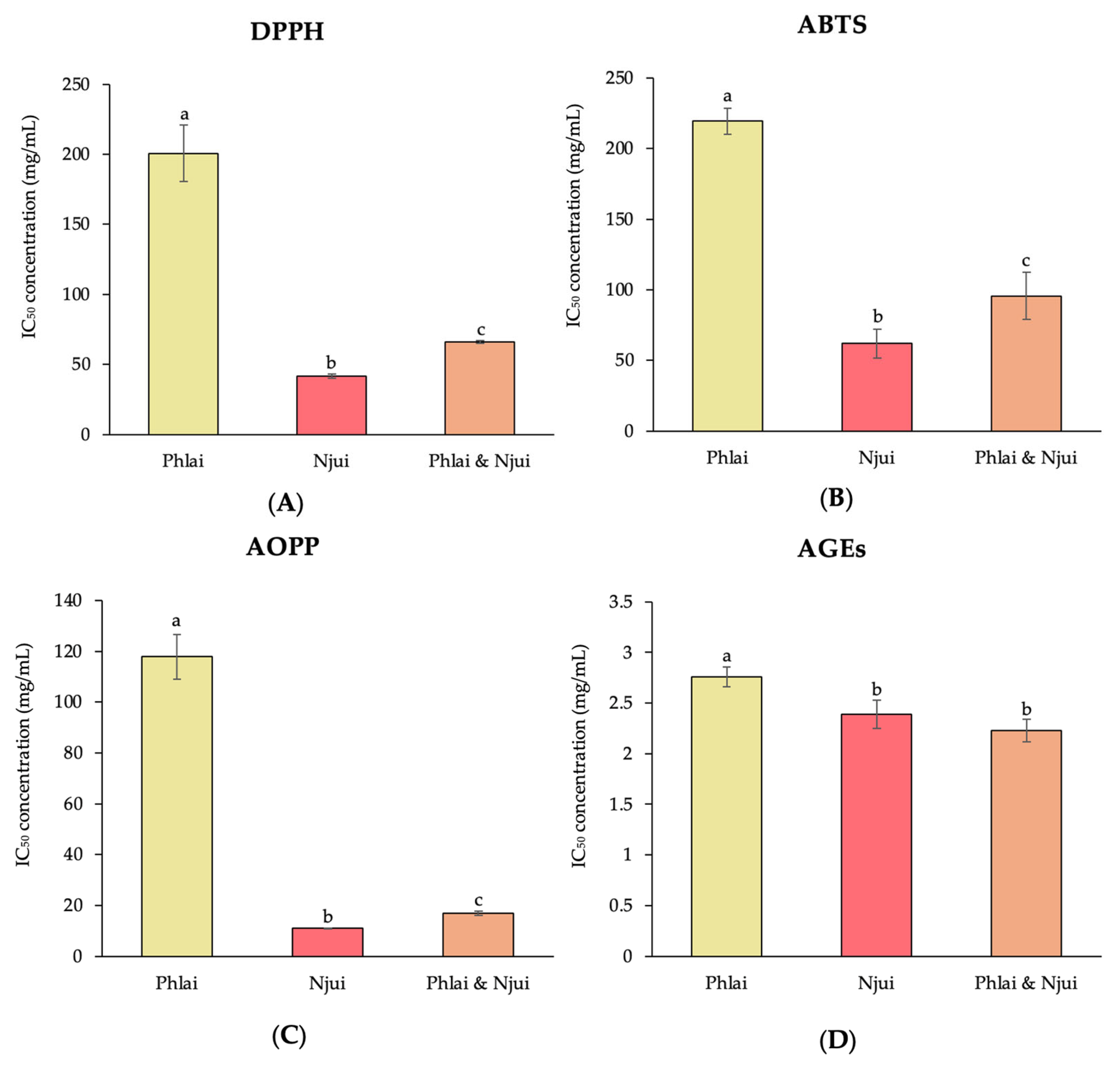
The half-maximal inhibitory concentrations (IC50) for 2,2-diphenyl-1-picrylhydrazyl (DPPH), 2,2′-azino-bis (3-ethylbenzothiazoline-6-sulfonic acid) (ABTS), and advanced oxidation protein product (AOPP) inhibition were significantly lower for the Njui extract compared with the Phlai and mixed extracts (Figure 1A–C). Additionally, the Njui and mixed extracts exhibited significantly lower IC50 values for the inhibition of advanced glycation end products (AGEs) than the Phlai extract (Figure 1D).
Figure 1.
The half-maximal inhibitory concentration of DPPH (A), ABTS (B), AOPP (C), and AGEs (D) of the Phlai, the Njui, and the mixture of Phlai and Njui extracts are presented as mean value ± SEM (error bars). Data were collected from three replications (n = 3). Different superscript letters indicate significant differences between groups at p < 0.05. All parameters were analyzed by one-way ANOVA followed by Duncan’s test.
2.3. Cytotoxicity Determination
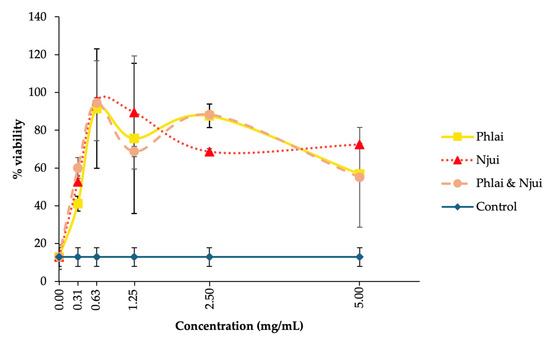
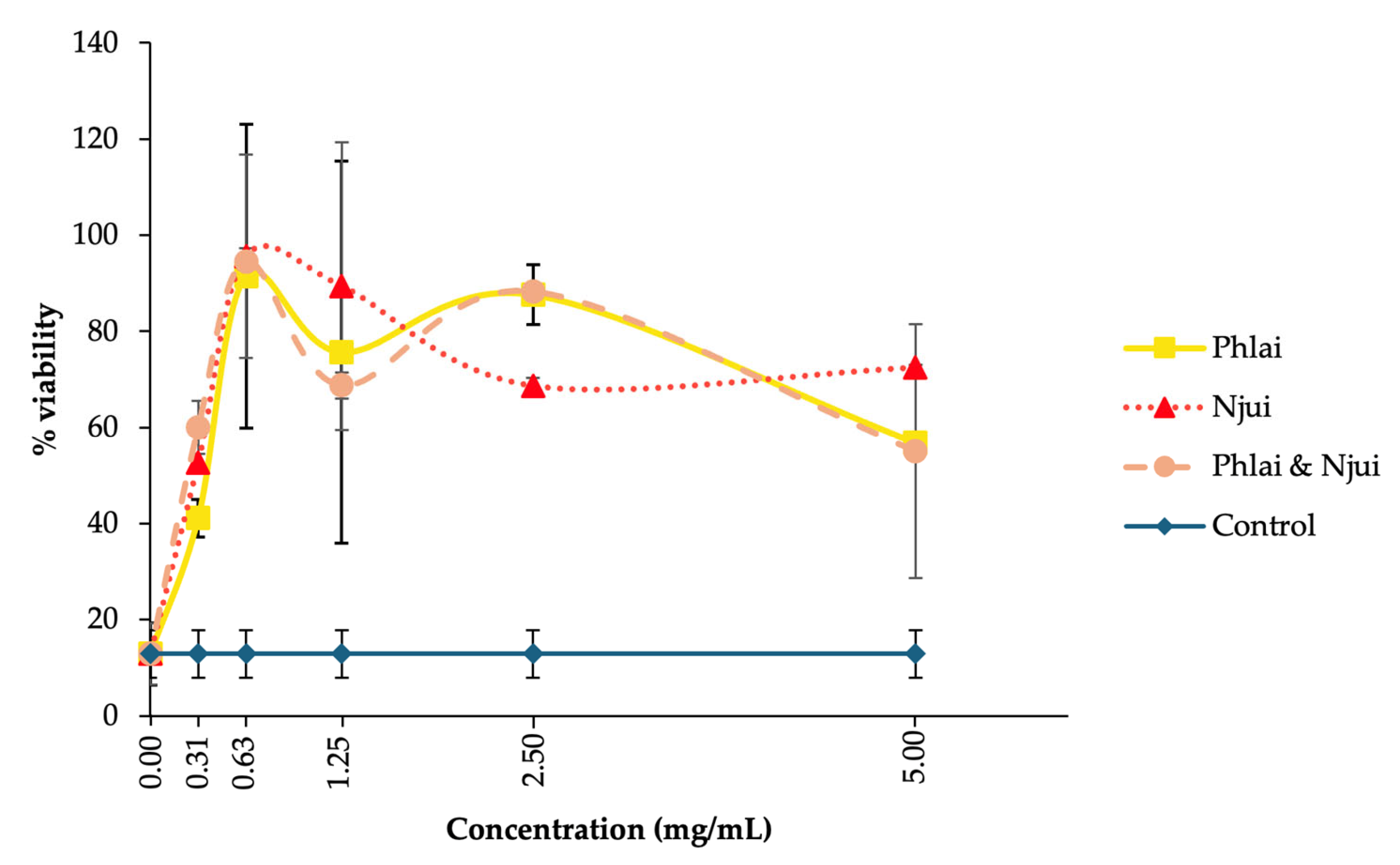
An MTT assay (3-[4,5-dimethylthiazol-2-yl]-2,5-diphenyl tetrazolium bromide) was performed to assess cytotoxicity in bull sperm and to determine the appropriate extract concentration for subsequent sperm quality analyses. Among the normal control groups treated with Phlai, Njui, and the combined extracts, the 0.63 mg/mL dose yielded the highest sperm viability after 3 h of incubation at 37 °C, with viability rates of 91.49%, 95.63%, and 94.48% of the initial values, respectively (Figure 2). These treatments demonstrated improved sperm preservation compared to the untreated control, which exhibited a viability reduction to 12.87% from the beginning of the experiment.
Figure 2.
Sperm viability (%) of bull semen treatment with Phlai, Njui, and combined extracts at concentrations of 0.31, 0.63, 1.25, 2.5, and 5 mg/mL compared with the normal control. Data were collected from three replications (n = 3). Values are presented as mean ± SEM (error bars).
2.4. Sperm Motility
The proportion of local motility (LM), the sperm movement restricted to a small area without forward progression, was significantly reduced in the extender supplemented with vitamin E acetate and Phlai extract after 24 h of incubation at 4–5 °C compared with the normal extender. Furthermore, after 48 h of incubation, the extender containing the combined extracts showed a significant increase in progressive motility (PM) relative to the normal extender, while sperm immotility (IM) was significantly decreased compared with the control. In addition, total motility (TM) and PM were significantly enhanced in extenders containing Phlai, Njui, or the combined extracts, whereas local motility (LM) and IM were significantly reduced compared with the normal control (Table 3).
Table 3.
The proportion of total sperm motility (TM), progressive sperm motility (PM), progressive fast sperm motility (PFM), progressive slow sperm motility (PSM), progressive circular sperm motility (PCM), local sperm motility (LM), and sperm immotility (IM) of extender with Phlai, Njui, and combined extracts compared to normal extender from beginning to 72 h incubation at 4–5 °C.
2.5. Reactive Oxygen Species Levels in Spermatozoa
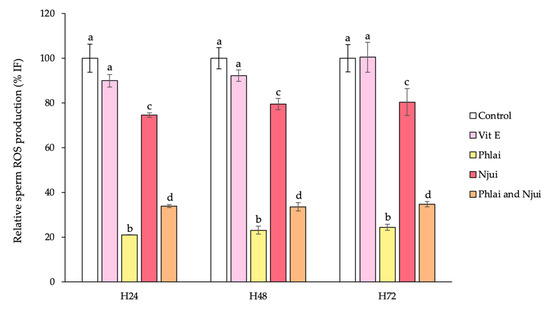
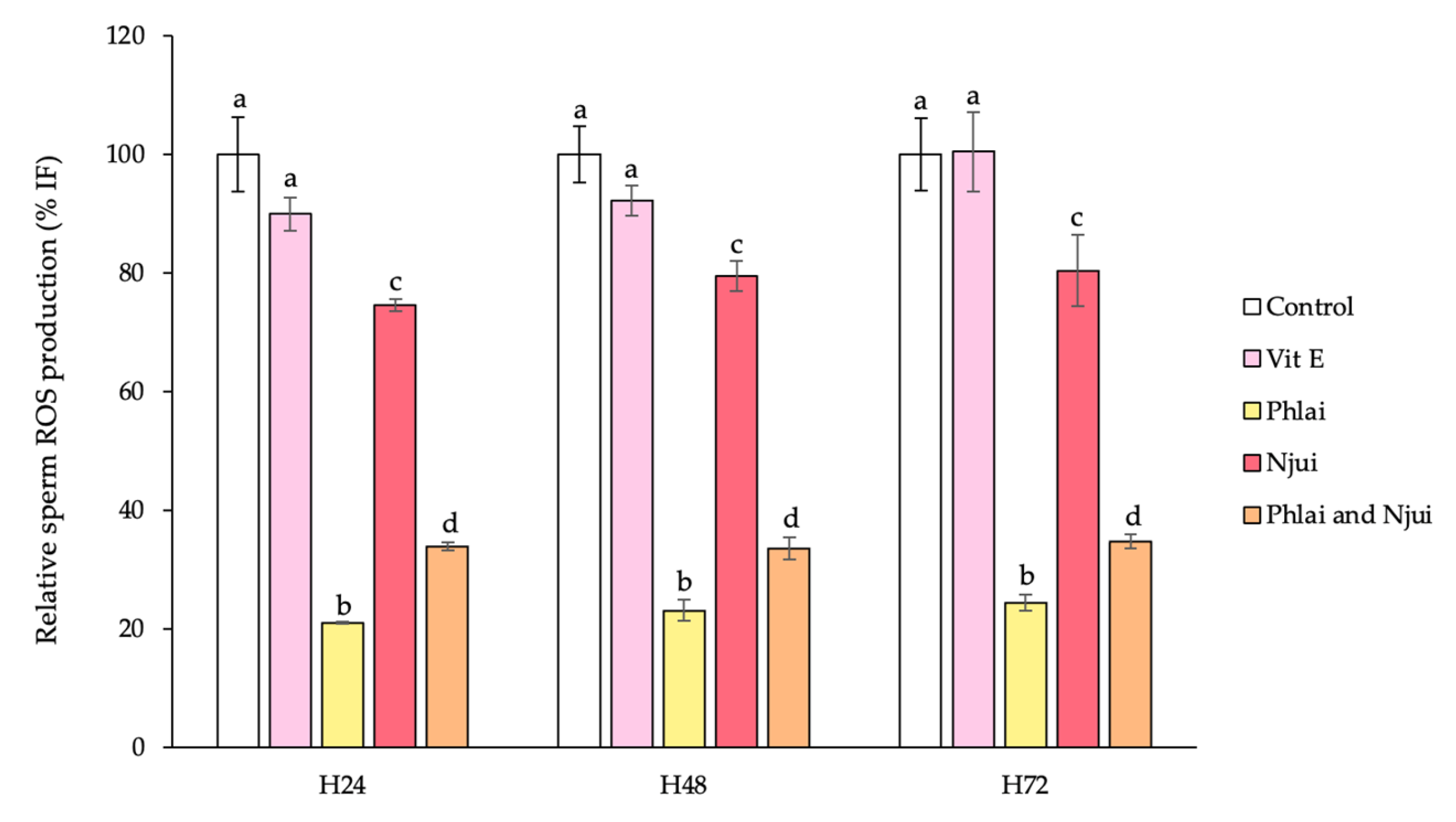
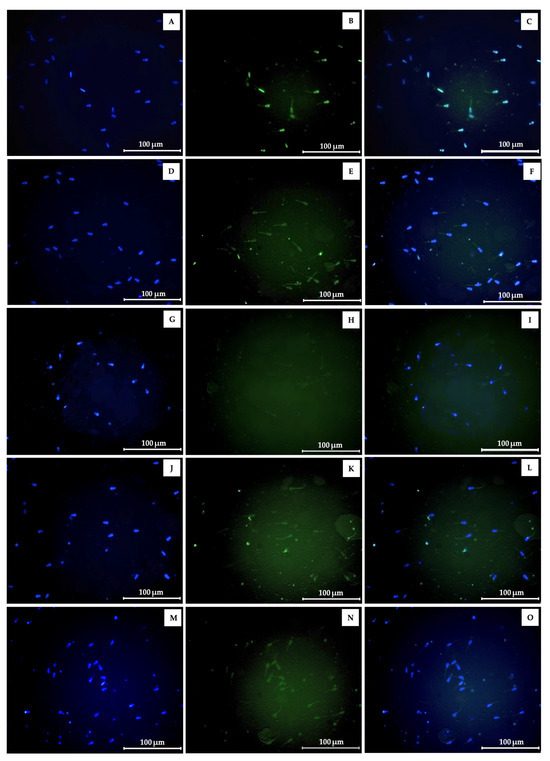
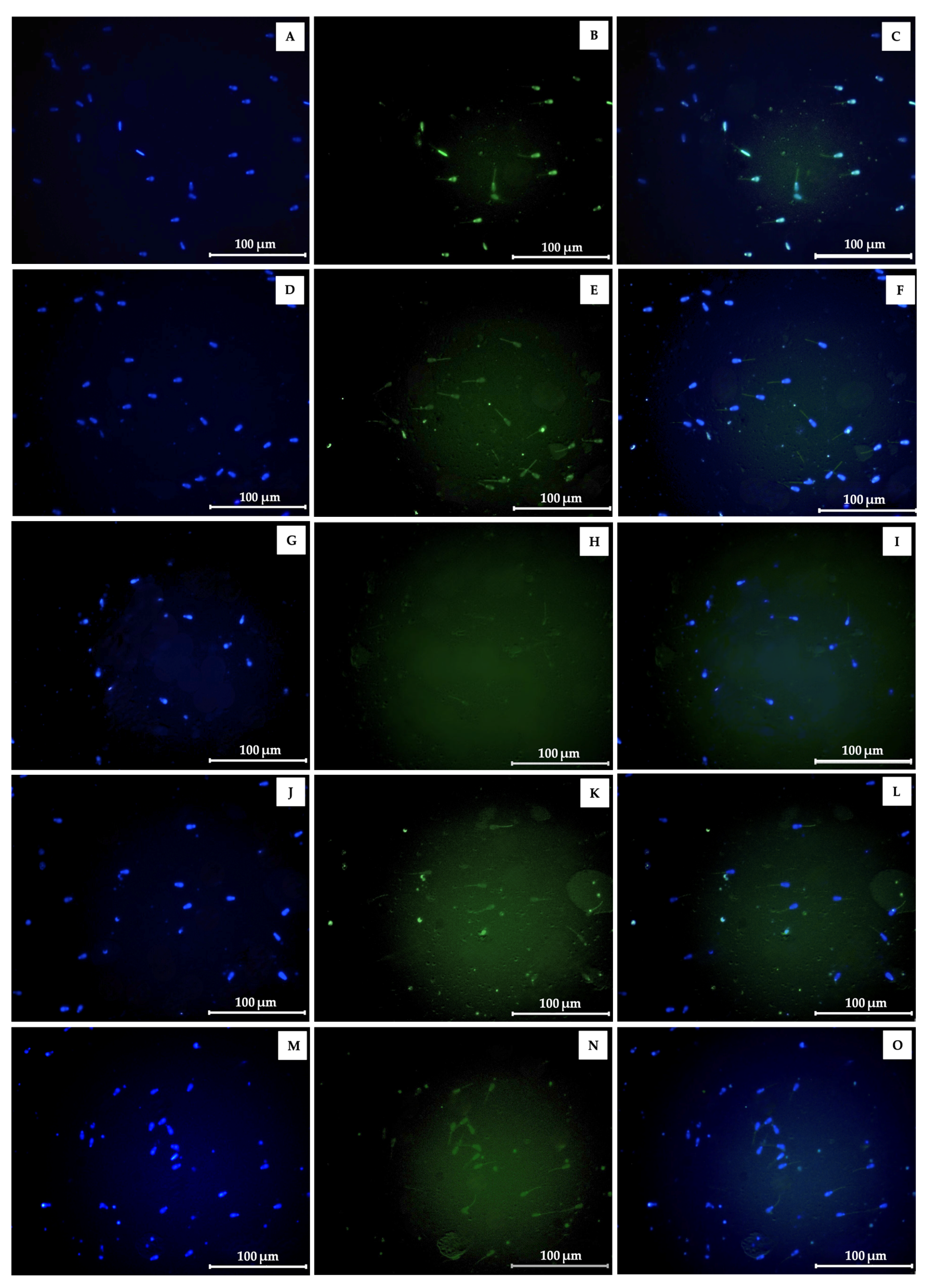
The relative ROS production in bovine spermatozoa preserved in various extender formulations at 24, 48, and 72 h is shown in Figure 3. Sperm samples incubated in the extender with Phlai, Njui, and the combined extracts exhibited significantly lower ROS levels compared to those in the standard egg-yolk extender and the extender supplemented with vitamin E acetate across all time points. Additionally, the morphological appearance and ROS fluorescence intensity of sperm in the normal extender after 24 h of incubation are illustrated in Figure 4.
Figure 3.
Mean ± SEM (with error bars) of relative sperm ROS production in fresh bull sperm samples extended under the following conditions: control, Vitamin E acetate (Vit E), Phlai, Njui, and the combined extract after incubation at 4–5 °C for 24, 48, and 72 h. Data were derived from three independent replicates (n = 3). Different superscript letters indicate significant differences between groups at p < 0.05. The %IF (fluorescence intensity) indicates the percentage of fluorescence intensity relative to the control extender, representing the level of ROS activity in sperm cells. All parameters were analyzed by one-way ANOVA followed by Duncan’s test.
Figure 4.
General morphological appearance and ROS fluorescence intensity of cattle sperm in the normal (A–C), vitamin E acetate (D–F), Phlai (G–I), Njui (J–L), and the combined (M–O) extenders after 24 h, stained with DCFH-DA (DCFH-DA: 2′,7′-dichlorodihydrofluorescein diacetate/DAPI (4′,6-Diamidino-2-Phenylindole, Dihydrochloride) and observed at 400× magnification under a fluorescence microscope (Zeiss, Oberkochen, Germany). Sperm stained blue with DAPI represent the total sperm population, whereas those emitting green fluorescence after DCFH-DA staining indicate ROS-producing sperm. The merged image showing both blue and green signals is presented in the right column.
3. Discussion
This study employed ultrasonic extraction, a modern technique that utilizes ultrasound energy together with suitable solvents to efficiently isolate target compounds from natural products [22]. The application of ultrasound improves solvent penetration and mass transfer, thereby reducing extraction time, lowering energy requirements, and minimizing the temperatures needed during the extraction process [23]. The Njui extract contained the highest amount of total phenolics, total tannins, and lycopene contents, followed by the combined and the Phlai extracts, respectively. Similarly, previous studies have shown that the flowers and stamens of Njui (B. ceiba) contain high levels of total phenolic and total tannin contents [24,25,26]. However, when using the same extraction method, the Njui petal extract exhibited higher concentrations of phenolics and tannins than the stamen extract. Nevertheless, the Phlai extract contained the highest amount of total flavonoid content, followed by the combined and Njui extracts. Flavonoids, especially members of the flavone and flavanol subclasses, are commonly responsible for yellow coloration in plant tissues, as they exhibit characteristic light absorption properties that produce visible yellow hues [27,28]. Therefore, the yellow color of Phlai rhizomes suggests that they contain a higher concentration of flavonoids compared to the red-colored Njui petals.
The HPLC chromatogram of the Njui petal extract revealed the presence of capsaicin, gallic acid, chlorogenic acid, ellagic acid, and rutin, whereas the Phlai extract exhibited capsaicin, gallic acid, chlorogenic acid, ellagic acid, apigenin, kaempferol, rutin, and quercetin. The Phlai extract presented a higher concentration of capsaicin, apigenin, kaempferol, and quercetin compared to the Njui and combined extracts. Capsaicin has been reported to rescue sperm damage in rat models of testicular stress [29]. Apigenin and kaempferol showed protective effects in sperm cryopreservation models, enhancing post-thaw motility and membrane integrity, probably via ROS scavenging and stability of mitochondrial and heat-shock responses [30,31]. Quercetin reliably promotes sperm motility and viability in a dose and time-dependent manner, improving the performance of frozen-thawed sperm [32]. However, the Njui extract showed a higher concentration of gallic acid, chlorogenic acid, ellagic acid, and rutin than the Phlai and combined extracts. Gallic acid and rutin have demonstrated the ability to enhance sperm motility, viability, and steroidogenic characteristics in animal models by restoring antioxidant defenses [33,34]. Chlorogenic and ellagic acids protect testicular tissue and spermatozoa from oxidative damage induced by toxicants through ROS scavenging and inflammatory regulation [35,36]. The pure extract had higher levels of several particular bioactive components, but it did not include some important molecules that are linked to male reproductive function. The combined extract, on the other hand, is a better choice because it has all the right chemicals in the right amounts.
The antioxidant activity of the Phlai, Njui, and combined extracts in a cell-free system was determined using DPPH, ABTS, AOPP, and AGE assays. The Njui extract presented significantly lower IC50 concentrations in DPPH, ABTS, and AOPP assays than the Phlai and combined extracts, which indicates higher antioxidant capacity. Consequently, Njui’s enhanced performance indicates a superior capacity to neutralize free radicals and reduce oxidative protein damage compared to the Phlai and combined extracts. The rise in activity is likely due to greater quantities of total phenolics, tannins, and particular phenolic acids (e.g., gallic acid, chlorogenic acid, and ellagic acid), which are well-established for their potent hydrogen-donating and electron-transfer capabilities [37,38,39]. Moreover, both the Njui and combined extracts had significantly lower IC50 values for AGE inhibition compared to the Phlai extract, indicating a superior ability to inhibit glycoxidation processes. The production of AGEs contributes to oxidative stress and cellular dysfunction [40]. Thus, the Njui and combined extracts’ capacity to suppress AGE accumulation indicates possible protective effects on biomolecules in oxidative environments.
The MTT findings demonstrate that all tested extracts, including Phlai, Njui, and their combination, showed minimal cytotoxicity towards cattle sperm at the tested concentrations, with the 0.63 mg/mL concentration providing the best viability preservation. Following 3 h of incubation at 37 °C, sperm treated with Njui, Phlai, and combination extracts demonstrated a vitality above 90%, whereas the untreated control demonstrated a significant reduction to 12.87%. The observed protective effects are likely due to the antioxidant and membrane-stabilizing characteristics of the bioactive compounds in the extracts, including phenolics, flavonoids, and other polyphenols, which mitigate oxidative stress and prevent mitochondrial dysfunction, as indicated by the reduction of MTT to formazan in viable sperm [41,42]. Similarly, it had been found that B. ceiba stamen possesses significant antioxidant activity and can sustain sperm viability [25,26].
The findings of the current study indicate that plant extracts, individually and in combination, have varying impacts on sperm motility metrics. The significant decrease in local motility (LM) observed after 24 h in extenders supplemented with vitamin E acetate (positive control) and Phlai extract indicated that these treatments may improve the ratio of physiologically relevant progressive movement, as LM is generally linked to non-productive or energy-inefficient sperm activity [43]. Consequently, the reduction in LM suggests that the Phlai extract and vitamin E acetate may aid in preserving mitochondrial function and enhancing flagellar activity [43]. After 48 h of incubation, the combined extract demonstrated a significant enhancement in sperm motility, indicated by a considerable rise in progressive motility (PM) and a corresponding decrease in immotile sperm (IM). Moreover, extenders containing Phlai, Njui, or their combination significantly enhanced total motility (TM) and progressive motility (PM) while reducing local motility (LM) and immotility (IM) compared to the control, as well as the positive control. The evidence suggests that bioactive components, such as phenolics, flavonoids, and tannins, may function separately or synergistically to enhance energy metabolism, improve membrane fluidity, and maintain ionic homeostasis in spermatozoa. Similarly, prior research indicates that the incorporation of plant-derived antioxidant extracts can preserve sperm quality and alleviate oxidative damage under storage conditions [42,44]. Furthermore, the preceding study has shown that B. ceiba stamen extract promotes cattle sperm motility and viability under oxidative stress, while also increasing epididymal sperm count, thus supporting its role in stimulating spermatogenesis [25,26,45]. Nevertheless, there is limited direct information regarding the influence of Phlai on sperm function, highlighting a knowledge gap. The coordinated enhancement of motility characteristics indicates a transition to more efficient and physiologically appropriate movement patterns, essential for fertilization potential. Moreover, the supplementation of semen extenders with Phlai, Njui, and their combination effectively reduces ROS production in cattle spermatozoa during incubation, which corresponds with the enhancement of sperm motility. Moreover, ROS production of sperm in Phlai supplementation showed the lowest antioxidant capacity, followed by the combined extract and Njui supplementation, which contrasts with the result of the cell-free antioxidant assay, in which Njui showed the highest antioxidant capacity. The difference in cell-free antioxidant levels and sperm model may be the result of the permeability of bioactive substances through the sperm plasma membrane. Phlai contains more lipophilic flavonoids, such as capsaicin, apigenin, kaempferol, and quercetin, which are known to have a greater membrane permeability [46,47]. In contrast, Njui is mostly composed of gallic acid, chlorogenic acid, ellagic acid, and rutin, which are more hydrophilic, have a higher polarity, and limit membrane transport [48,49]. Consequently, compounds derived from Phlai may infiltrate sperm cells more effectively and have enhanced intracellular ROS-scavenging properties than those from Njui. The reduction in ROS likely contributes to maintaining cell membrane integrity and mitochondrial function [3] by supporting increased total motility (TM) and progressive motility (PM), as well as a concomitant decrease in local motility (LM) and immobile spermatozoa (IM). These findings collectively demonstrate the efficacy of herbal extracts, especially in combination, as functional additives in semen extenders to enhance sperm quality and maintain motility during storage. Although this study shows positive results from using the extracts for preserving antioxidant properties and sperm motility in vitro, it is possible that this extract may exert its mechanism of action on sperm, which may affect sperm fertilization. Moreover, although the Njui extract showed strong antioxidant activity in cell-free system, its lower permeability across the sperm membrane may limit its intracellular effect, suggesting that future studies should explore formulation improvements, such as encapsulation, to enhance its biological efficacy. Additionally, the experiments were conducted using semen collected from a limited number of bulls, and the findings were derived from in vitro evaluations only. Further studies involving a larger number of bulls, as well as validation though in vivo fertility trials, are necessary to confirm the practical applicability of the proposed extender formulation.
4. Materials and Methods
4.1. Collection and Preparation of Plant Extracts
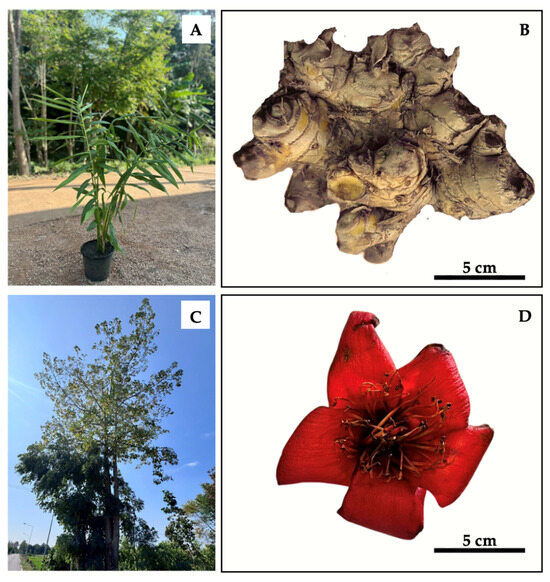
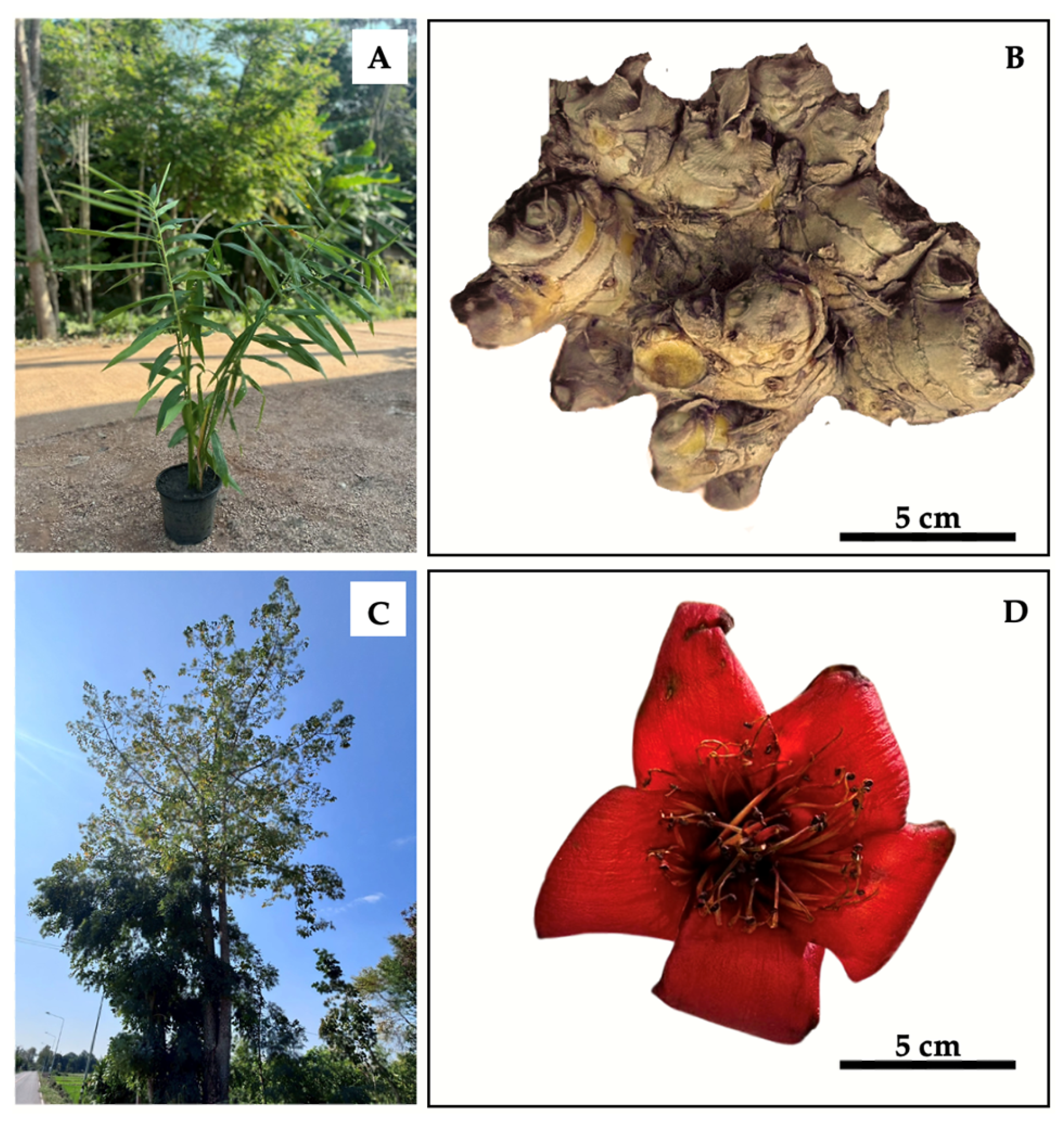
Fresh rhizomes of Phlai (Zingiber montanum), approximately three years old, were purchased from a local herbal market in the Hot district, Chiang Mai province, Thailand. In addition, the petals of Njui (Bombax ceiba) in the red variety were collected from an open field in the lower northern region of Thailand (Laplae district, Uttaradit Province, Thailand). The Phlai rhizomes and Njui petals were thoroughly washed, sliced, and dried using a heat plate. The dried samples were then dehumidified in a hot-air oven at 40 °C for 24 h and pulverized into a fine powder. The powders were extracted using the ultrasonication method, and the extract was subsequently filtered, lyophilized, and stored at −20 °C until use in antioxidant and sperm quality assessment. Phlai and Njui samples were deposited and authenticated at the Herbarium, Faculty of Pharmacy, Chiang Mai University, under the voucher specimen numbers 0023423 and 0223382, respectively. The Phlai tree, Phlai rhizome, Njui tree, and Njui flower are demonstrated in Figure 5.
Figure 5.
General appearance of the Phlai tree (A), Phlai rhizome (B), Njui tree (C), and Njui flower (D).
4.2. Determination of Total Phenolic and Total Tannin Content
The total phenolic and tannin contents of Phlai and Njui extracts were analyzed using the Folin–Ciocalteu colorimetric assay, with slight modifications based on previously described methods [26]. For the determination of total phenolics, 100 µL of each sample (1 mg/mL) was combined with 500 µL of 10% Folin–Ciocalteu reagent and 400 µL of 1 M sodium carbonate (Na2CO3). The mixture was left to react for 15 min at room temperature, after which the absorbance was recorded at 765 nm using a spectrophotometer (BMG LABTECH, Ortenberg, Germany). Gallic acid served as the standard, and the results are expressed as micrograms of gallic acid equivalents (µg GAE) per gram of plant extract.
Similarly, total tannin content was quantified using the same reagent system, where 100 µL of each sample (1 mg/mL) was mixed with 500 µL of 10% Folin–Ciocalteu reagent and 400 µL of 1 M sodium carbonate (Na2CO3). The reaction mixture was incubated for 30 min at room temperature, and the absorbance was measured at 700 nm. Tannic acid was used to construct the calibration curve, and the concentration is expressed as micrograms of tannic acid equivalents (µg TAE) per gram of plant extract.
4.3. Determination of Total Flavonoid Content
The total flavonoid content was analyzed using a colorimetric method. In summary, 100 µL of the plant extract was mixed with 50 µL of 10% aluminum chloride solution and allowed to stand for 30 min at room temperature. Subsequently, 50 µL of potassium acetate and 700 µL of distilled water were added to the mixture. The absorbance was then recorded at 415 nm using a spectrophotometer. The results are expressed as micrograms of quercetin equivalents (µg QE) per gram of plant extract.
4.4. Determination of Total Anthocyanins
The total monomeric anthocyanin content in the plant extracts was quantified using the pH differential spectrophotometric method. Two buffer systems were employed for analysis: 0.025 M potassium chloride (pH 1.0) and 0.4 M sodium acetate (pH 4.5). For each condition, 100 µL of the sample extract was combined with 900 µL of the respective buffer solution in a 5 mL test tube. The mixtures were allowed to stand at room temperature for 15 min. The concentration of monomeric anthocyanins was calculated according to the following equation:
where A represents the absorbance difference between pH 1.0 and pH 4.5, MW is the molecular weight of cyanidin-3-glucoside (449.2 g/mol), and ε denotes the molar absorptivity coefficient (26,900 L·mol−1·cm−1). The results are expressed as micrograms of cyanidin-3-glucoside equivalents (µg C3G) per gram of plant extract.
Monomeric anthocyanin pigment (µg/mL) = (A × MW × DF × 1000)/(ε × 1)
4.5. Determination of Lycopene Content
The lycopene content of Phlai and Njui samples was quantified using a hexane–ethanol–acetone mixture (2:1:1, v/v). Briefly, 1 g of dried sample was mixed with 1 mL of distilled water, vortexed, and incubated at 30 °C for 60 min. Then, 8 mL of the solvent mixture was added, vortexed, and incubated in the dark for 10 min. After adding 1 mL of distilled water and vortexing again, the supernatant was collected, and absorbance was measured at 503 nm using a spectrophotometer. Lycopene content (mg/g dry weight) was calculated using the following equation:
Lycopene = (A503 × 537 × 8 × 0.55)/(0.10 × 172).
4.6. Phytochemical Compound Analysis by High-Performance Liquid Chromatography (HPLC)
The phytochemical composition of Phlai and Njui extracts was analyzed using high-performance liquid chromatography (HPLC) coupled with a diode array detector (Shimadzu SIL-20AC Prominence Autosampler, Shimadzu, Tokyo, Japan) [26]. Separation was performed on a Purospher® Star PR-18 (Agilent 1260 Infinity Binary LC, Santa Clara, CA, USA) endcapped column (150 × 4.6 mm, 5 µm). The mobile phase consisted of solvent A (0.1% formic acid in water, 92%) and solvent B (acetonitrile, 8%), maintained for 10 min. The proportion of solvent B was then increased to 14% at 24 min, 23% at 35 min, and 24% at 60 min. A 20 µL aliquot of the Phlai sample was injected, and detection was carried out at 250, 330, and 360 nm [50], with spectra recorded between 200 and 400 nm. Compound identification was based on comparison of retention times and UV–Vis spectral profiles with those of reference standards. The concentrations of capsaicin, gallic acid, chlorogenic acid, ellagic acid, apigenin, kaempferol, rutin, and quercetin were calculated using the external calibration curves with coefficients of determination (R2) ≥ 0.99.
4.7. Determination of Antioxidant Properties
4.7.1. Assay of 2,2-Diphenyl-1-picrylhydrazyl (DPPH) Radical Scavenging Activity
The antioxidant potential of Phlai and Njui extracts was assessed using the DPPH free radical scavenging assay. Briefly, 50 µL of each extract at different concentrations was mixed with 200 µL of 0.004% DPPH solution prepared in methanol. Vitamin E acetate was used as a reference antioxidant. The reaction mixtures were incubated in the dark at room temperature for 30 min, after which absorbance was recorded at 515 nm using a microplate reader. The half-maximal inhibitory concentration (IC50) values were subsequently calculated.
4.7.2. Assay of 2,2′-Azino-di-3-ethylbenzthiazoline Sulfonate (ABTS) Radical Scavenging Activity
The ABTS assay was employed to determine the free radical scavenging activity of Phlai and Njui extracts. A 7 mM ABTS stock solution was prepared in distilled water and kept at 4 °C in the dark. The solution was subsequently diluted to obtain an absorbance of 0.7 at 734 nm. Then, 50 µL of each extract at various concentrations was mixed with 200 µL of the ABTS working solution and incubated at room temperature for 30 min in the dark. Absorbance was recorded at 515 nm using a microplate reader, with vitamin E acetate used as the standard antioxidant. The IC50 value of the extract was then determined.
4.7.3. Advanced Oxidation Protein Products (AOPP) Inhibition Assay
Initially, 50 µL of each extract at various concentrations was mixed with 100 µL of bovine serum albumin (BSA, 1 mg/mL) prepared in 0.2 M phosphate-buffered saline (PBS, pH 7.4). Protein oxidation was initiated by adding 15 µL of 0.07 M FeSO4. The mixtures were incubated at room temperature for 30 min in the dark. Subsequently, 50 µL of 1.16 M potassium iodide (KI) was added, followed by a 2 min incubation. Absorbance was measured at 340 nm using a microplate reader, and the half-maximal inhibitory concentration (IC50) values were calculated.
4.8. Advanced Glycation End Product (AGE) Inhibition Assay
The inhibitory effect of Phlai and Njui extracts on advanced glycation end-products (AGEs) was assessed following a previously reported method. Briefly, 50 µL of each extract at varying concentrations was combined with 50 µL of BSA, and glycation was induced by adding 50 µL of 1 M D-glucose. The mixtures were incubated at 50 °C for 24 h in the dark. Fluorescence intensity was measured using a microplate reader (Perkin Elmer, Singapore) at an excitation wavelength of 360 nm and an emission wavelength of 460 nm, and the half-maximal inhibitory concentration (IC50) was calculated.
4.9. Cytotoxicity Determination
Cytotoxicity was first conducted using frozen-thawed semen as a preliminary screening to evaluate the appropriate dose. This strategy enabled the selection of suitable doses before the development and determination of the extender in the fresh semen. Employing frozen semen at this stage helped to reduce the use of animals and experimental interventions, in line with ethical considerations in animal studies.
Frozen Charolais bull semen straws were obtained from Namchuea Wongwi Company Ltd. (Chiang Mai, Thailand). The semen was thawed and centrifuged at 2500 rpm for 5 min. The resulting sperm pellet was washed three times with Krebs medium (pH 7.4) and adjusted to a concentration of 10 × 106 sperm/mL. Aliquots of 100 µL sperm suspension in 96-well plates were treated with five concentrations (0.31, 0.63, 1.25, 2.5, and 5 mg/mL) of Phlai and Njui extracts. The samples were incubated at 37 °C for 3 h, after which sperm viability was assessed using the MTT assay. Viability was expressed as a percentage relative to the control, and selected concentrations were used for fresh semen extender evaluation.
4.10. Animal and Ethical Approval
Fresh semen samples were obtained from one white Lumphun bull (Bos indicus), aged 7 years old and weighing 550–600 kg. The animals were confirmed to be clinically healthy, with normal reproductive organs and satisfactory libido. They were maintained individually in controlled conditions at 22–27 °C. The White Lumphun cattle were obtained from the Department of Animal and Aquatic Science, Faculty of Agriculture, Chiang Mai University, Chiang Mai, Thailand. The experimental procedure was approved by the Animal Ethics Committee, Faculty of Agriculture, Chiang Mai University (No. AG1007/2567) and agreed with the institutional guides for the Animal Care and Use.
4.11. Semen Collection
Fresh semen collection was performed using a rubber artificial vagina (AV). A bull was stimulated by teaser cows. When the white Lumphun bull showed mounting behavior toward the teaser female, the prepuce was held, and the penis was guided into the AV during ejaculation. After ejaculation, the AV was detached and either examined immediately in the laboratory or temporarily stored at 5 °C in a thermostat. To prevent light-induced damage, a dark-colored AV was used. Additionally, pre-warmed glass bottles were utilized for semen collection. Two successive ejaculates were obtained weekly for three consecutive weeks. Immediately after collection, the semen samples were transported to the laboratory and maintained in a water bath at 33–34 °C. The semen was first evaluated macroscopically for volume and concentration, followed by a microscopic assessment of mass motility, individual motility, and morphological abnormalities. Only fresh semen samples with motility greater than 80% and abnormalities below 15% were selected for inclusion in this study.
4.12. Extender Preparation
Fresh semen samples that met the specified quality criteria were subjected to the dilution process. Dilution was performed using an egg yolk–Tris extender composed of 1.6% Tris aminomethane, 0.9% citric acid, 1.4% lactose, 80% distilled water, 2.5% raffinose, 20% egg yolk, 0.6% penicillin, and 0.1% streptomycin. Raffinose pentahydrate, citric acid, lactose, and Tris aminomethane were first dissolved and homogenized in 80 mL of distilled water using a magnetic stirrer for 5–10 min. The solution was then cooled from 100 °C to 37 °C, after which penicillin and streptomycin were added and mixed for an additional 15–20 min. Subsequently, 20 mL of this prepared solution was combined with an egg yolk fraction (separated from egg white using filter paper), and homogenized for 20–30 min. The final extender was adjusted pH between 6.7 and 6.9 and stored at 4 °C for 24 h prior to use.
4.13. Experimental Design
This study used a completely randomized experimental design with three treatments and three replicates in fresh semen samples. Three treatments were prepared as follows: T1 = a tris-based egg yolk extender (control); T2 = a tris-based egg yolk extender added with vitamin E acetate of 1.5 mg/mL; T3 = a tris-based egg yolk extender added with Phlai extract of 0.63 mg/mL; T4 = a tris-based egg yolk extender added with Njui extract of 0.63 mg/mL; and T5 = a tris-based egg yolk extender added with the mixture of Phlai and Njui extracts of 0.31 mg/mL. All treatments were incubated at 4–5 °C for 0, 1, 3, 6, 24, 48, and 72 h.
4.14. Sperm Motility Evaluation
The sperm quality of each treatment at 0, 1, 3, 6, 24, 48, and 72 h was evaluated using AndroVision® software (Minitube of America—MOFA®, Verona, WI, USA) connected to a Zeiss AxioScope with a heated stage set at 37 °C (Carl Zeiss MicroImaging GmbH, Göttingen, Germany). Prior to immediate CASA analysis, 5.5 μL aliquots of semen were deposited on prewarmed slides and covered with a coverslip (Hamilton 2X-CEL®, Beverly, MA, USA), and subsequently, immediate CASA assessment was conducted. Observations with a 200× microscope objective were performed to evaluate sperm motility in four fields. This study examined and statistically analyzed the following parameters: total sperm motility (TM), progressive sperm motility (PM), progressive fast sperm motility (PFM), progressive slow sperm motility (PSM), progressive circular sperm motility (PCM), local sperm motility (LM), and sperm immotility (IM).
4.15. Sperm Reactive Oxygen Species (ROS) Production Assessment
The antioxidant activity of Phlai extract on reactive oxygen species (ROS) generation in sperm at 24, 48, and 72 h was evaluated using the 2′,7′-dichlorodihydrofluorescein diacetate (DCFH-DA) assay and double-stained with 4′,6-Diamidino-2-Phenylindole, Dihydrochloride (DAPI). After incubation, 100 µL of sperm suspension from each treatment was placed into a 96-well plate, followed by the addition of 10 µL of 20 µM DCFH-DA. The samples were then incubated at 37 °C in a 5% CO2 atmosphere for 30 min in darkness, followed by the addition of 10 µL of DAPI (1 µg/mL) and incubation for 5 min. ROS levels were determined by measuring fluorescence intensity with excitation and emission wavelengths of 488 nm and 617 nm, respectively, using a microplate reader. Additionally, sperm morphology was examined under a fluorescence microscope (Zeiss, Oberkochen, Germany) at 400× magnification.
4.16. Statistical Analysis
Experimental data are presented as mean ± standard error of mean (SEM). The Kolmogorov–Smirnov test was used to assess normality. All parameters were analyzed by one-way ANOVA, followed by Duncan’s post hoc test, to compare group means. All experiments were performed in triplicate, and statistical significance was set at p < 0.05.
5. Conclusions
In conclusion, Phlai and Njui extracts are rich in polyphenols and have antioxidant capacities in cell-free systems. The Njui extract had the highest total phenolics, total tannin, and lycopene content and abundant levels of gallic acid, chlorogenic acid, ellagic acid, and rutin. However, the Phlai extract had the highest total flavonoids and showed a higher concentration of capsaicin, apigenin, kaempferol, and quercetin. Thus, the combined extract was a better choice because it had all the right chemicals in the right amounts. Moreover, the Phlai, Njui, and their combination enhanced sperm motility, especially progressive sperm motility related to the successful rate of fertility. From the results, it may be suggested that the use of Phlai and Njui extracts, particularly in combination, may enhance semen preservation efficiency and add value to agricultural byproducts. These plant extracts may be a good alternative substance for use as a supplement in human sperm preservation procedures, and this should be further studied.
Supplementary Materials
The following supporting information can be downloaded at: https://www.mdpi.com/article/10.3390/molecules31020368/s1. Figure S1: HPLC chromatograms of phytochemical compounds in Phlai and Njui extracts.
Author Contributions
Conceptualization, J.L.-o., S.O. and K.B.; methodology, J.L.-o., S.O. and K.B.; software, J.L.-o. and N.O.; validation, J.L.-o., S.O. and K.B.; formal analysis, J.L.-o., N.O., J.J., S.O. and K.B.; investigation, J.L.-o. and N.O.; resources, J.L.-o., J.J., S.O. and K.B.; data curation, J.L.-o. and N.O.; writing—original draft preparation, J.L.-o.; writing—review and editing, S.O. and K.B.; visualization, J.L.-o., N.O. and J.J.; supervision, K.B.; project administration, J.L.-o. and K.B.; funding acquisition, J.L.-o. All authors have read and agreed to the published version of the manuscript.
Funding
This research work was partially supported by the Research Institute for Health Sciences, Chiang Mai University (CMU-Seed Grant No. 3/2568).
Institutional Review Board Statement
The Animal Ethics Committee, Faculty of Agriculture, Chiang Mai University (No. AG1007/2567), 5 November 2024.
Informed Consent Statement
Not applicable.
Data Availability Statement
Data are contained within the article and Supplementary Materials.
Acknowledgments
Thanks to Assawadet Suriard, Phanuwit Paitoon, and Wichayaporn Butmata, research assistants of the Department of Animal and Aquatic Science, Faculty of Agriculture, Chiang Mai University, for semen collection and microscopy manipulation. We would like to thank the Nutraceutical Research and Innovation Laboratory, Research Institute for Health Science (RIHES), Chiang Mai University, for research facility support. Moreover, this research work was partially supported by the Research Institute for Health Sciences and the CMU Proactive Researcher Program, Chiang Mai University. During the preparation of this manuscript, the authors used QuillBot (version 4.53.1) and ChatGPT (version 5.2) for the purposes of grammar correction. The authors have reviewed and edited the output and take full responsibility for the content of this publication.
Conflicts of Interest
The authors declare no conflicts of interest.
References
- Boivin, J.; Bunting, L.; Collins, J.A.; Nygren, K.G. International estimates of infertility prevalence and treatment-seeking: Potential need and demand for infertility medical care. Hum. Reprod. 2007, 22, 1506–1512. [Google Scholar] [CrossRef] [Scilit] [PubMed]
- Chakraborty, S.; Saha, S. Understanding sperm motility mechanisms and the implication of sperm surface molecules in promoting motility. Middle East Fertil. Soc. J. 2022, 27, 4. [Google Scholar] [CrossRef] [Scilit]
- Agarwal, A.; Virk, G.; Ong, C.; Du Plessis, S.S. Effect of oxidative stress on male reproduction. World J. Men’s Health 2014, 32, 1–17. [Google Scholar] [CrossRef] [Scilit] [PubMed]
- Sedha, S.; Kumar, S.; Shukla, S. Role of oxidative stress in male reproductive dysfunctions with reference to phthalate compounds. Urol. J. 2015, 12, 2304–2316. [Google Scholar]
- Liu, J.; Liang, P.; Yin, C.; Wang, T.; Li, H.; Li, Y.; Ye, Z. Effects of several Chinese herbal aqueous extracts on human sperm motility in vitro. Andrologia 2004, 36, 78–83. [Google Scholar] [CrossRef] [Scilit]
- Cocuzza, M.; Sikka, S.C.; Athayde, K.S.; Agarwal, A. Clinical relevance of oxidative stress and sperm chromatin damage in male infertility: An evidence based analysis. Int. Braz. J. Urol. 2007, 33, 603–621. [Google Scholar] [CrossRef] [Scilit]
- Yotarlai, S.; Chaisuksunt, V.; Saenphet, K.; Sudwan, P. Effects of Boesenbergia rotunda juice on sperm qualities in male rats. J. Med. Plants Res. 2011, 5, 3861–3867. [Google Scholar]
- Kölle, S. Comparative assisted reproductive technologies in human and veterinary medicine: Implications for reproductive success. Syst. Biol. Reprod. Med. 2025, 71, 485–503. [Google Scholar] [CrossRef] [Scilit]
- Riel, J.M.; Yamauchi, Y.; Huang, T.T.; Grove, J.; Ward, M.A. Short-term storage of human spermatozoa in electrolyte-free medium without freezing maintains sperm chromatin integrity better than cryopreservation. Biol. Reprod. 2011, 85, 536–547. [Google Scholar] [CrossRef] [Scilit]
- Thachil, J.V.; Jewett, M.A. Preservation techniques for human semen. Fertil. Steril. 1981, 35, 546–548. [Google Scholar] [CrossRef] [Scilit]
- Kumari, S.; Singh, K.; Kumar, A.; Kumari, S.; Raina, A.; Kumari, S., II. Study of the association of semen parameters with embryo quality in a tertiary care center in Bihar: A retrospective study. Cureus 2024, 16, e68209. [Google Scholar] [CrossRef] [Scilit] [PubMed]
- Pérez-Durand, M.G.; Bustamante, C.W.; Machaca, P.P.; García, W.; Condori, E.A.; Macedo, R.; Fernández, E.; Manrique, Y.P.; Gutiérrez-Reinoso, M.A.; Perez-Guerra, U.H. Effect of three semen extenders on sperm quality and in vitro fertilization rates of fresh and cryopreserved sperm collected from Llama (Lama glama) vas deferens. Animals 2024, 14, 1573. [Google Scholar] [CrossRef] [Scilit] [PubMed]
- Afiqah Fasihah, A.R.; Nurul Hidayah, A.R. Overview of the Current Status of the Cattle Artificial Insemination Industry in Malaysia. Malays. J. Vet. Res. 2024, 15, 1–7. [Google Scholar]
- Wojcik, M.; Burzynska-Pedziwiatr, I.; Wozniak, L. A review of natural and synthetic antioxidants important for health and longevity. Curr. Med. Chem. 2010, 17, 3262–3288. [Google Scholar] [CrossRef] [Scilit]
- Lee, B.M.; Park, K.-K. Beneficial and adverse effects of chemopreventive agents. Mutat. Res. Fundam. Mol. Mech. Mutagen. 2003, 523, 265–278. [Google Scholar] [CrossRef] [Scilit]
- Truong, V.-L.; Manochai, B.; Pham, T.-T.; Jeong, W.-S. Antioxidant and anti-inflammatory activities of Zingiber montanum oil in HepG2 cells and lipopolysaccharide-stimulated RAW 264.7 macrophages. J. Med. Food 2021, 24, 595–605. [Google Scholar] [CrossRef] [Scilit]
- Yongkhamcha, B.; Khankhum, S.; Buddhakala, N. Total phenolic and flavonoid contents, antioxidant, antibacterial and anti-Inflammatory activities and toxicities of ethanol extracts from Curcuma Mangga, Zingiber Officinale and Zingiber Montanum. Trends Sci. 2024, 21, 8086. [Google Scholar] [CrossRef] [Scilit]
- Chaudhary, P. Aphrodisiac Activity of Bombax Ceiba Linn. Extract in Male Mice. J. Cardiovasc. Dis. Res. 2021, 12, 2483–2489. [Google Scholar]
- Bhargava, S.; Shah, M.B. Evaluation of efficacy of Bombax ceiba extract and its major constituent, mangiferin in streptozotocin (STZ)-induced diabetic rats. J. Complement. Integr. Med. 2021, 18, 311–318. [Google Scholar] [CrossRef] [Scilit]
- Akhtar, N.; Mustafa, R. Antibacterial and antioxidant potential of stem bark extract of Bombax ceiba collected locally from south Punjab area of Pakistan. Afr. J. Tradit. Complement. Altern. Med. 2017, 14, 9–15. [Google Scholar] [CrossRef] [Scilit]
- Taher, M.A.; Hossain, M.J.; Zahan, M.S.; Hasan, M.M.; Ferdous, J.; Rahman, A.; Khan, M.; Hosain, M.K.; Rashid, M.A. Phyto-pharmacological and computational profiling of Bombax ceiba Linn. Leaves revealed pharmacological properties against oxidation, hyperglycemia, pain, and diarrhea. Heliyon 2024, 10, e35422. [Google Scholar] [CrossRef] [Scilit]
- Song, Z.; Xiong, X.; Huang, G. Ultrasound-assisted extraction and characteristics of maize polysaccharides from different sites. Ultrason. Sonochem. 2023, 95, 106416. [Google Scholar] [CrossRef] [Scilit]
- Zhang, M.; Zhao, J.; Dai, X.; Li, X. Extraction and analysis of chemical compositions of natural products and plants. Separations 2023, 10, 598. [Google Scholar] [CrossRef] [Scilit]
- Kriintong, N.; Katisart, T. In vitro antioxidant and antidiabetic activities of leaf and flower extracts from Bombax ceiba. Pharmacogn. Res. 2020, 12, 194–198. [Google Scholar] [CrossRef] [Scilit]
- Laoung-On, J.; Ounjaijean, S.; Sudwan, P.; Boonyapranai, K. Phytochemical screening, antioxidant effect and sperm quality of the Bomba ceiba stamen extracts on Charolais cattle sperm induced by ferrous sulfate. Plants 2024, 13, 960. [Google Scholar] [CrossRef] [Scilit] [PubMed]
- Laoung-On, J.; Jitjumnong, J.; Sudwan, P.; Outaitaveep, N.; Ounjaijean, S.; Boonyapranai, K. Red cotton stamen extracts mitigate ferrous sulfate-induced oxidative stress and enhance quality in bull frozen semen. Vet. Sci. 2025, 12, 674. [Google Scholar] [CrossRef] [Scilit]
- Grotewold, E. The genetics and biochemistry of floral pigments. Annu. Rev. Plant Biol. 2006, 57, 761–780. [Google Scholar] [CrossRef] [Scilit]
- Tanaka, Y.; Sasaki, N.; Ohmiya, A. Biosynthesis of plant pigments: Anthocyanins, betalains and carotenoids. Plant J. 2008, 54, 733–749. [Google Scholar] [CrossRef] [Scilit]
- Park, S.; Yon, J.M.; Lin, C.; Gwon, L.; Lee, J.G.; Baek, I.J.; Lee, B.; Yun, Y.; Nam, S.Y. Capsaicin attenuates spermatogenic cell death induced by scrotal hyperthermia through its antioxidative and anti-apoptotic activities. Andrologia 2017, 49, e12656. [Google Scholar] [CrossRef] [Scilit]
- Najafi, A.; Mohammadi, H.; Sharifi, S.D.; Rahimi, A. Apigenin supplementation substantially improves rooster sperm freezability and post-thaw function. Sci. Rep. 2024, 14, 4527. [Google Scholar] [CrossRef] [Scilit]
- Adeyi, A.O.; Ajisebiola, B.S.; Sanni, A.A.; Oladele, J.O.; Mustapha, A.-R.K.; Oyedara, O.O.; Fagbenro, O.S. Kaempferol mitigates reproductive dysfunctions induced by Naja nigricollis venom through antioxidant system and anti-inflammatory response in male rats. Sci. Rep. 2024, 14, 3933. [Google Scholar] [CrossRef] [Scilit]
- Karabulut, S.; Korkmaz, O.; Altun, C.; Zergeroğlu, A.; Keskin, İ. Quercetin enhances human sperm motility in a dose and time dependent manner. Acta Pharm. Sci. 2020, 58, 170–178. [Google Scholar] [CrossRef] [Scilit]
- Ghadimi, M.; Sharifi, S.D.; Najafi, A.; Mohammadi, H. Gallic acid supplementation partially ameliorates reproductive aging in rooster breeders by improving semen quality, sperm kinetics, hormones, and antioxidant status. Poult. Sci. 2024, 103, 103842. [Google Scholar] [CrossRef] [Scilit] [PubMed]
- Akondi, R.B.; Kumar, P.; Annapurna, A.; Pujari, M. Protective effect of rutin and naringin on sperm quality in streptozotocin (STZ) induced type 1 diabetic rats. Iran J. Pharm. Res. 2011, 10, 585. [Google Scholar]
- El-Khadragy, M.F.; Al-Megrin, W.A.; Alomar, S.; Alkhuriji, A.F.; Metwally, D.M.; Mahgoub, S.; Amin, H.K.; Habotta, O.A.; Moneim, A.E.A.; Albeltagy, R.S. Chlorogenic acid abates male reproductive dysfunction in arsenic-exposed mice via attenuation of testicular oxido-inflammatory stress and apoptotic responses. Chem. Biol. Interact. 2021, 333, 109333. [Google Scholar] [CrossRef] [Scilit]
- Iovine, C.; Mottola, F.; Santonastaso, M.; Finelli, R.; Agarwal, A.; Rocco, L. In vitro ameliorative effects of ellagic acid on vitality, motility and DNA quality in human spermatozoa. Mol. Reprod. Dev. 2021, 88, 167–174. [Google Scholar] [CrossRef] [Scilit]
- Brand-Williams, W.; Cuvelier, M.-E.; Berset, C. Use of a free radical method to evaluate antioxidant activity. LWT Food Sci. Technol. 1995, 28, 25–30. [Google Scholar] [CrossRef] [Scilit]
- Miller, N.J.; Rice-Evans, C.A. Factors influencing the antioxidant activity determined by the ABTS•+ radical cation assay. Free Radic. Res. 1997, 26, 195–199. [Google Scholar] [CrossRef] [Scilit]
- Thavamoney, N.; Sivanadian, L.; Tee, L.H.; Khoo, H.E.; Prasad, K.N.; Kong, K.W. Extraction and recovery of phytochemical components and antioxidative properties in fruit parts of Dacryodes rostrata influenced by different solvents. J. Food Sci. Technol. 2018, 55, 2523–2532. [Google Scholar] [CrossRef] [Scilit]
- Rungratanawanich, W.; Qu, Y.; Wang, X.; Essa, M.M.; Song, B.-J. Advanced glycation end products (AGEs) and other adducts in aging-related diseases and alcohol-mediated tissue injury. Exp. Mol. Med. 2021, 53, 168–188. [Google Scholar] [CrossRef] [Scilit]
- Ferramosca, A.; Lorenzetti, S.; Di Giacomo, M.; Lunetti, P.; Murrieri, F.; Capobianco, L. Modulation of human sperm mitochondrial respiration efficiency by plant polyphenols. Antioxidants 2021, 10, 217. [Google Scholar] [CrossRef] [Scilit]
- Jofré, I.; Cuevas, M.; de Castro, L.S.; de Agostini Losano, J.D.; Torres, M.A.; Alvear, M.; Scheuermann, E.; Andrade, A.F.C.; Nichi, M.; Assumpção, M.E.O. Antioxidant effect of a polyphenol-rich murtilla (Ugni molinae Turcz.) extract and its effect on the regulation of metabolism in refrigerated boar sperm. Oxid. Med. Cell. Longev. 2019, 2019, 2917513. [Google Scholar] [CrossRef] [Scilit] [PubMed]
- Amaral, A. Energy metabolism in mammalian sperm motility. WIREs Mech. Dis. 2022, 14, e1569. [Google Scholar] [CrossRef] [Scilit] [PubMed]
- Ros-Santaella, J.L.; Pintus, E. Plant extracts as alternative additives for sperm preservation. Antioxidants 2021, 10, 772. [Google Scholar] [CrossRef] [Scilit] [PubMed]
- Bhargava, C.; Thakur, M.; Yadav, S. Effect of Bombax ceiba L. on spermatogenesis, sexual behaviour and erectile function in male rats. Andrologia 2012, 44, 474–478. [Google Scholar] [CrossRef] [Scilit]
- Walle, T. Absorption and metabolism of flavonoids. Free Radic. Biol. Med. 2004, 36, 829–837. [Google Scholar] [CrossRef] [Scilit]
- Chen, J.; Zhang, X.; Zhang, Y.; Wang, W.; Li, S.; Wang, Y.; Hu, M.; Liu, L.; Bi, H. Understanding the capsanthin tails in regulating the hydrophilic–lipophilic balance of carbon dots for a rapid crossing cell membrane. Langmuir 2017, 33, 10259–10270. [Google Scholar] [CrossRef] [Scilit]
- Vattem, D.; Shetty, K. Biological functionality of ellagic acid: A review. J. Food Biochem. 2005, 29, 234–266. [Google Scholar] [CrossRef] [Scilit]
- Mateos, R.; Goya, L.; Bravo, L. Uptake and metabolism of hydroxycinnamic acids (chlorogenic, caffeic, and ferulic acids) by HepG2 cells as a model of the human liver. J. Agric. Food Chem. 2006, 54, 8724–8732. [Google Scholar] [CrossRef] [Scilit]
- Phankhieo, S.; Laoung-On, J.; Quiggins, R.; Nuchniyom, P.; Sudwan, P. Antioxidant activity of Paederia foetida Linn. leaf extract and its effect on bovine sperm quality. Vet. Sci. 2025, 12, 775. [Google Scholar] [CrossRef] [Scilit]

Disclaimer/Publisher’s Note: The statements, opinions and data contained in all publications are solely those of the individual author(s) and contributor(s) and not of MDPI and/or the editor(s). MDPI and/or the editor(s) disclaim responsibility for any injury to people or property resulting from any ideas, methods, instructions or products referred to in the content. |
© 2026 by the authors. Licensee MDPI, Basel, Switzerland. This article is an open access article distributed under the terms and conditions of the Creative Commons Attribution (CC BY) license.