Design and Application of Hetero-Multicomponent Metal Oxide Photocatalysts for Wastewater Treatment: Ti–Cu–Zn Catalysts and Future Research Directions



Abstract
1. Introduction
2. Advanced Oxidation Processes in Wastewater Treatment
3. Sandwiched Nanostructures: Design Principles
3.1. Design Principles and Applications
3.1.1. Material Selection and Layering
3.1.2. Synergistic Effects
3.1.3. Structural Design and Stability
3.1.4. Biomimetic and Flexible Designs
4. Ti–Cu–Zn Nanostructures: Properties and Photocatalytic Behavior
4.1. Properties of Ti–Cu–Zn Nanostructures
4.1.1. Structural and Morphological Properties
4.1.2. Optical and Electronic Properties
4.1.3. Chemical and Thermal Properties
4.2. Photocatalytic Behavior in Wastewater Treatment
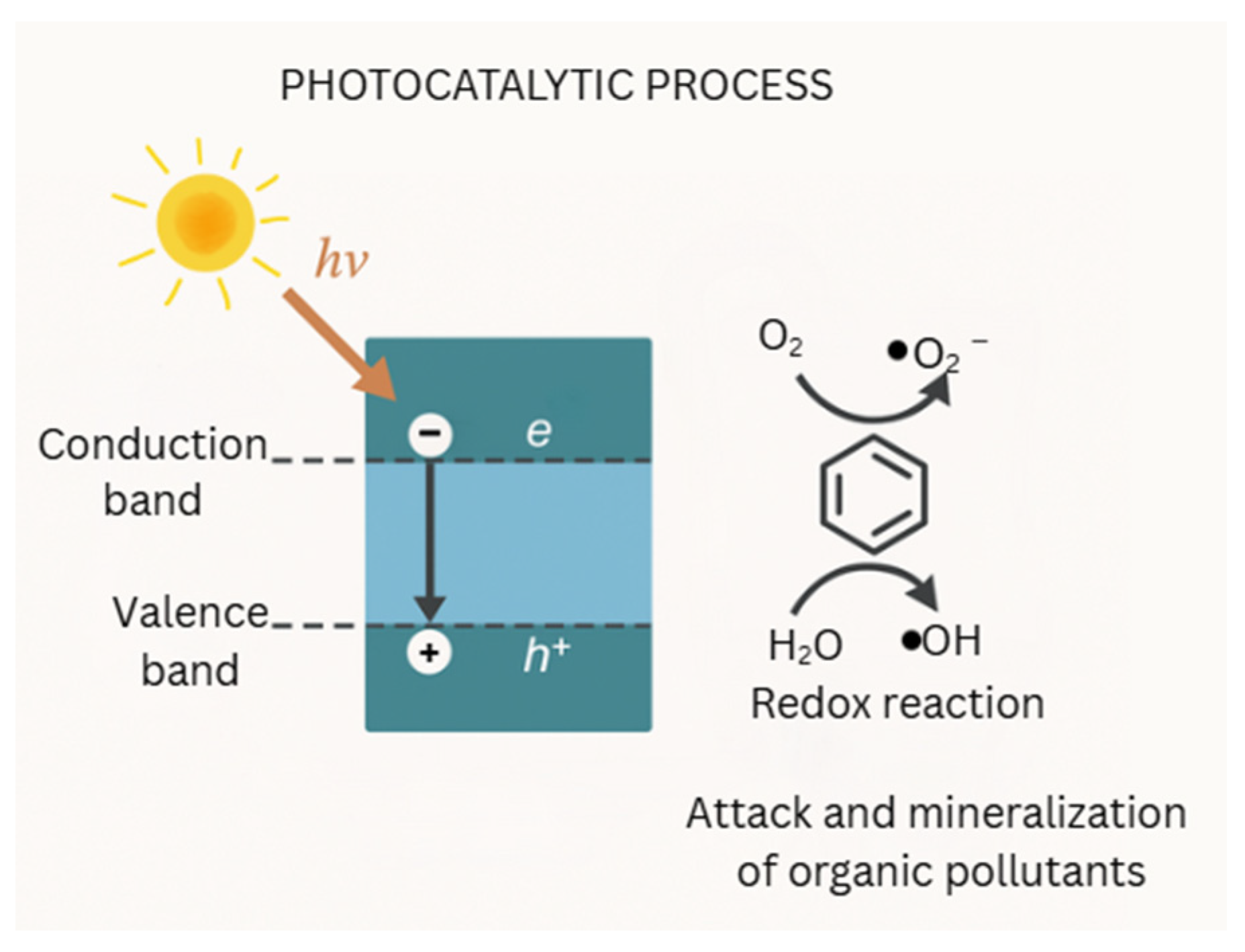
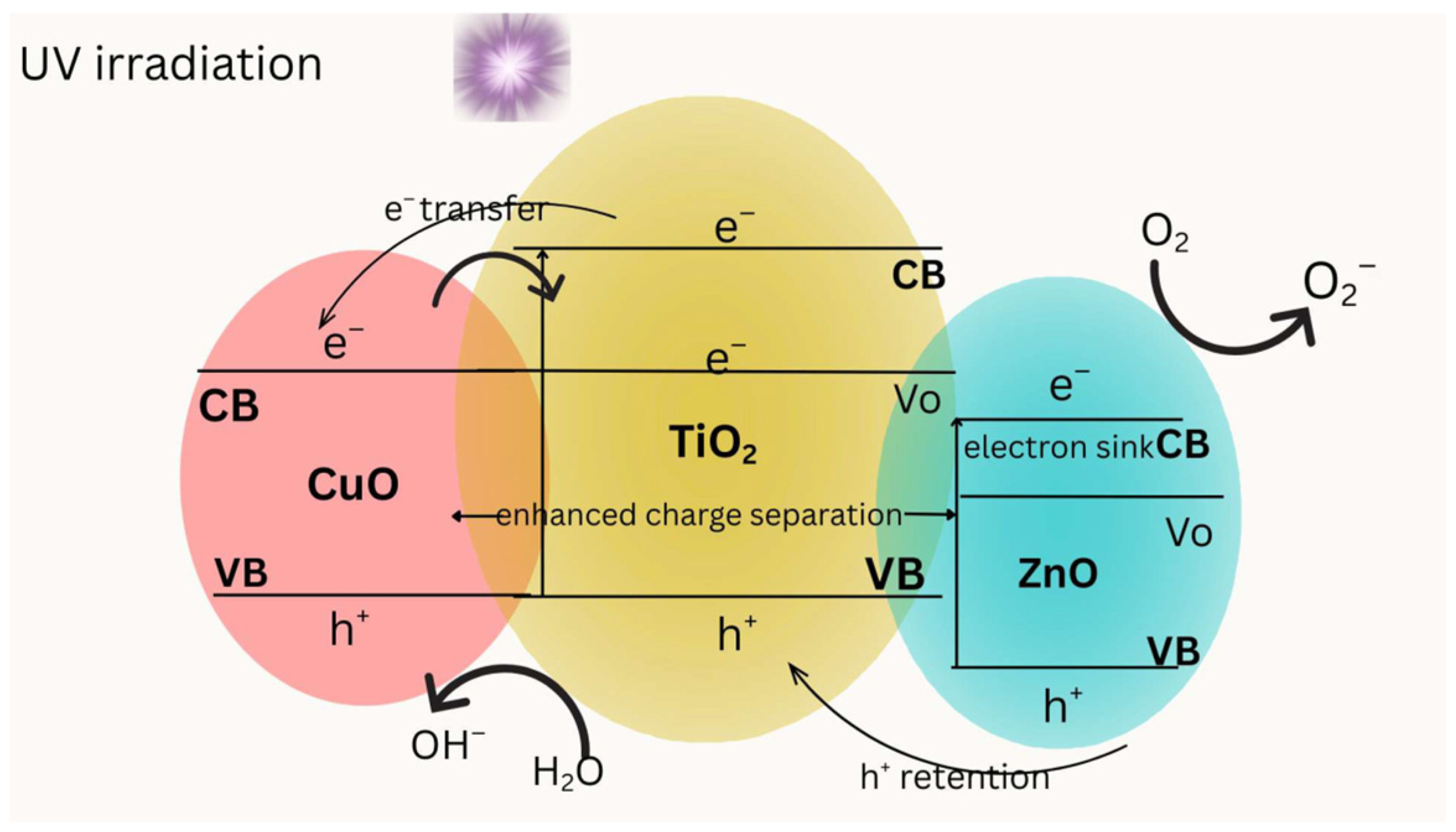
4.2.1. Mechanism of Photocatalysis
- Light Absorption: The nanocomposite absorbs light, generating electron–hole pairs.
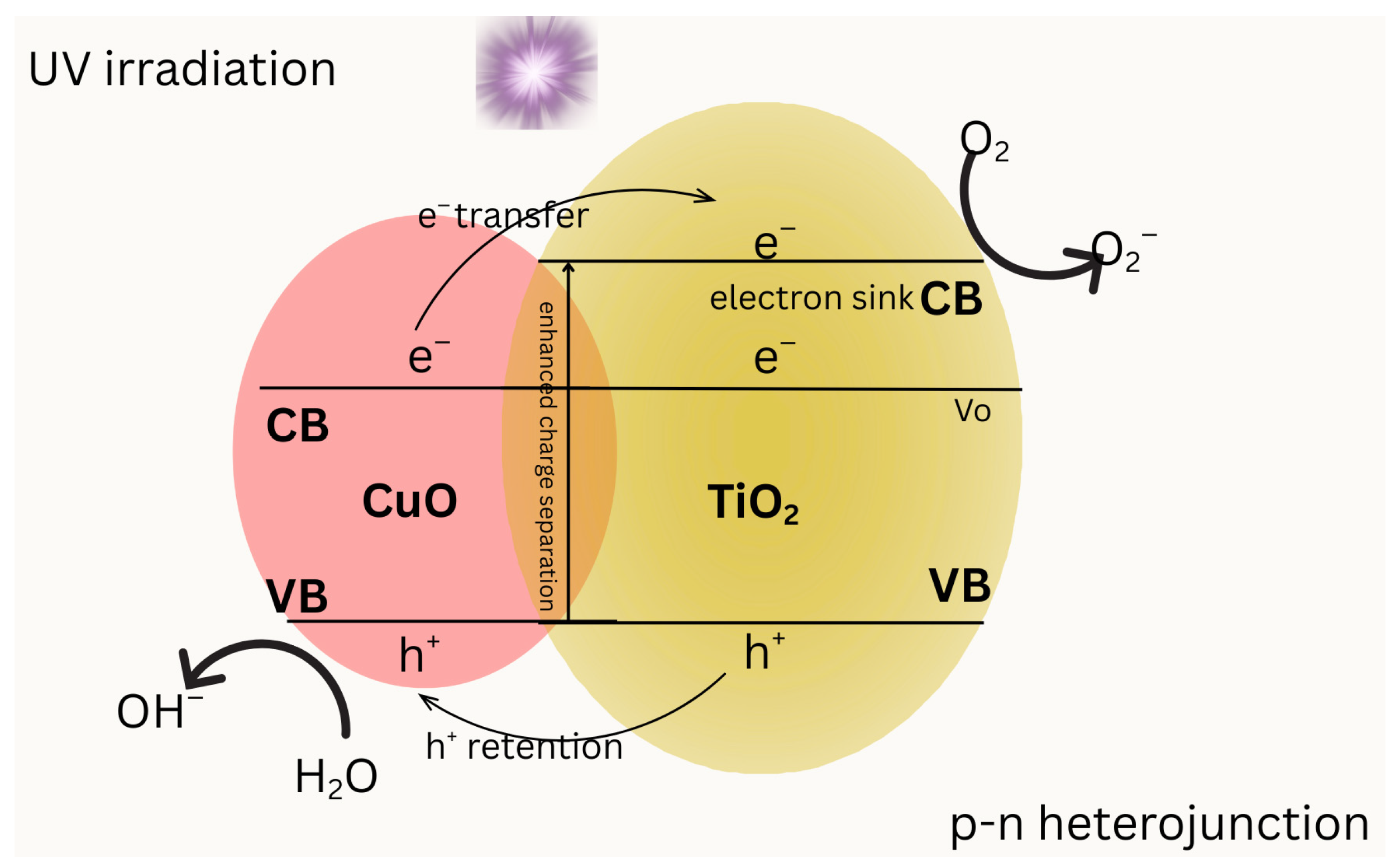
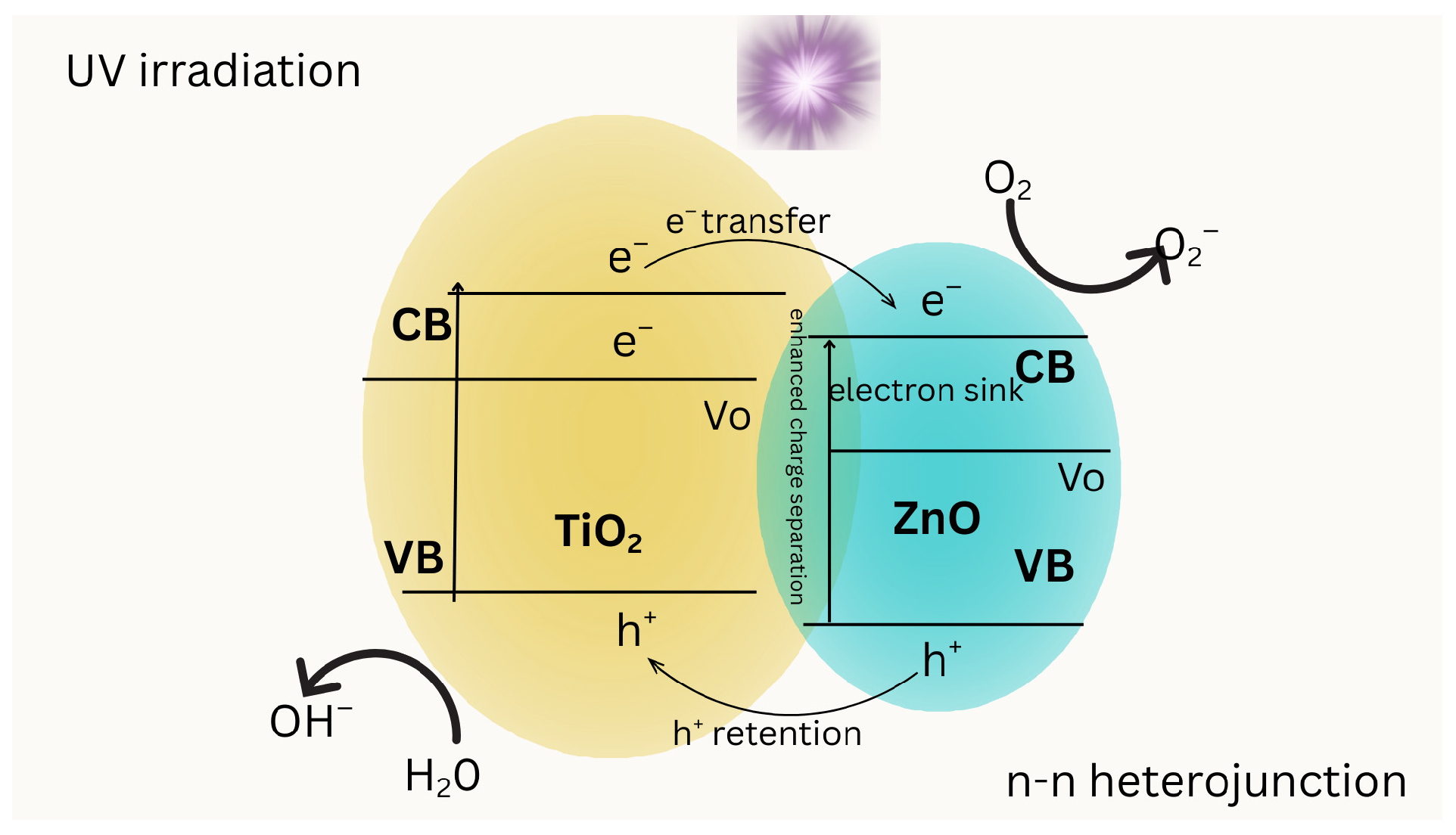
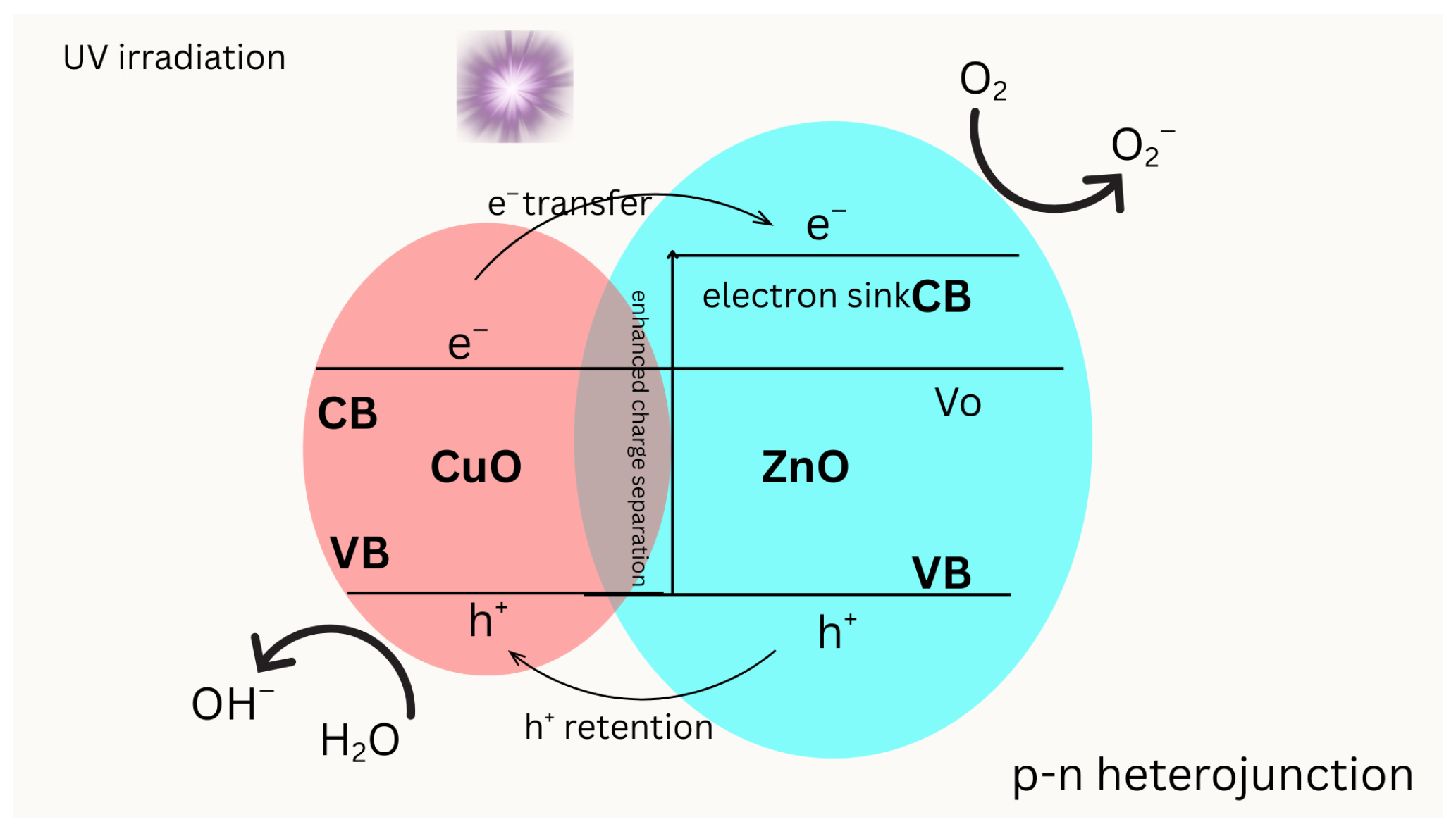
- Charge Separation: The heterojunctions between TiO2, ZnO, and CuO facilitate charge separation, reducing recombination.
4.2.2. Degradation Efficiency
- Rhodamine B Degradation: A degradation efficiency of 96.1% is reported for CuO–ZnO nanocomposites under optimized conditions [64].
4.2.3. Active Species and Stability
4.3. Synthesis Methods
Overview of Synthesis Techniques
4.4. Applications in Wastewater Treatment
4.4.1. Target Pollutants
- Phenols: The nanocomposites achieve significant phenol removal under solar irradiation with rates between 54% and 80% [71].
- Azo Dyes: High degradation efficiency for azo dyes is reported, with rate constants exceeding 0.04 min−1 [70].
- Pesticides: Imidacloprid is completely mineralized (~100%) under solar-simulated light with efficiency above 91% after multiple reuse cycles [85].
- Herbicides: 2,4-dichlorophenol (2,4-DCP) and related chlorophenols achieve ~92% TOC mineralization using nanostructures under visible light [86].
- Fertilizers (nitrate, ammonia nitrogen): Photocatalytic systems have demonstrated notable performance in fertilizer-related wastewater treatment. Complete nitrate removal with approximately 70% selective conversion to ammonium under UV light [87], while 61% of ammonia-nitrogen was degraded within 3 h, retaining 52% efficiency after three reuse cycles [88].
4.4.2. Antibacterial Activity
4.4.3. Comparative Photocatalytic Performance of TiO2-Based Systems Against Key Contaminants
5. Mechanistic Insights into Photocatalytic AOPs
- TiO2 absorbs light → e− + h+ generation
- e− transfer to Cu2+ → Cu+ and •O2−
- h+ reacts with H2O/OH− → •OH
- •O2− and •OH and degrade pollutants
- The surface sites of Zn2+ stabilize charges and inhibit recombination
Strengths and Limitations of Ti–Cu–Zn Systems Compared to Single/Bimetallic Systems
6. Stability, Reusability, and Environmental Safety
6.1. Coating Durability on Steel Substrates
6.2. Photo-Corrosion Resistance and Structural Integrity
6.3. Catalyst Reusability
6.4. Leaching Behavior and Ecotoxicological Impact
7. Engineering Considerations and Scale-Up Potential
7.1. Integration into Decentralized Treatment Units
7.2. Reactor Design and Light Penetration Efficiency
7.3. Cost and Scalability of Synthesis
7.4. Performance in Complex Wastewater Matrices
7.5. Automation, Monitoring, and Maintenance
7.6. Sustainability Considerations
7.7. Commercialization and Market Potential
7.8. Regulatory & Deployment Checklist for Agricultural Use
8. Future Perspectives and Research Opportunities
- Tailored band engineering using advanced dopants or quantum heterostructures to expand light absorption into the near-infrared region and enhance charge carrier lifetimes.
- Hybrid integration of AOP, such as coupling heterocatalysts with ozonation, Fenton, or electrochemical oxidation, to boost degradation efficiency.
- Real-time contaminant monitoring technologies combined with intelligent photocatalyst systems for adaptive water treatment.
- Green and scalable synthesis methods that eliminate toxic solvents, reduce energy input, and enable on-site fabrication.
- Ecotoxicity and life cycle assessment (LCA) studies to ensure safe deployment in agricultural, municipal, and industrial settings.
- Furthermore, fundamental studies on catalyst-pollutant interaction kinetics and reactive intermediate tracking will be vital for mechanism elucidation and rational catalyst design.
Knowledge Gaps and Future Perspectives
- Need for in situ characterization techniques: Current studies often rely on post-reaction analyses. Incorporating in situ techniques (e.g., X-ray Photoelectron Spectroscopy (XPS), Diffuse Reflectance Infrared Fourier Transform Spectroscopy (DRIFTS), and Electron Paramagnetic Resonance (EPR) under operational conditions) would help track the dynamics of charge transfer, surface species, and ROS generation.
- Reusability and stability studies: Current studies have no experiments on reusability and stability, and therefore, new studies going forward have to focus on this. Ensuring that the synthesized catalyst can achieve nothing less than 15% degeneration after 5 runs will be a huge win for the system, as this is the minimal requirement seen in other single or binary catalyst systems.
- Heavy metal reduction: Industrial, pharmaceutical, and agricultural wastewater systems tend to contain heavy metals such as chromium, cadmium, lead, etc. More studies must be carried out on the efficiency of removing these heavy metals from wastewater, as current studies do not have citable references for these elements.
- Exploring new dopants and structural motifs: Beyond Cu and Zn, incorporation of rare earth, non-metal (e.g., N, S), or perovskite-inspired interfaces may further tune band alignment and enhance activity.
- Policy and regulatory alignment: For field deployment, regulatory clarity is required regarding nanoparticle release, reuse standards, and permissible leaching thresholds. Engagement with environmental authorities, farmers, and policymakers is essential to facilitate technology transfer.
9. Conclusions
Author Contributions
Funding
Institutional Review Board Statement
Informed Consent Statement
Data Availability Statement
Acknowledgments
Conflicts of Interest
References
- Pereira, P.; Bogunovic, I.; Inacio, M.; Zhao, W.; Barcelo, D. Agriculture Intensification Impacts on Soil and Water Ecosystem Services. In Proceedings of the EGU General Assembly 2023, Vienna, Austria, 24–28 April 2023. EGU23-1423; Copernicus Meetings, 2023. [Google Scholar] [CrossRef]
- Upadhyay, G. The Global Food System and Its Environmental Impact: A Call for Sustainable Transformation. FSNT 2025, 10, 1–4. [Google Scholar] [CrossRef]
- Jadon, N.; Sharma, H.K.; Guruaribam, N.; Chauhan, A.K.S. Chapter 12—Recent Scenario of Agricultural Contaminants on Water Resources. In Current Directions in Water Scarcity Research; Tiwari, A.K., Kumar, A., Singh, A.K., Singh, T.N., Suozzi, E., Matta, G., Lo Russo, S., Eds.; Water Scarcity, Contamination and Management; Elsevier: Amsterdam, The Netherlands, 2022; Volume 5, pp. 225–246. [Google Scholar] [CrossRef]
- Singh, A. A Review of Wastewater Irrigation: Environmental Implications. Resour. Conserv. Recycl. 2021, 168, 105454. [Google Scholar] [CrossRef]
- Trotta, V.; Baaloudj, O.; Brienza, M. Risks Associated with Wastewater Reuse in Agriculture: Investigating the Effects of Contaminants in Soil, Plants, and Insects. Front. Environ. Sci. 2024, 12, 1358842. [Google Scholar] [CrossRef]
- Khan, A.; Batool, S.F.E.; Naz, R.; Zulfiqar, M.; Raza, S.A.; Ullah, K.; Hassan, R.; Lattif, I.; Safia, G.; Rehman, I.U. Advanced Applications of Nanoparticles and Nanotubes in the Remediation of Industrial, Agriculture, and Sewage Wastewater and the Production of Biofertilizers for Sustainable Environmental Management and Agriculture Practices. Saudi J. Eng. Technol. 2024, 9, 476–487. [Google Scholar] [CrossRef]
- El-Ramady, H.; El-Henawy, A.; Amer, M.; Omara, A.E.-D.; Elsakhawy, T.; Salama, A.-M.; Ezzat, A.; El-Shereif, A.; El-Mahrouk, M.; Shalaby, T. Agro-Pollutants and Their Nano-Remediation from Soil and Water: A Mini-Review. Environ. Biodivers. Soil Secur. 2020, 4, 361–379. [Google Scholar] [CrossRef]
- Ouyang, H.; Safaeipour, N.; Othman, R.S.; Otadi, M.; Sheibani, R.; Kargaran, F.; Van Le, Q.; Khonakdar, H.A.; Li, C. Agricultural Waste-Derived (Nano)Materials for Water and Wastewater Treatment: Current Challenges and Future Perspectives. J. Clean. Prod. 2023, 421, 138524. [Google Scholar] [CrossRef]
- Katwal, R.; Pathania, D. Nanostructured Photocatalysts in the Degradation of Toxic Pollutants. In Heterogeneous Nanocatalysis for Energy and Environmental Sustainability; John Wiley & Sons, Ltd.: Hoboken, NJ, USA, 2022; pp. 73–93. [Google Scholar] [CrossRef]
- Cardoso, I.M.F.; Cardoso, R.M.F.; da Silva, J.C.G.E. Advanced Oxidation Processes Coupled with Nanomaterials for Water Treatment. Nanomaterials 2021, 11, 2045. [Google Scholar] [CrossRef]
- Verma, H.; Verma, N.; Meena, R.C. Treatment of Organic Contaminants through an Advanced Technology Heterogeneous Photocatalysis: An Overview. J. Indian Chem. Soc. 2016, 93, 79–84. [Google Scholar] [CrossRef]
- Mohd, S.; Khan, A.M. Heterogeneous Photocatalysis. In Sustainable Green Catalytic Processes; John Wiley & Sons, Ltd.: Hoboken, NJ, USA, 2024; pp. 141–163. [Google Scholar] [CrossRef]
- Tyagi, R.; Maurya, A.; Samriti; Prakash, J.; Kohli, S. Role of TiO2-Based Photocatalysts in Waste Water Treatment. In Multifunctional Hybrid Semiconductor Photocatalyst Nanomaterials: Application on Health, Energy and Environment; Prakash, J., Cho, J., Campos Janegitz, B., Sun, S., Eds.; Springer International Publishing: Cham, Switzerland, 2023; pp. 201–220. [Google Scholar] [CrossRef]
- Nematov, D. Titanium Dioxide and Photocatalysis: A Detailed Overview of the Synthesis, Applications, Challenges, Advances and Prospects for Sustainable Development. J. Mod. Green. Energy 2024, 3, 6. [Google Scholar] [CrossRef]
- Khan, H.; Shah, M.U.H. Modification Strategies of TiO2 Based Photocatalysts for Enhanced Visible Light Activity and Energy Storage Ability: A Review. J. Environ. Chem. Eng. 2023, 11, 111532. [Google Scholar] [CrossRef]
- Yeoh, J.Z.; Chan, P.L.; Pung, S.Y.; Ramakrishnan, S.; Joseph, C.G.; Chen, C.Y. Designing A Visible Light Driven TiO2-Based Photocatalyst by Doping and Co-Doping with Niobium (Nb) and Boron (B). Bull. Chem. React. Eng. Catal. 2024, 19, 285–299. [Google Scholar] [CrossRef]
- Pavlović, J.; Tušar, N.N.; Rajić, N. The Synthesis and Photocatalytic Efficacy of Distinct Nano-Oxides in the Breakdown of Organic Contaminants. Catalysts 2024, 14, 771. [Google Scholar] [CrossRef]
- Vecchi, P.; Piccioni, A.; Carrai, I.; Mazzaro, R.; Boscherini, F.; Ceroni, P.; Caramori, S.; Pasquini, L. Nanostructured Metal Oxide Semiconductors for Photoelectrocatalytic Conversion of Solar Energy. In Proceedings of the 2023 IEEE Nanotechnology Materials and Devices Conference (NMDC), Paestum, Italy, 22–25 October 2023; p. 147. [Google Scholar] [CrossRef]
- Rakkesh, R.A.; Dhinasekaran, D.; Shankar, M.V.; Balakumar, S. Hierarchical Nanostructures for Photocatalytic Applications. In Nanostructured Materials for Environmental Applications; Balakumar, S., Keller, V., Shankar, M.V., Eds.; Springer International Publishing: Cham, Switzerland, 2021; pp. 65–84. [Google Scholar] [CrossRef]
- Predoană, L.; Petcu, G.; Preda, S.; Pandele-Cușu, J.; Petrescu, S.V.; Băran, A.; Apostol, N.G.; Costescu, R.M.; Surdu, V.-A.; Vasile, B.Ş.; et al. Copper-/Zinc-Doped TiO2 Nanopowders Synthesized by Microwave-Assisted Sol–Gel Method. Gels 2023, 9, 267. [Google Scholar] [CrossRef]
- Mavrikos, A.; Papoulis, D.; Todorova, N.; Papailias, I.; Trapalis, C.; Panagiotaras, D.; Chalkias, D.A.; Stathatos, E.; Gianni, E.; Somalakidi, K.; et al. Synthesis of Zn/Cu Metal Ion Modified Natural Palygorskite Clay—TiO2 Nanocomposites for the Photocatalytic Outdoor and Indoor Air Purification. J. Photochem. Photobiol. A Chem. 2022, 423, 113568. [Google Scholar] [CrossRef]
- Wang, W.; Wang, L.; Su, W.; Xing, Y. Photocatalytic CO2 Reduction over Copper-Based Materials: A Review. J. CO2 Util. 2022, 61, 102056. [Google Scholar] [CrossRef]
- Baran, T.; Visibile, A.; Busch, M.; He, X.; Wojtyla, S.; Rondinini, S.; Minguzzi, A.; Vertova, A. Copper Oxide-Based Photocatalysts and Photocathodes: Fundamentals and Recent Advances. Molecules 2021, 26, 7271. [Google Scholar] [CrossRef] [PubMed]
- Zindrou, A.; Belles, L.; Deligiannakis, Y. Cu-Based Materials as Photocatalysts for Solar Light Artificial Photosynthesis: Aspects of Engineering Performance, Stability, Selectivity. Solar 2023, 3, 87–112. [Google Scholar] [CrossRef]
- Saraswathi, K.A.; Geeta Rani, B.; Sai Bhargava Reddy, M.; Lasina, R.; Jayarambabu, N.; Venkateswara Rao, K.; Venkatappa Rao, T. Zinc Oxide-Based Antibacterial and Anti-Viral Functional Materials. In Antibacterial and Antiviral Functional Materials, Volume 2; ACS Symposium Series; American Chemical Society: Washington, DC, USA, 2024; Volume 1472, pp. 281–307. [Google Scholar] [CrossRef]
- Uthra, C.; Nagaraj, K.; Wadaan, M.A.; Karuppiah, C.; Maity, P.; Baabbad, A.; Kaliyaperumal, R.; Venkatachalapathy, R.; Shah, F.; Kumar, P. Zinc and Copper Oxide Nanoparticles: Pioneering Antibacterial and Antibiofilm Strategies for Environmental Restoration against Antibiotic-Resistant Bacteria. Materials 2024, 17, 3444. [Google Scholar] [CrossRef]
- Ma, Q. Application of Advanced Oxidation Process Based on Ozone in Water Treatment. Highlights Sci. Eng. Technol. 2024, 96, 139–143. [Google Scholar] [CrossRef]
- Abromaitis, V.; Oghenetejiro, O.A.M.A.; Sulciute, A.; Urniezaite, I.; Sinkeviciute, D.; Zmuidzinaviciene, N.; Jankunaite, D.; Dzingeleviciene, R.; Baranauskis, K.; Martuzevicius, D. TiO2 Nanotube Arrays Photocatalytic Ozonation for the Removal of Antibiotic Ciprofloxacin from the Effluent of a Domestic Wastewater Treatment Plant: Towards the Process Upscaling. J. Water Process Eng. 2024, 63, 105457. [Google Scholar] [CrossRef]
- Oturan, N.; Oturan, M.A. Fenton-Related Advanced Oxidation Processes (AOPs) for Water Treatment. In Clean Water: Next Generation Technologies; Jlassi, K., Oturan, M.A., Ismail, A.F., Chehimi, M.M., Eds.; Springer International Publishing: Cham, Switzerland, 2024; pp. 117–143. [Google Scholar] [CrossRef]
- Kaswan, V.; Kaur, H. A Comparative Study of Advanced Oxidation Processes for Wastewater Treatment. Water Pract. Technol. 2023, 18, 1233–1254. [Google Scholar] [CrossRef]
- Singh, R.S.; Tiwari, H. An Overview of Innovative Oxidation Technologies for Wastewater Treatment. In Innovative and Hybrid Technologies for Wastewater Treatment and Recycling; CRC Press: Boca Raton, FL, USA, 2024. [Google Scholar]
- Mancipe, S.; Romanelli, G.P.; Martinez, J.J.; Luque, R. Formation of Hydroxyl Radicals in Advanced Oxidation Processes for the Degradation of Contaminated Organic Matter. Curr. Green Chem. 2025, 12, 117–137. [Google Scholar] [CrossRef]
- Zhang, C.; Ding, N.; Pan, Y.; Fu, L.; Zhang, Y. The Degradation Pathways of Contaminants by Reactive Oxygen Species Generated in the Fenton/Fenton-like Systems. Chin. Chem. Lett. 2024, 35, 109579. [Google Scholar] [CrossRef]
- Bi, Z.; Wang, W.; Zhao, L.; Wang, X.; Xing, D.; Zhou, Y.; Lee, D.-J.; Ren, N.; Chen, C. The Generation and Transformation Mechanisms of Reactive Oxygen Species in the Environment and Their Implications for Pollution Control Processes: A Review. Environ. Res. 2024, 260, 119592. [Google Scholar] [CrossRef]
- Liu, W.; Liu, Q.; Xiao, X.; Zhou, P.; Qin, Y.; Wang, L.; Wang, X. Organic Pollutants Degradation by Glyoxylic Acid Boosted Fenton-like System: An Overlooked Fe(III)/Fe(II) Cycles with Low-Molecular-Weight Organic Acid. Sep. Purif. Technol. 2024, 335, 126128. [Google Scholar] [CrossRef]
- Chen, B.; Xu, J.; Zhu, L. Controllable Chemical Redox Reactions to Couple Microbial Degradation for Organic Contaminated Sites Remediation: A Review. J. Environ. Sci. 2024, 139, 428–445. [Google Scholar] [CrossRef] [PubMed]
- Liu, G.; Yu, H.; Shen, L.; Zhang, Y.; Jin, R.; Wang, J.; Zhou, J. Chapter 12—Microbe-Driven Generation of Reactive Oxygen Species for Contaminant Degradation. In Bioremediation for Environmental Sustainability; Saxena, G., Kumar, V., Shah, M.P., Eds.; Elsevier: Amsterdam, The Netherlands, 2021; pp. 293–324. [Google Scholar] [CrossRef]
- Žerjav, G.; Pintar, A. Influence of TiO2 Morphology and Crystallinity on Visible-Light Photocatalytic Activity of TiO2-Bi2O3 Composite in AOPs. Catalysts 2020, 10, 395. [Google Scholar] [CrossRef]
- Rakhi, P.K.; Mishra, K.; Scaria, J.; Suresh Kumar, M.; Nidheesh, P.V. Advanced Oxidation Processes. In Clean Water: Next Generation Technologies; Jlassi, K., Oturan, M.A., Ismail, A.F., Chehimi, M.M., Eds.; Springer International Publishing: Cham, Switzerland, 2024; pp. 107–116. [Google Scholar] [CrossRef]
- Sinha, S.; Nigam, S.; Syed, M. Insight into Advanced Oxidation Processes for Wastewater Treatment. In Advanced Oxidation Processes for Wastewater Treatment; CRC Press: Boca Raton, FL, USA, 2022. [Google Scholar]
- Chaukura, N.; Madzokere, T.C.; Tshabalala, T.E. Selected Advanced Oxidation Processes for Wastewater Remediation. In Photoreactors in Advanced Oxidation Processes; John Wiley & Sons, Ltd.: Hoboken, NJ, USA, 2023; pp. 151–174. [Google Scholar] [CrossRef]
- Thulasisingh, A.; Nagapushnam, P.; Balakrishnan, Y.; Kannaiyan, S. Different Methods and Technologies of Advanced Oxidation Processes Adopted in Industrial Wastewater Treatment. In Wastewater Treatment; CRC Press: Boca Raton, FL, USA, 2022. [Google Scholar]
- Yu, Q.; Shan, W.; Wang, H. Theoretical Design of Sandwich Two-Dimensional Structures for Photocatalysts and Nano-Optoelectronic Devices. J. Mater. Sci. 2018, 53, 8274–8284. [Google Scholar] [CrossRef]
- Li, Q.; Liu, F.; Yang, T.; Gadinski, M.R.; Zhang, G.; Chen, L.-Q.; Wang, Q. Sandwich-Structured Polymer Nanocomposites with High Energy Density and Great Charge–Discharge Efficiency at Elevated Temperatures. Proc. Natl. Acad. Sci. USA 2016, 113, 9995–10000. [Google Scholar] [CrossRef]
- Chen, B.; Zhang, J.; Yu, J.; Wang, R.; He, B.; Jin, J.; Wang, H.; Gong, Y. Rational Design of All-Solid-State TiO2-x/Cu/ZnO Z-Scheme Heterojunction via ALD-Assistance for Enhanced Photocatalytic Activity. J. Colloid. Interface Sci. 2022, 607, 760–768. [Google Scholar] [CrossRef] [PubMed]
- Dong, Y.; Abbasi, M.; Meng, J.; German, L.; Carlos, C.; Li, J.; Zhang, Z.; Morgan, D.; Hwang, J.; Wang, X. Substantial Lifetime Enhancement for Si-Based Photoanodes Enabled by Amorphous TiO2 Coating with Improved Stoichiometry. Nat. Commun. 2023, 14, 1865. [Google Scholar] [CrossRef]
- Park, J.Y.; Han, J.H.; Choi, B.J. High-Performance of ZnO/TiO2 Heterostructured Thin-Film Photocatalyst Fabricated via Atomic Layer Deposition. J. Vac. Sci. Technol. A 2024, 42, 032404. [Google Scholar] [CrossRef]
- Joseph, M.; Paulson, F.; Remello, S.N.; Haridas, S.; Aravind, U.K. Layer-by-Layer Assembled Graphitic Carbon Nitride Membranes for Water Treatment. Chemosphere 2024, 353, 141544. [Google Scholar] [CrossRef]
- Yan, X.; Huo, L.; Ma, C.; Lu, J. Layer-by-Layer Assembly of Graphene Oxide-TiO2 Membranes for Enhanced Photocatalytic and Self-Cleaning Performance. Process Saf. Environ. Prot. 2019, 130, 257–264. [Google Scholar] [CrossRef]
- Liu, B.-J.; Chen, Q.; Mo, Q.-L.; Xiao, F.-X. Robust, Versatile, Green and Emerging Layer-by-Layer Self-Assembly Platform for Solar Energy Conversion. Coord. Chem. Rev. 2023, 493, 215285. [Google Scholar] [CrossRef]
- Marikova, T.; Walderova, B.; Belhacova, L.; Brabec, L.; Kuchar, M.; Rathousky, J. Electrophoretically Deposited TiO2 Layers for Efficient Photocatalytic Degradation of Antibiotic Mixture in Greywater. J. Water Process Eng. 2024, 64, 105654. [Google Scholar] [CrossRef]
- Ojobe, B.; Okeowo, I.; Rathousky, J.; Brabec, L.; Marikova, T.; Mikyskova, E.; Kofronova, J.; Vurm, R.; Smrckova, S.; Ashtiani, S.J.; et al. Efficient Degradation of Recalcitrant Pharmaceuticals in Greywater Using Treatment of MBR and Immobilized TiO2 Porous Layers. ACS ES T Water 2024, 4, 5587–5597. [Google Scholar] [CrossRef] [PubMed]
- Fu, T.; Hou, Y.; Zhu, Z.; Cuan, J.; Li, W. Energy Storage Enhancement of Sandwich-Structured Nanocomposites with Mono/Adjacent-Layer Design and Their Synergistic Effect Optimization. J. Phys. D Appl. Phys. 2024, 57, 135505. [Google Scholar] [CrossRef]
- Zhang, J.; Li, T.; Wang, C.-A.; Luo, J.-L. The Rational Design of Sandwich-like MnO2–Pd–CeO2 Hollow Spheres with Enhanced Activity and Stability for CO Oxidation. Nanoscale 2019, 11, 6776–6783. [Google Scholar] [CrossRef]
- Shi, J.; Peng, W.; Yang, Y.-F.; Li, B.; Nie, J.; Wan, H.; Li, Y.; Huang, G.-F.; Hu, W.; Huang, W.-Q. A General Strategy for Synthesis of Binary Transition Metal Phosphides Hollow Sandwich Heterostructures. Small 2023, 19, 2302906. [Google Scholar] [CrossRef]
- Yang, Q.; Zhu, J.; Hou, Y.; Zhang, Q.; Cuan, J.; Li, W. Five-Layer Gradient Structures for Improved Energy Storage Performances on the Basis of Sandwich Framework. J. Phys. D Appl. Phys. 2025, 58, 125503. [Google Scholar] [CrossRef]
- Kunzmann, C.; Aliakbarpour, H.; Ramezani, M. Biomimetics Design of Sandwich-Structured Composites. J. Compos. Sci. 2023, 7, 315. [Google Scholar] [CrossRef]
- Wan, C.; Jiao, Y.; Li, X.; Tian, W.; Li, J.; Wu, Y. A Multi-Dimensional and Level-by-Level Assembly Strategy for Constructing Flexible and Sandwich-Type Nanoheterostructures for High-Performance Electromagnetic Interference Shielding. Nanoscale 2020, 12, 3308–3316. [Google Scholar] [CrossRef]
- Wei, W.-S.; Videbæk, T.E.; Hayakawa, D.; Saha, R.; Rogers, W.B.; Fraden, S. Economical and Versatile Subunit Design Principles for Self-Assembled DNA Origami Structures. arXiv 2024. [Google Scholar] [CrossRef]
- Malakootian, M.; Soori, M.M. Enhanced Photocatalytic Degradation of Diazinon by TiO2/ZnO/CuO Nanocomposite under Solar Radiation. Desalination Water Treat. 2021, 242, 75–88. [Google Scholar] [CrossRef]
- Taufik, A.; Albert, A.; Saleh, R. Sol-Gel Synthesis of Ternary CuO/TiO2/ZnO Nanocomposites for Enhanced Photocatalytic Performance under UV and Visible Light Irradiation. J. Photochem. Photobiol. A Chem. 2017, 344, 149–162. [Google Scholar] [CrossRef]
- Albert, A.; Saleh, R. Synthesis, Characterization and Photocatalytic Performance of ZnO/TiO2 and ZnO/TiO2/CuO Nanocomposite. Mater. Sci. Forum 2015, 827, 67–72. [Google Scholar] [CrossRef]
- Tobaldi, D.M.; Piccirillo, C.; Rozman, N.; Pullar, R.C.; Seabra, M.P.; Škapin, A.S.; Castro, P.M.L.; Labrincha, J.A. Effects of Cu, Zn and Cu-Zn Addition on the Microstructure and Antibacterial and Photocatalytic Functional Properties of Cu-Zn Modified TiO2 Nano-Heterostructures. J. Photochem. Photobiol. A Chem. 2016, 330, 44–54. [Google Scholar] [CrossRef]
- Jeevarathinam, M.; Asharani, I.V. Synthesis of CuO, ZnO Nanoparticles, and CuO-ZnO Nanocomposite for Enhanced Photocatalytic Degradation of Rhodamine B: A Comparative Study. Sci. Rep. 2024, 14, 9718. [Google Scholar] [CrossRef] [PubMed]
- Truong, H.T.; Truong, H.B.; Nguyen, T.C. ZnO/TiO2 Photocatalytic Nanocomposite for Dye and Bacteria Removal in Wastewater. Mater. Res. Express 2024, 11, 085003. [Google Scholar] [CrossRef]
- Nassar, A.A.; Elfiky, A.A.E.A.; El-Sawaf, A.K.; Mubarak, M.F. Sustainable Green Synthesis and Characterization of Nanocomposites for Synergistic Photocatalytic Degradation of Reactive Orange 16 in Textile Wastewater Using CuO@A-TiO2/Ro-TiO2. Sci. Rep. 2024, 14, 16188. [Google Scholar] [CrossRef]
- Yitagesu, G.B.; Leku, D.T.; Seyume, A.M.; Workneh, G.A. Biosynthesis of TiO2/CuO and Its Application for the Photocatalytic Removal of the Methylene Blue Dye. ACS Omega 2024, 9, 41301–41313. [Google Scholar] [CrossRef]
- Kumar, P.; Kundu, V.S.; Kumar, S.; Saharan, B.; Kumar, V.; Chauhan, N. Hydrothermal Synthesis of Cu-ZnO-/TiO2-Based Engineered Nanomaterials for the Efficient Removal of Organic Pollutants and Bacteria from Water. BioNanoScience 2017, 7, 574–582. [Google Scholar] [CrossRef]
- Hassan, J.; Karar Mahdi, T.; Ghufran Ammar, G.; Qin, C. Green Fabrication of CuO-egTiO2 Composite for Photodegradation of Organic Pollutant under Direct Visible Light Illumination. Adv. Powder Technol. 2024, 35, 104394. [Google Scholar] [CrossRef]
- Baig, M.T.; Kayan, A. Sol Gel Obtained Ti/Co/Mn Oxides Doped with 5wt% CuO for the Photocatalytic Removal of Organic Azo Dyes from Wastewater. Mater. Res. Bull. 2024, 180, 113070. [Google Scholar] [CrossRef]
- Mohammadi, M.; Sabbaghi, S.; Sadeghi, H.; Zerafat, M.M.; Pooladi, R. Preparation and Characterization of TiO2/ZnO/CuO Nanocomposite and Application for Phenol Removal from Wastewaters. Desalination Water Treat. 2016, 57, 799–809. [Google Scholar] [CrossRef]
- Topkaya, E.; Konyar, M.; Yatmaz, H.C.; Öztürk, K. Pure ZnO and Composite ZnO/TiO2 Catalyst Plates: A Comparative Study for the Degradation of Azo Dye, Pesticide and Antibiotic in Aqueous Solutions. J. Colloid. Interface Sci. 2014, 430, 6–11. [Google Scholar] [CrossRef] [PubMed]
- Rokesh, K.; Sakar, M.; Do, T.-O. Emerging Hybrid Nanocomposite Photocatalysts for the Degradation of Antibiotics: Insights into Their Designs and Mechanisms. Nanomaterials 2021, 11, 572. [Google Scholar] [CrossRef]
- Kutuzova, A.; Dontsova, T.; Kwapinski, W. Application of TiO2-Based Photocatalysts to Antibiotics Degradation: Cases of Sulfamethoxazole, Trimethoprim and Ciprofloxacin. Catalysts 2021, 11, 728. [Google Scholar] [CrossRef]
- Ameer, M.S.; Atiya, M.A.; Hassan, A.K.; Shakorfow, A.M.; Mhanna, N.A. CuO/ZnO Nanocomposite Biosynthesis Approach Using Eucalyptus Leaves for Photodegradation of Tetracycline. Al-Khwarizmi Eng. J. 2024, 20, 25–37. [Google Scholar] [CrossRef]
- Zhu, P.F.; Yu, X.C.; Du, Q.; Song, K.S.; He, Z.H. Photocatalytic Degradation of Ammonia Nitrogen in Aquaculture Wastewater by Using Nano-TiO2. Adv. Mater. Res. 2011, 197–198, 774–779. [Google Scholar] [CrossRef]
- Guo, X.; Gao, F.; Cui, H.; Liu, J.; Wang, H.; Liang, L.; Wu, Y.; Wan, L.; Wang, J.; Zhang, C.; et al. Visible-Light-Driven Photocatalytic Degradation of High-Concentration Ammonia Nitrogen Wastewater by Magnetic Ferrite Nanosphere Photocatalysts. Water 2023, 15, 3638. [Google Scholar] [CrossRef]
- Venu Sreekala, S.; George, J.; Thoppil Ramakrishnan, R.; Puthenveedu Sadasivan Pillai, H. Novel Ternary Nanocomposite (TiO2@Fe3O4-Chitosan) System for Nitrate Removal from Water: An Adsorption Cum Photocatalytic Approach. Environ. Sci. Pollut. Res. 2024, 31, 50670–50685. [Google Scholar] [CrossRef]
- Shi, Y.; Xie, Y.; Xia, J.; Zhang, X.; Cheng, H.; Chen, J. Photo-Catalytic Reduction of Nitrate by Ag-TiO2/Formic Acid Under Visible Light: Selectivity of Nitrogen and Mechanism. Water 2025, 17, 155. [Google Scholar] [CrossRef]
- Mrabet, C.; Jaballah, R.; Mahdhi, N.; Boukhachem, A.; Amlouk, M. Cuo-Zno Nanocomposites-Based Thin Films: Characterization, Physical Properties and Sunlight Photocatalytic Degradation of Organic Pollutants. J. Alloys Compd. 2023, 968, 172252. [Google Scholar] [CrossRef]
- Hudandini, M.; Kusdianto, K.; Kubo, M.; Shimada, M. Gas-Phase Fabrication and Photocatalytic Activity of TiO2 and TiO2–CuO Nanoparticulate Thin Films. Materials 2024, 17, 1149. [Google Scholar] [CrossRef] [PubMed]
- Zulfiqar, N.; Nadeem, R.; Musaimi, O.A. Photocatalytic Degradation of Antibiotics via Exploitation of a Magnetic Nanocomposite: A Green Nanotechnology Approach toward Drug-Contaminated Wastewater Reclamation. ACS Omega 2024, 9, 7986–8004. [Google Scholar] [CrossRef] [PubMed]
- Liu, J.; Yu, X.; Wang, L.; Guo, M.; Zhu, W.; Tian, S. Photocatalytic Degradation of Chlortetracycline Hydrochloride in Marine Aquaculture Wastewater under Visible Light Irradiation with CuO/ZnO. Water Sci. Technol. 2019, 80, 1249–1256. [Google Scholar] [CrossRef]
- Kumar Srivastava, S. Recent Advances in Removal of Pharmaceutical Pollutants in Wastewater Using Metal Oxides and Carbonaceous Materials as Photocatalysts: A Review. RSC Appl. Interfaces 2024, 1, 340–429. [Google Scholar] [CrossRef]
- Zyoud, A.H.; Zyoud, S.H.; Zyoud, S.H. Photodegradation of Aqueous Imidacloprid by CuS@TiO2 under Solar-Simulated Light: Complete Mineralization, Catalyst Efficiency, Recovery, and Reuse. Appl. Water Sci. 2025, 15, 159. [Google Scholar] [CrossRef]
- Shoneye, A.; Jiao, H.; Tang, J. Bimetallic FeOx–MOx Loaded TiO2 (M = Cu, Co) Nanocomposite Photocatalysts for Complete Mineralization of Herbicides. J. Phys. Chem. C 2023, 127, 1388–1396. [Google Scholar] [CrossRef]
- Sanchez, A.; Ye, Z.; Yin, Y.; Liu, H. Photochemical Conversion of Nitrate to Ammonium Ions by a Newly Developed Photo-Reductive Titanium Dioxide Catalyst: Implications on Nitrogen Recovery. Environ. Sci. Water Res. Technol. 2023, 9, 3318–3324. [Google Scholar] [CrossRef]
- Yang, Z.; Yuan, J.; Hou, X.; Sun, Q.; Luo, X.; Liu, J.; Hu, H.; Zhang, M.; Wu, Y. Photocatalytic Degradation of Ammonia Nitrogen Using a Z-Type Nano-TiO2/LaMnO3 Heterojunction. New J. Chem. 2024, 48, 5506–5522. [Google Scholar] [CrossRef]
- Sugandi, D.; Wahyuni, N.; Rahmalia, W. Fotocatalytic Degradation of Methylene Blue by Floating TiO2-Coconut Fiber. Acta Chim. Asiana 2024, 7, 437–442. [Google Scholar] [CrossRef]
- Anjali, G.K.; Zainul, R. Fotokatalis Titanium Oksida (TiO2) Doping Tembaga (Cu) Menggunakan Metode Sol Gel Untuk Fototransformasi Zat Warna Methylene Blue. MASALIQ 2024, 4, 285–293. [Google Scholar] [CrossRef]
- Lee, C.-G.; Na, K.-H.; Kim, W.-T.; Park, D.-C.; Yang, W.-H.; Choi, W.-Y. TiO2/ZnO Nanofibers Prepared by Electrospinning and Their Photocatalytic Degradation of Methylene Blue Compared with TiO2 Nanofibers. Appl. Sci. 2019, 9, 3404. [Google Scholar] [CrossRef]
- Irshad, M.A.; Shakoor, M.B.; Nawaz, R.; Yasmeen, T.; Arif, M.S.; Rizwan, M.; Rehman, M.Z.u.; Ahmad, S.R.; Latif, M.; Nasim, I.; et al. Green and Eco-Friendly Synthesis of TiO2 Nanoparticles and Their Application for Removal of Cadmium from Wastewater: Reaction Kinetics Study. Z. Für Phys. Chem. 2022, 236, 637–657. [Google Scholar] [CrossRef]
- Ahamed, S.T.; Ghosh, A.; Show, B.; Mondal, A. Fabrication of N-TiO2/p-CuO Thin-Film Heterojunction for Efficient Photocatalytic Degradation of Toxic Organic Dyes and Reduction of Metal Ions in Solution. J. Mater. Sci. Mater. Electron. 2020, 31, 16616–16633. [Google Scholar] [CrossRef]
- Sagharloo, N.G.; Rabani, M.; Salimi, L.; Ghafourian, H.; Sadatipour, S.M.T. Synthesis of ZnO-TiO2/Activated Carbon (ACαZnO/TiO2) Nanoparticles and Its Application in Adsorption of Arsenic from Aqueous Media: Study of Isotherm and Adsorption Kinetics and Optimization Using Response Surface Methodology-Central Composite Design. Desalination Water Treat. 2022, 252, 108–125. [Google Scholar] [CrossRef]
- Abidi, M.; Hajjaji, A.; Bouzaza, A.; Trablesi, K.; Makhlouf, H.; Rtimi, S.; Assadi, A.A.; Bessais, B. Simultaneous Removal of Bacteria and Volatile Organic Compounds on Cu2O-NPs Decorated TiO2 Nanotubes: Competition Effect and Kinetic Studies. J. Photochem. Photobiol. A Chem. 2020, 400, 112722. [Google Scholar] [CrossRef]
- Widyastuti, E.; Chiu, C.-T.; Hsu, J.-L.; Lee, Y.C. Photocatalytic Antimicrobial and Photostability Studies of TiO2/ZnO Thin Films. Arab. J. Chem. 2023, 16, 105010. [Google Scholar] [CrossRef]
- Zhang, P.; Liu, C.; Yang, X.; Chi, M.; Zhang, L.; Han, Y.; Zhang, W.; Du, S.; Liu, S. Single-Atom Cu-Doped TiO2 Nanorods with Modulated Surface Active Sites for Superior Photocatalytic Performance. J. Catal. 2024, 430, 115321. [Google Scholar] [CrossRef]
- Huang, T.-C.; Chen, X.; Sisay Wolde, G.; Kuo, D.-H. Photocatalytic Hydrogen Production over Highly Oxygen Deficient Cu-Doped TiO2 and Its Composites: Insights of Kinetic Reaction Micromechanisms. Sep. Purif. Technol. 2024, 339, 126671. [Google Scholar] [CrossRef]
- Wang, Y.; Deng, S.; Liu, B.; Jin, Y. Mechanistic Understanding on the Role of Cu Species over the CuOx/TiO2 Catalyst for CO2 Photoreduction. ACS Omega 2020, 5, 18050–18063. [Google Scholar] [CrossRef] [PubMed]
- Ghobadi, A.; Ulusoy, T.G.; Garifullin, R.; Guler, M.O.; Okyay, A.K. A Heterojunction Design of Single Layer Hole Tunneling ZnO Passivation Wrapping around TiO2Nanowires for Superior Photocatalytic Performance. Sci. Rep. 2016, 6, 30587. [Google Scholar] [CrossRef]
- Esbergenova, A.; Hojamberdiev, M.; Mamatkulov, S.; Jalolov, R.; Kong, D.; Ruzimuradov, O.; Shaislamov, U. Correlating Cu Dopant Concentration, Optoelectronic Properties, and Photocatalytic Activity of ZnO Nanostructures: Experimental and Theoretical Insights. Nanotechnology 2024, 35, 485701. [Google Scholar] [CrossRef] [PubMed]
- Xiao, B.; Lv, T.; Zhou, T.; Zhao, J.; Kuang, X.; Zhang, Y.; Wang, D.; Zhang, J.; Zhu, Z.; Liu, Q. Insights into the Interaction Effect of CuSA-ZnS for Enhancing the Photocatalytic Hydrogen Evolution. ACS Catal. 2023, 13, 12904–12916. [Google Scholar] [CrossRef]
- Shen, J.-H.; Chiang, T.-H.; Tsai, C.-K.; Jiang, Z.-W.; Horng, J.-J. Mechanistic Insights into Hydroxyl Radical Formation of Cu-Doped ZnO/g-C3N4 Composite Photocatalysis for Enhanced Degradation of Ciprofloxacin under Visible Light: Efficiency, Kinetics, Products Identification and Toxicity Evaluation. J. Environ. Chem. Eng. 2022, 10, 107352. [Google Scholar] [CrossRef]
- Alzahrani, E.A.; Dwivedi, P.; Fatima, B.; Hafeez, S.; Ilahi Siddiqui, S.; Oh, S. Cu-Zn Coupled Heterojunction Photocatalyst for Dye Degradation: Performance Evaluation Based on the Quantum Yield and Figure of Merit. J. Saudi Chem. Soc. 2024, 28, 101858. [Google Scholar] [CrossRef]
- Ghamarpoor, R.; Fallah, A.; Jamshidi, M. A Review of Synthesis Methods, Modifications, and Mechanisms of ZnO/TiO2-Based Photocatalysts for Photodegradation of Contaminants. ACS Omega 2024, 9, 25457–25492. [Google Scholar] [CrossRef]
- Shi, Q.; Ping, G.; Wang, X.; Xu, H.; Li, J.; Cui, J.; Abroshan, H.; Ding, H.; Li, G. CuO/TiO2 Heterojunction Composites: An Efficient Photocatalyst for Selective Oxidation of Methanol to Methyl Formate. J. Mater. Chem. A 2019, 7, 2253–2260. [Google Scholar] [CrossRef]
- A’srai, A.I.M.; Razali, M.H.; Amin, K.A.M.; Osman, U.M. CuO/TiO2 Nanocomposite Photocatalyst for Efficient MO Degradation. DJNB 2023, 18, 1005–1124. [Google Scholar] [CrossRef]
- Kubiak, A.; Siwińska-Ciesielczyk, K.; Bielan, Z.; Zielińska-Jurek, A.; Jesionowski, T. Synthesis of Highly Crystalline Photocatalysts Based on TiO2 and ZnO for the Degradation of Organic Impurities under Visible-Light Irradiation. Adsorption 2019, 25, 309–325. [Google Scholar] [CrossRef]
- Abdelfattah, I.; El-Shamy, A.M. A Comparative Study for Optimizing Photocatalytic Activity of TiO2-Based Composites with ZrO2, ZnO, Ta2O5, SnO, Fe2O3, and CuO Additives. Sci. Rep. 2024, 14, 27175. [Google Scholar] [CrossRef] [PubMed]
- Joonas, E.; Aruoja, V.; Olli, K.; Kahru, A. Environmental Safety Data on CuO and TiO2 Nanoparticles for Multiple Algal Species in Natural Water: Filling the Data Gaps for Risk Assessment. Sci. Total Environ. 2019, 647, 973–980. [Google Scholar] [CrossRef]
- Azizi-lalabadi, M.; Ehsani, A.; Divband, B.; Alizadeh Sani, M. Antimicrobial Activity of Titanium Dioxide and Zinc Oxide Nanoparticles Supported in 4A Zeolite and Evaluation the Morphological Characteristic. Sci. Rep. 2019, 9, 17439. [Google Scholar] [CrossRef]
- BinSabt, M.H.; Azeez, F.A.; Suleiman, N. Eco-Friendly Silane-Based Coating for Mitigation of Carbon Steel Corrosion in Marine Environments. ACS Omega 2023, 8, 12886–12898. [Google Scholar] [CrossRef]
- Chauhan, P.; Kumari, P.; Kumar, A. An Environmentally Friendly Copper-Based Superhydrophobic Coating on Steel Substrate via Electrodeposition to Reduce Corrosion. In Bioinspiration, Biomimetics, and Bioreplication XIII; SPIE: Bellingham, WA, USA, 2023; Volume 12481, pp. 117–121. [Google Scholar] [CrossRef]
- Jasim, S.A.; Ayesh, A.; Kadhim, A. Nano Biomaterial Coating of Stainless Steel Alloys (316 and 304) as a Corrosion Inhibitor in Saliva Medium. Appl. Mech. Mater. 2024, 921, 1–12. [Google Scholar] [CrossRef]
- Intisar, A.; Haider, M.; Din, M.I.; Hussain, N.; Bilal, M.; Iqbal, H.M.N. Chapter 10—Enzyme Immobilization on Nanomaterials and Nanostructured Supports. In Biocatalyst Immobilization; Ferreira, M.L., Ed.; Foundations and Frontiers in Enzymology; Academic Press: Oxford, UK, 2023; pp. 231–247. [Google Scholar] [CrossRef]
- Chou, L.-H.; Chan, J.M.W.; Liu, C.-L. Progress in Spray Coated Perovskite Films for Solar Cell Applications. Sol. RRL 2022, 6, 2101035. [Google Scholar] [CrossRef]
- Pinton, J.H.B.; Oliveira, A.F.; Huanca, D.R.; Mohallem, N.D.S. Development of an Automated and Cost-Effective Apparatus for Sol-Gel Solution Deposition Using Spray Coating Technique and Its Application for TiO2-Based Photocatalytic Films. Mater. Chem. Phys. 2024, 318, 129213. [Google Scholar] [CrossRef]
- Nyongesa, F.W.; Aduda, B.O.; Nyaga, W.G. Electrophoretic Deposition of TiO2 Thin Films for Photocatalytic Degradation of Organic Pollutants in Water. Tanzan. J. Sci. 2018, 44, 65–76. [Google Scholar]
- Noormohammadi, E.; Sanjabi, S. PHOTOCATALYTIC ACTIVITY AND WETTABILITY OF RGO/TiO2 NANOCOMPOSITES PREPARED BY ELECTROPHORETIC CO-DEPOSITION. Surf. Rev. Lett. 2020, 27, 1950111. [Google Scholar] [CrossRef]
- Vijay, P.V.; Soti, P.R.; Banerjee, D.A.; Sierros, K.A. Abrasion Resistance of Polymer and Polymer–Ceramic Composite Coatings for Steel Hydraulic Structures. J. Coat. Technol. Res. 2020, 17, 401–411. [Google Scholar] [CrossRef]
- Sha, M.; Liu, Y.; Li, M.; Wei, Z.; Mednikov, A.; Aleksandr, T.; Dasaev, M.; Li, Y. Dynamic Damage Behavior of Aircraft Skin Coating Impacted by High-Velocity Water Jet; Social Science Research Network: Rochester, NY, USA, 2025. [Google Scholar] [CrossRef]
- Cao, Y.-P.; Cheng, S.-M.; Shi, W.-D.; Yang, Y.-F.; Wang, G.-W. Experimental Study on Surface Erosion of Grade A Marine Steel by Ultrahigh-Pressure Water Jet. Water 2022, 14, 1953. [Google Scholar] [CrossRef]
- Rana, A.G.; Ahmad, W.; Al-Matar, A.; Shawabkeh, R.; Aslam, Z. Synthesis and Characterization of Cu–Zn/TiO2 for the Photocatalytic Conversion of CO2 to Methane. Environ. Technol. 2017, 38, 1085–1092. [Google Scholar] [CrossRef] [PubMed]
- Khalaghi, M.; Atapour, M.; Momeni, M.M.; Akbarnia, M.; Karampoor, M.R. Visible Light Photocatalytic Efficiency and Corrosion Resistanceof Zn, Ni, and Cu-Doped TiO2 Coatings. Results Chem. 2025, 13, 102032. [Google Scholar] [CrossRef]
- Tang, W.; Zhang, C.; Cao, Y.; Liu, F.; Weng, J.; Lu, X.; Dang, Y.; Nam, C.-Y.; Suib, S.L.; Gao, P.-X. Perovskite Evolution on La Modified Mn1.5Co1.5O4 Spinel through Thermal Ageing with Enhanced Oxidation Activity: Is Sintering Always an Issue? Chem. Eng. J. 2023, 477, 147073. [Google Scholar] [CrossRef]
- Speldrich, S.; Wark, M.; Wittstock, G. Metal Oxide Protection Layers for Enhanced Stability and Activity of WO3 Photoanodes in Alkaline Media. ACS Appl. Energy Mater. 2023, 6, 9602–9614. [Google Scholar] [CrossRef]
- Jang, J.S.; Karade, V.C.; Suryawanshi, M.P.; Lee, D.M.; Kim, J.; Jang, S.; Baek, M.C.; He, M.; Kim, J.H.; Shin, S.W. Improving Long-Term Stability of Kesterite Thin-Film Solar Cells with Oxide/Metal/Oxide Multilayered Transparent Conducting Electrodes. Sol. RRL 2023, 7, 2300199. [Google Scholar] [CrossRef]
- Kaushal, S.; Kumar, A.; Bains, H.; Singh, P.P. Photocatalytic Degradation of Tetracycline Antibiotic and Organic Dyes Using Biogenic Synthesized CuO/Fe2O3 Nanocomposite: Pathways and Mechanism Insights. Environ. Sci. Pollut. Res. 2023, 30, 37092–37104. [Google Scholar] [CrossRef]
- Changanaqui, K.; Brillas, E.; Cabot, P.L.; Alarcón, H.; Sirés, I. Complete Abatement of the Antibiotic Ciprofloxacin from Water Using a Visible-Light-Active Nanostructured Photoanode. Chemosphere 2024, 352, 141396. [Google Scholar] [CrossRef]
- Wang, J.; Sgarzi, M.; Němečková, Z.; Henych, J.; Licciardello, N.; Cuniberti, G. Reusable and Antibacterial Polymer-Based Nanocomposites for the Adsorption of Dyes and the Visible-Light-Driven Photocatalytic Degradation of Antibiotics (Global Challenges 11/2022). Glob. Chall. 2022, 6, 2270111. [Google Scholar] [CrossRef]
- Govinda raj, M.; Ganeshraja, A.S.; Kaviyarasan, K.; Hector, V.; Pugazhenthiran, N.; Katayama, K.; Vaskuri, C.S.T.; Bosco, A.J.; Neppolian, B. Enhanced Photocatalytic Efficacy and Stability in Antibiotic Pollution Mitigation Using BiVO4 Nanoballs Encased in Ultrathin Polymeric G-C3N4 Nanocomposites under Visible Light Exposure. J. Phys. Chem. C 2024, 128, 3214–3232. [Google Scholar] [CrossRef]
- Chen, C.; Ali, A.; Toufouki, S.; Jiang, W.; Yao, S. A Hybrid Electro-Driven Adsorption and Degradation System for Antibiotics and Dyes Based on Composite Tablets Composed of Deep Eutectic Solvent-Functionalized Nanomaterials. Chem. Eng. J. 2023, 471, 144776. [Google Scholar] [CrossRef]
- Ciğeroğlu, Z.; El Messaoudi, N.; Şenol, Z.M.; Başkan, G.; Georgin, J.; Gubernat, S. Clay-Based Nanomaterials and Their Adsorptive Removal Efficiency for Dyes and Antibiotics: A Review. Mater. Today Sustain. 2024, 26, 100735. [Google Scholar] [CrossRef]
- Xu, L.; Tang, L.; Shi, Z.; Yang, J.; Shi, K.; Zhang, H.; Yuan, Y. Ions Release Stages of Cu-Pb-Zn Mine Tailings Waste: A Column Leaching Simulation. Ore Energy Resour. Geol. 2024, 17, 100056. [Google Scholar] [CrossRef]
- Wuana, R.A.; Eneji, I.S.; Ugwu, E.C. Heavy Metals Leaching Behavior and Ecological Risks in Water and Wastewater Treatment Sludges. Adv. Environ. Res. 2017, 6, 281–299. [Google Scholar] [CrossRef]
- Liu, J.; He, H.; Chen, Y.; Sun, X.; Zheng, J.; Yang, S.; Jia, J. Leaching Behavior of Heavy Metals in Coal Gasification Residuals. Pol. J. Environ. Stud. 2017, 26, 2067–2073. [Google Scholar] [CrossRef]
- Shin, H.K.; Seo, M.; Shin, S.E.; Kim, K.-Y.; Park, J.-W.; No, K.T. Meta-Analysis of Daphnia Magna Nanotoxicity Experiments in Accordance with Test Guidelines. Environ. Sci. Nano 2018, 5, 765–775. [Google Scholar] [CrossRef]
- Serwatowska, K.; Nederstigt, T.A.; Peijnenburg, W.J.; Vijver, M.G. Chronic Toxicity of Core–Shell SiC/TiO2 (Nano)-Particles to Daphnia Magna under Environmentally Relevant Food Rations in the Presence of Humic Acid. Nanotoxicology 2024, 18, 107–118. [Google Scholar] [CrossRef]
- Meinecke, C.R.; Blaudeck, T.; Korten, T.; Bickmann, C.; Heldt, G.; Hann, J.; Reuter, D.; Diez, S.; Schulz, S.E.; Kuhn, H. (Invited) Integration of Functional Nanostructures and Nanoparticles into Micro- and Nanoelectronic Components and Systems. In Electrochemical Society Meeting Abstracts 244; The Electrochemical Society, Inc.: Pennington, NJ, USA, 2023; p. 1545. [Google Scholar] [CrossRef]
- Madadi Avargani, V.; Zendehboudi, S.; Osfouri, S.; Rostami, A. Performance Evaluation of a Solar Nano-Photocatalytic Reactor for Wastewater Treatment Applications: Reaction Kinetics, CFD, and Scale-up Perspectives. J. Clean. Prod. 2023, 421, 138240. [Google Scholar] [CrossRef]
- Bahadori, E.; Ramis, G.; Rossetti, I. Chapter 15—Matching Nanotechnologies with Reactor Scale-up and Industrial Exploitation. In Nanomaterials for the Detection and Removal of Wastewater Pollutants; Bonelli, B., Freyria, F.S., Rossetti, I., Sethi, R., Eds.; Micro and Nano Technologies; Elsevier: Amsterdam, The Netherlands, 2020; pp. 407–442. [Google Scholar] [CrossRef]
- Zeng, J.; Xie, L.; Liu, T.; He, Y.; Liu, W.; Zhang, Q.; Li, J.; Li, X.; Qiu, B.; Zhou, S.; et al. Super-Assembled Multilayered Mesoporous TiO2 Nanorockets for Light-Powered Space-Confined Microfluidic Catalysis. ACS Appl. Mater. Interfaces 2024, 16, 23484–23496. [Google Scholar] [CrossRef]
- Li, R.L.; Thrasher, C.J.; Hueckel, T.; Macfarlane, R.J. Hierarchically Structured Nanocomposites via a “Systems Materials Science” Approach. Acc. Mater. Res. 2022, 3, 1248–1259. [Google Scholar] [CrossRef]
- Liu, X.; Meng, H. Consideration for the Scale-up Manufacture of Nanotherapeutics—A Critical Step for Technology Transfer. VIEW 2021, 2, 20200190. [Google Scholar] [CrossRef]
- Ugwuanyi, E.D.; Nwokediegwu, Z.Q.S.; Dada, M.A.; Majemite, M.T.; Obaigbena, A. The Impact of Nanomaterials in Enhancing Wastewater Treatment Processes: A Review. Magna Sci. Adv. Res. Rev. 2024, 10, 273–285. [Google Scholar] [CrossRef]
- Ahmed, T.; Farooq, T.; Ahmed, K.; Ur Rehman, M.A.; Yasir, M.; Butt, S.; Basit, M.A. Ensuing the Formation of Photocatalytic TiO2/Fe2O3 Nanocomposite from Heat Treatment of Electrophoretically Deposited TiO2 Films on Stainless Steel. Colloids Surf. A Physicochem. Eng. Asp. 2024, 691, 133850. [Google Scholar] [CrossRef]
- Zhang, W.; Tooker, N.B.; Mueller, A.V. Enabling Wastewater Treatment Process Automation: Leveraging Innovations in Real-Time Sensing, Data Analysis, and Online Controls. Environ. Sci. Water Res. Technol. 2020, 6, 2973–2992. [Google Scholar] [CrossRef]
- Falinski, M.M.; Turley, R.S.; Kidd, J.; Lounsbury, A.W.; Lanzarini-Lopes, M.; Backhaus, A.; Rudel, H.E.; Lane, M.K.M.; Fausey, C.L.; Barrios, A.C.; et al. Doing Nano-Enabled Water Treatment Right: Sustainability Considerations from Design and Research through Development and Implementation. Environ. Sci. Nano 2020, 7, 3255–3278. [Google Scholar] [CrossRef]
- Gul, M.Z.; Rao, B.S.; Rupula, K. Nanotechnology-Based Applications. In Aquatic Contamination; John Wiley & Sons, Ltd.: Hoboken, NJ, USA, 2024; pp. 291–312. [Google Scholar] [CrossRef]
- Ma, D.; Liang, F.; Xue, Q.; Liu, Y.; Zhuang, C.; Li, S. Interfacial engineering of Cd0.5Zn0.5S/BiOBr S-scheme heterojunction with oxygen vacancies for effective photocatalytic antibiotic removal. Acta Phys.-Chim. Sin. 2025, 41, 100190. [Google Scholar] [CrossRef]



| Property | Typical Range | Functionality | References |
|---|---|---|---|
| Band gap | 2.2–3.3 eV | Controls light absorption | Taufik et al., 2017 [61] |
| Surface area | 60–120 m2/g | More active sites for degradation | Taufik et al., 2017 [61] |
| Crystalline phases | Anatase (TiO2), Monoclinic (CuO), Wurtzite (ZnO) | Phase synergy | Kumar et al., 2017 [68] |
| Morphology | Spherical, rod-shaped, agglomerated | Affects light harvesting | Yitagesu et al., 2024 [67] |
| Synthesis Method | Description | Pros | Cons | References |
|---|---|---|---|---|
| Sol–Gel Method | Produces uniform nanocomposites with high surface areas and tailored band gaps. | Simple equipment, fine compositional control, homogeneous mixing of precursors. | Long processing times, potential for cracking during drying/calcination. | Taufik et al., 2017 [61] Albert et al., 2015 [62] Baig et al., 2024 [70] |
| Hydrothermal Method | Uses high-temperature, high-pressure aqueous conditions to control particle size and morphology. | Excellent control over crystal growth, high purity, and energy efficiency for certain systems. | Requires an autoclave, limited scalability for industrial production. | Malakootian et al., 2021 [60] Nassar et al., 2024 [66] Kumar et al., 2017 [68] |
| Biosynthesis | Employs plant extracts as reducing/stabilizing agents for green synthesis. | Eco-friendly, cost-effective, low-toxicity byproducts. | Batch-to-batch variability, limited control over particle size/shape. | Jeevarathinam et al., 2024 [64] Yitagesu et al., 2024 [67] |
| Mechanical Mixing and Wet Impregnation | Physically mixes powders or impregnates supports with precursors, followed by drying/calcination. | Low-cost, scalable, straightforward process. | Non-uniform distribution of active sites, possible agglomeration. | Mohammadi et al., 2016 [71] |
| Spray Pyrolysis | Aerosolized precursor solution is thermally decomposed to form thin films or powders. | Uniform film deposition, good for large-area coatings, compatible with dopants. | Requires specialized spray equipment and higher energy use. | Chen et al., 2022 [45] Mrabet et al., 2023 [80] |
| Gas-Phase Fabrication | Vapor-phase routes produce crystalline nanoparticles with minimal liquid waste. | High purity, excellent crystallinity, and a clean process. | High cost, requires advanced equipment and expertise. | Hudandini et al., 2024 [81] |
| Pollutant | Catalyst System | Light Source | Degradation Efficiency (%) | Time (min) |
|---|---|---|---|---|
| Methylene Blue | TiO2 [89] | UV | 62.72 | 120 |
| TiO2–CuO [90] | UV | 92.31 | 120 | |
| TiO2–ZnO [91] | UV | 96.4 | 720 | |
| Ti–Cu–Zn [61] | UV | 100 | 120 | |
| Heavy metal | TiO2 [92] | Visible | 88 | 120 |
| TiO2–CuO [93] | Visible | 95 | 45 | |
| TiO2–ZnO [94] | Visible | 53 | 288 | |
| Ti–Cu–Zn | - | - | - | |
| Bacteria | TiO2 [28] | UV | 100 | 10 |
| TiO2–CuO [95] | Visible | 98 | 60 | |
| TiO2–ZnO [96] | UV | 98 | 30 | |
| Ti–Cu–Zn [68] | Visible | 99 | 30–120 |
| System | Strengths | Limitations | References |
|---|---|---|---|
| TiO2 only | Highly stable, inexpensive, well-known, safe in most environments | UV-only activity, high recombination, limited ROS production | Ghamarpoor et al., 2024 [105] |
| TiO2–CuO | Enhanced visible-light activity, better charge separation, Schottky junction promote electron migration. | Cu2+ leaching risk; CuO instability in repeated cycles; poor scalability | Shi et al., 2019 [106], A’srai et al., 2023 [107] |
| TiO2–ZnO | Stronger ROS production; antibacterial synergy; better charge migration | Wide band gap (3.3 eV); ZnO is prone to photo corrosion in aqueous systems | Ghamarpoor et al., 2024 [105], Kubiak et al., 2019 [108] |
| Ti–Cu–Zn | Combined broad-spectrum light response; superior ROS; dual action (degradation + antibacterial); lower e−/h+ recombination | Still under development; leaching of Cu/Zn and durability under real water conditions remain concerns | Malakootian et al., 2021 [60], Taufik et al., 2017 [61], Mohammadi et al., 2016 [71], Abdelfattah and El-Shamy, 2024 [109] |
| Environmental Safety: Ti–Cu–Zn | Effective pollutant degradation with reduced chemical inputs; no need for chemical oxidants; low toxicity at moderate loading | Requires leachate testing and chronic toxicity assessments (Cu/Zn risk); reusability beyond 5 cycles is underexplored | Abdelfattah and El-Shamy., 2024 [109], Joonas et al., 2019 [110], Azizi-lalabadi et al., 2019 [111] |
| Criteria | Current Status | Recommendation |
|---|---|---|
| Leaching Safety (Cu/Zn) | Partial data | Add bioassays (e.g., Daphnia, algal tests) |
| Catalyst Reuse Data | <5 cycles reported | Target ≥10 with <15% performance loss |
| Field Testing | Rare | Needed in realistic Agri-runoff systems |
| Policy Guidelines | Lacking | Propose collaboration with local agencies |
Disclaimer/Publisher’s Note: The statements, opinions and data contained in all publications are solely those of the individual author(s) and contributor(s) and not of MDPI and/or the editor(s). MDPI and/or the editor(s) disclaim responsibility for any injury to people or property resulting from any ideas, methods, instructions or products referred to in the content. |
© 2026 by the authors. Licensee MDPI, Basel, Switzerland. This article is an open access article distributed under the terms and conditions of the Creative Commons Attribution (CC BY) license.
Share and Cite
Onoriode-Afunezie, M.-A.O.; Krutkevičius, J.; Šulčiūtė, A. Design and Application of Hetero-Multicomponent Metal Oxide Photocatalysts for Wastewater Treatment: Ti–Cu–Zn Catalysts and Future Research Directions. Molecules 2026, 31, 299. https://doi.org/10.3390/molecules31020299
Onoriode-Afunezie M-AO, Krutkevičius J, Šulčiūtė A. Design and Application of Hetero-Multicomponent Metal Oxide Photocatalysts for Wastewater Treatment: Ti–Cu–Zn Catalysts and Future Research Directions. Molecules. 2026; 31(2):299. https://doi.org/10.3390/molecules31020299
Chicago/Turabian StyleOnoriode-Afunezie, Maria-Anthoniette Oghenetejiro, Justinas Krutkevičius, and Agnė Šulčiūtė. 2026. "Design and Application of Hetero-Multicomponent Metal Oxide Photocatalysts for Wastewater Treatment: Ti–Cu–Zn Catalysts and Future Research Directions" Molecules 31, no. 2: 299. https://doi.org/10.3390/molecules31020299
APA StyleOnoriode-Afunezie, M.-A. O., Krutkevičius, J., & Šulčiūtė, A. (2026). Design and Application of Hetero-Multicomponent Metal Oxide Photocatalysts for Wastewater Treatment: Ti–Cu–Zn Catalysts and Future Research Directions. Molecules, 31(2), 299. https://doi.org/10.3390/molecules31020299